
















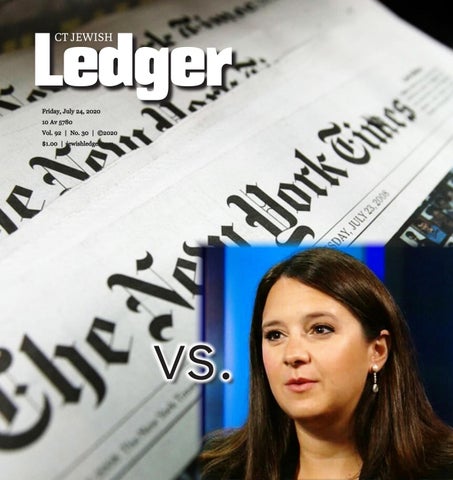

When Bari Weiss, the Jewish opinion writer and editor who has been a lightning rod for left-wing critics, quit The New York Times last week, her blistering letter of resignation to publisher A.G. Sulzberger called into question the newspaper’s commitment to advancing a broad range of divergent opinions, encouraging the expression of contrary views, and fostering open and honest dialogue among colleagues. PAGE 14
Since the onset of the COVID-19 pandemic, antisemitic “Zoombombing” of Shabbat services and other Jewish events has been on the rise. So it was stunning, but not surprising, when a Newington synagogue was recently hit. Arts & Entertainment
ELECTION 2020 5
The proposed Democratic Party platform reiterates its conventional stance regarding the U.S.-Israel alliance, including the statement that Jerusalem “should remain the capital of Israel, an undivided city accessible to people of all faiths.”
NOTE: Tisha B’Av – the ninth of the Hebrew month of Av – begins at 8:12 p.m., Wednesday, July 29. To determine the time for Havdalah, add one hour and 10 minutes (to be safe) to candle lighting time. Hate Hackers
“Bei Mir Bist Du Schein” was a song so powerful even the Third Reich couldn’t resist. It fueled a counterculture against German fascism, and blended American music with sounds of the shtetl to help Jewish immigrants’ assimilate into American society.
West Coast Divide
California’s proposed educational directive has been accused of antisemitism and anti-Israel bias, with little, if any, Jewish input into what will be taught to public school students.
FRIDAY, JULY 24, 2020
Hartford: 7:59 p.m.
New Haven: 7:59 p.m.
Bridgeport: 8:00p.m.
Stamford: 8:01 p.m.
In Memoriam ...................... 18
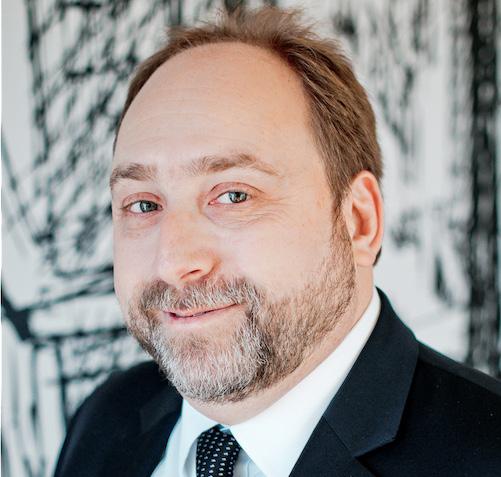
As CEO of the Genesis Philanthropy Group, the first major Jewish foundation launched by Russian Jews, Ilia Salita’s mission was to strengthen “Jewish identity of Russian-speaking Jews worldwide.” His memory challenges all Jews to learn from each other.



BY STACEY DRESNER
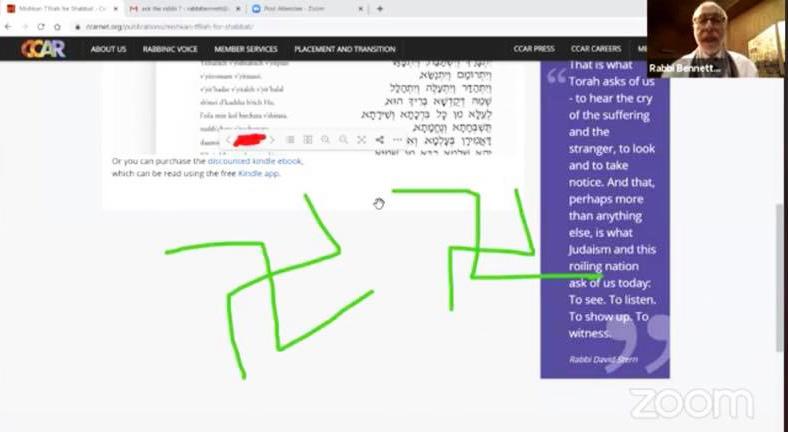
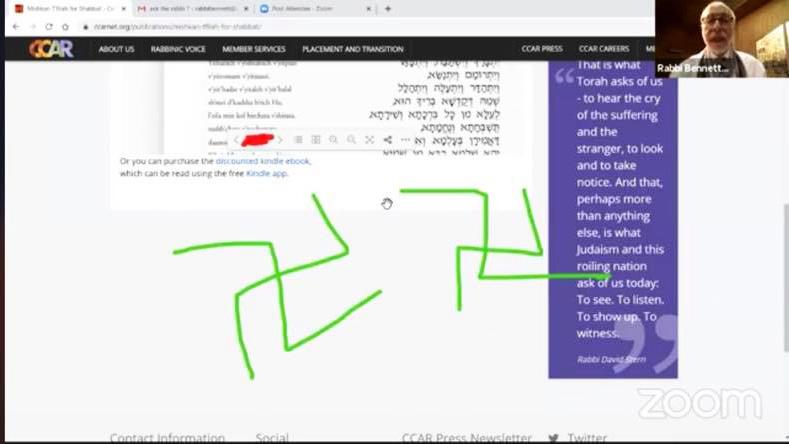
NEWINGTON – A Friday evening Shabbat service on Zoom, hosted by Temple Sinai of Newington earlier this month, was hacked into by someone who drew swastikas over the text of a prayer, and typed inappropriate messages into the Zoom chat box.
About 80 Temple Sinai members were logged into the July 10 service – or around 200 people, counting the families Zooming together – when, during the Mourner’s Kaddish, green swastikas appeared over the text of the prayer on the screen.
“I was scrolling on the screen to get to the Kaddish prayer – it was before we got to the names [of the deceased], thank God, and as I scrolled, all of a sudden there it was – three or four swastikas,” says Rabbi Jeffrey Bennett, Temple Sinai’s spiritual leader. “So right away I closed the screen; I stopped sharing and I said something like, ‘There is always a risk when you are online, but this also brings us together and that is what is important.’”
The perpetrator was apparently able to get into the open service us-ing the names of temple members on a list of Zoom meeting participants. They used the
“Annotate” feature on Zoom that allows meet-ing participants to write on the screen as if it were a white board, for all attendees to see.
Bennett said that they had not known about the annotate feature but that they have now disabled it.
Besides drawing the swastikas, the perpetrator used a stereotypical caricature of a Jew with a large nose in one of the Zoom window screens and played klezmer music at one point. Using one member’s name they also wrote in the zoom chat, “Is this a funeral?” and then under another member’s name, “No, it’s an orgy.”
Rabbi Bennett said that the entire hacking incident lasted around 10 or 15 seconds, but as shocking as it was, it didn’t stop him from continuing the service.
“I went on. I read the names. We recited Kaddish, but I didn’t put it back up on the screen. We did Kiddush, HaMotzi and, as we always do, we finished with Tefilat HaDerech. I wanted to continue; I didn’t want to let that define our evening,’” Bennett says. “We took care of it in around five seconds, but it was shocking.”
Temple Sinai board president Jill Merriam Dulitsky was not in attendance
at the July 10 service, but saw the incident later on Facebook Live.
“It’s disgusting and it’s so hateful. I can’t imagine someone would be so antisemitic that they would take the time to find a temple login and do this just for the pure goal of hate,” Dulitsky told the Ledger. “I felt particularly sad for the older members. Many of them have been sheltering in place for a longtime and this Friday night service has become so meaningful to them. It’s the one time they are together with community. I worry about them having seen this and not having any meaningful outlet to release any of the emotions that they have.”
The Newington and West Hartford Police departments were notified, as was the Anti-Defamation League’s Connecticut office, the FBI and the Jewish Federation of Greater Hartford and its Jewish Community Relations Council.
“The ADL has provided us with some technology resources and we are in the process of going through the resources to see if there is anything we can do to further enhance our security. And the Federation has been incredibly helpful,” reports Dulitsky.
The incidence of antisemitic hacking has increased since the beginning of the pandemic, with numerous online religious services and meetings the target of “Zoombombing” by members of hate groups.
This includes a May Zoom Talmud class taught by Rabbi Shlomo Yaffe, formerly of Chabad of Greater Hartford, and now spiritual leader of Congregation B’nai Torah in Longmeadow, Massachusetts. In April, as 150 students at Yeshiva University were listening to the school’s president, Dr. Ari Berman, speak about Passover, hackers bombed the virtual chat with death threats and Holocaust references.
“This is a really a reminder of the importance of cyber-security,” says David Waren, executive director of the Jewish
Despite pressure from progressives, no major changes in Democratic platform on Israel
BY RON KAMPEAS
WASHINGTON
(JTA) – Centrists on the platformwriting committee of the Democratic National Committee overrode progressives who wanted the platform to condemn Israel’s occupation of the West Bank.
The 2020 platform only alludes to the occupation, preserves Israel’s defense aid and rejects the movement to boycott Israel. But it does warn against annexation, the move that Israeli Prime Minister Benjamin Netanyahu is considering for portions of the West Bank.
The platform has not yet been released publicly, but the Jewish Telegraphic Agency obtained notes from someone who was read the platform’s Israel portion over the phone. JTA’s source asked to remain anonymous to maintain the confidentiality of the official who provided the information. The language, approved by the drafting committee, must be affirmed by a larger platform committee, but generally there have been few changes in language once the drafting committee gives an okay.
Leading party progressives, including Sen. Bernie Sanders of Vermont and Rep. Alexandria OcasioCortez of New York, have called for cuts in defense assistance if Israel goes ahead with annexation. And there was also a concerted effort, led by among others J Street, the liberal Jewish Middle East policy group, to have the platform mention the occupation, in part because Netanyahu appears closer than ever to annexing parts of the West Bank.
But just as they did in 2016, centrists overruled progressives and only alluded to the occupation, warning both Israelis and Palestinians
against taking unilateral steps including “annexation” and saying Israel should not expand settlements.
“We’re very concerned that the draft apparently makes no reference to Israel’s ongoing occupation of Palestinian territory,” J Street said in a statement. “Acknowledging and opposing the daily indignities and injustices that Palestinians face under occupation is an indispensable step on the path to promoting and achieving a viable, lasting Israeli-Palestinian peace agreement that can satisfy the fundamental needs and aspirations of both peoples.”
There were nods to calls for the platform to more equitably treat the Palestinians than it has in the past; previous platforms have at times barely mentioned the Palestinians. The new platform recognizes the legitimate aspirations of both peoples.
Additionally, the $3.8 billion Israel gets annually in defense assistance remains sacrosanct in the platform. “Democrats believe a strong secure and democratic Israel is vital to the interests of the United States,” the platform says. “Our commitment to Israel’s security, it’s qualitative military edge, and right to defend itself” as well as the 2016 Obama administration memorandum of understanding establishing the $3.8 billion figure “is ironclad.”
The platform also robustly rejects BDS, or the movement to boycott Israel because of the occupation, and United Nations
CONTINUED FROM PAGE 5
Federation of Greater Hartford. “Zoom has taken some steps to elevate security, and the Jewish Community, primarily through the Secure Communities Network (SCN) and the ADL, has been working with Jewish communities around the country to highlight best practices and try to create more awareness.
“Unfortunately what happened in Newington at Temple Sinai is not unique. We have seen a certain number of these incidents, although fewer to my knowledge in recent weeks as security has been stepped up both on the zoom platform as well as through basic security measures that Jewish organizations are increasingly taking as they have moved their events and services online,” he adds.
Waren says that the Federation and SCN, which was created by Jewish Federations of North America and the Conference of Presidents of Major American Jewish
measures targeting Israel.
“We oppose any effort to delegitimize Israel at the United Nations, or through the global Boycott, Divestment and Sanctions movement which singularly targets Israel,” the platform says, while also recognizing free speech rights, a nod to Democrats who oppose BDS but also oppose state laws criminalizing BDS.
Platforms are typically released at party conventions, and the Democratic Party’s was originally scheduled for this week. It was delayed until next month because of the coronavirus pandemic. While a committee drafts the platform, the presidential nominee, this year expected to be Joe Biden, typically plays a significant role.
That means the United Nations language in particular likely distances Biden from one of the Obama administration’s final acts, allowing through a U.N. Security Council resolution that condemned Israel’s West Bank occupation. Plus, Biden has said that the one area where he would resist Sanders’ influence was foreign policy, and he appears to have done that when it comes to Israel.
It’s not clear that Sanders, who ran in the presidential primaries and was the most serious threat to Biden’s nomination, pushed for Israel changes. When Sanders conceded to Biden, the two men had an online meeting and Sanders pressed hard for progressive changes in six policy areas, none having to do with foreign policy.
The two-state solution remains
Organizations, will hold a session on Zoom for Jewish community leaders in greater Hartford in the next few weeks, going over elevating cyber security “in part motiviated by what just occurred at Temple Sinai.”
The community is also working to raise funds for the position of a full-time security director to work with all of the Jewish organizations in the greater Hartford area on site security and training, as well as concerns like cyber-security, he reports.
Both Dulitsky and Bennett said that the incident isn’t going to prevent Temple Sinai from holding its services on Zoom.
“The rabbi and I agree that the show must go on and love will win over hate. We know there is an inherent risk in having online services but we are not going to shut them down,” Dulitsky says. “We are willing to take the risk, because the reward is so great to our community.”
“It’s not going to stop us,” agrees Bennett. “We are strong and we’re going to go from strength to strength. This has just made us stronger.”
paramount in the platform, which also pledges to reestablish ties with the Palestinians, including reopening the PLO office in Washington.
The Jewish Democratic Council of America welcomed the language. “JDCA is proud to have provided input to the Democratic Party platform drafting committee,” said its director, Halie Soifer. “We’re very glad to see that that platform will continue Democrats’ long-standing supporter of Israel, its security assistance in accordance with the memorandum of understanding and a negotiated two-state solution to the Israeli Palestinian conflict.”
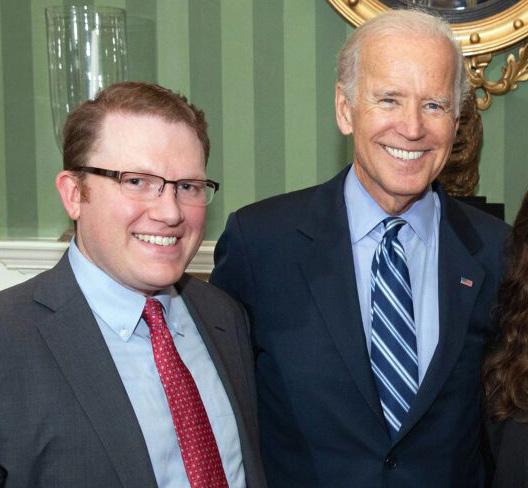
Aaron Keyak, the Orthodox political wunderkind who’s helping Biden turn out the Jewish vote
BY DAN PINE
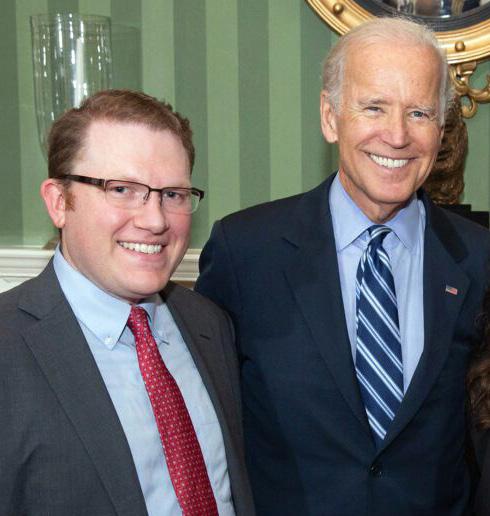
(J. The Jewish News of Northern California via JTA) – Aaron Keyak started out in Democratic Party politics as a kid, stuffing envelopes for campaigns in his native San Francisco. He clearly found his niche early. This week Keyak, 35, was named Jewish engagement director for Joe Biden’s presidential campaign.
His mission: devise strategies to reach Jewish American voters and convince them that Biden is the best choice in November. It’s a task he says will consume him 24/7. Then, Keyak, an observant Jew, quickly corrected himself.
“Make that 24/6,” he said, accounting for Shabbat.
The issues of Jewish concern range from the U.S.-Israel relationship to ensuring Iran never acquires nuclear weapons to the increase in antisemitic violence in the United States. And then there are broader issues such as health care, the economy, racial justice and COVID-19.
“One of the great things about the Jewish community is the wide range of issues we care about,” Keyak said. “It keeps me busy.”
Given the Trump administration’s many policies seen as favorable to Israel, such as relocating the American Embassy to Jerusalem in 2018, Keyak said the Biden campaign cannot take Jewish votes for granted, even though the Jewish vote is traditionally overwhelmingly Democratic.
“We have to campaign like we’re a few points down,” he said, even as national poll averages give Biden a 10-point advantage over Trump. “We have to know we’re doing everything we can to build a broad coalition in the Jewish community and the general public to show that Donald Trump isn’t
America.”
Keyak said he doesn’t buy Trump’s professed philo-Semitism, and hasn’t ever since the infamous 2017 neo-Nazi march in Charlottesville, Virginia, after which the president said there were good people “on both sides.”
“That the most powerful person on Earth would say there are fine people on both sides, and to embolden that hatred, made me feel unsafe in my own country,” Keyak said. “I’m sure he inspired these antisemites to feel encouraged. He exposed how fundamentally dangerous he was and remains.”
Keyak contrasts Trump with Biden, stressing what he called “the fundamental sense of decency [Biden] emanates. There are Trump supporters in the Jewish community, and they will have a wellfunded effort we will have to combat.”
While Biden has maintained close ties to the Jewish community throughout his decades in politics, he has faced criticism for the Obama administration’s chilly relationship with Israeli Prime Minister Benjamin Netanyahu and what some saw as too much daylight between the two allies.
Keyak counters by pointing out that the Obama administration passed a $38 billion aid package to Israel and offered unqualified support during outbreaks of war between Israel and Hamas in Gaza, including providing technical assistance with the Iron Dome anti-rocket system.
“In Joe Biden we have a stalwart supporter of the U.S.-Israel relationship,” Keyak affirmed. “When it came to Israel’s security, there was no stronger supporter that Joe Biden, and he speaks out against antisemitism clearly and without hesitation.”
Keyak seems to have been born for the job he has with the campaign. His grandfather chaired the state’s Democratic Party, and he remembers his family routinely discussing politics around the Shabbat dinner table. His mother, Vicki, co-founded the Raoul Wallenberg Jewish
Democratic Club of San Francisco, and his late father, Jeffrey, served as president of Congregation Adath Israel, a Modern Orthodox synagogue in San Francisco, and sat on the board of the Friends of the Jewish Community Library.
Keyak landed his first real campaign job as a precinct captain in San Francisco Mayor Willie Brown’s 1999 victorious reelection campaign.
After attending Washington University in St. Louis, he served on the staff of House Judiciary Committee Chairman Jerrold Nadler (NY-D), and had a stint as interim director of the National Jewish Democratic Council. Also, he has been a contributing opinion writer for the Hill, the Times of Israel, Huffington Post and other outlets.
In 2014, he co-founded Bluelight Strategies, a premier Washington, D.C., public relations firm serving mostly Jewish and progressive institutions, and for which he serves as managing partner (he has taken a leave of absence to serve the Biden campaign).
Keyak, his wife, Avigail Goldgraber, and three-year-old daughter, Shira, live in the West End neighborhood of Washington, D.C.
Biden is currently leading the incumbent president in national polls and in most battleground states – a fact which Keyak attributes to what he calls Biden’s “positive message.”
“During the Obama years, I got to know Joe Biden,” he said. “I’ve seen him in big public events, in smaller events, celebrating Rosh Hashanah at the vice president’s residence. It’s so obvious the genuine connection and understanding he has of the Jewish community. You can tell he gets it in his kishkes.”
Ilhan Omar endorsed by Nancy Pelosi; challenger attracts support from proIsrael givers
BY RON KAMPEAS
(JTA) – House Speaker Nancy Pelosi lent her considerable weight to the reelection bid of Rep. Ilhan Omar, who has faced allegations of invoking antisemitism. Meanwhile, an opponent in the Democrat primary who has attracted the support of pro-Israel givers nationwide has outraised Omar by millions of dollars.
“Ilhan is a valued and important Member of our Caucus,” Pelosi said Tuesday, July 14, in a statement. “In her first term, Ilhan has already established herself as a leader on a host of issues – from child nutrition to housing to U.S.-Africa relations.”
Pelosi was among Democrats in 2019
who joined in criticizing Omar for a number of statements about pro-Israel influence that were seen as antisemitic. Omar apologized for some but not all of the statements.
Antone Melton-Meaux, one of four challengers to Omar in the Aug. 11 primary, has fundraised nationally, including $487,000 from NORPAC and Pro-Israel America PAC. He has outraised Omar between April and June with $3.2 million to her $471,000.
Omar is one of two Democrats in the House who back the boycott Israel movement.
Bernie Sanders endorses Ilhan Omar for re-election
(JNS) Sen. Bernie Sanders (I-Vt.) has endorsed Rep. Ilhan Omar (D-Minn.) for re-election in Minnesota’s 5th Congressional District, announced the senator on Wednesday, July 15.
“@IlhanMN is a woman of incredible strength. We need her leadership in Congress. I’m pleased to endorse her campaign for reelection,” captioned the former Democratic presidential candidate, who was endorsed by Omar, in a Twitter post that includes a video of Sanders announcing his endorsement for Omar.
In the video, Sanders touts Omar as “one of the leaders in the Congress in fighting for economic and social and racial and environmental justice,” while claiming that Omar “has been subjected to more vile and racist attacks than any other member of the Congress” and praising her for having “responded with incredible dignity and pride that should make the people of her state and her district extraordinarily proud of her.”
“We need Ilhan’s leadership in the Congress,” he continued. “We need her voice speaking out for justice.”
Omar has perpetuated antisemitic tropes on Twitter and introduced a resolution in Congress that promotes boycotts of Israel, likening them to boycotts of Nazi Germany. In February 2019, a month after being sworn in, Omar accused AIPAC of paying members of Congress to back Israel, saying it was “all about the Benjamins.” The following month, she pointed fingers at her “Jewish colleagues” for attacking her Tlaib for labeling their criticisms as anti-Israel because of the Muslim faith of the two congresswomen, in addition to slamming her critics regarding “the political influence in this country that says it is OK to push for allegiance to a foreign country.”
This led to the passing of a House resolution condemning antisemitism and other forms of hatred that did not call out Omar by name.

At the Hebrew Center for Health and Rehabilitation, we understand that comfort and familiarity is a key part of the journey to wellness. We also understand that maintaining your religious beliefs and principles is fundamental in continued enrichment of life. Our Kosher meal services allow residents to maintain their dietary requirements throughout their stay with us. At the Hebrew Center, we ensure we follow all principles of Kosher including purchase, storage, preparation, and service.
At the Hebrew Center for Health and Rehabilitation, we also offer a variety of other services and amenities to ensure your stay is as comfortable as possible.
THESE SERVICES INCLUDE:
• Passport to Rehabilitation Program
• Long-Term Skilled Nursing Care
• Specialized Memory Care
• Respite Care Program
• Palliative Care and Hospice Services Coordination
OUR AMENITIES INCLUDE:
• Barber/Beauty Shop
• Café
• Cultural Menus
• Laundry and housekeeping services
• Patient and Family education
• Life Enrichment
For more information on our Kosher program, please contact: DIRECTOR, PASTORAL SERVICES - (860) 523-3800 Hebrew Center for Health and Rehabilitation One Abrahms Boulevard, West Hartford, CT 06117




BY ARIELLE KAPLAN
Printed in black and white and bigotry all over, Nazi official Hans Severus Ziegler’s brochure for his public exhibit in Dusseldorf featured an African American jazz musician with a Star of David on his lapel. Designed to ridicule and belittle Jewish musicians for performing “Negro music” as another tactic to contaminate German culture, “Entartete Musik” (“Degenerate Music”) opened in May, 1938 – just four months before Kristallnacht.
By then a ban on “Negro jazz” had already been instated, three years prior, on German radio for its “hysterical rhythmic reverses characteristic of the barbarian races.”
And yet, in spite of this, a curious historical phenomena transpired the same year this exhibit opened its doors: Hitler’s Germany was obsessed with “Bei Mir Bist du Schön” (“To Me You Are Beautiful”), the 1937 song that catalyzed the era of Yiddish swing. A sub-genre of jazz, swing music is more upbeat and easy to dance, or “swing,” to than the style of jazz that originated in New Orleans that was born out of African music. In its golden age, Benny Goodman, the Jewish King of Swing, fought for integration in Tin Pan Alley and hired African American musicians to bring the new musical style to the masses.
“The fundamentals of jazz are the syncopation and rhythmic accents of the Negro,” American music theorist Henry Cowell wrote in 1930. “Their modernization is the word of New York Jews… So jazz is Negro music seen through the eyes of the Jews.”
Hailed by Jewish music scholar Neil W. Levin as “the world’s best-known and longest-reigning Yiddish theater song of all time,” “Bei Mir Bist Du Schein” was written by Jews, performed by Black musicians, popularized by a Lutheran trio of Norwegian sisters, and beloved by the Nazis – until they discovered its Jewish roots, that is. (Under its Germanized title, “Bei Mir Bist du Schön,” many assumed the language was a southern German dialect.)
A song so powerful that even the Third Reich couldn’t resist, “Bei Mir Bist Du Schein” launched the Andrews Sisters to fame overnight, fueled a growing counterculture against German fascism, and by way of blending American music with sounds of the shtetl, it helped ease Jewish immigrants’ assimilation into American society.
The song was originally written by Sholem Secunda for a Yiddish operetta in

1935. After hearing the African American jazz duo Johnnie and George perform the song in the Catskills, Jewish lyricist Sammy Cahn bought the rights and rewrote the lyrics in English, preserving just the titular chorus in Yiddish. Within a month of the Andrews Sisters’ recording of the song, some 250,000 records and 200,000 copies of sheet music were sold. (Hilariously, American fans couldn’t quite catch the song’s title, confusing it for “Buy a Beer, Mr. Shane” or, my personal favorite, “My Mere Bits of Shame.”)
“The lyrics were revamped for popular release to transcend the song’s Jewish roots and celebrate America’s melting of multiple languages and cultures,” writes Charles B. Hersch in his book, Jews and Jazz: Improvising Ethnicity. “As the song’s lovestruck protagonist imagines saying ‘bella bella‘ or ‘sehr wunderbar,’ each foreign tongue is simply a vehicle to express how ‘grand’ the beloved is.”
In America, the success of “Bei Mir” helped Jews feel they made the right choice in fleeing pogroms of Europe – through theatre and music they could, and did, cement themselves in the New World. Benny Goodman furthered the Yiddish jazz craze with his iconic 1938 performance of “Bei Mir” at Harlem’s iconic Apollo Theatre – within months, a myriad of popular artists like Ella Fitzgerald, Belle Baker, Kate Smith, and the Barry Sisters recorded covers, hoping to cash in on the fad.
To highlight the new musical fusion of klezmer and jazz, New York’s WHN created “Yiddish Melodies in Swing,” a program that lasted two decades. The feat was a
“sense of mastery over the challenge of integrating in the American mainstream while maintaining ties to their distinctive immigrant heritage,” writes Hersch.
Back in Germany, swing music was hardly a relief from the woes of war and Nazi violence. While Hitlerjugend – Hitler Youth, the Nazi’s youth organization – grew in popularity, so did the countermovement known as Swingjugend. Rejecting societal oppression, uniformity, and police brutality, these teens separated themselves from the Nazi state by dancing the Charleston in speakeasy bars filled with the sounds of swing music, a genre that emulated free love, independence and peace.
Members of Swingjugend let their hair grow long. The men carried umbrellas, the women wore heavy makeup and collectively they mocked Hitlerjugend’s infamous “Sieg Heil” with proclamations of “Swing Heil.”
With songs like “Bei Mir” beating in their hearts, the 1993 movie “Swing Kids” depicts the counterculture German rebels as they are confronted by the Nazis. The movie is fiction, but the historical atrocities are chillingly accurate: In 1941, 300 swing kids were punished for praising the “degenerate music” of Jewish and Black people – some were given haircuts, others were sent back to school, many were deported to Nazi concentration camps.
But even in the Nazi-drawn ghettos, the popularity of swing endured. In 1942 Theresienstadt – the “model” concentration camp, designed to fool the world into believing all was well and dandy in the Third Reich – Eric Vogul led the Ghetto Swingers, a jazz orchestra forced to perform
in the main square for long hours. A disturbing charade, the Jewish musicians still found joy in performing jazz and swing music. In their darkest hours it was an escape.
“When I played I forgot where I was. The world seemed in order, the suffering of people around me disappeared – life was beautiful,” wrote Ghetto Swingers guitarist Coco Schumann in his autobiography. “We knew everything and forgot everything the moment we played a few bars.”
“Bei Mir Bist Du Schein,” of course, was one of the songs that “tranquilized ourselves into the dream world produced by the Germans for reasons of propaganda,” Vogel said. Filled with notes of hope and love that transcend language, that blissful bubble burst in 1944 when the camp was cleared and most of the remaining prisoners were sent to Auschwitz.
By the end of World War II in 1945, swing music was replaced with new sounds like Bebop and rhythm and blues. As Jews embraced a state of their own in 1948 with Hebrew as the lingua franca, Yiddish was swept to the side, left to gather dust along with the memories of pogroms and gas chambers.
“Israel was happening and Israelism was a way for Jewish people to be more American, more assimilated, more macho, more cowboy-like than the old skinny, leftwing, intellectual type so common with Yiddish culture,” Alicia Svigals, a founding member of the Klezmatics, tells The Washington Post.
Nearly a century after the golden era of klezmer-meets-jazz, I think the song that started it all is due for a comeback. So much of the landscape that gave way to Yiddish swing has returned, and the parallels are chilling: recent acts of police brutality launched a fiery wave of Black Lives Matter protests; antisemitism is at an all-time high; the crushed economy in the United States is being likened to the Great Depression, the very historic crisis that gave way to the swing era.
Made most famous by three nonJewish sisters, “Bei Mir Bist Du Schein” is hardly the only Yiddish swing tune we should revere and revive as an unlikely protest song. But it’s the rich history of Black and Jewish musicians who made this “degenerate music” irresistible to the Nazis that makes this shtetl swing melody an ultimate song of resistance.
This article originally appeared on Kveller.


Owners, managers and developers of commercial, residential and retail properties in central Connecticut for over 50 years.
We specialize in all sizes of office space and offer a wide range of living options including luxury apartments and townhouses.
For more information contact us at 860.232.1729
BY RABBI ELLIOT COSGROVE
NEW YORK (JTA) – Pittsburgh Steelers offensive tackle Zach Banner posted a video late last week in response to Philadelphia Eagles wide receiver DeSean Jackson’s anti-Semitic screed against Jews.
After describing his horror at the 2018 Pittsburgh synagogue shooting, Banner preached that as important as the work of Black Lives Matter may be, its achievements cannot come by stepping on the backs of other people or by vilifying Jews.
In Banner’s own words, “We can’t preach equality but in result we’re just trying to flip the script and change the hierarchy … Change your heart, put your arm around people, and let’s all uplift each other.”
In the days since, Jackson has both issued an apology and begun to engage with the Jewish community.
This is not the first time Steel City sports has given Black-Jewish relations a much needed shot in the arm.
The year was 1947. Hank Greenberg, the legendary Jewish slugger and longtime Detroit Tiger, had been traded due to the reserve clause to the Pittsburgh Pirates for what would be his final season. Throughout his career, Greenberg had been subjected to just about every anti-Semitic insult imaginable.
Playing first base that day for the Brooklyn Dodgers was Jackie Robinson, the rookie who had recently broken Major League Baseball’s color line. Days earlier, according to the Journal of Sport History, Robinson and his family had received threats on his life and that his infant son Jackie Jr. would be kidnapped. Members of opposing teams sat in their dugouts pointing baseball bats at him – simulating machine gun noises. The hotel in which the Dodgers stayed refused to admit Robinson. Not surprisingly, Robinson’s batting average had slumped and he was contemplating quitting.
After laying down a perfect bunt early in the game, Robinson collided with Greenberg, who was also playing first base. The following inning, Greenberg was walked and, arriving at first base, asked Robinson if he had been hurt in the earlier collision.
According to a New York Times report, Robinson assured Greenberg that he hadn’t been, at which point Greenberg said to Robinson, “Don’t pay any attention to these guys who are trying to make it hard for you. Stick in there. You’re doing fine. Keep your chin up.” Following the game, Jackie told The New York Times, “Class tells. It sticks out all over Mr. Greenberg.”
Robinson was deeply moved by the supportive words of Greenberg, who was praised in the African-American press. The two men would remain friends into the years ahead – both giving testimony in Curt Flood’s 1972 historic Supreme Court case on the aforementioned reserve clause (the mechanism used by teams to hold on to the rights of players even after their contracts had expired).
Who would have imagined that some 70 years after the Greenberg-Robinson exchange, it would be an African-American athlete – Zach Banner – who would call out his own community on prejudice against Jews?
Bias operates in every direction –sometimes at the same time – and the pressures of the pandemic run the risk of bringing out the worst, not the best, in people. The examples of Greenberg and Banner are instructive because both men would have been well within their rights to be bystanders, carrying on with their business as athletes. Instead, both chose to be upstanders – allies in fighting prejudice.
In the years ahead, Greenberg would leverage his stature as Cleveland’s general manager, refusing to let his team stay at any hotel that denied admittance to all his players, remembering when he as a ballplayer had been denied to stay at hotels because he was Jewish. On and off the field, the examples of Greenberg and Banner show the power of one’s personal example to prompt much-needed dialogue and societal change.
In his 1963 opening address at the National Conference on Religion and Race, Rabbi Abraham Joshua Heschel said, “To think of man in terms of white, black or yellow is more than an error. It is an eye disease, a cancer of the soul.” In calling out racism as an eye disease, Heschel signaled that as important as sit-ins and freedom
rides – or, in our own day, Black Lives Matter, police reform and tearing down Confederate monuments – the first step in fighting racism is for people to identify prejudices within, dismantle them and set a personal example for others to follow. Some may be more guilty than others, as Heschel taught, but all of us are responsible.
Confessions of bias need not be damning; they are opportunities to acknowledge the work yet to be done. When it comes to building an inclusive society, it is a self-fulfilling prophecy. If we do not want the next generation to inherit and internalize deeply ingrained notions of race, then we must work to eliminate the structures that serve to perpetuate them.
It is simply not enough to consider oneself to be one of the good guys and go about one’s business. One must check one’s implicit biases, live intentionally knowing they are present, be willing to publicly model behavior for others to follow and work together toward effectuating muchneeded societal transformations. The fact of our flawed humanity reminds us that we are all capable of doing better.
In simpler terms, we must do what Greenberg did in 1947, what Heschel taught in 1963 and what Banner posted the other day. Change our hearts, put our arms around people and uplift each other. It’s not everything, but it is something, and it’s certainly better than nothing. It is, one might say, first base. Maybe from there we will round the bases together, creating a world worthy of our hopes and dreams for our children and grandchildren.
Rabbi Elliot Cosgrove is spiritual leader of Park Avenue Synagogue in Manhattan.
Vol. 92 No. 30
JHL Ledger LLC Publisher
Henry M. Zachs Managing Partner
Leslie Iarusso Associate Publisher Judie Jacobson Editor judiej@jewishledger.com • x3024
Hillary Sarrasin Digital Media Manager hillaryp@jewishledger.com
EDITORIAL
Stacey Dresner Massachusetts Editor staceyd@jewishledger.com • x3008 Tim Knecht Proofreader
ADVERTISING
Donna Edelstein Senior Account Executive NonProfit & JHL Ledger LLC Media Marketing donnae@jewishledger.com • x3028
Joyce Cohen Senior Account Executive joycec@jewishledger.com • (860) 8369195
Joan Gaffin Central Mass. Account Executive joang@jewishledger.com • (508) 4146210
Trudy Goldstein Account Executive (860) 5731575
Amy Oved Account Executive amyo@jewishledger.com • (860) 8418607
PRODUCTION
Elisa S. Wagner Creative Director elisaw@jewishledger.com • x3009
Christopher D. Bonito Graphic Designer chrisb@jewishledger.com
ADMINISTRATIVE
Judy Yung Accounting Manager judyy@jewishledger.com • x3016
Howard Meyerowitz Office Manager howardm@jewishledger.com • x3035


Samuel Neusner, Founder (19291960) Rabbi Abraham J. Feldman, CoFounder and Editor (19291977) Berthold Gaster, Editor (19771992) N. Richard Greenfield, Publisher (19942014)
PUBLISHER’S STATEMENT Periodicals postage paid at Hartford, CT and at additional mailing offices. Jewish Ledger (USPS # 131 150) is published 24 times per year by JHL Ledger LLC from our office at: Jewish Ledger 40 Woodland Street Hartford, CT 06105 Phone (860) 2312424 Fax (860) 2312485 Toll Free 18002866397 Postmaster, send address changes to: Jewish Ledger 40 Woodland Street Hartford, CT 06105
Subscriptions: $36 yearly, $9 Twelve Issue Institutional subscription. Send name, address, zip code with payment. Editorial deadline: All public and social announcements must be received by Tuesday 5 p.m. 10 days prior to publication. Advertising deadline: Wednesday noon one week prior to issue. Advertisers should check ad on publication. JHL Ledger LLC and Jewish Ledger shall not be liable for failure to publish an ad for typographical error or errors in the publication except to the extent of the cost of the space which the actual error appeared in the first insertion. Publishers reserve the right to refuse advertising for any reason and to alter advertising copy or graphics deemed unacceptable. The publishers cannot warrant, nor assume responsibility for, the legitimacy, reputability or legality of any products or services offered in advertisements in any of its publications. The entire contents of the Jewish Ledger are copyright © 2020. No portion may be reproduced without written permission of the publishers. JHL Ledger LLC also publishes Jewish Ledger MA, All Things Jewish CT, and All Things Jewish MA. www.jewishledger.com





BY JACKSON RICHMAN
(JNS) More than a dozen California school boards have adopted resolutions in support of the state’s proposed ethnic-studies model curriculum, despite its having come under fire for containing antisemitic and anti-Israel content, and not addressing issues of antisemitism or including Jewish Americans.
“Over the past few months … individuals, who call themselves ‘Save CA Ethnic Studies,’ have attempted to take advantage of state and local education officials’ focus on addressing the COVID19 crisis to get school boards throughout the state to rubber-stamp, with little or no discussion, a resolution that ‘affirms support of the California Ethnic Studies Model Draft … ,’ ” read a letter written by some 88 state and national organizations to the California Department of Education (CDE).
The groups also accused the Save CA Ethnic Studies campaign of deceiving local officials.
“School board members asked to vote on the resolution are not shown the original draft curriculum, and not informed about the enormous outpouring of criticism it engendered or that a CDE process is well underway for the curriculum’s redesign,” said the letter.
As such, local school officials believe that they are voting to support a 2016 California law to establish ethnic-studies curriculum, known as AB-2016.
School board members are “led to believe that in voting for the resolution they are showing support for AB-2016 and affirming the importance of ethnic studies classes in general, rather than endorsing the highly controversial draft curriculum that was condemned by dozens of state leaders and tens of thousands of Californians,” stated the letter.
The proposed curriculum section on “Arab American Studies Course Outline” contains a number of passages concerning the Israeli-Palestinian conflict, such as “Direct Action Front for Palestine and Black Lives Matter,” “Call to Boycott, Divest and Sanction Israel” and “Comparative Border Studies: Palestine and Mexico.” It also includes studying national figures such as Rep. Ilhan Omar (D-Minn.), Rep. Rashida Tlaib (D-Mich.), the late Columbia University professor Edward Said, Women’s March leader Linda Sarsour, the late radio personality Casey Kasem, actress Alia Shawkat and the late White House correspondent Helen Thomas – all of whom are associated with antisemitic and anti-Israel rhetoric, and in the case of the congresswomen, a push to enact legislation
punishing Israel.
Last year, following outrage by California lawmakers, Jewish and proIsrael groups, and the Jewish and nonJewish community at large for such bias and omissions, the California Board of Education announced that it would substantially revise its current draft ethnic-studies curriculum, noting that it did “not yet fully align with the statutory requirements” and the state’s guidelines.
In August 2019, the California State Board of Education stated that “the current draft model curriculum falls short and needs to be substantially redesigned. Following the Instructional Quality Commission’s review and response to all public comments, a new draft will be developed for State Board of Education review and potential approval. The Board will ultimately adopt an ethnic studies model curriculum that aligns to California’s values.” The State Superintendent of Public Instruction Tony Thurmond agreed, calling for “greater balance to this entire curriculum,” including in how it handles Jewish Americans, antisemitism and Israel.
In January, California’s Department of Education announced that it will recommend that the Ethnic Studies Model Curriculum (ESMC) focus on four “foundational” groups: African-Americans, Asian-Americans, Chicano/Latinos and Native Americans. That move was criticized for its narrow focus on “people of color” while ignoring several other significant ethnic or religious groups in the state, such as the Jewish, Greek and Armenian communities.
Despite the ongoing debate over the ethnic-studies curriculum, at least 13 school boards in the state have recently passed resolutions affirming their support for the ethnic-studies model curriculum draft: Hayward (April 22), Castro Valley (April 23), Albany (April 28), San Francisco (April 28), West Contra Costa (May 6), Alhambra (May 19), Oakland (May 27), South San Francisco (May 28), Jefferson Union (June 2), Jefferson Elementary (June 17), San Mateo Foster City (June 18), El Monte Union (June 24) and Santa Rosa City Schools (July 8).
‘Unclear what we are supporting’
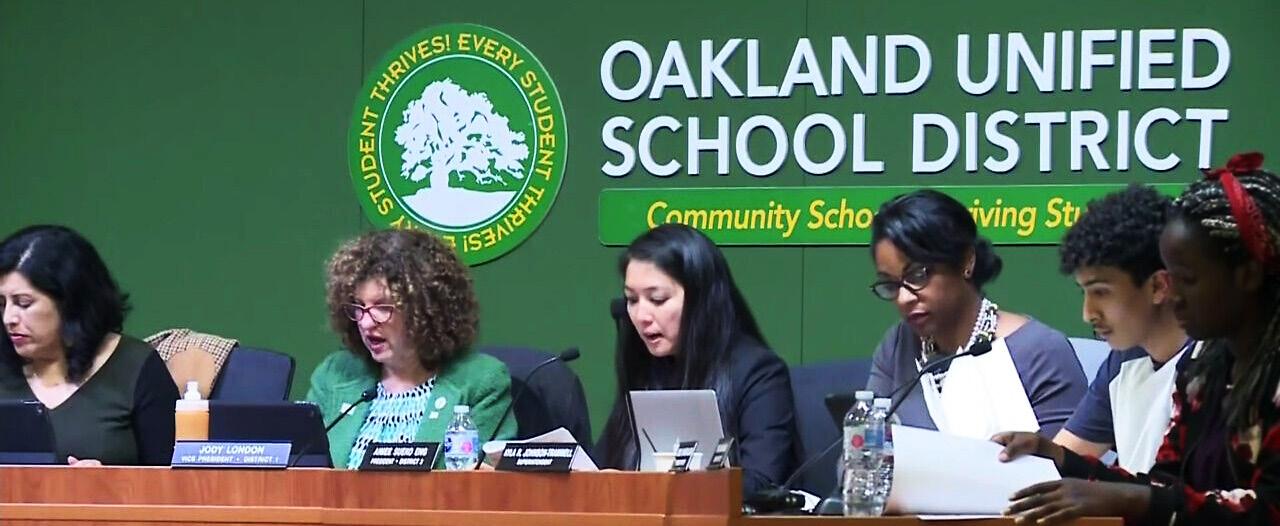
The Oakland Unified School Board passed a resolution with four votes in favor, two against and one abstention, stating that it supports “the California Ethnic Studies Model Curriculum Draft as written,” including content about Pacific Islanders,
Arab Americans, Central Americans, and West Asian Americans and to keep “its framing and language of the discipline, with additional scaffolding as necessary to be inclusive and supportive of multiple users.”
During its May 27, 2020 school-board meeting, Oakland Unified School Board president Jody London raised questions over the ethnic-studies curriculum that they were considering. She said in theory, she supported having an ethnic-studies model curriculum and passing a resolution setting forth the values the Oakland School Board would like to see in the state’s model curriculum, instead of one that interferes with the state’s process, according to meeting notes. This “resolution doesn’t allow [revisions]” and is “unclear about what is it we are supporting,” London told the board.
Similarly, questions were also raised after Albany Unified School Board voted to support the ethnic-studies curriculum.
On April 28, the Albany Unified School Board unanimously passed a resolution that “affirms support for the current California Assembly Bill 2016 Ethnic Studies Model Curriculum draft” and for the curriculum to “keep the disciplinary language, framing, guiding values, principles and outcomes of the field of Ethnic Studies.”
After that meeting, it got some public pushback so, on June 9, the board discussed whether to revisit that vote.
Among the public input the Albany Board received was a statement from the presidents of the California Latino School Boards Association. Asian Pacific Islander School Board Members Association and the Association of Black School Educators supporting the model curriculum with “additional integration of Jewish Americans and other ethnic groups, as well as a definition of antisemitism … as long as they do not decenter communities of color in any way from the curriculum.”
The Anti-Defamation League’s Central Pacific Region, writing in favor of the Albany Board revisiting this resolution, stated that its resolution “is not about supporting Ethnic Studies but instead endorses the polarizing and offensive political views. The California Department of Education (CDE) already rejected the ESMC for its failure to meet the goals of the authorizing statute AB-2016. The CDE is making substantive revisions to be made public in August 2020. The Resolution before you is misleading and contravenes the legal process.”
The Albany Unified resolution was not revisited for another vote.
Curriculum ‘should be free from politics’
As local school boards debate the issues regarding the ethnic-studies curriculum, a bill in the California Assembly is being pushed forward that would require ethnic studies as part of graduation requirement, known as AB-331. AB-331 is a bill that, if passed, would require ethnic studies as a California high school graduation requirement, starting with the 2024–25 school year, “based on” the ethnic studies model curriculum developed by the state. It was introduced in the Spring of 2019 by Assembly Member Jose Medina, a Democrat who chairs the Assembly Higher Education Committee and is a member of the California Legislative Jewish Caucus. Medina suspended his bill after the summer 2019 ethnic-studies draft curriculum controversy, he said because “it is more important to me that we get it right than we do it quickly.” He also said, “I did not feel comfortable having the senate vote on a curriculum that is not finished.” “The curriculum would be stronger if it were more comprehensive of additional groups’ experiences.”
In a seeming reversal, Medina is now pushing forward with the bill to pass quickly.
“#AB331 is moving through the legislative process, but we still need your help to make #EthnicStudiesforALL! Keep up the momentum to get AB 331 out of the Senate Appropriations Committee at the end of July. Our history should not be optional,” tweeted Medina on June 26. AB-331 is scheduled to be heard by the California Senate Appropriations Committee on July 31. If it passes there, it will be voted on by the California Senate and Assembly ahead of the August deadline. If that passes, it will go to Democratic Gov. Gavin Newsom for signature or veto before the model curriculum is approved by the state.
Jewish and pro-Israel groups have called for Jews to be represented in the ethnicstudies curriculum.
Sarah Levin, executive director of JIMENA: Jews Indigenous to the Middle East and North Africa, said the draft curriculum omitted “the voices of diverse Middle Eastern Diasporic communities that live in California.” Said Levin, “We are proud to work together with a broad coalition of minority voices... to support the creation of an Ethnic Studies Curriculum that is accurate, balanced and reflects Middle Eastern student demographics in California.”
BY SHIRA HANAU
(JTA) – Almost as soon as the coronavirus pandemic swept the country in early March, the Isabella Freedman Retreat Center in Connecticut canceled several retreats it was set to host in the spring.
Then the center had to cancel its Passover program, the biggest program it hosts all year. By early June, all retreats through the end of 2020 were off the calendar.
The cancellations led Hazon, the Jewish environmental organization that operates the retreat center, to reduce its staff by about 40% in late June.
Out of a staff of 59 before the pandemic, 21 people were laid off at the end of June and three positions were left unfilled as the organization adjusted to the sudden loss of revenue.
The decision to lay off staff makes Hazon the latest Jewish organization to making staffing changes effective at the end of the federal Paycheck Protection Program. The aid program, intended to keep Americans employed at small businesses, provided low-interest loans to small businesses and nonprofit organizations. Under the rules of the program, the loans could be eligible for forgiveness if employees were kept on through the end of June. Layoffs after that date would not jeopardize organizations’ eligibility for loan forgiveness.
Nigel Savage, president and CEO of Hazon, said the organization had probably lost $2.5 million so far this year from canceled programming. Hazon received about $840,000 in a loan from the Small Business Administration, most of which
Savage anticipates being forgiven under the terms of the program, that enabled it to stave off the layoffs until late June.
“But Hazon has no reserves, no endowment, so it was very clear if we didn’t have revenues, that we would have to let staff go,” Savage told the Jewish Telegraphic Agency.
The organization had imposed pay reductions, tiered according to salary level, earlier in the pandemic for about eight weeks, with Savage taking a temporary 25% cut.
Most of the layoffs involved event staff at the retreat center. While some Hazon programs have been suspended – including Teva, an environmental education program for schools – the organization has not laid off staffers responsible for educational programming, some of which has been moved online.
Moving forward, a pilot program at the retreat center may help balance the budget this year.
The center began hosting a small number of guests for short getaways instead of the large retreats they usually host. Individuals, couples and families can visit the retreat center with all activities and meals carried out with social distancing.
If the retreat center is able to continue hosting guests, the organization should be able to maintain its remaining staff, according to Savage, but if changing state regulations force the center to stop hosting guests, more might have to be let go.
“We literally don’t know what the future holds,” Savage said.




BY JOSEFIN DOLSTEN
The opinions expressed here are that of the author alone
(JTA) – Bari Weiss, the Jewish opinion writer and editor who has been a lightning rod for left-wing critics, has resigned from The New York Times.
The author of a much-discussed recent book on antisemitism, How to Fight AntiSemitism, Weiss announced her resignation in a blistering letter to New York Times publisher A.G. Sulzberger posted to her website Tuesday morning. She wrote that the newspaper had become a place where “intellectual curiosity – let alone risk-taking – is now a liability” and said she had been subjected to bullying from colleagues who disagreed with the ideas she advanced in her columns and on Twitter.
“They have called me a Nazi and a racist; I have learned to brush off comments about how I’m ‘writing about the Jews again,’” she wrote. “Several colleagues perceived to be friendly with me were badgered by coworkers. My work and my character are openly demeaned on company-wide Slack channels. … I’m no legal expert. But I know that this is wrong.”
Weiss’s resignation is the latest in a series of changes at the Times’ Opinion section that began last month when the paper ran a piece by Arkansas Sen. Tom Cotton, a Republican, calling for a military
response to largely peaceful protests calling for racial justice. The piece elicited unusual resistance from journalists inside the Times newsroom and eventually led to the resignation of the Opinion section’s editor, James Bennet, who admitted that he had not read the piece prior to publication.
Bennet made a point of bringing in conservative voices, including Weiss and Bret Stephens, whose columns have also been dogged by criticism, and Weiss suggested in her letter that Bennet’s departure had worsened her work situation.
“Never believe an editor or publisher who urges you to go against the grain,” she wrote. “Eventually, the publisher will cave to the mob, the editor will get fired or reassigned, and you’ll be hung out to dry.”
Weiss did not indicate what she plans to do next and did not immediately respond to a request for comment. Katie Kingsbury, the Times’ acting editorial page editor, said in a statement that she is committed to an intellectually and politically diverse opinion section.
“We appreciate the many contributions that Bari made to Times Opinion,” Kingsbury said in a statement issued to NBC News. She added, “I’m personally committed to ensuring that The Times
continues to publish voices, experiences and viewpoints from across the political spectrum.”
Since starting as an op-ed staff writer and editor at The Times in 2018, Weiss has risen to prominence for her commentary on issues such as anti-Semitism, Israel, the #MeToo movement and cultural appropriation. Her writing often criticizes what she sees as hypocrisies among progressives, which has earned her both praise and vilification.
Perhaps her most contentious claim deals with what she sees as an effort by young progressives to stifle free speech in what has been described by conservatives as “cancel culture.”
Last month, she wrote on Twitter that the Cotton saga reflected a “civil war inside The New York Times” between what she described as “The Old Guard” subscribing to “civil libertarianism” and “The New Guard … in which the right of people to feel emotionally and psychologically safe trumps what were previously considered core liberal values, like free speech.” This week, Weiss was among 150 prominent intellectuals of diverse political orientations to sign a public letter defending the value of open debate and the free exchange of ideas, calling them
“the lifeblood of a liberal society.”
In her resignation letter, Weiss said fear of eliciting critical reactions increasingly shape what is published at The Times
“Op-eds that would have easily been published just two years ago would now get an editor or a writer in serious trouble, if not fired,” she wrote. “If a piece is perceived as likely to inspire backlash internally or on social media, the editor or writer avoids pitching it. If she feels strongly enough to suggest it, she is quickly steered to safer ground. And if, every now and then, she succeeds in getting a piece published that does not explicitly promote progressive causes, it happens only after every line is carefully massaged, negotiated and caveated.”
Weiss criticized the way a number of articles were handled, several of which related to Jewish themes.
“It took the paper two days and two jobs to say that the Tom Cotton op-ed ‘fell short of our standards.’ We attached an editor’s note on a travel story about Jaffa shortly after it was published because it ‘failed to touch on important aspects of Jaffa’s makeup and its history.’ But there is still none appended to Cheryl Strayed’s fawning interview with the writer Alice Walker, a
BY JONATHAN S. TOBIN
(JNS) For most observers of American journalism, The New York Times has long been regarded as the flagship of liberal thought and opinion. But after a woke mob essentially hounded Bari Weiss, a centrist Jewish writer who has been outspoken about anti-Semitism, to the point where she thought that her continued presence at the paper was untenable, it’s no longer possible to describe the Times as “liberal.”
It’s true that in the shorthand of American politics, the paper’s point of view can be described as left of center. But while the meaning of labels like liberal and conservative have shifted somewhat over the years, any organization that is as irredeemably hostile to a broad range of views as the Times can’t be described in that manner. The only way to describe the newspaper that is depicted in Weiss’s shocking and devastating resignation letter is “illiberal.”
The end of Weiss’s tenure at the Times is a watershed moment for the paper both in terms of its short-lived experiment
proud anti-Semite who believes in lizard Illuminati,” she wrote.
Weiss has been a persistent critic of progressive spaces that have excluded Jews identifying as Zionists. She has written about accusations that Women’s March organizers did not address anti-Semitism and a Chicago lesbian rally that excluded Jews who carried banners with a Star of David because the event was “anti-Zionist” and “pro-Palestinian.”
“What concerns me, and this is sort of what’s behind my piece on the Women’s March or the [Chicago] Dyke March, is a progressivism that forces Jews to check their Jewish or pro-Israel or Zionist identity at the door in order to be good progressives,” Weiss told the Jewish Telegraphic Agency in 2018.
Prior to working at The Times, Weiss wrote for The Wall Street Journal, where she said she experienced similar frustrations. (Before that, she wrote for Tablet, an online Jewish magazine.)
“I was no longer able to write for the op-ed page because I kept getting stonewalled because I was told that my pieces were too critical of Trump and Trump supporters,” she said in 2018.
at editorial diversity that her hiring represented, and the way it treats Jews and the issue of anti-Semitism.
Weiss and columnist Bret Stephens were recruited to the Times in 2017 from The Wall Street Journal, where both no longer felt comfortable because of their fervent opposition to President Donald Trump. Stephens, a past Pulitzer Prize winner for Commentary is a conservative on most issues, though cannot abide Trump. Weiss’s politics are less easily defined, but while she is an opponent of Trump, she is also a reliable commentator on anti-Semitism, in addition to the effort to demonize Israel and its supporters.
As Weiss relates in her letter, the Times made a concerted effort after the 2016 presidential election to come to terms with the fact that its political tunnel vision had caused it to misread the electorate and the mood of the country. However, for the leftwingers who run the Times, the distance between that laudable intention and being able to actually abide having people on staff who challenge their assumptions and prejudices is a bridge too far. Unless Stephens and Weiss were prepared to assimilate into their new environment–as is the case with David Brooks, a former conservative at the paper’s opinion section–and discard their principles in order to be a comfortable fit, then they were headed for conflict.
It’s one thing for the paper’s overwhelmingly liberal staff not to welcome those who dissent from such a groupthink atmosphere. But the problem in contemporary journalism that has infected the newsroom there and other places is the widespread belief by many, if not most, young journalists is that traditional beliefs about fairness and objective reporting are outdated concepts. As illustrated in this insightful and frightening Times profile of Wesley Lowery, a former Washington Post reporter now at CBS News, the culture of contemporary journalism at legacy media outlets has shifted to the point where many reporters believe that their primary duty is to promote a particular point of view, and to denigrate and delegitimize those who disagree.
The spirit of intolerance has infected the opinion section at these newspapers because the staff is simply unwilling to publish points of view that contradict their assumptions and biases. In such an
environment, an independent thinker like Weiss was in trouble even if she agreed with her colleagues about Trump.
The turning point occurred the week after the George Floyd protests when peaceful demonstrations gave way to rioting and looting. Opinion editor James Bennet, who had hired Weiss, approved an op-ed from Sen. Tom Cotton (R-Ark.) that called for the use of federal troops to stop the violence and looting (and not, as the article’s critics falsely claimed, to put down peaceful demonstrations or impose a fascist regime on the United States). Cotton’s article outraged the Times’s staff, and a newsroom revolt forced publisher A.G. Sulzburger and Bennet to disavow the piece even after they had rightly defended it as in keeping with their obligation to publish opposing views. But the woke mob at the Times no longer believes in free discourse and tolerance of opponents. They see all contrary opinions as a threat to be abolished, and their advocates to be canceled and shunned. As Weiss aptly states, Twitter (and the woke mobs of bullies who dominate that platform) has become “the ultimate editor” of the Times since not even its publisher is capable of standing up to it.
After Bennet was forced to resign over this debacle and he was replaced by Charlotte Greensit, a hardcore leftist from The Intercept – a radical rag that specializes in publishing conspiracy theories about American and Israeli perfidy – few believed that Weiss could survive at the paper.
But what she describes in her resignation letter is more than a difference over philosophy or politics. No one who reads it can really accept the paper’s commitment to a fair editorial process. Just as important, the intolerance shown her was stunning in its ferocity.
And it is her identity as a Jewish writer and outspoken commentator on antiSemitism that is particularly disturbing. Weiss wasn’t attacked in spite of being Jewish, but in large measure because she was widely identified as a Jew willing to speak out against anti-Semitism.
As she points out, the tone of the constant bullying towards her was particularly troubling because it included calling her “a Nazi and a racist.” She said she “learned to brush off comments about how I’m ‘writing about the Jews again.’ ” Can anyone imagine an African-American
writer being denigrated for writing about their community, especially when, as in Weiss’s case, she grew up at the Tree of Life*Or L’Simcha Synagogue in Pittsburgh, where 11 Jewish worshippers were shot dead in the fall of 2018 during Shabbatmorning services?
Her willingness to take on antiSemites on the left, rather than just white nationalists, outraged her colleagues. They never forgave her for activism as a student at Columbia University when she first made her name as someone determined to oppose the bullying of anti-Zionist professors determined to intimidate and silence Jewish students. In the eyes of the intolerant left, a willingness to stand up for Israel and Jewish rights is, in a classic case of projection, an act of repression.
As Weiss noted in her letter, at the Times, coverage of Israel is invariably negative while anti-Semites, like novelist Alice Walker, are treated with kid gloves and never confronted about their hate.
The picture Weiss paints is of a paper where deviation from ideological conformity is met with contempt, insults and threats. That it is a hostile environment for proud Jews like Weiss is hardly a surprise, given the paper’s long and troublesome history on Jewish issues.
The chilling nature of her account should be a sobering read for everyone. If many Americans no longer regard an outlet like the Times as reliable or objective, it’s not because they are brainwashed by conservative outlets or are racists. It’s because those now at the Times aren’t ashamed of their biased coverage and editorial judgment. To the contrary, they pride themselves on their illiberalism and regard tolerance of opposing conservative views as a heresy that must be stamped out. That someone like Weiss cannot survive there is worrisome for the Jewish community. It also illustrates the end of American journalism as we once knew it.
Jonathan S. Tobin is editor in chief of JNS – Jewish News Syndicate.
This op-ed has been edited slightly for space purposes only.

Each category includes this year’s finalists (a composite from the past 5 years) as well as space to write in your personal favorites... even a new category to include who you love that we missed! Go online and vote, and remember to share, share and share some more! Businesses are counting on your support and we know of several that are determined to retain their “best” title, so don’t be shy about sharing this contest everywhere!
Thanks for taking the time to vote!
The Orthodox Union (OU) will address the COVID-19 pandemic and its impact on the Jewish community in its 19th annual Tisha B’Av program, among other topics and kinot prayers (elegies traditionally recited on Tisha B’Av. The virtual program will take place Thursday, July 30.
OU Senior Managing Director Rabbi Steven Weil will speak from 9 a.m. to 3 p.m. on “Reliving the Tragedy,” reflecting and attempting to rebuild the Jewish people and our relationship with God through the study of the Tisha B’Av kinot. OU Executive Vice President Emeritus Rabbi Dr. Tzvi Hersh Weinreb, whose session will be available all day, will discuss “Reflections on Recovery, Resilience, and Redemption,” focusing on the theme of nechama – comfort and consolation. He will connect the themes of the kinot to the current COVID-19 pandemic and its impact, discussing grief and mourning from Torah and psychological perspectives and concluding with words of encouragement and hope.
“We are directed to spend the day of Tisha B’Av reflecting on the destruction of two Holy Temples, and on our longing to re-attain the closeness to God that the Holy Temples, and the service within, helped us access. The mourning of Tisha B’Av is communal, and doing so together is core to its observance. One of the tragedies of COVID-19 is that it has frustrated our ability to join together in person as a community, in prayer, in mourning and in joy. As we observe Tisha B’Av this year, we should take advantage of opportunities to connect to each other at least virtually, and both mourn our tragic losses together as a community, and remind ourselves of the redemption that we confidently anticipate and pray for.” said Orthodox Union President Moishe Bane.
ASL interpreters will be on hand for this event. For more information or to register, visit: www.ou.org/tishabav/.
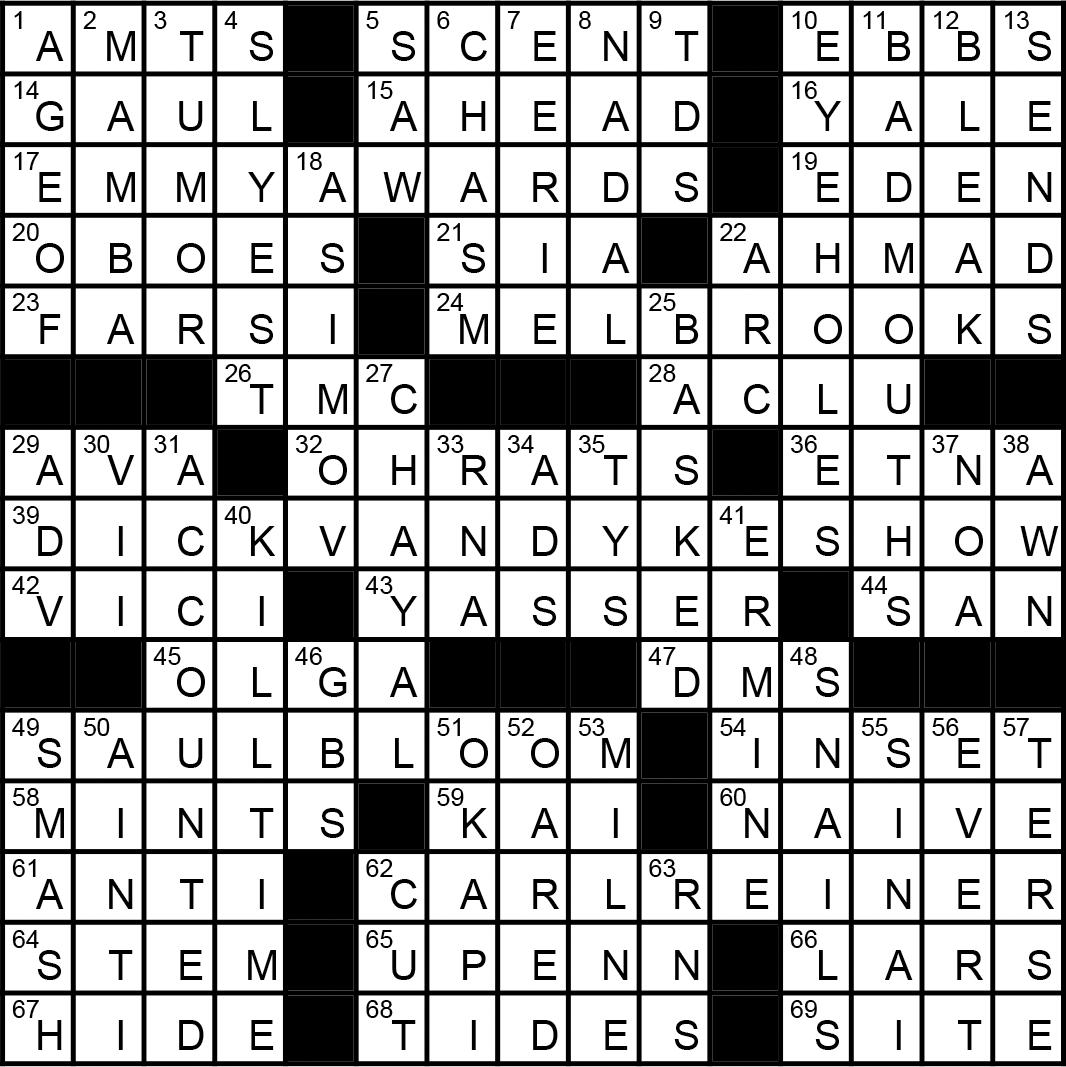
“Make Some Noise” By: Yoni Glatt Difficulty Level: Challenging

Across
1. One comes at the end of a fast
7. Miriam’s output after the Red Sea
15. Iota
16. Where Benedict Arnold fought heroically for America
17. Legendary jazz trombonist
18. “Piece of cake!”
19. Prepare salad
21. A cracker, when doubled
22. Locale of the largest gathering of Jews each year
25. Linden and Prince
27. One of 16 in a cup: Abbr.
Down
1. “For shame!”
2. British rec. label
3. Josh
4. “Ditto”
5. Dianna of “Glee”
6. “Yo!” alternatives
7. Portable Nintendo option
8. Grogger alternative
9. The Great and Little Bear, collectively
10. Polite palindromic address
11. Mega K-pop group
12. Really long stretch
13. General, to a Turk
14. [Is this mic on?]
20. Orlando stadium name
22. Parah Adumah exclamation
31. I Can’t Believe It’s Not Butter! product
32. Kevin Kline title role
33. Many midrashim
34. Neutral label on some products
35. “Give it ___ straight”
36. “___ Turim” (compendium of Jewish law)
37. Movie theater feature...or another title for this puzzle
40. Slicker
41. Acronym for Babe Ruth, to many
42. DMV datum
23. Clever escape
24. Drive back, as an enemy
26. The Count of Monte Cristo, e.g.
27. “Forbidden” fragrance brand name
28. Milder
29. Veteran sailors
30. [Impressive]
32. Krieger or Morrison
33. Harness gait
35. Latter part of Nevi’im, with 36-Down
36. See 35-Down
38. What one should do after shaking off the dust, according to latter Isaiah
39. Central figure on “Fauda”

44. Writer Klein Halevi
45. He won his sixth NBA championship with the Warriors
46. Utah’s state flower
47. Buccaneer’s blade
48. “But,” in Barcelona
49. You’ll find some six-packs here
50. The Orioles, on scoreboards
51. “Cheers” call
53. Descendants of Esau
58. Desi Arnaz’s signature song
62. Alaskan sled dog
63. Relief for a sore ankle
64. Some blasts
65. New Year’s peal
40. Certain syllables of lament
43. [Such a shanda!]
45. 99-year-old Jewish gymnast with five gold medals
46. Dark and dull
48. Exempt, halachically
49. Iota
50. Standing site
52. Last words
53. Israeli pauses
54. “Yup,” to Vladimir
55. Corrida hurrah
56. Cuban plater, for short
57. Where an American girl might study in Isr.
59. Dhabi preceder
60. When doubled, a Teletubby
61. [This lox is rotten!]
Ilia Salita represented a historical victory. His memory should challenge all Jews to learn from each other.
BY ANDRES SPOKOINY
(JTA) – Like many in the Jewish community, I was shocked to learn two weeks ago of the untimely death of Ilia Salita, CEO of the Genesis Philanthropy Group.
A man with quiet energy, understated authority and ironclad integrity, Ilia’s loyalty to his friends and colleagues was unmatched, even as he loved his family above all. He was the very definition of a mensch, a man who simply didn’t know how to have bad intentions.
But as important as it is to remember the man, it’s equally critical to remember his work.
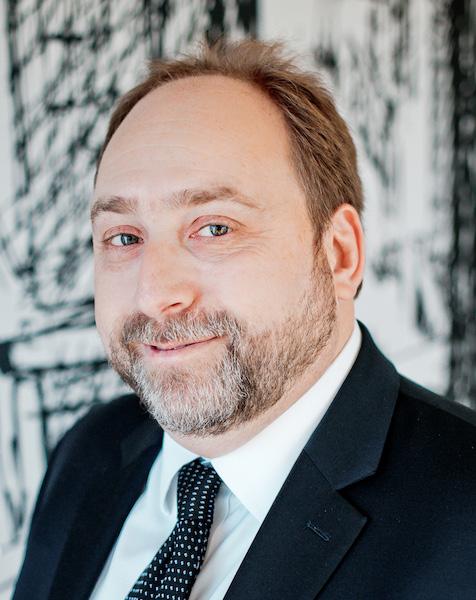
Ilia represented a historical victory. He was one of those Russian Jews for whose freedom we used to march and protest and who, once in America, served the Jewish people with unparalleled commitment.
As CEO of the Genesis Philanthropy Group, the first major Jewish foundation launched by Russian Jews, Ilia had the mission of “strengthening Jewish identity of Russian-speaking Jews worldwide.” Since Russian-speaking Jews are underrepresented in all American Jewish communal organizations, most American Jews ignore the importance of that population. But consider this, which Ilia once pointed out to me: There are more Russian-speaking Jews in New York than the entire Jewish population of South America, Canada or Britain. Ilia believed that Russian-speaking Jews were the biggest untapped resource of the Jewish people.
That’s why he wasn’t in favor of mere “integration” of Russian-speaking Jews into the American Jewish mainstream, a process by which a majority group “absorbs” a minority, which in turn suppresses its own identity in order to be accepted. That, he thought, deprived Russian-speaking Jews of their unique and rich identity, while at the same time depriving American Judaism as a whole, particularly since many elements of Russian-speaking Jewish identity are antidotes to the problems ailing American Judaism. (I spoke to him about all of this on the Jewish Funders Network’s podcast last year.)
For example: We learned from the Pew Report of 2013 that 30% of Americans have “no religion” but are likely to consume –and produce – Jewish culture. I’m sure that many Russian-speaking Jews read that and went, “Duh!” Arts and culture have always been key avenues to Jewish engagement for them, yet as a community we failed to capitalize on that experience.
Historically, American Judaism has changed with every immigration wave that came to these shores. The Sephardic Jews

who arrived in colonial times established a first type of American Judaism that changed radically when German Jews came in the mid-1800s. That mutated again in the early 1900s with the arrival of Eastern European Jews.
At some point in the postwar years, however, American Jewish identity seemed to crystallize and solidify. From then on, new populations – from Russians, to Persians, to Israelis – needed to “adapt” to that “mature” American Jewish identity whose openness to new forms of Judaism was marginal at best. That paradigm, Ilia rightly thought, made our community poorer and less vibrant, so he urged us not only to respect and celebrate Russian Jewish identity, but to look to it for solutions and levers of transformation and renewal.
It’s important to note that Russianspeaking Jews are not a monolithic group. Within that community there are Bukharians, Georgians, Muscovites, Litvaks, East and West Ukrainians, and many more. Each group has a unique heritage and a unique contribution to make. Yet we are not making enough efforts to understand those communities fully.
Jewish population studies, for example, fail to portray Jews accurately because researchers merely translate the words of the questions without considering their broader cultural significance. For example, a Russian-speaking Jew will likely understand the question of “Are you Orthodox?” as relating to the Russian Orthodox Church. They might read “Are you Reform?” as “Did you have a vice and you reformed yourself?” The task of truly understanding that community is still a pending assignment.
For Ilia, defending Russian Jewish identity didn’t mean “protecting” Russianspeaking Jews from outside influence. Rather the opposite: He was a master “cultural translator,” adapting things that worked in one culture so they would flourish in another. Ilia helped adapt
major programs like PJ Library, Moishe House, Birthright and others to the cultural sensitivities of Russian-speaking Jews. All those programs flourished in the Russianspeaking Jewish community and became key avenues of engagement. But they also enriched the entire program and the overall cultural acumen of the Jewish people. It’s not only that there are 20,000 families receiving PJ Library books in Russian, but that there are 150 new Jewish books that were developed as a result that are also available in English, enriching Jewish culture as a whole.
Ilia believed that Jewish communities should be pluralistic settings that allow the full expression of different Jewish identities. Peoplehood was a key value for him. That made him the right person to tackle another thorny problem: the fraying relations between Israel and the Diaspora, and the general loss of peoplehood consciousness among Jews. He was instrumental in creating Our Common Destiny, an initiative linking Jewish communities worldwide to a shared set of values, shaped by the input of tens of thousands of diverse Jews across national, religious and cultural identities.
And thus, things come full circle: Out of a strong sense of peoplehood, millions of Jews around the world fought for the liberation of Soviet Jewry. And one of those Soviet Jews then made – until his last conscious moment – an invaluable contribution to that idea of peoplehood.
Ilia’s fruitful and meaningful life is, of course, a testament to his values, intelligence and hard work. But it also represents a success story for the Jewish people. All those who marched for Soviet Jews can be fulfilled in knowing that their efforts facilitated the emergence of such a Jewish leader.
Ilia’s work is also a reminder of all that is still left to do. It is an invitation to explore the Other in our midst, to learn from them and enrich our lives with theirs. His memory should be a challenge for all of us: to learn anew the art of being a people.
To join our synagogue directories, contact Howard Meyerowitz at (860) 231-2424 x3035 or howardm@jewishledger.com.
BLOOMFIELD
B’nai Tikvoh-Sholom/ Neshama Center for Lifelong Learning
Conservative
Rabbi Debra Cantor (860) 243-3576 office@BTSonline.org www.btsonline.org
BRIDGEPORT
Congregation B’nai Israel Reform
Rabbi Evan Schultz (203) 336-1858 info@cbibpt.org www.cbibpt.org
Congregation Rodeph Sholom
Conservative (203) 334-0159
Rabbi Richard Eisenberg, Rabbi-in-Residence Cantor Niema Hirsch info@rodephsholom.com www.rodephsholom.com
Jewish Senior Services
Traditional
Rabbi Stephen Shulman (203) 396-1001 sshulman@jseniors.org www.jseniors.org
CHESHIRE
Temple Beth David Reform
Rabbi Micah Ellenson (203) 272-0037 office@TBDCheshire.org www.TBDCheshire.org
CHESTER
Congregation Beth Shalom Rodfe Zedek
Reform
Rabbi Marci Bellows (860) 526-8920 rabbibellows@cbsrz.org www.cbsrz.org
COLCHESTER
Congregation Ahavath Achim
Conservative
Rabbi Kenneth Alter (860) 537-2809 secretary@congregationahavathachim.org
EAST HARTFORD
Temple Beth Tefilah Conservative Rabbi Yisroel Snyder (860) 569-0670 templebetht@yahoo.com
FAIRFIELD
Congregation Ahavath Achim
Orthodox (203) 372-6529 office@ahavathachim.org www.ahavathachim.org
Congregation Beth El, Fairfield Conservative Rabbi Marcelo Kormis (203) 374-5544 office@bethelfairfield.org www.bethelfairfield.org
GLASTONBURY
Congregation Kol Haverim Reform
Rabbi Dr. Kari Tuling (860) 633-3966 office@kolhaverim.org www.kolhaverim.org
GREENWICH
Greenwich Reform
Synagogue
Reform
Rabbi Jordie Gerson (203) 629-0018 hadaselias@grs.org www.grs.org
Temple Sholom
Conservative
Rabbi Mitchell M. Hurvitz
Rabbi Chaya Bender
Cantor Sandy Bernstein (203) 869-7191 info@templesholom.com www.templesholom.com
HAMDEN
Temple Beth Sholom
Conservative
Rabbi Benjamin Edidin Scolnic (203) 288-7748 tbsoffice@tbshamden.com www.tbshamden.com
MADISON
Temple Beth Tikvah
Reform
Rabbi Stacy Offner (203) 245-7028 office@tbtshoreline.org www.tbtshoreline.org
MANCHESTER
Beth Sholom B’nai Israel
Conservative
Rabbi Randall Konigsburg (860) 643-9563 Rabbenu@myshul.org programming@myshul.org www.myshul.org

MIDDLETOWN
Adath Israel Conservative Spiritual Leaders: Rabbi Marshal Press Rabbi Michael Kohn (860) 346-4709 office@adathisraelct.org www.adathisraelct.org
NEW BRITAIN
Congregation Tephereth Israel Orthodox
Rabbi Andrew Hechtman (860) 229-1485
NEW HAVEN The Towers Conservative Ruth Greenblatt, Spiritual Leader (203) 772-1816 rebecca@towerone.org www.towerone.org
Congregation
Beth El-Keser Israel Conservative
Rabbi Jon-Jay Tilsen (203) 389-2108 office@BEKI.org www.BEKI.org
Orchard Street ShulCongregation Beth Israel Orthodox Rabbi Mendy Hecht 973-723-9070 www.orchardstreetshul.org
NEW LONDON
Ahavath Chesed Synagogue Orthodox Rabbi Avrohom Sternberg 860-442-3234 Ahavath.chesed@att.net
Congregation Beth El Conservative
Rabbi Rachel Safman (860) 442-0418 office@bethel-nl.org bethel-nl.org
NEWINGTON
Temple Sinai Reform
Rabbi Jeffrey Bennett (860) 561-1055 templesinaict@gmail.com www.sinaict.org
NEWTOWN
Congregation Adath Israel Conservative Rabbi Barukh Schectman (203) 426-5188 office@congadathisrael.org www.congadathisrael.org
NORWALK
Beth Israel Synagogue
– Chabad of Westport/ Norwalk
Orthodox-Chabad
Rabbi Yehoshua S. Hecht (203) 866-0534 info@bethisraelchabad.org bethisraelchabad.org
Congregation
Beth El-Norwalk Conservative
Rabbi Ita Paskind (203) 838-2710 Jody@congbethel.org www.congbethel.org
Temple Shalom Reform
Rabbi Mark Lipson (203) 866-0148 admin@templeshalomweb.org www.templeshalomweb.org
ORANGE
Congregation Or Shalom Conservative
Rabbi Alvin Wainhaus (203) 799-2341 info@orshalomct.org www.orshalomct.org
RIDGEFIELD
Congregation Shir Shalom of Westchester and Fairfield Counties
Reform
Rabbi David Reiner
Cantor Debora Katchko-Gray (203) 438-6589 office@ourshirshalom.org
SIMSBURY
Chabad of the Farmington Valley
Chabad
Rabbi Mendel Samuels (860) 658-4903 chabadsimsbury@gmail.com www.chabadotvalley.org
Farmington Valley Jewish Congregation, Emek Shalom Reform
Rabbi Rebekah Goldman Mag (860) 658-1075 admin@fvjc.org www.fvjc.org
SOUTH WINDSOR
Temple Beth Hillel of South Windsor Reform
Rabbi Jeffrey Glickman (860) 282-8466 tbhrabbi@gmail.com www.tbhsw.org
SOUTHINGTON
Gishrei Shalom Jewish Congregation
Reform
Rabbi Alana Wasserman (860) 276-9113 President@gsjc.org www.gsjc.org
TRUMBULL
Congregation B’nai Torah
Conservative
Rabbi Colin Brodie (203) 268-6940 office@bnaitorahct.org www.bnaitorahct.org
WALLINGFORD
Beth Israel Synagogue
Conservative
Rabbi Bruce Alpert (203) 269-5983 richardcaplan@sbcglobal.net www.bethisrael/wallingford. org
WASHINGTON
Greater Washington
Coalition
Rabbi James Greene (860) 868-2434 admin@jewishlifect.org www.jewishlife.org
WATERFORD
Temple Emanu - El Reform
Rabbi Marc Ekstrand
Rabbi Emeritus Aaron Rosenberg (860) 443-3005 office@tewaterfrord.org www.tewaterford.org
WEST HARTFORD
Beth David Synagogue
Orthodox Rabbi Yitzchok Adler (860) 236-1241 office@bethdavidwh.org www.bethdavidwh.org
Beth El Temple
Conservative
Rabbi James Rosen
Rabbi Ilana Garber (860) 233-9696 hsowalsky@bethelwh.org www.bethelwesthartford.org
Chabad House of Greater Hartford
Rabbi Joseph Gopin
Rabbi Shaya Gopin, Director of Education (860) 232-1116 info@chabadhartford.com www.chabadhartford.com
Congregation Beth Israel Reform
Rabbi Michael Pincus
Rabbi Andi Fliegel
Cantor Stephanie Kupfer (860) 233-8215 bethisrael@cbict.org www.cbict.org
Congregation P’nai Or Jewish Renewal Shabbat Services
Rabbi Andrea Cohen-Kiener (860) 561-5905 pnaiorct@gmail.com www.jewishrenewalct.org
Kehilat Chaverim of Greater Hartford Chavurah Adm. - Marcey Ginsburg Munoz (860) 951-6877 info@ kehilatchaverim.org www.kehilatchaverim.org
The Emanuel Synagogue Conservative Rabbi David J. Small (860) 236-1275 communications@emanuelsynagogue.org www.emanuelsynagogue.org
United Synagogues of Greater Hartford Orthodox
Rabbi Eli Ostrozynski synagogue voice mail (860) 586-8067
Rabbi’s mobile (718) 6794446 ostro770@hotmail.com www.usgh.org
Young Israel of West Hartford Orthodox
Rabbi Tuvia Brander (860) 233-3084 info@youngisraelwh.org www.youngisraelwh.org
WOODBRIDGE
Congregation B’nai Jacob Conservative
Rabbi Rona Shapiro (203) 389-2111 info@bnaijacob.org www.bnaijacob.org
(Israel21c) – Could a well-known cholesterol-lowering drug help treat Covid-19? A research team led by Hebrew University of Jerusalem Prof. Yaakov Nahmias says that early research looks promising. Over the last three-months, Nahmias and Dr. Benjamin tenOever at New York’s Mount Sinai Medical Center have focused on the ways in which COVID19 changes patients’ lungs in order to reproduce itself. Their major finding is that this virus prevents the routine burning of carbohydrates. As a result, large amounts of fat accumulate inside lung cells, and this enables the virus to reproduce.
This new understanding may help explain why patients with high blood sugar and cholesterol levels are often at a particularly high risk to develop COVID-19. With this information in hand, Nahmias and tenOever began to screen FDA-approved medications that interfere with the virus’ ability to reproduce. In lab studies, the cholesterol-lowering drug Fenofibrate (Tricor) showed extremely promising results. By allowing lung cells to burn more fat, fenofibrate broke the virus’ grip on these cells. Within five days of treatment, the virus almost completely disappeared, the researchers report in this week’s Cell Press’ Sneak Peak.
“If our findings are borne out by clinical studies, this course of treatment could potentially downgrade Covid-19’s severity into nothing worse than a common cold,” said Nahmias.
(JTA) – That hummus may not be as healthful as you want to believe, according to an environmental advocacy group’s latest research. Laboratory tests commissioned by the Environmental Working Group found glyphosate, the chemical better known as Roundup, in 80% of conventional chickpeas and hummus tested. Glyphosate, commonly used to kill weeds, is considered a likely human carcinogen. The Environmental Working Group is an advocacy group that commissions research on the health of consumer products. Among the brands that exceeded the organization’s benchmarks for safe levels of the chemical were Whole Foods Market Original Hummus, Sabra Classic Hummus, Sabra Roasted Pine Nut Hummus, Cava Traditional Hummus and Harris Teeter Fresh Foods
Market Traditional Artisan Hummus. (All brands fell well within the Environmental Protection Agency’s glyphosate limits.)
Organic food producers are not allowed to apply glyphosate to their crops, but the trials did detect the chemical in several organic chickpea products, although the levels were lower than in the conventionally grown products. But the levels in Whole Foods Market’s organic-label Original Hummus exceeded the Environmental Working Group’s benchmark for safety.
Producing one’s own hummus – an easy, no-cooking task – unfortunately offers no solution. The dry chickpeas tested had the highest levels of the herbicide of all the products it reviewed.
(JTA) – Eighteen major American Jewish organizations have called on the U.S. government to pressure Jordan’s King Abdullah II to extradite the woman who helped carry out a 2001 bombing in Israel that left two Americans dead. Ahlam Tamimi facilitated the bombing of the Sbarro restaurant in Jerusalem that killed 15 people, including Malki Roth, 15, and Judy Greenbaum, 31. Tamimi is wanted to stand trial in the United States on charges of conspiring to use a weapon of mass destruction against American nationals. The statement, signed by a mix of right-wing and centrist organizations, called on the government “to hold the Kingdom of Jordan accountable to its commitments under its extradition treaty with the United States and bring all pressure to bear, including, but not limited to, recent government legislation significantly impacting U.S. financial aid to Jordan.” The United States has sought Tamimi’s extradition for years, but the law allowing the State Department to leverage aid to demand extradition did not go into effect until late last year. Tamimi was sentenced to life in Israel but released in a prisoner exchange for captive Israeli soldier Gilad Shalit in 2011. She has since become something of a celebrity in Jordan. Roth’s parents have led an effort to make Tamimi face U.S. charges under American laws that allow the prosecution of terrorists who have harmed Americans overseas.
(JNS) Florida State University’s Student Government Association (SGA) passed a resolution on Wednesday, July 15, to adopt the International Holocaust Remembrance Alliance (IHRA) definition of antisemitism. The final tally following the hours-long meeting was 26-14.
The IHRA definition says: “Anti-
Semitism is a certain perception of Jews, which may be expressed as hatred toward Jews. Rhetorical and physical manifestations of anti-Semitism are directed toward Jewish or non-Jewish individuals and/or their property, toward Jewish community institutions and religious facilities.” Resolution 59 also focuses on supporting the Jewish community and fighting antisemitism. It calls for increasing Jewish representation in the Student Senate, holding Senators accountable for educating themselves about antisemitism, and supporting action by the administration to address antisemitism on campus.
The meeting to adopt the IHRA definition wasn’t without controversy. Two Florida state lawmakers – Broward County Rep. Richard Starke and Palm Beach Rep. Emily Slosberg, both Democrats – on the Zoom call were denied the opportunity to speak during the meeting by SGA senate president Ahmad Daraldik, who survived a vote of no confidence last month, 19-16-6, despite his past antisemitic posts.
“One of the biggest reasons that I am not going to allow the representatives to speak is due to the fact that in multiple media outlets in many different instances, they have made clear their intent on how they feel on different pieces of legislation and the internal affairs of how this student government works,” said Daraldik. “And due to the fact that we are a student government, I do not feel comfortable to allow legislators to sway senators to feel a different way or vote a specific way or whatever it may be that their intent is.”
Following several failed attempts by numerous student senators to override Daraldik’s choice, FSU student government president Jonathan Levin used his executive powers, ordering Daraldik to allow the lawmakers to speak as his guests. “They let us come to and speak to them, we should let them come and speak to us,” said Levin. “Honestly, this is ridiculous.”
“I am not pleased with people bending the rules to not allow free speech,” said Starke. “So thank you very much for giving me the opportunity to speak and sit here and waste three hours of my time just to speak for three minutes.” Slosberg added that “we constantly waive the rules. We wave the rules for many different reasons, and especially out of respect for our visitors and guests and the public. We always try to bend over backwards.”Neither Starke nor Slosberg directly addressed the resolution.
(JNS) The New York Police Department is investigating a possible bias-crime attack against a Jewish man on Saturday,July 11, and now the Anti-Defamation League is offering a reward to help catch the assailants. According to NYPD spokesman
Det. Hubert Reyes, the 51-year-old victim was walking down a street in Brooklyn, N.Y., on July 11 when occupants in a blue SUV began yelling antisemitic slurs at him. The victim answered them back, and “two men in the vehicle stepped out and punched the victim in the head.” The assailants drove off while the victim walked to a nearby hospital, where he was treated for a laceration to his head and a broken finger on his right hand.
“We are alarmed and deeply disturbed that another violent antisemitic incident has occurred in Brooklyn,” said Etzion Neuer, interim regional director of the New York/ New Jersey ADL. “This is horrific, and the hate must stop. The fact that this alleged attack took place during the Sabbath makes it even more egregious.” The ADL is offering a reward of up to $10,000 information leading to the arrest and conviction of the attackers.
Brooklyn is no stranger to antisemitic incidents. In December 2019 and January 2020, incidents were reported on a nearweekly basis.
(JTA) – The Royal Canadian Mounted Police has opened an investigation into a fringe right-wing politician who called for the removal of Jews from Canada. In a flyer and a video posted on Facebook on July 11, Travis Patron, the leader of the Canadian Nationalist Party, describes Jews as “swindlers,” “snakes,” “inside manipulators,” and a “parasitic tribe.” “If they had their way, our entire way of life would be eradicated,” Patron says in the video. “They don’t like us. In fact, they despite us because of what we are and the spirit we represent. They cannot coexist with it. And what we need to do, perhaps more than anything, is remove these people once and for all from our country.”
Shimon Koffler Fogel, CEO of the Centre for Israel and Jewish Affairs, the advocacy arm of the Jewish Federations of Canada, said Patron might not only be breaking Canada’s hate laws, but inciting actual violence against Jews. “It is absolutely outrageous that such vile hatred would take up any space in the public square,” Fogel said. “Such dangerous and dehumanizing language has all too often led to violence.” The video and flyer, both titled “Beware The Parasitic Tribe,” says Jews “infiltrate the media, they hijack the central bank, and they infect the body politic like a parasite.”
Fogel said CIJA is contacting other social network platforms because, in its view, Patron’s posts are a “clear violation” of community guidelines. ”Enough is enough,” he said.
In the last Canadian federal elections in 2019, Patron’s party, founded three years ago, garnered just 284 votes.
‘Death to Jews,’ swastikas drawn on gravestones in France
(JTA) – About 20 gravestones in a cemetery in southern France were vandalized with swastikas and the words “Death to Jews” and “Death to the French.” The graffiti was discovered in the Gruissan municipal cemetery in the Aude region on July 12. The gravestones appear to have been chosen at random and were not broken or toppled, France 3 television reported. The cemetery has been closed to the public. No suspects have been identified in the attack. The National Bureau for Vigilance Against Antisemitism, or BNVCA, in a statement condemned the desecration of the cemetery. The statement noted that the town of Gruissan is “usually rather calm, rather peaceful, and this aggression surprises and scandalizes us.”
Dutch threaten to fine store selling Hebron wine labeled as made in Israel
Inspectors said they would fine a store selling wine from the West Bank city of Hebron that is labeled as made in Israel. The warning came during a July 10 inspection of the Israel Products Center, an importer and retail outfit run by the pro-Israel group Christians for Israel. In a statement, the center said that two agents from the Netherlands Food and Consumer Product Safety Authority did not confiscate any products but warned that the center could face fines for violating labeling requirements. The center said it would not comply.
In 2015, the European Commission adopted regulations barring the labeling of products from areas it considers occupied by Israel as made in Israel, a decision it described as driven by a desire to give shoppers accurate information about product provenance. The regulations are binding, but the European Commission has limited recourse against violators.
Dutch Chief Rabbi Binyomin Jacobs accused the ministry of pursuing a double standard.
“Why inspect Israeli products but none from China, which occupies Tibet, or goods from Morocco, which occupies Western Sahara, or Turkey (northern Cyprus), Russia (Crimea)?” Jacobs said in a statement.
Iran’s Quds Force commander: ‘Tough times await US, Zionist regime’ (Israel Haom via JNS) The commander of the Islamic Revolutionary Guard Corps’ Quds Force, Maj. Gen. Esmail Ghaani, alluded to the fact that rough waters await Israel and the United States. Ghaani’s remarks on Tuesday, July 14, broke the
Iranian regime’s silence regarding a series of explosions that have recently occurred at Iranian industrial facilities.
“Tough times lie ahead for the United States and the Zionist regime. Major events are about to strike you,” said Ghaani, according to Iran’s Tasnim News Agency.
The commander hinted that a fire that broke out Sunday on the amphibious assault vessel USS Bonhomme Richard in San Diego was Iranian retaliation for the recent blasts. “The Americans should not look for who is responsible for what is happening to them. The fire they see now is a fire they themselves set. It is a response to the crimes your people have committed,” said Ghaani. The day before, Iranian media outlets reported that the IRGC planned to deliver cutting-edge anti-aircraft missiles to Syria. According to the Nour news agency, Tehran intends to send Khordad 3 and Bavar-373 missiles, both surface-to-air models, to the regime of Syrian President Bashar Assad.
(JTA) – Jennifer Grey, the Jewish actress who starred in the original “Dirty Dancing” film, is collaborating with Lionsgate on an untitled dance movie in which she will star and executive produce, Deadline first reported Tuesday, July 14, Lionsgate holds distribution rights to the original “Dirty Dancing” films, which include the 2004 prequel “Dirty Dancing: Havana Nights.” The company has not commented on the project. Grey, the daughter of actor Joel Grey, has in recent years starred in the Amazon comedy “Red Oaks” and won the 11th season of “Dancing With the Stars.”
News outlets covering Israel have run ‘deepfake’ op-eds. Again.
(JTA) – For the second time in a month, news outlets reporting on Israel and the Jewish community were found to have published opinion pieces by fictitious authors. Publications including Israel National News, The Jerusalem Post, The Algemeiner and the Times of Israel published pieces by a writer identified as Oliver Taylor, who does not appear to exist, according to a Reuters report this week. Rather than being a real person, Taylor appears to be a “deepfake,” or a hyperrealistic forgery, created in part to criticize a London academic, Mazen Masri, who was involved in bringing a lawsuit against an Israeli surveillance company, Reuters concluded after an investigation. Some of the publications that ran pieces by “Taylor” have since removed them, while others have left the pieces online with editor’s notes. The Daily Beast earlier this month reported that 46 conservative news outlets, including some reporting on the Jewish community,
were duped into publishing Middle East “hot takes” by 19 nonexistent authors as part of a massive propaganda campaign.
Israeli company that
(JTA) – An Arab Israeli-owned tahini company is facing a backlash after its owner donated to an Israeli LGBT rights group. Julia Zaher, who owns Al Arz tahini, made a “significant” donation to a rights group called Aguda to create a hotline for Arabic-speaking LGBT Israelis. After Aguda, tweeted appreciation in Arabic and in Hebrew, some Arabs called for a boycott of the popular brand, which produces more than 20 tons of the sesame paste daily in its Nazareth plants. Videos posted to social media showed some shopkeepers trashing Al Arz products.
The Israeli news organization Israel Hayom first reported the story and an extensive story in The New York Times and detailed it for a global audience. Al Arz tahini is distributed globally, with its adherents including the popular Israeli chef Yotam Ottolenghi.
“We have values that we follow,” Jabr Hejazi, one of the supermarket owners participating in the boycott, told the NY Times. “It’s a simple matter.”
The boycott is actually generating needed support for gay and transgender members of the Arab community, Arab LGBT activists told the newspaper. But Zaher is also under fire for donating to an Israeli rights group, rather than a Palestinian one. Aguda advocates for all LGBT people in Israel, regardless of their religion or ethnicity.
And a Palestinian group, the Al Qaws for Sexual and Gender Diversity in Palestinian Society, has criticized the New York Times for “eras(ing) Palestinian queer organizations” in its coverage. The reporter who wrote the story, Adam Rasgon, responded that the group’s executive director had declined to comment until he promised not to include Israeli Jews in the article. “Such constraints on the independence of our reporting are unacceptable,” he tweeted.
(JNS) Jordan’s top court dissolved the country’s branch of the Muslim Brotherhood, a Jordanian official said on Thursday. “The Court of Cassation [Jordan’s Supreme Court] yesterday [Wednesday] issued a final verdict ruling that the Muslim Brotherhood group is dissolved … for failing to rectify its legal status under Jordanian law,” the official said, according to AFP. The Muslim Brotherhood is a radical Islamic
organization that was founded in Egypt in 1928 and seeks to Islamize society and eventually the world.
The movement’s spokesman in Jordan, Moaz al-Khawaldeh, told AFP that the group will defy the ruling and continue functioning. “The Brotherhood will not melt away because of an administrative ruling, and we continue to carry out our activities in alternative rental properties,” said Khawaldeh. He added that the Brotherhood intended to appeal against the ruling. However, he added that “unfortunately, the authorities have shut the doors [to negotiations] … and are not offering any initiative to solve this crisis.”
Sheikh Hamza Mansur, head of the organization’s ruling council, said, “The Muslim Brotherhood … is a model of moderation and an important element in strengthening national unity, so dissolving it is not in the national interest,” according to the report.
Jordan has let the movement function for years and in 2015 supported a splinter movement called the Muslim Brotherhood Association.
(JTA) – Supreme Court Justice Ruth Bader Ginsburg announced that she is undergoing chemotherapy for liver cancer. In a statement Friday, July 17, a day after being released from the hospital for what she said was an unrelated reason, the 87-year-old judge said she plans to continue to work “full steam” as she undergoes treatment. Ginsburg has survived multiple bouts of cancer already, including pancreatic cancer, for which she underwent radiation therapy in 2019, and colon cancer in 1999.
According to the statement released by the court, the cancer was discovered in February and the chemotherapy treatment began in May. An initial course of immunotherapy failed to work, but the chemotherapy “is yielding positive results.” The statement also noted that the cancer is unrelated to Ginsburg’s recent hospitalization.
“My most recent scan on July 7 indicated significant reduction of the liver lesions and no new disease,” the statement said. “I am tolerating chemotherapy well and am encouraged by the success of my current treatment. I will continue bi-weekly chemotherapy to keep my cancer at bay, and am able to maintain an active daily routine. Throughout, I have kept up with opinion writing and all other Court work.”
Ginsburg is one of three Jewish justices on the court and leads its liberal wing. Sen. Mitch McConnell, R-Ky., the majority leader in the Senate, has said he will not hesitate to push through a replacement nominated by President Donald Trump should Ginsburg die or step down, no matter how close to the election.

For information on the following Zoom events hosted by Congregation Beth Israel visit cbict.org/calendar.
Super Tribe Havdalah
Saturday, July 25; August 8 & 22 Havdalah followed by a meet-and-greet for those 35 to 50 year old. Hosted by Tracy Taback.
Learn to Zentangle with Laura Marks
Wednesday, August 5, 7 p.m.
Zentangle is a method of creating abstract art using structured patterns. It can be used to decrease anxiety and increase relaxation and creativity. $5/materials fee, $10/family cap. Materials delivered to your door.
On July 30, 7 p.m., Mandell JCC Facebook LIVE will feature Talia Pollock, awardwinning podcast host, comedian, plantbased chef and CEO of the wellness company “Party in My Plants, who will discuss how to eat healthier without hating your life; how not to be a health-nut weirdo at the potluck; and how to not chose between feeling good and feeling happy.
The Jewish Historical Society of Greater Hartford is hosting a virtual program on Wednesday, July 22 at 7 p.m., to learn about Hartford’s historic Jewish cemeteries. Leonard Holtz of the Hebrew Funeral Association and Lisa Vaeth of the Federation’s Association of Jewish Cemeteries, will talk about how these cemeteries were first organized, where they are located, and what the challenges of maintaining them are. To register for this free program visit jhsgh.org/historiccemeteries/. For more information, email Lynn Newman at lnewman@jewishhartford. org.
Voices of Hope Summer Series presents: “Seeking Refuge: Exile to Mexico during the Second World War,” with Dr. Aleksandra Pomiecko; Tuesday, July 28, 7 p.m. on Zoom. For information and/or to register visit www.ctvoicesofhope.org or contact info@ctvoicesofhope.org.
“Di Yidishe Velt: A Virtual Festival of Yiddish Culture,” a project of UConn Center for Judaic Studies in partnership with the Jewish Hartford European Roots Project, co-sponsored by Voices of Hope, continues July 27, 7 p.m. with “The Yiddish Song To-day” with guest speaker Mark Slobin, Winslow-Kaplan Professor of Music Emeritus, Wesleyan University. Cosponsored by the University of Hartford Greenberg Center. To register, contact Pamela Weathers at pamela.weathers@ uconn.edu.
The Museum of Jewish Heritage – A Living Memorial to the Holocaust will host a screening of the film “Watermarks” on Thursday, July 23, 2 p.m., followed by a post-screening discussion with co-writer and film director Yaron Zilberman and Professor Raanan Rein of Tel Aviv University. “Watermarks” tells the story of the champion women swimmers of the legendary Jewish sports club Hakoah Vienna. Hakoah was founded in 1909 in response to the notorious Aryan Paragraph, which forbade Austrian sports clubs from accepting Jewish athletes. After the Anschluss in 1938, the Nazis shut down the club, but the swimmers managed to flee the country before the war broke out. Sixtyfive years later, director Yaron Zilberman meets members of the women’s swim team in their homes and arranges for them to have a reunion in their old swimming pool. Co-presented with The Office of Cultural Affairs, Consulate General of Israel in New York and Kino Lorber.
https://mjhnyc.org/events/watermarksfilm-and-post-screening-discussion/
The Jewish Federation of Greater Hartford is conducting an online survey of Greater Hartford’s Jewish community through August 5. Federation will use the survey responses to better understand and address the needs and interests of the local Jewish community. Those living in households in the Greater Hartford area for at least part of the year that include an adult who identifies as Jewish, or those who work for or serve on the board of a Jewish organization, are encouraged to complete the survey at https://bit.ly/HartfordFedSurvey. The survey is anonymous and confidential and takes approximately 10 to 12 minutes to complete. Respondents are eligible to participate in a drawing for one of ten $50 Amazon gift cards.
BY RABBI TZVI HERSH WEINREB
With this week’s Torah portion, Devarim (Deuteronomy 1:13:22), we begin a new book: Deuteronomy, the fifth book of the Pentateuch. This book differs from the previous four. In the first four books of the Bible, events take place, activities are performed, and stories happen. Not so in Deuteronomy. It is fundamentally one long speech; an exquisitely eloquent address, delivered over a period of 40 days.
Events are described in Deuteronomy, but no event actually takes place in the entire book. That is, until the concluding eight verses which describe the death of Moses. There is no storyline in this book. It consists of words of review, words of rebuke, words of instruction, and words of inspiration.
What is most astounding about this book-length address is that it is given by Moses, who, by his own admission, was not a man of words. You will recall that in the Torah portion of Shemos, Moses at first declined God’s mission, saying, “Please, O Lord, I have never been a man of words...I am slow of speech and slow of tongue.” (Exodus 4:10)
Our Torah portion begins, “These are the words that Moses addressed to all Israel…” Our Sages in the Midrash find this phenomenon remarkable: “Yesterday he said ‘I am not a man of words,’ and today he says ‘These are the words?!’ ...Rabbi Elazar put it this way: ‘Yesterday he was a pasilus [a Greek word meaning a person with a severe speech defect], and now he proclaims ‘These are the words!’ “
A contemporary rabbi, Yehuda Shaviv, whose work MiSinai Ba I admire, makes the same point: “This talent of Moses is a wondrous one. He, who began his leadership career so convinced that he was inarticulate that he depended upon his brother Aaron to be the spokesman able to convey his ideas to his audience, has now become, as his days are waning, a facile and persuasive speaker.”
How are we to understand this transformation? One cannot fully comprehend the unique nature of the book of Deuteronomy and its message unless we answer the question: Why did Moses change?
Rabbi Shaviv points out that Moses led his people for 40 years but spoke to them more in the last 40 days of his life than he did for the entire duration of his leadership. He argues that we must

postulate that Moses only now began to sense that the Israelites were finally ready to hear his words and to assimilate his message. Their hearts were now ready to open up and to understand both his words of faith and his words of rebuke. They were now ready to hear the hymn of mitzvot, statutes, and laws.
There is a very important lesson here. Language requires a relationship in order to be effective. Much depends upon the speaker, but the speaker must have a listener. Monologues do not communicate. Dialogs do. A speaker’s eloquence depends upon his conviction that someone is listening.
Rabbi Shaviv imparts yet another creative teaching in his essay on this week’s Torah portion. Moses becomes able to deliver his impressive address not only because he finally senses that he had a receptive audience. Rather, he can do so also because he has finally overcome his mistrust of “mere words.”
Remember the tragedy of Moses’ life, and remember the sin for which he was punished. The Almighty instructed him, when the people complained of thirst, to speak to the rock from which water would then flow. God instructed him to use “mere words.” But instead, Moses struck the rock with his staff. He only trusted a concrete object, a “real thing.” He mistrusted “mere words.”
So serious was his choice of things over words that God considered it a sin deserving tragic punishment. He, therefore, deprived Moses of achieving his most precious dream: entering the Promised Land.
The entire book of Deuteronomy is evidence that Moses learned his lesson well. He may have failed to use words to draw water from the rock, but he succeeded gloriously in using words to inspire his people, words which continue to reverberate eternally for all of us.
Rabbi Tzvi Hersh
is the Executive Vice President, Emeritus of the Orthodox Union.
BERKOWTIZ
Lenore “Leni” Berkowitz, 97, of Lantana, Florida, formerly of Columbia, Conn., died July 11. She was the widow of Myron “Muni” Berkowitz. Born in Brooklyn, N.Y., she was the daughter of Murray and Rose Flatow. She was an active member of Temple Bnai Israel in Willimantic since 1957. She was also predeceased by her brother, Howard Flatow; her sisters- and brothers-inlaw, Eva and Max Miller, Celia and Sim Fruchtman, Gigi and Hyman Stollman, Gil Flaum and Sam Berkowitz. She is survived by her children, Jerry and his wife Lisa of South Windsor, and Cheryl and husband David of Simsbury; her grandchildren, Mara Yacobi and her husband Ori, Ari Lejfer and his fiancee Jillian, Vincent Spera and his wife Alexandra, Melissa Spera, Danielle Peron, Jadien Smith, Cara Cavallari, and Corey Farnsworth; her great-grandchildren, Erez, Maya, Ethan, Leni Mae, Sophia, Gabe, Mickayla and Ian; and her sister-in-law, Estelle Flaum.
EINHORN
Jeanne Rosalyn Singer Einhorn, 98, of Rockville, Md., formerly of New Haven, Milford and Orange, has died. She was
the widow of Joseph J. Einhorn. She was predeceased by her best friends, Roz Berman, Sally Horowitz, Ann Rapp and Gert McClenning. She is survived by her children, Jonathan J. Einhorn of Westbrook, Mark F. Einhorn of Old Saybrook, and Michele Russell-Einhorn of Garrett Park, Md; her grandchildren, Kyle Einhorn, Sara Einhorn, Jeffrey Einhorn, Daniel Russell-Einhorn, Becca AbuRakiaEinhorn, and Joshua Russell-Einhorn; and her great-grandchildren, Charli, Sam, Enzo, Izzie, Sebastian, Lenox and Omri.

David Samuel Friel, age 86 of Fairfield, CT, passed away on July 15, 2020 at Yale New Haven Hospital, with loved ones by his side. David was born in Brooklyn, New York, the son of Norman and Mildred Friel. David was a man of great character, and love for God, family, country, and Israel. He honorably served in the United States Coast Guard during the Korean War and was a 60+ year member of the Brotherhood of Freemasonry. He earned a Bachelor’s degree in Business Management at NYU and pursued a Master’s degree in Education. David


had a successful business career, but will be long remembered for his passion volunteering for causes he held dear. These included: Board member and President of Hollander House, Hospice Volunteers of Connecticut, Literacy Volunteers of Southern Connecticut, and numerous volunteer programs in Israel, including serving with Sar-El during the Gulf War. David’s time was also spent with his cherished Congregation Beth El, shopping for their needs and regularly participating in morning minyan and other services with Roberta, where they could be found in their unassigned seats all knew not to sit in. David is survived by his beloved wife, Roberta, son Andrew Friel, daughter Laurie Robinson and her husband Harold Robinson, and his adored grandchildren Madeleine Robinson, Jonathan Robinson, and Elijah Robinson. Services were held on July 16, 2020 at the Congregation Beth El Cemetery, Fairfield, CT.
Sheldon Hoffman, 80, of West Hartford, died July 7. Born in Hartford, he was the son of the late Herman C. Hoffman and Rose (Solloway) Hoffman. His early family

were pillars of the historic Congregation Ados Israel in Hartford. He is survived by his sister, Esther Hoffman-Weinstein of Henderson, Nev.; his cousin Robert Hoffman and his wife Cynthia of West Hartford; and his life-long family friend Carolyn Levine of West Hartford.
Arnold Sbarge, 89, died July 15. He was the husband of Anne Sbarge. Born in New York City, he was the son of Manya and Samuel Sbarge, Russian immigrants who settled in Plainfield, New Jersey. He served as a medic in the United States Army during the Korean Conflict. In addition to his wife, he is survived by his children, Michael Sbarge and his wife Annalisa, Brenda Parrella and her husband David, Suzanne Cohen and her husband Rufus; and his grandchildren, Samuel and Rose Farrell, Reuben, David, and Emma Sbarge.
Farmington
























Caregiver - Willing to care for your loved ones overnight - Excellent local referencesAvoid nursing home or hospital in light of Covid 19. Call 860550-0483.
Tricia’s Cleaning Service - Residential & CommercialDetailed cleaning for Home & Office - For Free Quote call 860477-8636.
Polish certified nursing assistant. Twenty years experience in hospitals, nursing homes and private home settings looking to help your loved ones. Please call 860-803-6007.
Certified Home Care Aide
- Live-in - HHA CertficateExperience with dementia, stroke, alzheimer’s - Driver’s License - References - Lydia 718864-7600.
Mikael Poreshi - Remodeling & Painting - 860-978-2505 - miki. pori87@gmail.com.
Home Health Aide - Companion available for live in/live out Mon. - Fri. Valid driver’s license. Over 15 years experience. Excellent References. Call 860-796-8468.
CNA - 8 Years ExperienceReliable - Own Car - Live-in 24/7 - Negotiable Rates - Please call Tina 860-461-8692.
Compassionate Elder Companion - Driver & CookBeth: alifeofplantsandart@gmail. com.
P.C.A. - HHA Caregiver - 17 Years Experience - Available Live In or Live Out - Five Days a Week - Car Available - Have References - Please Call K.B. 860-796-8468.
Nurse (LPN, Male). 2 Years Experience in long term care. 4 Years Home Care as CNA and Nurse. Seeks Private duty. Reliable, honest, hardworking. 860-656-8280.
Caregiver for your elderly loved one available Thursday evenings to Sunday evenings. Kosher experience, stellar references. Monica - 347-486-0911.
New England Jewish Academy in Greater Hartford - Preschool aide to assist our two dynamic lead teachers - Wonderful children and supportive environment - Hours are 11:005:00 M-TH, 11:00-4:00 on Friday’s with the exception of winter when Friday hours are 11:00-2:20. We are also looking for an art teacher who can work one full day each week. Please email your resume to zsilver@ sigelacademy.org.
NURSE SEEKING POSITION: GETTING BETTER TOGETHER! Adult care only. Live-in, days or nights and weekends. Responsible and dedicated caregiver with medical education. Leave message: 860-229-2038 No Text Please.
Home Health Aide - Two Years Experience - Reliable - Livein seven days. References available, negotiable rates. Call Kwasi 774-253-5479.
Driver available for shopping & errands in the greater Hartford area. Reasonable rates, senior discount and references available. Call Ira 860-849-0999.
Caregiver looking for full time live-in job - HHA/Precursor CNA - 12 Years experience - Friendly, outgoing, dependable - Please call Janet at 412-527-9285.
CNA with 25 years experience, reliable car, live-in or hourly. References available, and negotiable rates. Call Sandy 860-460-3051.
CHAUFFEUR, WEST HARTFORD will drive you to New York, Boston, New England tristate area. Reasonable rates. References. Call Jeff 860-7124115.


Magnificent Vacation CondoDelray Beach 55+ CommunityFurnished One Bedroom - Meals Available -Monthly - Seasonal Please call 215-740-1165.
For lease- Boca Raton, FL. Fully furnished 2 bedroom, 2 bath condo with kosher kitchen in beautiful Century Village. First floor, parking, pool & club house. Call Mike 561-654-4221.
Third Generation Jeweler - Gold & Diamond Buyer - Is Buying All Gold Jewelry - Sterling Silver Flatware Sets - Diamonds Over 2 Carats - Fast PaymentContact - mitchellrosin@gmail. com.
Collector looking to purchase coins and currency, silver, copper, and gold. No collection is too small. Will travel. Call 860951-5191 paprfred@aol.com.
Accounting & Math TutorRetired College Accounting Teacher Will Tutor at Your Home - Call For Appointment 860-402-1201.
Motorized KD Smart Chairrarely used - excellent condition - Call or text 203-710-0615.