

Proudly Helping Navigate the World of Insurance for 50+ Years
“Dealing with my insurance” is no longer something I have to worry about . One call to Keating and you take care of the rest. Thank you! Customer since 2017
Extremely dependable service for over 40 years!!! Never gave a thought to changing insurance agents. Philip P, customer since 1973
You contacted me before a renewal. Expressed how you monitor plans and explained why it might be good to change and provided another plan plus how to save an additional discount. Your proactive approach confirms your clients are personally taken care of.
Susan C., customer since 2012
Keating Agency has always been responsive and willing to take the time to answer questions and solve any difficulties. We have been with the agency for long enough to remember Mike Keating Sr. and think he would be proud of the way the agency has continued to serve his clients.
Wilfred C., customer since 1978
The agency’s response to my my request for a quote was prompt and professional. The sales representative was very knowledgeable and answered all my questions and provided me options to consider to enhance my coverage. The quote provided exceeded my expectations and my coverage was increased at a much lower cost than my previous company. Additionally, all the staff are friendly and welcoming. I would recommend Keating insurance to anyone who wants good service and excellent coverage at a very fair price.
Paul H., customer since 2018

When Philadelphia Eagles wide receiver DeSean Jackson posted on social media antisemitic quotes falsely attributed to Adolf Hitler as well as posts praising Nation of Islam leader and noted antisemite Louis Farrakhan, the team’s two Jewish owners didn’t fire him. But others were quick to call him out. And so began the Jewish education of an NFL star. Photo from Wikimedia Commons. PAGE 14
Veg Out! 5
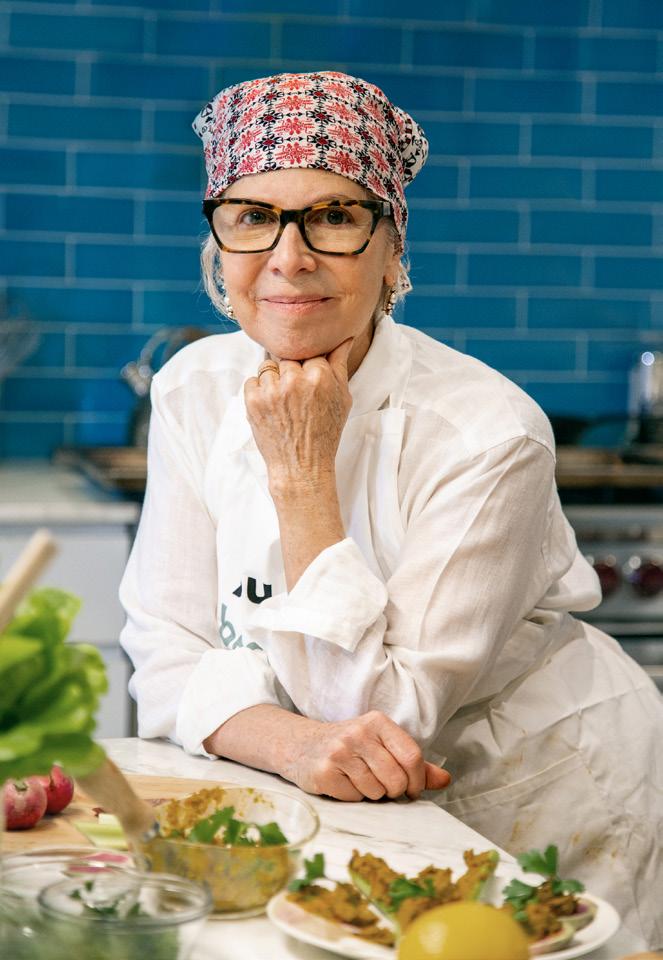
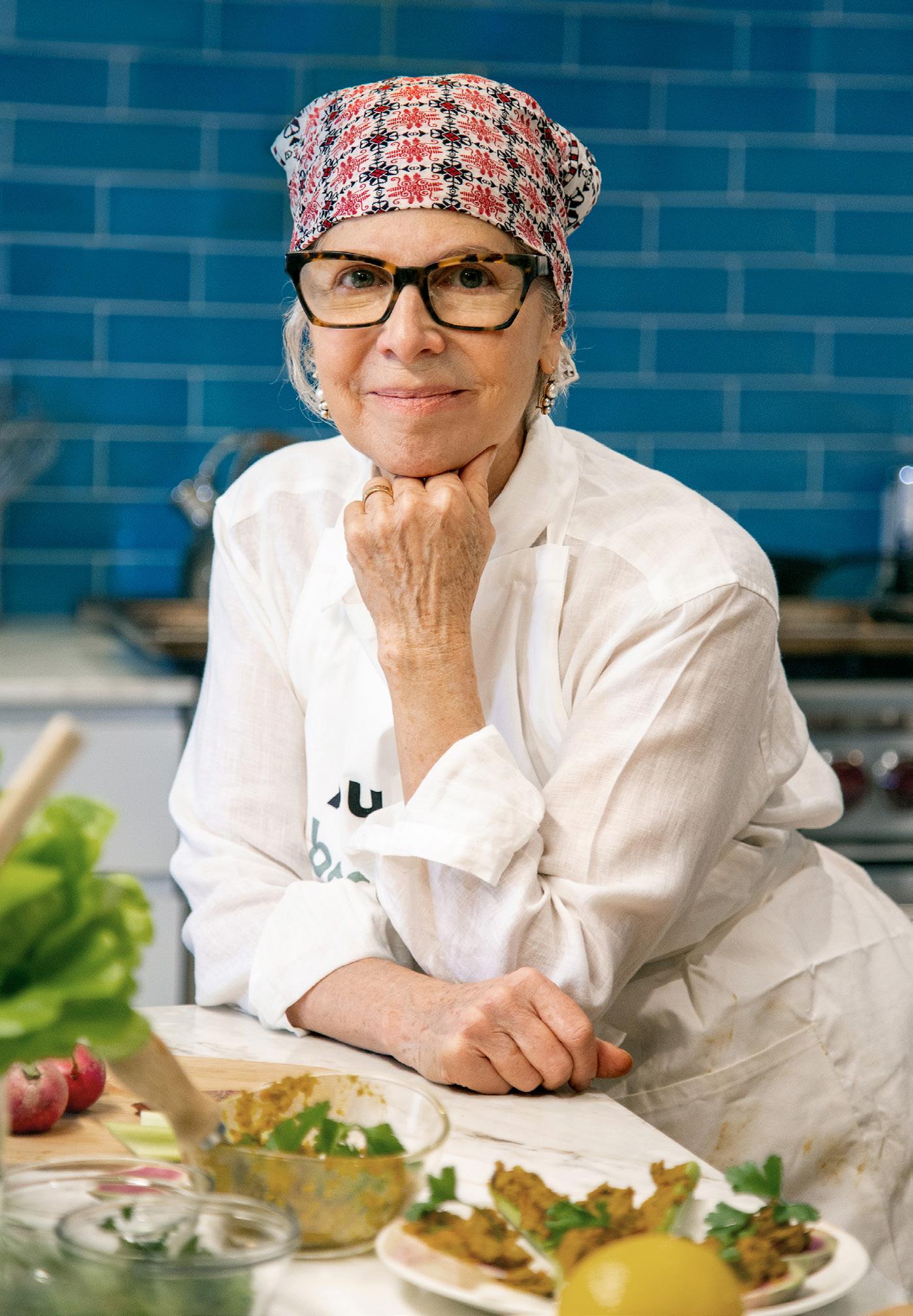
So your mother always told you to ‘eat your vegetables.’ OK…but for breakfast? That’s right, says cookbook author Nancy Wolfson-Moche. Change your breakfast, change your life.

Irish Eyes Smile 5
Ireland’s new government has eliminated a key bill that would have placed a boycott on products produced in Israeli settlements. That’s a win for Israel from a nation that has harbored biases against the Jewish state.
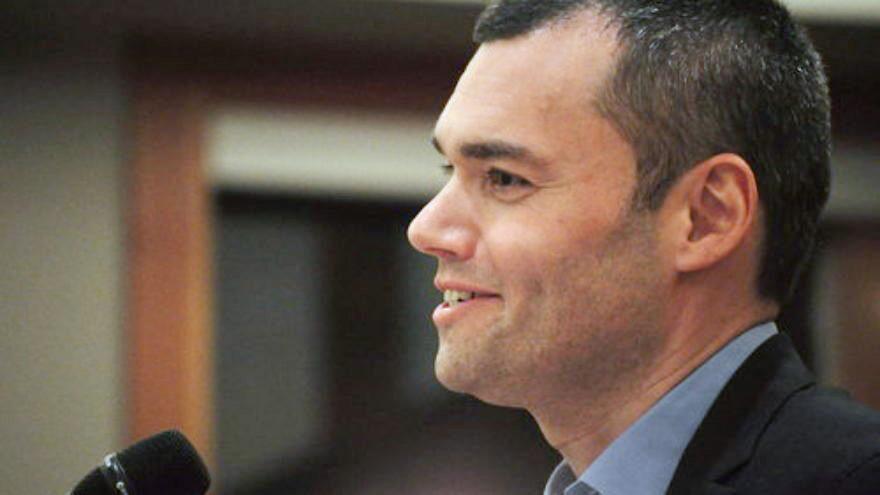
Peter Beinart want to replace Israel with a binational state, leaving Jews defenseless. Is anyone really surprised? asks Jonathan Tobin.

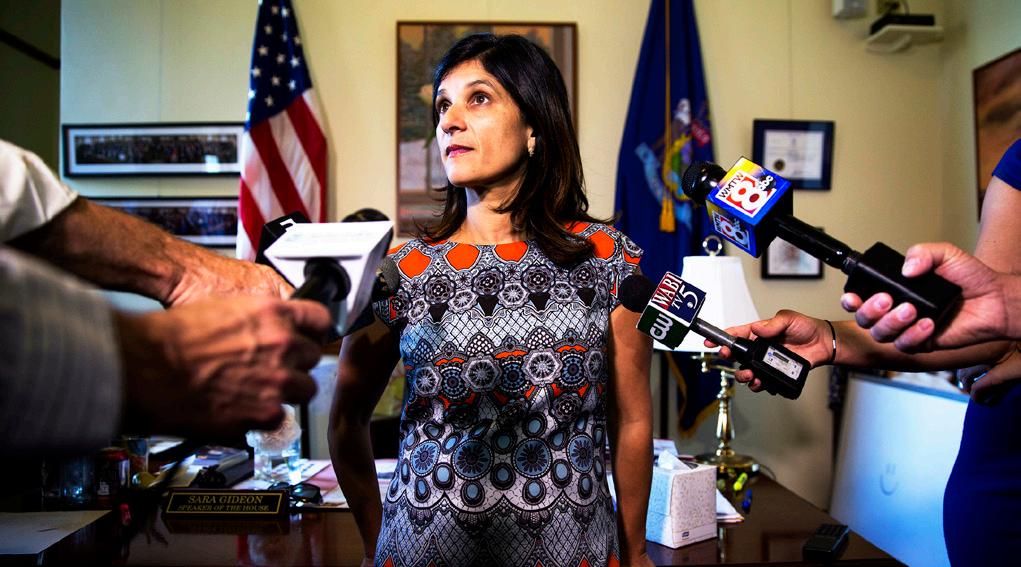
National Jewish groups see a chance to flip the state of Maine and are putting in the resources to elect Sara Gideon – and unseat 23-year Republican incumbent Susan Collins who has lost her luster for centrist Jews.
FRIDAY, JULY 17, 2020
Hartford: 8:05 p.m.
New Haven: 8:05 p.m.
Bridgeport: 8:06 p.m.
Stamford: 8:07 p.m.
To determine the time for Havdalah,

Arts & Entertainment
plans now in the works for a remake of the movie “Fiddler on the Roof,” one is left to wonder how you conceivably improve on the 1971 film? The answer: We have no idea.






UP FRONT
CONNECTICUT JEWISH LEDGER | SINCE 1929 | JULY 17, 2020 | 25 TAMMUZ 5780
Eating vegetables for breakfast with Nancy Wolfson-Moche
BY STACEY DRESNER
Nancy Wolfson-Moche wants to shake up the way we see breakfast.
In her new book, “Vegetables for Breakfast, from A to Z,” which comes out this month, the nourishment counselor, writer, blogger and food educator says that a breakfast that contains a whole grain food and a vegetable every day “can transform one’s digestion, consciousness, and very life.”
And the vegetable dishes she suggests are not of the mushroom and green pepper three-egg omelet variety many might envision.
Wolfson-Moche starts her book with Asparagus Almondine and ends with Zinguini – zucchini noodles sautéed in extra virgin olive oil and tekka, a Japanese powdered condiment made of roasted root vegetables.
In between, her recipes include offerings like Spicy Brussel Sprouts, Purple Daikon Corn Salad, Chopped Kale with Pine Nuts, Green Sashimi, made with green beans wrapped in carrot peelings, and Onions and Shitake on a Tofu Pad. Breakfast veggie dishes are paired with side dishes or “go withs” of grains like millet, barley risotto, rice, polenta, even steamed sour dough bread.
Wolfson-Moche, who lives with her family in Cornwall, Conn., has been eating vegetables for breakfast since she experienced difficulty getting pregnant in her 40s. Told that she was “beyond childbearing age” and not a candidate for high-tech fertility treatments, she tried more holistic avenues like acupuncture, yoga, Chinese herbs, rapid eye movement therapy, macrobiotics and more.
Through the advice of a macrobiotic counselor, she began making home-cooked meals of whole grains, vegetables and plant proteins, and sitting down to eat them on a regular schedule with her husband.
Not only did she soon conceive her first daughter, she also saw improvements in her digestive health and gained more
New Irish government rejects effort to boycott Israeli products
BY ISRAEL KASNETT
(JNS) The anti-Israel movement in Ireland has suffered a major defeat. Earlier this month, the political parties working on forming the next government in Ireland eliminated a key bill that would have placed a boycott on products produced in Israeli settlements.
Jonathan Turner, chief executive of UK Lawyers for Israel, told JNS that the bill was “carefully drafted so as to pretend to be about ‘occupied’ territories generally, but in fact would apply to just one disputed territory in the world, which happens to be the heart of the ancient Jewish homeland.”
The bill, he said, was “blatantly antisemitic.”
Turner said there was a “serious risk” that it would be approved by the Irish parliament “because so much of the Irish political class are hostile to Israel and believe the propaganda defaming Israel.”
Had the bill passed in Ireland, noted Turner, “we feared other countries would follow.”
Ireland’s two main parties struck an agreement in May to govern together for the first time. Leaders of the Fianna Fail and Fine Gael agreed on a draft agenda for a coalition government that will include a third party, the Greens, but not Sinn Fein –and not the anti-Israel legislation, at least for now.
Sinn Fein, the political arm of the former Irish Republican Army, has long-held positions that are anti-Israel. In the most recent Irish election in February, the radical party came in third behind Fianna Fail and Fine Gael, raising fears that Sinn Fein could enter into governing coalition.
NANCY WOLFSON-MOCHE, THE AUTHOR OF VEGETABLES FOR BREAKFAST.
Vegetables
energy, unintentionally losing 10 pounds. Continuing with this dietary change, she conceived her second daughter six years later and has continued to eat this way because of its benefits to her health.
Born and raised in Edgemont, a town in Westchester County, N.Y., Wolfson-Moche credits her mother, Harriet Wolfson, for sparking her love of cooking. But not in the way you might think.
“I dedicated the book to my mother because my mother never cooked, still doesn’t cook, and thanks to that she allowed me into the kitchen at a very early age and let me do a lot of cooking,” she said. “I think it was one of those situations where the lack of interest in my mother sparked a great curiosity in myself. I’m grateful for her for giving me that space.”
Both of her parents came from observant Jewish families but had over the years become Reform. Her family attended Temple Israel, a synagogue in New Rochelle.
“I grew up with a very Reform experience, but very much like my experience in the kitchen, I was the kid who came home from Hebrew school and said, ‘Why don’t we have a sukkah? Why aren’t we celebrating Tu B’Shevat?’” she recalled. “I grew really curious about all of those holidays that we didn’t celebrate. We celebrated the Rosh Hashana, Yom Kippur, and Pesach, and Chanukah, and I grew
I left home I just became a real learner, curious about Jewish tradition.”
After graduating from Trinity College in Hartford, where she double majored in Italian literature and political science, and attending the Johns Hopkins School of Advanced International Studies, she moved to New York City and joined a Conservative synagogue where she learned to read Torah.
“I just became more and more immersed, but feeling like I had lost a lot of time. In the end I feel that was a huge gift; to have come to prayer and Torah later in life so that it’s never rote for me.”
Wolfson-Moche worked for more than 20 years as a journalist on lifestyle magazines like Glamour, then spent several years living in Italy – a country she says had influenced her ideas about food as a child.
“I spent a summer in Italy when I was 13. It was really a transformative time for me in many ways…One thing that happened to me that summer was a whole new approach to eating and cooking that I developed.
“I ended up spending about 12 more years of my life in Italy, in which time I went to several cooking schools there as a journalist and I really developed an appreciation for whole food and fresh ingredients. In those years in Italy you couldn’t get any thing any time. Everything was fairly local. So I learned to cook that way, seasonally and locally.”
After marrying at the age of 42 and experiencing infertility, one of the people she turned to was noted macrobiotic counselor Denny Waxman who helped to

fine tune her diet.
“My diet was pretty much the standard American diet and if you look at that acronym, it’s S.A.D.,” she says. “And it was pretty sad. I thought I was eating a relatively healthy diet because I was eating a lot of fresh fruits and vegetables, but I discovered soon after I began practicing macrobiotics that actually I had IBS, Irritable Bowel Syndrome, and I had had it for a long time. I just thought that’s what happened when you ate; you got bloated and uncomfortable because I was so used to living that way.”
She had visited Waxman in the past to help deal with other health conditions, including fibroids. “He gave me recommendations, and in all honesty, I followed maybe 70 percent of them and they totally worked.”
Her fibroids disappeared in a month after only partially following the macrobiotic diet.
“So I had a lot of faith in his method. But this time I was so invested in wanting to have a child, and I felt that my time was so short that I followed 100 percent of the recommendations,” Wolfson-Moche explained.
The recommendations for fertility were not just about what to eat and what not to eat – “Basically the diet is more about how you eat than what you eat,” she said. “The key is sitting down to three regular meals a day at regular times, chewing your food really well, eating a whole grain – not a refined grain – and a separate vegetable dish with each meal. And as I say in the book, the separate vegetable dish can be a raw carrot or a pickle.”
She stressed that everyone is different and that Waxman looked at her individually when coming up with her diet plan.
“In my case, for example, I had been eating a lot of bread. I am a lover of bread, and still am a break love, so I really needed to cut back on that. But somebody else might have different specific recommendations”
She was also warned to stop eating eggs, which she says are acidic.
“I discovered so many things beyond my goals which were to get pregnant and have a child. I discovered that my body felt more balanced and lighter and cleaner… My energy level was better. My mind was sharper.”
Once her daughter was born, she realized she needed the energy the food plan gave her.
“Initially I said, ‘Once I get pregnant and I have the baby I’ll just go back to eating the way I used to eat, and once she was born I realized that I actually needed more energy than ever before and more sharpness in my brain.”
Staying on the diet, she was able to conceive her second daughter six years later at the age of 51.
In the past few years, Wolfson-Moche has continued to eat this way.
She says she is a pescatarian (eats fish), and while she prepares vegetables, whole grain and plant protein meals at home –“I’ve got a family that is not onboard with veganism and it’s really important to honor everybody’s preferences. I eat mostly vegan myself, but as a family we don’t.”
Wolfson-Moche, now a certified macrobiotic counselor and culinary medicine practitioner, founded You Are Because You Eat, an organization offering cooking classes and workshops for children, afterschool programming, menu planning and nourishment counseling. After writing a blog Vegetable for Breakfast (youarewhatyoueat.com/blog) and chronicling the vegetable’s she made for herself and family for a year, she decided to write the book.
“It’s pretty easy to eat a vegetable at lunch and dinner, but breakfast was a big leap because, first of all I spent 12 years in Italy where breakfast is a cappuccino and a cornetto – a more savory version of a croissant with less butter. But still, it’s basically a sweet and coffee.
So the vegetable for breakfast was really challenging because it wasn’t something I was used to.”
But she came up a variety of simple vegan dishes perfect for breakfast. Blanched, sautéed, steamed and raw fresh vegetables, with interesting accent flavors – fruit, lemon juice, pomegranate seeds, turmeric, ginger, sumac and edible flowers.
Foods from other cultures are also highlighted. She includes Japanese tekka and nori in recipes, a nod to her husband, an Iraqi Jew who was raised in Kobe, Japan. Jewish and Middle Eastern foods are also accounted for: Dolamades, Italian Parsely Edamame Hummas, Quinoa Tabloueh, Fatoush, and Jerusalem Artichoke, Parsnip and Fennell Pancakes, Wolfson-Moche’s version of a latke.
Taking her readers through the recipes, Wolfson-Moche lists ingredients and instructions, but also includes information about the foods – Did you know fennel is a cousin to the carrot? – as well as their origin and nutritional value. She mixes in sections like “Chew More, Eat Less” encouraging readers to eat slowly and mindfully. She even includes a Jewish folktale about the importance of eating with gratitude.
Wolfson-Moche says eating vegetables for breakfast “frames you day, establishing its rhythm and tone.”
“What eating vegetables for breakfast does is, it really kind of sets up you palate for the rest of the day,” she explained. “If you eat a really sweet breakfast, which can be anything from pastry to pancakes with bananas and maple syrup, you’re setting yourself up to crave sweets for the rest of the day. Whereas, if you eat more a balanced breakfast with a range of different flavors you setting yourself up to crave those flavors. And that’s I think how change really happens.”
Despite robust ties between Israel and Ireland, the country has gained the reputation as one of the most critical in the European Union when it comes to the Jewish state. Ireland also has a robust BDS movement led by the Ireland-Palestine Solidarity Campaign that has long been a vocal critic of Israel and its policies towards the Palestinians.
‘A
serious bill’
According to Turner, this was a serious bill, cobbled together with great effort and “backed by a coalition of NGOs [GLAN, Trocaire, Christian Aid, Irish Congress of Trade Unions] determined to push it through and able to put large resources behind it.”
“A plus point of our victory is that it has been so expensive for our opponents,” quipped Turner.
When the bill was introduced in the Senate by Sen. Frances Black in January 2018, pro-Israel group Irish4Israel, with the assistance of UK Lawyers for Israel (UKLFI), took prompt action and pointed out to Irish politicians that the bill would contravene E.U. law. This remained a central sticking point throughout the ensuing debates in the Irish parliament and

Ignacio Wenley, Spanish Counsel for the Lawfare Project, followed up with a submission to the E.U. Commission that the bill was illegal.
According to UKLFI, the Lawfare Project and the Foundation for Defense of Democracies (FDD) also emphasized that “major U.S. companies with subsidiaries in Ireland would be exposed to serious liabilities and loss of tax benefits under U.S. law if they complied with the bill.”
“This provided an additional reason why the Irish government rejected the bill, as well as reinforcing the objection under E.U. law since it exacerbated Ireland’s potential liabilities for the breaches of E.U. law if the bill were enacted,” said UKLFI.
Turner said that prompt action on the bill, detailed analysis on how it contravened E.U. law and the possibility of a U.S. counter-boycott of Ireland all had a significant impact on the end results.
Turner added that the bill could have become law save for “a requirement in the Irish constitution that a bill for the appropriation of public money must be approved by the Prime Minister – and the minority government led by Prime Minister Leo Varadkar and Deputy Prime Minister Simon Coveney refused to approve it on the grounds that it was illegal.”
“I do not know whether the bill would have been stopped without our involvement,” he said. “It is possible that

the Irish government and/or the E.U. Commission would have picked up the incompatibility with E.U. law without our assistance. But they might not.”
‘An
alternative line of attack’
The new Irish government set to be sworn in will come at a time when the country, like many others globally, is facing economic ramifications as a result of the coronavirus pandemic. At the same time, Ireland is also set to take up a seat in the U.N. Security Council in 2021, giving the country an outsized voice on the international stage.
Nevertheless, given the Irish affinity for the Palestinian cause, many in Jewish and pro-Israel circles remain concerned that the country could end up enacting retribution against Jerusalem for its plan to apply
Independent Living & Customized Assisted
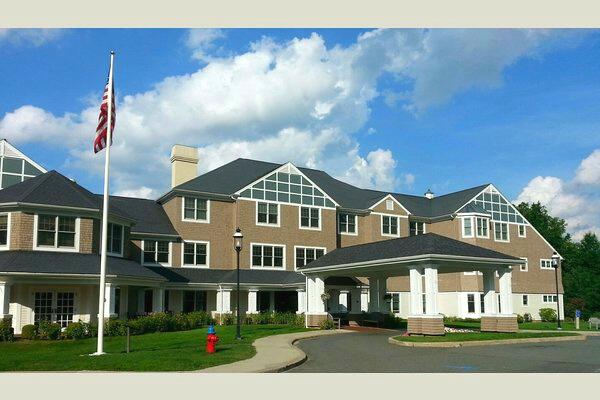
sovereignty to parts of Judea and Samaria in the coming weeks.
“We see annexation as a breach of international law that is dangerous and requires a response,” Irish Ambassador to Israel Kyle O’Sullivan recently told The Times of Israel. “But we don’t issue threats; we don’t issue warnings.”
At the same time, groups in Ireland may also try to continue to push the boycott bill. While Turner was hopeful that the anti-Israel groups “will be deterred for some time by this expensive setback,” he acknowledged that they “may well try again with a similar bill in Ireland or elsewhere.”
“They will probably look for an alternative line of attack,” he said, such as “persuading Ireland and other countries to recognize a State of Palestine if Israel goes ahead with the proposal to extend Israeli law over parts of Judea and Samaria.”

THE IRISH PARLIAMENT OR OIREACHTAS.
CREDIT: IRISH MINISTRY OF FOREIGN AFFAIRS.
COVID19: Do Brooklyn’s Hasidic Jews have herd immunity?
BY SHIRA HANAU
(JTA) – The front page of the June 26 issue of Der Yid, a popular Yiddish newspaper among New York’s Hasidic Orthodox communities, made the point loud and clear.
“And so it was after the plague.”
Those words, lifted from a verse in the Torah and printed alongside photos of large gatherings of unmasked Hasidic men, had a clear implication: After months of funerals and fear, the modern-day pandemic had passed and the time had come to gather again.
That sentiment appears to be guiding life in Brooklyn’s Hasidic communities, where nearly four months after the virus first arrived, synagogues and camps are open, yeshivas resumed classes before closing for summer break and wedding halls are packed again, sometimes in violation of city and state rules.
Continued gatherings of Hasidic Jews drew criticism from New York City Mayor Bill de Blasio and others in the city this spring who said the communities were not doing their part to stop the spread of the virus. But inside the communities, the overwhelming perception is that most people have had the virus and may now be immune.
“That’s the feeling, that they’ve had it, everybody they know has had it, and the people they know who haven’t had it have some kind of immunity that we just don’t understand yet,” one Williamsburg health administrator said.
If community members’ assumptions are correct – and that’s a big if, as much is not yet known about whether and how COVID19 infections provide later immunity –Brooklyn’s Orthodox neighborhoods would stand alone. Even in the few places such as Sweden that have explicitly pursued a strategy of trying to reach herd immunity, antibody tests show that most of the population there has not yet been infected.
But a confluence of bad timing, large families in cramped apartments and a highly social way of life that can’t be replaced virtually gave residents of Brooklyn’s Orthodox neighborhoods little opportunity to try to prevent a major outbreak. Now local health care providers and administrators say surveys and tests suggest that as many as 70% of the community has had COVID-19 and recovered, and that new cases have slowed or stopped entirely in their neighborhoods, despite a near total return to normal behavior, including large gatherings.
As case numbers skyrocket in many parts of the U.S., the grim experiment that unfolded in Brooklyn’s Hasidic communities offers a compelling case study for those trying to understand this virus –
and the costs that come with experiencing its proliferation.
“I have a sad feeling that we can go out and about because we were lax,” said Yosef Rapaport, a 65-year-old media consultant in Borough Park whose brother and a brother-in-law were among the hundreds of community members to die this spring.
After being extremely cautious for months, even Rapaport admits that the lack of new cases has put him somewhat more at ease. But the way the community got there is something he wouldn’t repeat if given the chance.
“It’s not something that makes me happy,” he said. “To benefit from the bad is something that makes me sad. But I can’t have complaints that people live in the reality that exists.”
The window to “flatten the curve,” as public health officials exhorted the public to do in the pandemic’s early days, in the tightknit Orthodox communities of Brooklyn may have been over long before government officials began advising New York City residents to begin social distancing and wearing masks.
That’s because a majority of the cases in the Orthodox community, many believe, came in the days leading up to and on the Jewish holiday of Purim on March 9 and 10. While the mayor and governor were still days away from shutting down schools and businesses, parties and prayer services on Purim seeded the epidemic in Crown Heights, Borough Park and other neighborhoods with large Orthodox communities.
A week later there were just over 800 confirmed coronavirus cases across New York City. More than 100 had come from just one Borough Park clinic serving Orthodox Jews.
That was the beginning. Over the coming weeks, the communities were ravaged by the disease. And then, just as abruptly as it began, the pace slowed. One large burial society in Brooklyn said the volume of dead bodies needing preparation for burial dropped off two weeks after Passover, which ended in mid-April. They had prepared 700 bodies for burial during a period in which they would normally have prepared 100.
Widespread efforts toward social distancing began to wane in some Hasidic neighborhoods, especially Williamsburg and Borough Park. No spike in cases seemed to follow in those neighborhoods, according to health professionals there, reinforcing the sense for many that the danger had passed. Meanwhile, a group of local doctors working to track COVID cases in the Hasidic community in Crown Heights, where distancing guidelines appeared to
be more widely adhered to for a longer period of time, found that local newly symptomatic cases peaked on March 15. That was just five days after Purim and weeks before the city’s new cases peaked, well into widespread distancing. The doctors began working together in March under the auspices of the Gedaliah Society, a professional development group that functioned in relative obscurity before the pandemic but quickly became an authority in the community’s efforts to respond to the pandemic.
Using a Google form disseminated on a blog and through social media, the doctors asked local residents to self-report their symptoms, detailing when the symptoms began and other information that would help the doctors understand how far the virus had spread.
More than 3,500 people responded quickly to a subsequent survey asking respondents for antibody test results, leading the doctors to estimate that a majority of community members could have antibodies. They estimated that slightly more than 70% of the community’s adults between the ages of 25 and 65 had “been sick with COVID-like symptoms.” Among adults over age 65, they estimated, 55% had been sick.
Without random testing, it’s impossible to know the true penetration of the virus in Crown Heights. But the doctors’ estimates would put the community within the range that scientists say is likely to confer herd immunity, meaning enough of the community has recovered from a disease or been inoculated by a vaccine to significantly mitigate or stop the spread of the disease within the community.
That’s exactly what the doctors said they were seeing.
“In our little island of Crown Heights, we have had relatively few new cases over the past few weeks,” they wrote on May 11.
The situation had improved even more by their update on June 5, when they reported no new cases in the community.
“Presumably, this is due to the large percentage of Crown Heights that has been already affected, conferring a substantial degree of immunity to us as a community,” the doctors wrote on June 5.
In late June, they wrote again that they knew of no new local cases.
The Crown Heights survey looked at just one neighborhood, but Borough Park and Williamsburg, two other neighborhoods with large Hasidic populations, appear to have had a similar experience.
Overall, there is evidence that many people across New York City have had COVID-19 already. In May, Gov. Andrew Cuomo said an antibody study had shown
a citywide positive rate of 19.9% and a positive rate of 29% in Brooklyn. A study posted in early June of over 28,000 antibody test results in the New York City area showed that 44% of respondents who walked into clinics for antibody testing were found to have them. (That study has not yet gone through the peer review process.) But none of those studies offers a picture of the situation in Hasidic communities, which are relatively insular.
“What’s more helpful are what we’re getting from the community health centers where the Jewish people are going to be tested for their antibodies,” said Blimi Marcus, a nurse practitioner living in Borough Park who has been an outspoken advocate within the Orthodox community for staying home to stop the spread of the virus. “And the numbers are high.”
Administrators and providers from four health care clinics with locations in Brooklyn’s Hasidic neighborhoods told JTA that they had seen antibody positive rates that were far higher than the citywide data.
“In the first weeks when they first started to offer it, positive rates hovered in the 55-60% range,” Yosef Hershkop, regional manager at Kamin Health, said of the tests done at his clinic. Kamin Health has locations in Crown Heights, Borough Park, Williamsburg and Queens and performed thousands of antibody tests across all four locations. Hershkop said the percentage of antibody tests that came back positive had dropped in recent weeks but was still above 50%.
Gary Schlesinger, the CEO of Parcare, a chain of health care clinics, said his clinics in Williamsburg and Borough Park had seen antibody positive rates of 70-74%.
A health care administrator at a large Williamsburg clinic that serves mostly Hasidic patients said she had seen antibody positive results of around 40%. But that number rose to 75% if you looked at males aged 18-34.
An especially high infection rate among young men is just one piece of the community’s antibodies picture. Hasidic communities tend to be younger on average, with couples often having as many as eight children or more. According to the city’s most recent population data, just over 50% of Borough Park’s population is 24 years old or younger and 14% are under six. Mounting evidence suggests that young children are unlikely to be sources of transmission for the coronavirus, meaning that Orthodox communities essentially have a disproportionately high share of dead ends for the virus, or at least a larger proportion of people who are at lower risk of becoming seriously ill.
Schlesinger, who is not a doctor, doesn’t
claim to know why the community has seen so few cases despite synagogues and schools reopening. But if you assume that antibodies confer immunity, he said, then the numbers point to herd immunity.
“If you’re talking in the 70s and if herd immunity means something, then that’s what it is,” he said.
But Dr. Aaron Glatt, the chief of infectious diseases and hospital epidemiologist at Mount Sinai South Nassau on Long Island and an Orthodox rabbi, questioned whether any data from local clinics or groups like the Gedaliah Society in Crown Heights could show that a community had achieved herd immunity.
“Unless they’re getting a random sampling of the community, statistically it’s worth zero,” he said.
Still, several epidemiologists and doctors studying the novel coronavirus acknowledged that it would be possible for Orthodox communities to have especially high rates of positive antibodies and the protection they may provide.
“I think there are likely segments, enclaves, whatever, where a large number of people in the Orthodox community have been infected and recovered and thus a major outbreak among that group is unlikely,” said Dr. Michael Joyner, an anesthesiologist at the Mayo Clinic who is leading a national study on the effects of convalescent plasma in treating COVID patients. Young Orthodox men were among the first participants in the study and have made up a large percentage of plasma donors.
“More spread leads to closer possibility for some herd immunity,” said Dr. Gary Slutkin, an epidemiologist who worked with the World Health Organization for over 10 years on AIDS programs in Africa.
Slutkin and Joyner both warned that somewhere between 50% to 80% of the population would need to be immune from the disease in order to significantly mitigate the spread of the virus. The self-selection in the available antibody test results makes even the highest estimates only a risky guess, and there is also much that remains unknown about coronavirus antibodies, including whether they confer immunity, how long that immunity lasts and whether all people with immunity will get positive results.
Because of these questions, the prevailing advice among public health officials is that even people with antibodies should continue to wear masks and practice distancing.
But residents of some Orthodox neighborhoods say masks are an uncommon sight on streets that are bustling again, much as they were before the pandemic hit.
As the summer warmed up, parts of the Hasidic community began the usual summer rituals. Day camps opened, and wedding halls reopened to large unmasked crowds, and families relocated to bungalow colonies in the mountains.
All of this is possible, one health care administrator in Borough Park said, because of the high early infection rate.
“The frum community had an advantage over everybody because they were mingling on Purim and all these other times,” he said. “It paid off.”
But while the results of this experiment in herd immunity may be encouraging, the cost at which they were acquired were steep.
“We have paid a terrible price in order to achieve this statistic that is more than double that of our neighbors in Flatbush, and certainly much more than that of New York City, or for that matter any other community in the country,” the Gedaliah Society wrote on May 20. “This high rate of past infection community wide will, with the help of Hashem, protect us from the virus reactivating and spreading again locally, which would thereby put the vulnerable at high risk.”
And unsettling questions linger about how safe the community really is. One concern is that older people and others who are at higher risk may be continuing to isolate for fear of infecting themselves now that the communities have relaxed their restrictions.
In Crown Heights, usually a site of pilgrimage for visitors from around the globe, local leaders are exhorting travelers to stay home – especially those from hot spots states like Florida and California.
By early July, the doctors’ fears had materialized. First, they had encountered a troubling case of possible reinfection in the community. Then, earlier last week, someone who had traveled to one of those hot spots tested positive upon returning to Brooklyn.
They urged continued caution and a 14-day quarantine for those traveling to areas with increasing infection numbers.
How the communities weather the summer camp and travel season could offer additional insights about how vulnerable they still are to the virus.
The more people in a community who have indicators of immunity, the slower the virus is likely to spread – even as members of the community could remain at risk. This makes Brooklyn’s Orthodox neighborhoods worth watching as the pandemic moves into its next phase.
“It’s not an all-or-none thing,” said Joyner, the Mayo Clinic anesthesiologist. “It’s going to make it harder for there to be a mega outbreak. But harder does not mean they’re not going to happen.”
Practices in Care Change

Safety, comfort, and responsiveness have always been the hallmarks of care and ser vice at both of our facilities. We don’t take anything for granted Today our experience enables us to sustain the high quality care these ever-changing conditions require. We provide personalized post-acute and transitional care, traditional long-term care, dementia, hospice, and respite care ser vices
Let us tell you more.

Peter
Beinart promotes the idea of a onestate solution. And the state isn’t Israel.
(JNS) There’s a reason why most Israelis find it difficult to listen patiently to lectures from liberal American Jews. For Israelis, their country is a real place filled with real people and perplexing dilemmas that have no easy solutions. But for all too many American Jews, Israel is a dreamland – a place for intellectual tourism where we can project our own insecurities and anxieties on the Jewish state while expressing our moral superiority over the lesser beings who live there and lack our wisdom.
Which brings us to the problem of Peter Beinart.
Beinart, the former editor of The New Republic and columnist for The Atlantic, sought to carve out a place for himself as the leading liberal critic of Israel with his 2012 book The Crisis of Zionism. The book was as spectacularly ignorant as it was arrogant in its refusal to acknowledge the reality of the conflict between Israel and the Palestinians.
The conceit of the work was that Israelis needed to rise above their fears and recognize that a two-state solution was within easy reach. Anything that contradicted his assumptions – like the nature of Palestinian political culture or the continued rejectionism and obsession with the fantasy of Israel’s destruction –was either rationalized or ignored. Too immersed in their unseemly quest for security and profit, Israelis could only overcome the “crisis” of the title by listening to the wisdom of Beinart, a righteous American pilgrim, whose manifest good intentions should have generated respect and deference from his recalcitrant Israeli pupils.
Much to Beinart’s chagrin, rather than take the advice of a leading American public intellectual to heart, Israelis ignored it. In the eight years since then, Israel has endured more violence and political controversy while the Palestinians have continued to reject peace, whether along the lines laid out by President Barack Obama (whose alleged bona fides as a friend of the Jewish people was discussed at length in his book) or the less generous terms offered by President Donald Trump.
Instead of moving closer to moral and physical collapse as Beinart has
BY JONATHAN S. TOBIN
been prophesying, Israel has only gotten stronger. Much of the Arab world has tired of Palestinian intransigence and largely abandoned advocacy for their cause, as many now perceive the Israelis as a vital ally in the struggle against Iran, as well as a needed resource in the areas of technology, agriculture and clean water. Peace with the Palestinians is not in sight. But until it becomes possible, the Jews of Israel will hold on and continue to thrive.
All of this has left Beinart deeply troubled. He understands that events on the ground have refused to conform to his ideas. So rather than stick to his tired mantra about two states, Beinart has decided to junk it.
The result is an 8,000-word essay in Jewish Currents – the far-left magazine where he now writes on Jewish affairs after having decided that the ultra-liberal Forward was no longer woke enough for him – and a shorter version published in The New York Times in which he decides it’s time to give up on two states or rather the whole idea of a Jewish state. His “Yavne: A Jewish Case for Equality in Israel-Palestine” is a manifesto calling for the dismantling of Israel as a Jewish state, replacing it with a binational entity where Jews and Arabs will share sovereignty over all of the territory between the Mediterranean and the Jordan River.
Such a country will supposedly respect the rights of both peoples and provide a path to peace that was rendered impossible by the insistence of the Jews on having their own state in order to protect them from their unreasonable fears of another Holocaust. Having thus divested themselves of their unfair demonization of Palestinians,
Israelis will prosper as Arabs mourn the Shoah and Jews will join them in lamenting the nakba (“disaster”) caused by the birth of the Jewish state.
There is, of course, nothing new about binationalism. It was championed by a small group of Jewish intellectuals in the 1920s and 30s whose naive and fearful approach was rendered obsolete by the Arab terror and rejectionism of that era. If Jewish life were to persist in its ancient homeland, sovereignty and self-defense were a must.
As scholar Daniel Gordis has written of Beinart’s foolish essays, acceptance of his premise requires not so much imagination as ignorance even greater than that of the author. This means ignoring the fact that Palestinians still conceive of their national identity as inextricably tied to the destruction of Zionism and Jewish life, not a desire for peaceful co-existence. That Beinart’s essays were published in the same week that the Fatah and Hamas movements announced their decision to join forces to oppose any compromise with Israel is not so much ironic as it is telling.
Beinart’s call for a new Yavne – a reference to the place where Rabbi Yochanan ben Zakkai built a yeshivah where Judaism could be revived after the Roman destruction of Jerusalem in 70 C.E. – is also deeply symbolic. The real-life Jews of today are not defeated, but are flourishing in their reconstituted Jewish state. But that’s meaningless to Beinart because he believes the Palestinian refusal to accept Israel is a good enough reason to abandon the whole project. So he’s prepared to throw in the towel and with it, not only Jewish security but also the revival of Jewish life and culture that was made possible by Zionism. Should Israelis treat his intellectual journey as if it were the epic event that he and his friends at the Times think it is?
Beinart’s chutzpah and self-importance demand satire, not respect. The notion that the state created by the sacrifice, blood, guts and brains of millions of courageous Israelis should be trashed because it doesn’t measure up to the hopes of one presumptuous intellectual living on the Upper West Side of Manhattan is something
CONTINUED ON THE NEXT PAGE
Vol. 92 No. 29
JHL Ledger LLC Publisher
Henry M. Zachs Managing Partner
Leslie Iarusso Associate Publisher Judie Jacobson Editor judiej@jewishledger.com • x3024
Hillary Sarrasin Digital Media Manager hillaryp@jewishledger.com
EDITORIAL
Stacey Dresner Massachusetts Editor staceyd@jewishledger.com • x3008 Tim Knecht Proofreader
ADVERTISING
Donna Edelstein Senior Account Executive NonProfit & JHL Ledger LLC Media Marketing donnae@jewishledger.com • x3028
Joyce Cohen Senior Account Executive joycec@jewishledger.com • (860) 8369195
Joan Gaffin Central Mass. Account Executive joang@jewishledger.com • (508) 4146210
Trudy Goldstein Account Executive (860) 5731575
Amy Oved Account Executive amyo@jewishledger.com • (860) 8418607
PRODUCTION
Elisa S. Wagner Creative Director elisaw@jewishledger.com • x3009
Christopher D. Bonito Graphic Designer chrisb@jewishledger.com
ADMINISTRATIVE
Judy Yung Accounting Manager judyy@jewishledger.com • x3016
Howard Meyerowitz Office Manager howardm@jewishledger.com • x3035


Samuel Neusner, Founder (19291960) Rabbi Abraham J. Feldman, CoFounder and Editor (19291977) Berthold Gaster, Editor (19771992) N. Richard Greenfield, Publisher (19942014)
PUBLISHER’S
Woodland
CT 06105
(860) 2312424 Fax (860) 2312485 Toll Free 18002866397
Postmaster, send address changes to: Jewish Ledger 40 Woodland Street Hartford, CT 06105
Subscriptions: $36 yearly, $9 Twelve Issue Institutional subscription. Send name, address, zip code with payment. Editorial deadline: All public and social announcements must be received by Tuesday 5 p.m. 10 days prior to publication. Advertising deadline: Wednesday noon one week prior to issue. Advertisers should check ad on publication. JHL Ledger LLC and Jewish Ledger shall not be liable for failure to publish an ad for typographical error or errors in the publication except to the extent of the cost of the space which the actual error appeared in the first insertion. Publishers reserve the right to refuse advertising for any reason and to alter advertising copy or graphics deemed unacceptable. The publishers cannot warrant, nor assume responsibility for, the legitimacy, reputability or legality of any products or services offered in advertisements in any of its publications. The entire contents of the Jewish Ledger are copyright © 2020. No portion may be reproduced without written permission of the publishers. JHL Ledger LLC also publishes Jewish Ledger MA, All Things Jewish CT, and All Things Jewish MA. www.jewishledger.com
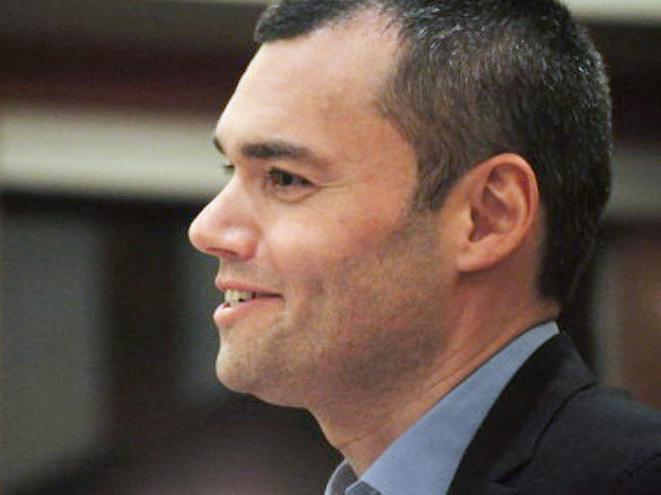
PETER BEINART CREDIT: JOE MABEL VIA WIKIMEDIA COMMONS
so silly that you’d have to be an idiot (or an editor at The New York Times) to believe it.
While we do well to mock Beinart, we still shouldn’t ignore him.
Beinart’s anti-Zionist broadside in America’s leading newspaper represents more than just his own appalling egotism. His abandonment of the Jewish state is also indicative of the crisis of faith within much of American Jewry, whose loyalty to liberal patent nostrums exceeds their love of their fellow Jews or the vibrant society that has flourished in Israel.
His delusions are also to be found in the boardrooms of all too many liberal American Jewish institutions and philanthropies. Their talk of disillusionment with Israel and along with their judgmental attitude towards the hardheaded realism of the overwhelming majority of Israelis is not dissimilar to Beinart’s ideas.
The contempt for the achievements of Zionism and the fearful refusal to contemplate a future in which Jews can succeed despite the fact that insoluble
problems remain unsolved has become part of the narrative of American Jewish life. Though Beinart’s ideas are as unoriginal as they are lacking in insight, they have the virtue of mirroring the intellectual and moral bankruptcy of much of the liberal American Jewish establishment – both philanthropic and religious – that is more interested in kowtowing to a Black Lives Matter movement linked to anti-Zionism and anti-Semitism than it is to standing up for Zionism and the Jewish state.
The retreat of the defeated to Yavne is an image that has nothing to say to Israelis. Rather, it is an apt metaphor for the failures of an American Jewish organized world drenched in ignorance and Jewish illiteracy that is suffering both a demographic implosion and a crisis of faith. The surrender of the self-described leading exponent of liberal Zionism speaks volumes about the failures of American Jewry.
Jonathan S. Tobin is editor in chief of JNS – Jewish News Syndicate.
MILESTONES
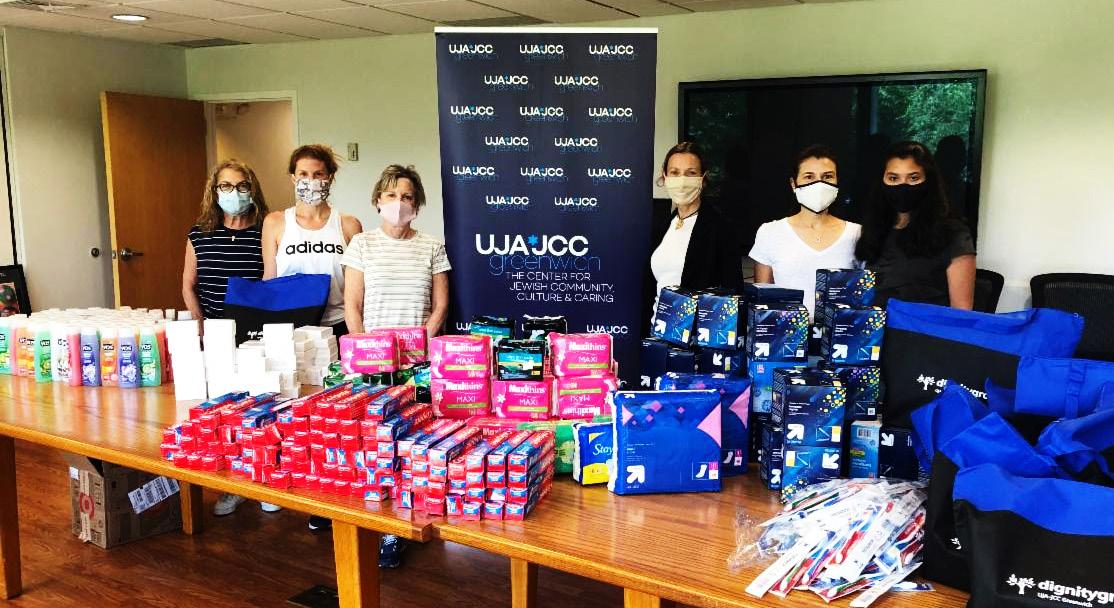
“Dignity Grows” in Greenwich
UJA-JCC Greenwich has launched a new project that supplies toiletries to people in need, making it easier for them to attend school and get work. Volunteers for “Dignity Grows,” which originated at the Jewish Federation of Greater Hartford, collect and dis-seminate essential items which are not covered by federal grant programs and rarely available at food pantries. In Greenwich, Dignity Grows is headed up by Margie Black, a board member of UJA-JCC Greenwich and a member of Congregation Shir Ami. Her goal is to distribute 100 Dignity Grows bags on a quarterly basis. The next distribution is scheduled for late September. For more information, email ujajcc.org.
B’nai Mitzvah

At the Hebrew Center for Health and Rehabilitation, we understand that comfort and familiarity is a key part of the journey to wellness. We also understand that maintaining your religious beliefs and principles is fundamental in continued enrichment of life. Our Kosher meal services allow residents to maintain their dietary requirements throughout their stay with us. At the Hebrew Center, we ensure we follow all principles of Kosher including purchase, storage, preparation, and service.
At the Hebrew Center for Health and Rehabilitation, we also offer a variety of other services and amenities to ensure your stay is as comfortable as possible.
THESE SERVICES INCLUDE:
• Passport to Rehabilitation Program
• Long-Term Skilled Nursing Care
• Specialized Memory Care
• Respite Care Program
• Palliative Care and Hospice Services Coordination
OUR AMENITIES INCLUDE:
• Barber/Beauty Shop
• Café
• Cultural Menus
• Laundry and housekeeping services
• Patient and Family education
• Life Enrichment
For more information on our Kosher program, please contact: DIRECTOR, PASTORAL SERVICES - (860) 523-3800
Hebrew Center for Health and Rehabilitation One Abrahms Boulevard, West Hartford, CT 06117




Colin Roden, son of Jennifer and Jeff Roden of Shelton, will celebrate his bar mitzvah on July 18, at Congregation B’nai Torah in Trumbull.
MARGIE BLACK (3RD FROM LEFT) AND TEAM OF DIGNITY GROWS VOLUNTEERS FILL BAGS FILLED WITH TOILETRIES TO BE DISTRIBUTED TO THOSE IN NEED.
















ARTS & ENTERTAINMENT
WE
SIMPLY DO NOT NEED ANOTHER ‘FIDDLER ON THE ROOF’
BY A.R. VISHNY
This story originally appeared on Alma.
Hey, did you hear? There is a new “Fiddler on the Roof” movie in the works! (Cue groan.)
Listen, it’s nothing personal. The team putting it together sounds stellar. Tommy Kail (of “Hamilton” fame) and Steven Levenson (who wrote “Dear Evan Hansen”) are on board, and they are some of the best talent working in American theater.
But is this really necessary?
Look, I get it: Nostalgia sells, and there is intense nostalgia around classic movie musicals like “Fiddler.” The current moviemusical landscape is evidence of studio preference for the familiar. Whether it’s all the live-action Disney remakes, “A Star Is Born,” “Cats” (shudder), or the forthcoming “West Side Story,” studios like betting on nostalgia.
In theory, a remake might be able to improve upon the original film. Some of the recent remakes have certainly attempted that, whether by rewriting racist lyrics (Disney’s “Aladdin”) or ensuring the cast is not another whitewash (“West Side Story”). These changes, however, aren’t really enough to fix the structural racism and other limitations of these shows. All that studio cash would still be better spent on something entirely new.
But when it comes to “Fiddler on the Roof,” one question remains: How do you conceivably improve on the 1971 film? The casting doesn’t get more authentic. The majority of the Jewish characters are played by Jewish actors with a wide range of backgrounds within the Ashkenazic experience.
Of course, there is Chaim Topol, who played Tevye not only in the film but in multiple Israeli, American and British productions of the show, becoming for most the definitive Tevye. There are first- and second-generation American Jews. There
are Israelis. There’s even a Norwegian Jew! The actor who played the rabbi, Zvee Scooler, was born in the Pale of Settlement in 1899. Molly Picon, who played Yente, was a legend of Yiddish theater and film.
While there are of course many fantastic Jewish actors now, ones with such close ties to the sources and influences of the show no longer exist.
Besides, I don’t think I’m alone in being fatigued by “Fiddler.” If you’re a Jew with any musical theater exposure, chances are you’ve seen the movie several (hundred) times. Chances are you have seen a staged production, or several. Perhaps one of the five Broadway revivals, the four West End revivals, the recent Yiddish adaptation OffBroadway, or the countless international, local, regional and high school productions of the show put on every year.
Given that the original is an excellent movie with a virtually irreplaceable cast, and there’s something of a cultural oversaturation of “Fiddler,” could we please consider adapting something else? I have suggestions!
Want to make a movie about another Jewish family facing down the tides of modernity? Then maybe adapt the musical “Falsettos.”
Set in late 1970s and early ’80s New York City, “Falsettos” follows an unconventional Jewish family trying to maintain their closeness against the backdrop of Reaganism and the AIDS epidemic. The show handles Judaism, gender roles and family conflict with humor and heart. It asks many of the same questions asked by “Fiddler” about how a family is supposed to cope with a shifting way of life, only with less bottle-dancing and more baseball.
Want to make a film that draws on a piece of classic Yiddish literature? Then adapt “Indecent.”
The Tony Award winner is a play about

a play. Specifically, “Indecent” follows the true story of Yiddish writer Sholem Asch’s “God of Vengeance,” which was a success when it toured interwar Europe but shut down when it reached Broadway for featuring a love scene between two women – the first same-sex romantic kiss on a Broadway stage. The show upends one conceit of “Fiddler,” that “the old country” can be summed up with shtetl kitsch and Cossacks.
“Indecent” is a gorgeous piece that challenges the dominant narrative about the purpose and character of Yiddish storytelling, and deserves a quality film adaptation.
Want to adapt a show that has the form and style of a classic musical? Then maybe consider the 1998 musical “Parade,” with music and lyrics by Jason Robert Brown (“The Last Five Years,” “Songs for a New World”). Based on the infamous 1913 murder of Mary Phagan and the subsequent lynching of the falsely convicted Leo Frank, this is a weighty show that tackles racism, anti-Semitism and the danger of
memorializing the Confederacy.
“Parade” deliberately evokes classic movie musicals in style and form while subverting the tropes. It’s a powerful and unfortunately relevant show, and would translate well to film.
I could go on. The National Yiddish Theatre Folksbiene, the oldest continually operating Yiddish theater company in the world, regularly revives forgotten Yiddish plays and musicals and proves their capacity to be exciting and interesting to modern audiences. There are Israeli musicals, like “Kazablan” and “Tipat Mazal,” which focus on the experiences of Mizrahi Jews. Those could use a revamp, and as the recent success of “The Band’s Visit” on Broadway suggests, Israeli movies adapted into American musicals have lots of potential for success.
If that’s still not enough, there are countless great Jewish books and movies ripe for adaptation.
Just please, anything, anything, other than another “Fiddler on the Roof!”

(HEADER IMAGE DESIGN BY GRACE YAGEL; PHOTOS BY UNITED ARTISTS/GETTY IMAGES)
Eagles player DeSean Jackson posts false Hitler quotes, praises Farrakhan
(JNS) Philadelphia Eagles wide receiver DeSean Jackson has been accused of antiSemitism for promoting a quote falsely attributed to Adolf Hitler and featuring posts praising Nation of Islam leader Louis Farrakhan, who has an extensive history of making anti-Jewish remarks.
On his Instagram story feed, he posted a quote from the book Jerusalem that is falsely attributed to Hitler:

Hitler said, because the white Jews knows that the Negros are the real Children of Israel and to keep Americas secret the Jews will black mail America.
The will extort America, their pan to world domination won’t work if the Negroes know who they were.
The white citizens of America will be terrified to know that all this time they’ve been mistreating and discriminating and lynching Children of Israel.
Jackson, 33, also shared two posts on Instagram – on Saturday and on Monday – praising Farrakhan, both of which have since been deleted.
One caption read: “This man powerful I hope everyone got a chance to watch this !! Don’t be blinded. Know what’s going on.”
He also shared a quote within a picture attributed to Farrakhan, which stated, “There must be 100% change. … There’s a burden the Earth is carrying that it must be relieved from. The Earth is burdened by the wicked living on a planet that was made for the righteous.”
Post-pandemic, DeSean Jackson will visit Auschwitz with a Holocaust survivor
(JTA) – On Saturday, during a Zoom conversation with Edward Mosberg from New Jersey. NFL star DeSean Jackson accepted the 94-year old Holocaust survivor’s invitation to visit Auschwitz together.
Mosberg, who lives in New Jersey and chairs From the Depths, a Holocaust commemoration group, proposed the call following the outcry over Jackson’s antisemitic posts on social media which he later deleted and for which he has apologized.
“I grew up in L.A., and never really spent time with anyone from the Jewish community and didn’t know much about their history,” Jackson said on the call with Mosberg. “This has been such a powerful experience for me to learn and educate myself.”
“Thank you Mr. Mosberg for your valuable time and insight today,” Jackson
posted on Instagram after the call, along with a screenshot showing that Mosberg wore a concentration camp uniform on the call. “I’m taking this time to continue with educating myself and bridging the gap between different cultures, communities & religions. LOVE 2 ALL!!!!!”
On the possibility of visiting the former Nazi death camp in Poland, Jackson told Mosberg: “I would be honored to come to Auschwitz and learn from you,” according to From the Depths founder Jonny Daniels, who was on the call.
The visit has not yet been scheduled. While Auschwitz is open to visitors, Americans cannot currently travel to Europe because of the coronavirus pandemic. (Mosberg most recently visited in January for a ceremony marking the 75th anniversary of the camp’s liberation.)
Jackson has also been invited to the United States Holocaust Memorial
Despite the backlash, Jackson defended his posts, saying they were taken “the wrong way.”
“Anyone who feels I have hate towards the Jewish community took my post the wrong way,” he posted on Instagram. “I have no hatred in my heart toward no one!! Equality. Equality.”
The owner of the team, Jeffrey Lurie, and executive vice president and general manager, Howie Roseman, are Jewish. Neither has publicly commented on Jackson’s posts.
Jackson apologized on Tuesday for promoting a quote falsely attributed to Adolf Hitler.
“I post a lot of things that are sent to me. I do not have hatred towards anyone. I really didn’t realize what this passage was saying. Hitler has caused terrible pain to Jewish people like the pain AfricanAmericans have suffered,” wrote Jackson in a caption of a post that includes a video of him apologizing. “We should be together
fighting anti-Semitism and racism. This was a mistake to post this and I truly apologize for posting it and sorry for any hurt I have caused.”
In his apology, Jackson did not mention the Farrakhan posts.
Also on Tuesday, the Eagles released a statement posted on the team’s Twitter account.
The team said it has spoken with Jackson about the posts and called them “offensive, harmful and absolutely appalling.”
“They have no place in our society, and are not condoned or supported in any way by the organization,” continued the Eagles. “We are disappointed and we reiterated to DeSean the importance of not only apologizing, but also using his platform to take action to promote unity, equality and respect.”
The team noted that it is “continuing to evaluate the circumstances and will take appropriate action.”
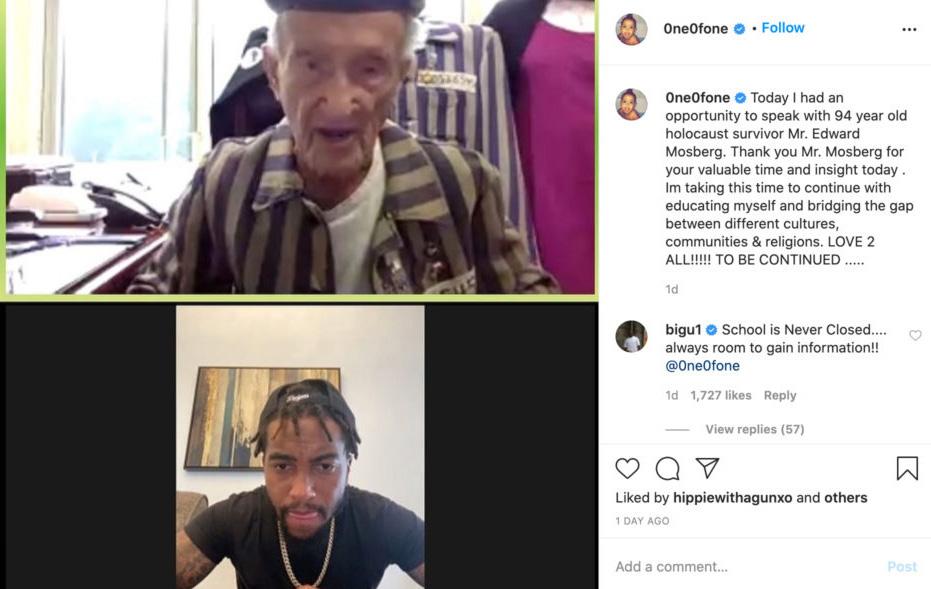
STAR DESEAN JACKSON ACCEPTED AN INVITATION FROM 94-YEAR-OLD HOLOCAUST SURVIVOR EDWARD MOSBERG TO VISIT AUSCHWITZ TOGETHER. (SCREENSHOT FROM INSTAGRAM)
Museum by Julian Edelman, the New England Patriots receiver who identifies as Jewish and frequently speaks out against anti-Semitism. Edelman said he would also accompany Jackson to the National
Museum of African American History and Culture. Both Washington, D.C., museums are currently closed because of the pandemic.
EAGLES WIDE RECEIVER DESEAN JACKSON. SOURCE: SCREENSHOT
NFL
Stephen Jackson talks with rabbi, says ‘I understand the hurt’ over Rothschild comment
(JTA) – Former NBA star Stephen Jackson disavowed hatred against Jews and walked back the inflammatory comments he made earlier in the week suggesting Jews control the banks.
In a conversation with Los Angeles Rabbi David Wolpe livestreamed on Instagram Thursday night, Jackson expressed regret for his comment that the Rothschild family “owns all the banks,” the Forward reported.
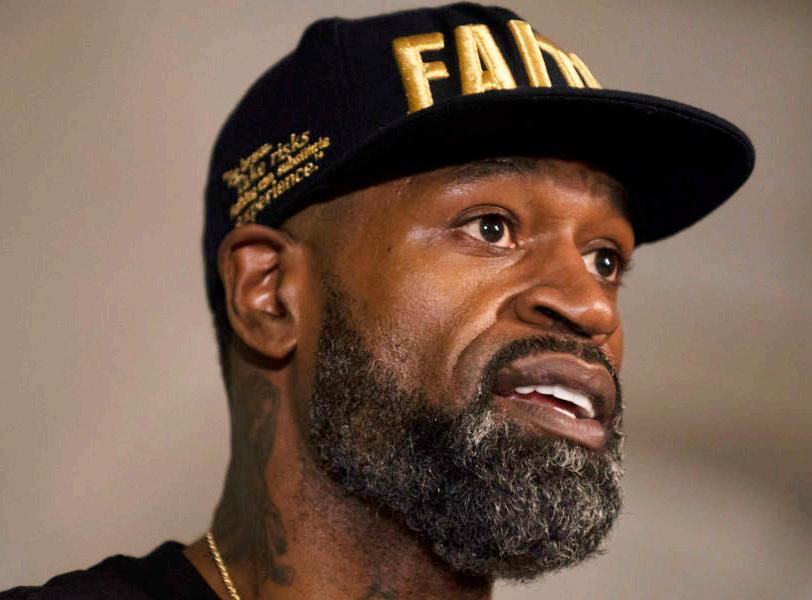
“Even with the Rothschilds, I hate saying that,” Jackson said, “because that’s the same type of stereotype as, when you see a black person, [saying] he’s a gangsta.”
Jackson found himself embroiled in controversy earlier this week after coming to the defense of NFL player DeSean Jackson (no relation), who created an uproar of his own after posting a number of tweets over the weekend that “white Jews” work to “blackmail” and “extort” America and that Adolf Hitler “was right.”
Stephen Jackson wrote on Instagram that DeSean Jackson was “speaking the truth.” Then, in an Instagram video discussion with a user whose handle is @ kosherwhitewine, Stephen Jackson brought up the Rothschild family, a prominent fixture of anti-Semitic conspiracy theories positing Jewish domination of international finance.
“Do you know who the Rothschilds are? They control all the banks, they own all the banks,” Jackson said. Wolpe told Jackson that Jews remain highly sensitive to references to Hitler and anti-Semitic notions of financial control, saying Jews sometimes react to such comments with hurt and fear.
“I understand the hurt,” Jackson replied. “That’s why I was comfortable initiating an apology. Your hurt and our hurt is no different.”
Wolpe also broached the topic of Nation of Islam leader Louis Farrakhan, who Jackson has quoted online. But Jackson declined to address Farrakhan directly.
Farrakhan: ‘Jews poisoned me to test whether I’m a man of God’
(MEMRI via JNS) – On July 4, Nation of Islam leader Louis Farrakhan delivered a three-hour speech that was streamed live on the Nation of Islam’s YouTube channel. In the speech, Farrakhan said that Jews had poisoned him with “radiated seed” to test whether he was truly a man of God, and that his survival is proof that he is. He said that prominent Jewish figures such as Alan Dershowitz and Middle East negotiator Jason Greenblatt are Satan, and emphasized that it is his job to expose Satan so that every Muslim picks up a stone against him like they do during the pilgrimage rituals in Mecca.
Farrakhan also said that the reason Jews hate him is because he represents the end of their civilization and because he reveals their wicked ways. In addition, Farrakhan said that he is the one who exposed those who “suck the blood” of the poor. Urging American mayors and governors not to allow their police forces to train in Israel, Farrakhan claimed that Israel is the reason that there are guns, drugs and counterfeit money in black neighborhoods. He added that Israel will suffer from divine retribution and that it will not last long.
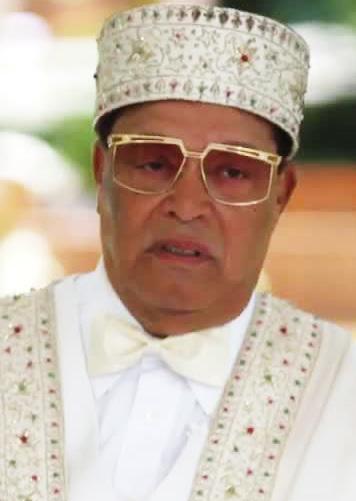
“I represent the uncovering of their wickedness, fulfilling the judgement, that God has come to bring down on America and the world,” said Farrakhan.
“So that’s why they hate me, Americans. Because they are wicked and they know they cannot say that I am lying about them. They just say: ‘He is a bigot. He is anti-Semitic,’” he added.
“Israel, let me tell you, your day is here now. You don’t have to applaud. The God of justice has something for you, Israel. You are troubling some waters and you won’t be there long, if God gets after you,” said Farrakhan.
Pittsburgh Steelers’ Zach Banner says Jews are minority, too, and we must ‘put our arms around them’
BY MARCY OSTER
(JTA) – Zach Banner of the NFL’s Pittsburgh Steelers wants the Black community to know: Jews “deal with the same amount of hate, similar hardships and hard times.”
In a tweet accompanied by a video, Banner said he does not want to “harp” on the controversy surrounding the recent social media posts of fellow NFLer DeSean Jackson in which the Philadelphia Eagles wide receiver featured antisemitic statements attributed to Adolf Hitler. But, he said, the community can only “progress by educating ourselves. We can’t move forward while allowing ourselves to leave another minority race in the dark.”
Banner, who is of Chamorro and African-American descent, said in the video that he saw Jackson’s apology video and “it seems like his heart is in the right place.” Jackson has deleted the posts, which also encouraged the viewing of Nation of Islam leader Louis Farrakhan’s Fourth of July address that included anti-Jewish rhetoric.
“There’s a common misbelief that among Black and Brown people – and I know this from growing up and I’ve heard it and I’ve listened to it – that Jewish people are just like any other white race,” Banner said. “You mix them up with the rest of the majority and you don’t understand that they are a minority as well.”
He spoke of being in Pittsburgh as a player for the Steelers in 2018 when a gunman entered the Tree of Life synagogue building in the city’s Squirrel Hill neighborhood and opened fire during Shabbat morning services, killing 11.
“I was here on the team … a couple years ago when – it’s just tough man – during the synagogue shooting, in this beautiful city of Pittsburgh,” he said, his voice breaking. “We need to understand that Jewish people deal with the same amount of hate, similar hardships and hard times.
“We need to uplift them and put our arms around them just as much when we talk about the BLM and we talk about
elevating ourselves.”
Last Thursday, he changed his Twitter profile picture to the Steelers Stronger than Hate logo created after the Pittsburgh synagogue shooting. In a tweet he called the image “Simple, but strong representation of my squad.”
Banner said that he met Jewish friends while a student at the University of Southern California and some have become like family members.
He has participated in Black Lives Matter protests in Pittsburgh since the death of George Floyd, the Pittsburgh Tribune Review reported.
New York Times writer and editor Bari Weiss, who grew up in Squirrel Hill, tweeted praise for Banner, writing “What a mensch. Thank you, @ZBNFL (And go Steelers!).”
The ADL Philadelphia also thanked Banner in a tweet “for urging us all to be part of the fight against hate in all forms.”
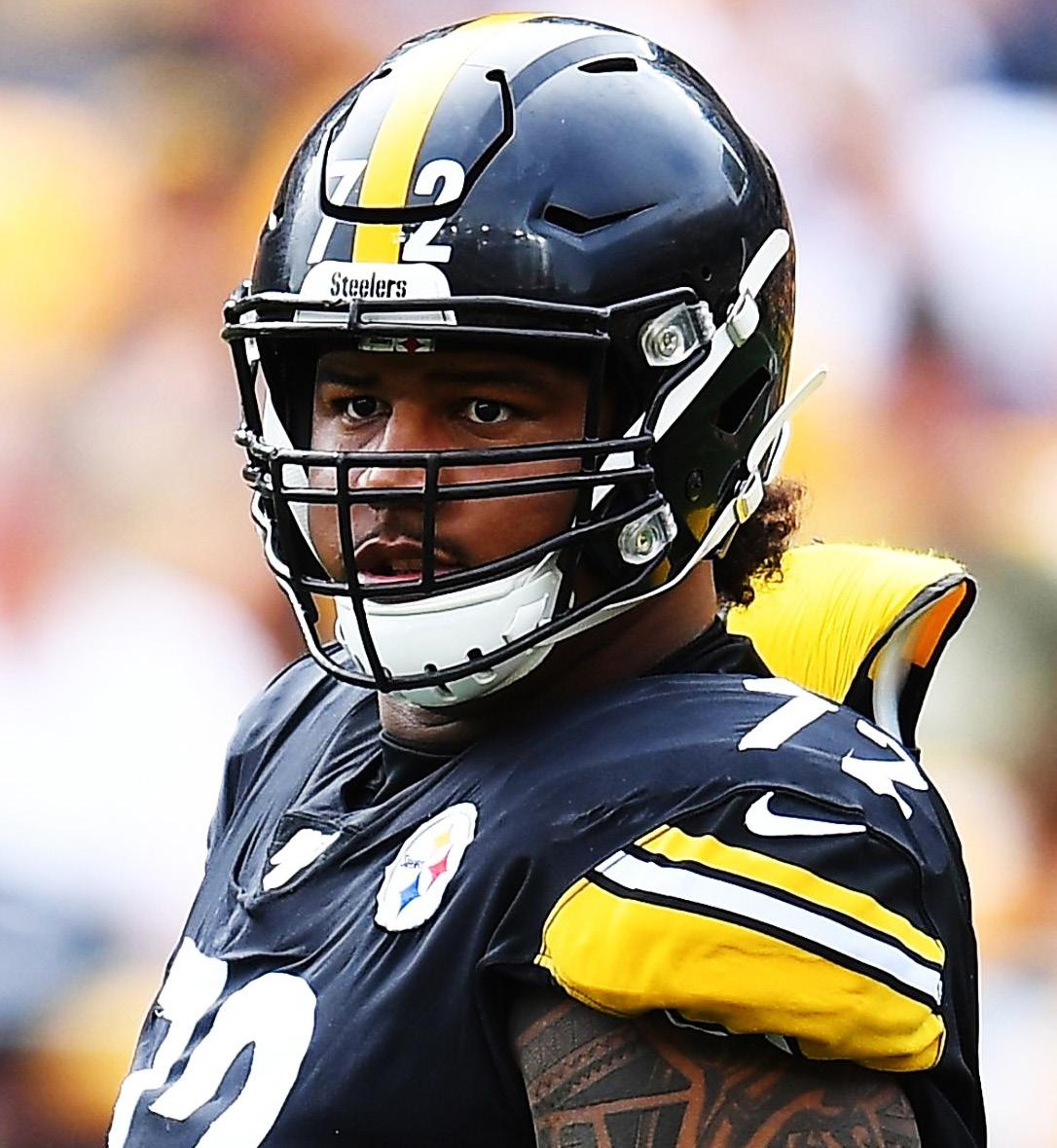
PITTSBURGH STEELERS OFFENSIVE TACKLE ZACH BANNER AT HEINZ FIELD IN PITTSBURGH, SEPT. 15, 2019. (JOE SARGENT/GETTY IMAGES)
STEPHEN JACKSON SPEAKS AT A PRESS CONFERENCE IN MINNEAPOLIS, JUNE 2, 2020. (STEPHEN MATUREN/GETTY IMAGES)
NATION OF ISLAM LEADER LOUIS FARRAKHAN, JULY 4, 2020. (MEMRI)

Each category includes this year’s finalists (a composite from the past 5 years) as well as space to write in your personal favorites... even a new category to include who you love that we missed! Go online and vote, and remember to share, share and share some more! Businesses are counting on your support and we know of several that are determined to retain their “best” title, so don’t be shy about sharing this contest everywhere!
Thanks for taking the time to vote!
NYC’s flagship JCC cuts 35% of jobs as pandemic layoffs continue
BY SHIRA HANAU
(JTA) – Just days after the expiration of a federal program meant to preserve jobs during the pandemic, one of the largest JCCs in the country has laid off or furloughed 35% of its employees.
The Marlene Meyerson Jewish Community Center of Manhattan, which employed 192 people before the pandemic, laid off 32 people and furloughed 40 last week as it faces decreased revenue. The JCC, which operated on a budget of $34 million before the coronavirus hit, expects to cut that in half moving forward. Among the positions eliminated were most of the marketing department, managers of the studio arts and culinary programs, the senior athletics director, a birthday party coordinator, an positions dealing with the JCC’s extensive Jewish learning offerings. Those who remain at their jobs and earning more than approximately $52,000 are taking pay cuts of 5, 7 or 10%.
Most of the furloughed positions are on the health and wellness staff. Rabbi Joy Levitt, the center’s executive director, said the plan is to bring back those employees soon as the building, which includes an extensive fitness facility, is able to reopen fully. The JCC’s nursery school will re-open in September. The organization had no choice but to mitigate costs related to upkeep of the JCC’s 14-story Upper West Side building, which has been closed since March.
The layoffs came just days after the end of the federal Paycheck Protection Program, which offered loans to cover payroll at small businesses during the pandemic-induced financial crisis. The Manhattan JCC received between $2 million and 5 million through the program, according to data from the Small Business Administration.
The layoffs at the Manhattan JCC are likely at the front edge of a rising wave because of the federal program’s rules. Employers who maintained their March staffing levels through June 30 are eligible to have their loans forgiven. The passing of that date gives little financial incentive to retain employees whose work has ended because of the pandemic. That includes many employees of JCCs across the country.
Some members of the Manhattan JCC have donated the amount that they would normally pay in membership fees, and 1,700 donors gave to an emergency fund, Levitt said. But the JCC plans to slash that budget in half due to the pandemic.
Even once the building can reopen, Levitt said she doesn’t anticipate all offerings resuming immediately. Many arts programs primarily served older adults who may not feel comfortable coming back until there is a COVID-19 vaccine, she said.
“The reason that we had to lay these folks off is not because they are not mission consistent – they are vital to the core mission of the JCC,” Levitt said. “We can’t wait to get back to in person.”
ANSWERS TO JULY 10 CROSSWORD
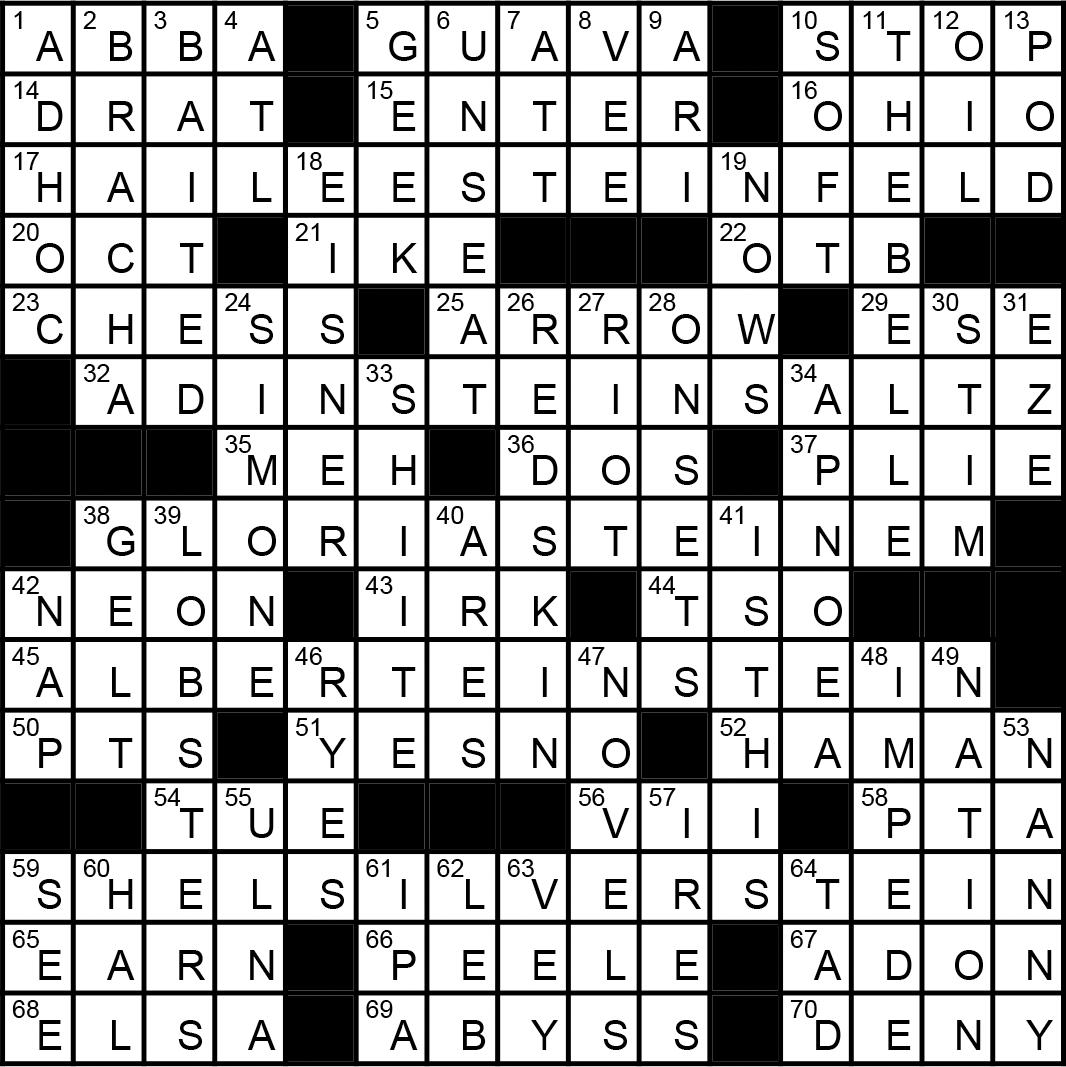
THE KOSHER CROSSWORD JULY 17, 2020
“Remembering A Legend” By: Yoni Glatt Difficulty Level: Medium

Across 1. Statement figures: Abbr.
5. Something to follow 10. Lets up
14. What Caesar called France
15. Good way to plan
16. School where Mr. Burns would have to donate an international airport to get his son accepted on “The Simpsons”
17. 62-Across won 11 (!) of them
19. Ethereal locale guarded by a flaming sword
20. Orchestral contingent 21. “Titanium” singer
22. Sportscaster Rashad
23. Tongue in Tehran
24. Best friend and comedic partner of 62-Across
Down
1. Wharton’s “The ___ Innocence”
2. Black snake
3. “It’s not a ___!” (Schwarzenegger line)
4. Most like Stallone?
5. Shop tool
6. Big hole in the ground
7. Strange and unsettling
8. “The King of Clay”
9. Quests for QBs
10. Purim mask features
11. Commits the sin of rechilus
12. Far from rosy
13. Transports
18. “I, Robot” author Isaac
26. SHO-owned channel for film buffs
28. Its website has a “Know Your Rights” section
29. The first of Mickey (Rooney’s) eight wives
32. “Phooey!”
36. Sight a sightseer sees in Sicily
39. Classic sitcom created by 62-Across, with “The”
42. “I conquered,” to Caesar
43. Co- (ahem) Peace Nobelist with Shimon and Yitzhak
44. Word in California place names
45. Eldest of Chekhov’s “Three Sisters”
47. Contacts privately on IG 49. 62-Across worked with George
22. Section of a circumference
25. Enjoyed the sun
27. One defending Eretz Yisrael
29. “Faithfully” or “Truly”: abbr.
30. King Henry who founded the Tudor dynasty
31. ___ for (aware of)
33. “Messenger” molecule letters
34. YouTube clip intros
35. Cobb and Burrell
37. Most common name of the daughters of Tzelafchad
38. Grain bristle
40. Do a crossword or two while waiting, perhaps
41. Critter in a white coat
Clooney three times playing this character
54. Part of some nautical maps
58. Restaurant freebies
59. “Cobra ___”, hit YouTube show
60. Lacking worldly wisdom
61. Opposed party
62. Legend who passed away on June 29
64. “...a rod out of the ___ of Jesse” (Isaiah 11:1)
65. Sch. in Philly
66. Lawrence, in Scandinavia
67. Part of a children’s game
68. Beach crashers
69. Web spot
46. “Pygmalion” playwright’s initials
48. Some mollusks
49. Popular success
50. “___ a stinker?” (Bugs Bunny line)
51. Rare, striped kosher animal
52. Equipped, as a rowboat
53. Creator of Rabbit and Owl
55. The cost for peace with Egypt
56. U.S. Open winner, 1975-78
57. Short, concise and to the point
62. Allotted portion
63. OR staffers
ELECTION 2020
Sara Gideon goes after Susan Collins’ Senate seat –with lots of Jewish support
BY RON KAMPEAS
(JTA) – Lou Kornreich’s Shabbat table is a microcosm of the Maine Jewish community, of the national Jewish community, of Maine and of the nation. And he doesn’t like it.
“When I have a discussion at the Shabbos table, there are those on the left who are angry at Susan and those on the right who staunchly support her,” the retired judge told me this week, describing increasingly fraught Friday night meals in Bangor.
The intensity unsettles him.
“Susan” is Susan Collins, the 67-year-old Maine Republican who is seeking a fifth term in office and for years has traded on her reputation as a moderate to win support from independents and some Democrats.
It’s a formula that may no longer work in the polarized age of President Donald Trump, whom Collins voted to acquit during his January impeachment trial. A poll this week showed Sara Gideon, the 48-year-old Democratic speaker of the Maine House, leading Collins by four points.
Democrats nationwide think Gideon has momentum (as the Ledger went to press, she was preparing for the primary held on Tuesday, in which she was the favorite). They have been pouring money into her campaign, and she has out-raised Collins $23 million to $16 million, according to Open Secrets. It’s been a steep drop for Collins: In her last election, in 2014, she won with 68% of the vote.
It’s also an election that has excited unusual attention among Maine Jews, who number 10,000-15,000, and national political Jewish organizations – and not just because Gideon is married to a Jewish lawyer. Here’s why.
A core race in the quest to control the Senate
Democrats are four Senate seats away from control of the upper chamber – three if Joe Biden wins the presidential election and his vice president becomes the deciding vote. There are 35 seats up for election, 23 with Republican incumbents and 12 with Democrats, and anywhere between five and nine are seen as likely to flip – just one of them a vulnerable Democrat, Doug Jones of Alabama. The GOP states seen as most vulnerable are Arizona, Colorado, North Carolina, Iowa, Kansas, Georgia, Montana – and Maine.
After a bruising primary season that has created some odd bedfellows, the political action committees associated with J Street,
the liberal Jewish Middle East lobbying group, and the Democratic Majority for Israel, aligned with more centrist policies on Israel, are all in for Gideon in Maine. Gideon is a relative centrist on Israel, and so are others that J Street PAC is backing this cycle in Arizona and Colorado.
The PAC is backing her primarily because she brings Democrats closer to taking the Senate, said Ilya Braverman, J Street’s national political director.
The Democratic Majority for Israel PAC’s president, Mark Mellman, said in an email that Gideon is “the best chance we have of defeating Susan Collins, who traded her reputation for independence for full membership in the Donald Trump fan club.”
Kavanaugh and impeachment
There was a time that Jewish political donors – like Jewish voters, a mostly liberal cohort – were open to backing Republicans. One litmus test for donors was where the Republicans stood on reproductive choice. One by one, as the political arena became more polarized, pro-choice Republicans either quit (Sen. Olympia Snowe of Maine) or were ousted (Sen. Mark Kirk of Illinois).
Collins was the last woman standing, at least in the Senate, and she fell two years ago by her own sword – by the lights of these donors – when she voted to confirm Brett Kavanaugh as a Supreme Court justice. Collins said at the time that she believed Kavanaugh would not support cases that undermine the Roe v. Wade precedent establishing abortion rights.
But last month, Kavanaugh dissented on a majority opinion that overturned a Louisiana law that might have shut down abortion clinics in the state. Gideon has used that vote against Collins in her campaigning, and it resonates for Jewish donors.
“Susan Collins was our last Republican, I mean, she made us bipartisan,” said Hollis Wein, the director of communications for JACPAC, a Midwestern Jewish PAC that focuses on reproductive rights, church-state separation and Israel.
“Sadly, Susan made it very easy for us to walk away when she supported [Neil] Gorsuch,” a Supreme Court justice named in 2017, “and then Kavanaugh. She had really good votes, we met with her, we had a good relationship with her, she was prochoice, but after she chose to support those two Supreme Court nominees, to us it was
clear that she was no longer in our corner and that she was no longer pro-choice.”
One Republican, Lisa Murkowski of Alaska, effectively opposed Kavanaugh. Two more from the party could have nixed his nomination, and expectations were high that Collins would be one of them.
A similar dynamic played out this year with the Senate trial on Trump’s impeachment for soliciting Ukraine’s assistance in campaigning against Biden.
A lone Republican, Mitt Romney of Utah, voted to convict, with Collins and a handful of Republicans waiting until the last moment to join in acquitting Trump.
Halie Soifer, the director of the Jewish Democratic Council of America, whose PAC also is backing Gideon, said Collins would forever be haunted by her claim after the conviction that Trump “learned” from the ordeal and will be “much more cautious.”
His angry purge of impeachment witnesses since then suggests otherwise.
“The only lesson he learned was that he can get away with breaking the law and Republicans like Susan Collins will give him a pass,” Soifer said.
The Israel question
Gideon won’t offend anyone in the Democratic mainstream when it comes to Israel. Her statement on Israeli plans to annex parts of the West Bank condemns the prospect, but does not threaten any repercussions – even as Democrats increasingly are prone to say out loud that Israel could pay a price in how assistance is delivered if it goes ahead with annexation.
“Unilateral annexation by the Israeli government is a dangerous step that threatens the security of Israel and its neighbors, and puts the goal of a twostate solution at risk,” she said in a list of statements by competitive Democrats compiled by J Street and posted by Jewish Insider. “As Israel’s closest friend and ally, the United States should speak out against this plan and work with the Israeli government to foster the circumstances necessary for a stable and enduring peace that protects the human rights of Israelis and Palestinians.”
Earlier this year Gideon, as Maine’s House speaker, took the lead in passing a resolution that recognized the International Holocaust Remembrance Alliance’s definition of anti-Semitism. That definition includes some forms of attack on Israel, stirring controversy on the left.
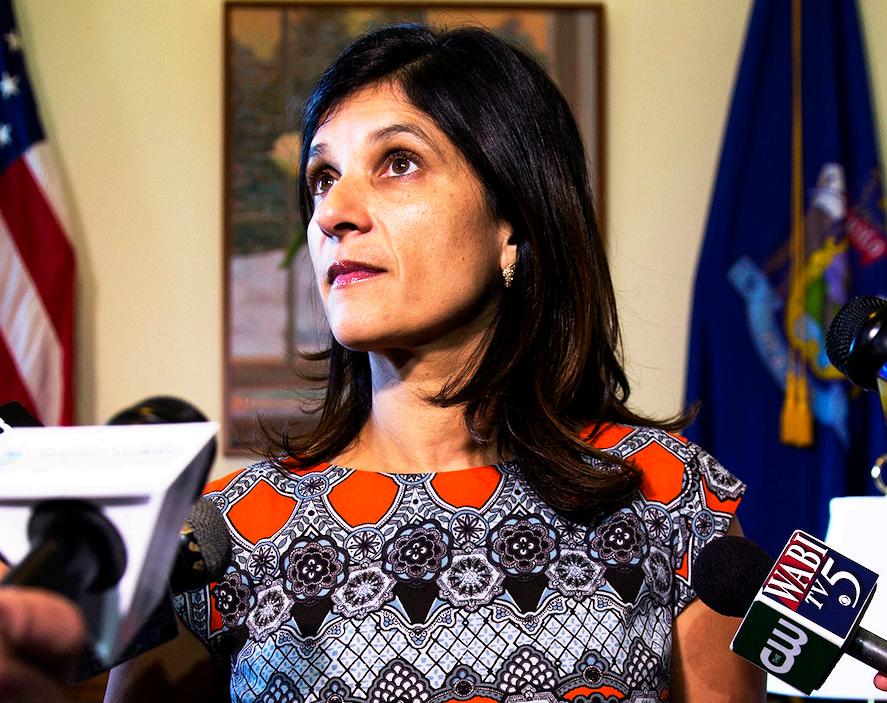
The Republican Jewish Coalition’s PAC has endorsed Collins, and she still commands loyalty from pro-Israel donors who eschew partisanship and favor incumbents with proven pro-Israel bona fides. Two nonpartisan pro-Israel PACs are also backing Collins: NORPAC and Pro-Israel America, started by former top officials at the American Israel Public Affairs Committee (AIPAC). Jeff Mendelsohn, Pro-Israel America’s director, told me that Collins has taken the lead in the past on opposing International Criminal Court action against Israelis and the inclusion of Hamas in any Palestinian government, as well as consistently backing defense assistance.
“It’s her 20-plus year track record supporting legislation that advances the U.S.-Israel relationship,” he said. “I know that if Susan Collins is reelected, she will continue to be a strong vocal advocate for the U.S.-Israel relationship – I can say that with certainty. That’s why we endorsed her.”
Yichus
Aside from her marriage to Benjamin Rogoff, we know nothing about Gideon’s personal Jewish connections. Four Maine rabbis declined to comment on whether Gideon, who did not return requests for an interview, is involved in the state’s Jewish community.
Her advocates say that she is sensitive to issues that Jewish liberals consider critical, such as abortion, preserving the social safety net and immigration (Gideon’s father is an immigrant from India and her mother is of Armenian descent).
The Jewish Democratic Council of America has made Maine one of 14 states in which it is dedicating resources to get out the Jewish vote. Kornreich said that was a smart move as small as the Jewish population is in the state.
“Jewish voters tend to vote Democratic and they can make the difference,” he said.
Kornreich said Gideon’s tack to the center could win her the seat – and might earn her his vote, although he is leaning now toward Collins, whom he has known for years.
“Susan is a friend, she has done tremendous things for the state and admirable things for the country, I like her personally and I like her politics,” he said. “But Sara is a very attractive candidate.”
SARA GIDEON SPEAKS TO THE MEDIA IN HER OFFICE AT THE MAINE STATE HOUSE, JULY 3, 2017.
(BRIANNA SOUKUP/PORTLAND PORTLAND PRESS HERALD VIA GETTY IMAGES)
BLOOMFIELD
B’nai Tikvoh-Sholom/ Neshama Center for Lifelong Learning
Conservative
Rabbi Debra Cantor (860) 243-3576 office@BTSonline.org www.btsonline.org
BRIDGEPORT
Congregation B’nai Israel Reform
Rabbi Evan Schultz (203) 336-1858 info@cbibpt.org www.cbibpt.org
Congregation Rodeph Sholom
Conservative (203) 334-0159
Rabbi Richard Eisenberg, Rabbi-in-Residence Cantor Niema Hirsch info@rodephsholom.com www.rodephsholom.com
Jewish Senior Services
Traditional
Rabbi Stephen Shulman (203) 396-1001 sshulman@jseniors.org www.jseniors.org
CHESHIRE
Temple Beth David Reform
Rabbi Micah Ellenson (203) 272-0037 office@TBDCheshire.org www.TBDCheshire.org
CT SYNAGOGUE DIRECTORY
CHESTER
Congregation Beth Shalom Rodfe Zedek
Reform
Rabbi Marci Bellows (860) 526-8920 rabbibellows@cbsrz.org www.cbsrz.org
COLCHESTER
Congregation Ahavath Achim
Conservative
Rabbi Kenneth Alter (860) 537-2809 secretary@congregationahavathachim.org
EAST HARTFORD
Temple Beth Tefilah Conservative Rabbi Yisroel Snyder (860) 569-0670 templebetht@yahoo.com
FAIRFIELD
Congregation Ahavath Achim
Orthodox (203) 372-6529 office@ahavathachim.org www.ahavathachim.org
Congregation Beth El, Fairfield Conservative Rabbi Marcelo Kormis (203) 374-5544 office@bethelfairfield.org www.bethelfairfield.org
GLASTONBURY
Congregation Kol Haverim Reform
Rabbi Dr. Kari Tuling (860) 633-3966 office@kolhaverim.org www.kolhaverim.org
GREENWICH
Greenwich Reform
Synagogue
Reform
Rabbi Jordie Gerson (203) 629-0018 hadaselias@grs.org www.grs.org
Temple Sholom
Conservative
Rabbi Mitchell M. Hurvitz
Rabbi Chaya Bender
Cantor Sandy Bernstein (203) 869-7191 info@templesholom.com www.templesholom.com
HAMDEN
Temple Beth Sholom
Conservative
Rabbi Benjamin Edidin Scolnic (203) 288-7748 tbsoffice@tbshamden.com www.tbshamden.com
MADISON
Temple Beth Tikvah
Reform
Rabbi Stacy Offner (203) 245-7028 office@tbtshoreline.org www.tbtshoreline.org
MANCHESTER
Beth Sholom B’nai Israel
Conservative
Rabbi Randall Konigsburg (860) 643-9563 Rabbenu@myshul.org programming@myshul.org www.myshul.org
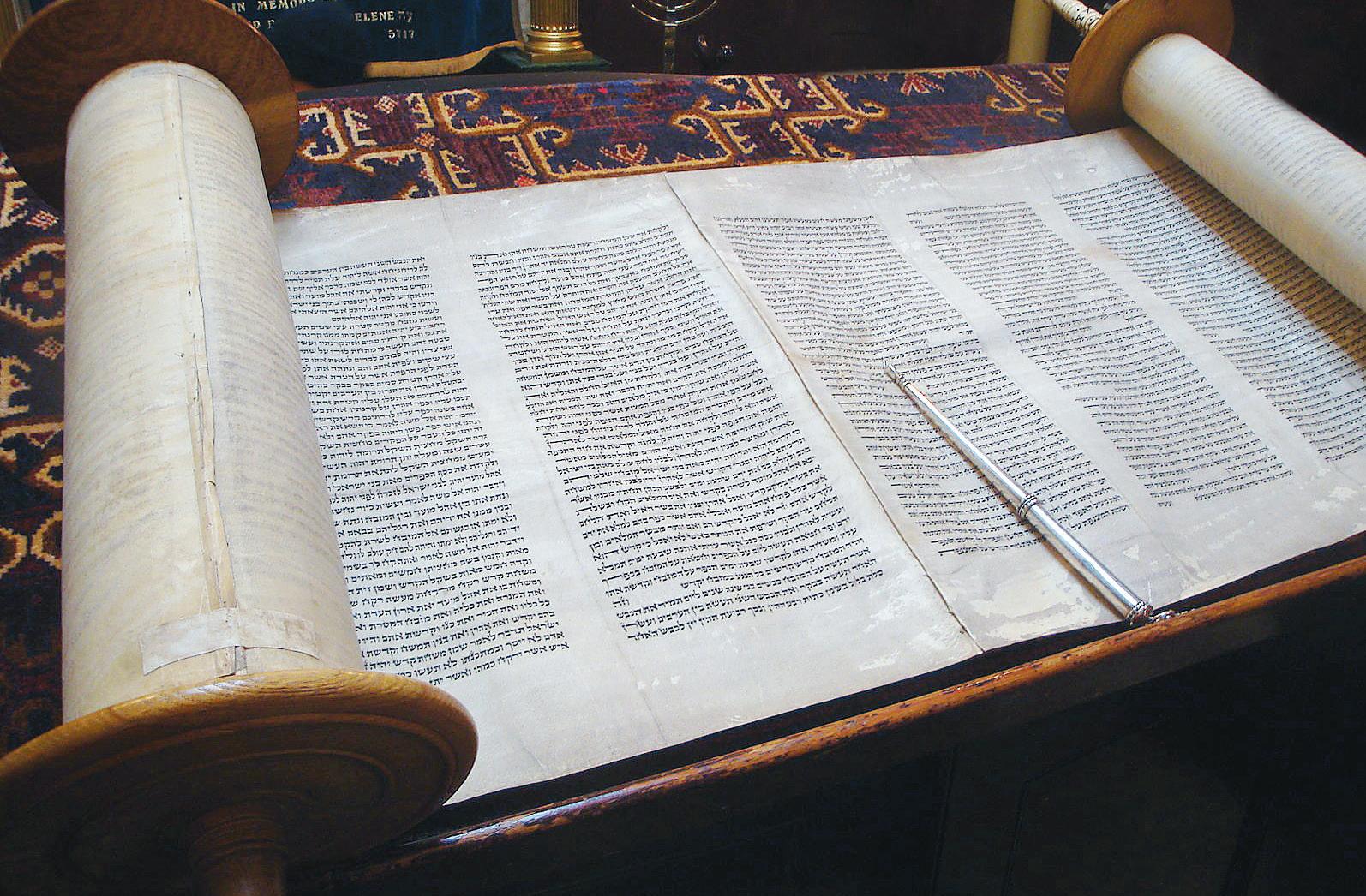
MIDDLETOWN
Adath Israel Conservative Spiritual Leaders: Rabbi Marshal Press Rabbi Michael Kohn (860) 346-4709 office@adathisraelct.org www.adathisraelct.org
NEW BRITAIN
Congregation Tephereth Israel Orthodox
Rabbi Andrew Hechtman (860) 229-1485
NEW HAVEN The Towers Conservative Ruth Greenblatt, Spiritual Leader (203) 772-1816 rebecca@towerone.org www.towerone.org
Congregation
Beth El-Keser Israel Conservative
Rabbi Jon-Jay Tilsen (203) 389-2108 office@BEKI.org www.BEKI.org
Orchard Street ShulCongregation Beth Israel Orthodox Rabbi Mendy Hecht 973-723-9070 www.orchardstreetshul.org
NEW LONDON
Ahavath Chesed Synagogue Orthodox Rabbi Avrohom Sternberg 860-442-3234 Ahavath.chesed@att.net
Congregation Beth El Conservative
Rabbi Rachel Safman (860) 442-0418 office@bethel-nl.org bethel-nl.org
NEWINGTON
Temple Sinai Reform
Rabbi Jeffrey Bennett (860) 561-1055 templesinaict@gmail.com www.sinaict.org
NEWTOWN
Congregation Adath Israel Conservative Rabbi Barukh Schectman (203) 426-5188 office@congadathisrael.org www.congadathisrael.org
NORWALK
Beth Israel Synagogue
– Chabad of Westport/ Norwalk
Orthodox-Chabad
Rabbi Yehoshua S. Hecht (203) 866-0534 info@bethisraelchabad.org bethisraelchabad.org
Congregation
Beth El-Norwalk Conservative
Rabbi Ita Paskind (203) 838-2710 Jody@congbethel.org www.congbethel.org
Temple Shalom Reform
Rabbi Mark Lipson (203) 866-0148 admin@templeshalomweb.org www.templeshalomweb.org
ORANGE
Congregation Or Shalom Conservative
Rabbi Alvin Wainhaus (203) 799-2341 info@orshalomct.org www.orshalomct.org
RIDGEFIELD
Congregation Shir Shalom of Westchester and Fairfield Counties
Reform
Rabbi David Reiner
Cantor Debora Katchko-Gray (203) 438-6589 office@ourshirshalom.org
SIMSBURY
Chabad of the Farmington Valley
Chabad
Rabbi Mendel Samuels (860) 658-4903 chabadsimsbury@gmail.com www.chabadotvalley.org
Farmington Valley Jewish Congregation, Emek Shalom Reform
Rabbi Rebekah Goldman Mag (860) 658-1075 admin@fvjc.org www.fvjc.org
SOUTH WINDSOR
Temple Beth Hillel of South Windsor Reform
Rabbi Jeffrey Glickman (860) 282-8466 tbhrabbi@gmail.com www.tbhsw.org
SOUTHINGTON
Gishrei Shalom Jewish Congregation
Reform
Rabbi Alana Wasserman (860) 276-9113 President@gsjc.org www.gsjc.org
TRUMBULL
Congregation B’nai Torah
Conservative
Rabbi Colin Brodie (203) 268-6940 office@bnaitorahct.org www.bnaitorahct.org
WALLINGFORD
Beth Israel Synagogue
Conservative
Rabbi Bruce Alpert (203) 269-5983 richardcaplan@sbcglobal.net www.bethisrael/wallingford. org
WASHINGTON
Greater Washington
Coalition
Rabbi James Greene (860) 868-2434 admin@jewishlifect.org www.jewishlife.org
WATERFORD
Temple Emanu - El Reform
Rabbi Marc Ekstrand
Rabbi Emeritus Aaron Rosenberg (860) 443-3005 office@tewaterfrord.org www.tewaterford.org
WEST HARTFORD
Beth David Synagogue
Orthodox Rabbi Yitzchok Adler (860) 236-1241 office@bethdavidwh.org www.bethdavidwh.org
Beth El Temple
Conservative
Rabbi James Rosen
Rabbi Ilana Garber (860) 233-9696 hsowalsky@bethelwh.org www.bethelwesthartford.org
Chabad House of Greater Hartford
Rabbi Joseph Gopin
Rabbi Shaya Gopin, Director of Education (860) 232-1116 info@chabadhartford.com www.chabadhartford.com
Congregation Beth Israel Reform
Rabbi Michael Pincus
Rabbi Andi Fliegel
Cantor Stephanie Kupfer (860) 233-8215 bethisrael@cbict.org www.cbict.org
Congregation P’nai Or Jewish Renewal Shabbat Services
Rabbi Andrea Cohen-Kiener (860) 561-5905 pnaiorct@gmail.com www.jewishrenewalct.org
Kehilat Chaverim of Greater Hartford Chavurah Adm. - Marcey Ginsburg Munoz (860) 951-6877 info@ kehilatchaverim.org www.kehilatchaverim.org
The Emanuel Synagogue Conservative
The Emanuel Synagogue Conservative
Rabbi David J. Small (860) 236-1275 communications@emanuelsynagogue.org www.emanuelsynagogue.org
United Synagogues of Greater Hartford Orthodox
Rabbi Eli Ostrozynski synagogue voice mail (860) 586-8067
Rabbi’s mobile (718) 6794446 ostro770@hotmail.com www.usgh.org
Young Israel of West Hartford Orthodox
Rabbi Tuvia Brander (860) 233-3084 info@youngisraelwh.org www.youngisraelwh.org
WOODBRIDGE
Congregation B’nai Jacob Conservative
Rabbi Rona Shapiro (203) 389-2111
info@bnaijacob.org www.bnaijacob.org