Proudly Helping Navigate the World of Insurance for 50+ Years
“Dealing with my insurance” is no longer something I have to worry about . One call to Keating and you take care of the rest. Thank you! Customer since 2017
Extremely dependable service for over 40 years!!! Never gave a thought to changing insurance agents. Philip P, customer since 1973
You contacted me before a renewal. Expressed how you monitor plans and explained why it might be good to change and provided another plan plus how to save an additional discount. Your proactive approach confirms your clients are personally taken care of.
Susan C., customer since 2012
Keating Agency has always been responsive and willing to take the time to answer questions and solve any difficulties. We have been with the agency for long enough to remember Mike Keating Sr. and think he would be proud of the way the agency has continued to serve his clients.
Wilfred C., customer since 1978
The agency’s response to my my request for a quote was prompt and professional. The sales representative was very knowledgeable and answered all my questions and provided me options to consider to enhance my coverage. The quote provided exceeded my expectations and my coverage was increased at a much lower cost than my previous company. Additionally, all the staff are friendly and welcoming. I would recommend Keating insurance to anyone who wants good service and excellent coverage at a very fair price.
Paul H., customer since 2018


INSIDE this week
Dream on ............................... 5
When Brandeis student Elias Rosenfeld immigrated to the U.S. from Venezuela at age six, little did he know that he would one day face deportation as an “undocumented alien.” Now, thanks to the Supreme Court, he’s safe. At least for today.
Just Say No .............................
The ADL has joined several other civilrights groups in calling for corporations to boycott Facebook in July over its unwillingness to ban hate speech on the social-media company’s platform.

We’re guessing there will lots of eating out this summer – and by “out” we mean the backyard. Think of it as a great opportunity to get playful with flavors (with a little help from The Nosher).
If ever there was a summer that called for an escape into a good book, this is the one! To help you stage the great escape we paid a virtual visit to the Jewish Book Council (www.jewishbookcouncil.org) and came away with an enticing list of books – both fiction and nonfiction. So, start reading. Cover art by Jack Crowley. PAGE 14
Author’s Corner...................... 8 Days before her death, Amy Krouse Rosenthal published a NY Times essay in which she detailed why she fell in love with her husband on their first date. Now, in his new book, Jason Rosenthal picks up where his late wife’s viral essay left off.

Chelsea Handler explains away Louis Farrakhan’s virulent antisemitism…the release of Gal Gadot’s “Wonder Woman 1984” is delayed (yet again)…” Tehran is coming to Apple…and more news from the world of entertainment.
To our readers: The Ledger will be on hiatus the week of July 3 and will return with a new issue July 10 (posted online July 7). However, to ensure that our readers stay informed, we will continue to post important and news breaking articles and briefs on our website throughout our break. We wish all our readers a peaceful and relaxing summer!
FRIDAY, JUNE 26, 2020
Hartford: 8:12 p.m.
New Haven: 8:12 p.m.
Bridgeport: 8:13 p.m.
Stamford: 8:14 p.m.
To determine the time for Havdalah, add one hour and 10 minutes (to be

We understand that many of you are returning to work. While we wish to continue to ensure the safety of our staff and our customers alike, we also understand that life does march on and while returning to work you may not be able to get to the store to shop in time. For this reason, we are extending our operating hours to 6PM six days a week!
Please, continue to observe all safety guidelines in place.
UP FRONT
CONNECTICUT JEWISH LEDGER | SINCE 1929 | JUNE 26, 2020 | 4 TAMMUZ 5780
A Jewish ‘Dreamer’ breathes a sigh of relief after US Supreme Court preserves DACA
BY PENNY SCHWARTZ
BOSTON (JTA) – On Thursday, June 18, the Supreme Court ruled that President Donald Trump cannot immediately shut down the Deferred Action for Childhood Arrivals program, or DACA, protecting 700,000 or so immigrants brought to the United States with their parents from likely deportation.
Liberal immigration reform advocates celebrated the decision, a setback for the Trump team that includes Jewish adviser Stephen Miller, who leads the administration’s policy on immigration. Trump had announced his plans to end the DACA program in 2017.
At that time, the Jewish Telegraphic Agency spoke with a Jewish “Dreamer” – as the DACA program participants are often called – named Elias Rosenfeld, who moved with his family to the South Florida from Caracas, Venezuela at age six. His mother
was a media executive and they traveled to the United States on an L1 visa, which allows specialized, managerial employees to work for the U.S. office of a parent company.
But tragedy struck the family: When Rosenfeld was in the fifth grade, his mother was diagnosed with kidney cancer. She died two years later.
In high school, Rosenfeld applied for a driver’s permit, only to find out that he lacked the required legal papers. He discovered that his mother’s death voided her visa. He and his older sister were undocumented.
“It was an embarrassing moment for me,” Rosenfeld recalled more than five years later.
Within five months, in June 2012, President Barack Obama signed an executive order, the Deferred Action for Childhood Arrivals, granting temporary,
renewable legal status to young unauthorized immigrants who had been brought to America by their parents as children.
Known as DACA, the order opened up a world of opportunities for some 800,000 young people, including Rosenfeld, who were now able to apply for driver’s licenses, temporary work permits and college.
“Dreamers” refers to a bipartisan bill, known as the Dream Act, that would have offered them a path to legal residency.
“It was the power of one order that can so directly change one’s life,” Rosenfeld said. “That launched me. I became an advocate.”
He launched United Student Immigrants, a nonprofit to assist undocumented students that has been credited with raising tens of thousands
ADL & NAACP call on companies to stop running Facebook ads in July
BY BEN SALES
(JTA) – The Anti-Defamation League, along with the NAACP and other civil rights groups, is calling on corporations not to advertise on Facebook in July because of the social media platform’s unwillingness to police hate speech.
The campaign, which launched Wednesday, June 17, with a full-page ad in the Los Angeles Times, charges that Facebook has not done enough to combat hate and disinformation on its platform. It points to CEO Mark Zuckerberg’s repeated refusal to moderate posts for misinformation, even as extremists have used the platform to incite to violence, and criticizes the social networking giant for allowing President Donald Trump’s recent misleading posts regarding mail-in ballots, even as Twitter appended a fact-check to those posts.
Also, the campaign faults Facebook for designating Breitbart a trusted news source and the Daily Caller a fact-checker even though both publications have worked with white nationalists.
Facebook earned nearly $70 billion in ad revenue in 2019, comprising more than 98% of its total revenue.
“Could they protect and support Black users?” the Los Angeles Times ad reads. “Could they call out Holocaust denial as hate? Could they help get out the vote? They absolutely could. But they are actively choosing not to do so.”
An ADL spokesperson told the Jewish Telegraphic Agency that the campaign is not targeting any specific Facebook advertisers. It is also demanding that the company do more to respond to users who are the victims of targeted harassment,
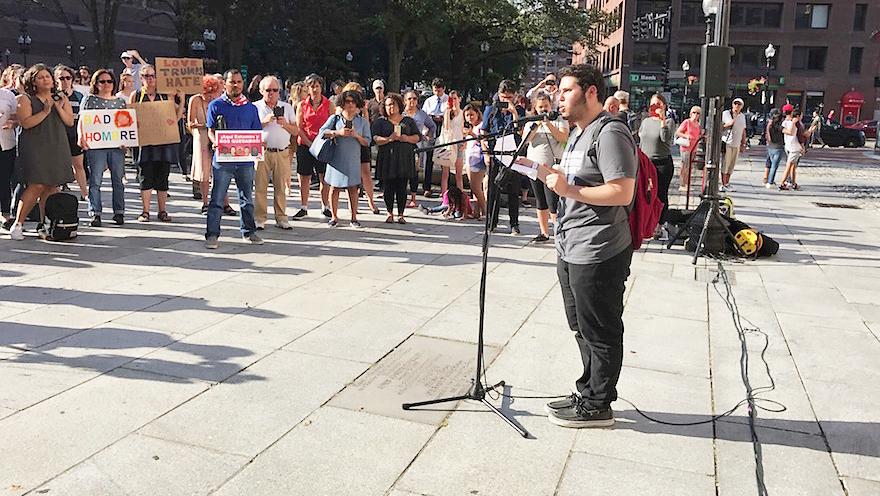
ELIAS ROSENFELD, THEN A SOPHOMORE AT BRANDEIS UNIVERSITY, SPEAKS AT A RALLY AT BOSTON’S FANEUIL HALL
DACA.
DACA
of dollars for help with scholarships and applications.
Rosenfeld, now a 20-year-old sophomore at Brandeis University on a full scholarship, spoke with JTA at a rally Tuesday, June 16, outside of Boston’s Faneuil Hall, just hours after President Donald Trump and Attorney General Jeff Sessions announced they would rescind DACA (barring an act of Congress), and two days before the Supreme Court disallowed the order.
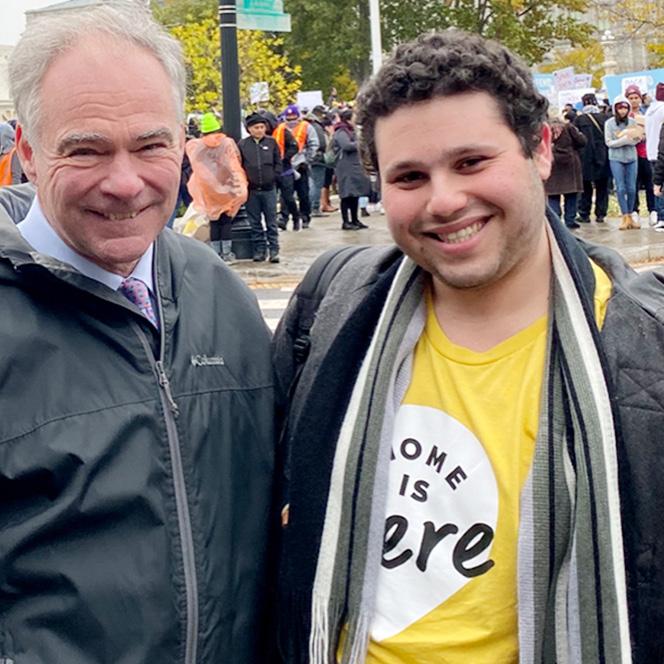
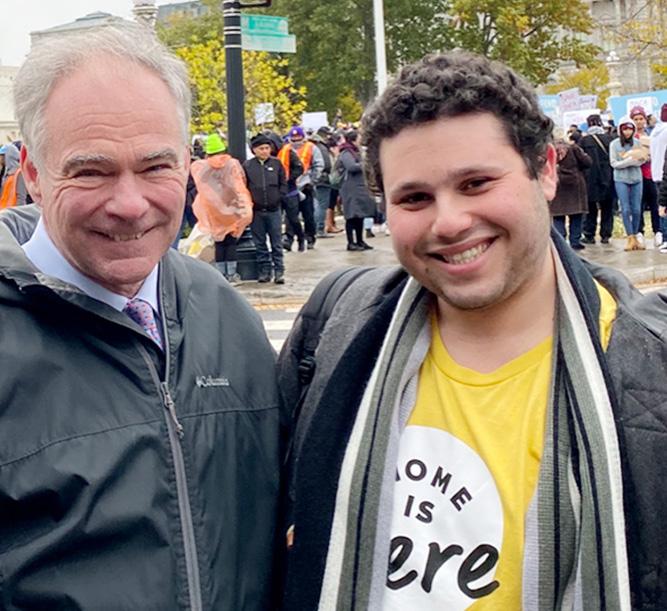
ELIAS ROSENFELD WITH U.S. SEN. TIM KAINE IN FRONT OF THE U.S. SUPREME COURT, NOV. 12, 2019, THE DAY ORAL ARGUMENTS WERE PRESENTED IN THE CASE ON DACA ARRIVALS.
(COURTESY OF ROSENFELD)
The Boston protest was organized by the Massachusetts Immigrant and Refugee Advocacy Coalition, where Rosenfeld is an intern. He shared his story with several hundred people at the quickly organized rally. He explained that DACA enabled him to drive, buy his first car, and apply for internships, jobs and scholarships.
“Today’s news was cruel and devastating. Now is not the time of despair, however, but to put our energy towards effective action,” he said, urging the crowd to work for protective legislation at the federal and state levels. There are some 8,000 DACA residents in Massachusetts.
Several Jewish communal leaders attended the rally, including Jeremy Burton, executive director of the Jewish Community Relations Council of Greater Boston, and Jerry Rubin, president of Jewish Vocational Services. Representatives from the New England Jewish Labor Committee, which helped spread the word of the rally, held signs in the crowd.
Rosenfeld recalls too well the sting and uncertainty of being undocumented.
“It means you can’t do everything your peers and your friends are doing. You feel American, but you are suffering these consequences from choices you didn’t make,” he said.
To DACA opponents, including Jewish supporters of Trump, Rosenfeld asks them to look at the facts and the stories of people like himself.
“I don’t think it aligns with our values, with Jewish values and the Jewish community,” he said of a policy that would essentially strip a generation of people raised here of official recognition.
Rosenfeld cited the activism of a group called Torah Trumps Hate, which opposes policies that it considers anathema to values contained in Jewish teachings.
Growing up, his family attended synagogue often and celebrated Shabbat and Jewish holidays.
Despite the hardships he faced following his mother’s death, Rosenfeld excelled in high school. He completed 13 Advanced Placement courses and ranked among the top 10 percent of his graduating class, according to a Miami-Dade County school bulletin. Rosenfeld was widely recognized as a student leader, receiving several awards and honors. During the presidential campaign, he volunteered for the Hillary Clinton campaign.
Many students who were undocumented live in constant fear, even after receiving temporary legal status under DACA, Rosenfeld said.
“There is fear behind the shadows,” he said. “We are always behind the shadows.”
Earlier in the day, before the president’s announcement, Brandeis President Ron Lie-bowitz sent a letter to Trump urging him not to undo DACA.
“Here at Brandeis University, we value our DACA students, who enrich our campus in many ways and are integral to our community,” the letter said. “Reversing DACA inflicts harsh punishment on the innocent. As a nation founded by immigrants, we can, should, and must do better.”
Rosenfeld was attracted to Brandeis both for its academics and its commitment to social justice. He is studying political science, sociology and law, with plans to continue his advocacy work on behalf of immigrants. He hopes one day to attend law school and work in politics or practice law.
The Brandeis administration has been supportive, he said, and there is a meeting later this week on campus to discuss school policy on the issue.
Asked what America means to him, Rosenfeld does not hesitate.
“It means my country. It’s my home. There’s a connection. I want to contribute,” he said. “I just don’t think it’s valuable to want to kick out people that want to contribute to this country.”
including enhancing its moderation of posts.
The ADL has has called on tech platforms for years to do more to combat hate. Recently the group has taken particular aim at Facebook, the most widely used platform in the world. In November, the ADL hosted comedian Sacha Baron Cohen for an address excoriating Facebook for allowing hate speech (“Sacha Baron Cohen: It’s time to regulate ‘the greatest propaganda machine in history’ – social media,” CT Jewish Ledger, Nov. 25, 2019).
“We have long seen how Facebook has allowed some of the worst elements of society into our homes and our lives,” CEO Jonathan Greenblatt said in a statement about the ad campaign. “Our organizations have tried individually and collectively to push Facebook to make their platforms safer, but they have repeatedly failed to take meaningful action.”
In October, following the attack on a synagogue in Halle, Germany, the ADL accepted a $2.5 million donation from Facebook’s COO, Sheryl Sandberg. In a statement accepting the donation, Greenblatt said he was “grateful for her commitment to fighting hate in all of its forms.”
This week, an ADL spokesperson told JTA that “ADL’s decisions about our policy positions and projects are independent from all of our donors, including Sheryl Sandberg. Her support has never been conditional on our engagement with Facebook or any other technology company.”
The no-ad campaign is demanding
a range of actions from Facebook. They include special moderation procedures for people who are targeted because of their identity, as well as live moderators who can speak to users who have experienced a high level of harassment. Facebook must remove all ads labeled as misinformation or hate, the participating groups say, and release data about how many reports of hate speech it received and what actions were taken in response.
Zuckerberg has repeatedly stuck by his hands-off approach to problematic speech. In July, he told Vox that he would allow Holocaust denial on the platform. Months later, in an address to Georgetown University, he said, “Our values at Facebook are inspired by the American tradition, which is more supportive of free expression than anywhere else.”
In response to that stance, critics have said Facebook must do more to police false or potentially inciting statements, including from Trump. After allowing Trump’s tweets on mail-in ballots, Zuckerberg told Fox News that Facebook should not be “the arbiter of truth.” Days later, after the social network allowed another Trump post that said “when the looting starts, the shooting starts,” some employees staged a virtual walkout.
On June 5, Zuckerberg posted on Facebook that the company would review its policies around threats of state use of force and voter suppression.
Along with the ADL and the NAACP, the campaign is being sponsored by the organizations Sleeping Giants, Color of Change, Free Press and Common Sense.

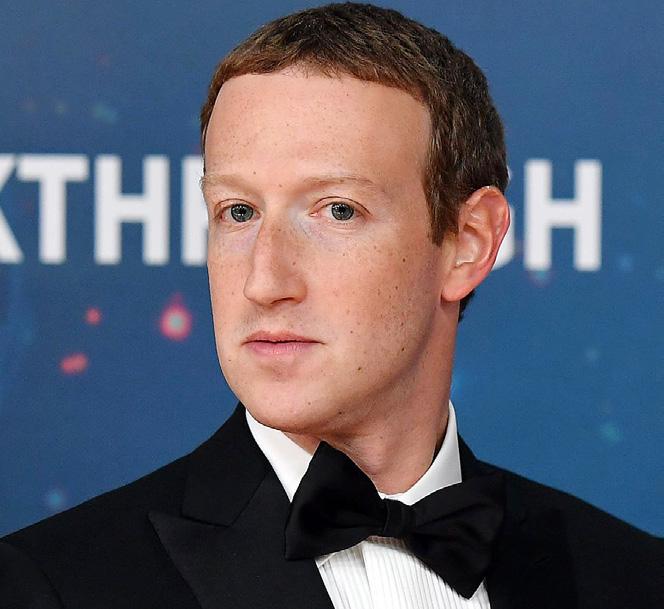
MARK ZUCKERBERG IN 2019
(CREDIT: JOSH EDELSON/AFP VIA GETTY IMAGES)
AUTHOR’S CORNER
‘I want to give other people the permission that Amy gave me’:
Amy Krouse Rosenthal’s husband pens memoir about moving on
BY CINDY SHER
(JUF News via JTA) – When Amy Krouse Rosenthal and Jason B. Rosenthal first got married, they brainstormed long-term marriage goals. Some that made the list: “Get dressed up and go on dates,” “Record our kids’ voices every year” and “Whenever we sign something ‘Amy & Jason,’ we both sign our name.” The Chicago Jewish couple lived by their rules in an almost fairy talelike marriage for more than two decades.
But in 2015, their marriage took a devastating turn when Amy was diagnosed with ovarian cancer, which claimed her life less than two years later.
Jason, an attorney, started the Amy Krouse Rosenthal Foundation, which supports child literacy and research in early detection of ovarian cancer. He writes about their love story in a new memoir released in April titled My Wife Said You May Want to Marry Me.
In the book, he paints his late wife – a beloved children’s book and memoir writer – as “this beautiful soul … this bighearted, selfless lady, whose legacy color is yellow, the color of happiness, glory, and wisdom.
Even from her deathbed, Amy shared that wisdom with the world. It was just 10 days before her death that she published a New York Times Modern Love essay called You May Want to Marry My Husband, a poignant and creative spin on a personals ad in which she detailed why she fell in love with Jason on their first date. Among his attributes, she wrote, “Jason is compassionate – and he can flip a pancake.”
Before closing the essay, Amy gave Jason what she called “blank space,” the freedom to imagine what his future – and that of their three grown children, Justin, Miles and Paris – would look like after she was gone. Her essay went viral, sparking a powerful national conversation about love and loss.
Three years after her passing and three years after she catapulted her husband into the spotlight, Jason’s memoir picks up where Amy left off. The book, based on Jason’s own 2018 New York Times Father’s Day essay, chronicles their love story and its painful end, the grief process and, ultimately, resiliency.
“I’m telling a story that many people think about but don’t really talk about –what it’s like to be with someone you love at the end of their life – and also about moving on,” Jason said. “Some way, somehow, I found my resiliency. I don’t think I could have without that gift that Amy gave me –


that proverbial blank space.”
A devoted father, Jason said he was daunted by how he would fill the void for their children, who lost their mother.
“There was so much fear in my mind of what it was like to be a single parent,” he acknowledges, but feels he has successfully negotiated his expanded parental role.
Whether there’s a mother at home or not, he hopes that other dads will stretch the definition of what is traditionally considered a father’s role.
“Not all emotional intimacy has to fall on mom,” he said. “We’re an important part of that as well.”
Jason and the kids are navigating the delicate balance between keeping Amy’s memory alive and forging ahead with their lives. But as she outlined in her final essay, he knows that Amy wanted Jason to move on and even to find love again.
“Amy provided me a very public platform and a blessing and desire to move forward,” he said. “I don’t think people talk about that so much, and I want to give other people the permission that Amy gave me.
“Whatever your timetable is, it’s OK. Grief doesn’t have a timetable – for some it takes forever and for others it happens right away. I don’t think anyone should be judged for having the desire to move forward.”
At the Hebrew Center for Health and Rehabilitation, we understand that comfort and familiarity is a key part of the journey to wellness. We also understand that maintaining your religious beliefs and principles is fundamental in continued enrichment of life.
Our Kosher meal services allow residents to maintain their dietary requirements throughout their stay with us. At the Hebrew Center, we ensure we follow all principles of Kosher including purchase, storage, preparation, and service.
At the Hebrew Center for Health and Rehabilitation, we also offer a variety of other services and amenities to ensure your stay is as comfortable as possible.
THESE SERVICES INCLUDE:
• Passport to Rehabilitation Program
• Long-Term Skilled Nursing Care
• Specialized Memory Care
• Respite Care Program
• Palliative Care and Hospice Services Coordination
OUR AMENITIES INCLUDE:
• Barber/Beauty Shop
• Café
• Cultural Menus
• Laundry and housekeeping services
• Patient and Family education
• Life Enrichment
For more information on our Kosher program, please contact: DIRECTOR, PASTORAL SERVICES - (860) 523-3800
Hebrew Center for Health and Rehabilitation One Abrahms Boulevard, West Hartford, CT 06117




AMY KROUSE ROSENTHAL AND JASON B. ROSENTHAL ON A TRIP TO FLORIDA IN 2017. (COURTESY OF JASON ROSENTHAL)
Around Connecticut
BBYO Connecticut Valley Region hosts 1st virtual convention
STATEWIDE – Close to 250 teens took part in the BBYO Connecticut Valley Region’s (CVR) first virtual Spring Convention, held the week of May 12 – which meant teens taking part in annual rituals and traditions and engaging with their peers in new and creative ways.
“BBYO has been the one consistent thing in my life during this pandemic, and our connections as a community are stronger than ever,” Sydney Molaver, a member of Chelsea J. Cohen BBYO in Norwalk said. “In theater they say ‘The show must go on!’ and that is exactly what we did, we went virtual and ran a super awesome virtual spring convention where we strengthened our community safely from our homes!”
Said Zac Kitay, AZA (boys) president of the region, “Virtual convention kept me smiling and laughing during the quarantine, it gave me an outlet to be productive and work towards a common goal.”
The convention highlights included: challah making classes, an iron chef cooking competition, a game of virtual H.O.R.S.E., and guided art classes. The region also held Friday night services and created its own version of the Saturday Night Seder, with a Shabbat Morning Service video produced by BBYO teens.
CVR alumni Brendan George joined the teens to talk about his time on MTV’s “Drag My Dad,” a show in which family members dress in drag and share and discuss personal issues. Brendan shared his story about being Jewish and Queer and also reflected on his time in BBYO.
Sarah Milner, outgoing BBG (girls) regional president said, “Virtual Convention gave me such hope in times of uncertainty. It gave me a sense of normalcy and community. It really did make quarantine so much easier. I had something to look
forward to everyday and was able to see people that I missed and love.”
BBYO teens also launched two initiatives during Spring Convention:
(1) A project to connect with teens whose b’nai mitzvah were interrupted due to COVID-19. BBYO teens reached out to these teens, saying “mazel too!” with packages of cookies. For each package of cookies that was sent to a bar/bat mitzvah teen, a package of cookies was also sent to Health Care workers in honor of the mitzvoth they perform everyday. The project will continue throughout the summer.
(2) BBYO teens introduced Operation Bubbe Sitters – a project that connects Jewish teens with residents of assisted living homes as a way of reaching out and offering support. The teens sent letters to different Jewish homes in order to begin pen pal relationships with the residents.
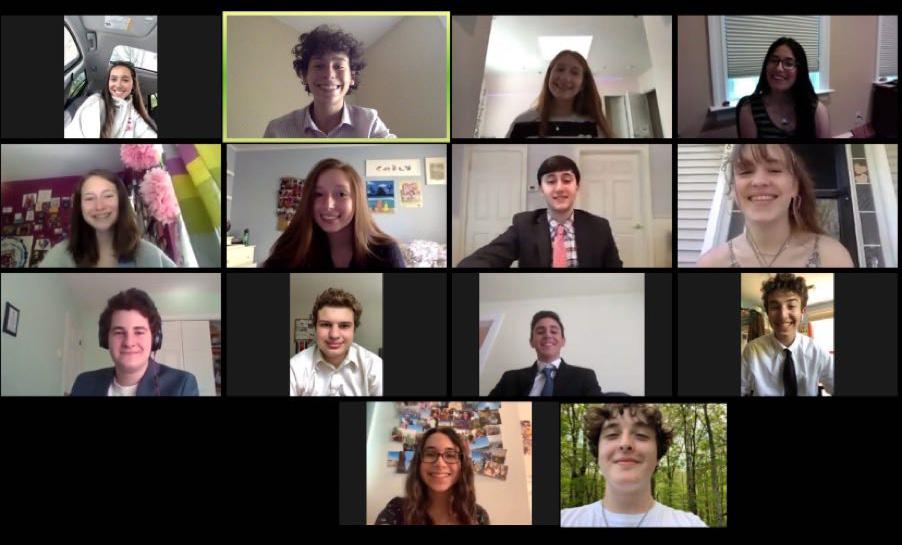
The Convention wrapped up with elections for the next group of BBYO leaders. They are:
The 61st Regional AZA Board
Godol/President: Nathan Zakim, Trumbull
S’gan/VP Programming: Nick Matalote, Woodbridge
Moreh/VP Membership: Jacob Levy, Woodbridge
Mazkir/Communications: Miles Leslie, Stamford
Shaliach/Jewish Programming: Ethan Durnell, Brookfield
Gizbor/Treasure: Leo Koganov, Stamford
Ozer/Community Service : Evan Gorelick, Woodbridge.
The 61st Regional BBG Board
N’siah/President: Ellie Carter, Ridgefield
S’ganit/VP Programming: Carly Fein, Stamford
Aym HaChaverot/VP Membership: Jenna Zamkov, Woodbridge
Mazkirah/Communications: Samantha Hass, Woodbridge
Sh’licha/Jewish Programming: Olivia Feldmand, Weston
Gizborit/Treasurer: Ruthie Price, Stamford
Ozeret/Community Service: Emma Goldberg, Stamford
For more information about BBYO, visit BBYO.org or email Josh Cohen, senior re-gional director at JCohen@ bbyo.org,or Jennifer Kruzansky, regional director at JKruzansky@ bbyo.org.
ELECTION 2020
Jewish Democratic Council won’t back Ilhan Omar, mum on her opponent
BY JACKSON RICHMAN
(JNS) The Jewish Democratic Council of America (JDCA) has affirmed that it will not support Rep. Ilhan Omar (D-Minn.) in her upcoming primary, but did not provide a endorsement to her chief primary opponent, progressive Antone MeltonMeaux.
Omar is set to face Melton-Meaux, who has been critical of Omar’s anti-Semitic and anti-Israel statements, in an Aug. 11 primary for Minnesota’s 5th Congressional District.
When asked by JNS about whether JDCA would be taking on Omar, executive director Halie Soifer instead chose to comment on the activities of the Republican Jewish Coalition, rather than to explain why her organization is not endorsing the opponent of an incumbent who has a record of anti-Semitic remarks.
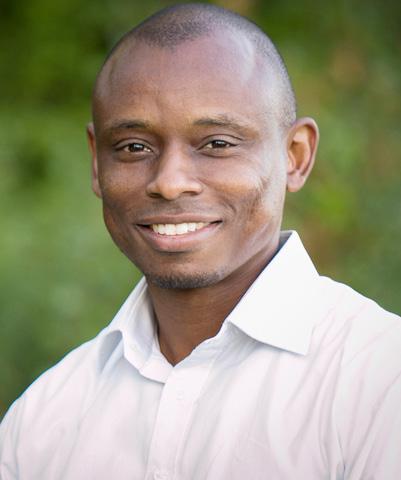
DEMOCRATIC CONGRESSIONAL CANDIDATE ANTONE MELTON-MEAUX
(CREDIT: ANTONE MELTONMEAUX FOR CONGRESS)
“On the day that it was publicly revealed that [U.S. President] Donald Trump gave a green light to Chinese concentration camps, and just days after it was reported that the RJC refused to get involved in the primary opposing not one but two Republican candidates in Georgia with ties to neo-Nazis, the RJC [Republican Jewish Coalition] should explain why they’re spending more than $10 million to re-elect someone who emboldens neo-Nazis, including those running for office,” she said.
Still, added Soifer, “JDCA will not be supporting Rep. Omar in this election. End of story.”
JDCA usually doesn’t get involved in primaries, though it has endorsed candidates such as Rep. Eliot Engel (D-N.Y.), who is facing a tough re-election on June 23 in New York’s 16th Congressional District.
The two Republican candidates in Georgia that Soifer referred to are Georgia state Rep. Matt Gurtler and businesswoman Marjorie Taylor Greene, who advanced to run-offs in the state’s Ninth and 14th Congressional District, respectively. Both have posed for photos with former Ku Klux Klan leader Chester Doles, who has a criminal record that includes beating a black male nearly to death because he was seen accompanying a white woman and violating federal gun laws.
RJC executive director Matt Brooks has already said that his organization will not be supporting or endorsing Gurtler and Greene.
Melton-Meaux, a lawyer who founded and leads a mediation firm, is one of four candidates challenging Omar in the primary. He has slammed Omar’s record of antiSemitic and anti-Israel remarks.
“Omar has made statements that have been reckless and harmful to the Jewish community,” Melton-Meaux told Jewish Insider. “I have spent time with the Jewish community and have met with Jewish leaders, and there’s a deep sense of betrayal by her actions and displeasure with the way that she has handled herself in the process with regard to the residents in this district.”
On his campaign website, Melton-Meaux expressed opposition to the BDS movement and support for a two-state solution to the Israeli-Palestinian conflict.
BBYO 2020 BOARD

Why can’t you get canceled for antisemitism?
(JNS) In the weeks since the brutal and unjustified killing of George Floyd by a Minneapolis police officer, America has been undergoing what The New York Times approvingly called a “reckoning” that marks a fundamental shift in attitudes about race.
But the onset of this surge of public soul-searching and consciousness-raising about race has brought with it a trend that is deeply troubling. The heightened sensitivity about racism has brought about a flood of accusations against alleged offenders that have more to do with politics, and out-of-control illiberal and intolerant social-media mobs, than making the country a better place. The widespread “canceling” of people who are deemed racists is becoming a serious problem.
The question is, if it’s so easy to cancel someone for not going along with the prevailing orthodoxy about what constitutes racism, why does engaging in antisemitism not bring about the same moral opprobrium from the media and the cultural forces taking down people for dissenting from the Black Lives Matter catechism?
Examples abound of instances in which people’s careers and lives are being ruined because of their refusal to bend the knee – literally or metaphorically – to a Black Lives Matter movement that is determined to condemn anyone who dissents from their ideology or even question it.
One involves Gordon Klein, a professor at UCLA’s School of Management who was placed on leave and had his classes taken away from him after refusing to grant African-American students exemptions from taking final exams because of their collective state of mind after the death of Floyd. The university took that action after angry students accused him of racism and because he had paraphrased Dr. Martin Luther King Jr.’s famous statement about judging people by the content of their character, rather than the color of their skin. Klein, who had taught at the school for 39 years, was doxxed by the students (they made public his email and home addresses) and is now under police protection because of death threats.
He isn’t alone.
Tiffany Riley, a Vermont school principal, was placed on administrative
BY JONATHAN S. TOBIN
leave for a Facebook post that said that while she agreed that black lives matter, she didn’t support coercive measures to advance that cause or the demonization of police.
Harald Uhlig, an economics professor at the University of Chicago, was fired from a consulting job at the Federal Reserve for saying that Black Lives Matter had “torpedoed itself” by aligning the movement with calls for defunding the police. A mob of outraged economists and journalists led by The New York Times’ Paul Krugman wanted Uhlig’s head on a spike for this offense. Though Uhlig had issued a groveling apology for his heresy, the Fed acceded to their demand, saying there was no room at the institution for “racism,” even though the economist’s statement could not credibly be described as such a thing.
There are many other examples of similar incidents of people being canceled over dubious accusations of racism. But what is also interesting about what’s going on is that far more egregious examples of antisemitic hate aren’t producing the same results.
One prominent example was that of popular comedian and television star Chelsea Handler, who approvingly posted a video of National of Islam hatemonger Louis Farrakhan on her Instagram page this past weekend.
Handler said a Farrakhan statement on racism from an old clip from “The Phil Donahue Show” was “powerful.” Farrakhan is a purveyor of antisemitic conspiracy theories and vituperation against Jews. But according to Handler, his comments about the evils of racism directed at blacks deserved to “stand alone.”
When a commenter asked her if she would single for praise out some out-ofcontext statement of Adolf Hitler, she argued that Farrakhan’s hate was different because “he is just responsible for his own promotion of antisemitic beliefs. They are very different.”
In other words, antisemitism is just another opinion an otherwise laudable person might hold, not evidence of murderous hate.
In the current moral panic about racism, one might have expected a surge of anger directed towards Handler by her colleagues
in the entertainment industry, in addition to announcements that indicated that both individuals and companies wouldn’t work with her in the future. That didn’t happen. Instead, several celebrities even more famous, such as Jennifer Anniston, Jennifer Garner and Michelle Pfeiffer, voiced support for Handler.
Handler’s ability to survive this incident with her career intact shows that myths about Hollywood being controlled by the Jews are nonsense. It’s also likely that most Jews in the entertainment industry are either so cowed by the Black Lives Matter movement that they wouldn’t dare to act against her or actually agree that antisemitism shouldn’t disqualify Farrakhan from being considered a respected voice.But the pass for antisemitism doesn’t just exist in the arts.
In early 2019, newly elected Rep. Ilhan Omar (D-Minn.) made a splash by engaging in antisemitic incitement against Jews and Israel with accusations about AIPAC buying congressional support for Israel with “the Benjamins,” coupled with charges that supporters of the Jewish state were guilty of dual loyalty.
While many on both sides of the aisle condemned her remarks, when push came to shove, congressional Democrats refused to censor her. While at the same time Republicans were punishing Rep. Steve King (R-Iowa) for remarks that seemed an endorsement of white nationalism, Omar was rewarded with a seat on the Foreign Affairs Committee, where she could pursue her vendetta against Israel and support for the antisemitic BDS movement.
More than that, she got a pass from the same cultural forces that are canceling dissenters from the BLM mantra by being treated as an honored celebrity. Nor has that changed, since during the past two weeks she has made the rounds of the Sunday-morning talk shows, where hosts like CNN’s Jake Tapper fawn on her.
The practice of shaming, shunning and silencing those with unpopular or even offensive views is antithetical to democracy and the free exchange of ideas. That is especially true when it involves actions or
CONTINUED ON THE NEXT PAGE
Vol. 92 No. 26
JHL Ledger LLC Publisher
Henry M. Zachs Managing Partner
Leslie Iarusso Associate Publisher
Judie Jacobson Editor judiej@jewishledger.com • x3024
Hillary Sarrasin Digital Media Manager hillaryp@jewishledger.com
EDITORIAL
Stacey Dresner Massachusetts Editor staceyd@jewishledger.com • x3008 Tim Knecht Proofreader
ADVERTISING
Donna Edelstein Senior Account Executive Non-Profit & JHL Ledger LLC Media Marketing donnae@jewishledger.com • x3028
Joyce Cohen Senior Account Executive joycec@jewishledger.com • (860) 836-9195
Joan Gaffin Central Mass. Account Executive joang@jewishledger.com • (508) 414-6210 Trudy Goldstein Account Executive (860) 573-1575


Samuel Neusner, Founder (1929-1960) Rabbi Abraham J. Feldman, Co-Founder and Editor (1929-1977) Berthold Gaster, Editor (1977-1992) N. Richard Greenfield, Publisher (1994-2014)
PUBLISHER’S STATEMENT Periodicals postage paid at Hartford, CT and at additional mailing offices.
Jewish Ledger (USPS # 131 - 150) is published 24 times per year by JHL Ledger LLC from our office at: Jewish Ledger
40 Woodland Street Hartford, CT 06105 Phone (860) 231-2424 Fax (860) 231-2485 Toll Free 1-800-286-6397
Postmaster, send address changes to: Jewish Ledger 40 Woodland Street Hartford, CT 06105
Subscriptions: $36 yearly, $9 Twelve Issue Institutional subscription. Send name, address, zip code with payment. Editorial deadline: All public and social announcements must be received by Tuesday 5 p.m. 10 days prior to publication. Advertising deadline: Wednesday noon one week prior to issue. Advertisers should check ad on publication. JHL Ledger LLC and Jewish Ledger shall not be liable for failure to publish an ad for typographical error or errors in the publication except to the extent of the cost of the space which the actual error appeared in the first insertion. Publishers reserve the right to refuse advertising for any reason and to alter advertising copy or graphics deemed unacceptable. The publishers cannot warrant, nor assume responsibility for, the legitimacy, reputability or legality of any products or services offered in advertisements in any of its publications. The entire contents of the Jewish Ledger are copyright © 2020. No portion may be reproduced without written permission of the publishers. JHL Ledger LLC also publishes Jewish Ledger MA, All Things Jewish CT, and All Things Jewish MA. www.jewishledger.com
MILESTONES
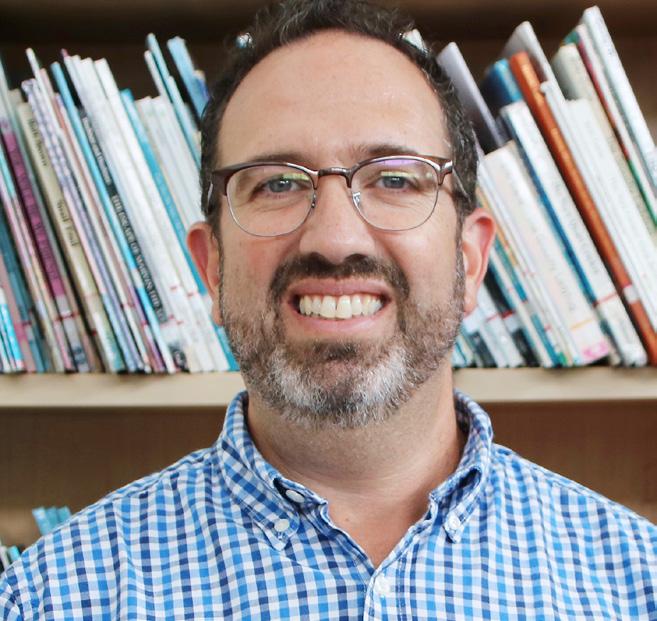
Temple Sholom educator advances his own education
GREENWICH – David Cohen, director of schools at Temple Sholom in Greenwich, recently completed his Masters degree in Jewish Education from Gratz College.
Cohen joined the staff of Temple Sholom in 2016. Cohen holds a Bachelors in Human Development and Early Childhood, a Master’s in Early Childhood Education
Opinion
CONTINUED FROM PAGE 10
statements that are not actually racist. At the same time, it says something truly ominous about our society and culture that questioning the BLM movement –even while avowing that, of course, black lives matter – can destroy a career, while endorsing antisemites and even engaging in Jew-hatred is not considered a big deal. We already know that the consequences
Administration and all but a dissertation toward a PhD in Educational Leadership. Cohen enrolled in the Masters of Jewish Education program in search of a deeper and more meaningful connection with the culture, the language and the history of Judaism.
“This was an intense experience,” says Cohen, “but I feel that the community really appreciates cutting-edge education in every facet. This second Masters from Gratz College complements my other degrees and rounds out my education. It gives me new skills and takes my educational experience to the next level.”
David Cohen works closely in the Temple Sholom Learning Center (religious school) with Rabbi Kevin Peters, director of Judaic studies. Peters was ordained at the Jewish Theological Seminary, from which he received a Master’s in Jewish Education.
David Cohen resides in Trumbull with his wife, Alexa, who is an early childhood director.
B’nai Mitzvah
NATHAN MELNICK, son of Mark Melnick and Melissa Geetter, will celebrate his bar mitzvah on Saturday, June 27, at The Emanuel Synagogue in West Hartford.
EVAN ZAKIM, son of Judy and Jeff Zakim, will celebrate his Bar Mitzvah on June 27, at Congregation B’nai Torah, Trumbull.

Jonathan Green elected to exec committee of CT Funeral Directors Assoc.
WETHERSFIELD –
of giving antisemites a pass can lead to horror. Apparently, those who pose as the supposedly enlightened guardians of our culture have either forgotten that or no longer care about it.
Jonathan S. Tobin is editor in chief of JNS–Jewish News Syndicate.

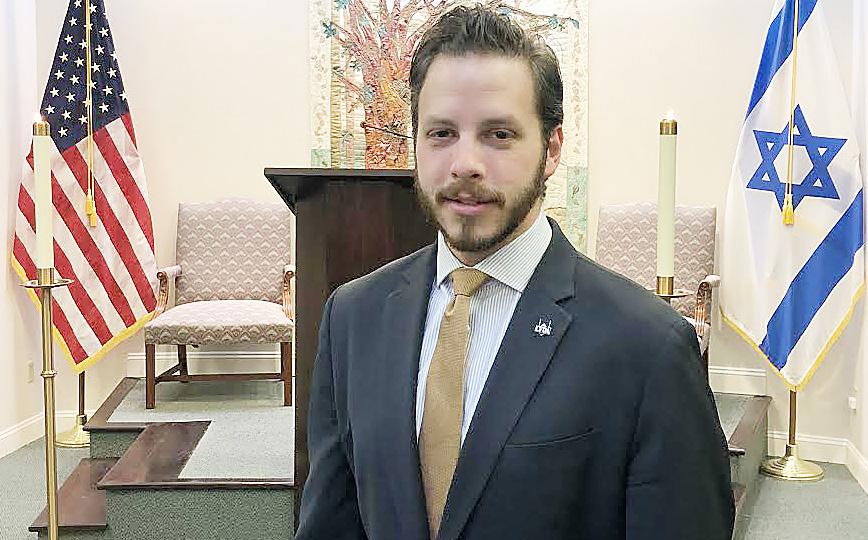
Jonathan L. Green has been elected as an alternate member of the Executive Committee of the Connecticut Funeral Directors Association (CFDA). Green is a licensed funeral director/embalmer at Abraham L. Green & Son Funeral Home in Fairfield, where he works with his father, Samuel A. Green, also is a licensed funeral director/embalmer. The funeral home was founded in 1948 by Jonathan’s grandfather, Abraham L. Green.
Green became a licensed funeral director/embalmer in 2013 after receiving his professional schooling from American Academy McAllister Institute of Funeral Service in New York City, graduating Summa Cum Laude. In addition, he holds a Bachelor’s degree from Ithaca College in New York and attended graduate school at Kutztown University in Pennsylvania. Green also is a licensed emergency medical technician (EMT) who is certified by the National Registry of Emergency Medical Technicians (NREMT).
Green lives in Fairfield, with his wife, Emily. He is a Board member of the
Men’s
in Bridgeport, and at Merkaz Community High School for Judaic Studies in Bridgeport. He is also a member of Congregation Rodeph Sholom and of Congregation B’nai Israel, both in Bridgeport.
The Connecticut Funeral Directors Association (CFDA) is comprised of funeral directors at more than 220 funeral homes. Founded 131 years ago in 1889, the Wethersfield-based association is committed to the promotion and advocacy of high ethical standards in funeral service. This includes the development and presentation of ongoing professional training opportunities for practitioners and educational programs for association members and the public.
Club at Jewish Senior Services
A summer to feast on!
We’re guessing there will lots of eating out this summer – and by “out” we mean the backyard. Think of it as a great opportunity to get playful with flavors and the like. Here are two innovative recipes to try from The Nosher (www.TheNosher.com.)
BRISKET TACOS WITH CARROT SLAW
BY REBECCA FIRKSER
When I was growing up, I knew brisket as an island of meat in a sea of sweet brownish-red sauce with carrot-plank buoys. Every holiday, this was plunked in the center of the table alongside a loaf of bread. It was … fine. But nothing to write home about.
As I sliced through the brisket, I imagined all the ways it could be improved upon: more salt, always, maybe a bit of heat to break up all this fat, and some acid, too, to balance out the sweetness of the sauce. And why such thick slices of brisket? Brisket is a tough cut of meat, but if braised in well-seasoned liquid long enough, it can go so tender it practically shreds itself when nudged with a fork.
This summer, I dare you to leave the giant platter of meat for the winter months and embrace the warming weather with braised brisket tacos, with a crunchy, tangy raw carrot slaw served alongside the meat to breathe new life into the familiar flavors.
Ingredients:
For the brisket:
4 pounds beef brisket
Kosher salt and black pepper
1 tablespoon neutral oil
2 tablespoons granulated sugar or honey
1/4 cup apple cider vinegar
2 medium red onions, quartered or 3 large shallots, halved
1 head garlic, halved crosswise (no need to get rid of the skin)
1 tablespoon hot smoked paprika
1 tablespoon chile powder
3 tablespoons tomato paste
1 14-ounce can crushed tomatoes
2 cups chicken, vegetable or beef broth
For the slaw:
1/4 cup lime juice
1 teaspoon honey
1/2 teaspoon red pepper flakes
Kosher salt and black pepper
5 medium carrots, grated
6 scallions, thinly sliced
For serving:
Corn or flour tortillas (small)
Diced white onion, pickled jalapeño, sliced radish, hot sauce
Lime wedges
Directions:
1. Season the brisket all over with salt and pepper at least 1 hour at room temperature (or overnight in the fridge, then returned to room temperature before searing). Preheat the oven to 325 F. Heat oil in a large Dutch oven over medium-high heat, then sear the brisket fat-side down until well-browned, about 4-5 minutes per side. Transfer to a cutting board or plate. Pour out all but 2 tablespoons fat.
2. In a small bowl, dissolve sugar or honey in apple cider vinegar and set aside.
3. Add onions and garlic to the pot and cook, stirring occasionally, until they take on some color, about 4 minutes. Stir in paprika, chile powder and tomato paste, and cook until the spices are fragrant and the tomato paste turns brick red, about

1 minute. Stir in the vinegar mixture, tomatoes and broth, then bring to a boil. Season with a big pinch of salt. Let the mixture reduce for 5 minutes, then return the brisket to the pot, fat-side up.
4. Cover the pot and transfer to the oven. Bake, removing the pot from the oven and spooning some of the liquid over the meat every 40 minutes or so, until the meat easily shreds when you pull at it with a fork, 3 to 3 1/2 hours.
5. Remove pot from the oven and carefully skim off as much rendered fat as you can from the surface of the mixture. Discard fat. Uncover the pot and let cook for an additional 15 minutes. Let cool, then skim fat again. Skim fat every 15 minutes until you’re ready to serve, then use 2 forks to shred the meat and coat entirely in the surrounding sauce. The onions and garlic will have essentially melted into the sauce, but if you spy whole cloves of garlic, give them a smash to incorporate. (Alternatively, remove pot without skimming fat, let the mixture cool to room temperature and refrigerate overnight, covered. The following day, scoop off solidified fat from the surface and return to the oven at 325 F. Discard fat. Cover and reheat for 1 hour, then shred meat.)
6. To make the slaw, combine lime juice, honey and red pepper flakes in a large bowl and season with salt and pepper. Let sit for at least 15 minutes or up to 1 hour. Toss in carrots and scallions. Season with more salt and pepper to taste. Serve brisket with warmed tortillas, slaw and desired taco fixings. Serves 6-8.
BANANA
TAHINI POPS ARE
THE
PERFECT SUMMER DESSERT HACK!
BY SHERI SILVER
Remember when one-ingredient banana ice cream broke the internet? If not, let me refresh your memory.
A while back a “recipe” (if you can call anything with one ingredient a recipe) for banana ice cream went viral. And with good reason. To make it you simply put a few frozen sliced bananas in a food processor and blended them until they achieved the consistency of soft serve. Pop them into the freezer and sure enough, you had a frozen, scoopable “ice cream” that was healthy, vegan and sugar-free.
And, like most viral recipes, banana ice cream was soon replaced by the next food

trend – and the one after that – and so on. But we’re bringing it back, giving it a tahini swirl and turning it into popsicles! Because everything’s better on a stick. And with a tahini swirl.
Not everyone has a popsicle mold, so we’re showing you how you can make these pops in a loaf pan – but feel free to use those molds if you’ve got ’em.
And don’t stop there – tahini is just the beginning! You can swap it for almond butter, chocolate chips, strawberry preserves, granola or even add some other frozen fruit like strawberries or blueberries – whatever you like. These couldn’t be easier, and when was the last time you gave permission to eat ice cream for breakfast?
Ingredients:
6 ripe bananas, peeled, sliced and frozen 1/2 cup tahini
3 tablespoons maple syrup (or to taste)
Directions:
1. Line an 8-by-4-inch loaf pan with plastic wrap (you can use a 9-by-5 pan if that’s what you’ve got), leaving an overhang on all sides.
2. Place the bananas in your food processor and process till crumbly. Scrape down the sides and continue processing –the bananas will become smooth, and then thick and creamy with a consistency similar to soft-serve ice cream.
3. Meanwhile whisk the tahini and maple syrup till smooth – taste and adjust sweetener if needed.
4. Spread half the ice cream into your loaf pan and smooth with the back of a spoon. Drizzle half the tahini mixture over. Repeat with remaining ice cream and tahini. Use a thin sharp knife to swirl the mixture together; rap the pan on the counter to level.
BRISKET TACOS WITH CARROT SLAW
TAHINI POPS

Summer Reading

Summer – especially this one – is the perfect time to take a break from the great big (sometimes burdensome) world and lose yourself in a good book. What to read? We checked out the Jewish Book Council at www. jewishbookcouncil.org – and came away with an enticing list of books with Jewish content or Jewish themes – both fiction and nonfiction – that were published in 2019/2020.
The Guest Book
by Sarah Blake
National Jewish Book Awards Finalist 2019
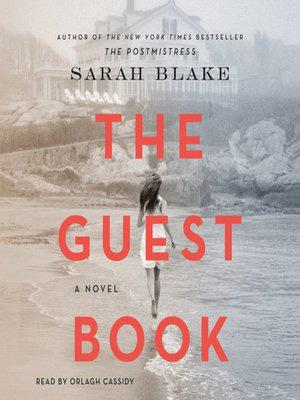
A family saga that jumps back and forth between four generations in the life of a single, wealthy, American family. The saga spans eras from preWorld War II to the present, illuminating the great divide – the gulf that separates the rich and poor, black and white, Protestant and Jew. From their family retreat on the coast of Maine, the family navigates the evolving social and political landscape as it crumbles around them and they struggle to pick up the pieces of their privilege. Blake lays bare the memories and mistakes each generation makes while coming to terms with what it means to inherit the past.
By Anna Solomon 2020
The lives of three women intertwine across three centuries as their stories of sex, power, and desire finally converge – and ultimately collide – in the present day: Lily is a mother, daughter, second wife, and wouldbe writer, grappling with her sexual and intellectual desires, while also trying to manage her roles as a mother and a wife; Vivian Barr is the perfect political wife, dedicated to helping her charismatic husband find success in Watergateera Washington D.C.; Esther is a fiercely independent young woman in ancient Persia, where she and her uncle’s tribe live a tenuous existence outside the palace walls.
The Tenth Muse
By Catherine Chung
National Jewish Book Awards Finalist 2019
A tale about legacy, identity, and the beautiful ways the mind can make us free.
What We Talk about When We Talk about Hebrew (and What It Means to Americans)
By Naomi B. Sokoloff, Nancy E. Berg (Editors)
Growing up in the 1950s Midwest, Katherine knows she is different, and that her parents are not who they seem. As she matures from into an exceptional mathematician, she must face the most human of problems – who is she? What is the cost of love, and what is the cost of ambition? These questions grow ever more entangled as Katherine becomes involved with a charismatic professor. When she embarks on a quest to conquer the greatest unsolved mathematical problem of her time, she is forced to confront some of the most consequential events of the 20th century and rethink everything she knows of herself.
Scholars, writers, and translators tackle a series of questions that arise from the changing status of Hebrew in the U.S. To what extent is that status affected by evolving Jewish identities and shifting attitudes toward Israel and Zionism? Will Hebrew programs survive the current crisis in the humanities on university campuses? How can the vibrancy of Hebrew literature be conveyed to a larger audience? The volume features a diverse group of distinguished contributors, including Sarah Bunin Benor, Dara Horn, Hannah Pressman,Ilan Stavans, Michael Weingrad, and Robert WhitehillBashan. Their essays give fellow Americans a glimpse into the richness and vitality of modern Hebrew, as they focus not only on Hebrew as a global phenomenon and longlived tradition―but on what it can mean to Americans.
Calm Sea and Prosperous Voyage: Selected Stories
By Bette Howland
Bette Howland was the daughter of a workingclass Jewish family in Chicago in 1937, mentee and onoff lover of Saul Bellow, author of three books and winner of the MacAurther “genius”
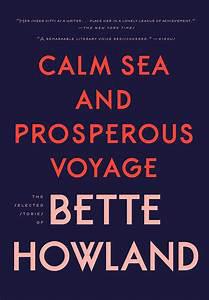
grant who never wrote a book again. In 2015, Brigid Hughes of the magazine A Public Space found a worn copy of Howland’s memoir W-3 at a used bookstore. Hughes sought out the rest of Howland’s work, eventually meeting her son and the ailing, now deceased, Howland herself. They presented Hughes with a treasure trove of correspondence with Bellow and unpublished work, some of which is now featured in Calm Sea, a collection of stories (many autobiographical) rife with biting, humorous observations and canny emotions.
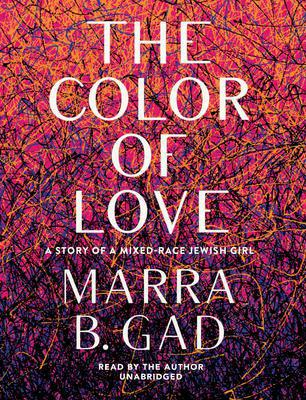
The Color of Love: A Story of a Mixed Race Jewish Girl
By Marra B. Gad
In 1970, threedayold Marra B. Gad, whose biological mother was white and Jewish, and whose biological father was black, was adopted by a white Jewish family in Chicago. For her parents, it was love at first sight – but they quickly realized the world wasn’t ready for a family like theirs. While still a child, Marra faced prejudice fro both Blacks and Whites. Even in her own extended family, racism bubbled to the surface. Marra’s family cut out intolerant relatives, including her once beloved GreatAunt Nette. After a 15year estrangement, Marra discovers that Nette has Alzheimer’s, and that only she is the only family she has left. This is a story about what you inherit from your family –identity, disease, melanin, hate, and most powerful of all, love.
The Book of V
Fly Already: Stories
By Etgar Keret
National Jewish Book Awards Winner 2019

In Keret’s latest collection of stories, a young boy narrates a postapocalyptic version of the world where a youth army wages an unending war, rewarded by collecting prizes; a father tries to shield his son from the inevitable; a guy just wants to get a joint to impress a girl and ends up down a rabbit hole of chaos and heartache; and two unlikely people connect through an evening smoke down by the beach, only to have one of them imagine a much deeper relationship. The thread that weaves these pieces together is our inability to communicate, to see so little of the world around us and to understand each other even less. Yet somehow, a bright light shines and our universal connection to each other sparks alive.
The Guarded Gate: Bigotry, Eugenics, and the Law That Kept Two Generations of Jews, Italians, and Other European Immigrants Out of America
By Daniel Okrent
National Jewish Book Awards Winner 2019
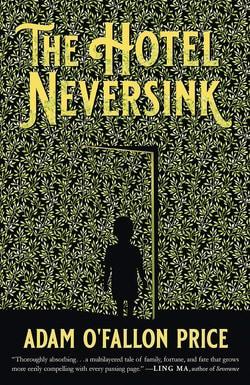
century by an eccentric tycoon, and bought by a Jewish immigrant, Asher Levem Sikorsky, who turns it into a hotel. O’Fallon Price masterfully evokes historical detail, and this blend of sensationalism and realism allows him to question the class and gender assumptions that underpin Gothic fiction
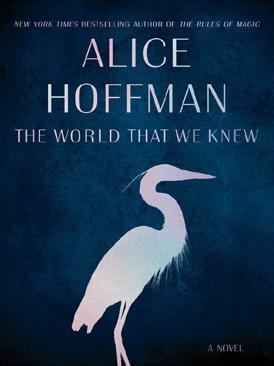
The World That We Knew: A Novel
By Alice Hoffman
National Jewish Book Awards Winner 2019
Judaism and the Jews,” she says. Her answer: Call out hate, support Israel, join more than one synagogue, and consider reclaiming the peace that comes from observing Shabbat. Strengthening our Jewish identity, she writes, will strengthen our image in the world.
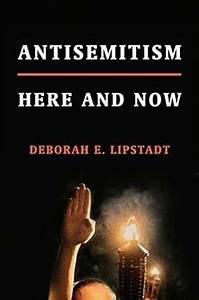
Antisemitism: Here and Now
By Deborah E. Lipstadt
National Jewish Book Awards Winner 2019
Secret Lives at the Birth of Israel
By Matti Friedman
Winner of the 2018 Natan Book Award
National Book Awards Finalist 2019
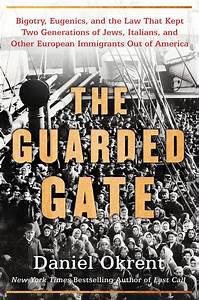
A forgotten dark chapter of American history with implications for the current day, this book by tells the story of the scientists who argued that certain nationalities were inherently inferior, providing the intellectual justification for the harshest immigration law in American history. Brandished by the upper class Bostonians and New Yorkers – many of them progressives –who led the antiimmigration movement, the eugenic arguments helped keep hundreds of thousands of Jews, Italians, and other unwanted groups out of the US for more than 40 years. A work of history with stunning relevance to the present day, The Guarded Gate connects the American eugenicists to the rise of Nazism, and shows how their beliefs found fertile soil in the minds of citizens and leaders worldwide.
The Hotel Neversink
By Adam O’Fallon Price 2020 Edgar Award Winner
The Hotel Neversink is a gothic novelist in, of all places, the Jewish Catskills. In vignettes from different characters’ points of view, we follow the descent into ruin of the once grand building “Foley’s Folly,” a mansion built at the turn of the 20th
In 1941, during humanity’s darkest hour, the story follows three young women who must act with courage and love to survive. Hanni Kohn knows she must send her 12yearold daughter away to save her from the Nazi regime. She finds her way to a renowned rabbi, but it’s his daughter, Ettie, who offers hope of salvation when she creates a mystical Jewish creature, a rare and unusual golem, who is sworn to protect Lea. Once Ava is brought to life, she and Lea and Ettie become eternally entwined, their paths fated to cross, their fortunes linked. Lea and Ava travel from Paris, where Lea meets her soulmate, to a convent in western France known for its silver roses; from a school in a mountaintop village where three thousand Jews were saved. Meanwhile, Ettie is in hiding, waiting to become the fighter she’s destined to be.
How to Fight AntiSemitism
By Bari Weiss
National Jewish Book Awards Winner 2019

In her urgent new book, York Times staff writer Bari Weiss examines the dangerously high level of American antisemitism coming from both right and left. The aim of this new rise of antisemitism, she says, is the elimination of the Jewish people and Judaism itself, whether this is accomplished through violence or the political destruction of the State of Israel. An outspoken advocate for Jews and Zionism, Weiss’s exposition of modern antisemitism is deep and layered; her multifaceted plan for Jews is creative and insightful. She tells us to embrace Judaism, renew our values, and respect ourselves. “There has not been a single moment in Jewish history where there weren’t antiSemites determined to eradicate
A penetrating and provocative analysis of the hate that will not die, focusing on its current, virulent incarnations on both the political right and left: from white supremacist demonstrators in Charlottesville, Virginia, to mainstream enablers of antisemitism such as Donald Trump and Jeremy Corbyn, to a gay pride march in Chicago that expelled a group of women for carrying a Star of David banner. Is there any significant difference between leftwing and rightwing antisemitism? What role has the antiZionist movement played? And what can be done to combat the latest manifestations of an ancient hatred? In a series of letters to an imagined college student and imagined colleague, Lipstadt gives her own superbly reasoned, brilliantly argued, and certain to be controversial responses to these troubling questions.
Someday We Will Fly
By Rachel DeWoskin
National Jewish Book Awards Winner 2019

Warsaw, Poland. The year is 1940 and Lillia is 15 when her mother, Alenka, disappears and her father flees with Lillia and her younger sister, Naomi, to Shanghai. There they struggle to make a life; they have no money, there is little work, no decent place to live, a culture that doesn’t understand them – always worrying about her mother. Meanwhile Lillia is growing up. She attends school sporadically, makes friends with a Chinese boy, and finds work as a performer at a “gentlemen’s club” without her father’s knowledge. As the conflict between Japan and America grows more intense, Lillia and her family fight to survive. The book concludes with a detailed list of historical sources, and an important “Author’s Note” in which DeWoskin explains the difference between works of history and historical fiction, and meditates on the nature of the two. Recommended for readers from 14 to adult.
The four spies were young, Jewish, and born in Arab countries. In 1948, at the outbreak of war in Palestine, they went undercover in Beirut, spending two years running sabotage operations and sending crucial intelligence back home. It was dangerous work. Of the dozen members of their ragtag unit, five would be caught and executed – but the remainder would emerge as the nucleus of the Mossad, Israel’s vaunted intelligence agency. Journalist and awardwinning author Matti Friedman’s tells the meticulously researched tale of Israel’s first spies. It’s about intrigue and espionage – but it’s also about the complicated identity of Israel, a country that presents itself as Western but in fact has more citizens with Middle Eastern roots, just like the spies of this fascinating narrative.

The Beauty Queen of Jerusalem
By Sarit YishaiLevi; Anthony
Berris, trans. National Jewish Book Awards Finalist 2016

Set against the Golden Age of Hollywood, the dark days of World War II, and the swingin’ ‘70s, this is a story about mothers and daughters, and the binds that tie four generations of women. Gabriela’s mother Luna is the most beautiful woman in all of Jerusalem, though her famed beauty and charm seem to be reserved for everyone but her daughter. Ever since Gabriela can remember, she and Luna have struggled to connect. But when tragedy strikes, Gabriela senses there’s more to her mother than painted nails and lips. Desperate to understand their relationship, Gabriela pieces together the stories of her family’s previous generations. But as she uncovers shocking secrets, forbidden romances, and the family curse that links the women together, Gabriela must face a past and present far more complex than she ever imagined.

HASSLE FREE LIVING
156 Wintonbury Ave., Bloomfield, CT Call (860)243-2535 or visit us at www.federationhomes.org

Newington
860.333.9032
2280 Berlin Tpk.
Newington, CT
(In the MedCare Express plaza-use side entrance) newington@finefettle.com

Willimantic
860.717.9333
1548 W Main St.
Willimantic, CT
(Across from Papa’s Pizza) hello@finefettle.com
Good Health. Good Condition.
TORAHPortion Chukat
BY RABBI SHMUEL REICHMAN
The power and proper use of intellect is an oft misunderstood concept in the Western world, making this week’s parsha all the more important to understand. Parshat Chukat introduces us to the paradigmatic chok, the mitzvah of parah adumah (the red heifer). A chok is commonly understood in contrast to a mishpat. A mishpat represents a rational, intuitive Torah law, such as the prohibitions against murder and stealing and the command to give charity. Such laws appeal to the human intellect and align with the innate moral compass present within all human beings, irrespective of religion, race, or ethnicity. A chok, on the other hand, refers to a Torah law that seemingly defies human logic and rational explanation, such as the parah adumah, kashrus (Jewish dietary laws), and shatnez (the prohibition of mixing wool and linen).
If there is no logical explanation for these mitzvot, what is their purpose? Why would Hashem (God) command us to do something with no justifiable reason? One possibility is that this type of command engenders obedience and submission to Hashem’s will. A life of truth is a life aligned with a higher will, Hashem’s will. Such a life requires commitment and discipline. An effective way to discipline oneself is by obeying laws, regardless of whether they are understood. Comprehension and understanding are valuable, but chukim (plural of chok) are necessary to create a firm structure of pure obedience to Hashem’s will.
However, it is possible that while chukim do not appear to have any rational or logical explanation, this is true only from the viewpoint of human logic and reason. In other words, there is, in fact, a reason behind chukim, but these reasons transcend human logic, residing in a realm far beyond our intellectual capabilities. Within this line of thinking, it is possible that while our human intellects cannot grasp the entirety of a chok’s meaning and depth, we can access shards of its meaning. A clear expression of this is the fact that many commentaries attempted to provide explanations for chukim, despite their supposed incomprehensibility. This suggests at least a partially comprehensible aspect to chukim, despite their elusive and transcendent nature.

Yetzias Mitzrayim vs. Matan Torah
In Daas Tevunos, the Ramchal explains that this concept is the very difference between the miracles of Yetzias Mitzrayim – the exodus from Egypt –and the miracle of Matan Torah – the giving of the Torah. The miracles of the exodus from Egypt merely revealed Hashem’s existence. Through the 10 plagues, the parting of the Reed Sea, and the miracles in the desert, Hashem revealed to both the nation of Israel (Klal Yisrael) and the world as a whole that He exists. There was, however, no experiential knowledge of Hashem, nothing other than an external awareness through experiences using our five senses. Matan Torah was a miracle of a completely different category; it was experiential, whereby each member of Klal Yisrael had a personal prophetic experience. Each individual had a postrational, consciousness-expanding, transcendent experience of Hashem Himself. We didn’t witness Hashem outside ourselves, we experienced Him within our consciousness, within ourselves, beyond the boundaries and limitations of reason and intellect.
The Purpose of Chukim
This is the purpose of a chok, a mitzvah which our intellect cannot fully grasp. It is to teach us this important principle: Truth itself lies beyond logic and reason. Logic may lead us to it but, ultimately, truth resides in a realm beyond reason. This is why chochmah (wisdom) always resides in a realm that transcends binah (intellect/logic). Intellect is the prerequisite to wisdom and truth. Only by recognizing the limitations of intellect can we ever experience a deeper truth. It is for this reason that so many commentaries do not think that a chok is only a means to submission and obedience. There is in fact a meaning behind it, but that explanation lies beyond the human intellect. This leads us to a deep revelation. The reason why many commentaries counter-intuitively give rational explanations to the chukim is perhaps an expression of what we have just explained. Truth is beyond the rational or the post-rational and experiential, it contains both. Judaism does not reject the rational, but sees it as a stepping stone to something transcendent. The rational is not rejected, but rather used as a stage in the process. This is true of chukim as well: the rational
explanations are merely an expression of their transcendent, postrational truth.
The Power of Experience
You cannot understand any deep spiritual truth without experiencing it. You can talk about Torah, spirituality, Hashem, tefilla, and mitzvot all you want, but until Torah life becomes an experiential reality, one that is more than intellectual or emotional truth, it will remain limited and incomplete. The journey of a Jew is the journey of emunah, of faithfulness, of seeking out higher and more genuine expressions of truth. May we be inspired to enjoy every step of that process, to embark on a genuine journey towards truth, and to endlessly expand our experiential and existential understanding of the ultimate truth.
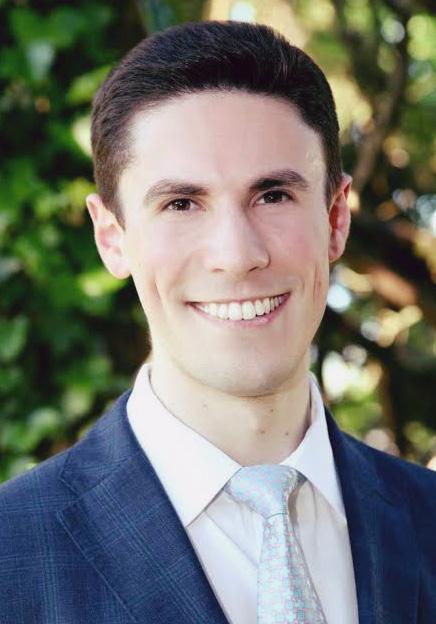
Rabbi Shmuel Reichman is an inspirational speaker, author, educator, and coach who has lectured internationally on topics of Jewish thought and Jewish medical ethics. He holds a BA and MA from Yeshiva University, and is currently pursuing a PhD at the University of Chicago. For information on his online self-development course, “Self-Mastery Academy,” visit ShmuelReichman.com.
THE KOSHER CROSSWORD JUNE 26, 2020
“That’s One Way To Spell It” By: Yoni Glatt
Difficulty Level: Challenging

SHABBAT DINNER
TRADITIONAL DAIRY LUNCHEON
Connecticut and Western and Central Massachusetts.

Across
1. Shin preceder
5. Impala, to a lion
9. The “O” in F. A. O. Schwarz
13. Word before boy or girl
14. Correct, in a way
15. Perlman who played Carla
16. Righteous folk
18. Jonah, e.g.
19. Going for the most on eBay, say
20. Be part of a crew?
21. Tatis Jr. and Machado, currently
23. Cheer for Ronaldo
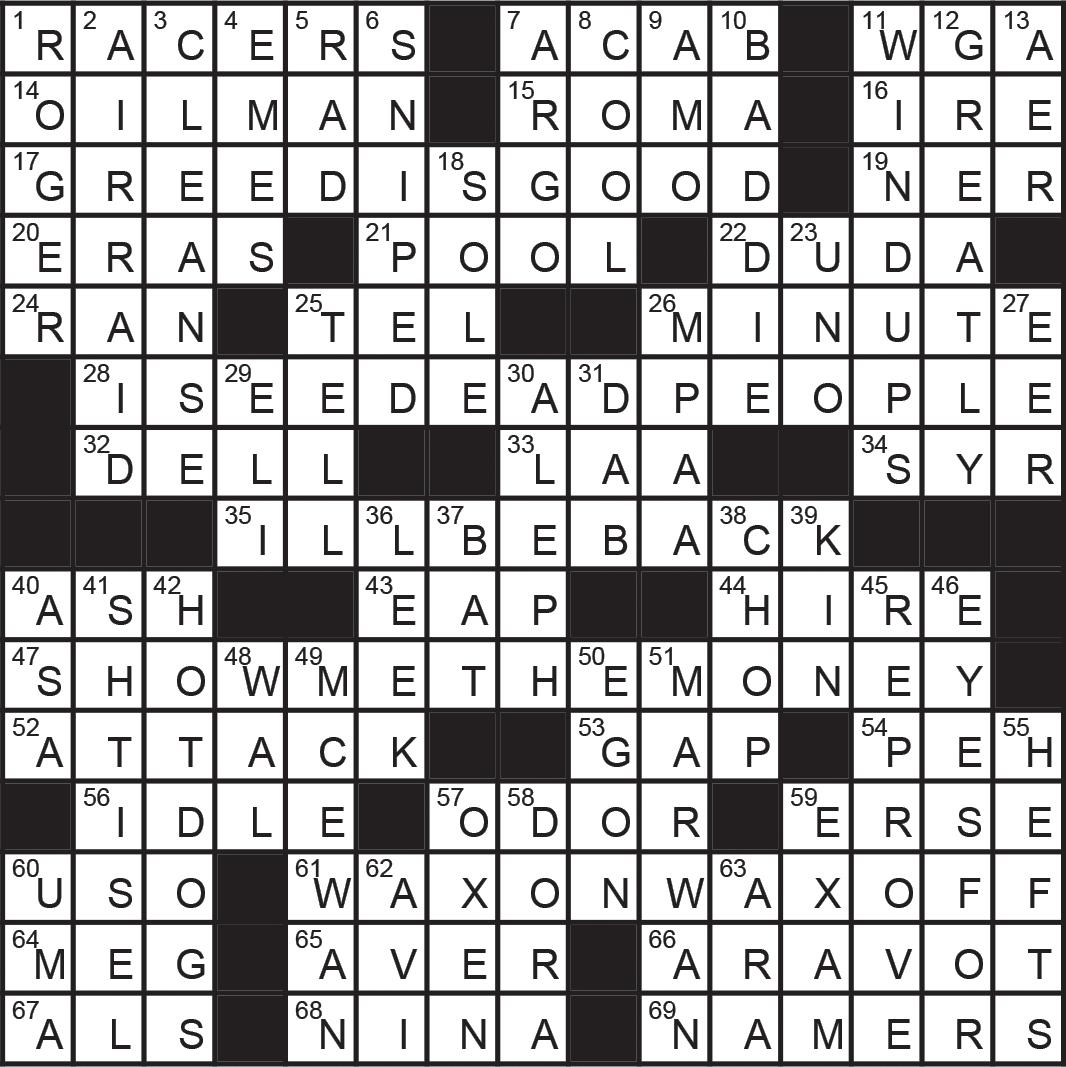
Down
1. Mafia canary
2. Name at the start of some shuls
3. Some actors rise to it
4. Partner of oz
5. Acts like a yenta
6. Not electives: Abbr.
7. One who might change this puzzle
8. Start of some Israeli holidays
9. Ish
10. Authority over the Temple Mount
11. Green launching item
12. Implement for a sculler
17. Aural Dr. with no degree
20. Moishe Oofnik lives on one
25. Bonobo, for one
28. The humble don’t have it
29. Redhead who colonized Greenland
30. Fiscal period: abbr.
31. Aussie burrowers
35. Blast off instrument?
37. City south of 53-Down
39. Part of Yugoslavia, once
42. The Torah forbids taking it
46. Campfire stuff
47. “Mine!”
49. Siri and Alexa, for short
50. He did shtick with Larry
51. Curve to test a driver’s nerve
21. Congregational seat
22. Yesteryear
24. Cotton fabric
26. Book fair grp.
27. Zig when you should zag
29. Abbr. after a lawyer’s name
32. Create an embargo
33. Lines to the audience
34. Bangkok citizens
36. How many brothers Moses had
38. 24/7 care ctrs.
39. Emeril’s expletive
40. Bear, in Bolivia
41. Israeli dough
43. Many of its products went kosher in 1997, to the delight of
52. Arabian shelter?
55. Many Super Bowl MVPs
57. Notable Judah of the 12th century
59. Bending body part
61. Some mystics
64. Functioning
65. Go up and down
66. Bro, in 37-Across
67. Gal, in Scotland
68. “___ v’shalom!”
69. What this puzzle contains... except in this answer
many children
44. Nebuch character on “The Simpsons”
45. Sudan or Taiwan suffix
48. “___ tova!”
52. Kills, in the Bible
53. ___ Aviv
54. Dovish or hawkish, e.g.
56. They’re essential to Rosh Hashana
58. Incantation opener
59. Lois’s love, to his mom
60. It’s set to resume on July 31
61. “Isaac Mizrahi Live!” TV channel
62. July 4, 1776, for one: Abbr.
63. Family gal
ARTS & ENTERTAINMENT
‘Fauda’ writer’s new show ‘Tehran’ gets picked up by Apple TV
BY LIOR ZALTZMAN
(JTA) – Apple TV+ has picked up “Tehran,” an Israeli thriller set in the Iranian capital co-created by Moshe Zonder, a writer for the hit Netflix show “Fauda.”
The reportedly multimillion-dollar sale was brokered by Cineflix Rights and Paperplane Productions along with the show’s producers, Dana Eden and Shula Spiegel.
“Tehran” focuses on the story of Tamar Rabinayan, played by Israeli actress Niv Sultan, who is a gifted young hacker for Israel’s intelligence unit. She is drafted to join the Mossad and sent on a perilous mission to Iran, where she is ordered to hack into an Iranian nuclear reactor.
When her ambitious mission fails, Rabinayan is stuck in the land of her childhood, where she discovers her local roots and befriends local pro-democracy activists.
“Tehran aims to shed new light on the Israeli-Iranian conflict, and take on universal struggles around immigration, identity and patriotism to examine whether it is possible to become free from these restraints,” Zonder told Deadline last year.
“Tehran” is set to premiere in Israel on June 22. No U.S. release date has been announced.
In other Israeli TV news, an American adaptation of the Israeli show “On The Spectrum,” about three young people on the autism spectrum who share an apartment, was picked up by Amazon. The show’s Jewish showrunner, “Parenthood” creator Jason Katims, said that as the father of a 23-year-old autistic son, “it is deeply personal for me to get to tell this unique story of what it’s like to come of age as someone with autism.”
Chelsea Handler deletes video of Louis Farrakhan, including her defense of his antisemitism
(JTA) – Chelsea Handler deleted a video clip of Nation of Islam leader Louis Farrakhan that the Jewish comedian posted on Instagram, including a defense of Farrakhan’s virulent antisemitism. Handler had come under criticism in the comments to her post of Sunday, which was deleted without explanation on Tuesday. She has nearly four million followers on the social media platform.
Farrakhan has called Jews “satanic” and compared them to “termites.” He has accused Jews of controlling the government and Hollywood, and has called Adolf Hitler a “great man.”
The clip was from a Farrakhan appearance on “The Phil Donahue Show,” once a popular talk show, on the topic of racial prejudice.

“I learned a lot from watching this powerful video,” she wrote. Actress Jessica Chastain also shared the clip, later deleting it with no explanation. Celebrity likes included Jennifer Aniston, Michelle Pfeiffer and Jennifer Garner.


In defending Farrakhan, Handler wrote: “Another thing: perhaps Farrakhan’s antisemitic views took form during his own oppression. We know now that oppression of one race leads to an oppression of all races.”
She also responded to a comment about whether she would post a video of Hitler, writing “no, because Hitler was responsible for killing millions of lives. Farrakhan is just responsible for his own promotion of antisemitic beliefs. They are very different.”
Actor Joshua Malina had criticized the Handler post
Universal becomes first major music label to open a branch in Israel
(JTA) – Universal Music Group, one of the largest music corporations in the United States, has become the first major American music company to open a branch in Israel.
UMG Israel will be based in Tel Aviv and be led by Yoram Mokady, a lawyer with no experience in the music industry, Billboard reported Tuesday.
According to Billboard, major labels such as Universal, Sony Music and Warner have engaged in an international music “arms race,” branching out into several countries to develop and sign local talent.
The news comes days after it was announced that the 19-year-old pop star Noa Kirel signed a multimillion-dollar record deal with Atlantic Records – possibly
the largest ever for an Israeli artist. Taylor Swift, Rihanna and Lady Gaga are among the recording artists who have released music through labels owned by Universal.
Delayed again: Gal Gadot’s ‘Wonder Woman 1984’
(JTA) – The release date for superhero sequel “Wonder Woman 1984” starring Gal Gadot has been moved a third time. Gadot officially announced the news late on Friday in a post on Instagram. “The new release date for WW84 is October 2, 2020. Wow, it’s finally happening, and I couldn’t be more excited! To all the fans that stuck with us through this time, thank you so much! We couldn’t have done this without you. I’m so excited for you to get to see it #WW84 it will be worth the wait,” she wrote.
The film’s release date was first pushed from November 2019 to June 2020 because of production issues. The coronavirus pandemic caused it to be postponed to August: Movie theaters were closed, and the film’s stars could not travel to promote it. Now, movie theaters in many parts of the world are reopening with restrictions in place, even as the pandemic continues to unfold.
The first “Wonder Woman” film was the highest-grossing movie in the summer of 2017 with $412.5 million in the U.S. and $821.8 million worldwide. The sequel, in which Gadot reprises her role as Diana Prince, the Amazonian Princess Diana of Themyscira, was expected to be one of the highest-grossing movies of the year.
NIV SULTAN APPEARS IN THE TRAILER FOR “TEHRAN.” (SCREENSHOT FROM YOUTUBE)
CHELSEA HANDLER, FEB. 9, 2020. (CREIT: KARWAI TANG/GETTY IMAGES)
GAL GADOT AT THE “WONDER WOMAN” PREMIERE IN HOLLYWOOD, MAY 25, 2017. (CREDIT: BARRY KING/GETTY IMAGES)
Dental Insurance



Briefs
Sen. Kamala Harris warns Trump about annexation, poses risk to ‘security’
(JNS) Sen. Kamala Harris (D-Calif.) has sent a letter to U.S. President Donald Trump ahead of Israel’s expected plans to apply sovereignty to the Jordan Valley, as well as parts of Judea and Samaria, known internationally as the West Bank. “Unilateral Israeli annexation of the West Bank could permanently impede the prospects for a negotiated two-state solution to the Israeli-Palestinian conflict,” wrote Harris in the June 16 letter. “As a strong supporter of the U.S.-Israel relationship, I oppose any such move.”
The senator went on to express that annexation would pose “serious risks for Israel, including for its security [that] could result in serious conflict, the further breakdown of security cooperation with Palestinian security forces, and the disruption of peaceful relations between Israel and her neighbors, Jordan and Egypt.” Furthermore, Harris stated that annexation, which Bibi Netanyahu’s government plans to begin July 1, “would make Israel’s future as both a Jewish and democratic state uncertain” and would undermine the “rights, dignity and aspirations for statehood of the Palestinian people.”
Finally, Harris accused the Trump administration of apparently giving “a green light to unilateral annexation, despite the risks to peace and Israel’s security and democracy.”
“This is a dangerous abandonment of decades of U.S. policy – and the historic role of both Democratic and Republican presidents in particular – in helping bring Israeli and Palestinian leaders to the negotiating table to do the hard work of making peace.”
The administration has said that annexation can occur within the context of its Mideast peace plan, which was released earlier this year.
John
Bolton says Netanyahu was concerned about Kushner handling
peace plan
(JTA) – John Bolton, a former Trump administration national security adviser, says in his new book that Israeli Prime Minister Benjamin Netanyahu questioned Jared Kushner’s ability to develop a Middle East peace plan. In The Room Where It Happened: A White House Memoir, due out this week, Bolton wrote that he spoke with Netanyahu before Bolton joined the Trump administration in April 2018, according to
CNN and The Washington Post. Bolton, a former U.S. ambassador to the United Nations under President George W. Bush, served in the Trump administration for 17 months. Kushner, a senior White House adviser, is also President Donald Trump’s son-in-law.
Netanyahu “was dubious about assigning the task of bringing an end to the Israel-Palestinian conflict to Kushner, whose family Netanyahu had known for many years,” Bolton wrote, according to CNN. “He was enough of a politician not to oppose the idea publicly, but like much of the world, he wondered why Kushner thought he would succeed where the likes of Kissinger had failed.”
The Washington Post reported that Bolton wrote that Kushner was a meddler who was “doing international negotiations he shouldn’t have been doing (along with the never-quite-ready Middle East peace plan).”
The Prime Minister’s Office responded to the publication of the quotes by saying that Netanyahu “has complete faith in Jared Kushner’s abilities and resolve and rejects any description to the contrary. Kushner has greatly contributed to furthering peace in the Middle East.” The statement added that Kushner contributed to Trump’s historic decisions to move the U.S. Embassy to Jerusalem, recognize Israeli sovereignty over the Golan Heights and helped advance Israel’s relations with the Arab world.
The White House has sued Bolton to prevent the publication of the book, alleging that it contains classified information and its publication could harm national security.
Report: German intelligence reveals Iran still seeking nuclear weapons
(JNS) Iran remains intent on obtaining nuclear weapons, a German intelligence service document released on June 15 reveals. According to a section of the 181page Baden-Württemberg state intelligence agency document titled, “Proliferation,” Iran, Pakistan, North Korea and Syria are “still pursuing” nuclear-weapons technology. “They aim to complete existing arsenals, perfect the range, applicability and effectiveness of their weapons and develop new weapon systems. They try to obtain the necessary products and relevant know-how, among other things, through illegal procurement efforts in Germany,” the document says.
The document also refers to illicit attempts by Tehran to obtain technology for the development of weapons of mass destruction. “Procurement attempts relevant to proliferation were also observed in 2019, which also affected companies in Baden-Württemberg. Since then, it has become even more difficult for affected companies to assess whether the business is
still lawful or whether it is already violating sanctions regulations,” the document says.
The document also warns about Iran’s ongoing attempts to gain technological know-how from German colleges and research centers.
Top foreign-policy adviser: Biden will keep ‘all’ US sanctions on Iran ‘in place’
(JNS) If elected president in November, former U.S. Vice President Joe Biden would have all U.S. sanctions on Iran stay in place, including the ones enacted under U.S. President Donald Trump, according to Biden’s top foreign-policy adviser. In a discussion during the American Jewish Committee (AJC) Virtual Global Forum on Wednesday, June 17, with former Trump Deputy National Security Advisor K.T. McFarland, Tony Blinken, who was deputy secretary of state and deputy national security advisor under former President Barack Obama, said “Iran would have to come back into full compliance and unless until it did, obviously, all sanctions would remain in place.”
“And then, if we come back into compliance, we would use that as a platform with our partners and allies who would be on the same side with us again to negotiate a longer and stronger deal,” continued Blinken. “President Trump’s actions have had the unfortunate result, among others, of isolating the United States, not Iran. We need to flip that.”
Blinken’s remarks enhance Biden’s pledge that the United States would not re-enter the 2015 Iran nuclear deal until Tehran returns to compliance. The US withdrew from the nuclear deal in May 2018, reimposing sanctions lifted under it, along with enacting new penalties in what the Trump administration has called a “maximum pressure” campaign against Iran.
Blinken said Biden has “demonstrated in word and in deed an unshakable commitment to Israel’s security, including when he was vice president,” citing U.S. funding for the Iron Dome missile-defense system and the 10-year, $38 billion memorandum of understanding (MOU) between the United States and Israel agreed to in 2016. Blinken reiterated Biden’s position that the former vice president would not condition U.S. assistance to Israel on the Jewish state expected to annex parts of the West Bank by July 1.
At the same time, Blinken criticized the Trump administration’s approach to Iran, including withdrawing from the nuclear deal and abruptly withdrawing U.S. forces from northern Syria in October in what critics called a betrayal of the Syrian Democratic Forces, as well as an opportunity for a power vacuum to be filled by Russia and forces loyal to Syria President Bashar Assad. Blinken also censured the Jan. 3 U.S. strike that killed Iranian
Maj. Gen. Qassem Soleimani at Baghdad International Airport, though he said “no one, of course, is shedding a tear over the demise” of Soleimani.
Finally, Blinken and McFarland debated Trump and Biden’s record on combating antisemitism. The former said that Trump has employed “antisemitic tropes” and encouraged elements of the far-right, citing the president’s reaction to the 2017 Unite the Right rally in Charlottesville, Va. Trump famously said that there were “very fine people on both sides” of the clashes.
“You’ll never have to wonder if Joe Biden is on the right side,” said Blinken. “He stood up to BDS on the left and to the far-right because he knows that antsemitism isn’t about where you sit on the political spectrum. It’s about right and wrong. He will do what’s right.”
Israeli scientists develop self-disinfecting mask
(JTA) – Israeli scientists have developed a self-disinfecting, reusable face mask as the demand for protective masks has risen dramatically since the start of the coronavirus pandemic. The mask was developed at the Haifa-based TechnionIsrael Institute of Technology’s Faculty of Materials Science and Engineering by a team of scientists led by Professor Yair EinEli. A patent application has been submitted in the United States, the Technion said in a statement. The research team is talking to industrial companies about mass producing the masks, according to the statement. In some countries, demand has far outstripped the supply of face masks amid the pandemic. Here’s how the mask works: A layer of carbon fibers can be heated using a USB port with a low current source such as a phone charger in a process that destroys viruses that may have accumulated on the mask.
In Israel, wearing a mask in public is mandatory, and those not in compliance can be fined.
WWII singer Vera Lynn, who performed for Jewish refugees, dies at 103
(JTA) – Vera Lynn, a British singer who performed at benefit concerts for Jewish refugees in the years leading up to World War II, died June 18 at the age of 103. Lynn, whose late husband, Harry Lewis, was Jewish, is best known for the iconic song “We’ll Meet Again.” Other hits included “The White Cliffs Of Dover” and “There’ll Always Be An England.”
Lynn played her benefit concerts in the United Kingdom for refugees from the Kindertransports – groups of Jewish children whose parents sent them away to safety in the U.K. from continental Europe. One of those refugees said Lynn was “one of the few artists to do a show”
BULLETIN BOARD

Virtual programs Museum of Jewish Heritage in June
The Museum of Jewish Heritage – A Living Memorial to the Holocaust, continues to host interesting virtual programs while the Museum remains closed in accordance with COVID-19 safety precautions. For more information, visit mjhnyc.org/events. The following events are scheduled for June and July:
After The Synagogue Shooting: Pittsburghers Reflect On Antisemitism And Racism
Tuesday June 23 | 2 p.m.
https://mjhnyc.org/events/after-thesynagogue-shooting-pittsburghers-reflecton-antisemitism-and-racism/ “Meanings of October 27th” is an oral history project that explores Jewish and non-Jewish Pittsburghers’ life histories and reflections on the Oct. 27, 2018 synagogue shooting at the Tree of Life synagogue in Squirrel Hill. Join project co-creators Noah Schoen and Aliza Becker for this interactive webinar developed around several audio clips from the interviews of “Meanings of October 27th.”
Understanding Anne Frank with Teresien Da Silva
Thursday, June 25 | 2 p.m.
https://mjhnyc.org/events/understandinganne-frank-with-teresien-da-silva/ The Anne Frank House in Amsterdam has become a site of pilgrimage for millions of people around the world captivated by Anne Frank’s story. Its rich collections include many of Anne’s original items, several of which are on display in “Auschwitz. Not long ago. Not far away.” at the Museum. Join Teresien da Silva, head of collections at the Anne Frank House, for a discussion of Anne’s life, legacy, and diary.
Exploring New York’s Jewish LGBT History
Tuesday, July 7 | 2 p.m.
https://mjhnyc.org/events/exploring-newyorks-jewish-lgbt-history/ LGBT Jewish New Yorkers have made a profound impact on the American arts scene, LGBT activism, and American religious life. These include composer and conductor Leonard Bernstein, poet Allen Ginsberg, archivist and activist Joan Nestle, PFLAG co-founder Jeanne Manford, leaders and community members of Congregation Beit Simchat Torah, and more. New York has also hosted Jewish LGBT visitors with global impacts like Magnus Hirschfeld. Join the Museum and Andrew Dolkart, Ken Lustbader, and Jay Shockley, co-founders of the NYC LGBT Historic Sites Project, for an exploration of New York’s Jewish LGBT History.
JTConnect to reschedule gala fundraiser for 2021 WEST HARTFORD –“Eat, Drink and Connect,” the gala JTConnect celebration honoring Rabbi Steven Chatinover, Audrey Lichter and Cyral Sheldon, originally scheduled to be held this past March, and then postponed to June 23, has been once again postponed indefinitely to a date to be announced later this year .
Since canceling in-person sessions due to the COVID-19 crisis, JTConnect has continued its mission to engage Jewish teens by holding classes online COVID19. Throughout the week, Jewish teens have access to a schedule of jam-packed with choices that allow them to debate contemporary Jewish ethical dilemmas, learn conversational Hebrew, celebrate Havdalah, meet with exceptional global thinkers such as Israeli comedian Joel Chasnoff, Stand with Us educator Hussein Aboubakr and AIDS survivor Scott Fried, and more. Most recently, in response to the national conversation about racism in the United States, JTConnect convened a dialogue between Jewish teens and teens from the Greater Hartford Youth Leadership Academy about how we can best support one another in the fight against hatred.
Throughout the pandemic, JTConnect has kept its promise of and continued its mission to engage Jewish teens during this uncertain time and meet them where they are. Eat, Drink and Connect is our annual fundraising event that helps to ensure that JTConnect continues its mission.
JCC in Sherman to open its doors for “SwingSet”
The JCC in Sherman will re-open its doors on Saturday, July 11, 7 p..m. for “SwingSet,” its first in-person event since it was shut as a result of the pandemic.
SwingSet is a new trio of accomplished musicians who offer a unique take on Swing, Jazz and Bossa standards. Musicians include: Wendy Matthews (ukulele and vocals), a member of the swing duo, The Edukated Fleas; Julie Sorcek (flute, sax and vocals), a veteran of the Connecticut folk music scene, playing with many contra and family dance bands; and Ernie Pugliese (guitar), who performed for almost two decades in various jazz, swing and gypsy jazz bands in the Philly and Delaware Valley area, before returning to Connecticut. Special guest for the evening is New Fairfield native Niles Spaulding (bass), who teaches at Guitar Center in Danbury and School of Rock, Ridgefield.
The JCC of Sherman is is preparing a list of re-opening rules/guidelines for events and programs that will be available on the
organization’s website and social media. Tickets for SwingSet are $20/members, $25/non-members and must be purchased online prior the event. Tickets will not be sold at the door for safety purposes. There will be a limit of 30 tickets available for this first event to allow for safe social distancing.
New Haven JCC opens Day Camps
The first session of the JCC Day Camps of the Greater New Haven Jewish Community Center opened on June 22 will run through August 14, the second session four-week session will run July 20 through August 14. According the JCC leaders, rigorous safety procedures and new protocols have been put in place to comply with the CDC and Office of Early Childhood (OEC) guidelines.
These measure include: Keeping campers in consistent groups of no more than 10 people throughout each day and session; no mixing of campers or counselors between groups; maintaining social distance between groups; staff required to wear masks.
Given the safety quota limit, camp registration will occur on a first-come, firstserved basis.
New Yiddish culture series begins online June 30
“Di Yidishe Velt: A Virtual Festival of Yiddish Culture,” begins June 30, 7 p.m., with a talk by Dr. Sam Kassow, Charles H. Northam Professor of History at Trinity College, who will discuss “Yiddish Culture in Wartime 1939-1945.”
The new series which is a project of UConn Center for Judaic Studies in partnership with the Jewish Hartford European Roots Project. It is co-sponsoed by Voices of Hope. To register, contact Pamela Weathers at pamela.weathers@ uconn.edu.
Other programs in the series include:
July 13, 7 p.m. – “The World of Yiddish Theatre in History and Digital”
Nick Underwood, assistant professor of history and Berger-Neilsen Chair of Judaic Studies, The College of Idaho.
July 27, 7p.m. – “The Yiddish Song Today”
Mark Slobin, Winslow-Kaplan Professor of Music Emeritus, Wes-leyan University. Cosponsored by the University of Hartford Greenberg Center.
September (Date and Time TBD) “Yiddish Glory: The Lost Songs of World War II” Anna Shternshis and Psoy Korolenko.
Voices of Hope Virtual Summer Series
Voices of Hope has announced the schedule of talks for their 2020 Summer Series. The weekly Tuesday evening series includes conversations with authors, filmmakers and lecturers from around the world.
For information and/or to register for these Zoom events, visit www. ctvoicesofhope.org or contact info@ ctvoicesofhope.org.
The schedule includes:
June 23, 7 p.m. – A Conversation with A.J. Sidransky, author of The Interpreter.
June 30, 7 p.m. – A Lecture with Sam Kassow: “Yiddish Culture in Wartime 1939 – 1945” (in partnership with Jewish Hartford European Roots) See above.
July 7, 7 p.m. – A Conversation with Rabbi Kormis: “Faith After the Holocaust.”
July 14, 7 p.m. – A Conversation with Mike Turner, producer of “Monument,” a new documentary about memory and memorialization.
July 21, 7 p.m. – Author David Slucki: Memory and The Third Generation (in partnership with UConn Center for Judaic Studies & Contemporary Jewish Life.)
July 28, 7 p.m. – “Seeking Refuge: Exile to Mexico during the Second World War,” with Dr. Aleksandra Pomiecko.
Beth Bye to speak at Children’s Reading Partner celebration
Beth Bye, commissioner for the State of Connecticut Office of Early Childhood, will be guest speaker at the Children’s Reading Partner Volunteer Celebration to be held virtually on Wednesday, June 24, 5 p.m.
Hosted by the Jewish Federation of Greater Hartford, the event will look back at this unprecedented educational year with a conversation about the role we can play in the future of early childhood education in a post COVID-19 world.
For more information, contact Ronni Breiter at rbreiter@jewishhartford.org or (860) 727-6129. The event is free. Reservations are not required.
Zoom login information: Meeting ID: 838 6793 4575
Password: 059692