





The Art of Deception 5
Both far-right and far-left groups have engaged in a campaign to co-opt the Black Lives Matter movement, in order to delegitimize Israel by linking police brutality in the U.S. with efforts by the IDF to protect citizens from attack.
The Road Ahead 5
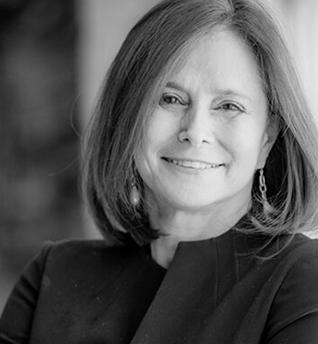
“It is not just sharing money, but wisdom, values and life lessons,” says Amy Holtz, co-founder of a new initiative that calls on all Jews, young and old, to allocate at least half of their estate to Jewish and Israelrelated causes.
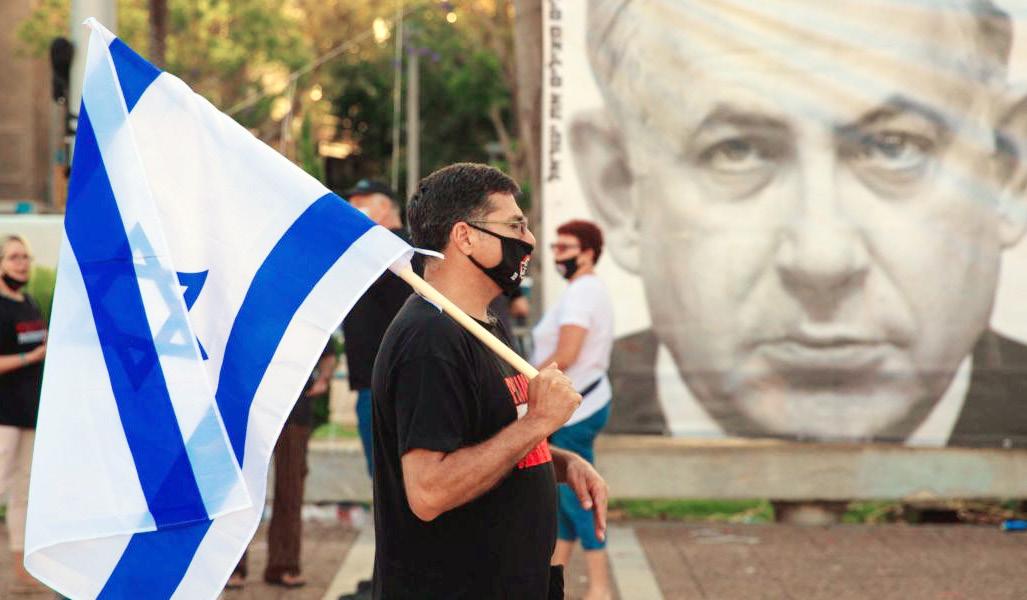
Did AIPAC – the leading U.S. pro-Israel lobby that has always discouraged public criticism of the Jewish state – just give lawmakers the thumbs-up to criticize Bibi Netanyahu’s plan to annex parts of the West Bank? Sure looks like it.

A Dog’s Tale 8
In December, a Massachusetts woman loaded up her team of sled dogs and headed for Alaska to take part in an historic expedition, both exhausting and exhilirating, that fulfilled her dream of a lifetime.

Meggie Kwait. The observant Jewish day school teacher from NYC who finished second in the ‘Jeopardy!s Teacher’s Tournament, and took home $50,000 (and lots of great friends).
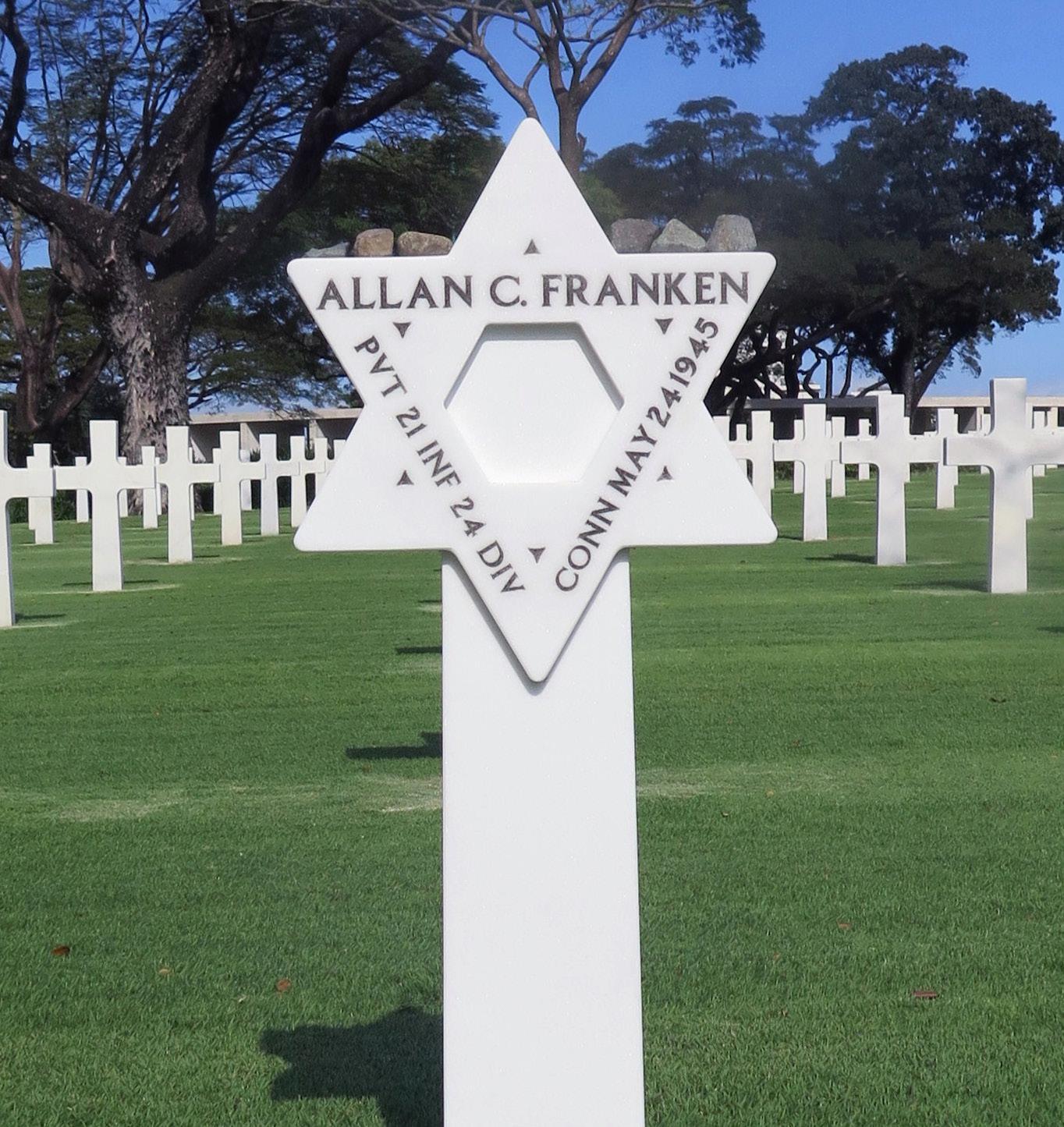
Pvt. Allan C. Franken, who was killed at the age of 20 in the final days of World War II, did not live to have children who would honor him on Father’s Day. But the New Haven native did have a nephew. And when Rabbi John Franken learned that his uncle’s grave in a U.S. military cemetery was marked by a Latin Cross, he stepped up to the plate and campaigned to have it changed. In so doing, he reclaimed the Jewish heritage of the uncle he never knew. PAGE 14
FRIDAY, JUNE 19, 2020 Hartford: 8:11 p.m.
To determine the time for Havdalah, add one
8:13 p.m.


(JNS) Groups on the far-right and far-left, including pro-Palestinian organizations with links to terrorism, have been engaged in a campaign to co-opt the Black Lives Matter movement to target and delegitimize Israel.
“The cynical use of the Black Lives Matter by groups backed and controlled by foreign terror movements is nothing less than a repeat of the many other times that terror groups have used human shields to push their violence and hate,” Mark Greendorfer, president of the Zachor Legal Group, told JNS.
A “civil-rights movement (Black Lives Matter) has been hijacked by extremists to push an agenda focused on promoting hate, in the form of antisemitism, rather than seeking justice,” he said.
Last week, it was widely reported when several Jewish institutions were targeted during protests in the Fairfax District of Los Angeles, which included vandalism to Jewish businesses and synagogues, such as Congregation Beth El, which was vandalized with graffiti stating “Free Palestine” and “F*** Israel.”
While these incidents drew headlines and condemnations, several far-left antiIsrael groups have been engaged in a campaign on social media and in protests blaming Israel for police violence and linking the Black Lives Matter movement to
BY SEAN SAVAGE
Palestinian uprisings.
In particular, anti-Israel groups have been using the protests over the public murder of 46-year-old George Floyd in Minnesota by a police officer to target the Jewish state over past training programs set up between the United States and Israeli police departments.
“This is where the Minneapolis Police Department learned their police brutality tactics from. Israeli occupation terrorist soldiers (on the left) murder Palestinians on a daily basis. We must stop training our American police officers to be gestapo units. #GeorgeFloyd #Palestine.” tweeted Abbas Hamideh of the group Al-Awda, a proPalestinian BDS group.
Similarly, the US Campaign for Palestinian Rights and a student leader in Students for Justice in Palestine (SJP) also blamed Israel for the police tactics.
“The Israeli military trains US police in racist and repressive policing tactics, which systematically targets Black and Brown bodies. The recent murders of George Floyd, Breonna Taylor, and Ahmaud Arbery are examples of racialized, systematized violence. https://t.co/DJ7T2qh6RL”
– US Campaign for Palestinian Rights (@ USCPR_) May 28, 2020

The anti-Israel group Jewish Voice for Peace (JVP), which in 2017 launched its “Deadly Exchange” campaign, has long blamed Israel for helping to train U.S. police in “extrajudicial executions, shoot-tokill, police murders, racial profiling, massive spying and surveillance, deportation and detention.”
Over the past week, JVP’s campaign has spread and become a popular conspiracy theory among anti-Israel activists, according to the Canary Mission, an antisemitism watchdog group.
“Anti-Israel activists have claimed that Israel and American Jewish organizations are responsible for police brutality resulting in the deaths of black people, such as George Floyd,” said the Canary Mission. “They state that U.S. police forces are trained by Israel to deliberately use brutal methods of policing. They further claim that this training is organized and sponsored by the American Jewish community.”
“It’s past time to defund Minneapolis PD. The violence of police depts across the country is magnified in moments of crisis like this one, and has deepened for years thru #DeadlyExchange trainings with Israeli armed forces. E.g. https://t. co/wKxza2czYD https://t.co/ qaHShZP50o”
– DeadlyExchange (@DeadlyExchange) May 28, 2020
At the same time, several proPalestinian BDS groups have applied violent terms such as intifada (Arabic for “uprising”) to the current eruption of protests in the wake of Floyd’s death.
The term was the name given to the first and second Palestinian bouts of violence in the late 1980s and early 1990s, and then from 2000 to 2005, which witnessed daily terror attacks, including suicide bombings, stabbings and shootings against Israeli civilians, claiming thousands of lives.
BY ELIANA RUDEE
(JNS) A newly launched nonprofit is calling on worldwide Jewish donors, young and old, to allocate at least half of their charitable dollars transferred at death to Jewish and Israel-related causes.
Philanthropist and entrepreneur Michael Leven and longtime Jewish executive Amy Holtz launched the Jewish Future Pledge (JFP) initiative in May, during Jewish Heritage Month, with the aim of securing a vibrant Jewish future and inspiring the next generation of Jews to help support it.
According to the organization, Jewish donors are estimated to transfer $1.26 trillion to charitable causes in the next 25 years; JFP hopes to direct half of that, or $630 billion, to Jewish causes. The Pledge, which was inspired in part by Bill Gates’ and Warren Buffett’s “Giving Pledge,” has already been signed by notable Jewish philanthropists like Charles Bronfman, Bernie Marcus, Julie Platt and Tom Stern.
But this is no billionaires club, Holtz told JNS. Every Jew can take part, even with small dollars. “We built the State of Israel on nickels and dimes,” she remarked.
Explaining how the allocation works, Holtz posed, “I am leaving X amount of dollars for my kids, and the only parameter is that 50 percent of those dollars need to be for Jewish giving. I can choose to leave the money to specific charities or the kids can decide where to give.”
“You don’t need to be a millionaire or have a family fund to participate,” said Leven in a letter to his fraternity brothers at Alpha Epsilon Pi (AEPi), a partnering organization. “This is not
In a Facebook post, the group Samidoun, which advocates for Palestinian prisoners and has ties to the U.S.designated terror group the Popular Front CONTINUED ON
CONTINUED FROM PAGE 5
of the Liberation of Palestine (PFLP), called the Floyd protests an “intifada.”
“We support the uprising in Minneapolis, the intifada of people subjected to an ongoing, vicious and structural racism, inheriting a lengthy and rich tradition of Black resistance, organizing and struggle,” wrote the group.
In a statement, PFLP also expressed its solidarity with the protests.
“It is not surprising for a country like the United States, which has a strategic alliance with the Zionist entity [Israel], to intersect with it in the discrimination, racism and repression that embodies its treatment of Palestinians,” the terror group wrote on its site.
‘There is no connection between the struggle’
Meanwhile, far-right neo-Nazi individuals and organizations have also been blaming Jews for the violence associated with the protests.
Andrew Anglin, founder of the Neo-Nazi website Daily Stormer, wrote in a blog post about the protests, saying “Fear not the blacks who can burn your city, but fear the Jews who can release the blacks to burn your city and lock you in your house in hell.”
Similarly, the far-right is also claiming that the violent protesters are being controlled by Jewish money.
“They [Jews] Are Starting a Race War So People Don’t Rally Against ZOG [Zionist Occupation Government],” wrote neo-Nazi Kyle Hunt, according to the Canary Mission. Hunt, who is also a supporter of the
BDS movement, has previously joined antiIsrael groups IfNotNow (INN) and Al-Awda in protesting against the American Israel Public Affairs Committee (AIPAC) in 2017, according to the Canary Mission.
At the same time, pro-Palestinian activists have also sought to link and draw parallels between police violence in America and violence against Palestinians by Israel.
In what has been termed “intersectionality,” these groups posit that no form of discrimination if distinct from one another.
Following the killing of Floyd, antiIsrael activists immediately began drawing comparisons with what they describe as systematic and deadly Israeli brutality against Palestinians. Those comparisons were given further impetus in the wake of the May 30 killing of Iyad Halak, an autistic Palestinian from eastern Jerusalem, by Israeli police in Jerusalem’s Old City.
Drawing on this, several social-media posts depicted U.S. and Israeli police as one and the same on social-media imagery.
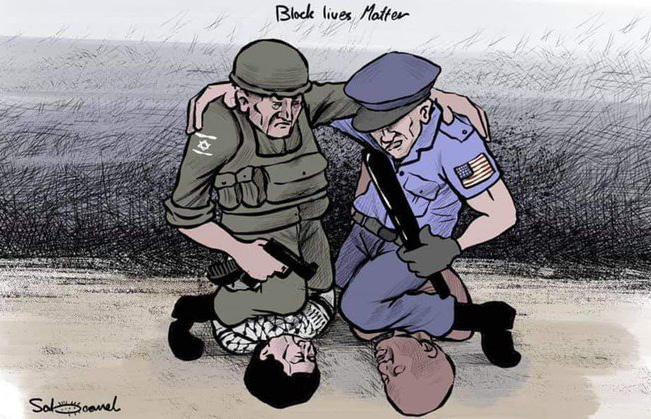
In a May 29 picture shared on Twitter by “Los Otros Judios,” it depicts an Israeli and American police officer embracing while kneeling on the necks of a Palestinian and a black man, respectively.
Similarly, a picture shared by the Jordanian cartoonist Emad Hajjaj on Twitter depicts the U.S. and Israeli flags as the same color, while also having the knees of soldiers on the necks of a black man and Palestinian.
Greendorfer said that “there is no connection between the struggle of blacks against racism, and the conflict between terrorists and Jews seeking to live in peace
in their homeland.”
Instead, he said that many of the progressive groups supporting the Black Lives Matter movement should instead look at Israel “as an example of a tolerant, inclusive and fair society, one that welcomes LGBTQ individuals, fights against terror groups that engage in the slaughter of
CONTINUED FROM PAGE 5
a fundraiser. It is a monumental chance to sustain the financial future of the Jewish people, and to ensure that our values and wisdom endure for generations.”
The nonprofit had a soft launch in Atlanta in partnership with the Jewish Federation of Greater Atlanta, where it garnered its first batch of hundreds of signatures, also securing partnerships with a range of other Jewish and financial organizations across the United States.
JFP leadership decided to proceed with their national launch despite the coronavirus pandemic. “We must navigate this crisis without losing sight of the future. The challenges of this moment illustrate the importance of planning for the unknown,” said Holtz. “COVID highlights need that we need to act now and plan for unknown.”
Jewish Future Pledge chairman Mark Silberman, who previously served as chair of the Jewish Federation of Greater Atlanta, added, “We are in an existential moment. Perhaps more than ever before, people are thinking about what’s important in life and what legacy they will leave behind.”
With three simple steps: “Sign it, seal it and share it,” the pledge is not only about giving, but about sharing their pledge with friends and family, which will spark conversations about the importance of donating, ensuring Jewish life for generations to come and imparting one’s values.
innocents and minority groups.”
“It’s possible, and, indeed, ethical,” he noted, “to support the call for police accountability and an end to discrimination without joining a terror backed call for the destruction of the country and increased discrimination (against Jews, Israel and those who support Israel).”
“It is not just sharing money, but wisdom, values and life lessons,” said Holtz. “The pledge is saying to the next generation: ‘We believe in your generation.’ With the risk that kids are turning away from Judaism, and may not be as connected as the previous generations, we are combining tremendous opportunity with risk.”
“I wanted to start a conversation with my family about the importance of securing the Jewish future,” added Leven. “I see an enormous opportunity to help spark thousands, even millions, of similar conversations around Jewish tables before my generation passes about why the Jewish future matters.”
Each individual who signs the pledge, affirmed Holtz, should speak to a lawyer about how to legalize their pledge in their estate.
JFP has also started a pledge for the younger crowd, partnering with major Jewish youth organizations.
“So far, the response has been phenomenal across the board, with people and organizations showing their support for this simple but powerful concept,” maintained Holtz.
AEPi (of which Leven is an Alumnus Brother) and NCSY are among the partners of the youth pledge, with many more to be announced shortly.
“Taking the Jewish Future Pledge not only honors our ancestors who sacrificed and suffered through exile and oppression, but it is a gift to my children to ensure the strength of klal Yisrael, the Jewish people, and the State of Israel,” Jeff Jacobson, the fraternity’s international president told JNS.
“The mission of Alpha Epsilon Pi is to develop the future of the world’s Jewish communities and we see the Jewish Future Pledge as a big part of that,” Jim Fleischer, CEO of Alpha Epsilon Pi International told JNS. “Sustaining and growing our Jewish institutions for generations to come is integral to the future of the world’s Jewish communities.”

BY STACEY DRESNER
Marla Brodsky, owner of Hilltown Sled Dogs in Chesterfield, Massachusetts runs a camp at her kennel each summer, where kids choose one of her 20 dogs and learn the basics of training an Alaskan Malamute.
This year, however, the Covid-19 pandemic has altered those plans. This year, re-ports Brodsky, camp will be “shorter and smaller – four hours long with eight campers, ages 10 and up, wearing face masks and gloves the whole time except when eating lunch. Social distancing will be maintained in dog yards, at fire pits and in puppy playpens. So, hopefully we will help
some families out and the sled dog team will get to have some fun with the kids too.”
Modifying the camp, a significant stream of revenue for the kennel, may be a bit of a disappointment, but it takes more than a pandemic to rattle Brodsky. Free-spirited and determined, she never gives up.
“I’ve lived my life by making my dreams a reality,” says the 60-year old Brodsky.
In March she fulfilled one of her fondest dreams – running her team of sled dogs on a trek through the Alaskan in the 2020 Serum Trail Run Expedition, a 674-mile trek from Nenana to Nome.
“I was like, ‘I made it!’ I always wanted to do it and I did,” she exalts.

More than fulfilling a dream, Marla says this accomplishment also means a lot to her as the mother of 15-year-old daughter, Ruby.
“I feel like I’ve been a role model for my daughter [showing her that] if you really want to do something, you can. You just have to work hard and you have to put your mind to it.”
She has been doing that since childhood.
Born and raised in Cheltenham Township, Pennsylvania, just outside Philadelphia, growing up Brodsky was active in her Conservative synagogue Germantown Jewish Center, and egalitarian congregation where she received an excellent Jewish education. After delivering a flawless bat mitzvah service, the synagogue’s Cantor Ben Maissner told her mother that she was gifted and should begin voice training.
“My mom sought out a local teacher from the Curtis Institute of Music Philadelphia, and, at 13, I started studying classically. You hear stories of blues singers being nurtured by the church, because they started with gospel and then crossed over to the blues or jazz; I was nurtured by my synagogue,” she says, noting that she remained involved, chanting on the High Holidays and as the only youth in the temple’s adult choir.
A graduate of Emerson College in Boston with a BFA in Drama, Brodsky also studied with a voice teacher at the Berklee College of Music.
The dream of being a performer brought her to New York in the early 90s. Adopting the moniker Marla BB – which she still goes by most of the time – for 25 years she toured the country with her band, Marla BB and her Sassy Mama Blues Band.
In 2000 she moved to Western Massachusetts and, in 2005, her partner gave birth to their daughter. To cut down on touring, Brodsky – who had taken up Tae Kwon Do years earlier – opened her own Tae Kwon Do studio.
But it was while on a month-long tour of Alaska in 2007 that she completely fell in love with sled dogs and mushing.
On her days off from performing she
visited as many “dog yards” as she could and became friends with champion mushers Aliy Zirkle and Allen Moore. The next year she apprenticed for them and handled their Iditarod teams. At the end of the season, they gave her one of their sled dogs, Betty. So began Brodsky’s kennel of sled dogs, which she has bred and raised herself.
“Once I got into mushing, I closed the [martial arts] studio,” she says. “I ended up separating from my partner and moving across the road… So now I live on 17-plus acres with my Hilltown sled dogs and my daughter 50 percent of the time. Now my world is all about mushing because when you have 20 some sled dogs, you have to have a passion and your passion becomes your life. My life has been dogs and daughter.”
It has also been important for her to give her daughter a strong Jewish upbringing.
“I wanted her to have the foundation I had and Northampton offers so much Jewishly,” she says. “She want to Gan Keshet Preschool and then to Lander Grinspoon Academy, the Solomon Schechter School of the Pioneer Valley. She was bat mitzvahed at CBI [Congregation B’nai Israel].”
‘I’m going to Alaska!’
As owner of Hilltown Sled Dogs, Brodsky calls herself an “Ambassador for the world of Sled Dog Sports.” Her kennel offers sled dog lessons and rides, hikes with the dogs, demonstrations, education, and tours.
Her summer camp grew and grew and in 2019 it was filled to capacity. As some of her campers have gotten older and more experienced, they have become apprentices, training and helping out on sled runs, with the goal of becoming mushers themselves.
In recent years Brosky has also raced and won mushing competitions throughout New England, the Midwest and Canada. She competed in the World Championships in Sweden last fall.
Yet, what she really wanted to do was go on a trek through Alaska.
“My goal was to go back to Alaska with my own team and train and race there, and for ten years I would say, this year I’m going to Alaska,’” she said. “This year my business

finally became successful enough so that financially I was able to take my dog team to Alaska.”
She even wore the “Jonathan the Husky” mascot costume and wandered around UConn at Christmas-time with a live husky to make money for the trip. and, she received support from Common Capital, a non-profit community loan fund in Springfield, Massachusetts.
When Brodsky learned that the commemorative Serum Run Expedition was going to take place, she applied and was selected to participate. The 674-mile trek commemorates the historic 1925 serum run by 20 mushers who relayed life-saving anti-toxin medication to Nome and the surrounding towns during a diphtheria epidemic. The Serum Run trek hadn’t been run for nearly a decade, but this year was revived by Alaskan graduate student Robert Forto for his master’s degree project.
In December, Brodsky loaded up her dogs and headed for Alaska to train. She rented a cabin on a corner in Nenana, Alaska, which she called “mushing central… More dog teams went past our cabins than cars.”
Brodsky was one of five mushers, all women ages 50+ who call themselves who call themselves “The Fabulous Five”. They were accompanied by eight snowmachiners, who hauled gear and helped break trail, as well as a veterinarian and a doctor.
Mushing during the day, the group stayed overnights in schools, bush cabins, arctic oven tents and roadhouses along the route that took them from Nenana through towns including Old Minto, Beaver Point Lodge, Manley, Tanana, Bone Yard Cabin, Galena, Old Woman Cabin, Koyuk, White Mountain, Safety/Nuuk, and finally Nome. The expedition was challenging.


Mushing for many miles per day was exhausting for both the dogs and mushers, and at times the temperature was below -40 degrees Fahrenheit.
The group finally made it to Nome on March 11.
“It was the perfect focus for my winter because it took me across two thirds of the Iditarod Trail,” she says.
But when the time came to go home, the pandemic hit.
“The goal became to rush to get from Alaska through Canada and to the lower 48 so I could get home while I still could,” she says.
Brodsky and her assistant had to figure out how to get back into the U.S. as some parts of the border with Canada were closing. They finally crossed into Montana, then drove through rural areas to avoid bigger cities where Covid-19 could be a problem.
Glad to be home, Brodsky spent the month of April applying for PPP and other grants to keep her business running.
“I have 20 sled dogs and summer is the most fun part of their year. I do weeklong camps where every kid gets their own dog and every dog gets their own kid. They groom them, they hike with them, they swim with them, they run with them. At the end of the day the dogs and kids are just as exhausted. I need to pay staff to help take care of the dogs,” she notes.
Next up: Brodsky now plans to write two children’s books about her recent experience in Alaska with her dogs. She also hopes to do some motivational speaking and perhaps produce a television show about sled dogs.
“People are looking for diversions now,” she says. “Maybe this is going to be a new outlet and a new direction for me.”

BY RON KAMPEAS
WASHINGTON (JTA) –
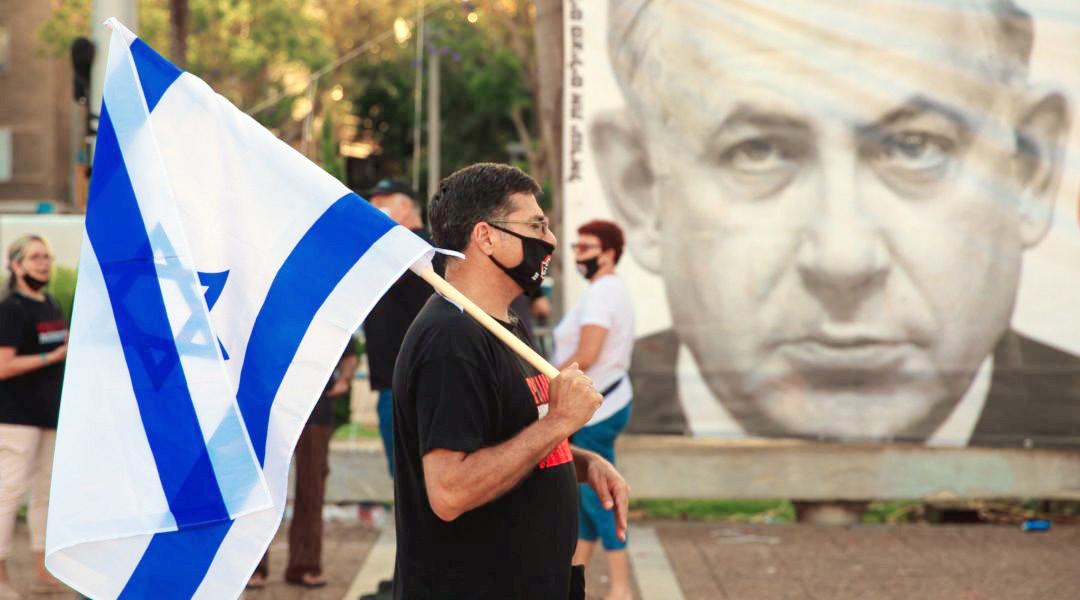
The leading pro-Israel lobby in the United States is telling lawmakers that they are free to criticize Israel’s looming annexation plans – just as long as the criticism stops there.
Two sources – a congressional aide and a donor – say the American Israel Public Affairs Committee, or AIPAC, is delivering that guidance in Zoom meetings and phone calls with lawmakers. The message is unusual because the group assiduously discourages public criticism of Israel.
But these are unusual times: Prime Minister Benjamin Netanyahu has set a July 1 deadline to annex parts of the West Bank, over the criticism of people at home and abroad who say the move would set back any efforts to bring peace to the region.
With anxiety pervading the U.S. Jewish
community ahead of that deadline, AIPAC faces a thorny question: Does it support Israel’s leadership at all costs, or does it draw a line on actions it believes endangers the Jewish state’s future?
So far, the group has remained publicly silent. But in private, AIPAC is telling lawmakers that as long as they don’t push to limit the United States’ aid to Israel, they can criticize the annexation plan without risking future support from the lobby group.
How far AIPAC is urging lawmakers to go is unclear. A spokesman would not comment except to point to a May 11 statement warning against proposals to reduce ties with Israel should annexation take place. “Doing anything to weaken this vital relationship would be a mistake,” AIPAC said then.
Buried in the same statement, however, is explicit support for a two-state solution,
which annexation would inhibit, and a suggestion that criticizing Israel is valid. “It is inevitable that there will be areas of political or policy disagreement between leaders on both sides – as there are between America and all our allies,” the statement said.
But AIPAC’s lobbyists are famously fastidious: No conversations would be taking place without express approval from the group, which recently called off its 2021 conference because of the ongoing coronavirus pandemic.
The donor, who is deeply involved in lobbying Congress, said AIPAC was making it clear that it would not object should lawmakers choose to criticize annexation. “We are telling the senators ‘feel free to criticize annexation, but don’t cut off aid to
CONTINUED ON THE NEXT PAGE
Vol. 92 No. 25
JHL Ledger LLC Publisher
Henry M. Zachs Managing Partner
Leslie Iarusso Associate Publisher Judie Jacobson Editor judiej@jewishledger.com • x3024
Hillary Sarrasin Digital Media Manager hillaryp@jewishledger.com
EDITORIAL
Stacey Dresner Massachusetts Editor staceyd@jewishledger.com • x3008 Tim Knecht Proofreader
ADVERTISING
Donna Edelstein Senior Account Executive Non-Profit & JHL Ledger LLC Media Marketing donnae@jewishledger.com • x3028
Joyce


Samuel Neusner, Founder (1929-1960) Rabbi Abraham J. Feldman, Co-Founder and Editor (1929-1977) Berthold Gaster, Editor (1977-1992) N. Richard Greenfield, Publisher (1994-2014)
PUBLISHER’S STATEMENT Periodicals postage paid at Hartford, CT and at additional mailing offices.
Jewish Ledger (USPS # 131 - 150) is published 24 times per year by JHL Ledger LLC from our office at: Jewish Ledger
40 Woodland Street Hartford, CT 06105 Phone (860) 231-2424 Fax (860) 231-2485 Toll Free 1-800-286-6397
Postmaster, send address changes to: Jewish Ledger 40 Woodland Street Hartford, CT 06105
Subscriptions: $36 yearly, $9 Twelve Issue Institutional subscription. Send name, address, zip code with payment. Editorial deadline: All public and social announcements must be received by Tuesday 5 p.m. 10 days prior to publication. Advertising deadline: Wednesday noon one week prior to issue. Advertisers should check ad on publication. JHL Ledger LLC and Jewish Ledger shall not be liable for failure to publish an ad for typographical error or errors in the publication except to the extent of the cost of the space which the actual error appeared in the first insertion. Publishers reserve the right to refuse advertising for any reason and to alter advertising copy or graphics deemed unacceptable. The publishers cannot warrant, nor assume responsibility for, the legitimacy, reputability or legality of any products or services offered in advertisements in any of its publications. The entire contents of the Jewish Ledger are copyright © 2020. No portion may be reproduced without written permission of the publishers. JHL Ledger LLC also publishes Jewish Ledger MA, All Things Jewish CT, and All Things Jewish MA. www.jewishledger.com
Israel,’” said the donor, who spoke on the condition of anonymity.
The congressional staffer, a Democrat who is the target of AIPAC’s lobbying, described the message from AIPAC as tacit encouragement. “They want to make sure members of Congress understand this is the time to warn Israel but not to threaten the Memorandum of Understanding,” the deal signed in 2016 between the Netanyahu and Barack Obama governments guaranteeing Israel $3.8 billion annually in defense aid for a decade, the staffer said, “not to threaten assistance.”
What was clear, the donor said, was that AIPAC had shifted its tactics in part because the Netanyahu government had long ceased to take seriously behind-closed-doors warnings from AIPAC and other American Jewish groups, once the preferred means of conveying differences.
“They listen,” the donor said. “But they do what they want.”
The revelation of AIPAC’s greenlight comes after weeks of public pleas to Israel by U.S. Jewish leaders, some on the left but others with deep roots in AIPAC and the centrist pro-Israel community, and warnings by senators of both parties that annexation would endanger Israel’s international standing.
Groups on the pro-Israel right, preeminently the Zionist Organization of America, have embraced the annexation proposal, and have the backing of some Republican senators. The Trump administration, which created the space for annexation by releasing in January a peace plan that allows for it, has been sending mixed messages. The White House and the State Department have said that annexation should come only as part of a deal with the Palestinians. But the U.S. embassy in Jerusalem has signaled that annexation could precede a deal.
Mike Pompeo, the U.S. secretary of state, is invested in regional stability in the Middle East, especially as the U.S. intensifies its pressure on Iran and appears to be concerned about the broader destabilizing effects of annexation. Jared Kushner, President Trump’s son-in-law who authored the peace vision is preoccupied with Trump’s reelection and does not need a foreign policy distraction.
On the other hand, David Friedman, the U.S. ambassador who has a long relationship with the settler movement’s right wing, appears to be invested in annexation; he has scheduled a meeting next week with Netanyahu and Benny Gantz, the leader of the Blue and White Party and deputy prime minister who has indicated he wants to go slow on annexation. According to Israeli media reports, Friedman wants the men to resolve their differences on annexation. Gantz, a former army chief of staff and a former military attache in Washington, is attuned to the sensitivities of the American political establishment, said David Makovsky, a
senior fellow at the Washington Institute for Near East Policy who worked on IsraeliPalestinian peacemaking for the Obama administration.
“Anyone who has been chief of staff of the Israeli army understands Israeli dependence on American weaponry, even with Israel with all of its indigenous capability,” Makovsky said, “if you ever want to identify what part of Israeli system is most sensitive to the U.S.-Israel relationship, it’s security people – it’s not just $3.8 billion, it’s the technology, it’s the personal relationships, they feel it.”
Annexation could in the long term threaten those very fundaments of the U.S.-Israel relationship, including the military assistance, said the Democratic congressional aid. Lawmakers have read with interest a report by the Commanders for Israel’s Security, a grouping of retired security leaders, and distributed here by the pro-two states Israel Policy Forum, and were taken aback by the estimated cost of annexation. Separating Palestinians from the newly annexed areas will require moving the security barrier, the report says, at a cost of $7.6 billion a year.
“The current leadership is not interested in discussing changes to the Memorandum of Understanding, but that is not an enduring prospect,” said the congressional aide. “But if annexation goes ahead and there’s differences in the leadership in Congress then we’re looking at possible changes in the Memorandum of Understanding package, not in cutting assistance, but members of Congress want to make sure the money does not go to the massive budget to pay for annexation.”
The aide was referring to the leftward drift among Democrats, which could manifest in more leadership roles for leftwingers should Democrats keep the U.S. House of Representatives and win back the Senate in November.
Jeremy Ben-Ami, the president of J Street, the liberal Middle East lobbying group that is sometimes seen as AIPAC’s rival, said that if Democrats sweep the November elections, his group would not advocate for cuts in aid, but for tougher oversight to make sure that the assistance not go to upholding the annexation. He would also expect a Democratic administration to join others in the international community pressuring Israel to roll back annexation.
Ben-Ami said that annexing the West Bank would be inherently destabilizing and threaten Israel. “The aid that the United States provides Israel is intended to help Israel deal with meaningful security threats, weapons systems, missile defense systems, to deal with the serious threats they face,” he said. “Why would you provide money to enhance threats?”

At the Hebrew Center for Health and Rehabilitation, we understand that comfort and familiarity is a key part of the journey to wellness. We also understand that maintaining your religious beliefs and principles is fundamental in continued enrichment of life. Our Kosher meal services allow residents to maintain their dietary requirements throughout their stay with us. At the Hebrew Center, we ensure we follow all principles of Kosher including purchase, storage, preparation, and service.
At the Hebrew Center for Health and Rehabilitation, we also offer a variety of other services and amenities to ensure your stay is as comfortable as possible.
THESE SERVICES INCLUDE:
• Passport to Rehabilitation Program
• Long-Term Skilled Nursing Care
• Specialized Memory Care
• Respite Care Program
• Palliative Care and Hospice Services Coordination
OUR AMENITIES INCLUDE:
• Barber/Beauty Shop
• Café
• Cultural Menus
• Laundry and housekeeping services
• Patient and Family education
• Life Enrichment
For more information on our Kosher program, please contact: DIRECTOR, PASTORAL SERVICES - (860) 523-3800
Hebrew Center for Health and Rehabilitation One Abrahms Boulevard, West Hartford, CT 06117




BY PHILISSA CRAMER
(JTA) – Astute viewers could find plenty of signs during the recent “Jeopardy!” Teachers Tournament that one leading contestant had some Jewish bona fides.
There was the fact that Meggie Kwait teaches at Beit Rabban Day School, a Jewish school on Manhattan’s Upper West Side. There was her covered hair, rare among game-show contestants but more common among observant Jewish women. And then there was her bet for the final question on a day when she was so far ahead she couldn’t lose.
“Yes, I wagered $18,” Kwait told the Jewish Telegraphic Agency. ”That was when all the Jews realized I was Jewish.”
Kwait, a humanities teacher who trained as a musician and spent some time in rabbinical school before landing in the classroom, was one of 14 contestants during the trivia show’s two-week tournament just for educators. She won two rounds to make it into the two-game final, where finished second to a music teacher from Michigan. The experience netted her $50,000 in prize money, bragging rights and, she says, new friends she anticipates keeping for life.
JTA talked to Kwait about her “Jeopardy!” experience – and which of her answers has been immortalized in a gif.
JTA: How did you end up on Jeopardy and what was the experience like?
Kwait: I was never a big “Jeopardy!” watcher or fan, but my spouse is. We have very different TV tastes and we were looking for something to watch, and there was a “Jeopardy!” collection on Netflix. After a while he looked at me and said you’re really good, you should try out. So I registered, took the test online, was invited to audition in Boston, sat in the pool for 18 months, and then they asked me to come on the Teachers Tournament.
I would describe myself as a generalist. I have this varied background, and also a memory for trivia and minutiae. I knew I

could answer the questions, but also knew that most of being successful is not having the right answer, but having the confidence to buzz in and the timing.
People often say that men are better than women on the show. And if you look at the people who’ve had long streaks, or the amount people win, it would be easy to draw that conclusion. That was something I was really conscious of, being the only woman in the finals. I tried to be aggressive in my wagering and buzz in even if I didn’t know the answer. I hope we see more women take the test and see those perceptions dissipate.
It was incredible. There were 14 teachers in the tournament. I did not anticipate that the best part of participating would be meeting all the other teachers. They were all re-ally incredible, smart, dedicated educators. It’s not every day that you get to hang out with a bunch of other nerds who have the same job as you.
Filming concluded before the pandemic. What has your school year been like since?
Kwait: Pretty immediately after the tournament, after we finished filming, the shelter-in-place orders came down [because of the coronavirus pandemic]. In New York there was only another week before our schools closed. So [the teachers from the tournament] have been sharing tips and tricks for how to use Zoom and providing moral support and encouraging each other. My school did a really good job. We had a full day before we started doing remote learning where we came together and talked about strategies and techniques. Overall, while there is something about face-to-face and in-the-same-room instruction that cannot be replicated, in many ways it’s the same set of skills: keeping kids engaged, being interested in the material yourself, figuring out how to teach in a variety of ways.
My background is in music, and it’s always important to incorporate the arts as an additional way for kids to access content and also their passions. When I teach the medieval period in sixth-grade humanities, we set up a scriptorium where students create their own Hebrew illuminated manuscripts. When I teach ancient Greece, they make up battle songs for their citystates.
What other reactions have you gotten from “Jeopardy!” viewers?
Kwait: I got a lot of positive feedback, but also political blowback about my reaction to “Magic Mike Pompeo.” [Kwait correctly offered that answer to the clue “2012 male stripper cinematic saga that went on to be our 70th Secretary of State.”] I was happy I got it right – but then I visualized it. I really think I would have had the same reaction about, like, John Kerry. At any rate, I made it into a gif that people are using. Clearly I have an expressive face.
I cover my head so I was wearing a head covering, and it has been interesting seeing comments from people asking “Why is she wearing that rag?” Getting the opportunity to explain to people what that’s all about has been interesting.
Some people were really resourceful and found my school address. It’s been every-body from a 79-year-old grandmother saying how proud they were, to people saying I was a Jewish educator myself for 30 years and it’s great seeing a day school teacher up there, to teenagers saying I wish you were my teacher.
It’s been really nice hearing from people – these have been a difficult couple of weeks. It felt strange posting about something that could be considered frivolous, but I’ve heard from people saying thank you for bringing a little bit of light to this dark time.
What were the Jewish highlights of your experience?
Kwait: There was another Jewish teacher in the tournament [Lauren Schneider Lipton, who teaches health in Seattle]. It turned out we had mutual friends. When we were watching the other games, if there was a Bible category or Israel, we’d look at each other and think, oh I knew that one, which was a neat moment of connection.
Also, my school did a virtual watch party for three of the four games, and several teachers said it was incredible to hear me say Beit Rabban, the day school’s name, on the second day of the finals. Giving visibility for our teeny, tiny day school – that was exciting.
And then, before the tournament started, a producer came and told us, “We think really long and hard about adding special events to ‘Jeopardy!’ When we decided to add the Teachers Tournament, it was not because teachers can’t compete in the regular season – they do – but because we don’t do enough in this country to honor educators. You are some of the most important people in our society, and we are humbled and grateful that we can bring you to a national stage that way.”
I was so touched by that. It was not a way I had thought of the tournament being framed. In the Jewish world we very much value education and erudition, and it felt like a Jewish value being expressed for the country at large. It was a beautiful moment.
What are your takeaways from the experience?
Kwait: My overriding memory of it is just exhilaration and excitement. Some people have said, “Oh, I’m so sad you lost,” but I really don’t feel that way. I know it sounds cheesy, but I felt like I was winning from the moment I got there.

BY RABBI JOHN FRANKEN
My uncle, Pvt. Allan C. Franken succumbed to face wounds in an army field hospital on May 24, 1945. He was just 20 years old. Allan was my father’s only sibling. My middle name was given in his memory. I suppose that’s why I grew up wanting to know as much as I could about this uncle I never knew; the father of the cousins I never had; the one with a radiant smile who, out of patriotic duty, had transferred from the U.S. Army Air Corps into the infantry in order to do do “something worthwhile” for the war effort. He served in the 21st Infantry Regiment, 24th Infantry Division.
One thing my father told me I found especially upsetting. In the military cemetery in the Phillipines where Allan had been buried, his grave was marked with a Latin Cross.
If this had upset my father, he never
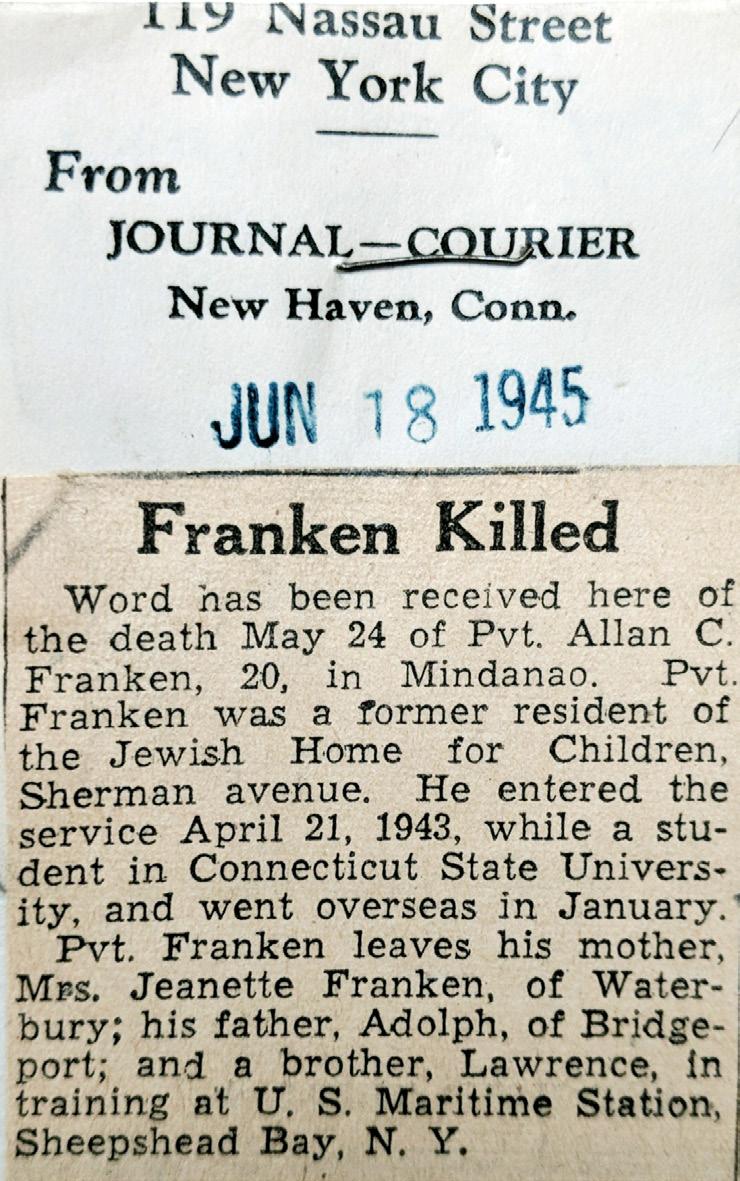
showed it. He seemed to have become reconciled to it, perhaps because he thought nothing could be done about it anyway. So, my father told himself and his family the story that Allan had converted to Christianity during his army service.
Even so, I could never make sense of it. After all, Allan and my father spent much of their childhoods in the New Haven Jewish Home for Children, where they attended Hebrew school daily and Shabbat services weekly, celebrated their b’nai mitzvah, and maintained strong ties with their mother, aunts, uncles and cousins (several of whom were refugees Nazi Germany). Thus, I reasoned, if there was a conversion it must have been for the convenient purpose of avoiding antisemitism in the U.S. Army or concealing his identity if, God forbid, he fell into enemy hands.
Then, in the spring of 2019 the phone rang. On the line was Rabbi David Ellenson who, as president of the Reform movement’s Hebrew Union College, had ordained me 16 years before.
David explained that he was calling on behalf of his old friend Rabbi Jacob (“J.J.”) Schachter, a professor at Yeshiva University and a fellow historian. A few years earlier, Schachter was standing inside a Normandy cemetery and wondering why there were relatively few Star of David headstones, since it was well-known that Jews represented 2.7 percent (about 11,000 soldiers) of all U.S. casualties – about 11,000 Jewish soldiers.
Schachter mentioned this to his friend Shalom Lamm and the two men immediately launched their own investigation.
What they found was astonishing: Hundreds of Jewish war dead had mistakenly been buried under the Latin Cross – the symbol of Christianity. David suggested that Uncle Allan was one of them. I countered weakly with the family lore that somehow Allan had converted, but David explained that the research showed conclusively that Allan had lived and died a Jew. There was no indication of any conversion whatsoever and, crucially, his Jewish status upon death had been confirmed by the Jewish Welfare Board. The strong likelihood was that it was a clerical mistake, committed innocently
during the massive effort of burying 17,184 American soldiers who lost their lives in the battlefields of the Philippines and the South Pacific, in the Manila American Military Cemetery.
A few weeks later, thanks to the extraordinary assistance of Lamm and Schacter’s team, I filed an application for a headstone change for Pvt. Allan C. Franken with the American Battle Monuments Commission (ABMC).
Five months later the application was approved.
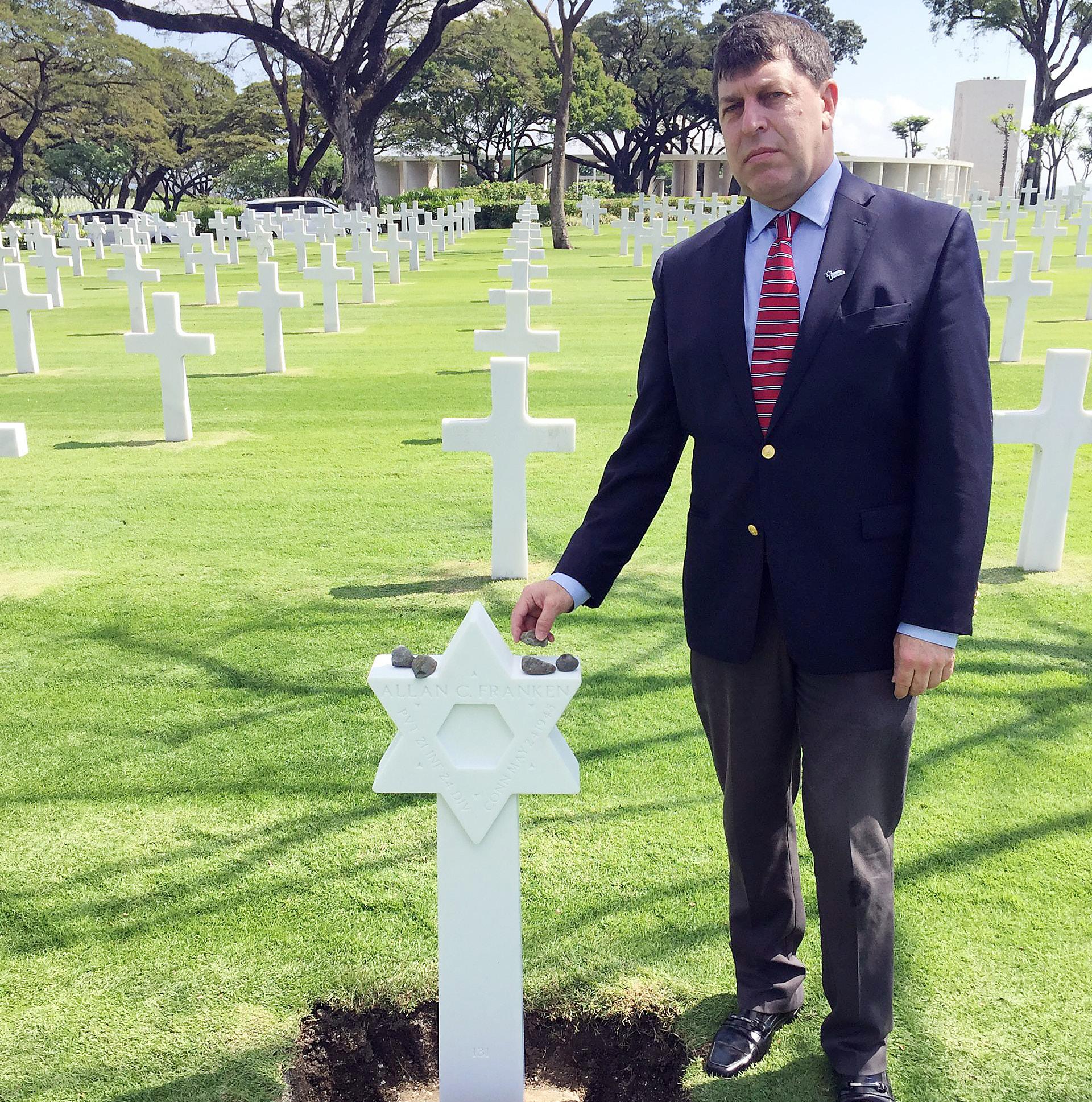
On Feb. 12, 2020, I was privileged to attend the solemn ceremony in which the headstones on the graves of my uncle and four other Jewish servicemen buried
beneath the cemetery’s graceful, emerald lawns, were lifted and replaced with Star of David headstones inscribed with the names of the five fallen soldiers: 1st Lt. Robert S. Fink of New York; Pvt. Allan C. Franken of Hartford, Conn.; Sgt. Jack Gilbert of New York; Pvt. Arthur Waldman of Detroit and Pvt. Louis Wolf of Philadelphia.
It was one of the most moving and gratifying moments of my life.
“Anyone visiting these cemeteries should recognize that Jews have been part and parcel of America, have been committed to America, have loved America, have volunteered to fight for America – and have made the ultimate sacrifice for America,” said Rabbi Schacter, speaking at the
Born in New York, Allan Franken resided on New York’s Upper West Side until age 10. During the Great Depression, the family moved to his mother Jeanette’s hometown of Waterbury.
Pvt. Franken’s ties to Connecticut’s Jewish community run deep.
His great-great uncle, Samuel Zunder, arrived in New Haven in 1850 to serve as the first Jewish clergy for the small German Jewish immigrant community living there. Samuel’s brother, Maier, Allan Frankel’s greatgrandfather, came soon afterward and, as president of the New Haven School Board, was instrumental in making New Haven the

In addition to to Rabbi Schacter, remarks were made by Shalom Lamm, the American Battle Monuments Commission authorities, the American and Israeli ambassadors to the Philippines, and representatives of all five families.
first major American city to integrate its schools. The Zunder School was later dedicated to him and several articles about him appear in the Jews of New Haven series.
After the Frankel family relocated to Connecticut, Pvt. Frank’s father, Adolph, left to find work but never returned. Because Jeanette had to go to work and neither childcare nor government assistance was available, Allan and his brother Larry were placed in the New Haven Jewish Home for Children. There they resided until age 18. At the Jewish home, the cultural and religious backdrop was entirely Jewish. Religious school was a requirement four afternoons a week. Shabbat services and observance of kosher dietary laws were required. And the Frankel brothers attended Jewish camp each summer in Orange.
He also was regularly visited by his mother, a lifelong Reform Jew, with whom he was always close and who kept his many letters written during his time in the service.
Occasionally, Adolph would come to New Haven to take Allan and Larry to Franken family gatherings in New
restoration of his good name and the redemption of his Jewish identity. It was not just a chesed shel emet (a true kindness shown to the dead by the living), but a chesed v’emet (a kindness and a truth – or, in this case, a repair of the truth).
York or Connecticut. A number of their uncles, aunts and cousins were refugees from Nazi Germany, and Allan and Larry were well-acquainted with the antisemitism those relatives had experienced in their hometown of Nuremberg.
After graduating from James Hillhouse High School in 1942, he enrolled in the University of Connecticut to study engineering. His studies were interrupted in 1943 when he entered the U.S. Army, where he first served in the Second Air Force, and then, feeling frustrated at being “pushed around from place to place with no future in sight,” he volunteered for In 1945, he shipped out, and in April 1945 he took part in the Battle of Davao. It was here he sustained machine gun fire to his face and jaw. Evacuated to an Army field hospital, he died of his wounds on May 24, 1945.
Pvt. Frankel was awarded the Purple Heart for his bravery, he is memorialized on the World War II Memorial in Waterbury, where his mother lived.
Jokes’ (courtesy of an Israeli guy living in Chicago)
BY NAAMA BARAK
Home isolation has gotten people to do all sorts of stuff to cheer things up, baking sourdough bread and drinking copious amounts of wine being two prime examples.
But Yair Bernstein, an Israeli living in Chicago, took things to the next level by reaching out to his immediate surroundings and posting daily dad jokes on his apartment window.
Back when Covid-19 was the main news in the United States, Bernstein took example from a friend and colleague who was posting dad jokes on her lawn throughout quarantine.
“I just decided to write the first joke of the day and post it on the window, I just stuck it there,” says Bernstein, who teaches Hebrew and Jewish studies. “I did call it ‘Dad joke no.1,’ but I didn’t know for how long I’d be posting.”
And the joke? “I used to be addicted to the hokey pokey but now I’ve turned myself around,” he says. “I think that’s a good one.”
“I didn’t know if it had any impact on people around me so I just continued for a while,” he says. “There were a few times that people stopped by the window, laughed a bit and took pictures.”
“One day someone walked by the window and I hear him complain, ‘What, that’s the same joke as he had yesterday,’” he adds. “That’s the moment I realized that people walked by to see the jokes.”
But since Bernstein started posting his jokes, the US has become engulfed in protests and social unrest following the killing of George Floyd.
Bernstein, who came to the US with his wife as World Zionist Organization emissaries in 2014 and has since stayed on, continued teaching at the Bernard Zell Anshe Emet Day School and has become a dad to two young daughters. In the days following Floyd’s death, he was uncertain whether to continue with his project.
“I do remember the feeling over that weekend, I already started thinking about Monday. And I think Monday morning was the first time I thought maybe not to post,” he says.
“Covid-19 also hurt people; in America we have more than 100,000 people who died,” he notes. “There was a lot of bad happening even before, but then when it got to the race gap here and the inequality in opportunities and the frustration of the Afro-American community it was much harder to cheer people.”
But he decided to carry on.
service of our country, be ever for a blessing.
“The reason that people enjoy it is that it gives them that moment of cheering up during hard times. I decided to continue writing and it’s been good.”
Before his headstone change, I chose to address my uncle directly, declaring this moment the funeral he never had; these words the eulogy he never received; the memorial prayer the words that had never been prayed – all by the nephew he had never met. Together, it amounted to the
As I recited the Kaddish and placed a stone on the new Star of David headstone, I felt a sensation that Allan – 75 years after his death – at last could rest in peace. May 24, 2020 marked the 75th anniversary of my uncle’s tragic and untimely death. May his memory, together with those of all of his brothers and sisters who fell in
A New Haven native, John Franken is rabbi of Temple Adas Shalom in Havre de Grace, Maryland. He is a member of the Advisory Board of Operation Benjamin, whose mission is to preserve the memories of American-Jewish men and women who fell in World War II. Learn more at operationbenjamin.org.
Some 40 days into his project, Bernstein is still posting dad jokes on weekdays. He gets inspiration from a Twitter account called “Dad jokes” as well as from friends who have been aiding him.
“I don’t post them on social media,” he notes. “I just take a picture of it and send it to my family, so they know, in Israel.”
And yet, his jokes are gaining recognition and working their magic.
“I’m going to continue until I feel people don’t need them anymore,” he adds. “As long as things are the way they are I’m going to continue.” ceremony.
“Two or three days ago we came home and there was an envelope,” he recalls. “It was a thank-you note from someone. It really touched me; I didn’t expect that.”