


www.mandelljcc.org/virtualengagement
Mandell JCC of Greater Hartford (@MandellJCC)
Mandell JCC Fitness Friends (FB Group)
Mandell JCC Youth Sports and Rec (FB Group)

Mandell JCC Connecticut mandelljcc_ct
www.mandelljcc.org

www.mandelljcc.org/virtualengagement
Mandell JCC of Greater Hartford (@MandellJCC)
Mandell JCC Fitness Friends (FB Group)
Mandell JCC Youth Sports and Rec (FB Group)
Mandell JCC Connecticut mandelljcc_ct
www.mandelljcc.org

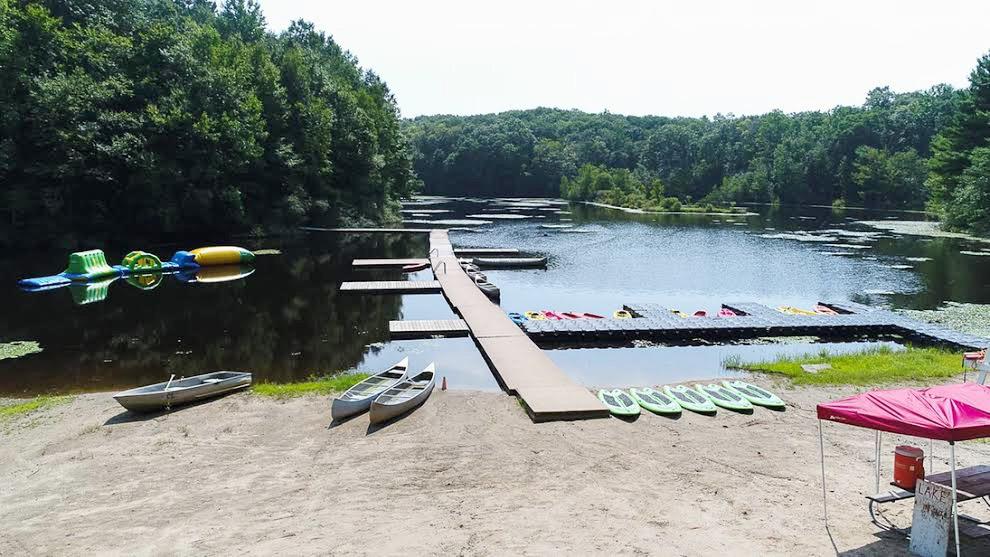
Camp Laurelwood has been awarded a matching grant from the Grinspoon Foundation. Perfect timing – given that the state’s overnight camps have been ordered not to open. Now, alternative plans are afoot for a Laurelwood summer of fun.
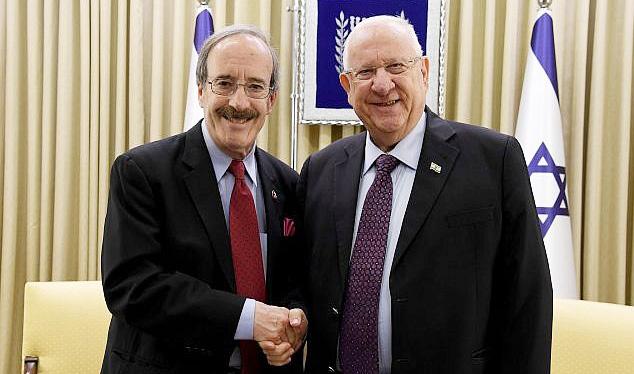
Rep. Alexandria Ocasio-Cortez (D-N.Y.), who famously upset her Democratic incumbent to win her seat in 2018, is now endorsing Rep. Eliot Engel’s (D-N.Y.) opponent. Is his job in jeopardy as New Yorkers head to the polls on June 23?

news for campers and their parents!
camps will open. Within reason.
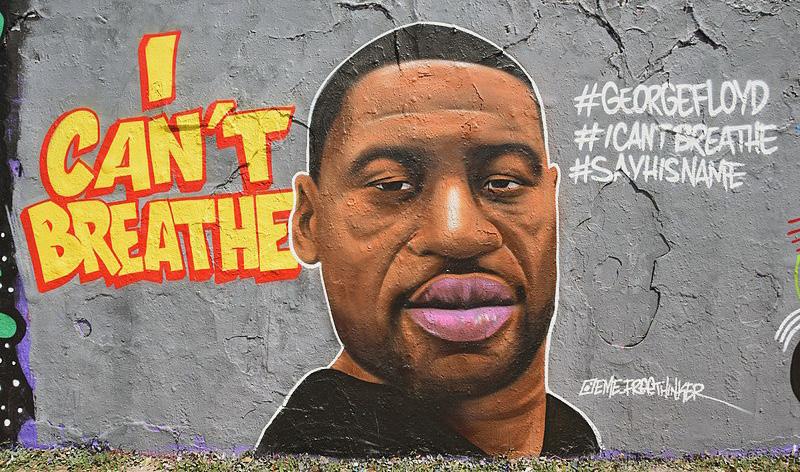
share the pain of those who protest racism. But extremists who link this crime to Israel’s efforts to defend itself against Palestinian terror are spreading a big lie.
(Light candles from a pre-exiting flame)


(JTA) – Camp Laurelwood in Madison is among dozens of Jewish overnight camps nationwide selected to receive a matching grant from The Harold Grinspoon Foundation, which has committed up to $10 million to be divided among eligible camps from a myriad of Jewish movements. The camps will each receive $1 for every $2 they raise from other donors.
The All Together Now matching grant program is available to camps that participate in the foundation’s Jcamp180 initiative.
“The timing of the COVID-19 pandemic is hitting camps especially hard,” foundation founder Harold Grinspoon said in a statement earlier this spring, when it was still unclear as to whether overnight camps would be allowed to open. “We don’t yet know the full extent of the resources the camps will need to weather this storm, but we know they need extra cash flow now and
their needs will be significant.”
“We are incredibly grateful for the generosity of Harold Grinspoon and for the efforts and support of everyone at the Harold Grinspoon Foundation. The support that JCamp180 provides to the field of Jewish camping is beyond compare, and we are lucky to be one of their camping partners. The investment from the Harold Grinspoon Foundation was first among the major Jewish funders, and that kind of leadership creates a culture of abundance that is so needed in this moment of scarcity,” Camp Laurelwood’s director, Rabbi James Greene, told the Ledger.
According to Greene, Laurelwood, Connecticut’s only Jewish overnight camp, is eligible to receive up to $80,000 in matching-grant funds, which means the camp would have to raise $160,000 from donors in the community in order to access the maximum grant money offered. An
additional dollar-for-dollar tuition match is available for camp families for tuition dollars that are converted to donations.
“We have until the end of the calendar year to raise the funds for the match, but obviously we are working to raise that money more rapidly because of the immediate impact of COVID-19 on camp,” says Greene, who is heading into his first summer as Laurelwood’s director.
The grant is especially needed now that Connecticut has announced that the state’s residential camps, such as Laurelwood, will not open this summer.
“It is really unfortunate and sad, but we are trying to think about how to manage through this moment,” says Greene. “We are not alone. We have a community of
‘Challenging but rewarding’
CT day camps plan for a summer of fun –following strict state guidelines
BY STACEY DRESNER
Adaily “Countdown to Camp” on the website of the Jewish Community Center of Greater New Haven, has kept track of the days, hours, minutes and seconds until the JCC’s summer camp starts.
No doubt parents and kids – weary of the long quarantine at home – have also been counting down, although due to Covid-19, no one was sure if summer camps would be allowed to open.
Planning for the summer was especially hard for the three Jewish Community Center summer day camps in Connecticut, as they waited for the state to decide if and when they could open.
Camp directors finally got word from the state on May 18 that camps could open for the summer on June 22, with specific guidelines that must be followed, dealing with issues like group size and social-distancing.
Both the JCC Day Camp in New Haven and the Day Camps @ The J at the Stamford JCC have announced that they will open on June 22.
“Our community is very excited that we will be running camp this summer,” said Debra Kirshner director of the JCC Day Camp at the New Haven JCC. “Some families have decided not to do camp for a variety of reasons and we respect their decision.”
Camp Shalom, operated by the Mandell JCC of Greater Hartford will open on June 29, the date the state had at one time pegged as the date when camps would most likely open.
“We are going to open, obviously following all of the guidelines, and so we are now working out the logistics of all of that,” said Karen Wyckoff,
other camps that are experiencing the same challenge. And, we have our own Connecticut Jewish community which has pulled together and is really doing incredible work.”
While a traditional overnight camp experience shelved for this season, Greene and his staff are busy working on several contingency plans for how summer at Camp Laurelwood might look this year.
“Our most important obligation is to be here to support our campers, their families, and the greater Jewish community. In whatever reality emerges, we intend to fulfill that mission,” he says.
Toward that end, says Greene, “we are exploring a mix of virtual and in-person pro-grams for this summer. In-person, we will be putting together a series of family camp experiences. Families will come to camp for five days, stay in our cabins, have their own bathroom and shower, and have a wonderful week of summer! We will have a lifeguard for our pool and lake, most meals for that time period, and of course Shabbat programs. All of that will happen with an eye toward keeping social distance,” says Greene.
“We are still working out details of dates and pricing, but our goal is simply to cover our cost and give families access to some much needed outdoor space.
“For our virtual programs, our plan is to gather the community three times each week. Once for either Shabbat or Havdalah, and then twice a week for other Camp programs. That will include virtual experiences for Maccabiah, song sessions, art programs, and more. A calendar will be available on the Camp website shortly,” he adds.
Still, not having an overnight camp comes at a cost – a hefty cost at that.
“As a residential camp program, a large portion of our operating costs are fixed throughout the year, even though our revenue happens almost entirely during the summer,” Greene points out. “We have offered all our families a full refund, and are also asking the community to support us to
ensure we are able to come back strong and reopen in 2021. We are working hard to be present for the community in the midst of this crisis.”
For Greene, the transition into his new role as Camp Laurelwood director has been, well, interesting. Still, he remains excited and optimistic.
“I believe in the power and impact of Jewish camping, so this is where my heart is and where I want to be in this moment,” says Greene, who lives on a small homestead in Stratford, where he raises chickens and turkey with his partner, Jen.
“The identity formation and impact that camp nurtures is what motivated me to become a rabbi and a Jewish communal professional, and it is what continues to nurture my own family in our Jewish journey. And, camp is lucky to have an incredible staff team and lay leadership working hard to bring camp to life.
As for the pandemic which has upended his plans for his first summer at Camp Laurelwood, Greene remains philosophical.
“King Solomon famously asked a jeweler to create a piece of jewelry with words of eternal truth on it. The artist gave him a ring with the words ‘gam zeh ya’avor’ - this too shall pass, written on it,” he explains. “King Solomon would look at it in moments of joy and recognize that the joy would eventually dissipate; and he would look at it in moments of struggle and remember that things would get better. This moment will also pass. We will get through this, and we will be stronger as a community if we do it all together. I believe that is the message of the Grinspoon Foundation’s All Together Now campaign.”
For more information on Camp Laurelwood’s matching grant campaign and/or the family programs planned for this summer, visit camplaurelwood.org or call (203) 421-3736.


director of the Windsor day camp. “We’re communicating with the families and staffing appropriately. We’re sticking with June 29; we need that extra week to prepare.”
All three of the JCC camps had to apply for waivers from the state to allow more than 30 children to take part in their programs, and were approved. (Summer camps are licensed by the Connecticut State Department of Early Childhood under the same policies and regulations of other childcare facilities, which have been limited to 30 children during Covid-19.)
Each of the camps are giving preference to campers already signed up for this summer and returning campers before opening up to the general public.
Kirschner said that before the Covid19 pandemic, the New Haven day camp was on its way to a record enrollment of 400 kids. “But with all the restrictions we will be limited to 200 campers per fourweek session. Registration has been going well and we expect to fill all of our spots.”
Neither Wyckoff nor Jason Samuel, director of the J Camps at the Stamford JCC, could not say how many campers they will end up with this summer.
“That number is fluctuating each day,” Samuel said. “We are going to be operating in a limited capacity this summer for sure. We applied for the waiver to be able to have more campers. The number we were approved for, we won’t be anywhere near that. So definitely a limited capacity this summer and limited spaces for campers.
“Camp’s going to be smaller; camp is going to look and operate a little bit differently because of the regulations and
best practices that we will be following this specific summer,” Samuel added. “But I think the essence of camp will still be there.”
And getting kids back to summer camp is important Samuel said.
“From talking to families, camp is needed right now, and not even from the parents’ point of view. I’ve spoken to parents who are working full-time and their kids have been home-schooling full-time and the kids are done with their parents,” Samuel laughed. “I’ve spoken with families that don’t need the childcare but they are still sending their children to camp because their children need that social and emotional exercise, besides the recreation of being outside. Going almost three months without being able to have fun with your peer group is almost detrimental to our youth.”
Annie Keith, director of operations at the Mandell JCC, said that JCC had sent out two different surveys to parents.
“We needed to know how many people really needed full-time daycare in the form of camp, and then from there, we wanted to know how many people just wanted summer activities,” she said. “It was helpful to do the survey again because now people are in planning mode and as the Governor announces his plans, and as things are going on around the country, people are getting a better sense of what is happening. Yesterday was the first time we put out what some of guidelines will be, including wearing face masks. We needed to give them a sense of what is going to be different at camp this summer so they can make their decisions.”
Every summer day camp in the state, including the three JCC camps, has been instructed by the state to follow strict guidelines:
Each morning all campers and staff will be screened for illness by a nurse or medical professional, who will be looking for coughing or respiratory distress. Everyone will have their temperature checked and anyone with a temperature of more than 100 degrees Fahrenheit will not be permitted into the program that day.
Employees must wear PPE – Personal Protective Equipment” including masks or face coverings at all times. Campers maybe asked to wear masks in between activities.
Children at each of the JCC camps will be divided into groups of ten. The groups of ten will re-main together, all day for the length of their attendance, and at a social distance from other groups of campers. Different groups of campers will not be allowed to co-mingle.
Campers who show signs of illness will be isolated from other campers and picked up by parents immediately
Camp facilities will be cleaned and sanitized frequently throughout the day. There are also stringent guidelines concerning frequent hand washing by staff and campers that must be done before and during contact, eating, sneezing or coughing, using the rest room, and touching any surfaces or equipment that might be shared.
“For every decision we are making this summer, public safety is the most paramount,” Samuel said. “If we feel we can’t do it safely, it will stay out of the program.”
The staff of the New Haven JCC camp held a zoom meeting on Sunday, May 31 so that parents could have a chance to learn more about camp and to ask questions. Kirschner said that parents’ concerns included the camp’s mask policy, group size, hand washing, and the logistics of drop off and pick up. “And of course, most importantly, will there be GAGA? And our reply was, ‘Yes! GAGA can and will be played. [But] no more than one group of 10 campers and two staff can play at any given time).’”
“We will be offering almost all of the onsite programming we have offered in the past,” Kirschner said. “For example, arts & crafts, music, drama, dance, nature, sports, STEM, free swim, to name a few. The only difference is that they will be done in groups of no more than 10 campers. Unfortunately due to the OEC guidelines we will not be able to offer rock climbing or open time in our playscape
in our main building. Sadly we will be unable to offer swim lessons due to social distancing guidelines.”
The Stamford JCC camp will offer “a good mixture of what we normally do,” said Samuel. “Our enrichment-style learning based activities like art and science, and a program we call Wilderness Adventures, which is basically pioneering and camp skills; sports obviously, like tennis; Israeli culture, our music program. And then we are also gong to balance that with some nice, low-structure play, like 4-square and volleyball and pickle ball.”
Camp Shalom will offer activities like “arts & crafts, some sports activities, and some water-front activities, all following the guidelines,” Wyckoff said. Swim lessons won’t be offered at Camp Shalom, but the JCC’s aquatics director Jayne Mazer is working on “aquatic experiences,” Wyckoff added.
Keith said that some families are interested in half-day activity options for their children, so they are planning those activities at the JCC and at the JCC’s Tennis and Swim Club in Bloomfield, where its Sports Jams camp programs have traditionally been held.
Sports Jams will not be offering contact sports like soccer, basketball or football, but will offer tennis, some sports clinics, and field games. Campers will need to bring their own lunches, snacks and water to all of the camps; there will be no food prepared at the camps. None of the camps will be doing any field trips this summer, nor will they be offering transportation on buses. Parents will have to both drop off and pickup their campers.
But even with all of the things campers will not be able to do, camp representatives are focusing on the positive.
“We are bringing summer staff on now and asking them to do some virtual connecting to the kids to bring some excitement and to build some trust. They might show themselves putting their masks on and off so the kids can see what it’s going to look like, but at the same time they will be getting them prepared and excited for the summer. And the kids really, really need a good summer,” Keith said. “They need outdoor time, they need time with friends and beloved counselors, so our goal is that, even with these challenging guidelines, we want to provide a really great summer for the kids who are going to be with us. They need it.”
“We are all eagerly waiting to get out and have some fun,” agreed said Kirschner. “While this will be one of the most challenging camp seasons ever, it will also be one of the most rewarding.”

Gideon Reiter of Woodbridge is among a select group of 11th-graders from across North America chosen to make up the 34th cohort of The Bronfman Fellowship.
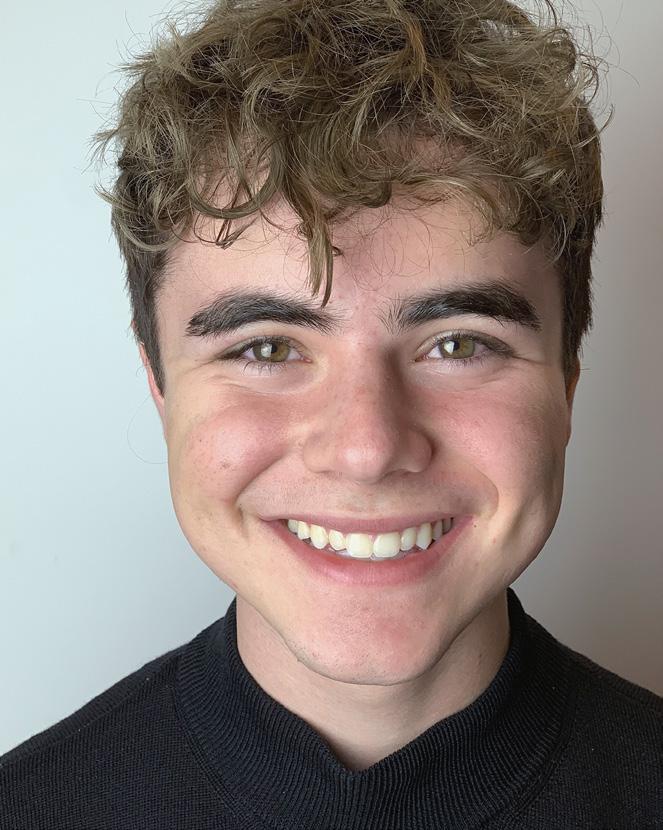
The 26 Fellows, chosen from over 270 applicants, will participate in a year-long experience of study and conversation centered around pluralism, social responsibility and Jewish texts. They will also interact with a group of Israeli peers who were chosen through a parallel selection process as part of the Israeli Fellowship, Amitei Bronfman. Reiter is a graduate of Ezra Academy, a Jewish day school in Woodbridge. Currently, he is a junior at Choate Rosemary Hall, where this year he received first place in the Choate Arabic Poetry Contest and will represent his Arabic class in the CT COLT Poetry Recitation Contest. Gideon is also a member of B’nai Jacob’s chapter of Hazamir: the International Jewish Teen Choir, with whom he has performed twice at Lincoln Center.
Founded in 1987 by Edgar M. Bronfman, z”l, the late CEO of the Seagram Company Ltd. and a visionary Jewish philanthropist, the Bronfman Fellowship year has begun with a five-week immersive summer in Israel. Due to the global pandemic, The
WEST HARTFORD –
Hebrew Senior Care
marked a major on Tuesday, June 2, by opening the doors to its newly expanded behavioral health hospital, which specializes in the care and treatment of older adults who are experiencing mental health issues. Citing a serious gap in behavioral health services for seniors across the State of Connecticut, most health care providers report a need for age-specific support by specially trained providers. The opening of new unit is the culmination of more than a year of planning, construction, and fundraising.
“Connecticut’s geriatric population continues grow, while there is a critical shortage of psychiatric services that meet their specific needs. By expanding our capacity, we are now the largest behavioral health hospital in Connecticut dedicated to the care of seniors,” said Denise Peterson, RN, FACHE, president and CEO of Hebrew Senior Care. “Since we draw patients from throughout the state, we are confident this will help reduce the critical shortage of geropsych beds and enable us to serve more seniors needing the right level of care in a safe and high-quality environment.”
“We are so grateful to the incredible generosity of the Greater Hartford community that has united around Hebrew Senior Care and this important project. The Jewish Community Foundation provided a $100,000 capital challenge grant, which significantly bolstered our fundraising effort. Our agency was also blessed by strong volunteer fundraising led by Henry Zachs,” said Debbie Kleinman, chairwoman of Hebrew Senior Care Board.
The newly designed, spacious unit includes double and private rooms, dining and activity space, patient lounge, and family conference room, as well as stateof-the-art safety features, ensuring that each patient receives quality care in a secure and com-passionate environment.
Hebrew Senior Care’s Behavioral Health Hospital offers a holistic treatment approach, combining psychiatric care and primary care provided by an interdisciplinary team of nurses, social workers and occupational therapists; each with a specialty focus in the care and treatment of older adults. For more information, contact Pat Dickens, admission coordinator, at (860) 523-3961.
Fellowship will conduct its programming virtually until in-person meetings are deemed safe.
Adam R. Bronfman, president of The Samuel Bronfman Foundation, said he was “impressed and heartened” by the new cohort. “My father treasured the Fellowship as an investment in the Jewish future, and I am proud to continue his work. It brings me joy to witness the magic that happens when Jews from all backgrounds come together to access Jewish wisdom and have important conversations. I look forward to getting to know the 2020 Fellows personally, and to joining some of those conversations myself.”
The 2020 Fellows are from 12 states and represent a wide range of Jewish backgrounds, including Orthodox, Conservative, Reform, Just Jewish and secularly/culturally Jewish. The Fellows will study Jewish text, traditions history and culture with a diverse faculty, including Jake Marmer, Education and Programming Director of The Bronfman Fellowship, author of two poetry collections, and contributing editor/poetry critic for Tablet Magazine; Rabbi Dr. Vanessa Ochs, professor in the Department of Religious Studies and Jewish Studies Program at the University of Virginia; Rabbi Dr. Micha’el Rosenberg, associate professor of Rabbinics and member of the tenured faculty of Hebrew College; Rabbanit Dr. Jennie Rosenfeld, Manhiga Ruchanit (female spiritual leader) in Efrat, Israel; and Arielle Tonkin, an artist and Museum Educator at the Contemporary Jewish Museum in San Francisco.
B’NAI MITZVAH
There are now over 1300 Bronfman Fellowship alumni across North America and Israel. Among them are seven Rhodes Scholars, four former Supreme Court clerks, 18 Fulbright Scholars, 36 Wexner Fellows and 27 Dorot Fellows. Leaders of note among Fellowship alumni include Daniel Handler, a.k.a. Lemony Snicket, author of the best-selling Series of Unfortunate Events children’s books; Jonathan Safran Foer, author of Everything Is Illuminated; and Rabbi Angela Warnick Buchdahl, the first woman to be named senior rabbi at New York’s Central Synagogue and the first Asian-American person to be ordained as a rabbi and cantor. Others include Anne Dreazen, Director for Iraq Policy in the Office of the Secretary of Defense; Dara Horn, author of A Guide for the Perplexed; Itamar Moses, Tony award-winner for The Band’s Visit; and Anya Kamenetz, lead education blogger at NPR and one of the youngest people ever nominated for a Pulitzer Prize. Alumni also include entrepreneurial Jewish leaders who have founded organizations like the Kavana Cooperative, Keshet, Sefaria, and YidLife Crisis; and serve in central leadership roles at major organizations like The Shalom Hartman Institute of North America, the Jewish Women’s Archive, Central Synagogue, Hillel International and The Foundation for Jewish Camp, to name a few.
For more information about The Bronfman Fellowship, including how to apply, please visit www. bronfman.org.
David Lazowski, son of Jacqueline and Andrew Lazowski, celebrated his bar mitzvah on Saturday, June 6, at Congregation B’nai Torah in Trumbull.
Ariel Frager, daughter of Susan and Kyle Frager of, will celebrate her bat mitzvah on Saturday, June 13 at Congregation B’nai Torah in Trumbull.
THURSDAY, OCTOBER 15




















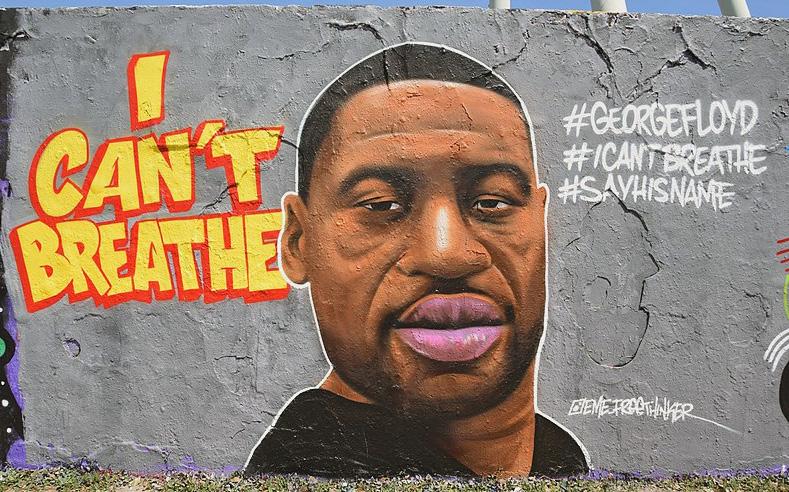
(JNS) The outrageous murder in Minneapolis of George Floyd, a 46-year-old African-American man, by local police is a crime that cannot be tolerated or excused. Efforts by extremist agitators to hijack peaceful demonstrations and turn them into violent riots should also be condemned and not falsely rationalized as a form of legitimate protest or part of a necessary path to progress.
Sensible people know both those things can be equally true, and that concerns about the anarchy in the streets of major cities shouldn’t diminish our anger about Floyd’s death or any other crime that appears rooted in racism.
This perilous moment in American history should have created a consensus about the need to address both injustice and nihilist violence that ought to transcend partisanship. That is why Jewish organizations and religious groups have joined with people of faith throughout the denominational spectrum to express their dismay about what happened to Floyd, as well as their desire to combat prejudice.
But not everyone is prepared to observe the political ceasefire most Americans would prefer to observe in the wake of these traumas. And, as always, some of those looking to exploit tragedy are attacking Jews.
That was made clear when a synagogue and Jewish-owned businesses were vandalized in Los Angeles with proPalestinian propaganda. In and of itself, that would be terrible, but those buildings were just a few out of the innumerable places around the country that suffered the same indignity or worse.
The context for that incident – and the spate of anti-Jewish and anti-Israel hate that has flourished in recent days on the Internet – is not random anger that could have been directed at any target, no matter how removed it might be from the incident that set off this crisis. Such incitement is the direct product of an intersectional movement that has continued to attempt to link crimes committed on American streets against African-Americans with the conflict between Israel and the Palestinians. And just like other forms of prejudice for which there should be no tolerance, the effort to blame Israel or Jews for what rogue
BY JONATHAN S. TOBIN
American cops might do needs to be clearly labeled as a form of hate speech.
The effort to manufacture a connection between slayings of African-Americans with Israel isn’t new. The notion that the struggle for civil rights in the United States is connected to the Palestinian war on Israel has become a staple of the BDS movement. It is rooted in intersectionality, an idea that has gained popularity in certain sectors of academia. It asserts an affinity between the struggles of people of color or indigenous populations against imperialist and racist hierarchies. So if you think all Jews in Israel are the moral equivalent of white European settlers in Africa, the notion that blacks who oppose systemic racism in America are fighting the same good fight as Palestinians resisting Zionism makes sense.
That is what is behind the cartoon that has circulated on social media showing an Israeli soldier sitting on the neck of an oppressed Arab next to the image of rogue Minneapolis cop Derek Chauvin suffocating a dying George Floyd under the caption “black lives matter.” The same disingenuous analogy was behind the tweet by a group calling itself the US Campaign for Palestinian Rights, which attempted to claim that U.S. police departments are sending personnel to Israel to be trained to attack unarmed blacks.
This false meme further argued that
Israel is helping to “militarize” American law enforcement.
The Black Lives Matter movement has made these arguments before, but the anti-Zionist Jewish Voice for Peace group has particularly embraced this canard. JVP’s “Deadly Exchange” program fits into its efforts to promote boycotts of Israel. Asserting that Jewish groups that have facilitated trips to Israel by American first responders and police are somehow responsible for killings of unarmed blacks by U.S. cops is not only untrue, it’s a classic example of an antisemitic blood libel since it seeks to blame Jews for gruesome crimes for which they bear no responsibility.
The training Americans get in Israel has little to do with the attacks that JVP and other BDS groups claim to oppose. It actually focuses on the antithesis of stereotypical police brutality by seeking to promote community engagement and nonviolent policing that would make confrontations less likely.
The willingness to buy into the big lie about Israelis teaching Americans to kill minorities is based in ignorance of the true nature of the conflict between Israel and Palestinian terror groups. Contrary to the intersectional myth, Jews are not colonial oppressors in Israel. Jews are not only
CONTINUED ON PAGE 17
Vol. 92 No. 24
JHL Ledger LLC Publisher
Henry M. Zachs Managing Partner
Leslie Iarusso Associate Publisher Judie Jacobson Editor judiej@jewishledger.com • x3024
Hillary Sarrasin Digital Media Manager hillaryp@jewishledger.com
EDITORIAL
Stacey Dresner Massachusetts Editor staceyd@jewishledger.com • x3008 Tim Knecht Proofreader
ADVERTISING
Donna Edelstein Senior Account Executive Non-Profit & JHL Ledger LLC Media Marketing donnae@jewishledger.com • x3028
Joyce Cohen Senior Account Executive joycec@jewishledger.com • (860) 836-9195 Joan Gaffin Central Mass. Account Executive joang@jewishledger.com • (508) 414-6210 Trudy Goldstein Account Executive (860) 573-1575


Samuel Neusner, Founder (1929-1960) Rabbi Abraham J. Feldman, Co-Founder and Editor (1929-1977) Berthold Gaster, Editor (1977-1992) N. Richard Greenfield, Publisher (1994-2014)
PUBLISHER’S STATEMENT
Periodicals postage paid at Hartford, CT and at additional mailing offices.
Jewish Ledger (USPS # 131 - 150) is published 24 times per year by JHL Ledger LLC from our office at: Jewish Ledger
40 Woodland Street Hartford, CT 06105 Phone (860) 231-2424 Fax (860) 231-2485 Toll Free 1-800-286-6397
Postmaster, send address changes to: Jewish Ledger 40 Woodland Street Hartford, CT 06105
Subscriptions: $36 yearly, $9 Twelve Issue Institutional subscription. Send name, address, zip code with payment. Editorial deadline: All public and social announcements must be received by Tuesday 5 p.m. 10 days prior to publication. Advertising deadline: Wednesday noon one week prior to issue. Advertisers should check ad on publication. JHL Ledger LLC and Jewish Ledger shall not be liable for failure to publish an ad for typographical error or errors in the publication except to the extent of the cost of the space which the actual error appeared in the first insertion. Publishers reserve the right to refuse advertising for any reason and to alter advertising copy or graphics deemed unacceptable. The publishers cannot warrant, nor assume responsibility for, the legitimacy, reputability or legality of any products or services offered in advertisements in any of its publications. The entire contents of the Jewish Ledger are copyright © 2020. No portion may be reproduced without written permission of the publishers. JHL Ledger LLC also publishes Jewish Ledger MA, All Things Jewish CT, and All Things Jewish MA. www.jewishledger.com
BY JACKSON RICHMAN
(JNS) Longtime Rep. Eliot Engel (D-N.Y.) had it rough last week. First, the pro-Israel Jewish lawmaker was caught in a hot-mic moment on June 2, and on June 3, his colleague Rep. Alexandria Ocasio-Cortez (D-N.Y.) endorsed his progressive primary opponent, Jamaal Bowman, who has questioned the U.S.-Israel relationship.
Is Engel’s job in Congress in jeopardy as voters head to the polls on June 23 for primaries?
“Eliot Engel is a champion of the working people of New York, and is one of the most effective members of Congress from any district when it comes to taking care of their constituents,” Josh Block – a former aide to President Bill Clinton and former head of The Israel Project – told JNS.
On Tuesday, June 2, Engel came under fire for a hot-mic moment, saying: “If I didn’t have a primary, I wouldn’t care.” The remark was made at a news conference with local officials in which Engel asked to speak about the instability in his Bronx district over the death of George Floyd on May 25 while in the custody of Minneapolis police. Bronx Borough President Rubén Díaz Jr. told Engel that there wouldn’t be time for him to speak and, in response to Engel’s “I wouldn’t care” comment, said, “We’re not politicizing. Everybody’s got a primary, you know?”
In a statement later Tuesday, Engel said, “In the context of running for reelection, I thought it was important for people to know where I stand, that’s why I asked to speak. I would not have tried to impose on the Borough President if I didn’t think it was important.”
Engel, who heads the powerful House Foreign Affairs Committee, has served in Congress since 1989 and represents the heavily Democratic New York 16th congressional district, which currently contains parts of the Bronx and Westchester County. Over the decades that Engel has served, redistricting and demographics have led to significant changes in composition of Engel’s district, which today is minoritymajority, with black and Hispanics making up over 55 percent of its residents.
Mark Mellman, president and CEO of Democratic Majority for Israel – whose political action committee, DMFI PAC, endorsed Engel – told JNS that while “the hot-mic moment was certainly unfortunate” the incident, which “was taken out of
context by some,” won’t hurt Engel in the end. “He is a well-liked and muchappreciated figure. He’s done a lot for New York, he’s done a lot for his district,” he said. “He got $5 billion for New York hospitals during [the coronavirus].”
Mellman also dismissed concerns that Engel may be facing demographic challenges from his constituents, especially since his opponent is African-American.
Mellman noted that while the Jewish vote in Engel’s district, “is actually pretty small,” blacks and Latinos “in his district think very highly of Eliot Engel” and “appreciate what he’s done for the district” such as getting federal funds for “hospitals and other needs” and “his willingness to stand up to the evils of the Trump administration” that Mellman said include “attacks on a woman’s right to choose, attacks on immigrants, their attacks on healthcare” and “attacks on the rule of law.”
Engel is also one of the most prominent pro-Israel voices in the Democratic Party. At a time when there is concern over bipartisan support for Israel and the future direction of the Democratic Party, especially with the 2018 election of “the Squad” which includes Ocasio-Cortez as well as anti-Israel Reps. Ilhan Omar (D-Minn.) and Rashida Tlaib (D-Mich.), Engel has been viewed as a powerful bulwark against them.
“He is also one of the strongest, most eloquent and reliable supporters of the special relationship between the U.S. and Israel, because he understands that a strong and secure Jewish state is the cheapest unsinkable battleship America could ever have in a part of the world that matters to our security and economy a great deal,” Block said.
While Bowman’s positions on the U.S.Israel relationship include opposition to the anti-Israel BDS movement and a two-state solution to the Israeli-Palestinian conflict, it also includes conditioning U.S. assistance to Israel and calling Israel a country “that’s committing human rights violations.”
Regarding conditioning U.S. assistance to the Jewish state, Bowman told Jewish Insider, “This is not about singling out Israel and targeting Israel. This is about any country that we provide aid to that’s committing human rights violations –we need to have a conversation about conditioning some aid if those violations continue.”
CONTINUED ON PAGE 13

At the Hebrew Center for Health and Rehabilitation, we understand that comfort and familiarity is a key part of the journey to wellness. We also understand that maintaining your religious beliefs and principles is fundamental in continued enrichment of life. Our Kosher meal services allow residents to maintain their dietary requirements throughout their stay with us. At the Hebrew Center, we ensure we follow all principles of Kosher including purchase, storage, preparation, and service.
At the Hebrew Center for Health and Rehabilitation, we also offer a variety of other services and amenities to ensure your stay is as comfortable as possible.
THESE SERVICES INCLUDE:
• Passport to Rehabilitation Program
• Long-Term Skilled Nursing Care
• Specialized Memory Care
• Respite Care Program
• Palliative Care and Hospice Services Coordination
OUR AMENITIES INCLUDE:
• Barber/Beauty Shop
• Café
• Cultural Menus
• Laundry and housekeeping services
• Patient and Family education
• Life Enrichment
For more information on our Kosher program, please contact: DIRECTOR, PASTORAL SERVICES - (860) 523-3800
Hebrew Center for Health and Rehabilitation One Abrahms Boulevard, West Hartford, CT 06117





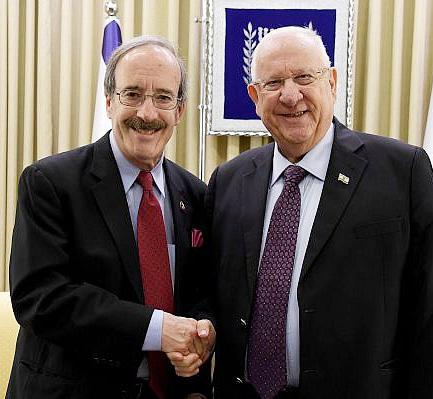
Additionally, Bowman accused Israeli Prime Minister Benjamin Netanyahu of “aggressive policies toward the Palestinian people, particularly around occupation, annexation and the detaining of Palestinian children. I may be just more open to having those conversations about the humanitarian crisis happening in Palestine than Eliot Engel has been all through his career,” he said.
Engel told Jewish Insider that “conditioning aid for Israel is one of the stupidest things I’ve ever heard. Foreign aid doesn’t only benefit the countries that we are giving it to – it benefits the United States.”
“This nonsense about conditioning aid is a bit arrogant because we’d essentially be telling Israel, if you don’t toe the mark, if when we crack the whip you don’t jump, we’re gonna pull it away from you,” said Engel. “That’s not how one ally treats another ally.”
“We need to maintain a quality relationship with Israel,” he said. “Israel has the right to exist. I think Israel has a right to be safe and secure. And I think Israel has a right to self-determination. I also think the people of Palestine have a right to exist, have a right to be safe and secure, and have a right to self-determination as well.”
Moreover, Bowman earlier this year touted an endorsement by the anti-Israel activists of the Jewish Vote, founded in

2018 as the electoral arm of Jews for Racial and Economic Justice, that has defended antisemitism on the left.
Democratic strategist Steve Rabinowitz told JNS that Engel is not “in particular danger.” “The gaffe was a gaffe, no matter what Elliot’s people say, but hardly a careerending one after his substantial career,” he said. “He’s so much bigger than that.”
Nevertheless, an Engel loss would be devastating to the pro-Israel community, according to Jewish Democratic activists.
“He is a tremendous leader on America’s national security and foreign policy and his loss would not only deprive his constituents of an amazing fighting champion, but it would also mean replacing one of the most pro-Israel members of Congress with one of the most anti-Israel members of Congress, who truly is out of step with this district in New York City,” Block said.
An Engel loss would be “a significant blow,” Mellman said. “He occupies a critical leadership position as chairman of the House Foreign Affairs Committee. He is a strong advocate for the U.S.-Israel relationship and his opponent is not.”
“Chairman Engel is one of the strongest champions of the mutually beneficial U.S.Israel relationship and he is an irreplaceable leader of the House Foreign Affairs Committee,” Democratic strategist Aaron Keyak told JNS. “Our party and our country are better with him in Congress.”

In the aftermath of the senseless and brutal death of George Floyd, two Jews – one of color and one the white father of a young black child – talk candidly about their experience.
BY YAVILAH MCCOY
BOSTON (JTA) – When we first moved here from St. Louis, my husband was a resident in medical school. He would rise early to take the T to work for long hours at a Boston city hospital while our four kids and I would start each morning by getting lost as we tried to navigate our way around the people and streets of suburbs that felt increasingly closed to strangers and overwhelmingly white.
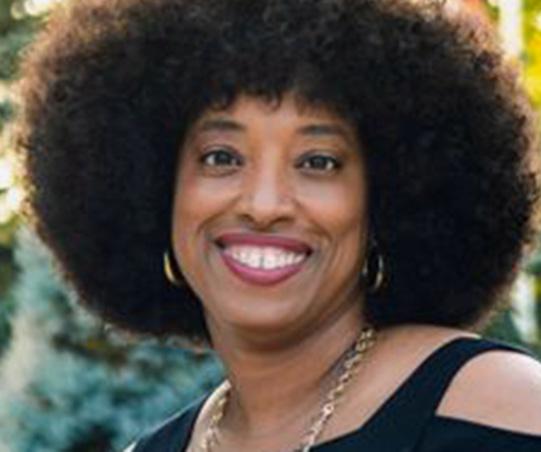
In those days, as our small carload of Jews of Color made our way, we didn’t wince easily as people stared or, even worse, acted as if they couldn’t see us at all or be bothered to roll down their windows to answer our questions about directions. As born and bred Jews of Color, we were all used to what it felt like to be a minority among a majority of white people since we had been walking that walk for years – every day and every week that we had been enrolled in all-white Jewish day schools and subscribed to membership in an allwhite suburban Jewish synagogues for the sake of sustaining our traditional Jewish observance.
In Missouri, we lived in one of the few suburban cities west of East St. Louis with racially integrated housing. But in our new neighborhood, in the heart of Newton, there were few people of color.
Outside of adjusting to the cool New England temperatures, we also had to adjust to the cool New England temperament, which was harder. It was difficult to tell, in the absence of a shared “hello” or the meeting of a neighbor’s gaze on the street, whether people were reserved and not welcoming to us because we had integrated the neighborhood or because they were just reserved and not welcoming as a rule. Regardless, the reality of perceptions is
lived most poignantly in the depths of one’s heart, so I have to admit that it was painful to have to wonder with each time we found ourselves lost and driving up to a new face, and a new location to get directions back home, how we would be received.
Fast forward to three months after our move, as I and a team of colleagues are preparing to host our national conference at a Boston hotel. We are filling welcome bags to give to some 300 student guests that will arrive shortly from around the country and realize that we have run out of the snacks that we are using to fill them. As the team lead, and one of two local staffers with a car, I elect to run to the nearest Costco to pick up a case of snacks. As I google the location and print out the directions, I manage to swallow my fear of getting lost, as I tell myself that the Costco is less than 20 miles from the hotel.
As I get into my minivan, I take a deep breath, scan the directions and say to myself, “You got this!” I decide to drive slowly and pay attention to all existing and missing street signs until I can get myself to the neighboring town of Watertown, where a precious case of granola bars resides. Ten minutes into the drive I’m feeling pretty good. I haven’t encountered any crazy “roundabouts” (where the road turns into a circle with multiple exits that have to be figured out instantly) and the directions, for the most part, seem to be pretty straightforward.
At one of the last left turns before reaching my destination, I notice a police car behind me, but I pay it no mind since I’m pretty sure that driving as slowly as I had been since leaving the hotel, I haven’t violated any speed limits. As I near the Costco, I see the gas gauge on my tank is a little low, so I decide to stop for gas. As I turn into the lot and begin looking in my purse for my credit card, I notice that the police car has now pulled behind me and started flashing its lights.
I look behind me and wait to see if the officer is going to approach my car. When minutes pass and he doesn’t, I decide to get out of the car and get my gas. While walking
to the gas tank, a white police officer emerges from the car and yells to me from behind his door, “Excuse me, you’re going to need to get back in your vehicle!”
I turn to look at him and say “Why? Is there something wrong?”
“I said get back in your vehicle!” he yells in response.
Thinking that something about my slow driving may have prompted this encounter, I say, “Officer, did I miss a sign or something when making my turn, I’m actually trying to get to Costco around the corner to buy …”
This time, with a drawn gun in my direction, he screams, “I said get back in your vehicle NOW!”
I get back in my minivan and try to call my husband – no answer. I beep him and leave my number as another two police cars arrive and surround my vehicle. I start to cry. All sorts of images pop into my head as fear sets in around the fact that despite the fact that I’ve got a team of highly educated white Jewish professionals waiting to take my direction back at the hotel, I’m here now, a black person, dressed in sweats, and being held prisoner in my own vehicle for reasons unknown.
Within a few minutes, another car with a white man inside comes to the scene and the officers begin pointing at me and my vehicle as they converse with him. Scenes of every movie I’ve seen where a person of color is framed for a crime they did not commit flash through my mind.
Out of desperation, I decide to call the police on the police. I call the Watertown Police Department and ask to speak to the captain on duty. I explain to the receptionist that I am a black woman being surrounded at a gas station by police officers and told to stay in my car without any explanation of what I’ve done wrong and I’m calling because I want a record to be made of the fact that I’m scared and feel like my rights are being violated.
After a short hold, I do succeed in getting a captain on the line and manage to tell my story. The captain then puts me on hold for a short while before returning to
inform me that although it might appear I am involved in a racial incident, he would like to assure me that this is not case. It seems a person driving a vehicle with my description had been called in earlier that evening for a hit-and-run. The officers had pulled me over and sequestered me in my car because I had been driving slowly and they thought I might have been driving drunk.
As I hear this, more tears come and I find myself saying through sobs to the officer, “And what about my person, outside of my skin color and baggy sweats, do you feel validated your officers in making this assumption? Why have I not been asked any questions? There is another white man here talking to your officers and they have not said a word to me outside of ordering me to stay in my car. Do you realize that had I not returned to my car, I could be dead right now around a false assumption?”
The captain continues to assure me that I’m not experiencing a racial incident and he is sending over a car to ensure this incident is handled well. Having spoken to the captain and assuming that he had spoken to his officers, I summon up the courage to get out of my car again and take some pictures.
I get out and say to the officers loudly, “I just spoke to your captain and I need to take a record of what is going on here.” As I go over to the police car behind my vehicle and snap a photo of the license plate, the officer that told me to get in my car repeats that I need to return to my vehicle. While shaking from head to toe, and with tears streaming, I say to him, “I spoke to your captain, and I will go back to my vehicle after I have pictures of my and your cars.”
Despite more yelling from the officer, I proceed to go to the vehicle of the gentleman that had arrived on the scene and take pictures of his car and then pictures of my own. While I am doing this, I notice that the police have also started yelling at another white man who has been parked getting gas at the opposite side of the pumps since I arrived at the gas station. Although I didn’t see him initially, I
BY KEN LANE
When I fell in love with my wife several years ago, I could accurately foresee aspects of our future life together: finding our first apartment; snuggling together on rainy mornings, listening to the droplets rinse our bedroom windows; having mini-panic attacks when the check came on date nights but knowing it was worth the hit to our
realize that he has been standing off to the side watching the entire episode. The police were vociferously asking him to leave and he seemed to be saying to them that he was not willing to comply. At some point this man left the officers and came over to ask me if I was all right. I looked at him through tears and said I was OK. He handed me his business card and said, “I’ve been here the whole time and when I saw that the police wouldn’t listen to you, I stayed to see that you were all right. They are asking me to go now, but if you need me to be a witness for you to say what happened here, just call and I’d be happy to help.”
As I looked into the eyes of this stranger, the events of the evening shifted significantly for me. I realized that despite the grief I felt over the presence and ongoing threat of racism in the new millennium, there was also hope in the presence of this white ally that seemed willing to stand with me and even put himself at risk to ensure that justice was really for all and not just for himself.
Over the past year, as issues of race and racism have exploded and taken center stage in our national discourse, many of my white colleagues have asked me: “What can white people do in this moment?” Given my own experiences, what I find myself saying most often is that it is essential for white people to find ways to stand with people of color in their vulnerability and be a witness to racial injustices that are often going on around them every day.
What gave me hope, when I encountered the uneven hand of the police myself, was that a white stranger stayed by my side to see that justice did not betray me that evening, even though it brought negative attention from the police his way. When white people agree to stand with people of color no matter how uncomfortable the realities at the intersection of race and class may make them, the would-be perpetrators of injustice become accountable not just to their victims but to the world that is watching them as well.
If we wish to be the change we wish to
bank account; making Havdalah over Coors Light because we drank all the wine the night before.
But until my wife told me she was pregnant, there was something I definitely hadn’t anticipated: having to tell my son that there are people, severely broken people, in the world that hate him – not because of anything he did, but simply because he’s Black. My wife and I have
see in the world, we must agree to see the world as it is, not as we wish it would be. This is the goal of my sharing here and in other circles to which I belong.
As I reflect on my own experiences of the inequities of race, I do my best to add hope and context to these occurrences by reminding myself and my would-be allies that oppressive circumstances hold many dimensions, perpetrators, victims and bystanders, and that witnesses and allies are often sharing the same experience of tragedy with different roles to play that can deeply affect the ultimate outcome.
I’ve shared this story before in workshops on racism that I’ve led in Jewish spaces, but given what’s happening right now in America, I thought we could all use a little reminder that fear of domination does not have to be the end of the story.
There is a courageous journey at each end of the spectrum: An oppressor can face fears that have taken years to accumulate and make change in a moment; a victim can face the fear of personal threat, sometimes even death, to insist upon the truth and justice of human dignity; a bystander can feel helpless in a moment of tragedy but inspired to never let what they have seen happen to anyone else again; allies or witnesses can act, often in the moment, to use what power they have to interrupt an oppressive act’s power to rape other human beings of their dignity.
The doors to these courageous journeys are often opening simultaneously. And when we go numb or silent in the face of oppression, we often miss precious opportunities to walk the walk by going through them.
Yavilah McCoy is the CEO of DIMENSIONS Inc. in Boston. She has spent the past 20 years working extensively in multifaith communities and partnering specifically with the Jewish community to engage issues of diversity, equity and inclusion. Yavilah is an educator, activist and spiritual teacher.
more in common than any couple I know. We’re both jazz and soul musicians – I’m a bassist, and she has the most velvety contralto voice I’ve ever heard. We both like to nerd out on sci-fi; I’m more “Return of the Jedi,” while she’s more a David Tenantera Dr. Whovian. We’re both Jewish – I like to dig my nose into Sichos HaRan, the sayings of the Hasidic Rabbi Nachman of Breslov, while her recitation of the Shehecheyanu prayer is always the loudest for anyone’s first aliyah.
Still, there is one glaring difference between us. I am a white man. My wife, on the other hand, is a Black woman – though she refutes that claim, saying “I’m not Black – I’m mocha.” Because of this, our son, has a gorgeous caramel complexion and hair that keeps itself in the tightest corkscrew spirals when dry and hanging well below his eyes when wet.
My son turns two years old this week. When he gets older, I’ll have to sit him down and tell him, “Some people don’t like you because you and mommy are black. Some of these people wear badges. Some of these people look just like daddy.” This shouldn’t be a thing.
Many years ago, my wife’s younger brother was stopped by police, along with many of his fellow Black friends, on their way home from the neighborhood baseball diamond.
“Why do you have a bat, son?”
What seemed like a simple question was tainted with a degree of hostility, as the members of the group plainly donned team caps, mitts, and baseballs. My brother-inlaw answered his query respectfully, as well a barrage of accompanying questions, one more disorienting than the last. The interaction left him shaken, leaving most of the group with the same question: Would the officer had stopped us if we were white?
Unlike many others that ended tragically, this story about his unpleasant interaction with police ended peacefully – though it certainly didn’t imbue the young boys with much trust in police. Upon hearing this story around the time we began dating, a fuller spectrum of my responsibilities as the parent of a Black child came into view. For his own safety, I would need to not only teach my son about racism, but actively warn him about the bad apples of our society – some of whom wear badges, and most of whom look like me, Dad.
The good news is that I have time to impart this lesson, as he’s only two. The bad news is that I don’t know when to teach him – nay, warn him about racism. Upon asking my wife when she was “taught” about racism, she draws a blank. Her first experiences were mostly second-hand – an instance from a family friend in the grocery store, or a grandma’s sage commentary on a news story, explaining what the anchors can’t. Later, racism for her wasn’t so much in a single event as felt in the chill of icy stares.
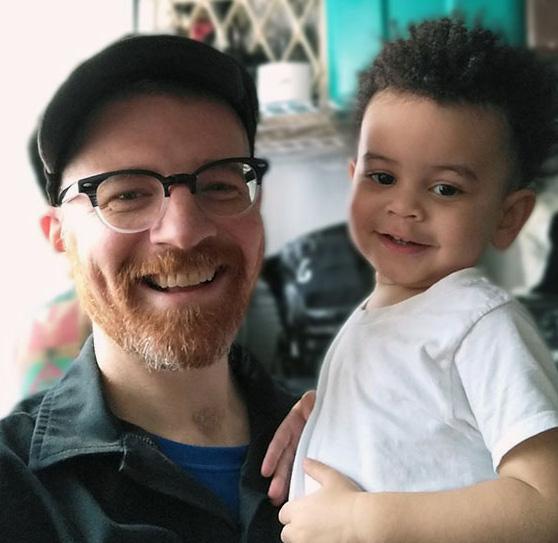
Her descriptions of being stared down, and family instances of being treated in a second-class way because of their skin tone, increase my desire to warn my son about the existence of racism sufficiently – and lovingly. My greatest fear is my son experiencing racism unprepared, only to even momentarily second-guess whether or not to take refuge in my arms because they bear the same complexion of the person, or people, who hurt him. The thought of warning him about the harm that may come to him from someone that looks like his Opa, his uncle, or me, makes my guts sink. The only thing lifting them back up again is knowing how completely and madly in love we are with him. My prayer is that such love eclipses any possibility of fear or doubt. So when will I sit him down and have “the talk” about racism? Though the Talmud instructs fathers to teach their sons how to swim, it’s mostly silent on the subject of enduring racism. Being that he’s currently preoccupied with eating Cheerios by the fistful like a barbarian king, drumming his hands on every surface he walks by and convincing us that he can count to 10 by starting from 6, I’m happy to report that racism is not on yet on his toddler radar. When we will have this discussion remains a question requiring perpetual conversation with my wife over a cool drink while our boy stacks his blocks to the sky. Our mutual readiness, combined with heartfelt prayer and careful attention to the marvelous array of questions that fill his beautiful corkscrew-curl-covered head, will all guide our timeline for “the talk.”
I don’t intend to make him afraid of all police, but simply to smell the bad eggs before they crack in his path. Still, this isn’t a conversation anyone should have to have with their children. How many more minority generations will have to endure the broken bullies of our society? Until then, I can only do what any parent can for their children – prepare him for the world as best I can and displace the hate with love.
This story originally appeared on Kveller.
Auschwitz museum asks for donations following revenue loss due to pandemic
(JTA) – The memorial and museum at the former Auschwitz concentration camp in Poland has lost so much income due to the coronavirus pandemic that it is now asking for public donations. In a plea issued June 3, the museum administration called on “everyone for whom the preservation of memory is important” to chip in to keep pro-grams going, even while the memorial site itself remains empty of visitors. Last year, the site of the former Nazi death camp had more than 2.3 million visitors. This year, it drew some 300,000 people before it was shut on March 12, its first closure since its first exhibit opened in 1947.
There is no admission fee, but about 80 percent of visitors hire guides who are trained and paid by the memorial, said Paweł Sawicki, a spokesman for the memorial and museum. Of the museum’s total 2019 budget of about $29 million, more than 56 per-cent came from such sources. Most affected by the loss will be on-site and online education and research projects, publishing and exhibition projects.
The Polish Ministry of Culture and National Heritage still covers basic operating costs, and there has been extra government help for cultural institutions affected by pandemic-related shutdowns. Nor is conservation work at risk, thanks to external funds from the Auschwitz-Birkenau Foundation. Museum Director Piotr M. A. Cywiński said that educational work will continue, to preserve the site as a legacy “for our children and grandchildren.” But “without additional funds, the implementation of our statutory operations is called into question.”
By the time Soviet troops liberated the camp in January 1945, more than 1.1 million people, most of them Jews, had

been murdered there. The site has become a major site of remembrance pilgrimages; it is closed only three days per year. The museum has now reorganized exhibitions to minimize the risk of spreading the coronavirus. But only 400 people registered for a trial reopening on May 30 and 31 – less than three percent of the total for the same period last year (some 15,000), Sawicki said.
A new ‘Fiddler on the Roof’ movie is in the works
(JTA) – Wonder of wonders: “Fiddler on the Roof” is returning to the big screen. MGM will produce a remake of the iconic 1964 musical about the struggles and joys of Jewish life in the fictional Eastern European shtetl of Anatevka. The new film will bring some star power from Broadway: Director Thomas Kail served in the same role for “Hamilton” and has collaborated with its creator, Lin-Manuel Miranda (famously a “Fiddler” fan), on other shows. Steven Levenson, who wrote the acclaimed musical “Dear Evan Hansen,” will pen the screenplay. “Fiddler” first opened on Broadway in 1964 starring Zero Mostel as Tevye and winning nine Tonys. It saw many sunrises and sunsets, at one time holding the record for longest-running Broadway musical at nearly 10 years. The movie version came out in 1971 and garnered three Oscars, as well as nominations for best actor for Topol and best picture. Broadway brought back another revival in 2015, and a Yiddish-language “Fiddler” ran offBroadway until this year.
whether to hear case of Nazi-stolen
(JNS) The U.S. Supreme Court is expected to rule on hearing a case about a German arts museum and whether or not a treasure trove, known as the “Guelph Treasure,” should be returned to the heirs of four Jewish art dealers in Germany. The dealers have argued that they were forced to sell it to the Nazi-controlled Prussian government
in 1935 in what they called a “genocidal taking.” The collection, worth around $224.45 million, consists of medieval church relics and was owned by the House of Guelph in 1671 until it was sold to a group of art dealers in 1929. The items currently sit in the Kunstgewerbemuseum (Applied Arts Museum) in Berlin.
In a May 26 filing, U.S. Solicitor General Noel Francisco argued that the heirs failed make the case that the collection was confiscated “in violation of international law” in that the Nazi seizure was domestic. That law includes limitations as to whether a foreign sovereign nation may be sued in U.S. courts. Francisco also noted that although the 2016 Holocaust Expropriated Art Recovery (HEAR) Act “demonstrate Congress’s concern with art seizures that occurred as part of the Holocaust,” that law doesn’t “create a cause of action in U.S. courts” for the heirs’ case.
The Supreme Court is expected to make a decision on June 29, or in early October, following its summer recess.
(JTA) – The Museum of the Southern Jewish Experience has pushed back its scheduled opening date from October until next year, mostly due to the coronavirus crisis. “Due to delays in construction, interruptions in supply chains, restrictions on travel, and the many uncertainties that lay before us all, our board of directors has made the strategic decision to postpone our opening to the first quarter of 2021,” the museum said in its June newsletter. New Orleans is facing a “drastically slowed tourism economy from the effects of COVID-19,” New Orleans City Business reported, citing a statement from the museum announcing the pushed-back opening.
A year ago, the museum moved its more than 4,000-artifact collection from Mississippi, where it has been in storage since 2012, to Louisiana to await the completion of the exhibit space in the new
museum building. Interactive exhibits will address topics such as antisemitism in the South, how Jews reacted to the civil rights movement, Southern Jews in popular culture and the religious customs of the region’s Jews.
The museum is the only one dedicated entirely to telling the history of Jews in the American South.
Rioters smash windows of kosher restaurant in DC (JNS) Two of the windows at Char Bar, one of the few kosher restaurants in Washington, D.C., were smashed by rocks on Monday, June 1. The incident happened around midnight, the restaurant’s owner, Michael Chelst said. There was no other damage to the restaurant, he said. “People are having to find a way to vent their anger … unfortunately, not the best way,” he said. “Thank God, no one was hurt, and we have bigger problems in this country. We’ll just fix the windows and move on.”
Char Bar had been operating on a limited schedule with pickup and delivery amid the coronavirus pandemic. Chelst added that he won’t be fixing the glass until the riots subside. He said that he contacted the Metropolitan Police Department, but was on hold with 911 for more than half an hour. He noted that it could not be determined who was responsible for the damage.
The damage was part of the days-long riots that have ensued during protests nation-wide over the death of George Floyd, who died May 25 at the hands of police officer Derek Chauvin. Jewish and proIsrael organizations have expressed outrage over Floyd’s death.
(JTA) – A Jerusalem chief rabbi visited the family of Iyad Halak, the autistic Palestinian man who was shot to death by


indigenous to the country that is their ancient homeland. A majority of Israelis also fall into the category that left-wing ideologues would term “people of color” since their families came to the country from homes in Arab and Muslim lands from which they fled or were expelled after 1948.
The mission of the Israel Defense Forces is not racial oppression. It’s to defend the people of Israel against foes, which have not given them a day of peace in the 72-year history of the country. Its record in protecting civilian lives, including Palestinians who are used as human shields by terrorists, is unmatched.
Stripped of its mendacious rhetoric, intersectionalism is a thinly disguised form of antisemitism. So it comes as little surprise that anti-Israel groups are breathing new life into these falsehoods whose purpose is fueling hate against Jews, rather than seeking justice for George Floyd and African-Americans.
We can embrace a crusade against racism and police misconduct without endorsing the notion that all police are equally guilty of such crimes, or that the American nation is irredeemably guilty of intolerance. Similarly, it is vital that all decent people should reject the attempts to smear Israel and its American friends by associating them with incidents like the Floyd murder. Though some wrongly associate it with anti-fascism, intersectionality is hate masquerading as advocacy for the oppressed.
Jonathan S. Tobin is editor in chief of JNS – Jewish News Syndicate.

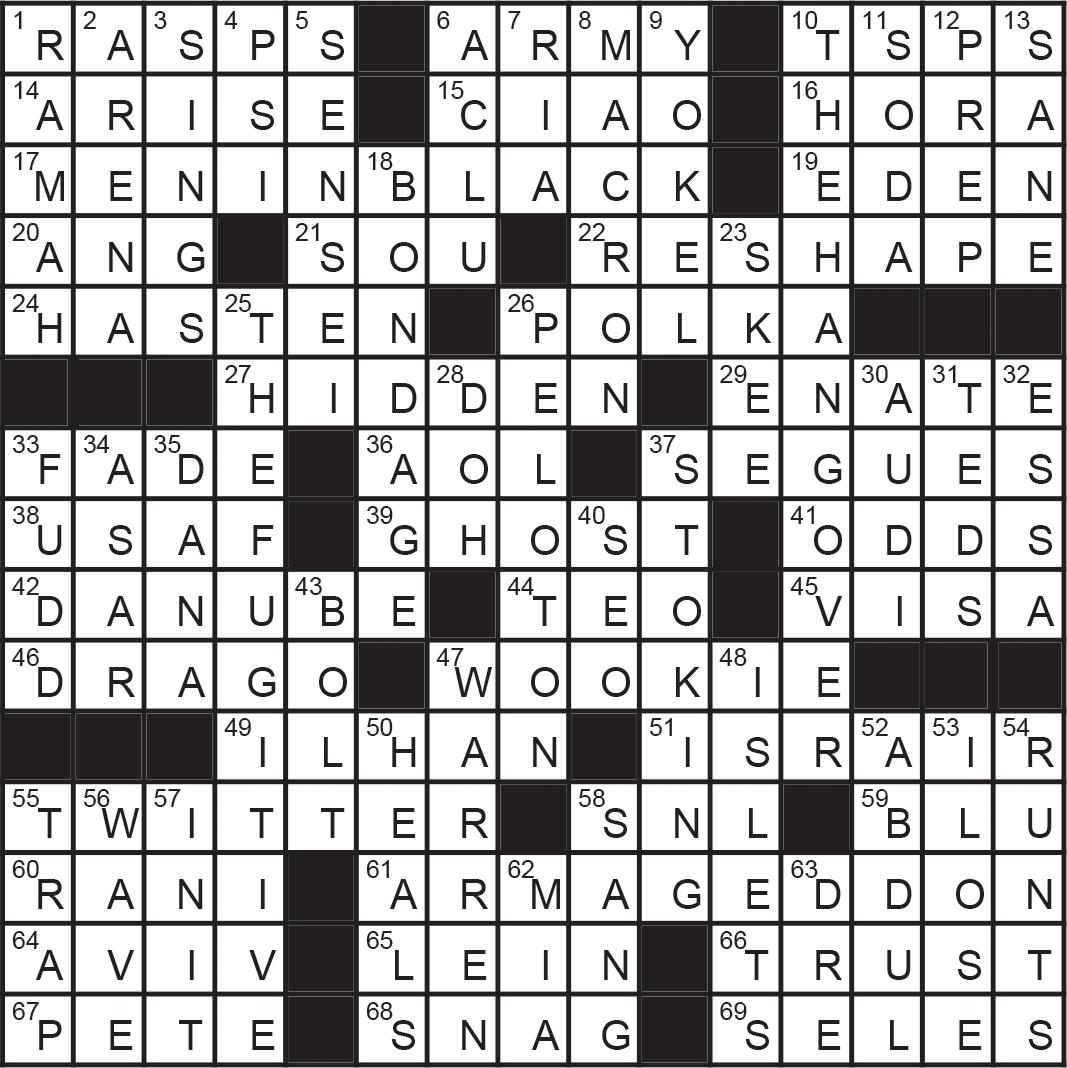
“Worker’s
Woes” By: Yoni Glatt Difficulty

Across
1. Item in a vampire movie
6. Small, unified group
11. Shtick
14. “Sesame Street” character who enjoys taking a bath
15. Companion of Gabriel and Raphael
16. It’s north of Afr.
17. The sofer was frustrated with the IRS because he couldn’t get a ___
19. Baton Rouge campus: Abbr.
20. Episode where Anakin Skywalker “dies”
21. 1,051, to Nero
22. Lost GI’s status
Down
1. Filming area
2. One can get you into shape
3. High or separation follower
4. Auckland native, informally
5. Ending for “puppet” or “profit”
6. Piece of chicken
7. “The votes ___!”
8. Italian G-d?
9. One blowing a whistle
10. Jenna in “Keeping the Faith”
11. Pig product that prevents a lot of candy from being kosher
12. Ger. neighbor
13. “Despicable Me” main character
18. “Now ___ expert, but...”
23. Connections, so to speak
24. One, to Jacques
25. The cantor no longer enjoyed the job and felt ____
30. “We should avoid doing that”
32. Capital of Michigan
33. “C’mon, take a bite”
34. Nof or HaBayit
35. Super-secret org.
36. The beit din felt the workload was ___
41. MD org.
44. UCLA’s ‘L’
45. Enveloping glows
49. Dustin Hoffman won an Oscar for it
52. Female
54. The mashgiach was losing it
24. Farthest or highest, briefly
25. “Golden rule” word
26. It can be molded
27. Storied spy Mata
28. Netanya residents?
29. Org. for movie helmers
31. Fill a chair
34. Long shots: Abbr.
37. Josh (Gad’s) notable role
38. Kukoc who briefly played for the Bucks
39. Archibald who briefly played for the Bucks
40. Hasidic dynasty
41. Path of a fly ball
42. Fannie or Sallie
43. Flight site
46. Lessened
one day and felt ___
56. Date for a baby
57. Acidity measures, informally
58. Glass of “This American Life”
59. Work tables
60. Company with Max streaming
62. Due to the recession the shochet ___
67. Kind of iPad
68. Violinist Zimbalist or his actor son (with a name similar to Joseph’s youngest son)
69. Like the November sky, to the bard
70. Palindromic tyke
71. Water falls?
72. “In a strange twist...”
47. “Just like always...”
48. Netanya to Modi’in dir.
50. Synonym for 24-Down
51. Fellow
52. JJ of “Star Trek” and “Star Wars”
53. Honor an honoree, say
55. “American Idol” alum Clay
59. Longest-serving senator in U.S. history
60. Kind of trick
61. Brief life story?
63. “Death ___ Salesman”
64. “... ___ quit!” (ultimatum)
65. Whole big thing
66. Give it a go
Israeli Border Police, at their mourning tent in eastern Jerusalem. Aryeh Stern, the city’s Ashkenazi chief rabbi, also met local Muslim leaders at the tent on Tuesday evening, June 2. Halak, of eastern Jerusalem, was shot in the Old City of Jerusalem by officers who said they thought the cellphone in his hand was a gun. Israel has apologized for the killing.
Stern, who was joined by Jerusalem Municipality officials, said he was coming with “a message of peace and reconciliation.” Halak’s father thanked him for the condolence visit.
Public Security Minister Amir Ohana said he would investigate Halak’s death. He also said that police officers “are required to make fateful decisions in seconds in an area that has been inundated with terror attacks, and in which there is a constant danger to their lives.” Ohana reportedly canceled a visit to the family for Tuesday after Halak’s father posted a video on social media in which he said he did not want visits from any government officials. On Wednesday, June 3 in the Knesset, Ohana called for police officers to be trained to recognize a person with a disability.
Rep. Steve King, rejected by Republican Jewish group, loses Iowa primary (JTA) – Rep. Steve King of Iowa, whose record includes inflammatory comments condoning white supremacists and antisemites, lost a hotly contested Republican primary. King, a nine-term congressman, was defeated on Tuesday, June 2, in a five-way race. The winner was state Sen. Randy Feenstra, who was backed by the Republican Jewish Coalition. It is rare for the organization to endorse a primary challenger to a sitting Republican lawmaker.
King, 71, was removed from two House committees in 2019 after he told a New York Times reporter that he wondered why the term “white supremacist” had become offensive. The previous year he met in Austria with members of the farright Freedom Party, founded by a former SS officer, after participating on a trip to Poland sponsored by a Holocaust education group. Jewish leaders in Iowa condemned King for expressing anti-immigrant rhetoric similar to that of the shooter who killed 11 Jews at Pittsburgh’s Tree of Life synagogue shooting in October 2018.
In New Mexico, Valerie Plame, the CIA operative who became famous due to retaliatory leaks by the Bush administration after her diplomat husband disputed U.S. intelligence used to justify the 2003 invasion of Iraq, was defeated in her
bid for the Democratic nomination for a congressional seat. It was the first foray into politics for Plame, who has Jewish roots. Plame announced in late 2019 that she had joined a synagogue in Santa Fe after learning that her great-grandfather was a rabbi who fled Ukraine at the turn of the 19th century.
(JTA) – Israeli Prime Minister Benjamin Netanyahu urged settler leaders to get behind his push to annex parts of the West Bank on Tuesday, June 2, in the wake of their public arguments that the plan would effectively halt settlement expansion. Netanyahu is trying to take advantage of the time he has before a possible change in the U.S. administration to follow through on a pledge he promised for over a year of political campaigning: applying Israeli sovereignty over large swaths of West Bank that most of the international community sees as illegally occupied.
Joe Biden, the presumptive Democratic candidate for president who supports a two-state solution, would likely not support any annexation. But even President Donald Trump’s Middle East peace team has seemed divided over the possibility of imminent annexation. U.S. Ambassador to Israel David Friedman enthusiastically endorsed the idea in January, but Jared Kushner, a key architect of the administration’s recently released peace plan, soon after said that an exact map of territories has yet to be agreed upon.
Now some Israeli settler leaders, whom Netanyahu has courted and counted on for support for years, have joined in the argument against immediate annexation, as detailed in reports in The New York Times and The Times of Israel. They claim that annexing the territory now would turn the settlements into “disconnected enclaves that would be barred from expanding” and further isolate them from the rest of the Israeli state. “Either the settlements have a future or the Palestinian state does – but not both,” right-wing lawmaker Bezalel Smotrich told The New York Times.
Netanyahu told settler leaders in a June 2 meeting that they have a “historic opportunity” when it comes to annexation.
(JTA) – Dozens of American Jewish groups have pledged to work to end systemic racism in the aftermath of the George Floyd killing in Minneapolis. In a statement Tuesday, June 2, 130 organizations said they were “outraged” by the killing of Floyd, a black man who died in police custody two weeks ago. His death and those of other African-Americans at the hands of law
enforcement have led to protests around the world. “We stand in solidarity with the black community that has for far too long been targeted by police and have suffered rampant racism and unfair and uneven applications of the law,” the statement reads.
The Jewish Council for Public Affairs, the umbrella body that sets consensus on issues for American Jewish public policy, organized the letter. The letter urges government and law enforcement to investigate the officers involved and “to institute sweeping reforms in law enforcement and the criminal justice system.”
“We pledge to join forces with the black community and other Americans to see through these changes to law enforcement, end systemic racism, and work for a more just American society,” it says. Jewish groups across the denominational spectrum have condemned Floyd’s death.
rumor claims LA Chabad is fueling antifa (JTA) – A Chabad of Sherman Oaks installed vertical barriers filled with rocks last year in a move aimed at increasing security. The barriers, called bollards, are meant to stop people from ramming vehicles into people and buildings. But when unrest moved through Los Angeles this week, so did rumors that the rocks were actually planted to provide supplies for looters.. The synagogue put out a plea for calm on its Facebook page Tuesday: “To all our concerned neighbors and friends, there were false pictures and videos going around today, claiming some bricks or rocks were placed at our center. Here is the truth: THESE ARE SECURITY BARRIERS and have been here for almost a year!” Still, it announced it would remove the bollards to alleviate concerns. On Wednesday, the synagogue had plywood in its windows and no security barriers in place.
“It’s quiet, it’s pleasant, it’s peaceful, the police are here,” Rabbi Menachem M. Lipskier told JTA. He did not want to comment further. Many people who commented on the post thanked the Chabad center for correcting the record. But others said they didn’t believe the explanation. “No try again this is a set up and planned all across at all of the big cities,” one person wrote. And as with any rumor that takes hold online, the rebuttal didn’t stop its spread. It reached the White House, which shared a video featuring the bollards in a post claiming that “antifa and professional anarchists” are instigating violence in the nationwide protests. President Trump has said he believes left-wing agitators are behind the violence; federal prosecutors announced charges Wednesday against three men with ties to right-wing groups for planning to instigate violence.
The White House deleted the video from its Facebook and Twitter pages Wednesday
afternoon, several hours after Arieh Kovler, a Buzzfeed News reporter who has written about misinformation about building supplies being plants by looters, called attention to it. Kovler’s screenshot of the White House tweet indicates that 6,200 people had “liked” it an hour after it went up. Chabad of Sherman Oaks’ clarifying post, in contrast, elicited just 143 reactions, not all likes, in more than two days.
Numerous tweets claim George Soros is funding George Floyd protests (JTA) – Right-wing conspiracy theorists are increasingly claiming that George Soros is funding recent protests and riots across the United States in the aftermath of the George Floyd killing. According to the AntiDefamation League, “aggressive language towards Soros has exploded on social media” this week. Negative tweets about the billionaire Jewish philanthropist rose from 20,000 per day on May 26 to 500,000 per day on May 30. The posts, according to the ADL, mostly allege (without evidence) that Soros is funding riots across the country, and that he is backing Antifa, a loose network of anti-fascist activists whom President Donald Trump has blamed for the violence, also without citing evidence.
The ADL says that the Soros theories “can serve as a gateway to the antisemitic sub-culture that blames Jews for the riots.”
People posting about Soros include prominent Trump supporters like Twitter pundit Candace Owens and actor James Woods.
Soros, a Hungarian-born financier who funds a variety of liberal causes in the US and globally, is a favorite bogeyman of the right and conspiracy theorists in particular. Recent Soros conspiracies have alleged that he is driving the spread of COVID-19 in order to profit from a future vaccine and that he pays left-wing protesters. Trump tweeted in 2018 that Soros paid protesters opposed to Brett Kavanaugh’s Supreme Court confirmation.



JERUSALEM – During the pandemic, Yad Vashem is offering free online programs about the Holocaust, including exhibitions, articles and video presentations. This new series of online lectures is offered in several languages, for audiences worldwide. The public will have the opportunity to hear from renowned Yad Vashem experts, historians and researchers on various compelling and timely topics.
THURSDAY, JUNE 11, 1 p.m.
“Do No Harm – Medical Ethics and the Holocaust”
What kinds of dilemmas did Jewish medical professionals face during the Holocaust? Should Nazi medical research be used in order to help save lives today? A 90-minute online panel discussion featuring Prof. Dan Michman, head of Yad Vashem’s International Institute for Holocaust Research, and Dr. Benjamin Gesundheit, physician and expert in medical ethics. Moderated by Yad Vashem Senior Historian Dr. David Silberklang.
THURSDAY, JUNE 18, 3 p.m.
“Postcards to a Little Boy: Reflections of a Kindertransport Child for Father’s Day.” Henry Foner (Heinz Lichtwitz) was only six years old when he escaped from Nazi Germany without his family, as one of 10,000 Jewish children who rescued on the Kindertransport, which sent the children to live in safety with families in England. From the moment they parted, Max Lichtwitz, Henry’s father, sent him colorful postcards – initially in German, and later in English when Henry no longer remembered his native tongue. The postcards were illustrated with humorous drawings and charming pictures and each contained short loving message from his devoted father. Dr. Ella Florsheim, editor of Yad Vashem Publications, speaks with Henry Foner about his personal story .
SUNDAY, JUNE 28, 7:30 a.m.
“Opening the Vatican Archives: Seeking the Truth More Than 75 Years Later.”
Presented by Dr. Iael Nidam Orvieto, director of Yad Vashem’s Research Institute.
For more information: simmy.allen@ yadvashem.org.il / www.yadvashem.org.
On Thursday, June 19 at 12 noon, Deborah Feldman, author of Unorthodox: The Scandalous Rejection of My Hasidic Roots, will discuss her experience growing up – and then abandoning – her Hasidic community of Satmar in Williamsburg in

2012. The talk is hosted by United Jewish Federation of Greater Stamford. Feldman was 25 years old when she published her New York Times bestselling memoir, which was subsequently adapted as a limited series for Netflix, airing on the platform worldwide in March 2020. Today, Feldman lives in Berlin, German with her 14-year-old son. Her book has been translated into 18 languages. She is currently at work on her first German-language novel.
For more information on Deborah Feldman’s talk, contact Diane Sloyer at dianesloyer@ujf.org.
On Thursday, June 18, Dr. Stuart Miller, UConn professor of Hebrew, history, and Judaic Studies and academic director of UConn’s Center for Judaic Studies and Contemporary Jewish Life, will discuss “Separating out the Facts: The Origins of Christianity and the History of Judaism.” The community is invited to join this Zoom lecture using the call-in number below. For information, contact Rabbi Howard Rosenbaum at hrosenbaum@cbict.org or (860) 920-5686.
Meeting ID: 934 142 286 Password: lectures
Password: lectures
One tap mobile +19292056099,,934142286# US (New York)
Dial by your location
+1 929 205 6099 US (New York)
Meeting ID: 934 142 286.
STORRS – Researchers at the University of Connecticut and Brown University announce the launch of the Pandemic Journaling Project, which lets anyone with a smartphone create a weekly journal of their experiences during the COVID-19 pandemic, while also contributing to the construction of a historical archive.
Each week, participants take a brief survey, then share their experiences through text, voice or images. They can volunteer to share their entries immediately on the project’s public-facing website, or choose to limit access to themselves and the research team for the next 25 years. Twenty-five years after the pandemic ends, all project data will be released as a publicly available historical archive.
Participation is anonymous and open to anyone 18 or older. After an initial demographic questionnaire, participants will be asked two questions to prompt their journal entries. For the duration of the
pandemic, participants will receive a weekly email or text message with a link to a new set of questions. Participation, which does not require a computer, takes as little as 15 minutes a week.
Weekly survey questions and journaling prompts will invite participants to consider the impact of the pandemic on different aspects of everyday life, such as work and finances, living circumstances, mental health, and encounters with discrimination and racism, as well as experiences of social connection, community, and the arts.
Survey responses and journal entries will be collected in a digital data repository where researchers can begin studying them right away. For the first 25 years, access to the data will be limited to the primary research team and designated collaborators. After 25 years, the archive will become a public record.
The project’s lead investigators are Sarah S. Willen, UConn associate professor of anthropology and Katherine A. Mason, assistant professor of anthropology at Brown University.
The Pandemic Journaling Project is a joint initiative of the University of Connecticut and Brown University. It was launched with generous seed funding from multiple UConn units, including Global Affairs, the Human Rights Institute, the Institute for Collaboration on Health, Intervention, and Policy (InCHIP), as well as the Center for Urban and Global Studies at Trinity College and the Population Studies and Training Center at Brown University. For more information, visit ;andemic-journaling-project.chip.uconn. edu.
The ISGAP-Oxford Summer Institute, originally scheduled to take place August 9-12 at Pembroke College, Oxford, has been reschedules and will now take place online Au-gust 9-13. Due to COVID-19, and the international lockdown, which includes
Oxford University, it will now take place online!
The Institute is now seeking scholarsin-residence for this intensive one week work-shop-based curriculum development program in interdisciplinary critical contemporary antisemitism studies. The program, which is dedicated to the development of antisemitism studies as a recognized academic discipline, is intended primarily for professors with full-time college or university positions, though exceptional faculty, doctoral and post-doctoral students will be considered. Under the guidance of leading international academics, scholars-in-residence will be required to develop a course syllabus and curriculum in the interdisciplinary study of critical contemporary antisemitism. The syllabus and curriculum will be taught at the scholar-in-residence’s home university for course credit, on at least two occasions, upon completion of the program.
ISGAP also has limited space for university students with strong grades, proven leadership skills and commitment. Successful applicants will qualify as Elie Wiesel-Martin Luther King Jr. Scholars, who will work on a student led projects to help combat antisemitism and racism on campus.
Applicants will be liable for tuition fees. Full and partial fellowships will be rewarded. Limited enrollment available For more information, visit isgap.org.
The Jewish Historical Society of Greater Hartford will host its Annual meeting online, Monday, June 29 at 7 p.m. Following a short business meeting, UConn Professor Avinoam Patt, Ph.D. editor of Laughter After: Humor and the Holocaust, will will compare representations of the Holocaust in Israeli and American sketch comedy.
To receive the link to the Zoom meeting, visit jhsgh.org.

BY SHLOMO RISKIN
“The Lord said to Moses, ‘Speak to Aaron and say to him, ‘When you set up the lamps, see that all seven light up the area in front of the lampstand.’” (Num. 8:1-2)
This week’s Biblical portion of Baha’alotchah contains an important insight into the necessary qualities and major functions of our rabbis. Our Torah reading of last week, Naso, concluded with the various offerings of the princes of the tribes at the dedication of the desert Sanctuary, forerunner of the Holy Temple in Jerusalem.
This week’s reading begins with the kindling of the menorah, the seven candlestick branches made of pure gold, each culminating in a golden flower with three branches emanating from either side of the central tree-like branch, and seven flames spreading warmth and enlightenment within the most sacred area and beyond. The operative verse which describes this magnificent accoutrement is “the candle is commandment, and Torah is light” (Prov. 6:23).
Rashi, the classical Biblical commentary, is apparently disturbed by the placement of the Menorah in our portion; it seems to have belonged in the Book of Exodus which describes the inner furnishings of the Sanctuary, including the Menorah (Ex 25:31-40). Rashi therefore opens his interpretation of our portion with the words of the Midrash (Tanhuma 5):
Why this juxtaposition of the description of the lighting of the Menorah with the offerings of the Princes of the tribes? It is because when Aaron saw the dedication of the Sanctuary, he became upset that he had not been included in the dedication offerings and ceremonies; neither he nor his tribe of Kohanim. The Holy One Blessed be He said to him, “By your life, your contribution is greater than theirs; you will kindle and clean the candlesticks.”
What was so special about kindling the Menorah? It happened early in the morning, without audience or fanfare, and seemed like an almost janitorial duty of turning on the lights?
I would suggest that there were two central furnishings in the Holy of Holies, the inner sanctum of our Sanctuary: the sacred ark, which housed the Tablets of Stone, and the Menorah. The former, with the Torah in splendid seclusion behind the curtains, was meant for Israel

alone, to form a “holy nation”; the latter, with its warmth and light spreading round-about was the Torah meant for the world, the Torah which would go forth from Zion, the word of the Lord which would emanate from Jerusalem to the nations.
The Midrash (Mekhilta de Rabbi Yishmael, Parshat Yitro, Parsha Aleph) teaches that the Revelation at Sinai was given in a desert, a parousia, rather than on the Temple Mount in order to teach us that the Torah was not meant for the Jews alone, but rather for all of humanity. Just prior to the Revelation, Israel is charged by God to be a “Kingdom of Kohanim,” teachers to all of humanity (Seforno, ad loc Ex 19:6), purveyors of a God of love, compassion, morality and peace. This universal charge is given to the Jews to become a sacred nation (otherwise they would hardly be an example to emulate), a nation of Kohanim to convey our teaching to the world (Isaiah 2, Micah 4, Zechariah 7,8,9). This is the true significance of the Kohen’s kindling of the Menorah and spreading the message of Torah beyond the Sanctuary to the world.
It is our duty to demonstrate to the world that we have righteous decrees and ordinances (Deut. 4:8); and it is our laws, our unique life-style, which now that we have our Jewish State, we must share with the world. (Deut. 26:1819). It is the Kohen Gadol in the days of the Messiah or the Rabbis and Jewish educators today, who must convey these righteous laws which will inspire the rest of the nations to accept our God of compassion and peace. They must be our ambassadors to the world, those who must bring the light and the warmth of Torah bring thereby blessing to all the families on earth (Gen 12:1-3). They must kindle the Menorah
It is not by accident that the Menorah is shaped like a tree, which grows and produces fruit, it is the “personification” of halakhah, a progressing and moving teacher of morality and sensitivity. How we treat the stranger and would-be convert, how we deal with the hapless woman chained to a recalcitrant husband who won’t let her go, is the test of the justice of our laws and the fitness of our Rabbis to be our decisors; our Torah must be righteous and compassionate. (See Maimonides, Mishneh Torah, the last chapter of the Laws of Servants).
Rabbi Shlomo Riskin is chancellor of Ohr Torah Stone and chief rabbi of Efrat, Israel.
BY VERA SCHWARCZ
How do we manage to turn good into bad? How do we manage to miss so often moments of blessing due to some seeming lack in our lives, some backward gaze that clouds the vision before us? This week’s Parsha speaks about this predicament starkly: The Jewish people stood as one at Mount Sinai. They are about to journey directly to the Land of Israel, everyone has special tasks and there is, literally, food from heaven – manna. And yet.
A gnawing discontent sweeps through the community again and again. The people start to act as if mourning for themselves – ke’mitonenim.. “and it was bad in the ears of God.” The divine has no ears other than those of our own innermost souls. The “bad” was in our ears: We spoke only of poverty when there was an abundance of fullness. We bent our hears to the voices of the rabble egging us on with discontent: “We remember the fish we use to eat in Egypt for free!” For free? In reality, we were enslaved, beaten, drained to the core, dispirited.
But oh, how those fish shine in the mind’s eye along with cucumbers, melons, garlic. These details leach out all the glory from the present. They reduce us to bodily wants, more imagined than real. Moshe’s reaction is that of a pained parent. He, too, is worn out by ceaseless complaints, by fake memories. God hears his weariness and rains down meat upon the people, more than they can chew, sickeningly much. Through illness, some awake. Some begin to see afresh the bounty they had all along. Perhaps this is our challenge, too, in the wake of the coronavirus and the violence tearing America apart. The pain of rage, of racism, of looting, of being truly sick. is real. But our ongoing blessings are more real still. It is a matter of seeing straight, of not “speaking evil in the ears of God.”
As regulations lighten here, the botanical gardens are open and giant lotus are beginning to blossom upon huge platters of green–a vision of fullness and beauty to outweigh imaginary fish for free. In the hills of Hebron wild wheat frames the view in gold, while another siglon

the fullness before us and not the missing fish!
Alas, we humans are wired for want. But we also have deep wellsprings of gratitude within us. As corona recedes, we can start to uncover their nourishing bounty.
Vera Schwarcz is professor emerita of East Asian Studies at Wesleyan University. A longtime resident of West Hartford, she made aliya in 2018. She is currently senior research fellow at the Truman Institute at Hebrew University in Jerusalem.
Readers are invited to submit original work on a topic of their choosing to Kolot. Submissions should be sent to judiej@ jewishledger.com.
Elfriede Bernstein, 106, of West Hartford, formerly of New London, died May 25. She was the widow of Sol Bernstein. Elfriede was born in Frankfurt, Germany and was one of the fortunate German Jews to leave in late 1937. She is survived by her sons, Michael Bernstein and his wife Nicole, and Victor Bernstein and his wife Lieba; her grandsons, Steven Bernstein and his wife Ilana, Robert Bernstein and his wife Esther; and her great-grandchildren, Yeshaiah, Moshe, Ezra, Isabella and Joseph.
Richard Stephen Bromberg of Avon died May 30. He is survived by his wife Inez Bromberg. He was the son of the late Minna and Benjamin Bromberg. He was a member of Beth David Synagogue. In addition to his wife, he is survived by his children, Steven Bromberg of Granby, Colo. and his wife Rhonda, John Mascolo of Sturbridge, Mass. and his partner Susan, Ilene Friener of Phoenix, Az. and her husband Barry, Jill Mascolo of Trumbull and her wife Deborah; his sisters Myra Fishman of Westbrook and Janet Cramer of Tucson, Az. and her husband Eric; his brother-inlaw George Butmon and his wife Angela of East Hartland; 6 granddaughters; 9 great-grandchildren; three nephews and a niece Sasha. He was also predeceased by his brother Harold, and his brother-in-law Harvey Fishman.

Walter Benedict (Baruch ben Otto) Cahn, 87, of Hamden died May 29. He was the widower of Annabelle Simon and Brenda Lee Danet. Born in Karlsruhe, Germany, he was the son of Otto and Frieda (b. Kahn) Cahn, who were killed during the Holocaust. His family home was seized during Kristallnact. In the wake of The Ledger

Germany’s invasion of France in October 1940, the Cahns were expelled, together with a number of thousands of other Rhineland Jews, into what subsequently became Vichy France. They were placed in an internment camp at Gurs, near Oloron in southwest France, and subsequently transferred to another camp at Rivesaltes (Pyrenées-Orientales) near Perpignan. In 1941, Walter and his brother Norbert Simon Cahn (who predeceased him in 2017) were placed in the children’s home of the Éclaireurs Israëlites de France in Moissac. During the period 1943-1945, Walter and his brother lived in hiding places provided by the French resistance. In 1947, the two brothers reunited with relatives in America, and Walter settled in Brooklyn, N.Y. From 1956-1958, he served in the United States Army Medical Corps, stationed at Walter Reed Hospital in Washington, DC. He is survived by his partner Rosalyn Muskovits (nee Bloomfield); his son Claude Cahn and his wife Cosmna Novacovici; his grandchildren, Sarah Kali Cahn and Johannah Shai Cahn.
Naomi Aviva Kutner, 57, of Hiram, Ga., formerly of West Hartford, died May 31. Born in Wilmington, De., she was the daughter of the late Selma and Saul Kutner. She was also predeceased by her sister Ellen Kutner; and her best friend Katie Broadhurst. She is survived by her sister Charna Hicks and her brother-in-law Greg of Woodstock, Ga; her niece Elizabeth Hicks of Hoschton, Ga.; and her nephew James Hicks of Washington, D.C.

860.231.2424.
(JNS) Gravestones inscribed with swastikas and messages referencing Hitler will be removed from military cemeteries, announced U.S. Veterans Affairs Secretary Robert Wilkie on Monday.
“It is understandably upsetting to our veterans and their families to see Nazi inscriptions near those who gave their lives for this nation,” said Wilkie in a statement. “That’s why VA will initiate the process required to replace these POW headstones.”
The inscriptions were found in VA cemeteries in Texas and Utah on graves of German prisoners of war.
Initially, the VA refused to remove the inscriptions, but agreed to do so following backlash from U.S. lawmakers and others.
U.S. House Military Construction and Veterans Affairs Appropriations Subcommittee chairwoman Rep. Debbie Wasserman Schultz (D-Fla.) was one of the lawmakers calling for the removals and applauded the VA’s decision to reverse course.
“The families of soldiers who fought against intolerance and hatred must never be forced to confront glorification of those very ideologies when visiting their loved ones,” she said in a statement. “VA’s initial decision to leave the gravestones in place was callous and irresponsible, but
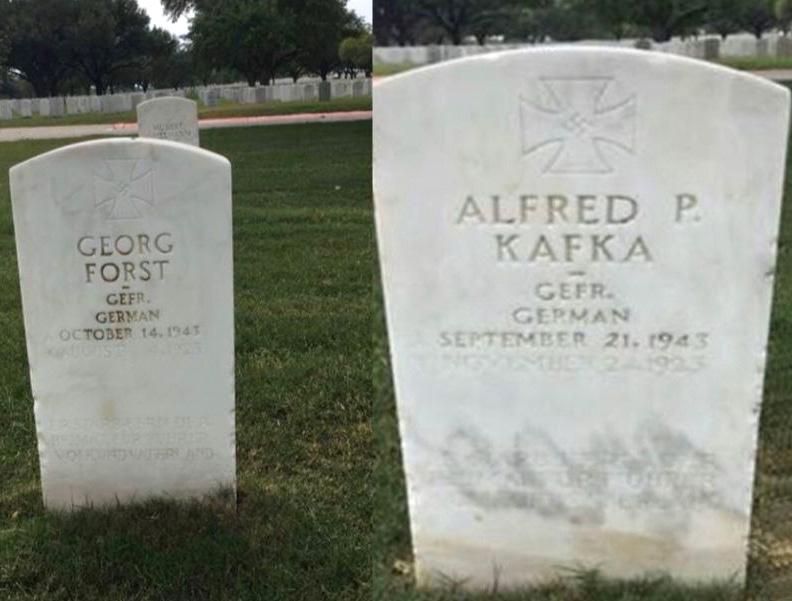
[Monday’s] decision is an honorable move in the right direction.”
Wasserman Schultz noted that she “will eagerly monitor how [the] VA moves forward with this process, including how they choose to provide historical context to enemy prisoners of war buried in U.S. veterans cemeteries. We must make sure we don’t erect totems to intolerance, allowing their history to be studied without causing pain for those most affected by it.”


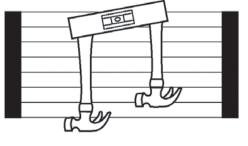



















The
Tricia’s Cleaning Service
- Residential & CommercialDetailed cleaning for Home & Office - For Free Quote call 860477-8636.
Polish certified nursing assistant. Twenty years experience in hospitals, nursing homes and private home settings looking to help your loved ones. Please call 860-803-6007.
Certified Home Care Aide - Live-in - HHA CertficateExperience with dementia, stroke, alzheimer’s - Driver’s License - References - Lydia 718864-7600.
Mikael Poreshi - Remodeling & Painting - 860-978-2505 - miki. pori87@gmail.com.
Home Health Aide - Companion available for live in/live out Mon. - Fri. Valid driver’s license. Over 15 years experience. Excellent References. Call 860-796-8468.
CNA - 8 Years ExperienceReliable - Own Car - Live-in 24/7 - Negotiable Rates - Please call Tina 860-461-8692.
Compassionate Elder Companion - Driver & CookBeth: alifeofplantsandart@gmail. com.
P.C.A. - HHA Caregiver - 17 Years Experience - Available Live In or Live Out - Five Days a Week - Car Available - Have References - Please Call K.B. 860-796-8468.
Nurse (LPN, Male). 2 Years Experience in long term care. 4 Years Home Care as CNA and Nurse. Seeks Private duty. Reliable, honest, hardworking. 860-656-8280.
Caregiver for your elderly loved one available Thursday evenings to Sunday evenings. Kosher experience, stellar references. Monica - 347-486-0911.
New England Jewish Academy in Greater Hartford - Preschool aide to assist our two dynamic lead teachers - Wonderful children and supportive environment - Hours are 11:005:00 M-TH, 11:00-4:00 on Friday’s with the exception of winter when Friday hours are 11:00-2:20. We are also looking for an art teacher who can work one full day each week. Please email your resume to zsilver@

NURSE SEEKING POSITION:
GETTING BETTER TOGETHER!
Adult care only. Live-in, days or nights and weekends. Responsible and dedicated caregiver with medical education. Leave message: 860-229-2038 No Text Please.
Home Health Aide - Two Years
Experience - Reliable - Livein seven days. References available, negotiable rates. Call Kwasi 774-253-5479.
Driver available for shopping & errands in the greater Hartford area. Reasonable rates, senior discount and references available. Call Ira 860-849-0999.
Caregiver looking for full time live-in job - HHA/Precursor CNA - 12 Years experience - Friendly, outgoing, dependable - Please call Janet at 412-527-9285.
CNA with 25 years experience, reliable car, live-in or hourly. References available, and negotiable rates. Call Sandy 860-460-3051.
CHAUFFEUR, WEST HARTFORD will drive you to New York, Boston, New England tristate area. Reasonable rates. References. Call Jeff 860-7124115.
Magnificent Vacation CondoDelray Beach 55+ CommunityFurnished One Bedroom - Meals Available -Monthly - Seasonal Please call 215-740-1165.
For lease- Boca Raton, FL. Fully furnished 2 bedroom, 2 bath condo with kosher kitchen in beautiful Century Village. First floor, parking, pool & club house. Call Mike 561-654-4221.
WANTED TO BUY
Third Generation Jeweler - Gold & Diamond Buyer - Is Buying
All Gold Jewelry - Sterling Silver Flatware Sets - Diamonds Over 2 Carats - Fast PaymentContact - mitchellrosin@gmail. com.
Collector looking to purchase coins and currency, silver, copper, and gold. No collection is too small. Will travel. Call 860951-5191 paprfred@aol.com.
Accounting & Math TutorRetired College Accounting Teacher Will Tutor at Your Home - Call For Appointment 860-402-1201.
Motorized KD Smart Chairrarely used - excellent condition - Call or text 203-710-0615.
BLOOMFIELD
B’nai Tikvoh-Sholom/ Neshama Center for Lifelong Learning
Conservative
Rabbi Debra Cantor (860) 243-3576 office@BTSonline.org www.btsonline.org
BRIDGEPORT
Congregation B’nai Israel Reform
Rabbi Evan Schultz (203) 336-1858 info@cbibpt.org www.cbibpt.org
Congregation Rodeph Sholom
Conservative (203) 334-0159
Rabbi Richard Eisenberg, Rabbi-in-Residence Cantor Niema Hirsch info@rodephsholom.com www.rodephsholom.com
Jewish Senior Services
Traditional
Rabbi Stephen Shulman (203) 396-1001 sshulman@jseniors.org www.jseniors.org
CHESHIRE
Temple Beth David Reform
Rabbi Micah Ellenson (203) 272-0037 office@TBDCheshire.org www.TBDCheshire.org
CHESTER
Congregation Beth Shalom Rodfe Zedek
Reform
Rabbi Marci Bellows (860) 526-8920 rabbibellows@cbsrz.org www.cbsrz.org
COLCHESTER
Congregation Ahavath Achim
Conservative
Rabbi Kenneth Alter (860) 537-2809 secretary@congregationahavathachim.org
EAST HARTFORD
Temple Beth Tefilah Conservative Rabbi Yisroel Snyder (860) 569-0670 templebetht@yahoo.com
FAIRFIELD
Congregation Ahavath Achim Orthodox (203) 372-6529 office@ahavathachim.org www.ahavathachim.org
Congregation Beth El, Fairfield Conservative Rabbi Marcelo Kormis (203) 374-5544 office@bethelfairfield.org www.bethelfairfield.org
GLASTONBURY
Congregation Kol Haverim Reform
Rabbi Dr. Kari Tuling (860) 633-3966 office@kolhaverim.org www.kolhaverim.org
GREENWICH
Greenwich Reform
Synagogue
Reform
Rabbi Jordie Gerson (203) 629-0018 hadaselias@grs.org www.grs.org
Temple Sholom
Conservative
Rabbi Mitchell M. Hurvitz
Rabbi Chaya Bender
Cantor Sandy Bernstein (203) 869-7191 info@templesholom.com www.templesholom.com
HAMDEN
Temple Beth Sholom
Conservative
Rabbi Benjamin Edidin Scolnic (203) 288-7748 tbsoffice@tbshamden.com www.tbshamden.com
MADISON
Temple Beth Tikvah
Reform
Rabbi Stacy Offner (203) 245-7028 office@tbtshoreline.org www.tbtshoreline.org
MANCHESTER
Beth Sholom B’nai Israel
Conservative
Rabbi Randall Konigsburg (860) 643-9563 Rabbenu@myshul.org programming@myshul.org www.myshul.org
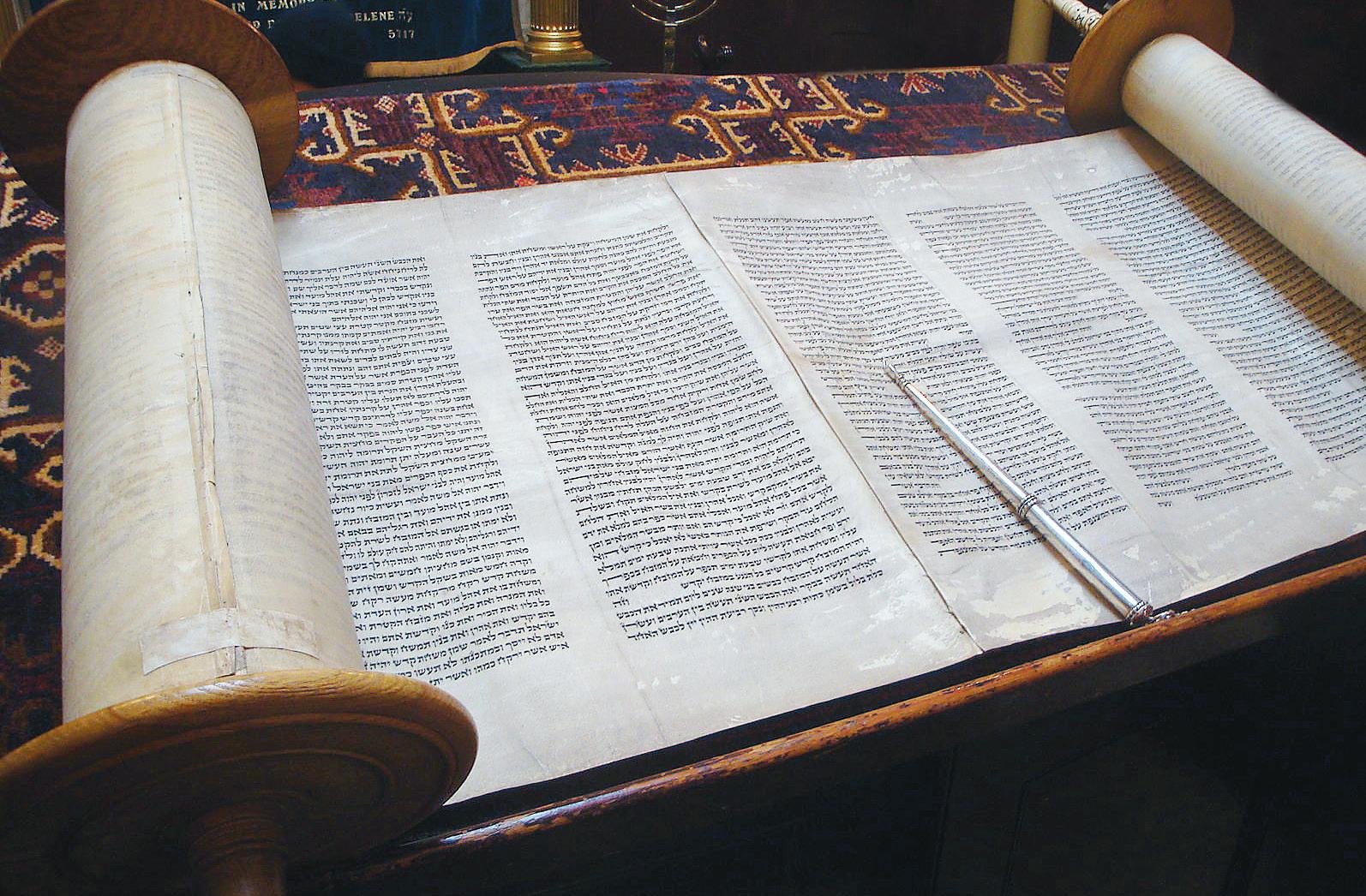
MIDDLETOWN
Adath Israel Conservative Spiritual Leaders: Rabbi Marshal Press Rabbi Michael Kohn (860) 346-4709 office@adathisraelct.org www.adathisraelct.org
NEW BRITAIN
Congregation Tephereth Israel Orthodox
Rabbi Andrew Hechtman (860) 229-1485
NEW HAVEN The Towers Conservative Ruth Greenblatt, Spiritual Leader (203) 772-1816 rebecca@towerone.org www.towerone.org
Congregation
Beth El-Keser Israel Conservative
Rabbi Jon-Jay Tilsen (203) 389-2108 office@BEKI.org www.BEKI.org
Orchard Street ShulCongregation Beth Israel Orthodox Rabbi Mendy Hecht 973-723-9070 www.orchardstreetshul.org
NEW LONDON
Ahavath Chesed Synagogue Orthodox Rabbi Avrohom Sternberg 860-442-3234 Ahavath.chesed@att.net
Congregation Beth El Conservative
Rabbi Rachel Safman (860) 442-0418 office@bethel-nl.org bethel-nl.org
NEWINGTON
Temple Sinai Reform
Rabbi Jeffrey Bennett (860) 561-1055 templesinaict@gmail.com www.sinaict.org
NEWTOWN
Congregation Adath Israel Conservative Rabbi Barukh Schectman (203) 426-5188 office@congadathisrael.org www.congadathisrael.org
NORWALK
Beth Israel Synagogue
– Chabad of Westport/ Norwalk
Orthodox-Chabad
Rabbi Yehoshua S. Hecht (203) 866-0534 info@bethisraelchabad.org bethisraelchabad.org
Congregation
Beth El-Norwalk Conservative
Rabbi Ita Paskind (203) 838-2710 Jody@congbethel.org www.congbethel.org
Temple Shalom Reform
Rabbi Mark Lipson (203) 866-0148 admin@templeshalomweb.org www.templeshalomweb.org
ORANGE
Congregation Or Shalom Conservative
Rabbi Alvin Wainhaus (203) 799-2341 info@orshalomct.org www.orshalomct.org
RIDGEFIELD
Congregation Shir Shalom of Westchester and Fairfield Counties
Reform
Rabbi David Reiner
Cantor Debora Katchko-Gray (203) 438-6589 office@ourshirshalom.org
SIMSBURY
Chabad of the Farmington Valley
Chabad
Rabbi Mendel Samuels (860) 658-4903 chabadsimsbury@gmail.com www.chabadotvalley.org
Farmington Valley Jewish Congregation, Emek Shalom Reform
Rabbi Rebekah Goldman Mag (860) 658-1075 admin@fvjc.org www.fvjc.org
SOUTH WINDSOR
Temple Beth Hillel of South Windsor Reform
Rabbi Jeffrey Glickman (860) 282-8466 tbhrabbi@gmail.com www.tbhsw.org
SOUTHINGTON
Gishrei Shalom Jewish Congregation
Reform
Rabbi Alana Wasserman (860) 276-9113 President@gsjc.org www.gsjc.org
TRUMBULL
Congregation B’nai Torah
Conservative
Rabbi Colin Brodie (203) 268-6940 office@bnaitorahct.org www.bnaitorahct.org
WALLINGFORD
Beth Israel Synagogue
Conservative
Rabbi Bruce Alpert (203) 269-5983 richardcaplan@sbcglobal.net www.bethisrael/wallingford. org
WASHINGTON
Greater Washington
Coalition
Rabbi James Greene (860) 868-2434 admin@jewishlifect.org www.jewishlife.org
WATERFORD
Temple Emanu - El Reform
Rabbi Marc Ekstrand
Rabbi Emeritus Aaron Rosenberg (860) 443-3005 office@tewaterfrord.org www.tewaterford.org
WEST HARTFORD
Beth David Synagogue
Orthodox Rabbi Yitzchok Adler (860) 236-1241 office@bethdavidwh.org www.bethdavidwh.org
Beth El Temple
Conservative
Rabbi James Rosen
Rabbi Ilana Garber (860) 233-9696 hsowalsky@bethelwh.org www.bethelwesthartford.org
Chabad House of Greater Hartford
Rabbi Joseph Gopin
Rabbi Shaya Gopin, Director of Education (860) 232-1116 info@chabadhartford.com www.chabadhartford.com
Congregation Beth Israel Reform
Rabbi Michael Pincus
Rabbi Andi Fliegel
Cantor Stephanie Kupfer (860) 233-8215 bethisrael@cbict.org www.cbict.org
Congregation P’nai Or Jewish Renewal Shabbat Services
Rabbi Andrea Cohen-Kiener (860) 561-5905 pnaiorct@gmail.com www.jewishrenewalct.org
Kehilat Chaverim of Greater Hartford Chavurah Adm. - Marcey Ginsburg Munoz (860) 951-6877 info@ kehilatchaverim.org www.kehilatchaverim.org
The Emanuel Synagogue Conservative
The Emanuel Synagogue Conservative
Rabbi David J. Small (860) 236-1275 communications@emanuelsynagogue.org www.emanuelsynagogue.org
United Synagogues of Greater Hartford Orthodox
Rabbi Eli Ostrozynski synagogue voice mail (860) 586-8067
Rabbi’s mobile (718) 6794446 ostro770@hotmail.com www.usgh.org
Young Israel of West Hartford Orthodox
Rabbi Tuvia Brander (860) 233-3084 info@youngisraelwh.org www.youngisraelwh.org
WOODBRIDGE
Congregation B’nai Jacob Conservative
Rabbi Rona Shapiro (203) 389-2111
info@bnaijacob.org www.bnaijacob.org
















































Sunday, September 13, 2020
Presenting the region’s only TASTE OF event. It’s a sampling from the best restaurants and caterers in West Hartford! at
EDENS Crossroads Plaza Rear, 772 North Main Street and Starkel Road, Bishops Corner, West Hartford. Noon - 3pm
Early Bird: $30 per person
General Admission: $40 per person
VIP TIcket (admisssion to VIP Area): $50 per person
A portion of the proceeds to benefit APKCharities (Veteran), Catholic Charities and Jewish Family Services.