



ELECTION 2020 5
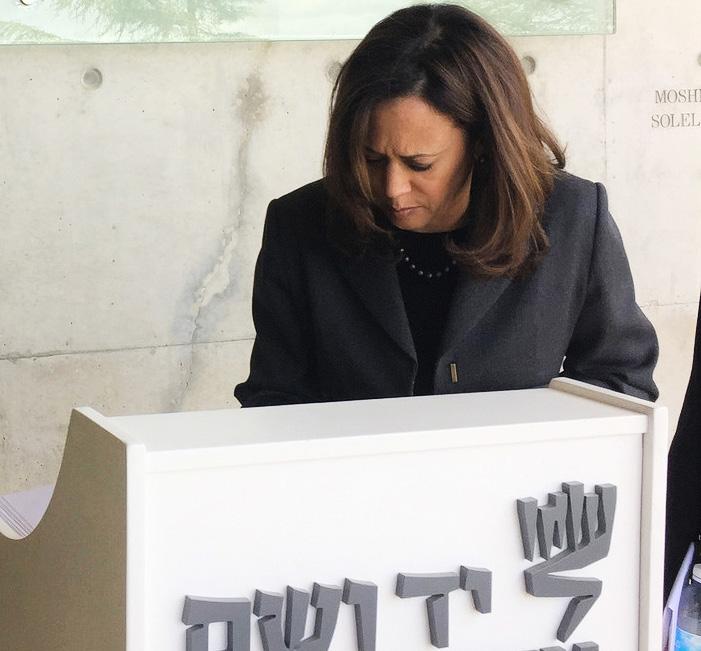
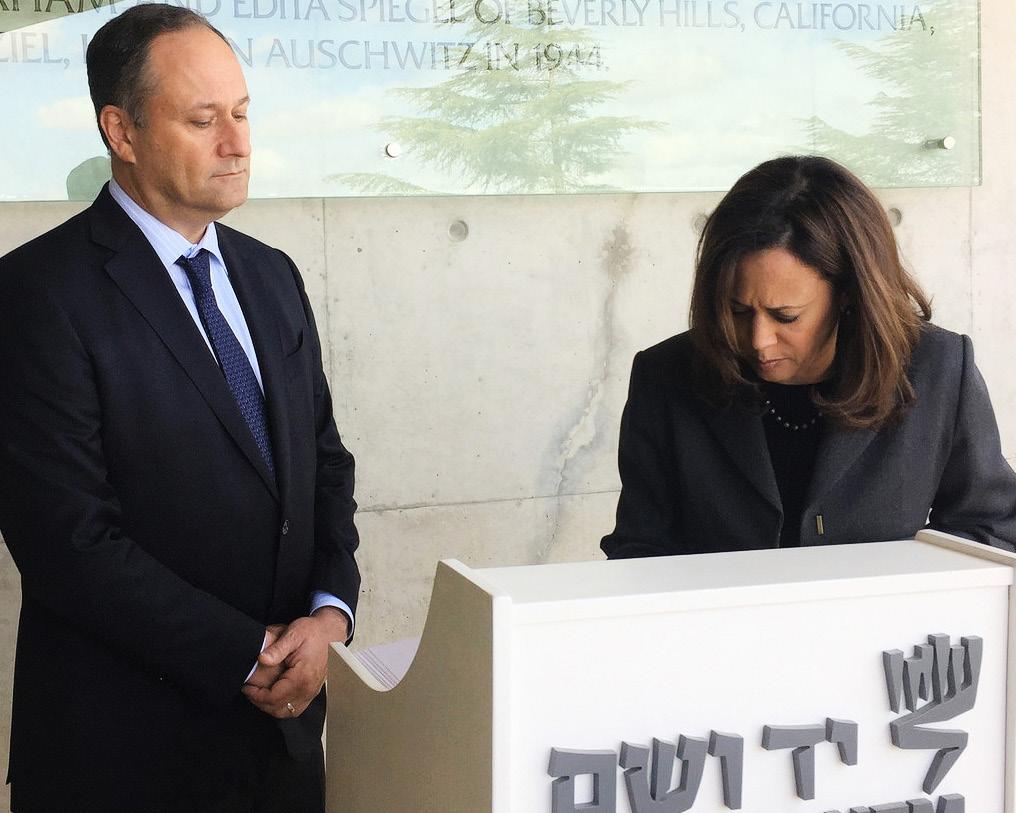
During several years in public office, U.S. Senator Kamala Harris – the Democratic candidate for vice president – has voiced outspoken opinions on a range of issues that give Jewish voters plenty to scrutinize.

Graduation Day ............................. 5
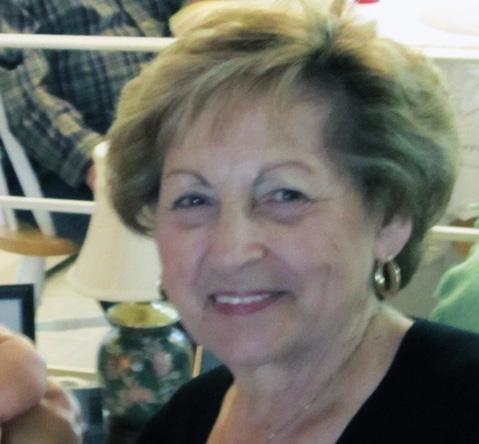
She survived the horrors of the Holocaust with an indomitable spirit and a fierce will to live. Now, 50 years later, a West Hartford woman is seeing one of her life-long dreams come true…thanks to a bunch of high school students.
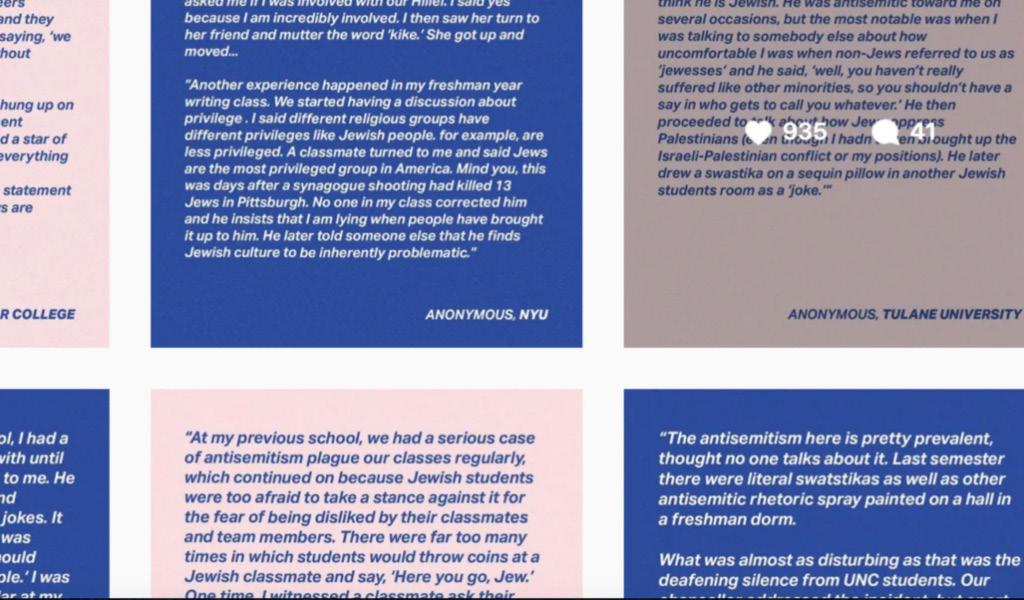
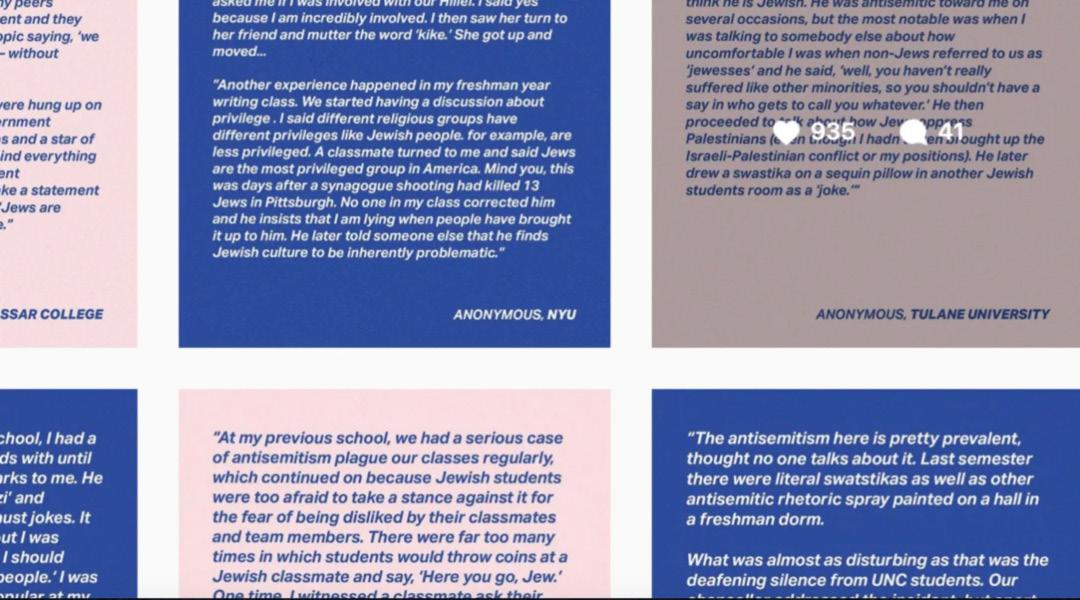
A new Instagram account, Jewish on Campus, collects the anonymous anecdotes of Jewish students across the country who have experienced antisemitism in college.
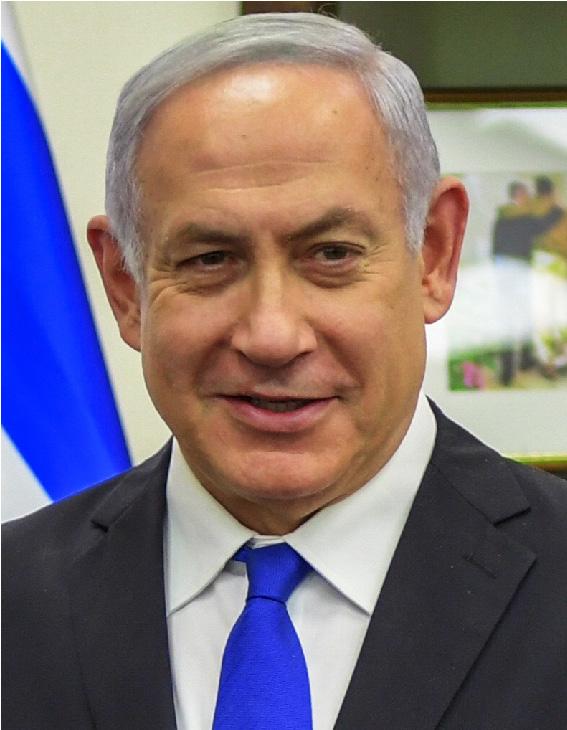
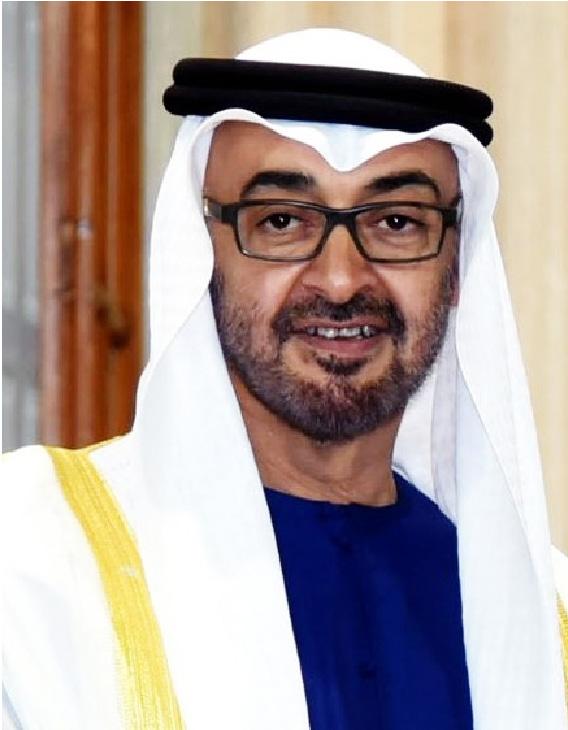
This week, the world was taken by surprise when President Donald Trump, Israeli Prime Minister Benjamin Netanyahu and Sheikh Mohammed bin Zayed Al Nahyan –the crown prince of Abu Dhabi – announced the signing of the “Abraham Accord,” a peace deal between Israel and the United Arab Emirates. What does this deal mean, and what does it portend for the future? PAGE 14
To determine the time for Havdalah, add one hour and 10 minutes (to be safe) to candle lighting time. Arts & Entertainment ................ 12
ChaiFlicks, a film and TV streaming platform focused on Jewish-themed movies, launched last week with over 150 titles. It’s available on every major streaming platform, as well as both iOS and Android mobile devices.
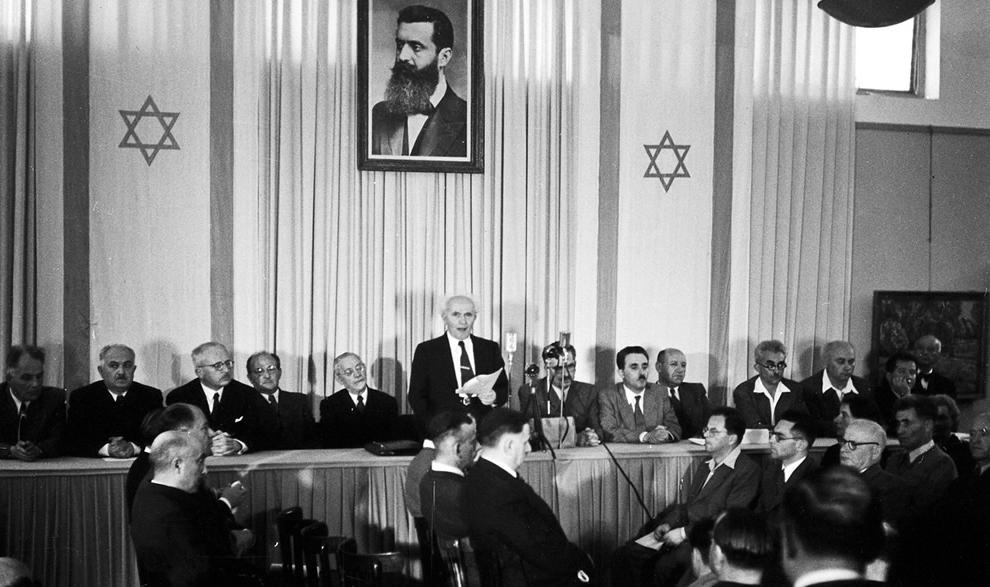
Substituting action for prayers gave Zionism its purpose. Work, rather than textual study, would be the vehicle for legitimizing possession, creating community and for transforming sites holy in scripture into a homeland. writes Donna Robinson Divine.
FRIDAY, AUGUST 21, 2020
Hartford: 7:34 p.m.
New Haven: 7:34 p.m.
Bridgeport: 7:35 p.m.
Stamford: 7:36 p.m.

1.99%
BY GABE FRIEDMAN
(JTA) – It’s official: Kamala Harris is Joe Biden’s choice for vice president.
The California senator, who made history Tuesday as the first Black woman to join a major party presidential ticket, is still in her first term. But during several years in public office, the 55-year-old lawmaker’s outspoken opinions on a range of issues and her presidential run have given Jewish voters plenty to scrutinize.
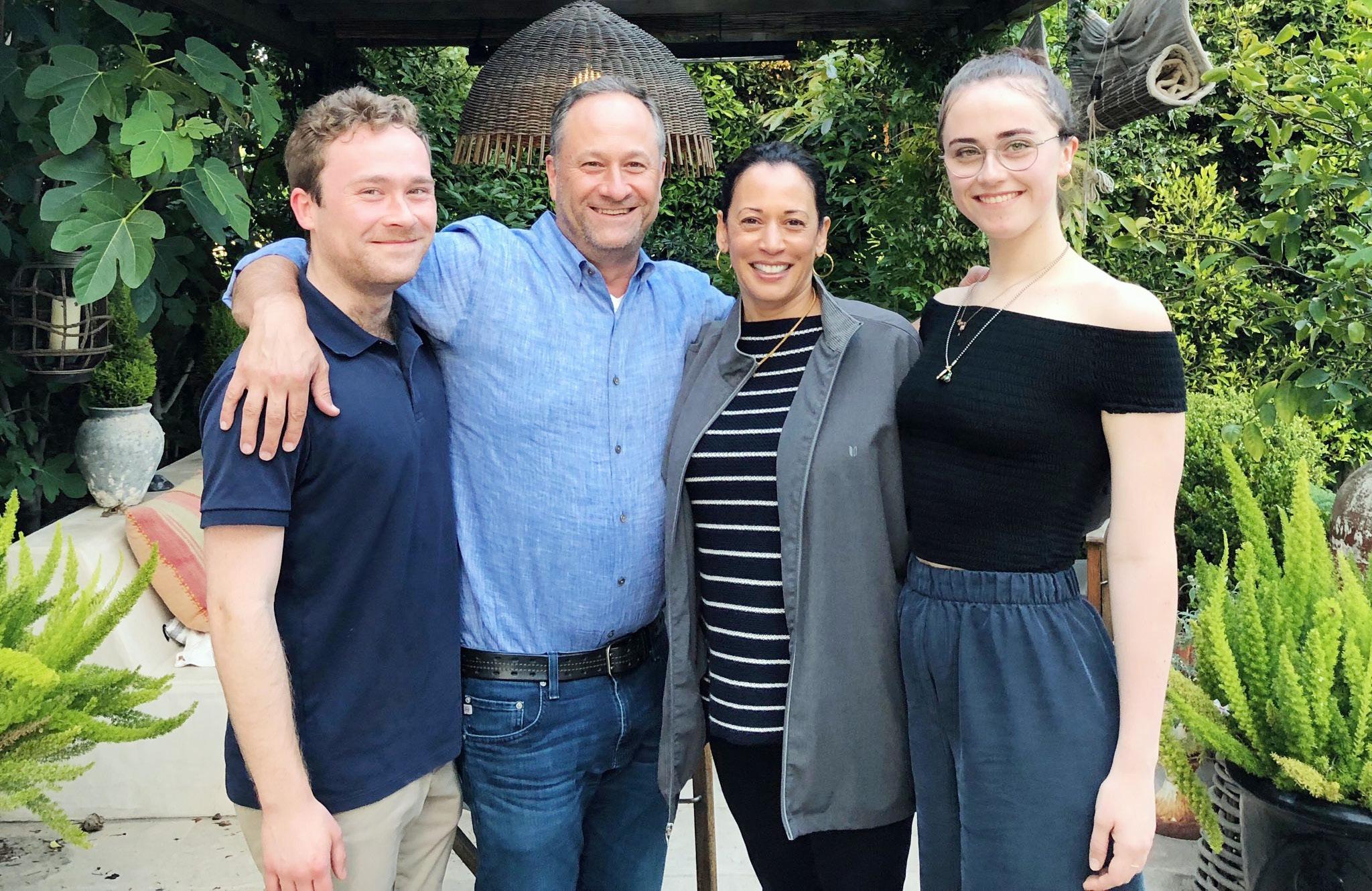
She is also married to Jewish lawyer Douglas Emhoff, who would become the country’s first Jewish second husband.
As a senator, Harris has been aligned with Biden on Israel: She is seen as a strong supporter with ties to AIPAC, the country’s largest pro-Israel lobby, and unlike some Democrats has not broached the idea of conditioning aid to Israel to influence its policies. During her presidential run, Harris separated herself somewhat from even the mainstream moderates in the pack, firmly opposing the idea of condemnatory U.N. votes or even strong public criticism aimed at swaying Israeli policy.
While the more liberal pro-Israel group J Street has endorsed the centrist Biden, who also has committed to keeping spats with Israel private and the idea of not allowing any “daylight” between the U.S. and Israel in diplomatic terms, it has not backed Harris. J Street, which lobbies for a two-state solution, has endorsed more than half of Senate Democrats.
However, Harris has said that she would rejoin the Iran nuclear deal, an agreement that conservative Jews despise over its aid to Iran, a regime that routinely calls for Israel’s destruction. That keeps her aligned with Biden, who was part of the Obama administration that brokered the 2015 agreement over vehement objections by Israel.
“This nuclear deal is not perfect, but it is certainly the best existing tool we have to prevent Iran from developing nuclear weapons and avoid a disastrous military conflict in the Middle East,” Harris wrote in a statement in 2018 after Trump pulled the U.S. out of the deal. “As the international community and the Administration’s own
national security team has confirmed multiple times, Iran remains in compliance with the deal. In the absence of an Iranian violation, it is reckless to break this agreement without presenting any plan on how to move forward.”
Like many other Democratic lawmakers, Harris is also against Israel’s potential unilateral annexation of parts of the West Bank. She wrote a letter to President Trump in June arguing that annexation would “harm prospects for a negotiated two-state solution.” She did not, however, sign onto a letter signed by other senators stating that annexation would fray U.S.-Israel ties. (Since then, on August 13, as part of an agreement between Israel and the United Ara Emirates to normalize relations, Israel agreed to stop further Israeli annexation of Palestinian territories.)
Harris, previously the attorney general of California, is a self-described progressive
who’s also known for being “tough on crime” – a quality that has hurt her standing among other progressives but could be seen as a plus by Jewish Americans rattled by a series of historic antisemitic attacks during the past few years, including the shooting at a Pittsburgh synagogue that killed 11 in 2018.
As San Francisco’s district attorney, Harris created a hate crimes unit, and as attorney general, she reported in 2012 that anti-Jewish hate crimes were the most common-place religion-based hate crime in California.
In the Senate, she has urged better hate crime reporting and helped pass a resolution that named religious institutions as possible targets of hate crimes.
Read about Kamala Harris’ Jewish family on page 7.
For a CT Holocaust survivor the dream of a lifetime is wrapped up in a diploma
BY STACEY DRESNER
–
Miriam Schreiber was just six years old when World War II began. When the Nazis invaded, she and her family made their way from their small village of Długosiodło in Poland to Russia seeking safety.
Several of Schreiber’s childhood years were spent in a Siberian work camp, where her older relatives were forced into hard labor, and suffered from freezing cold temperatures and malnutrition.
Not freed from the Russian camp until a year after the war ended, Schreiber and her family made their way to a displaced persons camp in Germany, before her journey took her to several countries, including Israel, and then finally, the United States.
After more than 50 years in West Hartford, where Schreiber, who is now 88, and her late husband Saul raised their two sons, the great-grandmother of three still has one big regret – that she was never able to go to school and did not receive a high school diploma.
“It’s been a real dream of mine for all my life, because I never got a diploma from any school – not from kindergarten, not from grade school and not from high school,” she says. “I have never had reunions; I have never had schoolmates. I have never had the kavod – the honor – to get a diploma.”
Schreiber finally got that kavodon Sunday, August 16 when the New England Jewish Academy (NEJA) presented her with her very own honorary high school diploma.
A small crowd of her family and friends – masks on and socially distanced – gathered for an outdoor ceremony at the West Hartford
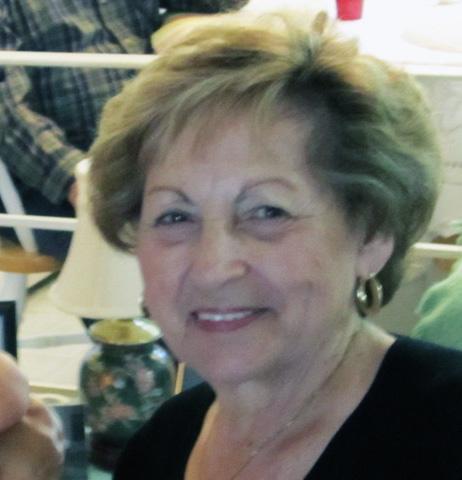
school to witness NEJA graduate Shoshana Olkin present Schreiber with her honorary diploma on Sunday, August 9. It seemed fitting – after all, it was Schreiber’s conversation with Okin and fellow NEJA senior Moshe Koenigsburg last October that was the impetus for the diploma presentation.
While she had given her testimony to the Fortunoff Video Archives at Yale University, Shreiber had never talked to a group about her experiences. But her son, Bernhard “Bernie” Schreiber of West Hartford encouraged her to open up.
“I had been telling her that her story is important and that she should tell it,” Bernie Schreiber says.
Through Miriam Brander, Jewish Family Service’s state coordinator for the Program for Holocaust Survivors, and JFS social worker Erica Kapiloff, a case manager for Holocaust survivors, NEJA was put in touch with Schreiber.
“We are always looking for opportunities to connect our survivors to the next generation and to help them tell their story,” Brander says. “NEJA also looks for ways for their students to connect and this was a great match. Miriam is one of the most inspiring people I’ve had the opportunity to meet.”
The students, also with NEJA Upper Division principal, Dr. Richard Nabel, and the two JFS professionals, sat down in Schreiber’s home to hear her story.
After escaping the Nazis and making the long hard journey to Russia, Schreiber’s family was detained at the border. When they were allowed in, the Russian army sent them to Siberia.
“My memories are horrible,” Schreiber
recalls. “It was hell on earth. We were in a camp…. There was no way out of there. It was cold. We were hungry. It was misery.”
Schreiber was too young to work, but her 12-year-old sister was forced to work with the adults, who cut down trees for lumber, among other kinds of work. Little Miriam sat scared and alone all day in the small log building her family shared with three other families.
“The frost was inside as well as outside,” she recalls. “It was 60 below zero on any given day.”
One day a family member died and they were forced to leave the body outside because it was too frozen to dig. It was assumed that wild animals had dragged the body off into the woods.
In the meantime, her father, who had been in the Polish army at the beginning of the war, tried to get to Russia to find his family, but was then conscripted into the Russian army to fight. At the end of the war, Schreiber’s family was finally freed from the Russian work camp. Her father found them as they walked along the route back to Poland. But when they arrived back in Długosiodło, the antisemitism was still so strong they had to leave.
Once at the DP camp in Germany, Miriam met Saul Schreiber and they were married. Their son Bernie was born five days after Miriam Schrieber’s 16th birthday. A year later, they made it to Israel where Schreiber’s older sister had settled. Years later, they moved to the U.S.
“Wherever she went she learned a language,” her son Bernie says. “She spoke Yiddish, Polish, fluent Russian; then she went to Israel and she spoke Hebrew, which she still does to her family members there; and German and now English. So she is quite accomplished.”
Shoshana Olkin say Schreiber’s story of survival was inspiring.
“She went through so much and she did not even get to graduate from high school and school meant so much to her,” Olkin say.
It took less than three minutes for NEJA’s senior class to vote unanimously to present Schreiber with a diploma at their 2020 graduation. Due to Covid-19, however, that ceremony was cancelled in favor of a virtual graduation that was held online in June. Schreiber was presented with her diploma at a ceremony attended by family and friends at the school on Sunday, August 16.
Dr. Nadel was so moved by Schreiber’s story, he planned the event himself.
“Every Holocaust survivor has their own unbelievable story and Miriam’s was just so
touching, but the tie into education really hit home for the seniors – how fortunate they were to be able to graduate and here was this woman who had lived her whole life not being able to fulfill that basic achievement,” he told the Ledger. When Olkin called Schreiber to tell her she would be getting a diploma, the older woman was thrilled.
“She was so happy and I just felt so good that this woman who had gone through so much would finally get the diploma she had wanted for so long,” says Olkin. “When Miriam told her story, I felt like I had this connection to her, and I told her that we really look up to her…so it’s a real honor
for me.”
Says her son Bernie, “This is one of the best things that has happened to her in such a long time. It’s huge.”
The diploma aside, Schreiber says she is glad she was able to tell her story.
“I want people to understand what we went through – it was an unbelievable horror,” she said. “I want people to stop discriminating and stop thinking that they are better than somebody else. I want people to understand each other a little bit more and be more courteous and loving. You will accomplish a lot more with kindness than with hate.”

BY GABE FRIEDMAN
(JTA)
– In the middle of her first speech as Joe Biden’s running mate, Sen. Kamala Harris disclosed her favorite nickname.
“My family means everything to me. And I’ve had a lot of titles over my career, and certainly, vice president will be great, but ‘momala’ will always be the one that means the most,” she said Thursday in Wilmington, Delaware.
Harris’ two step-children deserve the credit for that mashup of “mom” and “Kamala,” CNN reported last year.
Despite the fact that their father –Harris’ husband, Douglas Emhoff – is Jewish, it’s unclear if they realized their nickname for their stepmom is the exact pronunciation of an endearing Yiddish word: “mamele” – which literally means “little mama” and is a term of endearment for moms.
Regardless of the intent behind it, the nickname symbolizes how close Harris is with her husband and stepkids. If Harris is elected vice president, Emhoff would become the country’s first Jewish presidential or vice presidential spouse. Their courtship story began in 2013, when Harris’ friend Chrisette Hudlin set them up on a blind date. Harris, now 55, was then California’s attorney general. Hudlin was a public relations consultant, and Emhoff was (as he still is) an entertainment lawyer. He was also divorced with two kids from a previous marriage.
In Harris’ memoir, The Truth We Hold, she said Emhoff sent this awkward text before they met up: “Hey! It’s Doug. Just saying hi! I’m at the Lakers game.”
“Then I punctuated it with my own bit of awkwardness – ‘Go Lakers!’– even though I’m really a Warriors fan,” Harris wrote.
Then, the morning after their first date, Emhoff got candid.
“I’m too old to play games or hide the ball,” he said in an email to Harris. “I really like you, and I want to see if we can make this work.”
The two were married by 2014. The wedding incorporated Jewish and Indian traditions (Harris’ father is Jamaican and her mother was Indian) – Emhoff broke a glass, and Harris gave him a traditional Indian garland to wear.
Since then, both Harris and Emhoff have gotten sappy about each other on social media.
But the best quotes that Harris has given about their relationship involve Emhoff’s parents, who lived in Brooklyn and New Jersey before moving to California.
In a January 2019 talk at the 92nd Street Y in New York City, Harris describes meeting her in-laws for the first time. When her interviewer asks if Emhoff’s parents still live in New Jersey, Harris says “They are in California now, but New Jersey is very much in them.”
She then talks about the reaction of Emhoff’s parents the first time they saw her.
As Harris recalls, Emhoff’s mother Barbara put Harris’ face in her hands and said: “Oh, look at you! You’re prettier than you are on television!”
Barbara then called for her husband: “Mike, look at her!”















Hoffman SummerWood, a West Hartford senior living community has partnered with the Jewish Federation of Greater Hartford and the Kostin family of West Hartford to install and manage Connecticut’s newest location of Jessie’s Community Gardens.
Established by the Kostin family to celebrate the life of the late Jessica Lynn Kostin, daughter of Dane and Michele Kostin and sister of Elisabeth, Jeremy, and Whitney Kostin, Jessie’s Community Gardens is an initiative managed by the Jewish Community Relations Council of the Jewish Federation of Greater Hartford, and maintained by volunteers. Primarily located throughout Connecticut, the gardens can also be found as far away as San Francisco, California. They are located at schools, synagogues, churches, parks, community centers – and not at Hoffman SummerWood, marking the 17th garden installation.
Most of the gardens feature vegetable plants and produce, and one contains a fruit tree orchard. Fresh produce from Jessie’s Community Gardens benefit a variety of organizations, including Jewish Family Services’ Anja Rosenberg Kosher Food Pantry, which is currently providing food relief to Connecticut residents adversely affected by COVID-19.
“Michele and I needed to find a way to give memory to our dear daughter, whose untimely death 10 years ago at the young age of 26 was so devastating to our family,” says Dane Kostin. “We chose this project as it ties together Jessie’s love for gourmet cooking with fresh vegetables, paired with her passion for social justice in helping to feed those in need.”
In May of 2020, the Kostin family and the Jewish Federation donated four raised planting beds for installation on SummerWood’s back patio. This marks the second Jessie’s Garden installation featuring specially raised beds that allow wheelchair accessibility for gardeners with mobility issues.
The ability to garden outdoors in the fresh air during the pandemic has been a gift to SummerWood residents, especially longtime garden volunteer, Dave Wolansky.
“The garden provides a great deal of satisfaction for all of us,” says Wolansky. “This is the first time we have been able to produce such a great crop of vegetables. It is especially rewarding because our senior community here is growing produce to be donated to Connecticut’s senior community. It’s seniors helping seniors.”



Great news! The Greater Hartford Synagogue Softball League has resumed play after a brief Covad-19 induced spring hiatus. The co-ed slow pitch league, composed of players from synagogues located throughout the Greater Hartford region, is now in its 27th season of play. The league has gone to a pick-up format for the time-being with games played Sunday mornings at the CIGNA fields in Bloomfield. According to League Commissioner Alan Cetel, the safety of players is of primary concern, and so social distancing on and off the field is strongly encouraged. Play will continue into mid-September, and it isn’t too late for those wanting to participate to get in on the action on the field. For more info, contact Alan Cetel at acjctc@aol.com.

BY HOWARD MEYEROWITZ
Grumpy! That was how Dr. Jacob Mendelshon felt that Shabbos morning in August. This was totally out of character for the good doctor who especially loved Shabbos morning. This was his special day of rest, of reflection, of prayer, of being with friends in shul, and it was a day he would spend with his beloved seven year old grandson, Dovid.
But something he had eaten for Shabbos dinner had caused severe indigestion and he had gotten very little sleep. Then he stubbed his toe badly and, to add insult to injury, when he went to pour his Saturday morning bowl of Frosted Flakes the box was empty because he had forgotten to buy more, so he had to settle for some cream cheese that had reached its peak spread on a week-old bagel.
“That’s it!” Dr. Jacob Mendelshon shouted out loud. “It’s been a miserable night and morning and I’m grumpy! Do you hear me, world? I’m grumpy and I’m going to stay grumpy! Sure, I’ll go to shul, but I’ll wear my worst looking suit, oldest shirt and the coffee stained wide tie that I haven’t worn in decades. I’ll show you!”
But, unbeknownst to Dr. M., as he was lovingly referred to by all who knew and held him in the highest regard, sweet Shabbos angels began working their magic to brighten the good doctor’s day. As he placed his dirty dish into the kitchen sink, a mellow morning breeze wafted through the open kitchen window and his attention was drawn to a gentle looking summer sky and he began to smile. “Oh, no, you don’t!” Dr. M. said aloud as he slammed the window shut and angrily pulled down the shade! “You’re not going to get me! Grumpy I am and grumpy I’ll stay!”
The old suit he chose had cuffs that were slightly frayed and there were two very small holes in the pants that needed some mending. The shirt had been long out of
style and was somewhat worn around the collar, and his decades old coffee stained wide tie added to his miserable fashion statement. “There, I look as miserable as I feel,” the doctor said as he examined himself in his full length mirror.
As Dr. M. stepped out his front door sweet Shabbos angels were at it again, because when he heard the melodic trilling sounds made by the tiny wrens that nested in his front tree Dr.M.’s eyes brightened slightly and his step was a little lighter. “No, I’m grumpy and I’ll stay grumpy,” the good doctor said, but with a little less conviction.
A few doors down he met Mr. and Mrs. Weisen. “Good Shabbos, Dr. M..We haven’t seen you in that suit before. You look quite dapper, and the color of your shirt brings out the best of your complexion.” Oh, those sweet Shabbos angels!
Before our good doctor could think of any negative thoughts he encountered Rose Gorman, a woman he admired and who often joined him for dinner dates. “Good Shabbos, Jacob,” she offered smiling sweetly. “I love the artwork of your tie. It’s different and charming,” and with that she gently tucked her arm through his and they continued walking to shul. Guess who?
As Rose and Jacob neared the shul, his grandson, Dovid, rushed over to him and hugged him tightly. “Good Shabbos, Zayde. I love you!” Dr. Jacob Mendelshon smiled broadly, looked skyward and said quietly to himself, “Sometimes you just can’t win.”
Howard Meyerowitz is a Ledger staff member and a member of Beth El Temple in West Hartford. He lives in Bloomfield with his wife, Susan. The father of two grown daughter, he delights his two grandchildren with his original – and imaginative – Shabbat tales, which we share with you here.


At the Hebrew Center for Health and Rehabilitation, we understand that comfort and familiarity is a key part of the journey to wellness. We also understand that maintaining your religious beliefs and principles is fundamental in continued enrichment of life. Our Kosher meal services allow residents to maintain their dietary requirements throughout their stay with us. At the Hebrew Center, we ensure we follow all principles of Kosher including purchase, storage, preparation, and service.
At the Hebrew Center for Health and Rehabilitation, we also offer a variety of other services and amenities to ensure your stay is as comfortable as possible.
THESE SERVICES INCLUDE:
• Passport to Rehabilitation Program
• Long-Term Skilled Nursing Care
• Specialized Memory Care
• Respite Care Program
• Palliative Care and Hospice Services Coordination
OUR AMENITIES INCLUDE:
• Barber/Beauty Shop
• Café
• Cultural Menus
• Laundry and housekeeping services
• Patient and Family education
• Life Enrichment




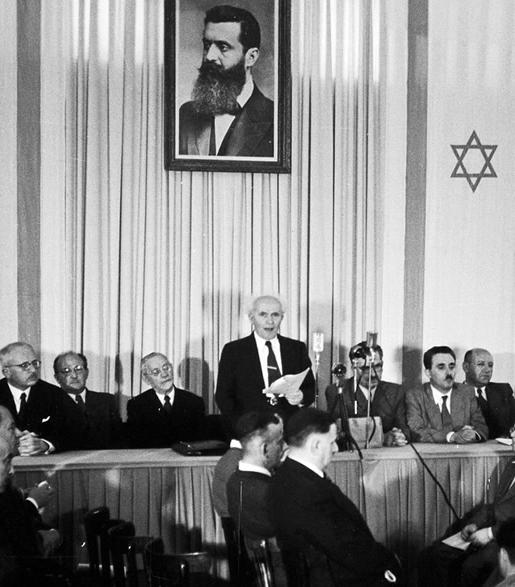
(JNS) Depending on the era, 1948 may have been the best of times or the worst for progressives. Progressives once embraced the Jewish state as a trope for self-sacrifice and solidarity, a testament to the redemption of a bruised and battered people. Progressives now see Israel practicing apartheid, genocide, ethnic cleansing and of sustaining itself as a remnant of an outdated and thoroughly delegitimized colonial order. Today, the old romanticized image of Israel–shaped more by Exodus, the film, than by Exodus, the biblical book–no longer gets much of a hearing. Recall that in the 1950s, the far-left Weavers recorded “Tzena Tzena,” a song celebrating Israeli soldiers and sexual freedom.
The more Israelis put their titanic struggle for safety and security behind them, the more difficult it became for progressives to find resonance in a Jewish state failing to end its conflict with Palestinians. Because the narrative of rebuilding a land through the sweat of the brow and toil of the hand no longer described the country’s map or society, it seemed more a description of the country’s past than of its present. With
BY DONNA ROBINSON DEVINE
victimhood now elevated into a necessary, if not, sufficient cause of virtue, the progressive relationship with Israel came into a facile encounter with Palestinians who commanded increasing empathy and attention. In an America seething with anxiety and uncertainty, most progressives are more than willing to replace any past association with Israel with a pronounced h ostility to Zionism.
Trying to lend scope, if not comfort, to the position of Jews in the progressive movement and seeking (also and perhaps in vain) to express communal solidarity, some Jewish progressives have recently criticized Israel for its failure to live up to its Zionist ideals. Expanding on this notion, journalist Peter Beinart actually reimagined Israel’s moment of triumph in 1948 as Zionism’s defeat, whose aim for a homeland, he claimed–and presumably for only a homeland–was displaced by the founding of a sovereign state. To propose dismantling any state in the wake of COVID-19 expectations for strict border control as a means of saving lives probably belongs more to the realm of fiction than to utopia. But to argue that Zionism itself provides the reasons for dismantling a Jewish state says more about the identity of Jewish progressives than about how Zionism actually imagined sovereignty.
How credible is it to give new life to the Zionism that had, for one reason or another, reservations about struggling for an actual state? Cultural Zionists cautioned against placing too much emphasis on a “Jewish state, rather than on the state of Jews and of Judaism” in the words of their most eloquent exponent, Ahad Ha’Am, who died in 1927 in a Palestine ruled by Great Britain. Would a cultural Zionism propose dismantling the state that gave Hebrew the resources to become not only a modern literary language, but also the vocabulary for daily life? A reverential esteem for Ahad Ha’Am’s Zionism certainly did not deter Chaim Weizmann from securing global backing for a national home as a predicate for establishing a Jewish state. The very propositions underlying cultural Zionism contributed to the success of establishing the new Jewish state. Reviving the Hebrew language was an instrument to transform a people once defined by their
religious traditions and law into a nation bound together by a shared, albeit often newly invented, mores. The creation of a culture whose literature and ideas were expressed in Hebrew, and whose ancient laws and rituals could be translated into national traditions, was the groundwork for a state offering Jews something Zionists believed could be found nowhere else–the opportunity to take advantage of the modern world. The homeland was almost as much about language as about land. It’s difficult to believe that a homeland could generate the same cultural fulfillment as the state has already delivered.
Past efforts to generate a Zionism without Jewish sovereignty offer no reason for optimism that enemies will be transformed into allies. There were Zionist advocates for a binational Palestine, but they never drew Arabs into their movement because both peoples were haunted by Jewish immigration and could not transcend their deep divisions over the issue. To disinter the Zionisms possessing reservations about moving from homeland to state is an interesting intellectual exercise; to deploy them as cudgels against Israel’s identity or independence reflects a deeply problematic use of history.
Imagining a Zionism rejecting even the idea of a Jewish state would have to discount much of the movement’s activities regarding land purchases and immigration. Such a perspective cannot account for the energy and resources invested into setting up an elected assembly called the Asefat Ha-Nivharim, which required serious consideration of an electoral system. Or the National Council, drawn from this assembly, that had authority over matters of social welfare, health, education and religion. The British Mandate, which provided Palestine with a geography and the site for a homeland, supplied the Jews with incentives to consolidate a comprehensive framework to help secure their needs, promote their goals, manage their own affairs–within the limits set by colonial policy–and ultimately project a polity so stable as to be worthy of sovereignty. Building a homeland and constructing a state were activities conducted
Vol. 92 No. 34
JHL Ledger LLC Publisher
Henry M. Zachs Managing Partner
Leslie Iarusso Associate Publisher
Judie Jacobson Editor judiej@jewishledger.com • x3024
Hillary Sarrasin Digital Media Manager hillaryp@jewishledger.com
EDITORIAL
Stacey Dresner Massachusetts Editor staceyd@jewishledger.com • x3008
Tim Knecht Proofreader
ADVERTISING
Donna Edelstein Senior Account Executive NonProfit & JHL Ledger LLC Media Marketing donnae@jewishledger.com • x3028
Joyce Cohen Senior Account Executive joycec@jewishledger.com • (860) 8369195 Joan Gaffin Central Mass. Account Executive joang@jewishledger.com • (508) 4146210
Trudy Goldstein Account Executive (860) 5731575
Amy Oved Account Executive amyo@jewishledger.com • (860) 8418607
PRODUCTION
Elisa S. Wagner Creative Director elisaw@jewishledger.com • x3009 Christopher D. Bonito Graphic Designer chrisb@jewishledger.com
ADMINISTRATIVE
Judy Yung Accounting Manager judyy@jewishledger.com • x3016
Howard Meyerowitz Office Manager howardm@jewishledger.com • x3035


Samuel Neusner, Founder (19291960) Rabbi Abraham J. Feldman, CoFounder and Editor (19291977) Berthold Gaster, Editor (19771992) N. Richard Greenfield, Publisher (19942014)
send address changes to: Jewish Ledger 40 Woodland Street Hartford, CT 06105
Subscriptions: $36 yearly, $9 Twelve Issue Institutional subscription. Send name, address, zip code with payment. Editorial deadline: All public and social announcements must be received by Tuesday 5 p.m. 10 days prior to publication. Advertising deadline: Wednesday noon one week prior to issue. Advertisers should check ad on publication. JHL Ledger LLC and Jewish Ledger shall not be liable for failure to publish an ad for typographical error or errors in the publication except to the extent of the cost of the space which the actual error appeared in the first insertion. Publishers reserve the right to refuse advertising for any reason and to alter advertising copy or graphics deemed unacceptable. The publishers cannot warrant, nor assume responsibility for, the legitimacy, reputability or legality of any products or services offered in advertisements in any of its publications. The entire contents of the Jewish Ledger are copyright © 2020. No portion may be reproduced without written permission of the publishers. JHL Ledger LLC also publishes Jewish Ledger MA, All Things Jewish CT, and All Things Jewish MA. www.jewishledger.com
BY JONATHAN S. TOBIN
(JNS) As it turns out, it isn’t Rodney Muhammad who is on the spot in the controversy about the NAACP and antisemitism. The people who should really be worried about the controversy engendered by Muhammad are the Jewish members of the national board of the NAACP, like Rabbi Jonah Pesner, director of the Religious Action Center of Reform Judaism, who are being discredited by the organization’s failure to draw a line in the sand about Jew-hatred.
Muhammad is the Philadelphia chapter president of the venerable civil-rights group who sparked controversy last month with a blatantly antisemitic Facebook post. The post combined pictures of AfricanAmerican celebrities who had recently made antisemitic statements, and included the image of a Nazi-style caricature of a hooknosed Jew above a fake quote from Voltaire that said: “To learn who rules over you, simply find out who you are not allowed to criticize.” The obvious point was the false claim that powerful and sinister Jewish forces are working to suppress criticism of their fiendish hold on society by courageous but oppressed black people.
While Muhammad was bitterly criticized
CONTINUED FROM PAGE 10
simultaneously.
by various Jewish groups, as well as local politicians and public figures, he doesn’t seem so concerned about his future as a public figure, even after such a gross display of prejudice. The national leadership of the NAACP was slow to issue a statement about the incident and when it did, its condemnation stopped well short of demanding Muhammad’s resignation or his firing by the Philadelphia chapter.
As the African-American newspaper The Philadelphia Tribune reported, local black leaders such as Bishop J. Louis Felton, the first vice president of the Philadelphia chapter, said they had not received any instructions or guidance from the group’s national office. Instead, the Tribune reported that NAACP president and CEO Derrick Johnson would be meeting with Muhammad, as well as local community and faith leaders, to “open a dialogue and continue the educational conversations.” But the time for dialogue about this scandal is over. That statement could be reasonably interpreted as an indication that the national leadership has no interest in breaking with Muhammad, despite the fact that a state board could vote to call for his removal and he is up for re-election in
November.
The reluctance of the NAACP to take swift and decisive action is disappointing. Jews were active in the organization’s founding. And there is a direct precedent in which the NAACP was faced with a similar situation in the not-too-distant past.
In August of 2000, Lee Alcorn, president of the group’s Dallas chapter, sparked controversy by denouncing the selection of Sen. Joseph Lieberman (I-Conn.) as the Democratic candidate for vice president. Alcorn said he opposed Vice President Al Gore’s running mate because “if we get a Jew person, then what I’m wondering is, I mean, what is this movement for, you know? … So I think we need to be very suspicious of any kind of partnerships between the Jews at that kind of level because we know that their interest primarily has to do with money and these kind of things.”
NAACP president Kweisi Mfume responded immediately. He not only condemned Alcorn’s remarks as “repulsive, antisemitic, anti-NAACP and antiAmerican,” he also immediately suspended him from the organization.
What changed in the last 20 years?
The difference may stem from the fact that Muhammad is the minister of the Nation of Islam’s Mosque No. 12 in North Philadelphia and a longtime supporter of Louis Farrakhan, the NOI’s national leader.
history in civil-rights advocacy, but it’s no longer on the cutting edge of activism with the more radical Black Lives Matter movement drowning out more traditional groups.
Still, the NAACP’s soft approach to the NOI leaves the group’s Jewish allies and supporters in a difficult position. National Jewish organizations say that while they are willing to speak out strongly against Muhammad and the way the NAACP is tolerating him, they won’t cut ties with the group. That sends a signal that Jewish leaders are satisfied with lip service about antisemitism, rather than action.
It’s the NAACP’s Jewish board members, however, whose reputations are being called into question by this controversy. Of particular interest is the presence of Pesner, the head of the political action arm of the largest Jewish religious denomination in the country. The RAC’s liberal political agenda makes it a natural fit for any group on the left. But Pesner’s spot on the NAACP board is as much a tribute to the long history of Jewish support for the group as it is for the civil-rights movement.
While Pesner and the RAC may share the NAACP’s views on a host of issues, the notion that he can coexist inside a group with a Nation of Islam adherent–let alone as a chapter president–is as shocking as it is unacceptable.
Perhaps because Israel was imagined long before it was founded–visions conjured in the religious canon, in surreal fantasies and in political treatises–the country could never be entirely liberated from the idea of Zion, no matter how far it departed from reality. For the standards generated by the Zionist imperatives to build a nation state intended to be both “normal” and “exceptional” encouraged expectations that could not ever be met but could never be totally dismissed. And while the differences could often be hidden in abstractions or ambiguous language, by the same token, they could not be entirely avoided. Never reluctant to champion their ideals, Zionists displayed a remarkable linguistic flexibility, particularly about foundational terms like homeland and state in an effort to radiate a compensatory unity from a diversity of views and goals. The result: even political Zionists known for the sometimes brutal clarity with which they proclaimed their commitment to a Jewish state imagined it not possessing the sovereignty on offer from a Thomas Hobbes.
Even without a clear or single political theory of sovereignty, Jews in Palestine were conscious of participating in a story attracting intense global attention, as well as in a risky political experiment. Zionism gave voice to the power of their imagination not simply to reinterpret history, but more importantly, to change it for the sake of creating a radically different future for themselves and for the Jewish people. Substituting action for prayers gave Zionism its purpose. Work, rather than textual study, would be the vehicle for legitimizing possession, creating community and for transforming sites holy in scripture into a homeland. Zionists were builders empowered less as individuals than as members of a kind of collective construction team. It is not surprising, then, that for Zionism, left and right, 1948 symbolizes both the difficulty of building a promised land and the ease with which it could all be swept away.
Donna Robinson Divine is the Morningstar Family Professor of Jewish Studies and Professor of Government at Emerita Smith College. She is a resident of West Hartford.
While Farrakhan, whose open advocacy for antisemitism and race hatred is often spoken of as being beyond the pale, his organization has far more grassroots support in the black community than is widely understood. Many AfricanAmericans see the group as standing for black empowerment and responsibility, not hate. Indeed, it is impossible to understand the rash of antisemitic comments from black celebrities or the surge in hate crimes committed against Jews in the Greater New York area in the last year without taking into account the way Farrakhan is honored by many in the black community.
In the past, having an official of the NOI–whose toxic mix of conspiracy theories and race and religious hatred ought to mark all of its adherents, let alone its ministers, as members of the lunatic fringe – as a local NAACP leader would have been unthinkable. But Muhammad’s local prominence illustrates the way the Nation of Islam has been mainstreamed.
Seen in that context, it’s hardly surprising that the NAACP would be reluctant to confront the extremists. The NAACP may have a long and honorable
There is an argument to be made that Pesner is situated to work from within to persuade the NAACP to take action. But to date, he has failed to achieve that purpose.
It’s one thing to say that it is a political necessity to allow African-Americans to equivocate about Muhammad’s continued presence in the NAACP. It’s quite another for a person who is the head of one of the country’s leading Jewish advocacy organizations to remain as a board member of a group that has so far shown that it is prepared to tolerate an openly antisemitic Farrakhan supporter as an important official. In this case, national Jewish leaders need to follow the lead of a local group; the Jewish Federation of Greater Philadelphia has rightly declared that it will no longer work with the local NAACP while Muhammad remains in office.
Put simply, the NAACP must cut ties with Muhammad immediately or Pesner must quit his seat on their board. If he does not, then he should be asked to quit his job at the RAC.
Jonathan S. Tobin is editor in chief of JNS – Jewish News Syndicate.
BY STEPHEN SILVER
(JTA) – It was only a matter of time: A Jewish Netflix has arrived.
That moniker is probably the best description of ChaiFlicks, a film and TV streaming platform focused on Jewishthemed movies that launched Wednesday, August 12. It helps that its creators were once in business with the real Netflix.
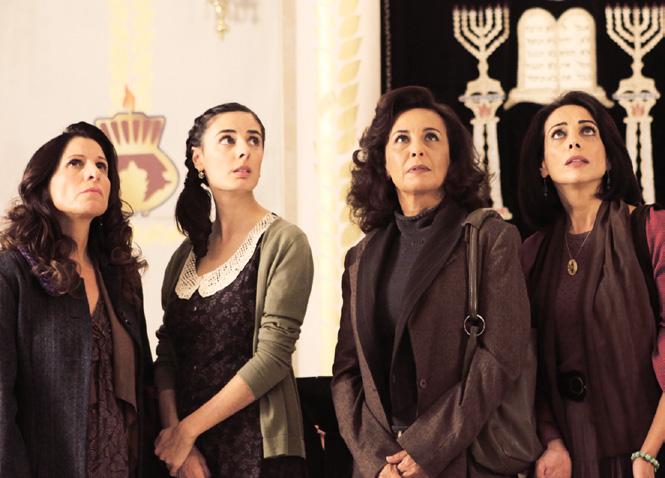
Neil Friedman, founder of the Jewishfocused distribution company Menemsha Films, said he sold two films to Netflix: the 2015 bakery-set drama “Dough” and the 2016 Israeli film “The Women’s Balcony.” But since then, Netflix has shifted its focus to its original offerings.
In 2017, when Netflix passed on another film that the founders were distributing –“1945,” a rare Hungarian production about the effects of the Holocaust – the idea for ChaiFlicks began.
“We realized then and there that if we were going to have our films on [a subscription video on demand] channel, we would have to initiate our own channel,” Friedman said, adding that, “Jewish folks are among the most adoring of both arthouse and mainstream cinema in North America. Now, with theaters on hiatus due to the pandemic the Jewish audience will have a streaming service specifically targeted to them.
The service was offered earlier this year in a beta version for Menemsha Films’ mailing list subscribers, spokesman Gary Springer said. But on Wednesday, August 13 the service opened officially to all at a price point of $5.99 a month, or $65.99 a year.
ChaiFlicks also offers a 14-day free trial.
It’s launching with over 150 titles, including feature films, documentaries, shorts and other entertainment, all of it either Jewish- or Israeli-themed. While it doesn’t have nearly as much content, ChaiFlicks also offers something that newer, bigger streaming services like HBO Max and Peacock don’t: It’s available on every major streaming platform, including Roku, Amazon Fire and Apple TV, as well as both iOS and Android mobile devices, in addition to a desktop version. The tech for the site is powered by the video platform Vimeo.
“We have not had any issues with Roku or Amazon,” Friedman said. “We are a small niche streaming service and that has its advantages so as not to affect the preexisting ecosystem in the VOD and streaming worlds.”
The ChaiFlicks lineup at the start includes “Natasha,” “A Home on the Range: The Jewish Chicken Ranchers of Petaluma,” “Holy Land Hardball,” “In Search of Israeli Cuisine,” “Heading Home: The Tale of
Team Israel,” the show “Soon By You” and other titles that might be familiar to those who follow the Jewish film festival circuit. “Shekinah: The Intimate Life of Hasidic Women” and “Bulgarian Rhapsody” are among the titles that will come to the service in the week after launch.
“We started ChaiFlicks … as soon as the pandemic hit in March, as we had the advantage of owning 80 Jewish and Israeli titles of our own,” Friedman said. “Since such time, although still in the beta stage for the channel, we have been acquiring third-party product for ChaiFlicks to the extent that we as of today have 150 titles for ChaiFlicks alone.”
As the service continues to acquire third-party programming, Friedman said, he and his two co-founders expect that Menemsha titles will become a minimal part of the ChaiFlicks presentations. Those co-founders are Heidi Oshin, a fellow Menemsha Films staffer, and Bill Weiner, who once worked for the large production company now called Regency Enterprises.
Friedman estimated that the service will add about three new films per week.
Categories include comedy, drama, documentaries, food, music, sports, LGBTQ stories, shorts, “The American Sephardi Federation presents …” and

specific categories for individual countries and regions, which include Israel, Europe, France and South America.
Also on the way, according to the spokesman Springer, is a partnership with the Jewish Women’s Theater in Santa Monica, California, and agreements with some Israeli film companies.
Eventually there will be content that premieres on ChaiFlicks, mostly special live debut events.
“We will need to provide that ‘wow’ factor to the subscribers with premieres on ChaiFlicks,” Friedman said. “However, for now we want to retain the sequential windowing not to upset existing relationships in the first four stages of release.”
All that is down the road. But, meanwhile, says Emmy Award winning filmmaker Michael Berenbaum, a renowned Holocaust scholar and professor of Jewish Studies at the American Jewish University in Los Angeles, “The launch of a dedicated Jewish SVOD channel such as ChaiFlicks is long overdue and under the present circumstances is not only timely, but a blessing. ChaiFlicks is an impressive example of Jewish learning and creativity brought forth to the world.”



Owners, managers and developers of commercial, residential and retail properties in central Connecticut for over 50 years.
We specialize in all sizes of office space and offer a wide range of living options including luxury apartments and townhouses.
For more information contact us at 860.232.1729
BY ISRAEL KASNETT
(JNS) A joint statement by U.S. President Donald Trump, Israeli Prime Minister Benjamin Netanyahu and Sheikh Mohammed bin Zayed Al Nahyan – the crown prince of Abu Dhabi–announcing the “Abraham Accord,” a peace deal between Israel and the United Arab Emirates, is the first since Jordan signed such an agreement in 1994. What does this deal include, and what does it portend for the future?
Richard Goldberg, a senior adviser at Foundation for Defense of Democracies, told JNS that “the peace agreement paves the way for full normalization of diplomatic, trade and travel relations between Israel and the UAE.”
But this is apparently only the start of a broader relationship between Israel and the Persian Gulf states.
Trump hinted as such during his statement to the press when he said, “I think you’ll be seeing some very exciting things, including ultimately with the Palestinians.”
Netanyahu also hinted at future diplomatic ties during his press conference when he said, “I believe there is a good chance we will soon see more Arab countries joining this expanding circle of peace.”
Joshua Krasna, an expert on strategic and political developments in the Arab world at the Jerusalem Institute for Strategic Studies, as well as a senior fellow in the Foreign Policy Research Institute, told JNS that “over the last few years, there
has been a slow, but steady buildup in relations between Israel and the Gulf states. Israeli businessmen have been going back and forth for a while, and Israeli ministers have attended conferences.”
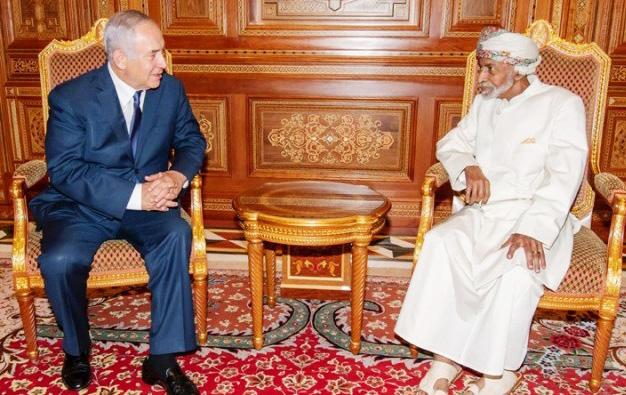
For example, former Transportation and Intelligence Minister Yisrael Katz visited Oman in 2018. Former Minister of Culture and Sport Miri Regev also visited the UAE that year.
“Since 2007, there has been a steady drumbeat of a message that Israel is improving its relations with moderate Arab countries,” said Krasna.
But the big change came in 2018 when Netanyahu went to Oman. At the time, there was a great deal of talk that a diplomatic breakthrough was expected imminently.
The joint statement said that the three leaders had “agreed to the full normalization of relations between Israel and the United Arab Emirates,” and Krasna noted that the United States and Israel seem to be touting full normalization as a closed deal.
Still, Bin Zayed wrote on Twitter that the deal means “cooperation and setting a roadmap towards establishing a bilateral relationship,” which is much softer and more ambiguous language.
The Arab Peace Initiative, a 2002 Saudiled proposal that called for Israel’s full
withdrawal from the disputed territories in exchange for normalization with the Arab world as a starting point, has now been tossed out the window as clearly normalization has now come first.
According to Goldberg, Saudi Arabia now has “the biggest decision to make of all.”
If presumptive Democratic presidential nominee Joe Biden wins the U.S. election in November, Goldberg said “there are proIran, anti-Gulf voices in the Democratic Party who will work to cut off U.S. arms sales to Riyadh next year.”
If so, he noted, Saudi Crown Prince Muhammad bin Salman will be “worse off politically if the UAE has a peace treaty with Israel and Saudi Arabia doesn’t.”
Goldberg even warned in an August 7 Newsweek article of the consequences for Saudi Arabia and the UAE if they don’t sign historic peace deals with Israel.
He wrote, “A Biden administration will be tempted to re-enter the Iran nuclear deal, returning to the Obama-era strategy of seeking a balance of power between the Islamic Republic and its Sunni Arab neighbors.”
He also wrote that “with Iran once again flush with cash from U.S. sanctions relief and importing advanced conventional arms from Russia and China, MBS [Bin Salman] and MBZ [Bin Zayed] will have only one true ally in the Middle East: the State of Israel.”
“Arab-Israel regional integration is

critically important to isolate Iran,” he added in his comments to JNS. “Iran’s hold on the region will continue to weaken as its neighbors grow stronger both economically and strategically.”
With regard to Israeli military cooperation with the UAE, Goldberg said “this certainly opens the door for expanded bilateral military relations and perhaps even multilateral military exercises hosted by the U.S.”
According to Krasna, this is a win for both the UAE and Israel as “the UAE can claim it got annexation taken off the table. Netanyahu can claim a major achievement on the wider Arab-Israeli conflict front.
As opposed to the joint agreement that says annexation has been “suspended,” Bin Zayed wrote on Twitter that “an agreement was reached to stop further Israeli annexation of Palestinian territories.”
During his press conference, Netanyahu emphasized that annexation is still on the table, and that he plans to go through with it.
But according to Krasna, the current political climate doesn’t allow Netanyahu to go ahead with it anyway, so with this deal, he “gets an elegant face-saving and significant reward for something he wasn’t going to be able to do anyway. He wasn’t going to be able to push the annexation, certainly not before the U.S. election.”
Krasna said this is also a win for the United States as it gives Trump a major foreign-policy achievement ahead of the U.S. elections.
“It will give him a very strong win going into elections,” he said.
Circling back to whether other Arabworld nations might follow suit and sign peace agreements with Israel, Goldberg said that over the last few years, “most people thought Bahrain would go first since they led the way on warming relations with Israel.”
He predicted that Bahrain will be next to jump-start a peace agreement with Israel.
“We should expect an announcement from Manama at some point soon,” said Goldberg, adding that he presumes other nations will follow suit.
BY JACKSON RICHMAN
(JNS) Jewish and pro-Israel groups instantly applauded Israel and the United Arab Emirates for a peace deal on Thursday to normalize relations between the two countries. Dubbed the Abraham Accord, it is the first of its kind between Israel and a Middle Eastern country in more than 25 years, following Jordan and Egypt.
The American Israel Public Affairs Committee (AIPAC) called the development “a historic breakthrough for peace and reconciliation in the Middle East.”
“The establishment of full diplomatic relations between Israel and the United Arab Emirates represents a historic breakthrough for peace and reconciliation in the Middle East,” said AIPAC in a statement. “We greatly appreciate the efforts of [U.S.] President [Donald] Trump and his administration in facilitating this major diplomatic achievement.”
The lobbying group called on “other Arab states and the Palestinians to follow their lead” and for the Palestinian leadership to “end its boycott of Israel and America and return to the negotiating table.”
“In taking this historic step, the UAE is paving the way for additional Arab and Muslim states to normalize their ties with Israel, which can help transform the region and enhance the prospects for a true and lasting peace between Israel and the Palestinians,” said the Conference of Presidents of Major American Jewish Organizations in a statement. “This agreement is a bulwark against the forces of extremism and radicalism in the region.”
“We welcome the news about Israel and the United Arab Emirates normalizing relations,” Mark Wilf, chair of the board of trustees of the Jewish Federations of North America, told JNS. “The two countries have so much to gain from working together, and this decision could pave the way for greater recognition of Israel throughout the region and increase the prospects of peace.”
“This is a tremendously important and positive development,” B’nai B’rith International CEO Daniel Mariaschin told JNS. “The growing realignment of interests in the region will certainly contribute to stability in a chaotic neighborhood, and send a strong message to those who seek to promote that chaos that their efforts will not succeed.”
Zionist Organization of America
president Mort Klein told JNS applauded the deal, saying “we hope other Arab states do the same. We look forward to UAE establishing its embassy in Israel’s capital, Jerusalem, and referring to Israel as the Jewish state.”
He added his expectation that “the suspension of declaring sovereignty over legal Jewish areas of Judea-Samaria is temporary and will soon move forward.”
It is currently unknown where the Emirati embassy in Israel will be located. Most countries have embassies in Tel Aviv. The United States and Guatemala are the only ones to have theirs in Jerusalem, both having relocated there in May 2018.
Sarah Stern, founder and president of Endowment for Middle East Truth (EMET), called the development “a momentous day” and “a historic breakthrough.”
“This shows that another major Sunni Arab nation has finally come to accept that Israel is here to stay, and that it has a great deal more to gain by living and working side by side together and penetrating through the decades of old animosities,” she told JNS.
Jewish Council of Public Affairs president and CEO David Bernstein called the breakthrough “a great day for Israel and prospects for peace in the Middle East.”
“Israel has been quietly cooperating with Gulf states for several years,” he told JNS. “Normalizing with the Emirates sets a precedent for formal relations with other countries in the region as well.”
“All Americans, Democrats and Republicans alike should hail today’s Abraham Agreement. Today is a historic day–two allies of the U.S. now become open strategic partners in the region to thwart Iran and other Jihadists,” said Rabbis Marvin Hier and Abraham Cooper of the Simon Wiesenthal Center in a statement. “It also signals further dramatic normalization between Arabs and Jews in the region, a goal the [Wiesenthal Center] has contributed to for over 15 years.”
The American Sephardi Federation (ASF) posted on Twitter that the peace deal is a loss for Iran and its proxies, including Hezbollah.
“Reactionary forces (@khamenei_ir, Hizbullah, Hamas, Houthis) suffered a devastating defeat thanks to #UAE & @ Israel’s new path to peace, prosperity, & progress, ending decades of conflict
&, worse, the wasting of time & talent,” tweeted ASF.
Even organizations critical of the Trump administration’s Mideast policies hailed the peace agreement.
“Israel suspends annexation effort. UAE agrees to normalizing ties with Israel. This is an important step towards peace. Congratulations to the leaders of Israel and the UAE,” tweeted the Democratic Majority for Israel.
On Twitter, J Street touted that the deal temporarily stopped Israel’s plans to apply sovereignty to parts of the West Bank, also known as Judea and Samaria, though the left-wing lobby acknowledged the agreement as “steps in the right direction.”
“Let’s have no illusions, though: Full Arab-Israeli peace can’t be made w/o Palestinians or while ‘de facto’ annexation continues unabated,” tweeted J Street.
J Street welcomes both “suspension” of de jure annexation plans & normalization of Israel-UAE ties. Those are steps in the right direction.
“While this news is welcome, much better news would be an end to the Israeli government’s de facto annexation of the West Bank through ongoing settlement expansion and steps to reverse Israel’s occupation of the West Bank,” said Americans for Peace Now president and CEO Hadar Susskind in a statement.
“We are relieved to see President Trump’s dangerous gamble on unilateral Israeli annexation of the West Bank come to an end,” said Jewish Democratic Council of America board chairman and former Rep. Ron Klein (D-Fla.) in a statement.
“By taking annexation off the table, today’s Israeli government announcement addresses the problem created by the Trump administration’s failure to oppose it from the outset.”
Israel, however, has said that
sovereignty plans have only been suspended and not ended.
In a press conference on Thursday, Israeli Prime Minister Benjamin Netanyahu said he agreed temporarily to suspend sovereignty plans but is committed to carrying out the application in the West Bank, only in coordination with the United States.
U.S. support for Israel to apply sovereignty to parts of the West Bank would come “much sooner” than several years, according to officials.
Presumptive 2020 Democratic presidential nominee Joe Biden called the agreement a “historic step to bridge the deep divides of the Middle East.”
“The coming together of Israel and Arab states builds on the efforts of multiple administrations to foster a broader ArabIsraeli opening, including the efforts of the Obama-Biden administration to build on the Arab peace initiative,” he said.
Biden added that Israel applying sovereignty “would be a body blow to the cause of peace” and “virtually end any chance of a two-state solution that would secure Israel’s future as a Jewish and democratic state and uphold the right of Palestinians to a state of their own.”
Biden pledged that, if elected, he would “seek to build on this progress and will challenge all the nations of the region to keep pace.”
There are three categories of Jewish leadership mentioned in the Torah, and each works towards this goal. While they all serve both a practical and religious role, each category maintains its own unique purpose in enabling the Jewish people to fulfill their mission and connect to Hashem:
• The Melech serves as an embodiment and manifestation of Hashem in this world, negating his ego and serving to reveal Hashem in this world.
• The Sanhedrin maintain the Jewish ideals in society, ensuring that the Jewish people live up to their purpose.
• The Kohanim are charged with guiding the Jewish People in their spiritual and religious journey, helping them build and perfect their relationship with Hashem. The Kohanim serve to both help the Jewish people connect to Hashem and help properly manifest Hashem into this world.
Some leaders are the face of a nation, the ones who stand in front of large crowds and deliver extraordinary and inspiring speeches. But that is not the only type of leader. A leader is anyone who is on a mission, who empowers others, and who always looks for ways to contribute to the greater good. Leaders are great parents, great teachers, great friends. We are all potential leaders, we are all potential revolutionaries. We can all create change in the world. But to create any external change, we must first learn to develop ourselves and live with higher ideals. Let us all be inspired to become the greatest version of ourselves, with the hopes that our own journey of growth will inspire others to become the greatest version of themselves as well.
Rabbi Shmuel Reichman is an author, educator, and coach who has lectured internationally on topics of Jewish thought and Jewish medical ethics. He holds a BA and MA from Yeshiva University, and is currently pursuing a PhD at the University of Chicago. Contact him at ShmuelReichman.com.


“Cold Ones”
By: Yoni Glatt
Difficulty Level: Medium

Across
1. Notable Moabite
5. Large athletes
10. Yisrael preceder
14. Indonesian ox
15. Give an address
16. Gambling locale
17. Cliff notes for “Death of a Salesman”?
19. Fictional Hansen
20. Openings
21. Necessitate
23. They’re fed on the street?
25. Where the largest percentage of American Jews can be found
27. Was a ganav
28. Soon to be freshies
Down
1. “...and one ___ for a burnt offering” (Lev.16:5)
2. “Bi” halved
3. “War and Peace” writer
4. It’s said on some Jewish holidays
5. Alphabetizes, perhaps
6. Links
7. Merry month, in Paris
8. Fun-loving swimmers
9. “I ___ reason why not.”
10. Splits
11. Harry Potter hero Longbottom
12. Study closely, British style
13. “+” or “-” particle
18. Limerick’s land
29. Bible Belt city
30. NFTY alternative
31. A sci.
32. Shepherdess of verse
33. Jewish warriors
36. 87 or 89, at a gas station
39. Author Brown
40. What you trade a USD for in the Holy Land
43. Ankle bones
44. 9th letter
45. Heavy black wood
47. There might be one when saying Kidush Levana?
49. “Dances With Wolves” landscape
50. Wife of Haman
22. From head ___
23. East Lansing sch.
24. They’re in several Spielberg and Abrams films, for short
25. Expand, as one’s scope
26. A schluff
28. “Attack,” to a dog
31. Letters used in dating
32. Jewish son
33. Ferrari rival
34. “Dragon Ball Z” genre
35. Go to the plate
36. N.Y.C. betting initials
37. Stromboli alternative
38. Slangy “Amen!”
40. More likely to be ousted from the library

51. Yanks
52. Sci-fi baby that was a 2019 sensation
53. Mount Hermon might be the only place you can find it in Israel
57. Hoffman of Women of the Wall
58. Observe Yom Kippur
59. You might see them snorkeling in Eilat
60. Subject of Himalayan legends
61. Iconic Jewish role
62. JNF “product”
41. Provider of accommodations
42. The “S” in iOS: Abbr.
44. “... love, and a time ___”: Ecclesiastes 3:8
45. When added to Ari it becomes a girl’s name
46. It may keep you on your toes?
48. Joseph’s wife
49. Culinary blend
51. Like Bruce Banner, but not The Hulk
52. “Woohoo!”
54. Baal Shem ___ (Hasidism founder)
55. NBA briefly coached by Israel’s David Blatt
56. Greece to Israel dir.
BY GABRIEL GRESCHLER
(J. The Jewish News of Northern California via JTA) – A graduate student’s Jewish facial features mocked. A classmate saying Jews play the “minority card” to get into college. Swastikas drawn on the doors of Jewish students’ dorm rooms.
These are some of the stories shared on a new Instagram account, Jewish on Campus, which collects the anonymous anecdotes of Jewish students across the country who have experienced antisemitism in college.
Since it was created in early July, the page has garnered nearly 13,000 followers with more than 130 stories posted, recounting everything from a professor who teaches antisemitic canards to a mezuzuah repeatedly being ripped off a dorm room’s doorframe.
The page’s creators say they want to “provide a safe space for Jews of all backgrounds to speak up against antiSemitism on college campuses,” conveying the breadth of anti-Jewish sentiment on campuses nationwide and showing that colleges and universities have not done enough to address it.
“My hope is to make more students heard on campus,” said Zohar Levy, a student at Stanford University and outreach coordinator for Jewish on Campus. “We are here to tell a story.”
Among the some 800 submissions (not all are posted), about two dozen California schools are represented, according to data
provided by Jewish on Campus. In Northern California they include the UC campuses in Berkeley and Davis, Sacramento City College, the College of Marin, University of San Francisco and Stanford. Nationally, stories have come from hundreds of universities, including major institutions such as Columbia, Brandeis, Penn State and Harvard, to smaller schools such as Palm Beach State College and Harper College in Illinois.
Students who want to make a submission fill out a Google form with a description of the specific incident, the name of their college or university and whether the institution responded in some way. Neither the contributors nor the individuals involved are named, so people can post freely without fear of repercussions.
A team of 17 student volunteers factchecks and vets the stories before they are posted, according to Julia Jassey, one of several co-founders and a student at the University of Chicago.
In addition to stories about antisemitism, Jewish on Campus posts about other topics – probing, for example, why Zionism has been “demonized” and “misconstrued” in popular media. Jewish on Campus, which describes itself as a “bipartisan Zionist group,” also hosts a less visible Zionist on Campus Instagram page with educational posts about Israel.
Jewish on Campus also features
commentary on controversies outside of colleges, such as a Twitter critique by former Algemeiner reporter Shiri Moshe of Jewish actor Seth Rogen’s recent comments disparaging Israel.
The page’s most popular post is one that calls out antisemitic conspiracy theories shared by the British rapper Wiley. That entry had over 19,000 likes and 1,600 comments.
Levy, a rising junior studying linguistics, said she has experienced and seen antisemitism at Stanford, citing the discovery last month of swastikas drawn in a hallway of the on-campus Memorial Church. (Stanford President Marc TessierLavigne condemned the swastikas and called them a “symbol of hate” in a statement to the student newspaper.)
One of Levy’s tasks as outreach coordinator is contacting Jewish organizations and asking them to share posts from the Instagram page to disseminate them more widely. She’s been in touch with the American Jewish Committee, World Jewish Congress, Israel on Campus Coalition, Committee for Accuracy in Middle East Reporting in America and the Combat Anti-Semitism Movement.
The idea for the page came from Isaac de Castro, a Cornell student. On July 6, he tweeted “Jewish college students, we should make one of those accounts where we post all the antisemitics – we’ve encountered anonymously.” In a follow-up tweet, he invited people to follow his newly created Instagram account.
Jassey, one of seven student leaders helping to run Jewish on Campus, said they are considering applying for nonprofit status so they can fundraise and turn Jewish on Campus into a more expansive organization that would “defend Jewish students whose voices aren’t being heard.”
One forum for that expression is a new blog in which students can write essays about broader topics, like how a woman’s ultra-Orthodox practices helped her cope with sexual assault. While the author’s names are displayed on the first three published essays, Jassey said anonymous blog posts are also being accepted.
As with any conversation surrounding anti-Semitism on American college campuses, the Jewish on Campus founders said there has been some backlash.
Jassey said she’s received direct
messages from fellow students at her university who have criticized the idea. Some, she said, have called out the page’s contributors as “just white people complaining.” (Estimates for the number of Jews of color in the U.S. range from 6% to 15% of the Jewish population.)
There was also a slew of derogatory comments on the post about the British rapper Wiley, such as “Destroy Israel” and “Jews are not oppressed y’all got reparations so long ago keep it pushing please.”
“It just comes with the job,” Jassey said in response to the Wiley post. “We want to be loud and proud of our Jewish pride movement.”
The Jewish on Campus model resembles other Instagram accounts that have popped up recently where students who are Black, LGBTQ or sexual assault survivors anonymously submit stories of discrimination they’ve faced at college. Jassey said she is grateful for the inspiration these pages have provided to the Jewish on Campus endeavor.
“Thank you for showing us the power of that,” said Jassey, crediting the creators of the other accounts. “We’re all in it together.”
(JTA) – Production is underway on what is being billed as one of the most ambitious Israeli TV series’ ever. “The Beauty Queen of Jerusalem,” Sarit Yishai-Levy’s epic bestselling novel about a fictional Sephardic family, is being produced by the country’s Yes Studios of “Fauda” and “Shtisel” fame and will feature four languages, including Ladino. “Shtisel” star Michael Aloni, along with Hila Saada of “The Baker and The Beauty” and Itzik Cohen of “Fauda,” will feature in the cast.
Set in the early-mid 20th century, the ambitious series will chart the passionate and tragic history of a family living through the Ottoman Empire, The British Mandate and Israel’s War of Independence. The multi-generational historical melodrama will shoot across the country in Hebrew, English, Ladino and Arabic.
“We have all fallen in love with the story of the Armoza family and cannot wait to see it materialize on screen,” Yes Managing Director Danna Stern told Deadline. “The initial two-season order is a show of confidence in the story-telling abilities of all involved.”
As Israeli protests grow, Netanyahu’s wife expresses fear for family’s safety (Israel Hayom via JNS) Israeli Prime Minister Benjamin Netanyahu’s wife, Sara, said on Wednesday that the growing violence shown by protesters outside the Prime Minister’s Residence in Jerusalem has made her fear for her safety and her family’s well-being.
Tens of thousands of Israelis have been staging weekly protests in Jerusalem, Tel Aviv and other major cities across the country demanding that the prime minister resign over his policies and handling of the coronavirus crisis, saying that he should not remain in office while on trial for corruption.
In a rare interview with Channel 12 News, Sara Netanyahu said, “I am a battered woman and my children are battered.”
A day earlier, she filed a police complaint about death threats made against her during one of the protests and about sexual harassment by a Twitter user.
“There are hooligans and anarchists who shout ‘death to Bibi and Sara,’ ” she said of the protesters. “My protection detail is relatively small, and remember–I’m out of the house a lot. In one of the protests, demonstrators tried throwing torches at the
house. They broke a police detective’s legs.”
Netanyahu said she wouldn’t wish the fear that her family has been experiencing on anyone.
“They [the protesters] go into great detail about how they plan to kill us, how they will dismember my children. These are horrific things. I didn’t hear anybody condemning that. People are going to die,” she warned. “I condemn any violence on the Right. I don’t want to hear calls such as ‘death to Arabs’ or ‘death to leftists.’ Most right-wing demonstrators protest in an orderly fashion, with slogans and flags. I can hear them. If there is a rogue minority–the prime minister and I condemn it.”
Commenting on the sexual harassment complaint that she filed, Netanyahu said of a senior female police officer who arrived at the Prime Minister’s Residence to discuss the issue: “I clearly feel that I have been sexually harassed, and this is how people who file sexual harassment complaints should be treated.”
She further criticized center-left lawmakers for failing to condemn the lewd sexual comments launched at her during protests and on social media.
“I also haven’t heard [Defense Minister Benny] Gantz or [Foreign Minister Gabi] Ashkenazi condemn the sexual violence against me, and I would expect members of Knesset who profess to champion women’s rights, such as Merav Michaeli [Labor] and Tamar Zandberg [Meretz] to speak up.”
Sara Netanyahu slammed the media for what she called “pushing false narratives” about her family, while seemingly ignoring scandals involving Opposition lawmakers.
“What is this hypocrisy? End the shaming against me, my husband and children. In the end, we are people and we also have souls,” she said.
She went on to deny rumors that her health was failing, calling them “fake news.” She stressed that observing coronavirus directives prompted her to cancel many official engagements, which is why she has been relatively absent from the public eye.
The interview vexed women’s rights groups, who said that the way the prime minister’s wife used terms such as “battered,” “abused” and “harassed” was callous.
Hagit Pe’er, head of the Naamat women’s rights organization, told Channel 12 News, “Mrs. Netanyahu is not a battered woman. This is a cheapening of the concept, and Mrs. Netanyahu, who has visited women’s shelters in the past, knows this.”
The Kulan feminist advocacy group tweeted, “Sara Netanyahu is not a battered woman, period. The choice by the Netanyahus to cynically exploit the fight against domestic violence makes us despair. Women’s organizations, which are fighting to protect all women, have become a punching bag for the prime minister, who has been ignoring our outcry for years. The Netanyahu family will not be the ones to teach us that violent misogyny is a terrible
plight against which we must fight.”
This article first appeared in Israel Hayom.
Sumner Redstone, who built media empire that included CBS, dies (JTA) – Sumner Redstone, the Jewish media mogul whose aggressive acquisitions and readiness to resort to litigation led to the creation of an empire that included CBS and Viacom, died Tuesday, August 11 at the age of 97. Born Sumner Murray Rothstein in Boston in 1923, Redstone built the chain of movie theaters his father had started into a global media behemoth that would come to include CBS, Paramount Pictures, Simon & Schuster, MTV, Comedy Central and Nickelodeon.
Redstone served on the executive committee of Combined Jewish Philanthropies of Greater Boston and was a supporter of a number of other charities mainly focused on health care and higher education. A graduate of Harvard Law School, he began his career in the federal judiciary, but left in the 1950s to work for his father. In the 1960s he began tearing down drive-in theaters owned by the family business and building multiplex cinemas that could show multiple movies at a time. Later, he took on considerable debt to acquire Viacom. In 1994, he added Paramount to his portfolio.
In 2006, his son Brent sued him for $1 billion and he clashed with his daughter Shari over control of Viacom and CBS. In 2019, he settled a legal dispute with a former girlfriend who claimed Redstone’s mental faculties were dimming. And in 2016, it emerged that he had reportedly given another former girlfriend millions in cash and gifts.
(JNS) U.S. Secretary of State Mike Pompeo announced on Thursday, August 7 that Special Representative for Iran Brian Hook has resigned. He is being replaced by Elliott Abrams, a veteran foreign-policy expert and policy hawk who currently is the State Department’s special representative for Venezuela. Since August 2018, Hook has been a primary Trump administration figure putting pressure on the Iranian regime’s nuclear, terror-related and other ambitions. His resignation comes as the Trump administration is attempting to gain international support to extend the soonto-expire arms embargo on Iran. “I thank Special Representative Brian Hook for his 3+ years of service to the State Department and @realDonaldTrump as he moves on to the private sector. He has been a valued member of my leadership team,” tweeted Pompeo.
Abrams previously served in the
administrations of presidents Ronald Reagan, George H.W. Bush and George W. Bush. He is most well-known for his role in the Iran-Contra affair and was pardoned by the elder Bush in 1992. He will maintain his current position in regard to Venezuela as well.
(JTA) – “Family Guy” creator Seth MacFarlane is adapting Herman Wouk’s epic World War II novels The Winds of War and its sequel, War and Remembrance, into a limited TV series for NBCUniversal. Wouk, who died last year at 103, wrote numerous popular works of fiction –Majorie Morningstar (about a young Jewish woman who wants to become an actress), Youngblood Hawke and The Caine Mutiny, for which he won the Pulitzer Prize. An observant Jew, he also wrote This Is My God, a book summarizing the tenets of Judaism intended for both Jews and nonJews.
The Winds of War and War and Remembrance follow the experiences of Navy officer Victor Henry and his family from the German invasion of Poland through the dropping of the atomic bomb on Hiroshima, Japan. The two books had already been turned into a seven-part ABC miniseries in 1983 starring Robert Mitchum, Ali MacGraw and Jan-Michael Vincent. The miniseries, which remains among the most popular in television history, won five Emmy Awards and was nominated for 11.
In a statement, MacFarlane said he’s “been a devoted fan” of the books and their “depiction of small-scale human endurance in the face of large-scale global upheaval has never been more relevant than it is today.”
(Israel Hayom via JNS) The Israel Defense Forces struck multiple Hamas targets in the Gaza Strip early on Thursday morning in response to the ongoing cross-border arson attacks from the coastal enclave. “A short while ago, IDF fighter jets, combat helicopters and tanks attacked a number of terror sites belonging to the Hamas terrorist organization in the Gaza Strip,” the military said in a statement. “During the attack, a compound belonging to Hamas’s naval forces, underground infrastructure and observation posts belonging to the Hamas terrorist organization were attacked,” the statement said. “The attack was carried out in response to the launching of explosive and incendiary balloons from the Gaza Strip into Israeli territory over the past week,” according to the military.
Following overnight consultations with
IDF Chief of Staff Lt. Gen. Aviv Kochavi and the Coordinator of Government Activities in the Territories (COGAT), Israeli Defense Minister Benny Gantz on Thursday morning approved barring fuel imports to Gaza. The defense minister also approved the immediate reduction of the Gaza fishing zone from 15 to eight nautical miles. “The decision was made in light of the repeated acts of terror from the Gaza Strip against Israeli civilians in recent days, which represent a violation of Israeli sovereignty,” the IDF said in a statement. Hamas spokesman Fawzi Barhoum called the measure to restrict fuel supplies a “grave act of aggression” that “aims to worsen the crisis of our people in the blockaded [Gaza] Strip.”
On Tuesday, August 11, IDF jets, helicopters and tanks struck Hamas targets in Gaza to the wave of incendiary balloons launched into Israel from Gaza in recent days. Some 60 fires were started in the western Negev area by these attacks on Tuesday alone. According to the Israel Nature and Parks Authority, around 1,000 dunams (250 acres) have been destroyed by the recent attacks.
‘Fiddler’ star Danny Burstein is “not really sure how I’m doing’ after
COVID-19
(JTA) – Danny Burstein, known for his Tony Award-nominated role as Tevye in the most recent Broadway production of “Fiddler on the Roof,” has detailed his struggles since contracting the coronavirus in a Hollywood Reporter essay. In his candid account Burstein, who was born to a Jewish father but identifies as an atheist, recalls being hospitalized for five days.
“Four months later – and here’s the honest truth – I’m not really sure how I’m doing. While my symptoms have dissipated for the most part, they also remain in subtle and, on some days, not-so-subtle ways. I can suffer terrible exhaustion. I’ve had swelling in my hands and feet. I had a few weeks where I had short-term memory loss; that went away thankfully. … Sadly, it seems anyone who’s suffered with COVID-19 has also had some kind of residual symptoms,” he wrote. Burstein, 56, who has been nominated for six Tonys in total, is married to fellow Broadway performer Rebecca Luker – who is battling ALS and also caught the coronavirus.
Burstein had been performing a lead role in the Broadway adaptation of “Moulin Rouge” before the virus closed down all theaters. “Can a show the size of ours come back and survive such a financial blow? The producers assure us we will. I’m buoyed by that.
(JTA) – The fact that New York state Assemblywoman Rebecca Seawright isn’t Jewish didn’t stop a vandal from leaving behind an antisemitic note after defacing her office.
Seawright, a Democrat whose district includes part of Manhattan’s Upper East Side, called for a police investigation into the incident at a news conference Tuesday. August 11. The intruder, whose note also included a sexist message, sprayed white paint on the office Monday night. Seawright is a member of the Assembly’s Jewish caucus and her husband is Jewish. “I want to speak loud and clear today that we will never be intimidated by this criminal act,” she said at the news conference, according to Jewish Insider. “We will stand together, speak up and remain vigilant against this violence and antisemitism.” New York Gov. Andrew Cuomo denounced the incident in a tweet Tuesday, saying he would “hold those responsible accountable.”
(JTA) – Executives at Eastman Kodak, the once prominent film company, find themselves at the center of multiple investigations into possible insider trading after news that the company received a loan from a federal agency to begin manufacturing treatments for the coronavirus that temporarily spiked its stock prices. At the center of the controversy is one mysterious synagogue.
After news leaked of the $765 million loan from the U.S. International Development Finance Corp. on July 27, the company’s stock prices began to rise and the number of shares being traded rose with it. The stock price later stabilized, but while it was were soaring, George Karfunkel, an investor and Eastman Kodak board member, donated 3 million shares to a Congregation Chemdas Yisroel. According to a report in Mother Jones published August 11, those shares may have been worth as much as $180 million on July 29, the day Karfunkel gave them to the synagogue, which was registered as a corporation in Delaware in December 2018 and as a nonprofit in New York shortly thereafter. The donation would lower Karfunkel’s ownership of the company’s stocks enough that he would not have to report his stock transactions and would be eligible for a tax deduction.
Karfunkel is a longtime donor to Orthodox causes through his foundation, Chesed Foundation of America, which primarily gives to synagogues and schools.
“How might this organization – with no publicly identified officials – use a windfall of tens of millions of dollars or much more?” the Mother Jones story asks. “There are no answers. The public trail ends with the stock transfer.”
Hadassah director: The Israeli hospital ‘a partner’ in developing Russian vaccine
(JTA) – The director of Hadassah hospital in Israel said his institution’s branch in Moscow is a “partner” in the development of what Russian President Vladimir Putin called the world’s first effective coronavirus vaccine. Dr. Zeev Rotstein was speaking in an interview Tuesday, August 11 with an Israeli radio station shortly after Putin’s assertion that the vaccine has been successfully tried on humans – including his daughter.
Hadassah “is a partner in the clinical trials of the new Russian vaccine,” Rotstein said. “It’s being done at Hadassah’s Moscow branch. We’re examining firstly safety levels, it’ll take time.” The interviewer, Dr. Aryeh Eldad, a physician and former commander of the Israel Defense Forces’ Medical Corps, asked: “So Putin’s says he already has a vaccine, you’re saying you haven’t finished checking. Which is it?” Rotstein replied: “We’re doing it simultaneously. In Russia they decided to do the clinical trial in parallel and collect the data, as is customary in the West, as well as allowing some cases that we call ‘compassion treatments’ for some patients.”
He said Hadassah’s work in Moscow on the vaccine is being led “by the city of Moscow, headed by the mayor, they’re doing fine work, they work differently to us and we adapt our methods to them.”
Hadassah’s work in Russia is unconnected to Israeli efforts to develop its own vaccine, Rotstein said.
(JTA) – Rep. Ilhan Omar, the congresswoman who has been criticized for comments on Jewish influence in politics and supporting the boycott Israel movement, has won her primary against a progressive rival who received support from pro-Israel groups. Antone Melton-Meaux conceded on Tuesday night, August 11, with results showing Omar well ahead. Her solidly Democratic district, which includes Minneapolis, practically ensures that she will serve another term in Congress.
Omar is one of only two current members in Congress who openly support the Boycott, Divestment and Sanctions movement. The other is Rep. Rashida Tlaib of Michigan, a fellow member of the
progressive group of female lawmakers known as “The Squad,” who have been critical of Israel’s policies. Some see their influence as symbolic of the Democratic Party’s leftward shift on Israel. Omar has uttered several antisemitic tropes about money, Jews and political influence.
Melton-Meaux came out strongly in support of Israel and alleged that Omar did not have a sufficient relationship with the local Jewish community. Pro-Israel groups and donors poured money into the race in the hopes of unseating Omar.
(JTA) – Facebook announced that it would ban posts about Jews controlling the world among several other efforts to combat hate speech. The announcement comes following a monthlong boycott of advertising on Facebook spearheaded by a coalition of civil rights groups led by the Anti-Defamation League. More than 1,000 companies participated in the boycott, which was meant to protest Facebook’s lack of action against hate speech. In an announcement Tuesday, August 11, issued by Guy Rosen, the social media platform’s vice president of integrity, Facebook said it would ban posts about Jews controlling the world, as well as those containing blackface. Rosen also wrote that Facebook has removed 23 “banned organizations” from the platform since October, half of which were white supremacist. Facebook also announced the launch of a Diversity Advisory Council, but did not provide details on what the council would address.
Responding to the announcement, an ADL spokesperson called the changes “welcome yet overdue. … It’s distressing that it took this long for the platform to crack down on these particular forms of hate, when it’s quite obvious they should not have been allowed to proliferate in the first place,” the ADL statement said. “It’s equally as disturbing that Facebook still doesn’t view Holocaust denial as violative of their terms of service.”
(JTA) – Hungary’s largest Jewish group expelled a rabbi who has accused Israel of appropriating the money of Holocaust victims and putting Diaspora Jews in danger.
The rabbinical council of the Mazsihisz umbrella announced in a letter to Israeli Ambassador Yacov Hadas-Handelsman that it was “terminating its relationship” with Rabbi Gabor Finali. The letter said it was “an indefinite suspension” of Finali, 43, who since 2017 has served as the resident rabbi of a Mazsihisz-affiliated congregation, the Ohel Avraham Synagogue in Budapest.