
1.99%

1.99%
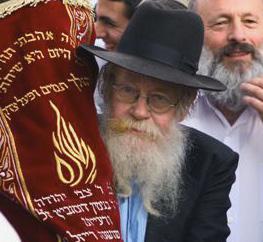
In Remembrance 5
One of Judaism’s great commentators, Rabbi Adin Steinsaltz z”l wrote as many as 60 books, including commentaries on the Talmud, the Torah, Jewish mysticism, Chassidism and Jewish philosophy. He died last week at the age of 83.
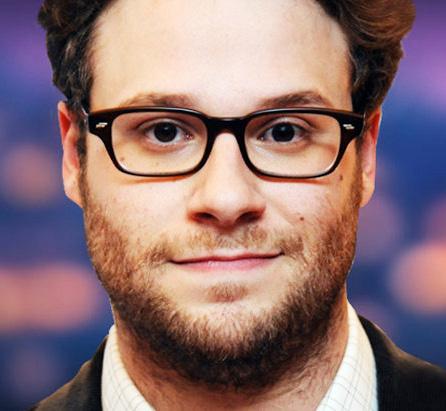
OPINION .......................................... 10
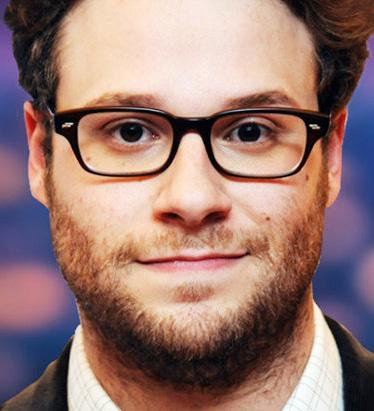
Recently, the actor Seth Rogen spent an hour of prime time savaging his fellow Jews, misrepresenting Jewish history, defaming Israel and Israelis, slandering Judaism. What gives, Seth? wonders Rabbi Benjamin Blech.

Death & Devastation .................... 5
A former Israeli Military Intelligence chief analyzes the massive explosion that shook Beirut last week killing anywhere between 1,000 and 4,000 people and destroying the city’s port.
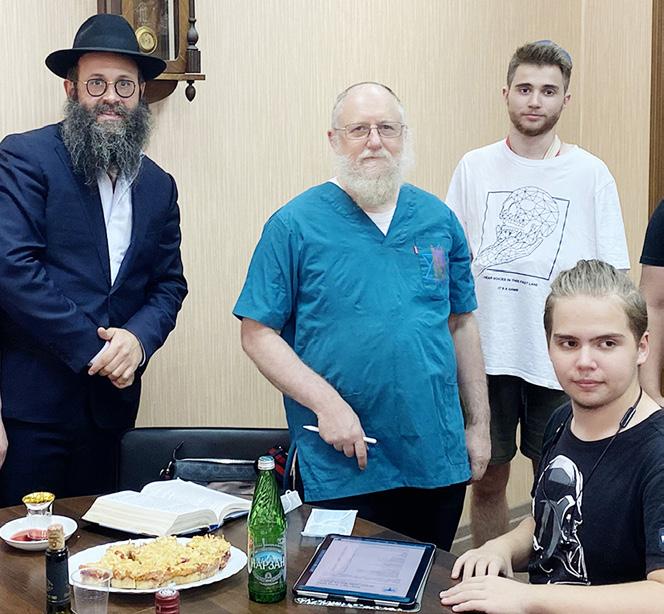
To Russia with Love .................... 12
Russia has only one mohel – one who performs ritual circumcision – who spends his time crisscrossing that vast terrain to make sure every single Jewish male has a bris.

ELECTION 2020 ............................... 8
There was a healthy dose of Trump bashing at a Biden for President fundraiser that focused exclusively on the topic of antisemitism and featured two Jews and a comic actor (also a Jew). And then the talk turned personal.

In the Kitchen ............................... 19
How did “Jewish” cookies end up in a cookbook filled with the food of Icelandic immigrants to the New World? Like the cookies, the story is delicious.
Those who enjoy watching TV won’t be surprised to learn that, over the past decade, Israel has risen to become the third-largest content exporter in the U.S. –just behind the U.K. and the Netherlands. A pretty impressive feat for a tiny country that only just introduced commercial television to its citizens as recently as the ‘90s. It’s clear that Israel is dominating the global television space today. And not even a pandemic can stop the Jewish state from coming out on top. PAGE 14
FRIDAY, AUGUST 14, 2020
Hartford: 7:34 p.m.
New Haven: 7:34 p.m.
Bridgeport: 7:35 p.m.
Stamford: 7:36 p.m.
To determine the time for Havdalah, add one hour and 10 minutes (to be safe) to candle lighting time.





BY BEN HARRIS
Rabbi Adin Even-Israel Steinzaltz, the acclaimed scholar whose landmark translation of the Talmud enabled a vast readership to access one of Judaism’s most canonical texts, died in Jerusalem on Friday, August 7. He was 83.
Steinsaltz’s monumental translation of the 63 volumes of the Babylonian Talmud made the arcane rabbinic debates and folkloric tales easier to comprehend, unlocking the wonders of Talmud study for those lacking a high-level Jewish education. The project took 45 years to complete.
Steinsaltz not only rendered the forbidding Aramaic text into modern Hebrew, but integrated his own commentary into the sparse language of the original, filling in gaps in the text that had previously required deep familiarity with the internal mechanics of talmudic discourse to decipher.
A new English version of the Steinsaltz Talmud by the Koren publishing house, and a free version of the translation available on the website Sefaria, further expanded Steinsaltz’s reach.
“The Talmud was never meant to be an elitist book,” said Arthur Kurzweil, the author of two books about Steinsaltz and a board member of the Aleph Society, which raises funds to support the rabbi’s work. “It was meant to be for everybody. So Rabbi Steinsaltz spent 45 years trying and succeeding to make that happen.”
Described as a once-in-a-millennium scholar, Steinsaltz was renowned for his prodigious intellect and tireless work ethic. He was reputed to put in 17-hour workdays.
Authoring a comprehensive commentary on the Talmud alone put him in a category alongside Rashi, the medieval French scholar whose commentary on the Bible and the Talmud, composed 1,000 years ago, is considered the most authoritative. But Steinsaltz also wrote another 60 books on topics ranging from Jewish ethics to theology to prayer to mysticism. He also helped establish educational institutions in Israel and the former Soviet Union.
Born to secular parents in Jerusalem in 1937, Steinsaltz embraced Jewish practice

as a teenager. Though his father was an irreligious socialist, he sent his son to study Talmud with a tutor at the age of 10.
Steinsaltz’s intellectual gifts were evident early, when he became the youngest school principal in Israel at 23.
In 1965, Steinsaltz founded the Israel Institute for Talmudic Publications, the same year he began his Talmud translation. His work was driven by a desire to educate large numbers of Jews about their heritage.
“Let my people know,” was his favorite slogan.
“The Talmud is the central pillar of Jewish knowledge, important for the overall understanding of what is Jewish,” Steinsaltz told JTA in 2010 on the occasion of the completion of the translation. “But it is a book that Jews cannot understand. This is a dangerous situation, like a collective amnesia. I tried to make pathways through which people will be able to enter the Talmud without encountering impassable barriers. It’s something that will always be a challenge, but I tried to make it at least possible.”
The completion of the translation was accompanied by a global day of Jewish learning connecting 360 Jewish communities in 48 countries. The event has since become an annual affair.
Steinsaltz’s work was long deemed controversial. His Talmud departed from longstanding conventions, introducing punctuation and paragraph breaks, altering the pagination and placing his own commentary in the space around the main text that had previously been the domain of Rashi.
Rabbi Elazar Shach, a leading haredi Orthodox rabbi in Israel, called Steinsaltz a heretic and forbade his followers from reading his works, apparently out of concern for some passages in two works on the Bible that Steinsaltz subsequently agreed to modify. Shach insisted that all of Steinsaltz’s work was heretical, however, another eminent 20th-century authority, Rabbi Moshe Feinstein, approved of the Steinsaltz Talmud. In 1998, Jacob Neusner,
BY YAAKOV LAPPIN
(JNS) A day after Tuesday, August 4, when two enormous blasts ripped through Beirut, flattening the city’s port and causing untold destruction, it was still not possible to grasp the true scope of the calamity, a former Israeli Military Intelligence chief has said.
Speaking by video conference to journalists, Maj. Gen. (res.) Amos Yadlin, who served as former deputy commander of the Israeli Air Force and is now executive director of the Institute for National Security Studies, noted that Israel has offered medical assistance to Lebanon. “This is a terrible, terrible disaster. The big question is how many people are missing. The numbers are between 1,000 to 4,000.”
Analyzing the incidents that led to the explosion, Yadlin said it “started from a small explosion at what looks like a fireworks storage [facility]. And then the big explosion came,” he said, citing the 2,700 tons of reported ammonium nitrate stored at a warehouse at the port’s dock.
Ammonium nitrate “is material used to develop explosives,” he said. “It is also good for agriculture, but the fact that it was there since 2014 is saying that it was not taken for agriculture. The purpose of this storage was for explosives.”
Regarding the question of who owned the warehouse and why the material was there, Yadlin said “this is something I guess that the Lebanese authorities are investigating.”
“Very much like his Iranian masters, [Nasrallah] failed operationally.”
He added that it cannot be proven at this stage that it was a Hezbollah warehouse. If, however, signs emerge
CONTINUED ON THE NEXT PAGE
CONTINUED FROM PAGE 5
a Conservative rabbi and noted scholar of Judaism, published a 250-page book entitled How Adin Steinsaltz Misrepresents the Talmud
Steinsaltz was also criticized for accepting the leadership of a modern-day Sanhedrin, a recreation of the ancient rabbinic body. Steinsaltz resigned the post in 2008 out of concern for potential breaches of Jewish law.
But none of that slowed Steinsaltz’s embrace as an unparalleled scholar of Judaism, both in the Jewish world and beyond. He was awarded the Israel Prize, Israel’s highest cultural honor, in 1998, along with the inaugural Israeli Presidential Award of Distinction, the French Order of Arts and Literature, and a 2012 National Jewish Book Award. He was invited to deliver the prestigious Terry Lectures at Yale University and was a scholar in residence at the Woodrow Wilson Center in Washington. In 2016, he was invited to a private audience with the pope.
Among his best-known works beyond the Talmud translation is The Thirteen Petalled Rose, an introduction to Jewish mysticism first published in 1980. A follower of the Chabad Hasidic movement, Steinsaltz also authored several books on Tanya, one of the group’s core texts. In 2018, he published a translation and commentary on the Five Books of Moses.
Despite his massive intellectual achievements, Steinsaltz often appeared slightly disheveled in public and had a playful streak. Kurzweil recalled an appearance at a Long Island yeshiva at which Steinsaltz encouraged the students to do everything they could to make their teachers’ lives miserable, and even suggested a source book where they could find difficult questions sure to flummox them.
“He’s a troublemaker and he’s got a gleam in his eye at all times,” said Kurzweil, who served as Steinsaltz’s driver during his visits to New York. “He’s up to mischief sometimes. He likes to question everything.”
Long plagued by ill health, Steinsaltz suffered a stroke in 2016 that left him unable to speak.
“Jewish learning is created by the Jews and is also creating the Jews,” Steinsaltz said in 2010. “When you learn, you learn about yourself. So learning one page of the Talmud is equivalent to two or three sessions with a psychoanalyst. That’s why people are interested – Jewish learning is a mirror into our soul.”
CONTINUED FROM PAGE 5
that this is indeed the case, it would form a “very serious allegation against Hezbollah,” which could turn into significant political pressure on it to end its role as a military power in Lebanon and delegate that role to the official Lebanese military, he assessed.
Lebanese journalist Jerry Maher, however, was more certain of where to lay blame for the blast. On Wednesday, he said the blast was a “massacre” and Hezbollah is the prime suspect, said Lebanese journalist Jerry Maher.
Maher, the CEO of Radio Sawt Beirut International, told Saudi Arabia’s Al Arabiya on Aug. 5 that the Lebanese Shi’ite terror group uses the country’s ports “and all the other Lebanese government facilities” to acquire weaponry.
Hezbollah had been using the BeirutRafic Hariri International Airport for this purpose “for years,” said Maher, as well as the Beirut port.
“Today, nobody but Hezbollah is responsible” for the port blast, said Maher. “The corrupt system that allowed [Hezbollah] to use the Lebanese ports for its own objectives is also responsible,” he added.
The Lebanese political system, said Maher, had given up on confronting Hezbollah, “in order to protect their financial, economic and political gains.”
“Since 2014, it has been forbidden to even say one word to Hezbollah, as if Hezbollah is a religion or a sect not connected to reality or this country,” said Maher.
Those that criticize Hezbollah’s policy are labeled “sectarians,” he added, while
anyone that criticizes the group’s acts of terror are “agents,” “terrorists,” “criminals” or “murderers.”
“They banish you from the country, they accuse you of incitement and threaten to kill you,” he said.
Lebanon’s political system, said Maher, had surrendered to Hezbollah, “and unfortunately, today we see the result.”
Ammonium nitrate has been used before by Hezbollah operatives abroad in planning out a terror attack. In 2015, a Lebanese-Canadian man tied to Hezbollah was convicted in Cyprus after he was found in possession of 8.5 tons of ammonium nitrate in his basement. That same year, the Mossad told authorities in the U.K. of four properties in North West London that contained three tons of ammonium nitrate belonging to Hezbollah.
Earlier this year, the Mossad again tipped off Germany on Hezbollah’s activities on its soil, including warehouses in the south of the country where Hezbollah stashed hundreds of kilograms of ammonium nitrate.
“This is another blow to the Lebanese state that was already [suffering] a huge crisis,” said Yadlin. The factors that created this crisis included severe economic, financial, political and social problems.
Even prior to the blast, tensions were rising in the country. In that context, he explained, “what is important is that Hezbollah is using civilian neighborhoods to store weapons. They use civilian neighborhoods as shields for their activity. There are elements in Lebanon and the international community calling on
Hezbollah to stop hiding behind the excuse that it needs these weapons against Israel.”
Yadlin pointed out that Israel hasn’t attacked Lebanon in 14 years, and that the two countries have “no real dispute” over borders. Even a disagreement over offshore gas-drilling rights in the Mediterranean Sea “was already brokered by the Americans.”
Hezbollah, he said, is looking for excuses to keep the conflict going with Israel.
“This is a very good time for Lebanese to tell Hezbollah: ‘We have so many other problems, give us a break from your excuses for Iranian interests that running behind you.’ The issue starts with Iran sending advanced weapons to Hezbollah via Syria.”
“This is another blow to the Lebanese state that was already [suffering] a huge crisis.”
More broadly, the Iranian terror axis of which Hezbollah is part of is under great pressure, said Yadlin. Factors like America’s “maximum pressure” campaign on Tehran–added to economic dysfunction, collapsing oil prices, Israel’s campaign to roll back Iranian military entrenchment in Syria, the coronavirus pandemic, the recent assassination of Quds Force Maj. Gen. Qassem Soleimani–have all contributed to growing discontent among the general populace.
“The Iranians are continuing, despite all of the difficulties, with two strategic efforts: come as close as possible to nuclear

capability and to have hegemony in the Middle East,” stated Yadlin.
So far, Iran has failed operationally to deter Israel, and Syria is focused on what remains of its civil war in Idlib, so Hezbollah chief Hassan Nasrallah decided to step up and attempt to “revenge any Israeli activities in Syria if Hezbollah terrorists will be killed as well. This is what happened last week, and Nasrallah decided to act,” he summed up.
Nasrallah attempted to calibrate his actions so that they would on the one hand kill a few Israeli soldiers, but on the other avoid all-out war. “Very much like his Iranian masters, he failed operationally,” said Yadlin.
Now, in the aftermath of the Beirut explosion, Nasrallah has found his excuse to “remove this issue from the agenda, especially if this warehouse was a Hezbollah warehouse,” he said. “And there are already a lot of voices in Lebanon that blame Hezbollah for the financial difficulties. There are new sanctions on Lebanon because of Hezbollah. The
banking system is collapsing because of Hezbollah. Every Lebanese knows that Hezbollah is the strongest military power in Lebanon with a lot of political influence.”
With all of these multiple crises in Lebanon, joined by the latest disaster in Beirut, some Lebanese civilians will likely be thinking “why do they need another dimension of destruction that will come from Nasrallah attacking Israel? So I think he will find a ladder to come down from the tree,” said Yadlin.
Asked whether the Beirut disaster will set the stage for the International Monetary Fund to provide major assistance to Lebanon, Yadlin said that remains unclear. “It could on the one hand say, ‘Let’s put aside everything and help Lebanon.’ On the other hand … [the blast] may help those who say Hezbollah is the problem, and that this was a Hezbollah warehouse. The IMF could say ‘until you move Hezbollah away from its positions that they took in Lebanon, we are not helping you despite the disaster.’”
BY LILACH SHOVAL AND ARIEL KAHANA
(Israel Hayom via JNS) Israel has offered Lebanon humanitarian aid following a huge explosion in Beirut on Tuesday that killed at least 78 people and left more than 4,000 injured.
Israeli Prime Minister Benjamin Netanyahu has approved medical and humanitarian aid to Lebanon and has instructed National Security Council head Meir Ben-Shabbat to speak with U.N. envoy Nickolay Mladenov to determine additional ways in which Israel can help, according to a statement by the Prime Minister’s Office.
Israel Defense Forces Spokesman Brig. Gen. Hidai Zilberman tweeted: “Humanitarian aid to Lebanon–now is the time to rise above any conflict.”
IDF Lt. Col. Avichay Adraee, head of the Arabic division of the IDF Spokesperson’s Unit, tweeted: “Under instructions from the defense minister and the foreign minister, Israel has reached out to Lebanon via international diplomatic officials and offered the Lebanese government medical humanitarian aid. Israel has much experience in these areas and has proven it by the humanitarian delegations it has sent throughout the world in recent years.”
Adraee echoed Zilberman’s call to “rise above any conflict.”
Israeli President Reuven Rivlin said on Tuesday that Israel “shares the pain of the Lebanese people in this time of disaster and extends its hand to help at this difficult time.”
Meanwhile, Israel is making preparations to take in UNIFIL personnel wounded in the explosion. As of Tuesday evening, the plan was for the wounded U.N. force members to be taken to the border crossing at Rosh Hanikra and treated at Rebecca Sieff Hospital in Tzfat.
Israeli Welfare Minister Itzik Shmuli tweeted: “The heart breaks at the difficult images coming out of Beirut. Our heart is with the Lebanese people at this difficult time and we will do everything we can to help. When tragedies like these happen, even the most tense border cannot make us forget that we’re all human beings.”
As of Tuesday night, Egypt, Jordan, Turkey and Qatar had also offered to provide humanitarian aid to Lebanon.
This article first appeared in Israel Hayom.















BY RON KAMPEAS
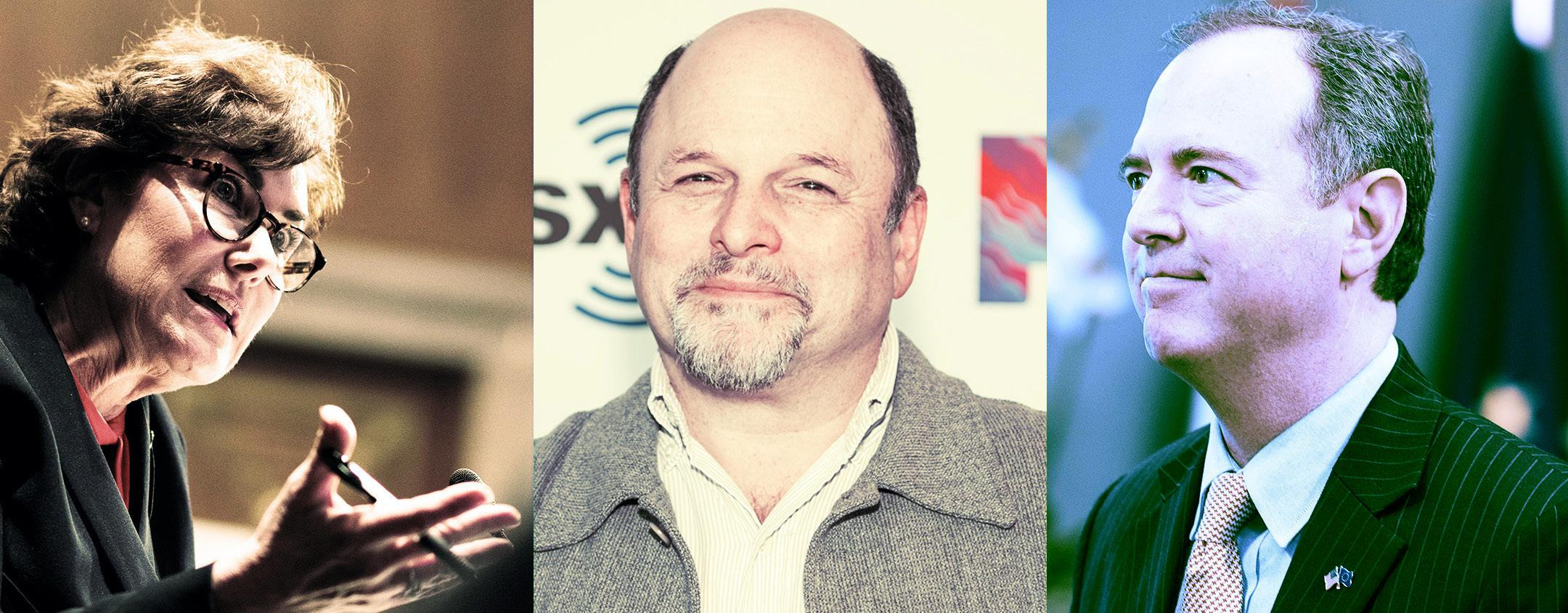
(JTA) – A fundraiser for Joe Biden on Monday night, Aug. 3, was billed as a “Virtual Conversation on Anti-Semitism” with three marquee speakers: Rep. Adam Schiff, the California Democrat who chairs the U.S. House of Representatives Intelligence Committee; Nevada freshman Sen. Jacky Rosen; and Jason Alexander of “Seinfeld” fame.
The conversation, co-organized by the Biden campaign and the Democratic National Committee, included plenty of critique aimed at President Trump, whom liberal Jews accuse of stoking anti-Semitism in the U.S. – but it also veered into poignant territory at times, offering a rare window into the politicians’ personal Jewish identities. Biden did not attend.
Alexander, who moderated the talk, invited Rosen (who last year co-founded the Senate Bipartisan Task Force for Combating Anti-Semitism) and Schiff (who spearheaded Trump’s impeachment proceedings last year) to draw a direct line between Trump’s rhetoric and the rise in antisemitism during his term, evidenced in attacks such as the Pittsburgh Tree of Life and Poway synagogue shootings. Trump’s defenders counter that by saying the president forcefully and unequivocally condemned anti-Semitism after the Tree of Life attack.
“We have to assume that our president has exacerbated the problem. Adam, he typically refers to you as ‘Shifty Schiff,’ so he obviously plays into anti-Semitic tropes and stereotypes,” Alexander said. “How much do you hold him, and frankly the Republicans that echo and abet him, responsible for these increases in the amount of hate activity that we’re seeing?”
Schiff said Trump was ultimately responsible for a rise in bigotry, noting his recent appeal to “suburban housewives” that he would protect their neighborhoods from interlopers.
“The president has a unique capability to set the tone, nationally, and he has set the most ugly, bitter, divisive and sometimes racist tone of any president, certainly in my lifetime,” Schiff said. “And, you know, people follow that.”
Rosen said education was critical to countering antisemitism and referred to the Never Again Act, which funds Holocaust education, and which she helped pass this year. Holocaust survivors were dying off, she said.
“It’s important that we tell those stories, because if we don’t learn from them, if we don’t shine a light to educate, then we’re
lost,” Rosen said.
Alexander asked Schiff to comment on the false claim proliferating on the far right that he is in cahoots with the liberal Jewish billionaire, George Soros.
“The main one that’s been circulated is that George Soros and I are related because my sister is married to his son,” he said.
“When that first caught on like wildfire, I called my brother and I said ‘Dan I’ve got some good news and some bad news. The good news is we have a sister. Why didn’t Mom tell us? And the even better news is, she married really well.’”
Jewish critics of Trump point to several examples that they say proves he either has a blind spot on antisemitism. Trump has told Jewish donors that he “doesn’t want your money,” has said Jews who vote for Democrats are disloyal to other Jews and posted an ad during the 2016 campaign superimposing Hillary Clinton’s face on a pile of money and a six-pointed star. His first statement on the Holocaust as president omitted any mention of Jews.
Biden rolled out his campaign in April 2019 with a video in which he said he was spurred to run after Trump equivocated in condemning the deadly neo-Nazi violence at a 2017 March in Charlottesville, Virginia. Biden often cites the rise of anti-Semitism.
Alexander asked Schiff and Rosen what he should tell politically conservative Jewish friends who say Trump has been good for Israel. Republicans “paint any criticism of Israel as anti-Semitic,” Rosen said. “We can criticize our own government, we can criticize our spouse or family or kids, it doesn’t mean you don’t love them. It doesn’t mean you shouldn’t have a robust
conversation.”
Tickets to the event, made public on Monday by Jewish Insider, were at a minimum $250, although donors could check amounts up to $50,000. About 400 people called in, raising $200,000. (JTA obtained a phone call-in number, so a reporter was able to hear, if not see the proceedings.)
Alexander also asked Schiff and Rosen to personalize their Jewish experience, and that’s when the conversation took a turn.
“Do you know how much your bar or bat mitzvah actually cost, within five thousand dollars?” Alexander asked at one point.
Rosen, a former synagogue president who was bat mitzvahed as an adult, knew but would not tell. Schiff said he did not know, except for the fact that his cost less than his older brother’s did.
Did they remember “even one line” of their haftarah? (No.) “I remember having my voice crack,” Schiff said. Had they ever not fasted on Yom Kippur? (Yes.) Had they ever built a sukkah? “Yes!” said Rosen, sounding surprised she was able to answer in the affirmative. (Schiff was a “no.”)
What was their favorite Chanukah present? “I remember my favorite present when I was a kid,” Schiff said. “It was this self-winding car, you pull back a little lever and it would scoot across the floor.”
“We had the piano bench,” Rosen said. “That’s what that’s where all the Chanukah presents were, so I just remember always going under… opening presents under the piano.”
After recalling how he set a favorite Gumby doll’s head alight with a menorah flame, Alexander then asked how their
Jewishness led them into public service. Neither answer had anything to do with Israel or with religious learning.
Rosen recalled her grandmother discussing the “old country” and the sense of want she attached to it, and how her “bubbe” inculcated in her the idea that she should always reserve something for those less fortunate. For Schiff, it was education.
“My father, who is 92 and is watching us this evening, telling me how, the one thing they can’t take away from you is your education,” he said.
Alexander also asked them to describe personal experiences of antisemitism. Both their answers typified the experience of their generation – Rosen is 63 and Schiff is 60.
“I don’t have an actual memory of it but a memory of a story,” Rosen said.
Her parents “took me to Florida I think must have been about 1960 or so, and we were swimming in a pool, and somebody came up to my mom and said she had to take her daughter out of the pool,” Rosen said. “‘She’s a dirty Jew, you have to get out of the pool’.”
Schiff described the experience of a pastor’s candid antisemitism, expressed because the pastor did not realize Schiff was Jewish. “Look at the Jews, they don’t have their spiritual house in order, and they say ‘never again’ but if they don’t get their spiritual house in order, it will happen again,” Schiff quoted the pastor as saying.
“It gave me a window into how much antisemitism there is,” he said, adding that he informed the pastor he was speaking to a Jew.
BY RABBI BENJAMIN BLECH
Dear Seth,
I know that you’ve never claimed to be a historian, a theologian, a philosopher or a scholar. You’re a famous actor and comedian. Until two weeks ago, you pretty much stuck to the areas of your expertise. I can’t blame you for going on Marc Maron’s podcast to plug your new movie – after all Maron has more downloads than any cable show has viewers. Your new film, An American Pickle, is a pretty far out fantasy with a Jewish “hook” that might even have an important message. It’s the story of a simple Jewish man named Herschel Greenbaum who works in a pickle factory in Brooklyn, falls into a vat of brine and stays there perfectly preserved for 100 years until he comes back to life to be with his great-great-grandson Ben in contemporary Brooklyn. I have no inkling how you developed the idea but to my mind it certainly would make for an interesting opportunity to focus on the link between generations as well as the mystical and miraculous reality of Jewish survival.
Seems that was wishful thinking on my part. Seth, you spent an hour of prime time with many millions of listeners savaging your fellow Jews, misrepresenting Jewish history, defaming Israel and Israelis, slandering Judaism and, in your own words, testifying that “religion is silly” and “for the preservation of the Jewish people it [Israel] makes no sense.”
I can’t help but wonder how your grandparents who taught you about the reality of antisemitism would feel about your performance if they could have been “pickled” and returned to life like the hero of your film. What I can tell you though is the absolute glee of Jew haters in the aftermath of your hour of shame. Mondoweiss, a left-leaning news website co-edited by journalists Philip Weiss and Adam Horowitz – two Jewish founders who describe themselves as progressive and anti-Zionist – reacted to your statements with the bold headline “Israel Is Ridiculous, Antiquated and Based on Ethnic Cleansing, Seth Rogen Says, But He’s Afraid To Tell Other Jews.” But obviously not afraid enough to prevent him from sharing his views on the most listened-to podcast in the world.
Seth, I don’t mean to swell your ego
but in a celebrity-driven culture such as ours, what you say matters, and what you claim as truth can unfortunately influence the thinking of countless people. You have an obligation to think before you speak and to have some familiarity with facts before you libel people. How terrible, you shared with millions, that you were “fed a huge amount of lies about Israel my entire life! They never tell you that – oh by the way, there were people there. They make it seem like it was just like sitting there, like the (obscenity) door’s open they forget to include the fact to every young Jewish person.”
I understand that you’re not a scholar, Seth. It seems that it comes as a shock to you that there were in fact people other than Jews living in Palestine. Let me explain that to you how that happened.
We just finished commemorating Tisha B’Av, the ninth day of the Hebrew month of Av. For thousands of years Jews around the world have fasted and observed a day of mourning. We weep for what we once had. Our ancestors settled in the land God promised to Abraham in biblical times. There 12 tribes became a nation. There we had prophets who taught us as well as the rest of the world how to live lives of holiness, of justice and righteousness. And there we built a temple to the Almighty in order to bring His presence down to earth and His values and wisdom to serve as beacon for all mankind.
It was on Tisha B’Av that the Babylonians destroyed that temple and sent us into our first exile. But we wept by the
rivers of Babylon and we would not forget our homeland. We returned and rebuilt. We saw the glory of yet another temple. And once again we learned that those who serve as the conscience of the world will be hated. The second Temple was destroyed by the Romans and in a striking coincidence – or as we see it the serendipity of God’s management of the universe – the date of the tragedy was once more the ninth of Av. Again we were forced into exile.
History had a remarkable sense of irony. The first Crusade was declared by Pope Urban II on July 20, 1095, leading to the death of 1.2 million Jews. The Hebrew date? Tisha B’Av. In 1492, the Golden age of Spain came to a close when Queen Isabella and her husband King Ferdinand ordered that the Jews be banished from the land “for the greater glory of the church and the Christian religion.” The edict of expulsion gave the Jews exactly four months to the day to put their affairs in order and leave the country. The Hebrew date on which no Jews were allowed any longer to remain in the land where they had enjoyed welcome and prosperity for centuries? Of course, Tisha B’Av.
And yet Jews never despaired. We never gave up on our “silly religion” or our claim to our national homeland – a place, Seth, you seem to think we don’t need because we can rely on other safe havens in spite of our history of oppression, exile and Holocaust.
When Dr. Chaim Weizmann, later to become the first president of the state of Israel, met with Lord Balfour, former prime minister of UK, and explained to him the Zionist idea, Balfour asked him why the Jews were opposed to the Uganda Plan as a substitute for Palestine. Wiseman responded: “Lord Balfour, suppose that I would offer to you Paris instead of London, would you accept?” “But,” Balfour said, “Dr. Weitzman, London is ours.”
“That’s true,” Wiseman answered, “but Jerusalem was ours when London was still a swamp.”
Seth, maybe you really should study a little more about the history of your people. Yes, other people were in Palestine. But even a Jew-hating world somehow miraculously recognized, first by way of the Balfour declaration and then with United Nations recognition, that amidst a sea of
CONTINUED ON THE NEXT PAGE
Vol. 92 No. 33
JHL Ledger LLC Publisher
Henry M. Zachs Managing Partner
Leslie Iarusso Associate Publisher Judie Jacobson Editor judiej@jewishledger.com • x3024
Hillary Sarrasin Digital Media Manager hillaryp@jewishledger.com
EDITORIAL
Stacey Dresner Massachusetts Editor staceyd@jewishledger.com • x3008
Tim Knecht Proofreader
ADVERTISING
Donna Edelstein Senior Account Executive NonProfit & JHL Ledger LLC Media Marketing donnae@jewishledger.com • x3028
Joyce Cohen Senior Account Executive joycec@jewishledger.com • (860) 8369195
Joan Gaffin Central Mass. Account Executive joang@jewishledger.com • (508) 4146210
Trudy Goldstein Account Executive (860) 5731575
Amy Oved Account Executive amyo@jewishledger.com • (860) 8418607
PRODUCTION
Elisa S. Wagner Creative Director elisaw@jewishledger.com • x3009
Christopher D. Bonito Graphic Designer chrisb@jewishledger.com
ADMINISTRATIVE
Judy Yung Accounting Manager judyy@jewishledger.com • x3016
Howard Meyerowitz Office Manager howardm@jewishledger.com • x3035


Samuel Neusner, Founder (19291960) Rabbi Abraham J. Feldman, CoFounder and Editor (19291977) Berthold Gaster, Editor (19771992) N. Richard Greenfield, Publisher (19942014)
PUBLISHER’S STATEMENT Periodicals postage paid at Hartford, CT and at additional mailing offices.
Jewish Ledger (USPS # 131 150) is published 24 times per year by JHL Ledger LLC from our office at: Jewish Ledger 40 Woodland Street Hartford, CT 06105 Phone (860) 2312424 Fax (860) 2312485 Toll Free 18002866397
Postmaster, send address changes to: Jewish Ledger 40 Woodland Street Hartford, CT 06105
Subscriptions: $36 yearly, $9 Twelve Issue Institutional subscription. Send name, address, zip code with payment. Editorial deadline: All public and social announcements must be received by Tuesday 5 p.m. 10 days prior to publication. Advertising deadline: Wednesday noon one week prior to issue. Advertisers should check ad on publication. JHL Ledger LLC and Jewish Ledger shall not be liable for failure to publish an ad for typographical error or errors in the publication except to the extent of the cost of the space which the actual error appeared in the first insertion. Publishers reserve the right to refuse advertising for any reason and to alter advertising copy or graphics deemed unacceptable. The publishers cannot warrant, nor assume responsibility for, the legitimacy, reputability or legality of any products or services offered in advertisements in any of its publications. The entire contents of the Jewish Ledger are copyright © 2020. No portion may be reproduced without written permission of the publishers. JHL Ledger LLC also publishes Jewish Ledger MA, All Things Jewish CT, and All Things Jewish MA. www.jewishledger.com
BY RAFAEL MEDOFF
With her recent resignation from The New York Times, Bari Weiss joined a small but distinguished group of American Jews who have resigned in protest from positions of stature, choosing to sacrifice their selfinterest for the sake of principle.
Weiss, a prominent commentator on Jewish affairs and antisemitism, was hired by the Times three years ago to provide a more centrist perspective within an editorial staff that mostly leans further to the left. In her letter of resignation, Weiss reported that she had been the target of “constant bullying by colleagues who disagree with [her] views.”
Weiss’ harassers called her “a Nazi and a racist” and harangued her for “writing about the Jews again.” In the Times’ internal discussion forums, she was “openly demeaned” by co-workers who said she “needed to be rooted out.” Even staff members who were “perceived to be friendly” with Weiss found themselves “badgered” for associating with her.
The Weiss resignation brings to mind a handful of others who have sacrificed
CONTINUED FROM PAGE 10
their professional positions for matters of conscience.
One was Mark Siegel, a former executive director of the Democratic National Committee, who served as President Jimmy Carter’s liaison to the American Jewish community. In 1978, Siegel was assigned the task of convincing Jews not to oppose Carter’s planned sale of sophisticated
best-fighter-bombers in the world.” A few days later, Siegel submitted his letter of resignation and shared it with the press. In an interview with The Washington Post, Siegel said that resigning in protest was the obvious step. “Whenever you’re in any kind of position in life and there are things you cannot do, you don’t do them,” he said.
Walter Reich, executive director of the
Bari Weiss’ resignation brings to mind a handful of others who have sacrificed their professional positions for matters of conscience.
military aircraft to Egypt and Saudi Arabia.
National Security Council briefers told Siegel that the aircraft were intended for civilian purposes, but when he shared that information with the audience at a United Jewish Appeal meeting, he was roundly booed. Surprised by that hostile reception, Siegel checked with the Defense Department and was informed that the aircraft in question were, in fact, “the
United States Holocaust Memorial Museum, felt the same way. The “thing” he could not do was escort Yasser Arafat on a tour of the museum. State Department official Aaron Miller came up with the Arafat tour idea in 1998, as a way of trying to improve the terrorist leader’s image in the eyes of the Israeli public. “To many Israelis, among the worst of the Palestinian transgressions was Holocaust denial,” Miller later wrote. “What better way to counter Holocaust denial than by having the alleged denier in chief visit the museum?”
apologized to him. In his oped, Miller did not even acknowledge the price that Reich was forced to pay for Miller’s actions.
Andrew Tarsy’s experience had a better ending. Tarsy, the New England regional director of the Anti-Defamation League (ADL), put his job on the line in 2007 by publicly dissenting from the national ADL’s position regarding Turkey’s mass murder of 1.5 million Armenians. The official ADL line was to refrain from calling it genocide for fear of offending the Turkish government.
Despite the risk to his job and possibly career, Tarsy publicly acknowledged that the slaughter of the Armenians was genocide. For the sin of telling the truth, Tarsy was fired the very next day. “I was not the least bit surprised,” Tarsy told me recently. “But I asked myself, how can we sustain a recognizable moral tradition and presume to lead on any subject of significance in Jewish life or American civic life while being complicit in the denial of a genocide? I knew I could not.”
An outcry in the Jewish community resulted in Tarsy’s reinstatement, however; and the national ADL eventually changed its position and accepted the historical reality of the Armenian genocide.
newly created Arab countries Jews had a right to at least a tiny sliver of land they could call their own, harking back to thousands of years of linkage, physical, spiritual and emotional.
The following story is probably apocryphal but its message is a truth, Seth, that should speak directly to your heart. Napoleon was once walking through the streets of Paris on Tisha B’Av. As he passed the synagogue he heard the sounds of crying and mourning. “What’s this all about?” Napoleon asked. An aide explained that the Jews were mourning for the loss of their temple. “When did this happen?” Napoleon asked. The agent replied, “About 1700 years ago.”
Napoleon was incredulous. “Certainly a people which has mourned the loss of their temple for so long,” he said, “will merit to see it rebuilt.”
This Tisha B’Av, I wept for the two temples destroyed and the many other tragedies that were the result of horrors inflicted on us by others. I cried for the insensitivity, the thoughtlessness and – I hate to say it – the stupidity of our own people. How painful that post-Holocaust Jewry fails to recognize that suicide may be just as destructive as murder. Seth, would you allow me to guide you and to help you find out why you are so gravely mistaken about Israel, about Judaism and about the Herschel Greenbaum you really are in the depths of your soul?
I would welcome the opportunity to learn with you.
Respectfully yours, Benjamin Blech
This article is reprinted with permission of aish.com.
Rabbi Benjamin Blech, a frequent contributor to Aish, is a professor of Talmud at Yeshiva University and an internationally recognized author, educator, religious leader, and lecturer.
The invitation was first cancelled after a backlash, but then extended again. Dr. Reich was ordered by the museum’s leadership to welcome Arafat and accompany him on the tour. “I refused,” Reich later recalled. “I told them the museum mustn’t be used as a political tool and I wouldn’t be part of that. I said it was a matter of conscience in a museum of conscience. I knew that such a refusal constituted an act of resignation. But I felt that the principle of protecting the museum – and, more importantly, the memory of the Holocaust dead – was more important than holding onto my job.”
Reich lost his job. Ironically, Arafat backed out of the tour at the last minute, when the eruption of the Monica Lewinsky scandal diverted the Washington press corps on the morning of his planned visit to the museum – thus confirming that he was interested only in the photo-op, not actually learning about the Holocaust, exactly as Reich had warned.
In an oped 12 years too late to save Reich’s job, Aaron Miller admitted that his Arafat plan was “one of the dumbest ideas in the annals of U.S. foreign policy,” but only because he failed to foresee that it would set off a storm of protest. Reich told me in an interview that Miller has never
Bari Weiss’ high-profile clash with The New York Times will no doubt make her unwelcome in some segments of the media world, and complicate her professional prospects. But whatever Weiss’ future holds, one thing is certain. She has already ensured that she will have what Mark Siegel, Walter Reich, and Andrew Tarsy earned with their principled resignations: a clear conscience.
This essay was originally published in The Algemeiner and is reprinted by permission of the author.
Dr. Rafael Medoff, the director of the David S. Wyman Institute for Holocaust Studies, is a historian and author of more than 20 books about Jewish history, Zionism and the Holocaust.
BY CNAAN LIPHSHIZ
(JTA) – The religious Jewish world has created some unusual jobs, from shofar makers to etrog pickers to mashgichim –kosher certifiers whose job is literally to watch others cook.
But one of the more bizarre surely belongs to Dr. Yeshaya Shafit, who is Russia’s only mohel, or professional circumciser, for adult men.
Shafit, a 56-year-old surgeon, travels across that vast country to circumcise about 10 Jewish adults every week, splitting his time between Russia and the United States. A bris or brit milah, is typically performed on 8-day-old babies, as dictated by Jewish law. Adult circumcision is common for Orthodox converts to the religion and others who become more religious later in life.
In Russia, the adult demand is very high because many Jewish men were denied the procedure during the time of the communist Soviet Union, when Jewish religious practice was effectively outlawed. Throughout the country, circumcision was not allowed unless it was required by a medical condition.
Russia’s chief rabbi, Berel Lazar, a Chabad-Lubavitch leader who grew up in Italy and settled in Russia in 1987, remembers a time in his new land when performing a bris required being part of an illegal conspiracy.
“There was a clandestine underground. You’d show up at a designated time, get picked up in a car, blindfolded and taken to an apartment in Moscow where the mohel would wait,” said Lazar, who helped facilitate many of these procedures. The blindfold was to prevent men who were circumcised from later divulging, willingly or otherwise, the location and identity of those who helped circumcise them, the rabbi explained.
The conditions “were not great for surgeries,” Lazar said, “yet dozens of people asked to be circumcised.”
Fortunately, “nothing bad happened during those clandestine britot,” he added. But as soon as the Soviet Union fell, “it was clear that we needed to improve conditions, and that included hiring an experienced, talented and motivated surgeon for this position.”
The procedure is much more complicated for adults, requiring a skilled surgeon who is qualified to administer

anesthesia and perform medical interventions if complications arise. Mohels who perform infant circumcisions are often not doctors.
So, in 1990, Lazar hired Shafit, a Russia native who moved to Israel in the 1980s. Shafit spent time as a hand surgeon at Hadassah Hospital in Jerusalem, but returned to Russia to work under Lazar and as a representative of the Brit Yosef Yitzchak charity, an international organization affiliated with Chabad. Founded in 1989, the group facilitates free circumcisions for Jews around the world.
Before the fall of the Berlin wall, Shafit would perform the circumcisions during his vacations. It’s a tough job involving much travel and time away from his wife and two children living in Philadelphia, where the family had moved about a decade ago in connection with the higher education of his children.)
Now Lazar’s Federation of Jewish Communities of Russia, a nonprofit that is the main organization in that country’s Jewish community of about 250,000, keeps a permanent clinic for circumcision in Moscow, where most Russian Jews live.
But Russia, whose land area is nearly twice that of the United States, has many far-flung Jewish communities, including in Kaliningrad in Russia’s far west and
Vladivostok, opposite the Japanese shoreline.
His travel expenses are covered by Chabad emissaries who invite him over to perform operations or by Lazar’s office. And Shafit sees the work as a worthy cause.
“It’s like a vaccine for a person’s sense of identity,” he said. “Once you do it, that man will never forget who he is.”
Shafit has circumcised at least 7,000 Russian men since entering his post, with some of the procedures conducted at clinics and hospitals. Rabbis in each city – typically emissaries for the Orthodox Chabad movement, the largest organized Jewish group in Russia – line up several candidates.
Other times Shafit uses more unusual settings: apartments, synagogue back rooms or even a rabbi’s office.
For the more remote communities without a devoted clinic, Shafit came up with a cheap and hygienic solution: foldable massage tables.
“Economic, easily stowed, designed to be cleaned to sterility. Huge improvement,” said Shafit, a laconic interlocutor who during an interview showed a preference to discussing logistics over emotions or ideology. “You’ll find one in the storage room of most Russian provincial synagogues today.”
These arrangements were of no use during the coronavirus crisis, which hit when he was visiting his family in the U.S. He was kept out of Russia for four months due to the country’s emergency measures. When he was finally allowed to reenter, Shafit had to self-isolate for two more weeks.
Meanwhile, Sergei Chernovol, a 37-yearold man who learned that he is Jewish only two years ago, was “climbing the walls” waiting for Shafit to travel to Chernovol’s hometown of Rostov-on-Don in western Russia.
“I made the decision, picked the date for March 27 – and then everything was canceled indefinitely,” said Chernovol, a renovations contractor who belongs to the Chabad congregation in Rostov and discovered his Jewishness after digging into the history of his maternal relatives.
The waiting was “devastating,” Chernovol said with tears in his eyes during a recent video interview.
His chosen date was the 100th anniversary of the death of the fifth spiritual leader of Chabad, Sholom Dovber Schneersohn, who died in Rostov. Two other members of the congregation were supposed to be circumcised at the end of an event commemorating Schneersohn’s passing.
Shafit finally made it to Rostov, where he circumcised Chernovol and the two others on July 27.
To Chernovol, the sense of urgency stemmed from the Hebrew-language meaning of the term brit milah – its literal translation is “pact of circumcision.”
“Two years after reconnecting with my Jewish identity, I had already made the pact in my mind and my soul,” Chernovol said. “But to move on and live the way I’m supposed to live, I still needed to do the actual milah.”
Getting off Shafit’s operating table was “a great relief, like a weight had been lifted and an obstacle has been cleared,” he added.
“[The circumcision demand] is a symbol to how Russian Jews are connected to Judaism even after decades of repression,” Lazar said, “and the sacrifices they’re willing to make to establish that connection.”
How can a young person make a positive difference in the world during a time of pandemic?
That was the question two West Hartford boys asked themselves as each individually mulled over ideas for suitable “mitzvah projects” to engage in as they prepared to celebrate becoming bar mitzvah.
“My son, Adam, initially wanted to do something related to baseball,” says Monica Gold, “but when the season was canceled because of the coronavirus, Adam had to really think outside the box. He got an idea from my sister, Robin, who lives in New Jersey, who had purchased a set of ‘happy birthday’ lawn letters and was setting them up at her oldest son’s best friend’s house as he was the first birthday being celebrated during the quarantine with a drive-by birthday parade. We realized that not only was this a beautiful way to recognize someone’s birthday during this time but, by renting out the letters, we could raise money for an important cause.”
Before long, Adam and his family were “renting” the birthday lawn letters for $25 a pop, setting them up on the recipients’ lawns after dark so that they would wake up to a welcome surprise. All proceeds were donated to the West Hartford Food Pantry
and Jewish Family Services Anja Rosenberg Kosher Food Pantry.
Kicked off on Memorial Day via social media, the signs became so popular that the Gold family eventually purchased three sets of birthday letters and one set of Mazel Tov letters. Adam had 50 booking in June and donated a split of the $1400 to both food pantries. By mid-June, he had more than close to 60 book scheduled for the remainder of the summer.
“It has been so amazing knowing that people that don’t have food are now able to get the food that they need because of the money that I’ve raised,” says Adam, who will celebrate his bar mitzvah later this year.
The true impact of his mitzvah hit Adam when he handed over the first checks to the two food pantries, says his mother. “Adam had no idea how many people come through the food pantries each week and how much he will help those with food insecurities,” she says.
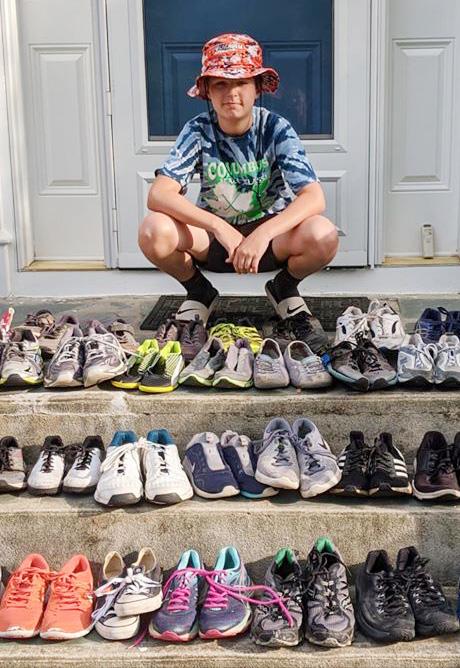
Like Adam, Zach Gerken also had something sports-related in mind for his bar mitzvah project. Then earlier this year, his mother Jonna Gerken noticed a sign for a sneaker collection tacked to a board at the Mandell JCC in West Hartford. Monies collected from sale of the sneakers would benefit the Jessie’s Community Garden initiative, which honors the life of Jessica Lynn Kostin who died unexpectedly in 2010.
“We decided this was a win-win,” says Jonna. “I had hoped Zach would gain some humility in realizing how much we have and how such a seemingly small mitzvah could have such a large impact.”
There are 16 Jessie’s Community Gardens in Greater Hartford, each one donating at least 75% of produce harvested to local organizations, such as food pantries.
“I was amazed and humbled by the generosity of all our neighbors, friends and strangers,” says Jonna. “I’m still getting messages wondering if we are collecting.”
The sneaker collection was initiated by PJ Library of Greater Hartford as part of the JCC’s ‘Reduce, Reuse, Recyle’ Tu Bishvat service project, working with ‘Got Sneakers’ recycling organization.
“It was a good project,” says Zach, who collected more than 120 pairs of sneakers, “because we are helping people and the earth, keeping the sneakers out of landfills.”
Zach, who was to have celebrated becoming a bar mitzvah this past May, will mark the occasion via Zoom this summer.


860.333.9032 2280 Berlin Tpk. Newington, CT (In the MedCare Express plaza-use side entrance) newington@finefettle.com

With the beginning of a tumultuous new decade, there have been some silver linings – it’s pretty clear that Israel is dominating the global television space today. Not even a pandemic can stop Israel from coming out on top.
BY BRANDON SCHUSTER
It’s no secret that for more than a decade now, Hollywood has turned toward Israel to look for new show formats that could be adapted well for English-language audiences. Award-winning hit series adapted from Israeli shows, like HBO’s In Treatment and Showtime’s Homeland, have helped Israel become the third-largest content exporter in the U.S. over the past decade, just behind the U.K. and the Netherlands, an incredible and unlikely feat for such a small country, and one that only just introduced commercial television to its citizens as recent as the ‘90s.
Successful U.S. series with major Israeli ties – including Netflix’s Unorthodox and HBO’s Euphoria – recently received a slew of Emmy nominations. Unorthodox landed the coveted nomination for best limited series and both shows saw their leading actresses, Shira Haas and Zendaya, nominated alongside major stars.
Yet when Israeli television is mentioned today, one of two shows usually follows in the conversation: Fauda or Shtisel. These shows have become bona fide and critically adored hits on Netflix, well before the pandemic. In particular, the global success of Shtisel, five years after the show first aired in Israel, has led the beloved series about a haredi Orthodox family to be renewed for a new season that is currently shooting in Israel.
So what is it about Israeli shows that are so appealing and winning over millions of viewers from around the world? Even with smaller budgets to work with, Israeli series offer a unique cinematic appeal that most other television shows don’t have. The lack of budget has allowed for more focus on incredibly rich character development, brought to life by the Israeli and Palestinian talents behind and in front of the camera,
that’s almost always rooted in conflict, a common theme that people who live in this Middle Eastern region face on a daily basis.
At the end of the day though, Israeli shows have one thing that most other shows around the world don’t necessarily have – chutzpah (even if that word has a completely different meaning in the Jewish state). Israeli series aren’t afraid to push the envelope and “go there.” And they’re certainly not afraid to be critical of their own country and downright controversial at times either. Look no further than the debate and controversy that HBO’s Our Boys spurred around the world (more on that below).
As COVID-19 has shut down production sets, North American broadcast networks and streaming platforms have been looking abroad to fill the void for new content in the coming months. A number of Israeli series have certainly benefited from this. In recent weeks, as a result, we’ve seen streaming platforms buying the international rights to and signing on as co-producers for some of Israel’s top series. Apple TV+ alone has added an unprecedented five Israeli productions and adaptations to its roster in recent months, including a limited series about Hedy Lamarr starring Gal Gadot, which was originally supposed to air on Showtime.
We’re at a very exciting point now when audiences and critics around the world are starting to discover that there are other fantastic Israeli series worthy to binge on beyond just Fauda and Shtisel. Here are eight Israeli shows that you might not have heard of yet – and that you should definitely start watching right now. Six of these shows are currently available for streaming here in North America, along with two other highly anticipated shows that you’ll be able to stream very soon.
In this high-paced espionage and conspiracy thriller, five seemingly ordinary citizens find

themselves wrapped up in the high-profile kidnapping of an Iranian government minister from his Moscow hotel room. The only catch is that they all claim that they weren’t even in Moscow and that they do not work for the Mossad.
After False Flag premiered to roaring success at the Berlinale Film Festival, Hulu scored the exclusive U.S. streaming rights for the anthology series. But stateside, it largely flew under the radar until recently. Many viewers have discovered the show in recent months after a handful of TV critics started pushing False Flag as a quality quarantine binge suggestion. Apple TV+ also recently bought the rights to produce an English-language adaptation called Suspicion, starring Academy Award nominee Uma Thurman. Filming for the new show started in March but was suspended during its first week of shooting due to the pandemic.
When the front-runner for the Nobel Prize in Economics is found dead in his bed, his four closest friends scramble to keep him “alive” in the increasingly hectic days leading up to the big announcement. This Weekend at Bernie’s meets Grace and Frankie series is based on the popular novel by Noa Yedlin and has been a huge hit in Israel, where it airs on Kan 11. The cast of this hilarious dark comedy is also comprised of Israeli acting royalty, including Sasson Gabai (The Band’s Visit) and Tikva Dayan (The Golden Girls).

Stockholm was the first-ever Israeli show selected to premiere at the Toronto International Film Festival, where it earned a ton of buzz and critical raves. Shortly thereafter, the CBC, home to the Emmynominated hit Canadian series Schitt’s Creek, scooped up the rights to stream the Hebrew language show during its fall premiere season. In the U.S., when the new streaming platform Topic launched a few months ago, it put Stockholm front-andcenter as one of its main showcase offerings.
After Netflix struck gold with Fauda in 2016, they knew that they had to carefully select what their next Israeli hit would be. The result – When Heroes Fly – did not disappoint. The series follows four IDF veteran soldiers who reunite and travel deep into the Colombian jungle on a mission to find a loved one they presumed to be dead. Loosely based on the popular novel of the same name by the late Amir Gutfreund, the show stars some of Israel’s highest-profile actors, including Tomer Kapon (Amazon’s The Boys) and Michael Aloni (Shtisel).

The series made waves when it won the top prize at the inaugural Cannes International Series Festival in 2018, beating out top global shows in the competition like Killing Eve and State of Happiness. One month later, it went on to become the most-watched drama on Israel’s Keshet 12. Just this past month, Apple TV+ announced that they’ve ordered an English-language remake of the hit show led by Academy Award winner Mark Boal (The Hurt Locker). The remake, which will be retitled as Echo 3, will begin filming soon in South America, just like the original version.
Looking for your “after hours” fix? This provocative web series not only broke ground, but created quite the stir in Israel. Confess is an anthology series that explores hook-up culture in Tel Aviv today and how dating apps have changed millennials’ dating and sex lives. Each episode is based

(Israel Hayom via JNS) Israeli Defense Minister Benny Gantz said on Thursday that the Jewish state will soon begin human trials on a potential COVID-19 vaccine.
Gantz, who visited the Israel Institute for Biological Research earlier in the day to monitor the early stages of the vaccine’s development, said a group of Israelis will start getting shots after the High Holy Days in September.
The institute, which is run under the auspices of the Defense Ministry, has recently said it has had promising results in lab testing for a potential vaccine. Some of those findings were shown to Gantz on Thursday, August 6.
According to Israel Hayom, the vaccine’s production line will be in Israel, but the antibody production – which is less sophisticated –will be carried out abroad due to high costs.
“Just like the Israel Defense Forces has special units that go behind enemy lines to clear the way forward, you are Israel’s special forces when it comes to vaccines,” Gantz told the institute’s staff.
The first phase of the human clinical trial will look to evaluate its safety. The second phase, which may get a green light even as the first phase is being carried out, will determine its effectiveness on a small sample, with the final stage involving widespread injections on a large group of people, while observing a control group, to determine its overall impact in fending off the disease among the population.
This article first appeared in Israel Hayom.



Across
1. All the empires in this puzzle controlled land here at some point
5. Mahershala with two Oscars
8. Oppressive empire in the days of the Maccabees
13. They were good with Lebron, not so much without him
14. Neighbor of Isr.
15. 1920s fashions in the 2020s, e.g.
16. Oppressive empire in the days of Moses
18. “I Love Lucy” neighbor
19. Strong wood
20. Stan or Bruce
21. Rate or evaluate
25. Oppressive empire in the days
Down
1. Kind of bandage
2. Make like a weeping willow
3. League with Dartmouth and Cornell
4. Egyptian cobra
5. AKA
6. Security breach
7. The ___ Ezra, Great rabbinic scholar
8. Actresses Garson (“Mrs Miniver”) or Judy (the “Ant-Man” movies)
9. Exam again
10. Biblical suffix after bring or speak
11. Preposition in poetry
12. Nidre preceder
17. Sony competitor
20. People often think an etrog is
of Esther
29. They’re often brushed (hopefully!)
30. Card in a cell phone
31. Alvin and the Chipmunks, e.g.
32. Big name in violins
33. Big name in cosmetics
35. Advanced in years
36. Empire that destroyed the first Temple
39. Org. that restarted late July
41. Torah measurements
42. Debra (Messing) role
45. Anna’s Disney sister
47. Trig function, in short
48. Mother of Yishmael
49. Empire responsible for many a pogrom
this
21. Words between “one day” and “time”
22. Yeshiva alternative: Abbr
23. “Chilean” fish
24. James, of jazz
25. Makes like Ross Geller moving a couch
26. Archaeological tool-making period
27. Be in pain
28. Silent “yes”
30. Brawl setting in many westerns
34. How often “Shema” is said before bed
37. Community fitness centers, for short
38. What suspicious folks may smell
39. Jewish flame

51. Playful marine mammals
52. TV channel with the slogan “Very Funny”
53. It’s dew, in Israel
54. Insects that eat clothes
57. Empire that dispersed the Lost Tribes
62. Japanese cartoon art
63. “No” in Edinburgh
64. Org. defending the Bill of Rights
65. Empire that destroyed the second Temple
66. 1040 issuers
67. They’ve outlived all the empires in this puzzle
40. ___-ray disc
43. Tesla, e.g.
44. Loc. where you might get stitches
46. Attack that takes your breath away
50. “A Doll’s House” playwright Henrik
51. Places with water in deserts
53. 49-Across ruler
54. Ding or dent
55. Yoko’s surname
56. Apple’s Cook
57. “___ ledodi v’dodi li”
58. “The Big Bang Theory” astrophysicist
59. Type of pick or pack
60. Baseball div.
61. Ns, in 8-Across