MA Jewish Ledger • October 16, 2020 • 28 Tishrei 5781
thanksgiving dinner package
• Whole Roasted Turkey (Minimum 12 pounds - pre-cooked weight) (Larger 18-20 pound turkey available for a $40.00* supplement)
• Choose One Appetizer:
Chopped Chicken Liver
Mini Beef Stuffed Cabbage
Traditional-Style Swedish Meatballs
Mini Vegetarian Stuffed Cabbage
• Choose One Soup:
Traditional Chicken Soup
Butternut Squash Bisque
Mushroom Barley Soup
• Choose Any Combination Of Four Accompaniments:
Apple Fennel Challah Stuffing
Corn Bread Stuffing With Cranberries and Walnuts
Wild Mushroom and Sausage Stuffing
Braised Butternut Squash and Apples
Apricot-Ginger Roasted Sweet Potatoes
Whipped Potatoes
“Retro” Sweet Potato Casserole
Classic Green Bean Casserole
Savory Spinach Kugel
Baked Corn Casserole
Oven Roasted Vegetable Medley
Whipped Turnips & Carrots
Maple Brown Sugar-Glazed Baby Carrots
Parve “Cream”ed Spinach
• Rich Turkey Gravy
• Cranberry Orange Chutney
• 1/2 Dozen Large Dinner Rolls
• Pumpkin Pie
• Gourmet Apple Crisp
9 - 9:30 AM Natick - 10:00 - 10:30 AM Worcester - 11:45 - 12:15 PM Springfield - 1:45- 2:15 PM Bakery Items, Platters, Grocery Meat Department All items are available but all orders must be in by 11/16! This
“Bonds
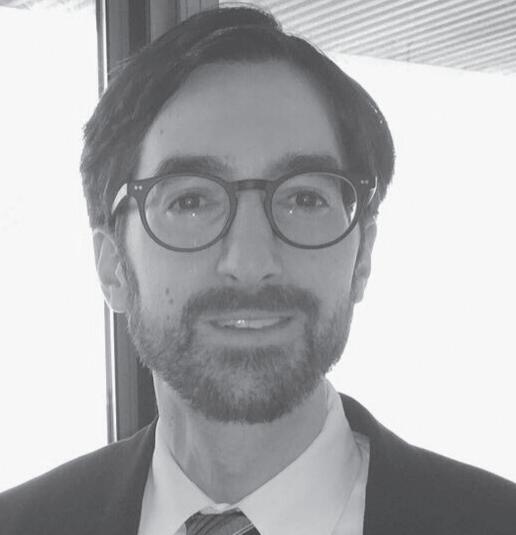
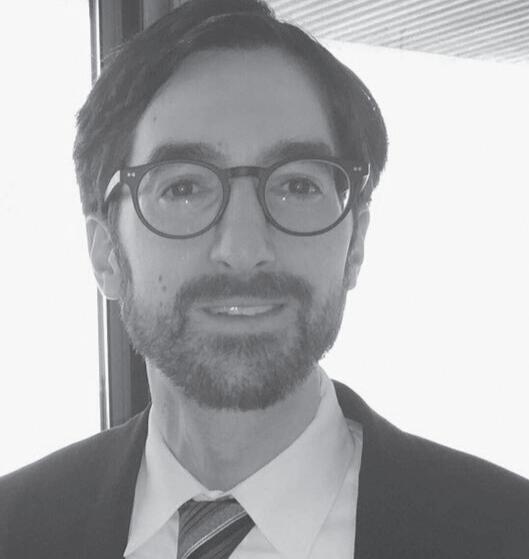
Conversation with… DANIEL ROSS GOODMAN
Springfield native writes literary romance novel for the Orthodox crowd
BY STACEY DRESNER
SPRINGFIELD – In Rabbi Daniel Ross Goodman’s first novel, A Single Life, the main character Eli desperately wants to find a frum wife. His friends try unsuccessfully to make a shidduch and Eli fears he may always be a bachelor. Eli’s quest for love and his questioning of religion and relationships take him from a Baltimore yeshiva to a Jewish high school in West Hartford where he becomes a Judaic studies teacher. Once there, Eli indulges his love of secular literature and develops a crush on a co-worker – an English teacher who is a lapsed Catholic.
Oy!
A Single Life, published by KTAV Publishing House in August, is not an autobiography, but a few bits and pieces might have been pulled from Goodman’s life.
Born in Springfield and raised in Longmeadow, Goodman, 35, was raised Conservative by his father, Alan Goodman, a personal injury attorney, and his mother, Joan Freedman Goodman, a former television news anchor, now director of lay leadership at the Jewish Theological Seminary. His maternal grandfather, Frank Freedman was Springfield’s first and only Jewish mayor in the 1960s.
Goodman attended Heritage Academy in Longmeadow; then went for one year to the Hebrew High School of New England in West Hartford (now New England Jewish Academy). He then decided he wanted a more religious education and began attending Yeshiva University High School in New York. He later went to Yeshivat Chovevei Torah Rabbinical School and was ordained in 2016. Along the way he also got a law degree; currently he is a PhD candidate at the Jewish Theological Seminary.
Goodman spoke to the Jewish Ledger and about his novel and his own single life.
JEWISH LEDGER: So, are you single?
RABBI DANIEL GOODMAN: I’m technically single, but in a long-distance relationship. It has been difficult maintain during the pandemic. She is in Brazil. Her name is Devorah and we have been in contact since early February. Right as we were feeling comfortable getting to know each other and were like, ‘Yeah we should meet up,’ that’s when [COVID] and the travel restrictions started.
JL: Can you tell us about your Jewish education in Springfield and West Hartford?
DG: We had a great day school in Springfield, Heritage Academy. It was really fabulous, and I got a wonderful education, both secular and Judaic. In 9th grade I went to what was then the Hebrew High School of New England. So in my book you will see the high school there in West Hartford is modeled a little bit on it.
I didn’t graduate from HHNE, I ended up transferring in the 10th grade to MTA, which is the Yeshiva University High School for Boys. And so that’s where my yeshiva background really started to come in.
JEWISH LEDGER: Why did you switch to MTA?
DG: I loved my friends [at HHNE] and I loved the area, but at that time in my life, I was in a very zealously religious space. I had not grown up Orthodox; I grew up in a Conservative household, moderately observant of some things…By the time I was about 14, I was really craving something very frum -- very yeshivish -- and I had a lot of conversations with my parents about really wanting to go to yeshiva. We looked at a few in Muncie but they didn’t want me to go to a place that was just a yeshiva; I also needed to get secular high school education. So they found this place, Yeshiva University High School, both a yeshiva and high school. And that worked out really well.
JL: So what were your career plans or goals? Did you want to be a rabbi back then?
DG: I remember my first grade teacher
at Heritage said I was rabbi material. I remember other people saying “You would make a good professor.” And I’ve always been attracted to study. I’m studious, that’s just who I am.
It’s manifested itself in different ways and different directions at different times of my life so during high school when I was in my very frum years, I just studied mostly Gemara, Talmud, Jewish texts as often as I could. I really wanted to be a yeshiva rebbe, and that’s what I thought I was going to be when I was in yeshiva high school.
That started to change a little bit when I went on to YU and I started reviving my interest in secular studies again in history and literature. At that point I was thinking I would really like to teach, whether in high school or in college, but I knew that to teach in college I would need to get a PhD.
My father really wanted me to go to law school. I figured, well okay, I might as well do that, so I went to law school at Western New England – the same law school my father went to. I finished up, passed the bar, and worked for a small independent copyright, trademark law firm in New York, but quickly realized that that was just not going to be for me.
And that’s when I found out about Yeshivat Chovevei Torah Rabbinical school. That was a really great experience too. I made some great friends there. But I still felt like that wasn’t exactly the culmination of what I wanted to do; where I needed to be. I didn’t want to be a pulpit rabbi, and I didn’t want to be a rabbi in a high school. I really needed to be in a college setting. I applied to graduate programs and JTS seemed like the best option. I started a fellowship for a doctoral program in Modern Jewish Thought and Theology. I’ve been there for going into my fifth year; it should be my last year.
JL: It sounds like you are very busy with you studies; what made you decide to write a novel?
DG: I started to write fiction and publish short stories maybe five years ago now. I had never written fiction before… The novel came originally from an idea for a short story, but I realized that I couldn’t confine it to a short story alone, this was much more expansive than any work of fiction I had written so far.
Howard Meyerowitz Office Manager howardm@jewishledger.com • x3035
Samuel Neusner, Founder (1929-1960) Rabbi Abraham J. Feldman, Co-Founder and Editor (1929-1977) Berthold Gaster, Editor (1977-1992) N. Richard Greenfield, Publisher (1994-2014)
-- Although she is 17 and unable to vote in the Nov. 3 presidential election, Anna Gorfinkel of Longmeadow is still participating in the election process.
She, along with her fellow BBYO Connecticut Valley Region members, as well as BBYO members around the country, are participating in Voice Your Vote, a national non-partisan initiative of BBYO aimed at registering young voters ahead of the upcoming election.
A corps of BBYO of field organizers across the country currently are busy getting out the vote in their communities.
citizens to engage in voting, registration and democracy.”
“We’re calling upon all teens, alumni and supporters to join as we ensure that every person is registered to vote, has a plan to vote, and also has safe fair access to vote,” said Jennifer Kruzansky, regional director of BBYO CVR. “We’re also working on having 100 BBYO teens registered to work the polls because we know that poll workers are very hard to come by now with COVID. Most of the people who work at the polls are older and could be high risk.”
“I think Voice Your Vote is an important movement because it allows kids under 18, who aren’t eligible to vote yet, to be part of the election process as well as learn how parts of the election process work,” Anna Gorfinkel said.
Besides registering voters and presenting important information about voter registration, BBYO members are also recruiting teens 16 years old and up to volunteer to staff in-person voting polls in place of older volunteers who this year may have stepped down over concern about Covid-19.
Massachusetts is one of 45 states that allow 16-year-olds to serve as poll workers -- not just due to the dangers of Covid -but according to the National Conference of State Legislatures “to encourage young
learn about Voice Your Vote, rather than just sit at a table and register people to vote. We want to meet teens where they are at,” Kruzansky said. “Every kickoff will have a table with information about registering to vote and to get people registered to work the polls. And we also have a couple of different partners which is really exciting.”
Those partners include Sen. Ed Markey of Springfield, who is among the politicians who taped video snippets that are run viewed before the drive-in about the importance of voting.
climbing to recruiting 300 poll workers.”
Each year CVR holds a large regional kickoff to the upcoming year, as well as smaller chapter kickoff events.
“Because of COVID we couldn’t have our normal regional kickoff where we bring 500 teens together in person,” Kruzansky said. “This year we decided if we can’t have everybody together, let’s pivot to a model where we bring the regional kickoff to your community.”
BBYO CVR is now showing up to every chapter’s community with a 20-foot inflatable movie screen for a “drive-in movie” night.
And every one of those drive-in movie events will have a Voice your Vote component to it.
The Springfield/Longmeadow KickOff Drive in Movie/Voice Your Vote event will take place on Sunday, Oct. 18 at the Springfield JCC.
“We want to reach as many teens as possible. It’s like okay ‘let’s do an event that the teams are going to be drawn into and build upon it so that they have a more rounded experience. It’s fun to go to a drive-in movie with your friends and really
“Whether you’re working the polls this Nov. 3 or taking the time to help your friends and family register to vote, each of you are proving that the young people of this country will be the leaders for a more just, equitable and more fruitful future for everyone,” said Sen. Markey in the video. “You are all part of a movement fueled by young people who are not afraid to raise their voices and demand much needed change in this country, and it’s time for elected leaders to listen, to trust and follow those young voices.”
According to Voice Your Vote’s website, there are 47 million 18 to 29 year olds who are eligible to vote in the 2020 election, and 15 million of them have turned 18 since the last presidential election.
According to Pew Research Center, one in 10 eligible voters are between the ages of 18 and 23 (referred to as Generation Z).
“The primary focus of Voice Your Vote is to teach teens how to be civically engaged from a young age,” explained Ryan Ladd, BBYO’s digital strategy manager. “Our nearly 150 teen Field Organizers from across the U.S. are working hard to register voters, pledge voters, recruit poll workers, and get people involved in this effort in general. Since August, more than 1,300 members of the BBYO community have taken action in one of our key campaign areas. We’re also proud that we’re quickly
“The majority of our order – the members -- are younger than 18,” said Dara Sadinsky, a Connecticut Valley Region member from West Hartford. “We want to get everyone who can be registered registered, but those of us who can’t vote in the election just want everyone as involved in as possible.”
Dara has also been reaching out to BBYO’s alumni network as well as beyond her BBYO peers.
“I’ve also been reaching out to a lot of family members because I have a lot of cousins specifically that are voting age, and also just making sure all of my aunts and uncles are registered and they’re updated; and my grandparents, even family friends. I’m just reaching out to everyone.
“I definitely think that this is a very important election,” she added. “No matter which way it goes. Not just our country but potentially the world could see a lot of things change.” n
CORRECTION
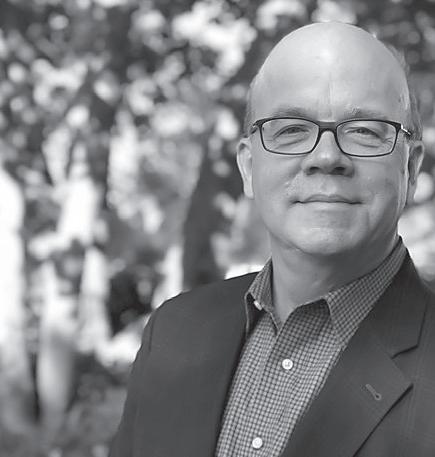
The wrong advertisement for Rep. Jim McGovern was published in the September 18, 2020 issue of the Massachusetts Jewish Ledger. The mistake was made by the Jewish Ledger production department and not by Rep. McGovern or his staff.
The Massachusetts Jewish Ledger deeply regrets this error.
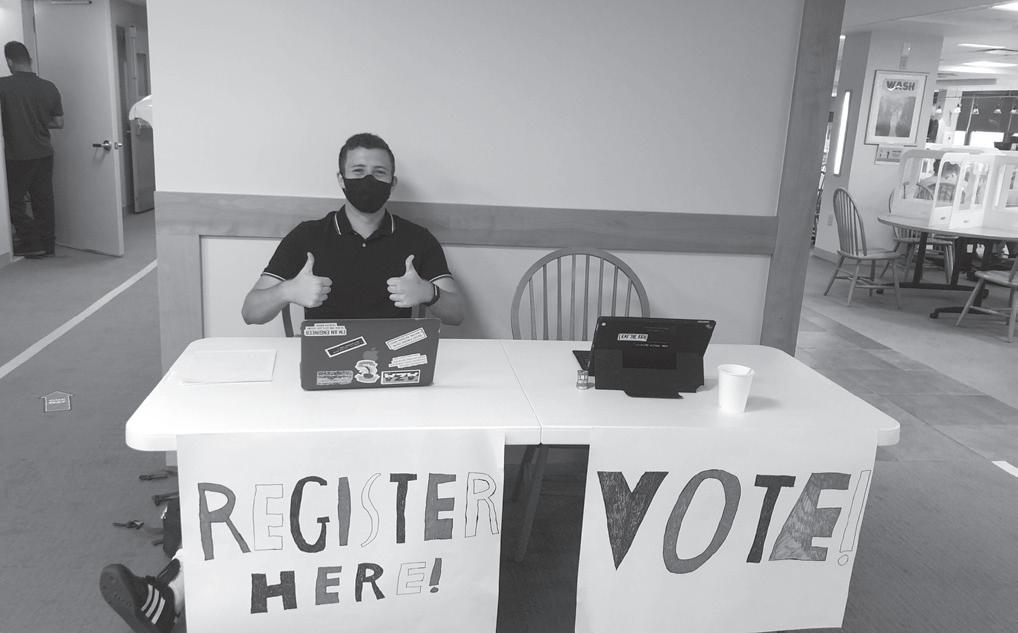
DORON LOWENBERG, A BBYO MEMBER FROM STAMFORD, CONN., MANS A VOICE YOUR VOTE TABLE AT THE STAMFORD JCC.
Rabbi Eve Eichenholtz brings enthusiam & experience to Agudat Achim
BY STACEY DRESNER
LEOMINSTER – When she was in high school Eve Eichenholtz dreamed of going into politics.
“I love political campaigns and advocacy,” she says. “I wasn’t so much interested in being a politician or the policy person, but I loved the rest of that world.”
She changed her mind in the 10th grade on her way home from March of the Living, the educational program that takes students to the concentration camps of Poland and then to Israel to examine the Holocaust and roots of intolerance and hatred.
“I will remember the moment for the rest of my life,” she recalls. “I had an incredible mentor, Rabbi Arnie Samlan, and we were coming home from Israel on the plane and were having this conversation about the fact that I wanted to go into politics. He thought I would make a good rabbi…he was incredibly supportive and always pushing me towards the rabbinate.
“He asked, ‘So why do you want to go into politics?’ I’m young and naïve and I said, ‘I believe I can change the world. I believe that by listening to people’s individual stories I can hear what motivates them and then use that information to get them to vote in a way that I think is better for the world or support a policy that I think is good for our country…I liked hearing one-on-one stories and inspiring people to act and move and to engage…’ He looks at me, and goes, ‘And what’s the difference between all of that and being a rabbi?’ My eyes opened… I realized that being a rabbi ultimately meant I get to do everything I want to do without giving anything up. So when I was a kid, I was set on politics but I also loved theater. [As a rabbi] I get to do public speaking -- I get the theater… I love teaching; I love pastoral care; I love the board meetings -- I get to do everything as a rabbi and do it all within this context, that has just been part of who I am.”
Rabbi Eichenholtz tells this story with enthusiasm and exuberance. It is her outgoing and engaging nature that attracted Congregation Agudat Achim -- the 100-family synagogue in Leominster-- to bring her on as rabbi in July of 2019. Before arriving at the she had been in her first pulpit in Fayetteville, N.C. for five years.
“I came to Leominister for the job and the community, and could not be more pleased to be here and to be growing and journeying with this congregation,” Rabbi Eisenholtz said.
Despite her early desire to enter the world of politics, many who knew her during
her Conservative Jewish upbringing in Long Island thought she was meant for the rabbinate.
“I was a Ramah Berkshires kid and [went to] Schechter and was very active in synagogue life,” Rabbi Eichenholtz said.
“As I like to say, I was THAT kid, the really annoying ones running around like they owned the place. And it kind of stuck!”
After she graduated from high school, Eichenholtz was admitted to the Barnard College – Jewish Theological Seminary Double Degree program.
“At Schechter, I just loved doing both Jewish studies in parallel with all of my secular subjects,” she said. “So I just kept going on that dual track.”
She went on to get a BA from Barnard in economics and an undergraduate degree from JTS in Bible.
“And then I started rabbinical school at JTS... and while doing that I also pursued, on the side, classes in nonprofit management and budgeting and fundraising, because I always knew that my path was going to lead me to a community exactly like I have here in Leominster, where I get to spend most my time focused on the religious life of the community, but also, I get to be part of the community when we look at our budget and things like that and I wanted to be a rabbi who could speak to all of that.
Agudat Achim -- the vision I had of my synagogue was one that is like where I am now. In Leominster, we are the only synagogue. It takes 20, 30, 40 minutes to be at the next synagogue, in bigger cities like Worcester or even in Boston, our surrounding Jewish community where you can go to the Conservative synagogue, or the Reform synagogue or the Orthodox synagogue or Chabad or the havurah. I saw myself working in communities where that was not the case…AJR is a pluralistic school. It doesn’t say denominations aren’t part of our Jewish world or aren’t ideal in our Jewish world. What it says is there is wisdom, and value and room for a variety of Jewish streams...So knowing that I wanted to work in that type of community, I felt I needed to learn in a place that was going to foster those elements of my rabbinate.”
Eichenholtz also took a year to work in an accounting firm, which she says was just another part of her rabbinical training.
“I had never had to juggle the Jewish calendar with the secular calendar at Schechter or rabbinical school…So what was it like for my congregants who didn’t have that, who needed to talk to bosses and schools about how we navigate Jewish life in a largely non Jewish world? I wanted to make sure that I was part of that world as well.”
That world turned upsidedown halfway through her first year leading the 100-family Leominster congregation when Covid-19 hit.
hesitant to use the word normalcy in any kind of context -- but to keep as much of our communal and liturgical traditions as we can in this time…We are still honoring all of our lifecycle events and are there for each other at times of joy and sadness as we would in any year, and using technology to aid us in that and also create new ways of being.”
High Holiday services were hybrid, with some congregants participating in services over Zoom and some, socially-distanced and wearing masks, in the sanctuary.
“It was unusual looking out and seeing half the congregation in the sanctuary and half on the computer screen, but we move forward and still maintain our Judaism in N. Central Mass., even through everything.”
Rabbi Eichenholtz said she loves that her congregants are more likely to offer solutions to problems than complaints.
In the midst of the High Holidays, a congregant with children in the religious school mentioned to Rabbi Eichenholtz that they were trying to figure out what to do with the synagogue’s sukkah, usually decorated by the students of the religious school, which is still operating virtually.
“So, some of the parents got together and said, ‘We want to host Sukkot in the sukkah over Zoom,” she recalled. “I walk into the sukkah and people have decorated the sukkah. I think there are more decorations up this year than there were last year when we decorated it officially as part of religious school,” Rabbi Eichenholtz marveled. “Families came in one at a time to decorate the sukkah and to eat in the sukkah. We are trying to maintain our social distancing, so we created a little calendar on our listserv and people are booking appointments to come in and eat in the sukkah or decorate the sukkah.”
“One of my mentors used to say it’s way easier to give a sermon on a Saturday morning if the roof isn’t leaking. And I took that to heart as to what it means to be a rabbi and be able to be available to all parts of my community.”
While she first began attending JTS for rabbinical school, Eichenholtz soon switched to the Academy of Jewish Religion in New York.
“While I am very much part of Conservative Judaism– as is Congregation
“It’s been a bit of a crazy year… There are still things that I’m doing that probably should have been done in the first six months, and other things I feel we are doing years ahead of where we planned on being. We have technology in our sanctuary and all of those things that were in the future, ‘let’s talk about it’ are now a part of our reality.”
Since the summer Agudat Achim, like many congregations, has been holding services via Zoom, and is now venturing into a hybrid mode.
“People can walk into the sanctuary and see three computers and video cameras everywhere… I read from the bimah; we have others who participate and lead parts of services from their homes. We have Zoom; we have a two-way connection to – I’m
No one had to send a call out to members asking for volunteers, the rabbi said,
“This was two families who said we do this annually for the kids in religious school, we want to make this happen this year. That’s incredible. I often say for me one of the greatest strengths of a small congregation is that we should be as adaptable to almost anything that you want.
“By and large what you dream your synagogue can be, it can be. I love being in partnership with the congregation and fostering that, and working together. That’s the community that we have here and it’s incredible.” n
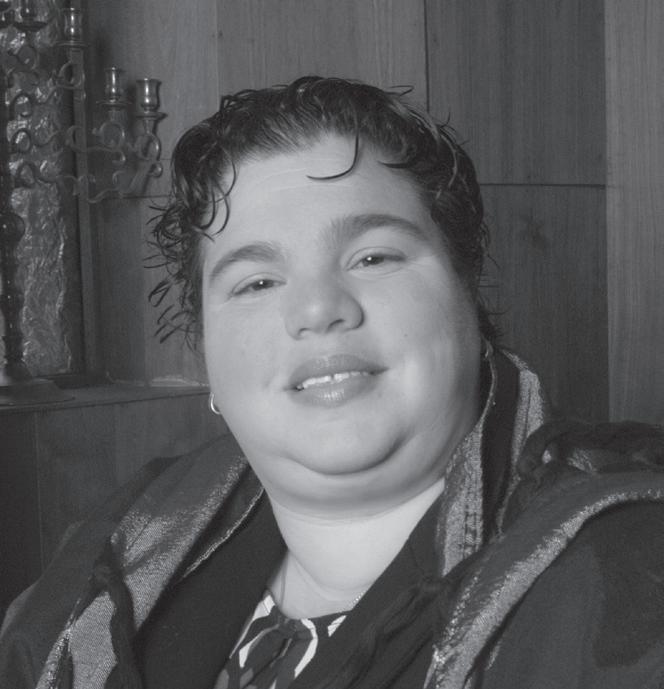
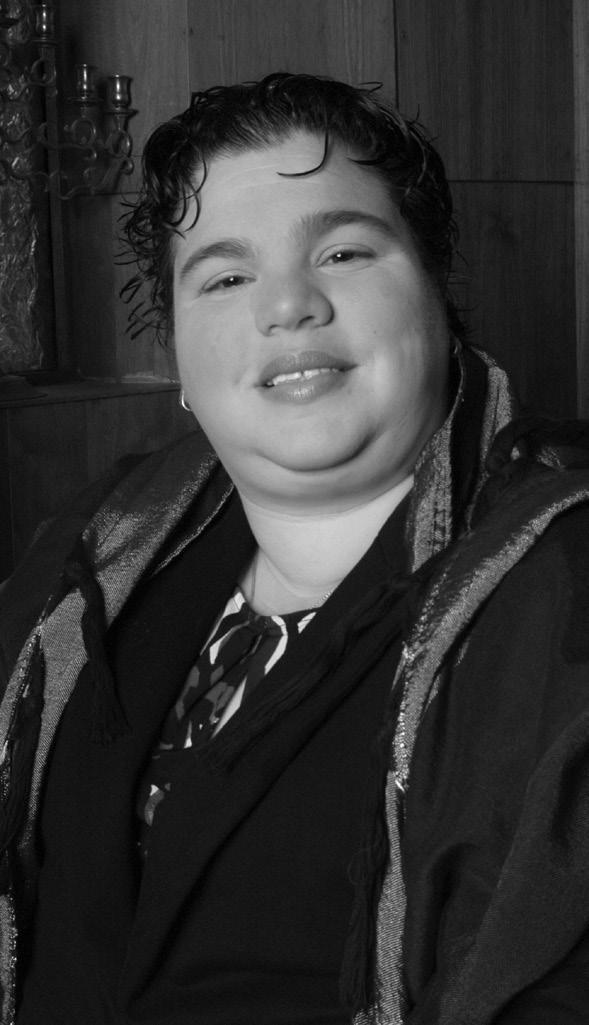
RABBI EVE EICHENHOLTZ
IDF Lone Soldier from Newton, Mass., highlighted at FIDF Virtual Gala
BY STACEY DRESNER
Growing up in Newton, Mass., Noah* and his family visited Israel on a regular basis.
“We were a pretty Zionistic family, so we would go once or maybe twice a year, depending on the year,” he said. “Israel was always a very big thing in my life.”
Noah attended Jewish day school and went to the religious Zionist camp Moshava Indian Orchard in Pennsylvania. When he graduated from Maimonides School in Brookline, Mass. in 2016, he, like many of his classmates went to Israel for a gap year.
“I come from a background where everyone would graduate from high school and go to Israel for a year, and then go back home to college,” Noah explained.
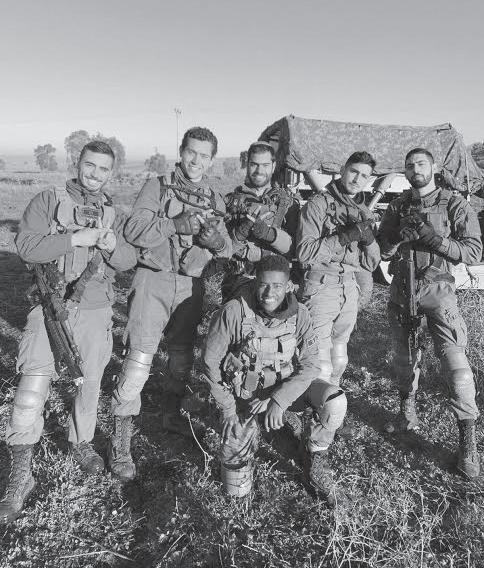
But after an inspiring year participating in Mechinat Otzem – a pre-military program in the south of Israel -- Noah decided to stay. He made aliyah in 2017 and began serving in the Israeli Defense Forces (IDF) Golani Brigade.
On Sept. 13, the experiences of Noah and other Lone Soldiers in the IDF were highlighted during the Friends of the Israeli Defense Forces (FID) National Gala, held virtually for the very first time.
The gala, themed “A Night of Heroes,” saluted IDF soldiers and veterans, and raised more than $15 million to support wellbeing and educational programs for IDF soldiers, families of fallen soldiers and wounded veterans.
“FIDF is in daily communication with the IDF to follow their directives and understand the soldiers’ on-going needs,” said FIDF National Director and CEO Maj. Gen. (Res.) Meir Klifi-Amir. “Even during…difficult times, we continue to fulfill the needs of our sons and daughters in uniform.”
Noah, who was discharged from the IDF as a Staff Sergeant in June, and next year will begin serving in the reserves, says that several things inspired him to make aliya and serve in the IDF.
“First of all, my older brother was in the [IDF]. He was drafted in 2013. And that was a very big thing for me that my older brother was in Israel and was in the army,” Noah explained. His brother Jacob now lives in Haifa and studies at the Technion.
Noah’s year of study in Israel after high school also played a big role. He was one of seven Americans and 199 Israelis participating in Mechinat Otzem, a program that mostly Israelis go through between high school and the army.
“I was always like, Israel is a great place to visit, but I’m never going to live here,” he said. “But I got off the plane, and I became immersed in the culture and I fell in love with the place.”
Noah had attended Maimonides with Ezra Schwartz, the 18-year-old American yeshiva student who was killed in a terrorist attack in the West Bank on Nov. 19, 2015.
Ezra, who was spending a gap year studying at Yeshivat Ashreinu in Beit Shemesh, had gone with five classmates to the Etzion bloc, south of Jerusalem, to beautify a nature reserve dedicated to the three Jewish teens kidnapped and killed by terrorists the year before. A terrorist, reportedly a Palestinian, opened fire on them, killing Schwartz and wounding his classmates.
“Ezra was a year above me in high school, we didn’t have any class together, but we played baseball together for three years,” Noah said. “We weren’t in the same social circle, but some of his best friends were my very good friends. When he was killed, it was my first experience with the death of a peer. Did it affect my choice to draft? Not really, I already wanted to; it just kind of reaffirmed my mindset.”
PAID FOR AND AUTHORIZED FOR THE RE-ELECT MCGOVERN COMMITTEE
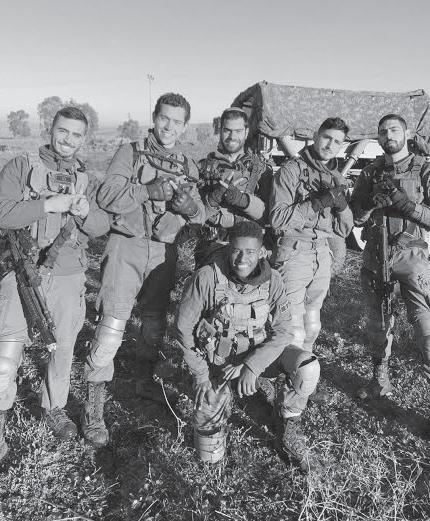
STAFF SGT. NOAH (RES.), SECOND FROM THE LEFT, WITH HIS UNIT. STAFF SGT. AMIT BEN YIGAL Z”L WHO WAS KILLED ON A PATROL IN MAY IS FIRST ON THE RIGHT.