2026 Water Quality Report for the Western Virginia Water Authority
Muse Spring
The Muse Spring Water Treatment Facility, located on Riverland Road, treats raw water from Muse Spring and Garden City Well No. 3.
The water is filtered in the Muse Spring Ultrafiltration Treatment Facility which filters out all particles larger than 0.01 micron. One micron is one thousandth of a millimeter. Filtered water is treated with chlorine, fluoride and orthophosphate and pumped to water customers from the Muse Spring Pumping Station.
Muse Spring ties directly into the existing Authority distribution system and will help serve the eastern portion of the Carvins Cove service area southeast of downtown.
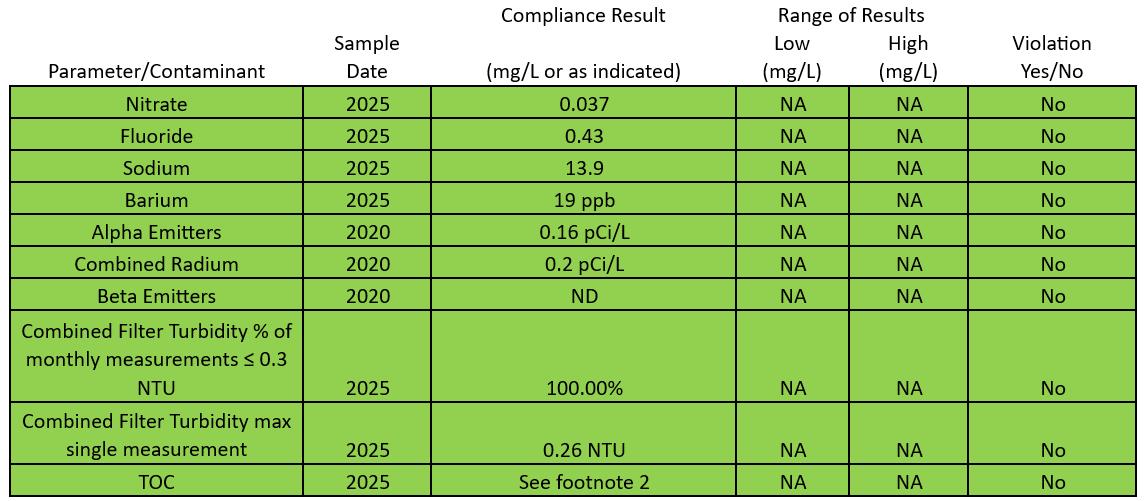
Many other primary and secondary contaminants have been analyzed but were either below the instrument’s detection limits or below the MCLs. Data collected during calendar year 2025 or most recent testing period. Water treated at the Muse Spring Treatment Facility meets all state and federal monitoring and reporting requirements.
Regulated Substances
1.00
Radioactive Contaminants
2.0
Disinfectants and Disinfection By-Products
Unregulated Substances
0 of 52 samples exceeded the Action Level (15 ppb) for Lead. The 90th percentile of the testing was non-detect for lead. The 2025 testing range was (0 - 0) 0 ppb.
0 of 52 samples exceeded the Action Level (1.3ppm) for Copper. The 90th percentile of the testing was 0.294 ppm. The 2025 testing range was (0 - 0.372) ppm.
The Water Authority has inventoried service line pipe material, and has not found any lead lines to date. You can view the Water Service Line Lead Status dashboard at www.westernvawater.org/gis.
City of Salem
The City of Salem Water Department routinely monitors for contaminants in the drinking water mandated by Federal and State laws. The following table shows the results of monitoring for the period of January 1st to December 31st, 2025 or the most recent monitoring period. The City of Salem Water Department had no violations during this time period.
The Virginia Department of Health has completed a source water assessment for Salem’s waterworks system that provides information on possible sources of contamination to the source water. As determined by the source water assessment, the possibility of contamination to this water source (Roanoke River) is high. This is due to the fact that surface water is exposed to an inconsistent array of contaminants at varying concentrations due to changing hydrologic, hydraulic and atmospheric conditions with land use activities of concern in the assessment area. To view a copy of this water assessment, please contact the City of Salem Water Department office at 540-375-3029.
Lead & Copper Testing
0 of 30 samples exceeded the Action Level (15 ppb) for Lead. The 90th percentile of the testing = 3.1 for lead. The 2025 testing range was (ND- 8.8) ppb.
0 of 30 samples exceeded the Action Level (1.3ppm) for Copper. The 90th percentile of the testing = 0.064 ppm. The 2025 testing range was (0.005 -0.17) ppm.
.
The Western Virginia Water Authority contracts with the City of Salem to purchase water to supply Robin Hood Park and other areas around West Main Street and Riverside Drive in Roanoke County. The City of Salem’s water source is the Roanoke River and three ground water wells.
If you have any questions about this data, please contact the City of Salem Water Department at 540.3753029. If you want to learn more about this source, please attend any of the regularly scheduled Salem City Council meetings. They are held on the second and fourth Monday of each month in council chambers.
Regulated Substances
Radioactive Contaminants
Disinfectants and Disinfection By-Products
Unregulated Substances
Microbiological Substances - tested monthly
Martin Creek
Seven wells supply this groundwater source, which is disinfected with chlorine prior to distribution. Water is distributed throughout the community by two storage tanks and distribution piping consisting of 8-inch, 6-inch and 4-inch pipe. The total source/pump capacity is equal to 76,000 gallons per day. Current usage is approximately 26,000 gallons per day. Data presented is a (range) average of the wells in use.
This system supplies water to the Forest Edge and Carriage Hills areas.
According to results of the chemical analyses for Metals based on a sample collected in 2021-2022, the sodium in the treated water from well 1 had sodium of 40.5 ppm. This is above the EPA recommended optimal level of less than 20 mg/L for sodium in drinking water, which is established for those individuals on a “strict” sodium intake diet. The fluoride is naturally occurring and not from utility addition.
Data collected during calendar year 2025 or most recent testing period.
Water treated at the Martin Creek Water System meets all state and federal monitoring and reporting requirements.
Regulated Substances
Radioactive Contaminants
Disinfectants and Disinfection By-Products
Unregulated Substances
Microbiological Substances - tested monthly
A routine and a repeat sample are total coliform positive, and one is also fecal coliform or E. coli positive.
Lead & Copper Testing
0 of 7 samples exceeded the Action Level (15 ppb) for Lead. The 90th percentile of the testing was 2.5 ppb. The 2023 testing range was (0.6 - 3.0) ppb.
0 of 7 samples exceeded the Action Level (1.3ppm) for Copper. The 90th percentile of the testing = 0.23 ppm. The 2022 testing range was (0.08 - 0.35) ppm.
The Water Authority has inventoried service line pipe material, and has not found any lead lines to date. You can view the Water Service Line Lead Status dashboard at www.westernvawater.org/gis
Well Water
The Authority maintains over 20 wells in the Roanoke area. While many of these wells are inactive, they can offer an additional supply of water if needed.
The Western Virginia Water Authority acquired the Town of Vinton utility system July 1, 2022. Customers in the downtown district receive a blend of water from the Craig Avenue well, Carvins Cove and Muse Spring. Other customers receive groundwater obtained from the wells noted in the chart above. Water is distributed throughout the system by booster stations, storage tanks, and distribution piping. Chlorination treatment is provided before the water enters the storage tanks.
Regulated Substances
Contaminants
Disinfectants and Disinfection By-Products
Lead & Copper Testing
0 of 52 samples exceeded the Action Level (15 ppb) for Lead. The 90th percentile of the testing was ND. The 2025 testing range was (ND - ND) ppb.
0 of 52 samples exceeded the Action Level (1.3ppm) for Copper. The 90th percentile of the testing = 0.294 ppm. The 2025 testing range was (ND - 0.372) ppm.
Unregulated Substances
The Water Authority has inventoried service line pipe material, and has not found any lead lines to date. You can view the Water Service Line Lead Status dashboard at www.westernvawater. org/gis.
Microbiological Substances - tested monthly
and a repeat sample
The Western Virginia Water Authority is pleased to meet all requirements, and there were no drinking water violations in calendar year 2025. Data collected during calendar year 2025 or most recent testing period. Data presented as (range) average.
The Manganese level (0.103 ppm) in Vinton Well 11 - Melissa is above the EPA’s recommended secondary maximum contaminant level or (SMCL) of 0.05 ppm for Manganese. There are currently no known adverse health effects associated with the presence of manganese at this level; however, it can result in aesthetic problems such as staining or discoloration of clothes and fixtures, as well as the impairment of taste of beverages made with the water.
Vinton Well 3Bush 1 (Range)
Vinton Well 4Stonebridge (Range)
Vinton Well 6Spring Grove (Range) Average
Vinton Well 7Bush 2 (Range) Average
Vinton Well
Vinton Well 3Bush 1 (Range)
Vinton Well 4Stonebridge (Range) Average
Vinton Well 6Spring Grove (Range)
Vinton Well 7Bush 2 (Range)
Vinton Well 9Craig (Range)
Vinton Well 11Melissa
LONG RANGE WATER SUPPLY PLANNING
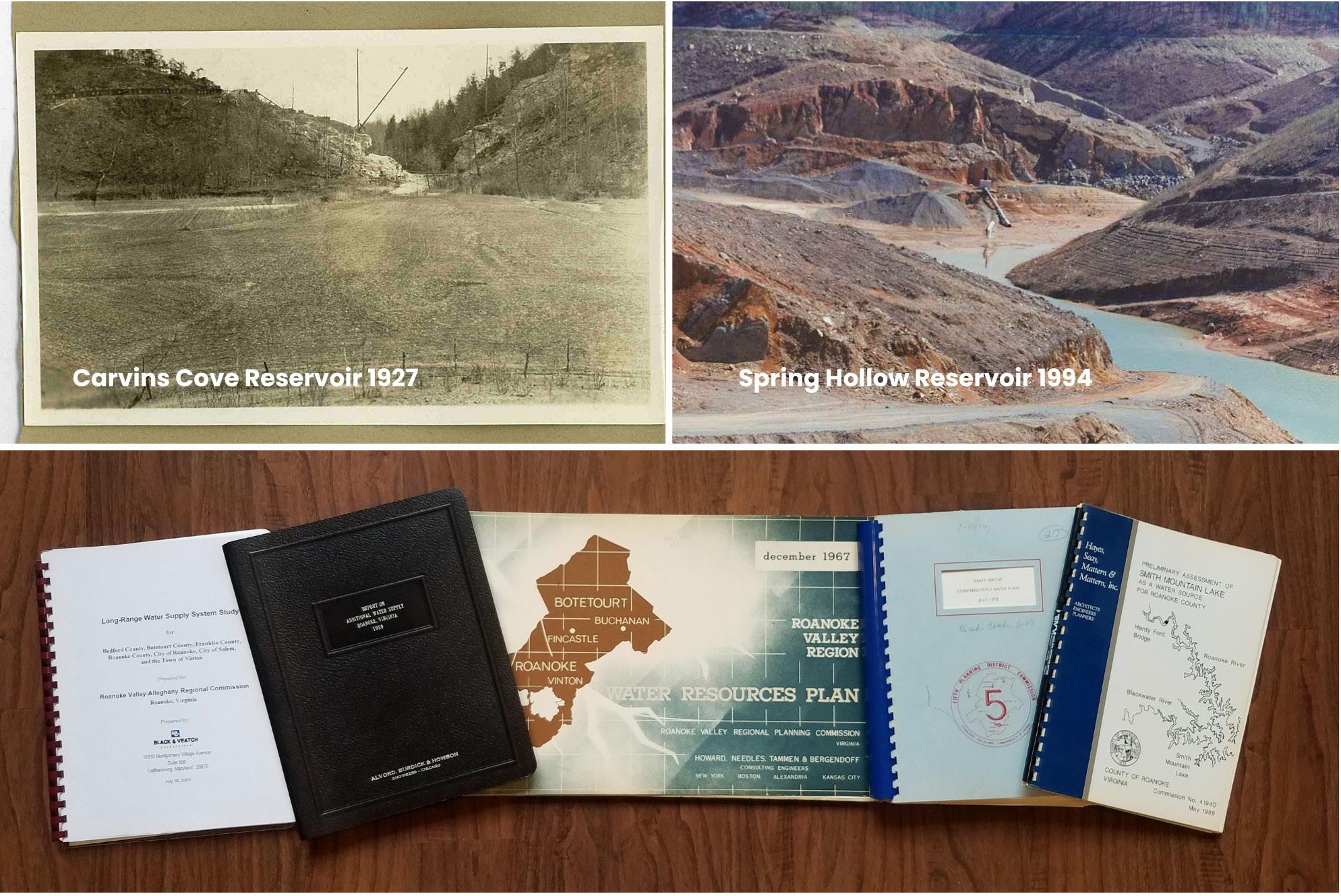
Long Range Water Supply Plans have been used in the Valley since the 1920s to identify local and regional water supplies that support sustainable growth and economic development. These plans ensure that adequate and safe drinking water is available to all citizens, encourage beneficial use of our water resources and promote conservation.
The Authority is currently developing an update to the 2010 Draper Aden-RVARC Long Range Water Supply Plan and separately, working with Hazen Engineers to explore options for new water sources that could be developed as the next water source around the year 2060.
As the Authority's service area continues to grow and develop, new water sources will be needed. These new sources and treatment facilities take decades to plan, locate and construct. By preparing now, the Authority will be positioned to serve all of our current and future customers.
BOTETOURT COUNTY WATER SYSTEMS
Water Main
Carvins Cove
Dal-Nita Hills
Eagle Rock
Glen Wilton
Griffith Park
Keswick Farms
North Botetourt
Walnut Manor
Reservoirs
Customers in Botetourt County receive treated water from Carvins Cove or from community wells. Please see pages 12-13 for information on Carvins Cove. Information on the community wells in Botetourt County are located on pages 26-29 of this report.
BOTETOURT COUNTY
WELL WATER SYSTEMS
The Western Virginia Water Authority is pleased to report that Botetourt well systems meet all requirements, and there were no drinking water violations in calendar year 2025. Data collected during calendar year 2025 or most recent testing period. The Water Authority has inventoried service line pipe material, and has not found any lead lines to date. You can view the Water Service Line Lead Status dashboard at www.westernvawater.org/gis
Dal-Nita Hills | PWSID# 2023730
Water from Dal-Nita Hills well comes from a groundwater well and is distributed throughout the community by a storage tank and distribution piping. Chlorination treatment is provided. According to results of the chemical analyses for metals, the sodium in the treated water is 70 ppm. This is above the EPA recommended optimal level of less than 20 ppm for sodium in drinking water, which is established for those individuals on a “strict” sodium intake diet. A source water assessment for the Dal-Nita Hills well has been completed by the Virginia Department of Health. The assessment determined that the well may be susceptible to contamination because it is located in an area that promotes migration of contaminants from land use activities of concern.
Volitile Organic Compounds were tested on 9/7/2023, and one detection was made. Dibromochloromethane was detected 0.0017 ppm. The maximum contaminant level for Dibromochloromethane is 0.1 ppm.
Perfluorooctanoic acid (PFOA) was detected in the Dal-Nita Hills well on 9/10/24 in the amount of 4.4 parts per trillion (ppt) and 5.1 ppt on 4/23/25. Perfluorooctanesulfonic acid (PFOS) as detected in the DalNita Hills well on 9/10/24 in the amount of 3.6 parts per trillion (ppt) and 4.3 ppt on 4/23/25.
Eagle Rock | PWSID# 2023280
Your drinking water is groundwater obtained from two wells. Disinfection treatment (by chlorination) is provided for both wells prior to discharge to the storage tank. Water is distributed from the storage tank by gravity.
Volitile Organic Compounds were tested on 9/7/2023, and one detection was made. Total Xylene was detected (0.51 - 1.9) 1.0 ppm. The maximum contaminant level for Total Xylene is 10 ppm.
Glen Wilton | PWSID# 2023380
Your drinking water is groundwater and can be obtained from three wells. All wells are treated for iron and manganese removal by chemical precipitation and filtration and chlorine for disinfection. Wells 1 and 2 have higher levels of iron and manganese and these wells are normally not used. Well 3 is the primary source. Water is pumped from the treatment building to the storage tank and distribution piping.
According to results of the chemical analyses for Metals, the sodium in the treated water is 24 ppm. This is above the EPA recommended optimal level of less than 20 ppm for sodium in drinking water, which is established for those individuals on a “strict” sodium intake diet.
Your drinking water is groundwater obtained from a drilled well. Water is pumped from the well to a metal storage tank behind the well house. A booster pump in the well house draws water from the tank and sends it to a pressure tank (also in the well house) and then throughout the community. Treatment is provided for iron and manganese. A small pump in the well house feeds a blend of orthophosphate and polyphosphate to sequester iron and manganese. Chlorine feed equipment was installed to continuously disinfect the water.
According to results of the chemical analyses for Metals, the sodium in the treated water is 26.1 ppm. This is above the EPA recommended optimal level of less than 20 ppm for sodium in drinking water, which is established for those individuals on a “strict” sodium intake diet.
The Manganese level (0.345 ppm) and Iron level (1.57 ppm) are above the EPA’s recommended secondary maximum contaminant levels or (SMCLs) of 0.05 ppm for Manganese and 0.3 ppm for Iron. There are currently no known adverse health effects associated with the presence of manganese at this level; however, it can result in aesthetic problems such as staining or discoloration of clothes and fixtures, as well as the impairment of taste of beverages made with the water.
Keswick Farms | PWSID# 2023460
Your drinking water is groundwater obtained from a drilled well. Water is distributed throughout the community by a storage tank and distribution piping. Chlorination treatment is provided.
Perfluorooctanoic acid (PFOA) was detected in the groundwater at Keswick Farms in the amount of 2.99 parts per trillion. For reference, if expressed as a unit of time, one part per trillion would be approximately one second in 32,000 years. The maximum contaminant level (MCL) issued by the EPA in April 2024 for PFOA is 4.0 parts per trillion.
North Botetourt | PWSID# 2023870
Your drinking water is purchased from the Town of Clifton Forge. Clifton Forge has a water treatment plant that filters surface water from Smith Creek. Clifton Forge chlorinates and fluoridates the water prior to distribution. Water is distributed throughout the North Botetourt system by a storage tank and the distribution piping. The Western Virginia Water Authority acquired the North Botetourt water distribution system in 2022.
Water quality data for Town of Clifton Forge detected substances
Turbidity is a measure of the cloudiness of the water. We monitor it because it is a good indicator of our water quality and the effectiveness of the filtration process.
Total Organic Carbon (TOC) has no health effects, but contributes to the formation of disinfection byproducts. If TOC in our source water exceeds a certain amount we are required to remove at least a certain percentage. Clifton Forge source water TOC was very low in 2025 and always below the amount where specific percent removal is required.
Walnut Manor | PWSID# 2023734
Your drinking water is groundwater obtained from a drilled well. Water is distributed throughout the community by a storage tank and distribution piping. Chlorination treatment is provided.
Regulated Substances
Radioactive Contaminants
Disinfectants and Disinfection By-Products
Unregulated Substances
Lead and Copper Testing
0
Microbiological Substances - tested monthly
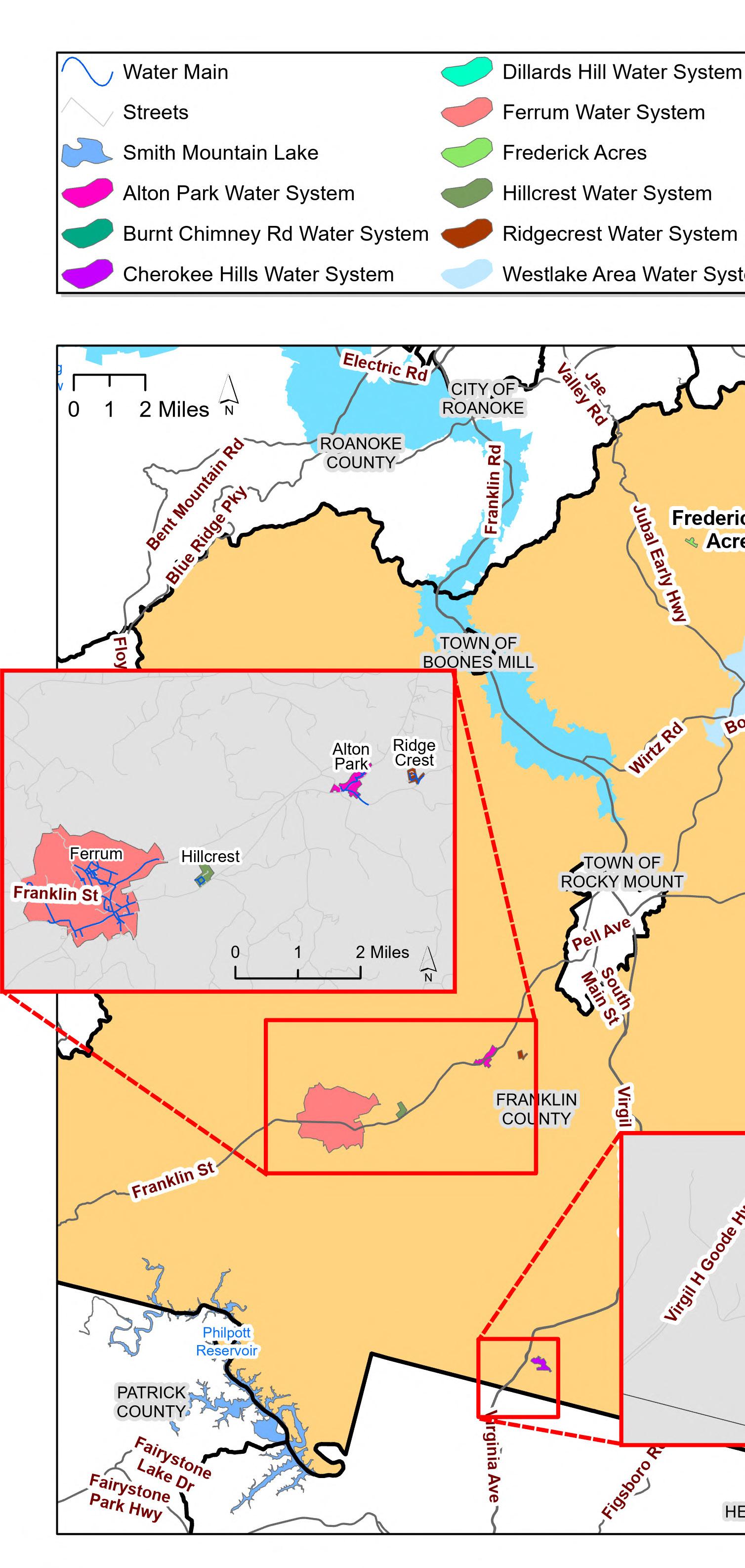
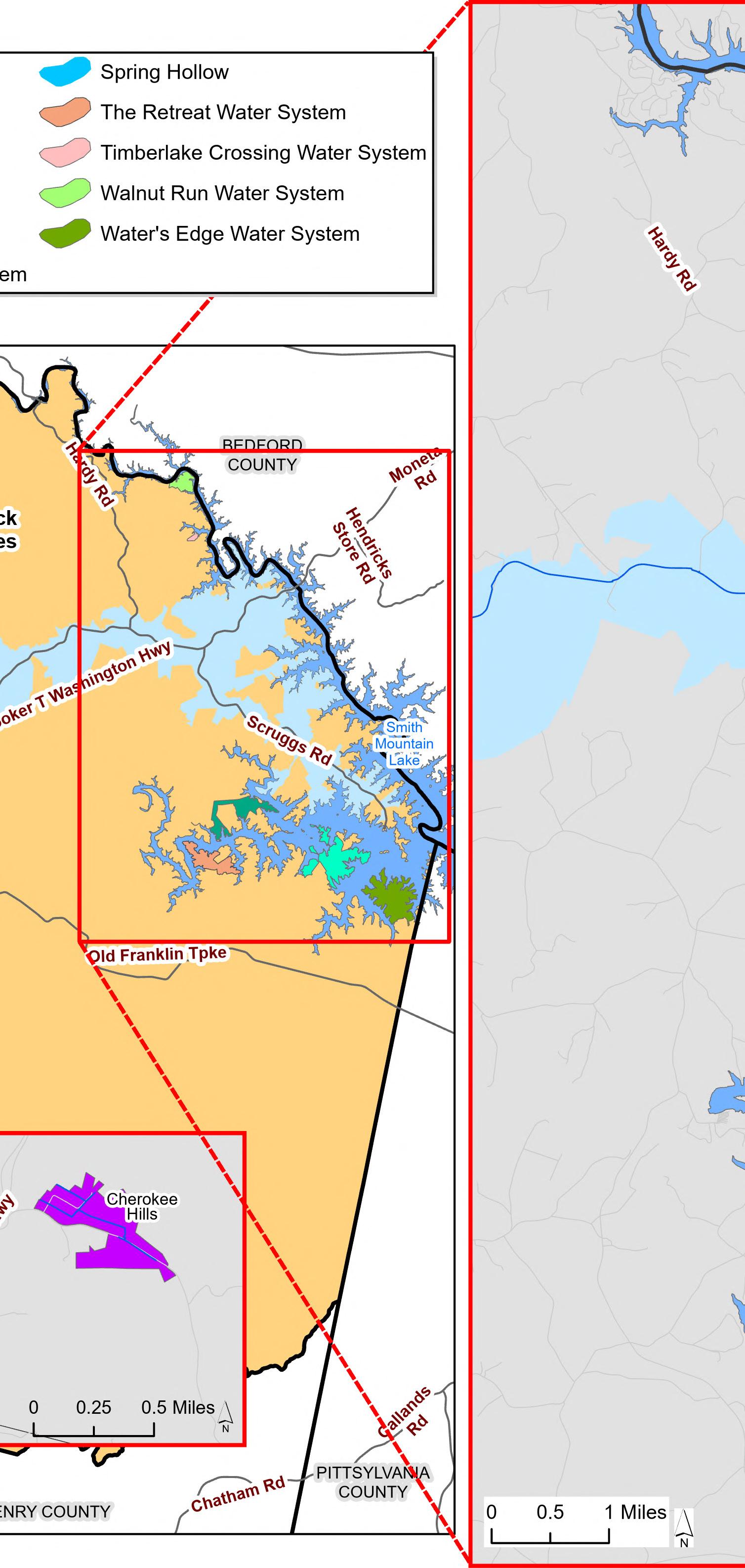
Franklin County Water Systems
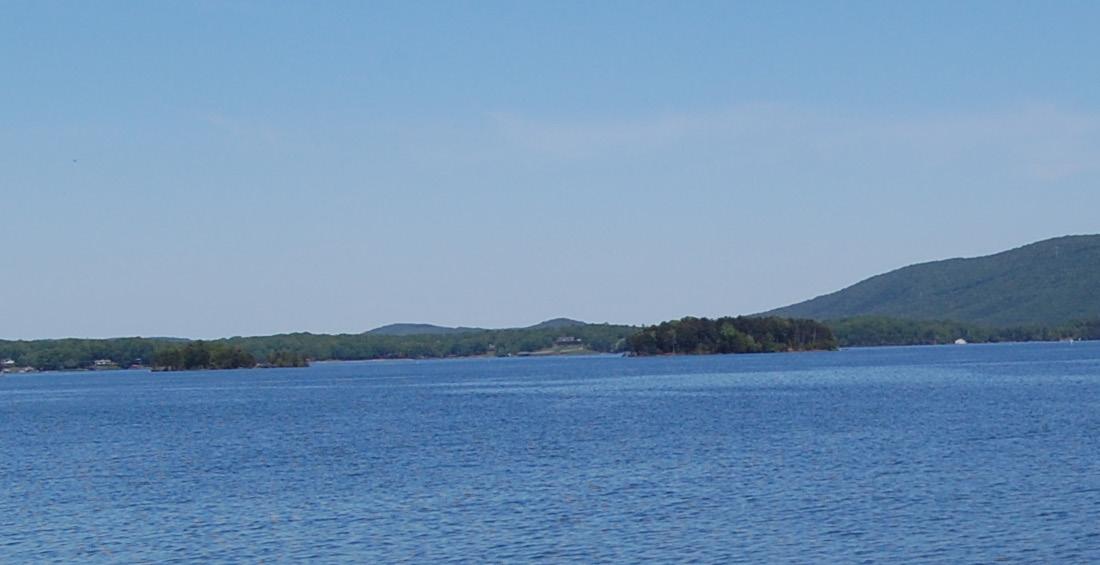
SMITH MOUNTAIN LAKE
WATER TREATMENT
FACILITY
How is the water treated?
Water from Smith Mountain Lake is screened through 500 micron woven mesh stainless steel strainers to remove fine silt and then pumped to the treatment facility. The membrane plant has 216 modules that each have 10,000 membrane filter strands to provide the unique water treatment capability. The membranes can filter out particles larger than 0.02 microns. Ferric sulfate and permanganate is added as a coagulation. After filtration, the water is treated with sodium hypochlorite, a required disinfectant to eliminate bacteria. The finished water in the distribution system is re-chlorinated at The Boardwalk, The Waterfront Section 2-9 subdivisions and at Burnt Chimney for continuous chlorination.
Where does it serve?
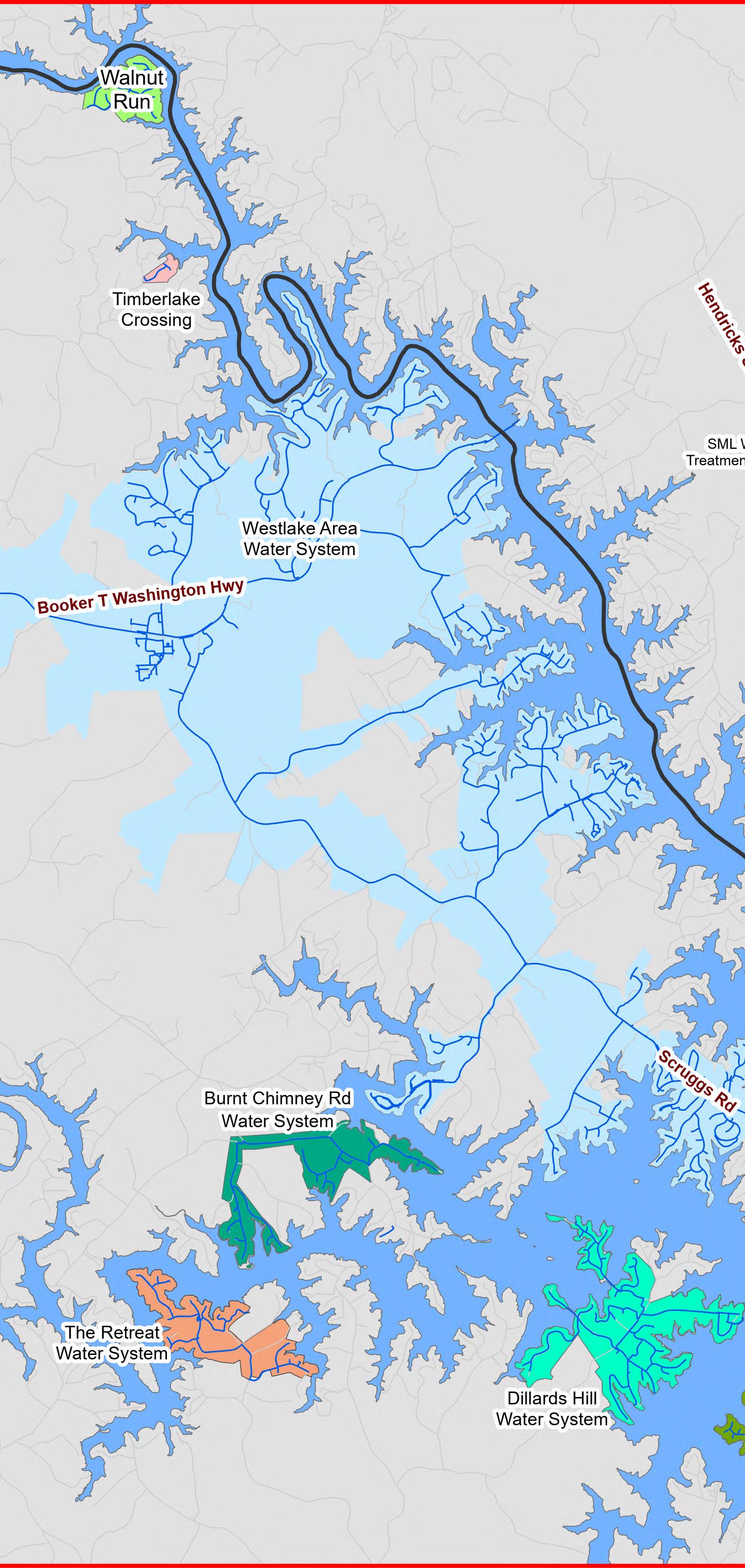
Water from this treatment plant serves customers in Bedford County and Franklin County. As the water flows through pipes under Hales Ford Bridge, it enters the Westlake Area Water System service area. Customers in the Westlake Commercial District, Boardwalk, Chestnut Creek, Compass Cove, Deer Creek, Hales Point, Lakewood Forest, Long Island,
1.99
Daily Water Production million gallons per day million gallons per day
Current Water Treatment Capacity
4.0
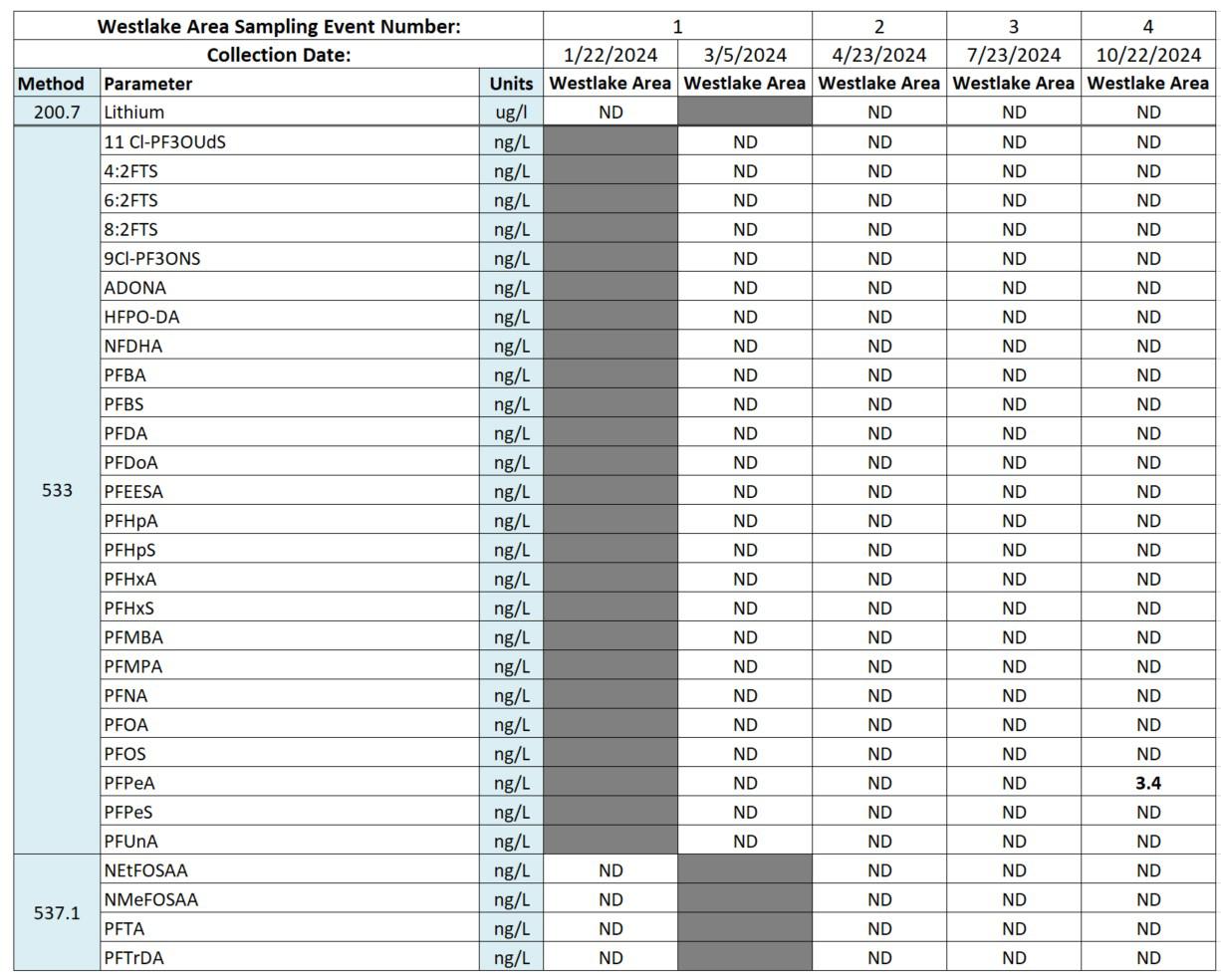
UCMR5 Testing Data
StarOverLake, Striper’s Landing, Twin Cove, Waterfront, Waverly, Weatherwood and Windmere Point communities, along Scruggs Road and along Route 122 to just past Wirtz Road are served by the Westlake Area Public Water System.
Information about our testing
The Western Virginia Water Authority and Bedford Regional Water Authority are pleased to report that this water meets all requirements, and there were no drinking water violations in calendar year 2025 Many other primary and secondary contaminants have been analyzed but were either below the instrument’s detection limits or below the MCLs.
The Western Virginia Water Authority has worked with the Virginia Department of Health to determine our water sources susceptibility to contaminants. See page six for information on the Source Water Assessment Program (SWAP).
SML-WESTLAKE AREA WATER
SYSTEM
The Western Virginia Water Authority (WVWA) has a successful working relationship with the Bedford Regional Water Authority (BRWA) to provide treated drinking water from the Smith Mountain Lake Water Treatment Plant to customers in the Westlake Area Water System area.
This facility, which opened in May 2017, was designed to meet both utilities’ joint water needs as recommended by the Regional Long Range Water Supply Plan.
In 2025, our Westlake Water System violated a drinking water monitoring requirement. We are required to monitor our drinking water for specific contaminants on a regular basis. Results of regular monitoring are an indicator of whether our drinking water meets health standards. During May 2025, we did not monitor or test for disinfectant byproducts and therefore cannot be sure of the quality of our drinking water during that time. There is nothing customers should do during this time. Samples were collected in June 2025 and the results were below the MCL. The Virginia Department of Health has notified us of our sampling requirements. We will be more diligent in the future to ensure all compliance samples are collected during the period for which they are scheduled. For more information, please contact: WVWA, 601 S. Jefferson St, Roanoke, VA 24011, or 540-853-5700.
The Western Virginia Water Authority has worked with the Virginia Department of Health to determine our water sources susceptibility to contaminants. See page six for information on the Source Water Assessment Program (SWAP).
Regulated Substances
Radioactive Contaminants
Disinfectants and Disinfection By-Products
Unregulated Substances
Microbiological Substances - tested monthly
Lead & Copper Testing
The Water Authority has inventoried service line pipe material, and has not found any lead lines to date. You can view the Water Service Line Lead Status dashboard at www.westernvawater.org/gis.
Alton Park
The Alton Park Water System is served by two groundwater wells and related storage facility. Chlorine is added for disinfection of the water. The Western Virginia Water Authority is pleased to report that this water meets all requirements, and there were no drinking water violations in calendar year 2025.
Coliforms are bacteria that are naturally present in the environment and are used as an indicator that other, potentially harmful, waterborne pathogens may be present or that a potential pathway exists through which contamination may enter the drinking water distribution system. We found coliforms indicating the need to look for potential problems in water treatment or distribution. When this occurs, we are required to conduct assessments to identify problems and to correct any problems that are found.
During the past year, we were required to conduct one Level 1 assessment. One Level 1 assessment was completed. In addition, we were required to take two corrective actions and we completed two of these actions.
The Western Virginia Water Authority has worked with the Virginia Department of Health to determine our water sources susceptibility to contaminants. See page six for information on the Source Water Assessment Program (SWAP).
Data collected during calendar year 2025 or most recent testing period.
Water treated at the Alton Park Water System meets all state and federal monitoring and reporting requirements.
PWSID# 5067020
Regulated Substances
Radioactive Contaminants
Disinfectants and Disinfection By-Products
Unregulated Substances
Microbiological Substances - tested monthly
Lead & Copper Testing
0 of 6 samples exceeded the Action Level (15 ppb) for Lead. The 90th percentile of the testing was non-detect for lead. The 2023 testing range was (ND - ND) ppb.
0 of 6 samples exceeded the Action Level (1.3ppm) for Copper. The 90th percentile of the testing was 0.19 ppm. The 2023 testing range was (0.064 - 0.241) ppm.
The Water Authority has inventoried service line pipe material, and has not found any lead lines to date. You can view the Water Service Line Lead Status dashboard at www.westernvawater.org/gis
Boones Mill
The Town of Boones Mill Water System consists of three drilled wells, a spring, iron and manganese removal treatment system for the wells, chlorination and pH adjustment for the spring and associated appurtenances.
Treatment consists of the addition of soda ash, sodium hypochlorite and potassium permanganate for disinfection and removal of iron and manganese.
The Western Virginia Water Authority has worked with the Virginia Department of Health to determine our water sources susceptibility to contaminants. See page six for information on the Source Water Assessment Program (SWAP).
Data collected during calendar year 2025 or most recent testing period. Water treated at the Boones Mill Water System meets all state and federal monitoring and reporting requirements.
PWSID# 5067043
Regulated Substances
Lead & Copper Testing
0 of 7 samples exceeded the Action Level (15 ppb) for Lead. The 90th percentile of the testing was non-detect for lead. The 2025 testing range was (NDND) ppb.
The Water Authority has inventoried service line pipe material, and has not found any lead lines to date. You can view the Water Service Line Lead Status dashboard at www.westernvawater. org/gis.
0 of 7 samples exceeded the Action Level (1.3ppm) for Copper. The 90th percentile of the testing = 0.579 ppm. The 2025 testing range was (0.036 - 0.86) ppm.
Radioactive Contaminants
Disinfectants and Disinfection By-Products
Unregulated Substances
Microbiological Substances - tested monthly
The Water Authority has inventoried service line pipe material, and has not found any lead lines to date. You can view the Water Service Line Lead Status dashboard at www.westernvawater.org/gis
Burnt Chimney
In 2018, the Authority combined four existing waterworks (Boxwood Green, Fox Chase, Royal Estates and Dam Shores) to form the Burnt Chimney Water System to serve these communities.
The system consists of five drilled groundwater wells and related storage facilities.
Greensand filters are used to remove iron and manganese from the drinking water. Soda ash is used for pH adjustment and chlorine is used for disinfection of the water. The Western Virginia Water Authority is pleased to report that this water meets all requirements, and there were no drinking water violations in calendar year 2024.
The Western Virginia Water Authority has worked with the Virginia Department of Health to determine our water sources susceptibility to contaminants. See page six for information on the Source Water Assessment Program (SWAP).
Data collected during calendar year 2025 or most recent testing period.
Water treated at the Burnt Chimney Water System meets all state and federal monitoring and reporting requirements.
PWSID# 5067042
Regulated Substances
Radioactive Contaminants
Disinfectants and Disinfection By-Products
Unregulated Substances
Microbiological Substances - tested monthly
Lead & Copper Testing
0 of 6 samples exceeded the Action Level (15 ppb) for Lead. The 90th percentile of the testing was non-detect for lead. The 2025 testing range was (ND - ND) ppb.
0 of 6 samples exceeded the Action Level (1.3ppm) for Copper. The 90th percentile of the testing was 0.281 ppm. The 2025 testing range was (0.093 - 0.365) ppm.
The Water Authority has inventoried service line pipe material, and has not found any lead lines to date. You can view the Water Service Line Lead Status dashboard at www.westernvawater.org/gis.
Cherokee Hills
The Cherokee Hills community’s waterworks consists of two drilled wells and a storage tank. Treatment included sequestration for iron and manganese and chlorination. The Western Virginia Water Authority is pleased to report that this water meets all requirements, and there were no drinking water violations in calendar year 2025.
The level of Iron detected (0.489 ppm) is above the EPA’s recommended secondary maximum contaminant levels or (SMCLs) of 0.3 ppm for Iron. There are currently no known adverse health effects associated with the presence of iron at this level; however, it can result in aesthetic problems such as staining or discoloration of clothes and fixtures, as well as the impairment of taste of beverages made with the water.
Manganese (0.134 ppm) is above the EPA’s recommended secondary maximum contaminant levels or (SMCLs) of 0.05 ppm for Manganese.
The Western Virginia Water Authority has worked with the Virginia Department of Health to determine our water sources susceptibility to contaminants. See page six for information on the Source Water Assessment Program (SWAP).
Data collected during calendar year 2025 or most recent testing period. Data presented as (range) average.
PWSID# 5067070
Regulated Substances
Radioactive Contaminants
Disinfectants and Disinfection By-Products
Unregulated Substances
Microbiological Substances - tested monthly
Lead & Copper Testing
1 of 9 samples exceeded the Action Level (15 ppb) for Lead. The 90th percentile of the testing was 4.3 ppb for lead. The 2025 testing range was (ND - 42.9) ppb.
1 of 9 samples exceeded the Action Level (1.3ppm) for Copper. The 90th percentile of the testing was 0.99 ppm. The 2025 testing range was (0.038 - 1.48) ppm.
The Water Authority has inventoried service line pipe material, and has not found any lead lines to date. You can view the Water Service Line Lead Status dashboard at www.westernvawater.org/gis.
Regulated Substances
The Dillards Hill Water System consists of nine drilled wells (Contentment Island wells 1, 2, 3 and 4, Highland Lake well 2, Kennedy Shores wells 1 and 2 and Lands End Wells 1 and 2) and related storage facility. Pre-treatment of the water includes the addition of soda ash, potassium permanganate and sodium hypochlorite solutions, and greensand filters are used to remove iron and manganese from the drinking water.
There is no State or Federal MCL for sodium. Monitoring is required to provide information to consumers and health officials that are concerned about sodium intake due to dietary restrictions. The sodium level in the water was measured at 42.5 ppm in 2023. This is more than the EPA recommended optimal level of less than 20 ppm, established for people on a “strict” sodium intake diet. This elevated level of sodium could be caused by the addition of soda ash.
The Western Virginia Water Authority has worked with the Virginia Department of Health to determine our water sources susceptibility to contaminants. See page six for information on the Source Water Assessment Program (SWAP).
Data collected during calendar year 2025 or most recent testing period. Data presented as (range) average.
PWSID# 5067415
Radioactive Contaminants
Disinfectants and Disinfection By-Products
Unregulated Substances
Microbiological Substances - tested monthly
Lead & Copper Testing
0 of 10 samples exceeded the Action Level (15 ppb) for Lead. The 90th percentile of the testing was non-detect for lead. The 2025 testing range was (ND - ND ppb.
0 of 10 samples exceeded the Action Level (1.3ppm) for Copper. The 90th percentile of the testing was 0.432 ppm. The 2025 testing range was (0.039 - 0.456) ppm.
The Water Authority has inventoried service line pipe material, and has not found any lead lines to date. You can view the Water Service Line Lead Status dashboard at www.westernvawater.org/gis.
Ferrum
In 2024, the Authority began operation of the Ferrum Water system. The system consists of three groundwater wells and two storage tanks. Greensand filters in conjunction with potassium permanganate are used to remove iron and manganese from the drinking water. Caustic soda is used for pH adjustment and chlorine is added for disinfection of the water.
The Western Virginia Water Authority has worked with the Virginia Department of Health to determine our water sources susceptibility to contaminants. See page six for information on the Source Water Assessment Program (SWAP).
Data collected during calendar year 2025 or most recent testing period. Data presented as (range) average.
PWSID# 5067120
Regulated Substances
Radioactive Contaminants
Disinfectants and Disinfection By-Products
Unregulated Substances
Microbiological Substances - tested monthly
A routine and a repeat sample are total coliform positive, and one is also fecal coliform or E. coli positive. no
Lead & Copper Testing
0 of 12 samples exceeded the Action Level (15 ppb) for Lead. The 90th percentile of the testing was non-detect for lead. The 2025 testing range was (ND - 5.13) ppb.
0 of 12 samples exceeded the Action Level (1.3ppm) for Copper. The 90th percentile of the testing was 0.158 ppm. The 2025 testing range was (0.043 - 0.2) ppm.
The Water Authority has inventoried service line pipe material, and has not found any lead lines to date. You can view the Water Service Line Lead Status dashboard at www.westernvawater.org/gis.
Frederick Acres
A groundwater well provides water for the Frederick Acres community. A 10,000-gallon storage tank and a sodium hypochlorite feed system for disinfection was added in 2019.
The Western Virginia Water Authority is pleased to report that this water meets all requirements, and there were no drinking water violations in calendar year 2025.
Manganese (0.063 ppm) is above the EPA’s recommended secondary maximum contaminant levels or (SMCLs) of 0.05 ppm for Manganese.
There are currently no known adverse health effects associated with the presence of manganese at this level; however, it can result in aesthetic problems such as staining or discoloration of clothes and fixtures, as well as the impairment of taste of beverages made with the water.
The Western Virginia Water Authority has worked with the Virginia Department of Health to determine our water sources susceptibility to contaminants. See page six for information on the Source Water Assessment Program (SWAP).
Data collected during calendar year 2025 or most recent testing period. Data presented as (range) average.
PWSID# #5067160
Regulated Substances
Radioactive Contaminants
Disinfectants and Disinfection By-Products
Unregulated Substances
Microbiological Substances - tested monthly
Lead & Copper Testing
0 of 5 samples exceeded the Action Level (15 ppb) for Lead. The 90th percentile of the testing was non-detect for lead. The 2023 testing range was (ND - ND) ppb.
0 of 5 samples exceeded the Action Level (1.3ppm) for Copper. The 90th percentile of the testing was 0.201 ppm. The 2023 testing range was (0.055 - 0.272) ppm.
The Water Authority has inventoried service line pipe material, and has not found any lead lines to date. You can view the Water Service Line Lead Status dashboard at www.westernvawater.org/gis
Ridgecrest
The Ridgecrest Water System is served by a groundwater well and related storage facility. Treatment consists of the addition of polyphosphate for removal of iron and manganese, and chlorine is added for disinfection of the water. The Western Virginia Water Authority is pleased to report that this water meets all requirements, and there were no drinking water violations in calendar year 2025.
Manganese (0.231 ppm) and Iron levels (0.296 ppm) are above the EPA’s recommended secondary maximum contaminant levels or (SMCLs) of 0.05 ppm for Manganese and 0.3 for Iron. There are currently no known adverse health effects associated with the presence of manganese or iron at this level; however, it can result in aesthetic problems such as staining or discoloration of clothes and fixtures, as well as the impairment of taste of beverages made with the water.
Coliforms are bacteria that are naturally present in the environment and are used as an indicator that other, potentially harmful, waterborne pathogens may be present or that a potential pathway exists through which contamination may enter the drinking water distribution system. We found coliforms indicating the need to look for potential problems in water treatment or distribution. When this occurs, we must conduct assessments to identify problems and correct them.
During the past year, we conducted and completed (1) Level 1 assessment and (1) Level 2 assessment.. In addition, we were required to take (1) corrective action and we completed (1) of these actions. The Western Virginia Water Authority has worked with the Virginia Department of Health to determine our water sources susceptibility to contaminants. See page six for information on the Source Water Assessment Program (SWAP).
Data collected during calendar year 2025 or most recent testing period. Data presented as (range) average. PWSID# 5067785
Regulated Substances
Radioactive Contaminants
Disinfectants and Disinfection By-Products
Unregulated Substances
Microbiological Substances - tested monthly
Lead & Copper Testing
0 of 9 samples exceeded the Action Level (15 ppb) for Lead. The 90th percentile of the testing was non-detect for lead. The 2025 testing range was (ND - ND) ppb.
0 of 9 samples exceeded the Action Level (1.3ppm) for Copper. The 90th percentile of the testing was 0.256 ppm. The 2025 testing range was (0.011 - 0.287) ppm.
The Water Authority has inventoried service line pipe material, and has not found any lead lines to date. You can view the Water Service Line Lead Status dashboard at www.westernvawater.org/gis
The Retreat
Groundwater from wells located in Lake Forest and The Retreat is pumped to The Retreat where pre-treatment of the water includes the addition of potassium permanganate and sodium hypochlorite solutions, and greensand filters are used to remove iron and manganese from the drinking water. Once the water is filtered and disinfected, it is introduced into the interconnected distribution system providing potable water to Cedar Ridge, Lake Forest, The Coves and The Retreat.
In August 2025, E. coli bacteria was detected in one sample during routine monitoring and total coliform was detected in the follow up sample, which caused an E. coli PMCL violation. Additional samples were collected upstream and downstream of the original site. No E. coli bacteria were detected in those samples. A boil water notice was issued on 8/8/2025, and the Authority and VDH conducted a Level 2 Assessment of the entire system to investigate the cause on 8/11/2025. The cause was determined to be improper sampling technique. The Authority completed additional staff training on 9/3/2025 to ensure the sampling error does not happen again.
E. coli are bacteria whose presence indicates that the water may be contaminated with human or animal wastes. Human pathogens in these wastes can cause short-term effects, such as diarrhea, cramps, nausea, headaches, or other symptoms. They may pose a greater health risk for infants, young children, the elderly, and people with severely compromised immune systems.
The Western Virginia Water Authority has worked with the Virginia Department of Health to determine our water sources susceptibility to contaminants. See page six for information on the Source Water Assessment Program (SWAP).
Data collected during calendar year 2025 or most recent testing period. Data presented as (range) average.
PWSID# 5067786
Lead & Copper Testing
0 of 5 samples exceeded the Action Level (15 ppb) for Lead. The 90th percentile of the testing was non-detect for lead. The 2025 testing range was (ND - ND ppb.
0 of 5 samples exceeded the Action Level (1.3ppm) for Copper. The 90th percentile of the testing was 0.285ppm. The 2025 testing range was (0.021 - 0.473) ppm.
The Water Authority has inventoried service line pipe material, and has not found any lead lines to date. You can view the Water Service Line Lead Status dashboard at www.westernvawater.org/gis.
Regulated Substances
Radioactive Contaminants
Disinfectants and Disinfection By-Products
Unregulated Substances
Microbiological Substances - tested monthly
Timberlake Crossing
The Timberlake Crossing Water System is served by a groundwater well and related storage facility.
Treatment consists of the addition of soda ash, sodium hypochlorite and potassium permanganate for disinfection and removal of iron and manganese.
The Western Virginia Water Authority is pleased to report that this water meets all requirements and there were no drinking water violations in calendar year 2025.
There is no State or Federal MCL for sodium. Monitoring is required to provide information to consumers and health officials that are concerned about sodium intake due to dietary restrictions. The sodium level in the water was measured at 45.4 ppm in 2024. This is more than the EPA recommended optimal level of less than 20 ppm, established for people on a “strict” sodium intake diet. This elevated level of sodium could be caused by the addition of soda ash for pH adjustment.
The Western Virginia Water Authority has worked with the Virginia Department of Health to determine our water sources susceptibility to contaminants. See page six for information on the Source Water Assessment Program (SWAP).
Data collected during calendar year 2025 or most recent testing period. Data presented as (range) average.
PWSID# 5067951
Regulated Substances
Radioactive Contaminants
Disinfectants and Disinfection By-Products
Unregulated Substances
Microbiological Substances - tested monthly
Lead & Copper Testing
0 of 9 samples exceeded the Action Level (15 ppb) for Lead. The 90th percentile of the testing was 0.59 for lead. The 2024 testing range was (ND - 5.9) ppb.
0 of 9 samples exceeded the Action Level (1.3ppm) for Copper. The 90th percentile of the testing was 0.063 ppm. The 2024 testing range was (0.016 - 0.099) ppm.
The Water Authority has inventoried service line pipe material, and has not found any lead lines to date. You can view the Water Service Line Lead Status dashboard at www.westernvawater.org/gis
Walnut Run
Groundwater wells (Wells 1, 2 and 3) provide water for the Walnut Run community. The three drilled wells use sodium hypochlorite and soda ash for chlorine disinfection and pH adjustment.
Volitile Organic Compounds were tested on 3/28/2024 and one detection was made. Total Xylene was detected (0.001 ppm) . The maxium contaminant level for Total Xylene is 10 ppm.
The Western Virginia Water Authority has worked with the Virginia Department of Health to determine our water sources susceptibility to contaminants. See page six for information on the Source Water Assessment Program (SWAP).
Walnut Run data collected during calendar year 2025 or most recent testing period. Data presented as (range) average.
PWSID# 5067957
Regulated Substances
Radioactive Contaminants
Disinfectants and Disinfection By-Products
Unregulated Substances
Microbiological Substances - tested monthly
Lead & Copper Testing
0 of 5 samples exceeded the Action Level (15 ppb) for Lead. The 90th percentile of the testing was non-detect for lead. The 2025 testing range was (ND - ND) ppb.
0 of 5 samples exceeded the Action Level (1.3ppm) for Copper. The 90th percentile of the testing was 0.114 ppm. The 2025 testing range was (0.021 - 0.123) ppm.
The Water Authority has inventoried service line pipe material, and has not found any lead lines to date. You can view the Water Service Line Lead Status dashboard at www.westernvawater.org/gis.
Water’s Edge Water System
Customers who live in The Water’s Edge community get their drinking water from four groundwater wells (Well No. 3, 4, 11 and 12) that are located throughout the Water’s Edge subdivision. Water from well 4 and 11 go to the treatment plant where three greensand filters are used to remove iron, manganese and radium from the drinking water. An orthophosphate feed system for corrosion control and a sodium hydroxide feed system for pH adjustment has been added at the treatment plant and Well 12. Well 12 is also disinfected with chlorine. No treatment is added to Well No. 3.
There is no State or Federal MCL for sodium. Monitoring is required to provide information to consumers and health officials that are concerned about sodium intake due to dietary restrictions. The sodium level in the water for entry point EP001 (58 ppm) and in Well 12, (39.3 ppm) was measured in 2024. This is more than the EPA recommended optimal level of less than 20 ppm, established for people on a “strict” sodium intake diet. This elevated level of sodium could be caused by the sodium hydroxide added to the water for pH adjustment.
A source water assessment for The Water’s Edge has been conducted by the Virginia Department of Health. Well(s) serving this community were determined to be of high susceptibility to contamination using the criteria developed by the state in its approved Source Water Assessment Program. The assessment report consists of maps showing the source water assessment area, an inventory of known land use activities of concern and documentation of any known contamination within the last five years. The assessment determined that these wells might be susceptible to contamination because they are located in areas that promote migration of contaminants from land use activities of concern. More specific information about these reports may be obtained by contacting the Western Virginia Water Authority’s Water Quality Division at 540.853.5700.
The Water Authority has inventoried service line pipe material, and has not found any lead lines to date. You can view the Water Service Line Lead Status dashboard at www.westernvawater.org/gis.
Water’s Edge data collected during calendar year 2025 or most recent testing period. Data presented as (range) average.
PWSID# 5067961
Lead & Copper Testing
0 of 17 samples exceeded the Action Level (15 ppb) for Lead. The 90th percentile of the testing was non-detect for lead. The 2025 testing range was (ND - 9.4) ppb.
0 of 5 samples exceeded the Action Level (15 ppb) for Lead. The 90th percentile of the testing was non-detect for lead. The 2022 testing range was (NDND) ppb.
0 of 17 samples exceeded the Action Level (1.3ppm) for Copper. The 90th percentile of the testing = 0.602 ppm. The 2025 testing range was (0.012 - 0.755) ppm.
0 of 5 samples exceeded the Action Level (1.3ppm) for Copper. The 90th percentile of the testing = 0.10 ppm. The 2022 testing range was (ND - 0.13) ppm.
The Water Authority has inventoried service line pipe material, and has not found any lead lines to date. You can view the Water Service Line Lead Status dashboard at www. westernvawater.org/gis.
The Water Authority has inventoried service line pipe material, and has not found any lead lines to date. You can view the Water Service Line Lead Status dashboard at www.westernvawater. org/gis.