CSI Case Studies: The Par River WHO?
WHY?
Our informal group coordinates the timings of our CSI work and puts our findings into a monthly summary.
It is reasonable to say a love of nature and concern for its current state would apply to us all. Getting outdoors with a real purpose is probably another. Some of the group are very knowledgeable about plants and animals, while others love archaeology, history and are fascinated by the changes in the catchment over millennia. Doing something for the river, its habitat and for future generations would apply to all of us.
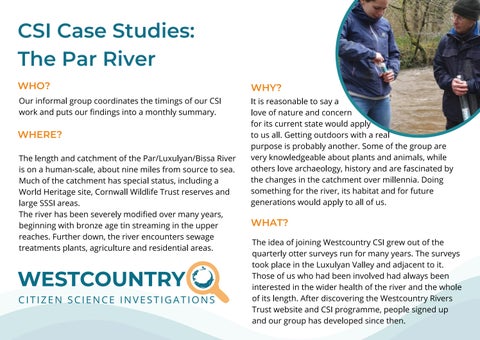
WHERE? The length and catchment of the Par/Luxulyan/Bissa River is on a human-scale, about nine miles from source to sea. Much of the catchment has special status, including a World Heritage site, Cornwall Wildlife Trust reserves and large SSSI areas. The river has been severely modified over many years, beginning with bronze age tin streaming in the upper reaches. Further down, the river encounters sewage treatments plants, agriculture and residential areas.
WHAT? The idea of joining Westcountry CSI grew out of the quarterly otter surveys run for many years. The surveys took place in the Luxulyan Valley and adjacent to it. Those of us who had been involved had always been interested in the wider health of the river and the whole of its length. After discovering the Westcountry Rivers Trust website and CSI programme, people signed up and our group has developed since then.
WHAT’S NEXT?
HOW? Other than the otter surveys in Luxulyan Valley, we wouldn’t have existed without CSI. The testing provides a structure for observations; the report cards an invaluable summary; and Cartographer a muscular yet flexible database. It has also linked up volunteers with an array of professionals. Having had the chance to work with professionals, even though our work is very basic, is great. Besides the lovely people at Westcountry Rivers Trust, we have been fortunate to have great encouragement from Environment Agency staff. Given the criminal cuts in public funding since 2010, it’s nice to know we are doing something to help the professionals who are left.
More learning, better understanding and better communication between ourselves is important. We are also aware of the need to involve younger people. We will continue to gather data to develop a strong evidence-based case with which to lobby for change.
CHALLENGES Lack of understanding and capacity. The first is no surprise with amateurs but some of us are starting from zero knowledge. Some of the videos have really helped. We would happily test for more, including pH, ammonia and so on, but need a better understanding of their value. Geographical scope. We have tested at numerous places but have settled on 12 regular spots but would like guidance on the potential for adding more. We have spoken with Cornwall Wildlife Trust about further testing on the Bokiddick Stream because this is the location selected for possible beaver reintroduction. But if we are to cover the catchment properly, better coverage of the tributaries is needed. Kit limitations and limited feedback and direction from advising bodies are also challenging.