HOMETOWN STAFF/CONTRIBUTORS ABOUT THE HOMETOWN NEWS
HOMETOWN STAFF/CONTRIBUTORS
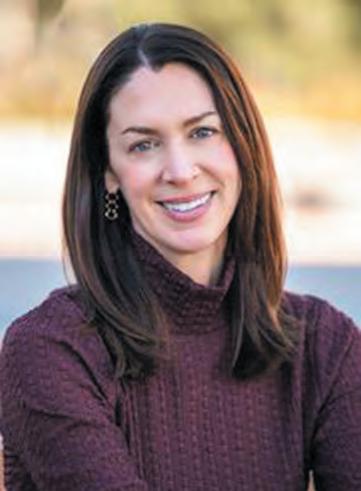
Sylvia Wilson, Contributing Writer
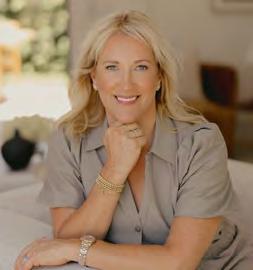
Jeff Blair, Contributing Writer Zsuzsi Steiner, Photos
ABOUT THE HOMETOWN NEWS
A LOOK INSIDE THIS MONTH'S HTN HOMETOWN STAFF/CONTRIBUTORS
The HomeTown News is a monthly community newspaper dedicated to providing information about the people, events and happenings of Westchester, Playa del Rey, Marina del Rey and Playa Vista. Look for the HomeTown News the first Thursday of the month at your home or at one of our drop-off locations, including The Book Jewel, Westchester Family YMCA, Playa Pharmacy, Loyola Village Library, Playa Vista Library, Truxton’s American Bistro and Cantalini’s Salerno Beach.
ABOUT THE HOMETOWN NEWS
CONNECT WITH THE HTN:
Mailing Address: 8939 S. Sepulveda Blvd., Ste. 110 #745
Westchester, CA 90045
Email: westchesterhometown@yahoo.com
Website: thehtn.com Facebook: facebook.com/thehtn
Instagram: instagram.com/thehometownnews
Story ideas & Advertising: westchesterhometown@yahoo.com
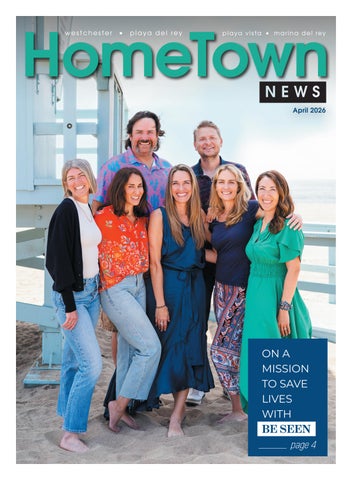
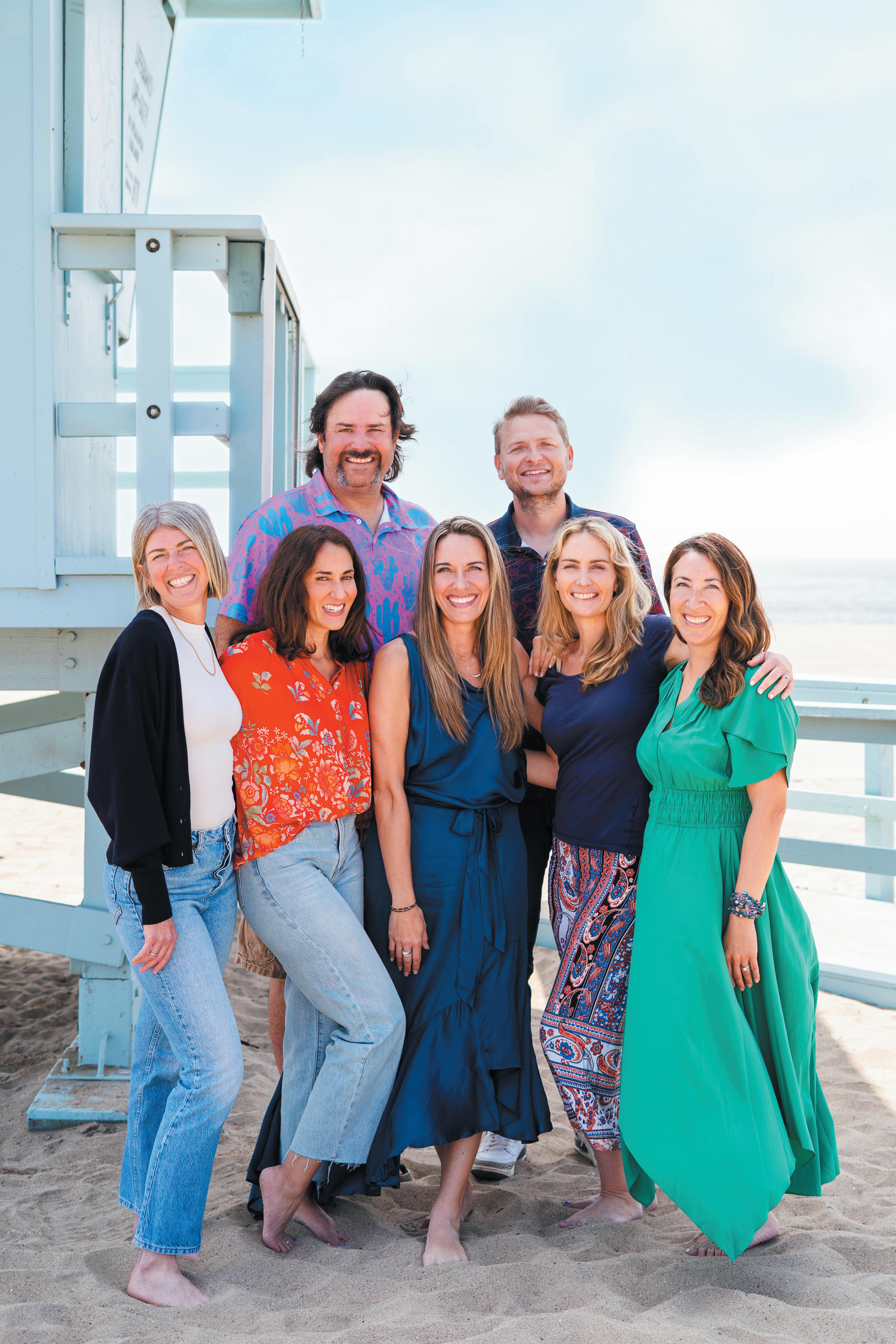
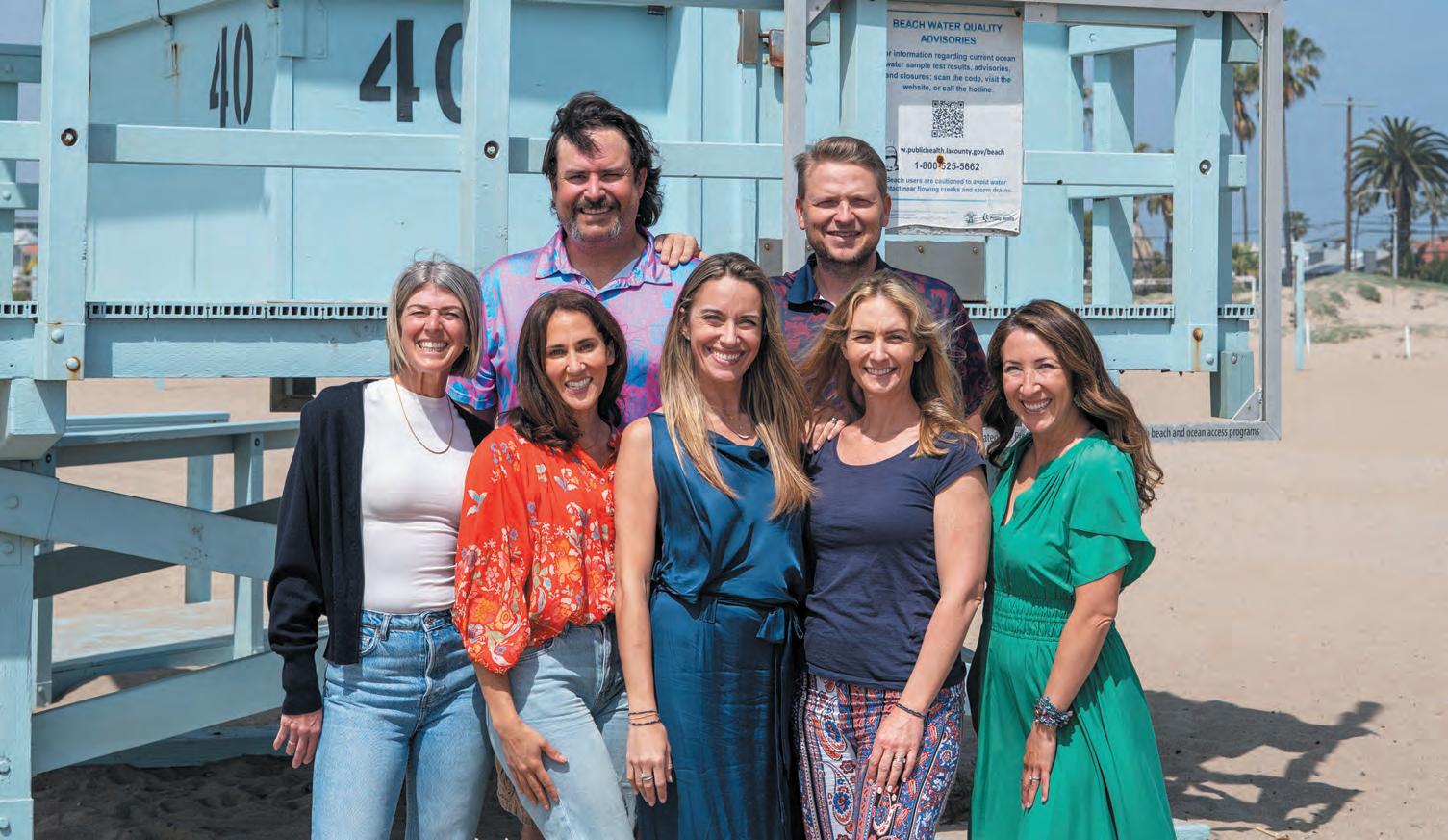
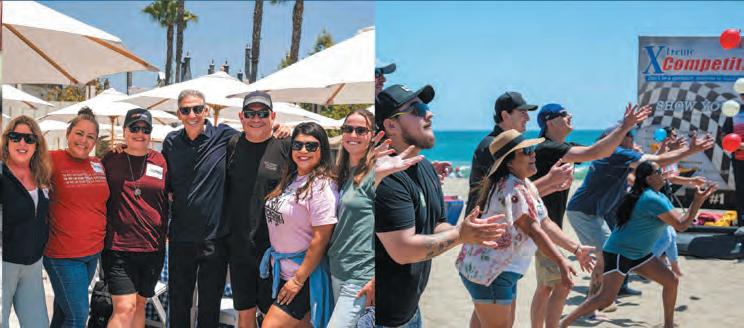
Front page: Colorectal cancer survivor, Marisa Peters, poses at Toes Beach with a group of friends she encouraged to get screened for the disease. Front row left to right: Hannah Northenor, Tara Campbell, Marisa Peters, Teri Taylor, and Pepi Schmella. Back row Dan Thomason and Josh Peters. Photo by Sophie Saunders
The Westchester Town Center BID is home to great businesses, restaurants, retail and service providers! Check them out for all your shopping needs!
Please make “Shop Local” your mantra for 2026– it’s not just a slogan, it helps keep the businesses we love thriving!
Westchester mom expands her mission to save lives and invites the community to take action
By Shanee Edwards
When Westchester mom Marisa Peters first shared her story of surviving Stage IIIb rectal cancer with the Hometown News in 2024, her message was simple but urgent: listen to your body and get screened. Today, that message has evolved into a growing movement and a clear call to action for the entire community.
According to the American Cancer Society, colorectal cancer is the third most common cancer diagnosed in both men and women in the United States (excluding skin cancers) and is on the rise for people in their 20s, 30s and 40s. The good news, however, is that through Marisa’s nonprofit BE SEEN, which she co-founded with her husband Josh, she’s not only raising awareness, she’s building real, tangible pathways for people to get screened earlier, faster, and with support.
And the results are already saving lives.
“Since we last spoke two years ago BE SEEN has helped 58 people be seen, and not only get polyps taken out, but have had precancerous ones removed. That’s what we consider a life-saving intervention,” says Marisa, who was diagnosed at just 39 after years of her symptoms being dismissed by doctors. For Marisa, now four-and-a-half-years out from diagnosis with no evidence of disease, this is just the beginning.
“I’m an impatient person. I want to add some zeros to the end of that 58,” she says with a smile.
A Growing Crisis, Especially for Younger People
Part of what’s driving Marisa’s urgency is the alarming rise in colorectal cancer among younger adults.
“Rectal cancer in particular has gone far ahead of even the predictions in terms of the speed in which it’s taking people’s lives,” she says.
According to recent data, colorectal cancer is now the leading cause of cancer-related death for people under 50, a rate increase of 2.9 percent per year from 2013 to 2022. Even more concerning, many of those cases are being caught too late. The disease made headlines again recently after beloved actor James Van Der Beek, just 48, passed away after a two-and-a-half-year battle.
“Three out of four have delays in their diagnosis, which are resulting in later stage diagnosis and that’s exactly what happened to me,” she says.
Her message is clear: early detection isn’t just helpful, it’s lifesaving.
What You Can Do Right Now
For those wondering how to take action, Marisa and BE SEEN have created three simple entry points: Take the “Poop Pledge,” join a “Poop Party,” and participate in the “Move Challenge.” Each is designed to remove barriers, whether emotional, logistical,
or informational and help people follow through.
1. Take the “Poop Pledge”
The first step is making your own health a priority.
“We want people to commit and pledge to be seen,” Marisa says.
Once you sign up on the BE SEEN website, you receive what she calls a “Poop Planner,” a digital guide that walks you through exactly what to do next to take action.
“It’s like a health map,” she explains. “It guides people through the kinds of conversations to have to truly follow through on that pledge.”
The goal is to help people recognize symptoms, understand their family health history and follow through with actual screening. Marisa emphasizes that screening doesn’t just detect cancer, it can prevent it. She likens precancerous polyps to seeds growing in a garden.
“If we pull the seeds out of the ground, nothing’s going to grow,” she says.
2. Join a “Poop Party”
Yes, it’s exactly what it sounds like, and it’s one of BE SEEN’s most innovative–and surprisingly popular–initiatives.
Last fall, Marisa hosted the first-ever “Poop Party,” where 11 participants supported each other by completing their colonoscopy prep together, then went in for screenings the next day.
by Sophie
She even rented luxury toilet trailers so each person could have their own private loo.
“The toilets were private, soundproof, smell-proof. Just your own stalls with air conditioning. We had stars with the name of the person on each door, they had a personalized air freshener, reading materials–everything to meet their needs. Their families are probably incredibly grateful that they did their prep with us,” she says with a laugh.
A party bus then took everyone to get their colonoscopy together at UCLA Health the morning after the prep and then to eat their first meal after. What started as a one-time event to demystify the process quickly became something bigger.
“People had so much fun that it’s now become one of our most popular programs,” Marisa says.
And the results were eye-opening: more than 70 percent of participants had polyps detected and more than 40 percent had precancerous polyps removed.
In other words, lives were likely saved.
Now, BE SEEN is expanding the concept nationally with a virtual Poop Party with prep starting April 19 and colonoscopies the next morning on April 20, allowing people across the country to participate from their own home. Participants prep together
(Continued on page 8)
Marisa Peters (front row center) poses at Toes Beach with some of the friends she inspired to ‘be seen.’ This April, in time for National Cancer Control Month, she’s encouraging everyone to get screened for colorectal cancer and visit her nonprofit’s website at beseen.care if they need help with tips to get started.
Photo
Saunders
Business & Nonpro t News
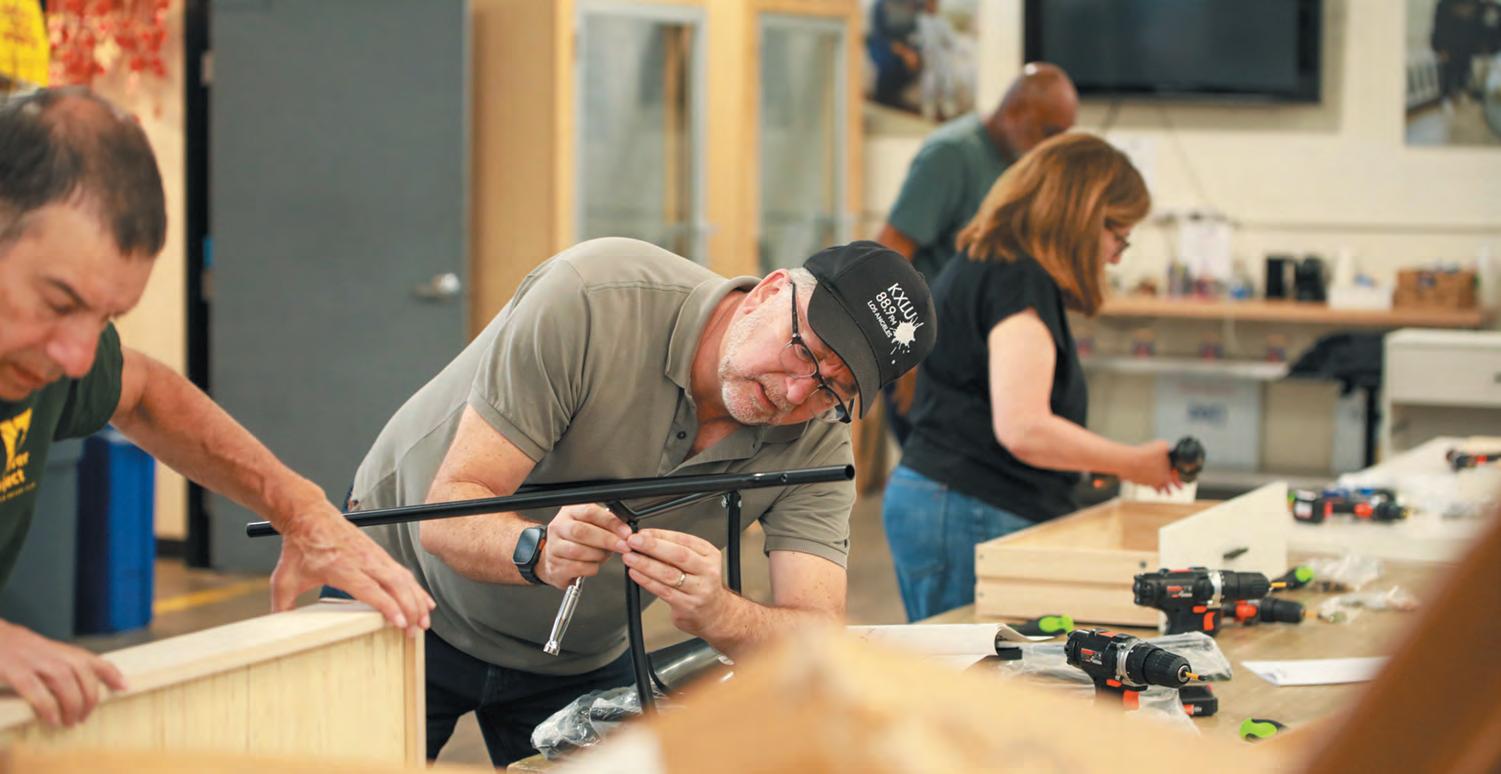
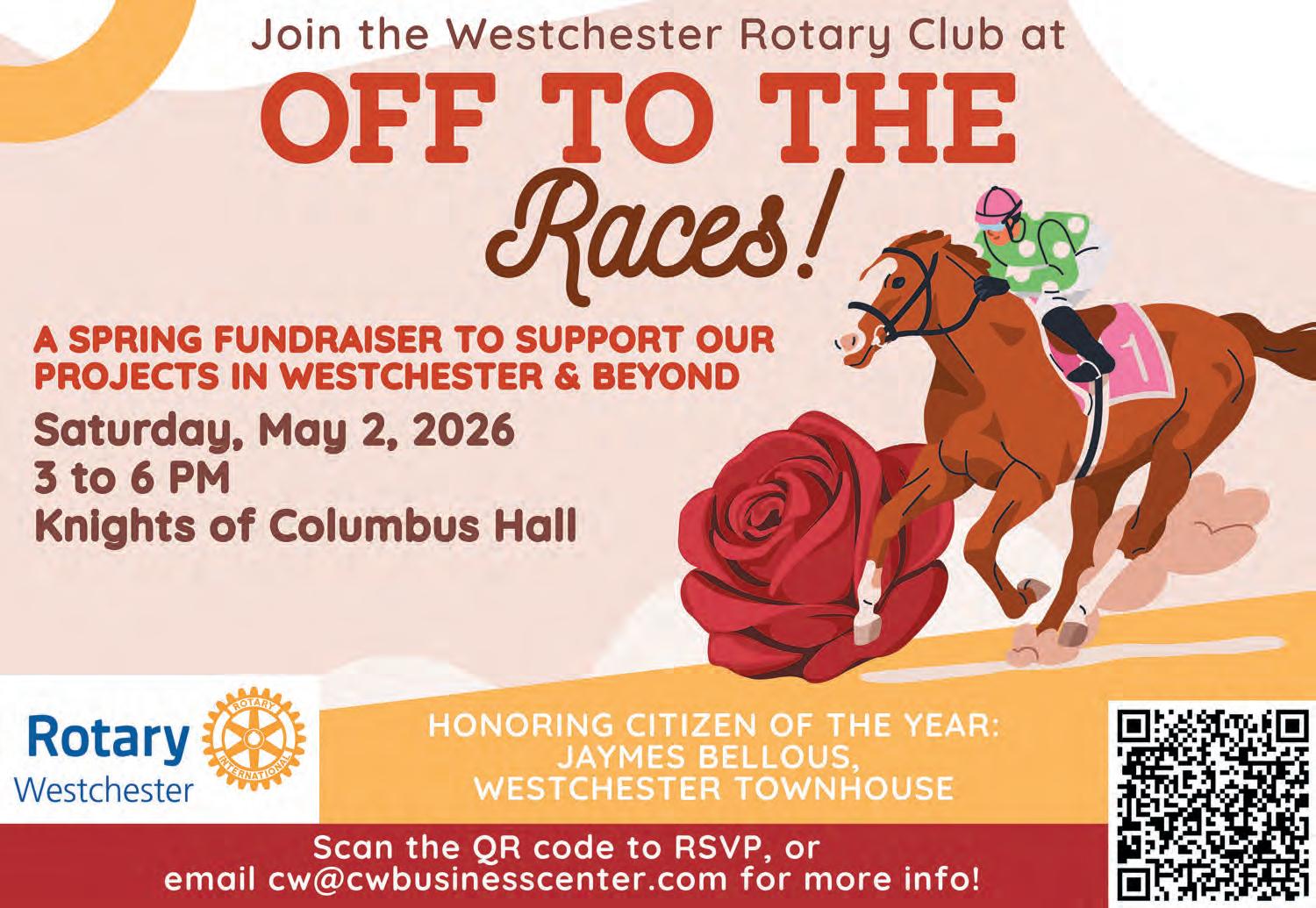
Creating a sense of home. Westchester Rotarians got to work building chairs, dressers, and other furniture for Hawthorne-based nonprofit A Sense of Home (ASOH) on March 28. The volunteer day was part of the service club’s second Makeover Project with ASOH, which strives to prevent homelessness by creating first-ever homes and a community for youth aging out of foster care. On April 4, the club will load all the furniture and decor that was selected into their Home Creation recipient’s new space. Next up for the Westchester Rotary is its May 2 Spring Fundraiser with a Kentucky Derby theme, and the Memorial Day Book Sale! Donations of books can be dropped at the collection box at the Westchester Family YMCA (8015 S. Sepulveda Blvd. in Westchester) from April 24 through May 18. Learn more at rotary-westchester.com.
LAX rallies to support TSO workers.
Los Angeles World Airports (LAWA) is asking the public, LAX travelers and local businesses to join them in supporting Transportation Security Officers (TSOs) at the airport. The workers, who include TSA, have continued to show up for work and keep operations safe at LAX during the ongoing federal government funding lapse.
“You can always count on Angelenos to show up for each other. Our dedicated Transportation Security Officers continue to report to work and keep LAX safe and secure for millions of travelers without a paycheck. Thanks to the dedication of these fine officers, LAX has not experienced significant deviations from typical passenger wait times or operations to date. The LAX community has stepped up in meaningful ways, and we’re asking everyone who travels through or works at this airport to join us,” said LAWA CEO John Ackerman.
To support workers, LAWA has opened a marketplace at the airport stocked with essential goods that is open to TSOs and other federal employees at no cost. The public is invited to contribute donations of shelf-stable food items, hygiene and personal care products, baby products
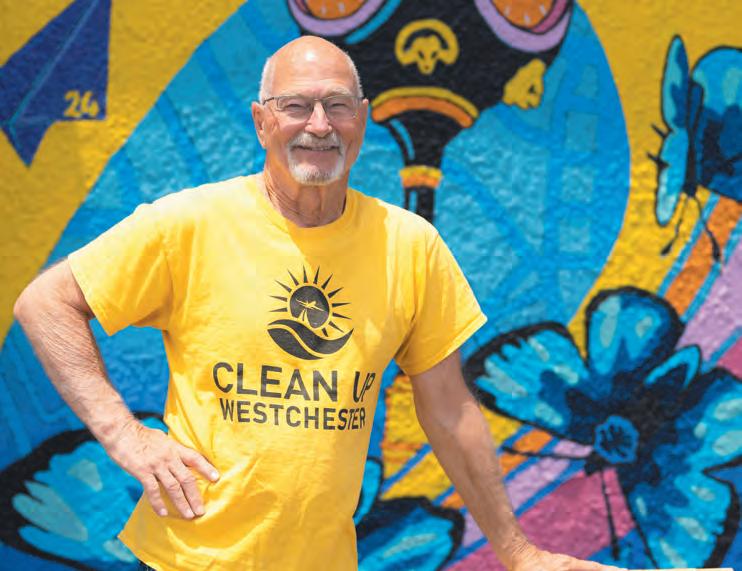
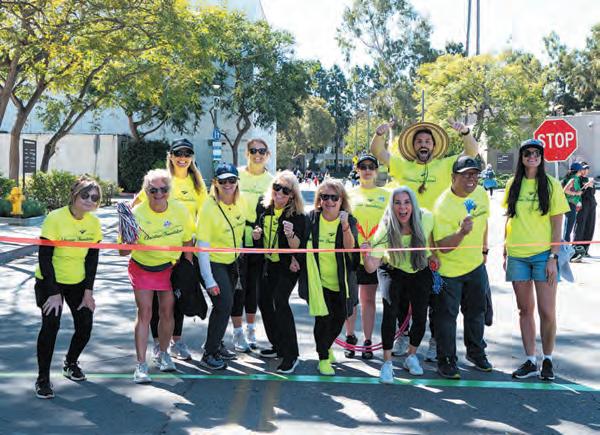
Clean Up Westchester celebrates five years of service. On March 21, Clean Up Westchester, the all-volunteer crew that meets twice a month to pick up trash, celebrated five years of beautifying streets in 90045! Thank you to all the dedicated volunteers who give their Saturday mornings to the cause. Join the group at their next meet-up at 9 a.m. on April 4 in front of Mono Poke on Sepulveda or April 18 by The Nook on Lincoln. Learn more at cleanupwestchester.com. Pictured: Clean Up Westchester founder Grant Francis poses for a photo in Westchester’s business district in the group’s iconic yellow T-shirt.
and diapers, household essentials, and other non-perishable goods. Donations are accepted daily from 5 a.m. to 11 p.m. at the LAX Airport Police Facility Lobby, located at 9160 Loyola Blvd. in Westchester.
Earth Day activity round-up. April is Earth Month, and to help celebrate, local groups are hosting activities so volunteers can give back to the planet!
On Sunday, April 12, from 9 a.m. to noon, the L.A. County Department of Beaches and Harbors is partnering with Heal the Bay to host a Kids Beach Cleanup starting at Dockweiler Youth Center, located at 12505 Vista del Mar in Playa del Rey.
Families can sign up to participate in this hands-on morning and learn how volunteering can make an impact on their community and the environment. The event will also feature a traveling tide pool, arts and crafts and educational booths. RSVP at beaches.lacounty.gov.
This month, when you donate $25 or more to the Friends of Ballona, the nonprofit will plant a native plant or tree in your honor. Each donation will include a personalized sign that may include a name and a short message. Once created and planted, the team will send you a picture of your personalized sign and sponsored plant to share on your social media to inspire others.
Get involved at ballonafriends.org/ earth-month.
Have info to share about your business or nonprofit? Email us at westchesterhometown@yahoo.com for a chance to be featured.
Photo by David Maury
Photo by Robert Higgins
Saving lives (cont’d)
(Continued from page 4) online, complete activities (including art, trivia, and a film screening), and then undergo their colonoscopies the next day, with scheduling handled for them through BE SEEN’s Beeline partnership.
“If they’re ready to be seen, in less than a minute, they can go to our website and a human patient navigator guides them all the way through,” she says.
If Poop Party participation exceeds 50 people, the group will even attempt a Guinness World Record for the largest simultaneous “cheers” with cups of prep solution.
3. Join the “MOVE Challenge”
The third initiative focuses on prevention through daily habits. Inspired by a major clinical study released at the American Society of Clinical Oncologists, BE SEEN launched the MOVE Challenge, encouraging people to walk one mile a day throughout April.
The science behind it is compelling.
The findings, published March 26, 2025, in the British Journal of Sports Medicine, found that 30 minutes of daily movement was as effective as chemotherapy in preventing cancer recurrence in colorectal cancer patients.
“As effective as chemotherapy!” Marisa says. “It’s tremendous.”
The Move Challenge invites participants to: walk one mile a day through April 30, build consistent, healthy habits and raise awareness and funds to prevent cancer.
“It’s not a one-day event,” she says. “We’re building healthy habits and doing it as a community.”
Top participants can even earn tickets to BE SEEN’s upcoming Alive Awards & Musical Celebration in Los Angeles on June 6, 2026.
Removing Barriers to Screening
Beyond awareness, one of BE SEEN’s biggest innovations is making screening easier to access.
Through a partnership with
Beeline, users who visit the site can get matched with providers, have appointments scheduled, and receive support from a patient navigator.
All within minutes.
Because as Marisa notes, even when people get referrals, they often don’t follow through.
“It tends to fall to the bottom of the to-do list,” she says. “BE SEEN is driven to close that gap.”
A New Normal and a Clear Purpose
While Marisa is now healthy, she says life after cancer is not about going back to the way it was before.
“It’s a new version of normal,” says Marisa who was recently on the Kelly Clarkson Show promoting her Parent Your Parent Program and the virtual “Poop Party.”
That reality is part of what fuels her mission.
“We have the tools available to us today to do away with this disease, we just have to apply what we have,” she says.
The work has become deeply personal for her.
“I really feel like this is my life purpose,” she says. “If we can do this, we’re actually giving people more time. We can’t buy more time, but we can give it.”
How to Get Involved
Westchester/Playa residents, and anyone beyond, can take action today by visiting beseen.care to take the pledge to get checked, or participate in the April initiatives, which were launched just in time for National Cancer Control Month.
As Marisa has proven, awareness is only the first step. Action is what saves lives.
Scan the QR code or go to beseen. care for more info and subscribe to the BE SEEN Network podcast everywhere you listen.
• On-site parking
• Well-maintained property with a friendly, reliable on-site management team
SPRING CROPS
• Lunch • Games • Mint Juleps
• Silent & Live Auction • Reverse Drawing
• Watch the Kentucky Derby Live $125/Per Person
THE WESTCHESTER SATURDAY STROLL
MAY 9 • AUG 15 • OCT 10 • DEC 5 (4 - 7 PM)
SHOP, DINE, CREATE, EXPLORE
The Saturday Strolls are back! This free event celebrates everything that makes Westchester shine! Local music, dining, shopping, art, games, crafts, face paint, treats, and more. Fun for all ages on 87th St. in the Triangle!
MAY 9, 4 - 7 PM: Join us for Mother’s Day & Springtime Celebration!
Karma Companions aims to help seniors find connection and friendship
By Shanee Edwards
In a city as connected as Los Angeles, loneliness can still quietly take hold, especially for older adults whose lives have shifted after retirement, loss, or major life transitions. For Playa del Rey neighbors Kat Hatayama and Sarah Kolenik, that realization didn’t come from research or market analysis. It all started with a walk around the neighborhood.
“Kat and I used to live across the street from each other,” Sarah says. “Kat’s an avid walker, and one day she saw me coming out of my house when I first moved in. She asked me to go on a walk, and that’s kind of where our story begins.”
That simple invitation sparked a friendship and eventually, a business rooted in human connection.
Different Backgrounds, Same Purpose
Sarah came from the entertainment industry, working as a writer-producer with her own production company. Kat built her career in real estate, a field she still practices today. On paper, their industries were different, but their conversations revealed a shared feeling.
“While we have deep roots in entertainment and real estate, we felt like something was missing–a deeper sense of purpose and drive,” Sarah says.
That sense of searching deepened during the pandemic when Sarah began volunteering with Meals on Wheels. What she discovered there would become the foundation of Karma Companions.
“Of course, people needed the invaluable service and food delivery, but what became just as clear was how much those few minutes of real human connection mattered each day,” says Sarah.
She began spending more time with some of the seniors she met, going out, sharing meals, and building real friendships.
“I didn’t realize it at the time, but I had naturally stepped into the role of a companion,” she says.
What struck her most was that many of these individuals weren’t immobile or physically disabled. They were active, capable, and independent–just isolated.
“They were either widowers, widows, empty nesters or just retired, maybe a little bit too early,” she says. “They just didn’t have the opportunity to get out and to be social on a more profound level.”
A Cultural Insight and a Business Idea
Around the same time, Kat had been reflecting on longevity and quality of life, inspired by the concept of “Blue Zones,” popularized in part by a Netflix documentary series on longevity. These regions, including Okinawa, Japan; Sardinia, Italy; and Loma Linda,
California, share a common thread: strong social bonds and a clear sense of purpose.
Having married into an Asian family and visiting Okinawa several times, Kat saw firsthand how purpose and connection shaped aging.
“Both of my husband’s grandmothers lived long lives, one was 99, the other lived to be 105. I honestly don’t see that as a coincidence. What I did notice was the difference in level of care between here and Asia. Specifically, having this ‘ikigai’ is what’s keeping a lot of this Japanese culture alive,” she says.
Ikigai, a Japanese concept, roughly translates to “a reason for being.” It’s the idea that having purpose, routine, and meaningful daily engagement contributes to a longer, more fulfilling life.
“We’ve made incredible progress in extending life, but we haven’t evolved at the same pace when it comes to connection and emotional well-being as we age,” Sarah says.
From that realization, Karma Companions was born.
What Karma Companions Does Karma Companions is not a
a rigorous vetting process, including interviews, background checks, and a look at their DMV records.
“We like to say we know our companions as much as possible without being friends with them for 10 years,” Kat says.
From there, matches are made based on personality, interests, and lifestyle, not just availability. Their roster of companions is as diverse as Los Angeles itself.
“We have a glassblowing expert, a doctor, people from the Peace Corps, somebody who works at the lab at UCLA,” Kat says.
Sarah adds, “Truly incredible people who are looking for deeper meaning in their work and lives.”
The Story That
Says It All
While the concept is compelling, it’s the real-life impact that defines the company.
Sarah shares the story of a client, a retired surgeon in his early 70s, also a lifelong concert pianist, whose life changed after the tragic and sudden loss of his wife.
“He had never really eaten dinner alone for the last 30 years,” she says.
Karma Companions suggested a simple but intentional routine: evening visits centered around shared meals. Now, a Karma Companion joins him several nights a week. They walk his dog along the bike path, cook or order dinner together, and discuss films. Today, music fills the house again.
“He had stopped playing completely,” Sarah says. “But now he’s going to have a Seder dinner and play the piano for all of the guests.”
by Zsuzsi
caregiving service. It’s something more specific and, in many ways, more overlooked.
“We are strictly companions,” Kat says. “We are preventative care.”
The company matches active adults 55-plus with carefully vetted companions for friendship, shared activities, and social engagement. Think walks, dinners, classes, or simply meaningful conversation.
In addition to companionship, they offer a “companion assistant” role, which can include light logistical support like helping with errands, attending appointments, events, doing a home project, or organizing day-to-day tasks. The goal is independence.
“We are keeping mom and dad out of assisted living. We are stepping in when we see the need,” Kat says, sharing the difficulties a lot of families face, as they balance taking care of their children and their aging parents at the same time.
A Carefully Matched Relationship
As a boutique staffing agency, Karma Companions takes a highly curated approach. Companions go through
Even more striking are the ripple effects: he’s walking more, swimming again, and enjoying time with his family in a completely different way.
“It’s one of those things where they can really reignite old passions and just help them want to live their best lives again,” she says.
A Business Built on Meaning
Though both founders still maintain ties to their original careers, Karma Companions has quickly become their primary focus.
“We spend all day, every day working on this right now,” Sarah says.
And for Kat, it feels more like a calling than a 9-to-5.
“This is absolutely the most fulfilling work I’ve ever done,” she says. “It doesn’t feel like a job.”
What began as a neighborly walk has evolved into something much larger: a company built on the belief that connection is not a luxury, but essential.
Or, as their work proves daily, sometimes the most powerful care isn’t care at all. It’s companionship.
Learn more about Karma Companions at karmacompanions.com.
Photo
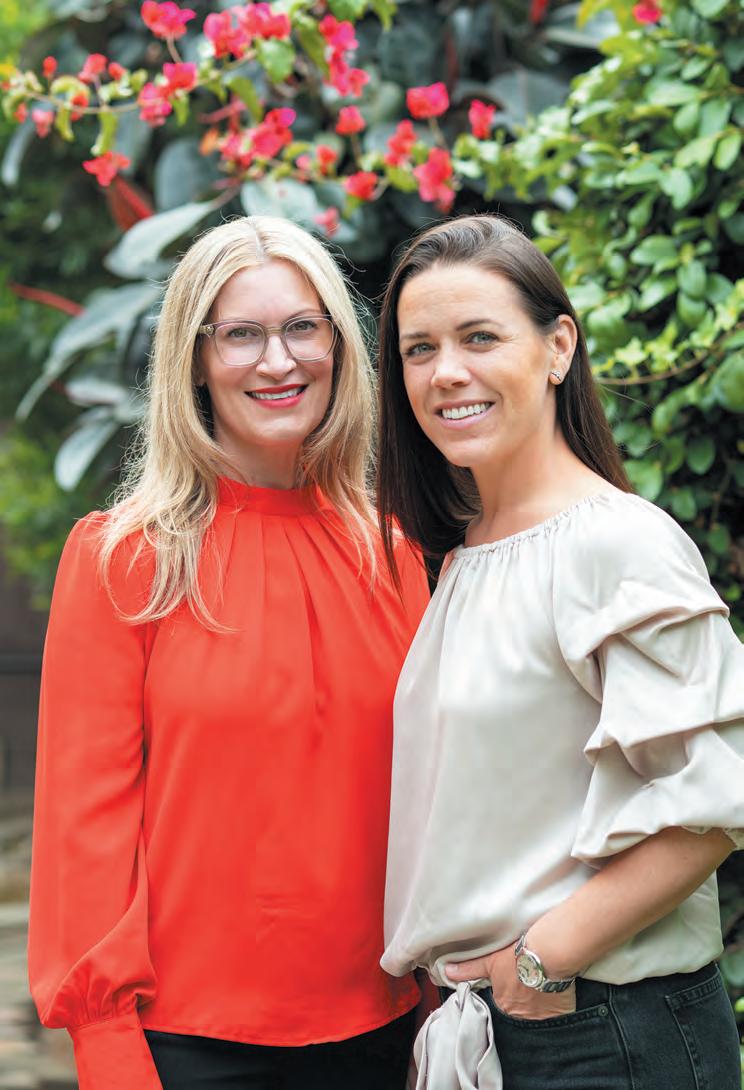
Sarah and Kat have found meaning with their new venture helping seniors build connection.
The Westside’s Favorite Real Estate Team
Once again, we are honored and grateful to be voted a Favorite Real Estate Team on the Westside of Los Angeles*. Thanks to our clients and fans!
Invested in your vision, your success, and our community.
Hear from your co unity Feeling Stuck? Why it happens and how to get moving again
By Christine Shanley
You know the feeling. You wake up, start going through your day, but somewhere in the back of your mind the thought keeps returning: something needs to change. But you’re not changing it. You’re doing the dishes, answering emails, watching one more episode, scrolling a little longer. Yesterday looked a lot like this, and tomorrow probably will too.
That’s what stuck feels like. Not dramatic. Not broken. Just…frozen.
Here’s what many of us misunderstand about being stuck: we think it’s a motivation problem. If we could just get fired up enough, inspired enough, ready enough—we’d move. So we wait for “the feeling.” And the feeling doesn’t come. And we stay stuck.
Motivation doesn’t create movement. Movement creates motivation. The science backs this up, but we already know this from experience. Remember the last time you dragged yourself to the gym when you didn’t want to? Halfway through, you were fine. You just had to start.
The truth is, there are many reasons we get stuck. Sometimes we don’t know where to start, we don’t have a plan to get moving, or we’re not entirely clear on what the real issue is. But more often than not, the biggest reason that we stay stuck is fear. Fear of making the wrong decision. Fear of failure. Fear of disappointing people around us. Fear of stepping into something unfamiliar and disrupting our lives without a guaranteed outcome.
When our brains perceive uncertainty or risk, they activate the body’s natural survival response—commonly known as fight, flight, or freeze. These responses evolved to protect us from physical danger, but they also activate when we face emotional or psychological uncertainty.
Some of us respond by pushing harder or trying to control the situation. We work longer hours, overanalyze every option, or attempt to force clarity through sheer effort. This is the fight response.
Others of us respond with avoidance. We stay busy with other tasks, distract ourselves, or postpone decisions indefinitely. That’s the flight response.
But many of us experience the third response: freeze.
When we freeze, it rarely looks dramatic from the outside. It looks like hesitation, procrastination, or endless thinking. We replay possibilities, options, conversations in our minds, trying to anticipate every outcome before taking a step.
The brain believes it is protecting us.
If we just gather a little more information, think a little longer, or wait for the “right moment,” the risk of making the wrong decision might disappear.
But that moment rarely arrives.
Instead, we often find ourselves circling the same thoughts again and again. Days pass and turn into weeks. Then months. Sometimes even years. The quiet sense that something needs to change remains, but movement never quite begins.
This is why waiting for certainty can keep us stuck far longer than we want or expect.
Movement—even small movement— begins to interrupt that pattern. A conversation, a new idea, or one small action signals to the brain that forward motion is possible. Once movement begins, confidence and consistency start to follow.
Feeling stuck can be uncomfortable, but it can also be a signal that something in our lives is ready to evolve.
The goal isn’t to overhaul everything overnight. Real change usually begins with small steps in thinking and action. Here are several strategies that can help get you get unstuck and moving:
1. Set Clear Goals and Break Them Into Small Steps
Large changes can feel overwhelming. Smaller actions make progress manageable.
• Identify what you would like to be different in the future
• Break that goal into smaller, realistic steps
• Focus on one step at a time
• Track small progress rather than waiting for big results
Each small step reduces uncertainty and builds confidence.
2. Choose Progress Over Perfection
Perfectionism often keeps people stuck because it convinces them they must have everything figured out before they begin.
• Take action even when the path isn’t perfectly clear
• Focus on learning rather than getting everything right
• Allow yourself to adjust as you go
• Recognize that progress often comes through trial and experience
Progress builds momentum, and momentum creates clarity.
3. Change Your Emotional Diet
Pay attention to the thoughts you
consistently feed your mind.
• Notice self-critical thoughts that repeat throughout the day
• Question assumptions that may not actually be true
• Replace harsh self-talk with more constructive thinking
• Focus on thoughts that encourage possibility rather than fear
Over time, the thoughts we practice become the lens through which we see our lives. Adjusting that lens can open the door to new possibilities.
4. Remember That Confidence Often Comes After Action
Many of us believe we need confidence before we begin. In reality, confidence usually develops through experience.
• Start before you feel completely ready
• Learn through trial and adjustment
• View mistakes as part of progress
• Focus on forward movement rather than certainty
Confidence grows as we take action and see ourselves navigating challenges.
5. Seek Support
You don’t have to navigate uncertainty alone.
• Talk with a trusted friend or partner
• Work with a therapist, coach, or mentor
• Connect with people going through similar experiences
• Journal your thoughts if you’re not ready to share them yet
Sometimes writing or speaking our thoughts out loud helps us see them more clearly.
Life rarely unfolds in a perfectly predictable way. Periods of uncertainty often become the moments that lead people toward new opportunities, new interests, and new directions we may never have imagined.
All of us deserve a life that feels full, meaningful, and intentional.
Sometimes the first step toward that life isn’t huge. It’s choosing to move, even in small ways, and trusting that clarity will appear as the path unfolds.
Christine Shanley is a leadership and life transformation coach based in Westchester, with more than 25 years of experience supporting executives, professionals, and individuals through growth, change, and reinvention. Her coaching combines evidence-based tools, mindset practices, and intuitive guidance to help clients navigate transitions with authenticity and clarity. Visit Christineshanley. com or scan the QR code to learn more.
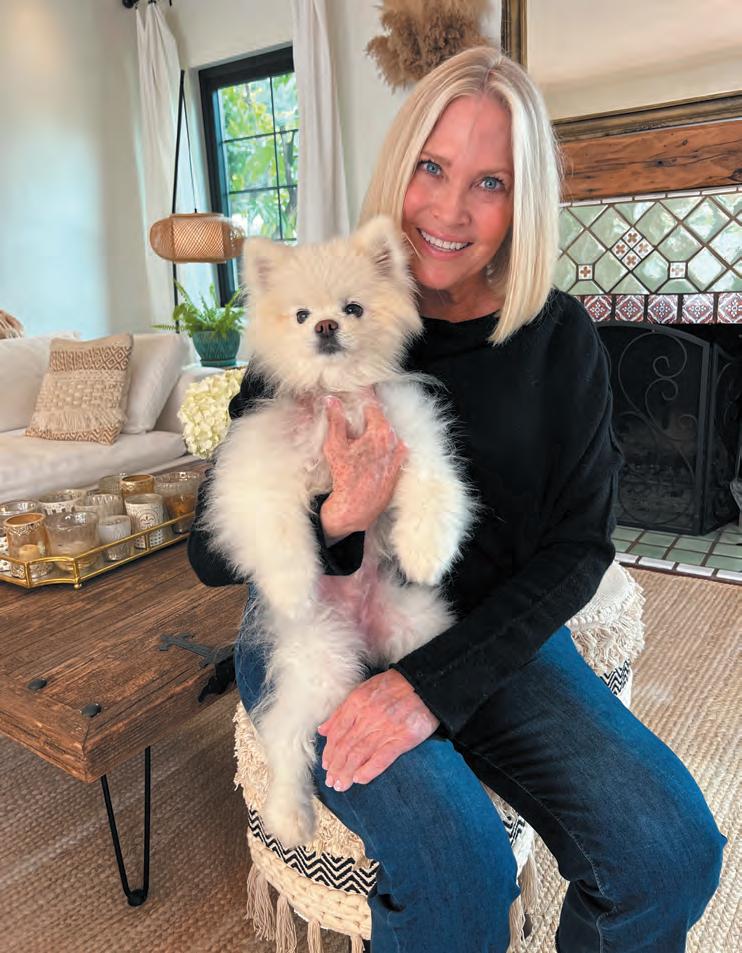
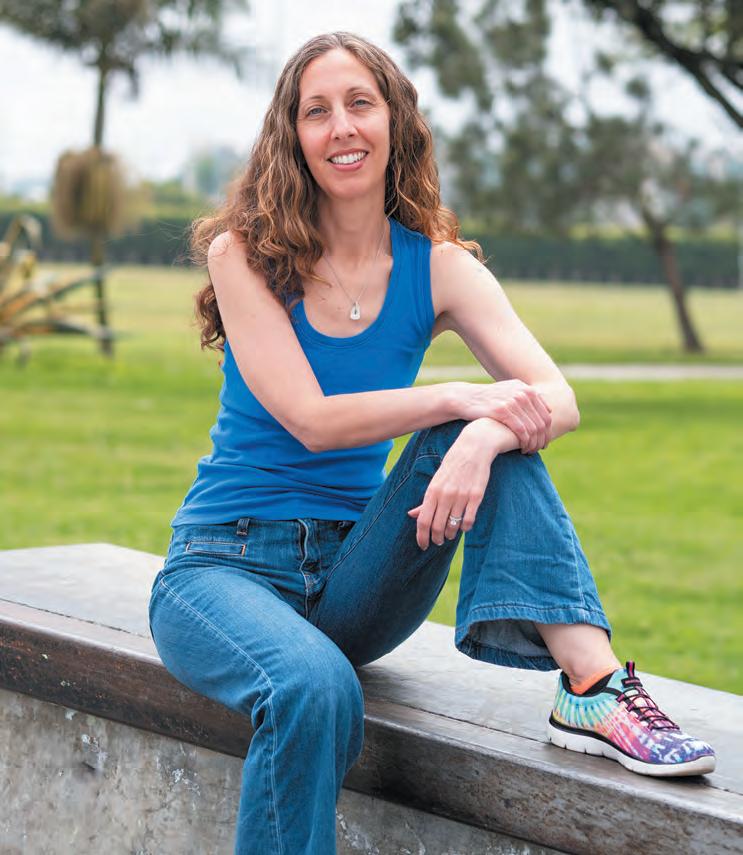
Christine poses in her Westchester home with her Pomeranian, Sugar.
LMU Spring Dance Concert
April 15 - 18
Strub Theatre
Join LMU for an evening of artistry and expression as LMU’s talented dancers take the stage. Featuring student and faculty choreography, these performances showcase dance in all its forms.
More info at bit.ly/LMUSpringDance26 (case-sensitive).
Next LMU Neighborhood Advisory Committee Meeting April 22 | 6:30 p.m.
The meeting will be held in University Hall, ECC 1857. For directions and more info, go to bit.ly/LMUNAC42226 (case-sensitive).
More info about the NAC meeting
SIXTH
ANNUAL ROCK ROLL & RUN
& COMMUNITY EXPO - MARCH 7 AT LMU
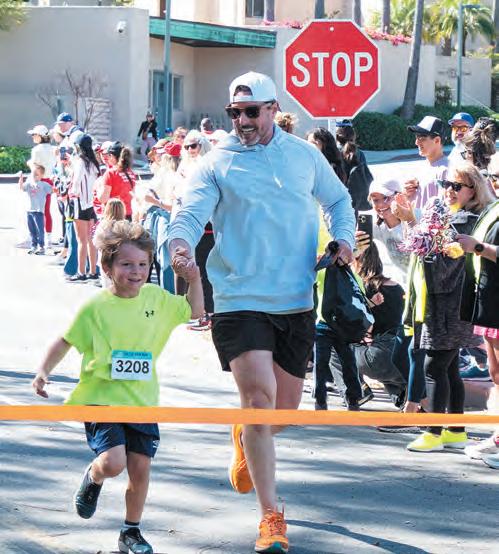
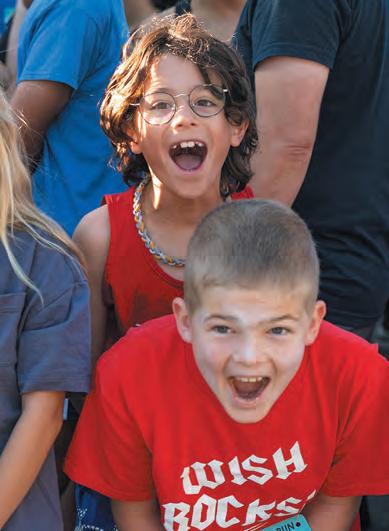
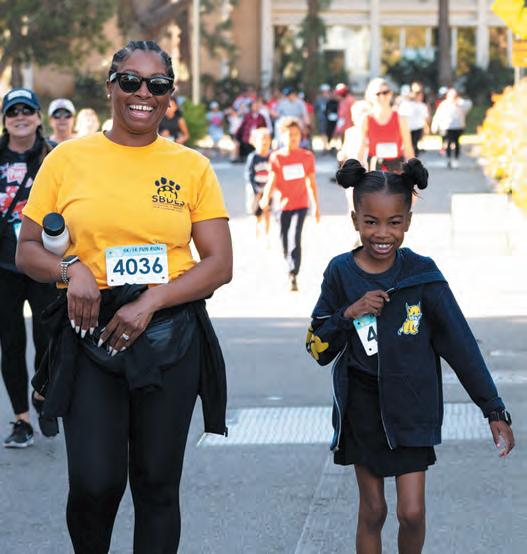
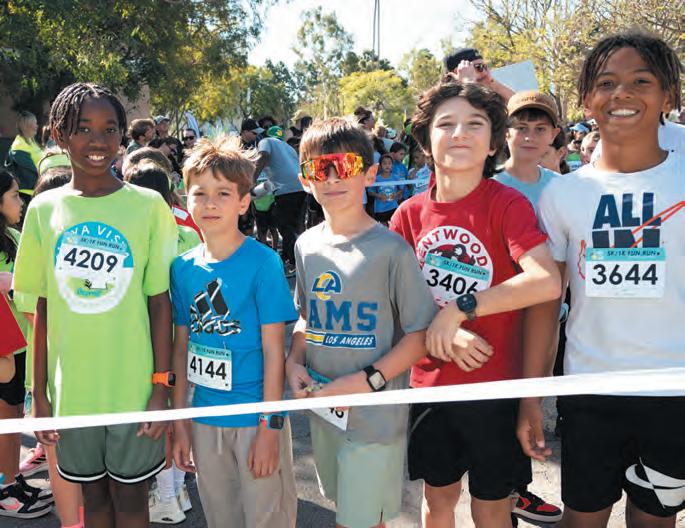
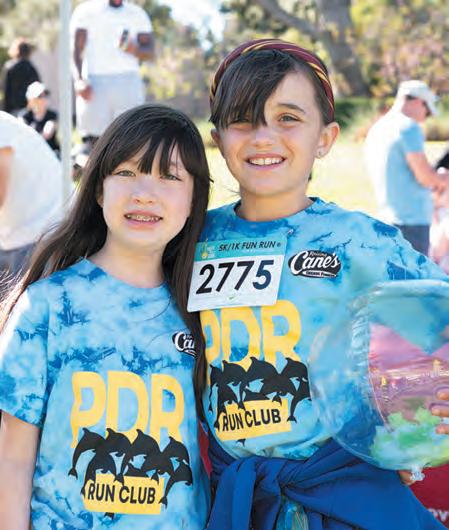
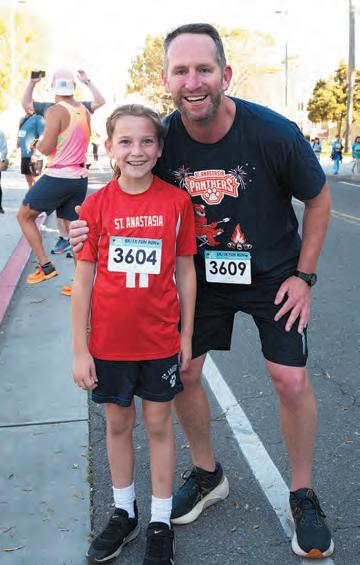
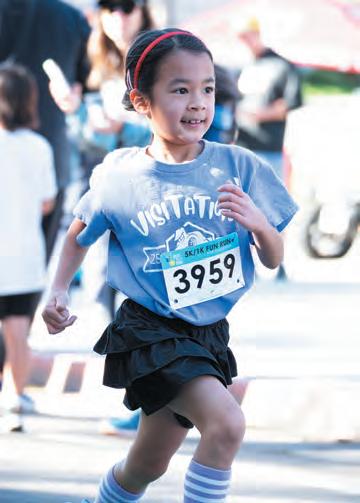
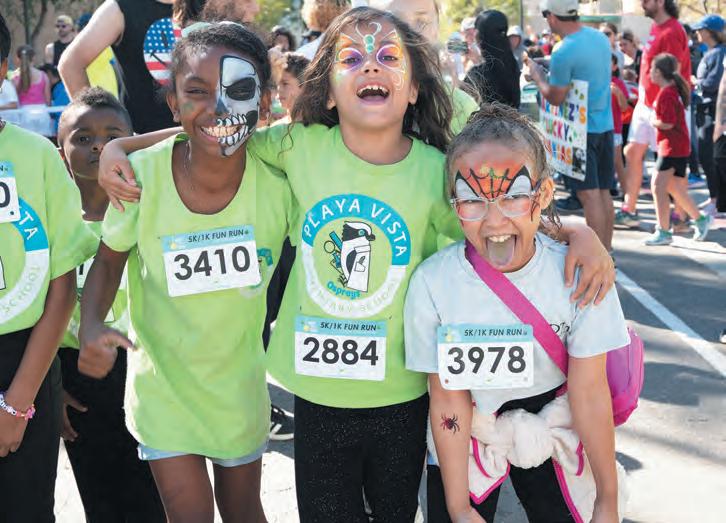
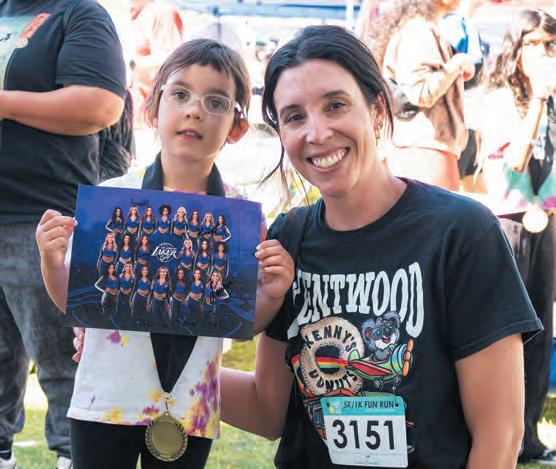
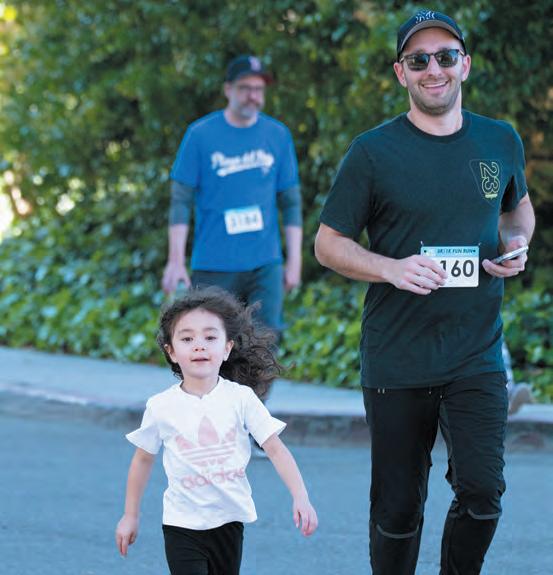
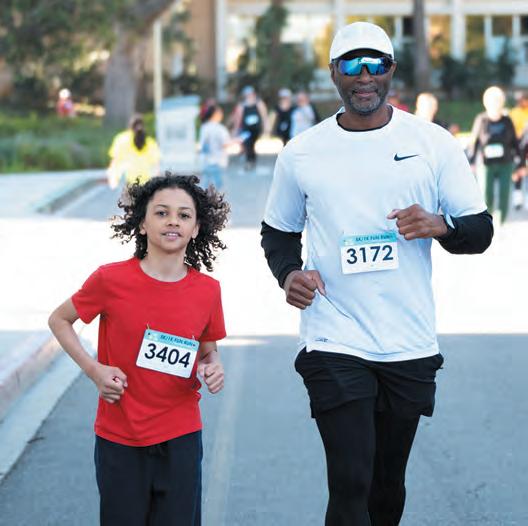
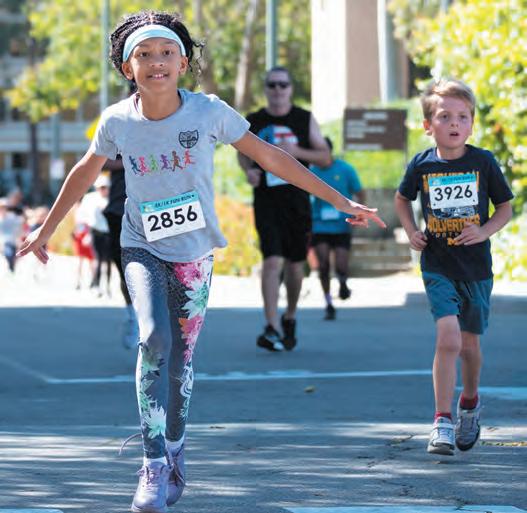
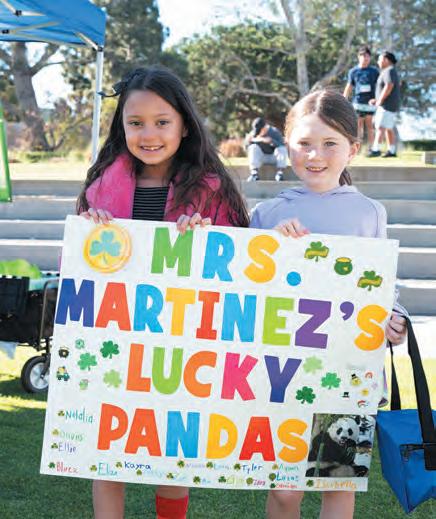
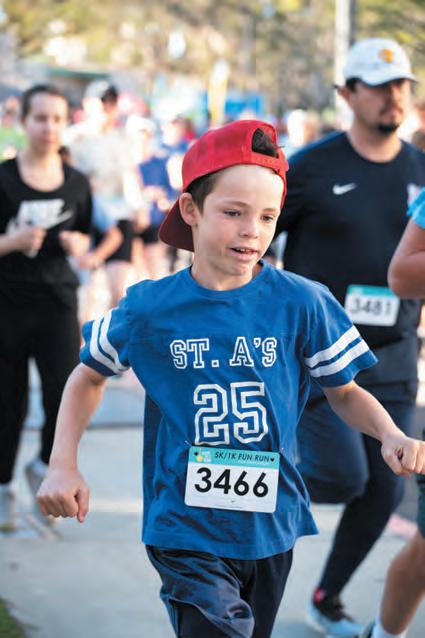
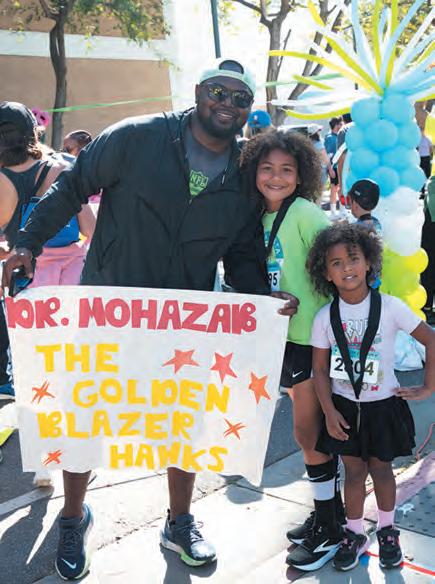
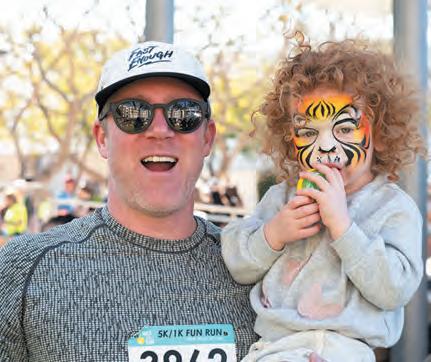
Families, students and community members brought their school pride to the LAX Coastal Education Foundation’s Sixth Annual Rock Roll & Run, in partnership with LMU!
On March 7, the university’s Lawton Plaza was filled with eager runners–and walkers–who were ready to participate in the 5K, 1K and community expo, while raising money for their schools.
“The weather was perfect, and the excitement from our school community was amazing,” said LAXCEF co-president Traci Cox. “We
represent 26 schools, and this event is so much more than just a run. It really is a reflection of what happens when we all come together with a common purpose! We love seeing all the families crossing the finish line, and the students rooting for each other.”
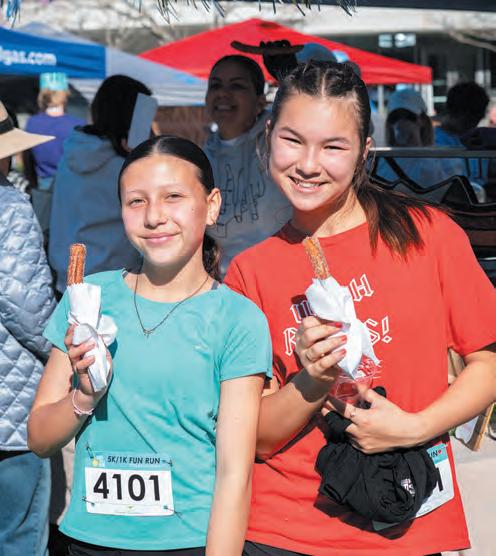
After the 5K, attendees enjoyed the festivities at the expo like a pancake breakfast hosted by the Playa Venice Sunrise Rotary Club, live music by Sooper Awesome, and arts and crafts with Creative Joy Studio. Other popular booths included Visitation passing out churros, and activities
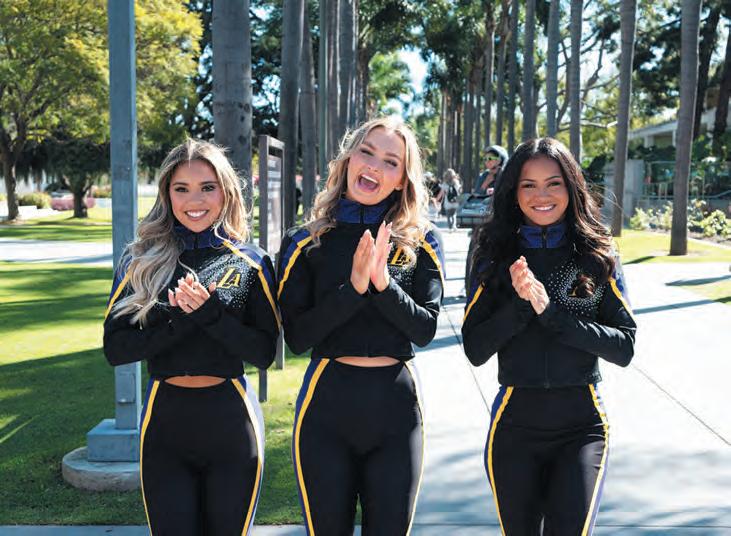
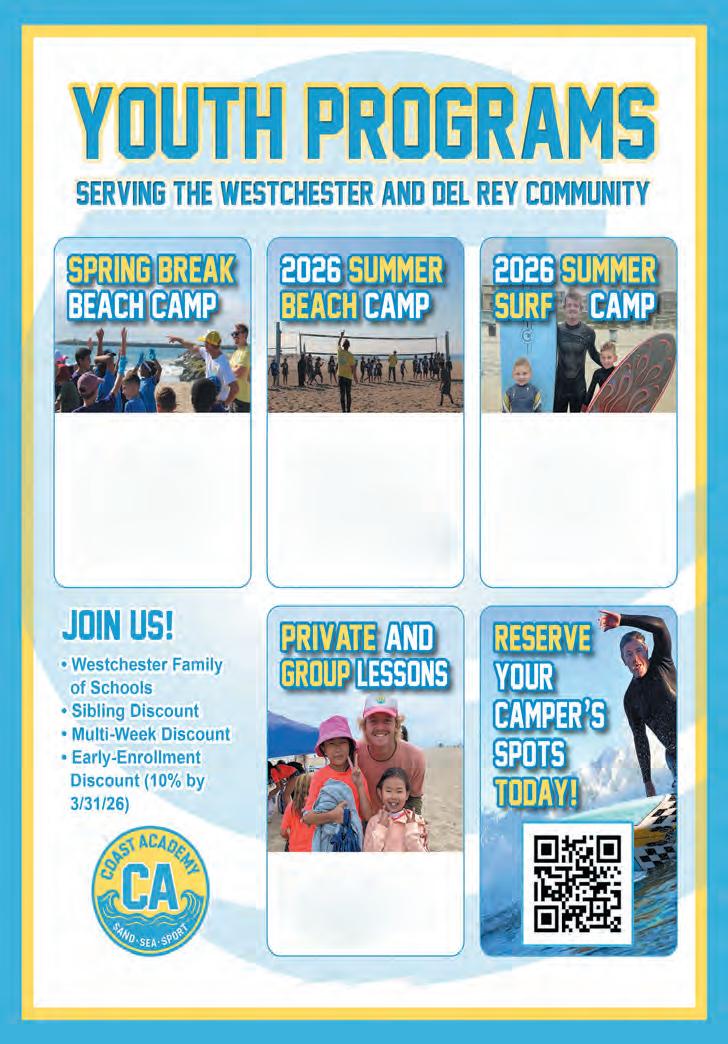
with LA FLEX, Coast Academy and Prime Time Sports Camp. The worldfamous Laker Girls also made a special appearance to cheer on the 1K runners, sign autographed pictures and pose for photos, which was a big hit with the students.
With the support of sponsors and participants, this year more than $119,000 was raised for education! Major contributors included the Drollinger Family Charitable Foundation, LMU, LAWA, Stephanie Younger Group, Decron Properties, Playa Venice Sunrise Rotary and the
William H. Hannon Foundation. A variety of volunteer organizations like the LAX Coastal Chamber’s Network for Change and the National Charity League’s Beachside Chapter, as well as local high school students, also stepped up to the plate to donate their time to make the event a success.
Want to see more event photos and learn more about supporting the Ed Foundation? Please visit laxcef.org or scan the QR code!
by Zsuzsi Steiner
Photos
A LIFE GROUNDED IN HELPING OTHERS
Dawn Decker has found her calling in empowering students with disabilities and supporting her neighborhood.
By Sylvia Wilson
In the quiet, tree-lined streets of Emerson Manor, neighbors know they can count on Dawn Decker. Whether she’s walking her Boston terrier, Sully, checking in on the block, or volunteering her time to support students with disabilities, Dawn has become a familiar and deeply appreciated presence in Westchester. But her story begins far from Los Angeles, in a tiny speck of a town in the Buffalo–Niagara Falls region of western New York.
“It’s the kind of place where if you blink while driving through, you’ll miss it,” she says with a laugh.
A rural farming community surrounded by woods, fields, and endless sky: it was the backdrop to a childhood that Dawn remembers as nothing short of magical.
Growing up in the ‘80s and ‘90s, Dawn lived the kind of unplugged childhood that now feels almost nostalgic. Days were spent exploring the woods with neighborhood friends, picking berries straight from the bushes, building blanket forts in garages, and racing home only when the streetlights flickered on. Her father worked nearly four decades on an assembly line building heating and cooling systems for American-made cars, while her mother stayed home until Dawn reached middle school. As the youngest of three siblings, she jokes that her brother and sister still insist she “got away with everything.”
As a youth, Dawn once owned a tie-dye shop on a beach along Lake Ontario. At just 20 years old, she created her colorful designs in her parents’ basement, leaving their washer permanently stained with a rainbow dye line.
Those early years shaped her love for nature, community, and curiosity, qualities that would eventually guide her toward a career in psychology.
A Calling Found Early
Dawn remembers the exact moment she declared her future path. She was in 10th grade, walked into the kitchen, and announced to her mother that she was going to study psychology and become the next Dr. Ruth.
“If you know, you know,” she says with a grin.
She never wavered. Dawn earned her bachelor’s degree in psychology with a minor in theater arts, followed by a master’s in clinical psychology. She even squeezed in specialized training in Washington, D.C., and because life is more fun with unexpected twists, a bartending certificate.
Then came the leap that changed
everything: a move to California to pursue her Psy.D. in Clinical Psychology.
Along the way, she found mentors who shaped her professionally and personally: Dr. Timothy Osberg, Dr. Grant McLaren, and Dr. Joy Asaman. As a first-generation college student, Dawn says their encouragement helped her push past moments of doubt. Her parents, too, were unwavering in their support.
During her internship at Santa Ana College, Dawn discovered the spark that would define her career. Working with students who had struggled in school or gone undiagnosed with learning disabilities, she found joy in helping them understand their strengths and reclaim their confidence.
“I loved giving students hope–helping them see they belonged in college, and that they could reach their goals,” she says.
She also found lifelong friends there, co-advising the campus gay-straight alliance and building community in ways that would echo throughout her life.
A Career and a Calling
Just three weeks after earning her doctorate, Dawn was hired at a community college in Orange County as a learning disability specialist and academic counselor. In 2011, she joined Cypress College as adjunct faculty, eventually earning a full-time position in 2016 and tenure in 2020, an achievement she still describes with pride.
Her most influential career mentor, Dr. Brooke Bui, helped her see potential she didn’t yet recognize in herself.
“She encouraged me, connected me, and supported me,” Dawn says. “I wouldn’t be where I am without her.”
Dawn continues to serve students with disabilities, helping them navigate higher education with dignity, support, and opportunity.
Finding Home in Westchester
Dawn moved to Westchester in 2011, shortly after landing her part-time job in Orange County. She had lived in Playa del Rey and Del Rey since arriving in Los Angeles in 2003, but Westchester felt right: affordable at the time, walkable, and full of neighbors who quickly became friends.
“It reminds me of my small town in some ways,” she says. “People look out for each other.”
She helped revive the local Neighborhood Watch, forging connections with neighbors, LAPD, LAXPD, and community leaders. She also became involved with the Westchester Neighbors Association,
deepening her roots in the community.
Today, Dawn and her husband, Brian, whom she calls her “jackpot,” after their 07/07/07 Las Vegas wedding, can often be spotted walking Sully through the neighborhood, exploring local restaurants, or checking out museum exhibits. Brian, originally from the Adirondack region of upstate New York, works in the video game industry and shares Dawn’s love of travel and Disney adventures. The couple is on a mission to visit every Disney park in the world, with Tokyo Disneyland and Tokyo DisneySea next on their list.
Dawn met Brian in the most unexpected of places, a small video and lingerie shop near the University at Buffalo. He was the cute assistant manager behind the counter; she was the curious customer who struck up a conversation and somehow walked out with a job application. They worked opposite shifts, but Brian would “check in” on the new hire, and over time, their easy banter turned into something more.
One night after closing, a simple “What are you doing later?” led to drinks, a movie, and the beginning of a connection neither of them had been looking for. Both fresh out of long-term relationships, they kept things casual at first, but by the Ides of March they decided to make it official, even knowing Dawn would be moving across the country in a few months.
A trip to Las Vegas sealed the deal. At the VooDoo Lounge atop the Rio, over a smoking Witch Doctor cocktail, Brian told her he loved her for the first time. What happened in Vegas definitely didn’t stay there. They committed to a one-year long-distance relationship, and when Brian visited Dawn in Los Angeles, he fell in love
Photo by Zsuzsi Steiner
with the city, too. Within months, he moved west, landed a job in the video game industry, and began building a life with her.
When it came time to marry, Vegas was the obvious choice. They tied the knot on one of the most popular wedding dates in the city’s history: no Elvis, just a Tommy Bahama-themed celebration on a golf course surrounded by friends and family. Nearly 19 years later, they’re still laughing, still exploring, and still planning their next adventure together. Though child-free by choice, Dawn and Brian are beloved by their 21 nieces and nephews, ranging from toddlers to adults and by many of their friends’ children, who affectionately call them Auntie Dawn and FUNcle Brian.
A Life of Service and Color
Dawn’s commitment to service extends beyond her career. She volunteers with Boston Buddies, a Boston Terrier rescue organization, conducting home checks for potential adopters and foster families. She also serves as treasurer for the California Association for Postsecondary Education and Disability (CAPED), helping plan its annual convention and supporting scholarships for students with disabilities.
A Neighbor Who Makes Westchester Better
From her rural New York roots to her life in Emerson Manor, Dawn’s story is one of resilience, curiosity, service, and community. She has built a life grounded in helping others, nurturing friendships, and embracing the joy in everyday moments.
Westchester may not be the small farming town where she grew up, but thanks to neighbors like Dawn Decker, it has the heart of one.
Dawn takes a photo at Westchester Park.
Visitati Presents
GOLD SPONSORS: Diane Barretti & Larry Plotkin
Judy & Dan Dews
Paslay Management Group
Linda Peterson & Gene White
Premier Interior Development
The
Office of Edgar Saenz
Denny Schneider
United Airlines
Val & Frank Velasco
SILVER SPONSORS: AvAir Pros
Concourse Ventures
Crews Hospitality
Concord Collective Partners DFS Group Greater Than Development & Design
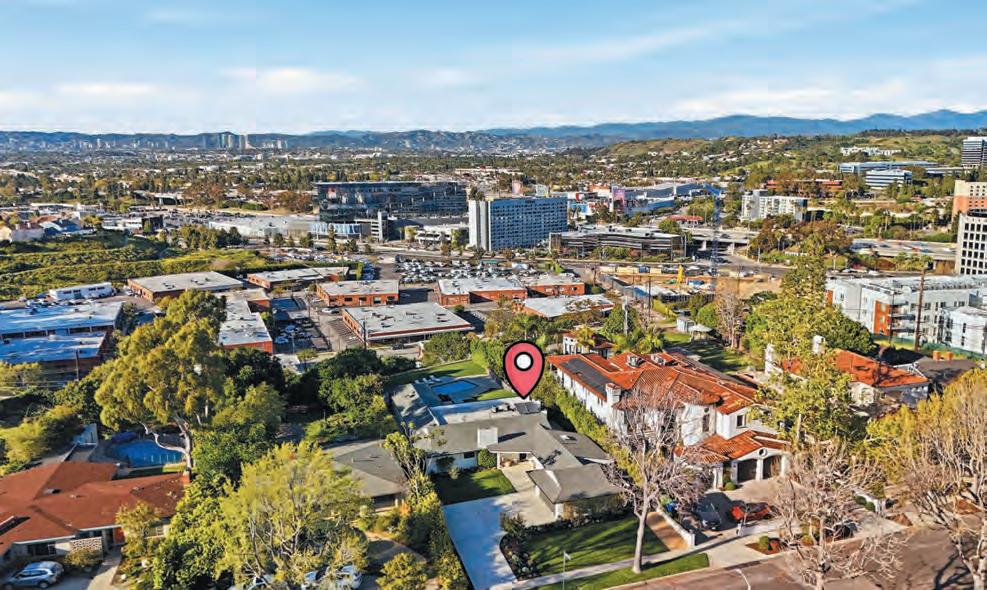
Situated on one of Westchester’s most coveted streets, this newly reimagined blufftop residence offers rare scale, privacy, and panoramic Westside views.
This approximately 3,600 sq ft single-story home sits on an extraordinary 16,000 sq ft flat, fully usable lot an exceptional rarity for Los Angeles view properties. Designed for seamless indoor outdoor living, expansive Fleetwood pocket doors open to a resort-style backyard with pool, sweeping lawn, and multiple entertaining terraces overlooking the Santa Monica Mountains and city skyline. The expansive lot also offers rare flexibility for future enhancements, including a guest house, sport court, or expanded outdoor living.
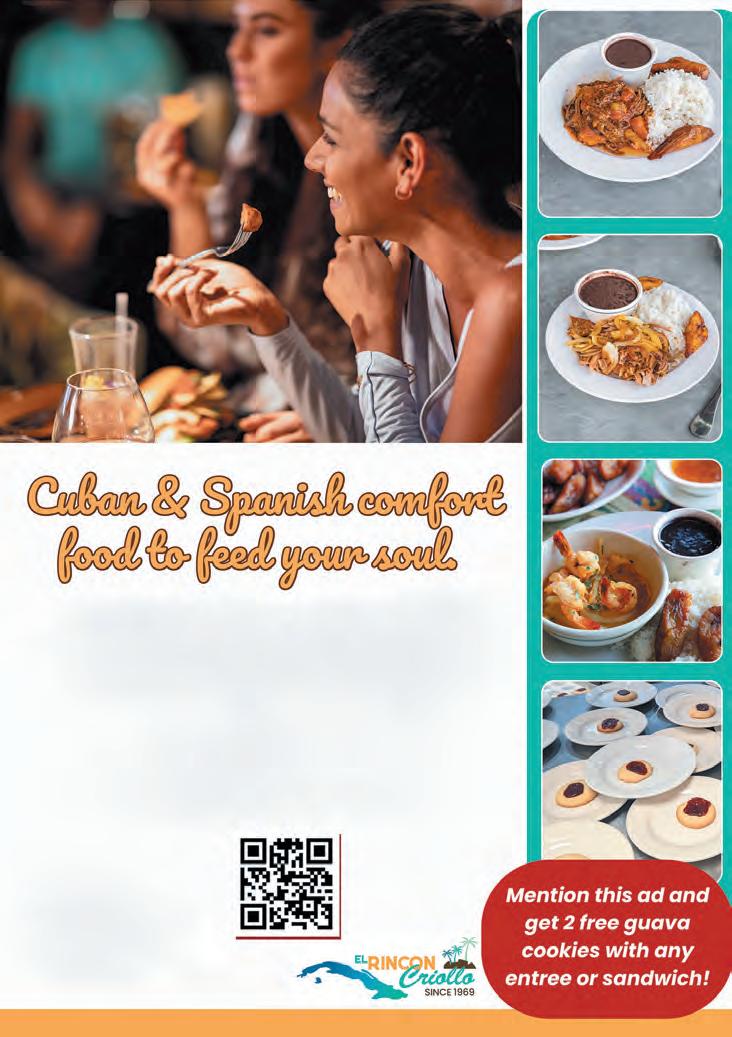
El Rincon Criollo: Where Cuban comfort food and community come together
By Cory Birkett
If you’ve lived in Playa del Rey long enough, you begin to recognize the places that become part of the neighborhood’s fabric—not just somewhere to eat, but somewhere that feels shared, familiar, and comfortable. El Rincon Criollo has quickly become one of those places since opening in February 2025, after a move from Culver City where the eatery was established in 1969.
Owner and chef, Jason and Courtney Graff, took over in 2018, and have continued to build more than a family restaurant; they’ve built a gathering place. It’s where neighbors run into each other, conversations stretch a little longer, and returning guests are not only recognized, but genuinely welcomed back. That sense of connection is intentional, and it shows through partnering with local nonprofits for fundraisers, hosting wine dinners, and being mindful of the price point, as well.
The name “Rincon Criollo” reflects a Cuban culinary tradition dating back to the 1950s, rooted in homestyle cooking and layered cultural influences. A rincón criollo is typically a casual, eatery focused on comfort food recipes passed down through generations. El Rincon Criollo in Playa del Rey carries forward that same spirit: food meant to bring people together. The vibe is friendly, and the team at the restaurant is warm and welcoming.
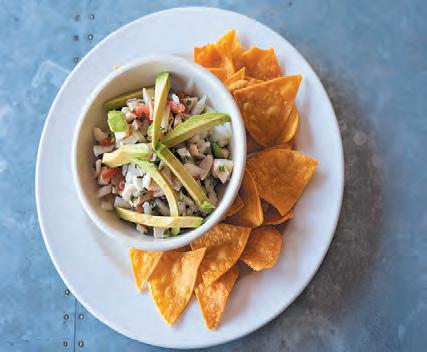
The meal began with the coctel de
camarón: a chilled shrimp cocktail with avocado, onion, and cilantro in a bright, tangy tomato sauce. It’s refreshing, well-balanced, and the perfect dish to share at the table to start your dining experience.
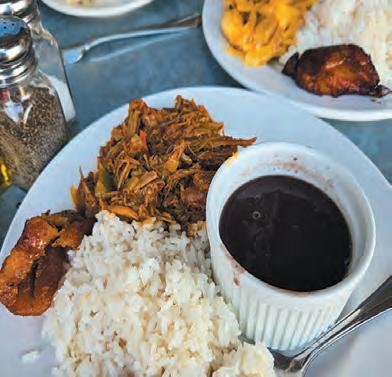
The ropa vieja followed, and it’s exactly what you hope for: tender, slowbraised beef simmered in a rich tomato and pepper sauce, deeply flavorful without being heavy. Served with rice, black beans, and sweet plantains, it’s a comforting, well-rounded plate that delivers on every level.
Next, I had to try one of their most popular chicken dishes, the pechuga a la plancha, grilled chicken cooked in their signature garlic house sauce and served with grilled onion on top. It was juicy, savory, and thoughtfully prepared.
Next time I stop in, the Cubanos, which one Yelp reviewer calls, “the best on the Westside,” the arroz con pollo and the lechon asado (slow roasted pork), are on my list of must-orders.
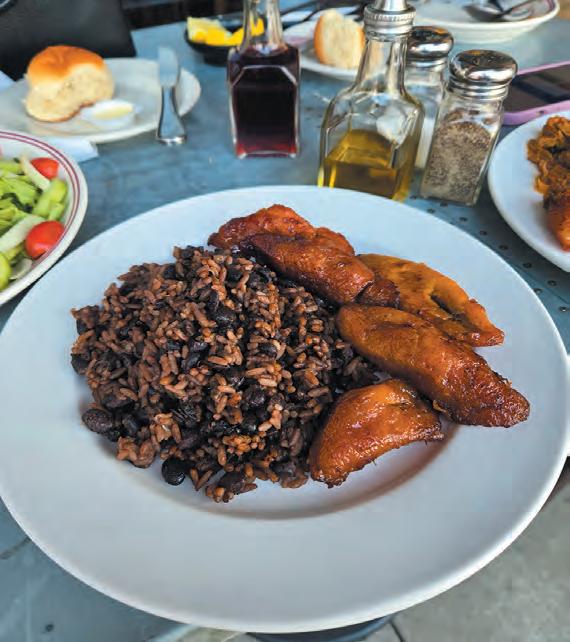
My vegetarian friend ordered a plate of moros—white rice and black beans slowly cooked together with spices, onion and garlic–and delicate, slightly caramelized maduros (plantains). She found it deeply satisfying—the perfect blend of savory and sweet. The flavor combo is addictive. ¡Que rico!
What makes El Rincon Criollo stand out isn’t just the quality of the food or the generous portions, it’s the consistency and heart behind it.
And like any true neighborhood favorite, dessert is worth saving room for.
The flan is silky and caramel-forward with just the right amount of sweetness, and the arroz con leche (rice pudding) has that unmistakable homemade quality—nostalgic and comforting.
As Playa del Rey continues to evolve, places like El Rincon Criollo help preserve what makes the community special, with authenticity, consistency, and a genuine sense of belonging. Jason and Courtney have created something meaningful here: a place where good food and community come together. Go hungry. Bring a neighbor. Support local!
El Rincon Criollo is located at 8501 Pershing Dr. #2 in Playa del Rey. Check out their menu at bestcubanfood.com.
Join the Conversation I want to hear from you! What is your go-to local dish—the one you’d tell a new neighbor they have to try? Drop a comment, send me a message, or say hi if you see me at the market. Let’s keep swapping favorites! Email me at birkettcory@gmail.com.
Cory Birkett is a foodie, and admin for the “Quarantine Cooking-Westchester & Silicon Beach” Facebook Group. When she’s not trying new recipes or checking out local restaurants, she spends her days as a real estate agent and long-time community volunteer, which includes serving on committees for the Westchester/Playa Neighborhood Council.
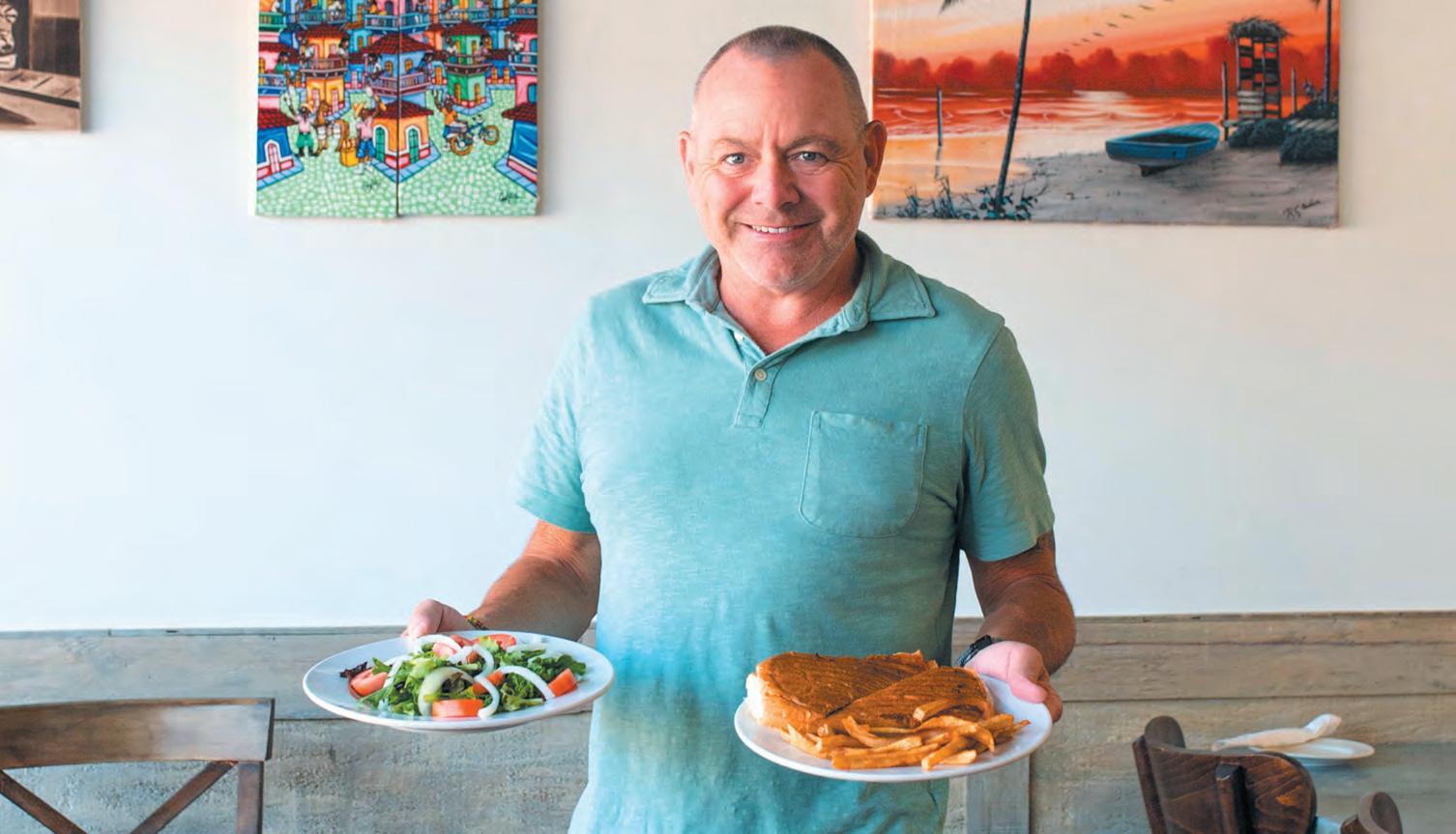
Owner Jason Graff loves welcoming the community into his restaurant and recommending dishes to try, like the classic Cubano or the popular lechon asado.
You May Qualify for FREE Services to Replace Your Lawn
LADWP customers may qualify for FREE services to replace traditional lawns with a sustainable, droughttolerant landscape through the Landscape Efficiency Assistance Program (LEAP). These services may include:
• Installing California Friendly® Landscaping that includes drought-tolerant and California native plantings
• Installing a rain capture feature (rain barrel, rock garden, or rain garden)
• Converting an existing irrigation system to
• Installing a weather-based irrigation controller
• Installing a smart water use monitoring device
• Replacing the existing sprinkler system with high-efficiency sprinklers (alternative option if turf replacement is not preferred)
AIRPORT MARINA COUNSELING SERVICE
Random Notes/Opinion
Cardiovascular benefits and strength training
By Jeff Blair
Opinion:
I frequently read online debates about whether strength-training or traditional cardiovascular exercise is better for you. My first thought usually is “strangers will truly argue about almost anything on the internet” followed quickly by “you don’t debate whether peanut butter or jelly is better, do you? You should have both.” After a self-aware moment when I realize only a personal trainer would equate strength-training and cardio exercise to PB&J deliciousness, I return to the question at hand.
Media discussions and internet debates imply “strength training is for building muscle, while cardiovascular exercise improves heart health” as if there are no crossover cardiovascular benefits from strength training. Elevating your heart rate while exercising through cycling, running, swimming and other forms of traditional cardio training is excellent for health, but it is not the only factor contributing to cardiovascular health.
Traits better derived from strengthtraining also contribute to heart health. For example, those with more muscle can often manage blood sugar more effectively than those with less muscle. Strength training is the most effective method to improve lean body mass. This month, I will review this and several other ways strength-training can improve heart health. These include better body composition, maintaining BMR, improved blood pressure, improved lipid profiles and reduced pain levels while moving.
An important contextual fact for almost every adult: individuals who do not strength train typically lose between 3 to 8 percent of muscle each decade after 30. This muscle loss has multiple negative cardiovascular health implications. I often tell people that
anything that helps you retain more muscle mass is a long-term health success story.
Body composition largely comes down to an individual’s percentages of lean body mass and body fat. In general, more lean body mass improves cardiovascular health and excess body fat can compromise it. This has been shown to be true across a lifespan, from childhood to older age. More lean body mass increases your Basic Metabolic Rate (BMR). Think of BMR as turning up your body’s furnace so more calories are burned around the clock, 365 days per year. This higher BMR from more lean body mass can help limit fat gain.
Better blood sugar management is a great benefit of increasing lean body mass through strength training. Chronically high blood sugar can damage blood vessels and nerves and greatly increase the risk of heart disease. Muscle has been described as a “metabolic sink” in the sense that it can help manage blood sugar and help prevent Type II diabetes. This is an area where greater education is needed, as these benefits are not widely understood.
The American Heart Association (AHA) says strength training can improve blood pressure and lipid profiles such as LDL, HDL, total cholesterol and triglycerides.
Harvard Medical School echoes the AHA position and says strength training can reduce blood pressure by 32 percent and metabolic syndrome by 29 percent. Both high blood pressure and metabolic syndrome can cause a variety of health problems. The Mayo Clinic also recommends performing both strength-training and traditional cardiovascular exercises like biking or walking to improve blood pressure.
Muscles can serve as shock absorbers for the joints and promote more movement. Across a life span, as
people slowly lose muscle, movement often becomes more painful and people generally avoid things that are painful. Maintaining muscle and staying strong allows us to continue walking, gardening, moving while vacationing and maintain many other small movement wins that add up over time. While being stronger does not always equate to being pain-free, stronger hips and lower-body muscles tend to reduce knee pain and stronger back muscles tend to reduce shoulder pain. Many find that increased strength in these areas makes joint pain more manageable.
As far as a specific number of workouts, the AHA and many other health organizations recommend strength-training twice per week to maintain heart health, in addition to traditional cardiovascular exercise. These strength sessions can be as short as 30 minutes.
A final note: most people can improve body composition from moderate lifestyle changes, but anything done to excess can be unhealthy. Those experiencing disordered eating or body dysmorphia should consult the appropriate
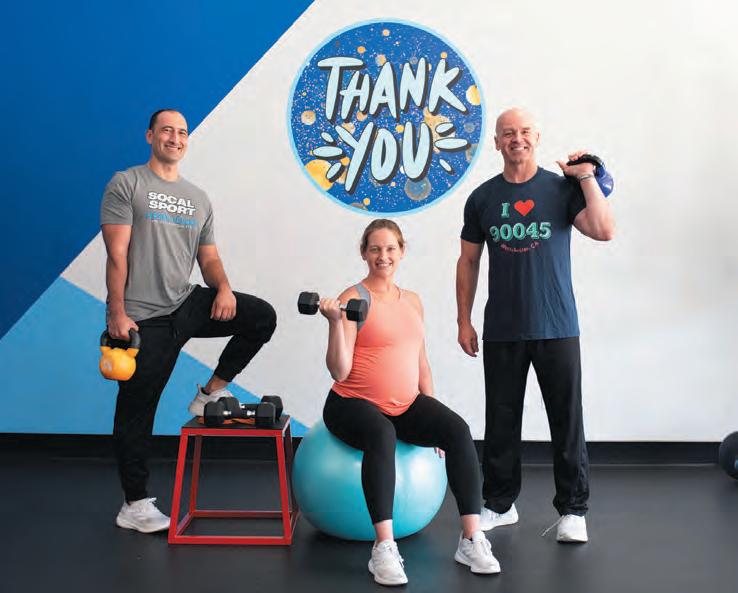
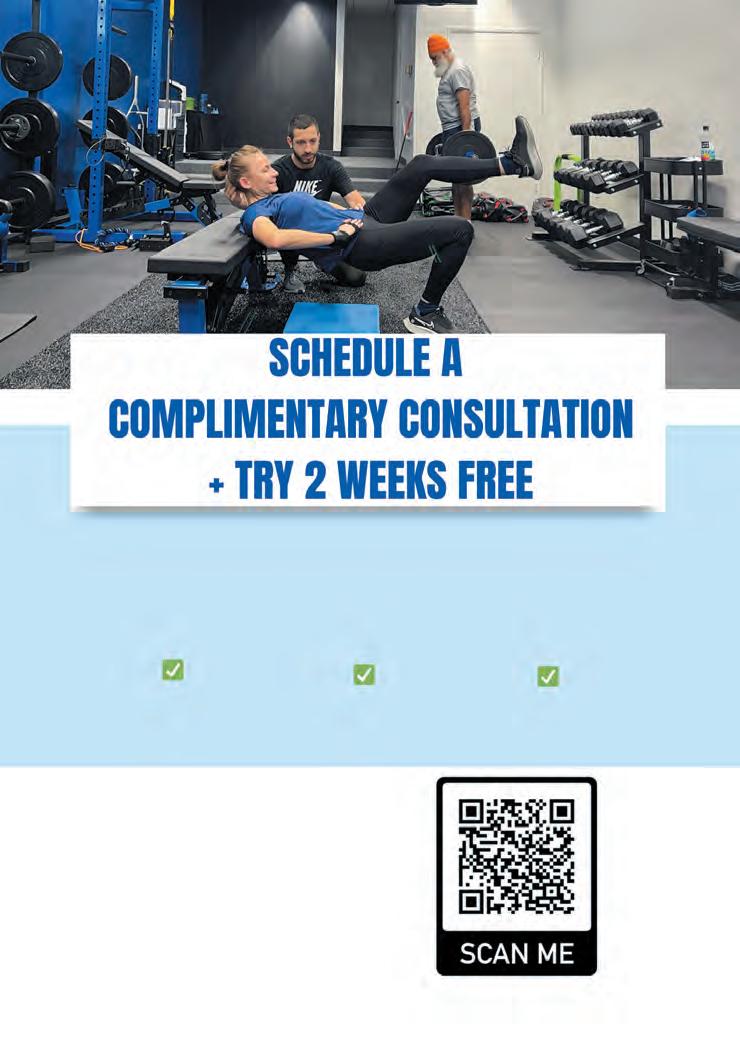
professional, as those issues are beyond the scope of this article. Before starting a fitness routine, consult your doctor. Jeff Blair (MS, CSCS) is a fitness author and certified personal trainer with 24 years of experience. He founded the SoCalSport Personal Training Studio in Westchester in 2011. Reach him via jeff@socalsport.com for article comments and suggestions.
Therapy Corner with Ann O’Brien
By Ann O’Brien
Opinion:
At a recent family dinner, my teenage son drolly quipped, “Why are old people so afraid of AI?” (He also likes to remind me that “old” includes anyone born “way back in the 1900s.”) His comment made me smile–and pause. Today’s teens will hardly remember a world without artificial intelligence. While I share their curiosity and excitement about how rapidly life is evolving, I also carry a measure of concern:
Will this generation learn to use AI in ways that enhance, rather than undermine, their well-being?
Gen Z has been labeled “The Anxious Generation” (Jonathan Haidt), in part because they came of age alongside smartphones and social media without enough protection in the digital world. Now, as AI becomes woven into everyday life, we face a similar moment of uncertainty.
With limited federal oversight, much of the responsibility falls to us: parents, educators, and communities. In many ways, we are figuring this out in real time. The question is not whether teens will use AI, but how we help them use it well.
As a therapist, I return to a simple principle: does this support a young person’s development or short-circuit it?
AI as Information, Tool, and Shortcut
Teens are already using AI as entertainment, a study aid, a writing assistant, and sometimes a way to bypass the work.
A helpful lens is to ask: Does this use of AI foster or stifle curiosity and creativity? Does it deepen understanding or provide quick answers that limit growth?
Literature helps adolescents understand their inner lives and connect with a deeper human experience. Writing challenges them to organize their thoughts, wrestle with ideas, and develop their own voice. This process, struggle included, is central to identity formation.
In my work, I’ve seen that wellbeing rests on knowing oneself and engaging meaningfully with the world. When evaluating AI use, it is worth asking: Is this supporting that process or supplanting it?
AI as a Digital Companion
Many teens are also turning to AI for emotional support and companionship. A 2025 Common Sense Media study found that 72 percent of teens have used AI companions, with over half engaging regularly.
This becomes concerning when AI begins to replace real relationships. Many of today’s teens came of age during COVID, when screens became central to daily life. While often necessary, this may have limited opportunities to build self-regulation
and in-person social skills.
Teens are now accustomed to less embodied communication, like texting, social media, gaming, where identity can be curated and connection happens at a distance. In that context, interacting with an AI chatbot may not feel especially different.
Add in the familiar concerns of adolescence—Will I fit in? Will I be judged?—and AI can feel like a safer option. Chatbots often affirm rather than give the honest feedback and complexity that real relationships require.
AI is not all bad. It may offer a space for exploration. The concern arises when it becomes a primary relational space, creating an echo chamber that limits growth.
The Development of Relational Intelligence
As a therapist, I’ve seen that strong mental health depends on navigating real relationships—including rejection and judgment—without falling apart. We learn to stand up for ourselves, read social cues, build trust, repair misunderstandings and show that we care.
These skills develop through both the messiness and strength of human relationships.
So, when considering a teenager’s use of AI, one question may be especially helpful: Does this strengthen or weaken their ability to connect meaningfully with others?
AI is here to stay. So, let’s guide its use in ways that preserve what arguably matters most: our sense of self and our relationships with others.
To conclude, upon finishing this article, I asked my son for his thoughts. He smiled and said, “Wait… you mean I can’t just ask AI?”
Please continue to write in with questions and comments.
Ann O’Brien, LCSW, MSc, is a Playa del Rey resident and therapist, specializing in relationships. Contact her with questions or comments at ann@annobrientherapy.com or visit annobrientherapy.com. You can also visit her Substack, Relational Insights: at annobrientherapy.substack.com.
We are a family-owned restaurant serving homestyle Cuban and Spanish favorites like our delicious Pollo Asado, Spanish Paella, Lechon de Puerco, and Cuban-style hotpressed sandwiches.
Open Tuesday-Sunday 11 AM to 9 PM. Dine-in or Takeout
391-4478 8501 Pershing Dr. #2 Playa Del Rey, CA 90293
El Rincon Criollo Call: (310)
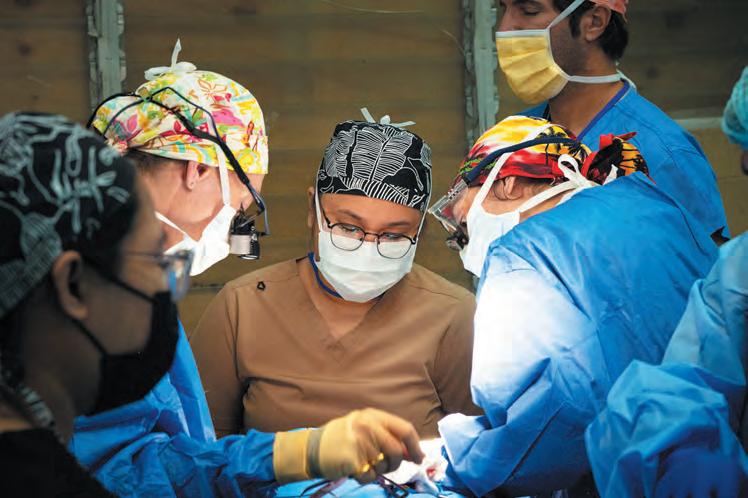
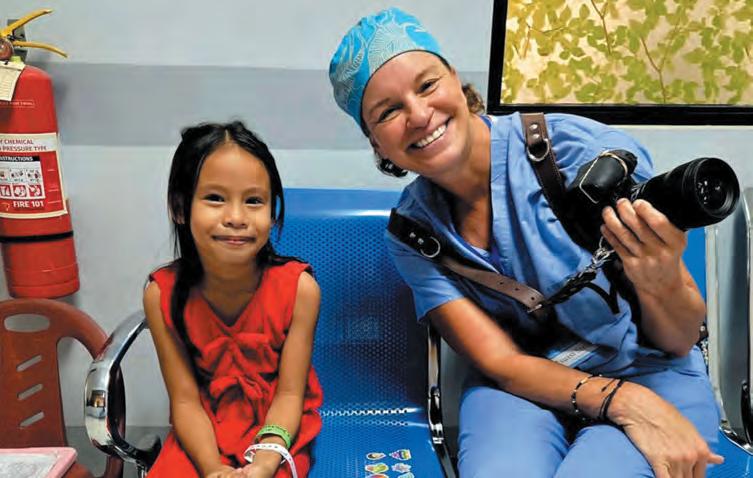
Westchester photographer Zsuzsi Steiner took a trip halfway around the world to document life-changing surgeries for the medically underserved and bring awareness to the nonprofit that makes it all possible
magical moments–from newborn photos and Little League opening days to family reunions and the Fourth of July Parade–but she wasn’t quite sure what to expect during her first medical mission trip to Bogo City, Philippines with Aloha Medical Mission (AMM) out of Honolulu, Hawaii.
“I was excited and nervous to be on my first medical mission,” says Zsuzsi. “I was honored to join this team of volunteer doctors, and document their important work. Giving all they could was a priority. The patients will never forget this team for changing their lives, and we will always remember the people of Valladolid, for changing ours.”
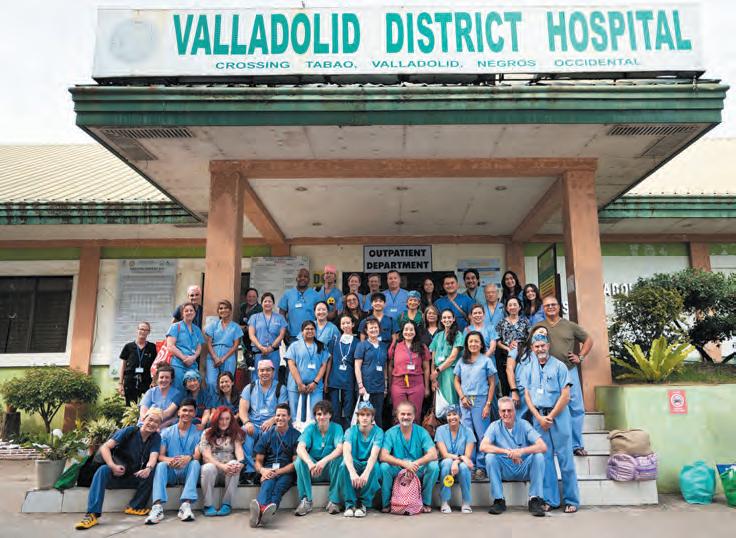
Zsuzsi was with the team of 68 doctors, mostly from the U.S. but from as far away as Great Britain and Nepal, for nearly two weeks at the Valladolid District Hospital. She worked diligently to chronicle the experience for the nonprofit, expertly balancing treating everyone involved with dignity and respect, while capturing the trip to bring awareness to the importance of AMM’s work.
Patients ranged in age from 15-months to 79-years-old, but they all shared the common need for care they did not readily have access to.
“The medical staff gave the gift of
row with rounds at 8 a.m. that ended around 7 p.m.,” says Zsuzsi. “As with any country, there are the less fortunate who cannot pay for surgeries like this.”
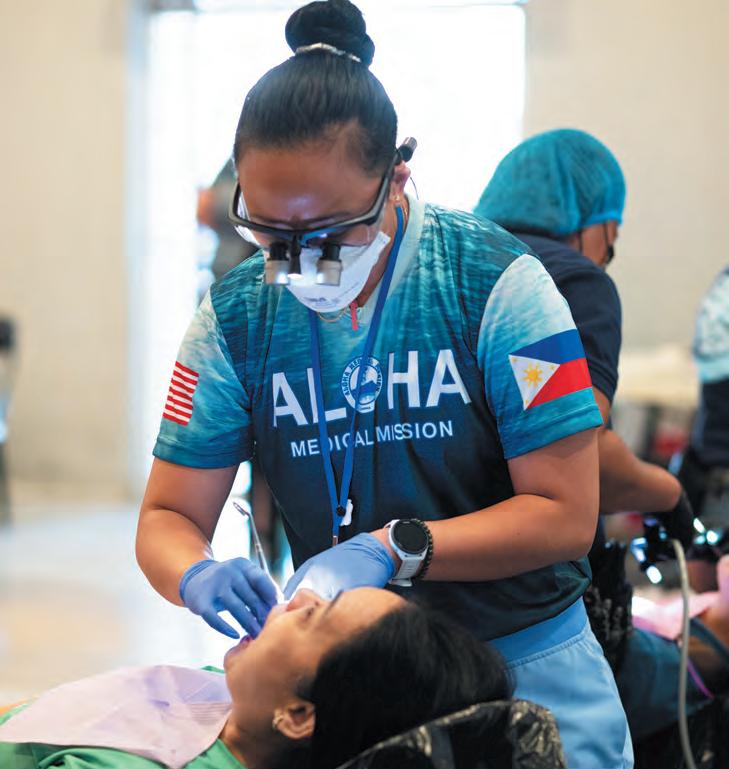
In the end, the doctors were able to complete 205 outpatient procedures, like removing lipomas; and 102 inpatient surgeries for hernia repairs, gynecological issues, and tumor removals. Dentists on the team treated 505 patients with 359 fillings and 647 extractions, easing pain and preventing further complications. An estimated $2.8 million in in-kind physician and surgical services were provided.
Zsuzsi says the experience was life-changing, and she’s readying her cameras for her next trip with AMM in the fall. Learn more at zsuzsiphotography.com/medicalmission-project.
Pictured (clockwise from top right):
1. Six-year-old Rosevyn will now be able to run around and play without pain, thanks to a hernia operation.
2. The medical volunteer team poses for a photo in front of the hospital.
3. A dentist provides care.
4. Zsuzsi tries to make Rosevyn smile before she heads into surgery.
5. The medical team works together for the best possible outcome for their patient.