How a Disciplined Investment Process Helps Sustain Ministry

This resource is intended for institutional investor audiences. Wespath is a general agency of The United Methodist Church, a 501(c)(3) tax-exempt organization. Wespath administers benefit plans and its affiliates, UMC Benefit Board, Inc. (“UMCBB”) and Wespath Institutional Investments, LLC (“WII”), provide investment management services. UMCBB provides investment management services to funds made available to benefit plan participants and beneficiaries, plan sponsors and other institutions controlled by, associated with, or related to The United Methodist Church. WII provides investment management services to funds made available to institutional investors controlled by, associated with, or related to The United Methodist Church. WII may also provide direct investment advisory services to those institutional investors. WII and UMCBB utilize certain shared personnel, including investment professionals. Unless otherwise noted, the firm referenced herein is defined to include Wespath, UMCBB and WII. This is not an offer to purchase securities or an investment recommendation. See the Investment Funds Description – I Series and Investment Funds Description – P Series for information about the Wespath funds.
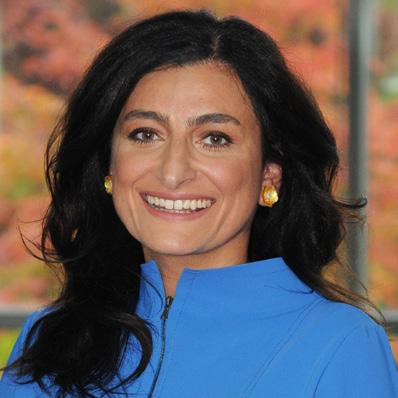
Johara Farhadieh Chief Investment Officer and Wespath Institutional Investments Chief Executive Officer
Johara is Chief Investment Officer for Wespath and Chief Executive Officer for the agency’s Wespath Institutional Investments (WII) subsidiary, which provides investment management services to values-aligned nonprofit organizations. Wespath stewards over $6 billion in assets on behalf of more than 170 institutional investors.
One of the most meaningful parts of my work at Wespath is spending time with the participants, plan sponsors and institutional investors we serve. Listening closely to their experiences and understanding the missions that guide their work continues to be both grounding and motivating. It is a constant reminder that our responsibility as fiduciaries extends well beyond the markets.
As the Wespath team and I have engaged with our faith-based clients recently, it has become increasingly clear that many ministries today are navigating unique financial pressures. Inflation, market uncertainty and broader shifts across faith communities have created a challenging environment for leaders and organizations alike. These factors are not abstract. They affect real people, real missions and real communities.
That context reinforces why disciplined, values-aligned investing matters. At Wespath, we remain focused on helping the ministries who invest with us address complexity with clarity, resilience and confidence. One way we strive to do that is by building customized investment portfolios designed to support these organizations’ unique goals. I am excited to share more about what that process looks like behind the scenes.
Key Concepts for Any Investor
Every organization we serve has unique objectives and spending needs, so the path to success looks different for everyone. But let’s start with some concepts that apply to all investors:
Diversification is about balance.
By spreading investments across different asset classes like equities (stocks) and fixed income (bonds), we can reduce the impact of any single market swing. It’s one of the most effective ways to manage risk and build resilience over time.
Asset allocation is the blueprint for an investment portfolio.
It determines how much is invested in each asset class based on specific goals, risk tolerances and time horizons, and over the long-term, it is the primary driver of portfolio outcomes.
Various foundational investment research studies indicate that asset allocation is responsible for essentially all of a portfolio’s long-term absolute returns, and over 90% of the variability of a portfolio’s returns between time periods.1
At Wespath, these principles are among the foundational components we consider when seeking investment excellence for the organizations we support.
¹ Source: CFA Institute Enterprising Investor, “Setting the Record Straight on Asset Allocation. ”

Our Process, Grounded in Research and Rigor
Our investment process includes conducting rigorous research to identify opportunities, selecting an array of world-class investment managers, and integrating faith-based principles to create a values-aligned offering. We also closely monitor our investments and market conditions; as markets evolve, we adapt by strengthening risk management and introducing innovative strategies. And of course, our process for developing client portfolio recommendations involves deep collaboration with our investors.
The Learning Phase
Each client collaboration begins with listening. We start by reviewing investment policy documents and trying to ask the right questions: What is the purpose of this asset pool? What goals does it serve? How does it align with the organization’s mission and budget?
The goal at this stage is to build a deep understanding of the investor’s objectives, capturing both their measurable financial targets and the nuanced preferences that shape decisionmaking. This includes understanding their liquidity needs (need for cash to cover expenses), risk appetite (tolerance for the ups and downs in the market), and the values that drive them. Success here isn’t just about getting the numbers right; it’s also about strengthening confidence and alignment.
Portfolio Construction
Once we have a foundation, we analyze historical spending patterns and calculate a long-term average spend rate from the fund or endowment. Combined with inflation expectations, this helps us establish a thoughtful target investment return that reflects market realities and supports sustainability.
Then we move into portfolio design. We start with research-driven modeling, informed by historical outcomes and our expectations for global markets going forward. We utilize baseline frameworks that reflect our beliefs and customize them for the individual organization. Some organizations even have multiple accounts that each have their own purposes (e.g., a long-term endowment and an operating reserve) and may need customization at the individual account level.
Customization can include integrating additional liquidity for spending needs, risk controls, preferences regarding active or passive management, the desire for additional values-aligned options like fossil fuel-free investments or social impact strategies (like affordable housing), and more.
We typically develop multiple portfolio options, each offering different risk and return profiles, so organizations can consider which path best supports their objectives and long-term spending needs. We validate all proposed allocation options using optimization tools to ensure they meet risk and return objectives efficiently. This step also involves assessing how the portfolio is expected to behave across a range of positive and negative market environments. This scenario analysis helps ensure the portfolio strategy is resilient, considerate of multiple measures of risk and aligned with the organization’s overall risk tolerance.
Values Alignment as an Asset Allocation Consideration
At Wespath, we believe mission and fiduciary responsibility can be mutually reinforcing. Values alignment is reflected through thoughtful portfolio construction decisions and evaluated with the same discipline applied to any investment decision. We also support clients in embedding values alignment within their investment policy documents.
Wespath applies a core set of faith-based ethical exclusions across all portfolios and partners closely with clients seeking additional ways to express their values, whether related to climate change, human rights, social justice or other principles, through allocation and stewardship. This integrated approach allows values considerations to be embedded intentionally within diversified portfolios, supporting client missions while maintaining strong governance, prudent risk management and long-term investment discipline.
Our Process, Grounded in Research and Rigor
Portfolio Construction (continued)
This process is supported by a strong governance structure, including our internal Client Asset Allocation Committee and dedicated relationship managers who work closely with the organization. We are very collaborative throughout the process, engaging directly with the organization’s staff, investment committee and other stakeholders to review, refine and fine-tune the portfolio together. Every organization’s needs are unique, and this dialogue ensures the final allocation reflects both the financial realities and the mission priorities of those we serve.
Implementation and Accountability
Once an organization finalizes a new allocation, we then collaborate with it to design a disciplined rebalancing policy and conduct ongoing reviews to confirm alignment with client goals. Transparency is at the heart of our work at this stage. Every portfolio we manage is monitored against clear benchmarks and peer group comparisons, with regular reporting on market value, returns and risk metrics. We also review our fees and expense ratios on a routine basis.
But accountability doesn’t stop at investment performance and fees. We regularly revisit investment policy documents and client objectives on a set schedule, asking: Has anything changed in your mission, liquidity needs or risk tolerance? If so, we adapt. If not, we reaffirm alignment. This disciplined review process, combined with strong governance oversight, helps portfolios remain resilient and mission-focused over time
Case Study: General Board of Global Ministries
We’re so proud of how we’ve been able to implement this process in my time at Wespath, offering investment solutions to assist our investors in meeting their objectives over the long-term. But I think it helps to bring this process to life with an example!
Recently, we partnered with the General Board of Global Ministries (GBGM) to review its investment policy, analyze spending patterns and design a tailored asset allocation strategy aligned with its mission. I’m thankful for Roland Fernandes, GBGM’s General Secretary, who agreed to share the experience in his own words.2
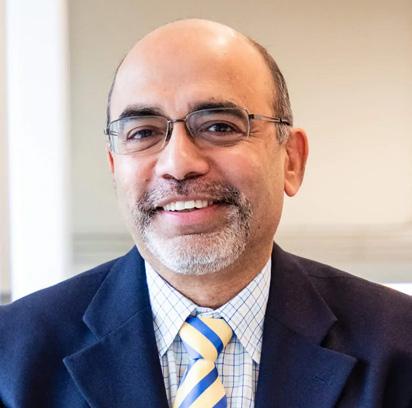
Roland Fernandes
GBGM General Secretary
Roland Fernandes serves as general secretary for the General Board of Global Ministries, which includes UMCOR, and the General Board of Higher Education and Ministry, agencies of The United Methodist Church. In this dual role, he oversees the denomination’s worldwide mission, relief and development efforts, while also leading the agency that connects the church and the academy and prepares clergy and lay leadership for ministry. He oversees programs and partnerships in more than 100 countries, including nearly 200 missionaries serving in more than 60 countries.
2 This testimonial reflects the experience of a current client of Wespath Institutional Investments. There was no direct or indirect compensation for the testimonial. The client’s experience may not be representative of the experience of other clients. Testimonials are not a guarantee of future performance or success. Any investment involves risk, including possible loss. No material conflicts of interest are known to exist on the part of the client providing this testimonial.
Case Study: General Board of Global Ministries
How do GBGM’s investment accounts help support the organization’s global mission?
As the global mission agency of The United Methodist Church (UMC), Global Ministries is called to serve alongside communities around the world to alleviate poverty, improve health, respond to humanitarian crises, and support sustainable development. Our investments are one of the ways we steward the resources entrusted to us to meet that calling faithfully.
Global Ministries utilizes several individual investment accounts to support distinct operational needs. These include reserve and endowment accounts that provide long-term financial stability, as well as accounts designed specifically to support the rapid and often unpredictable demands of humanitarian response through UMCOR. Together, these assets help ensure that we can respond to urgent needs while sustaining our mission over time.
Through disciplined stewardship, responsible management and investment returns, GBGM has been able to set aside approximately $60 million specifically to fund new and expanded mission initiatives. Over the last three years, in fact, our investments with Wespath have returned between 10.5% and 13.3%,3 annualized, across various accounts and allocations. These resources have supported efforts such as strengthening agricultural systems in Africa, investing in hospitals and health infrastructure across sub-Saharan Africa, and responding to humanitarian crises in communities facing profound vulnerability. In this way, our investments serve not as an end in themselves, but as a means of participating more fully in God’s mission in the world.
3 As of May 31, 2026. As of May 31, 2026. Results reflect the experience of a single client across multiple accounts and allocations over a specific three-year period and are presented net of fees. Returns may differ from the experience of other investors due to differences in objectives, timing, cash flows, fees and portfolio construction. These results are not necessarily representative of all client outcomes. Additional information on Wespath’s investment performance is available at wespath.org.
Historical results are not indicative of future performance. All investments carry some degree of risk that will affect the value of a fund’s holdings, its investment performance, and the price of its units, and loss of money is a risk of investing. Fees and expenses paid by the funds include management, custody, and administrative and overhead expenses, as well as transaction costs, any performance fees, interest expenses, taxes, and fees on uninvested cash held in sweep accounts.
What prompted you to consider an asset allocation review?
How did the process begin, and what stood out to you from the initial conversations?
We are always attentive to whether our investments are structured in ways that effectively support our mission, both today and into the future. That ongoing responsibility prompted us to take a closer look at our asset allocation, particularly as the agency’s needs and the broader investment landscape continue to evolve.
At the same time, we wanted to more fully evaluate investment options that apply heightened environmental and social criteria consistent with our values and principles as a UMC agency. The availability of Social Values Choice strategies to institutional investors represented an important opportunity to align our investments more closely with the commitments we express through our mission and Social Principles.
The process began with direct and constructive dialogue with Johara and the team dedicated to serving our accounts. Those early conversations focused on developing a shared understanding of where our portfolio was positioned, the distinct roles different accounts play in supporting our work, and the range of options available to us. What stood out was the collaborative spirit of those discussions and the emphasis on aligning financial considerations with mission priorities rather than treating them as separate objectives.
What were the most important considerations for you and your investment committee/ board as you evaluated the available allocation recommendations?
One of the most important considerations was the reality that not all our assets serve the same purpose. Certain accounts support disaster response and humanitarian relief, which requires liquidity and flexibility to meet short-term spending needs that arise on an unpredictable schedule. Other accounts are intended to support longer-term mission priorities and can be invested accordingly.
We also placed strong emphasis on ensuring that our investments are aligned with our values and principles as United Methodists. That includes attention to environmental and social considerations as well as a commitment to investing in ways that reflect our theological and ethical beliefs.
The asset allocation study undertaken last year helped clarify these distinctions and underscored that different strategies were appropriate for different pools of assets. It also reinforced the importance of disciplined asset allocation as a tool not only for managing risk and return, but for enabling faithful stewardship in service of mission.
Case Study: General Board of Global Ministries
What does the ongoing relationship look like for you now?
Our relationship with Wespath is a natural and ongoing partnership rooted in our shared identity as UMC agencies. While investment stewardship is an important part of that relationship, our collaboration extends beyond investments to broader conversations about mission, values and long-term sustainability.
We continue to engage in regular dialogue and scheduled reviews to assess portfolio positioning, investment performance and alignment with our evolving needs. The consolidation of our assets has also simplified our investment structure, making it easier to understand performance, fees and progress toward our objectives, compared to when assets were spread across up to eight different investment managers.
As new opportunities arise, we approach them through continued conversation and discernment. That ongoing partnership helps ensure that our investments remain well aligned with our mission and positioned to support the work to which we are called.
Closing Thoughts
Our investment partnership with GBGM is deeply meaningful and a powerful example of how Wespath helps faith-based ministries thrive. Together, we’ve worked to grow GBGM’s assets so it can advance its global mission of compassion, justice and service. In turn, GBGM has given Wespath the privilege of turning investment discipline and excellence into tangible impact.
I’m deeply grateful for the trust placed in us by organizations like GBGM. As we look ahead, we’ll continue to adapt, innovate and stay focused on what matters most: helping investors navigate uncertainty with clarity and confidence.