Analysis and Comparison of Transcriptome Assembly Softwares
Analysis of the structure and diversity changes of the Erigena herbaceous community and their influencing factors
A Comparative Study on Soil Carbon Stocks between Subtropical Semi-natural Forests and Single-Tree Species Artificial Forests
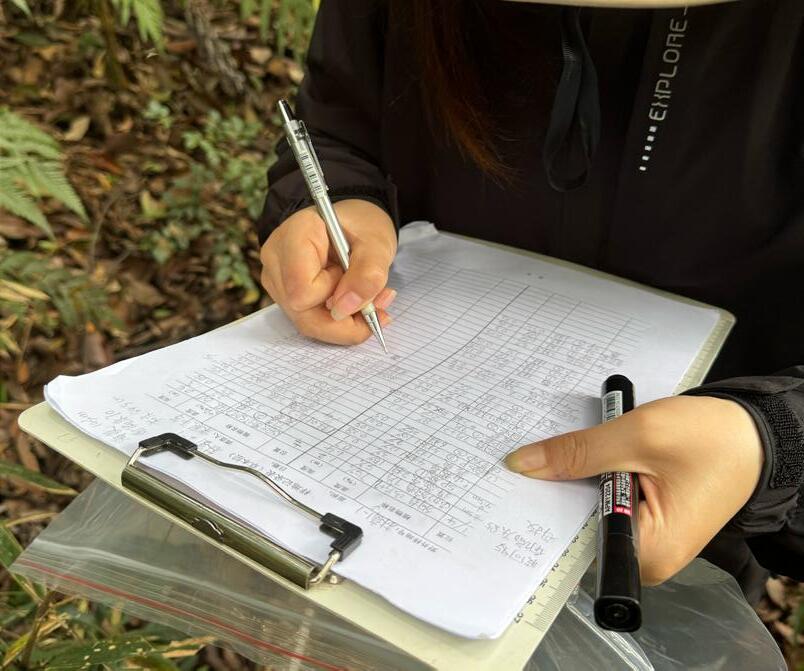
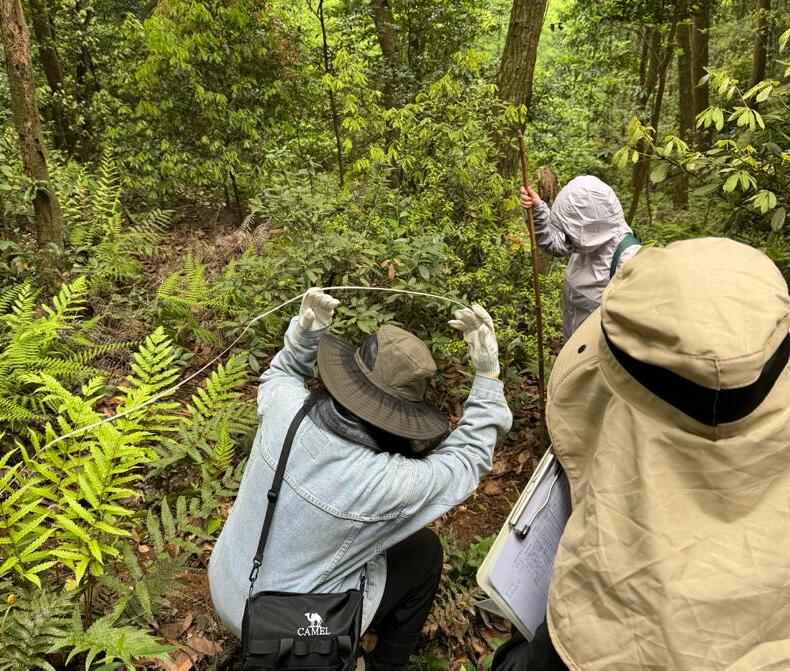
Field Research Report on Tian Tong Mountain in Ningbo, Zhejiang Province
WORK&INTERNSHIP
Weize Information Technology (Shanghai) Co., Ltd.
Citect Control Systems Limited
Position: 3D Simulation Design Intern Position: Intern Engineer
Summer School at Arts University Bournemouth,
Illustration
Nationwide Intercollegiate
CHROME
An interactive toolkit for a future of illicit gene captur
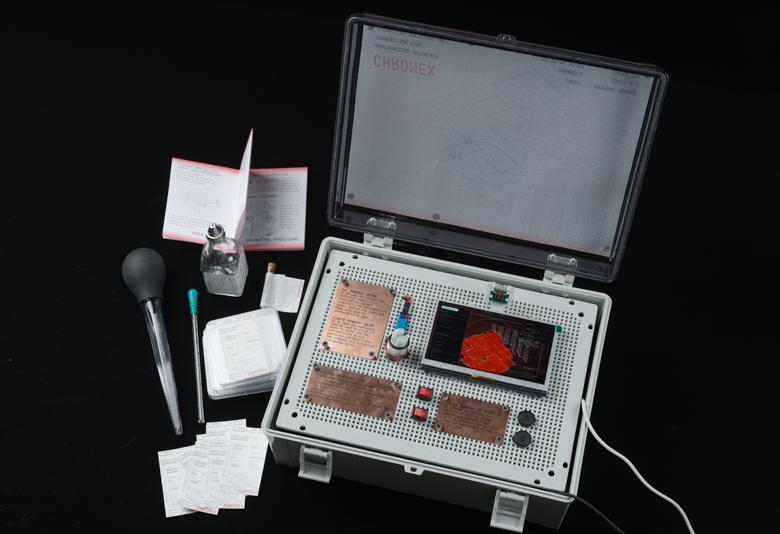
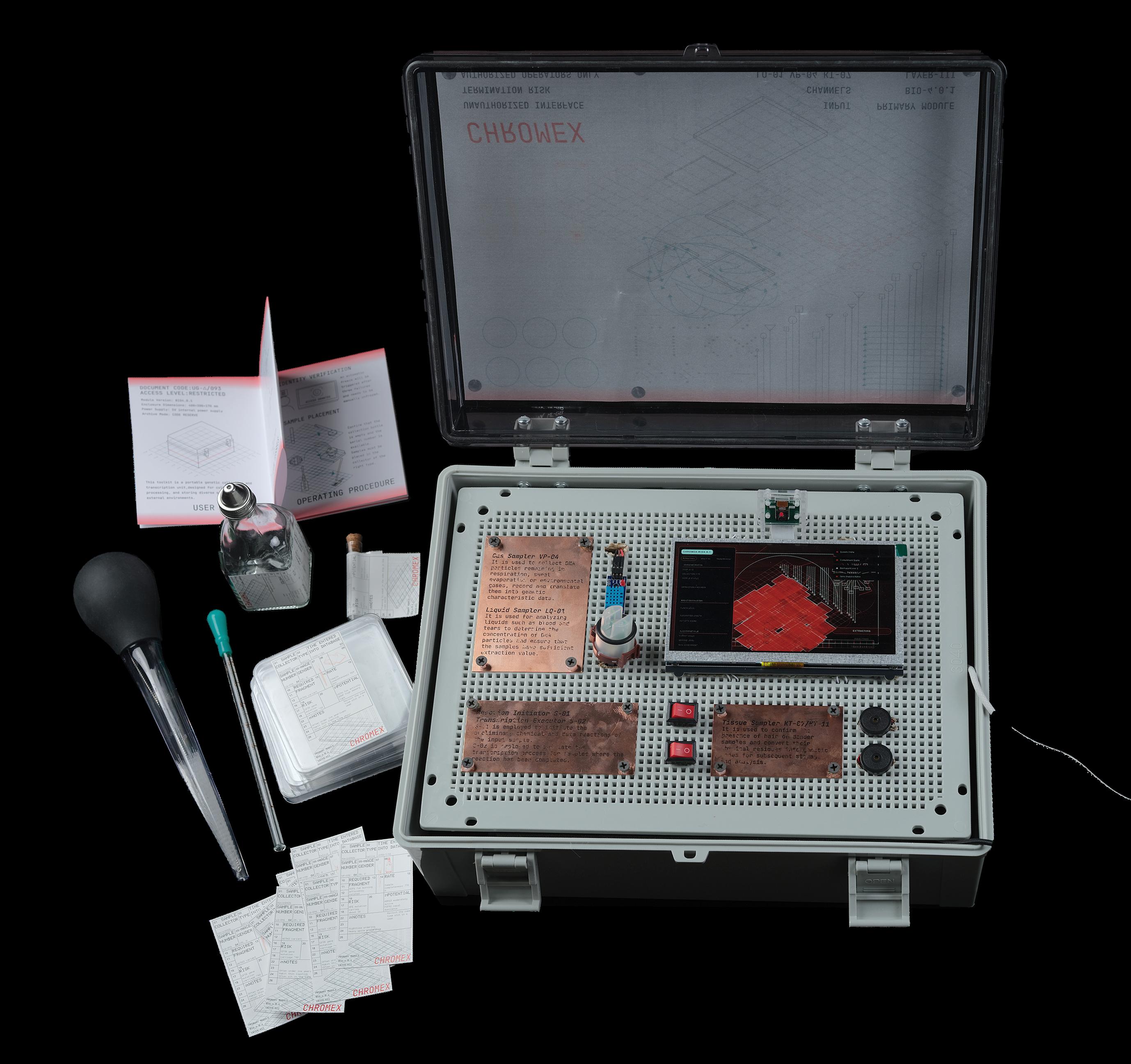
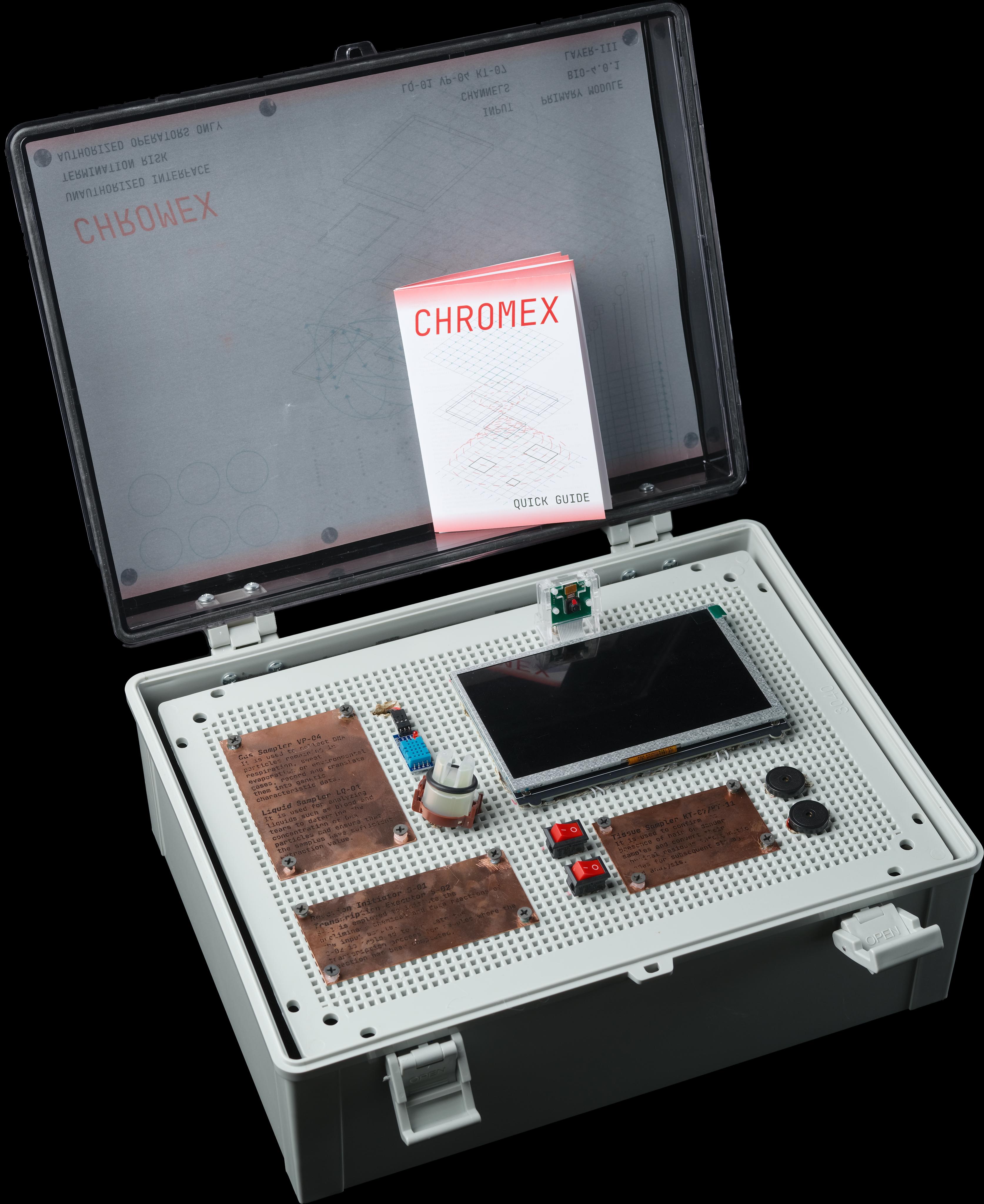
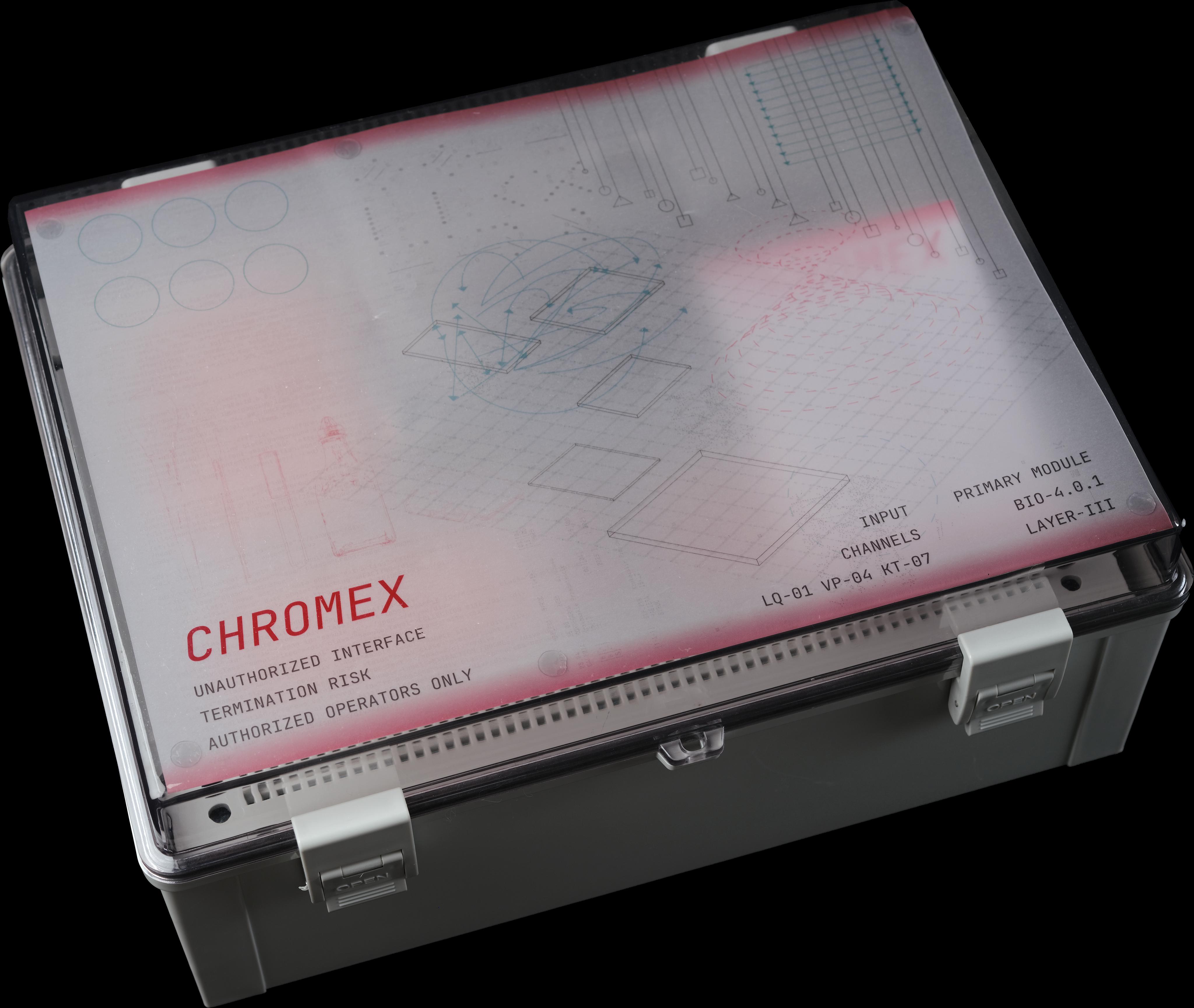
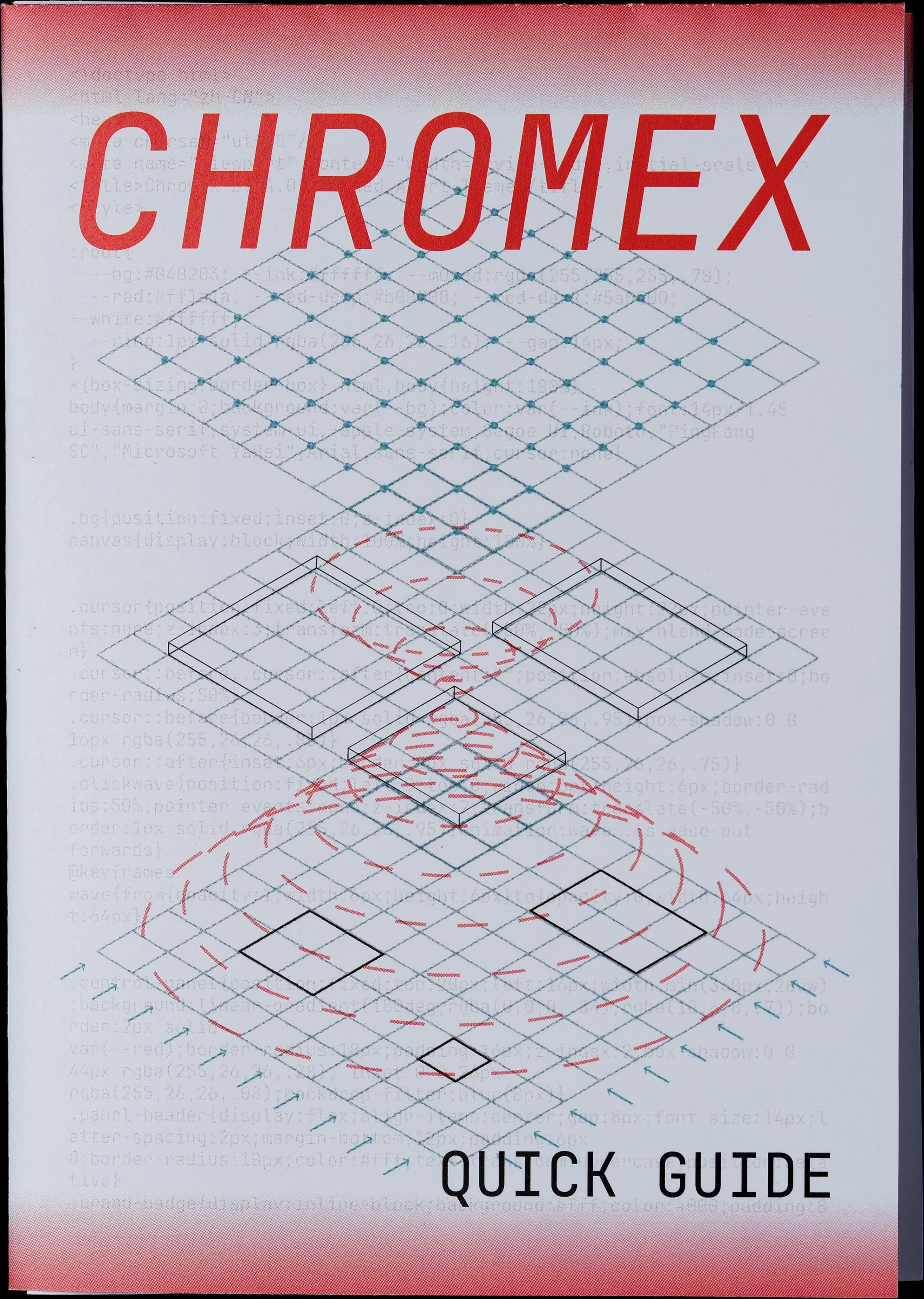
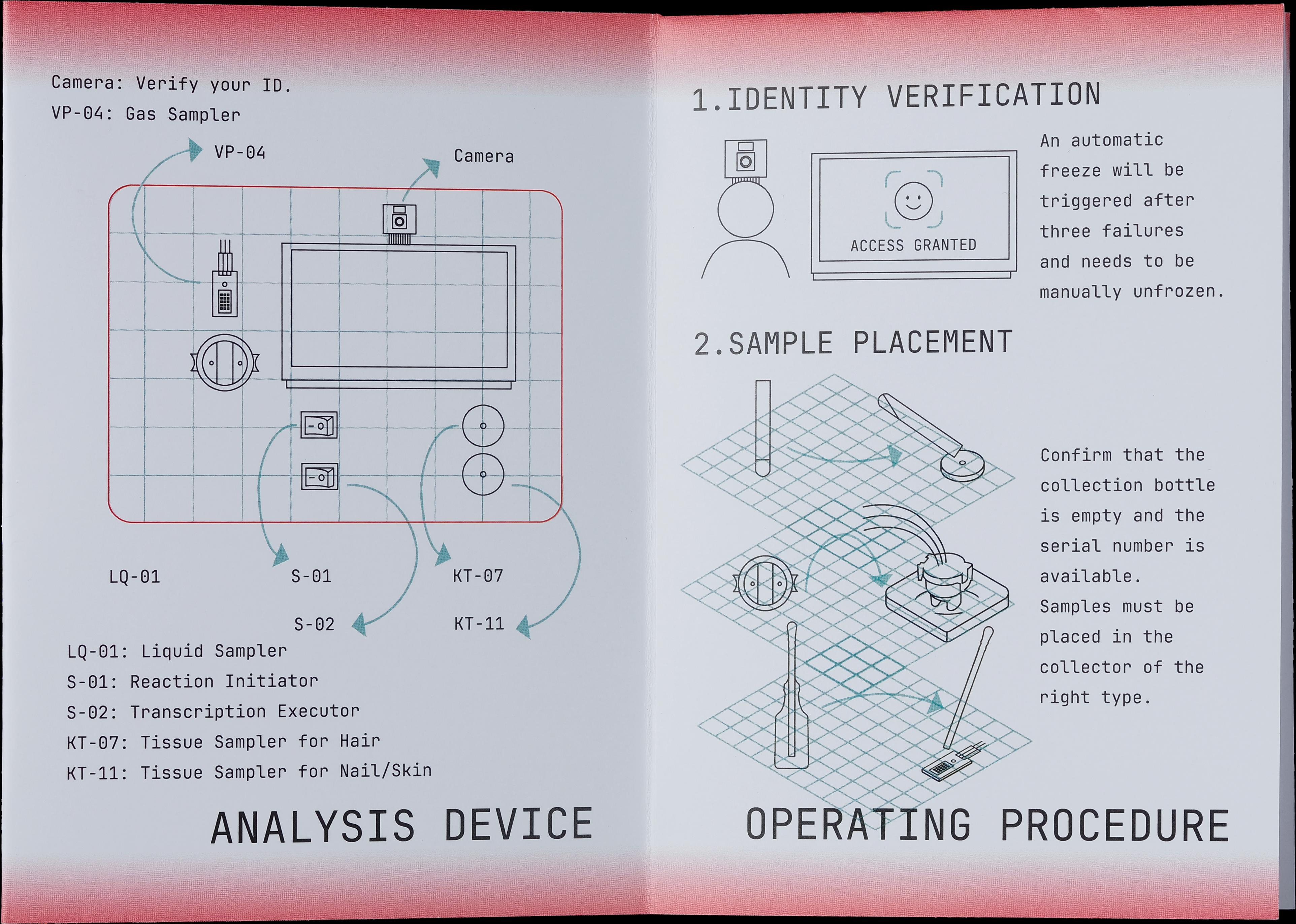
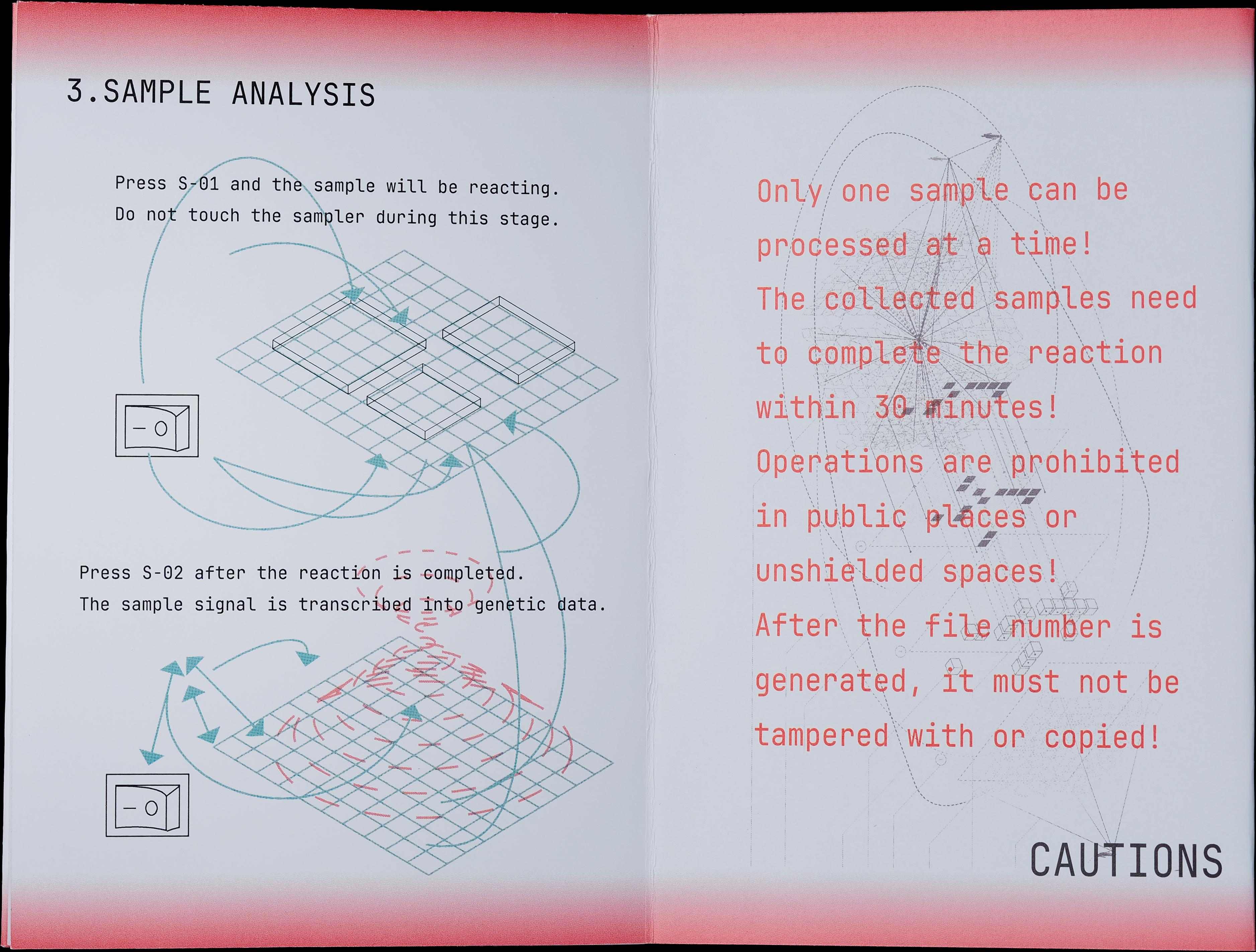
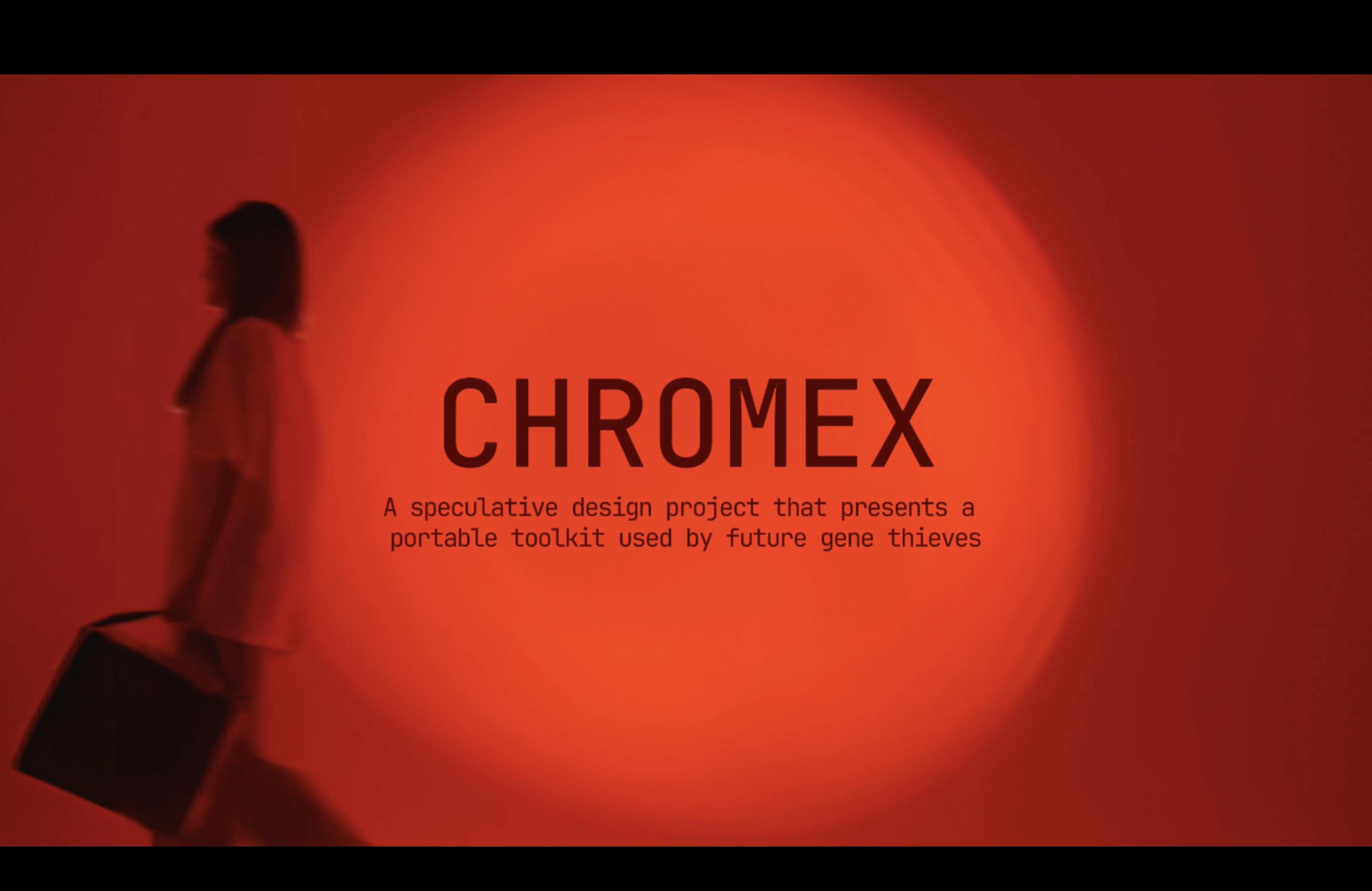
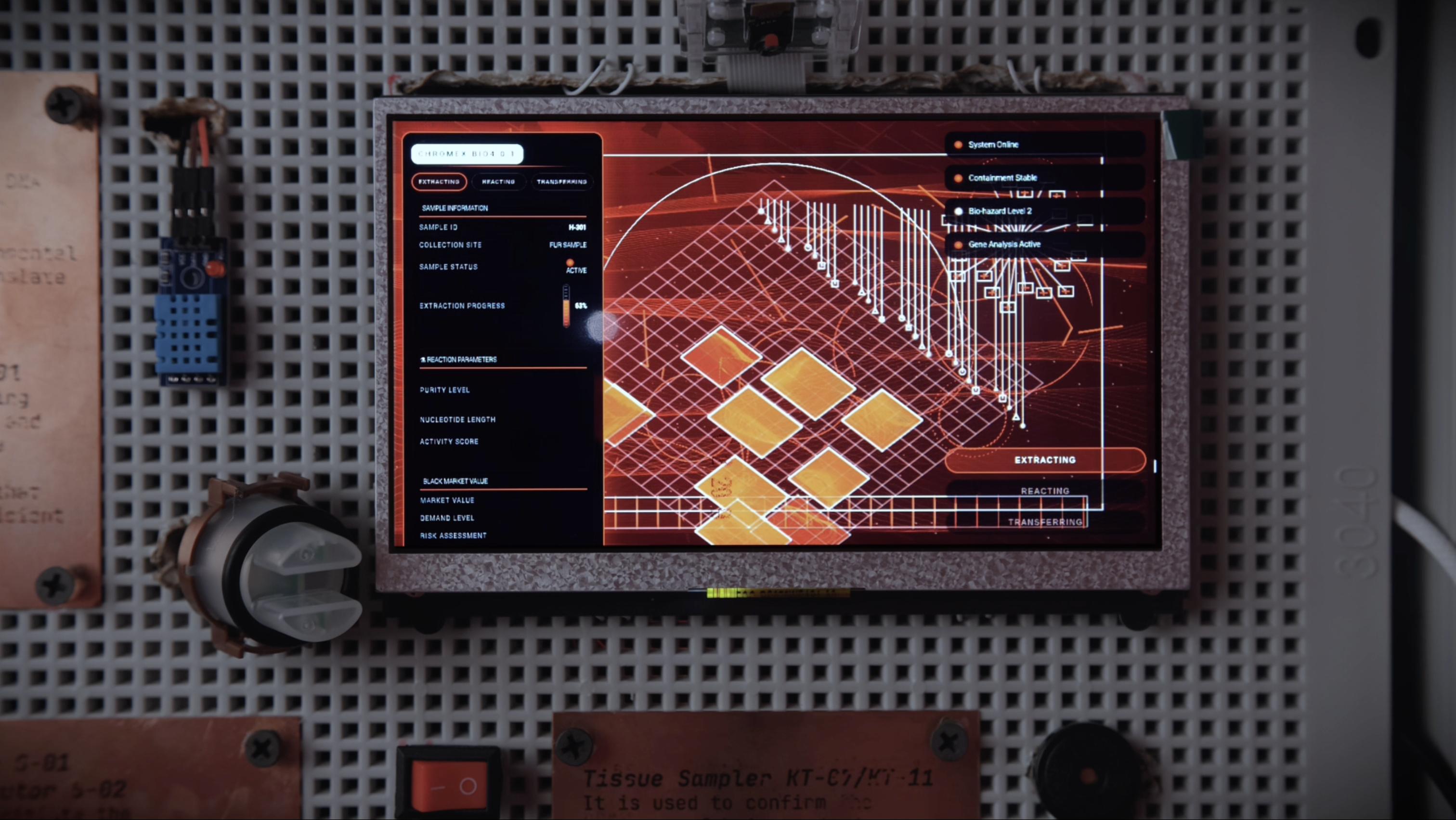
CHROMEX is a speculative design project built around a portable toolkit for future “gene thieves.” The device collects liquid, solid, and airborne biological traces and simulates DNA extraction and visualisation in everyday settings. By treating genetic data as a tradable resource, the project imagines a future where advanced gene editing enables DNA to be stolen, exchanged, or modified for personal gain. Through a materialised toolkit of bio-theft, CHROMEX raises questions about biotechnology ethics and the erosion of privacy and identity in an engineered world
Video Link: https://youtu.be/jKfc2JfaJMU
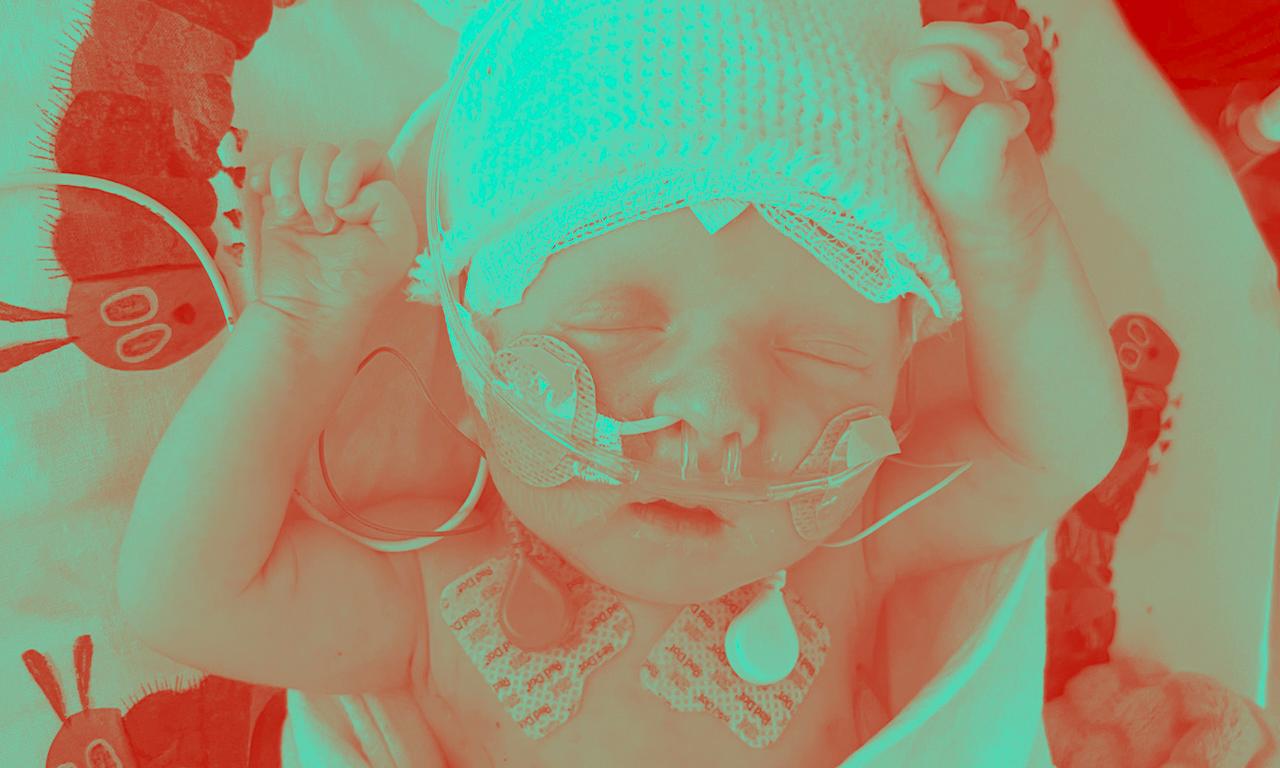
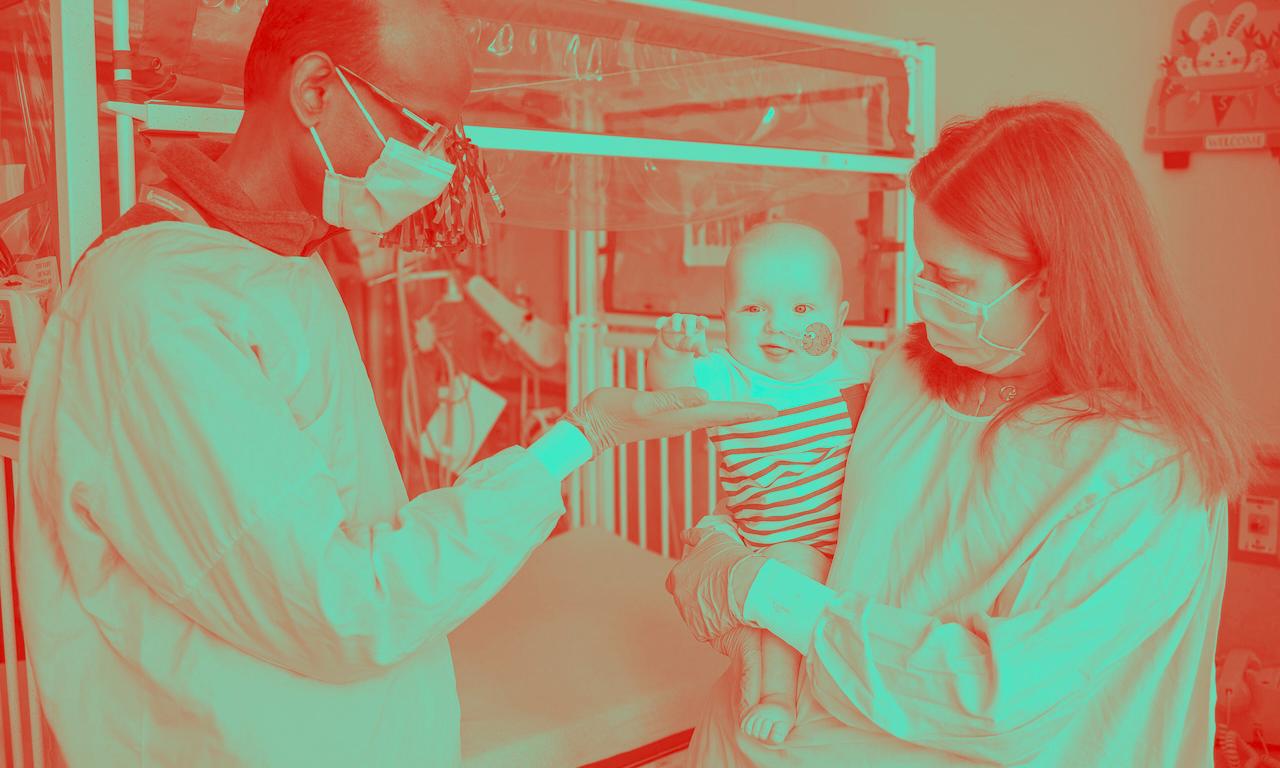
In 2025, a University of Pennsylvania team used customised CRISPR therapy on an infant with CPS1 deficiency, marking a shift toward individualised gene editing. This made me ask: if such editing advances, could DNA itself become a personalised enhancement tool and the currency of a biological age
SPECULATIVE TRIGGE
THEORETICAL SUPPOR GENE-EDITING TECHNOLOGY: CRISP
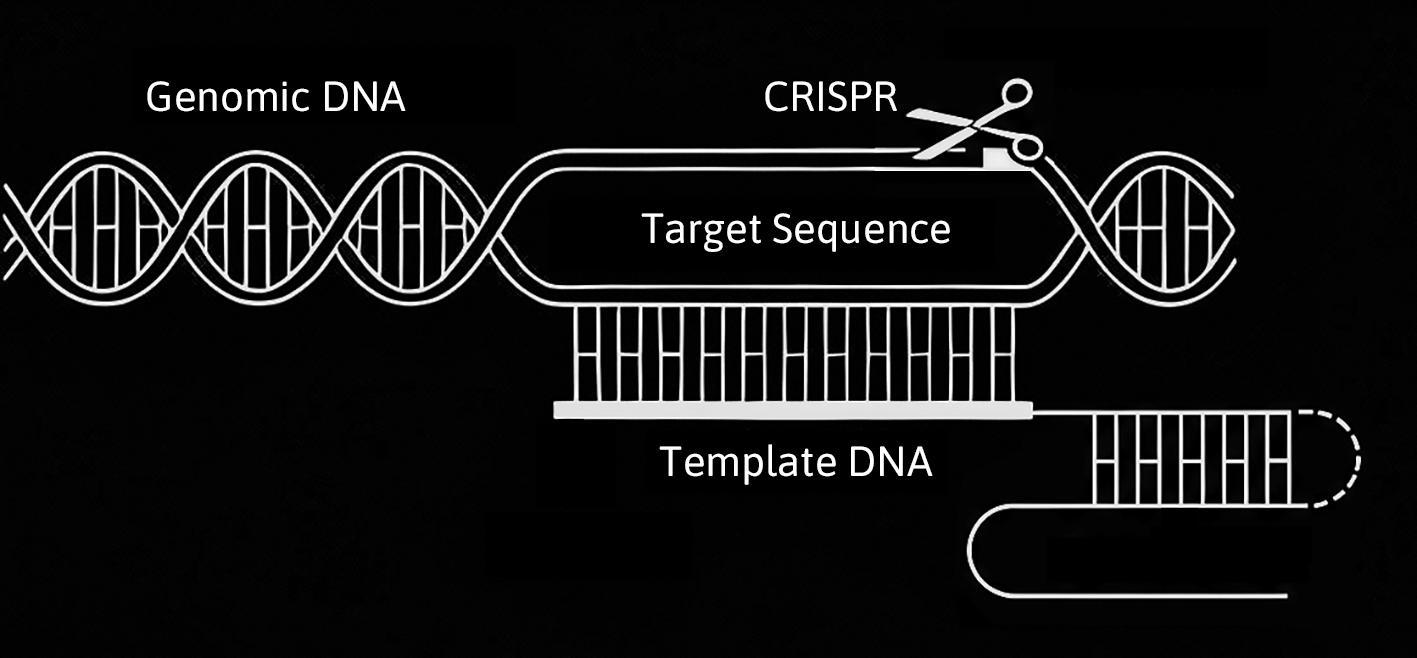
CRISPR is a kind of programmable molecular scissors that can find target genes at specific positions in DNA and perform cutting or replacement.The replacement and insertion of genes require a template DNA(Guide RNA)
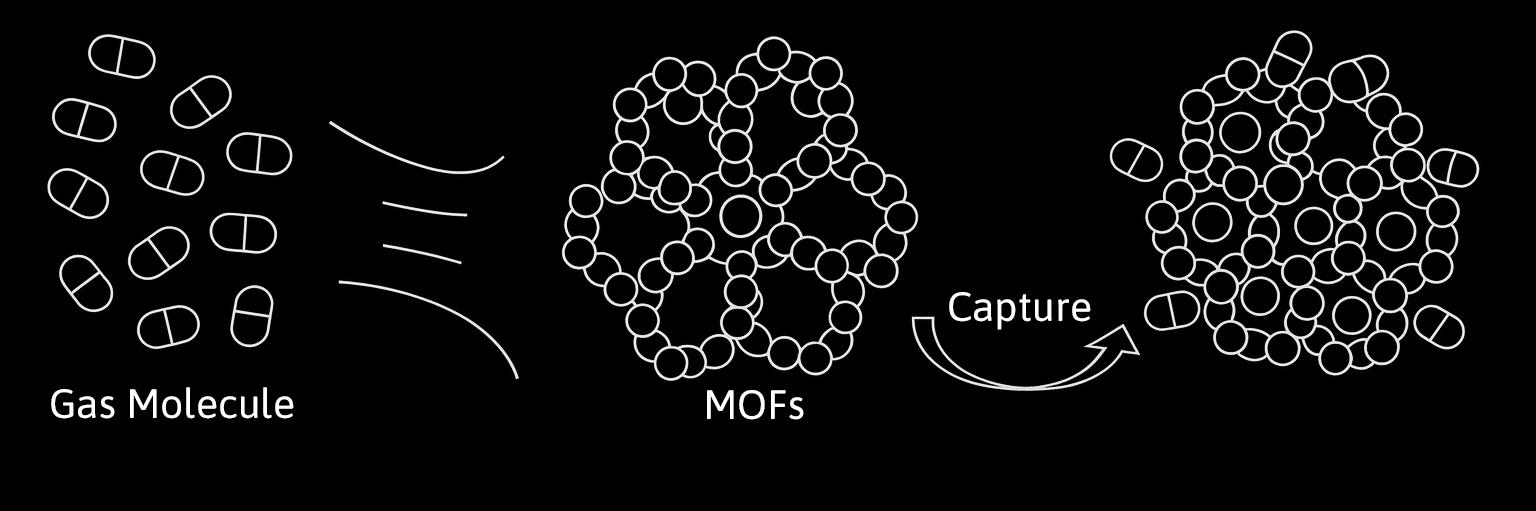
Metal–Organic Frameworks (MOFs) as molecular collector
MOFs are special chemical materials. Their large surface area and adjustable pore size allow them to capture and separate molecules from the air, including volatile compounds and biological traces
Wei X, Wang Z, Dai F, Sun D. Recent advances in metal-organic frameworks for gas adsorption/separation. Nanoscale Adv. 2022 Mar 24;4(9):2077-2089. doi: 10.1039/d2na00061j. PMID: 36133454; PMCID: PMC9418345
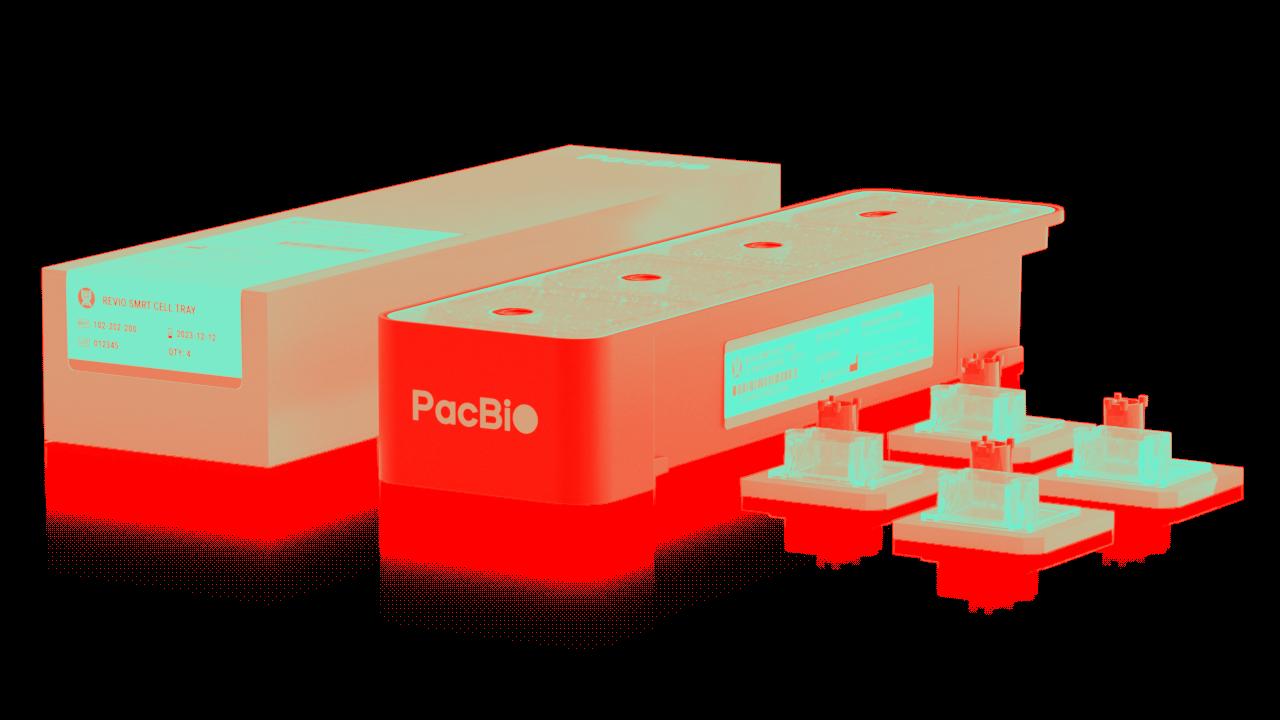
PacBio® Revio™ Sequencing System
Developer: Pacific Biosciences (PacBio
Ultra-Low Input Long-Read Sequencin
This technology can obtain highquality, long-fragment genomic sequences in nanogram-scale sample sizes
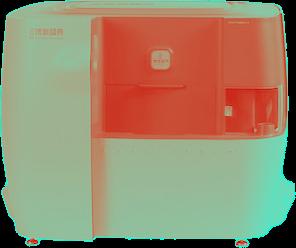
The simplification and portability of gene extraction equipmen
The Quick TargSeq DNA detector can be operated manually in just one minute. It has low technical requirements, and is fully automatic and portable
Quick TargSeq® Fully-Integrated DNA Rapid Detection System
Manufacturer: CapitalBio Technology Co., Ltd
DESIGN CONCEP
In the near future, gene editing can easily enhances individuals.
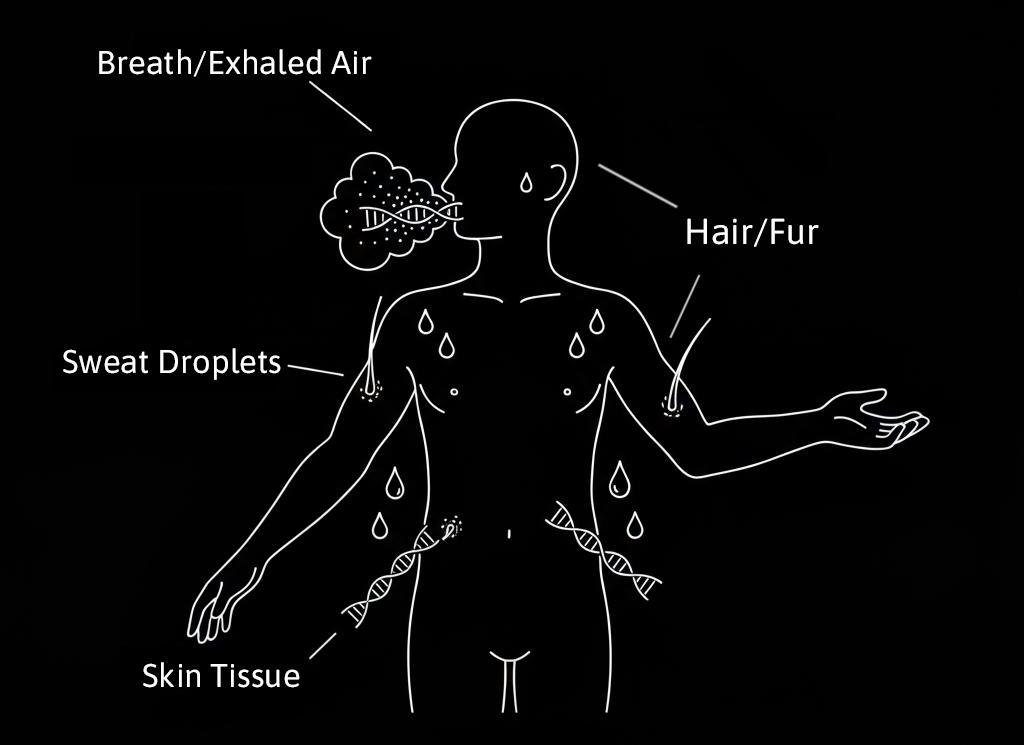
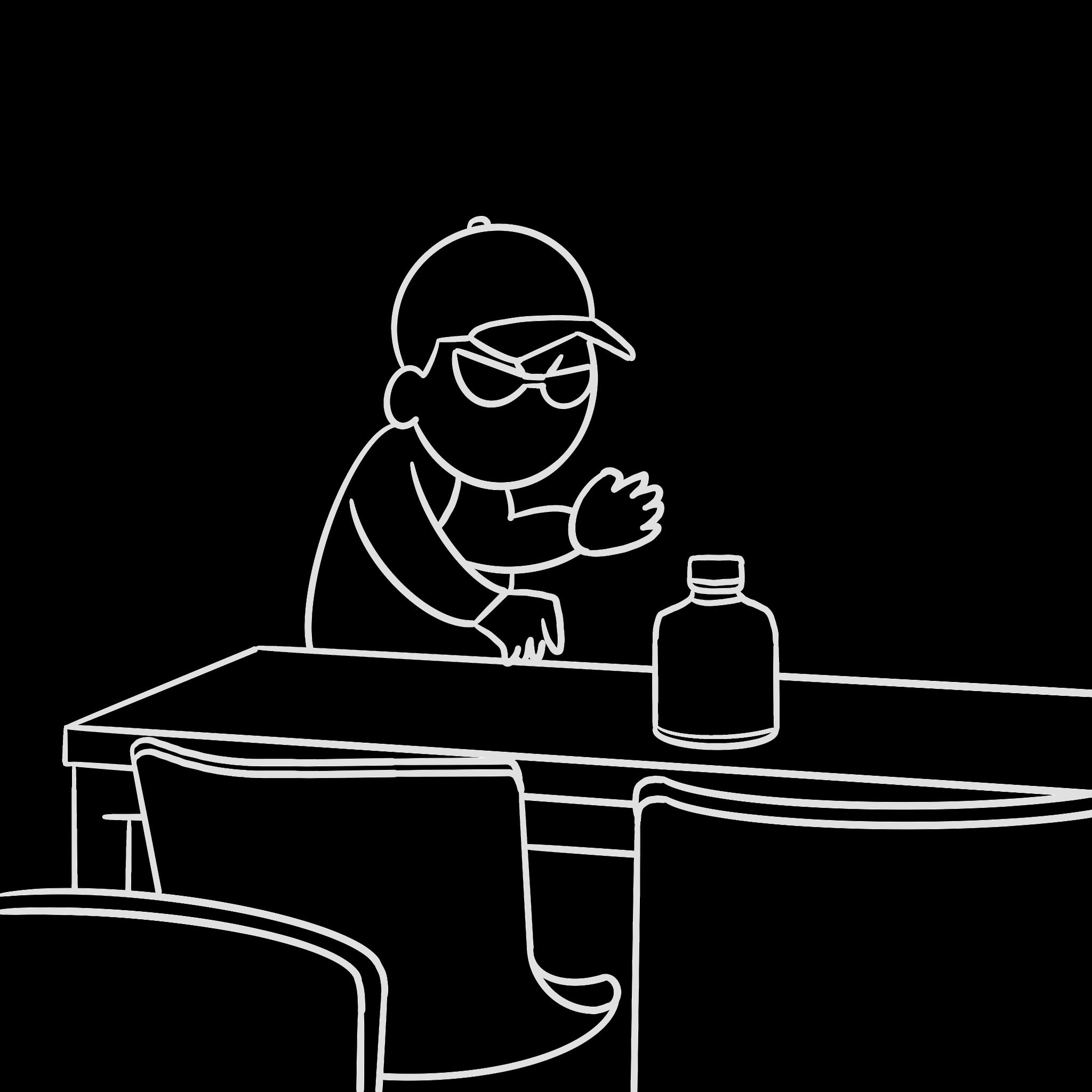
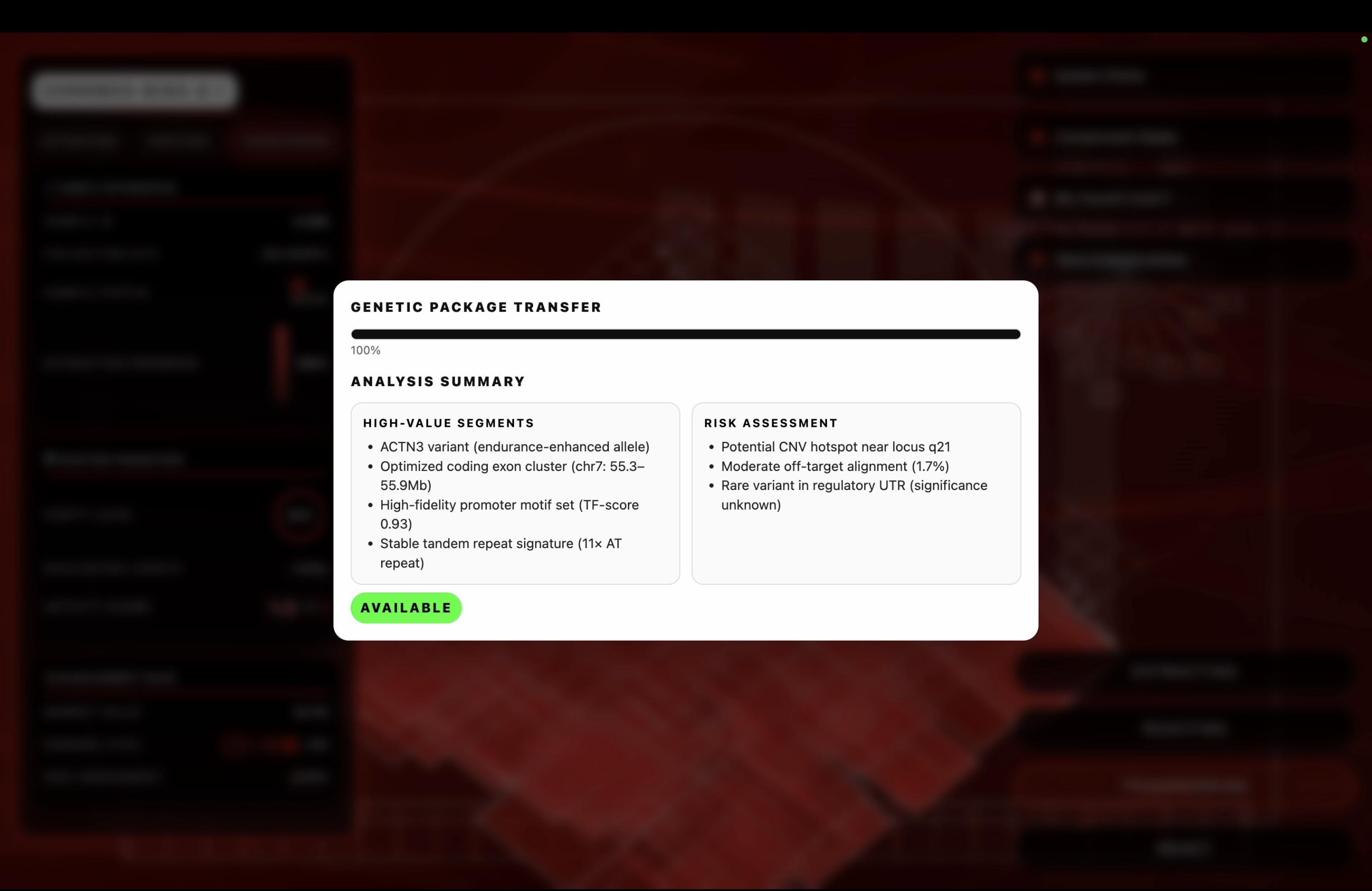
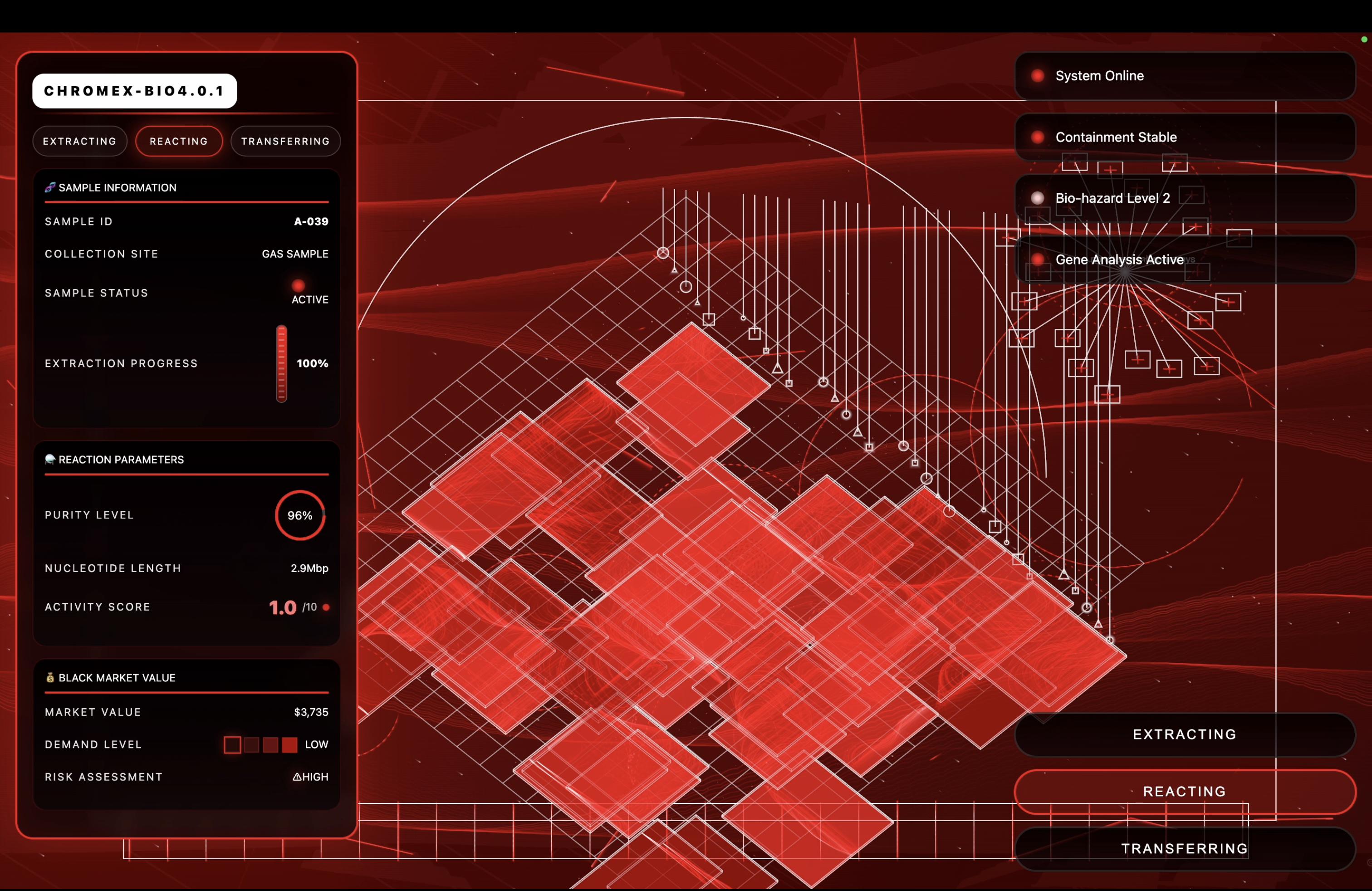
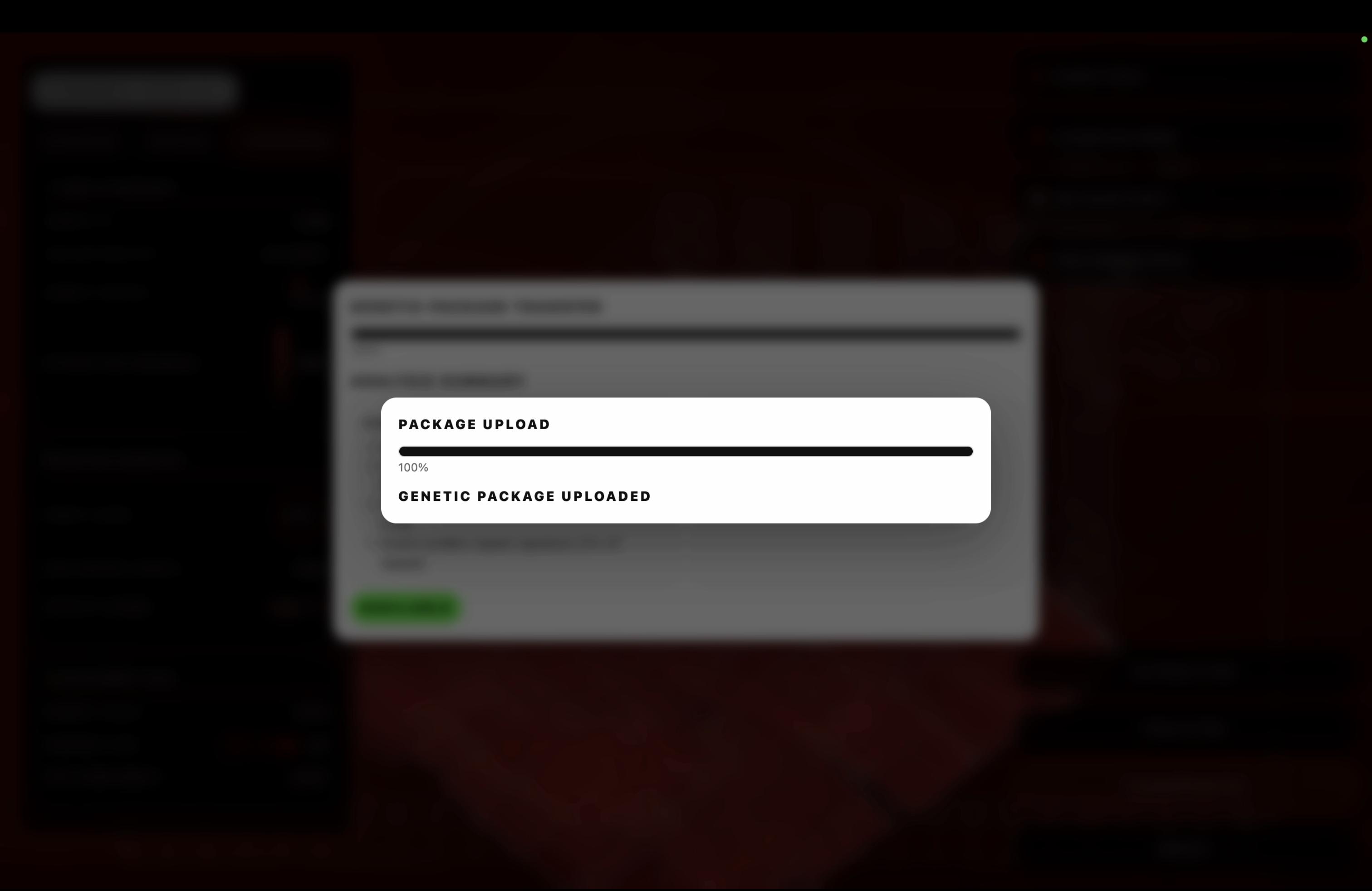
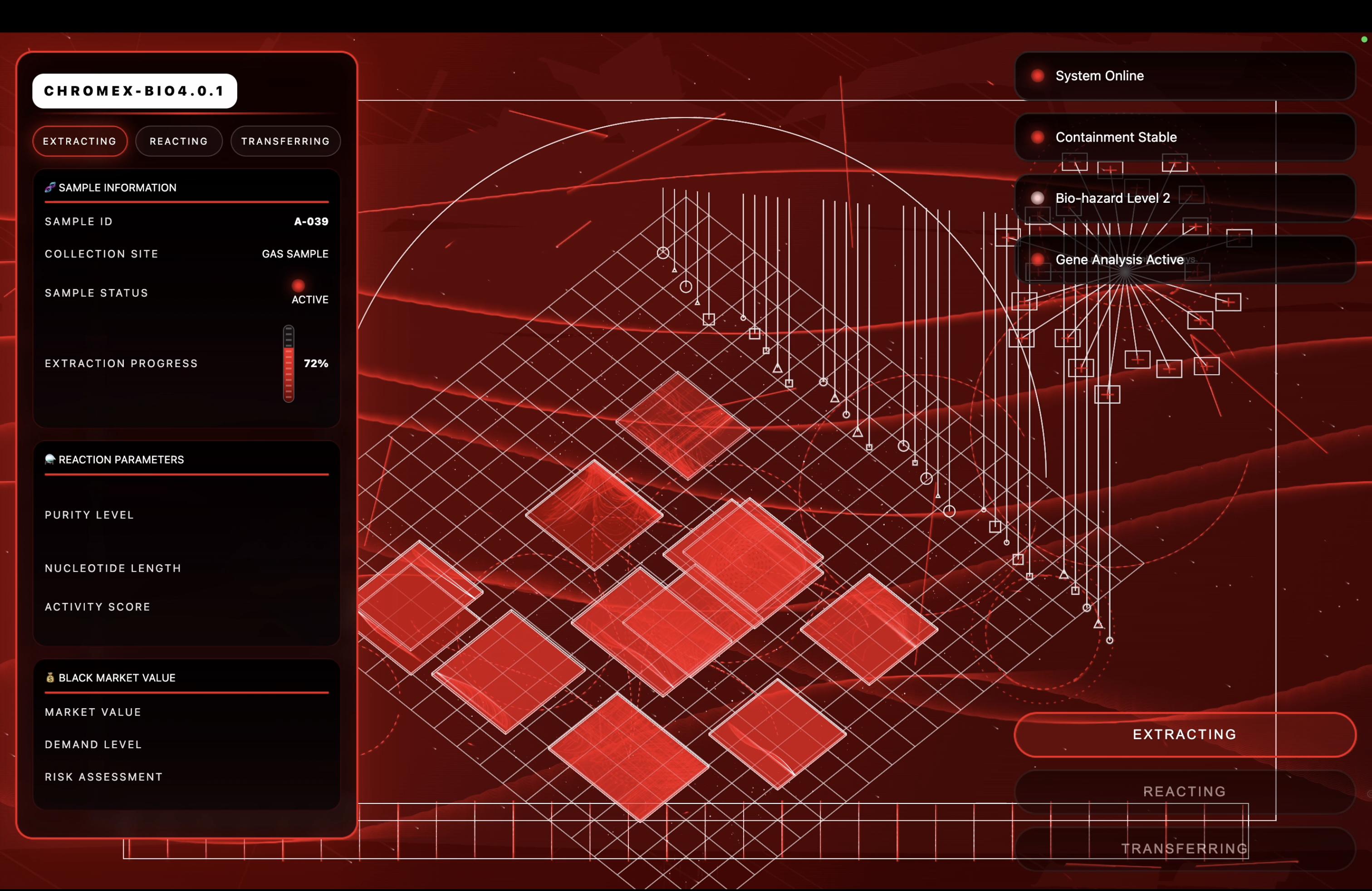
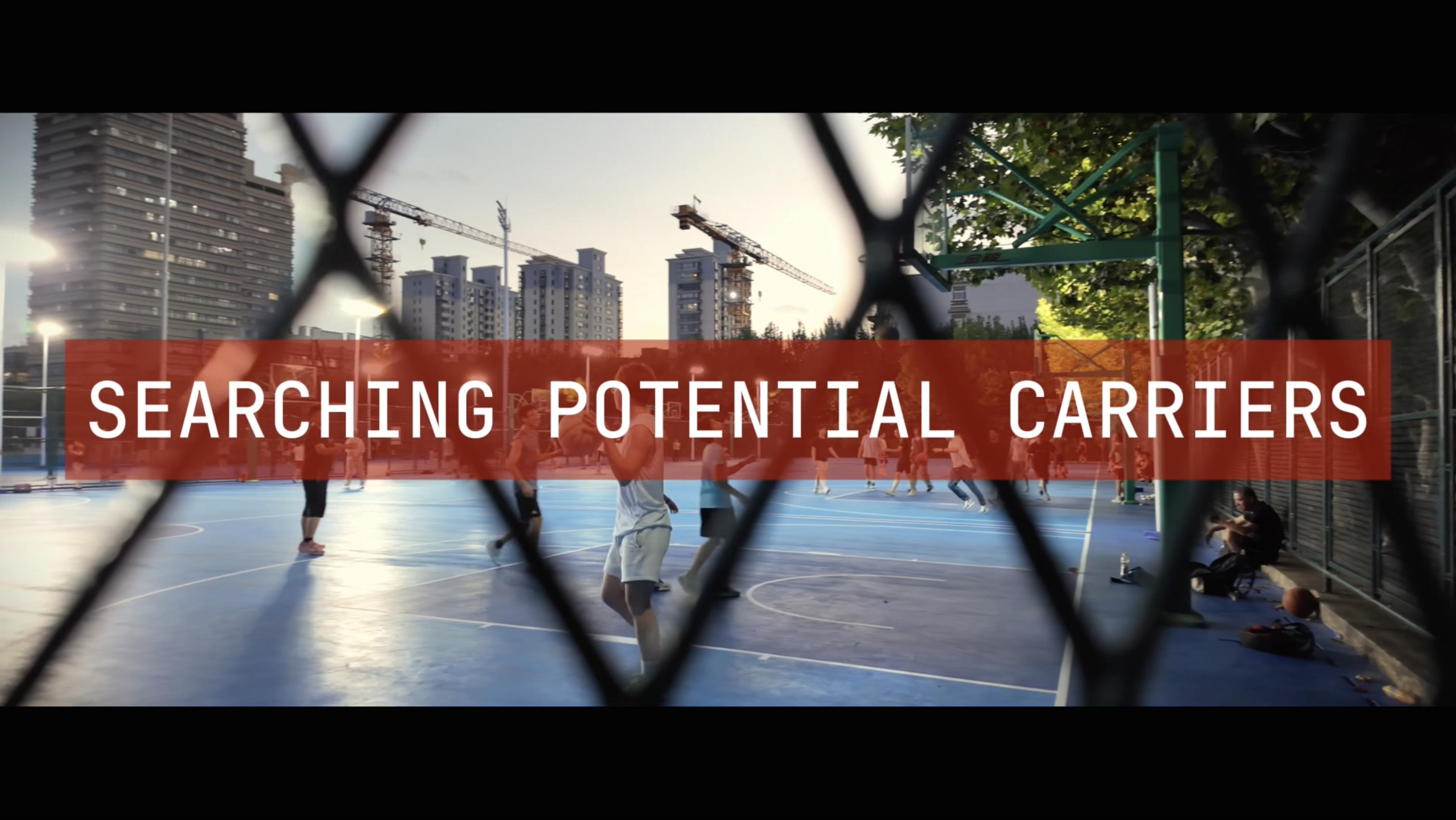
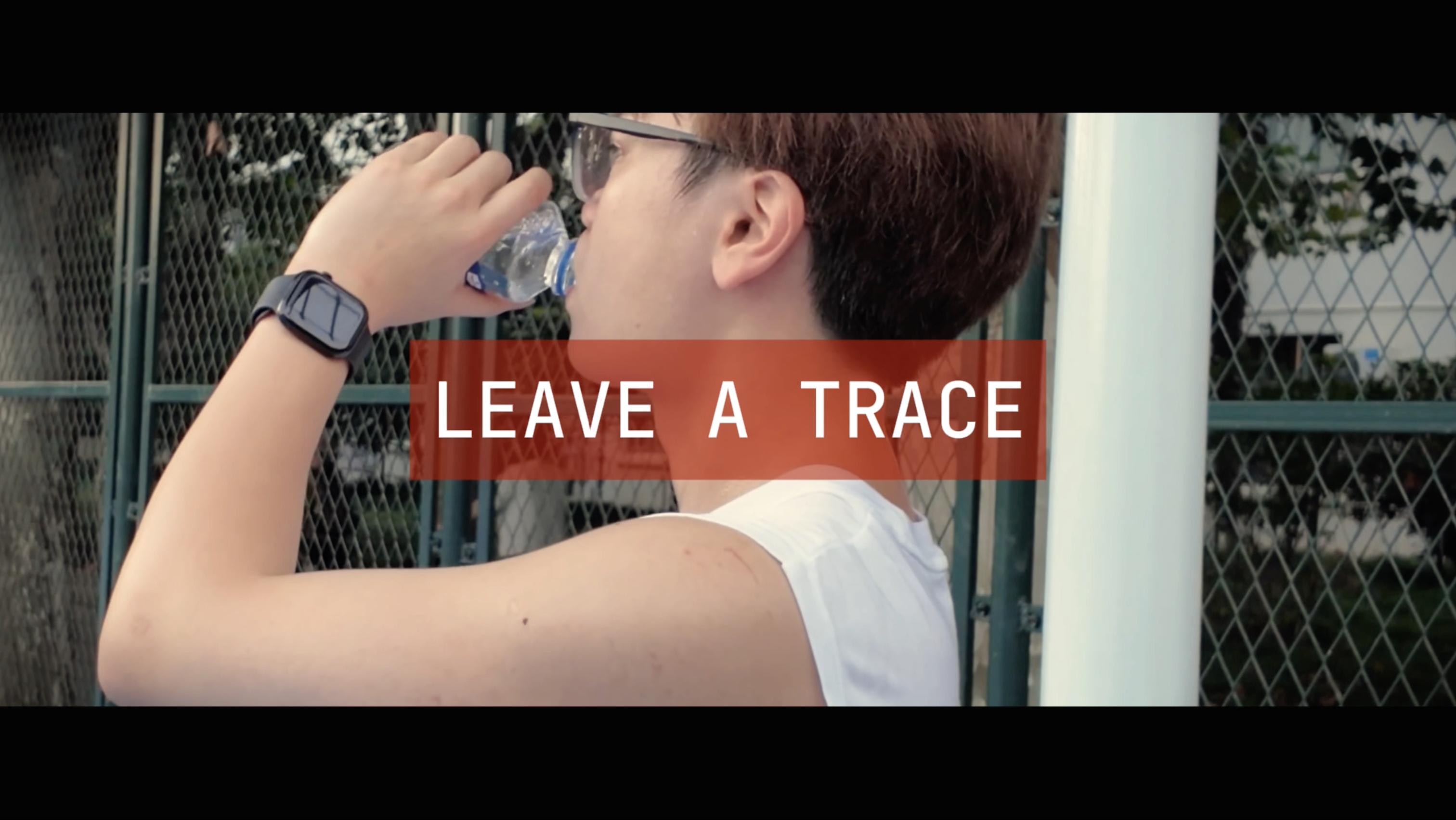
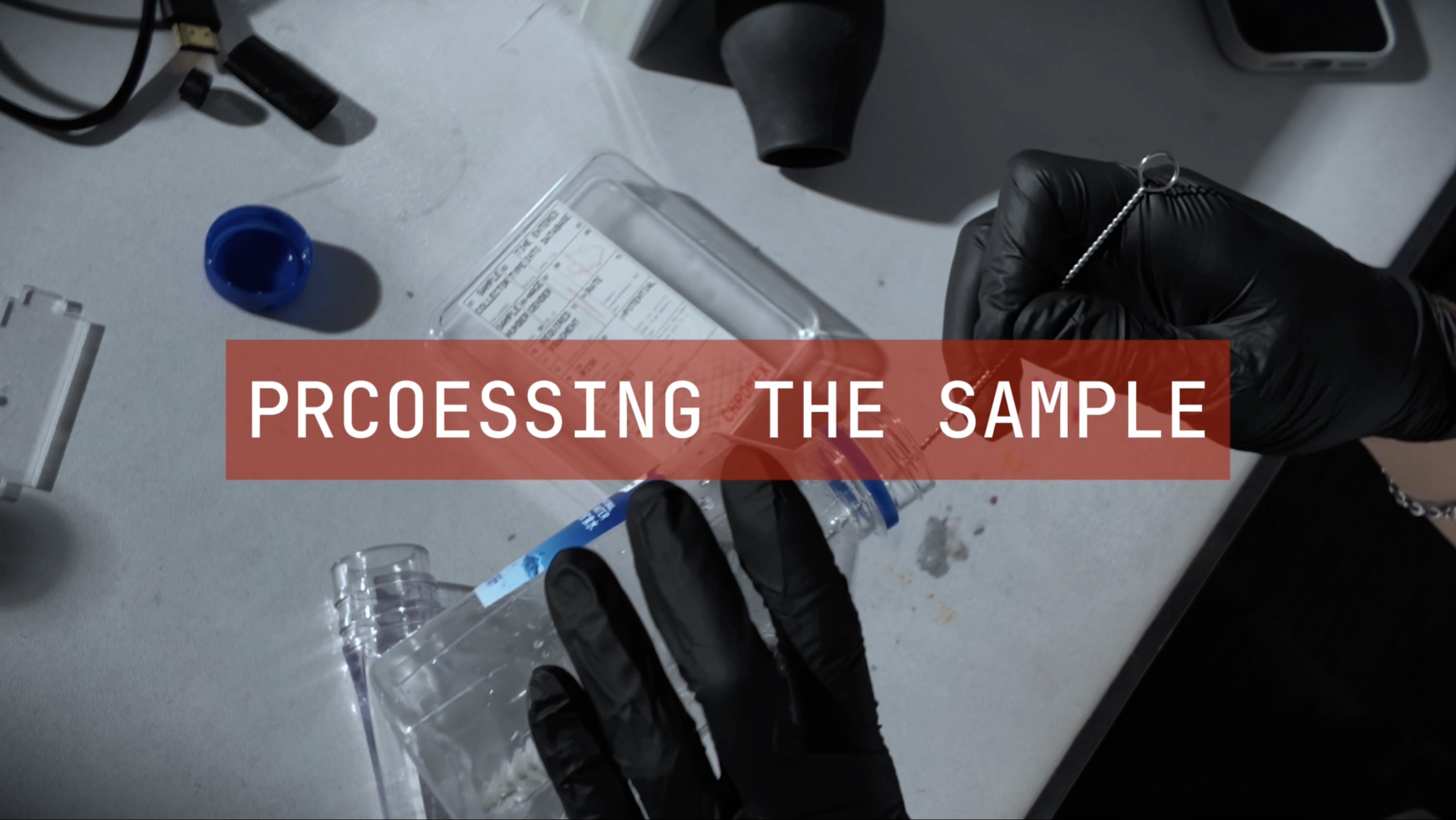
High-quality genes of elites are regarded as everyone s improvement templates and traded as commodities When the government bans such transactions for people’s safety, the trade shifts to the black market and a new profession emerges: the Gene Thief Gene thieves gathers trace biological samples from public spaces, including sweat, hair, skin fragments, even breath condensate, and processes them through a portable toolkit. The device digitizes, filters, and encrypts the genetic traces, then packaging and uploading selected genes to the system for trade
Extractability of genetic information in the environmen
Human genetic information is ‘generally shed’ in the environment (environmental DNA, eDNA), and can be recovered and identified in water, air, dust and surface residues
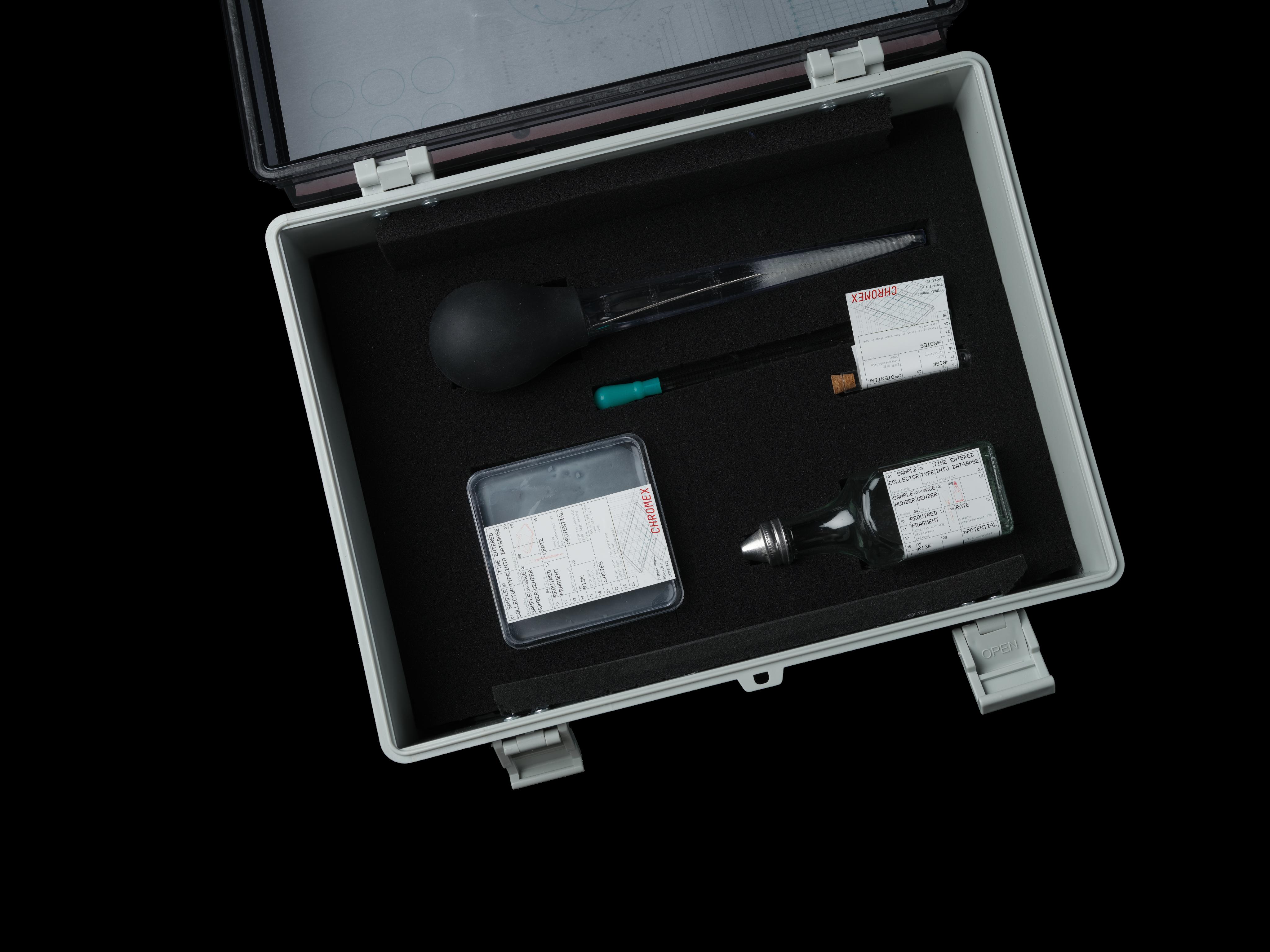
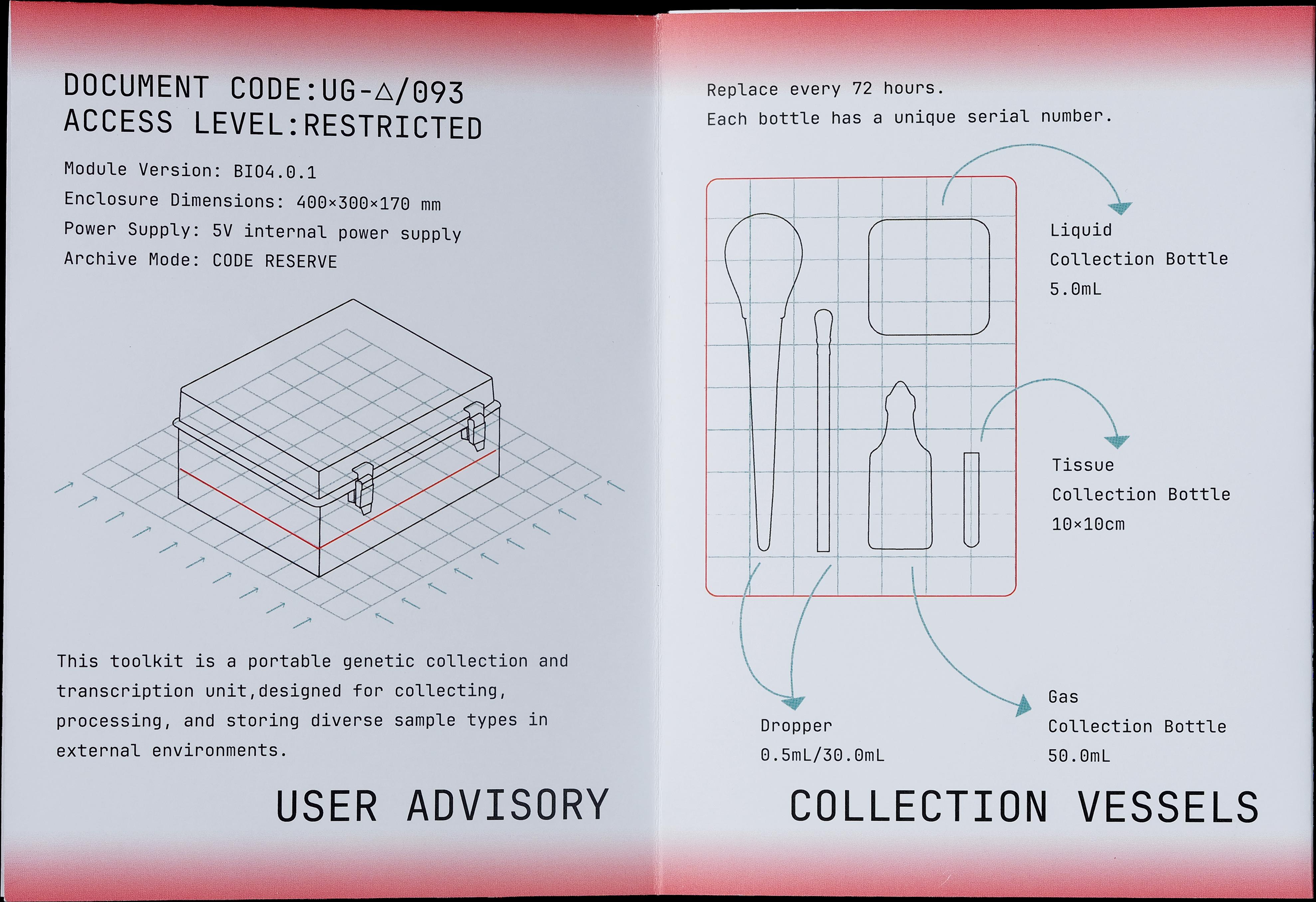
Store various types of collection bottle
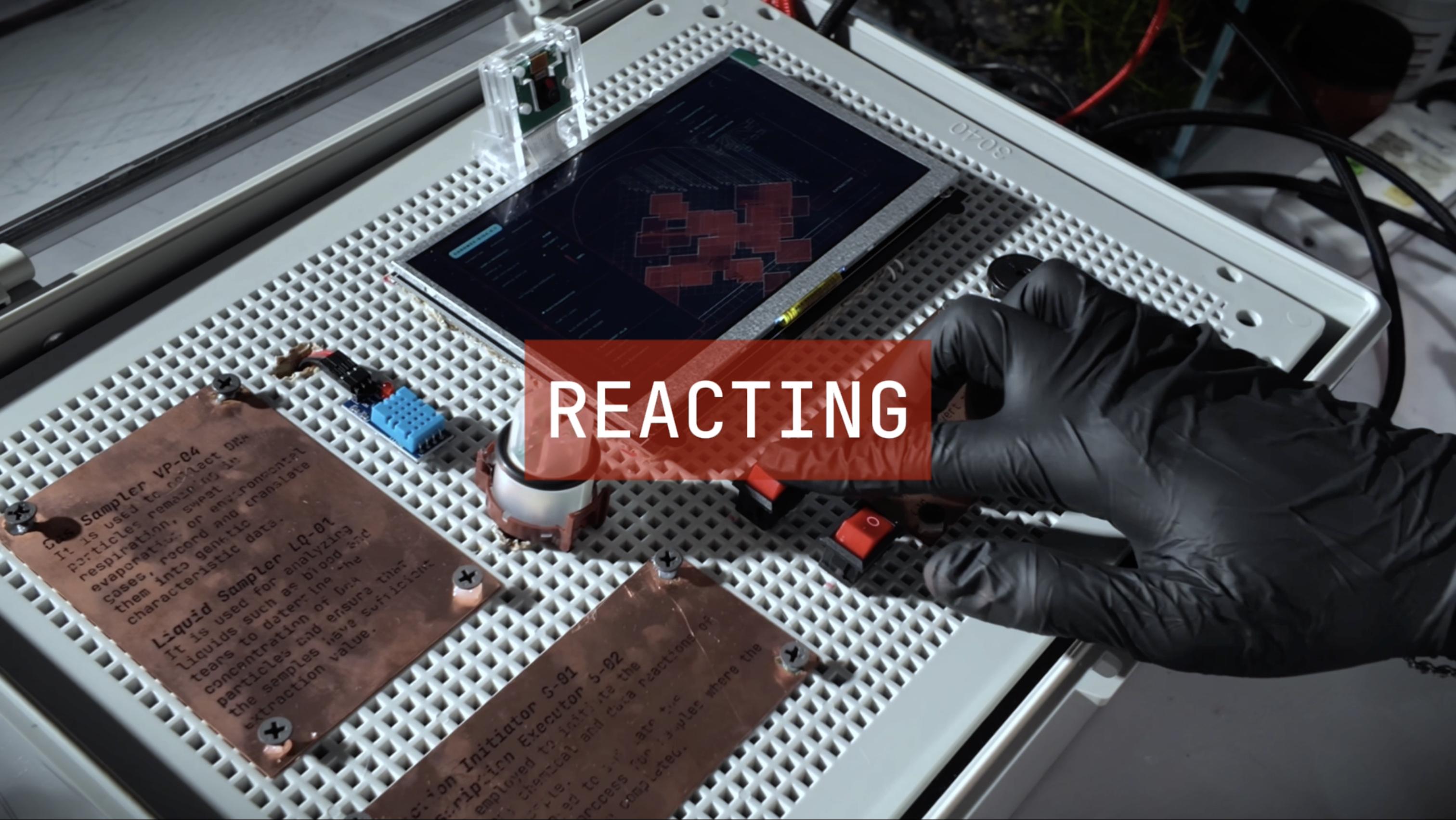
An operation panel for extracting, analyzing and uploading DN Layer
Sampling gaseous DN
CD1 Switc AZDM01 Turbidity Senso
Move the sampl Layer
aspberry Pi
DHT11 Temperature and Humidity Modul Vibration Senso Bottl
Sampling solid DN Petri Dis Hold liquid DN
Droppers and brus Test Tub show the operation interfac Hos Start reacting/ transferin Sampling liquid DN
Hold gaseous DN
/ <script>
const cvs=document.getElementById( scene const ctx=cvs.getContext( 2d ,{alpha:true})
let W=0,H=0,DPR=Math.min(2,devicePixelRatio||1) function resize(){
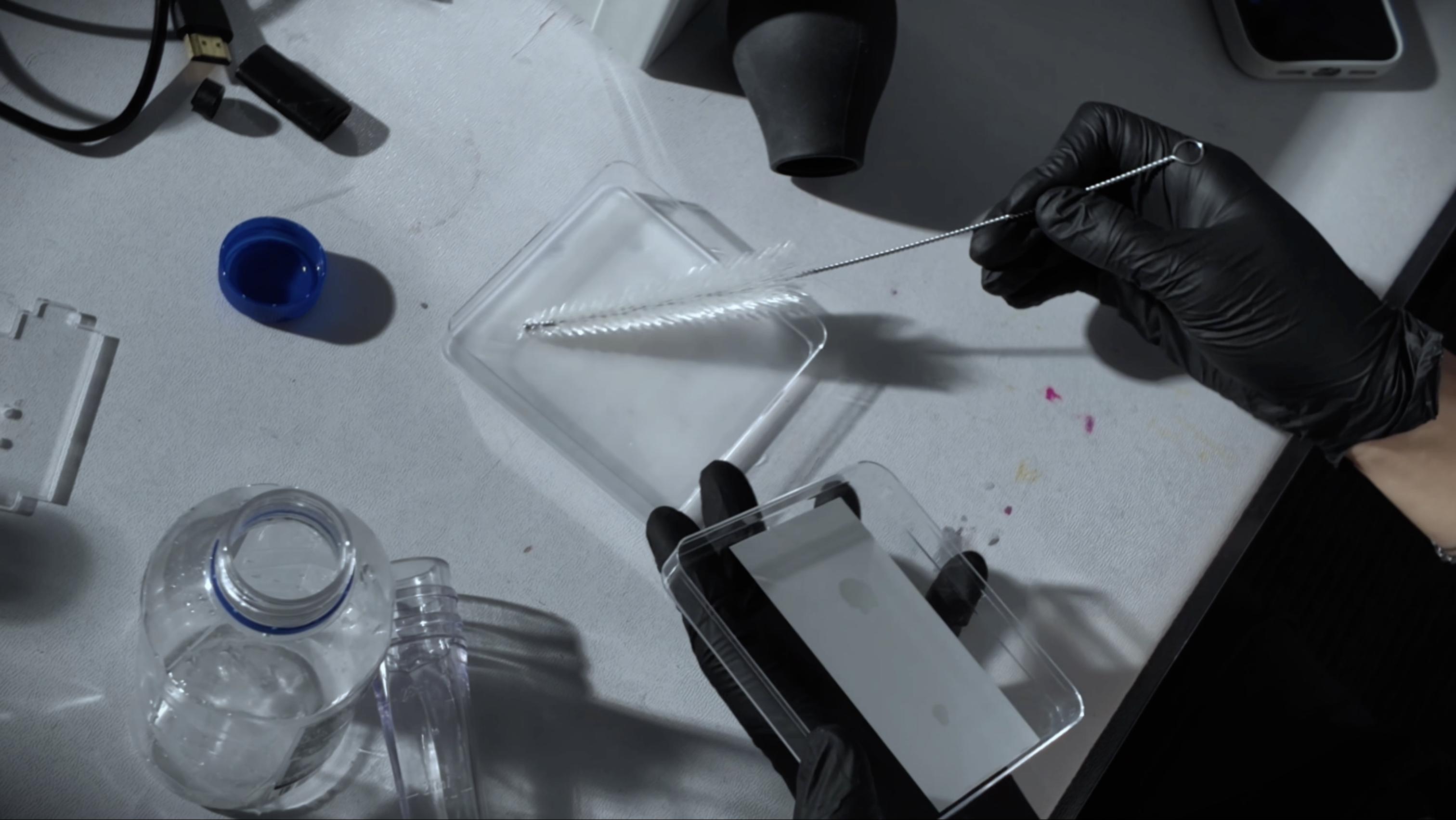
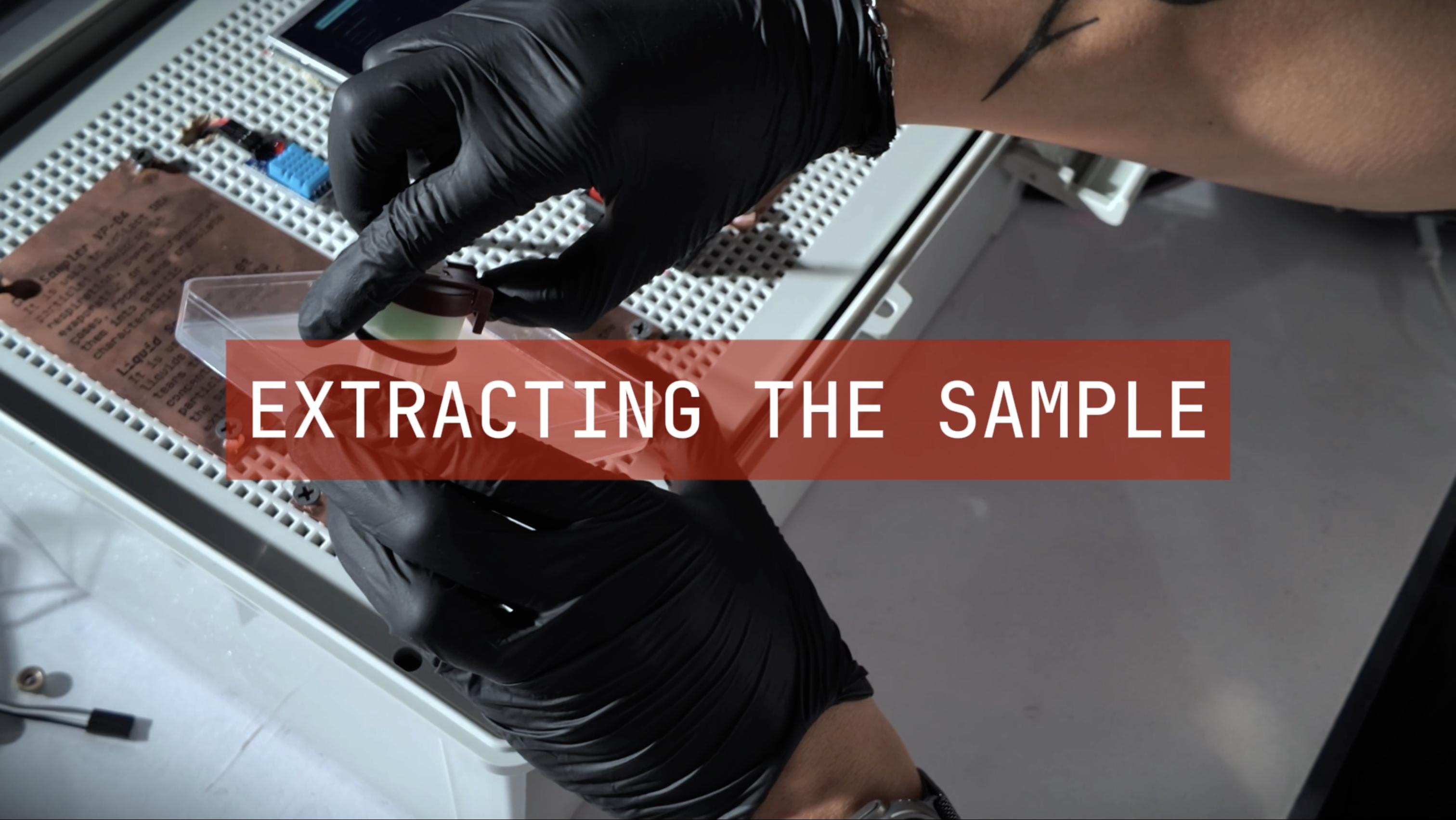
Scrape the collected liquid sample with a brush and transfer to the petri dis Put the solid sample into the test tub
Use a dropper to put the gas dna into the bottl
Pull out the liquid sampler, place it in the petri dish to touch the sampl
Gently pour the sample in the test tube onto the tissue sample
Squeeze the gas in the dropper out onto the gas sample
400mm × 300mm × 170m
VP-04 Gas Sample (DHT11 Temperature and Humidity Module
LQ-01 Liquid Sample
(AZDM01 Turbidity Sensor
Screen and Camer
(Raspberry PI Display and Camera (Vibration
KT07 Tissue Sampler for Hai
S-01 Reaction Initiato
S-02 Transcription Initiato
KT11 Tissue Sampler for Nail/Ski
Sensor (KCD1 Switch
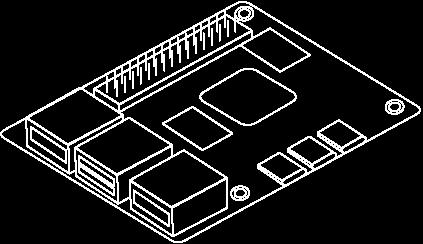
Hos (Raspberry Pi 4
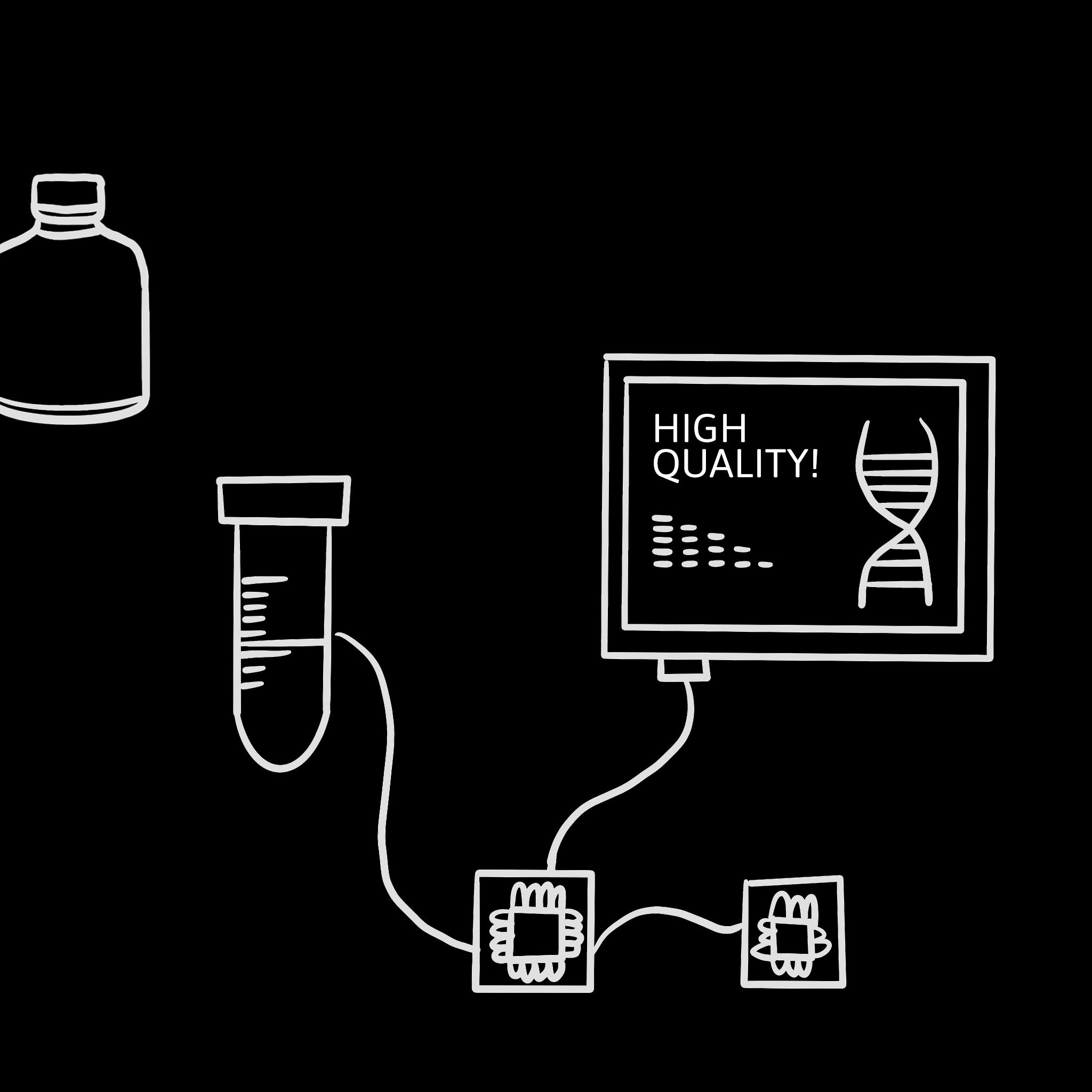
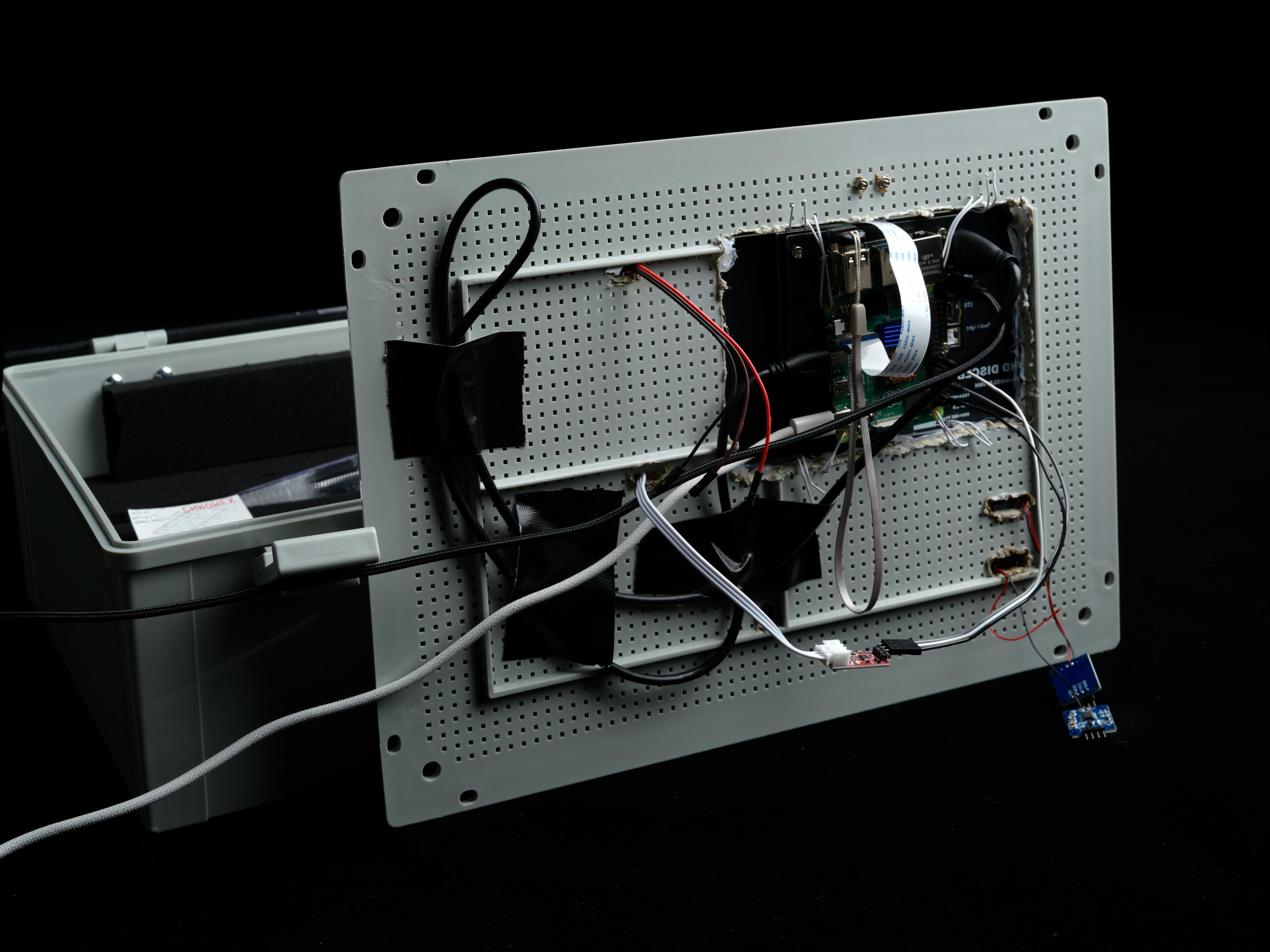
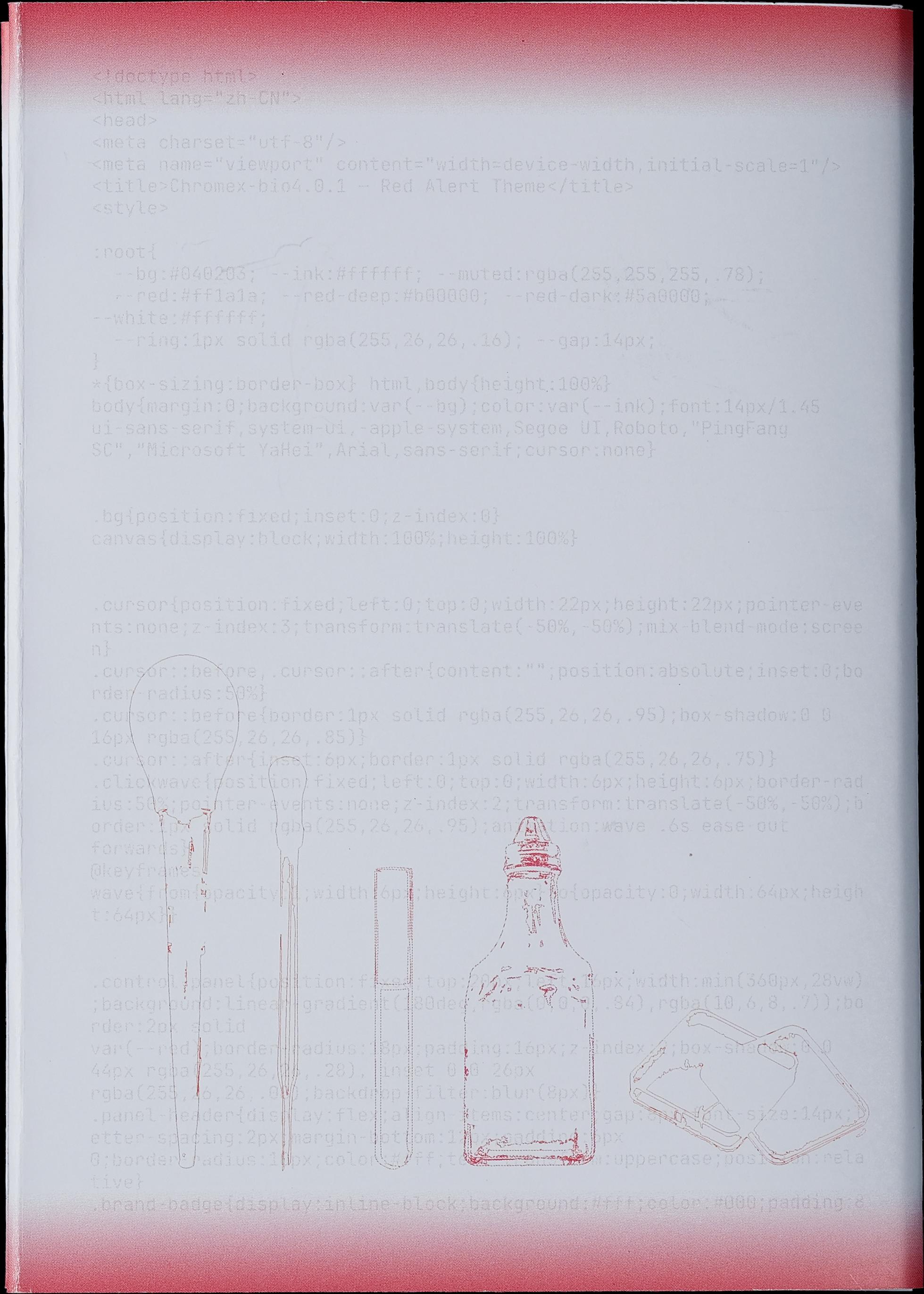
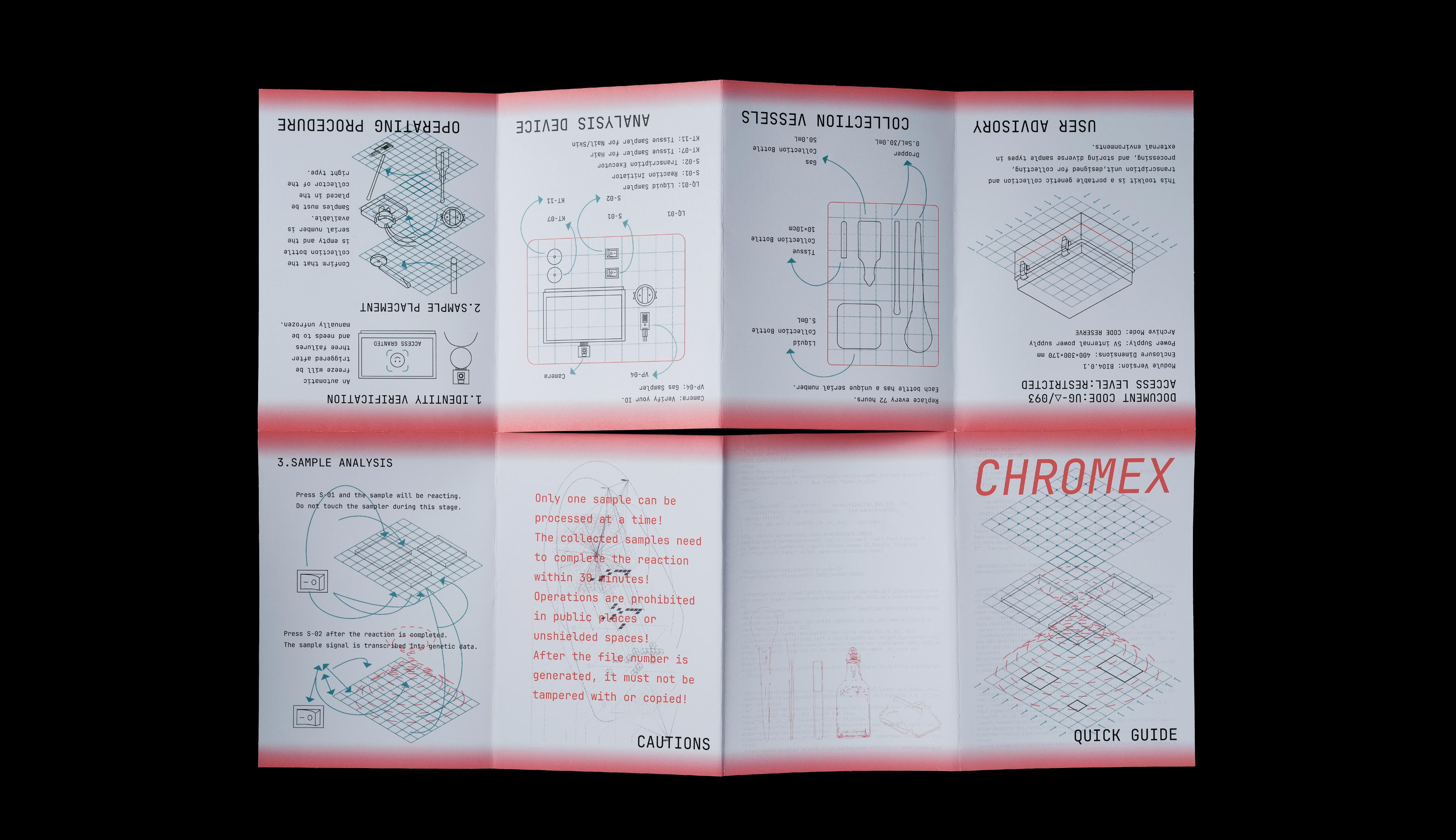
This toolkit is a speculative prototype that simulates how a gene thief collects and analyses DNA through liquid, solid, and gas sampling modules. It digitises the traces into core DNA parameters and includes containers and an underground-style manual. By materialising this invisible process, the project imagines a future where human DNA becomes a tradable commodity
VIDE
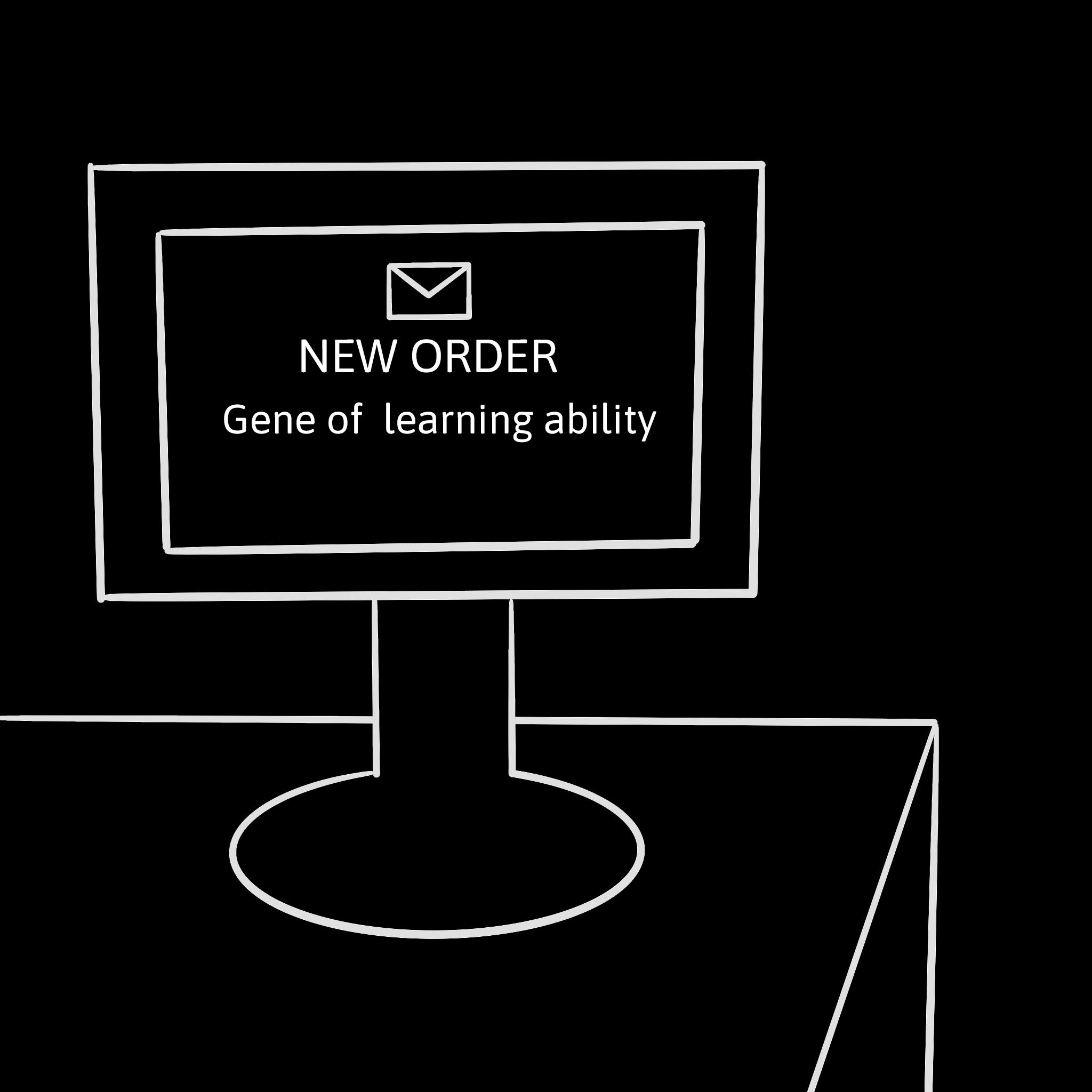
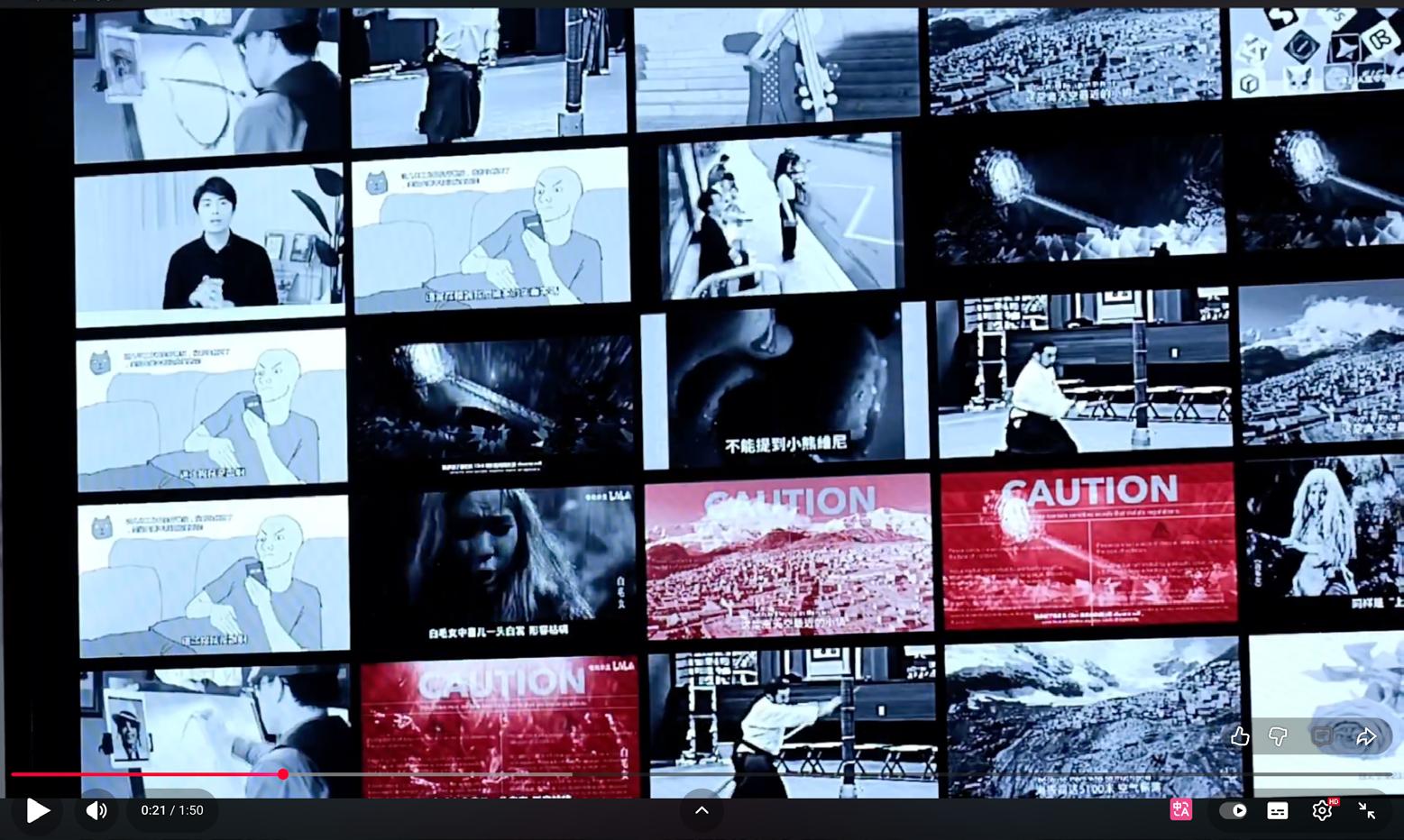
The video documents the entire criminal process of the gene thief, from receiving the order, searching for the target, stealing the genetic information, processing and analyzing it, to packaging uploading it
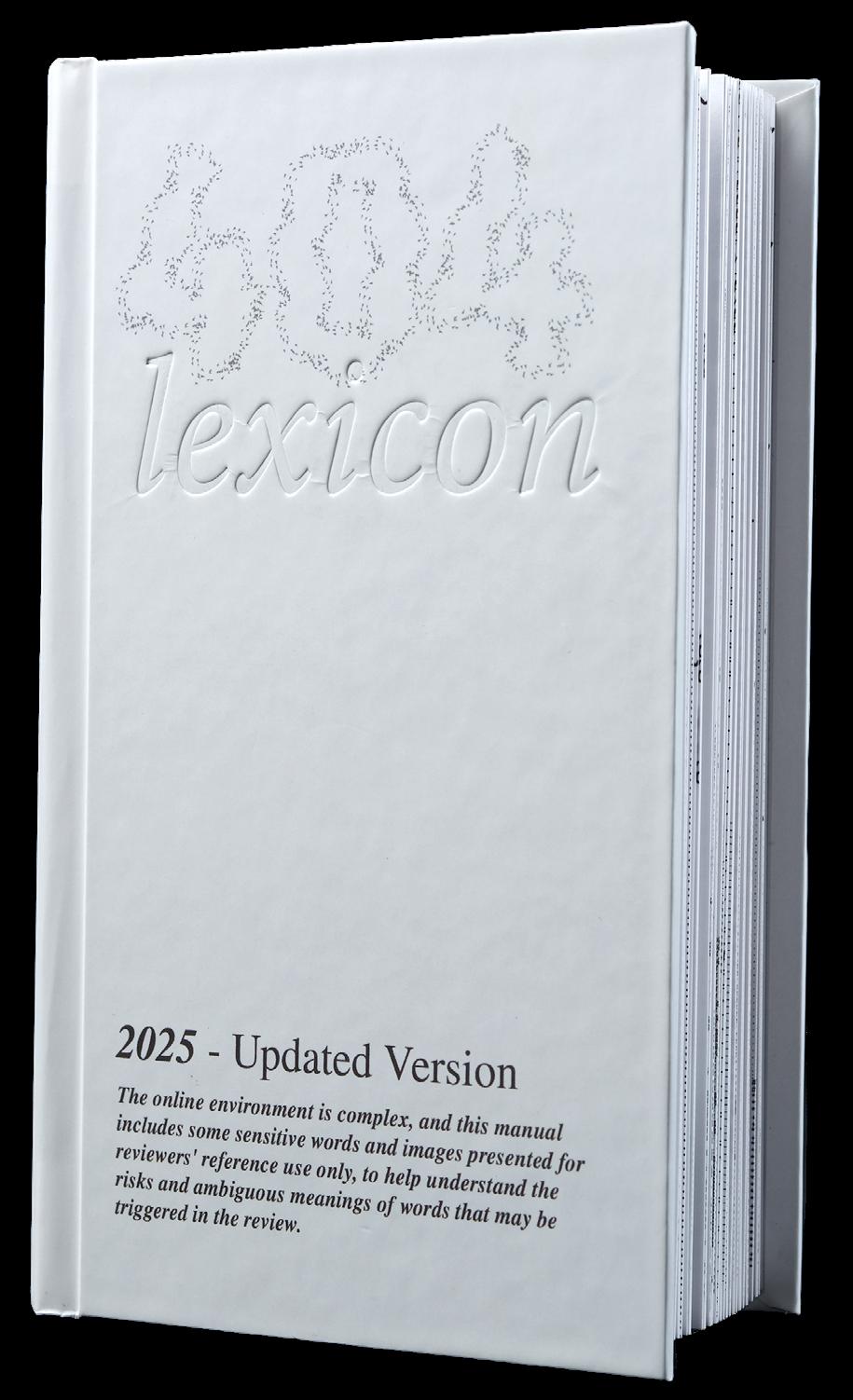
404 Lexicon
Book Design/Installation/Video
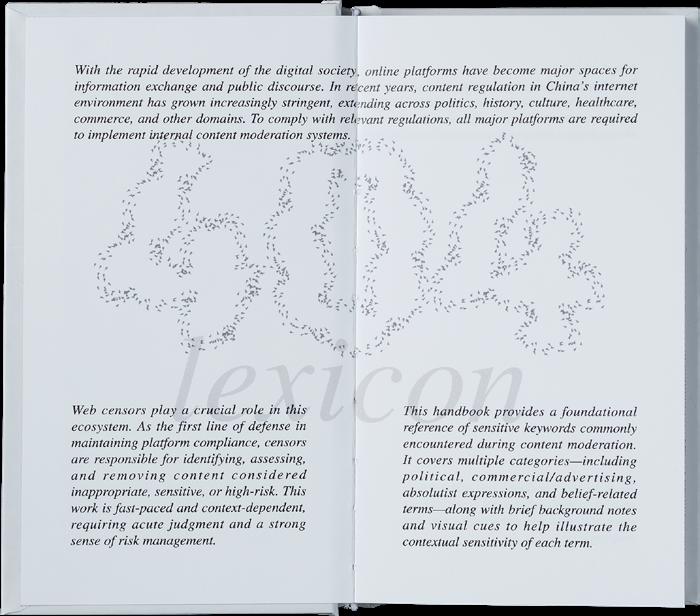
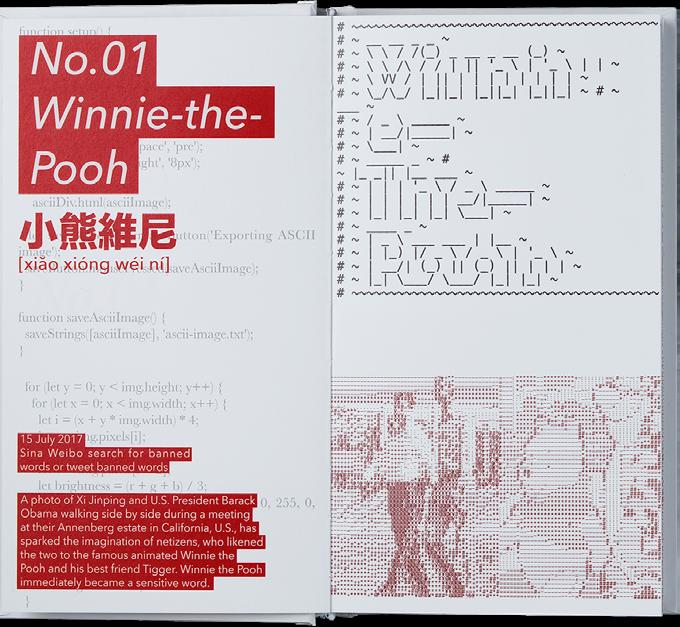
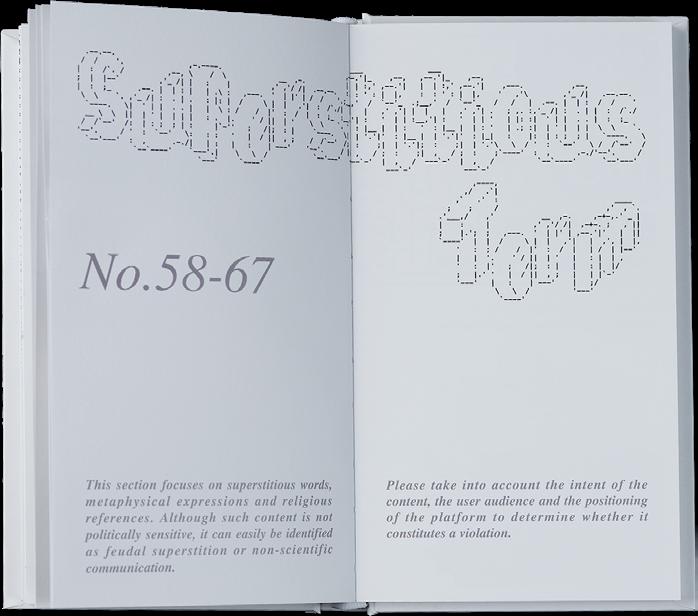
This project investigates the unique working conditions of Chinese internet censors.Under a censorship system that expands far beyond politics, even neutral words can become “sensitive” because their meanings are reinterpreted as potential risks by the government. With no transparent guidelines, censors must rely on personal experience and subjective judgment to filter enormous amounts of content. Over time, this constant pressure and ambiguity cause once-neutral language and imagery to appear blurred, unstable, and even hazardous in their perception. Presented as a mock internet censor’s handbook, the project compiles sensitive terms and distorted visuals to reveal how censorship reshapes individual cognition and how digital society trains us to become hyper-attuned to risk while losing clarity in language.
https://youtu.be/ENTy3ij-zu4
From daily use of Chinese social media, I saw ordinary words blocked, replaced, or erased by context. It raised a question: do censors handling such 'sensitive' terms over time reshape their sense of language? That observation led me to explore how language is alienated and redefined on these platforms.
BACKGROUND OF CHINA'S INTERNET
China, with the world’s largest online population, runs an intensive censorship system where cyberspace is treated as core governance. Beyond automated filters, it depends on human censors whose judgments determine what can be seen or said. Their specialised role is crucial as they review vast content and interpret shifting rules, while censorship now spans politics, culture, technology, healthcare, and everyday language.
RESEARCH
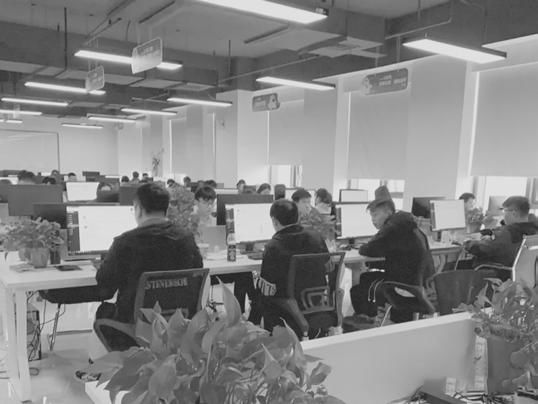
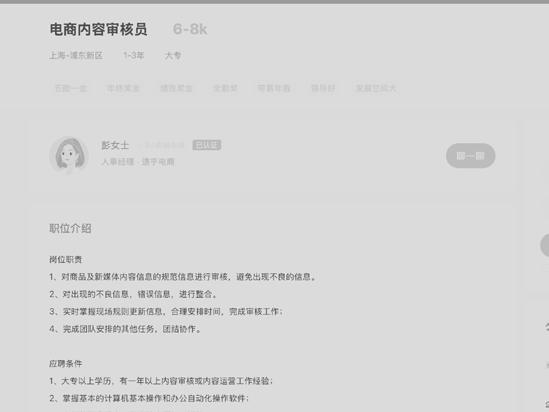
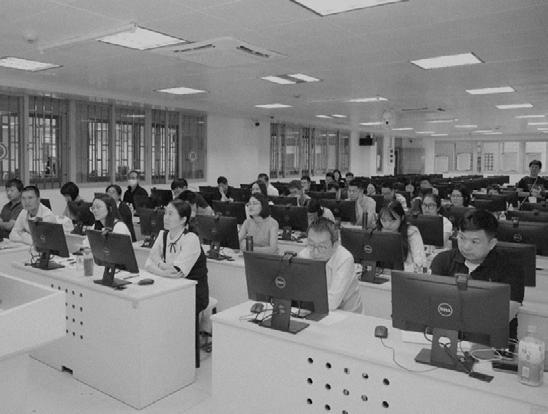
With tens of thousands of pieces of content to deal with every day, the working hours are long, the pace is fast, and the pressure of auditing is extreme, but there is a lack of emotional counselling mechanisms and psychological support. In the absence of training and guidance manuals, we often rely on personal experience to determine whether content is ‘offending’ or not.
7 years of experience
I work in the field of graphic auditing, which is mainly concerned with political security, pornographic violence and illegal adverts. Of these, political security is the highest priority, and most of the illegal adverts that are removed are advertorial content that has no partnership with the company.
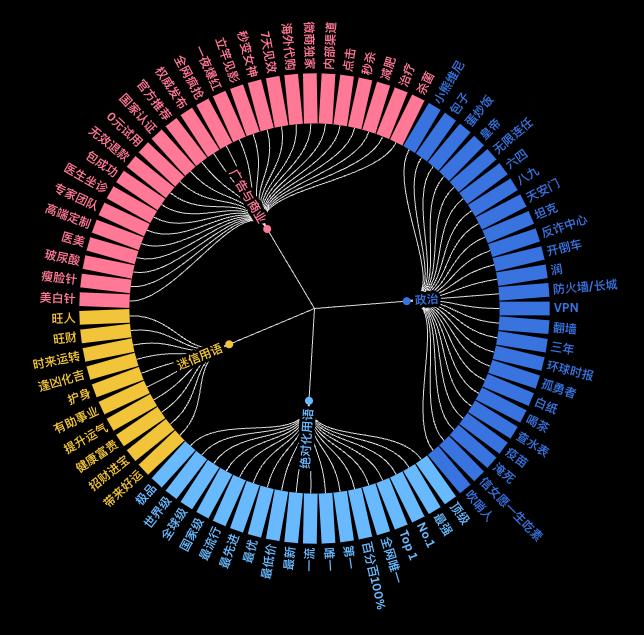
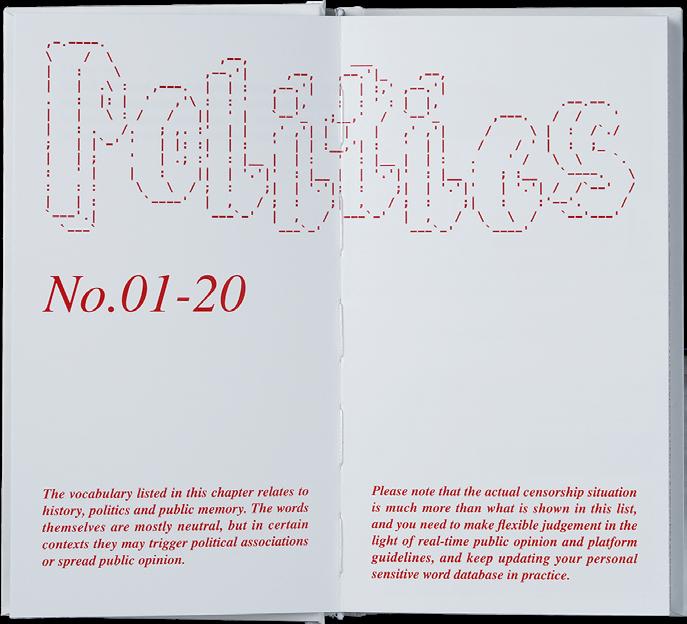
I.Politics
Vocabulary related to national politics, historical events and leaders is strictly limited as it touches on sensitive issues.
II.Advertising and commercial
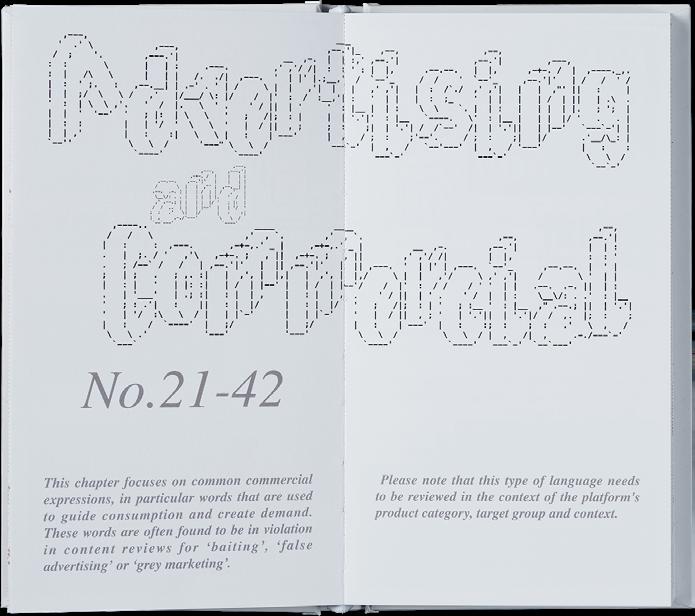
Commonly used in false advertising or offending marketing, such as medical, purchasing or exaggerated promises type of phrases.
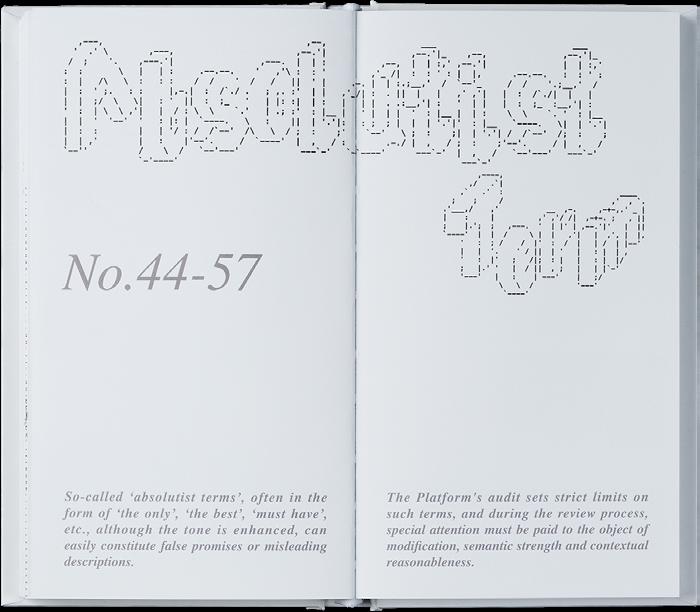
III.Absolutist terms
Exaggerated terms such as “only”, ‘top’, “100%”, etc. are restricted as they are misleading to consumers.
IV.Superstitious terms
Words involving fortune, feng shui, and mystical powers are considered unscientific or prone to lead to superstition.
ESSAY SUPPORT
As censorship tightened, users adopted euphemisms—“unalive” for “suicide”—to evade filters, which soon solidified into platform code.
Years of censoring online content have made him aware of the false appearance of Chinese online public opinion and the ‘filth’ behind it.
Primary research Secondary research
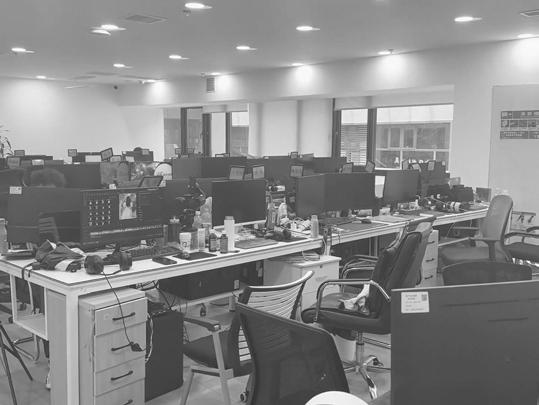
Working environment: Mobile phones are not allowed at the workstation and are under 24-hour surveillance
Working hours: 11 to 13 hours per day
Working content: Review videos, images, titles, text on detail pages, e-commerce advertisements, etc
Workload: 800- 1,500 items per day
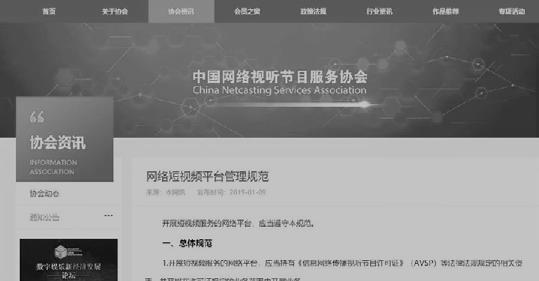
By researching the censorship system of major platforms, TikTok, Xiaohongshu, Baidu and other platforms have different focuses on sensitive words, which will be integrated and classified into four categories of sensitive words as follows:
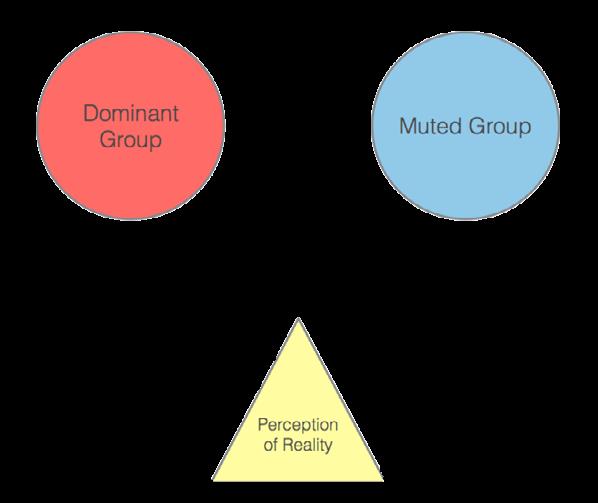
MGT holds that dominant groups set linguistic norms, simplifying or erasing marginalised voices. Under platform censorship these forces intensify: neutral terms accrue “risk,” language grows alienated, and censors’ perceptions blur.
Language is forced to deform by censorship, and behind censorship is the domination and reconstruction of language rules by power. The censor gradually adapts and even internalises this alienated linguistic order.
INSIGHT
In China’s platform governance, linguistic norms are reshaped by institutional power. According to MGT, dominant groups can redefine or erase meanings, and censorship amplifies this process: neutral terms are reassigned “risk” and language becomes unstable. Internet censors, working without clear guidelines or support, must constantly judge shifting boundaries. Over time, repeated exposure to this system alters their perception of language, causing onceneutral words to feel blurred, sensitive, or threatening.
Muted Group Theory (MGT)
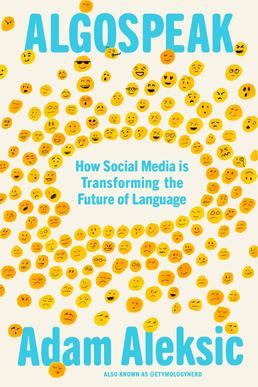
Algospeak,Adam Aieksic
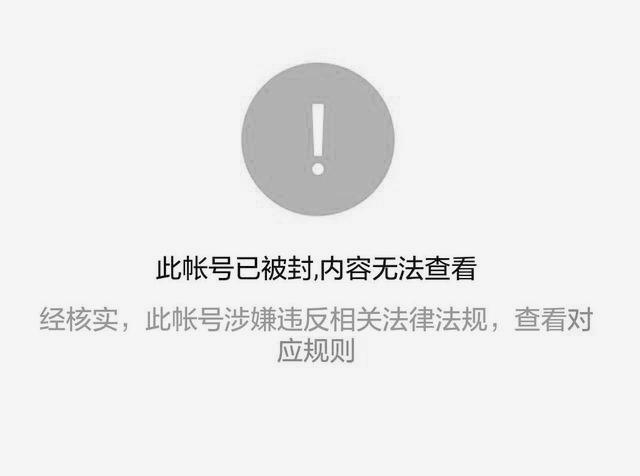
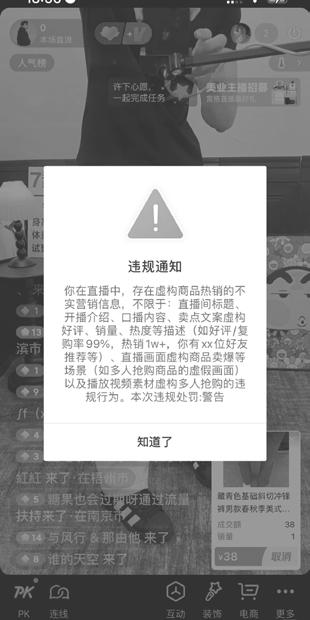
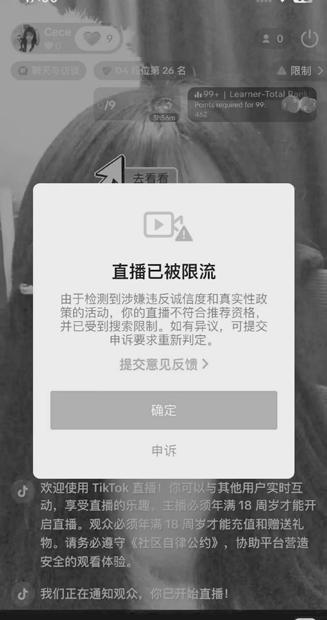
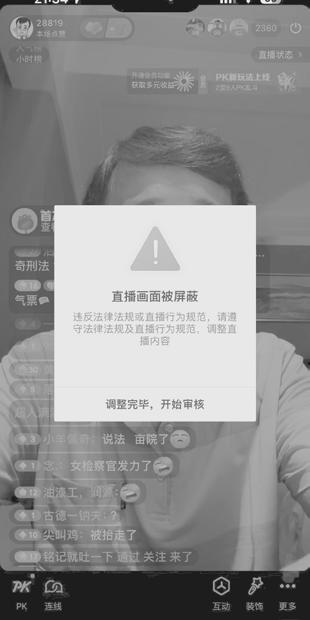
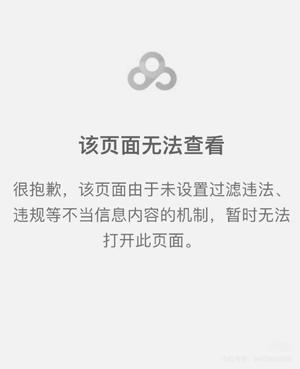
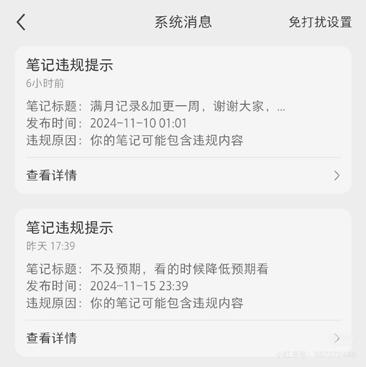
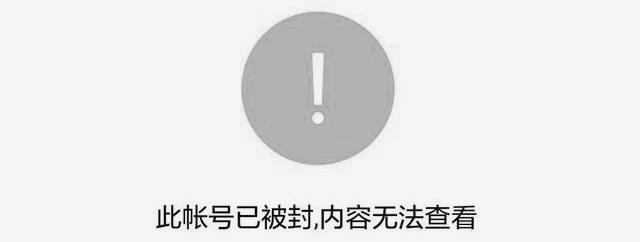
The interface of different platforms where accounts are blocked
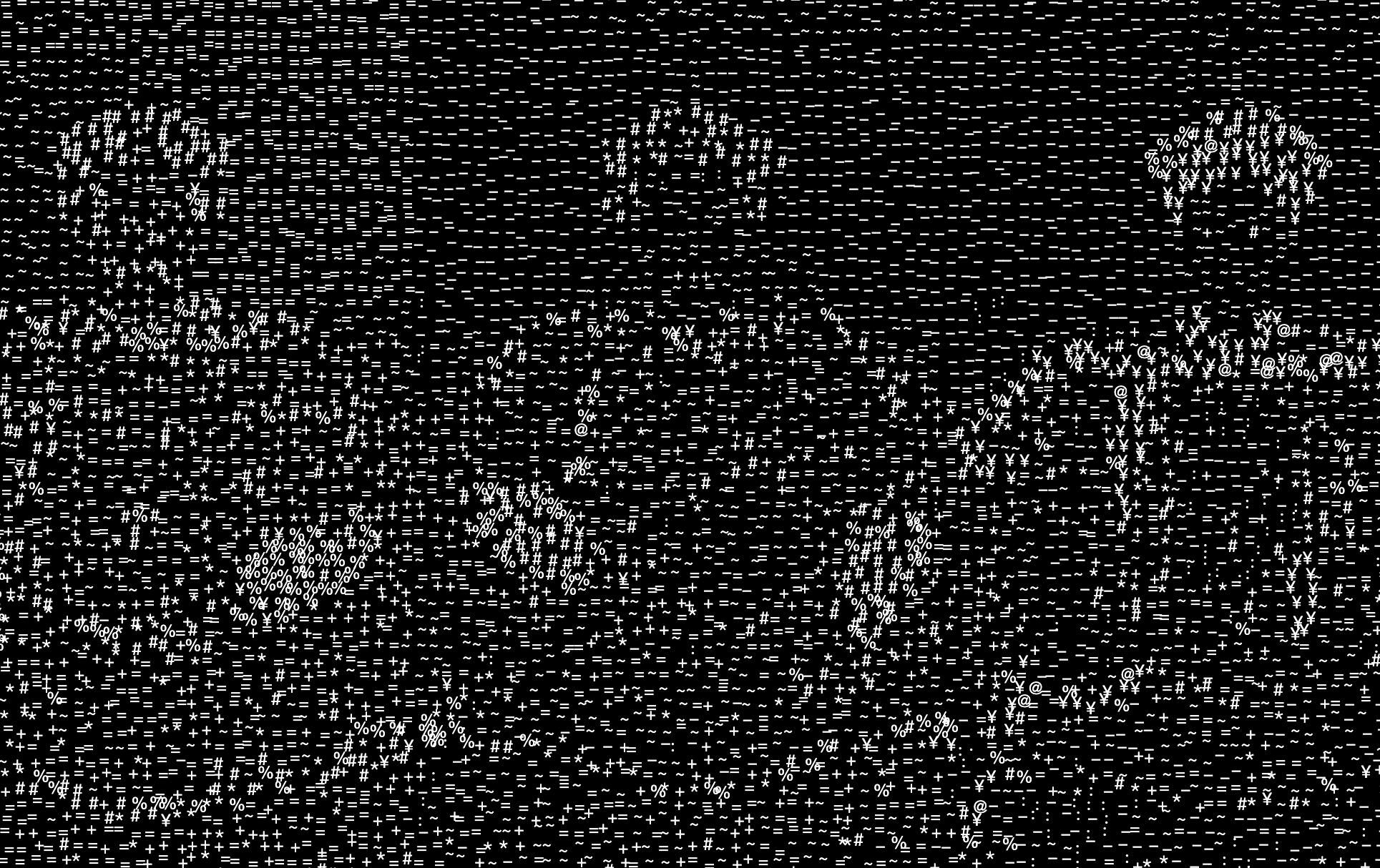
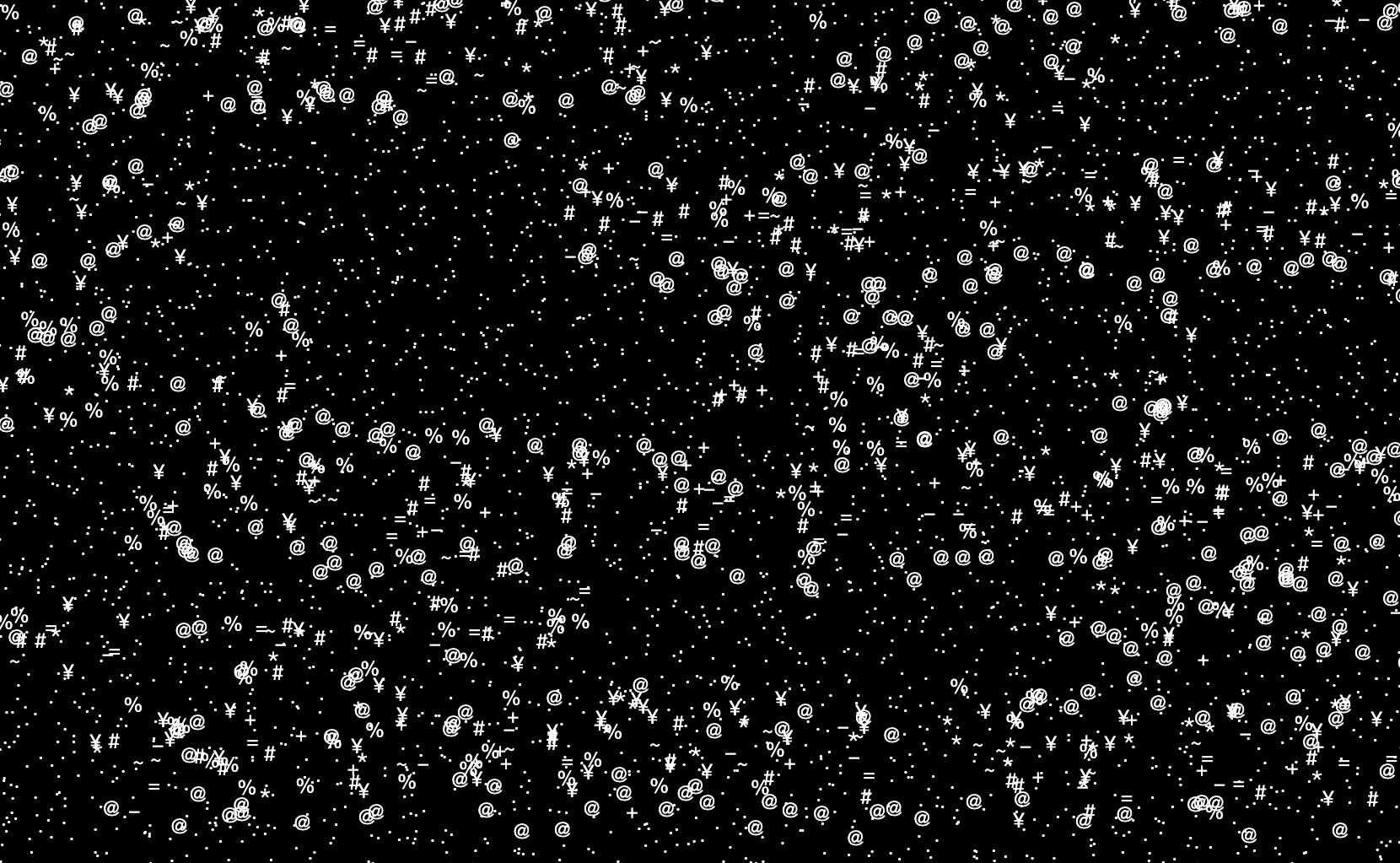
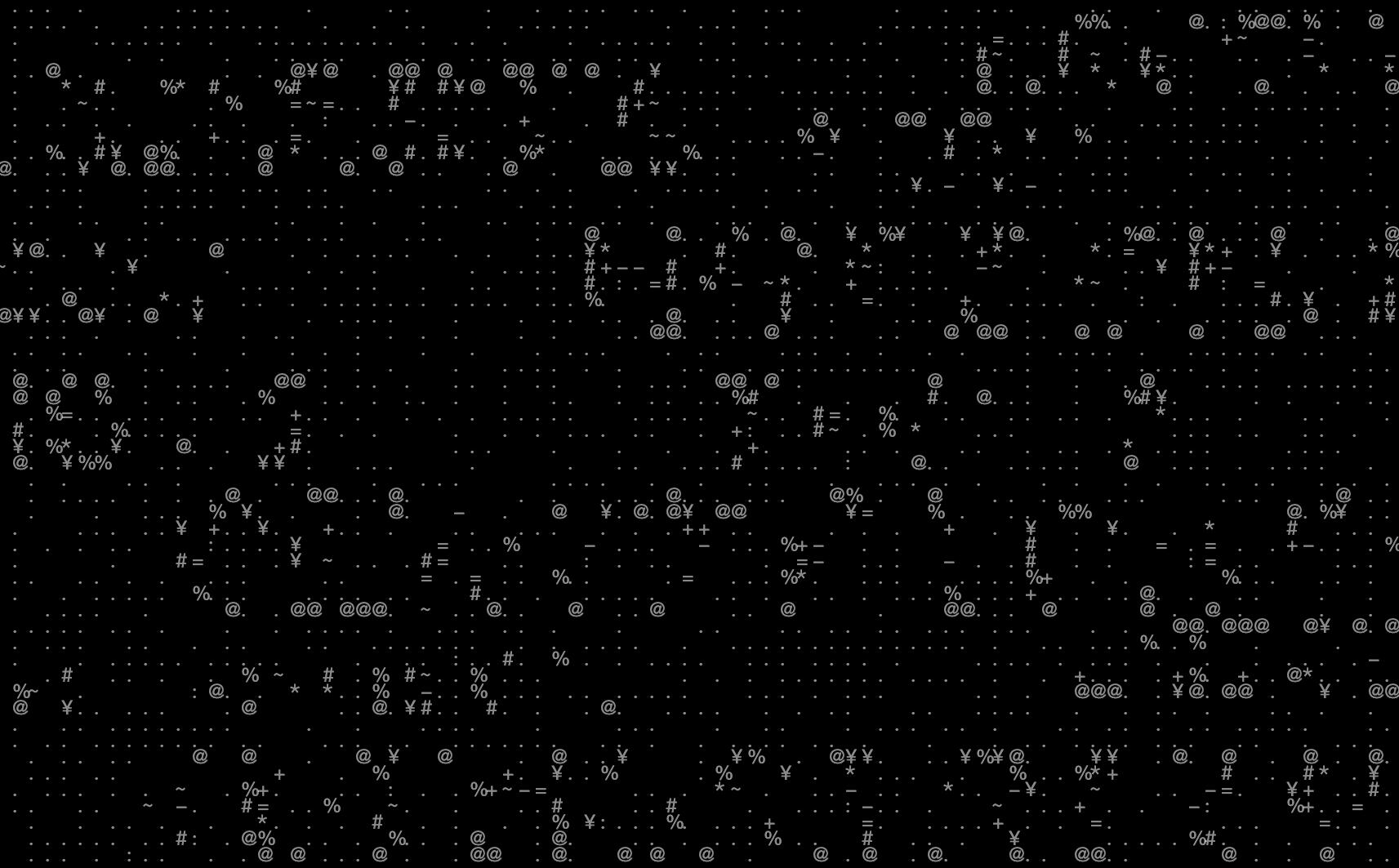
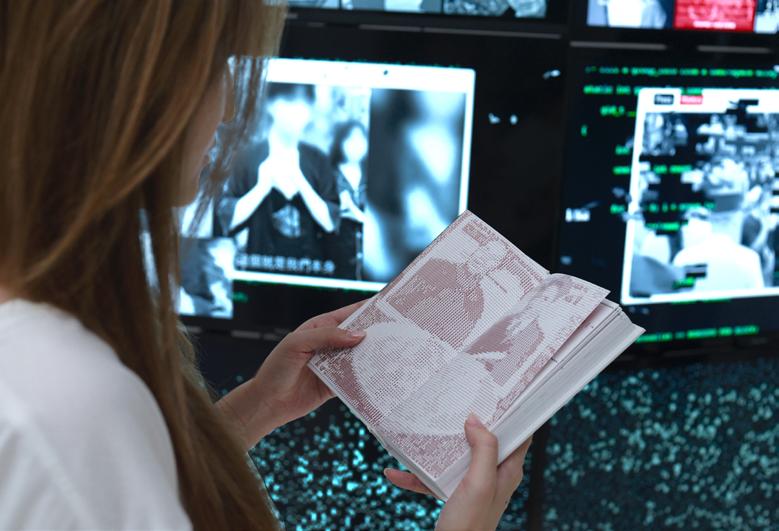
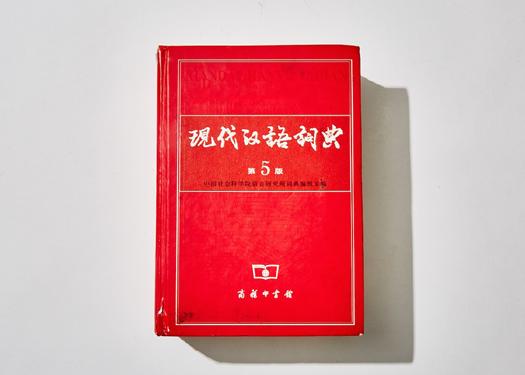
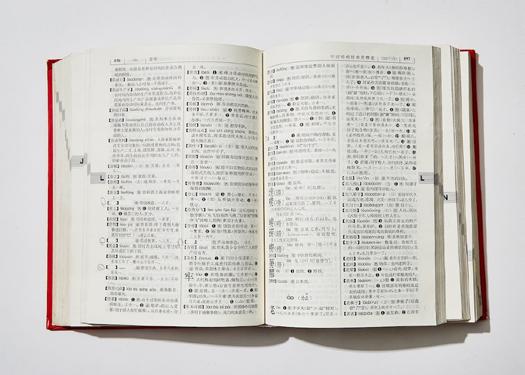
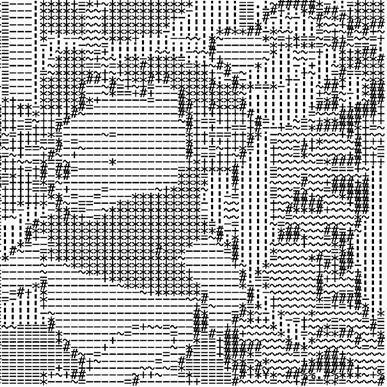
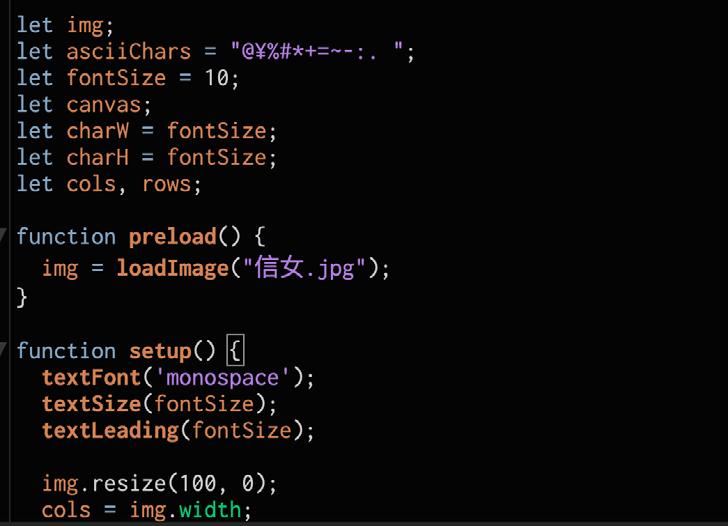
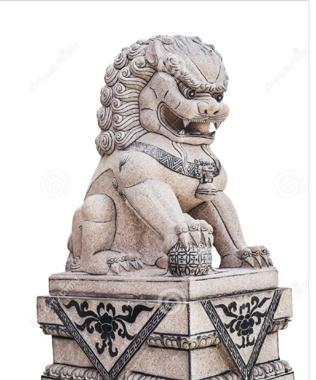
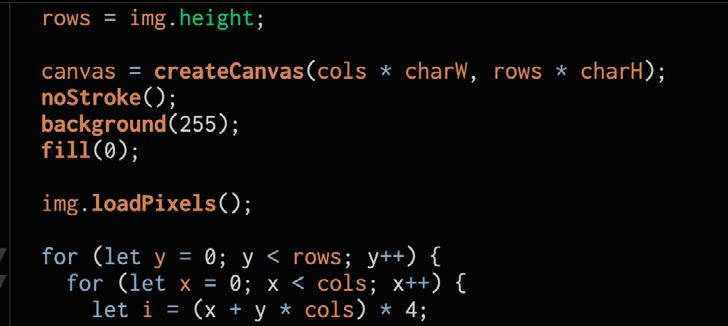
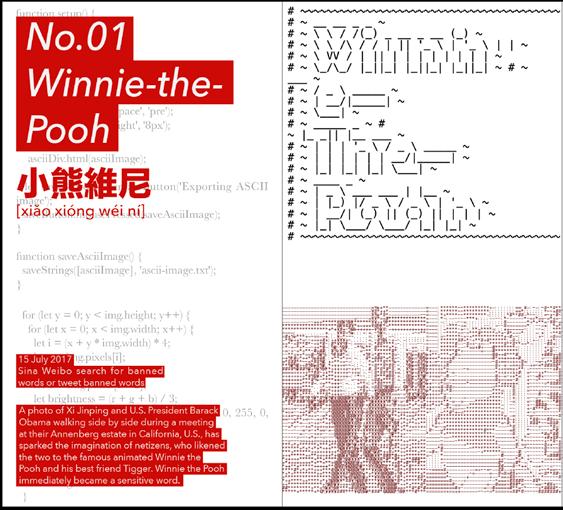
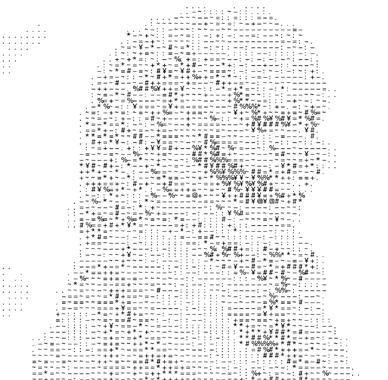
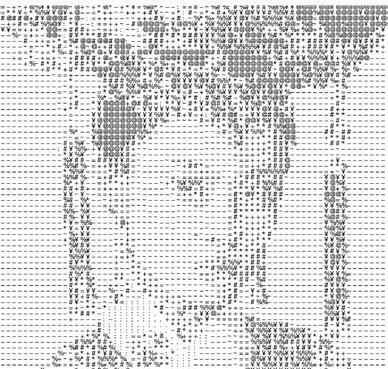
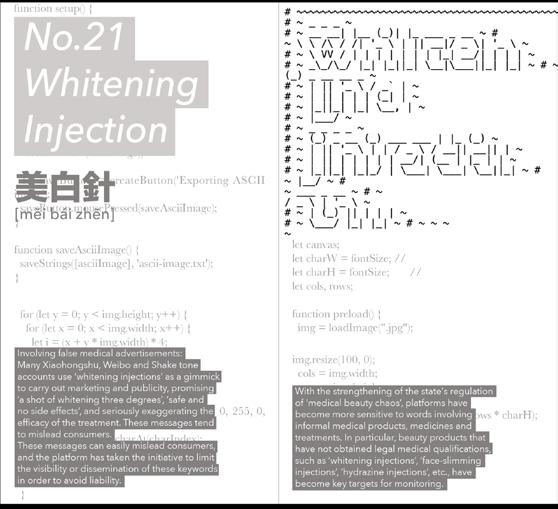
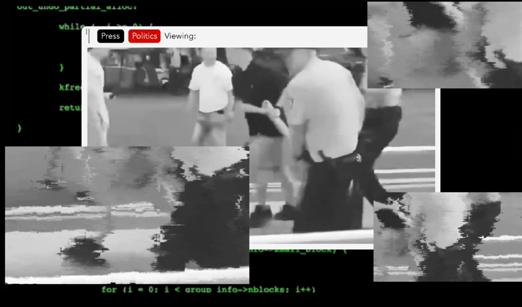
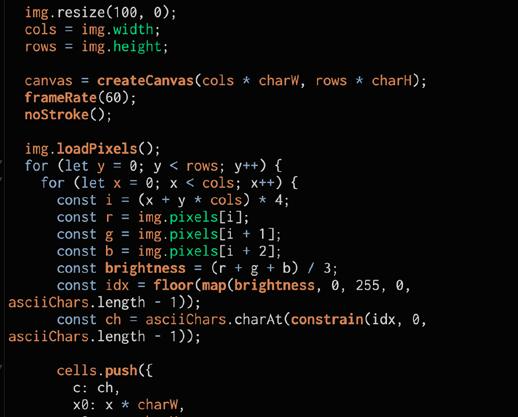
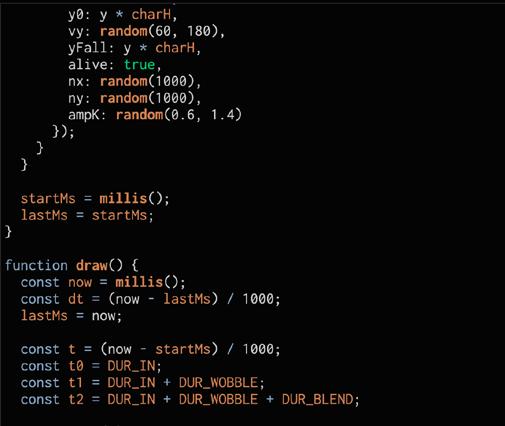
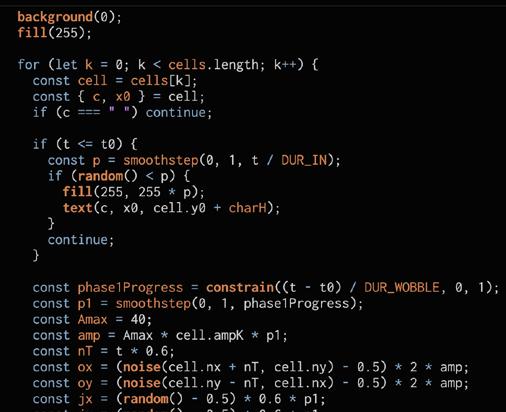
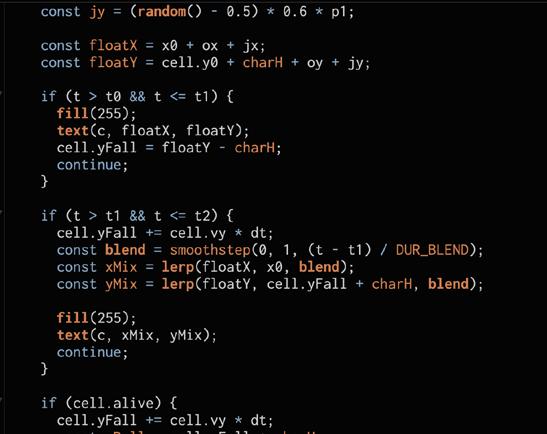
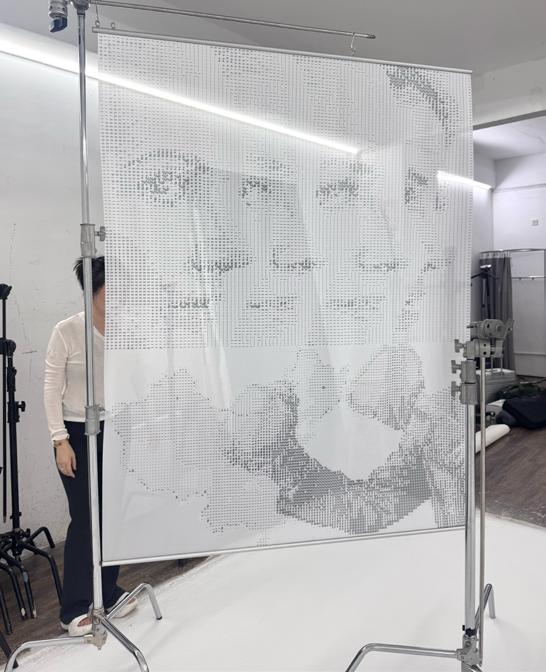
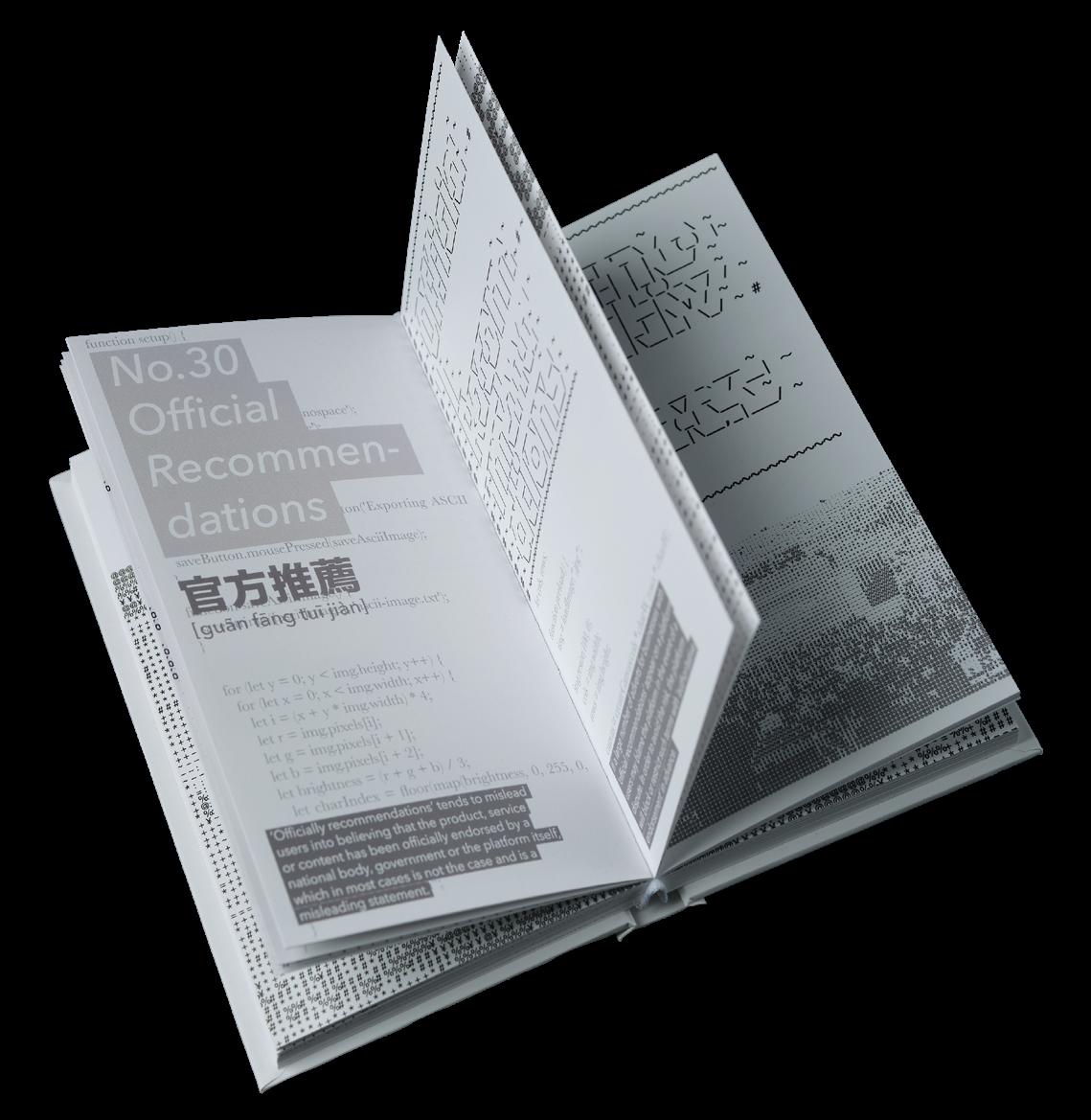
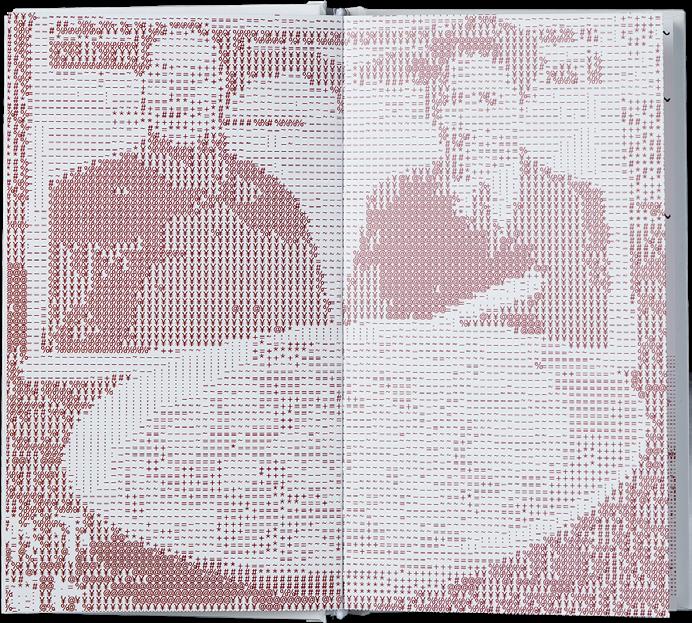
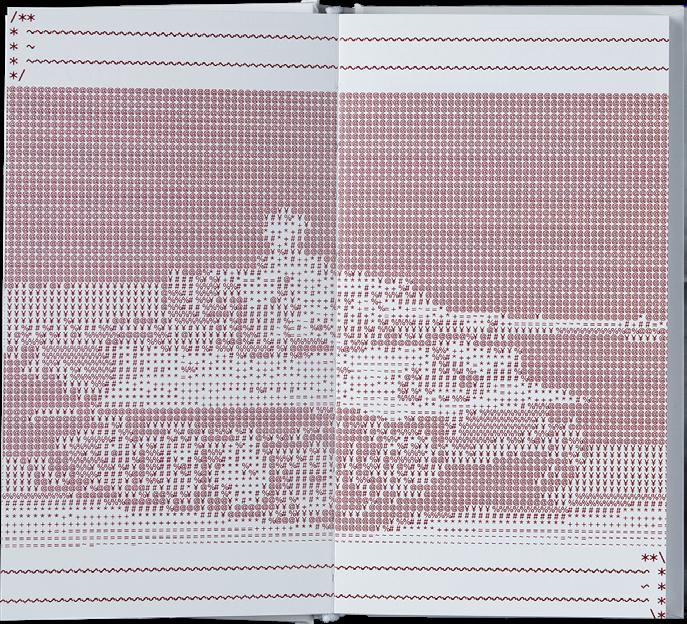
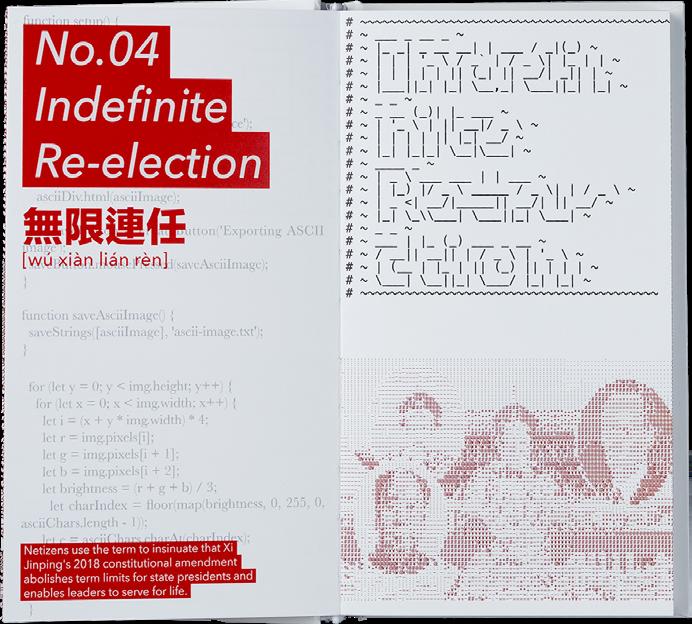
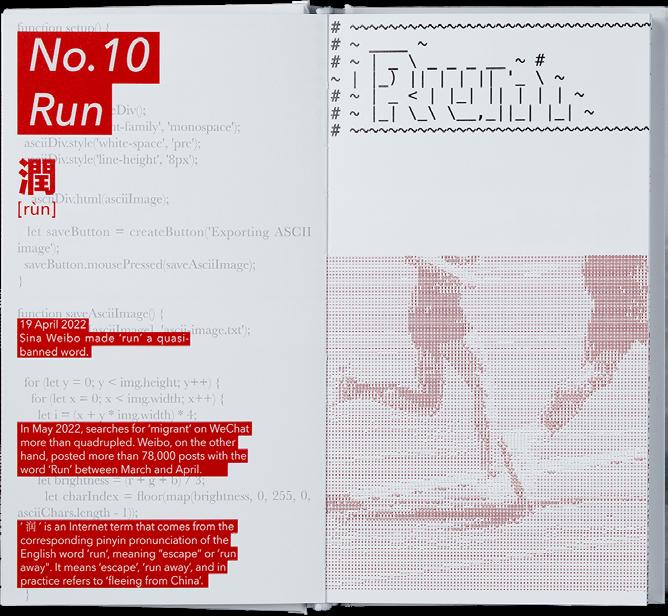
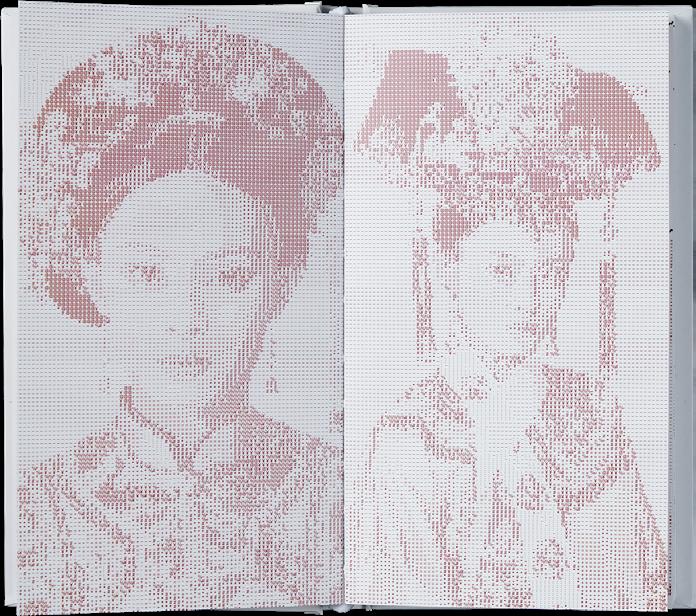
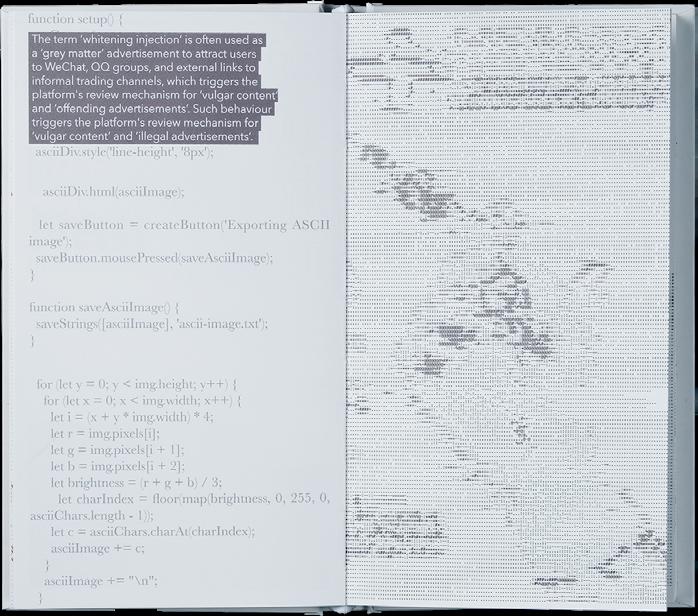
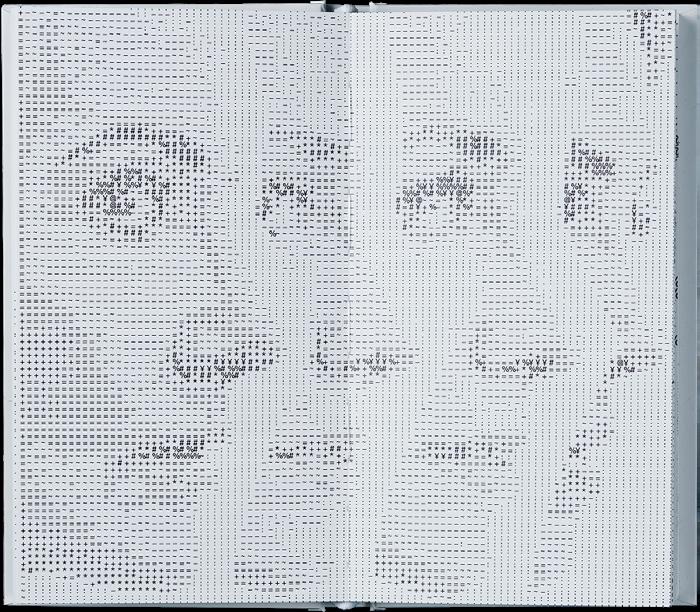
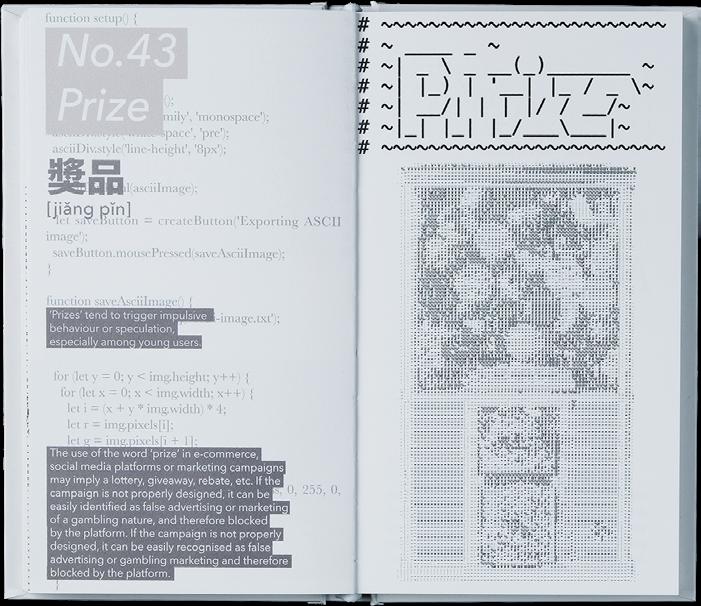
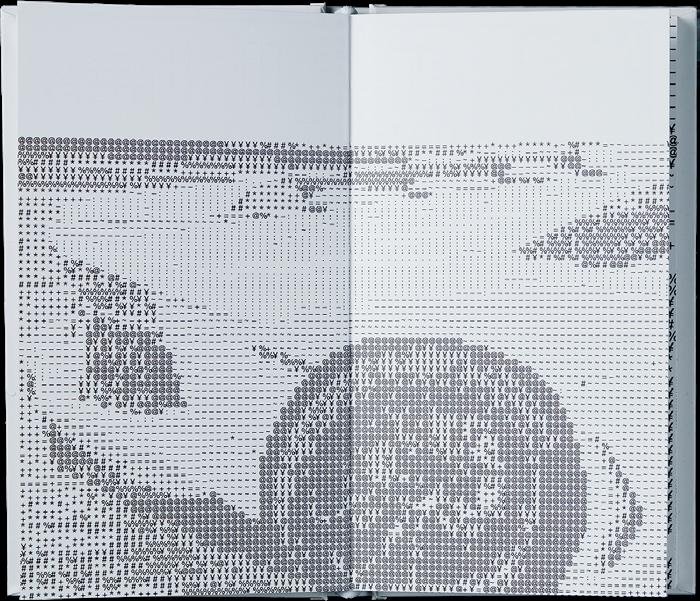
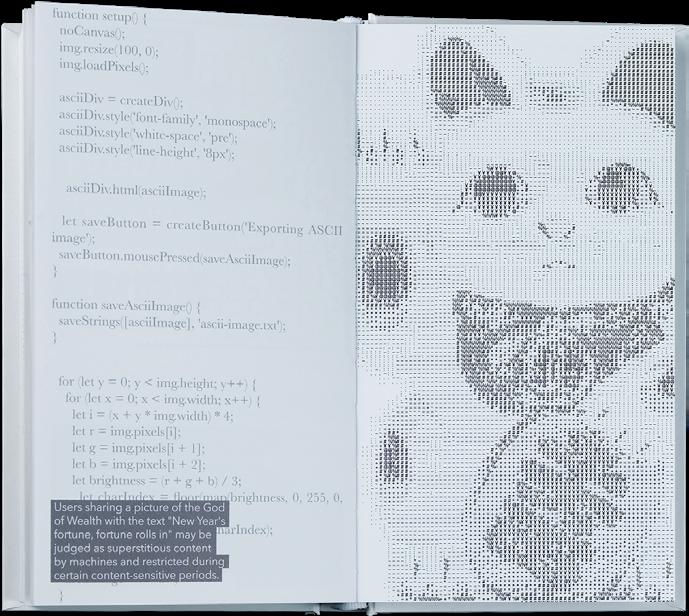
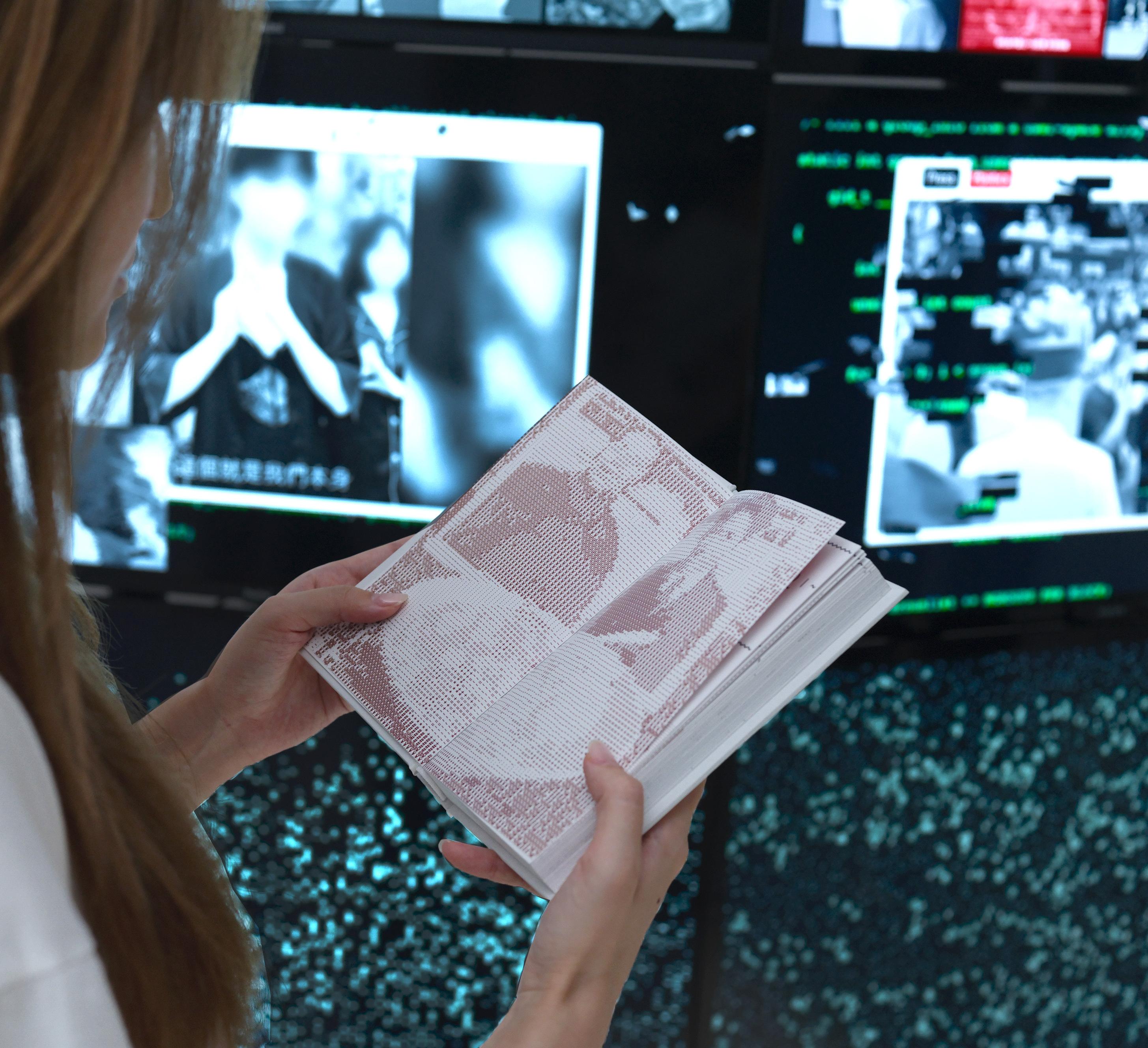
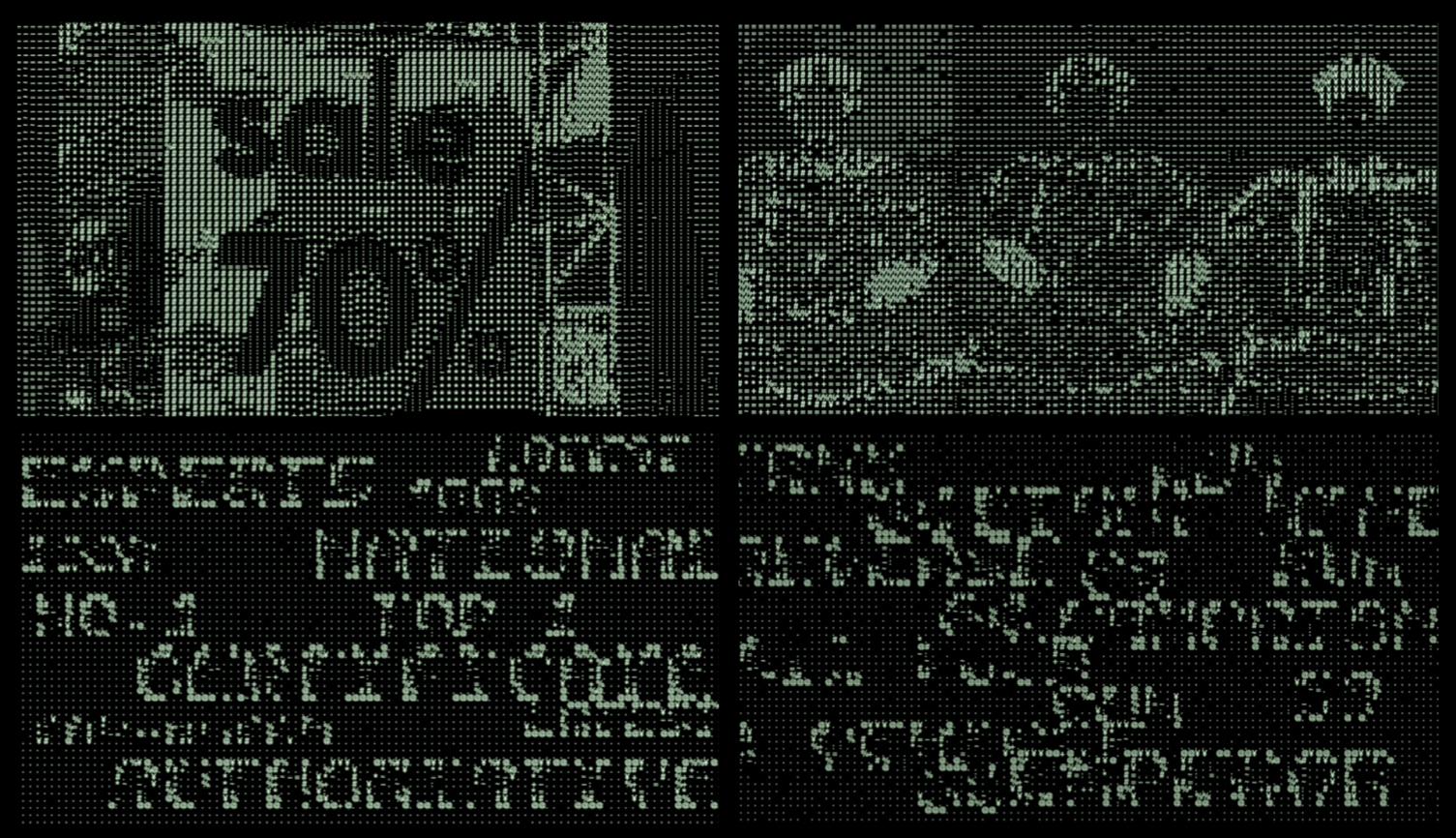
The book takes the form of a “dictionary” that not only explains language but also reconstructs how it is redefined under internet censorship. Its images are abstracted into blurred ASCII forms to visualise the perceptual alienation of censors and show how China’s online censorship system reshapes language at an institutional level.
CASE STUDY
BOOK DESIGN
Miao Ying’s Blind Spot revealed that a dictionary can act as a 'censored archive'. By marking blocked words, she made erased language visible again. In my 404 Lexicon, I extended this idea—recreating censors’ visual perspective through blurred ASCII images. I want viewers, as when reading Blind Spot, to sense the fragility of language as it fades from clarity into silence under compression.
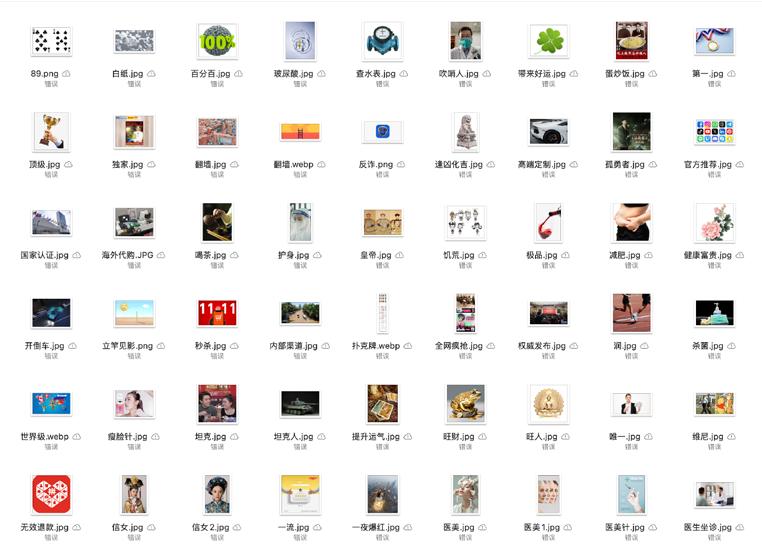
Collect sensitive words and their corresponding images
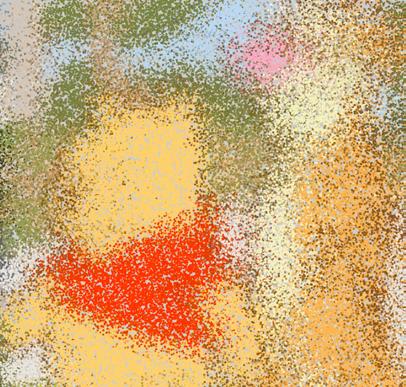
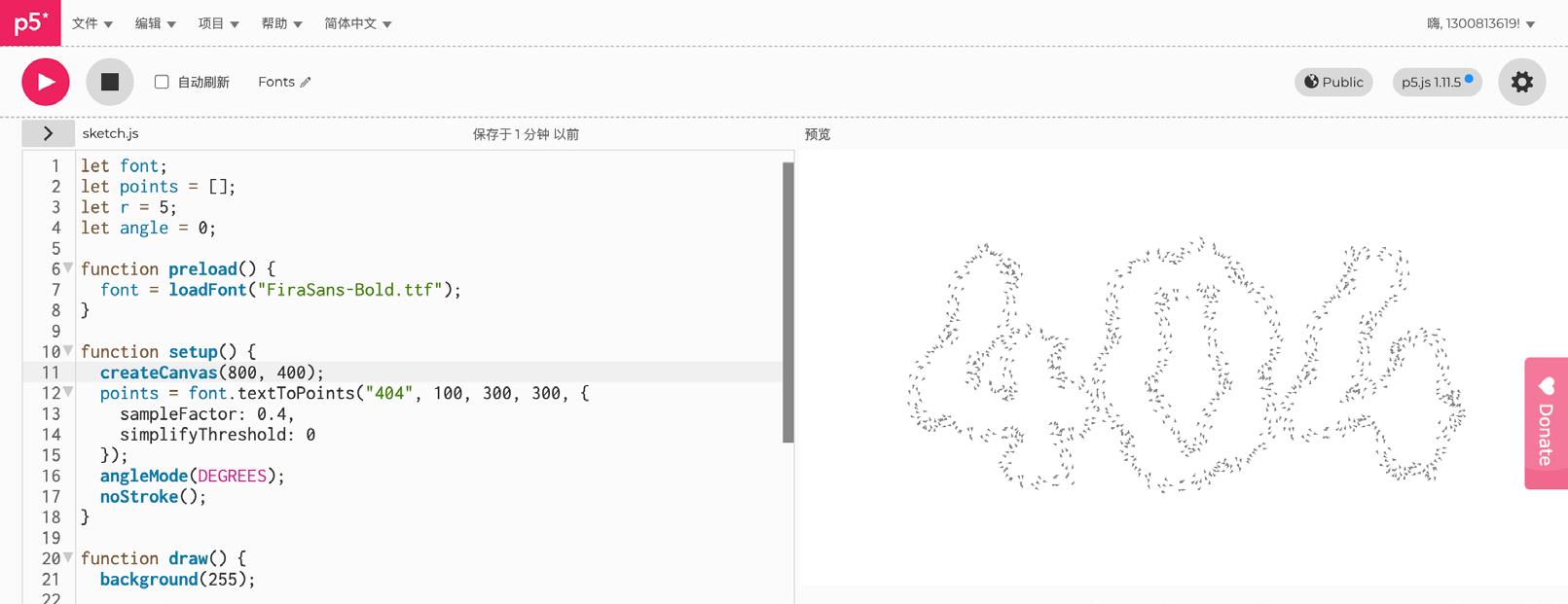
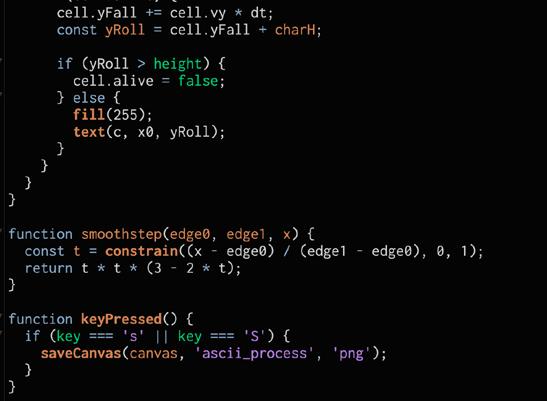
Try different parameters of 'vertex', adjust the density and gap of the debris through 'sampleFactor' and 'simplifyThreshold'.
II.Image
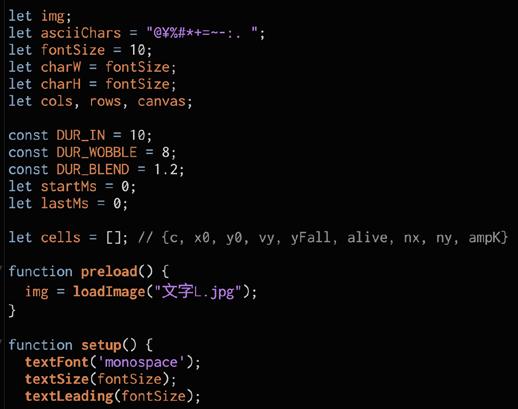
Define character set
2. Load image
3. Extract pixel information
4. Map greyscale to characters
Book layout
Choose the faintly visible ASCII representation, revealing the cognitive distortion of censors.
INSTALLATION DESIGN
Video
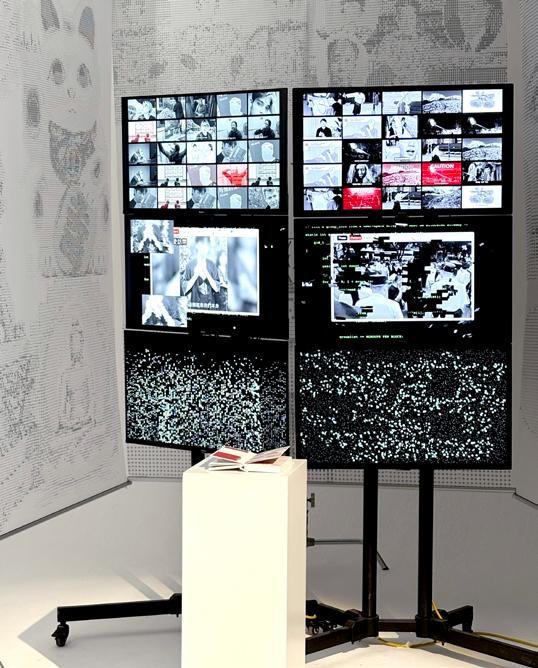
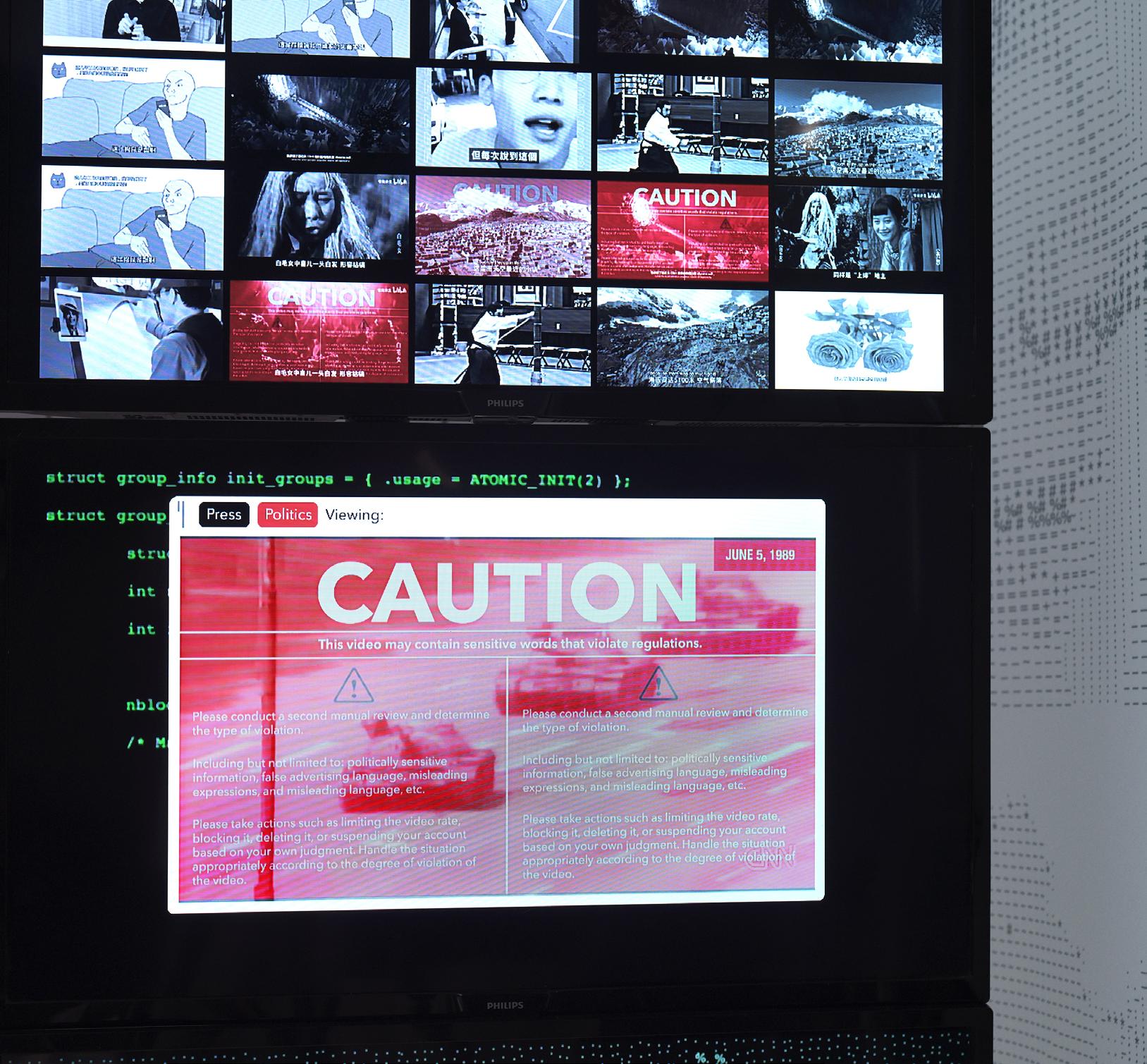
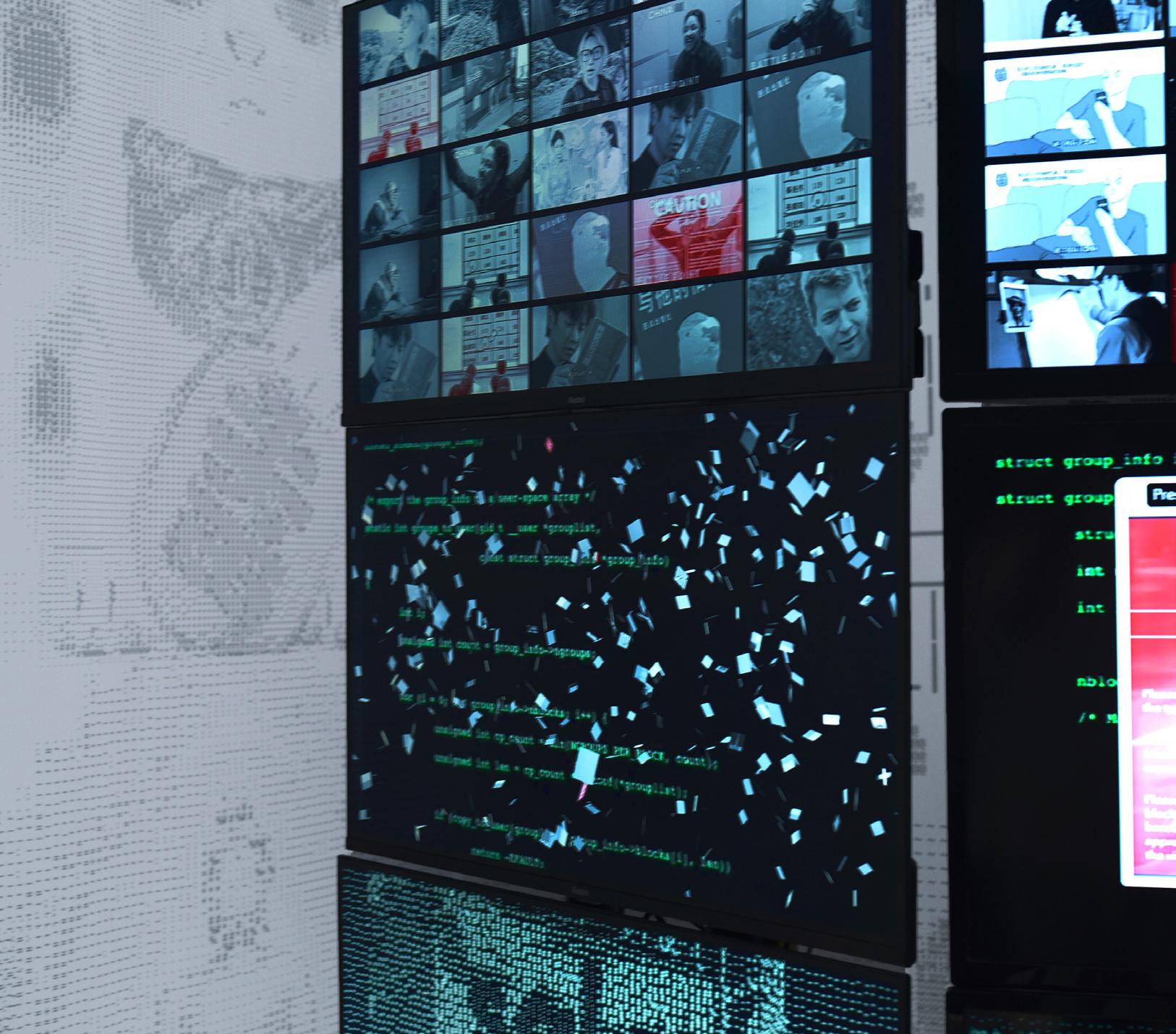
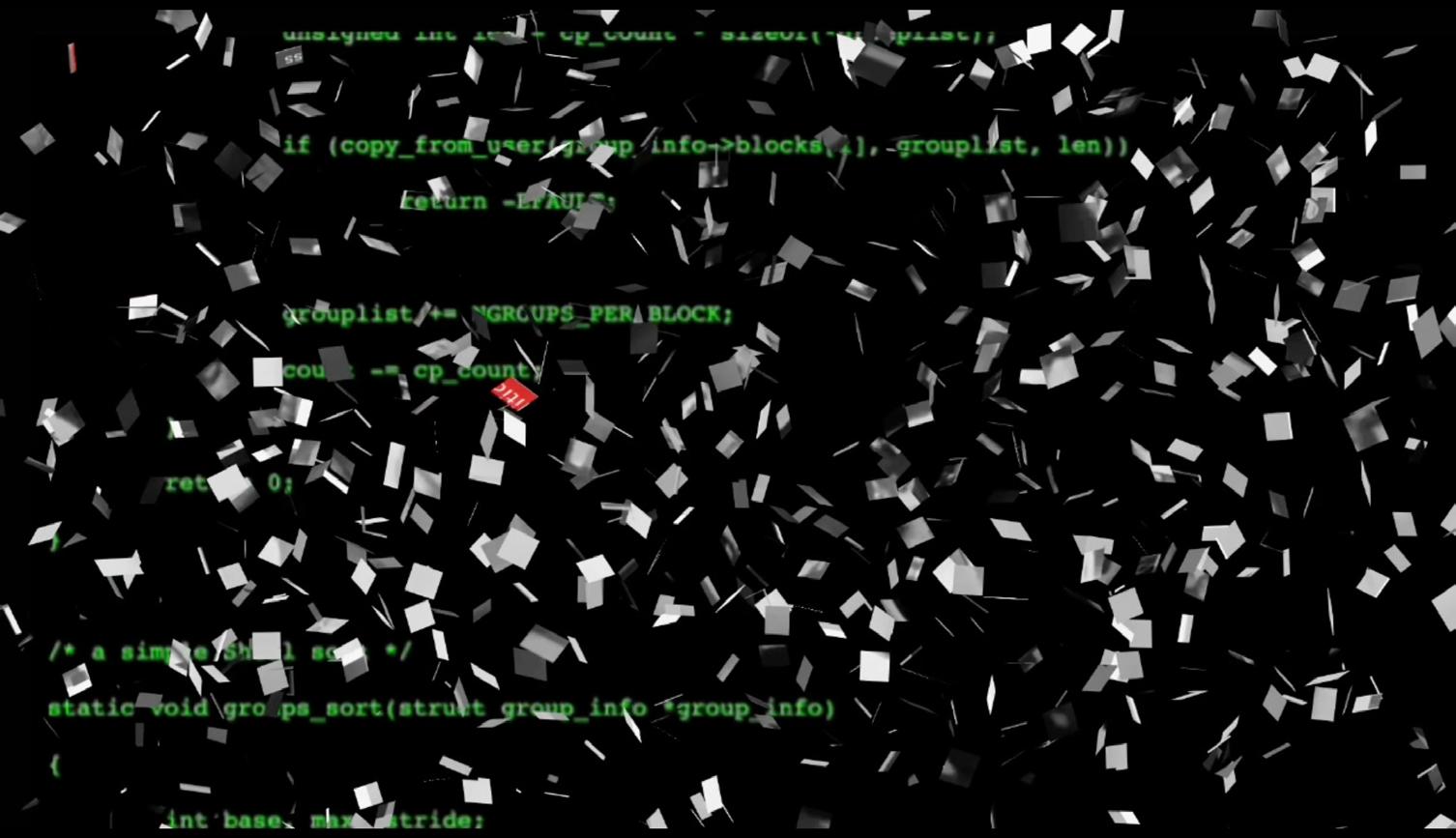
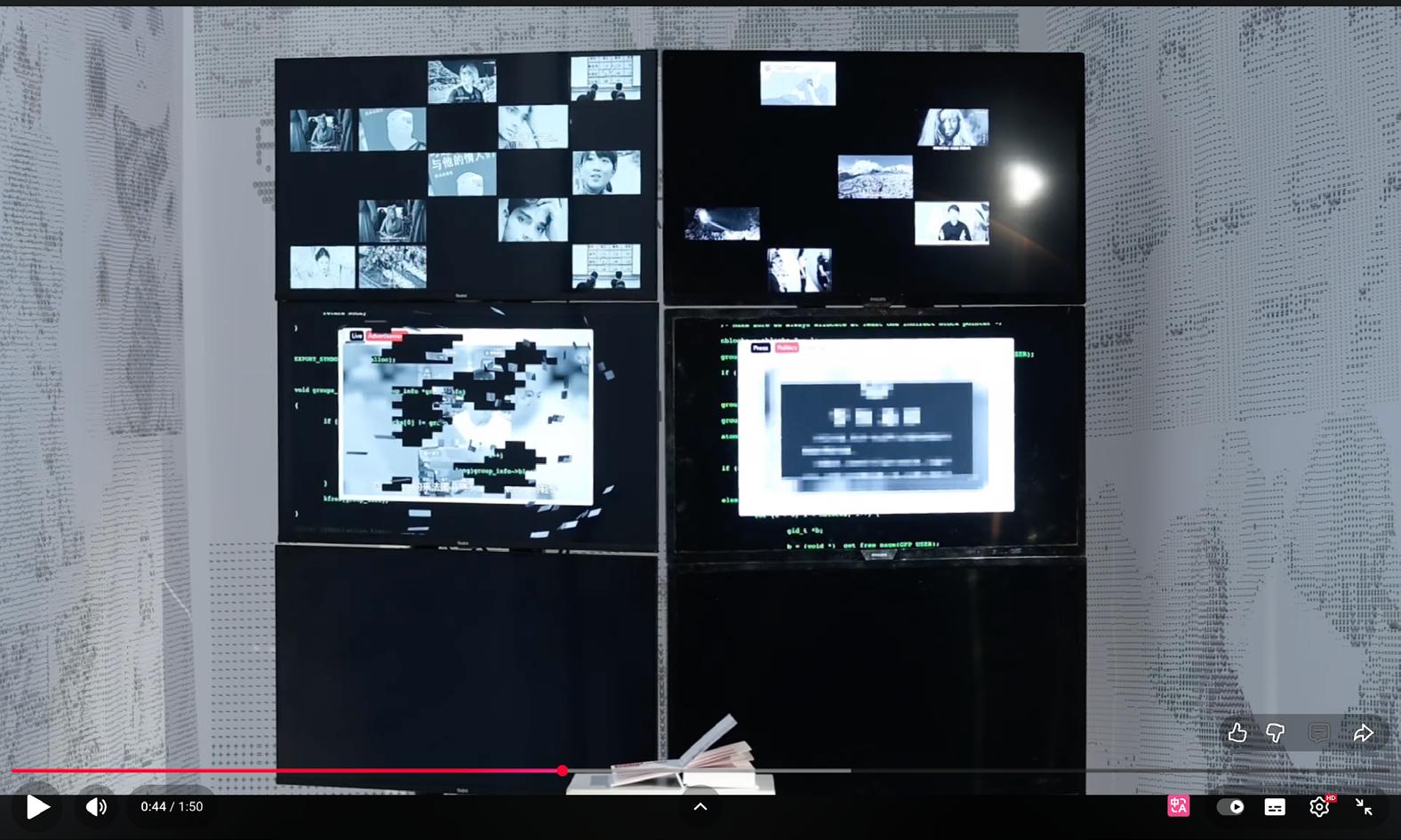
I created three sets of videos (two in each set) through AE to showcase the review process of the censors.
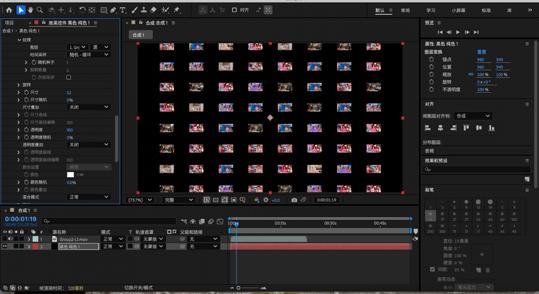
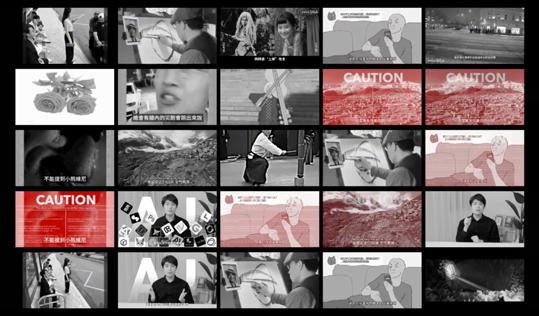
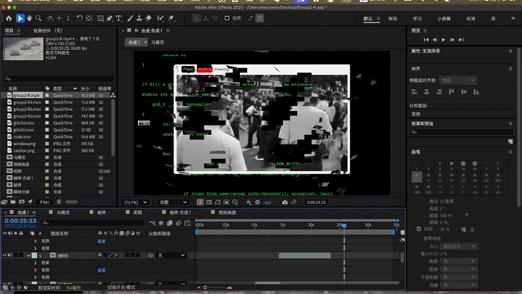
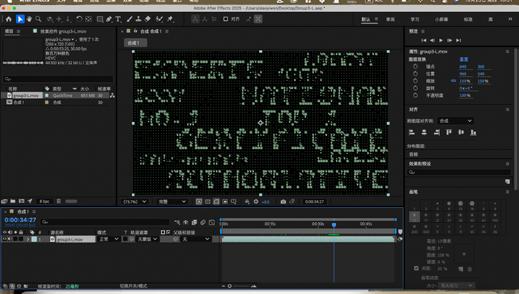
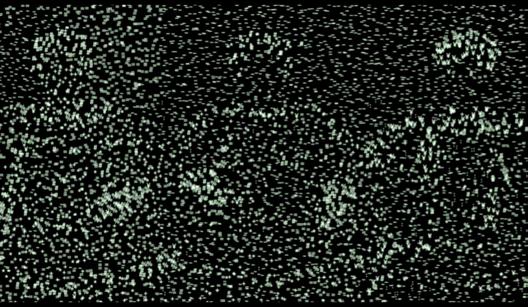
Set 1 uses Form effects to simulate how censors view large volumes of video. Set 2 applies Fragment effects to reflect their shifting psychological states. Set 3 uses p5.js to generate dynamic ASCII images that mimic how neutral words appear under censorship.
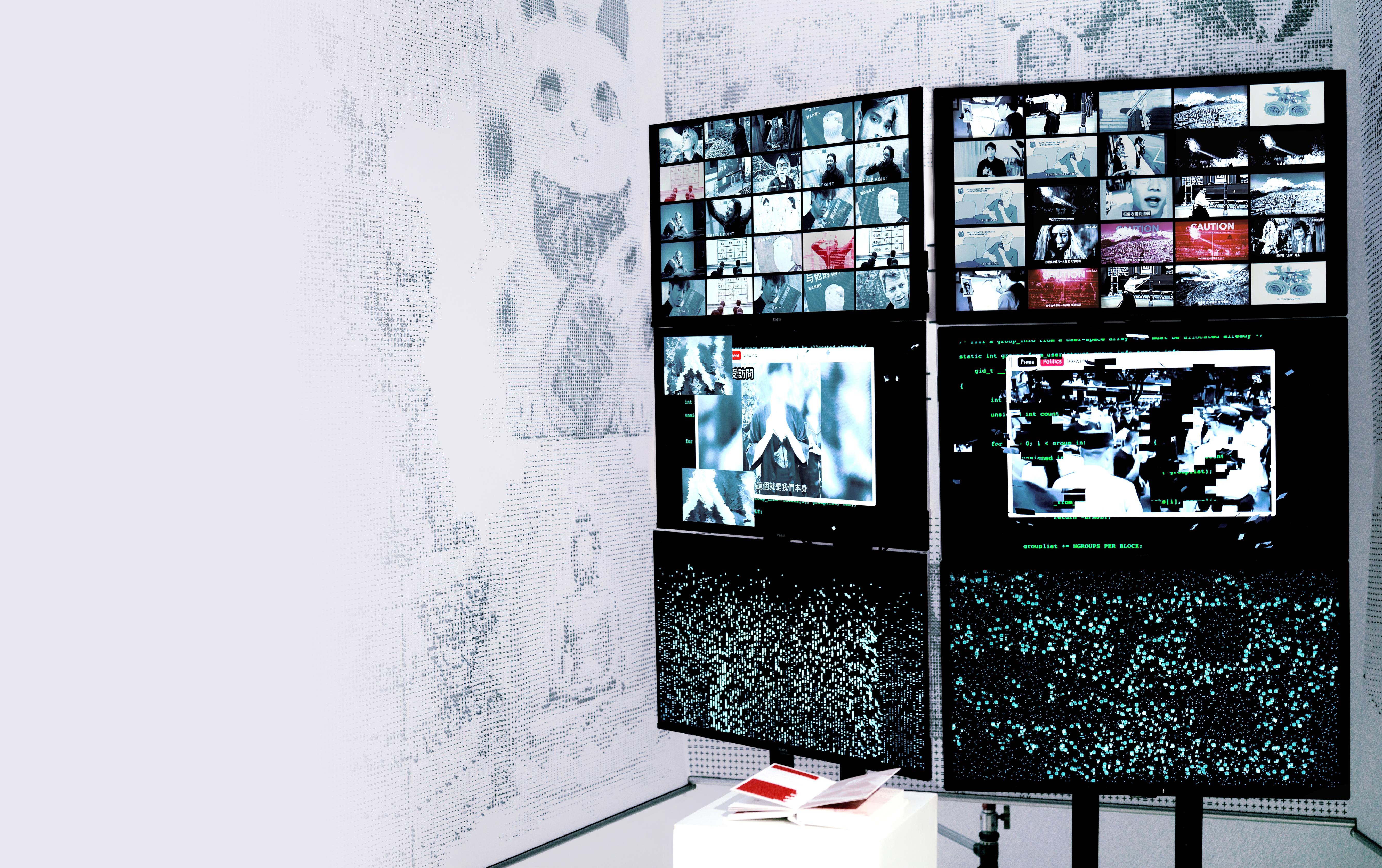
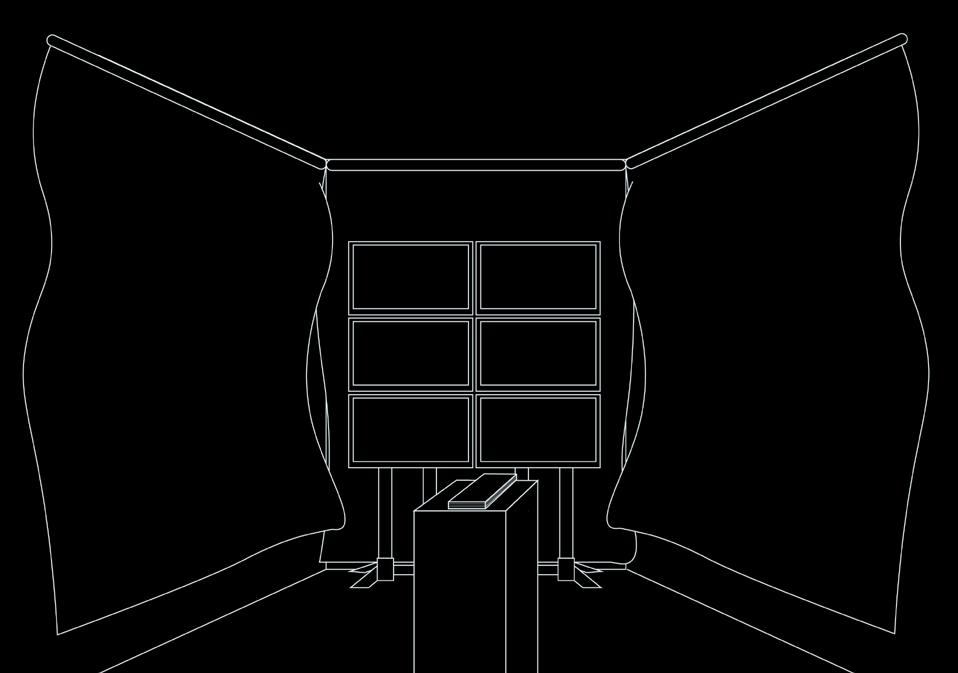
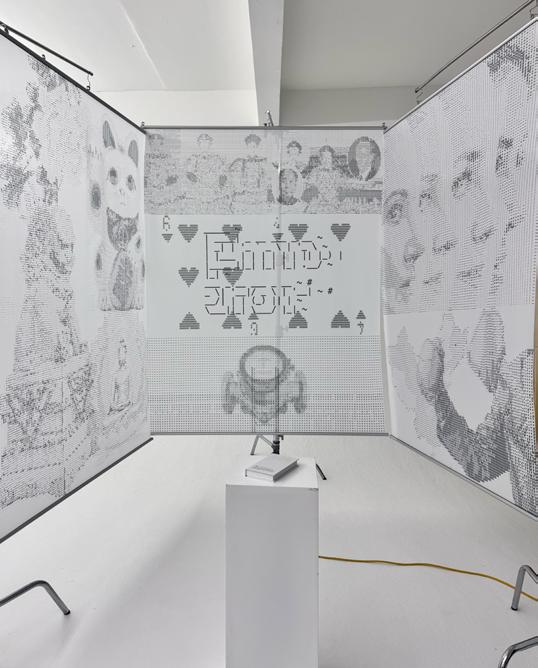
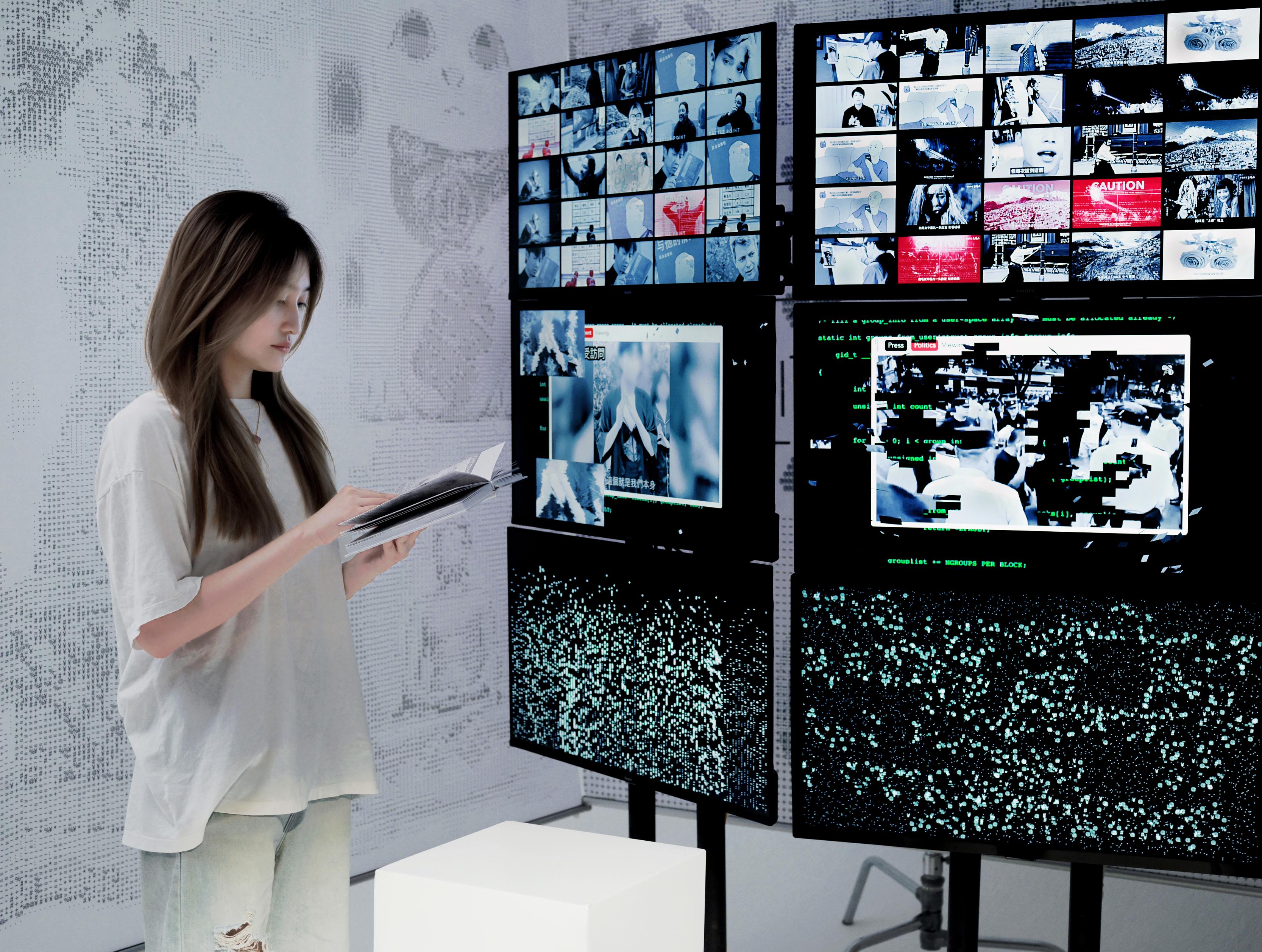
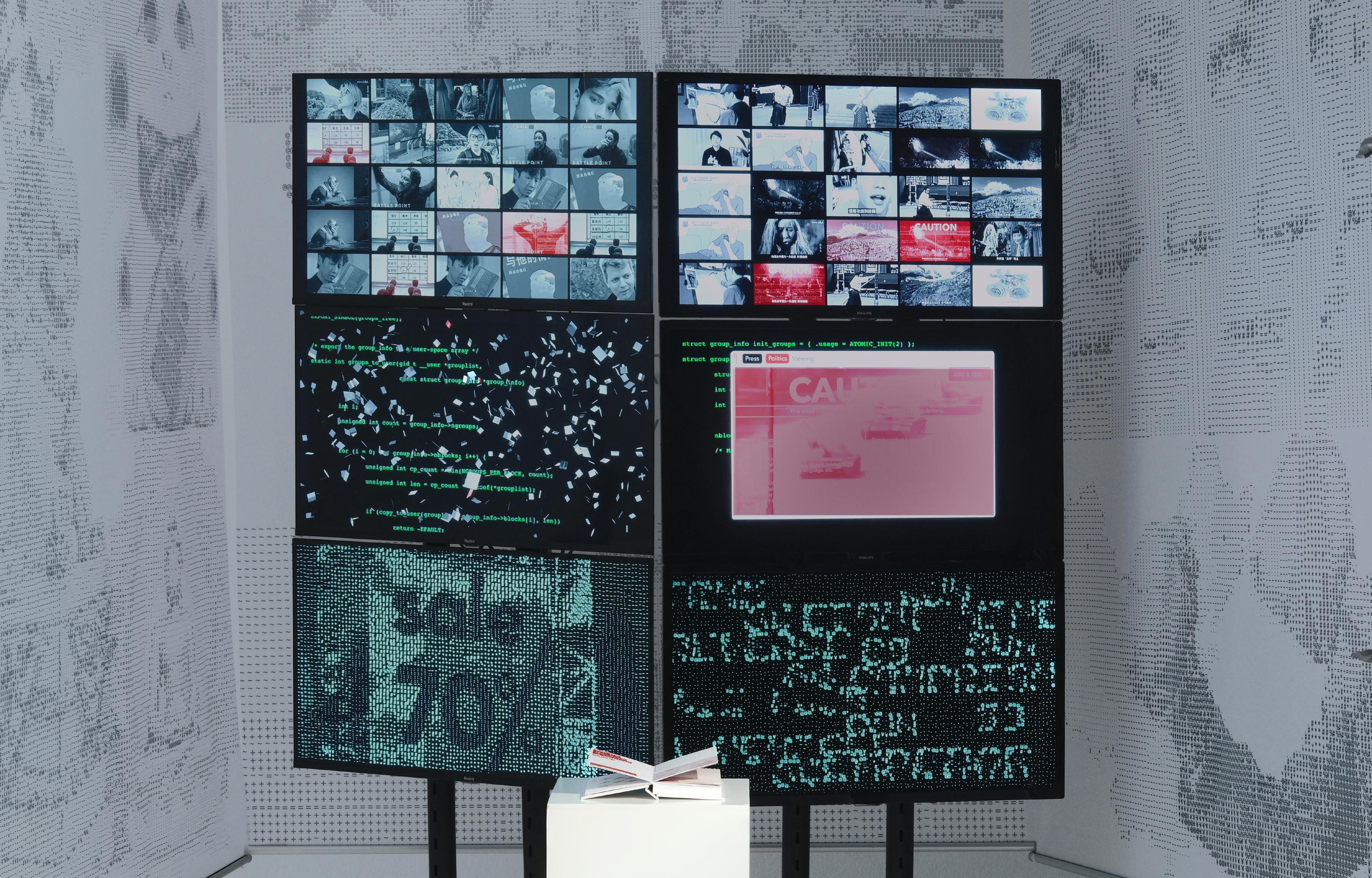
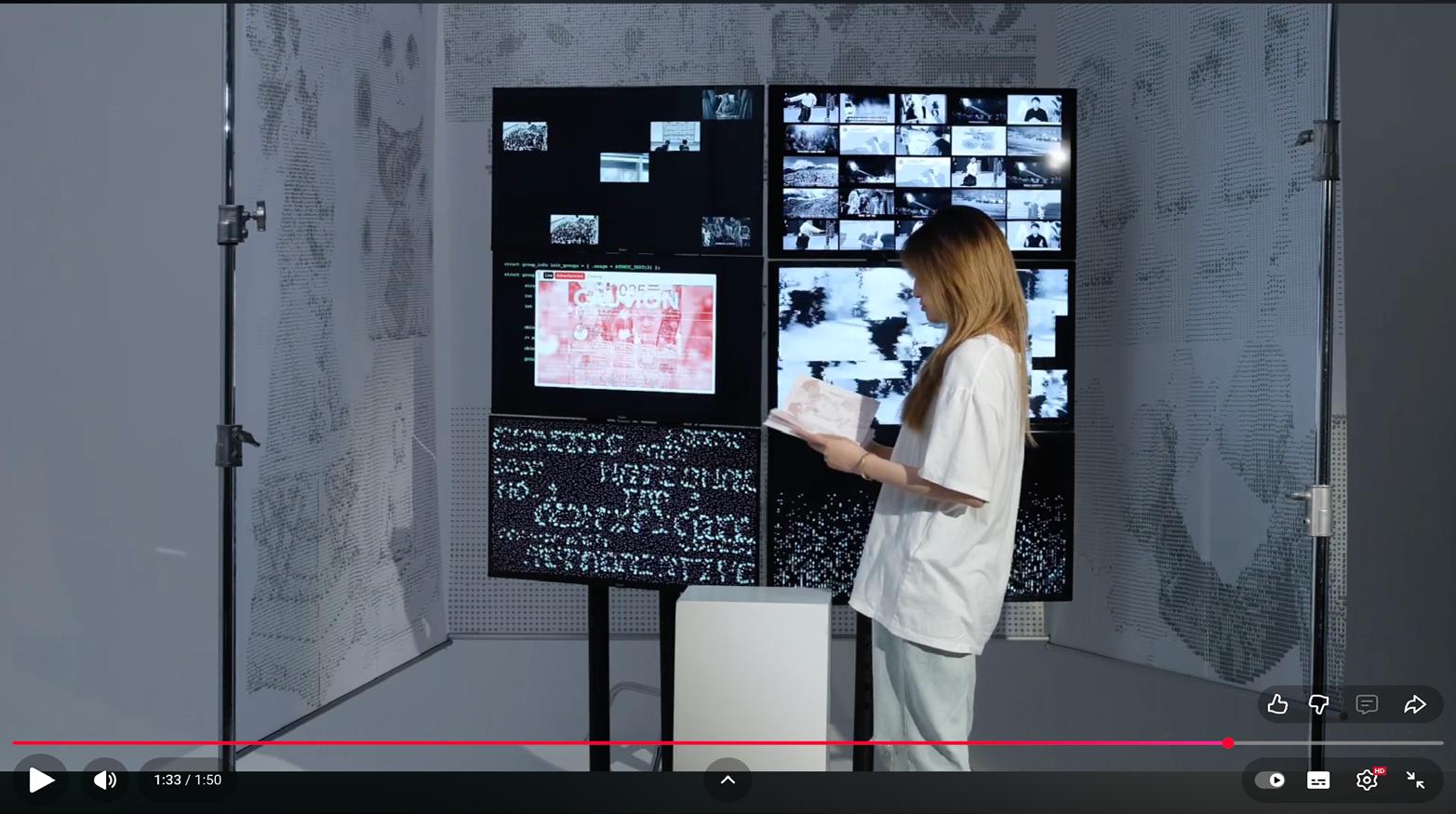
I plan to set up a semi-enclosed space surrounded by semitransparent gauze, in which a video installation composed of six screens and the handbook on the exhibition stand will be placed to simulate the working environment of internet censors.
Three warp-knitted fabrics printed with ASCII images enclose a 2.5㎡ space, inside which the handbook and six video screens are placed.
Miao Ying, Blind Spot, 2007, photo by Alex Lau
BOOK DISPLAY
51×184mm, 204p
Debossed hardcover, 160gsm premium fine paper
INSTALLATION
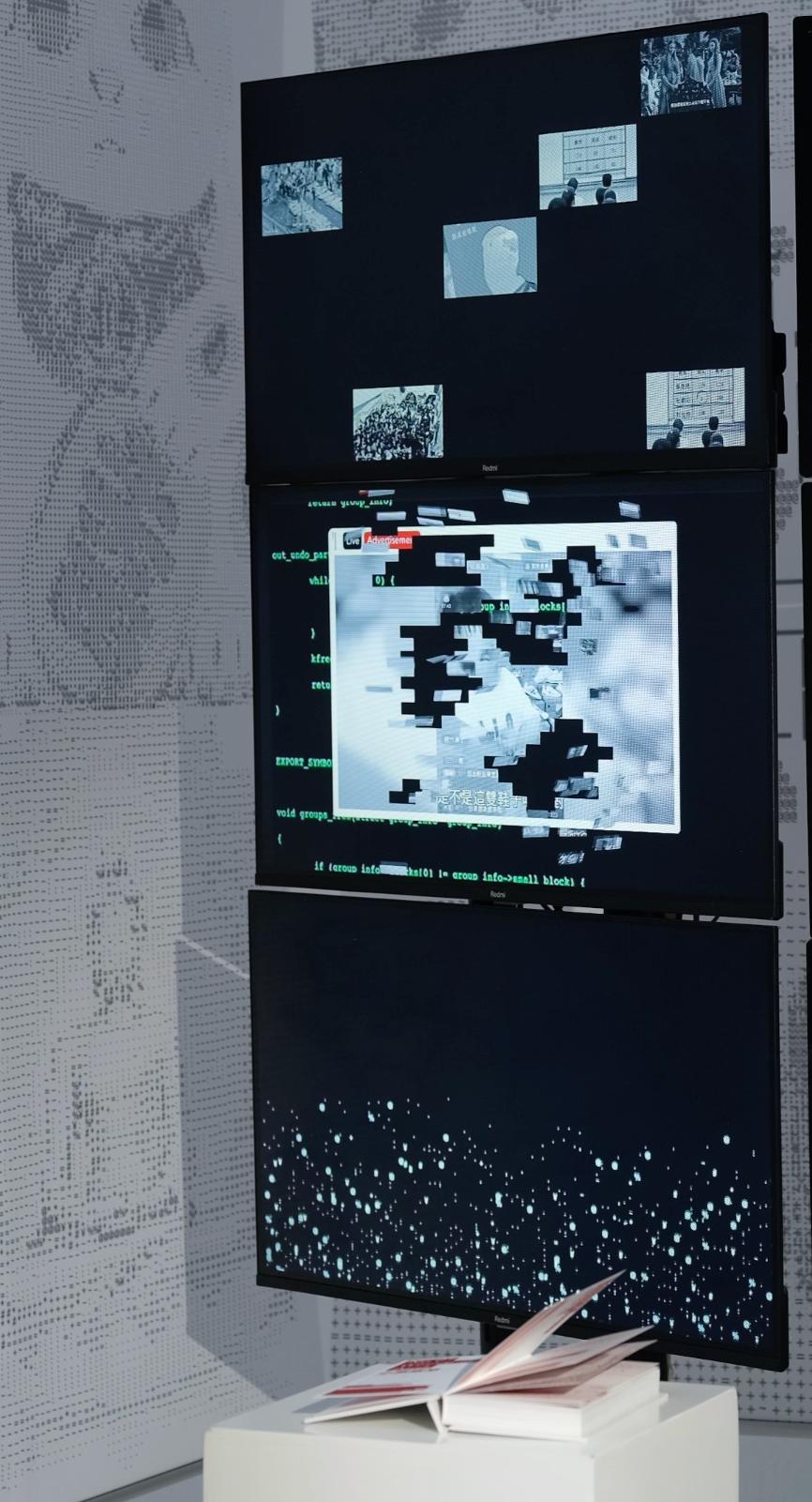
This video installation portrays censors working amid an information deluge, revealing how the censorship apparatus turns once-neutral words and images into risk-laden signs, thereby distorting—and reshaping—their perception.
Phase I: Swept into the information deluge
Phase II: Sensitive-content detection and tagging
Phase III: Neutral imagery mutates and disintegrates
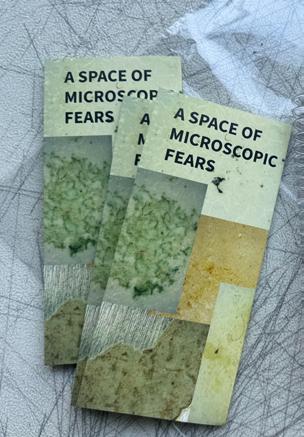
A Space of Microscopic Fears
Exihibition Design/Book Design
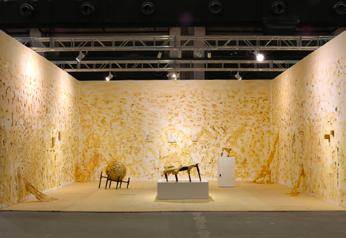
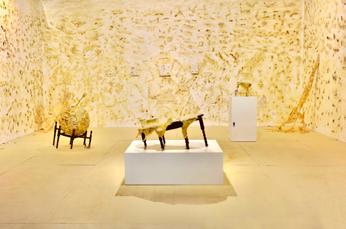
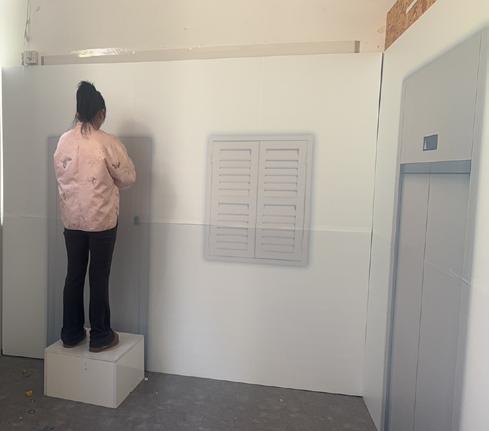
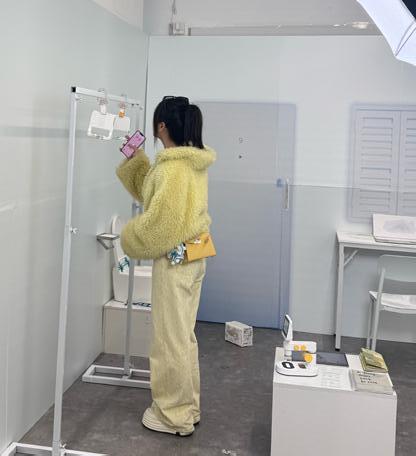
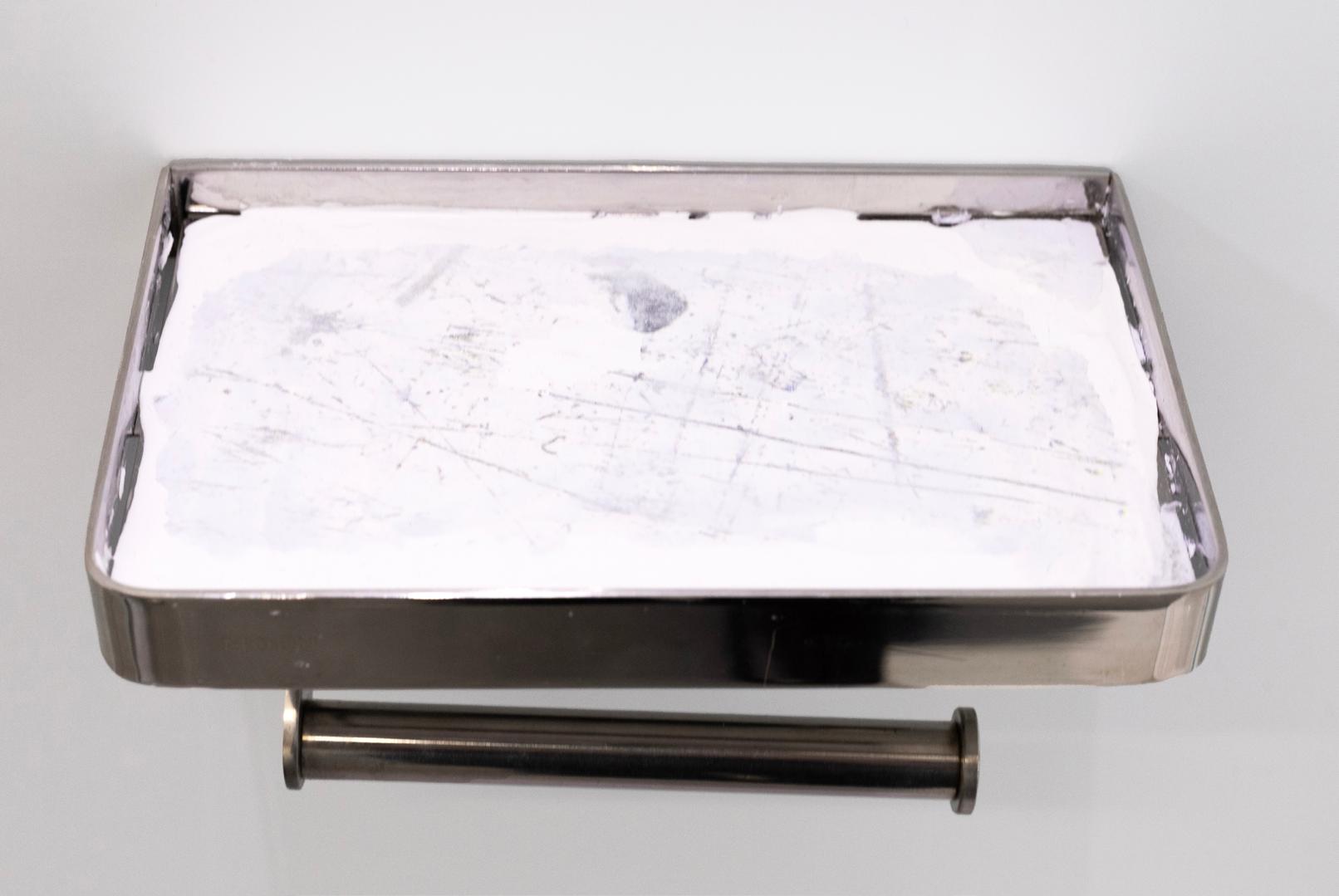
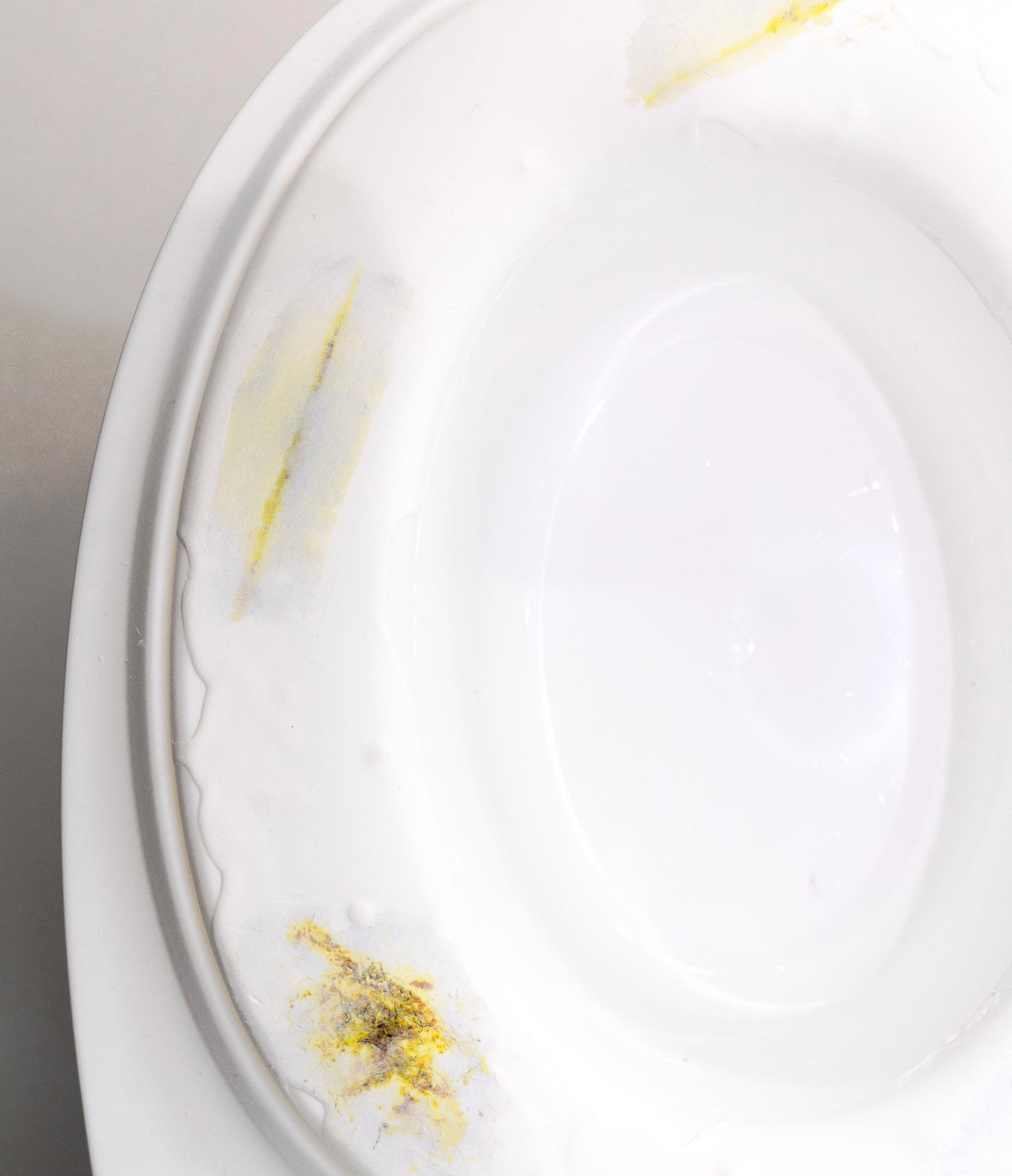
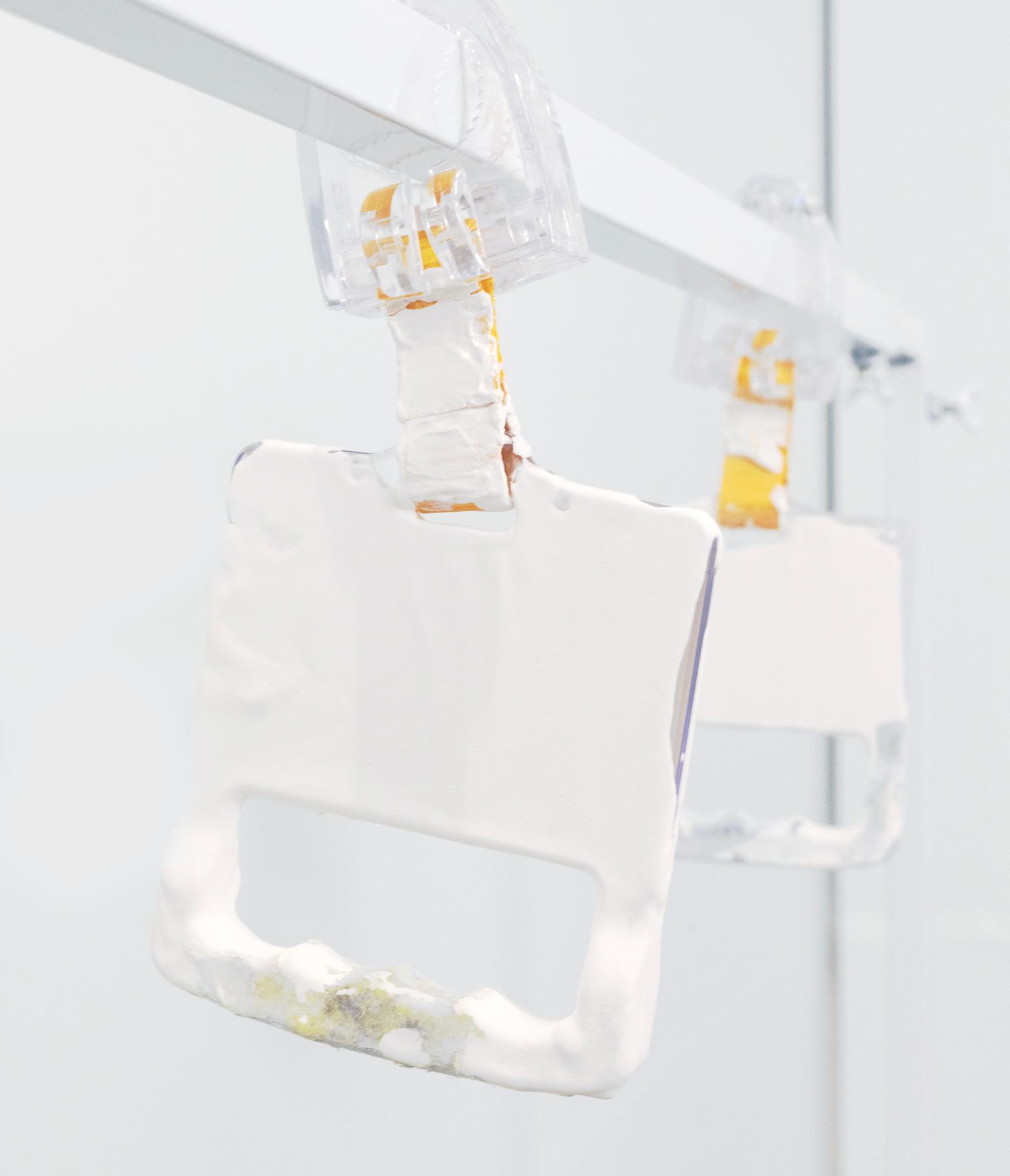
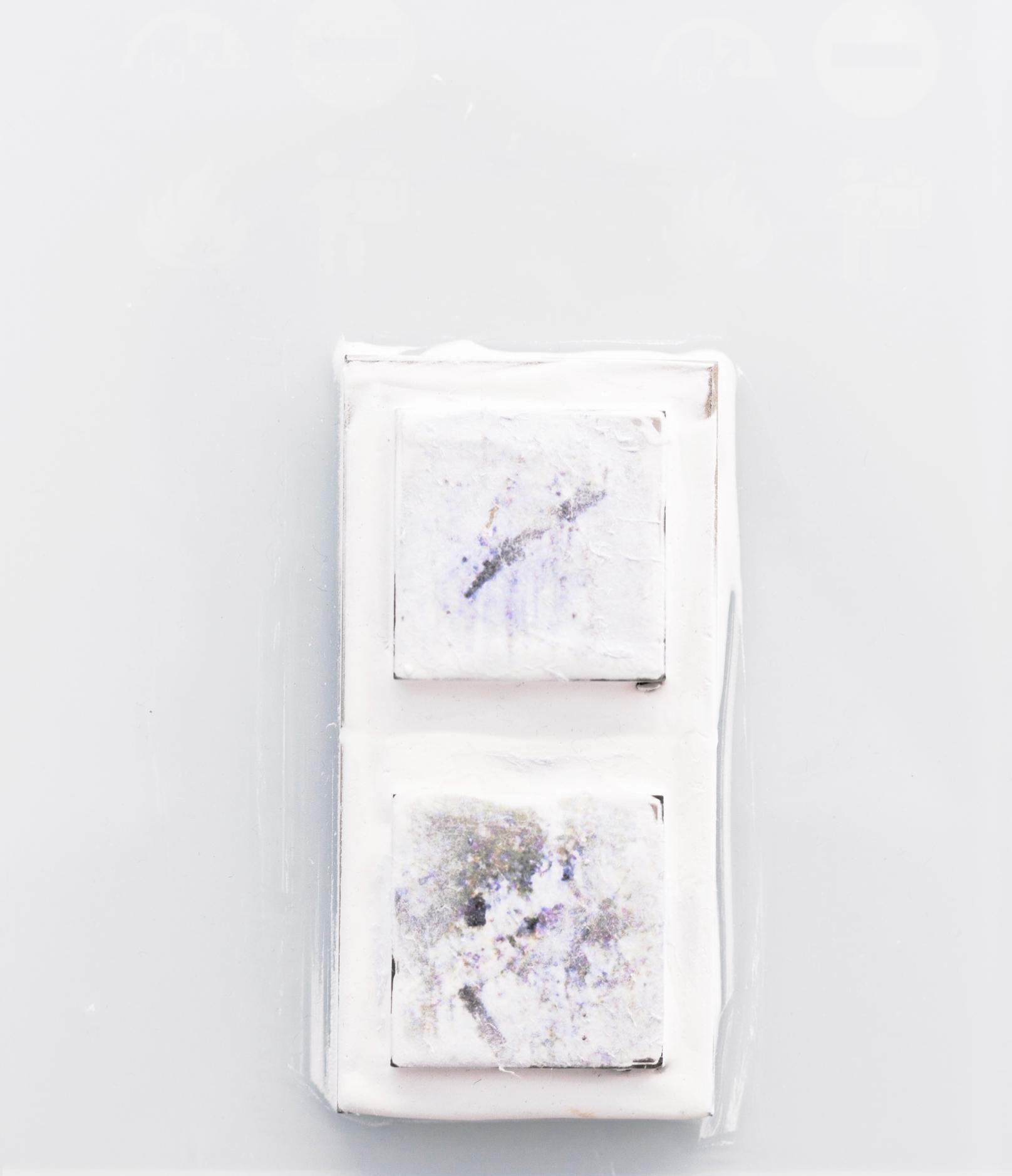
This project explores how the post-pandemic era reshaped people’s perception of cleanliness and contamination. It focuses on the subtle psychological residue of COVID-19, where everyday objects may feel unsafe not because of visible dirt but because of imagined microscopic threats.
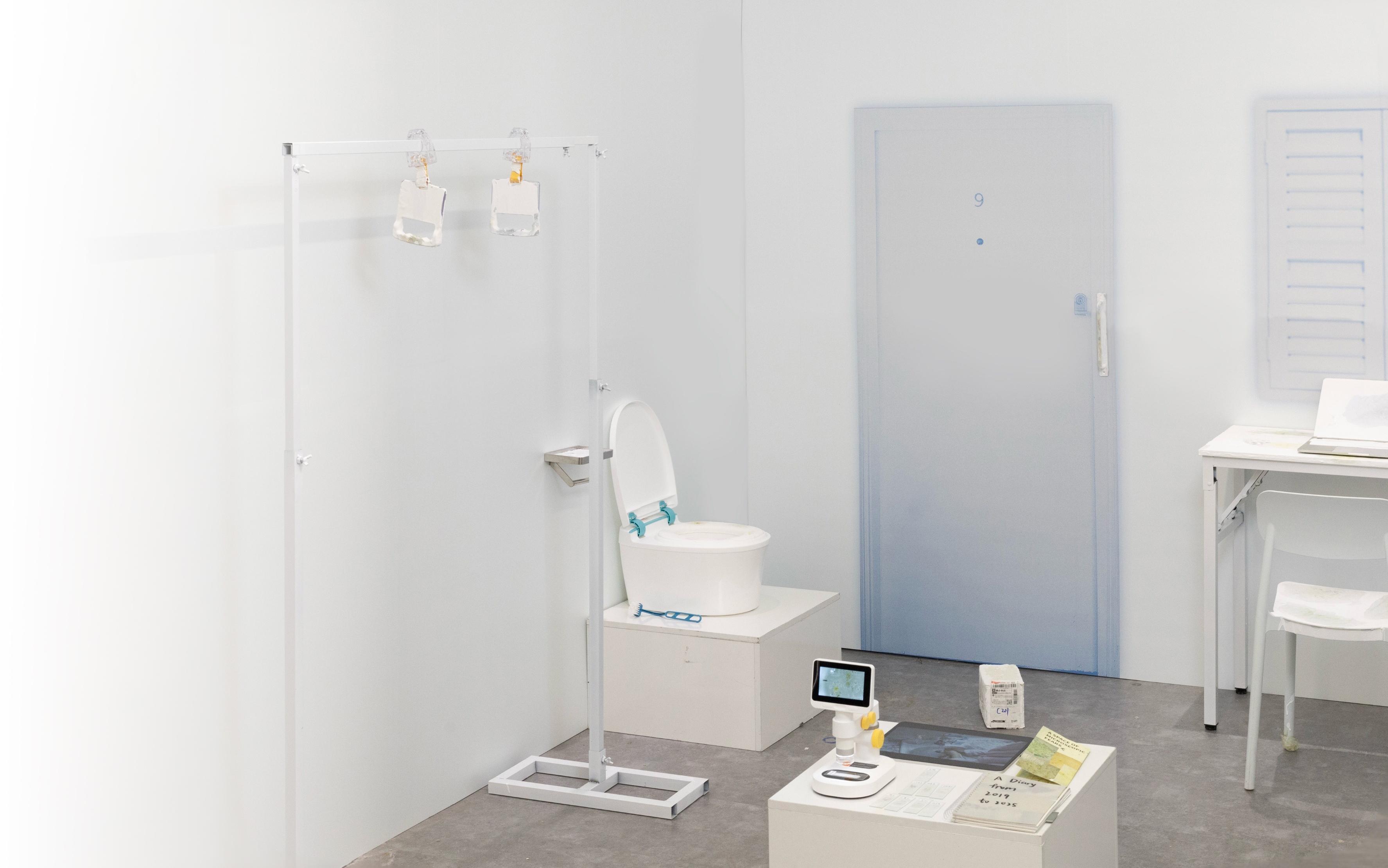
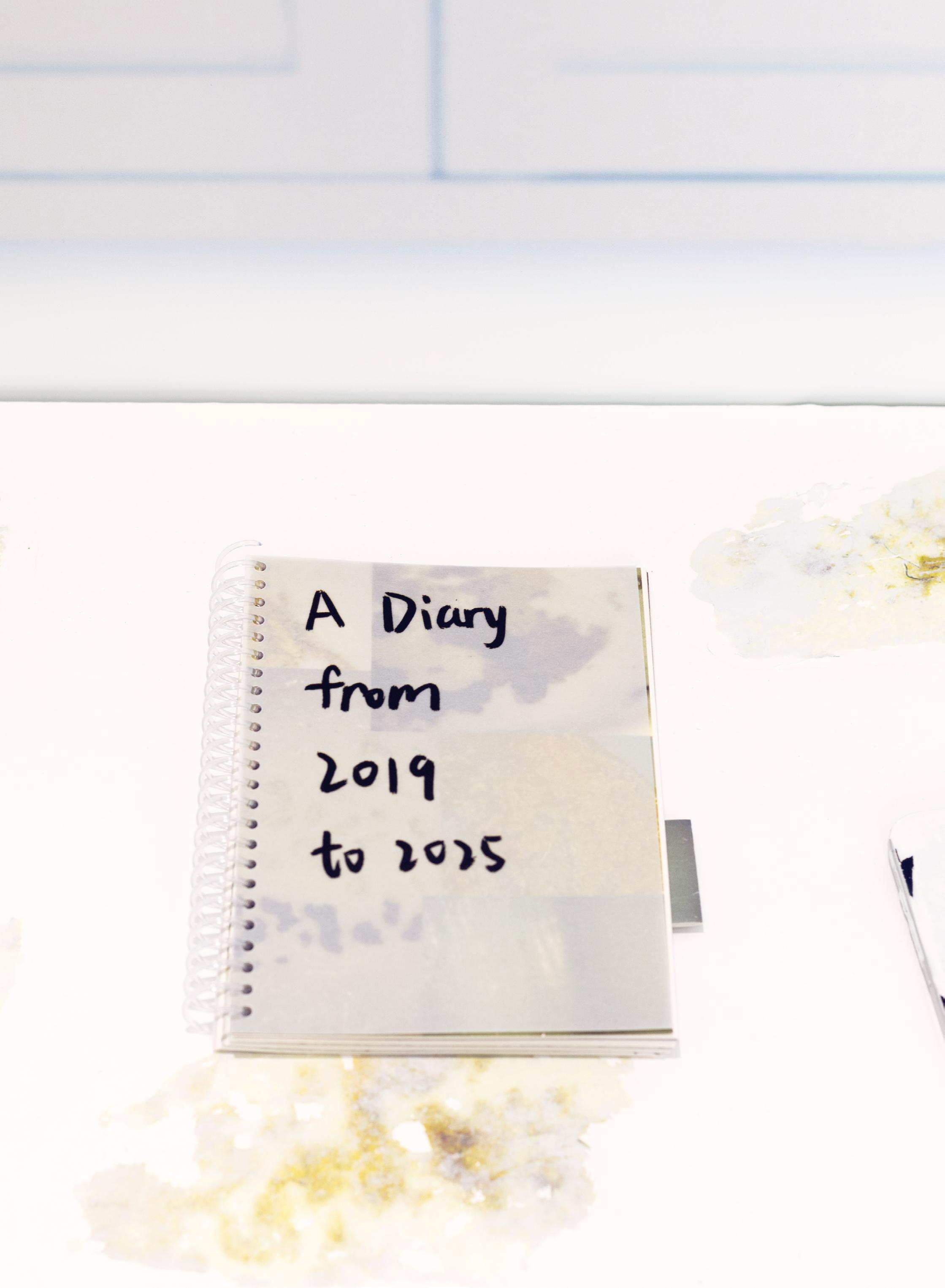
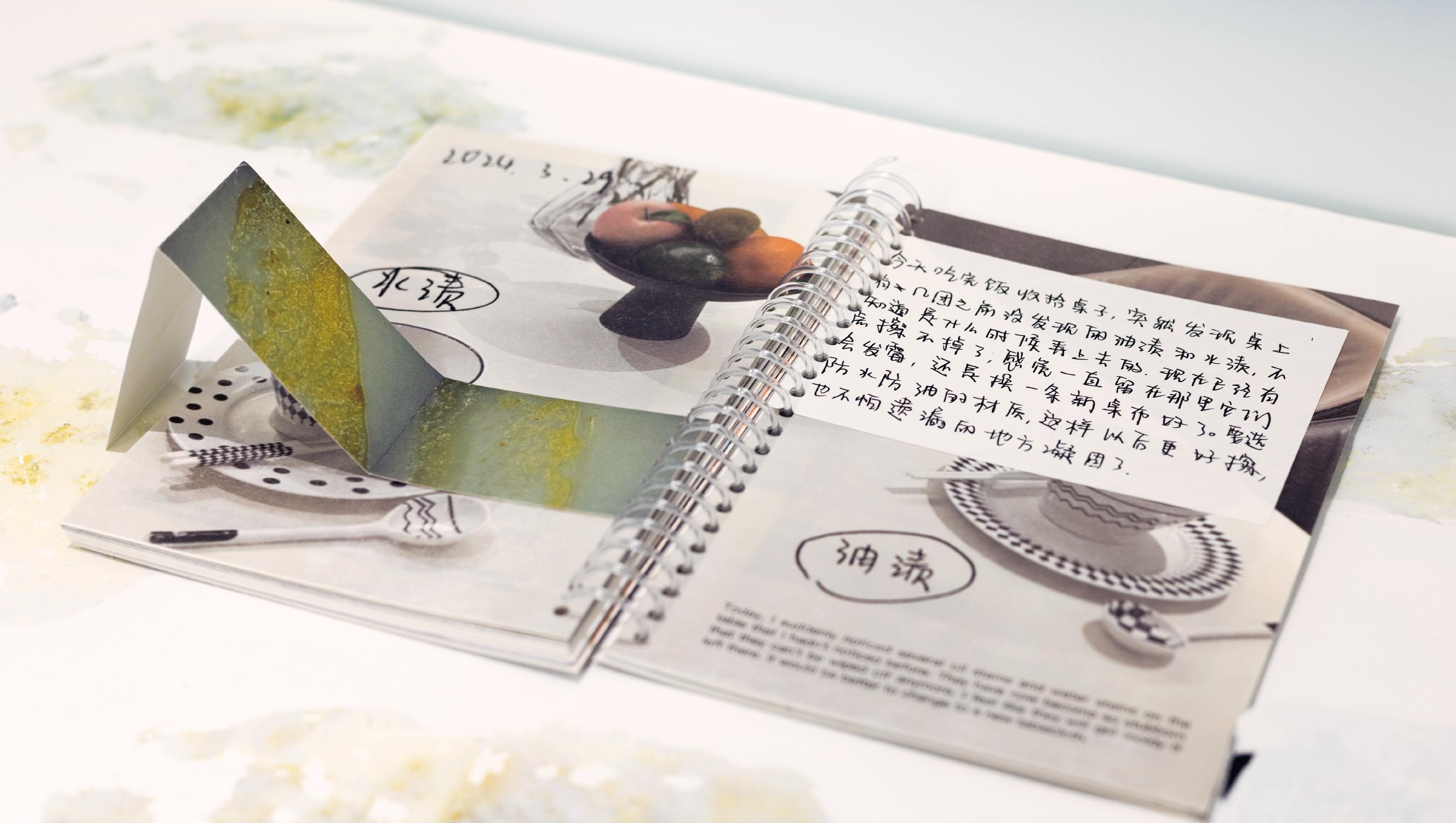
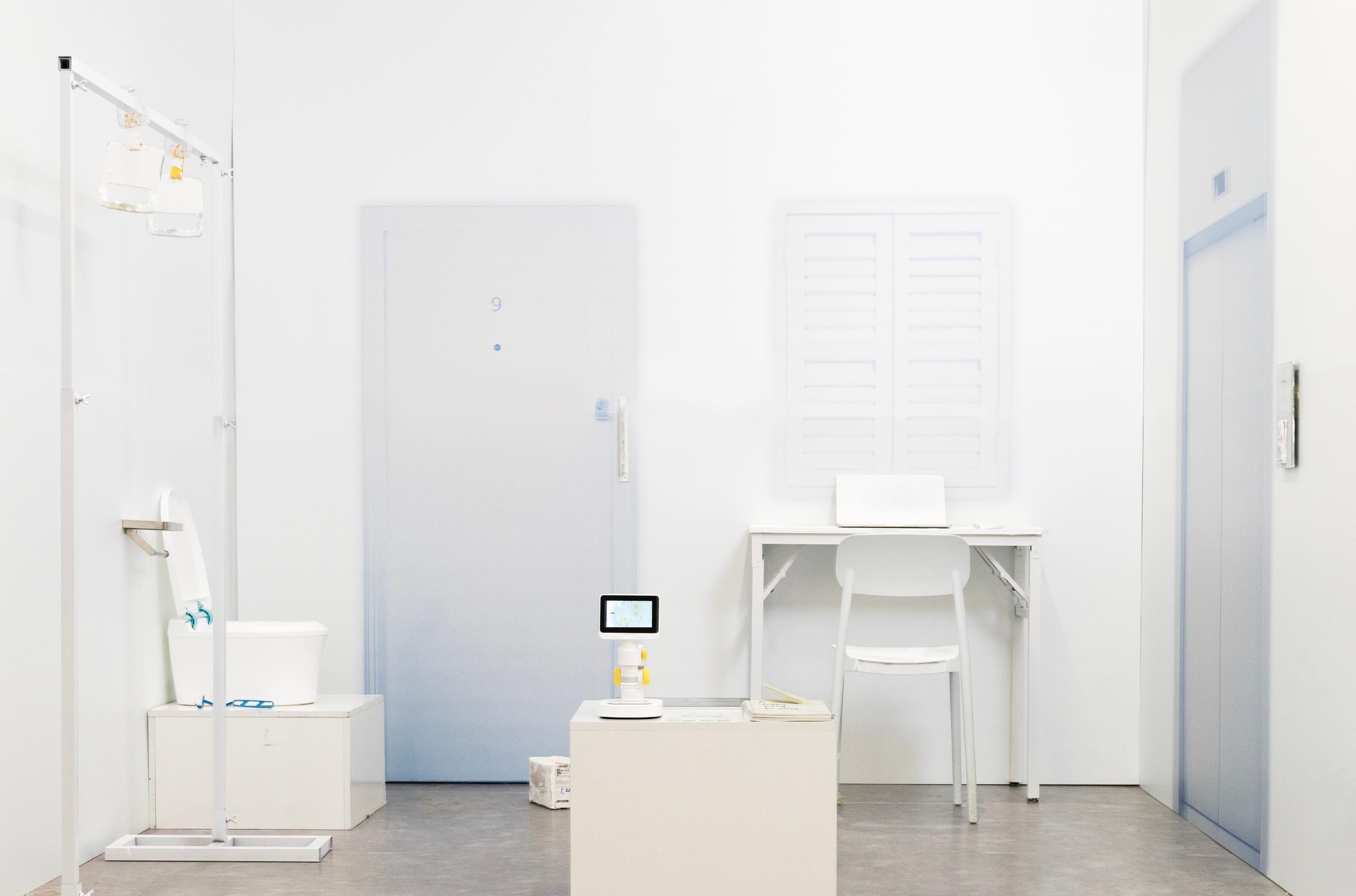
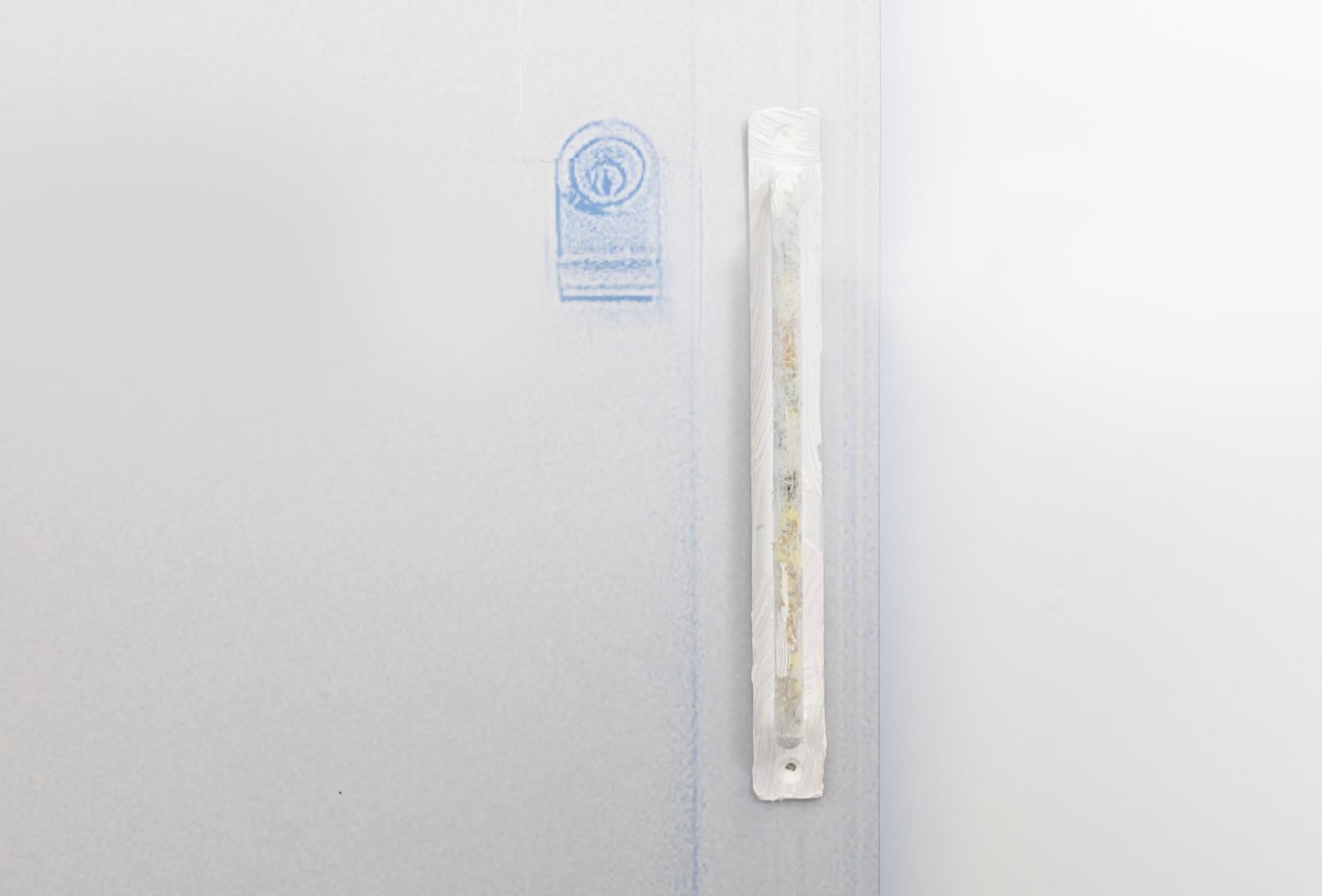
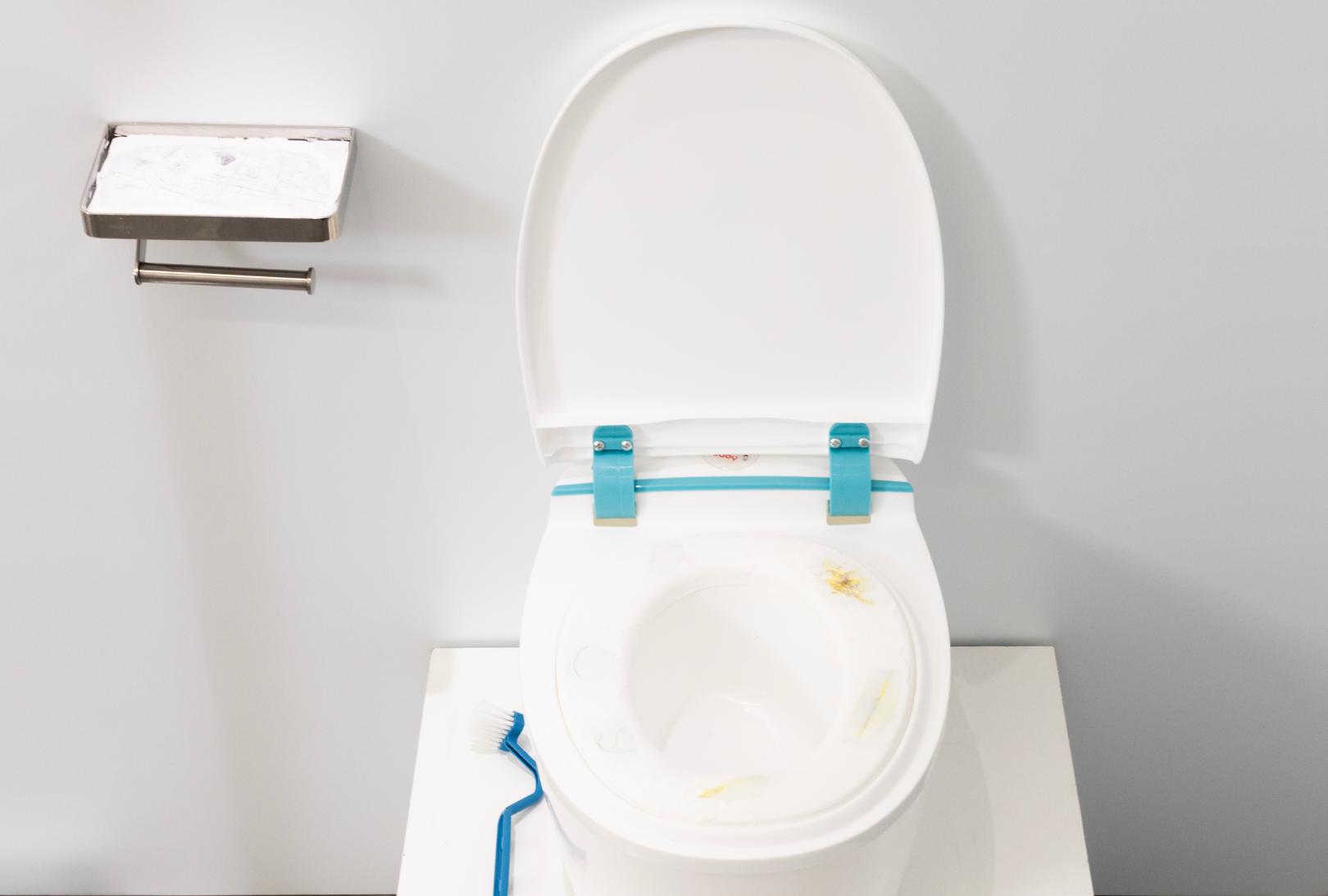
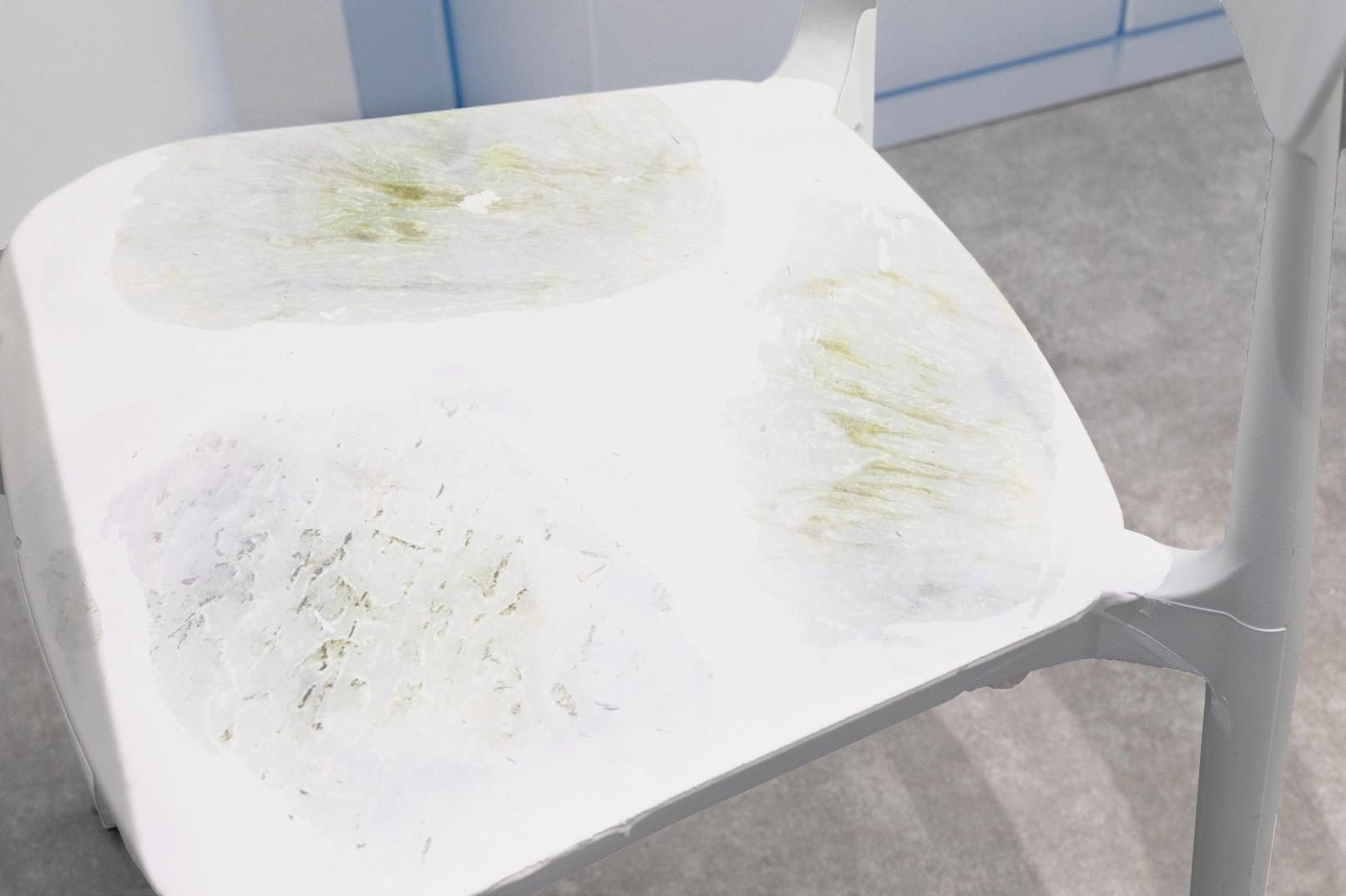
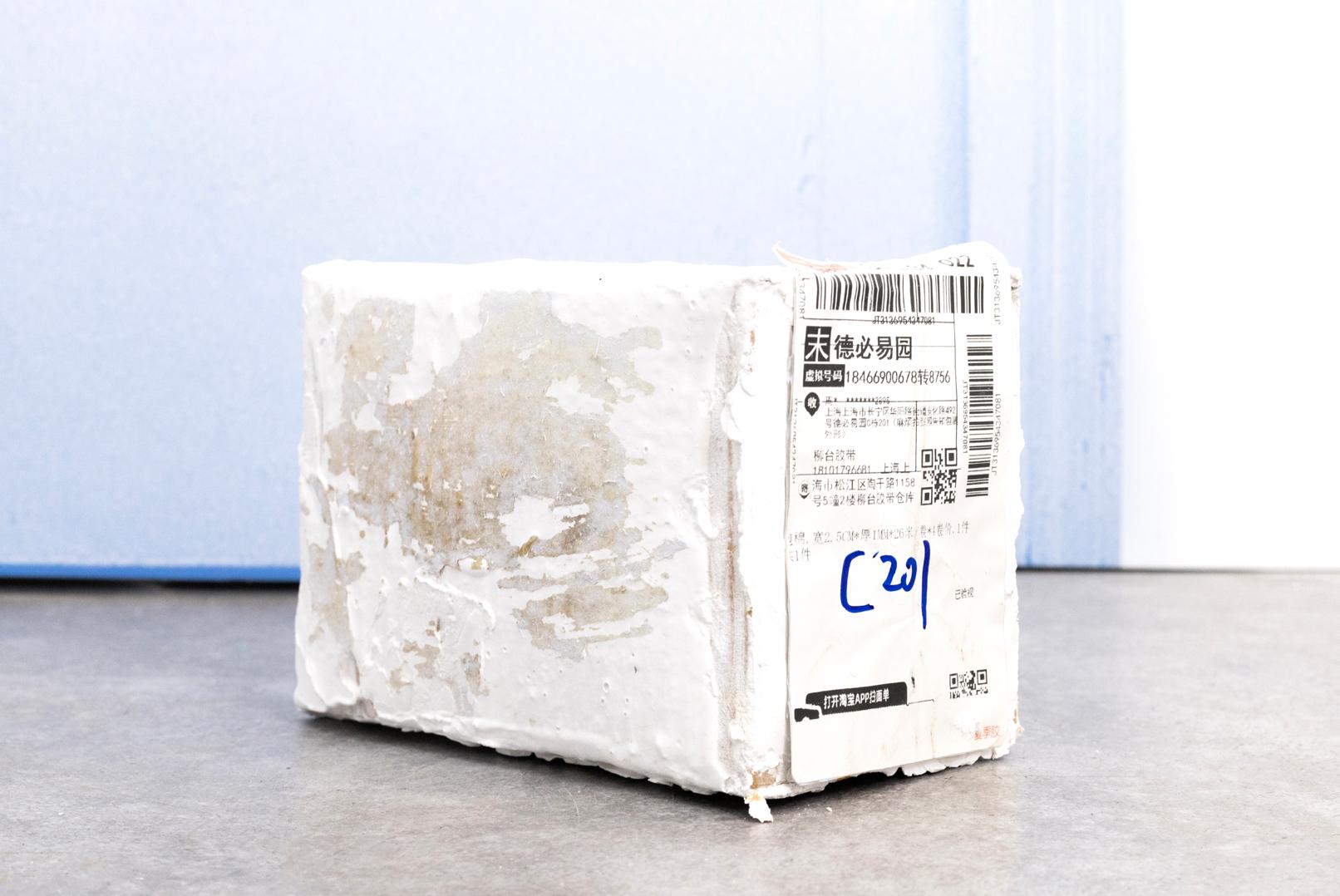
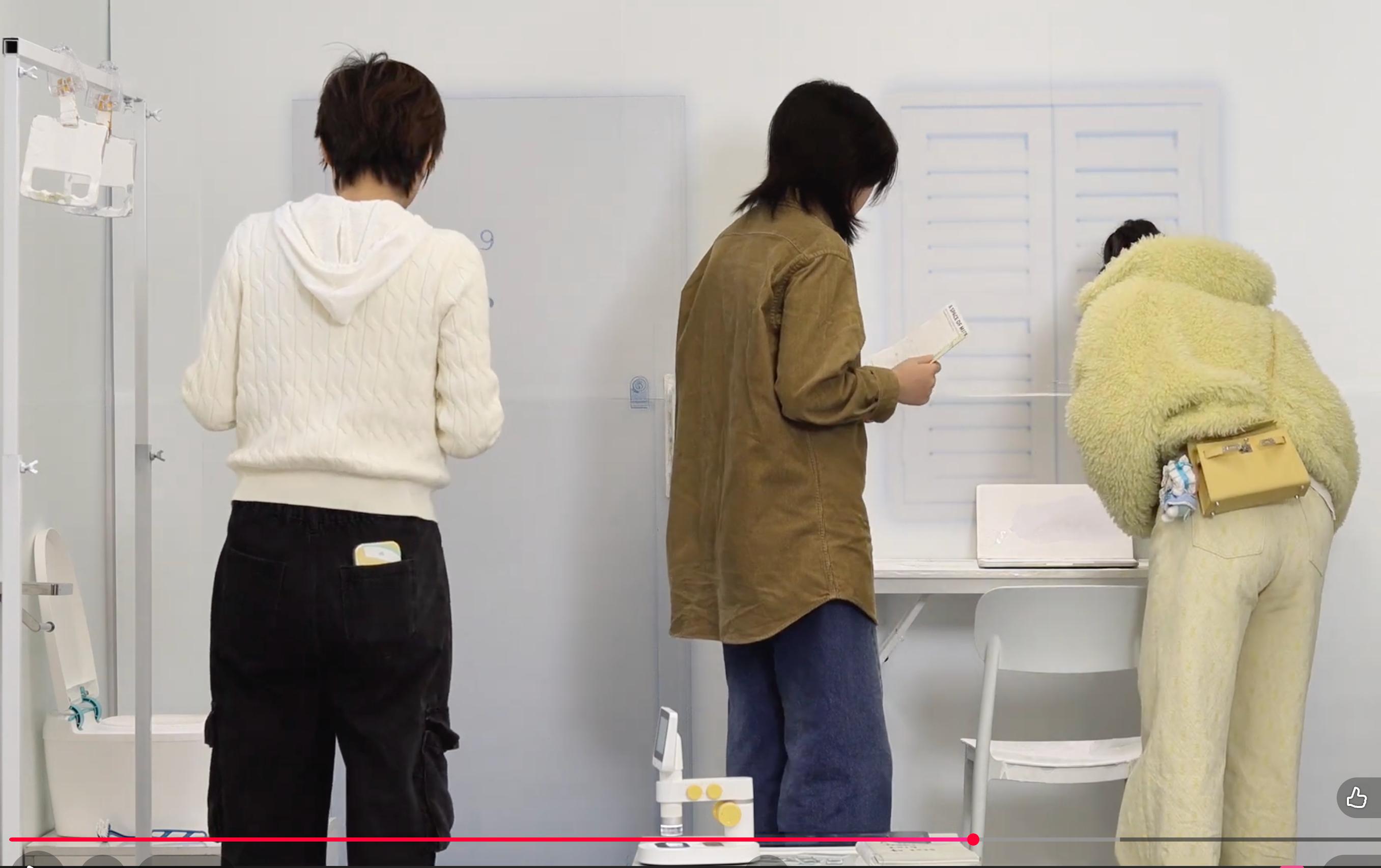
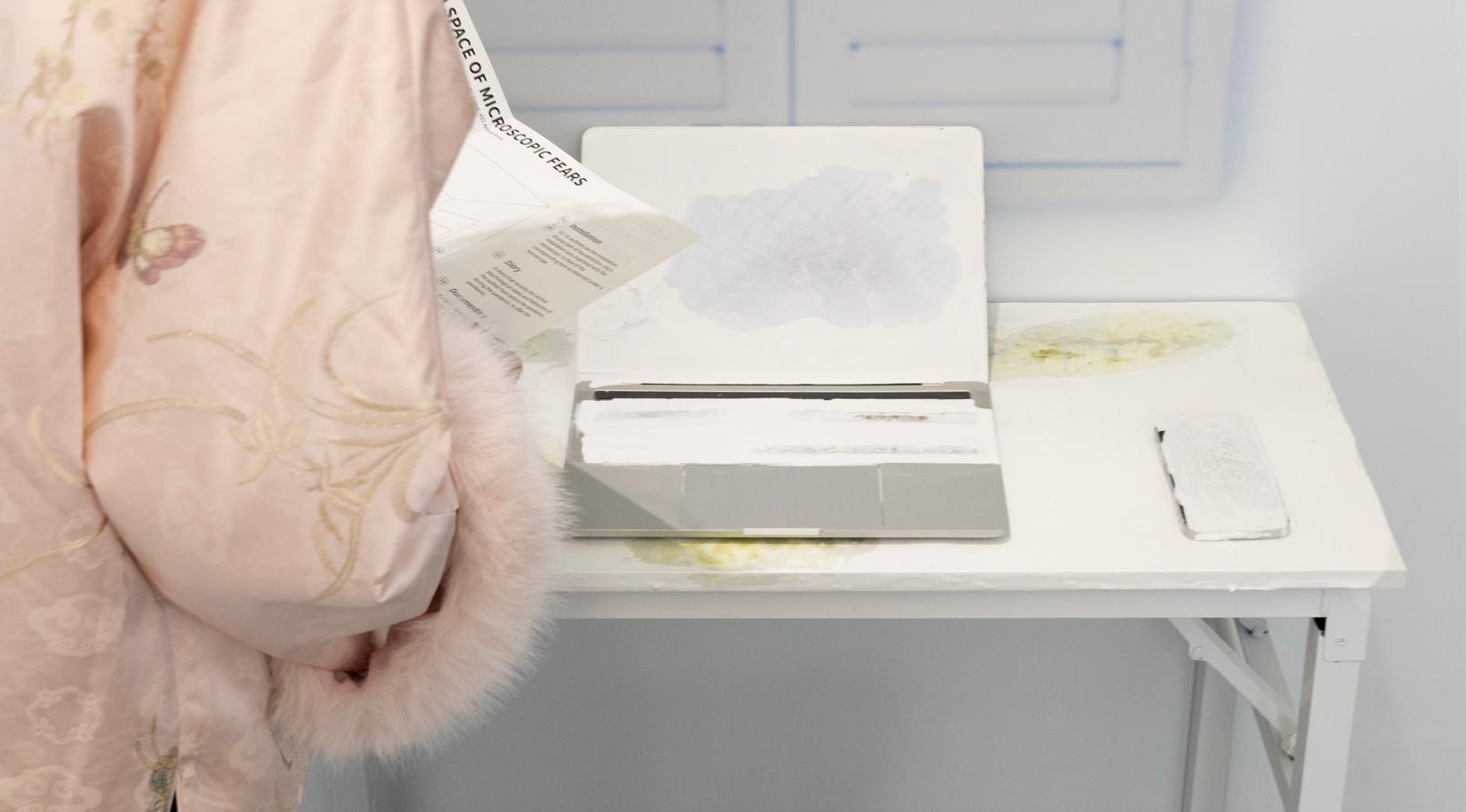
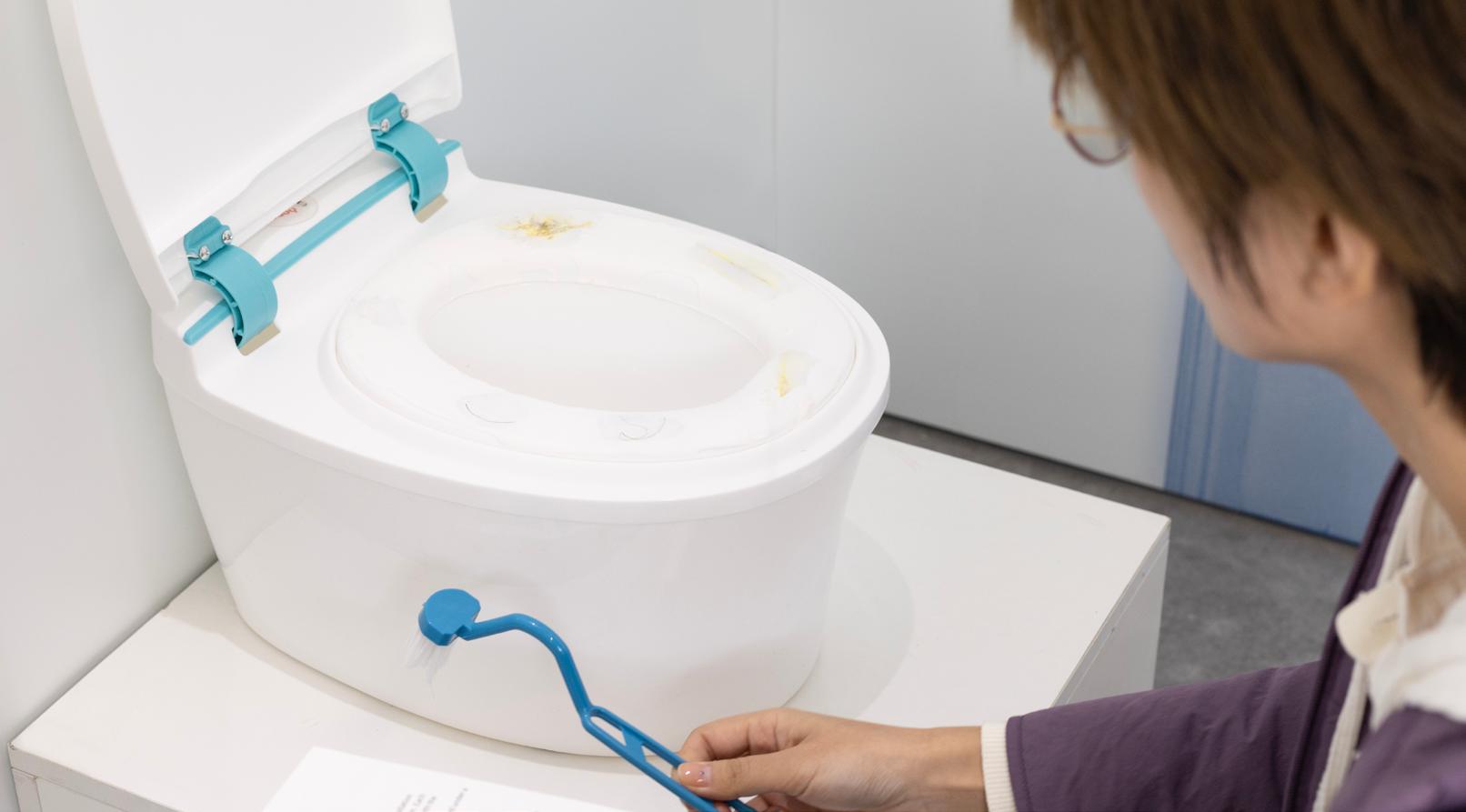
To reveal the observational perspective of people with heightened cleanliness sensitivity, I created a blue-and-white spatial exhibition alongside a written diary. The exhibition presents familiar public objects together with their enlarged microscopic surface patterns, allowing viewers to encounter the hidden textures that often trigger unease. The diary records the inner shifts of a cleanliness-sensitive individual from 2019 to 2025, tracing how their focus, anxieties and ways of looking at the world gradually changed throughout and after the pandemic.
The project aims to show the lasting psychological impact of the pandemic and how it quietly altered the way people perceive their surroundings. By entering this amplified visual environment and reading the diary’s evolving perspective, viewers can experience a transformed mode of seeing that continues to influence everyday life.
I've long felt uneasy in public spaces, fearing “invisible germs” on air, seats, and door handles, and COVID-19 intensified this until cleaning became a required ritual. This made me question whether similar “over-cleaning” habits persisted more widely after the pandemic.
QUESTIONARY
After interviewing 139 people
They are pretty sure that these behaviours were created/enhanced by COVID-19. 13.7%
Some people developed lasting habits from the epidemic, but since these routines affect only a few and often go unspoken, their roots in epidemic fear are easily overlooked.
SECONDARY RESEARCH
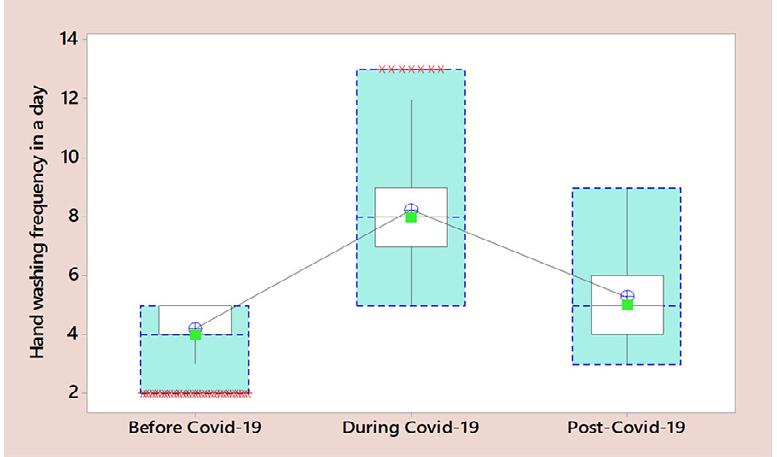
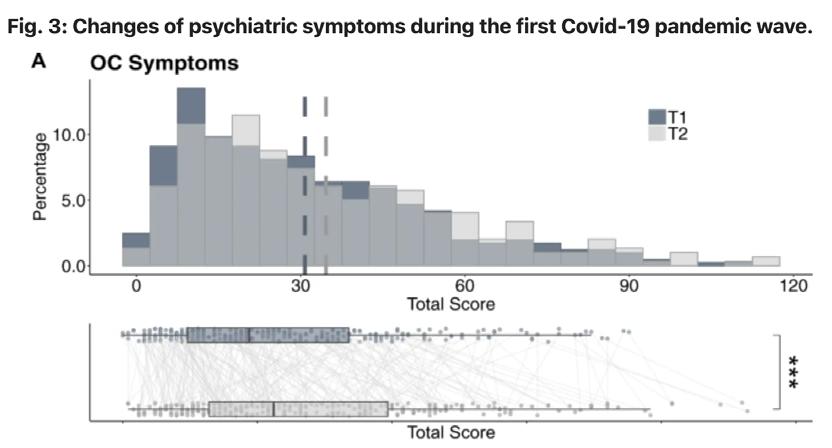
Research shows pandemics can trigger or worsen OCD, with contamination fears and repetitive cleaning remaining high long after anxiety fades. Years later, many still perform unconscious cleaning behaviours rooted in epidemic memories, yet these lingering fears are easily overlooked.
DESIGN CONCEPT
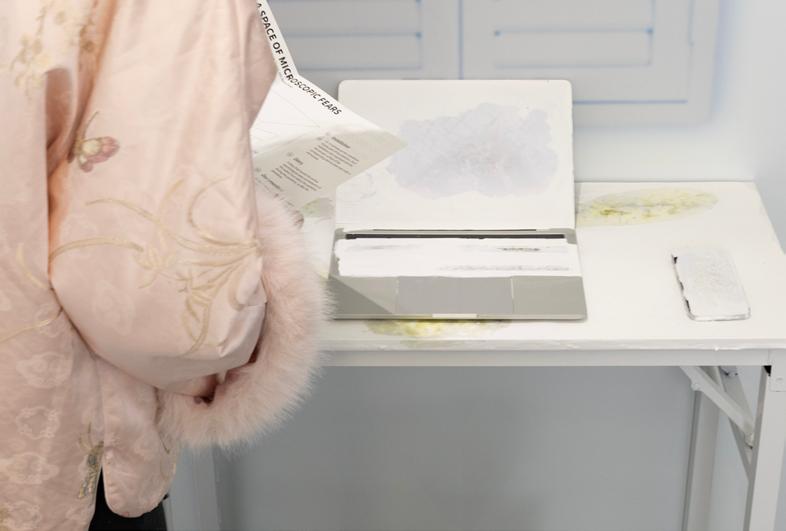
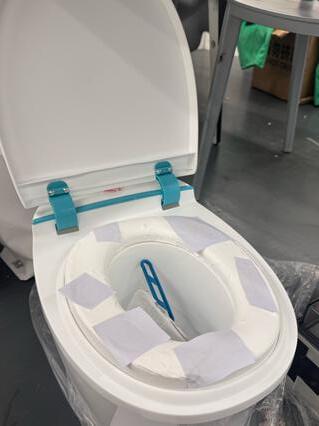
I plan a blue-and-white spatial exhibition showing everyday objects marked with enlarged microscopic patterns—“stains” vividly perceived by cleanlinesssensitive people but invisible to others. This invites viewers into an amplified perceptual world to experience their subtle unease.
MAKING PROCESS
Installation
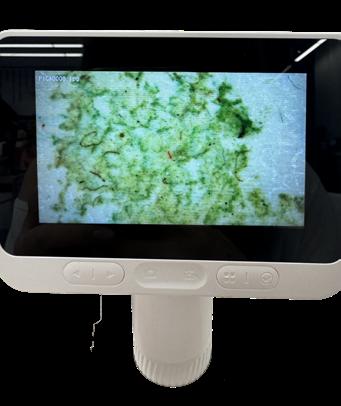
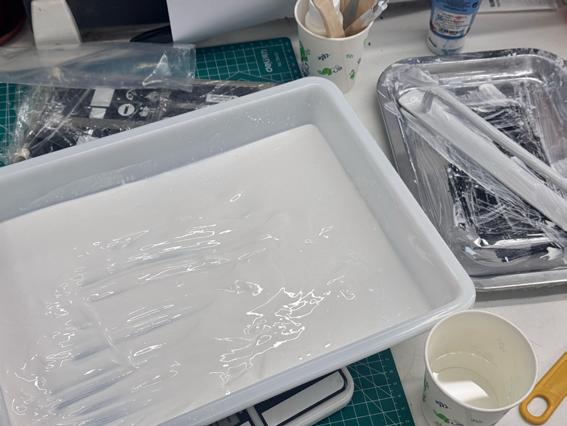
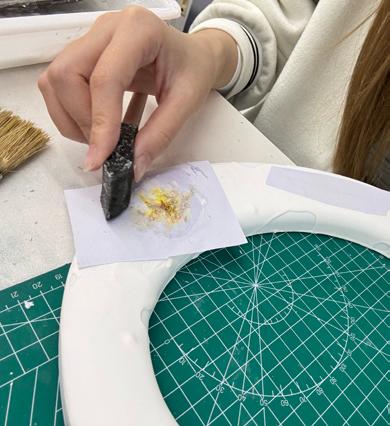
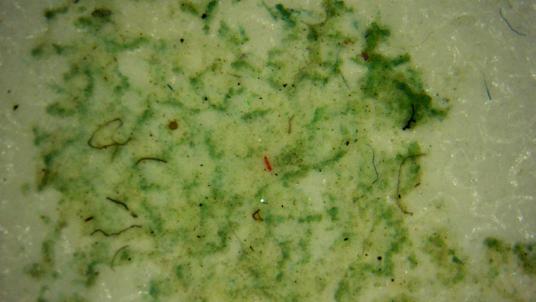
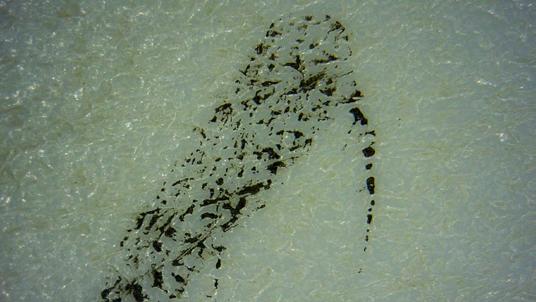
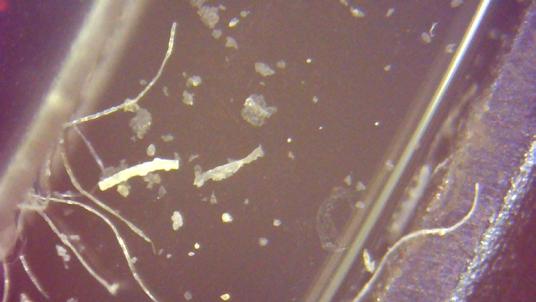
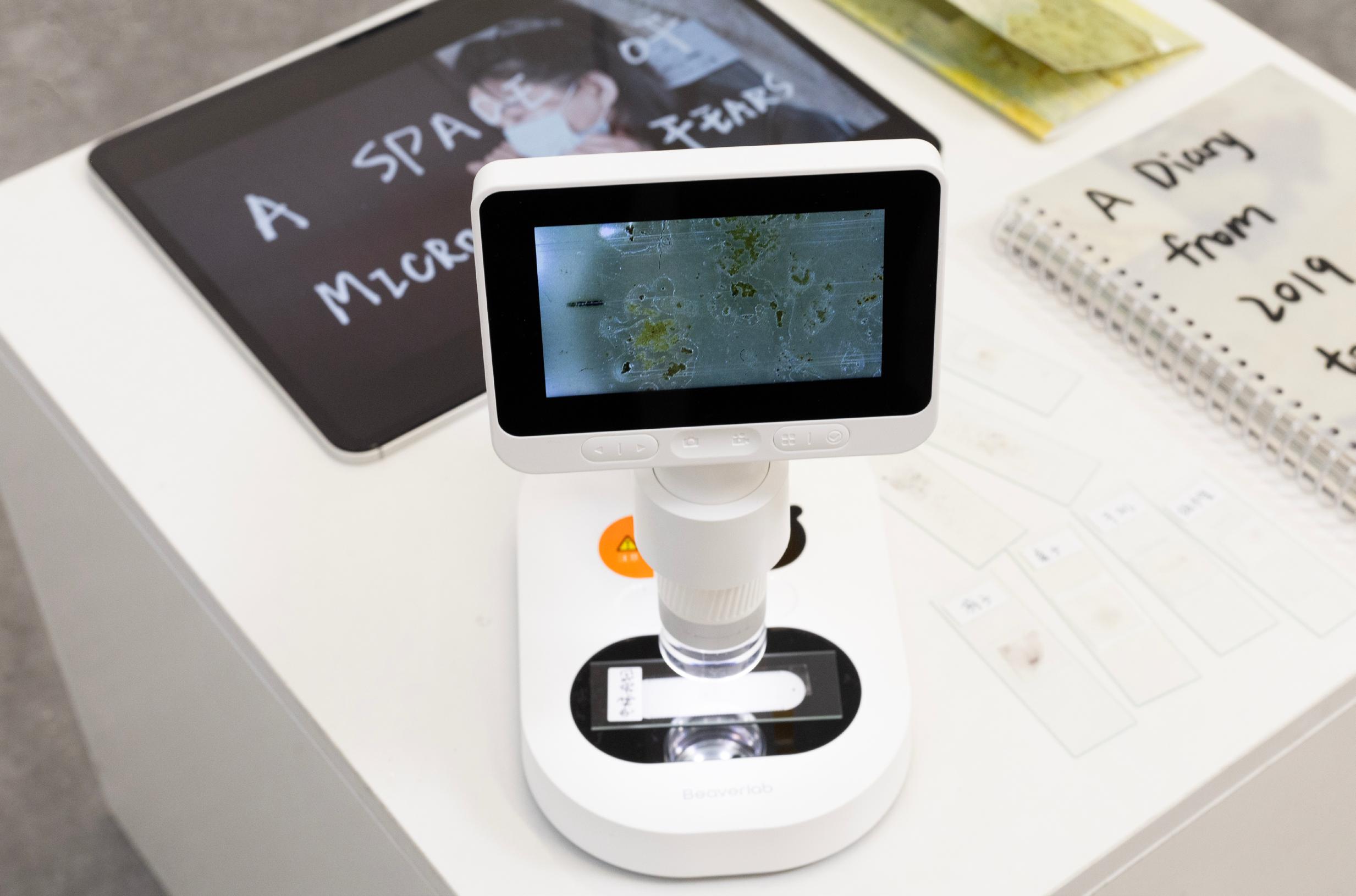
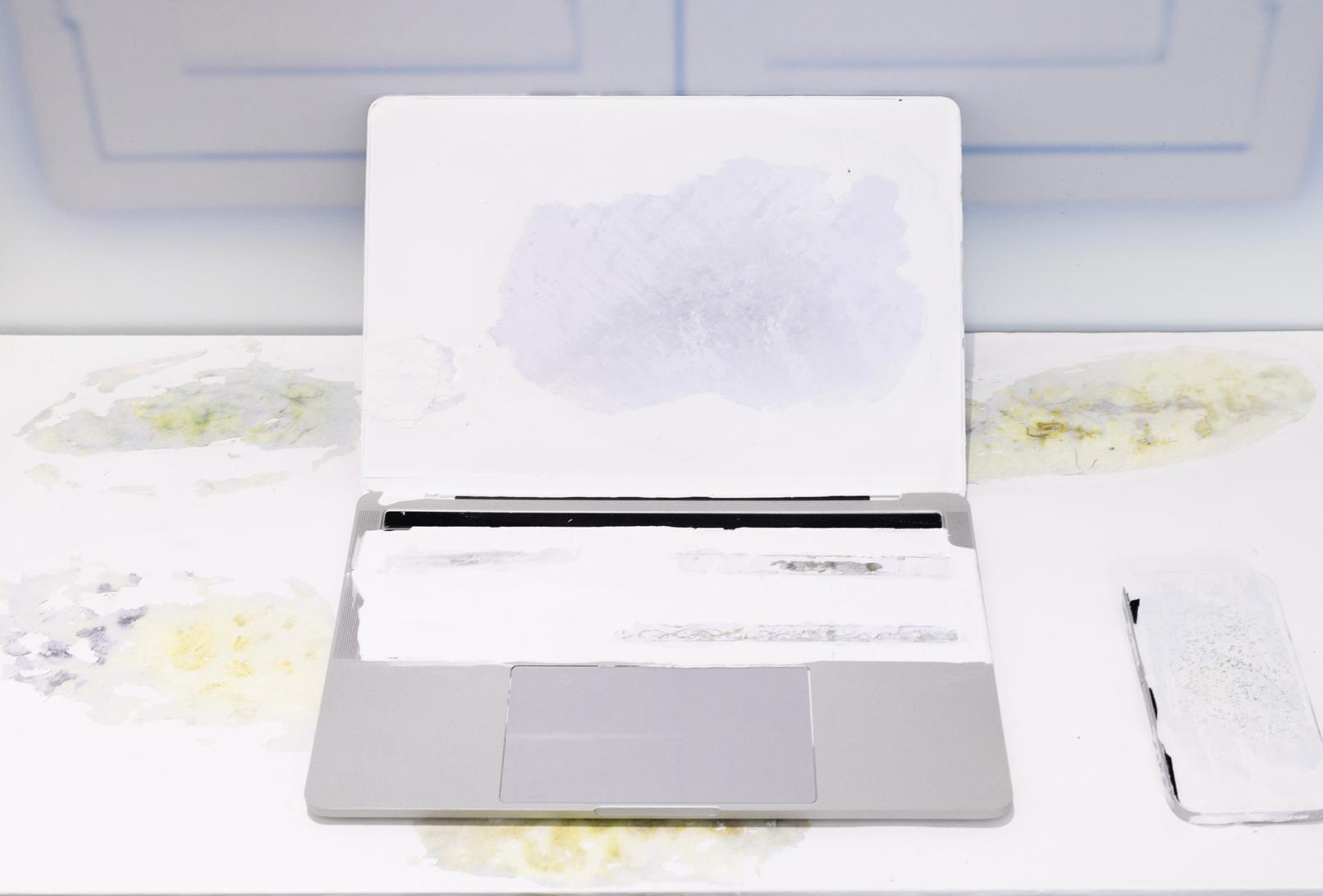
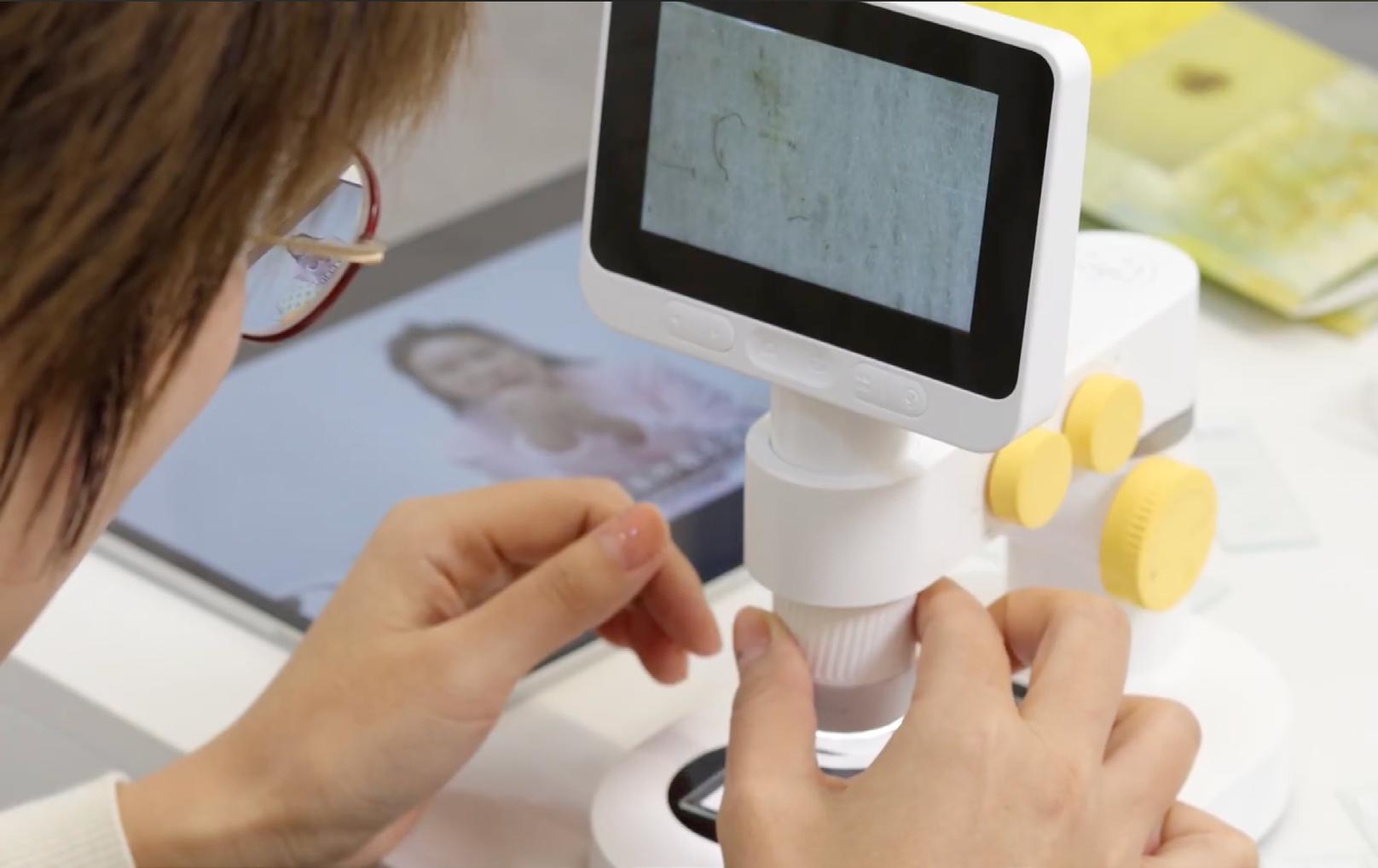
Observe stains under a microscope, print the patterns, cover the object with gypsum, glue the prints onto the gypsum, then wipe off the paper after drying to transfer the image.
have similar overcleaning behaviour.
93.8% 14.5%
They're not sure when these behaviours started.
Many reinforced obsessive cleaning habits after the epidemic, often without realising it.
COLLECTION
Recording their behaviors
Observation
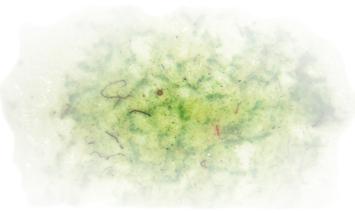
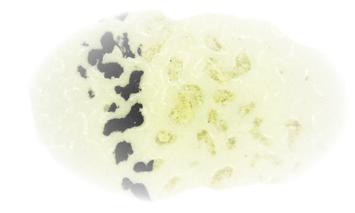
Daily items under the microscope
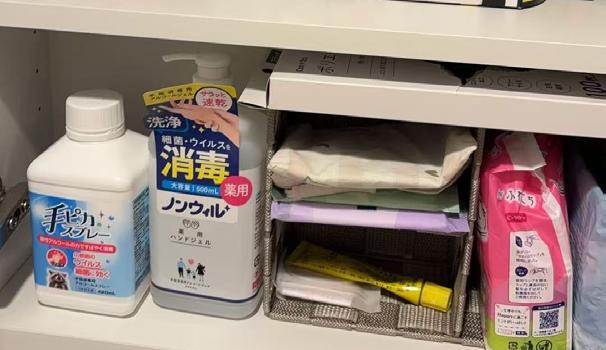
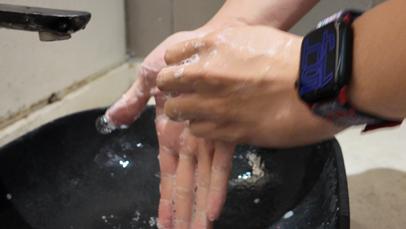
I did wash my hands and use alcohol to disinfect my surroundings frequently during the epidemic, but I slacked off after the epidemic let up.
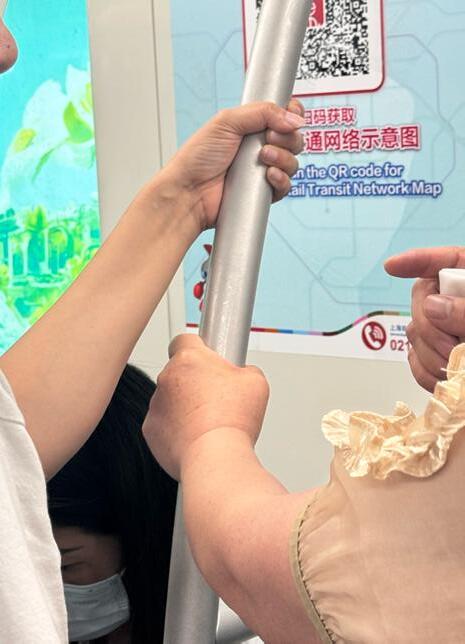
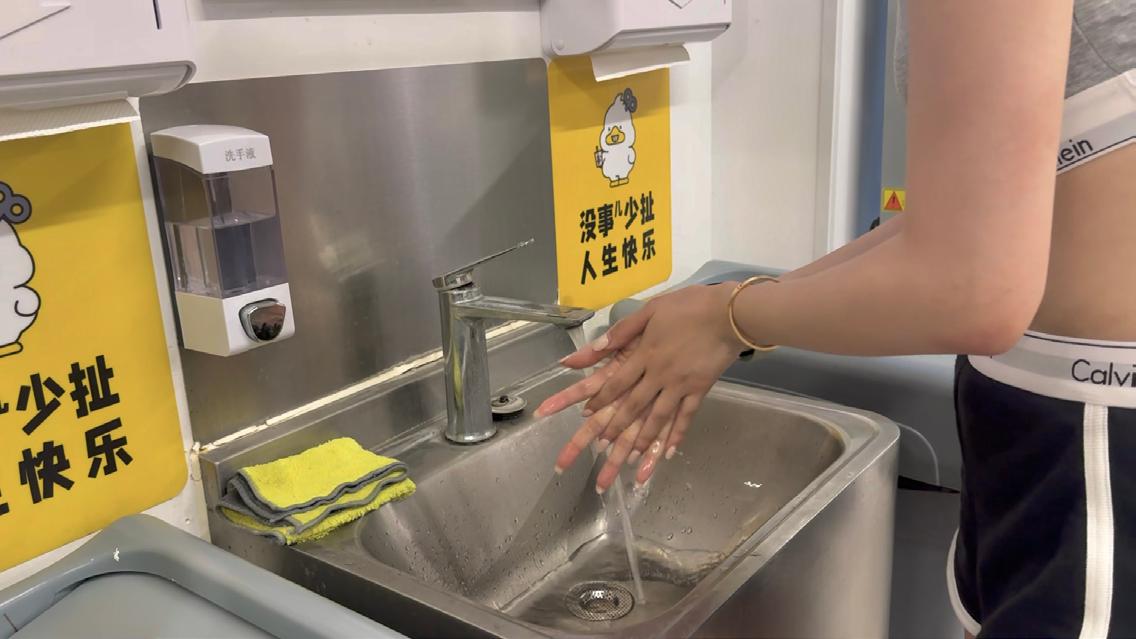
I always wear a mask outside, wipe public handrails and my home toilet, remove all water stains after washing my hands, keep my nails short to avoid germs, and regularly stock up on supplies and alcohol.
CASE STUDY
Qian’s use of dough to transform kitchen objects and express a sense of emotional refuge inspired me to create a spatial exhibition in blue and white, a clean-looking environment that carries an underlying tension.
Ningyue Qian and her dough, design/delight
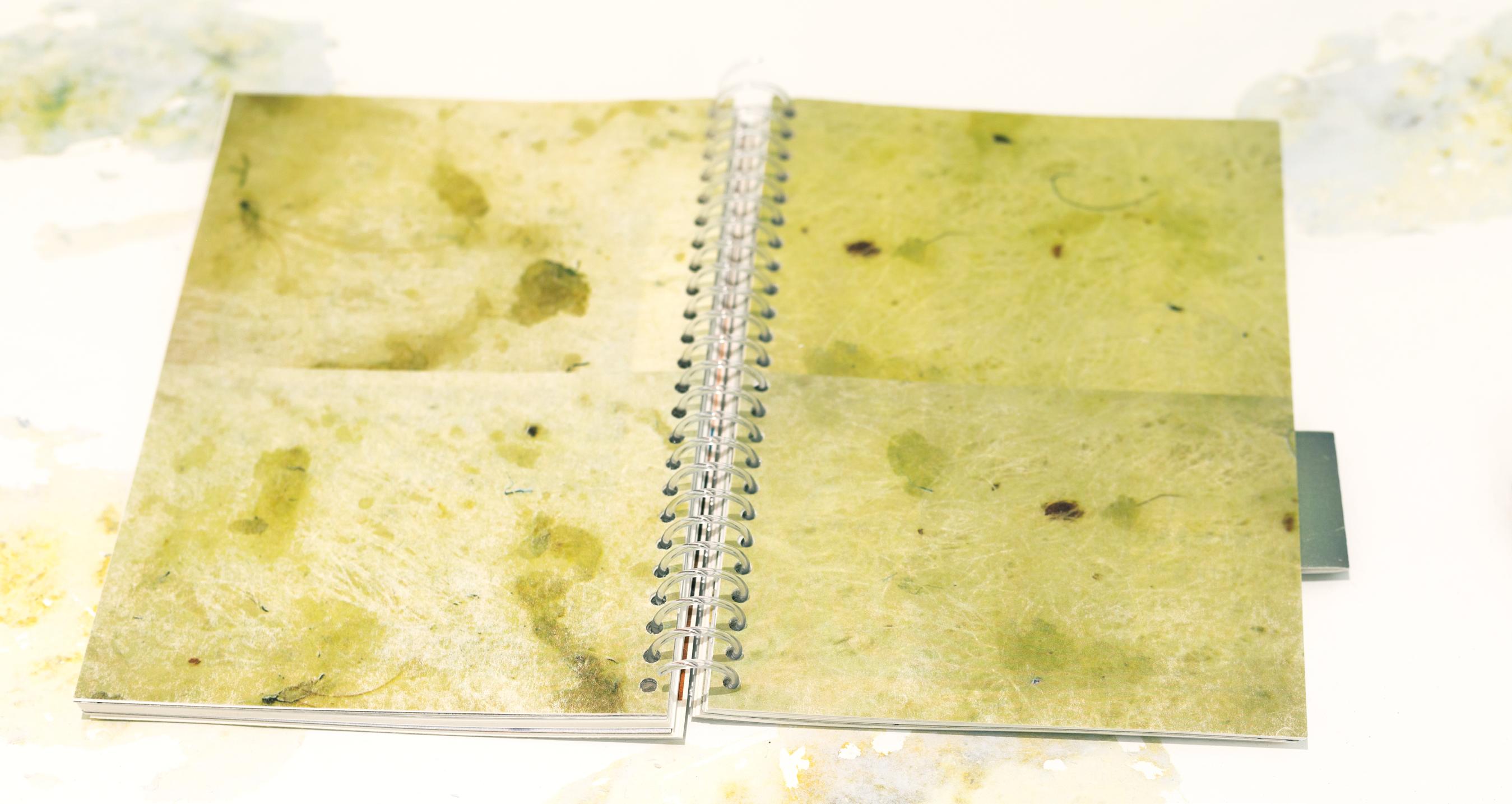
An A5 spiral diary with inserted pages
Exhibition
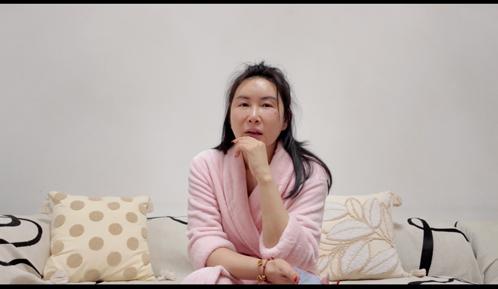
Follow an interviewee for a day to document her cleanliness habits and record a video interview about her feelings.
Design a brochure and assemble the KT boards to set up the exhibition, inviting audiences to explore and interact.
Diary
Documentary
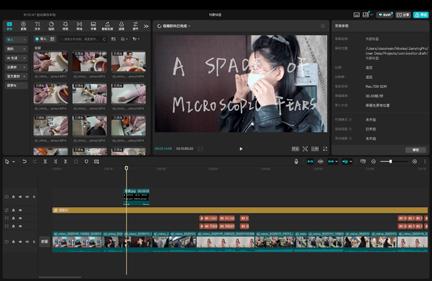
EXHIBITION VIDEO
Duration 2min46'
The exhibition video presents everyday objects overlaid with enlarged microscopic textures transferred onto their surfaces. Viewers are shown exploring the installation, noticing the contrast between ordinary appearances and unsettling close-up patterns. Their reactions highlight how the pandemic reshaped people’s visual and emotional perception of “clean” and “unclean.”
https://youtu.be/L4kENt8s3zk
Biased Botany
Archive design/ Installation
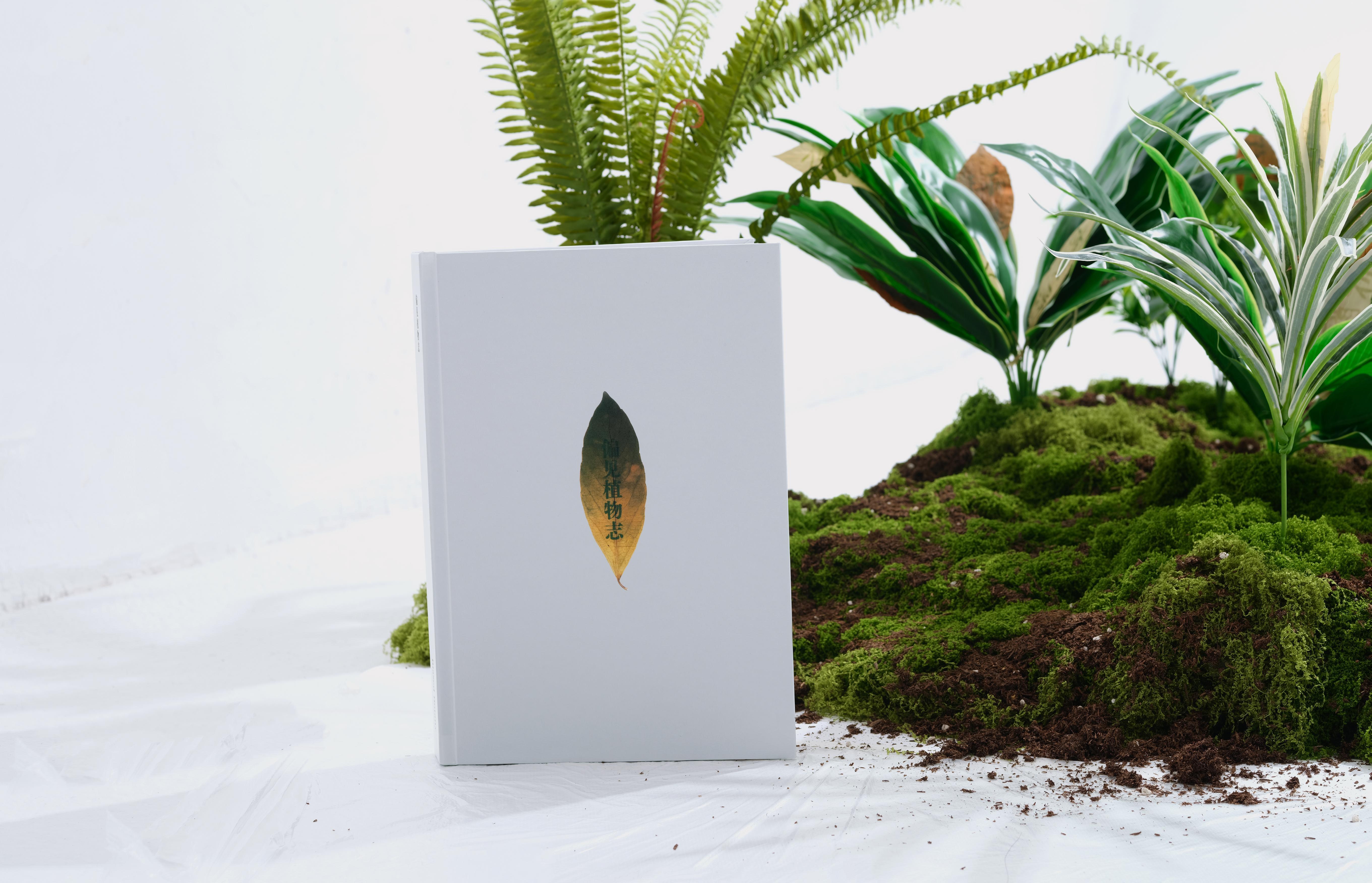
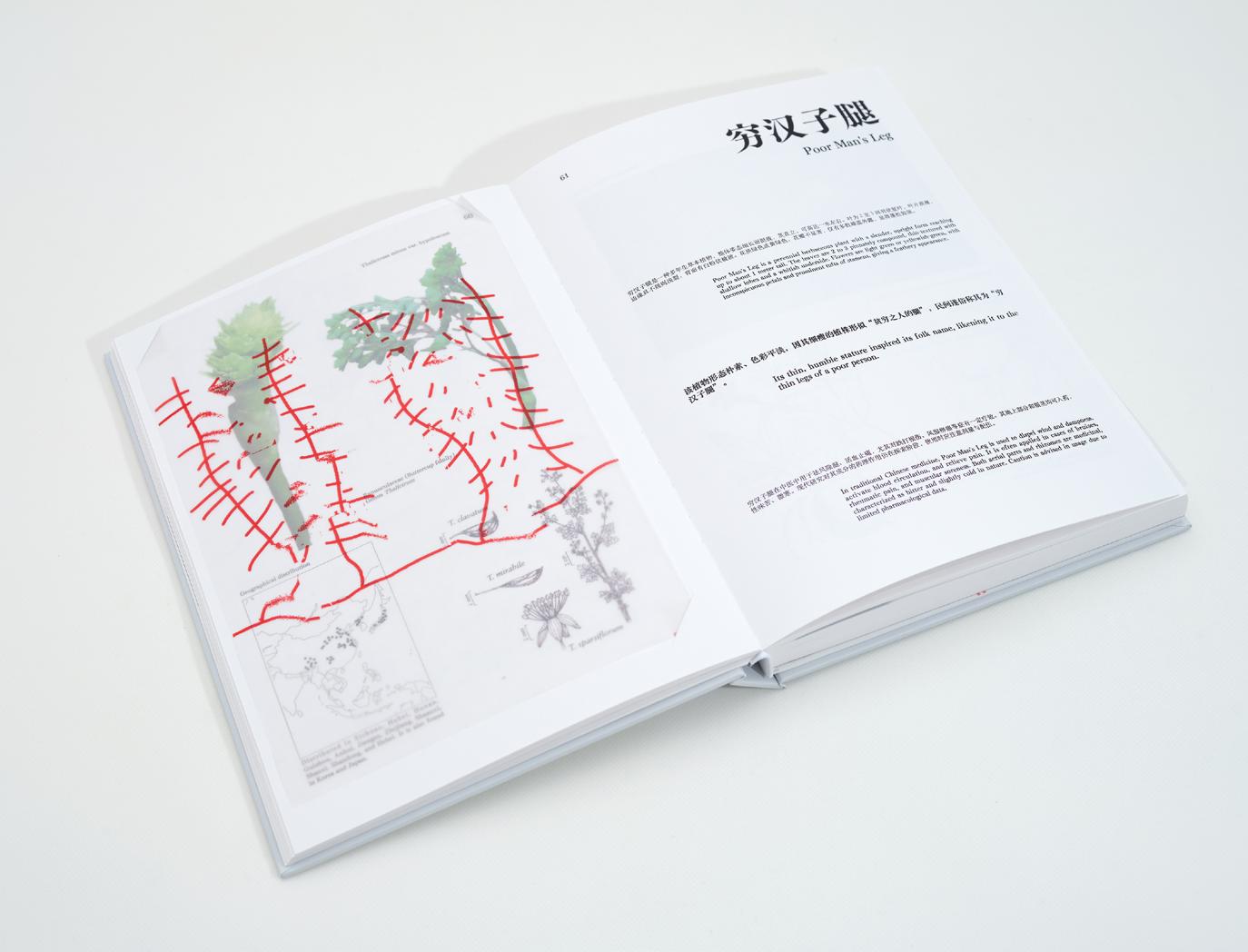
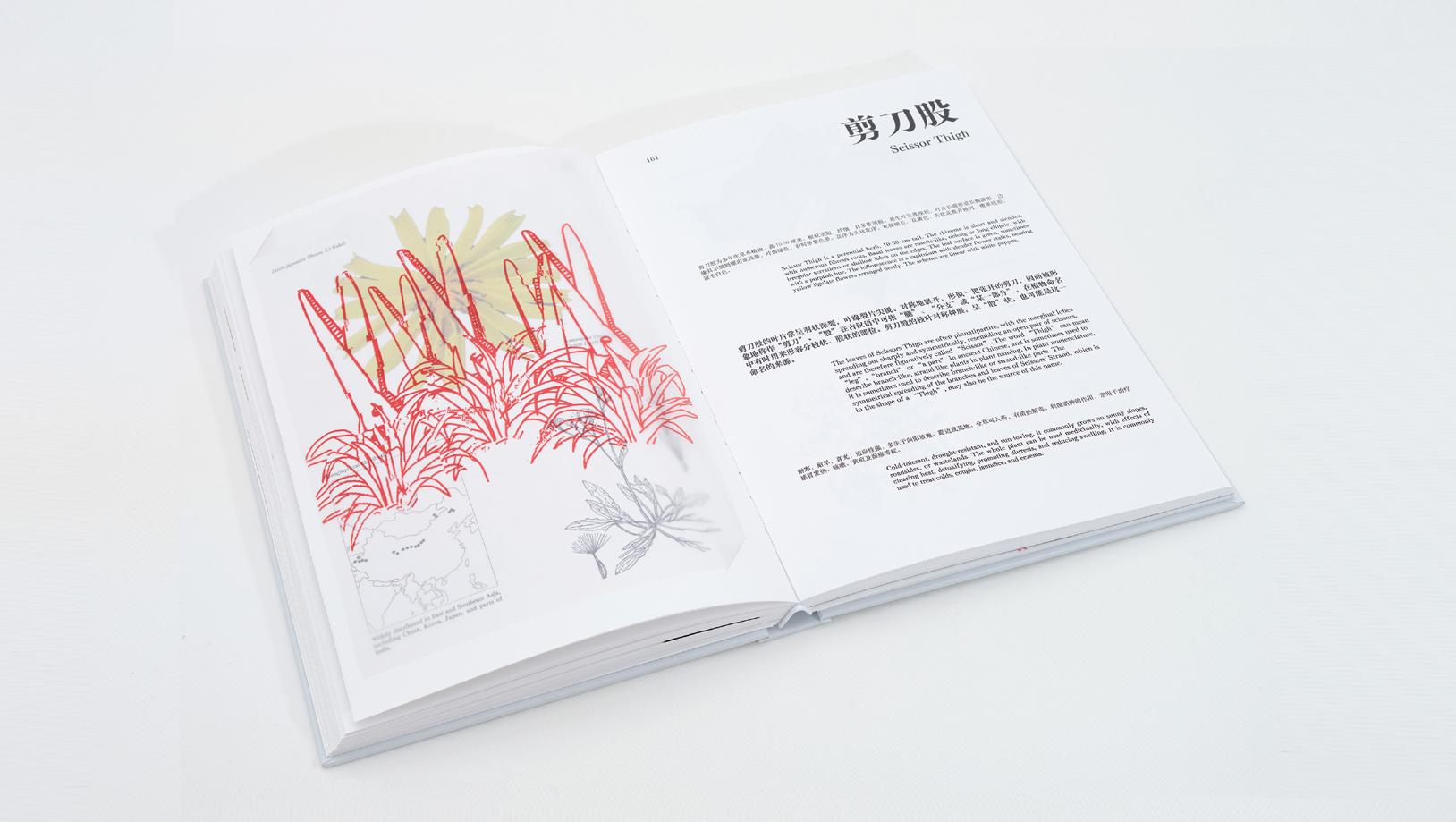
I discovered that the Chinese names of many plants are oddly phrased, often carrying negative connotations or leading to misunderstandings. These names can be careless, subjective, or even biased, shaping how people perceive the plants in a misleading way. In response, I created a botanical journal and an accompanying installation to draw attention to the humancentered misconceptions embedded in these names. Through this project, I aim to challenge the language of botanical naming and invite viewers to reflect on the cultural and perceptual biases that influence our understanding of the natural world.
Flipbook Video: https://youtu.be/HfEV2stvGpo
Installation Video:https://youtu.be/Ds5dT3OskqU
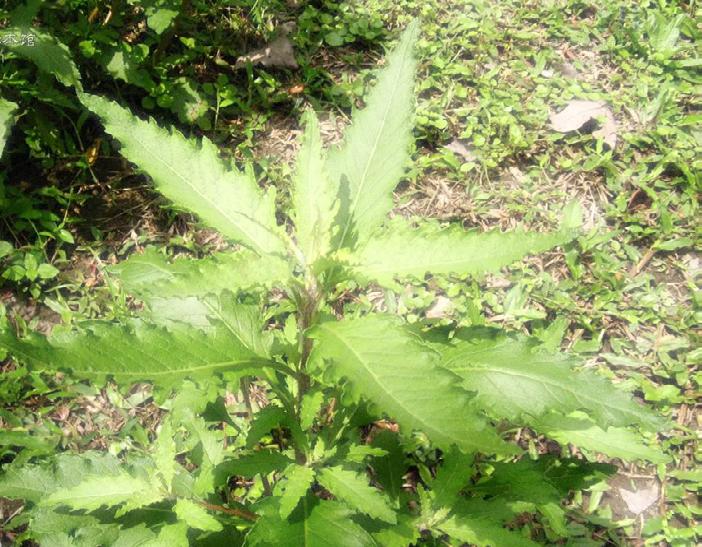
I used to be a student majoring in Ecology. In one course, we were asked to know the plants we could see around us and remember their names. I found a Chinese scientific name of a kind of grass that grows all over the street called "grass along the steps". Compared to its Latin name, the Chinese one is so casual and random. Just as its name implies, this grass is always ignored by people.
THEORETICAL RESEARCH
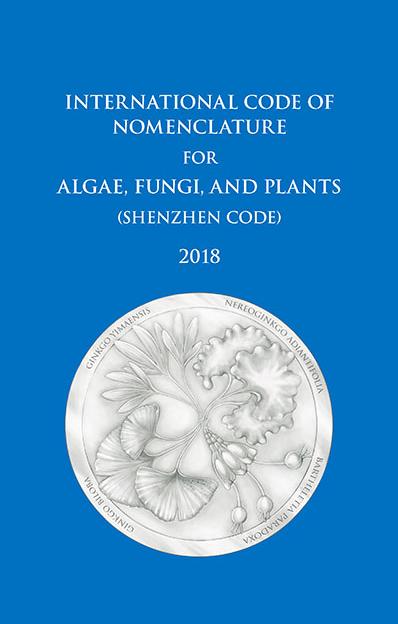
International Code of Nomenclature for Algae, Fungi and Plants, 2018
Botanical Latin follows a binomial system, while Chinese plant names often describe traits, origins, or symbolic meanings. What drew my attention were anthropocentric names such as Grass Along the Steps, Ugly Willow, and Stinking Cypress.
COLLECTION & ANALYSIS
In order to analyze these anthropocentric nomenclatures in more depth, I collected a large number of Chinese names of plants to categorize them.
1. Prejudiced names
Some plant names include prejudiced words, like ugly, stink, shit, etc. Due to their prejudiced names, these plants are likely to be hated by people.
3. Simulated names
Plants are likened to other species or objects, like "dog tail grass".
2. Ignored names
Just like "grass along the steps", some plant names are random and ignored.
4. Functional names
Some names include their functions on humans. "Nosebleed grass" is used to cure nosebleed.
Plant names are often anthropocentric, labeling species as useful or nasty. Yet each plant has its own value, which biased names can easily obscure.
INTERVIEW
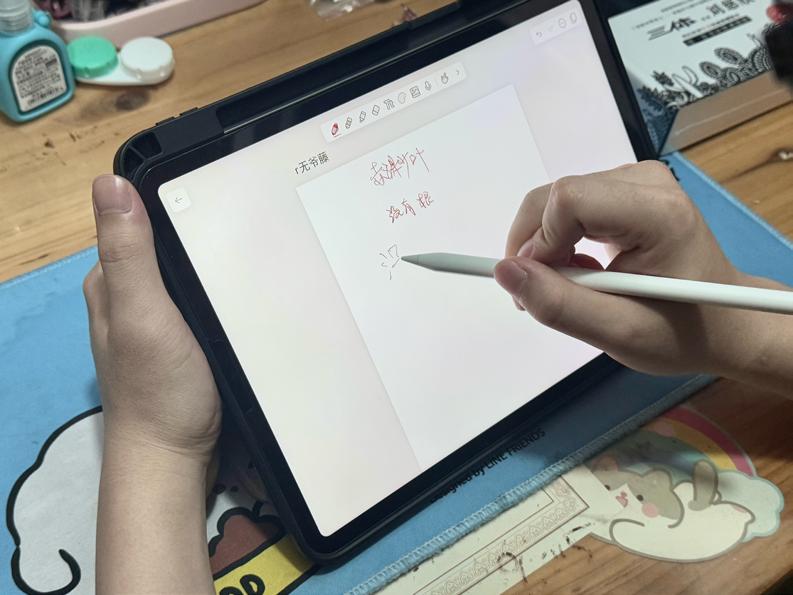
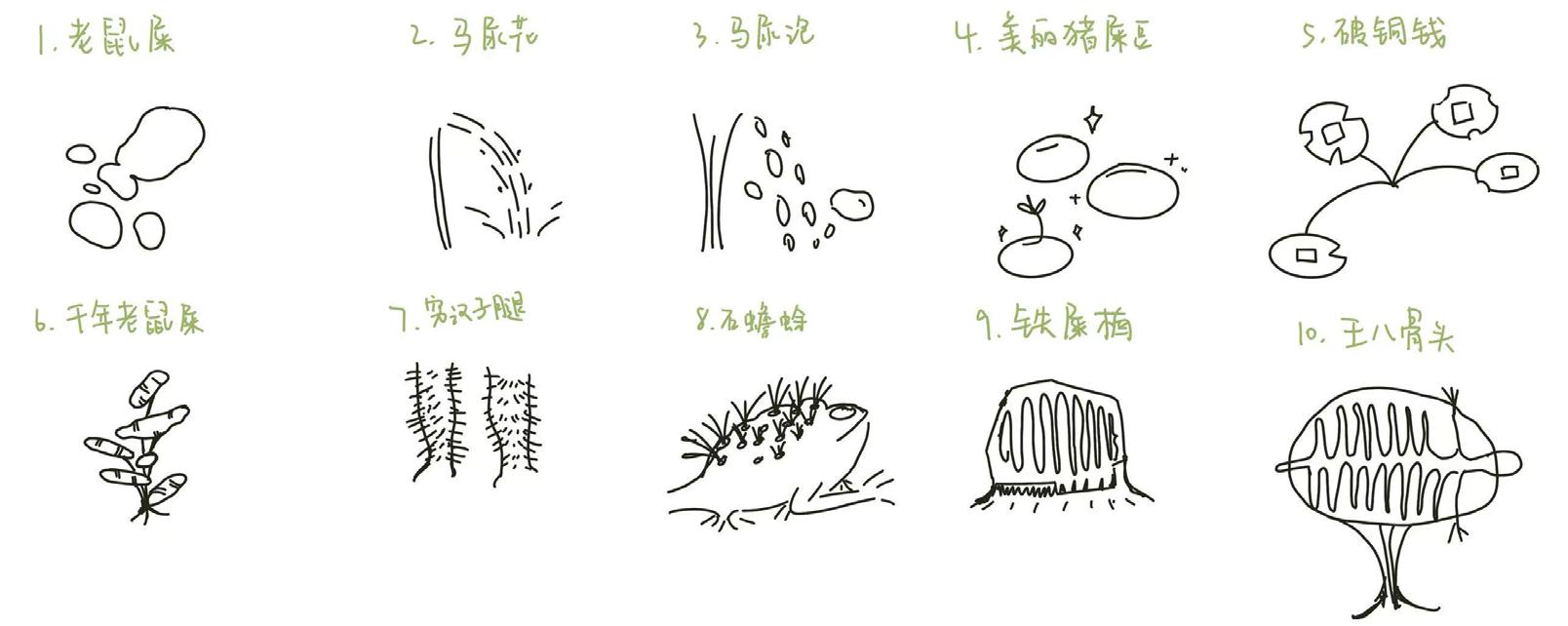
People wrote their first impressions of the plant based on its name and drew what the plant looked like in their minds
Most people are influenced by the names of these plants and stereotype them, making it difficult to truly understand the plants themselves.
ESSAY
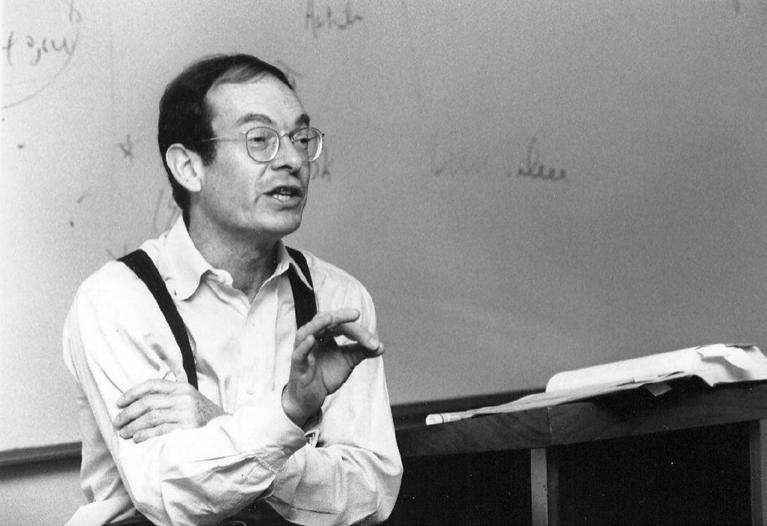
De-Anthropocentrism and natural rights
Everything in nature-including rivers, mountains, animals and plants - should have legal rights.
Plants should not be assigned a certain value or emotion just because they are good or bad for humans; plants themselves should have an inherent value as living beings.
CASE STUDY
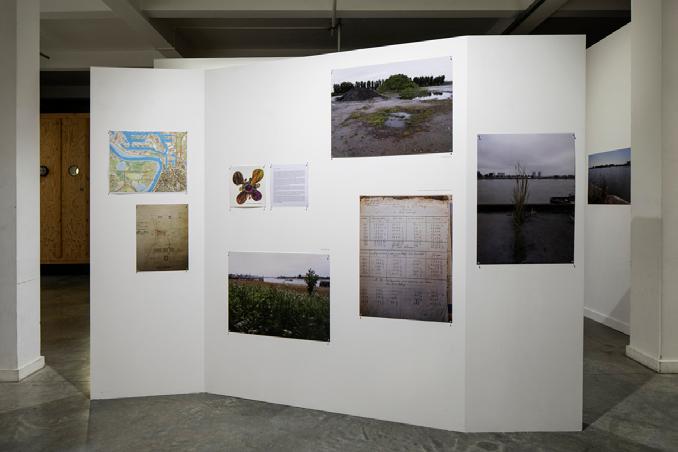
Alves traced the “foreign plants” carried by ballast soil in port cities, revealing that labels like “invasive” or “weed” stem from colonial and cultural power rather than the plants themselves. This made me realise that naming is a way of seeing. I therefore use translucent materials to create a shifted perspective, allowing viewers to sense how names intervene in understanding before reality does.
Christopher Stone
Seeds of Change, Maria Thereza Alves
DESIGN CONCEPT
I wanted to use visual language to explore how people are influenced by biased plant names. To achieve this, I designed a botanical journal and a leaf-based installation that highlight these misleading names while also reflecting the common misconceptions they evoke.
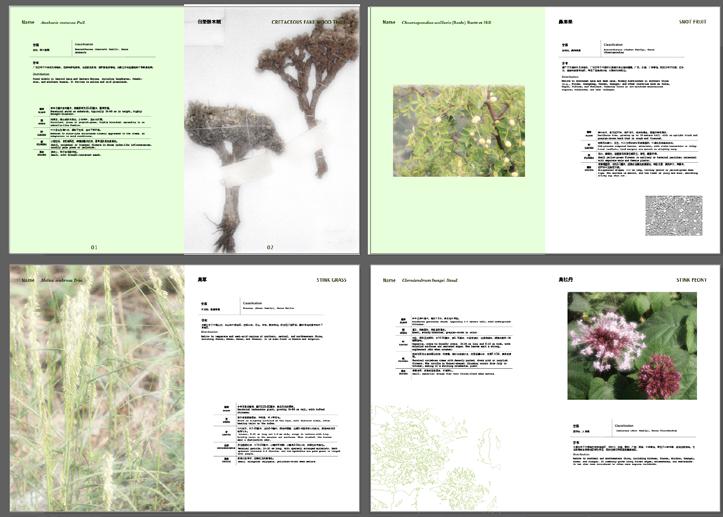
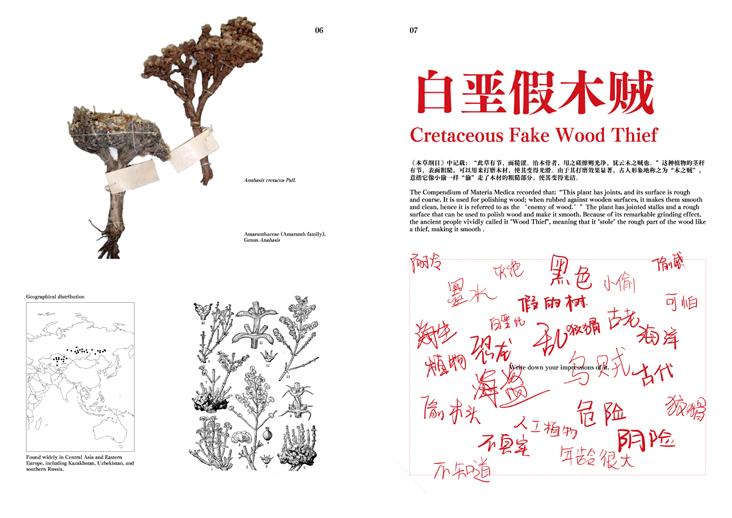
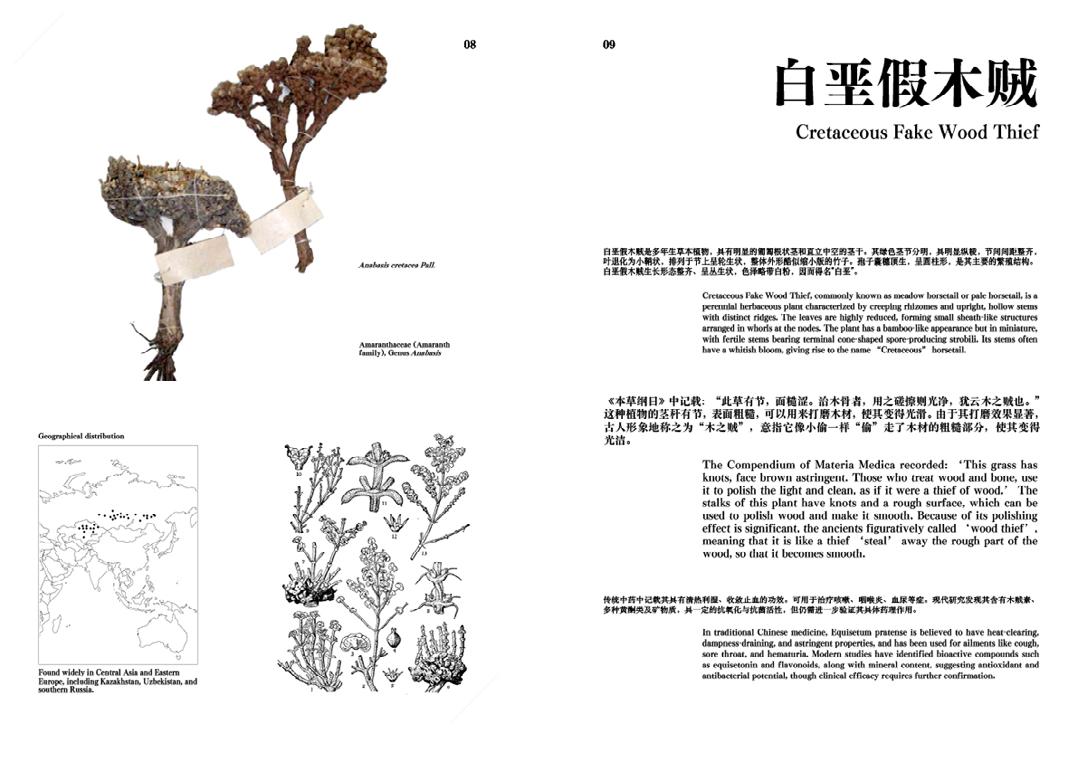
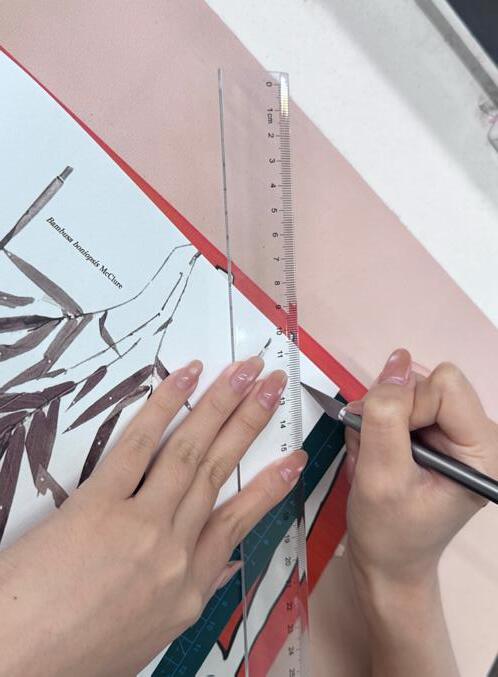
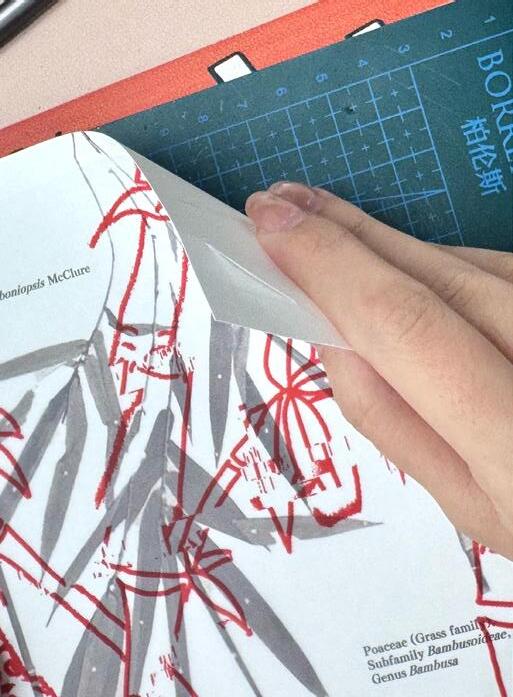
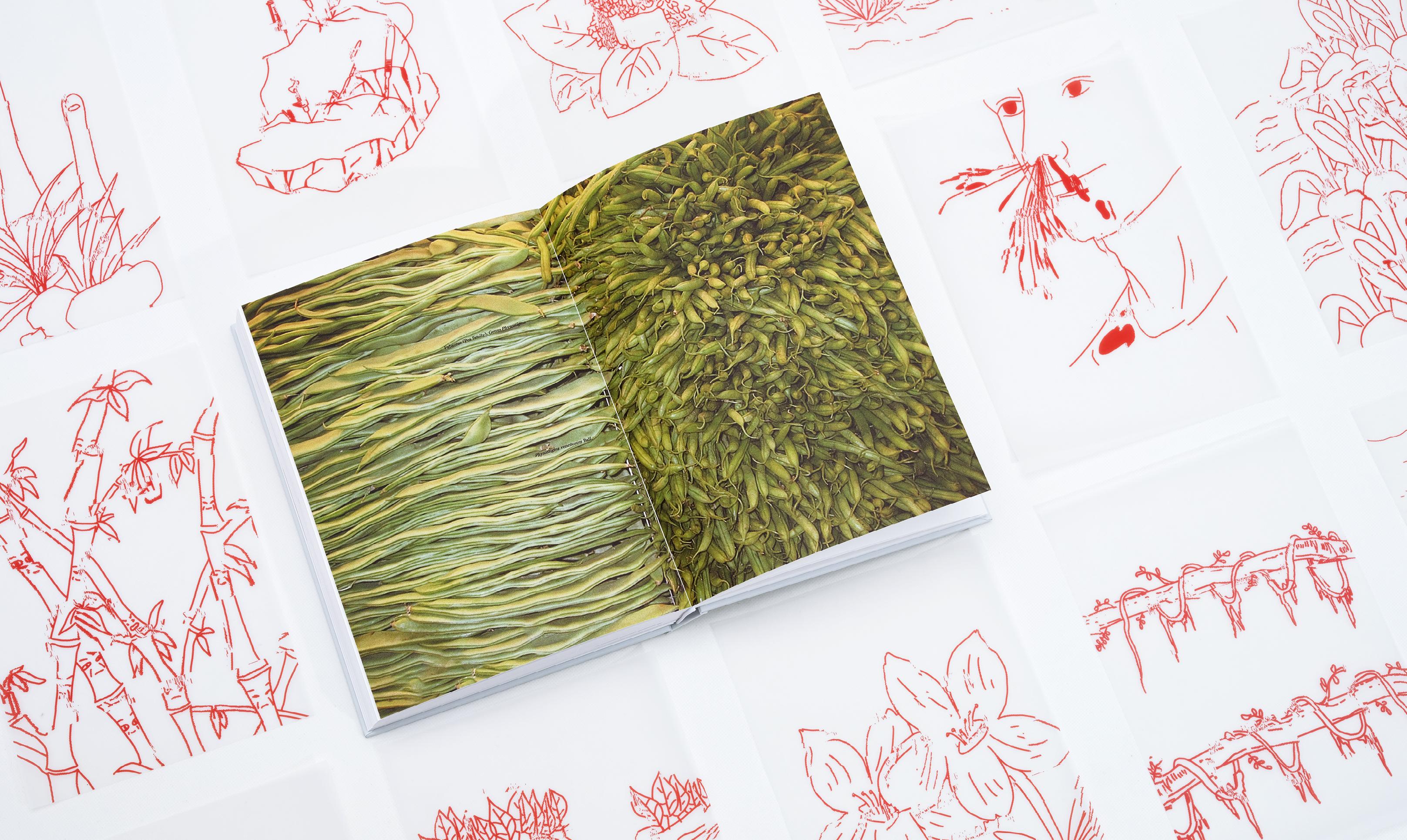
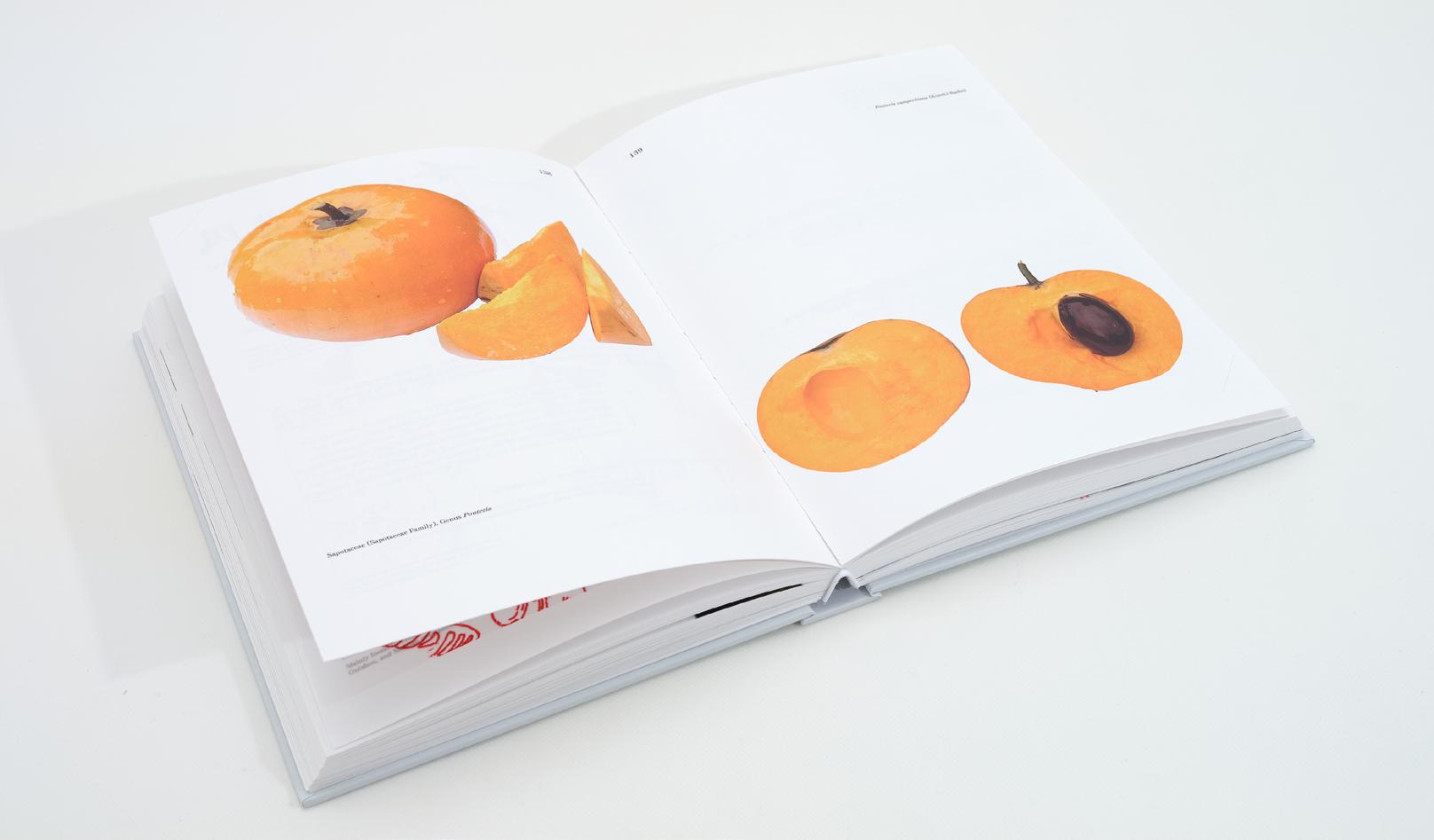
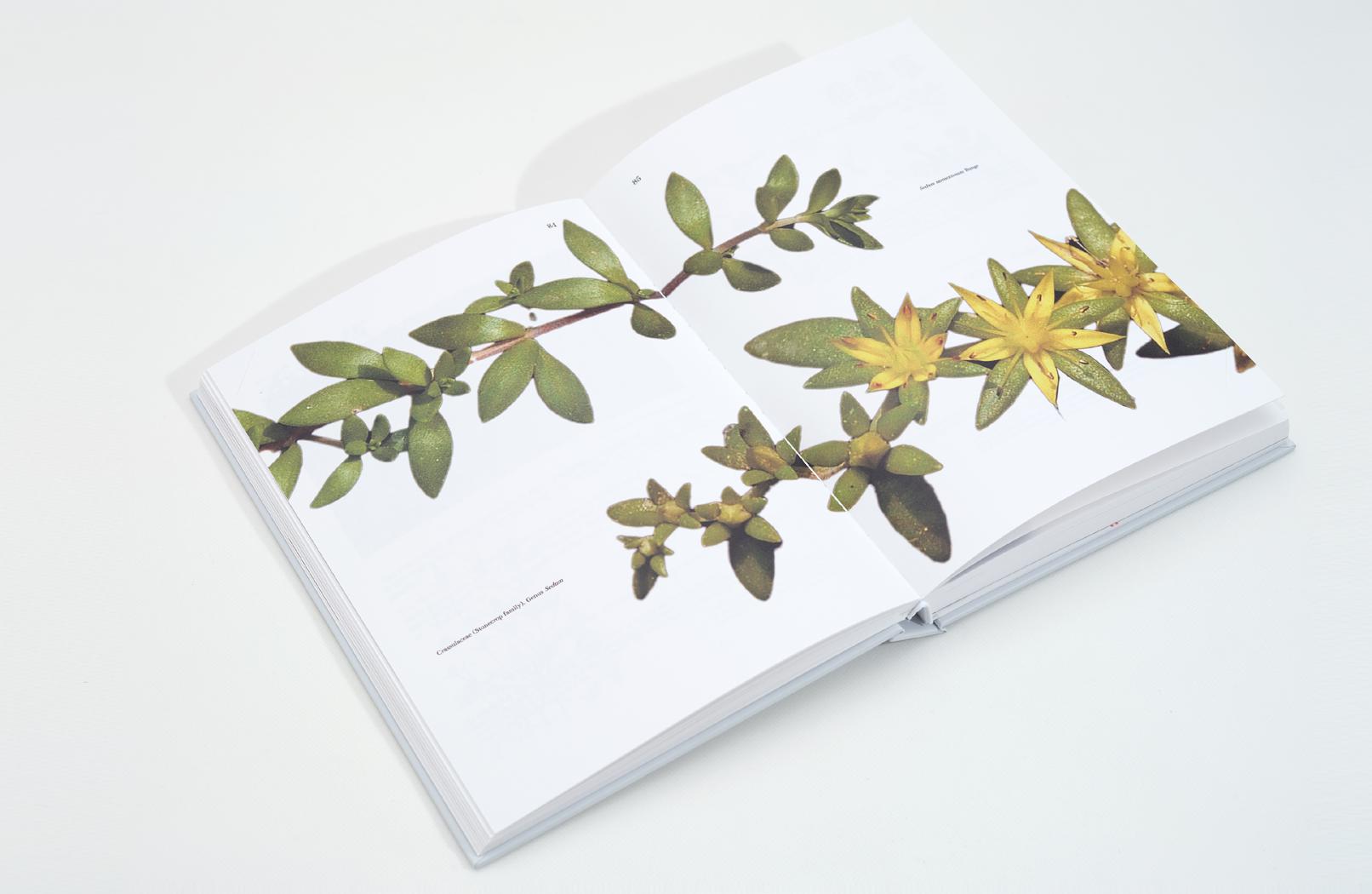
On each page, I present plants with misleading names alongside their basic information and images. To reveal how these names shape perception, I include handdrawn interpretations based on people’s reactions. These illustrations, printed on acidic paper, are inserted on the left side of each page.
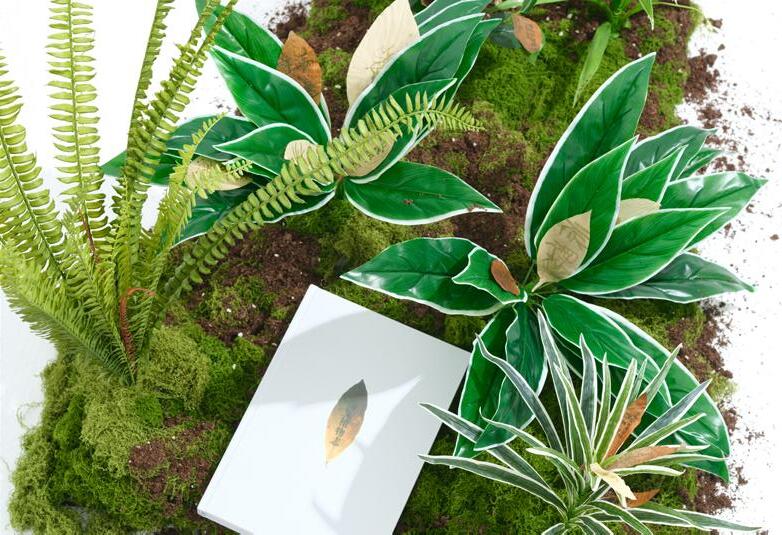
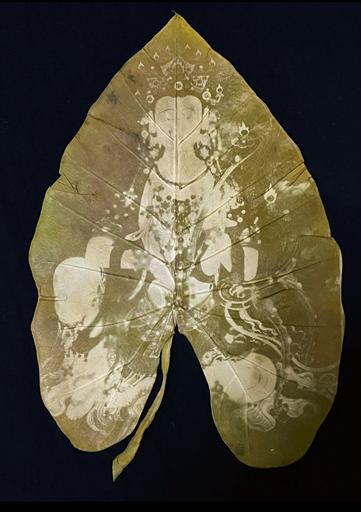
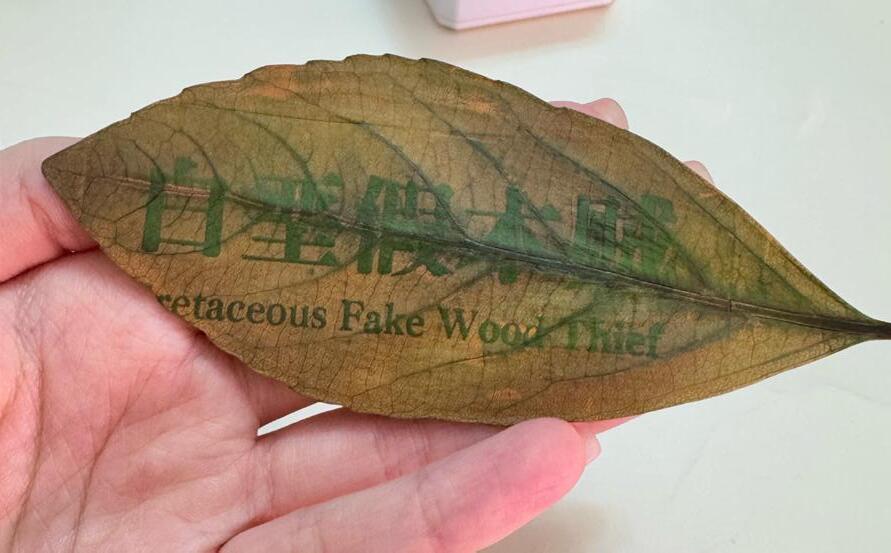
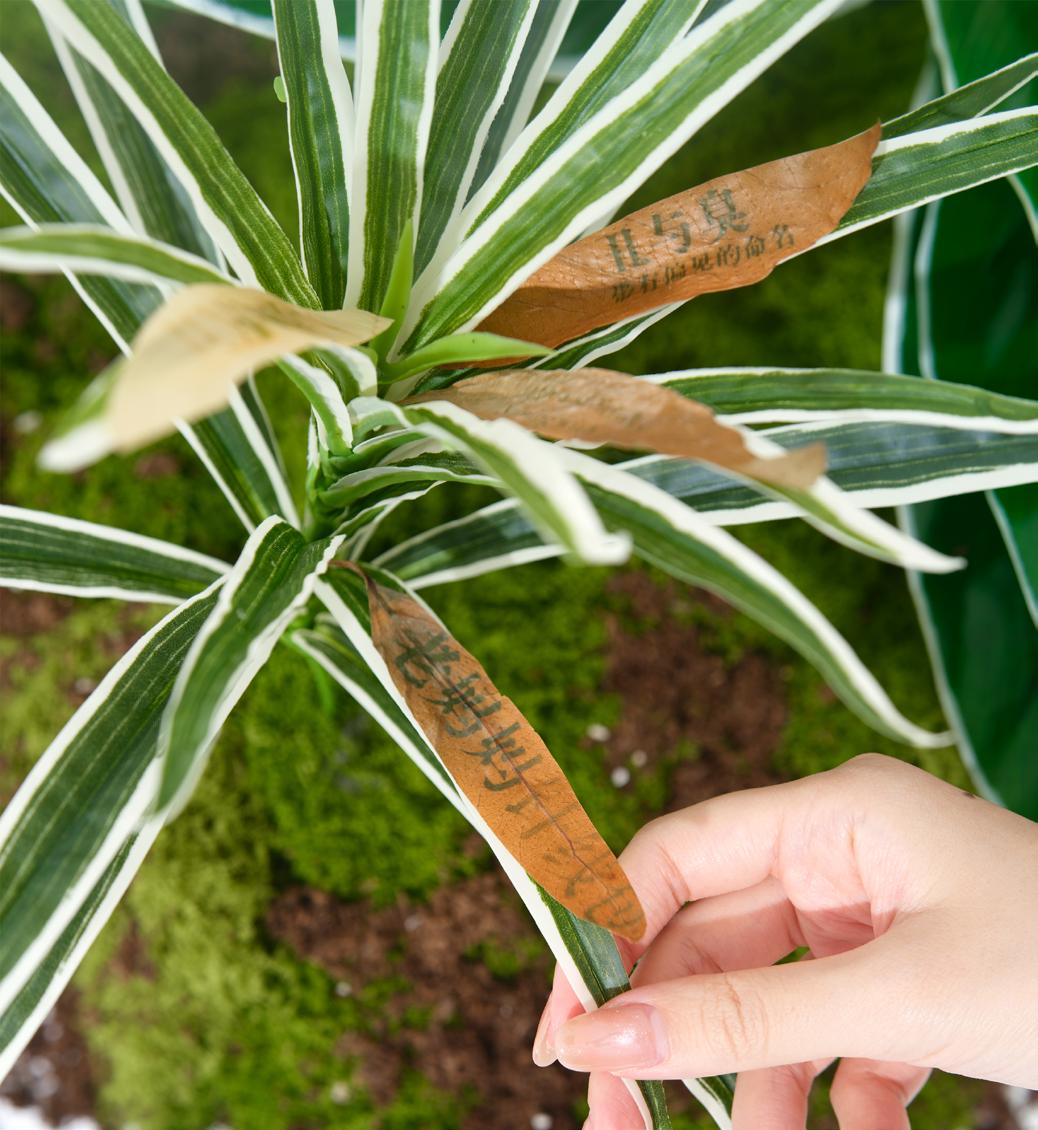
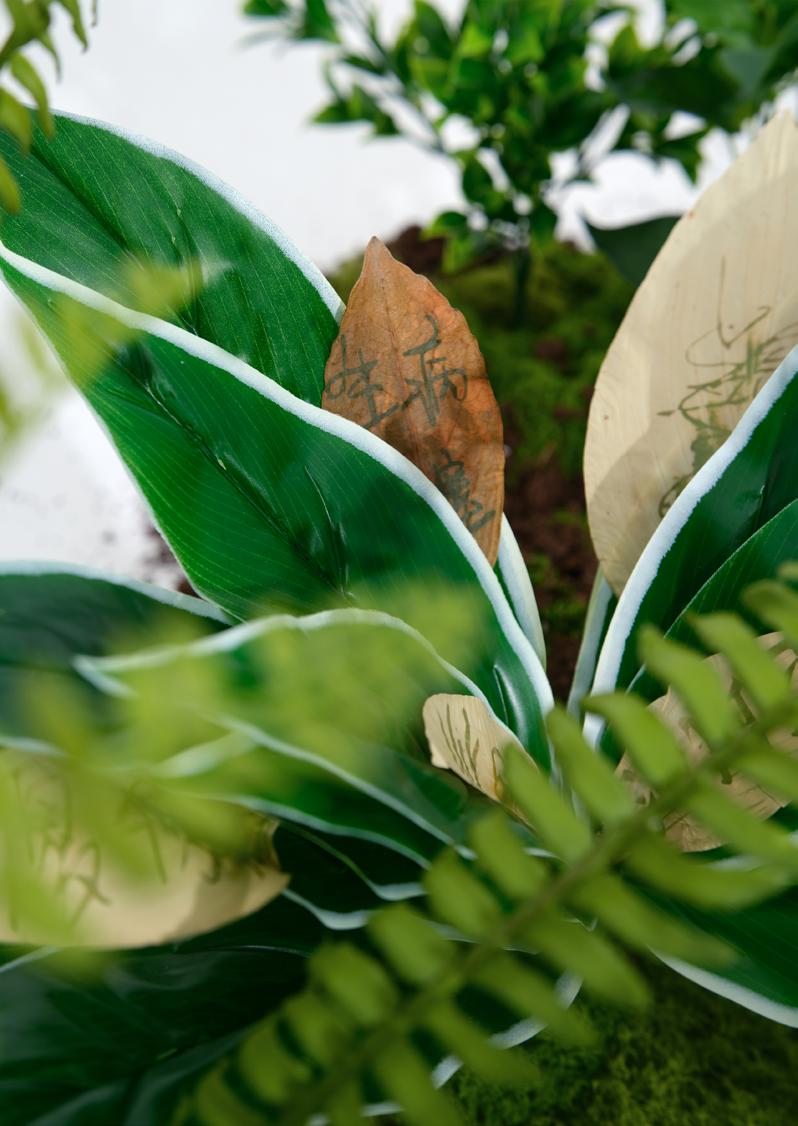
The plants’ misunderstood names are chlorophyll-printed onto their leaves and mounted on plants, evoking a world inscribed by human language and classification.
ARCHIVE DESIGN
01: Traditional botany approach but failed to foreground plant names.
02: Enlarged names as the visual focus and added human perceptions.
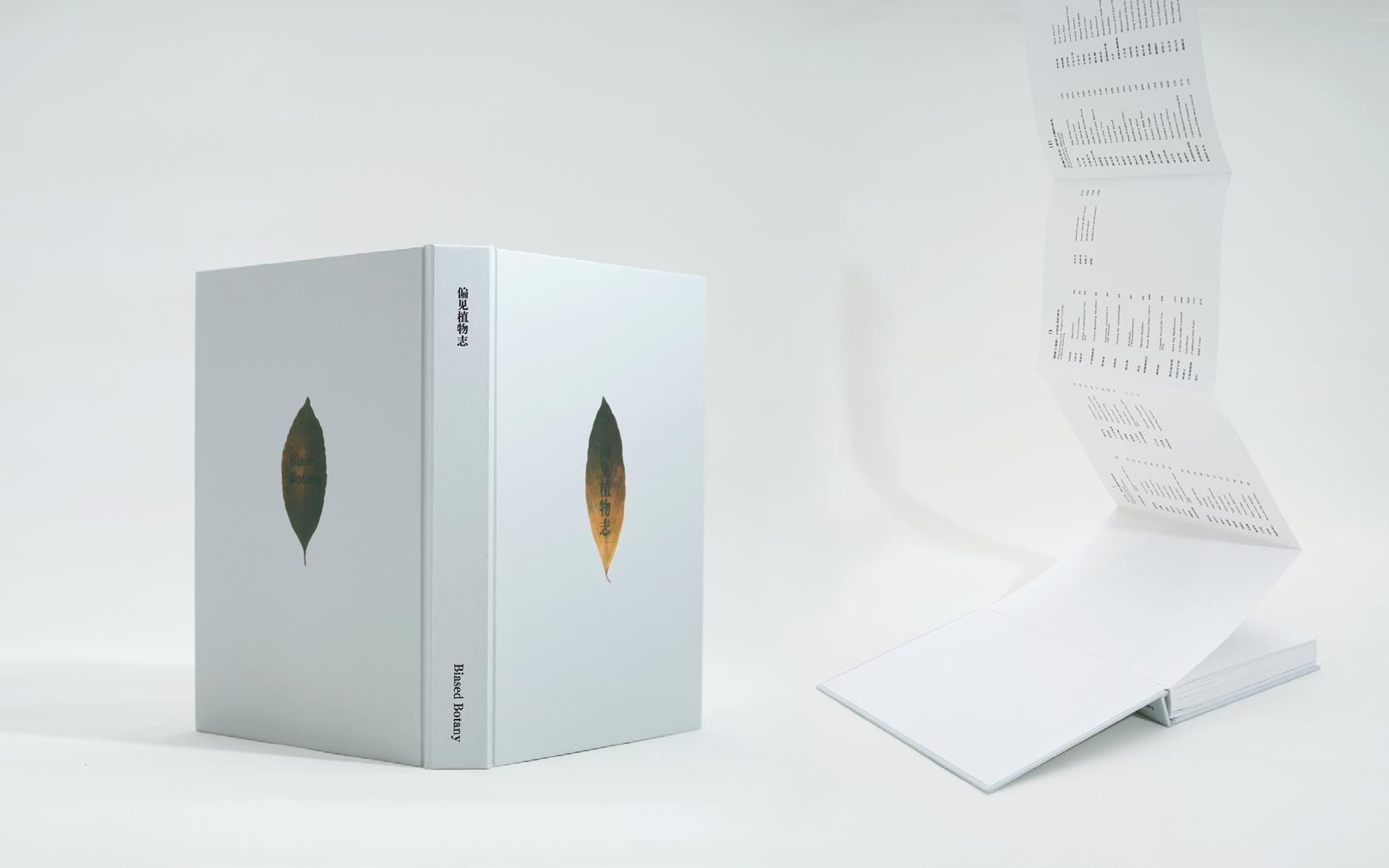
Red text marks subjective perceptions, while black provides objective botanical descriptions, and participant drawings on sulfuric acid paper are embedded to blur perception and documentation. For the cover, I separated the Chinese and English titles onto different leaves to keep the front and back visually concise.
INSTALLATION MAKING
Reference
Material Test
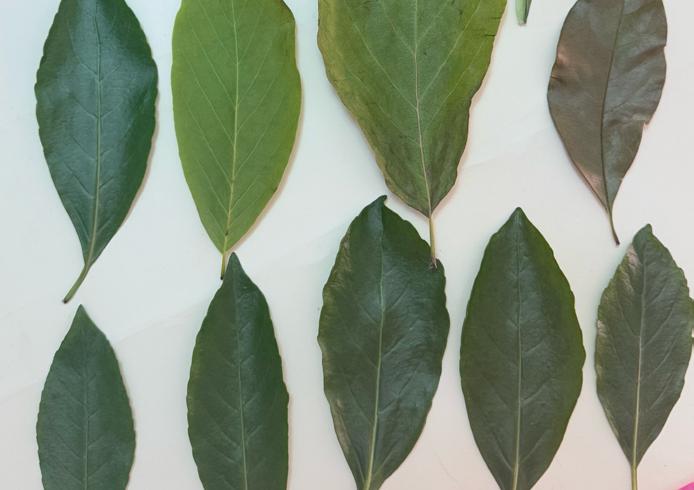
Chlorophyll Printing
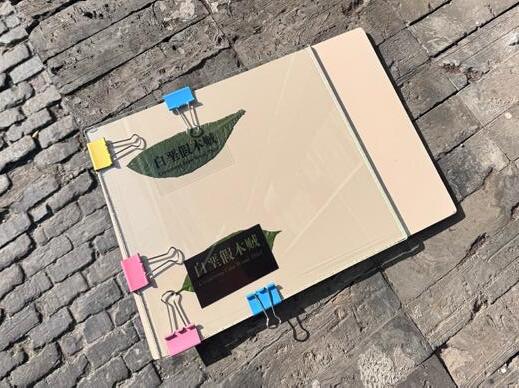
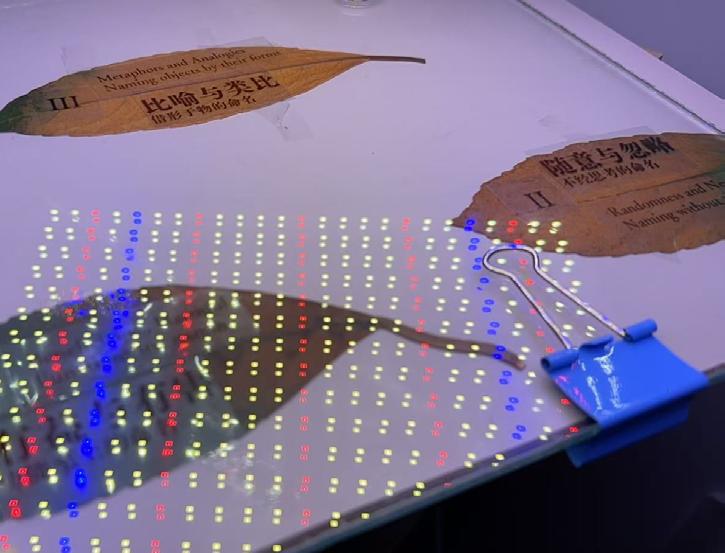
Chlorophyll printing transfers images onto leaves by exposing them to sunlight, which breaks down chlorophyll at different rates to create tonal variations. I chose this technique because the image becomes part of the leaf itself, echoing how human naming leaves lasting imprints on our understanding of plants.
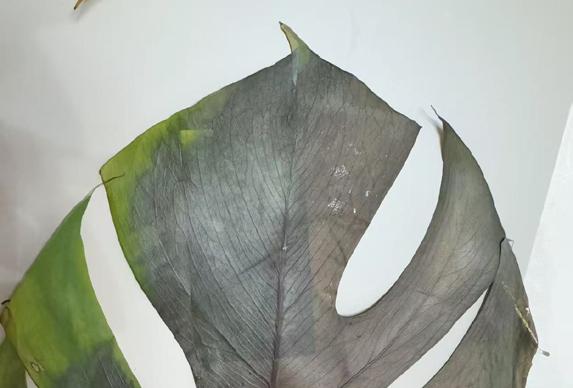
01: I chose some thick leaves and placed them in direct sunlight and the leaves dried right up.
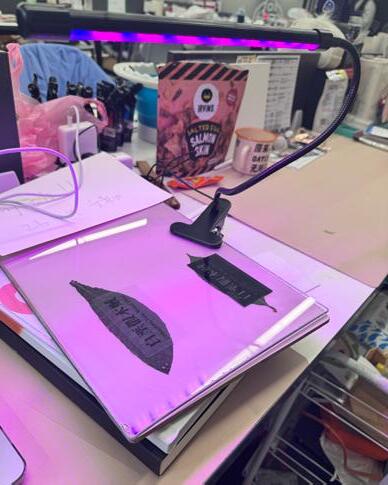
02: I chose to use a plant filler light to avoid high temperatures, but there was no discolouration reaction in the leaves.
03: Finally, I selected thin leaves, pinned them in a book to flatten and dry them, and used a high-power plant light with broad coverage for irradiation.
Process
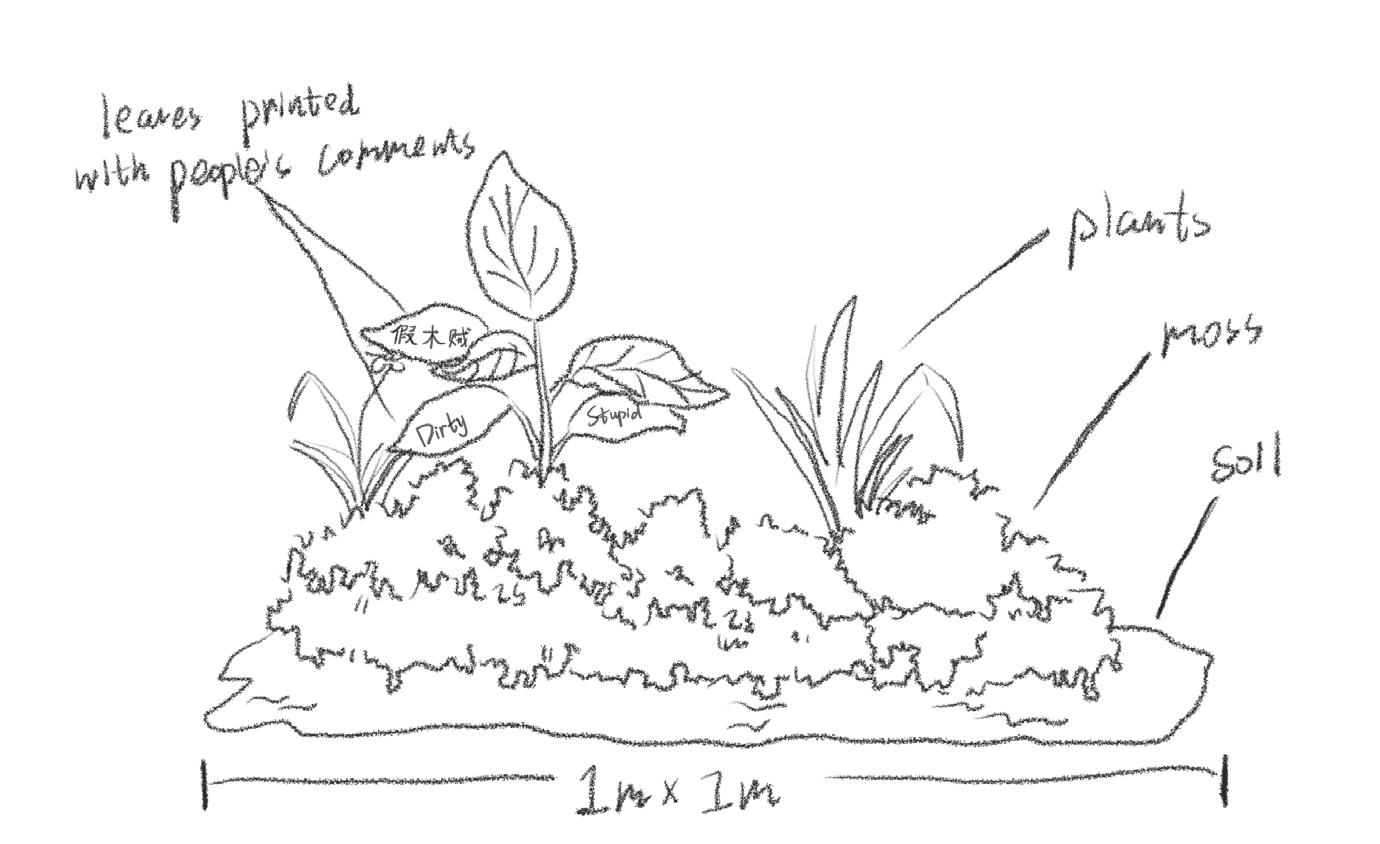
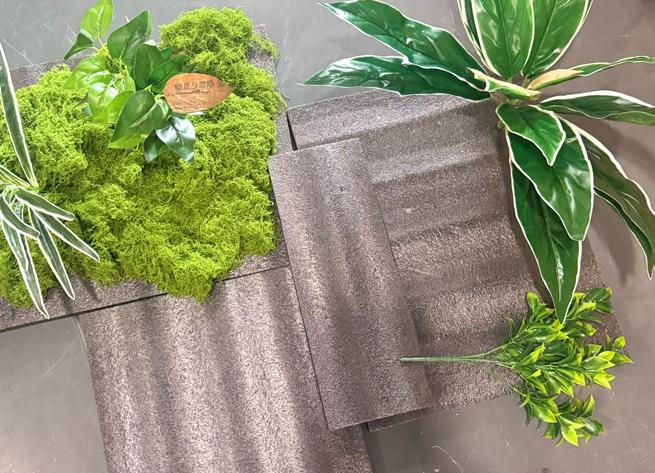
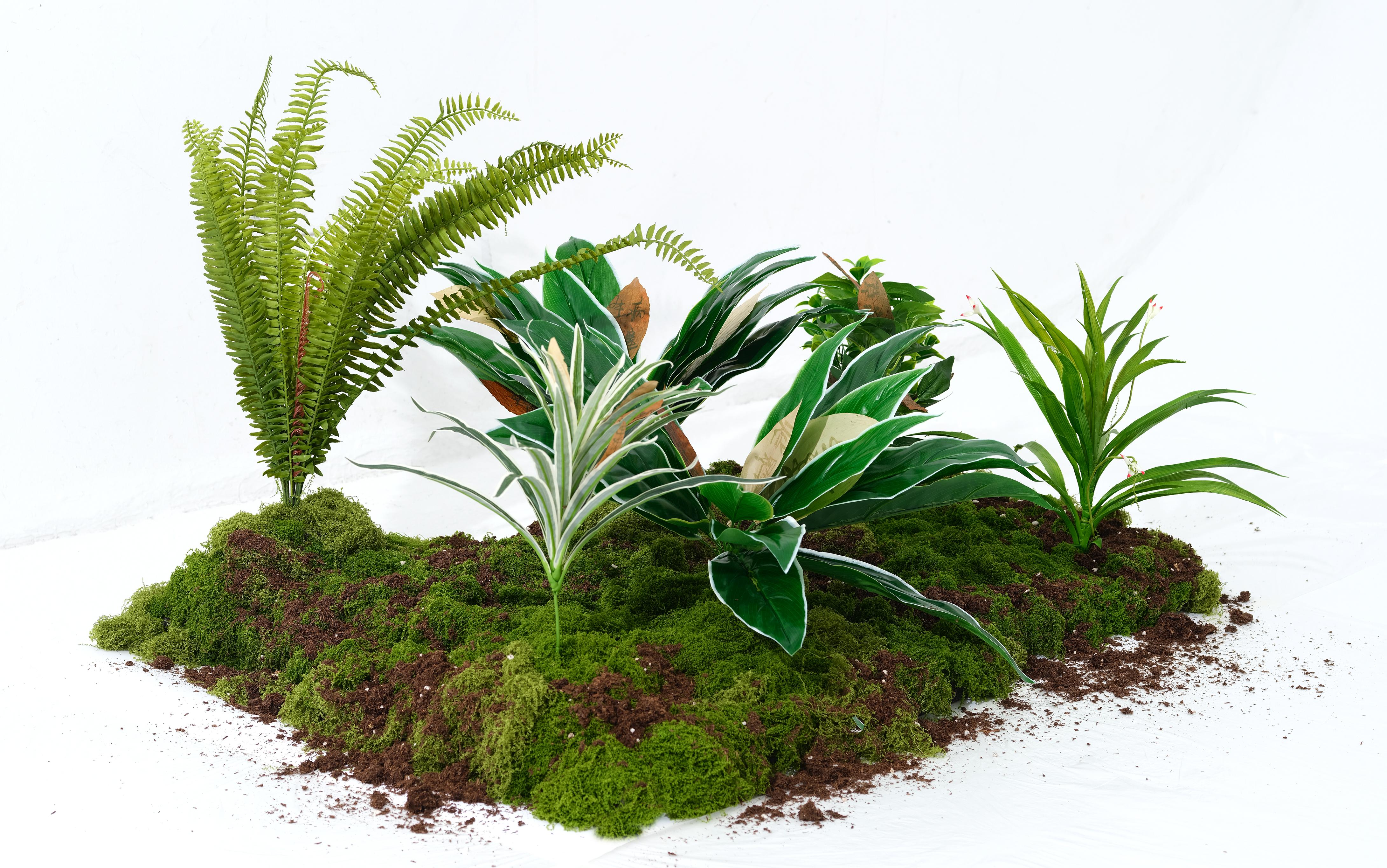
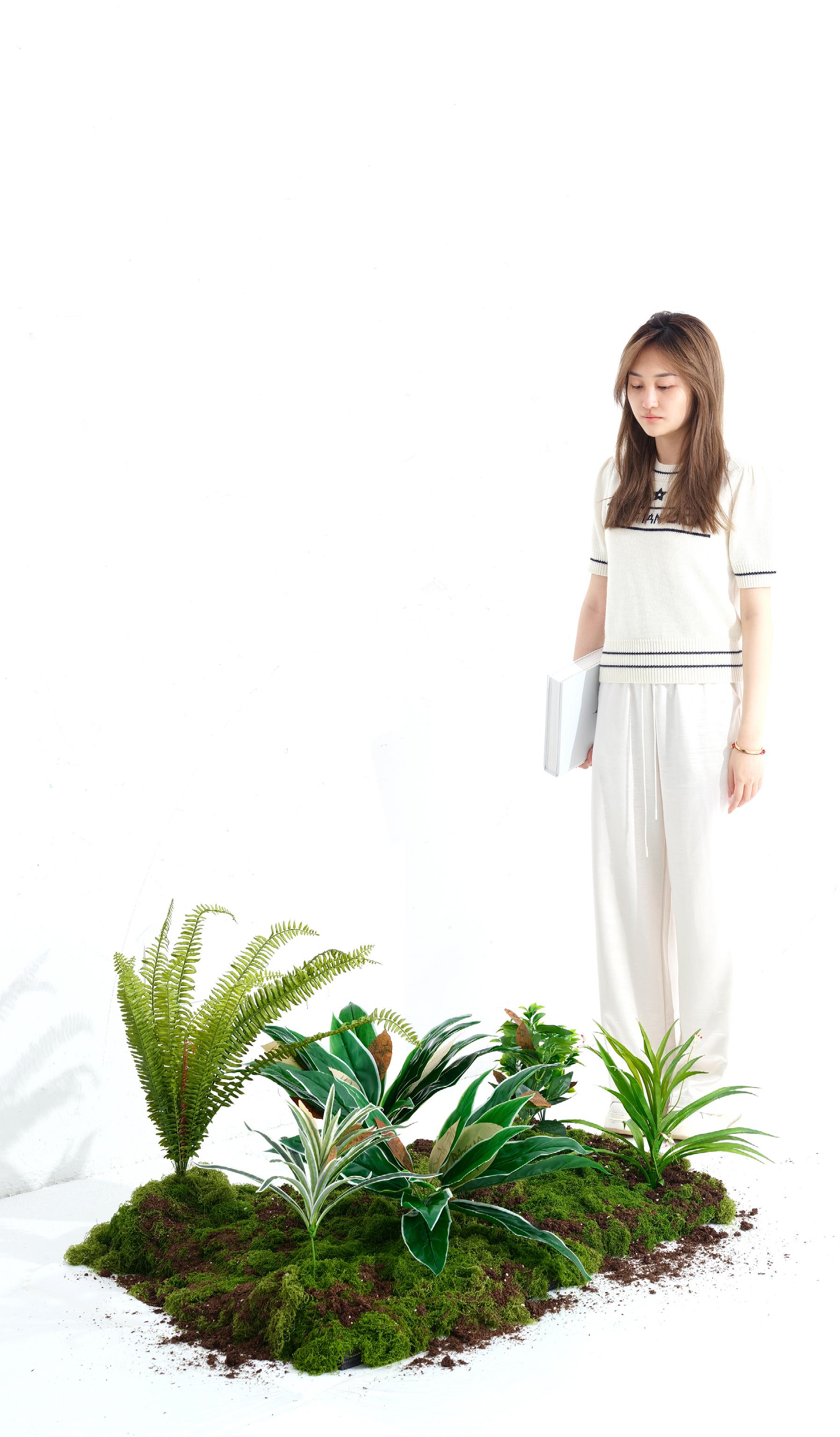
This installation recreates a plant community covered with human labels. Each leaf carries a subjective comment, showing how bias becomes imprinted onto plants. Viewers can approach, read, and remove the leaves to reconsider how they perceive the natural world.
I collected handwritten comments about plants and turned them into film negatives. Using chlorophyll printing, I transferred these words onto leaves.
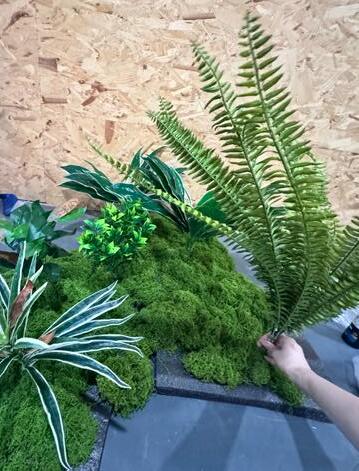
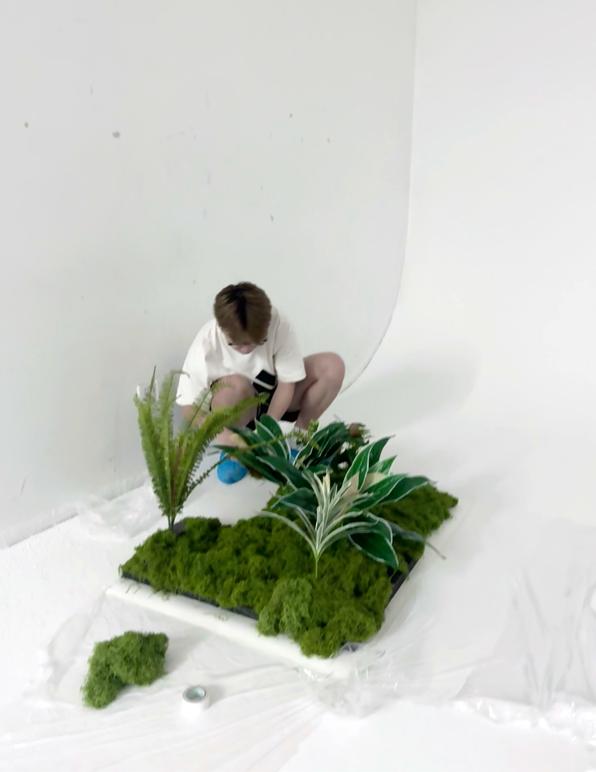
Cut foam board as the base and line it with moss, tape the fabricated leaves onto real leaves, then fix the assembled plant onto the board and sprinkle soil around it.
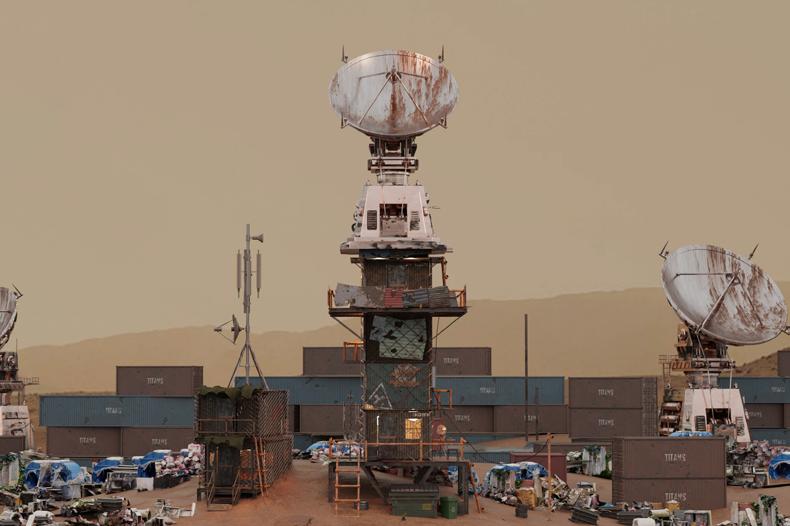
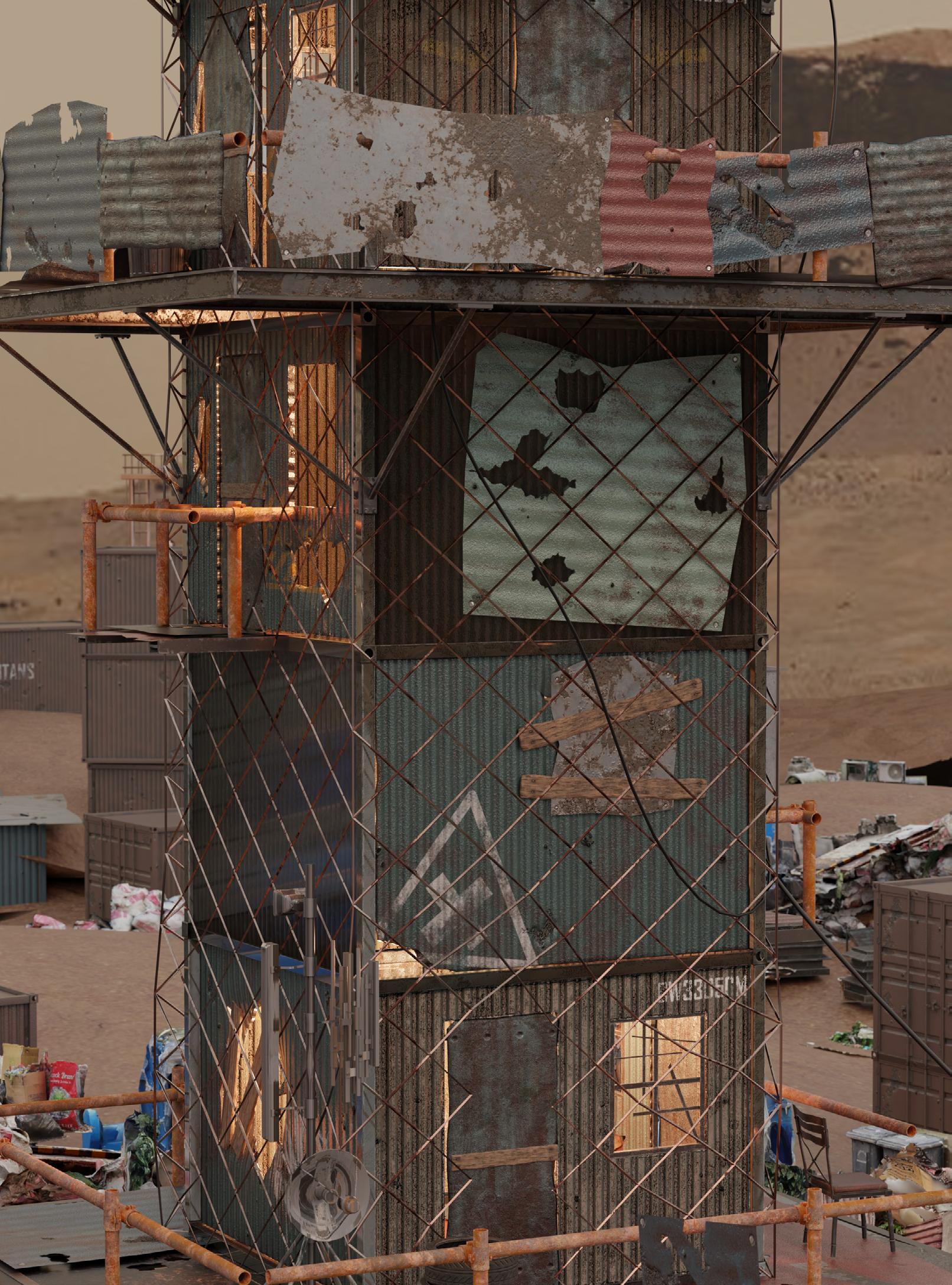
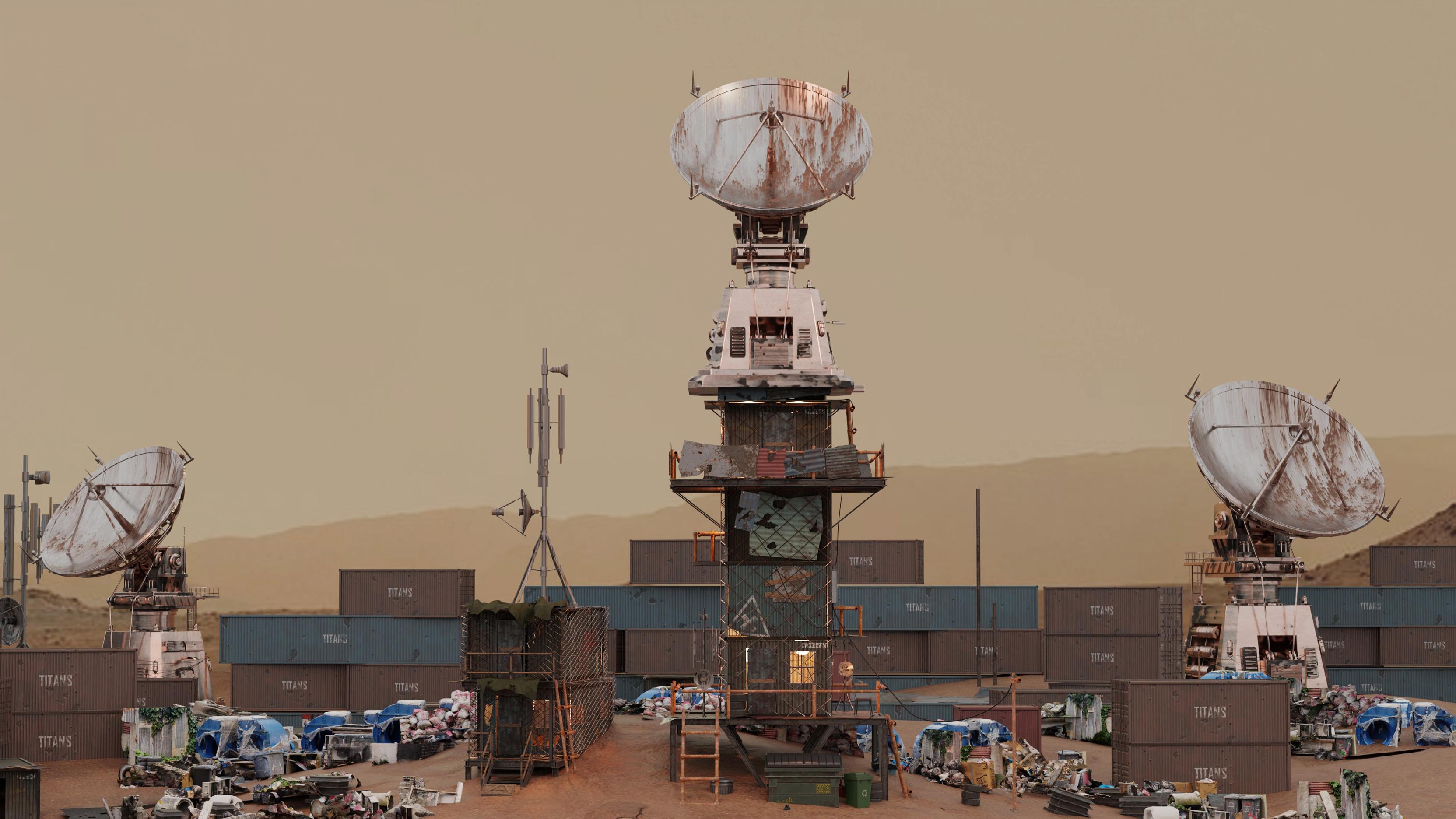
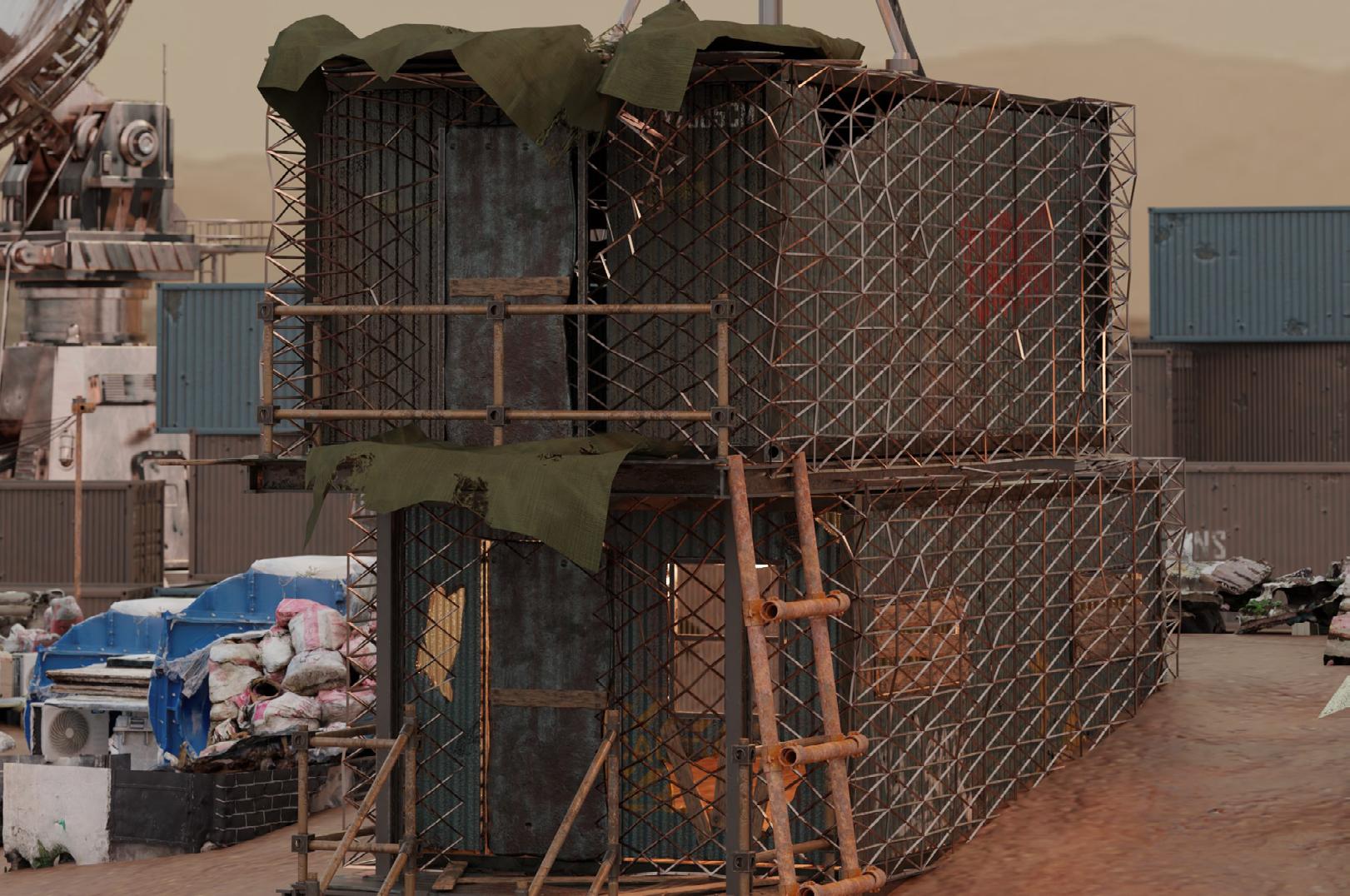
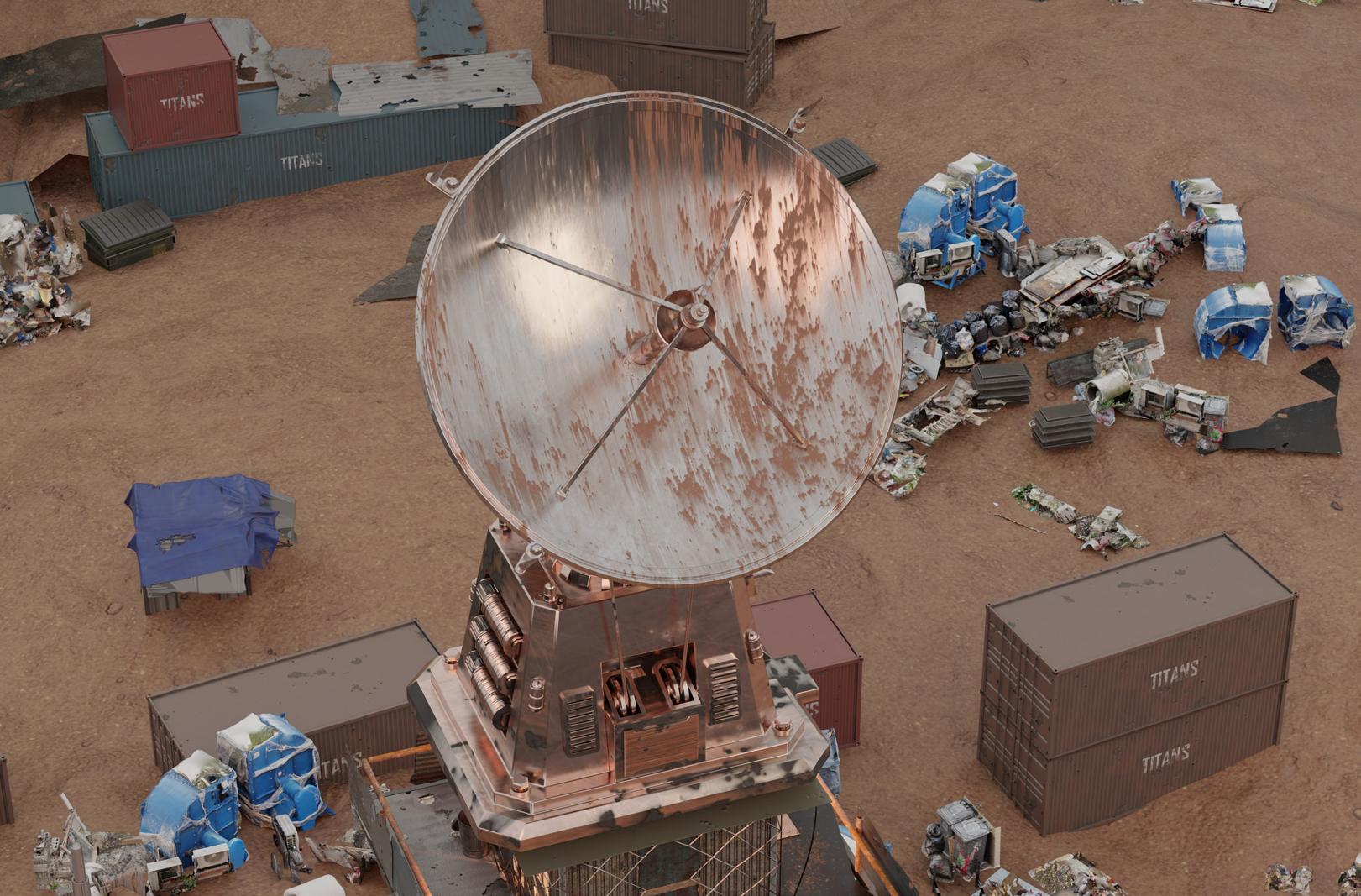
As a futuristic piece of 3D speculative design created in Blender, this project presents a dystopian resistance apparatus: a signal jamming tower constructed from waste. It explores how, in an era of total datafication, humanity might employ physical disconnection to resist capital’s exploitation of emotion and privacy.
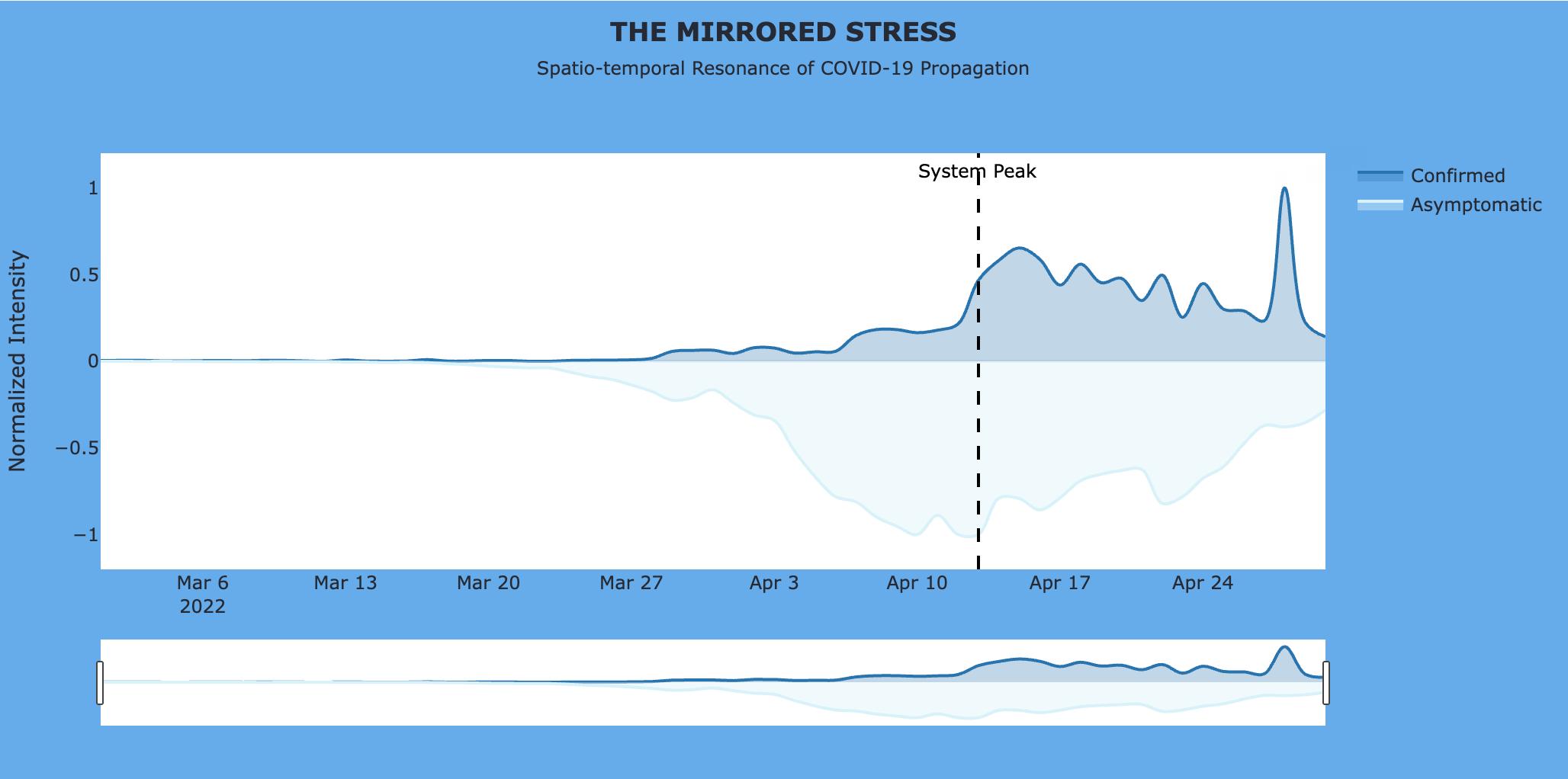
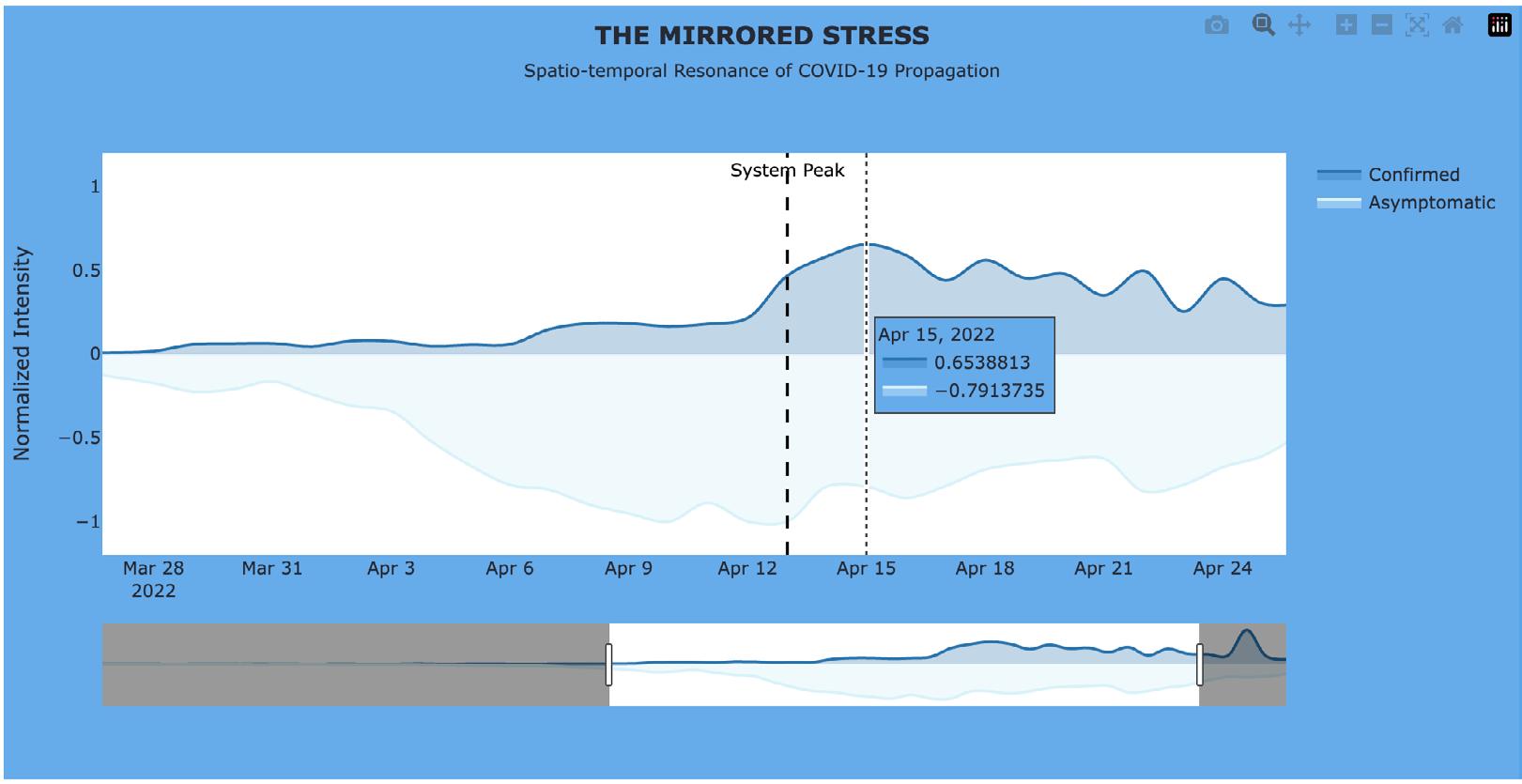
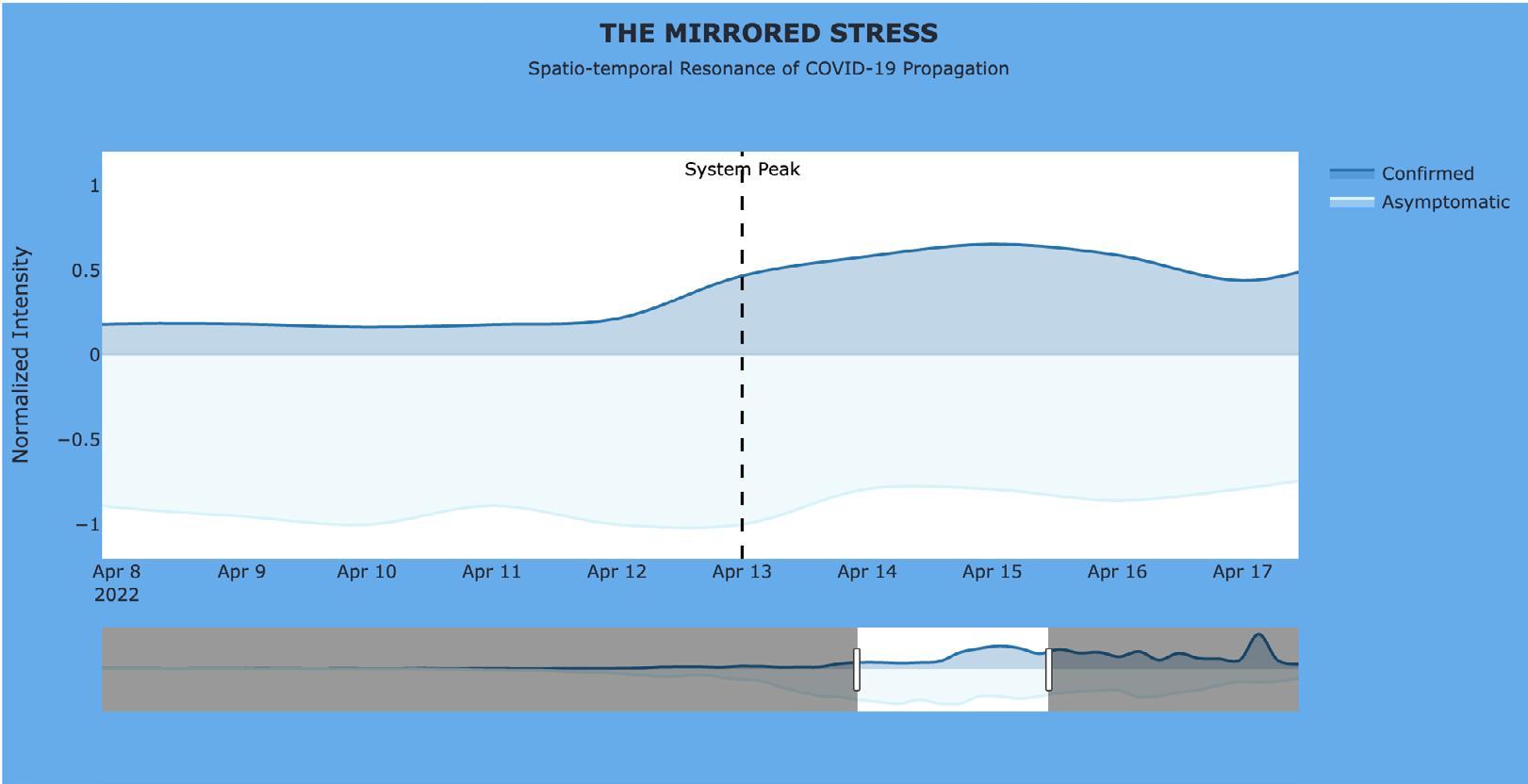
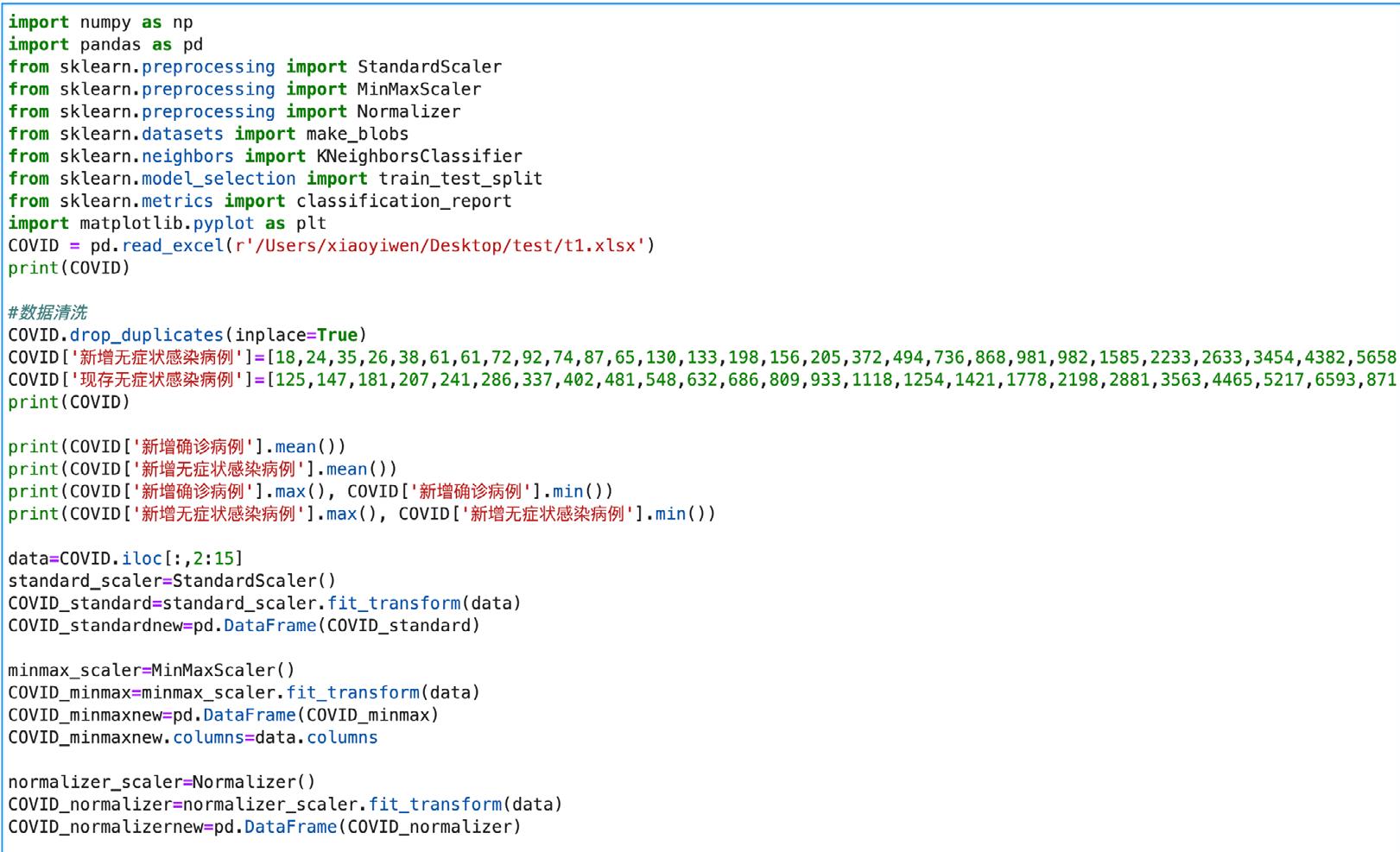
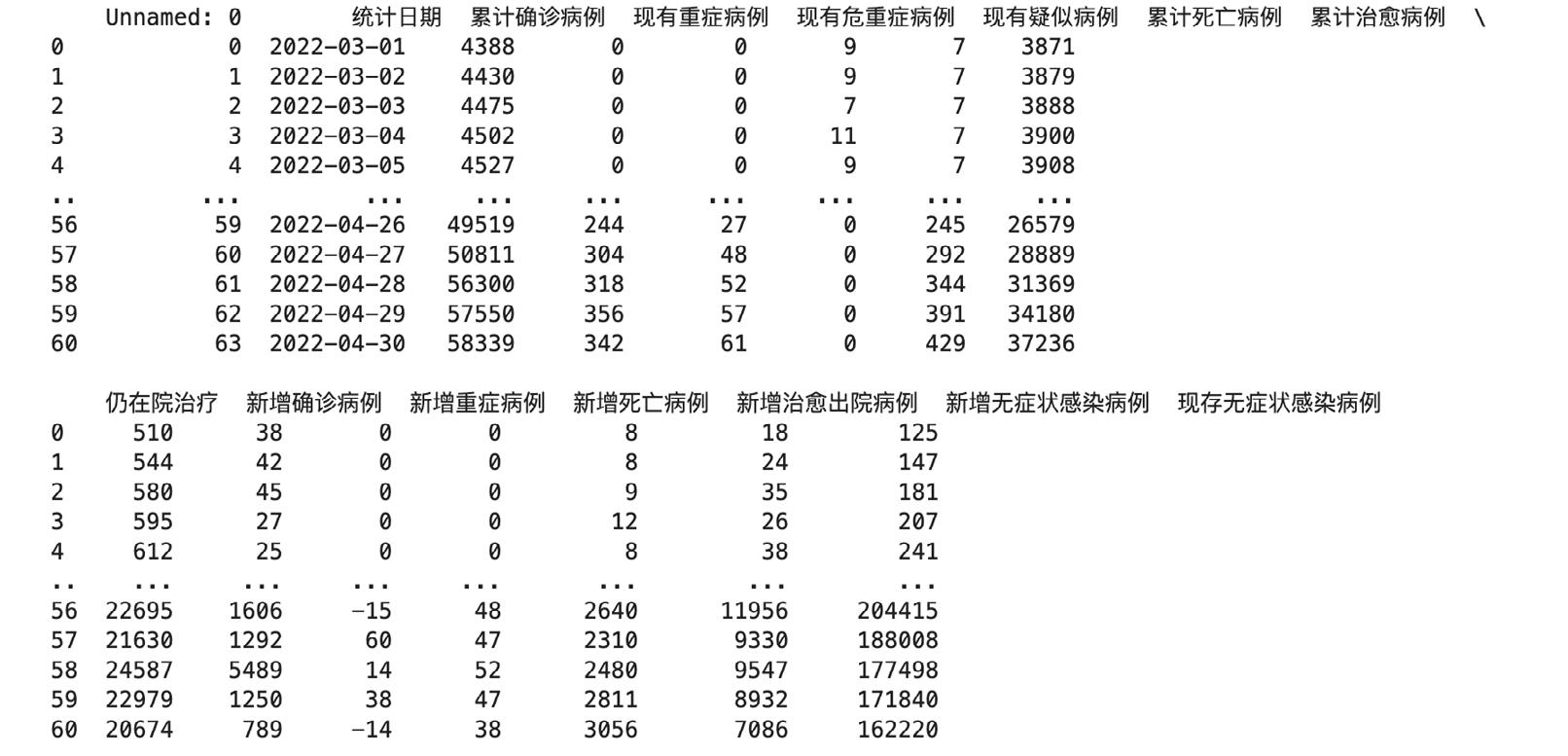
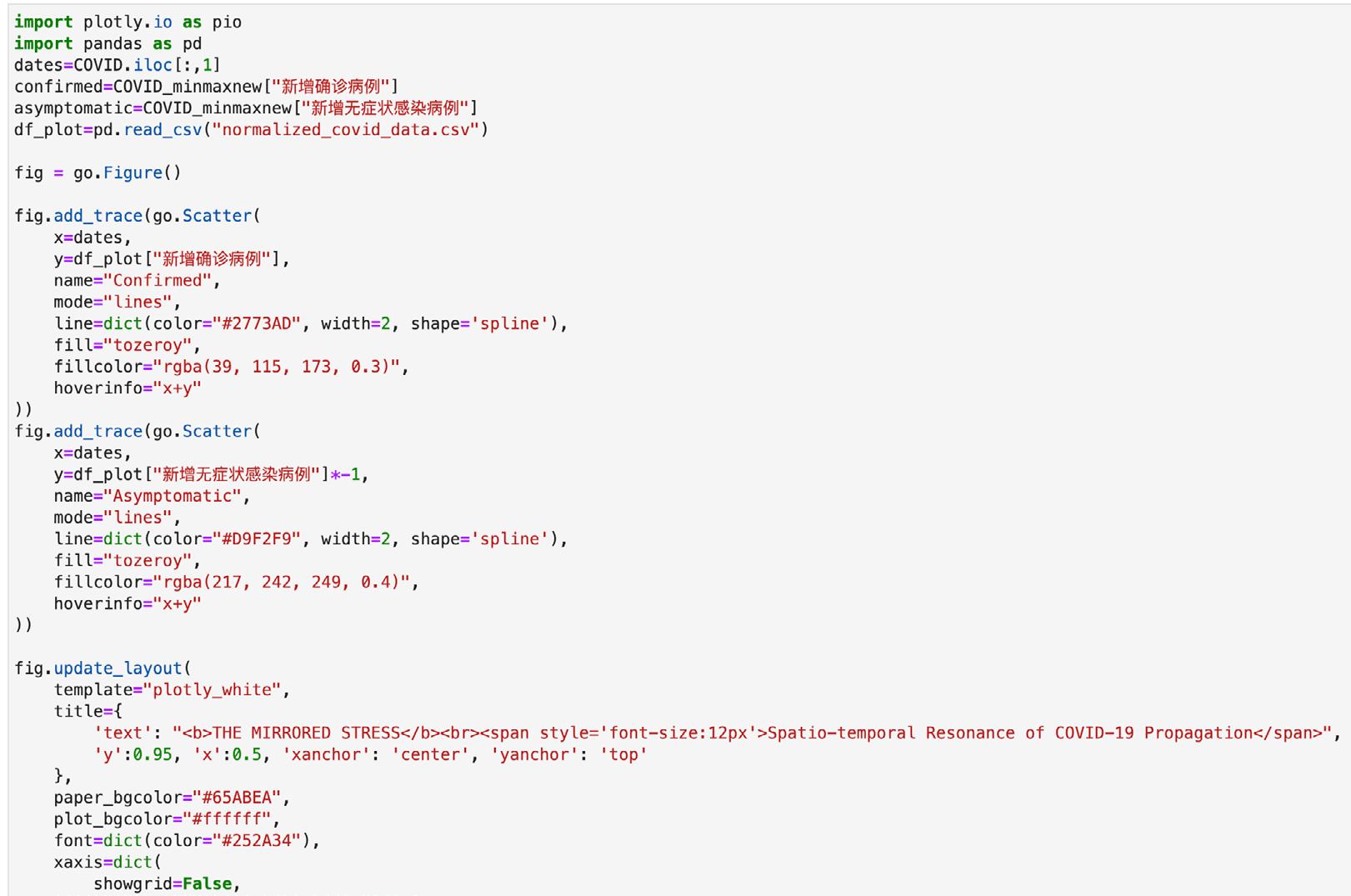
Developed a Python-based pipeline to analyze 2022 Shanghai COVID-19 dynamics, employing Pandas and Scikit-learn for multiscale normalization and KNN analysis, culminating in an interactive Plotly visualization that maps the mirrored tension between visible confirmed cases and hidden asymptomatic risks.