UNDERGRADUATE PORTFOLIO
WENNY LIU
table of content
01 Cross Pollination
02 Wind Chimneys
Barcelona, Spain
03 The Shellborhood
Los Angeles, California
10-17 04-09
Las Cruces, New Mexico 18-25 26-31
04 Model Photography Architecture Physical models

table of content
01 Cross Pollination
02 Wind Chimneys
Barcelona, Spain
03 The Shellborhood
Los Angeles, California
10-17 04-09
Las Cruces, New Mexico 18-25 26-31
04 Model Photography Architecture Physical models
ARCH4520 Synthesis Studio
SPRING 2024 | Professor Kendall Roberts
Partial Collaboration with Kaylin Roberts*
Location: Las Cruces, NM
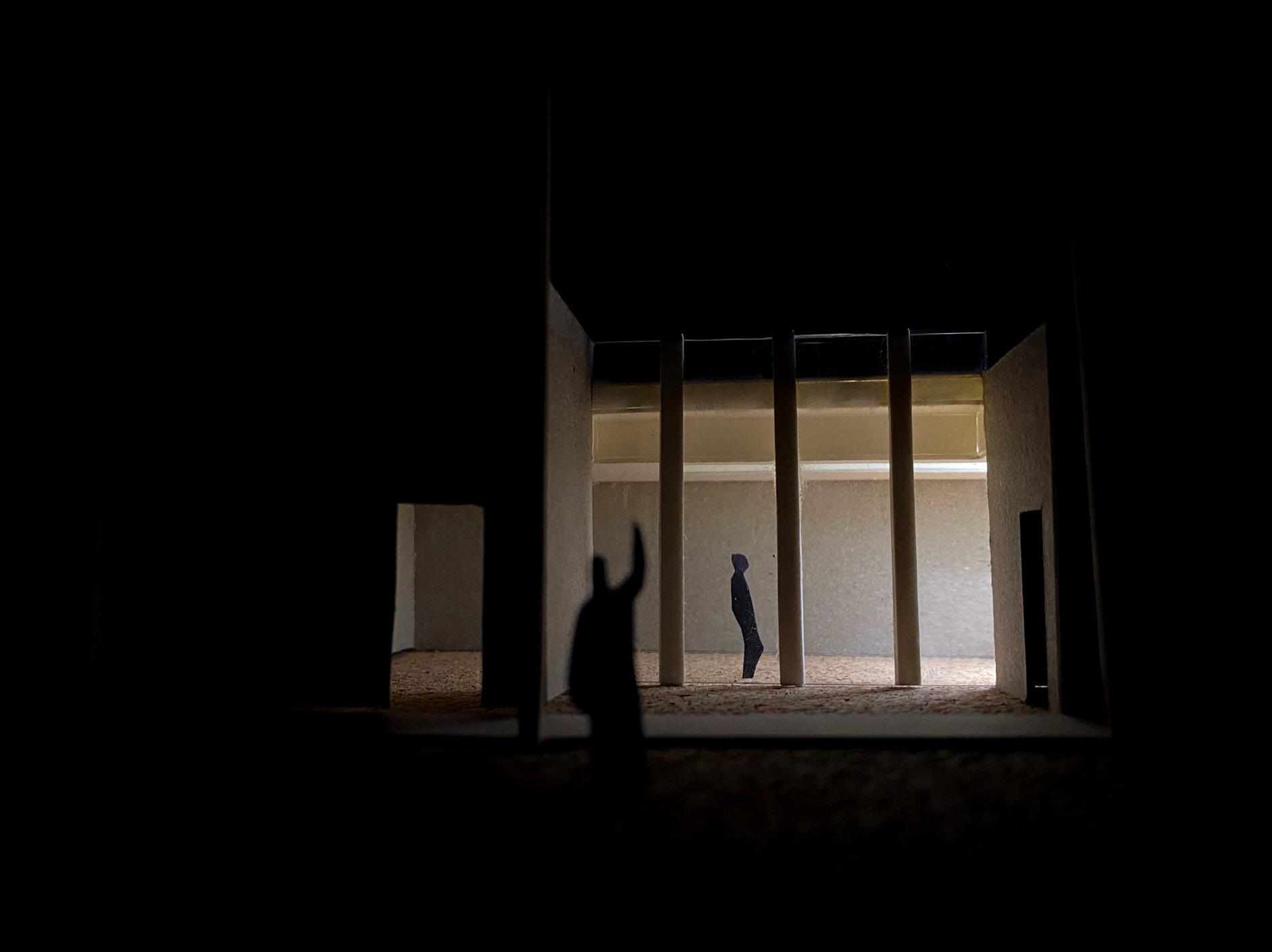
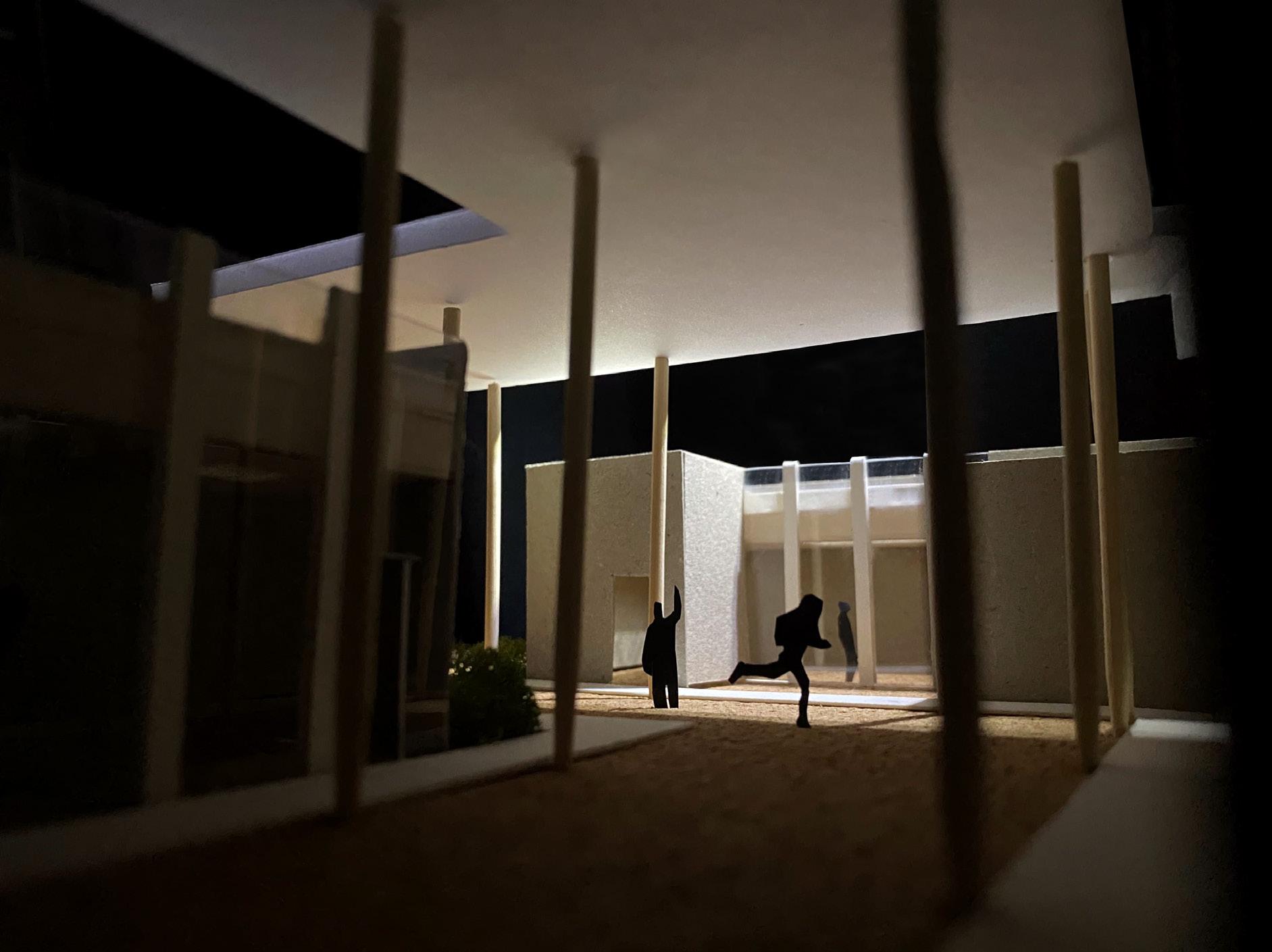
Situated in the fertile Mesilla Valley of Las Cruces, New Mexico, our proposed agricultural boarding school aims to address local challenges in food security, sustainability, and national workforce development. Located at the terminus of historic Main Street in downtown Las Cruces, we propose a southern extension of the Farmers and Crafts Market of Las Cruces to connect the market directly to the site, where students can engage with the community and learn valuable business skills in addition to their academics. In Las Cruces, where 75% of students qualify for free or reduced lunch, this school will play a vital role in enhancing food security and agricultural education Additionally, agricultural production is projected to increase by 70% by 2050, yet the U.S. faces ongoing challenges in replacing an aging farming population and trained skilled workers and scientists in agriculture, and sustainable practices in agriculture.
The boarding school will engage students as active participants in community development and local initiatives to promote sustainable farming practices, and organic food production. Onsite greenhouses and school-hosted farmlands give students real-world experiences and the opportunity to grow what they eat, help make organic foods accessible to the community, and supply fresh produce to local schools and underserved communities. The school aims to become a hub for community life and transform Las Cruces into a food-secure city with improved access to healthy food options and become a model of an innovative approach to learning that can lead to lasting economic and social benefits.

- merge the two lands
- bars are stretched at diff sizes at ends- to imply an end of the street & the shape formed is part of our extension of the farmer’s market- natural progression from the farmer’s market
- academic vs residential (we want to connect them)
- bars are stretched extension of
- merge the two lands
- program- priv anchoring the back where main employee entrance is, middle is classrooms/greenhousesmore educational and also right behind the crops, more social spaces- cafeteria/lib anchoring the front
- academic vs residential (we want to connect them)
- break into two main bars between academic and residential (visually connects)
- introduction of crops and greenery to the site
- horizontal bars added for safety for school and separates the school from the urban site
- bars are stretched at diff sizes at ends- to imply an end of the street & the shape formed is part of our extension of the farmer’s market- natural progression from the farmer’s market
- program- priv anchoring the back where main employee entrance is, middle is classrooms/greenhousesmore educational and also right behind the crops, more social spaces- cafeteria/lib anchoring the front - introduction of crops and greenery to the site
- break into two main bars between academic and residential (visually
- horizontal bars added for safety for school and separates the school from - bars are stretched at diff sizes at ends- to imply an end of the street & extension of the farmer’s market- natural progression from the farmer’s
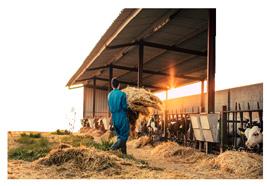
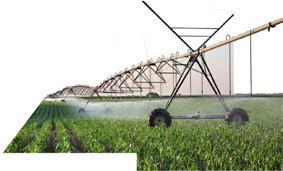
Considering the demographics of Las Cruces, we identified four student groups as the primary focus for the school:
- program- priv anchoring the back where main employee entrance is, more educational and also right behind the crops, more social spaces-
- introduction of crops and greenery to the site
merge the two lands academic vs residential (we want to connect them)
break into two main bars between academic and residential (visually connects)
horizontal bars added for safety for school and separates the school from the urban site bars are stretched at diff sizes at ends- to imply an end of the street & the shape formed is part of our extension of the farmer’s market- natural progression from the farmer’s market program- priv anchoring the back where main employee entrance is, middle is classrooms/greenhousesmore educational and also right behind the crops, more social spaces- cafeteria/lib anchoring the front introduction of crops and greenery to the site
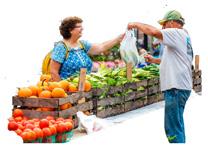
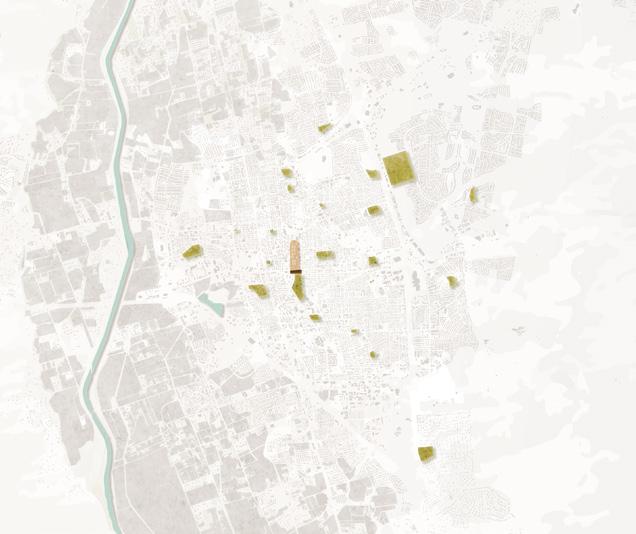
The site is situated at the terminus of downtown Las Cruces with the Las Cruces Farmer’s Market one block north of the site. Our proposal begins with a southern extension of the market towards the school to allow students to participate in the market that occurs every Wednesday and Saturday morning. This initiative provides hands-on business experience for students, fosters community engagement, and ensures access to fresh, organic produce at the market.
Dedicated to promoting food accessibility, the school provides fresh, organic produce to local schools and the surrounding community. The school-owned farmland network extends 3.82 miles out from the campus, with strategically placed plots near residential areas to ensure ease of access to locally grown produce for local residents.
Conceptual Design
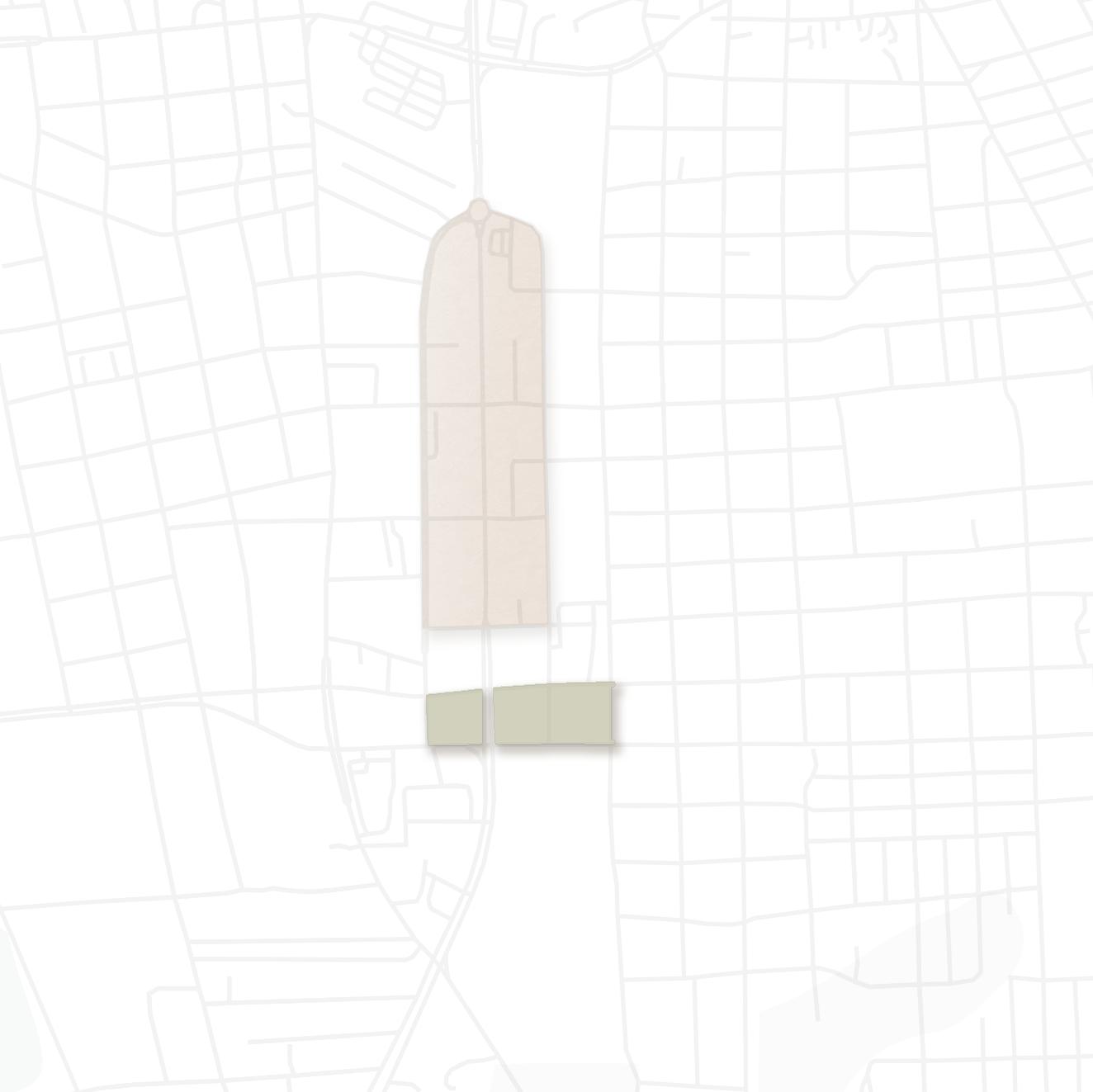
The two plots to the left is merged as the major road of S Main St. acts as a natural division
The site is split into two by function to keep academic separate from residential
The buildings split into two bars to create a strong landscape. The bars visually connects the two plots
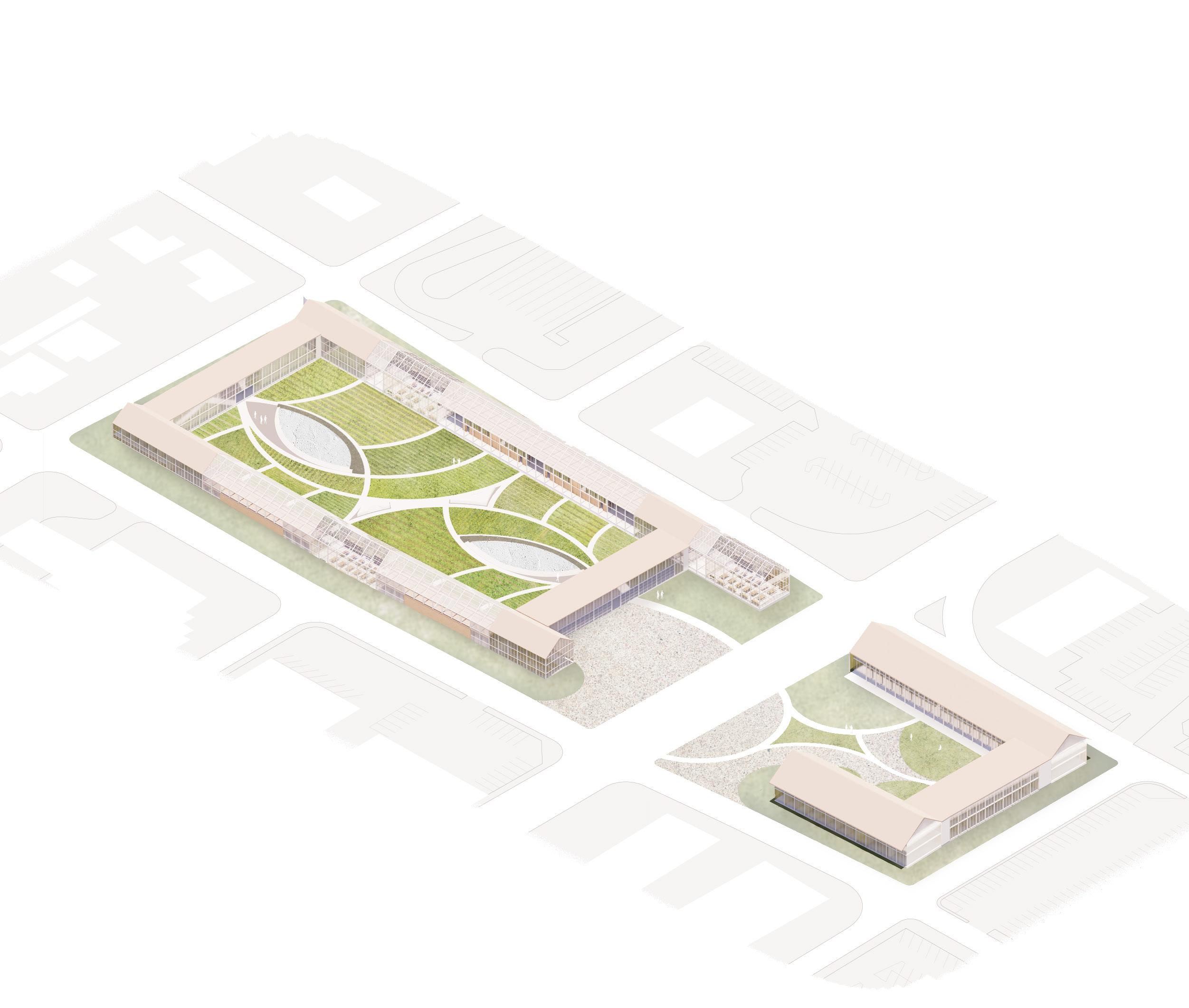
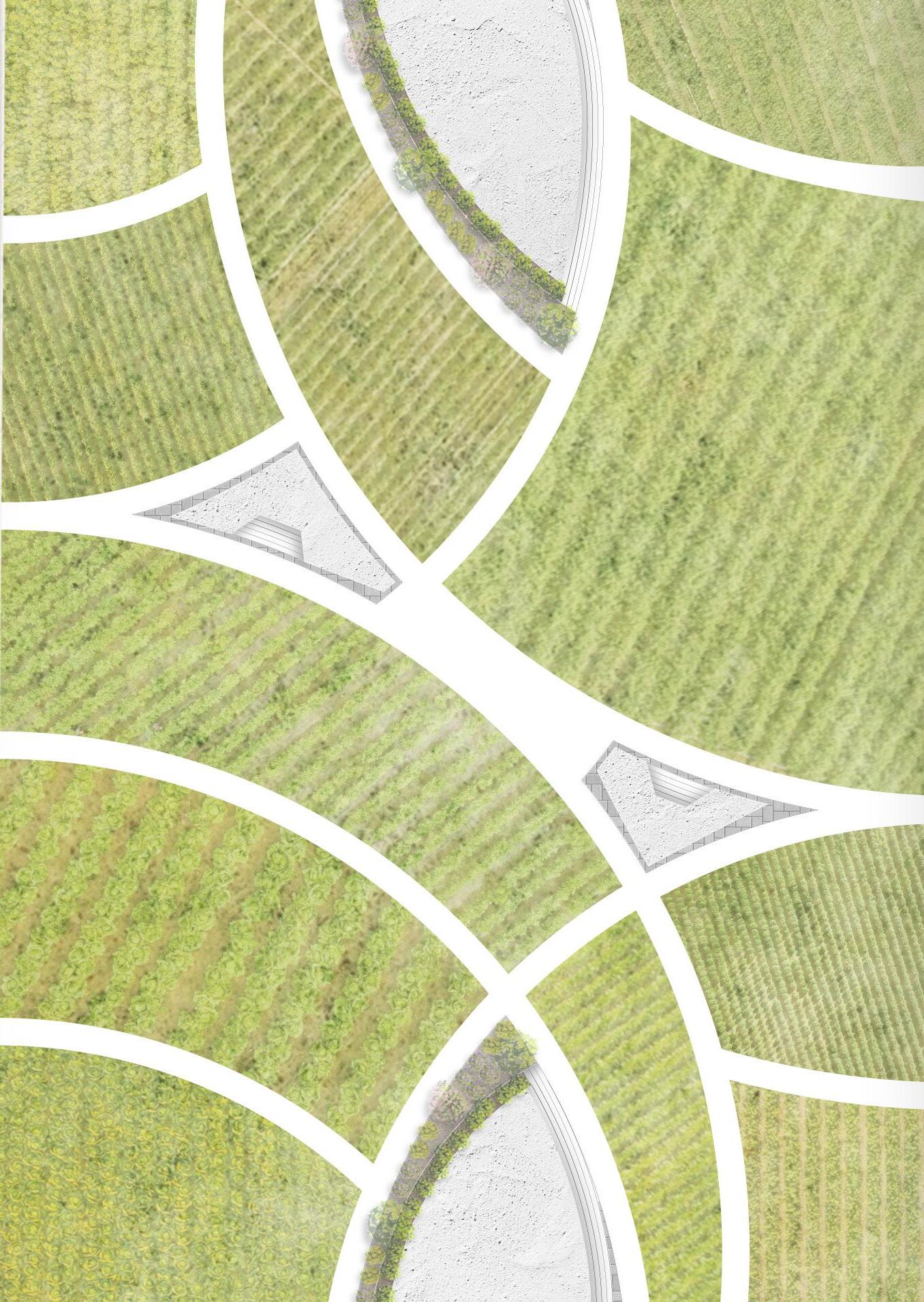
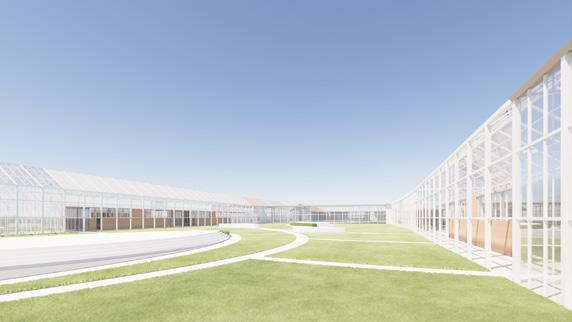
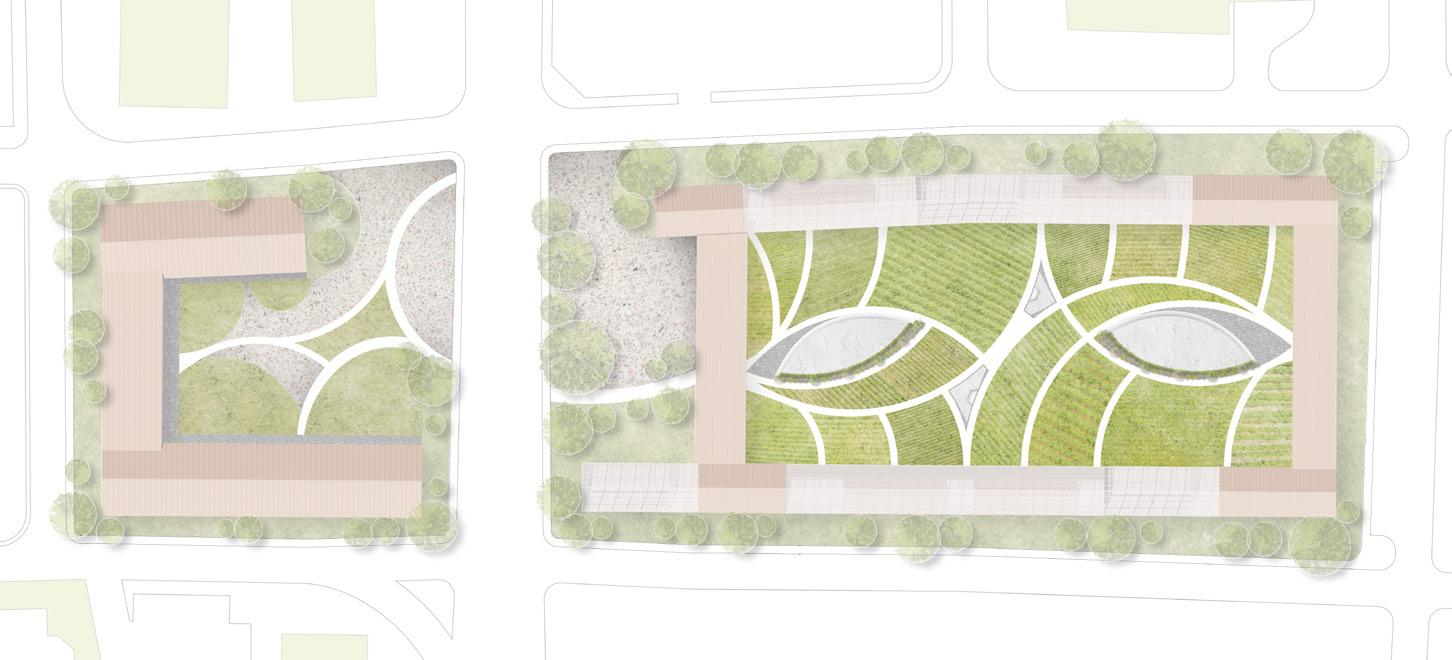
Landscape paths features a network of curvilinear paths formed by a series of overlapping circles that aligns with natural “desire” paths. These pathways weave through the crops, connecting all building entrances and openings.
Landscape “islands” are centrally located within the school, serving as gathering and study spaces for students. These features anchor the front and back entrances, seamlessly integrating with the surrounding hardscapes and pathways to create an inviting outdoor environment.
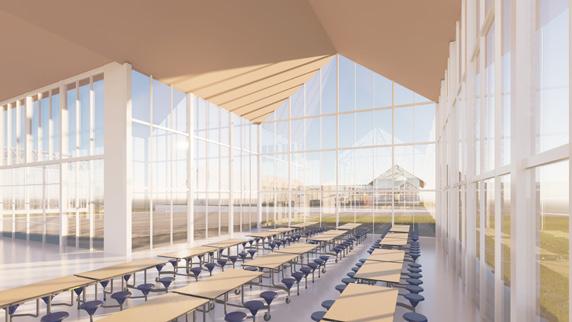
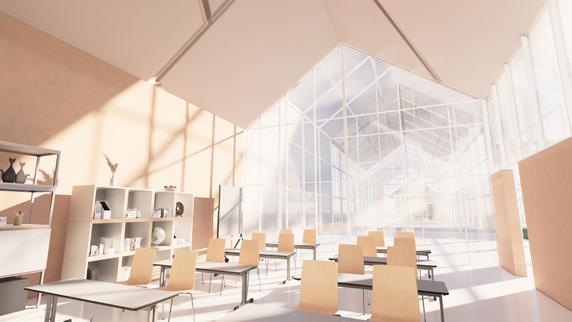
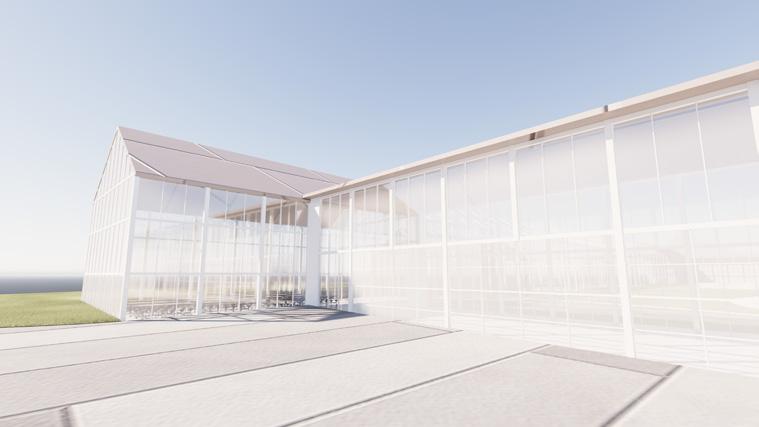
Horizontal bi-fold function as awnings when opened, seamlessly extending the hall into the outdoors. This allows students to engage with the community and actively participate in selling at the farmers market. closed opened
Plaza spaces in front of the school and the residential building serve as a soft buffer between the busy street and the buildings. The plazas continue walkability from downtown Las Cruces and provide a spacious gathering area for the farmers market.
jan feb mar apr may jun jul aug sept oct nov
How it works:
With an estimated yield of 525 acres of produce, the school’s agricultural initiative plays a vital role in enhancing food security and sustainability within the community.





1 2 3
soil nutrient recycling reduce pests and diseases


Each farm plot hosts a market stall that sells a variety of the school’s produce.
Harvest is divided to be sent out to on-site market stalls and local K-12 schools


Students are active participants and involved in every step of the way for the crops on campus and helping with the off-site farmland.

Crop zones
Four crop zones separate the landscape to allow for a four-year crop rotation, aiming for all students to participate hands-on and learn the process each year they’re at the school. The four zones of the rotation is symbolic of the four-year high school curriculum, with each students being able to have witnessed the full cycle of their participation by the time they graduate. The plots can feed about 90k people for a year with 1/3 of the produce delivering to schools and 2/3 going towards the community
3
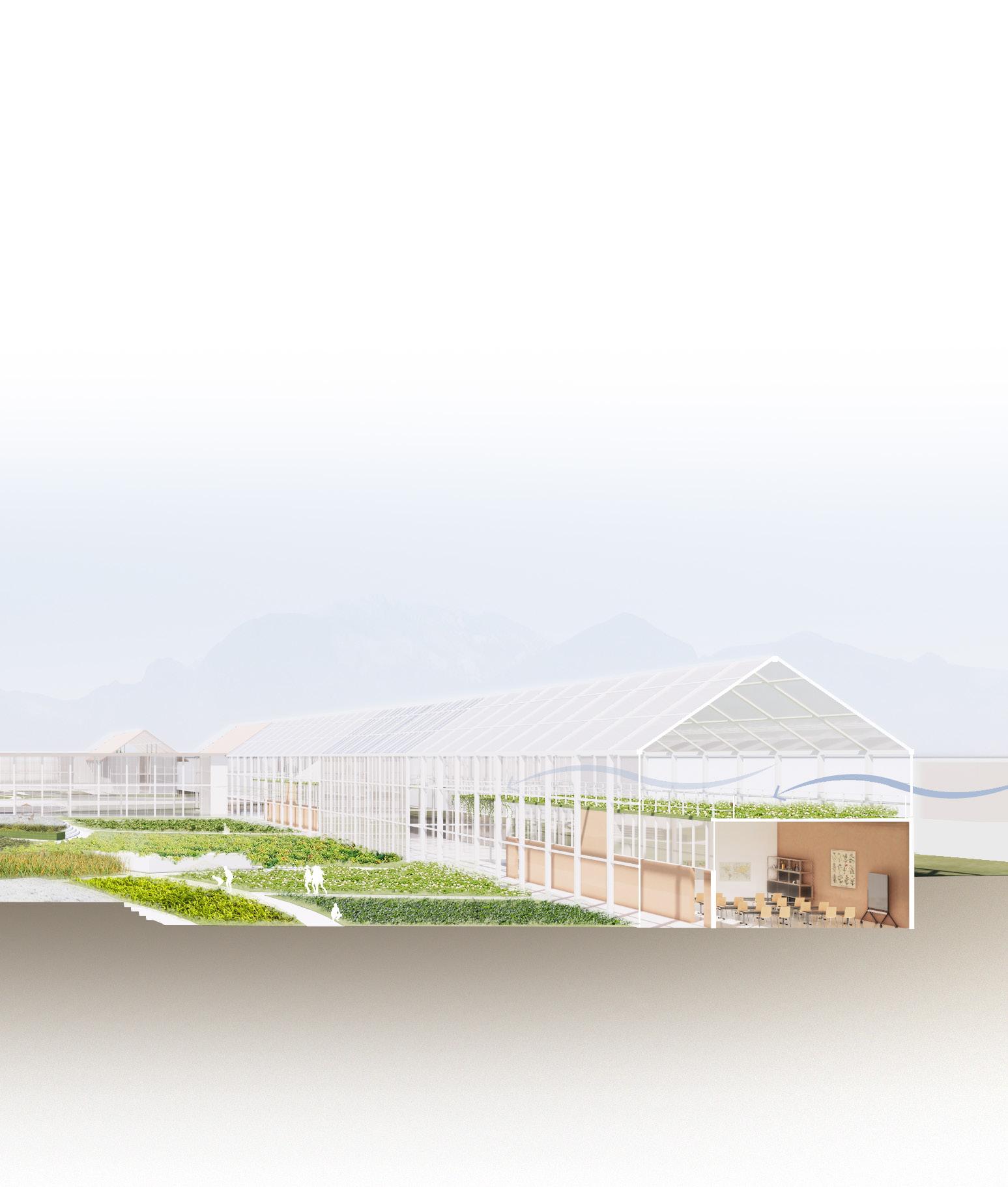
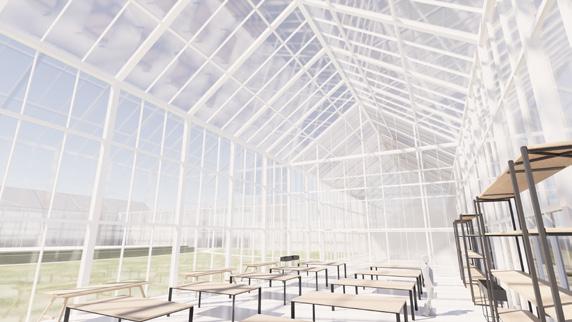
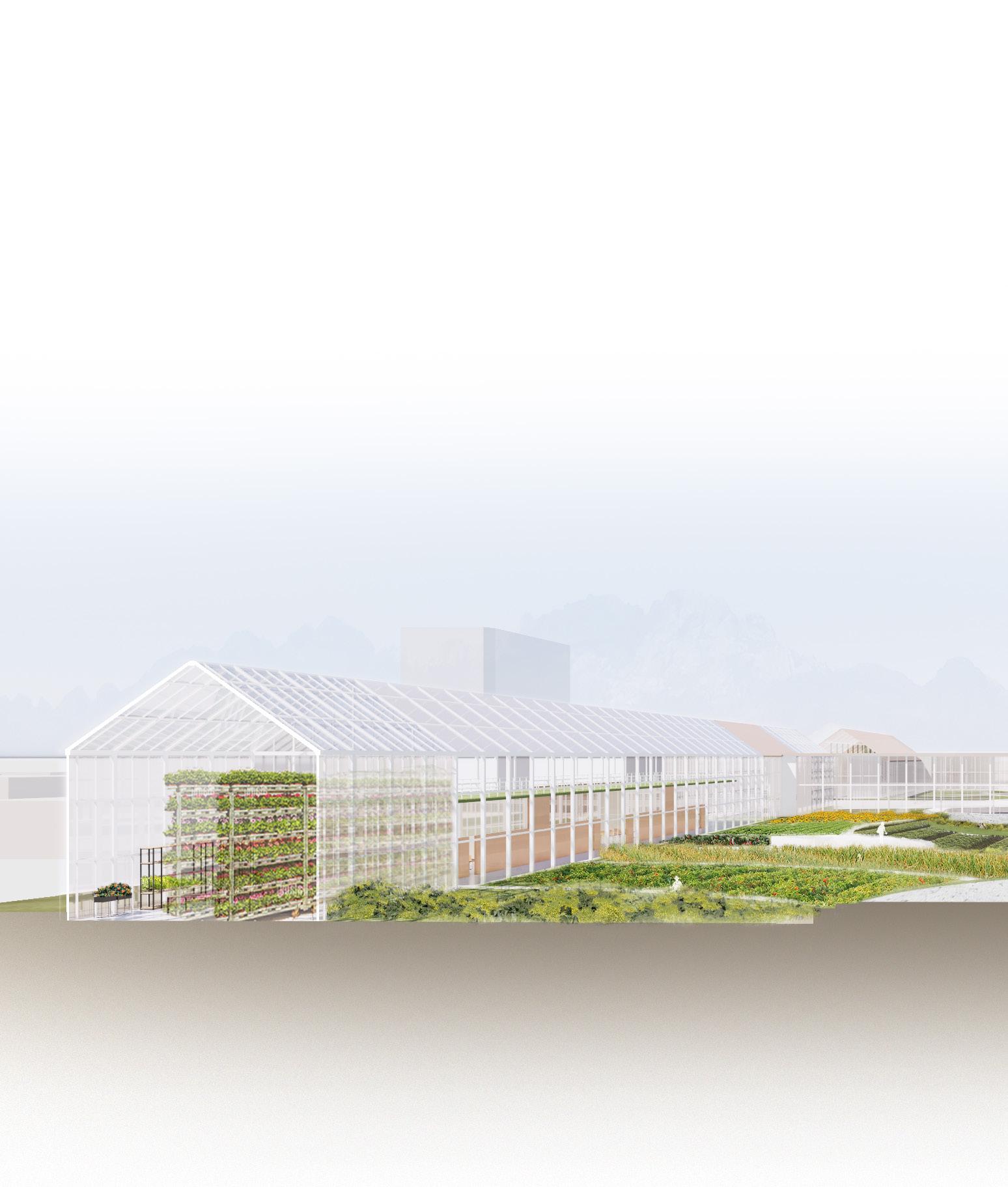
Rooftop gardens on the classroom buildings help mitigate the urban heat island effect while maximizing the school’s available planting space. These gardens also provide an extra layer of insulation, helping to shade and cool the exterior classroom areas. Reduces energy usage by 10-30%
Materiality: Rammed earth walls and polycarbonate plastic coverings are locally sourced, environmentally sustainable materials that minimize carbon emissions and waste while remaining cost-effective
Water Management: The gable roof design efficiently captures rainwater runoff, which is then utilized to irrigate the surrounding crops, promoting sustainable water use in the landscape.




ARCH3540 Studio Barcelona
FALL 2023 | Professor Miguel Roldán
Collaboration with Lillie Wetmore
Location: Barcelona, Spain
As an active participant in the EU’s initiative, Cities Mission, Barcelona strives to reach net zero and climate neutrality by 2030. Energy structures dominate the coastline of Barcelona and demonstrate the city’s steadfast commitment to advancing sustainability in energy production.
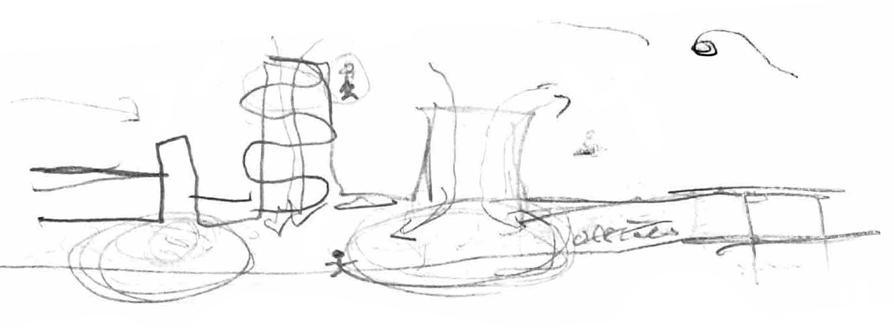
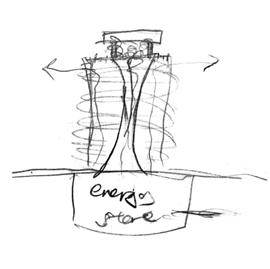
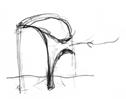
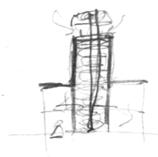
Our project seeks to pay homage to a monumental energy structure of Barcelona’s past: the Tres Xemenies or the Three Chimneys, a former thermal energy plant that once produced the city’s energy. Our site on the coastline presents us with a unique responsibility to help shape the skyline of Barcelona. We challenged ourselves to reinterpret the Tres Xemenies’ conventional chimney form that once heavily contributed to air pollution into a sustainable energy source by analyzing and redesigning different aspects of traditional ancient windcatchers and the chimney form.
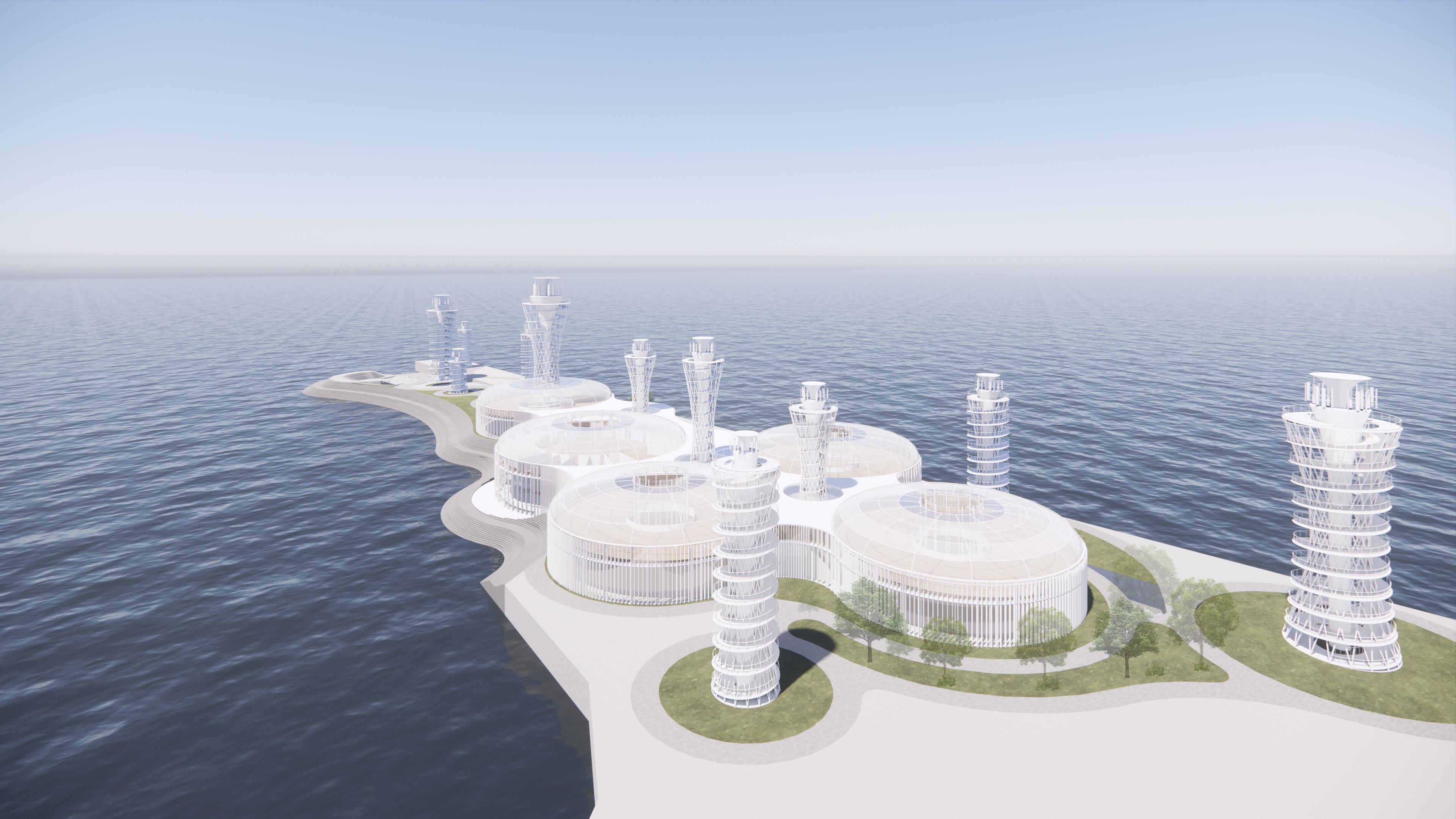
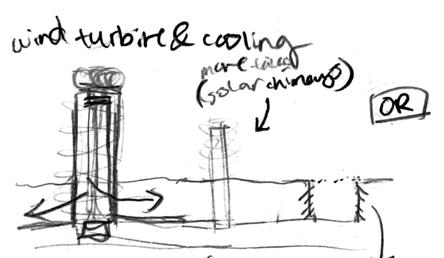
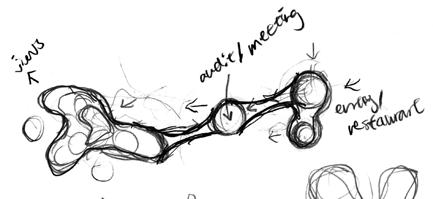
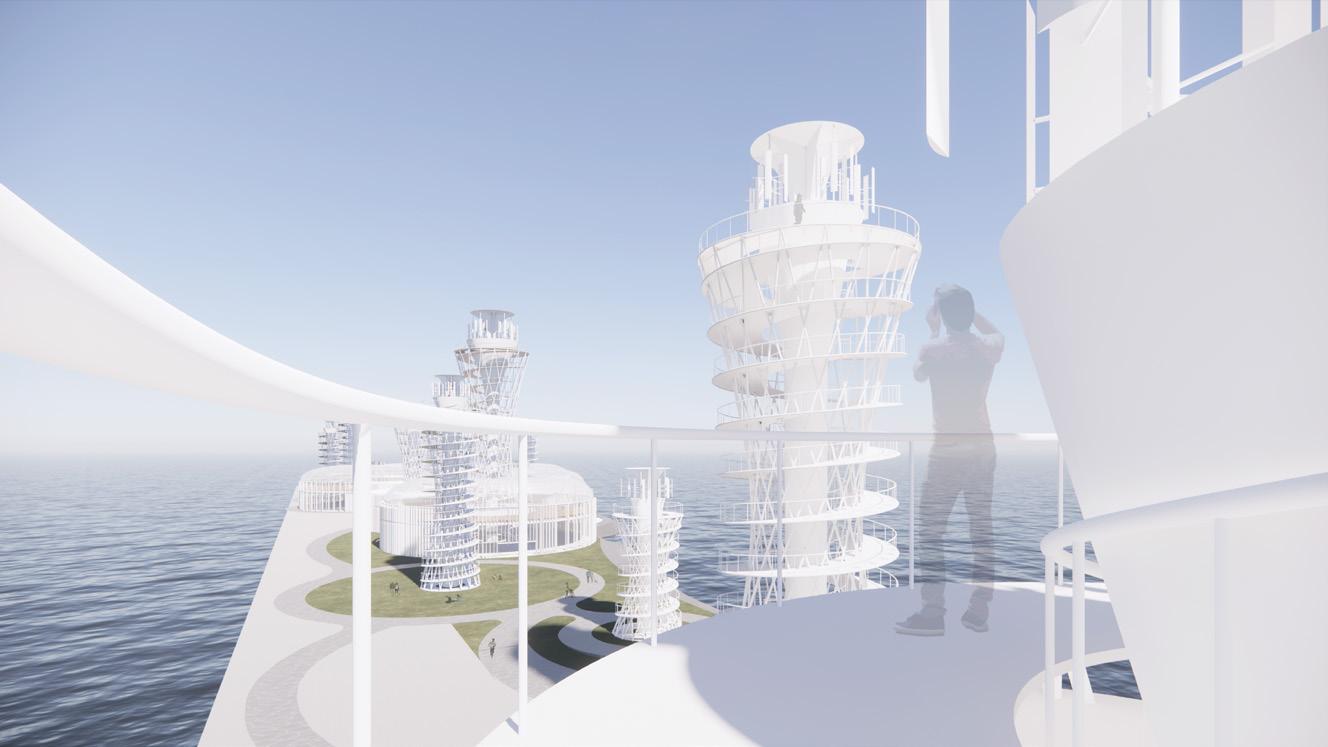
Our project harnesses the wind around our coastal site as a renewable energy source and a passive cooling element within the building through the eleven wind towers distributed throughout the site. The facility will host the 37th America’s Cup sailing competition in 2024, and its flexible programming and open spaces allow for an easy transition into a ferry terminal after the match. The wind towers located on the exterior act as public observation towers connecting viewers of the competition and the public to the waterside. Additionally, to welcome connections with the street level and with the people, the paths in the landscape ramps subtly and encourage a relaxed meandering around the exterior wind towers to enjoy natural cooling and unique views. Our nuanced and respectful approach to traditional ideas, technology, and methods enabled us to discover innovative solutions that respond to Barcelona’s past and advance with Barcelona into the future
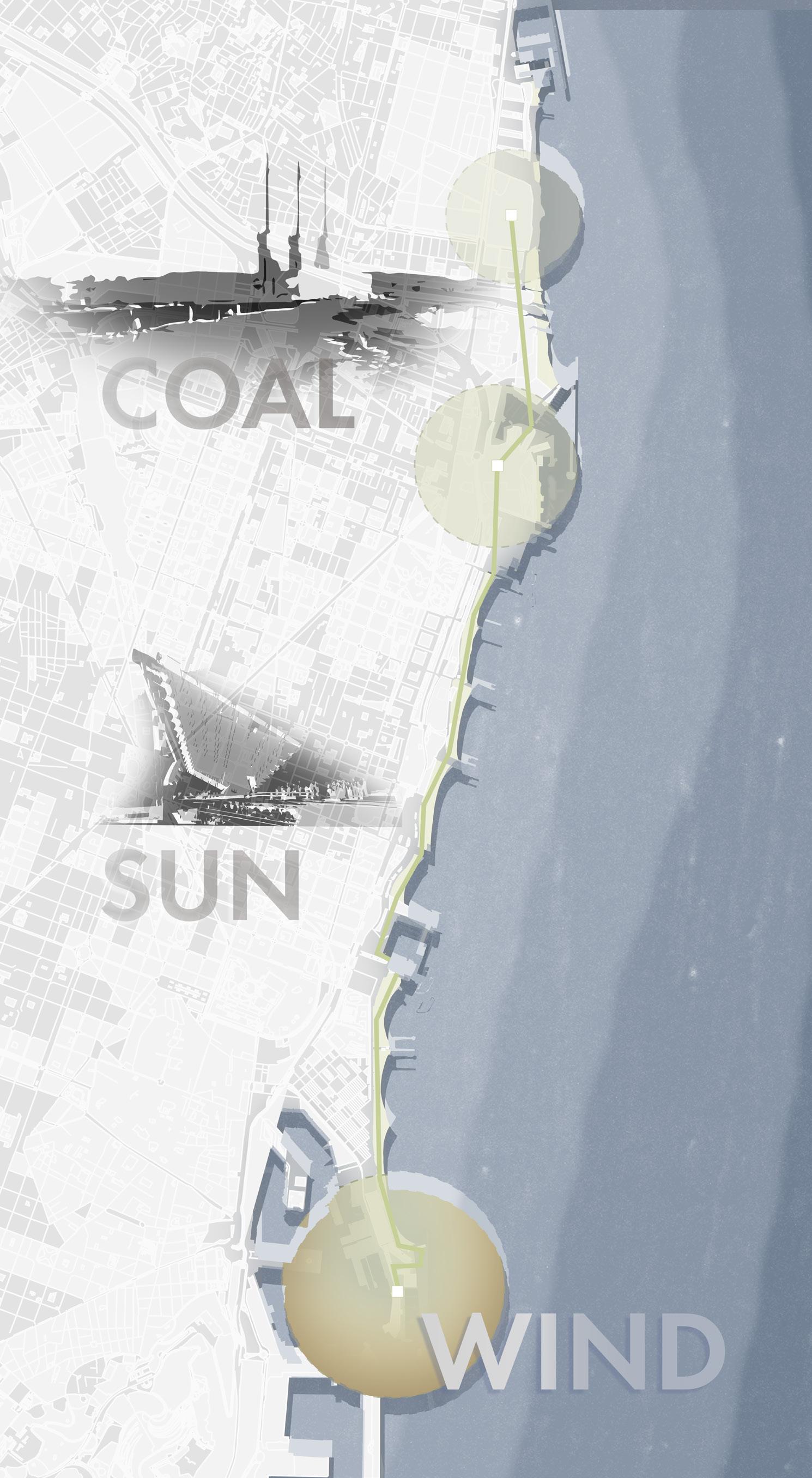
Selected
Site Axon
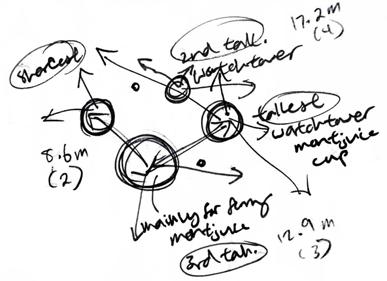
For an efficient workflow, I developed a Grasshopper script to generate and adjust the wind tower forms to accomodate to different diameters and varying heights.
Wind Towers gathers wind through opening for natural cooling and collect wind energy
Integrated wind turbines connects to generator through tube structure
Sensored mist jets push cool air down for enhanced cooling
Glass and Polycarbonate plastic domes open views all around and natural lighting
Floor plates and steel columns double height spaces for larger public spaces
Louvers and glass facade louver panel as shading, the panels are denser in areas where the sun is strongest, facilitate cross ventilation
Spiral ramp for 360 degree views
Diagonal lattice columns support
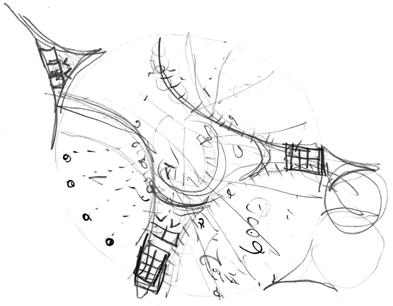
Seven exterior windtowers acting as public observation towers and cooling features for the public the winding paths creates a seamless connection throughout the site and meanders around each exterior wind tower
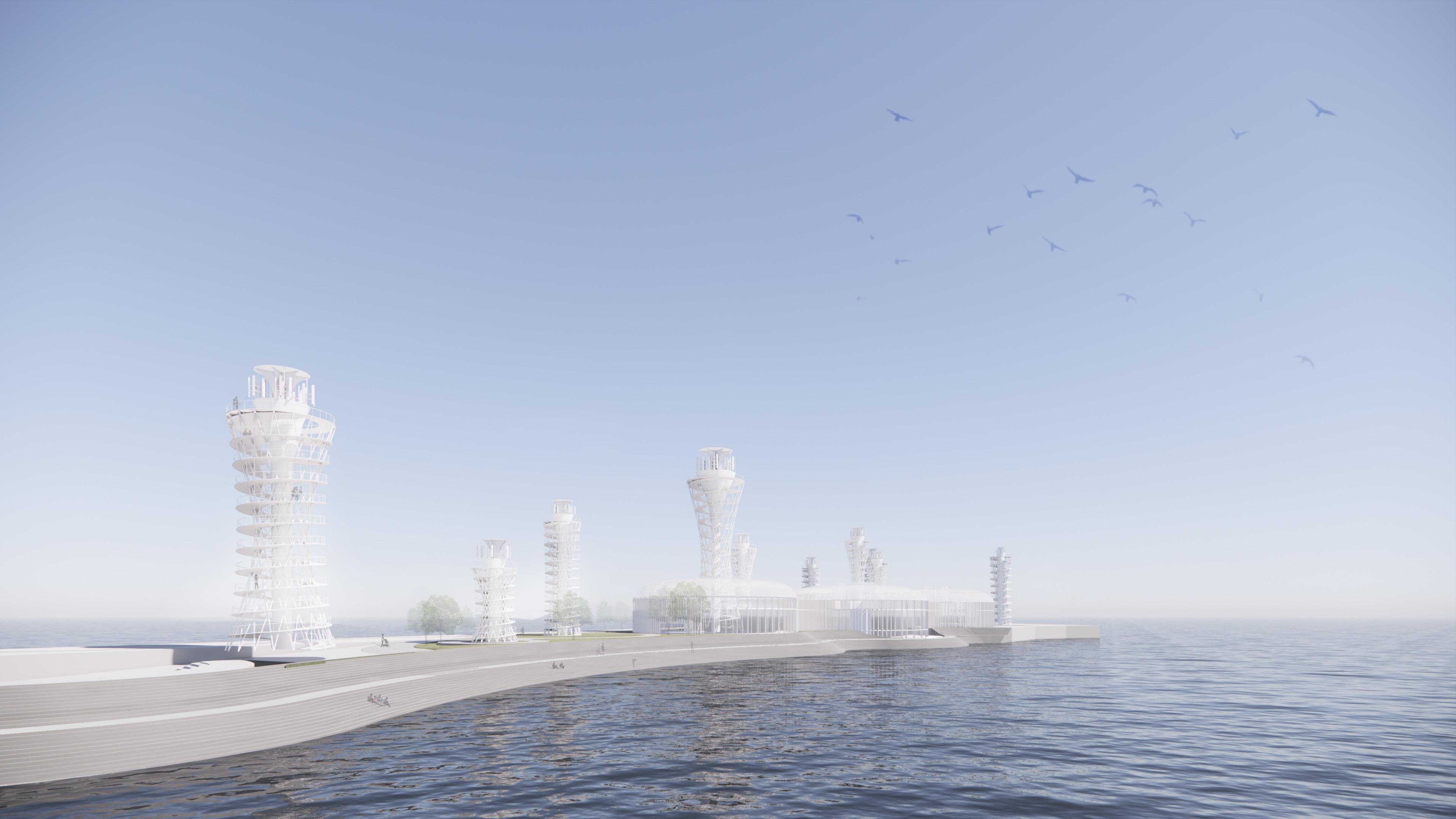
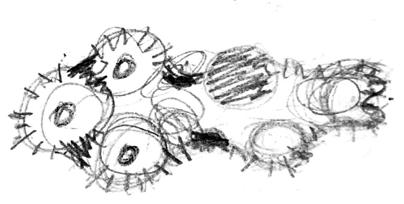
The building and landscape feature an organic form composed of adjacent and concentric circles, reflecting the curvilinear patterns of the wind. This allows wind to pass through more efficiently, enhancing natural ventilation and airflow.


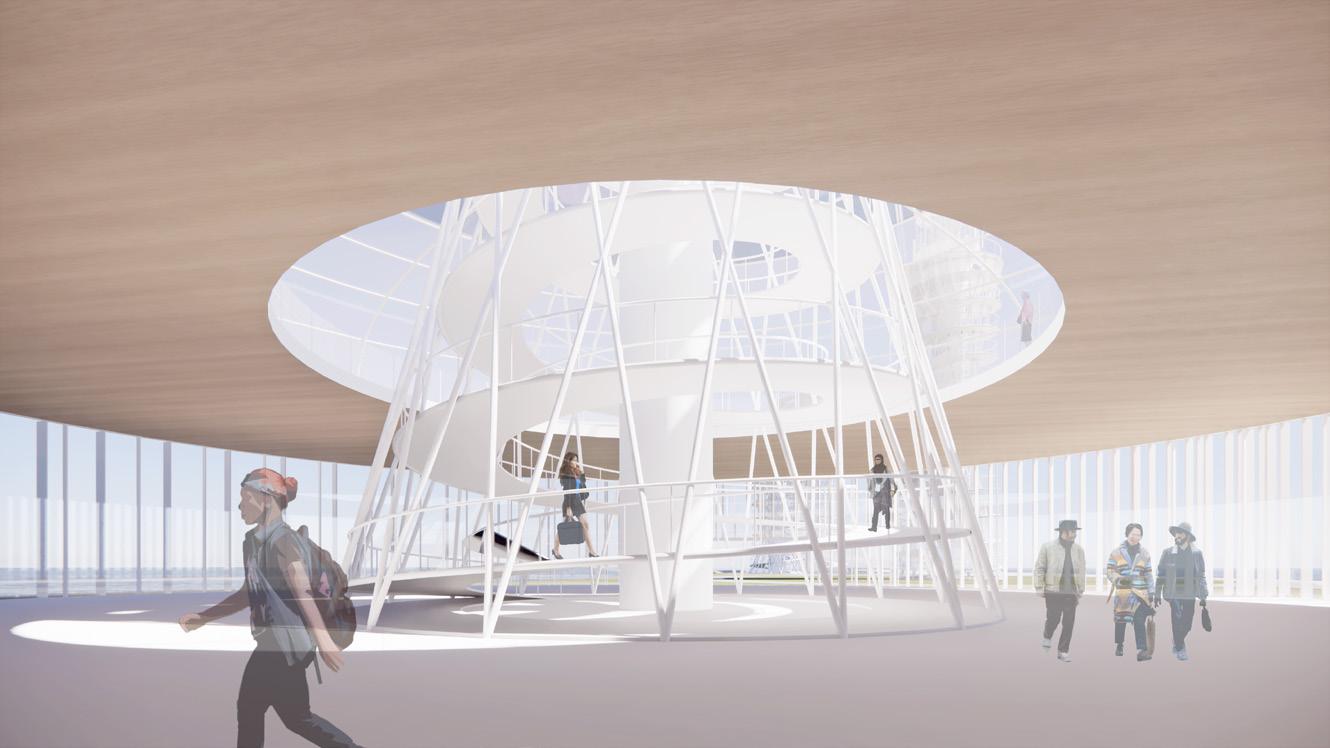

The windtowers in the interior act as main staircases to access the first level. As wind comes through, openings at the top and mist jets along the ramps pushes cool air down into the building. The turbines at the top additionally collects wind for specific energy generation.
The generators for each windtower connects through the tubes to the basement level where the main mechanicals are. The interior couryards add natural lighting in and helps facilitate cross ventilation to balance the air brought in by the windtowers.
ARCH3510 Studio Clemson
SPRING 2023 | Professor Douglas Hecker
Individual Project
Location: Los Angeles, CA
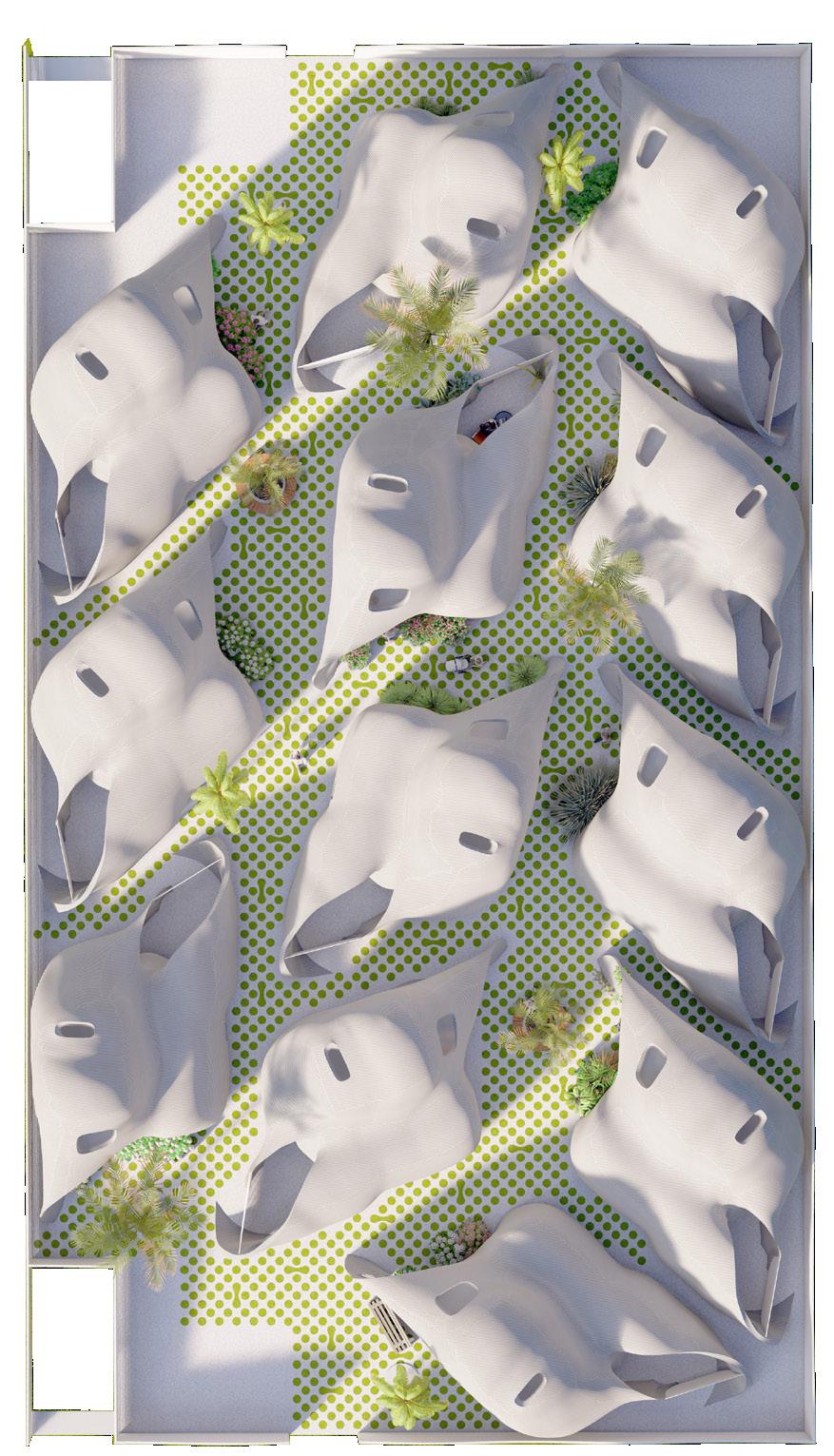
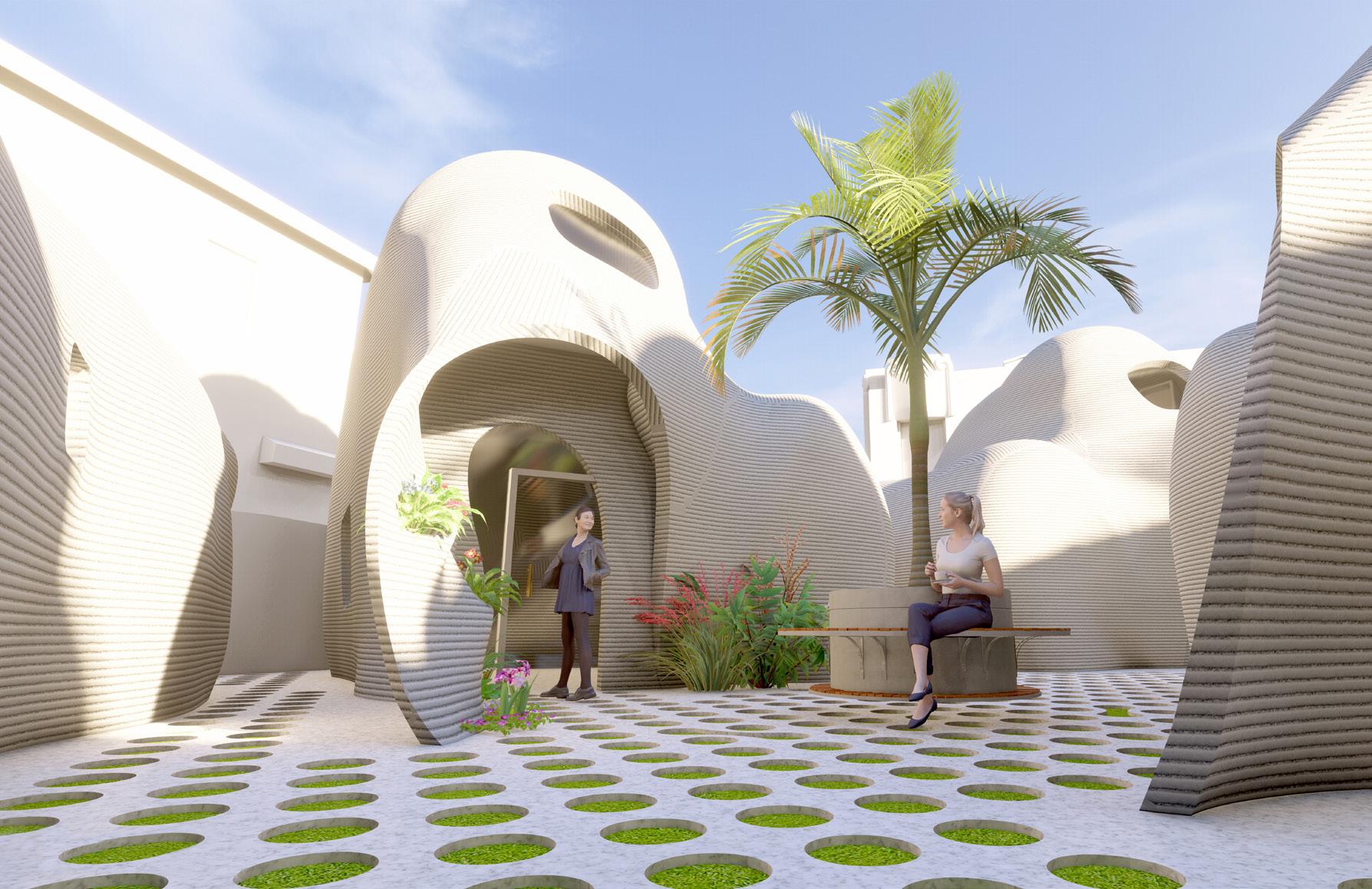
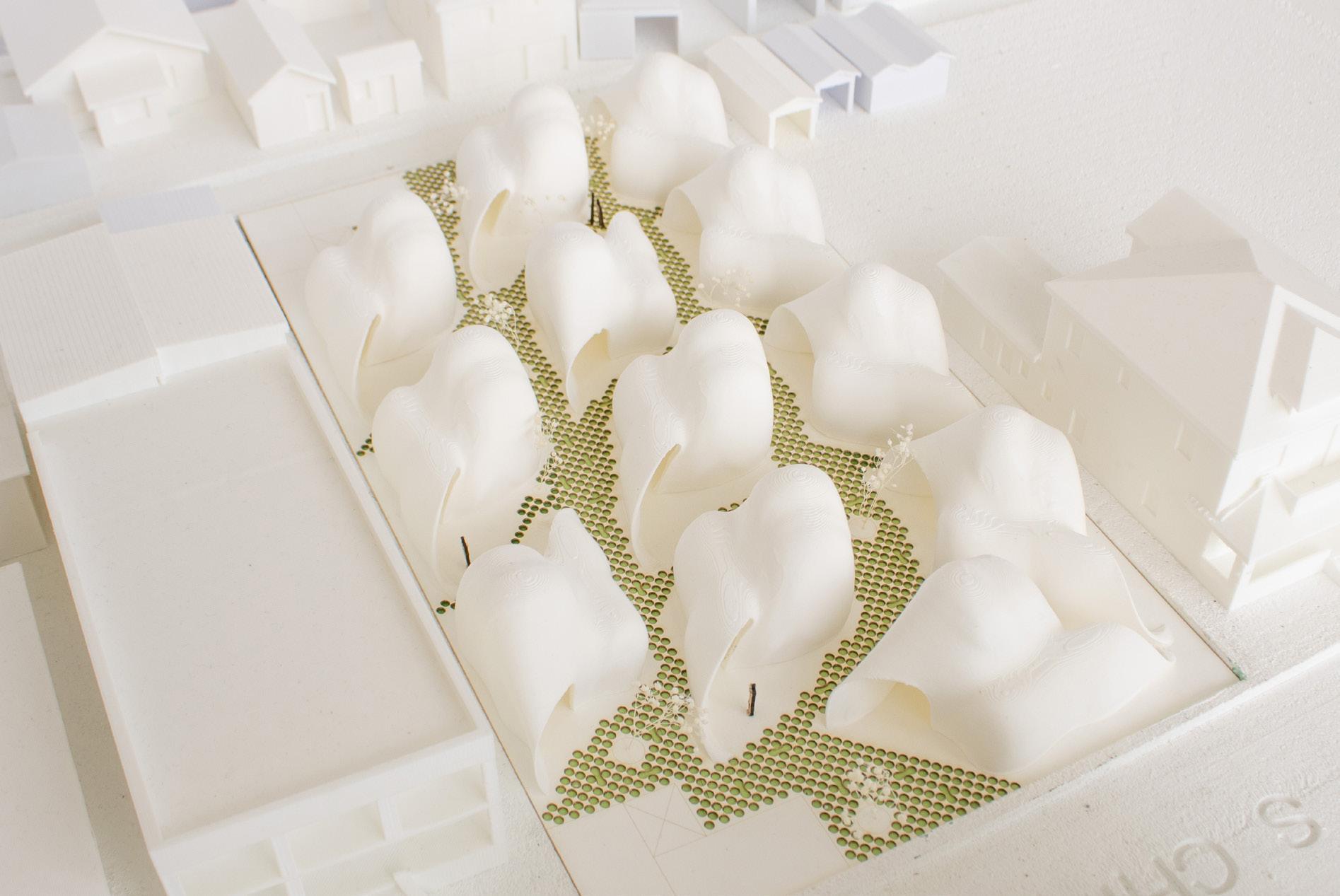
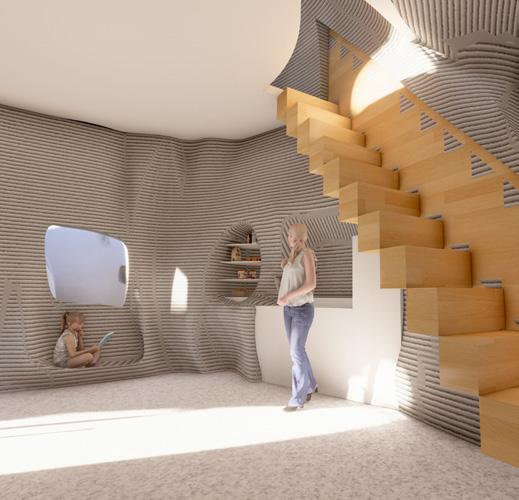
The Boyle Heights Neighborhood in East Los Angeles, California is densely populated with a significant rise in gentrification. With the increased cost of living in the area, there is a need for more affordable and adequate housing options. Quality of life regarding a sense of self and privacy are often the first factors compromised in affordable housing communities. The Shellborhood housing project uses 3D printing technology to propose twelve tiny homes in Boyle Heights that prioritize inhabitants’ quality of life and address affordability. This housing project reduces construction and maintenance costs and opens the door for more creativity that better prioritizes the inhabitant experience.
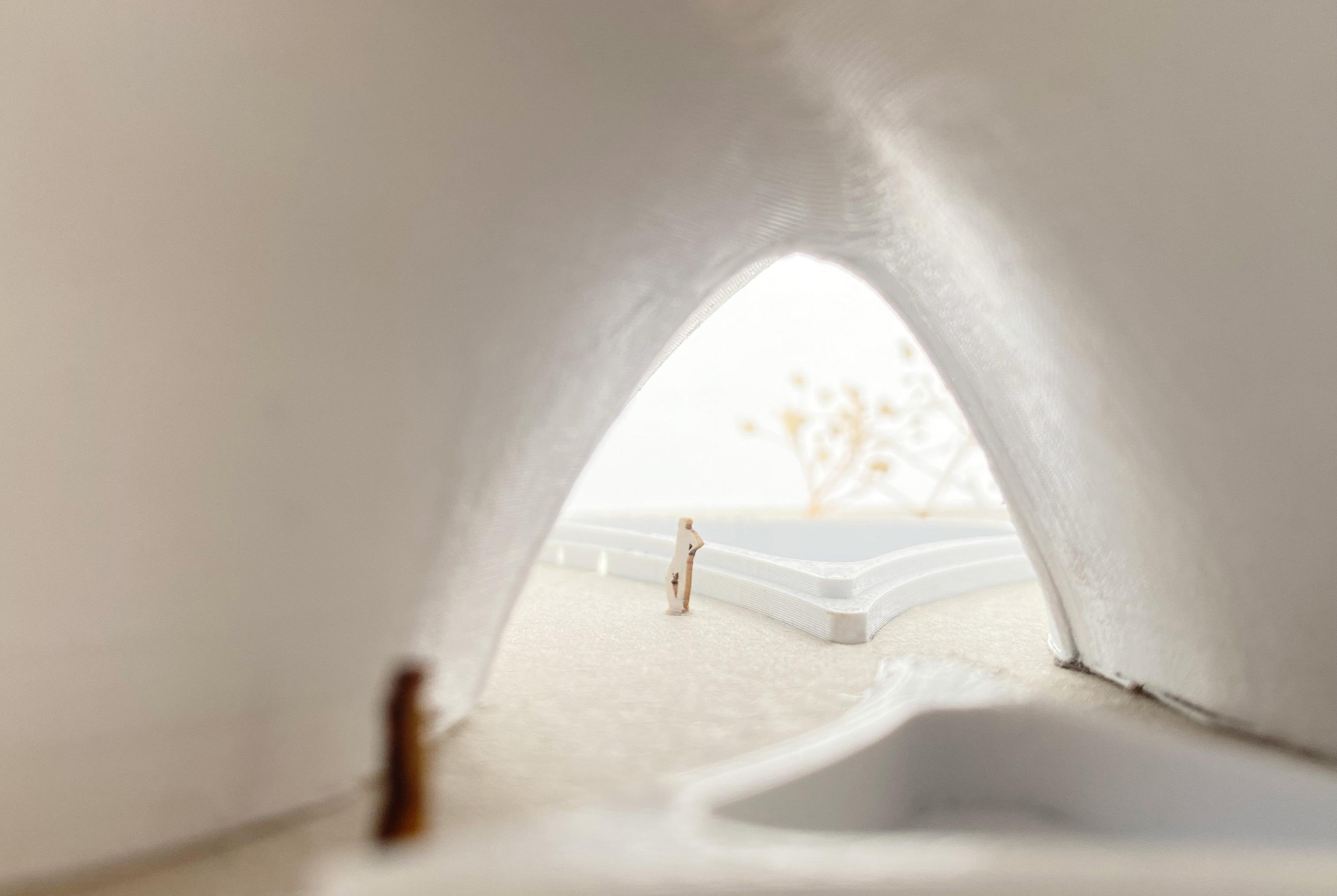
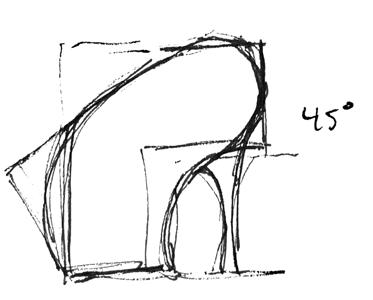
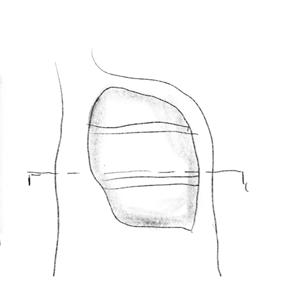
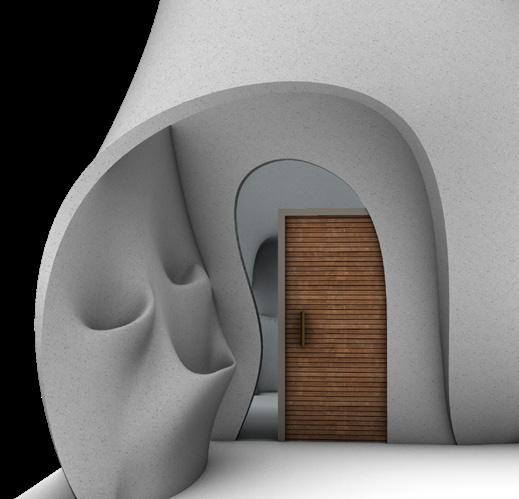
This project proposes a different perception of affordable housing communities from the buildings’ form to the curvilinear site grid. Considering how 3D printed housing is still a new and ongoing concept, I challenged myself to test the limits of 3D printed technology by using subdivision surface modeling, or SubD, in designing the organic shell-like forms to maximize the sense of spaciousness and individuality within the homes. The tiny homes are easily personalizable, with 450 sq. ft of living space inside and an additional built-in outdoor space that can become a second “living” space. The interwoven circulation of the neighborhood also brings inhabitants through unique paths and to different pockets of activity, fostering a sense of privacy and individuality even outside of the home.

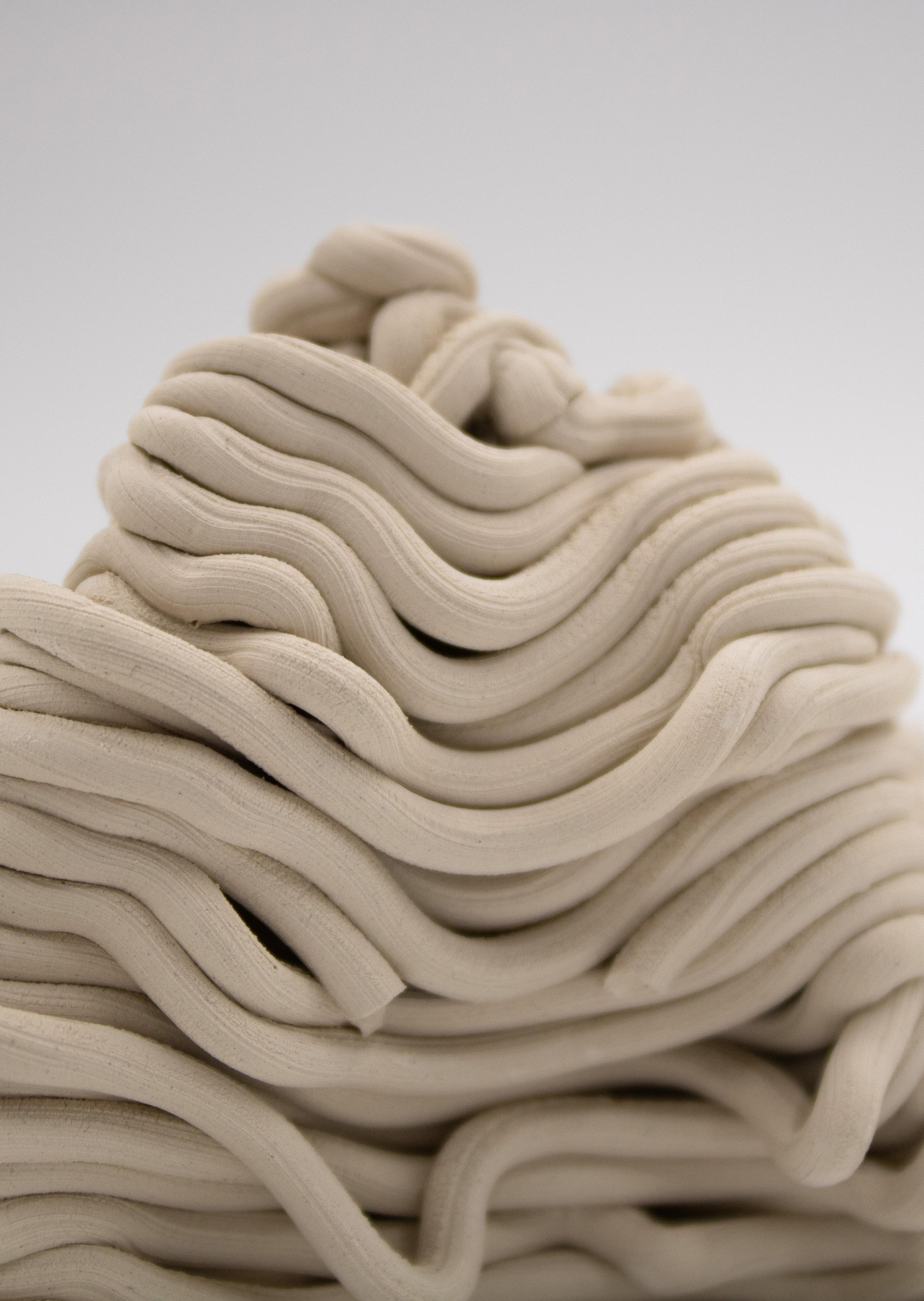
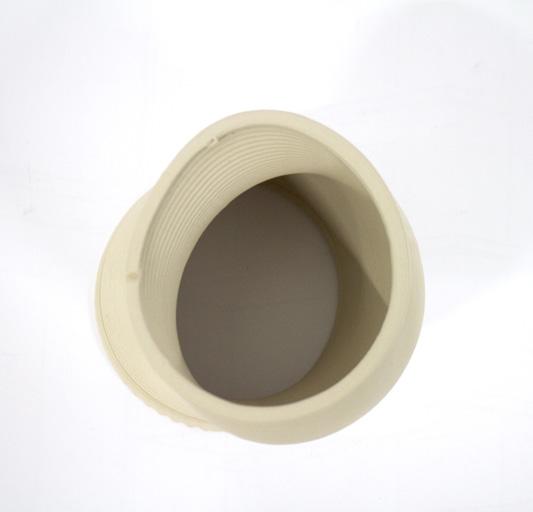
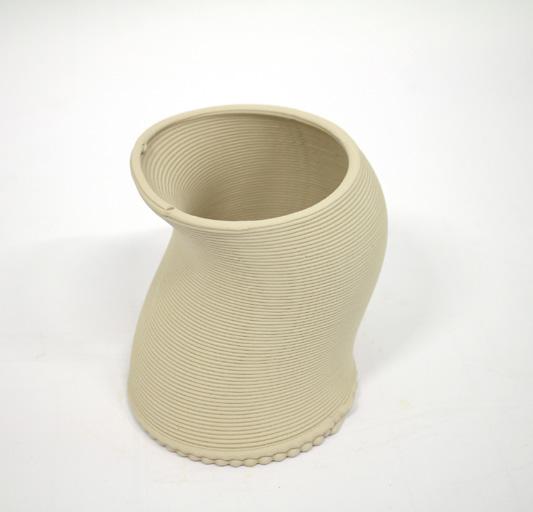
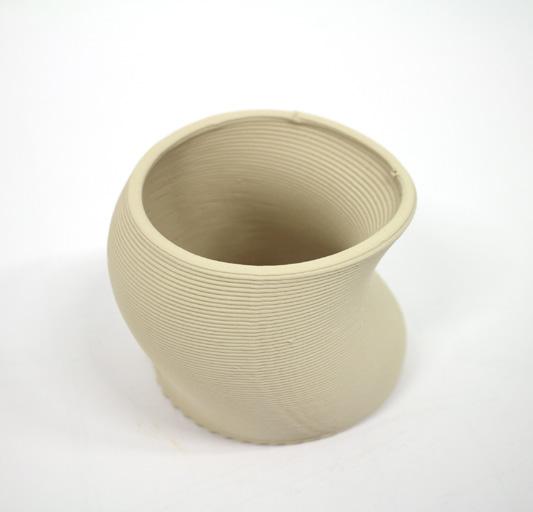
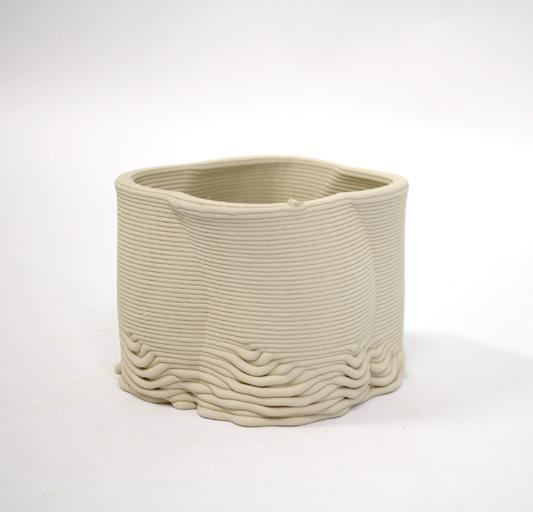
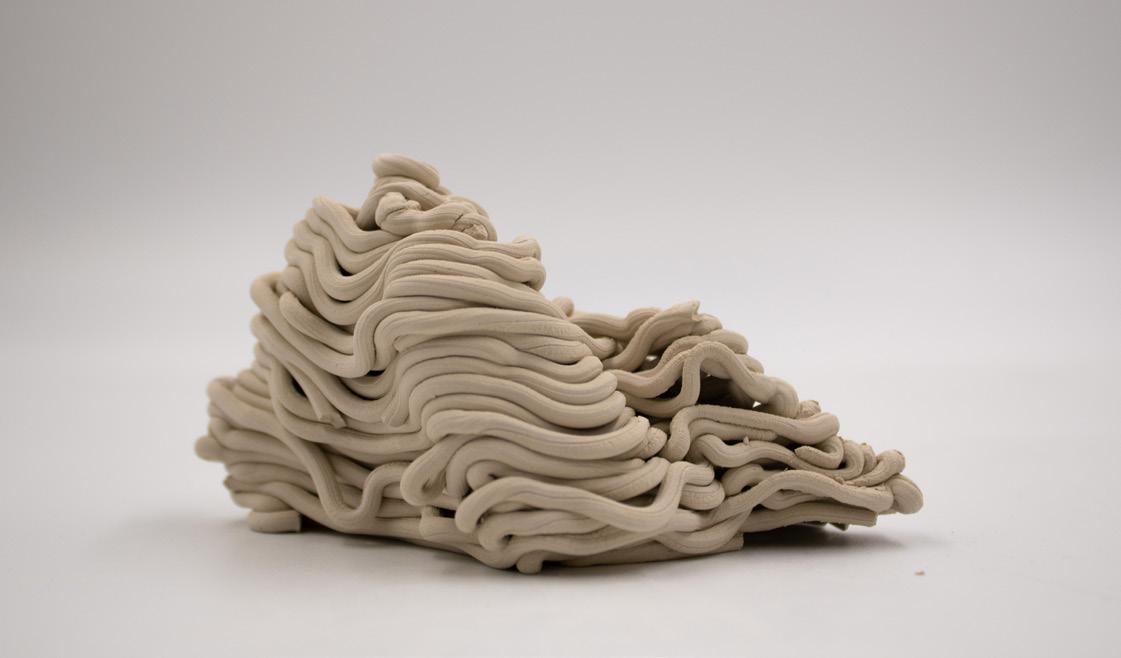
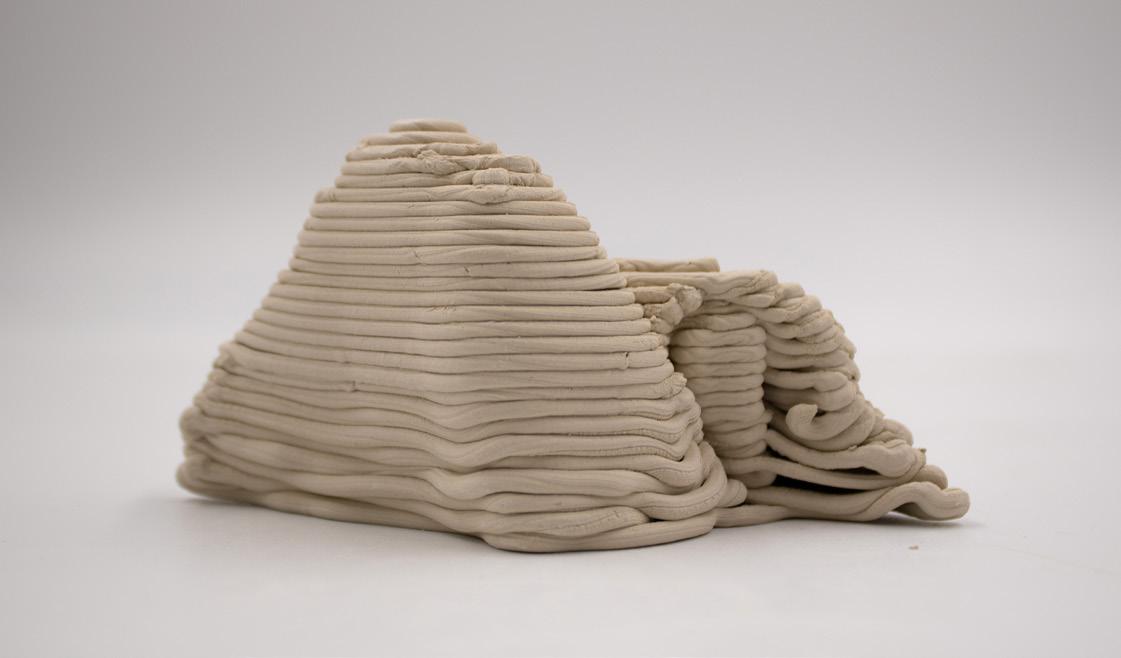
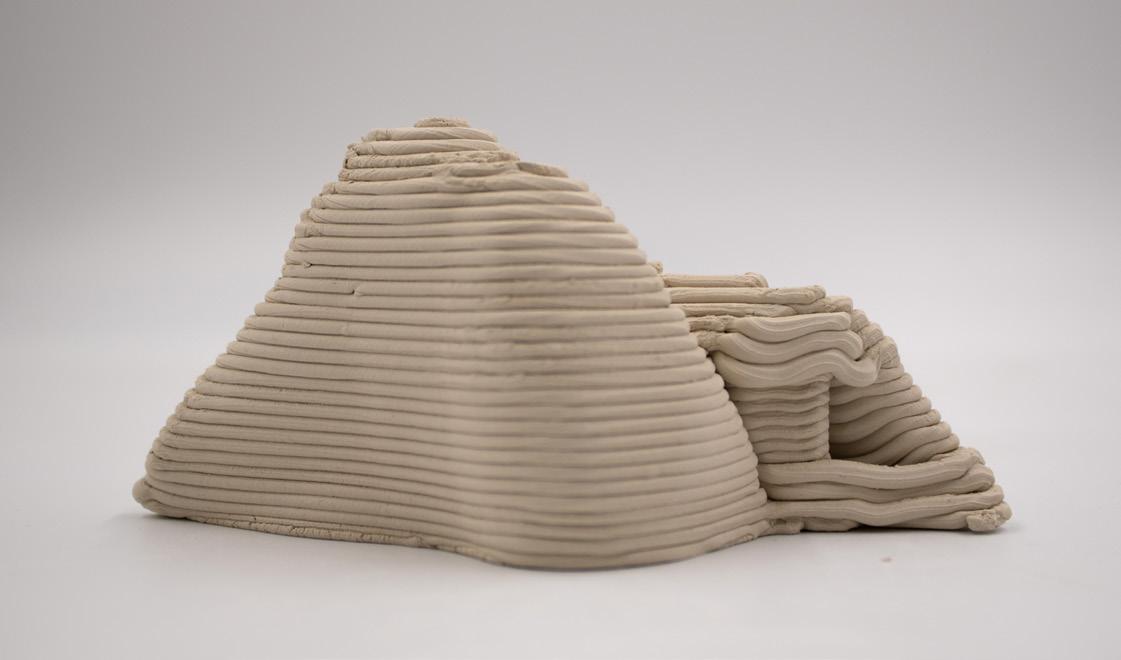
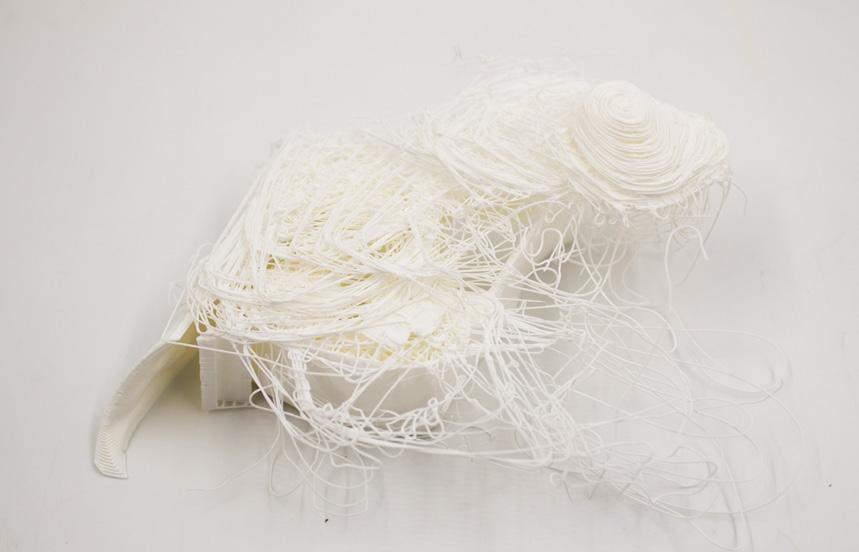
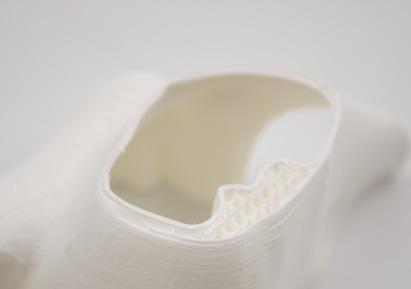
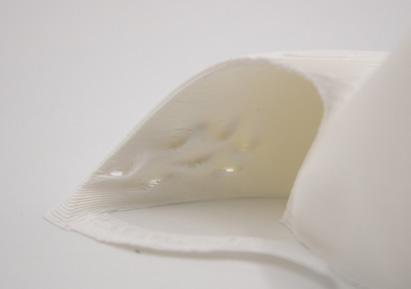
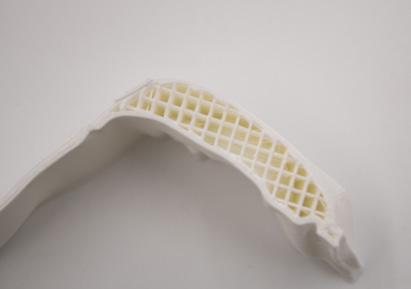
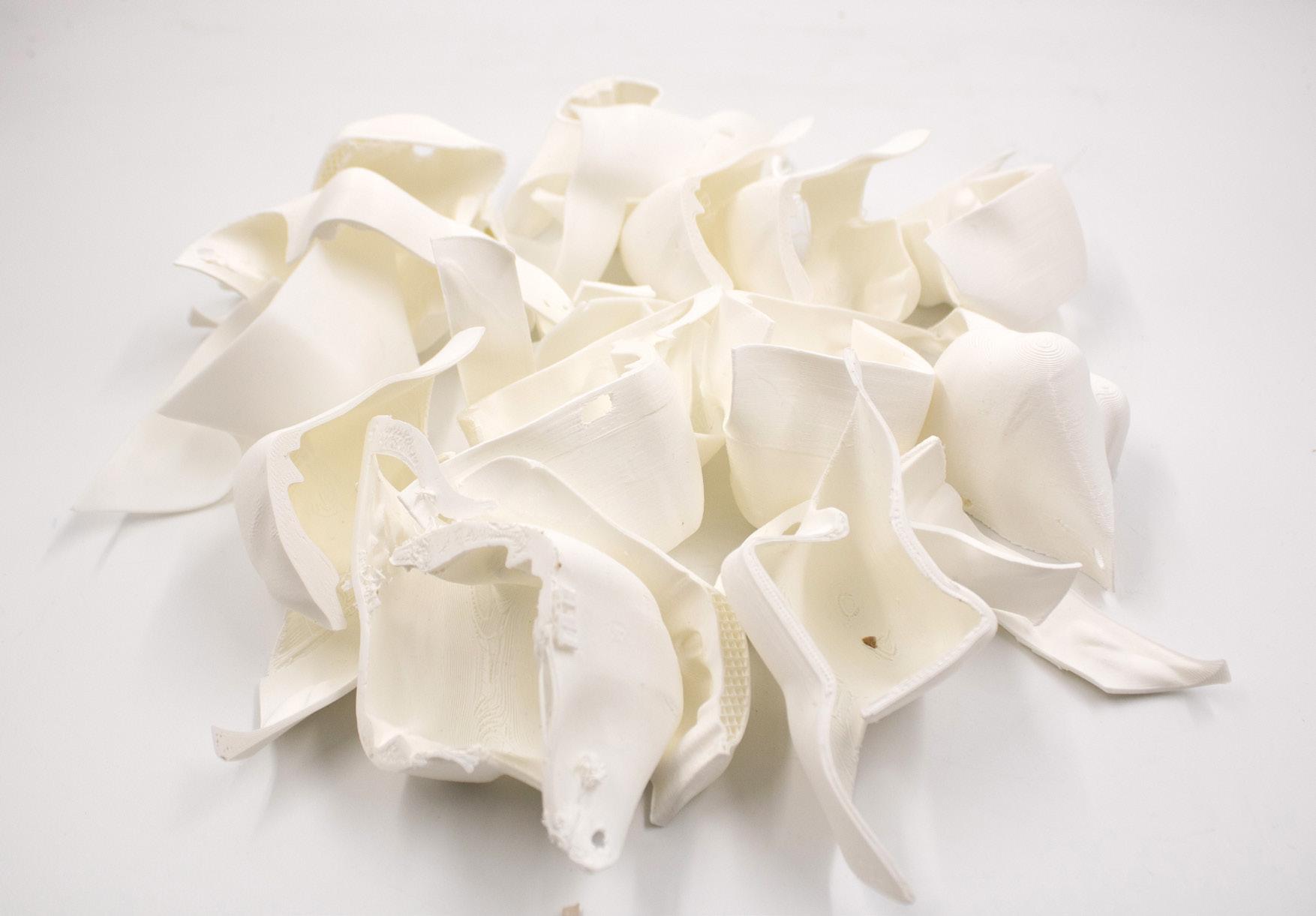
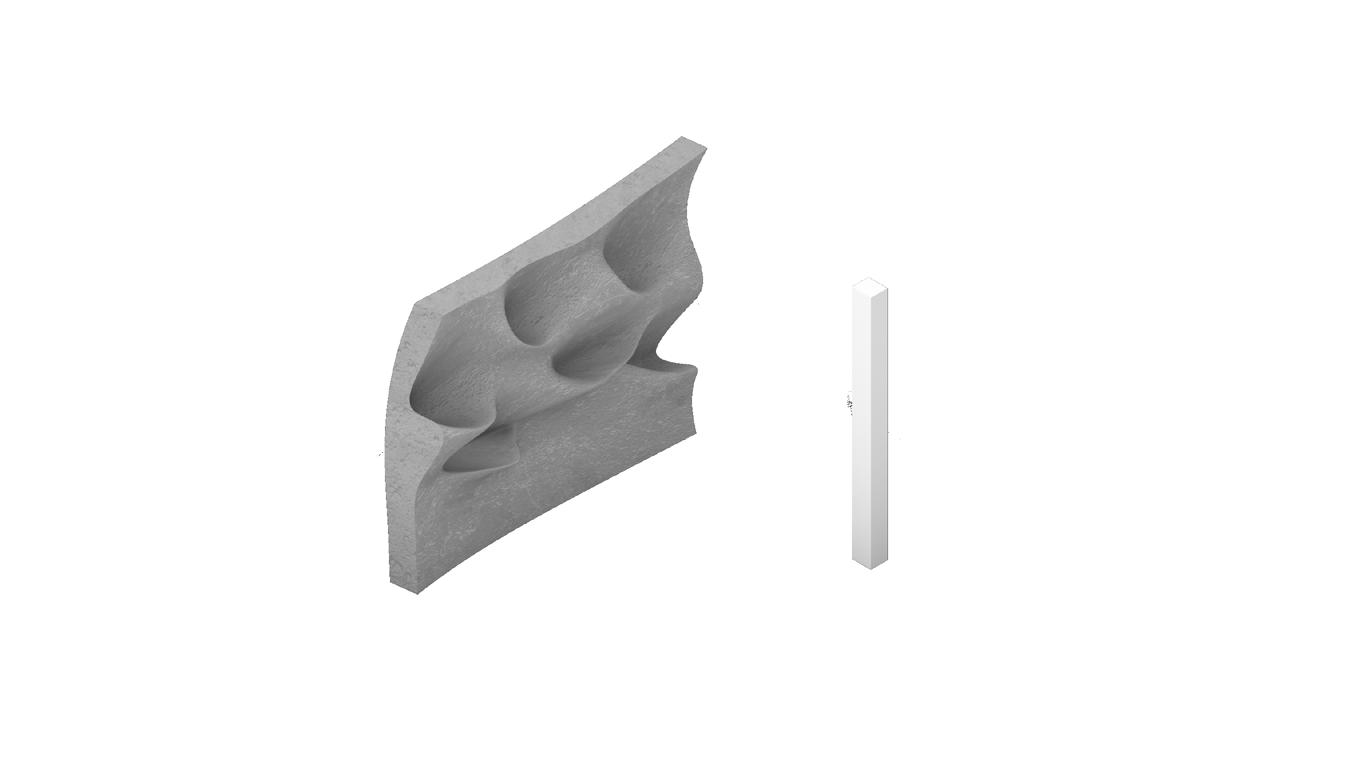
Clay Printing
multiple iterations of clay printing to mimic the gravity of 3D printing technology using the material of cement
- can it print in real life?
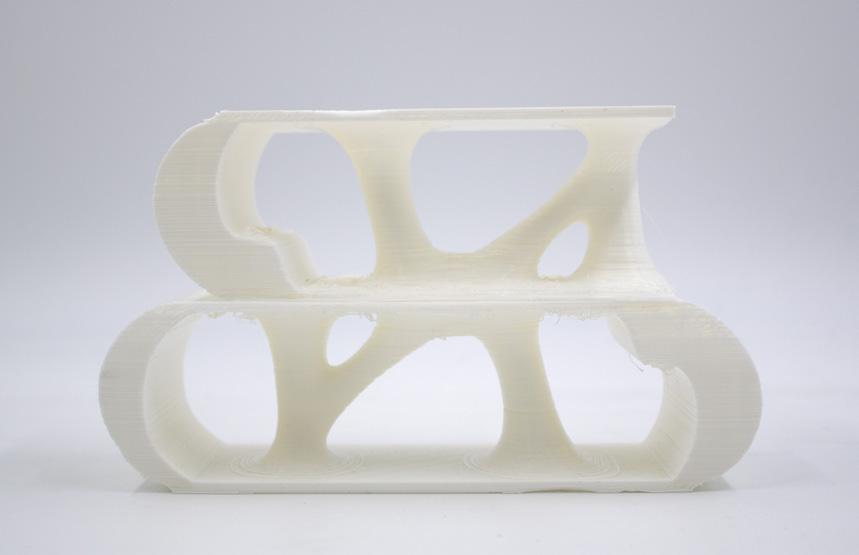

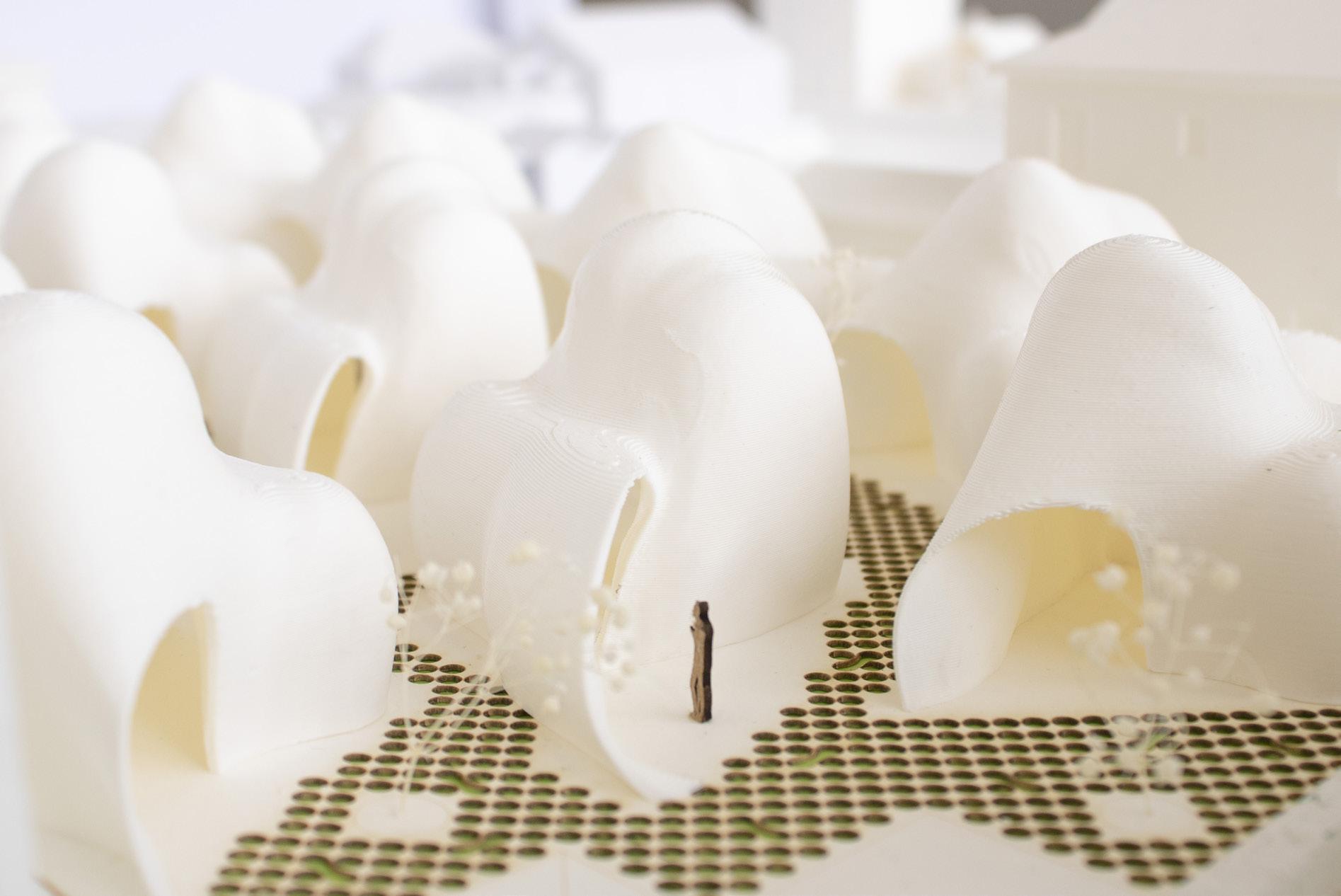
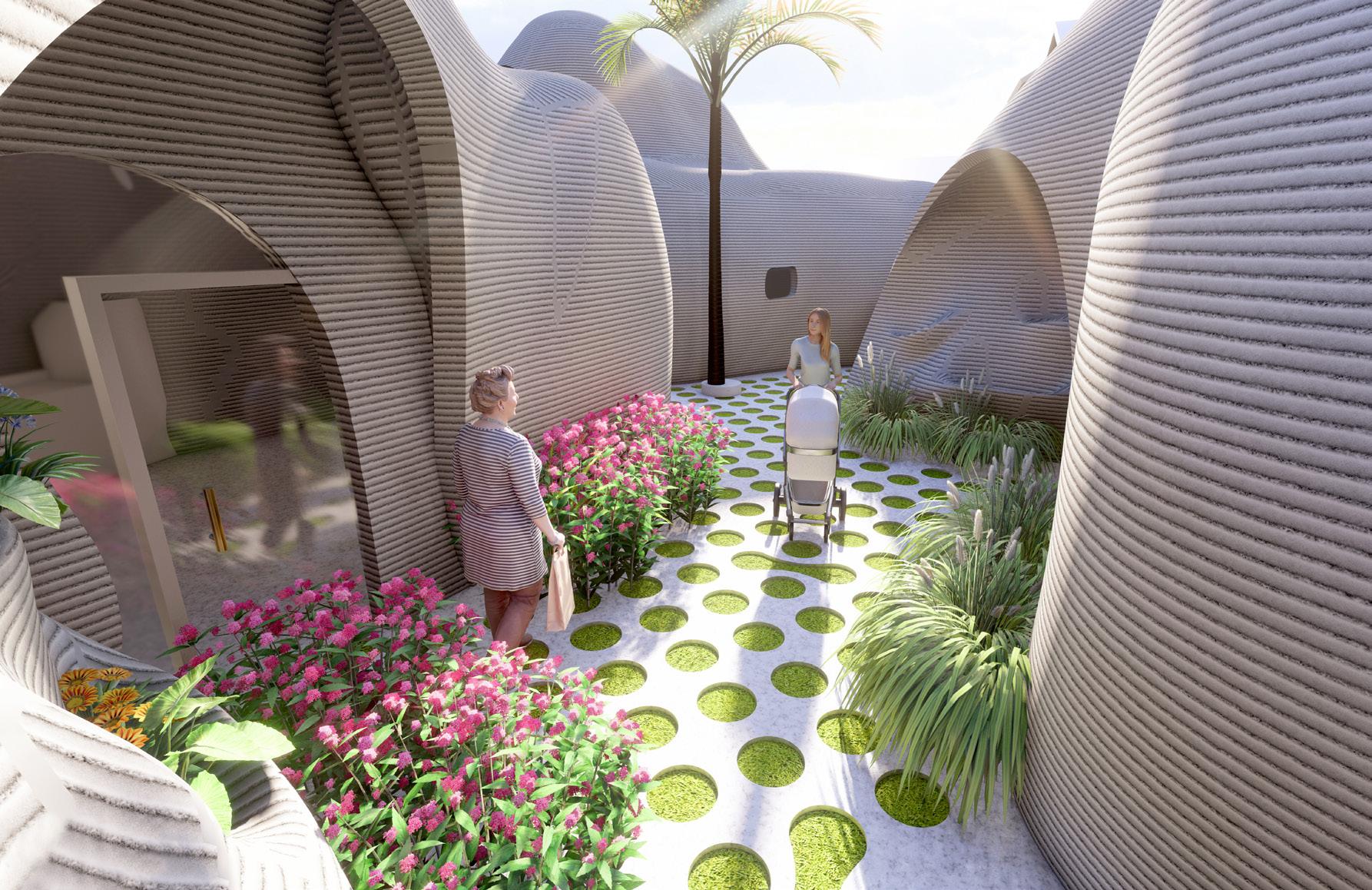
The tiny home units feel spacious and easily personalizable with the 450 sq. ft. of living space inside and an additional amount of outdoor
space for each home. The use of 3D printing technology is maximized to design specific elements for the home to allow for the spaciousness


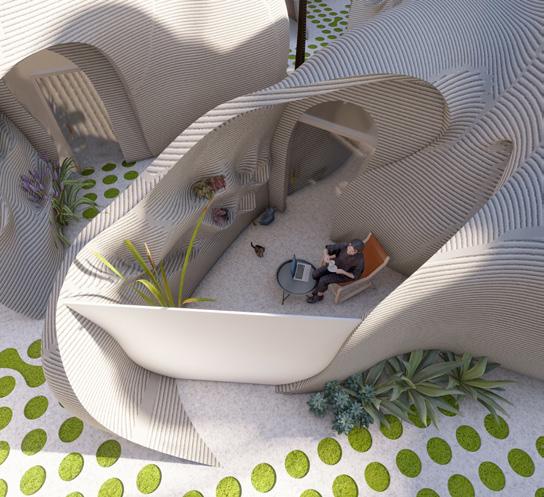
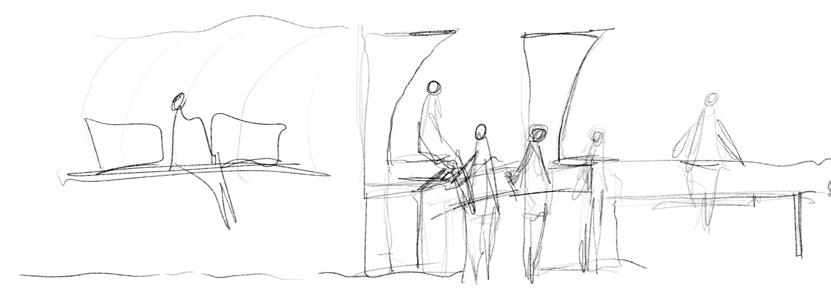
The weaving circulation leads inhabitants efficiently through the site and encourages a sense of individuality
In the intersections of circulation, there are small pockets of activity and community that naturally occur and link the entrances to every two to three homes.