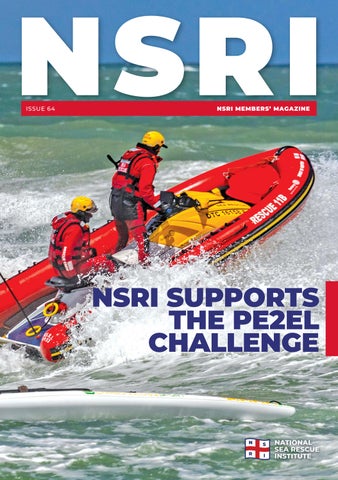
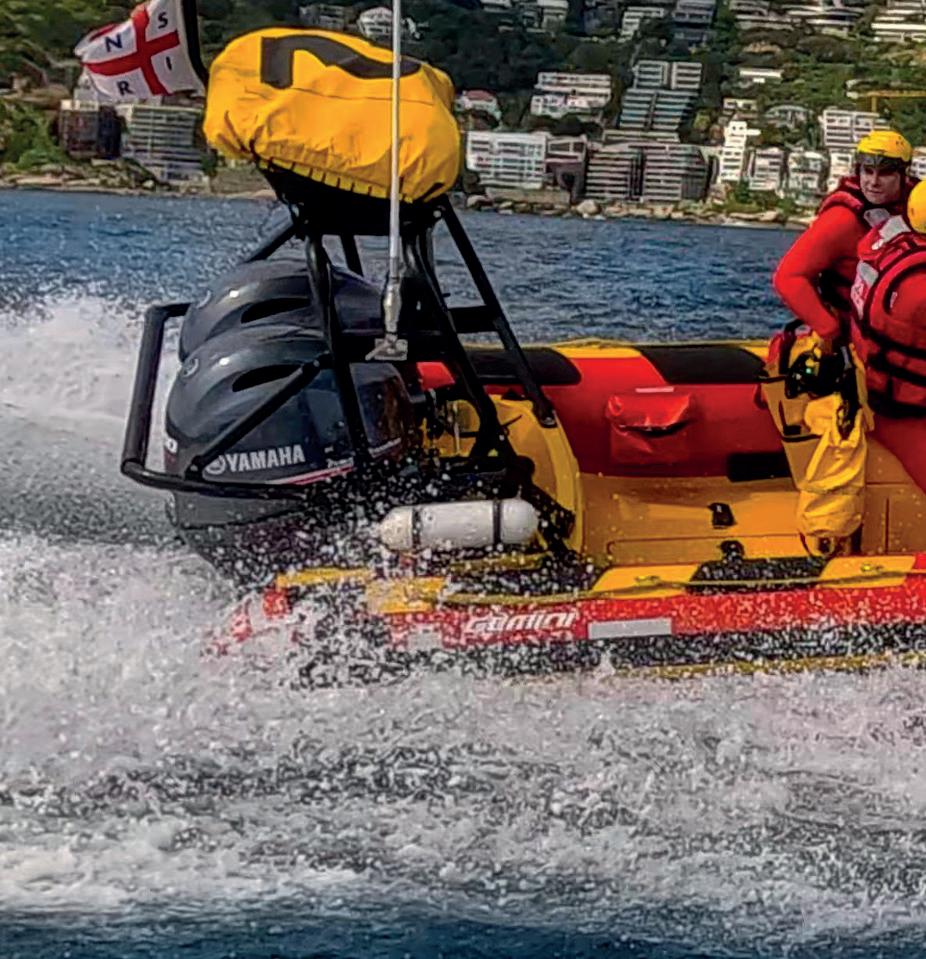
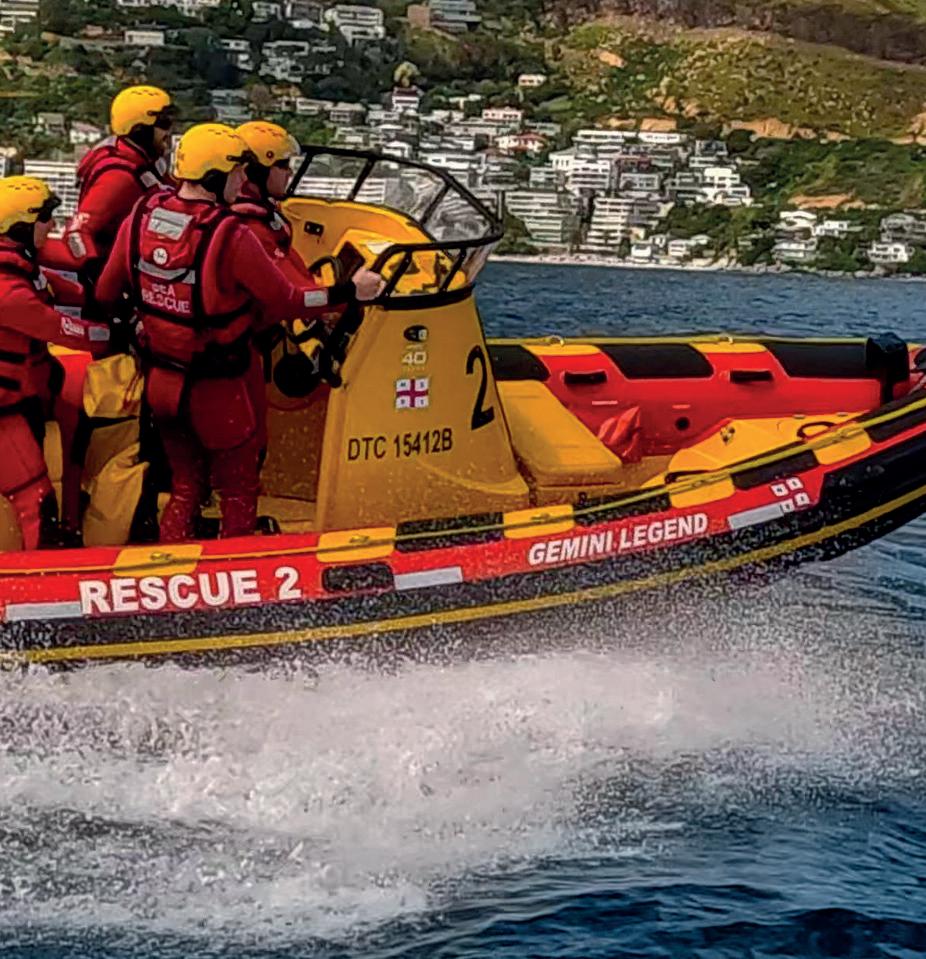
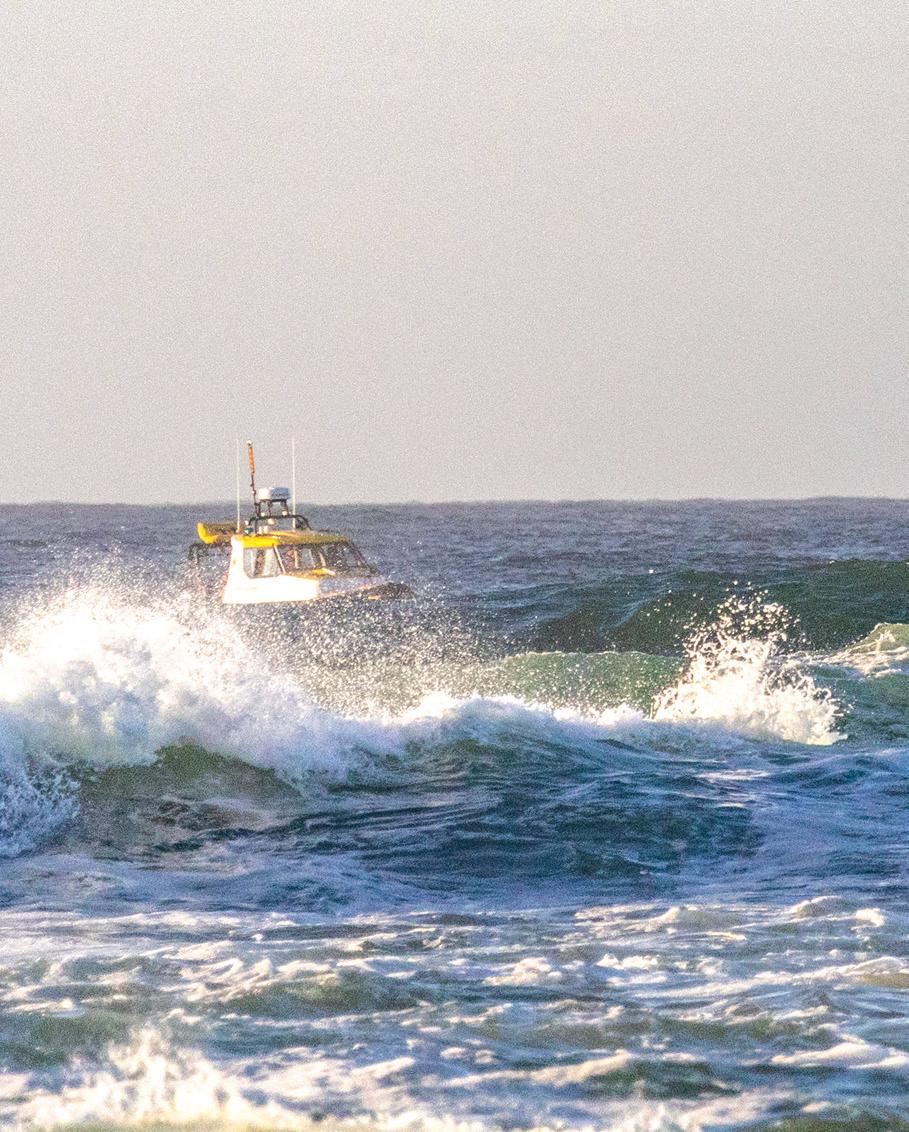
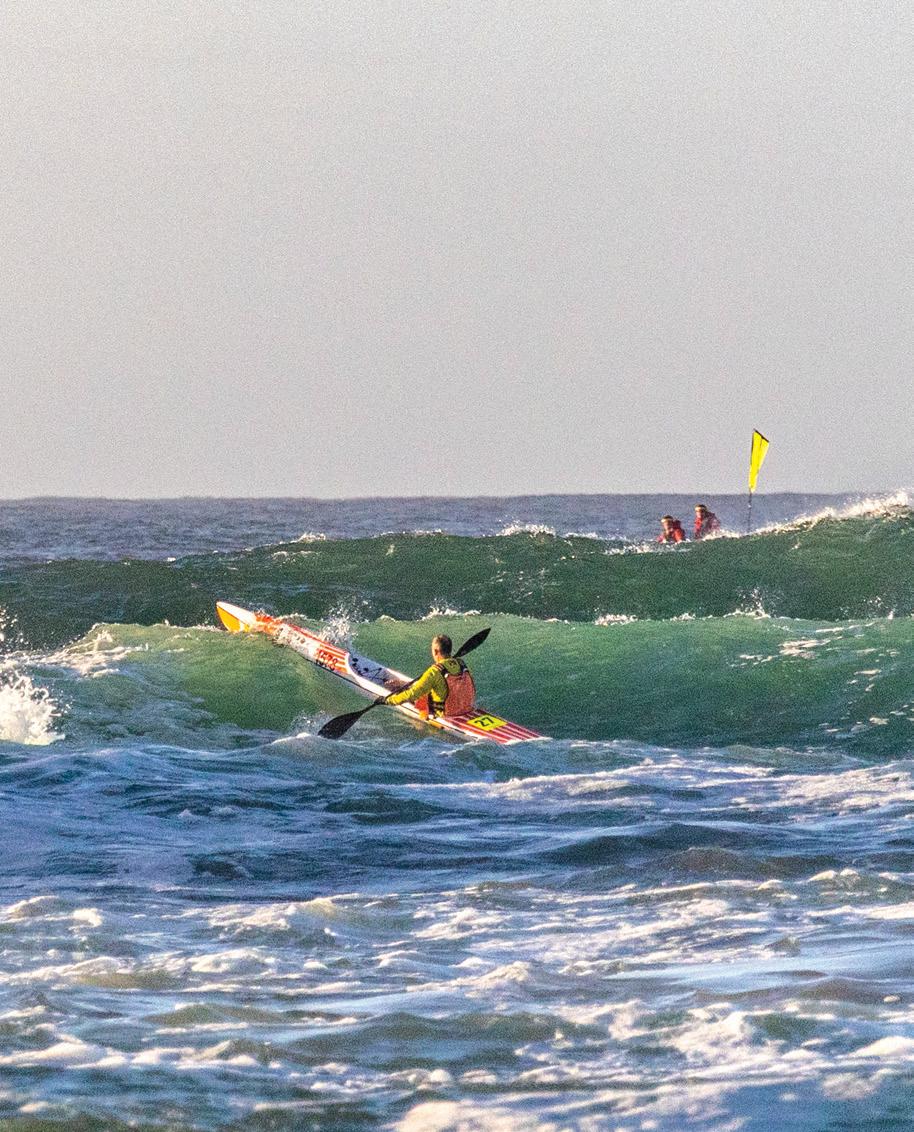
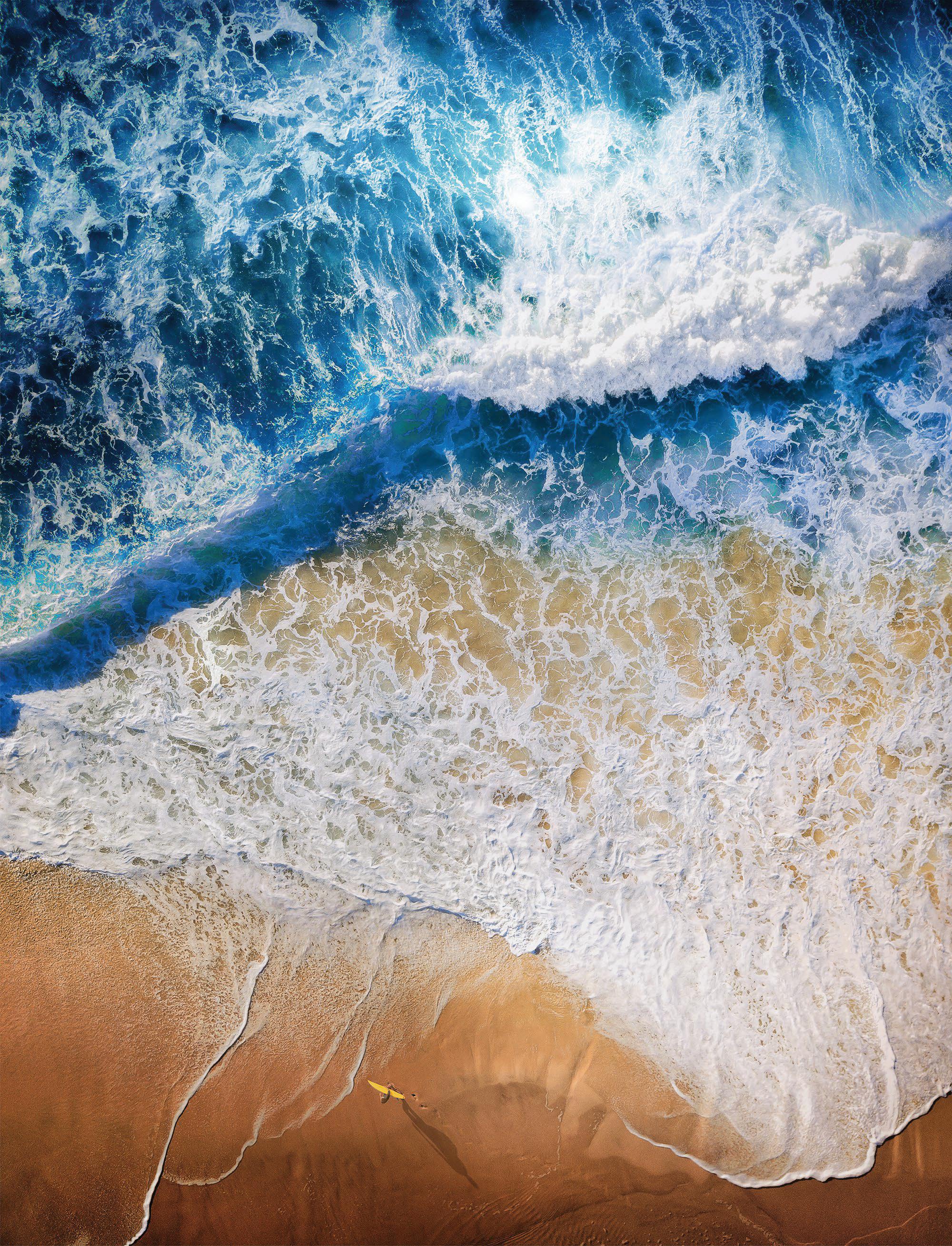
The PE2EL Challenge tests paddlers to the limit, but the NSRI is with them, every stroke of the way.
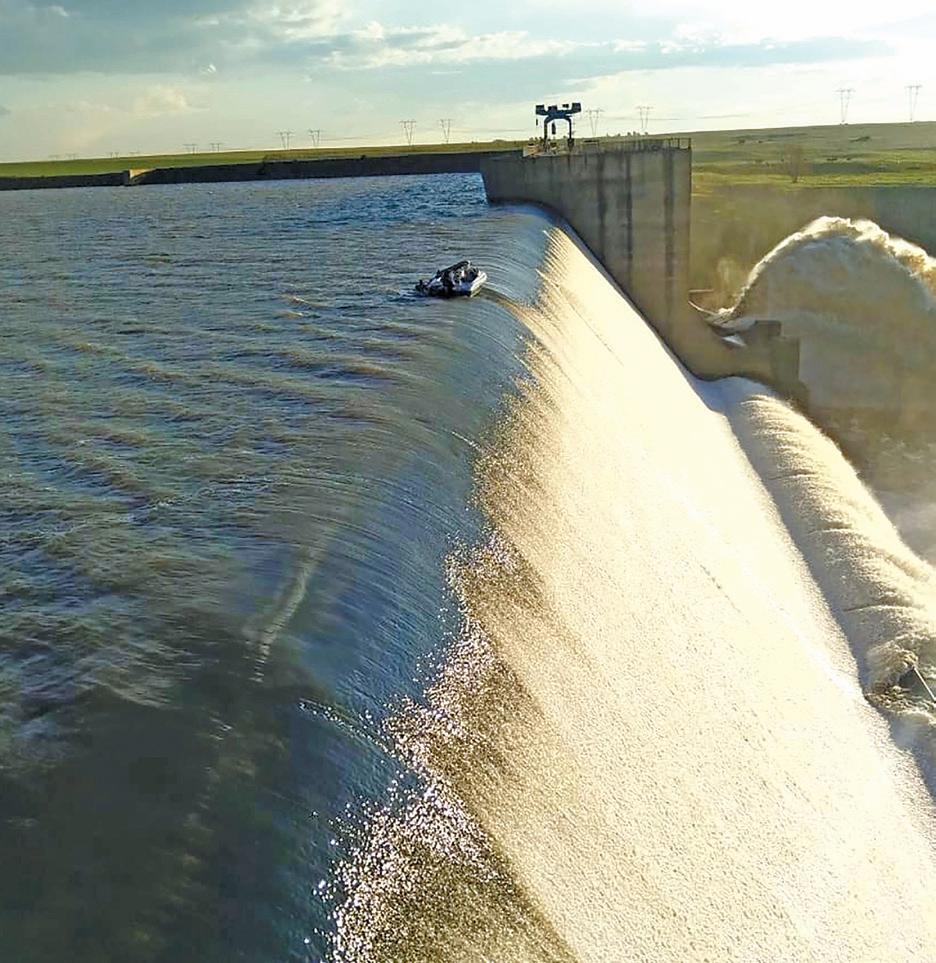
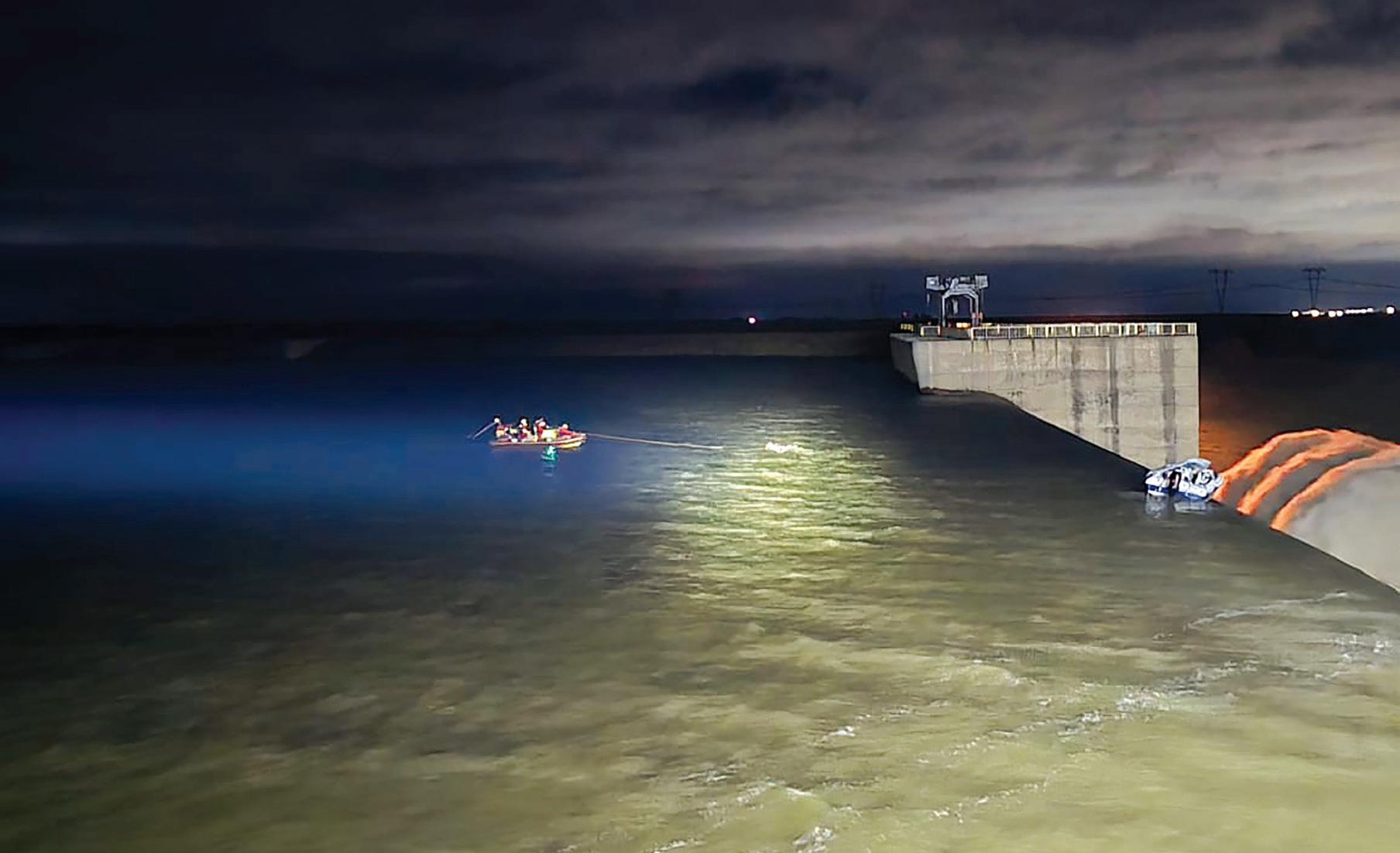
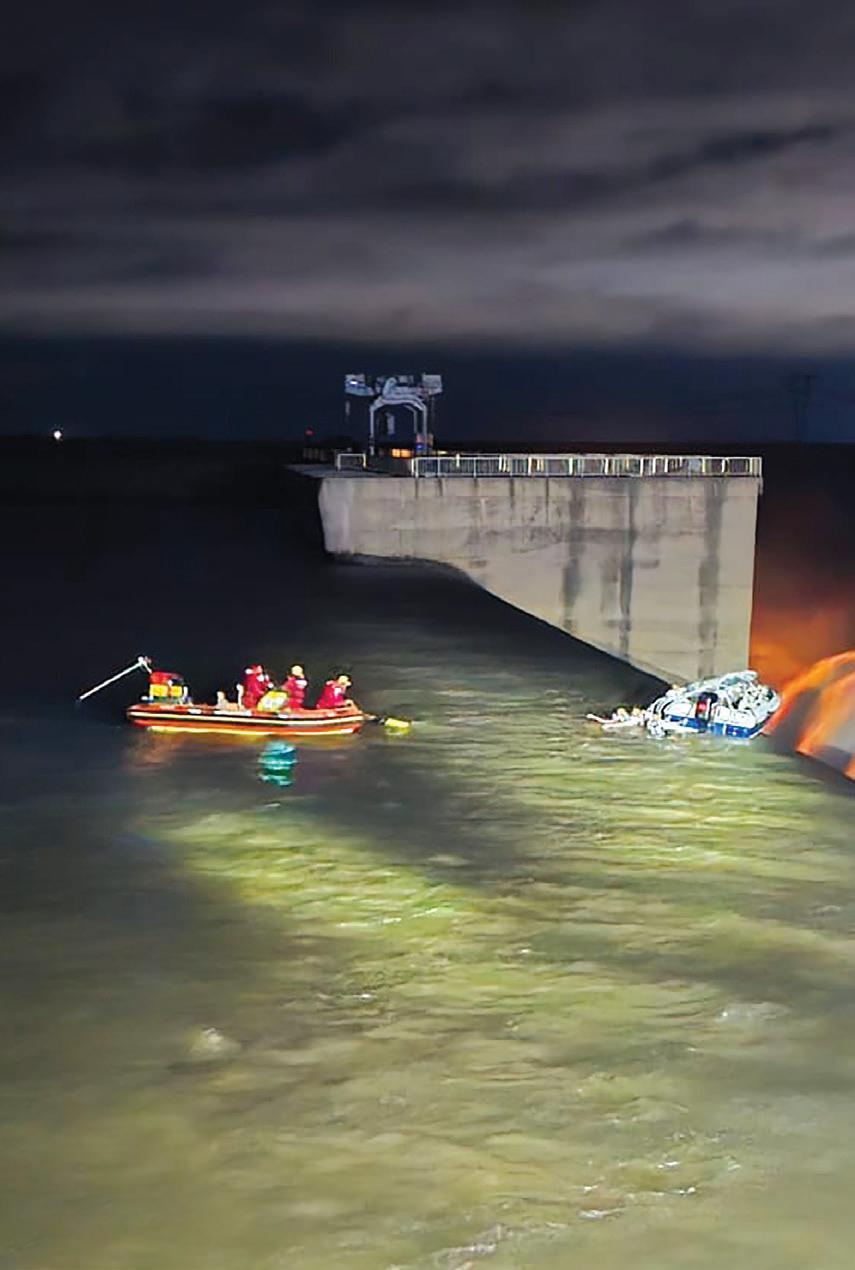
NSRI Witbank Dam crew rescue the occupants of a small ski boat perched on the spillway of Grootdraai Dam.
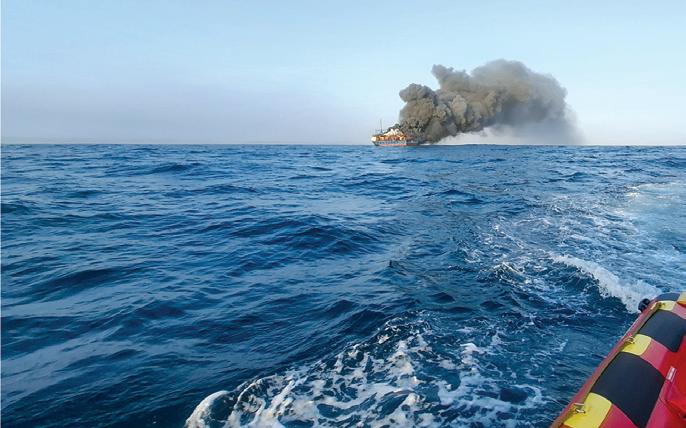
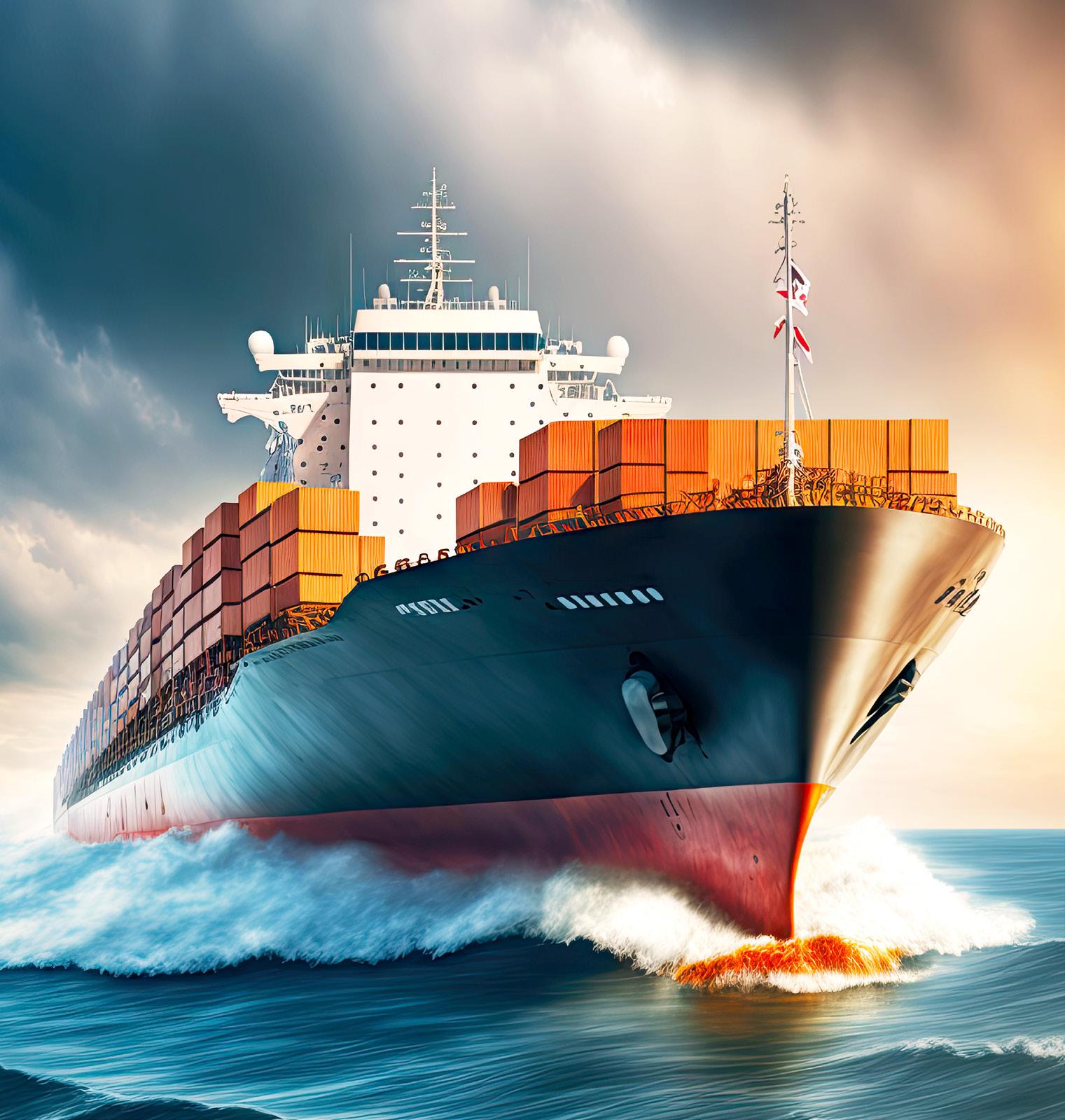
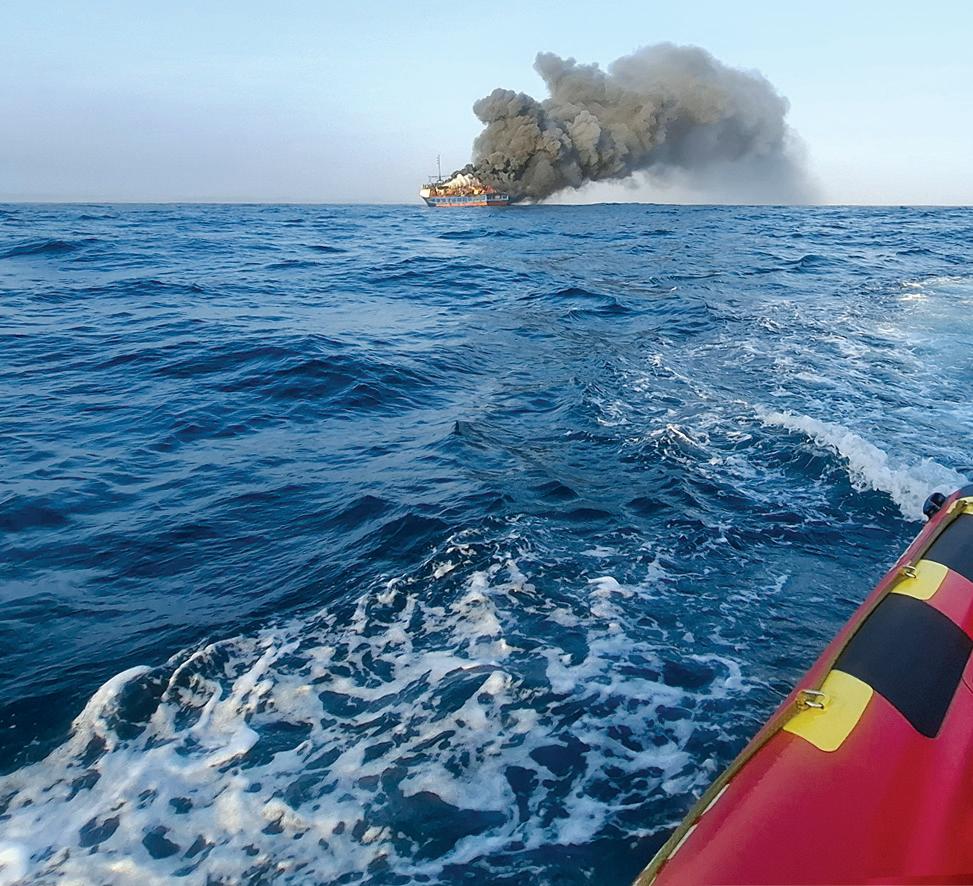
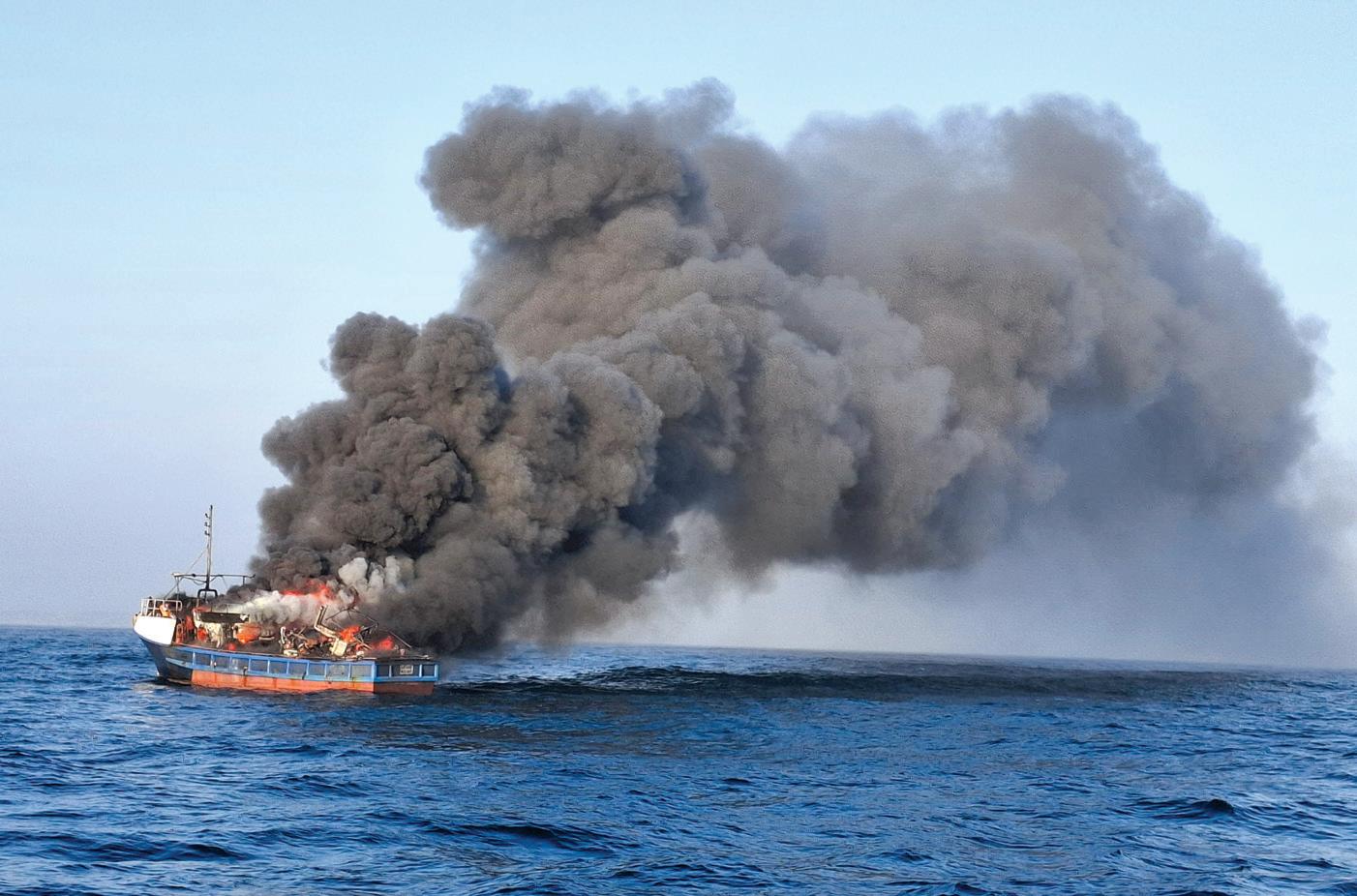
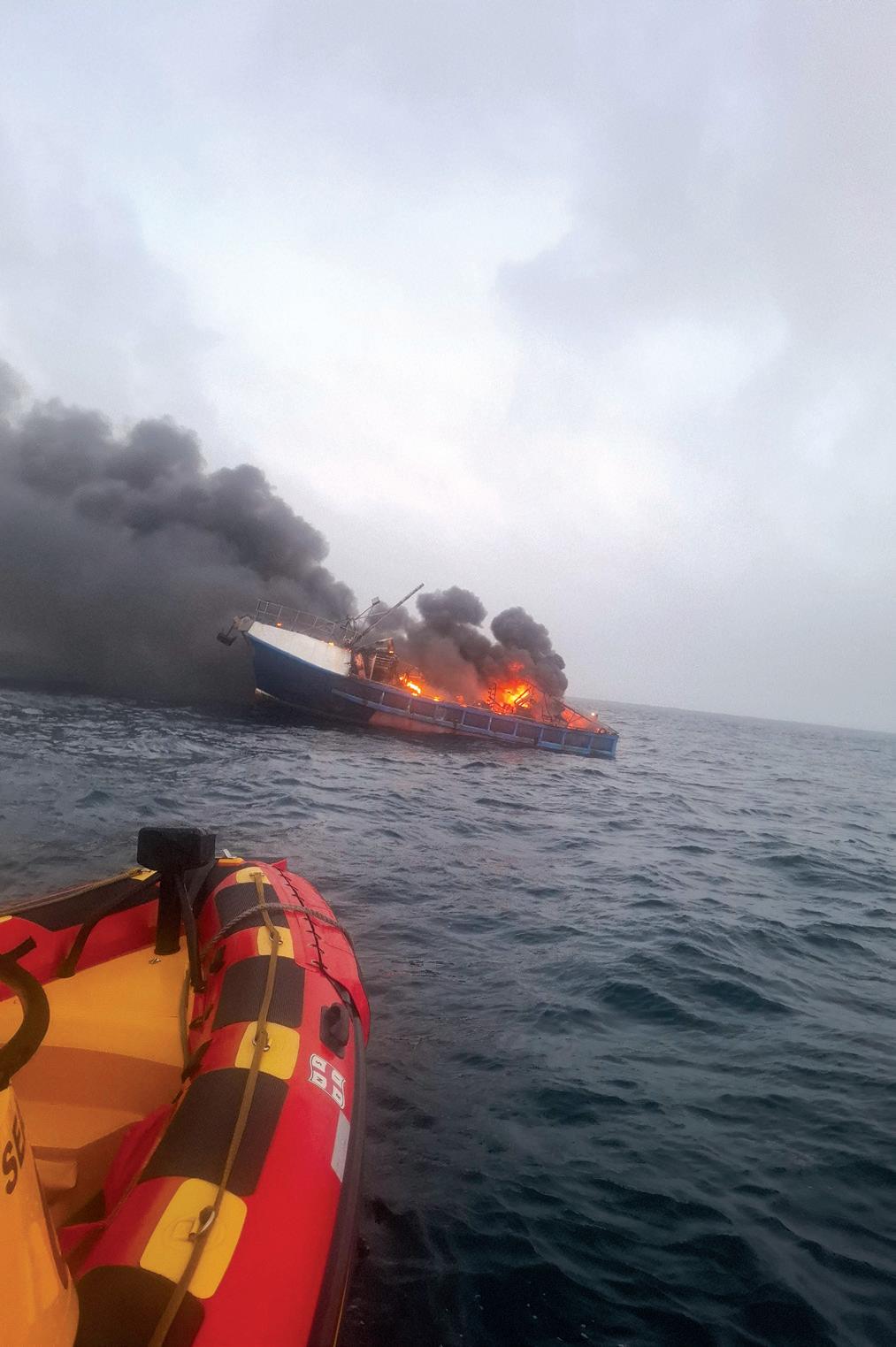
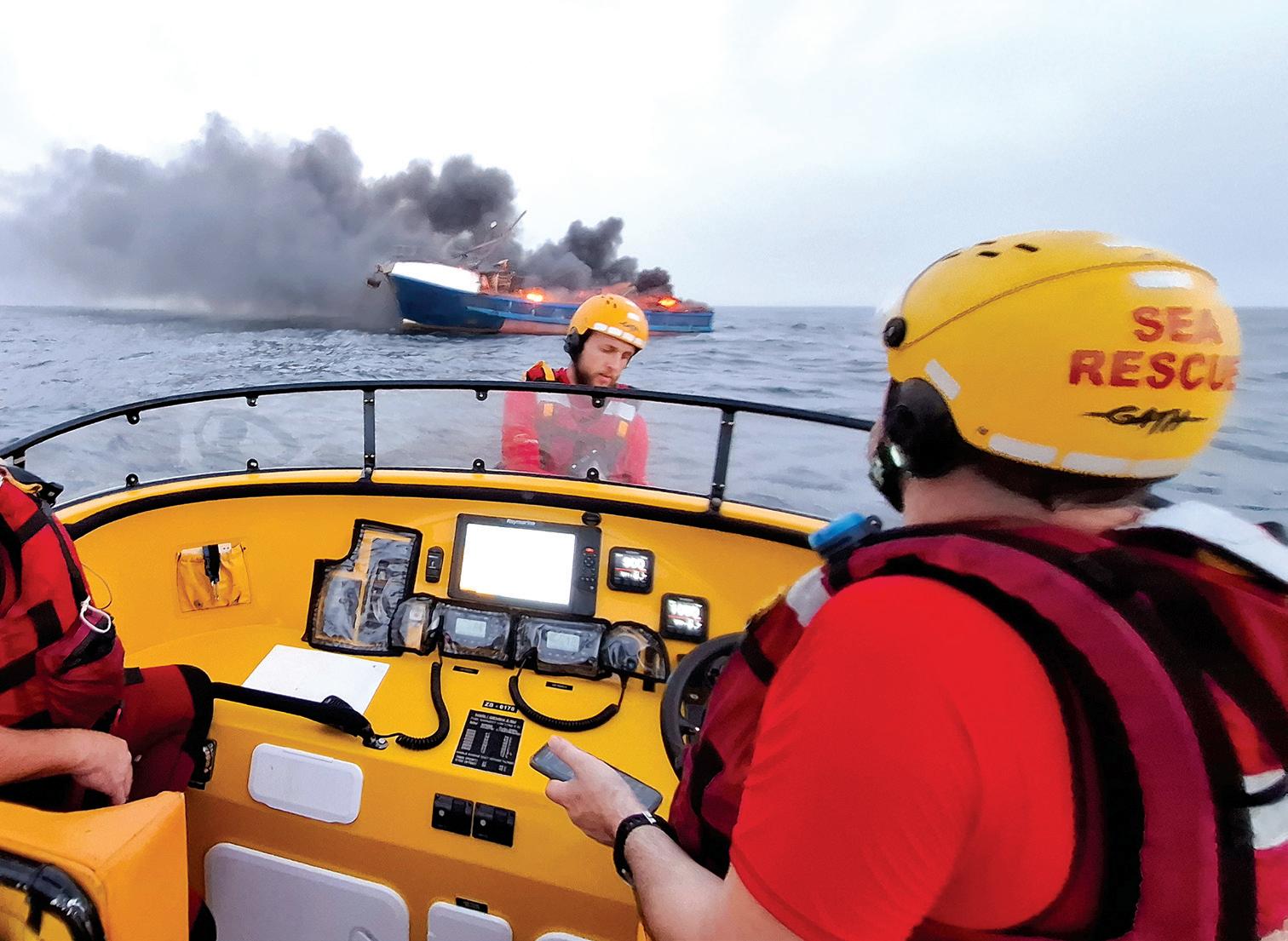
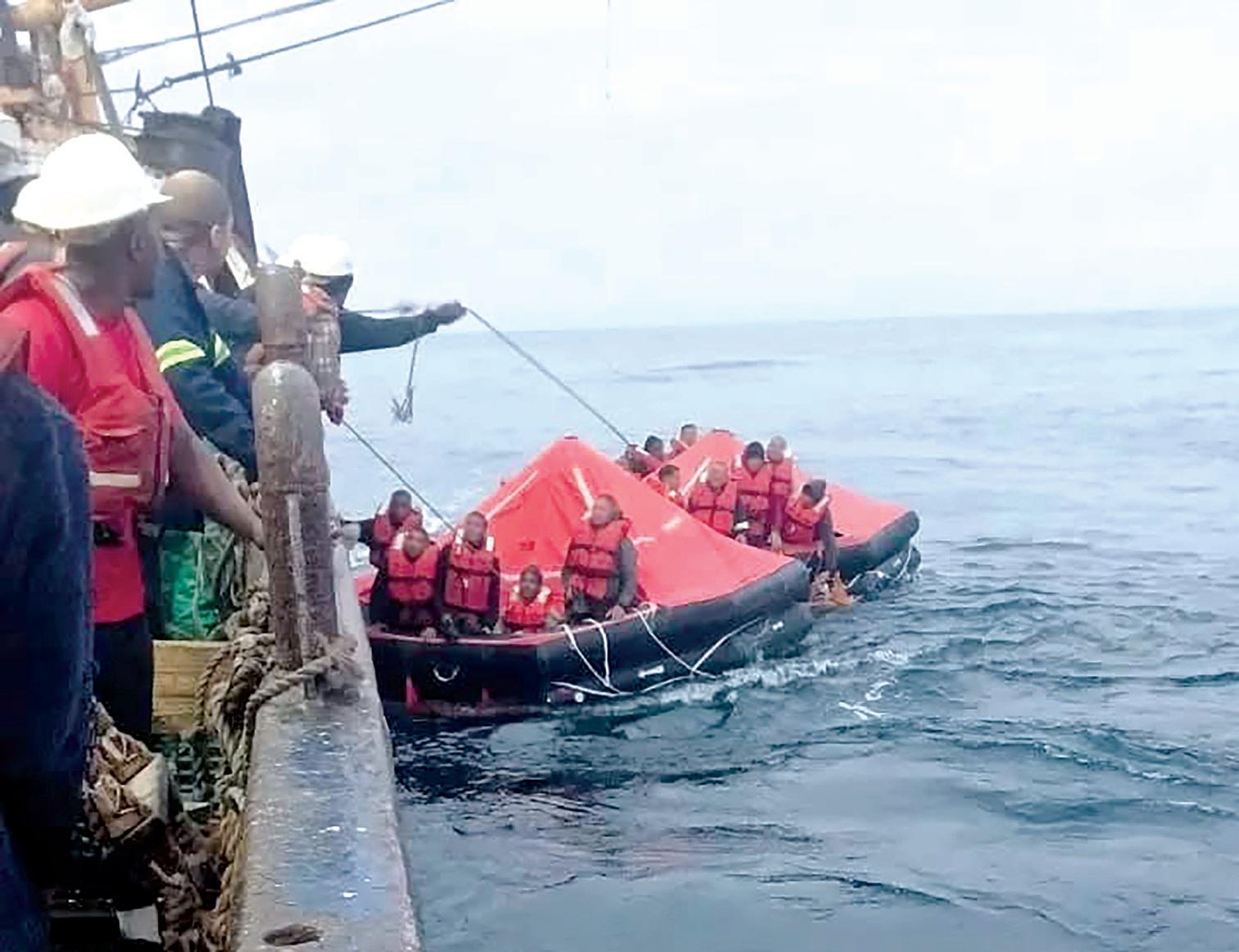
All 21 crew are safely evacuated from the FV Silver Dorado after a fire broke out onboard.
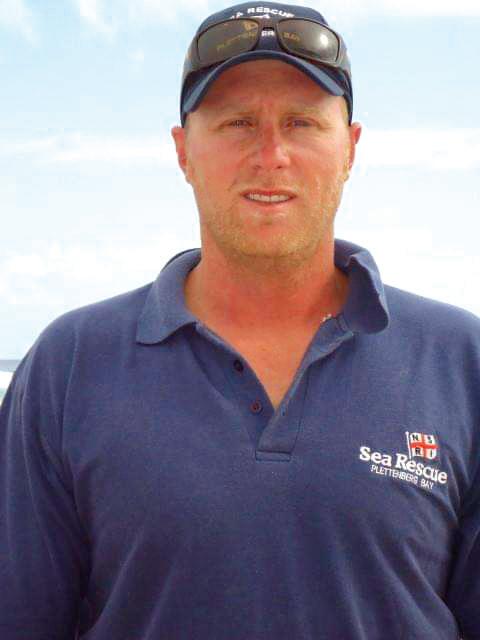
We chat to Plettenberg Bay’s StatCom Jaco Kruger, who believes leadership is a shared commitment.
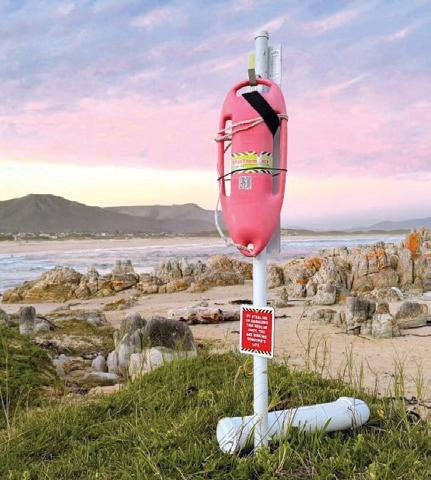
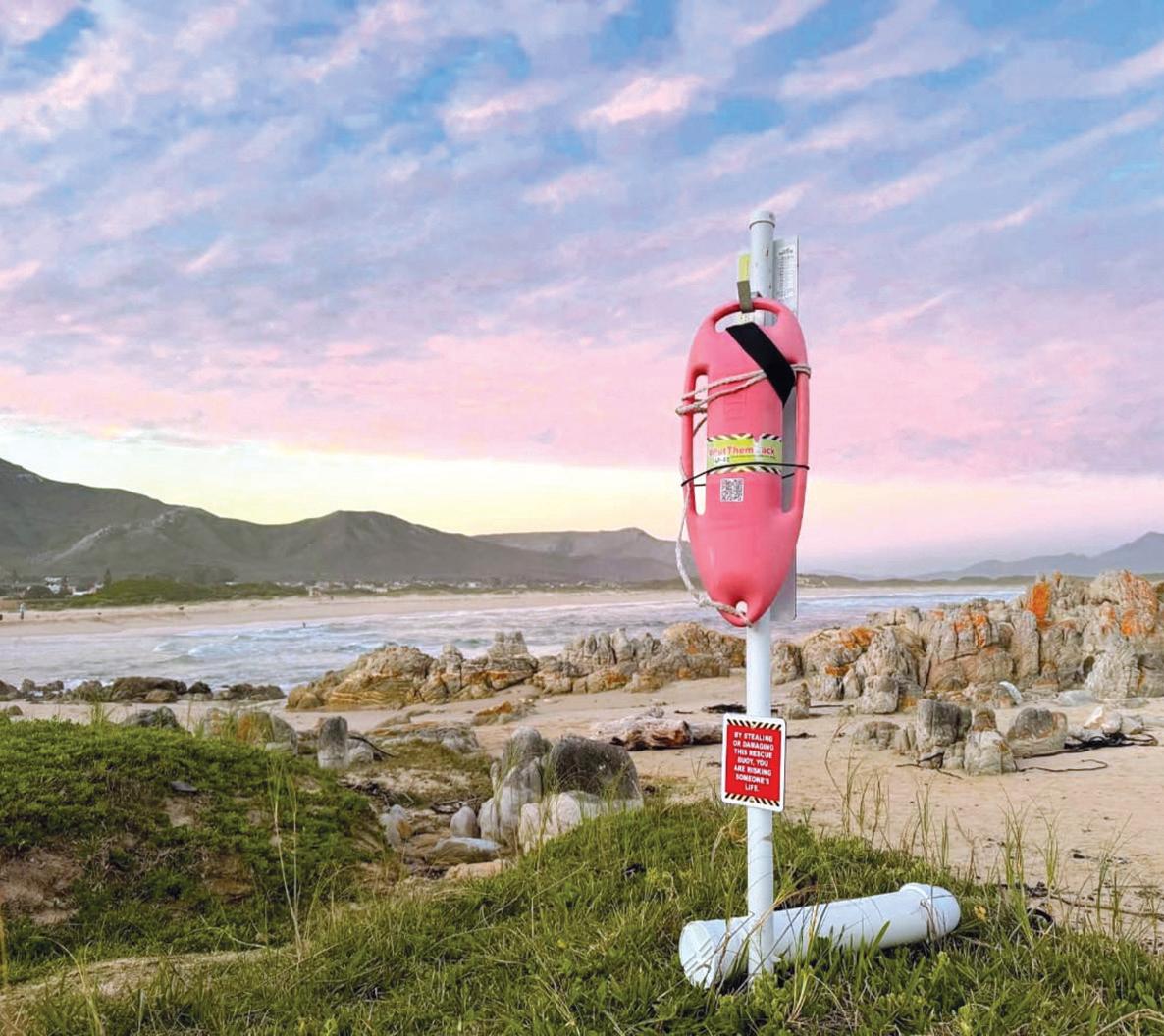
The five Pink Rescue Buoys dotting Kleinmond Beach like sentries are invaluable for beachgoers and bystander rescues.
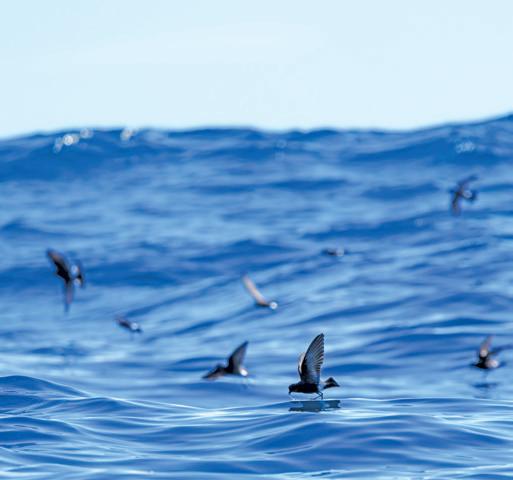
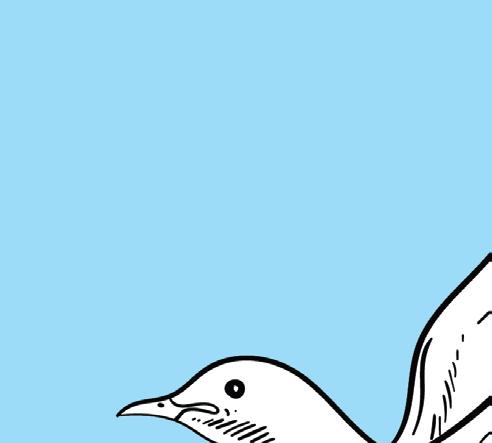
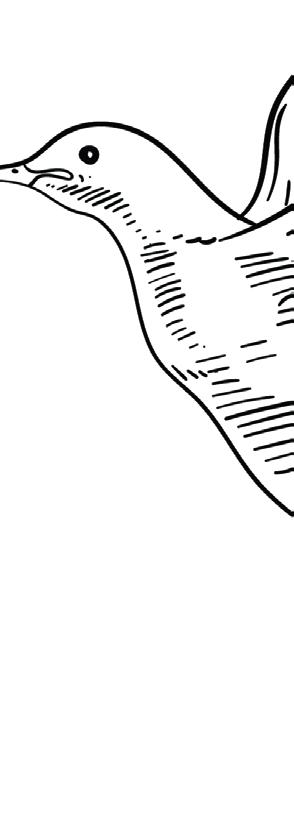
We fly with storm petrels, mighty little creatures whose size belies their endurance.
FROM THE HELM
At the heart of many of the stories in this edition is a common thread, ordinary people choosing to step forward when it matters most.
Leadership, as we are reminded time and again, is not about position or title. It is about responsibility. And in the context of the NSRI, that responsibility often means stepping into the unknown, into rough seas, the spillway of a dam wall at night, a river in flood, uncertain outcomes, and moments where others might step back. This past summer was one of the busiest on record for NSRI crews, with sustained operational activity across rescue services, lifeguarding and community programmes. Volunteers remained at the heart of this effort, responding to 266 callouts during the peak period and assisting 311 people in difficulty. On 1 January alone, while many South Africans were spending time with their families, our crews responded to 30 separate incidents. Behind each of these numbers is a human story, a life saved, a family spared heartbreak, and a community made safer.
What stands out most is not only the courage shown in these moments, but the quiet, consistent leadership that happens long before the call comes. It is in the training, the preparation, the willingness to improve, and the commitment to a cause greater than oneself.
We are reminded that what drives us is not simply what we do, but why we do it. Our purpose, saving lives, changing lives and creating futures, continues to unite volunteers, staff, partners and communities across the country. It is this shared belief that enables people to push boundaries, to innovate, and to achieve outcomes that, at times, seem extraordinary.
Perhaps most importantly, these stories reflect that leadership is not confined to a few. It exists throughout the organisation, in every crew member, every instructor, every supporter. It is measured not by individual achievement, but by the impact we have on others.
Leadership also extends beyond our volunteers and staff. We see it in the decisive thinking of a fishing boat captain whose actions helped ensure that no lives were lost. We see it in the actions of Good Samaritans who used Pink Rescue Buoys to save lives while calling for assistance. These moments remind us that water safety is a shared responsibility, and that the presence of the NSRI, combined with empowered communities and individuals willing to act, creates a stronger and more responsive safety network.
As you read through this edition, I encourage you to look for these moments. They are a powerful reminder that leadership is a choice, one that is made every day, often quietly, and always with purpose.
MIKE VONK, NSRI CEO
CAPE TOWN: NSRI, 4 Longclaw Drive, Milnerton, Cape Town, 7441; PO Box 154, Green Point 8051 Tel: +27 21 434 4011 Email: magazine@searescue.org.za Web: www.nsri.org.za facebook.com/SeaRescue youtube.com/@NSRISeaRescue @nsri @searescuesa @nsrisouthafrica
THE CREW
THE PUBLISHING PARTNERSHIP
MANAGING EDITOR
Wendy Maritz
ART DIRECTOR Ryan Manning
COPY EDITOR
Deborah Rudman
ADVERTISING EXECUTIVE
Bernice Blundell
MANAGING DIRECTOR
Susan Newham-Blake
PRODUCTION DIRECTOR
John Morkel
ADDRESS
PO Box 15054, Vlaeberg 8018
TEL +27 21 424 3517
FAX +27 21 424 3612
EMAIL wmaritz@tppsa.co.za
NSRI
OFFICE +27 21 434 4011
WEB www.nsri.org.za
FUNDRAISING AND MARKETING DIRECTOR
Janine van Stolk
janine@searescue.org.za
HEAD OF MARKETING
Bradley Seaton-Smith bradley@searescue.org.za
COMMUNICATIONS MANAGER
Andrew Ingram andrewi@searescue.org.za
PRODUCED FOR THE NSRI BY
The Publishing Partnership (Pty) Ltd, PO Box 15054, Vlaeberg 8018.
Copyright: The Publishing Partnership (Pty) Ltd 2026. All rights reserved. Reproduction in whole or in part is prohibited without the prior permission of the editor. Opinions expressed are those of the authors and not of the NSRI. Offers are available while stocks last.
PRINTING Novus
ISSN 1812-0644
WINNING LETTER
Congratulations to Riaan Oosthuizen for writing this issue’s winning letter.
HELPING FOLK ON DRY LAND
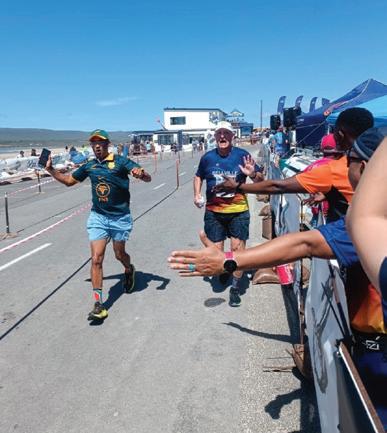
It’s not often that the NSRI saves someone’s life on dry land, and while they’re attempting to run a marathon! But, during the Vlakte Marathon, the incredible team based in Witsand truly came to my rescue.
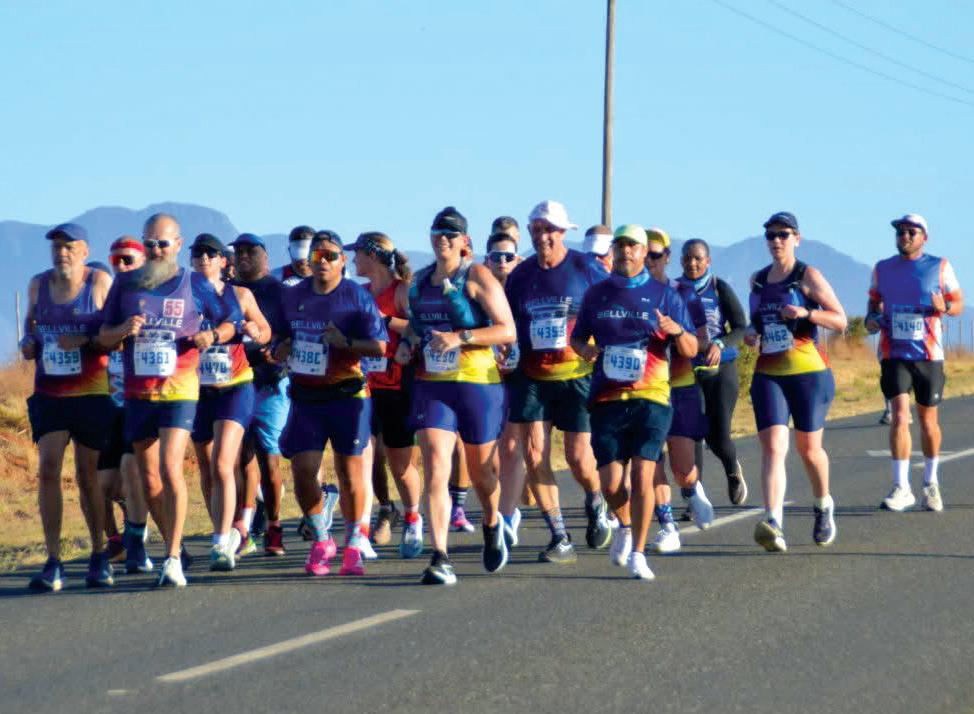
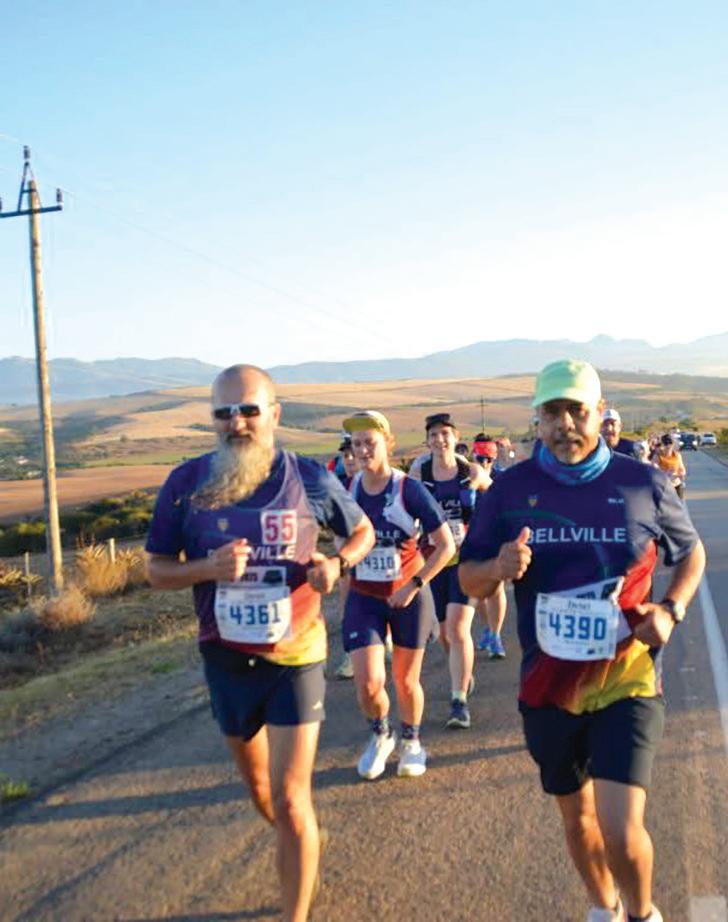
A big group of us from Bellville Athletic Club took part in the race after the huge disappointment of the Cape Town Marathon being cancelled on the morning of the event. The day actually started off great. I was cruising comfortably in the famous ‘Bellville bus’, and at one stage it looked exactly like that scene from Forrest Gump. Our bearded leader, Coach Quintus, was up front, and the rest of us followed in a long line behind him…
But, as ‘Coach Q’ always reminds us, ‘a marathon only starts after 30km’. And, wow, mine did. I hit the proverbial wall hard. Not a small wall. The Great Wall of China.
There were moments when I honestly thought about waving my tiny little white handkerchief in surrender. The final 12km felt like the universe was punishing me for every koeksister I’ve ever eaten. All I could think of was that my amazing wife, Anika, was waiting somewhere with a pink melkie, but I was finished long before I reached her, emotionally, physically, spiritually. All of it.
And then, like angels, the NSRI appeared in a bakkie… and someone waved as if to ask, ‘Boet, do you need a
STRONGER TOGETHER FOR SAFER WATERS. IN
PROUD SUPPORT OF THE NSRI’S LIFE-SAVING MISSION.
Every day, along South Africa’s coastline and inland waters, the NSRI answers the call, to protect lives through rescue, education, and prevention.
Yamaha Marine South Africa is honoured to support these critical operations with outboards engineered for uncompromising reliability and performance in the harshest conditions.
drink?’ Next moment, out of a tiny cooler box came an ice-cold bottle of water –basically liquid resurrection.
That truly saved me and my day. I didn’t quite make the mystical sub-five Two Oceans qualifying time, but I finished in a very respectable 05:04. For a guy carrying a few extra pounds, I’ll happily take it!
As quickly as the NSRI saints appeared, they were gone again. No time for names or pleasantries. So here is my proper thank you!
My monthly NSRI subscription really paid off. I always imagined being rescued dramatically by helicopter at sea; instead, I was saved in the middle of nowhere by a bottle of ice-cold water.
Huge shout-out to the legendary lady and gentleman from NSRI Witsand. You made a far bigger difference than you realise.
RIAAN OOSTHUIZEN
GRATITUDE TO THE STILBAAI TEAM
I would like to thank you from the bottom of my heart for the incredible courage, speed and professionalism with which you acted when my family recently got into trouble at Lappiesbaai. What should have been an ordinary day in the sea changed within minutes into a life-threatening situation when a strong rip current pulled a group of about 20 people more than 100 metres out to sea.
All of us are experienced sea swimmers, but the sea was rougher than usual that day. My 16-year-old niece was one of the furthest out, with her father, a master diver, behind her. In the meantime, my sister and I were fighting to get back into shallower water. It was a battle just to stay afloat.
In that chaos, six of your lifeguards jumped in without hesitation. I would especially like to single out Ethan Botha; he literally rescued my 14-year-old niece from our arms, and then immediately swam back out again to help my brotherin-law, who had been dragged even further out. I have never seen him so grateful and overwhelmed.
The young men on duty that day are made of steel. They repeatedly swam back out for another rescue attempt, without hesitation. They were true acts of heroism.
Our family is still here together today because you were there. Ethan saved the lives of two of my family members, and for that we will be forever grateful.
Thank you so very much for what you do every day, for strangers, without expecting recognition. We will never forget it.
With deep appreciation, PINNUCCIA SMITH AND FAMILY
Scan the QR Code to donate R695 & you could WIN 1 OF 4 JIMNYS
MAKING DREAMS COME TRUE
We were strolling through the V&A Waterfront and passed your Rescue 3 station. I saw the garage door open and a few of your team members moving around inside. My five-year-old son, Rikus, could see the beautiful DHL Deliverer on the launch platform and was immediately very excited. (He has a great passion for boats and large vessels with large engines, of course!)
One of the crew spotted his excitement and invited us in to see the vessel up close. Rikus was able to stand at the helm and saw the two stunning Cummins inboard motors.
So, why am I sharing this? A single and simple act of noticing a young boy’s excitement made his day! He was high-fiving crew members and couldn’t stop talking about how awesome the boat was! We sat outside on a bench and waited patiently for the RIB and DHL Deliverer to launch. He was waving at the crew members, telling everyone how cool the boat was.
Please extend my sincere gratitude to the entire crew at Station 3, Table Bay. They are awesome human beings and Rikus will remember their kindness for a very long time!
RUDI BRINCH
THANK YOU FOR WHAT YOU DO
I would like to take a moment to express my sincere appreciation for the incredible work you do.
When I donate, it is never about the amount. It is about how it feels to know that I am contributing, even in a small way, to saving lives and protecting people
WRITE TO US AND WIN!
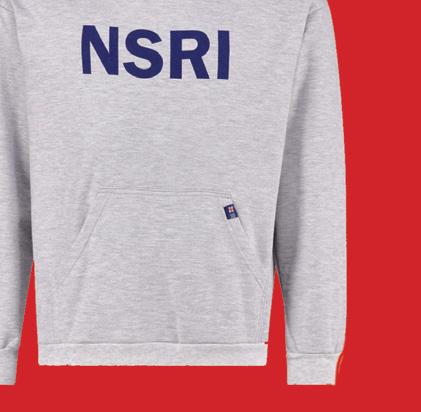
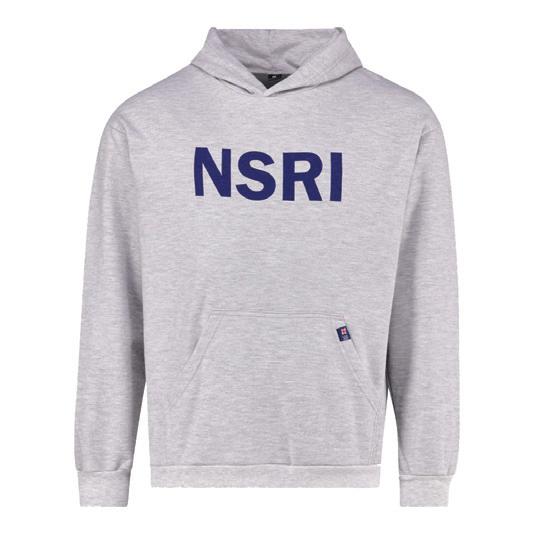
The writer of the winning letter published in the next issue of NSRI Magazine will receive an NSRI hoodie and a copy of Into a Raging Sea. Email your stories to magazine@ searescue.org.za.
in moments when they need help the most. Supporting the NSRI gives me a sense of purpose and reassurance –knowing that there are dedicated, selfless people ready to respond when the sea or water becomes dangerous.
I truly wish that one day I will be able to do more. Not for recognition, but simply because it feels right. Your work represents compassion, bravery and humanity at its best, and being able to support that, even modestly, means more to me than words can fully express.
I also wish there were more ways for supporters like me to help spread the word, so that others can experience this same sense of giving and connection — and understand how vital your work is to our communities and our country.
Thank you for your commitment, your courage, and the lives you continue to save every day. Please know that your work does not go unnoticed, and that it deeply touches the hearts of people like me.
With gratitude and respect.
RACHEL MKHATSHWA
OUR THANKS TO NSRI PORT EDWARD
On behalf of Eskom and the entire provincial leadership team, I would like to extend our heartfelt appreciation for your swift professional and compassionate response during the incident that occurred in Port Edward on 2 October 2025.
On that day, one of our metre readers suffered a medical emergency while performing his duties in the community. Thanks to your immediate intervention, calm leadership and medical expertise, he received the critical care and support he needed. Your selfless service ensured that a potentially tragic situation was managed with care, dignity and humanity.
We are equally moved by the fact that your team, composed of skilled volunteers, responded without hesitation. Your commitment to the safety and wellbeing of others reflects the highest values of service and community spirit. It is reassuring to know that, even in remote areas, there are dedicated structures such as the NSRI and its volunteers and first responders who stand ready to assist.
Your organisation has supported Eskom and the broader community on several occasions, and your presence reminds us that we cannot deliver electricity safely and reliably without the collaboration and goodwill of those around us.
Please accept this note as a token of our sincere gratitude and admiration. You have once again demonstrated that community resilience and care are at the heart of true service, and for that, we are deeply thankful.
With warm regards and appreciation.
KEVIN PILLAY, GENERAL MANAGER, CENTRAL EAST CLUSTER, ESKOM
DONATE THROUGH WOOLWORTHS MYDIFFERENCE
Woolworths has launched MyDifference, its new loyalty programme that replaces MySchool MyVillage MyPlanet. It’s a simple, free way to support the causes you care about, like the National Sea Rescue Institute (NSRI), every time you shop. By choosing the NSRI as your cause, you can help raise funds for our rescue and drowning prevention work at no cost to you. Every scan of your digital MyDifference card makes a difference. Here’s how to support the NSRI:
1. Download the Woollies app
2. Join MyDifference
• New customers: register on the app.
• Existing Woolies customers: sign in to your profile.
3. Go to your Loyalty hub and tap ‘Causes’.
4. Select ‘Choose My Own’.
5. Search for National Sea Rescue Institute – NSRI.
6. Choose us before the selection window closes on 30 June 2026.
7. Shop as usual at Woolworths and scan your digital MyDifference card at the checkout.
Every donation raised through MyDifference supports the NSRI’s mission to save lives on South African waters and teach children and adults how to stay safe around water. With your help, we can continue to expand our rescue services and prevention programmes – from our volunteer rescue crews to our survival swimming and water safety initiatives.
COURAGE MEETS COMMITMENT: NSRI SUPPORTING THE PE2EL CHALLENGE
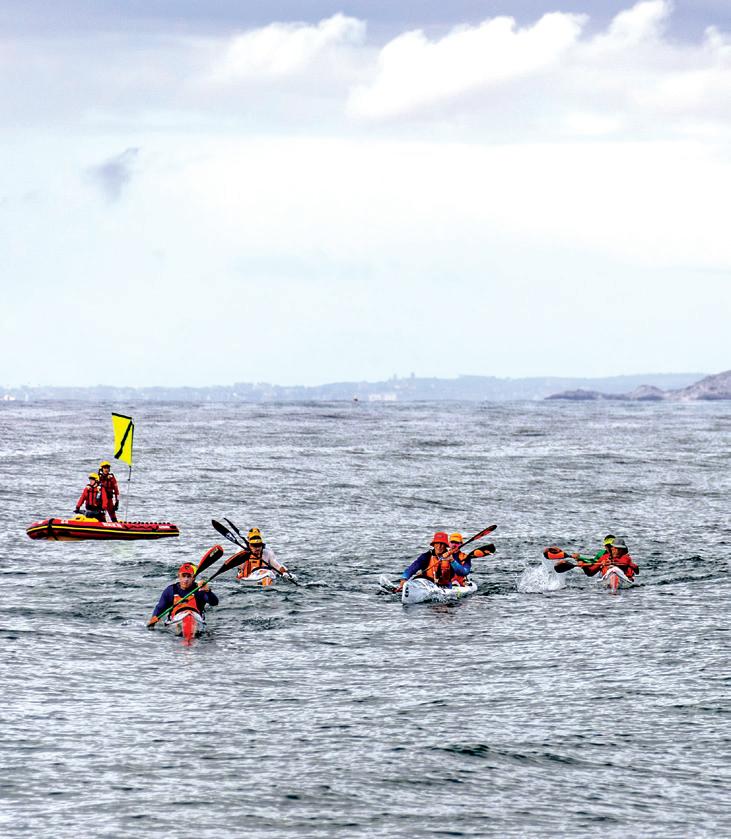
The PE2EL took place from 3 to 6 December 2025. Paddlers took part in a gruelling multi-day event, and the NSRI was with them, every paddle stroke of the way. By Robin Mousley
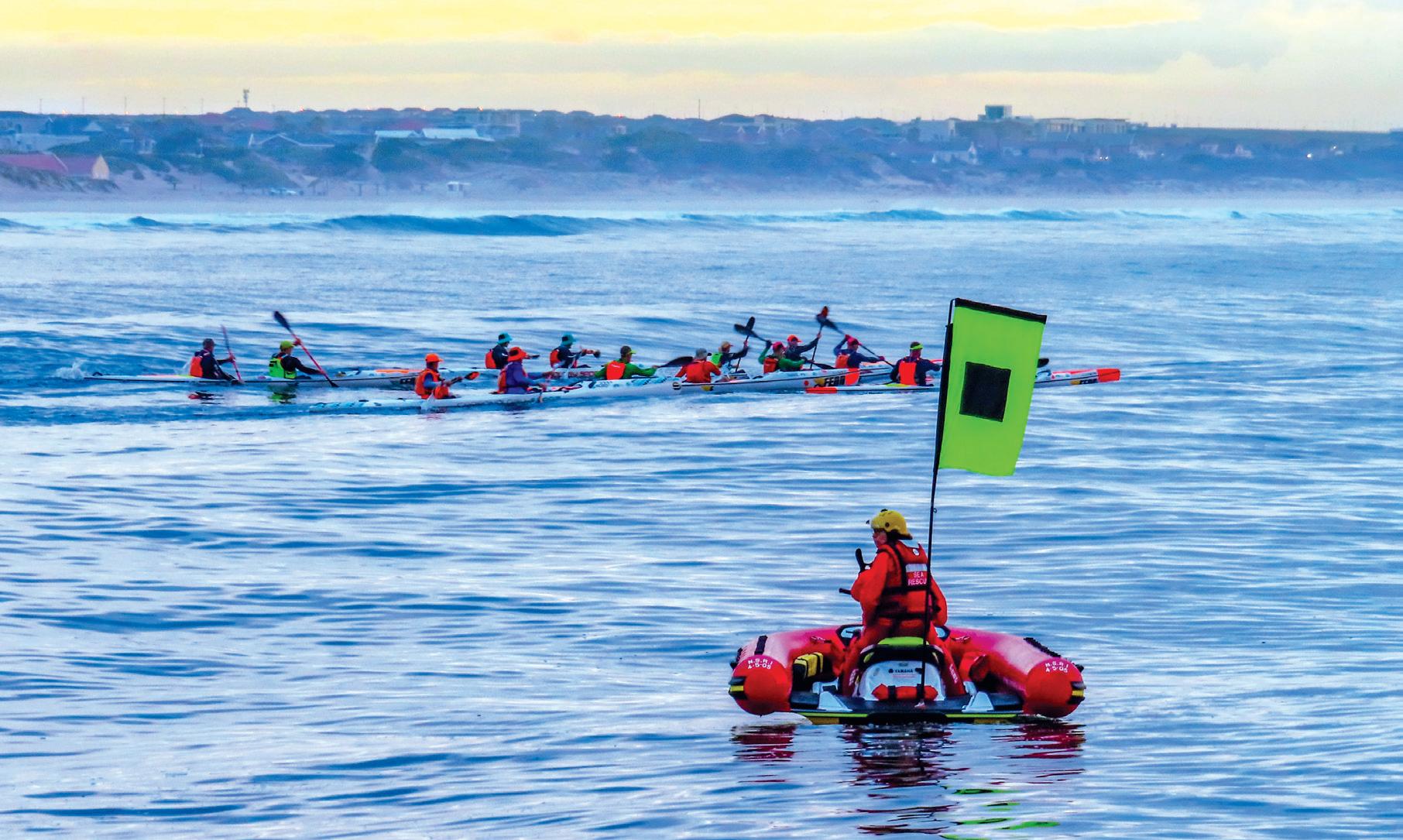
Every two years, the PE2EL Challenge – a four-day, 250km ocean racing marathon – runs from Gqeberha (Port Elizabeth) to East London. Known by competitors simply as ‘The Challenge’, the race is arguably the toughest multiday paddling event on the planet.
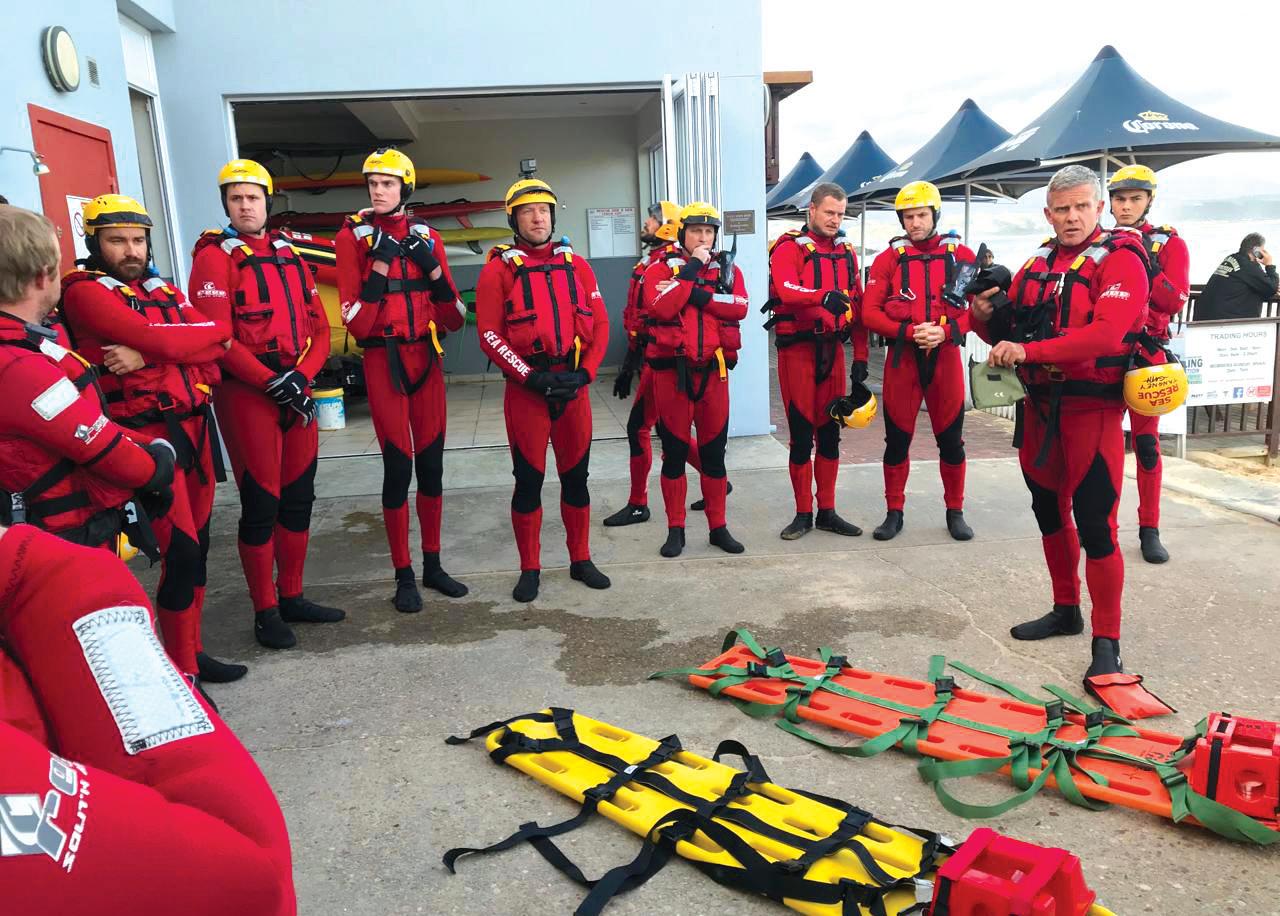
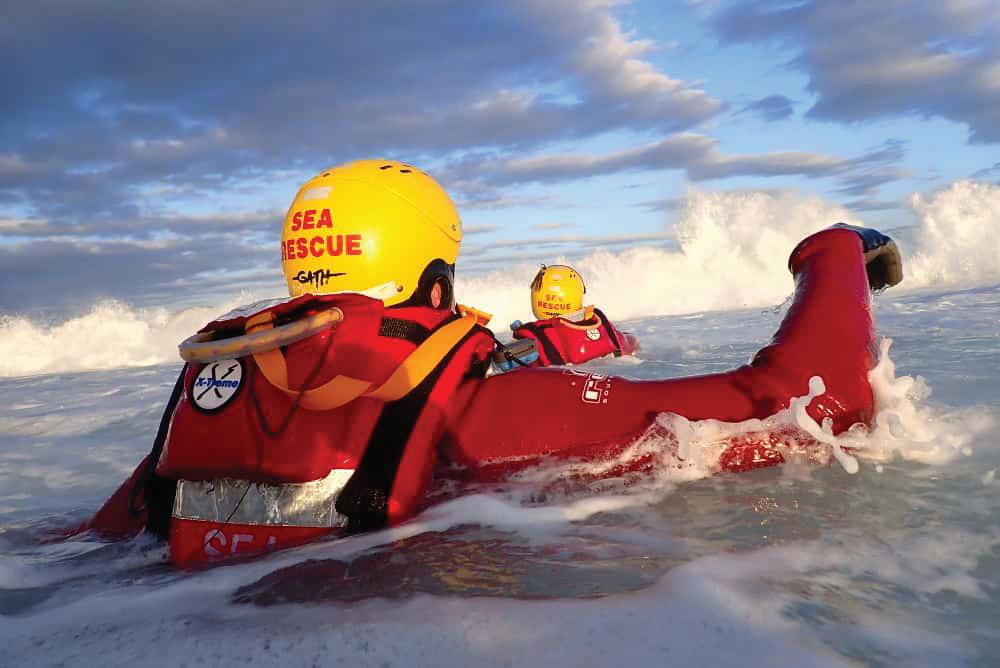
But to the NSRI, the race provides a unique opportunity to train crews, test equipment, refine coordination and strengthen inter-station teamwork.
Planning starts long before the event. NSRI Eastern Cape Regional Manager Ian Gray, who is responsible for the PE2EL race safety, laughs, ‘I’m getting quite good at it; it only took me a year this time!’
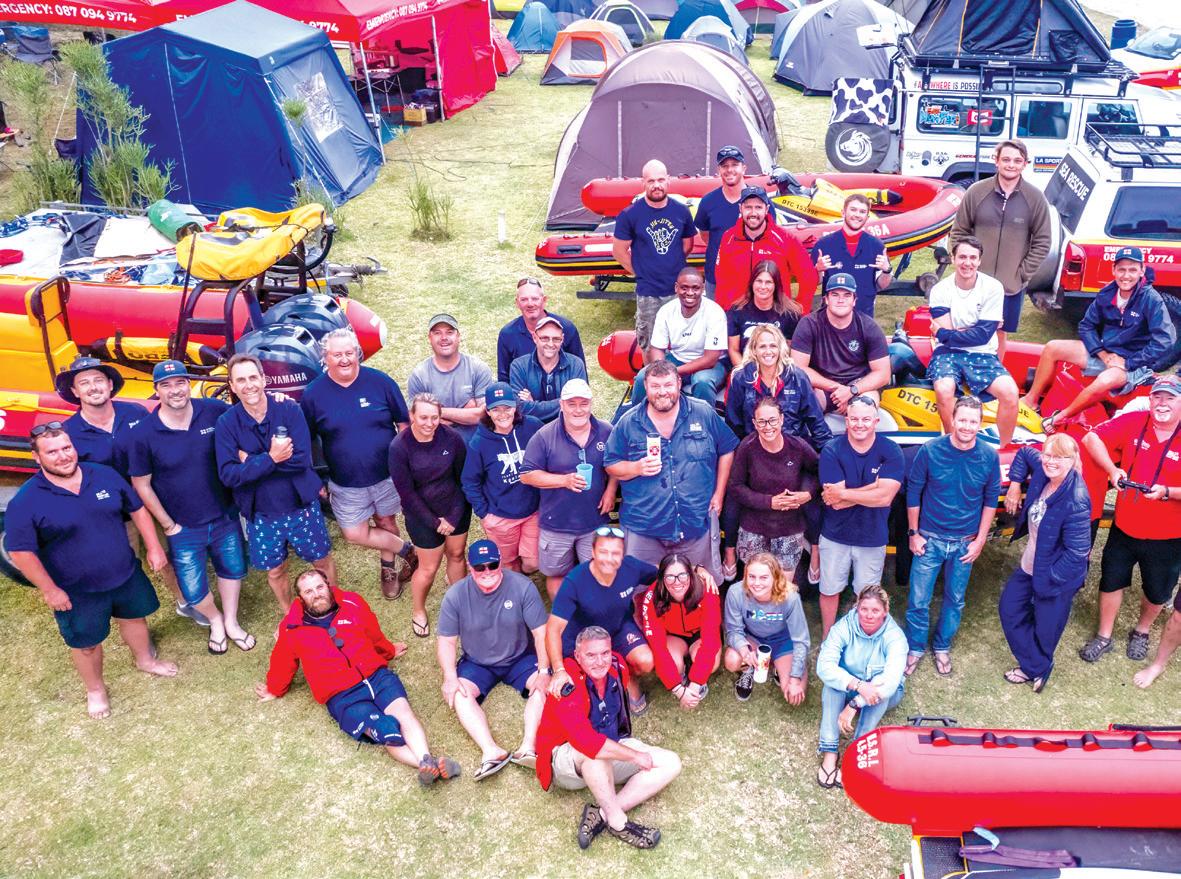
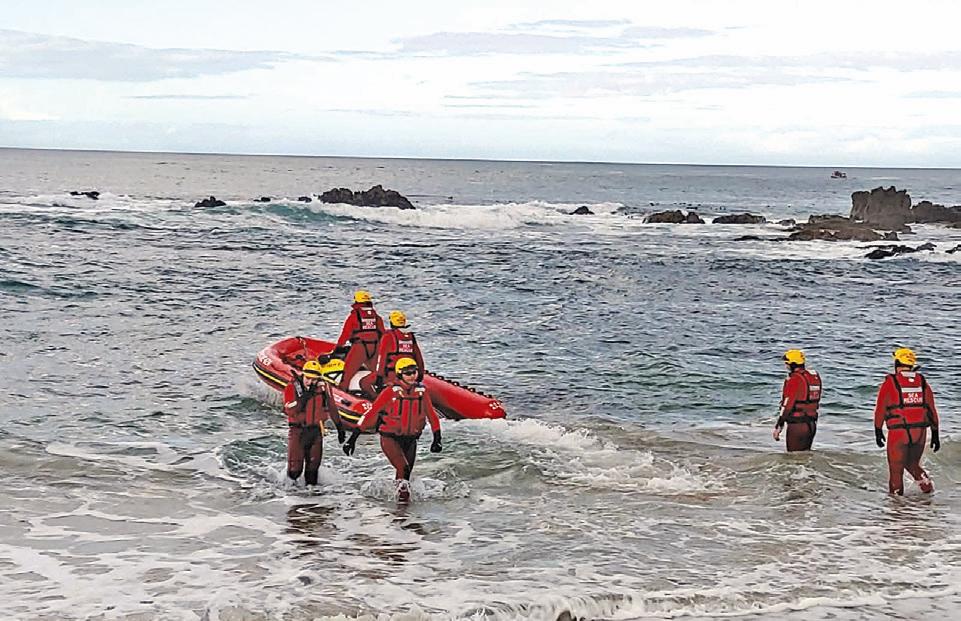
There were NSRI teams from Witbank, Simon’s Town, Kei Mouth, East London, Port Alfred, Gqeberha, Jeffreys Bay, St Francis Bay, Oyster Bay, Wilderness and the Volunteer Support Centre. Supporting the on-water operation was a sevenvehicle logistics convoy transporting food, tents and other equipment.
DAY ONE: GQEBERHA TO WOODY CAPE (76KM)
Day One dawned with perfect weather – ideal conditions for the NSRI crews to settle into what would become a four-day moving safety operation.
For Lee Moran, taking on his second PE2EL, it was a long, long day. A gentle side-on breeze generated just enough chop to disturb the rhythm of the paddlers.
Lee was dazzled by the spectacular cliffs near Woody Cape: ‘That section was one of the most beautiful I’ve ever paddled.
‘We did see two sharks, a small one and a big one, which swam underneath our boats.’
NSRI COVER
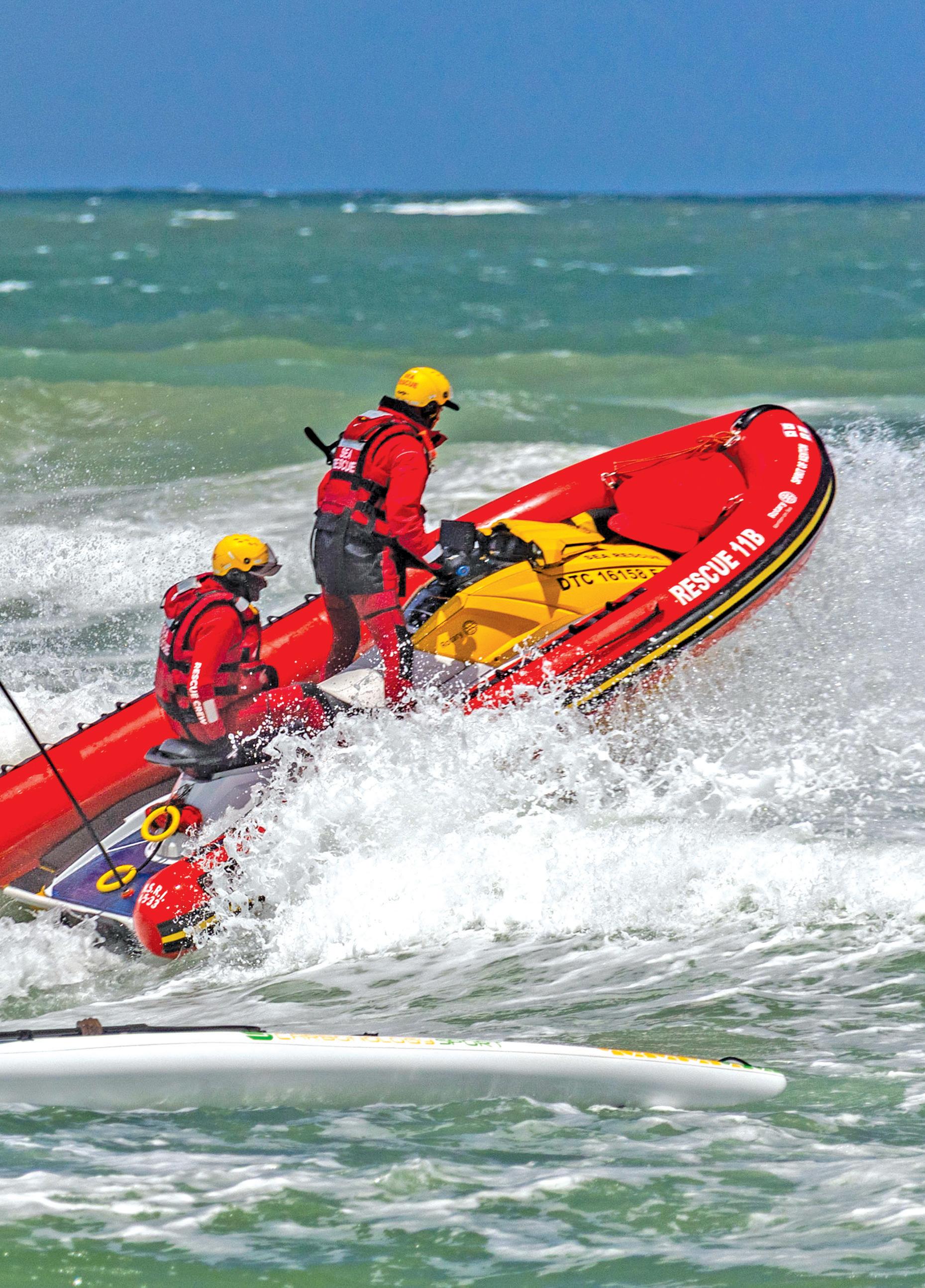
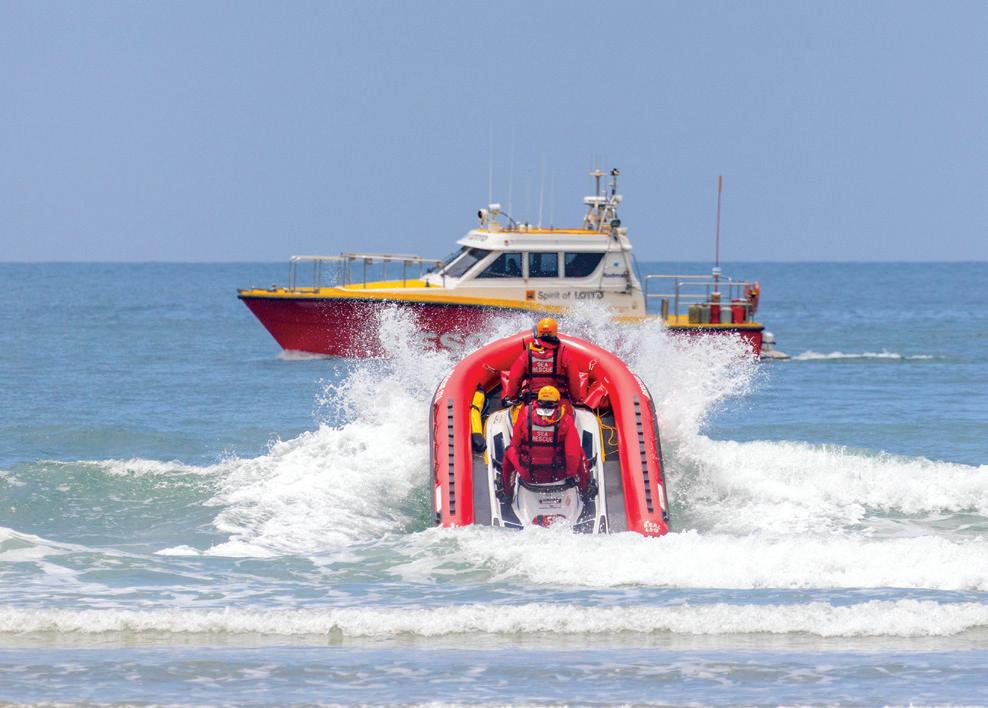
The NSRI boats were arranged to escort three batches of paddlers totalling around 50 craft. Eight trailer-borne vessels were on the water: six JetRIBs and two 5.5m RIBs.
‘The idea is that we have a lead boat and sweep boat with each group,’ says Ian Gray, ‘with the 5.5s in the middle.’
In addition, larger offshore vessels rotated across stages to provide extended range, communications capability and oversight when conditions demanded it.
For the NSRI, the system is dynamic; the batches are arranged so that the fastest paddlers leave last.
‘As the event unfolds,’ Ian explains, ‘the third batch starts to overtake and mingle with the second and first batches.
‘So the escort boats continuously juggle their positions depending on conditions and fleet spread.
‘On the beach, we had seven vehicles, positioned so every boat had a shore contact. Those vehicles leapfrog around headlands and reposition as the fleet expands or contracts.’
A dedicated team member tracks all paddlers via SafeTrx.
‘He feeds that information through to me, and we decide who goes where next.’
Race Director Richard Tebbutt, who has overseen several recent editions of the event, has the highest regard for the NSRI operation.
‘They are a first-class act,’ he says. ‘When you see what it takes behind the scenes to put this together the way they do, they make us look good.’
Tebbutt describes the NSRI presence as a pillar of reassurance for organisers, paddlers and families alike.
‘You can rely on them completely; they’re the pillar on which you rest your head. They don’t just arrive with bits and pieces. They arrive with an armada. Vehicles, RIBs in the surfline, offshore boats, RVs – it’s a well-oiled machine.
‘There are moments when conditions turn gnarly and the seconds and families at the finish are on edge. Someone goes offline. A phone stops working. SafeTrx drops out. The NSRI are so calm under pressure. Very special.’
When race plans shift due to weather, the impact on the NSRI is immediate –longer boat runs, vehicle repositioning, late nights and early starts.
‘They just do it,’ says Tebbutt. ‘They clean equipment, strategise for the next
day, and go again. Everyone in NSRI wants to be part of this event. The crews who arrive are capable, motivated – and they have special hearts.’
WOODY CAPE – SWIMMING WITH DOLPHINS
As he rounded the point and headed in towards the beach, Lee spotted more wildlife.
‘Behind the backline at Woody Cape, a pod of dolphins actually rode the waves with me.’
Moments later, the mood changed.
‘I was over the sandbank, and the next minute the whole wave just basically dropped away from me, and tripled in size behind me, and I had nowhere to go.
‘It was the biggest wipeout I’ve ever had.’
He endured a long swim to shore, fortunately without injury and with his ski in one piece.
DAY TWO: WOODY CAPE TO PORT ALFRED (53KM)
The launch was dramatic but wellmanaged. Huge backline sets rolled through Woody Cape, but careful timing by race director Richard Tebbutt ensured every batch exited cleanly.
But once around the headland, conditions shifted rapidly, and the paddlers were confronted by a 15-knot headwind and confused, steep chop. The low morning sun shone directly into their eyes.
Lee Moran was an early casualty.
‘It was just sun in the eyeballs. You couldn’t see anything.
‘I got to the point where I couldn’t take another stroke.’
A 5.5m NSRI RIB pulled alongside and brought him to Kenton-on-Sea.
‘One of the guys was watching me intently for signs of hypothermia.
‘It was mind-blowing how caring they were.’
Only once aboard did Lee realise how cold he had become. The crew insisted he wear a jacket, later adding a space blanket.
At Kenton, another six paddlers had retired.
At the front of the race, Zach Preyser was leading. ‘The shore break was ridiculously big,’ he says. ‘Half the group went for a swim.’
He managed to stay on his ski, made it to the checkpoint on the beach and punched back out through the surf again, gaining valuable time on his rivals.
But then conditions deteriorated. The wind strength increased to 25 knots. The ocean became a churned-up mess.
But then conditions deteriorated. The wind increased to 25 knots.
The ocean became a mess.
him the finish had been moved to East Beach, where conditions were safer.
‘I’ve never seen anyone power-slide a duck down a massive wave like that,’ he laughs. ‘Their skill on those boats is incredible.’
He eventually found a lull and made it ashore. His lead was reduced, but he was safe. Despite numerous swims and one broken ski, there were no injuries.
And 25 gruelling, grinding kilometres later, he arrived at Port Alfred to find massive swells breaking over a kilometre out to sea, reforming and breaking again on the beach. ‘There was a double shorebreak, and you’re asking yourself how you’re going to get through it.’
He made his way through the first line of breakers, but then an NSRI craft informed
COMMUNICATION IS KEY
‘In the last race, we had a ski go missing on Day 3,’ says Ian Gray.
‘Missing as in he wasn’t on SafeTrx and hadn’t checked in at the halfway checkpoint.’
Although the fleet was spread over about 20km, within 15 minutes he’d been located and identified. He’d left his phone at Hamburg.
‘I put the message out, it passed up and down the fleet: I want the guy found. And that’s what happens.’
DAY THREE: PORT ALFRED TO HAMBURG (68KM)
With the wind swinging southwest, the paddlers finally enjoyed classic downwind conditions.
For NSRI, this meant high speeds and a wide fleet spread requiring constant repositioning.
For Zach, it was his toughest day tactically. Previous champion Bevan Manson surged ahead early.
‘I was a kilometre behind within 10 minutes. I had to dig deep.’
He clawed his way back and, in the final kilometre, surged past to take the stage by seconds.
DAY FOUR: HAMBURG TO EAST LONDON (52KM)
The final stage offered mixed conditions: flat water, downwind runs, and side chop. With an overall time advantage, Zach simply had to stay close to Manson. ‘If he surged, I surged. If he backed off, I backed off.’
Near Cove Rock, 15km from Nahoon, he accelerated decisively and secured the overall victory in 19:59:59.
Nicole Birkett claimed the ladies’ title.
WHY THE NSRI DOES IT
For the NSRI, the race represents far more than escort duty.
‘It’s phenomenal,’ says Ian Gray. ‘Being able to put so many boats out there in a structured environment.
‘The experience our crews gain gives them enormous confidence when it comes to day-to-day sea rescue operations.
‘I’ve seen junior coxswains grow into Station Commanders because of what they’ve experienced in highpressure exercises like this.
‘We test equipment. We test communications. We stress systems properly.’
Perhaps most importantly, it’s preventative. By being present and embedded within the race, NSRI reduces the likelihood of the worstcase scenario, i.e. the 2am call about a missing paddler far offshore.
For four days, the NSRI fleet moved with the race, visible, disciplined and adaptable.
The ocean tested every competitor. But not once did it overwhelm the safety net that travelled alongside them.
Scan the QR code to watch the PE2EL video.
Meet your new everyday t-shirt
Soft, versatile, and effortlessly comfortable. Every t-shirt purchased supports our volunteer rescue crews – wear it with pride, knowing you’re helping keep others safe in our waters.
Scan the QR Code to start shopping
ON THE EDGE
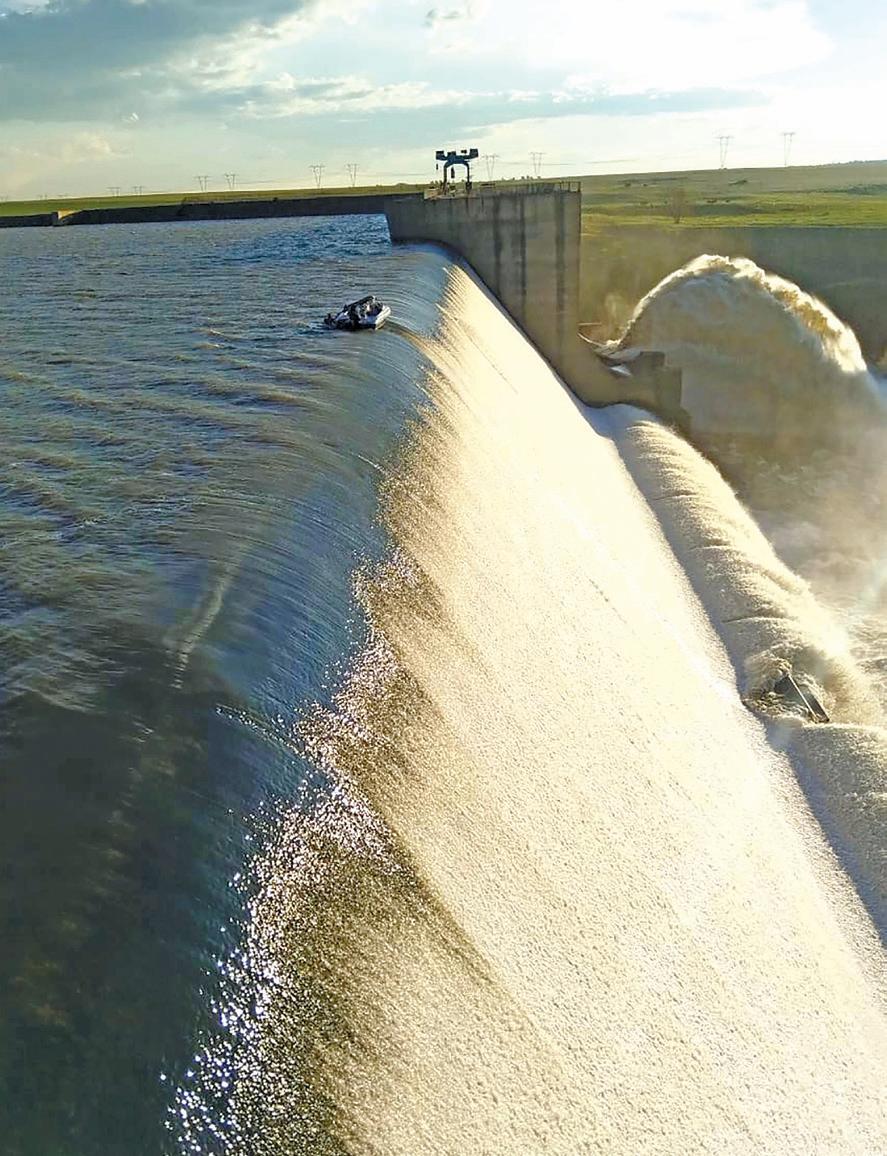
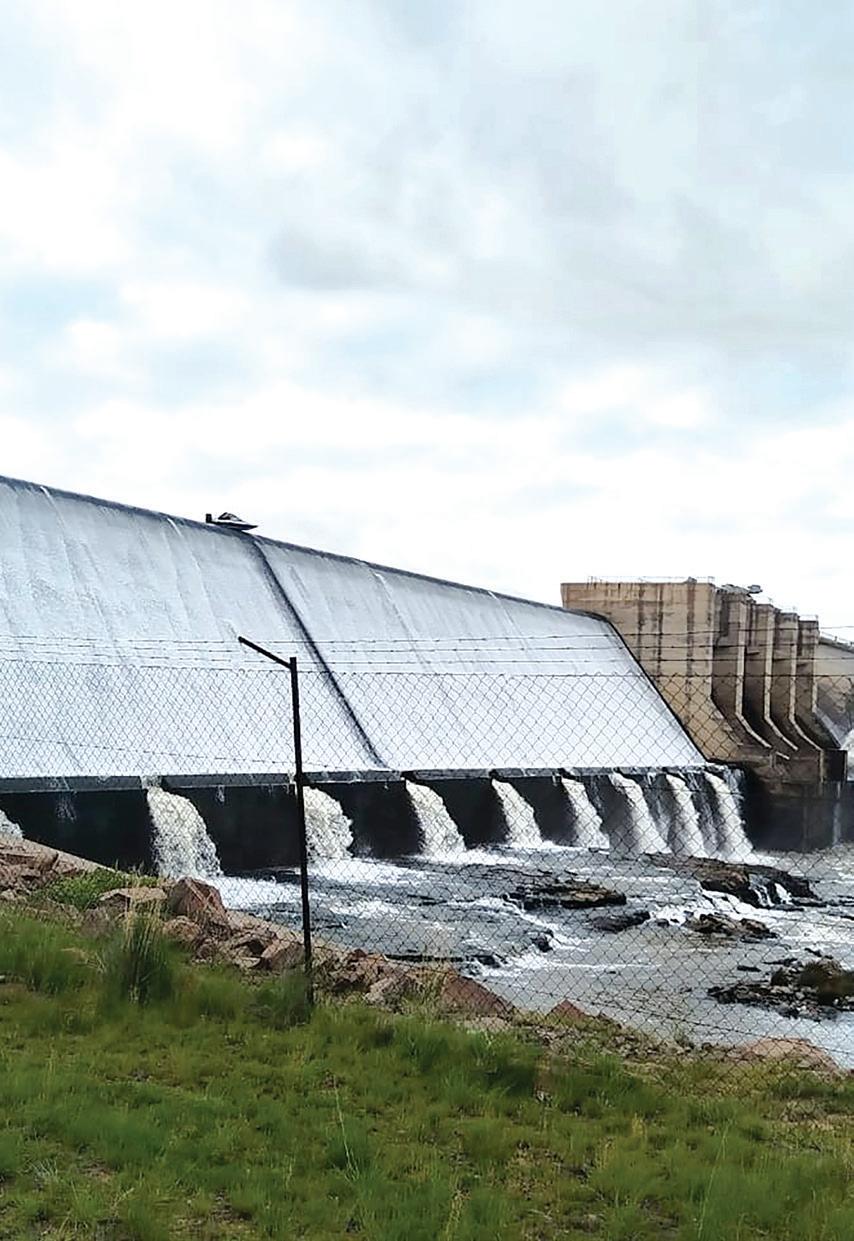
In a harrowing nighttime rescue, NSRI Witbank crew rescued the occupants of a small ski boat perched precariously on the spillway of the Grootdraai Dam on the Vaal River.
By Andrew Ingram
From the top of the Grootdraai Dam wall, Jandré Kasselman looked down at a sight he would never forget. A ski boat was balanced on the lip of the spillway. Four men were in the water, clinging to the stern of the boat. More than 40 metres below, the Vaal River thundered over rocks. ‘It was a disastrous situation,’ he says. ‘First, you must survive the drop. Then you must survive the water. Then, the rocks. I doubt anyone could do that.’
It was the height of the holiday season. The dam was over 100 percent full after heavy rain upstream. The wind blew straight over the wall, lining up with the current pouring over the spillway. Louise Visagie, camping nearby, remembered seeing the white horses on the water.
‘The waves were big,’ she recalls. The wind was blowing in the same direction as the water was flowing. If it strengthened, there would have been a tragedy.’
By 19h05 on Monday 29 December, the call had reached NSRI Station 35,
Witbank Dam. Station Commander and coxswain Travis Clack had a skeleton crew, as most of the volunteers had left town for the summer holiday. ‘The phone rang,’ he says. ‘It was the SAPS Water Wing. Four blokes were stuck on a dam wall in Standerton. We needed to get there fast.’
Photos and video followed. A boat on the spillway. Four figures in the water.
‘There’s no training to prepare you for a rescue like this one,’ Travis adds. ‘You can simulate, but you can’t put yourself in that kind of situation to practise.’
Francois du Randt had just sat down on the couch after a family get together.
‘If Travis phones that time of night, we’ve got a callout. I asked him, where are we going?’
Jacoline Enslin was preparing for a family holiday to the Kruger National Park. ‘We were at a family gathering, packing to go on vacation when I got the call,’ she says. ‘If Travis phones, you answer like yesterday.’
She sorted out her dogs, told her father she would see him in the morning and left.
‘When I first saw the boat on the wall,’ Riaan says, ‘I didn’t think they had a chance.’
By 19h45 the 5.5m rescue vessel, Harveys Fibreglass, was hooked up and rolling. Standerton was 140km away. On the drive, the crew studied the photos and videos and ran through rescue options.
‘We had two plans,’ Travis says. ‘Go in astern and use forward power to pull out. Or go bow first and rely on reverse thrust. There’s only so much prep you can do. We decided, get to the scene “and take it from there”.’
At the dam wall there were lights, and many people. The Department of Water and Sanitation had opened three sluice gates to reduce pressure on the overflow.
‘From the wall, you could see the difference,’ Jandré says. ‘The water level had dropped.’
This bought time for the rescue. At the slipway, locals who knew the dam backwards approached the crew with a chart. One was Riaan Rijsbergen, a primary school teacher who had earlier tried to assist the four, but wisely turned back.
‘Get a life jacket,’ Travis told him. ‘You’re coming with us.’
Riaan didn’t hesitate.
‘If I’m ever in difficulty,’ he says. ‘I hope someone won’t think twice about helping me.’
They launched into darkness. Riaan guided them past underwater islands. The wind drove towards the spillway. The sound of water grew louder.
‘When I first saw the boat on the wall,’ Riaan says, ‘I didn’t think they had a chance.’
They approached at speed and turned bow into the wind. The initial astern approach left the rescue craft unstable, rocked by the cross angle of wind and current. ‘I had very little control,’ Travis explains. ‘We were being pushed from side to side.’ He changed plan and went bow first towards the casualties, keeping reverse thrust ready.
‘If something went wrong, we were going over that wall with them.’
Francois moved to the bow with a throw line and torpedo buoy. ‘They missed the first throw,’ he says. ‘I pulled it back and threw again.’ The buoy reached them. One man grabbed on.
‘As soon as he got hold of it, the casualty vessel started to rock,’ Travis says. Removing one man’s weight risked tipping the boat and sending the other three over.
‘I was not going to risk that,’ he says.
He shouted across the water.
‘All four of you, on that line. Wrap it around your arms. Hold on.’
‘They were scared,’ Jacoline says. ‘You could see it.’
One of the men shouted, ‘Wait!’ Francois tightened his grip and fed the rope again.
‘They needed to get on,’ he said. ‘If one let go, he was gone.’
One by one they committed. Four men clinging to a single line in black water.
‘I asked Francois, “Are you good to hold all four?” and he said “Yes”.’
Travis engaged reverse thrust. The twin outboards dug in. Harveys Fibreglass pulled away from the spillway, dragging the four men in its slipstream.
Jandré was still watching. ‘From the moment they arrived to the moment the four were safe, it wasn’t even 10 minutes.
A five-hour day, solved in five minutes by people who knew what they were doing.’
As they cleared the most dangerous flow, Francois hauled them closer.
‘If NSRI didn’t come that day,’ Jandré says, ‘I don’t see how their lives would have been saved.’
‘I was just watching that all four stayed on,’ he says.
The first man reached the boat and tried to climb over the bow. Francois directed him aft where Jacoline waited.
‘Grab something and hold on,’ she told him, taking his arm. His skin was ice cold.
The last man was disoriented, tangled in the line.
‘He’d “spaghettied” himself,’ Travis says. ‘We recovered him with the rope still wrapped around his legs.’
All four were hauled aboard, and space blankets were wrapped around shaking shoulders.
‘They were petrified,’ Jacoline says. ‘And bitterly cold.’
Louise watched them return.
‘They were shivering,’ she says. ‘We gave them warm coffee. There were so many people praying.’
EMS assessed them. Hypothermia. Shock. No serious physical injuries.
‘If NSRI didn’t come that day,’ Jandré says, ‘I don’t see how their lives would have been saved.’
It was 03h25 when Jacoline got home.
‘I had a cup of coffee,’ she says. ‘Packed everything and at 04h00 we left for Kruger. As if nothing ever happened…’
Francois stayed awake.
‘It was too early to sleep,’ he says. ‘The dogs wanted to play. Then I went to work. Full day.’
Travis checked the equipment and refuelled the boat.
‘You don’t sit with it,’ he says. ‘You refuel. Because the next call will come.’
Four men went home to their families that night.
In Witbank, a contractor, an IT specialist and a young chartered accountant who had found her place on a rescue squad carried on with ordinary life.
‘You don’t have to be crazy to join us,’ Francois says. ‘We’ll teach you the crazy.’
Jacoline smiles when asked if she would do it again. ‘It was crazy,’ she says. ‘But I would do it again.’
On a windy December night at Grootdraai Dam, four men were on the edge of a 40m drop and did not fall. And by sunrise, the volunteers who pulled them back from the edge had already gone back to their lives, ready for the next call.
Scan the QR code to watch the amazing rescue.
THE LINE OF FIRE
NSRI Gqeberha launched in response to a Mayday call from a fishing vessel on fire. In true maritime spirit, a host of fishing vessels were soon on scene to assist the crew of the stricken vessel. By Cherelle Leong
It was Monday evening on 12 January 2026 and the coxswains of Station 6 (Gqeberha) were arriving at the base for a committee meeting due to start at 6pm. These meetings are generally relaxed and are held regularly to discuss the operations, maintenance, crew and training on the base. The guys settled into the meeting room waiting for everyone to arrive. But before the meeting could even get underway, an urgent message came through from NSRI’s EOC (Emergency Operations Centre).
A caller had reported seeing a vessel on fire approximately 1nm offshore of Noordhoek. This was followed a few minutes later by a Mayday on maritime Channel
16. The fishing vessel Silver Dorado with 21 crew on board was on fire near Cape Recife. The Mayday reported that the fire was spreading rapidly and that all 21 crew were preparing to abandon ship.
Telkom Maritime Radio Services broadcast an all-ships alert on marine VHF Channel 16, relaying the Mayday distress call. Under maritime law any nearby vessels would be obliged to respond to the scene to assist survivors. This would help if the survivors were already in the water, but for the Station 6 crew there was no time to lose.
The atmosphere shifted immediately. While Station Commander Mark Dawson headed to the operations control room to
gather more information, everyone else initiated a hot launch – kitting up, prepping boats and ensuring that the pump for firefighting was loaded onboard. Meanwhile, messages from other sources came in, confirming a vessel on fire with flames visible 1nm offshore. This was not a smoky engine (which is often mistaken for a fire onboard). If flames were visible from shore, the fire must be massive, which meant there were 21 lives at risk.
Silver Dorado couldn’t be reached on the radio after the initial Mayday call, so it was unknown whether the crew had been able to launch a life raft and abandon ship.
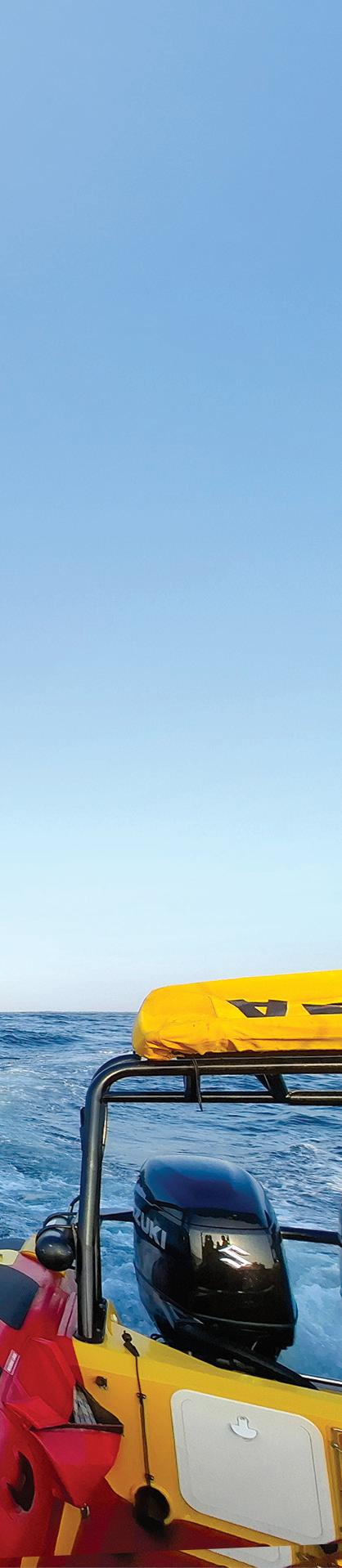
Within minutes of the call coming in, the 8.8m RIB, Rescue 6 Alpha, with four crew was launched with the fire pump on board. Bay Guardian was not far behind. The conditions were relatively calm heading towards Cape Recife Lighthouse and the 8.8m RIB was already rounding the point as Bay Guardian left the harbour. But, turning into the southwesterly, the vessels were confronted by unsettled, choppy seas, with swells of one to two metres slowing progress.
As the flaming vessel came into view, so did the news on the radios that all 21 crew had been recovered from the water.
As the flaming vessel came into view, so did the news on the radios that all 21 crew had been recovered from the water. Fishing vessel Leguna had been the first to arrive on scene. Seeing survivors already in the water, with the last few preparing to jump off the bow of the vessel, they’d immediately deployed a life raft. Five other fishing vessels had also responded to the scene and assisted in retrieving the survivors from the water.
With everyone accounted for, the rescue crew breathed a sigh of relief. Even though the operation was far from over – they still needed to be brought back to the harbour – at least lives were no longer at risk. Twelve survivors were taken onboard FV Leguna, four on FV Raka, four on FV Maverick, and one on FV Vulcan. Each of the fishing vessels had played a vital role in ensuring the survival of the crew, but they had fishing grounds to return to! The next phase of the operation would involve ferrying all 21 casualties onto Bay Guardian to take them back to shore.
The casualties, who’d only just escaped the sea and burning vessel, were naturally still shaken. They’d begun to get warm and dry onboard the various fishing vessels and were decidedly not keen to disembark from their place of safety. They weren’t being asked to re-enter the water, but the 1-metre step down from the side of the fishing vessel to the bow of the RIB was daunting enough. The swells meant that the transfers had to be timed just right. With experienced coxswain Adrian James at the helm of Rescue 6A, the RIB paced alongside at a moderate speed of 5 knots. One by one the survivors were brought onboard, assisted onto the bow of Rescue 6A by the rescue crew. Bay Guardian arrived on scene within 40 minutes of the initial call, ready to receive the first nine casualties. Each was helped aboard and then taken to the inside front cabin of the ORC, where they would be kept warm and safe after their ordeal.
Rescue 6A continued ferrying the casualties from each of the fishing vessels who’d assisted in the initial rescue. With the fire still raging aboard FV Silver Dorado, the transfer operation was moved upwind to avoid smoke inhalation. Once all 21 casualties, including the skipper of the vessel, were safely onboard Bay Guardian, the fishing vessels were released to continue with their fishing activities. Their rapid response to the scene and willingness to assist in
It emerged that the vessel’s skipper had been on watch. The rest of the crew had been sent to their bunks to get some sleep while they travelled to the fishing grounds. The skipper initially smelt smoke coming from the stern of the vessel and went to investigate. He was met with flames, not just smoke.
retrieving the survivors from the sea was an integral part of the operation’s success. Leaving the scene of the casualty vessel, Bay Guardian and Rescue 6A returned to Gqeberha harbour. The atmosphere in the forward cabin was mixed: some rescuees were subdued after their experience and the realisation that they’d lost all of their possessions; others shared lively discussions of their experience.
It emerged that the vessel’s skipper had been on watch. The rest of the crew had been sent to their bunks to get some sleep while they travelled to the fishing grounds.
The skipper initially smelt smoke coming from the stern of the vessel and went to investigate. He was met with flames, not just smoke. Immediately raising the alarm with the crew, and rousing them
from their bunks, he then sent out a Mayday on Channel 16.
The priority was getting everyone to the bow of the vessel, away from the flames, which were spreading rapidly. It was reported that some of the crew had to hold the flames at bay with fire extinguishers while others trapped in the cabin below deck made their escape. The fire extinguishers did their job in helping all the crew get above deck, but the flames continued to build up. Battling the thick smoke and unable to get to the life raft, the skipper made the decision to abandon ship. He’d sent out a Mayday. He knew there were other vessels nearby; he could only hope that help would arrive quickly, because staying on board was not an option.
The relief of seeing fellow fishing vessel Leguna arrive on scene must have been
Fishing vessel Leguna had been the first to arrive on scene. Seeing survivors already in the water, with the last few preparing to jump off the bow of the vessel, they’d immediately deployed a life raft.
immense. Videos of the scene shared after the incident showed just how perilous their situation was. With flames at their back and no life raft accessible, it was not an easy decision to jump off the bow into the water.
For the Station 6 rescue crew, it brought home the reality of the danger of a fire onboard. The situation can escalate quickly, leaving seafarers with limited options. The skipper’s quick thinking in alerting crew and radioing for help was a key factor in ensuring that no lives were lost. Other than being cold, wet and visibly shaken, the crew were unharmed.
The transfers from the fishing vessels to Bay Guardian had to be conducted with
the awareness that the casualties had already been through a lot. The experience of the rescue crew showed as they calmly timed the transfers with the swell and coaxed the casualties to step off the fishing vessels onto the rescue boat.
It is unusual for all of the crew on board a rescue to be qualified coxswains. In this case the most junior person was a Class 4 coxswain and the combined experience on both vessels amounted to more than 120 years. This level of experience ensured flawless implementation and, overall, a very successful rescue operation.
The most important outcome was that 21 lives were saved.
PHOTOGRAPHS:
FROM CLASSROOM TO COMMUNITY
We spoke to three Community Programmes instructors to find out what drives their passion for teaching water safety to their communities. By Wendy Maritz
‘SAFETY
IS A SHARED RESPONSIBILITY’
Mncedisi Hlalatu, North KwaZulu-Natal
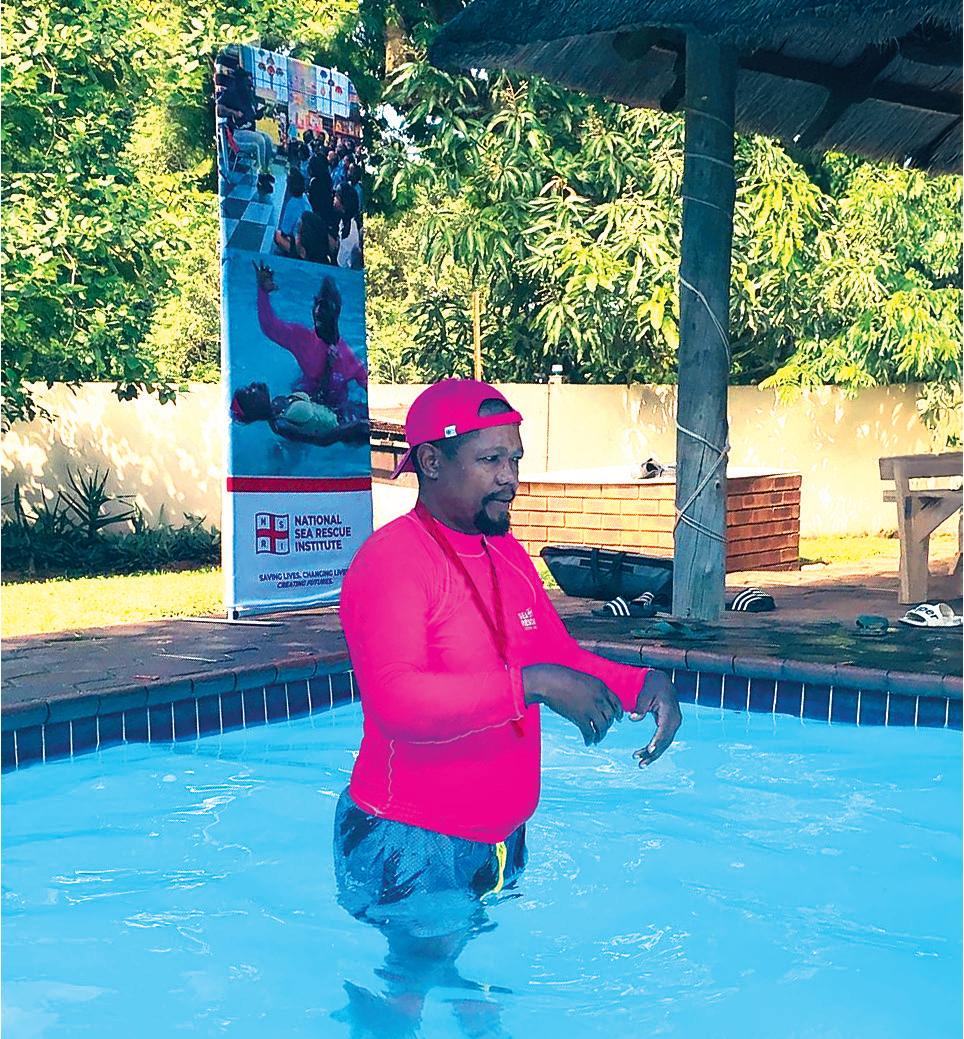
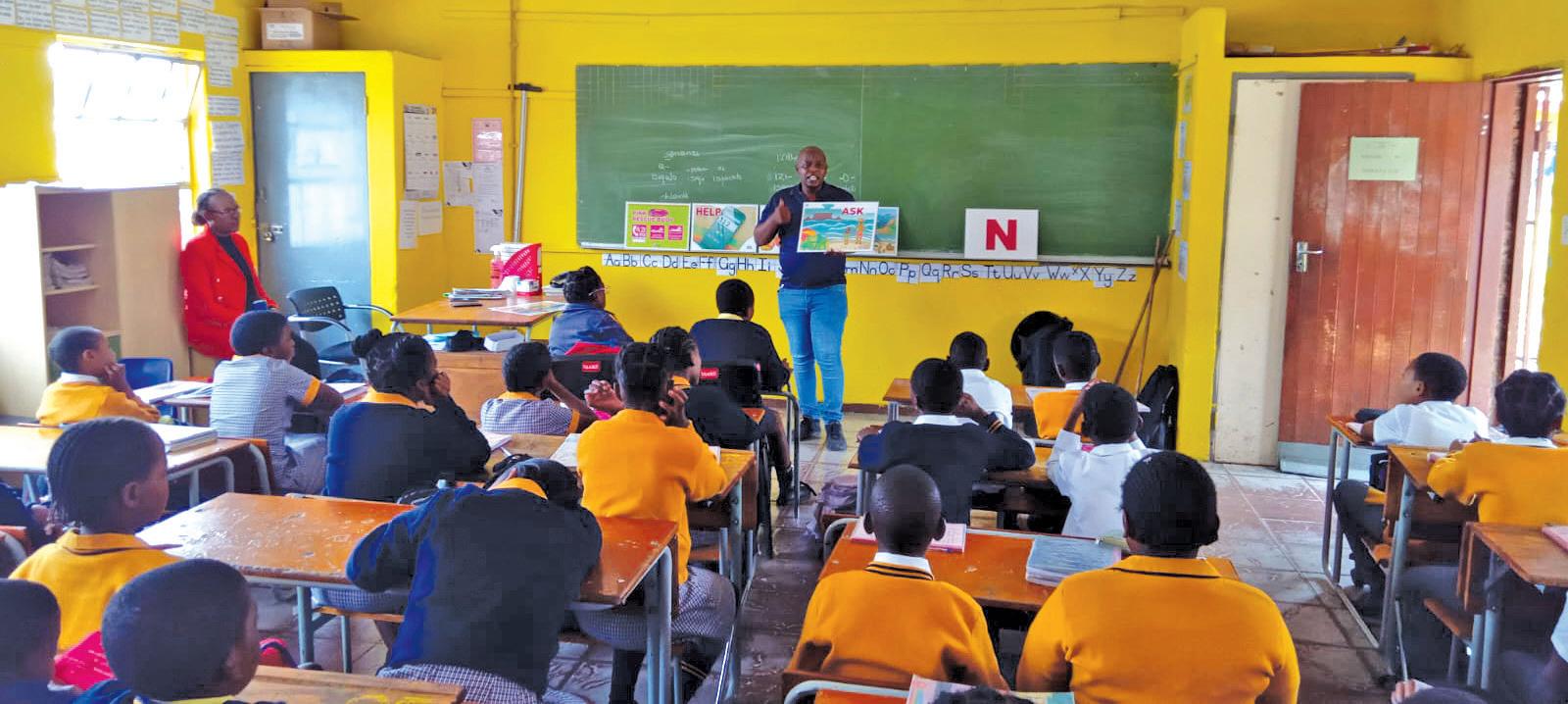
‘Drowning prevention begins with awareness, and educating a child today can positively impact families and communities tomorrow,’ says Community Programmes instructor Mncedisi ‘Tata’ Hlalatu. ‘It’s always very rewarding for me to hear that children have shared the water safety lessons I’ve taught them with their families at home.’
Mncedisi Hlalatu believes drowning prevention is a shared responsibility.
Mncedisi joined Station 19 (Richards Bay) as a volunteer in October 2019, and became a Community Programmes instructor in February of the following year. It was an act of reciprocity between the Zululand Yacht Club and NSRI Richards Bay, both situated in the Port of Richards Bay in KwaZulu-Natal, that inspired the then sailing instructor to join. The club hosted a dinghy sailing course for a group of Station 19 volunteers, who in turn shared boat safety training with a few sailing instructors and took them on a tour of the NSRI base. It didn’t take much more persuasion; a week later Mncedisi signed up as a volunteer at the base. With teaching in his blood, it also didn’t take long for him to spot an opening for a Water Safety instructor (as the position he holds was then known) in the Richards Bay area. His application was successful and he started in February 2020.
Mncedisi visits schools (primary, secondary and early childhood development centres) in the King Cetshwayo District Municipality in the north-eastern region of KZN, but also assists with planning projects in other districts where no instructors are present.
Six years later, Mncedisi firmly believes that NSRI’s drowning prevention classes have really impacted the lives of the
children he has come into contact with. ‘They respond very positively,’ he says. ‘Some even cry, and when I ask why, they say they wish they had known more about water safety before because they’ve lost a friend through drowning.’ Mncedisi spends some time researching the area around the school or centre he is visiting, so that he can establish if there are specific problems or issues related to water safety in that area. He will also ask the learners to tell him about any concerns they have or incidents of drowning in the area and, in this way, he can tailor his water-safety message with added insight. ‘I would estimate that about 45% of the schools I have visited have lost children through drowning.’
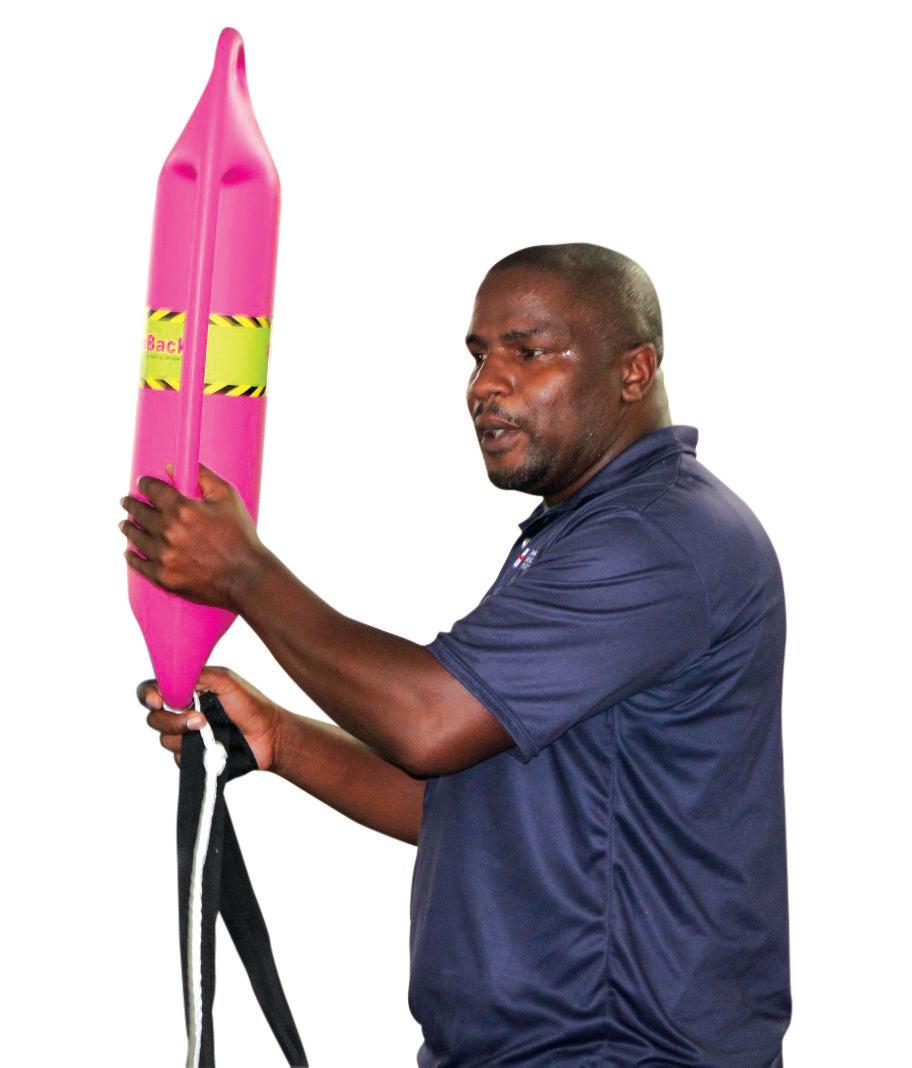
But, he adds, they are starting to see a reduction in drownings in what he calls the hotspots in the Richards Bay area. ‘The kids are beginning to comprehend the importance of water safety, and this includes things like checking the weather, knowing the 112 emergency number, understanding that water is dangerous and never to go swimming alone.’ Many of the schools Mncedisi visits have never heard of the NSRI, especially those located in rural areas. He says he enjoys the chance to tell the learners about what the NSRI does, especially the Pink Rescue Buoys and the important function they perform.
‘Teaching has strengthened my patience and communication skills,’ Mncedisi says when asked about his own growth over the last six years. ‘I have learnt to use
empowering rather than limiting language. So, instead of saying “Don’t go near the water”, I’ll say “Never swim alone”, “Never swim without adult supervision”, or “We wait for an adult first”. This way, we make safety a shared responsibility rather than a restriction.’
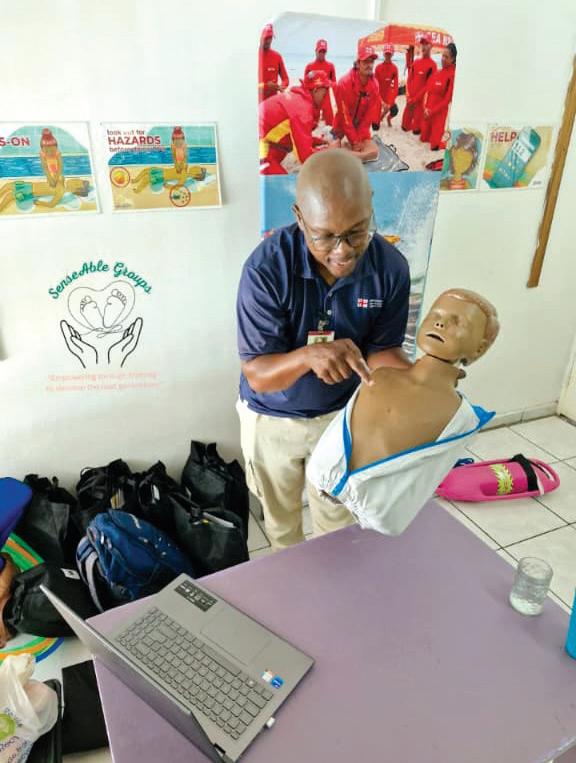
Mncedisi naturally has many stories to tell. ‘The learners love getting involved, and participating in the lessons, especially when the CPR doll comes out and when we simulate a peer rescue.’ But, what’s especially powerful is when the children tell him they’ve shared the water safety messages with their family members. It’s going from the classroom into the community.
Mncedisi shows learners the Pink Rescue Buoy and gets ready for a lesson in CPR.
‘A PASSION FOR PASSING ON KNOWLEDGE’
Thembalakhe Maphumulo, Limpopo Thembalakhe Maphumulo joined the NSRI as a Community Programmes instructor in May 2023, inspired by the work the organisation does to share water safety and survival swimming with children. ‘The NSRI has a passion for passing on knowledge and I have a passion for passing on knowledge,’ he says.
Currently, Thembalakhe visits schools in Bela-Bela, Pienaarsrivier, Masakane, Tsakane, Nylstroom, Naboomspruit, Vaalwater, and the Makapanstad and Mathibestad areas of Northwest Province.
Thembalakhe comes from a lifesaving background and worked as an assistant swimming instructor at a school. In addition to his existing knowledge and experience, he was provided with all the necessary training by the NSRI to deliver drowning prevention classes to learners as well as become a survival swimming instructor. He says that schools are very receptive to his requests to visit and conduct the lessons, although sometimes the bureaucracy involved can result in delays
of weeks before he actually gets into the classroom.
‘The children enjoy the lessons and are very eager to participate, sharing stories about how they’ve been able to help a friend or family member through what they have learnt. When I ask them questions about what I’ve taught them, and they answer correctly, and are able to perform CPR on the dummy, it tells me the lessons are fruitful.’
‘The children enjoy the lessons and are very eager to participate, sharing stories about how they’ve been able to help a friend or family member through what they have learnt. When I ask them questions about what I’ve taught them, and they answer correctly, and are able to perform CPR on the dummy, it tells me the lessons are fruitful.’
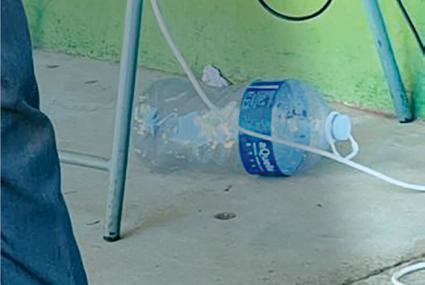
Thembalakhe shares his favourite teaching story: ‘There was one occasion when I put five items – a stick, a skipping rope, a towel, a Pink Rescue Buoy and an empty 5-litre bottle – in front of them and asked them to pick one item they thought they could use to help someone who is in trouble in the water. All of those who participated picked one item and showed me how they could save someone using that item. Normally, I would show them, but for that one time, they did it by themselves.’
‘TEACHING MY COMMUNITY IS AN ANSWER TO MY PRAYERS
Nkazimulo Nyawose, South KwaZulu-Natal
Nkazimulo Nyawose worked as a lifeguard for quite some time before joining the NSRI as a Community Programmes instructor in January 2020. ‘I had always sought an opportunity to teach my community about how to be safe at the beach, because I had seen that many drowning casualties during the festive season in my area were primarily Africans and this concerned me. So, when I saw the advert for an instructor, it felt like an answer to prayer,’ he explains.
Nkazimulo covers the Ugu District Municipality that includes schools in Port Shepstone, Margate, Gamalakhe, Mthwalume and Mzumbe. He has found over the years that schools either are very receptive to having him conduct the water safety lessons or feel it is a waste of time. ‘It depends on who I’m speaking to, and the timing, of course. Not everyone understands that drowning is a serious concern that affects us all, until it happens close to them. Then you will have no problem getting an appointment.’
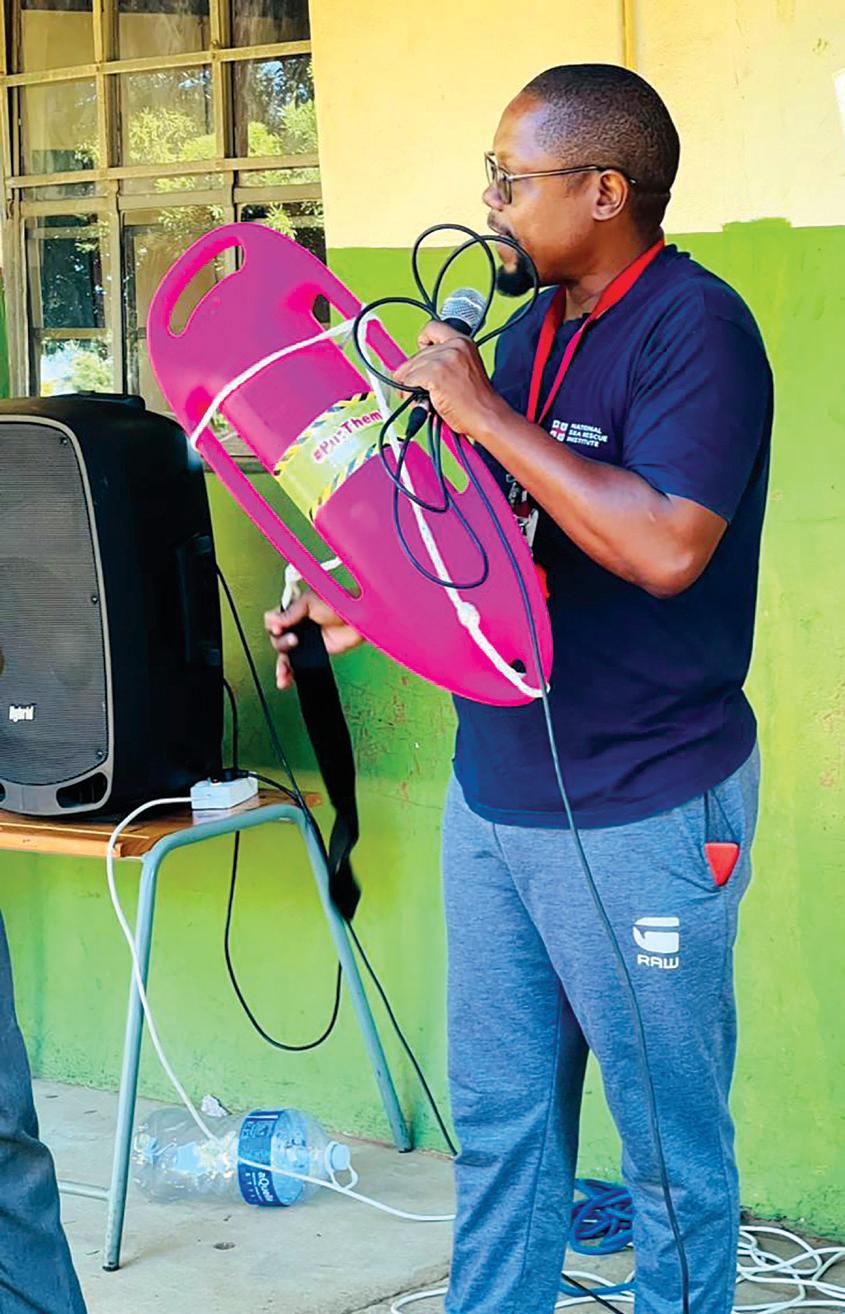
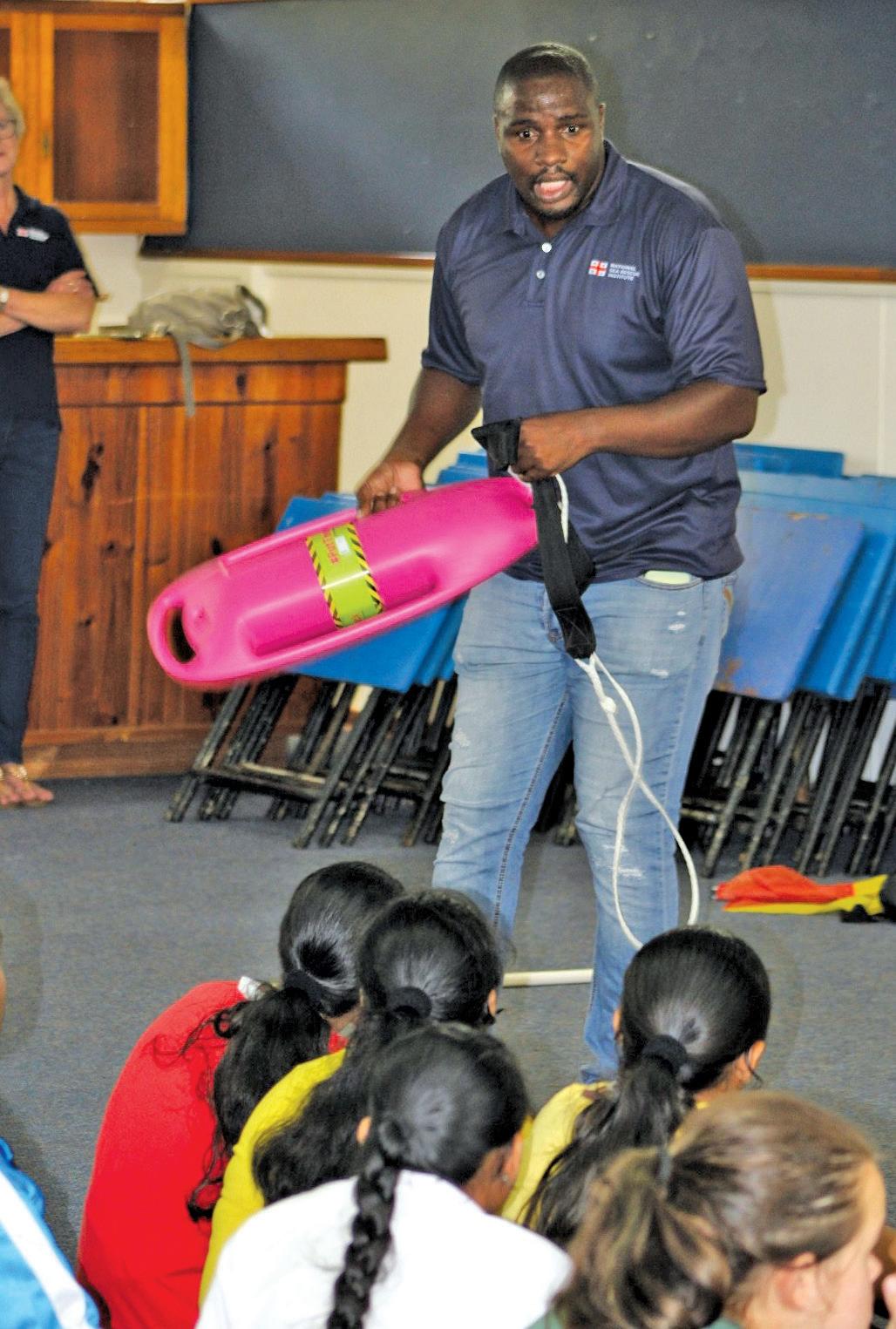
But, once in the classroom, Nkazimulo has little problem engaging with the children. ‘They are always very excited and pleased with the lesson as they know exactly what we are talking about. Particularly peer rescue. ‘To them it makes complete Nkazimulo Nyawose throws his weight behind each lesson. Here, he demonstrates how important the Pink Rescue Buoys are.
sense and I have received feedback on how it has helped them in some situations.’ Other times, even though the children have tried, the outcomes were not positive. Nkazimulo shares a story that will stay with him forever. ‘I visited one of the schools for a second time. After the lesson, one boy came to me to share a story about how his friend drowned in the river. They tried throwing him a 2-litre bottle like we always teach but because it had no rope and the wind blew it away, he could not reach it, and they couldn’t retrieve it to
throw it again. When they remembered to use an extended object, it was too late, and he had started to go under. He drowned and they still feel bad about that incident.’ Because of this, Nkazimulo feels that it’s very important to also take time to listen to the children. ‘There is a lot to learn from listening to stories from the people you are teaching.’ In this way, it not allows them an outlet, but it informs the Community Programmes team even more, in all their efforts to spread the water safety message.
to throwing of team
As Mncedisi Hlalatu so aptly puts it, ‘Safety is a shared responsibility’.
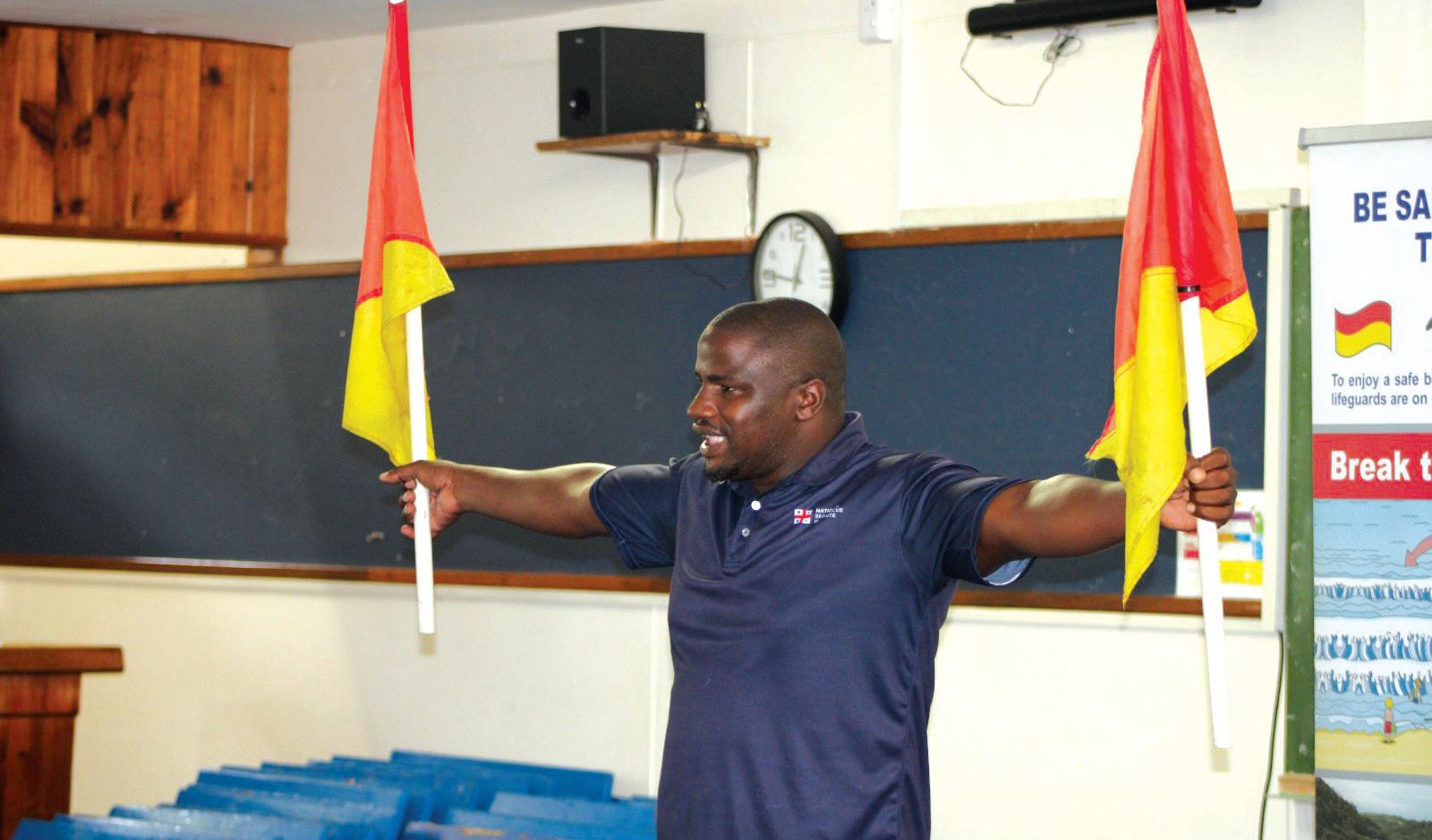
One of the most important rules for beachgoers is always to swim between the lifeguards’ flags.
A COMMUNAL EFFORT
NSRI Plettenberg Bay Station Commander Jaco Kruger has always been drawn to the ‘rescue side of things’. A businessman and natural leader, Jaco shares more about his role as Station 14’s Station Commander, and how being part of a larger rescue community makes all the difference when it comes to keeping the people of this popular seaside town safe near and on the water.
‘Iwas always drawn to the men in red,’ Jaco Kruger says. ‘I did lifesaving in high school and had worked on boats in the tourism industry before I moved to Plett in 2004, so joining the NSRI seemed like the most natural thing to do. I mean, it was so cool to hear the siren go off, see them launch… spectacular really.’
When Jaco moved to Plett, he worked for an adventure company called Ocean Blue. Aged 22 at the time, he was involved in whale-watching tours, sea-kayaking, river cruises and, later, on scuba-diving excursions. He established his own business some time later running, among others, snorkelling tours, and currently owns several tourism-related concerns. In a
town like Plettenberg Bay, there is so much to see and do along the Garden Route’s uniquely beautiful coastline.
Despite having his commercial skipper’s ticket, Jaco needed to climb the coxswain ranks at Station 14, and it took him six years before he became a Class 4 coxswain. ‘It builds character,’ he says, ‘and the vibe on station creates this healthy competition around becoming a coxswain.’ Jaco admits that after joining, he was most keen on flight time. He was part of
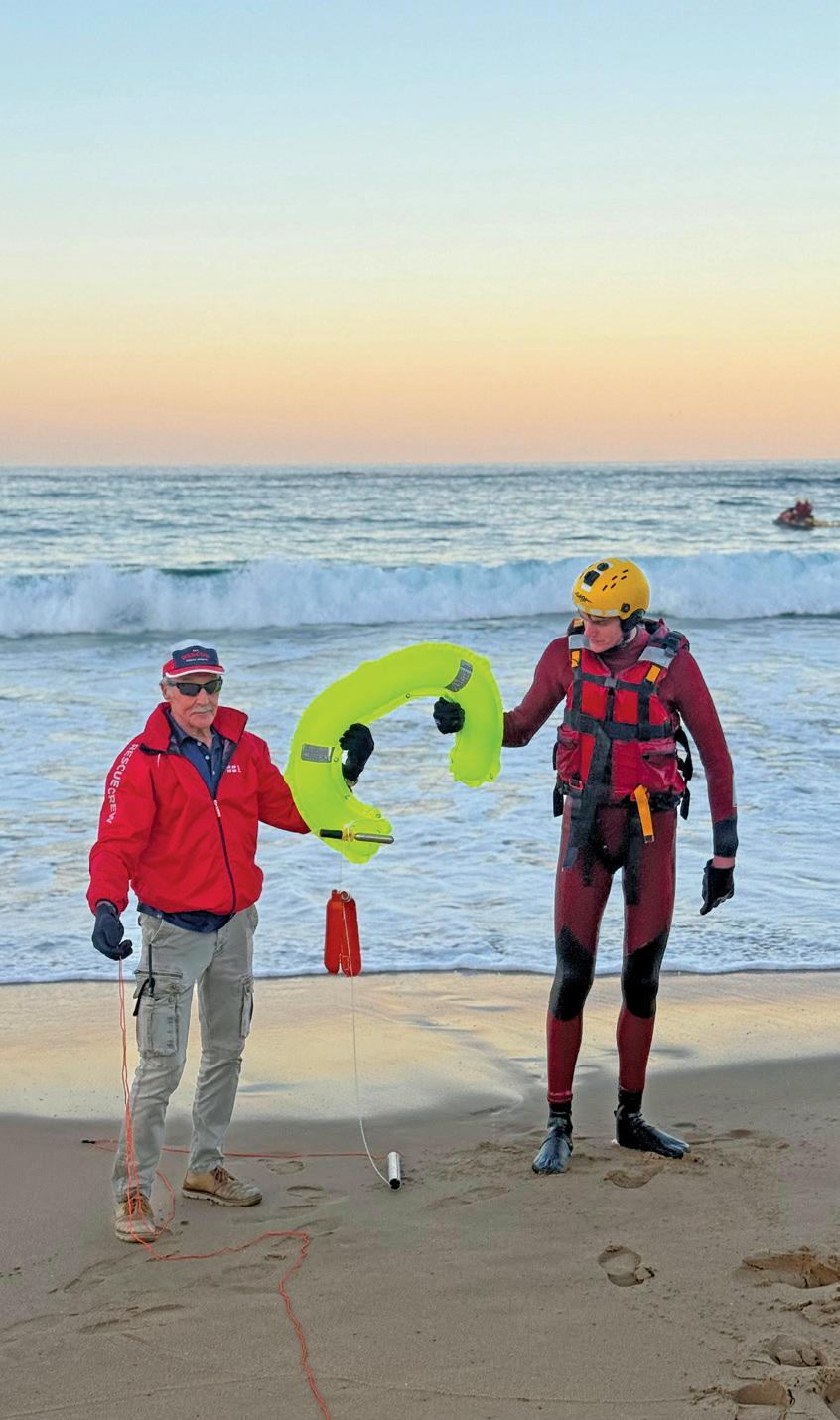
The Pneumatic Line Thrower is a helpful addition to the arsenal of drowning prevention tools at remote beaches like Nature’s Valley. It can be shot from the shore and the tube inflates upon hitting the water.
aline-fuelled rescues, and jumping from choppers, and more about sound leadership that is inclusive, where decision-making is shared, and crew are empowered to take action. ‘It’s a collective effort. It’s not about one individual. That’s what makes a station work,’ he says. ‘We’re a quick response station, so our crew share responsibility for the duty phone, so that as many of us as possible know how to activate a callout. We have two deputy station commanders and leadership strength to spread the load. It’s not the Station Commander saying “do this, do that” all the time.’
NSRI’s Air Sea Rescue (ASR) team for a number of years, participating in callouts on the Vodacom chopper, and sometimes with the military. ‘All the “cool kids” wanted to fly in the chopper,’ he laughs. ‘Or jump off boats to save people. We didn’t want to be at the helm.’
Station 14 has always had a good mixture of rough-and-ready youngsters and mature, older crew – the cool, calm heads who also have the benefit of many years of rescue work in all conditions that has given them extensive regional knowledge, he says. ‘It’s a nice blend, and the key to why the station has operated at such a high level for so many years.’
Jaco places himself somewhere in the middle. At age 44, it is less about adren-
Jaco was elected Station Commander during the Covid-19 pandemic, and even though it was a ‘bizarre period’, he says the timing could not have been better. Because of the pandemic restrictions, his ability to operate his tourist-based businesses was limited, so he had more time to concentrate on stepping into former Station Commander Marc Rodgers’ shoes. ‘It was a hell of a nice challenge and a good time in my life. I got to do the groundwork of learning the systems and implementing some new things because we were quiet at work.
‘The pandemic was a reminder that we live in ever-changing times,’ he says. ‘Nothing is certain, but things also don’t stop, nothing is ever complete. We respond to fires, floods, rabid seals, shark alerts… You’ve got to be flexible, and you’ve also got to have people onboard who share the same philosophy of how to get things done. I’ve got a fantastic bunch of guys and girls running our management team. I’ve also seen the station become more diverse, which has been great. Not
so many alpha males anymore…’
The teamwork extends far beyond the base’s four walls. ‘Because it’s a small town, we’re connected to the heart of things in Plett.’ Aside from offering an integral service to the community, Station 14 has embraced working with other rescue and complementary organisations like the Bitou Municipal Lifeguards, the Plett Shark Action Group, Cape Nature and the Coastwatchers. ‘We have to have our finger on the pulse of everything,’ Jaco says, ‘because we’re dealing with wildlife as well as people. And working together with other organisations allows us to be at the top of our game. It’s also been rewarding to get lifeguards involved with Survival Swimming training, and integrate services with the satellite station at Nature’s Valley. None of us can work in isolation.’
Plett
Ongoing training, including medical emergency care, keeps the volunteers sharp.
This sentiment extends to the relationship with the Plettenberg Bay community whose support of the NSRI goes big during the town’s annual golf fundraising day. ‘The event is booked out for the next two years,’ Jaco says. ‘And a recent paddle-out incentive raised R70 000 for the station.’
Personally, Jaco feels his involvement with the NSRI and being Station Commander for the past six years has allowed him to grow immeasurably. ‘It’s taught me to assess a situation, focus on the information at hand, make a decision, and back up yourself and your team. Adaptability is another key thing. You have to be able to change as things change. The NSRI has taught me there are no constants.’
After more than 20 years, Jaco is hard pressed to single out any one rescue that was memorable for him. ‘We’ve helped people during floods and fires, and sometimes, there are moments you remember, rather than whole rescues. Getting someone away from their burning house, or a successful resuscitation on the beach. Sometimes, it’s just grabbing someone’s hands and pulling them out of the sea. There’s nothing quite like that feeling.’
is a fast-response rescue base, which means they have their fair share of surf rescues.
HIDDEN DANGERS
When the sea at Kleinmond suddenly turned dangerous one summer morning, the NSRI’s Pink Rescue Buoys showed how invaluable they are for beachgoers and bystander rescues. By Cherelle Leong
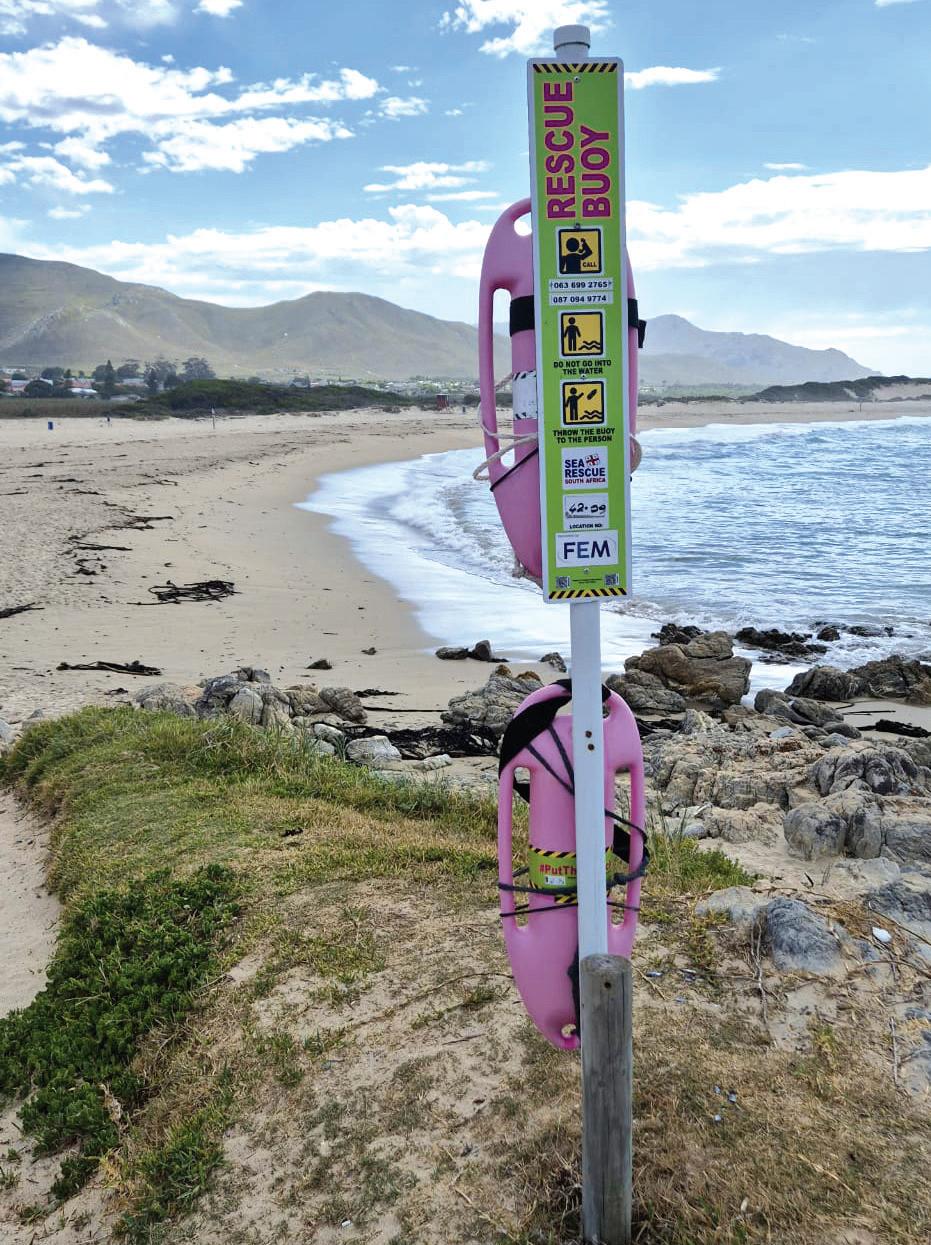
Along a beautiful stretch of beach at Kleinmond, five poles stand sentry. On each hangs a Pink Rescue Buoy. It may be considered unusual to have so many Pink Rescue Buoys on one beach. Most beaches have two or three. There are rarely five, but this is intentional. Kleinmond is a popular seaside destination in the summer months, with hundreds of visitors enjoying the beautiful sandy coastline. Along with this beauty comes a hidden risk, though – swift rip currents that have the potential to sweep people standing on a sandbank out to deeper water in a matter of seconds.
This happens because, without local knowledge, people simply aren’t aware of the hidden dangers or how swift or strong the rip currents can be. They also don’t realise that this rip current is circular, returning to the beach. When they lose their footing, the natural instinct is to panic.
It’s often other beachgoers who witness this occurrence, and while they raise the alarm, every second counts in getting flotation out to those being swept out to sea. Having multiple Pink Rescue Buoys in place means that bystanders never have to run very far to retrieve one to assist someone in trouble.
On a sunny, calm day, the beach is a popular place to hang out, and Sunday
25 January was no different: a busy beach with people relaxing in the sun and cooling off in the sea.
The first indication that the rip currents were strong that day was a mid-morning call to NSRI Kleinmond. The caller indicated that an older man appeared to be in difficulty in the surf and assistance was needed urgently. Several of the NSRI Kleinmond crew were attending church but made an early exit and headed straight to the beach, where they saw two men in
the water – one with a body board, attempting to assist the other man. Knowing how to read the currents, rescue swimmer Andre Botes entered the water and used the rip current to his advantage to quickly get to them. Together with the man with the body board, Andre was able to bring the casualty back to shore.
Medical teams were ready to receive them, assessing for injuries and symptoms of secondary drowning. Fortunately, both were in good health and were released after being medically checked.
Standing down from that callout, the crew went about their day – until, at about 15h00, the next call came in. Another one for Kleinmond main beach. This time there were reports of multiple people in the water. Laurika Stander, a senior crew member, was manning the station phone, and happened to be at the base with two junior crew members when the call came in. As she was activating the crew to respond to the beach and updating Station Commander Schalk Boonzaaier on the situation, more calls came in, highlighting the urgency of the situation.
In between answering calls, Laurika instructed the crew to prepare the mobile and JetRIB. Rescue swimmers would be responding directly to the scene, with the JetRIB serving as support. Rather than launch from the harbour, Schalk made the decision that Laurika and the crew should
bring the JetRIB directly to the beach to launch from there as all the station’s coxswains would already be on scene.
On arrival, Schalk saw two of Kleinmond’s rescue swimmers, Andre Botes and Chris Venter, in the water assisting casualties in the surf. Two Good Samaritans had grabbed Pink Rescue Buoys from the beach and entered the water to help. This had helped keep everyone afloat until the rescue swimmers could reach them and assist them back to shore. Closer in, a smaller group had managed to find their footing on a sandbank and were slowly wading back to shore. The remaining casualties were trying to get to safety on the rocks, but these were sharp and difficult to access, with waves constantly crashing against them. As he wasn’t kitted up and those in the water were already being assisted, Schalk decided to help one of the casualties, an older woman who appeared to be struggling against the surf. Carefully, using the swell to his advantage, he reached her. She was fatigued and had
NSRI’s Pink Rescue Buoys are invaluable for bystander rescues, as recent events in Kleinmond showed.
a number of bruises and nasty cuts from being battered against the rocks.
Schalk knew that he would need to fully support her weight as he swam her out as she was already tired. Floating on her back, he supported her with a strong underarm grip as he worked with the current to get her safely back to the beach. By this time, the mobile, JetRIB and additional Kleinmond crew had arrived. The crew were supporting and assessing the casualties’ injuries, warming them with space blankets and reassuring them that
Kleinmond’s JetRIB enables crew to effect swift and efficient rescues for those in trouble in the surf.
and positive outcome. A total of nine people had been in the water, and through combined efforts, all were brought safely back to the beach.
While the casualties were being treated, Schalk decided to launch the JetRIB and search beyond the surf line, just to make sure that there was no-one else still in the water. While reports indicated that everyone was safely ashore, there was no harm in making sure…
they would be okay, now that they were safely back on land. There were many cuts and scrapes to be attended to, and shellshocked faces told the story of an ordeal that no-one wished to repeat.
What had started out as a birthday party on the beach had quickly turned into a nightmare when a group of teenagers had been swept away by strong currents while swimming. A swift response by other beachgoers, the availability of multiple Pink Buoys, and immediate calls for help all combined to enable a successful rescue
After the rescue operation had been wrapped up, one of the crew remained on the beach to enjoy time with friends and family. As they were chatting, the friend noticed a man in the surf, appearing to be in difficulty. When Andre saw his friend hurriedly taking off his T-shirt, he turned to see what was prompting him into action and saw the man in the surf. Within seconds, they’d retrieved one of the Pink Rescue Buoys and swam out to the casualty. He too had been unaware of the swift rip current and had lost his footing, resulting in the rip taking him into the surf. Fortunately, he was unharmed. Supported by two swimmers and a Pink Rescue Buoy, he was brought back to shore safely.
It’s unusual to have three rescues on the same beach in one day, but it highlights how necessary those five sentries holding Pink Rescue Buoys are. It could be just one person getting into difficulty, or it could be five, or nine. With five Pink Rescue Buoys available, multiple rescues are possible. Having easy access to flotation devices to support survival is what the Pink Rescue Buoy programme is all about.
ITALTILE RENEWS PLATINUM PARTNERSHIP TO 2029 NEWS & SPONSOR NEWS
The National Sea Rescue Institute is proud to announce the renewal of Italtile’s Platinum Partnership for a further threeyear term, from March 2026 to February 2029. This renewed commitment reflects not only continued financial support, but a deep and enduring alignment of values between our two organisations.
Italtile’s journey with the NSRI began in 2011 with a significant contribution toward rebuilding the Plettenberg Bay rescue base, strengthening vital coastal rescue capability. In 2012, a team of Italtile employees joined NSRI volunteers to summit Mount Kilimanjaro, raising funds for the Knysna base renovation, which reopened in 2013. Over the years, Italtile has also contributed tiles and sanitaryware to several rescue base upgrades, including the Strandfontein base in Cape Town, ensuring our facilities remain operational, resilient and fit for purpose.
Italtile’s journey with the NSRI began in 2011 with a significant contribution toward rebuilding the Plettenberg Bay rescue base, strengthening vital coastal rescue capability. In 2012, a team of Italtile employees joined NSRI volunteers to summit Mount Kilimanjaro, raising funds for the Knysna base renovation, which reopened in 2013.
In recognition of this early and meaningful support, Italtile received the Alric Simpson Award in 2012, the NSRI’s highest honour for distinguished service. In 2014, the company formalised its role as a Platinum Partner, cementing a long-term relationship that has endured through periods of growth and challenge, including the Covid-19 pandemic.
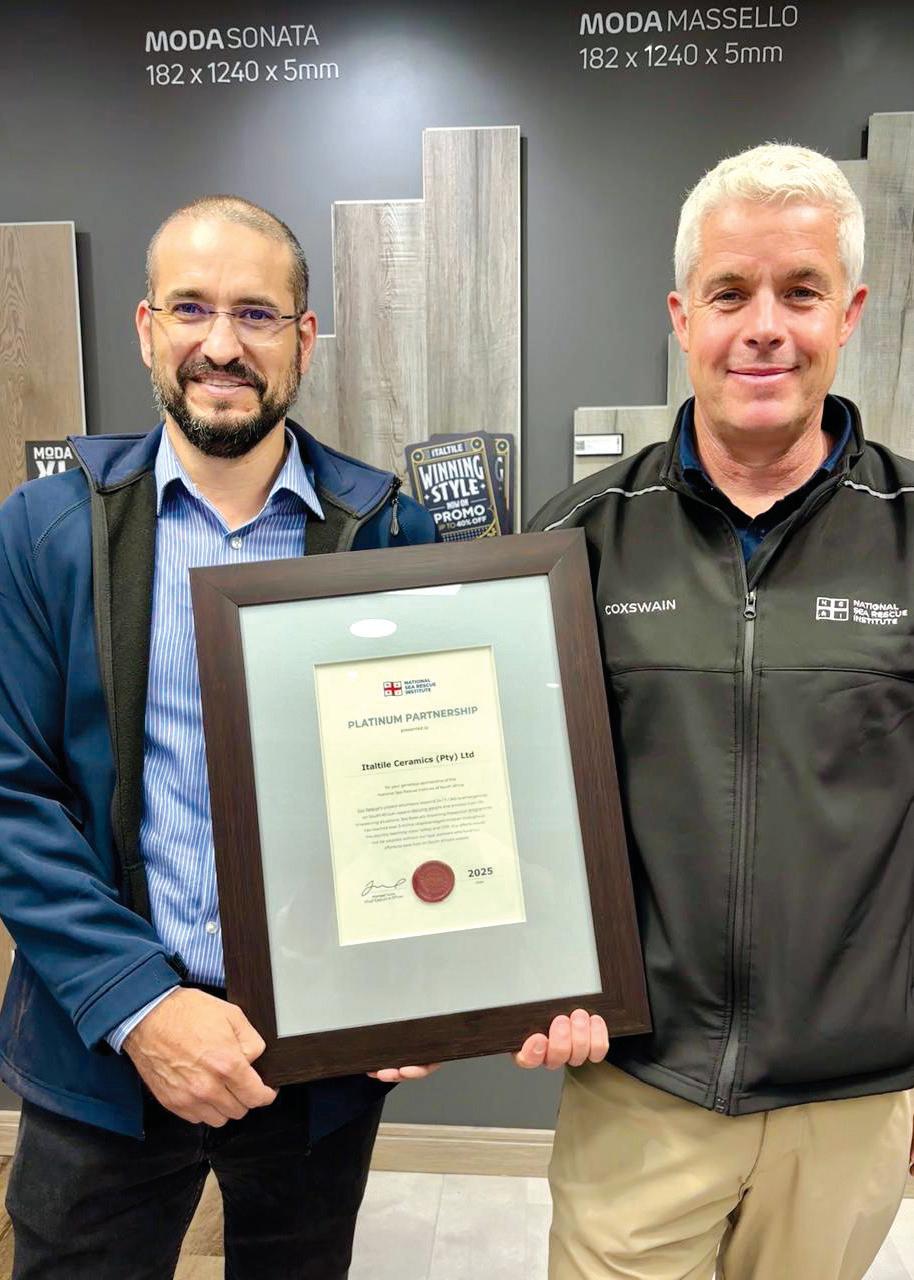
The renewal was marked by a symbolic handover of the 2025 Platinum Partnership certificate, presented by NSRI to Italtile in recognition of its continued support.
Pictured are Brandon Wood, Chief Operating Officer of Italtile, and Mike Vonk, Chief Executive Officer of the NSRI. On the same day the certificate was presented, the renewal agreement securing the partnership from March 2026 through to February 2029 was formally signed. The moment reflects both an acknowledgement of a partnership built over many years and a shared commitment to the future.
The renewal of this Platinum Partnership marks more than a continuation. It represents a reaffirmation of shared purpose: saving lives, strengthening communities, and building resilience along South Africa’s coastline and inland waterways.
Over the years, Italtile has also contributed tiles and sanitaryware to several rescue base upgrades, including the Strandfontein base in Cape Town, ensuring our facilities remain operational, resilient and fit for purpose.
With this renewed commitment, Italtile once again demonstrates that sustained, purpose-led partnerships create lasting impact. Together, we look forward to continuing this journey of service from 2026 through 2029 and beyond.
ABOVE WATER CAMPAIGN
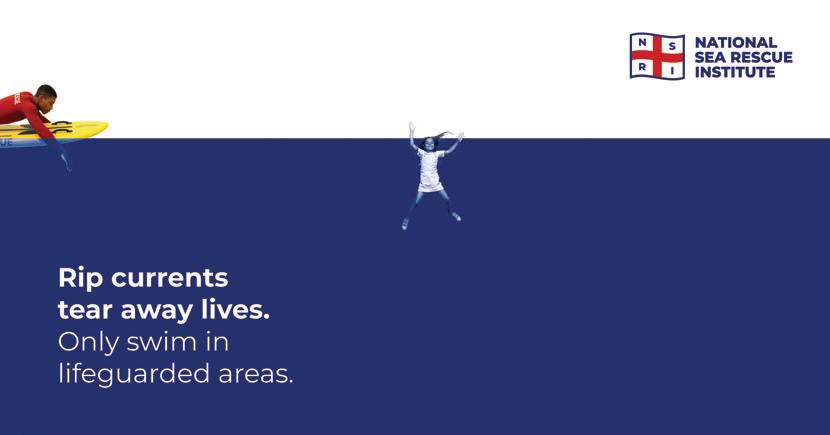
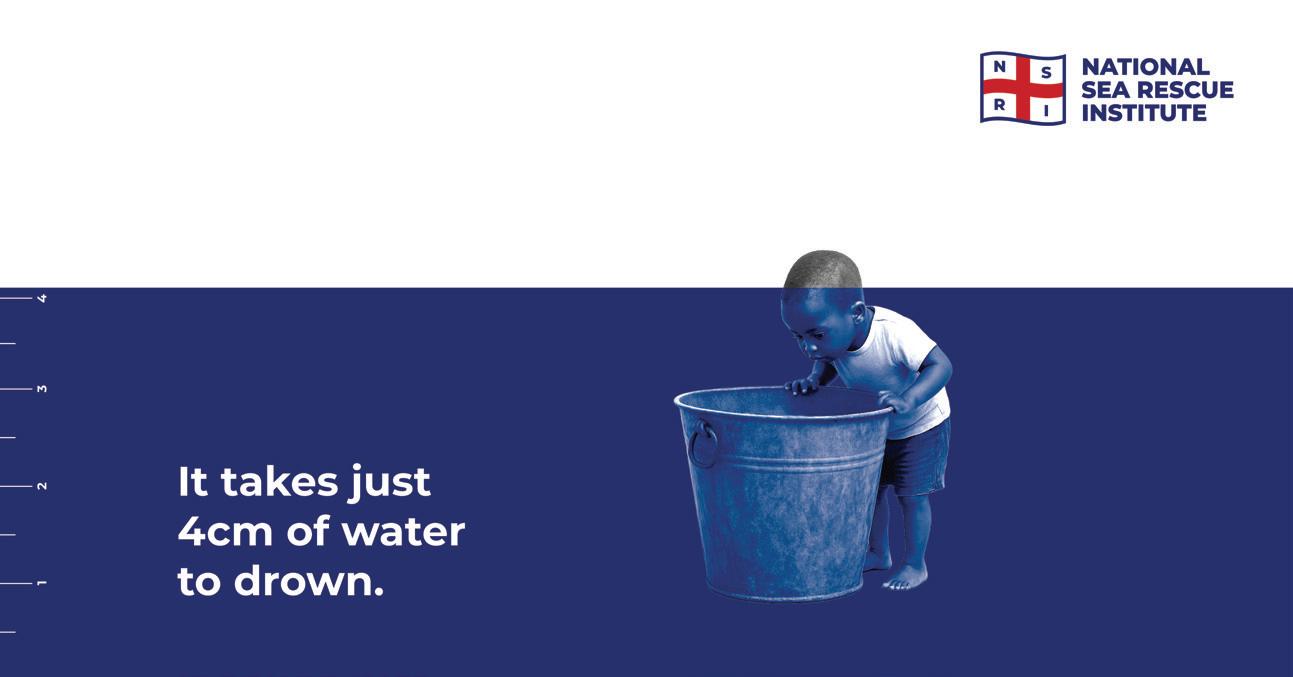
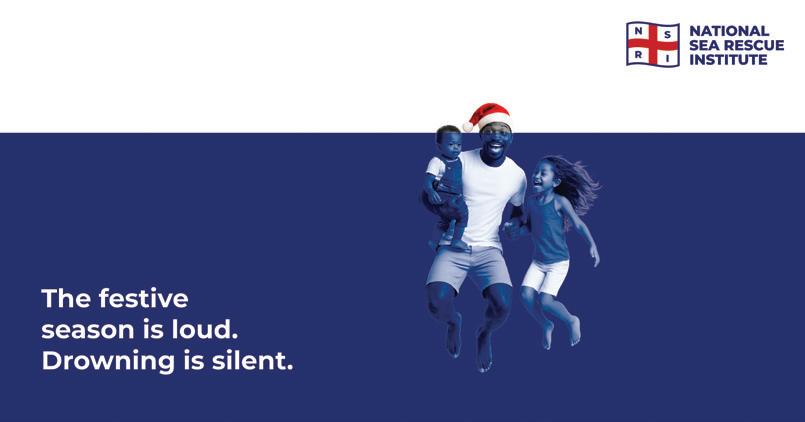
NSRI’s Above Water Campaign launched in December 2025 to coincide with the festive season, a time associated with increased numbers of people spending time near water. Introduced via social media, the campaign urges everyone to keep their – and their families’ – heads above water. Messaging alerted parents to the dangers of water buckets (‘All it takes is 4cm’) and swimming pools, encouraged water uses on beaches to ‘Swim between the flags’, and urged everyone to build a water-safe nation by teaching our youth water safety and survival swimming. The campaign also highlighted that drowning is silent and can happen in the blink of an eye and that rip currents can take anyone by surprise, even strong swimmers.
time near water, yet there is always hope and prevention when the NSRI is by your side. Messaging highlighted: Awareness: ‘Drowning happens everywhere and anywhere, and to everyone and anyone.’
Solution: ‘Drowning is preventable –here’s how.’
Action & Support: ‘The NSRI saves lives every day but can only do more with your help.’
By using powerful and consistent imagery and messaging, the NSRI Above Water campaign draws attention to how drowning can affect all South Africans who spend
The next phase of this campaign will be to target specific groups, such as kayakers, fishermen, and individuals who cross rivers, drawing specific attention to how they can be affected and what they need to do to be stay safe.
The NSRI is an NGO funded by donations. To support this campaign, scan the QR code.
MORKEI GRANNY GROMMETS
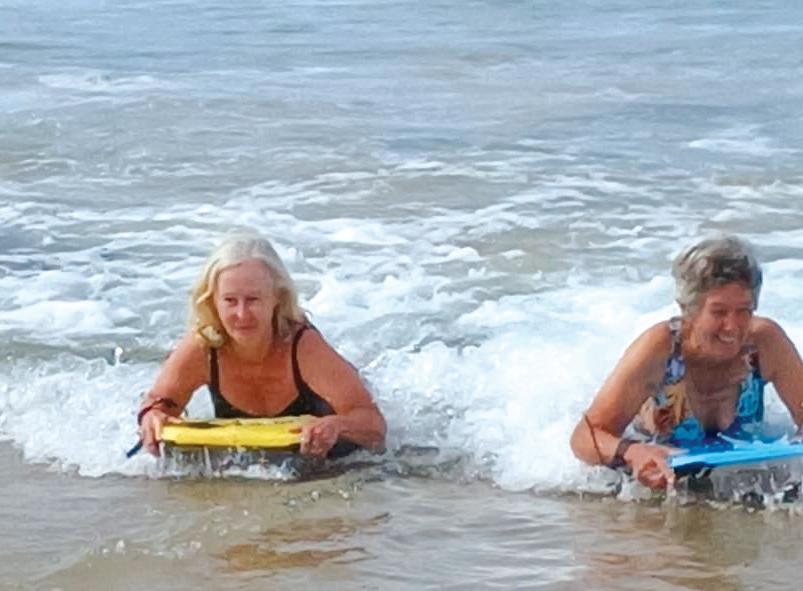
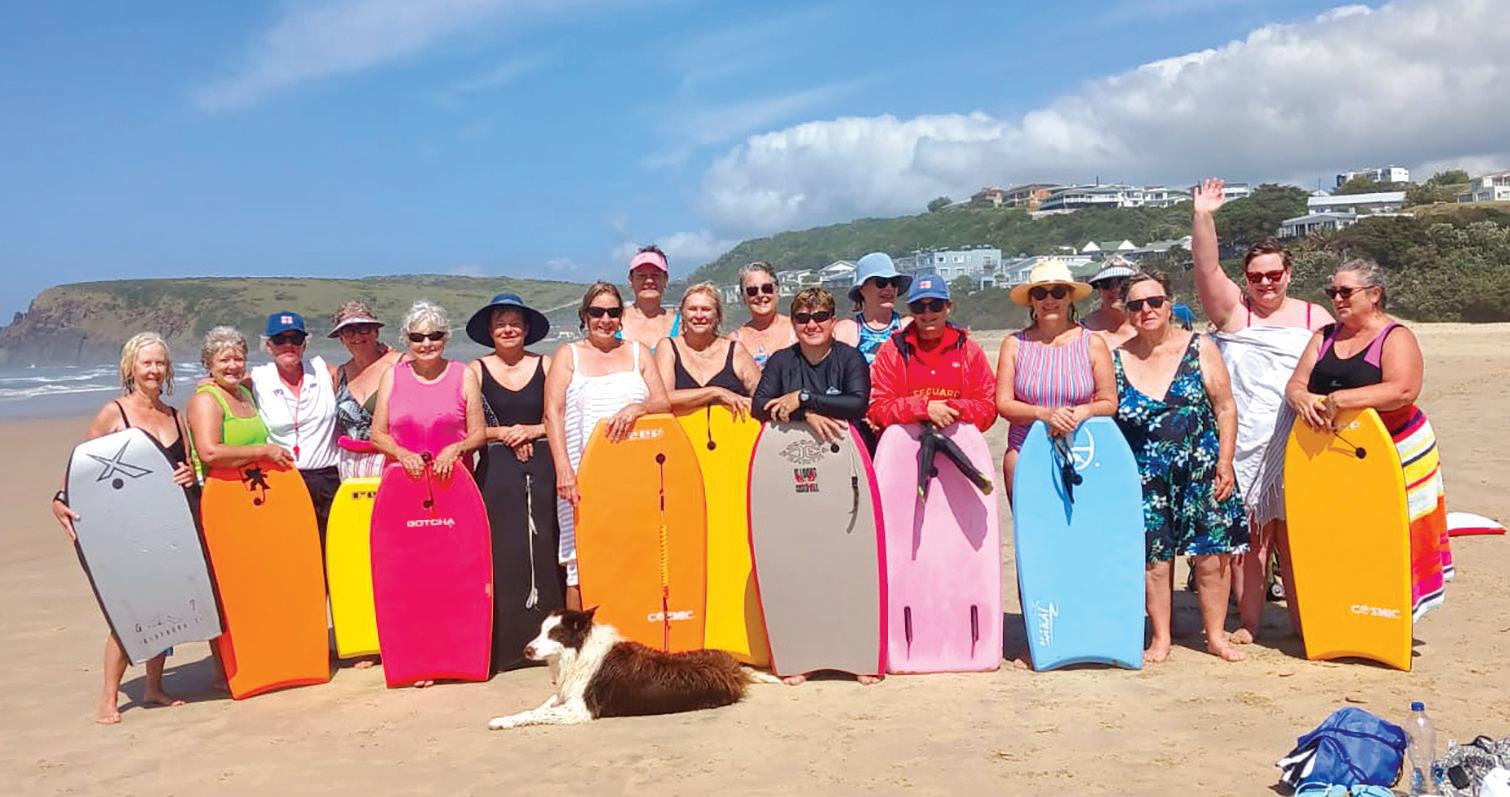
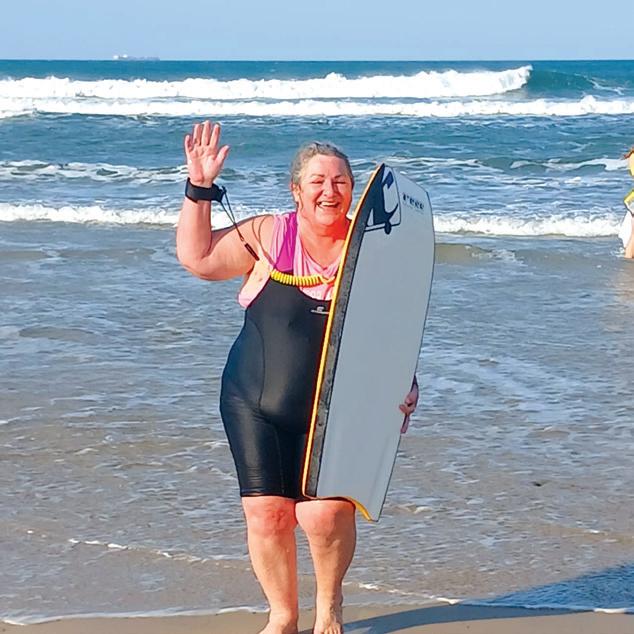
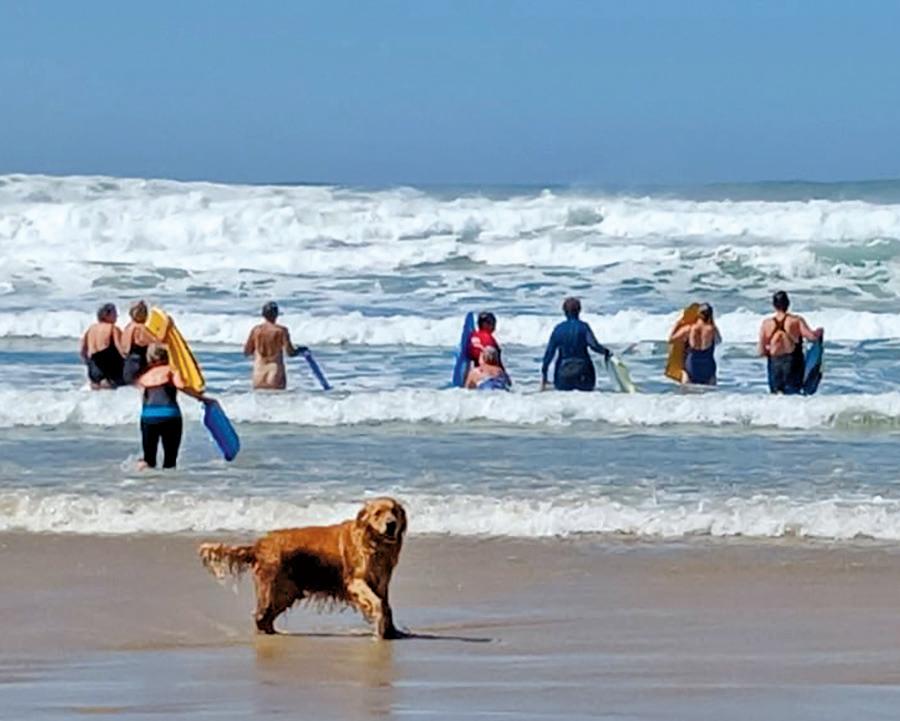
On 4 February 2026, the water-loving members of Kei Mouth and Morgan Bay Granny Grommets celebrated their oneyear anniversary. Surf rescue swimmer Nadine Maré and shore controller René Richardson of Station 47, Kei Mouth, ensure the ladies’ safety every Wednesday, when they enjoy their weekly swim, bodyboarding and surfing from 9am.
‘Come rain, wind, hail, summer, winter, whatever, the ladies are there,’ says René, ‘sometimes as many as 25.’ The original Granny Grommets bodyboarding group was founded by Kim Buttfield and Tony Harrison in 1999 in Albany, Western Australia. The movement gathered momentum in South Africa as well, the idea being to grow vibrant, community-focused groups of women, mostly aged over 50, who gather weekly for bodyboarding and to promote joy, active living and fitness, and of course, friendship.
ON COURSE FOR SEA RESCUE
The second Oceana Group Charity Golf Day in support of the National Sea Rescue Institute took place on 29 January 2026. The day proved to be an extraordinary occasion, both on and off the course, delivering not only a memorable day of golf, but an outstanding fundraising result. Thanks to the generosity of the players, sponsors and supporters, the event raised an incredible R286 000, surpassing last year’s total of R235 000. This remarkable contribution translates directly into fuel for NSRI rescue vessels, ongoing training for volunteer crew, the ability to respond swiftly when emergency calls come in, and vital water safety education in under-resourced communities.
The players were in high spirits on the day, and it left a lasting impression. The fairways were filled with camaraderie, friendly competition and a shared commitment to making South Africa’s waters safer for all, while having fun and connecting with friends and industry colleagues. Events such as the Golf Day demonstrate
the power of partnership and the meaningful impact that can be achieved when organisations, companies and communities come together for a common cause.
A welcome addition to the latest Golf Day was a women’s coaching session, which was attended by members of Oceana’s Executive Committee, and participants from the Black Management Forum, Link2Grow, FishSA, Ukhanyiso Consulting, SMTAX, House of Luxury and Levites Holdings. Hopefully this translates into more women on the course for the next event.
The NSRI deeply values the continued support of Oceana Group. Now in its second year, the Golf Day has become a wonderful example of the strong and growing partnership between Oceana and the National Sea Rescue Institute.
The NSRI extends its sincere thanks to the players, sponsors and donors who contributed to the success of the day. Keep an eye open for the announcement of the next Oceana Golf Day in support of the NSRI.
RUNNING FOR FUN(DS)
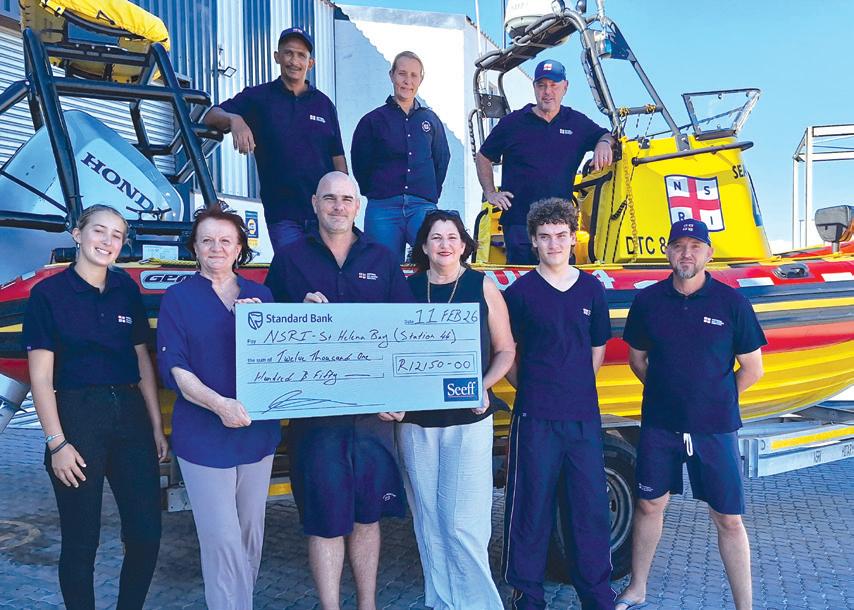
The second #5KBAY Fun Run and Walk, hosted by SEEFF in support of NSRI St Helena Bay, took place on 16 December 2025. This vibrant community event is fast establishing itself as a highlight on the local calendar, bringing people together in the true spirit of supporting a good cause. Not only is participation growing exceptionally fast, but so too are the fundraising efforts that directly support the vital lifesaving work of NSRI St Helena Bay. The NSRI is grateful to companies and community organisations and groups, such as SEEFF, who choose to, through fundraising events, support the NSRI rescue bases in their areas. Events such as this play an
important role in sustaining our rescue stations around the country and strengthening the connection between the NSRI and the communities we serve.
If you are in the St Helena area on 16 December 2026, be sure to join the fun and excitement of the #5KBAY at Golden Mile Beach.
THANK YOU FOR DONATIONS RECEIVED
IN MEMORY OF: Mr R Granelli, Oliver Cooke, Terence Waldron, T Taylor, Dr L Snyman. TO HONOUR: Joan Pienaar (80th birthday), Neil Malan (70th birthday), Paul Faulks (60th birthday), Alon Kowen (50th birthday), Nina Russell (100th birthday), Renie Isemonger (90th birthday), R Munro (birthday), Marty Russell (90th birthday), Rèan and Sue van Niekerk (Wedding), Roger Watt (80th birthday)
PLATINUM PARTNERS
STRATEGIC PARTNERS
GOLD PARTNERS
A&M Logistics (Pty) Ltd / Barpro Storage SA (Pty) Ltd / Life Health Solutions / Marine Solutions (Pty) Ltd / Ruwekus Fishing (Pty) Ltd / Shosholoza Workplace Wellness
MASTERS OF WIND AND STORM
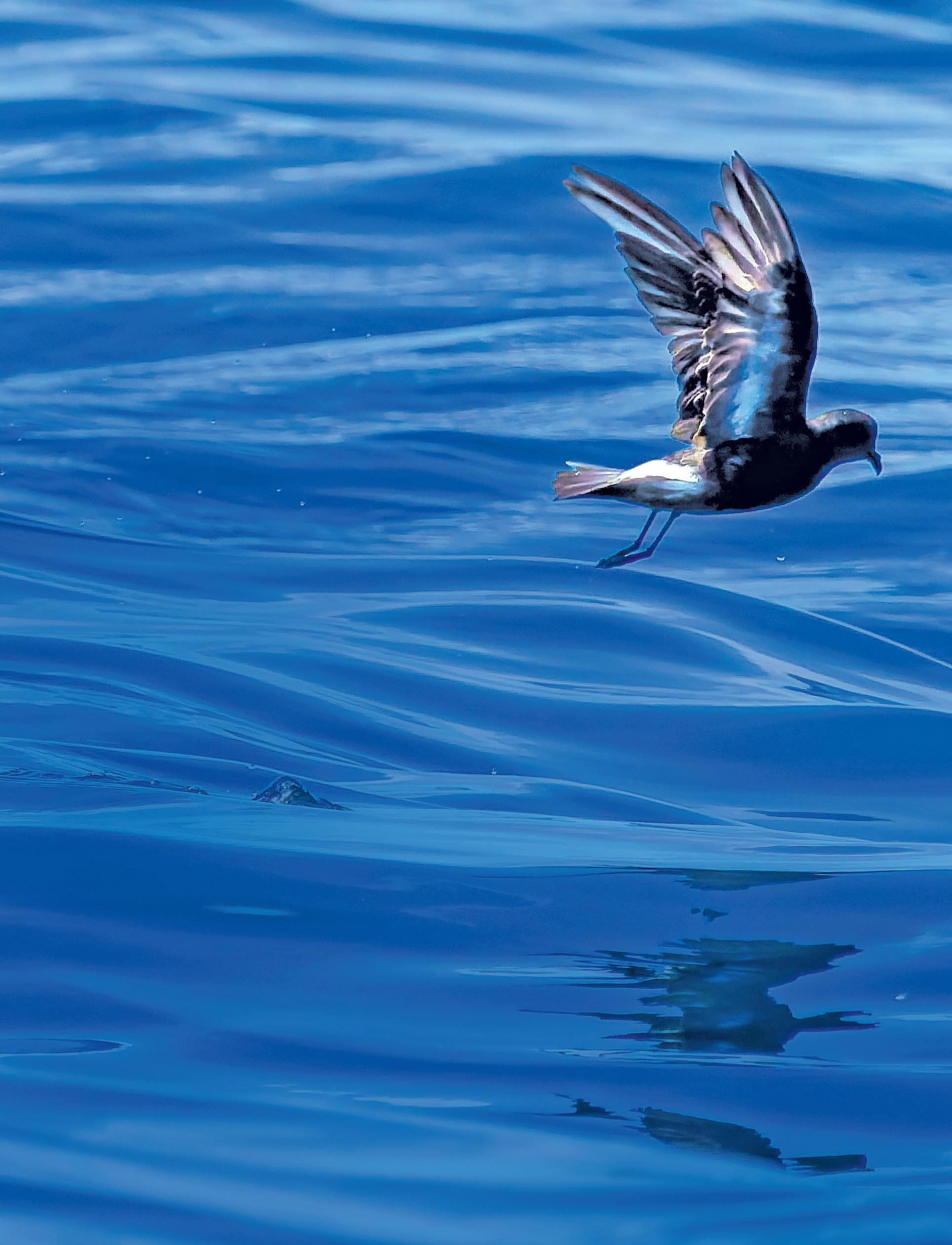
Naturalist Georgina Jones sheds light on one of the smallest marine birds on earth. Mighty little creatures whose migratory habits belie their size.
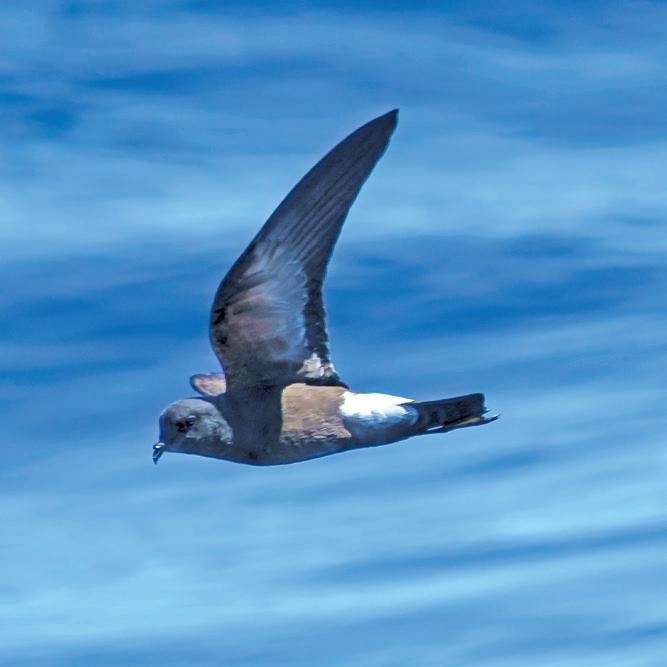
Storm petrels belong to the same bird family as petrels and albatrosses, but they’re much smaller. As in, the heaviest one seen in South African waters, Matsudaira’s storm petrel, weighs a mere 60g. That’s less than a small kiwi fruit. And the smallest one, the European storm petrel, weighs about the same as an AA battery, and has a wingspan only slightly longer than the average school ruler. But their size doesn’t stop these tiny birds from living astonishingly pelagic lives.
Seven species of storm petrel are known from South African waters and their lives are wonders of oceanic adaptation. They live the bulk of their lives in flight over the open ocean, only coming to land to breed. Young European storm petrels first return to land in their second or third year of life, while the Matsudaira’s storm petrel breeds on islands south of Japan in the northwest Pacific and then comes to the Indian Ocean for the northern hemisphere winter, a not-inconsiderable jaunt of well over 10 000km. Wilson’s storm petrels are the smallest warm-blooded animal to breed in the Antarctic, spending our winters in the northern Pacific, and are a common sight in summer on islands south of the UK. That’s a seasonal migration of three-quarters of the planet made by a 40g bird with a 40cm wingspan. Not only that, but Wilson’s storm petrels are one of the most abundant bird species in the world, with a population estimated at somewhere between 8 and 20 million birds.
Unlike most birds, storm petrels have a welldeveloped sense of smell and not only use it to find their prey and oily floating edibles, but can also recognise their own scent and use that ability to find their nests in the dark.
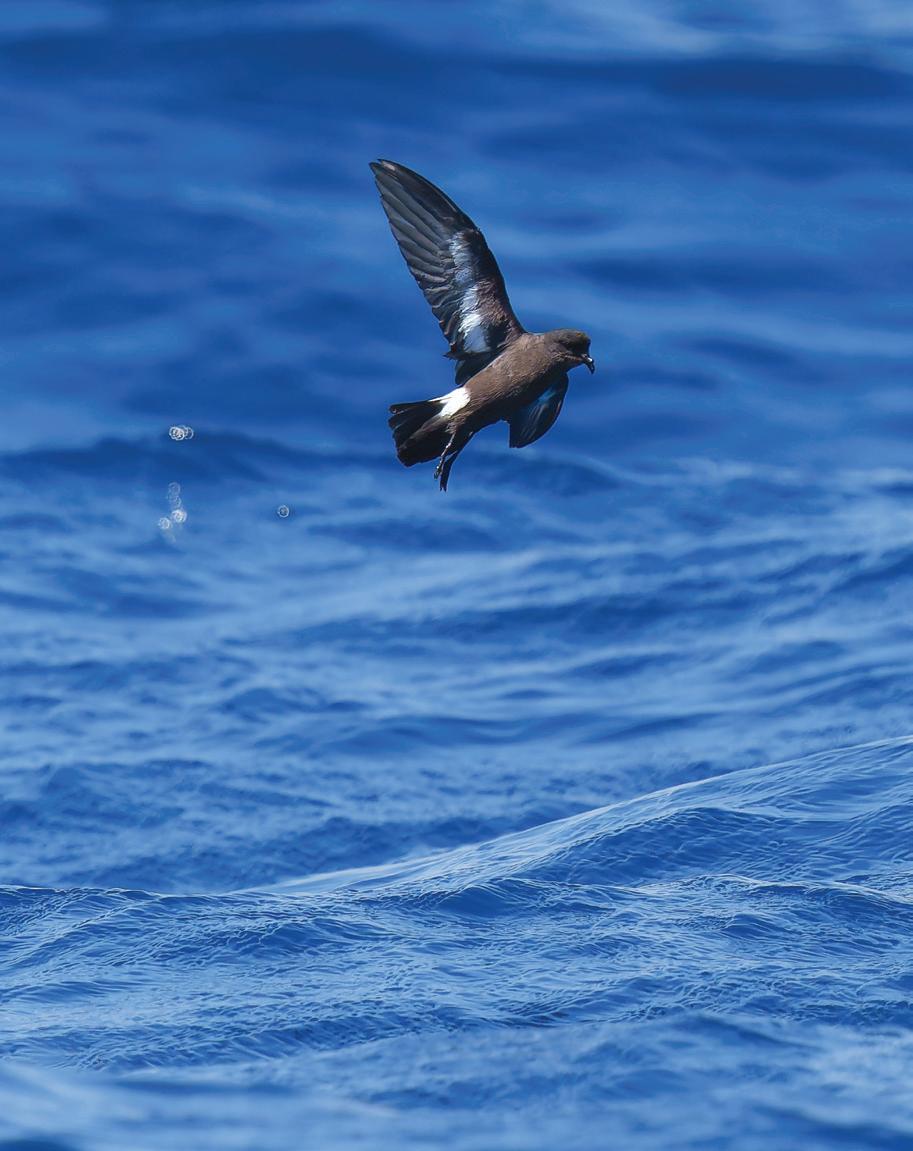
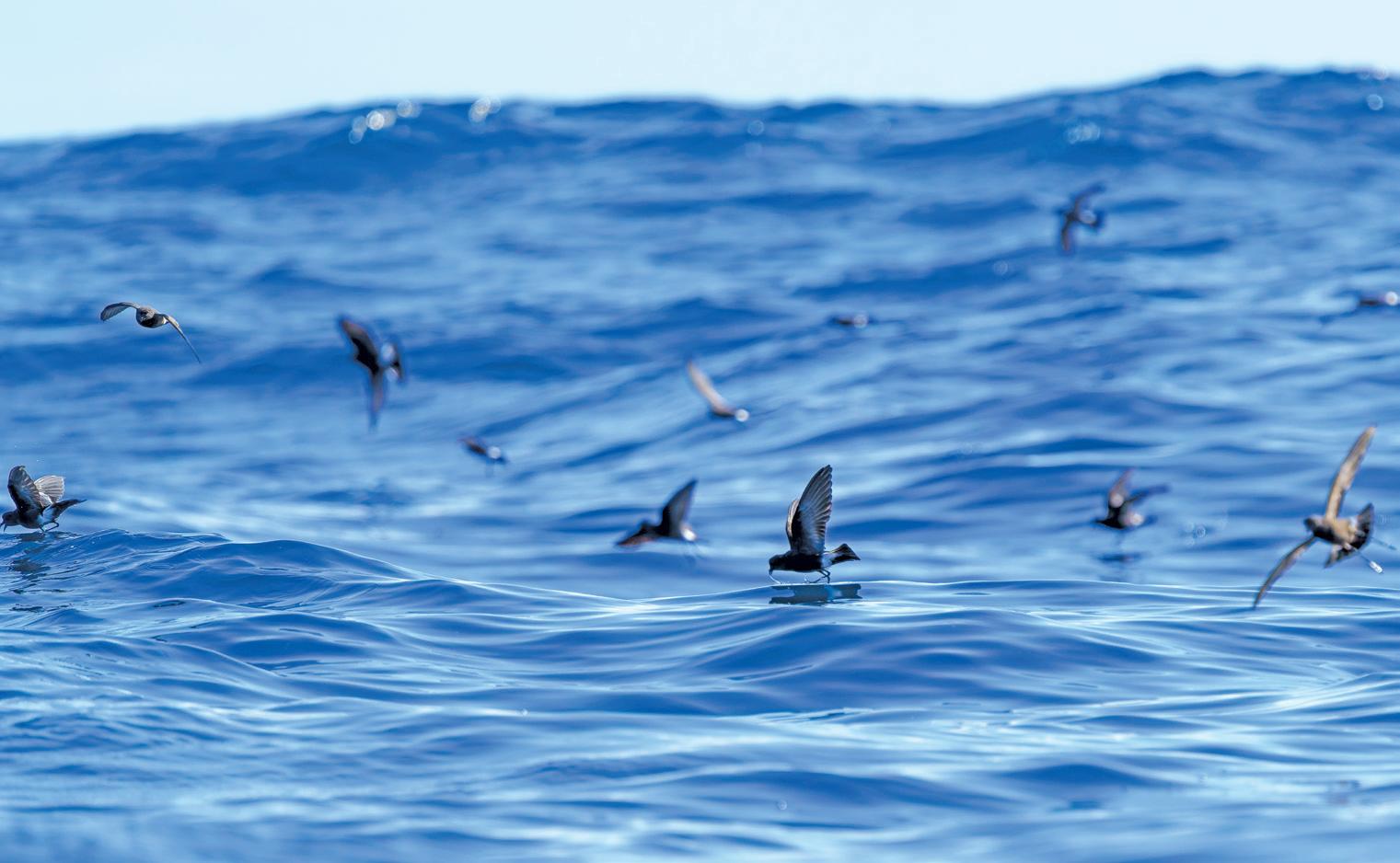
This group of birds, like their larger relatives, the albatrosses, uses the wind to stay aloft and are usually seen floating on the ocean surface in calm weather. When feeding, they hang in the air with wings raised and patter on the surface with their feet while they use their slender beaks to forage for small fishes, crustaceans and squid.
They will also feed on offal and oil, as well as scavenging whale carcases. Some of the species will follow ships, attracted by the smell.
Unlike most birds, storm petrels have a well-developed sense of smell and not only use it to find their prey and oily floating edibles, but can also recognise their own scent and use that ability to find their nests in the dark.
This is important because, partly due to their size, they are easy prey for larger seabirds. So storm petrels only visit their
breeding colonies at night and will even avoid visiting their nests at full moon. They nest communally, almost always on remote and inaccessible islands, but the nests are not generally much more than a crevice or a burrow, occasionally a tunnel, sometimes lined with grass, but are more usually on bare rock. Storm petrels lay a single egg that the parents take turns incubating. Typically each parent will stay on the nest while the other feeds at sea for several days.
Evidence shows that in some species, the feeding grounds are 1 000km from the nesting sites. These
LEFT Storm petrels use their well-developed sense of smell to locate floating or swimming food. INSET Wilson’s storm petrels are the smallest warm-blooded animals to breed in the Antarctic.
ABOVE A European storm petrel: tiny master of the oceans.
are monogamous species with lifetime pair bonds. Once the chick has hatched, both parents share in the feeding, initially taking shorter foraging trips so as to maximise the feeding frequency for the growing chick.
In storm petrels, food is converted to a foul-smelling oily liquid, rich in vitamin A, that is stored in a special sac separate from the digestive system. This liquid is used to sustain the bird while incubating its egg, as a defence if necessary, and for feeding the chick. Spitting this smelly oil is the chick’s only defence and predatory seabird species such as skuas prey on storm petrel chicks, particularly at night.
Adult storm petrels are also harassed by larger seabirds while at sea, sometimes to steal their food and sometimes to try to prey on the birds themselves. If confronted at sea, the birds may dive into the water to avoid attack.
There are two families of storm petrels, the northern or Hydrobatidae and
the southern or Oceanitidae. The names reference their life habits: hydro from the Greek for water, and bates for walker, reflecting their flying style while feeding. As for Oceanitidae, these are supremely ocean-capable birds. For example, the white-bellied storm petrel is described by two separate authorities as both ‘nonmigratory’ and ‘fully migrant’, a clear suggestion that very little is known of the marine distribution of this species. On land though, they are only able to shuffle a short distance to their nests and, if there is room in their communal roosts, will flap their wings to enable the lift required to walk on their toes.
Limited as they are on land, they are the masters of the wind and storm, so much so that mariners have long thought they either foretell or cause bad weather. But these are simply birds in their true element.
PHOTOGRAPHS: DAVID SWANEPOEL
Storm petrels foraging by pattering on the ocean’s surface.
FISH
FISH TALES FISH TALES
Quiz Quiz
the smallest one weighing the size of
Storm petrels are amazing creatures; the smallest one weighing the size of an AA battery. But they can fly for miles and miles before reaching land. Test your knowledge and see how many of the questions you can get right. Don’t peek at the answers.
1. How much does the Matsudaira’s storm petrel weigh?
2. What is the wingspan of the European storm petrel?
3. How many species are known in South Africa?
4. Where do they spend most of their time?
5. What is the smallest warm-blooded animal to breed in the Antarctic?
fun and colour the storm petrel in your favourite colours!
6. How do Wilson’s storm petrels feed?
7. Where do storm petrels usually nest?
8. How do storm petrels avoid attack by larger seabirds?
Find the words
See if you can find the following words: Petrels Albatross Wingspan Oil Whale Offal Migrate Small Aloft Colony Nest Breed
NSRI BASE LOCATIONS
The NSRI is manned by more than 1 509 volunteers at 106 service locations including 56 rescue bases, satellite or auxiliary stations, inland dams and seasonal lifeguard units around the country. Strandfontein,
NORTHERN CAPE
Port
on show in Spain SSC 5: Steilhoogte Primary School
› Data projectors and speakers or flatscreen TVs for training
› GoPros or similar waterproof devices to film training sessions
› Good-quality waterproof binoculars
› Prizes for golf days and fundraising events
› Towels for casualties
› Groceries such as tea, coffee, sugar and cleaning materials
GENERAL NEEDS RESCUE BASES
› Long-life energy bars
› Wet and dry vacuum cleaners
› Dehumidifiers
› Small generators
› Good-quality toolkits
› Top-up supplies for medical kits
› Waterproof pouches for cellphones
› Tea cups/coffee mugs/glasses for events
NORTHERN CAPE
43 063 698 8971 Port Nolloth
WESTERN CAPE
45 066 586 7992 Strandfontein, West Coast (Aux)
24 060 960 3027 Lambert’s Bay
44 082 990 5966 St Helena Bay
04 082 990 5966 Mykonos
34 082 990 5974 Yzerfontein
18 082 990 5958 Melkbosstrand
03 082 990 5963 Table Bay
02 082 990 5962 Bakoven
08 082 990 5964 Hout Bay
26 082 990 5979 Kommetjie
29 082 990 5980 Air Sea Rescue
10 082 990 5965 Simon’s Town
16 082 990 6753 Strandfontein
09 072 448 8482 Gordon’s Bay
42 063 699 2765 Kleinmond
17 082 990 5967 Hermanus
30 082 990 5952 Agulhas
33 082 990 5957 Witsand
31 082 990 5978 Still Bay
15 082 990 5954 Mossel Bay
23 082 990 5955 Wilderness
12 082 990 5956 Knysna
14 082 990 5975 Plettenberg Bay
EASTERN CAPE
46 076 100 2829 Storms River
36 082 990 5968 Oyster Bay
21 082 990 5969 St Francis Bay
37 079 916 0390 Jeffreys Bay
06 082 990 0828 Gqeberha
11 082 990 5971 Port Alfred
49 071 371 3709 Mdumbi
47 076 092 2465 Kei Mouth (Aux)
07 082 990 5972 East London
28 082 550 5430 Port St Johns (Aux)
KZN
32 082 990 5951 Port Edward
20 082 990 5950 Shelly Beach
39 072 652 5158 Rocky Bay
41 063 699 2687 Ballito
05 082 990 5948 Durban
50 082 990 5948 Umhlanga
19 082 990 5949 Richards Bay
40 063 699 2722 St Lucia
MPUMALANGA
35 060 962 2620 Witbank Dam
GAUTENG
27 060 991 9301 Gauteng
NORTH WEST
25 082 990 5961 Hartbeespoort Dam
FREE STATE
22 072 903 9572 Vaal Dam
51 082 757 2206 Gariep Dam
FOR DEPOSITS AND EFTS
ABSA Heerengracht
Branch code: 506 009
Account number: 1382480607
Account holder: National Sea Rescue Institute
Swift code: ABSA-ZA-JJ
PAY ONLINE: nsri.org.za/support-us/ donate
If you choose to do an EFT, please use your telephone number as a unique reference so that we are able to acknowledge receipt, or email your proof of payment to info@searescue.org.za.
Scan this QR code or visit the link below to pay using SnapScan. https://pos.snapscan.io/qr/ STB4C055
Please use your cellphone number as base/project reference so we can acknowledge your donation.
acknowledge
Scan this QR code or visit the link below to pay using Zapper. https://www.zapper.com/ url/KU1oB
Please use your cellphone number as base/project reference so we can acknowledge your donation.