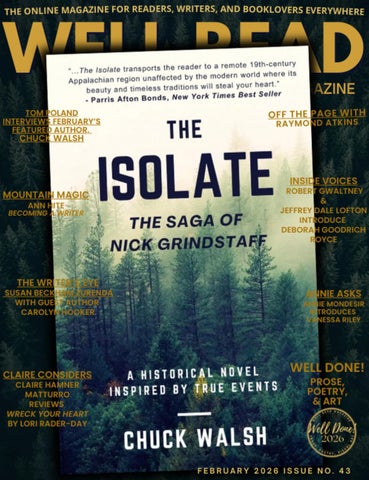
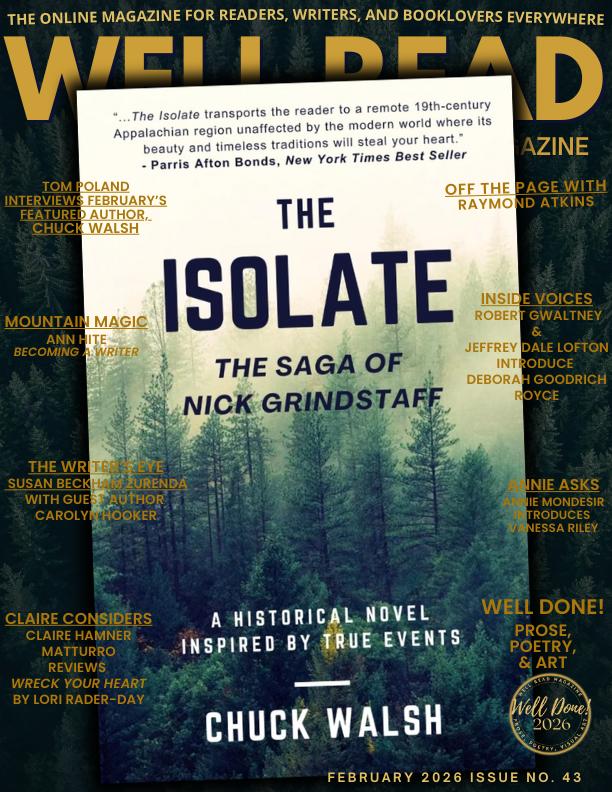
The Isolate: The Saga of Nick Grindstaff
Chuck Walsh
In the heart of East Tennessee's rugged Iron Mountain lives the legend of Nick Grindstaff, a man who turned his back on a cruel world and carved out a life of fierce independence and raw survival. The Isolate is the unforgettable true story of a soul beaten down by tragedy, betrayal, and loss, and his decision to retreat into the wilderness to find solace, solitude, and meaning.
Born into hardship and orphaned at just three years old, Nick was raised in the secluded Doe Valley.After a rare chance to see the outside world, he set off to St. Louis with dreams of prosperity and a future with his beloved Annabeth. But the world proved merciless-his hard-earned savings were stolen, and his return home brought heartbreak. Shattered and disillusioned, Nick climbed into the mountains, where he vowed never to come down again.
What follows is a riveting tale of self-reliance and grit. Battling bears, panthers, deadly winters, and human cruelty alike, Nick transforms from a heartbroken man into a mythic mountain figure. His only companion? A loyal stray dog. To outsiders, he was a recluse, the "Hermit of Johnson County," but to those who knew him, he was a quiet soul whose life echoed the struggle between man and nature, hope and despair.
The Isolate is more than a story of survival. It's a haunting journey into a forgotten corner of American history. Lush with Appalachian landscapes and driven by the enduring human spirit, this gripping narrative honors a man who sought freedom in the wild and found peace on his own terms. Readers will be swept away by Nick's heartbreaking resilience and the haunting beauty of the life he left behind.
“Author Chuck Walsh offers a richly drawn portrait of the Tennessee community that raised and shaped Nick—only to be ultimately left behind. With empathy and insight, Walsh explores what led Nick to a life of isolation, tracing his transformation into a rugged mountain man and examining his profound bond with the land and its creatures that became his family. The Isolate is a compelling meditation on independence, belonging, and the wild spaces where the human spirit both struggles and thrives.” - Carla Damron, award-winning author of The Orchid Tattoo and The Weird Girl
“I'm going on record to say that readers (me!) will fall head over heels in love with Nick Grindstaff, the hero in Chuck Walsh's new historical novel, The Isolate. Nick is made of the right stuff, and the lengths he's willing to go to build a life for the woman he loves will capture your heart.” - Bren McClain, award-winning author of One Good Mama Bone
Chuck Walsh is the author of seven books.His latest release, The Isolate, (Rand-Smith Publishers, Inc./October 2025), quickly climbed inside the Top 10 on Amazon’s Best Seller list for historical fiction.His other books include - A Passage Back (magical realism), A Month of Tomorrows (historical fiction), Shadows on Iron Mountain and its sequel, Backwoods Justice (murder/suspense), A Splintered Dream (literary fiction), and Black Mingo Creek (murder/suspense). A Month of Tomorrows was his first bestseller, rising to #6 on Amazon’s Best Seller list for Historical Fiction in 2014 and Shadows on Iron Mountain was a Top 10 finalist in the 2015 Independent Authors FictionAwards.
His next book, Jakob’s Well (magical realism) is currently being marketed for a publishing contract. Walsh graduated from the University of South Carolina and lives in Columbia, SC with his wife, Sandy.

Did you miss last month’s issue? No worries, click here to find it as well as all the past issues.

If you enjoy this issue, and would like to support this online literary journal, please consider leaving a tip @wellread on Venmo’s site or PayPal-www.wellreadmagazine.com.

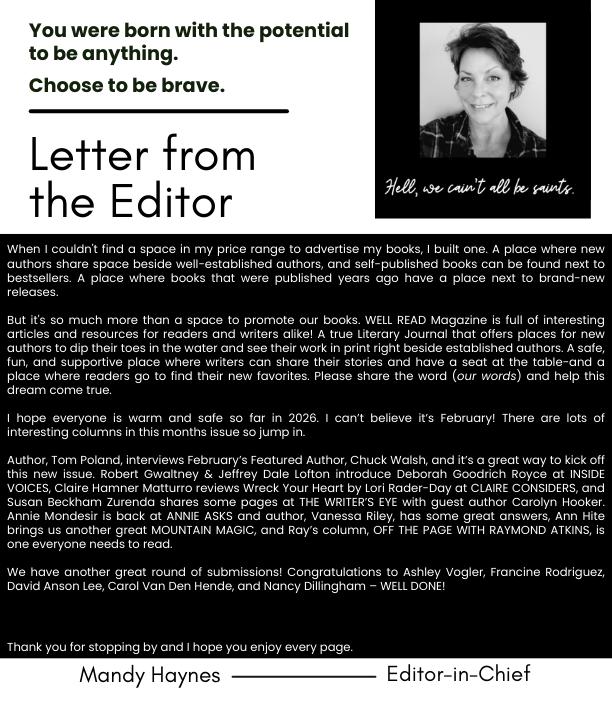

“I
want the reader to feel as though they are with Nick through every step of his journey…”
Tom Poland interviews this month’s
Featured Author, Chuck Walsh
Tom Poland interviews Chuck Walsh
When Nick Grindstaff ventured beyond Doe Valley in the late 1800s, the evil of the world sent him atop Iron Mountain in the remote backwoods of East Tennessee, where he lived alone for 41 years in a small, self-made cabin. Chuck Walsh brings Nick Grindstaff back to the world so readers far and wide might learn his story.
Tom - You cannot overestimate the power of place. Your threemile walk along the Appalachian Trail to Nick Grindstaff’s grave played a decisive role in writing The Isolate. Did you find it essential to return to Grindstaff’s grave as the book developed, or did the first visit prove strong enough to fix things firmly in your mind?
Chuck - I absolutely felt it essential to return to Nick’s gravesite. As I wrote the book and tried to imagine how difficult it had to have been for Nick to survive in that remote land, I wanted to get a good “feel” for what that was like. I was fortunate to have a relative who lived in the valley offer up to, not only walk along the
ATto the gravesite, but to escort me back down the mountain to the valley. That was such an eye-opening experience, and I thought we would never make it off that mountain. And that was just going down the mountain.
Tom - How long did Nick Grindstaff’s story live within you before setting one word to the page?
Chuck - When I was around nine, I read a copy of Nick The Hermit, a twenty-six-page story written in 1926 in poetry form about Nick’s life. I was intrigued by it, and that, combined with winter mornings sitting on the steps of my grandparents’ house in Doe Valley as a young child when the barren hardwoods on Iron Mountain allowed me to see the sun reflecting off the pots and pans that were encased in concrete next to Nick’s tombstone, made the draw to Nick’s story very strong. Of course I had no idea then that I would one day write a book about him.
Tom - You use a word most people use as a verb, although “isolate” is, in fact, a noun. Good titles are not easy to come by. It’s memorable and haunting. How did this two-word title come to you?
Chuck - This was the most difficult book title I’ve had to come up with. With my other novels, I either had the title created before I started the book, or soon after. I spent three-and-a-half years on The Isolate, and didn’t come up with that title until a month before I finished the book. I just couldn’t find that perfect title. But when
it hit me, I knew it was indeed the right one.
Tom - Other voices find Appalachia a powerful setting. Ron Rash and James Dickey come to mind. Dickey mentioned isolation. “You can go places up in the mountains where my father’s people come from and there are places that haven’t changed at all, hardly. They don’t have television.” Do you feel Appalachia’s isolation, rugged beauty, hardscrabble times, and people built for survival make it more fertile than other regions?
Chuck - Without question. Even though I was born and raised in South Carolina, I have spent a lifetime in that region visiting relatives and venturing around Doe Valley and Iron Mountain. The valley is as serene and beautiful as any land I’ve seen, and yet the backwoods on Iron Mountain are as mysterious and eerie as any area I’ve ever walked upon. As important as the setting is, the people are what sets it apart. Their resolve, their spirit, has been passed through the bloodline from those who battled the harshness of bitter winters, and the isolation from a world that might not have known they ever existed. And though it’s the strong backbone flowing through their blood that is remarkable, it’s their love for others, and just as importantly, their sense of humor that carries them through the hard times.
Tom - Birth and growth, death, procreation, anxiety, fear: those are the great big things constant to everyone. How did you arrive at The Isolate’s themes?
Chuck - I wanted to portray Nick as one not to be pitied, but to be admired. It would have been easy to shrug him off as a nutty recluse. But the ability and fortitude he showed in surviving on his own in such a rugged land, encompassed so many emotions. With Nick, he surely dealt with them all. The love of Annabeth, the meanness of the world, his self-worth torn apart in all manner, and the resolve to rebuild it, in a world of his choosing, makes the book deep on many levels.
Tom - Using family and friends as characters can prove daunting. Did you have any misgivings or worries when conceiving The Isolate?
Chuck - Since Nick died in 1923, and had no children, grandchildren, etc., finding blood relatives to discuss what had been passed on down to them from their parents and grandparents was very limiting. The few that I spoke with were happy I was going to write about their famous relative. I told them my intent was to portray Nick in an admirable way. Still, to alleviate any possible hard feelings, I put a note at the end of the book that stated most of the book was true fiction conceived in my mind based on what facts I had, and with stories of Nick that were passed down to me from my relatives who grew up in Doe Valley.
Tom - It’s challenging to portray regional dialects. Overdone sounds fake. Hollywood actors trying to sound Southern comes to mind. What’s your technique for conveying realistic accents?
Chuck - Though it is hard to find a balance with dialect without being a hindrance to the reader, I try to inject the unique dialect from that region where I can. Terms like “you’uns” and little’uns” convey an affectionate reference. And words like “doin’” and “headin’” that flow so naturally off the tongue of the inhabitants would sound forced if they were said as “doing” or “heading.”
Tom - Typewritten manuscripts and distinct drafts have given way to word processors and an infinite ongoing draft. Does it worry you that the evolution of intellectual property like The Isolate is much harder to track these days?
Chuck - Thank God for word processors. If I had to rely on a typewriter or handwritten manuscripts, I’d stillbeon my firstbook. My mind works in such spurts, that having the ability to go back over a draft over and over and over to complete the story, is the only way I can write a book. Perhaps other writers get it right the first time, when it comes to writing the draft. For me, editing is a crucial part of making a draft as close to perfect as possible.And I think if readers could follow the evolution of The Isolate, they would be grateful for the invention of the word processor.
Tom - For some writers, working on different projects in the same general timeframe cross-pollinates them. Do you focus on one work at a time, or do you typically have several projects underway?
Chuck - I absolutely cannot work on different projects at the
same time. I have to devote all my focus on the current project so that I don’t lose the connection I’ve built with each character, and the intimate knowledge I gain as the character develops and grows.
Tom - To me, time is a writer’s true raw material. If you don’t have time to write, you have nothing. How do you protect your time from the many distractions ... from readers to events and beyond?
Chuck - I struggle with distractions. Writing at home, I have to block out everything going on around me, such as conversations, television, phone calls, but it’s often times a struggle. The hardest thing to block out is my cat, who determines my writing schedule by deciding when my lap is better suited for her than my laptop. I also try and set aside blocks of days where I have nothing else on the calendar besides writing.
Tom - The approach to writing a novel is often tedious. What’s your writing schedule and process—your path to bearing fruit, so to speak?
Chuck - I work full time, so I have to make the most of weekends, vacations, and holidays to do my writing. A vital way where I make the most of my non-working time is to plot out my work mentally when I’m running. I run in a state park, and the trails are so peaceful. So, while running, I’ll plot out the next scene, next chapter, next turn in the story line.And when I return home, I can immediately put those ideas into the story.
Tom - A vivid image is enough to jump start some writer’s journey as a novelist. A tombstone propels Saving Private Ryan into motion. Did Nick Grindstaff’s grave prove to be that image for you?
Chuck - I would say it was two images that jumpstarted my interest in writing The Isolate. One was when I was standing in front of Nick’s tombstone, and the other was a photo sent to me by a distant relative of Nick’s of the actual cabin that Nick built, and where he resided, for the last forty years of his life.
Tom - What writers influenced you?And how and why?
Chuck - Most of my favorite authors have roots to the southern Appalachians, and whose books are primarily set in that region. Though the setting is important, it’s their proficiency in prose, and their ability to paint the scene that makes me love their books. My two favorites are Cormac McCarthy, who I think is the greatest fiction writer ever, and William Gay, who runs an extremely close second. Their writing inspires me, and influences my writing style and subject matter.
Tom - Finally, what one thing do you want your readers to take away from The Isolate?
Chuck - I want the reader to feel as though they are with Nick through every step of his journey. I want them to feel the bitter winds that whipped across Iron Mountain, to feel his heartache, to
loathe the cruelty man exuded. And more importantly, I want the reader to feel that Nick was truly a man who should not be pitied, but, instead, admired. Nick’s life was not an easy one, and yet he chose to live it.
ChuckWalsh is the author of seven books. His latest release, The Isolate, (Rand-Smith Publishers, Inc./October 2025), quickly climbed inside the Top 10 on Amazon’s Best Seller list for historical fiction. His other books include A Passage Back (magical realism), A Month of Tomorrows (historical fiction), Shadows on Iron Mountain and its sequel, Backwoods Justice (murder/suspense), A Splintered Dream (literary fiction), and Black Mingo Creek (murder/suspense).
A Month of Tomorrows was his first bestseller, rising to #6 on Amazon’s Best Seller list for Historical Fiction in 2014 and Shadows on Iron Mountain was a Top 10 finalist in the 2015 Independent Authors Fiction Awards. His next book, Jakob’s Well (magical realism) is currently being marketed for a publishing contract. Chuck is represented by Diane Nine of Nine Speakers, Inc.
Walsh graduated from the University of South Carolina and lives in Columbia, SC with his wife, Sandy.
Tom Poland writes columns about the South and its people, traditions, lifestyle, and culture for newspapers and journals in Georgia and South Carolina. His ten previous books include Reflections of South Carolina and Reflections of South Carolina, Volume 2 (both with photographer Robert C. Clark) and Classic Carolina Road Trips from Columbia: Historic Destinations and Natural Wonders. Poland lives in Columbia.
Subscribe to Tom’s Substack here.

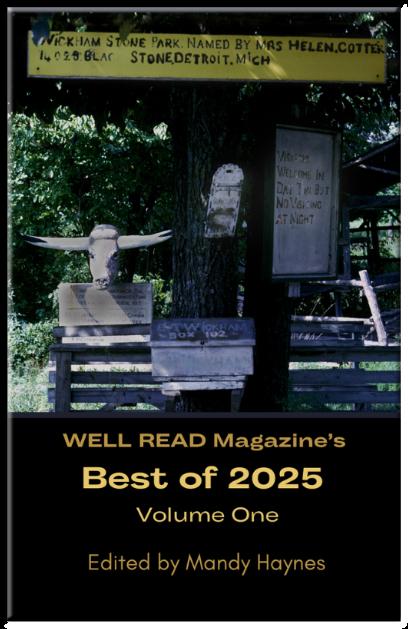
You can find books from past issues as well as current books to add to your reading list.

Happy reading!


Coming

Coming soon!
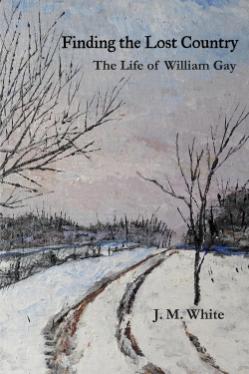
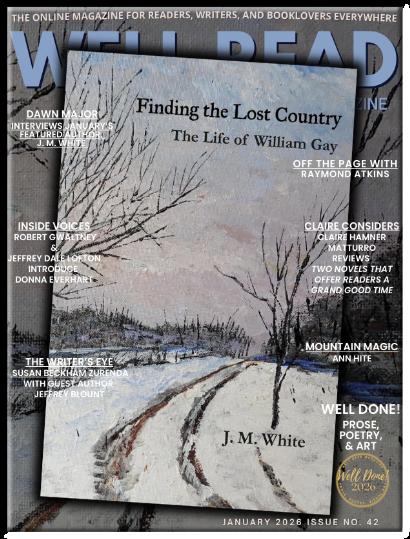
Finding the Lost County: The Life of William Gay by
J. M. White
Born in 1939 and raised in the rural south, other than his time in the Navy and a brief sojourn working in the factories in Chicago, he spent his whole life in middle Tennessee. He was raised in a sharecropper's shack with no electricity and no running water. His father never owned a car or a house. Tennessee ranks near the bottom of all the states in the union in terms of education and Lewis County ranks very low among the 92 counties in the state. He graduated from the Lewis County High School but was completely self-educated as both a writer and a painter. He was inspired by the writings of William Faulkner, Thomas Wolfe and Cormac McCarthy. He studied and wrote until he could match the great writers in the Southern literary tradition in the aesthetic power and intensity of their prose. He passed away at the age of 71 in 2012.
William Gay was born to be a writer. For as long as he could remember he was fascinated by the written word and wanted nothing other than to write. He faced incredible odds but there was simply nothing else that he wanted to do and nothing else that he would do. He lived a hardscrabble earthly life, rugged and simple. He served his art and let his art serve him. He was creating something original, something high energy, cut to the bone, coming out of the dark with an element of danger, exploding on the page. He wrote prose that is heartfelt and melancholy, imbued with beauty and concern for all living things. In a world that didn't seem to care, he was an earth angel singing from some imaginary corner of the universe. His life and the books he created are a master class in the art of writing.
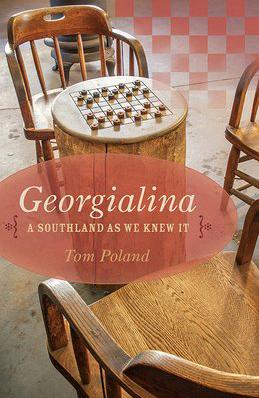
Georgialina,ASouthlandAs We Knew It by Tom Poland
A nostalgic look at Georgia and South Carolina before development, outsiders, and modern conveniences brought wholesale change
Veteran journalist and southern storyteller Tom Poland has been writing about the disappearing rural South for nearly four decades. With a companionable appreciation for nostalgia, preservation, humor, and wonder, Georgialina: A Southland as We Knew It brings to life once more the fading and often-forgotten unfiltered character of the South as Poland takes readers down back roads to old homeplaces, covered bridges, and country stores. He recalls hunting for snipes and for lost Confederate gold; the joys of beach music, the shag, and cruising Ocean Drive; and the fading traditions of sweeping yards with homemade brooms, funeral processions, calling catfish, and other customs of southern heritage and history. Peppered with candid memoir, Georgialina also introduces readers to a host of quirky and memorable characters who have populated the southland of Poland's meanderings.
“Tom Poland brings the fading and forgotten rural South back to life with a deeply felt reverence for the power of story to preserve our shared past. In these pages, we ride shotgun with Tom past covered bridges, tenant homes, country stores, and sweetgrass basket stands into a South that--like the Goat Man--we may never see again.” -- Pat Conroy"
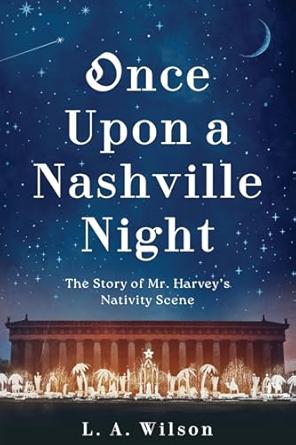
"Everyone who remembers Nashville's Nativity scene will enjoy hearing about the people who made it happen and learning about how it came to be. I was thrilled at how much information Wilson has uncovered and the investigative detail she has amassed. I couldn't put it down." -Fred Harvey III, grandson of Fred Harvey Sr. “….This is a wonderful look back to a time when art, faith, and holiday spirit came together in a way we will never see again." -Kathleen Cosgrove, author of Engulfed and Entangled
Once Upon a Nashville Night
The Story of Mr. Harvey's Nativity Scene
L.A. Wilson
To see a short video of Mr. Harvey’s Nativity Scene, click here: Memories of Nashville | NPT
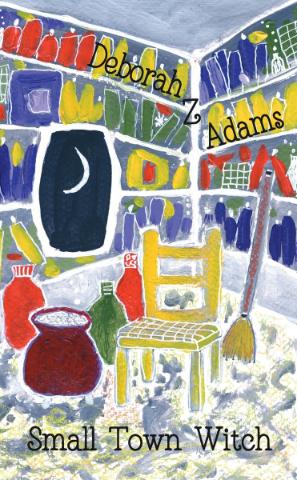
Small Town Witch by Deborah ZAdams
Small Town Witch, a new chapbook from awardwinning author Deborah Z Adams, is a collection of spell-binding tales about the witches we meet every day. Written with warmth, humor, and a little bite, Small Town Witch is packed with more substance than meets the eye.
“Adams’s witches may inhabit a small town, perhaps your small town, but they are not small women. They are powerful and empowering. You’ll root for these women, these coven leaders and elementary school teachers. Two parts poetry, two parts prose, with a healthy pinch of feminist indignation, Adams’s tales will surely charm you and remind you that you’re “not in this fight alone.’” —Joanna Grisham, author of Phantoms (Finishing Line Press, 2023)
Available from your favorite bookseller!
All proceeds from sales of Small Town Witch are donated to organizations that do good in the world.
You can sample Small Town Witch stories here.
“I’ve lived my life surrounded by women who wield their powers quietly but effectively,” saysAdams. “They’re everywhere, but especially prevalent in small towns.”
Deborah Z Adams is an awardwinning author of novels, short fiction, CNF, and poetry. She served as executive editor of Oconee Spirit Press for ten years, and is currently a reader for Boomerlit. Her writing has appeared or is forthcoming in Roanoke Review, Litmosphere: a journal of Charlotte Lit, WELL READ Magazine, Dead Mule and other journals.
Someone or something lurks around every corner, but K.P. Davis's characters have come prepared. These are women carrying on their daily struggles in a dangerous world, striving and searching for safety. They include Nell, an antisocial, nomadic, shade-tree mechanic and getaway driver; 'Bula, an odd girl who talks to animals; and a whole host of others who follow lonely paths spreading empathy while kicking ass. The endings aren't always happy, and these women have plenty of reasons to be afraid, but they keep on going.The twenty sharp, poignant, and biting stories in Trust Issues comprise a stunning beacon for hard-headed folk fighting to be heard when nobody listens.
Trust Issues: Stories
K. P. Davis


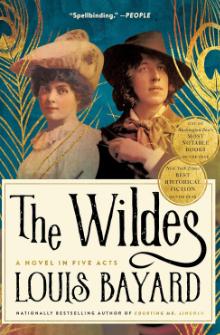
The Wildes:ANovel in Five Acts by
Louis Bayard
In this singularly powerful novel, bestselling author Louis Bayard brings Oscar Wilde's wife Constance and two sons out from the shadows of history and creates a vivid and poignant story of secrets, loss, and love.
In September of 1892, Oscar Wilde and his family have retreated to the idyllic Norfolk countryside for a holiday. His wife, Constance, has every reason to be happy: two beautiful sons, her own work as an advocate for feminist causes, and a delightfully charming and affectionate husband and father to her children, who also happens to be the most sought-after author in England. But with the arrival of an unexpected houseguest, the aristocratic young poet Lord Alfred Douglas, Constance gradually--and then all at once--comes to see that her husband's heart is elsewhere and that the growing intensity between the two men threatens the whole foundation of their lives.
"Wonderfully researched, beautifully crafted, movingly told, The Wildes is a treasure to read." --Andrew Sean Greer, Pulitzer Prizewinning author of Less and Less Is Lost
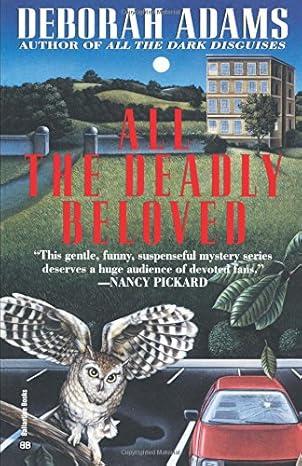
All the Deadly Beloved by
DeborahAdams
SOMEONE'S BEEN NURSINGAMURDEROUS GRUDGEAGAINST THE TOWN'S FAVORITE R.N.
Everybody swears that no one would ever lay a hand on Jesus Creek's angel of mercy, nurse Patrice Gentry. But the reality is there for all to see--Patrice's red T-bird in the nursing home parking lot with her dead body inside.
Police Chief Reb Gassler knows that though the victim may have been an angel, Jesus Creek isn't heaven and the charming widower, Dr. Steve Gentry, hasn't sprouted wings. In fact, he's said to be sleeping with more women than seems possible for a doctor with a full-time practice. While Reb hunts for the truth, a killer lurks in the shadows--and Jesus Creek teeters on the ragged edge....
"Jesus Creek, Tennessee, is so vividly drawn that I feel as if I can take a stroll through town....Deborah Adams has created a series rich in provocative themes and artful plots." --Joan Hess

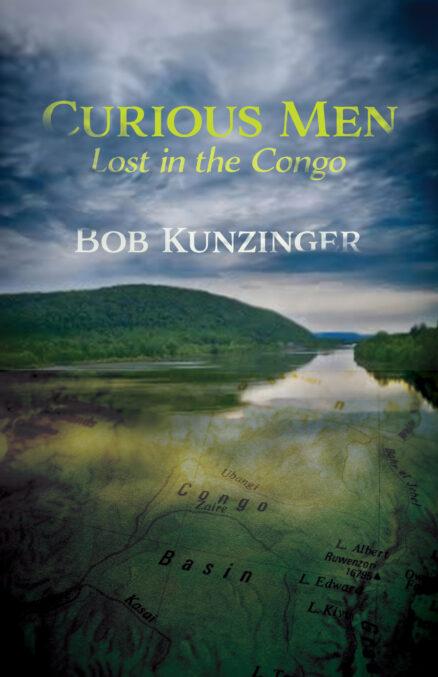
An experienced adventurer partners with an innocent nineteen-year-old to plan a journey on the most dangerous river in the world. What starts as one man’s dream ends up as another man’s nightmare. It was a time when pushing our limits knew no boundaries and being nineteen had no restrictions.
Bob Kunzinger as an especially gifted writer who is able to engage and keep his reader’s thoughtful attention from beginning to end.
—Midwest Book Reviews


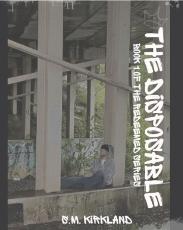
Andre and Rax can’t wait for their work-study in Alaska, but everything falls apart when their plane crashes. With their bosses critically injured, the boys must face Alaska on their own. But it isn’t the wildlife that threatens them. For Andre, it is a mysterious woman from his past with a dire warning about his daughter. Rax must face his toxic, abusive partner and be forced to choose between obeying his lover or risking a provocative video being leaked. Amid the chaos, Andre encounters strange, new feelings toward Leo’s niece and Rax must plan a fast wedding. When a friend confesses she had the urge to pray for them, Andre wonders if this God, and his friend's love, is legit. But when a trafficking gang comes after his daughter, he realizes he needs something bigger than himself to fight this battle.
Andre Collinger, a teen heroin addict, is marked as disposable by the gang that trafficked him for profit, so he goes on the run, abandoning his infant daughter in hopes that she can remain safe. Leaving Charlotte, he finds himself inAtlanta where he befriends Leo, a hardened veteran with a heart for struggling youth, and Rax, who has chosen to leave his faith to enjoy his life. When two detectives show up, askingAndre about a dead prostitute and a missing baby, he is forced to make some hard decisions while Rax comes to realize that in some situations, God is the only answer.
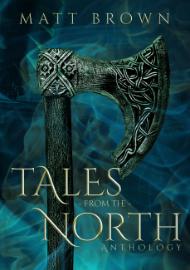
Sokoras. A frigid, icy region of endless winter where weakness invites death, or worse, undeath. Leif, a Sokoran Ranger has a choice to make against a creature he barely understands. But with every decision, subversive shadows nip at his heels, calling him towards death. Mangarmyr, an ancient wolf spirit, fights a world plagued by darkness. He is alone... searching for a love powerful enough to save him. Finn, a Sokoran Ranger, is trapped behind enemy lines fighting for his life. Hunted for sport, he must use all his knowledge and skill to make it across the border to safety.

At Colorful Crow Publishing, our mission is to amplify diverse voices and champion stories that resonate across communities. We believe every story matters, and we are dedicated to creating a welcoming, supportive platform for authors to share their unique perspectives. By fostering a collaborative environment, we aim to publish works that inspire, connect, and make a lasting impact on readers everywhere.
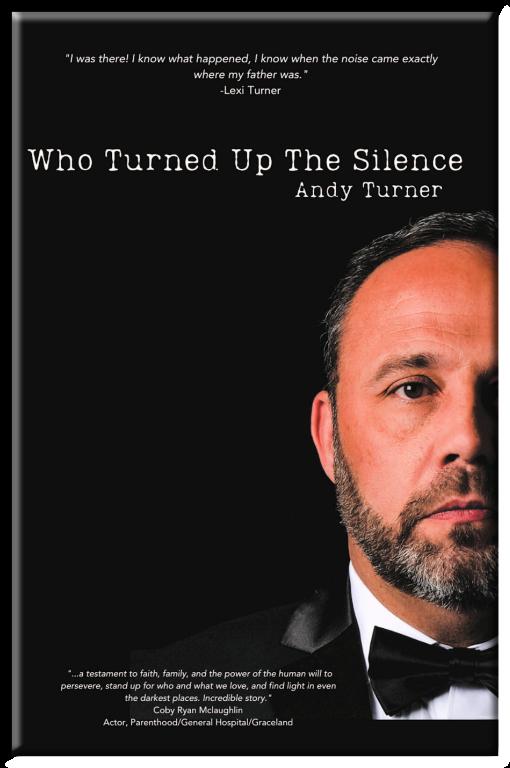
Silence has a way of settling in after tragedy. It arrives quietly—through unanswered questions, closed doors, and systems that protect themselves rather than the people they serve.
In Who Turned Up the Silence, Andy Turner invites readers to step inside the moment where personal grief collided with institutional failure—and where choosing silence was no longer an option.
Read it. Share it.
Talk about it.Because silence protects no one.

Bringing Gills’ Go Love novel sequence to a fiery close, BC1 lays down the Harvell grudge of Mountain Meadows and aims, finally, at healing for all involved. Lara Luce Harvell has been charged with carrying her late father’s prized Martin D-28, handmade in Nazareth, Pennsylvania in 1998, the same year she was born, to Mr. Edgar Paris in Dinnehotso, Arizona. Such is repayment to him for saving Joey’s right index finger when it got bit off in an Arkansas fight. The resulting journey, part dynamite, revenge, and the tenderness of love, wanders into the lands of the woolly-headed Washers, a whole tribe of wandering relatives who “…inhabited the desert, living in trailer parks from Tuba City to Las Vegas, pumping five dollars’ worth of regular at a time into jalopies that overheated and ran on threadbare tires.”
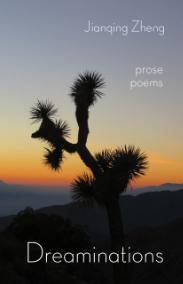
Dreaminations is a collection of prose poems in haibun or tanka prose style. Haibun or tanka prose links prose and haiku or tanka to complement each other through juxtaposition to gain a new sensibility, an insight into a significant moment. The linked forms also stand independently with their complete meanings that present two views of each moment, inviting the reader to leap in between for an aesthetic appreciation. That’s the uniqueness of haibun and tanka prose and the fascination of writing them. This collection explores the self and the world through the working of the senses. It is a quest about where to posit the self and how a human being gains learning from nature and human nature.
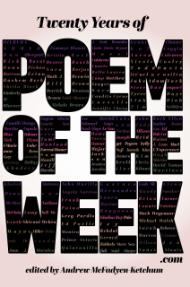
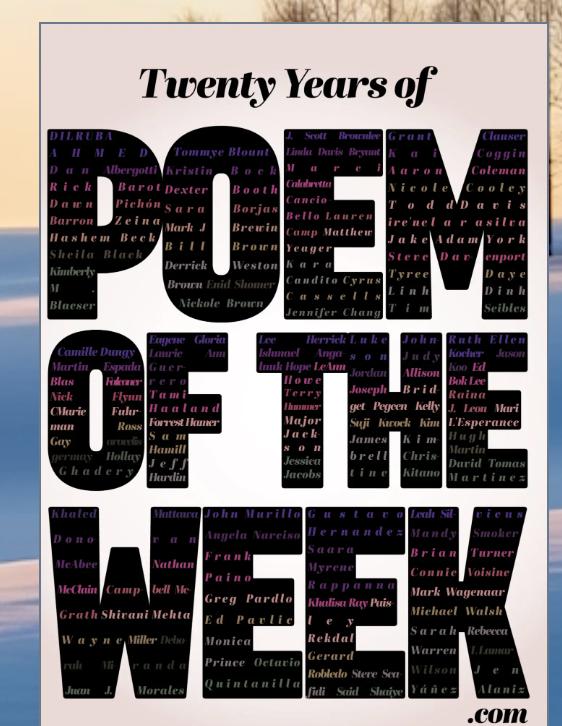
Twenty Years of PoemoftheWeek.com is a compilation of the best of the poems that have been featured by PoemoftheWeek.com over the course of the past twenty years.
Each celebration includes interviews with the poet, reviews of the collection, readings from the book, and other supplementary material that broadens the scope of the conversation between the poet and their work with the general public. PoemoftheWeek.com is an essential resource for writers, teachers, and anyone interested in contemporary American (mostly) arts and letters. For more information, contact Andrew at Andrew@PoemoftheWeek.com.

MADVILLE PUBLISHING seeks out and encourages literary writers with unique voices. We look for writers who express complex ideas in simple terms. We look for critical thinkers with a twang, a lilt, or a click in their voices. And patois! We love a good patois. We want to hear those regionalisms in our writers’ voices. We want to preserve the sound of our histories through our voices complete and honest, dialectal features and all. We want to highlight those features that make our cultures special in ways that do not focus on division, but rather shine an appreciative light on our diversity.



In the Best of 2024 Volume One, you’ll find fifty-one submissions written by a fantastic mix of awardwinning authors and poets plus new ones to the scene. Three submissions in this volume were nominated for a Pushcart Prize: The Hanging by Doug Gray, Sandy Tells Me About Dead Pine Trees by J.D. Isip, and Wilma by Phyllis Gobbell. The cover art is by artist, Lindsay Carraway, who had several pieces published in February of 2023.
Contributors: Carolyn Haines, Doug Gray, Angela Patera, Kimberly Parish Davis, Michael Spake, Jennifer Smith, Ashley Tunnell, Ken Gosse, Dr. Elizabeth V. Koshy, Ann Hite, Ellen Notbohm, Micah Ward, Malcolm Glass, Katie Crow, Lorraine Cregar, Patricia Feinberg Stoner, John M. Williams, Michael Lee Johnson, J.D. Isip, Casie Bazay, Jacob Strunk, Ann Christine Tabaka, Joan McNerney, Fhen M., Steven Kent, Peter Magliocco, Mark Braught, Rita Welty Bourke, Loretta Fairley, Barbara Anna Gaiardoni, S. Dodge, DeLane Phillips, Candice Marley Conner, Arvilla Fee, J. B. Hogan, Ramey Channell, Hope Kostedt, John Grey, Martha Ellen Johnson, Nancy Chadwick-Burke, Mike Coleman, Margaret Pearce, Nicole Irizawa, Donald Edwards, Janet Lynn Oakley, Mandy Jones, Phyllis Gobbell, and Suzanne Kamata
In the Best of 2024 Volume Two, you’ll find fifty-two submissions written by a fantastic mix of awardwinning authors and poets plus new ones to the scene. Three submissions in this volume were nominated for a Pushcart Prize: Hanging Pictures by Micah Ward, The Lone and Level Sands by James Wade, and American Chestnut by Candace Connor. The cover art is by artist, Lindsay Carraway, who had several pieces published in February of 2023.
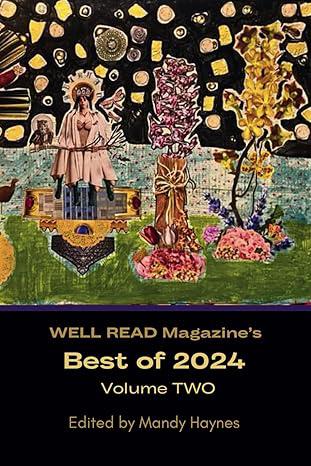
Contributors: Candice Marley Conner, Kaye Wilkinson Barley, Mike Ross, Will Maguire, AJ Concannon, Patricia Feinberg Stoner, Gregg Norman, Robin Prince Monroe, Ramey Channell, April Mae M. Berza,Anne Leigh Parrish, B.A. Brittingham, MikeAustin, Sara Evelyne, Jennifer Smith, Loretta Fairley, J.L. Oakley, Celia Miles, Kris Faatz, Ed Nichols, Linda Imbler, Annie McDonnell, Mike Turner, Micah Ward, James Wade, Ashley Tunnell, John M. Williams, Robb Grindstaff, Stevie Lyon, Laura McHale Holland, Saeed Ibrahim, Nancy Julien Kopp, Julie Green, DeLane Phillips, Shayla Dodge, Edilson Afonso Ferreira, Chris Wood, Jasna Gugić, Fhen M., Hubert Blair Bonds, Ellen Birkett Morris, Margaret Pearce, Ellen Notbohm, Kimberly Parish Davis, J. B. Hogan, and Royal Rhodes
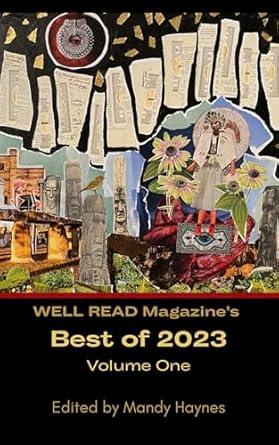
In Volume One, you’ll find thirty-eight submissions writtenbyafantasticmixofawardwinning authors and poets plus new ones to the scene. Three submissions in this volume were nominated for a Pushcart Prize: Miller’s Cafe by Mike Hilbig, Sleeping on Paul’s Mattress by Brenda Sutton Rose, andAHard Dog by Will Maguire. The cover art is by artist, Lindsay Carraway, who had several pieces published in February’s issue.
Contributors: Jeffrey Dale Lofton, Phyllis Gobbell, Brenda Sutton Rose, T. K. Thorne, Claire Hamner Matturro, Penny Koepsel, Mike Hilbig, Jon Sokol, Rita Welty Bourke, Suzanne Kamata, Annie McDonnell, Will Maguire, Joy Ross Davis, Robb Grindstaff, Tom Shachtman, Micah Ward, Mike Turner, James D. Brewer, Eileen Coe, Susan Cornford,Ana Doina, J. B. Hogan, Carrie Welch, Ashley Holloway, Rebecca Klassen, Robin Prince Monroe, Ellen Notbohm, Scott Thomas Outlar, Fiorella Ruas, Jonathan Pett, DeLane Phillips, Larry F. Sommers, Macy Spevacek, and Richard Stimac
InVolumeTwo, you’ll find fortythree submissions written by a fantastic mix of award-winning authors and poets plus new ones to the scene. Three submissions in this volume were nominated for a Pushcart Prize: A Bleeding Heart by Ann Hite, A Few Hours in the Life of a Five-Year-Old Pool Player by Francine Rodriguez, and There Were Red Flags by Mike Turner. The cover art for Volume Two is by artist, DeWitt Lobrano, who had several pieces published in November’s issue. Enjoy!
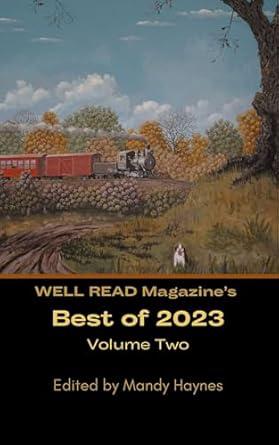
Contributors: Ann Hite, Malcolm Glass, Dawn Major, John M. Williams, Mandy Haynes, Francine Rodriguez, Mike Turner, Mickey Dubrow, William Walsh, Robb Grindstaff, Deborah Zenha Adams, Mark Braught, B. A. Brittingham, Ramey Channell, Eileen Coe, Marion Cohen, Lorraine Cregar, John Grey, J. B. Hogan,Yana Kane, Philip Kobylarz, Diane Lefer, Will Maguire, David Malone, Ashley Tunnell, Tania Nyman, Jacob Parker, LaVern Spencer McCarthy, K. G. Munro, Angela Patera, Micheal Spake, George Pallas, Marisa Keller, Ken Gosse, and Orlando DeVito
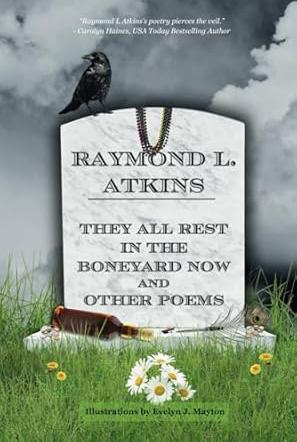
TheyAll Rest in the Boneyard Now by
Raymond L.Atkins (Author), Evelyn Mayton (Illustrator)
“Raymond Atkins writes with intuitive wisdom, as he channels those from beyond the grave. His poetry gives voice to those who once mattered, those who time wants us to forget. In They All Rest in the Boneyard Now, Atkins wrestles death from the dusty clay and breathes life into dry bones while reminding us that every soul who once had breath is worthy of being remembered. These saints, sinners, socialites, and the socially inept are all victims of time, or circumstance, as we too shall one day be. Atkins offers salvation to all who are tormented, and solace to those who seek eternal rest.”
– Renea Winchester,Award-winning author of Outbound Train
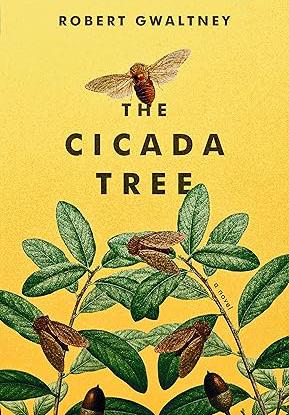
The Cicada Tree by
Robert Gwaltney
The summer of 1956, a brood of cicadas descends upon Providence, Georgia, a natural event with supernatural repercussions, unhinging the life of Analeise Newell, an eleven-year-old piano prodigy. Amidst this emergence, dark obsessions are stirred, uncanny gifts provoked, and secrets unearthed.
During a visit to Mistletoe, a plantation owned by the wealthy Mayfield family, Analeise encounters Cordelia Mayfield and her daughter Marlissa, both of whom possess an otherworldly beauty, a lineal trait regarded as that Mayfield Shine. A whisper and an act of violence perpetrated during this visit by Mrs. Mayfield all converge to kindle Analeise’s fascination with the Mayfields.
Analeise’s burgeoning obsession with the Mayfield family overshadows her own seemingly, ordinary life, culminating in dangerous games and manipulation, setting off a chain of cataclysmic events with life-altering consequences—all of it unfolding to the maddening whir of a cicada song.
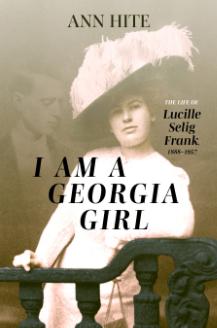
IAm a Georgia Girl: The Life of Lucille Selig Frank, 18881957
byAnn Hite
Twenty-five-year-old Lucille Selig Frank's whole life changed on April 26, 1913, as the Confederate Memorial Parade marched through Atlanta, Georgia. Lucille was attending the opera matinee with her mother. Her husband, Leo Frank, sat in his office in the National Pencil Company, where he was superintendent, working on a financial report. The brutal murder of fourteen-year-old Mary Phagan, an employee of Leo's, took place in the pencil factory that day. Lucille's husband would be the last known person to see Mary alive. While much has been written about Mary Phagan's murder and Leo Frank's subsequent trial over the past 115 years, very little has given voice to Lucille Selig Frank and other women connected to the horrific events that took place between 19131915. Lucille was part of a mission to make Governor John Slaton aware of the antisemitism being shown to Leo during his arrest and trial. She paid a heavy price for her courage. The story of Lucille and the women connected to this case is as timely today as it was in the early 1900s. This book has many diverse characters, including place which influences the outcome. Within this complexity, Hite's telling of Lucille's story will help others see that antisemitism, the marginalization of women, and mobs taking justice into their own hands cannot be tolerated. How many people were complicit in Leo and Lucille's journey? Was justice truly served? This book leaves the reader to answer these questions.
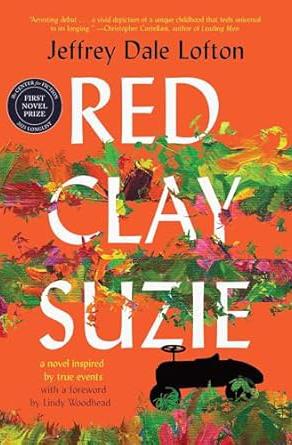
Red Clay Suzie by
Jeffrey Dale Lofton
A novel inspired by true events.
The coming-of-age story of Philbet, gay and living with a disability, battles bullying, ignorance, and disdain as he makes his way in life as an outsider in the Deep South—before finding acceptance in unlikely places.
Fueled by tomato sandwiches and green milkshakes, and obsessed with cars, Philbet struggles with life and love as a gay boy in rural Georgia. He’s happiest when helping Grandaddy dig potatoes from the vegetable garden that connects their houses. But Philbet’s world is shattered and his resilience shaken by events that crush his innocence and sense of security; expose his misshapen chest skillfully hidden behind shirts Mama makes at home; and convince him that he’s not fit to be loved by Knox, the older boy he idolizes to distraction. Over time, Philbet finds refuge in unexpected places and inner strength in unexpected ways, leading to a resolution from beyond the grave.
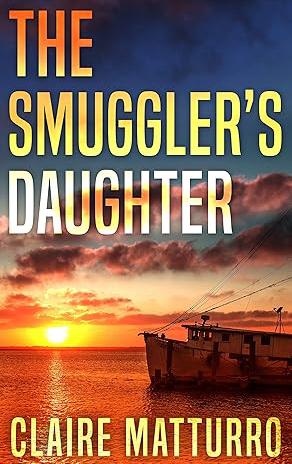
The Smuggler's Daughter by
Claire Matturro
Ray Slaverson, a world-weary Florida police detective, has his hands full with the murders of two attorneys and a third suspicious death, all within twenty-four hours. Ray doesn’t believe in coincidences, but he can’t find a single link between the dead men, and he and his partner soon smash into an investigative stonewall.
Kate Garcia, Ray’s fiancée, knows more than she should. She helped one of the dead attorneys, just hours before he took a bullet to the head, study an old newspaper in the library where she works. Kate might be the only person still alive who knows what he was digging up— except for his killer.
When Kate starts trying to discover what’s behind the murders, she turns up disturbing links between the three dead men that track back to her family’s troubled past. But she has plenty of reasons to keep her mouth shut. Her discovery unleashes a cat-and-mouse game that threatens to sink her and those she loves in a high tide of danger.
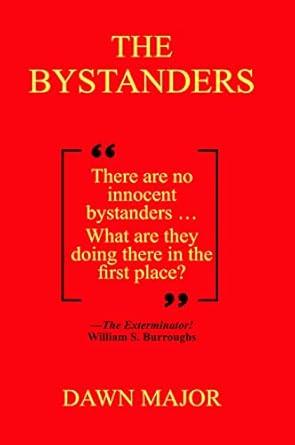
The Bystanders by Dawn Major
The quaint town of Lawrenceton, Missouri isn’t sending out the welcoming committee for its newest neighbors from Los Angeles—the Samples’ family. Shannon Lamb’s “Like a Virgin” fashion choices, along with her fortune-telling mother, Wendy Samples, and her no-good, cheating, jobless, stepfather, Dale Samples, result in Shannon finding few fans in L-Town where proud family lines run deep. Only townie, Eddy Bauman, is smitten with Shannon and her Valley Girl ways. The Bystanders is a dark coming-of-age story set in the 1980s when big hair was big, and MTV ruled. In a quiet town of annual picnics and landscapes, the Samples’ rundown trailer and odd behaviors aren’t charming the locals. Shannon and Wendy could really use some friends but must learn to rely upon themselves to claw their way out of poverty and abuse if they want to escape Dale.
The Bystanders pays homage toAmericana, its small-town eccentricities, and the rural people of the Northern Mississippi Delta region of Southeast Missouri, a unique area of the country where people still speak Paw Paw French and honor Old World traditions.
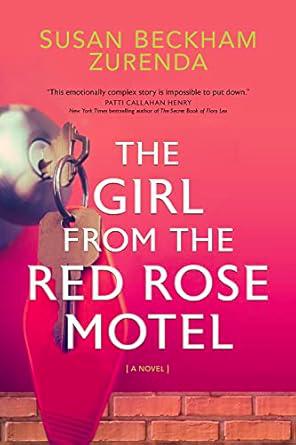
The Girl from the Red Rose Motel:ANovel by Susan Beckham Zurenda
Impoverished high school junior Hazel Smalls and privileged senior Sterling Lovell would never ordinarily meet. But when both are punished with in-school suspension, Sterling finds himself drawn to the gorgeous, studious girl seated nearby, and an unlikely relationship begins. Set in 2012 South Carolina, the novel interlaces the stories of Hazel, living with her homeless family in the rundown Red Rose Motel; Sterling, yearning to break free from his wealthy parents' expectations; and recently widowed Angela Wilmore, their stern but compassionate English teacher. Hazel hides her homelessness from Sterling until he discovers her cleaning the motel's office when he goes with his slumlord father to unfreeze the motel's pipes one morning. With her secret revealed, their relationship deepens. Angela-who has her own struggles in a budding romance with the divorced principal-offers Hazel the support her family can't provide. Navigating between privilege and poverty, vulnerability and strength, all three must confront what they need from themselves and each other as Hazel gains the courage to oppose boundaries and make a bold, life-changing decision at novel's end.
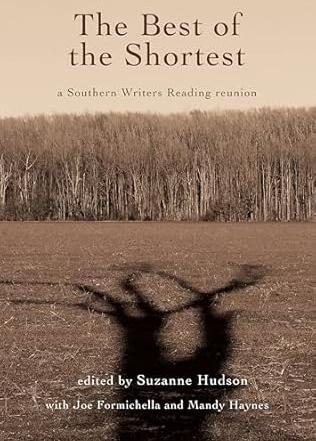
The Best of the Shortest: ASouthern Writers Reading Reunion by
Suzanne Hudson (Author, Editor), Mandy Haynes (Editor), Joe Formichella (Author, Editor)
“Some of the happiest moments of my writing life have been spent in the company of writers whose work is included in these pages. They all brought their A-game to this fabulous collection, and at our house it is going on a shelf next to its honored predecessors. The only thing that saddens me is that the large-hearted William Gay is not around to absorb some of the love that shines through every word.” ―Steve Yarbrough
“The Best of the Shortest takes the reader on a fast-paced adventure from familiar back roads to the jungles of Viet Nam; from muddy southern creek banks to the other side of the world, touching on themes as beautiful as love and as harsh as racism. However dark or uplifting, you are guaranteed to enjoy the ride.” --Bob Zellner
“I had some of the best times of my life meeting, drinking and chatting with the writers in this book, times matched only by the hours I spent reading their books. This collection showcases a slice of Southern literature in all its complicated, glorious genius. Anyone who likes good writing will love it.” --Clay Risen
Walking The Wrong Way Home by Mandy Haynes
Spanning nearly twenty decades, the struggles and victories these characters face are timeless as they all work towards the same goal.
A place to feel safe, a place to call home.
Sharp as a Serpent's Tooth: Eva and other stories by Mandy Haynes
Each story features a female protagonist, ranging from ten to ninety-five years of age. Set in the south, you’ll follow these young women and girls as they learn that they’re stronger than they ever thought possible.
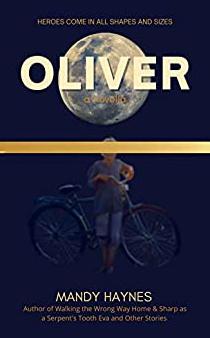
Oliver by Mandy Haynes
“Dear God…and Jesus and Mary…” Even though eleven-year old Olivia is raised Southern Baptist, she likes to cover her bases when asking for a favor. Unlike her brother Oliver, she struggles with keeping her temper in check and staying out of trouble. But Oliver is different, and in the summer of ’72 he proves to Olivia there’s magic in everything - it’s up to us to see it.
Mandy Haynes spent hours on barstools and riding in vans listening to great stories from some of the best songwriters and storytellers in Nashville, Tennessee. After her son graduated college, she traded a stressful life as a pediatric cardiac sonographer for a happy one and moved to an island off the east coast. She is a contributing writer for Amelia Islander Magazine, Amelia Weddings, and editor of Encounters with Nature, an anthology created by Amelia Island writers and artists. She is also the author of two short story collections, Walking the Wrong Way Home, Sharp as a Serpent's Tooth Eva and Other Stories, and a novella, Oliver. She is a co-editor of the Southern Writers Reading reunion anthology, The Best of the Shortest. Mandy is the editor-in-chief of WELL READ Magazine and the editor of four WELL READ anthologies.
Like the characters in some of her stories, she never misses a chance to jump in a creek to catch crawdads, stand up for the underdog, or the opportunity to make someone laugh. At the end of 2024, Mandy moved back to middle Tennessee and now spends her time writing and enjoying life as much as she can.

If you’d like to feature your work in the reading recommendation section with live links to your website and purchase link, and have personalized graphics of your ad shared to WELL READ Magazine’s social sites, click here to see examples of the different options and moreinformation.
Click here for more information on purchasing a cover.
Don’t let the low prices fool you - WELL READ was created by an author who understands how much it costs to get your book in the best shape possible before it’s ready to be queried by agents, small presses, or self-published. Showing off your book and getting it in front of readers shouldn’t break the bank.
WELL READ Magazine receives approximately 8,000 views each month on Issuu’s site alone (the world’s largest digital publishing and discovery platform available). Your book will be included with the featured authors, great interviews, submissions, essays, and other fantastic books inside each issue. There is strength in numbers. Let’s get our books seen!
Ad rates for 2026:
$50 - One FULL PAGE AD
$75 - TWO-PAGE SPREAD
$100 - TWO HIGH IMPACT - FULL COLOR PAGES - (this is NOT a standard two page spread)
$100 - FOR PUBLISHERS ONLY (limit 3 months of ads)- Advertise up to THREE books with one live link that takes viewers to your website.
$75 - BOOKSTORES, PUBLICISTS, AUTHORS - two-page spread to promote book events
$550 - FRONT COVER - includes two full color interior pages for book description, author bio, and/or blurbs, plus an additional one page ad in the next three issues. Also included is the Featured Author spot in the issue your book is on the cover.
$350 - INTERIOR COVER or BACK COVER - includes TWO additional full color interior pages for book description, author bio, and/or blurbs.
*Prices include creating the graphics for the magazine pages and all social sites. Everything is taken care of for you.
INSIDE VOICES

“…our responsibility begins and ends with our own actions. But sometimes that gets sticky. Best Boy examines the sticky spot.”
Robert Gwaltney and Jeffrey Dale Lofton
introduce author, Deborah Goodrich Royce
Deborah Goodrich Royce's literary thrillers examine puzzles of identity.
Reef Road, a Publishers Weekly’s Bestseller, was named one of the Best Books of 2023 by Kirkus Reviews, an Indie Next Pick by theAmerican Bookseller’sAssociation, and one of Good Morning America’s Top 15 for January 2023. Ruby Falls won the Zibby Award for Best Plot Twist in 2021. Finding Mrs. Ford was hailed byForbes,Book Riot, and Good Morning America’s “best of” lists in 2019. Her newest, Best Boy, will be published on February 24, 2026.
In addition to writing, her Ocean House Author Series brings world-class authors like Sarah Ferguson, Emma Straub, Chris Bohjalian, and Katie Couric to Watch Hill.
With fellow authors, Luanne Rice andAmy Scheibe, she created the Deer Mountain Writers’Retreat in the Catskills.
She began her career in the arts as an actress onAll My Children and in multiple films, before transitioning to the role of story editor at Miramax Films, developing Emma and early versions of Chicago and A Wrinkle in Time.
With her husband, Chuck, Deborah restored the Avon Theatre, Ocean House Hotel, Deer Mountain Inn, United Theatre, Martin House Books, and numerous Main Street revitalization projects in Rhode Island and the Catskills.
Robert Gwaltney & Jeffrey Dale Lofton introduce Deborah Goodrich Royce
Robert Gwaltney & Jeffrey Dale Lofton
Inside Voices/Jeffrey: Will you set upBest Boyfor us?
Afew years ago, I received an email from a man who claimed to have known me in the past. He began by saying that he had been my best boy on a film called Survival Game.And while “best boy” is a real job on a movie and Survival Game is a real movie I made, I did not remember this man. He went on to enumerate various touch points in our lives—including when we saw each other at the Cannes Film Festival and I was holding a baby he briefly wondered was his! Thankfully, he finished that off by saying, “Of course, that wouldn’t have been possible.” Imagine my relief that I had not totally blocked out a relationship of such significance! I looked up this man and he turned out to be totally legit, but he did light the spark for Best Boy. In the novel, I examine the frailties of memory on multiple levels.
Inside Voices/Robert: You delve into how the world judges women, and an early event changes the trajectory of Ingrid's life— theway she looks, the way she sounds, the tenor of her relationships. However, one three-letter word, coerced from her by those in authority further changes the course of her life, and possibly had more of an impact on her than her altered face and voice. Without giving away anything, will youtalk about that early turning point for her andhow the world is often unfair to thevulnerable, especially young women?
There are two parts to my answer. The first has to do with the superficial power of female attractiveness and its attendant—and by its very nature, transient—power. Many years ago, I was on a spiritual retreat where the teacher spoke of being “the seer” and not “the seen.” In our looks-obsessed society, we focus far too much on being the seen—the object of someone else’s gaze—as a source of power. When real power can only come from being the seer— the subject of our own lives and the observer of what surrounds us. The protagonist of Best Boy—Ingrid who is transformed into Viveca—is catapulted from being the seer to being the seen and it derails her for a while.
The second part of the answer has to do with responsibility. Where does our responsibility begin and end? Sounds like a pretty simple question with an obvious answer: our responsibility begins and ends with our own actions. But sometimes that gets sticky. Best Boy examines the sticky spot.
Inside Voices/Jeffrey: You've become a go-to thriller writer for readers, and we've come to expect twists and identity changes. Your books are like a well-appointed haunted house. We know the surprises are coming, we just don't know how or when. How do you do manage to keep the tension going throughout the story?
That is a good—and hard to answer—question. I often begin a book with a general idea of at least one of the surprises to come. I spend some time fleshing out ideas and characters, not so much in
an outline but in a series of bullet points and what if kinds of questions. Let’s say, for example, a woman ends up murdered. I might examine what if it is her brother who did it or best friend or husband or a stranger. I might noodle around with each one of those potential avenues. Sometimes I might even start writing the novel having chosen one of those outcomes and end up changing it along the way.
For a twist to work, a great editor once told me, the reader should not necessarily see it coming, but when it does, the reader should have an aha moment, looking back and seeing in hindsight where the clues had been hidden. I have kept that front of mind ever since.
Finally, having been a soap opera actress in my first career, I am highly conscious of the cliffhanger moment. That’s why I write my novels in the order you read them. I just love ending one chapter with a dangler and picking up at the perfect spot in the next.
InsideVoices/Robert: Best Boycenters on memory, identity, and what we choose—or need—to forget. What first sparked your interest in exploring these themes together in one novel?
As mentioned above, I received that provocative email and started thinking about memory. But that was not the only trigger. I have also noticed in the course of my life that it kind of happens all the time…old friends will recount stories of things that I did or said that I simply do not remember in the same way. I am a huge fan of the classic Japanese film, Rashomon, made by Akira Kurosawa in
Robert Gwaltney & Jeffrey Dale Lofton introduce Deborah Goodrich Royce
1950. In it, a rape occurs in a forest and there are three witnesses. At the trial, three completely differing stories are told by those eyewitnesses.This is true in real life.We don’t even see the same thing as another person looking at it.
Inside Voices/Jeffrey: Viveca appears to have built a nearly perfect life. Why was it important for you to place this psychological unraveling inside such a carefully constructed world?
I love that you’ve taken notice of this fact. Yes, Viveca works to make everything nice, nice, nice! Pretty wallpaper and paint and furniture soothe her. Or she at least attempts to soothe herself with pleasing surroundings. It is my observation in life that it is those who try to maintain the highest degree of control who are often the ones who are at highest risk of unraveling. An obvious example would be Lady MacBeth obsessively washing her hands.
Inside Voices/Robert: The novel asks whether forgetting can be a form of self-protection—or self-deception. Do you see memory as something we control, or something that controls us?
So much has been written about memory and its effects on us in every way. From Proust’s evocative recounting of his childhood madeleines to Citizen Kane’s deathbed memories of his sleigh called Rosebud, we are shown over and over again that there is
Robert Gwaltney & Jeffrey Dale Lofton introduce Deborah Goodrich Royce
nothing equal in our memories. A cookie like a madeleine or a childhood toy like a sleigh can stay with us forever, until the very day we die. At the same time, most of us have chunks of time that we simply cannot recall. So what is this pixie dust that we can’t grab a hold of when we want to but that smothers us when we least expect it? I am interested in that.
Inside Voices/Jeffrey: I have always enjoyed the customized book club kits you provide on your author site for each of your books?What can readers look forward to in the Best Boy book club kit?
Oh thank you! I love creating those kits and I am delighted that people like them and use them. Stay tuned for the book club kit for Best Boy but you can be sure there will be songs on the playlist from The Spice Girls and Britney Spears, both bellwethers of their era!
Inside Voices/Robert: In addition to being anauthor, you spend a lot of time supporting fellow writers. You host the Ocean House Authors Series and the Deer Writers Retreat. Tell us more about those programs and how they came to be.
It’s a funny thing but I never envisioned all the incredible experiences that would come for me alongside the actual writing of books when I set out to write books! It’s no secret that I was no
spring chicken when I published my first novel. And it was all thrilling and wonderful to get Finding Mrs. Ford out there and go on to do the same with Ruby Falls. With FMF I did a little author talk at the Ocean House, which my husband and I own. And I planned to do the same thing with RF. But it was my social media guru, Susie Stangland, who proposed I start a series interviewing other authors. I was resistant at first. I can now say that it was one of the best choices I ever made and it has built my community of authors in ways I couldn’t have foreseen. From there, the Deer Mountain Writers’ Retreat was a natural. I was on book tour with Reef Road and struggling to find the time to actually write another book. After a little brainstorming (and commiserating!) with Luanne Rice andAmy Scheibe, the retreat was launched. We have just wrapped up our third cohort and have a waitlist for the one coming up in spring 2026.
Inside Voices/Robert: What is next for you?
I have completed a cozy mystery that I cowrote with another writer whose name I won’t mention just yet. I am crossing my fingers that it comes out in 2027. I had so much fun writing in the cozy genre (yes…I binged about 20Agatha Christies to get into the mood and, wow, does she hold up!), that I am working on another. I am about 100 pages into a fun mother/daughter ghost story. Picture The Ghost and Mrs. Muir meets Terms of Endearment!

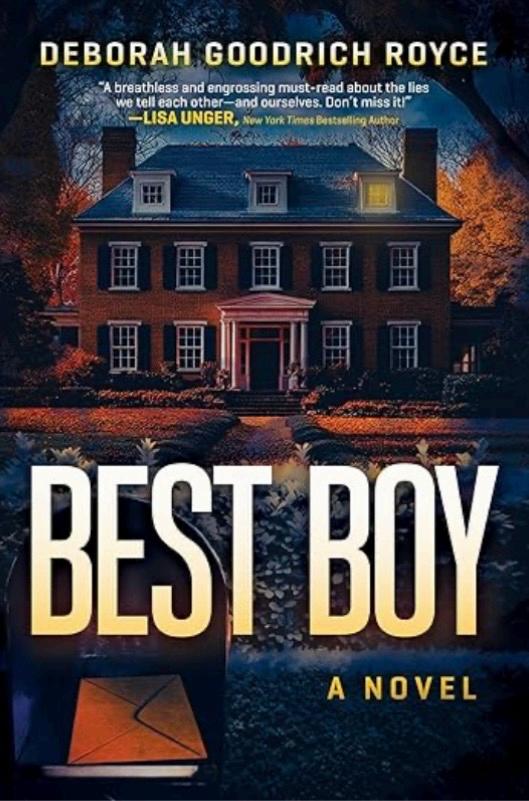
“The contrast between the protagonist’s inner and outer lives is absolutely compelling, and the flashbacks offer multiple layers, creating a mystery within the mystery. The story’s red herrings are well thought out and fresh, and the elements demonstrating how Viveca’s past shapes her present become enticing, plot-driven Easter eggs of their own.
The story will please fans of authors like Liane Moriarty and Ruth Ware.”
— Kirkus Reviews
Best Boy
Deborah Goodrich Royce



Click above to go to the BETWEEN THE PAGESYouTube channel, or on one of the links below to listen to the podcast. Please take a second to like and subscribe if you enjoy the channel - we appreciate you!





MOUNTAIN MAGIC with ANN HITE
Becoming A Writer
BecomingAWriter
I have always known I love to write. Shoot I told long intricate stories as a small child. I created characters in second grade because I hated math class. Numbers bored me to tears. And had I been old enough to understand that many writers don’t care for math, I would have nailed what I wanted to be right then and there. Instead, when Mrs. Downy, my second grade teacher, called for us to pull out our math books, I looked out the bank of wide, tall windows facing the woods. Back then adults understood having natural light flowing in the classroom perked students up.
The tall oaks with sunlight sliding through the leaves coaxed a rich internal life into existence with the creation of Mr. and Mrs. Redbird. I know this was a bland name, but the world created for the couple in my imagination was world building at its finest. When Mrs. Downy interrupted the design of the Redbirds’ nest with a math problem, in an attempt to catch me wool gathering, I answered with the correct answer. I did this at least nine times out of ten, which must have frustrated Mrs. Downy to no end.
Dear Readers, I might not have liked math, but I was very smart. Often this intelligence saved me. Back then my school didn’t have a gifted program. But my mother often received notes stating I didn’t apply myself. This was true. I was too busy using my so-
called abilities to create characters and stories. I would be in my late twenties when I finally settled enough to take my writing serious.
Much of my early adult life, I kept the secret of my obsession with writing stories quiet. Only once did I admit to a boyfriend’s mother that I wanted to be a writer. She looked at me like I had a third eye.The year was 1975 and I was eighteen, living just outside of Atlanta. And though the city was progressive, I hadn’t read any women Southern authors. Until…my English teacher put a short story, A Good Man’s Hard To Find, by Flannery O’Connor, in front of me. First with a name like Flannery, I was sure she had to be a hippie, something I aspired to be. Huge disappointment flanked me when I found out Flannery had died when I was a young child, too young to have read such a deliciously dark story. Another story placed in front of me was A Rose For Emily, by William Faulkner, again dead. This story changed the way I saw storytelling. I knew Faulkner’s Emily. It was as if somehow he knew my mother, and Flannery’s grandmother in her short story reminded me of Granny. I still have shame wrapped around that comparison.
These two stories made me hungry for other narratives like them. I began to read every Southern author, especially women. Lee Smith andAnne River Siddons were my favorites. Later would come Dorothy Allison, Doris Betts, and Bobbie Ann Mason. They were my self-designed MFAprogram.
Four children and a tech writing career with BPOil later, I began publishing short stories. Mother died and I wrote ten stories in two
weeks, sending them off to journals. All ten were accepted within a matter of weeks. I was forty-six and finally understood I was a creative writer. It would take me another five years to have my novel, Ghost On Black Mountain, accepted by Simon & Schuster. At the age of fifty-one, I began living my dream.
Now Dear Readers, many say, that’s so old. And yes, it is old to begin living one’s dream, to change lanes and live another life. Many ask me do I wish I had made it happen earlier?
At this point, you must be thinking I forgot all about Mountain Magic. How could I do this? I believe that Mountain Magic was that judgement, the choices, made at the right time. My first novel written at thirty would have been a much different book. I believe Mountain Magic was in the success arriving at fifty-one instead of thirty, when I had small children and no real time to grasp the story brewing inside. Timing was everything.
Remember Dear Readers, Mountain Magic helps us look for success in following our dreams, that amazing belief in our passions. Don’t give up on anything you love. It’s there waiting on you. Step out and fail. I learned so much by failing and trying again. You can too. Keep believing. Succeed no matter your age.



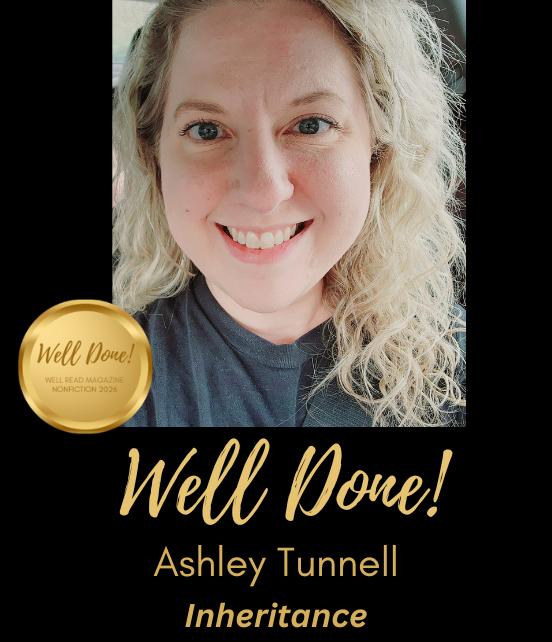
Inheritance Ashley Tunnell
It was springtime in Appalachia, and I had not yet grown desensitized to the smell of rain as it clung to the mountains of Western North Carolina. The scent was thick and untamed, and it would remain untouched by asphalt or industry for at least another decade. I paused and allowed myself to breathe it in before stepping onto the rickety porch of the old trailer. Wooden slats groaned beneath my weight, and the thin walls did little to muffle the world inside—the hum of students laughing and the whisper of wind slipping through cracks in the siding. Inside, the floorboards creaked with every step and reminded me that this space, meant for music, was held together by little more than rusty vinyl and stubborn faith. Settling into my seat, I launched into conversation with a friend about all the things that should preoccupy a teenager:
Hair…acne…a report on Shakespeare that loomed over me like Banquo’s ghost.
“Kids.”
Her usual call to order lacked its familiar weight, and I faltered
Ashley Tunnell
mid-sentence, my brow knitting as I turned toward my teacher. Some of my classmates remained oblivious, and their conversations continued to spill into the room unchecked. Ordinarily, the unmistakable opening motif of Beethoven’s Fifth Symphony would be enough to slice through the noise and recapture our attention; however, Beethoven was silent, and the untouched piano rang louder in his absence than any note ever had. I knew then that something was wrong.
I studied her face, trying to find meaning in the unfamiliar shift in her expression. It was something that she was fighting to keep restrained or masked, but it clung to her like a phantom drifting through an empty theater long after curtain call. My stomach tightened as I realized that she was afraid. This was a woman who could silence a group of rowdy teenagers with a look and awaken a crowd of weary parents with little more than her own excitement and enthusiasm in her arsenal. Until that moment, I truly believed that nothing could frighten her. I believed that fear and hesitation never belonged to her—that they had never found purchase in her voice nor her movements. However, on that spring afternoon I watched as it crept into the lines of her face, into the pause between her words, and into the silence that seemed to swallow the trailer whole.
“Has anyone seen the news?” she asked. I glanced around, relieved to see I wasn’t the only one with my hand down. She looked like she would rather discuss anything else, but she took a breath and pressed forward.
“Yesterday, a sixteen-year-old boy shot his grandfather,” she said. “Then he went to school and murdered several students before turning the gun on himself.”
A murmur passed through the room as fragments of recognition settled in. I had heard about it—a passing remark from a news anchor calling it one of the worst school shootings since Columbine. However, that was a distant tragedy for big-city schools. In my small-town community, guns were just another part of life. More than one student had accidentally left their rifle in their truck after a weekend hunting trip. Gun violence and danger were things that always felt far removed from us.
“You’re thinking it could never happen here,” she said quietly. “I hope and pray you’re right, but we need to talk about what we do if it ever did.”
It wasn’t the first time she made me wonder if she could read our minds, nor the first time I silently prayed she couldn’t. She had an eerie ability to pluck the unspoken thoughts from the air and give them shape before we even had the courage to acknowledge them. She knew when we were restless before our feet started to shift, when we were confused before our brows furrowed, and when we were anxious before the knot in our stomachs fully formed.As she gave voice to the thoughts that we were all clinging to, I felt exposed—like she had reached into the place where I had buried my denial and dragged it, trembling, into the light.
The weight in her voice unsettled me, but I listened as she explained how a locked door and our silence were supposed to
offer us some illusion of safety. Across the room, my classmates wore matching expressions: uncertainty and apprehension. Then, someone voiced aloud what we were all thinking.
“This is a trailer. What if he gets in?”
Her hands trembled slightly as she shuffled through the sheet music on her piano. The wind rattled the walls of the trailer and reminded her that although this space was intended to be temporary, she did what she could to make it feel like more. Posters displaying faded images of composers and vocal techniques lined the walls, their corners curling where tape had begun to give way. Below them sat a row of unused chairs, stacked neatly against the back wall. Her piano had been secured on an underfunded arts budget. It was an older model, but it played well.At the back of the room, her desk groaned under the weight of salvaged teaching supplies.
“This room isn’t ideal,” she admitted as she glanced around. “But it’s what we have.”
She paused for a moment, and I watched as her fingers tightened slightly around the edges of her sheet music—as though she wanted to ground herself in something familiar before continuing.
“If a gunman enters, you run,” she said. “I will do everything I can to help you get out safely.”
I fought back a laugh, but not because I found the situation funny. When you’re sixteen, everyone is invincible, and your favorite teachers never die. I imagined the way her eyes would lock onto anyone foolish enough to step into her space with ill intent. I
imagined the slow, deliberate way she would tilt her head and raise an eyebrow. She wouldn’t panic or plead. Instead, she would fix him with one of her unflinching teacher glares—one capable of commanding a presence so powerful that even other adults took note. In that moment, the shooter would falter. The gun, heavy in his grasp, would suddenly feel wrong. He would hesitate. He would second-guess. Then, overwhelmed by the sheer force of her will, he would lower the weapon, mutter a sheepish apology, and hand it over as if surrendering to something far greater than himself.
A ridiculous thought. But when you’re sixteen, ridiculous and impossible aren’t the same thing.
“But you could get hurt. You could die,” came a shaky voice from a senior on the other side of the room.
“Yes, I’m aware,” she answered calmly. She rose from the piano bench, smoothing the last of her sheet music. “I want you to know that I love you all, and I will do whatever it takes to see you home safely to your families.”
A silence settled over the room. It wasn't the expectant hush before a performance or the focused quiet of a well-rehearsed choir. This was different. Heavier. It stretched between us, filling the spaces where laughter had just been and where whispered conversations had lingered moments before. No one shifted in their seats, reached absentmindedly for a pencil, or shuffled their sheet music. It was the kind of silence that didn’t just exist. It inhabited the space, claimed it as its own, and refused to be ignored.
Ashley Tunnell
She met our gazes one by one and held each of us there. The weight of her words sank into the pit of my stomach and into the realization that what she was saying wasn’t some abstract warning. She was the third person in my life to say she would lay down her life for mine, but this time, it wasn’t wrapped in the comforting familiarity of family. This wasn’t a parent's promise, born from unconditional love and instinct. This was different. This was a woman bound to us, not by blood, but by devotion to the students who filled that space every day. She had chosen this, and yet, hearing her say it so plainly made it feel less like a vow and more like an inevitability. The chill that curled around my spine felt sharp and unfamiliar. The classroom had never felt cold to me before. Until that moment, it had been a space that was held together by far more than vinyl and plywood—it was our sanctuary. Its warmth was rooted not in temperature but in the absolute certainty of safety.Yet in that moment, I became painfully aware that the walls felt too thin, the wind slipping through cracks in the siding was too present, and the floorboards beneath me seemed too fragile.
The weight of her words pressed into the spaces between my classmates and me as she shook off the burden of that moment and turned her attention back to her piano. A bright melody filled the trailer. Light and unhurried, the notes slipped from the worn sheet music the way morning light filtered through the trees. The music carried a familiar ease—the kind that belonged to back porches and quiet hollows where melodies weren’t just played but passed down
like stories. For a moment, the heaviness lifted and was replaced by something that felt like home.
I found the contrast startling. It was almost too sharp against the gravity of our conversation. It felt dissonant and wrong, like stepping out of a funeral into the blinding light of midday, but that was her way. She had an uncanny ability to steer us forward without ever explicitly telling us where we were headed—to challenge us, to make us question, to plant an idea so deeply that it would linger long after the final bell. She knew how to shift the mood, how to lighten the weight just enough to keep us moving without letting us forget what had settled inside us. Whether intentional or not, music was her reminder that even as the world pressed in with its horrors and uncertainties, there were still moments of brightness. There were always reasons to keep moving, even when the answers felt impossibly far away.
So, we followed her lead. We listened as the notes spilled from her piano and filled the little trailer. It lifted the heaviness but never fully dissolved it.We wondered, not just about the conversation we just had, but about what it meant for the world outside. We thought of the places beyond that old chorus trailer, and we thought of the people who once sat in classrooms like ours and never walked out again.
I carried the weight of her words into the coming days, months, and years, and I lamented the fact that tragedy does not pause for time. Years later, I found myself standing in the aftermath of what once felt impossible: another school…another town…another
Tunnell
headline that blurred into the endless cycle of violence. This time, it was my child’s school.
The emergency alert came through like a jolt, setting off a storm of anxiety in my chest. My hands trembled as I unlocked my phone and pulled up social media, desperate for answers. My feed was a flood of frantic posts, scattered theories, and raw fear. Then, one message froze me in place: “Shots fired on the elementary school campus.”
For a brief, agonizing moment, my mind reeled backward. I pictured my friend—the one I used to talk to about Shakespeare— huddled in a closet at my daughter’s school. She worked in the cafeteria now, and instead of remembering how we used to trade gossip and small talk for laughter in a drafty chorus trailer, I imagined her gripping a ladle against her chest—its smooth metal handle pressing into her palms and utterly useless against the unthinkable. I thought of the way the fluorescent light from the hallway might slip through the crack under the door and illuminate the industrial shelves around her. There were no textbooks, no sheet music, and no songs powerful enough to hold back what could come through that door.
Inside,theschoolhaddresseditselfforsecondchances:nametags placed on desks like invitations, chairs arranged in hopeful arcs, and balloons drifted eerily through hallways that were much too still. It wasamake-upmeet-the-teacherday,andteacherswhohadexpected to spend the day welcoming students and parents were instead guiding them into hiding. They crammed frightened families into
supply closets, locked classroom doors, and whispered reassurances that they themselves hardly believed. Out on the football field, coaches ushered football players into hiding in locker rooms. The same people meant to introduce children to their new learning environments were now shielding them from something far more terrifying than the nerves of a new school year. For a moment, I felt a sense of relief. My child was home with me, safe in the physical sense. I was relieved that none of the children in the locker rooms or in the classrooms were familiar to me—that I wasn’t personally tetheredtotheirfearortheirsafety.Therealizationhitmelikeaslap. How could I feel relieved when children were scared and vulnerable? How could I allow my own detachment to shield me from the rawness of that moment? The anger bubbled up fast. I was angrywithmyselfforthatmomentofselfishapathy,andIwasangry at the town for its own indifference as more details began to surface.
The shooter wasn’t just a name in a headline. He was someone people knew, and in the eyes of the town, that changed everything.A disgruntled former employee opened fire in the parking lot and shattered the windows of the superintendent’s vehicle. No one was physically hurt, but the fear we all felt before knowing who was behind it was visceral. Initial outrage faded into murmurs of overreaction, and people’s concerns were dulled into dismissive shrugs wrapped in carefully crafted excuses. People were quick to dismiss the fear, to downplay the horror, simply because they knew the shooter—as if familiarity somehow softened the reality of what happened.
People were outraged, not at the event itself, but at the school board’s decision to delay the first day of school. Parents and community members grumbled about the inconvenience and said that postponing classes was unnecessary and dramatic. Their anger wasn’t aimed at the violence that forced kids into hiding; it was directed at the disruption of their routine. That infuriated me. How could people be so quick to write off fear, to treat tragedy like an overblowninconveniencesimplybecausetheyhadknowntheperson who caused it?
I needed someone to tell me I wasn’t overreacting, that the anger twisting in my gut was justified, and that my fear wasn’t misplaced. Ineededsomeonetopushbackagainstthemurmursofdismissaland to say out loud what I was feeling: this was real, this was horrifying, and no amount of familiarity could erase it. I sent a message to my musicteacher—thewomanwhofirstspokethesewarningsaloudand who once vowed to protect my classmates and me at any cost. She was still a voice I turned to in moments of confusion, fear, and grief, and in that moment, I needed her to tell me that I wasn’t wrong for feeling the way I did.
"My daughter’s school just became another statistic," I wrote. "I don’t think I’m okay."
Her response came quickly and well-intentioned. It was meant to becomforting,andwhileshedidsayalltherightthings,itstilldidnot feel like enough. It seemed to fall short because there were no words that could erase the awful truth: this conversation—this cycle— hadn’t stopped. It simply found its way to the next generation.
That evening, as I drove my daughter to her piano lesson, I found myself grasping for words that refused to come. I had lived through this conversation before, but I had never been the one responsible for delivering it. I didn’t know how to take something so terrible and reshape it into something digestible enough for a child to hold without it breaking her.
“Baby,” I glanced at her in the rearview mirror. Her legs swung gently beneath her booster seat, and her fingers were tapping out a rhythm only she could hear. “Sometimes people do really bad things.”
She met my gaze with all the confidence of a six-year-old…as if this conversation was just another lesson in a long line of lessons…as if danger had already been packaged into something routine and expected.
"It’s okay, Mama," she said. "My teacher already teached us how to be quiet and how to hide. She even teached us how to play dead."
The words hit harder than I expected, and my body instinctively recoiled from them before my mind had fully processed what she said. I wondered how far we had to have fallen for her to have such instructions etched into her bones. Those were words meant for war zones, but she spoke them without hesitation. I found myself wondering what kind of world we built, where these lessons had been absorbed into curriculum alongside sight words and multiplication tables. This was a different kind of arithmetic—one where the variables were lives, and the sum was measured in loss.
by Ashley Tunnell
What could I tell her? What words could I possibly string together to make it make sense? I wasn’t enough of a writer to rewrite reality. I couldn’t craft a sentence good enough to soften the blow or build a metaphor that could transform tragedy into something tolerable. Allegory could never turn a slaughterhouse into a schoolhouse, nor could it piece together spent shells and unfulfilled dreams when they lie broken on a classroom floor.
So, I didn’t try and explain. Instead, I passed down the same lesson my teacher had once given me. I watched as another generation absorbed the same grim reality, and I mourned the fact that the conversation had not ended—it had simply found another child to teach.
Ashley Tunnell is a writer from Blairsville, GA. She is completing a bachelor’s degree in English from the University of North Georgia, and she intends to pursue her master’s degree in the same field with a concentration in creative writing. Her work has been published in UNG’s literary magazine as well as the Southern Literary Festival’s anthology of poetry and short stories. When she is not reading, writing, or studying, Ashley enjoys spending time with her family and singing in her local community choir.
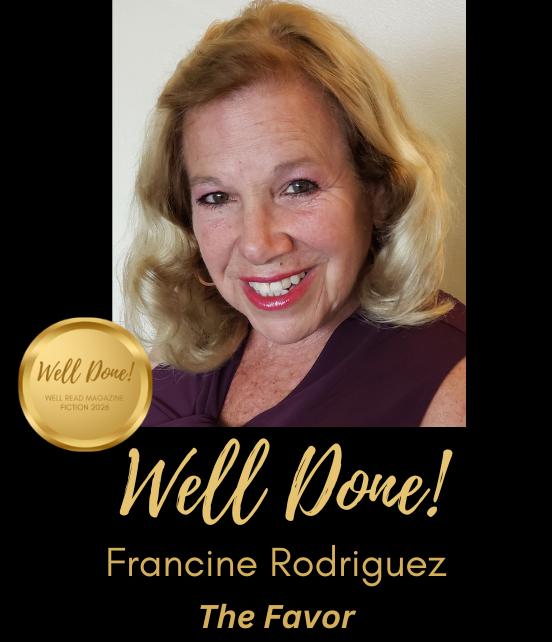
The Favor
Francine Rodriguez
Celia added more water to the crockpot of simmering beans and dragged a large wooden spoon around the edges. The spoon was worn out in places and stained with the forgotten liquids of many past meals, some passable, and others total failures. I salvaged that old spoon from my mom’s collection of household items, most of which were junk and were put out on the curb before we locked up her apartment for good and took her to a convalescent home. The whole time she stared at us in wonder, not remembering our names or who we were. I’d almost dumped that spoon years later when I was actually able to afford some better kitchenware. That was when Celia came to work for us. In fact, I did throw it in the trash, but she fished it out and stored it in the cabinet where she kept her chiles and some spices nestled in a bed of worn dishtowels, giving off an earthy and smokey smell that soaked into the wood. I couldn’t pronounce the names of the little packets of spices in that cupboard.
“You shouldn’t throw it away. It’s perfectly good,” Celia corrected in her precise English, holding up the spoon. “Where I
come from we keep things for many years. They carry good memories of the people who used them.”
I remember I told her that I stood corrected and from now on I would be more careful when I decided to throw something away. Celia just nodded, but I could tell she didn’t believe me. I knew little about her at that time, and I just assumed that our lives had been worlds apart before she came here.
I watched her grab the laundry basket and head to the garage to take the wash out of the dryer, and I continued frosting the chocolate cake I’d made for my youngest son’s birthday.
Celia came from Guatemala and had been with me for almost ten years, arriving after the birth of my youngest son, and settling in immediately. I guess you could say she was a “referral nanny/ housekeeper,” from a woman at work who Celia’s sister worked for as a nanny until her children outgrew the need. Celia crossed into the U.S. with the clothes on her back and not a penny to her name. She said the coyotes had taken everything she had after pulling her off a train going to Mexico from her country. She told her sister that they’d raped her before letting her go. Somehow she made it here and found her sister, hoping she would be able to get her a job in one of theAmerican households.
The woman I worked with thought of me, with three children that I carted around to two different babysitters every morning before I headed to work. I was exhausted and the kids were miserable, and it seemed like a dream come true to leave them all at home with the same babysitter in the morning; one that was
willing to get up early, fix them breakfast, pack lunches and walk the older ones to corner toward their school. I started to feel human again and was able to work harder for the advertising firm that had kept me on through my kid’s bouts with flu, measles, chicken pox, and the onslaught of conference days for teachers when there was no school and nowhere to send your kids.
When Celia started working for me I became part of the network of working mothers who employed nannies/housekeepers to keep our homes running when we weren’t there. I was suddenly a member of the privileged sorority, boasting about these individual’s accomplishments, (Maria can get Bently to eat vegetables, or I caught Marta trying on my jewelry when she thought I wasn’t home).
But I started to see that Celia was different right from the start. For one thing she spoke almost perfect English. She told me she’d worked for a very wealthy family that owned the majority of land in the capital, as well as utilities, factories and other businesses. They had a winter home, a summer home, a country home, and various apartments throughout the city. They insisted the Celia learn English because their children had an English tutor, and they wanted them to practice their language skills. Celia told me she dutifully took the classes they required and read the books they suggested on art and history since they didn’t want their children associating with common kitchen help. I was shocked to hear Celia discuss the history of the paintings in the County Museum when I took her with me to help with the kids. By that time, I wasn’t even
surprised when she told me she spoke almost fluent French also and complained that there was a distinct lack of French food where we lived.
After she was with us for almost a year I petitioned for Labor Certification so she could get a green card and not worry any more about being illegal. She rewarded me by designing and sewing a beautiful teal blue dress to wear to my cousin’s wedding. No pattern needed. She put it together by sight and only needed to measure me in a few places. The dress was spectacular. Everyone said so.
My kids thought the sun rose and set around Celia. She would watch television with them, all of their silly programs, and never complain, even though I saw her reading classic literature, and ordering hard cover novels online because she wanted to build her own book collection. She could get them to clean their rooms and take medicine.All she had to do was ask. It never worked that way for me.
Celia ran a strict operation. Up at six in the morning, she prepared breakfast for the kids, and packed lunch for two of them. She kept our clothes clean and pressed and set the table at six every night for a dinner she prepared. The kids looked forward to whatever she cooked, nothing like the way they responded to anything I prepared. She boasted that she’d learned to cook all her meals courtesy of the French chef who lived in the residence of her employer. She told me that when the rebels broke into their home that was more of an estate, they shot everyone there who didn’t
hide, and burned it to the ground, they took the chef as a hostage along with gold, jewelry, and expensive paintings. The chef’s services were worth just as much as those items and there were people who had always wanted to steal him away for his ability. She was certain that now she alone knew his cooking secrets. Sometimes we went shopping together, just the way any two female friends would. I shared the history of my troubled first marriage, the abuse, and the divorce, my father’s increasing dementia, and the arguments I had with my husband. She would listen and offer practical advice that put a lid on my volatile emotions. I depended on her opinion and couldn’t remember what our household was like before she came.
Cecilia talked a lot about bringing over her remaining family, including a son that she had not seen in several years. She claimed he had changed his mind about coming to the U.S. and was ready now to come permanently and legally. There were a whole string of relatives to sponsor. She was planning to start filing petitions at the first of the coming year.
She watched with concern as Trump took office, following his erratic, and authoritarian moves through television news and reading the Atlantic which she ordered to keep pace with her interest in the current political situation here. She talked about it a lot, sad and angry at the way Latinos were immediately thrust into the limelight, facing sudden deportation often after they left a required immigration hearing, and most with no criminal record. She knew so many people who were forced to leave, whole
families moving away even though some of the members were U.S. citizens. She wanted to know if there was anything I could do to help. I had to tell her there wasn’t, but I dutifully protested with thousands of others on several weekends, joining the crowds clustered in the downtown streets like so many ants on a sliver of bread. I took the kids and made sure they understood why they were there. I told Cecilia that they represented the newest generation that could one day initiate change. As I read the news each day, and saw Trump’s takeover, I got more and more discouraged, and Cecilia shared my dismay, recounting the fate of so many Latino countries that came before this.
We both agreed that Harris lost the election because of the underlying racism and misogyny here, although I was quick to point out that Hilary was as “white as white can be,” and she couldn’t overcome being a woman and get elected.
Ceilia pointed out that my comment on Hilary losing because she was a female, even though she was white, made her think that I was a little uncomfortable with all the discussion of racism.
Maybe she had a point. I was certainly uncomfortable with all the Latinos being referred to as rapists and criminals. But when I mentioned that she said I was in a minority on that as she could see that most of the white people here didn’t seem particularly offended.
I told her that if need be, I would give sanctuary to Latinos who were facing wrongful deportation as long as they weren’t gang members or convicted criminals. I said it didn’t seem as if Trump
was looking for these people anyway, just chasing low-hanging fruit. She didn’t seem surprised at my offer, but she didn’t respond. Secretly, I was grateful that most likely I wouldn’t be called upon to perform. I could see Trump’s army busting into our house and hauling everybody away. Wasn’t that how it happened in other dictatorships? We returned to watching television and the rows of SUVs driven by masked ICE agents parade through our city, stopping at Home Depos, schools and churches, adding to their cache of human beings. Cecilia started to avoid going out of the house and ordered whatever we needed online. She pointed out that having a green card was no longer protection from this government.
Then in June came the anniversary of D Day, and along with it the whole gamut of World War II movies. For a full week, they showed reruns of Schindler’s List, Saving Private Ryan, Hacksaw Ridge, and Sophie’s Choice. Celia was well versed in WWII having read enough history to discuss both the politics and the human tragedy.
She watched Schindler’s List twice that week; once with me. I pointed out how Schindler would be remembered for helping the Jews escape certain death, and how our own government had turned away The SS St. Louis, a ship full of Jewish refugees who wanted to dock in Cuba and here in the U.S. and how the ship was not allowed to dock in either location, and was forced to return to Europe. Most of the passengers who were returned on the ship perished in the Holocaust. I pointed out The Diary of Anne Frank,
and how that family had depended on some of the Dutch workers in the warehouse where they were hiding to keep their secret. She was familiar with that novel since she had followed along when the kids read it in their class. She said she was amazed at how much trust was involved with what Schindler did and the employees who kept the Frank’s hiding a secret. She wondered how these people made the decision to hide the Jews. “I guess it’s a moral issue.” I told her.
She asked how the Frank family was discovered, and I told her that based on what I knew, there was no definite answer even though the question had been addressed and investigated many times by different people. Some said it was one of the warehouse workers, others said it was because there was black market business going on there that came to the attention of the police, and others said it was because of a burglary in the building. I told her there still was no accepted answer as to the identity of the traitor. While we were on the subject, I told Cecilia that I was so glad I’d petitioned to get her a green card, at least that was some protection, and it meant she didn’t have to hide from the masked men grabbing people off the street. I sympathized with her that her green card might not even be enough protection these days.
Over the next few weeks, we turned the news on in the morning after the kids went to school and kept it through dinner, pausing it only in the evening when the kids insisted on watching their programs. The protests were nationwide; the streets clogged with protestors, later joined by the National Guard, local police and ICE
agents. Celia kept her eyes glued to the television, pausing only when there was some bit of housework she couldn’t do while watching. She flew through the house, vacuuming, dusting, arranging, washing and cooking with one eye on the television and the volume turned up so she wouldn’t miss any of the commentary.
When Friday came around I began preparing for the sabbath as usual.
We weren’t religious by a long shot, but I tried to serve a family dinner eachFriday night, mostly for the kid’s benefit, with a few hand-made dishes, one of them being the Challah, the braided loaf of bread that Cecilia had taken upon herself to prepare. She was better at it than I was. The television droned on. The news commentator was showing footage of the bombed wreckage of the Gaza City as crowds of people trampled over each other extending their pans and bowls trying to get a handful of grain from one of the refugee organizations. Aid had been severely restricted we were told as the Israelis were blocking entry into the city. Tons of food had been allowed to rot in warehouses because it was not allowed in. The commentator added that many of the people alive today would end up dying as they had been too long without food even if they were helped now.The camera panned to small children standing in the rubble, eyes wide and sunken with hunger, their limbs pale and stick-like, protruding from ragged clothing. Israeli officials were continuing to assert that there were no children starving in Gaza, but the cameras contradicted them. I was watching Cecilia braid the dough, my eyes following
another news clip, the arrests of protestors in the capitol, and my thoughts returned to The Diary ofAnne Frank, and how she hid for those two years in a warehouse with her family. I turned to Celia and hesitating; I asked the question that came to mind. “Would you hide us… our family, if there was a situation like the one with the Nazis during the war? Would you hide us, if you could, like they did for the Frank family?”
Cecilia looked up surprised, her eyes returning to the television, and then down to the bread again. She concentrated, hands in motion, twisting and turning the dough. When she looked back up at me her gaze was direct. “No, I wouldn’t.” She gave the dough a final pat and slid into the oven. She stood up and stared at me again for a long moment and then walked away.
I looked down at the counter, my face flushing red as if I’d been caught doing something I shouldn’t, opening a door that had to stay closed. Embarrassed, I think I understood.
Francine Rodriguez writes stories about marginalized women who are not usually represented in literature, and who are for the most part unseen, and unheard. Her goal in writing is to give these women a voice and the ability to be seen. She has three previously published novels, The Fortunate Accident, A Woman Like Me, and A Woman’s Story, which was a silver medal winner in the International Latino Book Awards in 2022. She also has numerous short stories published in anthologies and her short story, Smiley and Laughing Girl, is currently in consideration for a television feature.
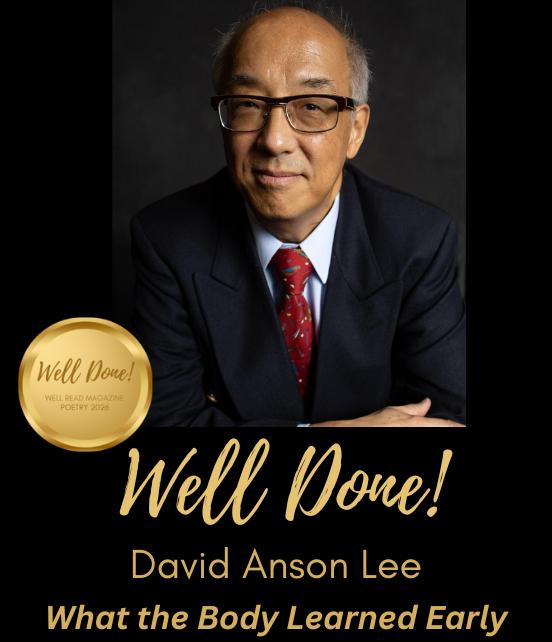
What the Body Learned Early
DavidAnson Lee
I learned the rules before the alphabet: how a look can raise a fence, how a voice can close a door without touching the handle.
In kindergarten I counted exits: which smile might return, which question would cost me lunch, which silence would keep me safe.
Discrimination didn’t arrive as a lesson; it came as weather: something you dress for, something you walk through because the road does not bend.
I learned adaptation the way others learn multiplication:
WHAT THE BODY LEARNED
David Anson Lee
fast, imperfect, by need. How to shrink. How to sharpen.
How to stand just far enough inside myself to keep from breaking.
They say suffering builds character: usually spoken by those who didn’t have to grow one under pressure. Still, bones know the truth: stress leaves density behind.
I learned early that fairness isn’t a law of nature. Gravity works better. So does power. So does fear wearing the mask of opinion.
I kept walking. I learned humor as camouflage, intelligence as leverage, resilience as muscle memory.
Later I watched others reach the border I crossed decades earlier: illness,
aging, the body’s quiet mutiny, the exile of no longer being chosen. They were stunned. They said, “This isn’t right!” as if exclusion were a clerical error instead of a common fate.
I wanted to tell them: you can survive this. You can learn it. You can adapt.
Adaptation comes easier when learned young, when the spine still bends, when hope hasn’t been fully invested in permanence.
Discrimination taught me what privilege never did: how to move forward without permission.
WHAT THE BODY LEARNED
David Anson Lee
What doesn’t kill us doesn’t just make us stronger: it makes us fluent in endurance. Now, when the world narrows, as it always does; I don’t mistake closing walls for the end of myself.
I learned early how to live inside limits without surrendering the core.
I am not grateful for the pain. But I am still here.
David Anson Lee is a poet, philosopher, and physician whose work explores identity, resilience, and the human cost of belonging. His poems have appeared in Ink Sweat & Tears, Silver Birch Press, Eunoia Review, and Braided Way, among others. He lives in Texas.
WHAT THE BODY LEARNED
Dear Mr. Ten-Speed
Carol Van Den Hende
Dear Mr. Ten-Speed,
You held a secret behind your tongue. I held one in my pocket. They unveiled themselves in front of the Coca-Cola machine.
With your baseball cap pulled low, you hopped off your shiny ten-speed, the epitome of bicycle technology. Beside it, my banana seat bike looked like a doll’s toy. You nodded at me yesterday, zipping by on your gleaming metal machine, past my handlebar streamers flapping in the breeze.
Today, you were on a mission. In three fluid strides, you loped over to quench your thirst. You hadn’t deciphered that I’d just pulled off the heist of my eleven-year life.
I had just enough time to hide my implement of thievery, a broken branch, behind my back. But not the guilt and exhilaration that I could feel warring on my face. I would later recognize my emotion as remorse and resolve to never again take anything that wasn’t mine.
For now, cans of Dr. Pepper sweated at my feet. I swept a
generous hand to indicate the machine was all yours.
Accepting my offer with a polite nod, you stepped up to push the square plastic button for a Sprite.
Had you never used a vending machine before? With no money, of course nothing happened. Frustrated, your muscled arm gave the metal beast a shove. You couldn’t win that battle but your strong physique looked like it could damage the steel.
My fear of being caught melted away. It didn’t matter that you were older. You needed me to take charge (a good life lesson that I would take into adulthood).
I fished two looted coins from my pocket and slipped them into the slot. You see, earlier that week, I had purchased my favorite beverage and noticed that the sound of quarters dropped with a satisfying clink. Curious about the machine’s inner workings, I peered through an opening in the front of the soda machine. My gaze traveled down the inky darkness and could just make out a plastic tub at the bottom. Silver overflowed the square collection cup, winking at me with a request to come out to play.
That pile of pocket change spelled freedom. I dreamt of Creamsicles from the ice cream truck and Baby Ruths from the vending machine.
Now, I had returned to the community center with my best friend, masking tape affixed to the long stick. One coin at a time, we had emptied half the machine’s earnings by the time you arrived. We could afford to be magnanimous.
Your green and white aluminum can rolled down the chute with
a satisfying thump. For the first time, you looked past my skinny legs and scabbed knees. Admiration crossed your face as you realized your underestimation. With one easy motion, you popped open the aluminum tab and lifted the can, toasting us like we were at a dinner party.
After a long gulp of liquid, you tipped your cap and ran a finger along your brim, pointing to the blocky letters that spelled out R-IC-H-A-R-D in rainbow colors.
Understanding clicked.
Our whole interaction had been silent. For whatever reason, you didn’t speak.Thinking back, I realized that whenever we’d see you around our neighborhood, you were alone. I wondered if you could use a friend.
After that, whenever we would see you outside, we would wave you over to join our sports games. Little by little, you grew comfortable tossing a ball around with us.
Once during a break from playing kickball, you introduced yourself to my friend’s mom, sharing your name through the emblazoned hat that you donned everywhere.
One August day, we snuck in an especially vigorous game before dusk. We ended the match laughing, panting for breath, hands on our knees.As my friend ran to fetch the ball rolling down the slope, you looked me in the eyes and held your arms open. The universal invitation for a hug.
I paused, remembering school assemblies where police officers spoke about “Stranger Danger.” Safety posters showed grown men
with thick necks and dark eyebrows not unlike yours.
In a split-second that felt longer, I assessed your intent and the risk you could pose to a girl alone on a hilltop. You were close enough that I could smell your sweat from our games.
Yet you were no stranger. Sprite afficionado, graceful tenspeeder, kickball expert who would sometimes let two girls win. There was no malice. I let you loop an arm over my shoulders, nothing untoward. Like an ode, our connection sang to me in scores. Our closeness spoke a language of its own. It whispered that you had been lonely, perhaps separated from others because of your hearing or speech disability. Silently, you thanked me for giving you something special: friendship, camaraderie, understanding. I accepted you unconditionally. You appreciated feeling valued. You felt seen. You let go seconds or minutes later. It was an early lesson on the power of inclusivity.
Four decades later, I looked for you. My breadcrumbs of information were slight. With just your first name, and the town you had lived in as a twenty-something-year-old, I searched schools for the deaf and scoured yearbooks from the time period that you probably attended high school. One photo of an athletic young man named Richard echoed your strong hairline and dark eyebrows. I found a phone number for this Richard plastered onto a Yellow Pages website and left a voicemail. No response.
Wherever you are, I hope you’re soaring on your racing bike. If you happen upon my writing, my third novel, Always Orchid, is dedicated to “Richard, who sparked my empathy for disability inclusion by listening with all his being and communicating with all his heart.”
No secrets behind your tongue or in my pockets. Just respect.
Carol Van Den Hende is an award-winning author who pens stories of resilience and hope. Her Goodbye, Orchid series draws from her Chinese American heritage, and has won 40 literary and design awards, including the American Fiction Award, IAN Outstanding Fiction First Novel Award, and Royal Dragonfly Awards for Cultural Diversity and Disability Awareness.Carol’s newest book, Dear Orchid, is a collection of true stories and short fiction told in a lyrical, letter-style format. Dear Orchid is for anyone who’s ever loved, lost, or longed to understand the emotional truth behind the moments that shape us.
Leatherbritches
Nancy Dillingham
Summers my grandmother loaded my lap with strung green beans handed me a needle and thread and commanded “String!”
“Come cold weather we’ll have us some leatherbritches!” she proclaimed She’d cook up a mess of the shrunken tan sculptures with a ham hock and a pod of hot pepper
At the “eatin” table noses followed the aroma and voices rose up in one “hum” of approval as everyone dug in
Big Ivy poet Nancy Dillingham is a sixth-generation Dillingham from the community of Dillingham in the Big Ivy section of western North Carolina. Her poetry collection Home was nominated for a SIBA. Recent publications include No Time Like the Present: A Memoir in Essays, Curves: Collected Stories, After Helene, and On Love: Collected Poems. She lives in Asheville, NC.

HELLO
WRITERS &ARTISTS
CALLFOR SUBMISSIONS IS OPEN!
*No prompts or themes - no boundaries*
WELL READ is looking for submissions from writers and artists who have stories to tell – through words and art. We combine new and established voices from diverse backgrounds and celebrate different perspectives. We want people who aren’t afraid to shake things up, speak their mind, and share their humanity.
Click here for SUBMISSION GUIDELINES


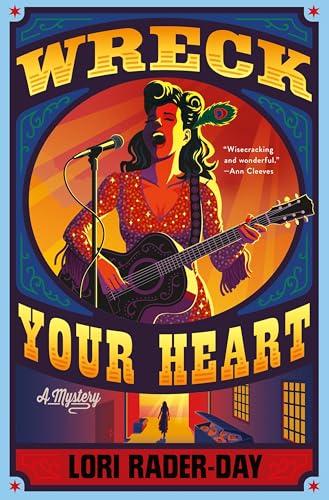
Wreck Your Heart (Minotaur Books 2026) by Lori Rader-Day is a fast paced, engrossing story with a strong theme of redemption and an emotionally gripping mother-daughter element. It’s also a mystery that is utterly fun to read, filled with wise cracks, county music puns, and an eccentric cast of characters sure to entertain (and mystify) readers. The mystery, while viable and with the requite page-turning quality, is almost beside the point as the characters and the cleverness in the writing are so captivating.
Dahlia “Doll” Devine bitterly resents her mom, even hates her. And with good reason. The mother that Doll knew was an addict who dumped Doll in Chicago when she was only six. Though briefly cared for by a neurodivergent man named Alex, ultimately Doll grows up in a series of foster homes. Yet Alex never truly abandons her and builds a stage in his bar where Doll headlines a county music band. Her talent is one sure thing in her life, but even with an entertainment agent circling with a potential offer, she can’t make a full living with her music.
From her troubling childhood, Doll grows up emotionally stunted and cautious, never quite getting a firm footing in adulthood. The story opens with her being evicted from her apartment with only her guitar and a garbage bag of clothes. Both her boyfriend and the rent money have disappeared and she assumes the worst. With no place to go, she retreats to the care of the mysteriousAlex and his bar.And not just any bar but one where Al Capone hung out during the gangster days of Prohibition and where local legend has it that Capone’s fortune is hidden
somewhere in the large, rambling building that contains the bar and an apartment, as well as a portion allegedly under renovation. This building will take on a gothic aspect with its tunnels, apartments, and mysterious hiding places, complicated by its myth of ghosts and hidden treasure.
Above the bar, Doll moves into an apartment with the existing tenant, Oona and her two large dogs. The relationship between Doll, Oona, and Alex forms a kind of emotional mystery, one that only deepens when Doll’s mother appears at the bar. BothAlex and Dollrejectthewoman, who leaves thebar and disappears.Thenext morning, the half-sister Doll did not even know existed shows up looking for her missing mother. Doll must confront her half-sister as well as this new version of her mom, all compounded by the mystery of the mother’s disappearance. Then, as if things were not bad enough, Doll finds a dead man in the alley by the bar—the same alley from which her mother had disappeared.Alex is acting strange and erases the security tapes at the bar and the cop on the case is suspicious of Doll andAlex.
Doll must not only resolve her odd connection with Alex and Oona and her half-sister, but she has to rescue her mother, find the killer behind the dead body, and write an original song in time for her upcoming show where the music agent is waiting to see if Doll has what he’s looking for in a rising star. Yet, perhaps the hardest thing for Doll to do is come to terms with her mother and to reconcile—or not.
Wreck Your Heart is filled with clever twists on the names and
songs of classic country singers, is filled with complex and fascinating characters, and offers readers a twisty mystery. The Chicago setting is well drawn, and the vivid descriptions of the bar and its large rambling building add mystery and charm to the story. Fun, compelling, and ultimately a fine escape into a whirlwind of a story.
The author, Lori Rader-Day, has proven her talents before in prior novels as she is an Edgar Award-nominated and Agatha, Anthony, and Mary Higgins Clark Award-winning author ofThe Death of Us, Death at Greenway,The Lucky One, Under a Dark Sky, and others. She teaches creative writing at Northwestern University and lives in Chicago with her husband, Greg, and their dog, Clementine.
Finding Inspiration in Unexpected Places
THE WRITER’S EYE
with Susan Beckham Zurenda and guest author, Carolyn Hooker
Inspiration in Unexpected Places: Impulse, Books, Friendships, Ghosts?
Author Carolyn Hooker and I became close friends a long time ago as neighbors living around the corner from each other. During walks around the neighborhood, we bonded over discussions about literature and our children. Then, we both became English instructors at our local community college for many years, our offices within spitting distance of each other. In the last decade of our teaching careers, weboth accepted jobs atour localhigh school and retired the same year.
Carolyn’s historical novel, Leaving Edgefield: Carrie Butler’s Story, is outstanding for many reasons. It is a tremendously engaging read, and it is also an important piece of untold history about a woman for whom not one photograph exists. For nearly seventy years, the story of Carrie Butler—domestic worker for Strom Thurmond’s family and mother of his secret biracial daughter, Essie Mae Washington—remained unspoken, silenced by power and circumstance. With empathy, imagination, and factual details, Carolyn reimagines Butler’s life, offering an intimate and expansive portrait of a woman who comes alive in the pages of this excellent novel. Here, Carolyn discusses the unexpected inspiration for her debut novel: I will start by saying I never thought of myself as a writer. By
that, I mean I’ve never had any compulsion to write. I’ve never written a poem, never a short story, nothing. But then one day, I decided to write a book and recently, it was published – Leaving Edgefield: Carrie Butler’s Story.
When anyone asks what inspired me to write, I tell them how I was just riding down I-26 a few years ago, going from Spartanburg, SC, my hometown, to Charleston, where I live now, and had an impulsive thought: I want to write a book. Astream-ofconsciousness began: So, what can I write about? Whom can I write about? Who is someone in South Carolina that people would be interested in? Strom Thurmond suddenly came to mind. Why? He’s not someone I’d spent much time thinking about. At that moment, the scenery out the car window was midlands farmland –did that trigger thoughts of Strom? Was it a current political wind that brought his storied life to mind? I don’t know. I remembered he had fathered a bi-racial child many years before. More questions came: Is the child still alive? Who was her mother and does anyone know anything about her? That was the beginning of my book.
A while before my impulse to write Leaving Edgefield: Carrie Butler’s Story, I read Sue Monk Kidd’s The Invention of Wings, a historical novel inspired by the real-life Grimkë sisters, abolitionists Sarah and Angelina, set in 19th century Charleston. I loved this book and had never read historical fiction that seemed so tangible. Looking back, I recognize the connection between reading Kidd’s historical novel and immediately thinking in terms
of that genre for my own book. Once I began writing, I read other historical fiction for ideas. Important and influential were Rebecca Bruff’s Trouble the Water, the story of Robert Smalls, an enslaved man who became a Civil War hero and politician, and Michele Moore’s The Cigar Factory: A Novel of Charleston, the story of two women – one black and one white – who worked on segregated floors of the massive Charleston Cigar Factory. I learned much from these three beautiful novels.
Now to another inspiration: friends, two in particular. I was at home cleaning out a coat closet and thinking about Marilyn, my dear friend of almost 50 years. We met when we began teaching English at Spartanburg High School and immediately bonded. As I sat organizing the closet and missing Marilyn (we live three hours apart), I wished I could think of some project we could do together. Then it hit me: I would ask her to help me write the book!We could work together without actually being together. More reason for me to write! Marilyn jumped in and ended up doing most of the research- scanning websites, library catalogues, newspaper articles, as well as reading and taking notes, sending me books and photocopies of articles, all of which provided much of the basis for the factual aspects of my novel. I couldn’t have written it without her help.
Another long-time, dear friend whom I credit for the giving me the impetus to write is Susan Zurenda, about to publish her third novel, No Way Out but Through. Without her encouragement and suggestions, I think I would have remained someone who planned
to write a book instead of a published author. Her mantra: JUST STARTWRITING! led me to sit down at the computer, open it up, and type the first sentence. How important are friends who not only convince you that “You can do it!” but also help you along the way!
I will end mentioning another possible source of inspiration –one that, to believe in it, I’d have to believe in communication between spirits of the dead and living human beings, and I’m not sure that I do. Be that as it may, when I was researching at the Edgefield Historical Society, I found census records for Carrie Butler, her parents, and her siblings. I saw that Carrie’s mother’s maiden name was Weaver–the same as my own maiden name. Back at home, I pulled out the family tree and scanned it for Weaver ancestors I thought I remembered being from Edgefield. There they were: Dempsey Weaver (1710-1792), his son William Weaver (1750 -1810), and William’s son John W. Weaver (18001868), my great-great-great grandfather. Could I be related to Carrie Butler? Did she reach out to me from beyond and say, “Tell my story. No one has told my story. Make people remember me. I was somebody.” I hope I did that.
I like what songwriter Leonard Cohen said about inspiration: “If I knew where the good songs came from, I’d go there more often.”
Carolyn W. Hooker taught English for over thirty years at both the high school and college level. A native of Spartanburg, South Carolina, she received a B.S. Degree in Education and an M.A. Degree in English from the University of South Carolina. It was at USC graduate school where she developed a love for literature under such notable professors as Donald J. Greiner and James Dickey. She lives in Charleston, South Carolina, with her husband and two dogs. Leaving Edgefield: Carrie Butler’s Story is her debut novel.
"There is scant information to be found about Essie Mae Washington Williams's mother, Carrie Butler, who was a teenager working as a maid in the Thurmond household when she became pregnant. Leaving Edgefield gives voice to Carrie Butler. Carolyn Hooker has written an important story, one that extends to the deepest roots of inequity in the American South and brings to the surface the unacknowledged trauma countless women domestic workers have endured while trying to earn a living in the well-appointed homes of the South's most powerful families."
Michele Moore,Author of The Cigar Factory and finalist for the Bellwether Prize for Literature
Leaving Edgefield: Carrie Butler's Story
Carolyn W Hooker

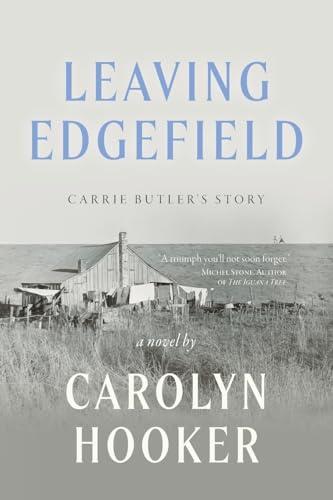

“Write the dangerous story. Tell it well. Be unafraid.
Annie Mondesir Asks
Vanessa Riley
Vanessa Riley is an acclaimed author known for captivating novels such as Island Queen, a Good Morning America Buzz Pick, and Queen of Exiles, an ABC View Lit Pick. She was honored as the 2024 Georgia Mystery/Detective Author of the year for Murder in Drury Lane and the 2023 Georgia Literary Fiction Author of the Year for Sister Mother Warrior. Her craft highlights hidden narratives of power, love, and sisterhoods of Black women and women of color in historical fiction, romance, and mystery genres. Her works have received praise from publications like the Washington Post, Entertainment Weekly, NPR, Publisher Weekly, and the New York Times.
In addition to penning over twenty-five novels, Vanessa holds a doctorate in mechanical engineering from Stanford University and STEM degrees from Penn State, adding a research-oriented approach to her writing while emphasizing inclusive storytelling about the Caribbean, Georgian, and Regency eras.
As a member of Regency Fiction Writers, Crime Writers of Color, Mystery Writers of America, Women's Fiction Writers Association, Christian Book Lovers Retreat, and the Historical Novel Society, Vanessa advocates for diverse voices. She's also working to increase Sickle CellAnemia awareness.
When she's not writing, she can be found baking, crafting her Trinidadian grandma's recipes, or relaxing on her southern porch sipping caffeine.
What is your idea of perfect happiness?
Waking up unafraid, surrounded by love, with the freedom to create and the certainty that my work matters.
What is your greatest fear?
Silence—when truth goes untold and voices that should be heard are erased.
What is the trait you most deplore in yourself?
Taking on too much because I believe I can fix everything if I just work harder.
What is the trait you most deplore in others?
Cruelty disguised as indifference.
What is your greatest extravagance?
Travel to historical sites and time spent researching history are my pleasures. I love learning and I’m curious.
What is your current state of mind?
Grateful, focused, and determined.
What do you most dislike about your appearance?
That I spent too many years judging it instead of appreciating it.
Which living person do you most despise?
Anyone who profits from the suffering of others.
What is the quality you most like in a man? Integrity.
What is the quality you most like in a woman?
Boldness and Self-possession.
When and where were you happiest?
In moments when a reader tells me they felt seen.
Which talent would you most like to have?
To speak every language, living and lost.
If you could change one thing about yourself, what would it be?
I would rest without guilt.
What is your most treasured possession?
My mother’s bible and my curiosity.
What do you regard as the lowest depth of misery?
Being forced to live a life that denies your humanity.
What is your most marked characteristic?
Persistence and resistance to quitting.
What do you most value in your friends?
Honesty paired with loyalty.
Who are your favorite writers?
Toni Morrison, Beverly Jenkins, Octavia Butler, MayaAngelou, and any writer brave enough to challenge canon.
Who are your heroes in real life?
Readers, educators, nurses, and activists who keep pushing forward.
What is it that you most dislike?
Injustice wrapped in tradition.
How would you like to die?
Knowing I left the world richer with literature and fuller of truth than I found it.
What is your motto?
Write the dangerous story. Tell it well. Be unafraid.
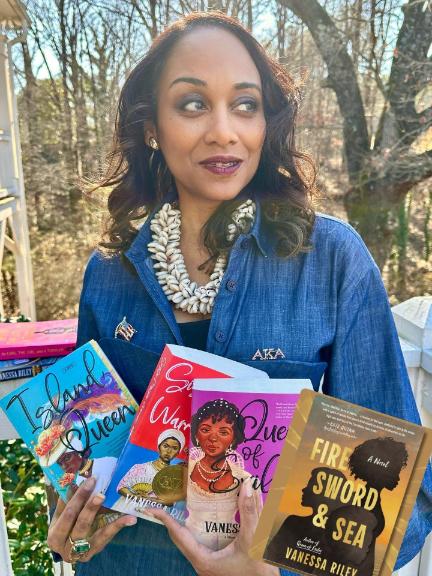

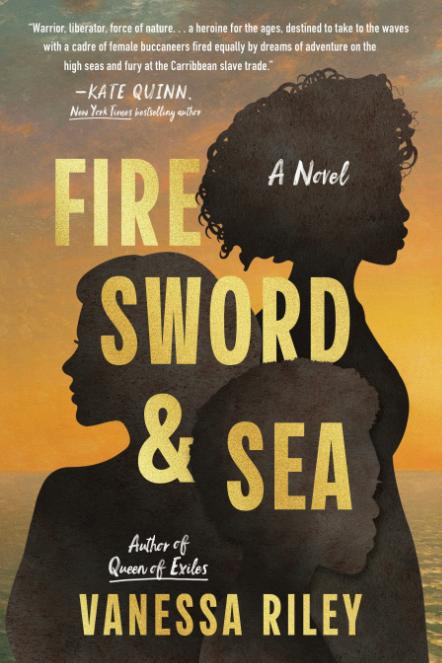
"In her latest, Riley provides a fresh take on high seas adventure through the eyes of the courageous, swashbuckling, based-on-a-reallife female pirate Jacquotte Delahaye. The research Riley has done on this 1600s saga is truly remarkable, second only to her depictions of the lush Caribbean setting and the diverse, multi-faceted cast of characters. This is one to be savored." —Fiona Davis, New York Times bestselling author of The Stolen Queen
Fire Sword and Sea Vanessa Riley




I’m an indie author of two short story collections – Walking the Wrong Way Home and Sharp as a Serpent’s Tooth – Eva and Other Stories, and a novella, Oliver. I’m the editor, designer, and publisher of WELL READ Magazine’s Best of 2023, and Best of 2024 anthologies, editor of the Encounters With Nature anthology, and co-editor of The Best of the Shortest: A Southern Writers Reading Reunion. I’m also a freelance writer for Amelia Islander Magazine, and the Editor in Chief and Publisher of WELL READ MAGAZINE.
I’ve learned so much about formatting, interior design, cover design, and self-publishing since my first short story collection came out and oddly enough, I’ve had fun doing it! But it can be frustrating and overwhelming trying to figure it all out on your own. I’d like to use what I’ve learned to help you.
Whether you’re thinking of self-publishing, querying agents or small presses, I can get your manuscript ready to send out without costing a fortune or waiting for months for a finished product.
Cover Design Pricing starts at $250 - Price include covers for both your print and ebook with unlimited tweaks until it’s perfect. See the next page for a few examples of covers I’ve created.
Interior formatting for print - $2 per page (for edited manuscript ready to go), $3 per page if photos and/or images are included in your manuscript.If you’d like to include an epub file there’s an additional $1 charge for page. If you need help with minor edits let’s talk.
Professional Critique - $2 per page
For more information, click here, or contact me at mandy@mandyhaynes.
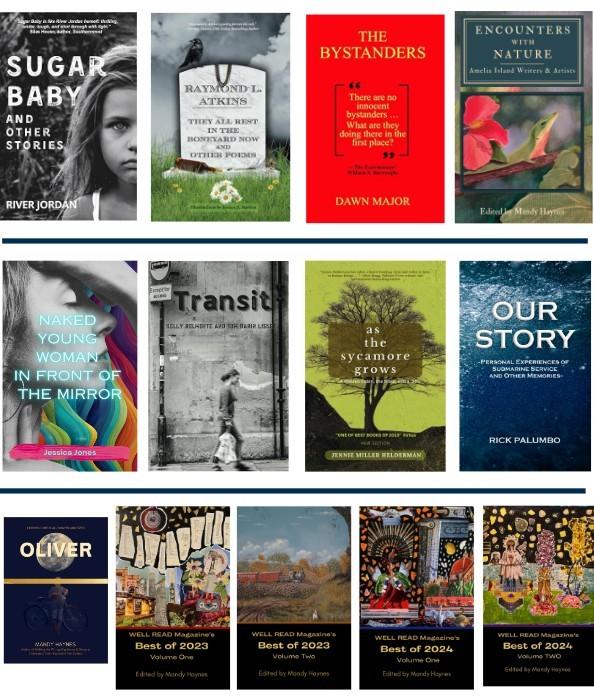








I’m looking for Authors Interviewing Authors and would love to shine a spotlight on your favorite Independent Bookstores, Book Sellers, Libraries, and Librarians.
These pages are a great way to let readers know who you are and they are FREE.
Send orders for ads, interviews, or the stories mentioned above, as well as any questions about the magazine to:

A monthly column that takes us off the page and into the
What Will it Take
As the Trump Administration’s daily assaults on the Constitution, the rule of law, and the rights of the citizenry continue, I find myself wondering more and more about the how of it all. How is this happening inAmerica? InAMERICA, for God’s sake. In my continuing effort to understand, I consulted some recent polling numbers. In an attempt to forestall the inevitable cries of “fake polls,” I chose the three national pollsters with the highest accuracy ratings: Gallup, Quinnipiac University, and The Economist /YouGov. In early 2026 polls, Gallup reported that 36% of those surveyed approve of the Trump administration’s overall job performance, and 59% disapprove. Quinnipiac University reported a 40% approval, and a 54% disapproval. The Economist / YouGov reported a 41% approval, and a 56% disapproval. These approval numbers are all much lower than they were a year ago, but they are still significant, and they are the subject of this essay. There is a mindset studied extensively by psychologists known as Optimism Bias. We all have this trait hardwired into us. It is the belief that bad things are less likely to happen to you personally, and it is closely related to Normalcy Bias, the assumption that because something has not happened before, it will not happen in the future. When these two phenomena are combined with
Comparative Optimism—the belief that even though things are bad in general, you will be less affected than others—they begin to explain at least in part why so many people, from the rich and powerful right on down to us regular folks, continue to be okay with what is going on in this country.
This begs the question: For those who think that everything is lovely, what is it going to take to bring about some serious reflection on that position? Here are a few hypothetical situations to consider.
If your wife drives up the wrong street on the way to the store, or perhaps to a doctor’s appointment, and ends up being dragged from the mini-van, beaten, and shipped off to an undisclosed confinement facility—all because of being in the wrong place at the wrong time—will that convince you?
If you lose your business, or your farm, or the job you have worked at for 19 years because your livelihood has been tariffed out of existence, will that convince you? When the promises of economic greatness turn into foreclosure notices and auction signs, will you still believe the words of the people who did this to you?
If you are stopped on your way to work and ordered to hand over your identification because you look suspicious to the wrong officer on the wrong day, will that convince you?When you realize that your citizenship means nothing if the person with the badge decides it does not, will you still insist that only guilty people have something to fear?
If your mother dies of a disease that could have been treated and
perhaps cured but for the fact that her insurance premiums doubled and she cannot afford them, will that convince you? When the people responsible offer thoughts and prayers instead of accountability, will you finally see the actual cost of their choices?
If you happen to live in a Blue state or a Blue city, and you wake up one morning to find the National Guard or federal agents watching you and yours because they have been sent there to do just that, will that convince you? When armed soldiers become as common as the mailman and you realize they are not there to help you, will you finally understand what is happening?
If your local reporter, the one who has covered your community for twenty years, is arrested for spreading misinformation after publishing something the administration did not like, will that convince you? When your child’s favorite teacher is fired for teaching a chapter of history that has suddenly become unpatriotic, will you still believe censorship is just a talking point?
If your small children come home from school traumatized for life because masked men came into the classroom and took away some of their classmates—as well as a few of their teachers who tried to intervene—will that convince you? When they stop wanting to go to school at all and you realize they no longer feel safe in the one place that should protect them, will it finally register?
If you wake up one morning to discover that a right you have always taken for granted—voting, marriage, bodily autonomy, access to contraception—has been quietly restricted or
reinterpreted out of existence, will that convince you? When you realize that rights are only as strong as the people willing to defend them, will you still assume yours are safe?
If your neighbors—that nice little couple with the two kids who live just up the street—disappear in the night, never to be heard from again, will that convince you? When their absence becomes louder than their presence ever was, will you still insist everything is fine? And when their mailbox fills with days of untouched letters, will you realize that what happened to them could happen to anyone?
If you discover that your phone calls, texts, or social media posts have been monitored because you used the wrong phrase or liked the wrong article, will that convince you? When you start editing your own thoughts before you speak them aloud, will you still insist that only extremists are being watched?
If you find yourself under federal investigation or indictment, not because you have committed a crime but because this is the way that our current government punishes people they deem disloyal, and you must spend all of your resources defending against this legal assault all while realizing that it is not possible to out-lawyer the government, will this convince you?
If your church gets burned down because your God is not the correct God, will this convince you? When the people in power insist that your faith is dangerous or unpatriotic, and the investigation into the fire quietly disappears, will you still think this is just partisan noise?And when you see how quickly religious
freedom can be redefined, will you understand how fragile your own rights truly are?
If your bank account is frozen, or your business license revoked, or your federal benefits delayed because someone flagged you as politically unreliable, will that convince you? When you learn that punishment no longer requires a crime—only disapproval—will you still believe it cannot happen to you?
If the government tells you not to believe your own eyes— insisting that a peaceful protest was a riot, or that a violent attack was orderly, or that a recorded statement was never spoken—will that convince you? When truth itself becomes negotiable, will you still think the danger is exaggerated?
If one of your loved ones is shot and killed by federal agents while exercising their right to protest as guaranteed by the First Amendment of the U.S. Constitution, and if that loved one is then characterized by the government as the perpetrator rather than the victim, will that convince you?
If a natural disaster hits your town and federal aid is withheld because your state voted the wrong way, will that convince you? When you realize that your safety is now conditional on political loyalty, will you still believe this is normal governance?
Again, I ask. What is it going to take?
In the end, the question is not whether these things could happen here. Every example I have mentioned came straight from the news. The real question is how much we are willing to tolerate before we recognize that the line has already been crossed.
Comfort, denial, and the belief that it won’t happen to me have never been reliable shields against the consequences of unchecked power. At some point, the abstractions become personal, and the theoretical becomes lived reality.
Sometimes I think we forget that history is not made only by the villains who seize power, but also by the ordinary people who look away until it is too late. No nation has ever preserved its freedoms by assuming someone else would do the hard work of paying attention. And if there is one lesson the past keeps trying to teach us, it is that silence is not neutrality. It is permission.The longer we wait for absolute certainty, the more ground we lose to those who count on our hesitation.
So perhaps the better question is this: Must the fire reach your own doorstep before you believe it is real? Or can we, for once, learn from the warnings, the patterns, and the suffering of others—and act before the damage is irreversible? The answer will determine not only what happens next, but what kind of country we leave behind.
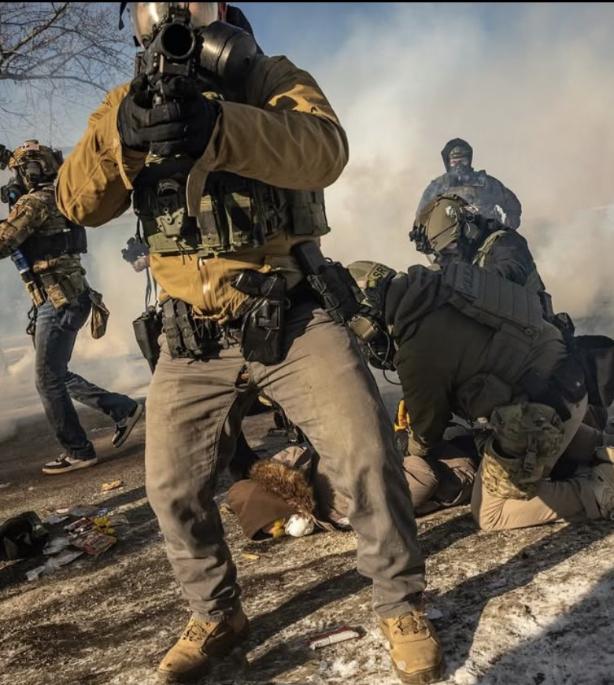
Mandy Haynes, Editor-in-Chief, Designer, Publisher, & Founder
Mandy Haynes is the author of two short story collections, Walking the Wrong Way Home, Sharp as a Serpent's Tooth Eva and Other Stories, and a novella, Oliver. Her stories have appeared in several anthologies and literary journals. She is the editor and designer of Encounters with Nature, a collaboration ofAmelia Island Writers and Artists, The WELL READ's Best of 2023 anthologies, and also the co-editor of The Best of the Shortest: A Southern Writers Reading Reunion.



Raymond L.Atkins, Contributing Editor for OFF THE PAGE
Raymond L. Atkins resides in Rome, Georgia, on the banks of the Etowah River in an old house with a patient wife and a lazy cat. His hobbies include people-watching, reading, and watching movies that have no hope of ever achieving credibility. His first novel, The Front Porch Prophet, was published in 2008 and was awarded the Georgia Author of the Year Award for First Novel. Camp Redemption, was awarded the Ferrol Sams Award for Fiction and the 2014 Georgia Author of the Year Award for Fiction. Sweetwater Blues was a Townsend Prize nominee, the 2015 GeorgiaAuthor of the Year runner-up for fiction, and the 2016 selection for One Book, Many Voices. South of the Etowah, his first creative non-fiction book, was released in 2016. It was nominated for a Push-cart Prize and was the 2016 GeorgiaAuthor of theYearAward runner-up for essay. In 2017, he was awarded the Lifetime Achievement Award by the Georgia Writers Association.


Robert Gwaltney, Contributing Editor for INSIDE VOICES
Robert Gwaltney, award winning author of southern fiction, is a graduate of Florida State University. He resides in Atlanta Georgia with his partner, where he is an active member of the Atlanta literary community. Robert’s work has appeared in such publications as The Signal Mountain Review and The Dead Mule School of Southern Literature. His debut novel, The Cicada Tree, won the Somerset Award for literary fiction. In 2023, Gwaltney was named Georgia Author of the Year for first novel.
Meet the staff


Ann Hite, Contributing Editor for MOUNTAIN MAGIC
In September of 2011 Gallery, an imprint of Simon & Schuster, published Ann Hite’s first novel, Ghost on Black Mountain. In 2012 this novel was shortlisted for the Townsend Prize, Georgia’s oldest literary award. In the same year, Ghost on Black Mountain won Hite Georgia Author of the Year. She went on to publish four more novels, a novella, memoir, and most recently Haints On Black Mountain: A Haunted Short Story Collection from Mercer University Press. In December 2022, Haints On Black Mountain was one of ten finalist for the Townsend Prize. The collection was a Bronze Winner in Foreword IndieAward 2023 and GeorgiaAuthor of the Year Second Place Winner for Short Stories 2023. Ann received a scholarship to the Appalachian Witers Workshop Hindman Settlement in the summer of 2020 and was invited back in 2021. Her passion for history influences all her work.


Jeffrey Dale Lofton, Contributing Editor for INSIDE VOICES
Jeffrey Dale Lofton hails from Warm Springs, Georgia. His years telling the stories of playwrights and scriptwriters as a stage and screen actor taught him the pull of a powerful story arc. Today, he is Senior Advisor at the Library of Congress, surrounded by books and people who love them. Red Clay Suzie is his debut novel, a fictionalized memoir written through his lens—gay and living with a disability—in a conservative family in the Deep South. It was longlisted for the 2023 Center for Fiction First Novel Prize and awarded the Seven Hills Literary Prize for Fiction, among other distinctions.

Dawn Major, Contributing Editor for TRIPLIT with D Major
Dawn Major’s debut novel, The Bystanders, was named finalist for 2024 GeorgiaAuthor of the Year for Best First Novel. Major is an associate editor at Southern Literary Review and advocates for southern authors via her blog, Southernread. Her literary awards include the following: the Dr. Robert Driscoll Award, Reinhardt University’s Faculty ChoiceAward, and the James Dickey Review Literary Fellowship. Major is a member of the William Gay Archive and has edited and helped publish the works of the late author. She serves on the board for Broadleaf Writers Association and is also a member of M’ville, anAtlanta-based artist salon. Major lives in the Old Fourth Ward inAtlanta, GA and is working on her next novel, The Dandy Chronicles.
Claire Hamner Matturro , Contributing Editor for CLAIRE CONSIDERS
Claire Hamner Matturro is a former attorney, former university writing instructor, avid reader, and the author of seven novels, including four published by HarperCollins. Her poetry appears in various journals including Slant and Lascaux Review. She is an associate editor ofThe Southern LiteraryReview and lives happily in Florida with her cross-eyed rescued black cat and her husband.




Annie
Mondesir,
Contributing Editor forANNIEASKS
Founder of The Write Review Literary Community, Podcaster, Book Reviewer, Author Consultant and Matchmaker. She also teaches workshops on top of all of this!Annie has been introducing us to books and authors since 2006, when she began reviewing books for Elle Magazine. Proud Stiff Person Syndrome Warrior, and several other illnesses.

Susan Beckham Zurenda, Contributing Editor for THE WRITER’S EYE
Susan Beckham Zurenda taught English for 33 years on the college level and at the high school level toAP students. She is author of the award-winning Southern literary novel, Bells for Eli, and the recipient of numerous awards for her short fiction, including the South Carolina Fiction Awards, twice. Her second novel, The Girl From the Red Rose Motel (Mercer University Press, September 2023), was the recipient of the 2024 Patricia Winn Award in Southern Fiction, Gold Medal winner in the 2024 IPPY Awards for Southeast Fiction, a 2024 Pushcart Prize nominee, a Shelf Unbound 2023 Notable 100 books, and a finalist in theAmerican Book FestAwards. Susan lives in Spartanburg, SC.

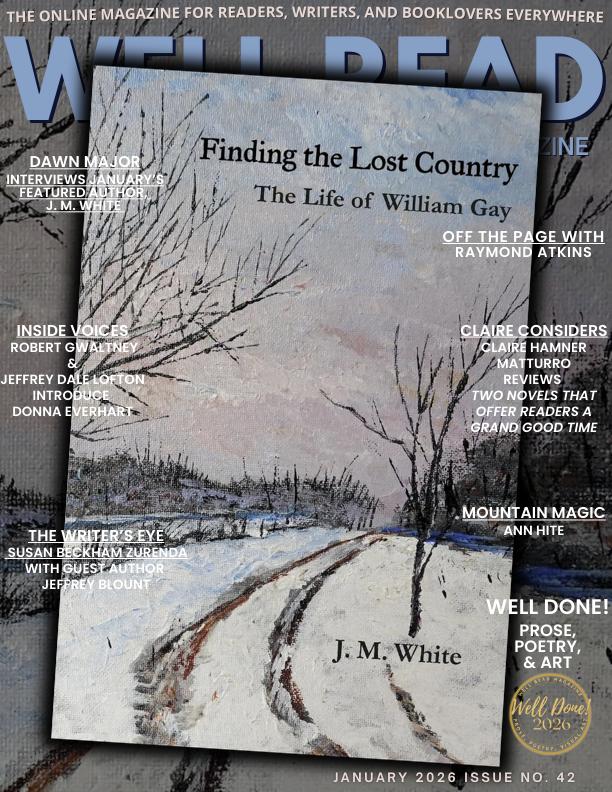
Junebug Fischer by
Mandy Haynes
Junebug Fischer will be ninety-six come June. She's ready to set the record straight and let you know what really happened the summer she turned fifteen. It’s true, she killed someone, but she never killed nobody on purpose. That was purely accidental.
“I don’t know what caused me to shoot the arrow. I didn’t think about it. I just did it. Was it fear or was it pride?”
5.0 out of 5 stars One of the most compelling story/book writers in America.
“Outstanding book. Intelligent, and yet creative, in the best sense of the word. The story/book keeps you engaged right up until the final page. Great, great book!!!”
5.0 out of 5 stars Will leave you wanting more!
“Junebug Fischer is the kind of strong, feisty young lady hero we love, and Mandy's writing of her story draws you in from the start. You'll feel like you're sitting on that porch with her, and I guarantee you'll want more. Her characters come to life in all of her stories, and I recommend you read everything Mandy has written, and will write! You won't be disappointed.”
5.0 out of 5 stars A Southern Voice to Remember
“There's an echo of 'To Kill a Mockingbird' in the voice of the central character here, and I mean that as a high compliment. You'll like her after the first two sentences and root for her the rest of this short but powerful book. I don't want to give anything away. Buy it and read for yourself. 5 stars.”