

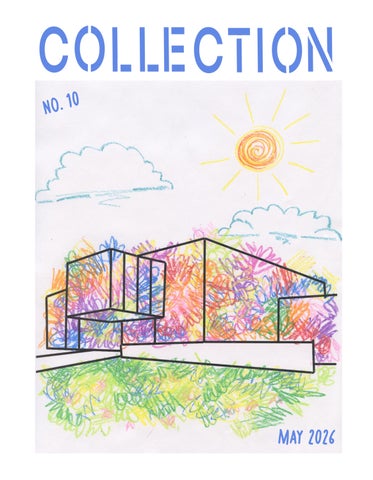
Dear Readers,
It’s incredible to think that since our inaugural issue in May 2022, we have reached the exciting milestone of our tenth publication. In this edition, you’ll find an engaging interview with artist Jiha Moon and another with Hamilton College professor Kevin Grant, an EXODUS Quiz and Jiha Moon Crossword, and highlights from the Wellin Museum’s acquisitions! You’ll also read about the ways Wellin docents have been involved in museums and the arts beyond Hamilton’s campus, including attending the 2025 Students in Museums Summit at Vassar College, and helping to curate a collaborative exhibition at Munson.
As always, we would like to thank a number of people: Jiha Moon for the opportunity to meet with her and learn about her work; Kevin Grant for sharing his extensive photography collection; Registrar Laura Laubenthal for her stories about antiquing and fulfilling our image requests; Education Manager Marjorie Hurley for her continued editorial support; and all of the wonderful artists who responded to our call for art.
In this edition, we say farewell to Funniest Docent Sydney Piccoli, Software Superhero Kenna Smith, and Wellin Orator Lily Watts. In honor of Collection No. 10 and the docents behind the pages, we’ve included reflections from our graduating team members.

Year: 2026, Senior
Major: Art History
From: Austin, TX
Fun Fact: My favorite giftcard to receive is for eBay!

Year: 2028, Sophomore
Major: Art & Physics
From: Wakefield, RI
Fun Fact: I just crocheted my first sweater!


Year: 2026, Senior
Major: Art History
From: Scarsdale, NY
Fun Fact: I am spending next year in Taiwan!

Year: 2026, Senior
Major: Environmental Studies
From: Saint Petersburg, FL
Fun Fact: I am excited for my family to meet Syndey P. next year!

The Collection magazine team was lucky to have the opportunity to talk with artist Jiha Moon. Her work has been exhibited and is in the collections of institutions such as the Wellin Museum, the Mint Museum in Charlotte, NC, and the Hirshhorn Museum in Washington, DC among others. Moon lives and works in Tallahassee, Florida.
Your work combines many Eastern motifs, like Hanji paper and Korean folk painting, with popular Western imagery. How do you decide which cultural references to bring together in a given piece?
I love that question. Eastern, Western, it’s a real entry point for people to understand. But it all comes very organically. I don’t ever start with heavy-handed concepts and then try to plan everything out, so the concept and the formal issues in my work are always interwoven. I have to trust my intuition. I think about these issues all the time but when I go to my studio I start very organically. I start with the very simple things.

First: composition, material, colors; something that I am really thinking of as a visual signifier. I think about 10% or 20% of the art can be the starting point. From there, I just dive in and enjoy the process. Start with a simple idea and then try to find something more interesting by doing layers and analyzing that process to get into the next level. I really consider conversation with the work to be a very important part of the process. I try to treat my work like a living thing so that I am observing what the work is requiring me to do instead of dictating. Within that process, with Eastern and Western motifs, color and theme, iconic references and significance, important issues come up and the work becomes a lot more complicated. By the time I do about 50–60% of the work, it becomes its own thing. It’s really organic but also strategic at the same time.
You talk about the satiric nature of the 19th century Joseon pottery and the humor in art. Do you think it’s important for art to have humorous qualities?
I often talk about important issues—race, generational misunderstandings, connectivity between different groups or different generations, questions about how we understand the world. Sometimes it sounds heavy handed and too serious, but it’s a very important thing.
I jokingly say that I don’t want to lecture people. Once I start trying to lecture, people don’t want to hear it. I have a 17-year-old boy, an adolescent boy, and when I start to nag he just turns off and walks away. So humor is a good segue. It’s a good entrance. I introduce something funny and uplifting to draw people in. Once they’re unguarded, they’re very open. They become ready to hear what I am talking about.
Also, in my studio, when I make work, things become very complicated conceptually and technically. I always have this conflict in my mind, like if I try to do something complicated, will this make any sense? But then I have to poke myself. It’s gonna be okay, it’s gonna be fun. So I use humor that way.
You write about how clay has a long history of connecting East and West. Could you elaborate on that? Do you think clay itself, the material, has a power to connect East and West, or is it maybe more the symbols and motifs that you incorporate into clay that you’re thinking about?
I think that clay is a utilitarian material. Before clay, people used wooden tools, then a lot of people got sick because it had bacteria and things didn’t sanitize properly. With the invention of clay, and it going through fire, objects became very sanitary and can help humans. Both Eastern and Western arts have a long history making ceramic work. So a utilitarian perspective is one.
Number two, I think of cobalt. I’m interested in blue and white ceramics from Eastern Asia, but also Delftware, which is also largely blue. Cobalt traveled from China on the silk road. There is an
interesting historical exchange. There are so many other things like food, for example, which have colonial origins but are loved—food items that combine Eastern and Western ideas. Banh mi is one of them. The banh mi [sandwich] is evidence of French colonialism in the East. Then Korean budae jjigae, which is like army stew. It’s another colonialism leftover, but hugely loved by Korean people. Tempura—people think that it is Japanese but it originated in Portugal and came to Japan through cultural exchange, and now it’s a favorite in Japanese restaurants. So how do we explain these things? There’s things that are left but loved by people. It’s more than that, it’s also bringing people together. Yet, a lot of cultural misunderstanding and appropriation or adaptation happen through exchange.
One of the things that I’m using as a cultural signifier is called Blue Willow. It’s a pattern invented by a British design company portraying an Asian love story. It’s a pattern I use a lot, but it’s
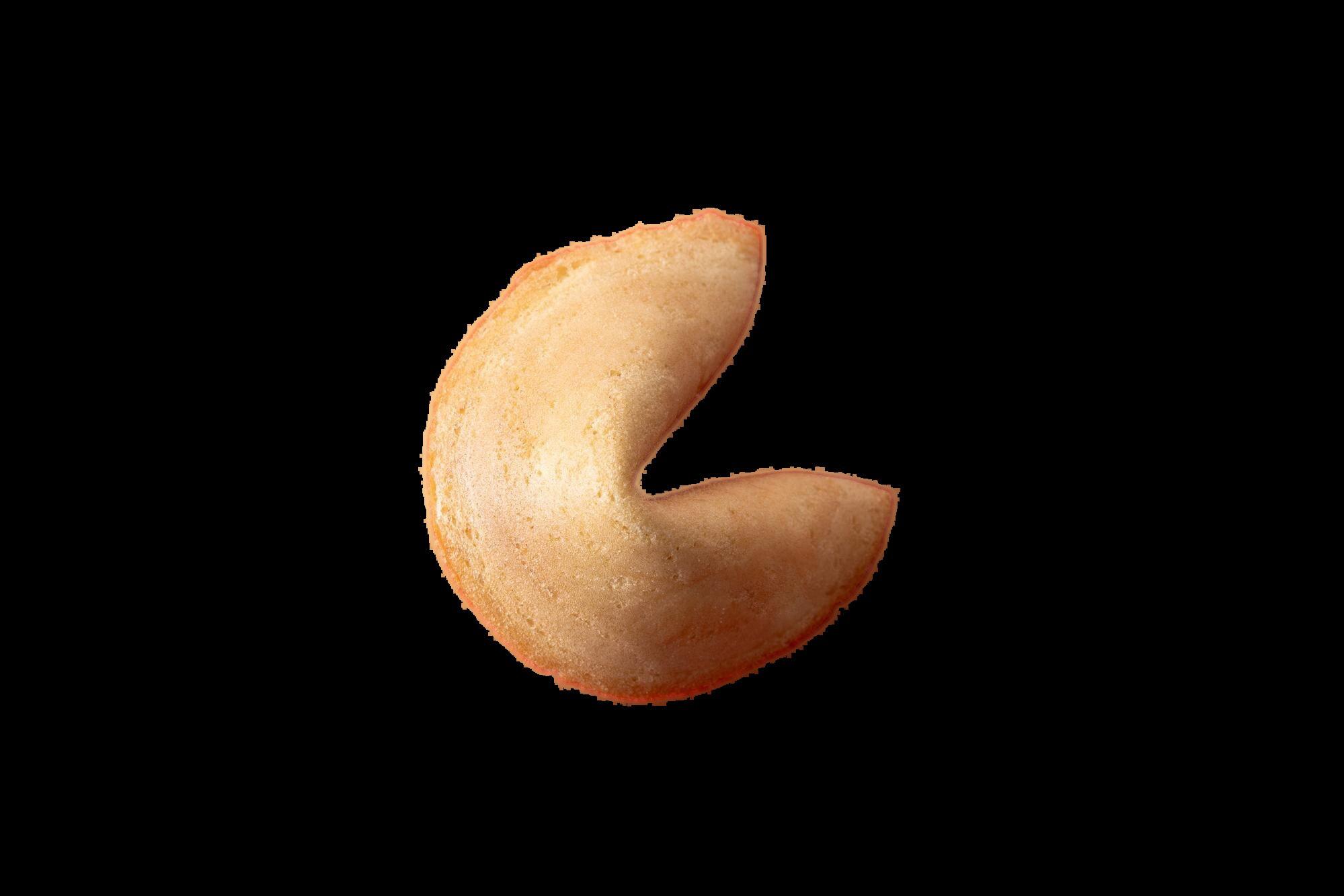
largely collected by American people. Then it goes to Europe and back to Japan then comes out with a different design. Blue Willow, it’s British people interpreting a Chinese love story, it’s an invented thing. People collect this and then think that they understand Asian culture. So for me, it’s very ironic and funny but it’s serious too. Fortune cookies are the same thing. Nobody knows fortune cookies in mainland China. People look at an American thing and think that it’s exotic, so I use that in my work a lot.
In regards to the fortune cookie and many of the other symbols that you use, how have these kinds of things changed and evolved from your earlier works to your more recent works?
They become a lot more complicated, real, and exciting; I think repetition is necessary sometimes. Like when you first say something—some people hear it, but the majority of people don’t understand. In some ways, I need to use symbols
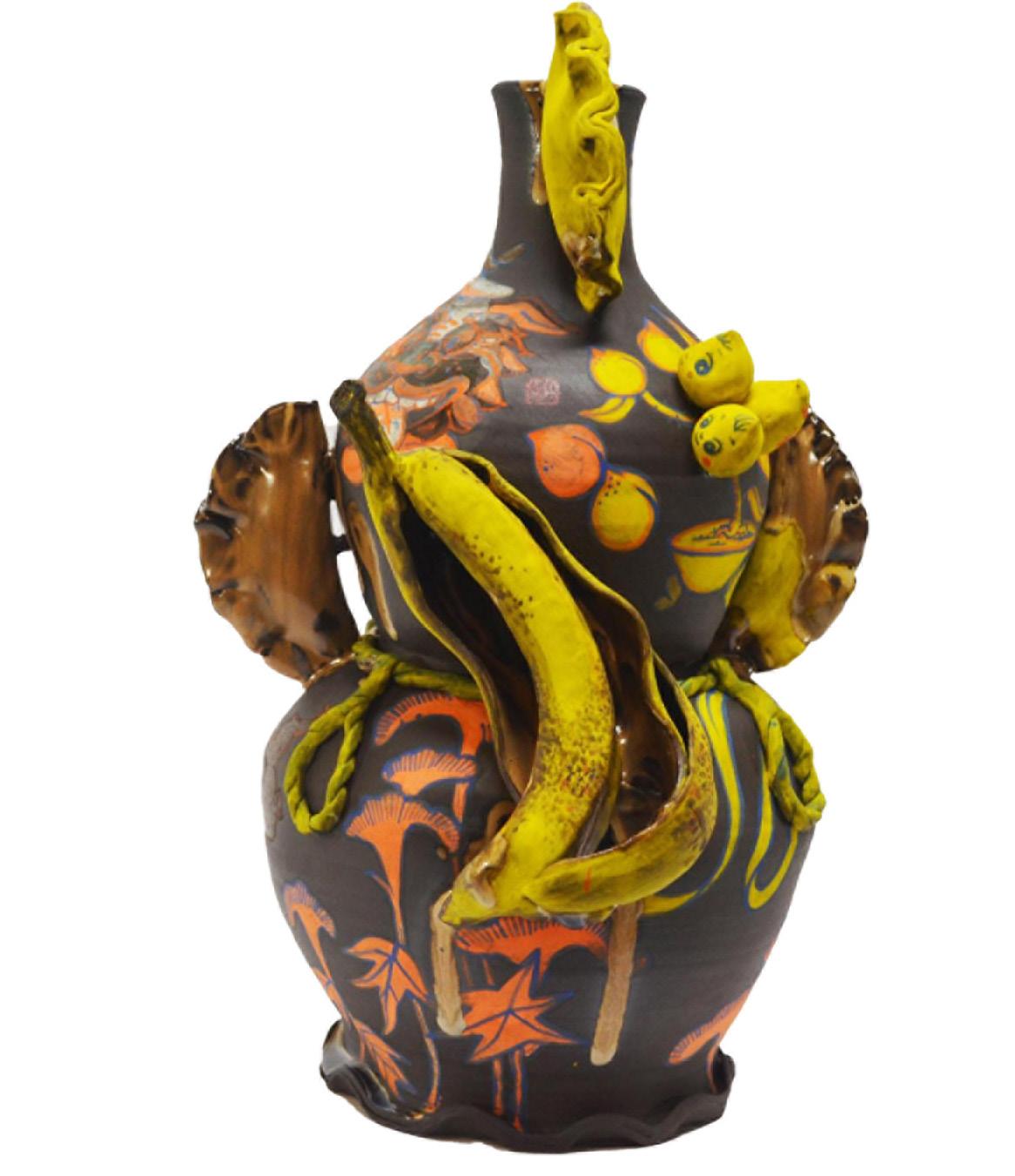
repetitively and in different contexts for it to make sense. That way, people hear it over and over and over again in different contexts, and sometimes they finally get it. That’s why I am constantly adding newer versions and new signifiers into my vocabulary.
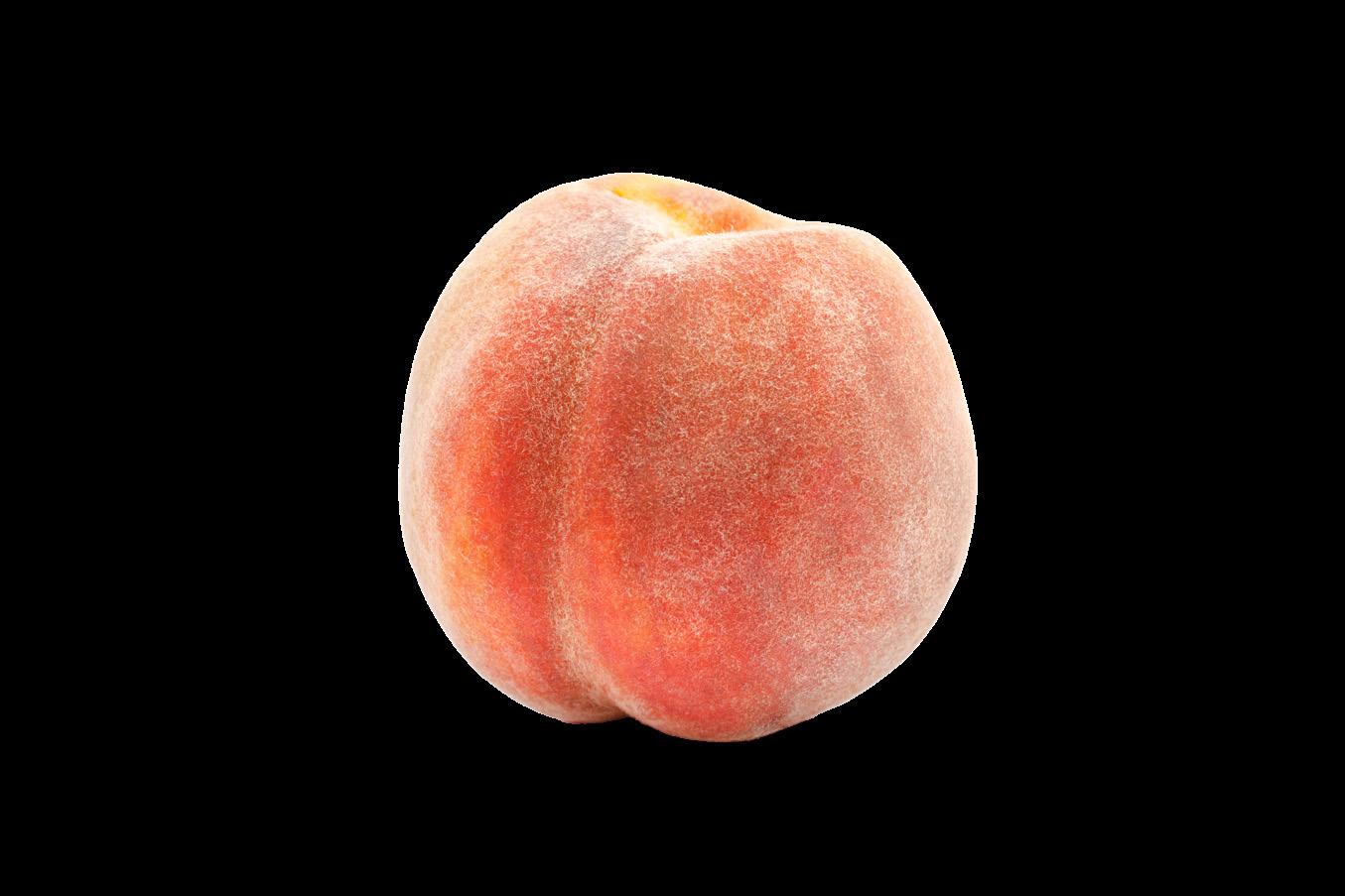
I started out using Pac-Man because that’s my generational cultural signifier for the digital age. Then the Pac-Man became almost like a fortune cookie from the bird’s eye view. I started using peaches, the shape of peaches, because I live in the South. But before then, I was using it as a culture signifier, bridging between Eastern and Western imagery. As I became a mother, that became a boob and a baby butt. I add different vocabulary and different meanings, it just revolutionizes itself. I started adding depictions of Keanu Reeves and [drag queen] Kim Chi, and I’m adding more vocabulary so that I don’t boldly repeat one thing all the time. It becomes wider—some things are graduating, some new things are coming along.
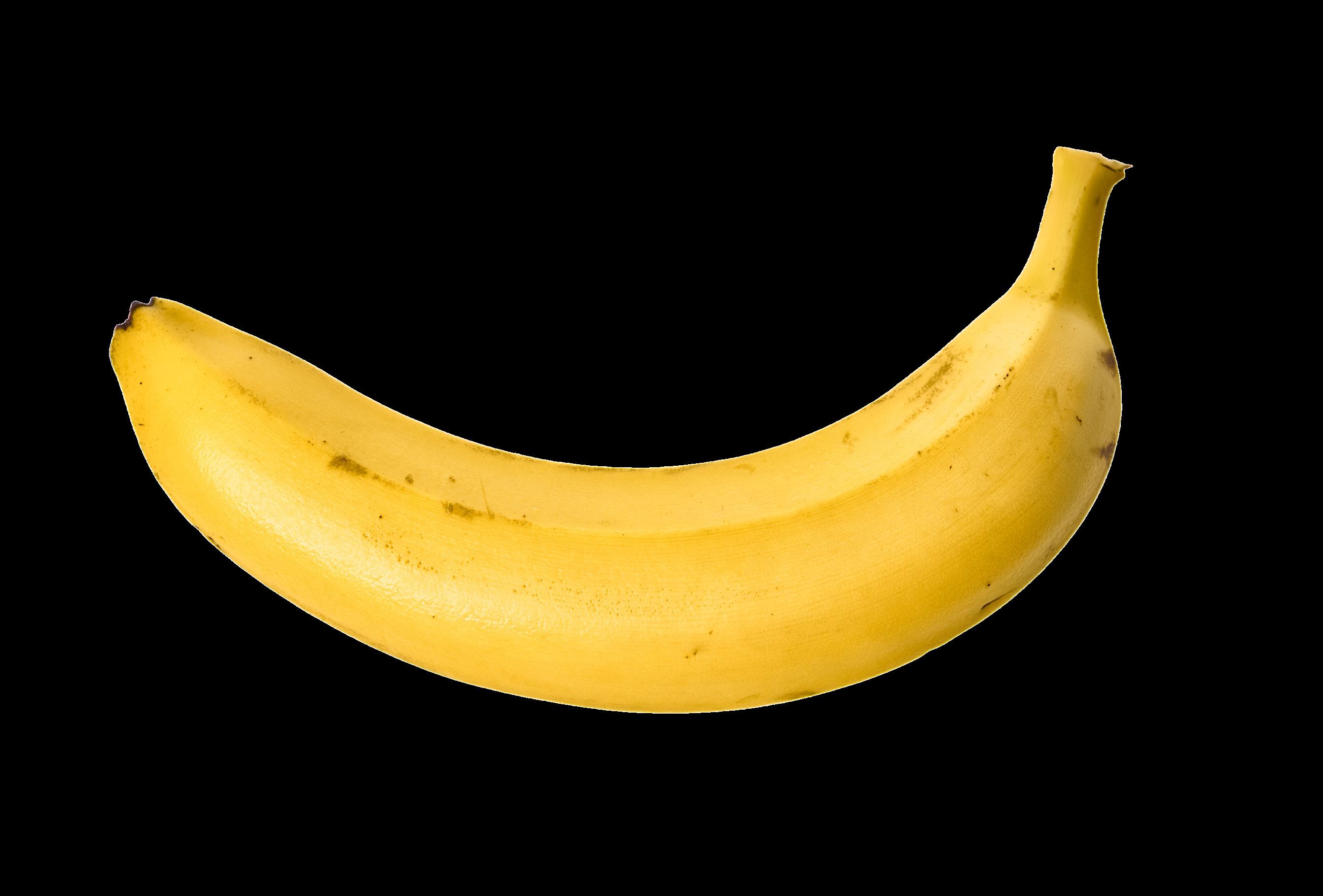
I’m adding color, the same way that I used a lot of rainbow colors in the beginning. I also did a lot of monochromatic color versus local color. I call it free dopamine: color is an agent for people to be happy, but also has a lot of cultural meanings. After that, I used a lot of brown because it’s a color of aging and reflects a traditional atmosphere and antiquity. Then I added yellow to talk about Asian representation and bananas.
things”, such as ‘get along with your neighbor’, ‘love your children’, and ‘be sweet to others’. It’s really lecturish and preachy, so I switch it with other things. I have a couple of different conceptual and visual ways to play with symbols in my studio.
Do you ever think about when creating art, what sells or what might sell? Is that part of your practice or not?
No, not at all. I don’t give a damn. I try not to pay attention to that. I deep dive in myself and I look at the world around me because one of the most important things in creating my work is reflecting our present time. I need to observe what’s going on around me. I look at the past and I predict the future, but what I know the most is the present time—I call it purgatory. It’s not like the Bible type, but for me, purgatory is a place where artists are needed the most.

I try to rationalize how to handle the present time. It’s very chaotic. It’s very doomed. But how do I find a reason to make artwork? I’m trying to make sense out of this world—I make work mainly to try to negotiate that. How do I create my version of happy purgatory? In my painting, I capture it almost like a very complex landscape. For my ceramic work, it’s more of a hybrid portrait. That’s how I strategize things, but in the future, it might be different. I might invite in other materials and learn something different.
At the same time I have other agents that I can adopt, such as slang, so the textual work is part of my series. Whenever I have didactic language that I want to use in my work, I interchange it with American slang or Keanu Reeves sayings. Those things that I really care about, I put it in the old context of 19th century Korean Minhwa. It usually carries Confucian ideals, it’s sort of true, but annoying, like old people nagging. I like “triple
I do not know what sells and what does not. If I knew that I’d be rich already, right? I’m probably not making my best selling artwork. But it’s okay because I like to hear myself first. I like to create my work and I believe in the authenticity of my work. Not everything I make in my studio makes sense with a lot of people. It makes sense to me. Sometimes I don’t understand the things happening in my studio and I have to trust the process and keep going. Understanding also means
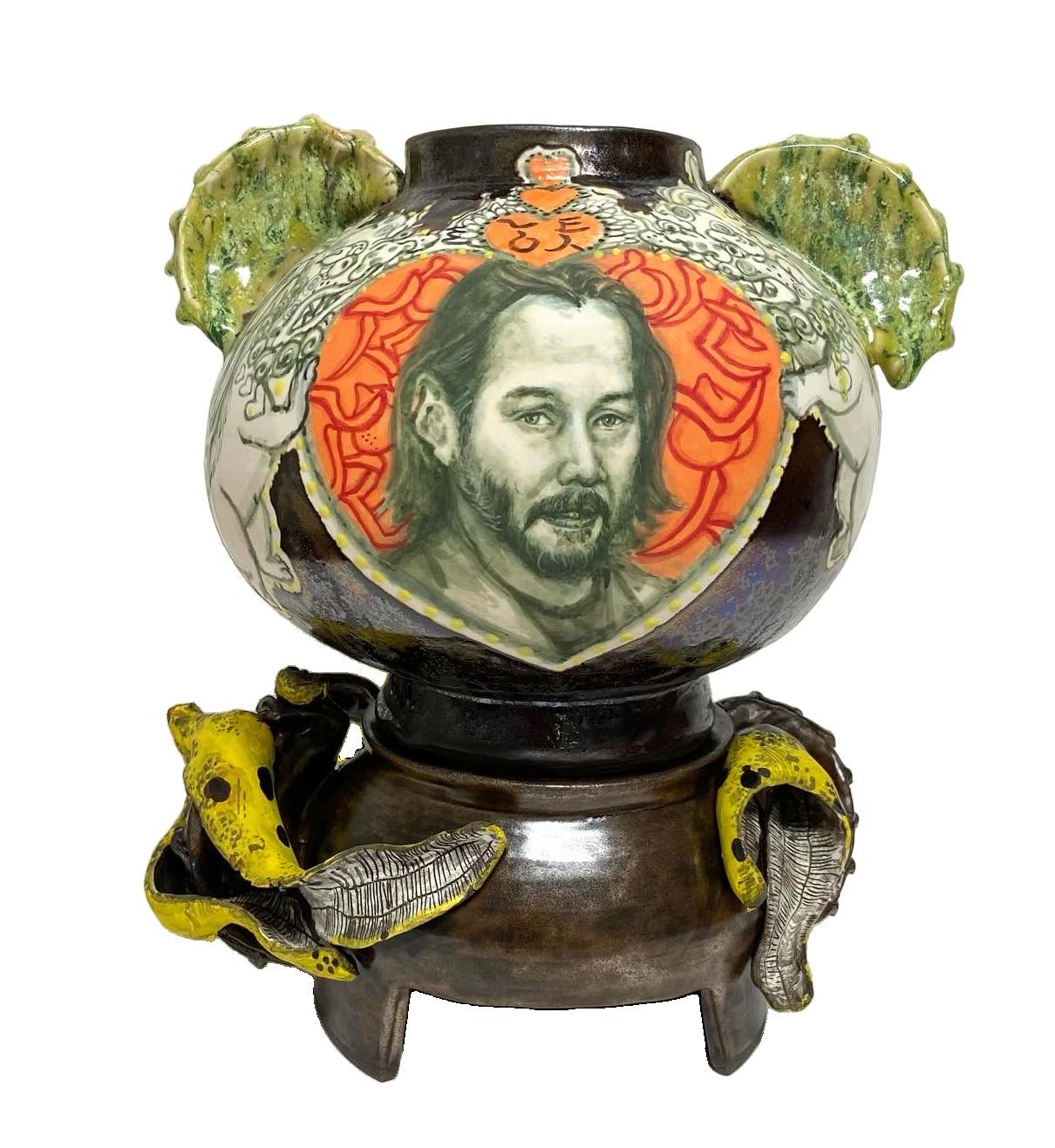
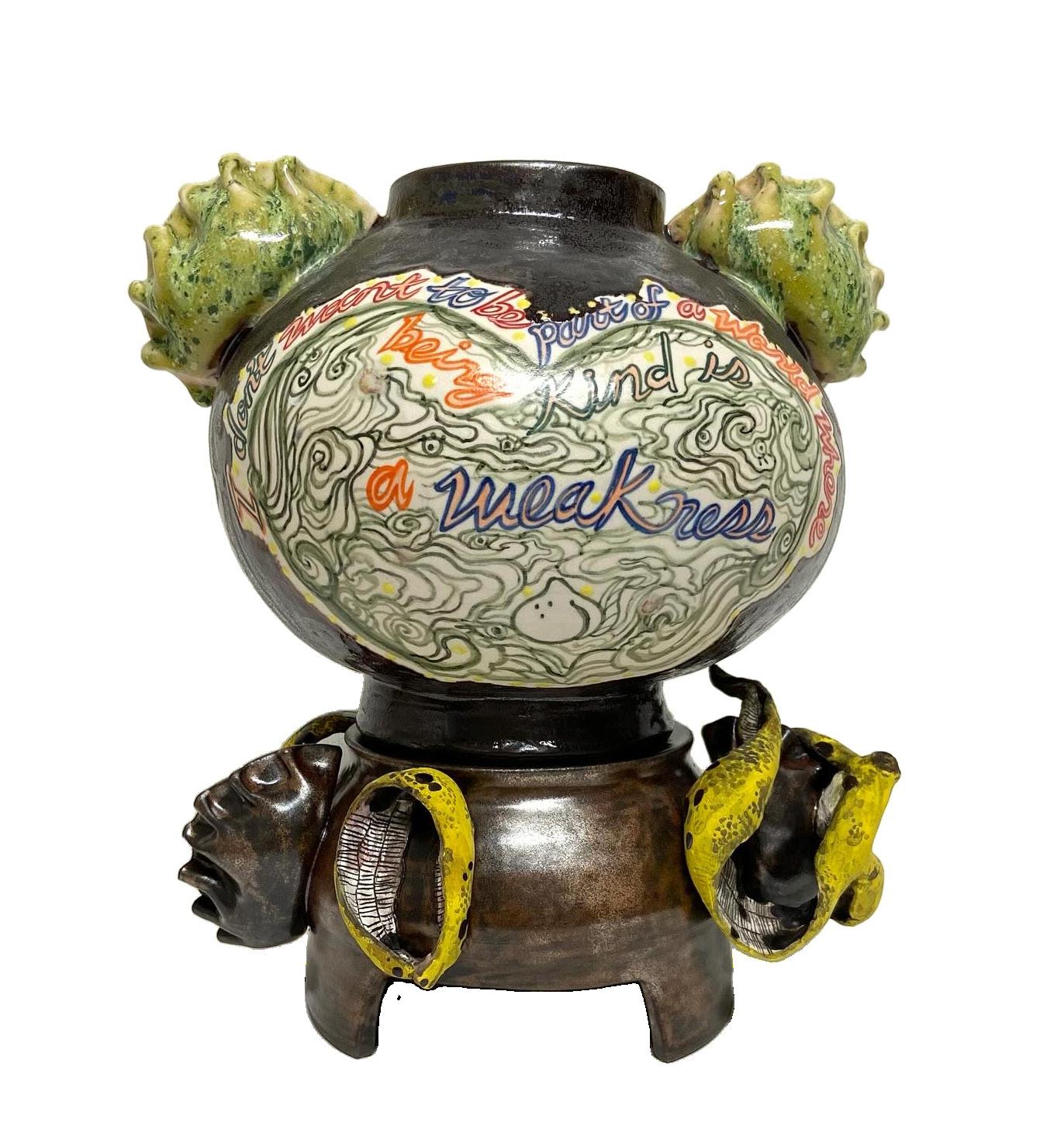
nothing sometimes. I’m making more work that’s mysterious. I think understanding is overrated. If I make a work that captures people’s energy and spirit, and encapsulates the being beyond my capacity—that’s a beautiful thing. That is my goal, and often it’s not always selling and I have to be okay with it.
It’s possible to be an artist outside of the big art scene, outside of making million bucks. I’m also an educator. I want to be surrounded by my students and love other artists; being part of a community really means a lot to me.
Can you define what you mean by hybrid portraits and cultural landscapes? You’ve used those words multiple times. I just want to make sure I understand what you mean.
My work is half figurative, half abstract painting. It has a figuration. It’s my ground. I use the iconic images or things so that people start understanding what I’m doing. If I draw one line on the paper,
you can look at it as a line, but you could also look at it as a landscape, a horizon. Everything starts looking like something. My work is happily situated in the middle of it. I’m not trying to be arbitrary, neither this nor that. For the landscape, my abstract paintings, which means I try to capture the space and time. You cannot pinpoint it, but you feel as though you’re in the space. For the hybrid portraits, it’s almost portraying someone I met. I feel like I know that person, but I don’t know that person. Let’s say that I bump into you in the grocery store. I did not know you before I met you. But I know your name. I know your hair color, eye color, skin color. That means nothing, right? I have my guess, but that doesn’t mean that I know that person. Every person has their own loaded stories and each individual person is so unique in their own way. That’s my inspiration. In some ways, I always want to make my figurine, my ceramic sculpture look familiar and foreign at the same time.
You were talking earlier about how you use a lot of
symbols from pop culture and the internet. I think something that is really talked about now is images and motifs come about in popularity really fast and then drop in popularity equally as fast. Do you ever consider the quickness that things go in and out of style in pop culture when choosing what to incorporate in your art?
Remember what I said before, that I want to capture my present moment? I capture that and then indicate it in my work. I love that. I was born in 1973—and God knows how long I’m gonna live— but that’s the time period that I have been an artist. I want people to use that source to understand my work, then when they encounter my work, they can do the same thing: capture things they recognize and then study all that exists and was popular around that time.
When I piggyback on parts of history, I look at Rembrandt’s work, for example, and European brown etchings and things like that. I use that in my work sometimes, like an undertone of monochromatic brown. There’s some information for viewers to create their narratives, based on parts of history or references that are researchable. I’m not super into making work that is timeless—there’s other wonderful artists who are doing that, it’s their thing. My thing is to indicate the culture signifiers and recognizable images they can study and find out what was going on around that time for me, because that’s my present. I want to indicate that, and that is hugely important. When people find out Keanu Reeves overlapped with Jiha’s time period and that there was a movie that he was part of, John Wick, maybe they can talk about it. To a younger generation, maybe Keanu Reeves will become a grandpa or something. You never know, right? Things are born and die, but it lives in my work.
What are your top three favorite things right now?
I love my dogs. My poodles, Miso, Pickle, and
Jadu—her name means black plum. She’s an adopted poodle from South Korea, she’s eight years old and untrainable, because she’s my age. She loves women, but she does not like men. I think that she probably had a bad experience because she’s a rescue dog. Every time my husband or son handles her a little roughly, she pees a little—it’s like her revenge.
Then there is my sassy Miso, I love Miso. He’s a dogcat. He sits by the window and wants me to pet him whenever—he’s a needy little dog. If I stop touching him, petting him, he scratches me.
Pickle is a little bossy dog. He barks a lot, but he’s really smart. He recognizes cows or any animals on TV. My second favorite thing is walking with Miso. Miso and I probably are lovers or something in my past life, because he loves the way I walk—we could walk for hours. We both breathe in all the trees; around our area we have so many oak trees and they’re really beautiful, at the same time they’re really threatening—with hurricane hits, trees can be very vulnerable. I try to walk twice a day, but if I walk once a day, that’s a successful day. I look around at every little bit of nature, like little flowers, different colorings of the sky, all the things. My last thing, I guess I have to say studio time. My alone time in my studio is my heaven. Sounds cheesy, but I don’t want to engage with anything else, just me and my work. My dogs are the only ones allowed in.
Kenna Smith, Sydney Piccoli, & Sydney Cagnetta
On Saturday, November 15, 2025, forty-five student museum workers from ten colleges and universities across the Northeast, along with two distinguished guest speakers, gathered at Vassar College’s Institute for the Liberal Arts for a weekend-long symposium. The Students in Museums Summit (SIMS) is an invitational conference that facilitates dialogue and reflection on the evolving role of students in museum work, and opens the door to future collaborations between emerging museum professionals.
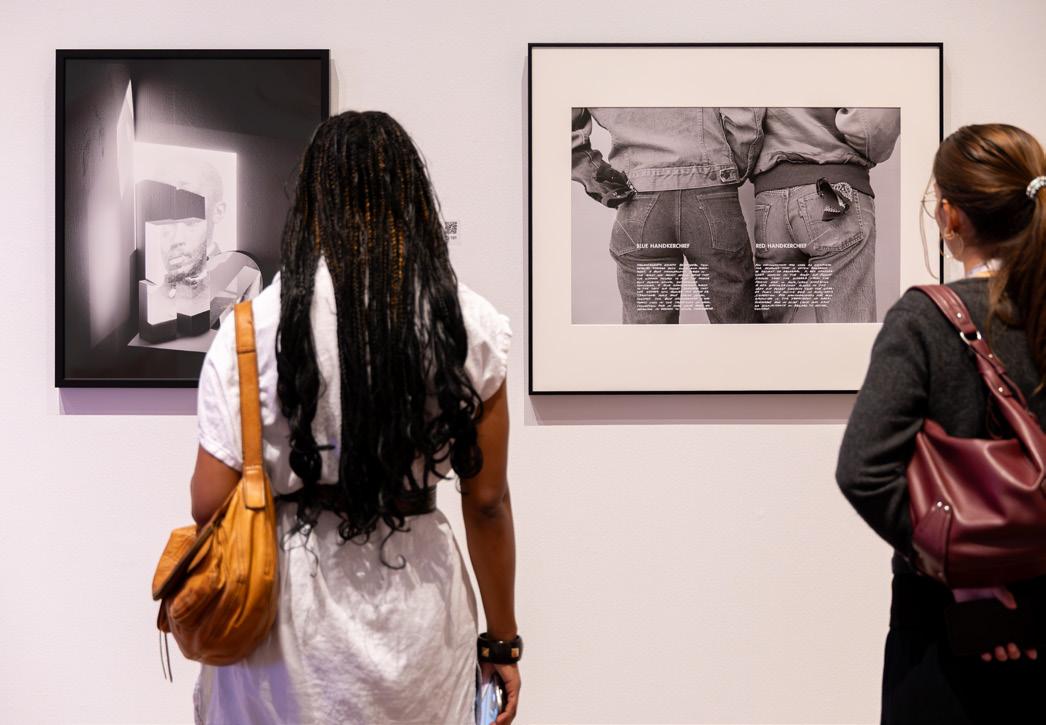
The day prior, my colleagues Ellie Roberts ’26 and Kendall Bocklet ’26 and I headed to the Frances Lehman Loeb Art Center to commence the weekend with Vassar student guides. The atmosphere was warm and inviting, and the guides eagerly shared their knowledge of the galleries with us. For me, a highlight of the Loeb was the intimate
upstairs photography gallery, where stereoscopes on display prompted visitors to engage with artworks up close. Over light refreshments, Vassar staff offered opening remarks and welcomed us to the Summit.
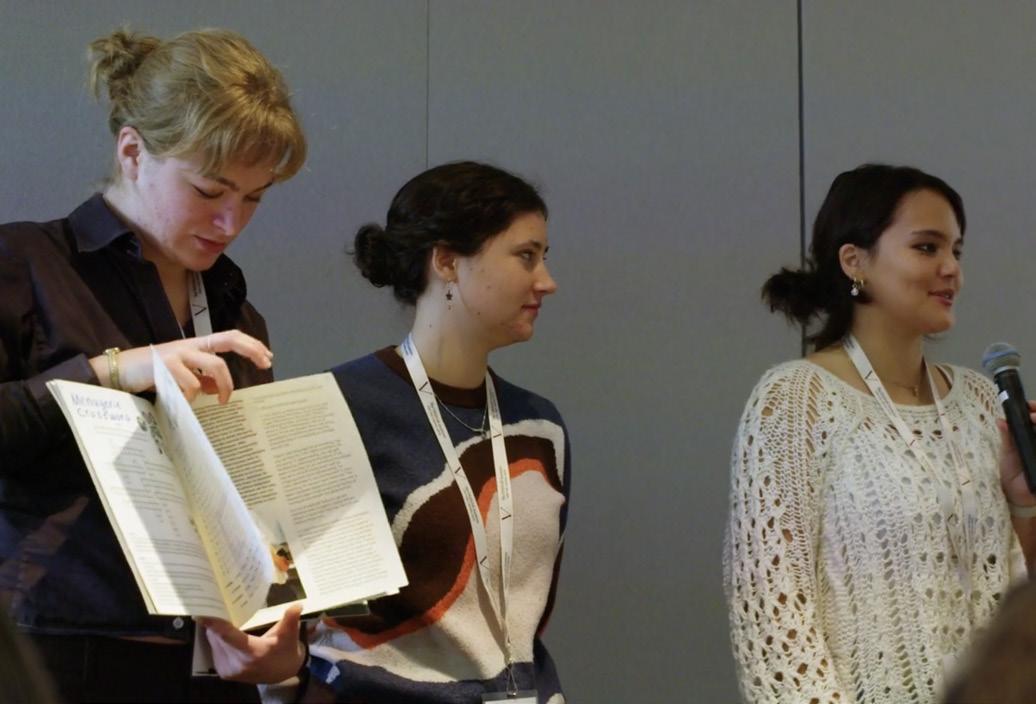
Saturday morning began with breakfast and networking, followed by introductions from all the student museum workers. Representing the Ruth and Elmer Wellin Museum of Art—Ellie, Kendall, and I highlighted our roles as docents and the museum programming we help organize—open studios, WellinKids, local school visits, art yoga, and more. Ellie and Kendall shared their work as K–12 education assistants, while I discussed my role as an editor of Collection Magazine.
I brought a copy of Collection no. 8, "Menagerie," and outlined its student-led editorial and publication process for the audience. The response was striking, with many attendees noting that their museums lacked a comparable student publication—the Wellin was the only institution in attendance with its own magazine. Others were surprised by the scope of docent involvement at the Wellin and the diversity of our roles.
We also learned about the other institutions represented, including Amherst College, Colby College, Princeton University, Smith College, Skidmore College, Tufts University, Vassar College, Wellesley College, and Williams College. Presentations from peer institutions further
broadened our understanding of the breadth of student museum work. Roles across campuses ranged from curatorial and collections assistants to student advisory board members, preparators, public programming interns, and gallery
with the potential to extend art and education far beyond gallery walls.
assistants. Despite structural differences, many of the museums shared the identity of a teaching museum, providing a common framework for considering public access, pedagogy, and audience engagement.
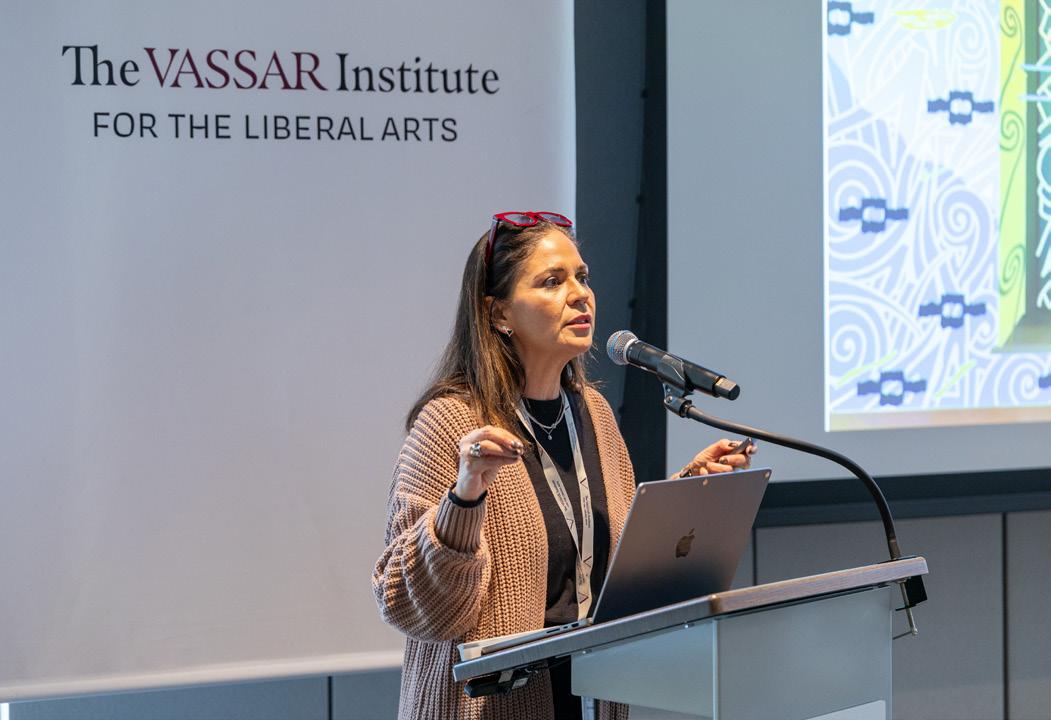
The two keynote speakers were an especially memorable part of SIMS. Miki Garcia, director of the Arizona State University Art Museum and a Vassar alum, opened with “Honoring People Through Objects: One Museum, Many Places.” Garcia examined institutional responsibility and the relationship between museums and the communities they serve. She noted that many museum spaces, while aesthetically refined, have become “placeless” white cubes. Museum design, she suggested, often reflects donor taste more than community identity. Even with expanded free admission and family programming across institutions nationwide, the core museum-going demographic remains largely white, highly educated, and urban. Garcia’s assertion that “art is the discipline of all disciplines” framed the museum as a diverse, interdisciplinary space
Karen Vidangos, Senior Social Media Manager at The Metropolitan Museum of Art, followed with her presentation, “From Galleries to the Grid: Museum Storytelling on Social Media.” Her presentation explored how museums translate their work into the digital sphere. Drawing on her experience at institutions including the National Portrait Gallery, the Solomon R. Guggenheim Museum, and the Metropolitan Museum of Art, Vidangos shared strategies for communicating about art online. She emphasized clarity of voice, thoughtful planning, and the importance of engaging wide audiences beyond in-person interaction. Social media, in this sense, becomes another site of access—placing artwork and museum events directly “on the grid.”
In addition to the keynote addresses, we also participated in breakout sessions, where small groups held conversations on a wide range of museum-related topics. The first session I participated in, “Museums as a Resource,” examined what our schools’ museums collectively provide: education, free admission, student employment, family days, gallery tours, artwork lending programs, as well as a “third space” that bridges academic, work, and home life.
A key tension we discussed was how to simultaneously draw audiences into museum spaces while also extending resources outward into surrounding communities. We reflected on Garcia’s emphasis on honoring people and communities through art and objects. I suggested that museum professionals might begin this work by engaging with communities as individuals— bringing artmaking practices, digital resources, books, and other materials directly to people, removed from the institutional space. Since then, I have continued to think about how museum education can extend past gallery walls to reach broader audiences, especially in light of Garcia’s observation that museum visitors tend to hail from similar demographic backgrounds.
In my second breakout session, “Student Engagement,” we explored several questions about student interaction and participation in teaching museums. We reflected on Vidangos' lecture on storytelling through social media.
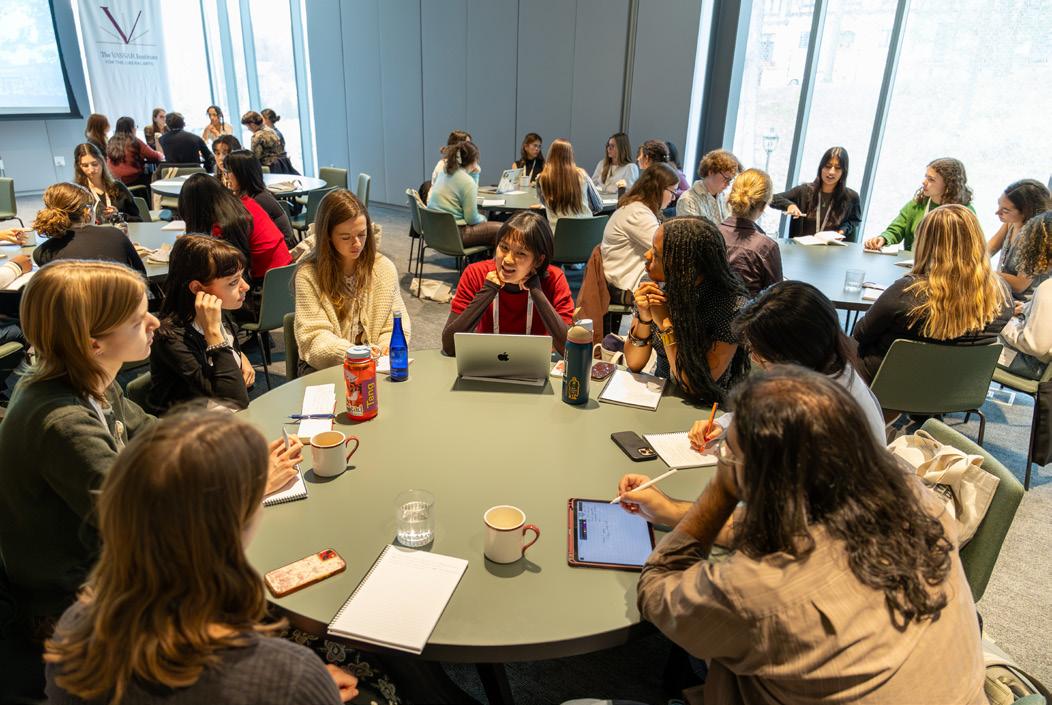
We also discussed strategies for making museum teaching more engaging without becoming overly didactic, while considering how sensory experiences such as sound, smell, and touch can make museum exhibits more accessible and enjoyable. I think that while visual language is the most common form of exhibit design, using one’s body and engaging multiple senses can be more powerful and immersive. By engaging the senses more equitably, museums can create experiences that resonate with audiences of diverse abilities and backgrounds.
Across all forty-five participants, the dozens of conversations at SIMS were all lively, thoughtprovoking, and impossible to fully recount. I was struck by my peers’ reflections on contemporary challenges facing our institutions, their ideas about the future of museums, and the role of student leadership.
The day concluded with a formal dinner, where I had the pleasure of sitting with Miki Garcia and other attendees. It was an extraordinary opportunity to reflect on the day’s discussions, deepen ties with fellow student museum workers, and connect with professionals in the field.
For the Wellin cohort, SIMS reinforced the distinctive strengths of teaching museums and their student-driven initiatives (shout-out to Collection Magazine!), while situating our work within a broader conversation about access, opportunity, representation, and institutional voice. We are grateful to Vassar College and the The Loeb for their generosity in hosting this conference, and hope to see SIMS continue to grow in the years ahead.
Our group debated whether student voices shape museum social media accounts—for example, at the Wellin, docents do not have access to the main public account but instead run @wellinhaps, a much smaller page highlighting student-centered programming.
John Lankes



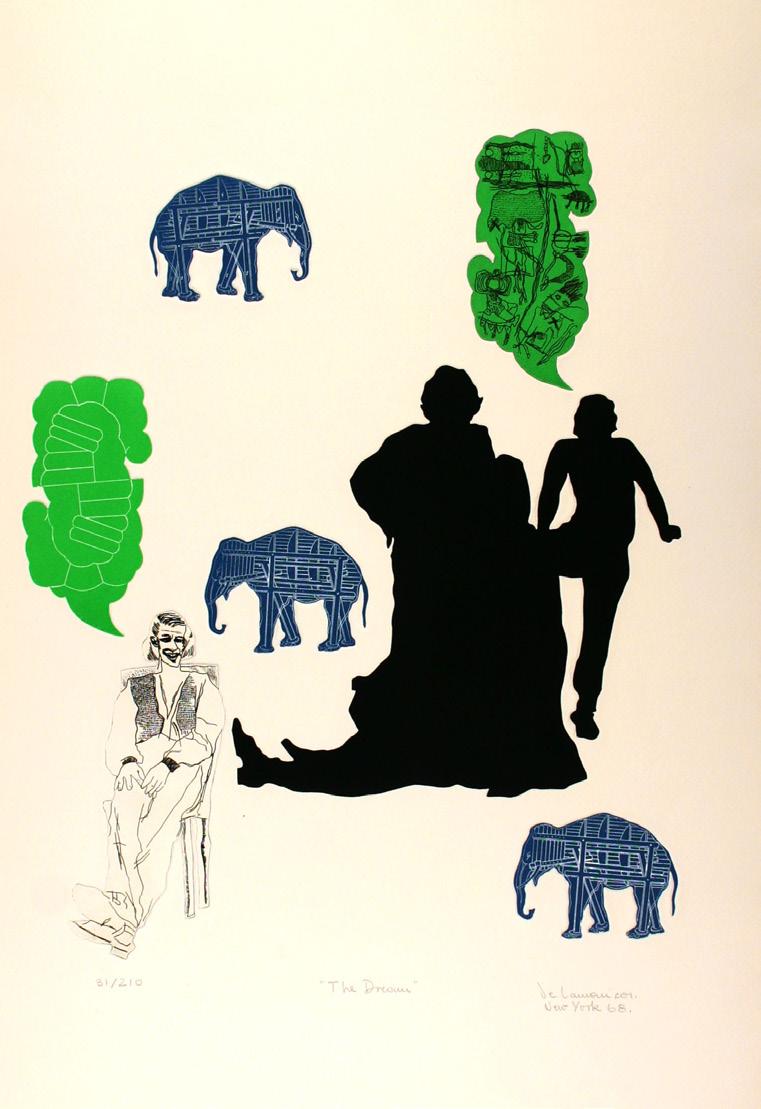
by Roberto De Lamonica

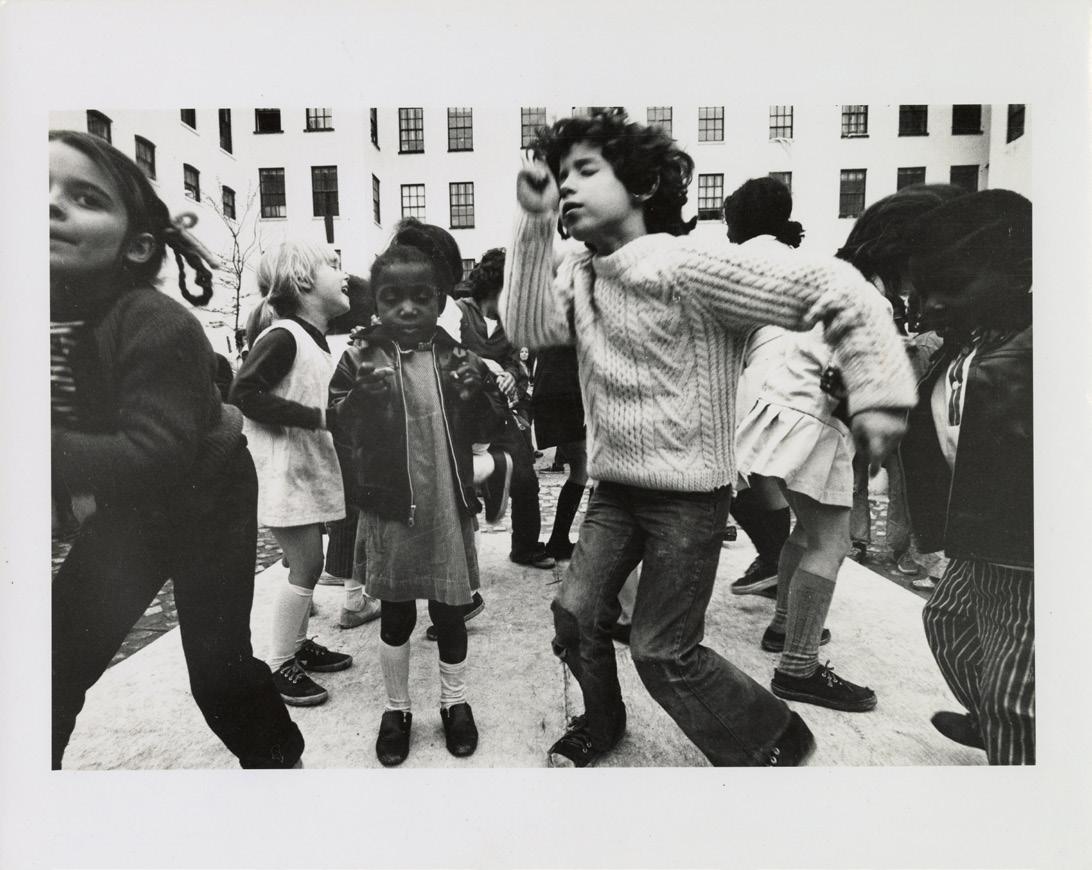
Children dancing on the covered fountain in Westbeth Park, Westbeth Artist Housing, New York City, USA
by Leonard Freed

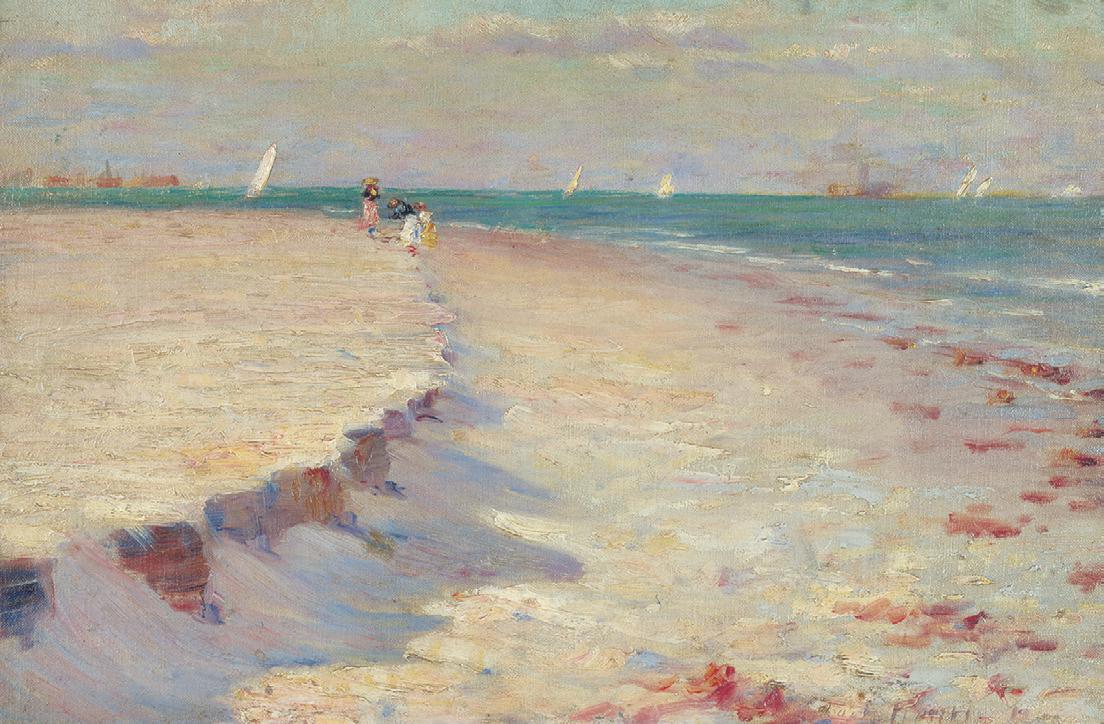
Curve of Beach, Atlantic City by Robert Henri

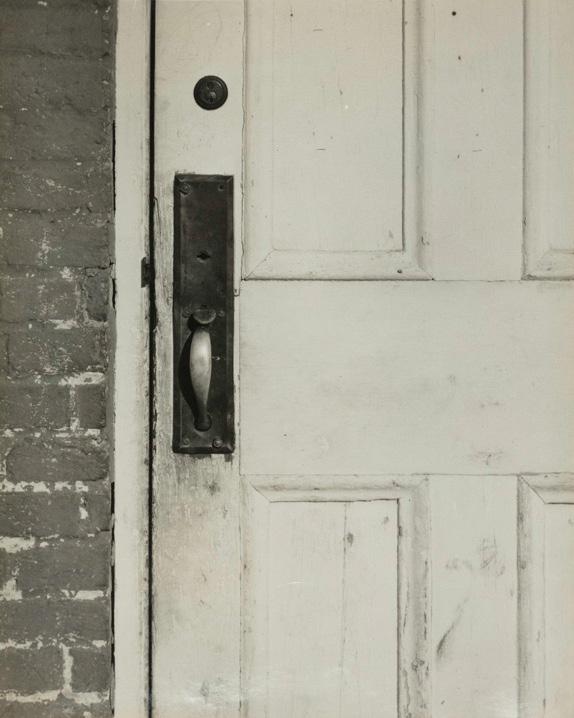
In Door to Pennsylvania Dutch School House (1950), Wright Morris presents exactly what the title suggests: a plain wooden door attached to a modest rural schoolhouse. Pennsylvania Dutch schoolhouses were typically one-room, simple, and functional structures built for practicality rather than ornament.
At first glance, the subject appears unremarkable—an ordinary architectural fragment isolated from its broader setting. Yet, as with much of Morris’s work, the image transcends simple documentation. By isolating details and emphasizing material presence, he invites viewers to consider what these objects have endured and the stories they might hold.
Morris was never interested in spectacle. Instead, he sought meaning in the overlooked and the commonplace. Other photographs of his in the Wellin Museum’s collection—such as churches, barbershops, dresser drawers, and fish houses— affirm this sensibility. Each image centers on everyday spaces and objects, revealing their quiet significance and embedded histories.
As viewers, we are invited to witness this intimate scene but with a door that remains closed. I wonder: What lies beyond, and why focus on this detail? What do we not see in this frame? The weathered wood becomes a quiet testament to those who once passed through the doorway. Morris elevates this humble object into a symbol of cultural continuity and quiet resilience.
As a young photographer, Morris traveled extensively across the United States—from California to Cape Cod—an experience that profoundly shaped his artistic vision. Journeying
through small towns and rural landscapes, he encountered a nation still affected by the Great Depression. Economic hardship had left visible traces: abandoned farmhouses, weathered barns, vacant storefronts, and sparsely furnished interiors. Yet Morris saw in these spaces a poignant beauty and a dignity rooted in endurance. The American landscape, particularly its rural regions, revealed to him a layered history embedded in objects and architecture.
Reflecting on this formative period, Morris wrote,
“I saw the American landscape crowded
with ruins
I wanted to salvage. The Depression created a world of objects toward which I felt affectionate and possessive. I ran a high fever of enthusiasm, and believed myself chosen to record this history, before it was gone.”
His words reveal not only nostalgia but urgency—a deep emotional investment in preserving the material culture of a changing America and a belief in photography’s power to hold memory in place.
Seventy-five years later, Morris’s mission remains true, inviting Hamilton students and local community members to wonder and reflect. What objects do you hold on to, and what stories might they carry? In the face of a changing America, what might you capture with a camera?

1. Hubert Massey is the only known, African American commissioned artist in America.
a. Fresco
b. Installation
c. Textile
d. Performance
2. Stan Squirewell works with vintage photographs collected from museum archives, friends, and family. Squirewell’s practice frames ancestry as a spiritual concept closely aligned with Afrofuturism. Which African American fiction writer is widely regarded as a foundational figure of Afrofuturism?
a. Nnedi Okorafor
b. Octavia Butler
c. Richard Wright
d. Toni Morrison
3. Akili Ron Anderson has spent his life involved in the African Commune of Bad Relevant Artists (AfriCOBRA), a groundbreaking collective that defined the visual aesthetic of the Black Arts Movement. When and where was this collective started?
a. 1954, New York City
b. 1968, Chicago
c. 1975, Philadelphia
d. 1981, Los Angeles

4. As seen in Pinocchio Knows III & Pinocchio Knows IV + Free Breakfast Program 1.8 , Shaunté Gates’ work focuses on 21st century subject matter, but also draws heavily on the century-old legacy of Surrealism. Surrealism can be defined by:
a. A late 19th–early 20th-century decorative style inspired by organic forms and flowing lines applied across design, architecture, and visual culture.
b. An early 20th-century movement responding to WWI that rejected logic and convention through absurdism, spontaneity, and material experimentation.
c. A late 19th-century movement that focused on modern life and perception, with an emphasis on capturing light and atmosphere using loose brushwork.
d. A 20th-century artistic and literary movement that sought to access the subconscious through dreams, bizarre juxtapositions, and irrational imagery.
By Lily Watts
5. Drawing from urban culture—especially graffiti— Wesley Clark layers surfaces with various forms of mark-making, often using industrial materials such as sealants, stains, and solvents. While modern graffiti is often associated with the 20th century, humans have been marking walls for thousands of years. Some of the earliest examples can be found in .
a. Hieroglyphs
b. Roman frescoes
c. Cave paintings
d. Clay tablets
6. Larry Cook found inspiration for the subjects in his portraits Midnight Mirage (2023), Serenade (2023), and Tradewinds (2023) at:
a. Night clubs
b. Speakeasies
c. Outdoor concerts
d. Jazz lounges
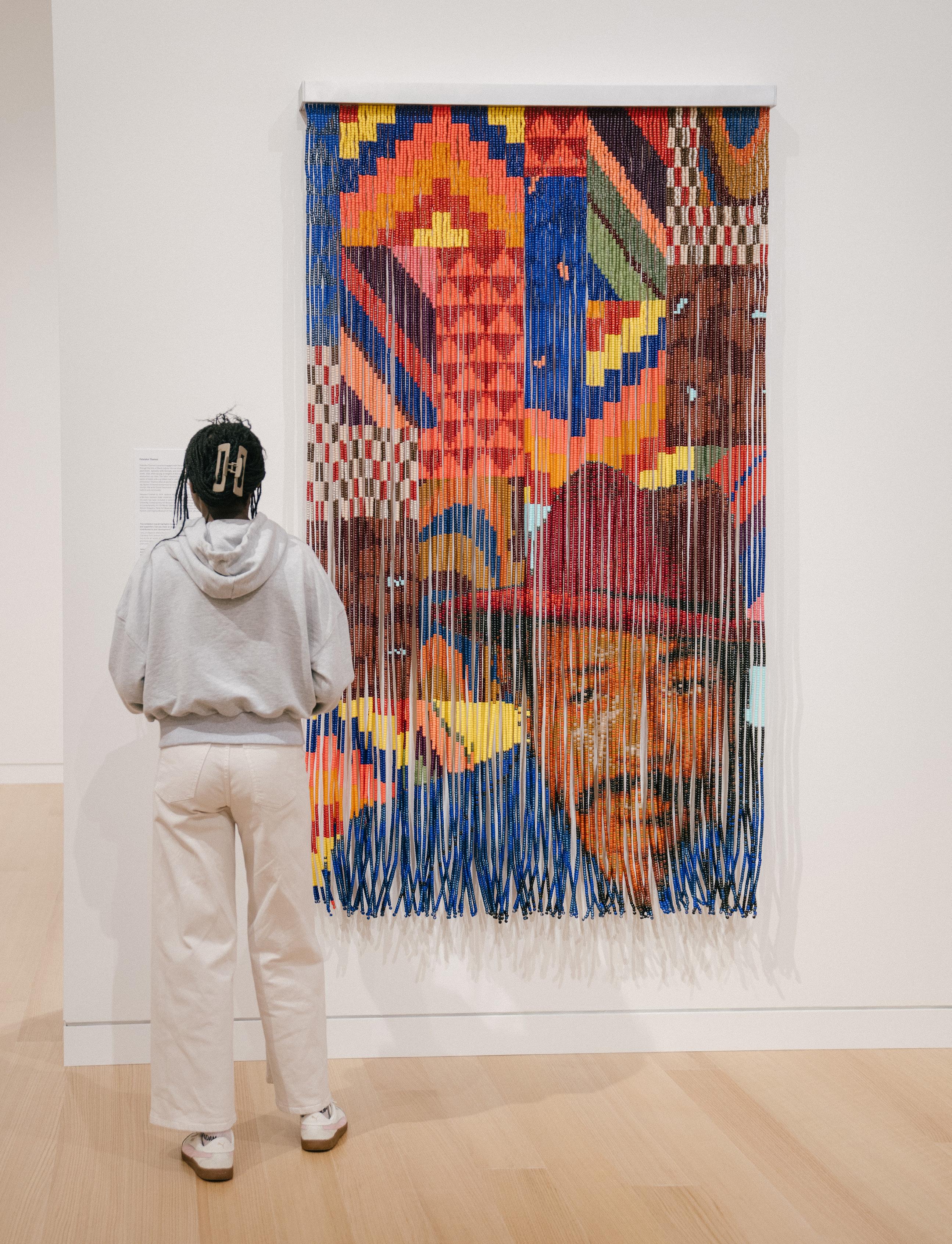
7. Felandus Thames creates vibrant patterns and intricate portraits from colorful pony beads, a popular hair accessory for braids, twists, and locs, often enhancing styles especially in Black hair styling. Beads originated over 100,000 years ago as some of the earliest human personal adornments, crafted from natural materials like:
a. Shell
b. Stone
c. Bone
d. All of the above

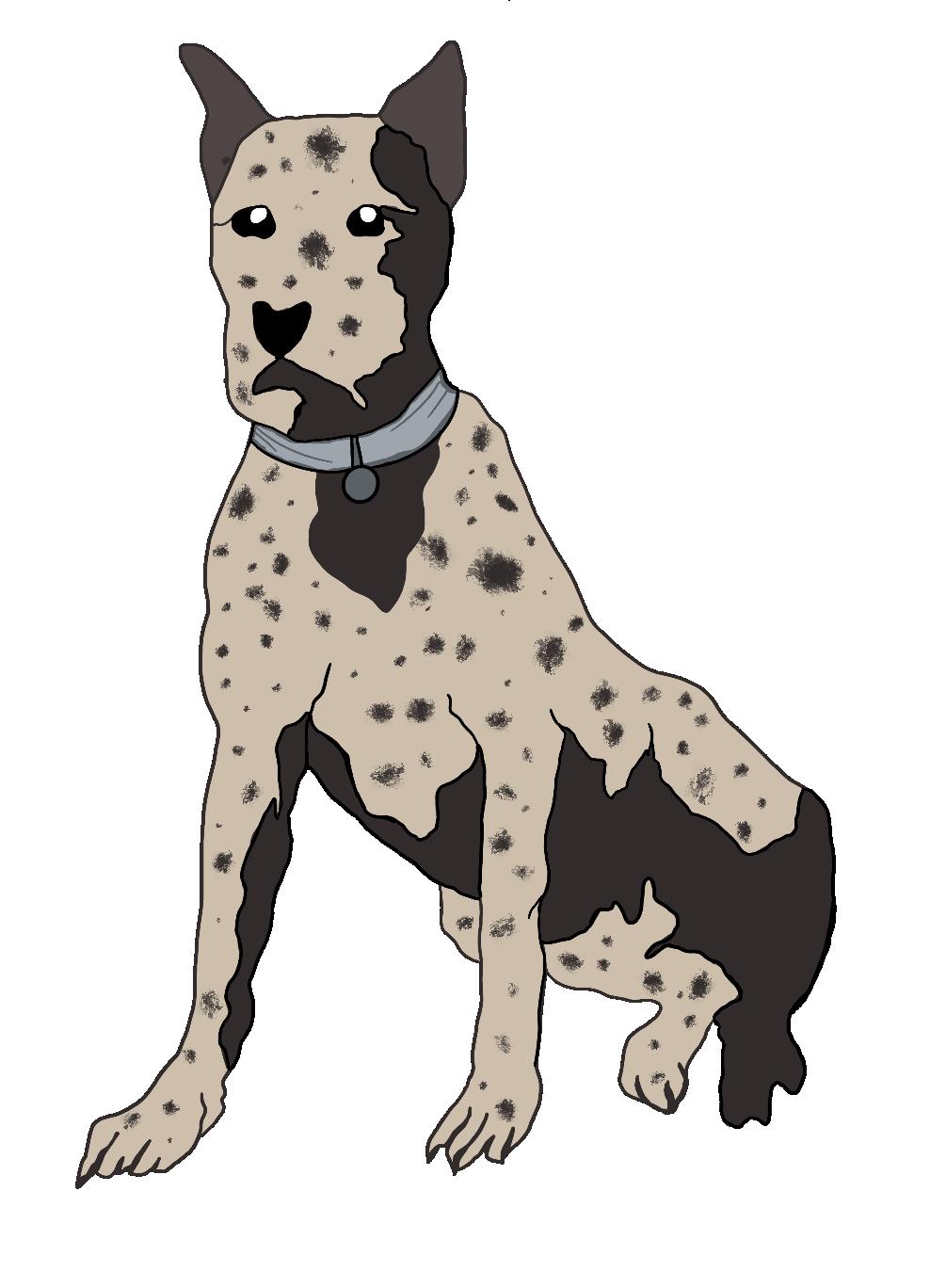
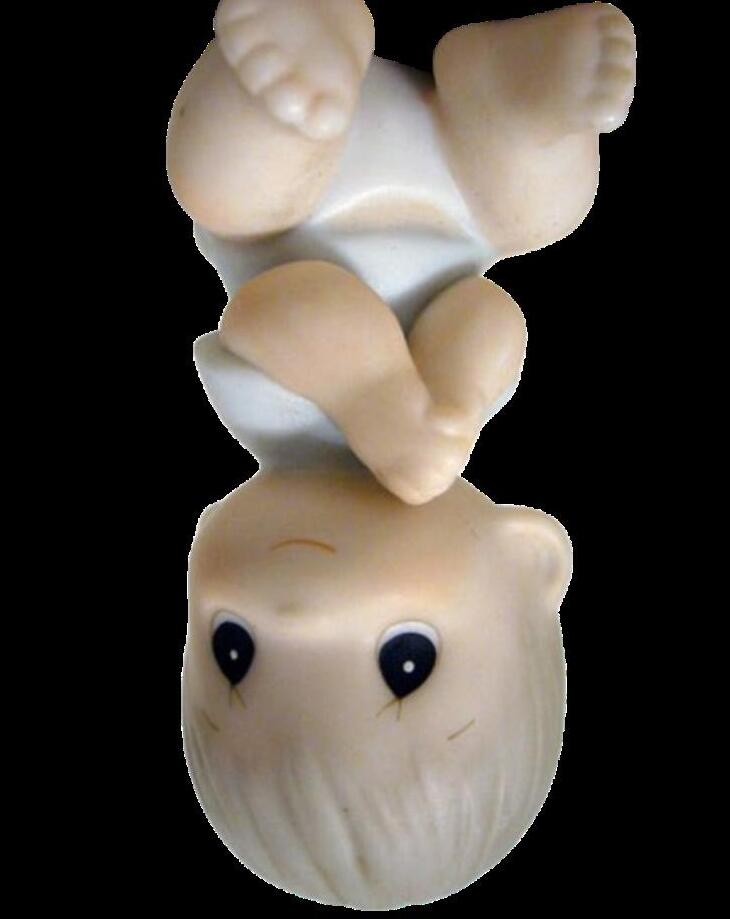







My grandparents' home is full of kitsch art— sickly sweet and sentimental, dolphins leaping and whales breaching clear blue ocean, white sand beaches, sparkling rainbows type kitsch. Your grandparents’ house, too, may have kitsch hung on the hallway wall next to your 8th grade yearbook photo. Or if you are lucky, a more dignified photo from high school graduation. My grandparents indulge in tropical beachy Hawaiian kitsch, though they now reside some 3,800 miles away from Hanalei Bay, Kauai where they lived for many years. People you know may have doe-eyed puppy dogs, sparkling rose gardens, or porcelain angels. All of these items fall under the same broad category, and have been relegated to the same fate in the world of art.
Maybe you study art history. Maybe you care about art, and gallery spaces and museums. If so, you may turn your nose up at kitsch as “bad art.” The word itself originated in the 19th century among German art dealers, and was used to describe bad art. Particularly, “kitsch,” literally meaning “trash” in German, described art that was fake, cheap, and intended for entertainment. However, kitsch has long been entangled with the world of high art. American art critic and essayist, Clement Greenberg, defined kitsch in his seminal essay Avant-Garde and Kitsch written in 1939. In it, Greenberg defines kitsch by its relation to mass production and the industrial revolution—an invariable consequence of which is formulaic art for the many. Kitsch, to Greenberg, is a product of an “ersatz culture.” This essay solidified the status
of kitsch for a large part of the 20th century. However, as the 20th century progressed, so did mass media, culture, and production—its presence becoming more and more influential on the visual culture of the time. Thus, the aesthetics of kitsch became increasingly apparent in fine art. Kitsch, more modern scholars argue, appeals to nicer sensibilities and sentimentality but is looked down upon because of this. Kitsch has historically been barred from what we consider serious art spaces, and resides largely in private spaces like homes. Philosopher Robert Solomon writes:
“kitsch seems to be flawed by... the fact that it stimulates the very best emotions the—“soft” sentiments of kindness and sympathy... But the best emotions seem to be the worst emotions where art is concerned, and "better shocking or sour than sweet," has become something of a rule of thumb for artists and a criterion of good taste...”
Kitsch, additionally, has a reputation for being low-brow, commercially appealing art. Kitsch is seen as cheap, easily accessible, and frankly, easy to understand. To critics like Greenberg, works that are kitsch lack the nuance and thoughtfulness which define “high art.” In other words, kitsch isn’t meant to be thoughtprovoking.
Why then is the genre so talked about? Kitsch, despite its poor reputation, has been incredibly influential in modern and

contemporary art, much to the chagrin of its critics, I’m sure. Its near constant criticism is almost proof of this fact. If critics and champions of “good taste” must constantly differentiate between what is kitsch and what is not, then it has, in some ways, ingratiated itself into high art. Despite this, calling something—a painting, figurine, or photo—kitsch, could still be considered an insult. Kitsch and “serious” art have always been intertwined, but with the advent of “pop art” it became obvious that the two modes were growing increasingly close. From around the 1950s onwards, creatives started to take a serious interest in pop culture and consumer culture. Artworks by artists like Jeff Koons and Andy Warhol walk the line between kitsch commercialism and high art sensibilities. This new approach opened the door to a new way to use kitsch—a way that patches together these traditionally disparate aesthetics.
and introspection of traditional “high art.” Kitsch deserves more sympathy, more nurturing. It has the power to affect people’s emotions, to remind them of places they had once been, or to make them laugh. I don’t think we can discount it from “serious” art. When I look at the pieces on my grandparents’ walls, I see a collection of images, places, people they love and want to acknowledge. I love kitsch, and I think you should too.
Contemporary artists, more than ever, utilize the aesthetics of kitsch—including allusions to pop culture, bright colors, sentimental images, and even internet references. Though kitsch has not entirely shed its negative connotations, it has made strides towards becoming a seriously considered art style. Kitsch has melded the characteristics it was condemned for— commercial appeal, tongue-and-cheek humor, and sentimentality—with the thoughtfulness
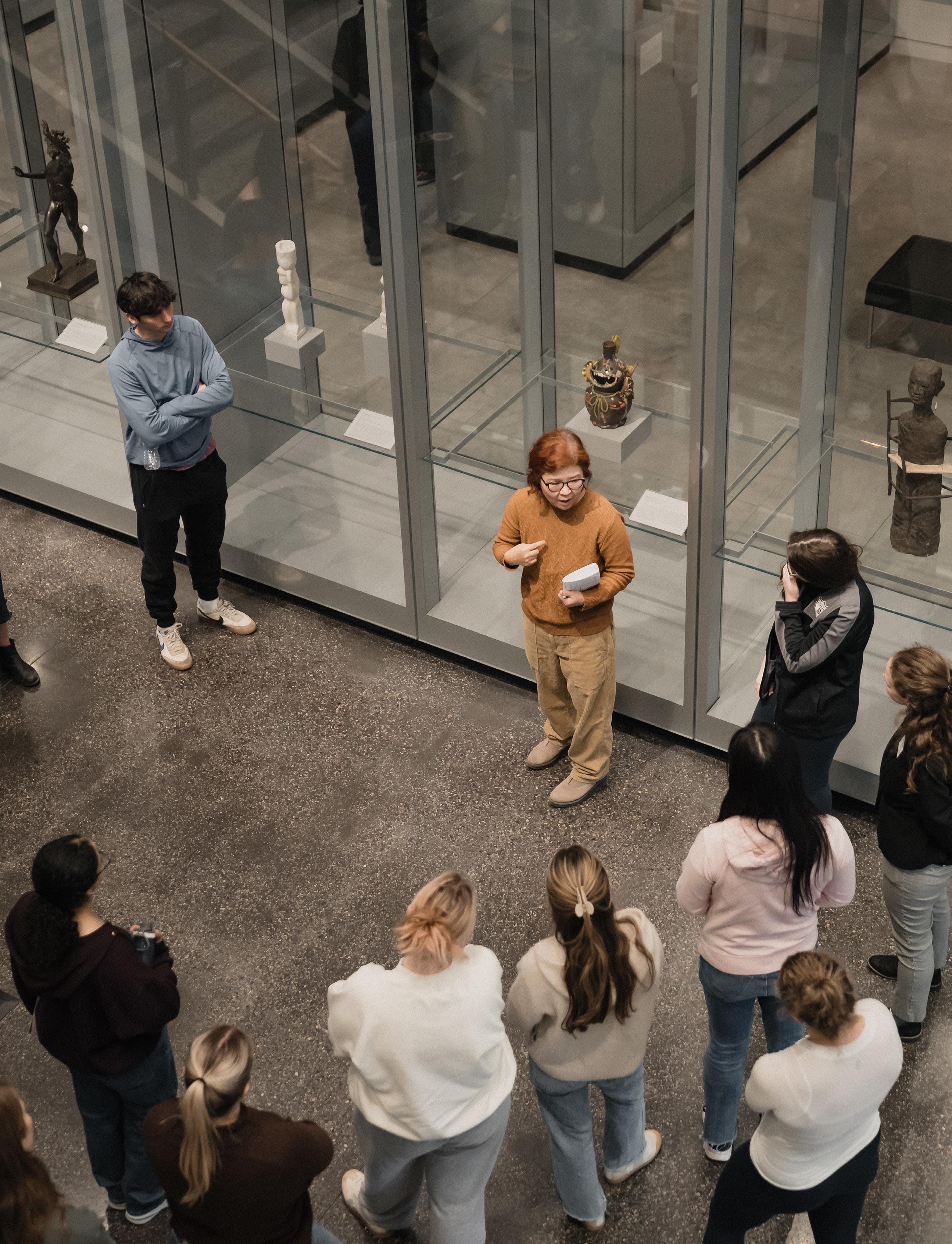
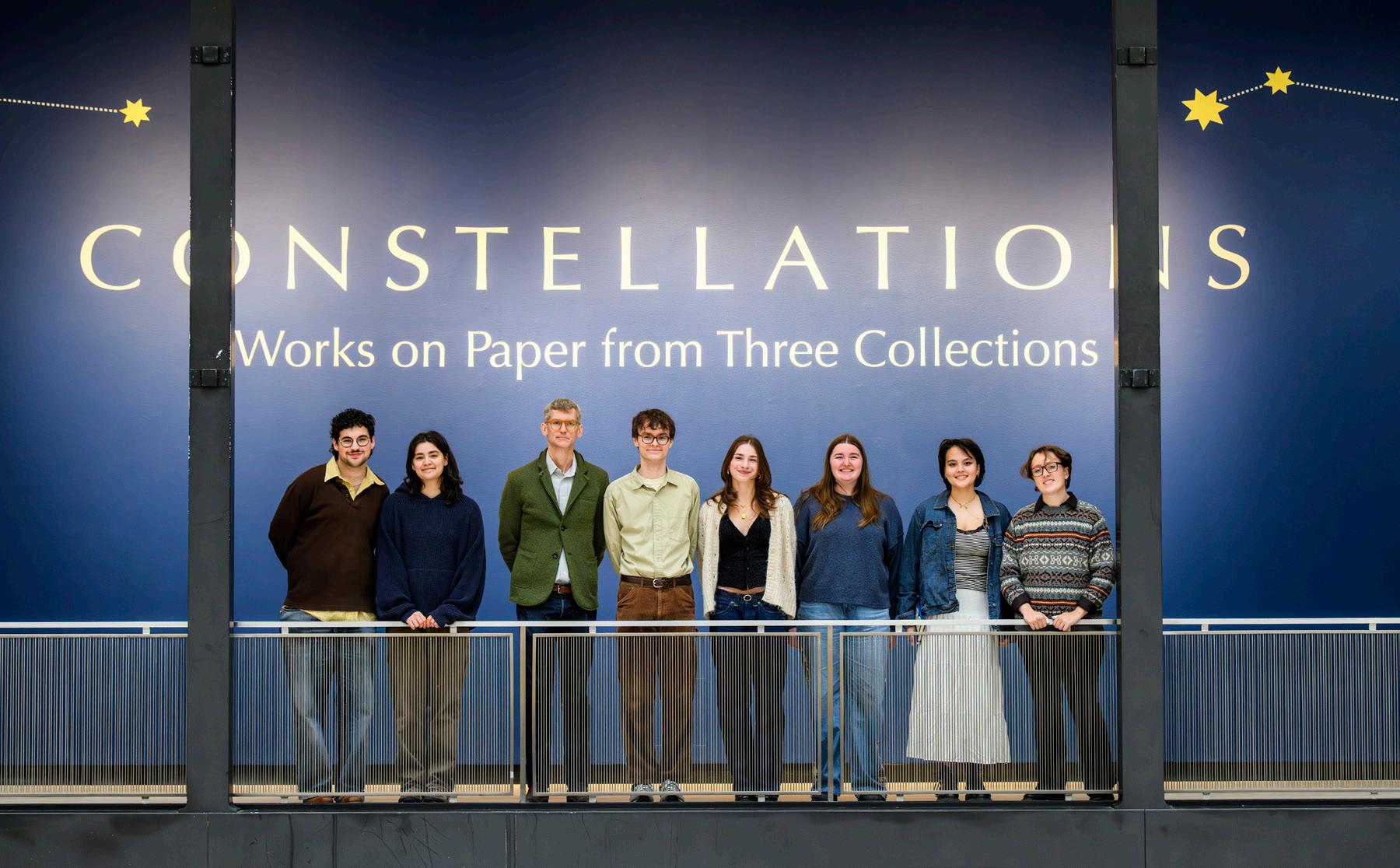


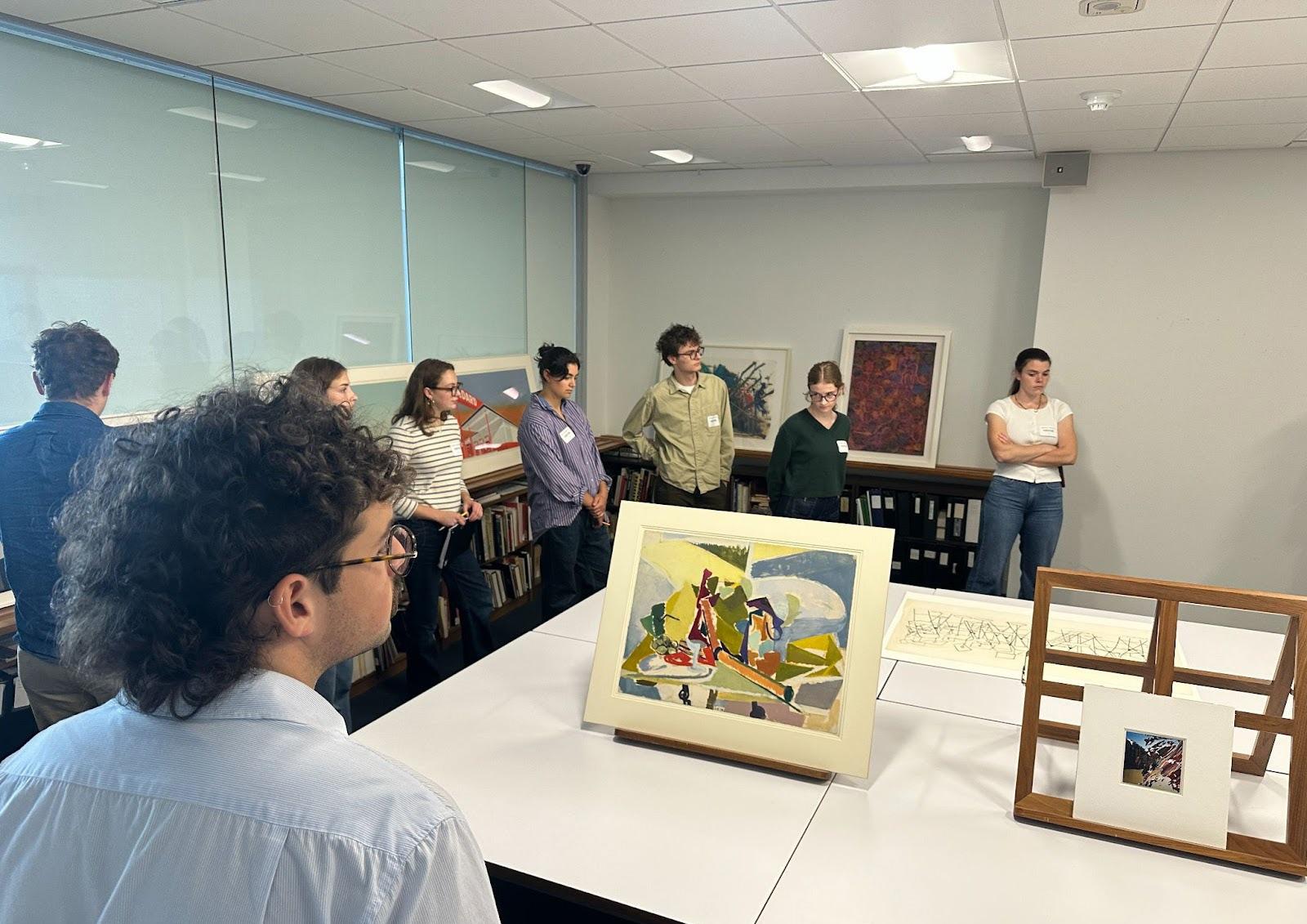
Whether you’ve wandered through the Met, the Wellin Museum of Art, or a small hometown gallery, you may have wondered how an art exhibition comes together. Last semester, fifteen Hamilton students stepped into the role of curators in the Art History class “From Collecting to Curating: Works on Paper from the Michael Shapiro ‘71 Collection.” Of the students in the course, eight also work at the Wellin, seven as docents and one as a collections student assistant. The course was co-taught by Professor of Art Robert Knight and Director Emeritus of the Los Angeles County Museum of Art and the High Museum of Art (Atlanta), Michael Shapiro (Hamilton Class of 1971). The class offered a unique opportunity to move beyond textbooks and explore the world of museum curation and collecting, combining theory with hands-on experience. Students were able to engage with works on paper from multiple collections and collaborate on the creation of real exhibition materials, including wall text, graphic design, layout, audio and visual supplementals, and an educational interactive space for youth. More than a seminar, the course was a behind-the-scenes look into how art is interpreted, presented, and brought to life for audiences of all ages and backgrounds.
allowed us to thoroughly explore and understand the steps required to construct an exhibition. The skills we learned were applied to our culminating project, the curation of an exhibition to be held at Munson Museum of Art, consisting of 24 preselected works of art on paper from the collections of the Wellin Museum of Art, Munson, and Michael and Lisa Shapiro. Initially, we wrote short object responses after an up-close look at the works selected from the Wellin’s collection. The class then moved into more substantial writing and research surrounding the pieces in the exhibition, each student writing a catalogue essay about a specific piece of artwork and the artist behind the piece. These writings were later included in the final exhibition’s supplemental materials.

The class participated in a series of projects that
A large portion of the class’s hands-on experience came from a three-day field trip to New York City, where we met with art professionals, visited galleries, toured museums, and saw artists’ studios. The first of many destinations was the Museum of Modern Art, where we had the opportunity to go behind the scenes into the art storage rooms, where a number of artworks were pulled for an up-close look. Many of the chosen artworks were made by the same artists whose work was a part of the final Munson exhibition, giving students a larger scope of those artist’s projects. Another destination was The Dedalus Foundation, started by Robert Motherwell, where students conversed with President and CEO Katy Rodgers about Motherwell and his influence on modern artwork. One of the leading American artists of the twentieth century, Motherwell worked with a wide range of imagery, reflecting his personal awareness of the complexity and richness of human experience. His paintings encompassed a broad, expressive range, from his political and passionate Elegy to the Spanish Republic series to his otherworldly and serene Open series. Generously, the foundation provided a selection of Motherwell’s artwork from which students in the class were able to choose a piece to be donated to
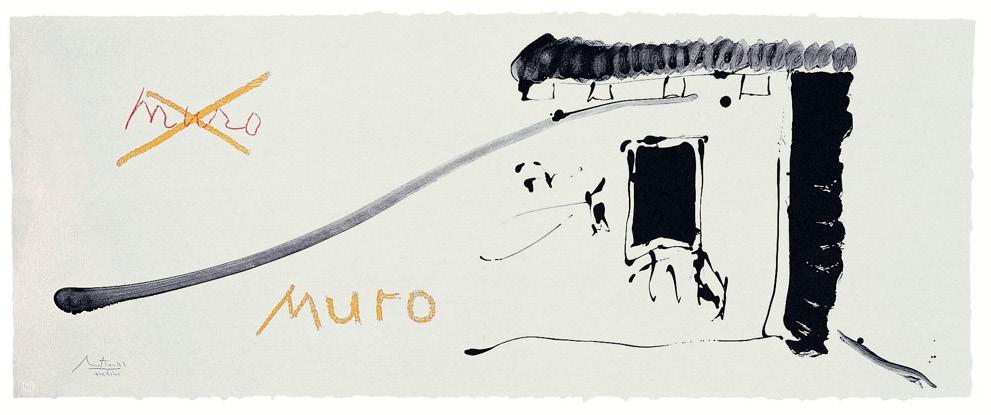
the Wellin. The selected piece, Black Wall of Spain, made in 1983, a lithograph on handmade paper, was the first piece to be acquisitioned into the Wellin’s collection in 2026.
To emphasize the importance of understanding how a museum’s audience and mission influence their collecting decisions, students were challenged to pitch artworks to be considered for purchase by the Wellin and by Munson. While in New York City, we visited five locations, from print centers to galleries, to view possible acquisition objects. The first location that we visited was Two Palms, an art studio and publisher working with world-renowned contemporary artists to publish prints and sculptural works. Master printmaker Craig Zammiello, an artist at Two Palms with work held in the Wellin’s collection, gave students a tour of the space. The class then visited Jack Shainman gallery, where Sophie Lewis, Hamilton class of 2022, shared information about possible acquisitions. The gallery has a reputation for introducing American audiences to international artists and developing young and mid-career artists, who often go on to gain acclaim worldwide. The final three spaces that we visited were Michael Rosenfeld Gallery, specializing in modern and contemporary works; Print Center, a nonprofit organization promoting the importance of printmaking; and Yancey Richardson Gallery, a dealer of fine art photography. In total, forty-three works were presented for acquisition; we voted in a series of rounds with intermittent discussions to narrow down the selection until eight works
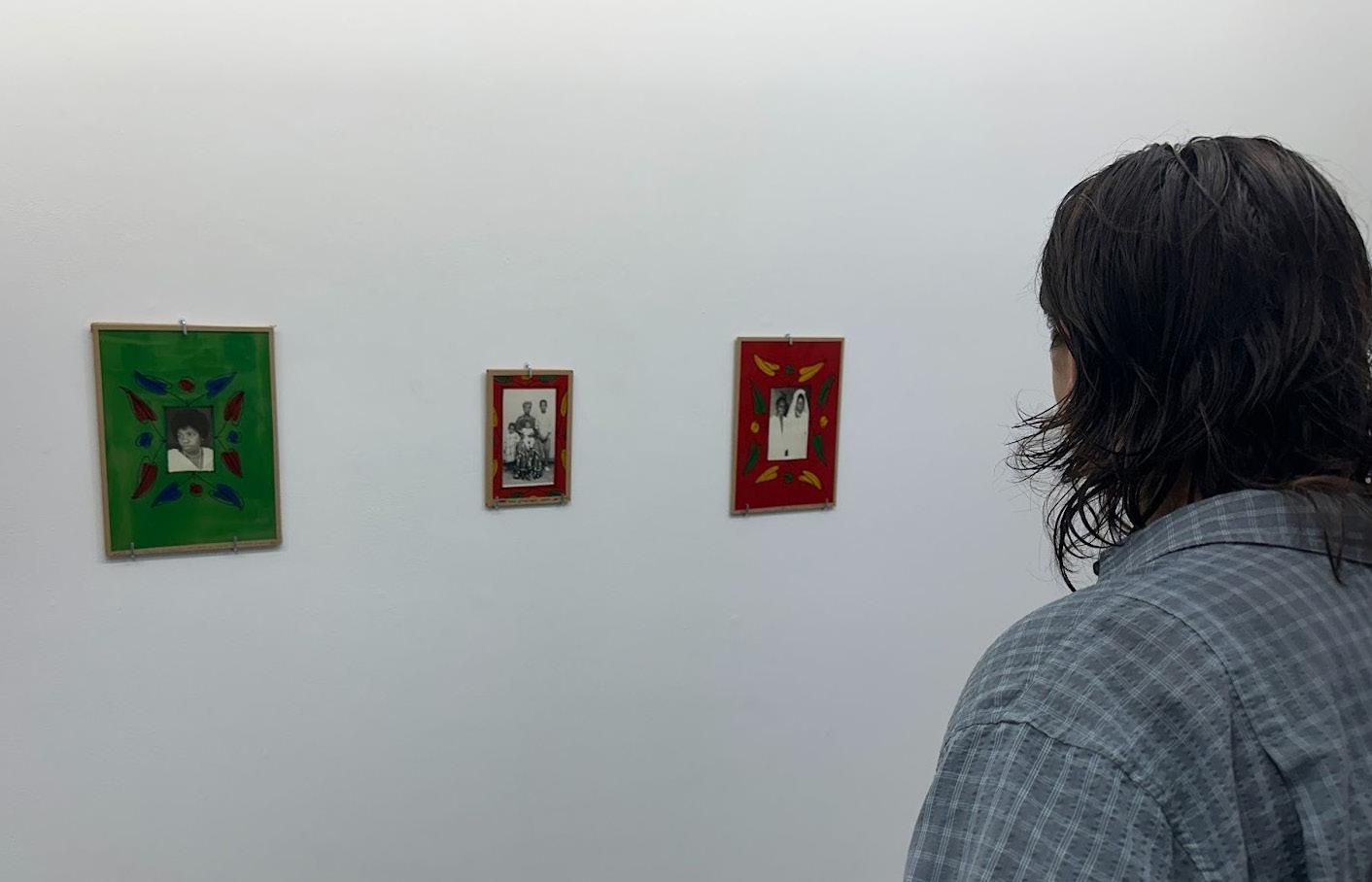
were left. Students then paired up and selected an artwork to present to the museums, including information about the piece and how it would enhance the museum’s collection.
Students then presented their chosen artwork to curators and educators from the Wellin’s and Munson’s teams, with information about the artist, the piece, and how it would fit within the intended museum’s collection. The final two selected artworks were Just Thinkin’ made in 1972 by Benny Andrews, selected by Munson, and Photo Mariage- Diane, made in 1967/2008 by Malick Sidibé, selected by the Wellin. Malick Sidibé was
a Malian photographer whose work documented Mali’s independence, including ceremonial moments from his culture, and played a pivotal
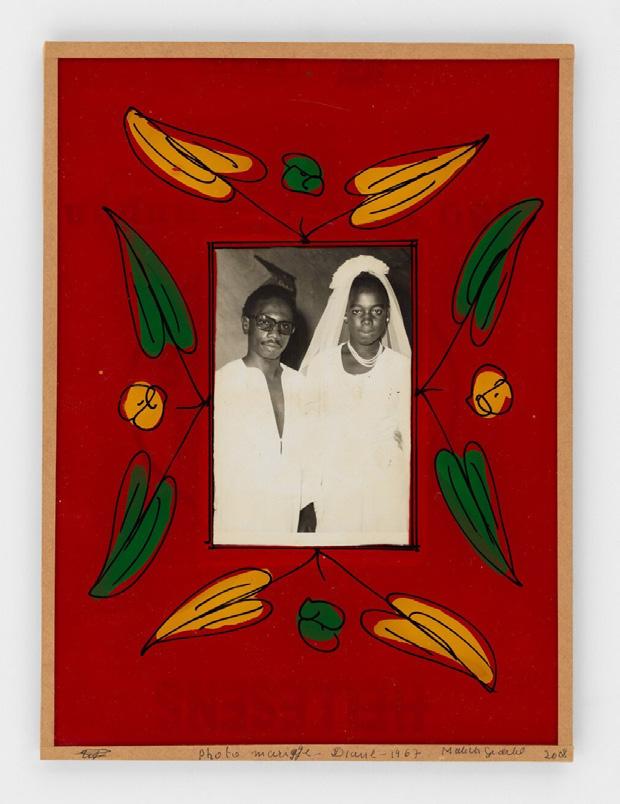
role in shaping the appearance of the African diaspora. The piece itself is a combination of photography, being the image of the couple during their wedding taken in 1967, and a traditional WesternAfrican underglass painting technique ‘Souwere,’ done in 2008. The piece both compliments and expands the museum’s collection of photographs.
To construct the final exhibition, we split into teams, each with a different role in the project. The layout team worked through numerous physical and digital 3-D models to group the 24 works in a way that created an elevated viewing experience. They then decided where each group would be placed in Munson’s gallery, while also providing insight about how pieces should be displayed, such as ideal heights for hanging twodimensional pieces of art and ideas about display cases for three-dimensional works. The graphics team used digital tools to design the outward facing wall of the exhibition, choose wall colors, create categorical graphics (such as a map of the world with artist birthplaces marked), and make designs that aided and uplifted the exhibition. The wall text team worked on numerous drafts of labels to offer insight into exhibition themes and concisely depict each grouping of artworks, as well as constructing the full exhibition catalogue, composed of the previously written catalogue essays and published as a digital and physical book. The education team worked on constructing a room to serve as an interactive space geared towards younger audiences, including a ‘Create
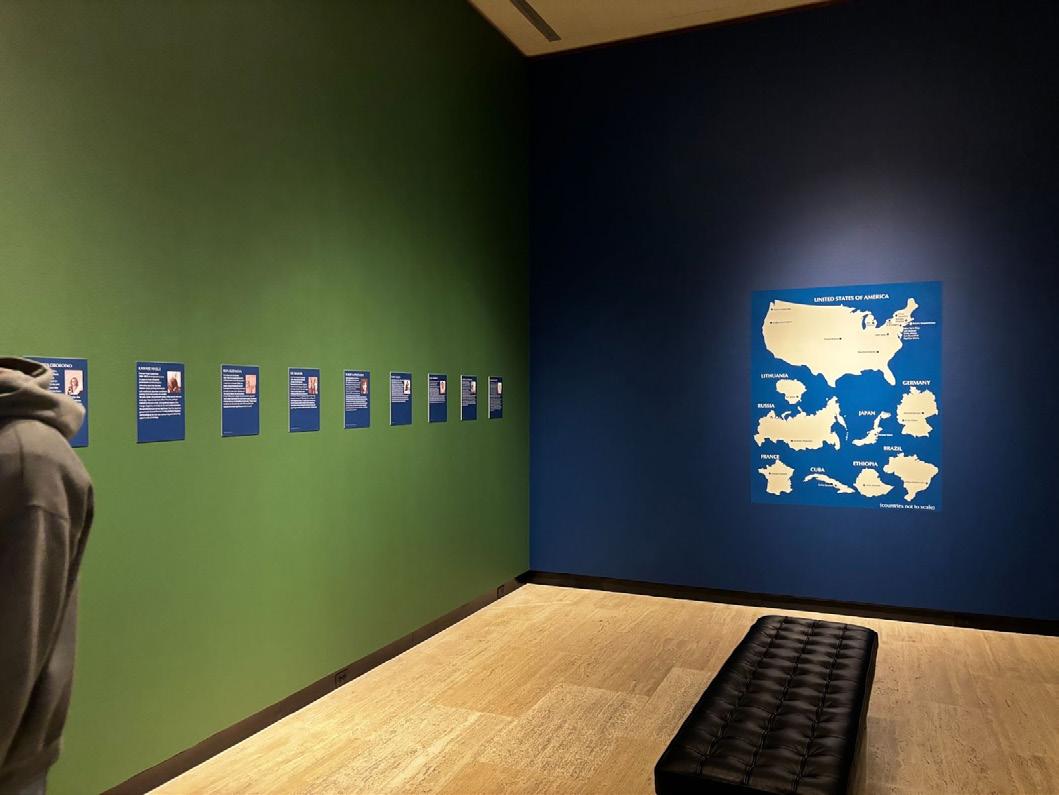
Your Constellation’ interactive whiteboard with magnets of the artwork as well as stencils inspired by the pieces. The audio visual team worked on a number of projects, including obtaining the rights to photographs of each artist, acquiring supplemental videos of artists and processes, and creating a documentary detailing the class’s journey. The teams worked both independently and collaboratively, with consistent feedback from Munson, to create a cohesive final product.
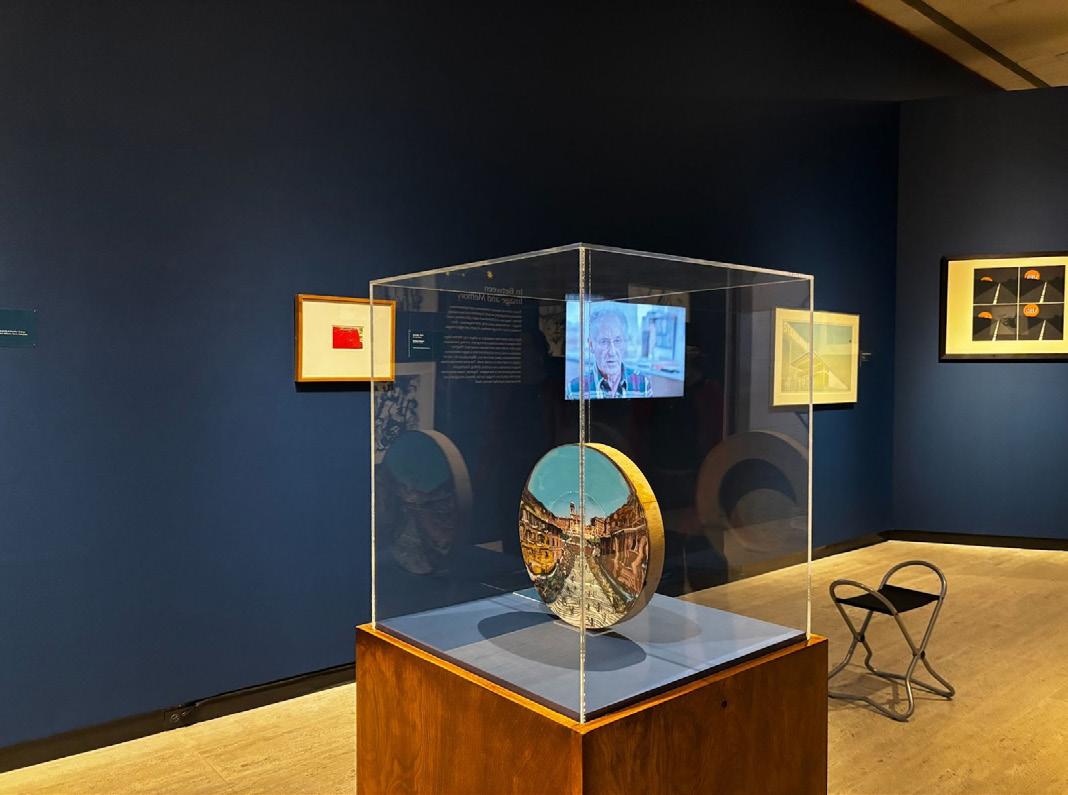
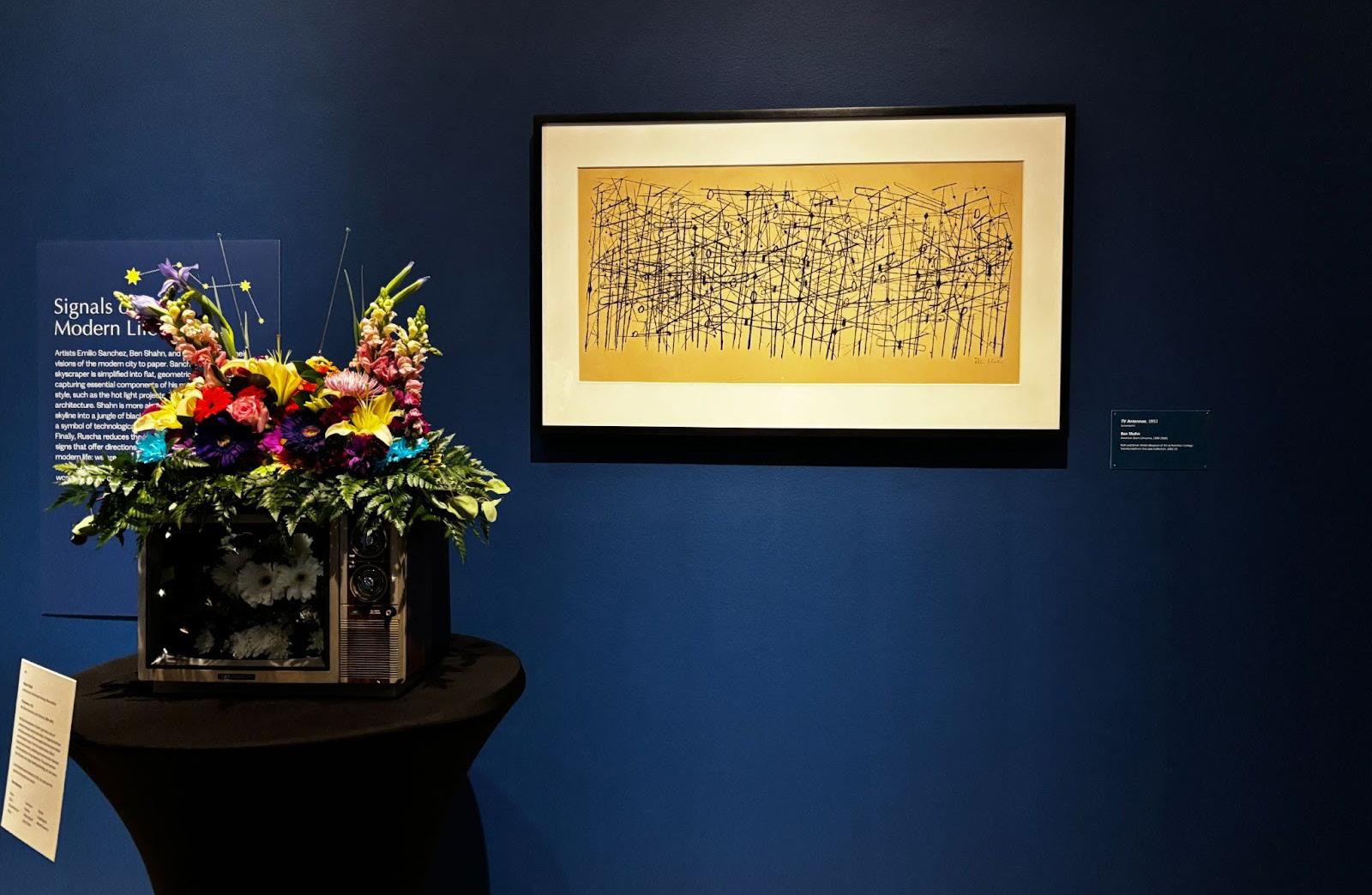
Constellations: Works on Paper from Three Collections opened on February 20th, 2026, with an opening reception held on the 22nd. The exhibition stepped out of the traditional norms of Munson’s exhibition style, combining drastic dark wall colors, unconventional sightlines, geographical and media indices, group texts for artwork instead of individual tombstones, and constellation graphics on wall labels. We made many of these decisions with great care in order to elevate the exhibition and facilitate invigorating discussions in response to the artwork. Typically, Munson hangs each artwork’s middle at a 60” sightline across the entire exhibition, however, we chose to hang works at three different heights: 60” aligned with the top, middle, and bottom of the piece. Aesthetically, it was a decision made to mimic the look of a constellation, as if the artworks
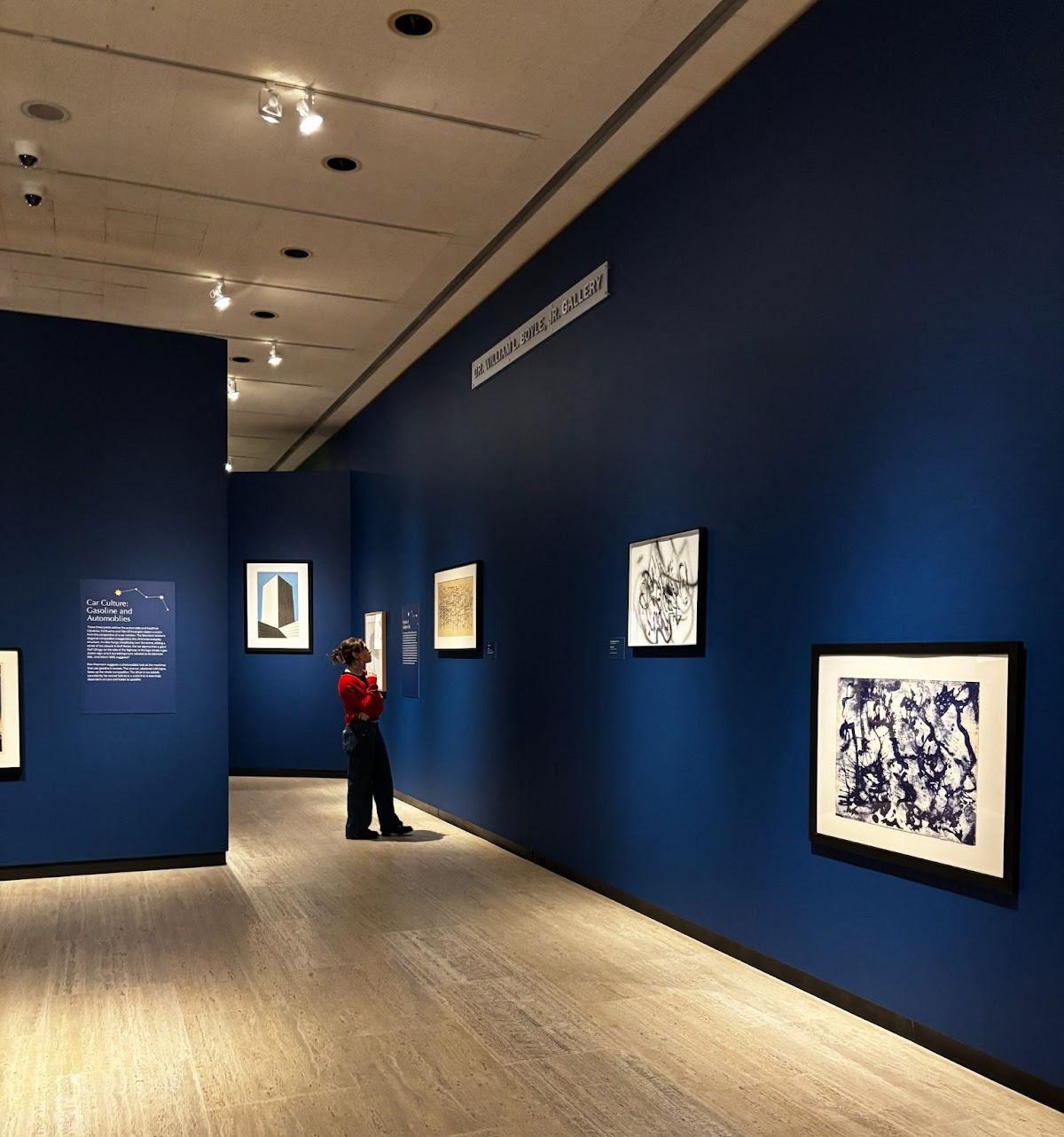
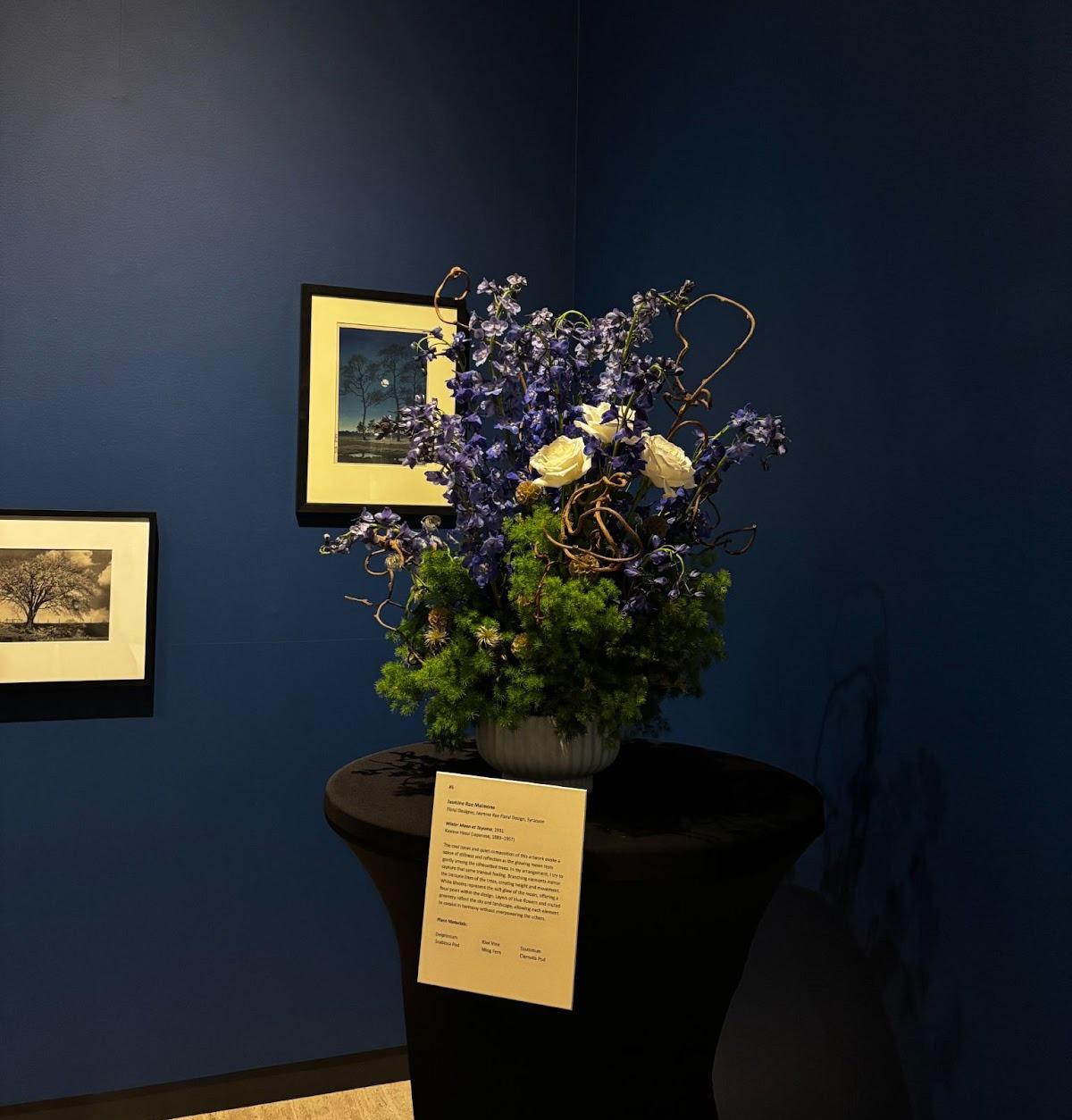
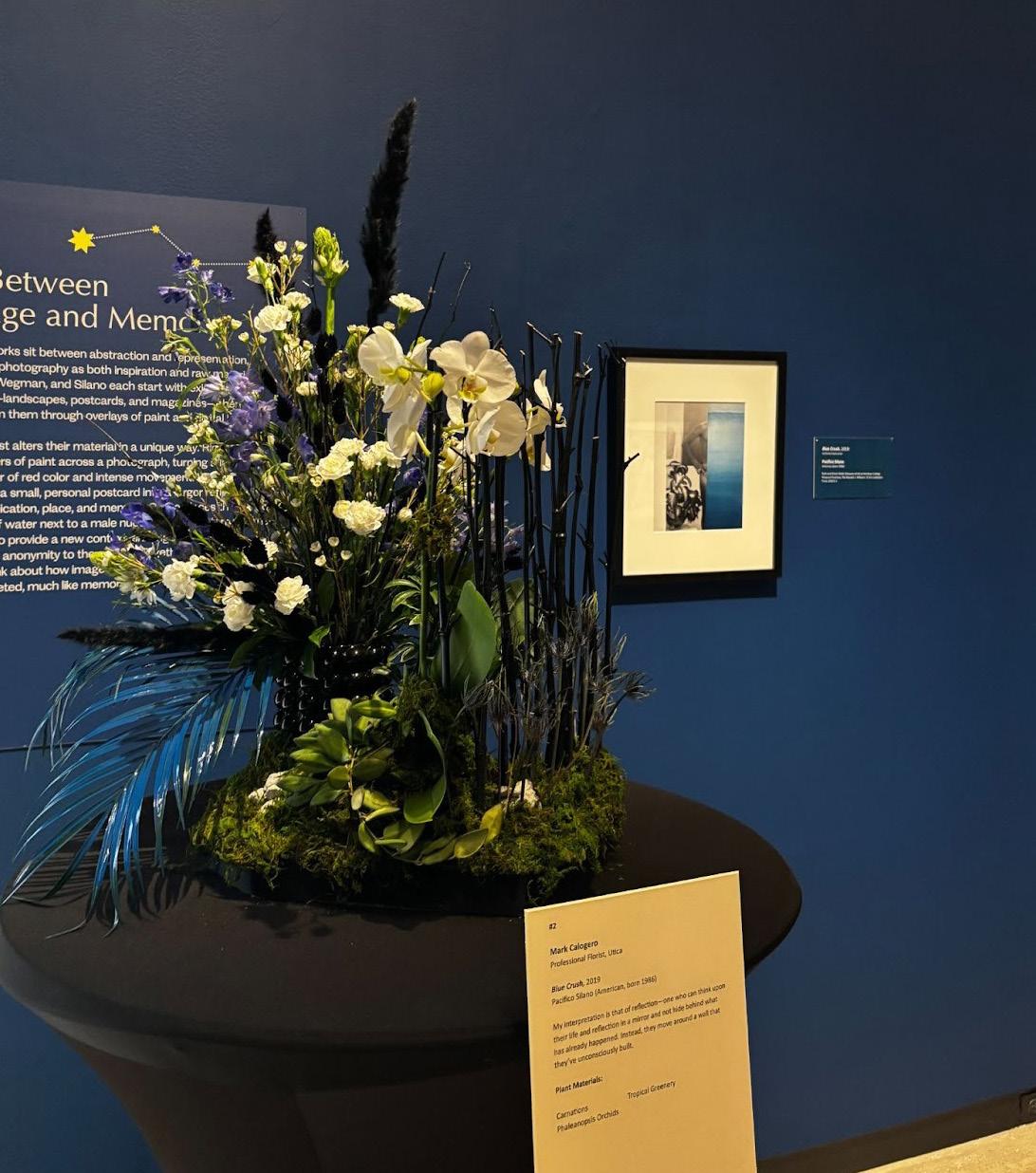
were placed “randomly” on the wall. The purpose of having inconsistent sightlines for the viewer was to create a dynamic conversation between the works of art, especially within the groupings. It gives deeper meaning and encourages thoughtful interpretations of how the artworks were chosen and displayed. The exhibition as a whole represented months of hard work from every student, and reflected each individual idea and contribution put forth. Constellations closed on April 12th, with intermittent events that included the exhibition, such as ‘Art in Bloom’ from April 10–12, where floral arrangements were made in response to some of the works in Constellations, and a performance by Laurel Canyon.
An influential piece of the class was the large overlap between students in the course and docents at the Wellin. While coincidental, the experience that many of the students have gained from working as a docent, in learning to present information about artwork and interact with the public, intertwined with the purposes and goals of the course itself. Docent training also gave students
insight into the decision making behind some of the Wellin’s exhibitions. As both a docent and an editor of Collection magazine, Olivia Piersall ‘27, noted that “Docenting trained me to think about artworks not just analytically, but relationally. I felt that I had a deeper understanding of how objects communicate with each other and how audiences physically and emotionally move through a space.” She felt that her time as a docent aided her ability to understand how to shape the visitor perspective and experience. Additionally, the class provided a direct preview of work she hopes to do in the future. “The practical skills were immediately transferable. [...] More importantly, I learned how to build an argument through objects and how thoughtful selection and juxtaposition can tell a story just as powerfully as text.” Another docent, Zach Yasinov ‘26, said “Having docent experience certainly proved advantageous to excelling in the classroom during discussions of curatorial methodologies” but that most docent experience comes in the form of relaying information through programs. “This class offered myself and docents the unique opportunity to meet with the important actors in this process across various institutions to learn more about the economics, politics, and joys that go into curation.” He found that his “communication skills and curiosity for the world around me has only grown. [...] Moreover, by continuing to actively engage with art and its
discursive spaces I strengthen my ability to critically analyze, appreciate, and applaud the creations of talented artists around the world.” The opportunities the class provided for students to expand their knowledge and understanding of the art world were both strengthened by and strengthened the docent program at the Wellin.
From initial object responses to acquisition pitches, from behind-the-scenes visits in New York City to the final exhibition at Munson, we were able to experience many aspects of curatorial work. Constellations: Works on Paper from Three Collections stood out not only as an exhibition, but a testament to experiential learning, where academic inquiry met real-world application. The course empowered students to see museums as dynamic spaces shaped by thoughtful choices and diverse perspectives. It illuminated the potential of curatorial work: to connect objects across time and space, to engage audiences in meaningful dialogue, and to remind us that art comes to life when it is carefully considered, collaboratively constructed, and generously shared.




By Lily Watts
1. Popular Japanese soup base made from fermented soybeans—the name of one of Jiha Moon’s poodles
7. The name of a sweet clairvoyant cookie
9. Packaged restaurant order meant to be eaten elsewhere, often accompanied with chopsticks
11. Japanese mayo branded after a cute cherubic doll
12. The art of producing decorative lettering with a pen or brush
13. Graphic arts technique that requires a squeegee, ink, and a fine mesh screen
14. Jiha Moon’s birthplace; a major South Korean city known for textiles and industry
15. A professional who draws and produces maps
1. Earth’s only natural satellite—a celestial body made of rock and a common romanized Korean surname
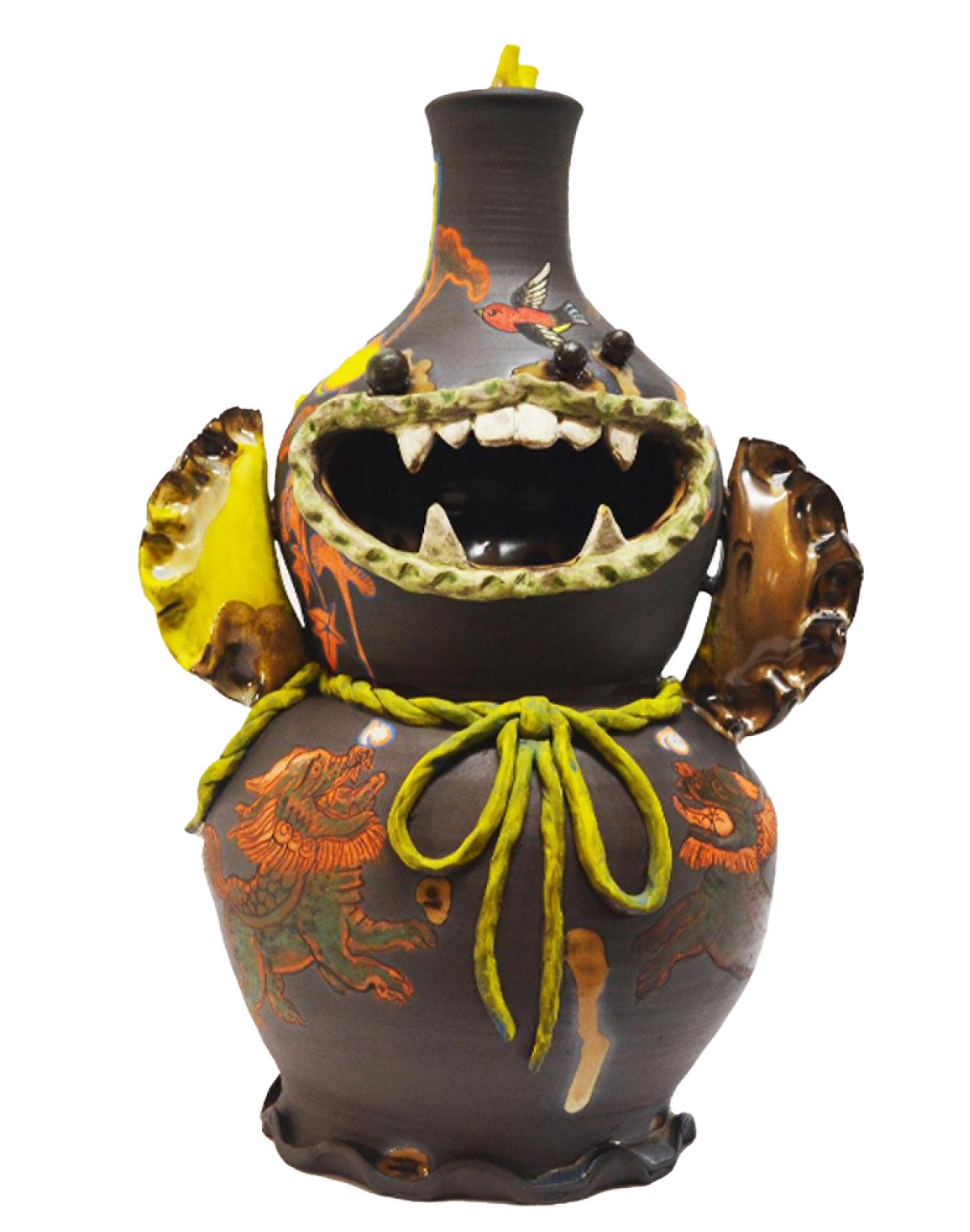
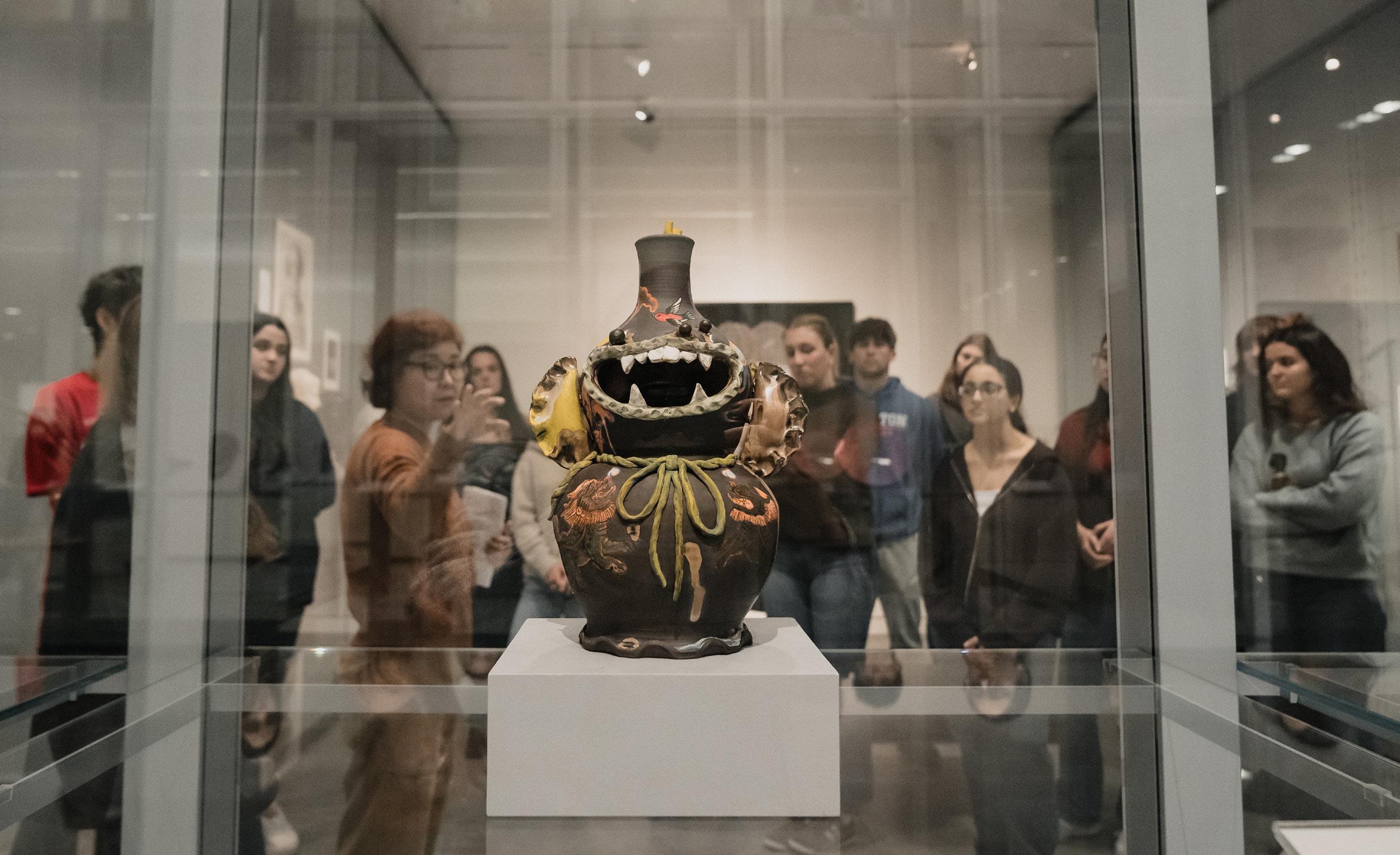
2. Korean dumplings, steamed, boiled, or fried—also seen flanking Jiha Moon’s sculpture in the Wellin’s Object Study Gallery
3. Korean guardian of righteousness and protection; title of the Wellin’s sole Jiha Moon sculpture
4. Art forms like bowls, vases, and tiles made from fired clay
5. Sweet pink stone fruit that appears in many of Moon’s sculptures
6. The state capital of Florida, where Jiha Moon currently lives and works
8.Tiny digital image used to express emotion; protagonist of a 2017 animated comedy film
10. Glossy white china frequently used in dinnerware and dental care
Answers on page 47
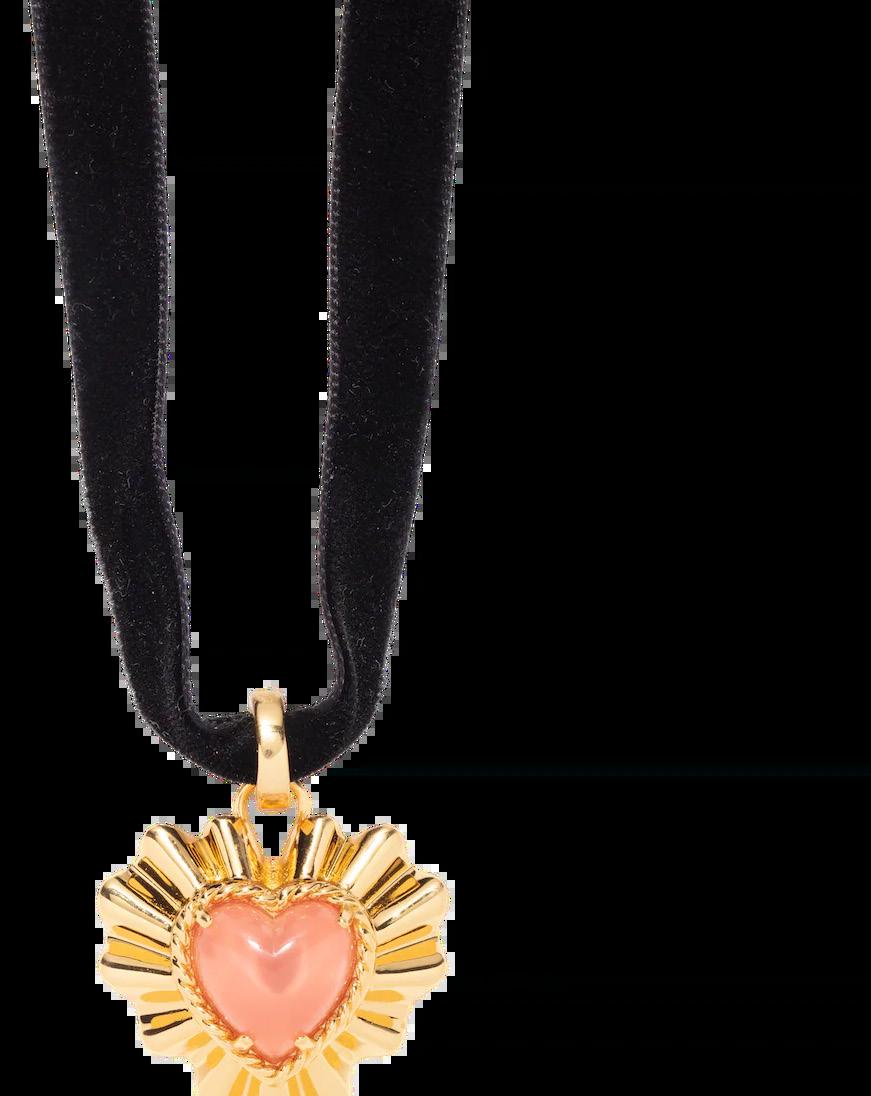
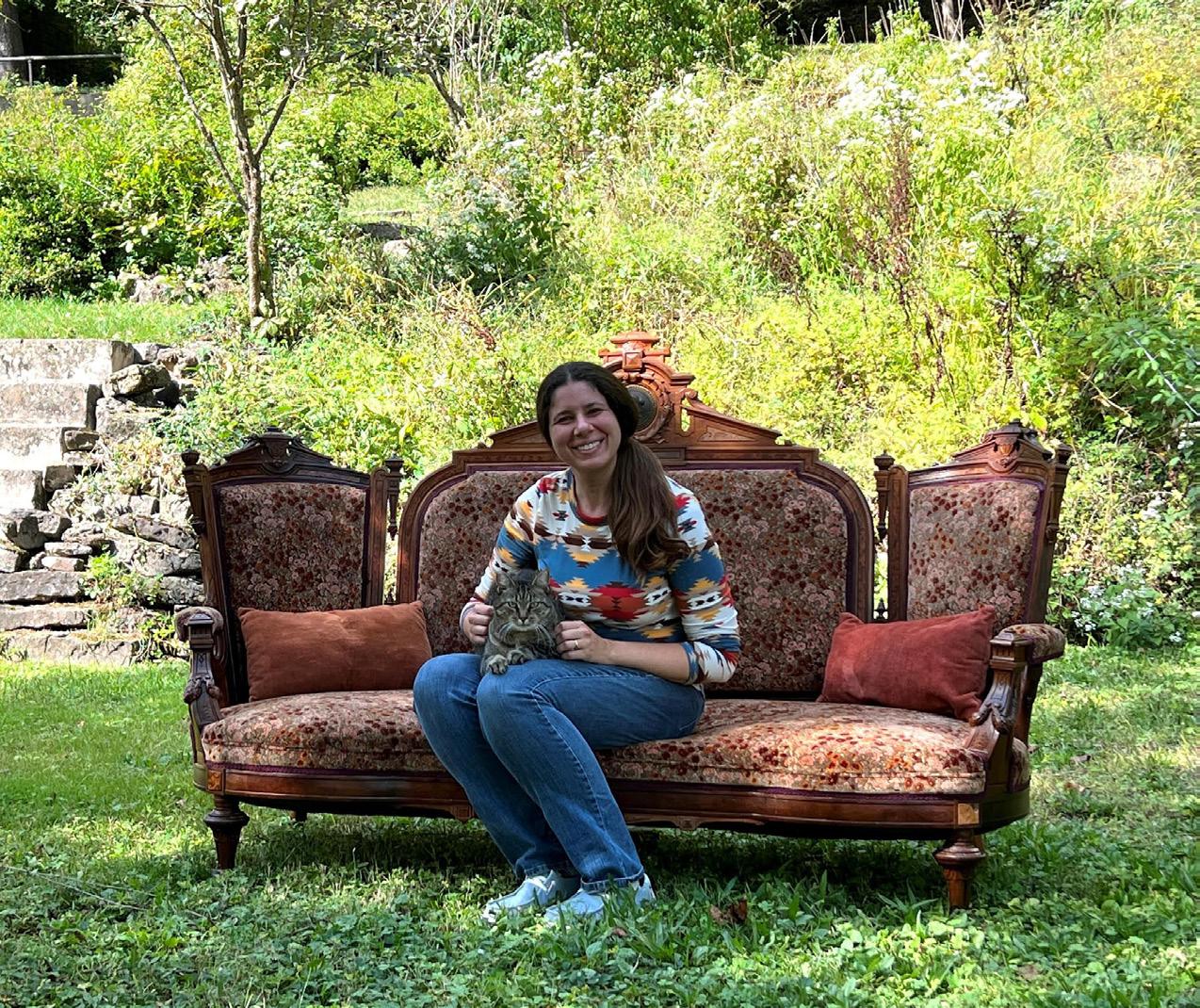
Wellin Registrar Laura Laubenthal has been collecting for nearly 25 years, a passion that began in her early teens. As an only child and the only grandchild on one side, she spent much of her time visiting her grandmother’s house, wandering through rooms filled with objects. “I’d get bored after a while and just start looking around,” she recalls. The house was full of furniture, decorative objects, and early photographs, among other things—items preserved by a family that, as she puts it, “didn’t throw anything out.” When her grandmother passed away, Laubenthal inherited that collection. At the time, she was not particularly drawn to history in school, but encountering it through objects shifted her perspective. “When historic objects came into the picture, they humanized history and put real people behind the words in the textbooks,” she said.
She began researching the items she inherited, learning about their makers, materials, and historical contexts. Furniture, jewelry, and early photography became gateways to a broader fascination with material culture. What started as childhood curiosity evolved into a lifelong practice of collecting, studying, and preserving the past through the tangible traces people leave behind.
That interest shaped her academic path. Laubenthal began her undergraduate studies at Bowling Green State University as a history major, later adding art history as a minor. Her growing fascination with material culture—the study of objects and their relationship to the people who made and used them—led her to pursue a master’s degree in museum studies at the Cooperstown Graduate Program. “Objects and how they relate to our culture—that’s what really clicked for me,” she explains.
Her first collecting venture as a teenager was surprisingly specific: Limoges porcelain. At fourteen, she frequented a small antique shop in her hometown of Elyria, Ohio, persuading her father to stop in after school. There, she found handpainted porcelain pieces for just a few dollars each.
She was initially drawn to their aesthetic appeal. “I didn’t know what they were at the time, but I consistently liked that look. It was also something I could afford.” After researching the porcelain, she discovered the pieces all originated in Limoges, France. “It was actually the look that drew me first, and then I did the research and realized I liked this genre of stuff.”
Today, Laubenthal still collects Limoges porcelain, but with a more discerning eye. “It’s got to be a really good piece—or something else has to go,” she says. Years of experience have sharpened her judgment; she looks for unusual forms, high-quality decoration, and pieces she hasn’t encountered before. “After shopping for several years, you see a lot of the same thing. You have to know it all—from the commonplace to the exceptional—to recognize true quality,” she explains.
Her collecting interests center largely on the Victorian era, a period she admires for its opulence, detail, and rich colors. Childhood visits to house museums and historic estates, most memorably the Biltmore Estate, left a lasting impression. That fascination continues in her collection of late nineteenth-century interior photographs, which offer intimate glimpses into how people once lived. “I’m very interested in how people lived and what things looked like,” she says.
Laubenthal also collects Victorian mourning jewelry, pieces often incorporating intricate hairwork and miniature photographs. When she is lucky, they contain an additional clue—an engraved name, a date, or a signature hinting at the original owner. These are her favorites. “I like an object if it’s got a little clue attached to it, a little lead to go off of,” she says.
Those clues send her on research journeys through census records, cemetery archives, and genealogy databases. With even a partial name, location, and approximate date, she pieces together a life. “If you have a bit of a name and a hint of a location and time period, you can plug that in, and sometimes the results work out,” she explains. For Laubenthal,
the thrill lies not just in owning the object, but in uncovering the story of the person who once wore it.
She also collects works by nineteenth-century women artists who were recognized in their time but have since been forgotten. Often, she encounters their work first—drawn by quality— before uncovering biographies through archival research. Figures like Jenny Haight, a 19thcentury artist who studied in Paris and at the Art Students League before dying tragically young, exemplify the overlooked narratives Laubenthal seeks to recover.
“Everybody contributed something,” she reflects. “I don’t really want anybody to be forgotten.” Travel, personal and professional, also fuels her passion for collecting. As a registrar, she has couriered artwork internationally and often antiques in her spare time on work trips, from England to Spain. She notes how regional settlement patterns influence what surfaces in antique shops: English transferware appears frequently in upstate New York, Germaninfluenced objects in Ohio, and newer materials farther west. Geography, like objects themselves, tells a story.
One of her favorite memories took place while shopping in a fairly rural area in Spain. Laubenthal spoke only English, and the sellers spoke only Spanish, so they had to haggle by writing on paper. “It was challenging, but so much fun,” she recalled. When she returned a second time, one of the women remembered her, waving a fan to mimic the one Laubenthal had purchased.
Sydney Piccoli & Sydney Cagnetta
Her collections fill her 1886 Victorian house in Little Falls, New York—a fitting backdrop for her antiques. A self-described maximalist, Laubenthal displays pieces throughout her home, weaving her passion for history into daily life. Among her recent discoveries is a massive Moser glass vase dating to the late nineteenth century, hand-enameled with an eagle and acorns. Weighing nearly forty-five pounds, it stands as a testament not only to craftsmanship but also to the enduring thrill of the hunt.
This ethos carries into her professional life at the Wellin Museum, where she works primarily with contemporary art. While her personal collecting focuses on the Victorian era, she appreciates the conceptual rigor of contemporary practice and values the separation between her private passions and institutional responsibilities.
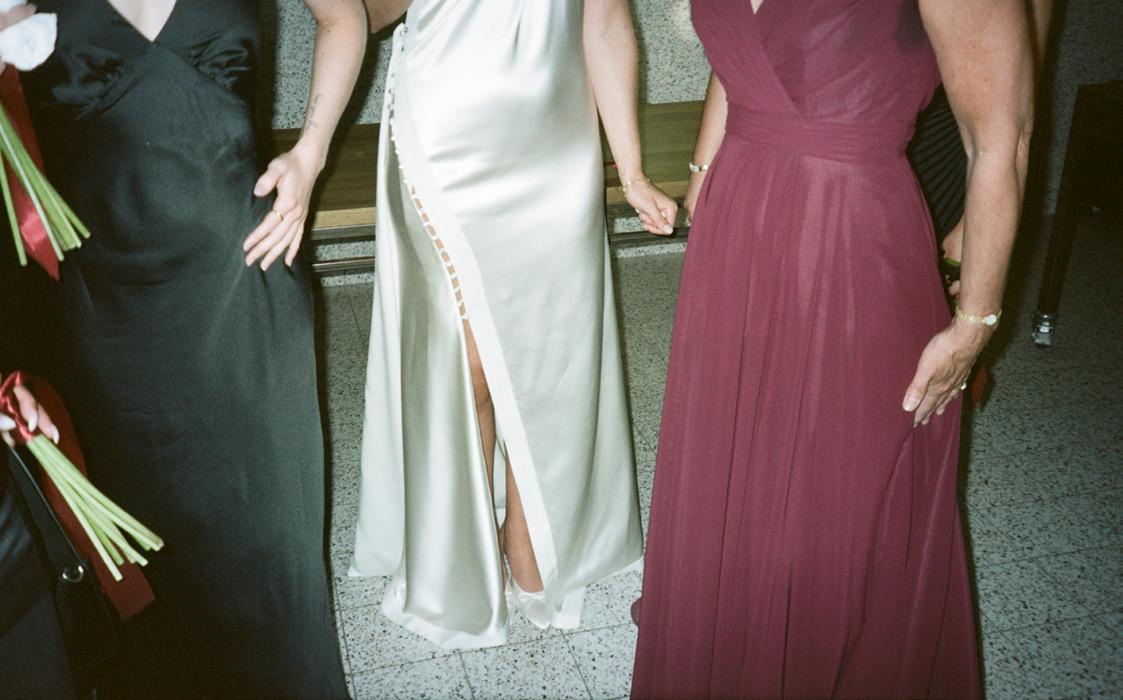
Ely
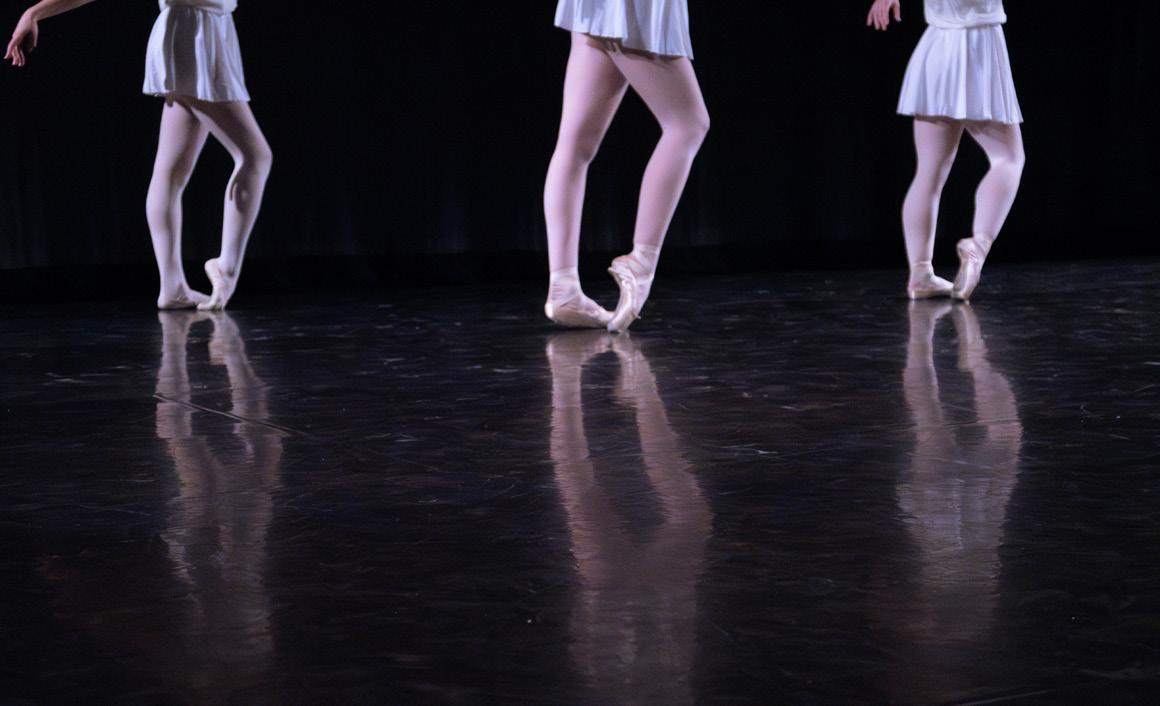
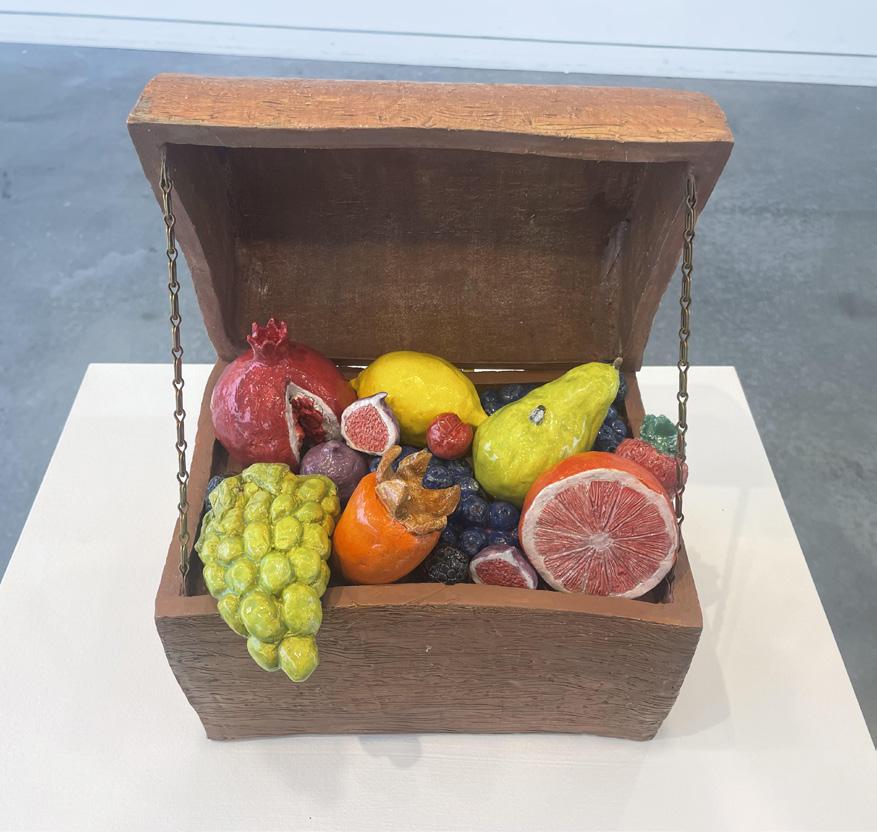
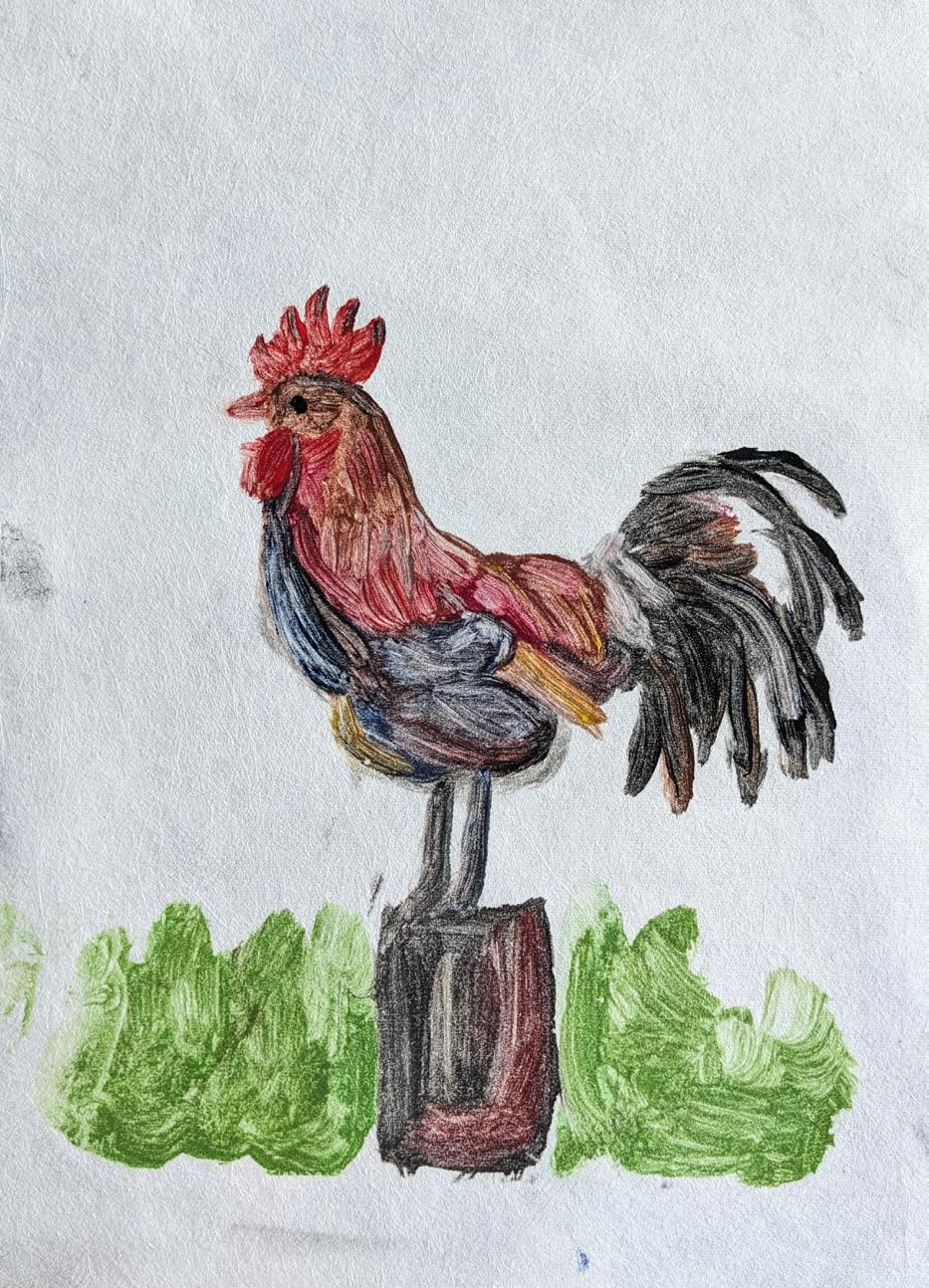
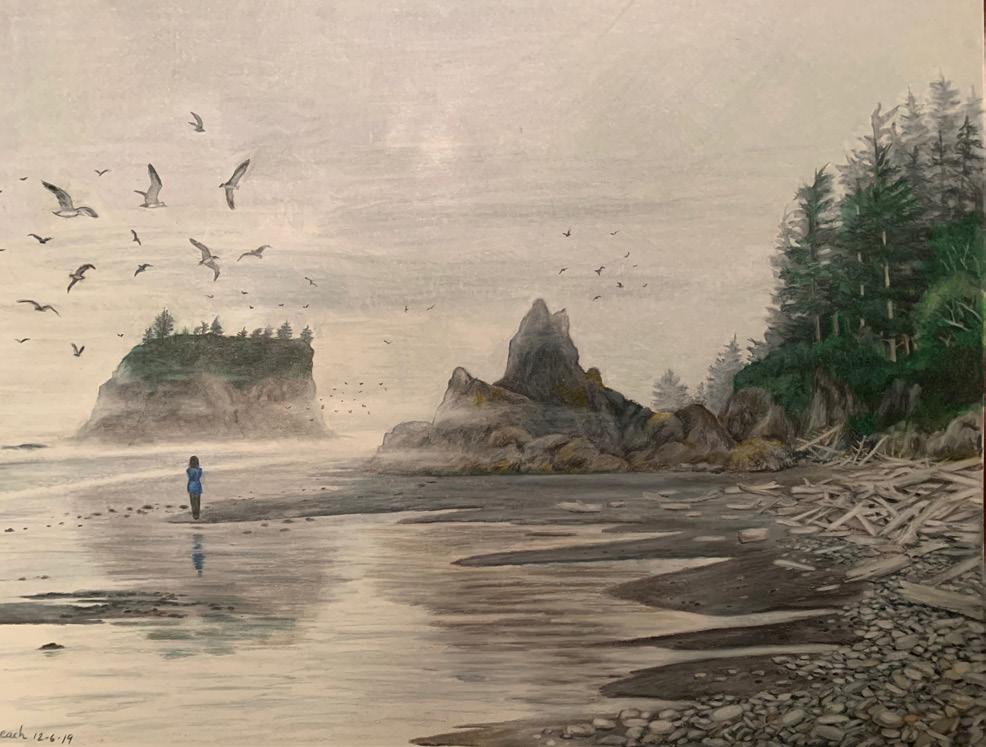
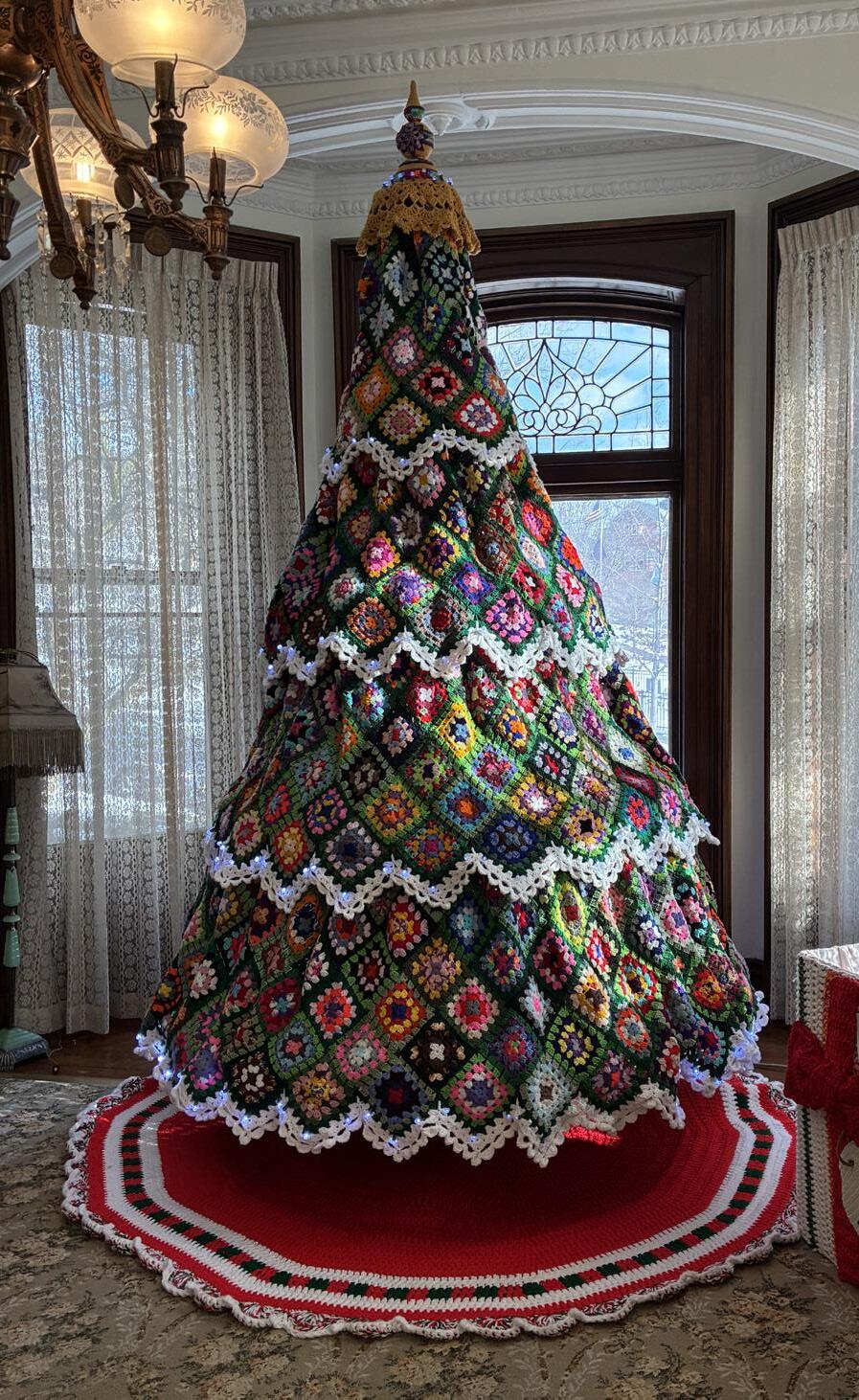
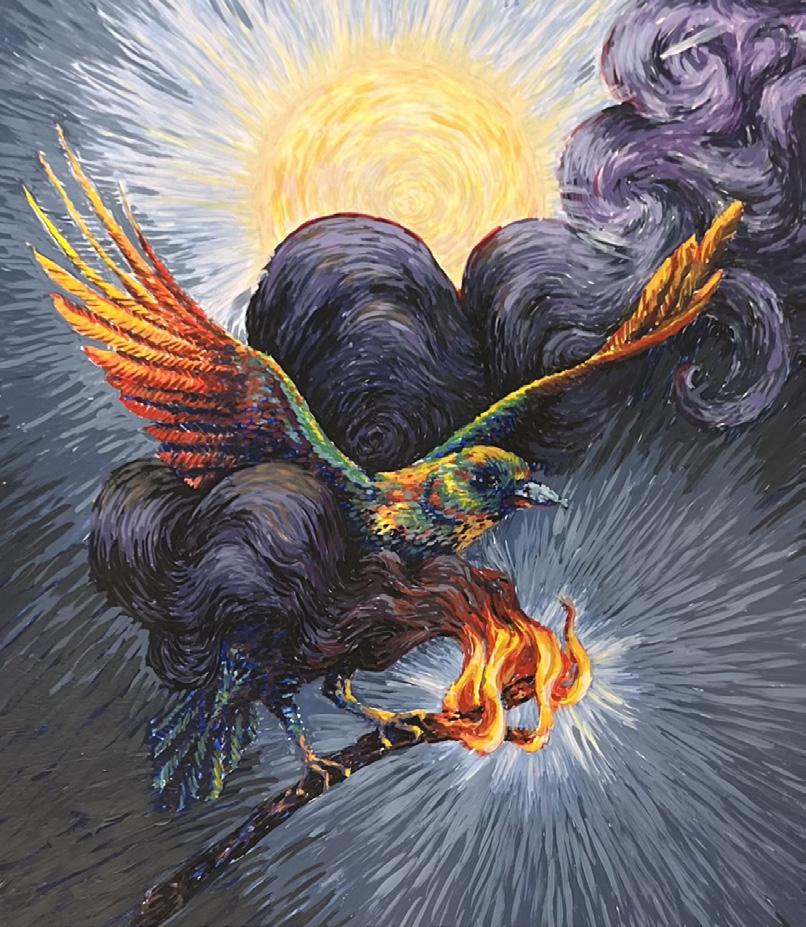
The Collection Editorial Team sent out a campus wide invitation to artists to submit their work to our publication. We have highlighted our selections here!
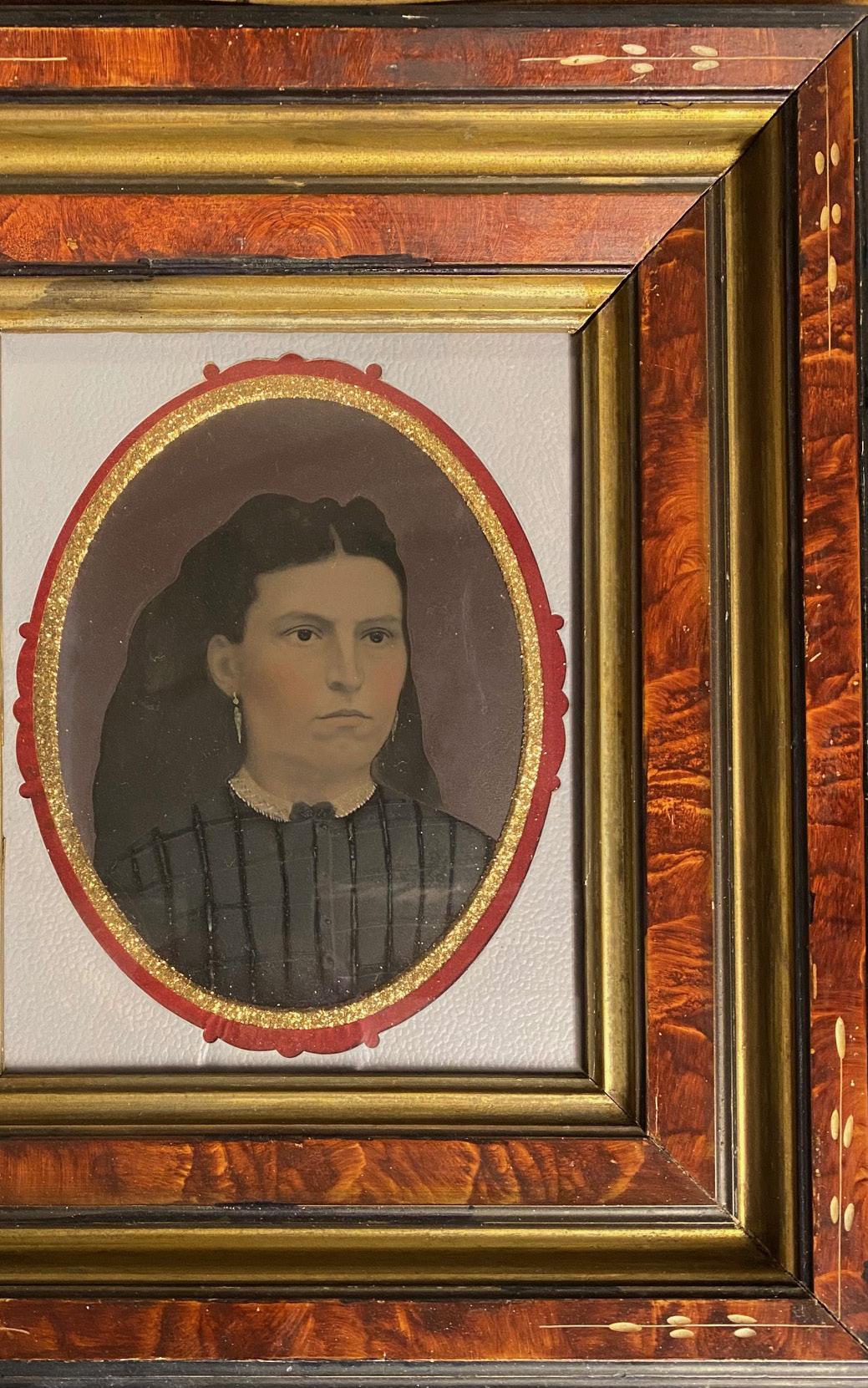
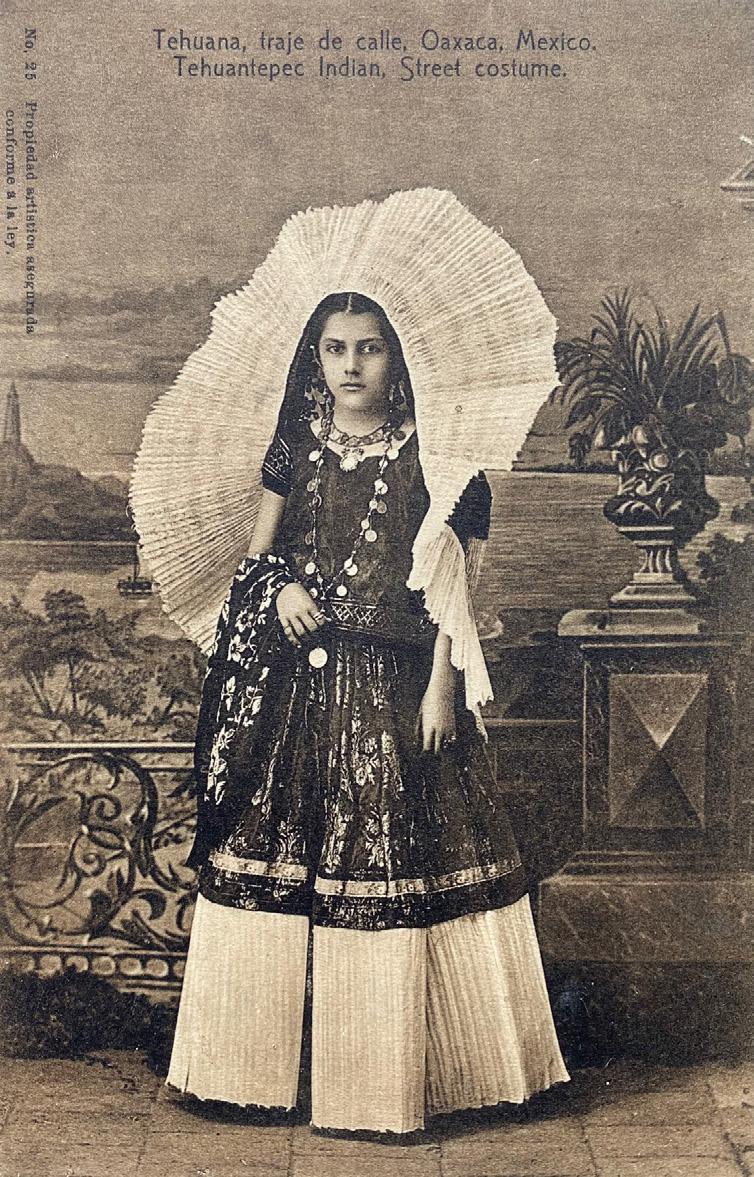
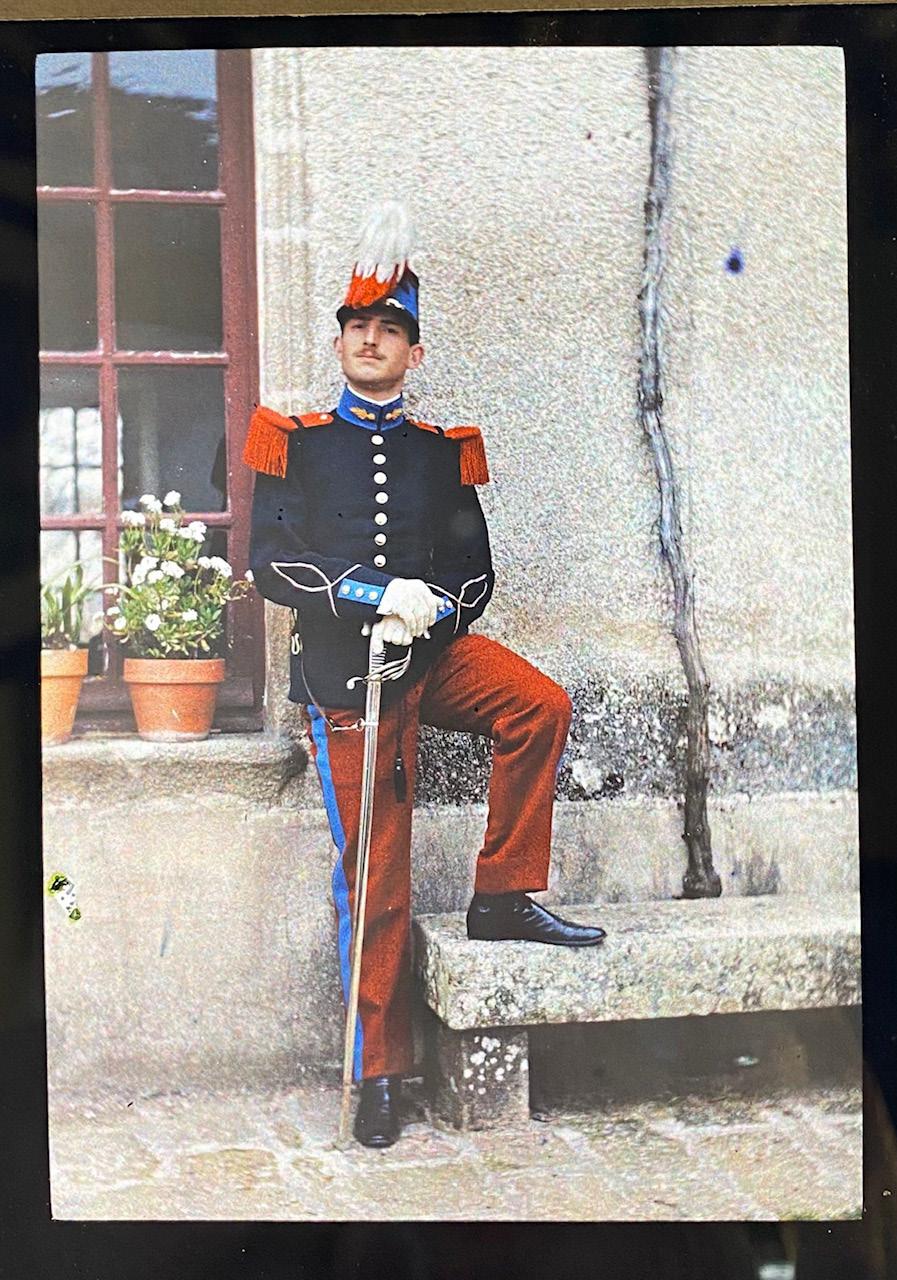
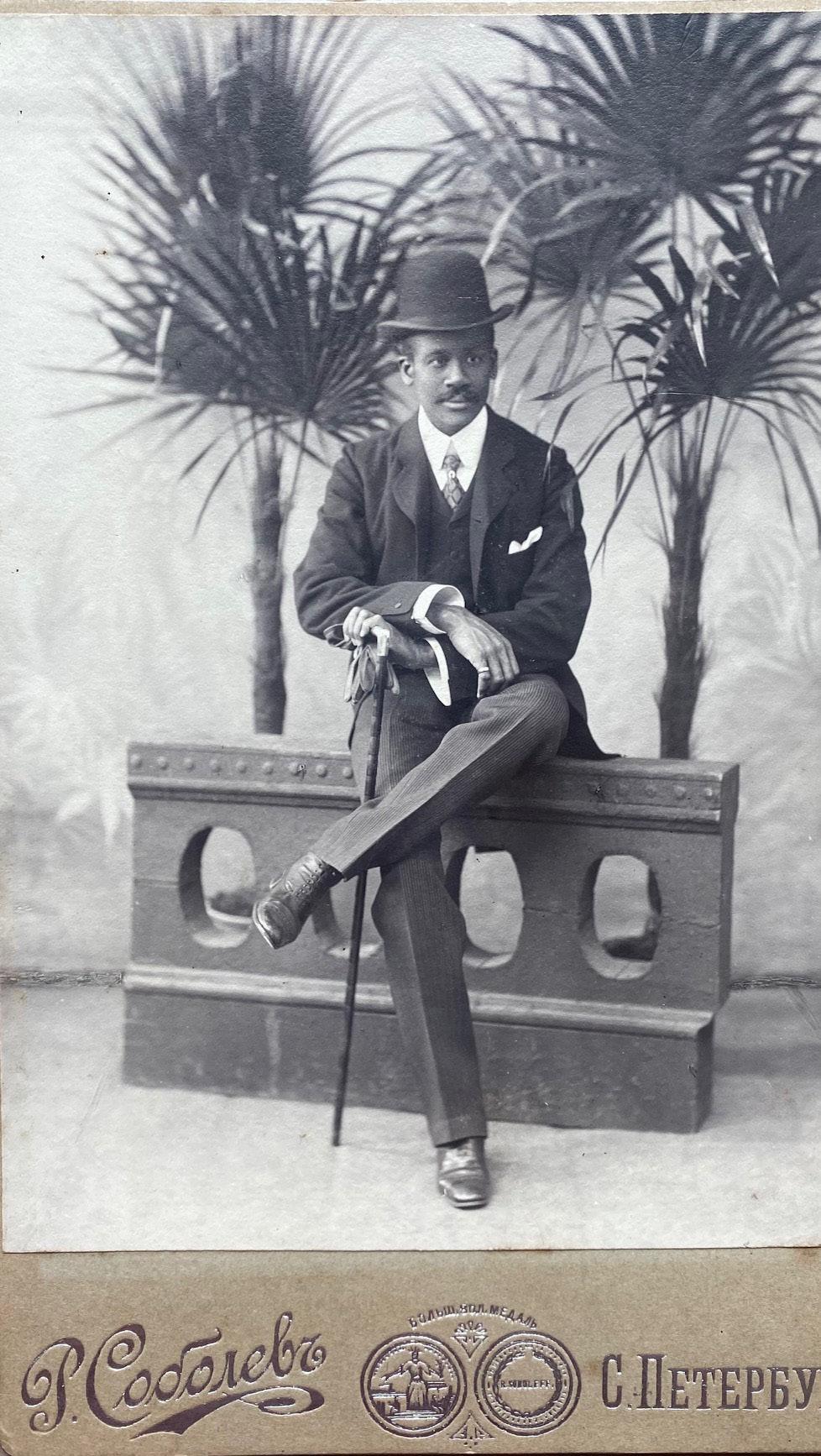
What first drew you to collecting photography?
I began working on photography as part of my historical scholarship when I was a graduate student. The first thing I published, in 2001, was an essay on lantern slides and humanitarian photography. Lantern slides were essentially an early form of PowerPoint: light would pass through a glass slide and project the image onto a wall or screen. You might have hundreds of people in a room—someone lecturing at the front and someone at the back operating the projector.
At the time, I was interested in humanitarianism, not in becoming a historian of photography. I continued doing work that involved photography, but I didn’t see it as my primary field. In 2007, I taught a 300-level seminar on how scholars use photographs to make arguments. I taught it several times, but even then I wouldn’t have said I had developed a deep commitment to the history of photography itself.
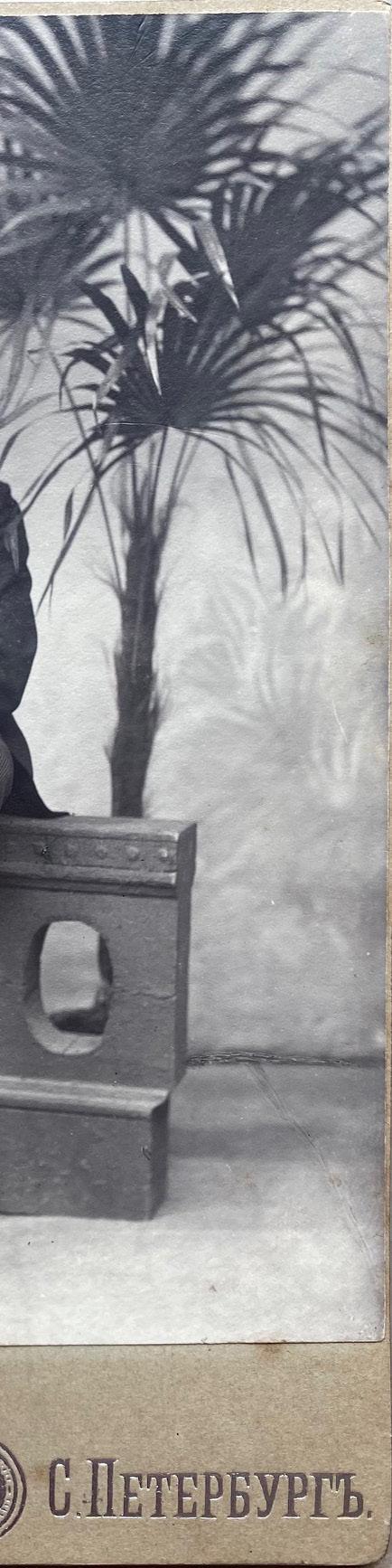
That changed as I was finishing my last book, published in 2019. Historians move slowly, and when you can see the end of one project—sometimes three or four years away—you have to start thinking about the next one. I began asking myself what I really wanted to spend my time on. I realized I had always loved early photography. In 2016, I took my first workshop in historical photographic processes at the George Eastman Museum, and then another the following year. That’s when I became interested not just in the idea of scholarship, but in the idea of teaching the scholarship in a different way. Being in the dark rooms at Eastman, and handling the materials of 19th century photography really excited me. I could feel a new way to teach the subject that I just never considered before. So, 2017-18, I started thinking more about how to teach the kind of photography courses I took. At the same time, I was beginning to think more and more about history in terms of my scholarship. That’s when the collection starts.
I realized that the way I wanted to teach photography required students to physically engage with it. They needed to hold the photographs, experience them directly. I wanted them to examine images under magnification, to see how the image sat on the paper or glass, to understand how it was made, and to appreciate the way it had to be distributed, or could be distributed.
I wanted them to consider: is this image meant to be viewed individually, or shared in a group? A lantern slide is a communal experience; a daguerreotype is intimate, one viewer at a time. But, you have to have the objects and be able to hand them to people. That’s why I started collecting different forms of photography. My goal was to collect different examples of every 19th century photographic form I could think of. And then it slipped into the early 20th century so that I could provide examples of everything we talked about.
Do you think that teaching through photography provides something different, something more interesting? Do you think it changes how we look at history?
I think photography is immensely useful in the classroom, especially because I assign photographs in conjunction with reading. The meaning of the photograph is determined by the narrative in which it sits. If I just handed students photographs, they would have no way to situate them. So, I do them in conjunction with readings, and the advantage of the photograph is that when you hold a photograph and talk about the photograph, you are then talking about your own experience. History is not something that’s distant. Suddenly, you’re holding it, talking about it, and that experience informs your ability to interpret it.
If you look at daguerreotypes that are used in illustrations in a book, you may think Oh well, that’s what a woman in that era looked like. But, if I hand you a daguerreotype of the same woman, you realize Oh, to see this portrait, you couldn’t just flip a page. You had to open the little box, and I can see it, but my friends beside me can’t. The daguerreotype disappears at an angle. So, when you are thinking about what the daguerreotype means, because you’ve held it, and you’ve realized that you have to look at it one at a time, you have to catch the light in just the right way, and it has a certain weight to it. This is all going to affect the way you interpret the daguerreotype.
The other big advantage to photographs is students are much more comfortable talking about visual text than literate text because we are always looking at things all the time. When I put things on screen, or I hand them around, it’s very easy to talk about. It’s more accessible. because I can ask, what do you see?
In some respects, holding a daguerreotype means experiencing photography in ways completely comparable to the ways in which someone who purchased the daguerreotype in 1851 experienced it. You’re holding it in your hand, one at a time, it’s one of a kind. With the daguerreotype, the image captured on that piece of metal is captured with light, the same light that existed in the room when the picture was taken. So you’re also holding a moment in that regard. Simultaneously, you see that daguerreotype very differently than someone saw it in 1851. In part because you have this whole world of visual text in your mind that they didn’t. And so for them, there’s this extraordinary novelty to this photographic object. In the 19th century, there’s so many photographic forms that were created one after the other. So when people are encountering them, they’re encountering them for the first time with no points of reference. Compared to people now, we are surrounded by visual texts.
Do you have any thoughts on how a photography collection should be built? Is it something that develops over time, or can someone simply acquire a group of works all at once and call it a collection?
I don’t know why you would possibly buy it all at once because that would just be so boring. You’re not collecting. Collecting is this process, and it’s a search, and you spend most of your time finding nothing, and you keep going anyway. I would say that the idea that now you can go buy everything at once does not work for 99.9% of the human population because they don’t have the money, and they don’t have access. So that’s a very exclusive group that can do that. I think about it this way: I was trained as a very traditional archival historian. All of the research for my books has been done in archives full of paper, usually in institutional archives, state archives, local museums, sometimes missionary archives. And the questions that I have about photography, and the things that interest me about photography aren’t in those archives, anywhere. They are accessible through the non-academic world of collectors of photography and
dealers in photography.
Why do you think there is a resurgent interest in older photographic techniques?
It’s because you have thousands of images on your phone that you never look at and you’ll never print. They’re being forgotten. You have layers upon layers, years and years of photographs on your phones. Then eventually you get rid of the phone and the physical storage also gets tossed. So they’re forgotten and can never be found again. That’s just how it is. By contrast, historians love paper. We have great faith in paper. Everyone in my department understands that paper is the most efficient and effective means of storing information. With digital information everything is rendered obsolete so fast. So you constantly need the upgrade.
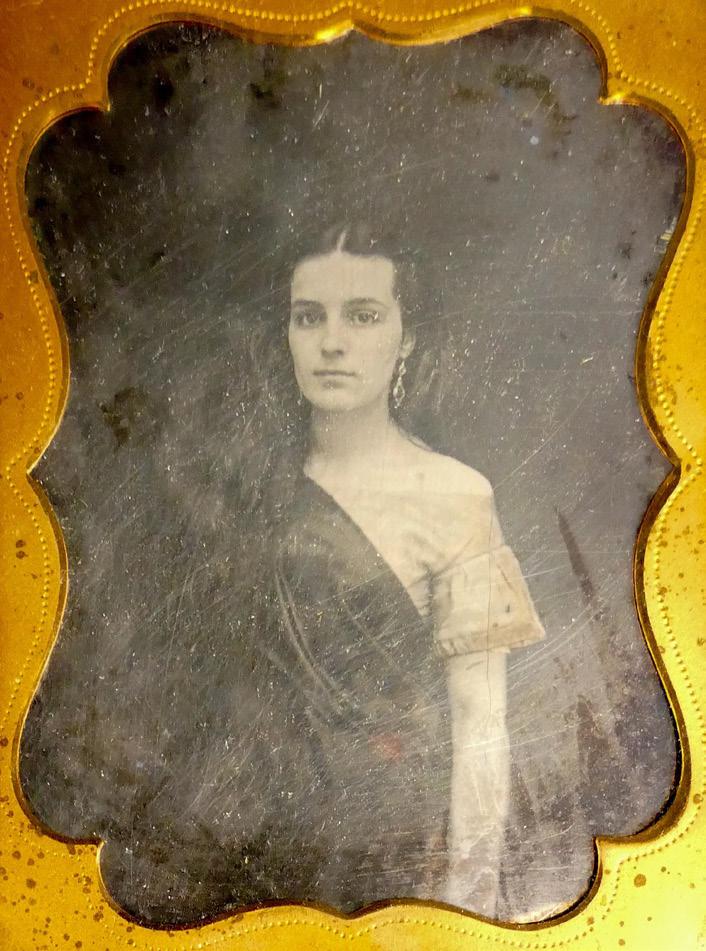
What makes you buy one photograph over another?
The first factor is how it was made— the photographic process. The second is the condition, and the third is what’s actually in the image. Process comes first because it’s the most relevant to my classes. I probably have more tintypes than I should—maybe twelve or fourteen—but sometimes I buy one simply because I love the image. In a way, my archive is eBay now, because the questions I have about photography and the things that interest me often lead me there. The answers might show up on eBay, or Etsy, or at a garage sale, estate sale, junk shop, antique shop, or, of course, at photo fairs.
That’s such an interesting way that the history is built on these people who are collecting it, or on eBay, I guess.
Jefferey Batchen is one of the only major historians in photography who works in the 19th century. He does all kinds of stuff, but he’s done wonderful work on 19th century photography. But I would never go to Jeffrey Batchen for the answers I have about the photographic process. I would go to people who make these things. So the Daguerrian Society has about 300 members. I
am the only academic. There is not another academic at the conference. There are people who have PhDs, but they are curators. They’re gallery owners. They’re not academics. They’re not professors. And so, I can’t go to academics, because they don’t know how these things were made. They don’t understand how they’re preserved. They don’t know how they were distributed. They’re interested in questions of genre. They’re interested in, basically, a canonical vision of photography. And that’s fine. But these just aren’t the questions I have. And so, when I have questions about photography, I’m far more likely to write to a dealer. Or, to some extent, other collectors, because these people actually have the kind of information I’m interested in.
I’m only aware of two institutions at the moment where you can take courses in 19th century photographic processes, and that’s at the Getty in California and the Victoria and Albert Museum in London. The ones I took at the Eastman Museum were effectively ended by COVID. Like, at the last Daguerrian Society meeting they took a photograph of the daguerreotypists, who were present, and there were, I think, maybe 10 people. And the youngest one was in his 40s, but most of them were 70 and over. I think that it’s interesting, at this point in my career, at the end of my career, basically, to find that my questions cannot be answered by academics. So I got to go back to eBay. I’m now calling my former student who deals in antique photography to ask her questions about the process. Or I write to this guy, because I heard that he has this kind of daguerreotype I’m interested in. These people have other jobs. Only three people in the Daguerrian society do this for a living. Everyone else has another job, and this is just a serious hobby. Very serious. Like the Daguerrean Society Quarterly, it’s a beautiful publication. These guys, they throw themselves into this. For what is essentially a group of volunteers it’s incredible. This is a strictly volunteer publication by non-academics, and it is peer reviewed. They’re all just fanatics. They approach and evaluate each other’s work.
I would spend my summers in San Diego with my grandparents. Not the whole summer, but I’d be down there for weeks on end. And my grandmother took me just about every Sunday to the San Diego flea market— outside the San Diego Forum, where they had all the sporting events. It was a flea market. It was a massive
market. I loved it. It was so fun. It would just be me and my grandmother, just for hours. For me, this form of collecting is just like living in a flea market. You have to kind of want the hunt to be into this.
When you publish in other fields, you do scholarship in other fields you’re always worried about someone else getting there first. There’s always someone else working on your subject. And so you want to be first, you’re looking for the competition, you’re trying to lay claim to turf. I don’t have to worry about that. It’s just you. You get to set the tone. This is also why it’s so fun to teach this material. Because it’s also in the classroom. Photography is so varied. It’s like you’re just walking into this miscellany. And that’s fascinating. It becomes very interdisciplinary. If you have an interest, whether it’s in music or horses, or baseball or anything, you can find it in photography.
Do you have a holy grail, something that you’ve been searching for, that is, just out of reach, collection wise?
That’s a really good question. There are two. First, daguerreotypes that were made in India by Indians, not by the British. I know they exist because I’ve found newspaper advertisements where Indian photographers were promoting their studios. I also have evidence that certain maharajas had in-house daguerreotypists working in their own darkrooms. So the photographers were there—I’m sure of it. But I haven’t found the images yet. I’m currently assembling a list of Indian daguerreotypes made by Indian photographers, and at the moment it’s fewer than a dozen that we know of—not even a dozen. One is in the Met, and two are owned by a collector in Ahmedabad, India. They’re incredibly rare, but I’m convinced more are out there somewhere. The second thing I’m searching for is an Autochrome photograph made in India. Ideally by an Indian photographer, but honestly, I’d settle for one simply made in India. I’ve never seen one.
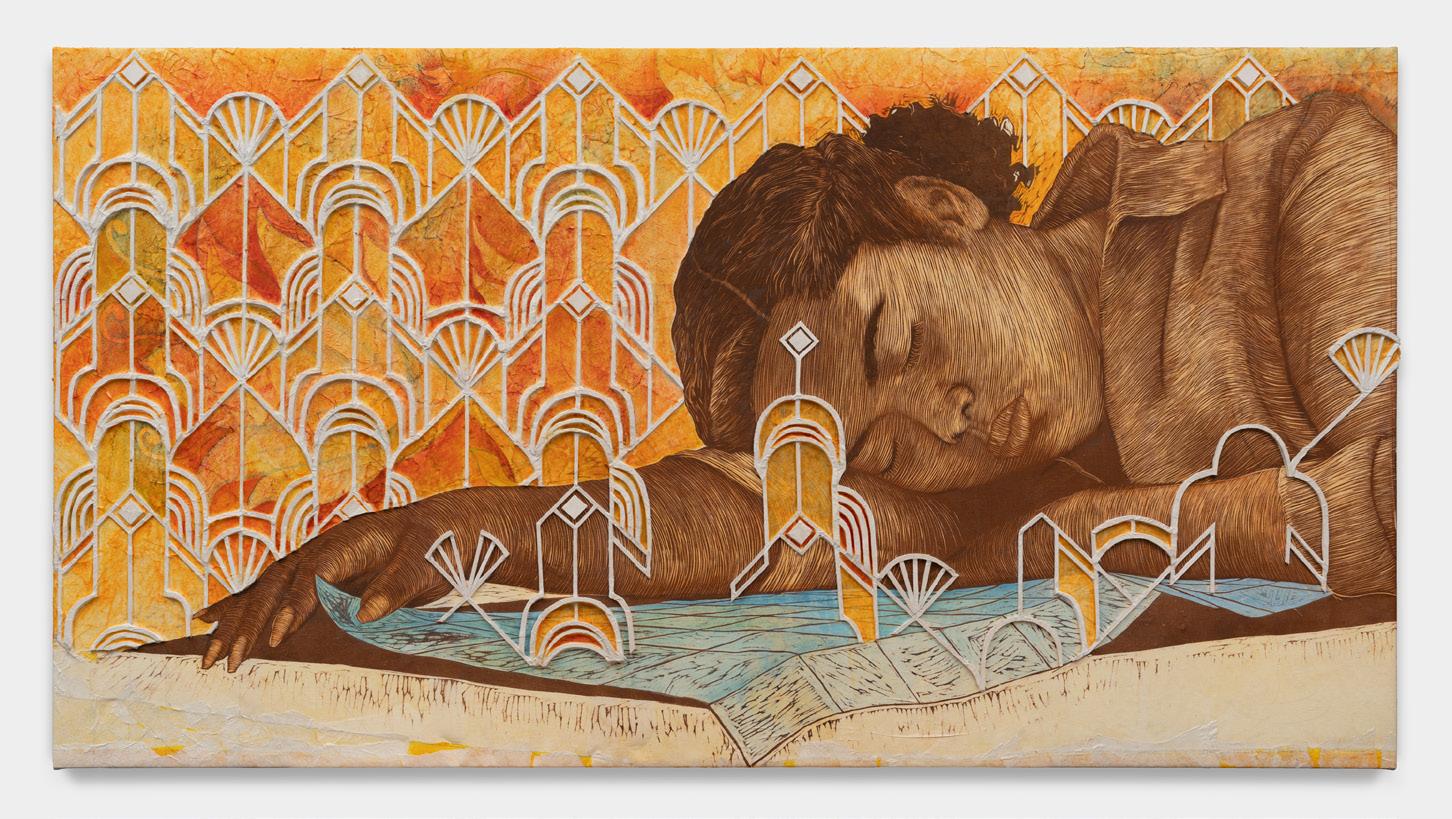
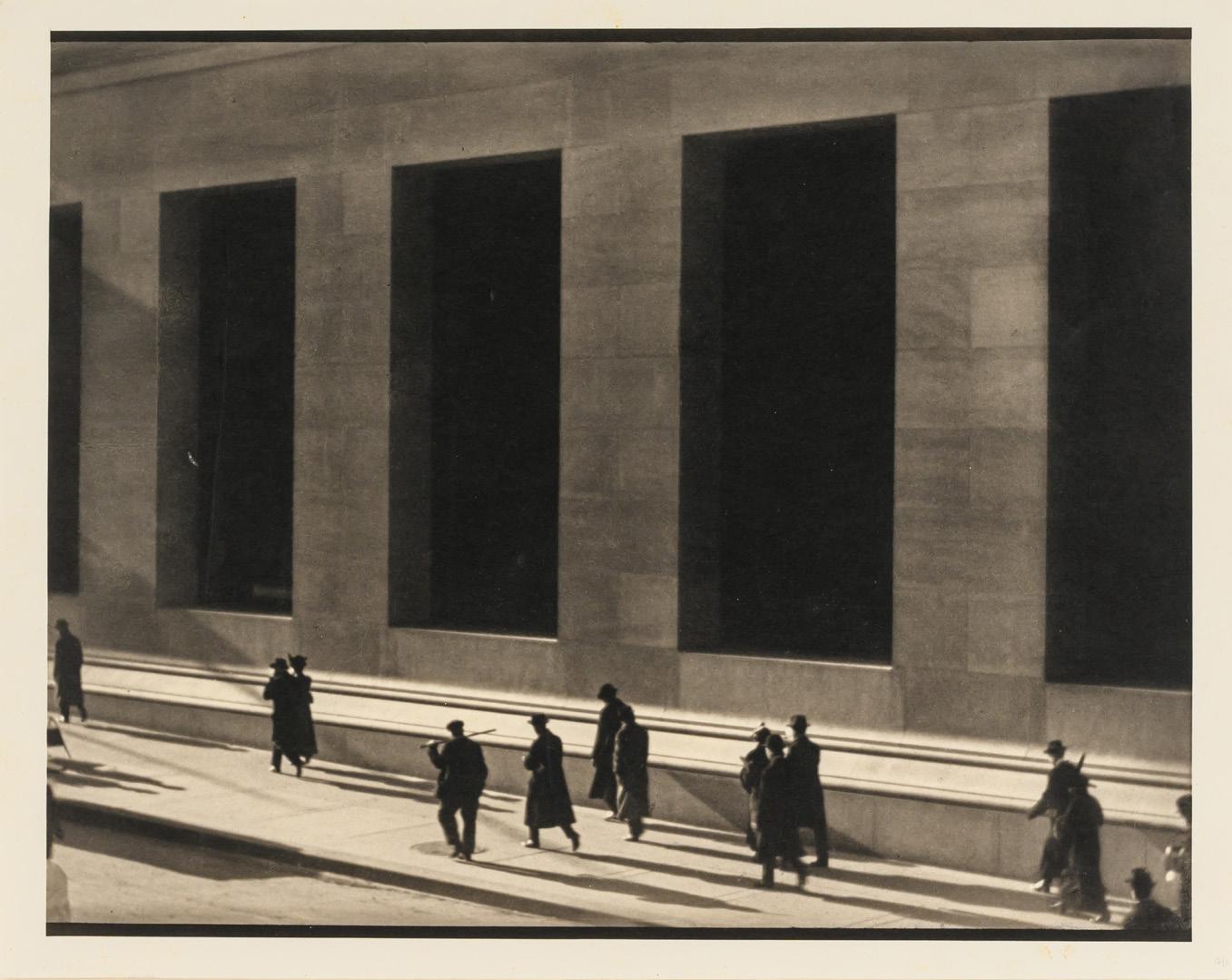
In the past four years of working at the Wellin, I have watched the Wellin’s collection grow and expand to include new perspectives, mediums, artists, and narratives. In this article, I highlight a few of my personal favorite acquisitions over the 2025 calendar year, drawing attention to new works we have welcomed into the Wellin.
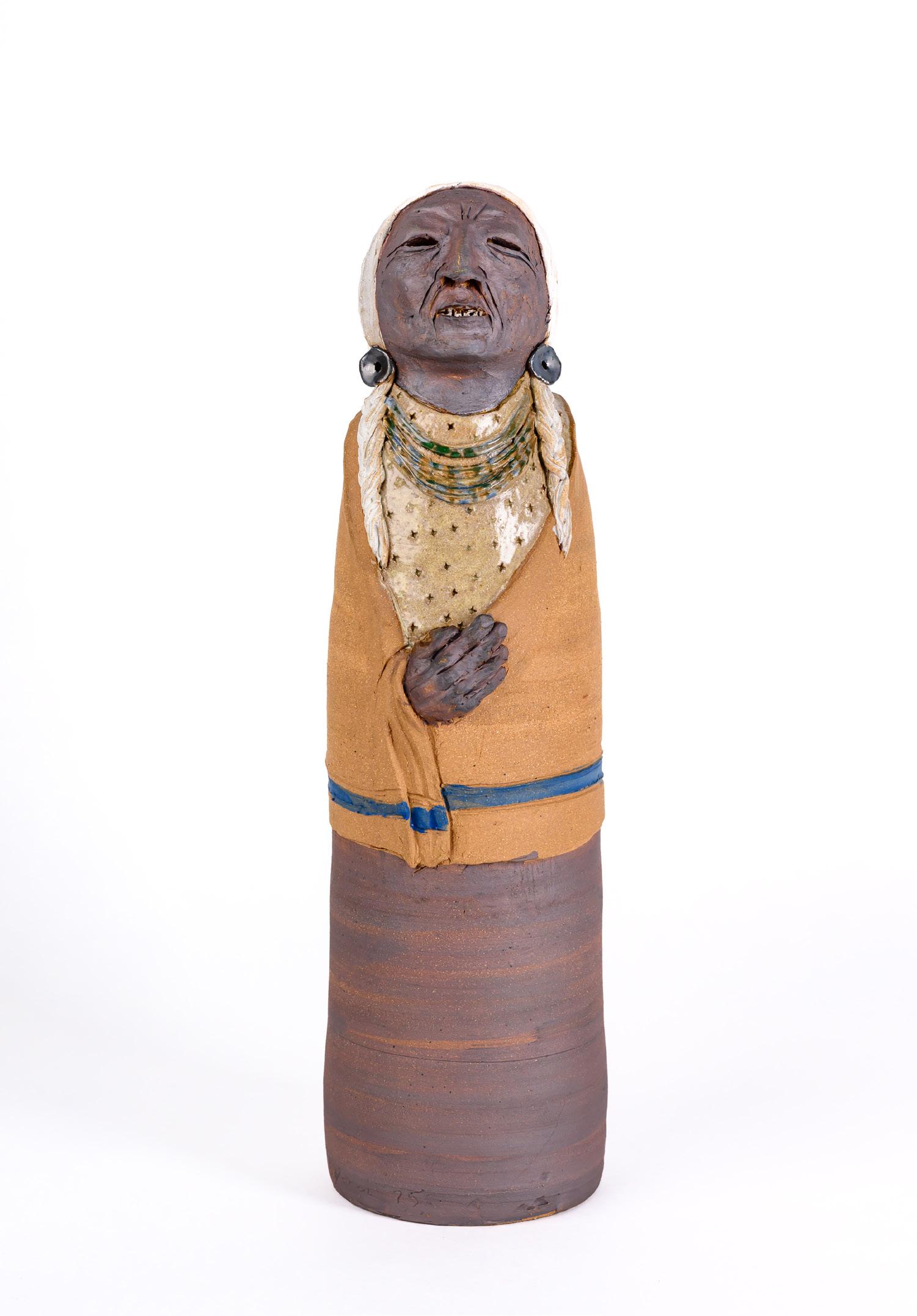
The Wellin Museum of Art acquired Matriarch (2025), a ceramic sculpture by Peter B. Jones. Jones has created Matriarch figures since the early 1960s. He was inspired by his childhood on the Cattaraugus Reservation, where he often saw an elderly woman walking along rural roads to complete daily errands with steady determination. The Wellin's example is built with a thrown base and a modeled upper body. The figure stands upright and looks reverently upward, suggesting dignity and spiritual reflection. Her white hair is made from braided clay applied before firing. It signals wisdom and lived experience. One exposed hand shows clear signs of age and heavy labor. Matriarch reflects Haudenosaunee matrilineal traditions, where women hold central roles in sustaining community and identity.
The Wellin Museum of Art also acquired Where Is My Gold? (Where The Fire Is?) (2025), a woodblock print with additional media by Yashua Klos. In this work, Klos reflects on rest as a form of resistance to American systems that have long demanded consistent output. He depicts a woman reclined on a gridded blueprint, layering Art Deco motifs on top. Over time, Klos has incorporated members of his family into his practice. Here, the figure depicted is his cousin Page. This deeply personal connection reinforces the work’s meditation on ancestry, memory, and inheritance.
Paul Strand’s Wall Street, New York (1915, printed 1984) was photographed from the steps of New York’s Federal Hall during the morning rush hour. At the time, the white marble building at 23 Wall Street served as the headquarters of J.P. Morgan and Company and stood as a powerful symbol of financial authority. Strand was a pioneer of straight photography, a style defined by sharp focus, unmanipulated imagery, and an emphasis on formal composition. This approach is evident in the striking contrast he captured between the long horizontal shadows of passing figures and the towering vertical lines of the bank’s windows. The result is a visually compelling
study of scale, rhythm, and the imposing presence of modern finance.
In bringing together works such as Matriarch, Where Is My Gold? (Where The Fire Is?), and Wall Street, New York, the Wellin Museum of Art continues to expand its collection in ways that foreground diverse perspectives and artistic approaches.
I encourage you to visit the Wellin Museum and share your favorite 2025 acquisition and why it resonates with you. We'd love to hear directly from our readers— responses can be sent to collectionmag@hamilton.edu.
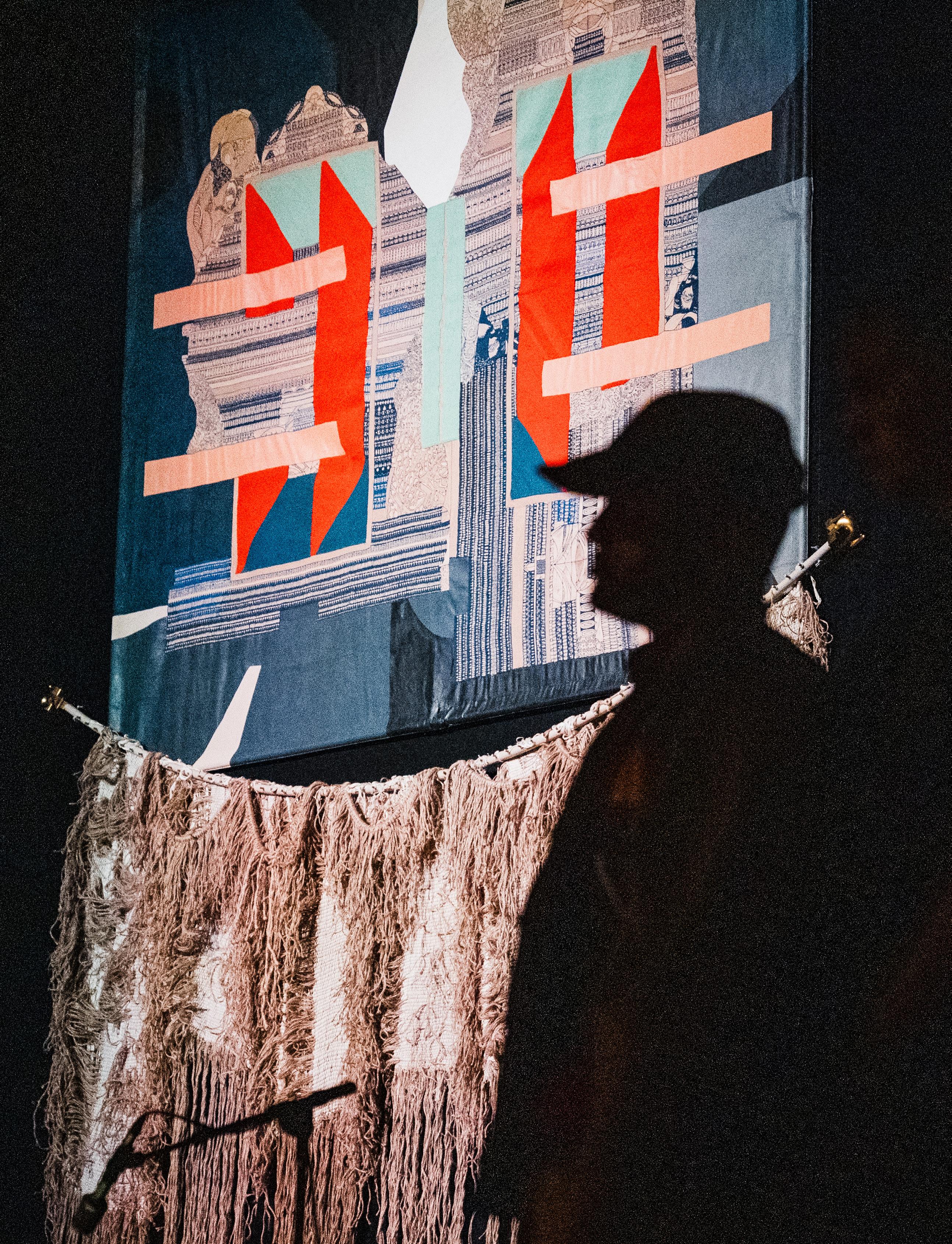
Page 8: Jiha Moon. Haetae (mohawk), 2022. Stoneware with underglaze and glaze, 15 1/2 x 9 x 8 1/2 in. (39.4 x 22.9 x 21.6 cm). Collection of the Ruth and Elmer Wellin Museum of Art at Hamilton College, Clinton, NY. © Jiha Moon. Image courtesy of the Ruth and Elmer Wellin Museum of Art at Hamilton College, Clinton, NY.
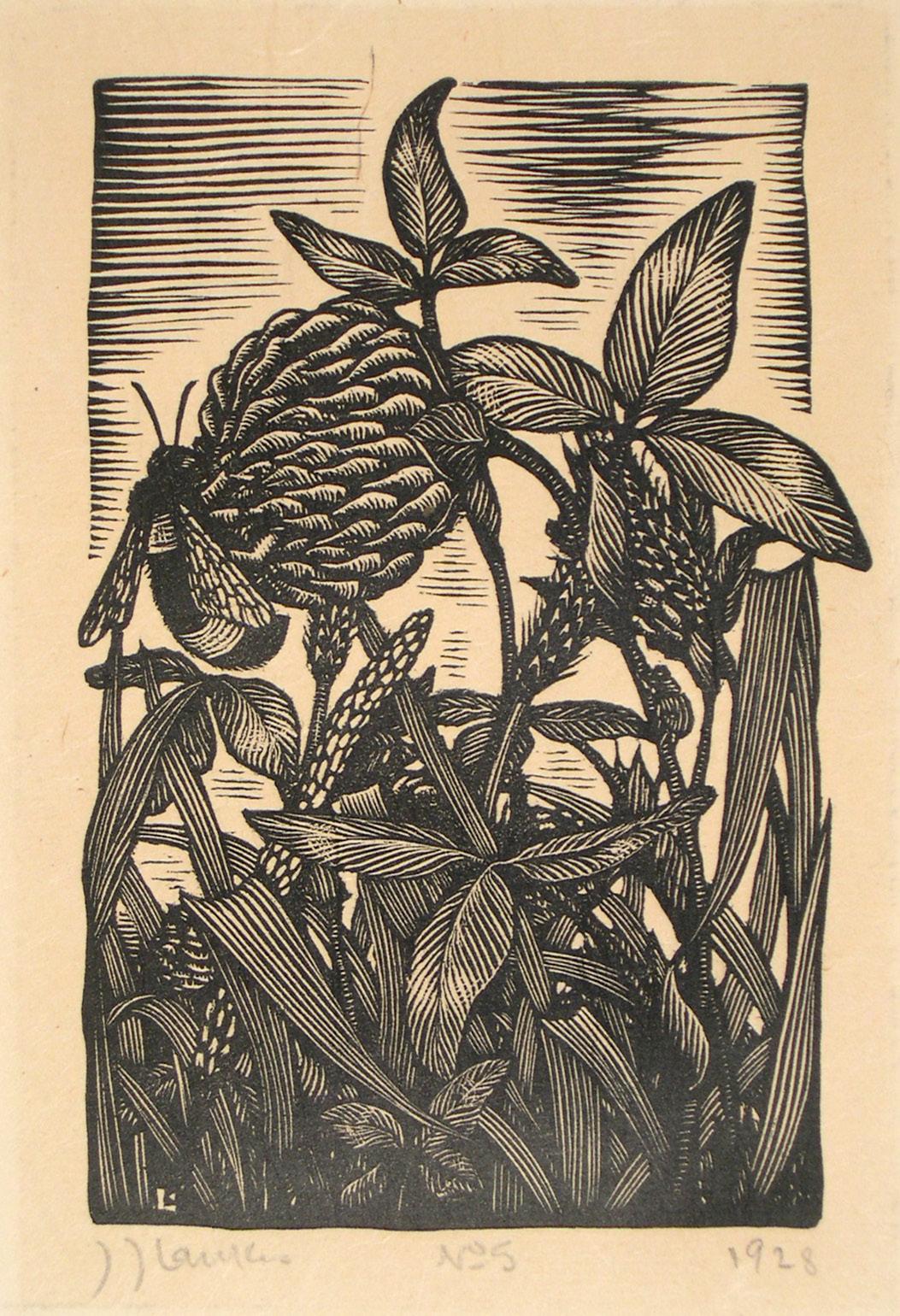
Page 16: Julius John Lankes. Bee and Clover, 1928. Woodcut, 9 1/2 in. × 7 in. (24.1 × 17.8 cm). Ruth and Elmer Wellin Museum of Art at Hamilton College, Clinton, NY. Purchased by Elihu Root, Jr., Class of 1903, and Edward W. Root, Class of 1905, for the Hamilton College Picture Rental Collection. Image courtesy of the Ruth and Elmer Wellin Museum of Art at Hamilton College, Clinton, NY.
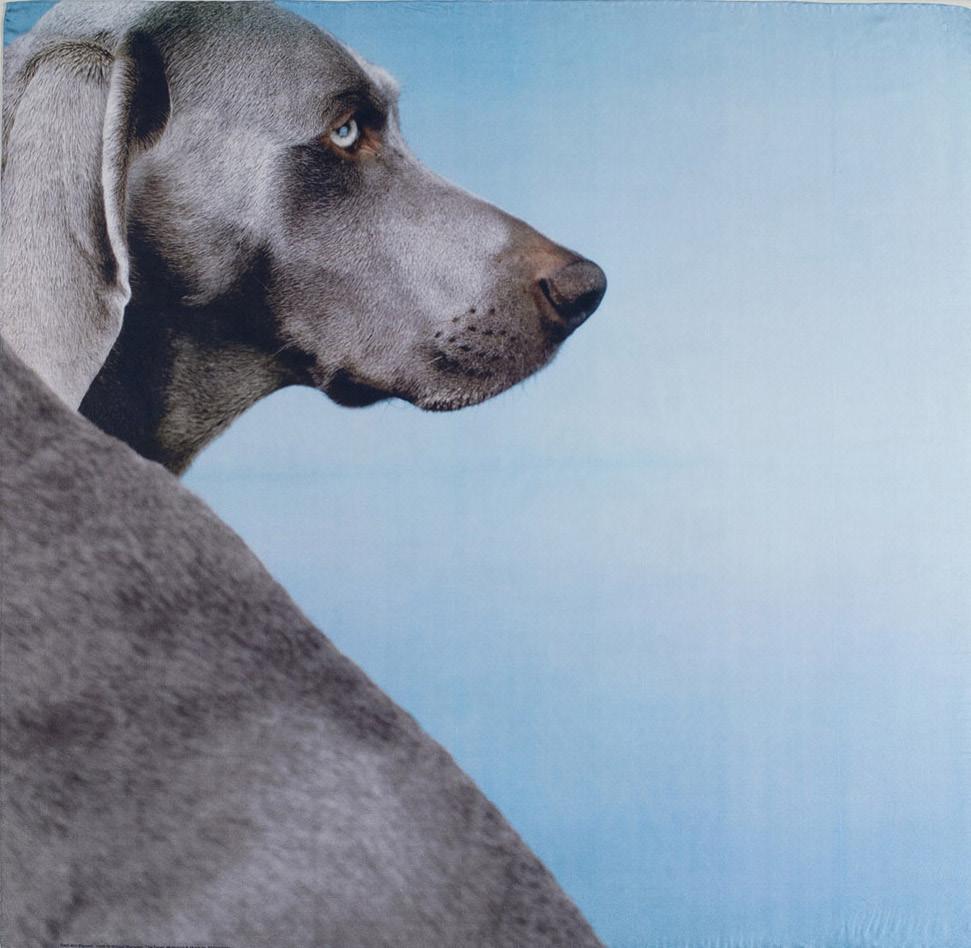
William Wegman. Back and Beyond, 1998. Digital print with acid dye on silk twill, 34 1/2 x 36 in. (87.6 x 91.4 cm). Ruth and Elmer Wellin Museum of Art at Hamilton College, Clinton, NY. Gift of William E. Williams, Class of 1973, in honor of the Class of 1973. © William Wegman. Image courtesy of the Ruth and Elmer Wellin Museum of Art at Hamilton College, Clinton, NY.
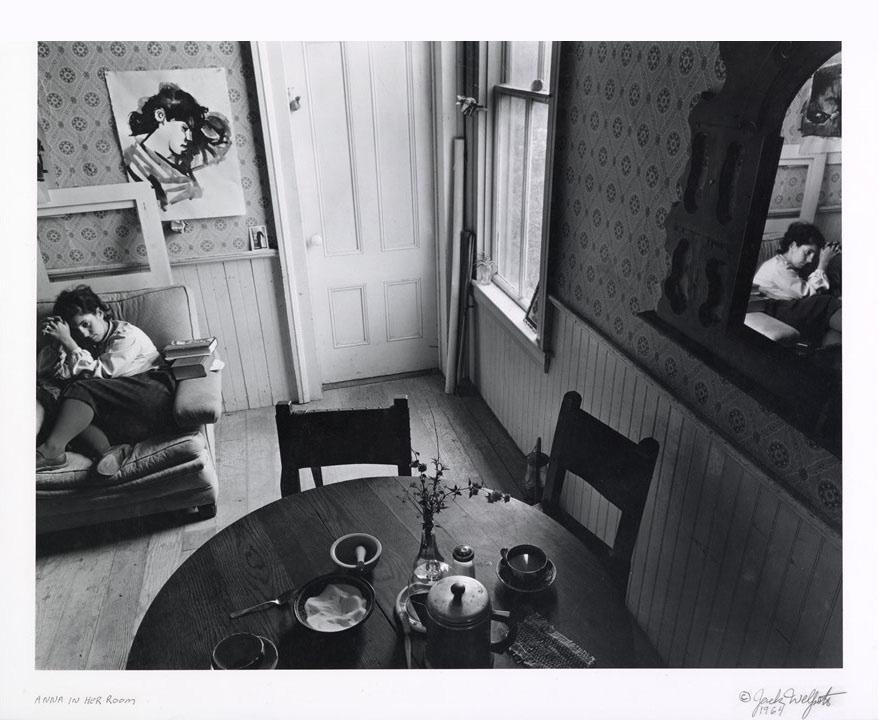
Jack Welpott. Anna in her Room, 1964, printed 1983. Gelatin silver print, 16 × 20 in. (40.6 × 50.8 cm). Ruth and Elmer Wellin Museum of Art at Hamilton College, Clinton, NY. Gift of Thomas J. Wilson and Jill M. Garling, P2016. © The Jack Welpott Legacy Trust and the Board of Regents at the University of Arizona. Image courtesy of the Ruth and Elmer Wellin Museum of Art at Hamilton College, Clinton, NY.
Page 17: Roberto De Lamonica. The Dream, 1968. Color etching, 21 × 31 in. (53.3 × 78.7 cm). Ruth and Elmer Wellin Museum of Art at Hamilton College, Clinton, NY. Gift of Elbert Lenrow, Class of 1923. © Estate of Roberto De Lamonica. Image courtesy of the Ruth and Elmer Wellin Museum of Art at Hamilton College, Clinton, NY. Robert Henri. Curve of Beach, Atlantic City, 1900. Oil on canvas, 15 5/8 × 21 3/4 × 2 5/8 in. (39.7 × 55.2 × 6.7 cm). Ruth and Elmer Wellin Museum of Art at Hamilton College, Clinton, NY. Gift of Kenneth W. Watters, Jr., Class of 1928. Image courtesy of the Ruth and Elmer Wellin Museum of Art at Hamilton College, Clinton, NY.
Leonard Freed. Children dancing on the covered fountain in Westbeth Park, Westbeth Artist Housing, New York City, USA, 1970. Gelatin silver print, 8 × 10 in. (20.3 × 25.4 cm).
Ruth and Elmer Wellin Museum of Art at Hamilton College, Clinton, NY. Gift of Thomas J. Wilson and Jill M. Garling, P2016. © Estate of Leonard Freed/Magnum Photos. Image courtesy of the Ruth and Elmer Wellin Museum of Art at Hamilton College, Clinton, NY.
Page 19: Wright Morris. Door to Pennsylvania Dutch school house, 1950. Ferrotyped gelatin silver print, 10 1/16 × 7 15/16 in. (25.6 × 20.2 cm). Ruth and Elmer Wellin Museum of Art at Hamilton College, Clinton, NY. Gift of Thomas J. Wilson and Jill M. Garling, P2016. © Center for Creative Photography (CCP), Board of Regents at the University of Arizona. Image courtesy of the Ruth and Elmer Wellin Museum of Art at Hamilton College, Clinton, NY.
Page 28: Robert Motherwell. Black Wall of Spain, 1983. Lithograph on handmade paper, 15 × 37 3/4 in. (38.1 × 95.9 cm). Ruth and Elmer Wellin Museum of Art at Hamilton College, Clinton, NY. Gift of The Dedalus Foundation. © Dedalus Foundation Inc. / Licensed by ARS, New York, NY. Published by Tyler Graphics, Ltd. Image courtesy of the Ruth and Elmer Wellin Museum of Art at Hamilton College, Clinton, NY.
Page 29: Malick Sidibé. Photo Mariage- Diane, 1967/2008. Vintage gelatin silver print, glass, paint, cardboard, tape, and string, 10 5/8 × 7 7/8 in. (27 × 20 cm). Ruth and Elmer Wellin Museum of Art at Hamilton College, Clinton, NY. Purchase, Daniel W. Dietrich ’64 Fund for Innovation in the Arts. Selected in conjunction with the 2025 Hamilton College course ARTH-252: From Collecting to Curating.© Malick Sidibé. Courtesy of the family of Malick Sidibé and Jack Shainman Gallery, New York. Image courtesy of the Ruth and Elmer Wellin Museum of Art at Hamilton College, Clinton, NY.
Page 45: Peter B. Jones. Matriarch, 2025. Thrown and modeled clay, 18 × 4 1/2 × 4 1/2 in. (45.7 × 11.4 × 11.4 cm). Ruth and Elmer Wellin Museum of Art at Hamilton College, Clinton, NY. Purchase, The Edward W. Root Class of 1905 Memorial Art Purchase Fund. © Peter B. Jones. Image courtesy of the Ruth and Elmer Wellin Museum of Art at Hamilton College, Clinton, NY. Photo by Mark DiOrio.
Yashua Klos. Where Is My Gold? (Where The Fire Is?), 2025. Woodblock print on muslin, Japanese rice paper, acrylic, oil paint, colored pencil, and wood on canvas, 51 × 93 3/4 in. (129.5 × 238.1 cm). Ruth and Elmer Wellin Museum of
Art at Hamilton College, Clinton, NY. Purchase, William G. Roehrick '34 Art Acquisition and Preservation Fund. © Yashua Klos Studio. Image courtesy of the Yashua Klos Studio. Photo by Daniel Greer.
Paul Strand. Wall Street, New York, 1915, printed 1984. Platinum-palladium print, 11 × 14 in. (27.9 × 35.6 cm).
Ruth and Elmer Wellin Museum of Art at Hamilton College, Clinton, NY. Purchase, The Wynant J. Williams '35 Art Collection Fund. © The Aperture Foundation, Inc. Image courtesy of the Ruth and Elmer Wellin Museum of Art at Hamilton College, Clinton, NY. Photo by Mark DiOrio.
Crossword Key:
1. Miso 7. Fortune 9. Takeout 11. Kewpie 12. Calligraphy
13. Screenprint 14. Daegu 15. Cartographer
C
A
D
1. Moon 2. Mandu
3. Haetae
4. Ceramics
5. Peach
6. Tallahassee
8. Emoji 10. Porcelain