

Vol. 2 Winter 2025/26
Published by The Bridge
Head of Research
Dr Karen L Taylor
ktaylor@wellingtoncollege.org.uk
The Bridge
Wellington College
Dukes Ride
Crowthorne
RG45 7PU
Email: thebridge@wellingtoncollege.org.uk
Web: thebridge.wellingtoncollege.org.uk
Follow us on: LinkedIn
Phone: +44 (0) 1344 444 238

Karen L. Taylor
Welcome to the second volume of The Bridge: Journal of Educational Research and Theory!
This journal seeks to build a vibrant community of inquiry that explores the interconnectedness of educational theory, research, practice, and purpose. We aim to foster meaningful collaboration between classroom practitioners and university researchers in a dialogic space of mutual exchange—one that challenges hierarchical notions of knowledge and promotes a shared, transformative understanding of learning and teaching.
Together, we contribute to a growing body of knowledge that addresses the complexities of contemporary education. The articles in this volume offer a wide range of provocative insights into teaching and learning across diverse contexts. Collectively, they invite us to reexamine our principles, values, and practices as educators. We hope these articles stimulate reflection, dialogue, and continued inquiry into the pressing challenges and possibilities in education today.
Nurturing purpose, passion and interdisciplinary exploration
Ryan Clinesmith Montalvo draws on personal experience and educational research to argue that children possess innate curiosity and motivation but disengage when learning lacks relevance or fails to connect with their interests. His article highlights the transformative potential of inquiry-based approaches, such as Structured Word Inquiry, and critiques the deficit mindset that treats students as empty vessels. Instead, he advocates for educational models that nurture individual purpose, passion, and interdisciplinary exploration. The article calls for a shift away from industrial-era specialization toward pluralistic, student-driven learning, emphasizing the importance of purpose and meaning in education. It concludes by envisioning a future where technology enables more personalized instruction, freeing up time for teachers to act as mentors and for students to engage deeply in experiences that foster lifelong learning and human flourishing.
A collaborative trans-Atlantic conversation and imagination-focused pedagogy
James Denby, Gillian Judson and Robin Ulster, offer a glimpse into their trans-Atlantic conversations, curiosities, and questions about the notion of ‘engagement’. Specifically, they interrogate meanings and practices of engagement and wonder in learning and consider how depth of knowledge and emotion contribute to these educational goals. Framing and inspiring their conversation is an imagination-focused pedagogy called Imaginative Education that has infused their teaching, learning, and pedagogical conversations. The authors hope this scholarly and conversational offering will challenge readers to consider a radical reimagining of common classroom practices and to think more about the elusive emotional and imaginative dimensions of engagement.
capabilities
Richard Bustin focuses on the ways that the powerful knowledge of school subjects can enable students to develop real freedoms to ‘be’ and to ‘do’ in life. In this article he explores how
powerful knowledge might be expressed across a range of subjects, and what educational capabilities might derive from these, such as students making sense of themselves and the world to develop critical thinking and agency.
Tania Blatti and Amy Berry investigate how primary pupils in two contrasting contexts, Melbourne, Australia, and an international school in Shanghai, China, define and experience engagement in learning. Using a mixed methods design, survey data and open-ended responses from over 1,000 pupils (Prep–Year 6) they explore attitudes toward learning and student self-perceptions as learners. Their study highlights the need for schools to be explicit and intentional in how they design learning opportunities and talk with pupils about what learning means. By fostering agency and deeper engagement, educators can help pupils carry their early enthusiasm for learning into the later years of schooling and beyond.
Maria de los Santos and Nathan Roberson argue that Preparing for the future workplace requires more than technical skills—it demands cultivating by integrating 21st-Century Competencies with neuro-inclusive approaches, educators can ensure readiness for not only evolving job demands but also for human flourishing. Although research on neurodiversity is growing, studies linking it explicitly to workforce readiness and well-being remain limited. Their dual approach celebrates diverse strengths, fosters belonging for all learners, and supports meaningful work aligned with individuals’ core values. Reimagining education and work this way create inclusive environments where all people can thrive.
Chris Baker explores self-efficacy across a range of leadership levels and contextual factors using a mixed-methods case study approach to investigate the self-efficacy levels of 138 leaders within a multi-academy trust of 20 schools in the Southwest of England. In this study he seeks to develop deeper understanding of self-efficacy levels and how this could lead to improvements in the design and delivery of leadership development programmes resulting in leaders who are confident by design rather than by chance.
Ryan Clinesmith Montalvo, Phillips Academy Andover
Abstract
Drawing on personal experience and educational research, the author contends that children possess innate curiosity and motivation but disengage when learning lacks relevance or fails to connect with their interests. The piece highlights the transformative potential of inquirybased approaches, such as Structured Word Inquiry, and critiques the deficit mindset that treats students as empty vessels. Instead, the article advocates for educational models that nurture individual purpose, passion, and interdisciplinary exploration. The article calls for a shift from industrial-era specialization toward pluralistic, student-driven learning, emphasizing the importance of purpose and meaning in education. It concludes by envisioning a future where technology enables more personalized instruction, freeing up time for teachers to act as mentors and for students to engage deeply in experiences that foster lifelong learning and human flourishing.
Keywords: Structured Word Inquiry, Experiential Learning, Primary and Secondary Learning, Pluralistic Learning, Mastery learning
The Magic and Joy of Schools
Schools are magical places. Full of the undeniable and unstoppable capacities of children. The joy I find in schools is hereditary. Stemming from generations of educators, heads of school, school starters, and a great grandfather that founded a music festival for students in Clay Center Kansas that is still running today. Over one hundred years later. The hereditary joy I find in the magic of formative discovery has, most recently, driven me to pursue work and learning at the Harvard Graduate School of Education and the Tang Institute at Phillips Academy Andover. My work in schools is driven by a deep commitment to helping children pursue their passions. In my experience, students are predominantly curious, fun loving, and widely brilliant versions of the adults they become.
The Challenge
When, in schools, students are disinterested or unable to learn, I have found it’s either because what’s being taught is not meaningful or because the answer to “why does this work this way” has not been adequately explained. As a schoolteacher and administrator many of the students I’ve worked with have struggled to learn to read. Many of these students learn on their own after some time, others like me, don’t take to reading until ten, twelve, or even later. This, in my mind, is more than ok. These students are in good company, the likes of Einstein and many creative writers did not read until after ten. Almost always, what I observe among “late” readers is that it’s not so much that they can’t, or don’t, have the capacity to read, it’s more that word rules are not appropriately explained. Said in a different way, they have no intrinsic motivation to read.
I have found that when students are engaged by teaching practices like Structured Word Inquiry (designed by Peter Bowers and John Kirby), suddenly the five different reasons for a silent “e” in a word are illuminated. The brilliant student is then more willing to accept the silent “e” and engage in reading with more purpose and less frustration. Not frustrated by the response “well it’s just that way”.
Clinesmith Montalvo
Or, through similar inquiry, the etymology of a word can be traced back to an ancient castle, formative chemistry lab, or discovery of electricity, and the word itself opens into a narrative or story as vast as a novel. Creating lifelong relationships with just one word can surpass in many instances a whole unit of study on the Catcher in the Rye. Leaving a student motivated to read more—across disciplines.
In essence, Structured Word Inquiry is an experiential process. An investigation of the very foundation of language. Repeatedly, parents that report “she’s an A student but just isn’t interested in reading or following a character arc”, will later find their student nose deep in a graphic novel or the Oxford Dictionary of Etymology. Quite simply, that precocious fifth grade child that is successfully social, a straight A student, but just doesn’t read, will start reading if they are shown how to explore the true foundations and mechanisms of the English language.
Of course, curriculum in schools, especially in the early years, do not allow for the time or pay for the expertise that would be required to deploy a Structured Word Inquiry approach. Predominantly because, when done well, it requires one on one instruction that adapts to a student’s interests. In contrast, contemporary schools are largely oriented toward group instruction that teaches to the classrooms’ average Zone of Proximal Development. Furthermore, etymology is complex, and I have met few linguists, English PhDs, and for that matter master’s in education, that want to spend their years in the K-5 classroom. The reasons for the professional composition of early childhood education are the subject of another article, but an important structural component to the lack of experiential learning in schools.
Experiential learning is hard. It’s time consuming for a teacher. The goal in such a curriculum is to create purpose among students. Every student’s purpose, of course, is different. Catering to each could create twelve, fifteen, twenty different project-based experiences that don’t just engage the roots of words but might engage experts outside of school. In my experience with independent schools, I agree with what Ron Berger, a long-time educator and staff member of EL Education, says about the way teachers get young people to learn. “There are three ways of trying to win the young. There is persuasion, there is compulsion, and there is attraction,” (Yeager, 211).
What I see in schools is compulsion and persuasion through two main mechanism, grades and college admissions. The independent school complex has become very good at helping students achieve the later, college admissions. However, these models are predominately unattractive to students. Grades are often inflated and vary from teacher to teacher. Creating in “…most schools…no consistency about what’s included in a grade or what’s left out, even among teachers teaching the same subject in the same school to students in the same grade at the same level,” (The Problem with Grading, Hough). Concepts, in maths particularly, are taken out of context and never applied to experiences that make the theories and algorithms practical. Where a mentor may help a mentee relate to a subject, teachers often worry more
about the right answer rather than the right fit for a learner. The core question is, “Does an A mean a student has truly mastered that history lesson?” (Hough), in the same way the silent “e” isn’t silent “just because”. Schools have adopted a black and white representation of the human experience. Some will theorize it’s because of the cut and dry requirements that industrialization forced on the development of a workforce.
I think the nineteenth century archetype of school is part of the problem, and I think that education largely views children from a deficit mindset. Individuals to be molded, rather than individuals discovering how they think. What is important to a student is directly connected to how they think, who they are, and their passion for learning. Admittedly, to accept my argument one must agree that children are intrinsically motivated to learn. For example, a developmental psychologist may tell you that all mammals are predetermined to acquire the social behaviors necessary for their species through play-based learning with their peers and kin. This frame of thinking is widely accepted and set forth brilliantly by the likes of Dr. Peter Gray (Gray, Freedom to Learn).
Educators, on the other hand, may argue that there are two types of learning: primary and secondary learning. Primary learning is the thing that individuals do without instruction, the skills and behaviors that one can acquire just by being human. Secondary learning constitutes the things too difficult to learn on your own without instruction, concepts foreign to the state of being human. While in premise I agree with the idea of secondary and primary learning, I do not think that secondary learning exists separately from primary learning.
In my experience, if the innate joy essential to primary learning is not intentionally designed into the secondary learning process or curricula, students will not retain subject area knowledge or persist in perusing the subject after a course is complete. Certainly, students that learn through persuasive or compulsory methods will not take what they learned into a lifelong learning practice. For example, Berger explains,
If you tell kids to study World War II history because it’s important to their lives someday, or because it’s on a test, the kids who are people pleasers will do it, but the kids who don’t care will say, No way. However, if you tell the kids that they’re going to interview a WWII veteran in three weeks, and this person has never been interviewed before, and you’ll be able to honor them by being the first to uncover their stories, then there is an incredible pressure to learn— and the threat of an awful shame if you fail to honor the veteran because you were unprepared. That’s powerful. Kids will read and read, they’ll ask for feedback, they’ll work in groups, they’ll do the grueling work, not because its interesting but because its meaningful. Its immediate gratification, but for a sense of self-respect and accomplishment, not candy or points (Yeager 211).
I do think that Berger’s example is somewhat coercive. Students should never be shamed into learning in any situation. However, the essence of the example rings true. In that meaning will motivate anyone, young or old, to learn a subject. When the child investigates a word they don’t know and finds out that the root of the word comes from early settler encounters with bears, and if that student has a fascination with bears, they’re unlikely to forget the word: the principles of the word, the word sounds, rules, and so forth. They’re likely to remember how to pronounce, comprehend, and use the word over a lifetime. Leaving the child not only with a long-lasting positive relationship with grammar, but an experience with independent research, etymology, history, and self-directed curiosity, which can be transferred across subject areas.
The subject area approach to learning in schools ought to be renewed in favor of an approach that fosters individual meaning. In our rapidly changing global society, an individual can learn anything on their computer, through a variety of exemplary asynchronous courses, or directly from experts in the field of interest. If a child is personally motivated to learn a subject, they will voluntarily seek out the secondary learning required to attain knowledge of, and skill in, that subject.
All teachers, I am sure, have experienced such an encounter with a student. The one in which a brighteyed learner comes to office hours, or stays after class, just to ask a burning question and find out where they can learn more about a topic. Learning has always been a lifelong endeavor for humans. However, the arbitrary boundaries that the global education system has put on the timeframe, subject areas, and demarcations of learning have become obsolete. If only because individuals in society will need to have the capacity for lifelong learning in the face of technologies’ rapid advancements. Whether to learn the technologies, or to use learning for its own sake to pursue individual passion in the face of automation.
The future of education will consist of experiences that students voluntarily engage. In thirty years, education will look very different from how it does today. Maybe not in ten or twenty years; as Dr. Subra Suresh says, society often takes thirty years to adopt technological innovations (Suresh). However, in my lifetime, we will no longer need the type of schools we required during the first industrial revolution. The ones we have today. Nor will we need the early convents that trained future clergy, knights, or royals--the precursor to industrialized education. We will need schools that employ experts to lead courses for students that have opted in. We will need schools that focus on the child not the grade or college. Schools that focus on what fulfills an individual. If not just because people are happier when they can learn at their own pace through their passions, then because one day everything a human can do—so will our technologies. At that point we cannot train students for work, but for passion. Otherwise, on the one hand, we will have both a generation of people with maladaptive relationships with learning and corporations that will only hire individuals whose main talent is an ability to constantly learn the output of exponentially growing technologies. On the other hand, we will have the outsourcing of tasks humans do now to the point where humans will be left with an abundance of time to pursue anything we want to outside of work. In this utopia, or dystopia, the main human capacity will not be their professional life or skill, but their capacity to find meaning and purpose individually. Meaning driven learning, in my conception of learning, is the entire evolutionary design. The play, the serve and return, the moments of joy that make childhood fantasy a lifetime obsession with Gordian knots or Shakespeare.
The human imperative and responsibility of the current education ecosystem is to find a way back to the natural pluralism of learning. Pluralistic learning is the idea surfaced by the school leader Yaacov Hecht that poses learning is an intersectional endeavor (Hecht). One in which the study of English may lead to the study of Algebra and vice versa. This is not a new idea, certainly. The likes of Darwin engaged in such pluralistic learning. So too did Socrates. Darwin, however, composed his theory of evolution in the Galapagos, wrote it in his notebook, and left it there for three years. Darwin is a unique and quintessential example of pluralistic learning. He’d often switch from subject to subject, physics to literature, astronomy to biology. Deeply studying, for many years, one or two subjects before returning to a theory of another. Darwin’s approach to learning looks very similar to that of current tech billionaires. Perhaps the prime
example is Bill Gates.
Schools foster nothing like the entrepreneurial or Darwinian processes of learning that some of our greatest thinkers embrace and embraced. Nor is it to say that pluralistic learning is reserved for the brilliant polymath. Or that experiential and autonomous learning ought to be left to the schools serving gifted and talented students. Pluralistic learning is a human right. A natural state of being that the hyper specialized education system has lost and does not foster. Of course, schools changed in the nineteenth century because industrialization required hyper specialization. Today, that specialization is becoming less and less necessary. Ironically, because of the technological displacement of specialization. Nonetheless, if our goal is to help students find their passions and self-actualize into well-adjusted adults (and yes, keep up with broad global upheavals) then schools will need to change from a training ground of specialization to a training ground of purpose and meaning.
Organizations like 2 Hour Learning and educators like Eric Mazur (Balkanski Professor of Physics and Applied Physics at Harvard University) are creating classroom and organizational structures that give students more time to work in groups and pursue their individual interests. Furthermore, with the advent of Ai and models like Specification Grading, it is easier now, more than ever, to achieve the two standard deviation increases in performance among students that Benjamin Bloom observed in his paper “The 2 Sigma Problem: The Search for Methods of Group Instruction as Effective as One-to-One Tutoring”. Within the context of Bloom’s research, MaKenzie Price and 2Hour Learning make evident that Ai tutoring during the school day can replace teacher led group instruction while achieving more learning with less daily instruction time. The technological tools at the disposal of schools today can allow students to learn more in a shorter period through one-to-one mastery-based learning. As demonstrated by 2 Hour Learning’s standardized test outputs (Price). The remaining time in schools can be dedicated to experience, meaning, purpose, wellbeing, and play. All of which will motivate a student to learn more during the period in which they are receiving direct instruction.
Admittedly, a reduction of direct instruction time in schools necessitates a reduction in the traditional notion of teacher and group instruction. A reduction in direct instruction would require a tectonic shift in the industrial teaching methods used predominantly in schools today. One may think, rightfully, what will happen to the teachers’ livelihoods? I am not advocating for a mass teacher lay off. However, adults that are no longer instructing a group can facilitate a school day by focusing deeply on student experiences (freed from the time-consuming, and impossible, challenge of having to teach groups of students that represent wide ranging Zones of Proximal Development). Teachers then become coaches, mentors, and advocates for an individual student’s flourishing in school, group, and self. This will require schools to acknowledge their crisis of experience and do away with their triumphs of achievement. Thereby engaging in the hard work of adapting to the tools now available to us that make mute the critique “we don’t have enough money to give one to one instruction to all students”. If we, as leaders of organizations, can accept the hard evidence of technology equipped one to one instruction and embrace robust experiential offerings, then we will be well prepared now, and in the future, to weather the ongoing technological revolution by reconstituting our schools as centers for human flourishing.
Structured Word Inquiry: A teaching method that helps students understand the rules and history of words to improve reading and spelling.
Experiential Learning: Learning by doing through direct experience.
Primary Learning: Skills and knowledge people learn naturally, just by being human, without being taught.
Secondary Learning: Skills and knowledge that need to be taught because they are not learned naturally.
Pluralistic Learning: A way of learning that connects different subjects and ideas together, rather than keeping them separate.
Mastery-Based Learning: A way of learning where students keep practicing until they fully understand a topic.
Zone of Proximal Development: The range of tasks a learner can do with help but not yet alone.
Specification Grading: A grading system where students are graded based on meeting specific criteria or standards.
2 Sigma Problem: A term coined by educational psychologist Benjamin Bloom to describe his finding that students who receive one-to-one tutoring perform two standard deviations (or “2 sigma”) better than students who receive conventional group instruction. This means tutored students typically outperform 98% of those taught in a traditional classroom setting.
EL Education: A nonprofit educational model that emphasizes hands-on, real-world learning and character development through collaborative projects. It aims to make learning both academically rigorous and personally meaningful for students.
2Hour Learning: An educational approach that uses AI-driven personalized tutoring to help students master academic content in just two hours per day. The rest of the school day is dedicated to activities that build life skills, interests, and character.
Works Cited
Bloom, Benjamin S. “The 2 Sigma Problem: The Search for Methods of Group Instruction as Effective as One-to-One Tutoring.” Educational Researcher, vol. 13, no. 6, June–July 1984, pp. 4– 16.
Gray, Peter. Free to Learn: Why Unleashing the Instinct to Play Will Make Our Children Happier, More SelfReliant, and Better Students for Life. Basic Books, 2013.
Hough, Lory. “The Problem with Grading.” Harvard Graduate School of Education, May 2023, www.gse.harvard.edu/ideas/ed-magazine/23/05/problem-grading.
Hecht, Yaacov. Democratic Education: A Beginning of a Story. Tel Aviv: Institute for Democratic Education, 1993.
Price, MaKenzie. “How AI is Revolutionizing Homeschooling: 2hr Learning with MacKenzie Price.” 2 Hour Learning, 16 July 2024, www.2hourlearning.com.
Yeager, David. 10 to 25: The Science of Motivating Young People: A Groundbreaking Approach to Leading the Next Generation--And Making Your Own Life Easier. Avid Reader Press / Simon & Schuster, 2024.
“How Deep Learning from Nature and Machines Matters for Our Future.” Villars Institute, villarsinstitute.org/posts/how-deep-learning-from-nature-and-machines-matters-for-ourfuture/. Accessed 7 Mar. 2025.
James Denby, Common Sense
Gillian Judson, PhD Simon Fraser University
Robin Ulster, University of the People
Abstract
This article provides a glimpse into our trans-Atlantic conversations, curiosities, and questions about the notion of ‘engagement’. Specifically, we interrogate meanings and practices of engagement and wonder in learning and consider how depth of knowledge and emotion contribute to these educational goals. Framing and inspiring our conversation is an imagination-focused pedagogy called Imaginative Education that led us to meet years ago and that has infused our teaching, learning, and pedagogical conversations ever since. We hope this scholarly and conversational offering challenges readers to consider a radical reimagining of common classroom practices and to think more about the elusive emotional and imaginative dimensions of engagement.
Keywords: engagement, imagination, Imaginative Education, cognitive tools, wonder
This collaborative work is rooted in our shared interest in teaching, imagination, and critically examining often unexplored pedagogical practices. We are post-secondary teacher educators currently living in Spain (James and Robin) and Canada (Gillian), connecting through lively Zoom discussions. By imagination we mean the ability to envision and enact the possible; the generative feature of mind that enables an access to the not yet (Judson, 2020). An imagination-focused pedagogy called Imaginative Education is the topic that first caused our storylines to cross and is a lens through which we often view education.
This article offers a triadic glimpse into our conversations, curiosities and questions about ‘engagement’ in learning and some dimensions of this topic that we consider pedagogically significant. We invite you, the reader, to consider how you understand ‘engagement’ and ‘wonder’ and how depth of knowledge and emotion contribute to these educational goals. To begin we introduce Imaginative Education, a unique pedagogy that considers the practical dimensions of the human imagination and how to maximize it to support learning. We hope the scholarly conversations we share here invite you to think more deeply about engagement and its connection to imagination, to wonder, to emotion, and to depth of knowledge.
Kieran Egan was an educational philosopher who spent his career studying the role of imagination in human development. His work is a powerful lens through which to understand dimensions of ‘engagement’ in learning. In his seminal work, The Educated Mind: How Cognitive Tools Shape Our Understanding, Egan (1997) asserts that the emotional, metaphoric, and imaginative worlds created by the possibilities of language are the “foundations of our cultural life” (Egan, 1997, p. 69). According to Egan, language offer tools—cognitive tools—that engage and grow the imagination. Examples of cognitive tools include the story-form, vivid mental imagery, change of context, metaphors, dramatic tension and more. Imaginative Education is a theory and practice that indicates how to use cognitive tools to shape emotionally and imaginatively engaging learning for students of all ages. The three conversations that follow offer glimpses into IE theory and practice and what it can teach us all about engagement and learning. (While it is outside the scope of this article to describe in detail how IE foregrounds students’ emotional and imaginative engagement in learning, you can learn more on a blog dedicated to IE practices called imaginED ( www.educationthatinspires.ca) or the Centre for Imagination in Research, Culture and Education (CIRCE) website (www.circe-sfu.ca))
As a long-time teacher and teacher-educator, I feel disheartened by the number of preservice and new teachers who rely on apps and websites like Chat GPT and Twinkl to find ideas and lessons to ‘engage’ their students. Many of our pre-service teachers create what are essentially personalized worksheets in the belief that they will keep students motivated and involved in learning. Along with some of their classroom mentor-teachers, they require students to make their thinking visible throughout a lesson to determine whether they are engaged in the lessons. They close their lessons with plenaries or sharing circles that include informal assessment routines such as exit tickets to determine whether their students have been ‘engaged’ and, hopefully, as a result, have met learning outcomes. These same pre-service teachers frequently express frustration that their students do not understand, have no idea what to do, fail quizzes, or aren’t able to participate in a discussion because, even a day after their lesson, the students don’t remember what they’d supposedly ‘learned’. This begs the question: Were they ever ‘engaged’ in the activities? Does ‘engaged’ necessarily result in learning? They, like many of us, are trying to figure out why and how their teaching strategies are not creating curious and imaginatively-engaged students who are making important learning connections and demonstrating higher-level thinking. From my experience, I think we may be failing to understand—and ‘see’—key features of ‘engagement’.
While student ‘success’ is a complex process, engagement is increasingly seen as a contributing factor. Research suggests that when students are engaged, they will be more likely to attend class regularly, to stay in school, to earn high grades, to graduate from college, and to have more meaningful career options (Cents-Boonstra et al., 2021; Macfarlane & Tomlinson, 2017). Student engagement is also seen as a way to prevent negative classroom behaviours and promote actions and attitudes that are conducive for learning (Macfarlane & Tomlinson, 2017). Most educational research articles define engagement as incorporating emotional, cognitive, and behavioural dimensions (Cents-Boonstra et al., 2021; Macfarlane & Tomlinson, 2017; Student Engagement, 2016). Emotional and cognitive dimensions of engagement are
commonly defined as involving positive affect towards learning and topics, and students understanding the emotional importance or significance of what they are learning. Students’ feel something about the topics and these feelings may help them remember and/or inspire them to learn more. Imaginative Education practice supports this kind of engagement. Learning that employs cognitive tools cultivates emotional connections with knowledge (Egan, 1997, 2002).
Much of the literature about student engagement directed towards a teacher audience, however, is focused on the behavioural aspect, describing what engagement looks and sounds like in the classroom. As an example, the Edutopia article entitled, How Do We Know When Students Are Engaged?, is just one of many that identifies paying attention, taking notes, listening, asking/responding to questions, completing requests and reacting appropriately, as ways to tell that students are engaged (Johnson, 2012).
In my experience, seeking to assess engagement largely through a behavioural lens is problematic for many reasons, especially because the engagement behaviours educators can see don’t necessarily indicate that students are emotionally or cognitively connected to their learning. Emotional and cognitive dimensions of engagement often lie within the elusive realm of what educators can’t see. So, when students demonstrate ‘engagement behaviours’ such as participating in an activity, or filling out worksheets and exit tickets correctly, it doesn’t mean that they are necessarily learning more, remembering what they’ve learned, or participating in deeper forms of learning (Axelson & Flick, 2011).
I wonder if we are missing out on engaging students’ imaginations, their sense of curiosity, and their desire to learn when we rely heavily on behavioural forms of engagement and on quick formative assessment games and exercises. It may be that we are looking to observable and visible places, when the key to engagement lies out of view. Writing about why imagination tends not to be the focus of much research, Egan, Judson & Madej (2015) offer an analogy I find compelling:
The value of engaging the imagination in learning is not something that has been enlightened by empirical research, and there is always a tendency to focus attention on those things we find easier to research. This is the phenomenon of looking on the sidewalk under the bright lamppost for the keys that were actually lost in the deep grass out of the light. But imagination and creativity are crucially important elements in education, and to continue to give them less attention than they merit is to persist in the folly of futile searching for keys under the lamppost. (Egan, Judson & Madej, 2015, p. viii).
I feel like relying on observable behavioural aspects of engagement is akin to looking for the keys under the spotlight. However, it may be that the most powerful features of engagement are out of view. While formative assessment and visible-thinking strategies are useful tools to help students verbalize and understand what they are learning, how they are learning, and to guide instructional decisions, I wonder how we can search also ‘in the darkness’, into the emotional and cognitive dimensions of engagement. A spark of curiosity, the emotional feelings cultivated in a good story, the subtle ways in which students lean in to learning—how can we acknowledge these valuable signs of engagement and enable them in our teaching?
As teacher-educators, we (Robin and James) are motivated and excited by the task of helping the student-teachers we work with learn how to engage their students’ curiosity, imaginations, and emotions. We have seen the ways in which the theories and practice of Imaginative Education inspire students’ desires to learn, to make connections between what they are learning, to think critically, and to ask bigger questions about the world. Imaginative Education offers the possibility of engaging students, not only behaviourally, but, more specifically, engaging students’ imaginations, emotions and sense of wonder with any subject or topic that they are learning about. For example, on teaching punctuation, Egan (1997) writes,
Our sense of wonder might be readily engaged by the discrepancy between the invention of
these tiny marks and their vast social and cultural consequences—a little like chaos theory’s example of the movement of a butterfly’s wing in South America leading to profound changes in weather conditions in the northern hemisphere. (p. 256)
Teaching something in this way and thereby igniting a flame of interest or a feeling of curiosity is very different from simply giving students a cute worksheet that involves a punctuation quest or giving them a punctuation and full stops board game to play.
And this brings us back to looking for the keys under the lamppost: engaging the imagination in learning may not be something that can be measured or quantified. This does not mean that it is not important. We want to expand understanding in education about assessment, about lesson planning, and about classroom community with theoretical and practical knowledge of imagination and its role in engagement. We are hoping to find ways to encourage teachers (student teachers and experienced teachers) to expand their search for keys to ‘engagement’ beyond the light of the lamppost. In the next two sections Gillian and James expand this conversation on engagement to look at the connections between wonder, students, and student-teachers in practice.
Re-Imagining the Know/Wonder/Learn Approach: KWL(W) 2.0 (By Gillian)
I, Gillian, want to pick up a particular aspect of ‘engagement’ Robin introduces above: wonder. Specifically, I seek to illuminate how limited conceptions of ‘wonder’ leave this tool of engagement largely unused. As an example, I will focus specifically on a pedagogical activity familiar within the elementary classroom context. The ‘Know/Wonder/Learn’ (KWL) approach is as common in elementary school classrooms as (little) chairs, circle time, ‘show and tell’, and hands-on learning. I want to think more about this common pedagogical activity and, ultimately, reveal how it both reflects a particular (and mostly unexamined) view about student learning and leaves the power of the ‘w’ (wonder) untapped. Read on to consider the limitations and possibilities of KWL.
As an assessment tool, the KWL activity—often written in columns on a whiteboard or on student handouts—aims to show educators what students ‘know’, what they want to know, or ‘wonder’, and then what they eventually ‘learn’. KWL reflects the common—and largely unquestioned— progressivist belief that educators can best support learning by connecting to students’ prior knowledge. It seems to assume (or hope) that asking questions, or wondering about what to learn, can engage student interest. This is considered a student-centred practice, meeting students where they are, allowing educators to connect learning to what students already know, revealing students’ interest and, ideally, directing a program of inquiry. I invite you to rethink the ‘W’—wonder—with me. Through the lens of imagination, ‘wonder’ can involve far more than asking questions that reflect curiosity.
While there is obvious value in assessing what students understand and may be curious (wonder) about at the start of learning, conceptualizing ‘wonder’ only in this way is limiting. First, when used at the start of the learning process and when ‘I wonder if/why/how’ is synonymous with ‘I am curious if/why/how’, students’ questions come from a limited knowledge base. As a result, students’ interest can tend to point to familiar aspects of a topic, rather than the unfamiliar. Without knowledge, it can be hard to move past superficial dimensions toward the juicy bits, that is, to the intriguing mysteries, puzzles or awe-inspiring aspects. (The important
relationship between engagement and knowledge is taken up further, next, with James and his description of the #2 pencil. Read on!) These initial ‘I/we wonder’ questions are also assumed to reflect student interest or engagement in a topic. Because they tend to point to the familiar, rather than the extraordinary, unique or interesting, however, I am not so sure students are necessarily interested or engaged.
It would be wise to rethink ‘wonder’. We can think about wonder not only in the sense of ‘I am curious’ but in recognition that everything in the world aspires to greatness in some way. Everything can evoke awe; everything is awe-full. Wonder conceived in this different way is one of the powerful cognitive tools, or learning tools, that engages imagination and makes knowledge meaningful and memorable (Egan, 1997, 2005).
Kieran Egan (1997, 2005) describes ‘a sense of wonder’ as a powerful cognitive or learning tool that engages and grows imagination. Egan argues that evoking a sense of wonder’ in learning involves understanding how something is unique, awe-inspiring, or calls to possibility. A sense of wonder reveals the marvel in a topic. A sense of wonder is one of many different learning tools— or cognitive tools, that makes knowledge more meaningful and memorable by engaging our emotion. Rather than starting from what students know, Egan recommends shaping learning opportunities around what they can imagine, or what is possible. So, educators can invite students to explore the extremes and limits of topics, the mysteries, the puzzles, the dramatic tensions and more. Practically, educators can use cognitive tools of Imaginative Education— playful exploration, powerful images, metaphor, or the story-form and many others—to shape topics early on and throughout the learning process. A sense of wonder is a powerful tool educators can use to invite students to lean into new topics, revealing the unique, cool, unusual aspects about it. Importantly, a sense of wonder can develop for learners through the learning process. When human beings surpass the familiar aspects of a topic by learning more about it, they gain access to the unique, novel or unfamiliar qualities and dimensions. It might be wise, therefore, to rethink KWL.
What if you add another ‘W’ to your KWL practice to maximize your students’ engagement? What if you tap into aspects of their imaginative lives, not just their immediate lives? What if your students seek what is inspiring, unusual, and unique about a topic and include that in their learning? Adding a second ‘W’ to the infamous KWL practice may be considered a small act of rebellion—revolt against a particular way of thinking about learning, student interest etc. It shifts how we discuss wonder, noticing that engagement and learning are not necessarily maximized when we only move from students’ immediate lives slowly outward. It can make visible how lack of knowledge can limit our questions—do students ask better questions at the end of an inquiry than at the beginning? I hope so! It shows how ‘wonder’ can mean different things and how limiting “wonder” to initial questions, leaves engagement untapped. Rethinking wonder means seeing every topic as coming to life; everything aspiring to greatness. Even a #2 pencil.
What does a #2 pencil have to do with being an engaging and effective teacher? (By James)
Not too long ago in our course Teaching and Learning in Upper Primary, we, James and Robin, presented our Year 3 and Year 4 teacher education students with a simple #2 pencil - you know, the old fashioned ones with yellow paint and a little eraser at the end - and asked them
to brainstorm what they would have to do to make a box of pencils themselves.
“Get some wood.”
“Get some paint.”
“Get some…I’m not sure what it is. Pencil lead?”
We pushed them to think deeper with questions like “Where would you get the wood?”; “What would you do to the wood to make it into a pencil?”; and “What exactly is that ‘lead’ made of?”
We were beginning a social studies unit in which they would learn about urban societies and then work with that content to refine how they would teach it. The pencil was our entry point to examine the complexity of urban societies—the trade networks, infrastructure, governance structures, record-keeping, etc.—and the systems they rely on to function. The process of modelling this start to a social studies unit revealed a significant challenge in preparing our pre-service teachers to dive into concepts and relationships in their future classrooms - their own lack of content knowledge.
A typical Ticonderoga #2 pencil is the product of an Italian multinational; yours could be made in Italy, France, Mexico or Germany with components (wood, graphite, etc.) sourced from multiple countries. Pencils are possible because our society divides labour, creates specialized systems, and builds infrastructure to help society run—just like the great city of Ur in Mesopotamia, the pyramids of the Aztecs, or the trade networks of the Romans. Exploring the pencil was an introduction to understanding the complexity of urban societies—both ancient and modern.
While knowledge of how a pencil is produced isn’t essential for Year 3 and 4 teacher education students, we discovered a glaring gap as they began to plan how they would have their own students learn about urban civilizations. Most initially focused on finding websites to research ‘key information’ for different early urban societies—e.g. who the Inca traded with, what the Mesopotamians built, etc. This reduced the potential conceptual learning to a set of facts–the who, what, where, when, for example, of trade—rather than the vastly more important understanding of what a trade network represents, including:
• Specialized labour
• Spread of ideas
• Organizational structures (e.g. to regulate trade)
• Infrastructure
• Monumental architecture
• Surplus and accumulation
Besides these concepts, each of which is integral to understanding how a successful urban society functions or fails, our pre-service teachers didn’t address the remarkable pattern that ancient and modern urban societies (‘civilizations’) share common characteristics that in many cases emerged independently. The trade networks and monuments of the Inca, for example, emerged with no contact between them and other urban societies like the Roman Empire. The humble pencil represents that complexity which is why we couldn’t help but laugh when the initial class answer to the question, “Could you make your own pencil?” was, “Yeah, probably but it might take some time to get all the stuff.”
When it came time to plan their own unit, our students’ initial work reflected their beliefs of what good teachers do. They saw themselves as coaches and had students do independent research to then collaborate on a final project. They believed that this was the way children would build understanding, knowledge and expertise and that this self-directed approach would foster deep engagement. This approach to learning, however, would have neglected fascinating conceptual exploration and thinking about systems and patterns. It might have
met curricular requirements, but it would have failed to engage students’ sense of wonder and imagination. Why?
These eager, committed teachers-to-be were hamstrung by their own lack of content knowledge. Gaps in their knowledge prevented them from imagining the complexity of the pencil and therefore really understanding the essential elements of early and modern urban societies. While the task they created was student-centred and active it only scratched the surface of potential learning. Without content knowledge, they were severely constrained in their ability to ask good questions, nudge students towards deep understandings and envision connections between concepts. When we speak of ‘guides on the side’, we envision a teacher who can guide students not in simply completing a task but rather in constructing meaning and building a foundation for learning. What these pre-service teachers didn’t know confined them to being the ‘guide on the side’ for a task that, while student-centred and active, only scratched the surface of potential learning. Gaps in their knowledge prevented them from imagining the complexity of the pencil and therefore really understanding the essential elements of early and modern urban societies.
Our students’ initial attempts to design learning experiences are not surprising. While curricula have supposedly been embracing inquiry, they have been focusing more and more on the ‘concrete’—what students already know and what is familiar. For a group of children to appreciate the marvel that a pencil really is—and to see it as a gateway to understanding the world - we must move away from the teacher as a simple guide pointing students towards learning outcomes and value knowledge/content as a springboard to deep learning. In a text entitled Getting It Wrong from the Beginning Egan (2002) argues that children often “do not learn the prerequisites to later learning, and this…has an impoverishing effect on students’ abilities to learn throughout their schooling” (p. 143). This is equally true of teachers.
The idea of students developing knowledge and expertise while collaboratively engaged in self-directed learning about topics and issues related to their own lives and community is nothing if not beautiful. But we would argue that without significant teacher knowledge and expertise, for the vast majority of students, the learning will be ‘flat’ and fail to engage learners. For the teacher to be a successful coach or guide, for students to successfully explore the concepts and theories that underlie any topic (even a pencil), the teacher has to know ‘stuff’.
Understanding the value of this ‘stuff’ and the role it can play in the classroom is easier if we also understand Egan’s cognitive tools within the framework of Imaginative Education. For the sake of brevity, we will take only three, but first and foremost is that a mass of diverse knowledge is necessary to drive the dialectical process between general scheme and particular knowledge, and a good deal more knowledge is required to keep it going. When students accumulate only a relatively small amount of knowledge...they are able to generate only rather crude and simple general schemes. (Egan, 1997, p.130)
This was evident in our student-teachers’ initial project ideas as their students would have been searching for simple facts (e.g., the Mesopotamians traded for lapis lazuli) rather than analyzing and understanding concepts about urban societies’ development. The evolution of urban societies is, moreover, a potential vehicle for both provoking student engagement and deep learning. On a simple level, the making of a pencil and the mind-bogglingly complex network that makes it possible “seem[s] best able to stimulate the sense of wonder or…awe” (p.218) —much more so than ‘it’s made of wood from _____ and paint from _____’ (the equivalent
factoids emphasized in our students’ initial unit plans).
Egan uses a lesson approach to teaching “properties of air” to illustrate how content can provoke wonder, noting that “air is full of noises…of waves and particles, smells, living things, and decayed flakes of skin. If we could just change the scale of things…of empty, featureless air we could show children that the air is full of wonders” (p. 245) These wonders are all around us—in pencils, Mesopotamian networks, in Incan infrastructure—and the teacher’s role in unlocking those wonders rests on a foundation of knowledge. Only by ‘knowing stuff’ can the teacher open a path for students to inquire, explore, and build a meaningful understanding of the world around them.
Our foray into engagement has made us realize a few things. First, the scope of the literature reveals its importance to educators. We also realize, through reading, discussion and our own personal experiences, how the goal of ‘engagement’ is not always achieved. This brings us back to where our story started: Imaginative Education. The topic that led to our meeting emerges for us as a powerful pedagogical frame for learning more about engaging students and (student-)teachers. We are left wondering about how we can expand conversations around engagement to more fully acknowledge the role of emotion and imagination and what is required to cultivate both. Something we haven’t discussed here is the connection between a teacher’s engagement and student engagement. In a world of AI-generated ‘hooks’, how do teachers cultivate their emotional and imaginative connections with the topics they are teaching? For students, how can we as educators continue to nurture personal and longlasting connections in a fast-paced media-driven world?
References
Axelson, R. D., & Flick, A. (2011). Engagement. Retrieved from: http://nur655sect2jan12teama.pbworks.com/w/file/fetch/50933853/defining%20student%20engagement.pdf
Cents-Boonstra, M., Lichtwarck-Aschoff, A., Denessen, E., Aelterman, N., & Haerens, L. (2021).
Fostering student engagement with motivating teaching: an observation study of teacher and student behaviours. Research Papers in Education, 36(6), 754–779. https://doi.org/10.1080/02671522.2020.1767184
Egan, K. (1997). The educated mind how cognitive tools shape our understanding. University of Chicago Press.
Egan, K. (2002). Getting it wrong from the beginning. Yale University Press.
Egan, K., Judson, G. & Madej, K. (Eds.) (2015). Engaging imagination and developing creativity in education. Cambridge Scholars Press.
Johnson, B. (2012). How do we know when students are engaged? Edutopia.
Retrieved from: https://www.edutopia.org/blog/student-engagement-definition-ben-johnson
Judson, G. (2020). Conceptualizing imagination in the context of school leadership. International Journal of Leadership in Education, 27(1), 72-84. doi: https://doi.org/10.1080/13603124.2020.1818289
Macfarlane, B., & Tomlinson, M. (2017). Critiques of student engagement. Higher Education Policy, 30(1), 5–21.
https://doi.org/10.1057/s41307-016-0027-3
Student Engagement (2016). The Glossary of Education Reform. Retrieved from: https://www.edglossary.org/student-engagement/#google_vignette
Dr. Richard Bustin, Director of Pedagogy, Innovation and Staff Development and Head of Geography at Lancing College, UK
Abstract
A Capabilities Approach to education focuses on the ways that the powerful knowledge of school subjects can enable students to develop real freedoms to ‘be’ and to ‘do’ in life. This paper explores how powerful knowledge might be expressed across a range of subjects, and what educational capabilities might derive from these, such as students making sense of themselves and the world to develop critical thinking and agency. This paper summarises ideas published in Bustin (2024) and goes on to offer an illustrative model of a capabilities approach to education.
Keywords: Powerful knowledge, capabilities approach, curriculum, subject disciplines.
Modelling a Capabilities Approach to Education
Introduction
What teachers choose to teach in schools is subject to much debate, with opposing voices proposing varying models of curriculum. The traditional position is one that sees a rigorous subject based curriculum, where the role of the teacher is to introduce students to the best of human thought in what could be described as the ‘canon’ of knowledge (e.g. the work of E.D. Hirsch 1988). The more progressive approach to curriculum is more child centred, built around a range of broad competencies like ‘resilience,’ and ideas like ‘learning to learn’ and subject boundaries are much more fluid as cross subject project work dominates (e.g. Reiss and White 2013, Claxton 2018).
Yet the extreme ends of both of these positions could be considered problematic. A traditional approach stuck in rigid subject boundaries seems to leave little room for exploring messy, real world phenomena. Here, factual recall is prioritised over skill and value development and there is the vexed question about whose knowledge is being taught in a world of white male hegemony; a question particularly pertinent for literature such as the choice of texts to teach in humanities subjects (e.g. Milner 2020). A progressive curriculum means young people might miss out on some of the most significant discoveries in science or most impactful pieces of art.
The ways in which young people access information is changing, adding an additional challenge for teachers. An overreliance on technology to look up information when needed can outsource independent thinking. Research from Ofcom (2022) identified that the top three sources of news for young people are You Tube, TikTok and Instagram. In an era of ‘fake news’ and the shaming of expertise that does not fit a particular political agenda and given the rapid advances in information technologies such as AI, discussions around what a contemporary curriculum should aim to achieve have never been more significant. One approach to thinking about a curriculum that both moves beyond traditional and progressive approaches comes from the discourse of the ‘capabilities approach’ applied to curriculum thinking.
The capabilities approach derives from the field of welfare economics, earning its key creator, Amaryta Sen, a Nobel prize in 1998. Rather than judging the success of a country based on its economic output- the richer the country the better it is- Sen (1980) argues that we should instead look at the freedoms the people in the country have to live life in the ways they choose. These ‘capabilities’ allow people to ‘do’ and to ‘be’ and to live as autonomous free citizens. Amartya Sen never specified a list of what capabilities should be, arguing that it is up to each country to decide upon what capabilities are valued. Other writers have produced lists of ‘universal’ capabilities, such as Martha Nussbaum (2000); her list includes capabilities such as life, bodily health, and practical reason. The capabilities approach was instrumental in the creation of the Human Development Index, now a key measure of development adopted by the United Nations.
When applied to education thinking, a capabilities approach argues that, rather than judging the success of an education based on the exam pass rate or the number of top grades achieved - the higher the better – one should instead look at how the education a young person has received has given them real freedoms to live life in the way they choose (e.g. Walker and Unterhalter, 2007). This is not an approach that looks at what grades a student has achieved, important those these are, but how their education has taken them beyond their everyday experience and enabled them to see themselves and the world in new ways.
To be of practical use in a curriculum, capabilities need to be expressed in some way. Several writers have attempted to list what educational capabilities might include, and figure 1 shows those from educationalists Lorella Terzi (2005) and Melanie Walker (2006).
Terzi (2005) Walker (2006)
Literacy: Being able to read and to write, to use language and discursive reasoning functionings.
Numeracy: Being able to count, to measure, to solve mathematical questions and to use logical reasoning functionings.
Sociality and participation: Being able to establish positive relationships with others and to participate without shame.
Learning dispositions: Being able to concentrate, to pursue interests, to accomplish tasks, to enquire.
Physical activities: Being able to exercise and being able to engage in sports activities.
Science and technology: Being able to understand natural phenomena, being knowledgeable on technology and being able to use technological tools.
Practical reason: Being able to relate means and ends and being able to critically reflect on one’s and others’ actions.
Practical reason: Being able to make wellreasoned choices.
Emotional resilience: Able to navigate study, work and life.
Knowledge and imagination: Being able to gain knowledge of a chosen subject—disciplinary and/ or professional— its form of academic enquiry and standards.
Being able to use critical thinking and imagination to comprehend the perspectives of multiple others and to form impartial judgements.
Learning dispositions: Being able to have curiosity and a desire for learning.
Social relations and social networks: Being able to participate in a group for learning, working with others to solve problems and tasks.
Respect, dignity and recognition: Being able to have respect for oneself and for and from others.
Emotional integrity and emotions: Not being subject to anxiety or fear which diminishes learning.
Bodily integrity: Safety and freedom from all forms of physical and verbal harassment.
These two lists are vastly different from each other yet seem to encompass elements of both traditional and progressive curricular visions. Terzi’s (2005) list was created for students with special educational needs so as such can be pitched as a minimal entitlement to education- all students should leave school with basic proficiency in literacy and numeracy, for example. Walker’s (2006) list was created for students in Higher Education.
Given their child-centred nature, a direct translation of most of these ideals in a curriculum would result in a very progressive view of education. A few education capabilities scholars have argued that subject knowledge should be at the heart of any educational capabilities list (e.g. Young and Lambert 2014). This is not a traditionalist position which sees subject knowledge as an inert list of facts to be learnt but one which seeks to identify
what empowerment might come from thinking with and through school subjects. This way of thinking renders knowledge ‘powerful’, a term from educational sociologist Michael Young (2008).
Michael Young was a school chemistry teacher before becoming an influential figure in educational discourse. He initially argued that, as all knowledge is a human construct, it can never be free from the positionality of those who claim it, and as such, knowledge is ‘of the powerful’ (1971). Yet he later redefined his position, arguing that we need to ‘bring knowledge back in’ (2008) to curriculum debates and that some knowledge claims can be said to be more powerful than others. Subjects are the key to that distinction, and ‘powerful knowledge’ attempts to articulate the unique knowledge contribution of a particular subject discipline. It represents the best knowledge available in that discipline at that time, but in a way that is always tentative as new knowledge is created which changes and displaces previous thought.
Powerful knowledge derives from a ‘social realist epistemology’. Epistemology describes the philosophical basis for exploring the nature of knowledge; it is ‘social’ in that it identifies the role people pay in deciding upon and creating knowledge, and ‘realist’ in the sense that not all claims to truth are equal. For Michael Young and his colleague Johan Muller (2010), this type of curriculum thinking is what they identify as a ‘Future 3’ (F3) approach, a response to the fact driven traditional ‘Future 1’ curriculum and the skills driven ‘Future 2’ curriculum. The F3 curriculum respects the disciplined thought processes within subjects - the way artists create meaning is different to the ways scientists think, and these disciplined thought processes give knowledge claims a greater ‘power’ to truth than random blog posts or musings.
If powerful knowledge is to be at the heart of an F3 capabilities curriculum, then identifying and articulating what powerful knowledge is in each school subject is the next step. A series of curriculum development projects from the late 2000s explored what the powerful knowledge of school geography might look like and how the subject can contribute to capability set of young people (e.g. Solem et al 2013). Figure 2 models these ‘GeoCapabilities’.
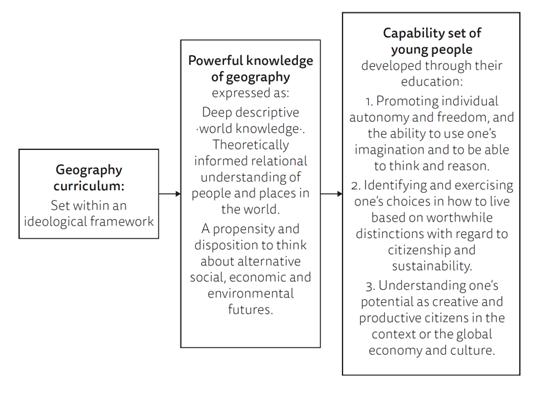
Figure 2: A model of GeoCapabilities (based on Solem et al 2013, from Bustin 2024)
In this model, the expression of the powerful knowledge of school geography is from the work of David Lambert and John Morgan (2010), both former teachers, teacher educators, and now professors of geography education. The capabilities that these enable have been slightly rephrased from the list of broad human capabilities from Martha Nussbaum (2000). Developing citizenship, sustainability, and being productive and creative in global economy and culture relies on developing a deep understanding of geography.
My own research, published more fully in ‘What are we Teaching? Powerful knowledge and a capabilities curriculum’ (2024), took these discussions to other subjects in the curriculum. In this research, 200 teachers across three schools were asked ‘what makes your subject a powerful knowledge for young people?’ They discussed the answer in their subject teams. The research showed that despite teaching the same subject, teachers in different schools often articulated the value of their subject in different ways, broadly reflecting both traditional and progressive approaches as well as a range of different ideological perspectives (as identified by Rawling 2000).
To bring some coherence to their responses I used ‘deductive coding’ to identify similar words, phrases and themes for each subject. I then applied the same coding to the existing literature about knowledge skills and values in those subjects. Based on this I was able to posit the following tentative expressions of powerful knowledge of different subjects (Bustin 2024, figure 3).
Subjects Powerful knowledge could be expressed as:
Mathematics
English Literature
Knowledge of the rules of mathematics to solve numeracy problems. This includes an increasing complexity from addition, through algebra to statistics.
Being able to identify solutions to mathematical problems and finding alternative solutions to the same problem. Identifying problems and ways to express them mathematically. This has often been called ‘thinking mathematically’. Knowledge of data manipulation: presentation, claims to representativeness, relative bias and reliability. Knowledge of mathematical problems of the past and how they have been solved in the real world.
Knowledge of how mathematics can aid understanding in other datareliant subjects, especially the sciences.
Knowledge of the greatest works of literature written in the English language. This includes an understanding of novels, plays, the impact that they have had in the past and continue to have in the present. The choice of this ‘canon’ of works is constantly changing and teachers are key to deciding what is taught.
Knowledge of the processes of eliciting meaning from a variety of texts. This includes the intentions of the writer as well as the ways in which the reader is responding to and making meaning from those words.
Knowledge of the socio-cultural and political situations in which texts are initially created and how this may influence interpretation. This includes links to contemporary texts written in the same genre.
Knowledge of how the meaning created through writing can assist in other subjects in the curriculum, including languages and humanities.
Science A rigorous and replicable methodology following strict rules of knowledge production. Experiments allow scientists to replace previous theories with new ones as science advances. Students should have opportunities to design and carry out their own controlled experiments, and to present and analyse the results. The substantive knowledge of science comes from the different specialisms: physics covers matter, laws, astronomy; chemistry covers processes and properties; biology focuses on the living world. Students should also be able to critique the scientific knowledge claims of others and discern science fact from science fiction.
History Deep, descriptive chronological knowledge of the past. This includes a knowledge of dates, locations, and people and their behaviours individual, group and mass).
Analysis of sources of historical data (such as contemporary narratives, physical evidence, architectural styles, written records, oral histories) to evidence and explain the past. Where the evidence allows this necessarily should be from a range of different perspectives to build up a holistic picture of the past (developing the skills of historiography or ‘thinking historically’). The propensity to place historical events into a broader framework of time, enabling our understanding of the causes and impacts of decisions that people have taken in the past.
Subjects Powerful knowledge could be expressed as:
Religious Studies Descriptive knowledge of world religions, and faith traditions including prevalence, significant cultures and traditions and the impact on people (such as providing a manual for ‘believers’, as well developing an understanding of impacts on cultures, art, science, faith practices) around the world and over time.
Knowledge of philosophical, spiritual and ethical debates, including evidencing, construction of arguments and arriving at one’s own conclusions whilst understanding alternatives.
Creative Arts Knowledge of the socio-cultural and political settings in which art is created and how this has influenced the nature of the art, and how the art itself has influenced the culture around it. This should be exemplified by exposure to great works of art from the past and present from around the world.
Knowledge of how art can evoke and provoke a reaction from those who create it and how that creates meaning with those who interact with it through embodied knowledge. In art this is through the careful use of colour, texture, tone; in drama through ideas like style and communication; in music through key, melody; and in DT through functionality and aesthetics.
Knowledge of how to create art in different styles and genres. The procedural knowledge here is followed by deliberate practice to develop skill over extended periods of time.
Knowledge of art across time and space. This would include traditional art, music and drama from different cultures around the world and how these interact to create new hybrid forms.
Languages Deep analytical knowledge of the structure and morphology of language. This includes the vast and ever-changing substantive and procedural knowledge of vocabulary, the rules of grammar, and the ability to translate passages of text into and from other languages to determine meaning.
For modern languages, the knowledge required to communicate meaning with other people through a different language. This requires attention not just to the written form of the language but to aural pronunciation and deep listening.
An appreciation of the links between language and the places where that language is spoken (or was spoken historically). This includes geography, politics and culture, which can include art, music, cuisine and fashion. For classical languages this is about civilisations long gone such as Ancient Greece and for modern languages it is about countries and, for many European powers, their former colonies and international territories which still speak the language.
Subjects Powerful knowledge could be expressed as:
Physical Education
Knowledge of the rules of various sports. This includes the laws of the games, as well as the physical techniques needed to play them effectively. Embodied knowledge expresses the way in which the procedural knowledge of a particular sport becomes naturalised in players.
Knowledge of physical literacy, and how participation in sport can lead to a healthy lifestyle. This includes choices a student can make over diet and exercise, the links between these and the impacts on health.
Knowledge of the self through the development of sportsmanship and teamwork. This includes quick thinking, rapid decision making and reacting to evolving situations.
Figure 3: Expressions of the powerful knowledge of different school subjects (from Bustin 2024).
These expressions of powerful knowledge are tentative and now need further discussion and reworking from subject specialists. This could form part of teacher professional development in schools.
Exploring capabilities
The ideas from figure 3 were coded to identify a series of educational ‘capabilities’ (Bustin 2024). These are not competencies that would characterise a Future 2 approach to thinking but can only be developed through the rigorous study of school subjects. These include:
• Capabilities associated with students making sense of themselves and the world.
• Capabilities associated with students mediating different claims to truth.
• Capabilities associated with students critical thinking.
• Capabilities associated with students making choices about how to live.
• Capabilities associated with students developing agency (Bustin 2024)
These can be modelled as in figure 4. Each school subject can contribute in a meaningful way to these educational capabilities whilst retaining their unique knowledge, skills and values contribution to an educated person. Effective teaching and learning from a subject specialist, framed as ‘powerful pedagogies’ (e.g. Roberts 2013) is key to linking the curriculum to capabilities.
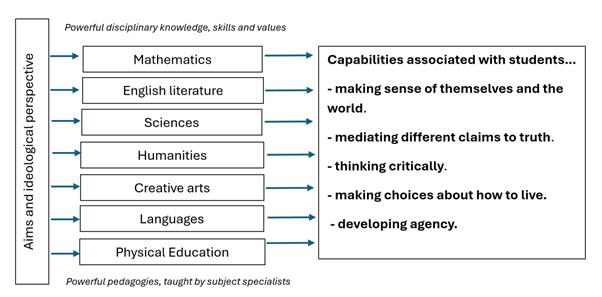
Figure 4: A Model of the capabilities approach to education. Each capability can be developed through rigorous subject knowledge as follows:
• Capabilities associated with students finding new ways to make sense of themselves and the world.
This is the broadest of the capabilities and each subject develops this in different ways. In the humanities subjects of geography, history and religious education, as well as literature (of all languages) students are directly studying the nature of what it means to be human. The perspectives of each of the humanities differs- geography focuses on the relationships between people and place, history between people and the past and religious education focuses on beliefs. Physical education develops this capability through students participating in sport and exercise, understanding and improving on the limits of their own physicality. Knowledge takes young people beyond their everyday experience.
In science, knowledge about real world phenomena is about the seeking of objective truths through rigorous replicable methodologies. Each science subject differs in its object of study. In creative arts, knowledge is a co-creation between the artist and the person consuming the art. This allows a young person seeing art for the first time to explore their own reaction to it as much as exploring the intentions of the artist, if that is even something available or desirable to know. This is where discussions around powerful knowledge in the way that Young (2008) describes can be problematic, and the concept has been critiqued in many ways (e.g. White 2018, 2019). If knowledge creation is constructivist between creator and observer then the idea of ‘better’ knowledge, or indeed the top-down dominance of an academic discipline being a gatekeeper to truth becomes problematic- modern foreign languages evolve through conversations between people in other countries rather than through an active academic discourse (e.g. Freeman and Johnson 1998). It is in part why some of the discussions around the significance of subject knowledge in an F3 curriculum use the idea of knowledge that is ‘empowering’ rather than simply ‘powerful’ (Bustin 2024).
• Capabilities associated with students mediating different claims to truth.
This capability is developed by focusing on whose knowledge, skills and values are being taught and perhaps more interestingly, whose voices are lost in a particular discourse. If powerful knowledge is at the heart of a Future 3 school curriculum then so too is the disciplinary knowledge of each subject. This is an understanding of how each subject ‘works’, what it means to think mathematically, or to think scientifically. In a rush to cover content and skills this can be something missed, yet it is key if students are able to discern fact from fiction. This will enable students to question the validity of claims put to them, to ask for evidence, and to gain the ability to judge for themselves. In science this is about knowing the scientific method, and understanding why certain experiments have been conducted, and what is still unknown and untested. In mathematics the idea of ‘proof’ can be helpful for students when solving equations and seeking alternative methods to approach the same problem (e.g. Crisan 2021). In literature and humanities, it is about identifying whose truth is being presented and why, and whose is not. In a world where students are seeking news from social media, and increasingly AI, this capability helps students to understand the limitations of what is being presented to them.
• Capabilities associated with students critical thinking.
Critical thinking can emerge from a powerful knowledge led curriculum. It is the challenging thought process that students engage in. It goes beyond just remembering facts or applying a skill. It involves extrapolation of understanding, applying thinking learnt in one context to another unfamiliar context. Whilst it is possible to identify some key critical thinking ideas that apply to all subjects, such as identifying whose knowledge is being presented, critical thinking looks different in different subjects.
Critical thinking in creative arts, for example, is about spotting detail and nuance in a piece of art that gives a clue to the artists possible intention which in turn can then enable the piece to be re-interpreted in some way to those consuming it. In languages, a student may have some basic fluidity in one language before being presented with a sentence in another similar language. The student can apply their thinking about grammar to try to decode the sentence structure, identify the verb and subject and then guess at some of the words. The process of trying out different words, reworking, changing them around is a form of critical thinking that can then enable the student to make sense of the new language. An online AI driven translation tool may well be able to short cut the process to get to the translation, but critical thinking is not about the outcome but the thought process to get there.
• Capabilities associated with students making choices about how to live.
Through their education a young person is able to make positive choices about their lifestyle. In physical education students will not only learn how to play various sports, but the advantages that come from an active lifestyle. This lesson will be reinforced in biology lessons, where an understanding about nutrition, diet and fitness can lead young people to make choices about how to spend their recreation time. They would also learn about the dangers of drugs and fast food. Students should not be told exactly how to live their lives but can be given the knowledge, skills and values to make the right choice for themselves.
This capability is also concerned with career choices of young people. Through their education students will be exposed to a range of professionals working in different careers- in geography they could encounter the work of town planners, or flood managers, and this can inspire them to make choices to pursue those careers. Capabilities themselves won’t guarantee a student a job; students need to gain the measurable outputs of examination grades and the level at which these are achieved will help students
to make career choices. Capabilities can provide a language with which to make sense of the choices available.
• Capabilities associated with agency
This capability is an extension of the last, it is about young people taking responsibility for themselves and their decision making. It is about young people becoming active citizens, engaging in democratic processes and understanding the implications of their wider decision making. Its development will avoid falling into the trap of students believing everything they read but will instead encourage studies to be autonomous free thinkers. With agency, students will be able to shape the world around them through consumption choices, and choices about what to say, think and do. With agency, students will, in time, be able to take part in local and national elections shaping societies with a deep understanding of what they are voting for and why that matters to them.
In geography, students learn about global and local issues such as climate change, overpopulation, pollution, globalisation and how their actions can shape and mould sustainable futures. In history students learn about the implications of decisions taken by people in the past. Dramatic pieces of art can provoke a reaction in students that might spur them on to think in a particular way.
Yet any attempt to teach students what to think does not develop their agency. The inculcation of a set of values is a form of ‘capability deprivation’ (a term which derives from Sen 1999). This means teachers have to think carefully about how they present information to young people. Subject specialist teachers are key to this process; skilled religious studies teachers, for example, are able to elicit a range of viewpoints from students without indoctrination. To develop agency, students need to take responsibility for themselves and their actions, and this comes through a rigorous understanding of a range of subjects.
Conclusion
The curriculum vision outlined here is broad and ambitious. By placing powerful knowledge at the heart of an F3 curriculum resists the temptation to build a curriculum around a set of vacuous ideas like ‘learning to learn’, or ‘building resilience’ but instead trusts that these outcomes will emerge from a rigorous, scholarly curriculum. To achieve it firstly relies on teachers having a deep understanding of the unique educational benefit of their subject and using this to drive the curriculum. It also relies on having subject specialists in front of every class. A sports teacher might well be able to teach some history by being a couple of pages ahead in the textbook, but to really ground the young people in the disciplined thought processes that come from thinking historically would require a much deeper engagement with the subject. Embracing a capabilities curriculum also loosens our obsession with exam grades, instead focusing on the more intangible aspects of education.
Teachers and school leaders can use the ideas here to start discussions in their own schools about what matters in education, and the role that subject knowledge, skills and values can really play in a contemporary curriculum.
Bustin, R. (2024). What are we Teaching? Powerful knowledge and a capabilities curriculum Carmarthen: Crown House.
Claxton, G. (2018). The Learning Power Approach: Teaching Learners to Teach Themselves. Carmarthen: Crown House Publishing.
Crisan, C. (2021). Mathematics. In A. Sehgal Cuthbert and A. Standish (eds), What Should Schools Teach? Disciplines, Subjects and the Pursuit of Truth, 2nd edn. London: UCL Press, pp. 234–250.
Freeman, D. and Johnson, K. (1998). Reconceptualizing the knowledge-base of language teacher education. TESOL Quarterly, 32(3): 397–417.
Hirsch, E. D. (1988). Cultural Literacy: What Every American Needs to Know. New York: Random House.
Lambert, D. and Morgan, J. (2010). Teaching Geography 11–18: A Conceptual Approach. Maidenhead: Open University Press.
Ofcom (2022). Instagram, TikTok and YouTube teenagers’ top three news sources (21 July). Available at: https://www.ofcom.org.uk/news-centre/2022/instagram,-tiktokandyoutubeteenagers-top-three-news-sources.
Milner, C. (2020). Classroom strategies for tackling the whiteness of geography. Teaching Geography, 45(3): 105–107.
Rawling, E. (2000). Ideology, politics and curriculum change: reflections on school geography 2000. Geography, 85(3), 209–220.
Reiss, M. and White, J. (2013). An Aims-Based Curriculum: The Significance of Human Flourishing for Schools. London: IOE Press.
Roberts, M. (2013). Geography through Enquiry: Approaches to Teaching and Learning in the Secondary School. Sheffield: Geographical Association.
Sen, A. (1980). Equality of What? The Tanner Lecture on Human Values. Delivered at Stanford University, 22 May 1979. Available at: https://tannerlectures.utah.edu/_ resources/documents/a-to-z/s/sen80.pdf.
Sen, A. (1999). Development as Freedom. Oxford: Oxford University Press.
Solem, M., Lambert, D. and Tani, S. (2013). GeoCapabilities: toward an international framework for researching the purposes and values of geography education. Review of International Geographical Education, 3(3):214–229. Available at: https://rigeo.org/menuscript/index.php/rigeo/article/view/204/190.
Terzi, L. (2005). Equality, Capability and Justice in Education: Towards a Principled Framework for a just Distribution of Educational Resources to Disabled Learners. Paper prepared for the 5th International Conference on the Capability Approach: Knowledge and Public Action. Paris, 11–14 September 2005. Available at: https://www.researchgate. net/profile/Lorella_Terzi/publication/253934371_Equality_Capability_and_Justice_in_
Education_Towards_a_Principled_Framework_for_a_Just_Distribution_of_Educational_ Resources_to_Disabled_Learners/links/0deec5304cc288b1cd000000.pdf.
Walker, M. (2006). Higher Education Pedagogies: A Capabilities Approach. The Society for Research into Higher Education. Maidenhead: Open University Press and McGraw-Hill.
Walker, M. and Unterhalter, E. (eds) (2007). Amartya Sen’s Capability Approach and Social Justice in Education. London: Palgrave Macmillan.
White, J. (2018). The weakness of ‘powerful knowledge’. London Review of Education, 16(2): 325–335.
White, J. (2019). The end of powerful knowledge? London Review of Education, 17(3): 429–438.
Young, M. (1971). Knowledge and Control: New Directions for the Sociology of Education. London: Collier-Macmillan.
Young, M. (2008). Bringing Knowledge Back In: From Social Constructivism to Social Realism in the Sociology of Education. Abingdon: Routledge.
Young, M. and Lambert, D. (2014). Knowledge and the Future School: Curriculum and Social Justice. London: Bloomsbury.
Young, M. and Muller, J. (2010). Three educational scenarios for the future: lessons from the sociology of knowledge. European Journal of Education, 45(1): 11–27.
Dr Tania Blatti (Wellington College International Shanghai)
Dr Amy Berry (University of Melbourne)
Abstract
Pupil engagement is widely recognised as a key factor in academic success and wellbeing, yet most research evaluates it through teacher observations or standardised measures rather than through pupils’ own perspectives. This study addresses that gap by investigating how primary pupils in two contrasting contexts, Melbourne, Australia, and an international school in Shanghai, China, define and experience engagement in learning. Using a mixedmethods design, survey data and open-ended responses from over 1,000 pupils (Prep–Year 6) were analysed to explore attitudes toward learning and self-perceptions as learners. Findings revealed a consistent pattern across both contexts: younger pupils expressed high levels of enjoyment and confidence in learning, but these declined steadily through the later years of primary, echoing the Jenkins Curve (2021). Qualitative analysis using Berry’s Continuum of Engagement showed that most pupils associated engagement with participation, listening, following instructions, or completing tasks. Fewer described investing behaviours such as persistence and curiosity, and very few demonstrated driving their own learning through goalsetting, feedback-seeking, or self-regulation. The results suggest that many pupils equate being a “good learner” with compliance and performance, rather than curiosity and resilience. However, examples such as the Shanghai Year 6 Exhibition illustrate how authentic, inquirybased experiences can reignite confidence and motivation. The study highlights the need for schools to be explicit and intentional in how they design learning opportunities and talk with pupils about what learning means. By fostering agency and deeper engagement, educators can help pupils carry their early enthusiasm for learning into the later years of schooling and beyond.
Engagement in learning is widely recognised as a critical factor in pupil success, both academically and developmentally. Over the past 30 years, an increasing body of research has explored the dimensions of engagement (e.g., cognitive, behavioural, and emotional) and its relationship to pupil achievement, motivation, and wellbeing. There is considerable evidence that connects engagement with academic success, achievement, and increased wellbeing (Fredricks et.al, 2004). Yet, despite this ongoing interest and attention within the education community, one essential voice remains underrepresented in the research literature: that of the pupil.
Most existing frameworks evaluate engagement through observable behaviours or adult perspectives. Few studies ask pupils to articulate what engagement means to them or how they experience it in their daily learning. This omission presents a significant gap, especially when schools aim to foster learner agency, metacognition, and authentic participation in the learning process.
This study addresses that gap by investigating primary pupils’ perceptions of engagement and their experiences of engaging in learning at school. In particular, it explores pupils’ understandings of what effective engagement is within the context of classroom learning experiences. Given the significant influence of context on engagement, the study also explores the similarities and differences in pupil perspectives across two contrasting contexts:
Melbourne primary schools, Australia and an international school in Shanghai, China.
context
The international school in Shanghai follows a British-style curriculum while also drawing on the International Baccalaureate (IB) framework. In recent years, the school has begun to adopt the IB Approaches to Learning, the Learner Profile, and guided inquiry in the Primary School. This is a shift from a predominantly content-driven approach toward one that prioritises pupil agency, inquiry, and self-regulation. Teachers and leaders have invested in building a more pupil-centred culture, actively promoting autonomy and embedding opportunities for pupil voice in classroom practice. However, as in many international schools, there remains a dual emphasis: pupils continue to participate in standardised assessments and are carefully tracked against attainment benchmarks. This creates a distinctive learning culture that blends innovation with accountability, inquiry with performance.
The context of Australia, Melbourne schools
The Australian schools involved in this study operate within the framework of the Australian National Curriculum, which sets out content and achievement standards for each subject area, as well as a set of general capabilities that aim to deepen pupil engagement with that content (https://www.australiancurriculum.edu.au). Alongside the curriculum support for pupil engagement, the Australian Professional Standards for Teachers set an expectation that teachers demonstrate the ability to plan and implement lessons that engage pupils and promote learning (https://www.aitsl.edu.au/standards). Despite these policy initiatives to support engagement, improving engagement remains a persistent and significant challenge for schools and teachers in Australia (Goss et al., 2017; Young, 2025).
Pupil engagement has long been recognised as a multidimensional construct, often framed around behavioural, emotional, and cognitive aspects (Fredricks, Blumenfeld, & Paris, 2004). More recent frameworks emphasise the importance of learner agency as a key dimension of engagement (Reeve & Jang, 2022). In contrast, Berry (2022, 2020) reconceptualises engagement not as discrete dimensions, but as a continuum of learner engagement and disengagement. The continuum consists of three forms of disengagement and three forms of engagement. Disengagement ranges from actively disrupting the learning environment to actively avoiding learning and passively withdrawing from learning. Engagement ranges from passively participating to actively investing and driving one’s own progress in learning.
Figure 1. Continuum of Engagement
DISRUPTING AVOIDING WITHDRAWING PARTICIPATING INVESTING DRIVING
Indicative Behaviours: Indicative Behaviours: Indicative Behaviours:
Refusing to follow instructions
Being offtask “Flying under the radar”
Fighting Looking for ways to avoid work
Trying to disrupt the learning of others
Looking for reasons to leave the room
Based on Berry (2020)
Being distracted
Putting in low effort
Physically separating from others
Indicative Behaviours: Indicative Behaviours: Indicative Behaviours:
Doing the work
Being on-task
Paying attention
Following instructions
Responding to questions
Showing interest or curiosity
Sharing ideas and thinking
Asking questions
Setting goals
Seeking feedback
Seeking out challenges
Seeing a value in learning Monitoring progress
Collaborating with others
This continuum positions engagement as dynamic and fluid, dependent on learners’ contexts, self-perceptions, and the quality of learning opportunities. It also underscores the importance of identity, autonomy, and agency in fostering deeper and more sustainable engagement. The continuum describes engagement from the perspective of the teacher based on their lived experiences of teaching and learning in the classroom. Recently, the continuum has been tested against pupil perspectives and shown to also align with the descriptions they provided of engagement and disengagement in the context of learning at school (Berry & Picker, 2025).
A well-documented pattern in engagement literature is the decline in pupil engagement across the schooling years, a phenomenon sometimes visualised through the Jenkins Curve (2021). This curve suggests that pupils typically exhibit high enthusiasm, curiosity, and confidence in the early years, which steadily declines as they move through upper primary and into secondary school (Willms, Friesen & Milton, 2009; Furlong & Christenson, 2008). The reasons for this decline are multifaceted, involving increased academic pressure, reduced autonomy, and less inductive and deductive inquiry-based learning. Berry and Picker’s (2025) research adds further evidence of this pattern of engagement decline as they progress through school. Pupil Perspectives on Engagement
Although engagement is a central focus in educational discussions, most studies evaluate it through teacher observations or standardised engagement surveys (e.g., PASS data). This approach often omits the nuanced and contextualised ways in which pupils understand and experience engagement. Scholars such as Lodge (2005) and Cook-Sather (2006) advocate for elevating pupil voice as a source of rich insight. Berry (2022) builds on this argument by emphasising that understanding how pupils define and describe their own engagement can
reveal whether they are merely passive participants or genuinely agentic learners. By focusing on pupil perceptions, educators gain a clearer view of where learners fall on the engagement continuum and what might help them move forward.
The IB Learner Profile and Approaches to Learning (ATL) frameworks reinforce the role of pupil identity in learning. They encourage pupils to adopt dispositions such as being reflective, open-minded, and principled, qualities that align with deeper engagement as described by Berry’s model. Claxton and Carr (2004) argue that when pupils are supported to develop these identities, they engage more cognitively and emotionally with their learning. In this way, learner identity is not only a product of curriculum but also a driver of engagement across the continuum.
Claxton (2013) distinguishes between what he terms performance mode and learning mode. In performance mode, pupils focus on demonstrating what they already know, meeting external expectations, and avoiding mistakes. This mode is often reinforced by assessment-driven environments where correctness and efficiency are prioritised. In contrast, learning mode emphasises curiosity, persistence, and a willingness to embrace uncertainty or struggle as part of the learning process. Claxton argues that high-quality education requires a balance between the two modes: performance mode ensures that standards are met, while learning mode nurtures resilience, creativity, and long-term growth. When schools lean too heavily toward performance, pupils may become risk-averse and equate success with compliance, echoing patterns observed in this study. By framing engagement through these dual modes, Claxton’s work provides a useful lens for interpreting how pupils’ self-perceptions of being a “good learner” often shift between compliance with rules and genuine investment in learning (Claxton, 2013).
This study employed a mixed-methods design to investigate how primary-aged pupils perceive engagement in their learning across two educational contexts: An international school in China and five primary schools in Australia. The purpose was to examine commonalities and differences in constructs of pupil attitudes toward learning and self-perceptions as learners, specifically, how pupils define and experience engagement, using similar instruments and approaches in both contexts.
All pupils in Years Prep to 6 were invited to participate during school hours. First year of formal schooling in Melbourne is Prep, and in Shanghai is Year 1. At an international school in China, the survey was administered in-class, and completed individually with teacher support available for younger pupils if needed. The Australian schools followed a similar administration process, with adjustments made to suit local contexts, and included pupils from Prep (first year of formal schooling) to Year 12. For the purposes of this paper, the focus will be on the primary pupil responses only (Prep to Year 6).
Data Collection
Pupils at the International school in China completed a short survey designed to capture both affective responses and reflective justifications. The survey included two open-ended reflective prompts, each paired with a four-point visual scale to ensure accessibility for all ages:
1. How do you feel about learning at school? Why?
2. How do you feel about yourself as a learner? Why?
For each prompt, pupils selected the statement that best matched their perspective, ranging from “I really struggle” to “I’m really good at it,” with responses supported by emoji visuals to provide an age-appropriate entry point. Pupils then provided a short-written explanation to justify their choice. This structure aimed to capture both quantitative trends and qualitative insights across the full primary cohort.
In the Australian schools, pupils responded to two statements using a four-point agreement scale:
1. I enjoy learning at school
2. I think I am a good learner
This design enabled comparability across the cohort while maintaining simplicity for younger children. In addition, pupils in Years 3–6 were asked to extend their responses with a follow-up prompt: “What makes you say that?” This provided a balance of structured quantitative data and developmentally appropriate opportunities for pupil voice.
Although the survey formats differed, both instruments evaluated the same underlying constructs: pupil attitudes toward learning and self-perceptions as learners.
The quantitative (scale) data was analysed descriptively to identify overall trends and patterns across year groups and contexts. In particular, and based on the literature, the analysis looked at the means for each year level and any evidence of the downward trajectory in engagement that has previously been reported in other studies.
The qualitative data (open-ended responses) was analysed using both deductive and inductive
analysis. When looking at pupils’ descriptions of what they did and did not enjoy about learning at school, the data was analysed using a thematic approach to explore the motivators and demotivators that pupils experienced during learning. When looking at pupils’ descriptions of what makes a good learner, the data was analysed using a deductive approach with Berry’s engagement continuum as a lens.
By focusing on the same underlying constructs and applying a consistent coding framework, this cross-context design enabled meaningful analysis across settings while preserving the authenticity of pupil voice.
In the Australian schools (n=415), pupil confidence in themselves as learners was generally high across the primary years, though it declined modestly as pupils progressed through the grades (see Figure 2). Prep pupils reported the strongest confidence (M = 3.7), with a steady decline across Year 1 (M = 3.5) and Year 2 (M = 3.3). Results remained constant in Year 3 (M = 3.3) and Year 4 (M = 3.3), before declining again in Year 5 (M = 3.2) and remaining at that level in Year 6 (M = 3.2). Overall, these results suggest that while most pupils agreed with the statement “I think I am a good learner,” there was a gradual downward trend in self-reported confidence from early to later primary years.
Figure 2. Pupils in Australian Schools reported confidence in themselves as learners (n=415).
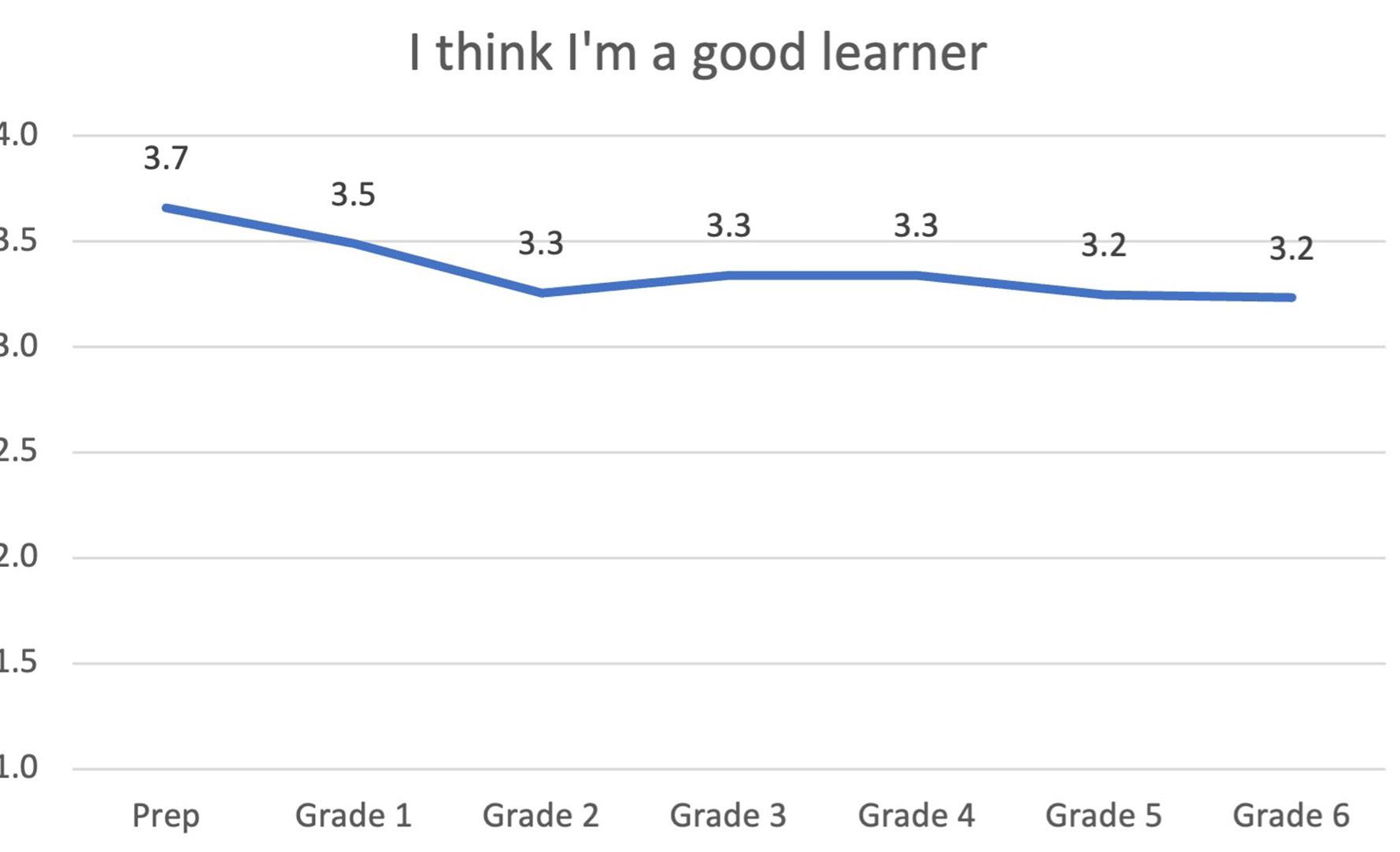
Note: Responses were scored as follows – Strongly disagree (1), Disagree (2), Agree (3), Strongly agree (4)
In the Shanghai school (n=637), a similar pattern was observed, though expressed through a different response scale. Year 1 pupils reported the highest confidence (M = 3.6), followed by a marked drop in Year 2 (M = 3.2). Confidence then remained relatively stable through Years 3–5 (M = 3.2, 3.1, 3.1), with a slight increase in Year 6 (M = 3.2). These findings indicate a decline in self-perceptions of learning ability after the first year of primary, with limited recovery across the subsequent grades.
Figure 3. Pupils in an International School in China reported confidence in themselves as learners (n=637).
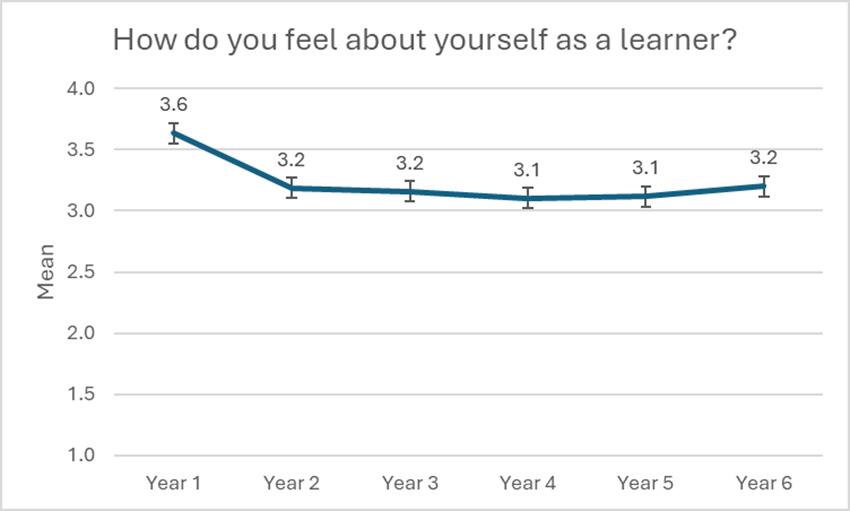
Note: Responses were scored as follows – I’m really good at it (4), I’m okay (3), I find it hard (2), I really struggle (1)
Despite differences in survey design, the overall pattern across both contexts is consistent, younger pupils expressed higher confidence in themselves as learners, with confidence declining in the later years of primary school. This suggests that as academic and social demands increase, pupils may begin to evaluate themselves more critically as learners. It is also possible that younger learners are less able to accurately assess their skills, leading to more optimistic responses due to their stage of cognitive development. As pupils progress, the cumulative effect of their learning experiences, and the feedback they receive about their performance in relation to expected outcomes and their peers, appears to shape increasingly cautious and self-critical evaluations of themselves as learners.
In the Australian schools (n=415), pupil enjoyment of learning was generally positive but showed a gradual decline across year levels. Prep pupils reported the highest levels of agreement with the statement “I enjoy learning at school” (M = 3.7). This dropped slightly in Year 1 (M = 3.6) and remained at that level in Year 2 (M = 3.6), before declining in Year 3 (M = 3.3) and Year 4 (M = 3.2). Similar responses were seen in Year 5 (M = 3.2), followed by the lowest level in Year 6 (M = 3.1). Overall, these results indicate that while most pupils expressed agreement, enjoyment of learning declined as pupils advanced through the primary years.
Figure 4. Pupils in Australian schools reported attitude toward learning at school (n=415).
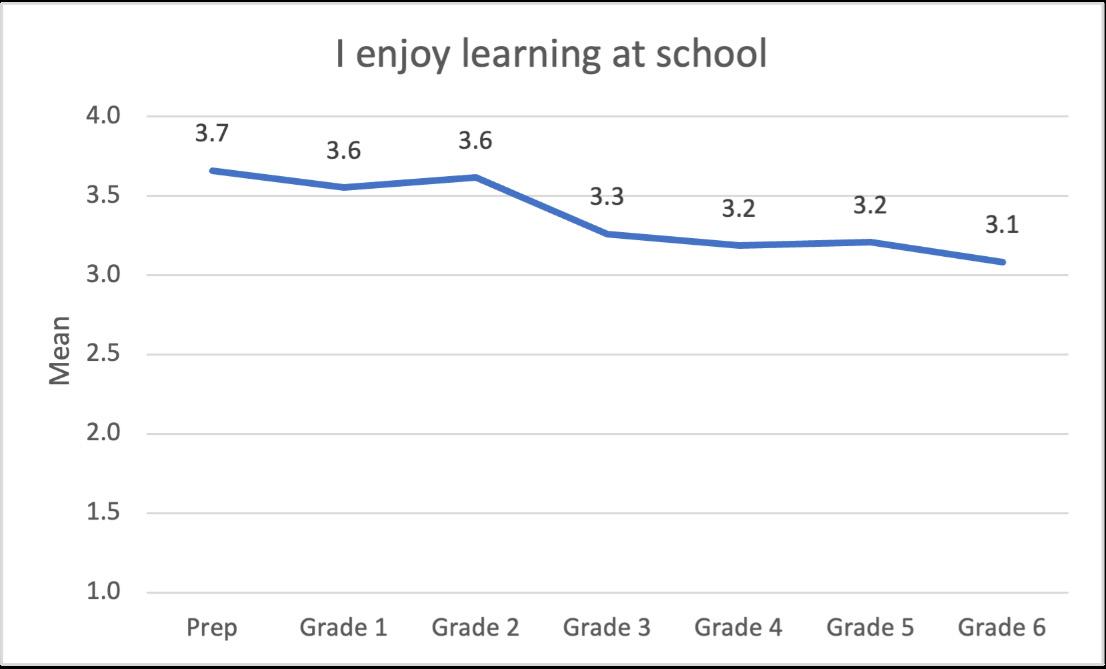
Note: Responses were scored as follows – Strongly disagree (1), Disagree (2), Agree (3), Strongly agree (4)
In the Shanghai school (n=637), a similar trajectory was observed, with enjoyment highest in the early years and tapering off in later grades. Year 1 pupils reported the strongest positive feelings about learning (M = 3.8), followed by a drop in Year 2 (M = 3.5). A small recovery was noted in Year 3 (M = 3.6), before declining in Year 4 (M = 3.4) and Year 5 (M = 3.2). Year 6 pupils reported a slight increase (M = 3.3). These findings suggest a broad pattern of decreasing enthusiasm for learning across the primary years, with only minor fluctuations.
Figure 5. Pupils in an International School in China reported attitude toward learning at school (n=637).
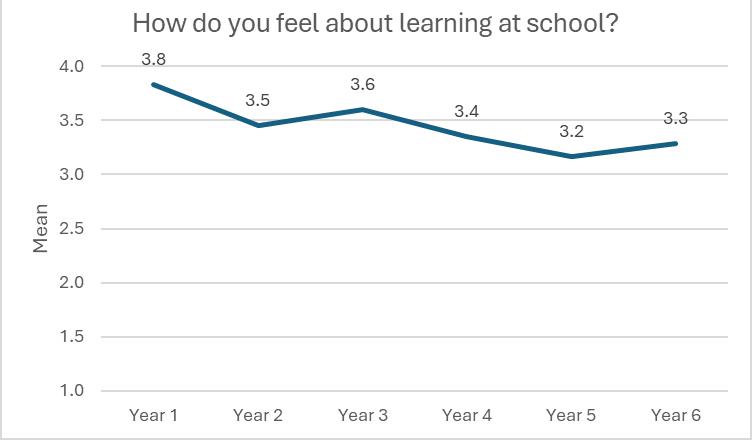
Note: Responses were scored as follows - I love it (4), It’s okay (3), Not really (2), I don’t like it at all (1)
Taken together, the results from both contexts highlight a common pattern: pupils in the early years of schooling report higher enjoyment of learning, but this gradually diminishes as they progress through the upper years of primary school. This downward trend suggests that the increasing academic and social demands of later primary years may shape how children experience learning at school.
Analysis of pupils’ descriptions of what they enjoyed and did not enjoy about learning highlighted a range of motivators and demotivators across both contexts. In the Australian schools, the majority of primary pupils (93%) either agreed or strongly agreed that they enjoyed learning at school. In their open-ended responses, pupils talked about aspects of learning that they most enjoyed, such as opportunities to work with peers, having supportive teachers, and engaging in practical or creative activities. Many described learning at school as a positive and rewarding experience. For example, one pupil explained, “I love to learn new things every day and the fact that that there is no end to how much a single person can know.” Despite the overwhelmingly positive response in survey ratings, in the open-ended responses 25% of primary pupils described aspects of learning at school that they did not enjoy. These primarily centred on boring or repetitive tasks, feeling drained and pressured, and feeling like their needs as a learner were not being met. For example, “I like learning, but it can be boring and hard” and “Sometimes I don’t see why we are learning these things, and I don’t see how I will use this later in life, or why I would need this knowledge.”
In the Shanghai schools, the majority of primary pupils also reported enjoying school, with an average of 88% identifying motivators for their learning. These motivators were most strongly linked to the Approaches to Learning, particularly collaboration, research, and selfmanagement skills, as well as to attributes of the IB Learner Profile such as being inquirers, communicators, and open-minded. Pupils described enjoying opportunities to make choices, work with peers, and connect their learning to real-world issues. This was especially evident during the Year 6 Exhibition, where pupils carried out independent inquiries into topics of personal significance and shared their findings with the wider community. As one pupil reflected, “I liked being an inquirer and choosing my own question. We had to be risk-takers and communicators to explain our ideas to everyone.” Another commented, “Working together helped me be more open-minded and think about other people’s perspectives.”
However, around 12% of primary pupils indicated demotivators in their learning, often connected to feelings of pressure, fear of making mistakes, or the stress of public performance. Both Australian pupils and pupils in China appear to share similar descriptions of what it means to engage in learning. The majority of their comments reflected participation, with fewer examples illustrating investing, and very few demonstrating driving their own learning. Below are selected comments and examples, organised to show how they were categorised across the continuum.
Table 2. Descriptions of what it means to be engaged in learning across both contexts.
Participation Investing Driving
Pupil Comments
Australia, Melbourne “I listen when being taught something new.”
“I focus on my work and try not to get distracted.”
“I try my best even if I don’t get something right straight away.”
“Whenever I come across a subject that I really like, I want to know more. I want to do more. I won’t just work at school; I’ll also work at home.”
“If I think I have mastered something, I try to take a more difficult approach so I can challenge myself in a new way.”
“Whenever I make a mistake, I am always wanting to learn what I did wrong.”
Pupil Comments
China, Shanghai “A good learner listens and sits quietly.”
“You have to do what the teacher says.”
“Trying different ways if something is hard.”
“Sometimes I keep practising until I get it, because that’s how I know I’m learning.”
“Asking questions when I don’t get it.”
“A good learner doesn’t just wait for the teacher; you try to find out for yourself.”
The majority of pupil comments centred on participation, with many describing behaviours such as listening, following instructions, or trying tasks. Fewer comments reflected investing, where pupils spoke about persisting, practising, or asking questions. Very few, in either context, described driving their own learning. While examples of investing and driving were present, they were much less common, with driving emerging as the least evident across both groups.
Discussion
Attitudes Toward Learning and Self-Perceptions as Learners
The evidence across both contexts is clear, pupils begin primary school confident in themselves as learners and full of enthusiasm for learning. In the early years, pupils described school as fun, enjoyable, and something they were “good at.” Yet as they moved through the grades, both their attitudes towards learning (enjoyment) and their self-perception as learners (confidence) showed a gradual decline. This decline in attitudes towards learning and school echoes previous findings. This decline echoes the Jenkins curve (2021), aligning with previous studies that highlight the steady downturn in engagement as children progress through school.
For the Shanghai school, an interesting pattern emerged around Year 6. Pupils actually reported a slight incline in confidence and enjoyment of learning. One possible explanation was that at the time the survey was conducted, they were immersed in the Year 6 Exhibition, a culminating research project where pupils conduct an in-depth inquiry, and present their findings to the school community. This experience offered pupils ownership, authenticity, and a chance to connect learning with real-world concerns. The survey results showing higher levels of confidence and motivation were complemented by qualitative descriptions, where
pupils articulated how they demonstrated independence, collaboration, and creativity in ways that mattered to them. But it also leaves us wondering: why is this kind of experience the exception rather than the norm? What would happen if more schools looked like this?
Many pupils continued to equate learning with performance. Typical comments included, “A good learner is someone who doesn’t make mistakes.” This view point to a mindset in which learning is judged against peers, correctness is prioritised, and risk is carefully avoided. Claxton’s (2013) notion of performance mode captures this dynamic, the drive to prove ability and avoid mistakes at all costs. For educators, this raises further questions: what classroom practices lead pupils to conclude that compliance and error-avoidance define “good learning”? What signals within the culture of schooling reinforce this performance orientation?
Learning Mode
At the same time, there were indications that some pupils understood what Claxton (2013) terms learning mode. Here, pupils described persistence, curiosity, and experimentation as qualities of effective learners. Comments such as “Helping others learn,” “Trying different ways if something is hard,” and “Asking questions when I don’t get it” suggest that some pupils understand learning as a process rather than a product. This perspective aligns closely with Berry’s (2022) “investing and driving” forms of engagement, where learners show a willingness to take risks and skills in self-regulation. Crucially, in the case of Year 6 pupils in Shanghai, the data showed both an increase in understanding these higher levels of engagement and an increase in their confidence as learners. This suggests that understanding learning modes may help students to develop more confidence and support more active engagement in their learning. This suggests that resilience and deeper engagement are most likely to develop when pupils operate in learning mode.
Engagement as a Continuum
When viewed through Berry’s Continuum of Engagement, the findings become clearer.
The qualitative data shows a strong understanding of participating, but much less awareness of the more active forms of engagement. There are two possible interpretations of the qualitative analysis. First, it is possible that these pupils have not yet experienced investing and driving as ways of engaging in learning at school and are therefore unable to connect their everyday experiences of classroom learning with these higher levels of engagement. Second, it might be that these primary pupils are still developing an awareness of themselves as learners and the behaviours that learners engage in to help themselves learn and improve. Many pupils appear to have received implicit messages that “learning” is about compliance, for example, filling in pages of a textbook or following instructions. If we want to shift this perception, bringing the focus onto learning, we need to intentionally design activities that require investment and driving, and explicitly teach pupils about learning. Simple reflective prompts such as “How are you going to learn today?” or “What are you going to do to help yourself learn today?” can make these dimensions more visible.
The challenge is to help pupils see themselves as active agents in their own learning. This requires explicit teaching of the skills for learning and deliberate design of learning experiences that allow them to practise and apply those skills. Where this has been trialled, such as in Year 6 initiatives in the Shanghai school, aimed at empowering pupils.
The quantitative data for both Australia and Shanghai revealed a slow “falling out of love” with learning for many pupils that echoes the downward trend reported in other studies. The qualitative data gives an insight into the experiences of pupils and their perspectives on learning at school over this time period.
In the case of Shanghai, pupil reflections in the younger years illustrate how learning is experienced as discovery and exploration. Children spoke with delight about “exploring,” “building bug hotels,” and “always learning a new thing.” They frequently highlighted inquiry, art, and hands-on activities as reasons they loved school, showing that curiosity and joy were central to their engagement. When they did mention difficulty, it was framed as part of the process rather than a barrier: “sometimes hard, sometimes easy,” “sometimes I like doing hard [things],” and “teachers will help me with those questions that I don’t know so I can feel better.” In these early stages, challenge was accepted as a normal feature of learning rather than equated with failure.
By contrast, comments from older pupils reveal a shift in how learning is understood. Instead of celebrating discovery, their reflections more often focused on compliance, rules, and performance. Pupils spoke about “making sure I get it right for the teacher” or “following the steps so I don’t get in trouble.” Struggle, rather than being viewed as a normal part of learning, was increasingly associated with failure: “If I get it wrong, it means I’m not good at it,” and “I don’t like mistakes because it shows I didn’t understand.” This transition suggests that as pupils progress through the primary years, they become more preoccupied with correctness and external expectations.
This downward trajectory echoes the Jenkins Curve (2021) and brings to mind Claxton’s (2013) warning: if performance dominates, learning narrows and joy fades. In our research, comments like “When I get it right, I feel proud” or “I don’t like group work. I want to do it alone, so it’s perfect” are all about performance mode and less about enjoying and engaging in the process of learning.
Encouragingly, the study also highlighted moments where pupils fell in love with learning. When they shared ideas and thinking, asked questions, and saw the value in learning, they described learning in process-oriented terms. They spoke about persisting through difficulty, experimenting with strategies, and celebrating collaboration. These examples show that learning mode can ignite curiosity and enjoyment. Both modes, performance and learning, have their place, but the challenge for schools is to maintain a strong emphasis on learning. Performance mode keeps expectations visible; learning mode sustains motivation and deep engagement. The more we design experiences that allow children to set goals, seek feedback, seek out challenges, monitor progress, and collaborate with others, the more likely they are to carry their early enthusiasm for learning into the later years of primary.
For teachers and school leaders, the key message is the importance of empowering pupils to be active participants in their own learning, building both their confidence and competence as learners. When pupils believe that simply participating is the full measure of being a “good learner,” they risk becoming stuck in a passive, passenger mode. By deliberately broadening their understanding of learning, we can help them more accurately evaluate themselves as learners, shift their attitudes towards learning itself, and begin to see how they can take ownership and drive their own learning forward.
The decline in engagement as pupils progress through primary school prompts important questions. Why do so many pupils equate being a “good learner” with never making mistakes, working quickly, or avoiding help? What experiences are we providing that lead them to conclude this is what matters most? When pupils describe good learning as little more than compliance—listening, sitting still, and doing what the teacher asks—what does that reveal about the signals they are picking up from their daily classroom lives?
Most importantly, how are we helping pupils to re-conceptualise learning as curiosity, reflection, openness to feedback, and resilience in the face of challenge? These misconceptions do
not emerge in a vacuum; they are shaped by the culture and experiences of school. If those experiences remain too limited, pupils’ views of learning will remain limited too.
Schools have an important role to play in shaping the way that pupils think about learning and the way that they engage in learning. They can empower higher levels of confidence and engagement by intentionally focusing on the process of learning (not just the performance of demonstrating learning). This includes being explicit and intentional in designing learning experiences that foster investment and driving, and in naming and celebrating the dispositions that underpin genuine learning. In doing so, we aim to not only counteract the decline in engagement described by the Jenkins Curve (2021) but also nurture lifelong learners who see themselves as capable, curious, and resilient.
Berry, A. (2020). Disrupting to driving: Exploring upper primary teachers’ perspectives on pupil engagement. Teachers and Teaching, 26(2), 145–165. https://doi.org/10.1080/13540602.2020 .1757421
Berry, A. (2022). Reimagining pupil engagement: From disrupting to driving. Corwin Press.
Berry, A., & Picker, K. (2025). Pupil perspectives on engaging in learning at school [Manuscript in preparation].
Claxton, G. (2013). What’s the point of school? Rediscovering the heart of education. Oneworld Publications.
Claxton, G., & Carr, M. (2004). A framework for teaching learning: The dynamics of disposition. Early Years, 24(1), 87–97. https://doi.org/10.1080/09575140320001790898
Cook-Sather, A. (2006). Sound, presence, and power: “Pupil voice” in educational research and reform. Curriculum Inquiry, 36(4), 359–390. https://doi.org/10.1111/j.1467-873X.2006.00363.x
Fredricks, J. A., Blumenfeld, P. C., & Paris, A. H. (2004). School engagement: Potential of the concept, state of the evidence. Review of Educational Research, 74(1), 59–109. https://doi. org/10.3102/00346543074001059
Furlong, M. J., & Christenson, S. L. (2008). Engaging pupils at school and with learning: A relevant construct for all pupils. Psychology in the Schools, 45(5), 365–368. https://doi.org/10.1002/ pits.20302
Goss, P., Sonnemann, J., & Griffiths, K. (2017). Engaging pupils: Creating classrooms that improve learning. Grattan Institute.
Jenkins, L. (2021, November 4). The thrill of it all: Keeping the love of learning alive as pupils progress through school. Principal (NAESP). https://www.naesp.org/resource/the-thrill-ofit-all/
Lodge, C. (2005). From hearing voices to engaging in dialogue: Problematising pupil participation in school improvement. Journal of Educational Change, 6(2), 125–146. https://doi.org/10.1007/ s10833-005-1299-3
Reeve, J., & Jang, H. (2022). Agentic engagement. In A. L. Reschly & S. L. Christenson (Eds.), Handbook of research on pupil engagement (pp. 95–107). Springer. https://doi.org/10.1007/9783-031-07853-8_5
Willms, J. D., Friesen, S., & Milton, P. (2009). What did you do in school today? Transforming classrooms through social, academic and intellectual engagement. Canadian Education Association. https://www.edcan.ca/articles/what-did-you-do-in-school-today/
Young, J. (2025, Aug 8). Engagement and retention in Australian schools. Education Today. https://www.educationtoday.com.au/news-detail/Engagement-and-Reten-6557.
for the
Maria De Los Santos, and Dr. Nathan Roberson, Beyond Education
Contributions:
Maria De Los Santos: Conceptualization; Writing - Original Draft Preparation and Editing
Nathan Roberson: Supervision; Resources, Writing- Reviewing and Editing
Abstract:
Preparing for the future workplace requires more than technical skills—it demands cultivating 21st-Century Competencies, such as critical thinking, resilience, and a growth mindset. Likewise, by integrating 21st-Century Competencies with neuro-inclusive approaches, we can ensure readiness for not only evolving job demands but also for human flourishing. Although research on neurodiversity is growing, studies linking it explicitly to workforce readiness and well-being remain limited. This dual approach celebrates diverse strengths, fosters belonging for all learners, and supports meaningful work aligned with individuals’ core values. Reimagining education and work this way create inclusive environments where all people can thrive.
Preparing for the Future: Embracing Neurodiversity and 21st-Century Competencies for Human Flourishing
Keywords: Neurodivergence, Neurodiversity, 21st-Century Competencies, Inclusive Pedagogy, Social-Emotional Learning (SEL), Workforce Readiness, Human-Centered Learning, Future of Work, Human Flourishing
Introduction
In today’s digital era, certain jobs are becoming obsolete or are being replaced by technological advancements. The labor market is undergoing significant changes, driven by emerging skills such as artificial intelligence, big data, networking, cybersecurity, and technological literacy (Leopold, Till, 2025). Amid these rapid advancements and the creation of new roles, one constant remains: human-centric skills are indispensable in meeting the evolving demands of the modern workforce and well-being. As these changes unfold, it is becoming increasingly important to recognize the value of cognitive diversity, including the strengths of neurodivergent individuals, such as those with ADHD, dyslexia, and autism, whose innovative thinking, pattern recognition, and creative problem-solving drive progress and enrich collaborative environments. However, as complex challenges arise, so must our solutions to keep up with these unprecedented times. By integrating a neurodiversity lens to deconstruct our outdated and traditional education systems and modernize our curriculum and pedagogy, we can better look to the future of learning. The solution lies in a dual approach of integrating 21st-Century Competencies, such as critical thinking, resilience, and growth mindset, and adopting neuro-inclusive pedagogy to prepare all types of learners for an increasingly interconnected world.
By emphasizing the importance and implementation of 21st-Century Competencies—also known as social and emotional skills (SEL) or non-cognitive domains—in both educational and professional settings (LeFevre-Levy et al., 2023), we can better support neurodivergent individuals through adaptive and accommodating learning strategies. Strengthening these competencies not only enhances career preparation but also contributes to broader goals of human flourishing and future workforce readiness. Although there is not a universally accepted definition of human flourishing, we will be focusing on the holistic and equilibrium definition, which encompasses balanced dynamics between strong social/self-relationships, physical and mental health, and personal growth and purpose in life. Human flourishing draws on ideas of Aristotle who believed the highest good for humans is a life of eudaimonia, or in other words “happiness,” virtue, meaning, relationships and accomplishment as tenants of flourishing. Human flourishing stands in contrast to economic models of education that emphasize “human capital” that stress human skills valuable for industry. Instead, the concept of flourishing demands we ask better questions, not what is technologically possible, but what is it that we need for ourselves and in relationship with our ecosystems, when and what is enough, and how can well-being be at the centre of occupational activities? This paper explores how the relationship between neurodivergent individuals and 21st-Century Competencies can enhance workplace preparedness while fostering overall well-being. To reconstruct education and work environments to better accommodate neurodivergent needs and promote inclusive development of essential skills where everyone’s strengths are recognized, all learners should feel a sense of belonging and engage in meaningful, fulfilling work, not merely economic, but vocational in the sense of aligned with their values/core, purpose, and unique talents.
There has been developing research on the growth of 21st-Century Competencies, including findings that students’ competencies can improve over time. For example, a study with 242 students found that students at an international school in Portugal integrating SEL into its curriculum showed an average increase of 8.9 points on the CCI-21 scale, which is about half a developmental level on a normalized scale. Students showed notable growth in competencies like Critical Thinking, Communication, Curiosity, and Growth Mindset, all of which were linked to academic outcomes (Roberson, 2025). However, there has been less research on neurodivergent individuals and their educational, career, and life trajectories. Neurodivergence, also known as neuroatypical, is most often used to refer to individuals who have autism spectrum disorder (ASD), attention-deficit/hyperactivity disorder (ADHD), or dyslexia (LeFevre-Levy et al., 2023). While caution should be made about sweeping generalizations and creation or perpetuation of stereotypes, recent research shows that neurodivergent students are more likely to excel in creativity, problem-solving, and innovation (LeFevre-Levy et al., 2023). Neurodivergent individuals have unique and distinct strengths of 21st-Century Competencies that contribute toward dynamic and holistic workplace readiness. For example, individuals with autism spectrum disorder may demonstrate exceptional focus, attention to detail, and strong memory for factual information, along with specialized skills in areas like mathematics, music, spatial reasoning, or visual arts (LeFevre-Levy et al., 2023). By supporting neurodiversity in ways that benefit all learners, we celebrate human differences and cultivate richer, more innovative communities, ultimately creating a stronger, more adaptable society for everyone.
Toward a Human-Centered Education System: SEL, 4D Model, and 21st-Century Competencies
Social and emotional learning (SEL) has been viewed as a transformative learning dimension over the years in not only educational environments but also in the workforce and general life; especially regarding mental health. Throughout development, an individual may encounter
various challenges, such as emotional disorders, psychosocial crises, alcohol and drug use, and economic inadequacies (Wehlage et al., 1989). As research indicates, SEL provides these individuals the necessary tools to manage these complexities within themselves and while dealing with others (Baumeister, 1991). In the education sector, students with strong SEL skills are more likely to engage in constructive peer interactions and maintain positive relationships with teachers, and the benefits extend to personal resilience and social cohesion (Gadermann et al., 2016). In response to outdated education models, researchers at Harvard’s Center for Curriculum Redesign (CCR) developed the ‘4-Dimensional Model (4D) of Education,’ which includes Knowledge, Skills, Character, and Meta-Learning (Fadel et al., 2015). This model guides education systems and propels them to become future-oriented and adaptive to the uncertain and evolving landscapes of the economy, workplace, education, and general life. Although concepts like SEL, the 4D Model, and 21st-Century Competencies are relatively recent additions to mainstream discourse, they have emerged in direct response to shifting labor market demands. As work becomes more specialized, organizations that prioritize inclusive learning environments and neurodiverse talent will be better equipped to thrive. It is important, now more than ever, to measure and monitor these competencies to help individuals expand and develop these essential skills. As automation reshapes labor demands, human-centric skills, such as complex problem-solving, creativity, and critical thinking, are increasingly valuable (Leopold, Till, 2025). These competencies not only support individual flourishing but also serve as strategic assets for organizations seeking innovation and adaptability. In this context, investing in these core skills from an early age is not just a matter of equity but of national workforce development and overall human flourishing, as these competencies also allow individuals to grow into more reflective and self-aware individuals and global citizens.
Recognizing and cultivating 21st-century competencies also requires reimagining who gets to succeed in our learning and work environments, as well as redefining success in a way that centers human flourishing. This invites a broader understanding of cognitive diversity, most notably, neurodiversity as an essential dimension of inclusive, future-ready systems. Initially, neurodiversity was a concept to support autism, but has expanded over time to include additional neurodivergent traits such as ADHD, attention deficit disorder (ADD), dyslexia, Tourette’s syndrome, dyspraxia, dyscalculia, dysgraphia, dysnomia, obsessive-compulsive disorder (OCD), and intellectual giftedness (van Rijswijk et al., 2024). Other examples include bipolar disorder and epilepsy; however, oftentimes excluded from mainstream research. In this piece we focus principally on research pertaining to individuals with autism-spectrum, ADHD, and dyslexia. The neurodiversity movement essentially calls for a shift away from the traditional model of disability towards the social model of disability (LeFevre-Levy et al., 2023). For this piece, we use the terms neurodivergence, neuroatypical, learning disabilities, and non-learning disabilities as all conditions that may affect an individual’s learning.
The aforementioned conditions have the potential to impact learning outcomes. But what happens when an individual has more than one learning disability or neurodivergent condition? For instance, children with ADHD often experience comorbidities, the presence of simultaneous and multiple medical or psychological conditions, and can struggle with learning as early as preschool years and early elementary school years (Tejasvi & Kumar, 2024). Research has pointed out that it is significant and crucial to develop assistive technologies for the specific learning condition the individual is experiencing, as technology created to support one learning condition (dyslexia) cannot necessarily be adopted to support another (autism). One study emphasized this by creating a user-centered approach to help children with ADHD with emotional regulation and stress management via a fidget toy and an app that integrated
reinforcement learning methods, as a reward-based system has been proven to increase or decrease the likelihood of a specific behavior being repeated, depending on the motivation behind it. The app included heart rate monitoring, and a key finding was that the heart rate of these children significantly reduced post-use of these stress management techniques, which were provided in the app for them to follow, such as deep breathing and listening to calming auditory tones. There was also a high usage of the app, indicating a need for these tools. This is a prime example of what happens when neurodivergent individuals are provided with tailored and educational approaches early on in their developmental and educational journey. It can help them regulate their emotions better and navigate the educational system more effectively and prepare them for their future careers.
It is no secret that neurodivergence often has its challenges, such as restlessness, inability to focus attention or be productive, impulsivity, struggling to read/write/do math, and in general, fitting into the societal norms of the education and workforce sectors. However, it is important to highlight the generalized strengths of neurodivergence as well. Not only for social reasons, but organizations that embrace neurodivergent individuals gain a competitive advantage in the new and evolving work environment, as skills and abilities that many neuroatypical individuals struggle with (spelling, rote memory, organizational skills) are becoming less important in the workplace. According to research, the top five job skills for 2025 consisted of analytical thinking and innovation, active learning, complex problem solving, critical thinking and analysis, and creativity (LeFevre-Levy et al., 2023), which are key competencies that many neuroatypical individuals already possess. Neurodivergent individuals bring valuable perspectives and distinct competencies to the workplace. When provided with appropriate conditions and accommodations, neurodivergent individuals’ contributions can be greatly amplified, just as they might have thrived and contributed more meaningfully in educational settings had such support been available earlier in their academic journey. The right accommodations can unlock their full potential, both in school, in the workplace, and beyond.
To highlight some of the strengths, challenges, and potential contributions of dyslexia in the workplace: common challenges include difficulty with spelling, slower processing speeds, slower reading and writing, and weaker rote memory or memory for details (LeFevre-Levy et al., 2023). However, individuals with dyslexia often have strengths such as strong conceptual understanding, the ability to cut through complexity, and holistic processing. In the workplace, they tend to excel in environments that value creativity, novel connections, and problemsolving rather than routine tasks. Another excellent example is research on the relationship between ADHD and entrepreneurship. Due to their heightened stimulus-seeking tendencies, individuals with ADHD are often more drawn to the risks involved in entrepreneurial activities and business ventures, which can make them well-suited for such roles (Moore, Curt B. et al., 2021). Neurodiversity in the workplace creates a dynamic environment where a range of cognitive strengths can be leveraged to their fullest potential. For example, individuals with ADHD, who often thrive in high-stimulation and risk-taking scenarios, can excel in leading innovative projects that require bold decision-making and entrepreneurial spirit. Meanwhile, neurotypical individuals who prefer structure, detail, and organization can be entrusted with roles focused on project management and operational precision. However, it is crucial to realize that some of these examples can lead to reinforced stereotypes of what “neurodivergent” vs “neurotypical” individuals are like. In other words, not every person with ADHD will enjoy taking risks, some might prefer stability and structure, and the same can be said for neurotypical individuals. There is not one way to be and live neurodivergent or neurotypical, there is only one way to be human, and that is to be authentic to ourselves and recognize how we contribute to the communities that we are a part of. By embracing neurodiversity, organizations gain the advantage of aligning everyone’s unique skills with the tasks best suited to them, thereby
fostering a complementary workforce that maximizes productivity, creativity, and overall success.
Former studies have suggested that as much as 17% of the US workforce may be neuroatypical, with speculation that the number will only rise with less stigma and increased diagnoses. Despite this significant portion, there has been little research on the experiences of these individuals (LeFevre-Levy et al., 2023). Other research has noted that 58% of young people with autism have never worked, which is significantly lower than other neurodivergent individuals with other types of diagnoses (Otu & Sefotho, 2024). Notably, Temple Grandin, an autistic professor and animal behaviorist at Colorado State University, has extensively documented how her autism has been a source of unique strengths, such as exceptional pattern recognition and attention to detail, which have greatly contributed to her success (Sacks, 1993). Her work helps address a significant gap in both academic literature and the broader research community regarding the lived experiences and capabilities of neurodivergent individuals. For instance, due to her logical empathy to understand others’ perspectives, specifically animals, she analyzed their sensory experiences and created more humane handling systems to reduce stress and suffering for animals at slaughterhouses. Her work challenges conventional views by highlighting how neurodivergent traits can be powerful assets in professional and academic contexts (Grandin, 2013). Despite powerful examples like Grandin’s, the broader workforce continues to overlook neurodivergent talent, often due to rigid hiring practices, lack of accommodations, and persistent stigma. Research suggests that overall well-being is closely influenced by multiple factors, particularly employment for individuals with disabilities. Among neurodivergent individuals, barriers to employment are associated with increased risks of depression, anxiety, and broader negative mental and physical health outcomes (LeFevreLevy et al., 2023). The gap between potential and opportunity reflects a larger systemic failure to recognize the value of diverse cognitive profiles. Rather than asking neurodivergent individuals to conform to outdated expectations, we should be redesigning environments that bring out their strengths. Organizations and society at large need to be open and do the work to implement various accommodations, increase flexibility, and adapt management styles. If we truly want to prepare for the future of work, we must shift from seeing neurodivergence as a limitation to understanding it as a competitive advantage—one that can drive innovation, empathy, and progress across industries.
Rather than using a one-size-fits-all model and designing educational experiences for a “typical” learner and retrofitting accommodations, inclusive pedagogy proactively embeds flexibility, choice, and support mechanisms that benefit a wide range of cognitive profiles from the outset. Central to this model is the belief that diversity—cognitive, cultural, emotional, physical, and neurological is a strength, not a challenge to be fixed. One research study involving online programs (‘BE a Global Citizen’) highlighted some ‘careful’ recommendations (Celume & Maoulida, 2022) based on their findings, such as combining asynchronous and synchronous approaches, to guide students to find their way according to their learning preferences. In this example, neurotypical students were able to work independently on their 21st-Century Competencies at their own pace and develop them via group sessions. This is a strategy that we should also extend to neurodivergent individuals, those with learning disabilities, and all individuals with conditions that may affect their learning journey, because inclusive and thinking-forward approaches, such as the one mentioned previously, allow for all types of learners to develop at their own speed. Another example is a study aimed at investigating the link between 21st-Century Competencies and academic outcomes in a late primary/secondary, private school in Portugal, in which the researchers argued for
policymakers to continue prioritizing the implementation of SEL frameworks within national education systems, including the public school system (Roberson, 2025).
With SEL strategies and educational models like the CCR’s 4D model, focusing on knowledge, skills, character, and meta-learning, being adopted across schools globally, they serve as foundational tools for nurturing not just academic success but holistic development. These frameworks help students build crucial competencies like resilience, communication, critical thinking, and emotional regulation, which are increasingly vital in the face of a changing workforce. A scoping review found that the promotion of programming skills and/ or computational thinking (CT) interventions and approaches enhanced social-emotional competencies even when not explicitly intended in children with autism (ASD) and ADHD (ages 6-15) and CT-related skills obtained by those students were still found to persist beyond the intervention period (Oswald et al., 2024). Although this was an incredible finding, challenges arose during the intervention periods, and the researchers had to accommodate students with ASD by providing a more rigid and planned environment rather than a flexible or loosely structured one, to support their needs for routine and clear expectations. The review included multiple studies reporting improvement in additional skills beyond CT/programming skills, such as one study reported an improvement in oral expression skills in students with ASD, and another one pointed out that the ability to focus attention and concentration increased with coding activities, in particular in students with ADHD.
A group of students from a digital skills training institution in South Africa took Beyond Education’s (BE) assessment to measure their 21st-Century Competencies—skills the academy emphasizes to prepare students for the digital workforce. Within that group, several individuals were neurodivergent, had learning disabilities, or faced conditions that could potentially hinder their learning. While the sample size was small, 6 out of 35 students, their scores varied but were statistically comparable to their neurotypical peers, even with diverse cognitive profiles and learning needs. However, with the intentional implementation of more neuroinclusive curricula, there is strong potential to support these students in ways that align with their unique strengths.
Importantly, when these models are designed with neuro-inclusivity in mind, they become even more powerful. Neurodivergent students and individuals with learning disabilities, who often approach problems in nonlinear, out-of-the-box ways, benefit from learning environments that truly recognize and support how their brains work. These students do not just adapt to the classroom—they contribute to it, offering perspectives and strengths that challenge traditional ways of thinking. When neurodivergent students are intentionally included in the design of educational systems, the benefits extend beyond individual accommodations. A neuro-inclusive approach enhances the overall learning environment by fostering creativity, empathy, and collaborative problem-solving among all learners. When we design learning environments that take different neurological needs into account, we are not just making education fairer, we are giving every student, whether they are neurodivergent or neurotypical, the chance to build the skills they need to succeed in the future workforce. This directly contributes to the broader goals of human flourishing, environments where every student, regardless of neurological/physical/emotional/mental makeup, is valued and belongs. By investing in such inclusive educational reforms, we lay the groundwork for a future in which diversity is not just accommodated but actively celebrated as a driver of innovation, empathy, and collective success.
To connect theory to practice, these are some practical, neuroinclusive recommendations to
support students develop their necessary 21st-Century Competencies:
• Start off by focusing on and measuring their competencies! You won’t know where to start from unless there is a point of reference to build up their competencies, such as creativity, leadership, and growth mindset. Consistent with the 4D model of education, if we shift to a competency-based curriculum, we can build a more inclusive environment.
• Plan out different lesson plans throughout the academic year, every other week that incorporate alternative learning strategies, such as drawing in history class instead of just writing essays or doing math in art class rather than just drawing. Simultaneously challenging and developing different parts of the brain. Making trans-disciplinary links with multi-modal forms of “evidence” builds diverse learning.
• Incorporate breathing and physical exercise challenges within the classroom. Start classes off by meditating every other day or daily, including journaling and personal reflections.
• Center student agency. Engage students in learning contracts and project-based learning that allows for their interests to be developed and allows for diverse forms of learning goals. Consider building competencies (e.g. courage and mindfulness) as core parts of classroom learning objectives.
The transition from education to employment is typically a steep learning curve. However, this transition poses extra challenges for neurodivergent individuals, often due to gaps in social skills, executive functioning, and traditional interview-based hiring processes. Neurodivergent individuals usually face high unemployment rates, and oftentimes, if employed, they lack suitable job opportunities. Targeted development of 21st-Century Competencies and accommodations offered by employers and organizations can bridge these gaps.
A study in Southeast Nigeria linked employability skills with successful career transitions among neurodivergent adults. Of note, the researchers used ‘employability skills’ and listed them as: technical skills, personal/social skills, and high-order thinking skills, which are similar to 21st-Century Competencies. Those who had early exposure to skill-building opportunities in communication, collaboration, and self-regulation were more likely to secure and maintain employment (Otu & Sefotho, 2024). The findings also showcased that employability skills are a significant predictor of career and employment attainment among neurodivergent individuals, especially when traditional hiring practices have historically favored individuals conforming to neurotypical norms. These findings support the idea that the cultivation of 21stCentury Competencies must begin early and continue throughout life.
Neurodivergent individuals, such as those with dyslexia, who may struggle with rote memory but excel in conceptual thinking and holistic processing, offer unique cognitive strengths that can drive innovation. As such, reimagining job design and team structure to harness these strengths can result in higher organizational performance. As the nature of work changes, fostering inclusive teams with diverse cognitive styles will be crucial for innovation and adaptability (LeFevre-Levy et al., 2023).
Boundary-spanning—working across different departments or functions—was also identified as a key strategy for improving workplace inclusion and social cohesion. Neurodivergent and neurotypical individuals alike benefited from such cross-functional collaboration, which helped reduce social stigma and enhanced productivity (van Rijswijk et al., 2024). To be more specific, groups in which several group members engaged in boundary-spanning activities experienced a positive association with empathic and conversational skills, whereas group members who engaged in less boundary-spanning activities, the association between neurodivergence and empathic and conversational skills was negative. This example of a
formal top-down managerial initiative combined with a bottom-up approach would have a significant impact on maintaining a diversity-welcoming organizational structure and contribute to overall flourishing, even outside the workforce.
The future of work and education requires an alignment of 21st-Century Competencies and neurodiversity. Core competencies such as collaboration, communication, resilience, critical thinking, and emotional regulation are foundational not only to workforce readiness but also to social and emotional well-being. Integrating the 4D model, SEL interventions, and inclusive pedagogy ensures that diverse cognitive profiles are both accommodated and celebrated. This dual approach aligns with the global movement toward equity in education and inclusive employment practices. Neurodiversity should not be viewed as a deficit but rather as a valuable asset. Neurodivergent talent enhances innovation, progress, and organizational performance when nurtured within thoughtful, inclusive systems and with the development of 21st-Century Competencies. Organizations and the public need to start being open to providing accommodations, increasing flexibility, adapting and changing modes of leadership, communication, and community practices to unlock the utmost potential of all people. These changes would not only benefit individuals who are neurodivergent, with learning disabilities, and non-learning disabilities, but also those who are neurotypical, as all parties would have the opportunity to strengthen their 21st-Century Competencies. As everyone gains opportunities to strengthen their 21st-Century Competencies, a truly symbiotic relationship can emerge, where diverse minds complement and elevate one another.
This leads to one bigger goal: building a world where everyone feels like they matter and belong. Human flourishing is not just about being ready for the workforce, it is about being able to grow, thrive, and do meaningful work that aligns with who we are. When we embrace neurodiversity and focus on developing 21st-Century Competencies, we are not just helping individuals succeed in jobs—we are creating environments that support creativity, resilience, connection, and purpose. This shift challenges outdated systems and calls for a more thoughtful approach to how we teach, lead, and work together. And when we create space for all types of thinkers, when people are given the right support and placed in roles that match their strengths, everyone benefits. This is what progress looks like: workplaces and classrooms where all individuals, regardless of how their brains work, can contribute and feel seen. That is how we get to a more equitable and prosperous future for everyone.
References
Baumeister, R. F. (1991). Meanings of Life. The Guilford Press.
Celume, M.-P., & Maoulida, H. (2022). Developing 21st Century Competencies among Youth through an Online Learning Program: BE a Global Citizen. Education Sciences, 12(3), Article 3. https://doi.org/10.3390/educsci12030148
Fadel, C., Trilling, B., & Bialik, M. (2015). Four-Dimensional Education: The Competencies Learners Need to Succeed. CreateSpace Independent Publishing Platform.
Gadermann, A. M., Guhn, M., Schonert-Reichl, K. A., Hymel, S., Thomson, K., & Hertzman, C. (2016). A Population-Based Study of Children’s Well-Being and Health: The Relative Importance of Social Relationships, Health-Related Activities, and Income. Journal of Happiness Studies, 17(5), 1847–1872. https://doi.org/10.1007/s10902-015-9673-1
Grandin, T., & Panek, R. (2013). The autistic brain: Thinking across the spectrum (pp. viii, 240). Houghton Mifflin Harcourt.
LeFevre-Levy, R., Melson-Silimon, A., Harmata, R., Hulett, A. L., & Carter, N. T. (2023). Neurodiversity in the workplace: Considering neuroatypicality as a form of diversity. Industrial and Organizational Psychology, 16(1), 1–19. https://doi.org/10.1017/iop.2022.86
Leopold, Till. (2025, January 8). Future of Jobs Report 2025: The jobs of the future – and the skills you need to get them. World Economic Forum. https://www.weforum.org/stories/2025/01/ future-of-jobs-report-2025-jobs-of-the-future-and-the-skills-you-need-to-get-them/
Ludvik, M. B., Wills-Jackson, C., Eberhart, T. L., Mulholland, S., Bhansali, S., Nolan-Arañez, S., & Henline, J. (2023). Exploring the potential of mindful compassion pedagogies for effective global citizenship education and education for sustainable development. International Review of Education, 69(3), 275–297. https://doi.org/10.1007/s11159-023-10009-x
Maoulida, H., Madhukar, M., & Celume, M.-P. (2023). A Case Study of 21st Century Cognitive, Social and Emotional Competencies Using Online-Learning. Journal of Intelligence, 11(6), 116. https://doi.org/10.3390/jintelligence11060116
Moore, Curt B., McIntyre, Nancy H., & Lanivich, Stephen E. (2021). ADHD-Related Neurodiversity and the Entrepreneurial Mindset. https://doi.org/10.1177/1042258719890986
Roberson, Nathan. (June 2025) Linking 21st Century Competencies to Academic Outcomes in Portugal. 17th annual International Conference on Education and New Learning Technologies, Palma, Spain.
Roberson, N. D., Pereira, T., & Horvathova, M. (forthcoming). Implementing the Competencies
Compound Inventory for the 21st Century in Brazil: Implications for Research and Practice. Frontiers in Education.
Oswald, C., Paleczek, L., Maitz, K., Husny, M., & Gasteiger-Klicpera, B. (2024). Fostering Computational Thinking and Social-emotional Skills in Children with ADHD and/or ASD: A Scoping Review. Review Journal of Autism and Developmental Disorders, 11(4), 843–862. https://doi.org/10.1007/s40489-023-00369-3
Otu, M., & Sefotho, M. M. (2024). Relationship between Employability Skills and Career Transition among Neurodivergent Individuals. The International Journal of Interdisciplinary Social and Community Studies, 19(2), 237–255. https://doi.org/10.18848/2324-7576/CGP/v19i02/237255
Sacks, O. (1993, December 27). An Anthropologist on Mars. The New Yorker. https://www. newyorker.com/magazine/1993/12/27/anthropologist-mars
Tejasvi, P., & Kumar, T. (2024). A Smart System Facilitating Emotional Regulation in Neurodivergent Children. Procedia Computer Science, 235, 3257–3270. https://doi. org/10.1016/j.procs.2024.04.308
van Rijswijk, J., Curşeu, P. L., & van Oortmerssen, L. A. (2024). Neurodivergence and Boundary Spanning as Predictors of Social Skills and Diversity Climate. Administrative Sciences, 14(11), Article 11. https://doi.org/10.3390/admsci14110285
Wehlage, G., etc, Rutter, R. A., Smith, G. A., Lesko, N., & Fernadez, R. R. (1989). Reducing the Risks: Schools As Communities of Support. Falmer Press Ltd.
Dr Chris Baker – Professional Development Lead / The Cabot Learning Federation
Abstract
The following research study aimed to explore self-efficacy across a range of leadership levels and contextual factors, something lacking in the literature at that time. A mixed-methods case study approach was used to explore the self-efficacy levels of 138 leaders within a multi-academy trust of 20 schools in the Southwest of England. A 10-point general rating scale was used within a questionnaire to assess levels of self-efficacy. Semi-structured interviews were subsequently used to explore the perceptions of self-efficacy development. The hope was that a greater understanding of what self-efficacy levels were and how they had been developed could lead to improvements in the design and delivery of leadership development programmes and result in leaders being confident by design rather than chance.
Key Words: Self-efficacy, Leadership development, Systematic, Experience, Context, Superiors
Introduction
As someone who has completed a wide range of leadership development courses, sadly resulting in limited impact and more recently held the responsibility for leadership development across 36 schools, the research study held a strong personal relevance. Strengthening this was a number of key insights from the leadership and self-efficacy literature.
Improving the performance of leaders is key to school improvement.
Quality leadership is second only to the quality of teaching as a school-lever for improving educational outcomes (National College of School Leadership, 2006). Great leaders drive school improvement though their strategic, interpersonal, and operational capabilities and student success is often linked to effective leadership (Leithwood, Louis, Anderson, and Wahlstrom, 2004; Pont, Nusche and Hopkins, 2008). Some researchers have suggested that it is second only to classroom practice in terms of influence on learning and achievement (Leithwood, Louis, Anderson, and Wahlstrom, 2004; Levin, 2008; Ponte, Nusche, and Hopkins, 2008). More recently, the 2024 UNESCO leadership in action report found that a study of 32 countries affirmed that strong leadership correlates with improved teaching practices and that leadership ranked just below teacher’s impact on learning.
Improving leadership performance is difficult.
The growing body of literature about what effective educational leaders do far outweighs that concerned with how to develop leaders (Manzitto, 2016). Research that has been completed has been critical of both the contents and structure of leadership development programmes (Tirozzi, 2000; Murphy and Vriesenga, 2004; Cambron-McCabe and McCarthy, 2005). The difficulty of leadership development lies largely with the lack of consensus around definitions, effective practice, and delineation from other concepts such as management. Sociological perspectives of leadership add to the challenge by highlighting the contextual specificity of
leadership across domains and between individuals and situations. Calls for further research into effective leadership development centre around a greater understanding of professional development needs, current development programme content and leaders’ preferences of professional development activities (Daniels, 2019). The 2025 UNESCO leadership report stated that ‘countries need to do more to prepare and train school leaders’ and that the provision of sufficient, timely, structured, relevant and effective training is a challenge (UNESCO, 2024, pg. 57).
Self-efficacy is defined as ‘one’s beliefs in one’s capabilities to organise and execute the courses of action required to produce given attainments’ (Bandura, 1997). Unlike global constructs such as self-esteem, it’s highly specific—essentially task-specific or contextual confidence. Since 1977, self-efficacy theory has been applied across diverse research domains including organisational functioning (Bandura, 1997), academic achievement (Pajares, 1996), teacher performance (Skaalvik and Skaalvik, 2007), and leadership success (Hannah, 2012).
The volume and breadth of literature surrounding self-efficacy support the view that it is a key construct and important to the understanding of human functioning. Two thousand published studies reviewed by Bandura (1997) highlighted its role as a causal variable in performance and achievement. Studies have consistently shown efficacy beliefs to impact on core human behaviours such as choice, motivation, resilience, and problem solving (Bandura, 1977, 1997), Zimmerman, 2000), (Federici, and Skaalvik, 2011).
Efficacy beliefs affect thought patterns which contribute to the anticipation of impending events, perception of current experiences and the foresight of future capabilities. Individuals with high levels of self-efficacy view situations as realizable opportunities in which they visualize success and produce guides for positive performance.
Efficacy beliefs play a key role in the regulation of motivation (Bandura, 1997) and are used to help to form anticipatory views about what an individual can or cannot achieve. Self-efficacious individuals typically view failure as a lack of effort or situational challenges whilst those with low self-efficacy attribute it to a lack of ability.
The literature also highlights the positive and negative influence of self-efficacy on affective processes such as feelings and emotions. Feelings of low self-efficacy have been linked to increased anxiety, stress, and depression (Bandura, 1997). Individuals with low levels of self-efficacy are predisposed to view events negatively and challenges as risky and unsurmountable due to decreased outcome expectancy.
Beliefs of personal efficacy play a key role in shaping the direction lives take by influencing the choices individuals make and the type of environments they inhabit and produce (Bandura, 1997). Individuals typically select activities in which they have strong levels of efficacy and
anticipated success and avoid those that they perceive could end in failure.
Within the self-efficacy literature, there is a strong suggestion that people use self-efficacy perceptions when determining the amount of time, effort, and resources to expend on a given task (Vancouver and Kendall, 2006; Schmidt and DeShon, 2010). When self-efficacy levels are high, the perception is that less resources are required and if time is limited then individuals are motivated to conserve resources.
To summarise the findings surrounding the impact of self-efficacy beliefs:
Individuals with high levels of self-efficacy typically:
• Accept challenges.
• Demonstrate intrinsic interest and deep engagement with activities.
• Show resilience during difficult tasks.
• Recover quickly from setbacks and disappointments.
• Experience lower levels of stress.
Individuals with low levels of self-efficacy typically:
• Have low aspirations.
• Avoid challenging tasks.
• Lessen their efforts during difficulties.
• Demonstrate weak commitment to goals.
• Focus on personal failings and negative outcomes.
The development of self-efficacy begins in early childhood and new-borns arrive without any sense of self and thus it must be socially constructed through transactional experiences with the environment, Bandura (1997). The acquisition of self-efficacy begins as newborns gain behavioural capabilities and understand agent causation by observing the results of action.
During adolescence, the self-efficacy appraisal process is further complicated by the increased use of social comparisons and vicarious experiences for efficacy information. The increasing role of peers has a broadening and validating impact on self-efficacy development in both positive and negative ways.
Young adulthood provides another temporal junction for self-efficacy development where demands arising from relationships, parenthood, career progression and financial resourcing cause a significant impact. By the middle years, people settle into established lifestyles that stabilise their sense of efficacy in major areas of functioning yet remain dynamic because of declining opportunities and the arrival of positional incumbents.
The loss of physicality, sensory functioning, intellectual faculty, and memory during the later stages of life drive continuing self-efficacy appraisals often resulting in reduced beliefs. This declining perception of efficacy with advancing age can result in a spiral of self-debilitating
appraisals that result in a loss of cognitive and behaviour functioning.
Although self-efficacy slowly develops over time, it dynamically fluctuates in the moment through an individual’s perception of their capability to succeed in a given situation. During these self-efficacy appraisals, individuals utilise a range of information:
Past experiences have been shown to be the most influential source of efficacy information (Bandura, 1977) with experiences viewed as successful serving to increase and the contrasting attribution of failure serving to reduce efficacy levels. The influence of past experiences is however complex, and the literature cites contributory factors such as perceived task difficulty, levels of guidance and expended effort (Bandra, 2009). Feltz (2008) found that past performances with high levels of difficulty, little external assistance and limited failures contributed more to efficacy development than those which were easily achieved with external support.
Vicarious Influences are another source of appraisal information and Maddux, (1995) found that comparisons with others can have a powerful influence on self-efficacy beliefs, providing the message that skills are learnable and difficult tasks are surmountable. Vicarious influences strongly impact individuals with less direct knowledge of their own capability and are particularly powerful when observers perceive similarities between themselves and the model.
Individuals also develop self-efficacy beliefs from the social messages they receive from others typically in the form of persuasion, feedback, and appraisal. Verbal persuasion presents itself typically as feedback from others and is strongly influenced by the perceived prestige, credibility, expertise and trustworthiness of the persuader, (Feltz and Lirgg, (2001). Self-talk is another form of verbal persuasion that impacts on self-efficacy levels and conflict arises when internal and external messaging are incongruent.
Physiological and emotional states such as fear, anxiety, increased heart rate, sweating and pain provide additional information for efficacy appraisals and become self-talk about the ability to meet future task demands. Attribution is a key factor in the use of this type of information (Bandura, 1997) and sources of physiological and emotional states are easily mis-attributed.
Bandura’s initial set of efficacy influences was extended by Maddux in 1995 to include ‘imaginal experiences’ defined as the envisioning of success in anticipated performance situations. Studies by Callow (2001) and Tsang et al (2012) reinforce the developmental power of imaginal experiences by highlighting how cognitive simulation techniques such as mental rehearsal enhances efficacy and performance.
Exploration of the self-efficacy and leadership development literature bases convinced me of the power that may lie within and the utility of further study. My initial interest centred around understanding more about the current levels of leadership self-efficacy within my organisation and let to the creation of the following research questions.
1. What are leaders’ current perceptions of their levels of self-efficacy?
2. Do leadership self-efficacy levels vary as a result of leadership area, leadership level, time in role, time in leadership?
3. How have leaders’ perceived levels of self-efficacy been developed?
4. What are the implications of the findings for leadership training and development?
Self-efficacy research is dominated by quantitative methods, possibly due to its psychological nature and measurable characteristics (Gardner, 1996; Hohenstein, 2018). However, concerns about narrow conceptualisation and validity issues, plus calls for more qualitative approaches, led me to select a mixed methods design. Qualitative data can be used to explain quantitative findings, providing richer understanding (Cresswell, 2023; Tashakkori & Teddlie, 2010).
My desire to improve leadership development within my organisation and understand a contemporary phenomenon in its real-life context led to a case-study approach. While drawn to grounded, phenomenological, and ethnographic approaches, existing self-efficacy theory precluded grounded theory, and time constraints ruled out extended data collection methods. All participants were from the case organisation—a federation of 20 schools employing 1,900 people serving 10,500 students. The organisation included eight primary schools, seven secondary schools, one all-through school, one post-16 school, one alternative provision school, and a large central team.
Time constraints led me to select only formally designated leaders, and access was excellent due to established relationships and regular opportunities to meet in person.
• Total leaders: 282 (55 primary, 202 secondary, 25 central team)
• Middle leadership: 170 (60%)
• Senior leadership: 67 (24%)
• Principals: 20 (7%)
• Central team: 25 (9%)
Phase one used a paper-based questionnaire to address research questions 1 and 2 and the first challenge was identifying the leadership elements to be assessed. Given the lack of consensus on leadership definitions and the complexity of the field, I used the organisation’s own leadership competency framework rather than attempting to create a bespoke set of competencies.
Leaders rated their self-efficacy against the following competencies using a 10-point scale, with 10 representing the highest level of self-efficacy.
Use contextual information to inform decisions
Seek out and utilise research and best practice to inform decisions
Collect, manage, and analyse data to inform decisions
Accurately define vision, values, and strategy
Purposefully develop and maintain the desired culture
Manage time and tasks effectively
Manage resources and risk effectively
Manage financial matters effectively
Effectively deploy change management tools and techniques
Monitor, evaluate and adapt plans
Creating Engagement
Seek out and utilise stakeholder voice to inform decisions
Clearly articulate vision and ensure stakeholder understanding
Role model desired attitudes, behaviours, and practices
Remove barriers to success
Keep stakeholders appropriately informed
Building and Sustaining Relationships
Seek out, understand, and respond to stakeholder needs
Actively build trust between yourself and others
Recognise and reward performance
Adapt or tailor Leadership and communication styles to suit needs
Anticipate and manage conflict
Increasing Capability
Identify, understand, and respond to professional development needs
Administer effective performance management processes
Proactively build and contribute to external partnerships
Delegate tasks and devolve responsibilities as appropriate
Review own practice, set personal targets, and engage in deliberate practice
Delivering Impact
Monitor performance and ensure accountability
Challenge underperformance
Effectively plan and lead meetings
Maintain high levels of visibility and interaction
Make calculated decisions
The qualitative focus of research question 3 led me to select semi-structured interviews as the method as they allow an in-depth exploration of matters that are unique to the experiences of the interviewees’ (McGrath et al, 2019). Bandura’s efficacy information sources (1997) guided the design of the following questions:
• Thinking about tasks where you have high self-efficacy, what developed that perception?
• Thinking about tasks where you have low self-efficacy, what developed that perception?
• Thinking about tasks where you increased self-efficacy from low to high, what made you feel that way?
Time constraints required a reduction in the sample size and so volunteer sampling was used to create a 14-leader interview sample, randomly adapted for contextual representation. Responses were electronically transcribed, and I subsequently used Braun and Clarke’s (2006)
Descriptive statistics were used to analyse the questionnaire data and highlight differences between individuals and across different tasks. The mean self-efficacy levels across the sample are show below along with task-by-task levels which began to answer the question of what leaders felt they needed more professional development in.
Mean self-efficacy across all capabilities was 7.37 (n=138, SD=1.50).
Highest self-efficacy areas:
• Actively build trust between yourself and others (8.33)
• Role model desired attitudes, behaviours, and practices (8.28)
• Maintain high levels of visibility and interaction (8.11)
• Make informed decisions (8.08)
• Collect, manage, and analyse data to inform decisions (7.81)
Lowest self-efficacy areas:
• Proactively build and contribute to external partnerships (6.51)
• Administer effective performance management processes (6.61)
• Effectively deploy change management tools and techniques (6.62)
• Delegate tasks and devolve responsibilities as appropriate (6.83)
• Identify, understand, and respond to professional development needs (6.86)
Inferential statistics revealed statistically significant links between self-efficacy levels and leadership level, time in role, and time in leadership (all p<.05), but not leadership area (p=.73). These results raised the issues of whether time in role or leadership experience was more important for development, and why leadership area showed no significant effect. Literature supported time in leadership’s importance due to transferability of efficacy beliefs and coping efficacy development.
The six stages of thematic analysis led me through initial patterns to a set of 23 initial codes which I consolidated into a smaller set of 13 sub-themes and then finally the three main themes below:
•Internal Antecedents: Traits (gender, personality, preference, proactivity) and states (overconfidence, spiralling, understanding, assessment)
•External Antecedents: Organisational, subordinate, and superior factors
•Efficacy Information: Mastery experiences, vicarious experiences, imaginal experiences, and social persuasion (coaching/mentoring, reflection)
Reflections on the data set as a whole led to the following questions and a further exploration of the literature base.
• Does gender affect self-efficacy beliefs?
• Does a perceived imposter syndrome affect self-efficacy beliefs?
• Does personality self-efficacy beliefs?
• Can leadership self-efficacy levels be too high?
• Does assessment affect leadership self-efficacy beliefs?
• Do organisational factors impact on self-efficacy levels?
• Do changes in role requirements affect self-efficacy levels?
• Do subordinates have an impact on self-efficacy levels?
• Do superiors have an impact on self-efficacy levels?
• Is experience important to self-efficacy development?
• How does role-modelling affect self-efficacy beliefs?
• How important is feedback to self-efficacy development?
• How can networking contribute to the development of leadership self-efficacy beliefs?
• What role does coaching have in the development of leadership self-efficacy beliefs?
The study culminated in the creation of a set of conclusions which then stimulated a set of associated professional recommendations. These recommendations were then used to inform the planning of future leadership development activities within the case organisation and disseminated o impact more widely on the sector.
Educational leadership self-efficacy is contextually sensitive.
Both quantitative and qualitative data showed variance between contextual groups, suggesting context impacts leadership self-efficacy levels. Interview data highlighted additional contextual factors including job role changes, team dynamics, and school culture.
Professional Recommendations: Leadership development design must consider participants’ leadership level and experience, as training misaligned with actual requirements can damage self-efficacy levels.
Internal trait and state factors affect self-efficacy beliefs.
Results highlighted internal influences on self-efficacy including gender, personality, overconfidence, and understanding, aligning with Paglis and Green’s (2002) antecedents. Respondents noted overconfidence’s negative impact, leading to reduced performance and
damaged self-efficacy.
Professional Recommendations: Leaders must acknowledge internal and external factors affecting self-efficacy development, avoiding superficial understanding that relies solely on Bandura’s (1977) sources.
Leadership development must consider self-efficacy information sources.
Interview respondents emphasised experience’s positive impact and decreased self-efficacy without it. They referenced self-efficacy increases from good role models and positive feedback, strengthening the importance of quality appraisal information.
Professional Recommendations: All leaders should engage in effective coaching/mentoring and networking opportunities. The importance of experience aligns with Kolb’s experiential learning cycle (1984) and Revans’ action learning (1982), while feedback’s importance is supported by Kluger & Denisi (1996) emphasis on modelling.
Experience is vital to the development of leadership self-efficacy.
Data from both phases of the research highlighted the importance of experience in the development of self-efficacy beliefs. The descriptive analysis of the questionnaire data from phase one highlighted a link between high efficacy ratings and high frequency tasks.
Professional Recommendations: Leadership training courses should contain experiential elements and opportunities to experience future role requirements. This integration of opportunities for practice aligns with Baldwin and Ford, 1988 work on the transfer of training.
Superiors have a significant impact on the leadership self-efficacy of their subordinates.
Interview respondents highlighted the presence of positive role models, the provision of effective feedback and opportunities to gain experience as self-efficacy stimulants. The self-efficacy literature supports this by highlighting the impact of superiors as providers or limiters of appraisal information like experience, feedback and vicarious influence.
Professional Recommendations: Professional development relationships should be intelligently arranged, and leaders need to understand more about the impact of self-efficacy and how to develop it effectively. Paglis (2010) suggested that the combination of subordinate and superior may be a crucial factor in self-efficacy development and Yukl (2006) highlighted the role superiors play in sensemaking by controlling the flow of information.
Despite a rigorous approach to the design of the research there were a number of limitations linked to the research:
• The choice to focus on one organisation as a bounded case reduced the opportunity for generalisability.
• Leadership in schools does not only occur within individuals with formally assigned leadership titles or responsibilities and so results cannot purport to represent whole school and organisational leadership self-efficacy.
• The self-report nature of both the questionnaire and interview processes may have invited a level of variability due to memory and response biases.
• It is possible that respondents were reluctant to admit low levels of confidence due to a social desirability bias and my position as an insider researcher.
The power of the insights gained during the study and the potential for even greater impact stimulated interest in the following research areas:
• The dynamic nature of self-efficacy means that longitudinal studies could enhance the identification of efficacy information sources and key influences.
• Studies that push past correlation and explore the causal relationships between efficacy beliefs and leadership performance would add weight to the subject’s importance.
• References in the interview data to gender, school context and personality indicate the value of further research into the contextual leadership factors that affect a leader’s self-efficacy beliefs.
• The presence of an executive leadership layer within groups of schools may have a negative influence on levels of trust and effective delegation and thus a negative impact on self-efficacy.
References
Baldwin, T., & Ford, J. (1988). Transfer of training: A review and directions for future research. Personnel Psychology, 41(1), 63–105.
Bandura, A. (1977). Social learning theory. Prentice Hall.
Bandura, A. (1997). Self-efficacy: The exercise of control. W.H. Freeman.
Bandura, A. (2009). Cultivate self-efficacy for personal and organizational effectiveness. In E.A. Locke (Ed.), Handbook of principles of organization behavior (2nd ed., pp. 179–200). Wiley.
Braun, V., & Clarke, V. (2006). Using thematic analysis in psychology. Qualitative Research in Psychology, 3(2), 77–101.
Callow, N., Hardy, L., & Hall, C. (2001). The effects of motivation imagery on the sports performance of high-level badminton players. Research Quarterly for Exercise and Sport, 72(4), 389–400.
Creswell, J.W. (2013). Qualitative inquiry & research design: Choosing among five approaches (3rd ed.). Sage.
Daniëls, E., Hondeghem, A., & Dochy, F. (2019). A review on leadership and leadership development in educational settings. Educational Research Review, 27, 110–125.
Feltz, D. (2008). Self-efficacy and sport and physical activity. In T. Horn (Ed.), Advances in sport psychology (3rd ed., pp. 195–219). Human Kinetics.
Feltz, D., & Lirgg, C. (2001). Self-efficacy beliefs of athletes, teams, and coaches. In R.N. Singer, H. Hausenblaus, & C.M. Janelle (Eds.), Handbook of sport psychology (2nd ed., pp. 340–361). Wiley.
Glackin, M., & Hohenstein, J. (2018). Teachers’ self-efficacy: Progressing qualitative analysis. International Journal of Research and Method in Education, 41(3), 271–290.
Kluger, A.N., & DeNisi, A. (1996). The effects of feedback interventions on performance: A historical review, a meta-analysis, and a preliminary feedback intervention theory. Psychological Bulletin, 119(2), 254–284.
Kolb, D. A. (1984). Experiential learning: Experience as the source of learning and development. Prentice Hall.
Leithwood, K., Louis, K. S., Anderson, S., & Wahlstrom, K. (2004). How leadership influences student learning (Review of Research). Wallace Foundation.
Levin, B. (2008). How to change 5,000 schools: A practical guide for administrative leadership. Harvard Education Press.
Maddux, J.E. (1995). Self-efficacy, adaptation, and adjustment: Theory, research, and application. Plenum Press.
Manzitto, C. (2016). Setting the bar: A closer look at an elementary leadership development in one Midwestern School District. (Publication No. 10115049) [Doctoral dissertation, University of Nebraska]. ProQuest Dissertations and Theses Global.
McCarthy, M. M., & Cambron-McCabe, N. (2005). Educating school leaders for social justice. Educational Policy, 19(1), 201–222.
McGrath, C., Palmgren, P. J., & Liljedahl, M. (2019). Decreasing the time spent on transcription: Qualitative interviewing and the use of voice recognition software. The Qualitative Report, 24(4), 783–791.
Murphy, J., & Vriesenga, M. (2004). The changing contours of educational leadership: A review of the literature. Teachers College Record, 106(7), 1543–1582.
National College of School Leadership (NCSL). (2006). A new relationship with schools and school leaders: The NCSL report. The National College of School Leadership.
Paglis, L. L., & Green, S. G. (2002). Leadership self-efficacy and managers’ motivation for leading change. Journal of Organizational Behavior, 23(2), 215–235.
Schmidt, A. M., & DeShon, R. P. (2010). The moderating effects of performance ambiguity on the relationship between self-efficacy and performance. Journal of Applied Psychology, 95(3), 573–582.
Tirozzi, G. N. (2000). Principal training, support, and mentoring: A state perspective. Peabody Journal of Education, 75(4), 119–137.
UNESCO. (2024). Global education monitoring report 2024/5: Leadership in education: Lead for learning.
Vancouver, J. B., & Kendall, L. N. (2006). When self-efficacy hits rock bottom: Primal doubts, self-handicapping, and the non-performance of initially confident individuals. Organizational Behavior and Human Decision Processes, 100(1), 27–42.
Yukl, G. (2006). Leadership in organizations (6th ed.). Pearson/Prentice Hall.
Zimmerman, B.J. (2000). Self-efficacy: An essential motive to learn. Contemporary Educational Psychology, 25(1), 82–91.