WELLINGTON COLLEGE INTERNATIONAL SCHOOL BANGKOK
Year 7 Curriculum Guide
KINDNESS COURAGE INTEGRITY RESPONSIBILITY RESPECT At Wellington, values shape everything that we do, every day. They are part of every lesson, every conversation, every game. They provide continuity from year to year, and we are proud to walk in the footsteps of Wellingtonians before us. The pioneering Wellington education, steeped in these values, prepares students to serve, and help shape the world of tomorrow.
Table of Contents Art
04
Computing
07
Design Technology
10
Drama
12
English
15
French
18
History
21
Geography
24
Mandarin
28
Maths
31
Music
34
Physical Education
37
Science
40
Spanish
43
Thai
46
Art
Michaelmas Term
Topic • Still life - drawing
Work Covered Observational drawings of sweets and desserts using different techniques and media. Development of ideas. Oil pastel drawings. Artists’ work transcriptions and analysis.
Key Skills Learn to record accurately from life. Learn to apply a wide range of graduated tones to model 3D form. Explore different approaches to developing ideas, both through photography and drawing. Learn to blend oil pastels tonally to model 3D form. Learn about Art History. Learn to write about artists’ work. Learn specialist Art vocabulary used to describe tone and composition.
Assessment Students’ work is assessed on an ongoing basis, using the success criteria specified for each task. Students are assessed based on acquiring the skills required to access IGCSE. Overall grades are holistic, taking into consideration all the work produced throughout the year.
4
Art
Lent Term Topic • Abstract Art - painting
Work Covered Geometry: abstract drawing. Composition. Development of ideas. Colour theory. Brush control. Painting with acrylic paint. Artists’ work transcriptions and analysis.
Key Skills Learn to produce creative work in response to artists’ references, exploring ideas and recording experiences. Learn about the formal elements of Art: colour, tone and composition. Learn about colour theory and how to mix it to achieve tone and hue. Learn to use acrylic paint and apply it with control. Learn about the history of Art and major movements: Abstract Art. Evaluate and analyse artwork in visual and written forms, whilst becoming familiar with specialist vocabulary used to talk about the formal elements.
Assessment Students’ work is assessed on an ongoing basis, using the success criteria specified for each task. Students are assessed based on acquiring the skills required to access IGCSE. Overall grades are holistic, taking into consideration all the work produced throughout the year.
5
Art
Summer Term Topic • Abstraction – mixed media art
Work Covered Abstraction of a still life in drawing. Material experimentation and mixed media work: collage, drawing, printmaking and painting. Development of ideas.
Key Skills Learn about the formal elements of Art: line, tone, texture and composition. Produce creative work in response to artists’ references, exploring ideas and recording experiences. Become proficient in drawing and mixed media techniques. Increase proficiency in the handling of different materials and tools. Learn about the history of Art and major movements. Evaluate and analyse creative works in visual and written forms, whilst becoming familiar with specialist vocabulary.
Assessment Students’ work is assessed on an ongoing basis, using the success criteria specified for each task. Students are assessed based on acquiring the skills required to access IGCSE. Overall grades are holistic, taking into consideration all the work produced throughout the year.
6
Computing Michaelmas Term Topic Using the Internet and Social Media Basics of Python Coding
Work Covered Using the Internet and Social Media: Understanding how to use the Internet and social media efficiently and safely. Basics of Python coding: Introduction to Python coding, variables, data types, simple input/output, arithmetic, and control structures (if, else, loops).
Key Skills Digital literacy Programming basics Problem solving Algorithmic thinking
Assessment Ongoing assessments in all topics End of unit tests in all topics
7
Computing Lent Term Topic Using Computers Safely & Responsibly VEX IQ Robotics – Building & Programming
Work Covered Using Computers Safely & Responsibly: Online safety, responsible use of technology, data protection, privacy, cyberbullying awareness, and digital wellbeing. VEX IQ Robotics: Introduction to robotics using VEX IQ, building and testing robot designs, programming with block and text-based code, solving challenges.
Key Skills E-safety and responsible digital citizenship Awareness of online risks Robotics Programming Teamwork and problem solving
Assessment Ongoing assignments in all topics Practical robotics project and challenges End-of-unit test on Using Computers Safely & Responsibly
8
ART Computing Summer Term Topic Introducing to App Building
Work Covered Designing and developing a prototype for an app using a WYSIWYG interface and block coding.
Key Skills Planning skills Design skills Understanding graphical user interface and human interaction Block coding skills
Assessment Assessment of student project work
9
Design Technology Michaelmas & Lent Term
Students complete two major practical design projects over the course of Year 7. Due to workshop timetabling, specialist equipment access, and class scheduling, the order in which individual classes complete these two projects may vary. Each project lasts approximately half an academic year.
Project Modern Day Family Crest
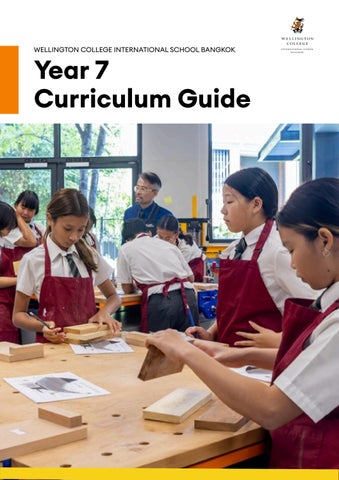
Topic Students will design and manufacture a modern, 21st-century wooden and acrylic family crest that visually communicates their family values, interests, culture, and identity.
Work Covered & Skills Learnt Inquiring & Analysing: Exploring historical vs. modern crests; researching cultural symbols, colours, and materials; conducting ACCESSFM product analysis on existing designs. Developing Ideas: Generating initial annotated design ideas; creating scaled 2D planning diagrams with detailed dimensions. Creating the Solution: Workshop safety protocols; timber measuring and marking on pine wood; hand-sawing using a coping saw; rasp filing and multi-stage sanding techniques (wet/dry paper); CAD layout using 2D Design software for laser cutting acrylic elements; vinyl cutting and adhesive application. Evaluate: Formulating authentic peer testing methods; evaluating the finished piece against their initial design specifications; reflecting on technical improvements and audience impact.
Assessment Students document their entire design process on a continuous PowerPoint presentation slide deck. Assessment takes place after each section upon submission of their slide deck and completed physical product.
10
Design Technology Lent & Summer Term Project Textiles Character Cushion
Topic Acting as studio designers for animation franchises (such as Disney or Pixar), students design and hand-craft a soft promotional character cushion using felt fabrics and decorative embellishments.
Work Covered & Skills Learnt Inquiring & Analysing: Investigating natural vs. synthetic fabrics; exploring the properties of wool and acrylic felt; evaluating commercial plush products using the Parts, Purposes, and Complexities analysis routine; formulating primary and secondary research plans. Developing Ideas: Formulating SMART design specifications; sketching and annotating original character design proposals; constructing 2D paper templates and 3D paper prototypes to test scale and proportion (up to A3 size). Creating the Solution: Fabric marking and precise cutting of felt pieces; hand-stitching techniques including running stitch, backstitch, blanket stitch, and ladder stitch; decorative appliqué techniques; secure stuffing and seam finishing. Evaluation: Product testing with target audiences (young moviegoers); evaluating the final plush cushion against success criteria; documenting changes and technical refinements made during production.
Assessment Students maintain a digital PowerPoint portfolio tracking their design decisions, photographic evidence of practical stages, and written evaluations. Assessment is conducted upon the hand-in of their slide deck at the end of each assessment strand alongside their finished textile product.
11
Drama
Michaelmas Term Topic Introduction to Drama, Greek Theatre and Myths and Monsters
Work Covered Introducing students to the concept of Drama and using the 5 Cs as a base for everything we do. These leads into the origins of theatre in Ancient Greece followed by myths and fantasy stories.
Key Skills Learn and apply the five Cs of Drama: Collaboration, Concentration, Confidence, Communication and Creativity Learn techniques of freeze frame and thought tracking Explore Greek Theatre techniques such as choral speaking, exaggerated voice and movement Use vocal projection, facial expressions and gestures to create characters
Assessment Final Greek tragedy performance and final myth performance. Assessed on Creating, Performing and Responding
12
Drama Lent Term Topic Shadow Puppetry and Horror Performances
Work Covered Students learn about different styles of theatre, and shadow puppetry is considered an important part of other countries’ theatre cultures, especially in China. The horror performances get students to consider lighting, sound, projection, physical theatre and choral speaking to consider their impact on the audience.
Key Skills Cultural understanding and influence Use of body and hands to create theatre Technical theatre skills (lighting, sound, etc) Choral Speaking Sound Collage Physical Theatre Audience interaction and impact
Assessment A final shadow puppetry performance and a final horror performance
13
Drama
Summer Term Topic Ernie’s Incredible Illucinations
Work Covered Read, study and practically explore the play Ernie’s Incredible Illucinations by Alan Ayckbourn.
Key Skills Using the body to tell a narrative Introduction to minimalist set and props Use of voice, gestures, facial expressions, body language and movement to create a story Learn the process of page to stage Embedding of the efficient rehearsal process
Assessment Final class performance of various extracts of the play
14
English Michaelmas Term Topic Narrative Writing (fiction) Novel study: Cirque Du Freak by Darren Shan Building Blocks of Writing- Description
Work Covered Novel Study Students will study the conventions of narrative prose such as characterisation; setting; Freytag’s pyramid; tension; openings and endings. They will also learn how to analyse the writer’s language and structural choices and will begin to learn formal essay writing skills. They will also demonstrate skills of comprehension, inference and empathy by writing imaginatively from the perspectives of characters within the text. Writing Unit Students will revise the rules of sentence construction and will learn how to identify the components of simple, compound and complex sentences and use these effectively in their own work. Students will learn how to avoid using fragment sentences and comma splicing. Students will also learn how to effectively employ figurative language techniques such as metaphor, simile and personification in their own work, and will use these to create imagery of a setting.
Key Skills Writing to narrate Writing to describe Genre-Transformation Comprehension Inference Analysis Evaluation Sentence construction Written accuracy
Assessment Genre-transformation task on Cirque Du Freak Descriptive writing piece
15
ART English Lent Term Topic Exploring and Creating Fictional Characters Advertisement and Rhetoric
Work Covered Exploring and Creating Fictional Characters Students will study how writers construct fictional characters and consider the techniques used to make them engaging and convincing. Through close reading of a range of texts, they will analyse how description, dialogue, and action are employed to shape character and convey ideas. Students will also apply these techniques in their own creative writing, developing the ability to craft characters with distinct voices and perspectives. The unit introduces key skills in both literary analysis and creative composition, providing a strong foundation for further study. Advertisement and Rhetoric Students will learn what advertisement is and the different formats used to advertise in today’s world. Students will consider the ethics of advertisement. They will then examine the use of images, presentational devices such as colour, and persuasive language to explore why certain adverts are so effective. Students will also learn about target markets and target audiences and will learn how to select appropriate language to appeal to specific markets and audiences. Some students will learn about Aristotle’s rhetorical appeals: ethos, pathos and logos.
Key Skills Comprehension Inference Analysis Evaluation Synthesis of information Persuasive methods/ rhetoric Essay writing
Assessment Exploring and Creating Fictional characters – reading analysis based on a short extract; creative writing to create own fictional character Advertisement- Students complete an independent project where they create an advertisement campaign and produce a justification 16
English Summer Term Topic An Introduction to Poetry Creative writing
Work Covered Poetry A study of a selection of poetry entitled ‘An Introduction to Poetry’. A study of poetic techniques such as onomatopoeia, metaphors, similes and personification, enjambment, caesura. The development of PEAR paragraph writing. Creative writing Students will explore the conventions of creative writing and will read excerpts and short stories as inspiration for their own writing. They will revise the use of figurative techniques; use of structural techniques; paragraphing; dialogue.
Key Skills Technical accuracy Writing to Describe Comprehension Inference Analysis Evaluation Essay Writing Skills
Assessment Poetry- EOY exam on PEAR analysis of ONE poem studied.
17
French
Michaelmas Term Topic Module 1 : C’est perso (It’s personal) Module 2 : Mon collège (My Senior School)
Work Covered Identity: name, numbers, age My self-portrait: likes and dislikes My personality: adjectives (masculine / feminine) Physical description: hair and eyes (singular / plural) School subjects: give opinions and justify them My timetable: 12-hour clock
Key Skills Learn new vocabulary – Understand and respond to simple questions – make simple and complex sentences Give opinions and justifications in simple and complex sentences – Talk / write about oneself and other people – Make a short paragraph
Assessment Continuous assessment of progress through the work done in class and Prep. Summative assessments at the end of each module
18
French Lent Term Topic Module 2: Mon collège (My Senior School) Module 3: mes passe-temps (my hobbies)
Work Covered At school in France (day routine) Food: the partitive article (du, de la, de l’, des) My laptop and my mobile: online activities, regular er-verbs Are you sporty? Vocabulary of sports, jouer + au, a la, aux
Key Skills Learn French verb conjugations in the present tense – talk about yourself and other people Use different articles and prepositions – Develop the 4 skills of listening, speaking, reading and writing
Assessment Continuous assessment of progress through the work done in class and Prep. Summative assessments at the end of each module.
19
French
Summer Term Topic Ma zone (Where I live)
Work Covered Where I live: places in town, say what there is and what there isn’t At the weekend: where you go, aller + prepositions What are you going to do?: near future
Key Skills Develop French conjugations in the present tense Understand the use of conjugated and infinitive verb forms Introduction of the near future
Assessment Continuous assessment of progress through the work done in class and Prep. Summative assessments at the end of each module.
20
History
Michaelmas Term Year 7 History introduces students to a range of societies, cultures and periods from around the world. Students develop an understanding of change and continuity over time, analyse historical evidence and interpretations, and build the skills needed to construct well-supported historical arguments.
Topic #1 Silk Roads
Work Covered This is our Year 7 global history unit. Students investigate the Silk Roads as one of the most important trade networks in world history. They explore how trade connected Asia, the Middle East and Europe, facilitating the exchange of goods, ideas, technologies and religions. Pupils examine the economic, cultural and political significance of the Silk Roads and consider how these connections helped shape the medieval world.
Key Skills Students will learn: Chronology and sequencing historical events. How to analyse primary and secondary sources. Guided reading and comprehension skills. How to construct focused written responses supported by evidence. How to make and justify historical judgements. Discussion and oral presentation skills.
Assessment Summative Assessment One 20-minute written assessment midway through the topic to assess students' understanding of key knowledge and concepts. One lesson-long end-of-topic assessment designed to assess students' knowledge, understanding and historical skills developed throughout the unit. Formative Assessment Continuous monitoring of students' written work, source analysis, class discussions and oral responses using a variety of assessment techniques.
21
History
Michaelmas Term Topic #2 Samurai Japan
Work Covered This is our Year 7 Asian history unit. Students explore the history of the Samurai and their role in Japanese society from the twelfth century through to the nineteenth century. They investigate the structure of feudal Japan, the importance of loyalty and honour, and the changing role of the Samurai over time. The unit concludes with the decline of the Samurai class during the Meiji Restoration and Japan's modernisation.
Key Skills Students will learn: Chronology and change over time. Source analysis and interpretation. Comparing historical perspectives. Evaluating the significance of historical individuals and events. Constructing evidence-based written arguments. Effective participation in discussion and debate.
Assessment Summative Assessment One 20-minute written assessment midway through the topic to assess students' understanding of key knowledge and concepts. One lesson-long end-of-topic assessment designed to assess students' historical knowledge, understanding and skills developed throughout the unit. Formative Assessment Continuous monitoring of students' written work, source analysis, class discussions and oral responses using a variety of assessment techniques.
22
History Lent Term Topic #3 Tudors and Stuarts
Work Covered Students explore the Tudor and Stuart period in British history, examining how England changed between 1485 and 1714. Through the study of monarchs, the Reformation, the English Civil War and the growth of Parliament, students investigate how power, religion and society were challenged and transformed, laying important foundations for modern Britain. Students will study: The rise of the Tudor dynasty. Henry VIII and the English Reformation. The reign of Elizabeth I. The Stuart monarchy. Causes and consequences of the English Civil War. The execution of Charles I. The Restoration and the Glorious Revolution. The growing power of Parliament and the development of constitutional government.
Key Skills Students will learn: To place key events and individuals within a chronological framework. To analyse and evaluate historical sources. To explain causes and consequences of significant events. To assess historical significance. To compare differing interpretations of the past. To construct analytical written responses using evidence.
Assessment Summative Assessment One 20-minute written assessment midway through the topic to assess students' understanding of key knowledge and concepts. One lesson-long end-of-topic assessment designed to assess students' knowledge, understanding and historical skills developed throughout the unit. Formative Assessment Continuous monitoring of students' written work, source analysis, class discussions and oral responses using a variety of assessment techniques. 23
Geography Michaelmas Term
Year 7 Geography introduces students to the key concepts, skills and knowledge needed to understand the world around them. Students develop their geographical enquiry skills through the study of maps, global development and ecosystems. Throughout the year, they learn how geographers investigate places, environments and global challenges while developing confidence in analysing data, maps and other geographical sources.
Topic Superpower Countries
Work Covered This introductory unit develops students' core geographical skills while exploring how geographers understand the world. Students learn how to use maps effectively, investigate different ways the world has been represented over time and examine why some countries become global superpowers. Through case studies including the USA, China and Thailand, students consider the physical and human factors that influence global power and explore how countries exert influence on the world stage. Students will study: The purpose and scope of geography. Continents, oceans and major global features. Latitude, longitude, hemispheres and the Equator. Atlas and map skills. Historical maps and changing world views. Characteristics of superpower countries. The rise of the USA and China. Hard power and soft power. GPS and the geography of space technology. Emerging powers and future global influence.
24
Geography Michaelmas Term Key Skills Students will develop: Locational knowledge and place knowledge. Map interpretation and atlas skills. Use of compass directions, latitude and longitude. Interpretation of quantitative data and statistics. Comparison of countries using geographical indicators. Decision-making and evaluative skills. Geographical enquiry and discussion skills.
Assessment Summative Assessment One 20-minute written assessment midway through the topic to assess students' understanding of key knowledge and concepts. One lesson-long end-of-topic assessment designed to assess students' geographical knowledge, understanding and skills developed throughout the unit. Formative Assessment Continuous monitoring of students' written work, map skills, class discussions and oral responses using a variety of assessment techniques.
25
Geography Lent Term Topic Ecosystems
Work Covered This unit introduces students to ecosystems and the relationships between living organisms and their environments. Students explore how ecosystems function, the connections between plants, animals and physical environments, and the importance of biodiversity. They investigate a range of ecosystems from around the world and consider the impacts of human activity on natural environments. Students will study: What ecosystems are and how they function. Biotic and abiotic components of ecosystems. Food chains and food webs. Interdependence within ecosystems. Tropical rainforests and other major world biomes. Biodiversity and ecosystem services. Human impacts on ecosystems. Conservation and sustainable management.
Key Skills Students will develop: Interpretation of environmental maps and diagrams. Analysis of relationships within ecosystems. Explanation of geographical processes. Use of evidence to explain environmental change. Evaluation of environmental management strategies. Presentation of geographical information using appropriate techniques.
Assessment Summative Assessment One 20-minute written assessment midway through the topic to assess students' understanding of key knowledge and concepts. One lesson-long end-of-topic assessment designed to assess students' geographical knowledge, understanding and skills developed throughout the unit. Formative Assessment Continuous monitoring of students' written work, geographical enquiry tasks, class discussions and oral responses using a variety of assessment techniques.
26
Geography Summer Term Topic Development
Work Covered In this unit, students investigate global development and quality of life in different parts of the world. They explore why levels of development vary between countries and consider the opportunities and challenges faced by people in different environments. Students use a range of indicators and case studies to understand patterns of development and the interconnected nature of the modern world. Students will study: What development means. Measures of development and quality of life. Differences in development between countries. Causes of inequality. Trade, resources and economic development. The role of technology and globalisation. Strategies to improve development. Sustainable development and future challenges.
Key Skills Students will develop: Interpretation of statistical and graphical data. Comparison of places at different levels of development. Map analysis and data presentation skills. Evaluation of development strategies. Use of evidence to support geographical judgements. Understanding of local, national and global connections.
Assessment Summative Assessment One 20-minute written assessment midway through the topic to assess students' understanding of key knowledge and concepts. One lesson-long end-of-topic assessment designed to assess students' geographical knowledge, understanding and skills developed throughout the unit. Formative Assessment Continuous monitoring of students' written work, data analysis, class discussions and oral responses using a variety of assessment techniques.
27
Mandarin
Michaelmas Term Topic Mandarin as Foreign Language Group: Introduction to Chinese Me and My family Mandarin as First Language Group: Place and the world around us
Work Covered Mandarin as Foreign Language Group: Classroom Language. Chinese characters and radical knowledge. Basic greeting and self-introduction Numbers Introduction to family members Mandarin as First Language Group: Prose Appreciation Appreciation of ancient poetry Accumulate good words and sentences
Key Skills Mandarin as Foreign Language Group: Listening: understand the main points and some of the detail about Me and My Family from spoken passages in variety sentences Speaking: ask and answer simple questions and talk about personal information Reading: understand key radicals and basic characters; understand the main points and some of the detail in short written texts from familiar contexts related to Me and My Family Writing: be able to write key radicals and basic characters; write short sentences following a model, and fill in the words on a simple form Mandarin as First Language Group: Students can improve their literary knowledge through reading Students can express their ideas clearly through writing
Assessment Formative assessment: Quizzes & Prep End of unit assessment
28
Mandarin Lent Term Topic Mandarin Foreign Language Group: Families and Hobbies Mandarin First Language Group: Famous buildings and historical figures
Work Covered Mandarin Foreign Language Group: Description of families Pets Introduction to my hobbies Adjectives to expand ‘why’ questions Time phrases Mandarin First Language Group: Explore different architectural styles Learn about famous people’s deeds
Key Skills Mandarin Foreign Language Group: Listening: Understand the main points from short spoken passages about Family and Hobbies Speaking: Give a short, prepared talk about the Family and Hobbies Reading: understand the main points and some of the detail in short written texts from familiar contexts related to Family and Hobbies Writing: write a few short sentences to describe Family and Hobbies, with support, using expressions that they have already learnt. Mandarin First Language Group: Can stimulate students' curiosity Be inspired by the spirit of celebrities
Assessment Formative assessment: Quizzes & Prep End of unit assessment
29
Mandarin Summer Term Topic Mandarin as Foreign Language Group: Food and health Mandarin as First Language Group: Daily life and future
Work Covered Mandarin Foreign Language Group: Food and Drink Introduction to breakfast, lunch and dinner. Ordering meals in restaurants Healthy diet Revision of topics covered in the year Mandarin First Language Group: Combine with students' daily life to express values Talk about future educational and career plans
Key Skills Mandarin as Foreign Language Listening: understand the main points and opinions in spoken passages about food and health Speaking: take part in short conversations about food and describe their physical condition Reading: understand the main points and personal responses in written texts related to food and health Writing: write short texts on food and health, adapting language that they have already learnt Mandarin as First Language Cultivate a passion for life Establish correct values about students themselves Be able to think and plan
Assessment Formative assessment: Quizzes & Prep Summative assessment: End of Year Examination
30
Maths
Michaelmas Term Topic Statistics, Number, Algebra, Fractions, Geometry
Work Covered Averages and range, two-way tables, bar charts, line graphs and simple pie charts Divisibility, factors, multiples, primes, HCF and LCM, positive and negative numbers Squares, cubes, roots, estimation and order of operations Simplifying and writing algebraic expressions, formulae, substitution and expanding brackets Fractions, mixed numbers, operations with fractions, and links between fractions, decimals and percentages Angles, triangles, quadrilaterals and accurate geometric constructions
Key Skills Organising, representing and interpreting data clearly Applying number facts and calculation strategies accurately Using algebraic notation, substitution and formulae confidently Calculating fluently with fractions and mixed numbers Applying angle facts and constructing accurate geometric diagrams
Assessment Baseline diagnostic at the start of Year 7 End-of-unit assessments for Units 1–5 Ongoing formative assessment, retrieval practice and reflection tasks
31
Maths Lent Term Topic Number, Ratio and Proportion, Geometry, Algebra
Work Covered Place value, rounding, ordering and calculating with decimals Fractions, decimals and percentages, including percentage calculations Writing and simplifying ratios, sharing in a ratio, proportional reasoning and the unitary method Metric measures and conversions, perimeter, area and properties of 3D solids Arithmetic sequences, nth-term rules, coordinates and the introduction to straight-line graphs
Key Skills Calculating accurately with decimals and percentages Converting between fractions, decimals and percentages Solving ratio and proportional reasoning problems using efficient methods Converting metric units and solving perimeter and area problems Generalising arithmetic sequences using nth-term expressions Plotting and interpreting coordinates and straight-line graphs
Assessment End-of-unit assessments for Units 6–8 Ongoing formative assessment and mixed retrieval practice
32
Maths
Summer Term Topic Algebra, Geometry, Probability
Work Covered Completing straight-line graphs and using tables, coordinates and graphical relationships Congruency and enlargement, including scale factors Reflection, rotation, translation and combined transformations Structured end-of-year revision across Units 1–10 Probability scales, outcome spaces, theoretical and experimental probability, and complementary events
Key Skills Representing relationships using tables, coordinates and graphs Describing and performing transformations accurately Comparing shapes using congruency and scale factors Calculating and comparing probabilities Comparing experimental results with theoretical probability Retrieving and connecting knowledge from across the year
Assessment Unit 9 and Unit 10 assessments End-of-Year Examination, Papers 1 and 2, covering Units 1–10 Unit 11 probability assessment and post-exam reflection
33
Music
Michaelmas Term Topic
Theme and Variation / Music Tech
Work Covered
The Theme and Variations unit will focus on exploring and developing keyboard skills through creative work using the theme and variation form. In the second half of the term, students will be introduced to music technology, learning how to sequence, import loops, and compose music for a video track.
Key Skills Developing keyboard skills and aural awareness: Students will learn to create two melodic variations and perform them to the class. Students will explore and learn how to use GarageBand, experimenting with different loops and electronic sound sources. They will also learn how to sequence and import their own loops.
Assessment Perform a solo of the main theme along with two melodic variations. How does the music link to the video, and how is it connected to the music software being used?
34
Music Lent Term Topic
World drums/ Orchestra
Work Covered
Students will learn about rhythm and connect this knowledge to traditional African drumming techniques. Exploring the instruments of the orchestra through both playing activities and listening to a range of pieces.
Key Skills Students will learn ostinato patterns and key techniques on the djembe, leading to the creation of their own composition. Exploring the different timbres of instruments, learning to identify instrument families and arrange them in pitch order.
Assessment Performance
35
Music
Summer Term Topic
Jazz improvisation/ Band arrangements
Work Covered
Students will develop their creative skills by exploring the blues scale to create original improvisations. In the 2nd half of term, they will also be introduced to arranging and performing cover songs as part of a band, learning how to structure and adapt music for different instruments.
Key Skills Exploring blues scales and learning how to improvise over chord progressions, developing confidence in using different notes, rhythms, and melodic ideas to create original solos. Creating arrangements and developing leadership skills while working in bands, taking responsibility for musical decisions such as structure, dynamics, and performance direction.
Assessment Performance assessment: Students will prepare and perform a chosen piece (solo and as part of a group) that demonstrates technical accuracy, stylistic understanding, and musical expression.
36
Physical Education Michaelmas Term Topic Invasion Games Net and Wall Games
Work Covered Introduction to invasion games (e.g., basketball, football, handball) Basic rules and game principles Individual skills development (dribbling, passing, shooting) Teamwork and communication in game situations Introduction to net and wall games (e.g., tennis, badminton, volleyball) Basic rules, techniques, and game strategies Individual skills development (serving, hitting, receiving) Understanding court positioning and movement
Key Skills Fundamental movement skills (running, dodging, pivoting) Technical skills specific to invasion games (e.g., ball control, marking, positioning) Decision-making and tactical awareness Sportsmanship and fair play Hand-eye coordination and racket skills Technical skills specific to net and wall games (e.g., serving, forehand, backhand) Understanding game tactics and strategies Sportsmanship and fair play values in game situations
Assessment Head: Knowledge and understanding of invasion games rules, strategies, and tactics Heart: Demonstrating sportsmanship, teamwork, and fair play values Hands: Applying technical skills and decision-making abilities in game situations Head: Knowledge and understanding of net and wall game rules, techniques, and tactics Heart: Demonstrating sportsmanship, fair play, and respect for opponents Hands: Applying technical skills and decision-making abilities during game play
37
Physical Education Lent Term Topic Heart and Sole
Work Covered Introduction to the components of fitness (e.g., cardiovascular endurance, muscular strength, flexibility) Sport Education: Netball Basic fitness testing and personal goal setting Exposure to different training methods (e.g., circuit training, interval training, bodyweight exercises) Understanding the FITT principle and how to apply it Reflection on personal progress and wellbeing
Introduction to Sport Education model and its components Team formation and selection of team roles Learning and practicing fundamental skills within chosen sport Being involved in intra-class tournaments and mini-leagues Understanding the rules and strategies of the chosen sport
Key Skills Heart and Sole Self-assessment and goal setting Safe and effective exercise technique Understanding and applying fitness principles Collaboration and peer support Reflective thinking and personal responsibility
Sport Education: Netball Teamwork, collaboration, and communication within the team Application of sport-specific skills and techniques Leadership and responsibility in assigned team roles Understanding and implementation of game tactics
Assessment Heart and Sole: Heart: Engagement and effort in sessions as well as a willingness to support others and reflect on personal progress Hands: Execution of exercises with correct technique
38
Physical Education Summer Term Topic Aesthetics (Dance inspired by Picasso’s ‘Guernica’)
Aquatics (Synchronised Swimming)
Work Covered Aesthetics Introduction to the painting 'Guernica' by Picasso and its themes Exploring the emotions and messages conveyed in the artwork Learning dance techniques and choreography inspired by the painting Performing a dance routine expressing the themes of 'Guernica'
Key Skills Aesthetics Interpretation and expression of emotions through dance movements Coordination, body control, and spatial awareness in dance Creativity in choreographing movements inspired by the artwork Appreciation and understanding of the connections between art and dance
Aquatics: Introduction to synchronised swimming techniques and basic movements Learning synchronised routines and formations Understanding water safety and synchronised swimming rules Choreographing and performing a synchronised swimming routines
Aquatics: Coordination and synchronisation of movements with teammates Water confidence and swimming skills Rhythm, timing, and precision in performing synchronised movements Understanding and following safety guidelines in the water
Assessment Aesthetics Head: Knowledge and understanding of the themes and messages in 'Guernica' woven into choreography. Heart: Working collaboratively and respectfully as a group. Hands: Execution of dance movements with technical proficiency and artistic expression
Aquatics: Head: Knowledge of synchronised swimming techniques, application of aesthetics understanding, and safety guidelines Heart: Collaboration, teamwork, and support for teammates in synchronised routines Hands: Execution of synchronised movements with precision and synchronisation with teammates
39
Science
Michaelmas Term Topic Cells, Sound, The Particle Model, Atoms/Elements and Compounds, Sexual Reproduction
Work Covered In Biology students will look at the cell, learning to use microscopes and preparation techniques to see the microscopic world. The Sexual Reproduction unit teaches students about the Biology of reproduction. The Physics and Chemistry modules are fundamental to many more complex topics.
Key Skills The year 7 curriculum aims to build on the work done in junior school. There is a focus on engagement in Science. Students study fundamental concepts in Biology, Chemistry and Physics. Through practical work students are able to build strong practical skills, as well as working on displaying data in tables and graphically.
Assessment Students are assessed in tests at the end of each topic.
40
Science Lent Term Topic Forces, Acids and Alkalis, Muscles and Bones, Mixtures and Separation
Work Covered The topics covered in the Lent Term build on the previous work and provide students with lots of practical work opportunities. This will help students to develop their skills in the lab.
Key Skills Working Scientifically, graphs and interpretation of data.
Assessment Assessment is primarily around end of topic tests, which come at the end of each unit.
41
Science Summer Term Topic Energy, Electricity, Ecosystems.
Work Covered In the Summer Term the students complete a significant Physics topic on Energy and Electricity. Following the Summer Examinations there will be a project, based around Ecosystems.
Key Skills Project based research and practical design along with data analysis and graphing skills.
Assessment Summer Examination
42
Spanish
Michaelmas Term Topic Talking about myself
Work Covered Basic personal information: name, age, birthday and pets. Introducing ourselves and other members of the family. Talking about how you are doing in the present and the past tense (1st person singular and plural and 3rd person singular) (¿Qué tal? ¿Cómo estás hoy? ¿Cómo estabas ayer? Estoy/ estaba bien/ mal/ regular/ fatal enfadado/ contento/ nervioso/ triste/ cansado) Tengo/tenía miedo/ calor/ frío/ hambre/ sed) Likes and dislikes and giving opinions. Describing oneself and family members: personality and physical description. Christmas in Spain Quiz
Key Skills Phonics: students will learn the sounds of Spanish. Grammar: Adjective agreement. Verbs Tener-Ser- Estar in the Present Tense in all 6 persons. Verbs Tener-Ser-Estar in the Imperfect (1-3 persons) Possessive adjectives (all persons) Me gusta/ Me encanta Comparatives más… que / menos…..que
Assessment Continuous assessment through prep and fortnightly vocabulary tests. Classroom test (reading and listening) in November before data drop M2.
43
Spanish Lent Term Topic Free time
Work Covered Expressing simple opinions with reasons why. Me Gusta/Me encanta/Me gustaba/Me encantaba/suelo/ si pudiera me gustaría + infinitive (hobbies) Describing what you do in your spare time, opinions on it and when you do the activities. Expressing plans for next weekend/week. Si pudiera me gustaría/ voy a + infinitive Learning sports you do and are going to do and giving opinions about these. Telling the time and learning about the weather. Easter in Spain and South America Easter egg hunt (verbs)
Key Skills Grammar: Conjugating verbs in the Present Tense. Irregular verbs in the present tense: HACER, SALIR, IR, DAR Boot Verbs (Jugar) Future Tense: Voy a+ infinitive. Weather Revise question words.
Assessment Vocabulary tests, class notes, speaking practice, prep and end-of-topic tests in April.
44
Spanish
Summer Term Topic Revision of Year 7 topics + school subjects
Work Covered Topic of school: subjects and teachers using previous knowledge of descriptions. Preparing for the oral exam: questions about yourself and your free time. Students will have the questions and will prepare them in class. Revision of tenses and grammar learnt during the year.
Key Skills Focus on productive skills: Speaking and writing in preparation for oral exam
Assessment End of year exam with all topics covered (translation to and from English) Oral exams to be done in class ( students will know the questions in advance to prepare)
45
Thai
Michaelmas Term Topic Thai การอ่านร้อยแก้วและการอ่านออกเสียง การเขียนประโยคและเรียงความขันพืนฐาน การเรียบเรียงประโยคเพื่อเล่าเรื่องและถ่ายทอด ความคิด การใช้คําและชนิดของคําในบริบทภาษา
Non-Thai Greetings Numbers Telling Time King Rama X Days, Months & Birthdays Classroom Objects & Colours Daily Routines Thai Houses and Lifestyle
Work Covered Thai ฝึกการอ่านร้อยแก้วอย่างถูกต้อง และสร้าง ความมั่นใจในการอ่านออกเสียง เรียนโครงสร้างประโยค ใช้คําเชื่อมง่าย ๆ วาง โครงร่างเรียงความ และเขียนเรียงความ 3 ย่อหน้า (คํานํา–เนือหา–สรุป) ฝึกเรียงประโยคตามลําดับเหตุการณ์ ใช้คําสรรพ นามแทนคําซํ้า เขียนเล่าเรื่องราวจาก ประสบการณ์ และพู ดเล่าเรือง ศึกษาคําประเภทต่าง ๆ วิเคราะห์คําในบทอ่าน ใช้ คําเชื่อมและคําขยาย และฝึกแปลงชนิดของคํา เพื่อใช้ในงานเขียน
Non-Thai Research on Thai cultural topics Telling time worksheets Listening to short Thai passages, stories, and articles Group discussions and idea sharing Creating models of Thai houses
Key Skills Thai การอ่านออกเสียง: อ่านร้อยแก้วอย่างถูกต้อง มั่นใจในการอ่าน การเขียนเรียงความ: ใช้คําเชื่อม วางโครงร่าง เขียน 3 ย่อหน้า (คํานํา–เนือหา–สรุป) การเล่าเรื่อง: เรียงประโยคตามเหตุการณ์ ใช้สรรพ นามแทนคําซํา เขียนและพู ดจากประสบการณ์ การใช้คํา: ศึกษาคําประเภทต่าง ๆ ใช้คําเชื่อม คํา ขยาย และแปลงชนิดของคําเพือพัฒนางานเขียน
Non-Thai Understanding Thai culture and study topics Presenting and discussing knowledge in Thai Telling time in Thai from morning to night
Assessment Thai ผลงานในชั้นเรียน ประเมินท้ายบทเรียน การนําเสนอผลงาน
Non-Thai Ongoing formative assessments Topic-based quizzes Q&A sessions Listening and speaking tests
46
Thai
Lent Term Topic Thai การอ่านจับใจความและแยกข้อคิดเห็น การตีความสํานวนและโวหารในวรรณกรรม การเขียนย่อความ การเขียนจดหมายส่วนตัว
Non-Thai Objects & Prepositions Clothing Thai National Costumes Money & Shopping Thai Markets Thai Food
Work Covered Thai ฝึกระบุใจความสําคัญ แยกข้อเท็จจริง/ความคิด เห็น ใช้ข้อมูลหลักฐานสนับสนุนการแสดงความ คิดเห็น และสรุปเชิงวิเคราะห์ ศึกษาสํานวน คําเปรียบ โวหาร และผลต่อ อารมณ์/เจตนาผู้เขียน พร้อมทั้งสรุปคุณค่าทาง ภาษาและวรรณศิลป ฝึกจับใจความ ตัดส่วนซํ้าซ้อน ใช้คําเชื่อม กระชับ ข้อความ และตรวจสอบความถูกต้องของงาน ย่อความ เรียนองค์ประกอบจดหมาย การใช้ภาษาสุภาพ ถ่ายทอดความรู้สึก และเขียนจดหมายส่วนตัว เพื่อนําเสนอ
Non-Thai Topic-related worksheets Group work and role play for speaking practice Research on Thai cultural topics Designing Thai national costumes
Key Skills Thai การวิเคราะห์ใจความ: ระบุใจความสําคัญ แยกข้อ เท็จจริง/ความคิดเห็น ใช้หลักฐานสนับสนุน การวิเคราะห์ภาษาและวรรณศิลป์: ศึกษาสํานวน โวหาร คําเปรียบ และคุณค่าทางภาษา การย่อความ: จับใจความ กระชับข้อความ ใช้คํา เชื่อม ตรวจสอบความถูกต้อง การเขียนจดหมาย: เข้าใจองค์ประกอบ ใช้ภาษา สุภาพ ถ่ายทอดความรูส ้ ก ึ
Non-Thai Understanding Thai culture and study topics Presenting and discussing knowledge in Thai Using Thai currency in markets and stores Ordering Thai food
Assessment Thai ผลงานในชั้นเรียน ประเมินท้ายบทเรียน การนําเสนอผลงาน
Non-Thai Ongoing formative assessments Topic-based quizzes Q&A sessions Listening and speaking tests
47
Thai
Summer Term Topic Thai การเขียนสร้างสรรค์ การสื่อสารด้วยภาษาไทยและวรรณกรรมไทย
Non-Thai Thai Ingredients: Meat, Vegetables, Fruits Thai Street Food & Snacks Thai Beverages
Work Covered Thai ฝึกวางโครงเรืองสัน เขียนบรรยายตัวละคร–ฉาก ใช้โวหารและภาษาพรรณนา เขียนเรืองแฟนตาซี/ สะเทือนใจ และปรับปรุงงานเขียนจนสมบูรณ์ ฝกฟงคลิป/ข่าว วิเคราะห์เจตนา พู ดโน้มน้าว อภิปราย อ่านวรรณคดีไทย (เช่น กลอน นิทาน บท ละคร) และเขียนวิเคราะห์เชือมโยงกับชีวต ิ จริง
Non-Thai Topic-related worksheets Group work and role play for speaking practice Research on Thai cultural topics Cooking Thai food
Key Skills Thai การเขียนสร้างสรรค์: วางโครงเรื่องสั้น บรรยาย ตัวละคร–ฉาก ใช้โวหาร เขียนแฟนตาซี/สะเทือนใจ และปรับปรุงงานเขียน การวิเคราะห์และการสื่อสาร: ฟังคลิป/ข่าว วิเคราะห์เจตนา พู ดโน้มน้าว อภิปราย การอ่านวรรณคดีและการเชื่อมโยง: อ่านกลอน นิทาน บทละคร และเขียนวิเคราะห์เชื่อมโยงกับชีวิต จริง
Non-Thai Understanding Thai culture and study topics Presenting and discussing knowledge in Thai Ordering Thai food with preferred ingredients Recognizing various Thai street foods and snacks
Assessment Thai ผลงานในชั้นเรียน ประเมินท้ายบทเรียน การนําเสนอผลงาน
Non-Thai Ongoing assessment of classwork and tasks from Prep; listening tests. Making a presentation using words and sentences that they have learnt Writing words with correct Thai vowels and changed vowels by ear
48
Wellington College International School Bangkok 18 Krungthep Kreetha Road, Thap Chang, Saphan Sung, Bangkok info@wellingtoncollege.ac.th 02 087 8888 wellingtoncollege.ac.th #WeAreWellington 50