SUSTAINABILITY REPORT 2025
This is the fifth annual Sustainability report of Hermes Airports, covering the period 01 January 2025 to 31 December 2025. In some instances, references are made to previous periods, where applicable.
The Sustainability report has been prepared in accordance with the Global Reporting Initiative framework (GRI Standards: 2021).
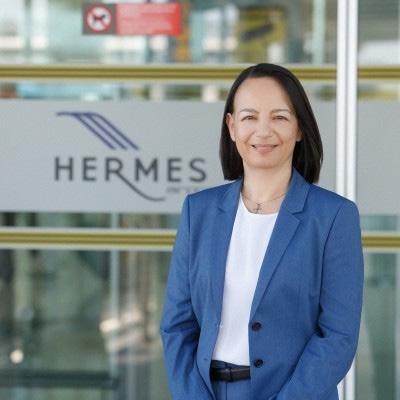
Eleni Kaloyirou Chief Executive Officer Hermes Airports Ltd
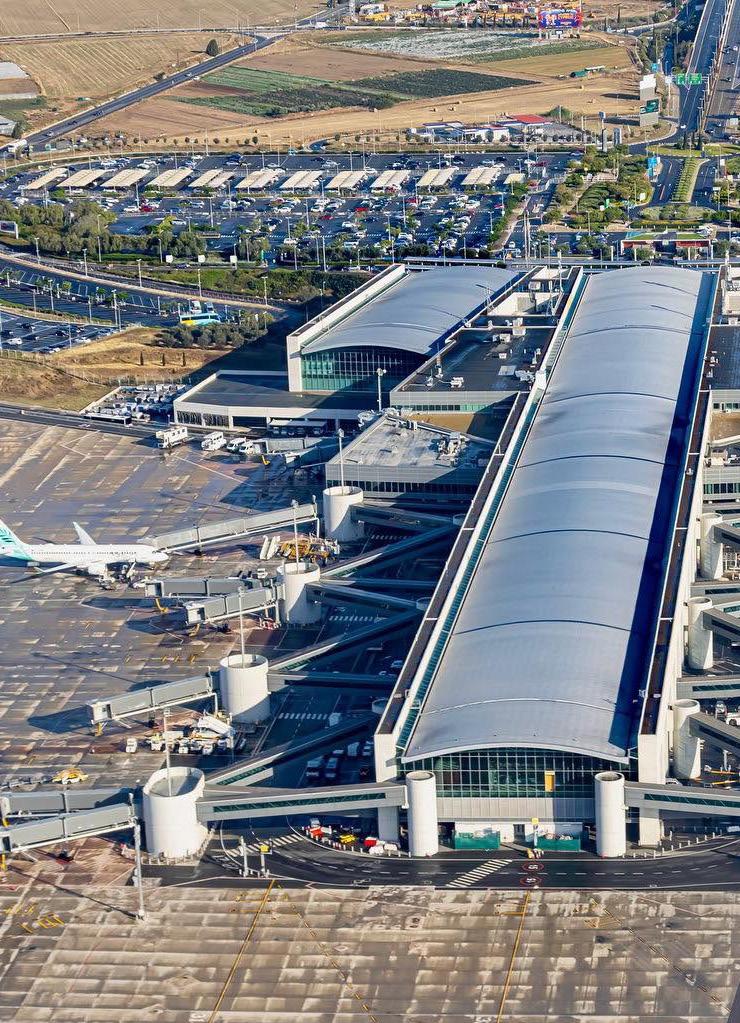
2025 was another year of growth for Hermes Airports, both in terms of passenger numbers which reached an all-time high, but also with the commencement of the expansion works at our Larnaka and Pafos airports. The increase in passenger numbers signifies the appeal of Cyprus as a destination, and our airports, as the gateway to our island, continue to play a critical role in Cyprus’ tourism, economic and social development.
Over the past year, we have continued to make meaningful progress in reducing our environmental footprint, strengthening our social and economic impact, and maintaining robust governance practices. Recognising the importance of sustainability as one of our key strategic priorities, we are committed to continue focusing on all of its three pillars now and in the years ahead.
Now in its fifth edition, our Sustainability Report demonstrates our ongoing commitment to building a more sustainable future for our airports and the communities we serve. The report highlights our key initiatives, the progress we have achieved, and our longterm vision for sustainable development.
Sustainability requires balancing the social, economic, and environmental impacts of our activities. At Hermes Airports, we recognise that while airports and air travel play an important role in connectivity and economic growth, they also bring environmental challenges, particularly in relation to carbon emissions. Our sustainability strategy focuses on addressing these impacts through targeted actions, ensuring that our
growth is aligned with long-term sustainability principles while continuing to deliver value to society and the economy of Cyprus.
To support this approach, we have implemented an integrated sustainability strategy that prioritises critical environmental areas such as energy efficiency, waste management, and carbon reduction. At the same time, we remain committed to the well-being and professional development of our employees, promoting a healthy workplace culture where people feel supported, respected, and are given developmental opportunities, both personally and professionally. We are equally dedicated to delivering a high-quality customer experience, creating an airport environment that reflects the distinctive culture and hospitality of Cyprus.
Beyond our core operations, we actively collaborate with local communities and support social and economic initiatives that contribute to sustainable and positive change.
We are committed to playing a leading role in Cyprus in support of the collective European objective of achieving Net Zero carbon emissions by 2050. In this effort, we will continue working closely with our stakeholders to foster a strong culture of sustainability within the airport community and across the wider tourism sector in Cyprus.
Investing in sustainability initiatives remains a key priority. In particular, we are focused on expanding our solar energy capacity and implementing targeted emission-reduction measures, which form an important
The future of aviation must be clean, efficient and sustainable. “ ”
part of the actions we are advancing under the environmental pillar of our sustainability strategy. We recognise that sustainability is an ongoing journey that requires continuous commitment, innovation, and collaboration. While meaningful change takes time, we remain determined to ensure that sustainable development becomes an integral part of our long-term legacy.
A simple but powerful quote by Bertrand Piccard; a Swiss explorer, aviator, and psychiatrist, who is best known for completing the first nonstop balloon flight around the world in 1999 and later co-piloting the solar-powered aircraft Solar Impulse 2 on its 2016 global circumnavigation—both milestones in sustainable aviation, sums up our overriding goal: “The future of aviation must be clean, efficient and sustainable.”
Through our continued efforts, we hope to inspire more individuals and organisations to join us in building a sustainable future.
Company
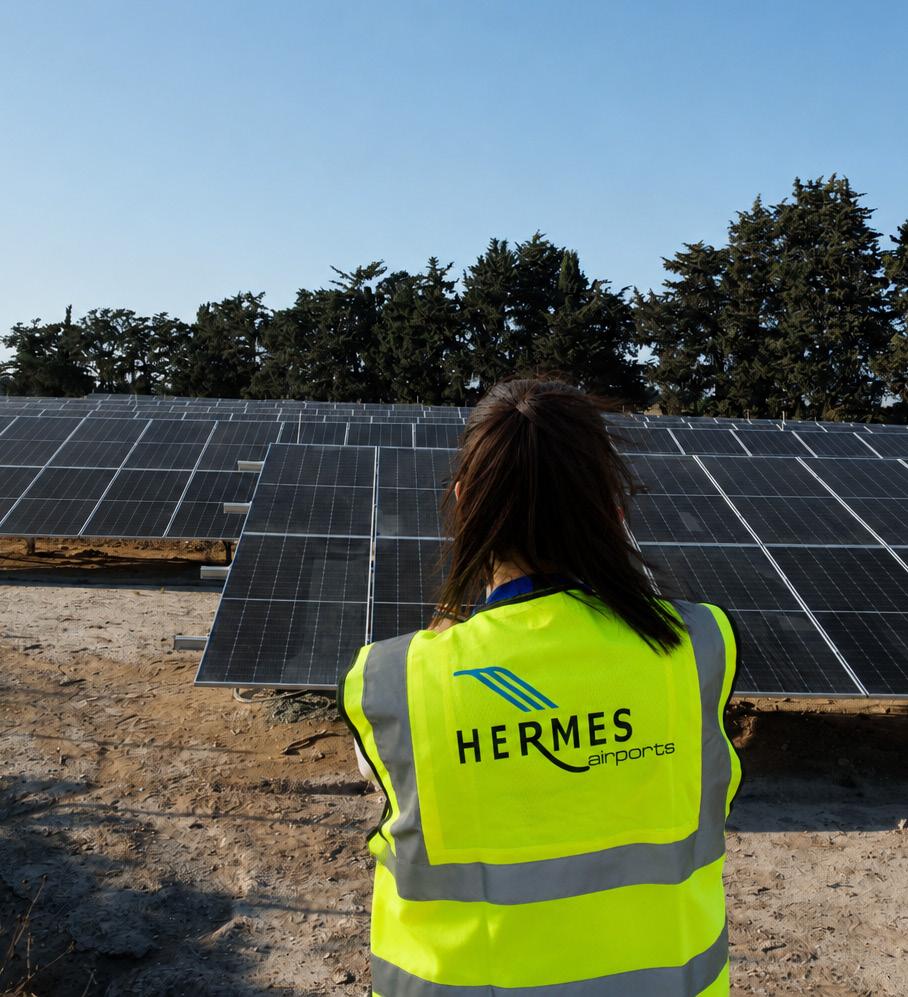
2025 was the third year of operation of the two photovoltaic (PV) power plants at both airports. The plants upon full utilisation and operational capacity during 2025 covered 22% of both airports’ energy requirements.
Recycling of 1,015 tons of operational waste generated at both airports in 2025.
Hermes continued in 2025 its participation in several Work Packages of the EU-funded project TULIPS (“Smart Energy Hub”, ‘’Zero Emission Airside Operations”, “Circular Airports”, “Sustainable Intermodal Transport Connections” and “Airport Land Carbon Sequestration”), aiming at the decarbonisation of the aviation industry.
In 2025, Larnaka Airport recorded a 31.63% decrease in Scope 1 emissions compared to the previous year. In contrast, at Pafos Airport a 43.4% increase in Scope 1 emissions was recorded.
Community Social Responsibility actions have taken place.
INCIDENTS & INJURIES
Gross market-based Scope 2 GHG emissions of both airports in 2025 showed a decrease of 46% at Larnaka airport and 35% at Pafos airport, compared to the previous year.
Zero incidents, injuries, and work-related ill health cases were recorded in 2025 for both airports.
Hermes Airports has entered into an agreement with its electricity supplier providing Hermes with Guarantees of Origin (GOs) for green power sourced directly from sustainable energy suppliers. For 2025, the agreement includes 5,000 MWh of GOs, which covered approximately 40% of the power consumed by Hermes at both airports.
Gross location-based Scope 2 GHG emissions of both airports in 2025 showed a decrease of 31% at Larnaka airport and 25% at Pafos airport, compared to the previous year.
LARNAKA
Hermes Airports is a Cyprus registered company with 9 shareholders, comprising a mix of Cypriot and International partners. The shareholders are presented in the table below: The Company’s registered office is at Larnaka International Airport, 6650 Larnaka, Cyprus.

BOLT-LIGHTNING 2015
Concession agreement with the Government of the Republic of Cyprus was signed, and Hermes assumed responsibility for the operation of Larnaka & Pafos International Airports in May.
2019
Introduction of Hermes’ Energy strategy for 20152020 in January.
Inauguration ceremony of Pafos new terminal in November.
Launch of Hermes Academy. AWARD 2009
Inauguration ceremony of Larnaka new terminal in November.
Larnaka Airport wins Most Accessible Airport award at the ACI (Airports Council International) Europe Awards.
Hermes receives ACA (Airport Carbon Accreditation) Level 2 accreditation for Larnaka and Pafos Airports.
11.3 million total passengers were recorded for the first time ever for Larnaka and Pafos Airports. An overall increase of 67% since 2006.
Hermes signs the Net Zero 2050 resolution of ACI Europe.
More than 90 energy saving projects have been completed, resulting to 32% less power consumption, while the traffic has increased significantly.
Achieved 97% LED-technology lighting at both airports (conventional lights replaced with LED).
Hermes receives ACA Level 3+ accreditation for Larnaka and Pafos Airports.
Hermes Airports receives Platinum accreditation by Investors in People for its people practices, the only airport to achieve this level of accreditation.
Hermes Receives HR Excellence award at ACI Europe Best Airport awards.
2021
Hermes joined TULIPS consortium for innovative technology “Green” projects as part of lowcarbon mobility and airports’ sustainability.
2018
Launch of Aegean Airlines base at Larnaka Airport with 3 based aircraft.
Pafos Airport wins Most Accessible Airport award at the ACI Europe Awards. AWARD
2023
Record 11.6m total passengers for Larnaka and Pafos, exceeding for the first time the prepandemic passenger levels.
New joint incentive 5-year agreement with the Government comes into effect. The novelty of this scheme is that it offers the opportunities to airlines to grow in several ways (new routes, existing routes, base operation, and winter) and to benefit from a variety of different incentives.
Solar Power Plants at both Larnaka and Pafos Airports become operational.
Hermes receives ACA Level 4+ accreditation for Larnaka and Pafos Airports.
2025
Hermes Airports achieved a historic milestone in 2025, with combined passenger traffic at Larnaka and Pafos airports reaching an all-year record 13.75 million passengers, representing a 12% year-on-year increase.
Larnaka Airport was “Highly Commended” in the “Best Airports in Europe” Awards (5 to 10 million passengers category) by ACI.
Hermes Airports received the international Overseas Employer of the Year 2025 award from Investors in People. The Company also reaffirmed the Platinum accreditation for its people practices and the Platinum Wellbeing accreditation.
On 21 March 2025, Hermes Airports has completed the financing process for Phase 2 works, with the signing of all agreements with the banks which are financing the project. The foundation stone for Phase II development works of Larnaka and Pafos airports was laid on 05 June 2025, marking the official launch of the works. 2012
Ryanair launches a base from Pafos airport with 2 based aircraft.
Wizz Air establishes a base at Larnaka Airport with 3 aircraft.
New and redesigned commercial areas were unveiled at Larnaka Airport.
Signing of Agreement for Solar Power Plants at both airports.
2022
Hermes Airports signed the Toulouse declaration, the first ever public private initiative supporting European Aviation’s goal to reach Net Zero CO2 emissions by 2050, signed by 89 airport operators of 311 airports.
Hermes Airports is re-accredited at Platinum level by Investors in People for its People practises.
Hermes Airports receives Gold accreditation by Investors in People for its wellbeing practises.
2024
A new historical milestone for Larnaka and Pafos International Airports, as on 20 December 2024, passenger traffic exceeded 12 million total passengers for the first time.
Hermes Airports receives Platinum Wellbeing accreditation by Investors in People for its wellbeing practises.
Hermes Airports was reaffirmed by Investors in People for its Platinum accreditation for its People practices.
Hermes Receives HR Excellence award at ACI Europe Best Airport awards for the second time
On 23 December 2024 an agreement was signed with the Government providing for the construction of Phase 2 works at both airports and for an 18-month extension of the Concession Agreement.
Larnaka and Pafos Airports are the main gateways to Cyprus with a significant contribution to the country’s economic development, as they support direct and indirect connectivity to/from the island.
In 2025, the passenger traffic for both airports exceeded 13 million total passengers for the first time, reaching 13.75 million passengers, compared to 12.3 million in 2024 and 11.6 million in 2023.
Purpose, Company Values, Strategic Priorities
During a Strategy Workshop that took place in July 2024, we decided to develop a Purpose rather than the distinct Vision and Mission statements we previously had. The Company’s Purpose is an evolution of what we had before, rather than a radical change on the two separate statements, which is an endorsement to the success of the strategic direction that has been followed until now.
Purpose
“To operate and deliver safe and efficient Airports, in an environmentally and socially responsible manner, offering an outstanding customer experience with the warmth, friendliness and hospitality of the people of Cyprus, while creating value for the country and all stakeholders.”
Company Values
Our Company Values currently incorporate the parameters of Caring, Results Oriented, Proud and Trust-Worthy under the principle: “As One: Working together to achieve an outstanding experience for our customers and deliver value to the country and all stakeholders.”
ș Caring – For our customers, our colleagues and teams, the society and the environment;
ș Proud – Being proud of our achievements, for not compromising our quality and for offering an outstanding experience to all internal and external customers;
ș Results orientated – Always striving to achieve the desired results, based on the objective set, as well as based on the highest standards of quality;
ș Trust-worthy – To be considered trustworthy by:
ș Our people, our teams, business partners and stakeholders, building lasting relationships based on honesty, integrity, and modesty
ș Our customers, through our high standards of safety and security
ș Our shareholders, by being reliable and meeting their expectations.
Strategic Priorities
In order to arrive at the new Strategic Priorities, we took stock of where we were and how our previous strategy, approved in 2017, helped us to get there. We then looked at the environment we currently operate in with its ongoing challenges and diverse stakeholder groups, as well as the specific challenges we need to address as a Company. Based on the outcome of this holistic review we first updated the Company’s Purpose and Values and then identified seven Strategic Priorities on which we need to focus over the period between 2025 and the end of the Concession Agreement in November 2032.
These Strategic Priorities are really an evolution of the previous Strategic Priorities set by the Board of Directors in 2017, in the sense that we are continuing along the same path but setting new targets for the priorities we continue focusing on and establishing new ones in areas of renewed focus given the circumstances and environment we currently operate in.

Corporate Governance
Governance structure and composition
The Shareholders’ Agreement and the Articles of Association of the Company set out the Company’s governance structure. In accordance with the relevant provisions of these documents, the management of the Company is vested in the Board of Directors (also “the Board”) except for certain matters which are reserved for the Shareholders. The Board of Directors may delegate certain powers to management. The day-to-day management of the Company has been delegated by the Board to management. The Board may also delegate any of its powers to a committee or committees consisting of such members as they think fit. The Board has set up the Audit, Accounts & Risk Committee, and the Executive Resources & Remuneration Committee, which are described below. The powers and duties of the said Committees are set out in each Committee’s respective Charter.
The Board of Directors consists of nine members, all serving as non-executives. Almost all members hold executive positions in their employment. The members of the Board of Directors are currently the following:
ș Christophe Petit, Chairperson
ș Iacovos G. Iacovou, Vice Chairperson
ș Christakis Charalambous, Director
ș Panayiotis Hadjipantelis, Director
ș Neville Weir, Director
ș Romain Uthurriague, Director
ș Patrick Viellard, Director
ș Nuno Amaral, Director
ș Joseph Bou Nader, Director
The Sustainability Steering Committee is the highest governance body of the management that is responsible for decision-making and overseeing the management of the Company’s impacts on the economy, environment, and people, and is further described in the following pages.
Nomination and selection of the highest governance
The maximum number of Directors is 9, whereas there is no minimum.
The members of the Board of Directors are appointed and removed by Shareholders as per the relevant provisions in the Shareholders’ Agreement and the Articles of Association of the Company. Each shareholder that owns, or several shareholders, who together own between them, 11% of the total issued share capital of the Company, has the right to appoint,
for each such holding of 11%, one person as a Director to the Board of the Company. The Directors vote to appoint one of them as Chairperson of the Board. The Chairperson holds office as Chairperson for one year and shall retire at the end of one year but shall be eligible for re-election. The Board also appoints a ViceChairperson.
Highest governance body
The Board of Directors holds regular meetings and at least four meetings are held each year. Additional meetings are held if circumstances require or if a Director requests so. At these meetings the Board decides or approves, amongst other things, the development and update of the Company’s purpose, value, or mission statements, strategies, policies, and goals related to sustainable development in close cooperation with the management.
Furthermore, to advance the collective knowledge, skills, and experience of the highest governance body on sustainable development, regular reporting to the Board on sustainability measures is included in “board packs” submitted to the Board before Board meetings.
The evaluation of the performance of the Chief Executive Officer of the Company in overseeing the management of the organisation’s impacts on the economy, environment, and people, is conducted annually by the Executive Resources and Remuneration Committee and the Board of Directors and includes sustainability criteria and targets.
Board Committees
The Board Committees that operate within the Company are:
a) the Audit, Accounts & Risk Committee, and b) the Executive Resources & Remuneration Committee.
The Audit, Accounts & Risk Committee consists of 7 members, and the Executive Resources & Remuneration Committee consists of 6 members. The members of each of these two Committees are appointed by the Board of Directors. The Chairperson of the Audit, Accounts & Risk Committee is either a current Director (including alternates) of the Board or is a current member of the Committee. The Chairperson of the Executive Resources & Remuneration Committee is a current Director (including alternates). The appointment or renewal of the Chairperson of each Committee is undertaken annually by the Board of Directors.
The members, the responsibilities, and the attendees of each Committee’s meetings are elaborated below.
Audit, Accounts and Risk Committee
The purpose of the Audit, Accounts & Risk Committee is to assist the Board of Directors in fulfilling its oversight responsibilities for the preparation of Financial Statements, the financial reporting process the review approval and subsequent follow up of the Company’s annual budget, financial controls, the financial audit process, the tax policy and management and the Company’s processes for monitoring compliance with applicable laws and regulations in relation to the protection of personal data and information security.
The members of the said Committee are:
Chairperson:
ș Neville Weir
Members:
ș Régis Plourin
ș Romain Uthurriague, alternate for Régis Plourin
ș George Iacovou
ș George Louca
ș Colin O’Donovan
ș Panayiotis Hadjipantelis
ș Antonis Poullikkas
The members of the Audit, Accounts and Risk Committee should have financial background and appropriate expertise and experience in accounting, financial reporting, or auditing matters. These criteria are set out in the Committee’s Charter.
Executive Resources and Remuneration Committee
The purpose of the Executive Resources and Remuneration Committee is to assist the Board of Directors in discharging its duties relating to approving appointments of Executives, setting Chief Executive Officer’s goals and objectives, evaluating Chief Executive Officer performance, ensuring a succession plan for Executives and other key employees, ensuring a broad plan of Executive remuneration is established that is competitive in order to attract, retain, inspire and motivate the Executives and other key employees who will create value for the shareholders, and to recommend incentive awards for Executives. In addition, and as mentioned previously, the Executive Resources and Remuneration Committee conducts the annual assessment and evaluation of the Chief Executive Officer including sustainability criteria and targets.
The Committee is accountable to the Board.
The members of the Committee are: Chairperson:
ș Nicos Philippou
Members:
ș Neville Weir
ș Christakis Charalambous
ș Romain Uthurriague
ș Eric Fleurisson, alternate for Romain Uthurriague
ș Nuno Amaral
ș Panayiotis Hadjipantelis
The members of the Executive Resources and Remuneration Committee should have a good knowledge of the Company’s structure and its executive management, in addition to a good understanding of trends in shareholder concerns, a good understanding of all aspects of recruitment and remuneration policies of compatible companies, and a good knowledge of best corporate governance practices. These criteria are set out in the Committee’s Charter.
Executive Remuneration
The members of the Board are not entitled to any remuneration in their capacity as Directors of the Company, unless otherwise decided by the Shareholders at an Annual General Meeting.
The remuneration policies for senior executives relate to their objectives and performance in relation to the management of the organisation’s impacts on the economy, environment, and people. More specifically, there are sustainability objectives and KPIs which form part of the overall strategy. The remuneration policies do not include sign-on bonuses or recruitment incentive payments, termination payments, and retirement benefits.
In 2025, the members of the Board and of the Committees received a fixed fee. All expenses related to their Board and Committee attendance are reimbursed upon presentation of invoices. The results of the votes of Shareholders on remuneration policies and proposals are recorded in the minutes of the Annual General Meetings.
Equal Opportunity, Discrimination, and Harassment Policy
Hermes’ Equal Opportunity, Discrimination and Harassment Policy details how the organisation embeds each of its policy commitments for responsible business conduct through its activities and business relationships.
More information regarding policies can be found in the chapter “Employee Experience and Engagement” of this report.
Grievance Policy and Allegation Policy
Hermes’ Grievance Policy and Allegation Policy detail the organisation’s commitments to provide for and cooperate in the remediation of negative impacts that the organisation identifies it has caused or contributed to, as well as its approach and processes in place to identify and address such impacts. More information regarding policies can be found in the chapter “Employee Experience and Engagement” of this report.
Overseeing the management of impacts
The Board of Directors and the Committees hold regular meetings to oversee the organisation’s due diligence and other processes to identify and manage the organisation’s impacts on the economy, environment, and people. The highest governance body engages stakeholders through its decisions and instructions to management. The CEO and management give regular updates on stakeholders at Board meetings, including issues of critical concern. The outcomes of stakeholders’ engagement and the effectiveness review are presented by the CEO and management at Board meetings, during which the Directors may provide guidance or instructions to management. Also, the Committees’ Chairmen report to the Board, at its meetings, the findings and issues discussed at each Committee meetings.
Enterprise Risk Management
The primary objective of the Enterprise Risk Management (ERM) procedure is to identify, record and measure all risks to which the Company is exposed. The methodology was introduced back in 2010 and now covers the entire spectrum of Hermes’ business. Highranking risks are reported to the Audit, Accounts & Risk Committee regularly, along with a statement showing how these risks have moved since the last reported date.
The Sustainability Steering Committee
The main responsibility of the Sustainability Steering Committee is to oversee the implementation of the sustainability policy and to validate the various action
plans submitted by the material topic owners and review their progress accordingly.
The members of the said Committee are:
Chairperson:
ș Chief Executive Officer
Members:
ș Chief Operating Officer
ș Director of Aviation Development, Marketing and Communication
ș Director of Human Resources & Executive Coach
Coordinator:
ș Chief Financial Officer
Conflicts of interest
The Company has a Code of Business Ethics in place which must be adhered to by all employees, Committees and Board members. Following the adoption of the Code of Business Ethics, conflicts of interest must be disclosed to stakeholders, including conflicts of interest related to cross-board membership, cross-shareholding with suppliers and other stakeholders, the existence of controlling shareholders, related parties, their relationships, transactions, and outstanding balances.
Membership associations
Hermes participates in various associations to consistently develop its sustainability agenda. Airports Council International (ACI) Europe.
Hermes is a member of ACI Europe, and its CEO served as a Board member between 2019 and 2025. ACI Europe is a strong advocate of sustainable development for the aviation industry, and Hermes was a contributor to the development of the ACI Europe Sustainability Strategy for Airports, now in its second edition, which is in turn used by the Company as a guideline for the development of its own sustainability strategy. Executive and Senior Management also are members of various committees of ACI Europe.
ACI World Governing Board
Hermes staff and management actively participate in all ACI Europe’s committees relevant to their position within the Company. These committees report to the Board of ACI Europe and focus on Policy, Aviation Security, Economics, Environmental Strategy, Facilitation and Customer service, Technical Operations and Safety, and Cyber Security. In addition to the committees, there are several forums and task forces of ACI Europe in which Hermes participates.
Hermes received several ACI accreditations, such as the Level 4+ Airport Carbon Accreditation for both Larnaka and Pafos Airports, the ACI Health Accreditation and the ACI ASQ Customer Experience Level 3 Accreditation.
Investors in People
Hermes is accredited with the Investors in People Platinum both for its people practices and for its wellbeing practices.
TULIPS Project.

Information Systems Audit and Control Association (ISACA).
Hermes is a member of ISACA, an independent, nonprofit, global association that engages in the development, adoption, and use of globally accepted information system (IS) knowledge and practices.
International Association of Privacy Professionals (IAPP).
Hermes is a member of the IAPP, which provides resources for privacy professionals who are helping their organisations successfully manage privacy risks and protect personal data.
IAPP is the world’s largest and most comprehensive global information privacy community.

ICAEW Travel, Tourism and Hospitality Community advisory group
Hermes CEO now serves as a Board member of the ACI World Governing Board representing ACI Europe. Hermes is a signatory of ACI Europe’s Resolution committing to Net Zero by 2050, since 2019, and has developed its detailed Road Map to Net Zero which is published in the ACI Europe repository.

Hermes is one of four participating airports in the TULIPS project, short for “DemonsTrating lower pollUting soLutions for sustaInable airPorts acrosS Europe”, a European Union funded project, the overarching aim of which is to create green airports in Europe through accelerating the roll out of sustainable technologies in aviation and contributing towards zero emissions and zero waste airports by 2030 and climate neutral aviation by 2050.
Board of the Flight Safety Foundation Mediterranean.
Hermes is a member of the Board of the Flight Safety Foundation Mediterranean, a non-Governmental organisation established in Cyprus in 2008. The main objective of the Board is to contribute to the enhancement of aviation safety by facilitating training in aviation issues and encouraging the adoption of global and European aviation policies as well as fostering cooperation between the countries of the Mediterranean and Middle Eastern regions.
Corporate Sustainability and Responsibility (CSR) Cyprus.
Hermes is represented on the Board of CSR Cyprus, founded in 2016, as an independent, non-Governmental organisation, with business members, aiming to promote the concepts of corporate sustainability and responsibility to Cypriot businesses and organisations.
Hermes’ CEO was also a member of the Institute of Chartered Accountants in England and Wales (ICAEW) Travel, Tourism and Hospitality Community advisory group between 2018-2024, which focuses on key issues impacting this industry, offering guidance and advice including training on these matters to ICAEW members.
Approach to Sustainability
Hermes Airports takes a holistic approach to sustainability reporting by integrating sustainability governance, strategy, and risk management, into a single, companywide reporting process. It aligns disclosures with evolving sustainability reporting requirements and leading practices to ensure relevance, consistency, and comparability. To stay up to date, Hermes regularly monitors developments and updates its materiality, metrics, and data governance to maintain robust disclosures.
Timeline
Hermes has been producing its sustainability report in accordance with the Global Reporting Initiative (GRI) Standards.
Furthermore, in 2025, the Corporate Sustainability Reporting Directive (CSRD) and the European Sustainability Reporting Standards (ESRS) were introduced. Whilst Hermes Airports did not fall within their scope, the Company conducted a Double Materiality Assessment (DMA) in line with ESRS requirements to refresh its 2022 GRI-based, impactfocused materiality assessment.
Whilst the DMA considered both impact and financial materiality, the emphasis was placed on impact materiality to align with GRI 3: Material Topics 2021, which centres on identifying and prioritising the organisation’s most significant impacts on the economy, environment and people (including human rights), and using these insights to define material topics for reporting and management. This demonstrates Hermes’ unwavering commitment to upholding the latest standards and practices in sustainability reporting.
Hermes produced this report to be in accordance with the Global Reporting Initiative (GRI) Standards.
Stakeholder engagement
Hermes has a continuous dialogue with its stakeholders, consisting of a wide range of groups and individuals, including the Company’s shareholders and staff, the Government and other local authorities, the wider airport community, suppliers, subcontractors, and others. A comprehensive methodology was developed by Hermes to engage with its stakeholders, starting with identifying the key stakeholder groups; both internal and external.
The key stakeholder groups were then mapped with key personnel within Hermes, depending on their
knowledge, expertise, and general field of work. Hermes’ key personnel acted as representatives (proxies) to the external stakeholders. Successful engagement with the proxies has been achieved through a series of face to face and virtual meetings, workshops, calls, emails, and included the completion of questionnaires, surveys, and data templates. External stakeholders were also engaged at key points in the process through a targeted, structured questionnaire designed to validate and refine the list of material impacts identified by the internal proxies.
Materiality Analysis
The materiality analysis’s purpose is to develop a comprehensive list of ESG topics which will reflect Hermes’s most significant impacts on the economy, environment, and people, including on human rights. Hermes’s materiality analysis process was based on the multiphase guidance set out in the GRI Standards. The analysis was refreshed for the 2025 reporting period, and the results have been used to inform this report and will continue to inform future sustainability reporting, unless and until the materiality analysis is refreshed again. The materiality analysis will be revisited if there are significant changes to Hermes’s structure or operations, major events, or other developments that warrant reassessment. The materiality analysis followed the below main aspects:
The first three phases in the process to determine material topics relate to the ongoing identification and assessment of impacts by Hermes. During these phases, the Company identified and assessed its impacts, considering that impacts evolve with time and new ones arise. Whilst these first three phases are conducted independently of the sustainability report, they feed into phase four, which establishes the report’s basis.
Phase 1 – Understand the organisation’s context
The Company developed a high-level overview of its activities and business relationships, and the sustainability context in which they occur, by mapping its value chain across upstream partners and suppliers supporting operations, downstream stakeholders involved in delivering passenger services, and its own operations, covering day to day airport activities, infrastructure maintenance and development, and corporate functions. This provided Hermes with critical input to identify its actual and potential impacts.
Phase 2 – Identify actual and potential impacts
Hermes identified its actual and potential1; positive and negative impacts on the economy, environment, and people, including impacts on human rights. The impacts have been identified across the Company’s activities and business relationships and have been mapped across three dimensions; Economy, Environment, People incl. Human Rights.
To identify impacts, Hermes used a comprehensive sustainability matters list and conducted a desktop sustainability matter scan to prioritise those most relevant to its operations and value chain. The scan considered applicable sustainability regulations, SASB industry standards, the ACI Europe Sustainability Strategy for Airports, Hermes’s prior sustainability reporting and impact materiality assessment, peer materiality analyses, and additional references such as ENCORE and the Synesgy Survey. This process produced a focused set of sustainability matters, which then formed the basis for identifying and determining Hermes’s relevant impacts.
Phase 3 – Assess the significance of the impacts
During this Phase, Hermes prioritised the identified impacts. To assess the significance of the impacts, a severity and likelihood framework has been developed. This framework was developed to reflect the GRI reporting standards guidelines, based on which the significance of the impacts was determined by assessing the severity of the impact and, in the case of potential ones, their likelihood of happening. Furthermore, the significance of the impacts was also determined based on how they can affect human rights.
Following the framework, each impact was rated following a specific rating methodology for negative and positive impacts. A rating has been given to each impact in terms of its Scale, Scope, and Irremediable Character. In cases where an activity had an impact on more than one dimension (economy, environment, people, and human rights), the assessment of their significance was performed separately for each dimension.
The identified impacts were assessed by internal and external stakeholders through the engagement methods described above. The resulting list of impacts was then mapped to sustainability matters and the relevant GRI Standards to inform Hermes’s sustainability reporting.
Phase 4 – Prioritise the most significant impacts for reporting
The outcome of Phases 1-3 was presented to Hermes’ management through a validation and consensus workshop, which included a description of the methodology followed, the relevant assumptions made and the finalisation of the material topics.
The outcome of the materiality analysis produced 10 material topics. Hermes considers these material topics to be equally important and has therefore not ranked them.
The Sustainability Steering Committee has overseen the process and has reviewed and approved the material topics to ensure that the range of impacts included provides a complete representation of Hermes.

Material topics
This revised materiality assessment focused on the Company’s impacts on the environment, economy and people, including impacts on human rights, across its operations and business relationships. The identified impacts were then consolidated into material topics, which determined the content of this report.
The list of material topics has been updated, with two changes introduced for the current reporting period and to be applied in future reporting, relative to prior years.
The first change is the removal of the topic “Ecosystems and Biodiversity”. This topic has been removed as it was not assessed as material through the revised materiality assessment. As an airport operator, Hermes primary priority is aviation safety, and biodiversity in the vicinity of runways can increase wildlife hazard risks, including bird strikes. As a result, habitat management practices around airside areas are designed to minimise wildlife attraction and maintain safe operating conditions, rather than to enhance biodiversity. The second change, which will only apply for the 2025 reporting period, is a temporary impact associated with the Larnaka and Pafos airport expansion which has been recognised under the existing material topic “Operational Effectiveness and Passenger Experience”, with related disclosures presented in accordance with GRI 301: Materials (2016).
The list encompasses 10 material topics, which are presented below, with no particular ranking:


Hermes considered whether any of the other matters should also be considered as material. No other matters were deemed material enough to be added to the above list.
The results of the DMA have been verified by Hermes’ Sustainability Steering committee.
Sustainability Strategy
Specific action plans for each of these material topics have been developed indicating a roadmap for their implementation. The Company’s strategic priorities around sustainability are presented in the following diagram across 3 dimensions, the Environment, People, including Human Rights, and the Economy, representing a balanced business model.
LEAF
Sustainability Policy
The key elements of the policy are the Sustainability Governance structure and responsibilities, the Materiality Analysis, and the Sustainability Action plan, as well as the commitment for producing a report presenting the results of the period’s action plan elaborating on ESG performance. The policy is subject to regular review by the Sustainability Steering Committee in line with emerging developments related to sustainability management on a local, sectoral, and global level, and annual review by the Board of Directors of the Company.
Hermes contribution to the UN Sustainable Development Goals
In line with the Company’s acknowledgement of the sustainability principles for Human Rights, Labour Relations, Environmental Impact and Anti-Corruption adopted by the UNGC (United Nations Global Compact), Hermes is committed to adopting and upholding these principles as part of its daily operations. At the same time, the Company acknowledges the UN SDGs (United Nations’ Sustainability Development Goals) and the Agenda 2030, pledging to contribute to the global effort for addressing major sustainability challenges.
Balanced business model – A horizontal approach
Hermes aims for an all-embracing “Balanced Business Model”, seeking an optimal balance between the impacts of its activities on the environment, the people and the economy, whilst also incorporating and considering the aspect of human rights. Developing its business model in a balanced way is a core value for the Company. This is achieved by marking its footprint in the country’s economy and society, contributing to mitigating climate change and creating a more sustainable world for future generations.
Hermes provides a safe, healthy, and inclusive workplace that offers equal opportunities to all staff, whilst also seeking to enhance the quality of life of the local communities and the country overall. Complying with all relevant laws and regulations, while maintaining internally developed policies, secures the rights of the staff and customers. At the same time, it aims to ensure that the passengers traveling through Larnaka and Pafos Airports receive a seamless experience and enjoy a safe and healthy journey. An internal Customer Care Steering Committee and an internally developed strategy make sure that the overall passenger experience standards are met. We use digitalisation and new technologies whenever we can to further increase the efficiency and improve the quality of services of our airports.
Hermes continuously strives to increase airline connectivity and thus further contributes to the creation of more jobs and to the further enhancement of the country’s Gross Domestic Product (GDP).
The Company is currently sourcing products and services mainly from local suppliers, while it is also promoting corporate values of fairness and transparency across its supply chain. The Company undertakes numerous initiatives and works closely with the local tourism stakeholders to ensure that Cyprus remains a sustainable destination for travellers. The Company also encourages intermodal access to the two airports, where this is possible.
Hermes maintains an environmental policy that ensures conformity to international standards and procedures whilst at the same time reaffirms its commitment to the environment. Amongst Hermes priorities is the preservation of resources for present and future generations. This is achieved through responsible management of materials and water while applying the principles of circular economy where applicable. The Company is committed to reaching Net Zero carbon emissions by 2050, at the latest, for sources under its direct control whilst it cooperates with its partners to support them in also reducing and ultimately eliminating their impact. An energy committee and energy team have the responsibility to keep the Company on track with the targets set, as these are defined in the Company’s energy strategy. Hermes also has an ‘Energy and Climate roadmap’ which can be found under the chapter “Climate change” of this report.
Economic performance
Larnaka and Pafos airports are the main gateways to Cyprus with a significant contribution to the country’s economic development as they support direct and indirect connectivity to/from the island. Tourism is the largest traffic contributor as a percentage of the total passenger traffic of the two airports. Approximately 65% of total traffic is inbound traffic, of which 80% is travelling for leisure purposes.
In 2025, approximately 4.5 million tourists arrived in Cyprus, whilst revenues from the tourism sector contributed around 14% to the country’s GDP. Overall, in 2025, Hermes Airports served a record 13.75 million passengers. This is a remarkable achievement, showcasing significant resilience despite the challenging geopolitical landscape.
The two airports generate thousands of jobs directly in core airport operations (airlines, ground handling, security, customs, maintenance, etc.), indirectly through the companies that supply and support the airports’ operations, but also through the induced effect of the spending of the people working at the Airports. The Economic Impact Online Calculator, a tool developed by ACI Europe, was used to calculate that that the overall impact of Hermes airports to the country’s GDP for 2025 exceeded 2%, taking into account the Direct, Indirect, and Induced effects. If we also take into account the wider economic benefit, or catalytic impact, this contribution exceeds 3%.
Economic Development
Economic impact
Hermes maintains its role as one of the key drivers of the economy of Cyprus. Several key direct economic impacts include contributing to the country’s GDP, creating jobs, supporting local suppliers, and promoting the island as a sustainable destination.
Furthermore, Hermes contributes to the development of the Cypriot economy through the active implementation of a strategy to further develop the island’s air connectivity, an area that impacts all sectors of the economy. The airline incentive schemes, the various agreements and joint promotions with airlines aim to improve the air connectivity of the country.
For more details regarding significant investments and services provided, as well as current or expected impacts on communities and local economies, please refer to the following chapter “Quality of Life of Local Communities”.
Larnaka
Sustainable Destination
Airports play a key role in supporting and promoting their home markets, particularly in countries with a strong reliance on inbound tourism, such as Cyprus. From the outset of its operations, Hermes Airports has recognised the interdependence between airport connectivity and Cyprus as a tourism destination. Over time, the Company’s strategy has evolved to actively support the promotion of Cyprus as a sustainable, yearround tourism destination.
To this end, Hermes Airports implements a comprehensive airline incentive scheme based on a 360-degree approach, structured around three pillars: the development of new routes, the enhancement of existing routes with a particular focus on the winter season, and overall volume growth. Through this scheme, the Company is estimated to have returned to airlines an average of approximately 40% of the revenue generated from their operations, reinforcing long-term route sustainability and network development.
In parallel, Hermes Airports actively supports destination promotion initiatives implemented in collaboration with tourism stakeholders, including national and regional authorities. These initiatives aim to position Cyprus as a year-round leisure destination, contributing to the mitigation of seasonal demand peaks and the decongestion of overcrowded areas, particularly coastal regions during the high season. At the same time, the promotion of inland areas, mountainous regions and villages encourages more balanced tourism development, benefiting small local businesses and enterprises that are closely linked to offpeak experiential tourism.
During 2025, Hermes Airports participated in two joint marketing campaigns for the promotion of the Pafos and Famagusta regions, contributing €30,000 to each campaign. In addition, the Company remained highly active in co-marketing initiatives with airline partners promoting Cyprus across key international markets.
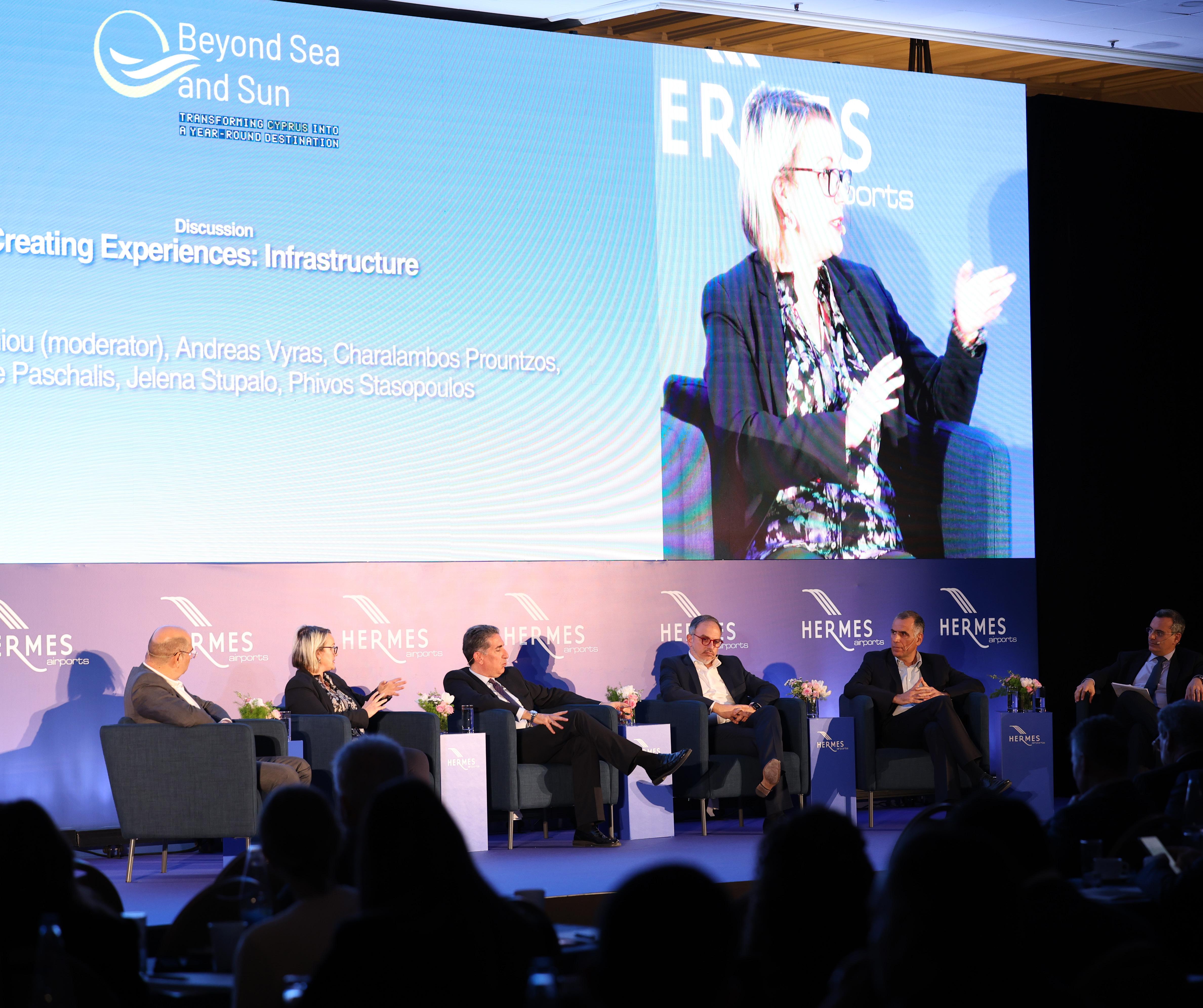
As part of its strategic engagement with the tourism ecosystem, in 2025 Hermes Airports organised the conference “Beyond Sea and Sun”, bringing together speakers from the public and private sectors in Cyprus as well as experts from abroad. The conference which attracted more than 200 participants focused on identifying best practices, opportunities and challenges related to establishing Cyprus as a year-round destination. Building on the outcomes of the event, the Company further pursued during the year, both with local stakeholders as well as with airlines, advocating the need and the opportunity to operate on a yearround basis.
Quality of Life of Local Communities
Hermes Airports implements a structured Corporate Social Responsibility (CSR) strategy, aiming to contribute positively to local communities and Cypriot society overall. The strategy focuses on initiatives that promote social cohesion, development, wellbeing and inclusion, while responding to identified community needs.
During 2025, the Company continued most of its CSR initiatives implemented in previous years, further enhancing their scope and duration. At the same time, new initiatives were introduced, extending support to additional organisations and community groups. Both the number of CSR initiatives and the total expenditure increased compared to previous years, demonstrating Hermes Airports’ ongoing commitment to the systematic implementation of its CSR strategy.
Through a combination of volunteering activities, awareness campaigns and financial contributions, Hermes Airports seeks to create a positive social impact and contribute to the wellbeing of the communities connected to its operations.
Health and Wellbeing
Supporting the physical and mental health and wellbeing of the local community remains a core pillar of Hermes Airports’ CSR approach. During 2025, the Company continued to support organisations and initiatives that provide assistance to individuals facing health challenges, as well as children with special needs.
In this context, Hermes Airports provided financial sponsorship to PASYKAF in support of a special commemorative event organised in memory of a Hermes Airports employee. The Company also maintained its support for the Pancyprian Association of Multiple Sclerosis through financial contributions and the sponsorship of a marathon organised to support people affected by the disease.
Further contributions were made to the Radio Marathon Foundation, which provides medical, pharmaceutical and technical support to children with special needs, facilitating their reintegration into society. Hermes Airports also supported the Saint Lazarus Centre for Special Needs People, which offers services to individuals with intellectual and developmental disabilities.
In addition, the Company continued its support of the Karaiskakio Foundation through sponsorship of its Annual Gala Dinner. The Foundation provides
comprehensive care to patients with haematological malignancies, combining volunteer engagement with specialised scientific support. Hermes Airports also renewed its support to the Cyprus Anti-Narcotics Association, contributing to prevention initiatives and to the “STOHOS” rehabilitation programme.
Community Support
Hermes Airports recognises the importance of investing in people and supporting initiatives that benefit the wider community, with particular emphasis on children, education and cultural development.
The Company continued its long-standing cooperation with the Sophia for Children Foundation, aiming to improve the quality of life of children from low-income families attending primary schools in the Larnaka district. In 2025, Hermes Airports maintained its financial contribution to the “I Cook & I Offer” programme, which provides meals to children attending all-day primary schools across Cyprus.
In collaboration with the United Nations, we promoted, at Larnaka airport, the 17 UN sustainable goals, showcasing the importance of adopting practices which contribute to the accomplishment of these goals.
During the year, Hermes Airports supported for the first time the Nicosia Book Fest, contributing to the promotion of literature and cultural engagement within the local community. Additional support was provided to Drosia Primary School for the purchase of school benches.
Cyprus co-hosted for the very first time one of the most prestigious tournaments in Europe, the FIBA EuroBasket, and Hermes Airports ensured the smooth arrival and departure of the teams that participated in the tournament, which included basketball elite players, FIBA officials, and thousands of fans.
Hermes Airports celebrating the World Tourism Day 2025, hosted a music event with a piano recital by an internationally acclaimed Cyprus pianist and composer. The event was organised in collaboration with Avantgarde, a Cultural foundation, and was part of the Piano Tour, a cultural initiative that brings classical music everywhere. The pianist performed live at the check in area in Larnaka airport and the recital was broadcast live in several areas of the terminal and also worldwide through online channels.

In 2025, Hermes Airports also provided financial support for the first time to the Inspire 2025 Festival, which promotes Cyprus as a hub for innovation and entrepreneurship, as well as to a Cyprus-based forum focusing on competition policy. Hermes Airports also provided financial support to cultural and community festivals, including the Afro Banana Festival, which focuses on culture, music, art and sustainability initiatives. Moreover, we supported a cultural initiative dedicated to promoting contemporary Cypriot cinema abroad. Through our sponsorship of two Cypriot film screenings in Athens, we contributed to strengthening the visibility of Cypriot creators and preserving local storytelling traditions. Hermes Airports also supports the Greek Drama Festival through digital advertising displayed across terminal screens, in collaboration with the Deputy Ministry of Culture. This initiative enhances the visibility of Cyprus’ performing arts sector and connects passengers with cultural events taking place on the island. Finally for the second year, Hermes Airports provided financial support to the Holy Archbishopric of Cyprus for the organisation of an event related to Cypriot history, contributing to the promotion of the island’s cultural heritage.
We hosted the “Climate Resilience” project at Larnaka Airport in collaboration with Bank of Cyprus / SupportCY, the KIOS Research and Innovation Center of Excellence of the University of Cyprus, and the Ministry of Education, Sport and Youth. The initiative engaged 80 high school students from Larnaka region in interactive workshops where they developed first-response strategies for potential flooding scenarios through simulations, presentations, and group discussions. The programme aimed to strengthen climate awareness, preparedness, and youth participation in building more resilient communities.
We also hosted the “Yes, I Can” photo exhibition at Larnaka Airport, showcases the stories of Cypriot Paralympic athletes, promoting inclusion, diversity, and equal opportunities. Displayed across key passenger areas, the exhibition reaches thousands of people, highlighting the athletes’ strength, resilience, and determination, and conveying a powerful message that perseverance and a positive mindset can transform challenges into achievements.

Furthermore, the exhibition “Carte Postale: EU Journey through the Lens of Time” was hosted at Larnaka airport, highlighting the importance of cultural heritage and shared European identity. The exhibition presented rare postcards from the collection of the late Antonis Chatzipanagis, whose lifelong dedication preserved meaningful fragments of Europe’s urban memory. Hermes was the Gold Sponsor, promoting the city of Larnaka for its nomination as the European Capital of Culture for 2030, which was finally awarded the title. Moreover, during Cyprus’ Presidency of the Council of the European Union, Larnaka and Pafos airports integrated elements of the island’s cultural identity into terminal spaces. Artworks from the State Collection, CHAPTER FIVE
created by Cypriot artists, were exhibited in prominent locations across both airports. This initiative offers passengers a meaningful introduction to Cyprus’ rich culture and heritage, while contributing to the visibility and preservation of the country’s artistic legacy.
As part of its community engagement activities, the Company once again organised special educational days at Larnaka Airport during the two-week period prior to Christmas, welcoming primary school students from the Larnaka district to participate in interactive workshops. The innovative addition to this activity which has been offered for over a decade to the Larnaka community, was the first aid workshops with Red Cross that were offered to the children that participated in these educational days.
Passenger Initiatives
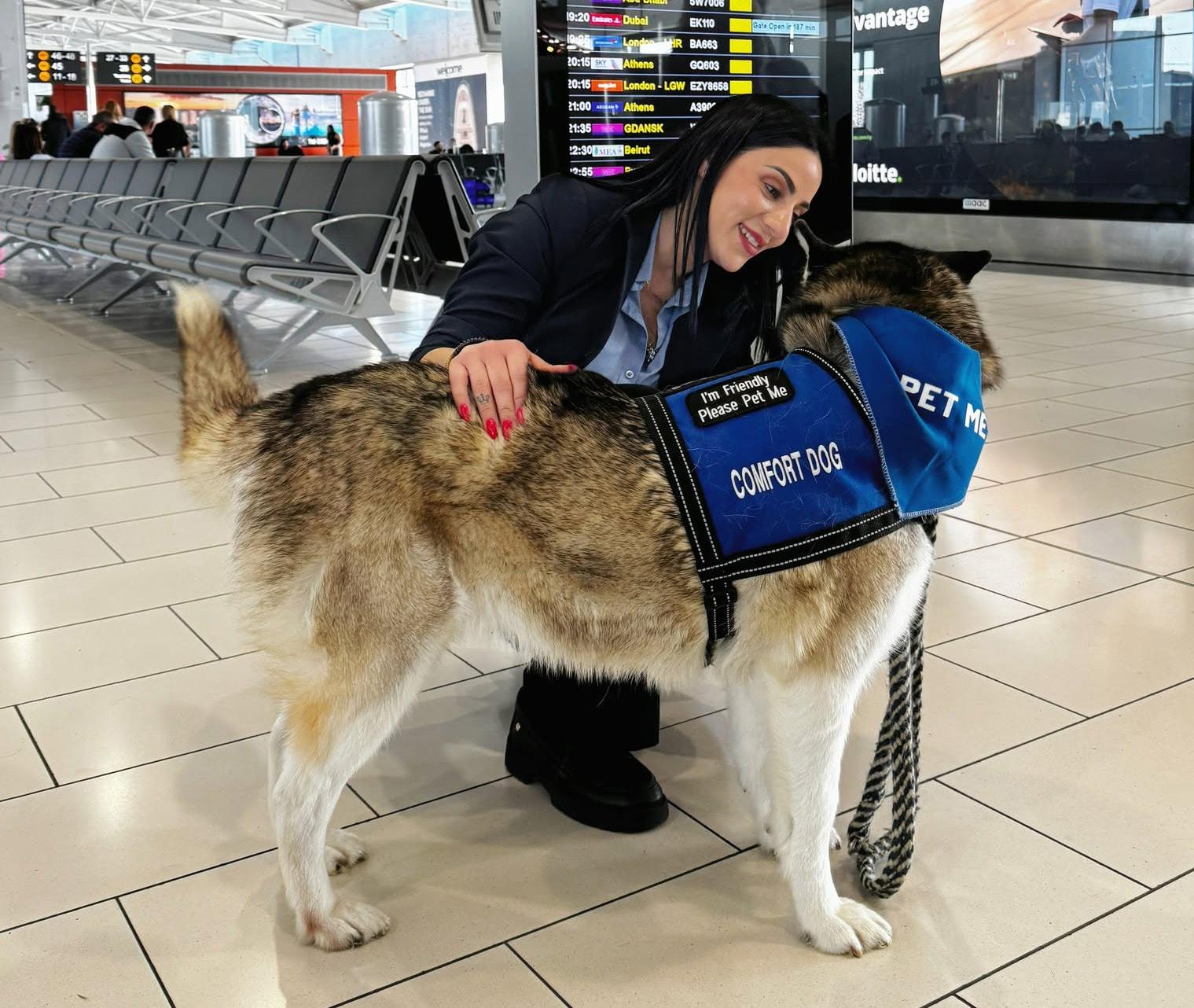
Hermes Airports continued to implement initiatives within the airport environment that enhance the passenger experience while promoting wellbeing and culture. The Zen Dogs programme was once again implemented in 2025, with specially trained dogs interacting with passengers in the gates area to help reduce travel-related stress.
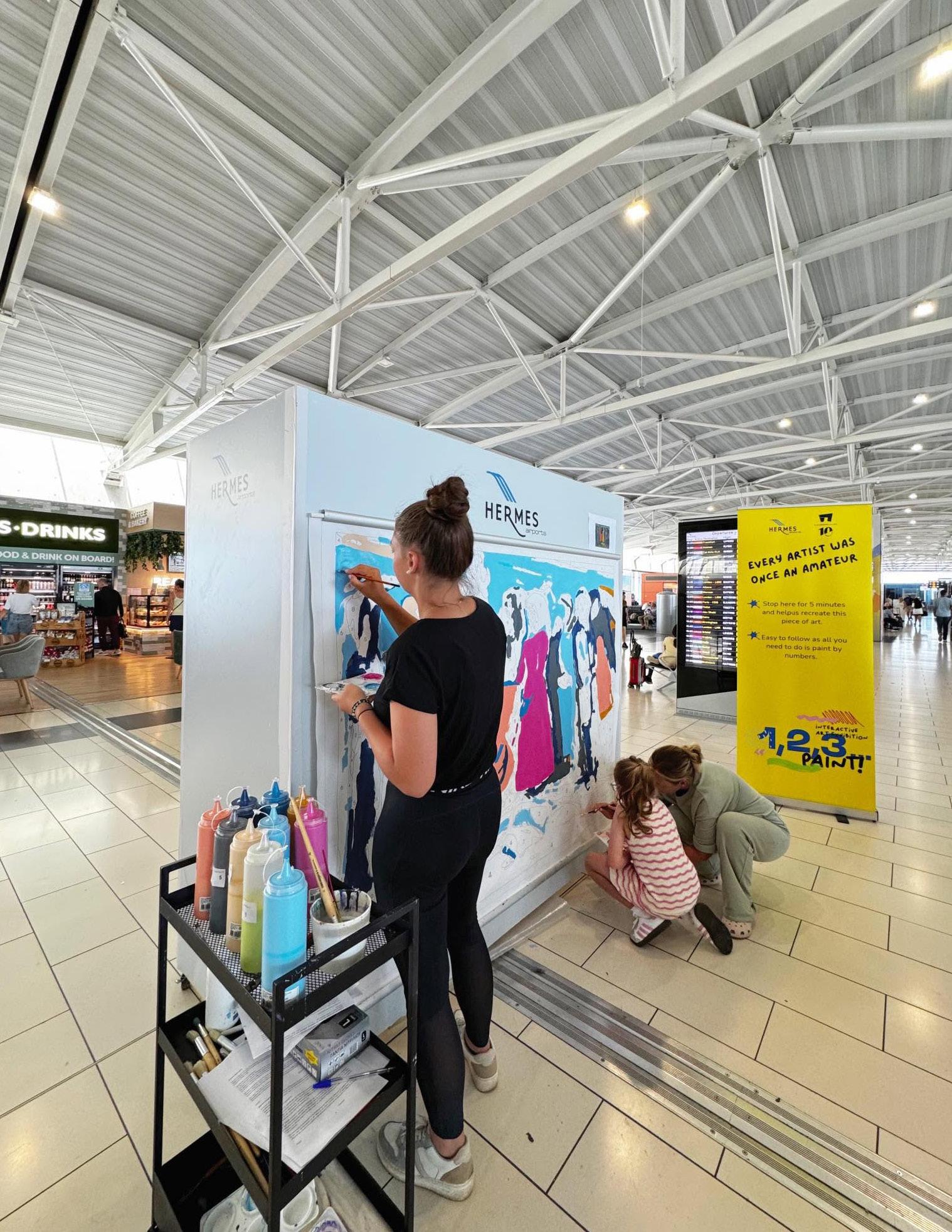
Hermes also repeated the “Paint by Numbers” initiative in collaboration with the Leventis Gallery, offering passengers the opportunity to engage in a creative activity prior to departure.
Community investments (Euros thousands)
Air Connectivity
Air connectivity is critical for the economy of an island such as Cyprus. The contribution of Hermes in this regard is significant, since the operation of new airlines, the addition of new routes, or additional frequencies on existing routes, all have a positive impact on a multitude of aspects, including on the quality of life of Cyprus residents and on the country’s economy as a whole.
A dynamic airline environment with aircraft availability challenges, increased airline switching activity, price sensitive and well-informed passengers, as well as increased competition between airports to attract routes, is expected to continue posing challenges to growth objectives. Alongside these developments, it is important to consider how the macroeconomic climate of Hermes can be impacted by geopolitical events, which may have both negative and positive effects.
Hermes’ affiliation with Cyprus as a leisure destination, implies alignment of growth objectives pertaining to market priorities and target route selection, as well as joint efforts to promote Cyprus, particularly regarding the off-peak flight activity. Over the last few years, especially since the pandemic period, significant improvements have been made both in the alignment of the stakeholders as well as the development of new products and services.
Focus Areas
In this respect, Hermes’ growth objectives and strategy remain on:
1. Developing air connectivity from routes in markets of tourism priority that are currently unserved or underserved, whilst at the same time closing gaps in main European cities, with lack of connectivity such as Madrid, Tallin, and Dublin amongst others.
2. Promoting connections to/from Cyprus from other source markets with significant catchment areas, taking advantage of airlines that are expanding their fleet and are growing in other bases.
3. Reducing seasonality and promoting year-round flying. This would require significant commitment from all stakeholders to establish the necessary conditions that would attract visitors on a yearround basis.
4. Exploring the possibility to penetrate long – haul markets by collaborating with nearby destinations for the creation of a regional product offering and ensuring affordable regional air connectivity.
The use of incentive schemes will continue to be an integral part of our air service development strategy, supporting growth in new and existing routes, but also using marketing funds to promote the creation of demand.
Concurrently, Hermes will continue to be active in tourism matters, aiming to support the implementation of the tourism strategy focusing especially on the development of tourism experiences and the promotional repositioning of Cyprus through modern and collaborative techniques and initiatives.
2025 Performance Passengers
Passenger numbers provide an important indicator of economic performance, as revenues are mainly driven by passengers. Transfer and transit passengers, which comprise a very small percentage of the total, do not leave the airport facilities, and therefore mainly, have an economic impact for the airport operator. Origin-anddestination passengers may have a significant impact both on the local economy and the airport operator.
Total number of passengers
GRI AO1 – Total number of passengers annually, broken down by passengers on international and domestic flights, and broken down by origin-and-destination and transfer passengers, including transit passengers.
GRI AO2 – Total number of passengers annually, broken down by origin-and-destination and transfer passengers, including transit passengers
6,887,914
13,751,247 Arriving Passengers Total6 Departing Passengers
Departures and Arrivals
An airport operator’s aircraft departures and arrivals provide an important indicator of its economic performance and contribution to the local economy of the airport’s region.
Total number of arriving and departing aircraft movements by day and night for the reporting period Larnaka Airport
An airport operator’s
Noise
One of Hermes’ primary objectives is to manage safe and secure airports and to actively reduce the impact of operations on the local community and the environment.
The Department of Environment of the Cyprus Government, as the authority responsible for the implementation of the Environmental Noise Law, sees to the preparation of strategic noise maps and action plans. Nevertheless, Hermes Airports has developed Strategic Noise Maps for the airports in Larnaka and Pafos. These maps show the expected noise values for a period of 10 years from the date of their preparation. Within the framework of the 4th round of Strategic Noise Mapping that was performed in 2022, limits were proposed for the day-evening-night index (Lden) and the night index (Lnight). Both Larnaka and Pafos airports were part of these Strategic Noise Mapping.
2025 Performance
Hermes Airports proceeded with the measurement of the aircraft noise outside the airport boundaries. As from 2022, three noise monitoring terminals have been operating in the surrounding communities of Larnaka Airport, to monitor the environmental noise generated by airport operations. Hermes does not currently undertake any noise monitoring at Pafos Airport.
For the year 2025, a single noise complaint was registered at Larnaka Airport, and a further complaint was registered at Pafos Airport.
Local air quality
The aircraft, vehicles, and fuel-based equipment (generators, boilers, etc.) operated at Larnaka and Pafos Airports, may have an adverse impact on the local air quality. An Air Quality Monitoring station has been installed at Larnaka airport, measuring carbon monoxide (CO), nitrogen dioxide (NO2), ozone (O3) and particulates (P.M.2.5 and P.M.10). These parameters are measured and monitored against the limits set by the European Directive 2008/50/EC (Ambient Air Quality Directive), transposed into the Cyprus Ambient Air Quality Law and regulations.
Hermes has been successfully monitoring the air quality for three consecutive years, starting from 2022 which was the first year in which full recordings were obtained from the station.
Furthermore, Hermes continues its efforts in reducing emissions to the atmosphere from its vehicles, by “greening” its vehicle fleet through the gradual replacement/removal of vehicles below the EURO 6 emission standard.
2025 Performance
A table with the 2025 recordings of emissions affecting the local air quality, is provided under the section “Other significant air emissions” of the “Climate Change” chapter of this report.
Operational Effectiveness and Passenger Experience
Enhancing Operations (Safety, Security, Efficiency) and Passenger Experience are among the key strategic priorities set by the Company and endorsed by the Board of Directors for the period 2025-2032. Hermes C-suite is responsible for ensuring the delivery of the objectives of each of the strategic priorities with senior management members (Directors and Heads of departments) being responsible for driving the implementation of each strategic priority. Concerning the enhancement of Operations (Safety, Security, Efficiency) and Passenger Experience, the responsible individuals are the two Heads of Operations, one at each airport, with the Technical Department supporting the delivery of both priorities.
Hermes has entered into maintenance agreements with service providers to fulfil its maintenance obligations outlined in the Concession Agreement. The aerodrome facilities are maintained in accordance with the Aerodrome certificate issued by the Department of Civil Aviation in conformance with the European Union Aviation Safety Agency (EASA) regulations and the European Union regulation 139 / 2014.
The Company implements contract management practices and utilises a Computerised Asset and Maintenance Management System to ensure that all preventive and corrective maintenance is performed as required. Additionally, the Company performs quality audits, thus ensuring adherence to the performance standards prescribed in the maintenance agreements. Furthermore, when required, Hermes draws on the technical expertise available within the network of its shareholders. There are contingency procedures that describe the actions to be taken in the event of major equipment or system failure. A Major Maintenance plan is also in place for the replacement of systems that have reached the end of their useful life. These practices are supported by ongoing professional training for the technical department engineers.
Hermes assesses and communicates internally, the availability of several airport systems on a weekly basis and to the Government, with formal reports submitted every six months. The effectiveness of Hermes is evaluated through agreed Key Performance Indicators (KPIs), which are specified in the Concession Agreement. Meanwhile, Hermes is annually re-accredited by the Airports Council International (ACI) Airport Customer Experience Accreditation Program demonstrating its ongoing commitment to enhancing passenger
experience. In 2025, both airports have progressed from Level 2 to Level 3 in the Airports Council International (ACI) Customer Experience Accreditation Program. This journey is a continuous evolution, driven by strategic priorities and guided by predefined initiatives, while proactively adapt to emerging challenges and seize new opportunities in the years ahead.
This prestigious recognition reflects our unwavering commitment to customer centricity, service excellence, and operational efficiency. Moreover, it places the airport among a distinguished group of airports worldwide that have attained Level 3 accreditation, highlighting our dedication to meeting high international standards.
The Airport Facilitation Committee Meetings convene quarterly to cultivate a dynamic platform for dialogue and the dissemination of crucial airport initiatives. This gathering offers an invaluable forum where stakeholders from various sectors of the airport community converge, exchange insights, and strategize on pertinent matters that shape the facilitation of airport operations. At the heart of this assembly lies its significant role in providing foresight into projected traffic patterns and operational imperatives for the upcoming seasons. Through comprehensive data analysis and informed projections, the meeting enables stakeholders to anticipate and prepare for fluctuations in passenger volumes, cargo demands, and other operational dynamics. By shedding light on these anticipated trends, the committee empowers stakeholders to proactively tailor their strategies and resources, ensuring seamless and efficient airport operations.
*Larnaka airport in blue and Pafos airport in green.
** For 2023 onwards, there was a change in the procedures followed by Hermes, to comply with the ACI Departures ASQ Report Scheme. Airport Council International (ACI) Departures Airport Service Quality (ASQ) provide feedback on the perceived quality of airport services on offer by a sample drawn from the departing travelling public. Effective from 1st of January 2023, Hermes contracted with the ACI Departures ASQ Report scheme. The ACI ASQ Departures questionnaire is self-completed by randomly selected passengers at the boarding gates of pre-selected flights. Selection of flights is based on the OAG database according to seat capacity, flights’ destination, and carrier in order to obtain a representative sample of all departures from a participating airport. The ASQ Departures Survey is covering all operating hours of the participating airport, and each day of a week is evenly distributed between each month of a quarter. This new scheme includes a quarterly reporting instead of by annual as before and the surveys are contacted electronically through tablets instead of papers and forms. Furthermore, the content of the new ACI ASQ scheme is not identical with the previous CSS even though the philosophy remains the same. Also, the ACI ASQ scheme continues to provide Larnaka and Pafos airports performance, presenting our passengers’ profile, behaviours, and satisfaction.
The ASQ Departures questionnaire includes:
• 31 satisfaction items covering each touchpoint of the airport journey.
• 5 emotions to understand how passengers are feeling right after they went through the journey.
• 2 overall items: overall satisfaction with the airport and overall experience at the airport.
• 13 passenger profiling questions (demographic and behavioural).
• 2 open-ended questions.
The responders at both airports were 16 years of age and older and the surveys were completed according to ACI strict procedures.
Larnaka and Pafos Airports Expansion: A
Sustainable Approach
To accommodate increasing passenger numbers and enhance operational efficiency, significant infrastructure developments are underway at Cyprus’s primary international gateways. These strategic investments are designed to modernize facilities and substantially boost capacity, ensuring a seamless travel experience.
The expansion works at Larnaka Airport cover approximately 20,000 square meters and include a new annex with departure and arrival gates linked to the main terminal, additional baggage claim belts, a new passport control and security area, expanded commercial zones, and increased aircraft parking spaces. At Pafos Airport, the terminal capacity will increase by around 30%, improving passenger experience and operational efficiency, alongside an expansion of the southern parallel taxiway. These upgrades will raise Larnaka’s capacity to 12.4 million passengers per year and Pafos’s to 5 million, supporting future passenger and economic growth.
Bouygues Batiment International – Iacovou Brothers Construction Partnership (BBI-IBC) has been appointed by Hermes Airports as the Design & Build Contractor for the expansion Project, which targets a Building Research Establishment Environmental Assessment Method (BREEAM) ‘Good’ certification under the BREEAM International New Construction (Bespoke) v6 scheme8.
The Project adheres to a comprehensive Sustainable Procurement Plan focusing on responsible sourcing and environmental performance. The Plan includes conducting life-cycle analyses, using verified environmental product declarations, and prioritising legally sourced timber and other construction products, alongside low-emission materials to enhance indoor air quality and ensure health and safety of airport users. The Plan also emphasizes using durable and resilient materials to minimize maintenance and material waste, with measures to protect building elements from damage and environmental factors. Material efficiency is promoted through reuse, reduced consumption, and adoption of innovative construction methods. Sustainability progress will be monitored internally and independently through the BREEAM assessment process to ensure compliance with sustainability objectives and continuous performance improvement.
Complex Ecosystem and Performance
In 2025, Hermes Airports witnessed a significant traffic increase compared to the previous year. The primary focus of the year was on the extension of operational capabilities through the recruitment of additional staff, to maintain daily operations amidst the aforementioned traffic increase and on the enhancement of the overall effectiveness of operations.
As Phase 2 works advance, the Operations team remains fully committed to ensuring the uninterrupted continuity of airport operations, with no adverse impact on passenger processing. This is supported by structured governance, regular coordination meetings, and continuous communication with all relevant airport stakeholders, ensuring sustained awareness, alignment, and effective collaboration at each stage of the project. This rigorous and coordinated approach will be maintained throughout the entire duration of the Phase 2 works.
The steady annual increase in passenger traffic at Larnaka and Pafos Airports over the years, including 2025, reflects a significant upward trend in the airports’ popularity and importance within the region’s transportation network. This remarkable growth signifies several key factors contributing to the airport’s success and expansion.
Improved infrastructure and facilities at both airports have likely played a significant role in attracting more passengers. Investments in advancing technology, enhancing security measures, and their overall friendly environment have made the airports more efficient and appealing to travellers.
Strategic marketing efforts and partnerships with airlines have helped increase the airports’ visibility and accessibility to a broader audience. Collaborations with both low-cost airlines and traditional carriers have diversified the range of destinations served by both Larnaka and Pafos Airports, appealing to various traveller segments, and driving passenger numbers upward.
Larnaka and Pafos Airports serve as a gateway to the island of Cyprus, attracting leisure travellers seeking sun, sea, and cultural experiences. The airports’ location in the Island and proximity to popular tourist destinations, such as historic sites, resorts, and beaches, positions it as a convenient entry point for visitors from around the world.
We believe that the focus by Hermes Airports on customer service helps to enhance the overall travel experience for passengers, which can lead to increased satisfaction and a greater likelihood of repeat travel. Travellers often prioritise convenience, reliability, and a hassle-free travel experience, and Hermes Airports’ efforts to consistently deliver on these expectations helps build a positive reputation among travellers.
Quality of Service
Hermes Airports is dedicated to optimising operational efficiency focusing on minimising passenger waiting time in check-in lines and during security screening and checks. The Company systematically measures and tracks the waiting time in these lines.
Hermes strives to create an environment that facilitates a positive experience for travellers. The Company offers various services to passengers; including restaurants, cafes, retail shops and kiosks. Additionally, Hermes seeks to continually enhance its relationships with its tenants and always aims to increase the number and services already provided.
Use of Information Systems
Hermes’s Information Technology (IT) systems are upgraded and updated on a regular basis, and in 2025 the focus was on network infrastructure. This includes the hardware and software that enable network connectivity and communication between users, devices, applications, and the internet. The Company’s objective is to maintain a reliable and secure network aligned with industry standards, regulations, and requirements.
For passengers, Hermes offers IT infrastructure for online check-in, self-service check-in, self-service bag drop, as well as on-screen flight information and status. Tenants can use a comprehensive network infrastructure, including Wi-Fi, TV, and telecommunications services. To ensure the safety of these mentioned IT services, Hermes conducts regular vulnerability assessments, penetration tests, as well as phishing and ransomware exercises.
Regular tests are being conducted, and they encompass the evaluation of the security of the IT systems and the examination of human factors, specifically observing individual reactions and behaviours in case of a cyber-attack. The aim is to constantly improve the IT environment and ensure its security.
In preparation for potential hacking attacks or IT failures, Hermes develops and follows various response scenarios tailored to the specific issue at hand.
Wildlife Strikes
Hermes recognises the potential adverse economic impact of wildlife strikes to airlines using both Larnaka and Pafos Airports and as such has set goals in preventing wildlife hazards and thus reducing associated risks to operating aircraft. For this reason, the Company developed a Wildlife Hazard Management Plan and trained wildlife coordinators at each airport responsible for implementing relevant practices and procedures.
2025 Performance
Total of wildlife strikes per 10,000 aircraft movements.
Health and Safety (H&S)
Occupational H&S Management System
To ensure the safety of every employee under its supervision, Hermes follows international standards in its daily operations and activities. Hermes Health and Safety Management System (H&S MS) has been developed based on the requirements of the ISO 45001:2018 standard, the applicable national legislation, the needs and expectations of its stakeholders, as well as any other relevant legislation affecting the Company’s activities.
The basic components of the occupational health and safety management system are the Risk Assessments (RA) and Safe Methods of Work (SMW). The system covers all workers’ activities in all workplaces under Hermes Airports jurisdiction. Amendments to the H&S MS as well as new up-to-date RAs and SMWs are carried out in the case of the introduction of new equipment and operational activities, as well as in case of changes in procedures.
Hazard Identification
Hermes Airports’ Health, Safety and Environment, Safety Management System and Facility Management (HSE-SMS-FM) department is responsible for developing policies and procedures relevant to the workplace hazards and risk assessments. Hermes Airports’ staff and external associates provide valuable feedback and expertise for the development of the RAs and SMWs.
RAs and SMWs incorporate specific processes and measures that need to be implemented to ensure the quality and safety of internal activities. Moreover, workers and staff are encouraged to express their concerns and request their removal from work situations that they believe pose a risk to their health or wellbeing. Hermes respects and takes into consideration such situations and is open to recommendations that will further contribute to the improvement of current H&S related policies and procedures.
Reprisals are not acceptable within the safety culture of the organisation. Hermes encourages and highly values reports received from its personnel regarding any health and safety concerns that they might have, as well as any recommendations for improving the H&S culture and workplace. The H&S Management System provides a channel for the voluntary reporting of occurrences or hazards related to both aviation and non-aviation activities, whilst maintaining confidentiality of the person reporting.
Hermes has implemented a process to enhance workplace safety and incident reporting. Any individual who identifies a hazardous situation or witnesses an incident or safety-related event occurring in the workplace is encouraged to submit a claim directly to the HSE-SMS-FM department. The HSE-SMS-FM department is responsible for conducting all necessary investigations to address the reported issue or incident that took place and proceed with all necessary actions to eliminate or minimise the risk for similar incidents reoccurring in the future.
Employee involvement in H&S matters
Hermes considers of critical importance, the involvement and participation of its employees in creating and developing an internal Health and Safety agenda. In view of this and to achieve this goal, Hermes established HSE Committees in both Larnaka and Pafos Airports. The HSE Committees consist of representatives from various departments within the organisation so that different types of work and airport operations will be represented in the committees, thus enabling participants to identify and report potential H&S risks associated with their tasks.
The HSE Committees meet at least once every six months, as required by the Regulations on the Management of Safety and Health Issues at Work (Regulatory Administrative Act 158/2021). The HSE committees are responsible for establishing and maintaining communication channels with management to observe current practices, discuss any H&S concerns and provide relevant recommendations for improvement. Recommendations may relate to measures to prevent accidents and occupational diseases. At the same time, another important goal of the HSE Committees is to promote and encourage the cooperation of all employees to implement H&S measures, safe methods of work and develop a strong H&S culture.
In addition to the above, Hermes organises additional working groups aiming to further develop the Safety Management System. The various groups, which include the Airport Safety Committee, Local Runway Safety Team, Executive Safety Oversight Group, Safety Action Group consist of Hermes employees and/or external associates and participants.
In this way, Hermes ensures that its employees participate in the development, oversight and implementation of H&S management policies and procedures to further enhance the establishment of a safe working environment for all personnel.
Training and Education
As an airport operator, Hermes must ensure that all work activities are carried out by trained personnel and has thus implemented a number of robust mandatory H&S training courses. These were developed to provide employees with the necessary knowledge and skills for preventing or mitigating any significant negative occupational health and safety risks that employees might be exposed to during their daily activities. Workers are not allowed to conduct hazardous activities prior to receiving mandatory training and passing the relevant examination.
Trainings, both generic and H&S-specific are conducted for all new employees and refresher trainings when deemed necessary by the organisation. Most training programs have a validity date, which means that these will have to be repeated. The responsibility for planning the training lies with the HR department.
The H&S training is provided to the employees and departments based on the activity they perform and risks and hazards, related to their function. Thereby, the front-line employees attend, amongst others, First Aid and Use of Automatic External Defibrillators (AED) trainings, while staff performing roof works attend the Working at Height trainings. The list of mandatory learnings may also include Safety Management System, forklift operation, safety inductions, and emergency response trainings.
Also, Hermes has established a buddy scheme, under which more senior and experienced employees are responsible for the smooth induction of and provision of support to new staff members. At Hermes, we believe that such an approach ensures a gradual and safe adjustment to the work environment and serves in preventing accidents.
2025 Performance
Hermes upholds a culture of workplace safety, focusing on robust health and safety requirements and promoting internal training courses. The Company proudly reports zero fatalities from work-related injuries or illnesses in 2025 and previous years. Additionally, Hermes closely collaborates with tenants and collects incident data.
Tenants’ data are promptly reported to the Operations department and are included in a consolidated spreadsheet. Hermes does not maintain data on the number of tenants’ staff; therefore, such data is not provided in this report.
and
were recorded in 2025 for Hermes’ employees and Hermes’ tenants’ employees, as in the previous years. Hermes makes continuous efforts to enhance its risk assessment agenda.
In 2025, Hermes conducted 11 different categories of training courses related to health, safety and environment (HSE) and Safety Management System (SMS). The list of training sessions and participants from each airport are depicted in the table below.
HSE and SMS Training
The Company maintains a well-established Accident/ Incident reporting system operating procedure which is communicated to all airport tenants at both the Larnaka and Pafos airports. All incident reports are reported to the Operations department and relevant investigation reports are conducted. Data collected is analysed to provide statistical data and allow for a more comprehensive view of the status of the workplace. The table below provides statistics on H&S occurrences and accidents/incidents, reported in the last three years.
Passenger Safety
As a responsible operator, Hermes remains firm on its commitment for safe, secure, efficient, and valueadding services provided by a well-coordinated airport community to create an exceptional experience for the airport travellers. Through a combination of measures and resources, Hermes ensures the safety of passengers, crew, ground personnel, airlines, property, and the public. This is achieved through Hermes’ comprehensive Health and Safety Management System (H&S MS).
Within the framework of its H&S MS, Hermes sets priorities and general objectives regarding aviation safety. Hermes is committed to developing, implementing, maintaining, and constantly improving strategies and processes to ensure that all aviation activities taking place to achieve the highest level of safety performance and meet regulatory requirements.
The Aviation Safety Management System forms part of the Hermes H&S MS. This system comprises a policy, relevant procedures, and documentation. It is reviewed on an annual basis, using current safety data and feedback received from line managers and front-line staff, as well as the results from internal and external audits.
Hermes continuously monitors the performance of the system and proceeds with updated regulatory requirements and organisational changes where needed. At the same time, Hermes audits the airport users that are involved in aerodrome operations. Following the development of its own system, Hermes recognised the necessity to share data and exchange safety information with other airports.
2025 Performance
Hermes is committed to maintaining the highest standards of health and safety (H&S) across its airport operations. Through comprehensive Risk Assessments, Hermes systematically identifies potential hazards, evaluates associated risks, and implements effective control measures to ensure the safety of passengers, employees, and stakeholders. These assessments are conducted for all airport areas and extend to newly introduced equipment and services, reinforcing a proactive approach to risk management. By prioritising safety at every level, Hermes ensures that its airports operate in compliance with industry best practices and regulatory requirements.
Beyond risk identification, Hermes takes a datadriven approach to safety management. By collecting and analysing safety-related data, the Company continuously monitors safety levels and identifies potential areas for improvement. The exchange of safety information between Larnaka and Pafos Airports’ airside users, as well as collaboration with other international airports, further strengthens its ability to address safety challenges proactively. This approach not only enhances operational safety but also fosters a culture of transparency and shared responsibility in aviation safety.
Hermes’ strong commitment to H&S is reflected in its compliance record. Between 2022 and 2025, the Company recorded no instances of non-compliance with regulations or voluntary codes related to the health and safety impacts of its products and services. This achievement underscores Hermes’ dedication to maintaining a safe and secure environment for all airport users. By continuously improving its safety practices and fostering industry collaboration, Hermes remains at the forefront of ensuring high safety standards within its operations.
Employee Experience and Engagement
An enduring strategic goal formulated by Hermes in 2013, is to emerge as an Employer of Choice, both domestically and internationally. Hermes goal from the beginning was to have a healthy organisation with strong leadership and a high-performance culture, where people from all generations feel recognised, respected, and receive developmental opportunities that will improve both their personal and professional lives, which are fundamental parameters for today’s satisfied, productive, and happy workforce.
Introduced in 2013, the People Strategy has evolved in alignment with the Company’s overarching strategy, industry best practices, and feedback obtained from employee surveys and focus groups. This comprehensive strategy encompasses all related people practices, including recruitment, retention, development, wellbeing, performance, satisfaction, and productivity. Hermes’ HR department revises the action plan annually, incorporating feedback provided by its employees.
Since 2019, Hermes has been accredited with the Platinum Investors in People accreditation (IIP) for its People practices and in 2024, has also been accredited with the “We Invest in Wellbeing” Platinum accreditation by Investors in People (IIP). It is noted that only 2% of international organisations currently accredited with the IIP standard hold the Platinum level. It is also important to note that out of 61 companies in the Transportation and Storage industry, Hermes now ranks in 5th place from the initial 8th position in 2021. To date Hermes is the only Airport globally to hold these two accreditations.
In addition, Hermes was the winner of the Overseas Employer of the Year 2025 – Platinum category Award. This is a huge achievement for our organisation and firmly places Hermes amongst the best in terms of the high standards we hold ourselves to, and those of the Investors in People. It is a recognition on an international stage that all the initiatives and work done over the years has been truly transformative, and our motto, ‘Every Organisation is as Strong as its People’ is truer now, more than ever before. It is the strength and commitment of our people that continue to drive us forward.
Human Rights, Diversity and Inclusion
Hermes is an equal opportunity employer, respecting the diversity of all employees and the people who
are interested to work at the Company. To ensure that, Hermes has developed an Equal Opportunity, Discrimination and Harassment Policy where all employees respect one another’s human rights, and discrimination on the grounds of gender, religion, disability, age, gender identity, sexual orientation, race, colour, nationality, ethnic origin, marital status, or other reasons is forbidden. This policy is also embedded to all other People policies, procedures, and practices to ensure that regardless of their diversity, all Hermes employees and applicants can have equal opportunities in the organisation such as learning and development, talent management, promotions and remuneration, along with others. For 2025, there were zero incidents of discrimination, which is consistent with 2024, 2023 and 2022.
Hermes’ Employee Handbook provides information about employee rights, responsibilities, benefits, and procedures applicable to all employees throughout their time with the Company. Key policies, including the Code of Business Ethics which contains information about responsible business conduct and respecting human rights, Allegation Response procedure, Equal Opportunity, Discrimination and Harassment, as well as Grievance, are incorporated into the handbook. Hermes tracks the effectiveness of the grievance mechanisms and other remediation processes, by monitoring the ratio of number of complaints per employee.
The Company’s commitment to human rights, due diligence, ethical behaviour, and responsible business conduct, are communicated not only to employees but also to partners via a declaration form included in the Code of Business Ethics.
Moreover, as part of Hermes’ induction program for new employees, the Company implemented the ‘buddy scheme’ with the goal of helping newcomers become familiar with the Company’s policies and procedures and seamlessly adapt to their new working environment. Hermes takes pride in achieving pay equity on different employee levels and strives to support and promote female leadership without undermining the contribution of male colleagues. The remuneration of women to men has been relatively balanced for the last years for all employees’ levels, reconfirming the Company’s commitment to having an equal treatment for all employees.
of Individuals in Board of Directors per
Female to male basic salary ratios by employee level
Female to male basic salary ratios by employee level
Note: Bonus payments were included for the year earned and not in the year they were paid
Attracting and Retaining employees
An important challenge for Hermes is how to retain its people and how to keep the necessary knowledge and expertise until the end of the concession agreement. Following the update of the Company’s strategy in 2024 the retention of our employees until 2032 is at the heart of all we do moving forward. Alongside Hermes’ retention strategy, another area of focus is the recruitment of new employees, providing them with knowledge and relevant experience for their future careers. To attract candidates, Hermes utilises additional sources for job vacancies, such as advertising vacancies on Hermes’ website and social media, other career websites, collaborating with Universities/Colleges, participating in Universities’ Career Expos, and collaborating with recruitment agencies. In addition, since 2020, in an effort to increase awareness about the jobs offered in our Airports, Hermes hosts Airport Career Days with its airport stakeholders. Hermes employs people from all the main districts in Cyprus. Employees at Larnaka Airport are predominantly from Nicosia and Larnaka. Employees at Pafos Airport are predominantly from Pafos. Individuals from Limassol are employed at both airports.
Employee Learning and Development
In Hermes, there is a strong commitment to develop employees based on their individual learning and development needs to achieve their full potential, while simultaneously increasing job satisfaction and supporting their career development.
The Hermes Academy
In 2017, the Hermes Academy for Hermes employees was designed to provide targeted learning and development opportunities to build a high calibre, agile workforce. The Academy’s mission is “to establish a learning culture that supports the continuous development of our people’s technical knowledge, skills, and competencies.” The Hermes Academy’s model focuses on the following pillars:
USER-TIE
Every 2 years, personal development plans are prepared for each employee, based on their individual training needs, and focused on improving working skills. Employees have their own goals and targets in education and self-development, which they agree with their Manager and the HR Department. In addition, regular on-going performance discussions between Managers and individual employees also take place.
Trainings available include both voluntary and mandatory courses, as well as one-to-one coaching sessions to employees via internal and external executive coaches.
Another program implemented in order to support employees in learning about the various roles within the organisation is the Job Shadowing Program. The Job Shadowing program is an opportunity to develop new skills and improve business acumen by “shadowing” other colleagues. It is a unique opportunity to see
the bigger picture and understand more how the organisation works, gain an insight into the roles and responsibilities of other employees and departments, gain a different perspective on airports’ and Company’s activities and processes, and it is a great opportunity to strengthen relationships with colleagues in other departments.
The Hermes Academy for the airport community
The Hermes Academy was first introduced to the airport community in 2020 to promote consistency among airport stakeholders in their actions, operations, and customer service through education and training. The vision of the Academy is to “establish a shared Airport Culture and Collaborative Mindset, where all Stakeholders, acting As ONE, inspire our People to create an environment for customers to experience our exceptional professional services and enjoy the warmth of the Cypriot Philoxenia9”.
The model of the Hermes Academy for the airport community focuses on the areas of Philoxenia, Business Excellence, Leadership & Management, Personal Development and Technical & Operational.
From September 2020 onwards, Hermes Academy was recognised by the Human Resources Development Authority (HRDA) as a training institution. As an approved HRDA training institution Hermes could offer subsidised training courses to the wider airport community on various topics related to airports and beyond.
Philoxenia
Philoxenia is Hermes’ unique program, which was developed in-house, and it is aimed at improving client services. As Philoxenia is at the heart of the Hermes Academy, the first thing done was to develop the Philoxenia Leadership program with the assistance of a Lacanian Psychoanalyst from the Institute of Lacanian Psychoanalysis and Personal Development. As leaders play a significant role in the creation of the culture, the Leadership Philoxenia program places an emphasis on the human mind and the concepts of structural interaction. It aims to assist leaders in enhancing their leadership skills to understand and support the concept of Philoxenia and direct these behavioural changes in their employees with precision and ease, to mark customers’ experiences.
2025 marks the fourth consecutive year, the Cyprus Police Academy invited Hermes to give an overview of the Philoxenia program to police officers as part of their training.
Pillars of Hermes Academy model
Guest Experience
The Guest Experience training was designed in 2024 in an effort to align the way we, in the Airport Community, behave and serve our guests and ensure As One, we are always representing the warmth of the Cyprus Philoxenia.
The training is part of a unique fun and interactive blended learning environment that is specific to our Airports. Specifically, the training focuses on the competency framework that is of high importance to be followed for the excellent customer service to our guests.
The orientation of this program is to raise the standards of Guest Experience across the airport community thus offering a unique engagement with our visitors - each story is extraordinary and exclusive.
This foundational training was in effect throughout 2025 and will continue to guide us in all subsequent years.
2025 Performance
Hermes systematically monitors and quantifies the average training hours allocated to its employees, as shown in the table below:
Average training hours per employee
Leadership
Leadership development is considered one of the most important pillars, as the leaders are those who would wholeheartedly champion the various people initiatives.
In order to assist the leaders to develop even further their skills, both on an individual and team basis, we have introduced a number of initiatives and programs like the introduction of the Operating Agreements of the leadership team, the 360-degree feedback (Leadership Circle Profile) for the leadership and management team, the 180-degree feedback for the Team Leaders and Airport Duty Managers and the Enneagram profile. In addition, several Leadership programs and workshops were implemented such as Coaching Skills for Leaders; Lead, Inspire and Develop, Leadership Think Tank; Organisational Agility and Agile Leader; the Motivational Map, and New Era: Leadership and Influence, Four Discourses. Due to the latest developments and the new era, the Leadership Competency Framework has also been updated accordingly.
In addition, last year Hermes received for the second time the ACI HR Excellence Award at the Best Airports awards ceremony held during the ACI Europe Annual Congress and General Assembly that took place in Istanbul in July and hosted by Istanbul Airport. Hermes Airports was praised by the judges for showcasing both an individual and collective leadership approach.
Talent Management and Promotions
Hermes conducts talent management and succession planning every 2-3 years to find and nurture talent, ensuring technical expertise in key roles and leadership continuity. Hermes has identified over 38 talents since the program’s inception in 2016, with 31 in 2022 and 32 in 2025, which was the most recent year this exercise was conducted.
CASE STUDY – Talent Management and Promotions
At the inception of the Company, all the senior positions were covered by expatriates. However, since 2016, all positions including that of CEO, have been covered by Cypriots. This is an important achievement for Hermes but also for the economy as a whole, since Hermes has been able to disseminate knowledge to the community ensuring that the expertise of managing airports is now available within the country and can remain and be nurtured in Cyprus going forward.
Employee Recognition
The ‘Cheers for Peers’ program was formed to encourage employees to recognise, nominate and celebrate their colleague(s) for demonstrating exceptional behaviour, practices and/or actions that are aligned with, and promote the Company’s core values.
Nominations are assessed by the Cheers for Peers committee against specific criteria:
ș Exceptional-Outstanding Behaviour
ș Revenue Generation and/or Cost Savings
ș Innovation and Creativity
ș ‘Philoxenia’, Image Building and Promotion
ș Wellbeing Champion. Promoting and supporting Wellbeing
In 2025, 12 colleagues were nominated and recognised through this program.
Employee Remuneration
Hermes follows Cyprus legislation related to minimum wage and strives to provide above-average salaries to its employees. Every 3 years the Company monitors inflation, and other salary trends, and conducts an independent salary survey to understand salary ratios in other companies with the goal of remaining an employer of choice and continue offering attractive renumeration. Information about each employee’s remuneration is confidential and discussed only between the employee, their manager, and the HR department.
Hermes’ significant market presence in Cyprus is further supported by its approach towards remuneration and local hirings. The Hermes Salary Grading system is in place which determines the minimum wage rules. These are applied to junior positions as well as seasonal employees, depending on position, for all locations of significant operation10.
Benefits
Hermes has developed the Total Remuneration Policy which includes all the financial and non-financial benefits offered to its employees such as personal life and personal accident insurance, health care coverage, and parental leave to its full and part time employees, hybrid working arrangements etc.
Provident Fund
2025 Performance
Estimated value of liabilities that are met by the organisation’s general resources
Percentage of salary contributed by employee or employer
6% - 15% 6% - 6.5% Employee Employer
Parental leaves
Hermes provides maternity and paternity leave in accordance with the Cyprus legislation. After the parental leave is over, Hermes employees return to the same position they had before the leave. Additionally, Hermes appreciates the amount of stress new parents face and provides psychological sessions with a therapist, to help them go through this period. In case of child illness or other family-related situations, Hermes is ready to provide more flexible working hours, change shifts, or suggest another type of work to an employee. 2025 Performance
Number of employees that were entitled to parental leave and that took parental leave
Hermes places a strong emphasis on the financial stability and safety of its employees. The Company serves as an intermediary in the transfer of funds to the Provident Fund11. The employee and the employer contribute to the Provident Fund each at a separate percentage. The Provident Fund has its own investment strategy, which is updated every 3 years, with the latest update made last year in 2023 and aims to secure the maximum risk adjusted returns for its members. Hermes’ commitment is to pay its share of the contributions to the Provident Fund of 6% plus an additional 0.5% which is linked to the Company’s performance. The employee can contribute anything between 6% to 15% of their salary to the Provident Fund. The employer appoints two out of the six members of the Provident Fund Administration Committee. The employees do not have defined benefits.
number of employees that returned to work in the reporting period after parental leave ended, by gender:
Total number of employees that returned to work after parental leave ended that were still employed 12 months after their return to work, by gender:
Wellbeing
As an organisation, Hermes Airports cares for the health and wellbeing of its employees. In addition to what was mentioned earlier in the benefits section, Hermes organises annual blood tests and health checks, which are conducted at the workplace by a certified laboratory. In this way, it is ensured that the employees receive full and comprehensive medical and healthcare services. At the same time, Hermes also cares about the emotional health and wellbeing of its people.
Established in 2017, the ‘Evexia | Being Well’ Program was created to assist employees in fostering a happy, healthy, and productive lifestyle. Since its inception, a series of initiatives have been introduced, including: the annual employee appreciation week now in its 8th year, on-site blood testing, health checks, muscle relaxation sessions, parental coaching workshops, stress management training, and hiking excursions, among others. A key initiative introduced during the Covid-19 period is the SafeSpace program — a confidential counselling service provided by a professional psychoanalyst. In 2025, Hermes continued to provide this free service to its employees.
In 2025 we have introduced an additional benefit which is in line with our ongoing commitment to supporting everyone’s health, well-being, and work-life balance. We have partnered with SportBenefit to give employees access to a wide network of fitness and sports facilities, available in all towns in Cyprus. Users have the option to expand the activities they currently take part in, or to begin their fitness journey, so for one small membership fee, they have the opportunity to enjoy a wide range of activities.
To support the ‘Evexia | Being Well’ Program, a wellbeing committee was established in 2019. The main role of this committee is to communicate, participate, motivate, and support the organisation’s wellbeing program in order to:
ș Create a healthy organisation and a culture of wellbeing
ș Foster collaboration and enthusiasm among employees
ș Provide a communication link between employees and management
ș Represent and share colleagues’ ideas and concerns
ș Support the Company’s culture to promote healthy living
ș Encourage a positive work environment
The committee comprises members from different departments and hierarchical levels across the organisation, ensuring there is input and ideas from diverse perspectives.
In effect, the committee members become wellbeing “champions” responsible for promoting the organisation’s wellbeing goals and practices.
Hermes offers Wellness Retreats, with the aim to enable participants to release exterior influences and noise, fostering a peaceful inner state.
The Investors in People launched in 2022 for the first time a new accreditation focusing purely on employee wellbeing. Hermes was awarded with the IIP “We invest in Wellbeing Gold Accreditation” in 2022, and in 2024 were re-assessed and accredited with the Platinum Wellbeing Accreditation. The next re-assessment will be in 2027. This accreditation not only provides an important benchmark upon which we continue to enhance our wellbeing practices but also acknowledges the innovative practices that have been introduced since our wellbeing program ‘Evexia | Being Well’ was launched back in 2017.
-
Findings
Note: Hermes does not employ “Non-guaranteed hours employees” nor “Part-time employees”.
Hermes Internship Program
Hermes Internship Program is designed to enable college or university students to spend time at our airports, in a preagreed department in order to gain meaningful, real-life on the job experience on what it is like working within an airport environment. In 2025 two interns joined our Company, a figure consistent with 2024.

Ethics and Values
Hermes is deeply committed to upholding the highest standards of ethics and moral principles. Integrity is at the core of the values of the Company which ensures ethical, and responsible behaviour through data privacy, security and anti-corruption policies and practices whilst at the same time, preventing anti-competitive behaviour.
The Company upholds a zero-tolerance policy towards corruption and bribery, emphasising fair competition, its values that have been cultivated over the years, and its commitment to respecting human rights. The Board of Directors follows the Code of Business Ethics which incorporates the aforementioned principles, thus ensuring independence and high ethical standards. The Code of Business Ethics is part of the Employee Handbook, which Hermes requires all its employees to familiarise themselves with and abide by. Moreover, all employees receive annual training on the Code of Business Ethics principles, including anti-corruption. The same principles are expected to be upheld by Hermes’ business partners and third parties too, as also specified in the Code of Business Ethics.
Competitive behaviour
As a responsible Company, Hermes strictly complies with all relevant and applicable laws, rules, and regulations. Following the introduction of a law in Cyprus, titled “The Protection of Competition Law of 2022”, Hermes revised its Competition Law Compliance Manual. Hermes’ revised Competition Law Compliance Manual was circulated to all members of the Company whilst it is also accessible online through our intranet ‘HermesHub’.
The Legal Affairs Department endeavours to ensure Hermes’ compliance with Competition Law by updating, where necessary, the Company’s Competition Law Compliance Manual, training staff on Competition Law principles and aiding all departments by reviewing tender documentation, contracts, agreements, and any other contractual arrangements involving competition law issues. Hermes’ departments consult the Legal Affairs Department prior to taking any actions which involve competition law issues.
In addition to the revision of the said Manual, the Legal Affairs Department has created and circulated to all employees two animated videos; one on abuse of dominant position and one on anti-competitive agreements and concerted practices. The videos are also accessible online through the ‘HermesHub’.
There have been no new legal actions in Court for
anti-competitive behaviour, anti-trust, and monopoly practices, for 2025.
Grievance and allegation management
Hermes developed its Grievance Policy and its Allegation Policy to manage incoming complaints and appeals. Both policies are readily available to all employees through the Employee Handbook accessible through ‘HermesHub’.
Hermes considers any incoming grievances very seriously and takes immediate and appropriate measures to address them.
2025 Performance
In 2025, Hermes recorded zero incidents of corruption leading to the termination of business relationships with partners. Furthermore, no employees have been dismissed or disciplined for corruption, and there are no public legal cases related to corruption against Hermes or its employees. Zero significant risks related to corruption have been identified in 2025, which aligns with the previous two years.
It is important to note that 100% of governance body members, employees and business partners have been communicated Hermes’ anticorruption policies and procedures, whilst 100% of all employees received training in anti-corruption.
Digital security practices
A key priority of Hermes is the protection of personal data it collects and/or processes. Hermes is committed to adhering to the principles set out in the General Data Protection Regulation (GDPR) and Law 125(I) of 2018 Providing for the Protection of Natural Persons with regard to the Processing of Personal Data and for the Free Movement of such Data, as amended, (Law), which govern the way personal data can be collected, used, processed, and stored as well as to the guidelines issued by the Office of the Commissioner of Personal Data Protection in Cyprus. Hermes’ Privacy Notices describe how personal information is collected and used in accordance with the GDPR and the Law.
To support the Company’s data protection efforts, the following Privacy Policy and Privacy Notice are in place:
ș A Privacy Policy which is applicable to all personal data the Company processes, sets out how the Company handles the personal data of its customers, suppliers, employees, workers and other third parties. This Policy provides information on how the Company collects and processes personal
ș data through the use of its website and/or the use of services it offers, including any data a user may provide.
ș A Privacy Notice to Employees, Workers and Contractors describes how the Company collects and uses personal information about employees, workers, and contractors during and after their working relationship with the Company.
To further enhance data privacy and transparency as well as ensure compliance with the GDPR and the Law, additional notices concerning the processing of personal data are in place and are provided to data subjects such as the Privacy Notice of the Surveillance System (CCTV) Data Processing, the Privacy Notice for Work Permits submitted by employees, workers and contractors, the Privacy Notice – Voice recordings of telephone calls and the website’s Cookie Policy.
In addition, there is an Information Technology (IT), Information Security (IS) and Data Protection Governance Committee whose responsibilities, among others, include the oversight of information technology, information security and data privacy matters, ensuring that security standards, policies and processes are embedded into the organisation, as well as approving and monitoring compliance to security standards and policies.
To compliment the data privacy policies in place, Hermes makes continuous efforts to introduce adequate technical and organisational measures for the security of the personal data such as data pseudonymization, anonymization and data minimisation. Through a due diligence process, Hermes ensures it is working with reputable Data Processors and Data Processing Agreements (DPAs) are entered into with all Data Processors, ensuring compliance with applicable law. The Company has appointed a Data Protection Officer and has in place a Data Subject Request process that enables Data Subjects to exercise their rights and maintains a Record of Processing Activities (ROPA). Where required, the Company conducts Data Protection Impact Assessments (DPIAs), and annual mandatory training is provided to the staff about data protection awareness. The Company introduced a Personal Data Retention Policy to provide guidance to the employees of Hermes on the retention of personal data. As part of its continued efforts to protect the personal data it processes, the Company introduced a data protection monitoring plan.
Performance
Total number of substantiated complaints received concerning breaches of customer privacy.
Complaints received from outside parties and substantiated by the organisation;
Complaints from regulatory bodies.
Total number of identified leaks, thefts, or losses of customer data.

Sustainable Supply Chain
Procurement practices
Hermes relies on a variety of suppliers and vendors providing goods and services that guarantee superior quality and effective operations. These goods and services cover all of Hermes’ operations both upstream (aviation security, territory maintenance, information technology and information security supplier services, janitorial services etc.) and downstream (handling and check-in services provided by airlines and handling agents, customer service and support services, airside services provided to passengers by concessionaires including retail, food and beverage products, transportation services, lounge services etc.). The largest portion of Hermes’ procurement budget is spent on local suppliers demonstrating the Company’s strong emphasis on local procurement.
In line with its Purchasing Procedure, Hermes ensures that fairness, transparency, equal treatment, and integrity are upheld throughout its procurement process. The Company is dedicated to embedding sustainability principles into its procurement practices to generate positive environmental, social, and economic outcomes. Furthermore, through its Sustainability Policy, it sets objectives to ensure that business activities contribute positively to society and the environment while maintaining long-term economic viability.
Effective January 2024, Hermes integrated a 5% weighting for Environmental, Social, and Governance (ESG) criteria into its procurement processes. This approach has been maintained in 2025, reinforcing the systematic inclusion of ESG considerations in supplier evaluation and selection. Building on its ongoing sustainability efforts, Hermes conducted a comprehensive ESG screening of its key stakeholders in 2025 to assess environmental, social, and governance risk exposure. A similar assessment process was carried out with a representative sample of suppliers through a structured ESG survey designed to identify sustainability-related priorities, practices, and potential risk areas across the supply chain. Based on the evaluation, suppliers were categorized into Low, Medium, or High ESG Risk tiers. Through this initiative, Hermes aims to strengthen responsible sourcing practices and encourage suppliers to progressively align with sustainable development principles. In line with the assessment outcomes, suppliers classified as High Risk were formally notified, and the specific areas requiring improvement were communicated. These suppliers were invited to submit a Corrective Action Plan outlining how they intend to address the identified gaps.
Additionally, since 2024, Hermes has systematically incorporated additional social impact criteria into its Know Your Client (KYC) review system for new suppliers, maintaining this enhanced screening approach throughout 2025.
Furthermore, in compliance with its Purchasing Policy and procedures, Hermes is committed to the following:
ș Implementation of the Code of Business Ethics introduced in July 2015, to prevent, identify, and manage potential conflicts of interest in the procurement process. Hermes is dedicated to conducting business in an honest and ethical manner and to follow all applicable rules and regulations. As part of this commitment, Hermes requires entities with which it conducts business, to provide a warranty, or otherwise make a declaration of compliance, in the form and content of the declaration that is part of the procurement documentation.
ș Performance of a compliance review during the procurement process to verify the identity of all prospective proponents and assess any potential risks involved in doing business with them.
ș Implementation of the iKYC screening system since 2021. Via this system, a screening takes place for politically exposed persons (PEPs), sanction lists and adverse media coverage, in order to identify potential risks associated with certain individuals or entities throughout the procurement process.
ș Development of Key Performance Indicators (KPIs) to measure progress towards sustainability goals and assess the effectiveness of its procurement strategies. The KPIs are essential tool and will help Hermes to identity and mitigate sustainability risks in the supply chain, like environmental degradation, labour violations and ethical concerns.
ș Application of contract management best practices to improve supplier performance, increase business efficiency and develop long-term relationships with suppliers. Where applicable, agreements include performance monitoring mechanisms through service-level agreements (SLAs) to ensure a high level of service.
ș Development of key performance indicators outlined in the Service Level Agreements (SLAs), with their consistent tracking and summary to monitor and evaluate performance and compliance.
ș Promotion of fairness, transparency, equal treatment, and integrity throughout the procurement process. The procurement function ensures that the process is conducted fairly and transparently, and that all information provided to suppliers is identical. The weights and scoring criteria differ based on the type of purchase or service.
Additional actions contributing to the effectiveness of the process, include the training of employees on an annual basis to ensure their understanding of conflict-ofinterest rules and guidelines as well as the verification of completed and signed declaration forms in the procurement documents to evaluate whether conflicts were appropriately addressed and/or mitigated. Furthermore, Hermes engages with its stakeholders in its procurement process through the request for feedback from the involved departments after the completion of a tender, in relation to the alignment of products or services with Hermes’ requirements (i.e., operational effectiveness and quality) and conformance to Hermes’ overall strategy and objectives.
2025 Performance
Proportion of spending on local suppliers
Emphasising its commitment to acquiring products and services from local sources, the largest portion of Hermes’ procurement budget is allocated to local suppliers, as provided below:
Supplier environmental assessment
The 5% weight relating to ESG criteria which was incorporated in 2024 into the Company’s procurement processes, also accounts for the suppliers’ environmental assessment. The screening criteria incorporated, include energy efficiency requirements, reduced carbon footprint and greenhouse gas emissions, and waste and recycling practices, with the ultimate goal of achieving a more sustainable future.
2025 Supplier Impact Screening
In 2025, all new suppliers entering into agreements with Hermes as well as existing suppliers who entered into new agreements with Hermes within 2025, were evaluated and screened based on social and environmental impact criteria, with none being found to have any significant actual or potential negative impacts across the supply chain.
Supplier social impact assessment
Hermes is committed to conducting business with suppliers and vendors who adhere to human rights laws, implement fair labour practices, and create a safe working environment throughout their supply chain. As mentioned in the previous section, from 2024 Hermes has become more active in the suppliers’ and vendors’ screening process, by incorporating additional social impact criteria into its KYC system and assessing its supply chain based on these criteria.

Climate Change
Energy Management
Hermes’ Energy and Carbon Management Policy (2019), together with Hermes’ Health, Safety, Environmental and Social Responsibility Policy (2018), established the framework for its energy management. In 2025, these policies were merged into a single policy titled the “Health, Safety, Environment, Energy & Social Responsibility Policy”, which incorporate all aspects that impact the organisation’s carbon footprint. The majority of the topics covered under these policies are not mandated by law but have been voluntarily adopted by Hermes.
Hermes has and continues to demonstrate commitment to its policies relating to energy management through various initiatives including the following activities:
ș implementation of its energy management system in accordance with the ISO 50001:2018 standard since 2016
ș operation of the “Energy Committee” since 2015
ș formulation of the initial Hermes Energy and Climate Strategy and its revision for the period 2021 – 2030. The Strategy is expressed as a roadmap with short, medium, and long-term targets and actions monitored and reviewed on an annual basis. The targets are in alignment with the national targets for energy and climate, as well as the requirements of the Paris Agreement, EU Green Deal and the Fitfor-55 package.
Hermes’ energy management policies also extend where practically possible, to its stakeholders and tenants to ensure alignment of their operations with Hermes’ Energy and Climate Strategy and all related programs/ actions.
Another important milestone is the completion of the construction of the two solar power (photovoltaic) plants: the 3.5MWp at Larnaka Airport and 1.1MWp at Pafos Airport. The two plants became operational in June 2023. The purpose of these projects is to boost Hermes’ own renewable energy production as per the Company’s commitment towards green energy. The plants upon full utilisation and operational capacity during 2025 covered 22% of both airports’ total energy requirements.
Furthermore, since the beginning of its operation and up to present, Hermes has been active in the ongoing implementation of energy conservation and efficiency measures, at both Larnaka and Pafos Airports.
Examples of these include the installation of LED lighting, the redesign and optimization of the buildings’ systems such as the HVAC system, the installation of inverters on HVAC equipment, the rationalistic use of equipment, and the implementation of energy-saving awareness programs for the whole airport community. The replacement of the high-pressure sodium apron floodlighting at Apron 2 of Larnaka Airport and at Pafos Airport with LED technology lighting at the end of 2024 resulted in a 55% reduction in the electricity consumption at the two aprons, measured during the first 10 months of 2025. The total energy reduction percentage compared to 2010 reached 26% in 2025, slightly higher than 24% in 2024, but lower than the 32% achieved in 2019. The decrease from 32% in 2019 to 26% in 2025 is mainly attributed to significantly higherthan-budgeted passenger traffic and the impact of electrification.
To better assess its energy performance and drive continuous improvement, Hermes utilises an Energy Performance Indicator (EnPI) as a quantifiable metric to track and evaluate energy consumption trends. A particularly insightful EnPI is kWh/PAX, which represents the kilowatt-hours consumed per passenger. This specific metric provides a more accurate and comparable picture of Hermes’ energy efficiency by normalising consumption against variations in passenger numbers. In 2010 the value was 6.38 kWh/PAX, dropping to 2.70 in 2019, 2.74 in 2024, and 2.40 in 2025. This reflects a 10.97% reduction from 2019 to 2025 and a 62.35% reduction from 2010 to 2025. The total energy consumption at the two airports for 2025 compared to 2024, decreased by 1.90% despite the higher passenger traffic. This was mainly due to the continued investments in energy reduction.
Hermes also participates in an ambitious EU-funded project named TULIPS with 31 other partners including three other European airports. The project commenced in January 2022 and has been running throughout 2025. The purpose of TULIPS is to accelerate the implementation of innovative and sustainable technologies to reduce emissions at airports. In November 2025, representatives from Hermes participated in the TULIPS Annual General Assembly and a Progress Event hosted by Avinor in Oslo Airport. Hermes participates in various work packages aiming at the decarbonisation of the aviation industry, including:
a. Work Package 1 – Sustainable intermodal transport connections for both airport staff and the passengers
b. Work Package 3 “Smart Energy Hub” for simulation of the thermal energy performance of the Terminal building and the performance of the solar plant at Larnaka airport. Work Package 4 “Zero Emissions Airside Operations” which will include the testing of a ground power unit that will be powered by a hydrogen fuel cell. The experience gained from Work Package 4 will be used to develop a plan for the evolution of hydrogen supply chain to airports.
c. Work Package 6 – Circular Airports – aiming at operational innovations to reduce passenger waste. A demo was performed at Larnaka airport during 2024 that was presented at the ACI Regional Airports Conference in April 2025, that demonstrated the reuse of construction materials.
d. Work Package 7 “Airport Land Carbon Sequestration” includes biochar field tests at Larnaka airport aiming in assessing and optimizing the carbon sequestration potential of airport land assets.
1
Hermes’ energy performance is monitored against the performance indicators, annual goals and targets set within the framework of its ISO 50001 energy management system. These are approved by the Energy Committee every year and are monitored on a regular basis to validate their effectiveness.
Energy Consumption
Despite the increase in passenger traffic in 2025 compared to the previous year, the total electricity consumption decreased by 2.17% at Larnaka Airport and 0.97% at the Pafos Airport.
The electricity grid usage for Larnaka Airport dropped by 12.2 % and for Pafos Airport it dropped by 10.65% due to the full operation of the PV Plants at both airports and due to the ongoing Energy Saving Projects at both airports. Consequently, there is a decrease in the energy intensity ratio for 2025, expressed as the electricity consumption per floor area (m2).
2025 Performance:
Energy Consumption
Additionally, the total electricity consumption per passenger decreased by 14.5% at Larnaka Airport and by 6.2% at Pafos Airport, due to reduced electricity consumption, increased passenger traffic and lower ongoing Energy Saving Projects.
Fuel consumption at Larnaka Airport decreased by 60.84%, whereas at Pafos Airport, it increased by 57.98%. In 2024, fuel consumption at Larnaka was higher due to Hermes requiring 19,000 liters to refill the airport generators compared to 2025. In contrast, at Pafos Airport, fuel consumption was higher in 2025, with an increased refueling volume of 6,100 liters over 2024.
Reductions in energy consumption
Amount
Airport
Larnaka
Pafos 118,962kWh 428.3GJ
* Apron lighting savings
2025 was the third year of operation of the two photovoltaic (PV) power plants at both airports. A total of 7.408 GWh of renewable energy was generated during 2025 leading to a reduction in the consumption of the electricity drawn from the national grid of 11.87% for both airports. Hermes plans to increase those percentage contributions through the construction of additional PV plants in the future.
Hermes approach to reducing carbon emissions
As in the case of its energy management, actions by Hermes to monitor and reduce the emissions from its operations, are implemented within the framework of its Energy and Carbon Management Policy, the Health, Safety, Environmental and Social Responsibility Policy and the Energy and Climate Strategy 2021 - 2030.
Hermes continues to uphold its commitment to emissions reduction in year 2025, by maintaining the Airport Carbon Accreditation Level 4+. The level 4+ accreditation has been achieved in 2023, in recognition of the airport’s exemplary work in aligning its carbon management with global climate goals to reach absolute emission reductions. This requires mapping of all carbon emission sources of the airports, the continuous reduction of their directly controlled Scope 1 and 2 emissions. In terms of the Scope 3 emissions, the Company aims at the continuous reduction of Scope 3 emissions from at least one source/category of activity.
Hermes has signed a Net Zero commitment, which means that, the Company pledges to achieve and maintain net zero carbon emissions from airport operations fully within their own control by 2050 at the latest, based on publicly disclosed roadmaps towards net zero for these emissions. This requires reducing absolute emissions to the furthest extent possible and addressing any remaining emissions through investment in carbon removal and storage.
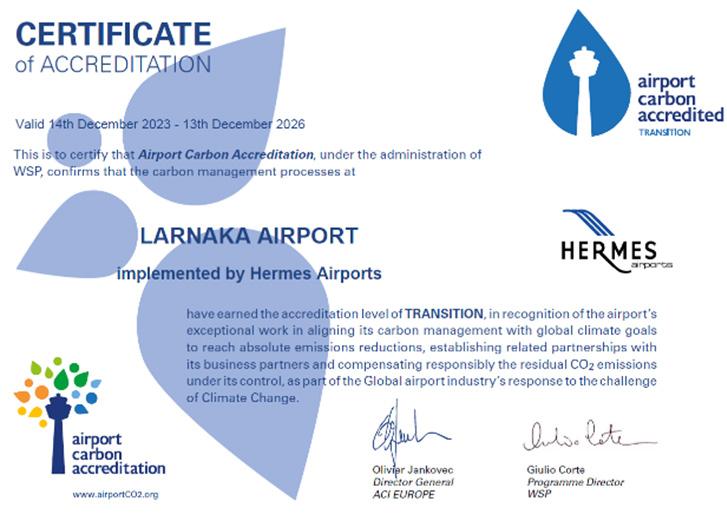
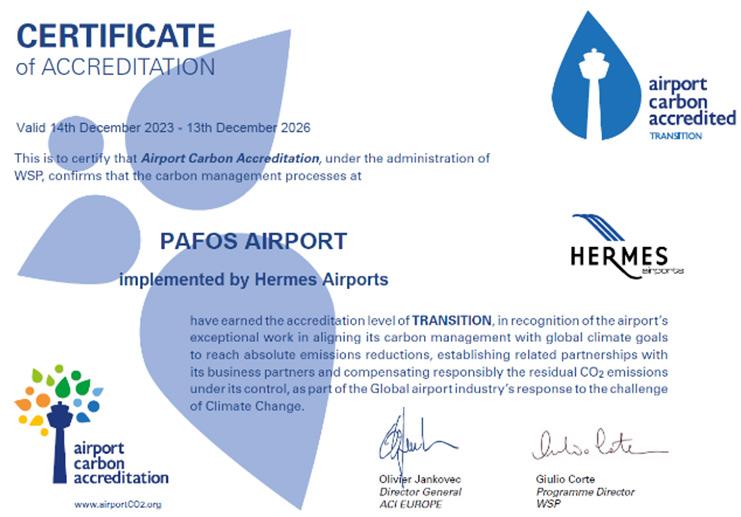
Additional initiatives include the participation in the EU-funded TULIPS project and specifically in the “Smart Energy Hub”, ‘’Zero Emission Airside Operations”, “Circular Airports”, “Intermodal Services” and “Green Air and Land” work-packages.
The effectiveness of the various actions undertaken to serve the ongoing carbon emission reduction efforts of Hermes is further evidenced through the Airport Carbon Accreditation, which is a stringent accreditation that requires continuous monitoring. Furthermore, goals, targets and indicators relating to carbon emissions reductions are also linked to the Company’s energy management system and are monitored on a regular basis to validate their effectiveness, through various accredited programmes such as ACI Airport Carbon Accreditation Level 4+, GHG Protocol, ISO 14064 and ISO 50001.
Engagement with stakeholders during these efforts is achieved by means of the detailed Stakeholder Engagement Plan which is also a requirement of the Airport Carbon Accreditation Program. As part of the requirements of the Level 4+ accreditation, Hermes has enhanced the level of engagement to the active participation of its stakeholders in various initiatives, to support them in reducing their carbon footprints (including their energy consumption).
Greenhouse Gas (GHG) Emissions
Hermes’ Scope 1, 2 and 3 emissions are presented in the section below. 2025 Performance
1 - Direct (tonnes of CO2e)1
Scope 3 - Other Indirect (tonnes of CO2e)1 Not
Note 2: Calculations include the 5,000 MWh of GOs for which the 80% are deducted from LCA and the 20% from PFO
Note 3: 2024 emission factors were used in the calculations as the 2025 emission factors were not published at the time of writing this report Emissions of Ozone-Depleting Substances (ODS)
All emissions are consolidated on the operational control basis and as per the Airport Carbon Accreditation standard which is aligned with the GHG Protocol and ISO 14064 principles. Various sources of emission factors and global warming potentials (GWP) are used, specifically, the ACI ACERT Tool v7.2532 and sources such as the Greenhouse Gas Protocol, and the IPCC (Intergovernmental Panel on Climate Change). For Scope 1 emissions, the European Residual Mixes (Market Based) and the First Electric emission factor was used for Hermes Airports data, whilst for tenants, the electricity data was received directly from the EAC (Electricity Authority Cypus) and subsequently the EAC emission factor was used. For Scope 2 emissions the ACI ACERT Tool v7.2532 (Location Based) was used, and the ACI ACERT Tool v7.2338, ICAO (International Civil Aviation Organisation) CO2 Calculator and several valid sources such as Greenhouse Gas Protocol, IPCC, Watershed Open 2025, UK DEFRA (Department for Environment, Food & Rural Affairs), and IATA (International Air Transport Association) were used for Scope 3 emissions. The GHG emissions base year is 2010, which is the first year of full operation of both Hermes Airports’ terminals.
In 2025, Larnaka Airport recorded a 31.6% decrease in Scope 1 emissions compared to the previous year, primarily driven by a substantial reductions in fuel consumption. In contrast, at Pafos Airport a 43.4% increase in Scope 1 emissions was recorded, mainly attributed to the Hermes fleet, building heating, emergency generators, and refrigerant use.
An agreement between Hermes and its electricity supplier will provide Hermes Airports with the maximum possible Guarantees of Origin (GOs) for green power sourced directly from sustainable energy suppliers within their network. For 2024 and 2025, the agreement includes 5,000 MWh of GOs, which covered approximately 40% of the power consumed by Hermes at both airports. As the network of sustainable energy sources expands, the percentage of GOs provided to Hermes is also expected to increase. This supports Hermes’ strategic goal of advancing toward a greener environment and highlights its ongoing commitment to further reducing its carbon footprint.
2025 is the third year of operation of the 3.5MWp solar power (photovoltaic) plant at Larnaka Airport and the 1.1MWp plant at Pafos Airport. The self-generated renewable energy resulted in the reduction of 3,058.2 tons CO2e and 999.9 tons CO2e of Scope 2 emissions at the Larnaka and Pafos Airports, respectively. Scope 2 emissions (both gross location-based and market based) have decreased significantly in 2025 compared to the
previous year, mainly as a result of the more efficient operation of the two photovoltaic plants.
Moreover, the Scope 2 emissions (gross location-based) of both airports have decreased significantly in 2025 compared to the previous years. Compared to the base year 2010, a 78.3% reduction has been recorded for Larnaka airport and 60.4% for Pafos airport. The combined Scope 1 and 2 emissions intensity ratios for both airports are lower in 2025, following the recent years’ declining trend.
Scope 3 emissions have increased by 8.1% and by 1.0% at Larnaka airport and at Pafos airport compared to 2024. Generally, new fields and calculation methodologies have been added in the revised ACI ACERT v7.2532 and more fields were filled up compared to previous year. The Scope 3 emissions calculations cover the following categories and activities:
ș Goods and commodities (transportation, supply chain, etc.)
ș Services
ș Fuels and energy
ș Upstream Transportation and Distribution
ș Energy used in waste and water processing
ș Airport Operator staff business travel
ș Airport Operator staff commuting from home to office
ș Aircraft landing, taxying, take-off (LTO)
ș Fuel for vehicles, machinery, GSE
ș Fuel for emergency power generation
ș Refrigerants used by tenants/partners
ș Other relevant airport processes
ș Landside ground access (staff and passengers commuting to and from airports)
ș Energy bought from airport operator or third party
Other significant air emissions
Hermes has been successfully monitoring the air quality for three consecutive years, since 2022. The Air Quality Monitoring Station installed at Larnaka Airport, measures carbon monoxide (CO), nitrogen dioxide (NO2), ozone (O3) and particulates (P.M.2.5 and P.M.10). These parameters are measured and monitored against the limits set by the European Directive 2008/50/EC (Ambient Air Quality Directive), transposed into the Cyprus Ambient Air Quality Law and regulations. The main sources of the above emissions include aircraft, vehicles and equipment (generators, boilers and other airport ground support equipment). Hermes has been continuing its efforts, to reduce emissions to the atmosphere from its vehicle fleet through the gradual replacement and removal of vehicles below the EURO 6 emission standard and use of electric vehicles.
2025 Performance
The recording of the aforementioned air quality parameters measured by Hermes for 2025 are provided in the table below.
Other Significant Air Emissions
Note1 Annual average concentration is set at 40 μg/m3 Concentration was lower than the yearly limit of 40 μg/m3. Additionally, the hourly limit of 200 μg/m3was not exceeded even once, despite the maximum allowed number of 18 exceedances per year.
Note2 Annual average concentration is set at 20 μg/m3 Concentration was lower than the yearly limit of 20 μg/m3
Note3 Annual average concentration is set at 40 μg/m3 Concentration was lower than the yearly limit of 40 μg/m3. Additionally, the daily limit of 50 μg/m3 was exceeded 4 times, which is lower than the maximum allowed number of 35 exceedances per year.
Note4 The limit is set based on a maximum daily 8-hour mean of 10,000 μg/m3. No measurements found to exceed the maximum daily 8-hour mean. The result presents the average value.
Note5 The limit is set based on a maximum daily 8-hour mean of 120 μg/m3. Zero exceedances were found. The result presents the average value.
Note6 Due to the installation of a new measuring device these numbers may exhibit slight fluctuations.
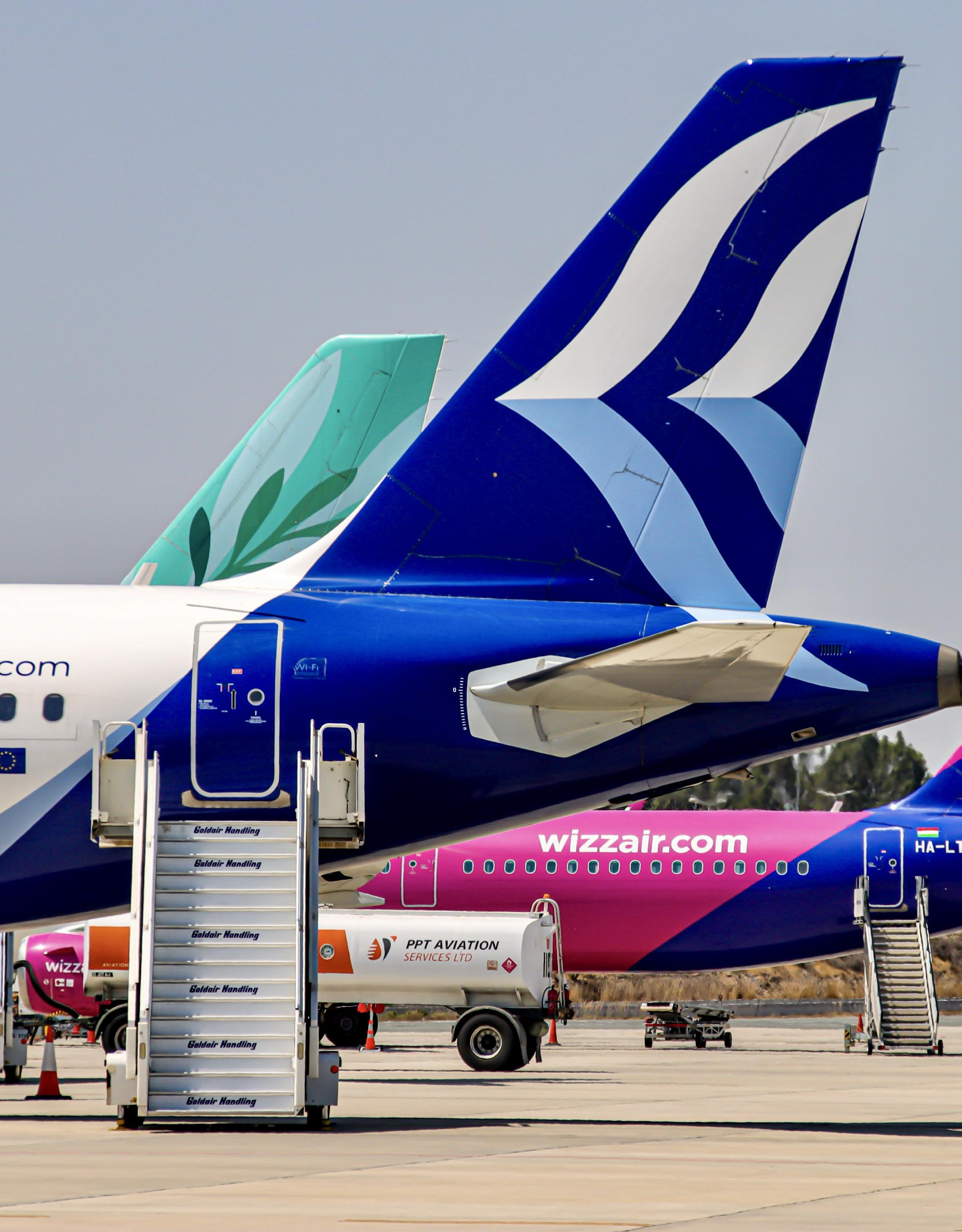
Waste generated at Hermes Airports
Waste generated by Hermes Airports operations comprises the waste generated by the Company’s own activities (airport staff) and the waste generated upstream and in its value chain (suppliers, subcontractors, tenants, passengers, and visitors).
The main operational waste streams break down as follows:
ș non-hazardous solid waste generated at the airports’ facilities including paper/cartons, PMD, glass, pruning waste and other recyclable waste streams, sewage sludge from the airports’ pumping stations and plants for pre-treatment of the aircraft’s sewage effluents/wastewater, and landfill (municipal) waste.
ș hazardous solid waste including rubber residues removed from the runways, absorbing pads/rolls used in fuel and oil spill incidents, batteries and electrical and electronic waste components.
ș non-hazardous liquid waste from the Airports’ sanitary facilities and aircraft’s lavatories (covered under the “Water withdrawal and discharges” of the Water chapter) and
ș hazardous liquid waste including oily water and nonchlorinated engine, gear, and lubricating oils.
In addition to the ongoing waste, a number of other waste streams are also generated at Hermes Airports on a project or “one-off” basis. As an example, these streams are an outcome of new construction projects or upgrades to existing buildings, demolition of existing building structures, and maintenance operations (air handling units, generators, and pumping stations). Additionally, “One-off” streams include waste which, although generated on an ongoing operational basis, is collected and stored for a period of time and sent for treatment only when it reaches a certain volume. Examples are the sewage sludge collected from the airports’ operations (pumping stations) and plants for the pre-treatment of the aircrafts’ sewage effluents/ wastewater), as well as the rubber waste from the resurfacing of the runways.
2025 PERFORMANCE
A breakdown of the ongoing operational and projectbased waste respectively, is presented below:
Note 1: Includes paper, PMD, glass, scrap metal, liquids, aerosols and gels (LAG), and pruning waste
Note 2: Includes fluorescent bulbs, electrical & electronic waste components, batteries, toners/ink cartridges
Note 3: Includes oily water, non-chlorinated engine, gear, and lubricating oils
There has been a steady increase in total operational waste generated at both airports, correlated to the increase in the passenger traffic. In 2025, the total waste increased by 11.2% for Larnaka and 10.4% for Pafos, respectively, compared to 2024. The increase in the amount of waste diverted from landfills at Larnaka in 2025 was 10.3%, compared to an increase of 6.8% in 2024. At Pafos, the amount of waste diverted from landfills increased by 11.9% in 2025 compared to a decrease of 5.8% in 2024.
Project-based /”One-off” Waste Waste
Waste Diverted from Landfill (tonnes)
Larnaka Airport Pafos Airport
Note 4: Sewage sludge from airport operations (pumping stations) and the plants for pre-treatment of aircraft’s sewage effluents/wastewater
Note 5: Includes rubber debris, asphalt milling, weak organic waste, contaminated packages, absorbents & filter materials hazardous, components removed from discharged equipment, concrete waste, building waste, scrap metal, structural waste, disposed c oncrete, disposed asphalt
Note 6: Correction of the 2022 figure of “Other project-based waste diverted from landfill” generated at the Larnaka airport Waste Management
Hermes Airports implements a comprehensive waste management system complying with the applicable legislative requirements and terms of its waste disposal permits. The management of all waste streams originating from the airports’ operations (both from Hermes’ operations as well as from third parties (subcontractors, tenants etc.) is carried out as per the standard operating procedure of the Company’s environmental management system, complying to the requirements of the ISO 14001:2015 standard and EcoManagement and Audit Scheme (EMAS).
Hermes strives to continually improve its waste management system, focusing mainly on the following:
a. collaboration with licensed service providers in the design and establishment of the integrated services and facilities required for the collection, transportation and treatment of the various waste
streams generated by the airport and aircraft operations
b. implementation of a well-structured system for maintaining the supporting documentation (i.e., waste delivery receipts and monthly statistical data), as well as reviewing the data for monitoring and reporting purposes. The Health & Safety, Environment SMS, and Facility Management (HSESMS-FM) Department is responsible for reviewing the waste receipts and preparing the yearly Environmental Statements. The environmental statements are audited by an external auditor prior to their submission to the Department of Environment
c. simplification to the maximum extent possible, of the segregation of recyclable waste for staff, passengers, and other airport users, through the provision of segregation bins throughout the airport facilities with clear instructions.
Hermes appreciates that limited material resources and growing consumption patterns represent a global challenge and has a long-term ambition to embed the principles of the circular economy into its business and beyond. To date, Hermes has focused on reducing waste where opportunities have been identified (i.e., with the ban of single-use plastics throughout the airport sites), the re-use of certain materials and mainly the recycling of as much waste streams as possible and reduction of the landfill (municipal) waste. At the same time, the Company also acknowledges that the creation of waste is an inevitable consequence of the operation of a busy airport, and active steps must be taken to minimise the volumes generated. While Hermes has noted good progress in recent years, it acknowledges that there is still room for improvement, to be ensured through the constant monitoring and reviewing of its waste management performance, the ongoing collaboration with and involvement of its key stakeholders in the identification of the waste sources, improvement of its waste management practices, and the implementation of long-term measures required to facilitate waste management.
Larnaka Airport Pafos Airport
CASE STUDY – Circular Economy
for the use of construction materials
An innovative project related to Circular Economy that has been implemented by Hermes at Larnaka Airport involving the reuse of building materials. The innovation relates to the reuse of building materials but also because all reused materials were scanned, tagged, tracked, and reused, thus achieving asset lifecycle transparency. Reusing these materials resulted in both cost savings and reduction greenhouse gas emissions, thus contributing to Hermes sustainability goals.
The project involved the refurbishment of the HSE department at Larnaka Airport that Hermes included within the scope of the TULIPS project as the demo for circularity. The main objective was to demonstrate the feasibility and benefits of circular economy. Key components such as internal doors, glazed partitions, HVAC equipment, lighting fixtures and power socket outlets were carefully disassembled, cleaned and tested for safety, and reintegrated into the new office design, thereby reducing construction-related waste and reducing embodied carbon emissions. Each of the materials reused was given a unique identifier, that was uploaded onto a platform operated by Excess Materials Exchange, a TULIPS partner, that facilitated tracking, thus achieving life cycle transparency.
The project was selected by ACI Europe to be presented at the ACI Europe Regional Airports Conference, which took place in Turkey at the end of April 2025, as it was considered a real-life example of circular initiatives in airports.
Spills
Hermes Airports implements a well-developed and efficient spill response system based on a standard operating spill response procedure, which is well communicated to and implemented by all involved stakeholders. The purpose of the procedure is the immediate response to any spill incidents to avoid the release of hazardous substances in the airports’ stormwater drainage systems, with the potential to pollute the receiving waterbodies.
The Hermes Emergency Response and Preparedness Plan provides clear guidance to the management, employees, airlines, subcontractors, and tenants for responding to a hazardous spill incident safely, quickly and effectively, with an emphasis on an escalated emergency process in the case of spill occurrences beyond the everyday usual spills (tens of litres of oil, fuels, chemicals etc.).
All spills regardless of volume are reported to Hermes Operations Centre (HOC), recorded, investigated and corrective/preventive action is taken. A variety of spill
response materials are available and used depending on the type and the extent of spill. These include absorbing pads/rolls, recyclable absorbing sand, retractable spill containment tanks for the collection of fuel leaking from aircraft wings tanks and liquid agent for the biodegradation of hydrocarbons. The absorbing waste materials used in spill incidents are temporarily stored in a designated area designed for this purpose and collected and treated by service providers as hazardous waste.
Hermes maintains fully updated data on spill incidents, which form part of the data compiled for its sustainability reporting, environmental statements and annual HSE reports. Data maintained on spills is one of the indicators analysed by the HSE department as a means for monitoring and evaluating Hermes’ environmental performance and is also presented in the management review meetings.
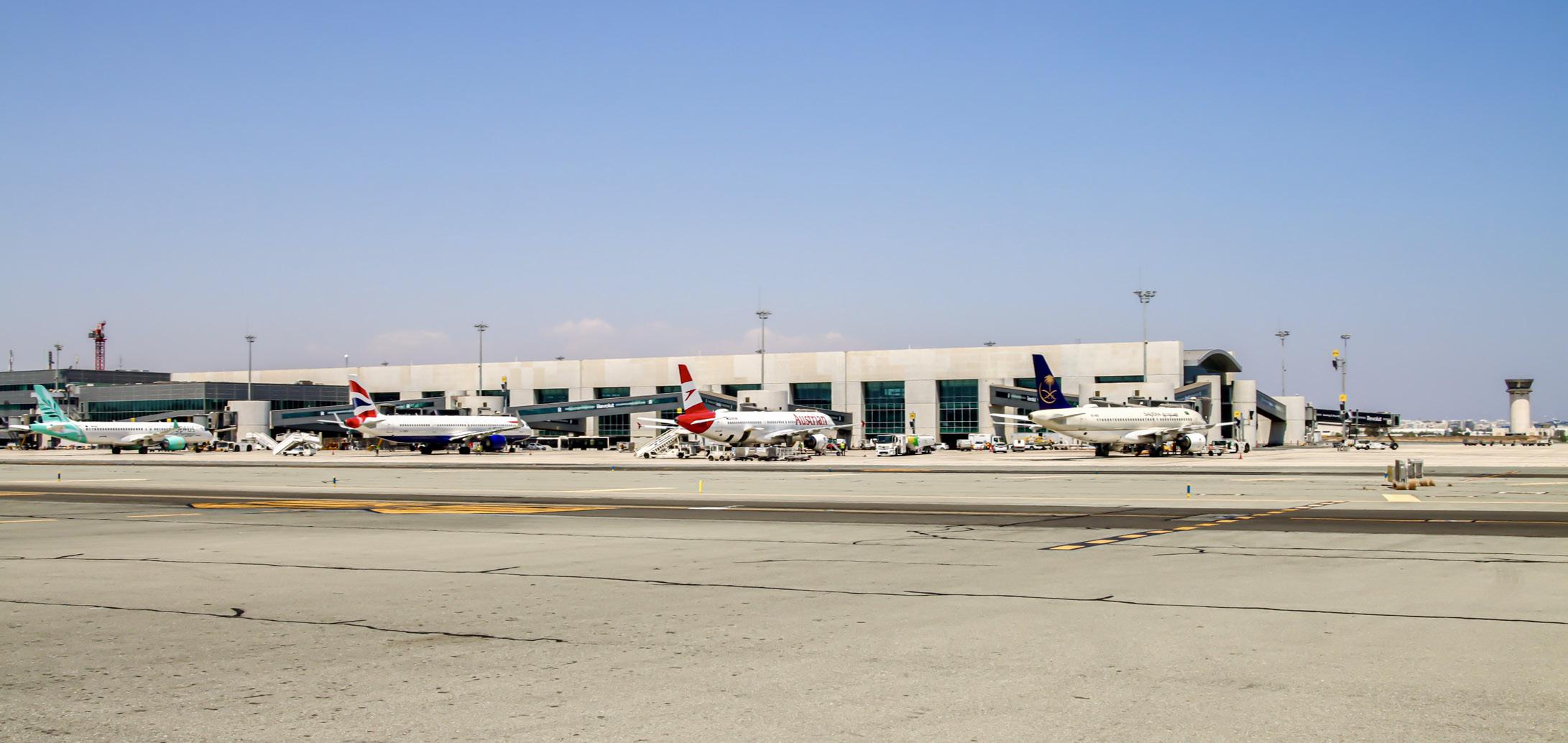
2025 Performance
Spill data
All spills in 2025 had been managed appropriately and contained, with no hazardous substances entering the stormwater drainage system or migrating from the airports’ boundaries with the potential to pollute the soil and/or nearby waterbodies.
Spills recorded at Larnaka and Pafos Airports in 2025 mainly concern minor oil and fuel spills with the majority of them taking place in the aprons.
Water and Effluents
Managing water and effluents
In recognition of the island’s water scarcity as a critical environmental issue, Hermes Airports Health, Safety, Environment, Energy and Social Responsibility Policy focuses amongst others, on the minimisation of water resources’ usage throughout the airports’ daily operations. Water management is also a core component of Hermes’ environmental management system, complying with the requirements of the ISO 14001:2015 standard and EMAS.
Hermes monitors its water consumption through water meters installed in various areas/systems, to identify areas of high-water demand and where water-saving initiatives would best be targeted. Examples of these initiatives include the installation of water-saving sanitaryware fittings i.e., urinals with sensors, toilets with dual flushing, wash basin mixers operating with sensors, the installation of drop by-drop irrigation systems, and the use of recycled water (treated wastewater) for irrigation purposes. In addition to providing potable water to passengers and reducing the usage of singleuse plastic bottles, Hermes has installed seven potable water fountains at the Larnaka Airport and four at the Pafos Airport. This action has resulted in the increase of water usage at both terminals, as passengers responded positively to the use of the fountains, recording a higher water usage.
Furthermore, in its effort to minimise its impact to the environment, Hermes has established a system for monitoring the quality of the stormwater discharges, identifying any potential sources of pollution caused by its operations to the airports’ nearby receiving waterbodies and ensuring that the appropriate mitigation measures are implemented where necessary. Analysis of the stormwater discharged to the salt lakes, is carried out biannually at Larnaka airport based on a number of sampling points identified as the discharging routes from the airport’s premises into the salt lakes. Additionally, salt lakes sediment analysis is carried out annually based on sampling from various predefined locations in the drainage outlets, as well as within the salt lakes. For Pafos airport, analysis of the stormwater discharged to the sea is also carried out annually through sampling from various points in the discharge route. It is ensured by Hermes that the results of the above analyses are within the limits set by the Department of Environment and in accordance with the applicable EU and national legislation. These are reported annually to the Department of Environment.
Quality standards are also set by the national legislation and the District Local Government Organisations for the wastewater/effluents from aircraft, which should be met prior to their processing at the District Local Government Organisations’ central wastewater treatment plants. In compliance to this requirement, Hermes operates plants within its airports’ premises for the pre-treatment of the aircraft effluents.
Monitoring of the performance and outcomes of the above initiatives and procedures, data analysis and reporting, and setting of annual targets on water management, are all part of the scope of Hermes’ Environmental Management System. Moreover, the ACI Airport Carbon Accreditation stakeholder partnership plan also covers water management as part of its scope, thus providing the opportunity for feedback to be collected from Hermes stakeholders on water-related issues. Feedback is collected through a fault reporting software that is in place and through meetings between Hermes and the wider airport community.
Water withdrawal and discharges
The potable water consumed throughout all terminal and auxiliary buildings at Larnaka Airport as well as the recycled water (treated wastewater) used for its irrigation purposes, is supplied by the Larnaka District Local Government Organisation. At Pafos Airport, the potable water is supplied by the Pafos District Local Government Organisation and the water used for irrigation is sourced from the Asprokremmos Dam and from the airport’s borehole. The use of borehole water began in May 2025.
Water discharges from Hermes’ Airports comprise the stormwater discharges to the salt lakes from Larnaka Airport and to the sea from Pafos Airport, the aircraft wastewater/effluent which is pre-treated on site prior to discharge to the central sewage system, and the sewage effluent from both airports’ facilities.
2025 PERFORMANCE
Data on the water withdrawals, consumption and discharges are presented below.
Water Withdrawals, Consumption and Discharges
Water Withdrawal
Note 1: Potable water supplied by the Larnaka and Pafos Districts Local Government Organisations, respectively
Note 2: Water used for irrigation purposes - recycled water supplied by the Larnaka District Local Government Organisation (for Larnaka) and water supplied by the Asprokremmos Dam (for Pafos)
Note 3: Stormwater discharged from Larnaka airport to salt lakes
Note 4: Stormwater discharged from Pafos airport to sea
Note 5: Comprises sewage effluent from the airports’ sanitary facilities as well as the aircrafts’ pre-treated liquid waste, both discharged to the central sewage system, as per the invoices provided by the Larnaka and Pafos Districts Local Government Organisations, respectively.
Water consumption and targets Hermes Airports sets yearly targets to reduce or sustain its water consumption per passenger.
The 2025 target set for Larnaka Airport was to sustain the 2024 consumption per passenger figure which was 12.7 litres/passenger. The actual 2025 consumption per passenger is 13.5 litres/passenger. The rise is partly attributed to the installation of an additional five water fountains, bringing the total to seven, as well as other operational needs. Also, a spillage from water pipes contributed to the increased water consumption.
Similarly, the 2025 target set for Pafos Airport was to sustain the 13.5 litres/passenger, and this was achieved by consuming 11.7 litres/passenger.
These targets are provided in the yearly environmental statements prepared by Hermes for purposes of the EMAS registry.
Director of Human Resources Department
Director of Commercial & Business Development
Head of Operations, Larnaka Airport
Head of Operations, Pafos Airport
Head of Technical Department
Head of IT & T Department
Financial Controller
Manager Health, Safety and Environment Department
Data
Appendix 2
Hermes Airports Ltd has reported in accordance with the GRI Standards for the period 01 January 2025 - 31 December 2025.
2-2 Entities included in the organization’s sustainability reporting Company Identity
2-3 Reporting period, frequency and contact point Company Identity and end of report for contact information
2-4 Restatements of information Economic development
Health and Safety
Table 11 GDP and jobs created per airport and total – ACI Europe Economic Impact Calculator findings; 2023 figure for Pafos airport for "induced job number" has been corrected due to an immaterial typo in prior year's report.
Table 28 Total Accident / Incident Occurrences Pafos Airport; 2023 figures for "SMS" and "Other" have been corrected due to an immaterial typo in prior year's report.
Climate Change
Table 44 Energy Consumption; the figures for "Fuel Consumption from non-renewable sources" have been restated from TJ to GJ for 2023 and 2024. Additionally, the 2023 figures of "Electricity consumption within the organisation", "Total Electricity Consumption", "Electricity consumption per passenger" and "Electricity consumption per floor area"and the 2024 figures of "Electricity consumption within the organisation" and "Electricity consumption by tenants" have been restated to align with a more accurate data source supported by underlying records and actual invoices, and subject to external verification. The quantitative changes arising from these restatements range from 4% - 19%.
2-5 External assurance External assurance is not mandatory for this report and has not been obtained.
2-6 Activities, value chain and other business relationships Company Identity and Sustainable Supply Chain
2-7 Employees Employee Experience and Engagement
2-8 Workers who are not employees Employee Experience and Engagement
2-9 Governance structure and composition Company Identity and Corporate Governance
2-10 Nomination and selection of the highest governance body Corporate Governance
2-11 Chair of the highest governance body Corporate Governance
2-12 Role of the highest governance body in overseeing the management of impacts Corporate Governance
2-13 Delegation of responsibility for managing impacts Corporate Governance
2-14 Role of the highest governance body in sustainability reporting Corporate Governance
2-15 Conflicts of interest Corporate Governance
2-16 Communication of critical concerns Corporate Governance
2-17 Collective knowledge of the highest governance body Corporate Governance
2-18 Evaluation of the performance of the highest governance body Corporate Governance
2-19 Remuneration policies Corporate Governance
2-20 Process to determine remuneration Corporate Governance
2-21 Annual total compensation ratio 2-21
Confidentiality constraints
Omitted due to confidentiality constraints, as disclosure could reveal sensitive remuneration information and compromise employee privacy.
2-22 Statement on sustainable development strategy CEO's message, Corporate Governance and Approach to Sustainability
2-23 Policy commitments Corporate Governance & Ethics and Values
2-24 Embedding policy commitments Ethics and Values
2-25 Processes to remediate negative impacts Ethics and Values
2-26 Mechanisms for seeking advice and raising concerns Ethics and Values
2-27 Compliance with laws and regulations Ethics and Values
2-28 Membership associations Corporate Governance
2-29 Approach to stakeholder engagement Approach to Sustainability
2-30 Collective bargaining agreements 2-30 Not applicable
Not applicable, as the organisation has no collective bargaining agreements in place Material topics
GRI 3: Material Topics 2021
3-1 Process to determine material topics Approach to Sustainability A gray cell indicates that reasons for omission are not permitted for the disclosure or that a GRI Sector Standard reference number is not available.
3-2 List of material topics Approach to Sustainability
Economic performance
GRI 3: Material Topics 2021
GRI 201: Economic Performance 2016
3-3 Management of material topics Economic Development
201-1 Direct economic value generated and distributed Economic Development
201-2 Financial implications and other risks and opportunities due to climate change 201-2 Information unavailable/ incomplete
201-3 Defined benefit plan obligations and other retirement plans Employee Experience and Engagement
201-4 Financial assistance received from government Economic Development
Market presence
GRI 3: Material Topics 2021
3-3 Management of material topics Employee Experience and Engagement
Not applicable
Omitted as information is currently unavailable or incomplete to reliably assess and disclose the financial implications, risks, and opportunities related to climate change.
Only subsidies were applicable and disclosed; other forms of government financial assistance under Disclosure 201-4 were not applicable during the reporting period.
STANDARD/ OTHER SOURCE DISCLOSURE LOCATION (chapter)
GRI 202: Market Presence 2016
202-1 Ratios of standard entry level wage by gender compared to local minimum wage Employee Experience and Engagement 202-1 a. 202-1 b. Confidentiality constraints
202-2 Proportion of senior management hired from the local community Employee Experience and Engagement
Indirect economic impacts
GRI 3: Material Topics 2021 3-3 Management of material topics Economic Development
GRI 203: Indirect Economic Impacts 2016
203-1 Infrastructure investments and services supported Economic Development, Operational Effectiveness and Passenger Experience
203-2 Significant indirect economic impacts Economic Development
Procurement practices
GRI 3: Material Topics 2021 3-3 Management of material topics Sustainable Supply Chain
GRI 204: Procurement Practices 2016
204-1 Proportion of spending on local suppliers Sustainable Supply Chain Anti-corruption
GRI 3: Material Topics 2021 3-3 Management of material topics Ethics and Values
205-1 Operations assessed for risks related to corruption Ethics and Values
GRI 205: Anticorruption 2016
205-2 Communication and training about anticorruption policies and procedures Ethics and Values
205-3 Confirmed incidents of corruption and actions taken Ethics and Values
Omitted due to confidentiality constraints, as disclosure could reveal sensitive pay information
Omitted due to confidentiality constraints, as disclosure could reveal sensitive information about senior management hiring practices
Anti-competitive behavior
GRI 3: Material Topics 2021 3-3 Management of material topics Ethics and Values
GRI 206: Anticompetitive Behavior 2016
206-1 Legal actions for anti-competitive behavior, anti-trust, and monopoly practices Ethics and Values Materials
GRI 3: Material Topics 2021 3-3 Management of material topics Operational Effectiveness and Passenger Experience
GRI 301: Materials 2016
301-1 Materials used by weight or volume
Effectiveness and Passenger Experience
301-2 Recycled input materials used Operational Effectiveness and Passenger Experience
301-3 Reclaimed products and their packaging materials Operational Effectiveness and Passenger Experience
GRI 3: Material Topics 2021 3-3 Management of material topics
GRI 302: Energy 2016
a. ii. Information unavailable/ incomplete
Omitted as information on renewable materials used is currently unavailable or incomplete to report reliably by weight or volume.
302-4 Reduction of energy consumption Climate Change 302-4 c. Not applicable
The base year is not applicable, as reductions are compared to prior-year consumption.
302-5 Reductions in energy requirements of products and services
Water and effluents
Change
GRI 3: Material Topics 2021 3-3 Management of material topics Water and Effluents
GRI 303: Water and Effluents 2018
303-1 Interactions with water as a shared resource Water and Effluents
303-2 Management of water dischargerelated impacts Water and Effluents
c. Not applicable
The disclosure on reductions in energy requirements of products and services is not applicable to the operations of Hermes.
a. 301-3 b. Not applicable
Not applicable, as the relevant activities do not involve reclaiming products or packaging materials during the reporting period.
Disclosures not applicable.
303-3 Water withdrawal Water and Effluents
303-2 a. i.
303-2 a. ii.
303-2 a. iii. Not applicable
For 303-2 a. i.: Local requirements and standards do exist For 303-2 a. (i) & (ii): Requirement not applicable to Hermes.
Not applicable
303-4 Water discharge Water and Effluents 303-4 a. ii. 303-4 d. i. 303-4 d. ii. 303-4 d. iii. Information unavailable/ incomplete
303-4 a. iv. 303-4 b. i. 303-4 c. i. 303-4 c. ii. Not applicable
Not applicable as Hermes Airports does not withdraw water from these source categories.
Groundwater discharge data and information on priority substances have been omitted from this report due to unavailable and/or incomplete information.
Third-party water discharge data, freshwater, and other water are not applicable.
Information unavailable/ incomplete
Information on the standards, methodologies, assumptions and/or calculation tools used, as well as the source of the conversion factors used, is unavailable as this data is provided by tenants.
302-3 Energy intensity Climate Change
303-5 Water consumption Water and Effluents 303-5 c. Not applicable
Hermes operations are all in water stress areas. Information on changes in water storage (in megaliters), where water storage has been identified as having a significant water-related impact, has been omitted from this report as it is not applicable.
305-1 Direct (Scope 1) GHG emissions
Change
c.
d. iii. Not applicable
Biogenic emissions have been omitted from this report because they are not applicable to the organisation’s operations. The context for any significant changes in emissions that triggered recalculations of base year emissions has been omitted from this report because, although a base year is defined, no recalculations were required during the reporting period.
305-2 Energy indirect (Scope 2) GHG emissions
Change 305-2 d. iii. Not applicable
The context for any significant changes in emissions that triggered recalculations of base year emissions has been omitted from this report because, although a base year is defined, no recalculations were required during the reporting period.
305-3 Other indirect (Scope 3) GHG emissions
Change
OMISSION
Biogenic emissions have been omitted from this report because they are not applicable to the organisation’s operations. The context for any significant changes in emissions that triggered recalculations of base year emissions has been omitted from this report because, although a base year is defined, no recalculations were required during the reporting period.
305-3 e. ii. Information unavailable/ incomplete Information on base year emissions has been omitted from this report due to unavailable / incomplete data.
305-4 GHG emissions intensity Climate Change
305-5 Reduction of GHG emissions Climate Change
305-6 Emissions of ozone-depleting substances (ODS) Climate Change
305-7 Nitrogen oxides (NOx), sulfur oxides (SOx), and other significant air emissions
Change
Not applicable
For 305-7 a.(ii)-(v): These specific air quality parameters are not monitored by Hermes.
For 305-7 b.: Requirement not applicable to Hermes. Waste
GRI 3: Material Topics 2021 3-3 Management of material topics Waste
GRI 306: Waste 2020
306-1 Waste generation and significant wasterelated impacts Waste
306-2 Management of significant wasterelated impacts Waste
GRI 306: Effluents & Waste 2016
306-3 Waste generated Waste
306-4 Waste diverted from disposal Waste
306-4 b. i.
306-4 b. iii.
306-4 c. i.
306-4 d. i. Not applicable
These waste streams have been omitted from this report because they are not applicable to the operations of Hermes.
306-5 d. i. Not applicable
The breakdown of waste directed to disposal onsite has been omitted from this report because onsite disposal is not applicable to the Hermes' operations
For 306-5 a.: The total weight of waste directed to landfill is available, however, not the breakdown of this by composition of the waste
306-5 Waste directed to disposal Waste
306-5 a.
306-5 b.
306-5 c.
306-5 d. ii.
Information unavailable/ incomplete
Supplier environmental assessment
GRI 3: Material Topics 2021
3-3 Management of material topics Sustainable Supply Chain
GRI 308: Supplier Environmental Assessment 2016
308-1 New suppliers that were screened using environmental criteria Sustainable Supply Chain
308-2 Negative environmental impacts in the supply chain and actions taken Sustainable Supply Chain
Employment
GRI 3: Material Topics 2021 3-3 Management of material topics
For 306-5 b., 306-5 c. and 306-5 d. (ii).: Once the municipal waste is collected from the airports' premises, it is transported to the landfills where a further segregation takes place up to a certain extent for the recovery of materials (as far as possible) before final disposal to landfill - No figures are provided to Hermes on the categories and weight of the materials that might be recovered neither a breakdown of the disposal operations by weight and category of landfill waste.
GRI 401: Employment 2016
401-1 New employee hires and employee turnover
401-2 Benefits provided to full-time employees that are not provided to temporary or parttime employees
401-3 Parental leave
Employee Experience and Engagement
Employee Experience and Engagement
Employee Experience and Engagement
Employee Experience and Engagement
Occupational health and safety
GRI 3: Material Topics 2021 3-3 Management of material topics Health and Safety
OMISSION
3-3 Management of material topics Waste
This disclosure is omitted as it is not applicable, because no spills were reported in the organisation’s financial statements during the reporting period.
GRI 403: Occupational Health and Safety 2018
403-1 Occupational health and safety management system Health and Safety
403-2 Hazard identification, risk assessment, and incident investigation Health and Safety
403-3 Occupational health services Health and Safety
403-4 Worker participation, consultation, and communication on occupational health and safety Health and Safety
403-5 Worker training on occupational health and safety Health and Safety
403-6 Promotion of worker health Health and Safety
403-7 Prevention and mitigation of occupational health and safety impacts directly linked by business relationships Health and Safety
403-8 Workers covered by an occupational health and safety management system Health and Safety
403-8 a. i.
403-8 a. ii.
403-8 a. iii.
403-8 b. 403-8 c.
Information unavailable/ incomplete
This disclosure requirement is about workers who are not employees but whose work is controlled by the organization. Hermes does not maintain any data or percentage for employees of the airports' tenants. It is the responsibility of each employer/tenant company to fullfill all law requirements for its staff, the equipment and the processes which are followed by the airport tenant in relation to the activities that they are conducted. Checks and audits might be conducted by certified/competent officials of external bodies. Obligations also arise for the compnaies which piosess ISOs and audits are usaually conducted to ensure compliance with these requirements/ obligations.
403-9 Work-related injuries Health and Safety
403-9 a. ii.
403-9 a. v. 403-9 b. 403-9 e.
Information unavailable/ incomplete
Partially omitted as certain work-related injury data is currently unavailable or incomplete to report reliably for the reporting period.
403-10 Work-related ill health Health and Safety
Training and education
GRI 3: Material Topics 2021 3-3 Management of material topics Employee Experience and Engagement
404-1 Average hours of training per year per employee Employee Experience and Engagement
GRI 404: Training and Education 2016
404-2 Programs for upgrading employee skills and transition assistance programs Employee Experience and Engagement
404-3 Percentage of employees receiving regular performance and career development reviews Employee Experience and Engagement
403-10 a. iii.
403-10 b.
403-10 c. i. - iii.
403-10 d.
Information unavailable/ incomplete
There is no such data available and it is very difficult to reach to such conclusions and define a case as work-related ill health. However, Hermes proceeds with preventative measures for the protection of the health of the staff, such as trainings for manual handling and ergonomics. Furthermore personal protective equipment is issued to the staff (ear protectors, safety shoes) in relation to their task(s) to also contibute to the protection of their health.
Diversity and equal opportunity
GRI 3: Material Topics 2021 3-3 Management of material topics Employee Experience and Engagement
GRI 405: Diversity and Equal Opportunity 2016 405-1 Diversity of governance bodies and employees
Non-discrimination
Employee Experience and Engagement 405-1 a. iii. 405-1 b. iii. Not applicable
405-2 Ratio of basic salary and remuneration of women to men Employee Experience and Engagement
GRI 3: Material Topics 2021 3-3 Management of material topics Employee Experience and Engagement
GRI 406: Nondiscrimination 2016
406-1 Incidents of discrimination and corrective actions taken Employee Experience and Engagement
Local communities
GRI 3: Material Topics 2021 3-3 Management of material topics Quality of Life of Local Communities
Other diversity indicators were not applicable for the reporting period.
STANDARD/ OTHER
Supplier social assessment
GRI 3: Material Topics 2021 3-3 Management of material topics Sustainable Supply Chain
GRI 414: Supplier Social Assessment 2016
414-1 New suppliers that were screened using social criteria Sustainable Supply Chain
414-2 Negative social impacts in the supply chain and actions taken Sustainable Supply Chain
Customer health and safety
GRI 3: Material Topics 2021 3-3 Management of material topics
OMISSION
GRI 413: Local Communities 2016
413-1 Operations with local community engagement, impact assessments, and development programs Quality of Life of Local Communities, Approach to Sustainability 413-1 a. vi. 413-1 a. vii. 413-1 a. viii. Not applicable
Not applicable for the reporting period, as no formal community engagement committees, worker representation bodies, or community grievance mechanisms were in place; however, Hermes’ operations continue to have an overall positive impact on local communities. Quality of Life of Local Communities
GRI 416: Customer Health and Safety 2016
416-1 Assessment of the health and safety impacts of product and service categories Health and Safety
416-2 Incidents of non-compliance concerning the health and safety impacts of products and services Health and Safety
Customer privacy
GRI 3: Material Topics 2021 3-3 Management of material topics Ethics and Values
GRI 418: Customer Privacy 2016
418-1 Substantiated complaints concerning breaches of customer privacy and losses of customer data Ethics and Values
Topics in the applicable GRI Sector Standards determined as not material
No applicable GRI Sector Standards have been developed for airport operators
Awards and Recognitions
2025 Investors in People ‘Overseas Employer of the Year 2025’ Award
Hermes Airports received the international Overseas Employer of the Year 2025 award from Investors in People. This recognition places Hermes Airports among the leading employers not only in Cyprus but also internationally.
2025 Hermes Airports is the first airport operator globally to hold two platinum accreditations by Investors in People
Hermes Airports has become the only airport operator to hold Platinum Accreditation in both People and Wellbeing, from Investors in People. Since 2019, Hermes Airports has consistently held the Platinum IIP accreditation for its People practices, and in 2024 went from Gold to Platinum for its Wellbeing practices, recognising its high standards in both areas.
2025 Hermes Airports receives Level 3 Customer Experience Accreditation
Hermes Airports upgrades to Level 3 of the ACI Customer Experience Accreditation, demonstrating a clear commitment to excellence in customer experience management in line with the recommended practices and industry standards. This achievement recognises our commitment to continual customer experience improvement and reassures that the initiatives implemented to improve customer experience and satisfaction are effective and in the right direction.
2025 Hermes Airports receives a Gold Award in the category Travel & Tourism
The Cyprus e-biz Awards highlight excellence in business by awarding stores, businesses and service providers that have excelled in digital transformation and have developed tools and technologies to create the ultimate customer experience. These awards highlight the remarkable impact of online platforms and digital strategies in shaping the way we shop, connect, and operate in the digital era. Hermes Airports received a gold award in the category ‘Travel & Tourism’, for its digital tools that enhance customer experience, as also for its social media presence and campaigns.
2025 Hermes Airports receives award from Pafos Chamber of Commerce and Industry
Hermes Airports was recognised for its contribution to the increase in incoming tourism to Cyprus by Pafos Chamber of Commerce and Industry and we are very proud to receive this recognition for our efforts.
2024 Hermes Airports Honoured for Corporate Volunteering Excellence
As part of the annual event and reception hosted by the President of the Republic of Cyprus and the First Lady for International Volunteer Day (5th December), Hermes Airports was recognised at the 9th Corporate Volunteering and Volunteerism Awards organised by the Pancyprian Volunteerism Coordinative Council in 2024. This distinction highlights our ongoing commitment to social responsibility and our significant contributions to volunteerism.
2024 Hermes Airports won the HR Excellence Award at the ACI Europe Best Airport Awards
Hermes Airports was the winner, for the second time of the HR Excellence award, an annual award presented by ACI Europe to European airports.
2024 Investors in People ‘We Invest in People’ Platinum Accreditation reaffirmed
Hermes Airports was reassessed by Investors in People for its Platinum accreditation and in January 2024 the Platinum status was reconfirmed.
2024 Investors in People ‘We Invest in Wellbeing’ Platinum Accreditation achieved
Hermes Airports received the Investors in People ‘We Invest in Wellbeing’ Platinum Wellbeing accreditation, previously holding the Gold Accreditation since 2022, acknowledging the initiatives implemented throughout the year focusing on the wellbeing of its people.
2024 Hermes Airports receives Level 2 ACI Customer Experience Re-Accreditation
Our airport has shown excellence in customer experience management in line with the recommended practices and industry standards. This is a great achievement signifying Hermes Airports’ focus on continuous improvement of customer experience and services.
2024 Hermes Airports Honoured for Corporate Volunteering Excellence
As part of the annual event and reception hosted by the President of the Republic of Cyprus and the First Lady for International Volunteer Day (5th December), Hermes Airports was recognised at the 9th Corporate Volunteering and Volunteerism Awards organised by the Pancyprian Volunteerism Coordinative Council in 2024. This distinction highlights our ongoing commitment to social responsibility and our significant contributions to volunteerism.
2023 Larnaka and Pafos Airports advance to the ACI ACA Level 4+ Accreditation
The level 4+ accreditation has been achieved in recognition of the Airports’ exemplary work in aligning its carbon management with global climate goals to reach absolute emission reductions.
2023 Hermes Airports wins Routes World Marketing Award
Larnaka Airport won first place in the highly competitive category of 5-10 million passengers with the votes of the airlines, at the largest meeting of the aviation industry Routes World 2023 held in Istanbul. The Routes Awards take place annually and the voting and decision-making process belongs exclusively to the airlines, which evaluate and reward the broader strategy and various initiatives developed by an airport to improve connectivity and communication with the aviation industry.

Appendix 4
Glossary and Definitions
ACI: Airports Council International
Aircraft movements: An aircraft take-off or landing at an airport. For airport traffic purposes, one arrival and one departure is counted as two movements.
BREEAM: Building Research Establishment Environmental Assessment Methodology
Commercial cargo flight: Flights transporting only cargo.
Commercial passenger flight: Scheduled and non-scheduled passenger flights.
CSRD: Corporate Sustainability Reporting Directive
Direct (Scope 1) GHG emissions: Greenhouse gas emissions from sources that are owned or controlled by the organisation.
Direct Economic Impact: The employment and GDP associated with the operation and management of activities at the airports including firms on-site at the airport and airport related businesses located elsewhere near the airport. This includes activities by the airport operator, the airlines, airport air traffic control, general aviation, ground handlers, airport security, immigration and customs, aircraft maintenance, and other activities at the airport.
DMA: Double materiality assessment
Domestic flights: All flights of national or foreign aircraft in which all the airports used are located in the territory of the same State. In both cases the flight is considered to consist of the total of its flight stages (i.e., from take-off to its next landing); technical stops are not considered.
EASA: European Aviation Safety Agency
ECDC: European Centre for Disease, Prevention & Control
Economic Impact: The economic impact in terms of jobs generation is broken down into the following categories:
Effluent: Treated or untreated wastewater that is discharged
EMAS: EU Eco- Management and Audit Scheme
Energy indirect (Scope 2) GHG emissions: GHG emissions that result from the generation of purchased or acquired electricity, heating, cooling, and steam consumed by the organisation.
ENISA: European Network and Information Security Agency
ESRS: European Sustainability Reporting Standards
General aviation flight: All other flights (including business/corporate flights, private flights, and others).
Greenhouse gas (GHG): Gas that contributes to the greenhouse effect by absorbing infrared radiation
Hazardous waste: Waste that possesses any of the characteristics contained in Annex III of the Basel Convention, or that is considered to be hazardous by national legislation
IAPP: International Association of Privacy Professionals
Indirect Economic Impact: The employment and GDP generated by down-stream industries that supply and support the activities at the airport. For example, these could include wholesalers providing food for inflight catering, oil refining activities for jet fuel, companies providing accounting and legal services to airlines, travel agents booking flights, etc.
Induced Economic Impact: This captures the economic activity generated by the employees of firms directly or indirectly connected to the airport spending their income in the national economy. For example, an airline employee might spend his/her income on groceries, restaurants, childcare, dental.
International Flights: All flights of national or foreign aircraft whose origin or destination is located in the territory of a State other than that in which the airport being reported on is located
ISACA: Information Systems Audit and Control Association
ISO: International Organisation for Standardization
MEECO: Meeco Institute “Measuring, Employment Sciences, Executive Coaching, Corporate Leadership, Organisational Culture”
Other indirect (Scope 3) GHG emissions: indirect GHG emissions not included in energy indirect (Scope 2) GHG emissions that occur outside of the organisation, including both upstream and downstream
Ozone-depleting substance (ODS): Substance with an ozone depletion potential (ODP) greater than 0 that can deplete the stratospheric ozone layer
PMD: plastic bottles, metal packaging and drink cartons
PRM: Passengers with disabilities and reduced mobility
Runoff: Part of precipitation that flows towards a river on the ground surface (i.e., surface runoff) or within the soil (i.e., subsurface flow)
Spill: Accidental release of a hazardous substance that can affect human health, land, vegetation, waterbodies, and groundwater
State aviation flights: State VIP transports, police/customs, and military flights
Supply chain: Range of activities carried out by entities upstream from the organisation, which provide products or services that are used in the development of the organisation’s own products or services
Surface water: Water that occurs naturally on the Earth’s surface in ice sheets, ice caps, glaciers, icebergs, Taxi: Taxi is the movement on the surface of an airport
Third-party water: Municipal water suppliers and municipal wastewater treatment plants, public or private utilities, and other organisations involved in the provision, transport, treatment, disposal, or use of water and effluent
Transfer passengers: Passengers who arrive at the airport and continue their journey by connecting to another destination on another flight.
Transit passengers: Passengers who arrive at the airport and continue their journey on the same flight.
TULIPS: An EU funded project which stands for “DemonsTrating lower pollUting soLutions for sustaInable airports acrosS Europe”.
UN SDGs: United Nations Sustainable Development Goals
VSME: Voluntary sustainability reporting standard for non-listed micro, small and medium enterprises.
Water discharge: Sum of effluents, used water, and unused water released to surface water, groundwater, seawater, or a third party, for which the organisation has no further use, over the course of the reporting period.
Communication
For further information, please contact: +357 24742133