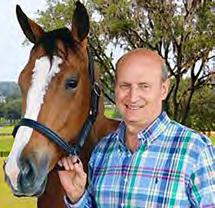
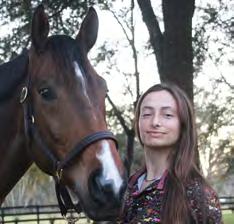
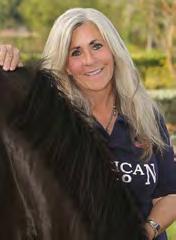
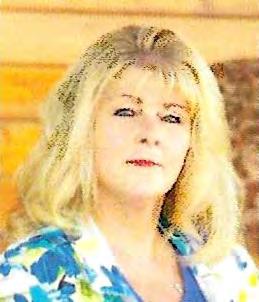
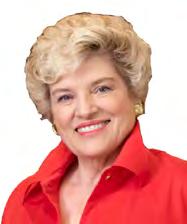
Staff of Dr. Lori John Galletti, JWA Media JWA Media
Howard Schatzberg Doug Shiftlet
GRAPHICS Fran Sherman
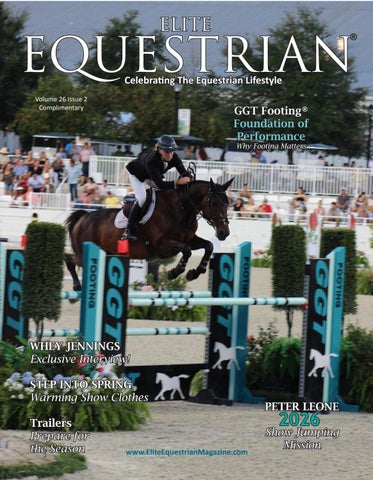
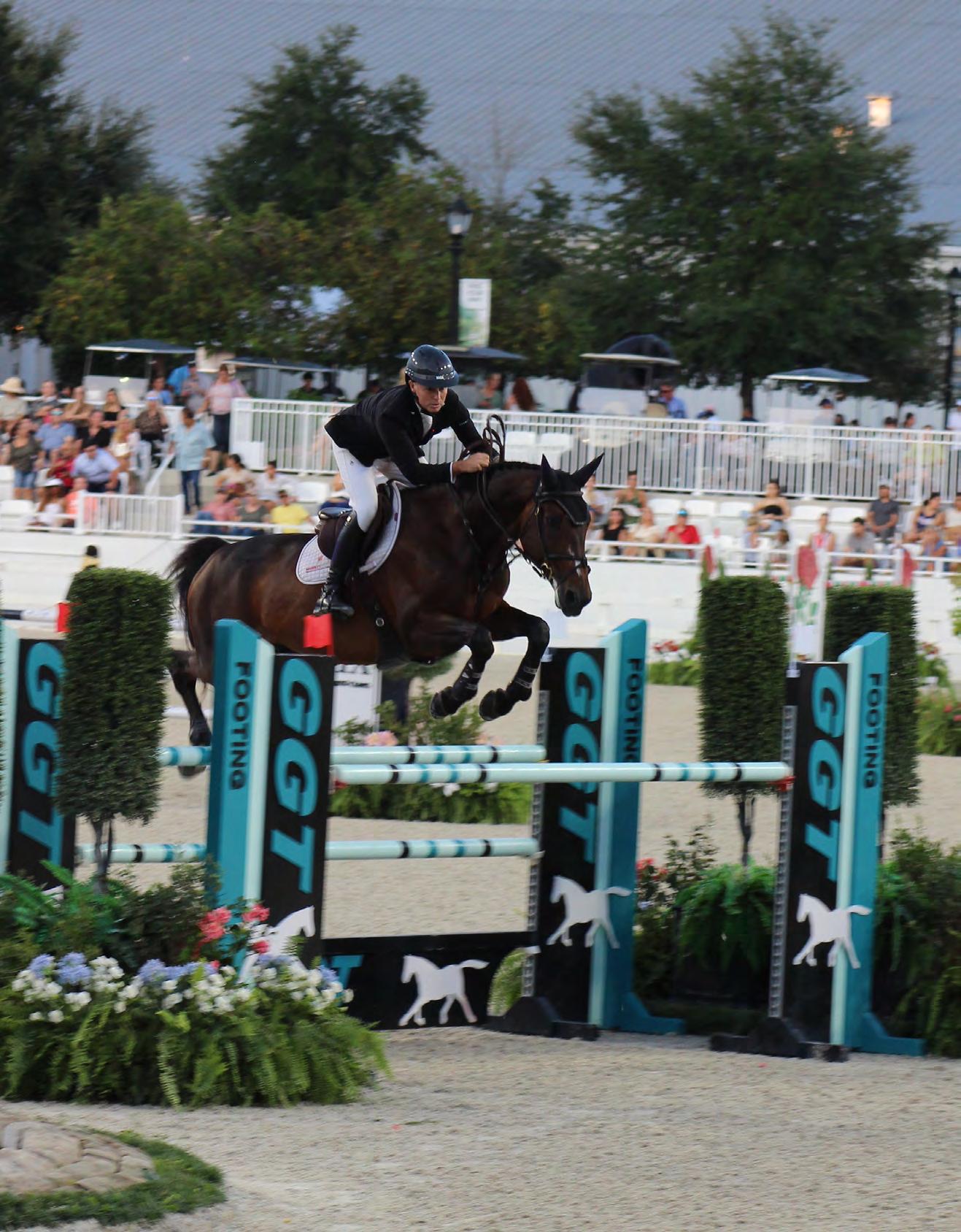
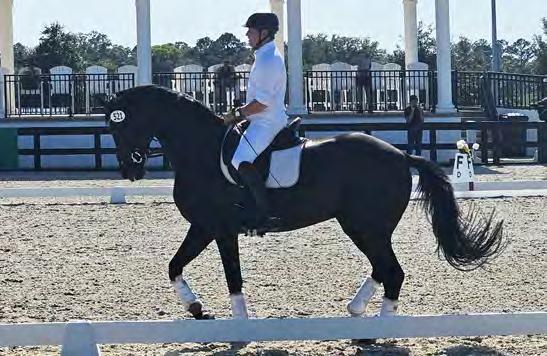
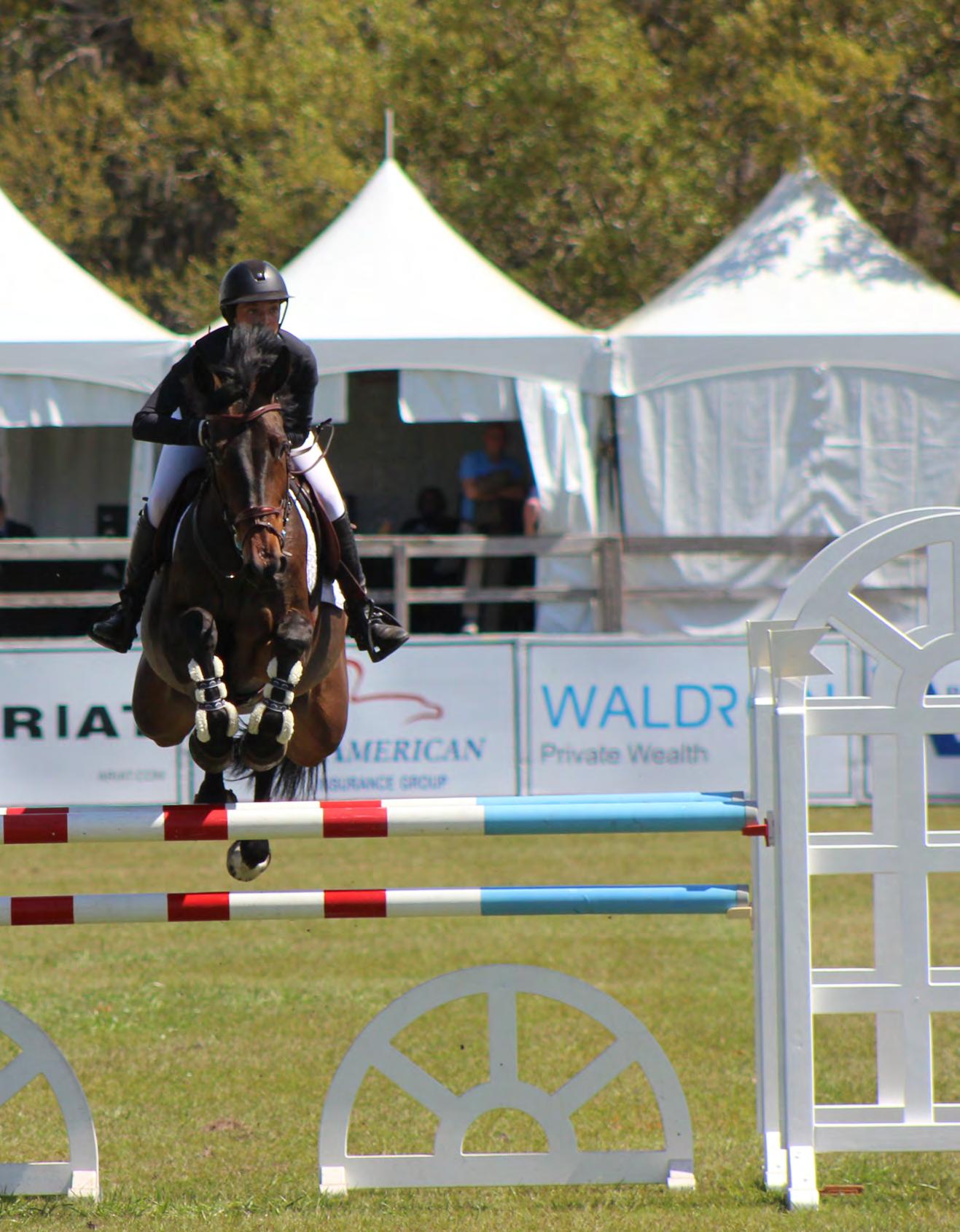
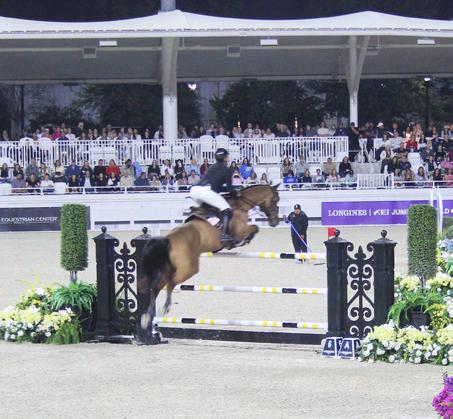
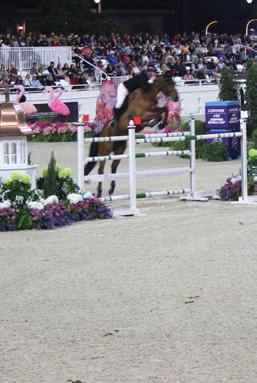
Sharn Wordley of Wordley Martin, one of GGT Footing’s top arena builders in the U.S.A., competing at the GGT Footing™ $65,000 CSI2* Grand Prix FEI at World Equestrian Center, Ocala FL.
by Elite Equestrian
Photo
HAVES Must
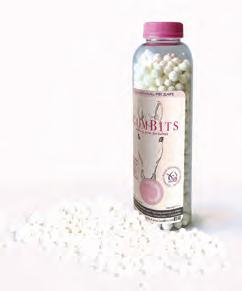
www.GumBits.com
GUMBITS
100% FEI legal.
See our ad on page 79
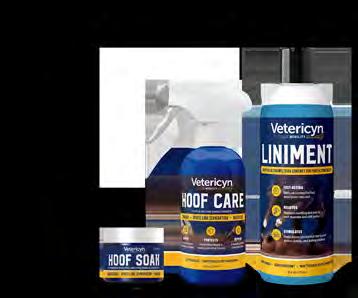
EQUINE HEALTH PRODUCTS
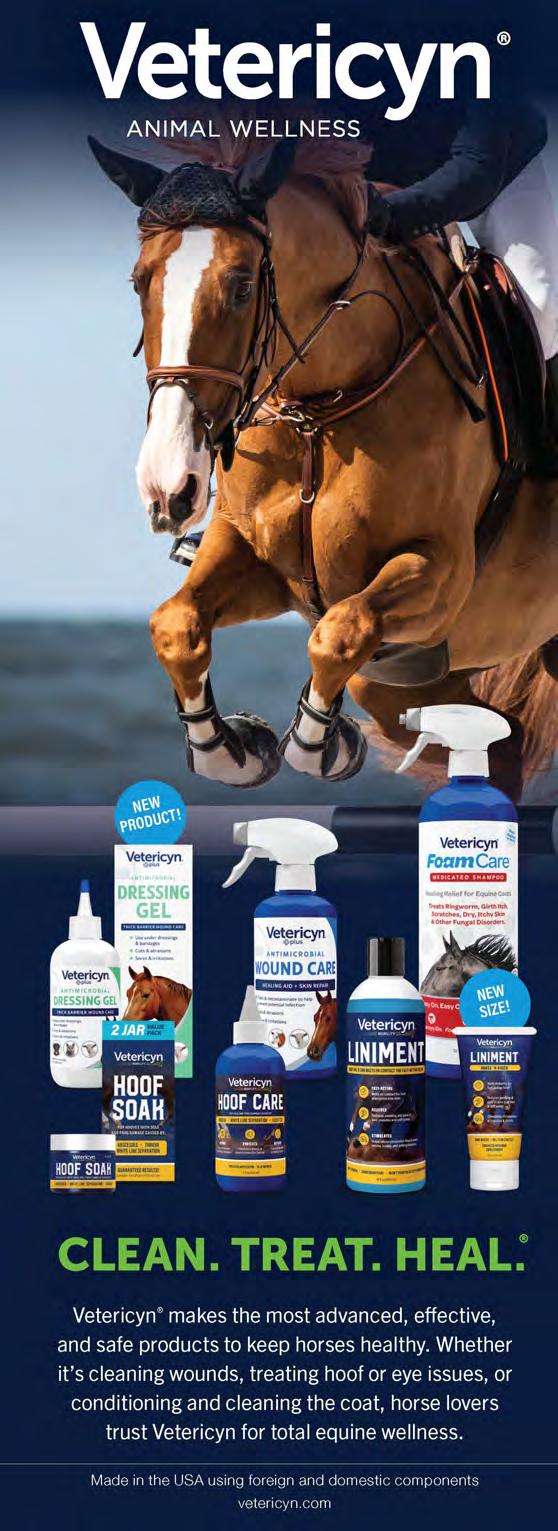
Liniment, Hoof Care, Hoof Soak
See our ad page 18 www.Vetericyn.com
EZ SIGNS
Free shipping! 1-800-640-8180
See our ad on page 29 www.EZSignsOnline.com
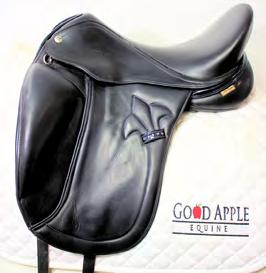
EQUINE CONSIGNMENTS!
Great selec�on of saddles, tack, boots,home items and more. Free trial on saddles.
See our ad on page 72 www.GoodAppleEquine.com
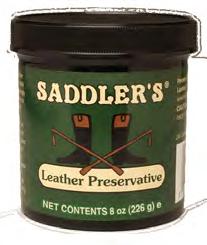
Saddler’s Preserva�ve
Protect and restore your valuable leather for years to come.
See our ad page 27 www.jmsaddler.com
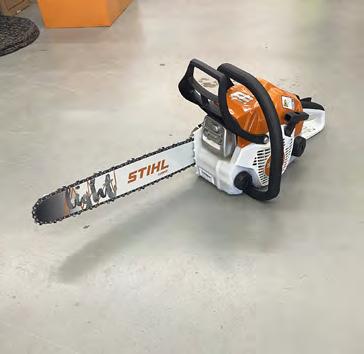
TOOLS EVERY FARM NEEDS!
Full line of S�hl power tools at Gilbert’s Hardware, Ocala FL.
See our ad on page 31
FOR NON SWEATERS
Enables your horse to sweat naturally. Show safe www.nonsweater.com
See our ad on page 35
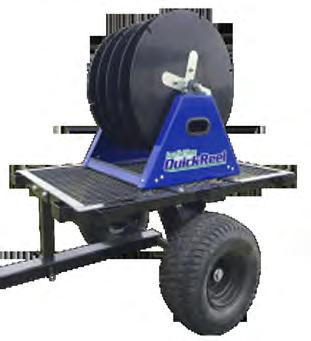
LAY-FLAT HOSE QUICKREEL
mounts to cart or vehicle. ATV trailer cart assembly available. Proudly made in the USA by our team of cra�smen!
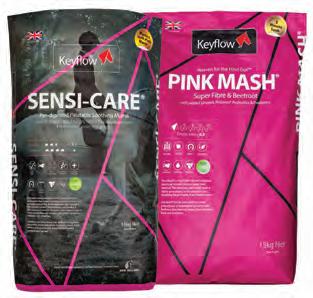
•Keyflow Pink Mash - $59.95 - Second-to-None Hind Gut Nutri�onal Support Green Gaits 352-300-3530 7029 FL-40 Ocala, FL 34482
See our ad on page 57
Great selec�on of saddles, tack, boots, home items and more.Free trial on saddles.See our ad on page www.GoodAppleEquine
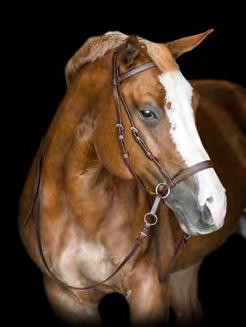
BITLESS BRIDLES
English & Western styles
See our ad on page 35 Bitlessbridles.com
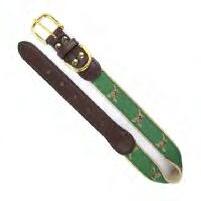
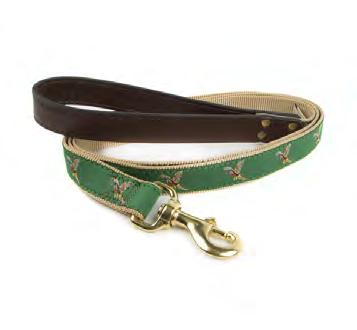
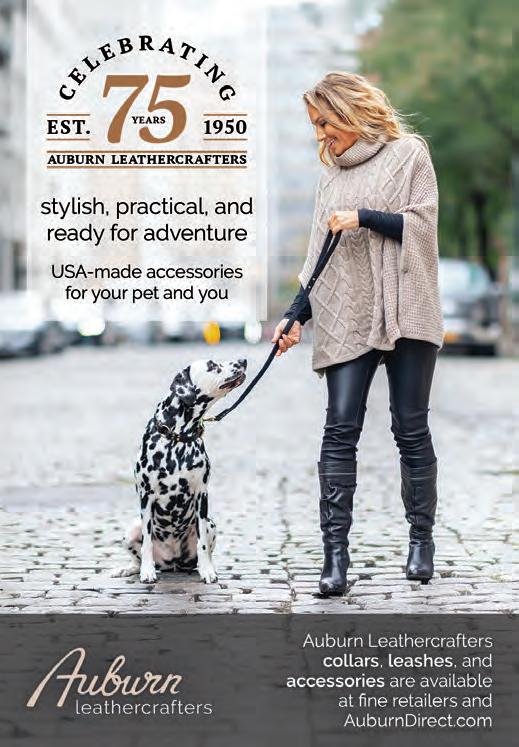
QUALITY COLLARS & LEASHES
Great selec�on of durable products for your fur baby. Shown here: American Tradi�ons Pheasants Leash www.auburndirect.com
See our ad on page 27
www.EliteEquestrianMagazine.com
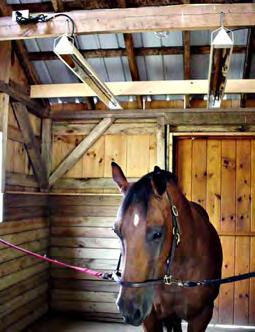
WARM COMFORT on cold days for your horse!
See our ad on page 47 KALGLO.COM/HORSEHTR
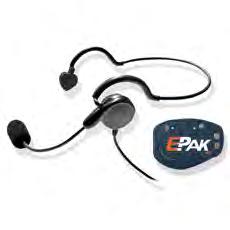
COMMUNICATE CLEARLY & PRIVATELY
Lightweight Cyber headsets with flexible back band provide simultaneous talk, hands free, two-way communica�on
See our ad on page 35 www.eartec.com
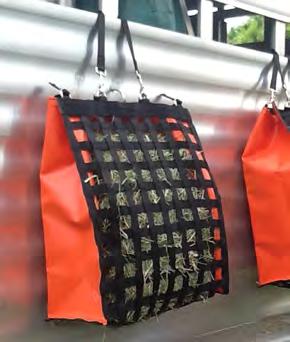
BEST ON-THE-GO Hay Feeding System!
Less waste, be�er diges�on for your horse.
See our ad page 49 www.NibbleNet.com
See our ad page 73
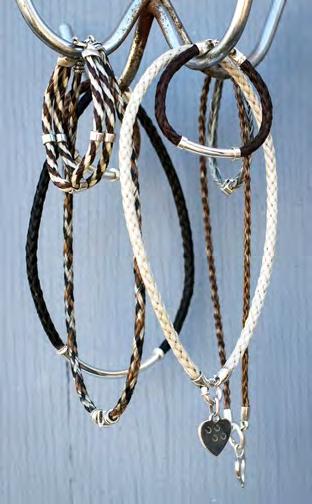
A Piece Of Your Favorite HorseCan Go With You Everywhere!
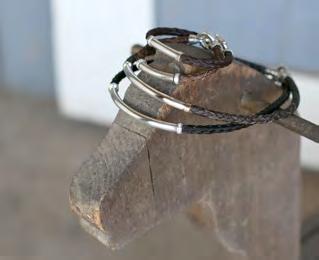
Quality fashionable jewerly made with your horse’s hair. See our ad page 25 ponylocks.com
UNDER
HELMET
HEADBANDS
The myMareCo signature Under Helmet Headband blends comfort, style and performance to secure your ride.
See our ad on page 72 Amazon.com/mymareco mymareco.com
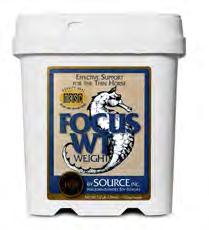
SOURCE micronutrients providing a unique spectrum of support vitamins and minerals plus, diges�ve enzymes, beneficial microbes, an�-oxidants and essen�al fa�y acids.
See our ad page 61 800-232-2365 www.4source.com
“Derma��s Goes Away!” Vet Recommended, Owner Referred, Horse Approved Worldwide
See our ad on page 49
See our ad for a coupon code!
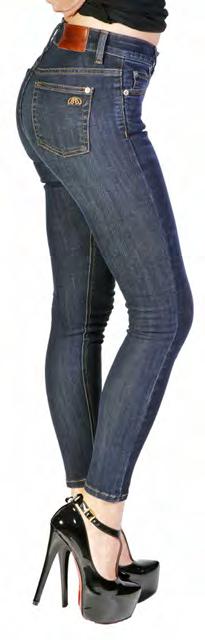
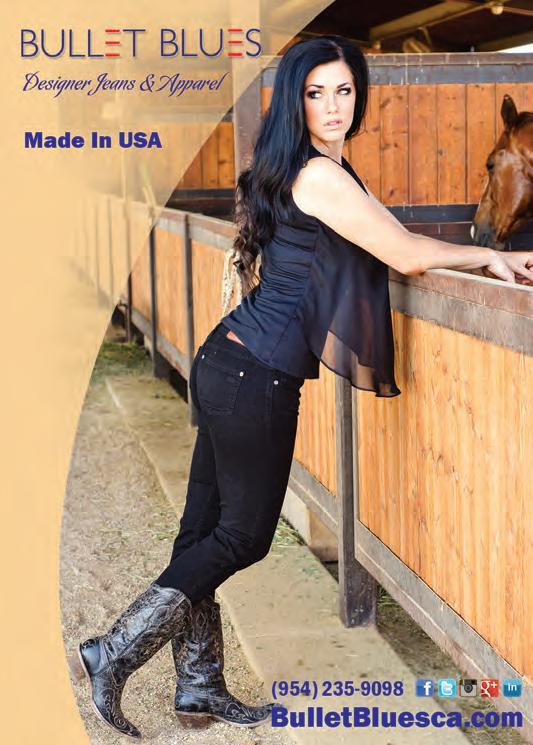
HUG YOUR CURVES Bullet Blues “Lady Slim” high-waist skinny jeans made in the USA. See our ad on page 27 BulletBluesCa.com
COLD WEATHER Melting into pring S
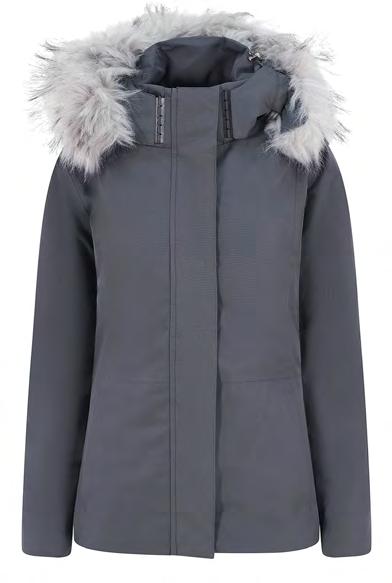
Stratus Padded Waterproof Jacket
This stunning contemporary waterproof padded jacket scored 10/10 for style in Horse & Hound’s independent review, and it’s easy to see why! Created to fit in with your busy life and perfect for training, dog walking, and outdoor activities. The Stratus Padded Waterproof Coat is made from a 16,000mm waterproof shell with taped seams, delivering superior protection against the elements. Regardless of the weather, this jacket will keep you dry and comfortable.
This jacket is designed for superior style and functionality, combining a flattering tailored fit with functionality. Conveniently placed zip front pockets with a double pillow collar for added warmth and comfort, making it ideal for wear on colder days. For complete versatility, the detachable hood has detachable faux fur, allowing you to alternate your look depending on your preference or activity.
Because we know that riding in extreme weather conditions places greater demands on your outerwear, alongside the premium waterproof rating, we’ve included storm cuffs, a magnetic storm flap with a two-way zip to give additional protection against wind and rain, and double zip vents and gussets to the back to aid freedom of movement in and out of the saddle.
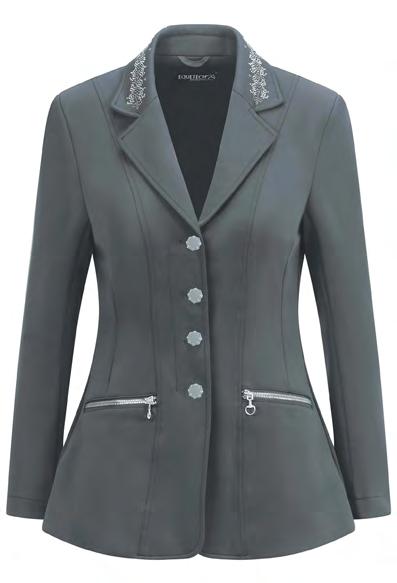
Crystal Shower Proof Competition Jacket
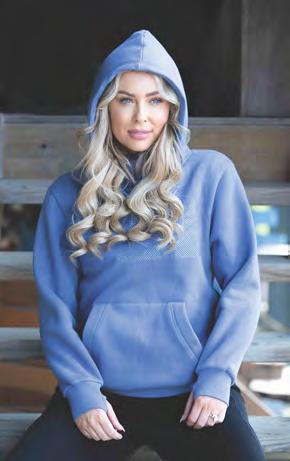
Crystal Signature Crossover Hoodie
Our new Crystal Signature Crossover Hoodie is a stylish and functional addition to any equestrians wardrobe. Features include a double-lined hood, thumb holes to the cuffs, ribbed cuffs and hem, a front pouch pocket, and an Equetech embellished logo on the draw-cords.
The Crystal Signature Crossover Hoodie is not just a piece of clothing; it’s a wardrobe essential that embodies our ethos for versatility, functionality and sustainable fashion. A reliable and stylish companion, keeping you cosy and chic throughout the season.
The Equetech Crystal Showerproof Competition Jacket is a refined blend of style, functionality, and performance, perfect for equestrian competitions. This jacket is made from a showerproof stretch jersey fabric, ensuring both comfort and protection against the elements, so you stay dry and comfortable even in unpredictable seasonal weather.
Its stretch quality allows for excellent freedom of movement, which is essential during riding. What sets this jacket apart is its exquisite design details. The crystal collar embellishment adds a touch of elegance and sophistication, making it stand out in the show ring. The contrast zip pockets are not only practical for securely holding small items but also add a modern, stylish flair to the overall design.
The jacket also features double back vents, for a better silhouette in the saddle and provide ease of movement, making it ideal for active competition. Inside, the jacket is lined with a mesh material, which contributes to its breathability and comfort. The mesh lining ensures that you remain cool and dry by allowing airflow and wicking moisture away from your body. This feature is particularly important when riding for extended periods.
Equetech caters to a wide range of body types, offering sizes up to a ladies’ 24 as standard. This inclusive sizing ensures that more riders can enjoy the benefits of this high-quality competition jacket without compromising on fit or comfort. Other features include secure zip behind Equetech signature buttons, contour sleeve design and machine washable fabric for an easy care solution, a must around horses!
Equetech Crystal Showerproof Competition Jacket combines practical features with luxurious design elements, making it an excellent choice for equestrians who value both performance and style in their competition attire at an affordable price. Whether you’re in the show ring or riding in less-than-ideal weather, this jacket ensures you look polished and feel comfortable. Machine washable. 32- 48, RRP: £137.50
Enjoy an active lifestyle without compromising on style or comfort the Equetech way.
XS - 3XL, RRP: £174.95
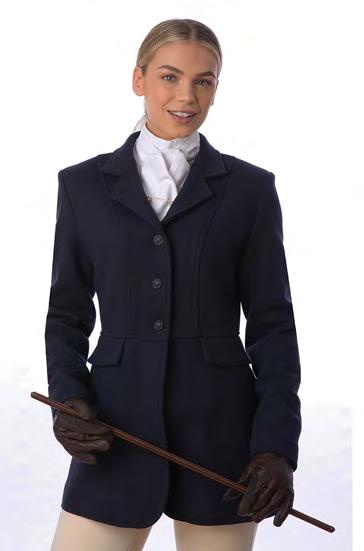
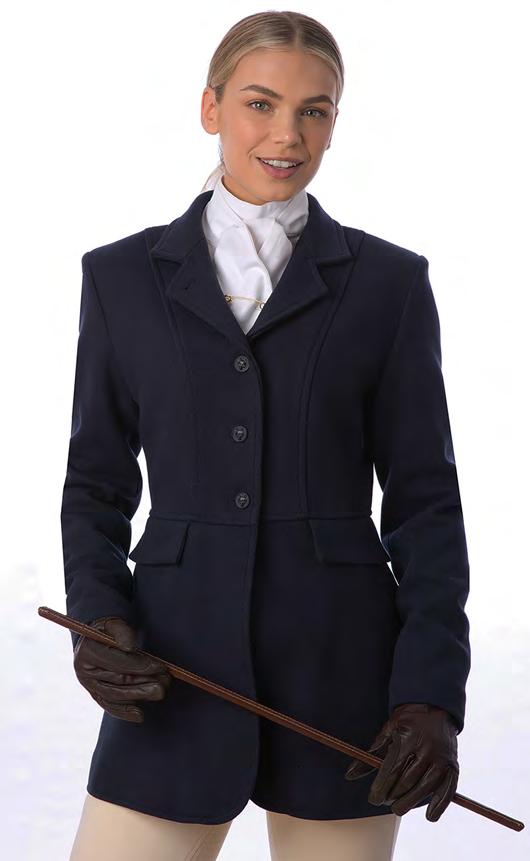
Step into the hunt field with confidence and elegance in the Equetech Ladies Hunt Frock Coat, a true icon of traditional British equestrian style. Loved by riders across the globe, this coat is one of Equetech’s most popular exports – and it’s easy to see why. Made from a premium 640gm twill wool blend, this coat is the epitome of classic tailoring, comfort, and durability.
What sets this coat apart is its exquisite attention to detail and exceptional functionality. It features a single inset whistle pocket hidden within the inner seam – a traditional and practical touch for the hunt field. The storm tab collar fastener offers added protection against the elements, while the concealed zip flap pockets at the waist keep your essentials secure and discreetly stored.
Inside, the coat is lined with a classic tattersall check, blending tradition with comfort. A wipeclean lower lining ensures that mud and mess from the hunting field can be easily managed. The addition of inner storm stretch cuffs provides a close fit around the wrists, helping to block wind and retain warmth.
At the back, a single vent allows for ease of movement in the saddle, ensuring both style and practicality while riding. The coat is supplied with a zip garment bag to protect it between outings and during storage.
Key Features:
Classic frock-style cut for a traditional equestrian look
Made from high-quality 640gm wool-rich twill (80% Wool / 20% Polyester)
Tattersall check lining for a heritage-inspired finish
Wipe-clean lower lining for practicality
Concealed zip flap waist pockets
Inner storm stretch cuffs and storm tab collar for weather protection
Inset inner whistle pocket for traditional functionality
Single vent to back for ease in the saddle
Supplied with zip garment bag
Whether you’re riding to hounds, leading a field, or entering the show ring, the Equetech Ladies Hunt Frock Coat delivers timeless style and superior functionality. Made for women who value tradition, comfort, and craftsmanship, this coat is a long-term investment in your equestrian wardrobe.Dry clean only.
32 - 44, Black or Navy, RRP: £349.95
Combining quintessentially British heritage with contemporary design, this traditionally styled stock shirt is cut from a soft, technical, thermal, quick-drying jersey fabric for comfort and performance. It’s the perfect layer for freezing days on the hunt field, at competitions, or when training. Smart, stylish, and incredibly warm!
It features a concealed front button placket and a stock (rat catcher) collar with a loop to the back for stock.
By popular demand, our new crystal dressage shirt option offers the same level of performance and warmth with the addition of crystal embellishment to the collar - a glamorous winter shirt choice for dressage competitions, training, or any other equestrian disciplines where sparkle in mid-winter is a must! Machine washable. Knitted 95% Polyester / 5% Elastane.
XS - 3XL, RRP: £49.95
Traditional stock shirt designed with performance, warmth, comfort, and style in mind for colder weather.
Made from advanced thermal fabrics, it provides excellent insulation while remaining breathable and moisture-wicking, ensuring riders stay warm without overheating.
The classic stock collar allows for the attachment of a stock tie, making it suitable for both competitions and hunting. Its tailored fit offers a flattering silhouette, while practical design elements such as a zip closure and button collar to enhance functionality and ease of wear.
Other features include a concealed zip placket, woven cotton collar, stretch cuffs and scooped back. By blending traditional equestrian style with modern fabric technology, we have delivered a versatile and elegant stock shirt that keeps riders comfortable and polished in any setting. Easy to maintain, machine washable.
RRP: £47.50, 8 - 18
Luxe Crystal Thermal Stock Shirt
Ladies Thermal Cosy Stock Shirt
HIS HERS &
Whey Jennings:
����������������������������������
with L.A. Berry, Equinista
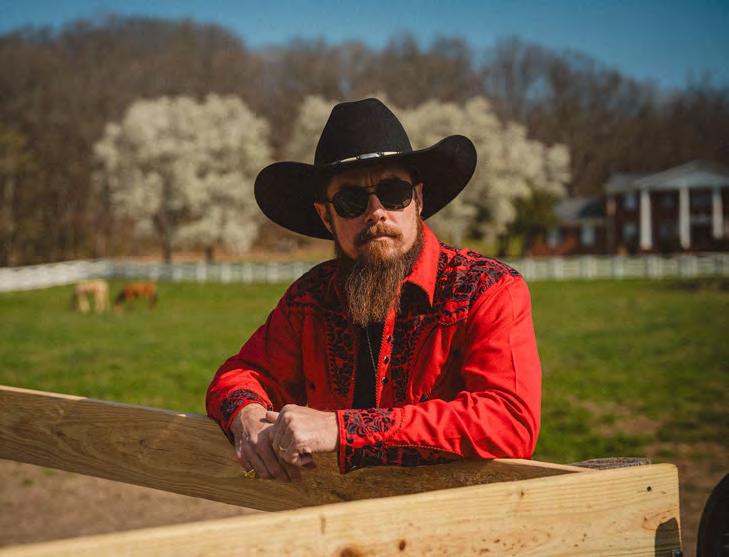
If you love country music you’ll recognize the family name but horses, not Magnum V8 horsepower, have more or less figured in the life of American songwriter and musician, Whey Jennings. “More” in that horses led to the woman and family he cherishes and “less” courtesy of an unscheduled, gravity-assisted dismount or two (we feel you, sir). But since country music doesn’t just run it gallops through his blood and faith keeps it beating, he’s made sure the hoof beat goes on, releasing singles like Girl on a Fast Horse with Charity Bowden, from his album, Jekyll & Hyde, and in March 2026, launching Bap�zed By Fire on digital streaming pla�orms via Dirt Rock Empire. As a storyteller for the Zoe�s-sponsored Horses for Mental Health na�onal campaign that raised a record-breaking $1.36 million in 2025 for equine-assisted mental health programs, he has sought to inspire if not entertain through his own unabashedly amateur journey with the noble animals he respects as healers and inspira�on. To his fans and those who love him, Whey Jennings is already tall in the saddle.
HERS: Do you remember your first horse/ pony?
HIS: My mom loved horses and the family raised horses and bulls. I remember being really young and on a horse, and looking to my left and seeing a bull. No fence between us. So I guess I freaked out and the horse sensed that because I got thrown. You know how you’re supposed to get up and get right back on? Well, I didn’t. For years I was nervous about getting thrown again.
HERS: What did they teach you that may still apply for you today?
HIS: That experience has been a defining factor in my life. It taught me to respect life. You can’t just go at something and climb on without a relationship first. You learn a new language and connection that can really ground you. I know there’s a future for me with horses. God keeps putting them in my path. I’ve promised my wife I’ll go learn. She rides, and I can see how horses light my kids up.
HERS: What qualities do you like best in a horse and/ or in a person?
HIS: I love good people and good horses, a ‘good spirit’ is needed by everyone. I also like winning over hardheaded people and horses. They’ll learn to like me!
HERS: What was your first job and how old were you?
HIS: Working for myself? Mowing lawns. Working at Taco Bell? I lasted about three hours. At 17 I worked at Hollywood Video and had a great time, like a real-life High Fidelity.
HERS: If you could work with horses, what would you be doing?
HIS: My stepbrother was a bull rider. I always wanted to try that. Barrel racing looks fun, too.
HERS: Favorite quote?
HIS: “Do it or die trying.”
HERS: If you could spend a day with any rider/horse in history, who would it be & why?
HIS: Wyatt Earp and Doc Holliday. Growing up, the stories around Tombstone really intrigued me.
HERS: What do you think makes horses and music feel like such a natural connection?
HIS: Good country music is by country people who know ranch work. The ranch is where it starts. Cowboys and country singers are hand-in-hand.
Whey Jennings, fine horse farm, 2024.
Photo by John Galletti/JWA
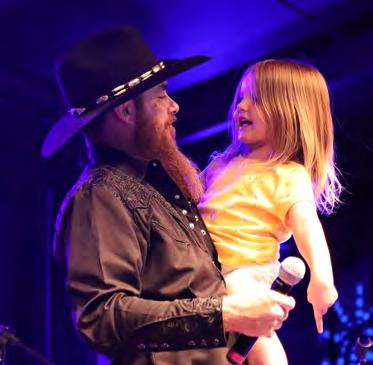
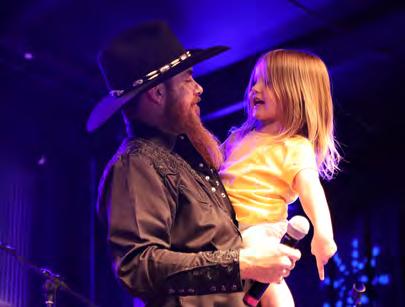
Whey with daughter Kathy, at the Kentucky Opry
Photo by JWA
“ Horses light my kids up.
HERS: You can invite 3 guests (past or present, real or fictional) to dinner. Who joins you and what’s on the menu?
HIS: Honestly? I’d invite my mom, my dad, and my granddad. I’d love to see them again, and we’d all have a good steak and mashed potatoes.
All images courtesy JWA Media
Find the music of Whey Jennings at wheyjennings.com and @WheyJennings on YouTube, and follow the down-home warmth of his live feeds (look for his Hubby coffee cup) on FB and IG @wheyjennings.
Suggest a guest for His & Hers, latheequinista@gmail.com
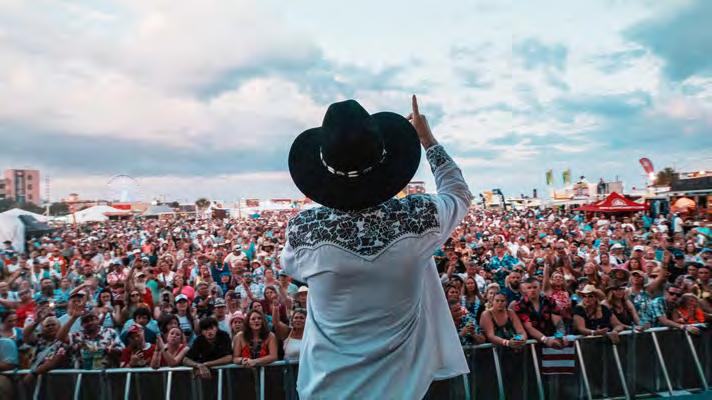
Whey Jennings performing at the Carolina Country Music Festival Photo by JWA
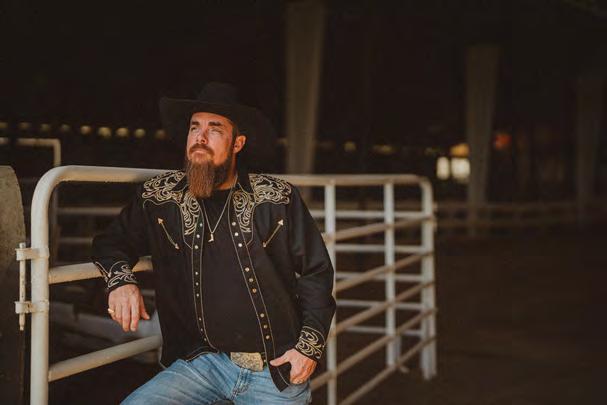
Whey Jennings outside a round pen 2024. Photo by John Galletti/JWA
Equine Art
Sheona Hamilton-Grant
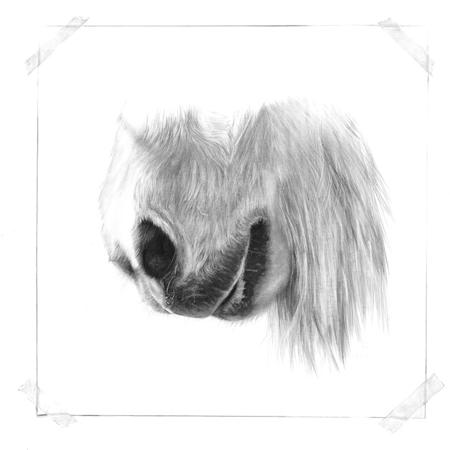
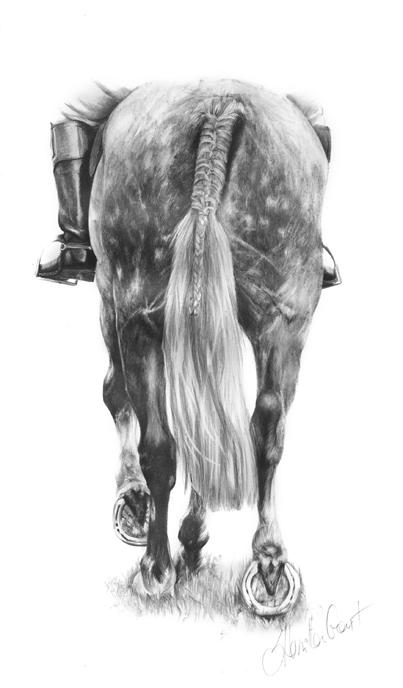
A Master of Graphite, Sheona uses her pencil strokes to delve into the world of horses with her own unique perspec�ve, highligh�ng not just their physical beauty but also the depth of their personali�es. Her keen a�en�on to detail brings forth the power, grace and soulful expressions of these majes�c beings.
Nancy Rynes
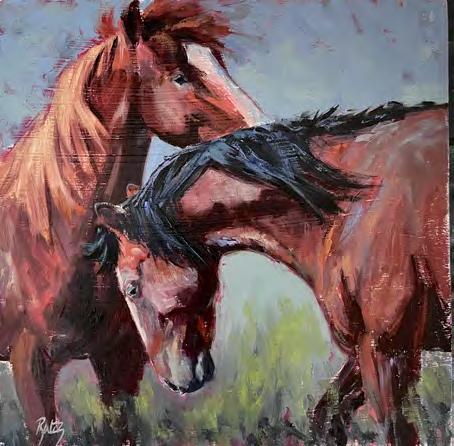
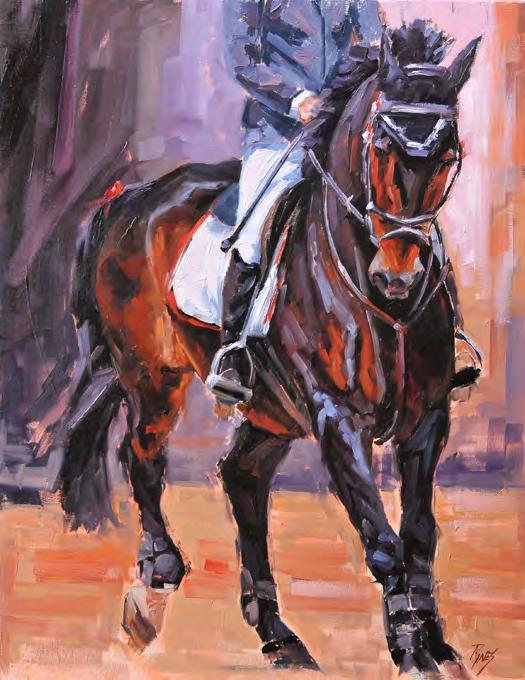
Nancy Rynes love of art began with her childhood growing up on a small farm in Illinois. Drawing, wri�ng, working on the farm and riding her Choctaw pony were all part of her live in the country. The ar�st focused on drawing horses and wildlife in her teen years, which led her to study fine art at the American Academy of Art in Chicago. She paints from life when possible - believing it is an exercise which keeps her tuned in to the true colors and pa�erns of light. The freedom, energy and movement of animals inspires her. Her pain�ngs combine the use of bold color and brushstrokes, all while trying to express the deeper energy of life.
Connection by Sheona Hamilton-Grant. Unframed 12×12″ graphite on paper. $1,260.00
Digger and Ace by Nancy Rynes. 10×10″ oil on canvas. $950.00
The Way Back by Sheona Hamilton-Grant. Matted 10 x 16 1/2″ graphite on paper. $1,050.00
A Tight Turn by Nancy Rynes. 24 x 30 ” oil on canvas. $2600.00
Voted Best Hardware Store
ART ANTIQUES &
By Dr. Lori
Rip off the
Bandaid
when Downsizing
By Dr. Lori Verderame
When it comes to downsizing, most people think that the problem is a lack of space, but in fact, the problem is dealing with a life�me of emo�ons that present themselves in the form of objects. My first bit of advice, a�er a career evalua�ng heirlooms for families at all phases of life, is to try to keep your emo�ons at bay.
How do you start downsizing?
Get an appraisal. Use a cheap appraisal alternative like my video call appraisal sessions which can have you talking with me directly via a video conferencing app on a smart phone or Zoom. Show me the stuff in your home, storage locker, or garage to learn the value of items. Once you know the value of an item, it is much easier to decide whether that item gets a spot in the coveted moving box or if it is destined for the trash, selling, or donation box. The first move is to learn the value of objects from an expert. That expert is me.
Contrary to popular belief, appraisals are not expensive. They are not just something for the wealthy or upper classes. It is necessary for everyone to make an informed decision about the value of unwanted stuff. I guide families down this road often with appraisals that are reasonably priced and most importantly, accurate.
Think about what you really need and what you’d be willing to part with as you prepare to downsize. For instance, do you need another set of crystal goblets? Do you plan to entertain as much as you once did at your new smaller home? Is there another solution for these goblets. Perhaps a niece could use the goblets for her new catering business? What about the sports equipment that has been in the garage, unused, for years? Call the local community center where Grandpa used to volunteer, can they use any of this stuff? Of course, donating objects to Goodwill or Salvation Army thrift stores is another option. One of the most popular suggestions for unwanted stuff is to sell it online and line your pockets with extra cash. I coach and teach classes for first time sellers and reselling online is easier than you think.
Tubs or Trash bags?
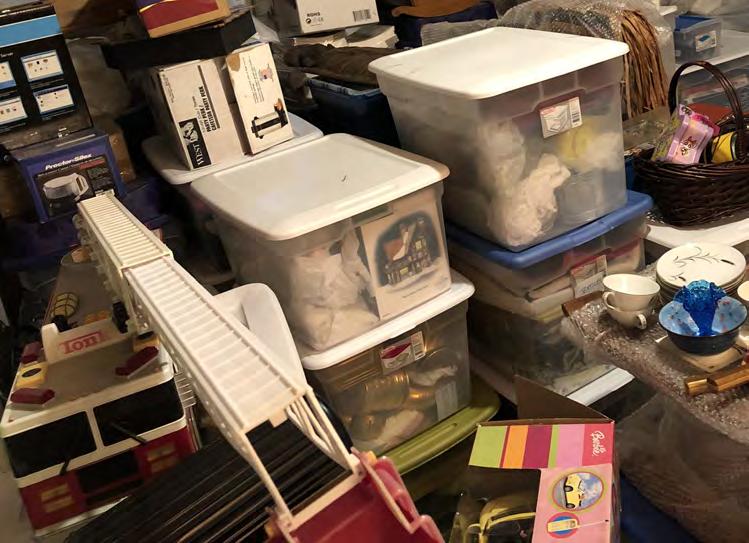
Plastic tubs with lids are necessary. Tubs are for items that will be distributed to family members. Tubs are convenient because they can be stacked away until the relative can retrieve their tub. Tubs do not attract bugs like cardboard boxes do. Tubs protect items from water leaks or basement flooding. Garbage bags are good for items to be donated or trashed. Garbage bags hold a lot of stuff, and they are best for items like clothes, shoes, textiles, pillows, damaged items, stuffed toys, etc. When donating items, filled garbage bags allow you to fit more bags into your car or SUV.
Side Hussle
Selling unwanted items online is one of the fastest growing side businesses. Referred to as a profitable “side hustle,” online selling turns unwanted items from junk to inventory. Starting a new business venture is exciting and it can inspire you to start the task. I teach classes on how to sell old stuff online for profit and many people are successfully selling stuff once they rip the band aid off and start downsizing. You don’t have to be the person who does the actual online selling if you are too busy or not interested in the job. You could be the person who provides—and gets paid a percentage for—the inventory that an online reseller sells on your behalf.
When riders enter the ring, their focus is on performance, precision, and the partnership with their horse. Every stride, every jump, and every landing reflects countless hours of preparation. Yet beneath the brilliance of the sport lies an element that often goes unnoticed—but is absolutely essential to success: the footing and the carefully engineered materials within it.
Footing is more than the ground beneath us. It is the stage on which champions are made. It is the unseen support system that protects a horse’s body, enhances athleticism, and gives riders the confidence to ask for brilliance. Whether training at home or competing at the highest levels, footing is the silent partner in every ride—and its quality matters.
The average sport horse takes thousands of strides each week, both in training and competition. Each stride sends force and impact through joints, tendons, ligaments, and bones. Without properly designed footing, those repetitive motions can lead to strain, injury, or compromised performance. High-quality footing, on the other hand, provides the balance of cushion, stability, and consistency needed to support longevity and soundness.
At home, footing sets the tone for training. Horses learn, develop strength, and refine technique in their daily environment. If footing is too deep, it can sap energy and overload soft tissue. If it is too hard, concussion travels through the body with every step. A surface that performs consistently—day after day—allows both horse and rider to train with confidence and clarity.
In competition, the demands intensify. Riders ask for speed, accuracy, and bold athleticism. Horses turn tighter, jump higher, and land with greater force. In these moments, footing must not only support performance but protect it. A secure, well-engineered surface helps prevent slips, offers reliable takeoff and landing zones, and ensures horses leave the arena ready to perform again tomorrow.
Simply put, footing is a critical component of equestrian sport. Riders meticulously invest in training, veterinary care, nutrition, and tack— footing deserves that same level of consideration, because it touches every single stride.
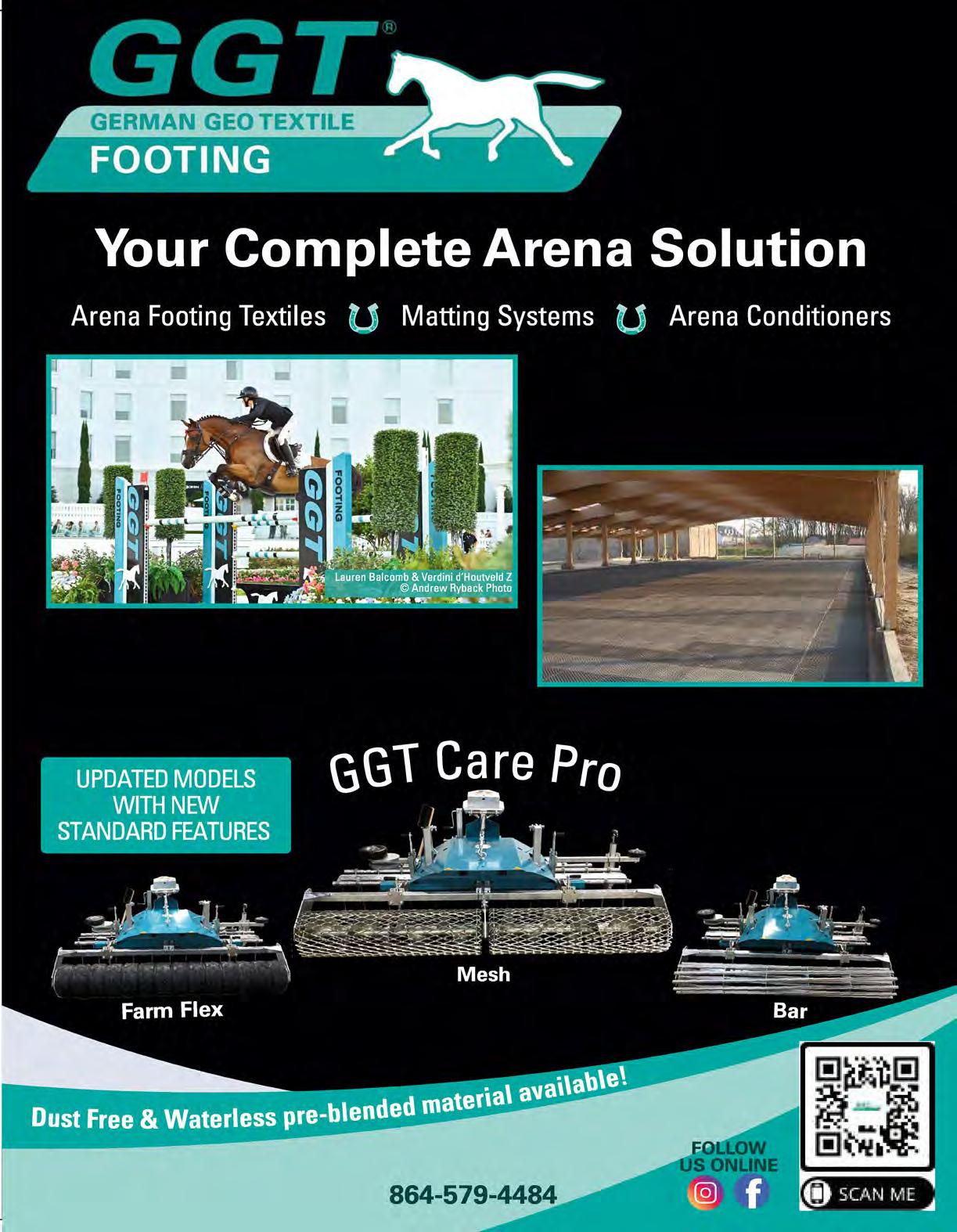
For more than two decades, GGT Footing has been a leader in arena footing technology, shaping the sport quite literally from the ground up. From private training arenas to world-class competition venues, riders across disciplines trust GGT Footing because the company understands what is at stake: the safety of horses, the success of riders, and the longevity of equine careers.
By Michael Crucio� Founder & CEO MAC Sports Interna�onal
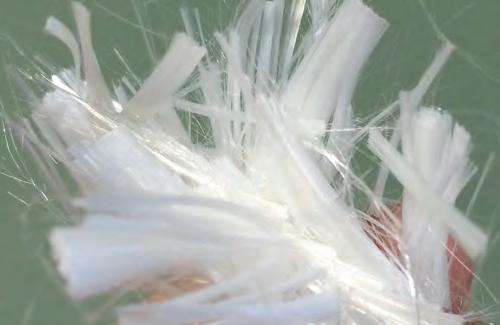
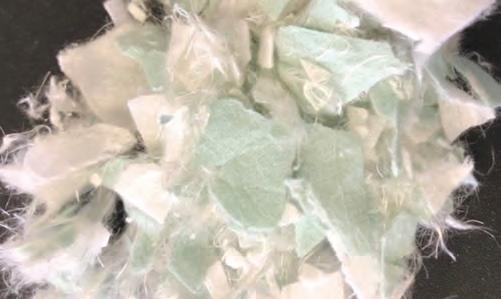
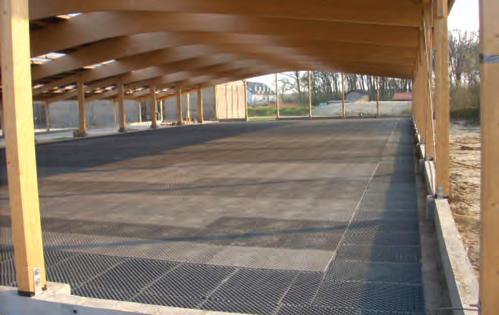
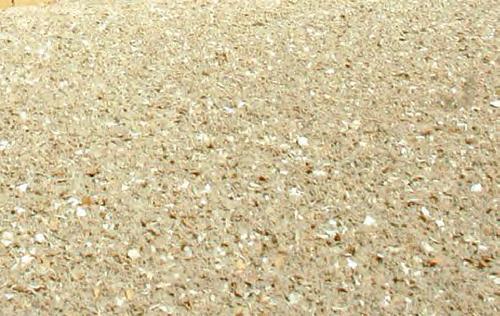
What sets GGT Footing apart begins with innovation. GGT’s specialized blend of advanced fibers and geotextile materials is engineered to work seamlessly with sand, creating a surface that achieves the ideal balance of stability and cushion. This technology allows horses to push off with power, land with confidence, and move freely—while maintaining surface integrity under consistent use and pressure.
Unlike traditional sand-only arenas, footing containing GGT Footing materials resists shifting, compaction, and degradation over time. The result is a surface that performs reliably in varying conditions and remains consistent throughout training sessions and competitions alike.
But the product itself is only part of the story. GGT Footing is equally defined by its people—experts with decades of experience and a deep understanding of arena design, performance demands, and horse welfare. From initial consultation through installation and long-term maintenance planning, GGT Footing works closely with clients to ensure each arena meets its intended purpose. Ongoing support and collaboration with trusted arena builders help ensure surfaces continue to perform at the highest level for years to come.
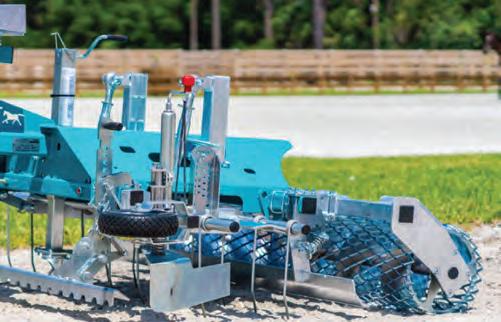
Even the best arenas require care over time. Weather, daily use, and natural wear can gradually affect footing performance. GGT Footing specializes not only in new arena construction, but also in refreshing and revitalizing existing surfaces.
Upgrading an arena with GGT Footing materials restores consistency, enhances performance, and renews confidence underfoot. It is more than an investment in a facility—it is an investment in horse health, rider confidence, and peace of mind. Riders should never have to question the ground beneath them. With footing enhanced by GGT Footing, they don’t have to.
A refreshed surface means fewer risks, improved performance, and greater confidence in every stride. Whether you are a professional preparing for top-level competition or an amateur investing in your horse’s future, GGT Footing provides the foundation for success.
In a sport where every detail matters—from conditioning programs to saddle fit to nutrition—footing remains the unsung hero. Yet it underpins every decision riders and trainers make. Without quality footing, even the best horses cannot perform at their best.
That is why, at elite barns and premier venues around the world, the name GGT Footing has become synonymous with excellence. Riders know that with GGT, they are standing on more than just ground—they are standing on decades of expertise, innovation, and unwavering dedication to the sport.
Because when it comes to protecting horses, elevating performance, and building a foundation for greatness, footing with GGT Footing is more than a surface—it’s the ground you can believe in.
NUMEROUS HORSE SHOWS ACROSS THE COUNTRY
Just to name a few...
• AIKEN HORSE PARK
• FIELDSTONE SHOWPARK
• KENTUCKY HORSE PARK
• LA EQUESTRIAN CENTER
• MURIETTA EQUESTRIAN CENTER
• SILVER OAK HORSE SHOW
• SONOMA HORSE PARK
• STABLEVIEW
• SWAN LAKE HORSE SHOW
• TRAVERSE CITY HORSE SHOWS
• WEC OCALA
• WEC OHIO
• WELLINGTON EQUESTRIAN FESTIVAL
• WEST PALMS EVENT SHOWS
• WOODSIDE HORSE PARK
Aiding Horses And Riders Through The Art Of Riding
Equine Performance Partnership’s new headquarters is NOW OPEN in Ocala, where our 40 acre equestrian paradise boasts a majestic and well rounded facility for top tier training for the competitive dressage or jumping arena.
What We Do:
Come train among the best in the business and experience our dynamic training program. Our main focuses are developing horse and rider pairs and building up training horses the right way; using a combina�on of classical and modern cross training modali�es, including groundwork, trail riding and especially providing space for the horses to open up and be themselves. Our method is a whole horse approach, each horse receives an individualized program based on their needs and to strengthen their confidence in themselves. We believe in happy, healthy horses and aiding riders to be the best versions of themselves they can be for their horses.
Our Facility:
• Our facility is gated with on-site owners, and located 10 minutes from World Equestrian Center, Ocala
• Renovated 12 stall barn equipped with grooming/wash stalls, air condi�oned tack room and feed room
• Spacious 14 x 16’ ma�ed stalls with fans and automa�c waterers
• Round pen
• New fencing, gorgeous fields with shade trees and run-in barns
• Group and single turnout
• Grass dressage and jumping arenas
• Tranquil open spaces for trail riding and work outside the arena
• Coming soon- an oversized covered arena with GGT Foo�ng
Rental Facilities:
Our property also has two fully renovated 3 bedroom 2 bathroom homes available for season rental. They have fenced yards with wire perfect for dogs, beau�ful landscaping and trees, and are very private. There are small two stall barns on the property available for rental with pasture.
Wether you have a young FEI prospect, a stallion you would like to campaign, a “problem horse” or you want to enhance your partnership with yourself and your horse, we are here to support horses and riders to be their very best.
WHY EQUESTRIANS NEED
Regenerative Medicine: What Your Horse’s Vet Already Knows
If you’ve watched your horse recover from a tendon injury through stem cell therapy, you’ve witnessed the body’s remarkable ability to heal itself when given the right biological tools. What many equestrians don’t realize is that the same regenerative medicine revolutionizing veterinary care has been quietly transforming human healthcare—yet most riders have never considered it for themselves.
The Irony No One Talks About. Here’s a pattern we see constantly: an owner invests $5,000 in PRP or stem cell therapy for their horse’s knee, carefully follows rehab protocols, and celebrates when their partner returns to full performance. Meanwhile, that same owner limps around the barn with chronic shoulder pain, pops ibuprofen daily, and accepts that “this is just what happens when you ride.”
Why the disconnect? The equestrian community has unknowingly become one of the most educated groups on regenerative medicine, but only for their horses. Veterinarians embraced these therapies over a decade ago because the results were undeniable. Human medicine is finally catching up.
Unlike conventional treatments that mask symptoms, regenerative therapies work at the cellular level to repair damaged tissue.
Stem Cell Therapy introduces potent healing cells directly into injured areas. These cells signal your body to repair damaged cartilage, tendons, and ligaments the exact same way they work in horses. The difference? You don’t need stall rest.
PRP (Platelet-Rich Plasma) concentrates your own healing factors from your blood and injects them into injured tissue. Your vet calls it “liquid gold” for horses. It’s equally powerful for chronic joint pain, tendinitis, and soft tissue injuries in humans.
Exosomes: The Next Frontier represent the latest advancement in regenerative medicine. These are tiny messenger particles derived from stem cells that carry powerful healing instructions to damaged tissue. Think of exosomes as the “text messages” stem cells send to coordinate repair. They’re incredibly potent, many practitioners consider them more ef-
Story By Dr. David Smith and Reid Lentz
fective than stem cells themselves for certain conditions, and they work faster with less inflammation. Exosomes are particularly effective for systemic issues like chronic fatigue, autoimmune inflammation, and widespread joint degeneration. Your vet may not be using these yet for horses, but they’re becoming the gold standard in human regenerative care.
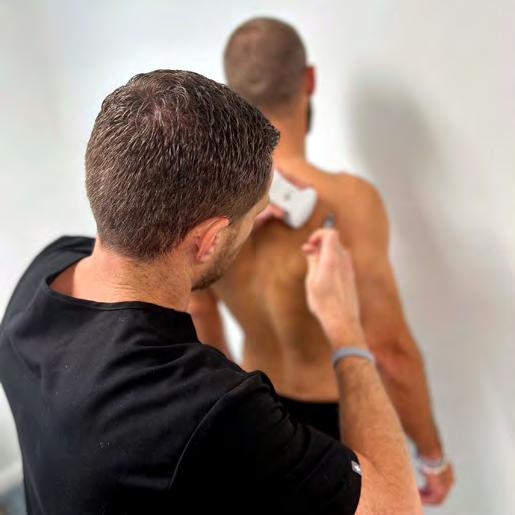
Advanced Pulse Wave Therapy uses targeted acoustic waves to break up scar tissue, improve circulation, and trigger cellular regeneration, without needles or downtime.
These aren’t experimental treatments. Professional athletes, military special forces, and elite performers have been using regenerative medicine for years to extend their careers and maintain peak performance.
What’s Really Holding You Back?
The physical demands of riding and barn work create predictable patterns: chronic shoulder pain from lifting saddles and hay bales, knee degeneration from years in the saddle, lower back pain from repetitive lifting, tennis elbow from holding reins, hip flexor issues from deep seat position, and ankle instability from old falls that never fully healed. Traditional medicine offers cortisone shots (temporary relief with long-term damage), anti-inflammatories (masking symptoms), or surgery (often avoidable). Regenerative medicine offers a third option: actual tissue repair.
Most riders over 40 have accepted chronic pain as “just part of riding.” But chronic pain isn’t inevitable, it’s a signal that tissue damage hasn’t fully healed. When you address the root cause rather than just managing symptoms, everything changes. You’re not riding through pain; you’re riding pain-free. You’re not counting down the years until you “have to stop riding”; you’re planning your next decade in the saddle.
The Ripple Effect of Real Healing.
When you heal (truly heal, not just mask symptoms) everything improves. You ride with confidence. You handle barn work without fear. You have energy for your family at the end of the day. Your horse benefits from a rider who’s physically capable and mentally present.
Your horse doesn’t get better if you ignore lameness. Neither do you. The same regenerative therapies your veterinarian trusts are now accessible and proven. The question isn’t whether regenerative medicine works, the evidence is overwhelming. The question is: if you’d do it for your horse, why wouldn’t you do it for yourself?
About the Authors:
Dr. Dave Smith is a board-certified emergency medicine physician specializing in regenerative therapies.
Reid Lentz brings 15 years of executive leadership and performance coaching to holistic health protocols. Together, they founded Good Soil Health, a concierge regenerative medicine practice serving the Wellington and Palm Beach equestrian community.
For more information: 954-408-1890 or www.goodsoilhealth.com
Dr. David Smith
Reid Lentz
The Love Hormone: Oxytocin and the Horse-Human Bond
Story and Photos By Lynne Trenery Freeman
This is the first in a two-part series. From foaling stalls to quiet grooming sessions, oxytocin fuels the bond that makes horses feel safe and connected.
Lynne Trenery Freeman shares science-backed insights and hands-on practices for building lasting partnerships with foals and adult horses alike.
We ask a lot of our horses. We want them to live comfortably in a human world, becoming partners, performers, and companions. Yet one of the most powerful tools for helping them succeed often goes unnoticed — the hormone oxytocin, sometimes called the “love drug.”
Oxytocin is a neuropeptide most abundant around birth, released in surges during labor, nursing, and early bonding. Its name comes from the Greek oxytokion, meaning “swift birth.” But while its strongest release happens at foaling, oxytocin is also produced during quiet moments of touch, stroking, and social closeness. It reduces stress, lowers anxiety, and strengthens trust — all qualities we hope to nurture in our horses.
Why Bonding Matters
The ultimate goal of every horse-human relationship is a willing, confident partner who is relaxed, eager to participate, and safe to be around. Research across species shows that oxytocin enhances social motivation and learning, particularly in contexts of trust, safety, and overall psychological stability. In horses, this means that intentional bonding — especially in early life — sets the stage for cooperative, resilient equine partners.
Anyone who has bred or raised foals knows that early handling can make all the difference. But it’s not just
about exposure — it’s about creating positive associations during the critical bonding window. When a foal experiences human touch and voice alongside its dam’s nurturing presence, oxytocin helps encode those interactions as safe and rewarding. These associations last far into adulthood.
I like to use the word coach rather than trainer or handler, because true partnership involves more than teaching skills. Coaching encompasses guidance, support, and encouragement for the horse’s mind, body, and spirit. For mares and foals, this means the same person should ideally be present throughout pregnancy, foaling, and early handling. Familiarity matters. The more genuine affection and positive history the coach has with horses, the stronger the chemistry works.
Too often, broodmares are put “on the back burner” until foaling. In reality, they benefit from more fre-
The Coach’s Role
quent, calm interaction during pregnancy. Grooming sessions should go beyond the brush — using hands in long, slow strokes along the neck, withers, and back. Stroking the forehead or gently running fingers through the mane mimics maternal licking. Horses are remarkably perceptive: the mare will soften, lick her lips, or close her eyes. And you, too, may feel calmer. That’s oxytocin at work on both sides.
In the Foaling Stall
When foaling approaches, every stall should be equipped with a camera so the coach can be present at birth. A maiden mare, especially, may be nervous. A calm voice, reassuring strokes, and steady presence during labor help both mare and foal. Once the foal arrives, the coach should join in the process — sitting with the mare and foal, speaking softly, gently stroking the mare and foal, reinforcing the dam’s natural behaviors without interfering.
I use repeated phrases like, “You’re okay,” or “Nice job.” Horses are masters of association with excellent memory, and foals will carry these words into adulthood. Over time, the words alone can elicit calmness and trust. I call this the Association Plus (A+)™ coaching method: pairing voice, intentional touch, and oxytocin-fueled bonding to create deep-rooted associations.
Beyond Birth
Of course, not every horse owner is present from foaling, but oxytocin isn’t limited to that moment. Simple, intentional bonding continues throughout a horse’s life. Quiet grooming, hand-stroking, or even standing together in calm companionship all release smaller but repeated pulses of oxytocin. Over time, these build trust and security.
References:
This year I had a Hackney colt who, despite all sanitary precautions, developed an umbilical infection and required surgery. He spent over a month stallbound, needing bandage changes and frequent oral medications. Because of our strong bond, he trusted me so fully that he often didn’t bother to rise when I administered his medications. At just four months old, he led, tied, groomed, trailered, and went to his first show — where he proudly brought home a blue ribbon.
Lasting Impact
Oxytocin isn’t just a scientific curiosity. It’s the biological underpinning of the trust we all seek with our horses. By being intentional with touch, voice, and presence, we set the stage for lasting partnership. Whether with foals, broodmares, or seasoned adults, oxytocin provides a pathway to deeper connection.
It’s important to remember that oxytocin isn’t just a ‘feel-good’ idea we project onto horses — it’s a welldocumented mammalian hormone with measurable effects across species, including humans, dogs, and livestock. The calming responses we see in horses during touch aren’t imagined; they’re rooted in biology.
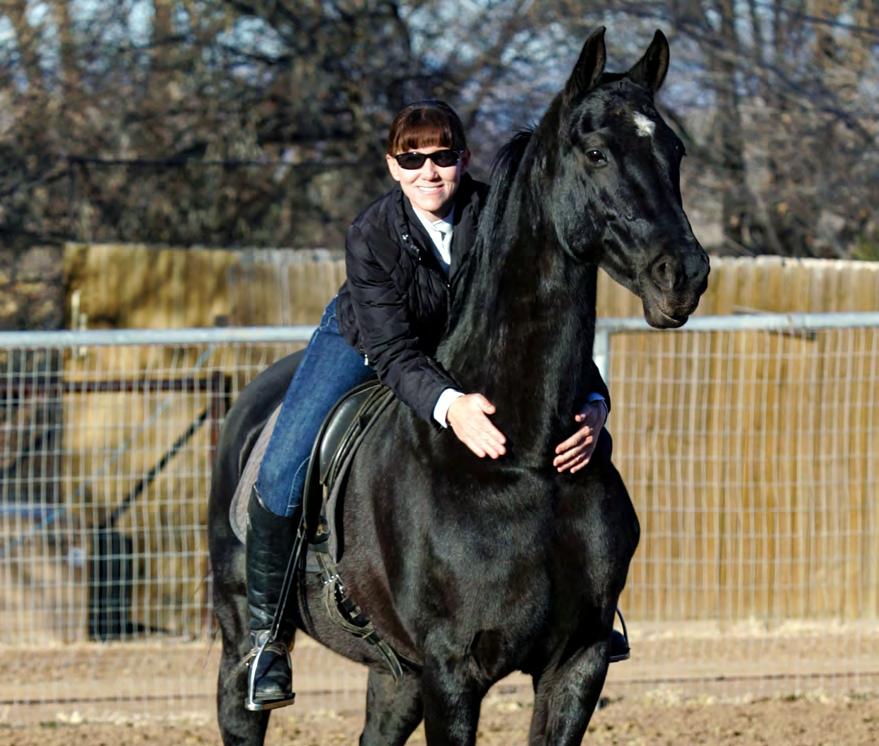
So the next time you’re with your horse, set aside time for quiet stroking, soft words, and shared calm. Science backs it up: a hug, a stroke, or simply standing together isn’t just sentimental — it’s chemistry building a stronger bond.
Key takeaway: Every interaction is a chance to strengthen the oxytocin connection. With intention and consistency, you’ll create a partner who trusts you not just in training, but in every aspect of life.
Aydin, E., et al. (2020). The effect of human interac�on on horses’ oxytocin and cor�sol levels. Animals.
Beetz, A., et al. (2012). Psychosocial and psychophysiological effects of human–animal interac�ons: The possible role of oxytocin. Fron�ers in Psychology.
Boivin, X., et al. (1992). Influence of early handling and social rearing condi�ons on calf–human rela�onships. Applied Animal Behaviour Science.
Coulon, M., et al. (2015). Influence of early human handling on the subsequent social behavior of lambs. Applied Animal Behaviour Science.
Kendrick, K. M. (2000). Oxytocin, motherhood and bonding. Experimental Physiology.
McDonnell, S. (2000). Reproduc�ve behavior of stallions and mares: Comparison of free-running and domes�c in-hand breeding. Animal Reproduc�on Science.
Nagasawa, M., et al. (2015). Oxytocin-gaze posi�ve loop and the coevolu�on of human–dog bonds. Science.
Nowak, R., et al. (2000). Mother–young rela�onships in sheep: A model for understanding the neurobiology of a�achment. Journal of Neuroendocrinology.
Yarnell, K., et al. (2015). Domes�cated horses differ in their behavioural and physiological responses to different handling techniques. Physiology & Behavior
The Hackney: Fire on the Road
Part I: Along Roads Not Yet Imagined
This is what I am bred for.
I am not a dra� horse, massive and ponderous, nor a plow horse, slow and pa�ent. I am the horse between villages, between towns, between moments. I carry men who cannot afford delay- doctors, messengers, merchants, magistrates. I carry England on my back, one mile at a �me.
They call horses like me Hackneys, a�er the places we come from and the work we do. We are the road horses. And the road is everything.
From Paths to Promenades
Long before the Hackney became a polished show-ring driving horse, it was first and foremost a solu�on. Medieval England needed movement- reliable, efficient, ground-covering movement- and it needed it on roads that were li�le more than paths of hardened mud and stone.
From this need emerged a type: ac�ve, upright, energe�c, with a natural inclina�on to trot rather than pace. These horses were prized for their soundness, endurance, and willingness. They carried riders and connected a growing na�on long before railways or paved roads existed.
Story By Lynne Trenery Freeman
By Doug Shi�let and Howard Schatzberg
I know this road.
I know where the stones loosen under my feet, where the mud will swallow a careless step, where the ruts have grown so deep that a man must lean forward and trust me not to stumble. I will pick up my feet. My iron shoes meet the earth in a dull thud, the rhythm of my trot lulling my rider. He shifts his weight and urges me on. He carries a message, and the message must arrive before nightfall.
The wind smells of wet earth and woodsmoke. My neck arches- not from pride, but from balance. The pace is fast, and I have learned that my trot must be quick, lifted, and true. If I break to the canter, I will tire too soon. If I shorten my step, we will lose time.
The Hackney was never accidental. Genera�on a�er genera�on selected for balance, structure, anima�on, intelligence, and heart. The trot was not exaggerated- it was func�onal. A good Hackney could cover ground quickly and come home sound.
And From Saddle to Harness
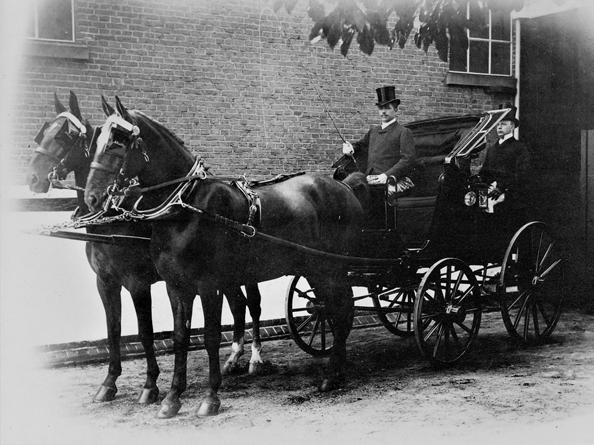
As roads improved and wheeled transport became more common, the Hackney’s role shi�ed. No longer merely ridden, the breed excelled in harness. The same traits that made it invaluable under saddle translated beau�fully to driving.
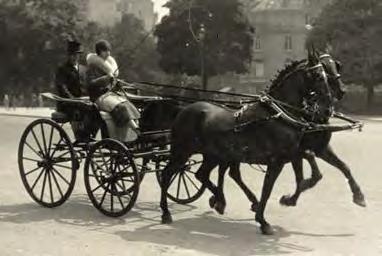
By the eighteenth and nineteenth centuries, the Hackney had become the premier carriage horse of England, admired for both performance and presence. These were not anonymous animals. They were evaluated, discussed, and deliberately bred. Their high, expressive ac�on was no longer just useful; it was admired. The Hackney became a symbol of refinement and modernity, equally at home pulling a gentleman’s gig or a lady’s carriage through city streets.
The Hackney’s influence reaches far beyond its own breed. Its lively trot, elegance, and willingness to work in harness helped
Photos
MSF Strategy and Marianna Yeager
shape the Standardbred, the American Saddlebred Horse, and the American Dutch Harness Horse. Across Britain and North America, Hackney blood was introduced to refine Welsh Ponies, early Canadian tro�ers, and other carriage stock, adding style, expression, and “park presence.”
Refinement and Reduction: The Birth of the Hackney Pony
As the Hackney Horse gained pres�ge as a driving animal, something interes�ng happened- not out of necessity, but out of taste.
Enter Christopher Wilson of Westmoreland, widely credited with deliberately refining and reducing the Hackney Horse into what would become the Hackney Pony. This was not a u�litarian project. There is no credible evidence that the Hackney Pony was bred for mining, industrial labor, or hard dra�. Instead, Wilson’s goal appears to have been far more social- and far more clever. For in the parks and promenades of England, it was no longer enough simply to arrive; one had to impress. Elegance and style ma�ered.
Continued...
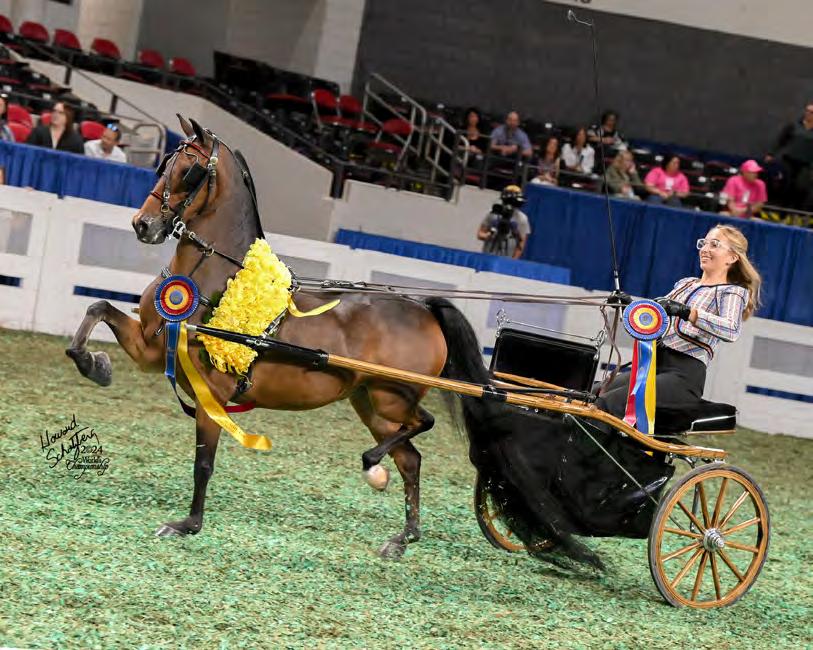
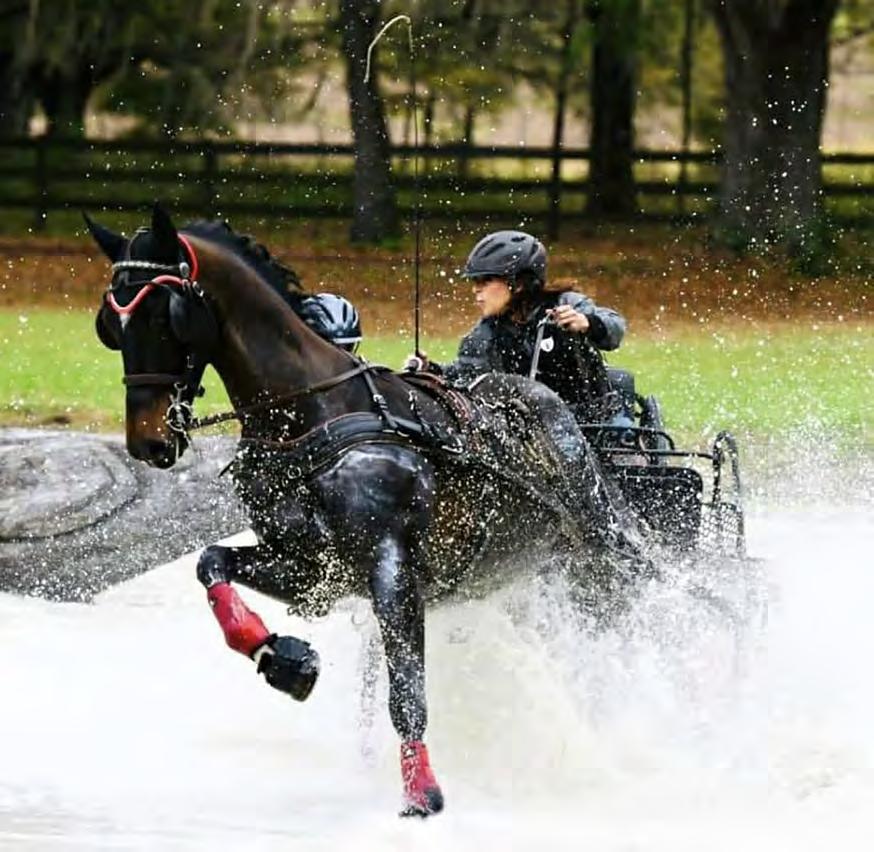
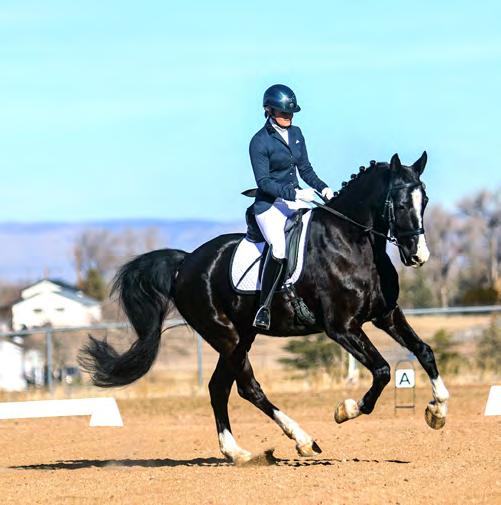
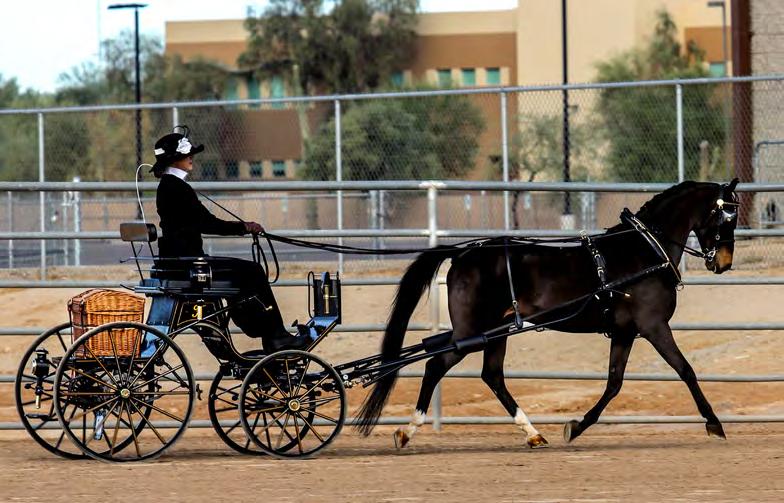
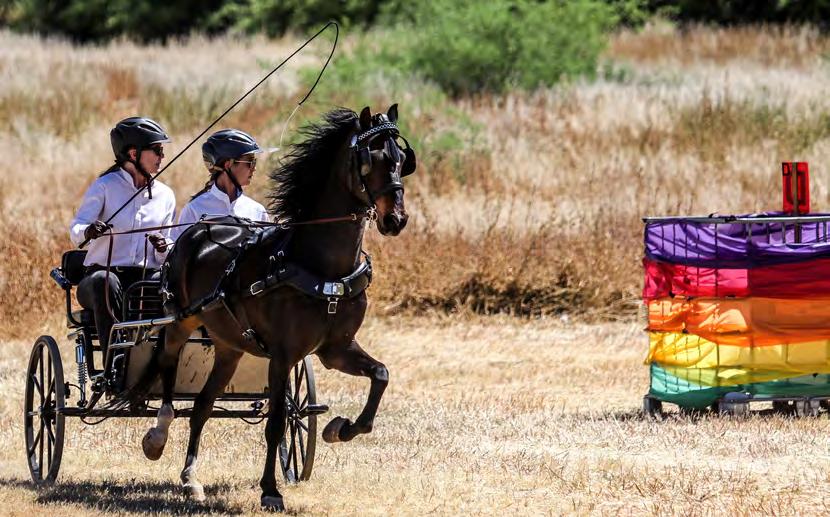
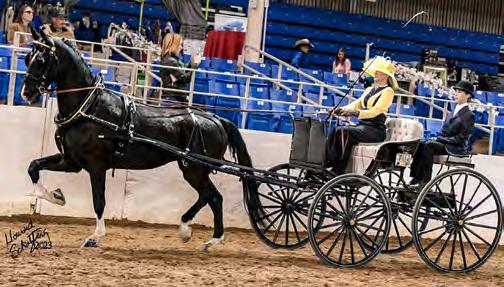
MSF Jackson ridden by Marlena De Leone 1st Impression and Lynne Trenery Freeman
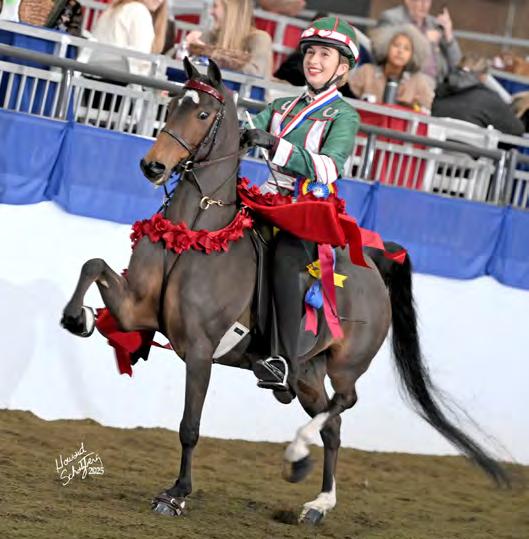
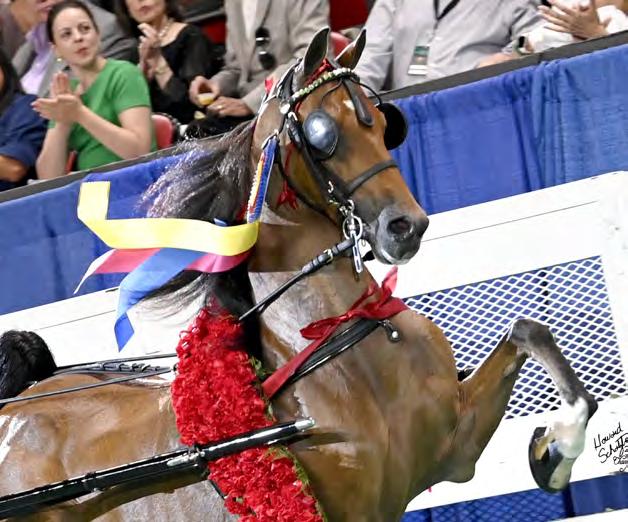
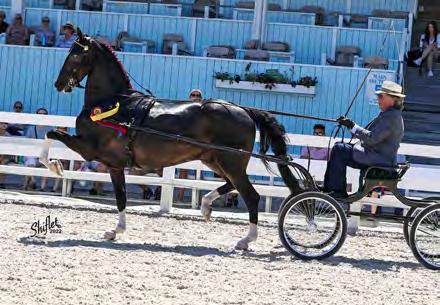
CH Prime Time’s Choice and Jacqueline Schatzberg
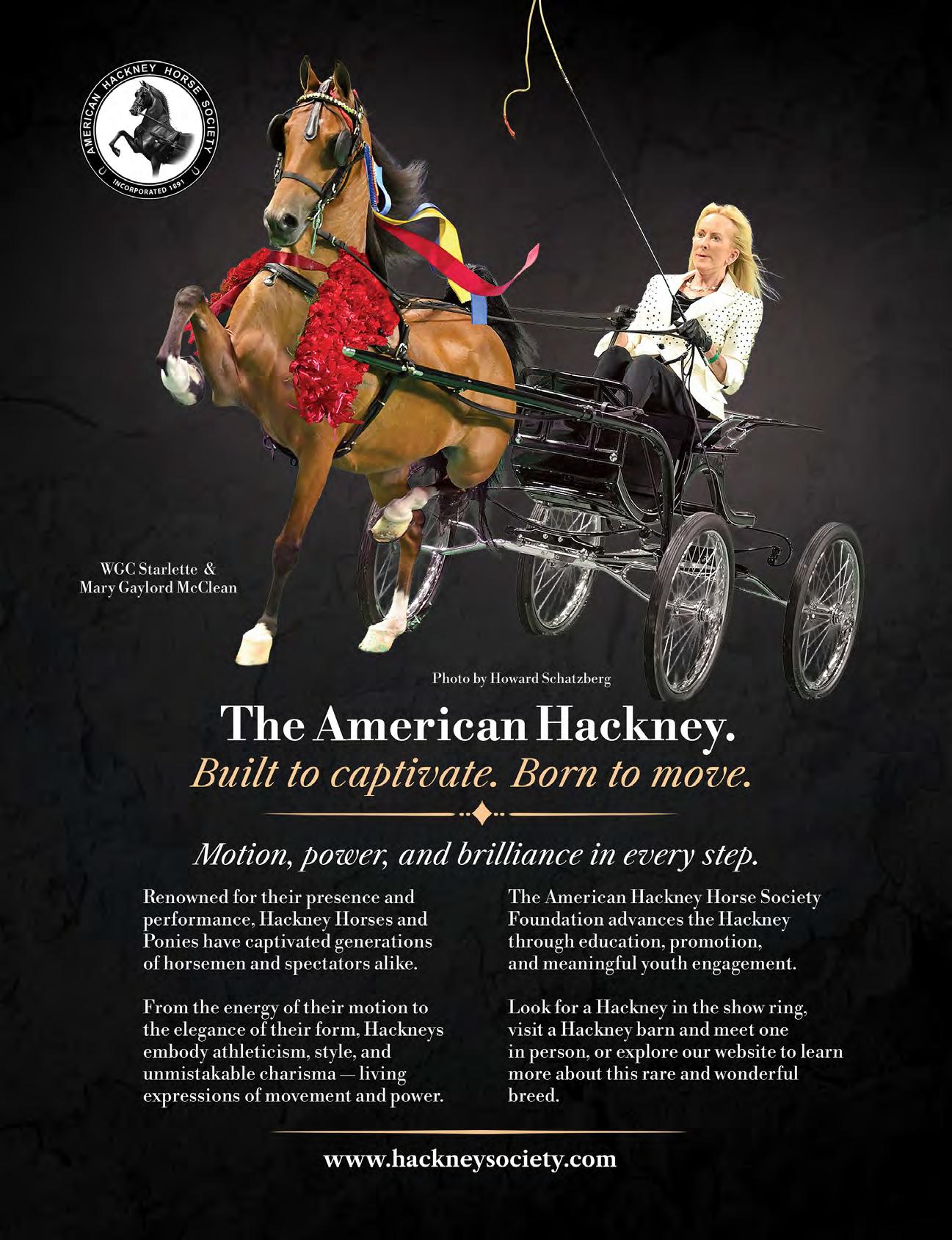
Starlette, owned by Golden Creek Farm, shown by Mary Gaylord
See the American Hackney Horse Society ad on page 6
He wanted a pony that could do everything a Hackney Horse could do in harness, but in a smaller, more fashionable package. A pony quick, brilliant, and eye-catching enough to be driven in the park, across town, and through chic neighborhoods. A pony meant to turn heads.
In short, a li�le red Corve�e.
Selec�ve breeding emphasized the traits already prized in the Hackney Horse- upright carriage, extreme intelligence, a natural, elevated trot, and undeniable presence- while concentra�ng them into reduced stature. The result was not a compromise, but an intensifica�on.
What emerged was a new icon: compact, powerful, elegant, and unmistakably modern for its �me.
At a Crossroads
As transporta�on changed and horses were gradually displaced from daily life, the Hackney’s original purpose faded. The very quali�es that once made the breed indispensable- speed, endurance, conforma�on, intelligence, and heartwere no longer broadly required. Over �me, the Hackney Horse itself became less visible, even as its influence lived on in other breeds.
Today, true Hackney Horses are cri�cally endangered. Once measured in the tens of thousands, they are now counted in the hundreds, their future dependent on a small and dedicated community of breeders and enthusiasts.
This is not simply the loss of a show horse. It is the poten�al loss of a thinking horse- an animal shaped by centuries of purposeful partnership with people.
In Part II, we will follow the Hackney’s story into the modern era, where the Pony thrives in new disciplines and the Horse itself may yet reclaim its earliest role- as an athle�c, intelligent riding horse uniquely suited for today’s sport horse world.
The road, it seems, has not yet ended for the Hackney.
Read Part 2 in the May/June 2026 issue of Elite Equestrian.
A little red Corvette.
EE
1st Impression and Lynne Trenery Freeman with Alicya Lane
Jumpin’ Black Penny and Lynne Trenery Freeman
Amateur World Champion Tuxedo Park and Paul Richardson
WW Truly Mystique, Bry-Den’s Proud as Punch and Lynne Trenery Freeman
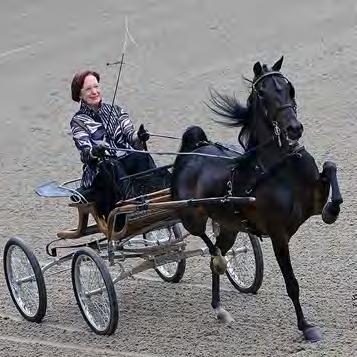
CH She’s Unforgettable and Denise Trethaway
Beyond the Saddle Whole-Horse Wellness Through Spinal Health
In the elite equestrian world, performance is o�en measured in seconds, cen�meters, and finesse. But behind the precision of every ride lies a more holis�c truth: a horse in harmony is a horse that thrives—not just in the show ring, but in body, mind, and spirit.
While much of the conversa�on around chiroprac�c care focuses on musculoskeletal performance—improved stride length, better engagement, reduced s�ffness—its influence reaches far deeper. The spine is not only the axis of mo�on; it’s the superhighway of communica�on for the nervous system. When spinal health is op�mized, the en�re body benefits.
This ar�cle explores how equine chiroprac�c care goes “beyond the saddle,” suppor�ng whole-horse wellness by enhancing not just movement, but internal func�on, emo�onal stability, and long-term health.
The Spine as a Wellness Organ
By Dr. Bill Ormstrom
We typically think of the spine as a mechanical structure—bones, joints, discs, and muscles. But its deeper role is neurologic. Inside the spinal column runs the spinal cord, the primary communica�on link between the brain and every system in the horse’s body.
From breathing to diges�on, from immune response to muscle coordina�on—nothing operates independently of the nervous system. When vertebrae become restricted or misaligned (what chiropractors call subluxa�ons), they can interfere with these signals, leading to dysfunc�on that’s subtle, systemic, or seemingly unrelated to movement. By restoring proper joint mo�on and reducing neurologic interference, chiroprac�c care helps the body return to a state of balance and adaptability.
Digestion, Detox, and Gut Health
Many riders don’t realize that chiroprac�c care can influence gastrointes�nal health. Here’s how it works:
• The thoracolumbar spine, especially from T9 to L3, houses nerve pathways that regulate the stomach, small intes�ne, liver, and kidneys.
• When these spinal joints are restricted, nerve input to the diges�ve tract can be altered—impac�ng mo�lity, enzyme secre�on, and nutrient absorp�on.
• Horses with ulcers, chronic loose manure, or bloa�ng o�en show restric�ons in this area.
Chiroprac�c adjustments don’t “treat” diges�ve disorders, but they can improve vagal tone (a measure of parasympathe�c nervous system ac�vity), reduce sympathe�c stress, and support gut mo�lity. Combined with nutri�on, dental care, and proper training, spinal health becomes a valuable tool for maintaining a healthy gut.
Respiratory Function and Rib Mobility
The ribcage is not a fixed barrel—it’s designed to expand and contract with each breath. But many performance horses show �ghtness or restric�on in the thoracic spine and costovertebral joints (where the ribs meet the spine), especially those who carry tension in their back or have experienced saddle fit issues.
Symptoms of rib or thoracic restric�on may include:
• Shallow breathing or flaring nostrils at rest
• Reluctance to extend or li� the front end
• Cinchiness or resistance to girthing
• Inability to fully engage or collect
Chiroprac�c adjustments to the thoracic spine and ribs can restore rib mobility, improve breathing capacity, and help horses engage their core more effec�vely under saddle. Enhanced respiratory func�on also supports stamina, recovery, =
Immune Support and Stress Resilience
A balanced nervous system supports a strong immune system. When the sympathe�c nervous system (fight or flight) is overac�ve due to chronic pain, stress, or dysfunc�on, it suppresses immune responses, slows healing, and disrupts hormonal balance.
Con�nued...
Chiroprac�c care has been shown in both animals and humans to:
• Reduce stress hormone levels (like cor�sol)
• Improve lympha�c circula�on
• Enhance sleep and recovery
• Support be�er vaccine response and wound healing
For high-performance horses who travel, compete under pressure, or are exposed to changing environments, chiroprac�c care helps maintain immune vigilance while minimizing the wear and tear of chronic stress.
Behavior and Emotional Balance
We o�en categorize difficult horses as “hot,” “lazy,” or “opinionated.” But many behavioral issues have physical origins— especially when they involve resistance, anxiety, or sudden changes in a�tude.
Examples include:
• Refusing to pick up one lead
• Spooking or bol�ng at random
• Grinding teeth, pawing, or cribbing
• Head tossing, tail swishing, or girthiness
• Unprovoked aggression toward people or other horses
These signs o�en point to discomfort or tension in the spine, par�cularly in the poll, neck, or sacrum. Horses can’t say, “My back hurts,” but they can show it through behavior.
When these areas are adjusted and normal mo�on is restored, horses o�en become no�ceably calmer, more focused, and willing to work. For anxious or reac�ve horses, chiroprac�c can be a game-changer—not as a seda�ve, but as a rebalancer of the nervous system.
Aging Gracefully: Chiropractic for Senior Horses
Senior horses deserve more than re�rement—they deserve comfort and quality of life. As horses age, they o�en develop:
• Joint s�ffness and osteoarthri�s
• Loss of topline and muscle mass
• Decreased propriocep�on (spa�al awareness)
• Weakness in the hind end or difficulty rising Chiroprac�c helps older horses by:
• Improving joint mobility and circula�on
• Reducing compensatory pa�erns from old injuries
• Suppor�ng balance, posture, and confidence
• Keeping them ac�ve and engaged in work, turnout, or play
Many owners report that regular chiroprac�c care allows their senior horses to stay sound longer, ride more comfortably, and remain ac�ve well into their late twen�es.
Not Just for Performance Horses
Chiroprac�c care isn’t only for elite compe�tors. Trail horses, lesson horses, broodmares, and even pasture companions benefit from spinal care. Every horse has a spine, and every spine experiences wear and tear over �me.
In fact, “non-performance” horses are o�en overlooked when it comes to bodywork and may suffer silently from chronic subluxa�ons. Restoring comfort and flexibility in these horses can improve quality of life, reduce pain, and prevent costly secondary problems like lamini�s or tendon strain from compensa�on.
Whole-Horse Wellness: A Collaborative Effort
Chiroprac�c works best when integrated into a whole-horse care plan. It doesn’t replace veterinary diagnos�cs, farrier care, dental maintenance, or nutri�onal strategy—it enhances them.
When chiropractors, vets, bodyworkers, trainers, and owners work together, the results are powerful:
• Fewer injuries and faster recoveries
• Be�er focus and emo�onal balance
• Greater consistency in training and compe��on
• Longer, healthier careers
This collabora�ve approach transforms chiroprac�c from a crisis tool into a cornerstone of equine wellness.
Conclusion: The Body in Balance
We o�en think of performance as what happens in the arena. But the founda�on for excellence is laid in the body systems that work quietly behind the scenes—breathing, diges�ng, adap�ng, healing. When the spine is in balance, these systems can flourish.
Equine chiroprac�c care isn’t just about mo�on—it’s about health. It supports not just the visible performance, but the invisible well-being that makes performance possible. When we care for the spine, we’re not just tuning the athlete—we’re nourishing the horse.
Dr. O started his veterinary career as a mixed animal mobile practitioner. That is when he discovered animal chiropractic. Through animal chiropractic, Dr. O found a sense of belonging, as well as an opportunity to help animal patients resolve their ailments. Animal chiropractic helped him to build a foundation for understanding health in animals that he was eager to share with other doctors like himself. Because of this he has been the backbone of more than one animal chiropractic program. He continues to find innovative ways to help animal chiropractors grow their practice, educate their clients and help more animals. He is the author of the books “Yes! It is Really A Thing”, and “Yes It’s A Better Thing.” He currently teaches at Animal Chiropractic Education Source.
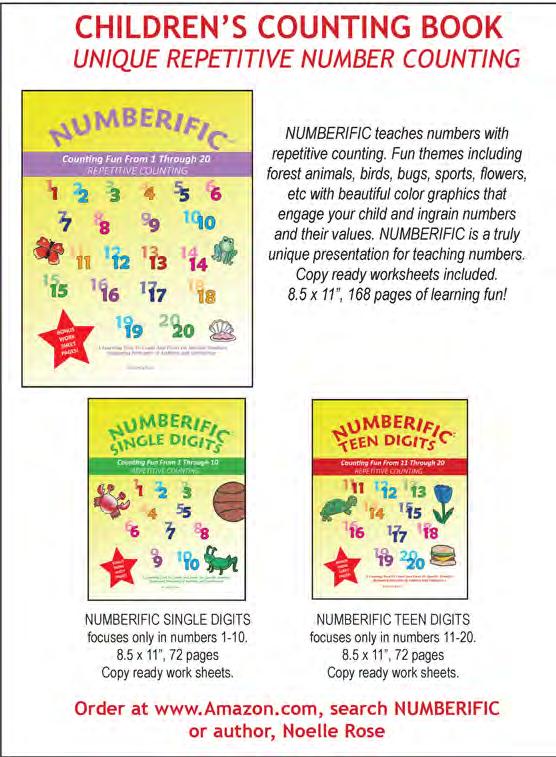
HORSE RECORD BOOK
www.amazon.com/author/noelle-rose
Great gift for your barn family and horsey friends!
Vet/Den�st/Farrier visits & cost. Feed/Hay/Bedding Board/Lesson Expenses. Training/Lesson progressrecord your “aha” moments! Goals, Awards, Show Records. All In One Place!
Accommodates Records For 3 Horses, Or 1 Horse For 3 Years!
6 x 9”, 60 pages, $7.99
WEEKLY PLANNERS
Various Covers
www.amazon.com/author/noelle-rose
This is a versa�le planner for your week- state your priori�es and weekly goal. Schedule your appointments, note important calls and emails. Jot down items for your shopping list and note your best memory of the week. General note pages included. Our whimsical cover will be a joy to open every day! A handy 5 x 8” fits perfectly in your purse or backpack.
www.amazon.com/author/noelle-rose 5 x 8”, 60 pages, $7.99
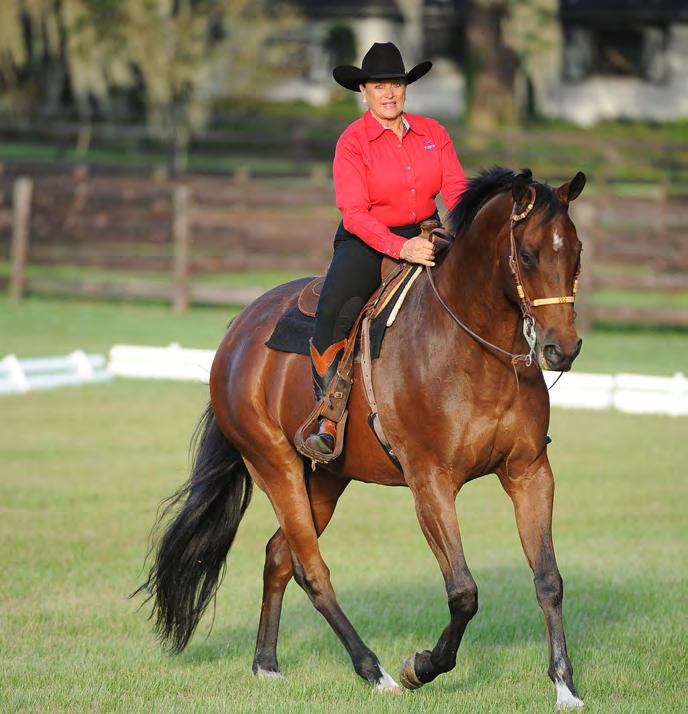
In the extended walk the horse covers as much ground as possible, without haste and without losing the regularity of the steps. The hind feet touch the ground clearly in front of the hoof prints of the fore feet. The rider allows the horse to stretch out the head and neck (forwards and downwards) without losing contact with the mouth and control of the poll. The nose must be clearly in front of the vertical.
This is a necessary task to do at this level, as the jog and lope have been asked for, now the walk must be shown! The walk is the hardest gait to keep extended, as the walk is the hardest to control the length of stride. When the extended walk is perfected, you have your driving aids working! To extend the walk, the horse must be obedient to the aids and rider has to extend with seat and leg aids, and allow the head and neck of the horse to slightly extend lower, with the poll not below the wither, for best results. Often, I see the stride too short with reins too tight which retards the extension.
The collected walk is a shortening of the steps working of walk without losing engagement of the hind legs with energy. The horse may shorten his outline without tightness and quick steps. The horse must be relaxed and maintain a fluid tempo. The horse must be shortened from warm up. When collected, the rider should always have invisible aids, riding from legs to hand contact, which will eliminate shorter and quicker steps when training.
The flying change of lead will ideally begin with the sequence of the new hind leg, the diagonal pair and followed by the new leading front leg. The change
Building a Partnership with your Horse
Western Dressage:
Tips From a Judge’s Perspective
Let’s get ready to show & grow!
Story
In this series, Western Dressage from a Judge’s Perspective, I will give you tips from my point of view as a judge that may help your scores and learn to ride with more accuracy and precision. As we go through the levels, I will explain some common errors that I see and suggest ways to overcome these pitfalls.
Let’s jump into Level 4!
of lead of the hind and front leg takes place immediately after the moment of suspension without a break of gait. The aids should be precise and unobtrusive.
Now we are having fun! The is no better feeling than when your horse is doing flying lead changes! One must have the skills to position the horse for the new lead while maintaining the horse’s correct body position during the lead change. For this transition, you must keep your horse straight with the slightest bend in preparation for the new lead, without changing it. The lead change is accomplished when you cue for the change of lead while maintaining your horse’s body position during the change to get it with balance and fluidity and smoothness.
Common errors are break of gait, changing from the front then the hind and riders overexaggerating their aids. Again, the key is the horse’s straightness and the rider’s light use of aids while maintaining correct position and balance in the saddle.
For the quarter pirouette, the horse is highly collected for 1 or 2 strides before and then through a 90 degree turn around the haunches in 2-3 strides, maintaining a correct canter footfall.
Although this is a great progression to train the pirouette, it is the beginning of doing the 180 degree turn and more. I do like to show the very collected strides, and I will do 3 or more, to allow my horse to know that I am going to make the tightest turn at the canter that is possible! Often riders do not show the collected strides at the beginning, or they don’t truly move around the haunches rather make too wide a turn.
and Photos By Lynn Palm
The half-pirouette is a half-circle executed on two tracks with a radius equal to the length of the horse. The forehand moving round the haunches. The forefeet and the outside hind foot move round the inside hind foot which forms the pivot and should return to the same spot, or slightly in front of it, each time it leaves the ground. The horse is slightly bent in the direction in which it is turning should remain on the bit with a light contact, turn smoothly and maintain the appropriate sequence and timing of footfalls of that gait. The poll stays at the highest point during the entire movement. The quarters are well engaged and lowered and show a good flexion of the joints.
When you perfect the quarter turn, the half or 180 degree pirouette comes easily. It is a wonderful feeling of your horse being at his highest degree of collection and to do the canter pirouette which is one of my favorite movements in dressage. To do the pirouette well, keep the same bend throughout the turn, and move the forehand around to make the turn. Like the quarter pirouette, I see not enough collection prior to the turn, or the steps are too big. Here the riders need to sit back and continue to use the driving aids to shorten the step to keep the hind end engaged.
Level 4 has so many fun maneuvers that call on all the skills learned from the previous levels for both rider and horse. It is so close to the current highest level-Level 5!
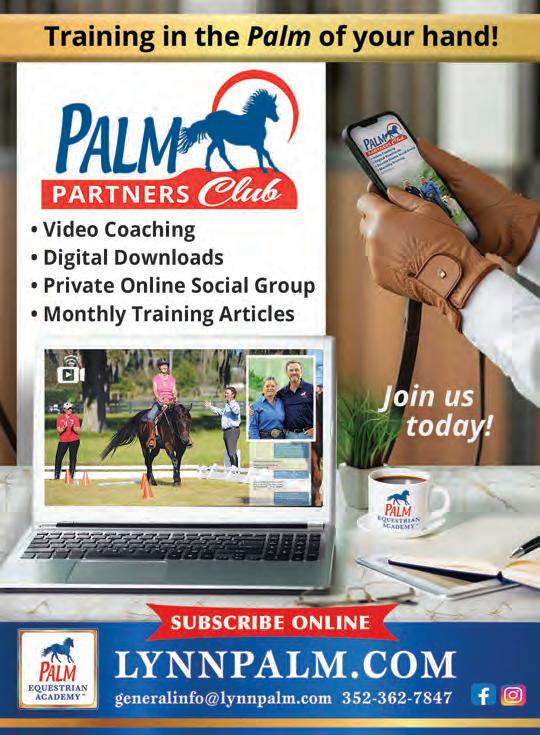
For More Information, Contact Palm Equestrian Academy generalinfo@lynnpalm.com 352-362-7847
Cyril and Lynn offer clinics throughout the country and abroad as well as online coaching. Join them on their teaching tours or their Palm Equestrian Academy European Journeys.
US SHOWJUMPING MISSION 2026:
Team Gold at World Equestrian Games – Aachen, Germany
This August the World Equestrian Games will be held in Aachen, Germany. All equestrian na�ons will field riders (teams and individuals) to compete head to head to determine the best Showjumping Team in the world and the Individual World Champion.
This August the World Equestrian Games will be held in Aachen, Germany. All equestrian na�ons will field riders (teams and individuals) to compete head to head to determine the best Showjumping Team in the world and the Individual World Champion.
The US Showjumping Team, led by chef d’équipe Robert Ridland, is a top contender to win Gold in both the Team Compe��on and Individual contest. As of January 2026, US Rider Kent Farrington is the number one rider in the world and equally impressive, the United States is the only country to have three riders in the top ten in the world rankings (Kent Farrington, Laura Kraut & Mclain Ward). The US Team won Team Silver at both the 2024 Olympic Games in Paris and the 2020 Olympic Games in Japan. The 2026 World Championship Games this summer is an important championship and precursor leading up to the US hosted 2028 Olympic Games in Los Angeles.
US riders have been compe�ng and will con�nue to compete to earn a spot on the “short list” of ten riders finalized mid-April, 2026. Those ten riders will compete at strategically important shows in Europe to select the top four horse / rider combina�ons to represent the US Team in the 2026 WEG (World Equestrian Games).
The Goal: to have our four best horse and rider combina�ons healthy, confident, and in top championship form going into the Games. Clear rounds (no poles down and no �me faults) in the mul�leg Team compe��ons are what is needed to win a medal, especially gold. Our three riders in the world top ten, Kent Farrington (#1) Laura Kraut (#7) and Mclain Ward (#9), know how to jump clear rounds in championship compe��ons and are likely to be three of our four WEG Team riders. The US has depth and a strong group of riders to complete the four rider Team: Team Silver Rider from Paris Karl Cook, young but experienced team rider Lillie Keenan, and the experienced proven winner Aaron Vale lead the list to complete the four rider US Team. All six of these riders know what it takes to win a medal by delivering clear rounds.
Robert Ridland and all our Team Riders will do their best to have their horses sound, fresh, and confident entering the Games and yes, one more thing, they all welcome some luck: the rub on the jump that doesn’t come down, the slip that doesn’t result in a fall, and the clear ride that finishes just under the �me allowed. Robert Ridland emphasizes “the key to selec�ng the best Team is for our top rider / horse combina�ons to compete in Interna�onal Team Compe��ons as prepara�on for the upcoming WEG and save their horses’ best performances for the Games.” Not an easy task because our riders have to
perform at the highest level to make the Team and at the same �me save their best performance for the WEG. Robert will be “checking the boxes” on which horse rider combina�ons will represent our country. Some of the “key boxes” include: Scope (the ability for the horse to jump the biggest jumps), Quality (the horse’s ins�nct to not hit the obstacles), Speed (the ability to jump a clear round in the �me allowed), and Deliver Clear Rounds (the proven ability to jump a clear round at the championship level when it counts).
The World Equestrian Games is not the only Championship to conquer this season. April, 2026 the United States is hosting the World Cup Finals in Fort Worth, Texas. The World Cup Finals is the only “indoor” championship in the sport of showjumping and is an “individual” championship not a Team Championship. As the home country, Team USA needs to have a strong showing which presents a big challenge. Top horse management dictates to have our best horses sound, fresh, and confident for the WEG it is best to ask only one big championship effort from them per season. While there are excep�ons, our top horses contending for our Team will not jump in the World Cup Finals. Team USA will be looking to our “up and coming” riders and horses to step up and medal in Texas. While our WEG riders will be saving their horses for Aachen they likely will jump at the World Cup Final with their second or third mount.
Lots of Interna�onal Team ac�on ahead of us this season. I look forward to upda�ng you along the way - stay tuned as our riders prepare for the 2026 WEG.
Olympian Peter Leone offers show jumping training and coaching in person and online. Visit www.peterleoneusa.com for contact and more information.
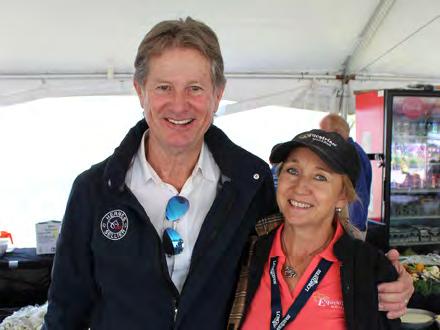
Chef d’équipe Robert Ridland with Elite Equestrian editor, Noelle Vander Brink, at the 2017 Nation’s Cup in Ocala, FL.
Photo by Elite Equestrian
Adelaide Toensing, USA, on Stakkatina MW at Live Oak International 2025, Photo by Elite Equestrian
Luxury Ranch Riding Vacation Come Ride Wyoming The Hideout at
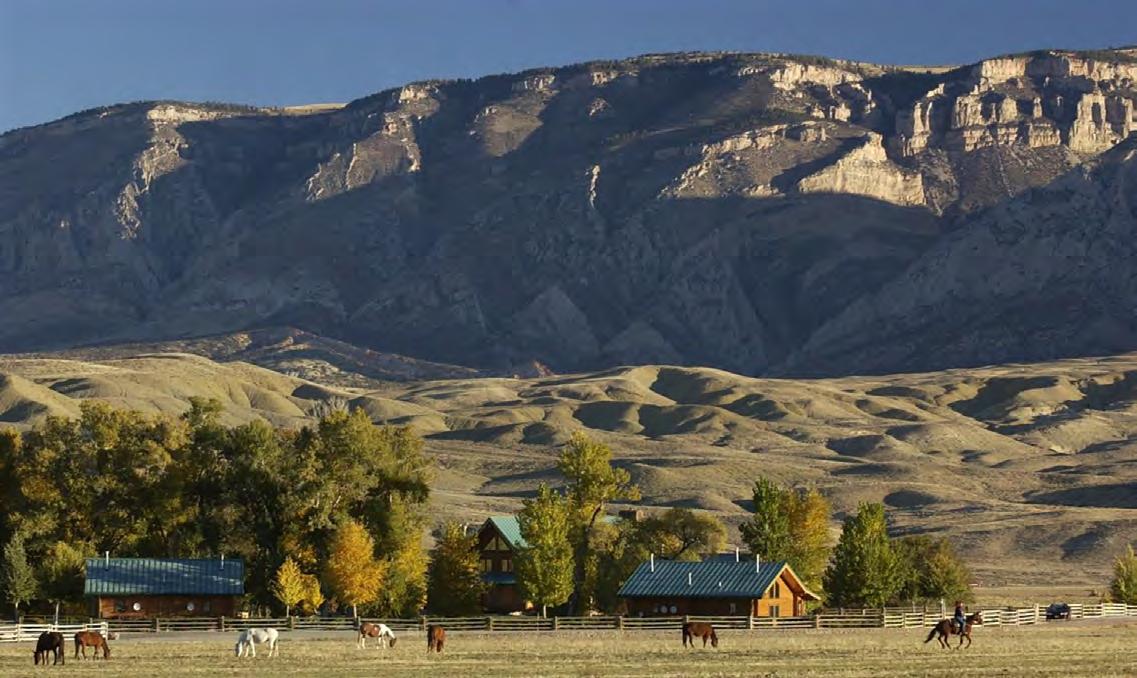
Our ranch is all-inclusive, upscale, focused on riding and horsemanship, limited to 25 guests weekly for a 6-night stay, with riding access close to 650,000 acres. Elevations in our backyard range from 4200 to above 13,000 ft, and the area enjoys a seldom seen diversity of scenery, micro-climates, and terrain. The Hideout offers a very personal, small, and intimate Western riding experience, surrounded by a peaceful, calm, exciting and breathtaking environment. Our ranch is more of a riding destination than your typical dude or guest ranch.
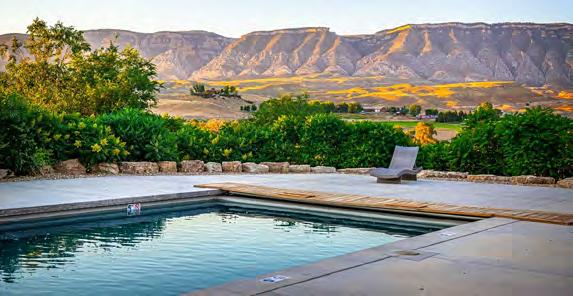
Taking a break from horseback riding, you can enjoy non-riding activities such as trap shooting, archery, fly-fishing, a soak in the hot tub, biking, hiking, take a dip in our heated lap pool, or just relax and take in the views. Many take a self-guided driving tour to the nearby dinosaur sites, The Town of Greybull and The Greybull Dinosaur Museum. A visit to Cody and The Buffalo Bill Museum of The West, The Cody Rodeo or exploring the many Western shops in Cody is also on the agenda of many of our guests who do not want to spend continuous time in the saddle. And of course, many of our visitors add extra days to explore Yellowstone and Teton National Park, Jackon-Hole and other exciting places in Northwest Wyoming and Southern Montana.
However, most of our guests ride every day for several hours and join our daily cocktail hour to exchange the experiences of the day with the other travelers. After dinner they enjoy sitting outside taking in the stars in this area with little light pollution, listening to the silence, the voices of nature, and breeding in some of the purest air in the nation. They are totally relaxed and ready to enjoy a good night’s sleep in the well-appointed log cabins. Our new and ever-growing number of repeat guests have found shared experiences and intimate connections with guests and riders from around the world, different walks of life, and all backgrounds.
On the contrary to what a lot of people believe, most of our guests have an English riding background. Travelers come from different origins to stay together at our ranch, creating shared memories and forging new friendships. Riding, dining and spending time together with people they would never encounter in their daily lives at home. We accommodate beginners in good shape, intermediate and advanced riders, which makes this a great active outdoor vacation for mixed groups
Join us
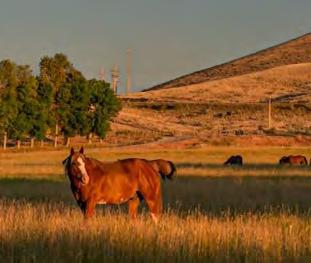
to ride The Big Horn Mountains and the wide-open spaces in Wyoming, on one of our quarter horses or gentle mustangs. All well-trained and adapted to riding this challenging terrain. Relax in comfort, take in the views, and enjoy our ranch property with manicured lawns, looking out at our herd of 100 well cared for horses in the pastures. We are in Shell (popula�on 84), East of Cody and Yellowstone Na�onal Park.
and families. Being surrounded by breathtaking views in all directions. Enjoying horses and nature is about using all senses.
A stay at The Hideout Lodge & Guest Ranch is for many of our guests like a unique wellness retreat. Both mentally and physically. Refreshing and Energizing, full of positive vibes surrounded by horses and riding horses. For these travelers, wellness means a healthy holiday, they return from The Hideout feeling fresher and fully rejuvenated.
A common statement at the end of the week is “You guys deeply and authentically care and have a great thing going on here! We will be back!
Email info@thehideout.com or call 307-765-2080 to learn more about your unique Hideout experience. We look forward to welcoming home to The Hideout!
PREPARING YOUR TRAILER
for the season
Story and Photos
By Tom Scheve
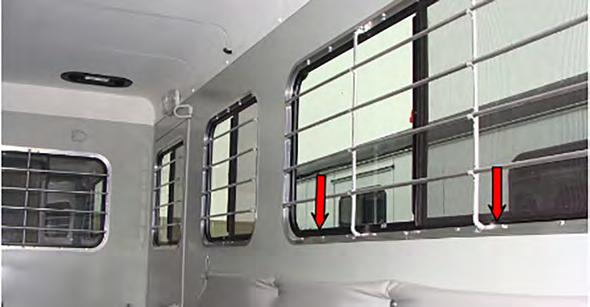
Taking your trailer out of hibernation and getting it ready for the season is not as difficult as you might think. Whereas a car manual is as thick as a Bible, servicing or inspecting a trailer is not, when you consider it’s just a large box on wheels. And except for the running gear, it’s easy to see and inspect most of the working parts. Start with the doors – they should open and close easily and shut securely. If they don’t, spray the hinges with a petroleum or silicone-based lubricant, such as WD-40. While you are at it, squirt some into the door’s keyholes. Spray the same lubricant into the window tracks if they don’t slide open and shut to your liking. See photo 1
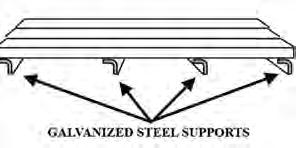
Examining the floor is a must. Wood floors are typically constructed with two-by-six pressure-treated pine boards. If the wood floor is covered with mats, remove them from the trailer and inspect the mats for deterioration. Then walk the floor, looking for soft spots and cracks. Pine boards are easy to replace and can be readily found at most home improvement and building supply stores. Unless the trailer is “all aluminum” the floor supports will likely be steel. Inspect the steel for damage, especially if the trailer is older. Newer trailers use galvanized steel. You may see some surface rust, which isn’t a problem if the steel is intact. See photo 2
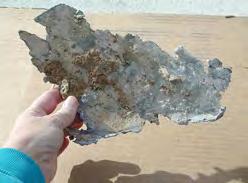
Aluminum floors, however, are difficult to replace once they start to corrode. The main culprit is the alkaline in urine and manure. Discoloring and flakiness are sure signs of decline. If the aluminum floor is permanently covered by W.E.R.M. coating or a Rhino lining, check it from underneath. See photo 3
A bit of silicone spray on the coupler helps it to work smoothly. To test it, secure it to the tow ball on your tow vehicle and crank the trailer up. When the tow vehicle starts to rise instead of releasing the ball, you know it’s secure.
Electrical issues, such as non-working lights and fans, can be confusing. However, you can test them by plugging your trailer’s electrical cord into your truck, switching on the interior lights, turn signals, running lights, and the fans if you have them. Most horse trailers use a seven-pin plug with the same wiring configuration, so if an issue arises, you can obtain a wiring diagram from your dealer or online. Many horse trailers have a circuit breaker box inside the trailer, so check the breaker first. A hot wire on the tow vehicle plug operates the interior lights. If none are working, the hot wire may not be activated on the tow vehicle’s plug. If you changed tow vehicles and the interior lights worked previously, this is most likely the problem. See photo 4
The breakaway brake uses a small 12-volt battery. If the battery has a built-in tester, check the charge level and replace (or charge it) if it is low. The battery is located inside the trailer on most bumper pull models and under the nose frame of goosenecks.
Tires should be changed every six to seven years, even if the tread is not worn. The rubber takes a beating from weather and age, and the glue dries, making them unsafe. To determine their age, a four-digit code on a tire, often encircled, states the week and year when the tires were manufactured. Example: 1121 would be the 11th week of 2021. I suggest Goodyear Endurance ST205/75/R15 or ST225/75R15 if you need new tires. Before buying new tires, ask the tire dealer for the expiration date. They may have sat on a shelf for a few years. See photo 5
Unless you are a mechanic, a shop needs to do the rest, such as adjusting the brakes, examining and greasing the bearings, and thoroughly examining the axles. Nev-R-Lube rubber torsion axles do not use grease, but they still require testing.
For that aggravating small dent that most likely someone else’s poor driving did to your trailer, consider covering it up with a reflector or decal.
Photo 1
Photo 4
Photo 5
Photo 3
Photo 2
Tack Box Business Showcase
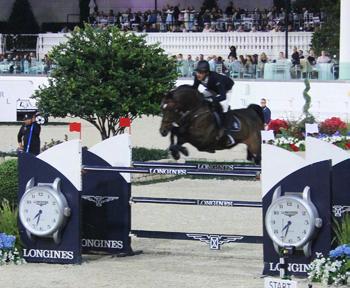
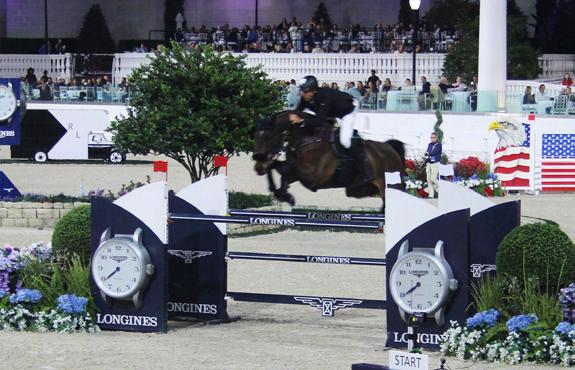
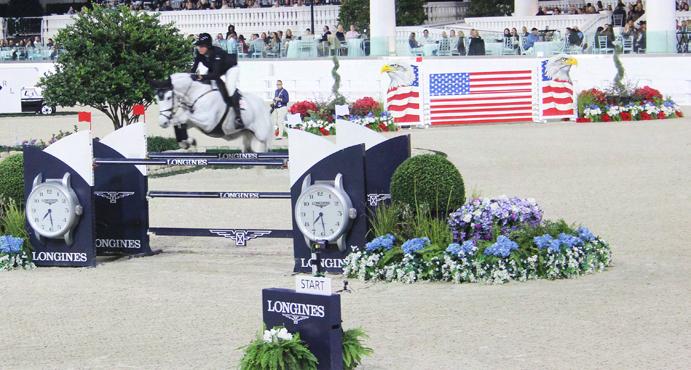
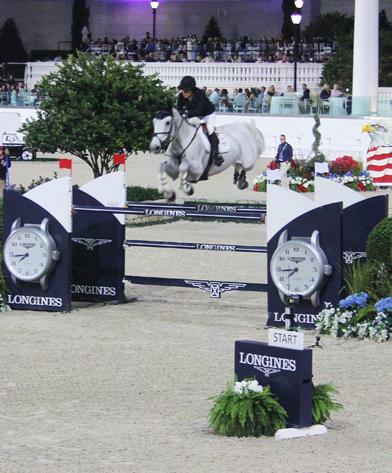
LONGINES
FEI Jumping World Cup™ WORLD EQUESTRIAN CENTER
Ocala, FL February 11-15th, 2026
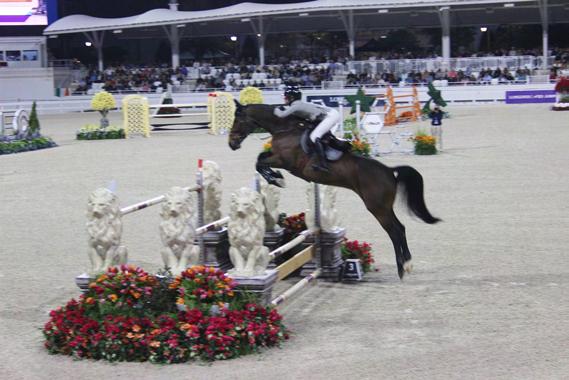
Charlo�e Murray, USA, aboard Magnum Z, had the first clean round.
Andre Thieme, Germany, riding Paule S, a 12 year old gelding.
Mark Bluman Columbia, on 14 year old gelding, Ubiluc..
Hunter Holloway, USA, riding Henry Jota Ariel, an 11 year old mare.
Jordan Cole, Ireland, aboard Chaccolino, a 15 year old gelding
Katherine A. Dinan, USA, also had a clean round. She is riding Out of the Blue SCF, a 12 year old mare.
Dylan Daly, Ireland, aboard Cinderella Z, a 16 year old mare.