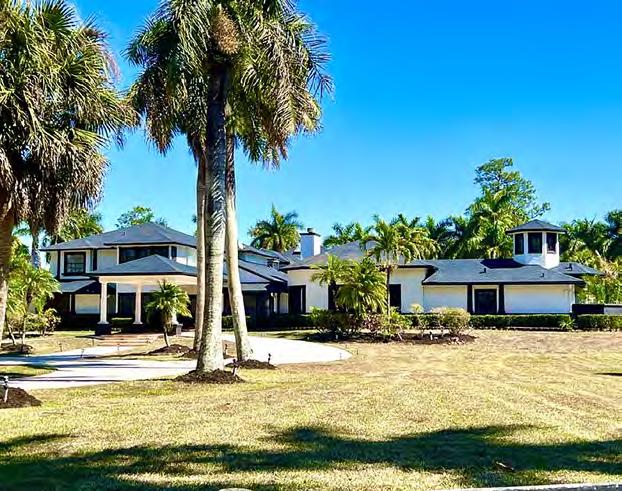
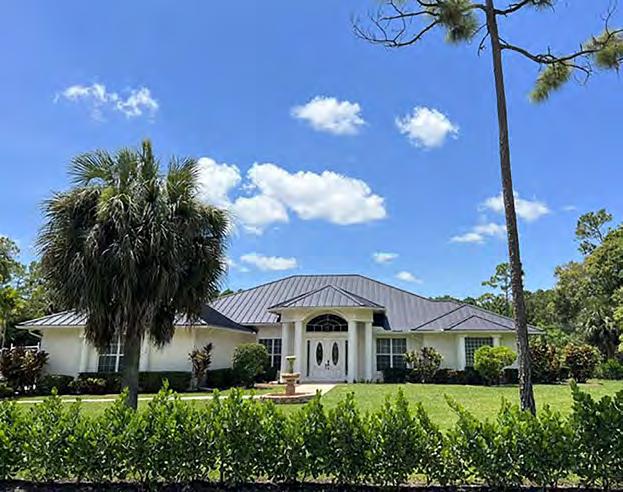
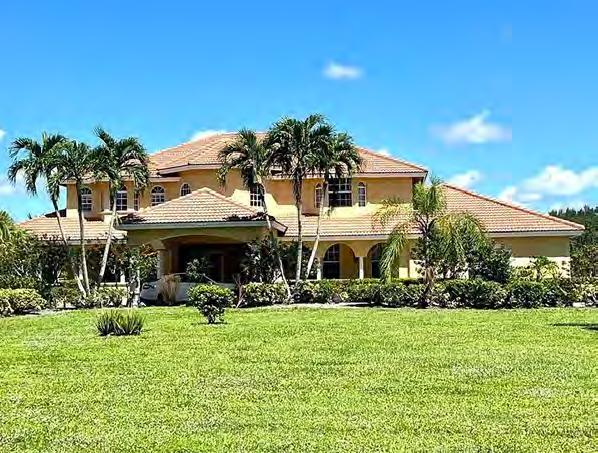
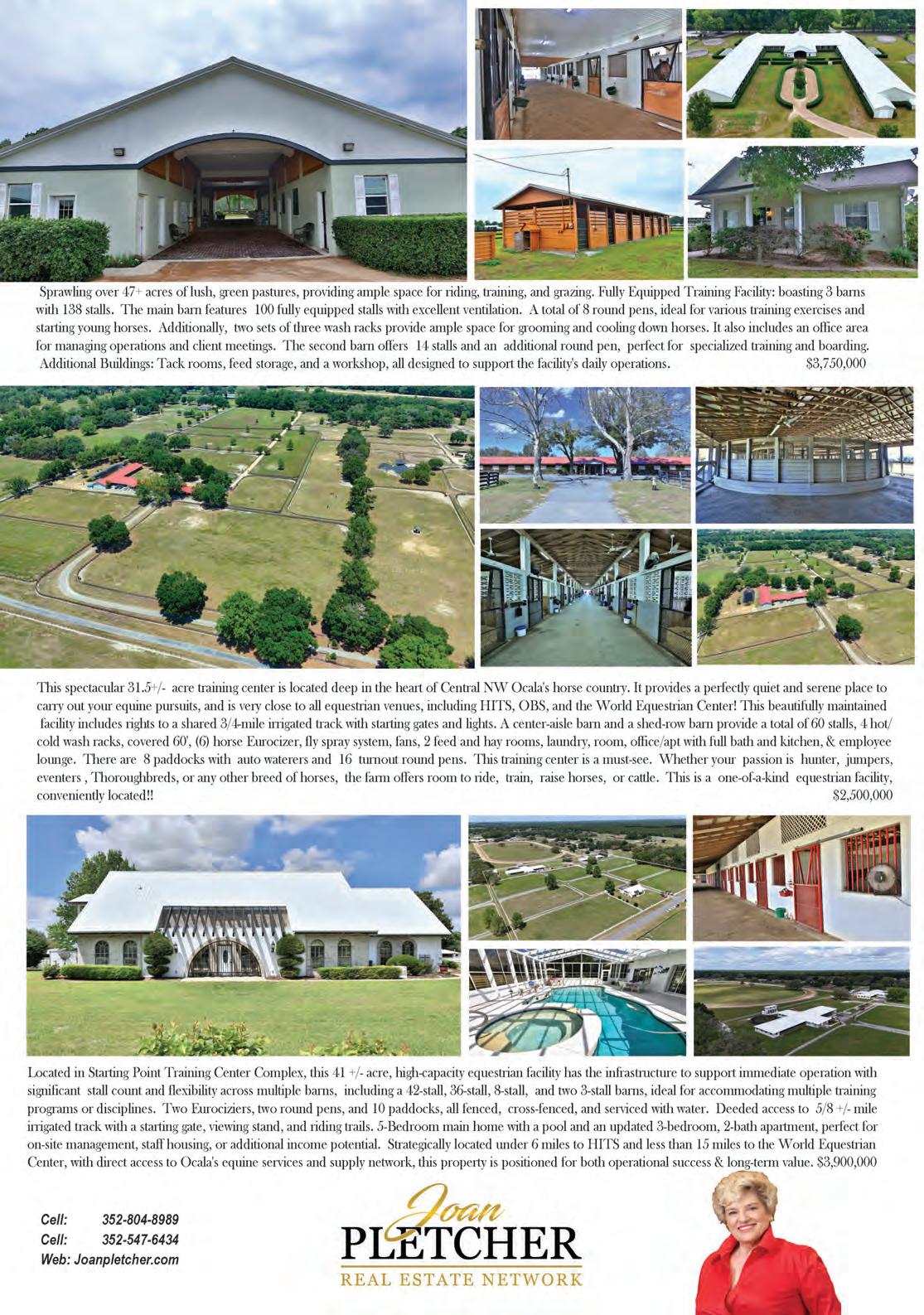
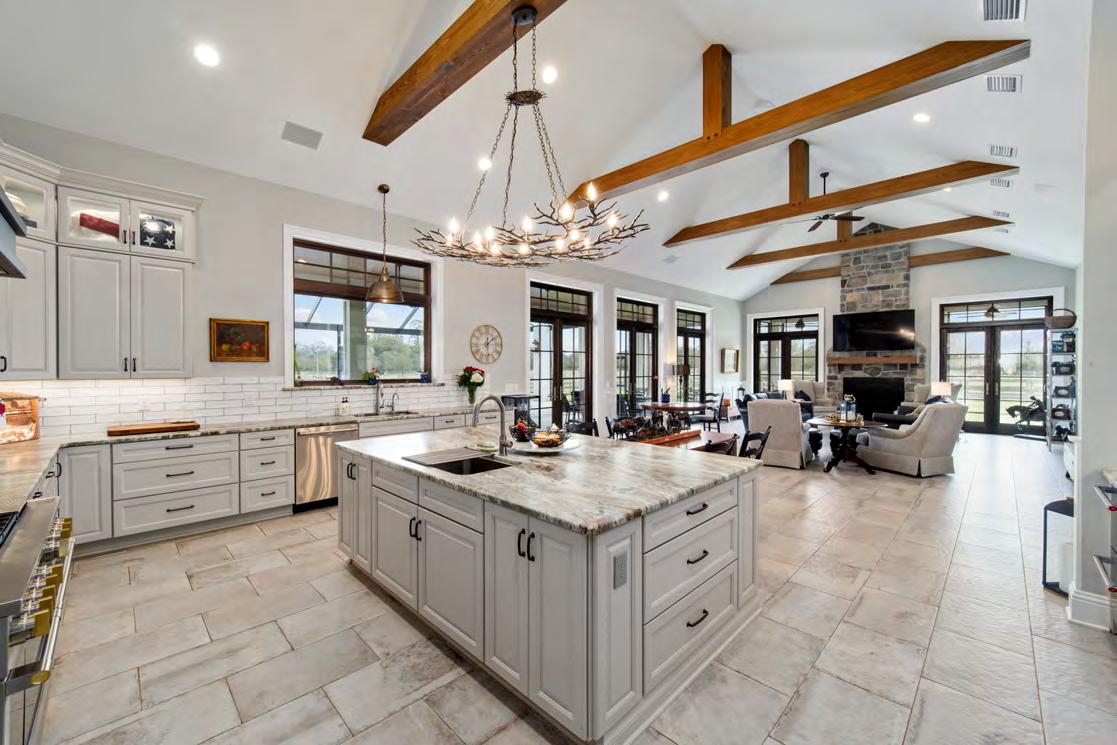
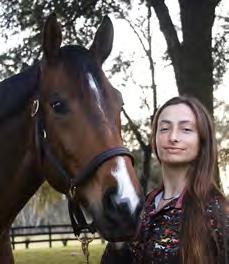
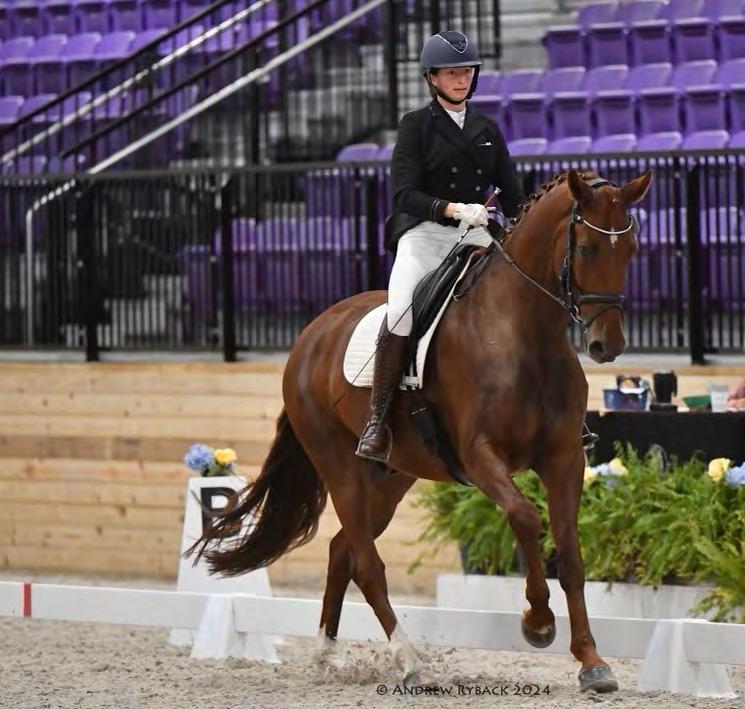
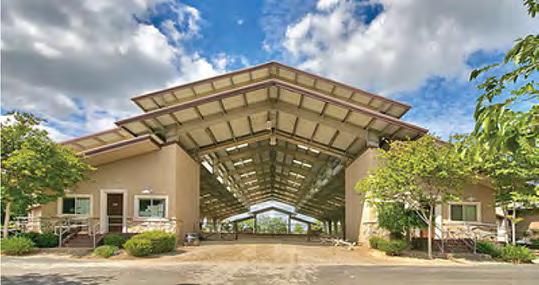
Saddle Trail Wellington Exquisite 4 acre professional equestrian farm, short hack to WEF show grounds, fabulous Grand Prix ring, 16 stalls, tons of grooms qtrs., recently remodeled and updated, reverse osmosis water, two generators, 2 tack rooms, lots of lush paddocks. This is a great value for the price and the best farm buy in Wellington priced at $5,990,000
Wellington Paddock Park 2 Large 7000 sq � home on 2 acres with 6 bedrooms and 4 full baths. Tall ceilings with plenty of room for a barn and ring. Hacking distance to horse show. This house would make a great Equestrian farm, AirBNB or assisted living home. Priced at $3,599,000 it has tons of poten�al.
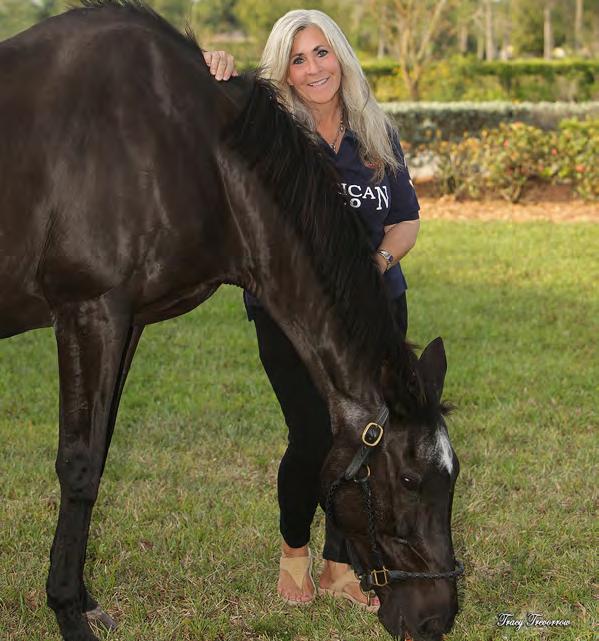
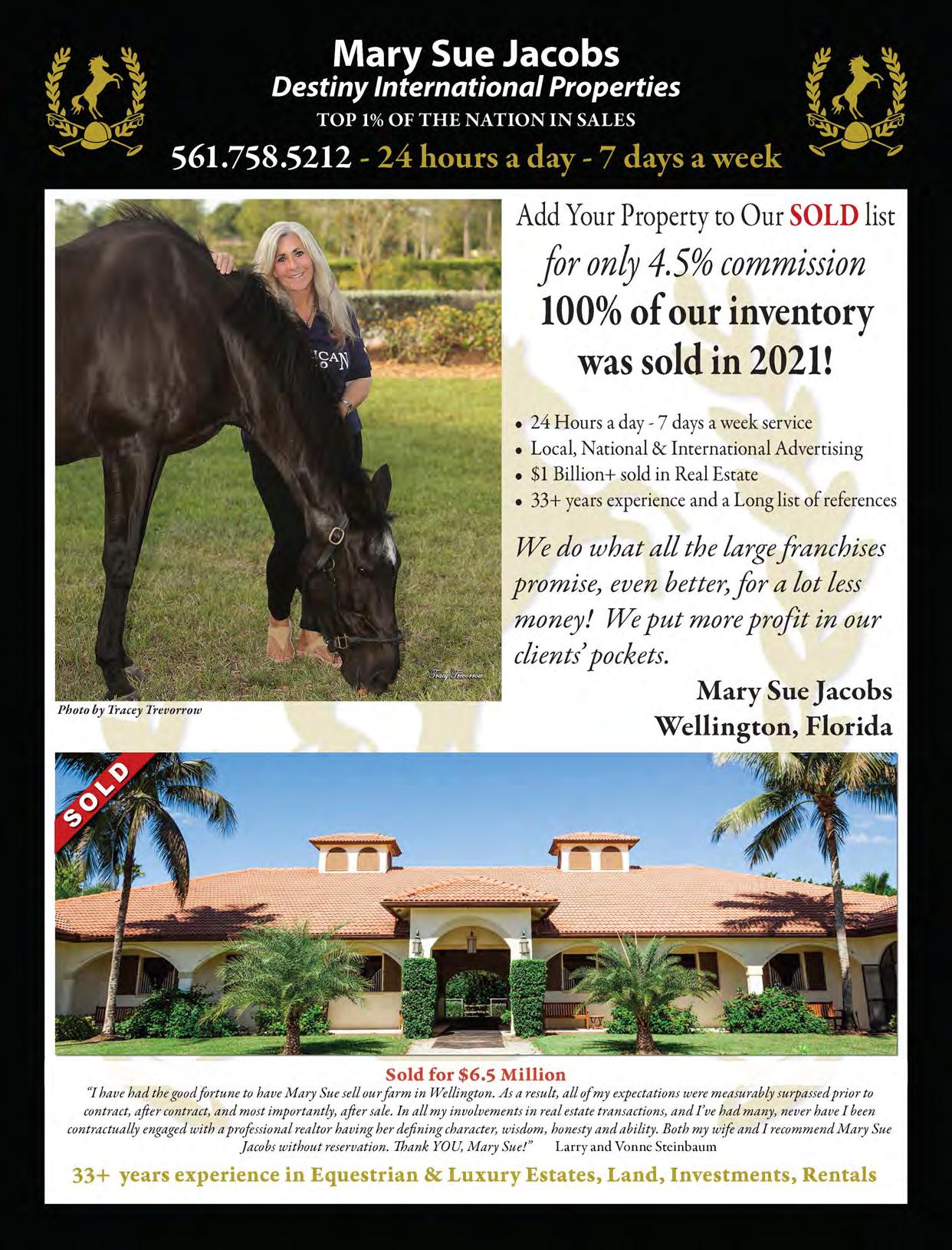
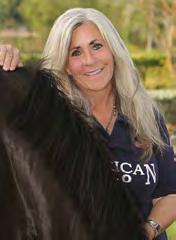
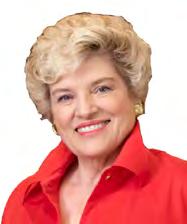
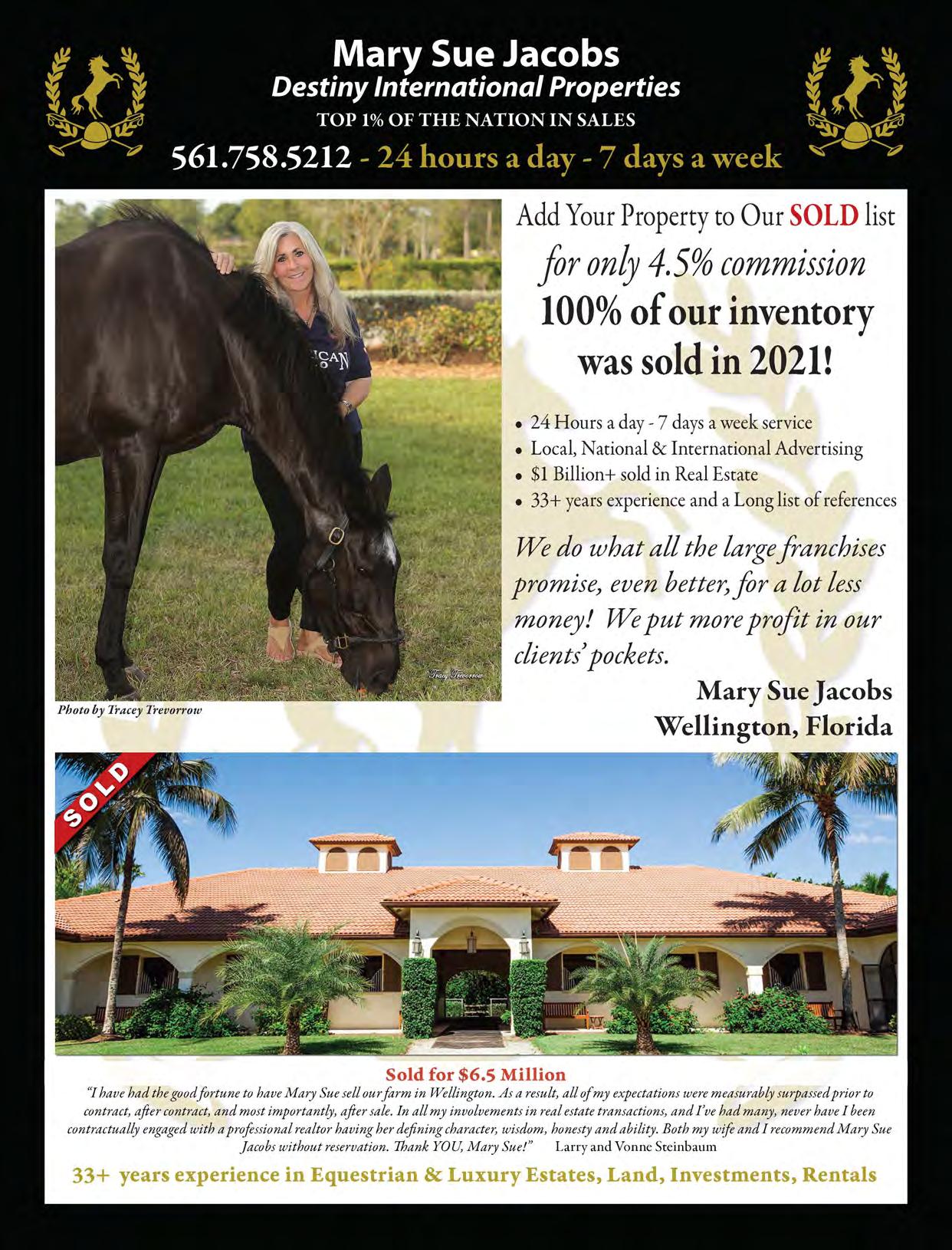
Mary Sue Jacobs Broker
TOP 1% of the Nation in Sales 561-758-5212
Wellington Saddle Trail This charming farm is just under 2 acres, with a super cute 5 stall barn, ring and grooms qtrs.. Just a short hack to the horse show . The main house is a 4 bedroom 3.1 bath home, with pool and impact glass, full fenced and gated priced $3,725,000.
���������� �����
Celebra�ng The Equestrian Lifestyle ®
Published since 2008
www.EliteEquestrianMagazine.com
info@EliteEquestrian.us • Main Office, Ocala, Florida
PUBLISHER Bill Vander Brink Bill@EliteEquestrian.us
Riding a horse is not a gentle hobby, to be picked up and laid down like a game of solitaire. It is a grand passion. Ralph Waldo Emerson
Kathy Russell Photography Louie Preciado Ride Egypt
GRAPHICS Fran Sherman
Tom Scheve On the
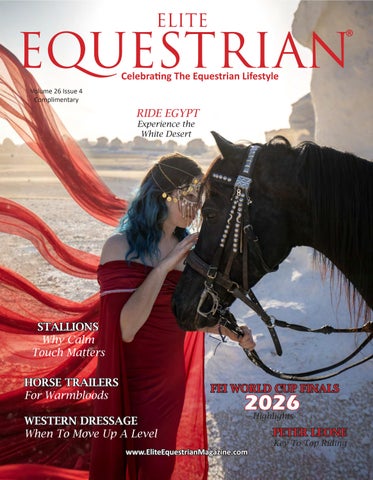
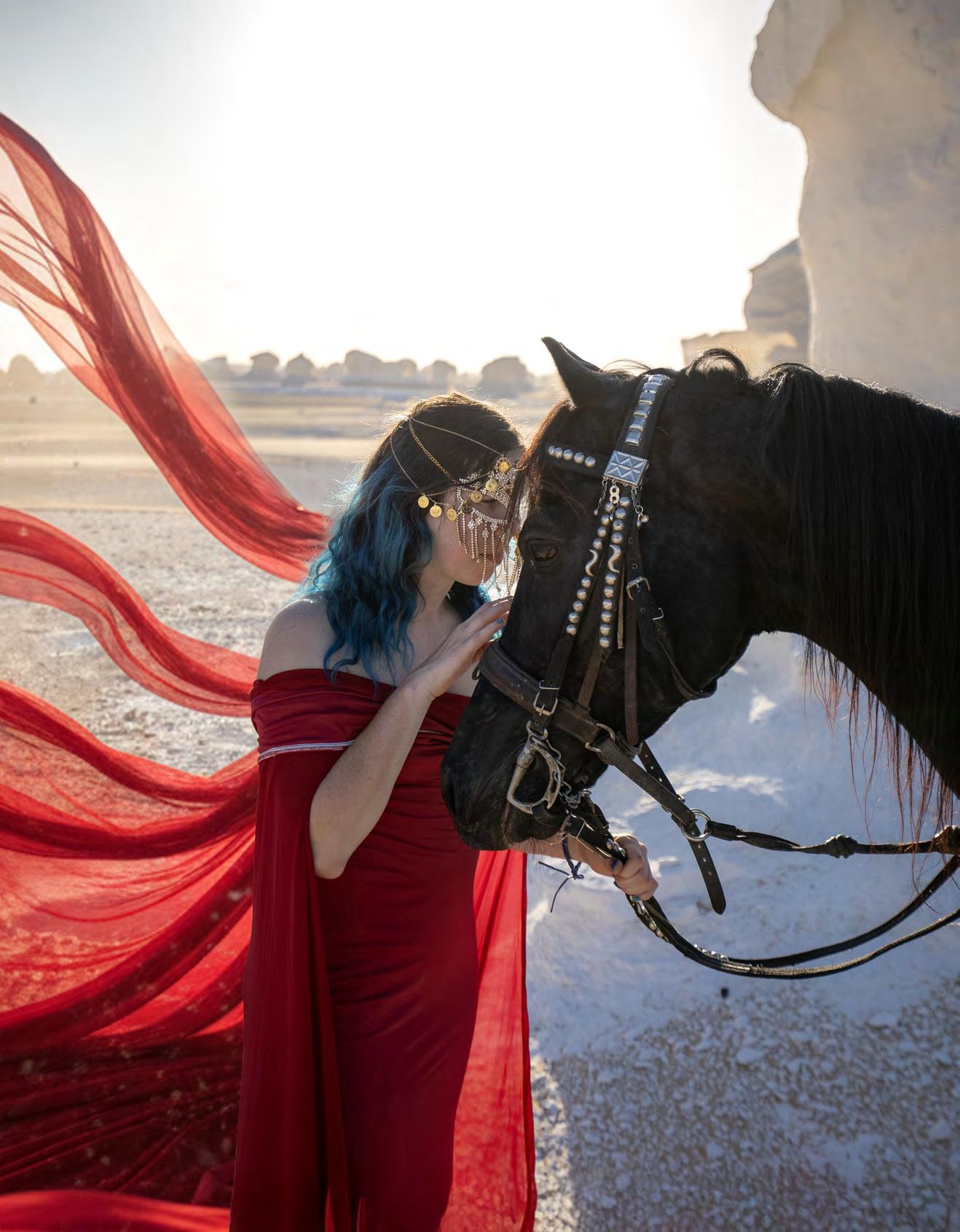
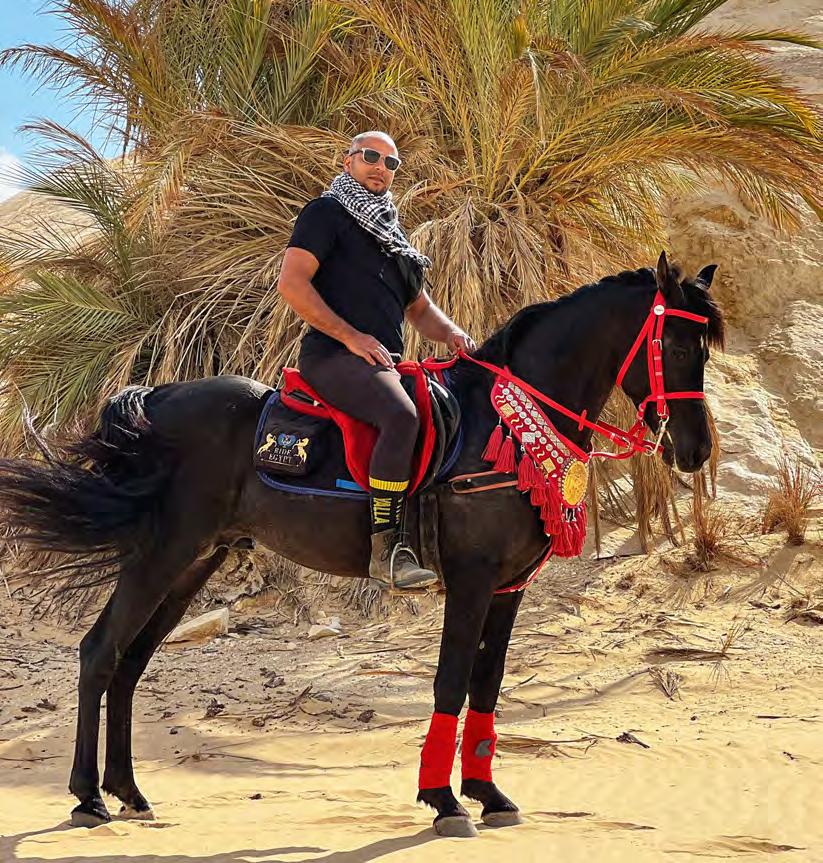
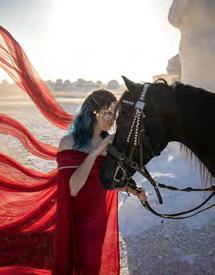
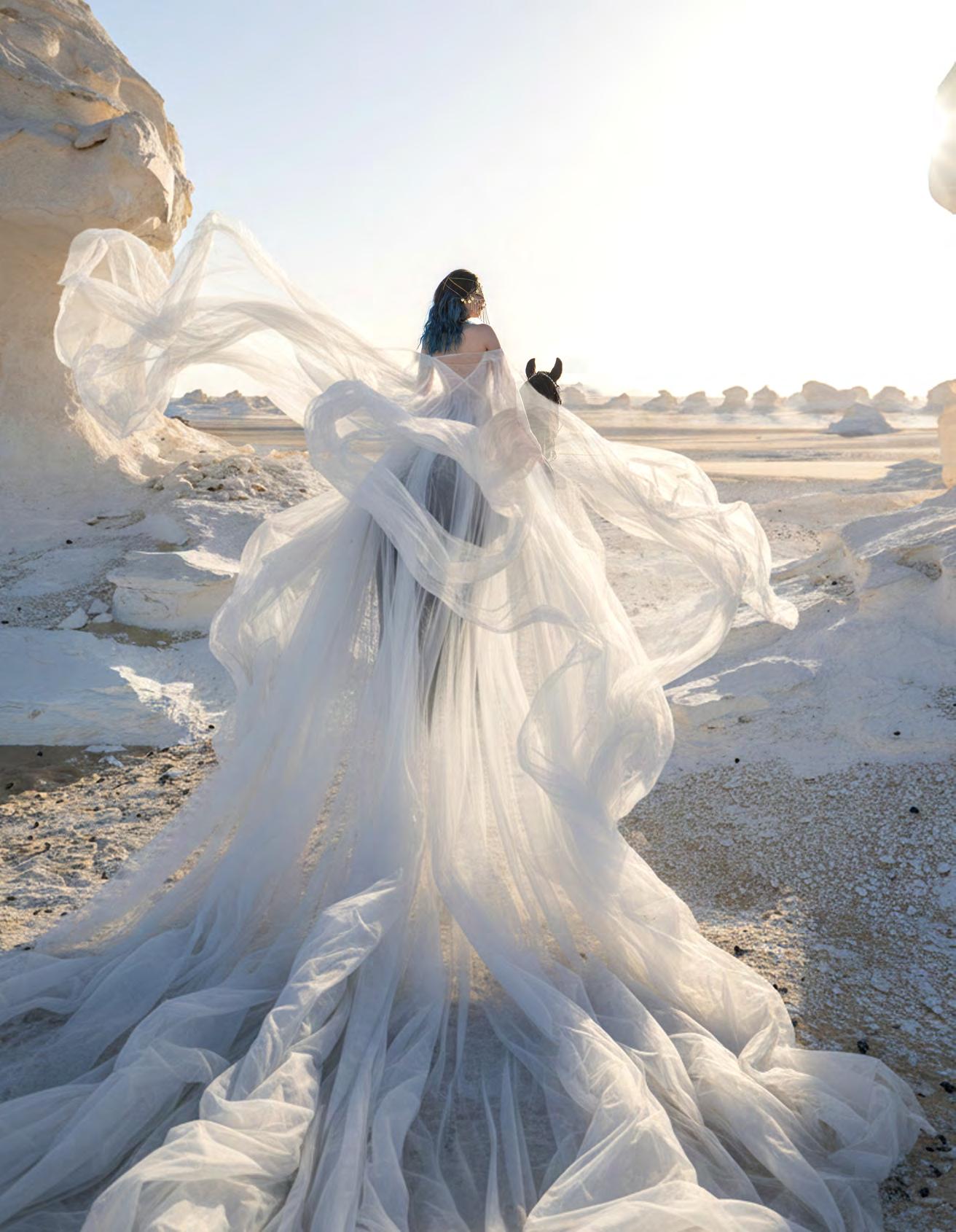
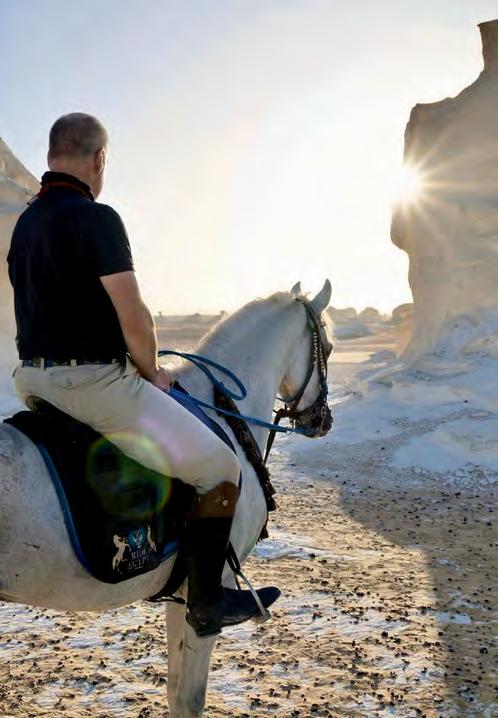
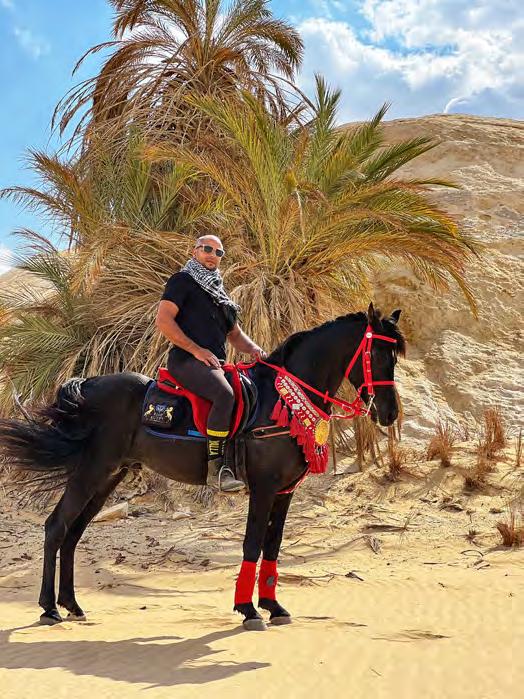
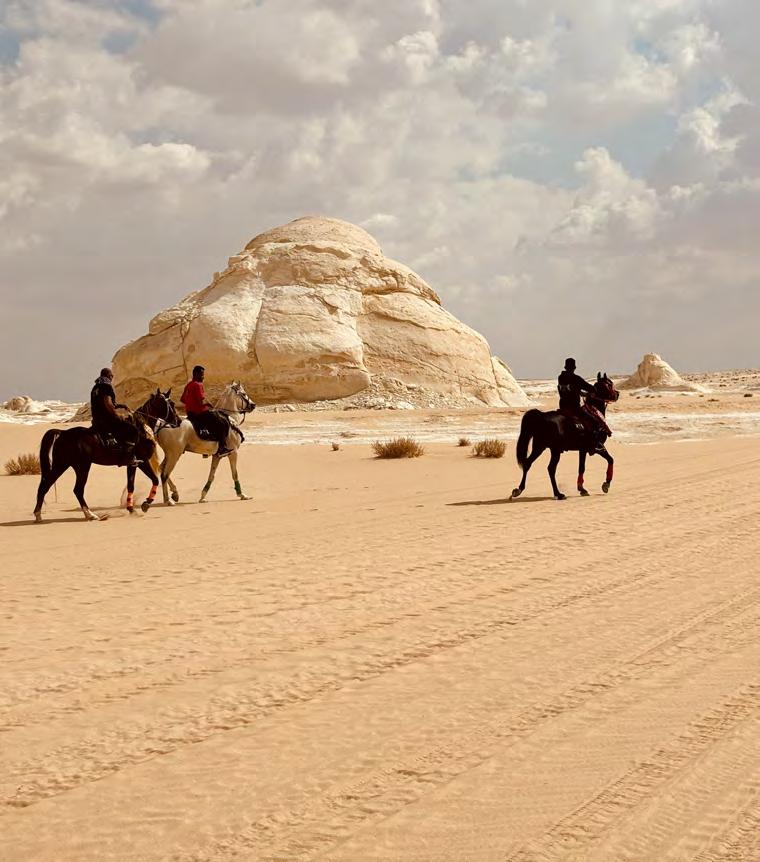
Ride through the White Desert with Ride Egypt
Robinson Squared Staff of Dr. Lori
HAVES Must
EZ SIGNS
Free shipping!
1-800-640-8180
See our ad on page 27 www.EZSignsOnline.com
EQUINE CONSIGNMENTS!
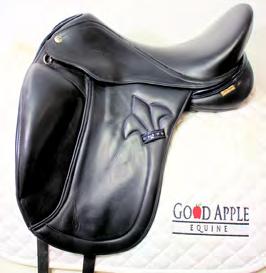
Great selec�on of saddles, tack, boots,home items and more.
Free trial on saddles. See our ad on page 72 www.GoodAppleEquine.com
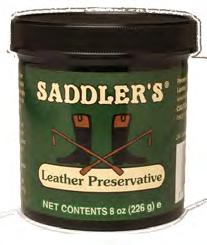
Saddler’s Preserva�ve
Protect and restore your valuable leather for years to come. See our ad page 25 www.jmsaddler.com
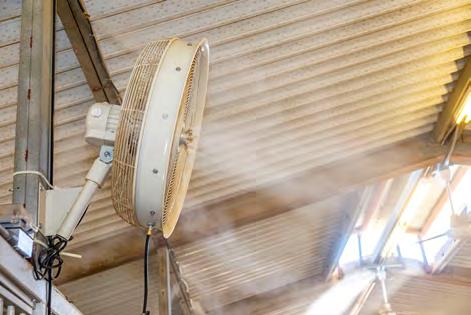
LIVESTOCK & ANIMAL COOLING SYSTEMS
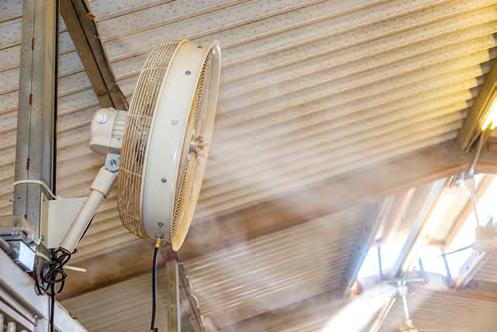
Keeping your horse or livestock cool and comfortable during the summer is absolutely vital.
See our ad on page 329 www.advancedmis�ngsystems.com
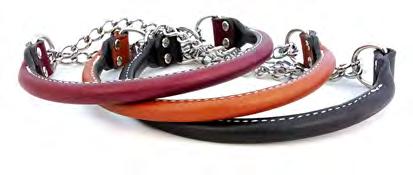
MARTIMGALE COLLARS
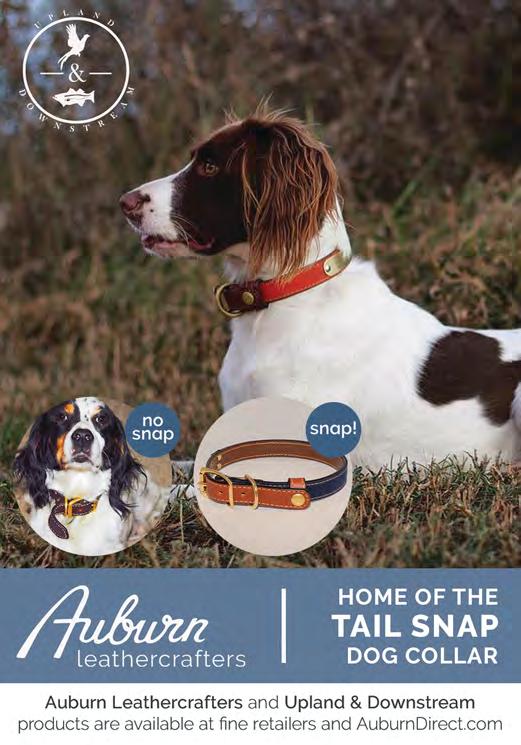
Lake Country Adjustable Mar�ngale features bridle leather and solid brass hardware. For training, walking, and just “looking good!” www.auburndirect.com
See our ad on page 25
UNDER HELMET HEADBANDS
The myMareCo signature Under Helmet Headband blends comfort, style and performance to secure your ride.
See our ad on page 72 Amazon.com/mymareco mymareco.com
SOURCE micronutrients providing a unique spectrum of support vitamins and minerals plus, diges�ve enzymes, beneficial microbes, an�-oxidants and essen�al fa�y acids.
See our ad page 33 800-232-2365 www.4source.com
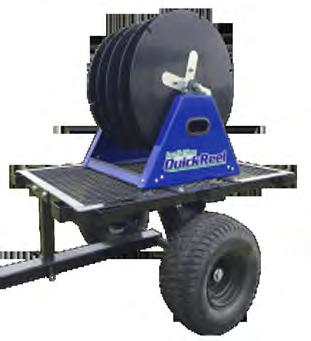
LAY-FLAT HOSE QUICKREEL
mounts to cart or vehicle. ATV trailer cart assembly available. Proudly made in the USA by our team of cra�smen!
See our ad page 37 BigSprinkler.com
EQUINE HEALTH PRODUCTS
Liniment, Hoof Care, Hoof Soak
See our ad page 14 www.Vetericyn.com
FOR NON SWEATERS
Enables your horse to sweat naturally. Show safe www.nonsweater.com
See our ad on page 37
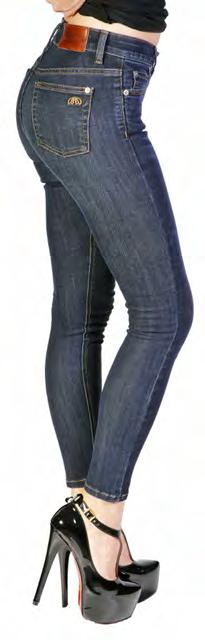
HUG YOUR CURVES Bullet Blues “Lady Slim” high-waist skinny jeans made in the USA. See our ad on page 25 BulletBluesCa.com
SUMMER S
how Season
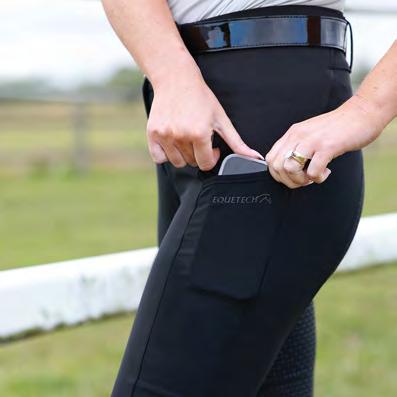
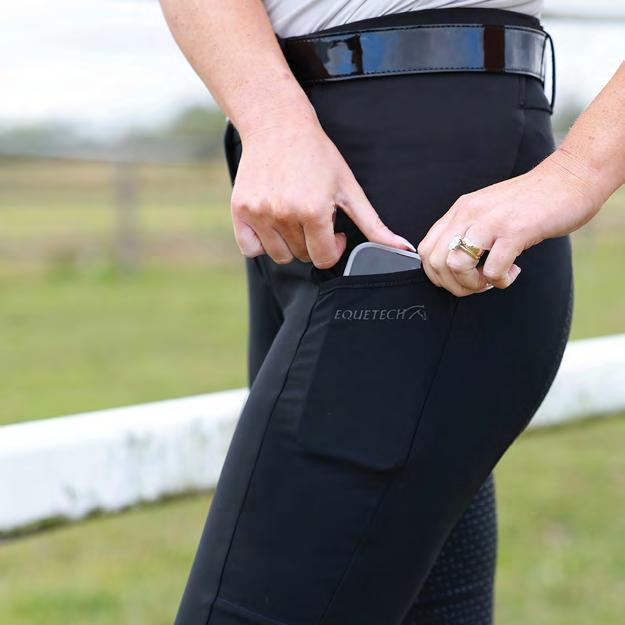
Equetech Women’s Comfort Pro-Breeches
From stepping into the competition arena with class to comfortled design for everyday style, the new Equetech collection for 2026 combines style with performance.
The Equetech Women’s Comfort-Pro Breeches are designed to deliver the ul�mate combina�on of performance, flexibility and comfort, making them an essen�al choice for riders who demand both style and prac�cality. Engineered with the modern equestrian in mind, these breeches take inspira�on from your favourite leggings while retaining all the func�onality and smart tailoring of tradi�onal breeches. The result is a pair of riding breeches that offer unparalleled freedom of movement, fla�ering lines, and all-day wearability in and out of the saddle. At the heart of the design is a hybrid waistband that adapts to your body for a secure yet non-restric�ve fit. This unique feature ensures complete flexibility around the waist, making them feel as effortless and suppor�ve as your most comfortable ac�vewear. Coupled with an innova�ve four-way stretch panel cleverly integrated into the pocket lining, the Comfort-Pro Breeches give riders excep�onal stretch exactly where it’s needed most. This though�ul detail allows the breeches to move seamlessly with your body, whether you’re schooling, hacking, or compe�ng.
RRP: £74.95, 24 - 34” Waist
BLACK/BLACK, MOONLIGHT GREY/BLACK
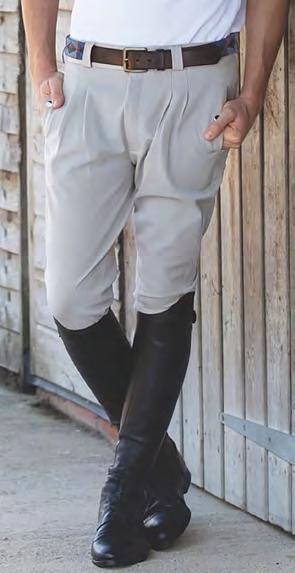
Introducing the Equetech Men’s Elite Breeches; the perfect balance of performance, comfort, and modern style for male riders. Designed for all disciplines, these breeches combine durability with a sleek, tailored fit to ensure confidence both in and out of the saddle. Made from hard-wearing woven superstretch fabric, they deliver exceptional flexibility, shape retention, and four-way stretch for complete freedom of movement. A deep, supportive waistband provides a secure yet comfortable fit, while the front zip fly with stud fastening ensures a smart, practical finish. Functional details include deep front pockets and a secure back zip pocket, offering convenient storage for essentials. Faux-suede knee patches provide grip, stability, and a classic equestrian touch. Available in timeless and contemporary colours, the Elite Breeches are easycare, machine washable, and suitable for training, competitions, or everyday wear. A true wardrobe essential, they deliver premium performance for riders who demand comfort and style.
RRP: £84.95 , 30 - 38”
BEIGE, BLACK, GREY
Equetech Men’s Elite Breeches
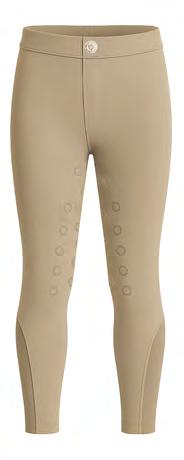
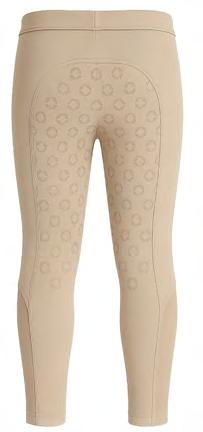
Equetech Junior Elite Breeches
The Equetech Junior Elite Breeches are designed for ambitious young riders across all disciplines, from dressage and show jumping to eventing and pony club. Combining modern fabric technology with a sleek, sporty design, they deliver performance, comfort, and style for training, competi-
tions, and everyday riding. Made from four-way stretch technical fabric, they provide superior flexibility, freedom of movement, and breathability, wicking moisture to keep riders cool and comfortable. A full silicone grip seat offers subtle yet effective security in the saddle, enhancing stability, posture, and confidence.
RRP: £39.95
7/8Y, 9/10Y, 11/12Y, 13/14Y
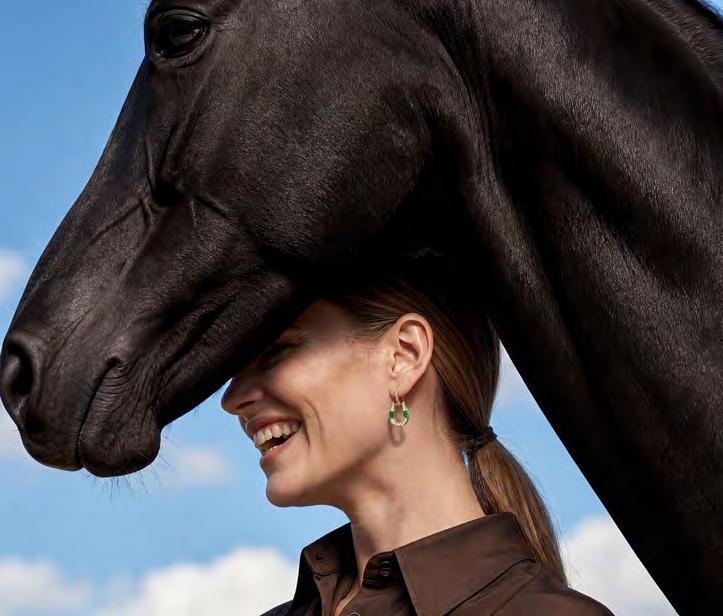
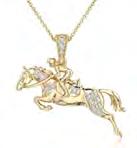
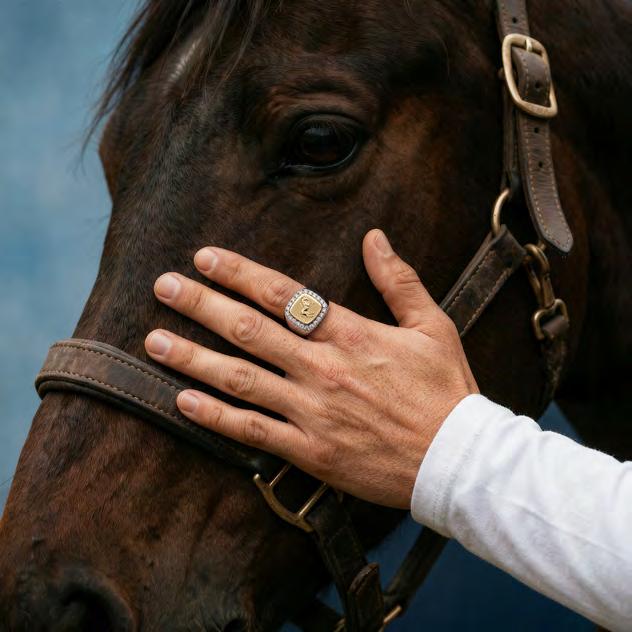
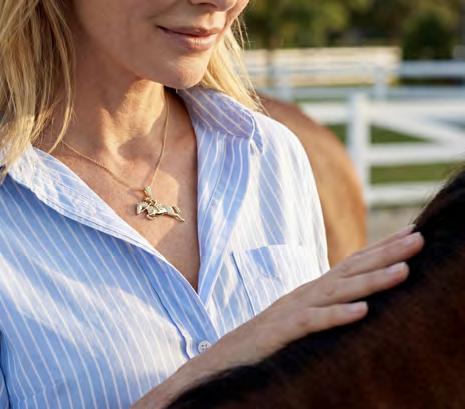
Angara has created a collection that speaks directly to the heart of equestrian culture. These pieces transform beloved symbols of the sport into refined expressions of luxury, offering horse enthusiasts a meaningful way to celebrate their passion with exceptional craftsmanship.
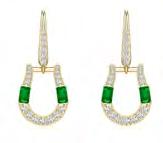
Horseshoe Earrings (Starting at $1,809): A timeless symbol of luck and protection is elevated through fine craftsmanship in the Horseshoe Earrings. Featuring emerald-cut emeralds framed by sparkling diamond accents, these elegant drop earrings reinterpret the iconic horseshoe motif with sophistication and modernity. Lightweight and refined, they offer a graceful expression of equestrian style that transitions effortlessly from day to night.
Horse and Rider Pendant (Starting at $379): A meaningful tribute to the unique partnership between horse and rider, this diamond-accented pendant showcases a graceful silhouette that reflects trust, dedication and mutual respect. Elegant and timeless, it serves as a wearable reminder of the connection that lies at the heart of every equestrian journey.
Stallion Signet Ring (Starting at $1,009): Bold yet sophisticated, the Stallion Signet Ring honors the power and beauty of the horse through a striking stallion motif. Reimagining the traditional signet ring with an equestrian perspective, this distinctive piece blends heritage-inspired design with contemporary style for a timeless statement.
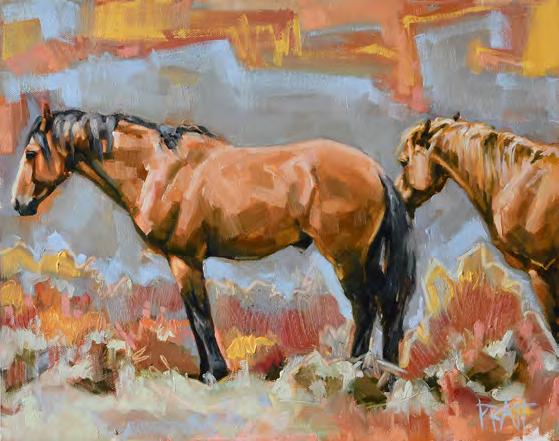
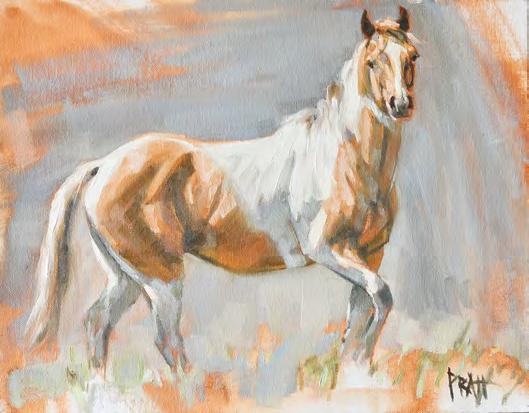
Jennifer Pratt
.“As an ar�st, I have dedicated myself to the subject that inspires me most, the equine form. I am drawn to the lines in a horse’sconfirma�on: fluid, angular, curvaceous and graceful.”
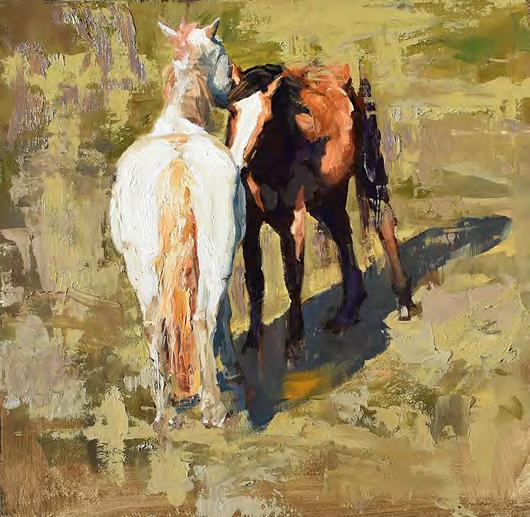
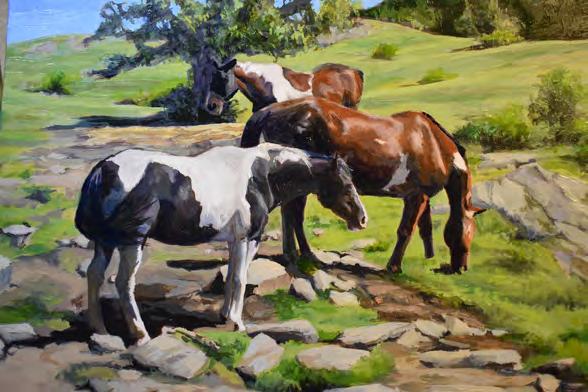
Bridget Grady
A master of both realism and more abstracted style, the ar�st renders both horses and light with perfec�on. Her pain�ng is influenced by her explora�ons of the woods and fields of New England, the literature of natural history and a childhood shaped by life on a neighboring farm.
“Ar�sts perform a social func�on by producing visual ar�facts that can have an affect on the a�tudes of a society towards the natural world.”
Sagebrush Zain by Jennifer Pratt. Framed 11×14″ oil on panel. $525.
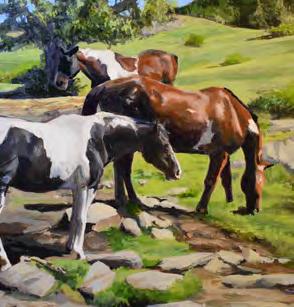
Friends by Bridget Grady. Framed 12×12″ oil on panel. $1,050.00
Alvord Resting by Jennifer Pratt. 11×14″ oil on panel. $595.00
Uno Dos Tres by Bridget Grady. Framed 9×12″ oil on panel. $800.00
Tyrel Johnson:
“Wild and Free”
Photos by Louie Preciado
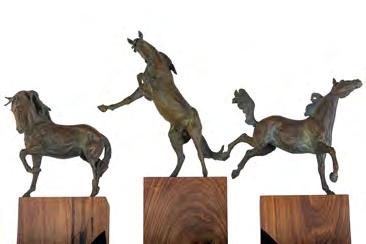
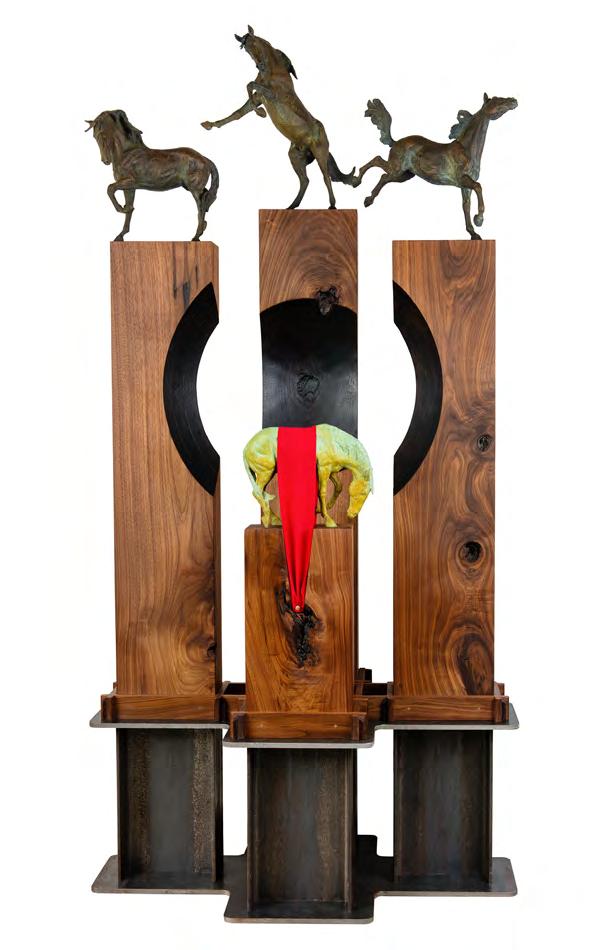
“Having grown up in St. Petersburg, Russia, I always loved the Anichkov Bridge with it’s four horse sculptures. ‘Horse Tamers’ by Peter Klodt. We commissioned Tyrel to create something suggested by this, he did such a wonderful job. ‘Wild and Free’ takes me back to my childhood and lets me reminisce about my hometown.” - Yana
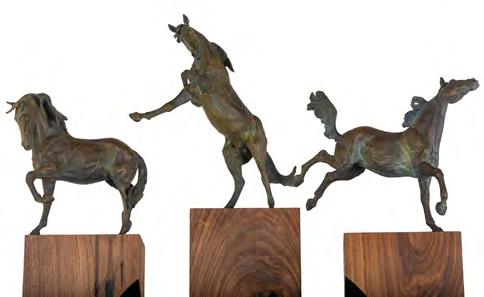
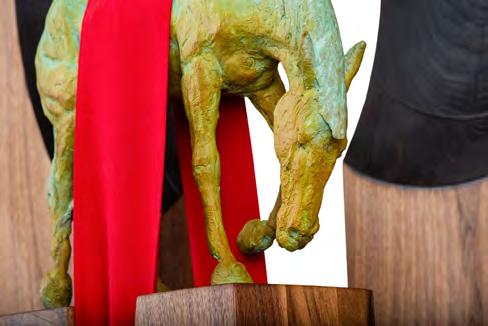
“The horse sculptures on the bridge symbolize the struggle of man over nature and the triumph of human reason and strength over untamed wildness. Tyrel’s work ‘Wild and Free’ represents its an�thesis. The bound and broke horse in the center, moving up through the void, is transmuted into the stallions above. Figures exal�ng in their emancipa�on and reveling in their own power. The piece inspires me everyday to not be constrained. It reminds me that independence of thought and spirit are what ma�ers.” -Clayton
https://tyreljohnsonfineart.com/
Wild and free was a delightful challenge instigated by two amazing clients. Clayton and Yana, who have collected my work for several years, asked me to conceive of and create a one-of-akind sculpture. They offered only the words “wild and free” and the famous horse sculptures on St. Petersburg’s Anichkov Bridge as a conceptual origin point. This set my creative mind on a beautiful journey.
From the ages 16 to 23, I had helped scale up, sculpt, and cast many monuments in my family’s bronze foundry. The following years were spent running my high-end construction business by day, honing my art after the kids were asleep. I was bred for any artistic challenge and look only to continue pushing my limits on every level at any scale I can get my hands on.
My personal mantra is, “An artistic mind is only free when the hands can express the dreams they are asked to imitate.”
My art is rooted in concept as opposed to subject. As a result, I’ve found that it finds an entirely unique meaning in each viewer. In that light, I have asked Clayton and Yana to share what “Wild and Free” has come to mean to them now that it is a central aspect of their beautiful home.
For me, its meaning is quite deeply founded, but I’ll sum up with, “We are not alone in experiencing the effects of the world we see.”
ART ANTIQUES &
By Dr. Lori
TIPS to buy at Bargain Prices
Valuable Items
By Dr. Lori Verderame
Where do you find quality and valuable art, an�ques and collec�bles at bargain prices? My three favorite places for treasure hun�ng are thri� stores, estate/garage sales, and online pla�orms. As an appraiser, with 25 years of experience evalua�ng all types of objects, I keep current on the value of objects. Through my Zoom courses, social media posts, and columns, I train my followers in ways to become successful resellers. Here are some of my �ps for ge�ng the best return on investment (ROI) from your latest shopping haul.
Parts & Packages
Original packages can impact value. This is true for everything from original store-bought jewelry boxes to tea canisters. When it comes to board games, toys, electronics, objects with accessories and many more vintage and antique items, the package, box, or presentation displays for an item are valuable. If you have the box, keep it. If you have the box and it is damaged, don’t add tape to it because that could damage it. And, what’s more, having all the pieces of an item like a game or toy is vital to establishing its value. If you hunt around yard sale tables or estate sale shelves for that missing chess piece or lamp base, it will be well worth it.
And speaking of parts, many items particularly antiques are sold for their parts. That’s right, sometimes a part of a vintage object is just what a collector is looking for and he/she will pay top dollar for it. Recently, on a major online thrift shopping platform, parts of a rare pocket watch sold for nearly $100,000. That’s right, sometimes it’s the parts that sell uber high. Don’t disregard the parts of a rare object.
Don’t do Damaged
If an item is damaged, the cost of restoring it could be costly. In some cases, restoration is extremely costly. Before you pick up and pay for that tattered 19th century quilt or broken lithograph tin wind up toy, consider its condition. If you decide to ignore this warning and buy a damaged piece and have it restored, make sure you know the cost of the restoration before the work begins. Ask the restorer for before and after photos of his/her work
on a similar piece too because you’ll want to see how well their resulting work is. Inquire about insurance coverage while your art or antique is in the restorer’s care.
Unmarked doesn’t mean without Value
There is a longstanding myth, and it is a myth, that a work of art, collectible, or antique object must be signed, marked, or labeled to be valuable. Not true! While it is good to have documentation, signatures, marks, etc. on objects, but it is not the holy grail when it comes to identifying valuable objects. While documentation is important, it is not the only thing to look for when evaluating an object for quality and value. Of course, objects with autographs or signatures, original labels, backstamps, or other marks, have some value, but that is not the end all be all.
What are the easiest items to resell?
Jewelry, clothing, works of fine art, furniture, and home décor objects Don’t overlook these objects wherever they may be hiding. Happy treasure hunting!
Photo by Staff of www.DrLoriV.com
Tucked away at the very end of Hunter Road, where the road now quietly dead-ends, lies a rare opportunity to own a piece of history and an extraordinary amount of land in a time when privacy and acreage have become some of the most valuable commodities in real estate. Surrounded by rolling countryside and breathtaking valley views, this remarkable estate offers the kind of setting that simply cannot be recreated today.
The centerpiece is a timeless stone farmhouse featuring five bedrooms, three-and-a-half baths, four fireplaces, and a screened porch perfectly positioned to capture the beauty of the surrounding landscape.
The property is both picturesque and practical, with multiple income-producing opportunities already in place. The former processing center, the historic Sears home, and two additional apartments are currently rented, offering flexibility for investment, guest accommodations, or estate staffing. Existing tenants may remain or vacate depending on the new owner ’s vision.
Outbuildings abound, including an original Dutch barn, a six-car garage, and several classic barns currently serving as run-in shelters for horses.
Once a thriving farm and now a retired horse property, the possibilities are endless — from an elegant country estate to a gentleman’s farm, equestrian retreat, weekend escape, or multigenerational compound.
For buyers seeking an escape from the pace of urban life, this is more than a home — it is a sanctuary, a legacy property, and a rare chance to own substantial acreage in one of the region’s most desirable countryside settings. $3,500,000. Land has been preserved in 4 parcel so its possible to sell some of the land.
Elisabeth A. Kerr
Licensed Realtor-Associate m 609.306.5432 | o 609.737.1500
ekerr@corcoranss.com
= 200+ acres with stone farm house, guest house, rental house and more - Hunterdon County, Lambertville, New Jersey
Fiddlers Creek Farm
HIS HERS &
������������������
Antonio Sabato, Jr.
with L.A. Berry, Equinista
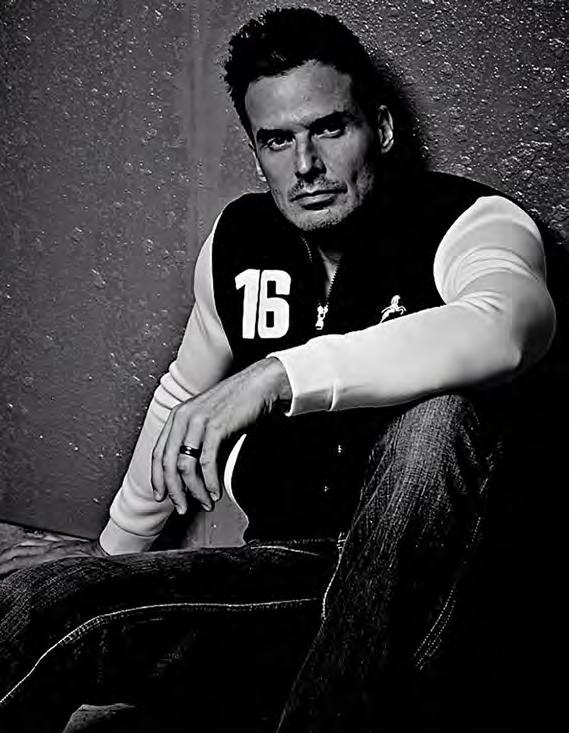
You might apply the word ‘iconic’ more than once to the celebrity model and actor known as Antonio Sabato, Jr. But this Leap Year baby was born a horseman first, and is s�ll demonstra�ng that he knows how to sit deep and ride forward. This Tarpon Springs, Florida equestrian is between horses at the moment but it’s not stopping him from turning the year of the Fire Horse into a redhot ride. There’s the launch of his Gatwick Studio’s new independent film, Just Drive, where he holds the reins as lead actor and execu�ve producer; a poten�al joint venture with former General Hospital co-stars that he teases would be “history making;” and advocacy for a more personalized health, fitness and wellness lifestyle and fashion line via the horsepowered pla�orm, PirataDellaStrata.com, that honors the driven natures of the men who inspired him -- his father and grandfather. In Italian, ‘pirata della strata’ means a pirate of the road or adventurer, and speaks to those willing to live life luxuriously full-thro�le. “Wear what drives you,” says ASJ, “ and feel refined yet rebellious, sophis�cated yet daring.” Feel horsepowered.
HERS: What do you remember about your first horse/ pony?
HIS: My first horses were a Quarter Horse, a Missouri Foxtrotter, and a Palomino. I loved them and took care of them in Santa Fe, New Mexico. They were great horses in every way. They became my best friends and I loved taking care of them for many years. Their favorite treats were apples and, obviously, carrots.
HERS: Was there a lesson or experience they left with you?
HIS: My first time riding was when my father put me on top of a big horse when I was seven years old, and I never forgot it. It was amazing. Initially I was scared but then there was this connection that never left me. Since then horses have always been one of my favorite animals. I understand them. I love them dearly, as a matter of fact. My daughter became an amazing English rider, and loves horses as much as I do maybe more!
HERS: What qualities do you like best in a horse and a person?
HIS: Horses are better than people. I enjoy and like being around them. I trust horses more than people. If people were more like horses the world would be a better place. God created them in the best way possible, and they’ve been so good to us from the beginning of time.
HERS: What was your first job and how old were you?
HIS: My first job was in my teen years. I worked an entire summer in a warehouse moving boxes. It was great.
A nod to ASJ’s love of horses and racing cars with the Sabato Legend Varsity jacket from PirataDellaStrata.com, $120
HERS: If you could be working in the horse world, what would you be doing?
HIS: I’d be working around broncs and bucking horses.
HERS: Favorite inspirational quote?
HIS: No excuses.
HERS: Did you develop your Fix It & Finish It skills around barns and fencing?
HIS: No, that was all learning on the spot!
HERS: Does being a horseman spur the wellness lifestyle behind Pirata Della Strada?
HIS: Being around horses makes anyone better, in every way.
HERS: How would you like to see our horse world evolve over the next decade?
HIS: I would love for people to know about horses more, to be around them, to care for them. They’re the most amazing animals.
HERS: You can invite three guests (past or present, real or fictional) to dinner. Who joins you and what’s on the menu?
HIS: My father, Marlon Brando, and Steve McQueen. We have steak. Filet mignon.
If people were more like horses the world would be a better place.
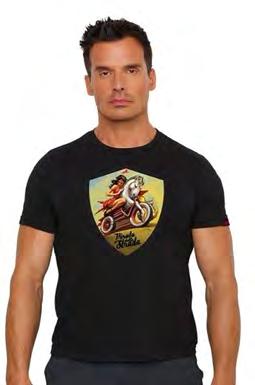
ASJ wearing the horsepower-inspired Bellezza di Guidare Tee from PirataDellaStrata.com, $42
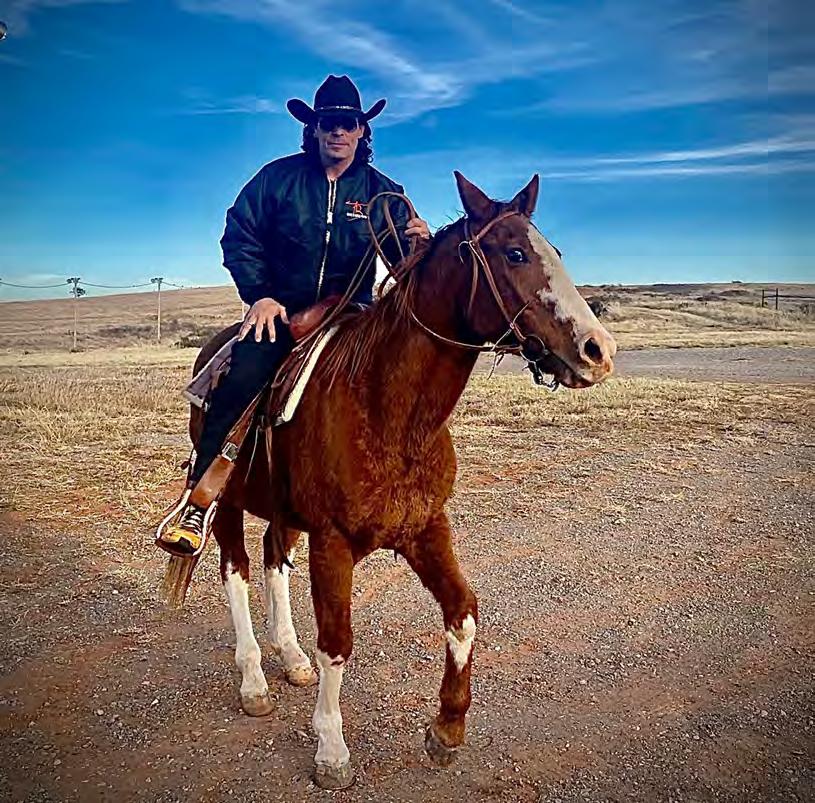
ASJ: This horsepowered pirate still knows how to open it up in a good field.
Discover more about Antonio’s latest projects at Piratadellastrada.com, and follow him in the fast lane on facebook at Antonio Sabato Jr. and IG @antoniosabatojr
Suggest a His & Hers guest to L.A. Berry at latheequinista@gmail.com.
Photos courtesy of Robinson Squared
REINTRODUCING THE Heritage Meets High Performance ��������������
By Taryl O’Shea
Today, however, the industry is ac�vely redefining how the Arabian horse is perceived. Long associated primarily with beauty and heritage, the modern Arabian is increasingly being recognized for something far more dynamic: its athle�cism, versa�lity, and ability to perform across a wide range of compe��ve disciplines. This shi� is not cosme�c—it reflects a broader evolu�on in how riders, trainers, and owners evaluate performance, connec�on, and lifestyle.
Arabian horses have long dominated endurance riding, widely considered one of the most physically demanding equestrian sports in the world. Across global endurance compe��ons, Arabians consistently outperform other breeds due to their efficient metabolism, strong skeletal structure, and excep�onal cardiovascular capacity. Their ability to maintain speed and recover quickly over long distances makes them uniquely suited for the sport.
However, their capabili�es extend far beyond endurance. Increasingly, Arabians are gaining trac�on in dressage, hunter/jumper, and western disciplines—areas tradi�onally dominated by other breeds. Riders are recognizing that the Arabian’s intelligence, responsiveness, and trainability translate effec�vely across disciplines, allowing for greater flexibility and longevity in a horse’s career.
For centuries, the Arabian horse has stood as one of the most recognizable and influential breeds in the world. With lineage tracing back more than 4,000 years, the Arabian has shaped nearly every modern light horse breed and remains a global symbol of endurance, intelligence, and partnership. Its legacy is deeply embedded not only in equestrian history, but in the foundation of modern sport horse development.
“Versa�lity is the Arabian horse’s greatest compe��ve advantage in a changing equestrian landscape.”
The U.S. equine industry contributes approximately $122 billion annually to the economy, suppor�ng more than 1.7 million jobs. Within this expansive ecosystem, breeds that can appeal to mul�ple disciplines and audiences are best posi�oned for sustained growth. Specializa�on alone is no longer enough—adaptability is becoming the defining factor of long-term relevance.
Arabian horses are uniquely posi�oned for this shi�. Their intelligence and strong human connec�on create a deeper level of partnership between horse and rider—an increasingly valued a�ribute as the industry places greater emphasis on horsemanship, welfare, and ethical training prac�ces. Riders today are not only seeking performance, but connec�on, trust, and longevity.
At the same �me, a new genera�on of riders is entering the equestrian world through en�rely different pathways. Digital pla�orms, experien�al events, and cross-disciplinary exposure are reshaping how individuals discover and engage with horses. Tradi�onal entry points are evolving, and the Arabian horse community is responding. “Relevance today means mee�ng riders where they are—and showing them what the Arabian horse can truly do.”
Photos Provided by Arabian Horse Associa�on
From expanded social media presence to educa�onal ini�a�ves and more accessible entry-level programs, the industry is working to ensure that Arabian horses are visible, approachable, and aligned with modern expecta�ons. This effort is not about abandoning tradi�on, but about extending it—making it more inclusive, more dynamic, and more connected to today’s riders.
By bridging heritage with performance, the Arabian horse is being reposi�oned not only as a symbol of the past, but as a defining athlete of the future—one capable of thriving in an increasingly diverse and evolving equestrian landscape.
Taryl O’Shea, CEO of the Arabian Horse Associa�on
In our September/October issue, look for part 2Reinven�ng Arabian Events for a Modern Audience
https://www.arabianhorse.org/discover
HELPING KIDS HELPING KIDS
The Journey of a Children’s Equestrian Sports Therapist
As a child and teenager, Sara was an uncompromising competitor. Her mantra after a fall was immediate action: “I would hop back on and do it again until I did it right, regardless of if I was hurt or not.” While practicing mistakes were accepted as part of learning, the show ring was a different story—it became the site of her most serious injuries, including multiple concussions.
The transition to junior jumpers brought new, more frustrating trauma. A horse that refused to jump water became a major source of anxiety, dumping her both at home and at shows. This pattern fueled negative thinking: “I would foresee falling off at a jump before my horse did.”
Sara’s life in the saddle has been a deeply personal journey marked by intense pressure, traumatic falls, and a profound love for horses. Now, as a Children’s Equestrian Sports Therapist, she is turning her past challenges into a source of strength, offering young riders the support she never had.
and to win,” she states. This perfectionism extended to all areas of her life, where anything less than first place felt like failure—”2nd place is first to lose.” The lack of parental support compounded the emotional weight of competition: “I do wish I had more supportive parents who would come to my horse shows and cheer for me.”
Despite the hardships, the sheer joy of being with horses was her constant escape. “I loved (and still love) horses. They make me so unbelievably happy.” The barn was a haven, a place where she could spend hours riding and caring for horses, escaping negativity at home and teenage drama.
Adulthood brought a heightened sense of fear. “As an adult, falling off is much more painful and traumatizing than it is when you are a kid,” she reflects. Although she hasn’t fallen in the show ring as an adult, two traumatic falls over jumps while practicing have deeply shaken her confidence, leading her to ride “scared.” After the first fall, she refused to jump for nearly four months. As an adult, the added layers of knowledge and experience mean she is “constantly thinking in the ring,” which only compounds her fear.
Sara’s love of winning fueled her young competitive spirit, despite the overwhelming anxiety she had to manage alone. With no parental and no professional support with the exception of one specific trainer over the years she resorted to physical distress: “I would vomit the night before and stay up all night.” The pressure was self-imposed and immense. “I put a lot of pressure on myself to be the best
Sara’s professional journey led her to work with children struggling with mental health issues. Her decision to become a Children’s Equestrian Sports Therapist was a direct response to her own past. “I want to provide children with something that I did not have when I was a young rider,” she explains. While her trainers focused on riding technique, she needed someone to help her with “trauma, feeling scared, wanting to give up, having severe anxiety in competitions.”
Sara believes her approach offers something unique compared to traditional sports psychologists. Drawing on her previous training, she emphasizes the critical need for on-site support. Her ability to be present in the ring, where a child’s anxiety and trauma arise, allows her to provide immediate, context-specific therapy. Her role is clear: “My job is to help the child have a healthier mind so that the trainer can focus on one thing: teaching the child to ride.”
Sara’s story is a powerful testament to finding purpose in pain. By integrating her lifelong passion for horses with her commitment to mental health, she is creating a safe, supportive space for the next generation of riders to thrive, proving that true equestrian success begins not just in the saddle, but in the mind.
Story By Ali Kelman
Photos By Kathy Russell Photography
TIggy Kelman with Sara Goldsmith
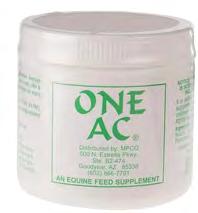
►Can reduce your horse’s athletic ability by 15-20%
►Can endanger your horse’s life during stressful training schedules in heat and humidity
SOLUTION: ONE AC* (Feed Supplement)
►Safely balances your horse’s chemistry enabling it to sweat, naturally cooling it down.
►No side effects.
►Does not register positive on drug tests,making it ideal for performance horses.
A FIRST FOR EGYPT:
�����������������������������������������
By Founder Of RIDE EGYPT
Emma Jane Levin
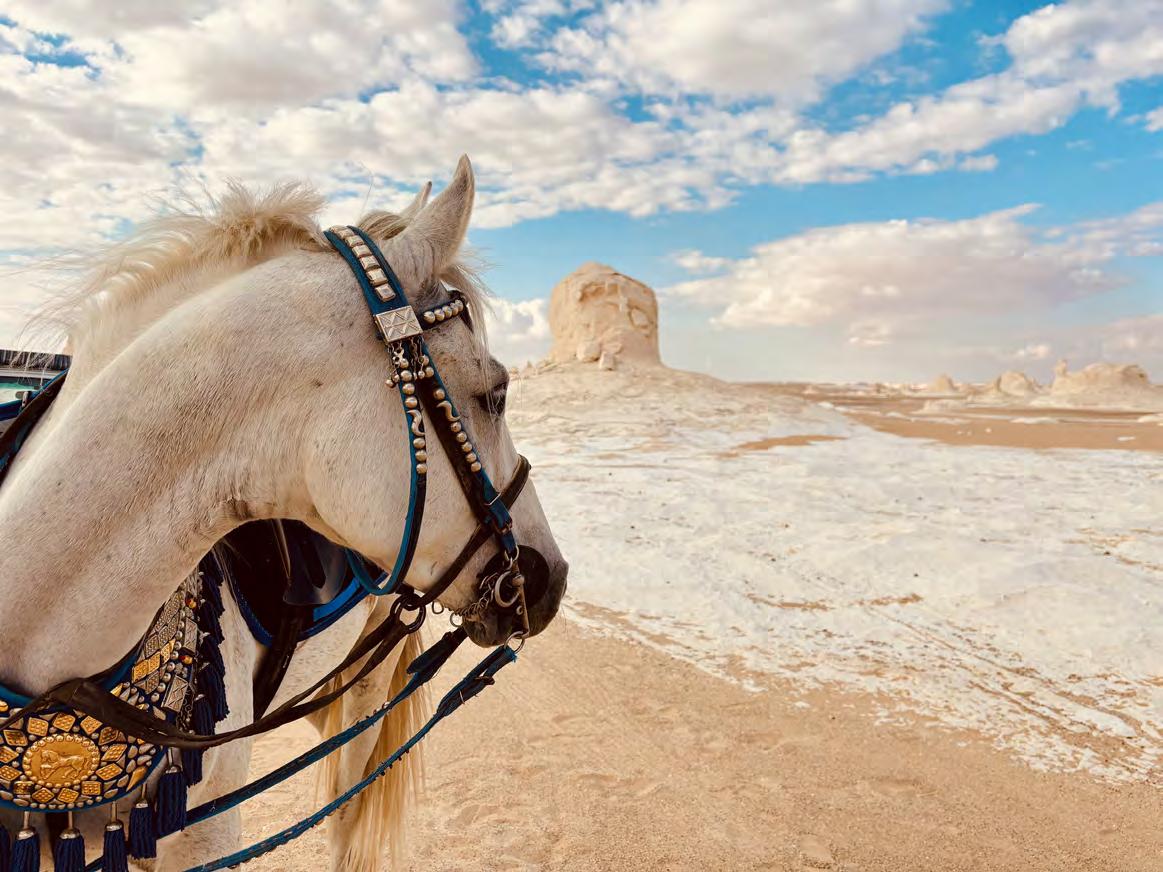
Bri�sh-owned and led, Ride Egypt have spent more than a decade redefining equestrian travel in the country, earning a reputa�on for excep�onal horses, ethical prac�ces, and deeply personal hos�ng. A�er 11 years building an extraordinary por�olio of immersive riding experiences, the company now unveils its most striking journey yet: horseback travel through Egypt’s White Desert, a remote and visually arres�ng landscape rarely accessed on horseback.
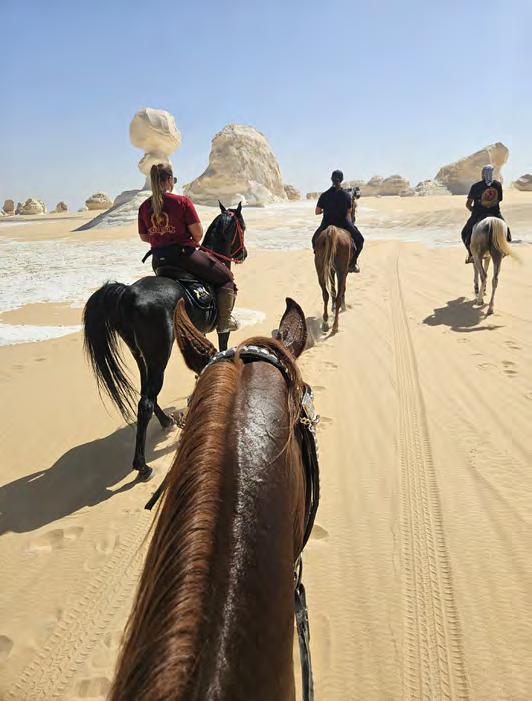
Moving at the rhythm of the horse, riders cross vast open terrain where distance, silence, and scale are felt more deeply than when travelling by vehicle. Long, uninterrupted stretches allow for moments of real freedom in the saddle, with the space to ride fast across ground that seems to stretch endlessly in every direc�on.
The journey is the result of years of explora�on by Ride Egypt founder Emma, who began developing routes in the White and Black Desert a�er working extensively in Fayoum. Months were spent riding, tes�ng terrain, and refining routes to create a journey that feels fluid, expansive, and true to desert travel.
A new stable has been built beside a small eco-lodge in Bahariya, developed with local teams and designed with long-term sustainability and horse welfare in mind. Ride Egypt’s horses are not hired in for trips but are permanent members of the team, trained specifically for desert riding and cared for year-round by dedicated grooms.
Offered as a mini break, the journey crosses both the White and Black Desert, moving from chalk forma�ons to volcanic landscapes. Phone signal is limited, there is no traffic, and li�le background noise, crea�ng a rare sense of mental s�llness and the chance to regain one of the rarest gi�s of all: �me.
Journeys run from late autumn through spring, in small groups, with horses carefully matched to rider ability and experience. Nonriders are welcome, with alterna�ve ac�vi�es built into each i�nerary. For those confident in the saddle, this is a rare opportunity to cross one of the world’s most striking deserts on horseback, far beyond the usual routes and landmarks.
Photos by RIDE EGYPT
h�ps://www.rideegypt.com/
Aiding Horses And Riders Through The Art Of Riding
Equine Performance Partnership’s new headquarters is NOW OPEN in Ocala, where our 40 acre equestrian paradise boasts a majestic and well rounded facility for top tier training for the competitive dressage or jumping arena.
What We Do:
Come train among the best in the business and experience our dynamic training program. Our main focuses are developing horse and rider pairs and building up training horses the right way; using a combina�on of classical and modern cross training modali�es, including groundwork, trail riding and especially providing space for the horses to open up and be themselves. Our method is a whole horse approach, each horse receives an individualized program based on their needs and to strengthen their confidence in themselves. We believe in happy, healthy horses and aiding riders to be the best versions of themselves they can be for their horses.
Our Facility:
• Our facility is gated with on-site owners, and located 10 minutes from World Equestrian Center, Ocala
• Renovated 12 stall barn equipped with grooming/wash stalls, air condi�oned tack room and feed room
• Spacious 14 x 16’ ma�ed stalls with fans and automa�c waterers
• Round pen
• New fencing, gorgeous fields with shade trees and run-in barns
• Group and single turnout
• Grass dressage and jumping arenas
• Tranquil open spaces for trail riding and work outside the arena
• Coming soon- an oversized covered arena with GGT Foo�ng
Rental Facilities:
Our property also has two fully renovated 3 bedroom 2 bathroom homes available for season rental. They have fenced yards with wire perfect for dogs, beau�ful landscaping and trees, and are very private. There are small two stall barns on the property available for rental with pasture.
Wether you have a young FEI prospect, a stallion you would like to campaign, a “problem horse” or you want to enhance your partnership with yourself and your horse, we are here to support horses and riders to be their very best.
The BASICS: The Key to Top Riding and Winning
By Peter Leone
Showjumping has changed dramatically over the years. The type of horse required to win, the precision of the ride, the kind of obstacles jumped, the technical skills needed, and the speed at which the champions perform are almost unrecognizable to the fan who watched the sport fifty years ago. What hasn’t changed? Showjumping is still about the partnership between horse and rider, it is still about the special understanding and bond between a man and a horse, it is still about communication and trust, and yes, it is still about the “basics”: classical rider position, correct use of the aids, good horsemanship, and classical training methods.
Without exception, the best riders in the world have their basics cemented in everything they do with their horses. It is truly amazing that the time-tested principles of classical position, riding, training, and horsemanship are still the key to success. When watching the best horses and riders in the world compete, you can see the fundamental commitment to and mastery of the basics in real time. What are the basics?
First, we need to understand how a one-hundred-and-fifty-pound rider communicates with and manages a twelve-hundred-pound horse. The rider communicates with the horse through the aides: legs, seat, hands, and voice to name a few. The aids communicate effectively ONLY if the legs, seat, and hands etc. are in the correct position. Classical rider position is essential for the rider’s aids to communicate effectively and for the rider to be in harmony with the horse. The correct and effective use of the aids is only possible through classical rider position.
Classical training and horsemanship work hand in hand with one another. We can liken training the horse to an athlete working out in the gym – running, lifting, stretching, agility, aerobic work. Horsemanship is the trainer that directs how much running and how fast, how much lifting and how heavy, how much agility work and what kind, how much muscle recovery time and when to keep pushing. As riders, we have the responsibility to be our horses’ personal trainer. Cardio and sprint exercises along with strengthening and agility exercises. The right mix
The Basics! Every successful athlete starts with learning and mastering “the basics”. In fact, the very best in any sport are those whose basics are cemented in every training session and compe��ve performance. For equestrian athletes, the basics are the �me-tested principles of classical rider posi�on, correct and effec�ve use of the aids, good horsemanship, and classical training of the horse. The best riders’ “basics” are so deeply ingrained that riding correctly, classical posi�on and use of the aids, becomes muscle memory. When riders visualize the upcoming compe��on course, they feel themselves making sure their posi�on and use of the aids is correct to answer the challenging jumping ques�ons in the Grand Prix. This commitment to the basics combined with an insa�able desire to win is why these riders outperform the rest. Make no mistake, the intense desire to win without the deeply ingrained “basics” doesn’t win – the desire to win alone does not get a rider to the top of the sport.
of training the horse physically, emotionally, and mentally has been the lifelong focus and study of horseman for over one hundred and fifty years. We are not reinventing the wheel when training a horse to be his best. Classical training programs and techniques are time tested and are successful from generation to generation – they are a relative constant. What isn’t the same are the jumping and technical competition questions today’s horses and riders need answer. Success is achieved when riders use classical training and horsemanship to prepare their horses and themselves to conquer today’s championship competition courses. It is ironic that while the challenges we face in showjumping competitions continue to change and increase in difficulty, the importance, mastery of, and use of classical position, use of the aids, training, and horsemanship remains the constant and essential to horse and rider success. The best riders in our sport take the classical principles of riding and training to the next level to consistently win in today’s sport.
This August in Aachen Germany, countries from around the globe will field their best team of riders to compete in Team and Individual Championships. I invite you to enjoy watching the best teams and riders go head-to-head and challenge you to see how the winners use their mastery of the “basics” to win the Team and Individual Championships. Stay tuned for our coverage of Team USA at this summer’s World Championships along with the other champions that rise to stardom.
Olympian Peter Leone offers show jumping training and coaching in person and online. Visit www.peterleoneusa.com for contact and more information.
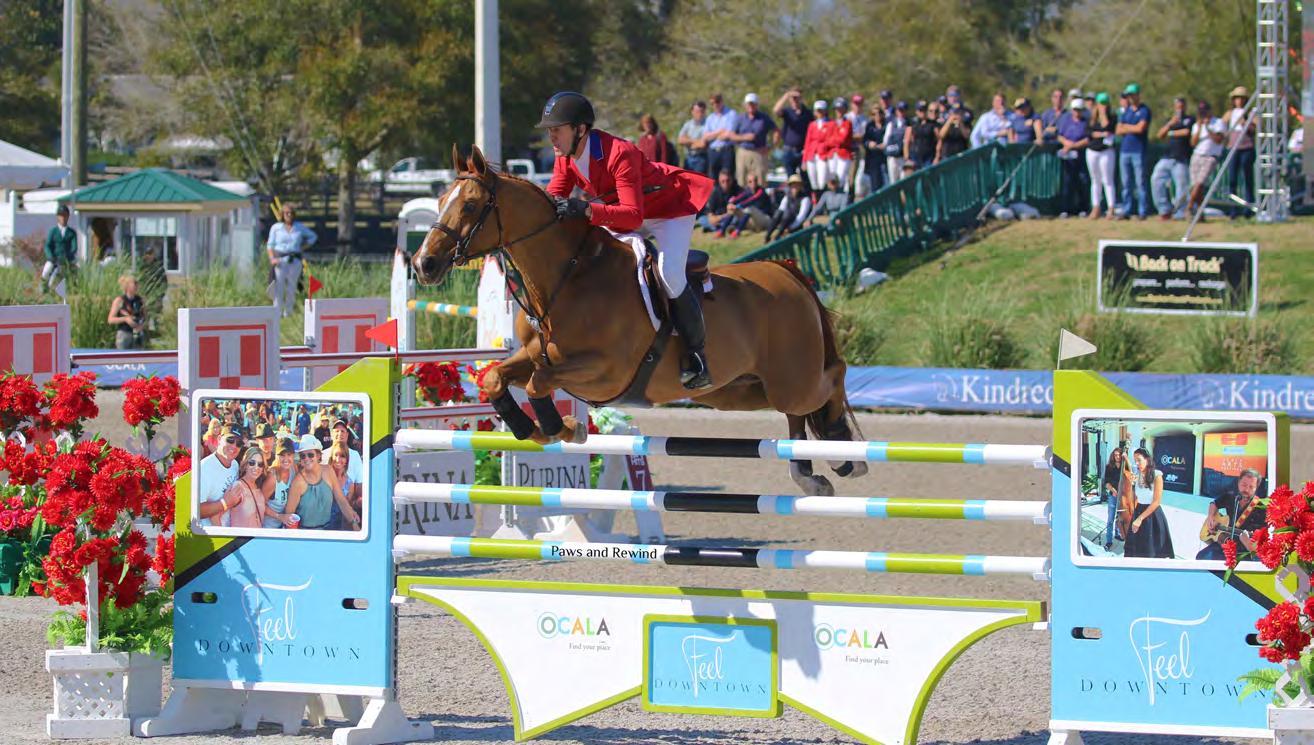
Mclain Ward Photo by : Jennifer Ohlsson for Paws and Rewind LLC.
Oxytocin, Trust, and the Stallion:
Why Calm Touch Matters More Than We Think
Stallions are o�en handled differently than other horses—not because they learn differently, but because we do. Fear, in�mida�on, and long-standing cultural narra�ves shape how humans interact with intact males. While cau�on is appropriate, the unintended consequence is that many stallions receive far less physical contact than mares or geldings.
Over �me, this lack of calm, affilia�ve interac�on can interfere with bonding, relaxa�on, and emo�onal regula�on. In my earlier ar�cles discussing oxytocin—the hormone most o�en associated with bonding, trust, and stress reduc�on—I focused on its role in connec�on and emo�onal safety. That same neurochemical pathway applies to stallions, yet it is frequently overlooked in their management. Stallions are expected to be controlled, restrained, and kept at emo�onal distance. What they are rarely given is the quiet, inten�onal physical interac�on that supports oxytocin release and genuine trust.
The Cost of Distance
Most stallions are handled efficiently, not affectionately. Interactions are purposeful and brief: halter on, lead out, work done, return to stall. Touch, when it occurs, is often functional rather than soothing—utilitarian brushing, quick tacking, brisk corrections. Over time, the stallion learns that human contact predicts pressure, expectation, or restraint, not safety or connection.
This matters because oxytocin release in adult horses does not happen automatically. Unlike the powerful hormonal cascade surrounding birth and early bonding, oxytocin in mature animals requires intentional, repeated, low-threat interaction. Without that repetition, the pathway weakens. The stallion may comply, but he does not truly relax.
Ironically, the horses most labeled as “difficult” are often the ones least likely to receive the kind of touch that would help them regulate stress.
Touch as a Biological Signal
Gentle, rhythmic physical contact—particularly along the neck, poll, and forehead—has been shown to reduce heart rate and promote relaxation in horses. These areas are neurologically sensitive and socially meaningful. In herd settings, horses groom one another in precisely these zones. When we mimic that interaction with intention and consistency, we are speaking the horse’s native language.
What is especially compelling is that this type of hand stroking closely mimics maternal licking behaviors. Mares use rhythmic, repeated contact along the neck, poll, and face to calm and regulate their foals. This early tactile input plays a critical role in emotional development and social bonding. When we engage in slow, deliberate stroking in these same regions, we are not introducing something artificial—we are activating a deeply familiar, biologically grounded pattern of comfort and safety.
In my own work with stallions, I have made this a deliberate practice. I set aside quiet, unhurried time—not as a reward and not as a correction, but as a baseline interaction. I use slow hand stroking along the neck, across the brow, and through the forelock and mane. The touch is soft, consistent, and intentional. At the same time, I pair it with important verbal cues: “You’re alright,” “good job,” “easy.”
The response is unmistakable. Heads lower. Eyes soften. Lips lick and chew. Breathing slows. Muscles release. These are not trained behaviors; they are physiological responses. Continued...
Story and Photos By Lynne Trenery Freeman
Apollo 1
Pantheon
This is Lynne with American Saddlebred stallion, Pantheon.
Setting the Emotional Baseline
This practice has proven especially powerful when used before riding or training. Rather than asking a stallion to move from heightened arousal straight into performance, I first bring him into a parasympathetic state—calm, receptive, and grounded. The session begins not with motion, but with stillness.
Association Plus (A+)™ training intentionally pairs oxytocinsupportive interaction—calm touch, familiar voice, emotional safety—with positive reinforcement, so that rewards are received in a regulated state and learning becomes faster, more durable, and more reliable.
The result is a profound shift in tone. Training becomes quieter. Responses are quicker, not because the stallion is pressured, but because he is emotionally available. The horse is no longer bracing for conflict; he is ready to engage.
When riding or driving, if a stallion becomes tense or reactive, I can use the same vocalizations or a familiar hand stroke along the neck to help him regulate. Because the association has been built intentionally and repeatedly, it works in moments of stress.
Consistency is critical. Oxytocin-based calming does not function like a sedative. It is not immediate, and it is not permanent. It must be reinforced. Unlike the surge of oxytocin that accompanies early maternal bonding, adult oxytocin release depends on repetition and predictability. You cannot apply it once and expect lasting results.
Caution Without Coldness
None of this suggests abandoning good safety practices. Stallions still require clear boundaries, consistent handling, and situational awareness. But caution does not have to mean emotional distance. In fact, calm, intentional touch may increase safety by reducing baseline tension and improving communication.
A stallion who trusts his handler, who associates human presence with regulation rather than conflict, is less likely to escalate under pressure. He is not being indulged; he is being neurologically supported. This foundation does not replace training—it makes training possible.
Oxytocin-mediated calm creates the emotional conditions under which learning, focus, and reinforcement can occur. Without it, even well-designed training systems are built on tension rather than trust.
Reframing Stallion Handling
We often talk about stallions in terms of control—how to manage them, contain them, dominate them. Perhaps it is time to talk more about connection. Not sentimentality, not permissiveness, but biological partnership.
By meeting a stallion’s need for affiliative touch intentionally and consistently he becomes a clearer thinker, safer partner, and more willing learner. This approach does not weaken boundaries—it strengthens them. The result is not a dulled horse, but a settled one—present, responsive, and willing.
Sometimes the most powerful training tool we have is not pressure, but peace.
Apollo 1
This is Lynne on American Saddlebred stallion Apollo Sail’n Round the Moon in the pasture with American Saddlebred broodmare, Spritzer.
Apollo 1
Arlington
This is Lynne with her current stallion, Hackney horse MSF Arlington. The Hackney horse is very rare- about 200 in all of North America. Lynne is on the American Hackney Horse Association Foundation Board of Directors. “We are trying to preserve this wonderful breed.”
Injury Prevention and Recovery The Competitive Edge of Chiropractic
By Dr. Bill Ormstrom
In the world of elite equestrian sport, the difference between winning and withdrawing can come down to one crucial factor: physical soundness. Performance horses operate under high physical demands—�ght turns, long distances, repeated impacts, and finetuned maneuvers. Whether you’re jumping 1.50 meters, sliding into a reining stop, or galloping out of a cross-country water complex, your horse’s body must perform with both strength and precision.
That kind of performance requires more than just condi�oning—it requires resilience. And that’s where chiroprac�c care gives elite horses a compe��ve edge.
By addressing the spinal and musculoskeletal system before problems emerge—and aiding the body’s natural healing capacity when injury does occur—chiroprac�c care helps keep horses in mo�on and out of the stall. It’s not just a recovery tool—it’s a key part of preven�on.
Even the best-managed horses can develop injuries. Causes range from acute trauma (like a slip, fall, or misstep) to chronic overuse, poor saddle fit, training imbalances, or subtle compensa�ons over �me. But many injuries don’t happen in isola�on—they’re the result of accumulated stress on the body’s weakest links.
Here’s how it plays out:
• A restric�on in the poll leads to bracing through the neck.
• That transfers tension down the back, �ghtening the lumbar spine.
• The horse begins to favor one side to avoid discomfort.
• Load shi�s to one hind limb—and eventually, a so� �ssue injury occurs.
By the �me a lameness is visible, the body has already been compensa�ng for weeks or months. Chiroprac�c care aims to catch those biomechanical changes before they evolve into breakdowns.
The Role of Chiropractic in Injury Prevention
Preven�ng injury starts with maintaining func�onal symmetry. Chiroprac�c adjustments ensure that the joints of the spine and limbs are moving freely and evenly, allowing muscles to fire correctly and weight to distribute naturally.
Here’s how chiroprac�c supports injury preven�on:
• Reduces asymmetry: Balanced joint mo�on leads to balanced muscle development and stride.
• Improves propriocep�on: Adjustments fine-tune the body’s sense of movement and posi�on, helping horses react quickly and stay coordinated.
• Minimizes compensa�on: Removing spinal restric�ons prevents abnormal pa�erns of movement that can strain tendons and ligaments.
• Supports so� �ssue: When joints move correctly, surrounding muscles and fascia aren’t overworked or unevenly loaded.
Rou�ne chiroprac�c care doesn’t guarantee a horse won’t get injured, but it drama�cally reduces the risk—and can alert you to small problems before they escalate.
Chiropractic After Injury: Enhancing Recovery
When injuries do happen, rest and rehabilita�on are cri�cal. But rest alone isn’t enough. If the body doesn’t recover in balance, it can set up new pa�erns of dysfunc�on. Chiroprac�c care plays a vital role in post-injury rehabilita�on by restoring proper joint func�on, improving circula�on, and rese�ng neuromuscular coordina�on.
• Chiroprac�c care helps ensure the spine and pelvis are aligned during stall rest or hand-walking periods, reducing compensatory strain.
• As exercise resumes, adjustments keep the horse symmetrical, preven�ng re-injury.
2. A�er Joint Injec�ons or Surgery
• Chiroprac�c does not replace medical treatment but complements it by op�mizing the surrounding structure.
• For example, a horse recovering from a hock injec�on may compensate through the sacroiliac joint or lumbar spine. Chiroprac�c keeps those areas func�onal to support full recovery.
Con�nued...
Why Horses Get Injured in the First Place
3. A�er a Fall or Slip
• Even if no lameness is detected, horses that fall or get cast o�en develop spinal restric�ons.
• A chiroprac�c exam can detect hidden dysfunc�on before it leads to secondary issues.
The Nervous System’s Role in Healing
One of chiroprac�c’s most powerful benefits is its impact on the nervous system. The spinal cord is the communica�on highway between the brain and body. When joints are restricted or irritated, they can interfere with this signaling.
Proper alignment:
• Enhances motor coordina�on
• Supports immune and inflammatory responses
• Facilitates faster healing by restoring op�mal nerve input to �ssues
In other words, chiroprac�c doesn’t just affect structure—it improves func�on at a systemic level.
Post-Injury Saddle Fit and Compensations
An o�en-overlooked aspect of rehabilita�on is how a horse’s posture and musculature change a�er an injury. A�er even a mild strain, horses may carry themselves differently—leading to poor saddle fit, altered gaits, or behavioral issues under saddle.
Chiroprac�c can:
• Restore postural symmetry
• Allow the horse to li� its back properly
• Help the horse rebuild correct muscle tone a�er atrophy or disuse
• Assist your saddle fi�er in determining what fit is appropriate as the horse’s body changes
By rese�ng the spine, chiroprac�c creates a be�er founda�on for all other recovery efforts—whether it’s acupuncture, massage, physical therapy, or recondi�oning.
Chiropractic and Cross-Training
Elite horses are cross-trained for longevity—ground poles, trail rides, hill work, aqua treadmills, and more. These ac�vi�es are designed to strengthen different muscle groups and prevent repe��ve strain.
Chiroprac�c fits perfectly into this strategy. As horses move in new ways, they may develop temporary restric�ons or areas of �ghtness. A regular adjustment schedule ensures that new
demands don’t turn into new problems. Chiroprac�c makes cross-training more effec�ve by helping the horse adapt and integrate movement without dysfunc�on.
Behavior Changes After Injury
Some horses struggle emo�onally a�er injury. They become anxious, resistant, cinchy, or dull. O�en, this isn’t just a training issue—it’s lingering physical discomfort. Pain doesn’t have to be severe to affect behavior. Subtle restric�ons can create irritability, an�cipa�on of discomfort, or difficulty focusing.
Chiroprac�c care o�en results in visible emo�onal improvement:
• Calmer a�tude
• So�er expression
• Greater willingness to work
• Fewer resistance behaviors
Collaborating with Your Care Team
These changes support both physical and emo�onal recovery, helping the horse return to confident, focused performance.
Chiroprac�c is most effec�ve when it’s part of a coordinated care plan. In injury preven�on and recovery, collabora�on with veterinarians, farriers, trainers, and bodyworkers is essen�al. Cer�fied animal chiropractors are trained to recognize when chiroprac�c is appropriate—and when referral is needed.
Conclusion: Healthy Motion is Winning Motion
Look for professionals cer�fied by the AVCA or IVCA, and be sure they’re willing to share records and communicate with the rest of your team. Chiroprac�c works best not in isola�on, but as part of a holis�c performance strategy.
Injury preven�on isn’t just about wrapping legs and warming up—it’s about understanding the mechanics of movement and the signals the body sends before failure occurs. Recovery isn’t just about rest—it’s about restoring balance, mobility, and confidence.
Chiroprac�c care provides both preven�on and support, helping elite horses stay sound, recover fully, and perform their best. Whether you’re protec�ng a young athlete’s future or bringing a seasoned champion back to form, the spine is the place to start.
Because in equestrian sport, you can’t afford to lose momentum—and a healthy spine keeps you moving forward.
1. First know what the required movements are in each level. Know that each level has more degree of difficulty for the skills of both horse and rider. And within each level, each test has more degree of difficulty as well.
2. Allow yourself to learn the required movements in any level for at least a year of training. The higher the levels the more consistent training and condi�oning that the horse will need to accomplish the required movements.
3. Training the elements for the next level should be included in your training program. I take one at a �me and learn how to do it correctly. Combining training with the new elements of the next level and the level you are presently riding or compe�ng with is se�ng you up to advance to the next level!
4. Here is my biggest �p! When your compe��on scores are ALWAYS in the 70s, this is above average and should give you the skills to go the next level. Remember, going to the next level requires you to prac�ce more, build the fitness of your horse, and truly understanding how to do each movement correctly.
5. When moving to the next level, I also suggest that you compete in one class in the level you do well, and one class in the new level. When your new level test is improving, then eliminate the lower level and concentrate on the new level.
Building a Partnership with your Horse
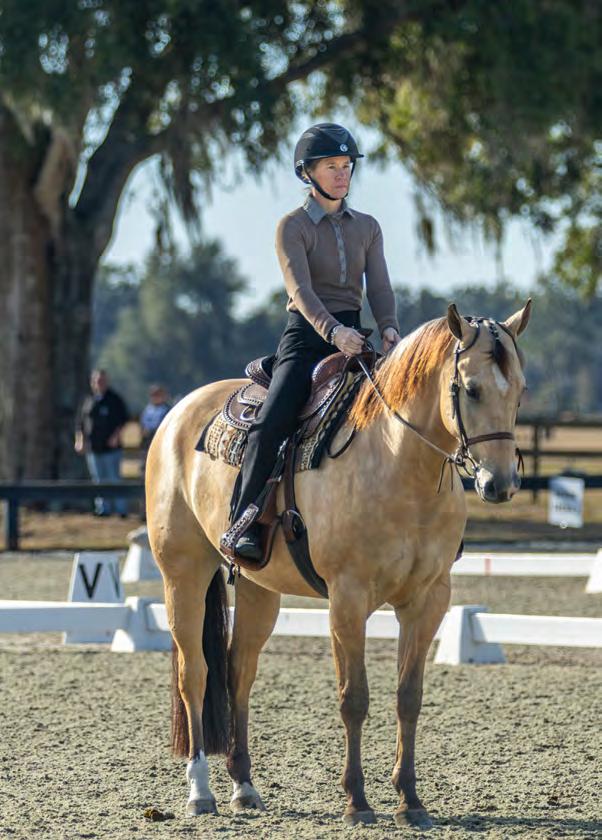
Thoughts on Trends in Today’s Western Dressage Arena
SStory and Photos By Lynn
Palm
In this series, I would like to address some of the current trends seen in the Western Dressage arena from the judge’s point of view. This subject is one that is often asked by riders, trainers and coaches alike.
How do I know when I am ready to advance to the next level!
This one is a very often asked question! I am happy to share some simple tips to guide you on this part of the journey.
6. As a judge and instructor I see too o�en that are riders trying to do a more difficult level than their horse or skills are ready to ride successfully. They can do one element fairly well and move to the next level. I see confused horses and horses that are unhappy with their riders.
7. I have always had success but not asking my horse to compete in something they are not prepared to do. I did not want to confuse my horse or give him an impression that he could not be confident in the show ring.
8. Always compete with elements that you do best.
9. Horses don’t have the choice to move to a new level. Be smart and give your horse all the respect and benefit to learn the new requirements before moving to the next level.
10. Ride Smart to the next level in Dressage. You will never regret if you want to become one with your horse and perform with harmony with a horse that is confident and willing!
Best of luck nego�a�ng the training and condi�oning of each level as you move up the ladder. Stay tuned for more �ps on trends demys�fied in the Western Dressage arena.
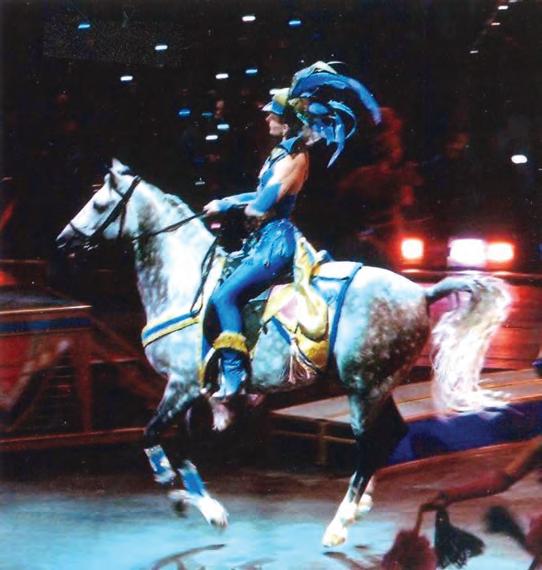
Seat and Feel... Learned in the Circus
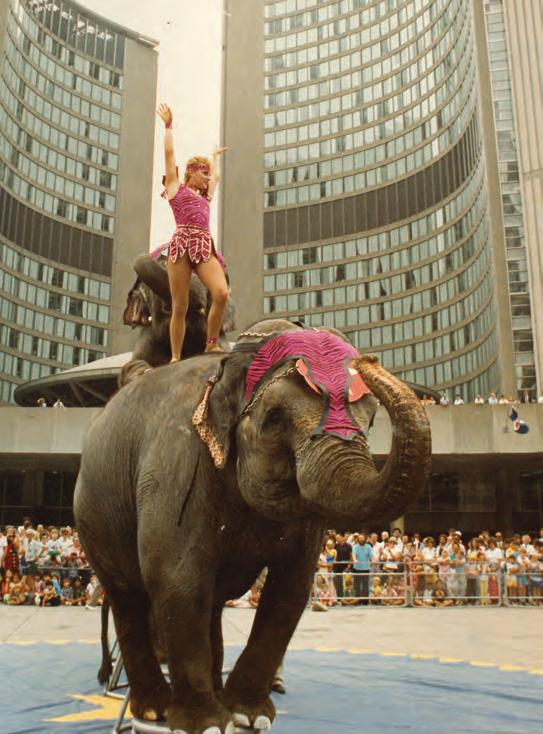
“IWAS RIDING ELEPHANTS when I was a little girl,” says ninth-generation circus performer and liberty trainer Sylvia Zerbini, “and I was an aerialist, so sitting on a horse was not scary for me at all. I just would jump on. It didn’t matter if a horse was trained to ride or not. I was a daredevil.”
The kinds of formal equitation lessons that most riders experience as they acquire the skills they need to guide a horse from his back and keep their seat through the requisite gait changes, as well as equine leaps, scoots, bolts, and bucks, weren’t the circus standard. Sylvia’s foundation was based on experiential learning, anchored in a limitless access to different types and breeds of horses and continuous exposure to talented circus performers rich in equestrian knowledge.
“As a kid I didn’t take any lessons,” Sylvia says. “I taught myself, just like I taught my horses how to do a little collection and a little bit of piaffe, a little bit of passage, how to rear. I taught them all this, first from the ground at liberty, so they already knew the cue when I rode, and I could just egg them on a little bit, pushing my seat. I wasn’t professionally trained; I was all about the feeling of the horse.
“When I was around sixteen, there was one woman who had come to our barn, and I don’t remember who she was, but she was supposed to be a very good rider, and I took some lessons from her, but it just was so complicated. I found it difficult to listen to her and what she was telling me to do felt so hard. Sometimes I was thinking, ‘I definitely don’t agree with that or that.’ And then on Cavalia they had these amazing trainers who would come in and give the cast lessons, so I took a couple then. I know I am not a professional rider, and I never claimed to be, but I train my own horses to be ridden, usually without a bit and without a saddle. And then I was always getting my pants so dirty that I got myself this little bareback pad, and then a little jockey saddle with no stirrups. This just felt so much better than a regular saddle. I felt like in a saddle, I couldn’t feel my horse.”
Despite her acknowledgment that she is not a professional rider and has had little formal riding education, Sylvia’s seat on a horse resembles that of some people with years of specialized training. Beyond what is certainly a natural feel, her position suggests that the balance, centering, and body awareness that she has acquired from years on the trapeze informs her posture on horseback. It’s a very natural ground-based derivative of her studious pursuit to master the air.
“The horse is going to teach you where to be,” Sylvia insists. “Being able to really feel the horse is the magic—it’s the key.”
This excerpt from The Greatest Horse Trainer on Earth: The Sylvia Zerbini Story by Rebecca M. Didier, is reprinted with permission from Trafalgar Square Books, an imprint of The Stable Book Group.
photo from the private collection of Sylvia Zerbini
Book Available Now!
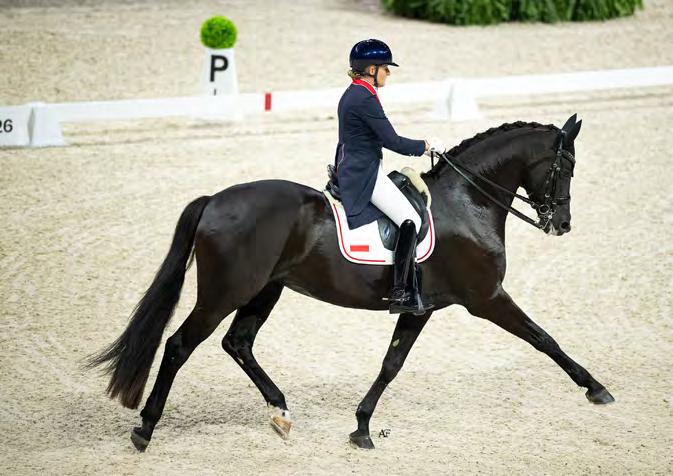
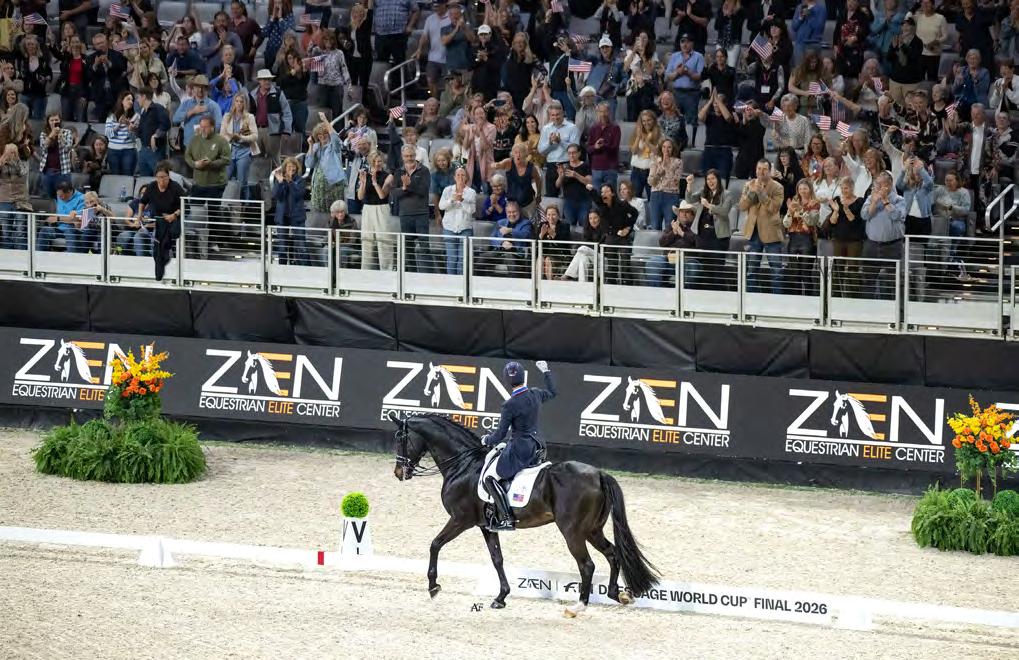
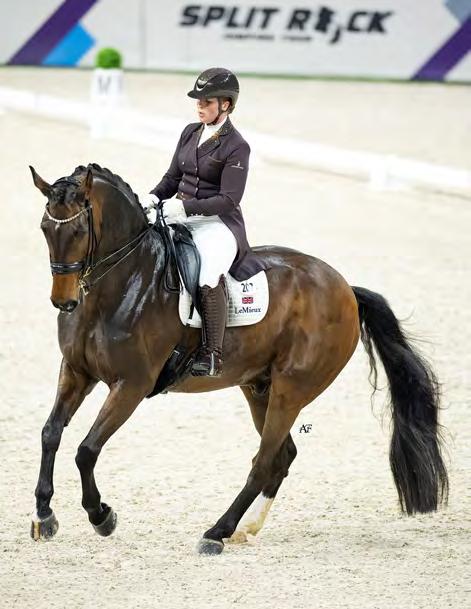
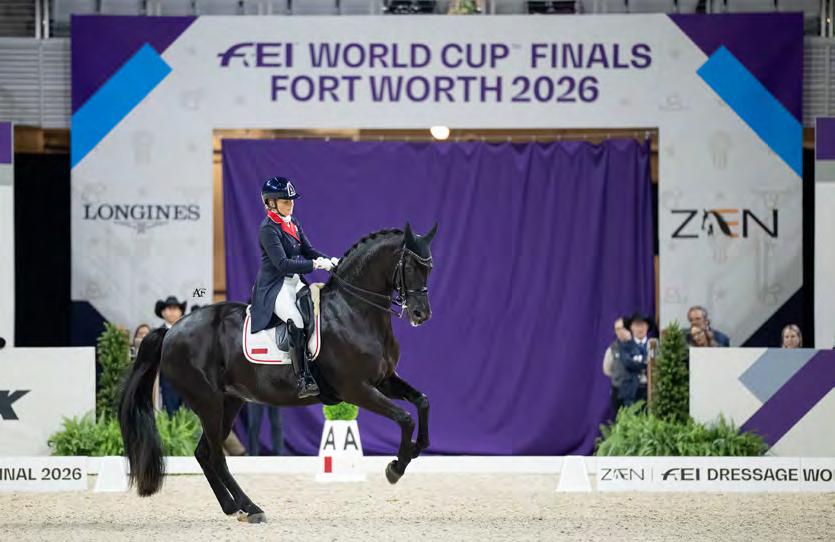
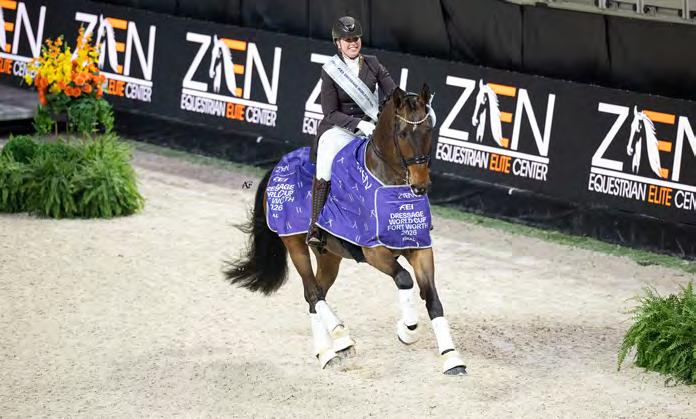
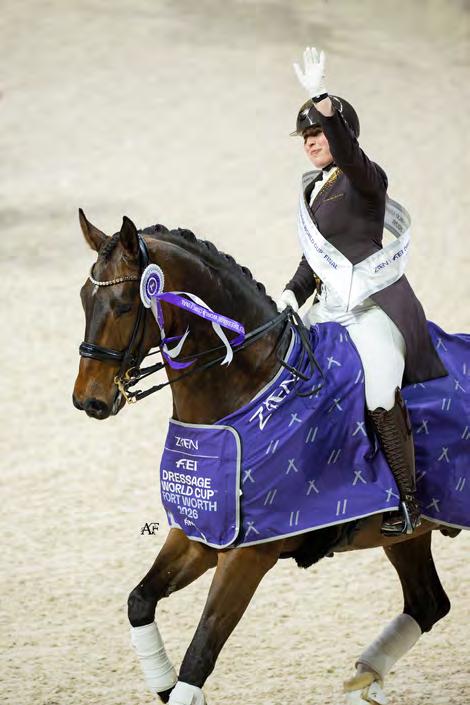
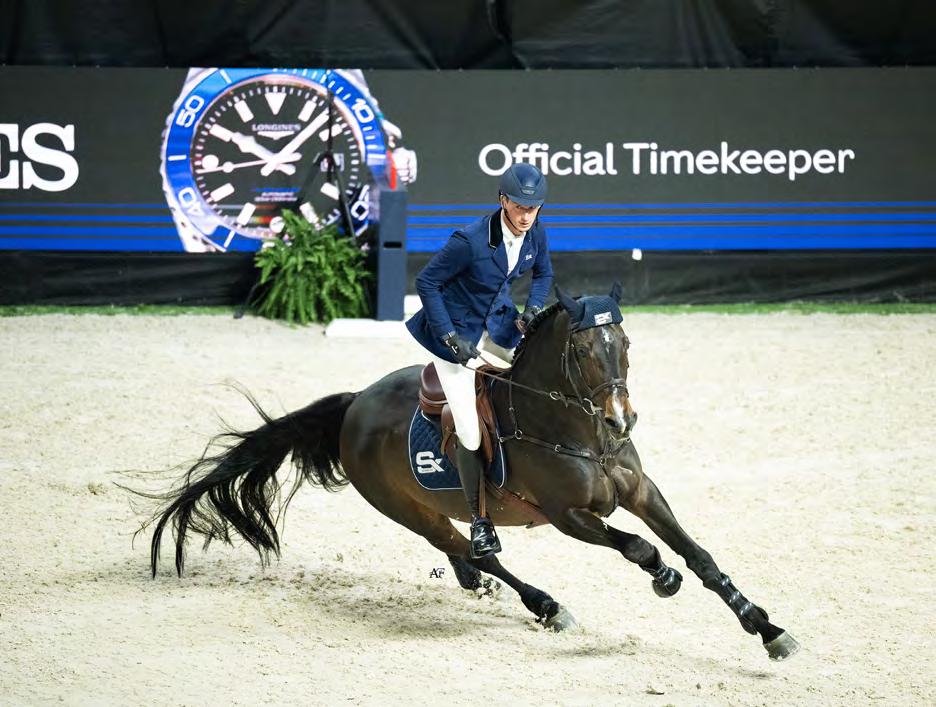
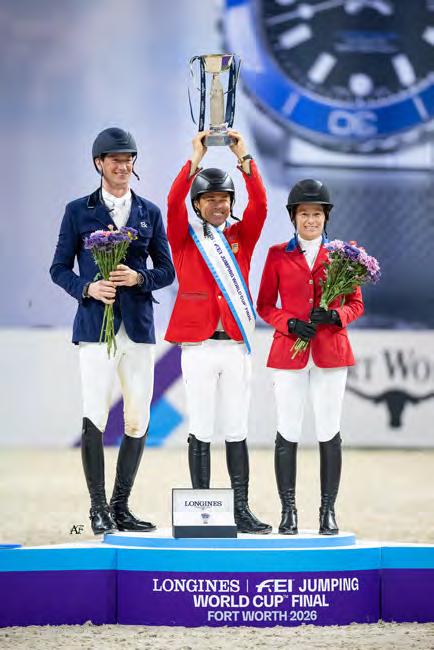
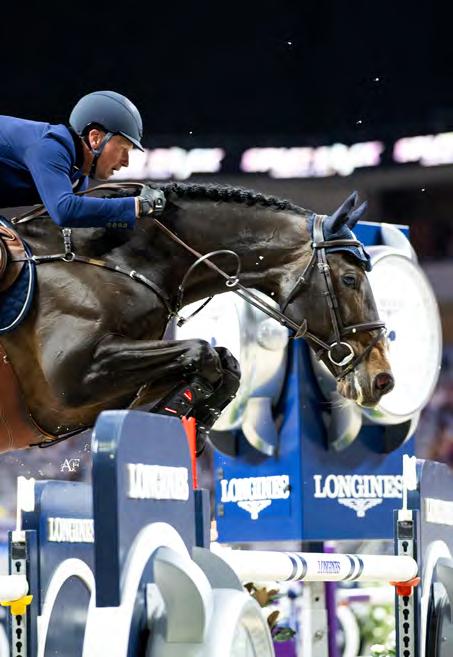
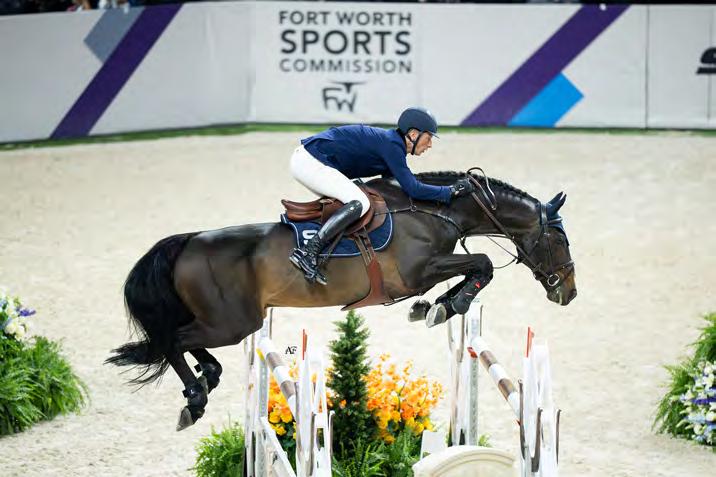
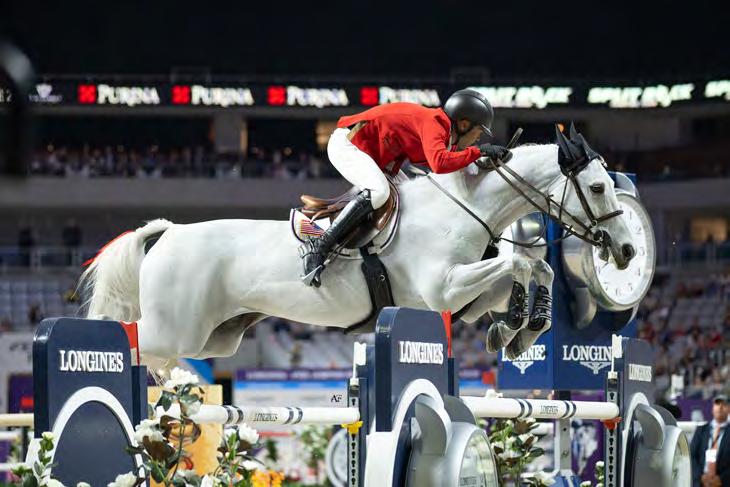
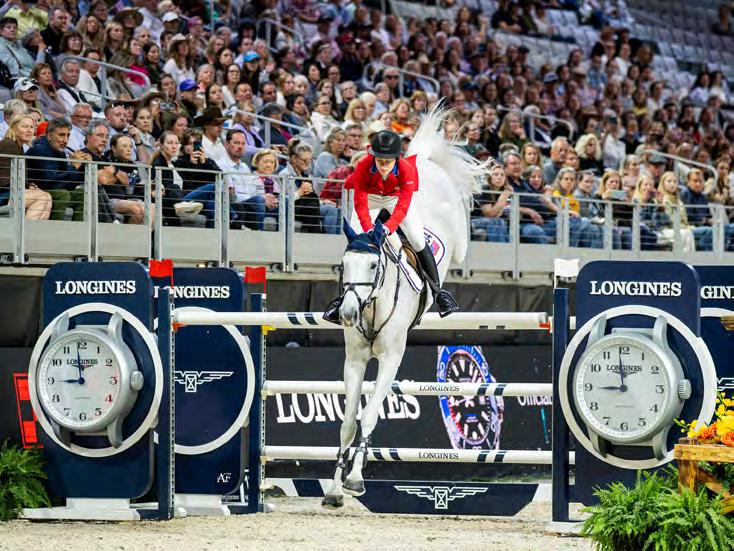
FEI World Cup™ Finals 2026
RELATIONSHIP BETWEEN MAN AND HORSE
Story and Photds By Alessandra Deerinck
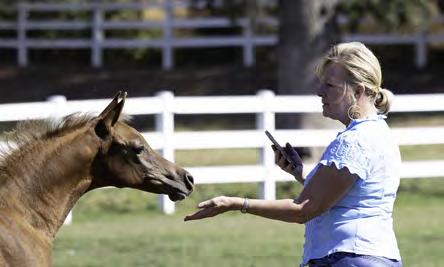
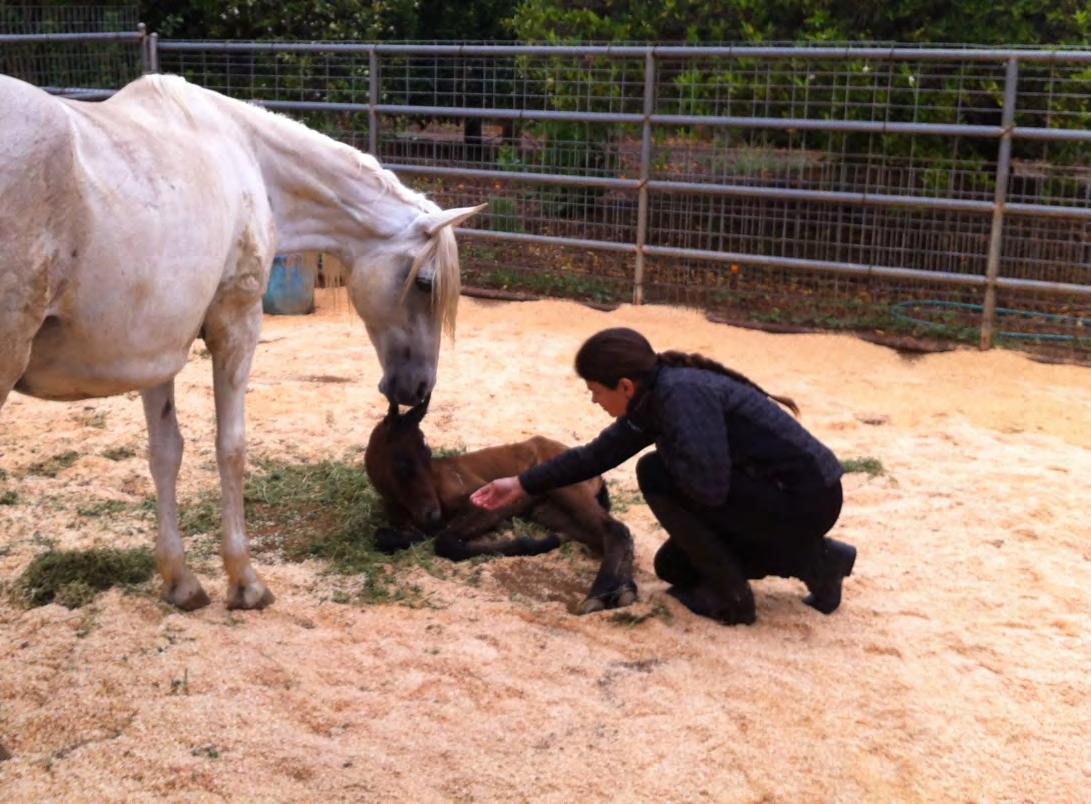
Young foals
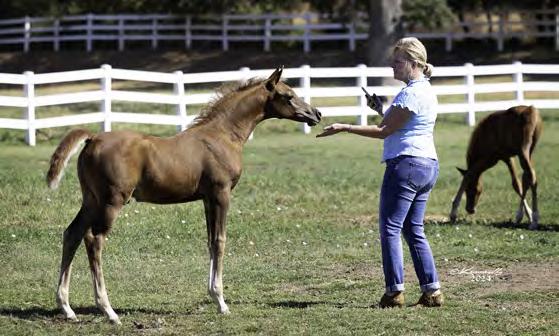
are sweet and can be a joy forever if we take care to interact with them in a proper relationship as they grow into adult horses.
From birth, the horse’s senses are its window to the environment, and they never stop bringing information to the brain, where new data is also combined with memories and personality, ultimately determining behavior, which is the full expression of each individual.
Foals have very short attention spans and no training, which can make interacting with them difficult, but knowing about instinctive equine behavior and how to communicate spontaneously through the senses can allow us to relate and start training them early. Our behavior is what matters, once the horse senses our actions, our part is done, and this is precisely why Human Horse Sensing emphasizes so much that in interaction we must focus on what we are doing and which sense will bring our information to the horse’s brain.
When given a choice, the foal chooses its leader just like any other horse does. A leader is an individual worth following because their behavior makes sense. This is definitely a role that a foal’s mother naturally fills from the start, and it is very important that when we interact with a foal, we ensure that we have the mare’s cooperation in becoming a positive part of the foal’s life.
Foals, just like horses of any age, have an instinctive response to movement. They will move away from something that is coming towards them, they will move towards things that are moving away and that they are interested in. The key is that objects must be in motion to play a role in the horse’s movement. Once the object stops moving, the horse may simply lose interest and not move.
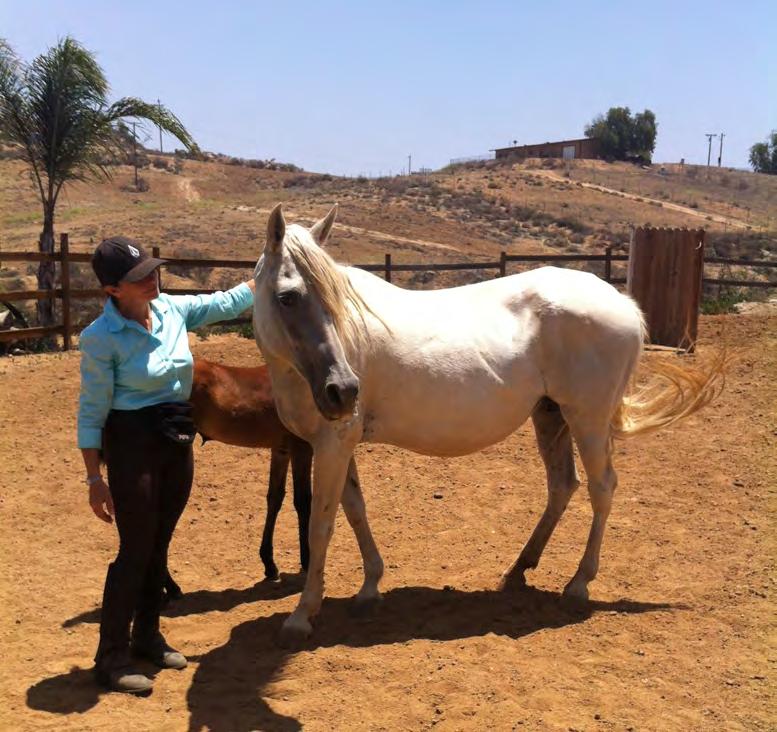
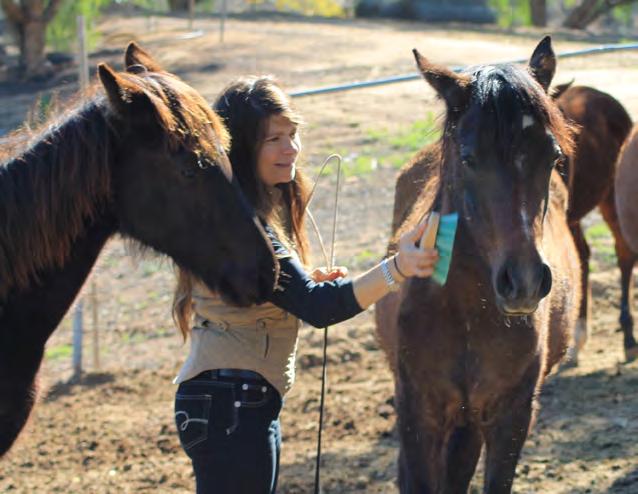
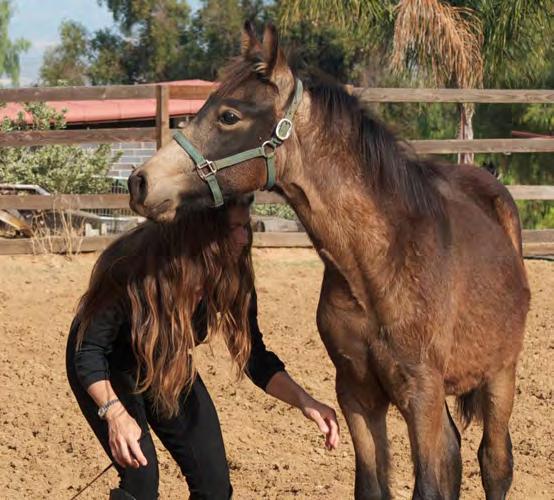
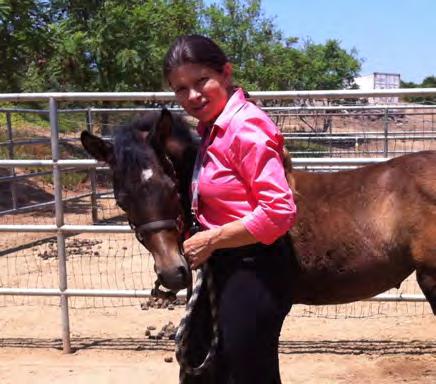
There is no right or wrong time or age to start building a good foundation for a relationship between man and horse. For the horse, the relationship begins the moment we enter his space. Just like we do, horses form memories, the learning process never stops happening. Young horses are even more receptive to learning than when they are at an older age. Regardless of the role we play in the equestrian world, when it comes to relating to a horse, we must always consider that each of our actions will influence the way a horse will behave in our future interactions. Since horses do not speak, but use movement to express themselves, it is important to take a moment to evaluate how a horse thinks about us. While genetics must be taken into account before the horse is born, through good interaction we can structure and manage the environment and life of any horse, to give him a good present or future experience and to ensure that he is interested in sharing time and space with us.
As with horses of any age, foals learn from what they experience, so we must avoid making them feel fearful if we want them to be open to interacting with us and choosing to see humans as leaders. This statement leads me to disagree with many of the ways in which we interact with mares and foals today, where consideration of the feedback that the horse gives us is not important even during the development of the relationship. Foals are managed without considering their state of mind, often because at the moment of birth we think that what we “should” do is more important than how we do it and how the foal feels about it.
Examples of what I am describing are the practice of imprinting, which disrupts the developing relationship between a foal and its mother, or the way the weaning process is commonly carried out, where the mare and foal are abruptly separated, often developing what we call “separation anxiety”. Both of these practices affect the horse for the rest of its life.
My experience with horses ranges from being a veterinarian, to racing as a jockey, to jumping, dressage, parades and endurance, but regardless of the situation I focus on the interaction as a performance tool.
At Human Horse Sensing we view riding as a dynamic and immediately manageable state of continuous change, independent of training. We base our interaction with horses on five social concepts that are natural to horses of all ages, and work to bridge the gap between human and equine behavior using social interactions through the natural elements of space, movement, and time. When it comes to relationships, horses don’t sign a contract and promise to be loyal forever, we must demonstrate leadership at all times. The goal is not to build a “bond,” but to
modulate communication through the senses, using social meanings, and developing the horse’s interest in time with people. Being sociable is a common trait in humans and horses, and is ever-present in horsemanship, with meaning independent of the action that takes place in any equestrian performance. Interaction through trained behavior leverages the horse’s ability to perform a learned action in response to a fixed stimulus we give him, and cannot cover every moment we spend with our horses. Spontaneous interactions are moments in which the horse expresses itself, and do not require any training, so they are a great resource with young, untrained or unknown horses.
With young horses, giving them the opportunity to develop their social skills and have freedom of choice in relating to horses and humans is the first step to developing a balanced mind. Ideally, they should be able to share space and time with other mare and foal pairs. When it comes to weaning, the process should be done in stages, gradually allowing the mare and foal to experience situations of separation through each of their senses. This process
The horse’s senses are its window to the environment.
Space and food are natural topics for horses
works by developing the skills needed to be separate in the mare and foal, as well as building our relationship and also avoiding the development of separation anxiety. After weaning, young horses can live in groups and even have an older mare as a leader. At Human Horse Sensing we have worked with herds of young horses between seven and twelve months of age to teach them to respect space and interact with us in the presence of food, both of which are relevant with horses of all ages. Young horses learn to be groomed, to have their hooves cleaned without being restrained, then to be haltered and to be led correctly without being forced.
Space and food are natural topics for horses and can allow us to let horses learn cognitively as we train them, rather than with classic conditioned training methods, where the action often has no meaning for the horse, and the emphasis is on timing and reward. There is much more to the learning process than what we control with conditioning. Inputs to the brain from different sensory receptors can actually develop different behavioral responses. An example of this is the inability to train from the ground where communication occurs through sight and elicit the same response through touch, which is the primary communication used when riding. Again, something I will not compromise on is leaving strength and fear out of riding. It has been scientifically proven that fear causes changes in the nervous system at a cellular level, which are reflected
in the behavior of the animal that has experienced it. The resulting behavior can be outside the voluntary control of the animal, undesirable in riding, and very difficult to change.
The effectiveness of the work done with young horses and riding further confirms the crucial role that interaction plays at all times between man and horse. Being able to deeply understand, appreciate and purposefully manage the human-horse relationship can make it go from a scary experience to one we always want to have, and this applies to both equines and humans.
The Birth of the
Warmblood Trailers
Story and Photos
By Tom Scheve
Back in the early eighties, owners of large horses, such as warmbloods, drafts, and even some quarter horses, faced a dilemma. They didn’t fit in any standard model trailers.
Slant-load trailers had come onto the scene, primarily designed for the quarter horse market to fit more horses into a shorter trailer, but the Department of Motor Vehicles’ axle width limit of 102 inches (8 ½ feet) restricted the stall length because slant load stalls were side-to-side rather than front-to-back. Most slant-load trailer manufacturers kept their trailers at 80 inches wide because the width between the wheels/tires on the 102-inch axle was only 80 inches – any wider, and the wheel wells would be inside the trailer/stalls, leaving only 80 inches of floor space to work with. The length fits horses 14.2 to 15.2, but over 16 hands, forget it. See Illustration 1
Historically, straight-load trailers were the common trailer at the time, but were typically small, some only 5 feet wide and six feet tall. What was considered a “large” trailer was six feet wide and 7 feet tall – not nearly enough length or height to safely accommodate large horses like Warmbloods and Thoroughbreds.
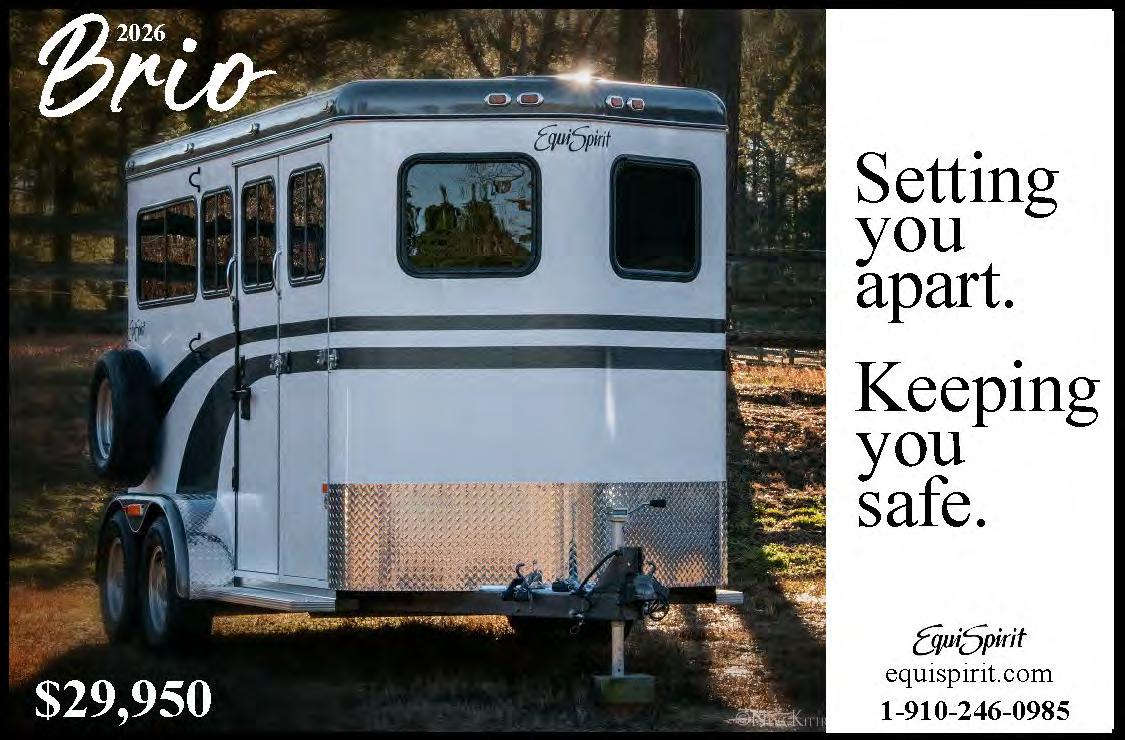
In 1984, Neva Kittrell Scheve, an avid horse owner, entered the horse trailer industry and, having owned warmbloods, designed the first warmblood trailer as a standard model line in 1986, called EquiSport, which later evolved into EquiSpirit. By extending the stall length to 11 feet, the width to 80” (6 feet 8 Inches) with 102” axles, and the interior height to 7’8, it was built specifically for warmblood and draft horses. See Illustration 2
EquiSport expanded the design to 2-horse, 4-horse, and 6-horse trailers. Neva believed that a safe trailer was one in which any horse could be unloaded without unloading the others. Finding that attribute possible in the four and six-horse head-to-head trailers, she redesigned those models, adding a rear entrance with a ramp, two side ramps, and windows for light and air circulation.
In 1996, Neva realized a warmblood model was missing. Those who had to carry three large horses had no option but to jump from a two-horse trailer (18 feet bumper pull to 22 to 23 feet gooseneck) to a four-horse head-to-head (35 feet to 36 feet) – a substantial increase in length for horse owners to haul, and costly, considering the trailer price and the tow vehicle upgrade. Neva went to work on how to safely load, unload, and transport three horses in a more reasonable trailer length. Fortuitously, Hawk Trailer Manufacturing approached EquiSport at the time about partnering to build the EquiSport line. When an agreement was reached, the EquiSport line was redesigned to be more aerodynamic, renamed EquiSpirit, and the first three-horse warmblood, called SafeLoad, was launched
exclusively under the new name EquiSpirit. The three models were then offered in optional sizes to fit the needs of all breeds and disciplines. Standard, Extra Large, and Double Extra Large. Neva’s design included optional horsefriendly, removable box stall doors; a front-removable, swinging stall divider that could be removed in an emergency; and a diagonal wall that created more space for the tack room and, more importantly, guided the horses to the exit ramp. See Illustrations 3 & 4
As the demand grew, other manufacturers began duplicating the plan and by adding length and a ramp to the front of their two straight stalls, acquiring the nickname “two-plus- one. However, many manufacturers didn’t fully grasp the nuances of loading, unloading, and transporting horses safely and comfortably. Over the years, Neva constantly tweaked it with new safety features, such as a telescoping divider for the front stall, horse-safe box stall doors as standard, and latches to keep dividers from swinging while loading. See Illustrations 5 & 6
There are now two, three, and four-horse standard warmblood trailers available today. But, there are no standard models for draft horses in the 19-20 hand range. However, they can be custom-built by those who understand the size and power of such horses, like Equispirit, and can walk those owners through the entire process. Adding weight capacity requires expert engineering to build a safe trailer.
Illustration 1
Illustration 2
Luxury Ranch Riding Vacation
Come Ride Wyoming The Hideout at
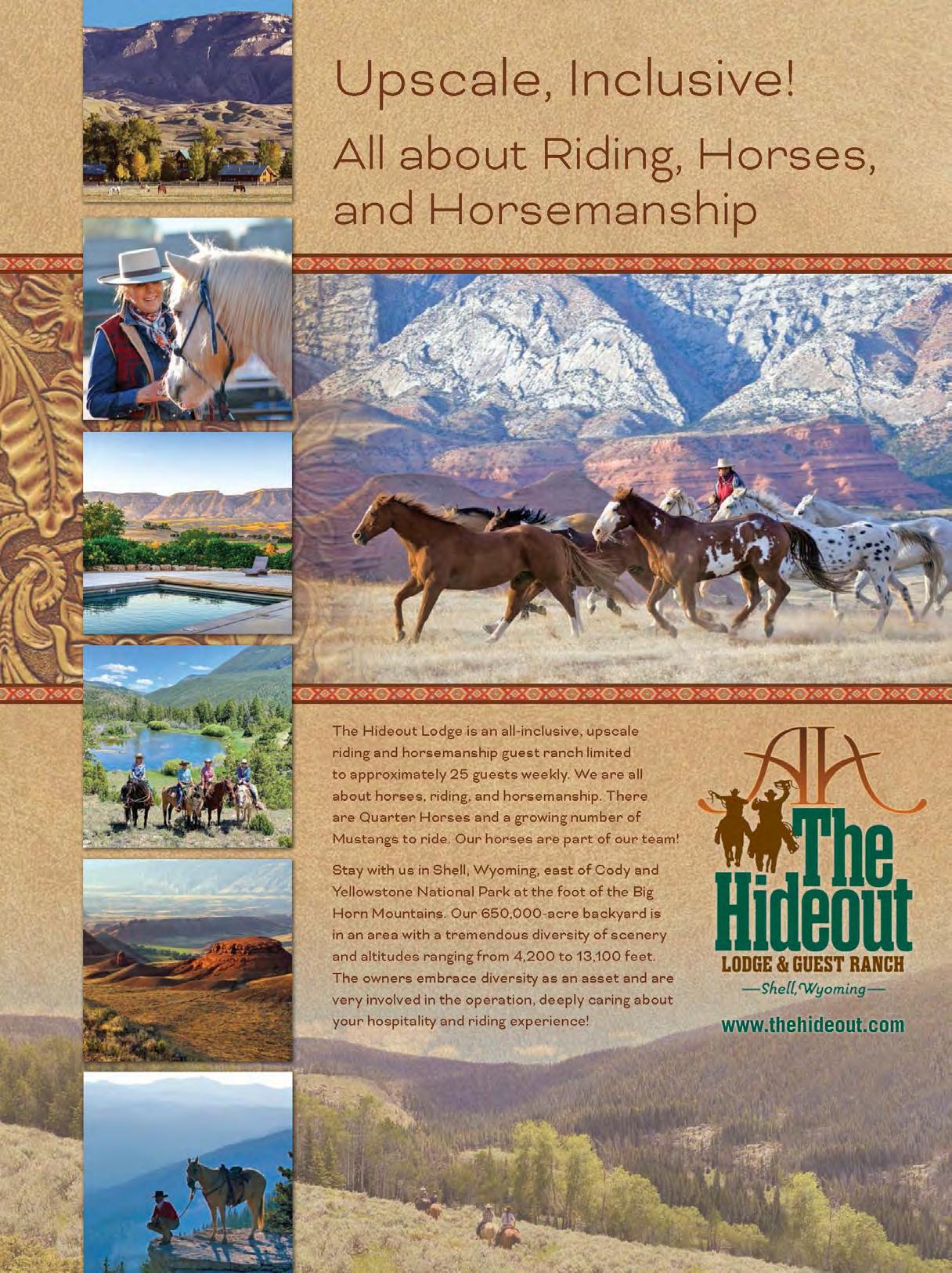
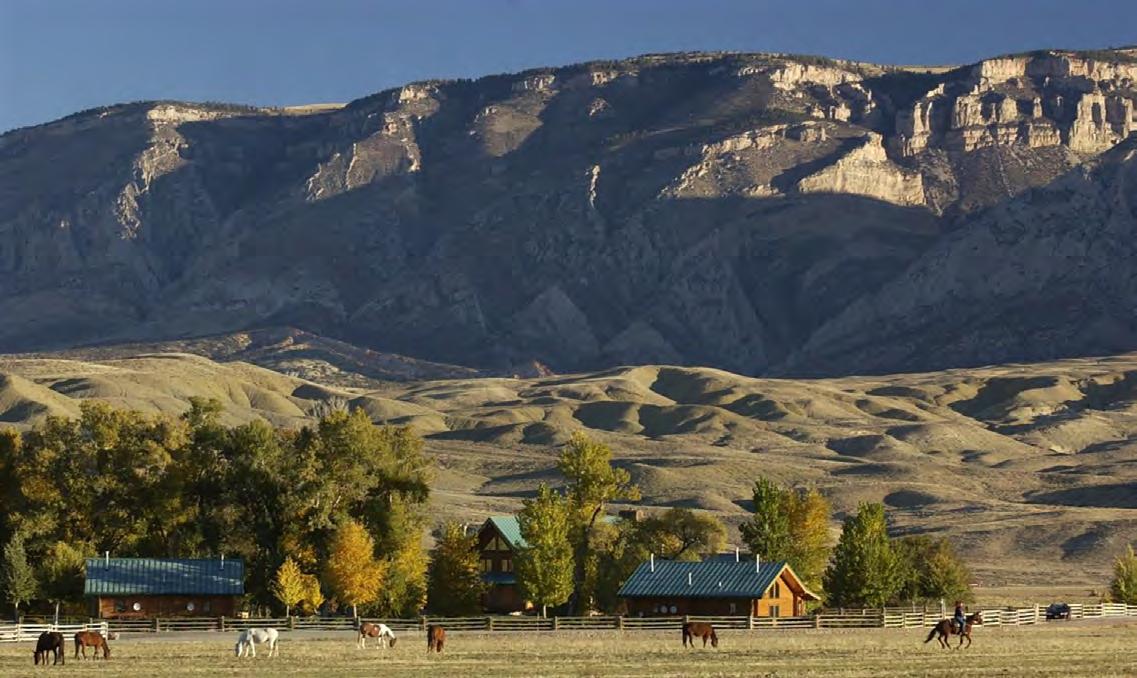
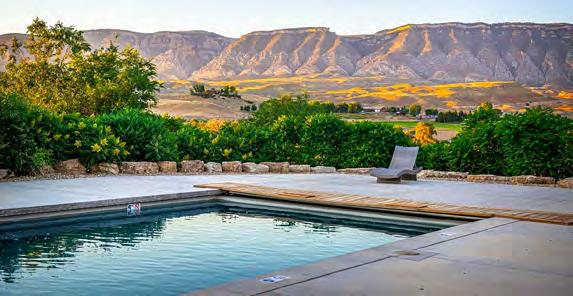
Our ranch is all-inclusive, upscale, focused on riding and horsemanship, limited to 25 guests weekly for a 6-night stay, with riding access close to 650,000 acres. Elevations in our backyard range from 4200 to above 13,000 ft, and the area enjoys a seldom seen diversity of scenery, micro-climates, and terrain. The Hideout offers a very personal, small, and intimate Western riding experience, surrounded by a peaceful, calm, exciting and breathtaking environment. Our ranch is more of a riding destination than your typical dude or guest ranch.
Taking a break from horseback riding, you can enjoy non-riding activities such as trap shooting, archery, fly-fishing, a soak in the hot tub, biking, hiking, take a dip in our heated lap pool, or just relax and take in the views. Many take a self-guided driving tour to the nearby dinosaur sites, The Town of Greybull and The Greybull Dinosaur Museum. A visit to Cody and The Buffalo Bill Museum of The West, The Cody Rodeo or exploring the many Western shops in Cody is also on the agenda of many of our guests who do not want to spend continuous time in the saddle. And of course, many of our visitors add extra days to explore Yellowstone and Teton National Park, Jackon-Hole and other exciting places in Northwest Wyoming and Southern Montana.
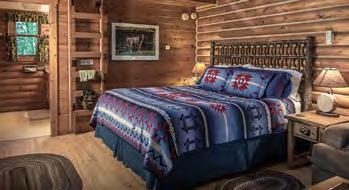
However, most of our guests ride every day for several hours and join our daily cocktail hour to exchange the experiences of the day with the other travelers. After dinner they enjoy sitting outside taking in the stars in this area with little light pollution, listening to the silence, the voices of nature, and breeding in some of the purest air in the nation. They are totally relaxed and ready to enjoy a good night’s sleep in the well-appointed log cabins. Our new and ever-growing number of repeat guests have found shared experiences and intimate connections with guests and riders from around the world, different walks of life, and all backgrounds.
On the contrary to what a lot of people believe, most of our guests have an English riding background. Travelers come from different origins to stay together at our ranch, creating shared memories and forging new friendships. Riding, dining and spending time together with people they would never encounter in their daily lives at home. We accommodate beginners in good shape, intermediate and advanced riders, which makes this a great active outdoor vacation for mixed groups
Join us
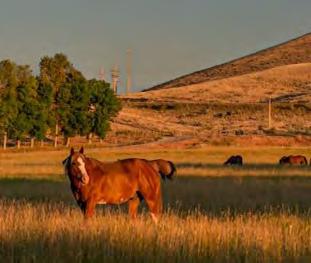
to ride The Big Horn Mountains and the wide-open spaces in Wyoming, on one of our quarter horses or gentle mustangs. All well-trained and adapted to riding this challenging terrain. Relax in comfort, take in the views, and enjoy our ranch property with manicured lawns, looking out at our herd of 100 well cared for horses in the pastures. We are in Shell (popula�on 84), East of Cody and Yellowstone Na�onal Park.
and families. Being surrounded by breathtaking views in all directions. Enjoying horses and nature is about using all senses.
A stay at The Hideout Lodge & Guest Ranch is for many of our guests like a unique wellness retreat. Both mentally and physically. Refreshing and Energizing, full of positive vibes surrounded by horses and riding horses. For these travelers, wellness means a healthy holiday, they return from The Hideout feeling fresher and fully rejuvenated.
A common statement at the end of the week is “You guys deeply and authentically care and have a great thing going on here! We will be back!
Email info@thehideout.com or call 307-765-2080 to learn more about your unique Hideout experience. We look forward to welcoming home to The Hideout!
www.amazon.com/author/noelle-rose
HORSE RECORD BOOK
Great gift for your barn family and horsey friends!
Vet/Den�st/Farrier visits & cost. Feed/Hay/Bedding Board/Lesson Expenses. Training/Lesson progressrecord your “aha” moments! Goals, Awards, Show Records. All In One Place!
Accommodates Records For 3 Horses, Or 1 Horse For 3 Years!
6 x 9”, 60 pages, $7.99
WEEKLY PLANNERS
Various Covers
www.amazon.com/author/noelle-rose
This is a versa�le planner for your week- state your priori�es and weekly goal. Schedule your appointments, note important calls and emails. Jot down items for your shopping list and note your best memory of the week. General note pages included. Our whimsical cover will be a joy to open every day! A handy 5 x 8” fits perfectly in your purse or backpack.
5 x 8”, 60 pages, $7.99
HTTPS://www.books.by/Noelle-Rose
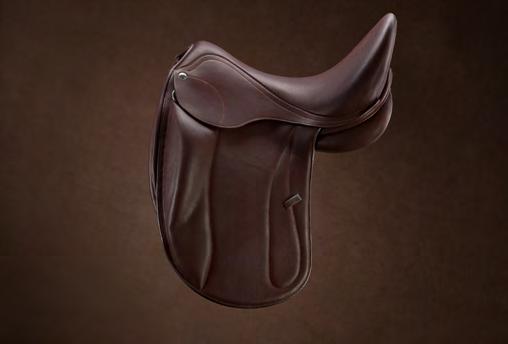
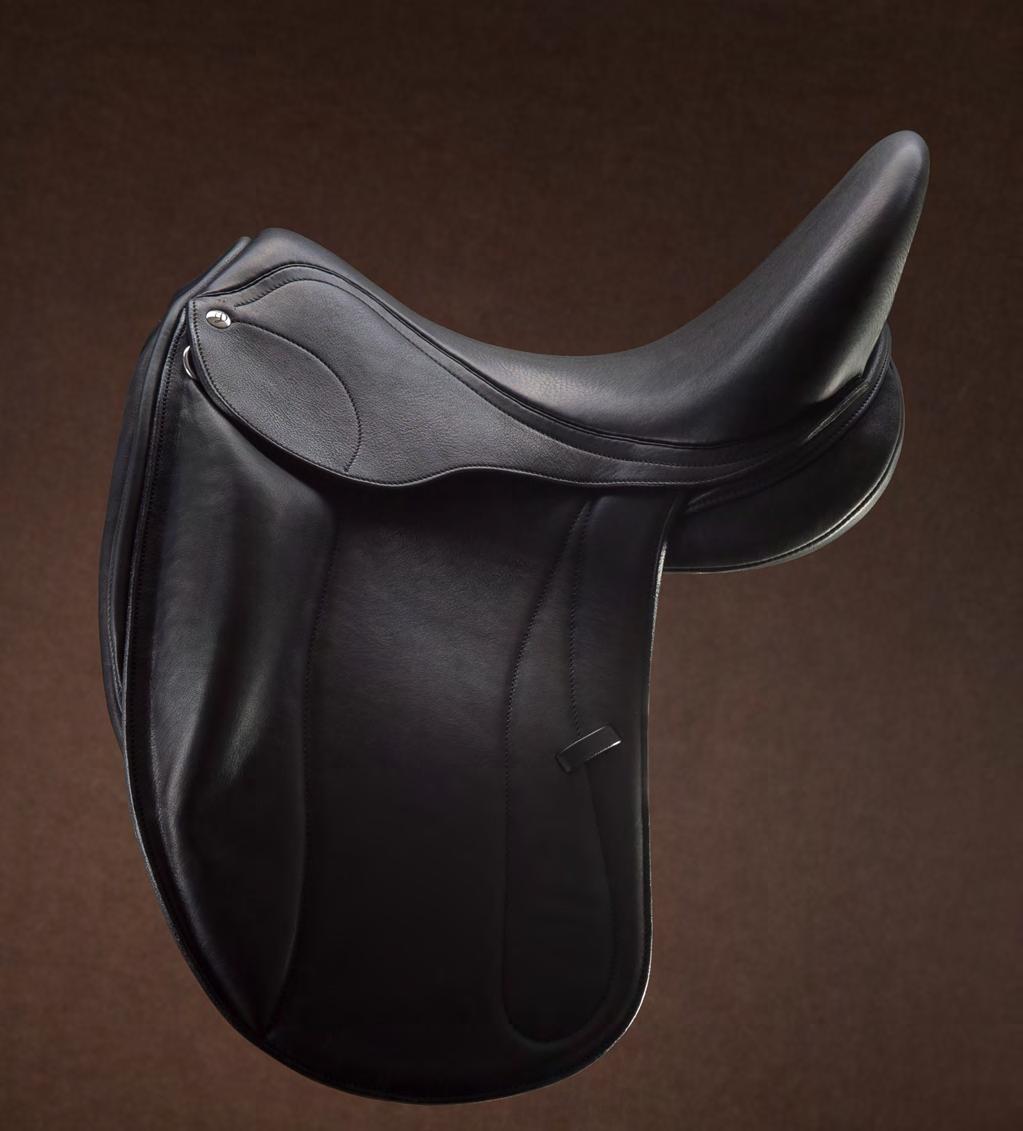
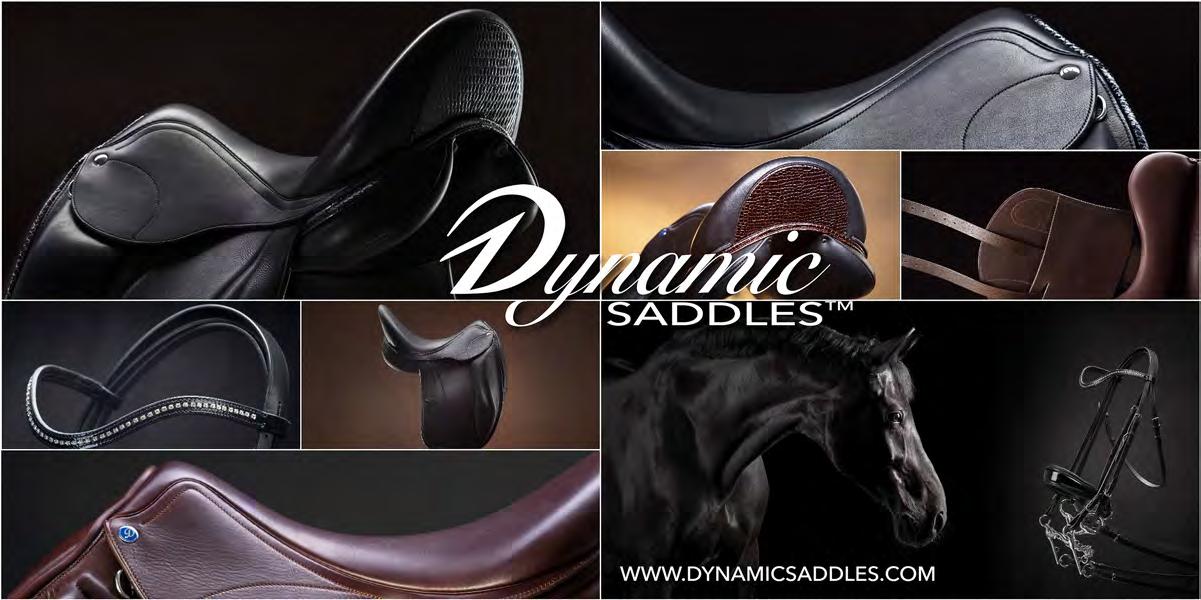
Why The Dynamic Saddles™?
The Dynamic Saddle is engineered to fit in mo�on, and it does not have any seat pressure points and does not fla�en/collapse while under the rider’s weight. In fact, the weight of the rider along with special billet system is what loads and adjusts the saddle to the horse’s anatomy. This simplifies the saddle-fi�ng adventure! There’s no need for narrow or wide trees for most horses, and these saddles do not need to be reflocked. Correct fit is achieved on majority of horses right out of the box!
Dynamic Saddles feature close contact panels, bringing you closer to the horse to improve communica�on and add subtlety to your weight aids. We are free to avoid the bulky panels of other manufacturers because there are no pressure points from the tree that must be heavily padded. This allows our saddles to be ultra light, only 12 pound to handle.
Only the best quality leathers are used in making the saddles. Our experienced team of professionals delivers the highest standard of cra�smanship. We are a bou�que saddlery, with genera�onal saddlers that produce a limited number of saddles to our exac�ng specifica�ons. Our customer service is unmatched! Special order saddles are available for truly hard to fit equines and riders.
Every detail of saddle construc�on is designed to make the ride enjoyable for both the horses and riders:
• The saddle is designed to posi�on itself further back on the horse to reach a dynamic equilibrium and give maximum freedom of movement to the shoulders.
• Dynamic Saddles™ front billet system is designed to allow the front panels to move away from pressure of working muscles, allowing the shoulders to swing freely.
• Dynamic Saddles™ allows the rider to loosen the pelvis which makes si�ng on the horse much easier and helps the rider feel more connected to the horse.
• The flaps and thigh rolls are angled to accommodate the anatomical structures of the human body.
• The s�rrup bars are posi�oned to help the rider to achieve correct body alignment.
• If you ever struggled to thread a s�rrup leather through the s�rrup bar, you will appreciate that our bars are slightly angled, to allow for easy inser�on of s�rrup leathers. Small details that make a world of difference!
• The overall design provides unmatched security to ride correctly and helps secure a rider in place even when faced with a young horse’s an�cs.
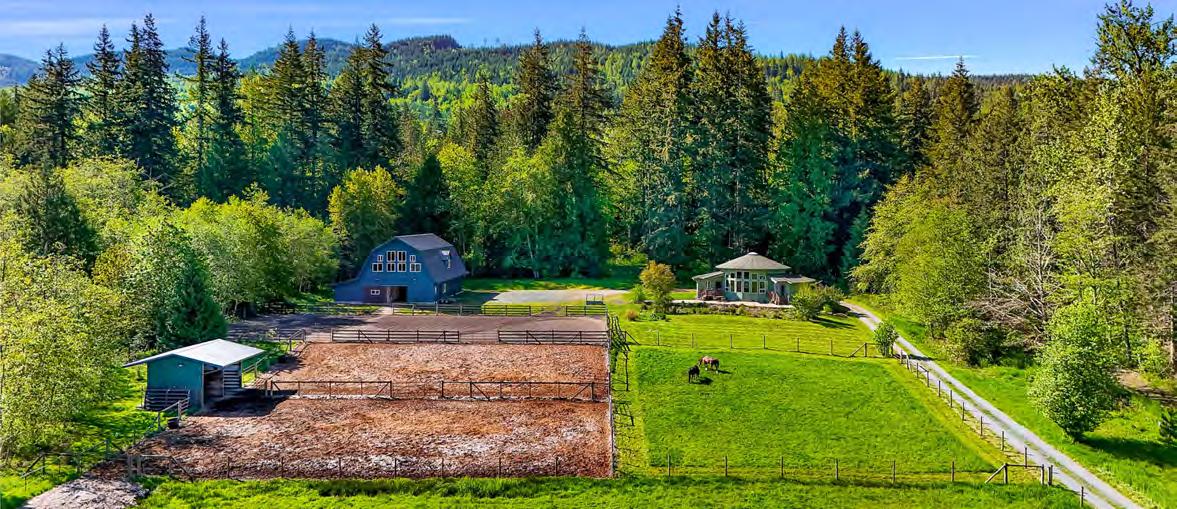
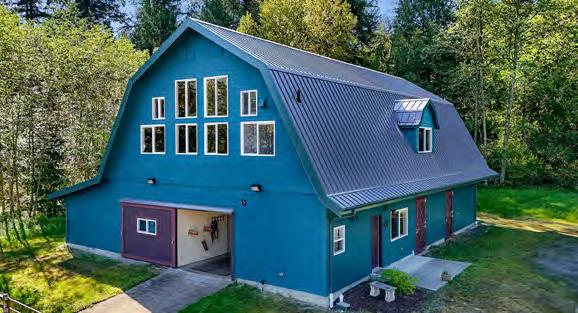
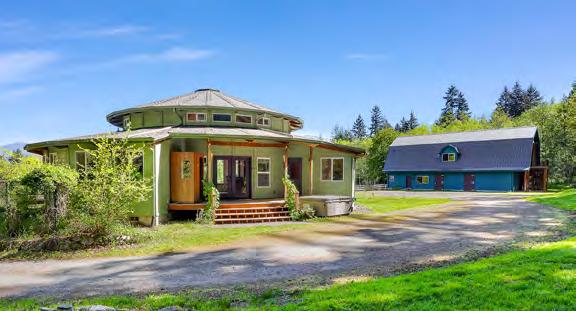
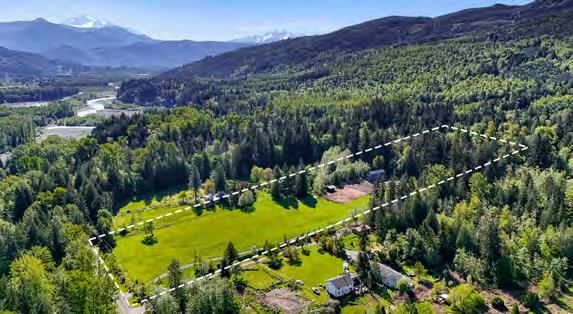
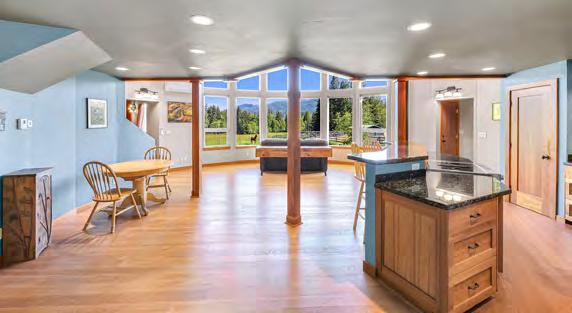
10.6 ACRE HORSE FARM - HUGE BARN AND TRAIL RIDING!
Bellingham, Whatcom County, Washington
Bill Johnson Broker/ REALTOR(r) CRS-ePro-GRI
William Johnson Brokerage 760-814-0378
bill@drslisting.com
Tucked away on a quiet dead-end road just 8 miles from Bellingham and only an hour to Mt. Baker, this beautiful 10.6-acre property is impeccably designed with horse lovers and nature enthusiasts in mind. The land borders extensive trail riding opportunities on Stewart Mountain and features over 4 acres of fenced pasture, a full-size outdoor arena, and an oversized paddock and horse shed. The custom 36’ x 60’ 4-stall barn is a standout, complete with a mother-in-law apartment featuring a full bathroom, plus a massive unfinished second level with power and water—ideal for storage, studio space, or future expansion. The custom-built round yurt-style home spans 1,938 sq ft and showcases a dramatic bank of picture windows framing captivating views of Sumas Mountain. Inside, you’ll find 2 bedrooms, 1.75 baths, soaring vaulted ceilings, hardwood floors, energy efficient radiant in-floor heat, mini-split A/C, granite countertops and stainless steel appliances. Step outside to relax in the luxurious hot tub and sauna, or take a peaceful walk in 3 acres of included private forest. $1,998,500
And for more details, here’s a link to the add on Horseproperties.net. https://www.horseproperties.net/properties/washington/whatcom-county/bellingham/60552
NUMBERIFIC teaches numbers with repetitive counting. Fun themes including forest animals, birds, bugs, sports, flowers, etc with beautiful color graphics that engage your child and ingrain numbers and their values. NUMBERIFIC is a truly unique presentation for teaching numbers. Copy ready worksheets included. 8.5 x 11”, 168 pages of learning fun! Numberific is also a great tool for early reading.Only $24.95!
Each number has eight counting pages and two worksheet pages to circle or color the corresponding number. The end of the book features Counting and Circle The Correct Number work sheet pages. All worksheet pages can be copied to preserve the pages for multiple usage. Also featured are pages to introduce addition and subtraction.
NUMBERIFIC SINGLE DIGITS focuses only in numbers 1-10. 8.5 x 11”, 72 pages Copy ready work sheets $12
NUMBERIFIC TEEN DIGITS focuses only in numbers 11-20. 8.5 x 11”, 72 pages Copy ready work sheets $12.