Whether you are struggling with a temporary challenge or if you are living with a chronic condition, your mental health is just as important as your physical health.
Investing In Our Future
The Community Mental Health Board of Oak Park Township (CMHB) and the River Forest Township Mental Health Committee invest in a continuum of mental health care that is responsive to our unique and evolving community needs.
Together, we provided over $1.6M last year to help local organizations and schools offer prevention, early intervention, treatment, and quality-of-life services to Oak Park and River Forest residents.
Our grants resulted in:
50%
More than 50% of Americans will be diagnosed with a mental illness or disorder at some point in their lifetime
Source: Centers for Disease Control and Prevention
Growing
Crisis Among Youth
America’s youth mental health crisis has been worsened by the COVID-19 pandemic. 6
Persistent feelings of sadness or hopelessness INCREASED 69%
between 2009 and 2021 for U.S. high school students
Source: Centers for Disease Control and Prevention
Community Mental Health Board of Oak Park Township
Community Mental Health Board Of Oak Park Township
•Over 7,700 Oak Park residents accessing services
•Over 6,300 units of mental health treatment for Oak Park residents
•Over 150 educational presentations on mental health to Oak Park residents
•Over 1,000 Oak Park high school students trained in suicide prevention
In fiscal year 2026, CMHB provided nearly $1.4M in funding for mental health, substance use, and intellectual/developmental disability services. To learn more about our work in this area, visit oakparktownship.org/CMHB.
River Forest Township Mental Health Committee
•Supporting 10 local, not-for-profitagencies
•Over 7,000 hours of services provided to River Forest residents
•150 hours of educational presentations on mental health to River Forest residents
•Over 250 River Forest high school students trained in suicide prevention
In fiscal year 2026, RFT provided over $215,000 in funding for mental health, substance use, and intellectual/developmental disability services. To learn more about our work in this area,visit www.riverforesttownship.org/mental-health.
Creating a mosai of mental health support
How Oak Park’s Mosaic Counseling & Wellness is transforming community mental health care
By JACKIE PISANO Contributing Reporter
For as long as she can remember, Oak Park resident Carey Carlock has felt a profound, unwavering pull toward a life of service.
Though not always certain of the direction her future would lead, Carlock believed her greatest fulfillment would come from holding space for others during moments of trials and tribulations.
“I’ve always been drawn to listening, supporting and being in the helping field,” she said. “It just felt like a natural fit for me ever since I was a young person.”
Heeding her intuition, Carlock embarked on studies in counseling and psycholo gy, receiving her aduate de from Boston Colle ge early 1990s. Shortly after she returned to Chicago establish her career in the mental health profession.
Carlock’s career began in youth mental health treatment programs, including partial hospitalization programs and intensive outpatient programs, where she discovered a passion supporting direct care and group therapy.
Eventually, her journey led her to hospital administration — specificall landing the top position as chief executive officer of Forest Park’s Rive Hospital, the largest psychiatric hospital in Illinois and a facility which is 90% publicly funded
In her 13 years at the helm of Rive Carlock was credited with significantly framing the reputation of the behavioral healthcare facility.
“At Riveredg e, we were really trying to provide trauma-infor med care for those who might not have all the protective factors that other people do — those with high acuity and lots of other psychosocial stressors,” she said. “I loved that work and was really proud of the recovery of that hospital.”
As CEO, Carlock was a steadfast advocate of championing ef for ts to destigmatize mental illness while providing top-quality care for some of the area’s most vulnerable populations.
“It was the privile ge and responsibility of career in a lot of ways to lead such
high acuity, such intensity,” she said. “The hospital had its own recovery that I was part of leading, and that was really mission-aligned.”
While Carlock was gratified by her work at Riveredge, two factors led to a new chapter in her career: persistent requests from neighbors and friends for mental health recommendations, and unexpected obstacles she faced when trying to find a therapist for her own son.
PROVIDED
“While out and about in Oak Park, people knew I was active with the NAMI (National Alliance on Mental Illness) Board and in the mental health space,” she said. “At Little League games, book clubs or out getting coffee, people would often approach me and ask for recommendations for child psychiatrists. I didn’t really have a lot of resources in my own community; that tugged on me and I didn’t find that acceptable.”
At the same time, Carlock’s son was experiencing mental health challenges. While Carlock says she had privileges of a job in mental
healthcare leadership and access to quality insurance, she ran into the problem of therapists not returning her phone calls.
“I couldn’t find a therapist in my own community for my own son — that was unacceptable to me,” she said.
From there, it was mission pivot for Carlock. In June 2021, she left Riveredge and decided to open her own practice.
“It was almost incumbent upon me to say, ‘I know how to do this. I need to do this in my own community, for my o wn community,’” she said. “It felt like a mission to provide inte grated, high-quality care without a long waitlist in my own community so I could say ‘yes’ to moms who were looking for services.”
Carlock’s answer was Mosaic Counseling & Wellness, a behavioral health private practice promising to deliver highquality, community-based services with care that is intentional and holistic for each individual.
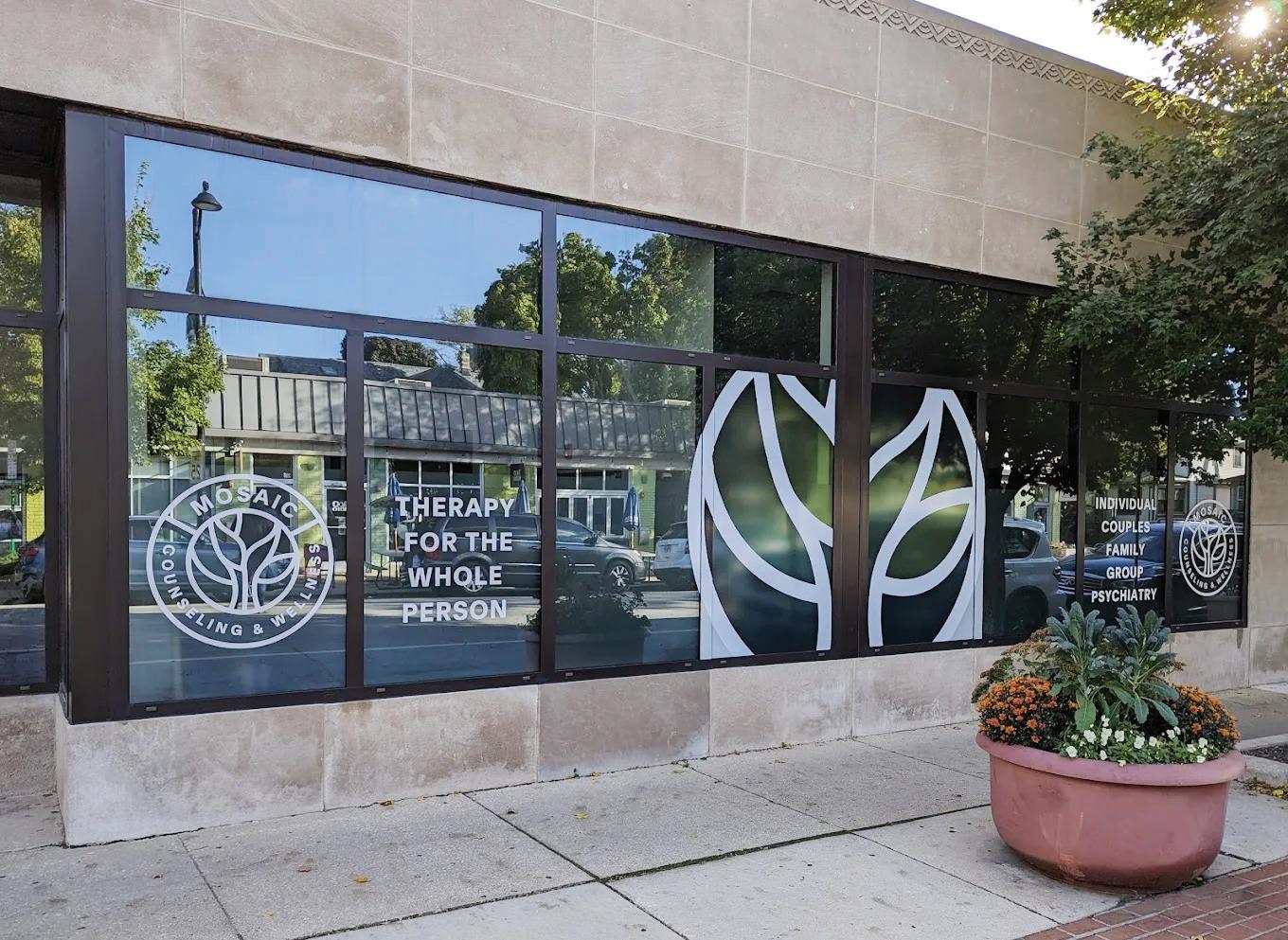
Essential for Carlock to have Mosaic’s home base be in Oak Park, in the summer of 2021, she purchased a vacant building in Oak Park’s Arts District on Harrison Street. While renovating the space, she opened Mosaic’s first small office in Elmhurst in the fall of 2021, with the Oak Park site officially opening in August 2022.
PROVIDED
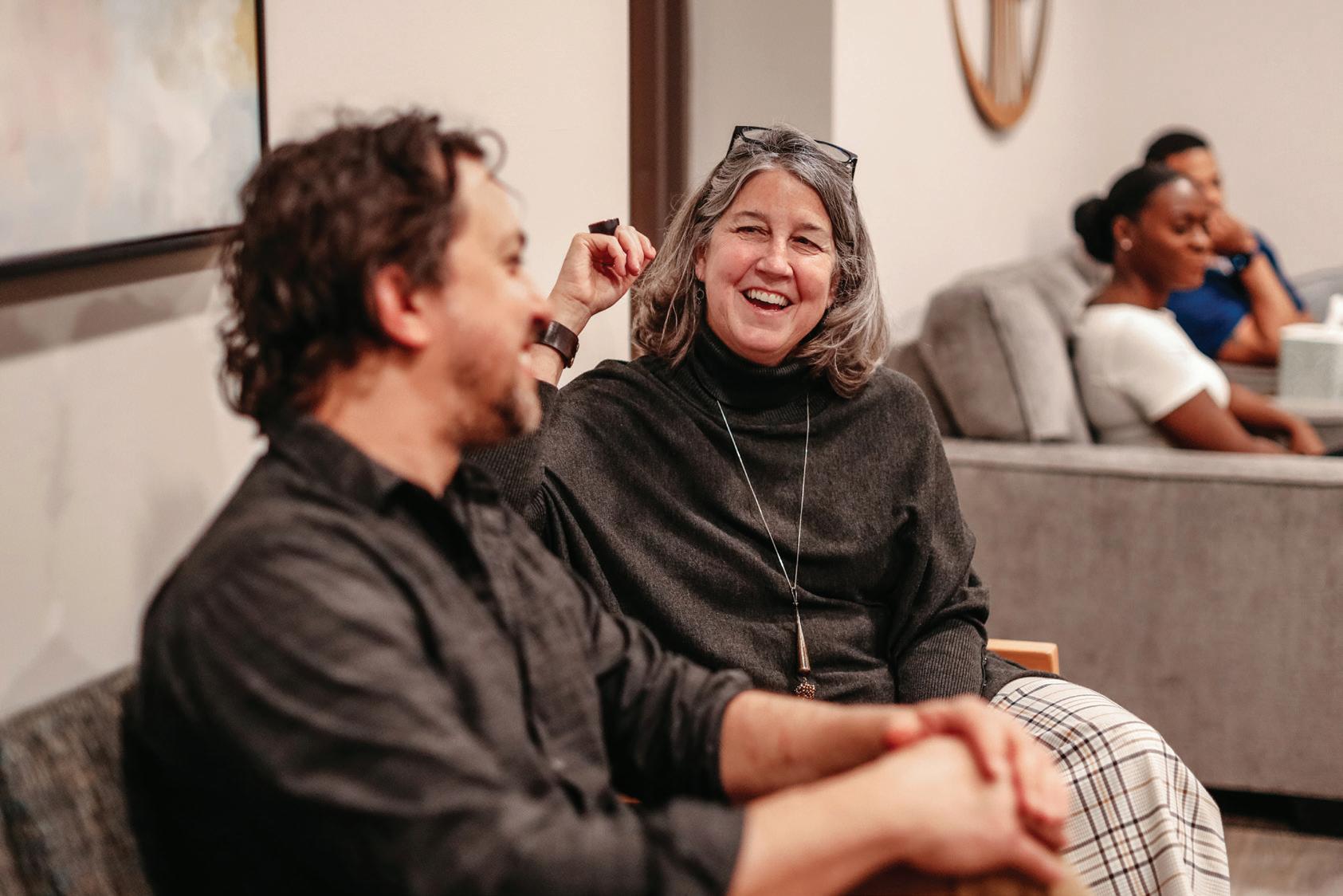
Carey Carlock, founder of Mosaic Counseling & Wellness chats with Mosaic Oak Park therapist Lonn Obee
Mosaic’s rst Oak Park location, 215 Harrison St., opened in August of 2022.
MOSAIC
from page B3
Carlock landed on the name Mosaic, explaining that when things come apar t in life, there is splendor in helping guide someone’s mental health to a better state.
“Things that are in pieces at times come back together to make something beautiful,” she said. “By the time you reach out, you need someone to answer the phone and call you back — that’s part of the installation of hope.”
With therapy for children through seniors, Carlock says it was important for Mosaic to have therapists who not only reflected the variety of needs of locals but focused on community connection and advocacy
“It’s such a deeply personal relationship of what you’re trying to look for in a therapist — what you’re trying to get out of that therapeutic relationship and how you take that into the rest of your life,” she said.
“The goodness of fit is so important.”
Besides talk therapy, Mosaic features art therapy, dance therapy, therapy in Spanish and clinicians from a variety of backgrounds — something Carlock says ensures care remains culturally-sensitive and responsive.
MENTAL HEALTH AWARENESS MONTH
Park (Arts District, Downtown and new this spring, the Hemingway District); Elmhurst, Glen Ellyn, Hinsdale and Orland Park. Mosaic employs nearly 100 therapists, two psychiatrists and four psychiatric nurse practitioners.
“Growing very quickly wasn’t the strategic plan, but we have an integrated, highquality client experience which I think propelled our growth,” Carlock said. “I am very proud, grateful and humbled by the growth.”
Carlock adds that in recent years, it has been “remarkable” to see society shifting toward more publicly addressing the importance of mental health care — and not just in times of crisis. While she says therapy may carry a stigma, she emphasizes taking the reaching out for care is brave.
“There is no health without mental health,” she said. “We don’t have to suffer and whiteknuckle it; we can give ourselves coping skills, support and credit for being brave enough to allow ourselves to get help. Therapy is not just heavy and sad — it can also be inspiring, hopeful and even fun.”
Carey is grateful people throughout Oak Park are seemingly proud in helping change the narrative around mental health.
“The intention is to try to have a diverse team, not only in how people are trained and how they treat people [but] so we can meet people where they’re at,” she said. “I say that with a lot of humility because that’s a big statement.”
If people reach out to Mosaic and the practice ends up not being the right fit due to niche clinical need or insurance factors, Carlock says they will keep communication open and refer individuals within contact networks to find that ideal therapist.
“Even if Mosaic isn’t the right door, we will help you get to the right place,” she said. Five years in, Mosaic has now expanded to seven suburban locations — three in Oak
“Oak Park is really pretty special in the reduction of stigma,” she said. “Honestly, people are proud to have a therapist. I don’t always see the same mental wellness-forward attitude in all the communities we serve.”
She appreciates that teens have greatly helped change the narrative as well.
“Many of my kids’ friends say, ‘I want a therapist,’ or ‘Why would I suffer without support?’” she said. “It’s prevention. It’s wellness. I feel really inspired by what is so different now with young people than when I was growing up.”
Outside of Mosaic, Carlock remains active at the state level. Last year, she testified in favor of Illinois House Bill 1085, a landmark behavioral health care and mental health parity law. The bill, which passed the Illinois General Assembly and was signed into
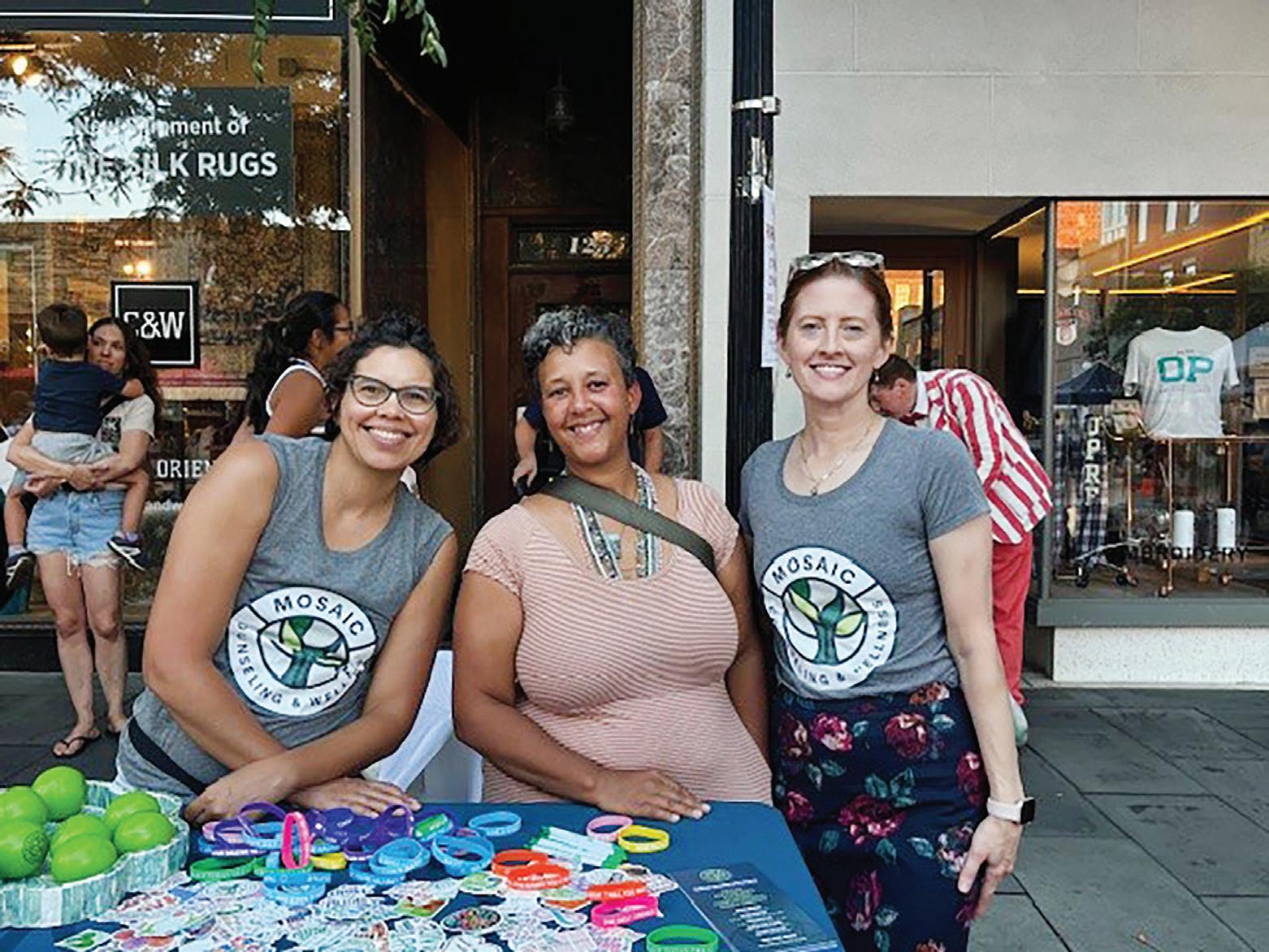
Oak Park therapists (le to right) Alexandra Backis, Kyla Gilmore and Alison Zdarsky share information about Mosaic at one of Downtown Oak Park’s ursday Night Out events in summer 2025.
law in December, aims to strengthen mental health and substance use disorder care by requiring state-regulated private insurers to offer better reimbursement rates for behavioral health services. Effective next January, it mandates 60-day credentialing for providers, aiming to expand network access for roughly 2.5 million Illinoisans Fundamentally, Carlock says therapy is serious work, but at Mosaic, is something she
aims to showcase as essential — and possible — for healing
“It’s incredible work and is such a privilege and responsibility,” she said. “It’s what I was intended to do, and I’m glad I listened to that voice about my community needing this. I believe in therapy because it works.”
For more information about Mosaic Counseling & Wellness, including new client inquiries, visit mosaiccare.com.
PROVIDED
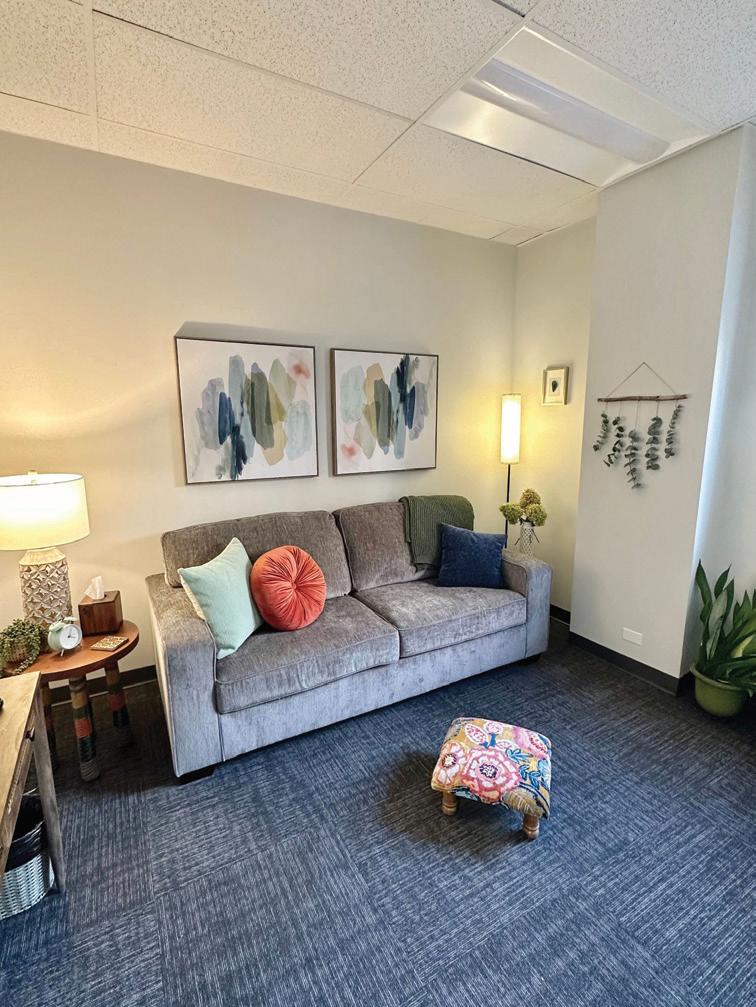
A peek into the layout of a talk therapy space at Mosaic.
PROVIDED
PROVIDED
Delivering resources and changing narratives
Oak Parker Cheryl Potts champions mental wellness through the lens of lived experience and personal passion
By JACKIE PISANO Contributing Reporter
For Cheryl Potts, leading Oak Park Township’s Community Mental Health Board isn’t just a career — it’s a deeply personal mission.
Serving as executive director since the fall of 2021, the longtime resident greets each day with the goal of not only assisting promotion of mental health services but working to shatter the stigma of mental health care by being open about her own firsthand experiences.
Whether finding ways to fund community services alongside elected officials, building partnerships with social service providers or speaking one-on-one with someone, Potts’ experiences of having a brother die by suicide, a family history of mental health concerns and facing her own mental health battles remain her catalysts for bringing real change to the way Oak Park addresses mental wellness.
“I thought it was a good opportunity to work in my own back yard and help my own neighbors with mental health,” she said. “What I really wanted to focus my career on was reducing the barriers to access and eliminating the stigma and discrimination around mental health.”
Five years ago, Potts was selected to lead the charge of the Township’s Mental Health Board following 20 years of experience in the field of human services. With roles including nonprofit work with the AIDS Foundation of Chicago and The Kennedy Forum Illinois, it has always been mission-critical for Potts to help eliminate mental health discrimination and destigmatize the narrative around reaching out for mental health and addiction support, both through lending a helping hand and openly sharing her journey from struggl e to recovery
“There should be no shame in reaching out for help when struggling,” she said. “People have in their head wh at they think mental i llness is, and it ’s usually ne gative thoughts. When you do seek out suppo rt and treatment, you c an be ve ry productive and live a normal life — and I think it ’s really important to share those storie s. ”
“A lot of people are fearful and think, ‘Well, I’m not a mental health exper t.’ But it ’s about making those true, genuine connections which we miss so much in our society today.”
CHERYL POTT S Director Community Mental Health Board
Since 1973, the Community Mental Health Board has served Oak Parkers through planning, developing, evaluating and funding mental health services throughout the village. However, while Potts ag rees the resources for mental health care have evolved since the board’s early days, the candidness of the conversation hasn’t quite caught up fully.
“Having the general public aware of
what they can contribute is not insignificant,” she said. “You could have a conversation with someone at a grocery store that could change their day. A lot of people are fearful and think ‘Well, I’m not a mental health exper t.’ But it’s about making those true, genuine connections which we miss so much in our society today.”
What Potts has enjoyed most with the board is truly having a direct impact at the hyperlocal level. She cites area resources like Thrive Counseling Center, NAMI Metro Suburban, Beyond Hunger and Sarah’s Inn as those which have joined forces to examine the root causes of conditions and make life easier for Oak Parkers in need
“When we bring people to gether to solve problems, then I think we’re able to make a bigger impact,” she said. “The piece I love most is not sitting in the office but actually being out in the community.”
Even so, Potts adds that challenges to
the role have included being a small, local organization which still has to deal with all of the changes that happen at the federal level, from changes to Medicaid and insurance policies, and budg et cuts to critical funding sources.
“We have a wonderful community, but we don’t live in a bubble — we are affected by all these things that destabilize any progress we’ve made.”
Nonetheless, Potts maintains honest conversations are essential to normalizing mental health challenges, which will in turn help connect locals with the extensive helpful resources available in Oak Park
“It really doesn’t feel like work — it feels like this is what I’m meant to be doing,” she said. “It’s a passion, and seeing the changes in people over time is what really reassures me that I’m doing the right thing.”
Black men talk abou mental wellness an overcoming stigm
Men’s Mentalhood and PCC Wellness team up for conversation
By ETHAN TUCKER Contributing Reporter
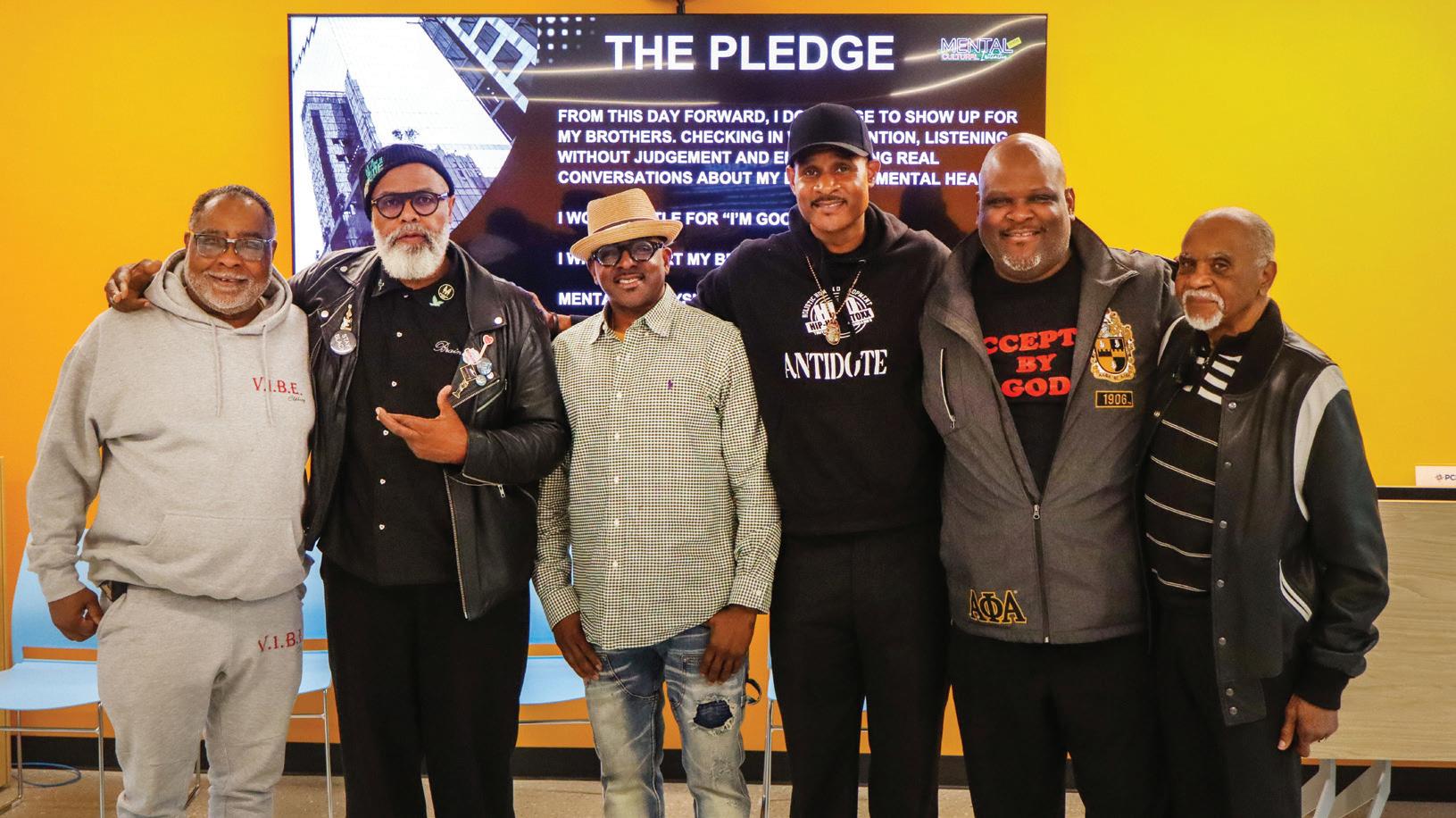
“In every adult man, there’s a broken boy that needs to be healed,” said Jonathan Muhammad during Men’s Mentalhood’s recent panel on Black men’s mental health at PCC Austin Family Health Center. On Saturday, May 2, Men’s Mentalhood partnered with PCC Community Wellness Center to host a community panel and breakfast focused on mental health awareness for Black men and boys on Chicago’s West Side.
Held at PCC Austin Family Health Center, 5461 W. Lake St., the event created space
for open conversations re addiction, emotional wellness and healing within the Black community.
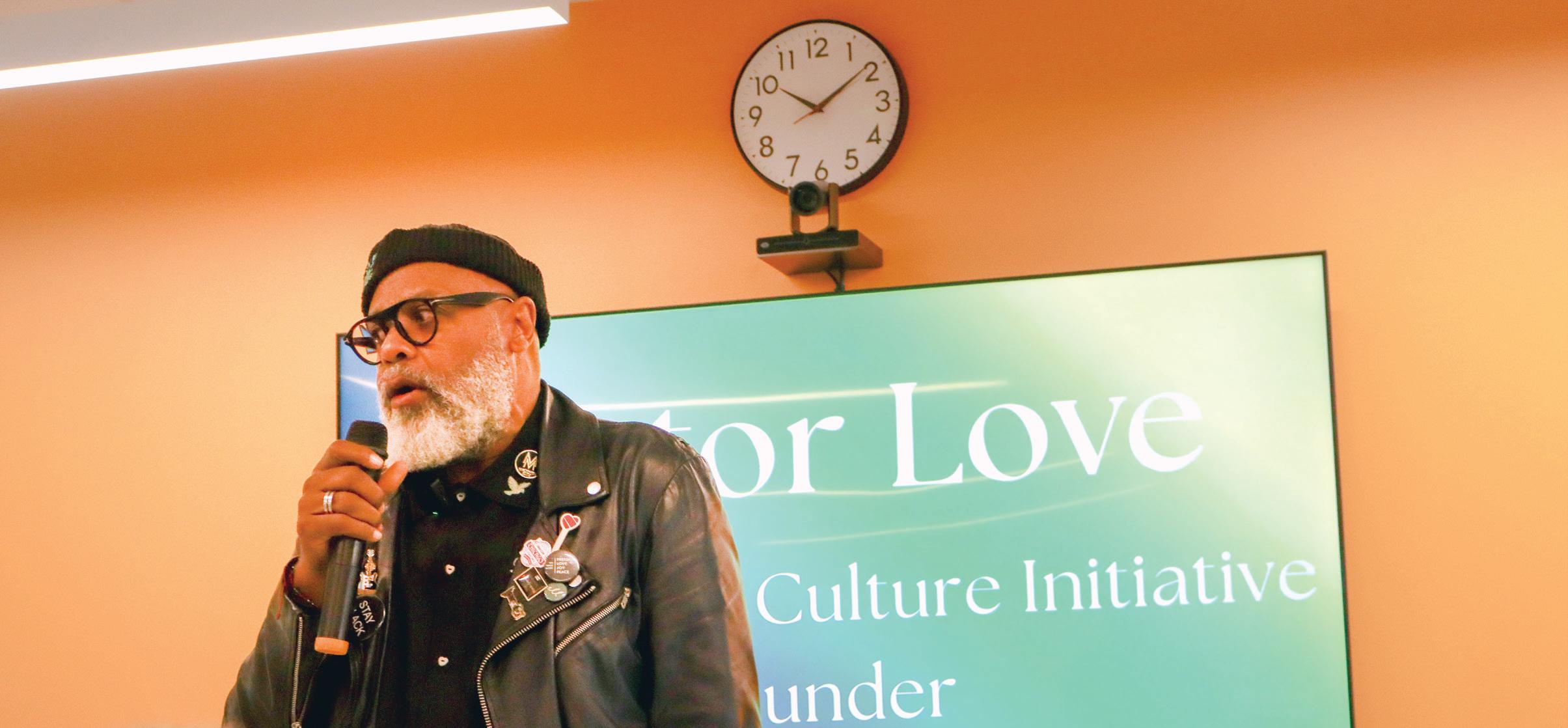
Founder Victor Love said Men hood was created to address the stigma surrounding therapy and emotional vulnerability among Black men.
“We have suf fered through so much and swept so much under the ca Love “As a result, that’s how Love encouraged attendees to up from the neck up,” a phrase used throughout the event to promote mental wellness, self-awareness and emotional honesty.
Community members also shared personal testimonies about how Men’s Mentalhood has impacted their lives and created an environment where they feel safe discussing issues often left unspoken.
“I’m not where I was, and I’m not where I want to be, but I’m in a much better and more empowered mental space,” Muhammad said.
PCC Community Wellness Center leadership used the event to connect residents with available healthcare and behavioral health resources.
“Mental health in general is something that we’re really passionate about here at PCC,” said Alyssa Sianghio, CEO of PCC Community Wellness Center. “We are here in the community so people have accessible and fordable healthcare centered around you.”
Sianghio said PCC operates 14 sites across Chica’s West Side and neighboring communities, offering primary care, therapy, dentistry, food ograms and substance use recovery services. he Austin Family Health Center location opened in late 2024.
and accessible.
“Mental health is just like physical health,” Gutier re z said. “We want to take care of our minds and make sure we’re doing okay mentally and emotionally.”
“I’m not where I was, and I’m not where I want to be, but I’m in a much better and more empowered mental space.”
JONATHAN MUHAMMAD
Title
“It doesn’t matter what insurance you’ve got or no insurance at all,” Sianghio said. “It doesn’t matter what your background is what history you’ve got — we’re going to be here.”
Lisa Gutier re z, PCC’s behavioral health director, said mental health remains heavily stigmatized in many communities, but PCC hopes to make services more visible
The event also connected attendees with professionals working directly in youth development and behavioral health. In a separate conversation following the panel, Dr. William Steward III, acting superintendent of the Cook County Juvenile Temporary Detention Center, reflected on the importance of mental wellness among incarcerated youth.
“Mental health starts in your mind,” Steward said. “I have 160 kids locked up in our facility, and mental health means helping them see they are more than their past and more than their mistakes.”
The collaboration between Men’s Mentalhood and PCC Community Wellness Center highlights a growing ef fort on Chicago’s West Side to address mental health through community conversation, accessible care and culturally relevant support for Black men and boys
PROVIDED BY ETHAN TUCKER
Victor Love
PROVIDED BY ETHAN TUCKER
Men’s Mentalhood partnered with PCC Community Wellness Center to host a community panel focused on mental health awareness for Black men and boys on Chicago’s West Side on May 2.
e Living Room o ers ‘natural connectiveness’ for those with mental health challenges
Free service provides acceptance and empathy with listening focus
By GREGG VOSS Contributing Reporter
Like most of us, Marty has seen challenges in his life, some that were tough to overcome.
Things like that can weigh on a person, so much so that it can feel near impossible to attack head on.
That was Marty, and to a de gree still is, but these days, he’s got support and a safe place, which can make all the difference.
“Losing my job was traumatic even though it was five years ago,” he said, adding he also dealt with the loss of a loved one before that. “I think it was an accumulation of things where it wasn’t something I was aware of on a daily basis. It maybe just crept up.
“I didn’t really have anyone or resources to tur n to.’
This day, Marty sits in a comfortable chair in a closed-door room at The Living Room in Oak Park, 816 Harrison St., which opened April 8 and is a free service operated by the National Alliance on Mental Illness (NAMI) Metro Suburban branch.
I was very excited for the opportunity.”
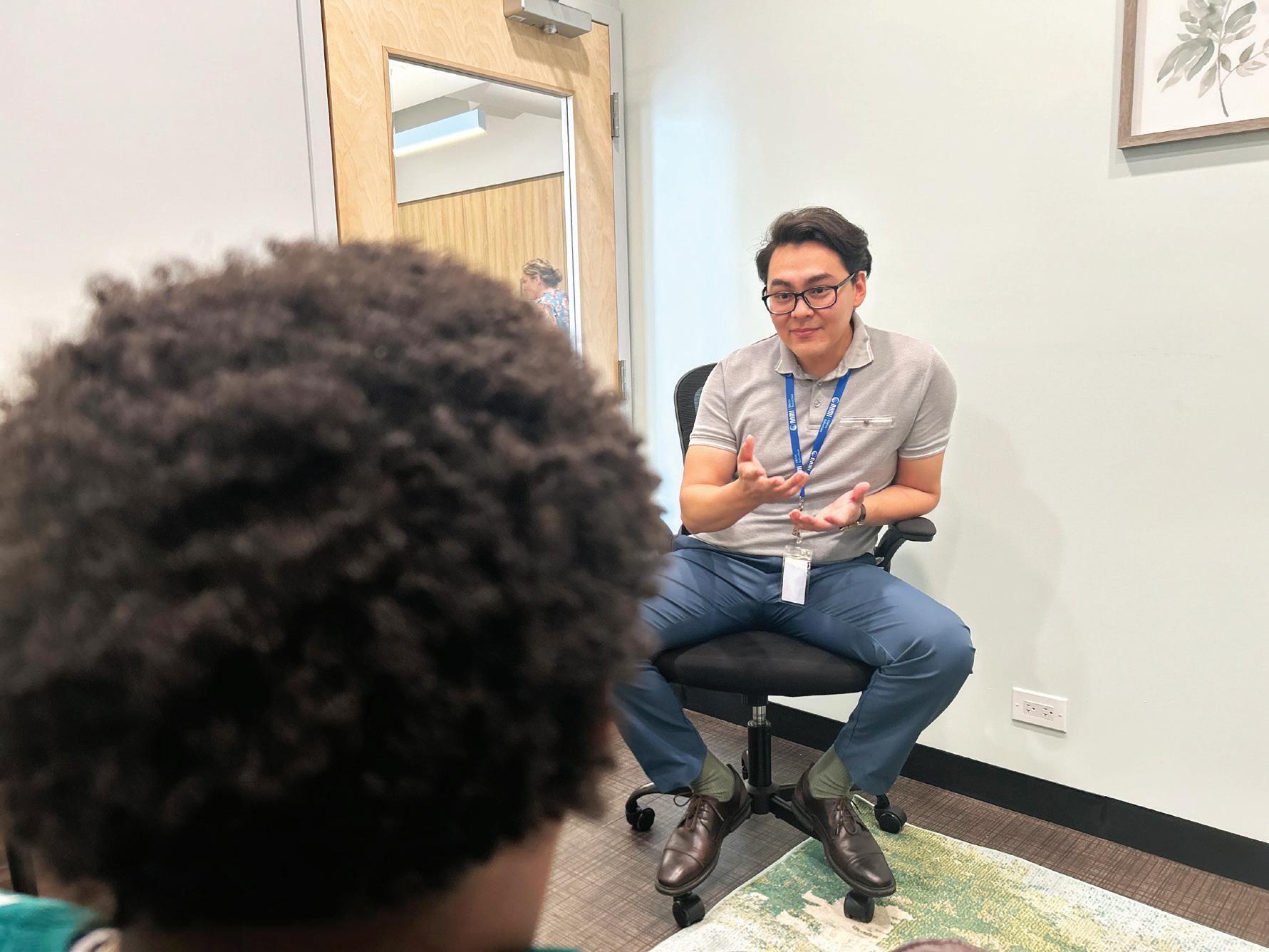
Open from noon to 8 p.m. dail ing Room in Oak Park is a welcoming space – clean, quiet, with meeting rooms offset right upon entry, in all honesty, similar to a living room. When arriving, you’ll li run into Beck Beishen, a coordinator and trained specialist. He’s a soft-spoken guy who works with guests like Marty to help them by talking out life’s knotty problems that might be exacerbated ADHD, panic attacks and other issues.
But Beishen isn’t only a trained specialist. He’s been in Marty’s shoes and those of the 35 separate individuals that ha the location since April 8 – already a of the total anticipated in its first y
“It started in high school when toms became more severe,” he said. “It was ADHD combined with anxiety. It went undiagnosed for After high school, things just kind of w quickly, where I started to cope with the symptoms with what I was feeling that time with substances and alcohol.”
“I nd that knowing that the sta has their own history with mental health and recovery, there’s been a relatabilit y.”
MART Y A Living Room client
Dressed in a St. Louis Cardinals cap – though he chuckles when he says he’s a diehard Los Angeles Dodgers fan – Marty is in a good mood, because he’s confident that the Living Room in Oak Park has been a gamechanger for him.
“I was aware of La Grange and Summit having locations, and the living room concept was very appealing to me,” he said. “I live in Berwyn, three minutes from here, and just growing up in Oak Park, when I heard The Living Room was going to open,
That went on for 10 years, and by his mid-20s, he realized he was headed in the wrong direction. He entered a 30-day program that provided the tools to handle his challenges. What’s more, he realized he could take his mess and make it his message.
He decided he wanted to pursue a career in social services, and Friday he graduated with his master’s de gree in social work from UIC. He’s planning to pursue a doctorate.
But the point is that there is common ground for Beishen and guests like Marty who come with a wide variety of struggles.
“Plenty of resources in terms of good advice, and I find that knowing that the staf f has their own history with mental health and recovery, there’s been a relatability,” said Marty.
“There is just a natural connectiveness.”
The process of getting started at The Living Room is seamless. Walking in there is a short intake process that is compliant with HIPAA to ensure confidentiality
“After that, we just sit down and talk to the guests,” Beishen said. “Why are they here? What are their goals? For each guest it’s different, and it’s about meeting the guests where they are at and then trying to help build that into a strength.”
Shelly Lustrup is the chief executive officer of NAMI Metro Suburban, and she said T he Living Room in Oak Park –which is adjacent to T he Drop-in Center at 814 Harrison St. – offers multiple recovery tools to help guests, which sets it apar t from other living room-style models.
“It’s a community-based progr am that can be for both prevention and intervention,” she said, adding that “going to the hospital or the ER, where we know it’s usually not the best fit, oftentimes
it’s overstimulating, it’s loud, long wait times
“Instead, you can come to a living room and the team can work to help de-escalate, make any kind of safety planning.”
But consider that T he Living Room team can facilitate a hospitalization if it feels that’s what’s needed.
In its short existence, there are many success stories, including Marty’s, and there will be many more, he’s convinced.
“I think immediate acce ptance and nonjudgment, and a true eng aged empathy for listening to your situation and offering different resources to help you,” he said. “Quite frankly, it’s free, it’s accessible. I came here the first time and I’m like, why not give it a chance?”
For more information about The Li ving Room in Oak Park, visit https://namimetsub.org/
GREGG VOSS
Beck Beishen, a coordinator and trained specialist at e Living Room in Oak Park, makes a point during a recent session.
Half of the world’s population will experience a mental health disorder by the time they are 75 years old.1 As many of us know from experience, attempting to navigate the mental health system when you are at a low point can be incredibly difficult. The Community Mental Health Board of Oak Park encourages everyone to learn where to go for help ahead of time, with the hopes that you won’t ever need it.
You always have Someone to Call, Somewhere to Go, and Someone to Respond.
Someone to Call: In July 2022, 988 replaced the ten-digit National Suicide Prevention Lifeline.2 This expanded resource provides 24/7, no-cost, confidential support for individuals in distress, including prevention and crisis resources. Calling or texting this number will connect anyone to a trained professional who is ready to help callers deal with their suicidal ideations (picturing their own suicide), mental health crisis, substance use issues, or other emotional distress. People who are worried about a loved one’s mental health crisis and want
CMHB Board President, Ann Schreiner Community Mental Health Board of Oak Park Township
Sponsored Content
Somewhere to Go
to provide support can also contact 988. Someone to Respond: Thrive Counseling Center is an Oak Park-based comprehensive mental health center that provides a no-cost 24/7 crisis line (708-383-7500). The main difference between this phone number and 988? Thrive has the ability to send a mobile crisis team to the distressed person and provide on-site assessment and de-escalation. Their crisis counselors are all highly trained Master’s-level clinicians whose goals are to stabilize the immediate situation, provide support, and facilitate connection to ongoing help.
Somewhere to Go: Do you feel the need to go somewhere warm and inviting to talk to someone? Bypass the emergency department and go to NAMI Metro Suburban’s Living Room Program located at 816 Harrison Street in Oak Park. The Living Room is a place to go if you are experiencing stress in your life or an increase in mental health symptoms. It’s for anyone who is 18 or older who is feeling scared, anxious, angry, sad, or just needs someone to talk to. It’s a calm, home-like space where adults experiencing distress can
connect with a trained peer recovery support specialist who has lived experience for support, de-escalation, and tools to maintain mental health recovery. The Oak Park Living Room is open daily 12–8 p.m. Services provided are free of charge and open to all.
Importantly, if you are in or around a mental health crisis that has the potential to end in immediate harm to someone, it is always better to err on the side of safety and call 911. We mourn the loss of our loved ones to suicide and devote our efforts to educate, empower, and mobilize toward helping prevent future losses. Program these numbers into your phones, teach your children about them, and hang up a call list in a prominent place for you to reference. Our goal and hope is that you will never need to use them. #YouMatterOP
1) Harvard Medical School, July 31, 2023, https://hms.harvard.edu/news/half-worlds-population-will-experience-mental-health-disorder 2) 988 Lifeline https://988lifeline.org/
Wednesday Journal, Austin Weekly News, Forest Park Review, and Landmark are now part of NEWSWELL, a nonpro t journalism organization that provides resources, technology, and long-term support to community newsrooms across the country.
This partnership strengthens our foundation while keeping everything that matters the same. Our newsroom remains local. Our staff remains in place. Our commitment to this community is unchanged. With the added support of NEWSWELL, we are better positioned than ever to continue delivering the independent, communityfocused journalism our readers rely on.