AT HOMEONTHE GREATERWESTSIDE
Nearly half of U.S. Latinos own their own homes –here’s how you can, too
Michelle Flores of National Association of Hispanic Real Estate Professionals explains how
By DELANEY NELSON Special Projects Reporter
In 2023, there were more than 9.5 million Latino homeowners in the United States, according to a report by the National Association of Hispanic Real Estate Professionals®. In other words, about half of Latinos in the U.S. own their homes. In Chicago, that figure stood at around 43% in 2017, nonprofit Prosperity Now reported.
While the national rate of Latino homeownership is trending upward, barriers remain. High interest rates, lack of conventional financing options for people without Social Security numbers, and high rates of mortgage denials all make it harder for Latinos to achieve homeownership, according to NAHREP Michelle Flores, executive secretary of the Chicago chapter of NAHREP, said Latinos — especially those who are undocumented immigrants — may face unique challenges to homeownership, including language barriers, limited access to credit and difficulty obtaining home loans. In her roles at NAHREP

and as a Realtor, she works to boost sustainable Hispanic homeownership. It starts by providing bilingual services and education to her clients. Austin Weekly News spoke with Flores about the hurdles Latino homebuyers are facing, and the community resources available to overcome them.
What are some of the barriers to achieving sustainable Hispanic homeownership?
It is a little more difficult to obtain home loans than it would be for someone who is not of the Hispanic background and actually, anyone who is an immigrant — which, a lot of the immigrants that we come across are mostly Latino, or Hispanic. And so most of my buyer pipeline, or even some of my seller pipeline, are either immigrants or their families are first-generation immigrants. On the buyer side, some of the barriers that they encounter is being able to be approved for a home loan. When they don’t have status, they don’t have a Social Security number, they don’t have a line of credit. They can’t qualify for traditional home loans like FHA, conventional, and they don’t qualify for downpayment assistance.
Luckily for myself, I was born and raised here in Chicago, so I’m grateful that I don’t have that issue. But my clients do, my sphere does. Nationally, we are advocating for immigration reform as part of our public policy
Another barrier is access to credit. Many don’t have access to credit — whether it’s because they don’t have a Social Security Number or, even if they do as residents or citizens, they haven’t obtained a credit card or a car loan to establish their credit. Yet they work, they have a steady, stable income, they’ve been paying rent somewhere for the past two or 10, 15, 20 years, but they’ve just never established credit.
So it’s [establishing] different ways of viewing credit and different ways of viewing cash flow. Some of our Hispanic families are 1099’ers versus W-2’ers. So that income is different — how we utilize that or we look at it on the credit side or on the income side for qualifications is different from how we would look at somebody who has a W-2.
Language is another barrier. I can only speak for my Latino community, the majority of my clientele. But I know from common sense that another language barrier is not just Spanish. All of the legal documentation in real estate is in English, locally and nationally. Even in real estate classes to become a Realtor, everything is in English. So we see it on the professional side just as much as the buyers and sellers see it on the buy and sell side. The only way around that that I’ve seen and I’ve been able to help, to a certain extent, is finding bilingual professionals.
See HOMEOWNERSHIP on page B3
G ROWING COMMUNIT Y MEDIA April 10, 2024 B1
GCM GUIDE TO HOMEOWNERSHIP
A
ADOBE STOCK
Considering buying a fixer-upper? Here’s what you need to consider
By DELANEY NELSON and FRANCIA GARCIA HERNANDEZ Special Projects Reporters
There’s no one way to be a homeowner
In the same way that the path to buying a home looks different based on the buyer’s needs and desires, making a house a home will look different for everyone.
Fixer-upper homes need repairs and updates, sometimes to improve the home’s appearance and modernize its finishes, other
1 SCOPE OF THE REHAB
times to make a home functional and livable. These homes, which are usually sold at a lower price than a fully renovated property or a newly built house, can be a good opportunity for first-time homebuyers.
Before purchasing a fixer-upper, homebuyers must understand what a home renovation entails, yet it is an option available to all, said West Side-based real estate agent Shantel Franklin. In this guide, Austin Weekly News provides homebuyers with tips to consider before purchasing a home in need of a makeover, shared by real estate experts and loan officers.
Know what type of work you can handle. A gut rehab is a much heavier lift than a cosmetic one.
• Understand the type of work required to make the home safe and livable. If a homebuyer has an accepted offer, they will be able — or may be required — to complete a home inspection. Review the inspection report and evaluate any structural damage or potential safety hazards before moving along in the home-buying process.
• The type of work that needs to be completed on the property determines its cost and the time it will take to do it. Make a plan and always plan for contingencies.
• In a complete renovation or a renovation that requires extensive plumbing, electric or roofing fixes, to name a few, it is unlikely a homebuyer can live in the property while the work is completed. Plan for an alternative place of living and consider its cost.
• Structural fixes and complete renovations cost more, require specialized contractors and take longer to be completed. While cosmetic fixes are more doable for a firsttime homebuyer, consider the cost and time it will take to complete them.
• Identify the types of city permits that may be required to complete your renovation project. Consider the time it will take to get a permit — and potential delays — in the renovation timeline.

2
FINANCING THE PROJECT
Determine how much you can pay and how you will fund any renovations.
• Determine how you will pay for renovations in addition to how you will pay for the property. Some mortgage loans may provide additional funding lines for repairs, but if they don’t, you may need to have additional cash to cover renovations.
• Consider applying for loans designed for single-family homes that need renovations. The U.S. Department of Housing and Urban Development offers 203(k) standard and limited loans to purchase homes in need of major renovations and help fund minor repairs. Work with experienced loan officers to understand their benefits and requirements.
• Check if there are any mortgage responsibilities or conditions you need to meet and how a renovation could impact them.



3 ADVICE FROM THE PROFESSIONALS
Have a strong team that can guide you through the home-buying process.

• Work with a professional realtor who can help identify properties that meet your criteria and the scope of renovations you can do.
• Work with a strong lending team to understand the types of loans available to finance a renovation and their requirements.

• Work with a financial advisor to determine how much money you can invest in a renovation without sacrificing your financial well-being.




• Work with professional and reputable contractors when completing significant renovations, such as electric, plumbing, roofing and heating.



B2 April 10, 2024 G ROWING COMMUNIT Y MEDIA AT HOME ON THE GREATER WEST SIDE
Shantel Franklin Real estate agent
4
WORKING WITH CONTRACTORS
Always work with licensed and bonded contractors.
• Avoid being a victim of fraud, always work with licensed and bonded contractors. If a renovation is funded by the HUD, only work with HUD-approved contractors.
• Review past work completed by contractors. Ask to see their portfolio of work, research their online presence or visit current projects they are completing, if possible.
• Request quotes from different contractors and compare costs. Review the quotes to see that labor and materials are included, the timeline and payment structure.
• If you are a victim of a home repair fraud or scam, you can file a complaint with the State Attorney General’s Office.
HOMEOWNERSHIP
Continued from page B1
Ensure that your lender, attorney, inspectors and anyone that you’re working with is bilingual and speaks the language you speak and the language that everything else is written in.
What resources are available to undocumented folks interested in buying a home?
Everyone has the same access to resources as far as getting education on the home-buying process. Who you work with matters.
There are different government agencies locally that help with education on the home-buying process. Neighborhood Housing Services of Chicago, LUCHA, Spanish Coalition for Housing — all these differ ent government agencies help homebuyers with education, the buying process and getting their credit ready
There’s also an opportunity when speaking to lenders. I would highly recommend not going to the bigger box lenders because they’re not going to be set up to help non-Social Security holders. Most of these bigger box companies are not equipped to give loans to borrowers without a Social Security number. Ask different lenders and organizations that are not bigger box banks if they offer ITIN loans and how to qualify for them.
5 IMPORTANCE OF FLEXIBILITY
It is very rare to be working on a renovation and for everything to go as scheduled.
• Have funds available for additional repairs or work that was not initially planned. It is common to find unforeseen issues during a renovation.
• Plan for delays in the renovation process and consider alternatives if you need to move in by a certain date.
6 HAVING THE FUNDS
Ensure you have money available for contingencies.
• It is recommended to have additional cash reserves to cover any contingencies that may arise during renovations, even in smaller renovation projects.
the process — whether it’s a realtor, a lender, or a government agency, whoever it is.
Don’t be afraid to ask for help. Most people are just afraid to ask for help, but a closed mouth doesn’t get fed, so you have to ask for help. You have to show up to these different organizations, walk into a real estate brokerage and say, ‘Hey, I want to buy a house’. If that first broker just says, ‘Hey, we can’t help you, because of XYZ’ and they don’t give you a plan, then you need to walk into another brokerage office.
There’s always a plan, there’s always something that you can do, whether it means that you’re going to need a year or two, or three, or it’s only going to take three to six months — there’s always a plan in place, it’s just a matter of following the plan to get ready to purchase when the time is right.

For ITIN borrowers, it’s a matter of that’s going to provide a loan product for you and evaluating what it’s going to cost you. Unfortunately, that’ another issue. Lenders don’t have a ton of products and ITIN loans are pretty standard -– with fairly higher interest rates and down payments than a traditional FHA or conventional loan. Usually, there’s no downpayment assistance.
It’s all about getting educated. And where do you get the education? In your communities. It’s a matter of, how do people access these things? Or how do people find out about them? What are (organizations) putting out there? What are you able to share with the community within your reach?
What advice do you have for undocumented folks interested in becoming a homeowner?
I speak from my personal perspective. I believe that everybody has the opportunity to purchase a home, whether you just got here, whether you’ve been here 20 years, or whether you were born and raised here. How we get you into that house might take some time, depending on your status here, sadly. For those who have been here, or who were born and raised here, it might be a little quicker and easier than for those who just arrived. My recommendation is, first and foremost, to find someone you can trust to work with. Find someone to guide you through
What’s the importance of homeownership?
Oh, man. Where do I start? The short answer is building wealth over time. I hear it all the time and I preach it all the time.
It’s wealth building, it’s being able to say, ‘I own this property, I can do what I want with it,’ to a certain extent. If you decide to sell it, you’re going to make money on it; it’s going to have equity over the years that can be used to buy another property or a car. Even without selling, if you own a home, ou’ve gained some equity in it after three to five years, you can refinance that property and pull out cash to pay off debt, chase a new car or other properties.
My parents have owned their properties my whole life, so I’ve always been exposed to the benefits of homeownership. I could use my own yard, have parties without having to ask anyone for permission, have pets if I wanted to have one and paint my room, and do all these different things. When you’re renting, you have to ask for permission for all of the above.
What should renters who are considering homeownership know?
First things first, if you don’t have credit, establish credit. The higher your score, the better it is for you, whether it’s for your interest rate, your mortgage insurance, or qualifying for different programs. The higher your credit score, the more programs you qualify for. Use that credit wisely Besides credit, save your money. Everybody’s going to need money during the buying process, whether or not they qualify for assistance programs.
Even if you don’t use any of that money for down payment or closing it’s good advice to have money saved up. Stuff happens all the time — the water faucet breaks or the water main breaks or the heat goes bad. You want to have money to make repairs. As a homeowner, there are benefits of having a home — equity and freedom. But you also have a responsibility to make repairs. There’s no landlord to call to come in and fix things.
G ROWING COMMUNIT Y MEDIA April 10, 2024 B3
AT HOME ON THE GREATER WEST SIDE
Michelle Flores National Association of Hispanic Real Estate Professionals
The Center for Changing Lives fosters sustainable homeownership through financial counseling and community partnership
By DELANEY NELSON Special Projects Reporter
What if there was a place that connected those in challenging life situations with economic education and resources for free?
Since 1989, the Center for Changing Lives has done just that. The center, which now serves Chicagoans experiencing homelessness or housing or financial hardship, was founded to aid unhoused people by providing food and shelter.
Over the years, its mission has shifted to more preventative approach focused on expanding financial literacy and access to resources. CCL works to prevent homelessness by targeting its root causes, pursuing economic justice and building community. Staff help members access credit, employment and career pathways and grant programs.
All of CCL’s services are free, bilingual in English and Spanish, and open to the public. The center prides itself on working alongside participants to achieve their goals — whether that’s employment, stable housing, starting a small business or overcoming financial barriers.
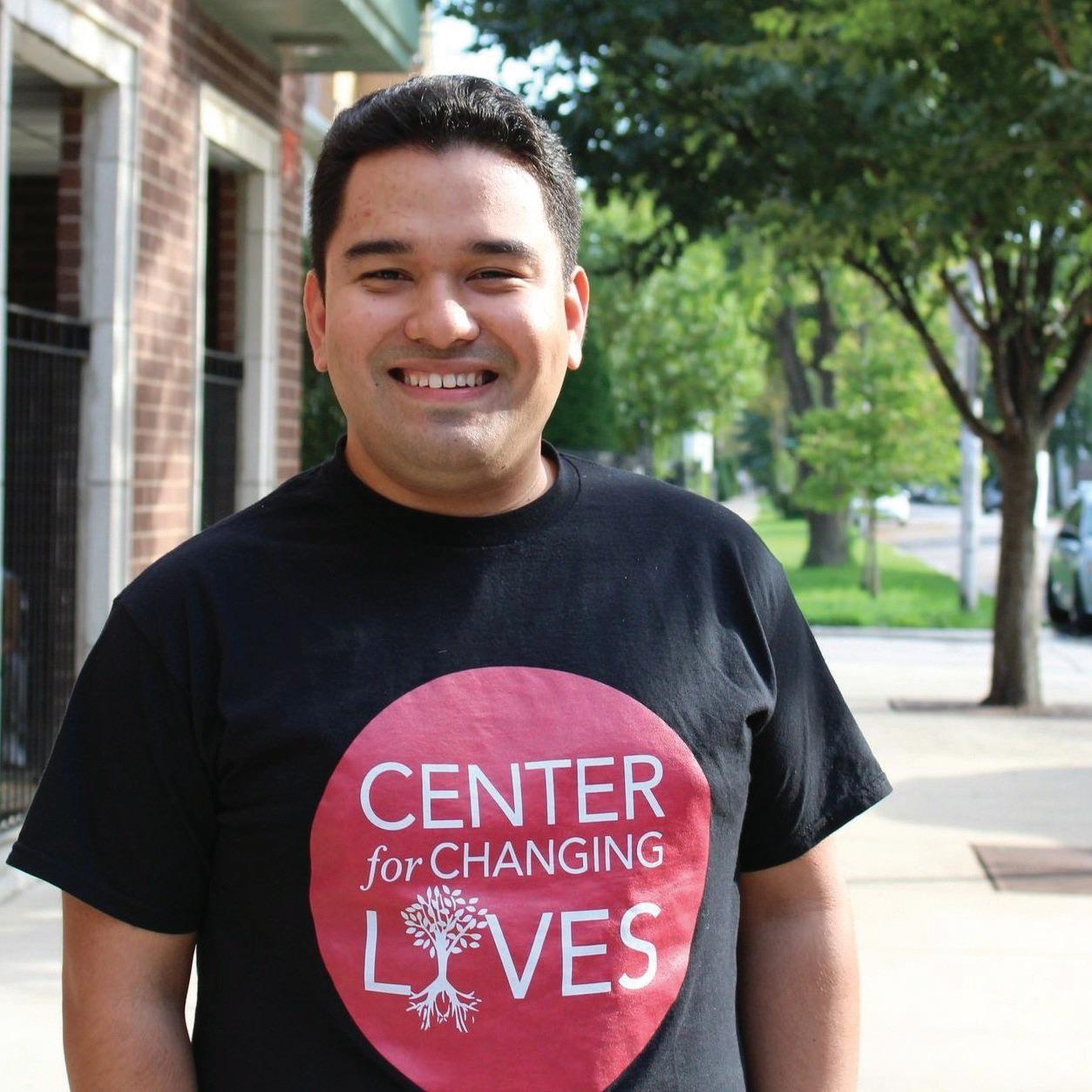
“We’re working alongside our members. There’s no power dynamic, there’s no hierarchy,” said Julio Pensamiento, CCL’s strategic partnership coordinator. “We put our members in the driver’s seat and we’re in the passenger seat giving directions and manning the radio, that kind of thing. Whereas other social service providers, it’s very much like a taxicab approach. The counselor is in the driver’s seat, the members kind of in the backseat, there’s not a lot of dialogue, not a lot of input.”
One branch of education and assistance CCL provides is HUD-approved housing counseling and related financial coaching. Last year, the center offered housing counseling to more than 640 households.
Austin Weekly News sat down with Pensamiento to hear more about CCL’s mission and offerings, with a particular focus on the center’s work with prospective homebuyers.
What services does CCL provide for prospective homeowners?
Homeownership is not just finding a house to buy — there’s a lot of legwork that goes behind that and we recognize that. So for us, it’s a
Julio Pensamiento Center for Changing Lives strategic partnership coordinator
long-term sustainability approach. Rather than, “Hey, let’s get you in this tremendous debt without any additional resources and education,” we want to be able to prepare individuals and make sure that they’re making this decision thoughtfully and carefully
For us, homeownership starts with pre-purchase counseling, and making sure that there’s financial literacy, financial education and learning. At the same time, we’re also taking a look at a person’s income, their employment status to make sure they’re making enough money to be able to afford a mortgage and utilities; rent if they’re currently renting, in addition to resource development. [e look at] what other mainstream public benefi ts we can get folks to apply for that will help cut down on their overall expenses, so that they can take advantage of some of these free or low-cost resources. It’s building out and making sure that it’s a sustainable opportunity for individuals.
We also see it as a wealth-building opportunity. We work with some of the most vulnerable populations in the city of Chicago and we want to
make sure that we’re equipping them delicately and properly to create an avenue of wealth for them and future generations.
What is the importance of housing counseling?
don’t want folks to rush into these major decisions without having all the appropriate knowledge and pieces of information. As a HUDapproved housing counseling agency, we are a neutral third party, so we just strive to educate and empower as much as possible the families that we seek to serve — we’re talking very low (area median income), people who have very low credit scores, or are perhaps unscored. What we try to do is empower and educate. We don’t want folks to be taken advantage of. There’s a lot of information out there — a lot of the big partners we work with have different mortgage lending products and programs. Our job is to present a neutral opinion of “Hey, these are the opportunities available to you. Let’s get you ready.” We don’t want folks to go into this major life decision without knowing the repercussions. Should an adverse situation come up in the future, there is post-purchase counseling. We’re always going to be in your corner to provide you with resources and [help you navigate] all the different information that may be out there.
Retention is really big for us. We want our folks to continue to come to us, even after they’ve closed. There’s still more knowledge out there about becoming a homeowner. There are still opportunities for us to continue engaging in longterm success.
Is there anything prospective home buyers should be cautious of?
There are a lot of scams. There are a lot of predatory lending practices that are out there, for example, payday loans, which is such a big culprit, especially in our communities. I’m naming that one in particular because we service and we tend to see a lot of our members accessing those kinds of services. For us, it’s really important to educate our individuals and let them know these are scams.
As a HUD-approved housing counseling agency, we want to be able to provide all the knowledge. Ultimately, it’s up to the individual to act on that information however they see fit,
but we have to do our due diligence to expose and share that information with our family. That’s where I think bilingual services also come into play. The services for the Spanish-speaking community are few and far between. We stand tall and proud to be able to service these individuals, not just in English, but in Spanish, and do so with quality and intentionality
What are some challenges that people who are undocumented may face in the homebuying process?
The home-buying process requires a substantial downpayment, depending on the price of the home, location and finances. So that in and of itself is already a struggle –letting folks to be able to meet that savings goal to be able to pay for a downpayment. There are many bank partners that offer downpayment assistance programs, but they are inaccessible for individuals who are ITIN holders, and even less so for folks who don’t have any credit history or scores or proper documentation. That dwindles opportunities for individuals to build wealth.
We need to assess what folks are eligible for Do you have an ITIN? Do you have a Social? Do you have a visa? What kind of documentation do you currently have? It’s about exploring what folks currently have and looking within our wheelhouse to educate them on those decisions.
Individuals who are undocumented or even ITIN holders are deemed as ‘riskier’ clients to offer a mortgage loan to. For us, it’s [about] educating and working with the right partners at every step of the process. It’s getting the point across to our partners to let them know, “Hey, this population is huge.” It’s trying to turn that viewpoint that our families are “riskier” and therefore deserve a higher interest rate — that should never be the case.
Some of these doors are automatically shut for families and that’s unjust and unfair. For every step of the process, we can vouch [for them] and let it be known that these folks are suffering. That’s what we’re here for
Follow us each month in print and at https://www.austinweeklynews.com/ at-home/, where you’ll find additional resources and useful information.
B4 April 10, 2024 G ROWING COMMUNIT Y MEDIA AT HOME ON THE GREATER WEST SIDE
