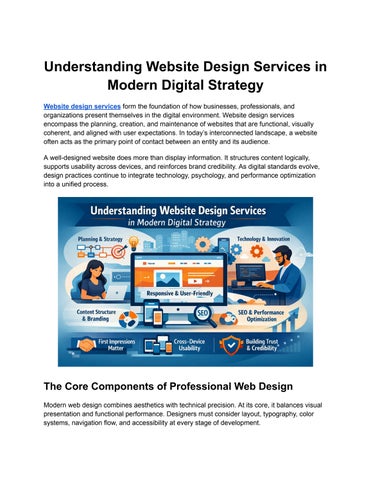
Understanding Website Design Services in Modern Digital Strategy
Website design services form the foundation of how businesses, professionals, and organizations present themselves in the digital environment Website design services encompass the planning, creation, and maintenance of websites that are functional, visually coherent, and aligned with user expectations. In today’s interconnected landscape, a website often acts as the primary point of contact between an entity and its audience
A well-designed website does more than display information. It structures content logically, supports usability across devices, and reinforces brand credibility As digital standards evolve, design practices continue to integrate technology, psychology, and performance optimization into a unified process.
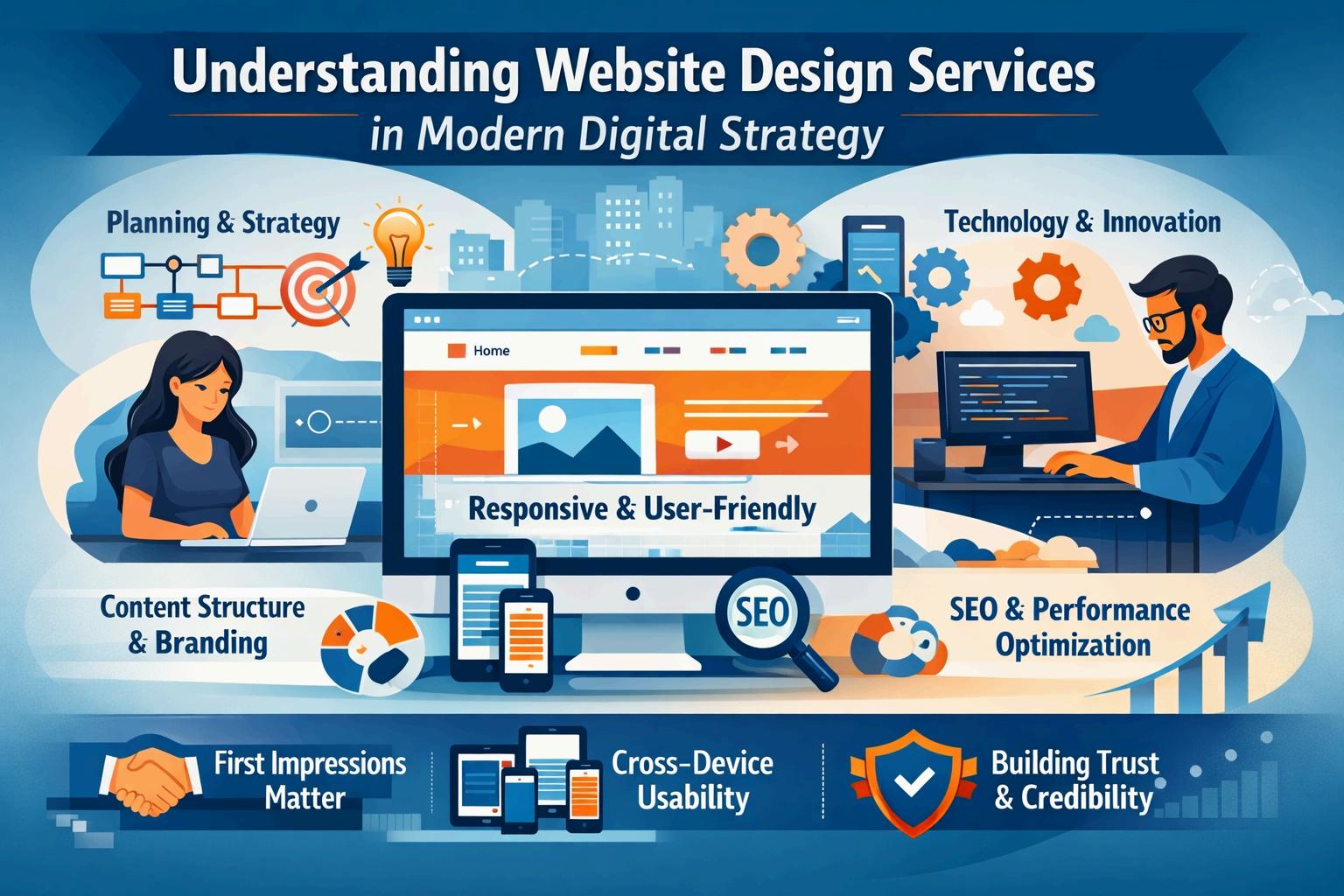
The Core Components of Professional Web Design
Modern web design combines aesthetics with technical precision At its core, it balances visual presentation and functional performance Designers must consider layout, typography, color systems, navigation flow, and accessibility at every stage of development.
Equally important is user experience (UX) UX focuses on how visitors interact with a website Clear navigation, readable content, and intuitive page structure reduce friction and improve engagement Meanwhile, user interface (UI) design translates strategic planning into interactive elements such as buttons, forms, and menus.
In addition, responsive frameworks ensure websites adapt seamlessly across desktops, tablets, and smartphones With mobile traffic consistently increasing, device compatibility is no longer optional. Instead, it defines usability standards.
Visual Structure and Layout
Layout determines how users process information. Designers use grid systems and spacing techniques to guide attention naturally A clean hierarchy enables visitors to scan pages quickly and locate relevant content without confusion
Typography also plays a structural role Font pairing, spacing, and line height influence readability Consistent visual patterns strengthen brand recognition while reducing cognitive load.
Technical Architecture
Behind every effective design lies structured code and performance optimization. Technical architecture includes:
● Clean HTML and CSS foundations
● Optimized media assets
● Logical URL structures
● Basic SEO optimization principles
These elements improve search engine visibility and ensure stable performance Moreover, page speed influences both user retention and ranking signals
The Strategic Role of Website Design
A website operates as a strategic communication tool It shapes perception within seconds Research consistently shows that users form impressions quickly based on design clarity and visual organization.
Therefore, design decisions should align with defined objectives For example, an educational institution may prioritize informational clarity, while a portfolio site may emphasize imagery and minimalism Although visual styles differ, the underlying strategy remains consistent: structure content to serve user intent
Furthermore, integration with content management systems (CMS) allows administrators to update content efficiently. This flexibility supports long-term scalability and content strategy development
Accessibility and Inclusive Design Standards
Inclusive design has become central to professional practice. Websites must accommodate users with varying abilities, devices, and internet speeds Accessibility principles encourage designers to implement contrast ratios, alternative text for images, and keyboard navigation compatibility.
Following WCAG guidelines enhances usability for all visitors In many jurisdictions, accessibility compliance also aligns with regulatory standards. Therefore, accessibility should not be treated as an optional enhancement but as a foundational requirement
Performance, Security, and Maintenance
Design does not end once a website launches. Ongoing performance monitoring ensures consistent functionality Regular updates address browser compatibility, security vulnerabilities, and plugin stability.
Security protocols such as SSL encryption protect data transmission and build trust Additionally, optimized hosting environments support faster load times and reliable uptime These technical elements contribute to both user satisfaction and search performance.
Maintenance also includes content audits Outdated information can reduce credibility Structured review cycles help maintain accuracy and relevance.
Key Considerations When Evaluating Design Approaches
When assessing digital design solutions, it is important to focus on structural integrity rather than surface aesthetics alone. Effective evaluation considers strategy, usability, and sustainability
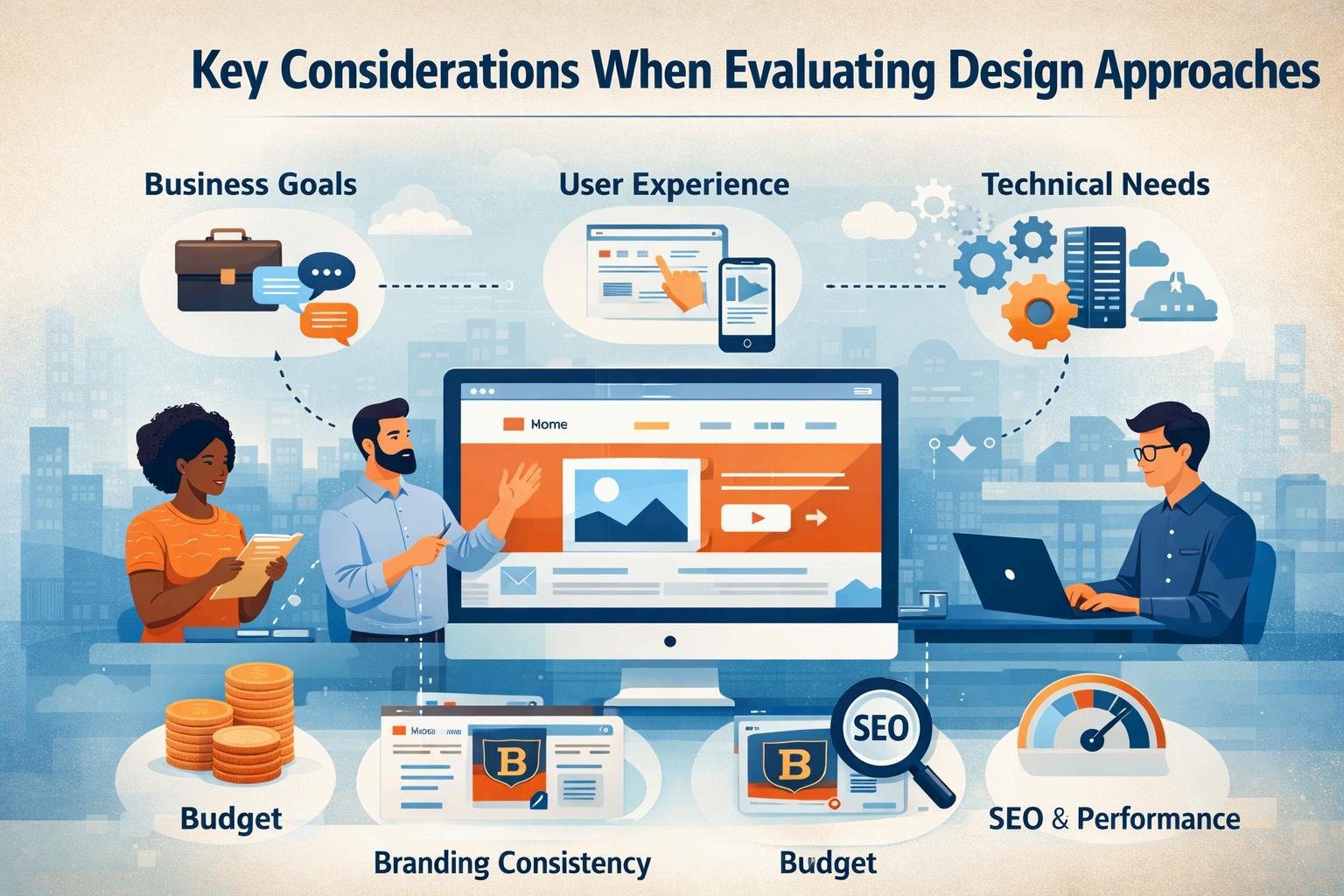
Several best practices commonly guide professional standards:
● Prioritize clarity over decorative complexity
● Maintain consistent branding elements
● Ensure mobile-first responsiveness
● Structure navigation logically
● Optimize for performance from the start
Although these principles appear straightforward, their execution requires coordinated planning. Designers often collaborate with developers, content strategists, and SEO specialists to ensure alignment
The Relationship Between Design and Search Visibility
Search engines increasingly evaluate user-centered metrics Bounce rate, dwell time, and mobile performance influence rankings indirectly Consequently, design quality supports discoverability.
A technically structured site facilitates indexing Clean metadata, organized headings, and internal linking patterns improve crawl efficiency. Moreover, technical SEO integration during the design phase prevents structural errors that can be costly to fix later
At the same time, content remains essential Design provides the framework, but information delivers value. The integration of content strategy and visual structure ensures sustainable growth
Evolving Trends in Digital Interface Development
Digital interfaces continue to evolve in response to behavioral data and technological innovation Minimalist layouts, micro-interactions, and adaptive design elements now reflect changing user expectations.
Artificial intelligence also influences personalization However, implementation must remain purposeful Overly complex features can disrupt usability Balanced integration maintains performance without overwhelming visitors.
Cloud-based platforms and modular frameworks further streamline development workflows As a result, design processes have become more iterative. Teams can test prototypes quickly, gather feedback, and refine user pathways before full deployment
Conclusion
Website design services represent a structured discipline that combines visual communication, technical architecture, and user-centered strategy They influence credibility, usability, and long-term digital sustainability When executed thoughtfully, design supports both user engagement and operational efficiency.
A modern website requires more than aesthetic appeal It demands accessibility, performance optimization, strategic alignment, and continuous maintenance. By understanding these components, organizations can approach digital development with clarity and informed expectations
Ultimately, effective design reflects balance. It integrates creativity with structure, and innovation with usability As digital environments continue to evolve, thoughtful planning and disciplined execution remain essential to building meaningful online experiences.