The Importance of Surveying for Pipeline Construction
Survey professionals collect precise data on the project area to determine the best route, minimize environmental impact, and ensure regulatory compliance. This process supports engineers, planners, and construction teams in making informed decisions. Surveying for pipeline construction is the foundation of successful pipeline planning.
Propersurveyingforpipelineconstructionhelps:
Identify suitable pipeline routes
Avoid environmental hazards
Ensure compliance with regulatory requirements
Reduce construction risks and delays
Improve long-term infrastructure reliability
Role of Pipeline Surveying in Project Planning
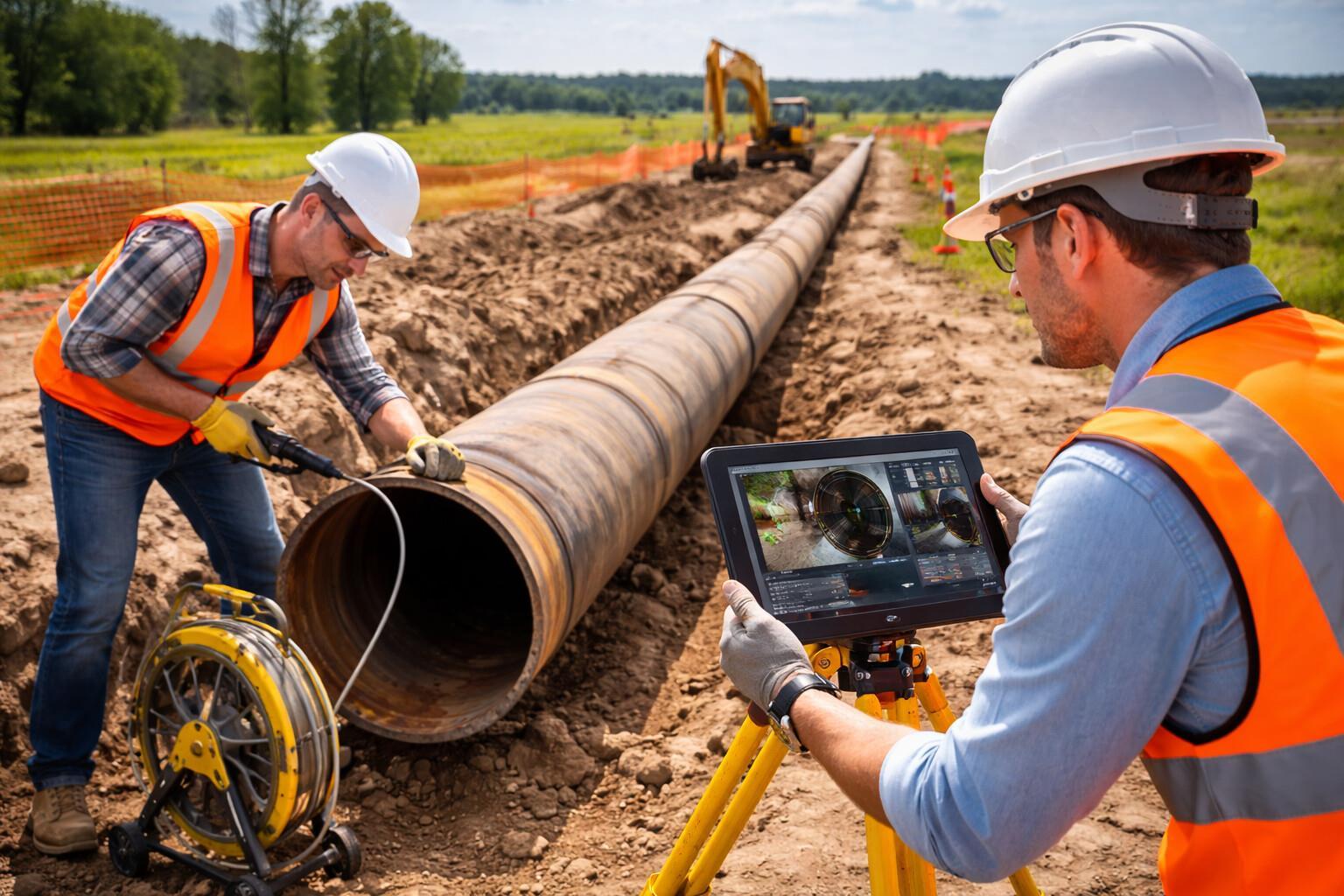
Pipeline surveying is an essential part of pipeline infrastructure development. It provides detailed geographic data that engineers use to design and accurately position pipelines During pipeline surveying, surveyors measure elevation, terrain slope, vegetation coverage, and nearby infrastructure. This information helps engineers design pipelines that adapt to the natural landscape while minimizing disruption.
Keyobjectivesofpipelinesurveyinginclude:
Determining optimal pipeline routes
Identifying obstacles such as rivers, roads, and structures
Mapping elevation changes and terrain conditions
Supporting engineering design and feasibility studies
Understanding Gas Pipeline Right of Way
A gas pipeline right of way refers to the legal corridor that allows pipelines to pass through private or public land. Determining the correct gas pipeline right of way is a critical part of pipeline planning. Surveyors identify property boundaries and establish the permitted corridor where the pipeline can be constructed. This prevents disputes with landowners and ensures regulatory compliance
Surveyingforpipelineconstructionhelpsestablishthepipelinerightofwayby:
Identifying property ownership boundaries
Mapping safe pipeline corridors
Ensuring access for maintenance and inspections
Mapping Pipeline Right of Ways in Edmonton
Pipeline infrastructure development often requires precise mapping of pipeline right of ways in Edmonton. These designated corridors allow pipelines to pass through residential, commercial, and rural land while maintaining safe distances from structures. Surveying teams analyze land records, terrain features, and property boundaries to determine appropriate pipeline right of ways in Edmonton. This ensures pipelines follow approved routes and remain within designated areas.
Surveydatahelpsplanners:
Establish accurate pipeline corridors
Protect surrounding properties
Maintain safe distances from infrastructure
The Role of Access Land Surveying
Access land surveying is another critical component of pipeline planning. Surveyors must determine how construction teams, maintenance crews, and inspection vehicles will reach the pipeline route. Without proper access land surveying, construction teams may encounter difficulties transporting equipment and materials to the pipeline site.
Accesslandsurveyingsupportspipelineprojectsby:
Identifying access routes to pipeline corridors
Mapping construction staging areas
Ensuring safe equipment transportation
Supporting maintenance and emergency response access
Benefits of Drone Pipeline Surveys
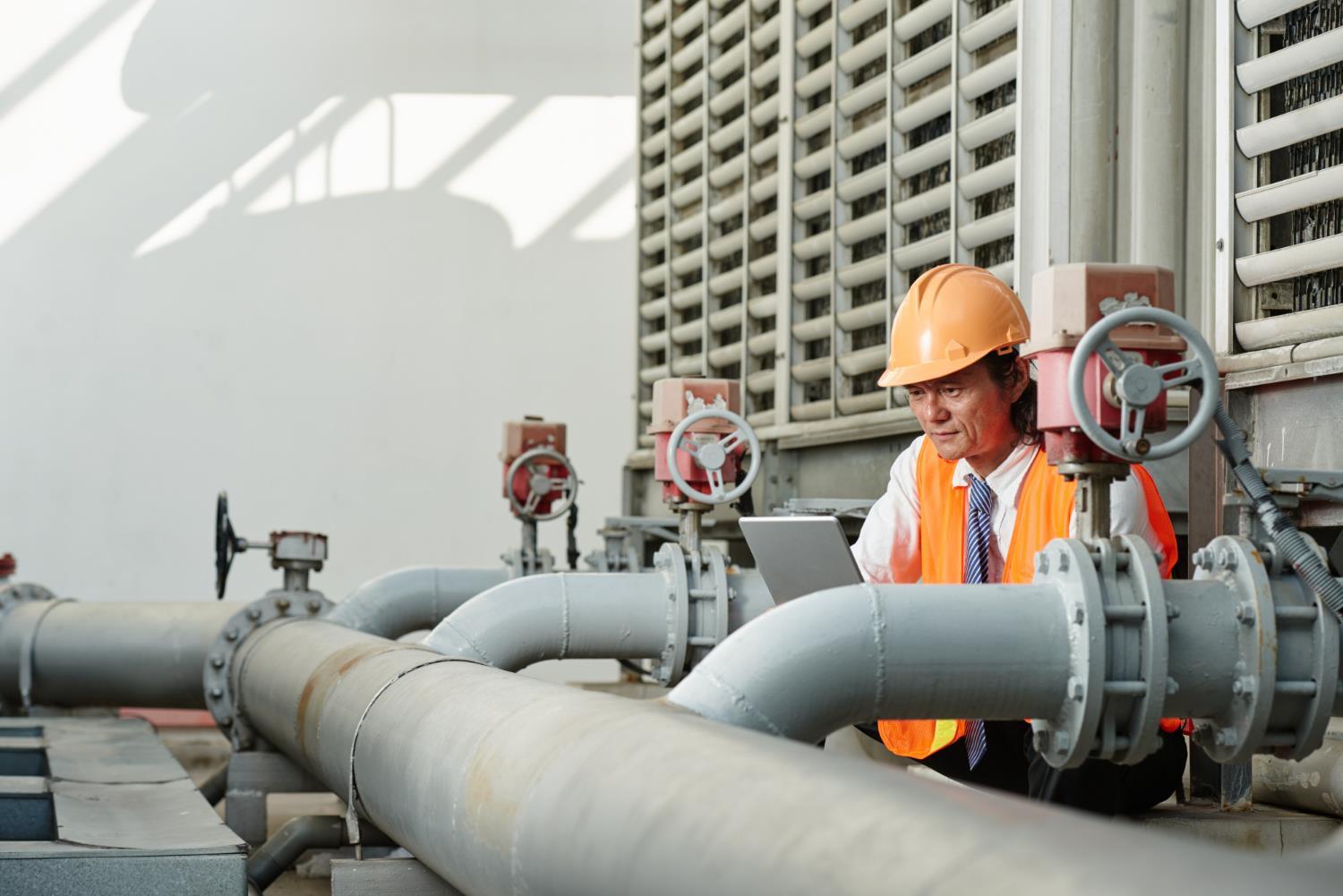
Modern surveying technologies have improved the collection of data during pipeline construction. Professional drone pipeline surveys help surveyors gather accurate aerial data quickly, especially along long pipeline routes or in difficult terrain. These surveys improve efficiency and support better planning decisions.
Advantagesofdronepipelinesurveysinclude:
Faster data collection across large areas: Drone pipeline surveys can quickly cover long pipeline corridors, allowing survey teams to collect detailed data in much less time than traditional ground surveying methods.
Improved safety for survey teams: Drones reduce the need for surveyors to access hazardous or remote areas on foot, improving safety during pipeline construction projects.
Role of As-Built Pipeline Surveys
As-built pipeline surveys are conducted after pipeline installation to verify that construction matches the approved design plans. These surveys document the exact location, depth, and alignment of the installed pipeline. As-built pipeline surveys provide essential records for future maintenance, inspections, and regulatory compliance.
Benefitsofas-builtpipelinesurveysinclude:
Confirming construction accuracy
Documenting final pipeline placement
Supporting maintenance planning
Ensuring regulatory compliance
Why Residential Boundary Survey Matters Near Pipelines?
When pipelines pass near residential areas, a boundary survey becomes important. Property owners and builders need accurate information about property lines and nearby infrastructure. Evaluating residential boundary survey helps ensure pipelines are constructed within approved corridors and do not encroach on private property
Benefitsofconductingaresidentialboundarysurveyinclude:
Clearly defining property limits
Preventing land disputes
Protecting residential infrastructure
Supporting safe development near pipelines
Combining residential boundary survey data with pipeline construction surveying improves planning accuracy and helps maintain safe distances between pipelines and residential structures.
Technologies Used in Modern Pipeline Surveying
Modern pipeline construction relies on advanced technologies that improve precision and efficiency. These technologies allow surveyors to gather accurate data quickly and analyze large geographic areas.
Commontechnologiesusedinpipelinesurveyinginclude:
GPS and GNSS surveying equipment
Geographic Information Systems (GIS)
How Survey Data Supports Pipeline Planning
Survey data plays a critical role throughout the pipeline development process. From route selection to final installation, accurate survey information helps engineers and planners make informed decisions.
Surveydatacollectedduringsurveyingforpipelineconstructionhelps:
Determine optimal pipeline routes
Avoid environmentally sensitive areas
Identify terrain challenges
Support engineering design
Ensure compliance with regulations
The Future of Pipeline Construction Survey
The future of surveying for pipeline construction will continue to evolve as geospatial technology advances. These technologies will make pipeline surveying faster, more accurate, and safer for survey teams working in challenging environments. As pipeline infrastructure expands, advanced surveying will remain a vital part of successful pipeline planning and development. Companies like Apex Geomatics contribute to this progress by providing precise surveying solutions that enable efficient, reliable pipeline projects.
Conclusion
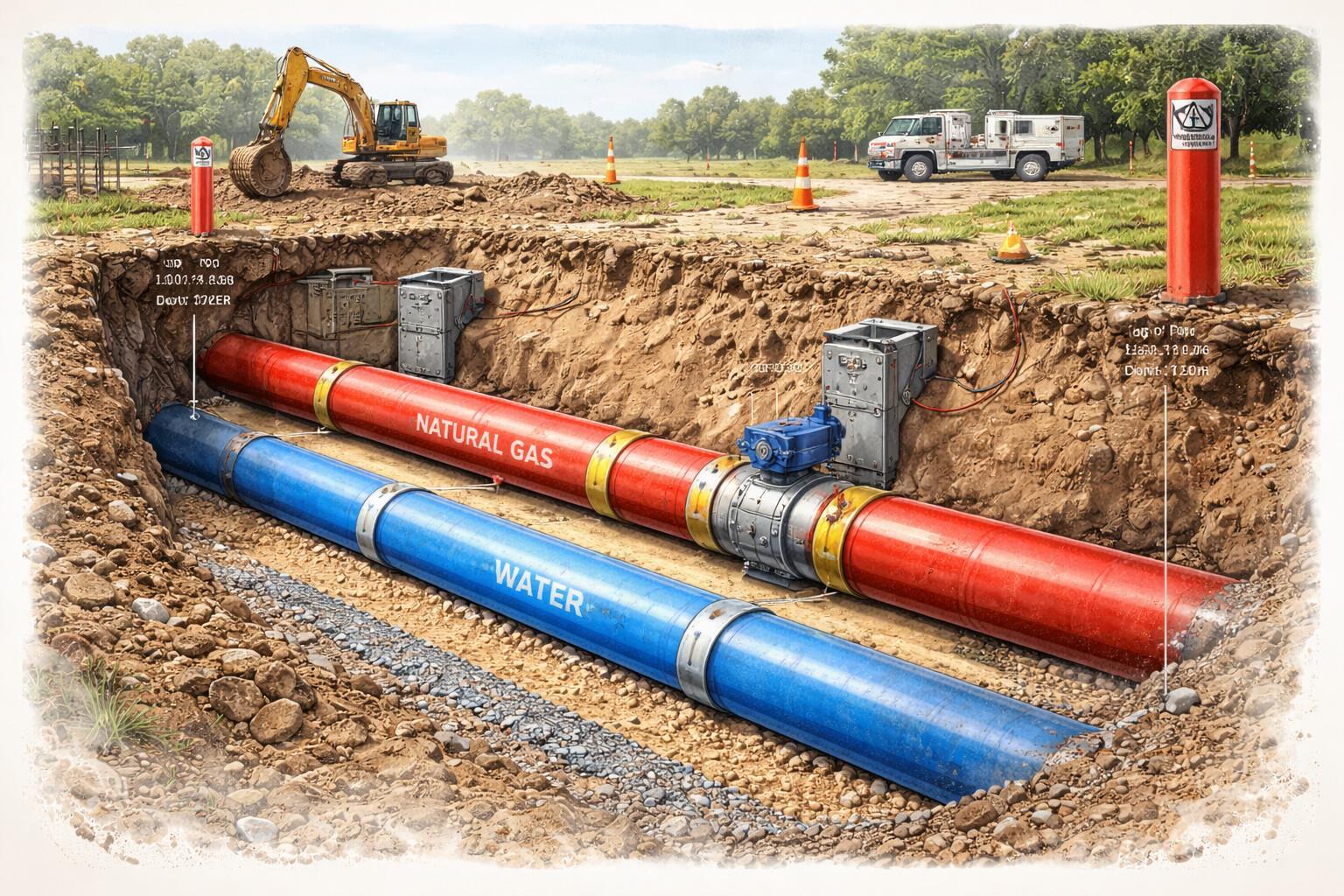
Surveying for pipeline construction is essential for ensuring pipeline projects are planned accurately and safely. From mapping terrain and property boundaries to establishing pipeline corridors, survey data supports every stage of pipeline development. Pipeline surveys in Alberta play an important role in understanding regional terrain, land ownership, and environmental conditions before construction begins. Modern technologies such as drone pipeline surveys and advanced mapping systems have significantly improved the accuracy and efficiency of pipeline surveying
FAQs
Why is surveying for pipeline construction important?
Surveying for pipeline construction is essential for accurate route planning, property boundary identification, and terrain evaluation. It provides engineers with reliable geographic data to design safe and efficient pipeline routes. It also helps avoid environmental risks, land disputes, and costly construction errors.
How does pipeline construction help define a gas pipeline right of way?
Surveying for pipeline construction helps determine the exact boundaries of a gas pipeline right of way. Surveyors map property lines and establish the legal corridor where pipelines can be installed. This ensures the pipeline stays within approved limits while protecting landowners and meeting regulatory requirements.
How do drone surveys support surveying for pipeline construction?
Drone technology has become an important tool in surveying services. Drone surveys capture high-resolution aerial images and terrain data quickly across large pipeline routes. This improves survey accuracy, reduces field time, and helps engineers analyze land conditions more effectively during pipeline planning.
What role do as-built surveys play in surveying for pipeline construction?
As-built surveys are an important final step in pipeline construction surveying. They document the exact position, depth, and alignment of the completed pipeline. These records help confirm the pipeline was installed according to the approved design and support future inspections, maintenance, and regulatory compliance.
Why is surveying for pipeline construction important in Alberta?
Surveying for pipeline construction is particularly important in regions like Alberta, where terrain and environmental conditions vary widely. Accurate pipeline surveys help engineers understand land features, plan safe routes, and ensure the pipeline infrastructure complies with regional regulations and safety standards