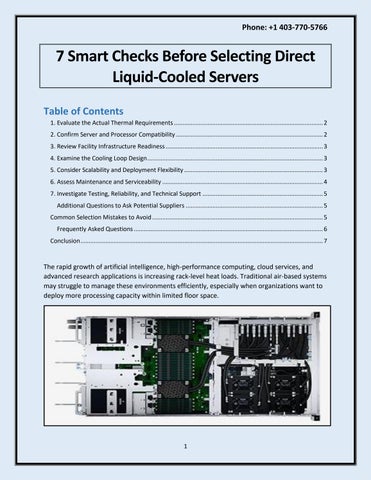
For data center operators, choosing direct liquid cooled servers requires more than comparing processor specifications. Cooling architecture, facility readiness, component compatibility, maintenance requirements, and future expansion plans can all influence long-term performance.
A successful deployment should support current workloads without restricting future infrastructure decisions. The following seven checks can help technology leaders evaluate available systems more carefully and avoid costly integration problems.
1. Evaluate the Actual Thermal Requirements
The first step is understanding how much heat the planned computing environment will generate. Processor type, accelerator count, server configuration, workload intensity, and rack density can all affect thermal output.
Before choosing equipment, infrastructure teams should calculate expected heat loads under both normal and peak operating conditions. The selected direct liquid cooling technology should provide enough thermal capacity to maintain stable component temperatures during sustained processing activity.
Artificial intelligence training and scientific simulations can keep processors operating near full capacity for extended periods. A solution that performs adequately during light activity may not offer the same stability during continuous high-demand workloads.
Teams should also consider whether the cooling architecture can manage future processors with higher thermal design power. Selecting equipment solely around present requirements may result in premature upgrades when server density increases.
2. Confirm Server and Processor Compatibility
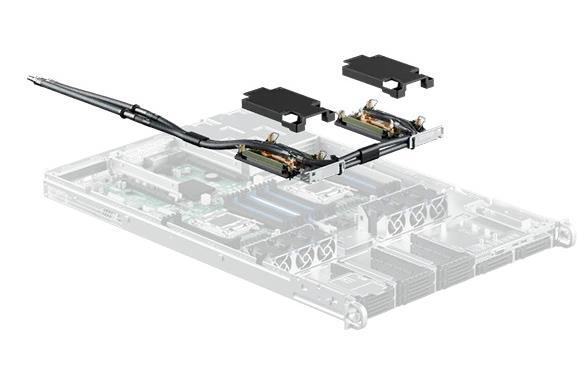
Cooling components must align with the physical design of the selected server platform. Cold plates, tubing, connection points, manifolds, mounting hardware, and processor sockets should function as an integrated system.
Many DLC servers are developed through cooperation between cooling specialists, server manufacturers, and processor vendors. Pre-integrated configurations can simplify installation because important mechanical and thermal requirements are addressed before deployment.
Compatibility should be confirmed for CPUs, GPUs, memory components, accelerator modules, and any other high-heat hardware that may require liquid-based thermal management. Procurement teams should also determine whether future processor generations can be accommodated without replacing the entire cooling architecture.
3. Review Facility Infrastructure Readiness
Server-level cooling equipment depends on supporting infrastructure. Before installation, teams should examine water availability, piping routes, heat rejection capacity, electrical systems, floor loading, leak detection, and available rack space.
Within modern industrial equipment, supporting components may include coolant distribution units, facility water systems, rack manifolds, monitoring devices, and secondary fluid circuits. Each element must be properly sized and coordinated.
Facility assessments should identify the required coolant temperatures, flow rates, pressure ranges, and water quality standards. Existing buildings may require modifications before liquidbased systems can operate safely and reliably.
4. Examine the Cooling Loop Design
The internal cooling loop determines how effectively heat moves away from processors and other components. A well-designed system should distribute coolant consistently while minimizing pressure drops, restrictions, and unnecessary connection points.
Reliable liquid loop cooling systems usually combine cold plates, tubing, connectors, and manifolds into a controlled circuit. Each component should be selected according to the expected temperature, pressure, flow rate, and coolant chemistry.
Connection quality deserves particular attention. Dripless or low-spill connectors can help simplify servicing and reduce the amount of fluid released when equipment is disconnected.
Operators should also review the loop materials. Metals, seals, tubing, and coolant additives must be chemically compatible to reduce the risk of corrosion, contamination, or premature component deterioration.
5. Consider Scalability and Deployment Flexibility
A cooling solution should support growth without requiring a complete redesign whenever computing demand increases. Infrastructure teams should determine whether the platform can expand from a limited pilot project to multiple racks, rows, or data halls.
Organizations across Canada are adopting higher-density computing for artificial intelligence, energy research, academic computing, financial modeling, and digital services. These environments may grow quickly as new applications move into production.
Modular architecture can make expansion easier. Additional server racks, manifolds, or distribution units can be introduced as demand grows, provided the main facility loop has sufficient capacity.
Teams should also determine whether the solution supports multiple server manufacturers. Vendor flexibility can reduce dependency on a single hardware ecosystem and make future procurement decisions more competitive.
6. Assess Maintenance and Serviceability
Maintenance procedures affect both operating costs and system availability. Technology teams should understand how servers, cold plates, pumps, connectors, filters, and distribution equipment will be inspected and serviced.
Well-designed advanced server cooling solutions should allow technicians to remove or replace equipment without shutting down an unnecessarily large section of the computing environment. Clear isolation procedures and accessible connection points can make scheduled maintenance more efficient.
Documentation is equally important. Installation instructions, operating limits, preventive maintenance schedules, troubleshooting guides, and spare-parts recommendations should be available before deployment.
Training should also be considered. Technicians familiar with conventional air cooling may need additional instruction covering coolant handling, pressure management, leak response, and liquid-loop diagnostics.
7. Investigate Testing, Reliability, and Technical Support
Cooling equipment should be tested under operating conditions that reflect the intended application. Buyers should request information about thermal validation, pressure testing, leak testing, material compatibility, vibration resistance, and long-duration performance.
When evaluating direct liquid cooled servers, decision-makers should ask how the system was validated with the intended processor platform. Testing should represent realistic workload levels rather than only short laboratory demonstrations.
Support capabilities matter after installation. Buyers should determine whether engineering guidance, commissioning assistance, replacement components, troubleshooting resources, and field service are available in relevant regions.
In the middle of this selection process, CoolIT Systems provides pre-installed cold plate loops through server manufacturers and supports deployments across a broad international footprint. Its official product information also emphasizes compatibility with current processor platforms and complete cooling-loop integration.
Additional Questions to Ask Potential Suppliers
A structured supplier review can reveal important differences between similar-looking systems. Procurement and engineering teams should ask:
Which processor and server platforms have been fully validated?
What coolant types and operating temperatures are supported?
How are leaks detected and contained?
What maintenance intervals are recommended?
Can individual servers be serviced without stopping the full loop?
Which components are stocked as replacement parts?
What commissioning and training services are available?
How can the architecture expand as rack density increases?
Clear, documented answers can help teams compare suppliers objectively rather than relying only on marketing claims.
Common Selection Mistakes to Avoid
One common mistake is choosing equipment based only on initial purchase price. Lower upfront costs can be offset by facility modifications, limited compatibility, difficult maintenance, or poor expansion options.
Another risk is treating cooling as a separate decision from server procurement. The server, cold plates, internal loops, rack manifolds, distribution equipment, and facility systems should be evaluated as one connected architecture.
Organizations in Canada should also account for regional service availability, replacement-part lead times, commissioning support, and local operating requirements. These considerations can influence recovery time when equipment needs attention.
Frequently Asked Questions
What are liquid-cooled servers?
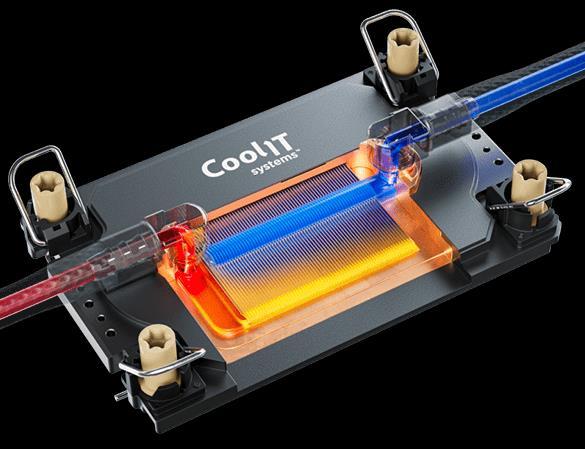
These servers transfer heat from processors into a circulating fluid through components such as cold plates. The heated fluid then moves to supporting infrastructure, where the captured heat is rejected or reused.
Why are cold plates used in high-density systems?
Cold plates are positioned directly against high-heat components. This close contact enables heat to be captured near its source instead of depending entirely on airflow throughout the server chassis.
Can existing facilities adopt liquid cooling?
Many existing facilities can be upgraded, but readiness depends on piping, heat rejection capacity, rack design, electrical infrastructure, water quality, and available space. A detailed facility assessment should be completed first.
Are liquid-cooled systems difficult to maintain?
Maintenance can be manageable when systems include accessible components, reliable connectors, clear isolation procedures, effective monitoring, and detailed service documentation.
How should buyers compare suppliers?
Buyers should compare validated thermal performance, hardware compatibility, scalability, serviceability, component quality, technical support, warranty terms, and the availability of replacement parts.
Conclusion
Selecting DLC servers requires a coordinated review of workload demands, hardware compatibility, facility readiness, loop architecture, scalability, maintenance, and supplier support. Each factor contributes to the reliability and long-term value of the final deployment.
During technical planning, CoolIT Systems can be evaluated alongside server manufacturers and infrastructure partners to determine which configurations align with specific processing and facility requirements.
For teams planning projects in Canada, use the map below to discover CoolIT Systems on Google Maps, which can help assess deployment requirements, integration options, and longterm cooling strategies.