Editor: Jonathan Fraser. Editorial enquiries to jon@fu-media.co.uk
To advertise your business to Birmingham Law Society members call Fraser Urquhart Media on 0116 2533445 or you can email jon@fu-media.co.uk or kevin@fu-media.co.uk
Dear Members, Colleagues & Friends of the Birmingham Law Society
criminal justice issues during my year, even though they are the issues I know best. But the President has a platform, and there comes a point where it would be a dereliction not to use it. The issue I want to raise has consequences that reach well beyond those of us who practise in the criminal courts, and I hope you will hear me out.
At the end of December, the Crown Court backlog stood at 80,203 outstanding cases. The magistrates’ courts carried a further 379,437. Freedom of information data released in February revealed more than 2,600 Crown Court trials listed for 2028 or later, including twenty-nine
most serious cases asked to hold their lives in suspension while a date drifts further into the future. Whatever one’s view of any individual case, a system that asks this of the people who pass through it is not delivering justice in any sense that the public would recognise.
There is a second consequence that receives less attention, and it is the one I would particularly ask non-criminal colleagues to register. Criminal defence firms are, almost without exception, small businesses operating on legal aid rates that, in real terms, have fallen significantly over the last twenty years. A case that runs for three years rather than one is
a case in which fees are deferred for three years rather than one. Cashflow in these firms is already perilous. The longer the courts take, the more firms reach the point where the business model simply does not survive. We have already seen the consequences in parts of the country where there is now no realistic supply of criminal defence representation at all. That is not a problem for criminal lawyers; it is a problem for the rule of law, and it should concern any member of this profession who values the principle that a person facing the loss of their liberty is entitled to be properly defended.
The Government’s response, through the Courts and Tribunals Bill now in committee, is, in significant part, to curb the right to jury trial and shift more work into the magistrates’ courts. I understand the impulse: the desperate numbers involved call for desperate measures. But the magistrates’ courts are themselves carrying their highest caseload since 2019. The idea that they can simply absorb a substantial diversion from the Crown Court without consequence does not survive contact with anyone who has spent a morning in a busy local list.
This is where I think a regional law society has something distinctive to offer. The national debate is dominated, understandably, by London-based commentary. The experience of practising in Birmingham, Wolverhampton, Coventry and our surrounding courts is its own evidence. Our Criminal Law Committee has been engaging actively with these reforms, and the wider problems within the criminal justice system. We will continue to do so. If you practise in this area, please do consider joining — your voice will be more valuable than you may
More broadly, our committees are where the substantive work of this Society happens, across every area of practice. Whether your field is property, employment, family, private client, dispute resolution, legal technology or any of the others we cover, there is a committee doing serious work in that space, and there is always room for members who want to contribute. The collective expertise of the BLS membership is a considerable asset. It is most useful to the profession when more of you are actively part of it.
The summer gives many of us a brief reprieve. It does not give our clients
one. I hope members will use the quieter weeks to rest properly — I will be doing the same — but also, where you can, to think about what each of us can contribute to a profession that is under more pressure than at any point in my career.
Before I close, a date for your diary. The President’s Dinner this year will be held on 17th September at the Council House, and I am delighted that our guest speaker will be His Honour Judge Andrew Smith KC, Recorder of Birmingham. Those who know him will need no introduction; for those who do not, he is a serious and thoughtful figure who has engaged closely with the questions of backlog and efficiency that I have written about above – although I suspect his toast will be on lighter topics! It promises to be a substantial evening, and I hope to see many members there. Read on in this issue for further details.
A final, lighter note in keeping with my theme for the year: if you find yourself with a free Saturday this summer, I would recommend the Lapworth Museum of Geology at the University of Birmingham — small, free, and one of the genuine hidden gems of the campus. I have spent many happy visits there with my children. Sometimes the best perspective on the present is several hundred million years of it.
Matt O’Brien President, Birmingham Law Society
Supporting Small Grassroot Organisations
What makes grassroots organisations so important is their closeness to the communities they serve.
They know the streets, the families, the challenges, and the people behind the statistics. They are well known and form deeply personal bonds. Yet despite the impact they make, many operate with limited funding, small teams, and little public recognition.
This is where LoveBrum comes in. By raising awareness, funding community projects, and connecting local people with local causes, LoveBrum helps these organisations continue their vital work. Every donation, partnership, and act of support helps sustain projects that might otherwise struggle to survive — but which are often essential lifelines for the people who rely on them in communities across Birmingham.
There are so many ways you can support whether that be volunteering your time or partnering with LoveBrum at an upcoming event.
We also have a monthly £5 donation scheme which over the course of the year can have a big impact, whether that be feeding a homeless individual for a week or funding a counselling or mentoring session for a trauma victim or child in need. Here are some of the hidden gem projects LoveBrum are supporting...
Reconnected – Reconnected provide housing, support and opportunities for vulnerable people across Birmingham. They help turn despair into hope and get people back on their feet following hard times.
Ambitious Lives – Ambitious Lives empower vulnerable young brummies as risk of exploitation with tailored mentorship and training programmes. They help equip kids with the skills needed for adulthood and turn them away from a life of serious crime.
Foundation 2 Change – Foundation 2 Change help ex-prisoners build a better life through housing, training and work opportunities to break the cycle of reoffending.
If you would like to find out more about how you can support please contact the team at hello@lovebrum.org.uk
With thanks to our Platinum Sponsor
With thanks to our Gold Sponsors
Events
MEMBER’S EVENTS
The Role of Lawyers in Peace & Reconciliation Work: Coventry’s Story & The Good Friday Agreement
9th June, 12pm – 12.30pm, Online FREE for all to attend
JLD & TLS: Looking ahead – the future for junior solicitors
10th June, 8am – 10am, Irwin Mitchell FREE for all to attend
Legal Leaders Lunch sponsored by Medical Expert Chambers
10th June, 12pm – 3pm, 24 Stories FREE for member managing and senior partners (invite only)
TLS in Birmingham: Empowering Solicitors on the Road to the Judiciary 10th June, 6pm – 8.45pm, Hotel du Vin FREE for all to attend
COLP/COFA Forum kindly hosted by Trowers & Hamlins
16th June, 8am – 9.30am, Trowers & Hamlins. FREE for those serving as COLP; COFA; MLRO; MLCO; and those working in risk and compliance teams and/or senior management
The Private Client Conference 2026 in collaboration with Datalaw 17th June, 9.30am – 3.15pm, IET Birmingham: Austin Court £125 +VAT for members | £155 +VAT for non-members
Birmingham Legal Walk
18th June, 5pm – 8pm, BPP University FREE for all to attend
JLD Pathways to Partnership sponsored by BCL Legal and Chadwick Nott
22nd June, 3PB Barristers Pricing tbc
From Paralegal to Qualified Lawyer: A Funded Route to Practice Rights in partnership with Datalaw
2nd July, 12.30pm – 1.15pm, Online FREE for all to attend
22nd July, 5.30pm – 8.30pm, Venue TBC FREE for all in-house lawyers to attend
JLD Summer Party sponsored by BCL Legal and Chadwick Nott
30th July, 5pm – 10pm, The Button Factory. Pricing tbc
To reserve your place and find out more, make sure that you visit www.birminghamlawsociety.co.uk
2026 Legal Awards Winner’s Dinner
Private Client Lawyers Social
JLD Pilates & Networking
JLD After Work Social
JLD Networking Breakfast
JLD F1® Arcade Networking
In House Legal Leadership: The Journey to GC
BLS Quiz
Connecting the Dots: A Unified Approach to tax, investmant and long term planning
New Location For City Firm
Global law firm Squire Patton Boggs has moved into its new office at 19 Cornwall Street in Birmingham this week, underlining its continued investment in the Midlands market.
The firm, which employs around 150 people in the city, has moved from Edmund Street into 22,231 sq. ft of Grade A office space in the landmark city-centre building.
Birmingham office managing partner Tom Durrant said: “Our new office provides a modern, high-quality environment that reflects both our global platform and our long-term commitment to Birmingham. It gives us a strong foundation for future growth in the region.
“We look forward to welcoming clients and contacts to the new space in the coming weeks.”
The move forms part of a broader
period of growth for the firm in Birmingham, including the addition of five partners in the past six months: Partho Chaudhuri, Deborah Brown, Alison Davidson-Cox, Matt Harris and Claire O’Connor.
Tom added: “We are continuing to strengthen our capabilities in Birmingham through targeted senior hires across key practice areas. Combined with our move to 19 Cornwall Street, this reflects the scale of our ambition in the Midlands and our focus on delivering exceptional client service.”
The office also supports the firm’s sustainability objectives. The building holds strong environmental credentials, including BREEAM Excellent, a NABERS 5-Star rating, EPC A, and Net Zero Carbon in operation. Sustainable features include energy-efficient systems, low-carbon materials and enhanced insulation.
Double King’s Counsel Appointments
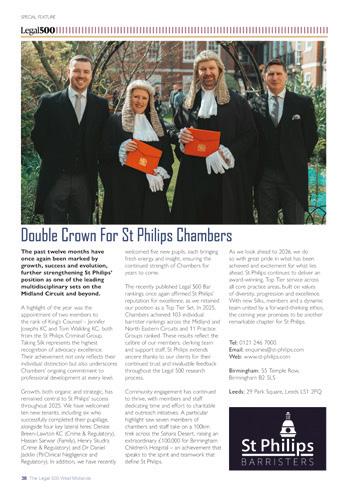
St Philips Chambers is delighted to confirm that two members of its Crime and Regulatory Groups, Ben Williams and Ben Close, have been appointed King’s Counsel.
Both were formally sworn in as King’s Counsel at a ceremony held on 23rd March in Westminster Hall before the Lord Chancellor. The appointment of King’s Counsel, widely known as “taking Silk”, is one of the highest professional distinctions available to barristers in England and Wales, recognising sustained excellence in advocacy and legal practice.
The dual appointment is a significant moment for St Philips Chambers, reinforcing the depth of expertise within the set and the calibre of counsel available to those who instruct Chambers.
Joe Wilson, CEO and Director of Clerking commented: “We are immensely proud of both Bens on their appointment to King’s Counsel. Their appointments are richly deserved and reflect the high regard in which they are held, both within Chambers and across the profession. This is a proud moment for them and for everyone at St Philips Chambers.”
The Role Of Lawyers In Peace & Reconciliation Work
Solicitor, Caroline Brogan, is leading on a number of bespoke projects at the Coventry Irish Society aimed at raising awareness of the importance of the Belfast / Good Friday Agreement. As part of a specialist initiative, funded by the Government of Ireland’s Department of Foreign Affairs & Trade’ Reconciliation Fund, Caroline has organised a
series of guest speaker events, alongside delivering presentations to schools and organisations to highlight the key provisions of the Agreement and to share details of the ongoing work being undertaken at the Coventry Irish Society with Coventry’s Lord Mayor’s Peace Committee, including the proposal of a new peace park in central Coventry to commemorate the upcoming 30th anniversary of the Agreement and Coventry’s own Mo Mowlam who, in her role as Minister of State for Northern Ireland, was a key architect of the Agreement. In April 2026, Caroline had the privilege of meeting with the President of Ireland, Catherine Connolly, in a small forum with other women leaders from across the globe, at Croke Park in Dublin, at
the Global Irish Civic Forum 2026, and discussed Coventry’s Peace & Reconciliation work.
Speaking about the importance of the Belfast / Good Friday Agreement, Caroline said: “The Good Friday Agreement was the greatest political achievement of our lifetime, and it underpins the governance framework across the island of Ireland, with equality and parity of esteem at the heart of the Agreement.”
We are delighted that Caroline will be joining the Birmingham Law Society on Tuesday 9 June, 12.00 – 12.30 pm for a special webinar: “The Role of Lawyers in Peace & Reconciliation Work: Coventry’s Story &The Good Friday Agreement”.
Dr Eileen Schofield Appointed Deputy Chair of the National Law Society of England and Wales
Dr Eileen Schofield has had a longstanding involvement within the Birmingham Law Society. Between 2014-2015, Eileen served as its President and from 2019-2023 she sat as a Board Director, where she led initiatives in seeking to increase diversity, improve access to justice and raise the profession’s profile.
Eileen became the first women to serve as Chair of the Board of Birmingham Law Society, in its entire 200-year history, and served for a three-year term that commenced in April 2016. During her term, Eileen shaped strategic discussions, advocating for changes to strengthen the profession and role of solicitors today. Eileen was also awarded with the coveted blue plaque situated on the Society’s premise.
Since the end of her term, Eileen has continued to mentor the Presidents who succeeded her, fellow council members and Board Directors of the Birmingham Law Society.
In 2023, Eileen was selected as one of four new independent members appointed to the Board of the national Law Society, where she was involved in providing key oversight across the society.
As of the 1st of June 2026, Dr Eileen Schofield now sits as Deputy Chair of the Board of the national Law Society of England and Wales. Eileen is the first person and first woman to be appointed to this role, where she will continue to oversee the organisation’s effectiveness in promoting the legal profession.
“I am delighted to be appointed to this important role of Deputy Chair of the Board of England and Wales. The legal profession is going through a pivotal change with the emergence of technology with Firms tackling concerns of integration, cyber security and the ethical impact of using AI, intensified talent shortages and retention pressures and navigating economic uncertainty impacts on how we deliver our legal services.
I am committed as the regional voice of law societies in my role on the Board and will continue to raise issues which are relevant and pertinent to supporting the voice of Birmingham Law Society and other regional law societies.
It is a privilege to serve the legal profession in this role, I am sincerely grateful to Birmingham Law Society for its support throughout my journey from a council member to President to Chair of the Board. The experience in those roles has been invaluable.”
Fair access to Justice: A Brief Journey Behind Intermediary Service
Communicourt is the largest provider of Court Appointed Intermediaries in England and Wales, but its story began in Birmingham.
It was in a Birmingham police station that Speech & Language Therapist Naomi Mason first began assisting suspects and defendants with communication needs. Already practising as a Registered Intermediary — communication specialists who assist vulnerable witnesses and complainants to give evidence — Naomi recognised the absence of similar support for those on the other side of criminal proceedings, despite the high prevalence of communication and learning needs within criminal justice populations.
Driven by a passion to address this gap, Naomi founded Communicourt in 2011 to support defendants and remove the barriers to effective participation and fair access to justice that communication differences can create.
From its beginnings in police custody suites, Communicourt expanded into courts and conference rooms, later growing to work across a broad range of legal settings including criminal and family proceedings, employment tribunals and immigration cases. Today, Communicourt is the largest provider of intermediary services for HMCTS.
For those unfamiliar with the role, intermediaries are impartial, courtappointed communication specialists whose purpose is to facilitate the effective participation of court users with communication needs.
Communicourt works to ensure all service users:
Understand what is happening during proceedings
Understand any advice they are given Can make informed decisions
Can communicate their account effectively to the court or legal team
Sydney Mitchell Appoints Head of Marketing
Sydney Mitchell has appointed Kelly White as Head of Marketing as part of the firm’s continued investment in brand development, client engagement, and long-term growth.
Kelly joins Sydney Mitchell with more than two decades of experience spanning legal, professional services and commercial marketing. She has built a strong reputation for delivering strategic marketing, business development and communications initiatives that strengthen brand visibility, support client growth, and
This support is delivered through three key stages: Assess – Report – Support. The process begins with an assessment of the individual’s communication strengths and needs, alongside consideration of how these may affect participation in proceedings. Communicourt then provides a report to the court outlining any barriers to communication and recommendations for adjustments or support that would facilitate effective participation.
Where the court appoints an intermediary, Communicourt provides direct assistance throughout proceedings wherever support is required — whether during preparatory conferences, hearings or the evidence process itself.
The organisation works with court users presenting a broad range of communication needs, some diagnosed and many undiagnosed. As a result, the support provided is highly tailored to the individual, their circumstances, the nature of their case and their role within proceedings.
Fifteen years on, Communicourt remains proudly based in Birmingham, recently relocating from Hagley Road to its new home at Fort Dunlop. Many of its intermediaries begin their training with a tour of Birmingham Crown Court, and on any given day Communicourt’s distinctive blue lanyards can be seen travelling through New Street Station en route to cases across the country.
Communicourt is delighted to be partnering with Birmingham Law Society. Collaboration with legal professionals continues to be an invaluable part of the organisation’s work, and the team looks forward to working more closely with BLS members over the coming months — whether at an upcoming webinar later this year or on the canalside during next month’s Birmingham Legal Walk
enhance market positioning.
Based in the Midlands, Kelly will work closely with the firm’s leadership team to further develop Sydney Mitchell’s profile across its key practice areas and sectors, while supporting the firm’s continued focus on client experience and relationship-led growth.
Kelly says: “Sydney Mitchell stood out to me because of its strong reputation, people-first culture and clear commitment to delivering exceptional client service.
Own Your Visibility News
For many of my clients within the legal sector, visibility can feel uncomfortable.
You might be excellent at your job, deliver results, support your team, and work hard behind the scenes, but when it comes to speaking on panels, networking, or attending forums and conferences, it can feel like the spotlight is on you.
It’s good for business though. So how can you be more visible without your toes being in a state of constant curl asks Rebecca Mander of GuruYou
Being in the spotlight can trigger a lot of internal noise. You might start asking yourself questions like, ‘What if I get it wrong?’ or ‘What if people think I’m pushing myself too far forward?’
It’s normal to feel like this, especially if you’ve built your career on being reliable, capable, and effective. It’s important to understand that visibility in law means having an impact on the client. It’s got nothing to do with ego!
Visibility Is About Contribution
When you hear the word ‘visibility’, what do you think?
Maybe it conjures up things like being on show, or grabbing all the attention, and that gives you an icky feeling. Visibility gets confused with self-promotion, but any ambassador knows that when they make positive contributions to their work and those around them, they automatically
elevate their whole organisation or campaign.
When you speak up, share an idea, or highlight a solution, you’re automatically helping the company or its employees to move ahead.
Your unique perspective might:
• Solve a problem a trainee is struggling with.
• Offer a new perspective or insight into your area of law.
• Encourage peers to approach something differently.
• Help someone get to know you better and therefore refer to you when the need arises.
The Spotlight Isn’t On You; It’s On the Work
If you feel self-conscious about being visible in your profession, it’s usually because you feel like you’re being personally evaluated, but most of the time, the focus isn’t on you at all.
What matters most is the outcome, so your audience are always listening and watching for your insights, strategic thinking, and stories that will help them learn more about you.
Shift the attention away from you by contributing thoughtfully. What can you share at a panel event, or in your next Linkedin post, that will add value and help your future connections get to know you better?
When you do this, the spotlight moves from who you are to what you bring, and that’s where your personal brand begin to grow.
Confidence Comes From Showing Up
Most people assume that confident speakers feel comfortable speaking up, but courage and confidence can take time and effort. 75% of managers suffer with Imposter Phenomenon according to research so we are not alone! You can build inner confidence by increasing contributions to meetings, volunteering for extra responsibilities, or sharing your perspective online through your comments. This will help you strengthen your thought leadership voice, and attract people to your purpose.
It’s all about showing up, even if you don’t feel ready.
Its hard to speak out but… It’s hard when no one knows who you are.
Choose your hard.
If visibility still feels uncomfortable, try reframing what the spotlight means for you. Instead of thinking, “People will think I’m trying to stand out.” Try saying something like, “I’m contributing to a conversation that moves our team forward.” Or “I am passionate about my client’s results”
Leadership is all about stepping into the conversations where your voice can make a difference.
What Are Your Next Steps?
If you’re ready to become more confident in leadership opportunities, then visibility is an important place to begin. Not by pushing yourself into the spotlight, but by recognising the value of your voice and the contributions you make.
If you’d like support developing the mindset and confidence to show up more visibly in your career, sign up for our monthly newsletter packed with coaching advice and tips, or book a FREE consultation call with Rebecca to learn how we can support you.
For more tips on building your career, download our FREE resource, 3 Steps to Career Confidence
New Birmingham Offices For FBC Manby Bowdler As Growth Continues
FBC Manby Bowdler has moved its Birmingham base from Colmore Row to 5 St Philips Place following a period of sustained growth.
The move to new offices comes amid a period of significant success including:
• The appointment of five new highprofile partners to Birmingham growing the firm’s city practice to 40 staff within the space of 12 months.
• The opening of new offices in Wolverhampton and Knowle.
• The acquisition of Black Country practice Jordans Solicitors following the creation of the Adeptio Law Group, of which FBC Manby Bowdler is the founding firm.
• Record turnover of more than £19million in the last year.
FBC Manby Bowdler chief executive Neil Lloyd said the move to new offices in Birmingham would further help the firm strengthen its growth in the city.
“We are building something very special in Birmingham and this move reflects our ambition for the city.
“There is an exceptional opportunity here for a firm which combines the highest quality of work with stellar levels of customer service, and which has the talent and ambition to continue to grow.
“Birmingham is a hugely important market for us and the growth we’ve seen – both in terms of our team and our client base – means the time is right to move to our new base.”
FBC Manby Bowdler is the founding firm of Adeptio, which was launched following a £30m private equity investment by Horizon Capital in 2024.
“With the backing of Horizon Capital and as the founding firm of the Adeptio Law Group, we set out to build a national legal services platform rooted in regional excellence. The expansion in Birmingham is a key part of that strategy.”
Mills & Reeve Strengthens Commercial Team With Partner Hire
Mills & Reeve has strengthened its Midlands commercial team with the appointment of senior industry specialist, Fiona Teague.
Fiona has been appointed as commercial partner, joining Mills & Reeve from Shoosmiths. She brings extensive legal and business experience to the firm, having built a thriving national commercial practice and also spent a significant time in-house as European General Counsel and as part of the European executive board at IMI Precision Engineering. She has particular expertise in supply chain, consumer and retail, food and beverage, and technology sectors.
Fiona is also a passionate advocate for equality, diversity and inclusion in the legal sector and beyond, co- founding and chairing the Balance gender equity network. She will join a 110-strong national commercial team and will be based in the firm’s Birmingham office and servicing clients on national and cross border basis.
Fiona commented: “It’s an exciting time to be joining Mills & Reeve. Not only is the national commercial team hugely ambitious, but the Midlands commercial team is perfectly placed to capitalise on the rich opportunities the regional market has to offer. I have known Jayne for many years and I’m excited to be joining forces with her and the team as we look to grow the firm’s commercial presence.”
Jayne Hussey, partner and head of Mills & Reeve’s Birmingham office, said: “In the last few years, we have grown our commercial practice across the UK, building a team of more than 100 legal specialists.
“Our ambition is to replicate that success across the Midlands, nurturing our existing talent, while attracting key individuals like Fiona who will add real strength and depth to our regional offering. We’re delighted to have her onboard. Fiona is a highly regarded commercial lawyer, with a strong local network and the skills and experience we need to expand our commercial footprint in the Midlands.”
Fiona’s appointment follows the arrival of partner Rachael Armstrong, who joined the firm’s Birmingham private client team at the end of last year.
Joel Blake: Solicitor of the Year 2026 BLS Legal Awards
How have you celebrated your win? Nothing too wild — just a few small celebrations with friends and family who have supported me throughout the journey. It was nice to take a moment to reflect and appreciate the people who have been there along the way.
Is there anyone that you would like to thank who has been instrumental in your success?
Definitely my close friends, family, colleagues, and mentors. Each of them has supported, encouraged, and challenged me in different ways throughout my career, and I’m very grateful for that.
If you could create one new law what would it be? As a football fan, I’d probably introduce a law banning last-minute VAR decisions against my team! It might not improve the justice system, but it would definitely improve weekends for a lot of supporters.
Is there any topics, groups, individuals who you wish to elevate, promote or shout about using this platform? I would like to use this platform to continue promoting wider representation and accessibility within the legal profession. There are many talented individuals who may not see law as a career that is open to them because of financial, social, or educational barriers.
The profession benefits from diverse perspectives, backgrounds, and experiences, and it’s important that opportunities in law are visible and accessible to everyone. Mentorship, outreach programmes, and genuine investment in aspiring lawyers can make a huge difference in helping people build confidence and access opportunities they may never have thought possible.
What advice would you give to those wanting to pursue a career in law? Be resilient, stay curious, and do not compare your journey to anyone else’s. Law is a challenging but rewarding profession, and success does not come from having all the answers immediately. Focus on building strong relationships, developing practical skills, and being open to continuous learning.
What one thing do you think lawyers need to do to be better? I think lawyers should continue focusing on empathy and communication. Technical ability is essential, but clients also want to feel heard, understood, and supported. The best lawyers combine expertise with emotional intelligence and approachability.
MSB Bringing ‘Justice For All’ To City After Pro Bono Recognition List Success
MSB Solicitors is aiming to expand its pro bono work in the Midlands following the continued growth of its Birmingham office.
Founded in Liverpool in 1988 on the principle of providing “justice for all”, the firm has expanded nationally while maintaining a strong focus on supporting vulnerable communities through free legal advice and assistance. Its Birmingham presence recently grew further after the firm doubled the size of its office in Chamberlain Square.
The firm’s commitment to pro bono work was recognised nationally this year, with 17 Liverpool-based team members and one Manchester-based colleague included on the 2026 Pro Bono Recognition List. Collectively, the recognition represents at least 450 hours of free legal advice and support delivered to individuals and organisations that may otherwise have struggled to access justice.
The firm now now hopes to build on that work in the Midlands, ensuring that people in Birmingham who need legal support but may struggle to afford it are also able to benefit from pro bono advice.
MSB continues to support a range of vulnerable groups, including LGBTQA+ and trans communities, where it provides guidance around the legal process of changing names, as well as asylum seekers who have fled conflict, persecution and violence.
Dominique Owens, pictured below, Associate Client Relationship Executive at MSB Solicitors, said: “Behind every request for pro bono advice is a story of people or communities facing distressing circumstances, and for whom timely, compassionate legal
support can make a profound difference.”
Pro bono work remains an integral part of its identity and wider social responsibility, alongside its support for charities and community initiatives and the ambition to replicate its pro bono recognition in Birmingham reflects its long-term commitment to strengthening local partnerships and continuing to champion access to justice for vulnerable communities across the region.
Meanwhile, the firm has appointed Simon Craddock as Senior Associate Solicitor at Birmingham.
Simon brings a wealth of experience to MSB, following a career that spans more than 30 years. He is widely regarded as one of the leading experts in international family law and crossborder children work, in which he has worked on complex, high-stakes cases involving jurisdictional disputes and international child abduction.
His addition to MSB’s cross-border team, alongside seasoned specialists Gemma Kelsey, Dr Emma Palmer and Katie Camozzi, makes MSB’s team one of the of the most experienced in the country.
19 Promotions Including 2 Partners
Ward Hadaway has announced 19 promotions across the firm, including the promotion of Hollie Ball and Tom Shears to partner.
The promotions highlight the firm’s focus on developing talent from within, with nearly half of those promoted this year having started their legal careers with Ward Hadaway.
The promotions are as follows:
● Sam Walker (Associate) and Matthew Brady (Associate) in the Commercial Dispute Resolution department.
● Catriona Thomson (Associate) in the Commercial department.
● Rachael Butterworth (Associate) and Hollie Walsh (Managing Associate) in the Corporate department.
● Jess Hurwood (Associate), Caroline Bagley (Associate), Natalie Payne (Managing Associate), Tom Shears (Partner) and Hollie Ball (Partner) in the Employment department.
● Joanna Oakes (Associate) and Rachel Garcia (Managing Associate) in the Housing department.
● Sophie Fox (Associate) and Heather Armstrong (Managing Associate) in the Private Client department
● Rebecca Webster (Associate), Sam Watts (Associate), Emma Collins (Director), Matthew Hills (Managing Associate) and Alicia Vickers (Managing Associate) in the Real Estate department.
Schofield & Associates Calls On Legal Sector To Focus Of Changing The Culture Of The Legal Profession
Schofield & Associates Calls on Legal sector to focus of changing the culture of the legal profession at its recent Change Management: Present and Future conference. Schofield & Associates has called on the legal profession to take proactive steps towards cultural reform in law firms and at the Bar, and to address the ethics of using AI as a part of the way in which legal services are delivered.
The‘Change Management: Present and Future’ conference was held on 5th of May 2026 at Plaisterers’ Hall, London.
The conference brought together barristers, solicitors, Heads of Chambers, regulators, legal professionals and students to explore the major changes reshaping the profession, including the impact of the Employment Rights Act 2025, the implementation of the Harman Review recommendations, and the growing role of artificial intelligence in legal practice.
This event was organised in response to the independent review commissioned by the Bar Council and led by Rt Hon Baroness Harriet Harman KC, which identified widespread concerns relating to bullying, harassment and sexual harassment within the Bar and Judiciary. The review set out 36 recommendations aimed at improving culture and accountability across the profession.
Opening the conference, Dr Eileen Schofield, the employment law expert whose firm advises barristers chambers and law firms, highlighted the scale of transformation facing the legal sector and emphasised the importance of leadership in enabling chambers and firms adapt to change its culture in respect of historical and current issues of bullying, harassment and sexual harassment at all levels of the legal profession.
Delivering the keynote address, Baroness Harriet Harman KC spoke about fairness, leadership and the urgent need for cultural reform within chambers. Drawing on her own experiences, she underlined the importance of ensuring meaningful protections and support for all members of the profession.
The learning for the conference was led by Darren Newman with a deep dive into the Employment Rights Act 2025 with emphasis on the third-party rights obligations facing employers
A panel discussion followed featuring Baroness Harriet Harman KC, Mark Evans (President of the Law Society), Darren Newman, Sam Mercer (Head of Diversity, Inclusion and CSR at the Bar Council), and Emily Foges (CEO of The Barrister Group). The panel explored how the legal profession can adapt to changing workplace expectations, increased scrutiny of organisational culture, and evolving governance requirements.
Liz McGrath KC attended the conference in her capacity as Head of Chambers at 3PB, one of the largest and oldest chambers in the country. Reflecting on the conference, she said: “The talk by Darren Newman, outlining those provisions of the Employment Rights Act which will directly affect the operation of chambers, was a highlight…as was the keynote address by Baroness Harriet Harman KC. (She) also welcomed the opportunity to hear the views of a distinguished panel, led by Eileen Schofield with Baroness Harman , focusing on the challenge of managing change in light of her review, and to hear from Sam Mercer of the Bar Council about the support that might be offered to Heads of Chambers in implementing the changes”.
President of the Law Society Mark Evans suggested in light of the impending legislation placing greater obligations on employers, Law Firms may have to apply more scrutiny in how they engage barristers’ chambers to ensure due diligence and avoid the risk of claims of third-party harassment action against them.
The afternoon programme led by Dana Denis-Smith OBE, CEO Obelisk focused on artificial intelligence and its increasing influence on legal services and examined both the opportunities and risks associated with AI adoption in legal practice, including its impact on legal research, document review and client engagement.
The expert panel featured Laura Schmuttermeier (Partner at RSM UK) and Amy Moore (Solutions Manager at Gowling WLG) explored issues including accountability, the ethics and governance of using AI transparency, data security and professional responsibility in the use of AI technologies. Mary Kaye Partner at Rayden Solicitors described the conference as: “An enlightening and thought-provoking conference, with questions we all as employers or employees must now address”.
Closing the conference, Dr Eileen Schofield said “discussions throughout the day reflected a pivotal time for the legal profession with a growing consensus that the legal profession is entering a period of significant and lasting change. She emphasised that whilst reform and technological innovation present challenges, they also offer opportunities for stronger workplace cultures, modernisation and improved professional practice”
Schofield & Associates is encouraging chambers and solicitors’ firms to take proactive steps in preparing for employment law reforms and implementing the recommendations arising from the Harman Review.
For more information and advice please don’t hesitate to contact Dr Eileen Schofield on eileen.schofield@ schofieldandassociates.co.uk or on 01564 739 103.
The Enquiry You Lost Last Night Went To The Firm Down The Road...
It is 9.40 on a Tuesday evening. A prospective client is on your website. They are facing a separation, a probate, an injury — something that frightens them. They read a little about your people, they feel a flicker of hope, and then they reach a contact form. They do not fill it in. They close the tab, and by Wednesday morning they have instructed someone else.
This is not hypothetical. Across professional services, around two in five website visits now arrive outside office hours. A single office can quietly
lose in the region of 120 genuine enquiries a year this way — enquiries you never see, from clients who were ready to act at the precise moment no one was there to answer.
The firms gaining ground are not winning on credentials alone. They are winning on response. The first firm to engage a prospective client — meaningfully, at the moment they are ready — tends to win the instruction. The second firm rarely hears from them at all.
Integriti Systems builds an AI client assistant trained on your firm’s own content and deployed under your own brand. It greets enquirers around the clock, listens, answers sensibly, captures what matters and routes a qualified enquiry to the right feeearner — so your team begins each morning with work already in hand rather than opportunities already gone. It is designed to sit upstream of advice: it does not advise, it does not represent your firm’s opinion, and it aligns with SRA expectations by routing every client to a qualified solicitor. The methodology is UK trademark registered. For firms that want to go deeper, Integriti Systems also offers a structured business diagnostic across eight operational domains — revenue, workflow, compliance, talent, technology, client delivery, pipeline, and governance. Engagements from £4,950 + VAT
You do not have to take any of this on trust. Watch the assistant handle a realistic client enquiry, and — if it earns it — we will build a working demonstration on your own firm’s content, free and without obligation, so you can see it answering in your own words before you decide anything.
See it work, and claim your free demonstration: integritisystems.com/bls
Is Legal AI Becoming ‘Mandatory’ In Criminal Law?
There is understandable caution around the idea that AI could become ‘mandatory’ in legal practice. Strictly speaking, there is no rule requiring lawyers to use AI on cases, and I do not believe we are at the point where anyone can say it is compulsory. But I do think we are moving towards a position where lawyers should feel a growing professional obligation to consider it seriously writes Catherine Gaynor, LEAP
At the heart of this is client care. Lawyers owe clear duties to their clients, and in criminal law, those duties sit alongside a great deal of human, emotional pressure. Being investigated
or prosecuted is deeply stressful. Even where the financial cost is unconcerning to a client, the emotional toll is often significant. Delays, slow communication and administrative backlogs all add to that strain. When a client is waiting for a document, chasing for an update or wondering whether their case is progressing, that uncertainty matters.
If there are tools available that can help legal professionals work faster, communicate more effectively and reduce avoidable delays, it is reasonable to ask whether ignoring them is really in the client’s best interests.
This is particularly relevant in highpressure areas such as criminal practice, where workloads are heavy, timelines are tight, and unpredictability is part of the job. Used properly, AI has the potential to improve efficiency, speed up routine tasks and free lawyers up to focus on applying professional judgement, strategy and client support. Rather than replacing legal expertise, this is about giving lawyers more time to apply it where it matters most.
There is also a wider question of fairness, and an ‘equality of arms’. With Part 2 of Leveson’s Review of the Criminal Courts suggesting that the courts, police and CPS should make responsible use of AI in case preparation, defence lawyers and private prosecutors cannot afford to stand still. If one side of the system is becoming more efficient through technology, others will need to consider how they respond.
Of course, concerns remain. Data protection, compliance and accuracy all matter, and they should. Nobody in law should adopt AI carelessly. But the answer is not to dismiss the technology outright. It is to use the right tools, with the right safeguards, and with a clear understanding of where AI helps and where human oversight remains essential – and to take the time to learn and engage with it.
Legal AI may not yet be mandatory, but for many firms, it is fast becoming too important to ignore.
BIRMINGHAM LAW SOCIETY & THE LEGAL 500 : A GUIDE TO THE TOP WEST MIDLANDS LAW FIRMS
One of the major national legal publications of the year, The Legal 500, is distributed each Autumn. This important annual research charts the impact of the top legal firms in the UK and is widely regarded as one of the most important publications of its type.
The Birmingham Law Society is the largest and most prestigious Law Society outside of the capital and is a modern, dynamic organisation with a membership of around 5000 Lawyers, Solicitors and Barristers from all over Birmingham and the West Midlands.
The Birmingham Law Society and the publishers of the Society’s membership magazine Bulletin, Fraser Urquhart Media have again joined forces with Legalese, the publishers of the Legal 500, to
publish a special commemorative multipage magazine to review the Legal 500 2027 West Midlands rankings.
Fraser Urquhart Media is delighted to be publishing this, definitive guide to the West Midlands legal profession and the regions legal ‘big hitters* for the sixth year.
Distributed in line with the Winter 2026 editions of Bulletin - the official magazine of the Birmingham Law Society, the Legal 500 special edition will be exclusively sent to 8500 Legal Professionals across e-zine, social media and email platforms and once again, due to the incredible success of the previous publications, 2000 copies will be produced to be delivered to a handpicked West Midlands B2B audience.
DISTRIBUTION
MARKET: Birmingham’s top legal brains and members of the Birmingham Law Society. Founded in 1818, today the Society is a modern, dynamic organisation with over 4000 members from all over the West Midlands. It is by far the largest local law society in England and Wales and their 4000 members comprise Lawyers, Solicitors and Barristers.
CIRCULATION: Exclusively sent to 8500 Legal Professionals across e-zine, social media and email platforms, this title is the only way of directly targeting Birmingham/Greater Birmingham’s most dynamic, professional, affluent and sophisticated Lawyers, Solicitors and Barristers. In addition, 2000 copies will be distributed to Birmingham Law Society member firms along with a handpicked business led distribution across Greater Birmingham.
SOCIAL: AB1 Professionals, Affluent, Influential, Engaged and Highly Sophisticated Lifestyle and Tastes – personally and professionally.
FIND OUT MORE AT sponsorship & ADVERTISING rates
Main Sponsor Package includes : Full colour “In association with” logo branding on front page Double page spread editorial (centre set) Full page advertisement Logo branding on any promotional advertisements. £2500
Co-sponsorship Package includes: Full colour “In association with” logo branding on front page, 1-page editorial, Full page advertisement, Logo branding on any promotional advertisements. £1750
Double page spread £1600 - To BE SUPPLIED as 2 x single page pdfs
Full page £900 - 297mm high x 210mm wide +3MM BLEED
Half page £595 - 136mm high x 190mm wide - NO BLEED
EDITORIAL & ADVERTORIAL OPPORTUNITIES AVAILABLE,
JONATHAN FRASER FRASER URQUHART MEDIA T: 0116 253 3445 M: 0772 580 9654 E: jon@fu-media.co.uk
Legal Tech Committee Event Draws Strong Audience And Lively Discussion At Fieldfisher
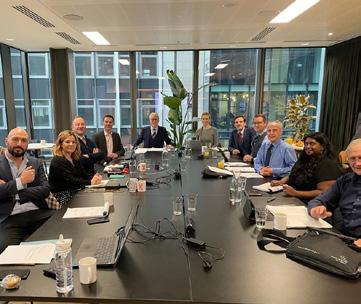
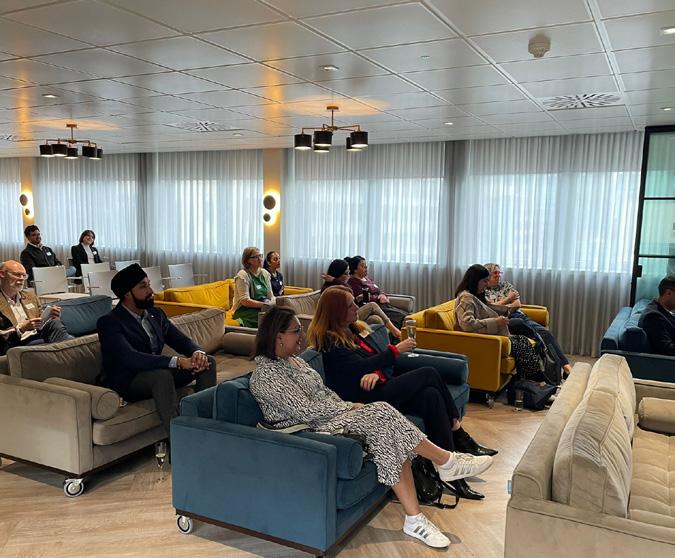
The Birmingham Law Society Legal Tech Committee was delighted to hold its recent event, “AI in Litigation: Practical Workflows, Governance and Professional Accountability,” at Fieldfisher in Birmingham. The event brought together a strong and engaged audience, including legal practitioners, legal technology specialists and others with an interest in the changing relationship between law, professional practice and AI.
The evening was well attended and generated exactly the kind of lively, thoughtful and practical discussion that the Committee exists to encourage. Follow-up materials shared after the event included the Law Society’s Buying New Technology resource and speaker contact links.
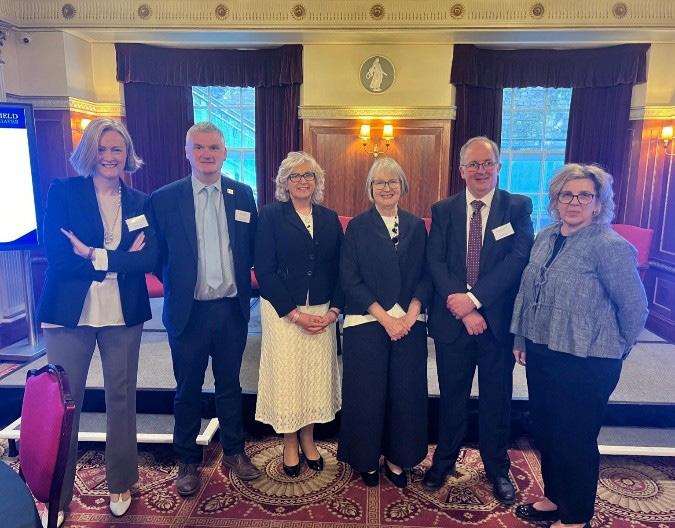
We are very grateful to Fieldfisher for hosting the event in such an excellent setting, and to all of our speakers and contributors for giving their time and insight. Our thanks in particular to James MacGregor of Ethical eDiscovery, who
opened the evening with a practical demonstration drawn from his work in eDisclosure, investigations and litigation support; Julie Leduc, a member of the Birmingham Law Society Legal Tech Committee, who moderated the discussion and helped shape the event from an early stage; Paul Massey, founder and CEO of libra.law, who brought a legal tech founder’s perspective informed by his background as an in-house lawyer; Kyran Kanda of St Philips Chambers, who contributed the perspective of practice at the Bar; and Nurilá Abdraimova, who added a broader perspective on AI oversight and governance. We were also pleased to be joined by Matt O’Brien, President of Birmingham Law Society, whose attendance underlined the Society’s support for the Committee’s work.
The combination of practitioner experience, legal tech perspectives and audience participation made for a particularly strong evening. It was clear from the discussion in the room, and in
Other Committee News
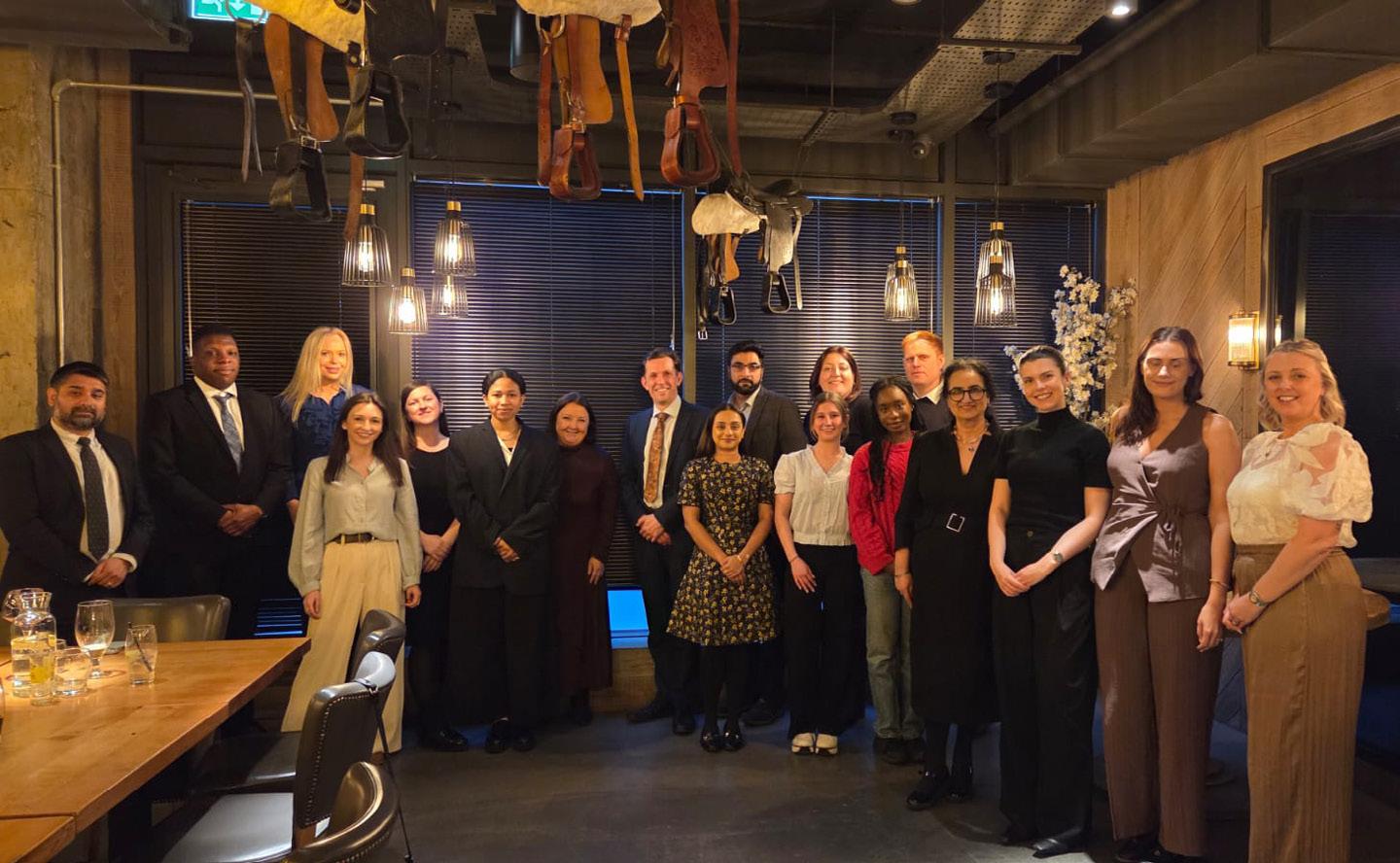
The Private Client Committee had its inaugural event being a social at the offices of Irwin Mitchell last month, to bring together over 40 private client lawyers in Birmingham and the surrounds. We will be supporting the Birmingham Law Society 2026 Private Client Conference in conjunction with Datalaw on 17th June at the IET Birmingham. If you have an interest in joining or working with the Committee and its future plans, please contact info@birminghamlawsociety.co.uk for more information.
In-House Committee can announce their newest Committee member Saba Ahmed, Head of Legal at Ishida Europe Limited. She brings with her a wealth of legal and commercial experience to the Committee. We are extremely excited to have her part of the Committee. With changes to our Vice Chair structure, your only Vice Chair will be Hahna.
the conversations afterwards, that there is a real appetite in Birmingham for more events of this kind.
The evening also reflected something important about the Committee’s direction. The Legal Tech Committee is not simply a group that organises occasional events, important though those events are. We are also active in wider legal-tech and law reform activity. This includes engagement with consultations such as the Civil Justice Council consultation, collaboration with external organisations including SuperTech, and participation by Committee members in other professional events and discussions across the region and beyond.
Looking ahead, we already have further activity in the pipeline, and we are keen to continue building momentum. In particular, the Committee would welcome wider engagement from lawyers, technologists, academics and others with an interest in legal innovation. A diversity of backgrounds and perspectives enriches the quality of our discussions and helps ensure that the Committee’s work remains practical, relevant and forward-looking.
If you are interested in joining or contributing to the work of the Birmingham Law Society Legal Tech Committee, we would be very pleased to hear from you. Please contact info@ birminghamlawsociety.co.uk. The strength of this recent event shows that there is both room and demand for a broad, active and outward-facing legal tech community in Birmingham.
Looking Back, Looking Forward: Reflections on Chairing the BLS Property and Planning Committee
For the last two years, I have had the privilege of chairing the Property and Planning Committee, having first joined the committee six years ago. When I look back over that period, what stands out most is not simply the meetings, the consultations or the formal discussions; it is the people.
A committee can sound like something quite procedural: agendas, minutes, updates, consultations, points for discussion. Of course, all those things matter; they give the committee purpose and structure.
What stays with you are the relationships built over time. The new members who come in with fresh ideas; the experienced members who bring perspective and calm judgment; the people you see grow in confidence and the members who move on as their careers develop. Over time the working relationships become friendships. Professional discussions become a source of support. The committee becomes more than a place where people meet to talk about law; it becomes a community.
Property and planning work can be demanding. It requires attention to detail, patience, judgment and the ability to deal with pressure. The work often involves tight timescales, high expectations and real consequences for the people involved.
The committee has provided a
space where members can share experience, raise concerns, learn from each other and discuss the challenges facing the sector.
Just as importantly, it has provided a network of people who understand the pressures of this work. That support often extends beyond regular committee meetings.
Over the years, I have seen members come and go. That is part of the natural life of any committee. But each person leaves something behind.
A committee is never only about the people in the room at one moment in time. It is also about the people who have contributed before, and the people who will contribute next. Chairing the committee has been a real honour. Not because chairing means having all the answers. It does not. In fact, one of the things I have learned is that the best discussions happen when people feel able to bring different views into the room. The role of the chair is not to dominate the conversation, but to help create the right conditions for it.
The property and planning sector sits at the centre of so many important questions: how people buy and sell homes, how communities grow, how businesses invest, how land is used, how development is balanced with regulation, and how accessible legal advice remains for those who need it. Over the last six months, three areas have stood out.
1. Home buying and selling reform
The home buying and selling process is something almost everyone has an opinion on.
For many clients, it is one of the most stressful legal processes they will ever experience. It can be slow, uncertain and emotionally draining. People plan their lives around a move. They make financial commitments. They imagine themselves in a new home. Then, sometimes very late in the process, something may go wrong.
A title issue appears. A search result raises a concern. A survey creates doubt. A lender requirement causes delay. Another transaction in the chain collapses. Suddenly, weeks or months
of effort can be lost. Conveyancers are often blamed for delay, even when the causes sit elsewhere in the system. They are expected to move quickly, protect their clients properly, manage risk, satisfy lenders, chase information and communicate clearly, often in circumstances where no single person has complete control over the transaction.
One of the key questions is whether more information should be available upfront. If the right information is available earlier, there may be fewer surprises later. Buyers may have more confidence. Sellers may have fewer failed transactions. Conveyancers may be able to identify problems sooner.
Upfront information will only help if it is reliable, current and properly understood. It also raises practical questions. Who prepares it? Who pays for it? Who checks it? What happens if it becomes outdated? How is liability managed? Will the process become more transparent, or simply front-loaded with extra cost and administration? These are the questions that need careful thought. A faster process is only valuable if it is also fair, reliable and properly protected.
2. Training, development and ethics
This is important because the legal profession cannot stand still. Solicitors need to keep developing throughout their careers. Technical knowledge is essential, but it is only one part of professional life. The profession also depends on judgment, integrity, independence, communication and ethical awareness.
The SRA’s consultation on continuing competence includes proposals around recording learning and development needs, keeping evidence of how those needs are addressed, and requiring solicitors to take part annually in discussions involving ethical dilemmas and scenarios. Ethics should not be treated as a tick-box exercise. Ethical issues often arise in ordinary working situations. They arise when a client is under pressure; when a conflict may exist; when confidentiality has to be protected; when a vulnerable client needs additional care or when an undertaking is given. In those
Committee News Cont’d
moments, the question is not simply whether a solicitor knows the rule. The question is whether they can apply judgment in a real situation.
3. Client account interest and access to justice
The third area is the Ministry of Justice consultation on an Interest on Lawyers’ Client Accounts Scheme.
In broad terms, the consultation considered whether a proportion of interest earned on lawyers’ client accounts should be remitted to government to support the justice system.
Client account interest is not just an abstract figure on a balance sheet. For some firms, it may help absorb costs, support services or contribute to the overall financial stability of the practice.
The Law Society has raised concerns about the proposal, including its potential impact on costs, access to justice and the delivery of legal services. That concern should not be dismissed.
High street firms often play a vital role in local communities. They support individuals, families, small businesses and people who may already find it difficult to access legal advice.
If additional financial pressure is placed on smaller firms, there is a risk that the cost is passed on to clients, or that some services become harder to provide. So the question is not simply whether the justice system
needs funding. It does. The harder question is how that funding is raised without weakening the very network of legal services that people rely on. That is exactly the kind of issue where practitioner voices are important.
Why committee work matters
A good committee creates space for careful discussion. It allows people to step back from the immediate pressure of their own caseloads and think about the wider direction of the profession. It gives practitioners a way to contribute their experience. It helps identify practical concerns that may not be obvious from the outside. It allows different parts of the sector to speak to each other.
Residential conveyancing, commercial property, social housing and planning may each have their own pressures, but they often overlap. Changes in one area can affect another. Committees help bring those issues to the surface.
The role of a committee is not to resist reform simply because it is new. The role is to ask whether reform is workable, fair, proportionate, and properly understood.
What I have taken from the last two years
I am proud of the work the committee has done and of my continuing contribution to it. I am also grateful for the friendships and support that have developed through being involved.
That is something I would not want to lose sight of.
Looking to the next three years
So, what will the next three years look like? There will almost certainly be more change.
• The home buying and selling process is likely to remain under scrutiny, with continued discussion around upfront information, transparency, digital tools and reducing failed transactions.
• Training and professional development will continue to evolve, particularly around competence, ethics and the evidence solicitors may need to keep.
• Client money, firm sustainability and access to justice will remain sensitive and important issues.
Alongside all of that, the committee will continue to have a role. It can help members stay informed. It can bring people together. It can help the profession engage with reform in a constructive way.
And, just as importantly, it can continue to be a human support network. For me, that is what makes committee work worthwhile. It is the combination of professional contribution and personal connection.
The task is to keep listening, keep contributing, keep challenging where necessary and keep supporting each other as the sector changes.
Birmingham Junior Lawyers Division Hits The Ground Running
In April, committee member Kyran Kanda joined a panel of experts at the AI in Litigation event hosted by the BLS Legal Tech Committee, contributing to important discussions on the role of artificial intelligence in shaping the future of legal practice. The committee then hosted its first After Work Social of the year at Old Joint Stock, bringing members together for an evening of networking, drinks and food, followed by a Networking Breakfast with Birmingham Law Society President Matt O’Brian, providing a more intimate setting for junior lawyers to connect over coffee and meaningful conversation. Rounding off April, Co-Chair Kristian CampbellDrummond and Deputy Vice Chair Pragya Chadha attended the Modern Law Awards as guests of Leap, and represented the Birmingham JLD.
May was another action packed month. Members were invited to start their week in style at a Networking and Pilates session at Loop Studios on 18 May, with mat and reformer Pilates followed by networking, coffee and pastries. The month closed off with the F1 Arcade Networking Event on 28 May at F1 Arcade Birmingham, where racers swapped the office chair for the driver’s seat for an evening of racing, food, drinks and an afterparty at Albert Schloss.
The Birmingham JLD is just getting started, with plenty more in store for Birmingham’s junior lawyers.
Levy Rises from 5% to 25%: What Law Firms Should Do Before August
From the 1st of August 2026, the rules governing apprenticeship funding in England are changing in a way that will materially affect any levypaying law firm. Once a firm has exhausted its digital levy account, the employer co-investment rate for new apprenticeship starts will rise from 5% to 25%. For firms that have been steadily putting paralegals through law apprenticeships, the same levy pot will fund noticeably fewer learners under the new regime.
This article sets out what is changing, why timing matters, and how firms can use the months before August to lock in better-value legal apprenticeships while the current rate still applies.
What Is Changing on the 1st of August 2026?
The Three Headline Changes for Levy Payers
• Co-investment rises from 5% to 25%. Once a levy account is exhausted, the government will fund 75% of training costs and the employer must fund the
remaining 25%, up from the current 95/5 split.
• Levy funds will expire after 12 months, not 24. The window to commit funds before they are reclaimed by HMRC effectively halves, requiring tighter forecasting from finance and HR teams.
• The 10% government top-up is being withdrawn. Employers will only be able to deploy the value of their own monthly contributions, with no automatic uplift on funds entering the digital account.
The government has confirmed these changes through the Department for Education’s Growth and Skills Levy guidance, which sets out implementation dates between April and October 2026. Crucially, the new co-investment rate applies only to new apprentice starts from 1st of August 2026 onwards. Apprentices already on programme before that date will continue to be funded under the existing rules through to completion, even if the employer’s levy balance is later exhausted.
What the Co-Investment Rise Means for Law Firms in Practice
The 5% to 25% increase sounds modest in percentage terms, but the financial reality is significant, particularly for the higher-cost legal qualifications that law firms typically use to develop feeearners. The Chartered Legal Executive Apprenticeship which provides practice rights in a chosen specialism, for example, sits at Level 6 and carries the maximum government funding band of £27,000, which means the cash impact of co-investment is correspondingly larger.
A Worked Example: Chartered Legal Executive Apprenticeship
The Chartered Legal Executive Apprenticeship sits in the £27,000 funding band, the maximum band available under the apprenticeship service. Under the existing rules, a firm that has run out of levy funds contributes 5% (£1,350) with the government covering the rest. From 1 August 2026, that same start would cost the firm 25% (£6,750) to complete the apprenticeship. Even the Advanced
August 2026
Paralegal Apprenticeship, which sits in an £18,000 band, sees the per-learner contribution rise from £900 to £4,500 once levy funds are exhausted.
For most levy-paying law firms, the practical effect is twofold. First, the capacity of the levy pot reduces in real terms, with fewer apprentices able to be funded from the same money once the 10% top-up disappears. Second, anything beyond that pot becomes substantially more expensive than it is today. Firms that have historically used co-investment to top up cohorts will need to rebuild their workforce planning around the lower headroom.
Why Apprentice Starts Logged Before August 2026 Carry Real Commercial Value
This is the single most important point for law firm decision makers to understand. The 25% co-investment rate applies to new starts from the 1st of August 2026 onwards. Any apprentice whose start date is logged on the apprenticeship service before that date sits under the existing 95/5 funding model and remains on that model through to End-Point Assessment, even if the firm’s levy balance later runs dry. In other words, an apprentice enrolled in July 2026 is, in funding terms, a different commercial proposition to the same person enrolled in September 2026.
Why This Window Is Genuinely Tight
• Most legal apprenticeships have a fixed start date tied to the training provider’s cohort calendar, so firms cannot simply enrol in late July without a planned cohort.
• Eligibility checks, line-manager interviews, and apprenticeship service paperwork typically take several weeks before a start can be logged.
• End-of-summer is traditionally a busy period for HR teams, increasing the risk of a planned start slipping past 1 August.
Identifying Staff Who Could Progress Through Funded Routes
One of the more useful exercises a law firm can do in the months before the funding change is a structured review of existing team members they’d like to qualify.
Common Internal Profiles That Fit Funded
Apprenticeship Routes
• Paralegals without a formal qualification: strong candidates for the Advanced Paralegal Apprenticeship, particularly where the firm wants to formalise their progression toward fee-earning.
• Experienced paralegals taking on fee-earner work: wellsuited to the Chartered Legal Executive Apprenticeship, which leads to qualification as a Chartered Legal Executive via CILEx with practice rights in a chosen specialism.
• Legal assistants and case-handlers: often eligible for the Level 3 paralegal route, which provides a structured grounding in legal practice and is fully funded through the levy.
• Career-changers within the firm: staff moving from administrative roles into legal-facing work, where the
apprenticeship provides both the qualification and the formal training time.
How Datalaw’s Pre-August Cohorts Help Firms Act Now
To help law firms log starts before the new co-investment rate takes effect, Datalaw has put on additional levy-funded cohorts for its two most heavily used legal apprenticeship programmes: the Chartered Legal Executive Apprenticeship and the Advanced Paralegal Apprenticeship. Both are the routes most affected by the 5% to 25% rise because of their higher funding bands, and both have a final cohort enrolment deadline of 15th July 2026 to ensure starts are logged comfortably before 1st August.
What the Pre-August Cohorts Are Designed to Do
• Get qualifying staff onto programme while the 95% government contribution still applies for the full duration of the apprenticeship.
• Allow firms to commit levy funds ahead of the 12-month expiry rule, protecting the value of contributions already paid in.
• Provide a structured training pathway for paralegals progressing towards practice rights with the Chartered Legal Executive qualification or formal training at Advanced Paralegal level.
• Reduce the planning burden on HR teams by aligning eligibility checks, inductions, and start logging within a single coordinated cohort.
Plan your levy spend before the rules change. Explore Datalaw’s law apprenticeships and secure a place on the 15th of July 2026 cohort for the Chartered Legal Executive or Advanced Paralegal apprenticeship routes. Datalaw’s team of apprenticeship coordinators will be able to advise on the right apprenticeship routes for your firm, eligibility for funded staff, and the next steps to enrolling.
Key Takeaways
• From the 1st of August 2026, the co-investment rate for levypaying employers rises from 5% to 25% once levy funds are exhausted, a five-fold increase.
• The 10% government top-up will be removed, and unspent levy funds will expire after 12 months instead of 24, reducing the real value of the levy pot.
• Apprentices whose starts are logged before 1st August 2026 remain on the existing 95/5 funding model for the full duration of their programme.
• The Chartered Legal Executive Apprenticeship (£27,000 band) and Advanced Paralegal Apprenticeship (£18,000 band) are the routes most exposed to the rise because of their higher funding bands.
• Datalaw’s pre-August levy cohorts close on 15th July 2026, giving firms a clear window to lock in funded starts before the change takes effect.
Regulation Report
SRA Consultations And What They Tell Us: Draft Business Plan And
The SRA has published its draft Business Plan for 2026/27. The consultation is open until midday on 22nd June 2026. The headlines are taken up by the increase in the funding for the regulator that needs a 29% budget increase. This means an increase in the practising certificate fee of £50, plus an additional £50 for a contribution to the Compensation Fund. The fees for firms are dependent on turnover.
Leaving aside the contribution to the Compensation Fund, how is the money going to be spent ask Rebecca Atkinson, Solicitor and New York Attorney at McArthur Akinson and Cary Whitmarsh, Head of Compliance/Deputy Money Laundering Officer at Trowers & Hamlins LLP.
Sarah Rapson, the CEO of the SRA, said that the money is needed for three things:
• Operational excellence;
• Develop ability to proactively identify and address risk; and
• Focus on the biggest issues.
A big hurrah to the last point which is just what the Birmingham Law
Society Professional Regulation Committee (PRC) said to her in its open letter last month. What does Ms Rapson actually mean with these three things?
Operational excellence
The SRA intends to “deliver clearer, faster and more proportionate outcomes by refocussing investigations and enforcement work on the areas that best protect the public”. In its open letter to Ms Rapson the PRC made it clear that she should focus on the protection of client money. Many in the profession will have heard the phrase “client money is sacrosanct”. It is time for the SRA to remember this too. This ties in with the focus on the biggest issues.
Funding Requirements 2026/2027
Ms Rapson has identified “a lack of appropriate and dedicated expertise in core functions at a senior level”. Whilst the SRA has a core of dedicated, hard-working professionals, there have been significant departures in the senior management of the organisation.
Finding suitable people with the right skills and experience will be a challenge, although we understand that some progress has been with the appointment of two Executive Directors. The effect of this is that effective and timely decision making will not happen immediately. As a profession we need to give the SRA some time to achieve ‘operational excellence’.
It is no surprise to learn that the SRA
wants to invest in upgrading its IT systems. Technological advances should be adopted by the regulator to make it more efficient. Hopefully that will mean that in time the PC fee can come down!
The SRA also wants to build a highperformance culture. To do that it needs to measure performance and be held accountable for that performance. It is vital that the SRA Board delivers for the profession and the public by holding the management to account.
Proactively identify and address risk
The SRA proposes that the Supervision function engages with the profession on a more proactive basis. The idea is that this team will engage with firms at an early stage to mitigate significant risks. The regulator has identified high volume consumer claims (SSB Law) and firms with complex or high-risk business structures (Axiom Ince, Metamorph etc) as examples for proactive engagement.
The SRA intends to make use of AI to assist with establishing patterns, themes and connections to support risk identification. The use of AI to support an intelligence led approach is encouraging, but it is nothing without human analysis as well.
The SRA also intends to “enhance risk insight through stronger data and analytics”. Hopefully this means that the SRA will actually makes use of the huge amount of data it obtains from firms rather than sending out endless surveys.
Focus on the biggest issues
The SRA intends to “strengthen protections for client money and explore ways of reducing future consumer harm”. The current Accounts Rules are inadequate and new rules are required to better protect client money. The Business Plan includes a return to the old chestnut of doing away with client accounts and “exploring alternatives such as new opportunities raised by technological and system developments”. Who knows what that might mean?
On a more positive note, the SRA wants to look at “senior accountability frameworks informed
by approaches used in other regulated sectors” (i.e. the FCA). The problem that the SRA must grapple with here is that law firms range from one-man (or woman) bands to huge multi-national firms. Getting a one-size fits all approach will be a challenge.
Together with FCA, the Information Commissioner’s Office and the Advertising Standards Authority the SRA wants to look at better protections for high volume consumer claims. Chief amongst those protections will be looking at litigation funding and firm’s business models so that there is not a repeat of the impact on consumers from firm failure (SSB).
Finally, the SRA wants to “enhance confidence in the SQE”. The focus here is to improve the experience of candidates of the SQE. It is good to see the SRA taking on board the well voiced criticisms, but it must also ensure that the high standards of the profession are maintained. This will link in with the SRA’s current consultation on continuing competence.
Strengthening continuing competence approach
After a series of thematic reviews and reports on the topic of continuing competency the SRA is consulting on proposed changes to the regime which came into force in 2016 replacing the 16 hours Continuing Professional Development requirement.
The current regime requires solicitors to undertake the following steps
1. Reflect – regularly consider the quality of their practice, in all aspects of their role. Solicitors should reflect on all areas of their practice and not just on the quality of technical legal knowledge, for example working with others including clients. Solicitors should also consider their ethical and professional obligations, including awareness and application of any SRA warning notices and guidance which are relevant to the solicitor’s work.
2. Identify – through reflection, identify learning and development needs.
Regulation Report
3. Plan and address – regularly update a plan on how the solicitor will address their learning and development needs.
4. Record – keep an up-to-date record of learning and development activity. Here the SRA provide a template that can be used and warn that if a solicitor is not using the template they must make sure to include how they identified their learning and development needs.
5. Evaluate – think about the effectiveness of the learning and development.
Underpinning the above steps are the 4 areas of competency within the SRA’s Statement of Solicitor Competence that all solicitors must meet. These are i) ethics, professionalism and judgment, ii) technical legal practice, iii) working with other people and iv) managing themselves and their work. Solicitors must declare annually when renewing practising certificates that they have reflected on their practice and addressed any identified learning and development needs. No declaration to this effect means that a conditional practising certificate can be issued.
The SRA have been keeping their eye on this topic for many years via complaints made to the SRA, thematic reviews and inspections and reviewing training records which all feeds into their annual assessment of competence.
Whilst the SRA acknowledges that most solicitors take steps to maintain competence and ‘display the learning and development behaviours’ the SRA expect to see, this is not always the case. The SRA say in their consultation that evidence suggests some solicitors are:
• not able to demonstrate that their learning and development was a result of meaningful and regular reflection
• focussing their learning and development exclusively on maintaining their technical legal knowledge rather than other areas of their practice that may be required to maintain their competence
• not regularly undertaking learning
and development on their ethical and professional obligations
• not aware of, or not having regard to, our warning notices and guidance when they consider their learning and development needs. The SRA say they have already started to address the above by:
• Updating their continuing competence resources to further clarify their expectations and the steps a solicitor should take to keep knowledge and skills up to date. This includes how a solicitor can reflect on all aspects of practice and reiterating the importance of understanding and applying warning notices and guidance to keep ethical and professional obligations up to date.
• Strengthening the declaration that solicitors make when renewing their practising certificate.
• Making it easier for solicitors to find guidance and warning notices.
• Regularly reminding solicitors of their regulatory obligations and providing links to continuing competence resources in professionwide communications and through a social media campaign.
However the SRA want to do more. . .
In their consultation they propose the following:
1. Introduction of a new rule that requires all solicitors to keep a formal record of their learning and development that confirms they have thought about their role and work and identified learning and development needs, explains how they identified their learning and development needs and recording these and how they were addressedthis proposal is essentially moving the dial from a recommendation to record to mandatory recording;
2. Introduction of a rule to mandate all solicitors to take part in an annual 3 hour minimum discussion on professional ethics facilitated by a solicitor who has a current practicing solicitor or is on the roll. The SRA further propose there must be at least 3 participants, 1 being the facilitator and a maximum of 12 participants. Solicitors would need to certify that they have met this requirement via the continuing
competency declaration when renewing their practising certificate.
3. Introduction of a rule which allows the SRA to require some or all solicitors to complete specific learning and development where the SRA identify a competence concern or concerns in how competence is maintained. It is fair to say that proposal 1 is likely not that controversial. Most solicitors are aware that they ought to be writing their reflection and analysis down.
However, proposal 2 will inevitably cause a potentially very large operational and cost challenge. Operationally challenging for firms with hundreds of solicitors and costly for all with respect to external training providers and lost fee earning time. Proposing to prohibit trainers who are not solicitors will cut out a significant portion of the training community who can help with this task.
In relation to proposal 3 this appears to be incredibly wide in nature and like proposal 2 seems to be a sledge hammer to crack a nut and what might on occasion be a mini nut.
Proposal 2 and 3 is very typical of the SRA. A very small minority of solicitors do not behave in an ethical way and so the SRA’s response is to require the entire profession to undertake not 1, not 2 but 3 hours of mandatory ethics training every year. This is not a proportionate response.
The SRA’s consultation ‘strengthening our continuing competence approach’ opened on 22nd April 2026 and will close on 15th July 2026.
Private Equity Overtakes Merger As Uk Law Firms’ Preferred Route To Growth, New Research Reveals
Three-quarters of firms seeking investment now favour private equity as sector faces a “once-in-ageneration” transformation according to survey of UK law firm leaders
Private equity has overtaken merger and partnership as the preferred growth strategy among UK law firms seeking investment, according to new research from leading legal technology provider Dye & Durham. According to the results: Among firms seeking investment, 75% now favour private equity, while only 52% cite the traditional route of merger or partnership. The finding is among several key insights from the extensive research that appear to signal a once-in-a-generation shift in firms’ attitudes to investment, technology, and growth.
The data suggests the market shift may be more advanced than many in the profession realise. While previous research has tracked private equity deal volumes and the extent to which firms have been approached by investors, this is believed to be among the first studies to measure law firms’ own investment preferences, finding a marked shift toward private equity and away from the traditional merger or partnership route.
Speaking about the release of the report today, Colin Bohanna,
Managing Director of Dye & Durham UK, said: “This research confirms what many in the profession are increasingly alert to, and which many more have yet to realise: there is a monumental shift taking place in the UK legal market, and it will affect every part of the profession.
“While the traditional merger and partnership model is in no danger of going away, there is a remarkable transformation taking place in UK law, one that is changing how law firm leaders operate and which will have a growing influence in years to come. We hope this research will be a useful tool to the industry in navigating a way forward.”
Other key findings of the research include:
● 86% of legal professionals polled in a live survey agreed that the business model of UK law firms has evolved more in the past 10 years than in the previous 20
● 88% of senior leaders agreed their technology platform signals their firm’s maturity to external investors
● 80% said financial performance expectations are higher today than five years ago
● 45% cited talent recruitment and retention as the single biggest barrier to scaling
The report draws on an independent survey of 200 senior leaders at mid-sized and large UK law firms, conducted by Arlington Research, with 80% of respondents from firms with 50 or more fee earners. Dye & Durham supplemented this with a live poll at the British Legal Technology Forum and an in-depth interview with Adrian Jaggard, CEO of Taylor Rose and AIIC Group.
Market analysis
The complete whitepaper of the research findings – The Future of UK Law Firms 2026: Changing Leadership, Capital, and Operating Models – also draws attention to what is likely driving these changing attitudes, specifically a “trifecta” of forces driving the shift: the growth of the consultant model (now over 4,000 practitioners) , the
rise of alternative business structures (from 8% of SRA-regulated firms in 2017 to 13% by 2022/2023) , and an unprecedented influx of private equity (£1.2bn invested over five years, with a record £534m in 2024 alone) with 70% of mid-sized UK law firms approached by private equity investors in 2025. Together, the paper argues, these forces are reshaping not just how firms are financed, but how they operate and compete.
The full report can be found at: dyedurham.co.uk/resources/ebooksreports/
About the research
The Future of UK Law Firms 2026: Changing Leadership, Capital, and Operating Models is based on:
● An independent survey of 200 senior leaders and technology decisionmakers at mid-sized and large UK law firms, conducted by Arlington Research between 20 January and 4 February 2026. Respondents included equity partners, salaried partners, C-suite executives, practice managers, and consultant lawyers. 80% were from firms with 50 or more fee earners.
● A live poll of 51 attendees at the British Legal Technology Forum (BLTF) 2026, one of Europe’s largest legal technology conferences.
● An in-depth interview with Adrian Jaggard, co-founder and CEO of AIIC Group and Taylor Rose, one of the UK’s largest consumer-facing law firms.
About Dye & Durham Limited
Dye & Durham Limited provides premier practice management solutions empowering legal professionals every day, delivers vital data insights to support critical corporate transactions and enables the essential payments infrastructure trusted by government and financial institutions. The company has operations in Canada, the United Kingdom, Ireland, Australia and South Africa. Additional information can be found at