Editor: Jonathan Fraser. Editorial enquiries to jon@fu-media.co.uk
ADVERTISE HERE
To advertise your business to Birmingham Law Society members call Fraser Urquhart Media on 0116 2533445 or you can email jon@fu-media.co.uk or kevin@fu-media.co.uk
l Mechanical and Process Engineering l Manufacturing Industries l Oil and Gas Industries l Petrochemicals and Chemicals l Pharmaceuticals l Fertilizers and Pesticides l Metallurgical Industries l Safety and Environmental
Dear Members, Colleagues & Friends of the Birmingham Law Society
Welcome to another packed edition of the Bulletin. This edition reflects much of what makes this Society worth belonging to, and has wellbeing at its heart.
After what feels like a long, dark winter, spring brings a sense of renewal: a time to reflect on our lives and make positive changes for the year ahead. That may be to focus on areas where we can improve our practice; our work-life balance; or simply the way we support one another as colleagues within our demanding profession.
At Birmingham Law Society, we are keenly aware that the wellbeing of our profession is fundamental to its longterm strength. The pressures faced by lawyers are welldocumented, and it is important that we equip ourselves not only with legal expertise, but also with the tools to recognise and support those around us who may be struggling.
In that spirit, I am particularly pleased that, in collaboration with Birmingham Mind, we will be hosting Mental Health First Aid training for lawyers during Mental Health Awareness Week on 11th May 2026.This training will provide practical guidance on recognising the signs that someone may be experiencing mental health difficulties and how to respond appropriately and supportively. I hope many of our members will consider taking part in what promises to be an invaluable and practical session for any member who works alongside others.
Spring also brings opportunities for connection and celebration across our community. On 23rd May 2026, we will again be organising a Birmingham Pride walking group, giving members the opportunity to attend together and show visible support for inclusion within the legal profession and the wider city. Birmingham has always been a diverse and vibrant legal community,
and events like this are an opportunity to celebrate that diversity while strengthening the sense of belonging that underpins a healthy profession.
I am also delighted to announce that Birmingham Law Society has partnered with our sponsor, Datalaw, to deliver a programme of high-quality training events aimed at equipping the next generation of lawyers for the future of legal practice. The first of these events will be a Private Client conference on 17th June 2026, and I would encourage members — particularly those early in their careers — to look out for further details and consider attending. This is exactly the kind of practical, forwardlooking initiative that will help ensure our region’s legal community remains at the forefront of the profession.
Alongside our programme of events, Birmingham Law Society continues to play an important role in giving voice to our members on issues affecting them. Over recent months the Society, including through the work of our Criminal Law Committee, has engaged actively with proposals from government to reform the criminal justice system. These include proposals that would limit access to jury trial and significantly alter rights of appeal from the magistrates’ court — fundamental constitutional safeguards. Birmingham Law Society will continue to ensure that the concerns and expertise of practitioners in our region are heard clearly as these debates continue.
Finally, as part of my presidential theme of celebrating the hidden gems of the West Midlands, I would encourage members to take advantage of some of the wonderful cultural and green spaces on our doorstep this spring. Among my personal recommendations are:
• The exhibition “I Photograph Comedians!” currently on at Birmingham Museum & Art Gallery until 31st May 2026;
• The 125th anniversary open day at Alexandra Theatre on Saturday 2nd May 2026;
• A visit to the beautiful gardens at Winterbourne House and Garden on the campus of the University of Birmingham — a perfect place for a quiet walk and a moment of reflection away from the office, and to celebrate the proud history of our region’s involvement in the Arts and Crafts Movement.
As always, I am grateful to the many members, sponsors and volunteers who make the Society’s work possible. I hope you enjoy this edition of the Bulletin, and I look forward to seeing many of you at our events over the coming months.
Matt O’Brien President, Birmingham Law Society
With thanks to our Platinum Sponsors
Meet Birmingham’s Hidden Heroes...
Birmingham has many grassroot causes working tirelessly in the background to support individuals most in need whether that be with mental health, homelessness, rehabilitation, employment or other issues.
LoveBrum is a charity that funds, finds and supports these hidden gem projects giving them the support and recognition they truly deserve.
In February LoveBrum hosted its flagship fundraiser The Curry King of Birmingham where £20,000 was raised on the night. On the night, Alive Wellness Centre, which tackles knife crime and youth violence, and Better Pathways, supporting people with mental health challenges back into work, received cheques to continue their vital work.
Meet some of Birmingham’s Hidden Heroes Winnr
• What they do: Winnr work with young people to combat youth violence, knife crime and social inequalities across some of the most deprived areas of Birmingham
• Why it matters: By working with young people in a group and 1-1 setting and providing positive role models Winnr are empowering young people to live healthier lives with better choices and make sure no young life is wasted.
• How LoveBrum helps: LoveBrum supported by funding a project that delivered weekly one-to-one mentoring sessions for a group of young people, each receiving approximately 2 hours of direct support per week. Each young person person was matched with a mentor helping them build confidence, develop coping strategies, and set and work towards personal goals.
She Beasts CIC
• What they do: She Beasts CIC work with people facing trauma, disadvantage and barriers to help improve their resilience, self-efficacy and mental health
• Why it matters: For women who have experienced trauma, these services help to give them a voice, build resilience, connection, and hope.
• How LoveBrum helps: LoveBrum were able to fund a series of engagement activities that were previously inaccessible to participants, promoting physical and emotional wellbeing.
Diver’s Community CIC
• What they do: They are a dedicated team providing support, outreach and guidance to rough sleepers and homeless individuals across Birmingham.
• Why it matters: They’re tackling homelessness head on helping individuals rebuild their lives, reintegrate them into society and put them on a path to a brighter future.
• How LoveBrum helps: Diver’s Community CIC were the beneficiaries of LoveBrum’s Bags for Brummies campaign where we delivered care packages to go to individuals during the cold winter months giving them back hope and dignity when they needed it most.
You can find out more about the incredible hidden gem projects across Birmingham and how you can get involved by visiting lovebrum.org.uk or contacting hello@lovebrum.org.uk
MEMBER’S EVENTS
AI in Litigation: Practical Workflows, Governance and Professional Accountability
15th April, 5.30pm – 8pm, Fieldfisher LLP. FREE for members | £10 +VAT for non-members
MCCBA and Birmingham BPC Forum
- Injunctions Masterclass: Tips, Best Practice, and Beartraps
22nd April, 4.30pm – 7.30pm, St Philips Chambers. FREE and open to ALL practitioners using the BBPC
6th May, 6pm – 9pm, Revolución de Cuba. £125 +VAT for member team of 5 | £150 +VAT for non-member team of 5
Networking Social sponsored by 3PB Chambers
21st May, 6pm – 8pm, 3PB Chambers FREE for members | £10 +VAT for nonmembers
Pride Walking Group
23rd May, 11am – 3pm, Birmingham City Centre. FREE for all to attend
To reserve your place and find out more, make sure that you visit www.birminghamlawsociety.co.uk
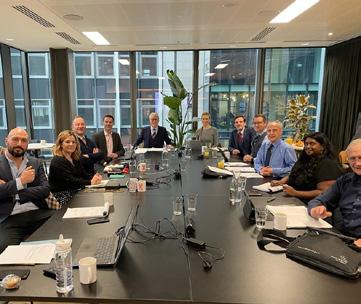
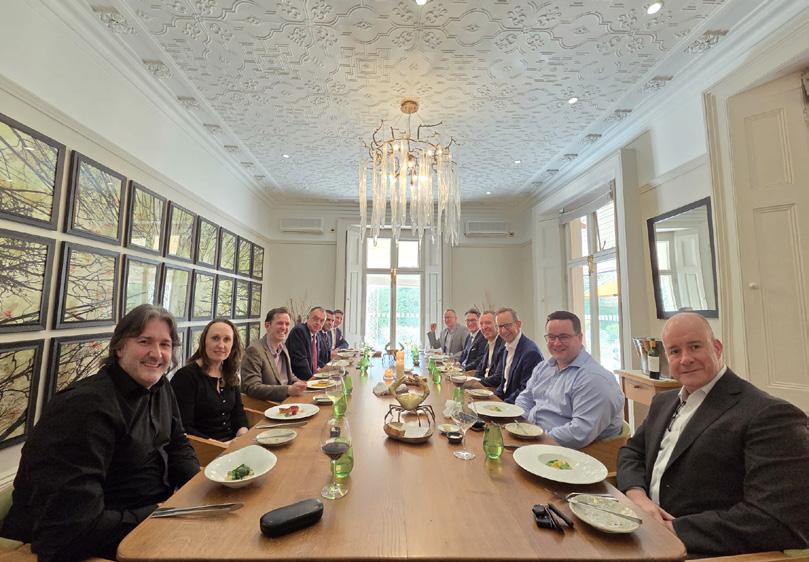
Collaboration Lunch BLS, ICAEW, CIPFA, CIOT & RICS Employment Law
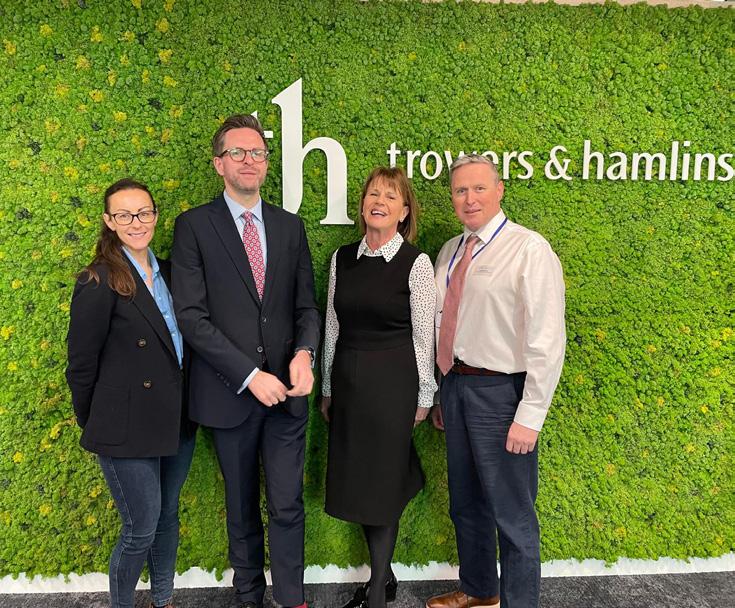
COLP & COFA Forum
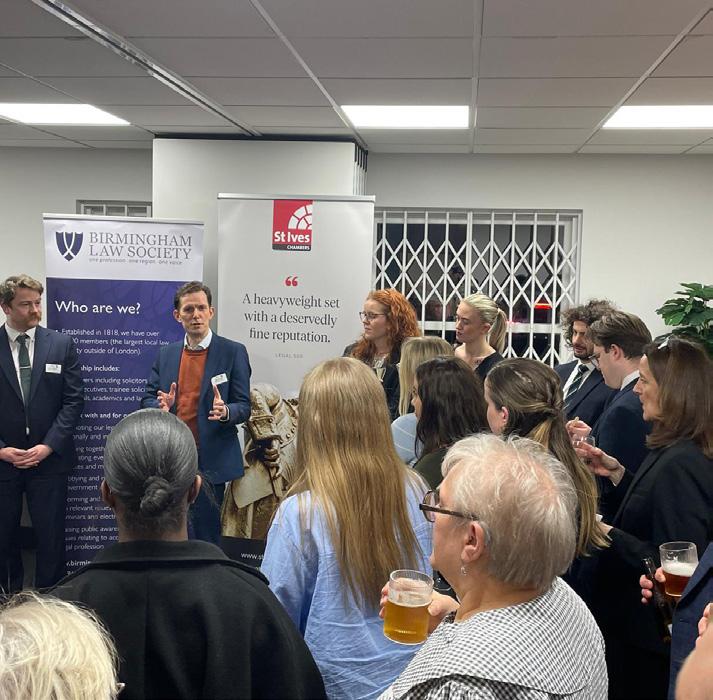
Networking Social at St Ives
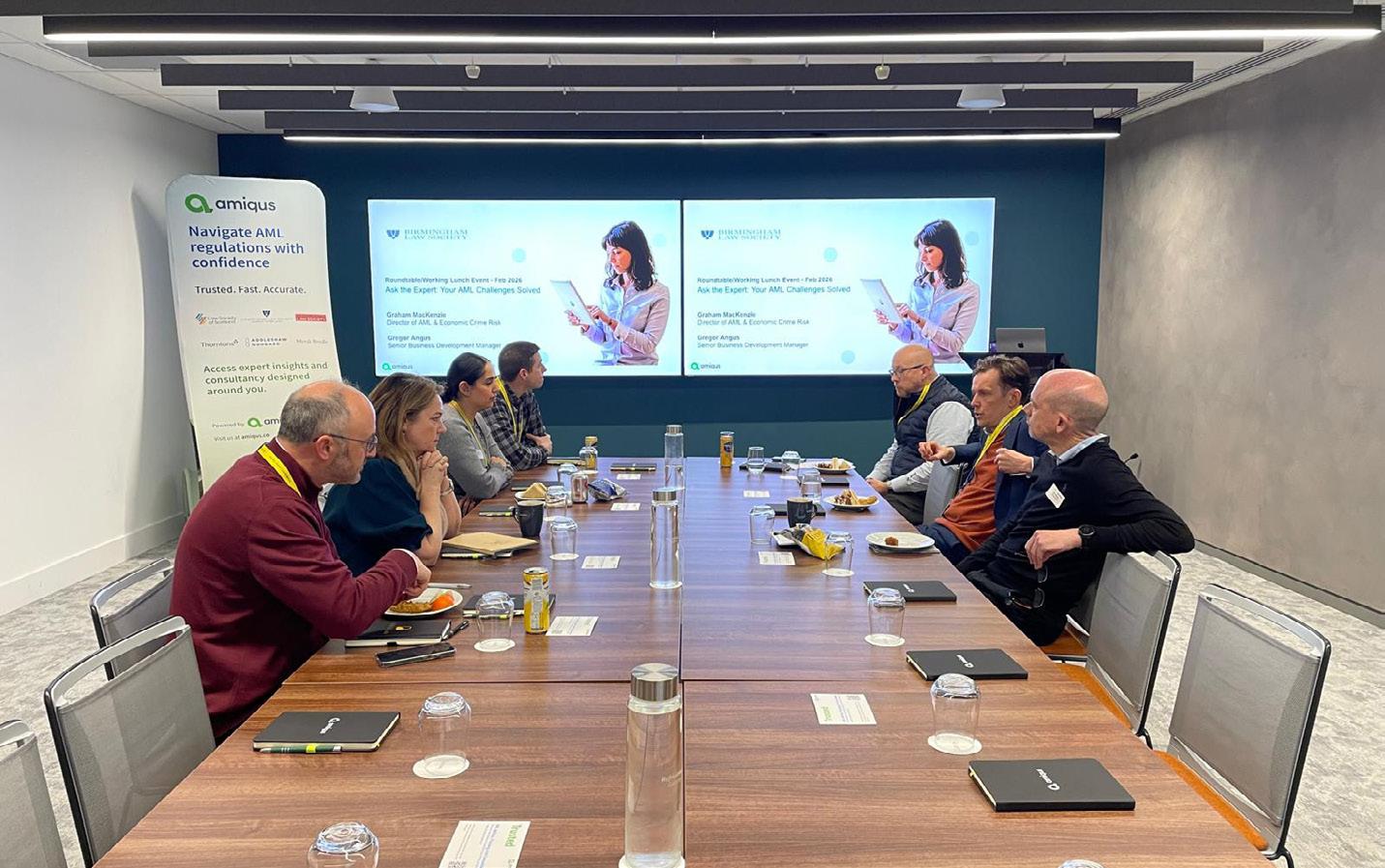
Joint V Leeds
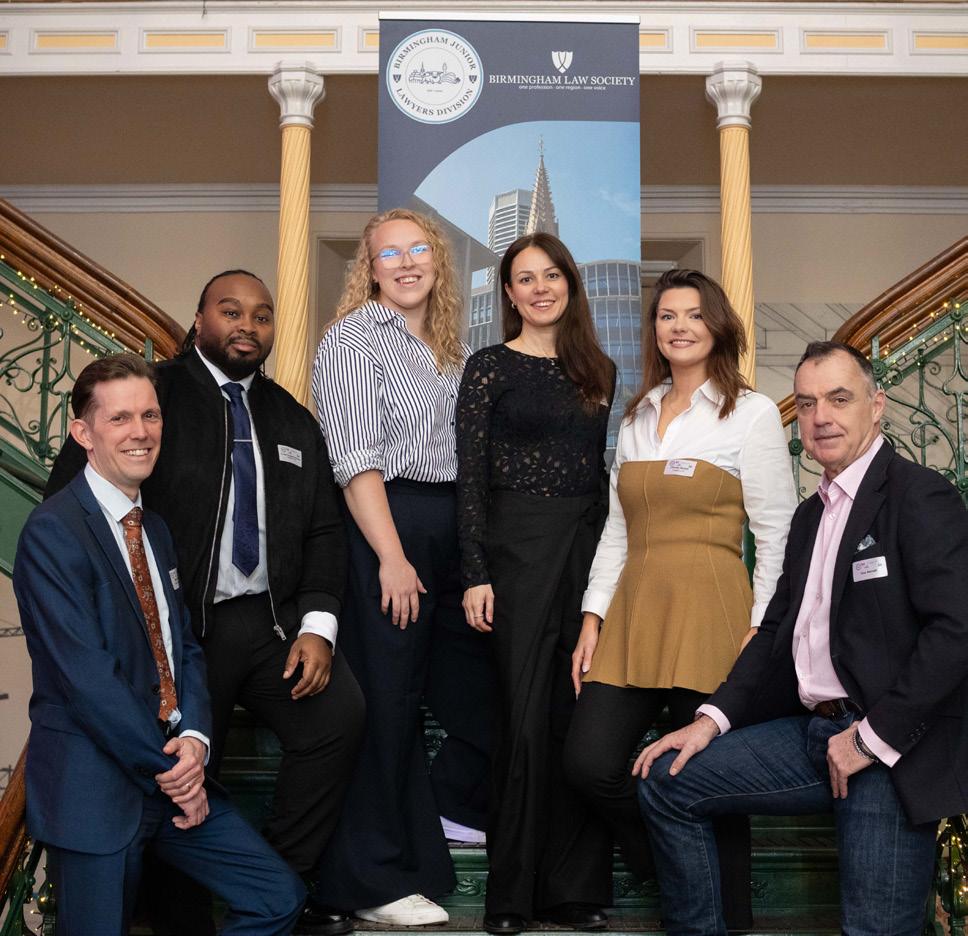
The Junior Lawyers Division Launch Party
Networking Social: St Philips Chambers
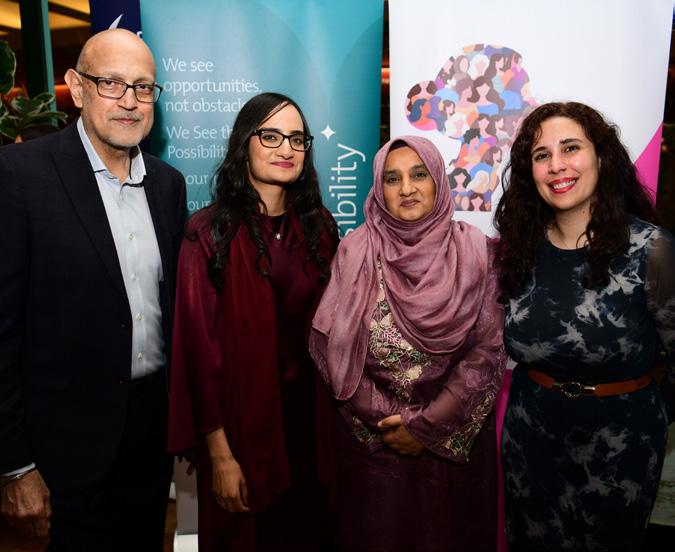
Ramadan & Iftar Networking Event
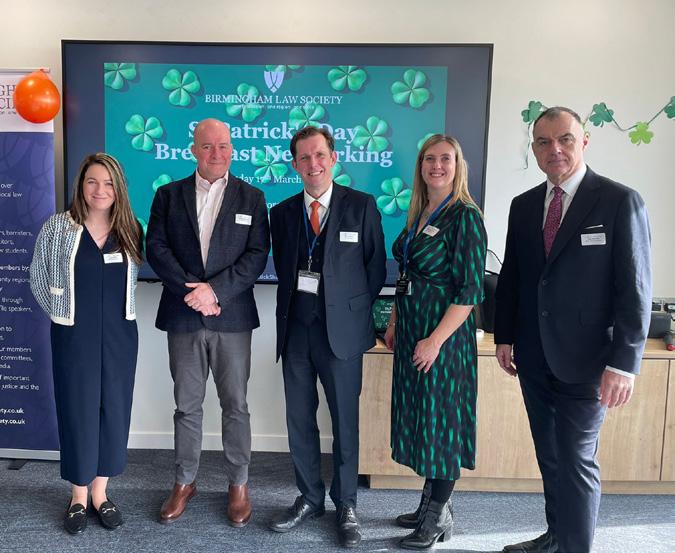
St Patrick’s Day Breakfast Networking
2026 BLS Legal Awards
Birmingham Law Society Announces 2026 Legal Awards Winners
Birmingham Law Society has unveiled the winners of its 2026 Legal Awards, celebrating the top legal talent across the region.
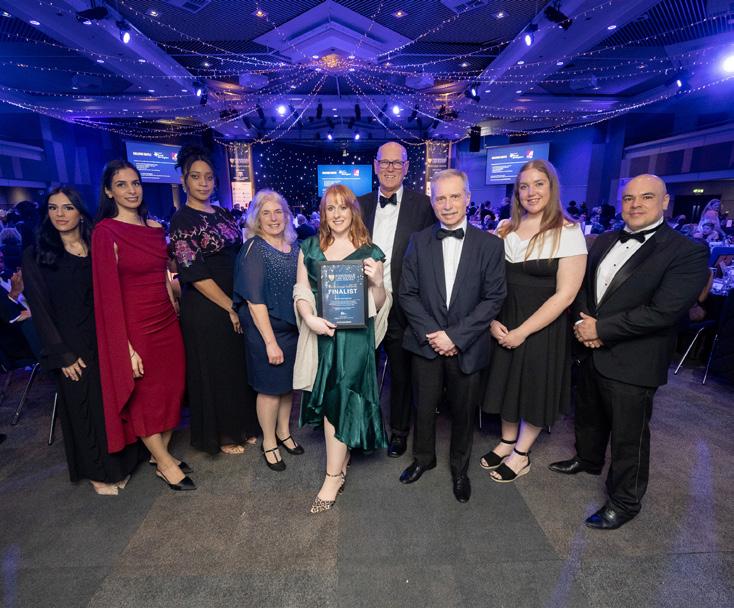
Fourteen winners were chosen from a shortlist of 69 outstanding individuals and firms across 14 categories. The winners were announced at a glittering ceremony held at the ICC Birmingham on 12 February, hosted by local radio personality PJ Ellis, where attendees gathered to honour the exceptional quality of legal work in Birmingham and the West Midlands.
Matt O’Brien, President of Birmingham Law Society, said: “This year’s finalists and winners truly represent the breadth and depth of our legal community’s talent. From rising stars to seasoned leaders, their dedication, innovation and service to both clients and community are outstanding.
On behalf of Birmingham Law Society, I congratulate all the winners on their well-deserved success. Their achievements showcase the very best of what our region’s legal profession has to offer.”
The 2026 Legal Awards, which was proudly headline sponsored by Medical Expert Chambers can reveal the Winners and Finalists in Each Category: (winner in bold):
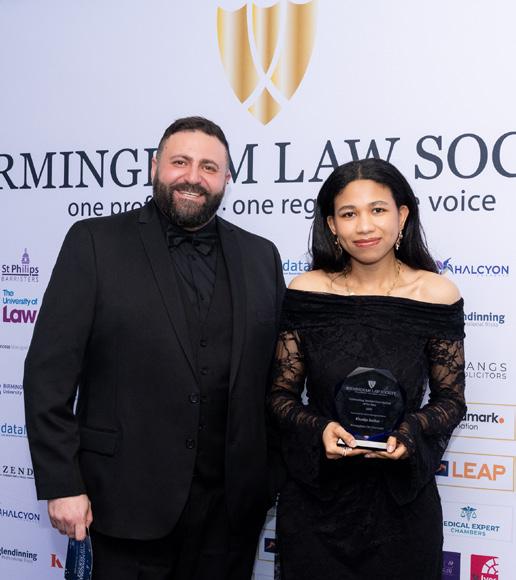
Outstanding Student Contribution of the Year 2026 – Winner: Khadija Bashar (Birmingham City University).
Shortlisted: Hafsah Shahid (Birmingham City University); Halima Rahman (Birmingham City University); Jessica Stewart (The University of Birmingham Law School); Anaiah Ferdinand (The University of Law). (The judges also highly commended Jessica Stewart for her exceptional contributions.)
Apprentice of the Year 2026 – Winner: Estelle Asante (Eversheds Sutherland LLP).
Shortlisted: Madison Timmins (Gateley Legal); Alex Hooper (Gowling WLG); Joe William Gallagher (Gowling WLG); Madalina Novac (Gowling WLG); Tom Reeves (Weightmans LLP). (The judges
noted the category’s high calibre and gave special commendation to Tom Reeves for his promising future impact.)
Trainee Solicitor of the Year 2026 sponsored by The University of Law –Winner: Hollie Gould (Anthony Collins Solicitors LLP).
Shortlisted: Abigail Evason (Bevan Brittan LLP); Jakub Mikulecky (Shakespeare Martineau); Govind Johal (Shakespeare Martineau); Jody Li (Squire Patton Boggs LLP).
Paralegal of the Year 2026 – Winner: Poppi Hall (Enoch Evans LLP Walsall).
Junior Barrister of the Year 2026 (10 years’ call and under) – Winner: Chloe Ashley (No5 Barristers’ Chambers).
Shortlisted: Aaron Luxton (3PB Barristers); Afiya Amesu (No5 Barristers’ Chambers); Alex Pritchard-Jones (No5 Barristers’ Chambers); Harrison Burroughs (No5 Barristers’ Chambers).
Barrister of the Year 2026 (over 10 years’ call) – Winner: Baldip Singh (No5 Barristers’ Chambers).
Shortlisted: Muhammad Ul-Haq (Halcyon Chambers); Jonathan Barker (St Philips Chambers); Michelle Caney (St Philips Chambers).
PJ Ellis, who compered the awards evening, commented: “It was a fantastic night celebrating Birmingham’s legal stars.
Partner of the Year 2026 sponsored by JM Glendinning Professional Risks – Winner: Gemma Bell (Devonshires Solicitors LLP).
Shortlisted: David Alcock (Anthony Collins Solicitors LLP); Rebecca Sherwin (Gateley Legal); Shazia Shah (Irwin Mitchell LLP); Richard Port MBE (mfg Solicitors).
In-House Lawyer of the Year 2026 –Winner: Housing 21.
Shortlisted: Bela Viramgama (Henderson & Jones); Pardeep Lagha (NEC Group); Allia Khan (Polo Works); Chris Simmonds (Wolverhampton City Council).
Equality, Diversity and Inclusion (EDI) Award 2026 – Winner: Sikhs In Law.
Shortlisted: Birmingham Black Lawyers; Sarah Bond-Williams (FBC Manby Bowdler); Abi Adeboyejo (The Tyro Lawyer Mentoring Programme); Weightmans LLP.
The energy in the room was electric –each finalist had such an inspiring story. As host, I was honoured to shine a spotlight on these achievements and witness firsthand the pride and camaraderie in our legal community, here in Birmingham and the West Midlands.”
Pro Bono Award 2026 – Winner: Birmingham City University.
Shortlisted: Gateley Legal; Sarah Wilkinson (Squire Patton Boggs LLP); The University of Law Real Estate Advice Line (REAL).
Law Firm of the Year 2026 (1–49 Employees) – Winner: Tenet Compliance and Litigation.
Shortlisted: Burley Law Limited; Collective Law Solicitors Ltd; Hall Brown; Spencer Shaw Solicitors.
Law Firm of the Year 2026 (50+ Employees) sponsored by St Philips Chambers – Winner: Weightmans LLP.
How have you celebrated your win? This award has landed at a meaningful moment for us, as Tenet approaches its tenth anniversary. It also follows a year of real progress including opening our London base and increasing our focus on supporting international clients looking to protect their assets in the UK when impacted by fraud.
We’ve celebrated in a way that feels true to us, by sharing the news with the people who have been part of our journey. We hosted an open office day inviting clients and contacts for food, drinks and a chance to catch up and reflect together. We’ll be holding further gatherings in Birmingham and London later this year and planning an away day as a thank you to our award winning team.
Is there anyone you would like to thank who has been instrumental in your success? Our team, without question as every one of them play an integral part to ensure our firm performs. Tenet has grown organically, with 95% of our work coming through referrals. That trust is earned by our people and our team of 12 talented individuals has shown what a Midlands based boutique
can achieve. Their commitment to the client experience, their expertise and collaborative spirit underpin everything we do. They’re the reason we’re able to compete with much larger firms while staying true to our values.
If you could create one new law, what would it be? Improving access to justice, especially for victims of fraud, is a common theme in our work. A reform we’d champion is ensuring people affected by fraud can access specialist legal advice, regardless of their financial position. Alongside that, we’d support clearer and stronger responsibilities on social media and messaging platforms to assist with investigations. In a world where wrongdoing is increasingly digital, timely access to information is essential for tracing assets and holding wrongdoers to account.
Is there anyone or anything you would like to elevate or shout about using this platform? From day one, we set out to rethink what a law firm could look like. No individual billable hour targets, no rigid hierarchies, no fixed working patterns, just a people first model built on trust, a unified culture and specialist legal advice. This award validates
that our model can operate in a boutique service line, such as ours advising on complex fraud disputes, investigations and financial crime compliance.
We’re grateful to our clients and contacts for their continued trust, and to our team for the standard of work they deliver every day.
We also want to recognise the wider Birmingham professional community. Birmingham has been central to our story for ten years, and its support has been invaluable with special thanks to the Birmingham Law Society for recognising a boutique firm working in this way.
What advice would you give to those wanting to pursue a career in law?
You don’t need to start your career with all the answers, just the willingness to find them.
Ask questions. Be curious. Step outside your comfort zone. Often the question you think is too simple is the one everyone else wishes they’d asked.
Technical skill matters, but the ability to listen, communicate clearly and build trust matters just as much as law is a people business no matter the size or complexity of the work. The law moves quickly, and staying open to learning is essential. If you can find an area that genuinely interests you, the work becomes far more rewarding. Lastly, appreciate the cost of legal services and do not fall into the trap that work in progress equates to money. Time is convertible to money if a client sees the value of the work and is prepared to pay for that time. They will pay more often if a solicitor listens, is responsive and pragmatic with their advice.
What one thing do you think lawyers need to do to be better? Listen more.
Truly understanding a client’s requirements in terms of what are the key issues and concerns in relation to their case. Understanding the context and priorities often makes more difference than any technical point. The professions continuously needs to go beyond purely legal answers and focus on what it is the clients needs, be it commercially or otherwise, the best lawyers look at the bigger picture and give clients clear options and advice which one to pick supported with practical solutions.
Tracey Allsopp: Legal PA of the Year
How have you celebrated your win? I have added the logo to my email signature, I received so many congratulations from the staff I work with and so many contacts, people I know have sent lovely messages to me.
Is there anyone that you would like to thank who has been instrumental in your success? I would like to thank my boss, Julie Maguire, she nominated me originally, but she provides support in everything I do, she is a wonderful mentor to have and she is brilliant to work alongside with.
If you could create one new law what would it be? If one parent receives legal aid in a child contact case due to allegations of abuse, the other parent should also have access to legal aid so that both sides are fairly represented. The court should ensure that children can maintain relationships with both parents unless there is clear evidence that doing so would put them at risk.
Is there any topics, groups, individuals who you wish to elevate, promote shout about using this platform I would give a shout out to all my colleagues in family law, be it private or public law. The strains on the system are felt by all and they do a fantastic job in assisting our clients, often in extremely difficult circumstances. I would also like to use
this platform to raise awareness about access to justice, particularly in family law. Many parents go through the court proceedings without legal representation, which can make it difficult to navigate the system. I would also want to highlight the importance of children maintaining safe relationships with both parents and promote organisations that support families during legal disputes. Our staff at Greens Solicitors provide this service.
What advice would you give to those wanting to see a career in law?
My advice would be to work hard, gain practical experience as early as possible, and develop strong communication skills. Law is not only about understanding legislation but also about helping people navigate complex and often difficult situations. Anyone entering the profession should be prepared for continuous learning and have a genuine interest in justice and problem-solving.
What one thing do you think lawyers need to do to be better? Communication is key. It is the biggest area of complaints received. Legal processes and language can often feel intimidating or confusing for individuals who are already dealing with stressful situations. By communicating more clearly and ensuring clients understand their rights, options and the legal process, lawyers can help people feel more supported. Ultimately, good legal representation is not only about knowledge of the law, but also about guiding people through complex systems with clarity, empathy and professionalism.
Hollie Gould: Trainee Solicitor Of The Year
How have you celebrated your win??I celebrated first with my family and partner who were just as excited as I was. We shared a celebratory dinner at Pasture, lots of photos, and a bottle of fizz. I’m carrying this energy into the next stage of my career with even more motivation to keep growing, contributing, and making a positive impact in the profession!
If you could create one new law, what would it be? An Eating Disorder Early Intervention Act. Eating disorders are often misunderstood, underdiagnosed, and hidden due to stigma. This law would focus on increasing awareness, improving access to early support, and ensuring that schools, workplaces, and public institutions are trained to recognise signs and respond compassionately.
What advice would you give to those wanting a career in law? My advice is to make the most of the tools available to you and to pair that with a strong belief in your own potential. Technology can make the journey smoother, more accessible, and less overwhelming by helping you organise your applications, practise assessments, and gain insight into firms and the profession. Essentially to work smarter not harder. Alongside that, the most important thing you
can do is back yourself. Everyone who has now qualified once stood where you are doubting themselves, worrying if they were good enough, and questioning whether their path looked the “right” way. Tech can guide you, but your confidence and persistence will carry you.
What’s one thing you think lawyers need to do to be better? I think lawyers need to embrace technology more confidently and proactively. Legal tech isn’t just a convenience it has the power to improve efficiency. There have been many tasks I have embarked on that could have taken half the time they did if we embraced the use of tech a bit more to assist our practices. Its not going to replace you, but it’s a skill that will assist you. Too often, the sector is slow to adopt new tools or relies heavily on traditional methods, even when technology could streamline processes, reduce administrative pressure, and allow more time for meaningful client work. Whether it’s using tech to support research, platforms that simplify client communication, or tech designed to help aspiring lawyers navigate applications, lawyers could benefit massively from being more open minded and curious about innovation.
Better use of tech doesn’t replace the human element of law; it enhances it. It gives us space to think, connect, and deliver higher quality work. If the profession can overcome its hesitation around innovation, we’ll unlock a more modern, accessible, and people centred future for everyone.
2026 BLS Legal Awards
Chloë
Ashley:
Junior Barrister of the Year
How have you celebrated your win?
It has been a particularly busy period at work since the awards, so celebrations have been relatively modest thus far. That said, being able to share the moment with colleagues and friends on the evening itself made it especially memorable.
Is there anyone that you would like to thank who has been instrumental in your success? I have been extremely fortunate to benefit from the support of colleagues throughout my career. In particular, I would like to thank my clerks, Micky Powell and Andrew Trotter, whose guidance has been
invaluable, and my pupil supervisor, Earl Pinnock, whose mentorship has played a significant role in my development.
If you could create one new law, what would it be? If I were to introduce one new law, it would be directed towards improving access to justice by ensuring that all individuals are able to obtain high-quality, affordable legal advice when they need it. The law should be something people feel able to engage with and understand, rather than something that appears remote or inaccessible.
Is there any topics, groups, individuals who you wish to elevate, promote or highlight using this platform? One area that merits continued attention is widening access to the legal profession. There are many talented individuals who may not view law as a viable career due to background, financial barriers, or a lack of representation. Supporting initiatives that encourage social mobility within the profession is therefore extremely important. A legal profession that better reflects the communities it
Gemma Bell: Partner of the Year
How have you celebrated your win? We did quite a bit of celebrating on that night with our Birmingham team, which was fantastic, and then I have been very spoilt by my husband and two daughters. We’ve also launched our new Birmingham office space this week and my award will be taking pride of place in the new office!
Is there anyone that you would like to thank who has been instrumental in your success? There are more people than I can think of – I have been extremely fortunate to work with several people who have really inspired me and taught me great lessons on
serves ultimately strengthens both the profession and public confidence in it. Mentorship, outreach programmes, and accessible pathways into legal careers can make a meaningful difference in opening doors for the next generation of lawyers.
What advice would you give to those wanting to pursue a career in law? Remain curious and prepared to work hard. The law is a profession that demands continual learning and resilience. Seek out opportunities, ask questions, and take advantage of good mentorship where it is available. It is also important to remember that there is no single route into, or through, the profession.
What one thing do you think lawyers need to do to be better? To maintain a balance between technical excellence and sound professional judgement. Legal expertise is, of course, fundamental, but it is equally important that lawyers appreciate the human realities behind the cases they handle and communicate clearly and effectively with those they represent.
how to be a good lawyer. One person in particular has been Baljit Basra, who was previously my trainee supervisor at the firm I trained at, and has now joined me as a Partner at Devonshires in Birmingham. She showed me how important it is to look after the wellbeing of those around you, because you succeed (or fail!) as a team. I also have to thank my husband, Paul, who has taken on more than his fair share in looking after our two daughters and menagerie of animals – without his unswerving support I definitely would not have the freedom to be able to work in the way I do!
Is there any topics, groups, individuals who you wish to elevate, promote shout about using this platform. The first is Birmingham Central Foodbank – we are working with them as our chosen Devonshires Birmingham charity for our second year and the work they do in Birmingham City Centre is invaluable. I would encourage all law firms to think about how they can support e.g. from food drives and volunteering to providing old smartphones so that people can access the internet.
I would also encourage any new lawyers who are debating about what area of law to go into to look at social housing as an option – I am slightly biased as I grew up in a social housing property in Birmingham, but as a corporate lawyer in social housing I feel constantly inspired by the amazing things my clients do, and the way I can help to make a difference through my work.
What one thing do you think lawyers need to do to be better? Focus on relationships, with both your team and your clients. The people around you in your team will be your support system – whether it’s to have a vent after something difficult has happened, or to celebrate each other’s successes. Good relationships with clients will help you go far – not only because you will understand their drivers and needs better, but also because people like to work with people they get on with. Don’t worry about taking time out for a coffee or a lunch or even a simple call to check in – even if it doesn’t result in immediate work, it helps to build something in the longer-term.
Housing 21: In House Lawyer of the Year
How have you celebrated your win? (Answered by Heidi Salter) I had the privilege of receiving and celebrating the news whilst visiting family in South Africa. A special lunch with my mother, who was very proud - and an incredible Wild Coast adventure boat ride featuring a large pod of friendly dolphins which swam alongside us for nearly an hour - a humbling and unforgettable experience! Back in the UK, the celebrations have continued with my fellow award-winner and colleague Paul Hutton, Housing 21’s Director of Legal Services, as we shared the news across the organisation.
Is there anyone that you would like to thank who has been instrumental in your success? I have been fortunate throughout my career to work alongside exceptional mentors and colleagues.
In particular, I would like to thank Paul Hutton, whose leadership and support has helped create an environment where the legal team is encouraged to think strategically and contribute meaningfully to the organisation’s wider purpose.
I am also grateful to colleagues across Housing 21 who involve legal early and treat us as partners in problem-solving rather than simply a final checkpoint. That level of trust enables inhouse lawyers to provide the most effective and practical advice.
On a personal level, my Christian faith has also been an important source of perspective and grounding throughout my career, reminding me that integrity, humility and service should sit at the heart of the work we do.
If you could create one new law what would it be?
If I could introduce one new law, it would further the long-term protection of the UK’s Green Belt and environmentally sensitive land by placing those protections on an enduring and consolidated statutory footing, while still enabling sustainable energy and infrastructure development.
At present, most Green Belt protection comes from national planning policy - particularly the NPPF - operating primarily through the planning system established by the Town and Country Planning Act 1990. While this framework has historically provided strong protection, the core principles sit largely in policy rather than primary legislation, meaning they can change as national planning policy evolves.
Embedding those protections in legislation would help provide greater long-term certainty, helping ensure that the need for growth (housing, energy and infrastructure) is balanced with the statutorily underpinned stewardship of landscapes and ecosystems that cannot easily be replaced once lost.
What advice would you give to those wanting to see a career in law? Stay curious about how organisations actually work. Legal knowledge is essential, but the most effective lawyers understand the practical context in which advice is being given. Spend time learning about the industries, people and challenges behind the legal questions you are asked.
Khadija Bashar: Outstanding Student Contribution Of The Year
How have you celebrated your win? In the midst of third year, Ramadan and extracurriculars, I have not found the chance to celebrate but I am very grateful to have a community of people who celebrate me at every chance amidst the chaos though, in the midst of a conversation bringing up the win, the various staff and students who have stopped me in the hallways and the little and big ways my family celebrate me every day. So, I have not ‘properly’ celebrated but in a way every day has been a celebration.
Is there anyone that you would like to thank who has been instrumental in your success? God, my faith is foundational to everything for me and intertwined with my activism which enabled my win. Additionally, my family – my supportive parents and incredible siblings, alhamdulillah.
If you could create one new law what would it be? I think it would focus around government accountability. There have been various scandals and mishandlings from the government that have not been adequately addressed and or have had enduring negative consequences, for example, the Windrush Scandal and the handling of Covid-19. I speak broadly because I recognise there are
some options that exist and can be pursued but I also recognise that scandals happen and quite quickly something else domestically or internationally will follow so timely and effective accountability can feel rare or out of reach. But a law that considers measures to hold accountability, time sensitivity and human impact, I believe, would be worthwhile.
What advice would you give to those wanting to see a career in law?I would advise building hard and soft skills because they help you start conversations when networking, support applications and enable you to build opportunities for yourself. I would also encourage building a support network of some form as pursuing law is demanding but having people you can connect and talk to can ease the emotional and psychological stress. Lastly, keep actively improving your skillset and knowledge on the legal field and beyond as when you have a broader knowledge of topics, it gives you an advantage that many others who largely just focus on law do not have.
What one thing do you think lawyers need to do to be better? This, of course, is subjective but from my perspective, I would say engaging in hobbies. A career in law is demanding especially when seeking to be successful, but hobbies have numerous benefits and enable personal development. It also offers a balance from the demanding work and puts what can be pressing concerns into perspective when outside the workplace.
New Partner At Firm’s Family Department
Law firm mfg Solicitors has strengthened its nationally-recognised Family team with the appointment of Richard Port MBE as a partner and Head of Family at their Birmingham office.
A highly experienced family law specialist, with expertise in providing legal services to victims of domestic abuse and in managing complex proceedings, Richard advises on the full range of family law matters, including matrimonial finance, complex child arrangements, wealth protection, and pre and post-nuptial agreements.
Katherine Tippetts, Partner and Head
of the Family Team, said: “Richard has a tremendous reputation across all aspects of family law, particularly for his work providing legal services to victims of domestic abuse.
“Richard will not only work closely with our clients, but also support the team in building our Family presence further in Birmingham, adding to the strong standing we already have across the wider region and nationally. We are delighted Richard has joined us and I look forward to him contributing to our success in the months and years ahead.”
Richard Port MBE added: “The strength and development of mfg Solicitors over recent years is clear, so joining Katherine and the team was an easy decision.
“With my experience supporting victims of domestic abuse, I hope to bring a distinct perspective to the team and play my part in further enhancing the firm’s regional and national reputation.”
Richard’s appointment follows the Family department’s promotion to Tier One status in the 2025 edition of The Legal 500.
In 2022, Richard was awarded an MBE by Prince William in recognition of his work providing legal services to victims of domestic abuse. In the same year, he was named Solicitor of the Year at the Birmingham Law Society Awards. He is a former President of the Birmingham Law Society and a Trustee of the Heart of England Community Foundation.
Gateley Legal Advises LDC
Gateley Legal has advised LDC, part of Lloyds Banking Group, on its partnership with Frankham Group (Frankham), to support the leading property and construction consultancy’s next phase of growth.
One of the UK’s leading multidisciplinary consultancies for the built environment, Frankhamemplys c.250 people, delivers a broad range of end-to-end services, spanning fire and building compliance, surveying and project management, engineering, and design and works on projects across the housing, infrastructure, commercial and other sectors.
LDC’s investment will help Frankham accelerate its 2030 growth strategy, targeting further geographic expansion. LDC has a track record of supporting a wide range of businesses serving the built environment, including environmental TIC specialist HSL, fire door sector TIC and compliance business IDSL, water and environmental sustainability specialist Stonbury, cost benchmarking and valuation platform BCIS, and passive fire protection manufacturer ARC Building Solutions.
Gateley Legal’s team was led by partner and national head of corporate Beth Mather, supported by corporate partners William Bowler and Matt Hussey, senior associate Jamie Gillespie, associate Hannah Hogarth, and solicitor Nick Holder. Tax advice was provided by partner and head of tax Bernhard Gilbey and solicitor John Gumery, with employment support from legal director Helen Webster.
Ward Hadaway Enters Top 10 In National M&A Rankings
Ward Hadaway is ranked as the sixth most active dealmaker in 2025 in Experian MarketIQ’s latest UK and Republic of Ireland M&A Review.
The annual report ranks legal advisers by volume of completed transactions. Ward Hadaway advised on 119 qualifying deals in 2025, placing the firm firmly within the UK’s top 10 most active corporate advisers.
Alongside its national rise, the firm rose through the ranks in each of its regions, and achieved the top spot in Yorkshire and the North East.
The Experian report recorded 6,742 transactions across the UK in 2025, underlining the resilience of the market despite a moderation in overall volumes. Against that backdrop, Ward
Hadaway’s performance reflects sustained deal activity across its regional offices and continued growth of its corporate team.
The result follows a year of sustained activity and continued investment in the firm’s corporate offering, including the integration of The Endeavour Partnership team in Teesside following its merger in July, strengthening capability and sector depth across its offices.
The firm’s corporate team has continued to advise on a broad range of transactions across manufacturing, technology, professional services and owner-managed businesses, supporting clients on acquisitions, disposals and investment rounds. Activity has been driven by sustained
demand within the mid-market, with regional businesses continuing to pursue strategic growth despite a more selective deal environment nationally.
Ward Hadaway’s Managing Partner
Steven Petrie said: “This performance is the outcome of sustained investment in our corporate practice and in the wider firm. We have focused on building a team with the right experience and commercial insight to support clients through increasingly complex transactions.
“Our progress in both the national and regional rankings demonstrates the strength of our capabilities and the collaborative approach we take with clients, intermediaries and funding partners across the UK.”
Firm Accelerates Growth with Key Hires
Squire Patton Boggs has continued its strategic expansion in Birmingham with a series of senior appointments and an internal promotion, underlining its commitment to growing transactional and specialist capabilities in the Midlands.
The firm has appointed Alison DavidsonCox, pictured above, as a partner in its Financial Services Practice Group. Alison specialises in acquisition, corporate and leveraged finance, advising private equity clients, corporate borrowers, banks and alternative lenders. Joining from Gateley, her arrival forms part of a wider investment in the firm’s Financial Services offering,
which has seen more than 20 senior hires over the past year.
The Birmingham office has also welcomed Matthew Harris as a partner in its Intellectual Property and Technology Practice Group. Matt, who joins from Gowling WLG, advises on complex technology transactions, including digital transformation, outsourcing, artificial intelligence and data regulation across a range of sectors.Alongside these lateral hires, the firm has promoted senior corporate lawyer Claire O’Connor to partner. Claire, who trained at the firm, advises domestic and international clients on cross-border M&A, reorganisations and board-level matters, and is recognised for her strong client relationships and commercial approach.
Tom Durrant, Birmingham office managing partner, highlighted that these developments reflect a continued focus on strengthening the firm’s capabilities in key practice areas. The recent appointments follow the arrivals of other partners including Deborah Brown and Partho Chaudhuri, further reinforcing the firm’s growth trajectory in the region.
NAVIGATING ABSENCE FROM WORK
At some point, most employees will miss work. Trains are cancelled, childcare collapses, relatives (or the employee themselves) fall sick –unexpected emergencies take many forms. Although most (not all) employers recognise (and make provision for) this reality, the legal position is that while employees have statutory rights, they can’t just take time off whenever they choose. Unfortunately, the line between legitimate absence and misconduct is sometimes poorly understood – by both sides. And when disputes arise, they often hinge not on the absence itself, but on how the absence was handled writes
By Renaldas Sidlauskas (NALP member, Paralegal)
Before going any further, let us be clear that the following is general information, not individual legal advice. Always assess your own facts, documents and timelines.
That being said, let’s look at how someone can protect themself if their absence from work runs into an unsympathetic response from management.
stress remembers feelings. A tribunal reads evidence – employers know that and you should too. There are a number of scenarios where absence (or refusal to attend/return) may be lawful or protected. The precise protection depends on status (employee/ worker), contract terms, and what you communicated to the employer. You need communication to be recorded in written form.
The worker’s evidence protocol To keep yourself on the right side of the employee/ employer relationship regarding absence from work, follow this practical framework:
1. Notify your employer immediately (as per their policy) and always follow up in writing (email/WhatsApp screenshot).
2. State the reason plainly. Do not overexplain under pressure. Keep to the facts, not emotions.
3. Attach proof where available (fit note, hospital letter, jury summons). If proof is not yet available, say when it will be provided.
4. If the employer pushes resignation: do not sign in panic. Ask for everything in writing and take your time.
5. Move all ‘phone-only’ conversations back into email: “Further to our call, my understanding is…”
6. If a grievance exists: submit a written
WMLDN Conference 2026
Aston Law School will host the West Midlands Legal Doctoral Network (WMLDN) Conference 2026 on 11–12 June 2026, bringing together PhD students and early career researchers to explore pressing issues shaping the future of law.
This year’s theme, “Rethinking Law for a Changing World,” invites contributions across a wide range of areas, including technology and law, climate change, and commercial law.
The conference aims to provide a platform for emerging scholars to engage with contemporary legal challenges and share innovative research.
The organisers are encouraging members of the legal community to support the event by sharing the call for papers with interested colleagues and networks.
Further details about the conference and how to get involved can be found at https://www.aston.ac.uk/bss/aston-lawschool/legal-doctoral-conference
grievance and ask for it to be treated as part of the official record.
Grievance hearings: what a fair process looks like A grievance is not supposed to be a surprise interview. At minimum, you should know who will attend, what will be covered, and whether minutes/recording will be provided. The statutory right to be accompanied can apply in grievance meetings.
As a minimum, insist on: who will attend and in what role, the scope/issues to be covered, whether minutes/recording will be taken and shared, reasonable adjustments (remote hearing, breaks, translator) where health or language requires it.
The psychological truth: fear is the tool – silence is the outcome Most people do not lose their case on ‘law’. They lose it on psychology: panic, shame, and isolation. A frightened worker will choose the path of least resistance—sometimes resignation—even when they had lawful protection.
If you are in that position, the rule is simple: do not disappear. Communicate, document, and escalate properly. Silence is how the narrative gets written without you.
www.nationalparalegals.co.uk
Family Of Smethwick Teen Who Died Settles Claim
The family of an 18-year-old aspiring nurse who died following repeated attendances at hospital with severe abdominal pain have reached a settlement with Sandwell and Bromwich Hospitals NHS Trust, after a medical negligence claim investigated by law firm Lime Solicitors.
Zana Afrifa – the youngest of seven siblings, from Smethwick, Birmingham – died on 18 September 2021 after being discharged from Sandwell Hospital the previous morning. The teenager – who was studying health and social care at college, worked part-time at a retirement village and hoped to go on to university to become a nurse – had been struggling with recurrent abdominal pain, vomiting and constipation for almost two years.
She had attended hospital and her GP on six occasions between October 2019 and her death, with her symptoms often attributed
to constipation. However, Zana’s underlying condition went undetected; a post-mortem examination revealed she had suffered a very rare caecal volvulus – a twisting of the intestine usually seen in older patients – which led to peritonitis, an infection that can prove life-threatening if untreated.
On the evening of 16 September 2021, Zana was taken to A&E after developing sudden and severe abdominal pain accompanied by vomiting and constipation. Her mother described her daughter as being in extreme distress while waiting to be seen, crying out in pain and repeatedly vomiting.
She was examined in the early hours of 17 September and was told she was constipated. She was treated with an enema and later discharged home. Despite this, Zana remained unwell and her mother found her unresponsive in bed the next morning. An inquest in October 2023 heard evidence about the rarity of the condition and recorded a conclusion of natural causes. However, Zana’s family felt that opportunities to recognise the seriousness of her condition had been missed.
Lime Solicitors undertook a detailed investigation into Zana’s care, obtaining independent expert medical evidence. The claim alleged failures in her assessment, investigation and follow-up during her final hospital attendance, including the absence of further imaging, escalation to a surgical team and adequate safetynetting advice.
The claim has now been settled out of court. The trust has not admitted liability.
Zana’s family believe that critical blood test results were not reviewed
during her final visit to A&E, potentially allowing a serious infection to go undetected. They feel this oversight led to warning signs being missed at a critical time for intervention.
The family is calling for stronger safeguards to ensure that test results in emergency departments are promptly reviewed and followed up to prevent similar situations in the future.
Zana’s uncle, Nigel Seales, said: “Zana was a loving daughter, sister and auntie with such a gentle and caring nature. She wanted nothing more than to help others and dreamed of becoming a nurse. Losing her has left a huge hole in our family. While nothing can bring her back, we hope that sharing Zana’s story helps raise awareness and prevents other families from experiencing the pain we live with every day.”
Natalizia Capizzi, medical negligence legal director at Lime Solicitors, added: “Zana’s case is profoundly heartbreaking. While her symptoms were complex and her condition rare, our investigation identified concerns around her assessment and follow-up during her final hospital attendance. “This case highlights how serious abdominal conditions can sometimes be overlooked when symptoms resemble more common illnesses. The settlement provides recognition of the family’s suffering and underlines the importance of learning lessons to improve patient safety, even where liability is not admitted.”
Zana was described by her family as a ‘beautiful soul’ who brought warmth and kindness to everyone she met. Her family hope that increased awareness of her story will help ensure that severe abdominal symptoms are always thoroughly investigated and appropriately escalated.
New Youtube Channel Launched By Local Solicitor Bal Atwal
Local solicitor Bal Atwal has launched a new YouTube channel aimed at providing valuable insights into the legal profession and supporting those interested in a career in law.
The channel will feature a range of content, including legal insights, careers advice, case law updates, and coverage of relevant events. It is designed to be an accessible resource for both legal professionals and those considering entering the field.
With a focus on practical knowledge and up-to-date information, the channel offers viewers an opportunity to stay informed about developments in the legal sector while gaining useful guidance on career progression.
To explore the content and stay updated with future videos, viewers are encouraged to like and subscribe via the link below:
IHT Freeze Means Seven Times As Many Birmingham Homes Exposed News
A home purchased in Birmingham in 2025 was seven times more likely to expose a family to inheritance tax (IHT) than in 2009, according to new research by law firms Shakespeare Martineau and Lime Solicitors.
Analysis of HM Land Registry’s price paid data[i] reveals that in 2009, just 3% of all property purchases in Birmingham (284 of 8,663) were at or above the £325,000 IHT threshold. By 2025, that proportion had surged to 22% (1,990 of 9,114).
The £325,000 nil-rate band has remained frozen since 2009 and is set to stay at that level until at least 2031, despite sustained house price growth and inflation – steadily pulling more households into the inheritance tax net.
Julia Rosenbloom, tax partner and chartered tax adviser at Shakespeare Martineau, said: “When modern inheritance tax –originally introduced as estate duty in the late-1800s – was created, it was designed to apply only to the very wealthy.
“However, with the tax-free allowance frozen for almost two decades, rising property prices have steadily drawn more families into the scope.
“Many people assume inheritance tax will never affect them. But as our analysis shows, a growing proportion of homes now approach or exceed the £325,000 threshold – before savings, investments or personal possessions are even considered.
“With inheritance tax charged at 40% above the threshold, families can be left facing a substantial
and unexpected bill at an already difficult time.”
Inheritance tax is payable when an estate – including property, savings and possessions – exceeds £325,000. The standard rate is 40% on the value above that threshold.
In the latest financial year (2024/25), inheritance tax receipts reached a record £8.25 billion, up from £7.5 billion in 2023/24.
Where a main residence is left to direct descendants, the residence nil-rate band can increase the taxfree allowance by up to £175,000, potentially lifting the total threshold to £500,000.
However, number of homes purchased for £500,000 or more in Birmingham has also increased over the same period (6% in 2025 compared with 1% in 2009).
Julia highlighted pension reforms and upcoming changes affecting business owners and farmers.
She said: “From 6 April 2027, most unused pension funds and death benefits will be included within an individual’s estate for inheritance tax purposes and taxed at up to 40% – ending the long-standing exclusion of pensions from the IHT net.
“Additionally, certain reliefs –agricultural property relief and business property relief – can reduce the taxable value of qualifying assets by up to 100%.
“From 6 April 2026, the 100% relief will be capped at £2.5 million of combined agricultural and business assets, with any excess receiving
only 50% relief, though it was originally expected to be capped at only £1 million.
“Anyone with business or agricultural assets should take steps to ensure they qualify for these valuable reliefs, which have strict conditions. Individuals with particularly valuable businesses or farms may need to consider additional planning to manage the inheritance tax liabilities that could otherwise arise on their death.
“Combined with rising property values and a frozen nil-rate band, these changes could substantially increase exposure for many households.
“There are legitimate and effective steps people can take to mitigate inheritance tax and ensure more wealth passes to loved ones rather than HMRC but the rules are complex and mistakes can be costly.
“While there is a wide range of planning options available, each comes with its own technical requirements. Taking tailored legal and tax advice is essential to avoid inadvertently triggering additional liabilities.”
As estate values increase – and as pensions begin to fall within the inheritance tax net – the potential for contested wills may also rise.
Alistair Spencer, inheritance disputes legal director at Lime Solicitors, said: “With estates growing in value, pensions becoming subject to inheritance tax and the threshold remaining static, there is simply more at stake – financially and emotionally.
“Tax-efficient decisions, such as leaving larger proportions to charity or to a spouse or civil partner, can unintentionally create tension in blended families or among dependants who expected a different outcome.
“We are likely to see more disputes as families grapple with the competing pressures of tax efficiency and fairness.
“The best protection against future disputes is careful, professional advice and open, honest communication within families. Many of the cases we see stem from a lack of clarity and unexpected provisions in a will.”
Preparing the Next Generation of Lawyers for a Tech-Driven
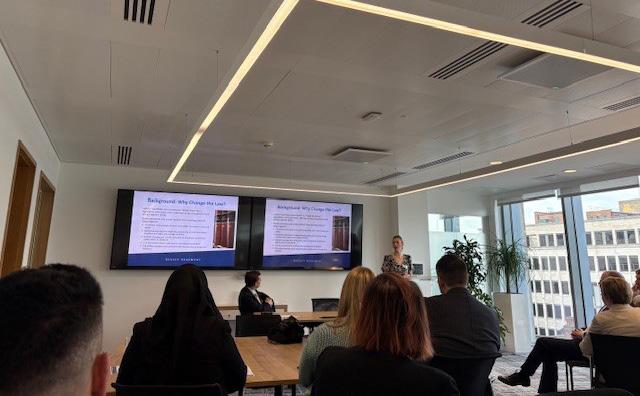
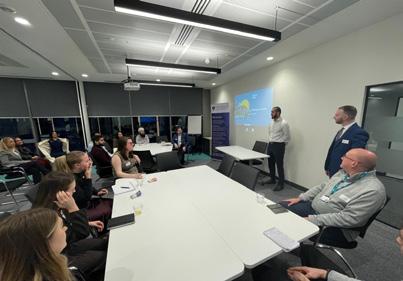
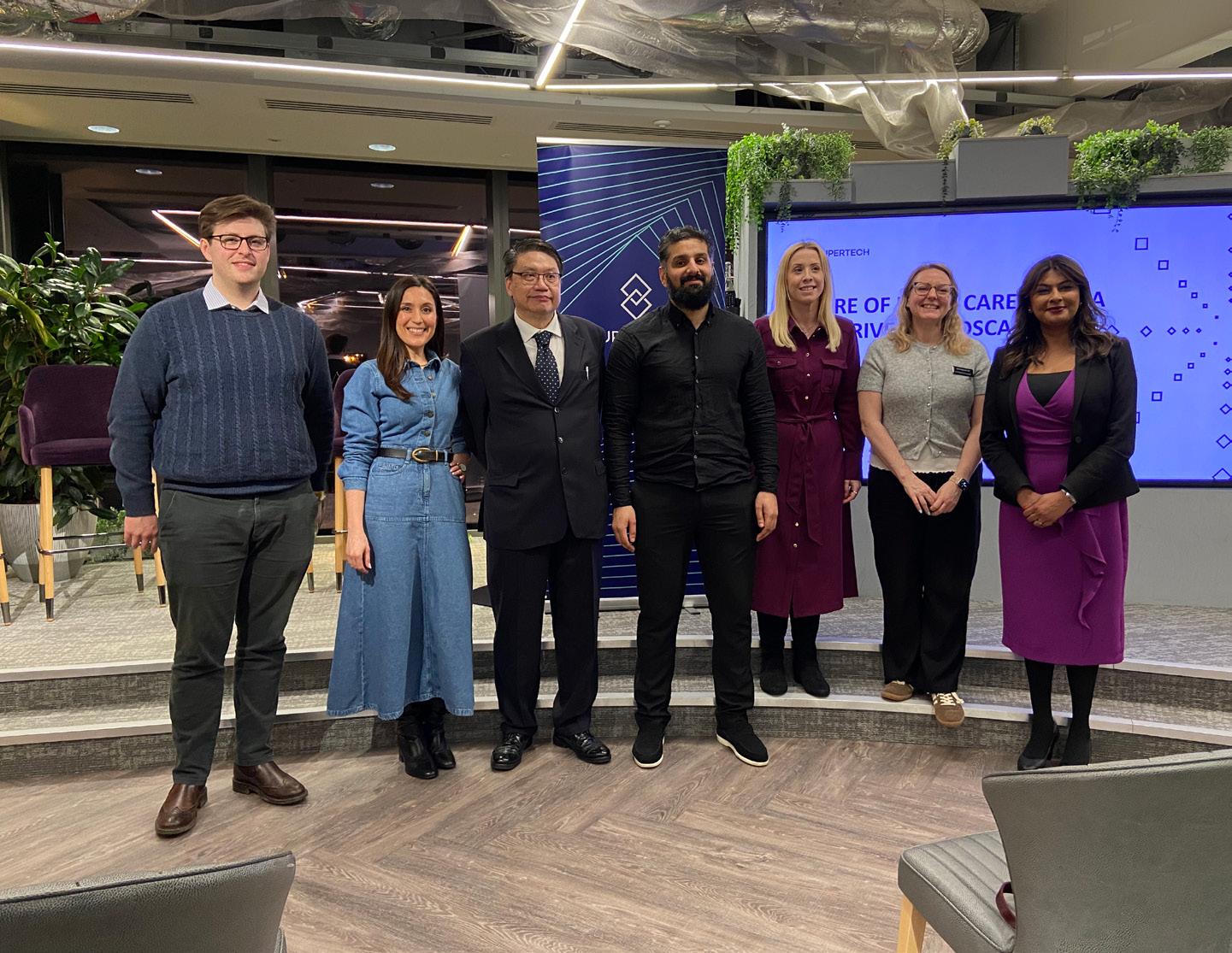
The rapid development of legal technology is transforming how legal services are delivered, creating new roles and new skill requirements across the profession. Recognising the importance of preparing future lawyers for this evolving landscape, SuperTech WM, the Business Professional and Financial Services cluster body for the West Midlands, once again led this regional industry and academic engagement event in partnership with Shoosmiths, with support from Birmingham Law Society and Birmingham City University.
The event, “Future of Legal Careers in a Tech-Driven Landscape,” brought together practitioners, innovators and students for an evening of discussion on how technology is reshaping the profession and what this means for the next generation entering legal practice.
The event attracted a full audience of around 70 attendees, including law students, early-career professionals and practitioners from across the region. Universities across the West Midlands were allocated a prescribed
number of tickets to ensure equal participation opportunities across institutions. The full house reflected the growing interest among students in the intersection between law, technology and innovation
Pia van Antwerpen, Community Engagement Lead, SuperTech WM said “Innovation happens when the right parts of the ecosystem come together. By convening students, legal practitioners and technology innovators, collaborative events like this help build the connections and shared understanding needed to drive meaningful change across the sector. Working alongside partners such as the Birmingham Law Society, and firms like Shoosmiths, enables SuperTech to create platforms where talent, industry and innovation can intersect. That collaboration is essential if we want the West Midlands to continue strengthening its position as a leading hub for legal talent and professional services innovation.”
The event forms part of a wider effort by Birmingham Law Society Tech Committee working alongside SuperTech WM and it’s established ecosystem to engage regional university partners, to strengthen dialogue between industry and academia. By creating opportunities for students to engage directly with practitioners and innovators, the initiative helps ensure that the next generation of legal professionals are better prepared for the technological developments shaping modern legal practice.
Reflections from the Co-Chairs on a successful launch of the Birmingham Law Society’ s new Junior Lawyers Division (JLD)
“We’re overwhelmed by the amount of support, enthusiasm and positivity the Birmingham legal community have shown the creation of the new Junior Lawyers Division.
When this venture was first proposed, never in our wildest dreams did we imagine that at our very first event we would be able to share such a special moment with over 250 juniors from across the city.
The JLD exists to bridge the gap between junior lawyers and the Law Society, but also to remove labels and barriers from previous societies which sought to limit their attendees to specific roles. The JLD is open to all, from students and paralegals, to
apprentices and trainees and even newly qualified solicitors and those up to 5 years PQE.
We’d like to give a special thank you to our sponsors, BCL Legal, Chadwick Nott, St Philips Chambers and The University of Law who helped to make the launch party the spectacle it was.
As we turn our attention to our events in April, we hope to see you all at our “Meet the President” Breakfast event on 28th April 2026 at Weightmans LLP, 103 Colmore Row.”
Three Top-Tips For Effective Communication For In-House Lawyers
Communication is key to life, especially so when to comes to the law. From attracting and retaining clients, to advising on the best, most practical steps for those clients to succeed in their legal matters, communication underpins everything that we do
This applies just as equally to those working in-house, perhaps even more so, with the unique challenges that it presents writes Chris Simmonds, a Solicitor-Advocate (Civil), at Wolverhampton City Council. I started working in-house in 2014, first as a work experience student and now a senior solicitor, qualified for 9 years.
Following on from my talk at our first In-house event of 2026 – “Planning Law Update & Networking for In-House Lawyers,” these are my three top tips for communicating whilst working inhouse:
1. Being practical in your advice:
Something I always remember, is when I was interviewing for training contracts many years ago. The senior partner at one firm asked me, “when giving advice, do you simply explain what the law is, and leave the decisions to the client, or do actually say, these are options, and I think you should do X, Y and Z?”
At the time, I answered the second
option, that it was our job to advise and for the client made the decision.
He said, ok that’s fine. That may make you an ok lawyer. However, anyone can simply tell you what the law says.
A good lawyer might go a bit further, and give the client several options, and let them choose.
However, the best lawyers, and the lawyers that people will want to come back to, can communicate on the client’s level, and give specific, practical advice on how to achieve the client’s goals, even if that is not what they originally planned.
This is what will make you bring real value to your clients, above and beyond what others may be able to provide.
This advice has always stuck with me, and since then I put this into practice and I have found… it works!
This is something clients, colleagues and my managers, always say that they like when working with me, and why they always like it when I am asked to advise on something. Check out point 3 below for a real life example!
2. Being clear and concise in your advice:
This should go without saying; however, the easier something is to read and understand, the more likely someone is to listen and take on board what you say. Tying into point 1 above, as well as being practical, one should always try to be concise, clear and easily understandable when communicating.
People also like stories, so, when drafting, try to think of it like a journey, with a beginning, middle, and end, so people can see the thought process, rationale and logic behind what you are saying.
3. Utilising transferrable skills and knowledge from other areas
Finally, once key thing that I have found, is to not think solely about the area of law that you are working on now, but to draw on knowledge and skills from other areas.
For example, one day at work I was contacted by a client about
utilising the Enterprise Act to tackle an imminent illegal eviction. No-one knew anything about the Enterprise Act in the team, and looking at the legislation, it seemed to be very complicated and onerous to use. Some people may have just left it at that, the consequence being, someone may have been illegally evicted and thrown out onto the street.
However, I assessed the situation, and thought about my work on Anti-social Behaviour Injunctions under the ASB Crime and Policing Act 2014. The Act grants the County Court the power to make an injunction, where a person is engaging in behaviour causing, or likely to cause, another person “harassment, alarm or distress,” and an injunction would be “just and convenient” to prevent that behaviour. Is being illegally evicted likely to cause someone “harassment, alarm or distress?” Yes. Is it “just and convenient” to prevent someone from doing this? Yes. Had we used this power in this manner before? No. However, the facts of the case seemed to meet the criteria, and we thought, why not give it a go.
We therefore applied for an injunction, and was successful, obtaining a twoyear injunction, a power of arrest, and an order for the defendant to pay the Council’s costs of nearly £1,000.00.
By utilising transferrable skills and knowledge, we were able to innovate and achieve this great result. It, again, ties into being practical in your advice, and thinking about what the aims of your client are, and advising on a path forward, even if that that may be different to what was originally planned.
Conclusion
I hope that you have found these top tips useful, and I would encourage anyone, who may not do these things already, to give them a try, and see what happens.
You may be pleasantly surprised.
For more articles such as this, and to get involved and network with hundreds of fellow in-house lawyers in the West Midlands, stay tuned to Birmingham Law Society’s In-house Committee LinkedIn Group here and to be the first to hear about our next events, to be announced soon.
New Government Funded Training Routes for Trainee Solicitors
The defunding of Level 7 apprenticeships on the 1st January 2026 has fundamentally altered the pathways available to aspiring solicitors across England and Wales. Previously, the Level 7 Solicitor Apprenticeship was the government-funded route of choice for law graduates entering law firms. That door has now closed for anyone over the age of 22, which in practice affects the vast majority of aspiring graduate-level legal professionals.
The reason for the change is straightforward: the Labour government redirected apprenticeship levy funding towards lower-level skills (Level 3 and Level 4) to help more people into employment. No exemption was made for the Solicitor Apprenticeship, despite intensive lobbying by the sector. At present, there is no indication of a review. For law firms and their employees, the question now is: what comes next?
Two New Government-Funded Routes
There are two new government-funded law apprenticeship programmes that now represent the most compelling routes for individuals working towards a legal career and towards solicitor status:
• The Advanced Paralegal Apprenticeship
• The Chartered Legal Executive Apprenticeship
Each serves a distinct purpose, and for many learners particularly those who want to practise at the level of a solicitor in their chosen specialism as quickly as possible the Chartered Legal Executive route now represents the most efficient available pathway. The two programmes can also be combined for a structured dual-qualification journey.
The Advanced Paralegal Apprenticeship
The Advanced Paralegal Apprenticeship is targeted at individuals who have either completed a law degree or finished the Level 3 Paralegal Apprenticeship. It’s equivalent to the first two years of a university degree and is designed to bridge the gap between entry-level legal work and the demands of the Solicitor Qualifying Examinations.
Key Facts at a Glance
• Funding Available: Up to £18,000
• Duration: 14-24 months (varies by individuals prior qualifications)
What It Covers
The Advanced Paralegal Apprenticeship has been carefully mapped to the content of the Solicitor Qualifying Examinations. Specifically:
• The knowledge components of the programme are aligned with SQE1 content, meaning learners are building the legal knowledge base they will need to sit that exam.
• The skills and behaviours assessed throughout the programme closely mirror those evaluated in SQE2, covering areas such as client interviewing, advocacy preparation, legal research, and written advice.
Who Is It For?
• Law graduates who are over 22 and can no longer access the Level 7 Solicitor Apprenticeship
• Individuals who have completed the Level 3 Paralegal Apprenticeship and want to progress
• Organisations that want to invest in the structured development of trainee solicitors using levy or co-funded government money
For firms that want a prescribed, evidenced method of developing future solicitors, this programme provides exactly that.
The Chartered Legal Executive Apprenticeship
The Chartered Legal Executive Apprenticeship is currently the only government-funded programme available to individuals over the age of 21 that includes practice rights upon completion. For many law firms, this programme offers a faster and more cost-effective route to having fee-earning practitioners than any other available option.
Key Facts at a Glance
• Funding Available: Up to £27,000
• Duration: 29 months + up to 4 months for final assessment
Practice Rights: What This Means in Practice
The Mazur ruling brought significant attention to the question of who can lawfully conduct litigation.
The Chartered Legal Executive Apprenticeship directly addresses this.
Upon completing the programme and making a successful application to CILEx Regulation, learners will hold recognised practice rights in their chosen specialism. Datalaw is approved directly by CILEx Regulation, as an approved training and examining centre, meaning all exam costs are included within the apprenticeship funding. There are no Kaplan fees, no separate examination registrations, and no additional costs for the qualification itself.
The practice rights available depend on the learner’s chosen specialism:
• For contentious (litigation) specialisms, Family, Civil, and Criminal, learners will gain standalone litigation practice rights, on par with a solicitor for those activities. A fiveday advocacy course (available as a bolt-on after the apprenticeship, which Datalaw is currently seeking approval to deliver directly) enables full advocacy rights.
• For non-contentious specialisms, Employment, Immigration, Wills and Probate, and Business Law, learners will come out with the same practice rights as a solicitor in those areas.
As soon as a learner gains their practising rights, they become a fee-earner from Grade C and above, giving organisations a direct return on their investment.
What Learners Say
“The unwavering support and genuine enthusiasm towards teaching students makes the whole experience all the more exciting, and I can’t wait to see how this apprenticeship takes my career to the next level.” — Erin Green, Chartered Legal Executive Apprentice, Owen Kenny Partnership Ltd
“The most beneficial part of the Chartered Legal Executive Apprenticeship has been the headstart that it gives you. You develop professional skills that you wouldn’t get much experience in traditionally.” — Joseph Neary, Chartered Legal Executive Apprentice, Victor Welsh Legal
The
Dual Qualification Route
For learners who ultimately want both practice rights and the solicitor title, a structured dual-qualification pathway is available:
Step 1: Complete the Advanced Paralegal Apprenticeship - 14 to 24 months. This builds SQE-aligned knowledge and skills.
Step 2: Proceed to the Chartered Legal Executive Apprenticeship - approximately 29 months plus assessment. Specialism chosen in year two.
Step 3: Complete the five-day advocacy course to gain full litigation and advocacy rights as a Chartered Legal Executive.
Step 4 (optional): Sit SQE1 and SQE2 to obtain the solicitor title. At this stage, the learner will already hold full practice rights equivalent to a solicitor in their specialism, making this final step a matter of title rather than practice.
The overall timeline for someone starting from scratch, without any prior qualifications, could be between 5 and 8 years from first enrolment to solicitor status. For a law graduate entering the pathway at the Advanced Paralegal stage, the timeline is significantly shorter. Learners who are confident in their legal knowledge may also choose to proceed directly to the Chartered Legal Executive Apprenticeship without completing the Advanced Paralegal first.
Getting Started
To enrol on either programme, learners must be employed by a law firm or legal organisation. Apprenticeships cannot be taken on a self-funded or independent basis, the employer is the contracting party.
Law firms interested in enrolling learners are encouraged to get in contact with Datalaw as soon as possible to discuss eligibility, levy arrangements, and individual learner assessments.
Get in contact: www.datalawonline. co.uk/law-apprenticeship
Birmingham Mind: Spring Events to Get Involved In
Birmingham Mind continues to bring the community together through a range of exciting events this spring, offering plenty of opportunities to have fun while supporting mental health services across the city.
Kicking things off is the muchanticipated return of Birmingham Mind’s Quiz Night on Monday 27th April.
Back by popular demand, the event will take place at the iconic Old Joint Stock, promising an evening of friendly competition, laughter, and fundraising.
Whether you’re a trivia enthusiast or just looking for a great night out, this is the perfect chance to gather a team and put your knowledge to the test.
Full details and ticket information are available here.
Hot on its heels is the Great Birmingham Run on Sunday 3rd May, one of the city’s biggest annual sporting events.
Participants who choose to fundraise for Birmingham Mind can benefit from a discounted entry fee, making it even easier to get involved while supporting a vital cause.
Runners can choose between the 10K or half marathon , but should note that registration must be completed by 6th April to secure a place.
Both events highlight Birmingham Mind’s ongoing commitment to raising awareness and funds for mental health support, while creating inclusive, community-driven experiences.
Whether you’re testing your trivia skills or lacing up your running shoes, there are plenty of ways to get involved and make a difference this spring.
Find out more at https:// birminghammind.org/
Two years in, we’re continuing to grow and invest in Birmingham.
As the UK’s second city continues to act as nationally significant hub for professional services, Nick Dawson, partner and head of Birmingham at international law firm Hill Dickinson, explores the changing professional services market, the opportunity for the mid-market and the firm’s commitment to the region two years on from opening.
It’s hard to ignore the growth of regional hubs across the UK, where locally based legal teams are rivalling the calibre of work traditionally delivered in London. It’s no different here in Birmingham. While we’ve long been seen as the UK’s second city, the Capital’s dominance has previously meant that higher profile work has often gravitated there.
However, Birmingham’s legal market, and indeed much of the wider regional business market, is in good health. Having set up an office in Birmingham for the first time just over two years ago, we’re proud to be a part of this journey, ensuring we’re fully committed to the city and not just planting a ceremonial flag.
The mid-market opportunity
As a regional and international powerhouse, Birmingham has long been home to a number of high-quality law firms – including those like Hill Dickinson which have a national and international reach. We pride ourselves on our clients being able to find us wherever they need us to be, which is why we established ourselves in Birmingham two years ago.
Another key reason for doing so was that we recognise the opportunities here – particularly within the mid-market. Birmingham and the wider Midlands has historically been a well-known hub for manufacturing and engineering businesses. These sectors remain a huge part of the local economy, now complemented by expanding professional, financial and business services, as well as growing tech, life sciences and health technology industries. Many of them are seeking advisors who understand their local market but have a clear view of the broader national picture, and can deliver access to it help attract investment – be that from domestic funds or from overseas.
Our commitment to Birmingham I’m no stranger to Birmingham’s legal market, having built my career here. When Hill Dickinson was looking to formalise its presence in the city, it felt like the right fit. It’s a firm that is built on progressive thinking but also the positive personal approach clients know us for.
Two years on and the growth we’ve already achieved is beyond our own ambitious expectations.
Having opened with a five-strong corporate team, we’ve focused on building out our capabilities and moving towards becoming a full-service offering.
This means we now have over 25 colleagues covering corporate, real estate, real estate litigation and corporate dispute resolution. To facilitate that growth, we recently moved to a great new space at 5 St Philip’s, providing us with a platform to continue expanding.
In this short time, we’ve seen how regional expertise, with the backing of national teams, can best serve our clients and ensure we have a genuine commitment to the region.
And over the next few years, we’re set to build on this further – supported in no small part by the global visibility created by our sponsorship of Hill Dickinson Stadium.
With a burgeoning regional economy here in Birmingham, we’re committed to growing in the city for years to come.
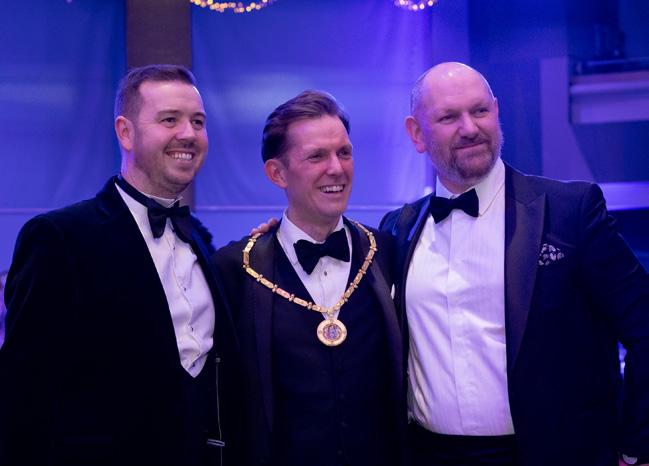
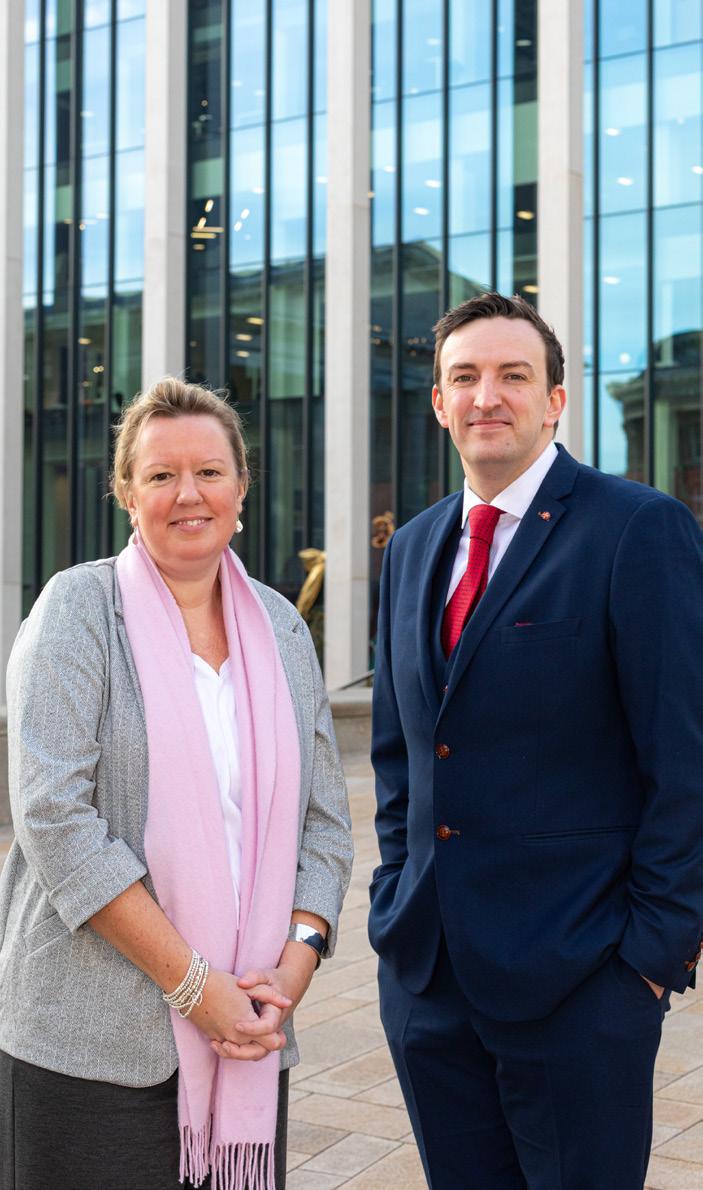
L-R Nick Dawson, Alex Duckett (Gilbanks) and Craig Scott
Us always starts with
Who we work with
We are proud to be trusted advisors to:
• Cruise lines
• Airlines
• Hotel groups, resort chains and hospitability providers
• Tour operators
• Online travel agencies (OTAs) and booking platforms
• Travel and Marine insurers, loyalty platforms and assistance providers
• Freight forwarders and logistics providers
• Car rental firms and ground transport providers
• Destination Management Companies (DMCs) and local suppliers
• E-commerce platforms and challenger banks
• Fintech startups, scale-ups and embedded finance platforms
• Global payment processors and digital wallet providers
Hill Dickinson is a progressive-thinking law firm supporting clients across the UK and internationally.
From our Birmingham office and wider national network, we advise across real estate, corporate, commercial, financial services and private wealth, combining technical expertise with a practical, people‑focused approach that turns our clients’ ambitions into decisive action.
Navigating Faith-Based Investment Choices For Muslim Protected Parties
For many Protected Parties (P), and their families, who are Muslim, investing settlement funds is not just a financial decision, it’s a deeply personal one shaped by faith and values. Deputies often share in this journey, working closely with families to help ensure choices reflect both financial security and religious priorities writes Andrew Chapman, Investment Director, Quilter Cheviot.
After thoughtful consideration and, in many cases, consultation with trusted religious advisers, families often initially take one of two paths. Some opt for a Shariah-compliant portfolio, valued for its strict adherence to Islamic principles and structured oversight. Others choose an ethical approach that reflects Islamic values but offers greater flexibility.
These decisions can feel complex, as each option carries different implications for compliance, transparency, and investment strategy. Understanding the distinctions between these approaches, and the variations of how different providers typically implement them, can help everyone involved feel more confident in their choices.
Shariah-compliant portfolios: the basics
Shariah-compliant portfolios follow strict Islamic principles, such as:
• No riba (interest)
• No gharar (excessive uncertainty)
• Exclusion of haram sectors such as alcohol, gambling, and conventional finance
Shariah compliance is overseen by qualified scholars and reviewed both at inception and throughout the life of the portfolio. Each individual investment must pass rigorous screening and remain compliant over time.
Shariah-compliant portfolios often carry higher volatility because they exclude entire sectors, have greater exposure to foreign currencies, and rely more heavily on equities to achieve growth.
How do ethical portfolios compare?
Ethical portfolios may aim to reflect Islamic values without meeting every technical criterion of Shariah law. From a risk perspective, Islamic ethical portfolios allow a broader investment universe, including fixed income, providing more balance between growth and stability.
How do different providers approach Shariah-compliant investing?
A growing range of solutions exist for families seeking Shariah-compliant
investments, with two main models: a pooled fund model and a bespoke discretionary model.
Shariah compliance requires ongoing oversight as markets and investments evolve, with the two models often approaching oversight differently.
In pooled fund solutions, oversight typically occurs at the fund level through the provider’s Shariah board, with the depth and transparency of review varying between providers. By contrast, discretionary portfolios, by their bespoke nature, provide full transparency and the ability for scholars to review each investment.
When strict Shariah compliance is especially important, and when families wish to share portfolio details with their own religious advisers for additional reassurance, a discretionary route may be preferred due to the additional clarity it affords.
Questions to help inform choices:
From our experience, these questions may help highlight what is ‘under the bonnet’ of different provider options and help to further inform a family’s choices:
1. If the family opts for an ethical route, how are the Islamic values defined and reflected in portfolio construction?
2. If the family opts for a Shariahcompliant approach:
Parties And Their Families
1. Who certifies Shariah compliance, and how often is it reviewed?
2. Can you see the individual investments, or only pooled funds?
3. Who makes day-to-day decisions, and how accessible are they for queries?
4. How do fees break down between the investment manager and third-party funds?
5. Can the portfolio adapt if the family’s interpretation or priorities evolve?
Quilter Cheviot’s approach
At Quilter Cheviot, we offer a range of options suitable for Muslim protected parties and their families, including:
• Shariah-compliant portfolios, developed in partnership with Yasaar Ltd, an independent third-party research body who provide quarterly reviews. These are conducted by their board of scholars who offer detailed rationale for each investment. This is provided via a discretionary model for families who value transparency and direct engagement, which we feel is vital to ensuring proper compliance.
A Career in Conveyancing Comes Full Circle for Sarah Dwight
Sarah Dwight has been a sole practitioner in the Hall Green area of Birmingham for over twenty years. Former Chair of the Birmingham Law Society Property Committee and former Council member, she is now delighted to have been appointed as the Co-Chair of the Law Society Conveyancing and Land Law
‘The conveyancing profession is going through major changes at the moment with various consultations focusing on improving the home buying and selling process, a move to Commonhold, a review of freehold managed estates as well as discussions regarding client account. On top of this , it appears likely that conveyancers are going to have to register as tax a dvisers , and the burden and regulation on this sector of the profession continues to increase. It is therefore an exciting but daunting time to be appointed as Co-Chair of the Committee, but I hope that with my many year s of experience both as a high street conveyancer, working at the co al face on a daily basis , and my years on the Committee , that I can c ontinue to represent the conveyancing profession and help to steer us thr ough these difficult waters ahead.’
• Ethical and bespoke discretionary portfolios, designed to reflect Islamic values without rigid restrictions, offering flexibility while maintaining integrity. Want to know more?
Watch our on demand webinar, featuring Majid Dawood of Yassar Research, on how deputies can navigate Shariah compliant portfolios with confidence.
Click here to watch
The value of investments, and the income from them, can go down as well as up and past performance is no guarantee of future return. You may not recover what you invest.
Quilter Cheviot and Quilter Cheviot Investment Management are trading names of Quilter Cheviot Limited. Quilter Cheviot Limited is registered in England and Wales with number 01923571, registered office at Senator House, 85 Queen Victoria Street, London, EC4V 4AB. Quilter Cheviot Limited is a member of the London Stock Exchange and authorised and regulated by the UK Financial Conduct Authority and as an approved Financial Services Provider by the Financial Sector Conduct Authority in South Africa. This is a marketing communication.
‘During my time on the Committee, I have worked on many differ ent areas of conveyancing practice , the most recent being the changes to the Property Information form (TA6). The Sixth Edition is going to be mandatory for all CQS accredited firms as from the 30th March, and it is important for firms to get a grasp of the new form and the accompanying Explan atory Notes prior to the end of March.
I often get asked what does the Committee do? The Law Society Conveyancing and Land Law Committee reviews and promotes improvements in all branches of land law, conveyancing procedur e and practice and related matters , with a focus not only on res idential conveyancing but also commercial property. We engage with outs ide bodies such as the Land Registry, the Law Commission, UK Financ e , RICS and so on.
We provide practice notes, articles and other communications. I have recently been involved in a Webinar about the changes to the TA 6 form and this can be downloaded and is worth watching to give backgr ound to the changes and also a focus on which parts of the form have changed and why.
The Committee is divided into various working groups - the Re gulatory Working Group, the Searches Working Group, the Commercial Prope rty Working Group and the Residential Property Working Group. The re is a wide remit because conveyancing is such a large area of work.
All conveyancers will know that no two days are the same, and t hat we are dealing with such an important transaction for the public that not only do we need to know the law, the process and the procedure but we also need to have empathy and appreciate the stress which a client is exp eriencing as they may the largest purchase of their lives.
Who would have thought that when I got off a train at Snow Hil l Station in September 1988 as an articled clerk that I would now be co-cha iring a Law Society Committee?
The New Leaders of Law
A monumental shift is taking place in the UK legal market –one that will affect every part of the profession writes Colin Bohanna.
As one of the leading legaltech providers in the world, a large portion of Dye & Durham’s activities is to research, track, and foresee changes in the legal industry before they have become mainstream. We did this in our 2024 report, “Digital Pioneers: Leading The Tech Revolution,” which charted how the digital fluency of Millennial and Gen Z legal practitioners was reshaping expectations of the workplace and accelerating adoption of modern systems. That research was important. What we are observing now is more consequential and is likely to have an even greater effect on the legal sector for decades to come.
The UK legal market is entering a period of structural change that will influence how firms operate and compete for years to come. We are seeing how consultant-led and platform models are scaling at pace, alternative business structures (ABS) account for a growing share of regulated firms, and private equity (PE) interest in legal services is now an active feature of the market rather than a distant prospect. This trifecta is the beginning of what we see as a historic moment, one in which operating expectations are shifting faster than the profession typically moves.
Dye & Durham will be releasing original research on this in the coming months that will chart how ownership, working models, and capital are influencing the way legal organisations are structured and expected to perform. In a later article, I will also expand on the changing dynamics that are leading to this structural change. Today, I concentrate on one of the biggest drivers of it: A new type of leader that is at the forefront of the trend.
Ahead of that, here are the broader trends all law firm owners, partners, and CEOs should already have on their radar.
A New Type of Leader
When we first wrote about Digital Pioneers, the picture of a new type of legal professional was already beginning to emerge. As we found then, as Millennial and Gen Z legal professionals rise in prominence, their expectation of digital fluency is reshaping what “good” looks like in a workplace, as well as what “modern” looks like in a law firm. That still remains true. Digital competence is no longer a differentiator for many firms; it is increasingly a baseline expectation among junior lawyers and early-career professionals. But it is not just junior professionals who are embracing this change.
Through our research and many recent conversations with the legal market, we are charting an unmistakable trend in how leadership is changing. For generations, the UK has had a largely predictable set of operating standards that we’re all familiar with: law firm ownership and promotion to senior leadership have most often followed a well-worn path, one that relied heavily on progression through apprenticeship, promotion, presenteeism and networking. Management and leadership were often assumed to be “learned by doing”, a skillset one developed in the office rather than a separate track.
In a different era, that process worked – and it still does for many firms – but the world that law finds itself in now is undeniably different: massively increased investment, particularly in lawtech, evolving client expectations, advancing regulation standards, and crucially, different attitudes within the profession. Where once many law firm owners remained technology sceptics, a growing number of legal organisations are now shaped by leaders who are digitally fluent themselves and commercially oriented in their outlook. These are CEOs, COOs, CIOs, and operationally minded partners responsible for multi-entity groups, consultant networks, or acquisitive growth strategies. Their day-today concerns are not only legal delivery, but scalability, compliance visibility, performance management, and how the organisation functions as a coordinated whole. That marks a clear departure from an earlier era, when technology decisions often required persuasion driven by regulation or IT advocacy.
This leadership mindset aligns with wider market signals, particularly in how firms are structured. There is an appetite for new ways of practising and delivering legal services: ABS adoption has risen from around 8% of firms in 2017/18 to approximately 14% by 2024, reflecting steady growth in structures that allow non-lawyer ownership and different approaches to investment and governance. Consultant-led and fee-share models are operating at significant scale, with leading firms numbering in the hundreds of lawyers. At the same time, industry analysis highlights record levels of private equity-backed platform activity in legal services. These are not disparate events; they display a change in attitude and a different standard for success. Increasingly, those who treat legal service provision as a business are likely to be the most successful in a busier and more tech-savvy market.
This is a topic we will be expanding upon more in our upcoming and market-defining research. To get access to that report when it is available, please visit www.dyedurham. com/resources