
Day 19
SUNDAY
Jesus calls us to the margins.
Matthew 8:2-4
Focus verses:
Matthew 8:2-3
And there was a man with a skin disease who came to him and knelt before him, saying, “Lord, if you are willing, you can make me clean.” He stretched out his hand and touched him, saying, “I am willing. Be made clean!”
Immediately his skin disease was cleansed.
This passage offers the first of three healing stories in Matthew, chapter 8. Each features someone who lives on the edge of society: a leper, a Gentile slave and a woman. Each story shows Jesus reaching across boundaries – religious, cultural and gendered – to restore life where others have drawn lines.
Leprosy in Jesus’ day meant more than a skin disease. It carried the weight of moral suspicion. People believed leprosy was a punishment for sin. People with leprosy were cast out, were made to live apart and were required to shout “Unclean!” if anyone came near. To touch one was to risk both infection and ritual defilement. The law of Moses warned that anyone who touched an unclean person became unclean themselves (Leviticus 5:1-3).
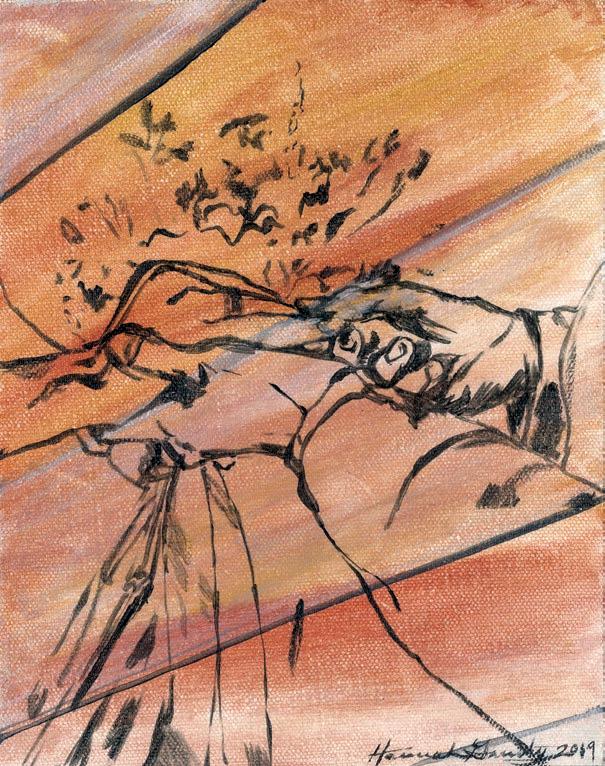
But Jesus touches him anyway. In that single gesture, Jesus not only heals a disease but also shatters stigma. He fulfills, not abolishes, the intent of the law. As Jesus says in Matthew 5:17, the heart of God’s law is restoration: to bring people back into right relationship with one another and with God. The miracle here is physical, yes, but it’s also social and spiritual. The leper is made whole, both in body and in belonging.
People all around us live on society’s edges: the unhoused on our streets, the Dalits of India, the millions incarcerated in America. Jesus’ ministry doesn’t keep these people at the margins; he moves straight toward them. And his work isn’t a side project or a short-term mission trip. It’s the ongoing priority of God’s kingdom. If we are to follow Jesus, then we must center these people on our path of discipleship.
Reflection
Prayer
Who today lives on the margins of your community? How might you, in word or action, reach across boundaries to restore relationship and dignity in Christ’s name?
Healing God, you reach across every line we draw and touch what we fear to touch. Cleanse our hearts of prejudice and indifference. Lead us to the margins where you already dwell, and make us instruments of your restoring love. Amen.

Day 20
MONDAY
New wine requires new vessels.
Matthew 9:9-17
Focus verse:
Matthew 9:17
Neither is new wine put into old wineskins; otherwise, the skins burst, and the wine is spilled, and the skins are ruined, but new wine is put into fresh wineskins, and so both are preserved.
As Jesus walks along, he sees a tax collector named Matthew sitting at his booth. Jesus simply says, “Follow me.” And Matthew gets up and follows. Just like that. No résumé of good intentions. No demand for proof of moral improvement. No spiritual prerequisites. Just invitation — and response.
Then Jesus goes to dinner at a house full of the wrong people. These are “tax collectors and sinners,” we are told. The religious leaders are scandalized. This outreach is not how a holy person is supposed to act. But Jesus is doing something new. He is not afraid of the mess. He goes where grace is needed most.
But the newness of Jesus’ ministry does not mean discarding the old. As Jesus says in the Sermon on the Mount, he has not come to abolish the law or the prophets, but instead to fulfill their deepest purpose (Matthew 5:17). The problem isn’t the tradition — it’s how tightly we cling to it. We cannot put new wine into old wineskins, Jesus teaches; “otherwise the skins burst.” New wine requires new vessels—not because the old wine was worthless, but because the new wine is still alive: fermenting, expanding, growing.
The life of faith is like that. God is still fermenting something in us. Yet churches – and church people – can be tempted to hold tightly to what we know, to what feels familiar, to what has worked before. Change can feel like loss.
But Jesus doesn’t call us to throw away our history. He calls us to make it newly meaningful for the generations who come after us — to let the same Gospel stretch, breathe and take shape in ways we could never have imagined.
Reflection
Where are you clinging too tightly to an old wineskin: old habits, old expectations, old ways of doing church? What might God be fermenting, expanding, growing in you or in your community now?
Prayer God of the ever-living Word, keep us open to your newness. Honor the traditions that have formed us, and give us courage to let your Spirit reshape them for this moment. Make us vessels, flexible and faithful, ready to hold the new wine of your grace. Amen.
Day 21
TUESDAY
We are called to offer peace.
Matthew 10:1-15
Focus verses:
Matthew 10:12-14
As you enter the house, greet it. If the house is worthy, let your peace come upon it, but if it is not worthy, let your peace return to you. If anyone will not welcome you or listen to your words, shake off the dust from your feet as you leave that house or town.
After teaching, healing and restoring, Jesus now sends his disciples out to do the same. He gives them authority to cure the sick, raise the dead, cleanse lepers, cast out demons. Theirs is breathtaking work. Holy work. Vulnerable work.
Yet Jesus does not send them out like power brokers or conquerors. They carry no money. No spare clothing. No extra sandals. They are to enter towns not with swagger, but with humility. They are to rely on the hospitality of strangers, to receive before they offer, to listen before they teach.
As Thomas G. Long writes in Matthew, “The gospel does not coerce or bulldoze its way intrusively into people’s lives.” The good news is not something we force. It is something we embody.
Jesus tells the disciples they will be rejected at times; their message will not always be welcomed. But rejection is not failure, and their job is not to convince or control — only to bear witness. They are to offer peace. If peace is not received, they are to move on, still carrying peace with them.
That mission is as true now as it was then.
When we speak of our faith – in conversation, in our work, in the way we live – it can feel tender, even risky. Sometimes we will be misunderstood. Sometimes our intention will be questioned. But disciples of Jesus do not respond with defensiveness or resentment. We respond with peace.
We share the Gospel not by overpowering others, but by showing up humbly with compassion and curiosity, ready to listen, serve and love.
Reflection
Where have you experienced rejection or misunderstanding in your efforts to live or share your faith? How might Jesus’ call to “let your peace return to you” help you release anxiety and continue in love?
Prayer Gentle Christ, send us out in the spirit of your peace. Keep us from striving for control or influence. Make us humble, patient bearers of your good news: receiving hospitality, offering compassion and trusting that your Spirit is already at work in every heart. Amen.
Day 22
WEDNESDAY
We are known and loved by God.
Matthew 10:16-31
Focus verse:
Matthew 10:16
I am sending you out like sheep into the midst of wolves, so be wise as serpents and innocent as doves.
Jesus doesn’t sugarcoat discipleship. Following him is a path not of comfort or safety, but of courage and conviction. He warns his disciples that persecution will come — but he also assures them they will never face persecution alone. “Do not fear,” he says. “Even the hairs of your head are all counted. . . . You are of more value than many sparrows.”
Throughout history, Christians have faced persecution for speaking and living the truth of the Gospel. Dietrich Bonhoeffer, a German pastor and theologian, resisted Hitler’s regime and spoke boldly against its evil, knowing his resistance could cost him his life. And it did. He was executed in a concentration camp in 1945. In his book The Cost of Discipleship, Bonhoeffer wrote, “When Christ calls a man, he bids him come and die.” Yet for him, even this cost was a form of grace, because his death led to a true and authentic life in Christ, one rooted not in comfort but in faithfulness.
Most of us will never face persecution like Bonhoeffer faced, but we all know moments when faith sets us apart. I remember telling a girl in my college dorm that I planned to go to seminary after graduation. She stepped back in shock and never spoke to me again. Consider also the teenager who chooses church over soccer practice and ends up sitting on the bench. These small losses sting, but they too are part of the cost of discipleship. They form our own invitations to live faithfully in a world that doesn’t always understand or value faith.
Jesus’ words remind us that courage and faithfulness are possible because we are known and loved by God. The one who watches over sparrows also watches over us. We are not promised ease, but we are promised presence —and that makes all the difference.
Reflection
When have you felt misunderstood or rejected because of your faith? How might Jesus’ assurance of God’s care strengthen you to live courageously?
Prayer Loving God, you know our fears and count every hair upon our heads. When faith feels costly, remind us that we are never forgotten. Give us courage to speak truth with love, to follow Christ without fear and to trust that your eye is always upon us. Amen.