Stewardship Programs of the Watershed Agricultural Council
Adversity vs. Opportunity
While addressing the impact of the two catastrophic flood events in the region became the Watershed Agricultural Council’s top priority in 2011, the flooding events also demonstrated the genuine advantage the watershed has for both addressing adversity and working to stimulate economic viability of agriculture and forestry.
Over the last 19 years, the Council and collaborative partners have developed unquestionably the most skilled watershed resource professionals in the United States to address farm, forest, and stream issues. This was quite evident with the precision and timing of their ability to mobilize during the flooding crises last September and to work with landowners under extreme conditions.
For nearly two decades, the Council has worked together successfully with landowners to ensure water resource protection and to assist with economic viability. We have built wonderful relationships and a unique understanding of the working landscape through our Agricultural and Forestry Programs, as well as through our Farm to Market Program and Pure Catskills campaigns for food and wood.
It is with this unique understanding of working landscapes, bolstered by the connection of farm and forest businesses through the Pure Catskills campaign, that our Council of Directors took the initiative to further investigate how the Council could do more around supporting economic viability of small businesses throughout the region.
In 2011, the Council of Directors approved a three-year strategic plan which called for further investigation of “Economic Viability.” Over the past several years, there has been increasing effort devoted to strengthening the economic base in the NYC watershed region. In addition, as a leader in the region, the Council determined that it should analyze how agriculture and forestry-based businesses in the watershed could be more profitable and determine what role the Council plays.
As we celebrate our 20th anniversary, we do so with the knowledge that we have a unique opportunity to work together, side by side with regional partners and landowners, to have an impact on small businesses. We look forward to finalizing our strategic plan in 2012 for promoting the economic viability of agriculture and forestry and continually building relationships to support our environmental message.
Sincerely,
Craig Cashman Executive Director
Working Together
Revenues July 1, 2010 – June 30, 2011
2011 Coun C il of Di R e CT o R s
Fred Huneke, Chair, Delaware
David Cammer, Vice Chair, Schoharie
Chris DiBenedetto, Greene
Tom Donnelly, Delaware
Joe Eisele, Delaware
Sally Fairbairn, Ulster
Richard Giles, Delaware
Darby Hartwell, Delaware
Barbara Howard, Westchester
R. Thomas Hutson, Delaware
Steve Reed, Delaware
John P. Riedl, Treasurer, Schoharie
Ken Smith, Delaware
John Verhoeven, Greene
John Schwartz, NYC DEP
Thanks to You
InExpenditures July 1, 2010 – June 30, 2011
Find more detailed financials, audit report and Form 990 at nycwatershed.org.
2011, many of you gave to the Conservation Easement Stewardship Fund through annual donations of $1,355.02 and silent auction donations and bids totaling $4,352.56. Once in place, the endowment will address the needs of easement stewardship and farmland protection well into the future.
For the first time, the Council acted as a fiscal sponsor for a grassroots fundraising effort, Raise the Roof Farmer Flood Relief. Area individuals and groups gave in creative ways like pig roasts, hiking excursions and fundraising pools, raising over $35,000. Donations benefited a dozen farmers directly impacted by Hurricane Irene and Tropical Storm Lee.
We realize not all donors may be included here and apologize for errors/omissions. Please contact us with corrections at (607) 865-7090 or communications@nycwatershed. org. And thank you again for your support of regional agriculture, healthy forests and farmland protection.
Joshua Adler
Rebekah Alieri
Ashokan Center
Karen Ball
Amber Birdsall
Ed Blouin
Edna Boroden
Noel Brennan
Graham Brooks
Tom Buel
Dave Cammer
Catskill Center
Catskill Harvest Market
Catskill Heritage Alliance
Jacqueline Cincotta
CADE
College Assn. of Delhi
Tara & John Collins
Challey Comer
Egon Cording
Cowbella Dairy
Eric Dahlberg
Leslie Deysenroth
Heidi Dolnick
Sally Fairbairn
James Farmer
Emily Faulkner
Deb Fleming
Frost Valley YMCA
Diane Galusha
Morgan George
Rick Golding
Gowns for Greenbacks
Jennifer Grossman
Heather Ridge Farm
Seth Hersh
Michael Hughes
Randy Kelly
Kiwanis Club of Delhi
Daniel Levinson
Livestock Foundation
Dave McFarland
Lori Merrill
Edie Mesick
Laura O’Donohue
Dan Palm
Linda Reed
Sharon Reich
Roberta Rich
Stephen Robin
Jake Rosa
Catherine Rosenblum
Ed Shaw
Slow Food Upper Delaware
Kenneth Smith
Rosalie Sokol
Elizabeth Sova
Judith Spencer
Karl VonBerg
Holley White
Candace Worth
Marilyn Wyman
Al Young
Mary Ziegler
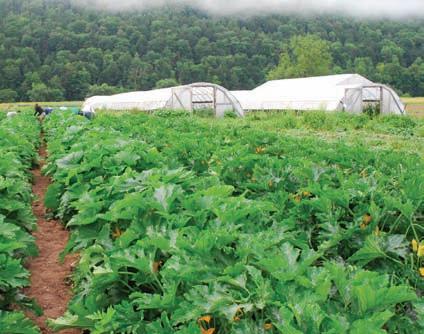
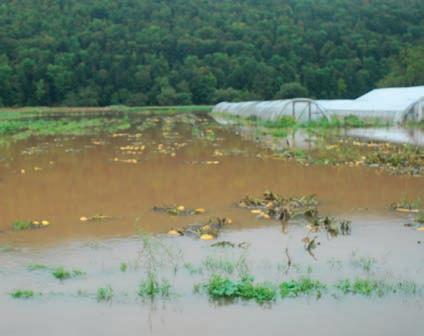
What a difference a day makes.The squash field at Lucky Dog Organic Farm, Hamden before and after Irene-Lee.
A f ond f arewell
WhenCheryl Marion came to the Watershed Agricultural Council on that 11th day of September in 1997, there was no way of her knowing how important a role she would eventually play in the development of the Council’s future and success. Hired by Executive Director Gale Sheridan to assist Council Chairman Dick Coombe, Cheryl probably thought this was a pretty straightforward assignment. Cheryl had worked for Dick when he was a New York State Assemblyman and the two
lived in Grahamsville where they were connected professionally and socially.
Under Dick’s tenure as Chairman, the organization grew rapidly, setting the pace to becoming an internationally recognized watershed protection program using the working landscape model. As the Council expanded, so did Cheryl’s responsibilities. When Dick left the Council for Washington, D.C. and the USDA’s Natural Resource Conservation Service, Cheryl’s role had already begun to change. Working with
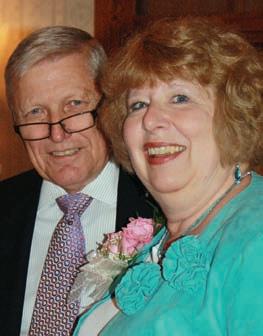
Chairman Fred Huneke roasted Administrative Services Director Cheryl Marion at her retirement celebration at the Old Schoolhouse Inn, Downsville.
four more Executive Directors and one other Chairman, Cheryl accepted more responsibilities as Administrative Services Director, in addition to coordinating 50 employees. As manager of human resources (HR), she quickly compiled personnel policies, operating procedures, employee handbooks and all things involved in the HR realm. She juggled staff demands along with the daily needs of the Chair and Executive Director and the curve balls involved with keeping them all on track. She was a master of all trades, from scheduling meetings to making travel arrangements. As the Council’s Gatekeeper and Walking Information Library, she proved an indispensable resource for information and trivia. Cheryl was the “Go To Person” for all things WAC. I often heard around the office, “Ask Cheryl, she’ll know.”
Most importantly, Cheryl brought a profoundly positive influence to the Council during her 15 years with us. She readily earned staff trust and board confidence. She set the bar high for administrative services and trained her successor Amy Hawk well. She brought candor to the conversation, truth without blame, common sense to insanity. Her retirement was well earned and we know that she and her husband, Jim, have plans for a very active and enjoyable time together.We miss Cheryl around the office since she retired in 2011. But we also wish her all the best in her latest life adventure. Wherever she goes, Cheryl brings light to Life, one that shines on even in her absence.
Fred Huneke
Chairman on behalf of the Council of Directors
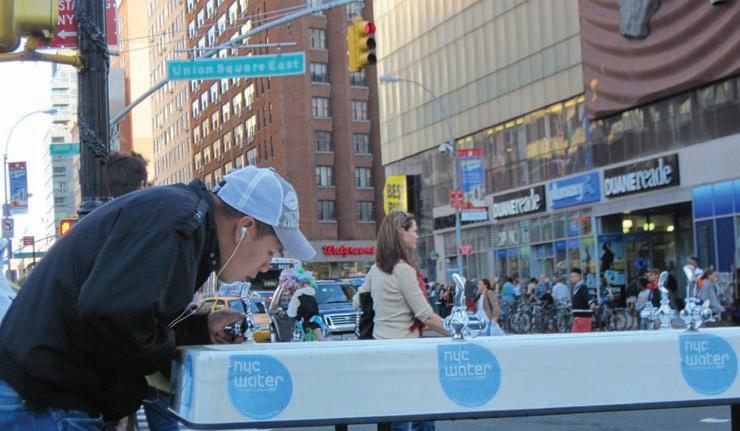
Water-on-the-Go connects portable water fountains to street corner fire hydrants throughout the summer. The popularity of this DEP program lies in its easy, and often unexpected, access to great tasting drinking water. This public service success is integrally linked back to the NYC Watershed and the Council’s watershed protection programs that help keep that water clean from the start.
Protecting Water Quality
In 2011, the Watershed Agricultural Program (WAP) implemented 317 Best Management Practices (BMPs) totaling over $3 million. Farm participants actively followed over 343 Whole Farm Plans and 263 Nutrient Management Plans, a percentage of which are reviewed and updated annually. Funding provided by New York City Department of Environmental Protection (DEP), the USDA and other sources helped the Program realize its goals.
In April 2011, the Program called together farmers in meetings similar to those held six years ago. Staff updated participants on how water quality criteria and construction selection processes had changed within the Agricultural Program. In the coming years, program staff will conduct more indepth Annual Status Reviews to determine the needs of businesses relating to
management and water quality issues.
In August and September, Hurricane Irene and Tropical Storm Lee devastated the region from Main Street to valley farm. The twin storms severely damaged over two dozen farming operations in Delaware, Greene and Schoharie Counties, leaving behind rerouted streams, major gullies and gouges, as well as an immense amount of flood debris strewn across fields and cropland. Many BMPs, like fencing and water systems, were also damaged and/or destroyed.
Fortunately, the DEP granted WAP staff permission to engage in immediate farm flood assessment to determine the extent and amount of damage. Flood response was quick among the partner agencies, with remedies coming at a much slower pace due to bottlenecks in emergency funding and the short-
age of construction and labor due to competing projects. The Council funded $151,431 towards the repair of 21 BMPs on 17 farms, with much of that work to be completed in 2012. Work funded through the Agricultural and Community Recovery Fund (ACRF), funded by the Governor’s Office and Department of Agriculture & Markets, took precedence. This funding provided farmers immediate assistance in returning streams to their channels, clearing and removing gravel and debris from crop fields, while filling in gullies and gouges to return active farmland to production. These funds were provided through the State Soil and Water Conservation Committee for implementation by local county Soil and Water Conservation Districts (SWCD). The WAP (consisting of staff from the Delaware County SWCD, Cornell Cooperative Extension (CCE), USDA
National Resource Conservation Service (NRCS), and the Council) successfully wrote damage survey reports and applied to ACRF for $505,090. Within weeks, the partners received $412,879 for 18 participants in various areas of the NYC Watershed. The WAP assisted SWCDs in survey, design and construction inspection of ACRF projects. In 2011, 28 projects on the 18 farms were completed at a cost of $388,827.
The Watershed Agricultural Program continues to partner with the USDA NRCS to encourage conservation of natural resources through provisions of the Agriculture Water Enhancement Program (AWEP). AWEP BMP monies awarded to date totaled $1,244,891. Another AWEP grant began in 2010 with a 5-year agreement in which $83,953 was awarded in 2011 to assist in the development and compliance of farm nutrient management plans.
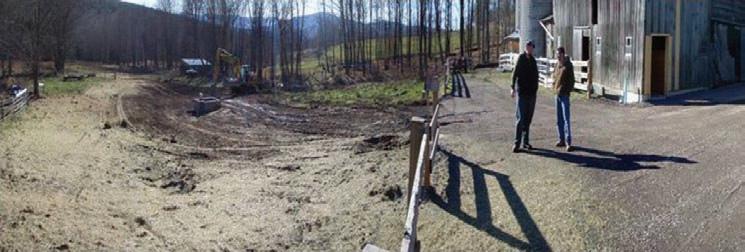
Water damage and erosion disrupted the daily routine at Mountain Brook Farm in Windham. Fortunately, the WAP assessment team quickly evaluated, planned and executed necessary repairs with New York State Agricultural and Community Recovery Fund monies augmented with DEP funding. For more details on the Council’s 2011 flood recovery efforts, review the Fall 2011 Watershed Farm & Forest newsletter online.
AWEP monies are specifically directed to financial assistance for water-quality improvement projects, such as partial funding for structural BMPs, primarily waste storage structures. The AWEP funds also allow monies to be allocated to nutrient management plan expenses. This creative approach to financing allowed the Program to implement more contractors throughout the watershed by extending the pool of DEP funding.
Coupling AWEP, DEP monies and additional financial support from the USDA Conservation Reserve Enhancement Program (CREP) enabled the Watershed Agricultural Program to build momentum. With these combined resources, projects were installed by an experienced and skilled watershed management workforce. Planners, technicians, engineers, farmers, construction professionals of all walks—gravel haulers, concrete pourers, carpenters, electricians, plumbers and general contractors—worked to provide clean water solutions to participating watershed farms year-round. More financial information can be found online in the WAP 2011 Annual Report and 2012 Workload.
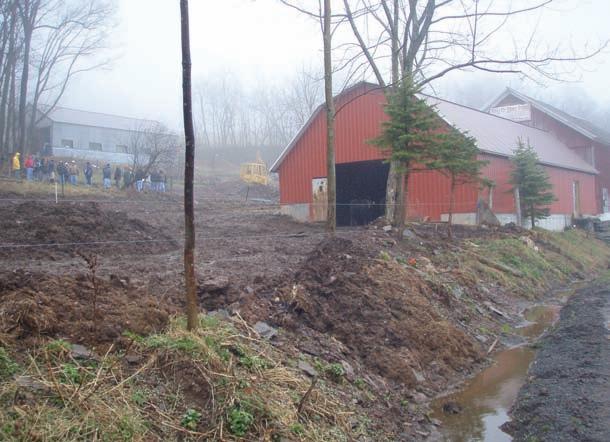
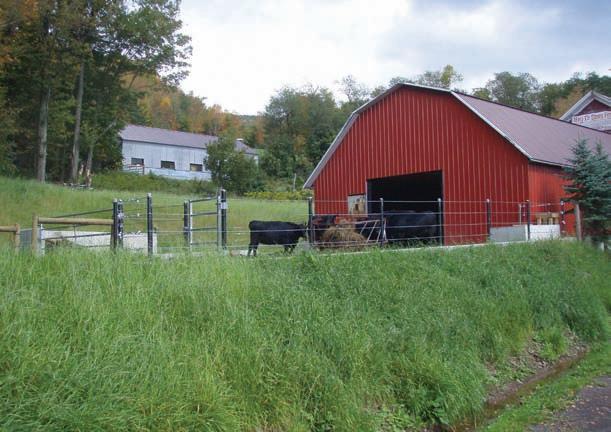
Small Farms Program participants Guerrino and Maria Dianich saw significant improvement in barnyard conditions, and water quality, after installation of a concrete feeding area, animal trail, fencing, watering facility and drainage at their 300-acre beef operation in Stamford, Delaware County. For more photos and project overview, look in the Watershed Agricultural Program’s 2011 Annual Report available online.
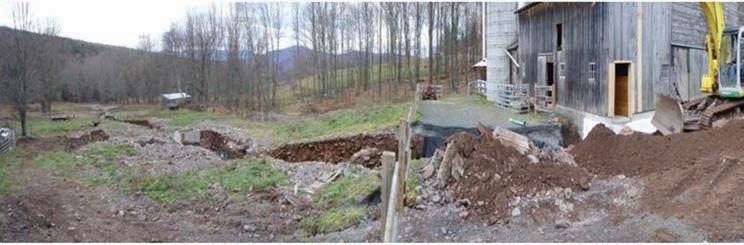
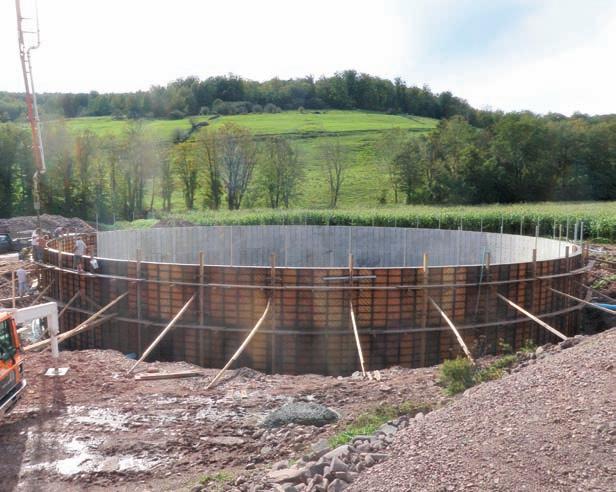
USDA Agriculture Water Enhancement Program funding advanced this in-ground manure storage project to the top of the water-quality remediation priority list. For a start-to-finish slideshow highlighting this construction project, visit the Council’s YouTube channel.
Working Together
We often say it’s all about collaboration, partners and working together. And much of our success comes from relationships forged with local, regional, state and federal legislators. Be it U.S. Rep. Maurice Hinchey going to bat for Forestry Program funding from the U.S. Forest Service or NYS Assemblyman Clifford Crouch promoting farm initiatives through the State Capitol, we look to our legislative leaders to step in on behalf of farm and forest landowners to move job creation, recovery efforts and land conservation initiatives forward.
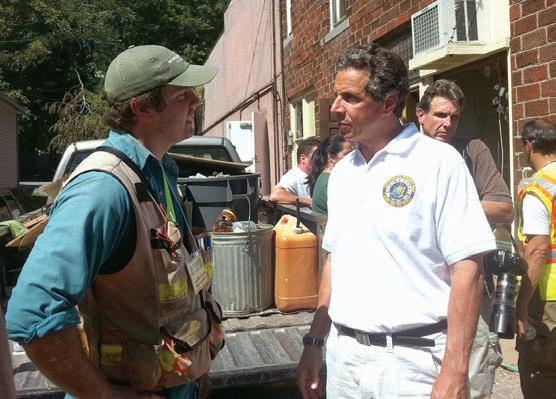
Council Engineering Specialist John VanBenschoten (at left) found himself wearing a different hat during post-Irene recovery efforts. During flood evacuations, John became acting mayor when Mayor Bill Stanton took ill.“It was a strange turn of events,” says John,“I don’t want to ever do that again.” John was excused from his Agricultural Program duties so he could focus on Margaretville’s crisis issues. Knowing the Council’s resources, John tapped into survey and measuring equipment to monitor Main Street structures to determine if they were shifting, or not.With the help of Rob Allison of Catskill Region Surveying Services, this proactive monitoring saved a strip of businesses from condemnation and demolition. Pictured here with Governor Cuomo (at right), John conveys the urgency for monetary support, future flood mitigation measures, and immediate assistance for the town, its farms, residents and businesses.
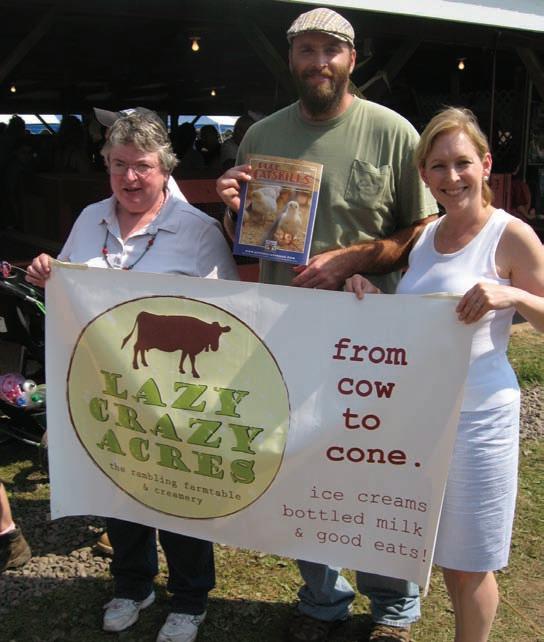
Leave it to Council Director Sally Fairbairn (at left) to ask for help in the most unlikely places. Congresswoman Kirsten Gillibrand (at right) works on farmers’ behalf on the Senate Agricultural Committee. Sally and son, Jake of Lazy Crazy Acres, solicited the Senator’s assistance as ice cream tester and prop gal at the 2011 Delaware County Fair.
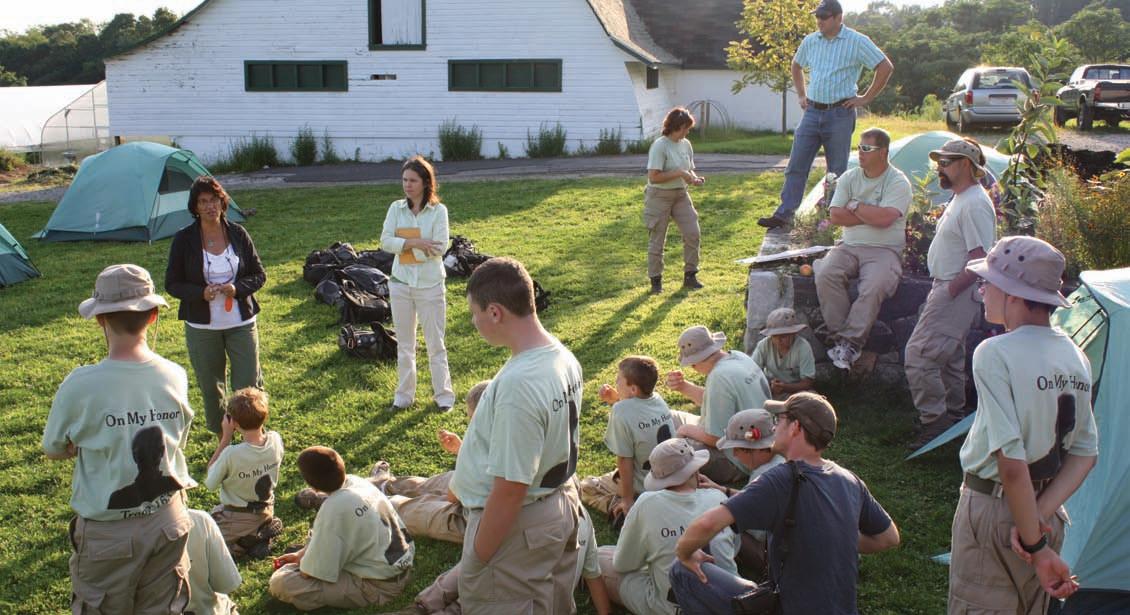
Many organizations rallied to assist Troop 163 from West Shokan realize a dream—to hike from the Ashokan Reservoir to NYC last summer. With a daily DEP escort,Troop 163 traveled by foot, bike and boat, along the 92-mile historic trail that the first Boy Scout outfit walked. Pictured here, 20 Troop members take a break after setting up camp at Hilltop Hanover Farm in Yorktown Heights where Farm Director Lu Munz (standing at left) took them on a farm tour. East of Hudson Agricultural Coordinator Carrie Davis (center, standing) explained how the Council’s work continues to protect water quality for nine million New Yorkers, through job-creating programs and construction projects like the farm’s composting system. Following the tour, the troop enjoyed a local foods dinner prepared by Lucky Dog Café and early riser breakfast with eggs from Snow Hill Organic Farm in North Salem; both events were sponsored by the Council.
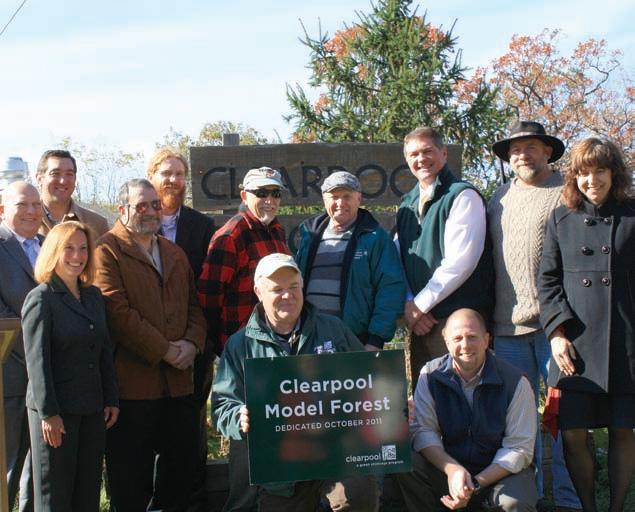
Local legislators and agency staff worked together to make Clearpool Model Forest a reality. Now located at Clearpool Education Center, Putnam County, this is the only model forest in the East of Hudson Watershed and the fourth outdoor classroom created to demonstrate invasive species issues, forest ecology, landowner workshops and handson training. Pictured here are Back Row: Alan Schneider (former candidate for Putnam County Executive); John Schwartz (DEP); Brendan Murphy (WAC) Front Row: Susan Spear (Regional Director for Sen. Kirsten Gillibrand); Lou Tartaro (Town of Kent councilman); George Baum (Town of Kent Conservation Council); Fred Huneke (Council Board Chairman); Craig Cashman (Council Executive Director); Steve Knapp (Watershed Qualified Forester, On-Earth Plant Care Specialists); Jennifer Stengle (Cornell Cooperative Extension of Putnam County) Kneeling: Joe Whalen (Green Chimneys Executive Director); Chris Hendershot (Program Director, Clearpool Education Center).
Building Better Businesses
TheCatskills FarmLink, designed to provide regional farmers and landowners with the tools they need to match up assets and land base, launched in October 2011.The site brought together resources and information from nine collaborators.The logo, created by Blue Farm Design, captures the essence of agricultural enterprises necessary for regional economic sucess.
Farm to Market Program made significant strides in 2011. With a $15,000 grant from Farmhearts, the Council created an interim fellowship position responsible for the execution of two key farmer initiatives. The new coordinator, Delaware County native Sonia Janiszweski, brings her experience as a second generation farmer, marketing consultant and business operator to the table. (She runs Wildflower Farm with her father, John). As coordinator, she readily executed two initiatives to further new farmer involvement
in the region.The Farmhearts Fellow oversees Catskills FarmLink, the online resource connecting farmers and landowners, and a grassroots farmer-to-farmer networking group, Catskills CRAFT.
Strong Pure Catskills member interest in the Agricultural Development Grant Program resulted in over 40 competitive proposals submitted, requesting assistance totaling over $165,000. Funding for this grant program was provided by the New York City Department of Environmental Protection. The twelve grant awards—ranging
between $2,486 and $5,000 for a total of $50,000—were distributed for product development, marketing and educational activities. Recipients included CYRE, Inc. (dba, Pika’s Farm Table) of Big Indian using $3,500 for nutritional fact labeling; Maggie’s Krooked Café, Tannersville using $4,000 for storage and distribution enhancements; and Neversink Farm, Claryville using $5,000 for post-harvest produce handling equipment.
Farmer education and producer groups continued to inspire and inform regional farmers and their staff on how to maximize efficiencies, try new approaches and sometimes, go back to a simpler way of doing things. Workshops on rotational grazing and raising sheep and goats continued to attract new learners.
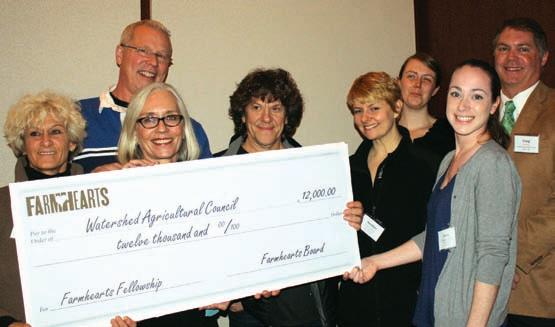
To kick off the second annual Farm to Market Connection, Farmhearts members formally awarded the Council with funding for a Farmhearts Fellowship. Among those on hand for the Big Check presentation (l-r): Victoria Lesser, Bruce Ferguson, Laurie McFadden, Michael Lang and Heather Carlucci of the Farmhearts Board, the Council’s Farm to Market Manager Challey Comer and Executive Director Craig Cashman, and Sonia Janiszewski, Farmhearts Fellow and Catskills FarmLink Coordinator.
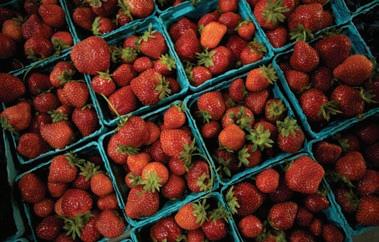
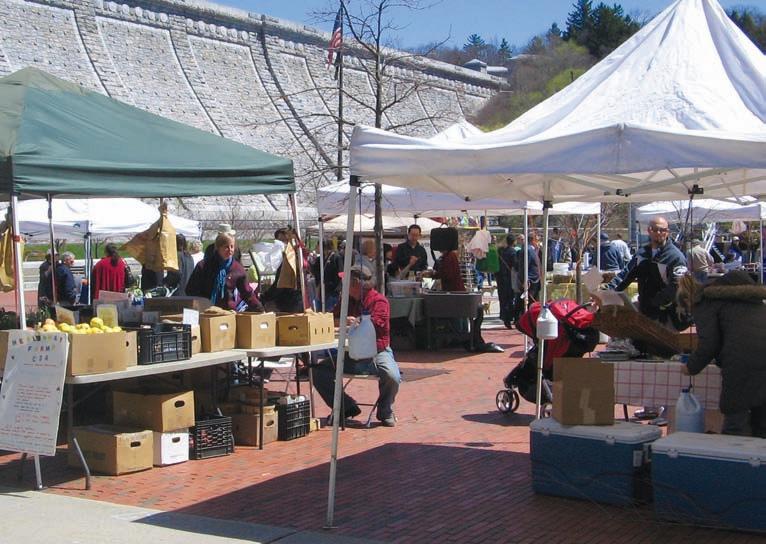
Right: Buying local is alive and well throughout the watershed.This farmers’ market at the base of Kensico Reservoir Dam proves that when there’s a whisper about local food, crowds gather to support our local farmers, one mouthful at a time.
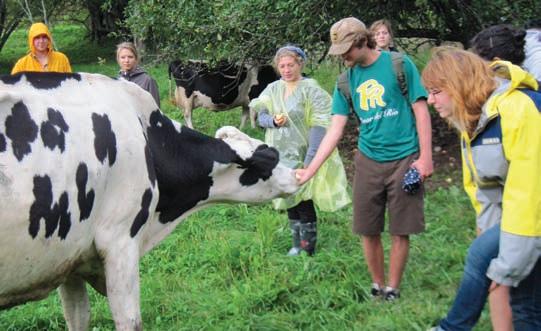
Below: Environmental policy graduate students from Bard College visited Crystal Valley Farm, Halcott, where the watershed tour put Payment for Ecosystem Services (PES) concepts into a real-life,“hands-on” experience. Last year, watershed farm and forest tours brought over 200 visitors from nearby and far-and-away to learn about PES and the internationally recognized NYC Watershed model for watershed management.
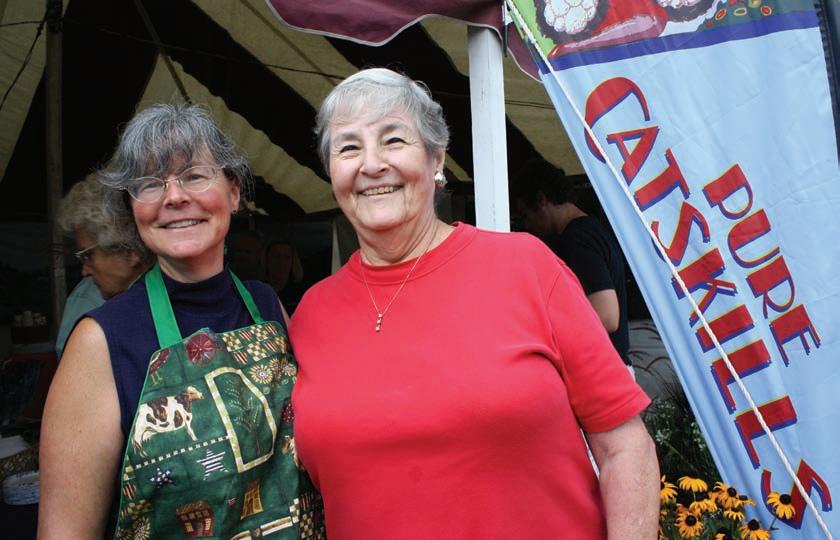
Integrating strong local leadership and vibrant businesses in agriculture and forestry lies at the heart of the Council’s economic viability mandate. Pure Catskills member Diane Frances of La Basse Cour Farm, South Kortright (at left) shared her story and baked goods at the CouncilDEP opening reception at the Delaware County Fair. The day’s special treats included a family heirloom recipe for Thelma’s Banana Tea Loaf and Diane’s mom, Lorré Dratch (at right).
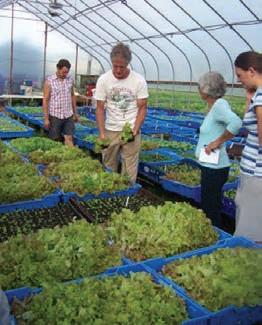
Pure Catskills member and Council Director Richard Giles shared his knowledge about seed starting, season extension, and greenhouses with Catskills CRAFT farmers during an outing to Lucky Dog Organic Farm.
s aving f arm and f orest l ands
Significant modifications to the Easement Program’s standards and practices were implemented in 2011 as the result of changes to both watershed regulations and the 1997 Watershed Memorandum of Agreement (MOA) completed in December 2010.
In December 2010 , the New York State Department of Environmental Conservation issued a new Water Supply Permit (WSP) to the DEP, while the Signatories to the 1997 New York City Watershed Memorandum of Agreement (MOA) amended the MOA through the “Agreement Among West of Hudson Watershed Stakeholders concerning NYC DEP’s Continuation of Its Land Acquisition Program (Agreement).”
The Council amended its current contract with DEP to incorporate the changes pro-
posed by the WSP and the Agreement in December 2011. Most notably, under the terms of the Agreement, the Council agreed to adopt a Transparency Policy requiring Easement Committee meetings be open to the public. Additionally, the Transparency Policy states that the Council will voluntarily adhere to certain procedures of New York State Public Officer’s Law, including Freedom of Information Law (FOIL). Furthermore, under the terms of the Agreement, the Council agreed to develop stewardship guidelines for all its reserved rights and allow for MOA Signatories to participate in the development of the guidelines via regularly scheduled meetings.
Under the terms of the WSP, the Council agreed not to acquire conservation easements in hamlet areas designated for
The Easement Program achieved 20,000 acres under conservation easement with the Riverdale Farm, Delhi. The Frisbee family has been working the land in Delaware County for over 200 years and wanted to keep it that way. Eight generations later, the Frisbee family is still farming strong with Willard and Lucile, grandson Gideon and son Ron diversifying production to beef, pork, maple syrup, chickens and bees, all to improve the business’s bottom line.
future development by certain watershed municipalities. The Council also agreed to amend six sections of its model Deed of Conservation Easement and to make those amendments available to any landowner with a WAC conservation easement.
The Easement Program spent over $5 million on the acquisition of Conservation Easements in 2011. WAC staff closed on 13 conservation easements in 2011 totaling 2,376 acres and signed contracts for conservation easements on an additional 6 properties totaling 968 acres. At year end, the Council’s conservation easement portfolio totaled 22,015 acres (20,972 acres in purchased easements and 1,043 acres in donated easements) across 133 properties and 117 original grantor easements.
Easement Program stewardship staff conducted both
ground and aerial monitoring of all 133 easement properties in 2011, while processing over 20 reserved right request from landowners, including requests to site Future Acceptable Development Areas; requests to subdivide; requests to conduct Forest Harvests; requests to locate Rural Enterprises; Stream Work requests; Bluestone Quarrying requests; Waste Storage requests; and Rights of Way requests. Additionally, WAC easement staff conducted Annual Status Reviews of over 70 Whole Farm Plans on Easement Properties. For more information, visit nycwatershed.org for the Easement Program’s 2011 Annual Program Report for an overview of all Easement Program activities.
Practicing
sound forest management means cleaner water for downstream consumers. The Watershed Forest Management Planning Program resulted in the development and updating of 82 forest stewardship plans encompassing more than 14,000 acres. Since 1996, 1,000 plans have been completed covering more than 150,000 acres.
The BMP Implementation Program provided technical support and financial assistance to loggers, landowners and foresters, facilitating the stabilization of more than 38 miles of skid roads and trails. More than 1,600 water bars, 200,000 feet of re-graded skid trail, 800 cubic feet of gravel and numerous additional BMP’s were used to stabilize these disturbed soils. During 2011, the Forestry Program developed and implemented 18 plans for crossing streams on active logging jobs within the watershed. By promoting the use of BMPs, forest management activities will continue to be a negligible source of nonpoint source pollution. To date, more than 330 miles of skid roads and trails have been stabilized through the BMP Implementation Program.
During 2011, the Management Assistance Program (MAP)
provided technical support and financial assistance to forest landowners to implement 40 forest stewardship projects. These projects ranged from Timber Stand Improvement (TSI) to the creation of early successional habitat for Species of Greatest Conservation Need such as the American woodcock and chestnut-sided warbler. More than 270 acres of watershed forest were impacted through landowner participation in the Management Assistance Program in 2011. Since its inception in 2005, MAP has funded over 260 forest stewardship projects, impacting in excess of 2,400 acres of watershed forest.
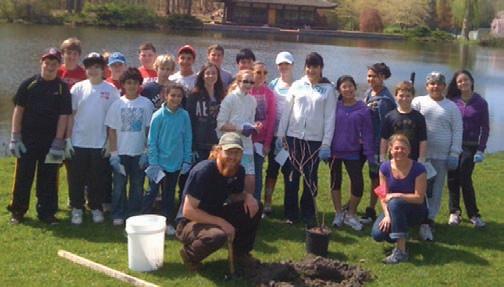
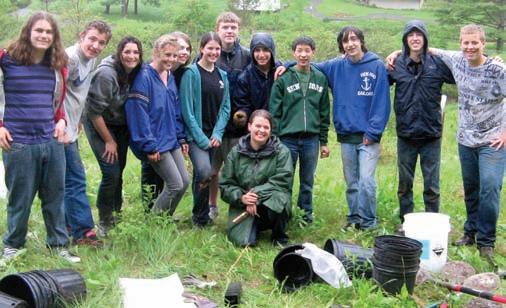
The Forestry Program also completed ten riparian planting projects with Trees for Tribs of the NYS DEC Hudson River Estuary Program; 276 volunteers installed 620 native trees and shrubs.Teatown Lake Reservation and ELLA (Environmental Leaders Learning Alliance) also assisted in the planting, and were major funding partners of the initiative. The Forestry Program has established the Croton Chapter of Trees for Tribs and will coordinate future projects in the Croton Watershed. East of Hudson Program Forester Brendan Murphy (center kneeling) coordinates the riparian planting efforts.
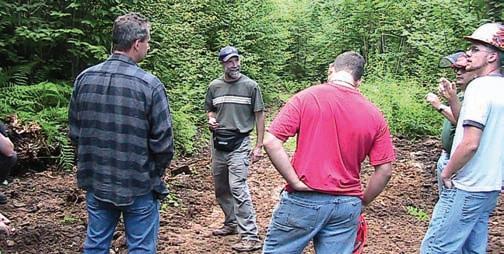
Forest professional education remains a mainstay of the Forestry Program. Council Watershed Forester Karl VonBerg (facing group) works with loggers on water quality hands-on training at Frost Valley Model Forest.
Volunteers from “Teens ‘N’ Teatown” plant native species at the Angler’s Fly Preserve in Somers.
Thanks to your support, we’re building an endowment to protect working landscapes for the future. To compliment the City’s commitment to clean drinking water, we’re adding our commitment to vibrant farmlands and forest. Join us again this year in protecting farm and forestlands that sustain the watershed, foodshed and viewshed we call home. In 2012, add the Conservation Easement Stewardship Fund to your list of annual charitable investments. You can donate easily online, send a check by mail with the coupon at right, or attend the annual dinner and silent auction. If you have questions about the Fund or how to add the Council to your charitable giving plan, give us a call at (607) 865-7790, ext. 105.
Want to know more about what we’re doing at the Council? Sign up for our monthly enewsletter, Water & Land; follow our blogs, You & Your Watershed and Pure Catskills; or join our Facebook Pages.
I want to help protect working landscapes in the New York City Watershed and the clean drinking water we use every day. Enclosed is my tax-deductible donation for $___________ for the Conservation Easement Stewardship Fund.
Donate simply and quickly. Scan this QR code with any QR Reader and go directly to the Council’s donation webpage.
Also, I’d like to receive regular updates from the Council. My email address is:
Send me the following emails: Water & Land, features Council program updates and events the first Friday of every month
_______ Pure Catskills eBurst, a quarterly email on local food
_______ The Reservoir, a bimonthly eNews for educators
_______ Catskill WoodNet News, a bimonthly wood-products email for woodproducts professionals
Mail this form and your donation check to: Attn: Finance Dept., Watershed Agricultural Council, 33195 State Highway 10, Walton, NY 13856. You can also email your eNews preferences to communications@nycwatershed.org.
Department of Environmental Protection, U.S. Department of Agriculture, U.S. Forest Service and other sources. The Council is an Equal Opportunity Provider and Employer. This issue is printed on 100% post-consumer paper, certified EcoLogo, Processed Chlorine Free, FSC Recycled and manufactured by Cascades using biogas energy.
2011 Annual Report is a publication of the Watershed Agricultural Council, a nonprofit 501(c)3 organization whose mission is to support the economic viability of agriculture and forestry through the protection of water quality and the promotion of land conservation in the New York City Watershed region. The Council is funded by New York City