Ithink we can categorize 2009 as a year of transition and change for the Watershed Agricultural Council [WAC] and the Board of Directors. Most significantly, the Board hired Craig Cashman as Executive Director in October. The Board of Directors also conducted a careful analysis and review of the organization’s internal structure, staff roles, Board responsibilities and long-term goals. Collectively, we realized that the Council, after 17 years of operation, was at a place in its development that required an Executive Director with outstanding leadership skills and experience in nonprofit management. Craig possesses that knowledge as well as experience in the nonprofit world; both of which are vital as we work towards securing WAC’s position well into the future.
Watershed Farm and Forest annual report 2009
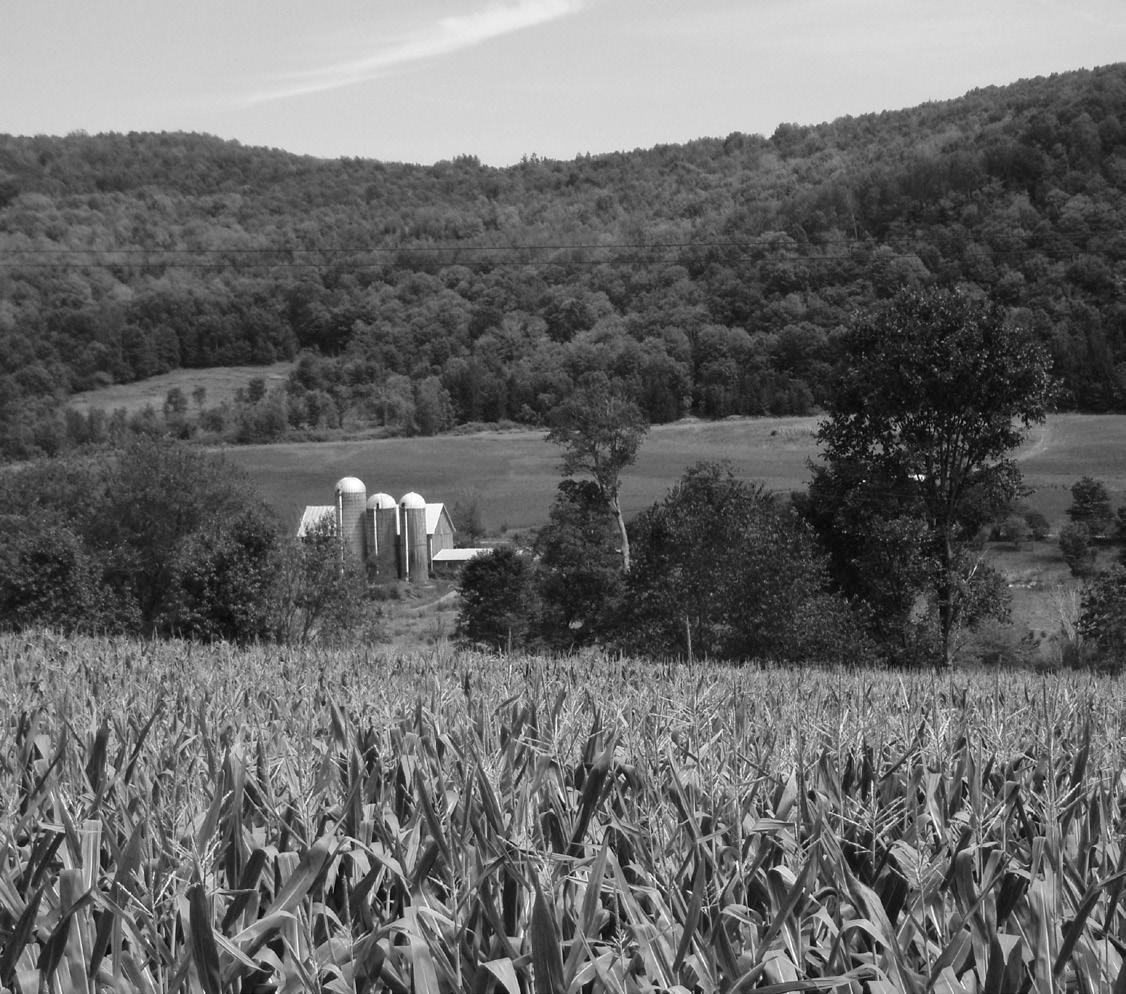
WAC was initially formed in 1990 to function as an advisory council to the Commissioner of the Department of Environmental Protection during the phase one pilot program. In 1993, the Council incorporated as a 501c3 nonprofit with a small staff and only an Agricultural Program to govern. In less than 20 years, our organization has evolved into a multi-faceted organization that now includes Forestry, Conservation Easement, East of Hudson, and Farm to Market Programs with over 40 full-time staff and 20 subcontractors, both East and West of the Hudson River. Overall, roughly 65,000 acres are being managed by farmers using Whole Farm Plans. Over 120,000 forested acres are being supervised by landowners through Forest Management Plans (FMPs). Another 20,000 acres are safeguarded through the Conservation Easement Program, and over 200 farm and food businesses are realizing the memberhip value of the Pure Catskills buy local campaign.
The backdrop for all of this is water quality and how it pertains to the agricultural and forestry communities and the working landscape concept. The role that WAC plays in helping the City of New York meet its obligations set forth in the Filtration Avoidance Determination is an excellent example of “Cooperative Conservation.” Cooperative Conservation is the collaboration between communities, government and the private sector for shared efforts in the environmental arena. Over the years, we have fostered important relationships with our partnering agencies that contributed greatly to the success of this collective conservation effort. With these partners, we continually improve our capacity to meet new environmental challenges as they arise.
Looking ahead and building on past successes, the Council will continue to evaluate itself in the context of the larger community. We will make the necessary adjustments to our governance structure and our strategic plan without compromising our overall core values. This is an essential element of any organization that strives to make a difference and stay true to its mission. We must always recognize that the WAC, along with our farmers, foresters and landowners, are part of a larger watershed community. With their support, we are ready and willing to work collaboratively with our partners and landowners towards the common benefits of the watershed region.
Fred Huneke Board Chairman
More information and the Executive Director’s greeting can be found in our 2009 Online Annual Report Supplement at www.nycwatershed.org.
Behind the Mission
We appreciate the commitment of our staff, board members, partners, donors and supporters. Without you, our mission would be impossible to achieve. The Council is dedicated to its mission, watershed landowners, the surrounding community and the drinking water users downstream. To those who have helped us realize our potential in 2009, thank you.
2009 BOARD OF DIRECTORS
Fred Huneke, Chair, Delaware
Dave Cammer, Vice Chair, Schoharie
William Coleman, Treasurer, Delaware
Tom Donnelly, Delaware
Gail Hillriegel, Secretary, Ulster
Linda DeWitt, Delaware
Joe Eisele, Delaware
Sally Fairbairn, Ulster
Richard Giles, Delaware
Darby Hartwell, Delaware
Barbara Howard, Westchester
R. Thomas Hutson, Delaware
Daniel Palm, Delaware
Dave Post, Delaware
Ken Smith, Delaware
John Verhoeven, Greene
John Schwartz, Section Chief, Bureau of Water Supply, on behalf of Caswell Holloway, Commissioner, NYC DEP
STAFF
Craig Cashman, Executive Director
Thomas Artale, Finance Director
Lorinda Backus, Procurement Assistant
Amerigo Balzano, Engineering Specialist
Marigrace Bellert, Executive Assistant (EoH)
Rob Birdsall, Land Conservation
Stewardship Specialist
Troy Bookhout, Easement Conservation Planner
Edna Boroden, Information Technology Specialist
Barbara Brown, WAC Accountant
Andrew Cheung, Agricultural Engineer (EoH)
Tara Collins, Communications Director
Challey Comer, Farm To Market Manager
Carrie Davis, Agricultural Program Coordinator (EoH)
Dan Deysenroth, Nutrient Management Specialist
Leslie Deysenroth, Executive Assistant Agricultural Program
Dan Flaherty, Small Farms Coordinator
Tom Foulkrod, Watershed Forester
Jeffrey Graff, Easement Program Manager
Dan Hadden, Engineering Specialist (EoH)
Amy Hawk, Contract and Grants Specialist
Don Hebbard, Engineering Specialist
Tim Hebbard, Engineering Specialist
Seth Hersh, Database Project Administrator
Heather Hilson, Forestry Outreach Specialist
Jim Hilson, Senior Planner
Rick Hochulli, Engineering Specialist
Andrew Hubbard, Watershed Forester (EoH)
Gary Lamont, Land Conservation Specialist
Brian LaTourette, Agricultural Program Manager
Amy Lieberman, Land Conservation Specialist
Phoebe Lindsay, Project Coordinator
Cheryl Marion, Administration Services Director
Cynthia McCarthy, Nutrient Management Specialist
Collin Miller, Wood Products
Utilization & Marketing Specialist
Ryan Naatz, Conservation Easement Specialist
Tom Pavlesich, Forestry Program Manager
Elaine Poulin, Agricultural Program
Assistant Manager
Laura Reed, Executive Assistant Forestry Program
Linda Reed, Staff Accountant II
Susanne Sahler, Conservation Planner (EoH)
James Samek, GIS Coordinator
Susan Seymour, Executive Assistant Easement Program
SUNY College of Environmental Science and Forestry
Teatown Lake Reservation
The Nature Conservancy
Tilly Foster Farm
USDA Agricultural Research Service
USDA Farm Service Agency
USDA Natural Resources Conservation Service
US Army Corps of Engineers
US Environmental Protection Agency
US Forest Service
US Geological Survey
Ward Pound Ridge Reservation
Waterkeeper
Watershed Protection
& Partnership Council
Watershed Qualified
Consulting Foresters
Westchester Land Trust
2009 DONORS & SUPPORTERS
Anonymous
Baseball Hall of Fame
Robert Bishop
John Blish
Brian Bower
Edna Boroden
Steve Bott
Brewery Ommegang
Leon Brooks
Brooks’ House of BBQ
Tom Buel
C&C Feeds
David & Peggy Cammer
Kristen Carolla
Catskill Craftsman
Clark Companies
Bill Coleman
Tara & John Collins
Challey Comer
Karl Connell
Cooperstown Brewery Co.
Eric Dahlberg
Carrie Davis
Brandon Dennis
Linda DeWitt
Chris DiBenedetto
Michael Dignelli
James & Pat Doty
Joe Eisele
Sally Fairbairn
Farmer’s Museum
Jerry & Jessica Farrell
First Pioneer Farm Credit-Cobleskill
Daniel Flaherty
Steve Fleming
Fly Creek Cider Mill
Diane Galusha
Gerry Foundation
Handsome Brook Farm
Fred Hathaway
Amy & Gary Hawk
Paul Heller
Gail Hillriegel
Kim Holden
Rick Holdridge
Barbara Howard
Andrew I. Hubbard
Fred & Marilyn Huneke
Tom Hutson
iGive.com
Randy Kelly
Mariann Kiraly
Klinger Power Sports
Ian Lamont
Jacob Lamont
Paul LaPierre
Brian K. LaTourette
Lucky Dog Farm
Lutz Feed
MAS Engineering
David Mann
Cheryl P. Marion
Dave McFarland
Patrick & Barbara McGraw
John & Nancy McShane
Gary Mead
Collin A. Miller
Jason Miranda
National Bank of Delaware County
Theresa O’Brien
Thomas W. O’Brien
Jessica Olenych
Jeff Olsen
Dan Palm
Thomas Pavlesich
Michelle Peters
Heidi Pickett
Dave Post
Elaine Poulin
Lenny Prezorski
Price Chopper
James Radomski
Lisa Rainwater
Karen Rauter
Art Reed
Laura Reed
Linda M. Reed
Steve Reed
John Riedl
Jake Rosa
Ruminant Health Services
Betsey Ryder
John Sauchuk
Adolph & Elaine Schaefer
Larry Schaefer
Gregg & Cathy Schroeter
John Schwartz
Dale Scott
Kenneth Smith
Stamford Greenhouses
Stock Building Supply
Sullivan County Planning Department
Sullivan County Visitors Association
Sullivan Renaissance
Thornwood Farm
John Thurgood
Tractor Supply Store
John & Beth Verhoeven
Karl VonBerg
Rick Weidenbach
Holley White
Frank Wood, Esq.
We apologize for any errors in the lists above and encourage you to contact us with corrections by calling (607) 865-7790 or by emailing info@nycwatershed.org.
Finance Report
Revenues
July 1, 2008 - June 30, 2009
Expenditures
1, 2008 - June 30, 2009
3.4%
Revenues
The Watershed Agricultural Council Finance Report reflects a fiscal year of July 1, 2008 through June 30, 2009. The Council derived 91% of its revenue through a contractual arrangement with the New York City Department of Environmental Protection. Other Revenue included monies from Federal programs, third-party grants and in-kind/donated services. The majority of the Council’s funding financed best management practices applied to watershed landowner properties; this work, carried forth by the Agricultural and Forestry Programs,
utilized 50% of funding. Additionally, 25% of total funding secured conservation easements. The remaining 25% was put to work through various departments including program administration, outreach, education and database management. More detailed financials including a three-year review can be found in the Council’s Online Annual Report Supplement 2009 at www.nycwatershed.org/OARS2009.pdf.
Water Quality Stewardship Programs
Agriculture
Every year, the Watershed Agricultural Program focuses on sustaining, maintaining and protecting local and New York City water supplies through various approaches: extensive whole farm and nutrient management planning, conservation practice implementation, education, and economic development of the local agricultural industry. Together, we engage landowners of over 65,000 acres in this voluntary program that uses extensive environmental assessments, whole farm planning (farmspecific, water-quality protection plans) and Best Management Practices (BMPs) to reduce the risk of pollutant runoff and to protect drinking water.
In 2009, the Program implemented 427 BMPs at a total investment of nearly $3.4 million. Farm participants are actively following 167 Nutrient Management Plans and over 375 Whole Farm Plans (WFPs), a percentage of which are reviewed and updated annually. Funding provided by New York City Department of Environmental Protection, the USDA and other sources helped the Program realize its goals.
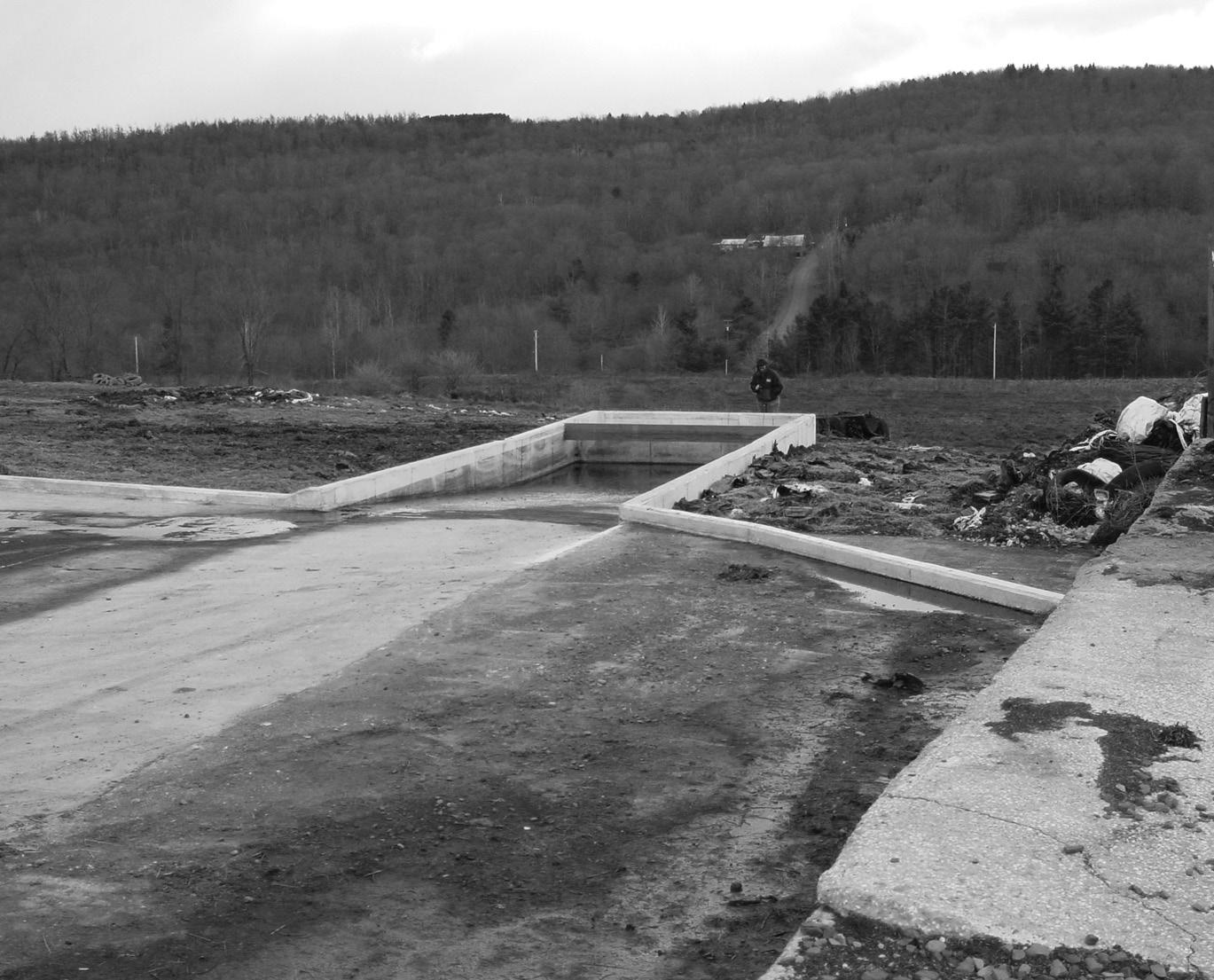
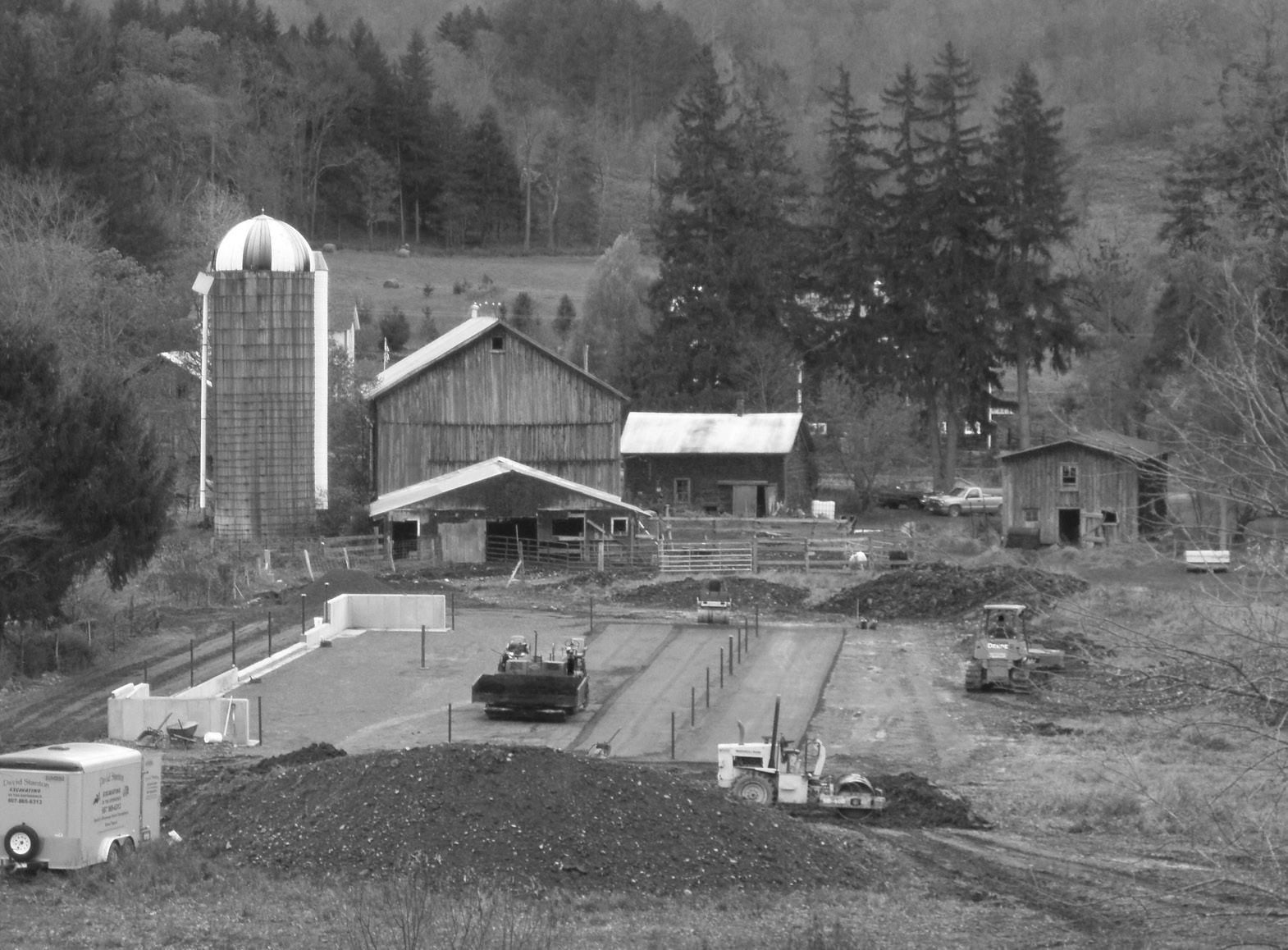
Each project is individually tailored and designed to a farm’s need. Three projects completed this year proved to be full-scale farm solutions. In Delaware County, the planning and implementation team designed and built a bunk silo at a 450-Holstein dairy farm – the largest pad ever constructed by the Program. The feed pad and laneway construction incorporated many
animal specific build-outs, such as a feed rail tailored to a Holstein’s shoulder height. A collaborative effort between the Council, the USDA Natural Resource Conservation Service, Delaware County’s Cornell Cooperative Extension and Soil & Water Conservation District, this multi-faceted BMP implementation enhanced the farm’s workflow and improved water quality at the 2,500-acre farmstead.
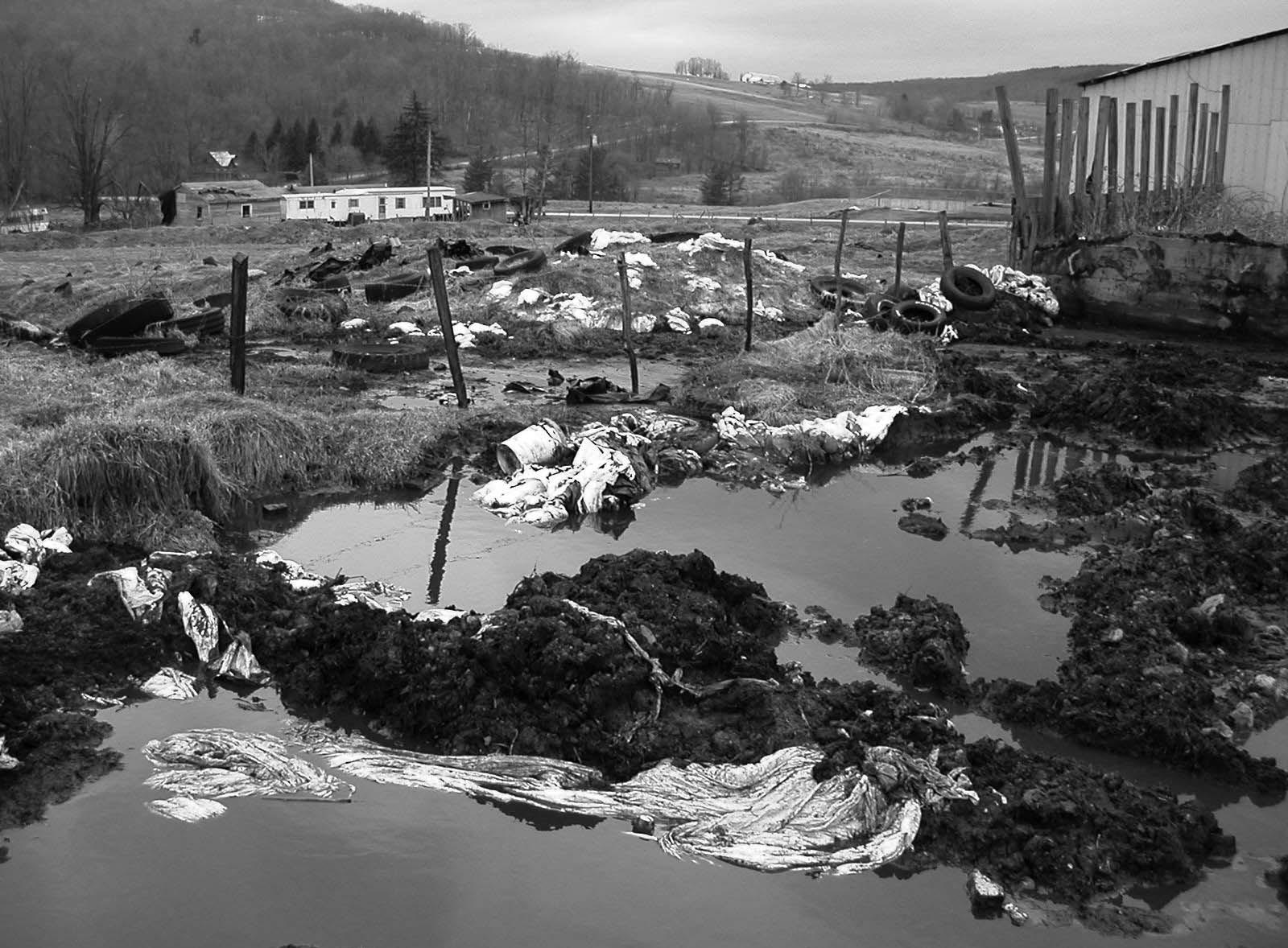
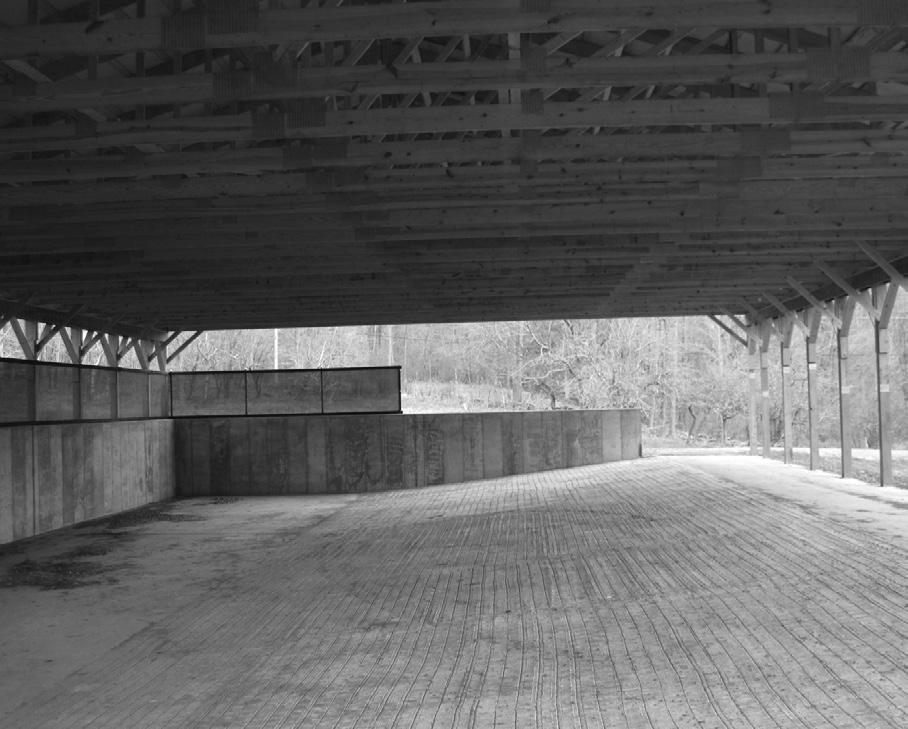
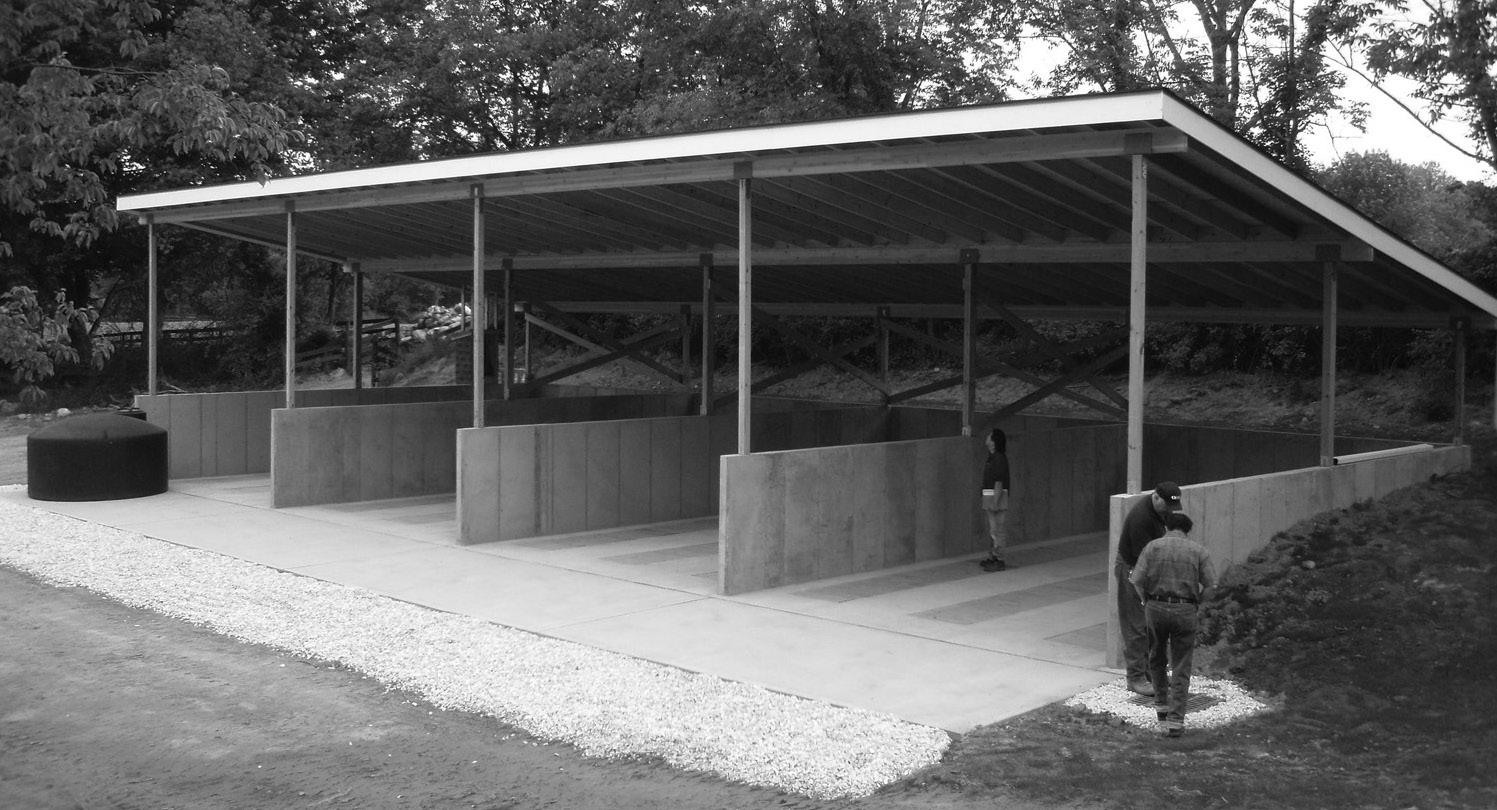
At another Delaware County dairy (see page 5 photos at bottom), the planning team integrated textbook manure storage with innovative design. The pitched floor and 14-foot rafters served four purposes: 1) the floor angle contained semi-solid matter but allowed for easy removal, 2) the covered area provided weather protection high enough to maneuver a bucket loader safely, 3) porous fencing fabric encouraged manure to dry out quickly (which in turn made field spreading more efficient), and 4) the structure prevented manure seepage into a
The bunk silo site, before and after, at a Delaware County dairy operation.
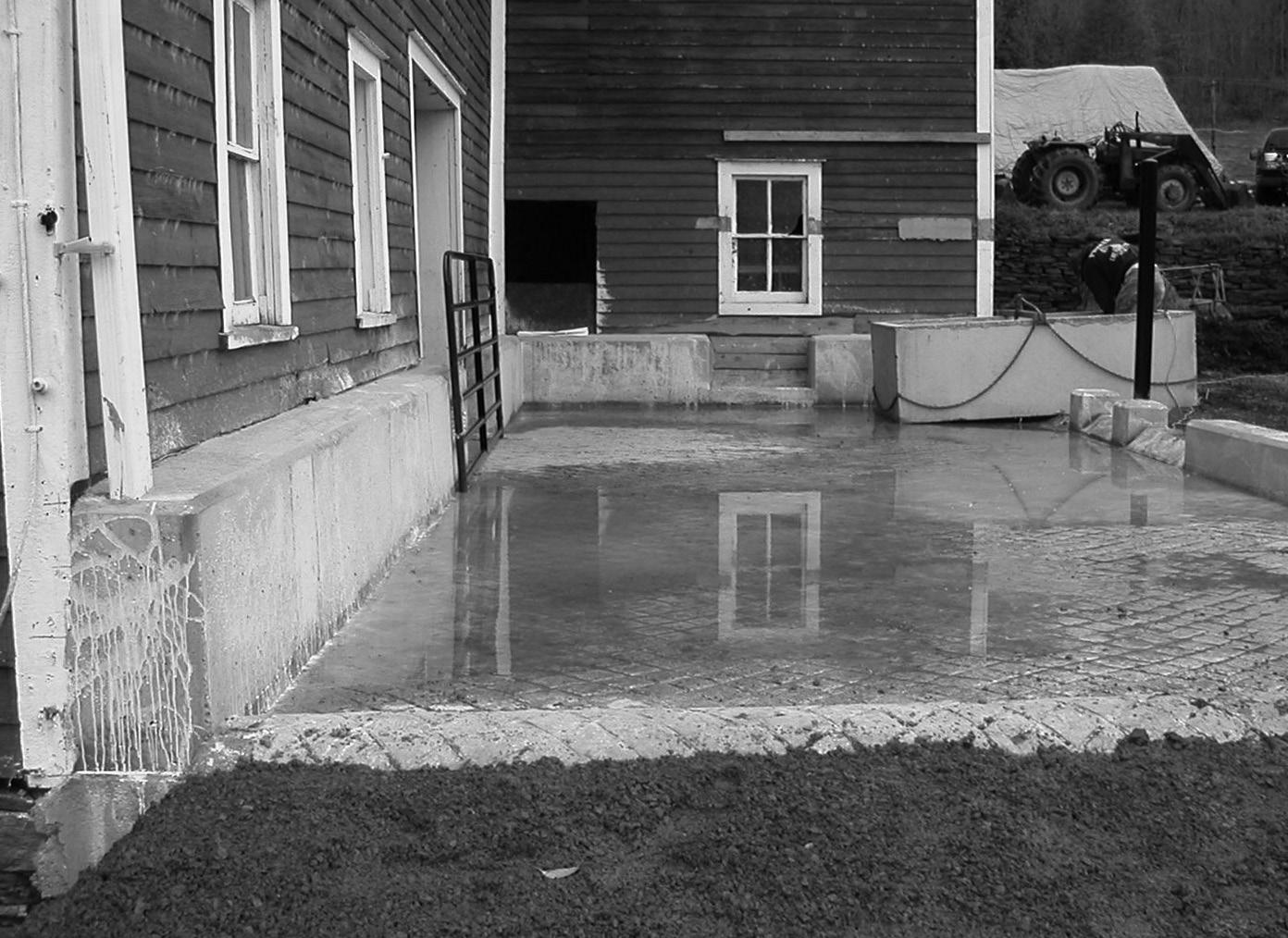
Not all projects are monster in scale. Simple small-farm fixes, like this concrete barnyard pad and watering system installed at a mixed livestock farm (pictured above) improve farm operations and water quality.
This small farm (at left) needed a heavy-use barnyard solution. During planning, the team agreed that farm demands didn’t warrant a high-priced concrete slab. Instead, the landowner opted for an asphalt-gravel surface, the first asphalt remedy to be installed in the watershed. Innovative approaches such as these keep farmers engaged in selecting best practices that work for their farms and impact drinking water quality for nine million New Yorkers.
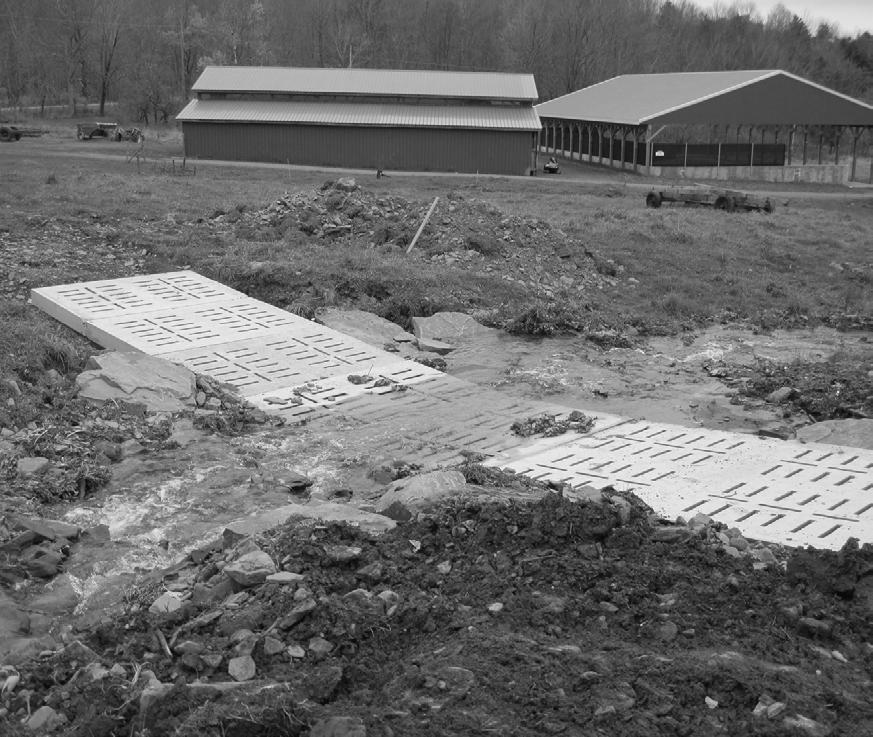
nearby stream. Fencing, cattle crossing slats and water diversions reduced muddy conditions at this dairy; the covered manure storage building can be seen in the background.
More photos and descriptions of these and other projects can be found online within the complete Watershed Agricultural Program 2009 Annual Report and 2010 Workload. The report contains graphs, charts and project descriptions, including before and after photos of key BMPs installed in 2009.
Forestry
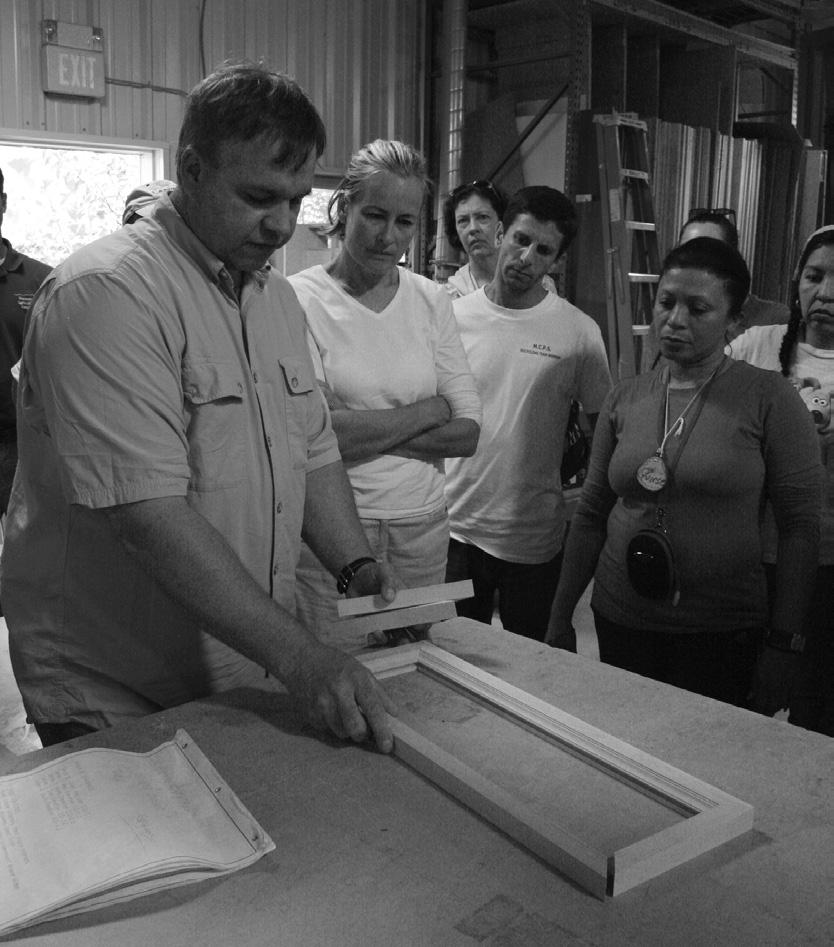
Participants from the 2009 Watershed Forestry Institute for Teachers (WFIT) visit Pure Catskills member Mack Custom Woodworking in Shokan,NY.
The group learned about black walnut veneer, how it is made and then used in fine furnishings. Each year, WFIT provides training in the concepts of forest stewardship and water quality to 20 teachers from New York City and the upstate watershed communities. To date, 259 teachers have returned to their classrooms and used the curriculum provided by the Institute to communicate these valuable concepts to their students.
Each year, the Watershed Forestry Program works with landowners and forestry professionals through five key areas: Forest Management Planning, Implementation, Education, Research & Demonstration, and Forest Products Utilization & Marketing.
The Watershed Forest Management Planning Program resulted in the development of 64 new forest stewardship plans encompassing more than 10,200 acres. Eight forest stewardship plans were created for Croton watershed landowners, encompassing more than 1,270 acres. Since 1996, 800 plans have been completed covering more than 140,000 acres. Practicing sound forest management means cleaner water for downstream consumers. The BMP Implementation Program provided technical support and financial assistance to loggers, landowners and foresters, facilitating the stabilization of more than 60 miles of skid roads and trails. More than 2,000 water bars, 150,000 feet of re-graded skid trail, 900 yards of gravel and numerous additional BMP’s were used to stabilize these disturbed soils.
During 2009, the WAC Forestry Program developed and implemented eight plans for crossing streams on active logging jobs within the watershed. Three BMP projects completed in the Croton watershed included two plans for stream crossings on active logging jobs, a portable skidder bridge loan and five free BMP samples. By promoting the use of BMPs, forest management activities will continue to be a negligible source of nonpoint source pollution. To date, more than 250 miles of skid roads and trails have been stabilized through the BMP Implementation Program.
During 2009, the Management Assistance Program (MAP) provided technical support and financial assistance to forest landowners to implement 58 forest stewardship projects. These projects ranged from Timber Stand Improvement to the creation of early successional habitat for Species of Greatest Conservation Need, such as the American woodcock
and chestnut-sided warbler. Nineteen MAP projects, including the eradication of invasive plants such as Tree-of-Heaven and Japanese Barberry, impacted more than 88 acres in the Croton watershed. More than 540 acres of watershed forest were impacted through landowner participation in MAP; since its inception in 2005, MAP has funded over 170 forest stewardship projects, impacting over 1,540 acres of watershed forest.
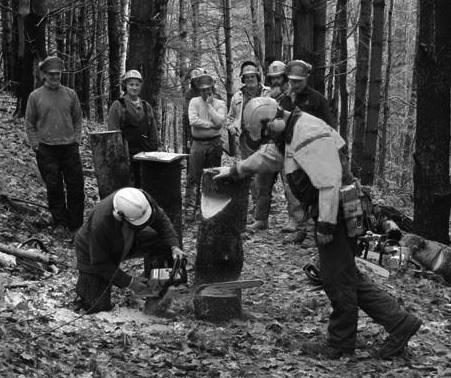
At a Trained Logger Certified Game of Logging 1 class in Middleburgh, NY, instructor Bill Lindloff helps loggers perfect their “wedge” technique. The Logger and Forester Training initiative organized 14 workshops attended by 163 watershed loggers and foresters. The workshops focused on providing educational opportunities where forestry professionals can gain a better understanding of safety, silviculture, forest ecology, and water quality. Since its inception, the initiative has offered over 230 workshops attended by 2,000 loggers and foresters from the NYC watershed region.
The Forest Products Utilization & Marketing initiative worked with five Catskills institutions to explore the potential for the conversion to woody biomass heating systems. Institutions ranging from schools to hospitals to local wood-products manufacturers received prefeasibility studies that identified a total annual energy savings of $304,000 across the facilities. In addition, the Catskill WoodNet website, Pure Catskills branding campaign and the regional wood-products directory continued to support wood-based industries in the watershed region.
The Forestry Program’s complete annual synopsis -- including the 2009 accomplishments for Green Connections, Forestry Bus Tours and Model Forests Program – can be found within the Council’s 2009 Online Annual Report Supplement at www.nycwatershed.org.
Croton Watershed
In 2009, the East of Hudson Program installed three pilot, forcedair compost facilities on participant farms. Each facility uses a different feedstock (wood shavings, straw, and vegetable crop waste) which will provide interesting comparative data for other farms who might want to install similar facilities in the future. Forced-air composting helps support sustainable agriculture by managing manure through the use of aeration. This method eliminates the need to turn the pile and also accelerates the composting process thanks to an electric blower which introduces oxygen into the mix of materials and produces the necessary heat. (See photo below.)
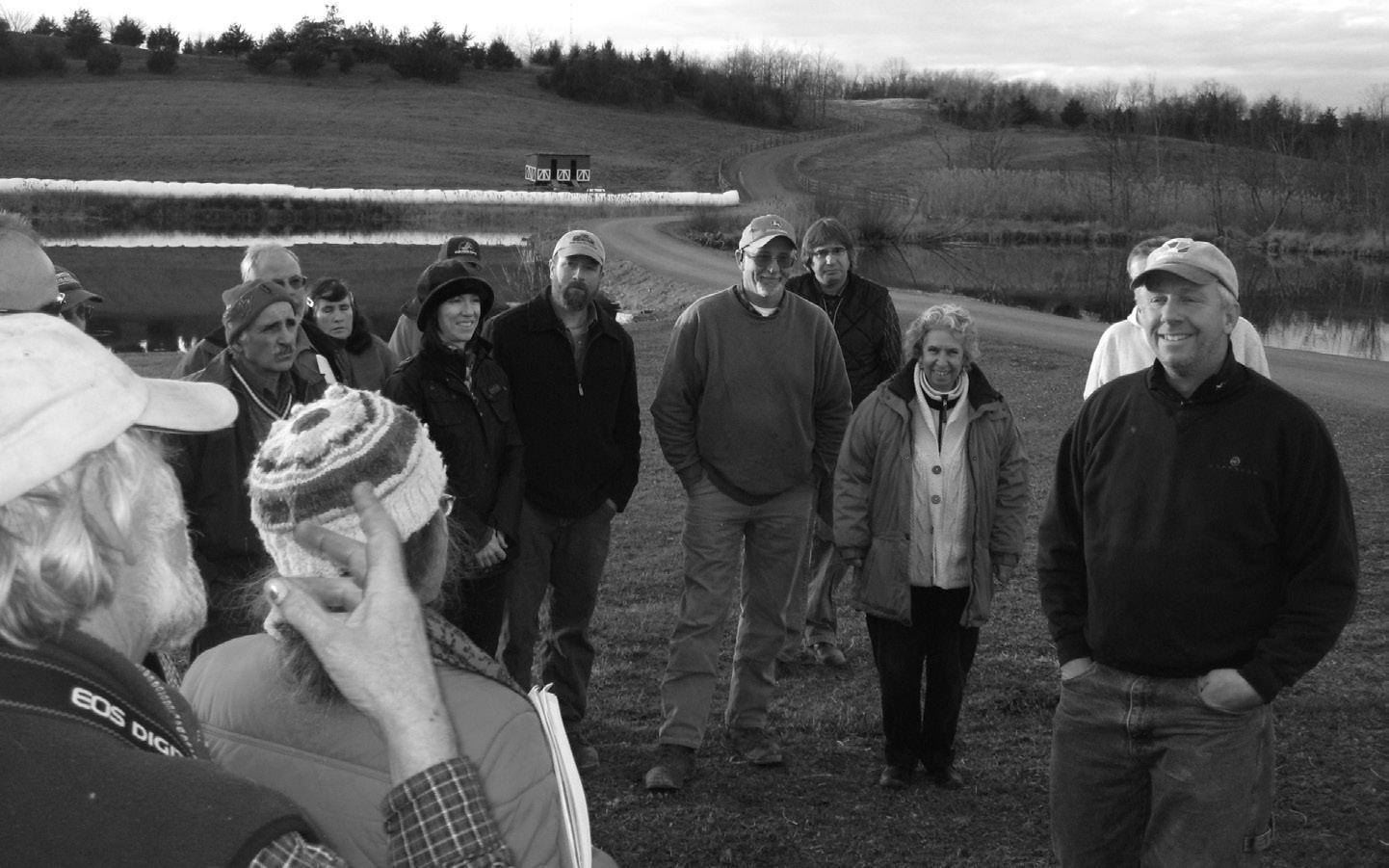
The East of Hudson Program hosted its annual Participant Recognition Event at Chase Meadow Farm at the invitation of Board member/ Committee Chairperson Barbara Howard. Former Committee members Annie Farrell, Peter Kamenstein, Bill Murphy, and Barbara Wilkens, former East of Hudson Committee chair, were honored. The recognition luncheon was preceded by a tour of Ryder Farm in Brewster and Snow Hill Farm in North Salem, where BMP implementation was under way.
Along with outreach efforts at the annual Old Salem Horse Show and Snow Hill Farm, the East of Hudson Program hosted the “Dig It” Composting Workshop at Clearpool Education Center in Carmel, NY. The event brought together a diverse group of farm owners, municipal officers, health department officials, and representatives from schools
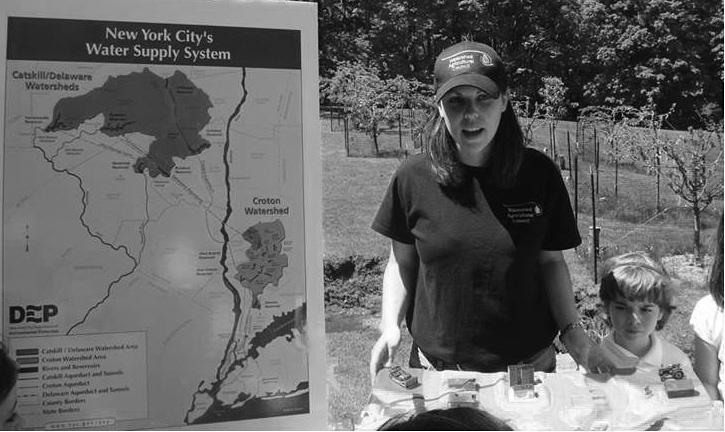
Agricultural Program Coordinator Carrie Davis led a farm tour for a group of New York City school children at Snow Hill Farm in North Salem. Students learned first-hand where their lunches come from, as Snow Hill supplies organic beef to many New York City institutions including the visiting students’ school. Carrie demonstrated a model watershed and explained why good farm stewardship is important to water quality protection. and private industry to learn about waste management techniques for large-scale facilities. The team of experts sharing their knowledge included Jean Bonhotal from the Cornell Waste Management Institute, Robert Rynk from SUNY-Cobleskill, Horst Grunow from the Culinary Institute of America, and Terry Laibach from the New York State Department of Environmental Conservation.
Several newly developed informational brochures about composting, whole farm planning and program offerings can be found online. The East of Hudson Participant Handbook, which explains the ins-and-outs of the Croton Watershed Whole Farm Planning process to prospective and current participants, can be found at www.nycwatershed.org.
During 2009, the Model Forest Program sought to identify a partnerhost organization for a Model Forest site in the Croton watershed region. A potential Model Forest site is a forested location, typically of 100 acres or more, that demonstrates sustainable forest management and Best Management Practices that serve to protect water quality. Model Forests seek to educate forest landowners, loggers, foresters, municipal officials and the public about sustainable forest management and water quality in an outdoor classroom setting. The Council currently has ongoing relationships at Frost Valley (FV YMCA, Ulster), Lennox (CCE-Delaware) and Siuslaw (CCE-Greene) model forests.
Conservation Easements
The Easement Program has evolved significantly over the last year and implemented numerous guidelines and management systems that have improved the effectiveness and efficiency of the Program. The Easement Program currently consists of two areas: Acquisition and Stewardship. The general business processes for the two program areas were identified in the Easement Program Conservation Easement Acquisition Policy and Stewardship Policy, both of which can be found online at www.nycwatershed.org/pam/. This framework of guidelines, once developed and approved by Easement Committee, will establish the standards, practices and processes for the Easement Program going forward.
The Easement Program was funded entirely by the New York City Department of Environmental Protection (DEP). The FY 2009 Easement Program Budget (July 1, 2008 – June 30, 2009) was $6,805,625 of which $3,642,708 was expended. FY09 expenditures were less than projected because the acquisition program area had not been functioning at full capacity during the year. The Program projects to be operating at full capacity for acquistion in 2010.
In 2009, the Acquisition staff closed on approximately 1,600 acres (13 easements), while signing 7 contracts on approximately 1,300 acres. It also worked with 44 landowners in the development of conservation easements. As of December 31, 2009, 24 offers had been made and 7 contracts had been signed. An additional 8-10 offers from the original 44 properties will be made in 2010, and another 7 contracts from this 2009 group are expected to sign-on in 2010.
The Program currently stewards approximately 17,160 acres in purchased easements (108 properties; 95 original grantors; 56 Whole Farm Plans). The number of properties exceeds the number of original easements because of subdivisions. The Program also has two additional donated easements in the portfolio totaling 1,043 acres. Each property in the portfolio requires stewardship activity that includes annual monitoring, Annual Status Reviews (ASRs) of Whole Farm Plans, notifications, work requests from landowners (reserved right requests) and/or amendments.
The Easement Program currently consists of seven full-time staff members and utilizes third-party vendors as well as for legal, engineering and environmental site assessment services. An Easement Conservation Planner position was created in 2009 and to serve as a liaison between the Agricultural and Easement Programs. The Conservation Planner ensures that all applicants to the Easement Program meet the program’s Whole Farm Eligibility Requirements by working with landowners to complete their WFPs to the Easement Program’s standards. Easement staff conducted ASRs on 33 properties with conservation easements in 2009 as part of their monitoring efforts. The remaining 23 ASRs were conducted by planners in the Agricultural Program. An ASR ensures that the WFP is current and reflects the actual agricultural activity occurring on the eased property
Landowners submitted nine Reserved Rights requests in 2009. Plans developed by staff were presented to Committee for review; all nine requests were approved. These requests included stream work (2), Forest Harvest Plans (3), Rural Enterprise (1) and subdivisions (3). Four Forest Management Plans (FMPs) are currently being developed on watershed properties with WAC easements. FMPs are required on easement properties before a Forest Harvest can occur.
The Easement Program simplified its general business process for conservation easement acquisitions. The diagram above outlines the course a landowner application follows with Easement Committee approval at every phase.
Why I Give to the Conservation Easement Stewardship Fund?
“I live in the watershed in an increasingly shrinking farming community that I very much would like to see preserved. In addition to open space, I believe that the farming legacy of the Catskills is an extremely valuable, if underappreciated, aspect of life in our community. While I believe this to be the case on a nationwide basis, I prefer to contribute at the local level.
This business process diagram outlines the stewardship process for conservation easements. Arrows indicate points where Committee or Council approvals are required.
“I think farming done right, with an eye to protecting the rest of the ecosystem at the same time, is the best way to integrate man’s presence in rural areas. I have seen over and over again, the damage that unchecked and thoughtless development have wrought on formerly beautiful natural landscapes and want to do whatever I can to protect this gem of a region.”
– Marc Neves Halcott Center
Farm To Market
At Grazin’ Angus Acres in Ghent, NY, owner Dan Gibson (at right) shares his Angus expertise with nearly 50 farmers during December’s Beef Marketing Tour. The bus tour provided a day out visiting farms in the Hudson Valley involved in direct sales of specialty beef.
The Farm to Market Program works to support the economic viability of farm and food-based businesses in the greater New York City watershed region. The Program serves the region encompassing Delaware, Greene,
Otsego, Schoharie, Sullivan and Ulster Counties. In 2009, the Program assisted farmers in developing new business ventures and in raising the awareness of local agriculture within our community. The printed 2009
Pure Catskills Guide to Farm Fresh Products was the largest yet with 200 business listings of farms, farmers’ markets, retailers, restaurants and community organizations. At www.purecatskills.com, these expanded listings were reflected online, with more upcoming events, newsletters and blog postings. During September, Farm to Market staff worked with Farm Catskills to connect our community to local farms with Buy Local Month. By month’s end, over 250 people pledged over $200,000 toward local food purchases.
In April, the Farm to Market Conference attracted over 100 farmers and buyers for a full day of workshops and networking opportunities focused on building our agricultural industry. On-farm educational offerings that enhance farmers’ abilities to manage their operations more profitably and in a way that nurtures their natural resources make up Farmer
Education target audiences. In 2009, Farmer Ed conducted 21 offerings, from parasite management to meat processing, which appealed to over 500 people, 400 of them regional farmers. To help farm businesses improve their marketing and product development side, Pure Catskills continues to offer scholarships to members for educational activities, workshops and conferences offered by outside organizations. Throughout the year, “Producer Groups” gather to learn tricks-of-the-trade from peer farmers. The Farm to Market Program with Cornell Cooperative Extension of Delaware County currently coordinates three producer groups centered around Beef, Sheep & Goat, and Dairy; these groups are free and open to farmers of all abilities and experience.
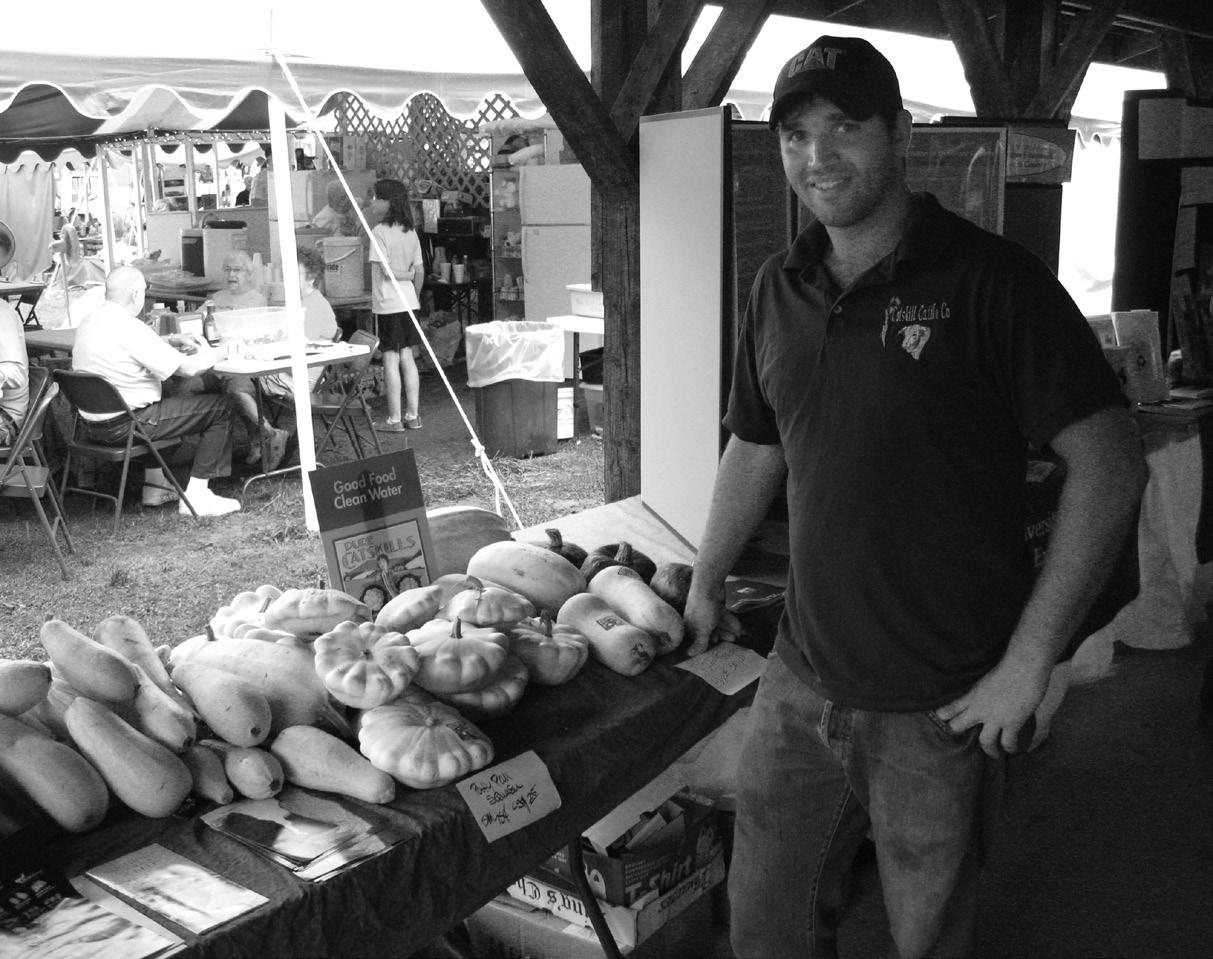
Pure Catskills member Lonny Schaefer, owner of Catskill Cattle Company in Deposit, jumped at the opportunity to get his beef and fresh veggies in front of the Delaware County Fair crowds.
Of Interest in 2009
The Council has been collecting land data since 1992. To address this volume of information, the Council created an entirely new Database group, including the hiring of a Database Administrator and dedicated Mapping Specialist, and introducing a comprehensive, relational database. Mutually beneficial data will integrate the four primary aspects of WAC: forestry, easements, agriculture and agricultural-based marketing. This central repository will house all of WAC’s relevant day-to-day field operations and allow convenient up-to-date data access needed to manage WAC’s daily work. In addition, the database will allow Council staff and sister agencies to work more effectively with program participants and landowners. The project promises to improve data accuracy, project management, mapping analyses and presentations. As we move to better organize this data, we recognize the importance of landowner information confidentiality. Land-specific details remain proprietary, though broad-based, generic data may be shared to better administer the watershed system, program offerings, future grant applications and farmer-land linkages through a new initiative, Farm Connections.
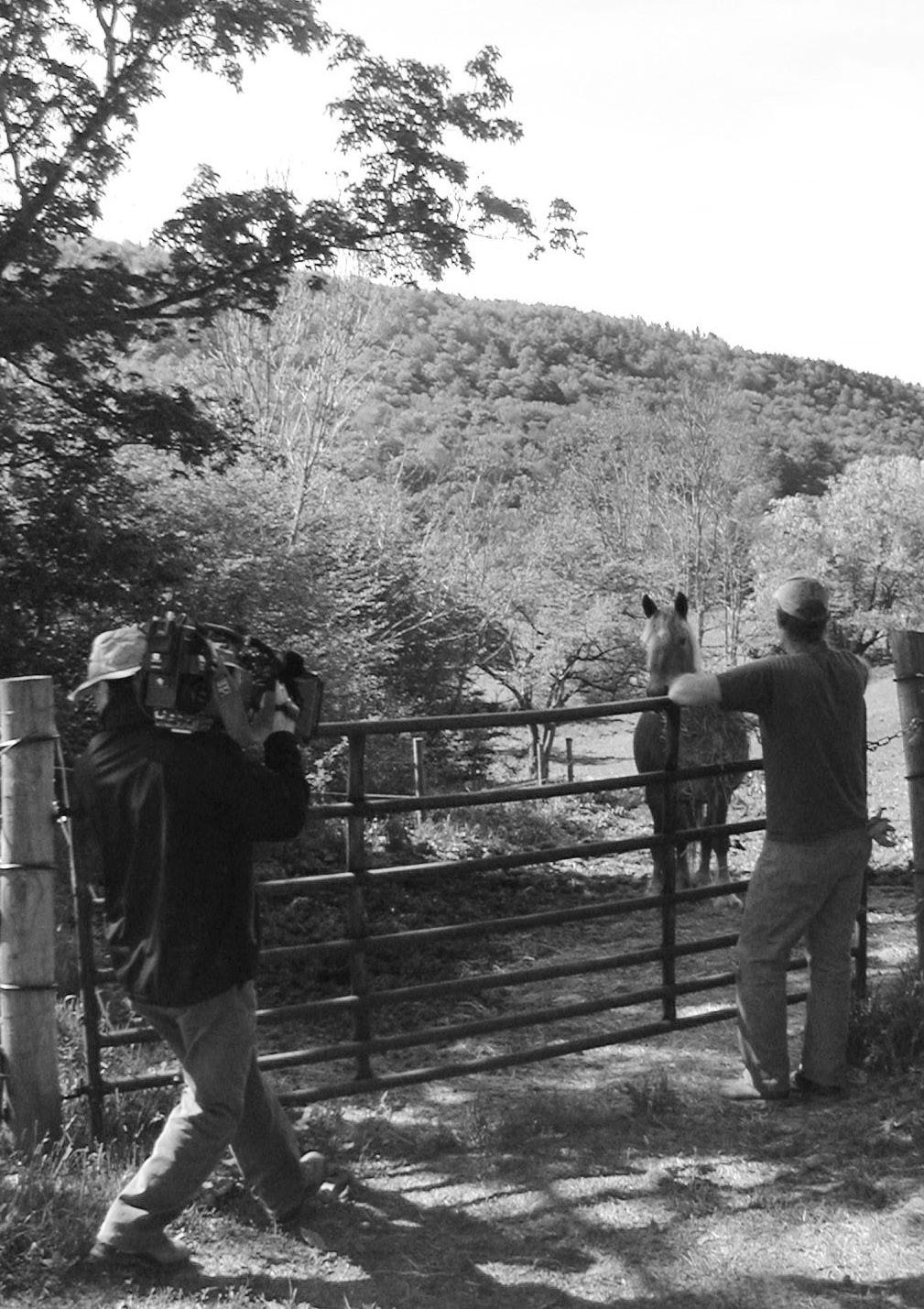
The international community continues to recognize the Council as a watershed management model and Payment for EcoServices standard. In 2009, the Council coordinated documentary video crews from the European Commission and Canada (photo bottom left), as well as three foreign watershed management groups, on farm/forest tours in the Croton and Catskill/Delaware Watersheds.
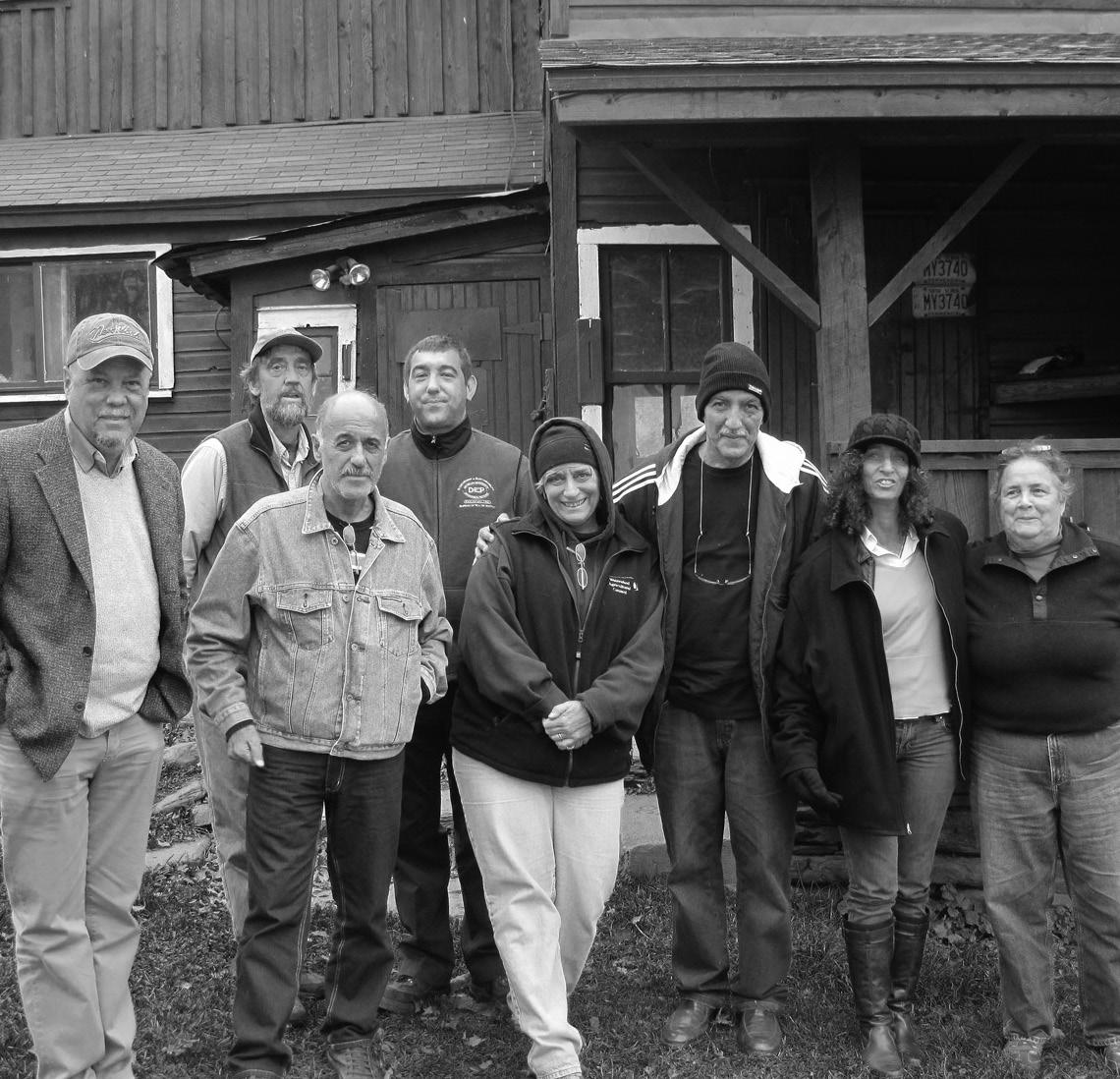
DEP liaison John Schwartz and Communications Director Tara Collins (fourth and fifth from left, photo bottom right) bridged the language barrier with the Portuguese-speaking Brazilian Sustainable Development team during a visit to Manhattan Country School in Roxbury. Farm Director Ginny Sheer (far right) guided the group on a tour of the School’s three-bay covered compost facility, concerete barnyard improvements streamside, and solar-electric schoolhouse and off-grid classrooms. Local groups interested in farm/forest tours should call (607) 865-7090, ext. 226 or email info@nycwatershed.org.
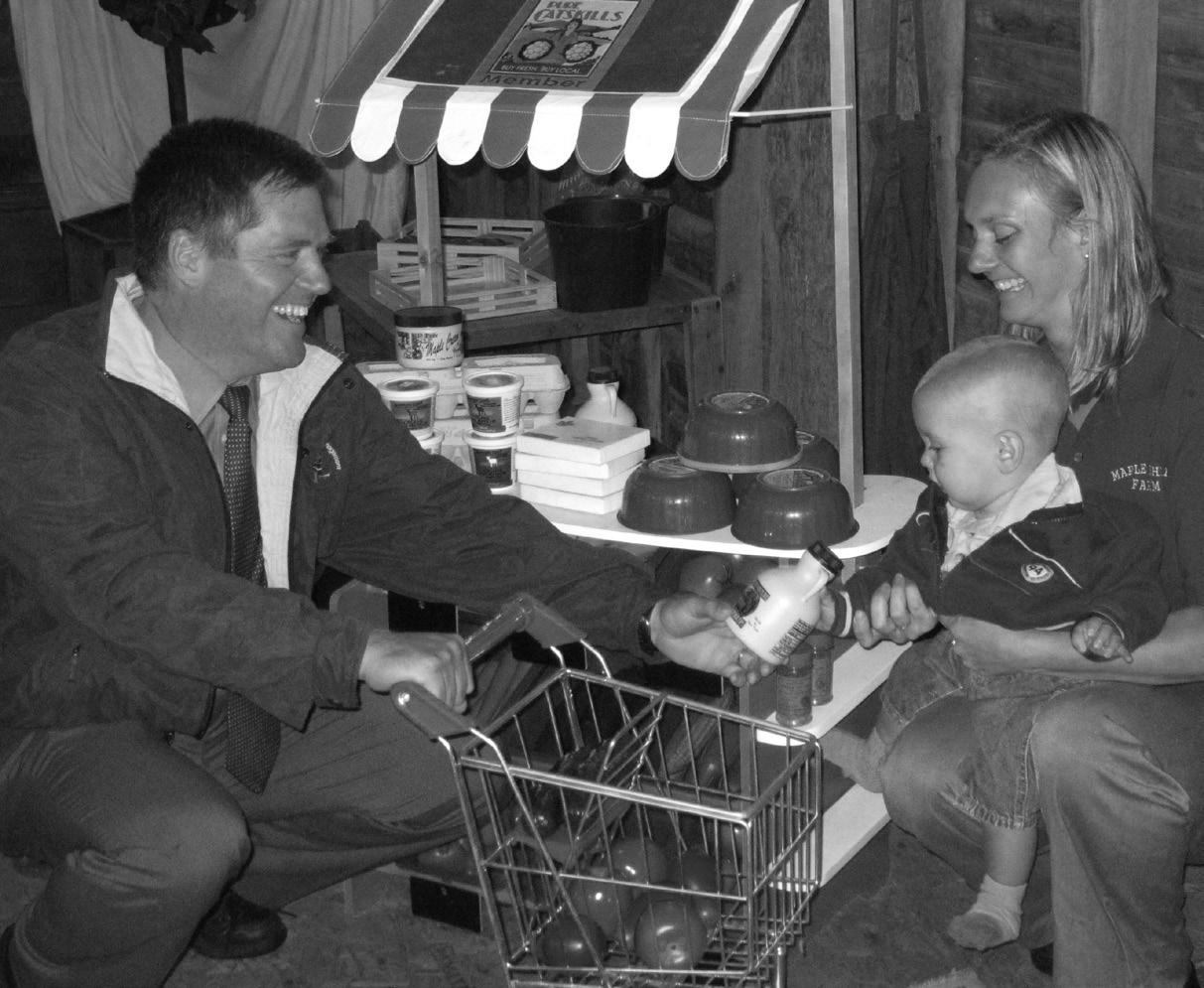
After signing his pledge during Buy Local Month, NYS Ag & Markets Commissioner Patrick Hooker (at left) got the “baby facts” of fresh food value and farmers’ market produce from future farmer Ryan Wilson at Maple Shade Farm, which recently enrolled as an Agricultural Program participant. Abby Wilson (at right) shares her passion for childhood education and strong farm families by serving on the Farm to Market Committee.
www.purecatskills.com www.catskillwoodnet.org
www.nycwatershed.org
In keeping with our environmental practices, this newsletter is printed on Wausau Exact Opaque, a 30% recycled, 30% post-consumer waste, elemental-chlorine free paper that is Forest Stewardship Councilcertified and “Ancient Forest Friendly.” This paper is manufactured with electricity that is offset with Green Seal certified renewable energy certificates. You can help us further protect the environment by signing up for our electronic annual report and newsletters by visiting www.nycwatershed.org or sending your name and email address to info@nycwatershed.org. The WAC respects your privacy and does not share or sell contact information to outside agencies or third parties.
Watershed Farm & Forest 2009 Annual Report is a publication of the Watershed Agricultural Council (WAC), a not-for-profit 501(c)(3) organization whose mission is to support the economic viability of agriculture and forestry through the protection of water quality and the promotion of land conservation in the New York City watershed region. The WAC is funded by the New York City Department of Environmental Protection, U.S. Department of Agriculture, U.S. Forest Service and other federal, foundation and private sources. The WAC is an Equal Opportunity Provider and Employer.