2008
A Message from the Watershed Agricultural Council
Giventhe dire news reports we receive daily through the media, it is sometimes difficult to maintain a positive outlook when assessing the world around us. The challenges we face today are enormous, but not insurmountable. American tenacity, ingenuity and innovation inevitably overcome, what would seem to others, impossible obstacles.
In the Agriculture Sector, fluctuating fuel prices, rising costs of fertilizers and feed, and changing weather patterns pressure farmers to stay positive. As they continue their struggle to produce food and fiber for worldwide consumers, they strive to minimize their impact on the environment.
In the Forestry Sector, similar pressures of conducting business, transporting fiber and holding development at bay force forest landowners and professionals to re-evaluate their land use. Keeping an eye to the benefits of undeveloped habitat, trees and land reinforce their commitment to the working landscapes of the Catskill region. Here in the New York City watershed, farm and forest landowners are able to take advantage of the full array of the Council’s programs to assist them in meeting those economic and environmental challenges. Our programs in agriculture, forestry and easements help landowners turn property ownership into opportunities for future growth and sustainability.
The City of New York recognizes the importance of a strong partnership with the watershed communities and economic sectors to maintain a consistently safe, drinking water supply. To reinforce that commitment, the Watershed Agricultural Council and the New York City Department of Environmental Protection (DEP) recently renewed a four-year agreement to continue the WAC’s non-point
source pollution prevention programs. Our programs help prevent the loss of our agricultural and forestry resources and stimulate our natural resource-based economy.
To coincide with that agreement, the Council will be reviewing its strategic plan and decision-making process to better position itself for the future. That future will emphasize connections between the preservation of agricultural and forest lands, farm and forest economic viability and regional food and fiber systems. By collaborating with our partnering agencies, the Council will accomplish these objectives that positively impact water quality and the environment.
The Catskill Watershed Region is at a unique time in its history. We have an opportunity to create an environment that will have a positive impact for generations to come by using the types of partnerships developed between the DEP, the Council and various agencies. Our work can stimulate the natural resource-based industries and services that are the backbone of our rural economy and centerpieces of our rural lifestyles. The Watershed Agricultural Council will help to accomplish these objectives while maintaining the water quality that is vital to us all. Our future obligations to our neighbors, the natural resources that put food on our tables, and the environment at large may seem insurmountable. But with tenacity, ingenuity and innovation, we see the Watershed Agricultural Council guiding the way through effective land stewardship practices, economic initiatives and clean water practices.
Fred Huneke, Chairman
Tom O’Brien, Executive Director
Finance Report
Revenues
$697,604 (6.3%)
$702,835 (6.3%)
$28,770 (0.3%) Interest and Gain/loss of Asset Sale
Expenditures
$49,405 (0.4%)
$9,658,403
$3,373,834 (31.2%)
$1,433,224 (13.3%) BMP Implementation & Construction
Program Administration $1,392,614
Research $101,266 Depreciation
$146,557
Donated Services
$702,835
$2,343,272 (21.7%) Croton System
$802,306 (7.4%) Forestry
$1,076,204 (10.0%) Easements
$1,771,083 (16.4%) Total
$10,799,923 (100.0%)
The Watershed Agricultural Council Finance Report reflects a fiscal year of July 1, 2007 through June 30, 2008. the council derived 87% of its revenue through a contractual arrangement with the New York City Department of Environmental Protection. Other Revenue included cash from the WAC’s fundraising efforts, stewardship donations and registration fees for events/workshops. Donated Services included required matches from Forestry bus tour grants recipients.
The WAC allocated the majority of these funds to finance best management practices applied to landowner properties throughout the watershed. The remainder was applied to program administration, outreach and education. Expenditures from Donated Services represented expenses associated with posted Revenue Donated Services.
Water Quality Stewardship Programs
Agricultural Program
Working with nearly 400 farmers and landowners and two dozen local agencies, the Agricultural Program continues to grow in scope and impact. in 2008, the program implemented 446 BMps at a total investment of $2.7 million. nutrient Management plans, fencing, riparian forest buffers, waste utilization practices, recordkeeping tools and instruction topped the list of BMP installations and applica-
tions. For a complete implementation report, visit the 2008 online Annual Report Supplement at www.nycwatershed.org.
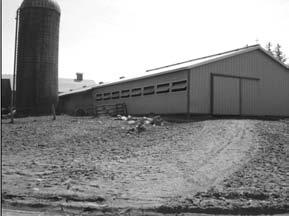
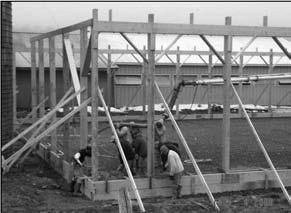
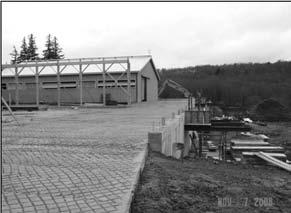
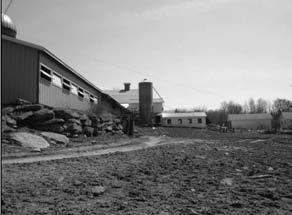
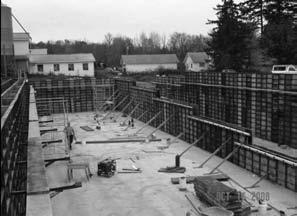
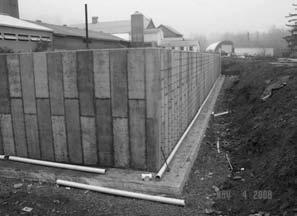
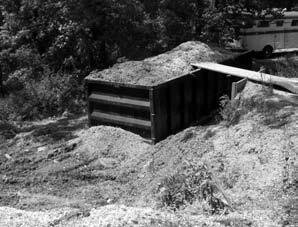
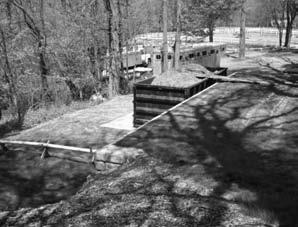
More complex construction, such as this covered barnyard structure and waste storage unit, take time and a lot of manpower. These Delaware County projects one in Kortright, the other in Delhi, were two of the Agricultural Program’s largest and ambitious undertakings. Pictured at left, the Delhi project is nearly complete after
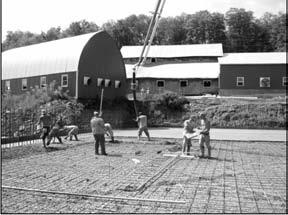
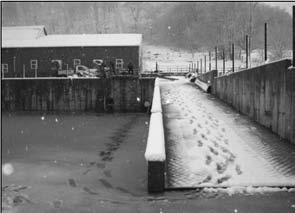
a year of implementation. The Kortright (above) project required a 120-foot concrete pump truck and took four months to complete.
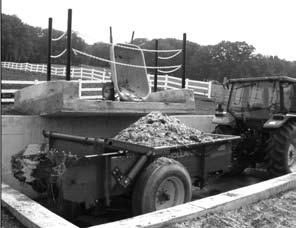
Fortunately, the Council doesn’t always bring out the heavy machinery to get a job done. Sometimes, a barnyard remedy comes from good old-fashioned ingenuity. At this Roxbury farm (below), replacing a muddy feed area with concrete proved the remedy for this heavy-use area. In Andes, surfacing improvements were enough to do the trick. The bottom line is the same, though
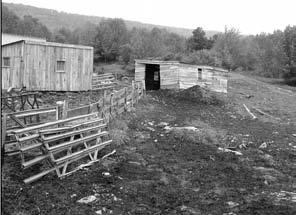
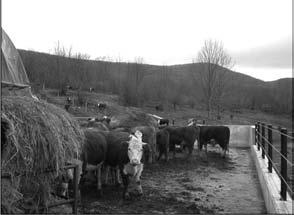
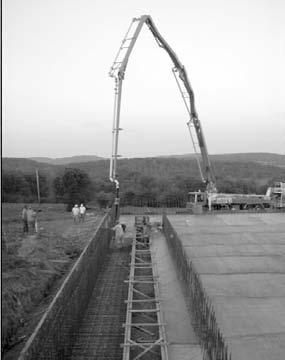
Delhi Project: Covered Barnyard and Waste Storage
Roxbury Project: Heavy-use Area
Kortright Project: Waste Storage
improving conditions for water quality and farm animals which, in turn, influence farm profitability.
eighty farmers enrolled in the 2008 nutrient Management program, following 168 nutrient management plans outlining proper manure containment, distribution and disposal on 25,183 acres.
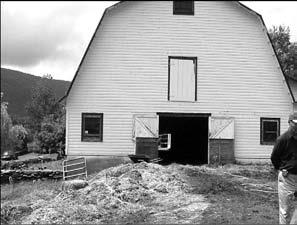
Of course, finding a place to store manure until a winter spreading (or weekday pickup) dictates the simplicity (or complexity) of a recommended Best Management Practice (BMP). Even though these farms, pictured below, are 200 miles apart and on either side of the Hudson River, the BMPs set in place are relatively the same, simple and straightforward.
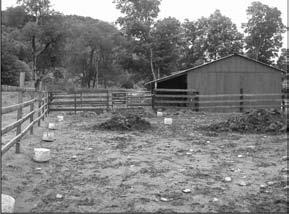
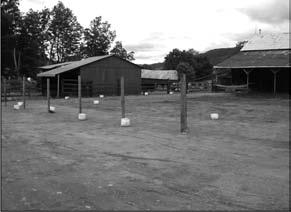
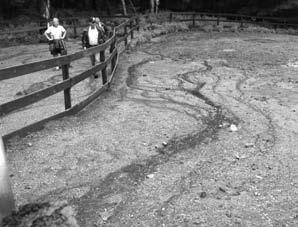
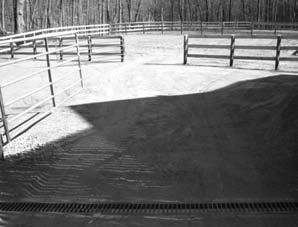
Erosion-reducing techniques, including proper grading, diversion, culverts and resurfacing are relatively simple fixes. These improvements are significant, like this heavy-use area at a Putnam County horse farm (top right) and this Prattsville beef farm access road and culvert crossing (middle photos). By reducing mud and minimizing run-off, soils stay in place and water remains clear.
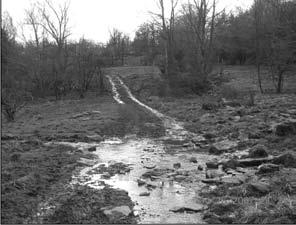
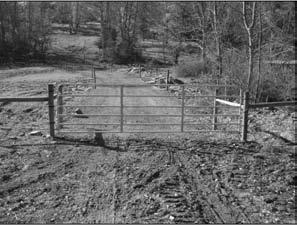
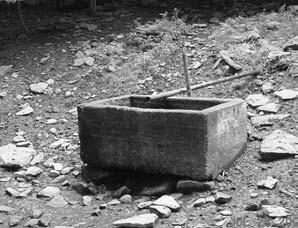
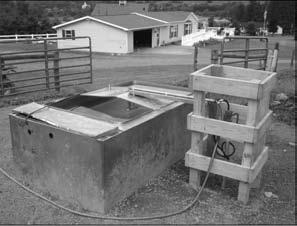
WAC planners and engineers find a solution for each individual farmer, because one size does not fit all. For example, reworking an existing watering facility is what’s needed to improve conditions around the livestock “water cooler” pictured below.
On the other hand, rerouting the water source and adjusting a
Andes Project: Heavy-use Area
North Salem Project: Heavy-use Area
Roxbury Project: Manure Management
farm’s grazing practice are more in order at this East Fishkill beef farm (three photos below).
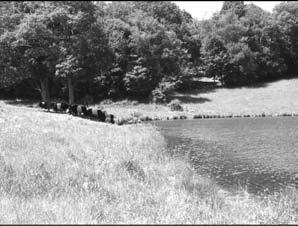
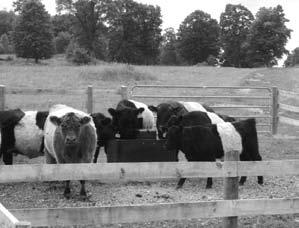
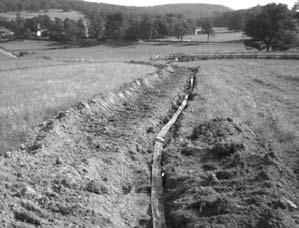
the Forestry program dispersed $138,283 to 85 different landowners for 121 projects impacting 1,008 acres of watershed forests. seventy percent (70%) of approved Map projects have been successfully completed.
The Forestry Program also worked with students, teachers, loggers and landowners, educating them on the watershed, forest management practices and clean water.
the Bus tour grants program completed 23 tours from New York City to the Croton and catskill/delaware watersheds during 2008. a total of 1,480 people attended the tours. since its inception in 2003, the Bus tour grants program has approved 87 bus tours for 3,906 students, teachers, environmental professionals and individuals from community groups.
Conservation Reserve Enhancement Program accomplishments and additional before-and-after photos can be found at www.nycwatershed.org in the 2008 online annual report supplement.
Forestry Program
During 2008, the Forestry program, in partnership with Watershed Qualified Foresters, completed 58 Watershed Forest Management plans covering 10,740 total acres and 8,850 forested acres. to date, more than 740 properties are enrolled in the Watershed Forest Management planning program covering 132,500 total acres (103,800 of them forested).
at the end of 2008, the Management assistance program (Map) was evaluated and the decision was made to make this pilot program a permanent part of the WAC Forestry Program. The MAP provided financial and technical assistance to landowners to aid them in implementing their Watershed Forest Management Plans. To date,
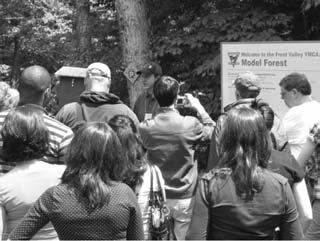
These bus tours bring children and adults to where clean drinking water starts it journey to New York City faucets. At left, Forestry Program Manager Tom Pavlesich (center) addresses 50 people at Frost Valley’s Model Forest in July. The group of nontraditional educators represented diverse organizations such as the Green Guerillas and the Bronx Zoo.
The WAC Forestry Program is working with five regional facilities in three counties, including three public schools, to conduct a feasibility study to evaluate heating with woodchips. through a matching grant from the us Forest service, the WAC’s Forestry Program contracted with Jeff Forward of Vermontbased richmond energy associates, llc (rea). each facility was selected from a pool of eleven applicants. Application pre-requisites
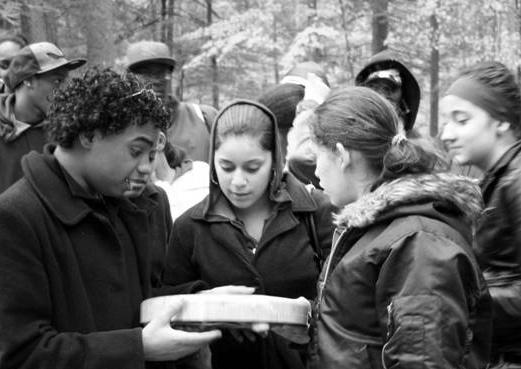
Students from the Brooklyn Center for the Urban Environment visited the Ashokan Field Campus, Ulster County. During the bus tour, they learned to identify trees and how trees support a regional wood-products industry. Here students marvel at a Catskill Craftsmen cutting board, made from watershed trees in Stamford, Delaware County.
included a minimum facility size of 50,000 square-feet with an existing boiler output of 3-million Btu/hour. the study will analyze the current energy demands for each facility. The analysis will include a detailed assessment of the economic, environmental and technical feasibility of retrofitting or replacing an existing boiler system to accommodate wood as a renewable fuel option. The study, site visits and subsequent reports will provide facilities with information to make sound decisions regarding their energy needs. Studies will also describe the current technology available for using locally produced wood-chips from the region’s abundant low-grade forest resources.
The Siuslaw Model Forest is the newest addition to the WAC Model Forest program. in spring 2008, trained logger certified logger-contractor Jake Rosa completed the installation of various Best Management Practice demonstrations on the Siuslaw Model Forest road. The demonstrations consist of water bars, broad-based dips, numerous types of open-top culverts, geo-web and gravel, a 20-foot portable skidder bridge, a 4-foot arch culvert, corduroy, grass seed
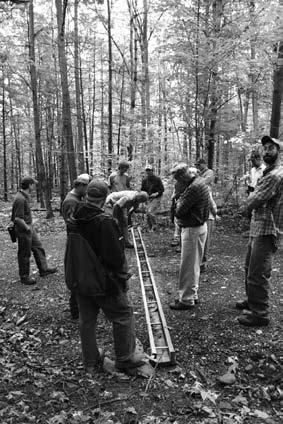
Program staff led Vermont State foresters through Siuslaw Model Forest in Acra, NY. The group (at left) examines an open culvert. During the 2008 calendar year, the WAC completed 52 Forestry BMP projects worth nearly $156,465. Completed BMPs included:
• 70 miles of road layout
• 2,535 water bars
• 166 broad-based dips
• 1,295 linear feet of geo-textile fabric
• 1,766.5 cubic yards of stone
• 105 hay bales
• 430 linear feet of silt fence
• 72 linear feet of corduroy
• 310 linear feet of culverts
All this helped the post-harvest stabilization of 26.5 acres.
The average actual cost per project was $3,000 with most projects taking five months to complete (from application approval to project payment). Twenty-two applicants submitted 45 applications during the 2008 calendar year.
and hay. Numerous agro-forestry demonstrations highlighting ginseng, mushroom, and switch-grass biomass demonstrations were also installed.
For more details on the Forestry Program and its logger training accomplishments, visit www.nycwatershed.org and view the 2008 Online Annual Report Supplement.
East of Hudson Program (Croton Watershed)
Eastof the Hudson River, the Croton Watershed farm and forestry programs celebrated a banner year in 2008. the agricultural Program developed a new conservation practice, a washwater infiltration system to address grey water from horse wash stalls on horse farms, the predominant farm type in the Croton Watershed. Three forced-air composting systems were designed to address the biodegradation of animal waste. These innovative systems were crafted under contract with O2Compost, a firm from Washington State.
The Croton Agricultural Program hosted three workshops in collaboration with Stone Barns Center for Food & Agriculture, a summer grazing workshop for horse
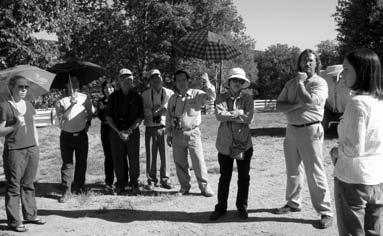
and livestock owners called “Great Grass” and two winter manure composting workshops. Program staff also hosted two watershed tours, one of which included a group from Connecticut representing the State’s Horse Environmental Awareness Program, Natural resources conservation service, and the university of connecticut (photo above). The second tour for international environmental officials from Cambodia, Thailand and Vietnam (photo next page) highlighted the WAC’s role as an international model for voluntary clean water practices.
The Council commenced easement stewardship on Tilly Foster Farm and supported the application process, and subsequent award, of the second New York State purchase of a conservation easement for a WAC Croton watershed participant and Westchester County farm. The Council will serve as the steward for both conservation easements.
Additionally, the Program completed a forest management plan on the largest single landholding in Westchester County: Ward pound ridge reservation, a 4,300-acre county park. the Forestry Program also hosted a myriad of educational events including landowner workshops on forest stewardship and a deer density workshop to raise public awareness of the impacts of white-tailed deer on forest regeneration.
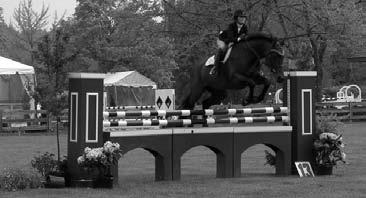
The East of Hudson Program is engaging the equestrian community in new ways. in May 2008, the council sponsored a series of Jumper division classes at the Old Salem Farm Spring Horse Show. Over two thousand people attended the two-week long event, many of them Croton watershed horse farm owners who make up a significant majority of Croton Watershed’s agricultural land base.
Outreach
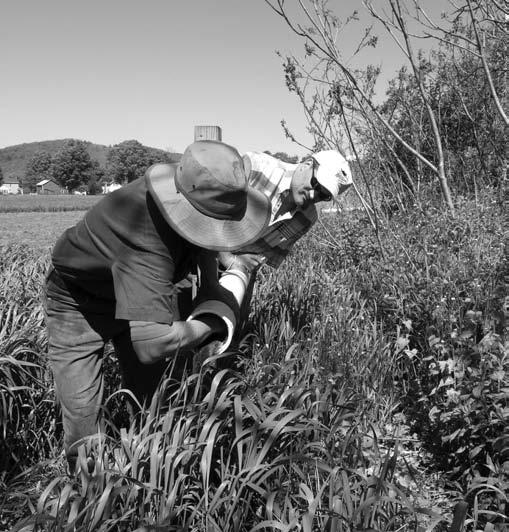
TheWAC hosted many local groups, free of charge, on tours of its three model forests and various local farms.
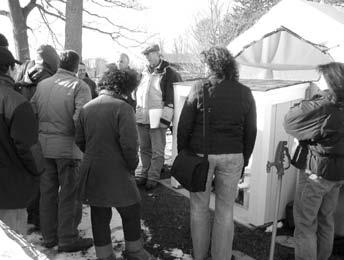
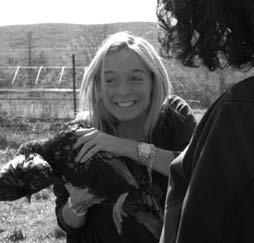
Throughout the year, Agricultural and Forestry Program staff led adult groups on farm/forest tours including four members of the Skaneateles Watershed Agricultural Program, forty students from Bard and Syracuse Colleges, and a threeman documentary crew from Brazil’s TV Globo. At right, Mark Burger, Skaneateles Watershed Agricultural Program looks on, as River Haven Farm owner Tom Hutson goes elbow-deep to clear a milkhouse waste BMP over a vegetative filter strip. this syracuse university freshman
got her first, hands-on experience with a real, live chicken during the “Water for Gotham” farm/forest tour of Frost Valley last summer. As part of his college-course offering, Associate Professor Chris Johnson brings students each year to explore the farm and forest practices in place throughout the watershed. WAC Communications Director Tara Collins and Frost Valley Farm coordinator, John Chartier, conducted the group’s visit, providing watershed background that linked farm and forest practices with the region’s drinking water history.
Representing TV Globo of Brazil, three documentary film makers toured the New York City watershed and several WAC participant farms with Executive Director, Tom O’Brien last May. The TV crew came here to film and learn more about a successful and voluntary water quality program, and used the Catskill/Delaware watershed as part of their visual case history. the show aired in that country in 2009.
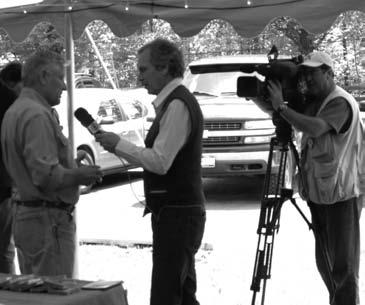
The crew got a taste of true “country hospitality” at the 6th Annual Farmer Appreciation Picnic held at the Delaware County Historical Association. Here, Board Chairman Fred Huneke (left) is interviewed at the Picnic by Nelson Araujo, TV Globo Producer (center, with cameraman “Junior” at right). While TV Globo raised awareness of water quality issues for its viewers in San Paolo, the Ag picnic raised $1,200 for the conservation easement stewardship Fund.
Farm to Market Program
The
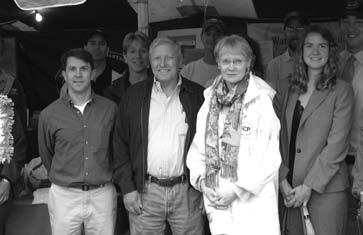
Despite the rain, an Opening Day crowd gathered last August at the Delaware County Fair in Walton, NY. The Wac and dep celebrated their 15-year anniversary working together and their mutual commitment to protecting drinking water quality and working landscapes. DEP Commissioner, emily lloyd, (center right) marked the occasion with Board Chairman Fred Huneke (center left) in a ribboncutting ceremony early that morning.
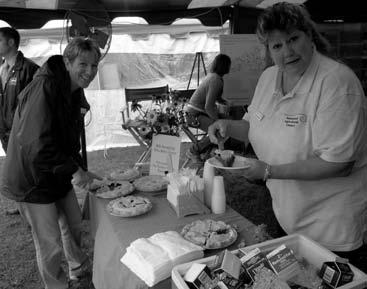
In keeping with tradition, Agricultural Assistant Program Manager, Elaine Poulin (at left, bottom left photo) and Information Technology Assistant, Edna Boroden (pictured at right) kept pace serving homemade pie to the group.
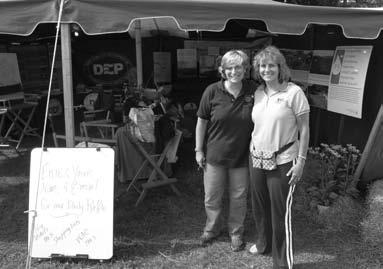
WAC Communications Director, Tara Collins and DEP Watershed office of public affairs director, nancy levine (photo below) organized the week-long educational tent, which received over 5,000 visitors in one week.
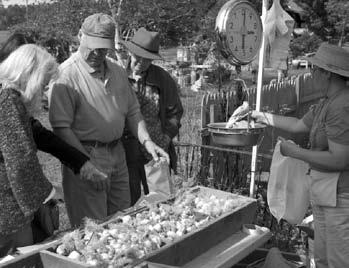
Farm to Market Program worked handin-hand with the Farmer Education Program by connecting market-based concerns with traditional production-based education. the program’s Buy local initiative, Pure Catskills, enrolled over 200 members located in and around the new York City Watershed. The Sustainable Agricultural Education Grant Program provided key partnerships with Pure Catskills members, local businesses and community organizations. in 2008, fifteen events, all with high attendance, received nearly $60,000 in sponsorship awards for regional celebrations of food, agriculture and rural heritage. Events served diverse audiences, from canning with backyard gardeners to making goat cheese with gourmet purveyors.
“Pick Our Valley, Pick Our Brains” was a two-day Meet-the-Farmer effort in Schoharie County. Spearheaded by Cindy Barber of Barber Farm and Phil Metzger of Cooper’s Ark, various activities throughout
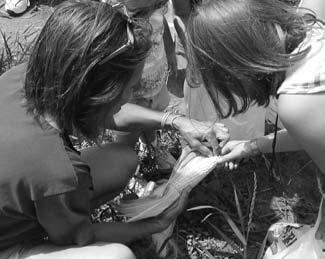
Cindy Barber explains to children and their families how to pick a ripe ear of corn. “The ear should fit solidly in the palm of your hand,” says Barber. “When you touch the tip, it should feel solid, not like it’s missing something inside the husk.” Here she reveals immature corn and how the ear tip lacks rows of corn kernels which would have provided that feeling of “fullness.” The fifth-generation Barber Farm, based in Middleburgh, grows over 50 varieties of hand-harvested vegetables and educates thousands each year to the benefits of family farming and fresh, local food.
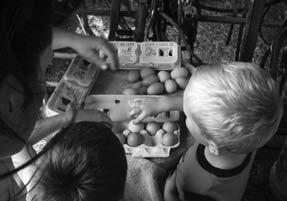
the Valley piqued the curiousity of 300 people. at left, Metzger shows a group of children how to collect, wash and dry eggs and place them into cartons. According to Metzger, the trick is to place the egg, skinny end down, in the carton. This provides the yolk with plenty of room during transport. Cooper’s Ark specializes in farm tours for disabled children and adults.
The Farm to Market Program further engaged farmers, novice to seasoned, through a variety of on-farm experiences. The Sheep & Goat Field Day, Beef Field Day and Farmers Market Managers luncheon all provided venues for idea and practice sharing. over 100 people attended the January catskill regional dairy, livestock and Grazing Conference.
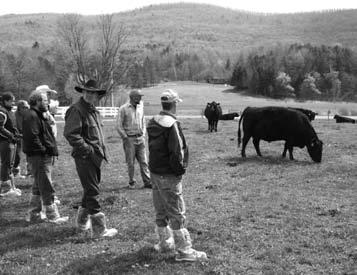
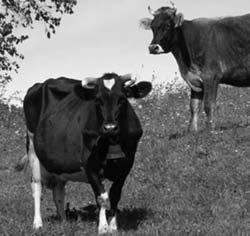
JJ Farber Farm of East Jewett hosted the Annual Beef Field Day event and a dozen cattlemen and women. The following day, a second Beef Field day at shady lawn Farm, Davenport engaged another dozen cattle producers. On all on-farm visits, attendees (pictured above) wear plastic booties to reduce “biohazard” transfer and spread of “undesirable pests” off the farm.
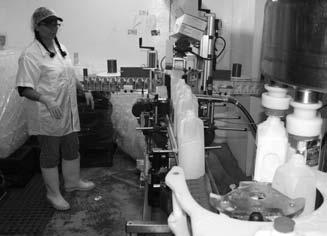
this year’s creamery tour drew sixteen adventurers on a 3-hour drive to Columbia County. The group stopped at Hawthorne Valley and RonnyBrook Farms for a taste of raw milk then ventured on to sunY-Morrisville for a tour of the bottling facilities and a value-added products discussion.
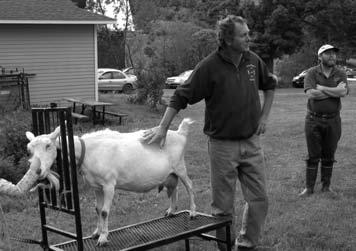
This year’s big success, the Sheep & Goat Field Day held last June, attracted over 70 people. catarina Kessler, proprietor of Promisedland Farm in East Meredith, discussed grazing sheep and beef on the same paddocks to manage parasites. Stone & Thistle Farm owner Tom Warren (at right) talked about ruminants, demonstrated basic hoof maintenance and shared his experience as a goat dairy entrepreneur.
in 2008, the Farmer education program engaged nearly 500 people through 15 workshops, pasture walks and off-site facility tours. The Farmer Education Program addresses the hands-on, day-to-day farm applications, with the Farm to Market Program working to improve profitability, value-added product lines, marketability and farm business success.
“Lamb’s the word,” for CCE
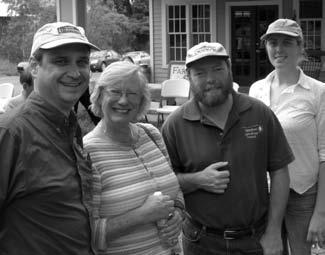
Senior Whole Farm Planner John Thurgood and Catarina Kessler (left and center ) here with WAC’s Small Farms Coordinator, Dan Flaherty and Farm to Market Manager, Challey Comer (center and right) who helped coordinate the day’s activities.
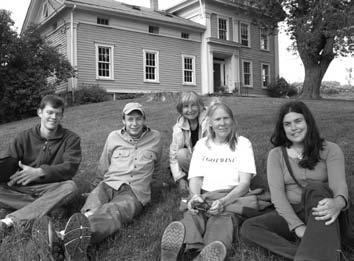
Above, Ralph, Ben, Bea, Sonja and Karin take a break on the Warren’s front lawn after traveling over an hour from Apple Pond Farm in Callicoon Center.
Creamery Tour
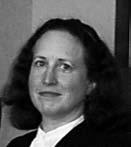
“I believe in preserving open land in general and especially in preserving working farms. Donating to the Fund is a way to support these concepts in perpetuity. My farm was a recipient of support from the Watershed Agricultural Council. One way I chose to give back was to donate to the Conservation Easement Stewardship Fund.”
Barbara Howard Chase Meadow Farm Westchester County
Strengthening her commitment to farmland preservation, Barbara joined the Council’s Board of directors in 2008.
Fund Development
TheCouncil remains dedicated to conserving farmland for future generations. looking ahead, the council will need to oversee easement monitoring and stewardship activities in perpetuity. With those obligations in mind, the WAC continued to raise money for its Conservation Easement Stewardship Fund.
in 2008, the Wac raised $8,431 for this Fund, with the total funds raised to date totaling $303,193. in 2008, the Wac initiated a formal Annual Campaign with internal WAC contributions totaling $3,652.
another $4,779 was donated by individuals ($75), the Farmer appreciation picnic ($1,196), the Forestry dinner ($3,485) and the online shopping website, igive.com ($24).
the dep has a standing matching pledge of $8,000 per conservation easement closed by the Wac (on a 2-to-1 basis), with $4,000 per easement closed to be raised by the WAC. The DEP provided seed money to establish the Fund and stimulate additional donations though the challenge grant.
the 2009 annual campaign is now underway; this year’s goal is an enterprising $100,000. You can help the council preserve working landscapes by donating today! Here are a few ways to give:
1) Send a check in the mail.
2) Donate online by clicking the Donate Now water drop at www.nycwatershed.org.
3) conduct your online shopping through igive.com or your internet searches through GoodSearch.com. Select the WAC Conservation Easement Stewardship Fund to benefit from vendor-sponsored donations based on your online purchases and queries.
4) name the Fund as a beneficiary within your estate planning awards or life insurance policy.
If you have questions about the Fund, call the WAC’s Executive director at (607) 865-7790, ext. 103.
Easement Program
Working
together with landowners in the watershed, the Easement program has to date acquired 82 conservation easements protecting 15,486 acres of agricultural and forest land in the New York City Watershed. In order to ensure that the WAC fulfills its mission to protect agricultural lands, landowners interested in the WAC’s Easement Program must have an approved Whole Farm Plan on their property in order to be eligible to apply to the Easement Program. A Whole Farm Plan is a farm management plan that assesses and prioritizes environmental issues and identifies conservation practices to mitigate these issues so that farming can continue without harming the New York City water supply.
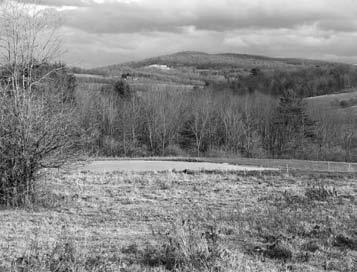
The Easement Program staff also work with landowner participants by assisting them
in the stewardship of their conservation easements. Stewardship activities include, but are not limited to, assisting landowners in the development of plans necessary to conduct timber harvests, engage in stream work and extract quarry bluestone. Additionally, stewardship staff conduct Annual Farm Status Reviews of easement properties to ensure that the Whole Farm Plans are working as intended and allowing landowners to achieve both their conservation goals and their agricultural enterprise goals.
the easement program staff signed 13 contracts for new easements in 2008 on approximately 1,600 acres. the program expects to sign an additional 13 contracts on over 2,500 acres of land in 2009.
Behind the Mission
The Watershed Agricultural Council wishes to thank the people who helped us meet our goals and aspirations. We appreciate the commitment of our staff, board members, partners, donors and supporters. Without you, our mission would be impossible to achieve. The WAC mission is to support the economic viability of agriculture and forestry through the protection of water quality and the promotion of land conservation in the New York City Watershed region.
2008 Board of Directors
Fred Huneke, Chair, Delaware
Dave Cammer, Vice Chair, Schoharie
William Coleman, Treasurer, Delaware
Gail Hillriegel, Secretary, Ulster
linda deWitt, Delaware
Sally Fairbairn, Ulster
Darby Hartwell, Delaware
Barbara Howard, Westchester
R. Thomas Hutson, Delaware
Aissa O’Neil, Delaware
Daniel Palm, Delaware, Robert Partridge, Greene
Dave Post, Delaware
John Verhoeven, Greene
Barbara Wilkens, Westchester
John Schwartz, NYC DEP Program Director
Staff
Thomas Artale, Finance Director
lorinda Backus, WAC Procurement Assistant
Justin Baker, Engineering Technician
Amerigo Balzano, Engineering Specialist
Marigrace Bellert, Executive Assistant-East of Hudson
Rob Birdsall, Land Conservation Stewardship Specialist
Edna Boroden, Information Technology Specialist
Barbara Brown, WAC Accountant
Carrie Davis, East of Hudson Program Manager
Tara Collins, Communications Director
Challey Comer, Farm To Market Manager
Dan Deysenroth, Nutrient Management Specialist
leslie deysenroth, Executive Assistant- Agricultural Program
Dan Flaherty, Small Farms Coordinator
Tom Foulkrod, Watershed Forester
Jeffrey Graff, Easement Program Manager
Dan Hadden, Engineering SpecialistEast of Hudson
Amy Hawk, Contract and Grants Specialist
Heather Hilson, Forestry Outreach Specialist
Jim Hilson, Senior Planner
Don Hebbard, Engineering Specialist
Tim Hebbard, Engineering Specialist
Rick Hochulli, Engineering Specialist
Andrew Hubbard, Watershed Forester
gary lamont, Land Conservation Specialist
Brian latourette, Agricultural Program Manager
amy lieberman, Land Conservation Specialist
phoebe lindsay, Project Coordinator
Cheryl Marion, Administrative Services Director
Cynthia McCarthy, Nutrient Management Specialist
Collin Miller, Wood Products Utilization & Marketing Specialist
Tom O’Brien, Executive Director
Tom Pavlesich, Forestry Program Manager
Elaine Poulin, Assistant Agricultural Program Manager
laura reed, Executive AssistantForestry Program
linda reed, Staff Accountant II
Susanne Sahler, Conservation Planner, East of Hudson
Susan Seymour, Executive AssistantEasement Program
Nate Townsend, Engineering Specialist
Eric VanBenschoten, Small Farms
Engineering Specialist
Kurt VonBerg, Watershed Forester
Partners
Agroforestry Resource Center
American Farmland Trust
The Ashokan Center
Bedford Audubon Society
Bedford riding lanes assn.
Catskill Center for Conservation and Development
Catskill Forest Association
Catskill Mountain Foundation
Catskill Mountainkeeper
Catskill Region Invasive Species Partnership (CRISP)
Catskill Streams
Catskill Watershed Corporation
Center for Agricultural Development & Entrepreneurship
Center for Woodlands Education
Clearpool Education Center
Common Ground Educational Consulting
Cornell Cooperative Extension: Delaware, Dutchess, Greene, Putnam, Schoharie, Sullivan, ulster, Westchester counties
cornell university
Delaware County
• Board of supervisors
• department of Watershed affairs
dutchess land conservancy
Earthpledge Foundation
Empire State Forest Products Association
Farm Catskills!
Federated Conservationists of Westchester County
Frost Valley YMCA
Glynwood Center
Hilltop Hanover Farm
& Environmental Center
Hudson Valley Agricultural Partnership
land trust alliance
lower hudson coalition of Conservation Districts
Muscoot Farm
Natural Resource Defense Council
New York City Dept. of Environmental Protection
nYFarm link
NY Farm Viability Institute
NY Forest Owners Association
new York logger training, inc.
New York State Dept. of
• agriculture & Markets
• environmental conservation
• health
New York State Soil & Water
Conservation Committee
New York Watershed Environmental Alliance
north salem open land Fdn.
Office of the Govenor - NYS
putnam county land trust
RC&D Council
• central
• hudson-Mohawk
• lower hudson/long island
• south central
Riverkeeper
Scenic Hudson
Soil and Water Conservation Districts: Delaware, Dutchess, Greene, Putnam, Schoharie, sullivan, ulster, Westchester Counties
Stone Barns Center for Food & Agriculture
sunY college of environmental Science and Forestry
teatown lake reservation
The Nature Conservancy
Tilly Foster Farm usda
• agricultural research service
• Farm service agency
• natural resources conservation Service
us
• army corps of engineers
• environmental protection agency
• Forest service
• geological survey
Ward Pound Ridge Reservation
Watershed Protection & Partnership Council
Watershed Qualified Consulting Foresters
Westchester land trust
2008 Donors & Supporters
Anonymous
Baseball Hall of Fame
Robert Bishop
John Blish
Brian Bower
Edna Boroden
Steve Bott
Brewery Ommegang
leon Brooks
Brooks’ House of BBQ
Tom Buel
C&C Feeds
David & Peggy Cammer
Clark Companies
Bill Coleman
Tara & John Collins
Challey Comer
Karl Connell
Eric Dahlberg
Carrie Davis
linda deWitt
James & Pat Doty
Joe Eisele
Sally Fairbairn
Farmer’s Museum
Jerry & Jessica Farrell
First Pioneer Farm Credit-Cobleskill
Daniel Flaherty
Steve Fleming
Diane Galusha
Fred Hathaway
Amy & Gary Hawk
Gail Hillriegel
Kim Holden
Barbara Howard
Andrew I. Hubbard
Fred & Marilyn Huneke
Tom Hutson
Randy Kelly
Klinger Power Sports
ian lamont
Jacob lamont
paul lapierre
Brian K. latourette
lutz Feed
MAS Engineering
David Mann
Cheryl P. Marion
Dave McFarland
Patrick & Barbara McGraw
John & Nancy McShane
Gary Mead
Collin A. Miller
Jason Miranda
National Bank of Delaware County
Theresa O’Brien
Thomas W. O’Brien
Jessica Olenych
Jeff Olsen
Dan Palm
Thomas Pavlesich
Michelle Peters
Dave Post
Elaine Poulin
Price Chopper
James Radomski
lisa rainwater
Karen Rauter
Art Reed
laura reed
linda M. reed
Jake Rosa
Ruminant Health Services
John Sauchuk
Adolph & Elaine Schaefer
larry schaefer
Gregg & Cathy Schroeter
Dale Scott
Kenneth Smith
Stock Building Supply
John Thurgood
Tractor Supply Store
John & Beth Verhoeven
Karl VonBerg
Wal-Mart
Rick Weidenbach
Frank Wood, Esq.
We apologize for any errors in the lists above and encourage you to contact us with corrections by calling (607) 865-7790 or by emailing info@nycwatershed.org.
Visit our websites: www.purecatskills.com www.catskillwoodnet.org www.nycwatershed.org

In keeping with our environmental practices, this newsletter is printed on Wausau exact opaque, a 30% recycled, 30% post-consumer waste, elemental-chlorine free paper that is Forest Stewardship Council-certified and “Ancient Forest Friendly.” This paper is manufactured with electricity that is offset with Green Seal certified renewable energy certificates.
You can help us further protect the environment by signing up for our electronic annual report and newsletters by visiting www.nycwatershed.org or sending your name and email address to info@nycwatershed.org. The WAC respects your privacy and does not share or sell contact information to outside agencies or third parties.
Watershed Farm & Forest 2008 Annual Report is a publication of the Watershed agricultural council (Wac), a not-for-profit 501(c)(3) organization whose mission is to support the economic viability of agriculture and forestry through the protection of water quality and the promotion of land conservation in the New York City watershed region. The WAC is funded by the New York City Department of Environmental protection, u s department of agriculture, u s. Forest service and other federal, foundation and private sources. The WAC is an Equal Opportunity Provider and Employer.