2005 Annual Report


In the years ahead, the Watershed Agricultural Council of Directors will be faced with many new challenges as we strive to meet our program goals for water quality as set forth in the partnership we’ve made with New York City. At the same time, we are committed to assisting farmers and forestland owners in their drive to stay competitive in the rapidly changing national and global economy.
Consumer awareness of the positive effects of well-managed farms and forests on water quality - and the environment in general - presents us with some unique opportunities. One of those opportunities is the ability to maintain a way of life in this still-pristine area – a place without the unbridled growth we see elsewhere that has changed the shape of our country’s landscape forever.
To achieve this, we will continue our work in natural resource conservation planning, balanced with the commitment toward strategies that increase farm and forest economic viability. The Pure Catskills marketing efforts, our Farm To Market Program and forestry economic initiatives like business grants and the Catskill Woodnet all seek to benefit the region’s land-based economy.
It is also important to note that WAC’s efforts to stay engaged with our friends in Washington give us an opportunity to focus discussions on the strengths and weaknesses of the Farm Bill, where important decisions are made about USDA programs such as economic price supports like MILC, and the Conservation Reserve Enhancement Program (CREP) for riparian buffers. This year, we were particularly honored to attend the White House Conference on Cooperative Conservation, the nation’s fourth Presidential conservation meeting since Teddy Roosevelt’s presidency. Together with our City partners, we shared the story of how cooperation becomes a protective force for billions of gallons of water through the voluntary implementation of stream buffers on private land.
Conservation easements are also critical to the continuance of farming in watershed communities. As we move forward, giving landowners the opportunity to sell their development rights ensures the availability of farm land for future generations while providing a tool for capital investment or intergenerational transfer of the farm. It is wise for us to remember that those who have gone before us have entrusted us with the safekeeping and stewardship of the land and our natural resources. Let’s improve on this legacy and leave the next generation with the collective knowledge and wisdom to care for the land, so that they, too, may also pass it on.
– Fred Huneke, Chair
Once again, I have the privilege of reflecting on a year’s worth of accomplishments and to convey to our constituents the pride that we all feel in a job well done. In 2005, the Watershed Agricultural Council had an extraordinarily successful year due to the dedication of our talented staff and our partners in forestry, agriculture, and conservation; the leadership provided by our Board; and the generosity and commitment of our funders.
We hope that this Annual Report shows that WAC continues to excel at our core work of giving farmers and forest landowners the right tools to protect vital drinking water resources. In this report, you’ll read about improvements we’ve made in each program area to increase our effectiveness and improve communication to participants.
WAC continues to work as a catalyst for enhancing the economic viability of land-based businesses through the kick-off of two marketing projects to brand our region’s farm and forest products: a Pure Catskills branding and “Buy Local” campaign for food and a Catskill Woodnet initiative for forest products.
We have also increased our ef for ts toward building a fund development program that will grow the endowment for our Easement Stewardship Fund. For the f irst time, this report includes our growing list of donors and Silent Auction suppor ters.
We envision a time in the future where our region’s consumers understand the connections among farm and forestland stewardship, a fresh, healthy food supply, and high-quality forest products that are produced and harvested using management practices that provide a living in rural communities while protecting our water resources.

Thank you all for your suppor t of the Watershed Agricultural Council. – Tom O’Brien, Executive Director
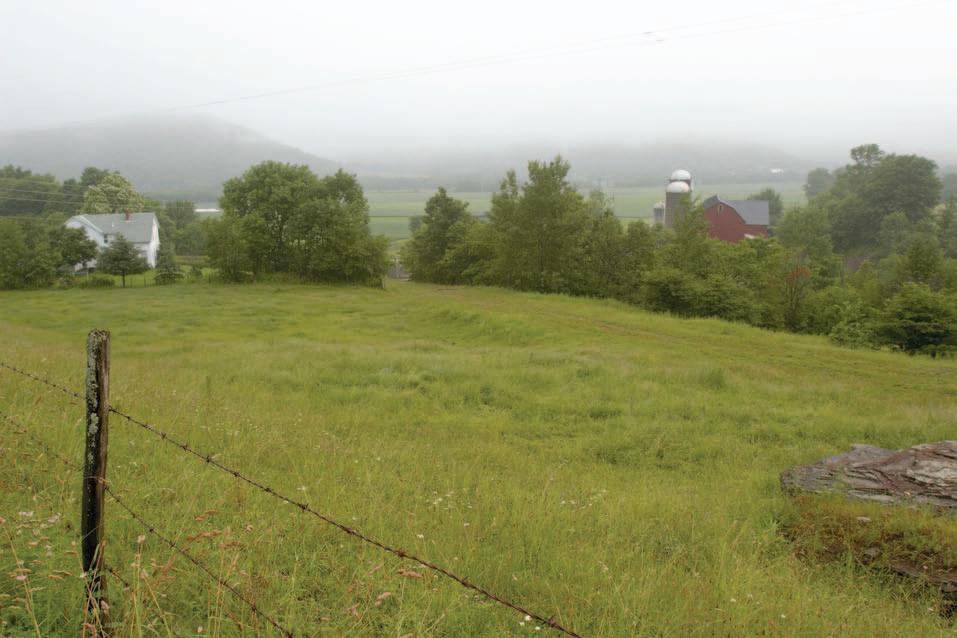
The Watershed Agricultural Council succeeded in conserving important farm, forest and water resources through its Conservation Easement Program, which compensates landowners for the value of their development rights. In exchange, WAC holds a permanent conservation easement on the property.
The easement is a voluntary, flexible conservation tool that gives farmers the opportunity to protect their land while keeping it in private ownership and retaining its agricultural use. Easements frequently aid farmers in re-investing in their businesses or transferring the property to the next generation.
In 2005, WAC worked with sixteen farm owners to protect over 2,160 of viable farm and forestland in the New York City watershed.
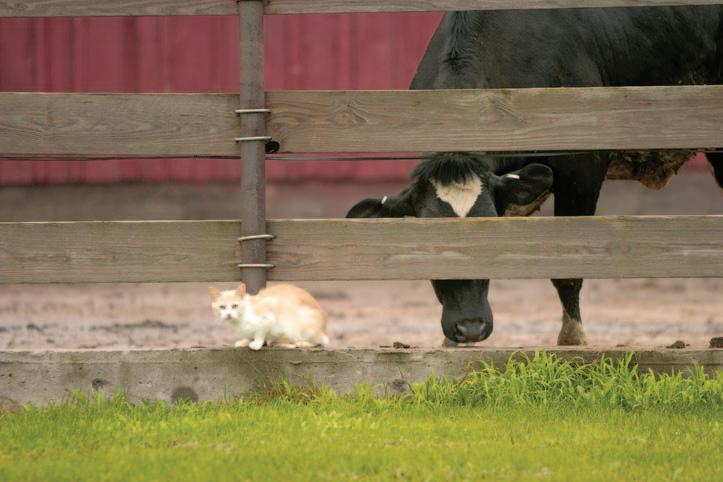
This year, WAC land conservation specialists helped over forty landowners plan future easements for their far ms.
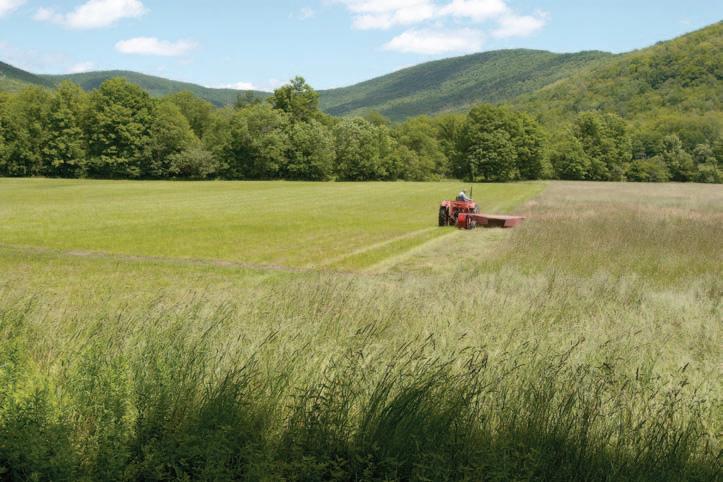
To date, WAC assists 47 farm owners in stewarding their easementprotected properties, which total 9,600 acres.
Our staff works closely with farm owners to develop easements that meet their long-term goals for the land while maintaining its agricultural viability. As WAC protects more farmland, we also increase our responsibilities in assisting landowners in the stewardship of these properties, insuring that land management activities follow terms of the easement. We accomplish this through positive relationships and good communication with landowners, combined with field monitoring visits and aerial flyovers.
This year, WAC sponsored a series of three Estate Planning Workshops to provide information to landowners and professionals about preparing for the future of our region’s farms. Presenters covered issues relating to farm transfer, estate taxes and conservation options like easements.
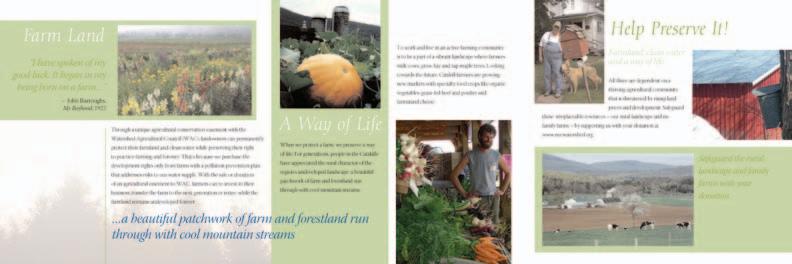
To broaden understanding and support for WAC’s Conservation Easement Stewardship Fund, a web and print fundraising campaign was launched with a new brochure titled “Preserving More Than A View,” together with on-line donation services at www.nycwatershed.org.

The Watershed Agricultural Program continues to implement and maintain Whole Farm Plans on 357 watershed farms through partnerships with County Soil and Water Conservation Districts, USDA Natural Resources Conservation Service and Cornell Cooperative Extension. The Conservation Reserve Enhancement Program (CREP), administered by USDA Farm Service Agency, has protected over 1,600 acres of riparian buffers.
One of this year’s highlights was the introduction of the portable calf kennel on dairies seeking to find a cost-effective alternative for pathogen management. The kennel offers well-ventilated housing for healthier calves, a cleanable surface, and animal separation to prevent the spread of disease and to enable the farmer to spread or compost this manure separately on the farm.
Nutrient Management Plans (NMP) continue to be a vital tool to manage both pathogens and phosphorus in livestock manure. In 2005, 91% of all commercial farms had current NMPs, with 68 farmers participating in a popular incentive credit program that helps them acquire the equipment required to meet their manure spreadingschedules.
WAC staff traveled to Vermont to explore a promising conservation practice called “bedded pack,” which combines manure storage, barnyard and a feeding area in to one management practice on the farm, which will be tested with producers in 2006.
As the implementation phase of the Program evolves toward operation and maintenance, or stewardship, of existing practices, farmer education has become increasingly important. Educators brought the classroom to the farm this year in order to give producers a closer look at how they can increase profits and protect water quality through new practices.
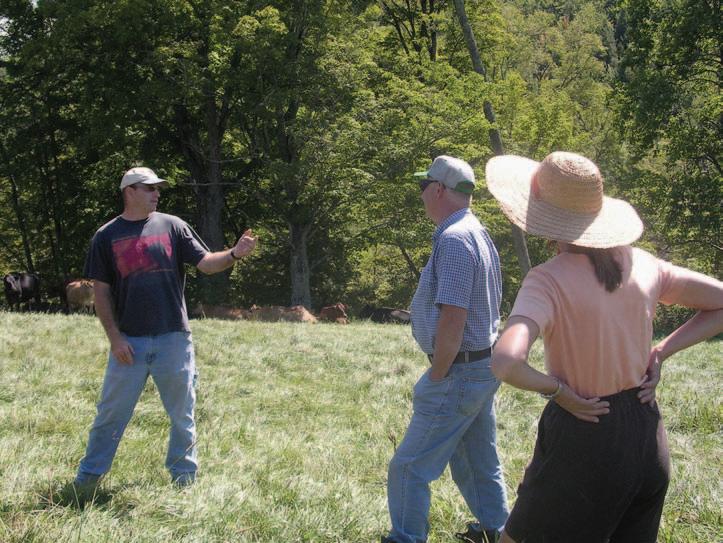
Working in partnership with Cornell Cooperative Extension, training in cow/calf health and safety was conducted in small groups of neighboring farmers and, for the first time, included a bilingual component for Spanish-speaking farm workers. Pasture walks were hosted by t hree farmers who shared how their grazing practices for dairy, sheep and beef can improve prof itability through savings on labor, energy and crop expenses.
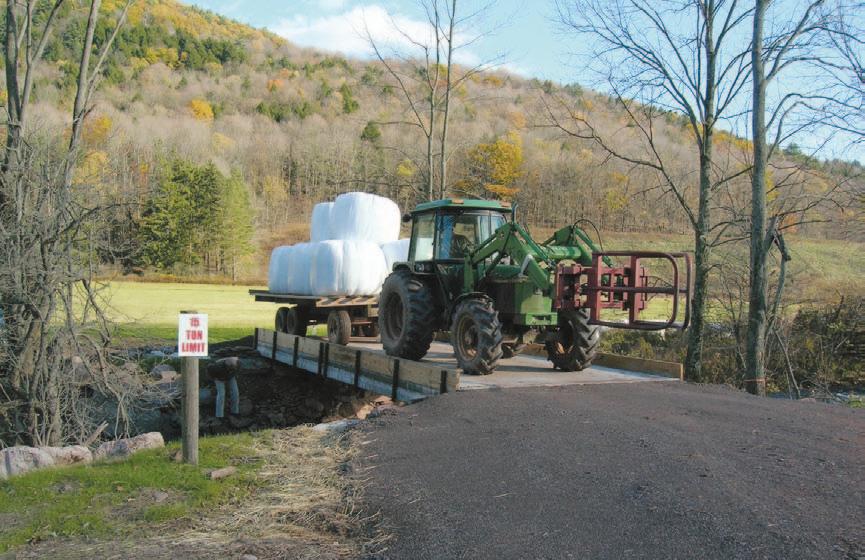
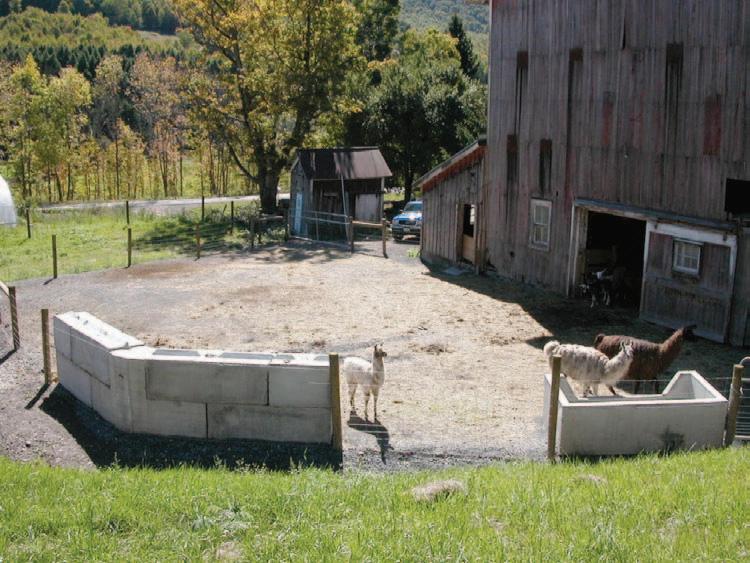
The Small Farms Program has grown to include 42 farms with Whole Farm Plans; 140 more operations have been assessed for water quality risks.
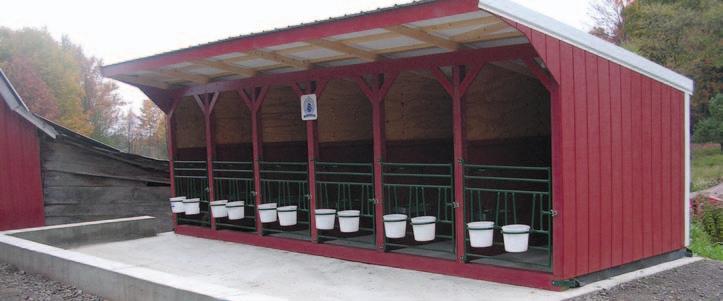
portable calf kennel is a new practice that improves calf health and reduces pathogen risk s.
exchange information on intensive grazing, which reduces the amount of phosphorus from feed imported into the watershed.
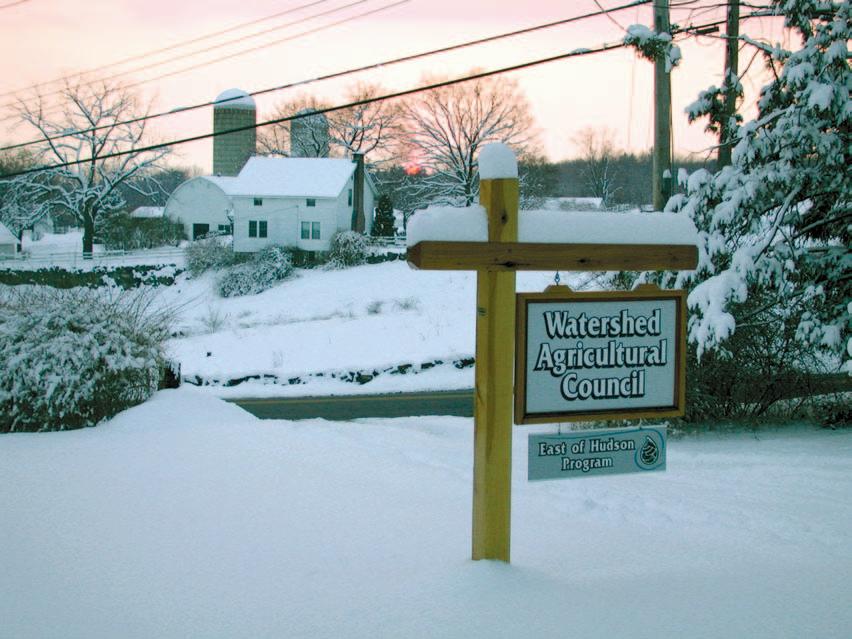
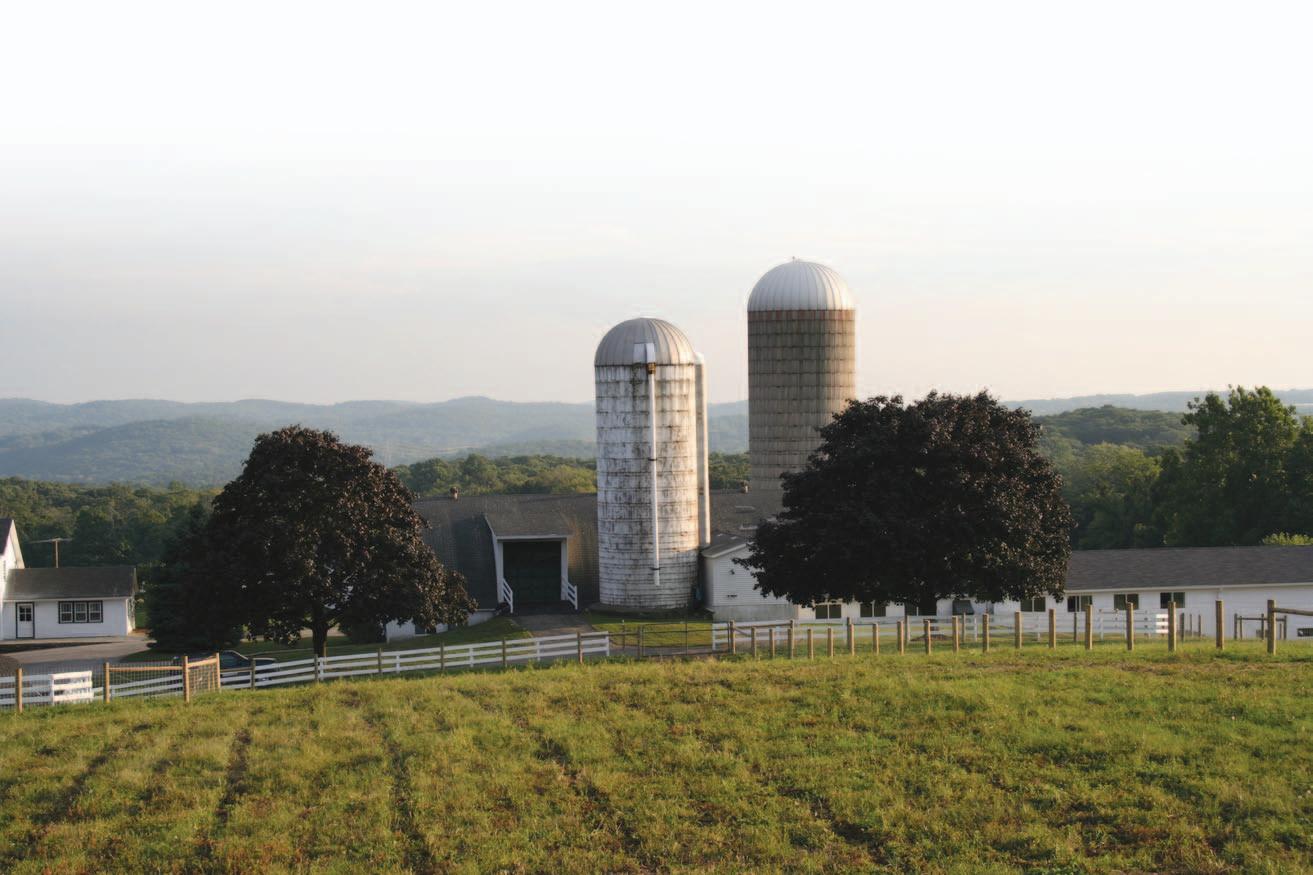
The Watershed Agricultural Council’s East of Hudson headquarters are located at Hilltop Hanover Farm in Yorktown Heights. Until the early nineties, this 183acre farm bred and sold some of the finest Holsteins in the country. WAC recently completed a Whole Farm Plan at Hilltop, which is now owned by Westchester County and under development as an Environmental Resource Center. The Center also houses Cornell Cooperative Extension, New York City Greenmarket, and Hudson Valley Wool Works.
Hilltop Hanover Farm strengthens the partnerships of land-based organizations in a new Agricultural/Environmental Resource Center for Westchester residents.
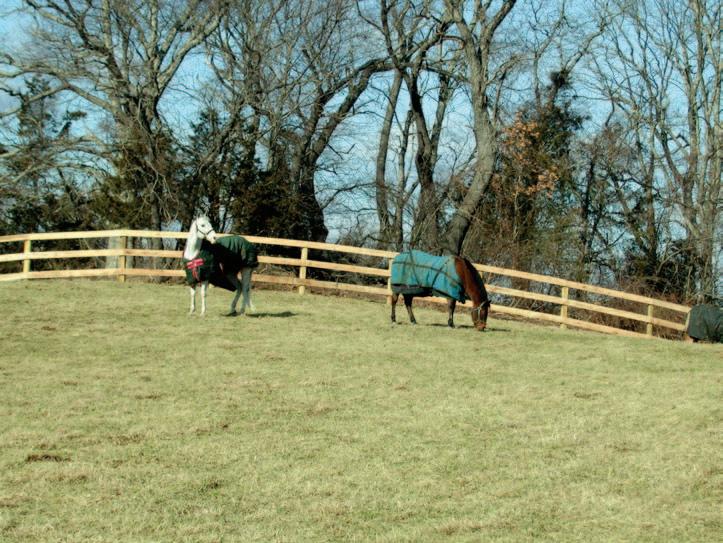
Healthy horses need healthy grass. Farm managers are learning new skills that meet these goals and benefit water quality.
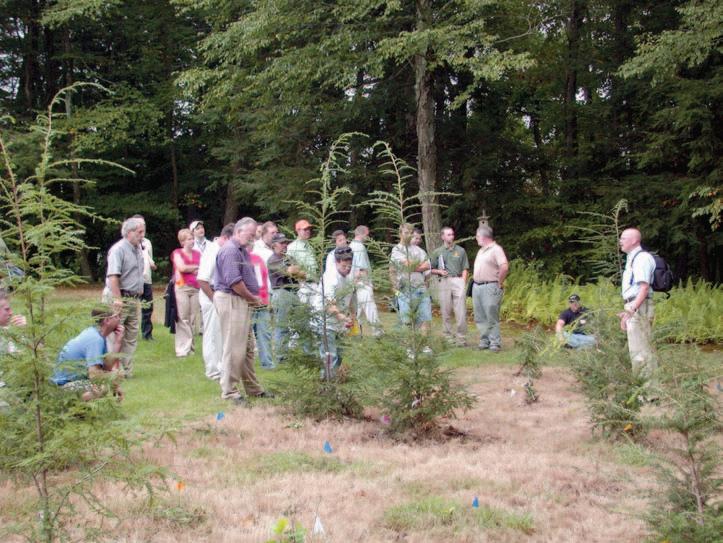
WAC’s Watershed Forestry Program reached out to arborists with a work shop on watershed protection and invasive species.
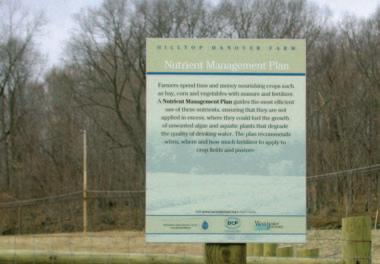
The Environmental Resource Center will focus on educating professionals, landowners and the general public, and includes demonstrations of best management practices (BMPs) for agriculture and land use. The site offers a prime opportunity for WAC and its partners to showcase agricultural and forestry programs in a working landscape setting. As a first step, WAC installed interpretive signs explaining how BMPs help reduce pollution risks to the water supply. The farm also includes 20 acres of forestland, for which WAC foresters will prepare a forest management plan.
Most agriculture in this region today revolves around the equine industry, including horse boarding, breeding, training and riding instruction. A Paddock Demonstration Project was initiated to address the specific needs of these equine operations, whose goal is to establish and maintain more productive, well-managed paddock areas. This permanent grass cover will reduce pollution risks from sediment, nutrients and pathogens. A USDA Natural Resource Conservation soil scientist performed soil quality test in study and control areas on three participant farms to quantify the impact of horses on soil compaction and infiltration rates. These soil tests will be repeated in 2006 to measure changes, and other farms in the Croton Watershed will be encouraged to implement the practices that prove beneficial to water quality.
On the forestry front, the first Field Day for Arborists and Foresters, brought together professionals who manage and car e f or tr ees and woodlands in Westchester County and the lower Hudson Valley. Attendees learned about the health and well-being of rural and community forests, including updates on Sudden Oak Death, research findings on the Hemlock Wooly Adelgid and other invasive insects. Outdoor field sessions demonstrated techniques for improving forest stands and Hemlock and American Chestnut trial plots.
Throughout 2005, WAC Forestry Program staff worked to protect local and New York City water supplies through planning, education, economic development, and on-the-ground implementation. The year marked the first time the Program helped to foster forest stewardship outside of the watershed boundaries – in the Hudson Highlands region of the state with funding from the New York Forest Owners Association and the USDA Forest Service. In addition to staff dedication and strong partnerships with government and not-forprofit groups, the foundation of the Forestry Program comes from the funding and technical expertise provided by the New York City Department of Environmental Protection and the USDA Forest Service.
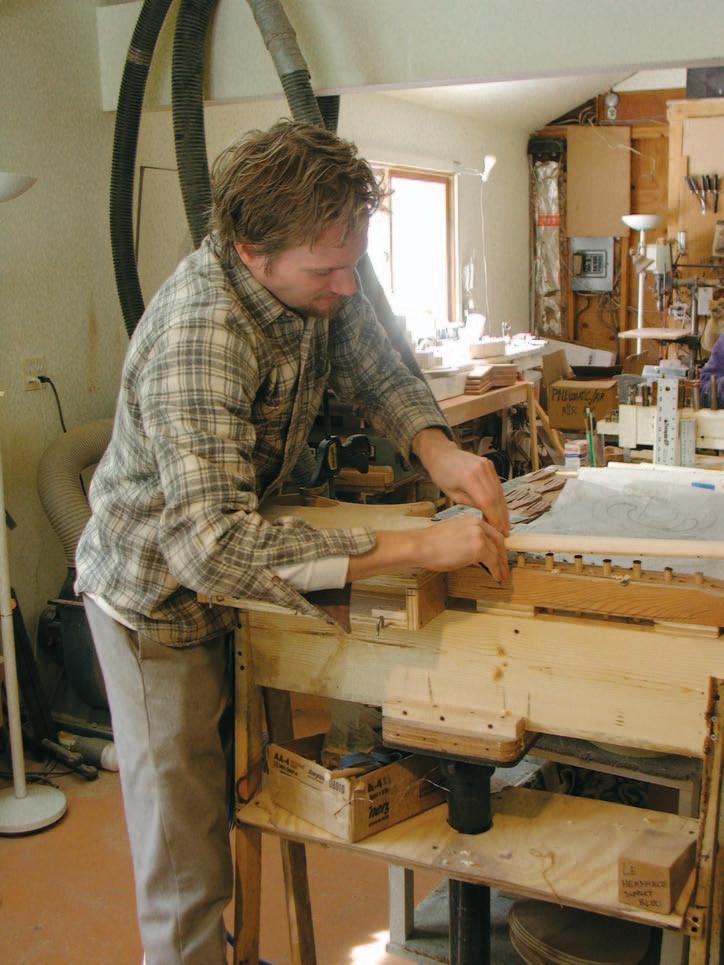
Since 2000, the WAC Forestry Program has partnered with the USDA Forest Service to help local wood-based businesses remain competitive. Over the years, the federal investment has exceeded $2.2 million, with an additional $3 million matched locally. Thanks to partnerships with more than 75 regional companies and non-profit groups, the Forestry Program has underwritten challenge grants and technical and marketing assistance. In 2005, WAC awarded over $211,000 to nine businesses in six different watershed counties. The awards went to companies such as Stamford’s Catskill Craftsmen, Inc. and Mack Custom Woodworking, LLC in Shokan.
Having a WAC Forest Management Plan helps many forestland owners to think about their woods as a long-term investment. Taking care of watershed forests can defray the cost of property taxes or college tuition; it can also provide the timber to build a new barn. But the dividends paid by good stewardship are often immeasurable – watching Pileated woodpeckers tap for insects or water spill through mountain streams. To help watershed forestland owners pay for some of the prescriptions outlined in their plans, the WAC Forestry Program initiated a two-year pilot – the Management Assistance Program (MAP). This year, 20 landowner applicants were approved to complete timber stand improvement, plant trees along streams, release fruit trees and improve wildlife habitats. Three more rounds of funding for MAP are planned for 2006 and 2007.
The Second Annual Forestry Field Day at the Frost Valley YMCA Model Forest in the high peaks of the Catskill Mountains proved twice the success of the inaugural event. Landowners, foresters, loggers, and
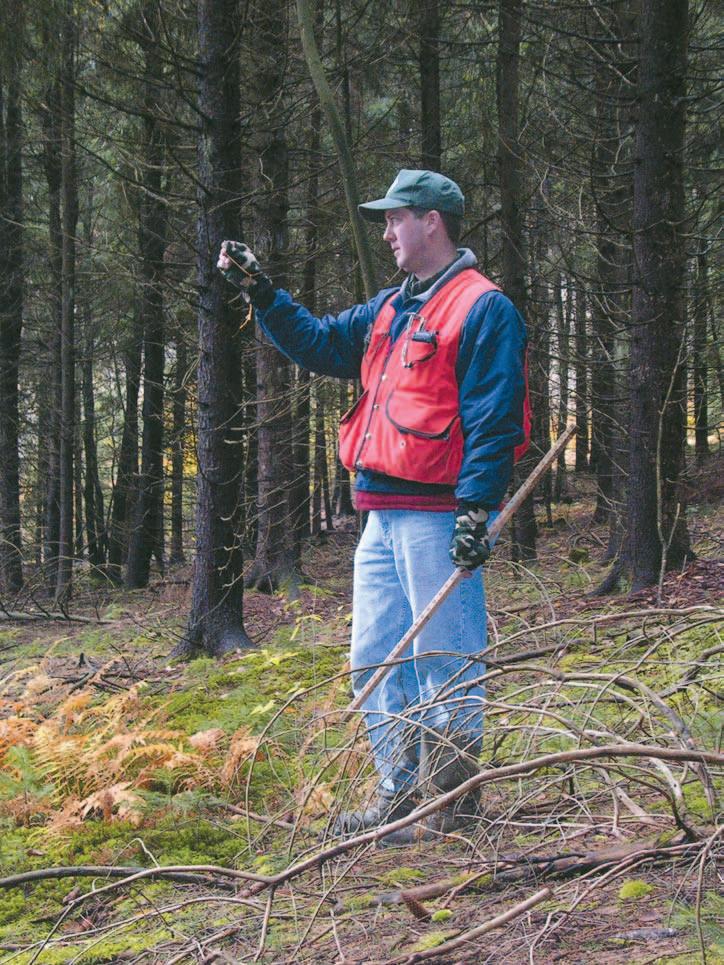
and k eep wat ershed forests intact.
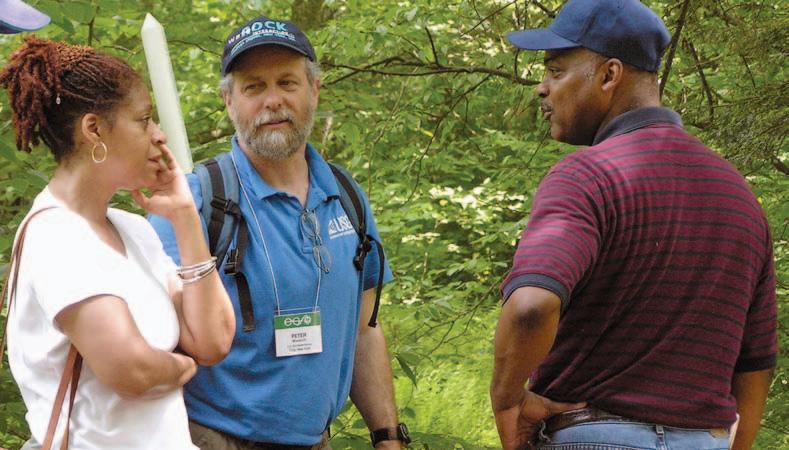
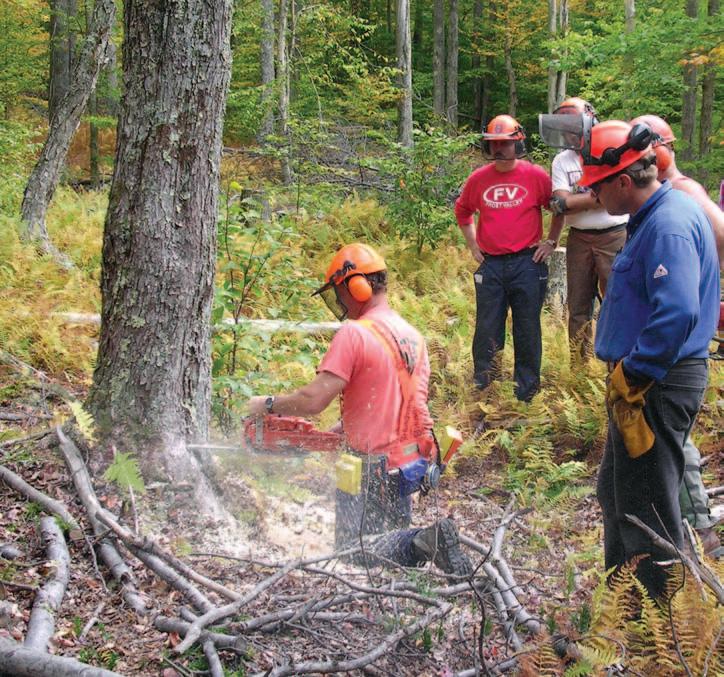
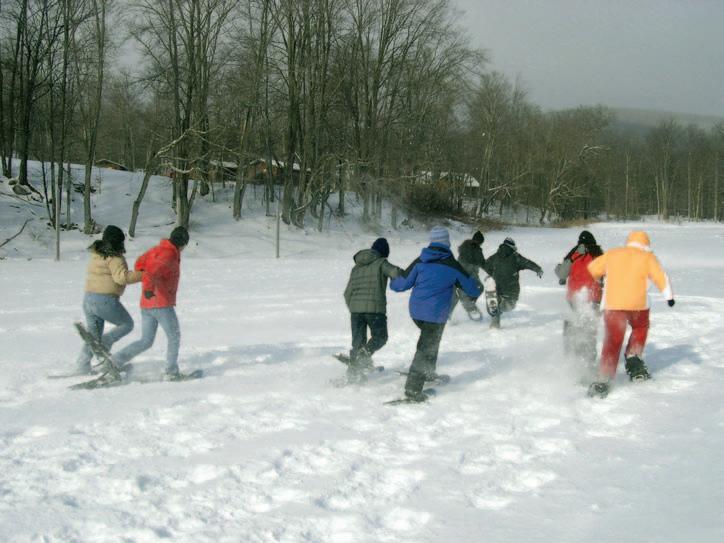
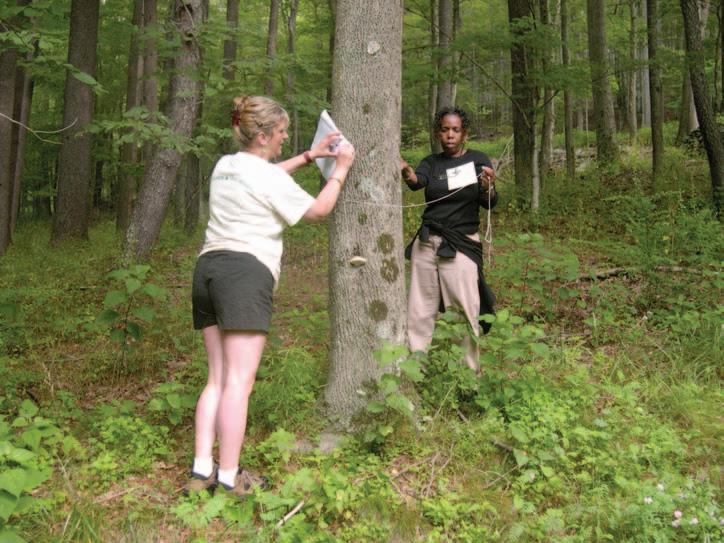
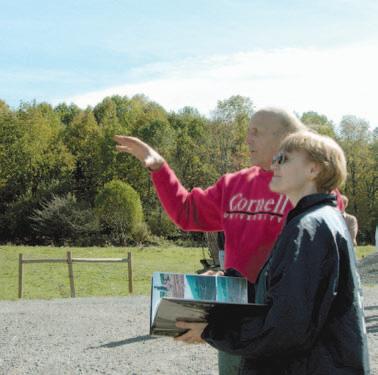
research scientists converged on the Model Forest in June to learn about trees, water, forest pests, and logging. The Field Day – a collaboration among the WAC Forestry Program, SUNY-College of Environmental Science & Forestry, USDA Forest Service, New York City DEP, and the Frost Valley YMCA – is a unique event the brings family forestland owners together with natural resources professionals for a day of learning in the woods. The Third Annual Field Day is scheduled for Saturday, June 17, 2006.
The WAC Forestry Program works together with New York Logger Training, Inc. and local partners to promote Trained Logger Certification (TLC) to timber harvesters working in the watershed. Working together with the Catskill Forest Association and Cornell Cooperative Extension of Greene County, we were able to encourage local loggers to take first aid, chainsaw safety and forest ecology courses to earn their TLC. With federal and City support, WAC and its partners offered the three core classes for a nominal fee across the watershed. Those efforts yielded 39 TLC loggers in the Catskills region, second only to the Adirondacks. With the strong partnerships honed this year, we anticipate double t he TLC logger s wor king in the woods in 2006.
Dozens of teachers and students learned about the connections between trees and water by participating in WAC Forestry Program educational initiatives and visiting the Lennox Memorial and Frost Valley YMCA Model Forests. The Program contracted with The Catskill Center for Conser vation and Development to complete the 7th annual Watershed Forestry Institute for Teachers (WFIT), another school year of the Green Connections initiative, and a very successful Forestry Bus Tour Program geared toward urban groups interested in learning about the New York City watershed. During the summer, 20 teachers from New York City and the upstate watershed participated in the weeklong WFIT in the Catskills, and throughout the rest of the year, more than 1,100 students and teachers learned more about forestry, the reservoirs, and wood products by participating in Green Connections activities and touring the Catskill and Croton systems by bus.
WAC’s Farm to Market Program kicked off in May with the printing of 30,000 copies of the 2005 Pure Catskills Guide to Fresh Farm Products, in partnership with the Catskill Mountain Foundation, NYC DEP and the W.K. Kellogg Foundation. The Guide is a key component to the Catskills regional “buy local” and branding campaign as consumers can find it at stores, markets and events throughout the market season. While local radio and newspapers gave excellent coverage of the campaign, a regular bulletin called the Farm To Market Update was mailed to farmers during the season to keep them abreast of the campaign’s events and training opportunities.
Work began at www.buypurecatskills.com to create a companion web version of the Pure Catskills member Guide, as well as to provide a regional presentation of Catskills products to prospective downstate and wholesale buyers.
Higher milk premiums allied farmers with environmentalists at an Organic Dairy Conference sponsored by WAC, Horizon and Senator Hillary Rodham Clinton during May, at which over forty farmers and professional staff discovered more about the higher profits and water quality benefits for farmers switching from conventional to organic dairy farming.
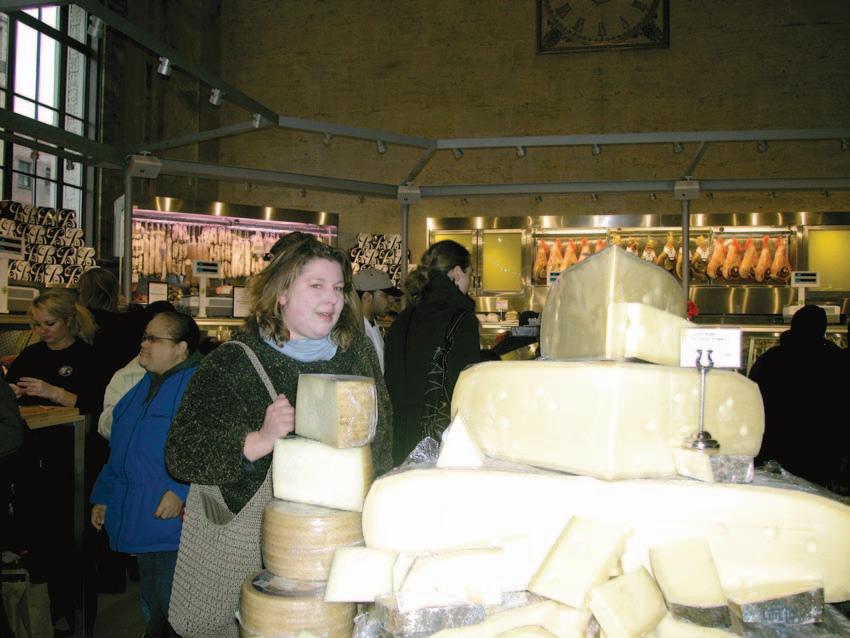
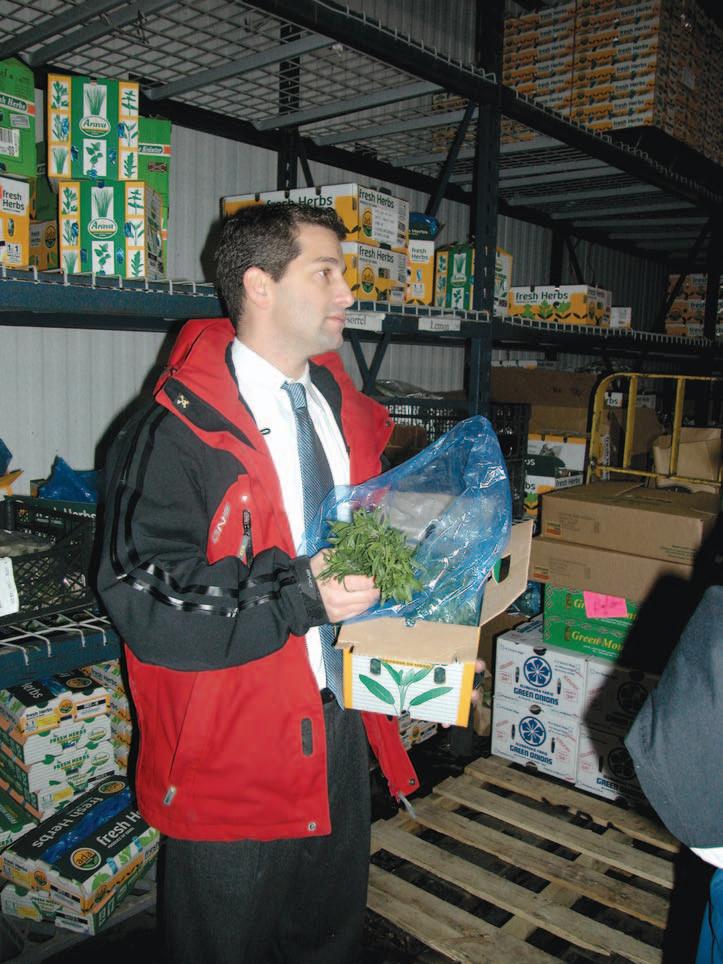
Later in the year, when fields lay dormant, a bus-load of vegetable farmers joined us for an Insiders’ Market Tour for Farmers designed to provide them with first-hand information about how agricultural products are selected, marketed and packaged on the wholesale and retail levels. The tour included a trip through the warehouse of a large produce distributor, a visit to a specialty market and dinner with a chef whose menu features local produce.
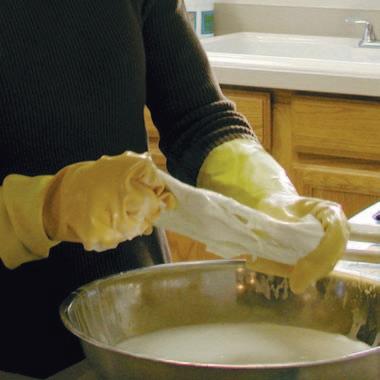
Dair y farmers and others looking for a new business opportunity or avocation attended a day-long cheesemaking workshop, during which Linda Smith of Sherman Hill taught the basics about fresh cheeses such as mozzarella, feta and ricotta.
Over one hundred supporters took par t in tasting Catskills chefs’ seasonal interpretations of local food at three Pure Catskills dinners hosted by local chefs in three regional restaurants from June through September. Pure Catskills farmers provided food for three themed dinners: “Summer’s First Harvest” at The Peekamoose Restaurant (Ulster County), “County Fare” at the Quarter Moon Café (Delaware County) and “Cer tif ied Humane” at Resor t (Sullivan County).
WAC helped to coordinate exhibits to highlight farm products at numerous seasonal outreach events, including the Delaware County Fair, Pakatakan Market, Margaretville’s Cauliflower Festival and Slow Food’s New Amsterdam Market in New York City.
A New York City buyer instructs farmers about standards in packaging and marketing for distribution, which is key information for producers to succeed in selling wholesale.
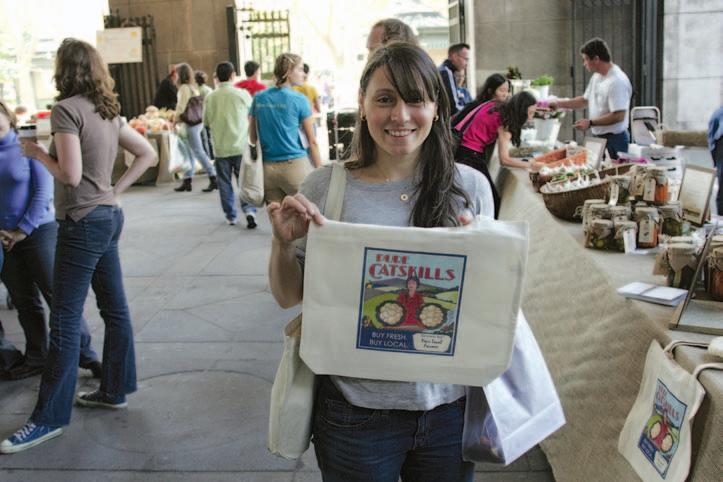
Downstate consumers help protect their own drinking water by buying Pure Catskills farm products. A reusable “ecobag” markets the brand at a New Amsterdam Market in New York City last October.

New Directions:
Six dairy farm families explored the potential for value-added dairy by attending an introductory cheese workshop in Greene County, taught by veteran cheesemaker Linda Smith of Sherman Hill Farmstead.
The Watershed Agricultural Council home page was improved to include more user friendly navigation, participant applications and expanded Virtual Farm and Forest Tours. A postcard promotion for www.nycwatershed.org will continue through 2006.
Watershed Tours:
Harold Grommeck of Andes hosts a farm tour of watershed practices for New York City DEP Commissioner Emily Lloyd. WAC staff, Directors and participants continue to conduct tours throughout the year with students, policymakers, and the media.
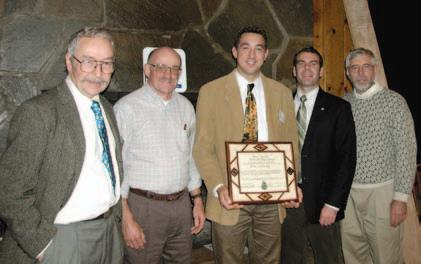
The Karl Connell Award for Watershed Forestry: John Schwartz of New York City DEP is congratulated by forestry colleagues upon receiving the Karl Connell Watershed Forestry Award at the Annual Forestry Dinner in November. Pictured l-r: Karl Connell, Dan Palm, John Schwartz, Kevin Brazill, and Marcus Phelps.
Eas t of Hudson Audience:
Interpretive signs at Hilltop Hanover Farm in Yorktown Heights showcase water quality practices in a real-life setting open to the public. The farm houses WAC’s East of Hudson headquarters.
Land-Based Business Owners:
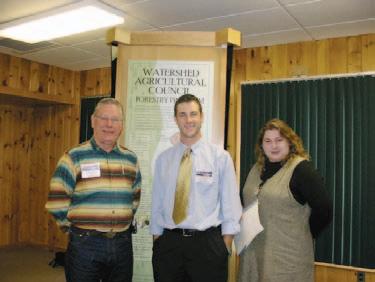
Woodworker Paul LaPierre (l) and organic farmer Aissa O’Neil (r) shared their expertise in operating home-based businesses at Local Government Day at Belleayre Mountain in Highmount, assisted by WAC Forestry Specialist, Collin Miller, (center).
Easement Stewardship Fund:
WAC launched a web and print fundraising campaign for its Conservation Easement Stewardship Fund with a new brochure titled “Preserving More Than A View,” together with on-line donations services at www.nycwatershed.org
Schedule of Activities - By Program - Unrestricted for the years ended June 30, 2005, 2004 and 2003
DEP Revenue:
Watershed
Catskill Mountain Foundation
Catskill Watershed Corporation
Cornell Cooperative Extension of Delaware, Sullivan, Greene, and Schoharie Counties
Delaware County Department of Watershed Affairs
Earthpledge Foundation
Empire State Forest Products Association
Environmental Protection Agency
Farm Catskills!
Frost Valley YMCA
New York Forest Owners Association
New York Logger Training, Inc.
New York State Department of Agriculture and Markets
New York City Department of Environmental Protection
New York State Department of Environmental Conservation
New York State Department of Health
Soil and Water Conservation Districts of Delaware, Sullivan, Greene, Ulster, Schoharie, Dutchess, Putnam and Westchester Counties
SUNY College of Environmental Science and Forestry
Hiderbooks
Hofer Log and Lumber
Hunt Country Furniture
Tom Hutson
John HOUSHMAND
Judd Weisberg Designs
Peter
Forester
Susan Kenny Contract and Grants Specialist
Pauline Klimowski Information Technology Assistant
Gary Lamont Land Conservation Specialist
Brian LaTourette
Program Manager
Tom McFarland
Specialist Lilly Mathisen Contracts & Grants Specialist (retired)
Cheryl Marion Administration Services Director
Collin Miller Forestry Program Specialist
Rebecca O’Dell
Executive Assistant
Amy Olney
Easement Program Manager
Jean Parenteau
Land Conservation Specialist
Matt Paul Hudson Highlands Forester
Tom Pavlesich
Watershed Forester
Elaine Poulin
Assistant Agricultural Program Manager
Karen Rauter
Communications Director
Linda Reed
Staff Accountant II
Glenn ReDavid
Engineering Specialist
Mike Saviola
East of Hudson Program Manager
Eric VanBenschoten
Engineering Specialist
Partners
The Watershed Agricultural Council (WAC) is a
501(c) 3 non-profit organization funded by New York City Department of Protection with funding from the U.S.D.A. Forest Service and the U.S.D.A.
Natural Resources Conservation Service. WAC is an equal oppor tunity provider, and works through partnerships to accomplish its mission to ensure an economically viable working landscape that protects water quality. Many thank s to our partners:
Agroforestry Resource Center
American Farmland Trust
Catskill Center for Conservation and Development
Catskill Forest Association
The Nature Conservancy
USDA Agricultural Research Service
Farm Service Agency
Forest Service
Natural Resources Conservation Service
US Army Corps of Engineers
US Environmental Protection Agency
US Geological Survey
W.K. Kellogg Foundation
2005 Donors to WAC’s Conservation
Easement Stewardship Fund
Tara and John Collins
Donald Ecklund
Marc Neves
New York City Department of Environmental
Protection
Chris and Amy Olney
Karen Rauter
Mark and Lisa Schwartz
Our Thanks to
2005 Silent Auction Donors
Andes Hotel
Anonymous
Beaver Mountain Log Homes
Betty Acres Organic Farm
Brooks House of BBQ
Bibliobarn
Ben Mack Woodworking
Bounding Warrior
Cannonsville Lumber
Dave Cammer
Catskill Center for Conser vation & Development
Catskill Craftsmen, Inc.
Catskill Forest Association
Catskill Mountain Foundation
Catskill Studio
Chris Lehrecke Furniture
Community Products LLC
Eklund Farm Machinery
Elk Creek Herbals
Fabulous Furniture
First Pioneer Farm Credit
Steve Fleming
Flying Rabbit Farm
Francis Wood Law Office
Frost Valley YMCA
Greentree Furniture