
Watershed Agricultural Program
2010 Annual Report and 2011 Workload for
the New York City Catskill/Delaware and Croton Watersheds March 2011
The Watershed Agricultural Program (Program) of the Watershed Agricultural Council (Council) is a comprehensive, source water protection program in the New York City Watershed. The Program focus is to improve, maintain and protect local and New York City water supplies through extensive whole farm and nutrient management planning, conservation practice implementation, education and economic development of the local agricultural industry.
The Program is a collaborative effort between the Council, local Cornell Cooperative Extensions, Soil and Water Conservation Districts, the USDA Natural Resource Conservation Service and Farm Service Agency. Together, we engage landowners in this voluntary Program that uses extensive environmental assessments, whole farm planning (farm-specific, water-quality protection plans) and Best Management Practices (BMPs) to reduce the risk of pollutant runoff and to protect drinking water.
In 2010, the Program implemented 175 BMPs at a total investment over $3 million. Farm participants are actively following over 328 Whole Farm Plans and 210 Nutrient Management Plans, a percentage of which are reviewed and updated annually. In September, the program achieved a major milestone: 275 out of the 306 identified Catskill/Delaware Watershed large farms reached the Substantially Implemented (SI) level. The SI benchmark recognized farms with seven out of the top nine water quality issues addressed. Funding provided by New York City Department of Environmental Protection (NYC DEP), the USDA and other sources helped the Program realize its goals.
In 2009, the Watershed Agricultural Program entered into a four-year agreement with the USDA NRCS to encourage conservation of natural resources through provisions of the Agricultural Water Enhancement Program (AWEP). AWEP BMP monies awarded to date total $851,330. Another
WATERSHED AGRICULTURAL PROGRAM PARTNERING AGENCY STAFF

Acting Assistant State Conservationist
Leon Brooks
Anwar Karim
District Conservationist
Quentin Gahan
Resource Conservationists
Suzanne Baker
Brandon Dennis
Leonard Prezorski
Project Engineers
Paula Bagley
Sam Ly
Administrative Management Specialist
Pamela Mason

Delaware County
Watershed Agricultural Extension / Nutrient Management Team Leader
Dale Dewing
John Thurgood
Dairy & Livestock Resource Educator/ Planner
Lara Shockey
Senior Administrative Assistant
Kim Holden
Section Chief of Watershed Agricultural & Forestry Program
Bureau of Water Supply
John Schwartz
Agricultural Program Manager
Ed Blouin
Executive Director
Craig Cashman
Agricultural Program Manager
Larry Hulle
Agricultural Program Coordinator
Carrie Davis (EoH)
Assistant Whole Farm Planner
Dan Vredenburgh
Communications Director
Tara Collins
Conservation Planners
Troy Bookhout (Easements)
Susanne Sahler (EoH)
Database Project Administrator
Seth Hersh
Engineering Specialists
Don Hebbard
Tim Hebbard
Rick Hochuli
Peter Steenland
Nate Townsend
Eric VanBenschoten (EoH)

Executive Director
Rick Weidenbach
Stream Program Coordinator
Graydon Dutcher
Technical Coordinator/CET
Larry Underwood
Civil Engineering Technician
Brian Danforth
Chris Savage
CREP Technician
Karen Clifford
Executive Assistants
Katie Palm
Beth Simmons (EoH)
Farm to Market Manager
Challey Comer
GIS Coordinator
James Samek
Large Farms Coordinator
Brian LaTourette
Nutrient Management Specialists
Dan Deysenroth
Cynthia McCarthy
Nate Nero
Procurement Assistant
Lorinda Backus
Procurement/Contract Officer
Elaine Poulin
Project Engineer (EoH)
Andy Cheung, P.E.
Small Farms Coordinator
Dan Flaherty
Delaware County
Soil and Water Conservation District
Data & Budget Specialist
Sandra Whittaker
Engineering Technicians
Gideon Frisbee
Jeff Kellogg
Paula O’Brien
Jeff Russell
Systems Manager
Brian Caruso
Administrative Assistant
Judith Spencer
AWEP grant began in 2010 with a five-year agreement in which $120,000 was spent to assist in the development and compliance of farm nutrient management plans. The AWEP monies are specifically targeted to provide financial assistance for water-quality improvement projects. The AWEP funding allows the Agricultural Program to redirect monies provided by NYC DEP directly to nutrient management plan expenses. This creative approach to financing allowed the Program to immediately employ third-party contractors throughout the watershed.
Couple the USDA NRCS AWEP and NYC DEP monies with additional financial support from the USDA Conservation Reserve Enhancement Program (CREP) and the Watershed Agricultural Program really takes on momentum. With these combined resources, many projects were installed through a vibrant watershed management industry. Planners, technicians, engineers, farmers, construction professionals of all walks -- gravel haulers, concrete pourers, carpenters, electricians, plumbers and general contractors -- worked to provide clean water solutions to participating watershed farms throughout the year.
Respectfully submitted on behalf of the Watershed Agricultural Program staff by:
Larry R. Hulle, Watershed Agricultural Council
Rick Weidenbach, Delaware County Soil & Water Conservation District
Dale Dewing, Cornell Cooperative Extension
Leon Brooks, USDA NRCS


Watershed Agricultural Program
2010 Planning Goals and Accomplishments
Implementation Accomplishments -
New Whole Farm Plans
Watershed Agricultural Program
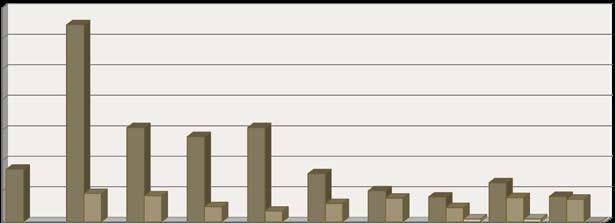
2010 Implementation Accomplishments - Number
of BMPs
USDA Conservation Reserve Enhancement Program (CREP) 2010 Accomplishments
The USDA CREP Program within the NYC Watershed Agricultural Program utilizes the talents found within the multi-agency team assigned to work in the Watershed to promote, design and establish both Riparian Forest Buffers and Vegetative Buffers along watercourses. This year marked the 12th full year of the New York City Watershed Conservation Reserve Enhancement Program (CREP) Memorandum of Agreement between New York City, New York State and the United States Department of Agriculture (USDA). In 2010, six Riparian Forest Buffer contracts (five new and one renewal) enrolled an additional 42.2 acres, increasing the total number of enrolled acres to 2,047.7.
2010 Total Implementation Expenditures
Total Rental Payments (USDA) $ 55,690
Sign-Up Incentive Payment (SIP-FSA) $ 3,590 Practice Incentive Payment (PIP-FSA) $ 94,011
BMP Cost (FSA) $117,624
BMP Cost (WAP) $117,624
Watershed Agricultural Program Historic CREP BMP Implementation
Nutrient Management Program 2010 Accomplishments
The Nutrient Management Team (NMTeam) is a multi-agency effort that assists farmers in improving phosphorus and pathogen management. Nutrient Management Plans (NMPs) are designed to manage the amount, source, placement, form and timing of the application of nutrients from fertilizer, manure, and other organic sources. The NMTeam supports the farmer in implementing a NMP that will result in management that protects water quality and produces optimum yields. All plans are compliant with the NRCS 590 Standard and use the NY Phosphorus Index and Cornell Cooperative Extension guidelines.
Nutrient Management Credit (NMCredit)
The NMCredit Program encourages heightened stewardship of manure resources to improve water quality. In 2010, 84 farms participated in the NMCredit Program and earned $306,210 in credits that they can utilize to reimburse nutrient management related expenses. The WAP received an AWEP award from the NRCS to extend a similar program to eight additional farms in 2010/2011, with the opportunity to add more farms through 2013.
Farmer Education Program
The Farmer Education Program supports the water quality protection and farm viability missions of the Watershed Agricultural Council by providing educational programs that enhance farmers’ abilities to manage their operations more profitably and in a way that nurtures their natural resources. In total, 26 educational programs were offered during 2010 and total attendance was a record high of 626. Farmer discussion groups continued to be active in 2010, providing participants informal and farmer-directed opportunities to learn and network. Other highlights included the Beginning Farmer Micro-Enterprise School and the Advanced Calf Health and Nutrition workshop.
Town of Neversink, Sullivan County
Heavy-Use Area
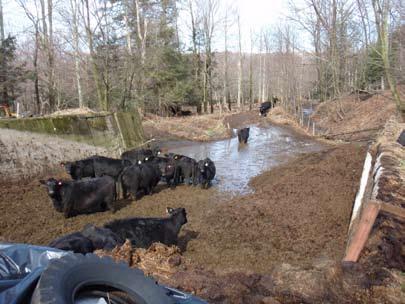
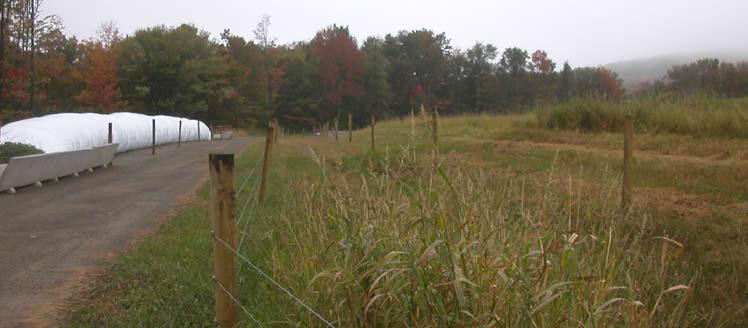
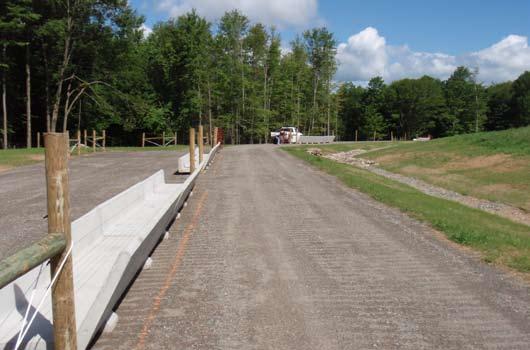
Richard and Phillip Coombe manage 200 head of Black Angus beef on their 1200 acre farm in Grahamsville, Sullivan County. Their beef herd is segregated into a maximum of four different feeding groups depending on the season. Prior to implementation of watershed conservation practices, the beef animals had been feeding out of ag-bags on the bare ground or out of an old bunk silo. Some of these areas posed water quality issues from contaminated runoff reaching watercourses and most could not be cleaned up for mechanical land application of wastes.
The Watershed Agricultural Program has constructed a series of gravel heavy use area protection pads located large distances away from streams to eliminate the pollution potential of these feeding areas. This heavy use area protection project represents the largest best management practice constructed on the farm to date. This project had three long gravel pads constructed at a width of 33 feet to feed three different age groups of beef animals through the winter months. A portion of this narrow pad provides vehicle traffic access to deliver feed for the animals. The remaining portion of the pad will have an ag-bag placed on it for winter feeding. A single strand of electric cross wire fence is constantly and gradually moved daily to provide incremental access to feed throughout the winter.
The runoff flow path of contaminated runoff from this feeding pad is 1200 feet distance from the nearest stream. The gravel pads that are underlain with geotextile filter fabric provide a hard surface for manure clean up. This animal waste is then able to be spread according to a nutrient management plan specifically written for the farms existing soil nutrient conditions. This project demonstrates the Watershed Agricultural Programs commitment to accommodating a farm’s unique operation requirements while protecting the water quality of the farms watershed and ultimately the Rondout Reservoir.
TOP: Feeding Area (Before)
BOTTOM: Heavy-Use Area Pad (After)
Stamford, Delaware County
CREP-Stream Crossing
CREP-Fencing
CREP-Water Facility
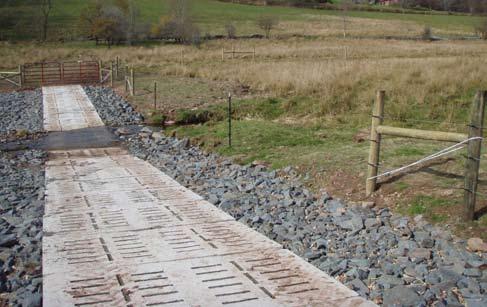
On the Trovato Farm, the Program helped the landowner establish riparian buffers for improved water quality. The farm dedicated nine-acres to CREP. The established CREP area consists of fencing to exclude animals from the stream, three stream crossings, and two spring developments with four watering facilities and to provide an alternative water source for the animals.
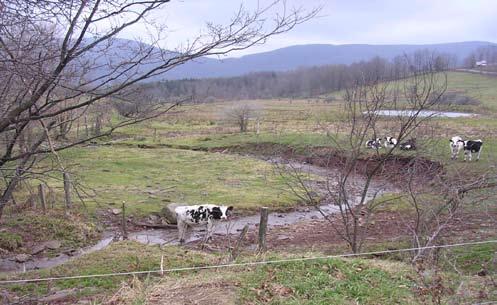
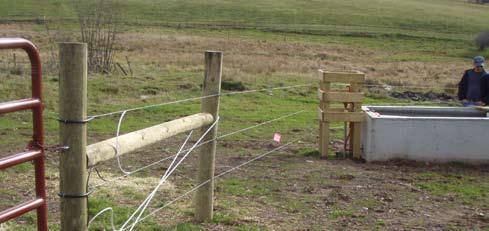
TOP: CREP Fencing and Crossing (Before)
MIDDLE: Cattle Slats BOTTOM: Watering facility
Stamford, Delaware County
AWEP Funding: Manure Storage
This project was partially funded by USDA NRCS Agricultural Watershed Enhancement Program dollars.
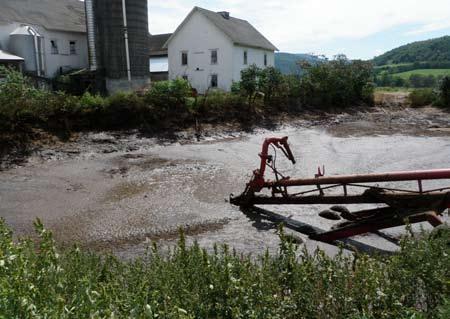
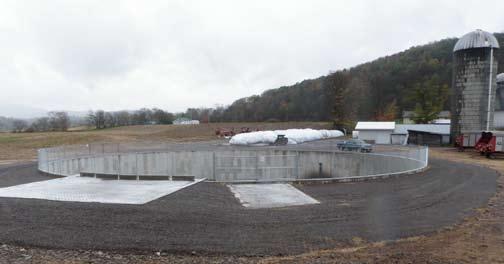
The original earthen lagoon manure storage was constructed in gravel soils where contaminants could potentially leak into the ground water supply. In addition, parts for the aging manure transfer pump were becoming increasingly hard to find. Plans were developed to install a new, 16 feet deep by 120 feet diameter, cast-in-place, concrete manure storage tank with a capacity of 1.3 million gallons. Included in the plans was the replacement of the existing manure transfer pump system and modification of the barn cleaner system. A hydraulic, piston-style manure transfer pump was selected for use on the farm based on the type and consistency of the manure as well as its capability to handle large amounts of bedding hay entering the system. The original manure system had two barn cleaners running to the center of the barn where the manure was then pumped out to the storage.
The new design eliminated one of the barn cleaners, making the new system more efficient, as well as reducing operation and maintenance issues. The modified barn cleaner system now runs the length of the barn and terminates in a dedicated manure transfer pump and reception pit room constructed at the North end of the main dairy facility. The manure storage tank allows the Lamport’s to better schedule their Nutrient Management Plan by custom-spreading manure twice a year to maximize the waste’s fertilizer value. Also, by spreading fewer times per year, they effectively reduce environmental impacts by targeting fields that benefit most and utilize dryer periods when surface runoff is minimal. To further reduce environmental impacts, the new system also incorporates milking center waste, as the original system was out of date and in need of repair. Now, both project components meet current NRCS Conservation Practice Standards and Specifications.
During the 3-month installation, the farm continued using the old lagoon system already in place. Daily operations were disrupted for two days when the old pump system was decommissioned and transitioned to the new one.
TOP: Earthen Lagoon Manure Storage (Before)
BOTTOM: Concrete Waste Storage (After)
Delhi,
Delaware County
AWEP Funding: Covered Feed Area, Access Road
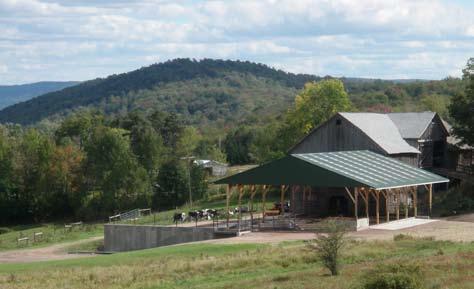
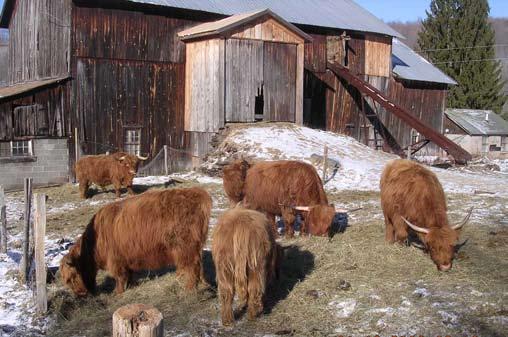
Burn Ayr Farm in Delhi, owned by Kathleen and Kevin Sullivan, saw construction of a new covered feed area, a gravel access road, and watering facility funded by AWEP (Agricultural Water Enhancement Program) and the Watershed Agricultural Program in the summer of 2010. The Sullivan’s grow vegetables, and raise Highlands (for beef), pigs and chickens (for meat).
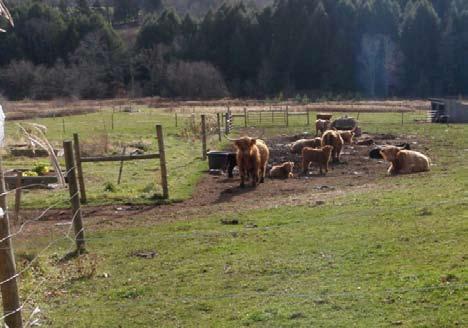
The couple was very involved with the layout of the new 32’ x 40’ feed area. They wanted the area split to keep males separate from females, yet still feed under one roof. Heavy-duty gates served as a centerline split of the curbed concrete, allowing for easy clean-up of the entire pad. The old feed area, out in the pasture and denuded of vegetation, posed a potential water quality threat from nutrient-laden runoff to nearby water courses. Now, livestock feed on the concrete pad, allowing pasture to grow back. A buckwall was placed on the pad’s north end; two heated waterers were also installed. Manure on the pad is easily collected and added to the compost pile for better nutrient utilization in farm’s greenhouse and raised beds.
The Sullivan’s used to fill 300-gallon water tubs each morning, then again in the evenings, dragging hoses out each day in winter, then returning them to the barn to prevent freezing. With the new inline pressure tank, there’s no need to manually water the animals daily. The waterers are heated and refill as they empty. “That’ll make a huge difference with the chores,” says son Patrick, after watching the pressure tank installation. The majority of animal traffic from barn to pasture was stabilized with a compacted gravel access road and animal trail. Feed will also be delivered to the new facility via this road. “I really like the material used. I was worried it wouldn’t harden up, but it did,” remarked Kevin about the new road. “I’ve been in construction for years so I know what it’s like to be on a job site. Those boys did a good job. I’m happy with this; it’s a good project,” commented Kevin a month after project completion.
TOP: Feed Area (Before)
BOTTOM: Covered Feed Area (After)
Neversink, Sullivan County Heavy Use Area
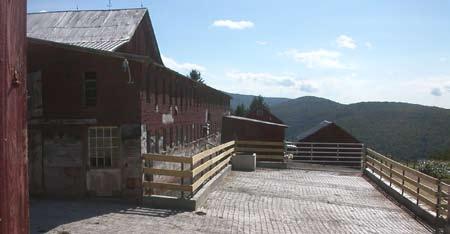
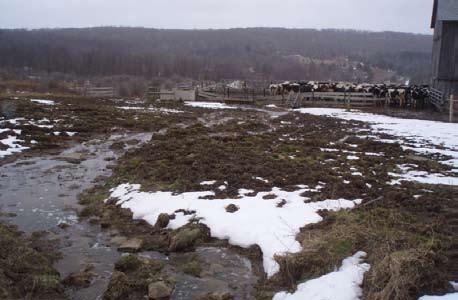
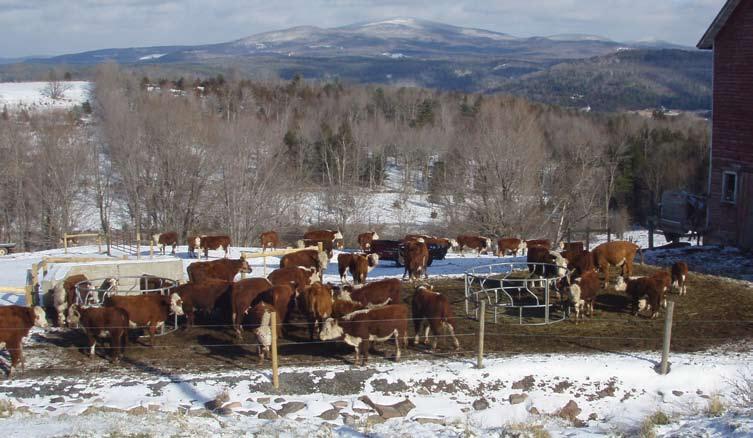
The Furman Farm is a Hereford cow/calf beef farm which is located in Sullivan County. The farm commands a spectacular view of the hills surrounding the Roundout Reservoir. This former Jersey dairy farm encompasses over 600 acres and has been in the Furman family for nearly 200 years. Owned and operated as a partnership between parents, Harvey and Carol along with their son Van and his wife Julie work together. The Furman’s treat their beef cattle similar to the way that they tended the dairy herd. Cattle are stabled at night during the winter months and are housed and fed in the barnyard and adjoining run-in shed. Prior to involvement with the Watershed Agricultural Program, the barnyard was a muddy mess. It was all but impossible to clean the unimproved barnyard. Surface water from roofs, springs and upslope drainage keep the area wet during most of the year and flushed nutrients and sediment into an adjacent stream.
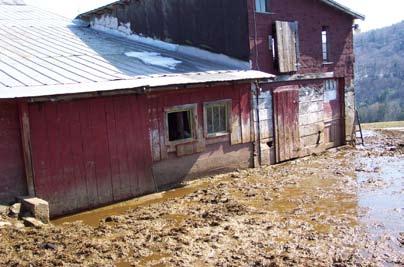
The plan, developed by the WAP staff, recommended numerous improvements in and around the barnyard to protect the water resource in and around the farm. The initial conservation practices, installed in 2006, focused on excluding clean water from the hill above the barnyard. Subsurface drainage was installed to intercept a very active spring. A drop inlet served as an outlet for surface overflow. A 10-inch diameter PVC pipe was installed as a common outlet for the drainage system. This safely conveyed all clean water under the barnyard, ultimately outletting in a road ditch. In 2010, the barnyard pollution prevention system was complete. Additional clean water from roof runoff was collected in gutters and a crushed stone eave drain. The outlets for these were tied into the previously installed underground outlet. The cornerstone of the barnyard improvements is the concrete, heavy use pad. The pad’s design proved challenging as the barn, run-in shed and surrounding land were all at different elevations. The final design called for a concrete ramp and retaining walls to fit the site. A concrete water trough, fed by the farm spring, provides year-round fresh water to cattle. Polluted runoff from the heavy use pad is directed to a screen box. A series of three mesh screens, decreasing in size, capture solids on the barnyard. Liquids are then piped to a settling tank and later piped to a Vegetative Treatment Area. This is an area of permanent sod where nutrients accumulate. The grass is mowed and removed as a hay crop so the land remains productive farmland. The Furman’s are very pleased with the conservation improvements on their farm. The system’s benefits are many: Water quality is protected, the herd health is improved, managing the herd and cleaning the barnyard is now easier. Also important to the family is that this formerly, unsightly area adds to this nicely landscaped farmstead.
Walton, Delaware County
Covered Barnyard
The Dave and Rhonda Stanton farm in Walton had a collection of Best Management Practices installed to upgrade an existing project and address additional unresolved conservation issues. A barnyard project installed in 2001 has been directing runoff through a filter screen, settling tank, and vegetated filter field. But increased use of the existing barnyard, due to a change in dairy herd management, required a significant upgrade of the existing facility. The old barnyard was roofed to meet new NRCS practice standards and now provides the environmental protection for the increased outdoor feeding and prolonged exercise times. A spring development, heavy use area pad, underground outlet, animal trail and walkway were also built with the roofed barnyard to address all of the conservation issues related to the farmstead and outdoor feeding areas.
The largest part of the job was building the roofed barnyard. A timber structure with a 64’ x 75’ metal roof and clear sky panels now prevents any polluted runoff from leaving the area. Extended eaves also protect the feed mangers on each side. At his own expense, Dave installed head-locks on each side of the barnyard to allow half the dairy herd to feed under the roof. A push-off for manure provides for much easier cleanup of the barnyard. Prior to construction, upslope water ran toward the barnyard which, over time, dumped sediment as high as the top of the barnyard curb. A drop inlet and pipe now collect this water and safely deliver it away from and below the farmstead.
The heavy use area pad allows the Stanton’s to feed heifers and extra dairy cows on a gravel pad six hundred feet away in the pasture. The sloped pad is 120’ by 40’ with a security block buckwall on the uphill end to contain manure during the winter when spreading is a difficult option. The spring development includes a watering trough near the pad so the animals won’t have to trek in and out of the barnyard for water. This reduces wear and tear on the laneway and helps the herd put more of their energy into making milk. “This is a much better alternative in protecting the environment and in making it easier for us to maintain the practices,” Dave commented.
Delhi, Delaware County
Covered Feed Area
Manure Storage
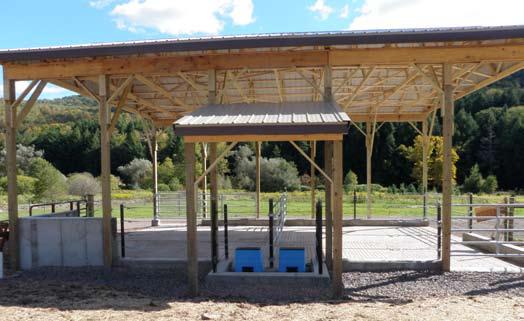
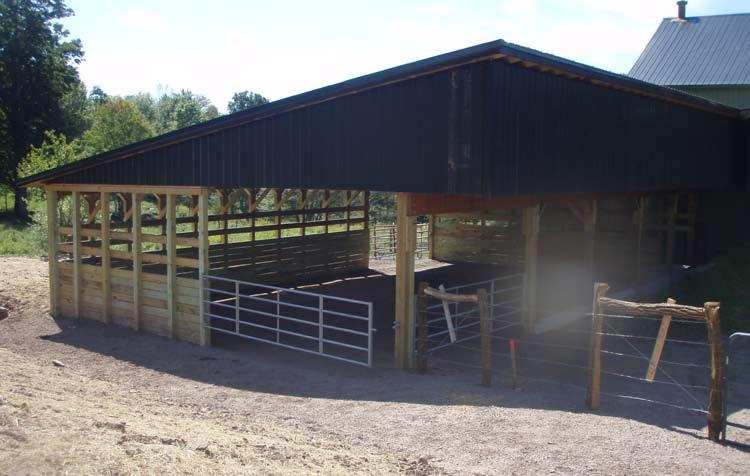
Daniel Finn, owner and operator of Highlands of Glenn Burnie, agreed to the installation of a covered manure storage and feeding area on his farm this past summer. Traditionally, the animals were fed adjacent to the stream throughout the winter months.
The newly constructed 40’ x 60’ covered barnyard serves as a winter feeding area and a place to temporarily store manure for spring spreading. The roofed area virtually eliminates polluted runoff to the stream and gives the animals a clean area to eat. Dan contributed to the project by building his own headlock system to create a clean feeding alley on one side of the barnyard.
Pawling, Dutchess County
Heavy Use Area Protection Pad
The manure spreader at this livestock/horse farm is loaded up with manure and bedding that is removed from the barn prior to spreading on pastures and hay fields in accordance with a nutrient management plan. The area outside the barn where the manure spreader is parked is lacking runoff control and is a short distance upslope from a pond and watercourse. To remedy this situation, a concrete pad was installed with curbing on three sides to contain spillage and runoff is directed to a Vegetated Treatment Area (VTA). The spreader also can now be loaded from the rear with a wheel barrow, a much safer alternative for farm staff compared to the previous method of dumping from a platform above.
Bedford, Westchester County Manure Compost Facility
Prior to the construction of this concrete facility, manure and organic wastes generated from this goat dairy and vegetable farm were composted in a hydrologically sensitive area a short distance upslope from a DEC regulated wetland. This facility is concrete and has five 20-foot bays to manage manure generated from the dairy goats, chickens and other livestock at the farm. Runoff is collected in a V-channel in front of the facility and is directed through a screen
box to a VTA. An access road to the facility was stabilized with crushed stone and the area is much more accessible and manageable now that stormwater is controlled. This compost operation has become part of the farm’s educational curriculum for children and the compost produced is incorporated into the farm’s gardens that supply produce for their organic CSA members.
Prattsville,
Greene County
Heavy Use Area
Roof Water Management Structure for Water Control
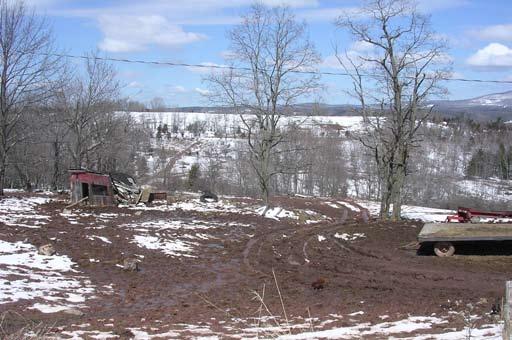
Daniel Peckham, owner of Peckham Farm implemented a winter barnyard feeding area for his beef cattle. Prior to implementing the heavy use area pad, Dan had difficulty feeding the beeves near the barn due to the extreme wetness. The heavy use area pad allows Dan to clean up the manure and cows are clean and dry. A large diversion was constructed to divert water from feeding area. Pictured is the feeding area before and after implementation.
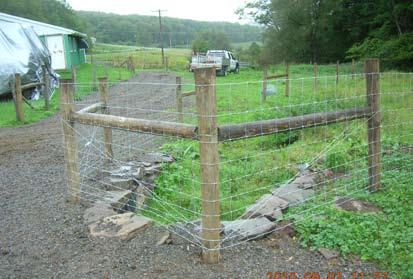
Walton, Delaware County Fencing
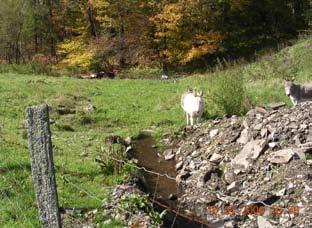
Norman Groat implemented a stream crossing with stream exclusion fencing. Prior to implementation, donkeys had continuous access to the stream. A culvert crossing provided a dry crossing across the stream with stream fencing. Pictured is the area before and after implementation.
Harpersfield, Delaware County AWEP Funding: Manure Storage
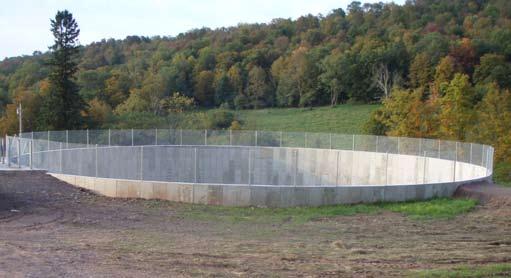
At Dave and Allen Swantak’s farm, the final concrete storage measured 105 feet in diameter round with walls 16 feet high. The new construction allowed the producers to better manage the animal manure according to the farm’s nutrient management plan. The project was partially funded using the AWEP monies and took approximately four months to complete. The project included a manure truck to haul stored manure as part of the nutrient management plan recommendations. With both projects now in place, the farm owners can switch from a daily spreading operation to a more structured spreading schedule that will decrease the likelihood of runoff contaminating any watercourses in the area.
Delhi, Delaware County
Compost Facility
The Moses family runs a horse training and boarding facility in addition to a dog kennel operation.
Manure was originally stacked near a wetland and horse-riding ring area that stayed continually saturated during wet times of the year.
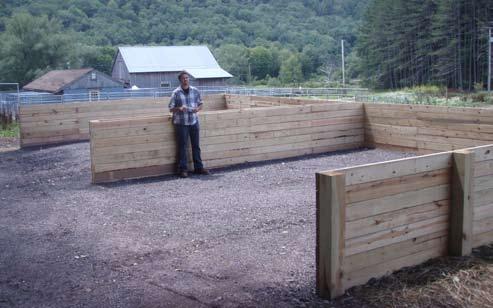
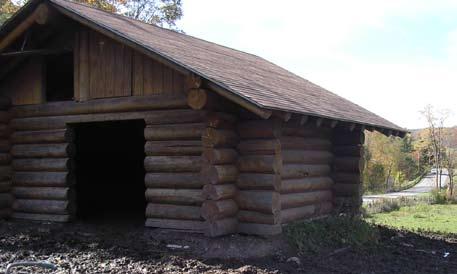
A 40’ x 20’ timber frame compost facility was installed with two bays to contain and store the manure. The separate bays allow for more organized management of the farm’s manure composting.
In addition to drainage efforts, several heavy use areas (HUAPs) were established to provide a solid, dry area to feed. Prior to their installment the areas were very wet and difficult to clean.
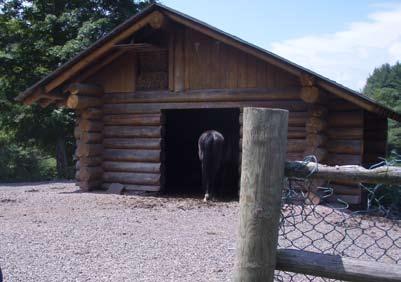
TOP: Compost Facility
MIDDLE: HUAP (Before)
BOTTOM: HUAP (After)
Catskill/Delaware Large Farms
2011 Planning Goals
Catskill/Delaware
2011 Projected Workload
* The Total Projected Workload represents BMPs in various stages of implementation. Not every BMP will be implemented (certified and paid) in 2011. For the calendar year 2011, the Catskill/Delaware Watershed Agricultural Program projects total BMP implementation in the amount of $2,500,000.
Southeast, Putnam County Animal Trail Walkway
Major gully erosion was occurring on this steep animal trail that also serves as main access route to this horse boarding farm’s upper pastures. Erosion was conveying sediment into a watercourse at the
base of this hillside. To remedy drainage issue, 1100 feet of this roadway was graded and stabilized with geotextile fabric and compacted gravel. Stormwater is now controlled via a series of culverts and stone-lined channels on either side of this narrow roadway to reduce future erosion and improve accessibility.