
WaterfordPublicSchools
Grades9-12
SocialStudiesCurriculumRevision
2023
Thefollowingstaffmadesignificantcontributionstothedevelopmentof theWaterfordPublicSchoolsGrade6-12WorldLanguageCurriculum:
ChrisGamble
BrettArnold
BrianAsh
IanCheney
JayCriscuolo
CourtneyHesch
KatePrpich
DougSherman
MikeUscilla
LisaVirtue
SocialStudiesDepartmentChair
WaterfordHighSchoolSocialStudiesTeacher
WaterfordHighSchoolSocialStudiesTeacher
WaterfordHighSchoolSocialStudiesTeacher
WaterfordHighSchoolSocialStudiesTeacher
WaterfordHighSchoolSocialStudiesTeacher
WaterfordHighSchoolSocialStudiesTeacher
WaterfordHighSchoolSocialStudiesTeacher
WaterfordHighSchoolSocialStudiesTeacher
WaterfordHighSchoolSocialStudiesTeacher
WaterfordHighSchoolSocialStudiesTeacher
CourseName:Historian’sCraftUnit#1Title:Whatishistory?Est.#ofLessons:5
UnitOverview:
Inthisunit,studentswillrecognizethatthestudyofhistoryisanactiveefforttointerpretthepast,notthe passivereceptionoffactualknowledge.Reasonablepeoplemaydifferintheirinterpretationsofhistory becauseofitscomplexity.Studentswillengageinactivitiesemphasizingtheimportanceofhistorical research,perspective,andtextualcriticism.
EstablishedGoals
● INQ9–12.14Critiquetheuseofthe reasoning,sequencing,andsupporting detailsofexplanations
● HIST9-12.1Analyzehowhistorical contextsshapedandcontinuetoshape people’sperspectives.
● HIST9–12.6Analyzethewaysinwhichthe perspectivesofthosewritinghistory shapedthehistorythattheyproduced.
● HIST9–12.7Explainhowtheperspectives ofpeopleinthepresentshape interpretationsofthepast.
● HIST9–12.10Detectpossiblelimitationsin variouskindsofhistoricalevidenceand differingsecondaryinterpretations
● HIST9–12.13Critiquetheappropriateness ofthehistoricalsourcesusedina secondaryinterpretation
● HIST9–12.17Critiquethecentral argumentsinsecondaryworksofhistoryon relatedtopicsinmultiplemediaintermsof theirhistoricalaccuracy.
● Thestudyofhistoryisanactiveeffortto interpretthepast,notthepassivereception offactualknowledge.
● Historyiscreatedandusedforavarietyof purposes
● Peoplemaydifferintheirinterpretationsof historybecauseofitscomplexityand perspectivesbasedontheirlived experience..
TransferGoals
● Evaluatesourcesforcontent,reliability, accuracy,andbiastoensurethatthe informationisvalidandrepresentsarangeof viewpoints/perspectives
● Evaluatehowhistoricaleventsand developmentswereshapedbyunique circumstancesoftimeandplaceaswellas universalpatterns(e.g.,conflict,change, innovation,freedom).
● Examineevidencetobetterunderstand complexissues,identifypatterns,and/ordraw conclusions
● Howdostoriesthatarerecordedashistory shapeidentityandaction?
● Wheredohistoriansgettheirinformation from?Howdoesitaffecttheaccuracyofthe retelling?
● Historicalsourcesvaryinthelevelofdetail, amountofbias,andscopeofperspective theypossessonahistoricalevent
Knowledge
Studentswillknowthat:
● Validityofasourceisaffectedbyauthor, audienceandpurpose.
● Corroborationallowshistorianstoconsider detailsacrossmultiplesourcesto determinepointsofagreementand disagreement.
MiddlePassagemultipleperspectives-SHEG activity(whoisthemosttrustworthyofthese?)
Investigativereportonamyth,debunking,ornot thefullstory
Skills(FramedasLearningTargets)
● (S1)Icanidentifytheauthoritybehinda sourcetoestablishitscredibility.
● (S2)Icanevaluateaparticularsourceto determinethebiasoftheauthor.
● (S3)Icananalyzeahistoricaleventusing multipleperspectives.
● (S4)Icancorroborateasourceagainstother sourcestodetermineitsvalidity.
● (S5)Icananalyzethepurposeofnarrativesin history.
Writeaparagraphexplainingthevarietyofmotives behindwritingandstudyinghistory
FirstTopic:TheStudyofHistory/Sourcing Estimated#ofLessons:3
LearningTargets:
● (S1)Icanidentifytheauthoritybehinda sourcetoestablishitscredibility.
● (S2)Icanevaluateaparticularsourceto determinethebiasoftheauthor.
● (S3)Icananalyzeahistoricaleventusing multipleperspectives.
● (S5)Icananalyzethepurposeofnarratives inhistory.
LearningActivities:
EssentialQuestions:
● Howdostoriesthatarerecordedashistory shapeidentityandaction?
● Wheredohistoriansgettheirinformation from?Howdoesitaffecttheaccuracyofthe retelling?
● Warmup:Familystoriesaboutyouand/orhowyouwerenamed(S1)
● Whystudyhistory?Discussion(S5)
● 2viewsofpurpose:McCullough’s“WhyWeStudyHistory”&MacMillan’s“HistoryforComfort”(S1, S2,S3)
● Creationstoriesacrosscultures(Analyzepurposeofnarratives,corroboratingarchaeological sources,creationstoriesandarttodevelopaperspectiveonorigincivilizations)(S5)
● SHEGactivity-Whichsourcebestanswersthehistoricalquestion?(S2)
SecondTopic:Corroboration
LearningTargets:
● (S3)Icananalyzeahistoricaleventusing multipleperspectives
● (S4)Icancorroborateasourceagainst othersourcestodetermineitsvalidity
LearningActivities:
Estimated#ofLessons:3
EssentialQuestions:
● Howdostoriesthatarerecordedashistory shapeidentityandaction?
● Wheredohistoriansgettheirinformation from?Howdoesitaffecttheaccuracyofthe retelling?
● DrawamapofWaterfordandcomparetoeachother,whyaretheydifferentdespitesimilarlifeexp? (S3)
● SHEGactivity-LunchroomFight(S3,S4)
● SamSmileyActivity(S4)
● HistoricalEmpathy&OtherUnnaturalActsArticles(S3,S4)
● Minoans,Mycenaeans& Achaemenids (Analyzepurposeofnarratives,corroboratingarchaeological sources,creationstoriesandarttodevelopaperspectiveonorigincivilizations)(S3,S4)
UnitOverview:
Inthisunit,studentswilldotheworkofthehistorian:criticalreading,thinkingandwritingabouthistoryby thecarefulstudyofprimaryandsecondarysources.Foundationaltothesetasksistheartofclosereading, whichwewillpracticeherebyreadingdocumentsofancientGreeceandPersia.Studentswillread, question,andanalyzeavarietyofsourcematerialswhichcanspeakaswitnessestotheireraifweknow howtoquestionthemintelligently.
EstablishedGoals
● INQ9–12.7Evaluatethecredibilityofa sourcebyexamininghowexpertsvaluethe sources.
● INQ9–12.8Identifyevidencethatdraws informationdirectlyandsubstantiallyfrom multiplesourcestodetectinconsistencies inevidenceinordertoreviseorstrengthen claims
● HIST9–12.4Analyzecomplexand interactingfactorsthatinfluencedthe perspectivesofpeopleduringdifferent historicaleras.
● HIST9–12.5Analyzehowhistorical contextsshapedandcontinuetoshape
TransferGoals
● Evaluatesourcesforcontent,reliability, accuracy,andbiastoensurethatthe informationisvalidandrepresentsarangeof viewpoints/perspectives
● Analyzehowgovernmentrulesandlaws impactthelivesofpeople
● Evaluatehowhistoricaleventsand developmentswereshapedbyunique circumstancesoftimeandplaceaswellas universalpatterns(e.g.,conflict,change, innovation,freedom).
people’sperspectives.
● HIST9–12.8Analyzehowcurrent interpretationsofthepastarelimitedby theextenttowhichavailablehistorical sourcesrepresentperspectivesofpeopleat thetime.
● HIST9–12.10Detectpossiblelimitationsin variouskindsofhistoricalevidenceand differingsecondaryinterpretations.
● HIST9–12.11Critiquetheusefulnessof historicalsourcesforaspecifichistorical inquirybasedontheirmaker,date,placeof origin,intendedaudience,andpurpose.
● CIV9–12.2Evaluatetheeffectivenessof citizensandinstitutionsinsolvingsocial andpoliticalproblems.
● CIV9–12.4Analyzehowpublicpolicies promotechanges,intendedand unintended,insociety.
● Groupsofpeopleareimpactedby events/developmentsinavarietyofways.
● Peoplemaydifferintheirinterpretationsof historybecauseofitscomplexityand perspectivesbasedontheirlived experience.
● Historicalsourcesvaryinthelevelofdetail, amountofbias,andscopeofperspective theypossessonahistoricalevent.
● Examineevidencetobetterunderstand complexissues,identifypatterns,and/ordraw conclusions
● Howdoesaneventordevelopmentaffect differentculturesindifferentways?
● Wheredohistoriansgettheirinformation from?Howdoesitaffecttheaccuracyofthe retelling?
● Howmightthecircumstancesinwhichthe documentwascreatedaffectitscontent?
Studentswillknowthat:
● Contextisvitaltounderstandinghuman behaviorinthepast.
● Biasisinherentinallsources.
● AncientAthenshadalimiteddemocracy withanarrowdefinitionofcitizenship.
● Greekcity-stateshaddiverseideason citizenshipandroles.
● Culturalidentitiesareinfluencedbya varietyoffactors.
● ThelegacyofPersiaisshapedbythebiasof Westernhistorians.
● (S1)Icananalyzesourcestodeterminetheir validity.
● (S2)Icandeterminethebiasofasourceby contextualizing,corroborating,closereading andsourcing.
● (S3)Icanevaluatetheaccuracyofhistorical representation.
SummativeAssessment
MovetoAtheniandemocracy(Defendingdifferent typesofgovernmentsystems(howourbiasaffects this)
PartI:AthenianDemocracySACorsocratic seminar(Fullclasssocraticseminar,Google Classroomforumorsilentdebate)
PartII:Writtenanalysis
Annotatedbibliographyentries(Research& UnderstandingBias)
XenophononPolityoftheSpartan AristotleonSparta’sConstitution
FormativeAssessment
NewspaperarticlefromthePersianandGreek perspectivesofthebattleofThermopylae
DBQ:DidtheGreekssave“theWest”inthePersian Wars?
FirstTopic:Evaluatingsources/Greek&Persian Governments Estimated#ofLessons:8
LearningTargets:
● (S1)Icananalyzesourcestodetermine theirvalidity.
● (S2)Icandeterminethebiasofasourceby contextualizing,corroborating,close readingandsourcing.
● (S3)Icanevaluatetheaccuracyofthe historicalrepresentation.
LearningActivities:
EssentialQuestions:
● Wheredohistoriansgettheirinformation from?Howdoesitaffecttheaccuracyofthe retelling?
● Howdoesaneventordevelopmentaffect differentculturesindifferentways?
● Howmightthecircumstancesinwhichthe documentwascreatedaffectitscontent?
● PreAssessmentactivity:FukushimaFlowers&nativeadvertisingscreenshots(S1)
● Lecture:howtoevaluatesources(Aristotle)(S1,S2)
● Resource-LibraryofCongress:PrimarySourceAnalysisToolforStudents(S1,S2,S3) https://www.loc.gov/programs/teachers/getting-started-with-primary-sources/guides/
● “Herodotus,FatherofHistory”NatGeoarticle-annotateforhowhemightbeconsideredbiasedand howhemightbeconsideredalegitimatesourceofhistory(S2)
● Cyrusaccordingto:CyrusCylinder-“Oldestchartofhumanrights”vs.Biblevs.Xenophon(S2,S3)
● SHEG:ReadingLikeaHistorian:EvaluatingSources(S1,S2)
SecondTopic:BiasinGrecoPersianhistory Estimated#ofLessons:7
LearningTargets:
● (S2)Icandeterminethebiasofasourceby contextualizing,corroborating,close readingandsourcing
● (S3)Icanevaluatetheaccuracyofhistorical representation.
EssentialQuestions:
● Wheredohistoriansgettheirinformation from?Howdoesitaffecttheaccuracyofthe retelling?
● Howdoesaneventordevelopmentaffect differentculturesindifferentways?
● Howmightthecircumstancesinwhichthe documentwascreatedaffectitscontent?
LearningActivities:
● StanfordEduresource-Howtouselateralreadingstrategies(studentswilllearntoevaluatea sourceandidentifybiasbycorroboratingmultiplesourcesandverifyitascredible)(S2)
● PeloponnesianWars-PoleisjointheDeliansorthePeloponnesianactivity(studentswillevaluate thepropositionofthetwoleaguesfromtheperspectiveofaparticularpolis)(S2)
● Multipleperspectives-DelianLeague(Melianatrocity,excusesforgenocide)(S3)
● AnnotatedbiblioentryonXenophon’s“PolityoftheSpartans”(S2))
● Pericles’FuneralOrationandbias-(S2)
● BattleofThermopylaefrommultipleperspectives(S2,S3)
● WomeninGreece(Aspasia)andPersia(ArtemisiaofCaria)(S2)
CourseName:Historian’sCraftUnit#3Title:ToolsofRhetoricEst.#ofLessons:~15
UnitOverview:
Inthisunit,studentswillengagewithtextsthathavepersuasivepowerandexaminehowargumentis created.Studentswillcometounderstandthepowerofwordsandsubtlelanguageandthedifference betweenpathos,ethosandlogos.ThecontentfocusofthisunitwillbeancientRomeandancientNorth Africa.
EstablishedGoals
● INQ9–12.14Critiquetheuseofthe reasoning,sequencing,andsupporting detailsofexplanations
● HIST9-12.1Analyzehowhistorical contextsshapedandcontinuetoshape people’sperspectives.
● HIST9–12.4Analyzecomplexand interactingfactorsthatinfluencedthe perspectivesofpeopleduringdifferent historicaleras.
● HIST9–12.6Analyzethewaysinwhichthe perspectivesofthosewritinghistory shapedthehistorythattheyproduced.
● HIST9–12.7Explainhowtheperspectives ofpeopleinthepresentshape interpretationsofthepast.
● HIST9–12.10Detectpossiblelimitationsin variouskindsofhistoricalevidenceand differingsecondaryinterpretations
● HIST9–12.13Critiquetheappropriateness ofthehistoricalsourcesusedina secondaryinterpretation
TransferGoals
● Evaluatesourcesforcontent,reliability, accuracy,andbiastoensurethatthe informationisvalidandrepresentsarangeof viewpoints/perspectives
● Analyzehowgovernmentrulesandlaws impactthelivesofpeople
● Evaluatehowhistoricaleventsand developmentswereshapedbyunique circumstancesoftimeandplaceaswellas universalpatterns(e.g.,conflict,change, innovation,freedom).
● Examineevidencetobetterunderstand complexissues,identifypatterns,and/ordraw conclusions COMMUNICATION:
● Developandpresentanidea,argument,or solutionthroughexplanationofcompelling claimswithsupportingevidence
● CIV9–12.2Evaluatetheeffectivenessof citizensandinstitutionsinsolvingsocial andpoliticalproblems.
● Rhetoricaldevicesareutilizedtomake effectiveargumentsthatinfluenceand directasociety.
● Republicangovernmentsoffercitizens freedoms,rights,andtheabilityto participateingovernment.
● Republicangovernmentsarefragile.
Studentswillknowthat:
● Pathosinvolvesappealingtoone’s emotions.
● Ethosinvolvesappealingtoone’smorals andethics.
● Logosinvolvesappealingtoone’ssenseof reasonandlogic.
● Republicsrequirecivicinvolvementand dutytosurvive.
● Republicsaresusceptibletotheinfluence ofdemagoguesandfactions.
● Howdohumanspersuadeeachother?
● Whatmakesleadersofsocietiesinfluential?
● Howdoesaneventordevelopmentaffect differentculturesindifferentways?
● Howmightthecircumstancesinasocietylead totheestablishmentofpopulargovernment overotherformsofgovernment?
● Whatmakesrepublicsvulnerabletocollapse?
● Whatmakesthespreadofsomeideasmore successfulthanothers?
● Towhatextentisitbeneficialtohavepublic participationingovernment?
● (S1)Icananalyzethepurposeofnarrativesin history.
● (S2)Icanrecognizeandanalyzetheuseof pathos,ethosandlogos.
● (S3)Icanusepathos,ethosandlogos effectively.
● (S4)Icanevaluatethesuccessofthespreadof someideasoverothers.
● (S5)Icanintegratemultiplesourcesof informationpresentedindiversemediawhile evaluatingthecredibilityofeachsource.
● (S6)Icanevaluateaspeaker'spointofview, useofevidenceandrhetoric,identifyingany fallaciousreasoningordistortedevidence.
● (S7)Icanpersuasivelypresentinformation.
● (S8)Icananalyzethestrengthsand weaknessesofagoverningbody.
Alexander:heroorvillain?Essayand/ordebateIn ThebesincludeexfromShahnamadepicting Alexanderasahero,notfoe
FallofRoman/AmericanRepublicOration (live/video)
FirstTopic:Pathos,Ethos,Logos
LearningTargets:
● (S2)Icanrecognizeandanalyzetheuseof pathos,ethosandlogos.
● (S3)Icanusepathos,ethosandlogos effectively.
● (S4)Icanevaluatethesuccessofthespread ofsomeideasoverothers.
● (S5)Icanintegratemultiplesourcesof informationpresentedindiversemedia whileevaluatingthecredibilityofeach source.
● (S6)Icanevaluateaspeaker'spointofview, useofevidenceandrhetoric,identifying anyfallaciousreasoningordistorted evidence.
● (S7)Icanpersuasivelypresentinformation.
LearningActivities:
Estimated#ofLessons:6
EssentialQuestions:
● Howdohumanspersuadeeachother?
● Whatmakesleadersofsocietiesinfluential?
● Introtopathos,ethos&logosthroughexamplesinmodernhistory(S2)
● Identificationoffallaciesandarguments(S2,S6)
● GoldenAgeofAthens&PersianAchievementsRanking(S4)
● DeterminingthevaluesoftheRomansbasedontheAeneidversustheRomulus&Remuscreation story(S5)
● AlexanderArgumentativeEssayPrep(S3,S7)
SecondTopic:RomanRepublicandCarthage
LearningTargets:
● (S3)Icanusepathos,ethosandlogos effectively.
● (S4)Icanevaluatethesuccessofthespread ofsomeideasoverothers.
● (S8)Icananalyzethestrengthsand weaknessesofagoverningbody.
EssentialQuestions:
● Howdohumanspersuadeeachother?
● Whatmakesleadersofsocietiesinfluential?
● Howdoesaneventordevelopmentaffect differentculturesindifferentways?
● Howmightthecircumstancesinasocietylead totheestablishmentofpopulargovernment overotherformsofgovernment?
● Towhatextentisitbeneficialtohavepublic
participationingovernment?
LearningActivities:
● SecondPunicWar-isdictatorialpowerbeneficialduringacrisis?Bringbacktomoderndaycrises (S8)
● RomanRepublic-wasitrepresentative?/whichwasmorerepresentative-theAthenianDemocracy orRomanRepublic?(S3,S8)
● Defineandpracticeusingcounterargumentsinargumentativeresponsesandspeeches(S3)
● Carthage-isittreatedfairlyinhistory?(S3,S4,S8)
● RomanExpansion-goodorbad,healthyfortherepublic?/Cicero(S8)
● SHEGActivity-HowdemocraticwastheRomanRepublic?(S8)
ThirdTopic:FallofRomanRepublic Estimated#ofLessons:3
LearningTargets:
● (S3)Icanusepathos,ethosandlogos effectively.
● (S4)Icanevaluatethesuccessofthespread ofsomeideasoverothers.
● (S8)Icananalyzethestrengthsand weaknessesofagoverningbody.
LearningActivities:
● Caesar-hiscommonappcollegeessay(S3)
EssentialQuestions:
● Howdohumanspersuadeeachother?
● Whatmakesleadersofsocietiesinfluential?
● Whatmakesrepublicsvulnerabletocollapse?
● Whatmakesthespreadofsomeideasmore successfulthanothers?
● AnalyzethestrengthsandweaknessesoftheRepublicandthenewRomanEmpire(S4,S8)
● Compare/ContrastfallofRomanRepublicwithmodernAmericanRepublic(S8)
UnitOverview:
Inthisunit,studentswillexecutetheresearchprocessbydevelopingresearchablequestionsand performingindependentresearchonahistoricaltopicoftheirchoosing.Theywillalsobeputtinginto practicetheskillsofsourcing,contextualizing,corroboratingandclosereading.Aftercompletingthe researchprocess,studentswillthenputintopracticerhetoricaldevicestocreateapersuasiveargumenton theirtopic.
evidenceinargumentsforcredibility.
● INQ9–12.1Explainhowaquestionreflects anenduringissueinthe field.
● INQ9–12.2Explainpointsofagreement anddisagreementexpertshaveabout interpretationsandapplicationsof disciplinaryconceptsandideasassociated withacompellingquestion
● INQ9–12.4Explainhowsupporting questionscontributetoaninquiryandhow, throughengagingsourcework,new compellingandsupportingquestions emerge.
● INQ9–12.5Determinethekindsofsources thatwillbehelpfulinansweringcompelling andsupportingquestions,takinginto considerationmultiplepointsofview representedinthesources,thetypesof sourcesavailable,andthepotentialusesof thesources.
● INQ9–12.6Gatherrelevantinformation frommultiplesourcesrepresentingawide rangeofviewswhileusingtheorigin, authority,structure,context,and corroborativevalueofthesourcestoguide theselection.
● INQ9–12.9Refineclaimsand counterclaimsattendingtoprecision, significance,andknowledgeconveyed throughtheclaimwhilepointingoutthe strengthsandlimitationsofboth.
● HIST9–12.16Integrateevidencefrom multiplerelevanthistoricalsourcesand interpretationsintoareasonedargument aboutthepast.
Studentswillunderstandthat:
● Questionsthatcanbeansweredinmultiple waysorarearguableofferthemost opportunitiesforacquiringnew information.
● Historiansrelyonspecificcriteriawhen evaluatingasourceinordertoestablishits
● Examineevidencetobetterunderstand complexissues,identifypatterns,and/ordraw conclusions
COMMUNICATION:
● Developandpresentanidea,argument,or solutionthroughexplanationofcompelling claimswithsupportingevidence
● Whatmakesaquestioneffectiveforresearch?
● Wheredohistoriansgettheirinformation from?Howdoesitaffecttheaccuracyofthe retelling?
● Howmightthecircumstancesinwhichthe documentwascreatedaffectitscontent?
● Howdohumanspersuadeeachother?
validityandcredibility.
● Historicalsourcesvaryinthelevelofdetail, amountofbias,andscopeofperspective theypossessonahistoricalevent.
Knowledge
Studentswillknowthat:
● Researchquestionsmustbefocusedand answerable
● Thevalidityofatextisaffectedbythe authorityofthesource
● Corroborationallowshistorianstoconsider detailsacrossmultiplesourcesto determinepointsofagreementand disagreement
● Avarietyofpresentationmediumsare utilizedtomakeeffectiveargumentsthat influenceanddirectasociety.
Skills(FramedasLearningTargets)
● (S1)Icandevelopresearchquestionsthatare bothnarrowandopenended.
● (S2)Icanindependentlycreateasourcelist andevaluatesources.
● (S3)Icanextractrelevantinformationto answeraresearchquestion.
● (S4)Icancreateaprojectthatclearlyanswers theresearchquestion.
● (S5)Icandeterminethebiasofasourceby contextualizing,corroborating,closereading andsourcing.
● (S6)Icanintegratemultiplesourcesof informationpresentedindiversemediawhile evaluatingthecredibilityofeachsource.
● (S7)Icanrecognizewhichpresentation mediumsareutilizedtomakeeffective argumentsthatinfluenceanddirectasociety.
● (S8)Icanpersuasivelypresentinformation.
SummativeAssessment
Createanannotatedbibliographywhichevaluates thebiasandusefulnessofsourcestotheresearch question
Createapresentationonthe findingsofunique research
FormativeAssessment
Craftathesisthathasaclearlystatedtopic,defined parameters,andahistoricalargument.
Processpaperincludingasourcelist
FirstTopic:TheQuestion Estimated#ofLessons:2
RelevantLearningTargets:
● (S1)Icandevelopresearchquestionsthat arebothnarrowandopenended.
LearningActivities:
RelevantEssentialQuestions:
● Whatmakesaquestioneffectiveforresearch?
● ModelingQFT-studentswillbeintroducedtotheQuestionFormulationTechnique[QFT]to developandaskresearchablequestions(S1)
SecondTopic:TheSources
LearningTargets:
● (S2)Icanindependentlycreateasourcelist andevaluatesources.
● (S3)Icanextractrelevantinformationto answeraresearchquestion.
● (S5)Icandeterminethebiasofasourceby contextualizing,corroborating,close readingandsourcing.
LearningActivities:
Estimated#ofLessons:3
EssentialQuestions:
● Wheredohistoriansgettheirinformation from?Howdoesitaffecttheaccuracyofthe retelling?
● Howmightthecircumstancesinwhichthe documentwascreatedaffectitscontent?
● Creatingasourcelistusingreputablesources(S2)
● Evaluating&corroboratingsources(S3,S5)
● Extractionofusableinformation(S3)
● Writeanannotatedbibliography(S2,S5)
ThirdTopic:ThePresentation Estimated#ofLessons:3
LearningTargets:
● (S4)Icancreateaprojectthatclearly answerstheresearchquestion
● (S6)Icanintegratemultiplesourcesof informationpresentedindiversemedia whileevaluatingthecredibilityofeach source.
● (S7)Icanrecognizewhichpresentation mediumsareutilizedtomakeeffective argumentsthatinfluenceanddirecta society.
● (S8)Icanpersuasivelypresentinformation.
LearningActivities:
EssentialQuestions:
● Howdohumanspersuadeeachother?
● Analyzehowcampaignstargetavarietyofvoters(S6,S7)
● Evaluatewhentousedifferentmethodsofpresentations(S7)
● Choosefromavarietyofmethodsofpresentingtheirresearch-outline,researchpaper,verbal presentation(S4,S7,S8)
UnitOverview: InthisunitstudentswillstudyanddebatethebroaderthemesinthehistoryofMiddle EasterncivilizationsfromtheNeolithicperiodtothePersianEmpire.Thefocusofthiscoursewillbethe political,economic,socialandculturalaspectsofbothancientandmodernMiddleEasternpeoples. Studentswillread,question,andanalyzeavarietyofsourcematerialswhichcanspeakaswitnessestotheir eraifweknowhowtoquestionthemintelligently.
● HIST9-12.1Analyzehowhistorical contextsshapedandcontinuetoshape people’sperspectives.
● HIST9–12.7Explainhowtheperspectives ofpeopleinthepresentshape interpretationsofthepast.
● HIST9–12.10Detectpossiblelimitationsin variouskindsofhistoricalevidenceand differingsecondaryinterpretations
● HIST9–12.4Analyzecomplexand interactingfactorsthatinfluencedthe perspectivesofpeopleduringdifferent historicaleras.
● CIV9–12.2Evaluatetheeffectivenessof citizensandinstitutionsinsolvingsocial andpoliticalproblems.
● GEO9–12.1Evaluatetheimpactof economicactivitiesandpoliticaldecisions onspatialpatternswithinandamongurban, suburban,andruralregions.
● Desireforresourcesleadstoconflict.
● Geographyshapesasociety.
● Hierarchicaldivisionssecurepowerand stabilizesocietiesevenifitcomesatacost toindividualfreedoms.
● Evaluatesourcesforcontent,reliability,accuracy, andbiastoensurethattheinformationisvalid andrepresentsarangeof viewpoints/perspectives
● Evaluatehowhistoricaleventsanddevelopments wereshapedbyuniquecircumstancesoftimeand placeaswellasuniversalpatterns(e.g.,conflict, change,innovation,freedom).
● Howdowebetterunderstandthemodern MiddleEastbasedonitsancientroots?
● Howdoestheabundanceorscarcityof resourcesaffectthestabilityofaregion?
● Whodetermineswhohaspower?Howdoes
Studentswillknowthat:
● Civilizationsaremarkedbysevendefining characteristics.
● Thedesireforresourceslikeoil,water,and rareearthelementshasledandleadsto conflictintheMiddleEastandimperial ambitions.
● RivervalleysliketheTigrisandEuphrates enabledtheriseofcivilization.
● Acombinationofreligionandwealth determinesocialclasses(power)inthe MiddleEast.
● Religionisbothimpactedbyandimpacts thedevelopmentofcivilizations
● TheAbrahamicreligionssharecoreethical components.
CurrentConnectionMiniProject:Studentswill signupto findacurrentconnectionthatisbasedon oneofthe7characteristicsofacivilizationforeach ancientcivilization.
Testwithmultiplepartsthattestavarietyofskills, including:
● Objectivequestions
● Shortprimaryandsecondexcerpt interpretations
● Writingprompttoidentifyanddefendhow geographyaffectsasociety
institutionalsetupandcontrolpreservethis powerstructure?
● Towhatextentarereligioussystemsimpacted bythedevelopmentofacivilization?Andvice versa?
● (S1)Icananalyzeahistoricaleventusing multipleperspectives.
● (S2)Icananalyzesourcestodeterminetheir validity.
● (S3)Icanevaluatehow political/social/economicsystemsareaffected byavailabilityofresourcesandgeographical accessibility.
● (S4)Icanevaluatethechallengescreatedby thegeographyofasociety.
● (S5)Icancomparethedevelopmentand tenetsofbeliefsystems.
Realestateadvertisementtodrawpeopleto Sumeriancitystatesbasedontheiravailable resourcesandgeography.
Spokediagramrelatingmodernartifactstothe characteristicsofacivilization.
FirstTopic:Resources:TheSourceofTurmoil& Conflict
LearningTargets:
● (S3)Icanevaluatehow
Estimated#ofLessons:5
EssentialQuestions:
● Howdowebetterunderstandthemodern
political/social/economicsystemsare affectedbyavailabilityofresourcesand geographicalaccessibility.
● (S4)Icanevaluatethechallengescreated bythegeographyofasociety.
LearningActivities:
MiddleEastbasedonitsancientroots?
● Howdoestheabundanceorscarcityof resourcesaffectthestabilityofaregion?
● Modernandancientmapwithafocusonresourcesavailable(S3)
●ConceptofCivilization CloseReading(S3)
●HistoryAlive:Cooperationtoovercomegeographicalchallenges (S4)
● Jigsaw:Water&OilintheMiddleEast&EconomyofMiddleEast-Rareearthmineralsin Afghanistan,Towhatextentisanabundanceofnaturalresourcesabenefitordetrimentto societies?(S3)
SecondTopic:ImperialMotivations&Ambitions
LearningTargets:
● (S1)Icananalyzeahistoricaleventusing multipleperspectives.
● (S2)Icananalyzesourcestodetermine theirvalidity.
● (S3)Icanevaluatehow political/social/economicsystemsare affectedbyavailabilityofresourcesand geographicalaccessibility.
LearningActivities:
Estimated#ofLessons:5
EssentialQuestions:
● Howdowebetterunderstandthemodern MiddleEastbasedonitsancientroots?
● Howdoestheabundanceorscarcityof resourcesaffectthestabilityofaregion?
● Whodetermineswhohaspower?Howdoes institutionalsetupandcontrolpreservethis powerstructure?
● Assigngroupseventsinhistorythatshowcasewhenaresourcewasthedrivingmotivationfor imperialambition.BritishinWWI,AmericansinPersianGulfWar,RussiansinUkraine/Crimea(S3)
●Khan-DefininganEmpire (S3)
● AssyrianSiegeofJerusalemSHEG(S1)
● AnalyzetheBibleandSennacherib’sPrismtodeterminetheirvalidity(S2)
ThirdTopic:EarlyReligions
LearningTargets:
● (S3)Icanevaluatehow political/social/economicsystemsare affectedbyavailabilityofresourcesand geographicalaccessibility.
● (S5)Icancomparethedevelopmentand tenetsofbeliefsystems.
LearningActivities:
Estimated#ofLessons:5
EssentialQuestions:
● Towhatextentarereligioussystemsimpacted bythedevelopmentofacivilization?Andvice versa?
● HistoryAlive:ChallengesoftheIsraelites(S3)
● Preserve&PassAlongHistoryAliveJudaismActivity(S5)
● ScrollforHebrewleaders-addsymbols,slogansandhistoricbackgroundtoleadersincluding: Abraham,Moses,David,Soloman(S3)
● FivepillarsofIslamcomparedtotenetsofotherAbrahamicreligions(S5)
● InvestigationofmodernreligiouspracticesinIraq,IranandSaudiArabia-howgenderand socioeconomicstatusaffectenforcement,ifatall(S5)
CourseName:AsianStudies
UnitTitle:India
Est.#ofLessons:15
UnitOverview: Inthisunit,studentswillstudyanddebatethebroaderthemesinthehistoryofIndian civilizationsfromtheNeolithicperiodtomodernIndia.Thefocusofthiscoursewillbethepolitical, economic,socialandculturalaspectsofancientandmodernIndiaincludingtheirroleintheglobaleconomy andtheinfluenceoftheircastesystem.Studentswillread,question,andanalyzeavarietyofsource materialswhichcanspeakaswitnessestotheireraifweknowhowtoquestionthemintelligently.
EstablishedGoals
● HIST9-12.1Analyzehowhistorical contextsshapedandcontinuetoshape people’sperspectives.
● HIST9–12.7Explainhowtheperspectives ofpeopleinthepresentshape interpretationsofthepast.
● HIST9–12.10Detectpossiblelimitationsin variouskindsofhistoricalevidenceand differingsecondaryinterpretations
● HIST9–12.4Analyzecomplexand interactingfactorsthatinfluencedthe perspectivesofpeopleduringdifferent historicaleras.
● CIV9–12.2Evaluatetheeffectivenessof citizensandinstitutionsinsolvingsocial andpoliticalproblems.
● GEO9–12.1Evaluatetheimpactof economicactivitiesandpoliticaldecisions onspatialpatternswithinandamongurban, suburban,andruralregions.
TransferGoals
● Evaluatesourcesforcontent,reliability, accuracy,andbiastoensurethatthe informationisvalidandrepresentsarangeof viewpoints/perspectives
● Evaluatehowhistoricaleventsand developmentswereshapedbyunique circumstancesoftimeandplaceaswellas universalpatterns(e.g.,conflict,change, innovation,freedom).
● Examineevidencetobetterunderstand complexissues,identifypatterns,and/ordraw conclusions
● Identifyaproblemandactivelyengage throughcivicinvolvementand/orindependent research
● Desireforresourcesleadstoconflict.
● Religioussystemshavevaryingdegreesof impactonthestructureofasociety.
● Hierarchicaldivisionssecurepowerand stabilizesocietiesevenifitcomesatacost toindividualfreedoms.
● Culturaldiffusioncausesasocietyto integratenewideasandcustoms.
Knowledge
● Thedesireforresourceslikehumanlabor, textiles,spicesandmineralshasledand leadstoculturaldiffusioninIndia.
● Thecastesystemisasocialsystem supportedbyreligiousdoctrine.
● Therearegovernmentbasedpoliciesthat trytomitigatethenegativeeffectsof unequalsocialsystems.
● India’slocationbetweenChinaandthe MiddleEastcontributedtoitsroleintrade andthusculturaldiffusion.
● HowdowebetterunderstandmodernIndia basedonitsancientroots?
● Howdoestheabundanceorscarcityof resourcesaffectthestabilityofaregion?
● Howdoreligioussystemsimpactthe structureofasociety?
● Whodetermineswhohaspower?Howdoes institutionalsetupandcontrolpreservethis powerstructure?
● Towhatextentisculturaldiffusionapositive forceforchange?
● Howdoesreligioncreateunityandconflict?
Skills(FramedasLearningTargets)
● (S1)Icanevaluatehow political/social/economicsystemsareaffected byavailabilityofresourcesandgeographical accessibility.
● (S2)Icanevaluatethechallengescreatedby thegeographyofasociety.
● (S3)Icananalyzeahistoricaleventusing multipleperspectives.
● (S4)Icananalyzethetensionbetweenusing andexploitingresources.
● (S5)Icananalyzehowsuccessfulpoliciesare atmitigatingthenegativeeffectsofunequal socialsystems.
● (S6)Icanevaluatethesuccessofthespreadof someideasoverothers.
● (S7)Icancomparethedevelopmentand tenetsofbeliefsystems.
● (S8)Icananalyzethewaysreligioncancause unityandconflict.
SummativeAssessment
WriteacompareandcontrastessayonHinduism andIslam
Testwithmultiplepartsthattestavarietyofskills, including:
● Objectivequestions
● Shortprimaryandsecondexcerpt interpretations
● Writingprompttoidentifyandanalyzethe
FormativeAssessment
OrganizeronAffirmativeActionvs.CasteQuotas DBQanddiscussion
Diagramillustratingsimilaritiesanddifferences betweenHinduism,Buddhism,andIslam
effectsofancientsocialsystems
FirstTopic:Resources:Abundance&Abuseof Human&NaturalResources
LearningTargets:
● (S1)Icanevaluatehow political/social/economicsystemsare affectedbyavailabilityofresourcesand geographicalaccessibility.
● (S2)Icanevaluatethechallengescreated bythegeographyofasociety.
● (S3)Icananalyzethetensionbetween usingandexploitingresources.
LearningActivities:
Estimated#ofLessons:5
EssentialQuestions:
● HowdowebetterunderstandmodernIndia basedonitsancientroots?
● Howdoestheabundanceorscarcityof resourcesaffectthestabilityofaregion?
● TopographicalandclimatemapsofIndia,usingtransparencyoverlays(S2)
● Read“DescentofGanga”comparedtothemesandvaluesinothercultures(S1)
● ClassdiscussionafterreviewingresourcesontheGanges:tensionbetweenculturalpracticesand environmentaldegradation(S3)
● TechWorkers&TimeZones,analyzingIndia’scomparativeadvantage(S3)
SecondTopic:Political&SocialStratification(Caste System) Estimated#ofLessons:5
LearningTargets:
● (S3)Icananalyzeahistoricaleventusing multipleperspectives.
● (S5)Icananalyzehowsuccessfulpolicies areatmitigatingthenegativeeffectsof unequalsocialsystems.
● (S6)Icanevaluatethesuccessofthespread ofsomeideasoverothers.
LearningActivities:
● IndoAryansandmodernabusesofhistory(S6)
● MandalaofHinduBeliefs,HistoryAlive(S6)
EssentialQuestions:
● HowdowebetterunderstandmodernIndia basedonitsancientroots?
● Whodetermineswhohaspower?Howdoes institutionalsetupandcontrolpreservethis powerstructure?
● Howdoreligioussystemsimpactthe structureofasociety?
● ConnecttheCastesystemtoJimCrow:examiningthehumancondition(S5)
● Upfront:Quotasvs.theCasteSystem(S5)
● UntouchableKidsofIndiaClip(S3)
● BBC“MyIndianLife”podcast-“AQuestionofCaste”&moderncastepredictionquestions(S3)
ThirdTopic:CulturalDiffusion(Hinduism, Buddhism&Islam)
Estimated#ofLessons:5
LearningTargets:
● (S6)Icanevaluatethesuccessofthespread ofsomeideasoverothers.
● (S7)Icancomparethedevelopmentand tenetsofbeliefsystems.
● (S8)Icananalyzethewaysreligioncan causeunityandconflict.
LearningActivities:
EssentialQuestions:
● HowdowebetterunderstandmodernIndia basedonitsancientroots?
● Howdoreligioussystemsimpactthe structureofasociety?
● Towhatextentisculturaldiffusionapositive forceforchange?
● Howdoesreligioncreateunityandconflict?
● HistoryAlive:BuddhistPathtoEnlightenment(S6)
● AnalyzeAsoka’sEdicts:RulebasedonBuddhism(S7)
● Gupta’sGoldenAgeAchievements&theirspread(S6)
● MakeaconceptmapofmodernIndianTraditions,imported&exportedcustoms(S6))
● ClashofCivilizations:Islamvs.HinduisminNorthernIndia(S8)
UnitOverview:
Inthisunit,studentswillstudyanddebatethebroaderthemesinthehistoryofChinesecivilizationsfrom theShangperiodtomodernChina.Thefocusofthiscoursewillbethepolitical,economic,socialand culturalaspectsofancientandmodernChinaincludingtheirroleintheglobaleconomyandpolitics. Studentswillread,question,andanalyzeavarietyofsourcematerialswhichcanspeakaswitnessestotheir eraifweknowhowtoquestionthemintelligently.
● HIST9-12.1Analyzehowhistorical contextsshapedandcontinuetoshape people’sperspectives.
● HIST9–12.4Analyzecomplexand interactingfactorsthatinfluencedthe perspectivesofpeopleduringdifferent historicaleras.
● HIST9–12.7Explainhowtheperspectives ofpeopleinthepresentshape interpretationsofthepast.
● HIST9–12.10Detectpossiblelimitationsin variouskindsofhistoricalevidenceand differingsecondaryinterpretations
● CIV9–12.2Evaluatetheeffectivenessof citizensandinstitutionsinsolvingsocial
● Evaluatesourcesforcontent,reliability, accuracy,andbiastoensurethatthe informationisvalidandrepresentsarangeof viewpoints/perspectives
● Evaluatehowhistoricaleventsand developmentswereshapedbyunique circumstancesoftimeandplaceaswellas universalpatterns(e.g.,conflict,change, innovation,freedom).
RESPONSIBLECITIZENSHIP;CRITICALTHINKING:
andpoliticalproblems.
● GEO9–12.1Evaluatetheimpactof economicactivitiesandpoliticaldecisions onspatialpatternswithinandamongurban, suburban,andruralregions.
● Examineevidencetobetterunderstand complexissues,identifypatterns,and/ordraw conclusions
● Identifyaproblemandactivelyengage throughcivicinvolvementand/orindependent research
● Exceptionalismcanbebothapositiveand negativeforce.
● Economicpoweractsasaviablesubstitute tomilitaryforcetoeffectuatecontrol.
● Philosophieslaythefoundationforpolitical andculturalvalues.
● Culturaldiffusioncausesasocietyto integratenewideasandcustoms.
● HowdowebetterunderstandmodernChina basedonitsancientroots?
● Howdoculturesdevelopasenseof exceptionalism?
● Towhatextentcaneconomicpolicyestablish prosperityandinfluence?
● Howdoesphilosophyinfluenceasociety’s politicalandculturalvalues?
Studentswillknowthat:
● Geographicisolationenabledtheriseofthe conceptoftheMiddleKingdom.
● TheChinesegovernmentdrivesand controlsculturaldiffusionthroughout history.
● TheancientphilosophiesofConfucianism andLegalismareevidentthroughout modernChineseculture.
● (S1)Icananalyzethestrengthsand weaknessesofagoverningbody.
● (S2)Icanevaluatehow political/social/economicsystemsareaffected byavailabilityofresourcesandgeographical accessibility.
● (S3)Icananalyzehowexceptionalismcanbe bothapositiveandnegativeforce.
● (S4)Icanevaluatethesuccessofthespreadof someideasoverothers.
● (S5)Icanrecognizethatsocialnormscanbe influencedbyancienttraditions.
ArgumentativeEssay:WasQinaherooravillain?
Testwithmultiplepartsthattestavarietyofskills, including:
● Objectivequestions
● Shortprimaryandsecondexcerpt interpretations
● Writingprompttoidentifyandanalyzethe effectsofancientsocialsystems
ReportcardonQin’srule
SilentdebateonChina’sOneBeltOneRoadInitiative
FirstTopic:AncientandModernSuperpower
LearningTargets:
● (S1)Icananalyzethestrengthsand weaknessesofagoverningbody.
● (S3)Icananalyzehowexceptionalismcan bebothapositiveandnegativeforce.
● (S4)Icanevaluatethesuccessofthespread ofsomeideasoverothers.
LearningActivities:
Estimated#ofLessons:5
EssentialQuestions:
● HowdowebetterunderstandmodernChina basedonitsancientroots?
● Whydoculturesdevelopasenseof exceptionalism?
● ComparingChineseemperortombstoAmericanpresidents(S1)
● Watch2008OlympicOpeningCeremonyinChina,discusswhatChinawantstheworldtosee(S3)
● TopographicalmapofgeographicisolationandconnecttoChinesecreationstories-PanGu,Nu Kua,Yu(S3)
● Shangdynastyartifactdiscussion(S3)
● MandateofHeaven&dynasticcycle-simulation(S3)
● IndependentresearchonChina’scurrentglobaleconomic,socialandmilitarisminfluence(S4)
● ComparingQinShihuangDitoXiJinping(S1,S4)
SecondTopic:TheObedientandnotsoObedient Citizen
LearningTargets:
● (S1)Icananalyzethestrengthsand weaknessesofagoverningbody.
● (S5)Icanrecognizethatsocialnormscanbe influencedbyancienttraditions.
LearningActivities:
Estimated#ofLessons:5
EssentialQuestions:
● HowdowebetterunderstandmodernChina basedonitsancientroots?
● Howdoesphilosophyinfluenceasociety’s politicalandculturalvalues?
● WallStreetJournal:PushbackonCaringforElders(S5)
● IdealGovts-ChinesePhilosophy(S1,S5)
● FallofQin(S1)
● Ancientconnectionstomodernsocialcreditsystem,censorship,surveillancechart(S1)
ThirdTopic:TheOld&NewSilkRoad
LearningTargets:
● (S1)Icananalyzethestrengthsand weaknessesofagoverningbody.
● (S2)Icanevaluatehow political/social/economicsystemsare affectedbyavailabilityofresourcesand geographicalaccessibility.
Estimated#ofLessons:5
EssentialQuestions:
● HowdowebetterunderstandmodernChina basedonitsancientroots?
● Whydoculturesdevelopasenseof exceptionalism?
● Howcaneconomicpolicyestablishprosperity andinfluence?
● (S3)Icananalyzehowexceptionalismcan bebothapositiveandnegativeforce.
LearningActivities:
● TheAncientSilkRoadcomparingchangesinartifacts(S1)
● BRI(BeltandRoadInitiative)commercialsprediction(S1)
● NewBeltandRoadInitiativeanalyzingreasonsforeigncitiesarechosentojoin(S2)
● IntelligenceSquaredmodeldebate:It’stimetostarttreatingChinalikeanadversarynotapartner (S1,S3)
CourseName:FoundationsoftheModernWorld
UnitTitle:CulturesCollideintheMedievalWorldEst.#ofLessons:12-14
UnitOverview:
Inthisunit,studentswillexploretheimpactsofRome’sfall,thespreadofChristianityandIslam,andthe conflictsbetweenWesternandMiddleEasterncultures.Studentswillalsoexaminethecommercial revolutionthatledtothegrowthoftowns,cities,andmodernnation-states.Finally,studentswillconsider howmultiplecrisesendedthemedievalperiod.
HIST9–12.1: Evaluatehowhistoricaleventsand developmentswereshapedbyunique circumstancesoftimeandplaceaswellasbroader historicalcontexts.
HIST9–12.2: Analyzechangeandcontinuityin historicaleras.
HIST9–12.3: Usequestionsgeneratedabout individualsandgroupstoassesshowthe significanceoftheiractionschangesovertimeand isshapedbythehistoricalcontext.
HIST9–12.5: Analyzehowhistoricalcontexts shapedandcontinuetoshapepeople’s perspectives.
HIST9–12.6: Analyzethewaysinwhichthe perspectivesofthosewritinghistoryshapedthe historythattheyproduced.
INQ9–12.10: Constructargumentsusingprecise andknowledgeableclaims,withevidencefrom multiplesources,whileacknowledging counterclaimsandevidentiaryweaknesses.
HIST9–12.15: Distinguishbetweenlong-term causesandtriggeringeventsindevelopinga historicalargument
TransferGoals
● Evaluatesourcesforcontent,reliability, accuracy,andbiastoensurethatthe informationisvalidandrepresentsarangeof viewpoints/perspectives.
● Findandmakeproductiveuseofmeaningful information.
● Analyzehoweconomics(e.g.,trade,emerging markets,accesstoresources)influences governmentaldecisions.
● Examinehowlocationinfluencesthepolitical, cultural,andeconomicbehaviorsofgroupsof peoplewithinagivenregion.
● Evaluatehowhistoricaleventsand developmentswereshapedbyunique circumstancesoftimeandplaceaswellas universalpatterns(e.g.,conflict,change, innovation,freedom).
● Examineevidencetobetterunderstand complexissues,identifypatterns,and/ordraw conclusions.
● Developandpresentanidea,argument,or solutionthroughexplanationofcompelling claimswithsupportingevidence.
● TheWesternRomanEmpire’sfallhad dramaticeffectsonWesternEurope.
● TheCatholicChurchgrewtodominateand
● InwhatwaysdidRome’sfallimpactEurope’s politics,economy,religion,andsociety?
● HowdidChristianityandtheChurchspread
unifyEuropeancultureandsociety.
● TheIslamicempirespreadacrossthree continentsanddevelopeda flourishing culture.
● TheCrusadeshadcomplicatedcausesand long-reachingeffects.
● Acommercialrevolutionhelpedmodernize trade,cities,andnations.
● TheMongolarmiesconqueredandbuiltan empireextendingfromAsiatoEurope, contributingtothespreadoftheBlack Death. andshapelifeinmedievalEurope?
● Rome’sfallledtotheriseoffeudalism,the Franks,theCatholicChurch,andtheIslamic Empire.
● TheCatholicChurchhadbothspiritualand secularpower.
● Muslimscreatedanadvancedcultureand largeempireduringtheirGoldenAge.
● TheCrusadesspurredculturaldiffusionand animositybetweenEurope,theMiddle East,andNorthAfrica.
● Thecommercialrevolutionspurred economicandsocialchanges.
● TheMongolEmpiredisruptedAsianand Europeansocieties.
● Culminatingproject:choiceofmoderncase study:
○ MiddleEasterngeopolitics
○ WaronTerror
○ Israel/Palestine
○ modernpandemics(SpanishFlu, Ebola,Aids,Covid-19)
● Testwithmultiplepartsthattestavariety ofskills,including:
○ Objectivequestionswithnotes
○ Objectivequestionswithoutnotes
○ Shortprimaryandsecondary excerptinterpretations
○ Writingprompttoevaluatethe
● HowdidIslamspreadintheyearsafter Mohammad?
● Whatwerethecausesandeffectsofthe agriculturalandcommercialrevolutionsnear theturnofthemillennium?
● Whatwerethecausesandeffectsofthe Crusades?
● WhatweretheeffectsoftheMongolEmpire?
Skills(FramedasLearningTargets)
● (S1)Icanrecordinformationusingavarietyof note-takingtechniques.
● (S2)Icandeterminecentralideasand summarizehistoricalcontent.
● (S3)Icanevaluateindividualsandeventswith respecttotheworldviewofthehistorical period.
● (S4)Icanevaluateprimaryandsecondary multipleinterpretationsofeventstogain historicalunderstanding.
● Organizeinformationexplaininghowandwhy theRomanEmpirefell,andusethenotesto takeaquiz.
● Researchandpresentonthemanyeffectsof Rome’sfall(onegrouponasingleeffect).
● AnnotateanexcerptfromEinhard’sbiography ofCharlemagnetoidentifybias.
● AnnotatePopeUrbanII’scallfortheFirst Crusade.
● Createanadthataimstolurepeasantsfrom thefeudaleconomytothemarketeconomyby comparingthem.
● Readandanswerquestionsaboutthe MongolianEmpire,includingitsriseand
importanceofthishistoricalperiod. impactonothercivilizations.
FirstTopic:OldRomeFalls,NewEmpiresRise
LearningTargets:
● (S1)Icanrecordinformationusingavariety ofnote-takingtechniques.
● (S2)Icandeterminecentralideasand summarizehistoricalcontent.
● (S3)Icanevaluateindividualsandevents withrespecttotheworldviewofthe historicalperiod.
● (S4)Icanevaluateprimaryandsecondary multipleinterpretationsofeventstogain historicalunderstanding.
LearningActivities:
Estimated#ofLessons:5
EssentialQuestions:
● InwhatwaysdidRome’sfallimpactEurope’s politics,economy,religion,andsociety?
● HowdidIslamspreadintheyearsafter Mohammad?
● HowdidtheclashbetweenChristianityand Islamshapethemedievalworld?
● StudentswillstudytheexpansionofChristianandMuslimEmpiresafterRome’sfall.
○ StudentswillreadandtakenotesonanoverviewexplaininghowandwhytheRomanEmpire fell.
○ StudentswillcomparethemedievalChristianandMuslimworlds.
○ StudentswillreadanexcerptfromEinhard’sbiographyoftheChristianEmperor Charlemagnetoidentifybias.
● Studentswillanalyzefeudalism’simpactsonmedievalsociety.
○ StudentswillcreatebrochurespreviewingeducationaltripsthroughfeudalEurope.
○ Studentswillconsiderthevariousrolesinfeudalism,pickingandarguingforthemost preferable.
● StudentswillstudyhowtheCatholicChurchshapedmedievallife.
○ StudentswillanalyzereasonswhythemedievalChurchaccumulatedsecularpower.
○ StudentswillreadanoverviewonthemedievalChurchandrespondtoquestionsregarding itspoliticalandsocialpower.
● StudentswillresearchtheculturalaccomplishmentsofIslam’sGoldenAge.
○ StudentswillinterpretmapsonIslam’sspreadinthecenturiesafterMohammad.
○ Groupswillresearchandpresentoutonthevariousaccomplishments(philosophical, literary,astronomical,artistic,etc.)oftheArabworld.
SecondTopic:TheRevivalofTrade Estimated#ofLessons:2
LearningTargets:
● (S1)Icanrecordinformationusingavariety ofnote-takingtechniques.
● (S2)Icandeterminecentralideasand summarizehistoricalcontent.
● (S3)Icanevaluateindividualsandevents withrespecttotheworldviewofthe historicalperiod.
EssentialQuestions:
● Whatwerethecausesandeffectsofthe agriculturalandcommercialrevolutionsnear theturnofthemillennium?
LearningActivities:
● Studentswillsummarizehownewtechnologiessparkedanagriculturalrevolution.
○ Studentswillcreateacause-effect flowchartshowinghowtheagriculturalrevolutionmade possibleacommercialrevolution.
● Studentswillexplainhowtherevivaloftraderevolutionizedcommerceandledtothegrowthof townsandtheriseofthemiddleclass.
○ Studentswillcreaterecruitmentadvertisementstolurepeoplefromthefarmstothetowns.
● Studentswilldescribelifeinmedievaltownsandcities.
○ Studentswillcomparefeudallifestylewiththatofcharteredtowns.
ThirdTopic:TheCrusades
LearningTargets:
● (S1)Icanrecordinformationusingavariety ofnote-takingtechniques.
● (S2)Icandeterminecentralideasand summarizehistoricalcontent.
● (S3)Icanevaluateindividualsandevents withrespecttotheworldviewofthe historicalperiod.
● (S4)Icanevaluateprimaryandsecondary multipleinterpretationsofeventstogain historicalunderstanding.
LearningActivities:
Estimated#ofLessons:2
EssentialQuestions:
● Whatwerethecausesandeffectsofthe Crusades?
● StudentswillexplainthecausesoftheCrusades.
○ StudentswillcreateaconceptwebtoorganizethevariouscausesoftheCrusades.
○ StudentswillreadPopeUrbanII’scallfortheFirstCrusade.
● StudentswilllearnabouttheresultsoftheCrusades.
○ Studentgroupswillresearchandpresentoverviewsoneachofthe firstfourCrusades.
○ Studentswillevaluatetheeffectivenessofeachofthe firstfourCrusades.
● StudentswillanalyzetheimportanteffectsoftheCrusades.
○ Studentswillreadaboutthemanyimportantpolitical,economic,religious,social,and culturaleffectsoftheCrusades.
○ Studentswillcreateasecondconceptweborganizingtheseeffects.
FourthTopic:ATimeofCrisis
LearningTargets:
● (S1)Icanrecordinformationusingavariety ofnote-takingtechniques.
● (S2)Icandeterminecentralideasand summarizehistoricalcontent.
● (S3)Icanevaluateindividualsandevents withrespecttotheworldviewofthe historicalperiod.
● (S4)Icanevaluateprimaryandsecondary multipleinterpretationsofeventstogain
Estimated#ofLessons:4
EssentialQuestions:
● Howdidthecrisesofthelatemedievalperiod helpendtheMiddleAges?
historicalunderstanding.
LearningActivities:
● StudentswilllearnabouttheriseoftheMongolianEmpire.
○ StudentswillcompleteamapactivitychartingtheimmenseMongolianEmpire.
○ StudentswillreadaboutkeyconflictsbetweenMongolsandEasternandWestern civilizations.
● StudentswilllearnaboutthecausesandeffectsoftheBlackDeath.
○ Studentswillread,activelylistento,andtakenotesonvarioussourcesdiscussingtheBlack Death.
● StudentswillanalyzereasonswhytheRomanCatholicChurchbegantoweaken.
○ StudentswillwritescriptsandroleplaytheeventsoftheBabylonianCaptivity,BlackDeath, andtheGreatSchism,withanemphasisonhoweachcontributedtothedeclineofChurch power.
● Studentswilllearnabouttheriseofmodernnation-states.
○ Studentswillreadaboutandsummarizethecauses,turningpoints,andeffectsofthe HundredYears’WarandSpanishUnification.
CourseName:FoundationsoftheModernWorld UnitTitle:TheBirthoftheModernWorld Est.#ofLessons:12-15
UnitOverview:
Inthisunit,studentswillstudythemajordevelopmentsthatledtotheemergenceofthemodernworld. StudentswillstudytheRenaissance,Reformation,andScientificRevolution,allofwhichtookplaceduring anexplosionofnewartistic,religious,andintellectualideasthatbecamefoundationaltomodernsociety.
EstablishedGoals
HIST9–12.1: Evaluatehowhistoricaleventsand developmentswereshapedbyunique circumstancesoftimeandplaceaswellasbroader historicalcontexts.
HIST9–12.2: Analyzechangeandcontinuityin historicaleras.
HIST9–12.3: Usequestionsgeneratedabout individualsandgroupstoassesshowthe significanceoftheiractionschangesovertimeand isshapedbythehistoricalcontext.
HIST9–12.5: Analyzehowhistoricalcontexts shapedandcontinuetoshapepeople’s perspectives.
HIST9–12.6: Analyzethewaysinwhichthe perspectivesofthosewritinghistoryshapedthe historythattheyproduced.
TransferGoals
● Evaluatesourcesforcontent,reliability, accuracy,andbiastoensurethatthe informationisvalidandrepresentsarangeof viewpoints/perspectives.
● Findandmakeproductiveuseofmeaningful information.
● Analyzehoweconomics(e.g.,trade,emerging markets,accesstoresources)influences governmentaldecisions.
● Examinehowlocationinfluencesthepolitical, cultural,andeconomicbehaviorsofgroupsof peoplewithinagivenregion.
● Evaluatehowhistoricaleventsand developmentswereshapedbyunique circumstancesoftimeandplaceaswellas
INQ9–12.10: Constructargumentsusingprecise andknowledgeableclaims,withevidencefrom multiplesources,whileacknowledging counterclaimsandevidentiaryweaknesses.
HIST9–12.15: Distinguishbetweenlong-term causesandtriggeringeventsindevelopinga historicalargument. universalpatterns(e.g.,conflict,change, innovation,freedom).
● Examineevidencetobetterunderstand complexissues,identifypatterns,and/ordraw conclusions.
● Developandpresentanidea,argument,or solutionthroughexplanationofcompelling claimswithsupportingevidence.
● TheRenaissanceactedasapivottothe modernworldthatchangedhowpeople sawthemselvesintheworld.
● TheReformationhadprofoundpolitical, religious,andsocietaleffects.
● TheScientificRevolutionmodernizedthe methodologytosearchforunderstanding.
● TheRenaissanceledtomoreindividualism andhumanism.
● TheReformationencouragedthe questioningofpoliticalandreligious authoritywhiledividingtheChristian Churchandleadingtosocietalupheaval.
● TheScientificRevolutionledto breakthroughsinmanyscientific fields, includingastronomy,anatomy,physiology, chemistry,physics,andmore.
● InwhatwayswastheRenaissanceabreak frommedievalthinking?
● HowdidrevoltsagainsttheRomanCatholic Churchimpactsociety?
● Howdiddiscoveriesinscienceleadtonew waysofthinking?
Skills(FramedasLearningTargets)
● (S1)Recordinformationusingavarietyof note-takingtechniques.
● (S2)Determinecentralideasandsummarize historicalcontent.
● (S3)Evaluateindividualsandeventswith respecttotheworldviewofthehistorical period.
● (S4)Evaluateprimaryandsecondarymultiple interpretationsofeventstogainhistorical understanding.
● Culminatingproject:choiceofmoderncase study:
○ modernartmovements.
○ modernreligiouspersecution.
○ modernscientificbreakthroughs.
● Testwithmultiplepartsthattestavariety ofskills,including:
○ Objectivequestionswithnotes
○ Objectivequestionswithoutnotes
○ Shortprimaryandsecondexcerpt interpretations
○ Writingprompttoidentifyand defendthemostinfluentialperson ofthisperiod.
● Readandcreateanoutlineofthe Renaissance’scausesandcharacteristics.Take anopen-notequizontheinformationinorder tomeasurenote-takingskills.
● Analyzeprimarysourcesfromnotable figures oftheperiod(eg:Machiavelli,Luther, Shakespeare,variousscientists)tocreatea writingpieceshowingtheperiod’snewways ofthinking.
● Completeanartanalysisworksheettoshow howapieceofRenaissanceartreflects Renaissanceidealsandvalues.
● Readandconstructabefore&afterchart abouttheprintingrevolution.
● Groupsresearchandpresentonahandfulof Christiandenominationsafterthe Reformation(eg:Lutheranism,Calvinism, Anglicanism,Anabaptism,Catholicism).
FirstTopic:TheRenaissance Estimated#ofLessons:5
LearningTargets:
● (S1)Recordinformationusingavarietyof note-takingtechniques.
● (S2)Determinecentralideasand summarizehistoricalcontent.
● (S3)Evaluateindividualsandeventswith respecttotheworldviewofthehistorical period.
● (S4)Evaluateprimaryandsecondary multipleinterpretationsofeventstogain historicalunderstanding.
LearningActivities:
EssentialQuestions:
● InwhatwayswastheRenaissanceabreak frommedievalthinking?
● StudentswilllearnabouttheRenaissance’scausesandcharacteristics.
○ StudentswillreadandoutlineinformationontheItalianRenaissance.
○ Studentswillmakeconnectionstoearlierlearning,consideringhowearliereventslikethe Crusadesandculturaldiffusioncontributedtoculturalrenewal.
○ StudentswillreadexcerptsfromMachiavelli’s“ThePrince”toidentifyhowitexemplifies Renaissanceidealsinadditionto findingexamplesofMachiavellianpoliticstoday.
● StudentswilllearnaboutRenaissanceart.
○ StudentswilllearnhowartchangedfromthemedievaltoRenaissanceperiods.
○ Studentswill findexamplesofRenaissanceart,analyzetheircharacteristics,andpickan exemplartowriteanargumentativeessaysupportingtheirselection.
● Studentswilllearnabouttheprintingrevolution.
○ StudentswillshowhowGutenberg’sprintingpressunleashedthepowerofideasbycharting
culturaloutputbeforeandaftertheinvention.
SecondTopic:TheReformation
LearningTargets:
● (S1)Recordinformationusingavarietyof note-takingtechniques.
● (S2)Determinecentralideasand summarizehistoricalcontent.
● (S3)Evaluateindividualsandeventswith respecttotheworldviewofthehistorical period.
● (S4)Evaluateprimaryandsecondary multipleinterpretationsofeventstogain historicalunderstanding.
LearningActivities:
Estimated#ofLessons:4
EssentialQuestions:
● HowdidrevoltsagainsttheRomanCatholic Churchimpactsociety?
● StudentswillstudythecorruptionofthelatemedievalChurch
○ TheywillreadandtakenotesonasecondarysourcedescribingtheChurchoftheperiod
● StudentswilllearnaboutMartinLutherandhisimportancetotheReformation.
○ StudentswillreadaboutMartinLuther’slifeandactions,culminatingincatalyzingthe ProtestantReformation.
○ StudentswillreadexcerptsfromLuther’s“95Theses,”pickinganddefendingafewideasas themostcompellingand/orincendiary.
○ StudentpairswillcreateJanuspostersonLuther,withonesideframinghimasaheroand theothersideasacriminal.
● StudentswilllearnaboutahandfulofnewProtestantdenominations.
○ StudentswillcreateaspokeandwheeldiagramcomparingLutheranism,Calvinism, Anabaptism,andAnglicanism.
● StudentswilllearnabouttheCatholicReformation.
○ StudentswillchartthereformsinstitutedbytheCatholicChurch.
○ StudentswillcontrastCatholicismwiththeProtestantsects.
ThirdTopic:TheScientificRevolution
LearningTargets:
● (S1)Recordinformationusingavarietyof note-takingtechniques.
● (S2)Determinecentralideasand summarizehistoricalcontent.
● (S3)Evaluateindividualsandeventswith respecttotheworldviewofthehistorical period.
● (S4)Evaluateprimaryandsecondary multipleinterpretationsofeventstogain historicalunderstanding.
LearningActivities:
Estimated#ofLessons:3
EssentialQuestions:
● Howdiddiscoveriesinscienceleadtoanew wayofthinking?
● Studentswillunderstandhowastronomicaldiscoveriesledtothedevelopmentofthescientific
method.
○ Studentswillcompletea fill-in-the-blanktimelineactivityofCopernicusandGalileo’s astronomicaldiscoveries.
○ StudentswillreadexcerptsfromacorrespondencebetweenthescientistsGalileoand Keplerandevaluatethescientists’languageagainstthebackdropofChurchpower.
○ Studentswillstudythepurposesofthescientificmethod,bycomparingthecontributionsof FrancisBaconandReneDescartestoitsdevelopment.
● Studentswilllearnhowthescientificmethodledtodiscoveriesacrossmultiple fields.
○ Studentswillchartbreakthroughsintheareasofchemistry,anatomy,physiology,and physics.
○ StudentswillreadabouthowIsaacNewtonhelpedmodernizevarioussciencesand find examplesofusingNewtonianscienceinthemodernworld.
● Studentswillunderstandtheconnectionsbetweenthemovementsofthisunit.
○ StudentswillcreateatimelinesequencingbreakthroughsandmomentsoftheRenaissance, Reformation,andScientificRevolution.
CourseName:FoundationsoftheModernWorld UnitTitle:Globalization:Conquest&ExchangeEst.#ofLessons:13-16
UnitOverview:
Inthisunit,studentswillsurveyregionsoftheworldontheeveofglobalization.Theywillthenexaminethe earlyinteractionsbetweentheseregionsbroughtonbytheAgeofExploration.Finally,studentswillstudy theramificationsofconquestandtradeineachoftheseregions.
EstablishedGoals
HIST9–12.1: Evaluatehowhistoricaleventsand developmentswereshapedbyunique circumstancesoftimeandplaceaswellasbroader historicalcontexts.
HIST9–12.2: Analyzechangeandcontinuityin historicaleras.
HIST9–12.3: Usequestionsgeneratedabout individualsandgroupstoassesshowthe significanceoftheiractionschangesovertimeand isshapedbythehistoricalcontext.
HIST9–12.5: Analyzehowhistoricalcontexts shapedandcontinuetoshapepeople’s perspectives.
HIST9–12.6: Analyzethewaysinwhichthe perspectivesofthosewritinghistoryshapedthe historythattheyproduced.
INQ9–12.10: Constructargumentsusingprecise
TransferGoals
● Evaluatesourcesforcontent,reliability, accuracy,andbiastoensurethatthe informationisvalidandrepresentsarangeof viewpoints/perspectives.
● Findandmakeproductiveuseofmeaningful information.
● Analyzehoweconomics(e.g.,trade,emerging markets,accesstoresources)influences governmentaldecisions.
● Examinehowlocationinfluencesthepolitical, cultural,andeconomicbehaviorsofgroupsof peoplewithinagivenregion.
● Evaluatehowhistoricaleventsand developmentswereshapedbyunique circumstancesoftimeandplaceaswellas universalpatterns(e.g.,conflict,change,
andknowledgeableclaims,withevidencefrom multiplesources,whileacknowledging counterclaimsandevidentiaryweaknesses.
HIST9–12.15: Distinguishbetweenlong-term causesandtriggeringeventsindevelopinga historicalargument. innovation,freedom).
● Examineevidencetobetterunderstand complexissues,identifypatterns,and/ordraw conclusions.
● Developandpresentanidea,argument,or solutionthroughexplanationofcompelling claimswithsupportingevidence.
● ChinaandIndia flourishedduringtheir earlymodernperiod,catalyzing intercontinentaltrade.
● WestAfricahadseveralthriving civilizations.
● ThediverseAmericashadseveralthriving civilizations.
● Europeanexplorationandcolonizationled tomanyeffectsacrosstheworld.
● ThegoldenagedynastiesofIndiaandChina encouragedexplorationandtrade,leading toeconomicandculturalprosperity.
● WestAfricanandSaharangoldandsalt tradeledto flourishingempires.
● NativeAmericantribesandempireshad diversepolitical,economic,religious,and socialsystems.
● TheColumbianExchangeconnectedthe EasternandWesternhemispheres,leading tothedramatictransformationofmost societies.
SummativeAssessment
● Culminatingproject:choiceofmoderncase study:
● HowdidtheMingandMughaldynasties contributetoprosperouserasinChinaand India?
● Howdidgeographyandnaturalresources affectthedevelopmentofWestAfrican societies?
● Whatcircumstanceshelpedthecivilizations anddiverseculturesoftheAmericasto developinwaysbothcommonandunique?
● HowdidEuropeancolonizationofthe Americasshapeglobaleconomiesand societies?
Skills(FramedasLearningTargets)
● (S1)Recordinformationusingavarietyof note-takingtechniques.
● (S2)Determinecentralideasandsummarize historicalcontent.
● (S3)Evaluateindividualsandeventswith respecttotheworldviewofthehistorical period.
● (S4)Evaluateprimaryandsecondarymultiple interpretationsofeventstogainhistorical understanding.
● CreateadisplayofMingDynasty accomplishmentsintheareasofgovernment,
○ Theprosandconsofmodern globalization
○ Child/cheap/slavelabor
○ Humantrafficking
○ Considerationoftheongoing effectsofpastEuropeanconquest onAfricatoday.
● Testwithmultiplepartsthattestavariety ofskills,including:
○ Objectivequestionswithnotes
○ Objectivequestionswithoutnotes
○ Shortprimaryandsecondexcerpt interpretations
○ Writingprompttoevaluate far-reachingconsequencesof globalization. art,sociallife,andtechnology.
● IdentifyandchartaccomplishmentsofAkbar theGreatandhisMughalEmpire.
● Createacause-effect flowchartthatshows howkingdomsofWestAfricadevelopedand prospered.
● Studentswillreadaboutandcreateamapof humanity’sdiasporaintotheWestern Hemisphere.
● Studentswillorganizeinformationonthe variousNativeAmericanregions,thentakean opennotequizonthematerial..
● Studentswillcreateanargumentativepiece onColumbus’sreputation.
FirstTopic:GoldenAgesofIndiaandChina
LearningTargets:
● (S1)Recordinformationusingavarietyof note-takingtechniques.
● (S2)Determinecentralideasand summarizehistoricalcontent.
● (S3)Evaluateindividualsandeventswith respecttotheworldviewofthehistorical period.
● (S4)Evaluateprimaryandsecondary multipleinterpretationsofeventstogain historicalunderstanding.
LearningActivities:
Estimated#ofLessons:2
EssentialQuestions:
● HowdidtheMingandMughaldynasties contributetoprosperouserasinChinaand India?
● StudentswillstudytheMingdynasty’saccomplishmentsinChina.
○ StudentswillwriteasummaryofMingrule,highlightingitsrestorationofChineseculture andspurringofeconomicgrowth.
○ StudentswillstudythegreatChinese fleetofthe fifteenthcentury,creatingmapsabout theirconfirmedtravelsandtheoreticaltravelstogreaterdistances,andconductingthought experimentsaboutwhatwouldhavehappenedifChineseleadersdidn’tendexploration.
● StudentswillexplainhowtheMughalEmpirebroughtIndiatonewheights.
○ StudentswillreadaprimarysourceonBabur,founderoftheMughalDynasty,andwritea shortessaydescribingthequalitiesofagoodleaderandwhetherBabur fitsthem.
○ StudentswillreadabouttheMughalEmpireatitsheightandcreateatimelineontheir accomplishments,fromBaburthroughhissuccessors.
SecondTopic:WestAfricanCivilizations
Estimated#ofLessons:2
LearningTargets: EssentialQuestions:
● (S1)Recordinformationusingavarietyof note-takingtechniques.
● (S2)Determinecentralideasand summarizehistoricalcontent.
● (S4)Evaluateprimaryandsecondary multipleinterpretationsofeventstogain historicalunderstanding.
LearningActivities:
● Howdidgeographyandnaturalresources affectthedevelopmentofWestAfrican societies?
● StudentswillexaminetheimportanceofthegoldandsalttradeonWestAfrica.
○ StudentswillcreateamapofmajorAfricancivilizationsasofthe fifteenthcentury.
○ Studentswillcreateacause-effect flowchartonthesaltandgoldtradeofWestAfrica.
● StudentswillstudymajorWestAfricancivilizations.
○ StudentscompareandcontrastthecivilizationsofGhana,Mali,andSonghai.
○ StudentswillreadaprimarysourceonSundiata,Mali’s firstemperor,andevaluatethe reliabilityofthesource,examiningitsbias.
ThirdTopic:Pre-1492AmericanCivilizations Estimated#ofLessons:3
LearningTargets:
● (S1)Recordinformationusingavarietyof note-takingtechniques.
● (S2)Determinecentralideasand summarizehistoricalcontent.
● (S3)Evaluateindividualsandeventswith respecttotheworldviewofthehistorical period.
LearningActivities:
EssentialQuestions:
● Whatcircumstanceshelpedthecivilizations anddiverseculturesoftheAmericansto developinwaysbothcommonandunique?
● StudentswillanalyzethemaincharacteristicsoftheOlmec,Maya,andAztecsocieties.
○ StudentswillcreateachartshowinghowearlyAmericansadaptedtotheirregionalclimate andgeography.
○ StudentswillcomparetheAztecandMayacivilizations,identifyinginwhatwaysthey’re mostsimilarandmostdifferent.
● StudentswillstudytheAndeanculturesofSouthAmerica.
○ StudentswillreadaboutIncaninfrastructureunitingtheempire,explainingthreewaysin whichthesystemofroadsstrengthenedtheempire.Studentswillthenlookatinterstate highwaysintheUStomakecomparisons.
○ StudentswillwriteapieceevaluatingabsoluteruleintheIncaempire.
● StudentswillcompareandcontrastthemanytribalareasofNorthAmerica.
○ StudentswillcreateamapofnativeregionsinNorthAmerica,placingtribesineachregion
○ Studentswillstudyeachregiontodescribetheclimate,geography,andresourcestowhich thetribesineachareaadapted.
FourthTopic:TheAgeofExploration Estimated#ofLessons:6-8
LearningTargets:
● (S1)Recordinformationusingavarietyof note-takingtechniques.
EssentialQuestions:
● HowdidEuropeancolonizationofthe Americansshapeglobaleconomiesand
● (S2)Determinecentralideasand summarizehistoricalcontent.
● (S3)Evaluateindividualsandeventswith respecttotheworldviewofthehistorical period.
● (S4)Evaluateprimaryandsecondary multipleinterpretationsofeventstogain historicalunderstanding. societies?
LearningActivities:
● StudentswillanalyzethemostimportantmotivationsforEuropeanexploration.
○ StudentswillunderstandtheglobalcontextoftheAgeofExplorationbycreatingaworld mapofthemajorcivilizationsdiscussedthroughouttheunitontheeveof1492.
○ Studentswillreadaboutandorganizeexamplesofthe“threeGs”(God,Glory,Gold)as motivatorsforEuropeanexplorers.
● StudentswillstudytheinitialexplorationsofthePortugueseandSpanishempires.
○ StudentswillreadaprimarysourceontheIndiansreceivingthe firstPortuguesetraders,and speculatewhytheIndianswouldallowtradewiththenewarrivals.
○ Studentswillresearchanddebateanswerstothequestionof“WhodiscoveredAmerica?” (Possibleanswersinclude:Spanish,Chinese,Irish,Polynesian,Welsh,Vikings,Japanese)
● StudentswillexaminetheimpactsoftheEuropeanconquestonEuropeansocietyandeconomics.
○ Studentswillcreateacause-effect flowchartfromColumbus’s firstvoyage,throughthe ColumbianExchange,culminatinginanalyzingtheeffectsonEurope’seconomyandsociety.
● StudentswillexaminetheimpactsoftheEuropeanconquestonNativeAmericans.
○ Studentswillmapoutwherethevariousconquistadorsconquered.
○ StudentswillresearchstatisticsontheeffectsofEuropeanarrivalinAmerica,lookingat variousdeathtollsfromdiseaseandconquest.
○ StudentswillreadabouttheeffectsofColumbus’sarrivalinAmericaandcreateaJanus figurethatdividesColumbusinto“hero”and“villain”halves.
● StudentswillexaminetheimpactsoftheEuropeanconquestonWestAfricans,includingthe AtlanticSlavetrade.
○ StudentswillrecordeffectsofEuropeanexplorationinAfrica,fromPortuguesearrival throughtheAtlanticslavetradeandAfricanresistance.
○ StudentswillchartthenumbersoftheAtlanticslavetrade,includingforcedmigrationand deathtolls.
○ StudentswillreadanexcerptfromthebiographyofSengbePieh(Cinque),whichdescribes thehorrorsoftheMiddlePassage.
○ Studentswillreadandannotateanarticlecalled“Slavery:ThenandNow,”whichgoes throughthehistoryofslaverythroughthepresentday,includinghumantrafficking.
CourseName: RevolutionsandtheModernAge
UnitTitle:EnlightenmentandRevolution Est.#ofLessons:10
UnitOverview:
Inthisunit,studentswillstudyEnlightenmentideasandtheirimpacts.TheywilllearnhowtheAmerican andFrenchrevolutionstriedtoimplementtheseideasinanefforttoremaketherelationshipbetweenthe governmentandthegoverned.StudentswillalsoanalyzehowNapoleon’sactionsimpactedtheworld.
HIST9–12.1: Evaluatehowhistoricaleventsand developmentswereshapedbyunique circumstancesoftimeandplaceaswellasbroader historicalcontexts.
HIST9–12.2: Analyzechangeandcontinuityin historicaleras.
HIST9–12.3: Usequestionsgeneratedabout individualsandgroupstoassesshowthe significanceoftheiractionschangesovertimeand isshapedbythehistoricalcontext.
HIST9–12.5: Analyzehowhistoricalcontexts shapedandcontinuetoshapepeople’s perspectives.
HIST9–12.6: Analyzethewaysinwhichthe perspectivesofthosewritinghistoryshapedthe historythattheyproduced.
INQ9–12.10: Constructargumentsusingprecise andknowledgeableclaims,withevidencefrom multiplesources,whileacknowledging counterclaimsandevidentiaryweaknesses.
HIST9–12.15: Distinguishbetweenlong-term causesandtriggeringeventsindevelopinga historicalargument.
● Enlightenmentideasproposedprofound changestotherelationshipbetweenthe individualandthegovernment.
● Evaluatesourcesforcontent,reliability, accuracy,andbiastoensurethatthe informationisvalidandrepresentsarangeof viewpoints/perspectives.
● Findandmakeproductiveuseofmeaningful information.
● Analyzehoweconomics(e.g.,trade,emerging markets,accesstoresources)influences governmentaldecisions.
● Examinehowlocationinfluencesthepolitical, cultural,andeconomicbehaviorsofgroupsof peoplewithinagivenregion.
● Evaluatehowhistoricaleventsand developmentswereshapedbyunique circumstancesoftimeandplaceaswellas universalpatterns(e.g.,conflict,change, innovation,freedom).
● Examineevidencetobetterunderstand complexissues,identifypatterns,and/ordraw conclusions.
● Developandpresentanidea,argument,or solutionthroughexplanationofcompelling claimswithsupportingevidence.
● Whatisthebestformofgovernment?
● Whatdoesfreedommean?Whatistheproper balancebetweenfreedomandorder?
● Enlightenmentideasinspiredpoliticaland socialrevolutionsinAmericaandFrance.
● ThechaosinFranceledtotheriseof Napoleon,whosereignreorganizedEurope andLatinAmerica.
● Enlightenmentideasincludedthesocial contract,popularsovereignty,separationof powers,andindividualfreedoms.
● Enlightenmentideasconvincedthe AmericansandFrenchtorebelagainsttheir governmentsandinstallnewones.
● AlthoughtheAmericanandFrench revolutionshadsimilarcauses,theywere executeddifferently,whichledtodifferent outcomes.
● NapoleonusedthechaoticFrench Revolutiontoseizepowerandconquera continent,usheringinreformandother changesacrossEuropeandLatinAmerica.
● Whatshouldpeopledowhentheir governmentisnotworkingforthem?
● TowhatextentdidEnlightenmentideas inspiretheAmericanandFrenchrevolutions?
● HowdidNapoleontransformEuropeand LatinAmerica?
● (S1)Recordinformationusingavarietyof note-takingtechniques.
● (S2)Determinecentralideasandsummarize historicalcontent.
● (S3)Evaluateindividualsandeventswith respecttotheworldviewofthehistorical period.
● (S4)Evaluateprimaryandsecondarymultiple interpretationsofeventstogainhistorical understanding.
SummativeAssessment
● Culminatingproject:choiceofmoderncase study:
○ RussianRevolution
○ ArabSpring
○ SouthSudan
○ Cataloniaindependencemovement
○ BlackLivesMatter
● Testwithmultiplepartsthattestavariety ofskills,including:
○ Objectivequestionswithnotes
○ Objectivequestionswithoutnotes
○ Shortprimaryandsecondexcerpt interpretations
○ Writingprompttoevaluatethe importanceofthishistoricalperiod.
FirstTopic:Enlightenment
FormativeAssessment
● Groupscreatepodcastsinterviewing Enlightenment figuresabouttheiridealforms ofgovernments.
● AnnotatetheUSDeclarationofIndependence andUSConstitution,identifying Enlightenmentidealsembeddedinthe country’sfoundingdocuments.
● Readaboutandtakenotesonthemajor eventsoftheFrenchRevolutiontotakean opennotequiz.
● StudentswillcreateandpresentaJanus figureonNapoleon’saccomplishmentsand mistakes.
Estimated#ofLessons:2
LearningTargets: EssentialQuestions:
● (S1)Recordinformationusingavarietyof note-takingtechniques.
● (S2)Determinecentralideasand summarizehistoricalcontent.
● (S3)Evaluateindividualsandeventswith respecttotheworldviewofthehistorical period.
● (S4)Evaluateprimaryandsecondary multipleinterpretationsofeventstogain historicalunderstanding.
● Whatisthebestformofgovernment?
● Whatdoesfreedommean?
● Whatistheproperbalancebetweenfreedom andorder?
● Whatshouldpeopledowhentheir governmentisnotworkingforthem?
● Studentspresentanddebatepoliticalideas,includingthedefinitionoffreedomandthebalance betweenfreedomandorder.
○ Studentsconsiderdifficultquestions(ie:Shouldpeople’slibertiesbecurtailedinthenameof nationalsecurity?Shouldagovernmentlimitspeechduringatimeofwar?;Shouldhate speechbecriminalized?Shouldgovernmentcensorinformationinprintoronline?)
● StudentscompareandcontrasttheideasofThomasHobbesandJohnLocke.
○ StudentswillreadexcerptsfromHobbes’s“Leviathan”andLocke’s“TwoTreatiseson Government”tohelp filloutaVennDiagramonthetwophilosophers’ideas.
○ StudentswilldetermineiftheyareHobbesianorLockianandwriteapiecesummarizingwhy.
● StudentsresearchvariousEnlightenmentphilosophers,includingtheirbeliefsandcontributions.
○ StudentswillreadbriefbiographiesofkeyEnlightenment figuresandrecordaQ&Apodcast withanintervieweraskingaphilosopherquestionsaboutgovernmentandthedegreeto whichpeoplecanbetrustedtogovern.(FiguresincludeHobbes,Locke,Voltaire,Rousseau, Montesquieu,MaryWollstonecraft,AdamSmith)
SecondTopic:TheAmerican&FrenchRevolutions Estimated#ofLessons:5
● (S1)Recordinformationusingavarietyof note-takingtechniques.
● (S2)Determinecentralideasand summarizehistoricalcontent.
● (S3)Evaluateindividualsandeventswith respecttotheworldviewofthehistorical period.
● (S4)Evaluateprimaryandsecondary multipleinterpretationsofeventstogain historicalunderstanding.
LearningActivities:
EssentialQuestions:
● TowhatextentdidEnlightenmentideas inspiretheAmericanandFrenchrevolutions?
● WhatwerekeyeventsoftheAmericanand FrenchRevolutionsthatshowhowtheirpaths diverged?
● StudentsanalyzethecausesoftheAmericanrevolution.
○ StudentswillexamineandranknineeventsthatcontributedtothecomingoftheAmerican Revolution.Studentswilldefendanddebatetheirrankings.
○ StudentswillreadtheDeclarationofIndependencetoseehowEnlightenmentideaswere ingrainedintothecountry’sfoundingdocument.
● StudentswillanalyzethecausesoftheFrenchRevolution.
○ StudentswillreadaboutthebeginningoftheFrenchRevolutiontoidentifysimilaritiesand
differencesbetweenitscausesandtheAmericanRevolution’scauses.
● StudentswillcomparetheresultsoftheAmericanandFrenchrevolutions.
○ StudentswillbegivensummariesoftheresultingAmericanandFrenchgovernmentsto comparewhichwasmoreeffectiveinsecuringtheEnlightenmentidealsthatinspiredthem.
○ StudentswillbrainstormexamplesofEnlightenmentideasexistinginU.S.governmentand society.(ruleoflaw,elections,popularsovereignty,separationofpowers,capitalism)
ThirdTopic:NapoleonandHisImpacts
● (S1)Recordinformationusingavarietyof note-takingtechniques.
● (S2)Determinecentralideasand summarizehistoricalcontent.
● (S3)Evaluateindividualsandeventswith respecttotheworldviewofthehistorical period.
LearningActivities:
● StudentswillexplainNapoleon’srisetopower.
Estimated#ofLessons:3
EssentialQuestions:
● HowdidNapoleontransformEuropeand LatinAmerica?
○ Studentswillcreatea flowchartofNapoleon’scareer,fromrisingthroughthemilitaryto becomingtheemperorofEurope.
○ StudentswillcreateamapofEuropeattheheightofNapoleon’sreign.
● StudentswilllearnaboutNapoleon’seffects.
○ StudentswillcreateaJanus figureonNapoleon’saccomplishments(conquest,social reforms)andmistakes(overexpansion,suppressingrevolutionaryreforms).
○ StudentswillchartNapoleon’simpactsonnationalisminseveralcountries.
● StudentswilllearnaboutNapoleon’sfar-reachingeffectsonLatinAmerica.
○ StudentswillcreateamapoftheWesternHemisphereandidentifywhenLatinAmerican countriesbrokefreeofweakenedSpain’srule.
○ StudentswillbeassignedadecolonizedcountryinLatinAmericaandpresentonthe specificsofhowthatcountrybecameindependent.
○ StudentswillresearchwheretheNapoleonicCodelivesoninLatinAmerica.
CourseName: FoundationsoftheModernWorld
UnitOverview: Inthisunit,studentswillbegintolookatthedramaticchangesthattookplaceinthenineteenthcentury. Studentswillexploretheimpactsoftheindustrialage,nationalistmovements,andeconomicrevolutions.
standardsofliving.
GEO9–12.2: Evaluatetheimpactofhuman activitiesontheenvironmentalandcultural characteristicsofthevariousplacesandregionsin theUnitedStates.
HIST9–12.1: Evaluatehowhistoricaleventsand developmentswereshapedbyunique circumstancesoftimeandplaceaswellasbroader historicalcontexts.
HIST9–12.2:Analyzechangeandcontinuityin historicaleras.
HIST9–12.6 Analyzethewaysinwhichthe perspectivesofthosewritinghistoryshapedthe historythattheyproduced.
● Findandmakeproductiveuseofmeaningful information.
● Analyzehoweconomics(e.g.,trade,emerging markets,accesstoresources)influences governmentaldecisions.
● Examinehowlocationinfluencesthepolitical, cultural,andeconomicbehaviorsofgroupsof peoplewithinagivenregion.
● Evaluatehowhistoricaleventsand developmentswereshapedbyunique circumstancesoftimeandplaceaswellas universalpatterns(e.g.,conflict,change, innovation,freedom).
INQ9–12.10: Constructargumentsusingprecise andknowledgeableclaims,withevidencefrom multiplesources,whileacknowledging counterclaimsandevidentiaryweaknesses. informationisvalidandrepresentsarangeof viewpoints/perspectives.
● Examineevidencetobetterunderstand complexissues,identifypatterns,and/ordraw conclusions.
● Developandpresentanidea,argument,or solutionthroughexplanationofcompelling claimswithsupportingevidence.
● Industrializationoccurredasaresultof advancesinscience,technology,and business.
● Duringindustrialization,therewere winnersandlosersinsociety.
● Nationalistmovementssprangupacross thenineteenthcentury.
● Russia’ssocialandeconomiccrisesspurred acommunistrevolution.
● Howdidscience,technology,andbusiness promoteindustrialgrowth?
● WhatwerethesocialeffectsoftheIndustrial Revolution?
● Whatnewideasabouteconomicsandsociety werefosteredasaresultoftheIndustrial Revolution?
● HowdidnationalismleadtoGermanand Italianunification?
● HowdidRussia’ssocialstructureand economicstagnationtriggertheRussian Revolution?
● TheIndustrialRevolutionoccurredinareas withsufficienttechnology,land,capital,and labor.
● Industrializationhadfar-reaching
● (S1)Recordinformationusingavarietyof note-takingtechniques.
● (S2)Determinecentralideasandsummarize historicalcontent.
consequencesfortheeconomy,migration patterns,andtheenvironment.
● GermanandItaliannationalistmovements andwarsofunificationledtoagradual consolidationofvariousstatesinto centralizednations.
● Russia’seconomic,social,andmilitary strugglesledtoawidespreaddesirefor politicalchange.
● (S3)Evaluateindividualsandeventswith respecttotheworldviewofthehistorical period.
● (S4)Evaluateprimaryandsecondarymultiple interpretationsofeventstogainhistorical understanding.
SummativeAssessment
● Culminatingproject:choiceofmoderncase study:
○ Modernindustrialization(lookat workingconditionsinmodern Chinesefactoriesthatproduce Westerngoods)
○ Comparingthemodern information-technologyrevolution withtheIndustrialRevolution (political,economic,social comparisons)
● Testwithmultiplepartsthattestavariety ofskills,including:
○ Objectivequestionswithnotes
○ Objectivequestionswithoutnotes
○ Shortprimaryandsecondexcerpt interpretations
○ Writingprompttoevaluate far-reachingconsequencesof industrialization.
FormativeAssessment
● Readprimarysources,answerquestions,and engageindiscussionaboutindustrialworkers andemployersoftheperiod,then fillouta T-Chartontheprosandconsof industrialization.
● Answerdataanalysisquestionsaboutthe growingeconomiesduringindustrialization. (eg:growingGDP,productivity,manufacturing output,etc.)
● SequencetheeventsthatledtoGermanand Italianunificationbycreatingatimeline.
● ReadprimarysourcesfromPrussianand Italianleadership,thenwriteanop-edasa citizenfromthecountry,eithersupportingor opposingtheleader’srationale.
● Studyaninfographiconreformandrepression acrossthe fivetsarsbeforetheRussian Revolution,thenwriteapersuasivepiece advocatingforthetsar’soverthrow.
FirstTopic:EuropeanIndustrialization&its Impacts
LearningTargets:
● (S1)Recordinformationusingavarietyof note-takingtechniques.
● (S2)Determinecentralideasand summarizehistoricalcontent.
● (S3)Evaluateindividualsandeventswith respecttotheworldviewofthehistorical period.
● (S4)Evaluateprimaryandsecondary
Estimated#ofLessons:5
EssentialQuestions:
● Howdidscience,technology,andbusiness promoteindustrialgrowth?
● WhatwerethesocialeffectsoftheIndustrial Revolution?
● Whatnewideasabouteconomicsandsociety werefosteredasaresultoftheIndustrial Revolution?
multipleinterpretationsofeventstogain historicalunderstanding.
LearningActivities:
● StudentswillidentifyandexplainthecausesoftheIndustrialRevolutionby:
○ StudentswillreadanoverviewonwhytheIndustrialRevolutionbeganand filloutagraphic organizer.
● Studentswillcontrastpre-andpost-industrialeconomies.
○ Studentswillevaluatedataaboutthegrowingeconomiesduringindustrialization.
○ Studentswillcompareandcontrastvariousregionswithrespecttolifeexpectancyand wealth.
● Studentswillconsiderindustrialism’ssocialimpactsontheworkingclass.
○ Studentswillreadprimarysourcesfromindustrialworkersandemployersoftheperiod.
○ Studentswillshareoutonanddebatethevariousperspectives.
● Studentswillexaminedebatesovertheroleofthegovernmentintheeconomy.
○ Studentswillreadprimarysourceexcerptsfromvariouseconomictheoristsoftheperiod (AdamSmith,RobertOwen,KarlMarx,andThomasMalthus)andorganizetheirideas.
○ CreateaT-Chartcontrastinglaissez-faireeconomicswithMarxistideology.
○ Studentswilldebatetowhatextentwealthandresourcesshouldbecontrolledand distributed.
SecondTopic:GermanandItalianUnification Estimated#ofLessons:3
LearningTargets:
● (S1)Recordinformationusingavarietyof note-takingtechniques.
● (S2)Determinecentralideasand summarizehistoricalcontent.
● (S3)Evaluateindividualsandeventswith respecttotheworldviewofthehistorical period.
● (S4)Evaluateprimaryandsecondary multipleinterpretationsofeventstogain historicalunderstanding.
LearningActivities:
EssentialQuestions:
● HowdidnationalismleadtoGermanand Italianunification?
● StudentswillstudyGermanyandItalybeforeeachofthosecountries’unifications.
○ Studentswill filloutmapsofthemanypre-unificationstatesineachregion.
○ Studentswillidentifythevaryinggroupsinthesestates.
● StudentswillunderstandtheeventsthatledtoGermanandItalianunification.
○ Studentswillsequencethekeystagesontheroadtounificationonseparatetimelines.
○ StudentswillreadprimarysourcesfromPrussianandItalianleadership,identifyingwhythey wenttowarwithneighboringterritories.
○ StudentswillevaluateOttovonBismarckasaleaderbyreadingmodernhistorians’ perspectivesonhim.
ThirdTopic:TheRussianRevolution Estimated#ofLessons:3
LearningTargets:
EssentialQuestions:
● (S1)Recordinformationusingavarietyof note-takingtechniques.
● (S2)Determinecentralideasand summarizehistoricalcontent.
● (S3)Evaluateindividualsandeventswith respecttotheworldviewofthehistorical period.
● (S4)Evaluateprimaryandsecondary multipleinterpretationsofeventstogain historicalunderstanding.
LearningActivities:
● HowdidRussia’ssocialstructureand economicstagnationtriggertheRussian Revolution?
● StudentswilllearnaboutthedifficultiesfacedbynineteenthcenturyRussians.
○ Studentswillreadaboutvariousmilitary,political,economic,andsocialchallenges,thenrank anddefendthemascausesoftheRussianRevolution.
○ Studentswillplottheseeventsontoatimeline.
● StudentswillconsiderRussianleaders’responsestoRussians’situation.
○ Studentswillstudyaninfographiconreformandrepressionacrossthe fivetsarsbeforethe RussianRevolution.
○ StudentswillreadaprimarysourceontheRussiantsar’sresponsestoliberalideas.
○ StudentswillwriteproposalstotheTsarwithadviceonhowtoavoidrevolution.
● StudentswillstudytheeventsoftheRussianRevolution.
○ StudentswillresearchdataonRussianlossoflifeandeconomicstagnationintheyears leadinguptoandincludingWorldWarI.
○ StudentswillreadabouttheroleofRussianrevolutionariesinleadinganuprisingagainstthe Russiangovernmentandsummarizethecontributionsofeach.
CourseName: FoundationsoftheModernWorld UnitTitle:Imperialism&DecolonizationEst.#ofLessons:15
UnitOverview:
Inthisunit,studentswillexamineAfricanandAsianculturesbeforeandafterimperialism.Studentswillalso studyJapan’suniqueapproachtoWesternaggression,includingWesternization.Finally,studentswillsee howthedecolonizationprocesscreatedmanyoftheworld’scountriestoday.
EstablishedGoals
HIST9–12.1: Evaluatehowhistoricaleventsand developmentswereshapedbyunique circumstancesoftimeandplaceaswellasbroader historicalcontexts.
HIST9–12.2: Analyzechangeandcontinuityin historicaleras.
● Evaluatesourcesforcontent,reliability, accuracy,andbiastoensurethatthe informationisvalidandrepresentsarangeof viewpoints/perspectives.
HIST9–12.3: Usequestionsgeneratedabout individualsandgroupstoassesshowthe significanceoftheiractionschangesovertimeand isshapedbythehistoricalcontext.
HIST9–12.5: Analyzehowhistoricalcontexts shapedandcontinuetoshapepeople’s perspectives.
HIST9–12.6: Analyzethewaysinwhichthe perspectivesofthosewritinghistoryshapedthe historythattheyproduced.
INQ9–12.10: Constructargumentsusingprecise andknowledgeableclaims,withevidencefrom multiplesources,whileacknowledging counterclaimsandevidentiaryweaknesses.
HIST9–12.15: Distinguishbetweenlong-term causesandtriggeringeventsindevelopinga historicalargument.
● Findandmakeproductiveuseofmeaningful information.
● Analyzehoweconomics(e.g.,trade,emerging markets,accesstoresources)influences governmentaldecisions.
● Examinehowlocationinfluencesthepolitical, cultural,andeconomicbehaviorsofgroupsof peoplewithinagivenregion.
● Evaluatehowhistoricaleventsand developmentswereshapedbyunique circumstancesoftimeandplaceaswellas universalpatterns(e.g.,conflict,change, innovation,freedom).
● Examineevidencetobetterunderstand complexissues,identifypatterns,and/ordraw conclusions.
● Developandpresentanidea,argument,or solutionthroughexplanationofcompelling claimswithsupportingevidence.
● TheculturalvarianceinAfricaandAsiaare aresultoftheirgeographicdiversity.
● Whendistantcivilizationsmeet,thereare consequencesbothpositiveandnegative, asseenduringthepartitioningofAfrica.
● JapanrespondedtoWesternaggressionby forcingitselftomodernize.
● Reactionsagainstcolonizationledto independencemovementsacrosstheworld.
● Howdidgeographyandresourcesaffectthe developmentofsocietiesinAfricaandAsia?
● HowdidEuropeanimperialismimpactAfrican andAsiansocieties?
● WhyandhowdidJapanmodernize?
● Howdidnationalismleadtoindependence movementsinAfricaandAsia?
● ManyAfricanandAsiangroupsusedtheir variousgeographiccharacteristicstocreate diversecultures.
● EuropeanarrivalinAfricaandAsialedto conflict,culturalexchanges,anda transformedgeopoliticalclimate.
● TowithstandWesternaggression,Japan rapidlymodernizedandevolvedintoan imperialpowerbyWesternizingitself.
● (S1)Recordinformationusingavarietyof note-takingtechniques.
● (S2)Determinecentralideasandsummarize historicalcontent.
● (S3)Evaluateindividualsandeventswith respecttotheworldviewofthehistorical period.
● (S4)Evaluateprimaryandsecondarymultiple interpretationsofeventstogainhistorical
● Adesireforself-ruleinEuropeancolonies ledtodecolonizationaroundtheworld. understanding.
SummativeAssessment
● Culminatingprojectoptions:
○ Casestudychoicesexaminingthe ongoingeffectsofimperialism aroundtheworld.
○ Studentswillresearchandpresent earlytwentiethcenturynationalist movementsinAfrica,theMiddle East,andAsiaandconnectthemto latereventualdecolonizationof theseplaces.
● Testwithmultiplepartsthattestavariety ofskills,including:
○ Objectivequestionswithnotes
○ Objectivequestionswithoutnotes
○ Shortprimaryandsecondexcerpt interpretations
○ Writingprompttoevaluate far-reachingconsequencesof imperialism.
FormativeAssessment
● Studentgroupsresearchthevariousregions ofAfricabeforeandafterimperialism, presentingimagesonkeyplaces,people,and societyandculture.
● CreateaT-Chartontheprosandcons ofJapanesemodernizationandJapan’sbreak withitspast.
● Studentswill filloutpre-and post-decolonizationmapsoftheworld.
● Studentswill filloutachart
● onthesuccessesandfailuresofthenew de-colonizedcountries.
FirstTopic:AfricaandAsiabeforeImperialism Estimated#ofLessons:3
LearningTargets:
● (S1)Recordinformationusingavarietyof note-takingtechniques.
● (S2)Determinecentralideasand summarizehistoricalcontent.
LearningActivities:
EssentialQuestions:
● Howdidgeographyandresourcesaffectthe developmentofsocietiesinAfricaandAsia?
● Studentswilllearnaboutpre-imperialismsocietyinvariousAfricanregions.
○ Studentgroupsresearchsocietiesinnorth,west,east,andsouthAfricaontheeveof imperialism,presentingimagesonkeyplaces,people,andsocietyandculture.
○ Groupspresenttheir findingswhileclassmatescompleteagraphicorganizer.
● StudentswillstudywhyEuropeanempireswouldwanttocolonizetheseregions.
○ StudentswillreadaboutandcreateaconceptwebonthefactorsthatconvincedEuropean empirestocolonizeandpartitionAfrica.
SecondTopic:WorldsCollide(Imperialism) Estimated#ofLessons:3
LearningTargets: EssentialQuestions:
● (S1)Recordinformationusingavarietyof note-takingtechniques.
● (S2)Determinecentralideasand summarizehistoricalcontent.
● (S3)Evaluateindividualsandeventswith respecttotheworldviewofthehistorical period.
● (S4)Evaluateprimaryandsecondary multipleinterpretationsofeventstogain historicalunderstanding.
LearningActivities:
● HowdidEuropeanimperialismimpactAfrican andAsiansocieties?
● StudentswillstudythearrivalofEuropeanimperialistsby:
○ creatingamapofAfricaontheeveofimperialism.
○ readingsecondarysourcesonEuropeanarrival.
○ determiningcentralideasandsummarizinghistoricalcontent.
● StudentswillanalyzethepartitionofAfricaby:
○ evaluatingindividualsandeventswithrespecttotheworldviewofthehistoricalperiod.
○ evaluatingprimaryandsecondarymultipleinterpretationsofeventstogainhistorical understanding.
● StudentswillstudyhowAsiawasbroughtintotheWesterninfluence.
○ evaluatingindividualsandeventswithrespecttotheworldviewofthehistoricalperiod.
○ evaluatingprimaryandsecondarymultipleinterpretationsofeventstogainhistorical understanding.
ThirdTopic:Japan(MeijiRestorationandthe JapaneseEmpire)
LearningTargets:
● (S1)Recordinformationusingavarietyof note-takingtechniques.
● (S2)Determinecentralideasand summarizehistoricalcontent.
● (S3)Evaluateindividualsandeventswith respecttotheworldviewofthehistorical period.
● (S4)Evaluateprimaryandsecondary multipleinterpretationsofeventstogain historicalunderstanding.
LearningActivities:
Estimated#ofLessons:2
EssentialQuestions:
● WhyandhowdidJapanmodernize?
● StudentswillstudyearlyinteractionsbetweenJapanandtheWestby:
○ readingandsummarizingasecondarysourceonJapanbeforeWesternarrival.
○ readingandsummarizingaprimarysourceonAmericanarrivalinthe1850s.
● StudentswillevaluatetheMeijiRestorationaspartofJapan’seffortstomodernizeby:
○ analyzingtheculturaleffectsoftheMeijiRestoration.
○ comparingJapan’simperialistevolutionwithaWesternimperialistpower.
○ writinganassessmentofJapanesemodernizationthatconsiderstheprosandconsof
Japan’sbreakwithitspast.
FourthTopic:Decolonization
LearningTargets:
● (S1)Recordinformationusingavarietyof note-takingtechniques.
● (S2)Determinecentralideasand summarizehistoricalcontent.
● (S3)Evaluateindividualsandeventswith respecttotheworldviewofthehistorical period.
● (S4)Evaluateprimaryandsecondary multipleinterpretationsofeventstogain historicalunderstanding.
LearningActivities:
Estimated#ofLessons:6
EssentialQuestions:
● Howdidnationalismleadtoindependence movementsinAfricaandAsia?
● Studentswill filloutapre-decolonizationmapoftheworld.
● StudentswillexaminehownationalistmovementsinAfrica,theMiddleEast,andAsialedto decolonizationandtheformationofnewcountries.
○ StudentswillconnecttextsonearlytwentiethcenturynationalistmovementsinAfrica,the MiddleEast,andAsiawithtextsonthelatereventualdecolonizationoftheseplaces.
○ StudentswillnotethesequenceinwhichnationsofAfricagainedindependenceandsuggest reasonswhyindependencecametosomeregionslaterthantoothers.
● Studentswilllearnaboutthesuccessesandfailuresofthesenewcountries.
○ StudentswillreadoverviewsonGhana,Kenya,Algeria,DemocraticRepublicoftheCongo, andNigeria.Theywilllistfeaturesofeachnation’shistory,includingitsformercolonialruler, keyleaders,typesofgovernment,andcurrentformofgovernment.
○ Studentswillactasnationalhistoriansforoneofthe fivecountriesandrecounttheirnation’s recenthistory,aimingtoreflectprideintheirnation’sachievementsand/orconcernforits struggles.
● StudentswillstudyhowdecolonizationimpactedthemodernMiddleEast.
○ Studentswillcreateacause-effectconceptwebontheMiddleEastsince1945.
○ Studentswillreadaboutandsummarizenotabledevelopmentsintheregion,includingthe roleofIslam,thecommodityofoil,andthesocialdifficultiesfacedbywomen.
● StudentswillstudywhyindependencebroughtpartitiontoSouthAsia.
○ Studentswillreadaprimarysourcefrom,andanswerquestionsabout,MohandasGandhi discussingnonviolentresistance.
○ Studentswillreadabout,andidentifyreasonswhy,religiousdiversitycausedproblemsin SouthAsia.
● Studentswill filloutapost-decolonizationmapoftheworld.

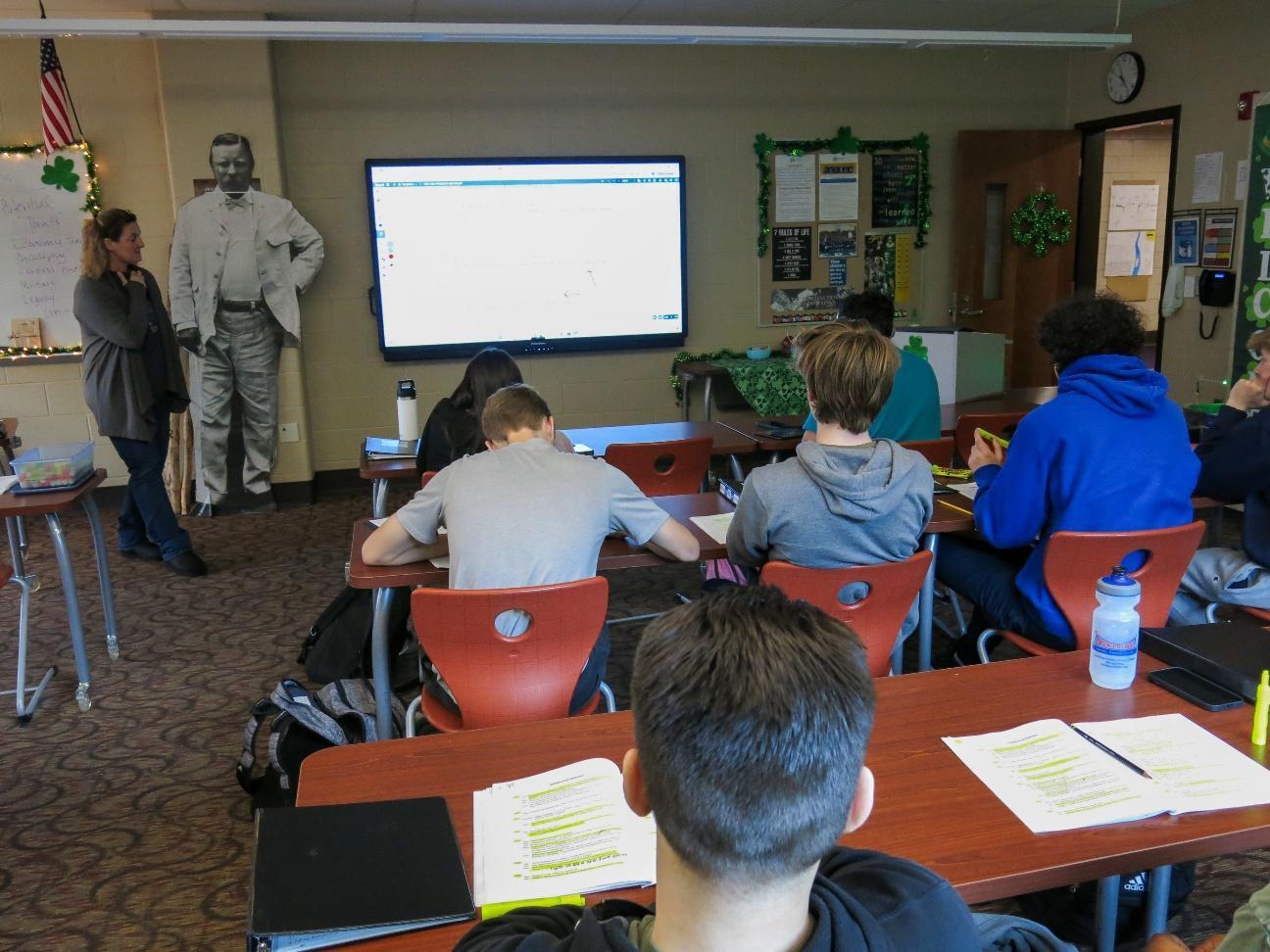
• Brett Arnold
• Brian Ash
• Ian Cheney
• Christopher Gamble
• Courtney Hesch
• Kathryn Prpich
• Douglas Sherman
• Michael Uscilla
• Lisa Virtue



Effective Communicators

Information Analysts
Critical Thinkers

Self-Directed Learners
Responsible Citizens
1A: Listen actively to understand information.
1B: Use an appropriate method of communication.
1C: Create a logical and evidence-based argument.
1D: Deliver a clear and effective presentation or performance.
2A: Use appropriate research tools to acquire information from a variety of sources.
2B: Evaluate different perspectives, biases, and levels of credibility.
2C: Analyze information gathered from research tools to demonstrate understanding.
3A: Make reasonable predictions of a real-world issue.
3B: Analyze data in order to justify a claim.
4A: Persevere through challenging situations with flexibility and resourcefulness.
4B: Recognize how thoughts, feelings, and actions affect achievement.
4C: Work independently towards achieving a meaningful goal.
5A: Demonstrate respect for all cultures, identities, and perspectives.
5B: Practice responsible digital citizenship.

Waterford Public Schools is a community of learners that fosters and supports high aspirations, ensuring every student acquires the skills and knowledge necessary to be a responsible citizen, prepared to contribute and succeed in an ever-changing world.
Course Name: United States History I
Unit 1 Title: The Roots of a Modern Nation- Industrialization & Immigration (1870-1920) Est. # of Lessons: 12
Unit Overview: In this unit, students will explore how the United States has transformed itself from an agricultural society to an industrial one with the help of new technological innovations and millions of newly arrived immigrant laborers. Students will examine the political , social, and economic changes in the lives of Americans as the nation emerges on the world stage.
● INQ.10.9-12. Construct arguments using precise and knowledgeable claims, with evidence from multiple sources, while acknowledging counterclaims and evidentiary weaknesses.
● D2.His.1.9-12. Evaluate how historical events and developments were shaped by unique circumstances of time and place as well as broader historical contexts.
● D2.His.2.9-12. Analyze change and continuity in historical eras.
● D2.His.3.9–12. Use questions generated about individuals and groups to assess how the significance of their actions changes over time and is shaped by the historical context.
● D2.His.5.9-12. Analyze how historical contexts shaped and continue to shape people’s perspectives.
● D2.His.14.9-12. Analyze multiple and complex causes and effects of events in the past.
● D2.His.16.9-12. Integrate evidence from multiple relevant historical sources and interpretations into a reasoned argument about the past.
Transfer Goals
● Evaluate sources for content, reliability, accuracy, and bias to ensure that the information is valid and represents a range of viewpoints/perspectives
● Find and make productive use of meaningful information
● Examine how location influences the political, cultural, and economic behaviors of groups of people within a given region
● Evaluate how historical events and developments were shaped by unique circumstances of time and place as well as universal patterns (e.g., conflict, change, innovation, freedom)
● Examine evidence to better understand complex issues, identify patterns, and/or draw conclusions
● Develop and present an idea, argument, or solution through explanation of compelling claims with supporting evidence
Understandings
Essential Questions
● Citizens’ rights evolved with the passage of constitutional amendments during Reconstruction (13th, 14th, 15th) and continued into the Progressive Era (16th, 17th, 18th, 19th).
● American culture developed as a result of the “melting pot” of people to the United States from different regions of the world who were brought together through their shared experiences.
● The economy of the United States during the Gilded Age was defined by the factory system and mass production funded by the wealth of the big industrialists.
● Technology and scientific discovery influenced American society with the invention and growth of the railroads, telegraph wires, telephone, and electricity as the movement of people and goods increased across the country.
● The role of the American government changed as domestic policy moved away from the laissez-faire politics of the Gilded Age to the reform movement of the Progressives aimed at regulating businesses and protecting individuals.
● By the end of the 19th century, natural resources, creative ideas, and growing markets propelled the United States to become the leading industrial nation in the world.
● Immigration and migration created both benefits and challenges for the expanding nation. (e.g. Westward expansion, conflict with Native Americans, European & Asian Immigration, Urbanization- growth of the cities, Nativism)
Knowledge
● How did freedom and equality (citizens’ rights) evolve in the United States?
● How did our national culture reflect what it means to be an American?
● How did the economy play a critical role in the United States government’s policies and actions?
● How did technology influence American society?
● How did the role of the American government change? (on the domestic front)
● How did the role of the United States in world affairs develop over time?
● How did immigration and migration impact the United States?
Skills (Framed as Learning Targets)
Students will know that:
● Citizens’ rights evolved with the passage of several constitutional amendments in the late nineteenth and early twentieth century.
● There were many factors which led to the rise of industry in the northern United States, including a large and growing labor force and abundance of natural resources.
● New technological inventions of the Market Revolution had huge impacts on American society.
● There were many causes and effects of both migration within and immigration to the United States approaching the 20th century.
● Americans responded to the problems of industrialization and urbanization through the political, economic, and social changes of the Progressive movement.
● (S1) I can record information using a variety of note-taking techniques.
● (S2) I can determine central ideas and summarize historical content.
● (S3) I can evaluate individuals and events with respect to the worldview of the historical period.
● (S4) I can evaluate primary and secondary multiple interpretations of events to gain historical understanding.
Summative Assessment
● Exam with multiple parts that test a variety of skills, including:
*Objective questions
*Short primary and second excerpt Interpretations
*Writing prompt with specific examples from the Unit to evaluate the question “Is progress good?”
● Presentations- Family Tree Research Project / Ancestry.com OR Interview with a recent immigrant (Culminating Project) (Option: include research or interview with an AAPI immigrant family, connecting their story to themes of exclusion, opportunity, and resilience)
● Writing assessments- Argumentative Essay on Successes and Failures of the Progressive Era. Students may include examples such as the Chinese Exclusion Act, Gentlemen’s Agreement, or Filipino labor activism.
Formative Assessment
● Read and create an outline and illustrated graphic organizer for the five factors leading to industrialization.
● Analyze primary sources from notable figures of the period (eg: Mother Jones, Booker T. Washington, Sitting Bull, Upton Sinclair).
● Read and create a T-Chart for the push/pull factors of immigration during the post-Civil War time period.
● Analyze political cartoons throughout the unit to create an original work (eg: political corruption, immigration, urbanization)
● Read and construct a causes and effects chart before and after the Battle of Little Bighorn.
● Read and create a topical net on the origins and goals of the Progressive Movement. Take an open-note quiz on the information in order to measure note-taking skills.
● Reading For Information (RFI) Article to read, highlight, annotate, and answer guided and open-ended critical thinking questions using text-based evidence relevant to the unit. (eg: Triangle Factory Fire, The Great Immigration
First Topic: Industrialization
Learning Targets:
● (S1) I can record information using a variety of note-taking techniques.
● (S2) I can determine central ideas and summarize historical content.
● (S3) I can evaluate individuals and events with respect to the worldview of the historical period.
● (S4) I can evaluate primary and secondary multiple interpretations of events to gain historical understanding.
Learning Activities:
Estimated # of Lessons: 4
Essential Questions:
● How did the economy play a critical role in the United States government’s policies and actions?
● How did technology influence American society?
● How did the role of the American government change? (on the domestic front)
● How did the role of the United States in world affairs develop over time?
● Students will learn about industrialization in the post-Civil War United States.
○ Students will read and outline information on factors leading to industrialization. (S1)
○ Students will create an illustrated graphic organizer for the five factors. (S2)
○ Students will provide an emoji and corresponding paragraph in reaction to the statement “Industrialization has improved life in America” from a factory worker, a factory owner, and an American consumer. (S2/S4)
● Students will learn about the big industrial leaders who emerged during this time period.
○ Students will take notes on Rockefeller, Carnegie, Vanderbilt, and Morgan. (S2)
○ Students will create a topical net to compare and contrast how each gained control of their respective industries, including the concepts of vertical and horizontal integration. (S2)
● Students will learn about the formation of labor unions in response to industrialization
○ Students will analyze primary sources of an American Lives Profile for labor leader Mary Harris “Mother” Jones and labor poster for the Industrial Workers of the World. (S3/S4)
○ Students will complete an RFI assessment on “The Triangle Shirtwaist Factory Fire” to show an example of how poor working conditions led to tragedy, which in turn led to improvements for American workers. (S2/S3)
• “Asian Labor and the Building of the Transcontinental Railroad”
○ Read brief excerpts from Chinese railroad worker testimonies (from Stanford’s Chinese Railroad Workers Project).
o Analyze images or political cartoons showing anti-Chinese sentiment in the West.
o Discuss the contrast between economic contribution and racial exclusion.
o Mini writing prompt: How did Chinese railroad workers contribute to U.S. industrialization, and how were they treated in return?
Second Topic: Immigration & Urbanization Estimated # of Lessons: 4
Learning Targets:
● (S1) I can record information using a
Essential Questions:
● How did our national culture reflect what it
variety of note-taking techniques.
● (S2) I can determine central ideas and summarize historical content.
● (S3) I can evaluate individuals and events with respect to the worldview of the historical period.
● (S4) I can evaluate primary and secondary multiple interpretations of events to gain historical understanding.
Learning Activities:
means to be an American?
● How did the role of the American government change? (on the domestic front)
● How did immigration and migration impact the United States?
● Students will learn about immigration in the post-Civil War United States.
○ Students will read and outline information on the push and pull factors leading people to emigrate to the United States. (S1/S2)
○ Students will create a diary entry from the perspective of a newly arrived immigrant to New York City. Option to write from the perspective of a Chinese or Japanese immigrant facing exclusion or working in California agriculture or railroads.(S2)
○ Students will complete an RFI assessment on “The Great Immigration Debate” to show the conflict between new immigrants and Nativists in the past and in the present. (S2/S3)
○ Students will research their own family tree/origins through oral interviews and Ancestry online OR conduct an interview with a recent immigrant to the United States to compare and contrast their experiences with those from the past. (S3/S4)
● Students will learn about the problems caused by urbanization as the cities grew in size.
○ Students will record notes to create a graphic organizer on the negative effects of the rapid population growth in the northeastern United States. (S1)
○ Students will analyze political cartoons from the period to design their own cartoon to illustrate the political corruption of Boss Tweed and Tammany Hall. (S3/S4)
o Discuss how Chinatowns and Japantowns developed as protective communities.
● Students will learn about the changes on the frontier as settlers move west into the Great Plains.
○ Students will create a timeline/flowchart for the key events between Native Americans and the United States government. (S1)
○ Students will use their causes and effects chart focusing on the Battle of Little Bighorn as a turning point in the settlement of the west to construct a historical plaque/monument at the battle site (from the Sioux perspective). (S4)
• “Chinese and Japanese Immigration in the Late 19th Century.”
o Students create a T-Chart comparing push/pull factors for Asian and European immigrants.
o Include primary source excerpts from the Chinese Exclusion Act (1882) and Gentlemen’s agreement (1907) to discuss government responses to Asian immigration.
o Students annotate: What fears or beliefs fueled these laws?
• Analyze a political cartoon such as “The Yellow Terror in All His Glory” (1899) to examine how media portrayed Asian immigrants.
o Follow-up reflection: What does this reveal about American identity and belonging at the time?
• U.S. annexation of Hawaii (1898) and its impact on Native Hawaiians and Asian plantation workers.
o Students map Hawaii’s annexation within the broader story of U.S. expansion and immigration.
Third Topic: Progressivism
Learning Targets:
● (S1) I can record information using a variety of note-taking techniques.
● (S2) I can determine central ideas and summarize historical content.
● (S3) I can evaluate individuals and events with respect to the worldview of the historical period.
● (S4) I can evaluate primary and secondary multiple interpretations of events to gain historical understanding.
Learning Activities:
Estimated # of Lessons: 4
Essential Questions:
● How did freedom and equality (citizens’ rights) evolve in the United States?
● How did the economy play a critical role in the United States government’s policies and actions?
● How did the role of the American government change? (on the domestic front)
● Students will learn about the origins of the Progressive reform movement in the early 20th century.
○ Students will read and outline information to create a topical net on the origins and goals of the Progressive Era reformers. (S1/S2)
○ Students will read excerpts from “The Jungle” by Upton Sinclair and write a newspaper editorial to highlight the horrific conditions in the Chicago meat-packing industry leading to the passage of significant new legislation to protect the American consumer. (S4)
○ Students will analyze a Geography Application Map for “The Movement Towards Suffrage” to identify the important role women reformers played in the Progressive Era. (S2)
● Students will learn about the successes of the Progressive reform movement.
○ Students will read and outline the domestic policies of the three Progressive presidents Theodore Roosevelt, William Howard Taft, and Woodrow Wilson. (S1)
○ Students will examine the candidates and issues in the presidential Election of 1912 to record information on a chart and design campaign buttons/slogans for each one relative to their political party platforms. (S3/S4)
● Students will learn about the failures/shortcomings of the Progressive reform movement.
○ Students will record notes to create a pros/cons chart for President Woodrow Wilson’s first term in office. (S1)
○ Students will analyze primary sources of an American Lives Profile for Civil Rights leader Booker T. Washington to illustrate the continued struggles for African-American equality. (S3/S4)
• Discuss how Progressive reforms often excluded nonwhite groups.
o Add short reading or RFI article: “Race, Reform, and Exclusion: The Limits of Progressivism.”
o Students analyze how Asian Americans were affected by reform policies or ignored by them.
• Profile activity: Wong Chin Foo or Mabel Ping-Hua Lee, early Asian American activists.
o Students read short biographical sketches and answer: In what ways did these reformers challenge American definitions of citizenship and equality?
• Creative assessment: “Voices of the Progressive Era” students write a mock newspaper editorial from the perspective of an underrepresented reformer (e.g., Chinese merchant, Japanese picture bride, Filipino laborer).
RESOURCES (recommended)
● Primary Sources:
○ Chinese Exclusion Act (1882) (Library of Congress)
○ Gentlemen’s Agreement (1907)
○ Wong Chin Foo’s “Why Am I a Heathen?” (1887)
○ Stanford Chinese Railroad Workers Project (letters & photos)
○ Mabel Ping-Hua Lee and the Fight for Women’s Suffrage (National Park Service)
● Visual Sources:
○ Anti-Chinese political cartoons (Harper’s Weekly)
○ Photographs of Asian American laborers, sugar plantations, and Chinatowns
● Secondary Readings:
○ Erika Lee, The Making of Asian America (excerpts)
○ PBS: Asian Americans (documentary, 2020) Episode 1 aligns with this unit
United States History I Unit 2: Imperialism and World War I (1890-1920)
Course Name: United States History I
Unit 2 Title: The US Emerges as a World Power- Imperialism and World War I (1890-1920) Est. # of Lessons: 11
Unit Overview: In this unit, students will explore how the United States sought to continue the policy of Manifest Destiny and expand oversees opportunities through social, economic and military means. As a result of growing global imperialism and participation in the Spanish-American War and World War I, the United States emerged as an international power on the world stage.
● INQ.10.9-12. Construct arguments using precise and knowledgeable claims, with evidence from multiple sources, while acknowledging counterclaims and evidentiary weaknesses.
● D2.His.1.9-12. Evaluate how historical events and developments were shaped by unique circumstances of time and place as well as broader historical contexts.
● D2.His.2.9-12. Analyze change and continuity in historical eras.
● D2.His.3.9–12.: Use questions generated about individuals and groups to assess how the significance of their actions changes over time and is shaped by the historical context.
● D2.His.5.9-12. Analyze how historical contexts shaped and continue to shape people’s perspectives.
● D2.His.14.9-12. Analyze multiple and complex causes and effects of events in the past.
● D2.His.16.9-12. Integrate evidence from multiple relevant historical sources and interpretations into a reasoned argument about the past.
Transfer Goals
● Evaluate sources for content, reliability, accuracy, and bias to ensure that the information is valid and represents a range of viewpoints/perspectives
● Find and make productive use of meaningful information
● Analyze how economics (e.g., trade, emerging markets, access to resources) influences governmental decisions
● Evaluate how historical events and developments were shaped by unique circumstances of time and place as well as universal patterns (e.g., conflict, change, innovation, freedom)
● Examine evidence to better understand complex issues, identify patterns, and/or draw conclusions
COMMUNICATION
● Develop and present an idea, argument, or solution through explanation of compelling claims with supporting evidence
● Citizens’ rights were challenged by wartime repression of basic civil liberties but evolved as the women’s suffrage movement secured passage of the 19th Amendment.
● How did freedom and equality (citizens’ rights) evolve in the United States?
● How did our national culture reflect what it means to be an American?
● How did the economy play a critical role in
United States History I Unit 2: Imperialism and World War I (1890-1920)
● American culture during the war years was characterized by patriotic propaganda and anti-German sentiment.
● The United States economy turned out a vast supply of raw materials and munitions for the war effort as well as mobilizing labor and military forces to secure victory for the Allies.
● Technological advances fueled U.S. imperialism as improved equipment increased farm and factory output creating a surplus of goods and a need for overseas markets.
● The federal government created a wide variety of agencies to manage the war effort on the homefront. (e.g. War Industries Board, Food Administration, Railroad Administration)
● The United States abandoned a policy of neutrality at the turn of the 20th century to develop into an influential player on the world stage. (e.g. Spanish-American War, Roosevelt Corollary, The Great War, Wilson’s League of Nations)
● As European immigration slowed during World War I, many African Americans moved to northern cities in search of jobs, equal treatment, and greater opportunities.
Students will know that:
● The United States sought to expand overseas opportunities through a foreign policy of imperialism.
● There were many causes and effects which led America to emerge as a world power in the early 1900s.
● World War I spurred social, political, and economic changes within the United States.
● The failures of the Versailles Peace Conference created international problems that would eventually lead to World War II.
the United States government’s policies and actions?
● How did technology influence American society?
● How did the role of the American government change? (on the domestic front)
● How did the role of the United States in world affairs develop over time?
● How did immigration and migration impact the United States?
● (S1) I can record information using a variety of note-taking techniques.
● (S2) I can determine central ideas and summarize historical content.
● (S3) I can evaluate individuals and events with respect to the worldview of the historical period.
● (S4) I can evaluate primary and secondary multiple interpretations of events to gain historical understanding. STAGE
Summative Assessment
● Exam with multiple parts that test a variety of skills, including:
*Objective questions
*Short primary and second excerpt Interpretations
*Writing prompt with specific examples from the Unit to evaluate the question “Was World War I fought for a good reason?”
● Presentations- Create a front page of a newspaper from one day during WWI (Culminating Project), must include:
○ 3 articles- battlefront, homefront, and local news
○ 3 visuals- cartoon, propaganda, map
○ 1 quotation
○ Use material from class lectures/notes, textbook, online resources
● Writing assessments- Argumentative Essay on Pro-Imperialist arguments vs. AntiImperialist arguments as America claims an empire
● AAPI: ARGUMENT WRITING (Main Assessment Piece) Prompt:
○ Did U.S. imperialism in the Pacific expand freedom or deny freedom?
○ Use at least 3 examples, including Hawai‘i, the Philippines, or Asian immigrants in the U.S.
First Topic: Imperialism
Learning Targets:
Formative Assessment
● Read and complete a chart on “U.S. Foreign Policies throughout History” to be referenced all semester- isolationism, collective security, internationalism, and imperialism
● Read and create a T-Chart for the global and national motives for imperialism and arguments from anti-imperialists.
● Read and construct a causes, events, and results graphic organizer for the SpanishAmerican War. Take an open-note quiz on the information in order to measure notetaking skills.
● Analyze primary sources from notable figures of the period (eg: William Randolph Hearst, Oliver Wendall Holmes, Alvin York).
● Analyze propaganda posters throughout the unit to create an original work (eg: emotional appeals, demonization of the enemy, patriotic)
● Reading For Information (RFI) Article to read, highlight, annotate, and answer guided and open-ended critical thinking questions using text-based evidence relevant to the unit. (eg: “Remember the Maine! To Hell with Spain!”, “Five Things you should know about WWI” )
● IMAGE ANALYSIS MINI-CHECK
○ Show anti-Asian cartoon. Students answer:
○ What stereotype is shown?
○ What does this tell us about attitudes during this time?
● QUICK WRITE (5 minutes) Imagine you are:
○ A Filipino freedom fighter
○ A Hawaiian citizen in 1898
○ A Chinese laborer in California during WWI
○ Describe your view of the United States in 3–4 sentences.
● (S1) I can record information using a variety
Estimated # of Lessons: 4
Essential Questions:
● How did the economy play a critical role in
of note-taking techniques.
● (S2) I can determine central ideas and summarize historical content.
● (S3) I can evaluate individuals and events with respect to the worldview of the historical period.
● (S4) I can evaluate primary and secondary multiple interpretations of events to gain historical understanding.
Learning Activities:
the United States government’s policies and actions?
● How did the role of the United States in world affairs develop over time?
● How did immigration and migration impact the United States?
● Students will complete a Skill Builder partner activity to examine the four major foreign policies in U.S. history through a series of chronological events beginning with Washington’s Farewell Address through Post-9/11 America. (S1/S2/S3)
○ Students will respond to an opinion question on what U.S. foreign policy should be today.(S4)
○ Students will read, highlight, annotate, and write a reflection on the article “Five Ways 9/11 Changed America” and how we still feel the impact today. (S4)
● Students will learn about a shift in foreign policy to imperialism by the United States at the turn of the 20th century.
o Students will read and outline information on the U.S. motives for global expansion. (S1) AAPI Integration: Include Hawai‘i, the Philippines, and Samoa in your global expansion notes.
o AAPI Integration: While outlining U.S. motives for imperialism, include the role of Asian laborers (Chinese, Japanese, Filipino) in U.S. agricultural and plantation economies, especially in Hawai‘i and the West Coast.
○ Students will create a T-chart for Pro-imperialism vs. Anti-imperialism arguments. (S2)
○ Students will respond to an opinion question on their views if they had lived then. (S3)
○ Students will design an Acrostic for the word IMPERIALISM. (S2)
● Students will learn about U.S. participation in the Spanish-American War of 1898.
○ Students will take notes on the causes, events, and results of the war. (S1)
○ Students will complete an RFI assessment on “Remember the Maine! To Hell with Spain!” to reaffirm the background notes. (S2/S3)
○ Students will analyze primary sources of an American Lives Profile for newspaper mogul William Randolph Hearst and listen to the song “The Editor’s to Blame”. (S3/S4)
○ Students will create a yellow journalism headline for one of the causes of the war. (S2)
● Students will learn about the emergence of the U.S. as a world power at the turn of the century.
○ Students will analyze primary sources of political cartoons such as “Declined with Thanks, A New World Order” to answer critical thinking questions. (S4)
○ Students will read and outline information on the foreign policies of Theodore Roosevelt “Big Stick diplomacy, William Howard Taft’s “Dollar diplomacy”, and Woodrow Wilson’s “Moral diplomacy”. (S1)
• AAPI Integration: Read a short primary source excerpt from Queen Liliʻuokalani’s protest against annexation (S3).
• AAPI Integration: Include a mini-case study on the annexation of Hawai‘i, focusing on: overthrow of Queen Liliʻuokalani; role of U.S. sugar planters; resistance from Native Hawaiians; how Hawaiians understood and protested American imperialism
• AAPI Integration): Students read a short excerpt from Filipino nationalist Emilio Aguinaldo describing the Filipino-American War (1899–1902). (S3/S4)
• AAPI Integration: Add one political cartoon analysis focused on U.S. actions in the Philippines or Asia, such as “School Begins” (depicting U.S. control of Philippines, Hawai‘i, Puerto Rico, Cuba, China).
Second Topic: Causes and Effects of World War I Estimated # of Lessons: 4
Learning Targets:
● (S1) I can record information using a variety of note-taking techniques.
● (S2) I can determine central ideas and summarize historical content.
● (S3) I can evaluate individuals and events with respect to the worldview of the historical period.
● (S4) I can evaluate primary and secondary multiple interpretations of events to gain historical understanding.
Learning Activities:
Essential Questions:
● How did technology influence American society?
● How did the role of the American government change? (on the domestic front)
● How did the role of the United States in world affairs develop over time?
● Students will learn about the causes and events leading European nations and the United States into the Great War,
○ Students will read and outline information on the events leading to World War I. (S1)
o AAPI Integration: When discussing global tensions before WWI, include Japan’s rise as an imperial power and its alliance with Britain shifting balance in the Pacific.
○ Students will create a flow chart to organize the events in chronological order. (S2)
○ Students will complete an RFI assessment on “Five Things you Need to Know about WWI” to reaffirm the background notes. (S2/S3)
● Students will learn how Americans intervention led to Allied victory in WWI.
○ Students will take notes on how American power tipped the balance. (S1)
○ Students will research and draw illustrations for the industrialization of war and the new weapons of warfare. (S1)
○ Students will respond to an opinion question on which new weapon had the greatest impact on the outcome of the war. (S4)
o AAPI Integration: Include a short segment on Filipinos serving in the U.S. Navy, since the Philippines was a U.S. colony.
● Students will learn about the effects/aftermath of World War I in Europe and in the U.S.
○ Students will read and record notes on President Wilson’s fight for peace at the Versailles conference with his Fourteen Points Speech and plan for a world peace-keeping organization the League of Nations. (S1)
○ Students will create a T-chart for the Pros/Cons of U.S. entry into the League of Nations. (S2)
○ Student will discuss and respond to an opinion question on if they would have voted to approve the terms of the Treaty of Versailles in 1919 if they were in the U.S. Senate. (S3/S4)
○ Students will analyze two Geography Application maps for pre-WWI Europe vs. post-WWI
Europe to answer questions. (S2)
○ AAPI Integration: Include one primary source excerpt from Chinese, Filipino, or Indian laborers who came to the U.S. during the WWI labor shortage. (S3/S4)
Third Topic: The Homefront
Learning Targets:
● (S1) I can record information using a variety of note-taking techniques.
● (S2) I can determine central ideas and summarize historical content.
● (S3) I can evaluate individuals and events with respect to the worldview of the historical period.
● (S4) I can evaluate primary and secondary multiple interpretations of events to gain historical understanding.
Learning Activities:
Estimated # of Lessons: 3
Essential Questions:
● How did freedom and equality (citizens’ rights) evolve in the United States?
● How did our national culture reflect what it means to be an American?
● How did the role of the American government change? (on the domestic front)
● How did immigration and migration impact the United States?
● Students will learn how Americans’ participation on the Homefront led to Allied victory in WWI.
○ Students will record notes on how civilians supported the war effort at home. (S1)
○ Students will create a diary entry from the perspective of an American from the Homefront detailing their efforts to support the war. (S2) AAPI Integration: diary entry from an Asian immigrant or Hawaiian resident,
○ Students will research propaganda efforts created by the Committee on Public Information to sell the war at home, share details in class, and create their own propaganda poster. (S4)
● Students will learn about the important role of African Americans, women, and immigrants on the Homefront in World War I.
○ Students will record information in a graphic organizer/Venn diagram with social changes and challenges that affected each group. (S1/S2) AAPI Integration: In the graphic organizer comparing African Americans, women, and immigrants, add Asian immigrants (Chinese, Japanese, Filipino, Indian).
○ Students will respond to an essay prompt/critical thinking question “What are the longterm effects of World War I on the United States?”(S2/S4)
○ AAPI Integration: Add a short reading on the 1917 Immigration Act
○ Students will analyze the background and details of the 1919 Supreme Court decision Schenk vs. United States. (S3)
○ Students will analyze primary sources of an American Lives Profile for Supreme Court justice Oliver Wendall Holmes to determine his influence during his years of service in the judicial branch. (S3/S4)
o AAPI Integration: Include a propaganda poster relating to Asia, such as posters warning against “foreign radicals,” showing how Asians were racialized as potential threats.
United States History I Unit 2: Imperialism and World War I (1890-1920)
Suggested primary resources Unit 1: Imperialism
● Queen Liliʻuokalani, Protest Against the Annexation of Hawai‘i
● Emilio Aguinaldo, Message to the American People (1899)
● Political cartoon: School Begins (1901)
● Political cartoon: The White Man’s Burden (Philippines Edition)
Suggested primary resources Unit 2: World War I
● Chinese Labor Corps testimonies
● U.S. Navy Filipino enlistment records
● Japanese-American newspapers on WWI (e.g., Rafu Shimpo)
● Excerpts from the 1917 Immigration Act
Suggested primary resources Unit: Homefront
● Propaganda posters featuring “foreign spies”
● Asian immigrant newspaper editorials reacting to wartime restrictions
● Photos of Hawaiian and Filipino communities supporting the war effort
United States History I Unit 3: The Roaring Twenties and the Great Depression (1919-1939)
Course Name: United States History I
Unit 3 Title: Boom to Bust- The Roaring Twenties and the Great Depression (1919-1939) Est. # of Lessons: 11
Unit Overview: In this unit, students will explore the rapid and radical changes experienced in the United States throughout the decades of the 1920s and 1930s. From the booming postwar economy of the Roaring Twenties to the devastating depression that followed, Americans faced many political, economic, social, and cultural challenges.
Established Goals (standards)
● INQ.10.9-12. Construct arguments using precise and knowledgeable claims, with evidence from multiple sources, while acknowledging counterclaims and evidentiary weaknesses.
● ECO.3.9-12. Evaluate why advancements in technology and investments in capital goods and human capital increase economic growth and standards of living.
● D2.His.1.9-12. Evaluate how historical events and developments were shaped by unique circumstances of time and place as well as broader historical contexts.
● D2.His.2.9-12. Analyze change and continuity in historical eras.
● D2.His.3.9–12.: Use questions generated about individuals and groups to assess how the significance of their actions changes over time and is shaped by the historical context.
● D2.His.5.9-12. Analyze how historical contexts shaped and continue to shape people’s perspectives.
● D2.His.14.9-12. Analyze multiple and complex causes and effects of events in the past.
● D2.His.16.9-12. Integrate evidence from multiple relevant historical sources and interpretations into a reasoned argument about the past.
● D2.Geo.12.9-12. Evaluate the consequences of human-made and natural catastrophes on global trade, politics, and human migration
Understandings
Transfer Goals
● Evaluate sources for content, reliability, accuracy, and bias to ensure that the information is valid and represents a range of viewpoints/perspectives
● Find and make productive use of meaningful information.
● Analyze how economics (e.g., trade, emerging markets, access to resources) influences governmental decisions
● Analyze how government rules and laws impact the lives of people
● Evaluate how historical events and developments were shaped by unique circumstances of time and place as well as universal patterns (e.g., conflict, change, innovation, freedom)
● Examine evidence to better understand complex issues, identify patterns, and/or draw conclusions
COMMUNICATION
● Develop and present an idea, argument, or solution through explanation of compelling claims with supporting evidence
Essential Questions
● Citizens’ rights were challenged in the postwar time period as a fear of foreignborn people and communism in the United States led to a wave of Nativism and immigration quota laws.
● Americans experienced a renewed sense of national identity as mass media played an important role in creating conformity and shared values as seen through music, literature, and the arts.
● A system of laissez-faire economics and consumer goods bought on credit fueled the business boom of the 1920s providing a superficial prosperity in the nation which culminated in the stock market crash.
● Advances in technology allowed people to be more connected, increased the speed of transportation, and new labor saving devices gave Americans more leisure time.
● The failures of the conservative probusiness presidents of the 1920s allowed for the more liberal intervention of the programs and agencies of the New Deal to be established in the federal government.
● A desire for a “return to normalcy” after World War I and a fear of foreign influence led to a postwar foreign policy of isolationism.
● While restrictive immigration quotas and economic woes limited the number of people coming into the United States, Americans hit hardest by the Depression migrated west in search of relief.
Students will know that:
● American foreign policy in the decades of the 1920s and 1930s shifted from intervention to isolationism.
● Americans experienced cultural conflicts as traditional customs and values changed in the 1920s.
● Several causes contributed to the global collapse of the economy leading to the Great Depression in the 1930s.
● The impact of the New Deal affected the lives of various groups of Americans in different way.
(men/women/children/elderly, industrial workers, farmers)
● How did freedom and equality (citizens’ rights) evolve in the United States?
● How did our national culture reflect what it means to be an American?
● How did the economy play a critical role in the United States government’s policies and actions?
● How did technology influence American society?
● How did the role of the American government change? (on the domestic front)
● How did the role of the United States in world affairs develop over time?
● How did immigration and migration impact the United States?
● (S1) I can record information using a variety of note-taking techniques.
● (S2) I can determine central ideas and summarize historical content.
● (S3) I can evaluate individuals and events with respect to the worldview of the historical period.
● (S4) I can evaluate primary and secondary multiple interpretations of events to gain historical understanding.
Summative Assessment
● Exam with multiple parts that test a variety of skills, including:
*Objective questions
*Short primary and second excerpt Interpretations
*Writing Prompt with specific examples from Unit 3- “The 1920s are to the 1930s like a wild party is to the morning after the party. Explain.”
● Presentation- 1920s Party Project Research a person from the decade to complete a Biographical Profile outline, dress and act like for the day, and interview other guests while at the party. AAPI Integration: Add to the 1920s Party Project: allow students to portray or research an AAPI historical figure (e.g., Anna May Wong, first Chinese American Hollywood star; Carlos Bulosan, Filipino American author). (Culminating Project)
● Presentation- Visual/Auditory Collage Representation of the 1930s Great Depression through a collection of photographs, art work, and music. AAPI Integration: Add to the Great Depression Collage Project: include images or songs that reflect AAPI labor, migration, or culture during the 1930s. (Culminating Project)
● Writing assessments- Argumentative Essay on Successes and Failures of Roosevelt’s New Deal programs. AAPI Integration: include a prompt option such as: “To what extent did the New Deal benefit or exclude minority groups, including Asian Americans and Pacific Islanders?”
First Topic: The Roaring Twenties
Formative Assessment
● Read and complete a Sequence of Chain of Events Flow Chart on “Causes Leading the Great Depression” from class notes
● Analyze primary sources from notable figures of the period (eg: Eleanor Roosevelt, Langston Hughes).
● Analyze political cartoons throughout the unit to create an original work (eg: conformity of the 1920s, stock market crash of 1929, another cause of the depression)
● Reading For Information (RFI) Article to read, highlight, annotate, and answer guided and open-ended critical thinking questions using text-based evidence relevant to the unit. (eg: “FDR: How He Changed America and Still Affects Your Life Today”)
United States History I Unit 3: The Roaring Twenties and the Great Depression (1919-1939)
Learning Targets:
● (S1) I can record information using a variety of note-taking techniques.
Essential Questions:
● How did freedom and equality (citizens’ rights) evolve in the United States?
● (S2) I can determine central ideas and summarize historical content.
● (S3) I can evaluate individuals and events with respect to the worldview of the historical period.
● (S4) I can evaluate primary and secondary multiple interpretations of events to gain historical understanding.
Learning Activities:
● How did our national culture reflect what it means to be an American?
● How did the economy play a critical role in the United States government’s policies and actions?
● How did technology influence American society?
● How did the role of the American government change? (on the domestic front)
● Students will learn about a shift in foreign policy from imperialism back to isolationism by the United States following the First World War.
○ Students will read/outline information on how Americans struggled with postwar issues. (S1)
○ Students will brainstorm to create a list/graphic organizer of possible problems a country might face after a war. (S2)
○ Students will design an Acrostic for the word RED SCARE. Include a discussion of how anticommunist and nativist fears led to increased hostility toward Asian immigrants, including the stereotyping of Chinese and Japanese Americans as “foreign threats” during the Red Scare period. (S2)
● Student will learn about the Roaring Life of the 1920s as background for the 1920s Party Project
○ Students will outline information on four major categories- Changing Ways of Life, The Twenties Woman, Education and Popular Culture, and The Harlem Renaissance. Examine how AAPI artists and writers such as Toyo Suyemoto and early Filipino poets in California reflected on identity and belonging amid mainstream cultural conformity. (S1)
○ Students will create a visual for the five major changes in the lives of Americans- electricity, automobile, advertising, credit, and radio. Explore how new technologies and consumerism excluded many Asian immigrants, who were often barred from property ownership and professional advancement due to state-level “alien land laws.”(S2)
○ Students will analyze a primary source poem from Edna St. Vincent Millay “First Fig”and one from Langston Hughes “Mother to Son”. Add an optional poem by an early Asian American writer, such as Yone Noguchi, to broaden perspectives on American identity and modernism.(S4)
● Students will learn about the three Republican presidents of the 1920s.
○ Students will read and outline information on the domestic and foreign policies of Warren G. Harding, Calvin Coolidge, and Herbert Hoover. Discuss the Immigration Act of 1924 (Johnson-Reed Act) and its exclusion of nearly all immigrants from Asia, reinforcing racialized citizenship laws. Examine Coolidge’s statement that “America must remain American” and how it institutionalized Asian exclusion.(S1)
○ Students will analyze primary sources of political cartoons referencing the “Teapot Dome Oil Scandal” to answer critical thinking questions. (S4)
○ Students will respond to an opinion question on which president was most responsible for the depression.(S4)
Second Topic: The Great Depression & the New Deal Estimated # of Lessons: 6
United States History I Unit 3: The Roaring Twenties and the Great Depression (1919-1939)
Learning Targets:
● (S1) I can record information using a variety of note-taking techniques.
● (S2) I can determine central ideas and summarize historical content.
● (S3) I can evaluate individuals and events with respect to the worldview of the historical period.
● (S4) I can evaluate primary and secondary multiple interpretations of events to gain historical understanding.
Essential Questions:
● How did the economy play a critical role in the United States government’s policies and
United States History I Unit 3: The Roaring Twenties and the Great Depression (1919-1939)
Learning Activities:
● Students will learn about the causes leading to the economic collapse of the Great Depression
○ Students will read, annotate, and outline an article “Why did Investors panic in 1929? (S1)
○ Students will create a Sequence Chain of Events leading to the depression. (AAPI Integration) Include examples of how the Depression impacted Asian American laborers in industries such as agriculture, railroads, and canneries, particularly in California and Hawaii. (S2)
○ Students will analyze a primary source of a Pulitzer Prize winning political cartoon “A Wise Economist Asks a Question” to answer critical thinking questions. (S4)
○ Students will then create their own political cartoon for one of the causes of the Great Depression and/or a Diary Entry from the perspective of someone who lost everything in the stock market crash of October 1929. (AAPI Integration) Offer the option to write from the perspective of a Filipino farmworker or Chinese grocer affected by widespread job loss and antiimmigrant sentiment. (S2)
● Students will learn about the effects of the Great Depression on the lives of Americans
○ Students will watch and record guided notes on a video segment from “America’s TimeStormy Weather” which details personal accounts of the depression & effects on their families. (AAPI Integration) Supplement with clips or readings on Filipino labor strikes in California (e.g., the 1934 Salinas Lettuce Strike) and how AAPI communities organized mutual aid during economic hardship.(S1)
○ Students will listen and react to the Songs “Brother, Can you Spare a Dime?” AND “We’re in the Money!” (AAPI Integration) Discuss how AAPI musicians like Larry Ching (“the Chinese Frank Sinatra”) began breaking into American entertainment during this period, even as anti-Asian prejudice persisted. (S4)
○ Students will analyze a primary source for The Dust Bowl- “Letter from a Dust Bowl Survivor” to answer critical thinking questions. (S4)
○ Students will analyze a Geography Application map on “The Great Depression Takes Its Toll” to answer questions on the Dust Bowl, migration to the west coast, and the plight of the farmers. (AAPI Integration) Highlight how the migration of Dust Bowl farmers to California created job competition and racial tensions with Asian and Mexican laborers, leading to violence and restrictive local laws. (S2)
● Students will complete a Skill Builder partner activity to examine the agencies and programs of President Franklin Roosevelt’s New Deal legislation and create a chart for the 3 Rs Relief, Recovery, and Reform (AAPI Integration) Investigate how AAPI workers and communities were largely excluded from many New Deal programs due to citizenship restrictions, yet some (like Filipino laborers in Hawaii) benefited from WPA or CCC projects under territorial jurisdiction. (S1/S2/S3)
○ Students will research, create, and share examples of an Advertisement/Poster for one of the New Deal agencies/programs. (AAPI Integration) Include posters or materials that reflect the diversity of American workers, and discuss why AAPI labor was often omitted from government propaganda. (S2)
○ Students will respond to two opinion questions on which New Deal agency/agencies were
United States History I Unit 3: The Roaring Twenties and the Great Depression (1919-1939)
The most effective in combating the depression and which, if any, are outdated today. (S4)
○ Students will analyze a primary source of an American Lives Profile for Eleanor Roosevelt to determine her influence as First Lady and the years following 1945. (AAPI Integration) Add Eleanor Roosevelt’s advocacy for civil rights and refugee protections, including her correspondence on repealing Asian exclusion laws and supporting U.S.–China relations during her later years. (S3/S4)
United States History I Unit 4: The United States and World War II (1933-1945)
Course Name: United States History I
Unit 4 Title: The United States and World War II (1933-1945)
Est. # of Lessons: 11
Unit Overview: In this unit, students will examine the events in Europe and Asia which lead the United States into a Second World War after years of debate between isolationists and interventionists. Students will explore how various groups of Americans mobilized on the Homefront to turn the tide of the war in favor of the Allied powers.
Established Goals
● INQ.10.9-12. Construct arguments using precise and knowledgeable claims, with evidence from multiple sources, while acknowledging counterclaims and evidentiary weaknesses.
● D2.His.1.9-12. Evaluate how historical events and developments were shaped by unique circumstances of time and place as well as broader historical contexts.
● D2.His.2.9-12. Analyze change and continuity in historical eras.
● D2.His.3.9–12.: Use questions generated about individuals and groups to assess how the significance of their actions changes over time and is shaped by the historical context.
● D2.His.5.9-12. Analyze how historical contexts shaped and continue to shape people’s perspectives.
● D2.His.14.9-12. Analyze multiple and complex causes and effects of events in the past.
● D2.His.16.9-12. Integrate evidence from multiple relevant historical sources and interpretations into a reasoned argument about the past.
● While World War II did accelerate social change for Americans, many minority groups faced racial prejudice and discrimination at home. (e.g. Double V Campaign, Zoot Suit riots, Japanese internment)
Transfer Goals
● Evaluate sources for content, reliability, accuracy, and bias to ensure that the information is valid and represents a range of viewpoints/perspectives
● Find and make productive use of meaningful information
● Analyze how government rules and laws impact the lives of people
● Evaluate how historical events and developments were shaped by unique circumstances of time and place as well as universal patterns (e.g., conflict, change, innovation, freedom)
● Examine evidence to better understand complex issues, identify patterns, and/or draw conclusions
● Develop and present an idea, argument, or solution through explanation of compelling claims with supporting evidence
● How did freedom and equality (citizens’ rights) evolve in the United States?
● How did our national culture reflect what it means to be an American?
● How did the economy play a critical role in the United States government’s policies and
● Writers and artists used wartime propaganda to keep the American public informed about the war and persuaded patriotic citizens to cooperate with the government’s Homefront programs.
● The massive mobilization of the economy by the federal government during World War II led to unprecedented industrial and agricultural productivity, effectively bringing an end to the Great Depression.
● The war effort demanded developments in the fields of science, technology, and medicine that forever changed life in America and made present-day technology possible. (e.g. radar, sonar, atomic weapons, penicillin)
● After the Japanese attack on Pearl Harbor, virtually all domestic priorities were put on hold as the federal government and American population dedicated itself to fighting, supporting, and winning the war.
● The United States transformed from an initial policy of neutrality to develop into and emerge as the most powerful nation in the world by the end of the Second World War.
● One of the greatest mass migrations in American history began during WWII brought on by the rapid growth of defense industries and military training in California and the Sunbelt.
Students will know that:
● The United States provided economic and military aid to help the Allies achieve victory before eventually getting involved in the fighting.
● Allied forces, led by the United States battled the Axis powers for control of Europe, North Africa, and throughout the Pacific.
● Throughout the years of the Second World War, Americans adjusted to new economic opportunities and harsh social tensions.
actions?
● How did technology influence American society?
● How did the role of the American government change? (on the domestic front)
● How did the role of the United States in world affairs develop over time?
● How did immigration and migration impact the United States?
● (S1) I can record information using a variety of note-taking techniques.
● (S2) I can determine central ideas and summarize historical content.
● (S3) I can evaluate individuals and events with respect to the worldview of the historical period.
● (S4) I can evaluate primary and secondary multiple interpretations of events to gain historical understanding.
Summative Assessment
● Exam with multiple parts that test a variety of skills, including:
*Objective questions
*Short primary and second excerpt
Interpretations
*Writing prompt with specific examples from the Unit to evaluate the question “*Was World War II really a “good” war for the United States?”
● Presentations- World War II Timeline Students will choose an event or topic of their interest to research and create a Google/PPT slide to present to the class that will later be combined into an entire class timeline (AAPI Integration) Students may select Pacific or AAPI-focused events (Pearl Harbor, Bataan, Executive Order 9066, repeal of Chinese Exclusion Act). (Culminating Project)
● Writing assessments- Argumentative Essay on United States justification in dropping the atomic bombs on Hiroshima and Nagasaki? (Traditional vs. Revisionist views)
Learning Targets:
Formative Assessment
● Read and create a T-Chart for the arguments of the Isolationists and the arguments for the Interventionists in the United States in the lead up to the attack on Pearl Harbor.
● Analyze primary sources from notable figures of the period (eg: Fred Korematsu, Barney Old Coyote, “Rosie” Mae Krier).
● Read and create an outline of key information for “Societal Impacts of various groups on the Homefront” including African Americans, Women, Mexican Americans, Japanese Americans. Take an open-note quiz on the information in order to measure note-taking skills.
● Reading For Information (RFI) Article to read, highlight, annotate, and answer guided and open-ended critical thinking questions using text-based evidence relevant to the unit. (eg: Pearl Harbor- From Infamy to Friendship)
● (S1) I can record information using a variety of note-taking techniques.
● (S2) I can determine central ideas and summarize historical content.
● (S3) I can evaluate individuals and events with respect to the worldview of the historical period.
● (S4) I can evaluate primary and secondary multiple interpretations of events to gain historical understanding.
Essential Questions:
● How did the economy play a critical role in the United States government’s policies and actions?
● How did technology influence American society?
● How did the role of the American government change? (on the domestic front)
● How did the role of the United States in world affairs develop over time?
Learning Activities:
● Students will complete a Skill Builder partner activity “On the Road to War”
○ Students will examine the major events in Europe and Asia from the Spanish Civil War through the German invasion of Poland, for each event to identify the action taken by the Axis powers and the response from the Allies. (S1/S2/S3)
○ Students will preview the activity with a Political Cartoon and analogy to Hitler as a kid in a candy story for the failed policy of appeasement. (S4)
○ Students will then respond to an Opinion Question on which event was most responsible for the start of the war. (S4)
○ Students will follow with a video segment from “America’s Time- Over the Edge” 1936–1941 to record guided notes while viewing. (S1)
○ (AAPI Integration): When examining the “Road to War,” include Japanese expansion in Asia (Manchuria 1931, Nanking 1937) and its connection to U.S. embargoes and Pacific interests.
● Students will learn about the events leading the United States closer to entry into World War II.
○ Students will record notes on “America Moves Towards War” to create a Flow Chart for “Actions taken by the U.S. from Isolation to Intervention”. (S1)
○ Students will analyze quotes from politicians debating US involvement in the war to determine their point of view “To Fight or not to fight?”. (S4)
○ Students will look at various political cartoons from Dr. Seuss to determine his position on the war (an interventionist). (S3)
● Students will learn about the relationship between the United States and Japan leading to war
○ Students will record notes in outline form with background on “US-Japanese Relations”, (S1)
○ Students will read, annotate, and respond with their opinion to an article “Did FDR know about the attack on Pearl Harbor? (AAPI Integration): During the “Did FDR know about Pearl Harbor?” activity, include primary sources from Japanese diplomats or Japanese American community reactions to explore how the attack reshaped public attitudes toward AAPI communities. (S1/S2)
○ Students will create a T-Chart for the traditional vs. revisionist arguments of if President Roosevelt knew of the attack and allowed it to happen. (S2)
○ (AAPI Integration): Discuss AAPI individuals who faced suspicion or violence immediately after Pearl Harbor, highlighting early steps toward internment and racial profiling.
○ (AAPI Integration): Add a short case study on U.S.-Japanese relations, focusing on resource tensions (oil, rubber, steel) and the perception of Japan in American media before Pearl Harbor
Second Topic: Fighting World War II
Learning Targets:
● (S1) I can record information using a variety of note-taking techniques.
● (S2) I can determine central ideas and summarize historical content.
● (S3) I can evaluate individuals and events with respect to the worldview of the historical period.
Estimated # of Lessons: 3
Essential Questions:
● How did technology influence American society?
● How did the role of the United States in world affairs develop over time?
● (S4) I can evaluate primary and secondary multiple interpretations of events to gain historical understanding.
Learning Activities:
● Students will complete a Skill Builder partner activity “Winning the War” to learn about the important battles of the European & Pacific Theater of the War
○ Students will outline the important information regarding these key battles (S1/S2)
○ Students will create a T-Chart for the Battles of WWII & their importance to share/report out to other groups in the class. (S1)
○ Students will then respond to an Opinion Question on which battle was the most important overall to Allied victory in World War II. (S3)
○ (AAPI Integration): In studying the Pacific Theater, emphasize the contributions and experiences of Filipino guerrilla fighters, Native Hawaiians, and Chinese Americans who served as translators, code talkers, and intelligence officers.
○ (AAPI Integration): Examine the Battle of Bataan and the Bataan Death March from both American and Filipino perspectives to humanize Pacific allies.
● Students will learn about the development of atomic weapons with the Manhattan Project.
○ Students will record notes in outline form with background on the Manhattan Project. (S1)
○ Students will read, annotate, and respond with their opinion to an article “Did FDR know about the attack on Pearl Harbor? (S1/S2)
○ Students will create a T-Chart for the traditional vs. revisionist arguments on President Truman’s decision to use atomic weapons as a preview to the argumentative writing prompt “Was the U.S. justified in dropping the atomic bombs on Hiroshima and Nagasaki? (S3)
○ Students will illustrate Emojis with bubble quotes in response to Truman’s use of atomic weapons from various people of the time period- a US soldier, a scientist on the Manhattan Project, a Japanese civilian, and Josef Stalin. (S3)
○ (AAPI Integration): When discussing the Manhattan Project, note the role of Chinese American physicist Chien-Shiung Wu (“the First Lady of Physics”), who contributed to uranium research an example of AAPI scientists’ wartime service.
○ (AAPI Integration): When debating Truman’s atomic bomb decision, analyze perspectives from Japanese civilians, Hiroshima survivors (hibakusha), and Japanese American activists, linking to postwar reconciliation and memory.
Third Topic: On the Homefront
Learning Targets:
● (S1) I can record information using a variety of note-taking techniques.
● (S2) I can determine central ideas and summarize historical content.
● (S3) I can evaluate individuals and events with respect to the worldview of the historical period.
● (S4) I can evaluate primary and secondary
Estimated # of Lessons: 4
Essential Questions:
● How did freedom and equality (citizens’ rights) evolve in the United States?
● How did our national culture reflect what it means to be an American?
● How did the economy play a critical role in the United States government’s policies and actions?
● How did the role of the American
multiple interpretations of events to gain historical understanding.
Learning Activities:
government change? (on the domestic front)
● How did immigration and migration impact the United States?
● Students will learn how Americans’ participation on the Homefront led to Allied victory in WWII.
○ Students will brainstorm to create a list of the most important things the U.S. has to do to prepare for war, after analyzing Norman Rockwell’s Four Freedoms paintings. (S2)
○ Students will record notes on how the federal government mobilized the economy for war and how civilians supported the war effort at home. (S1)
○ Students will create a diary entry from the perspective of an American from the Homefront detailing their efforts to support the war. (AAPI Integration) Offer perspectives such as: A Japanese American teenager in a relocation center; A Filipino farmworker supporting the war through agricultural labor; A Chinese American soldier earning citizenship through service (S2)
○ Students will follow up with a video segment from “America’s Time- The Homefront 19411945” to record guided notes while viewing. (S1)
○ (AAPI Integration): Expand “Societal Impacts of various groups on the Homefront” to include Chinese Americans, Japanese Americans, and Filipino Americans.
■ Japanese Americans: Executive Order 9066, life in internment camps (Manzanar, Tule Lake), resistance through cases like Fred Korematsu v. United States, and postwar reparations.
■ Chinese Americans: Wartime alliance with China leading to partial repeal of exclusion laws (1943 Magnuson Act).
■ Filipino Americans: Wartime labor shortages led to increased recruitment in agriculture (e.g., the Manongs in California) and service in the U.S. Army.
• (AAPI Integration): Use propaganda analysis to discuss how racial imagery of Japanese and other Asians differed from portrayals of European Axis enemies.
• (AAPI Integration): Add an activity on the “Double V Campaign” for AAPI communities victory abroad against fascism and victory at home against racism. Students could compare African American and AAPI experiences.
• (AAPI Integration): Connect the internment experience to later civil rights movements, examining how Japanese Americans’ fight for redress in the 1980s influenced future discussions of justice and citizenship.
● Students will learn about the significant events of the Holocaust and the American response.
○ Students will follow a timeline of the evolution of Germany’s “Final Solution” as a background to the Holocaust. (S1)
○ Students will read about and record information in a graphic organizer on the response from the United States with actions that could have been taken by various people/groupsPresident and Mrs. Roosevelt, the American public, the U.S. military- and why they were not (S1/S2/S3)
○ Students will respond to an essay prompt/critical thinking question “What actions should have been taken by the United States government to stop the Holocaust?” (S2)
○ Students will then watch a 30-minute video segment from Episode 9 of the series “Band of Brothers” called “Why We Fight?” (just watch) to follow with a class discussion/personal reaction/reflection to US troops discovery of the concentration camps in Germany April 1945. (S3/S4)
United States History I Unit 4: The United States and World War II (1933-1945)
○ (AAPI Integration) After studying Nazi racial ideology, students may reflect on how wartime Japanese internment reflected racialized fear within the U.S., comparing human rights violations in different contexts.
First topic Suggested Primary Sources:
● “Japan’s Plan for a Greater East Asia Co-Prosperity Sphere” (excerpt)
● Los Angeles Times, Dec. 8, 1941: Local Japanese Americans’ responses
● Photo analysis: Anti-Japanese propaganda posters Second topic Suggested Primary Sources:
● Personal accounts of Filipino soldiers in Bataan
● Chien-Shiung Wu’s oral history excerpts
● “Hiroshima Diary” by Dr. Michihiko Hachiya (translated excerpts)
Third topic Suggested Primary Sources:
● Excerpts from Fred Korematsu’s Supreme Court case documents
● Dorothea Lange photos of Japanese American incarceration
● Propaganda posters portraying the Japanese enemy
● Executive Order 9066 (1942)
Course Name: United States History II
Unit 5 Title: The Cold War (1945-1975)
Est. # of Lessons: 12
Unit Overview: In this unit, students will examine the years following the Second World War known as the Cold War. This was a period of increased tensions over opposing political and economic ideologies characterized by competitions for global influence between the United States and the Soviet Union that lasted from approximately 1945 to 1991.
● INQ.10.9-12. Construct arguments using precise and knowledgeable claims, with evidence from multiple sources, while acknowledging counterclaims and evidentiary weaknesses.
● D2.His.1.9-12. Evaluate how historical events and developments were shaped by unique circumstances of time and place as well as broader historical contexts.
● D2.His.2.9-12. Analyze change and continuity in historical eras.
● D2.His.3.9–12.: Use questions generated about individuals and groups to assess how the significance of their actions changes over time and is shaped by the historical context.
● D2.His.5.9-12. Analyze how historical contexts shaped and continue to shape people’s perspectives.
● D2.His.14.9-12. Analyze multiple and complex causes and effects of events in the past.
● D2.His.16.9-12. Integrate evidence from multiple relevant historical sources and interpretations into a reasoned argument about the past.
● Evaluate sources for content, reliability, accuracy, and bias to ensure that the information is valid and represents a range of viewpoints/perspectives
● Find and make productive use of meaningful information
● Analyze how economics (e.g., trade, emerging markets, access to resources) influences governmental decisions
● Analyze how government rules and laws impact the lives of people
● Evaluate how historical events and developments were shaped by unique circumstances of time and place as well as universal patterns (e.g., conflict, change, innovation, freedom)
● Examine evidence to better understand complex issues, identify patterns, and/or draw conclusions
● Develop and present an idea, argument, or solution through explanation of compelling claims with supporting evidence
Understandings
Essential Questions
● Citizen’s rights were challenged by the fear of Communism. Brown vs Board of Education meant the end of “separate but equal’, but the Jim Crow South remained.
● The post war economic boom brought prosperity, and that increasing wealth defined what it meant to be an American.
● The 1956 Federal Highway Act created suburban America.
● Television became the medium of the mass transmission of cultural values.
● McCarthyism and the HUAC created widespread fear and hysteria.
● Continued conflicts with the Soviet Union created tensions in Cuba, Central America, the Middle East, and Southeast Asia.
● United States immigration policy changed in reaction to refugees from Communist Cuba and Hungary
Students will know that:
● After World War II, differences between the United States and the Soviet Union led to a Cold War that lasted almost to the 21st century.
● Ongoing tensions with China and North Korea led to United States involvement in the Korean War.
● Attacks on suspected Communists in the early 1950s became known as McCarthyism.
● The United States’ support role in Vietnam began what would become America’s longest and most controversial war in its history.
● How did freedom and equality (citizens’ rights) evolve in the United States?
● How did our national culture reflect what it means to be an American?
● How did the economy play a critical role in the United States government’s policies and actions?
● How did technology influence American society?
● How did the role of the American government change? (on the domestic front)
● How did the role of the United States in world affairs develop over time?
● How did immigration and migration impact the United States?
● (S1) I can record information using a variety of note-taking techniques.
● (S2) I can determine central ideas and summarize historical content.
● (S3) I can evaluate individuals and events with respect to the worldview of the historical period.
● (S4) I can evaluate primary and secondary multiple interpretations of events to gain historical understanding.
● Exam with multiple parts that test a variety of skills, including:
*Objective questions
*Short primary and second excerpt Interpretations
*Writing prompt with specific examples from the Unit to evaluate the question “Fill in Unit Question”
● Presentations- Students will create a Google Jamboard of United States Cold War “proxy wars” throughout the world. AAPI Integration option: Students may select the Korean or Vietnam War and include a slide analyzing the experiences of Asian civilians or refugees, connecting them to later immigration and refugee policies in the U.S.
● Writing assessments- Analytical Essay on how the United States and the Soviet Union became Cold War adversaries. (AAPI Integration): “How did U.S. Cold War policies in Asia shape both international relations and domestic experiences for Asian Americans?”
Learning Targets:
● (S1) I can record information using a variety of note-taking techniques.
● (S2) I can determine central ideas and summarize historical content.
● (S3) I can evaluate individuals and events with respect to the worldview of the historical period.
● (S4) I can evaluate primary and secondary multiple interpretations of events to gain historical understanding.
Learning Activities:
● Read and create an outline and illustrated graphic organizer for the causes of the Korean War.
● Analyze primary sources from notable figures of the period including Paul Robeson, Joseph McCarthy, Julius and Ethel Rosenberg. AAPI Integration: short primary source analysis on Asian American perspectives on McCarthyism, such as excerpts from Chinese American newspapers or Korean War veterans.
● Read and create a T-Chart of the differences between the economies and governments of the Soviet Union and the United States.
● Analyze Cold War political cartoons to better understand the fear of Communism in the United States.
● AAPI Integration: Immigrant testimony or oral history from Southeast Asian refugees arriving after the Vietnam War.
Essential Questions:
● How did freedom and equality (citizens’ rights) evolve in the United States?
● How did our national culture reflect what it means to be an American?
● How did the role of the American government change? (on the domestic front)
● How did the role of the United States in world affairs develop over time?
● Students will learn about the origins of the Cold War.
○ Students will read and outline information on factors leading to the Cold War. (S2)
○ Students will create a post-WWII map of Europe. AAPI Integration: When mapping post-WWII Europe, also introduce Asia’s postwar geopolitical changes the division of Korea, the Chinese Revolution (1949), and Japan’s U.S.-led reconstruction. (S2)
○ Students will analyze political cartoons to learn about the differences between the political and economic systems in the Communist East and the democratic, capitalist West. (S2)
○ AAPI Integration: Mini-activity analyzing U.S.–China relations before and after 1949 (recognition of Taiwan vs. People’s Republic of China).
● Students will learn about the leaders of the Soviet Union and the US presidents during the Cold War.
○ Students will take notes on Stalin, Khrushchev, Eisenhower, and Truman. (S2)
○ Students will create a Kahoot Cold War quiz using vocabulary developed from Cold War terms and names. (S2)
Second Topic: Korean War
Learning Targets:
● (S2) I can record information using a variety of note-taking techniques.
● (S2) I can determine central ideas and summarize historical content.
● (S3) I can evaluate individuals and events with respect to the worldview of the historical period.
● (S4) I can evaluate primary and secondary multiple interpretations of events to gain historical understanding.
Learning Activities:
Estimated # of Lessons: 3
Essential Questions:
● How did the role of the United States in world affairs develop over time?
● Students will learn about the origins and outcome of the Korean War.
○ Students will create a Korean War map. AAPI Integration: When mapping the Korean War, include a component examining civilian displacement and the beginning of Korean immigration to the U.S. (S1, S2)
○ AAPI Integration: Discuss the Korean War brides who immigrated through marriage to American servicemen and how they were received in postwar America.
○ Students will complete an RFI assessment on “A New Chapter for North Korea '' to demonstrate an understanding of the continuing tension and conflict between the two Koreas and the United States. (S2, S3)
○ Students will watch “National Geographic’s Inside North Korea” to examine the effect of the Korean War on contemporary life in North Korea. (S1, S2)
Third Topic: McCarthyism
Learning Targets:
● (S1) I can record information using a
Estimated # of Lessons: 4
Essential Questions:
● How did freedom and equality (citizens’
variety of note-taking techniques.
● (S2) I can determine central ideas and summarize historical content.
● (S3) I can evaluate individuals and events with respect to the worldview of the historical period.
● (S4) I can evaluate primary and secondary multiple interpretations of events to gain historical understanding. rights) evolve in the United States?
Learning Activities:
● How did our national culture reflect what it means to be an American?
● How did the role of the American government change? (on the domestic front)
● How did the role of the United States in world affairs develop over time?
● Students will learn about the origins of McCarthyism.
○ Students will read about why Americans feared Communism. AAPI Integration: Examine how Chinese Americans and other Asian Americans were targeted or surveilled under suspicion of Communist sympathies (e.g., the Chinese Confession Program, 1956–1965). (S1/S2)
○ Students will analyze lists of “blacklisted” Hollywood actors, directors, and producers. (S4)
○ AAPI Integration: Compare McCarthy-era hearings with later Asian American advocacy for civil rights and citizenship recognition.
○ Students will examine primary documents related to the Alger Hiss case. (S4)
○ Students will discuss and analyze the motivations for and the outcome of the Rosenberg spy trial. (S3)
○ AAPI Integration: Activity: “Loyalty and Identity” students analyze how Cold War hysteria affected different communities, including Asian Americans.
Learning Targets:
● (S1) I can record information using a variety of note-taking techniques.
● (S2) I can determine central ideas and summarize historical content.
● (S3) I can evaluate individuals and events with respect to the worldview of the historical period.
● (S4) I can evaluate primary and secondary multiple interpretations of events to gain historical understanding.
Learning Activities:
Essential Questions:
● How did freedom and equality (citizens’ rights) evolve in the United States?
● How did our national culture reflect what it means to be an American?
● How did the role of the American government change? (on the domestic front)
● How did the role of the United States in world affairs develop over time?
● Students will learn about the origins and outcome of the Vietnam War
○ Students will create a map of the Vietnam War. (S2)
○ Students will analyze the motivations for fighting the Vietnam War from United States, South Vietnamese, North Vietnamese, Soviet, and Communist Chinese perspectives AAPI Integration: When discussing motivations for the Vietnam War, include Vietnamese, Cambodian, and Laotian perspectives on American involvement. (S1)
○ Students will write about why the United States ended its involvement in the Vietnam War. (S4)
○ AAPI Integration: After examining the war’s end, discuss the Southeast Asian refugee crisis and how U.S. refugee resettlement policies created new Asian American populations in cities like Los Angeles, Houston, and Minneapolis.
○ AAPI Integration: Analyze cultural impacts: films, songs, or literature by Vietnamese and Hmong Americans reflecting on displacement and identity.
Suggested resources for Topic 1
• Excerpts from Chinese American press coverage of Mao’s rise to power and its effect on local communities.
Suggested resources for Topic 2
• Oral history clips from Korean War veterans or Korean Americans about their family’s migration.
• U.S. military propaganda posters showing depictions of Asian allies/enemies students can analyze for bias and stereotype.
Suggested resources for Topic 3
• Federal Bureau of Investigation documents or news reports referencing the Chinese Confession Program.
• Excerpts from Asian American community organizations’ newsletters defending their patriotism.
Suggested resources for Topic 4
• Excerpts from The Latehomecomer (Kao Kalia Yang, Hmong memoir).
• Oral histories of Vietnamese refugees collected by the Smithsonian Asian Pacific American Center.
Course Name: United States History II
Unit 6 Title: Domestic Issues and Challenges 1954-1974 (IKE, JFK, LBJ, Nixon) Est. # of Lessons: 10
Unit Overview:
In this unit students will examine the post-war economic boom, the New Frontier, the Great Society, and the Watergate Scandal. The 1950s, 1960s, and 1970s, brought the United States unprecedented economic prosperity, and created the Federal highway system and the suburbs. Also, the increased role of government in American’s lives led to expanded civil and voting rights, and sought to eliminate poverty. But at times the Presidency and the government went beyond traditional boundaries in its pursuit of Presidential power.
Established Goals Transfer Goals
● INQ.10.9-12. Construct arguments using precise and knowledgeable claims, with evidence from multiple sources, while acknowledging counterclaims and evidentiary weaknesses.
● ECO.3.9-12. Evaluate why advancements in technology and investments in capital goods and human capital increase economic growth and standards of living.
● D2.His.1.9-12. Evaluate how historical events and developments were shaped by unique circumstances of time and place as well as broader historical contexts.
● D2.His.2.9-12. Analyze change and continuity in historical eras.
● D2.His.3.9–12.: Use questions generated about individuals and groups to assess how the significance of their actions changes over time and is shaped by the historical context.
● D2.His.5.9-12. Analyze how historical contexts shaped and continue to shape people’s perspectives.
● D2.His.14.9-12. Analyze multiple and complex causes and effects of events in the past.
● D2.His.16.9-12. Integrate evidence from multiple relevant historical sources and interpretations into a reasoned argument about the past.
● (INQUIRY) Evaluate sources for content, reliability, accuracy, and bias to ensure that the information is valid and represents a range of viewpoints/perspectives
● (INQUIRY) Find and make productive use of meaningful information
● (ECONOMICS) Analyze how economics (e.g., trade, emerging markets, access to resources) influences governmental decisions
● (CIVICS) Analyze how government rules and laws impact the lives of people
● (CIVICS) Evaluate how individuals or groups change society
● (HISTORY) Evaluate how historical events and developments were shaped by unique circumstances of time and place as well as universal patterns (e.g., conflict, change, innovation, freedom)
● Examine evidence to better understand complex issues, identify patterns, and/or draw conclusions
● Develop and present an idea, argument, or solution through explanation of compelling claims with supporting evidence
● As a result of the successes of the Great Society programs, many Americans gained increased freedom and equality, while some citizens rights decreased due to the government’s reaction to civil unrest and protest against the Vietnam War, and the Nixon administration's coverup of Watergate.
● Overall the national culture evolved to be more inclusive and tolerant of dissent.
● While the continued post-war economic boom allowed the United States government to continue to fund the fight against communism, recognition of economic inequality at home led to the War on Poverty.
● Television became more than entertainment with its important role in political campaigns and elections, and Space Race technology became part of consumer products.
● The role of the American government increased through the many programs created in President Johnson’s Great Society and War on Poverty.
● The long lasting effects of the Cold War meant continued worldwide conflicts over Communism
● The creation of the 1965 Immigration and Nationality Act increased for the first time immigration to the United States from Asai and Africa.
Students will know that:
● In the years after World War II, the United States became the economic and military power that it still is today.
● President Kennedy set out to transform his broad vision of progress into what he called the New Frontier.
● President Johnson’s Great Society outlined a legislative program that would end
● How did freedom and equality (citizens’ rights) evolve in the United States?
● How did our national culture reflect what it means to be an American?
● How did the economy play a critical role in the United States government’s policies and actions?
● How did technology influence American society?
● How did the role of the American government change? (on the domestic front)
● How did the role of the United States in world affairs develop over time?
● How did immigration and migration impact the United States?
● (S1) I can record information using a variety of note-taking techniques.
● (S2) I can determine central ideas and summarize historical content.
● (S3) I can evaluate individuals and events with respect to the worldview of the historical period.
● (S4) I can evaluate primary and secondary multiple interpretations of events to gain
poverty and racial injustice
● The Watergate scandal raised questions of public trust that still affect how the public and media view politics and politicians.
historical understanding.
Summative Assessment
● Exam with multiple parts that test a variety of skills, including:
*Objective questions
*Short primary and second excerpt Interpretations
*Writing prompt with specific examples from the Unit to evaluate the question “Fill in Unit Question”
● Presentations- Student groups will create a “50s, 60s, 70s Decades” themed Google slideshow. AAPI Integration: Decades Slideshow Project. Each group includes one slide or visual highlighting Asian American experiences or milestones from their decade (e.g., 1965 Immigration Act, Asian American civil rights activism, Asian American astronauts or scientists in the Space Race).
● Writing assessments- Analytical Essay on: How would you characterize the 1970s?
AAPI Integration Option: Analytical Essay :How did the 1965 Immigration and Nationality Act change American society and expand the meaning of citizenship and equality? OR In what ways did the Civil Rights and Great Society movements influence Asian American activism in the 1960s and 1970s?
First Topic: Post-War Economic Boom
Learning Targets:
Formative Assessment
● Read and create an outline and illustrated graphic organizer for: (eg. 1968: A Tumultuous Year.
● Analyze primary sources from notable figures of the period (eg: Jonas Salk, Elvis Presley, Neil Armstrong, John Dean ).
● Read and construct a causes and effects chart before and after the: implementation of the Great Society and War on Poverty programs.
● Reading For Information (RFI) Article to read, highlight, annotate, and answer guided and open-ended critical thinking questions using text-based evidence relevant to the unit. (eg: “How a Third Rate Burglary this June Led to the Resignation of President Nixon '' )
● AAPI Integration: Add short primary source analysis: excerpts from 1960s Asian American community newspapers reacting to immigration reform or civil rights events.
● AAPI Integration: Include oral history excerpts from post-1965 Asian immigrants or Asian American students involved in the ethnic studies movement.
● (S1) I can record information using a variety of note-taking techniques.
● (S2) I can determine central ideas and
Estimated # of Lessons: 4
Essential Questions:
● How did freedom and equality (citizens’ rights) evolve in the United States?
● How did our national culture reflect what it
summarize historical content.
● (S3) I can evaluate individuals and events with respect to the worldview of the historical period.
● (S4) I can evaluate primary and secondary multiple interpretations of events to gain historical understanding.
Learning Activities:
means to be an American?
● How did the economy play a critical role in the United States government’s policies and actions?
● How did technology influence American society?
● How did the role of the American government change? (on the domestic front)
● How did immigration and migration impact the United States?
● Students will learn about the Post-World War II Economic Boom.
○ Students will read about the economic factors leading to post-World War II economic prosperity. (S1)
○ Students will analyze the GI Bill (S4)
○ Students will examine Cold War defense spending and its effect on the economy (S2)
o AAPI Integration: When studying the economic boom and the suburbs, add discussion of how restrictive housing covenants and racial barriers excluded many Asian Americans from suburban developments like Levittown, even as immigration increased after 1965.
o AAPI Integration: Explore how Asian Americans participated in and benefited from the postwar economy, especially in small business and STEM fields.
● Students will learn about the emergence and growth of the suburbs.
○ Students will analyze the Federal Interstate Highway Act of 1956 (S4)
○ Students will create a model suburb based on Levittown, Long Island, NY. (S1, S2, S4)
○ AAPI Integration: Add short case study: Japanese American rebuilding after WWII internment how families reestablished themselves economically during the 1950s boom.
Second Topic: The New Frontier
Learning Targets:
● (S1) I can record information using a variety of note-taking techniques.
● (S2) I can determine central ideas and summarize historical content.
● (S3) I can evaluate individuals and events with respect to the worldview of the historical period.
● (S4) I can evaluate primary and secondary multiple interpretations of events to gain historical understanding.
Estimated # of Lessons: 3
Essential Questions:
● How did freedom and equality (citizens’ rights) evolve in the United States?
● How did our national culture reflect what it means to be an American?
● How did the economy play a critical role in the United States government’s policies and actions?
● How did technology influence American society?
● How did the role of the American government change? (on the domestic front)
● How did the role of the United States in world affairs develop over time?
● How did immigration and migration impact the United States?
Learning Activities:
● Students will learn about the presidency of John Kennedy
○ Students will examine the presidential election of 1960 and the role of television and the Electoral College in its outcome. (S2) AAPI Integration: Include discussion of Asian American media representation, exploring how Cold War and Vietnam War contexts influenced portrayals of Asian people in U.S. television and film.
○ Students will do a close read and analysis of President Kennedy’s Inaugural Address. (S4)
○ Students will complete a RFI assessment about President Kennedy’s role in the Bay of Pigs, and Berlin Wall. (S3) AAPI Integration: During the Bay of Pigs and Cold War lessons, discuss how Asian allies and immigrants viewed American global leadership in the 1960s.
○ Students will look at President Kennedy’s role in the Space Race and the development of the technology to land a man on the moon. (S1, S3) AAPI Integration: In examining JFK’s presidency, include Asian American contributions to the Space Race and science, such as the work of Ellison Onizuka (future astronaut) or early Asian American engineers in NASA and Silicon Valley.
o AAPI Integration: Analyze 1960s television or newsreel clips for representation of Asians and Asian Americans; students discuss how these images reflected Cold War politics and cultural stereotypes.
Third Topic: The Great Society
Learning Targets:
● (S1) I can record information using a variety of note-taking techniques.
● (S2) I can determine central ideas and summarize historical content.
● (S3) I can evaluate individuals and events with respect to the worldview of the historical period.
● (S4) I can evaluate primary and secondary multiple interpretations of events to gain historical understanding.
Learning Activities:
Estimated # of Lessons: 3
Essential Questions:
● How did freedom and equality (citizens’ rights) evolve in the United States?
● How did our national culture reflect what it means to be an American?
● How did the economy play a critical role in the United States government’s policies and actions?
● How did the role of the American government change? (on the domestic front)
● Students will learn about President Lyndon B. Johnson’s War on Poverty and the Great Society.
○ Students will read about the programs created by President Johnson to help alleviate poverty and hunger in America. (S1) AAPI Integration: Connect Johnson’s War on Poverty and Great Society to AAPI community activism for example, how Asian American neighborhoods (e.g., San Francisco’s Chinatown, Honolulu, Los Angeles’ Little Tokyo) developed local anti-poverty initiatives or fought urban renewal projects that displaced residents.
○ Students will assess the effectiveness of the Economic Opportunity Act, Medicare and Medicaid (S2, S4)
○ AAPI Integration: When studying the 1965 Immigration and Nationality Act, emphasize its impact on Asian immigration and family reunification, explaining how Asian immigrants
began to represent a growing portion of U.S. professionals, small business owners, and community leaders.
○ AAPI Integration: Include mini-research activity: students create an infographic showing the change in Asian American population demographics before and after 1965.
● Students will learn about “1968: A Tumultuous Year”.
○ Students will create a chart of the events during “1968: A Tumultuous Year”. (S2)
○ Students will write about how the 1968 Democratic Convention and the Tet Offensive led to domestic unrest and protests at home, and the decision by President Johnson not to run for reelection. (S1, S4)
○ AAPI Integration: Extension Activity. Students examine how Asian American activists connected with the broader Civil Rights Movement (e.g., Yuri Kochiyama’s alliance with Malcolm X, the formation of Asian American Political Alliance in 1968).
Fourth Topic: Watergate Estimated # of Lessons: 3
Learning Targets:
● (S1) I can record information using a variety of note-taking techniques.
● (S2) I can determine central ideas and summarize historical content.
● (S3) I can evaluate individuals and events with respect to the worldview of the historical period.
● (S4) I can evaluate primary and secondary multiple interpretations of events to gain historical understanding.
Learning Activities:
Essential Questions::
● How did freedom and equality (citizens’ rights) evolve in the United States?
● How did our national culture reflect what it means to be an American?
● How did technology influence American society?
● How did the role of the American government change? (on the domestic front)
● Students will learn how President Richard Nixon and his advisors increased the power of the presidency.
○ Students will complete an RFI assessment on “How a Third Rate Burglary this June Led to the Resignation of President Nixon ''. (S2/S3)
● Students will learn about the Watergate burglary and cover up.
○ Students will create a timeline of the events of the Watergate scandal. (S1, S2)
○ AAPI Integration: Discuss how the Watergate era and Vietnam War aftermath shaped public trust in government, especially among refugee and immigrant communities arriving from Southeast Asia during and after U.S. withdrawal from Vietnam.
○ AAPI Integration: Include optional extension: examine how the fall of Saigon (1975) led to new immigration waves from Vietnam, Cambodia, and Laos, laying the groundwork for future policy discussions in Unit 7.
○ AAPI Integration: Connect the theme of government accountability to later Asian American political mobilization in the 1970s, such as movements for reparations and redress for WWII Japanese American incarceration.
● Students will learn about Congress's role in the attempt to impeach President Nixon and his eventual resignation.
○ Students will analyze transcripts of President Nixon’s Whitehouse tapes. (S4)
○ Students will react and reflect on the importance of John Dean’s testimony as part of the Senate Watergate hearings. (S4)
Suggested Resources Topic 1: Post-War Economic Boom
● 1950s Japanese American Citizens League publications on housing and employment discrimination.
● Advertisement or photo sets comparing representations of suburban life vs. reality for minorities.
Suggested Resources Topic 2:
Suggested Resources Topic 3: The Great Society
● Excerpts from President Johnson’s remarks at the signing of the 1965 Immigration Act, paired with quotes from Asian American newspapers reacting to the policy.
● Oral histories from immigrants arriving in the U.S. in the late 1960s.
Suggested Resources Topic 4:
United States History II Unit 7: The Civil Rights Movement and other Reform Movements (1954-present)
Course Name: United States History II
Unit 7 Title: The Civil Rights Movement and other Reform Movements (1954-present) Est. # of Lessons: 11
Unit Overview:
The Civil Rights Movement was the struggle by African-Americans to gain justice, equality, and inclusion, under the law, taking place largely in the 1950s, 1960s, and early 1970s. While the Civil War had abolished slavery, it did not end discrimination against African-Americans. They continued to endure the devastating effects of racism and Jim Crow, especially in the South. Yet the Civil Rights movement did not just promote equality for African-Americans. It was also a social justice connection to other causes. Since the 1960’s, groups including women, the LGBT community, Latinos, Asians, and the disabled, have made civil rights claims around inclusion and equality. For these historically marginalized groups, the strategies used by African-Americans in the Civil Rights Movement were a catalyst to their fight for increased civil rights.
Established Goals Transfer Goals
● NQ.9-12. Construct arguments using precise and knowledgeable claims, with evidence from multiple sources, while acknowledging counterclaims and evidentiary weaknesses.
● D2.His.1.9-12. Evaluate how historical events and developments were shaped by unique circumstances of time and place as well as broader historical contexts.
● D2.His.2.9-12. Analyze change and continuity in historical eras.
● D2.His.3.9–12.: Use questions generated about individuals and groups to assess how the significance of their actions changes over time and is shaped by the historical context.
● D2.His.5.9-12. Analyze how historical contexts shaped and continue to shape people’s perspectives.
● D2.His.14.9-12. Analyze multiple and complex causes and effects of events in the past.
● D2.His.16.9-12. Integrate evidence from multiple relevant historical sources and interpretations into a reasoned argument about the past.
● (INQUIRY) Evaluate sources for content, reliability, accuracy, and bias to ensure that the information is valid and represents a range of viewpoints/perspective
● (INQUIRY) Find and make productive use of meaningful information
● (CIVICS) Analyze how government rules and laws impact the lives of people
● (CIVICS) Evaluate how individuals or groups change society
● (HISTORY) Evaluate how historical events and developments were shaped by unique circumstances of time and place as well as universal patterns (e.g., conflict, change, innovation, freedom)
● Examine evidence to better understand complex issues, identify patterns, and/or draw conclusions
● Develop and present an idea, argument, or solution through explanation of compelling claims with supporting evidence.
● As a result of the successes of the Civil Rights Movements, and the Women’s movement, African-Americans, women, and the LGBTQ community gained increased freedom and equality,
● The national culture more accurately reflected the diversity of our nation, in both race, gender, and sexuality.
● The government attempted to address income inequality through the Civil Rights Act of 1964 and 1968’s Fair Housing Act.
● Television helped bring the brutality of the struggle for civil rights into America's living rooms, bolstering support for disenfranchised groups.
● The various civil rights movements helped to force the federal government to end segregation laws and restore voting rights for African-Americans, and terminate legal discrimination in housing, education and employment, attempt to pass the Equal Rights Amendment (ERA), and end the discrimination of the LGBT community.
● The success at home of African-Americans fighting for civil rights was an inspiration for subjugated peoples worldwide in their struggles against colonialism.
● The Civil Rights movement gave impetus and affirmation for the 1965 Immigration and Nationality Act.
● How did freedom and equality (citizens’ rights) evolve in the United States?
● How did our national culture reflect what it means to be an American?
● How did the economy play a critical role in the United States government’s policies and actions?
● How did technology influence American society?
● How did the role of the American government change? (on the domestic front)
● How did the role of the United States in world affairs develop over time?
● How did immigration and migration impact the United States?
Students will know that:
● The Civil Rights Movement restored universal suffrage in the Southern United States and outlawed legal segregation.
● The Second Women’s Rights Movement fought for a more central role for women in American society through equal rights, opportunities, and greater personal freedom.
● The Stonewall Riots of 1969 transformed the gay rights movement and the current fight for LGBT rights.
● Asian American and Pacific Islander activism during the Civil Rights era addressed discrimination, immigration policy, education, and representation, and connected to broader struggles for civil rights, women’s rights, labor rights, and LGBTQ+ equality.
● (S1) I can record information using a variety of note-taking techniques.
● (S2) I can determine central ideas and summarize historical content.
● (S3) I can evaluate individuals and events with respect to the worldview of the historical period.
● (S4) I can evaluate primary and secondary multiple interpretations of events to gain historical understanding.
Summative Assessment
● Exam with multiple parts that test a variety of skills, including:
*Objective questions
*Short primary and second excerpt Interpretations
*Writing prompt with specific examples from the Unit to evaluate the question “Fill in Unit Question”
● Presentations- Students in groups will create and present a mockup Netflix series about the Civil Rights Movement using a teacher provided template.
● Writing assessments- Analytical Essay on: What happened to the Equal Rights Amendment (ERA)? AAPI Integration: Writing Assessment (AAPI Integration): Add optional essay prompt: In what ways did the Civil Rights Movement inspire the rise of Asian American activism and identity?
● AAPI Integration: Mock Netflix Series Project (AAPI Integration):
Formative Assessment
● Read and create an outline and illustrated graphic organizer for-
● Analyze primary sources from notable figures of the period (eg: Fannie Lou Hamer, Malcolm X, Huey Newton, Betty Freidan, Gloria Steinem, Bayard Rustin, Harvey Milk ).
● Read and create a T-Chart to compare and contrast the Women’s Suffrage Movement to the Second Women’s Movement.
● Read and construct a causes and effects chart before and after the: Brown v. Board of Education decision
● Reading For Information (RFI) Article to read, highlight, annotate, and answer guided and open-ended critical thinking questions using text-based evidence relevant to the unit. (eg: Newsela article “What Stonewall Means to the People Who Were There” )
● AAPI Integration: Analyze excerpts from Asian American activists’ speeches or writings, such as “Serve the People” statements by Asian American Political
One episode must highlight a parallel or connected movement beyond the African American struggle such as the Asian American Movement focusing on figures like Yuri Kochiyama, Richard Aoki, or Grace Lee Boggs, and events such as the formation of the Asian American Political Alliance (1968) or the fight for Japanese American redress.
First Topic: Civil Rights Movement
Learning Targets:
Alliance or Grace Lee Boggs’ essays on revolution and community activism.
● AAPI Integration: Include comparison chart: students compare goals and tactics of the African American Civil Rights Movement and the Asian American Movement.
● (S1) I can record information using a variety of note-taking techniques.
● (S2) I can determine central ideas and summarize historical content.
● (S3) I can evaluate individuals and events with respect to the worldview of the historical period.
● (S4) I can evaluate primary and secondary multiple interpretations of events to gain historical understanding.
Learning Activities:
Estimated # of Lessons: 6
Essential Questions:
● How did freedom and equality (citizens’ rights) evolve in the United States?
● How did our national culture reflect what it means to be an American?
● How did the role of the American government change? (on the domestic front)
● Students will learn about the origins of civil rights in America
○ Students will read and analyze the 13th, 14th, 15th Amendments and Plessy vs Ferguson. (S4) AAPI Integration: Discuss the influence of the Civil Rights Movement on other minority groups, introducing how Asian American activists joined in cross-racial coalitions, such as supporting the Third World Liberation Front strikes (1968–69) demanding ethnic studies programs at San Francisco State and UC Berkeley.
● Students will learn about the impact of Brown v. Board of Education.
○ Students will evaluate the Warren Court’s reasoning in Brown v. Board of Education and its significance in advancing civil rights. (S2)
● Students will learn about the Great Migration and the “Nadir of Race Relations”.
○ Students will read “Red Summer: When Racist Mobs Ruled | American Experience” and the firsthand accounts found in Race Riot: Chicago in the Red Summer of 1919 (Blacks in the New World)”, and analyze the texts using the Four Texts Protocol. (S4)
o AAPI Integration: Include mini-biography readings on Yuri Kochiyama, who worked with Malcolm X and advocated for Japanese American redress, and Philip Vera Cruz, a Filipino labor leader active in the United Farm Workers Movement alongside Cesar Chavez.
o AAPI Integration: Students analyze excerpts from Kochiyama’s speech “Then Came the War,” connecting her experience of Japanese American incarceration to her later civil rights activism.
o AAPI Integration: Add a short timeline activity tracing how the Civil Rights Act of 1964 and Voting Rights Act of 1965 also paved the way for Asian Americans to challenge exclusionary housing and employment practices.
Second Topic: The Second Women’s Right Movement of the 1960s and 1970s
Learning Targets:
● (S1) I can record information using a variety of note-taking techniques.
● (S2) I can determine central ideas and summarize historical content.
● (S3) I can evaluate individuals and events with respect to the worldview of the historical period.
● (S4) I can evaluate primary and secondary multiple interpretations of events to gain historical understanding.
Learning Activities:
Estimated # of Lessons: 4
Essential Questions:
● How did freedom and equality (citizens’ rights) evolve in the United States?
● How did our national culture reflect what it means to be an American?
● How did the role of the American government change on the domestic front?
● Students will learn about the second wave of feminism’s success and failures.
○ Students will read and analyze a Newsela article on the NOW movement and assess the movement’s effectiveness. (S2)
○ AAPI Integration: Introduce AAPI feminist figures, such as Patsy Mink, the first woman of color in Congress and co-author of Title IX, and Grace Lee Boggs, philosopher and activist who linked women’s liberation to broader struggles for social justice.
● Students will learn about the Equal Rights Amendment (ERA).
○ Students will speculate on how women’s lives would have changed if the ERA was ratified by reading, annotating, and reflecting on the text of the proposed amendment. (S4)
○ AAPI Integration: Include an analysis of Mink’s 1970s speeches on education and equality, connecting them to the ongoing ERA debate.
○ AAPI Integration: Compare mainstream feminism’s priorities with those of Asian American women’s organizations, such as the Asian Women’s Shelter and Organization of Asian Pacific American Women, which emphasized both gender and racial equality.
● Students will learn about 1950s and 1960s perceptions of the roles of women.
○ Students will analyze the cover art and annotate “The Housewife's Moment of Truth” article from the Spring 1972 MS magazine and compare it with today’s perception of women. (S2)
○ AAPI Integration: Students create a “Hidden Figures of Feminism” profile card set, including at least one AAPI woman (e.g., Patsy Mink, Grace Lee Boggs, or Haunani-Kay Trask).
Third Topic: LGBT Rights
Learning Targets:
● (S1) I can record information using a variety of note-taking techniques.
Estimated # of Lessons: 3
Essential Questions:
● How did freedom and equality (citizens’ rights) evolve in the United States?
United States History II Unit 7: The Civil Rights Movement and other Reform Movements (1954-present)
● (S2) I can determine central ideas and summarize historical content.
● (S3) I can evaluate individuals and events with respect to the worldview of the historical period
● (S4) I can evaluate primary and secondary multiple interpretations of events to gain historical understanding.
Learning Activities:
● How did our national culture reflect what it means to be an American?
● How did the role of the American government change? (on the domestic front)
● Students will learn about how laws in the United States have affected the LGBT community and how LGBT people have taken action to fight for their rights.
○ Students will read and analyze an article titled “The Stonewall Riots: Catalyst for LGBT Rights Movement” to evaluate how Stonewall shaped gay identity in the US. (S2)
○ Students will read about the pioneering work of Harvey Milk as the nation’s first publicly elected gay man and research and write about how his life and death inspired activism in others. (S2)
○ Students will analyze Bayard Rustin’s life and write about why Rustin, the main organizer of 1963 March on Washington and an important leader of the civil rights movement, has been hidden from American history. (S2, S4)
○ AAPI Integration: Introduce Kiyoshi Kuromiya, a Japanese American civil rights and gay rights activist who worked with Martin Luther King Jr., participated in the 1965 Selma march, and later became a leader in the gay liberation and AIDS awareness movements.
○ AAPI Integration: Discuss how LGBTQ AAPI individuals faced dual discrimination and used intersectional activism to challenge racism and homophobia within and beyond their communities.
○ AAPI Integration: Students research and present on an AAPI figure in LGBTQ+ activism, such as Kiyoshi Kuromiya, Cecilia Chung, or Pauli Murray (whose work also intersects gender identity and civil rights).
Suggested Resources Unit 1: Civil Rights Movement
● Yuri Kochiyama, “Then Came the War.”
● Photos or news articles from the Third World Liberation Front protests (1968–69).
Suggested Resources Unit 2: The Second Women’s Rights Movement
● Excerpt from Patsy Mink’s 1974 Congressional remarks on Title IX and equal opportunity.
United States History II Unit 7: The Civil Rights Movement and other Reform Movements (1954-present)
Suggested Resources Unit 3: LGBT Rights
● Excerpts from Kiyoshi Kuromiya’s “The Gay Manifesto” or interviews on AIDS activism.
● Oral histories from Asian Pacific Islander Queer Women and Transgender Community (APIQWTC) archives.
Extension or Enrichment (AAPI Integration)
Film Analysis: Clip from AsianAmericans (PBS, 2020) Episode 4: “Generation Rising” focuses on AAPI activism during the Civil Rights era.
Local Connection: Research any Connecticut AAPI community organizations founded during or after the Civil Rights era.
Project Option: Students create a digital “Civil Rights Mosaic” showing how African American, Asian American, Latino, and LGBTQ+ movements intersected and supported one another.
United States History II Unit 8: Contemporary Domestic and Global Issues & Challenges (1980-present)
Course Name: United States History II
Unit 8 Title: Contemporary Domestic and Global Issues and Challenges (1980-present) Est. # of Lessons: 12
Unit Overview: Since the election of Ronald Reagan in 1980, the Cold War had ended and a new, global era had emerged. After more than 40 years of foreign policy focused on containing communism and the influence of the Soviet Union, capitalism and democracy were now the dominant economic and political systems, and the United States was the world's lone superpower. Globalization, terrorism, and leadership changes over the next thirty plus years, meant a time of partisan divisions, with Americans strongly identifying with one party or the other. What did it mean for United States domestic and foreign policies?
Established Goals Transfer Goals
● INQ.10.9-12. Construct arguments using precise and knowledgeable claims, with evidence from multiple sources, while acknowledging counterclaims and evidentiary weaknesses.
● D2.His.1.9-12. Evaluate how historical events and developments were shaped by unique circumstances of time and place as well as broader historical contexts.
● D2.His.2.9-12. Analyze change and continuity in historical eras.
● D2.His.3.9–12.: Use questions generated about individuals and groups to assess how the significance of their actions changes over time and is shaped by the historical context.
● D2.His.5.9-12. Analyze how historical contexts shaped and continue to shape people’s perspectives.
● D2.His.14.9-12. Analyze multiple and complex causes and effects of events in the past.
● D2.His.16.9-12. Integrate evidence from multiple relevant historical sources and interpretations into a reasoned argument about the past.
● (INQUIRY) Evaluate sources for content, reliability, accuracy, and bias to ensure that the information is valid and represents a range of viewpoints/perspectives
● (INQUIRY) Find and make productive use of meaningful information
● (ECONOMICS) Analyze how economics (e.g., trade, emerging markets, access to resources) influences governmental decisions
● (CIVICS) Analyze how government rules and laws impact the lives of people
● (GEOGRAPHY) Examine how location influences the political, cultural, and economic behaviors of groups of people within a given region
● (HISTORY) Evaluate how historical events and developments were shaped by unique circumstances of time and place as well as universal patterns (e.g., conflict, change, innovation, freedom)
● Examine evidence to better understand complex issues, identify patterns, and/or draw conclusions
● Develop and present an idea, argument, or
solution through explanation of compelling claims with supporting evidence.
● During the shifts between Republican and Democratic presidents and Congresses, debates have developed over voting rights, income inequality, and race.
● Our national culture has changed to be more inclusive and diverse, opening up the definition of what it means to be an American.
● From Reaganomics and the balanced budgets of the Clinton years, to the Great Recession of 2008, the American economy has looked for fairness in spending and taxation, and health care.
● The Digital Revolution, through personal computers and the Internet, helped create the Information Age, and dramatically changed data collection, business practices, and entertainment.
● The American government’s role in regulation, taxation, and spending, has grown over the past 40 plus years despite New Federalism and changing Presidents and ideologies.
● Despite the end of the Cold War, 9-11, and globalization, the United States has maintained its prominent position as the world’s military, economic, and political leader.
● Continued and Increased immigration from Mexico, Central and South America, and Asia, has transformed the American culture, economy, and politics.
Students will know that:
● Presidents Reagan and Bush pursued a conservative agenda that included tax cuts, budget cuts, and increased defense spending
● How did freedom and equality (citizens’ rights) evolve in the United States?
● How did our national culture reflect what it means to be an American?
● How did the economy play a critical role in the United States government’s policies and actions?
● How did technology influence American society?
● How did the role of the American government change? (on the domestic front)
● How did the role of the United States in world affairs develop over time?
● How did immigration and migration impact the United States?
● (S1) I can record information using a variety of note-taking techniques.
● (S2) I can determine central ideas and summarize historical content.
● (S3) I can evaluate individuals and events
● Presidents Clinton and Bush had to evolve the nation’s priorities at home and abroad as a response to terrorism, 9-11, and globalization.
● Presidents Obama and Trump attempted to change health care and immigration policies, and the nation's image abroad.
● U.S. foreign policy, economic globalization, immigration changes, and national security concerns since 1980 have shaped both America’s global role and the growth, experiences, challenges, and contributions of Asian American and Pacific Islander communities, highlighting how international events influence domestic identity, civil rights, and political representation.
with respect to the worldview of the historical period.
● (S4) I can evaluate primary and secondary multiple interpretations of events to gain historical understanding.
Summative Assessment
● Exam with multiple parts that test a variety of skills, including:
*Objective questions
*Short primary and second excerpt Interpretations
*Writing prompt with specific examples from the Unit to evaluate the question “Fill in Unit Question”
● Presentations-Students will create an annotated timeline of the appointments of Supreme Court judges and Supreme Court decisions from 1980 to present.
● Writing assessments- Argumentative Essay on: What should America’s foreign policy be today, consider the end of the Cold War and Post 9-11?
Formative Assessment
● Read and create an outline and illustrated graphic organizer for- the war in the former Yugoslavia.
● Analyze primary sources from notable figures of the period (eg: Sandra Day O’Connor, Oliver North, Hillary Clinton, Steve Jobs).
● Read and create a T-Chart of the Democratic and Republican domestic policy goals during the Clinton presidency.
● Read and construct a causes and effects chart before and after the: on the foreign policy actions of Presidents Reagan and George H. W. Bush.
● Reading For Information (RFI) Article to read, highlight, annotate, and answer guided and open-ended critical thinking questions using text-based evidence relevant to the unit. (eg: Donald Trump pulled off a stunning upset to win the White House. Can he govern a divided nation? )
Reagan and Bush
Learning Targets:
● (S1) I can record information using a variety of note-taking techniques.
● (S2) I can determine central ideas and summarize historical content.
● (S3) I can evaluate individuals and events with respect to the worldview of the historical period.
● (S4) I can evaluate primary and secondary multiple interpretations of events to gain historical understanding.
Learning Activities:
Essential Questions:
● How did freedom and equality (citizens’ rights) evolve in the United States?
● How did our national culture reflect what it means to be an American?
● How did the economy play a critical role in the United States government’s policies and actions?
● How did the role of the American government change? (on the domestic front)
● How did the role of the United States in world affairs develop over time?
● Students will learn about how the Reagan Revolution impacted the nation.
○ Students will analyze an excerpt from a political debate and list the characteristics of conservative and liberal viewpoints. (S2, S3)
● Students will learn about Reagan era economic and domestic policies.
○ Students will use key economic terms in a written response to the question, “Was the Reagan Revolution a success?” (S2) AAPI Integration: Students will learn how Reagan’s foreign and economic policies impacted Asian nations and AAPI communities in the U.S. (e.g., trade relations with Japan, Korean business immigration, anti-Japanese sentiment during U.S. auto industry decline).
o AAPI Integration: Students analyze 1980s political cartoons or media clips reflecting JapaneseU.S. trade tensions (“Japan Inc.” fears) and discuss how economic competition shaped racialized narratives about Asian Americans.
o AAPI Integration: Research the experiences of Southeast Asian refugees (Cambodian, Vietnamese, Laotian, and Hmong) resettled during this era and evaluate how Reagan’s anticommunist policies shaped U.S. refugee policy.
Second Topic: The 1990s and the New Millenium
Learning Targets:
● (S1) I can record information using a variety of note-taking techniques.
● (S2) I can determine central ideas and summarize historical content.
● (S3) I can evaluate individuals and events with respect to the worldview of the historical period.
● (S4) I can evaluate primary and secondary multiple interpretations of events to gain historical understanding.
Estimated # of Lessons: 4
Essential Questions:
● How did freedom and equality (citizens’ rights) evolve in the United States?
● How did our national culture reflect what it means to be an American
● How did the economy play a critical role in the United States government’s policies and actions
● How did technology influence American society?
● How did the role of the American government change? (on the domestic front
● How did the role of the United States in
world affairs develop over time?
● How did immigration and migration impact the United States?
Learning Activities:
● Students will learn about the economic boom and start of globalization under President Bill Clinton.
○ Students will create an interactive timeline of President Clinton’s economic successes. (S1, S4)
○ AAPI Integration: Students will analyze how globalization and the tech boom opened new opportunities for AAPI entrepreneurs and scientists in Silicon Valley, reshaping perceptions of Asian Americans as part of the “model minority” myth.
○ AAPI Integration: Examine profiles of Asian American innovators (e.g., Jerry Yang of Yahoo!, Lisa Su of AMD) and debate how cultural stereotypes can obscure inequality and diversity within AAPI communities.
● Students will learn about the North American Free Trade Agreement (NAFTA).
○ Students will analyze the effect of NAFTA on today’s economy and the debate over illegal immigration.
● Students will learn about United States relationships with former Cold War enemies.
○ Students will analyze why the United States sent troops into Yugoslavia and Kosovo and the role of the United Nations. (S2, S3)
○ AAPI Integration: Explore how U.S. policy toward Asia shifted after the Cold War including trade relations with China, Japan, and South Korea and how these policies affected Asian immigrant populations domestically (e.g., manufacturing, outsourcing, education).
● Students will learn about the 9-11 attacks.
○ Students will create word art or word clouds using interviews with three people who remember the events of 9-11 . (S4)
o AAPI Integration: After the 9-11 attacks, investigate the experiences of South and Southeast Asian Americans (particularly Sikh, Muslim, and Arab communities) who faced discrimination and hate crimes. Students compare these experiences to earlier moments of scapegoating in U.S. history.
o AAPI Integration: Read excerpts from That Could Be Me: Identity, Race, and Empowerment in Post-9/11 America and create a reflection piece connecting to the essential question: “How has freedom and equality evolved for all Americans since 1980?”
• AAPI Integration: Analyze how AAPI artists, activists, and politicians (e.g., Norman Mineta, Patsy Mink, Dalip Singh Saund, Kamala Harris) shaped political discourse around immigration, education, and representation in the 1990s–2000s.
Third Topic: Presidents Obama and Trump
Learning Targets:
● (S1) I can record information using a
Estimated # of Lessons: 3
Essential Questions:
● How did freedom and equality (citizens’
variety of note-taking techniques.
● (S2) I can determine central ideas and summarize historical content.
● (S3) I can evaluate individuals and events with respect to the worldview of the historical period.
● (S4) I can evaluate primary and secondary multiple interpretations of events to gain historical understanding.
Learning Activities:
rights) evolve in the United States?
● How did our national culture reflect what it means to be an American?
● How did the economy play a critical role in the United States government’s policies and actions?
● How did technology influence American society?
● How did the role of the American government change? (on the domestic front)
● How did the role of the United States in world affairs develop over time?
● How did immigration and migration impact the United States?
● Students will learn about President Obama’s and Trump’s domestic and foreign policy goals.
○ Students will create a Janus Figure that demonstrates the domestic policies achieved and not achieved by each President. (S3)
○ AAPI Integration: Analyze President Trump’s trade war with China and its effect on both global economics and anti-Asian sentiment in the U.S., particularly in the years preceding the COVID-19 pandemic.
● Students will learn about President Obama’s accomplishments.
○ Students will read, analyze, and react to, the text of President Obama’s Farewell Address. (S4)
○ AAPI Integration: Students will examine President Obama’s appointment of prominent AAPI leaders (e.g., Steven Chu as Secretary of Energy, Tammy Duckworth in Congress) and analyze the growth of AAPI political participation.
● Students will learn about President Trump’s immigration policy.
○ Students will read and analyze a Newsela text set explaining Republican and Democratic views on Deferred Action for Childhood Arrivals program (DACA). (S2)
○ AAPI Integration: Students will explore debates over immigration reform, including how DACA and other policies affected Asian American “Dreamers” often overlooked in national media.
• AAPI Integration: Students examine primary sources political speeches, campaign ads, and media headlines to evaluate how U.S.-China relations influenced American domestic rhetoric about AAPI communities.
• AAPI Integration: Students will reflect on the rise in AAPI visibility and activism (e.g., #StopAsianHate movement) and how it connects to broader struggles for racial justice and civil rights.
• AAPI Integration: Culminating Reflection: Students create a short multimedia project connecting a major AAPI historical development (1980–present) to one of the unit’s essential questions such as the meaning of American identity, freedom, or equality.
United States History II Unit 8: Contemporary Domestic and Global Issues & Challenges (1980-present)
● Excerpts from Reagan-era trade debates on Japan and U.S. industry (1980s congressional hearings).
● Oral histories from Southeast Asian refugees (available via the Digital Public Library of America and the Smithsonian Asian Pacific American Center).
● News articles on post-9/11 discrimination and AAPI community advocacy.
● Obama’s “Asian American and Pacific Islander Heritage Month” proclamations.
● Pew Research Center data on AAPI population growth and diversity (1980–present).
● #StopAsianHate statements and op-eds (2020–2021).
Est.#ofLessons:5
UnitOverview:
Inthisunit,studentswillbeintroducedtomentaldisordersinadulthumans.Theywilldiscussthehistoryof mentalillness,aswellastheevolutionofdiagnosis,causes,andtreatments.
● D3.2.9-12.Evaluatethecredibilityofa sourcebyexamininghowexpertsvaluethe source.
● D4.1.9-12.Constructargumentsusing preciseandknowledgeableclaims,with evidencefrommultiplesources,while acknowledgingcounterclaimsand evidentiaryweaknesses.
● D4.4.9-12.Critiquetheuseofclaimsand evidenceinargumentsforcredibility.
● D4.6.9-12.Usedisciplinaryand interdisciplinarylensestounderstandthe characteristicsandcausesoflocal,regional, andglobalproblems;instancesofsuch problemsinmultiplecontexts;and challengesandopportunitiesfacedbythose tryingtoaddresstheseproblemsovertime andplace.
● Mentalillnesscarriesastigma
● Diagnosisofmentalillnessissubjective
● Diagnosisofmentalillnessisgroundedin cultureandsocietalnorms
● Findandmakeproductiveuseofmeaningful information.
● Haveagreaterawarenessandknowledgeof psychopathologyinhopesofreducingthe sufferingandstigmaassociatedwithmental disorders.
● Haveagreaterawarenessandknowledgeof psychopathologyinhopesofreducingthe sufferingandstigmaassociatedwithmental disorders.
● Examineevidencetobetterunderstand complexissues,identifypatterns,and/ordraw conclusions.
● Whenisbehavior“abnormal”?
● Whatcausesmentalillness?
● Hasthetreatmentofthementallyill improved?Explain.
● Whataretheeffectsofdiagnosticlabels?
Knowledge
● Definitionofdeviance,distress, dysfunction,anddanger
● Differencebetweenthesomatogenicand psychogeniccausesofmentalillness
● Howthementallyillhavebeentreated throughouthistory(ancientandmodern) andaroundtheworld
● Whatprofessionalsworkwiththementally illinAmerica
Chapter1Exam:MCAndShortEssayQuestions
Essayquestionsmayinclude:
1.Psychologicalabnormalitymayincludedeviance, distress,dysfunction,anddanger.
a.Explainwhateachoftheseterms meanregardingpsychological abnormality.
b.Provideanexampleofatime when each aspectofabnormality would NOT beconsidered abnormal.
2.Thefollowingtypesofmentalhealth professionalsworkintheareaofpsychological abnormality;describethedifferencesinhowthey areeducated,andinwhattheydo.
a.clinicalpsychologists
b.psychiatrists
c.clinicalresearchers
3.Defineandcontrast:
a.Somatogenicandpsychogenic perspectives
b.Provideatleastoneexampleof evidencesupportingeach perspective.
Skills(FramedasLearningTargets)
● (S1)Icanidentifyanddiscussrealworld applicationsofthefourD’sofabnormal psychology:Deviance,Distress,Dysfunction, Danger.
● (S2)Icanevaluatethehistoryandcurrent stateoftreatmentofthementallyill.
● EccentricsversusAbnormalChart
● EarlyMedicalProceduresandLobotomies Chart
● Study.comQuiz
FirstTopic:EccentricorAbnormal
LearningTargets:
● (S1)Identifyanddiscussrealworld applicationsofthefourD’sofabnormal psychology:Deviance,Distress, Dysfunction,Danger.
LearningActivities:
Estimated#ofLessons:2
EssentialQuestion: Whenisbehavior“abnormal”?
● Chapter1PP(Contains:definitionsandexamplesofthefour“d’s”)(S1,S2)
● Chapter1Prezi(S1)
● “EccentricsversusAbnormal”Reading(S1)
● Study.comvideo(S1,S2)
SecondTopic:CausesandTreatmentofthe MentallyIll
LearningTargets:
● (S2)Evaluatethehistoryandcurrentstate oftreatmentofthementallyill.
LearningActivities:
Estimated#ofLessons:3
EssentialQuestions:
● Whatcausesmentalillness?
● Hasthetreatmentofthementallyill improved?
● Whataretheeffectsofdiagnosticlabels?
● Chapter1PP(Contains:treatmentofthementallyillandprevalenceofmentalillnessinminorities) (S2)
● EarlyMedicalProceduresandLobotomiesReading(S2)
● Rosenhanexperiment(S2)
● Study.comvideos(S2)
CourseName:AbnormalPsychologyUnit2-ResearchMethodsinPsychologyEst.#ofLessons:6
UnitOverview:
Inthisunit,studentswilldiscussdiagnosticissuesandmethodsusedtostudypsychopathology.Theywill alsobrieflyexamineethicalandlegalissuespertainingtopsychopathology.
● D3.2.9-12.Evaluatethecredibilityofa sourcebyexamininghowexpertsvaluethe
source.
● D3.3.9-12.Identifyevidencethatdraws informationdirectlyandsubstantiallyfrom multiplesourcestodetectinconsistencies inevidenceinordertoreviseorstrengthen claims.
● D4.1.9-12.Constructargumentsusing preciseandknowledgeableclaims,with evidencefrommultiplesources,while acknowledgingcounterclaimsand evidentiaryweaknesses.
● D4.4.9-12.Critiquetheuseofclaimsand evidenceinargumentsforcredibility.
● D4.6.9-12.Usedisciplinaryand interdisciplinarylensestounderstandthe characteristicsandcausesoflocal,regional, andglobalproblems;instancesofsuch problemsinmultiplecontexts;and challengesandopportunitiesfacedbythose tryingtoaddresstheseproblemsovertime andplace.
● Psychologyinvolvesresearch.
● Psychologistsusethescientificmethodto studymentalillness.
● Therearelimitationstoclinicalresearch.
● Findandmakeproductiveuseofmeaningful information.
● Haveagreaterawarenessandknowledgeof psychopathologyinhopesofreducingthe sufferingandstigmaassociatedwithmental disorders.
● Examineevidencetobetterunderstand complexissues,identifypatterns,and/ordraw conclusions.
● Whatresearchmethodsaremostappropriate forclinicalresearchersversusclinical practitioners?
● Whichresearchmethodsprovidevalidityand reliability?
● Whataretheethicallimitationsinclinical research?
● Whatarethebiaseswithinclinicalresearch?
Knowledge Skills(FramedasLearningTargets)
● Differencebetweennomotheticand idiographicresearch
● Threemainresearchmethodsinthe fieldof psychology:casestudy,correlational method,andtheexperimentalmethod
● Strengthsandweaknessesofeachofthe threeresearchmethods
● Whatitmeansforresearchtobevalidand reliable
● (S1)Icanuseevidencecollectedthroughcase study,correlational,andexperimental researchtoevaluatementalillness.
● (S2)Icanexplaincorrelationalrelationships.
● (S3)Icanidentifyimportantaspectsof experimentaldesign.
● (S4)Icandesignauthenticresearch.
● APAethicalguidelinesforresearch
● Howhistoricallyclinicalresearchsamples havebeenculturallybiased.(W.E.I.R.D.)
SummativeAssessment
Chapter2Examandshortanswer: Youarearesearchpsychologist.Youwanttoknow ifwatchingafunnyTVshowdecreasesstress. Explainhowyouwoulduseeachofthethree methodsofresearchtohelpyoureacha conclusion,andexplainwhyallthreearenecessary. Thinkaboutthestrengthsandweaknessesofeach method.
FormativeAssessment
● 5LandmarkCaseStudies
● CorrelationalRelationships
● IdentificationinExperimentalDesign
● Study.comquizzes
● DesignAuthenticResearch
FirstTopic:CaseStudies
LearningTargets:
● (S1)Usecasestudy,correlational,and experimentalresearchtoevaluatemental illness.
LearningActivities:
● Discussionofproverbs(S1)
● PsychologyisW.E.I.R.D.(S1),(S4)
● Chapter2PP(S1)
● 5LandmarkCaseStudies(S1)
● Study.comvideo(S1)
SecondTopic:CorrelationalResearch
LearningTargets:
● (S1)Usecasestudy,correlational,and experimentalresearchtoevaluatemental illness.
● (S2)Explaincorrelationalrelationships.
Estimated#ofLessons:2
EssentialQuestions:
● Whatresearchmethodsaremostappropriate forclinicalresearchersversusclinical practitioners?
● Whichresearchmethodsprovidevalidityand reliability?
● Whataretheethicallimitationsinclinical research?
● Whatarethebiaseswithinclinicalresearch?
Estimated#ofLessons:2
EssentialQuestions:
● Whatresearchmethodsaremostappropriate forclinicalresearchersversusclinical practitioners?
● Whichresearchmethodsprovidevalidityand reliability?
● Whataretheethicallimitationsinclinical research?
LearningActivities:
● Chapter2PP(S1,S2)
● CorrelationalRelationships(S2)
● Study.comvideos(S2)
ThirdTopic:ExperimentalResearch Estimated#ofLessons:2
LearningTargets:
● Usecasestudy,correlational,and experimentalresearchtoevaluatemental illness.(S1)
● Identifyimportantaspectsofexperimental design.(S3)
● Designauthenticresearch.(S4)
LearningActivities:
● Chapter2PP(S1,S3,S4)
● IdentificationinExperimentalDesign(S3)
● AuthenticResearchDesign(S4)
● Study.comvideos(S3),(S4)
EssentialQuestions:
● Whatresearchmethodsaremostappropriate forclinicalresearchersversusclinical practitioners?
● Whichresearchmethodsprovidevalidityand reliability?
● Whatarethebiaseswithinclinicalresearch?
CourseName:AbnormalPsychologyUnit3:ModelsofAbnormality&ClinicalAssessmentandDiagnosis Est.#ofLessons:7
UnitOverview:
Inthisunit,studentswill…examineavarietyofmentaldisordersfromseveraldifferenttheoreticaland treatmentperspectives.Focuswillbeondiagnosis,epidemiology,courseofthedisorder,etiology,and treatmentissues.
EstablishedGoals
● D3.2.9-12.Evaluatethecredibilityofa sourcebyexamininghowexpertsvaluethe source.
● D3.3.9-12.Identifyevidencethatdraws informationdirectlyandsubstantiallyfrom multiplesourcestodetectinconsistencies inevidenceinordertoreviseorstrengthen
TransferGoals
● Findandmakeproductiveuseofmeaningful information.
● Haveagreaterawarenessandknowledgeof psychopathologyinhopesofreducingthe sufferingandstigmaassociatedwithmental disorders..
claims.
● D3.4.9-12.Refineclaimsandcounterclaims attendingtoprecision,significance,and knowledgeconveyedthroughtheclaim whilepointingoutthestrengthsand limitationsofboth.
● D4.4.9-12.Critiquetheuseofclaimsand evidenceinargumentsforcredibility.
● D4.6.9-12.Usedisciplinaryand interdisciplinarylensestounderstandthe characteristicsandcausesoflocal,regional, andglobalproblems;instancesofsuch problemsinmultiplecontexts;and challengesandopportunitiesfacedbythose tryingtoaddresstheseproblemsovertime andplace.
Studentswillunderstandthat...
● Psychologyinvolvesdifferenttheoretical perspectives.
● Mentalillnesscanbecausedbyboth psychogenicandsomatogenicfactors.
● Cultureplaysaroleinthediagnosisof mentalillness.
● Psychodynamicapproachtopsychology andtheroleoftheunconscious
● Biologicalapproachtopsychologyandthe roleofneurotransmittersandthebrainin mentalillness
● Behavioralapproachtopsychologyandthe roleoflearningandmodelinginmental illness
● Cognitiveapproachtopsychologyandthe roleofthoughtprocessesinmentalillness
● Humanistic-existentialapproachto psychologyandtheroleofunconditional positiveregardinmentalillness
● Socioculturalapproachtopsychologyand theroleofcultureinmentalillness
● Howdodifferenttheoreticalperspectives explainthecausesofabnormalbehavior?
● Whattreatmentplansdodifferenttheoretical perspectivesemploy?
● Whatroledobiologicalandcognitivefactors playinmentalillness?
● Howdoescultureplayaroleinthediagnosis ofmentalillness?
Skills(FramedasLearningTargets)
● (S1)Icandifferentiatebetweenthemajor theoristsandtheoreticalorientationsin psychology.
● (S2)Icanidentifythebasicstandardsforthe diagnosisandclassificationofmajor psychologicaldisorders.
● (S3)Icanevaluatethemultipleinfluenceson abnormalbehaviorasviewedfromdifferent theoreticalperspectives.
● (S4)Icanrecognizeandapplythediagnostic criteriaappliedintheinterventionand preventionofabnormalbehavior.
● (S5)Icanexploretheroleofbiologyasit pertainstohumanbehavior.
● (S6)Icanwriteandroleplayexamplesof
Chapter3Exam
1.Howwouldeachofthe fivemajor approachestopsychologydescribethe causesofBilly’sproblems?(Keepinmind thateachapproachwouldsingleouta differentproblemthatBillyishaving.)
2.WhatwouldeachsuggestthatBillydoto improvehisfuture?(Itisnotenoughto simplylistatreatment,youmust specificallyapplyittoBilly’scase)
FirstTopic:BiologicalApproach
LearningTargets:
Freud’sdefensemechanisms
● (S7)IcancreateexamplesofClassicaland OperantConditioning
● (S8)Icanroleplayusingcognitive,humanistic, andexistentialtherapies
● (S9)IcandiscusstheroleoftheDSM-Vin patientdiagnosis,regardlessofthetherapist’s theoreticalperspective
● (S10)Icanusean“OutrageousCelebrity”to applythedifferenttheoreticalperspectivesto explaintheirabnormalbehavior.
● TheRootsofMentalIllness
● DefenseMechanisms
● OperantandClassicalConditioning
● IllogicalThoughtProcesses
● “OutrageousCelebrity”
Estimated#ofLessons:1
EssentialQuestions:
● (S2)Identifythebasicstandardsforthe diagnosisandclassificationofmajor psychologicaldisorders.
● (S3)Evaluatethemultipleinfluenceson abnormalbehaviorasviewedfrom differenttheoreticalperspectives.
● (S4)Recognizeandapplythediagnostic criteriaappliedintheinterventionand preventionofabnormalbehavior.
● (S5)Exploretheroleofbiologyasit pertainstohumanbehavior.
LearningActivities:
● DefiningYourView(S1),(S3)
● Chapter3PP(Contains:Biologicaltherapies)(S5)
● Howdodifferenttheoreticalperspectives explainthecausesofabnormalbehavior?
● Whattreatmentplansdodifferenttheoretical perspectivesemploy?
● Whatroledobiologicalandcognitivefactors playinmentalillness?
● TheRootsofMentalIllness(S5)
● BiologyandBehavior(S5)
● Study.comvideo(S2),(S3),(S4)
SecondTopic:Psychodynamic,Behaviorist, Cognitive,Humanistic-ExistentialApproach
LearningTargets:
● (S1)Differentiatebetweenthemajor theoristsandtheoreticalorientationsin psychology.
● (S2)Identifythebasicstandardsforthe diagnosisandclassificationofmajor psychologicaldisorders.
● (S3)Evaluatethemultipleinfluenceson abnormalbehaviorasviewedfrom differenttheoreticalperspectives.
● (S4)Recognizeandapplythediagnostic criteriaappliedintheinterventionand preventionofabnormalbehavior.
● S6)WriteandroleplayexamplesofFreud’s defensemechanisms.
● (S7)CreateexamplesofClassicaland OperantConditioning.
● (S8)Roleplayusingcognitive,humanistic, andexistentialtherapies.
LearningActivities:
Estimated#ofLessons:5
EssentialQuestions:
● Howdodifferenttheoreticalperspectives explainthecausesofabnormalbehavior?
● Whattreatmentplansdodifferenttheoretical perspectivesemploy?
● Whatroledobiologicalandcognitivefactors playinmentalillness?
● Chapter3PP(Contains:Freud’sdefensemechanisms,ClassicalandOperantConditioning,Roleplay usingcognitive,humanistic,andexistentialtherapies)(S6),(S7),(S8)
● DefenseMechanisms(S6)
● OperantandClassicalConditioning(S7)
● IllogicalThoughtProcesses(S8)
● Study.comvideos(S6),(S7),(S8)
ThirdTopic:SocioculturalApproachand Eclecticism
LearningTargets:
● (S1)Differentiatebetweenthemajor theoristsandtheoreticalorientationsin psychology.
● (S2)Identifythebasicstandardsforthe diagnosisandclassificationofmajor psychologicaldisorders.
● (S3)Evaluatethemultipleinfluenceson abnormalbehaviorasviewedfrom differenttheoreticalperspectives.
Estimated#ofLessons:1
EssentialQuestions:
● Howdodifferenttheoreticalperspectives explainthecausesofabnormalbehavior?
● Whattreatmentplansdodifferenttheoretical perspectivesemploy?
● Whatroledobiologicalandcognitivefactors playinmentalillness?
● Howdoescultureplayaroleinthediagnosis ofmentalillness?
● (S4)Recognizeandapplythediagnostic criteriaappliedintheinterventionand preventionofabnormalbehavior.
● (S9)DiscusstheroleoftheDSM-Vin patientdiagnosis,regardlessofthe therapist’stheoreticalperspective
● (S10)Usingan“OutrageousCelebrity” applythedifferenttheoreticalperspectives toexplaintheirabnormalbehavior.
LearningActivities:
● Chapter3PP(Contains:Socioculturaltherapies)(S9)
● DSM-V(S9)
● “OutrageousCelebrity”(S10)
● Study.comvideos(S9),(S10)
UnitOverview:
Inthisunit,studentswill…examinepersonalitydisordersfromseveraldifferenttheoreticalandtreatment perspectives.Focuswillbeondiagnosis,epidemiology,courseofthedisorder,etiology,andtreatment issues.
● D3.2.9-12.Evaluatethecredibilityofa sourcebyexamininghowexpertsvaluethe source.
● D3.3.9-12.Identifyevidencethatdraws informationdirectlyandsubstantiallyfrom multiplesourcestodetectinconsistencies inevidenceinordertoreviseorstrengthen claims.
● D3.4.9-12.Refineclaimsandcounterclaims attendingtoprecision,significance,and knowledgeconveyedthroughtheclaim whilepointingoutthestrengthsand limitationsofboth.
● D4.4.9-12.Critiquetheuseofclaimsand evidenceinargumentsforcredibility.
● D4.6.9-12.Usedisciplinaryand
● Findandmakeproductiveuseofmeaningful information.
● Haveagreaterawarenessandknowledgeof psychopathologyinhopesofreducingthe sufferingandstigmaassociatedwithmental disorders.
RESPONSIBLECITIZENSHIP
● Examineevidencetobetterunderstand complexissues,identifypatterns,and/ordraw conclusions.
interdisciplinarylensestounderstandthe characteristicsandcausesoflocal,regional, andglobalproblems;instancesofsuch problemsinmultiplecontexts;and challengesandopportunitiesfacedbythose tryingtoaddresstheseproblemsovertime andplace.
● D4.8.9-12.Applyarangeofdeliberative anddemocraticstrategiesandprocedures tomakedecisionsandtakeactionintheir classrooms,schools,andout-of-schoolcivic contexts.
● Personalityis thecombinationof characteristicsorqualitiesthatforman individual'sdistinctivecharacter.
● Personalityevolvesfrombothbiological andenvironmentalfactors.
● Personalitytraitsthatarerigidand maladaptivemaybesignsofapersonality disorder.
● Whendopersonalitytraitsjustifya personalitydisorderdiagnosis?
● Isthereabetterwaytoclassifypersonality disordersthanthecategoricalapproach?
● Doesculturalbiasexistinpersonalitydisorder diagnosis?
● Whatdopsychologistsbelievearethecauses ofpersonalitydisorders?
● Whattherapiesaremosteffectiveintreating personalitydisorders?
● Tenpersonalitydisordersandtheir characteristictraits
● Characteristicsymptomsofthethree clustersofpersonalitydisorders
● Theoreticalcausesofpersonalitydisorders
● Commontherapiesusedforpersonality disorders
● (S1)Icanidentifythebehavioralcriteriaofthe majorDSM-Vcategoriesofpersonality disorders.
● (S2)Icandescribetheprevalenceandcauses ofpersonalitydisorders.
● (S3)Icanexaminecontemporaryapproaches, basedontheoreticalmodelsandcurrent researchthatareusedforthetreatmentof personalitydisorders.
● (S4)Icancompareandcontrastthe categoricalanddimensionalapproachesto diagnosingpersonalitydisorders.
● (S5)Icanresearchandcreatepowerpointsto teachclassmatesaboutoneofthe10 personalitydisorders.
● (S6)Icanread10casestudiesandidentifythe personalitydisorder,aswellasthepervasive symptoms.Identifythebestcourseof
treatment,andhypothesizepotentialcauses basedonthedifferenttheoretical perspectives.
SummativeAssessment
Chapter16Exam
Choosethreeofthecasesandgivemeaplausible causefortheirpersonalitydisorder.Youmustrefer toatheoreticalperspectiveandbespecificinyour explanation.(Forexample,“apoorchildhood” wouldnotscore.)
FormativeAssessment
● GrouppresentationsonPersonalityDisorders
● CaseStudyChart
FirstTopic:PersonalityDisorders
LearningTargets:
● (S1)Identifythebehavioralcriteriaofthe majorDSM-Vcategoriesofpersonality disorders.
● (S2)Describetheprevalenceandcausesof personalitydisorders.
● (S3)Examinethecontemporary approaches,basedontheoreticalmodels andcurrentresearchthatareusedforthe treatmentofpersonalitydisorders.
● (S4)Compareandcontrastthecategorical anddimensionalapproachestodiagnosing personalitydisorders.
LearningActivities:
Estimated#ofLessons:2
EssentialQuestions:
● Whendopersonalitytraitsjustifya personalitydisorderdiagnosis?
● Isthereabetterwaytoclassifypersonality disordersthanthecategoricalapproach?
● Doesculturalbiasexistinpersonalitydisorder diagnosis?
● Chapter16PP(Contains:behaviorscriteriaforpersonalitydisorders,prevalenceandpotential causesofpersonalitydisorders,treatmentforpersonalitydisorders,andcategoricalv.dimensional approachtopersonalitydisorders)(S1),(S2),(S3),(S4)
● OverviewofPersonalityDisorders(S1),(S2)
● Study.comvideo(S1),(S2),(S3),(S4)
SecondTopic:GroupPersonalityDisorder Presentations
LearningTargets:
● (S5)Researchandcreatepowerpointsto teachclassmatesaboutoneofthe10 personalitydisorders.
Estimated#ofLessons:5
EssentialQuestions:
● Whendopersonalitytraitsjustifya personalitydisorderdiagnosis?
● Whatdopsychologistsbelievearethecauses
LearningActivities:
● GrouppresentationsonPersonalityDisorders
● StudentPresentationNotes
ThirdTopic:CaseStudies
LearningTargets:
● (S6)Read10casestudiesandidentifythe personalitydisorder,aswellasthe pervasivesymptoms.Identifythebest courseoftreatment,andhypothesize potentialcausesbasedonthedifferent theoreticalperspectives.
LearningActivities:
ofpersonalitydisorders?
● Whattherapiesaremosteffectiveintreating personalitydisorders?
Estimated#ofLessons:1
EssentialQuestions:
● Whatdopsychologistsbelievearethecauses ofpersonalitydisorders?
● Whattherapiesaremosteffectiveintreating personalitydisorders?
● Exampleofpersonalitydisordercasestudy:schizotypalpd(S6)
CourseName:AbnormalPsychologyUnit5:SchizophrenicDisorders
UnitOverview:
Inthisunit,studentswill…examineschizophrenicdisordersfromseveraldifferenttheoreticaland treatmentperspectives.Focuswillbeondiagnosis,epidemiology,courseofthedisorder,etiology,and treatmentissues.
D3.2.9-12.Evaluatethecredibilityofasourceby examininghowexpertsvaluethesource.
D3.3.9-12.Identifyevidencethatdraws informationdirectlyandsubstantiallyfrom multiplesourcestodetectinconsistenciesin evidenceinordertoreviseorstrengthenclaims.
D3.4.9-12.Refineclaimsandcounterclaims attendingtoprecision,significance,andknowledge conveyedthroughtheclaimwhilepointingoutthe strengthsandlimitationsofboth.
● Findandmakeproductiveuseofmeaningful information.
● Haveagreaterawarenessandknowledgeof psychopathologyinhopesofreducingthe sufferingandstigmaassociatedwithmental disorders.
● Examineevidencetobetterunderstand complexissues,identifypatterns,and/ordraw conclusions.
D4.4.9-12.Critiquetheuseofclaimsandevidence inargumentsforcredibility.
D4.6.9-12.Usedisciplinaryandinterdisciplinary lensestounderstandthecharacteristicsandcauses oflocal,regional,andglobalproblems;instancesof suchproblemsinmultiplecontexts;andchallenges andopportunitiesfacedbythosetryingtoaddress theseproblemsovertimeandplace.
D4.8.9-12.Applyarangeofdeliberativeand democraticstrategiesandprocedurestomake decisionsandtakeactionintheirclassrooms, schools,andout-of-schoolciviccontexts.
● Thereisastigmaassociatedwithmental illness,andspecificallyschizophreniainthe UnitedStates.
● Schizophreniaevolvesfrombothbiological andenvironmentalfactors.
● Drugtherapyisnecessaryforthetreatment ofschizophrenia.
Knowledge
● Characteristicsymptomsofschizophrenia
● Biologicalcausesofschizophrenia
● Potentialenvironmentalcausesof schizophrenia
● Typicalcourseoftreatmentfor schizophrenia
● Positiveandnegativesymptomsaref schizophrenia
● Sideeffectsofdrugtherapy
● Whatprevalenceandincidenceratesare, andhowtheypertaintoschizophrenia
● Whatcansocietydotoreducetheprevalence ofschizophrenia?
● WhatdomorepeopleinAmericansociety needtoknowaboutschizophreniaandother psychoticdisorders?
● Whatdopsychologistsbelievearethecauses ofschizophrenicdisorders?
● Whattherapiesaremosteffectiveintreating schizophrenicdisorders?
Skills(FramedasLearningTargets)
● (S1)Icanexplain“psychosis”andthe symptomsinvolvedwithasuchadiagnosis
● (S2)Icanidentifythebehavioralcriteriaofthe majorDSM-Vcategoriesofschizophrenic disorders
● (S3)Icandescribetheprevalenceandcauses ofschizophrenicdisorders
● (S4)Icanexaminethecontemporary approaches,basedontheoreticalmodelsand currentresearchthatareusedforthe treatmentofschizophrenicdisorders
● (S5)Icanidentifypossibleriskfactors associatedwithagreatervulnerabilityto schizophrenia
● (S6)Icanevaluatethesideeffectsofdrugs usedtotreatschizophrenia
● (S7)Icandiscussthedifferencebetween positiveandnegativesymptoms.
SummativeAssessment
Chapter14Exam
1.First,definewhatismeantbyapositive symptomofschizophrenia.Then,describe indetailfourpositivesymptomsof schizophrenia.
2.First,definewhatismeantbyanegative symptomofschizophrenia.Then,describe indetailfournegativesymptomsof schizophrenia.
3.Explainthediathesis-stressmodelof schizophrenia.Then,utilizingthree componentsofthebiologicalviewonthe developmentofschizophrenia,discusshow thediathesismodelcanbeappliedtothe developmentofschizophreniainagiven individual.
FormativeAssessment
● “TheBeginningsofMentalIllness”
● Study.coms
● BiologicalMarkersandtheFutureofEarly DiagnosisandTreatmentinSchizophrenia Questions
● Researchonworldwideprevalenceof schizophreniaandfamousexamples.
● FirstPersonJournalEntry
FirstTopic:Schizophrenia:Prevalence,Symptoms, andDiagnosis
LearningTargets:
● (S1)Explain“psychosis”andthesymptoms involvedwithsuchadiagnosis.
● (S2)Identifythebehavioralcriteriaofthe majorDSM-Vcategoriesofschizophrenic disorders.
● (S3)Describetheprevalenceandcausesof schizophrenicdisorders.
● (S7)Discussthedifferencebetween positiveandnegativesymptoms.
LearningActivities:
Estimated#ofLessons:2
EssentialQuestions:
● Whatcansocietydotoreducetheprevalence ofschizophrenia?
● WhatdomorepeopleinAmericansociety needtoknowaboutschizophreniaandother psychoticdisorders?
● Chapter14PP(Contains:positiveandnegativesymptomsandprevalenceofschizophrenia)(S1), (S2),(S3),(S7)
● AndreaYatescourtcase(S1),(S2)
● Researchonworldwideprevalenceofschizophreniaandfamousexamples.(S3)
● “TheBeginningsofMentalIllness”andauditoryhallucinations(S7)
● Study.comvideo(S1),(S2),(S3),(S7)
SecondTopic:SchizophreniaCausesand Treatments
LearningTargets:
● (S4)Examinethecontemporary approaches,basedontheoreticalmodels andcurrentresearchthatareusedforthe treatmentofschizophrenicdisorders
● (S5)Identifypossibleriskfactorsassociated withagreatervulnerabilityto schizophrenia
● (S6)Evaluatethesideeffectsofdrugsused totreatschizophrenia
LearningActivities
Estimated#ofLessons:5
EssentialQuestions:
● WhatdomorepeopleinAmericansociety needtoknowaboutschizophreniaandother psychoticdisorders?
● Whatdopsychologistsbelievearethecauses ofschizophrenicdisorders?
● Whattherapiesaremosteffectiveintreating schizophrenicdisorders?
● Chapter14PP(Contains:causesandtreatments)(S4),(S5),(S6)
● BiologicalMarkersandtheFutureofEarlyDiagnosisandTreatmentinSchizophrenia(S4),(S5)
● TedTalkElynSaksonschizophrenia(S5),(S6)
● FirstPersonJournalEntry(S4),(S5)
UnitOverview:
Inthisunit,studentswill…examinesomatoformanddissociativedisordersfromseveraldifferent theoreticalandtreatmentperspectives.Focuswillbeondiagnosis,epidemiology,courseofthedisorder, etiology,andtreatmentissues.
EstablishedGoals TransferGoals
● D3.2.9-12.Evaluatethecredibilityofa sourcebyexamininghowexpertsvaluethe source.
● D3.3.9-12.Identifyevidencethatdraws informationdirectlyandsubstantiallyfrom multiplesourcestodetectinconsistencies inevidenceinordertoreviseorstrengthen claims.
● D3.4.9-12.Refineclaimsandcounterclaims attendingtoprecision,significance,and knowledgeconveyedthroughtheclaim whilepointingoutthestrengthsand limitationsofboth.
● Findandmakeproductiveuseofmeaningful information.
● Haveagreaterawarenessandknowledgeof psychopathologyinhopesofreducingthe sufferingandstigmaassociatedwithmental disorders.
● Examineevidencetobetterunderstand complexissues,identifypatterns,and/ordraw conclusions.
● D4.4.9-12.Critiquetheuseofclaimsand evidenceinargumentsforcredibility.
● D4.6.9-12.Usedisciplinaryand interdisciplinarylensestounderstandthe characteristicsandcausesoflocal,regional, andglobalproblems;instancesofsuch problemsinmultiplecontexts;and challengesandopportunitiesfacedbythose tryingtoaddresstheseproblemsovertime andplace.
● D4.8.9-12.Applyarangeofdeliberative anddemocraticstrategiesandprocedures tomakedecisionsandtakeactionintheir classrooms,schools,andout-of-schoolcivic contexts.
● Thereisarelationshipbetween somatoformanddissociativedisorders.
● Somatoformanddissociativedisordersare rootedinemotionaltrauma..
● Themindandthebrainarenotthesame.
● Whataretherepercussionsofemotional trauma?
● Arerepressedmemoriesrealorfalse memories?
● Whatroledoesstressplayinmentalillness?
● Whatisthedifferencebetweenthemindand thebrain?
● Whatdopsychologistsbelievearethecauses ofsomatoformanddissociativedisorders?
● Whattherapiesaremosteffectiveintreating somatoformanddissociativedisorders?
● Characteristicsymptomsofsomatoform anddissociativedisorders
● Theoreticalcausesofsomatoformand dissociativedisorders
● Typicalcourseoftreatmentforsomatoform anddissociativedisorders
● Whatthespecificsomatoformand dissociativedisordersare
● Whatpsychosomaticillnessesare
● (S1)Icanexaminetherolethatstressplaysin psychopathology
● (S2)Icanidentifythebehavioralcriteriaofthe majorDSM-Vcategoriesofsomatoformand dissociativedisorders
● (S3)Icandescribetheprevalenceandcauses ofsomatoformanddissociativedisorders
● (S4)Icanexaminethecontemporary approaches,basedontheoreticalmodelsand currentresearchthatareusedforthe treatmentofsomatoformanddissociative disorders
● (S5)Icandiscussthedifferencebetween
Chapter7Exam
1.ForMunchausensyndrome,listDSM-5 criteriafordiagnosis;populationsproneto developingthedisorder;causesofthe disorder.Additionally,discussreasonsthe disordermayoccurandwhyitisdifficultto diagnose.
2.Describeandprovideexamplesofthethree waysinwhichalternatepersonalitiesmight interactinsomeoneexperiencing dissociativeidentitydisorder.(Youmustuse properterminology.)
3.Describeindetailhowtreatmentfor dissociativeidentitydisordermightdiffer fromtreatmentfordissociativeamnesiaor fordissociativefugue.
factitiousdisorderandmalingering.
● (S6)Icandifferentiatethesymptomsof schizophreniaandDID.
● (S7)IcanresearchexamplesofMunchausen byproxy:KathyandJenniferBush
● (S8)Icanexaminethecaseof“TheTownwith Tics”,anexampleofconversiondisorder
FirstTopic:SomatoformandDissociative Disorders:Prevalence,Symptoms,andDiagnosis
LearningTargets:
● (S1)Examinetherolethatstressplaysin psychopathology
● (S2)Identifythebehavioralcriteriaofthe majorDSM-Vcategoriesofsomatoform anddissociativedisorders
● (S3)Describetheprevalenceandcausesof somatoformanddissociativedisorders
● (S4)Icanexaminethecontemporary approaches,basedontheoreticalmodels andcurrentresearchthatareusedforthe
Estimated#ofLessons:2
EssentialQuestions:
● Whataretherepercussionsofemotional trauma?
● Arerepressedmemoriesrealorfalse memories?
● Whatroledoesstressplayinmentalillness?
● Whatisthedifferencebetweenthemindand thebrain?
treatmentofsomatoformanddissociative disorders
● (S5)Discussthedifferencebetween factitiousdisorderandmalingering.
● (S6)Differentiatethesymptomsof schizophreniaandDID.
LearningActivities:
● Chapter7PP(Contains:differencesbetweenfactitiousdisorderandmalingering,examplesofBDD) (S1),(S2),(S3),(S4),(S5),(S6)
● StoryofKathyandJenniferBush(S5),(S7)
● TheTownwithTics(S1),(S2),(S3),(S8)
● Study.comvideo(S1),(S2),(S3),(S4),(S5),(S6)
SecondTopic:SomatoformandDissociative Disorders:CausesandTreatments
LearningTargets:
● (S3)Examinethecontemporary approaches,basedontheoreticalmodels andcurrentresearchthatareusedforthe treatmentofsomatoformanddissociative disorders.
LearningActivities:
● DIDCaseStudy(S3),(S6)
Estimated#ofLessons:5
EssentialQuestions:
● Whatdopsychologistsbelievearethecauses ofsomatoformanddissociativedisorders?
● Whattherapiesaremosteffectiveintreating somatoformanddissociativedisorders?
UnitOverview:
Inthisunit,studentswillexplorethebeginningsoftheConnecticutColonyandhowthishistoryshapes currentConnecticutattitudes,traditionandlaws.Studentswillengageinactivitiesthatrequirethemto lookathistoricaleventsfrommultipleperspectivesandtracethoseperspectivesthroughthemodernday. TheywillalsoexamineboththebenefitsandissueswithmemorializinghistoryandlookattheCTfolklore thatpersiststoday.
EstablishedGoals
● CIV9–12.2Evaluatetheeffectivenessof citizensandinstitutionsinsolvingsocial andpoliticalproblems.
● HIST9-12.1Analyzehowhistorical contextsshapedandcontinuetoshape people’sperspectives.
● HIST9–12.4Analyzecomplexand interactingfactorsthatinfluencedthe perspectivesofpeopleduringdifferent historicaleras.
● HIST9–12.7Explainhowtheperspectives ofpeopleinthepresentshape interpretationsofthepast.
TransferGoals
● Evaluatesourcesforcontent,reliability, accuracy,andbiastoensurethatthe informationisvalidandrepresentsarangeof viewpoints/perspectives
● Evaluatehowhistoricaleventsand developmentswereshapedbyunique circumstancesoftimeandplaceaswellas universalpatterns(e.g.,conflict,change, innovation,freedom)
● Examineevidencetobetterunderstand complexissues,identifypatterns,and/ordraw conclusions
● Identifyaproblemandactivelyengage throughcivicinvolvementand/orindependent research
● Connecticut’scolonialtraditionofself governmenthasbeenapointofprideanda pointofconflict.
● Thedurabilityofselfgovernmentisoften underthreatbyoutsidepowersand disenfranchisedgroups.
● Inactioncanbeadeliberatechoiceinorder toprotectawayoflife.
● Sharedconflictandsharedsuccesscreatea senseofcommunityandcommonvalues.
● Historyisoftenmemorializedtorepresent aversionofhistorythatmightbeonesided.
● Howdoconflictandsharedsuccesscreatea senseofcommunity?
● Towhatextentarehistoricalidentitiesusedas bothexcusesandinspirationformodern actionorinaction?
● Whatisthepurposeofmemorializinghistory?
● Whodetermineswhohaspower?Howdoes institutionalsetupandcontrolpreservethis powerstructure?
● Howdoesfolklorebothreflectacultureand shapeit?
● Whydosomestoriesbecomelegendary? Knowledge
Studentswillknowthat:
● PuritansthatbrokewithMassBayCo. broughtwiththemvaluesoftolerance, collectiveresponsibility,workethicanda measuredtemperament.
● Celebrationsofselfgovernancepromote valuesofindependenceandfreedom.
● TheMysticMassacrewasoriginallya celebratedturningpointinthePequotWar
● Folkloreoftenplaysaroleinshapingbeliefs thatinfluenceaction.
● (S1)Icananalyzesourcestodeterminetheir validity.
● (S2)Icandeterminethebiasofasourceby contextualizing,corroborating,closereading andsourcing.
● (S3)Icananalyzethepurposeofnarrativesin history.
● (S4)Icanintegratemultiplesourcesof informationpresentedindiversemediawhile evaluatingthecredibilityofeachsource.
● (S5)Icananalyzethestrengthsand weaknessesofagoverningbody.
Findastatue,monumentormemorialinWaterford orNewLondon.(S1,S2,S3,S4)
● Researchthehistoryofthemonument,the monument’sreception(news,local interviews,etc),andthe symbolism/messageused.
● Createapresentationaboutthemonument inanyapprovedformatincludinga brochure,Slides,Prezi,etc.
LookthroughtheFlorenceGriswoldMuseum’sonline collectionsto findanexampleofCTartworkinthe 18/1900s.CreateaWhereI’mFrompoeminthe perspectiveoftheartisttoaccompanytheirartwork. (S3,S4)
ResearchLittlePoland(NewBritain),LittleItaly(New Haven),RussianVillage(Southbury),WestIndian diasporainHartford,FilipinosinLedyardandGroton, ortheJewishcommunityinWestHartford(S2,S3, S4)
● Makepamphlet-Reasonforcongregatingin theregion,acceptance,currentcultural centersinthecommunity
Oralhistory:Interviewa first,secondgenimmigrant intown.Whatistheirexperiencelike?Comparetheir experiencestothoseinearlyCThistory.(S3,S4)
FirstTopic:NarrowingNarratives
LearningTargets:
● (S1)Icananalyzesourcestodetermine theirvalidity.
● (S2)Icandeterminethebiasofasourceby contextualizing,corroborating,close readingandsourcing.
● (S3)Icananalyzethepurposeofnarratives inhistory.
● (S5)Icananalyzethestrengthsand
Estimated#ofLessons:6
EssentialQuestions:
● Howdoconflictandsharedsuccesscreatea senseofcommunity?
● Towhatextentarehistoricalidentitiesusedas bothexcusesandinspirationformodern actionorinaction?
● Whatisthepurposeofmemorializinghistory?
weaknessesofagoverningbody.
LearningActivities:
● WhereI’mFromPoemLesson,writeyourown(S3)
● ThemissingandmovedmonumentsoftheMysticMassacrediscussion(S3)
○ IntelligenceSquaredpodcast:RevereorRemove?Activelistening
● FundamentalOrdersof1639Investigation(S5)
● Electioncakes-Whatdotheoldrecipesandtraditionaroundprovidingthesecakestovoters suggestwasavalueofConnecticutians?Whowasn’tallowedtopartake?(S3)
● Propaganda:Comparativetextsto findbias/purpose,ComparePeter’sBlueLawsvs.Trumbull’s True BlueLaws(S1,S2))
● ThefallofthelastBlueLawinCTin2012-ConceptMap(S3)
● HomegrownTerrorAnnotatingandanalyzinghowBenedictArnoldturncoatedandwhatitmean (S2,S3)
● MemorializingIndependence:ExploringhowCTnativeJohnTrumbullpaintedTheDeclarationof IndependenceatPresidentJefferson’ssuggestion(S2,S3)
● Changingnames?(S3)
○ CaseStudy:PonemahMillsinTaftville-changednamein1877afterHenryWadsworth Longfellowpoem“SongofHiawatha”inspiration
○ ThamesRivertoPequot?SilentDebate
SecondTopic:Liberty&Legends Estimated#ofLessons:4
LearningTargets:
● (S3)Icananalyzethepurposeofnarratives inhistory.
● (S4)Icanintegratemultiplesourcesof informationpresentedindiversemedia whileevaluatingthecredibilityofeach source.
LearningActivities:
EssentialQuestions:
● Howdoesfolklorebothreflectacultureand shapeit?
● Whydosomestoriesbecomelegendary?
● Hobbomock-Compare3versionsoftheNativeAmericanlegend.(S4)
○ Evaluatecurrentevents:SleepingGiantSignSprayPaintedOver
● CTfolkloreProject-produceacreativepresentationonthefolkloreofyourchoice(S3)
● AnalyzeSoutheasternCTfolklore-(S3)
○ FlockTheatre’sBurningofArnold’sEffigyinNewLondon fieldtripduringschool?(purpose ofnarratives)
○ ColonelLedyard’sLegend-TalkwithJohnSteward
○ SeasideSanitorium
● WriteoriginalfolkloreaboutWaterfordthatfocusesonaWaterfordhero,landform,etc(S3)
ThirdTopic:IncludingImmigrants Estimated#ofLessons:6
LearningTargets:
● (S2)Icandeterminethebiasofasourceby contextualizing,corroborating,close readingandsourcing.
● (S3)Icananalyzethepurposeofnarratives
EssentialQuestions:
● Howdoconflictandsharedsuccesscreatea senseofcommunity?
● Towhatextentarehistoricalidentitiesusedas bothexcusesandinspirationformodern
inhistory.
● (S4)Icanintegratemultiplesourcesof informationpresentedindiversemedia whileevaluatingthecredibilityofeach source. actionorinaction?
● Whodetermineswhohaspower?Howdoes institutionalsetupandcontrolpreservethis powerstructure?
LearningActivities:
● Ancestry.com-immigrationofyourfamilyorfamousConnecticutian?(S3)
● ConcentricCircleDiscussion-Howhasyourfamily’sculturalheritageaffectedyourlifetoday?(S3)
● NewHavenMuseumOutreachProgram-IntroductiontoCTprimarysourceslessonson immigration(S4)
● Irish&WindsorCanals-Explorehowreligionwasafactorinacceptance(ornot)ofearlyimmigrants (S2,S4)
● MakeahistoricalwelcomebasketandcampaignforpostWWISouthernBlackmigrantstoCT(S3)
● Evaluatecityzoning-Lookathistoricalzoning1927regulationsinCT(WestHartford’sKingswood Grocerydebate),categorizestatedandimpliedgoalsforprovidingzoningregulations(S2,S4)
LookatWaterford’scurrentzoning
● JapaneseAmericansrelocatetoCTafterExecutiveOrder9066-LookattheWRAphotosof JapaneseAmericansinCT.TowhatextentwereJapaneseAmericanswelcomedinCT?Analyzethe biasoftheWRAandwhyCTmighthavewelcomedmigrantsduringwartime(S3,S4)
● ExploretheEthnicHeritageCenter’sWalkNewHavenmaps.Groupproject:researchandcreate oneforWaterfordusingGoogleMappinsandcomments(S3,S4)
UnitOverview:
ThefocusofthisunitwillbethehistoryofdissentthatisoftenoverlookedinConnecticut.Studentswill learnaboutrevolutionariesfrombeforetheAmericanRevolutionandlookatConnecticut’scontinuedforay intopushingagainstinjusticeandsocialnorms.ThisunitwilltakealocalviewofCivilRightsmovements throughoutAmericanhistoryandunrecognizedrevolutionarieswillbehighlighted.
● CIV9–12.2Evaluatetheeffectivenessof citizensandinstitutionsinsolvingsocial andpoliticalproblems.
● HIST9-12.1Analyzehowhistorical contextsshapedandcontinuetoshape people’sperspectives.
● HIST9–12.4Analyzecomplexand interactingfactorsthatinfluencedthe perspectivesofpeopleduringdifferent historicaleras.
● HIST9–12.7Explainhowtheperspectives
● Evaluatesourcesforcontent,reliability, accuracy,andbiastoensurethatthe informationisvalidandrepresentsarangeof viewpoints/perspectives
● Evaluatehowhistoricaleventsand developmentswereshapedbyunique circumstancesoftimeandplaceaswellas universalpatterns(e.g.,conflict,change, innovation,freedom)
ofpeopleinthepresentshape interpretationsofthepast.
● Examineevidencetobetterunderstand complexissues,identifypatterns,and/ordraw conclusions
● Identifyaproblemandactivelyengage throughcivicinvolvementand/orindependent research
● Outsiderscomingintoasocietycreate challengesandopportunities.
● Sharedconflictandsharedsuccesscreatea senseofcommunityandcommonvalues.
● Resistancetounjustgovernanceand societalnormscanbe“silent”andgo unrecognized.
● Struggleforrightscanmirrornational movementsandbeinresponsetothem.
● Thefederalgovernmentcanbeslowto changebutlocalgovernmentsoftenact aspetridishesfornewideas.
● Howdoconflictandsharedsuccesscreatea senseofcommunity?
● Howdotheinsightsofindividualsaffectour collectivepictureofhistory?
● Whodecideswhatisjust?
● Howdidfreedomandequality(citizens’ rights)evolveintheUnitedStates?
● Towhatextentshouldindividuals,groups, and/orinstitutionshavethepowertomake decisionsaboutthelivesandwelfareof others?
● Whenisresistanceand/orrevolution justified/glorified/condemned?
● Howhaveminoritygroupsfoughtfor freedomandjusticethroughouthistoryand today,andinwhatwayshavetheirstruggles beeninsolidaritywithvariousothergroups?
Knowledge Skills(FramedasLearningTargets)
● CTwasoneofthe firststatestotakeaction againstEngland
● IndividualsinCThavebeenthecatalysts formanycivilrightsmovementsthroughout Americanhistory.
● Minoritygroupshavefoughttopreserve theirhumanityandtodevelopacultureand institutionsthatreflectedtheirownvalues andbeliefs.
● CT’sgovernmentreflectedchangesinlocal societiesandcausedchangesinthe nationalone.
● (S1)Icananalyzeahistoricaleventusing multipleperspectives.
● (S2)Icananalyzethepurposeofnarrativesin history.
● (S3)Icanevaluatemovementsbasedontheir historicalcontexts.
● (S4)Icananalyzethestrengthsand weaknessesofagoverningbody.
● Celebratetheachievementsofone“notso famous”CTrevolutionaryfromthe
● CharterOakSearch- findtenplacesthe charteroakisusedinCTimagery,ads,slogans
RevolutionaryWartotheCivilRights Movements(S1,S2,S3,S4)
○ Createalessonplantoteachthird gradersabouttheperson
○ Providesourcestoreadthatare frommultipleperspectives
○ Makesuretheissuethepersonwas rallyingagainstisclearandpresent throughoutthelesson
FirstTopic:AmericanRevolutionRevolutionaries
LearningTargets:
● (S1)Icananalyzeahistoricaleventusing multipleperspectives.
● (S2)Icananalyzethepurposeofnarratives inhistory.
● (S3)Icanevaluatemovementsbasedon theirhistoricalcontexts.
● (S4)Icananalyzethestrengthsand weaknessesofagoverningbody.
LearningActivities:
today(S1,S2,S3)
○ Wherewasitusedmostoften?What doesthissymbolrepresentbasedon thatcontext?
○ Afterlearningthehistory,doesthis symbolmakesenseinthecontextitis usedtoday?
● Createan“evidenceJamboard”ofthe Ruggles’familyofNorwich,Beamanfamilyof Middletownandfutureabolitionmovements acrossAmerica(S1,S3)
EssentialQuestions:
● Howdoconflictandsharedsuccesscreatea senseofcommunity?
● Whodecideswhatisjust?
● Howdidfreedomandequality(citizens’ rights)evolveintheUnitedStates?
● Towhatextentshouldindividuals,groups, and/orinstitutionshavethepowertomake decisionsaboutthelivesandwelfareof others?
● Whenisresistanceand/orrevolution justified/glorified/condemned?
● CT’s firstforayintodissent:Dixwell,WhalleyandGoffe-WeretheCTcolonistswhohidthese3of the59English“regicides”traitorsorheroes?(S1,S2,S3,S4)
○ AnnotateandreadColonistThomasHutchinson’s1764article,TheRegicidesinNE.What wasHutchinson’spotentialbias?Howdoeshepainttheregicidesandtheirprotectors?Read AlexanderWinston’s1964articlewiththesamequestions.
● TheRogerenesinQuakerHill-HowdidtheRogerenespushthelimitsofreligiousfreedom?(S1,S2, S3)
○ Jigsaw:NewLondon’sLoneliestGrave,The1674CTRogerenespush..,Rogerenesleavetheir markonCT
● NathanHale-Analyzetheartwork,quotesandpoemscreatedaboutNathanHalesoonafterhis executionbytheBritish.HowwasNathanHaleportrayedafterhisdeath?Why?(S1,S2,S3)
SecondTopic:TheAbused,Advocates,&Allies Estimated#ofLessons:4
LearningTargets:
● (S1)Icananalyzeahistoricaleventusing multipleperspectives.
● (S2)Icananalyzethepurposeofnarratives inhistory.
EssentialQuestions:
● Towhatextentshouldindividuals,groups, and/orinstitutionshavethepowertomake decisionsaboutthelivesandwelfareof others?
● (S3)Icanevaluatemovementsbasedon theirhistoricalcontexts.
● (S4)Icananalyzethestrengthsand weaknessesofagoverningbody.
LearningActivities:
● Howdotheinsightsofindividualsaffectour collectivepictureofhistory?
● ExaminethelawsagainsthomosexualityintheCTandNewHavenColonies-Whatlanguageis similar?Wherediditcomefrom?Howmighttheselawshaveinfluencedattitudesofcolonists?(S1, S3,S4)
● ReadaboutRev.StephenGortonofWaterford-UsetheSecondarysourceanalysissheettorecord (S2,S3)
● ClickthroughtheCTHistoricalSociety’sLGBTQ+inCTtimelinefrom1970-whateventsledto futureLGBTQrightsinCT?Useacauseandeffectorganizertorecordyourthoughts.(S1,S2,S3,S4)
● Griswoldv.CT-casebriefing(S1,S2,S4)
○ Debate-istherearighttoprivacyupheldbytheConstitution?
ThirdTopic:CivilRightsRevolutionaries Estimated#ofLessons:5
LearningTargets:
● (S1)Icananalyzeahistoricaleventusing multipleperspectives.
● (S2)Icananalyzethepurposeofnarratives inhistory.
● (S3)Icanevaluatemovementsbasedon theirhistoricalcontexts.
● (S4)Icananalyzethestrengthsand weaknessesofagoverningbody.
LearningActivities:
EssentialQuestions:
● Towhatextentshouldindividuals,groups, and/orinstitutionshavethepowertomake decisionsaboutthelivesandwelfareof others?
● Howdotheinsightsofindividualsaffectour collectivepictureofhistory?
● AnalyzePrudenceCrandall’sSchoolforAfricanAmericanWomen&theBlackLawof1833through primarysources(S1,S3,S4)
○ Crandall’sletters
○ Crandall’sSong:FourLittleChildren
● BlackgovernorsofCT-wasCTbeingprogressiveorwasitjustafront?(S1,S4)
○ TalkwithCTExploredhistorianandauthorKatherineHarris
● CelebratethestilllifeofAfricanAmericanartist,CharlesEthanPorter-howwashissubjectmatter affectedbyhislifeinCT?HowwashisartaffectedbybeinganAfricanAmericanworkingjustafter theCivilWar?(S2)
● ExploretheUnrestinHartfordinthe1960sthroughtheperspectiveoftheBlackCaucus,theBlack Panthersandthepolice(S1,S4)
● InvestigatetheBlackPantherstrialsinNewHaven-Whatwastheoutcomeofthetrials?Whatisthe legacy?(S1,S3,S4)
○ WhyistheMayDayrallyontheGreen
● Sheffvs.O’Neill-cause&effectsofthecase(S3,S4)
○ InterviewElizabethHortonSheff?
● NewLondonBlackHeritageTrail fieldtrip(S1,S2)
CourseName:CreatingCTUnitTitle:OGImagineers
UnitOverview:
Inthisunit,studentswillexamineCT’sroleintransformingthegreaterAmericansocietythrough innovationandinvention.TheywillevaluateanotherofCT’snicknames,theProvisionsState,andanalyze thestate’srelationshipwiththemilitaryandagriculturethroughouthistory.Studentswillalsoinvestigate modernConnecticutinnovatorsthatareshapingthefoodtheyeat,jobstheyhaveandrecreationthey enjoy.
EstablishedGoals
● HIST9-12.1Analyzehowhistorical contextsshapedandcontinuetoshape people’sperspectives.
● HIST9–12.4Analyzecomplexand interactingfactorsthatinfluencedthe perspectivesofpeopleduringdifferent historicaleras.
● HIST9–12.7Explainhowtheperspectives ofpeopleinthepresentshape interpretationsofthepast.
● GEO9–12.1Evaluatetheimpactof economicactivitiesandpoliticaldecisions onspatialpatternswithinandamongurban, suburban,andruralregions.
● Innovations/Inventionsaimtomake progressbutcanalsohavedetrimental outcomes.
● Someregionsshapetheireconomiesto meetglobaldemand,transformingtheir societiestodoso
● Acapitalistsocietyseesvalueinattributing propercreditandpreservingintellectual propertyrights
● Societiesvenerateheroesandcelebrities similarlybutfordifferentreasons
TransferGoals
● Evaluatesourcesforcontent,reliability, accuracy,andbiastoensurethatthe informationisvalidandrepresentsarangeof viewpoints/perspectives
● Evaluatehowhistoricaleventsand developmentswereshapedbyunique circumstancesoftimeandplaceaswellas universalpatterns(e.g.,conflict,change, innovation,freedom).
● Examineevidencetobetterunderstand complexissues,identifypatterns,and/ordraw conclusions
● Identifyaproblemandactivelyengage throughcivicinvolvementand/orindependent research
● Howcaninnovations/inventionsbeabenefit andhindrancetosociety?
● Howdoestheabundanceorscarcityof resourcesaffectthestabilityofaregion?
● Howconnectedareglobalconsumption patternstothesuccessesofacommunity?
● Whyisascribingpropercredittoinventions importanttoAmericans?
● Whatisthedifferencebetweenaheroanda celebrity?
● CThasatraditionofmilitaryandmaritime innovation
● Cottongin,sewingmachine, interchangeablepartsdrovetheIndustrial Revolution
● CT’sinventorswereinnovatorsinavariety of fields
● Controversialtradingindustrieslike whalingandivoryhaveleftanimpression onSECT
● Nuclearenergyhasbeenacontroversial butimportantpowerinCT’seconomy
● (S1)Icananalyzeahistoricaleventusing multipleperspectives.
● (S2)Icanevaluatehow political/social/economicsystemsareaffected byavailabilityofresourcesandgeographical accessibility.
● (S3)Icanevaluatethesuccessofthespreadof someideasoverothers.
SummativeAssessment
● GalleryWalkProject:Armor&Artillery(S1, S2,S3)
○ Modern-Sikorsky,Pratt&Whitney
■ Reviewcoltbankruptcy today
○ Frontier-Thegun(s)thatwonthe west-ColtArmory&Winchester RepeatingArms
■ Createanorganizer
FormativeAssessment
● Writeacomparativecasestudychanging consumptionpatterns&recoveringregions (S1,S2,S3)
○ WhalinginNL
○ Vs.IvoryinDeepRiver
● NuclearEnergySocraticSeminar-focusonthe Millstonepowerplant (S1,S2,S3)
○ TIME:NuclearWarriors
○ Governor’sCouncilonClimateChange
○ ProstonuclearenergyinCT
○ ConstonuclearenergyinCT
FirstTopic:TheProvisionsState Estimated#ofLessons:5
LearningTargets:
● (S1)Icananalyzeahistoricaleventusing multipleperspectives.
● (S2)Icanevaluatehow political/social/economicsystemsare affectedbyavailabilityofresourcesand geographicalaccessibility.
● (S3)Icanevaluatethesuccessofthespread ofsomeideasoverothers.
LearningActivities:
EssentialQuestions:
● Howcaninventionsbeabenefitand hindrancetosociety?
● Howdoestheabundanceorscarcityof resourcesaffectthestabilityofaregion?
● Howconnectedareglobalconsumption patternstothesuccessesofacommunity?
● Whyisascribingpropercredittohistorical inventionsimportanttoAmericans?
● Investigatecongress’controversialdecisiontogiveWhitneythedefensecontractin1800(S1,S3)
○ Scavengerhuntraceto findproductsintheroomwithinterchangeableparts
● TheLegendandContributionsofEliWhitney-JigsawWhitney’sletters,articles&videosbothin defenseofthecottonginandcondemningit,ultimatelydiscussingthequestion:HowcanWhitney’s inventionsbeconsideredabenefitandhindrancetosociety?Answerusingfourcornersactivity(S1,
S2,S3)
● DowneasterAlexainitiation,whoisaffectedbychangingindustries?(S1,S2)
● Rememberinghistory-analyzehowthecontroversialindustryisrememberedusingtheWhale fountaininParadePlaza&theCharlesMorganinMystic(S1,S2)
○ VisittheMorgan,thelastof27,000woodenwhalingboatsintheUSA
● Research&makeaninfographiconan1800sCTinventionnotdiscussedinclass(S2,S3)
● Brainstormtheimportanceofbellsinhistory,culture,economy(S2,S3)
○ LearnaboutEastHampton’sBevin’sBells
SecondTopic:CadaverstoCircuses
● (S1)Icananalyzeahistoricaleventusing multipleperspectives.
● (S2)Icanevaluatehow political/social/economicsystemsare affectedbyavailabilityofresourcesand geographicalaccessibility.
● (S3)Icanevaluatethesuccessofthespread ofsomeideasoverothers.
LearningActivities:
Estimated#ofLessons:5
EssentialQuestions:
● Howcaninnovations/inventionsbeabenefit andhindrancetosociety?
● Howconnectedareglobalconsumption patternstothesuccessesofacommunity?
● Whatisthedifferencebetweenaheroanda celebrity?
● EvaluateGraveRobbingElis-wasYales’graverobbingaformofcommodifyingbodiesorscience? (S1,S2)
○ Crossunitconnections-Howdidthe1824dissectionriotsconnecttothePuritanidealsof CTatthetime?Knowingthistradition,whywasCTthe firststatetohaveanactlegalizing useof“criminalcorpses”formedicaldissection?
○ Readabouttheoutragein2017overtheYaleYearbookofCadaversversustheServiceof Gratitudetodonorfamilies-towhatextentaretheseareflectionofPuritanvalues(or somethingelse)?
● ReadaboutCT’sFarmforWomen-Whywasthewomen’sprisonconsideredsoinnovative?(S1,S3)
○ ComparetoprivateinstitutionslikeEastHaven’sHomefortheFriendless
● HeroorCelebrity?LearnaboutPTBarnuminCT(S1,S3)
○ ReadSaturdayEveningPost’sPlayingtheAmericanPublic1850sstyle-wasBarnumahero tothemisfitsorwasheexploitingthem?
● WaterburyRadiumgirls-“Observe,reflect,question”walkthroughprimarysourcesincludingads forbeauty,medicine,clockfacesandnewspaperarticlestohirewomenandtheiruntimelydemise.
○ Changestofederallaws¤tthinkingonradium
● MuseumExhibit:CelebrateeitherMarkTwainorWilliamGillete(S1,S3)
ThirdTopic:PresentPioneers
LearningTargets:
● (S1)Icananalyzeahistoricaleventusing multipleperspectives
● (S2)Icanevaluatehow political/social/economicsystemsare affectedbyavailabilityofresourcesand geographicalaccessibility
Estimated#ofLessons:5
EssentialQuestions:
● Howcaninventionsbeabenefitand hindrancetosociety?
● Howdoestheabundanceorscarcityof resourcesaffectthestabilityofaregion?
● Howconnectedareglobalconsumption patternstothesuccessesofacommunity?
● (S3)Icanevaluatethesuccessofthespread ofsomeideasoverothers
LearningActivities:
● Schoenknecht&MohawkMt’s firsteverartificialsnowindustry(S2,S3)
● Readanddiscussthearticle:FoodscapesbyNorahMackendrick(S2)
○ CollaborateonWaterford’sfoodscape
○ Jigsaw-eachgrouptakesalocalgrocerwithin5milesofschool,determineswhere10 fruits/vegetablesarefromafterexploringtheirwebsites,eachgroupgetsaregionofCTand makesalistofplacestobuylocallygrownfoodsinthatcounty
● Createacomparisonmatrix-HydroponicFarmsinGuilfordCTvs.theBlueEconomy/KelpFarming inStonington(S2,S3)
○ MeetwithSuzieFlores
● LakeTorpedoCompanyinBridgeport,CT,Vs.JohnHolland’sElectricBoat,Groton,CT-thetriumphs oftheQuakerandtheIrishImmigrant(S1,S2,S3)
○ Evaluateheadlines/politicalcartoonsfromnewspapersintheearly1900saboutthe competition
● KWLNuclearsubmarinesinGroton(S1)
○ ReciprocalTeaching-Costsofsubs,CTsubsinhistory,jobsatEB,theLilleyCharges
CourseOverview:APU.S.GovernmentandPoliticsprovidesacollege-level,nonpartisan introductiontokeypoliticalconcepts,ideas,institutions,policies,interactions,roles,and behaviorsthatcharacterizetheconstitutionalsystemandpoliticalcultureoftheUnitedStates. StudentswillstudyU.S.foundationaldocuments,SupremeCourtdecisions,andothertextsand visualstogainanunderstandingoftherelationshipsandinteractionsamongpoliticalinstitutions, processes,andbehaviors.Theywillalsoengageindisciplinarypracticesthatrequirethemtoread andinterpretdata,makecomparisonsandapplications,anddevelopevidence-basedarguments.In addition,theywillcompleteapoliticalscienceresearchorappliedcivicsproject.
CollegeCourseEquivalent:APU.S.GovernmentandPoliticsisequivalenttoaone-semester introductorycollegecourseinU.S.government.
CompleteCourseCurriculum:
https://apcentral.collegeboard.org/media/pdf/ap-us-government-and-politics-course-and-exam-d escription.pdf?course=ap-united-states-government-and-politics
APEuropeanHistory/UConnECEHIST1400ModernWesternTraditions
CourseOverview:
InAPEuropeanHistory/UConnECEHIST1400ModernWesternTraditions,students investigatesignificantevents,individuals,developments,andprocessesfrom approximately1450tothepresent.Studentsdevelopandusethesameskills,practices, andmethodsemployedbyhistorians:analyzingprimaryandsecondarysources; developinghistoricalarguments;makinghistoricalconnections;andutilizingreasoning aboutcomparison,causation,andcontinuityandchangeovertime.Thecoursealso providesseventhemesthatstudentsexplorethroughoutthecourseinordertomake connectionsamonghistoricaldevelopmentsindifferenttimesandplaces:interactionof Europeandtheworld,economicandcommercialdevelopment,culturalandintellectual development,statesandotherinstitutionsofpower,socialorganizationanddevelopment, nationalandEuropeanidentity,andtechnologicalandscientificinnovations.
CollegeCourseEquivalent: APEuropeanHistory/UConnECEHIST1400Modern WesternTraditionsisequivalenttoa3creditintroductorycollegecourse.Studentscan earncollegecreditbytakingtheAPEuropeanHistoryexam(scoring3-5,dependingon requirementsofthecollegethestudent finallyattends)and/orenrollingintheUConnECE program($150)andachievingagradeofCorhigher.StudentsenrollingintheUConnECE programwillreceiveanofficialUConntranscriptforHIST1400ModernWestern Traditionsthatmaybetransferredtootherinstitutionsaccordingtotheirspecifictransfer creditpolicies.
APCentralCompleteAPEuropeanHistoryCourseCurriculum: https://apcentral.collegeboard.org/media/pdf/ap-european-history-course-and-exam-des cription.pdf
UConnECEsyllabusforHIST1400: https://ece.uconn.edu/wp-content/uploads/sites/2571/2019/03/HIST_1400_sample_sylla bus_2009.pdf
CourseOverview: BlackandLatinoStudiesisafull-yearclass.Thecoursewillbetaughtascross-cultural, inquiry-based,andstudent-centered,focusingoncontentknowledgeandidentitydevelopment.BlackandLatino Studiesisanopportunityforyoutoexploretheaccomplishments,struggles,intersections,perspectives,and collaborationsofBlackandLatinopeopleintheUnitedStates.Wewillexaminehowhistoricalmovements, legislation,andwarsaffectedthecitizenshiprightsofthesegroupsandhowtheyworkedtobuildculturaland economicwealthandcreatemorejustsocietiesinlocal,national,andinternationalcontexts.Thecoursewill providestudentswithtoolstoidentifyhistoricandcontemporarytensionsaroundraceanddifference;map economicandracialdisparitiesovertime;strengthentheirownidentitydevelopment;andaddressbiasintheir communities.
CompleteCourseCurriculum: https://files.serc.co/pa1912/20211101-CT_BL_Curric_OCT21.pdf
CourseName:ContemporaryAffairsUnit1Title:RaceandRacismEst.#ofLessons:9
UnitOverview:
Inthisunit,studentswillexaminetheissuesofrace,racismandidentityincontemporaryAmerica.Students willexploretheirownattitudesaboutidentity,racialinequality,andtheirconnectionstocontemporary topics.Studentswillapplytheirlearningbyengagingincollaborativediscussionstomoredeeply understandtheroletheiridentityplaysintheirlivesandtheimportanceofracialequityandrespectforall citizens.
● HIST9–12.1Analyzehowhistorical contextsshapedandcontinuetoshape people’sperspectives.
● CIV9–12.7Applycivicvirtuesand democraticprincipleswhenworkingwith others.
● CIV9–12.14Analyzehistorical, contemporary,andemergingmeansof changingsocieties,promotingthecommon good,andprotectingrights.
● INQ9-12.1Explainhowaquestionreflects anenduringissueinthe field.
● INQ9–12.5Determinethekindsofsources thatwillbehelpfulinansweringcompelling andsupportingquestions,takinginto considerationmultiplepointsofview representedinthesources,thetypesof sourcesavailable,andthepotentialusesof thesources.
● INQ9–12.10Constructargumentsusing preciseandknowledgeableclaims,with evidencefrommultiplesources,while acknowledgingcounterclaimsand evidentiaryweaknesses.
● Ouridentityplaysaroleinthewaythatwe experiencetheworld.
● Howwelearnaboutprejudiceorracismis impactedbyourupbringingandour
● Examineevidencetobetterunderstand complexissues,identifypatterns,and/ordraw conclusions
● Identifyaproblemandactivelyengage throughcivicinvolvementand/orindependent research
RESEARCH&UNDERSTANDING:
● Analyzehowgovernmentrulesandlaws impactthelivesofpeople
● Evaluatehowindividualsorgroupschange society
● Findandmakeproductiveuseofmeaningful information RESPONSIBLECITIZENSHIP:
● Identifyaproblemandactivelyengage throughcivicinvolvementand/orindependent research COMMUNICATION:
● Developandpresentanidea,argument,or solutionthroughexplanationofcompelling claimswithsupportingevidence
EssentialQuestions
● DoothersseemethewayIseemyself?
● Howdoeshavingahistoricalunderstandingof racismhelpyouunderstandwhatishappening intheworldtoday?
environment.
● Thedebateoverracismandprejudiceare partofalargerpoliticaldebateoverthe directionofthecountry.
● Howaperson’sidentityshapesthe potentialobstacles,discriminationand oppressionthatsomegroupsexperience overothers.
● Racismandprejudiceisalearnedbehavior.
● Thehistoricalrootsofracismwere economicandpoliticalinnature.
● Differentpoliticalideasshapeour perspectivesonthedebateoverracismand prejudiceinAmerica.
● Howdoeshavinganunderstandingofcurrent issuesaboutprejudiceandrace,helpyou connecttothoseideas?
● (S1)Icandrawonmyknowledgeofmy audiencetocommunicatemoreclearly, effectively,andpersuasively.
● (S2)Icanusepreparednotestoorganizeand reflectonmythinkingtodeepenmy understandingofcontemporaryaffairsandbe betterpreparedforclassdiscussion.
● (S3)Icanuseadoubleentryjournaltohelp organizemythoughtsafterwatchingavideo.
● (S4)Icandiscussandsummarize contemporarytopicsonnationalissuesthatI wanttounderstandmoredeeply.
● (S5)Icananalyzeselectedvideosand podcaststoassistinwrittenopinion responses.
● (S6)Icaninterpret findingsfromonline surveystohelpsynthesizeinformation.
● (S7)Icancommunicateclearlyusingwritten responsestoquestionsthatareofuseto myselfandothers.
● UnitTest:SocraticSeminar-usingprior discussions,videoanalysis,readings, projectimplicitassessmentandany documentbasedwritings,studentswill discussandanalyzecriticalthinking questionsonracialidentity,racism, prejudiceandcontemporarytopics.
● Analysis(DBQ):Examinesourcesto developaperspectiveonaprior contemporarytopiconracismand/or prejudicethathadbeenanalyzedand discussed.
● Writingprompts--“Howwouldyoudescribe youridentity”.
● LargeandsmallgroupSocraticdiscussionsondebateoverrestrictionsofcivildiscourse intheclassroom,ideasofidentity,Implicit bias,rootsofracialinjustice,rootsof children’sracialattitudes,debateoverifall Americansshouldreceiveantibiaseducation.
● Googledocumentcommentaryononline assessmentofimplicitbiastoidentify,debate andanalyzeresults.
● Writingprompt-ShouldallAmericansreceive anti-biaseducation?
● Analysis:Basedontheexaminationof selectedvideosandpodcasts:topicsinclude: gettingtotherootofracialinjustice,howto overcomeracialbias,potentialracialbias influencesonchildren,howracewasmade, explainingthedreamofracialjustice,Amanda Gorman’s”TheHillWeClimb”
○ Summarizekeyevidencepresented basedonclaimspresented.
○ Reflectonthevalidity/perspectivesof thoseclaims.
Topic:Identity&ImplicitBias
LearningTargets:
● (S1)Icandrawonmyknowledgeofmy audiencetocommunicatemoreclearly, effectively,andpersuasively.
● (S2)Icanusepreparednotestoorganize andreflectonmythinkingtodeepenmy understandingofcontemporaryaffairsand bebetterpreparedforclassdiscussion.
● (S7)Icancommunicateclearlyusing writtenresponsestoquestionsthatareof usetomyselfandothers.
● (S3)Icanuseadoubleentryjournaltohelp organizemythoughtsafterwatchinga video.
● (S6)Icaninterpret findingsfromonline
Estimated#ofLessons:4
EssentialQuestions:
● DoothersseemethewayIseemyself?
surveystohelpsynthesizeinformation.
LearningActivities:
● Reading-Whyidentitymatters(S2)
● GraphicTool-Activity-IdentityChart(S2)
● Writingactivity--Howwouldyoudescribeyouridentity(S7)
● Writingactivity-Assumptionspeoplemakeaboutothers(S7)
● Reflectionusingdoubleentryjournalsanddiscussionactivityonshort filmsaboutidentity(S3)
● Readingandguidedinstructionactivity-Implicitorunconsciousbias/ExplicitBias(S6,S2,S7)
● Googledocumentcommentaryononlineassessmentofimplicitbiastoidentify,debateand analyzeresults.(S6,S7)
● Videoresource-Effectsofoursubconsciousonbias(S2)
● Googledocumentassignment-analysis-Video-Howtoovercomeourbiases(S7,S2)
● UsingdiscussionprotocolsfromHarvard’steachingandlearninglab-Small/Largegroupdiscussion onwhyaperson’sidentitymatters,assumptionspeoplehavemadeaboutus,howweconnecttoour heritage,doesyourteacher'sidentityaffectyourlearning?(S1,S2)
SecondTopic:Race&Racism
LearningTargets:
● (S1)Icandrawonmyknowledgeofmy audiencetocommunicatemoreclearly, effectively,andpersuasively.
● (S2)Icanusepreparednotestoorganize andreflectonmythinkingtodeepenmy understandingofcontemporaryaffairsand bebetterpreparedforclassdiscussion.
● (S3)Icanuseuseadoubleentryjournalto helporganizemythoughtsafterwatchinga video
● (S4)Icandiscussandsummarize contemporarytopicsonnationalissues thatIwanttounderstandmoredeeply.
● (S5)Icananalyzeselectedvideosand podcaststoassistinwrittenopinion responses.
● (S7)Icancommunicateclearlyusing writtenresponsestoquestionsthatareof usetomyselfandothers.
LearningActivities:
Estimatednumberoflessons-5
● Howdoeshavingahistoricalunderstandingof racismhelpyouunderstandwhatishappening intheworldtoday?
● Howdoeshavinganunderstandingofcurrent issuesaboutprejudiceandrace,helpshape youropinioninracialjusticeinAmerica?
● Videoresource-Historicalrootsonhowracewasmade-reflectionactivityusingdoubleentry journal.(S3)
● Videoresource-Therootsofracialinjustice-reflectionactivityusingdoubleentryjournal.(S3)
● Googledocumentassignment-Gettingtotherootofracialinjustice.(S2,S7)
● Podcasttemplateactivity-podcastonmedia’sroleindiscussiononracialjustice(S2,S5)
● Guidednotetakingactivity(Ex-Kami)-Article-RacialJusticeinAmerica(S2))
● Writingactivities-ShouldallAmericansreceiveanti-biaseducation,haveyouexperiencedracistor extremistcontentonline,howmuchracismhaveyoufaced?Haveyouexperiencedracistor extremistcontentonline?(S7,S4)
● Primarysourceanalysisactivity-Canhistoryeverbeneutral?(S7)
● Videoresource-BeingblackinAmerica-reflectionusingdoubleentryjournal(S3)
● Readingandreflectionassignment-Whatotherstudentsaresayingaboutracism(S2,S7)
● Readingandreflectionactivity-Connectionstocurrenteventsonraceandracism(S2,S7)
● UsingdiscussionprotocolsfromHarvard’steachingandlearninglabSmall/Largegroupdiscussions examininghistoricalrootsofraceandracism,thechangingnatureofthemedia’sroleinthe discussionofracialjusticeinAmerica,theideaofracialjusticeintoday’sAmerica.Howrelevantis racismtoyouandhow?Studentperspectivesoncontemporarytopicsbeingdiscussedtodayonrace andracism.(S1,S4)
UnitOverview:
Inthisunit,studentswillanalyzethenatureandcharacteristicsofpostsecondaryeducationinAmerica, economicfactorsthatdriveuniversities,studentsandfamilies'decisions,andthecurrentdebateoverpost secondaryeducation'sroleinthechanginglabormarket.Studentswillapplytheirlearningbyusingcritical thinkingandreflectionskillstomakeinformedchoicesabouttherolethatpostsecondaryeducationcan playintheirfuture.
EstablishedGoals
● CIV9-12.6Critiquerelationshipsamong governments,civilsocieties,andeconomic markets
● CIV9–12.9Useappropriatedeliberative processesinmultiplesettings.
● HIST9–12.1Analyzehowhistorical contextsshapedandcontinuetoshape people’sperspectives.
● INQ9–12.1Explainhowaquestionreflects anenduringissueinthe field.
● INQ9–12.2Explainpointsofagreement anddisagreementexpertshaveabout interpretationsandapplicationsof disciplinaryconceptsandideasassociated withacompellingquestion.
● INQ9–12.11Constructexplanationsusing soundreasoning,correctsequence(linear ornonlinear),examples,anddetailswith significantandpertinentinformationand
TransferGoals
● Examineevidencetobetterunderstand complexissues,identifypatterns,and/ordraw conclusions
RESEARCH&UNDERSTANDING:
● Analyzehowgovernmentrulesandlaws impactthelivesofpeople
● Createcompellingquestionsorstatementsto driveresearchandanalysis
● Analyzehowgovernmentrulesandlaws impactthelivesofpeople
RESPONSIBLECITIZENSHIP:
● Examineevidencetobetterunderstand complexissues,identifypatterns,and/ordraw conclusions
COMMUNICATION:
● Developandpresentanidea,argument,or solutionthroughexplanationofcompelling claimswithsupportingevidence
data,whileacknowledgingthestrengths andweaknessesoftheexplanationgivenits purpose(e.g.,causeandeffect, chronological,procedural,technical).
● Globalizationandtechnological advancementshaveshiftedAmericans' ideasofposthighschooleducation.
● Accesstouniversitiesisbasedonpolitical, culturalandeconomicfactors.
● Thereisapoliticaldebateoverwhatrole universitiesshouldplayinadvancing society.
● Therearedifferentpoliticalperspectiveson increasinglevelsofstudentdebtin America.
● Theattitudesandperspectivesof America’scorporationsareshiftingover whattypesandlevelsofeducationare valuedintheglobaleconomy.
● Economicincentivesareattheheartof mostofthedecisionscollegesmake.
● Whatfactorsshapeyourvaluesandbeliefs aboutpostsecondaryeducation?
● Whatshouldbetheaimofhighereducation?
● Howdo financialconsiderationsimpact decisionsyoumakeonwhatyoudoafter highschool?
● Isposthighschooleducationnecessaryfor youtosucceed,intoday’sjobmarket?
Skills(FramedasLearningTargets)
● (S1)Icaninvestigateanddiscussattitudesand beliefsaboutthevalueofpostsecondary education
● (S2)Icanusea filmreviewtemplateto completeasummaryandanalysisofa filmon thepoliticsofhighereducation
● (S3)Icanexplainthedifferentsidesinthe argumentaboutfreecollegeforeveryone.
● (S4)Icandistinguishbetweenliberaland conservativeideasonhighereducation.
● (S5)Icanevaluatetheimpactpoliticalviews haveontherolehighereducationplaysin society.
● (S6)Icaninvestigateusingaonlinetoolto evaluateacollege’scommitmenttoeconomic diversity
● (S7)Icanresearchusinganonlinetoolto determineacollege'srealcost.
● (S8)Icanresearchgraphicillustrationsof studentloandebtinAmericatoexplainthe studentdebtcrisis.
● (S9)Icancitespecifictextualevidenceto supportprimarysources.
● (S10)Icanusepreparednotestoorganizeand reflectonmythinkingtodeepenmy understandingandbebetterpreparedfor classdiscussion.
● (S11)Icancommunicateclearlyusingwritten responsestoquestionsthatareofuseto
myselfandothers.
SummativeAssessment
● Assignmentwritten-Twoperspectives -Analysis-futureofpostsecondary educationthroughthelensofAmerica’s businessesandtoday’syouth.
● UnitTest:SocraticSeminar-usingprior discussions,videoanalysis,readings,online resourcesandanydocumentbased writings,studentswilldiscussandanalyze criticalthinkingquestionsonvalueson highereducation,theroleuniversities shouldplayinadvancingsociety,should postsecondaryeducationbeapublicgood, role financialincentivesplayinuniversities andstudentdecisions,predictiveanalytics, studentdebtcrisis,collegesroleinthenew globalizeddigitizedeconomy.
FormativeAssessment
● SmallandlargeSocraticdiscussionson studentvaluesonhighereducation,therole universitiesshouldplayinadvancingsociety, shouldpostsecondaryeducationbeapublic good,role financialincentivesplayin universitiesandstudentdecisions,predictive analytics,studentdebtcrisis,collegesrolein thenewglobalizeddigitizedeconomy.
● Student filmreview-PoliticsofHigher Education
● Documentanalysisassignment-feedback template-Topic-MythsaboutCollegeMajors
● Googledocumentassignments-DBQ’sCollegeAdmissionsarticles,studentdebt crisis
● Writingprompt-criticalthinking-Reflecting ondebateonadmissioncriteriadebate
● Analysis-studentassignmentusingCollege economicmobilitycalculatortosynthesize, andanalyzedatatodrawconclusions.
● DBQassignment-feedbackfordiscussionarticleonracialinequalityandcolleges
● Assignment-studentgeneratedsummaryof resultsofwebbasedserviceonlinetoolon collegecosts
● Assignment-graphicpresentationsof multipleperspectivesofstudentloandebtin America.Analysisofgraphictools.
● Financialsustainabilityassessment assignment-studentresearchonnonprofitor forprofitpostsecondaryinstitution financial health.
● Compare,contrastandanalysisassignment oncollegerankingssites.
● Analysis:Basedontheexaminationof selectedvideosandpodcasts:topicsinclude: IssuessurroundingtheCommonApplication, thedebateovercollegeadmissioncriteriaand processes,studentdebtcrisis
○ Summarizekeyevidencepresented
basedonclaimspresented
○ Reflectonthevalidity/perspectivesof thoseclaims
● Twoperspectivesassignment-futureofpost secondaryeducation
FirstTopic:NatureandCharacteristicsofPost SecondaryEducation
LearningTargets:
● (S1)Icaninvestigateanddiscussattitudes andbeliefsaboutthevalueofpost secondaryeducation
● (S2)Icanusea filmreviewtemplateto completeasummaryandanalysisofa film onthepoliticsofhighereducation
● (S3)Icanexplainthedifferentsidesinthe argumentaboutfreecollegeforeveryone.
● (S4)Icandistinguishbetweenliberaland conservativeideasonhighereducation.
● (S5)Icanevaluatetheimpactpolitical viewshaveontherolehighereducation playsinsociety.
● (S6)Icaninvestigateusingaonlinetoolto evaluateacollege’scommitmentto economicdiversity
● (S7)Icanresearchusinganonlinetoolto determineacollege'srealcost.
● (S8)Icanresearchgraphicillustrationsof studentloandebtinAmericatoexplainthe studentdebtcrisis.
● (S9)Icancitespecifictextualevidenceto supportprimarysources.
● (S10)Icanusepreparednotestoorganize andreflectonmythinkingtodeepenmy understandingandbebetterpreparedfor classdiscussion.
● (S11)Icancommunicateclearlyusing writtenresponsestoquestionsthatareof usetomyselfandothers.
Estimated#ofLessons:11
● Whatfactorsshapeyourvaluesandbeliefs aboutpostsecondaryeducation?
● Whatshouldbetheaimofhighereducation?
● Shouldhighereducationbearightora privilege?
● Shouldcollegesincreasetheiraccessand diversityforstudentstoday?
● Whatimpactshouldauniversityeducation haveonyourfuture?
● Whatdouniversitiesortradeschools' economicincentiveshavetodowithyour decisionsafterhighschool?
● Howdo financialconsiderationsimpact decisionsyoumakeonwhatyoudoafter highschool?
● Isposthighschooleducationnecessaryfor youtosucceed,intoday’sjobmarket?
● SmallandlargeSocraticdiscussionsonstudentvaluesonhighereducation,theroleuniversities shouldplayinadvancingsociety,shouldpostsecondaryeducationbeapublicgood,role financial
incentivesplayinuniversitiesandstudentdecisions,predictiveanalytics,studentdebtcrisis, collegesroleinthenewglobalizeddigitizedeconomy.(S1,S2,S3,S5,S10)
● Student filmreview-PoliticsofHigherEducation(S2)
● Documentanalysisassignment-feedbacktemplate-Topic-MythsaboutCollegeMajors(S10,S11))
● Googledocumentassignments-DBQ’s-CollegeAdmissionsarticles,studentdebtcrisis(S10,S11)
● Writingprompt-criticalthinking-Reflectingondebateonadmissioncriteriadebate.(S11)
● Analysis-studentassignmentusingCollegeeconomicmobilitycalculatortosynthesize,andanalyze datatodrawconclusions.(S7.S9,S11)
● DBQassignment-feedbackfordiscussion-articleonracialinequalityandcolleges.(S11)
● Assignment-studentgeneratedsummaryofresultsofwebbasedserviceonlinetooloncollege costs.(S7)
● Assignment-graphicpresentationsofmultipleperspectivesofstudentloandebtinAmerica. Analysisofgraphictools.(S8)
● Financialsustainabilityassessmentassignment-studentresearchonnonprofitorforprofitpost secondaryinstitution financialhealth.(S9,S11)
● Compare,contrastandanalysisassignmentoncollegerankingssites.(S9,S10,S11)
● Analysis:Basedontheexaminationofselectedvideosandpodcasts:topicsinclude:Issues surroundingtheCommonApplication,thedebateovercollegeadmissioncriteriaandprocesses, studentdebtcrisis
○ Summarizekeyevidencepresentedbasedonclaimspresented
○ Reflectonthevalidity/perspectivesofthoseclaims(S9,S10,S11)
● Twoperspectivesassignment-futureofpostsecondaryeducation(S10,S11)
UnitOverview:
InthisunitstudentswillbeexploringthefundamentalsofthehealthcaresystemintheUnitedStates. Studentswillbeexaminingthevariousinstitutionsanddifferentparticipantsinhealthcare,andthe interactionsbetweenthem.Studentswillanalyzethecharacteristicsofphysicianpractices,hospitals, pharmaceuticals,andtheinsuranceand financingarrangementsthatexistbetweenthem.Studentswill applytheirlearningbyengagingincollaborativediscussionstodiscussanddebatethechallengesofrising healthcarecosts,qualityofcareandaccesstocarethatmayimpacttheirlivesnowandinthefuture.
● INQ9–12.3Explainpointsofagreement anddisagreementexpertshaveabout interpretationsandapplicationsof disciplinaryconceptsandideasassociated withacompellingquestion.
● INQ9-12.15Usedisciplinaryand interdisciplinarylensestounderstandthe
● Examineevidencetobetterunderstand complexissues,identifypatterns,and/ordraw conclusions
RESEARCH&UNDERSTANDING:
● Analyzehowgovernmentrulesandlaws impactthelivesofpeople
characteristicsandcausesoflocal,regional, andglobalproblems,instancesofsuch problemsinmultiplecontexts,and challengesandopportunitiesfacedbythose tryingtoaddresstheseproblemsovertime andplace.
● INQ9-12.16Assessoptionsforindividual andcollectiveactiontoaddresslocal, regional,andglobalproblemsbyengaging inselfreflection,strategyidentification, andcomplexcausalreasoning
● CIV9–12.7Applycivicvirtuesand democraticprincipleswhenworkingwith others.
● ECO9-12.1Analyzehowincentives influencechoicesthatmayresultinpolicies witharangeofcostsandbenefitsfor differentgroups
● ECO9-12.2Generatepossible explanationsforagovernmentrolein marketswhenmarketinefficienciesexist
● ECO9-12.3Describetherolesof institutionssuchasclearlydefinedproperty rightsandtheruleoflawinamarket economy.
● Findandmakeproductiveuseofmeaningful information. RESPONSIBLECITIZENSHIP:
● Identifyaproblemandactivelyengage throughcivicinvolvementand/orindependent research COMMUNICATION:
● Developandpresentanidea,argument,or solutionthroughexplanationofcompelling claimswithsupportingevidence
● Providingaffordablequalitativehealthcare foreveryoneisachallengeforhealthcare systems.
● ThemajorchallengesfacingtheUS healthcaresystemarehavinganimpacton howcareisdeliveredinAmerica.
● Inafreemarket,acustomer'sdecisions impacthowthehealthcaresystemworks.
● Thegovernment'sroleinthehealthcare systemisshapinghowcustomersreceive care.
● Whatthemajorchallengesofthe healthcaresystemare
● Whothekeyorganizationsarewhohavean interestintheU.S.Healthcaresystem
● WillIhavethesamequalityofcareandaccess tocareasotherpeoplearoundmeasIgrow older?
● Howdoeshavingapracticalunderstandingof thehealthcaresysteminAmericahelpme bettermanagemyhealthinthefuture.?
● WhatroledoIplayasacustomerinimpacting healthcaredecisions?
● Whataretheimpactsofthegovernment's roleinthehealthcaresystemonme?
● (S1)Icandrawonmyknowledgeofmy audiencetocommunicatemoreclearly, effectively,andpersuasively.
● (S2)Icanusepreparednotestoorganizeand
● Issueswemayencounterinoureffortsto improvethehealthcaresystem
● HowthefreemarketandtheU.S. government’sinvolvementinthe healthcaresystemimpacthowcareis delivered
reflectonmythinkingtodeepenmy understandingofcontemporaryaffairsandbe betterpreparedforclassdiscussion.
● (S3)Icanuseuseadoubleentryjournalto helporganizemythoughtsafterwatchinga video
● (S4)Icandiscussandsummarize contemporarytopicsonnationalissuesthatI wanttounderstandmoredeeply.
● (S5)Icananalyzeselectedvideosand podcaststoassistinwrittenopinion responses.
● (S6)Icaninterpretdatafromonlinesourcesto helpsynthesizeinformation.
● (S7)Icancommunicateclearlyusingwritten responsestoquestionsthatareofuseto myselfandothers.
SummativeAssessment
● SocraticSeminar-usingpriordiscussions, videoanalysis,readings,andanydocument orvideobasedreflectionwritings,students willdiscussandanalyzecriticalthinking questionsonthedebateoverequalaccess toqualitative,affordablehealthcarein America,thegovernment'sroleinafree markethealthcaresystem,and contemporarytopicsonthechanging natureofthehealthcaredeliverysystem.
● UnitTest):rangeofstructuredresponses (e.g.,multiplechoice,shortanswer)to evaluateoverviewofthehealthcaresystem andchallengesitfaces,roleofphysiciansin thehealthcaresystem,hospitalsandother providerorganizations,healthinsurance plansandhealthcare financing,healthcare productsandprescriptionsdrugs,ethicsin healthcare.
FormativeAssessment
● AnnotationassignmentonKAMIplatformCDCarticleonthemeaningofhealthliteracy.
● Largegroupdiscussionontheroleofhealth literacyincontemporaryAmericansociety.
● Writingreflectionontheroleofinsurance companiesinthehealthcaresystem
● Podcasttemplateassignment-“The HealthcarePolicyPodcast”-contemporary topiconhealthcaredebate
● VideoReflectionorganizer-“TheHealthcare Divide”-PBSFrontline
● Analysis-datamapping-OECDHealth ExpenditureIndicators
● Writingreflection-physiciansroleinthe healthcaresystem.
● Videoreflectionorganizer-“WhyUS Hospitalsareclosing”
● LargegroupdiscussiononhealthcaretopicU.S.hospitalsareclosing.
● Writingreflection-Howhealthcare intermediariescontrolcostandthedebate overtheroleofpublicandprivate intermediariesincontrollingcosts.
● LargeandsmallgroupSocraticdiscussions-
ondebateovertheroleofMedicareand MedicaidintheU.S.medicalsystem.
● Writingreflection-prescriptiondrugs, regulationandpricing.
● Largegroupdiscussion-patents,regulatory oversight,theFDAandthedebateoverthe regulatoryprocess.
● Writingreflection-therolequality measurementinhealthcareplaysincostand deliveryofcare.
● Googleform-qualitymeasurement
● Writingreflectionsonethicsandhealthcare
○ AMAPrinciplesofMedicalEthics
○ AI-ArtificialIntelligenceandmedical ethics.
● Video-CriticalCareinAmericaandtheworld -Frontline-Videotemplateassignment
FirstTopic:IntroductiontoHealthcare Estimated#ofLessons:10
LearningTargets:
● (S1)Icandrawonmyknowledgeofmy audiencetocommunicatemoreclearly, effectively,andpersuasively.
● (S2)Icanusepreparednotestoorganize andreflectonmythinkingtodeepenmy understandingofcontemporaryaffairsand bebetterpreparedforclassdiscussion.
● (S3)Icanuseuseadoubleentryjournalto helporganizemythoughtsafterwatchinga video
● (S4)Icandiscussandsummarize contemporarytopicsonnationalissues thatIwanttounderstandmoredeeply.
● (S5)Icananalyzeselectedvideosand podcaststoassistinwrittenopinion responses.
● (S6)Icaninterpretdatafromonlinesources tohelpsynthesizeinformation.
● (S7)Icancommunicateclearlyusing writtenresponsestoquestionsthatareof usetomyselfandothers.
LearningActivities:
EssentialQuestions:
● WillIhavethesamequalityofcareandaccess tocareasotherpeoplearoundmeasIgrow older?
● Howdoeshavingapracticalunderstandingof thehealthcaresysteminAmericahelpme bettermanagemyhealthinthefuture.?
● WhatroledoIplayasacustomerinimpacting healthcaredecisions?
● Whataretheimpactsofthegovernment's roleinthehealthcaresystemonme?
● AnnotationassignmentonKAMIplatform-CDCarticleonthemeaningofhealthliteracy.(S2)
● LargegroupdiscussionontheroleofhealthliteracyincontemporaryAmericansociety.(S1,S2,S4)
● Writingreflectionontheroleofinsurancecompaniesinthehealthcaresystem(S5,S7)
● Podcasttemplateassignment-“TheHealthcarePolicyPodcast”-contemporarytopiconhealthcare debate(S5)
● VideoReflectionorganizer-“TheHealthcareDivide”-PBSFrontline(S5)
● Analysis-datamapping-OECDHealthExpenditureIndicators.(S6)
● Writingreflection-physiciansroleinthehealthcaresystem.(S5,S7)
● Videoreflectionorganizer-“WhyUSHospitalsareclosing”(S5)
● Largegroupdiscussiononhealthcaretopic-U.S.hospitalsareclosing.(S1,S2,S4)
● Writingreflection-Howhealthcareintermediariescontrolcostandthedebateovertheroleof publicandprivateintermediariesincontrollingcosts.(S5,S7)
● LargeandsmallgroupSocraticdiscussions-ondebateovertheroleofMedicareandMedicaidin theU.S.medicalsystem.(S1,S2,S4)
● Writingreflection-prescriptiondrugs,regulationandpricing.(S5,S7)
● Largegroupdiscussion-patents,regulatoryoversight,theFDAandthedebateovertheregulatory process.(S1,S2,S4)
● Writingreflection-therolequalitymeasurementinhealthcareplaysincostanddeliveryof care.(S5,S7)
● Googleform-qualitymeasurement(S6,S7)
● WritingreflectionsonethicsandhealthcareS5,S7)
○ AMAPrinciplesofMedicalEthics
○ AI-ArtificialIntelligenceandmedicalethics.
● Video-CriticalCareinAmericaandtheworld-Frontline-Videotemplateassignment.(S5)
CourseName:ContemporaryAffairsUnit4Title:NewsLiteracy
UnitOverview:
Inthisunitstudents willinvestigatewhynewsliteracymattersincontemporaryAmericansociety,and analyzethekeyelementsofjournalisminAmerica.Studentswillexploretheirownattitudesabout“Fake News”andmediabias.Studentswillapplytheirlearningbyusingcriticalthinkingskillstodiscuss andassess thedifferencesbetweenfactandrumor,newsandadvertising,newsandopinion,andbiasandfairness.
● CIV9–12.7Applycivicvirtuesand democraticprincipleswhenworkingwith others.
● INQ9-12.1Explainhowaquestionreflects anenduringissueinthe field.
● INQ9–12.7Evaluatethecredibilityofa sourcebyexamininghowexpertsvaluethe
● Examineevidencetobetterunderstand complexissues,identifypatterns,and/ordraw conclusions
RESEARCH&UNDERSTANDING:
● Evaluatesourcesforcontent,reliability, accuracy,andbiastoensurethatthe informationisvalidandrepresentsarangeof
source.
● INQ9–12.8Identifyevidencethatdraws informationdirectlyandsubstantiallyfrom multiplesourcestodetectinconsistencies inevidenceinordertoreviseorstrengthen claims.
viewpoints/perspectives
● Findandmakeproductiveuseofmeaningful information
RESPONSIBLECITIZENSHIP:
● Identifyaproblemandactivelyengage throughcivicinvolvementand/orindependent research
COMMUNICATION:
● Developandpresentanidea,argument,or solutionthroughexplanationofcompelling claimswithsupportingevidence.
● Newsliteracyhelpsmaintainafunctioning democracy.
● Wherewelookfortrustworthynews informationcaninfluenceourdecisionson whoorwhatwebelieve.
● Newsliteracyskillshelpustoexplainthe worldinawaythatcanhelpsolve problems.
Knowledge
● Howcanunderstandingtheroleofthenews mediainyourlifehelpyoubecomearesponsible consumerofnewsandinformationinthedigital age?
● Howdoessocialmediainfluencehowyou explaintheeventshappeningintheworldaround you?
● Whatroledobiasesandstereotypingplayinhow youunderstandandexplainnewsevents,and information?
● Howdoeshavinganunderstandingofhowtouse medialiteracyskillshelpmesolvechallengesI mayfaceasadigitalcitizen?
Skills(FramedasLearningTargets)
● Newsjournalismhaswelldefined characteristicsthataredifferentfromother typesofjournalism.
● Whythe firstthingatriskwhensocieties losetheirfreedomisafreepressandnews journalists.
● Thecharacteristicsandattributesthat makeinformationnewsworthy.
● Howjournalistsdefinetruth.
● Thevalueofevaluatingnewssources.
● Howtoapplybasicmedialiteracyskillsto differentinformationmedia
● Howdataisusedandreportedoninnews journalism.
● (S1)Icandrawonmyknowledgeofmy audiencetocommunicatemoreclearly, effectively,andpersuasively.
● (S2)Icanusepreparednotestoorganizeand reflectonmythinkingtodeepenmy understandingofcontemporaryaffairsandbe betterpreparedforclassdiscussion.
● (S3)Icanuseuseadoubleentryjournalto helporganizemythoughtsafterwatchinga video
● (S4)Icandiscussandsummarize contemporarytopicsonnationalissuesthatI wanttounderstandmoredeeply.
● (S5)Icananalyzeselectedvideosand podcaststoassistinwrittenopinion responses.
● (S6)Icaninterpretdatafromonlinesourcesto helpsynthesizeinformation.
● (S7)Icancommunicateclearlyusingwritten responsestoquestionsthatareofuseto myselfandothers.
SummativeAssessment
● SocraticSeminar-usingpriordiscussions, videoanalysis,readings,andanydocument orvideobasedreflectionwritings,students willdiscussandanalyzecriticalthinking questionsonthesignificanceofnews literacy,mediabias,fakenewsandsocieties shiftingperspectivesonthemedia.
● UnitTest):rangeofstructuredresponses (e.g.,multiplechoice,shortanswer)to evaluateoverviewofnewsliteracy,what newsisandisnotandwhodecides,where canwe findtrustworthyinformation,the conceptoffairandbalancednews,applying newsliteracyskills,understandingdataand statisticsinthenews.
● Annotationassessment-KAMI-journalismin thedigitalage
● Large/smallgroupseminaron“whynews literacymatters”.
● Documentarymoviereview-Thecostoffake news.
● Discussionforum-documentary
● Small/largegroupdiscussion-readingonfake news.
● PodcastdiscussiontemplateformContemporaryTopics-Antivaccine controversy.
● Seminar-readings-“HowGutenbergchanged theworld,HowLutherwentviral,here’show scientific.misinformationspreadsthrough socialmedia,theroleofsocialmediainthe Arabuprisings”
● Googledocumentassignment-Thedangersof journalism.
● Journalismcriteriachart/MediaBiasChart
assignment.
● Newsliteracygoogleform
● SmallgroupdiscussiononNativeadvertising, whatjournalistsmeanbytruth,evidenceand whyverificationfails.
● Googledocumentassignment-Native advertising.
● Googleformassignment-truthinjournalism.
● Googleformonmediabiasandaudiencebias.
● Largegroupdiscussiononevaluatingsources, howthewebdistortsrealityandimpairs judgmentskillsandhowmisinformation spreadsonline.
● Conceptmap-evaluationofsources
● Deconstructionexercise-deconstructinga newsstory.
● Researchdataanalysis-ProjectLiteracy-12 reportsoncollegestudents.
FirstTopic:NewsLiteracy
LearningTargets:
● (S1)Icandrawonmyknowledgeofmy audiencetocommunicatemoreclearly, effectively,andpersuasively.
● (S2)Icanusepreparednotestoorganize andreflectonmythinkingtodeepenmy understandingofcontemporaryaffairsand bebetterpreparedforclassdiscussion.
● (S3)Icanuseuseadoubleentryjournalto helporganizemythoughtsafterwatchinga video
● (S4)Icandiscussandsummarize contemporarytopicsonnationalissues thatIwanttounderstandmoredeeply.
● (S5)Icananalyzeselectedvideosand podcaststoassistinwrittenopinion responses.
● (S6)Icaninterpretdatafromonlinesources tohelpsynthesizeinformation.
● (S7)Icancommunicateclearlyusing writtenresponsestoquestionsthatareof usetomyselfandothers.
Estimated#ofLessons:11
● Howcanunderstandingtheroleofthenews mediainyourlifehelpyoubecomea responsibleconsumerofnewsandinformation inthedigitalage?
● Howdoessocialmediainfluencehowyou explaintheeventshappeningintheworld aroundyou?
● Whatroledobiasesandstereotypingplayin howyouunderstandandexplainnewsevents, andinformation?
● Howdoeshavinganunderstandingofhowto usemedialiteracyskillshelpmesolve challengesImayfaceasadigitalcitizen?
● Annotationassessment-KAMI-journalisminthedigitalage(S2)
● Large/smallgroupseminaron“whynewsliteracymatters”.(S1,S2,S4)
● Documentarymoviereview-Thecostoffakenews.(S5)
● Discussionforum-documentary(S1,S4)
● Small/largegroupdiscussion-readingonfakenews.(S1,S2,S4)
● Podcastdiscussiontemplateform-ContemporaryTopics-Antivaccinecontroversy.(S2,S5)
● Seminar-readings-“HowGutenbergchangedtheworld,HowLutherwentviral,here’show scientific.misinformationspreadsthroughsocialmedia,theroleofsocialmediaintheArab uprisings”(S1,S2,S4)
● Googledocumentassignment-Thedangersofjournalism.(S7)
● Journalismcriteriachart/MediaBiasChartassignment.(S2,S6)
● Newsliteracyassignment-googleform(S6)
● SmallgroupdiscussiononNativeadvertising,whatjournalistsmeanbytruth,evidenceandwhy verificationfails.(S1,S2,S4)
● Googledocumentassignment-Nativeadvertising.(S5,S7)
● Googleformassignment-truthinjournalism.(S5,S7)
● Googleformonmediabiasandaudiencebias.(S5,S7)
● Largegroupdiscussiononevaluatingsources,howthewebdistortsrealityandimpairsjudgment skillsandhowmisinformationspreadsonline.(S1,S2,S4)
● Conceptmap-evaluationofsources(S6)
● Deconstructionexercise-deconstructinganewsstory.(S5,S6)
● Researchdataanalysis-ProjectLiteracy-12reportsoncollegestudents.(S6,S7)
UnitOverview:
Inthisunit,studentswillexaminehowtheBillofRights,Constitutionalamendments,andSupremeCourt decisionsclarifywhatprotectionsindividualshaveinthecriminaljusticesystem.Studentsthroughaseries ofactivitiesanddiscussionswillbeabletoidentifythekeyprotectionsoftheseamendments,butalsothe limitsandexceptionsassociatedwiththem.
EstablishedGoals
● INQ9-12.2Explainpointsofagreement anddisagreementexpertshaveabout interpretationandapplicationsof disciplinaryconceptsandideasassociated withacompellingquestion.
● INQ9–12.10Constructargumentsusing preciseandknowledgeableclaims,with evidencefrommultiplesources,while acknowledgingcounterclaimsand evidentiaryweaknesses.
● INQ9–12.13Critiquetheuseofclaimsand evidenceinargumentsforcredibility.
● CIV9–12.4ExplainhowtheU.S. Constitutionestablishesasystemof governmentthathaspowers, responsibilities,andlimitsthathave changedovertimeandthatarestill contested.
● CIV9–12.5Analyzehowsocietiesinstitute changeinwaysthatbothpromoteand hinderthecommongoodandthatprotect andviolatecitizens’rights.
● CIV9–12.14Analyzehistorical, contemporary,andemergingmeansof changingsocieties,promotingthecommon good,andprotectingrights.
● HIST9–12.1Analyzehowhistorical contextsshapedandcontinuetoshape people’sperspectives.
● TheConstitutionmaylimitgovernmentin ordertoprotectindividualrights.
TransferGoals
● Evaluatesourcesforcontent,reliability, accuracy,andbiastoensurethatthe informationisvalidandrepresentsarangeof viewpoints/perspectives
● Findandmakeproductiveuseofmeaningful information.
● Analyzehowgovernmentrulesandlaws impactthelivesofpeople
● Evaluatehowindividualsorgroupschange society
● Evaluatehowhistoricaleventsand developmentswereshapedbyunique circumstancesoftimeandplaceaswellas universalpatterns(e.g.,conflict,change, innovation,freedom).
RESPONSIBLECITIZENSHIP;CRITICALTHINKING:
● Examineevidencetobetterunderstand complexissues,identifypatterns,and/ordraw conclusions.
COMMUNICATION:
● Developandpresentanidea,argument,or solutionthroughexplanationofcompelling claimswithsupportingevidence
● Whatisthecommongood?
● Whodefineswhatthecommongoodis?
● TheConstitutionmaylimitanindividual's rightstopromotethecommongoodby requiringthemtosubordinatetheir personaldesires,beliefs,andintereststo thepublicgood.
● TheBillofRightsandConstitutionallaw balancestheneedsofpublicsafetyagainst therightsofcriminaldefendants.
Knowledge(academicvocabulary)
Studentswillknowthat:
● TheBillofRightsandinparticular Amendments1,2,4,5,6,8,and14afford citizens’protectionagainstgovernment intrusiononindividualrights.
● AlthoughtheBillofRightsprovides individualrights,therearelimitsonthese rights.
● Importantcaselawshapestherightsthat wehaveascitizens.
● Shouldthegovernmentbalancetherightsof individualswiththecommongood?
● Shouldlimitsbeplacedonthegovernment?
● Whataretherightsandfreedoms individuals havebasedontheU.S.Constitution?Howare theyimpactedbypublicsafetyandthe commongood?
Skills(FramedasLearningTargets)
● (S1)Icanreadandinterprettherightsgranted intheBillofRights.
● (S2)Icananalyzeimportantcourtcasesto determinetheirimpactoncitizens’rights.
● (S3)Icanformulateareasonedargument assertingtheconstitutionalityor unconstitutionalityofagovernmentaction.
● (S4)Icanresearchandpresentcurrentevents thatrelatetoourrightsascitizens.
● (S5)Icanlistentoothers’pointsofviewand askquestionstobetterunderstandtheir reasoning.
BillofRightsUnitObjectiveTestandWritten Response
Casestudyanalysis.Studentsreviewoneofthe followingcasestodetermineandwriteacasebrief (Upfront’sCentralIdeas:WriteaCourtBrief template)
● Whatarethefactsofthecase?((Namethe caseandthepartiesinvolved.Explainwhat happened.)
● WhichamendmenttotheU.S.Constitution doesthecaserelateto?(Namethe amendmentandexplaintherightorrights thattheamendmentguarantees.)
● Howdidthelowercourtsrule?(Summarize theoriginalruling,thebasisforappeal,and howtheappellatecourtruled.)
● Whatisthecentralissue?(Intheformofa question,explainexactlywhattheSupreme Courthastodecide.)
Visual/keywordsrepresentationofAmendments1, 2,4,5,6,8,and14(inthisactivitystudentswill summarizeeachoftheAmendmentsinshortcaptions andsimplevisuals.
Casestudyanalysis:studentsreview Mirandav. Arizona(1966) andrespondtoprompts(seeprompts inSummativeAssessmentcolumn).SYNTHESIZE: Presentyourcasebrieftoyourclass.Discusshowyou wouldvoteifyouwereontheCourt.
Regularexitslipstocheckforunderstandingon comprehensionofBillofRights
Currenteventsresearchpresentation
● HowmighttheSupremeCourt’sruling shapelifeinAmerica?(Explaintheeffectsof upholdingandoverturningthelower court’sruling.)
● SYNTHESIZE:Discusshowyouwouldvote ifyouwereontheCourt.
FirstTopic:TheBillofRights(1,2,4,5,6,8,and14) Estimated#ofLessons:10
RelevantLearningTargets:
● (S1)Icanreadandinterprettherights grantedintheBillofRights
● (S3)Icanformulateareasonedargument assertingtheconstitutionalityor unconstitutionalityofagovernmentaction.
● (S5)Icanlistentoothers’pointsofviewand askquestionstobetterunderstandtheir reasoning.
LearningActivities:
PART1:
RelevantEssentialQuestions:
● Whatisthecommongood?
● Whodefineswhatthecommongoodis?
● Shouldthegovernmentbalancetherightsof individualswiththecommongood?
● Shouldlimitsbeplacedonthegovernment?
● Whataretherightsandfreedoms individuals havebasedontheU.S.Constitution?Howare theyimpactedbypublicsafetyandthe commongood?
● BillofRightspre-teston fluencywithkeyphrasesofeachamendment(S1)
● NamethatAmendment!Focusonwhattheindividuallibertiesandfreedomsthatareprotectedin thatamendment(S1)
● BillofRightsactivity-isthisconstitutionalorunconstitutionalandwhy?(S1,S3)
● Initialconversationsaboutwhodefinesthecommongoodandthechallengesofputtingand upholdingindividualprotectionsforrightsandliberties(S1,S2,S5)
PART2:
● ArticlesandquestionsontheBillofRightstoengageindeeperdiscussiononthecoreissuesand interpretationofkeyphrasesineachoftheamendments. Upfront’sFirstAmendment101;Upfront’s ShouldtheFirstAmendmentprotecthatespeech?Upfront’s10CasesEveryTeenShouldKnowPartIand PartII;Upfront’sTheLimitsofStudentSpeech;Upfront’sWhyarewestillarguingaboutguncontrol? Upfont’s“Doweneedstrictergunlaws?” (S1)
● Study.comlesson“TheFourthAmendment:Search&Seizure”(S1)
● Study.comlesson“ExigentCircumstances:Definition&Cases”(S1)
● Draftaprofileofhowa fictitiousperson(oridentifyandfeaturearealperson)isimpactedbya contemporaryissueinvolvingoneofAmendments1,2,4,5,6,8,and14(S1)
● LineupontheSpectrum(leasttomost);Youareaprospectiveornewvoterandmustrankwhichof theBillofRights(1,2,4,5,6,8,and14)ismostimportantandwhichistheleastimportantandhow thatmightimpactyourvotingchoices(S1,S5)
● CreateavisualandoralpresentationonanAmendment(1,2,4,5,6,8,and14)(S1)
SecondTopic:BillofRightsLandmarkCases Estimated#ofLessons:5
LearningTargets:
● (S2)Icananalyzeimportantcourtcasesto determinetheirimpactoncitizens’rights.
● (S4)Icanresearchandpresentcurrent eventsthatrelatetoourrightsascitizens.
● (S5)Icanlistentoothers’pointsofviewand askquestionstobetterunderstandtheir reasoning.
LearningActivities:
EssentialQuestions:
● Whataretherightsandfreedoms individuals havebasedontheU.S.Constitution?Howare theyimpactedbypublicsafetyandthe commongood?
● Analysisofpoliticalcartoonson firstandsecondamendmentstoidentifywhatthecartoonistis tryingtotellus(hispointofview)andwhatthecoreissueisinrelationtotheamendment(S2)
● KeyCourtCasesinvolving firstandsecondamendments.VerdictActivity— howwouldyoudecide andwhy? Samplecases:Doningerv.Neihoff,Tinkerv.DesMoines,Hazelwoodv.Kuhlmeier,WestVirginia StateBoardofEdv.Barnette (S2,S5)
● Launchcurrenteventtopicsfortheremainderofthesemester.Studentsareexpectedtoidentify andsummarizecurrentissues/topicsthatinvolveAmendments1,2,4,5,6,8,or14(S4)
CourseName:LawandOrderUnit2Title:Crime,Court,andCorrectionsEst.#ofLessons:15
UnitOverview:
Inthisunit,studentswillexplorethreetopicsthatarethebasisofthecriminaljusticesystem:thecrime committed,therelatedcourtcase,andthesentencing.Studentswillworkthroughscenarios,both hypotheticalandrippedfromtheheadlines,tobetterunderstandtheamendmentsandunderlyingconcepts ofthejusticesystem.Studentsareexpectedtopresenttheirideas, findings,andconclusionsusingevidence andreason.
● INQ9–12.2Explainpointsofagreement anddisagreementexpertshaveabout interpretationsandapplicationsof disciplinaryconceptsandideasassociated withacompellingquestion.
● INQ9–12.10Constructargumentsusing preciseandknowledgeableclaims,with evidencefrommultiplesources,while acknowledgingcounterclaimsand evidentiaryweaknesses.
● INQ9–12.13Critiquetheuseofclaimsand evidenceinargumentsforcredibility.
● CIV9–12.4ExplainhowtheU.S. Constitutionestablishesasystemof governmentthathaspowers,
● Evaluatesourcesforcontent,reliability, accuracy,andbiastoensurethatthe informationisvalidandrepresentsarangeof viewpoints/perspectives
● Findandmakeproductiveuseofmeaningful information.
● Analyzehowgovernmentrulesandlaws impactthelivesofpeople
● Evaluatehowindividualsorgroupschange society
● Evaluatehowhistoricaleventsand developmentswereshapedbyunique circumstancesoftimeandplaceaswellas
responsibilities,andlimitsthathave changedovertimeandthatarestill contested.
● CIV9–12.5Evaluatecitizens’and institutions’effectivenessinaddressing socialandpoliticalproblemsatthelocal, state,tribal,national,and/orinternational level.
● CIV9–12.13Evaluatepublicpoliciesin termsofintendedandunintended outcomes,andrelatedconsequences.
● HIST9–12.1Analyzehowhistorical contextsshapedandcontinuetoshape people’sperspectives. universalpatterns(e.g.,conflict,change, innovation,freedom).
RESPONSIBLECITIZENSHIP;CRITICALTHINKING:
● Examineevidencetobetterunderstand complexissues,identifypatterns,and/ordraw conclusions.
● Identifyaproblemandactivelyengage throughcivicinvolvementand/orindependent research
● Developandpresentanidea,argument,or solutionthroughexplanationofcompelling claimswithsupportingevidence
● Governmentattemptstobalanceindividual rightsandpublicsafetythroughoutthe criminaljusticesystem.
● CrimesthatarecommittedinAmerica affectallcitizens(e.g.,costofgoods, awarenessofsurroundings,levelof anxiety).
● TheU.S.criminaljusticesystemisuniquein itsstructureandprocesseswiththe conceptofdueprocessasthedrivingforce.
● Perspectiveonthepurposeofcorrectionsis impactedbasedonculturalviewpoints, personalexperience,andgeography.
Knowledge(academicvocabulary)
Studentswillknowthat:
● Manyfactorscontributetoacrime.
● Avarietyof“players”makeupthecriminal justicesystemfrompolicetojurors.
● Theburdenofproofstandardisbasedon theconceptof“beyondareasonabledoubt.”
● Thecriminalcourtcaseiscomposedof severalstepsfromarresttosentencing.
● Thecorrectionalsystemhasseveral functionsandgoals.
● TowhatextentistheUnitedStatesasafe placetolive?Isitsaferforsomegroupsmore thanothers?
● Howdoes beinginnocentuntilprovenguilty impacttheactionsoflawenforcementandthe court?
● Whatdoesjusticelooklike?Howisthat upheldbythecriminaljusticesystem? (individualrightsvs.publicsafety)
Skills(FramedasLearningTargets)
● (S1)Icandistinguishbetweenfeloniesand misdemeanorsandprovideexamplesofeach.
● (S2)Icananalyzecriminalconductintermsof act,intent,concurrenceofactandintent,and causation.
● (S3)Icanapplycriminallawtodrawa conclusionastowhetherthisisanarrestable offenseforagivenscenario.
● (S4)Icansummarizethefunctionofcourt professionals(e.g.,judge,bailiff,prosecutor) andbasicstepsinthecriminalcaseprocess.
● (S5)Icanapplythe“beyondareasonable doubt”standardtohypotheticalcourtcasesto determineguiltorinnocence.
● (S6)Icanstateandsupportareasoned
Crime,CriminalCourtCase,CorrectionsUnit ObjectiveTest
TOPIC1:CrimeScenarios:Identifywhattypeof crimeitisusingsupportingevidencebasedon act, intent,concurrenceofactandintent,andcausation.
TOPIC2:WrittenResponseononeofthefollowing threetopicsthatarerelatedtoCourttrials:
● Amendment5:InterrogationsandMiranda Warning
● Amendment6:Validityofwitness statements
● Amendment8:Useofcapitalpunishment (BostonMarathonbombingcase)
TOPIC3:CurrentEventsPresentationon Corrections:Presentacurrenteventthatclarifies yourperspectiveonthepurposeoftheCriminal JusticeSystem-topunish,torehabilitate,todeter, topromotepublicsafety.
defenseforasentencing.
● (S7)Icansharemythinkingwithsupporting evidenceonwhatthecorrectionalsystem shouldbedoing(e.g.,retribution, incapacitation,deterrence,restitutionand rehabilitation).
● (S8)Icanresearchandpresentonatopicthat relatestothecriminaljusticesystem.
● (S9)Icanlistentoothers’pointsofviewand askquestionstobetterunderstandtheir reasoning.
PracticewithEvaluatingCrimeScenarios:
● Inthishypotheticalhomicidecase,applythe factsofthecasetovarioushomicidecharges andcometoadecisionastotheappropriate charge.
● Inthishypotheticaltownwheretherearea seriesofcriminalactsthathappenedonaday, studentsmustdeterminetheappropriate larcenychargesforeachsuspectbasedonthe suspect’sactionsandthevariouscrimes relatedtotheft.
Crimeandlawprojectideas:generatepossibletopics anddoinitialbackground.Writea1paragraph summaryofyourtop2-3ideas.
LearningTargets:
● (S1)Icandistinguishbetweenfeloniesand misdemeanorsandprovideexamplesof each.
● (S2)Icananalyzecriminalconductinterms ofact,intent,concurrenceofactandintent,
EssentialQuestions:
● Shouldthegovernmentbalancetherightsof individualswiththecommongood?
● Whatinfluencesthecreationofcriminal laws?
● Whatfactorscontributetocrime?
andcausation.
● (S3)Icanapplycriminallawtodrawa conclusionastowhetherthisisan arrestableoffenseforagivenscenario.
● (S8)Icanresearchandpresentonatopic thatrelatestothecriminaljusticesystem.
LearningActivities:
● Crimepre-test(S1,S2,S3)
● EvaluatingCrimes-Determineifacrimehasbeencommittedbasedonthefourcomponentsofa crimeanddetermineitsseverity(S1,S2)
● Didtheycommitcrimes?-Analyzehypotheticalscenariostodeterminewhatcrimewascommitted (S1,S2,S3)
● CreateavisualandoralpresentationaboutaCriminalJusticerelatedtopic(S8)
SecondTopic:TheCriminalJusticeSystem(The CourtCase)
LearningTargets:
● (S4)Icansummarizethefunctionofcourt professionals(e.g.,judge,bailiff,prosecutor) andbasicstepsinthecriminalcaseprocess.
● (S5)Icanapplythe“beyondareasonable doubt”standardtohypotheticalcourtcases todetermineguiltorinnocence.
● (S8)Icanresearchandpresentonatopic thatrelatestothecriminaljusticesystem.
● (S9)Icanlistentoothers’pointsofviewand askquestionstobetterunderstandtheir reasoning.
LearningActivities:
● CriminalJusticeSystempre-test(S4)
Estimated#ofLessons:5
EssentialQuestions:
● IstheU.S.courtsystemafairandjustone? (basedonthestructureofthecourtsystem, doestheAmericanlegalprocessprovide justiceforallparties?)Whatarethemeanings ofthewords“justice”and“fairness”?
● Joeygoestotrialactivity-Inthisactivitystudentswillpredictthestepsinacriminalcasefrom arresttosentencing(S4)
● Study.comarticles(PoliceIntelligence,Interrogations&MirandaWarnings;Mirandav.Arizona: Summary,Facts&Significance)(S4)
● Applicationof5thand6thAmendmentstohypotheticalcourtcases(S4,S9)
● Keycourtcasesummaries-Studentswillresearchkeycourtcasesandsummarizetheirimportance tothecriminaljusticesystem(S4,S9)
● CreateavisualandoralpresentationaboutaCriminalJusticerelatedtopic(S8,S9)
ThirdTopic:Corrections
LearningTargets:
● (S6)Icanstateandsupportareasoned defenseforasentencing.
Estimated#ofLessons:5
EssentialQuestions:
● Howeffectiveisthecorrectionalsysteminthe UnitedStates?Whatisthepurposeof
● (S7)Icansharemythinkingwithsupporting evidenceonwhatthecorrectionalsystem shouldbedoing(e.g.,retribution, incapacitation,deterrence,restitutionand rehabilitation).
● (S8)Icanresearchandpresentonatopic thatrelatestothecriminaljusticesystem.
● (S9)Icanlistentoothers’pointsofviewand askquestionstobetterunderstandtheir reasoning. corrections?
LearningActivities:
● Study.comlesson“WhatIsCapitalPunishment?-Definition,History,Pros&Cons”(S7,S9)
● Study.comlesson“ArgumentsForandAgainstCapitalPunishment”(S7,S9)
● Upfrontarticle“LockedAwayforLife:Shouldjuvenilesbesentencedtolifewithoutthepossibilityof parole?(S7,S9)
● Study.comlesson“CapitalPunishment:Definition,Forms&MoralArguments”(S7,S9)
● LifeorDeath:YouDecide-Applicationofmitigatingandaggravatingfactorsinhomicidecases(S6)
● CreateavisualandoralpresentationaboutaCriminalJusticerelatedtopic(S8,S9)
UnitOverview:
Inthisunit,studentswillbeginwithlearningaboutthequalificationsandtrainingstandardsforlaw enforcement.Itwillthentracetherolethatlawenforcementplaysinoursocietythroughthefunctionsthat localpolicecarryoutdaytodayinourcommunity.Students,throughapartnershipwiththeWaterford PoliceDepartment,willgainagreaterunderstandingoflocallawenforcementthroughaseriesof presentations,activities,anddiscussions.
EstablishedGoals TransferGoals
● INQ9–12.2Explainpointsofagreement anddisagreementexpertshaveabout interpretationsandapplicationsof disciplinaryconceptsandideasassociated withacompellingquestion.
● INQ9–12.6Gatherrelevantinformation frommultiplesourcesrepresentingawide rangeofviewswhileusingtheorigin, authority,structure,context,and corroborativevalueofthesourcestoguide theselection.
● Evaluatesourcesforcontent,reliability, accuracy,andbiastoensurethatthe informationisvalidandrepresentsarangeof viewpoints/perspectives
● Findandmakeproductiveuseofmeaningful information.
● Analyzehowgovernmentrulesandlaws impactthelivesofpeople
● INQ9–12.7Evaluatethecredibilityofa sourcebyexamininghowexpertsvaluethe sources.
● INQ9–12.8Identifyevidencethatdraws informationdirectlyandsubstantivelyfrom multiplesourcestodetectinconsistencies inevidenceinordertoreviseorstrengthen claims.
● INQ9–12.10Constructargumentsusing preciseandknowledgeableclaims,with evidencefrommultiplesources,while acknowledgingcounterclaimsand evidentiaryweaknesses.
● CIV9–12.1Distinguishthepowersand responsibilitiesoflocal,state,tribal, national,andinternationalcivicand politicalinstitutions.
● CIV9–12.13Evaluatepublicpoliciesin termsofintendedandunintended outcomes,andrelatedconsequences.
● CIV9–12.14Analyzehistorical, contemporary,andemergingmeansof changingsocieties,promotingthecommon good,andprotectingrights.
● HIST9–12.1Analyzehowhistorical contextsshapedandcontinuetoshape people’sperspectives.
● Nootherorganizationingovernment possessesasmuchimmediatecontrolover individuals’rightsthanlawenforcement.
● Avarietyoffactorsinfluencetheactionsof lawenforcement,includingthedoctrinesof reasonablenessanddiscretionarypower.
● Evaluatehowindividualsorgroupschange society
● Evaluatehowhistoricaleventsand developmentswereshapedbyunique circumstancesoftimeandplaceaswellas universalpatterns(e.g.,conflict,change, innovation,freedom).
RESPONSIBLECITIZENSHIP;CRITICALTHINKING:
● Examineevidencetobetterunderstand complexissues,identifypatterns,and/ordraw conclusions
COMMUNICATION:
● Developandpresentanidea,argument,or solutionthroughexplanationofcompelling claimswithsupportingevidence
● Whatroledoeslawenforcementplayin today’ssocietyandwhatroleshouldlaw enforcementplayinsociety?
● Howhastheviewoflawenforcement changedovertimeandwhy?
● Whatisnecessarytoimprovethepublic’s currentperceptionoflawenforcement?
● Whatfactorsshouldinfluencethestandard operatingproceduresoflawenforcement?
Knowledge Skills(FramedasLearningTargets)
Studentswillknowthat:
● Lawenforcementistaskedwithmany functionsfromcommunityoutreachto enforcementoflaw.
● (S1)Icanexplainthesignificanceofthesteps tobecomingapoliceofficer.
● (S2)Icanexplainthevarietyofrolesthatthe localpolicedepartmentengageinduringa
● Policepowerandactionisinfluencedbya varietyoffactorsincludingdiscretionary power,reasonablesuspicion,andprobable cause.
● Solvingcrimesrequiresthegatheringof physicalevidenceandtestimonyandthe useofabductivereasoning.
● Profiling,althoughgenerallyconsideredto beillegalandimmoral,canbeusedfor legitimatemeans.
● Lawenforcement'suseofforceisbasedon thetotalityofthecircumstances. routineshift.
● (S3)Icandevelopaninvestigativemindsetto solveacrime.
● (S4)Icandraftapolicereportinwhichthe narrativeisclearandincludesobjectivefacts detailingallrelevantaspectsoftheincident.
● (S5)Icanidentifyanddiscusstheelementsof goodvsbadprofilingandexpressareasoned opiniononwhatcanbedonetoprevent“bad” profiling.
● (S6)Icanidentifyanddiscusstheelementsof thedoctrineofreasonableforce.
● (S7)Icanevaluatescenarios,both hypotheticalandreal,anddecidewhatlevelof forceisnecessarybasedontheevidenceand law.
LawEnforcementUnitTest:rolesandroutinesof policedepartments;dailychallengesforpolice officers
Review2-4useofforcepoliciesfromlocalpolice departmentsaroundthecountry.Describewhich oneismostjust/reasonablebothtothepolice officersandthecommunitytheyserve.
Draftapolicenarrativeforareportgivenanew scenario
LearningjournalbasedonWaterfordPolice Departmentpresentations
Practicedraftingpolicenarrativeswithfeedbackfora givenscenario
FirstTopic:LawEnforcementToday
LearningTargets:
● (S1)Icanexplainthesignificanceofthe stepstobecomingapoliceofficer.
● (S2)Icanexplainthevarietyofrolesthat thelocalpolicedepartmentengagein duringaroutineshift.
● (S5)Icanidentifyanddiscusstheelements ofgoodvsbadprofilingandexpressa reasonedopiniononwhatcanbedoneto prevent“bad”profiling.
LearningActivities:
Estimated#ofLessons:5
● Whatroledoeslawenforcementplayin today’ssocietyandwhatroleshouldlaw enforcementplayinsociety?
● Howhastheviewoflawenforcement changedovertimeandwhy?
● Whatisnecessarytoimprovethepublic’s currentperceptionoflawenforcement?
● Whatfactorsshouldinfluencethestandard operatingproceduresoflawenforcement?
● WaterfordPoliceDepartmentpolicepresentations(withalearningjournalincludingwhatwas learned,whatwasmostinteresting,additionalquestions)(S1,S2,S5)
● Draftaonepagedocumentdetailingthestepstobecomingapoliceofficerwithalistofresources andadvicetopreparefortheapplicationprocess(S1)
● Createadailyjournalthatdetailsaweek’strainingatthepoliceacademy,includingthekey classroomandpracticaltrainingcomponents(S1)
● Writeadayinthelifeofa fictitiousWaterfordpoliceofficerdetailingwhatabusyshiftmightlook like(S2)
● Profilinglessoninwhichstudentsactivelyengageinadiscussionontheuseofprofilinginlaw enforcement(S5)
SecondTopic:SolvingaCrimeandReportWriting
LearningTargets:
● (S2)Icanexplainthevarietyofrolesthat thelocalpolicedepartmentengagein duringaroutineshift.
● (S3)Icandevelopaninvestigativemindset tosolveacrime.
● (S4)Icandraftapolicereportinwhichthe narrativeisclearandincludesobjective factsdetailingallrelevantaspectsofthe incident.
LearningActivities:
● ReelDangerPoliceReport(S4)
Estimated#ofLessons:5
EssentialQuestions:
● Whatroledoeslawenforcementplayin today’ssocietyandwhatroleshouldlaw enforcementplayinsociety?
● SamSmileyMurderMystery(withPoliceReport)(S3,S4)
● Mr.KelleyMurderMystery(withPoliceReport)(S3,S4)
● WaterfordPoliceDepartmentpolicepresentations(withalearningjournalincludingwhatwas learned,whatwasmostinteresting,additionalquestions)(S2,S3)
ThirdTopic:UseofForce
LearningTargets:
● (S4)Icandraftapolicereportinwhichthe narrativeisclearandincludesobjective factsdetailingallrelevantaspectsofthe incident.
● (S6)Icanidentifyanddiscusstheelements ofthedoctrineofreasonableforce.
● (S7)Icanevaluatescenarios,both hypotheticalandreal,anddecidewhatlevel offorceisnecessarybasedontheevidence.
LearningActivities:
● PoliceCall:EuliaandTonyscenarios(S6,S7)
● RolePlayingpolicecalls(S6,S7)
Estimated#ofLessons:5
EssentialQuestions:
● Whatfactorsshouldinfluencethestandard operatingproceduresoflawenforcement?
● PoliceOne’sarticle“Whyshootingtowounddoesn’tmakesensescientifically,legally,ortactically” (S6)
● UseofForce:Officerinvolvedshooting(WithPolicereport)(S4,S6)
● WaterfordPoliceDepartmentpolicepresentations(withalearningjournalincludingwhatwas learned,whatwasmostinteresting,additionalquestions)(S6,S7)
CourseOverview:
TheAPPsychologycourseintroducesstudentstothesystematicandscientificstudyofhuman behaviorandmentalprocesses.Whileconsideringthepsychologistsandstudiesthathaveshaped the field,studentsexploreandapplypsychologicaltheories,keyconcepts,andphenomena associatedwithsuchtopicsasthebiologicalbasesofbehavior,sensationandperception,learning andcognition,motivation,developmentalpsychology,testingandindividualdifferences, treatmentsofpsychologicaldisorders,andsocialpsychology.Throughoutthecourse,students employpsychologicalresearchmethods,includingethicalconsiderations,astheyusethescientific method,evaluateclaimsandevidence,andeffectivelycommunicateideas.
CollegeCourseEquivalent:
TheAPPsychologycourseisdesignedtobetheequivalentoftheIntroductiontoPsychology courseusuallytakenduringthe firstcollegeyear.
CompleteCourseCurriculum:
https://apcentral.collegeboard.org/media/pdf/ap-psychology-course-and-exam-description.pdf