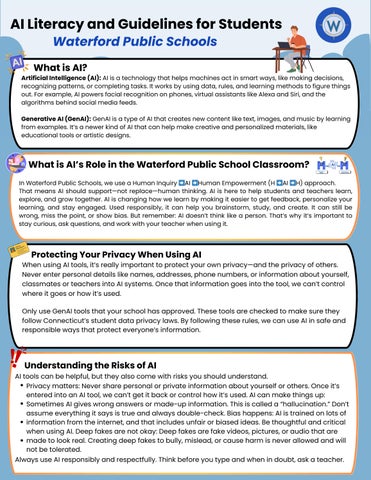
AILiteracyandGuidelinesforStudents WaterfordPublicSchools
WhatisAI?

ArtificialIntelligence(AI):AIisatechnologythathelpsmachinesactinsmartways,likemakingdecisions, recognizingpatterns,orcompletingtasks.Itworksbyusingdata,rules,andlearningmethodstofigurethings out.Forexample,AIpowersfacialrecognitiononphones,virtualassistantslikeAlexaandSiri,andthe algorithmsbehindsocialmediafeeds.
GenerativeAI(GenAI):GenAIisatypeofAIthatcreatesnewcontentliketext,images,andmusicbylearning fromexamples.It’sanewerkindofAIthatcanhelpmakecreativeandpersonalizedmaterials,like educationaltoolsorartisticdesigns.


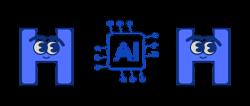
InWaterfordPublicSchools,weuseaHumanInquiry ➡AI ➡HumanEmpowerment(H ➡AI ➡H)approach That means AI should support not replace human thinking. AI is here to help students and teachers learn, explore,andgrowtogether.AIischanginghowwelearnbymakingiteasiertogetfeedback,personalizeyour learning, and stay engaged. Used responsibly, it can help you brainstorm, study, and create. It can still be wrong, miss the point, or show bias But remember: AI doesn’t think like a person That’s why it’s important to staycurious,askquestions,andworkwithyourteacherwhenusingit
ProtectingYourPrivacyWhenUsingAI
WhenusingAItools,it’sreallyimportanttoprotectyourownprivacy andtheprivacyofothers. Neverenterpersonaldetailslikenames,addresses,phonenumbers,orinformationaboutyourself, classmatesorteachersintoAIsystems.Oncethatinformationgoesintothetool,wecan’tcontrol whereitgoesorhowit’sused.
OnlyuseGenAItoolsthatyourschoolhasapproved.Thesetoolsarecheckedtomakesurethey followConnecticut’sstudentdataprivacylaws Byfollowingtheserules,wecanuseAIinsafeand responsiblewaysthatprotecteveryone’sinformation
UnderstandingtheRisksofAI
AItoolscanbehelpful,buttheyalsocomewithrisksyoushouldunderstand
Privacymatters:Neversharepersonalorprivateinformationaboutyourselforothers Onceit’s enteredintoanAItool,wecan’tgetitbackorcontrolhowit’sused AIcanmakethingsup: SometimesAIgiveswronganswersormade-upinformation.Thisiscalleda“hallucination.”Don’t assumeeverythingitsaysistrueandalwaysdouble-check.Biashappens:AIistrainedonlotsof informationfromtheinternet,andthatincludesunfairorbiasedideas.Bethoughtfulandcritical whenusingAI.Deepfakesarenotokay:Deepfakesarefakevideos,pictures,oraudiothatare madetolookreal.Creatingdeepfakestobully,mislead,orcauseharmisneverallowedandwill notbetolerated.
AlwaysuseAIresponsiblyandrespectfully.Thinkbeforeyoutypeandwhenindoubt,askateacher.