an exploration; by delaney mcfaden
“in synesthesia”
the vast majority of marine life lives in the photic zone, where the sun’s rays reach. this area, reaching to 200m in depth, is called the sunlight zone.
This first slice of the ocean is an explosion of life, with 90% of marine animals residing in this zone. Other species, while not relying on this slice of the ocean for habitat, rely upon it for food, air, play. The Human (Homo sapiens) is one example. A land-dwelling species, the Human is not adapted for life in the ocean. But still they try, creating clothes and special equipment to give them the adaptations to water that so many other creatures formed over millions of years.
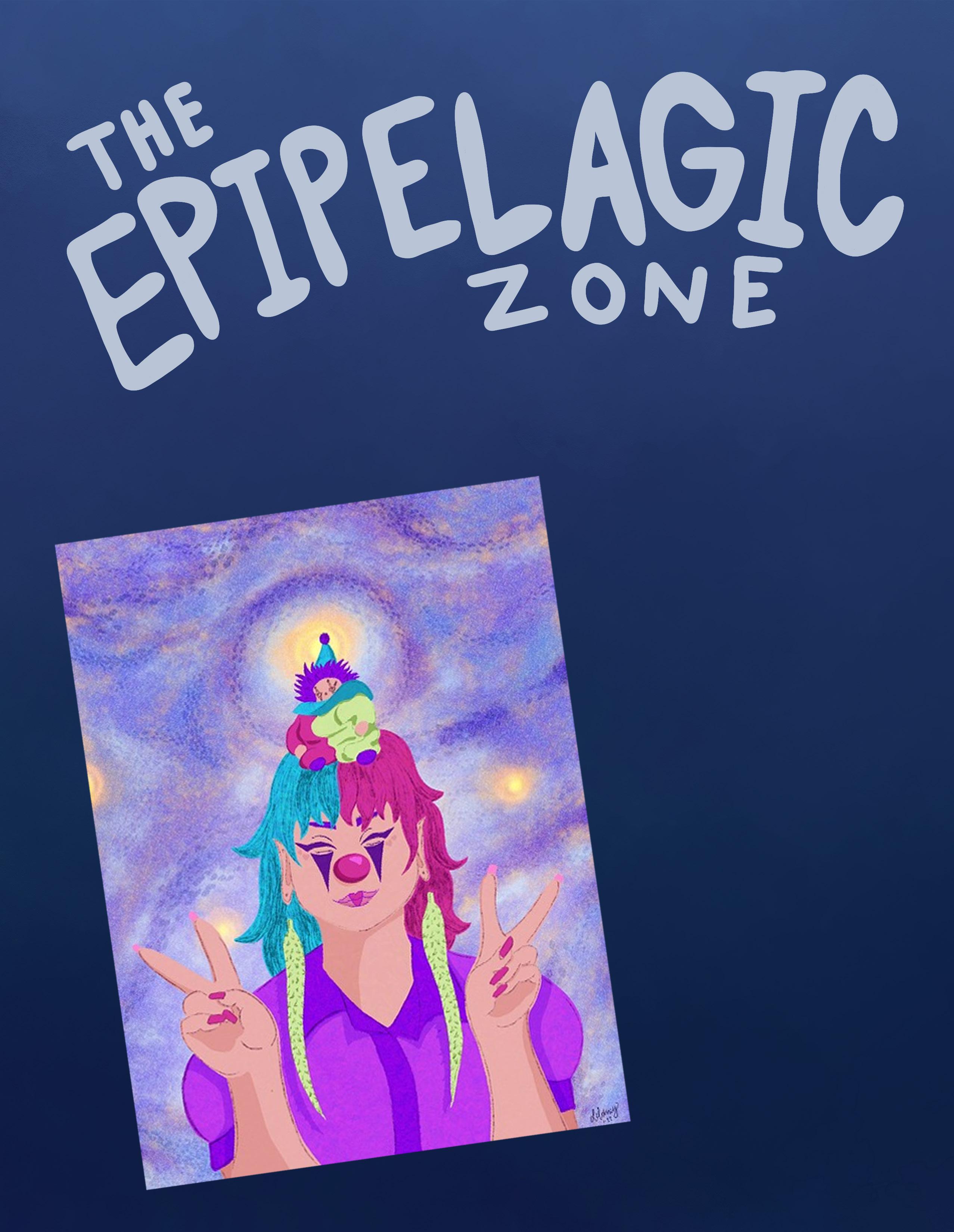
a self-portrait, inspired by “Bittersweet Genesis for Him AND Her” by
Kishi Bashi
However, not all Humans are able to dedicate their time to acquiring the expensive equipment and skills necessary for using it. In fact, most won’t. Many Humans live large parts of their lives not coming near the ocean at all, while many others are terrified of it. But there are others still, who feel as though the ocean is a part of them - or rather, they are a part of it. They spend their lives dedicated to it; furthering Human knowledge, advocating for its protection, relocating everything they know to be closer to it.
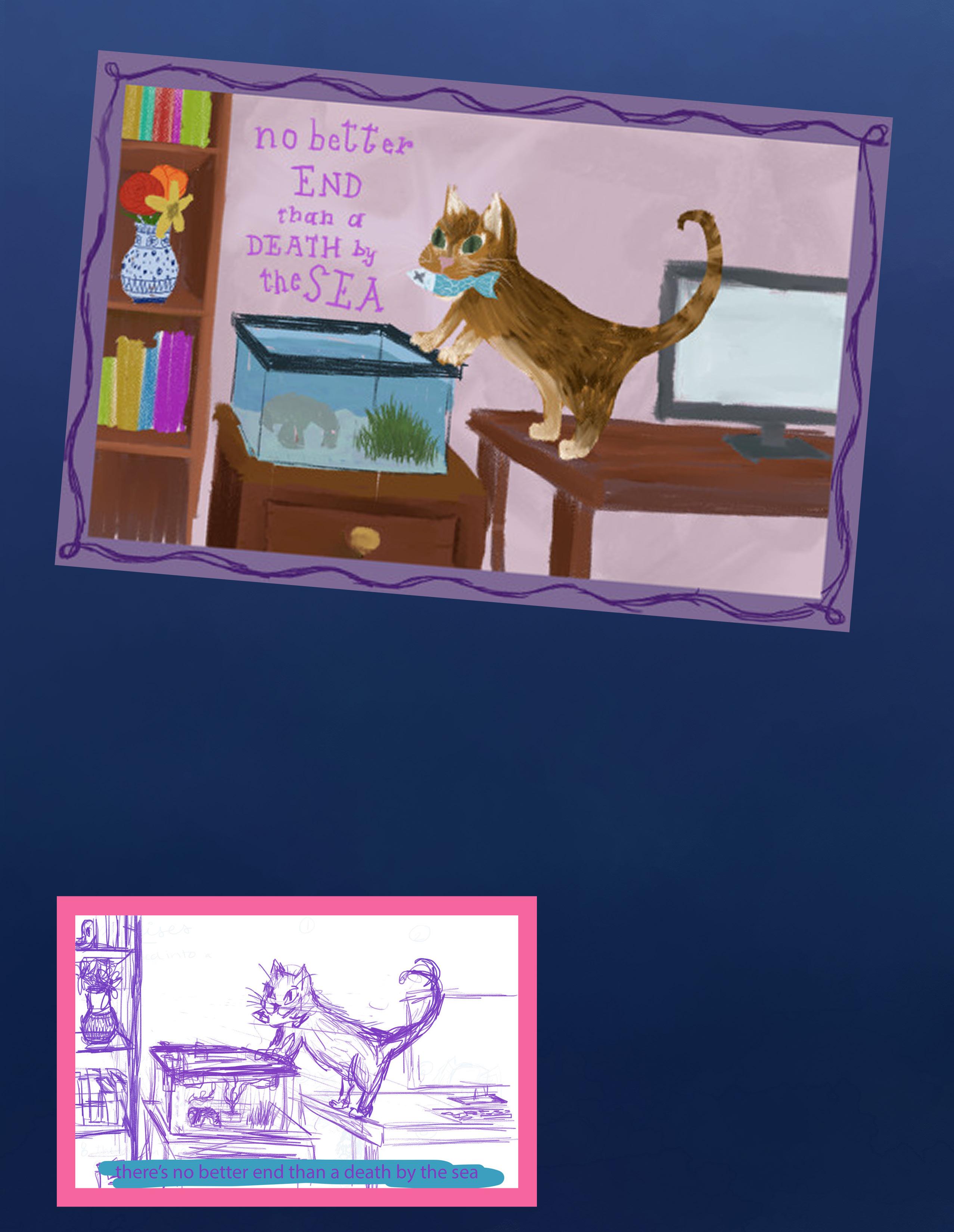
They honor it in all they do.
Life has overcome immense hurdles in order to thrive here. One such life is the Japanese Spider Crab (Macrocheria kaempferi). Like many of its fellow mesopelagic creatures, it is various shades of red. At this depth, red light is not present, allowing for any red animals to be rendered effectively invisible in the sights of their predators. Other creatures still are transparent, or shades of black and blue.
Below 200m, only 1% of sunlight remains - all else is absorbed by water. The boundary of the twilight zone ends with the reach of the sun’s rays, at 1000m.
On the surface, life is determined by LIGHT’S PRESENCE. Here, life is determined by its absence.
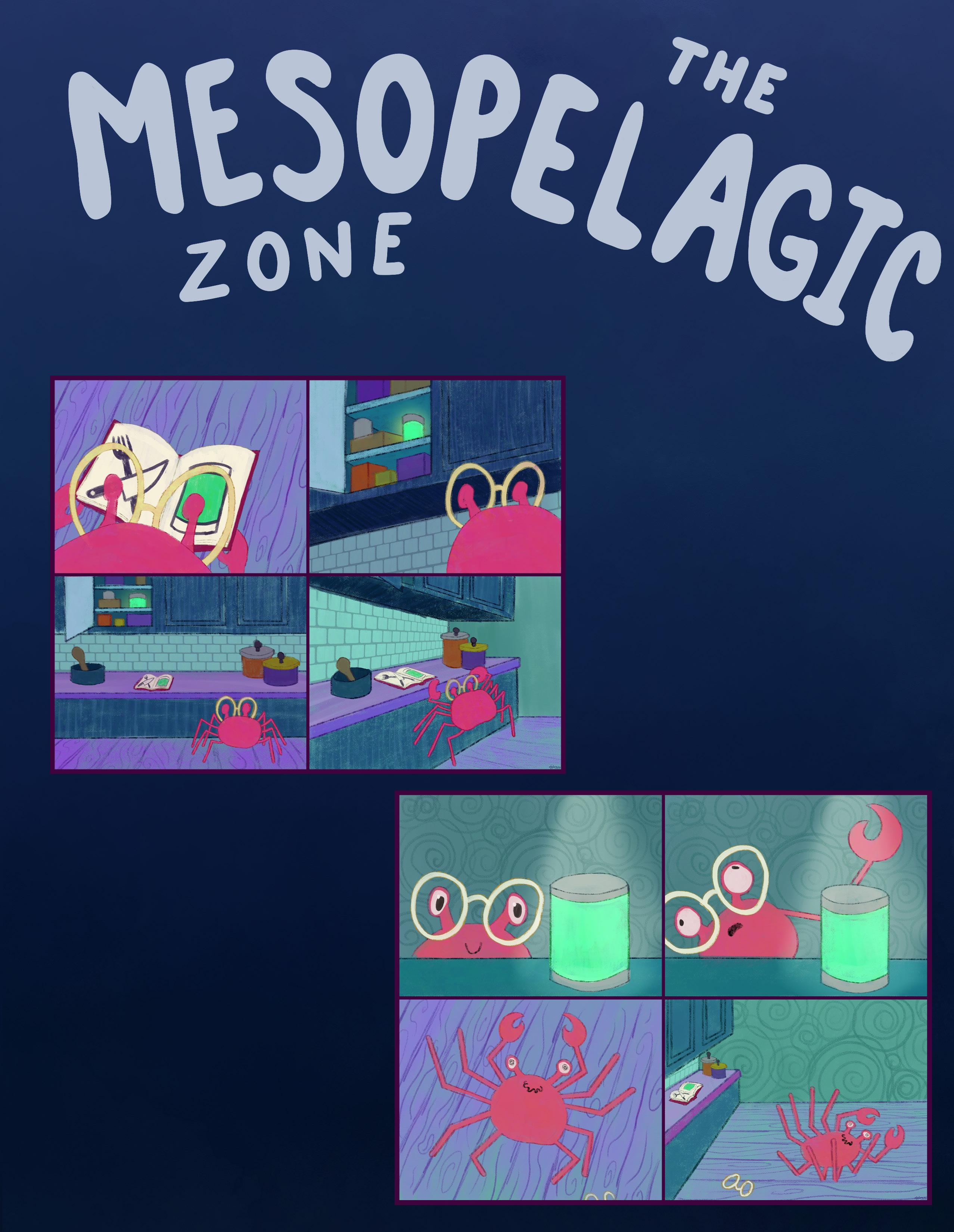
Japanese Spider Crabs are the largest species of crustacean, with an arm span of 12ft. Their formidable size is an effective defense, encouraging most predators to leave it alone. Were they to attack the spider crab, it would be a quick fight - the Japanese Spider Crab is a gentle giant. They spend their 50-100 years of life walking along the ocean floor, scavenging for food.
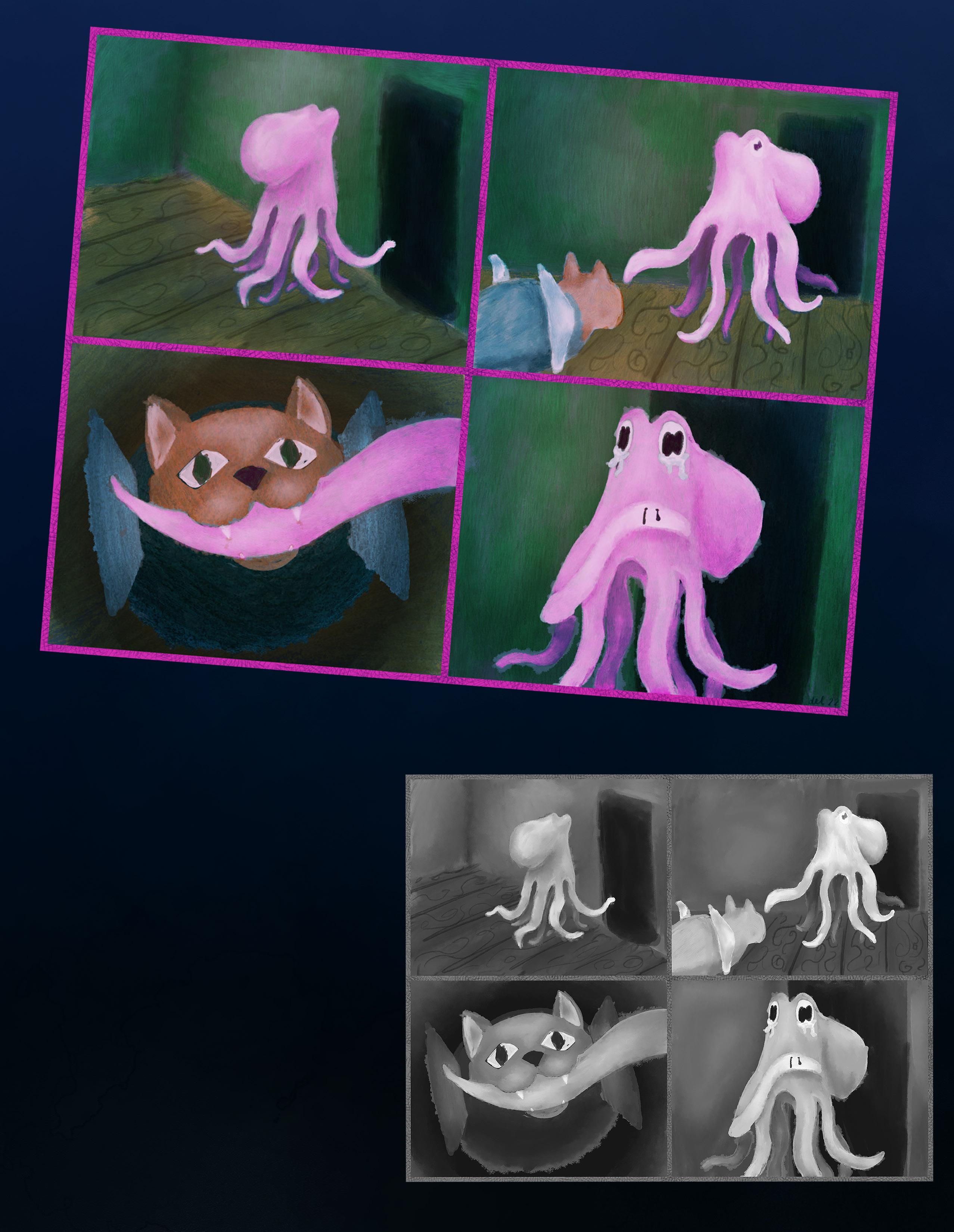
Throughout their decades of life, a Japanese Spider Crab will most likely lose at least one limb, whether it be due to oceanic predators or Human activity. Many crabs will live with up to three missing, and many others will regrow missing limbs through the molting process.

Where light ends, the bathypelagic zone begins. Stretching down to 4000m in depth, the midnight zone is completely dark. No light from the sun reaches here; the only light sources at this depth are the inhabitants themselves.
In the lower areas of the ocean, biolumenescence is an ever-present part of life. Predators use it to lure food to them, animals use it in mating rituals, prey will use it to distract predators to escape. In the absence of any sunlight, animals create their own and use it as a tool. It is at these depths that we begin to see more non-fish creatures than we do fish; aquatic animals like sharks and cephalopods are well-adapted for the bathypelagic environment.
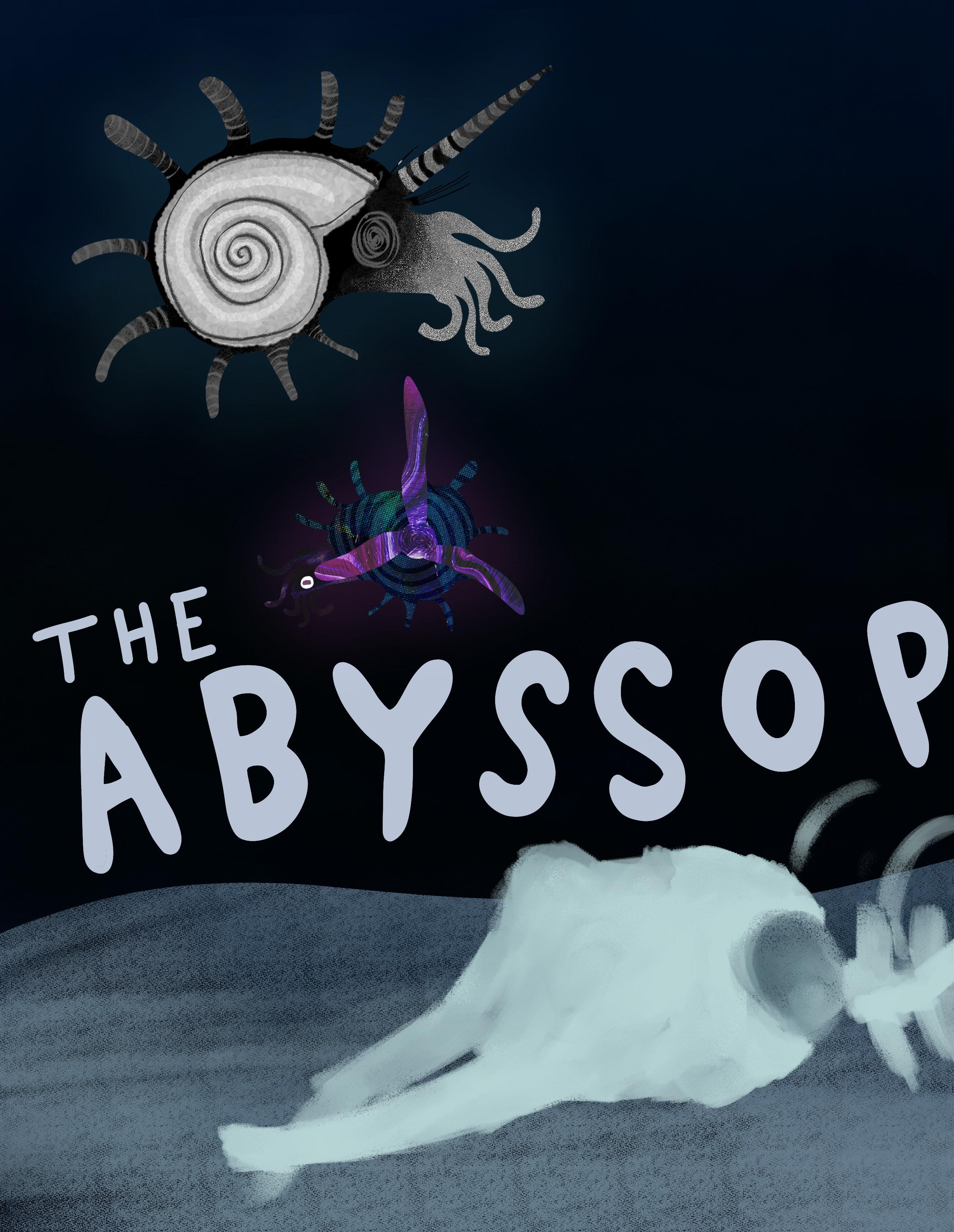
ALMOST TO THE DEEPEST POINTS OF THE OCEAN, THERE ARE few OPPORTUNITIES FOR LIFE TO THRIVE. THERE ARE NO PLANTS, NO LIGHT, LITTLE OXYGEN. ALL LIFE HERE SURVIVES BECAUSE OF DEATH, not in fear of it.
When animals in the ocean reach the end of their life cycle, there is nowhere for them to go besides down. Their bodies often don’t make it to the ocean floor, as they are eaten before then. But sometimes, the rare carcass will make it unharmed to the sea floor. When it happens with whales, the empty sea floor begins to flourish.
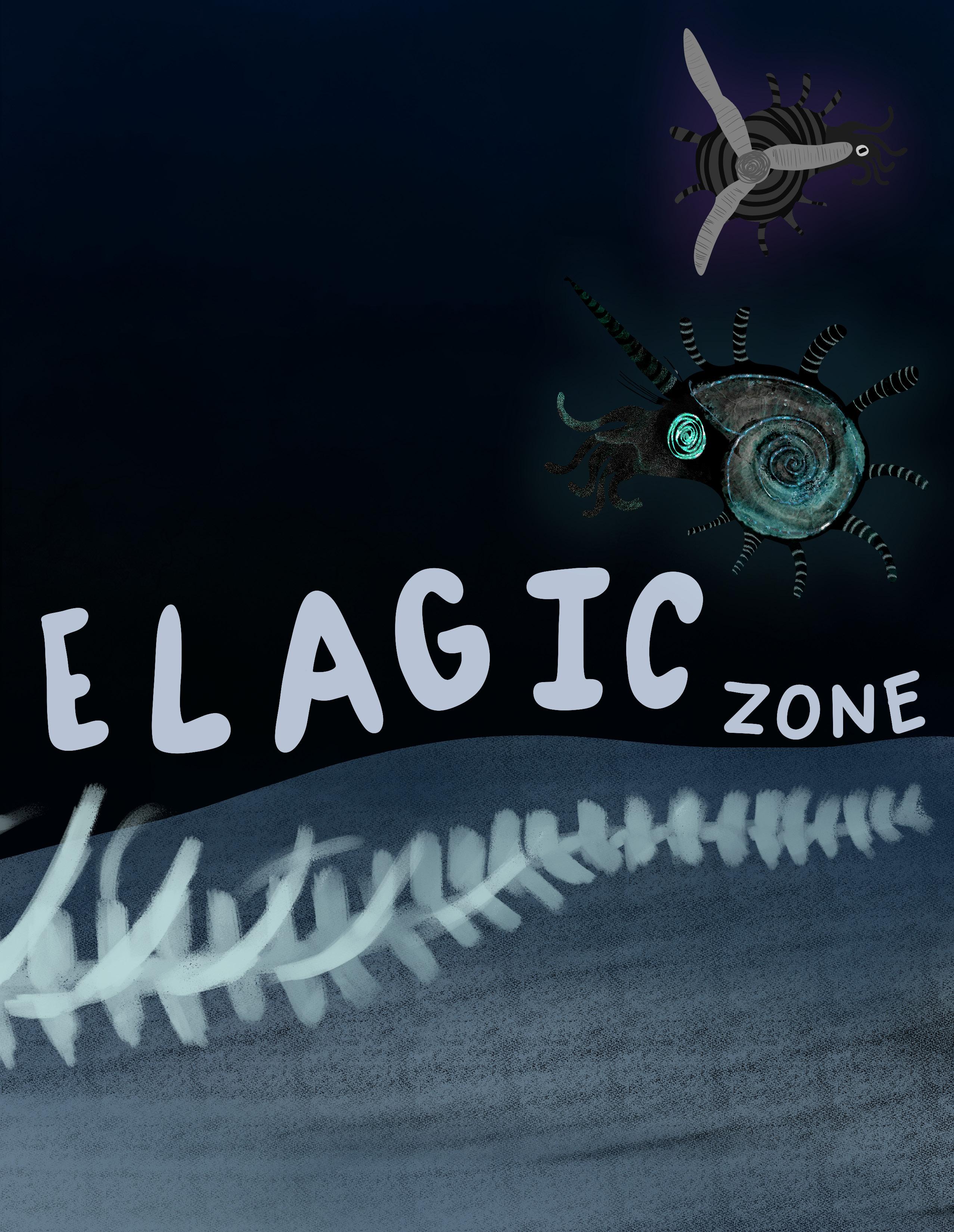
6000m above the sea floor, at surface level, Humans have a complicated relationship with death. For them, death is an ending. But on the ocean floor, it’s simple. In death, you begin again. A whale dies, and then supports life on the sea floor for 50 years. Death is just an inevitable chapter.
Below 6000m, there is little. Most depth below this point is in trenches, the deepest of which is Mariana’s Trench in the Pacific Ocean. This zone of ocean is the last, reaching to the deepest Human-known point at 10,911m, known as the Challenger Deep.
In the deepest depths of the ocean, most life is invertebrates; Human scientists theorize that vertebral fish (those with backbones) are unable to live below 8000m due to the extreme pressure, reaching the equivalent of 1100x the surface pressure.
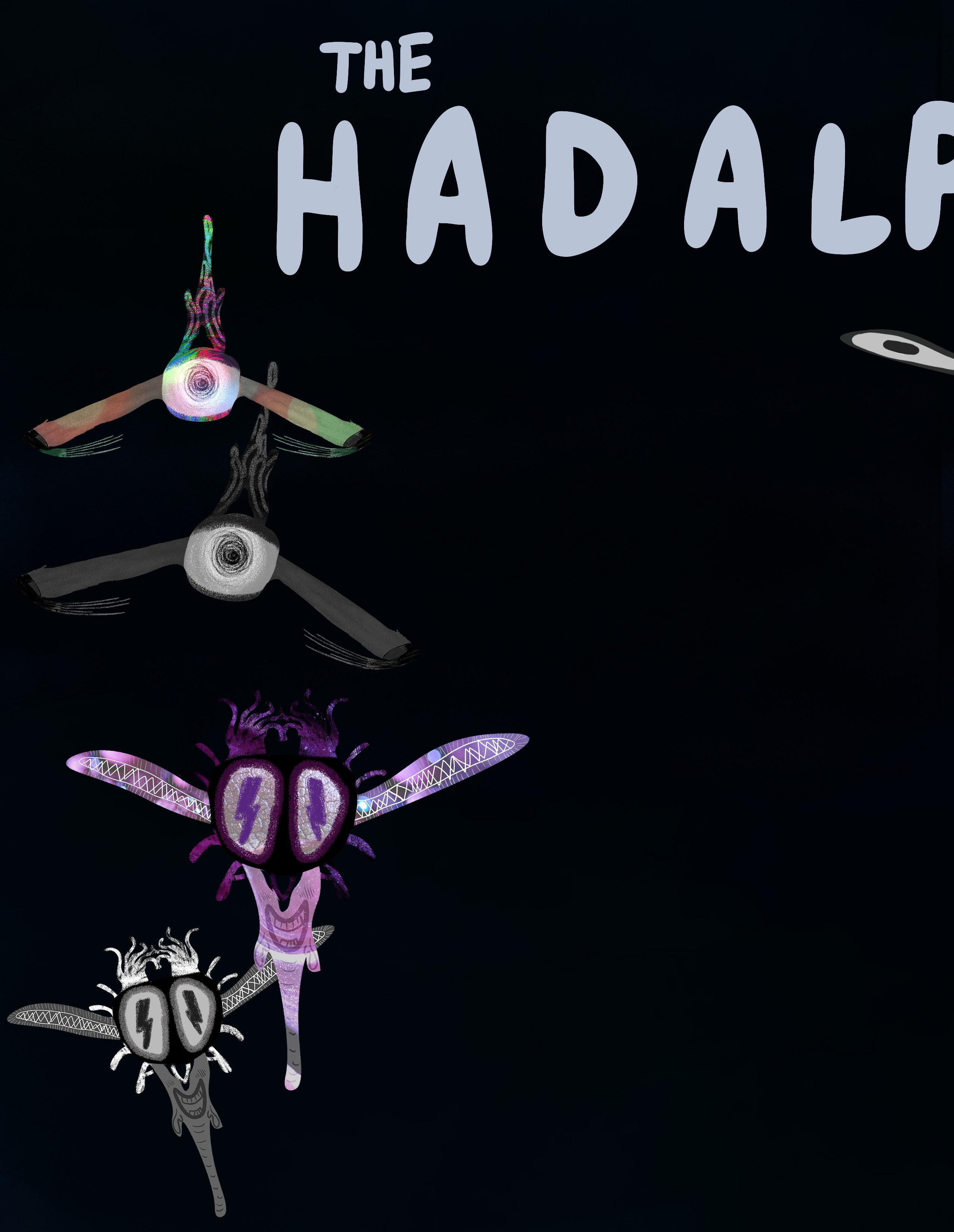
Even in the most extreme conditions on Earth, live thrives. sunlight, almost freezing water, extreme pressure. The producers in the hadalpelagic zone are those who have create energy from gasses seeping out from the earth’s food for the life at this depth is the remains of whatever from above. And yet, still, life goes on. The ocean provides.
further still we go, to the deepest parts of the ocean. The hadalpelagic zone, named after the ancient greek deity of the underworld: hades. thrives. No only primary have adapted to earth’s crust. Most whatever floats down provides.
