PERFECT START: Baseball sweeps opening weekend. (Sports, pg 7)

“IT’LL BE ELECTRIC” Anthem singer one-ups Fergie. (Scene, pg 6)

CAPTION CONTEST
Enter this week’s caption contest! (Forum, pg 4)

PERFECT START: Baseball sweeps opening weekend. (Sports, pg 7)
“IT’LL BE ELECTRIC” Anthem singer one-ups Fergie. (Scene, pg 6)
CAPTION CONTEST
Enter this week’s caption contest! (Forum, pg 4)
Washington University’s dining services underwent a number of changes over Winter Break that many dining workers have said were not communicated well and made their work more difficult. The changes included an unexpected shift rebidding process and alterations to workers’ job descriptions.
The University transitioned its dining service provider to Sodexo at the start of the 2023-2024 school year. Andrew Watling, Director of Dining Services, said Sodexo did not finish setting everything up before the school year began. Sodexo then took advantage of the time off over break to make changes to its operations.
Watling also explained that once Dining Services readjusted the times of the shifts and changed some of the position descriptions, the dining employees had to rebid for their shifts during the second semester.
During bidding, dining workers rank their top three preferred shifts and also indicate which job they want. The bidding is done in order of seniority, so the workers who have been with Dining Services the longest submit for their preferred shifts the earliest.
In past years, the workers bid once in August and then kept the same shift for the entirety of the school year. According to Sodexo, employees received a written notification that there would be another rebidding process on Dec. 4, and the rebidding began on Dec. 11.
When the rebidding process happened over Winter Break, the workers were familiar with the process itself but were confused about why they needed to rebid.
David Cook is the president of United Food and Commercial Workers (UFCW) Local 655. He experienced the confusion from the dining employees about the
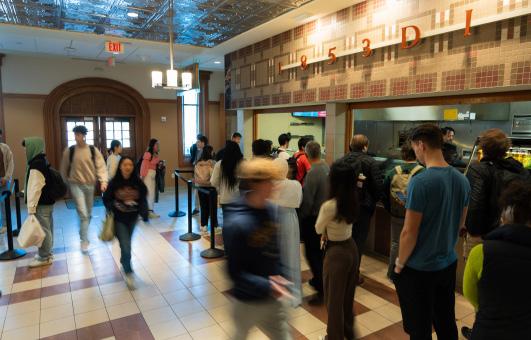
rebidding process. “There was not an aspect of the bidding that was good,” Cook said. “From any standpoint, in our view, it was a nightmare. From the rollout, the explanation, the implementation, every aspect of the rebidding we deem as flawed. There wasn’t any clarity.”
Cook went on to say that many employees have come to the union to express frustrations with the jobs they were placed into after the break.
“The reason that the staff are so frustrated is because they didn’t know what they were supposed to be bidding on,” he said. “And then you end up with a whole lot of people in jobs that the company is
saying they bid on, but they didn’t have the understanding of what the jobs they bid on entailed.”
A longtime dining employee at the DUC, who asked to remain anonymous for fear of professional consequences, described their confusion and frustration with how unexpected and unclear the rebidding process was for the workers, especially with how the position descriptions were different.
“They did not explain any of it,” they said. “When we were looking at the positions, we didn’t know what to pick. I’m a cashier, but there were no cashier positions. So I was like, ‘We either got to take something or not have a job.’”
Another employee at BD, who also asked to remain anonymous for fear of professional consequences, said a fellow worker left Washington University because they did not have enough seniority to bid on their shift early. This led to them getting a shift when they are supposed to be taking their children to and from school.
Watling said the rebidding process was necessary since Dining Services had a lot of people working during less busy hours. He said they changed the hours of the employee’s shifts so fewer employees were working during the slow times.
Watling also said that communication throughout the
ELLE SU | STUDENT LIFE
rebidding process was his paramount concern.
“I think we always hear feedback anytime somebody doesn’t get exactly what they were hoping for,” Watling said. “Our biggest concern was just to make sure that the process was communicated and that everybody understood what was happening.” Cook, in addition to numerous dining employees in BD and the DUC, said there was a communication failure between lower-level management, who are the people directly overseeing dining workers, and the dining staff during the rebidding process.
SEE DINING, PAGE 3
Arosemena to arrange and supervise residential placements for students.
Participants in the Sam Fox School of Design & Visual Arts’ Florence Semester Program have experienced issues with their housing arrangements abroad, including strangers entering the students communal apartment, mold, a partial ceiling collapse, and bedbugs.
Multiple students studying in Florence, Italy, including senior Ella Jones, have also expressed dissatisfaction with responses to their concerns by individuals managing their living arrangements.
“The housing situation was so atrocious, and basically no one was listening to any of our complaints about anything,” Jones said.
The Florence Semester Program is Sam Fox’s only study abroad program and operates in partnership with Santa Reparata International School of Art (SRISA).
Courtney Cushard, the Special Programs Manager for Sam Fox, directs the program for WashU and works alongside SRISA Housing Coordinator Anna Maria
“I am dedicated to making sure that the students in Florence have an enriching study abroad experience and I collaborate closely with my SRISA colleagues in Florence to do that,” Cushard wrote in an email to Student Life.
Unfamiliar and Unexpected Visitors
Students have reported unfamiliar individuals entering their apartment as recently as Feb. 11. WhatsApp message screenshots obtained by Student Life allege that a man entered the shared apartment, which the students said was locked.
“A man suddenly entered the apartment at 3:25 [a.m.] and looked around then left,” said one message sent in the participants’ group chat.
Arosemena responded to the message the following morning by telling students they should close doors properly, and call her if there is a similar situation in the future.
Students wrote to Arosemena that they were confident the door was closed and requested proactive action from Arosemena in response to the situation.
“There is no scenario in which a stranger should ever be able to enter
our apartment,” wrote one student’s message. “I personally feel like there needs to be action taken in regards to this situation.”
Cushard said there are efforts to ensure that students are aware of when workers enter their apartment.
“Students in the program now get a notification anytime someone is going to be in their apartment,” Cushard said. “There’s a group chat. Students get a message from somebody to let them know, like, ‘hey, we’re sending over a maintenance person or we’re sending over XYZ.’”
Junior Sophia Palitti, who is participating in the Spring 2024 Florence Semester Program for Communication Design, said the apartment has a history of unexpected visitors. She said that workers fixing infrastructure issues with the apartment building occasionally enter the students’ living space without warning, sometimes before typical working hours.
“8:30 in the morning, I’m in my pajamas, and there’s three random old men walking in,” Palitti said. “It’s not the most comforting feeling, especially somewhere where you’re living.”
Ty Blumberg, a senior
COURTESY OF SOPHIA
among students in Florence.
Architecture major who participated in the Fall 2023 Semester Program, said there were often more than three unfamiliar individuals in the shared apartment at any given time.
“There would be groups of people that we assumed to be workers in the building, in the kitchen or in the common space,” Blumberg said. “They would kind of go into the cubbies in the wall and not come out for a while.”
Blumberg mentioned one particular worker whose behavior was a frequent topic of discussion
“There was one guy people called ‘Mr. Man,’ a stranger,” Blumberg said. “He would just come in and wouldn’t talk to anybody. He would go into one of these closets or storage rooms and close the door, like stone faced, and wouldn’t come out for a while.”
Blumberg also said he sometimes encountered unhoused people sleeping in the downstairs area of the apartment building.
SEE FLORENCE, PAGE 3
every day about some aspect of ourselves, but because it’s not grand or terrible, we overlook it.”
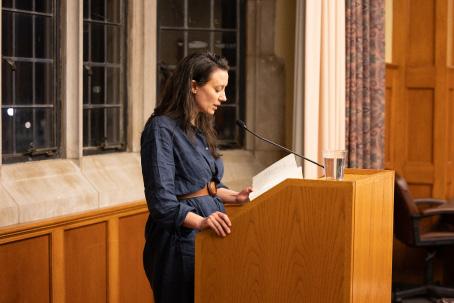
Heather Radke, a professor for Columbia University’s MFA program and journalist at WNYC’s award-winning podcast Radiolab, gave a book talk on her recent book “Butts: A Backstory,” Feb. 15. The Washington University Writing Program hosted Radke as part of its 2024 Spring Reading Series.
Radke’s novel explores the shift from thin beauty standards to an emphasis on women’s curves, a transition catalyzed by the increase in white men’s interest in hiphop in the 1990s. Her book focuses on butts being a body part that’s not talked about, used to reinforce racial hierarchies and measure women’s availability.
“I am fundamentally interested in the mundane. I never felt horrible about my butt or my body. I just felt bad every time I put on a pair of pants. It was to some extent what I call mundane shame,” Radke said. “It’s the way many of us feel
The social complexity of butts hides in plain sight, as unlike other physical body parts, butts are associated with humor, shame, sex, and history, Radke said. She stated how women’s butts are often scrutinized by society, despite women having no control over their appearances.
“The shape and size of a woman’s butt has long been a perceived indicator of her very nature, her morality or femininity, and even her humanity,” Radke said.
One way women are encouraged to control their bodies is through fitness classes, Radke said. She added that fitness classes were partially derived from neoliberal beliefs on how controlling one’s appearance is a way to maximize productivity.
“There is a real association between work and performance of work. There is a kind of new idea that not only can you control [your body], but you should control it,” Radke said. “One
of the ways you are going to show the world that you are properly working hard enough is that your body is going to look under control.”
Radke said that her goal for “Butts” was to investigate what determines the value of a body part.
“Why do we think some things are beautiful and other things are ugly? Some parts are sexy and some are functional,” Radke said. “Why is there a sense that some people are essentially better than others? Our bodies are biological, but almost all meaning attached to them is meaning we have to ascribe to them.”
Butts are associated with the origins of reproduction, Radke said. Given that people often refer to butts with euphemisms rather than “buttocks,” Radke questioned its proper terminology, sharing a quote on this topic from her book.
“Buttocks seems to be the obvious choice, but it’s a word rarely used in real life,” she said. “The muscle has a scientific name, gluteus maximus, but that term refers only to the sin of a bundle of fibers that stretch
from the pelvic bone to the thigh. The fatty layer on top is called the gluteal femoral fatness. But no one calls it that.”
Radke also gave dramatic examples of hypersexuality.
“To escape the larger mythology of purity, white women often mimic Black women, buying into stereotypes of hypersexuality,” Radke said. Stars like Christina
Aguilera, Miley Cyrus, and Britney Spears went through a Hollywood “dirty” phase where they emulated an adulterated version of Black womanhood and culture, Radke said. To expand on this idea, Radke read a quote from her book.
“White women turn away from the origins of the shame we carry about our bodies, a shame that comes from the construction of
whiteness itself, a shame that exists to enforce the idea that some bodies are innocent and others are sexual, that some bodies are better than others or worse,” Radke said. “In the process. Not only do we harm others, but we hurt ourselves by never really understanding where our shame comes from.”
phenomena.
Dr. Manel Errando presented “Eclipses Through Time: Unveiling the Celestial Tapestry of Human History” as part of the Saturday Science Lecture Series on Saturday, Feb. 17.
Errando gave the audience tips for the best spots and best ways to view the upcoming total solar eclipse on April 8, as well as explaining the impact of eclipses have impacted history.
Errando began by saying that this eclipse will be visible in parts of Missouri, but notably not in St. Louis itself.
“If you drive about two hours South, let’s say to [Cape] Giradeau, then you’re going to be able to see a full four minutes of the sun being completely blocked by the moon,” Errando said, “It should be pretty spectacular.”
However, there is a risk that the eclipse could be blocked by the clouds, said Errando. He also reminded the audience that they should not look directly at the sun without proper eye protection.
Then, Errando looked backwards in time, 400 generations ago, to a nomadic humanity. He said that these humans used the sun to determine seasons for hunting purposes.
“So the early humans, if they were able to keep track of where the sun was rising every day, or how high the sun was in the middle of the day, they would know when the seasons were changing,” Errando said, “They would be able to predict, ‘Oh, now the sun is getting lower in the sky, the weather is going to turn cooler, so maybe it’s time to store food and prepare for winter.’” The reason the sun rises and sets differently in summer and winter, Errando said, is because the sun does not always rise exactly in the East and set exactly in the West; rather, it goes in tilted circles around the Earth.
“So in winter, the sun rises not quite East, but a little bit South from East, doesn’t rise very high, and then it sets not quite West, but a little bit South from West,” Errando said, “In summer, the sun rises a little North from [East], it goes much higher, and that’s why we feel much hotter: because the sun rays are
more perpendicular to the Earth, and it sets farther North from West.”
Clearly, ancient humans paid a lot of attention to the sky, so they recognized the patterns of eclipses quickly. Errando explained that eclipses are rare because the moon orbits a plane that is inclined relative to how the Earth orbits the Sun, so that there is a period of about 18 years for one certain solar eclipse cycle.
“So 18 years, 10 days, and 8 hours from today, the moon, the sun, and the Earth are all going to be in pretty much the exact same relative position,” Errando said, “Whenever there’s an eclipse, 18 years, 10 days, and 8 hours afterwards there will be another eclipse, and this pattern has been known for more than 4000 years.”
The reason that an eclipse at one specific viewing area is so much less frequent is because the extra 8 hours allows for one-third of the Earth’s rotation, changing what area of the planet gets the view, Errando said.
Later, after delivering his speech, Errando accepted questions from the audience.
One attendee asked how there could be a total solar eclipse in the U.S. in both
2017 and 2024: seemingly not enough time has passed.
Errando explained that there are multiple configurations of the Earth, sun, and moon which can produce a solar eclipse. Because the path of totality for an eclipse is so narrow, most of the world, including Europe, only sees a partial solar eclipse. Errando said that ancient civilizations developed superstitions based on the sun’s patterns.
He said that Mesopotamia, for example, divided the sun four ways, with each part representing a kingdom of Babylon.
“The part of the sun that got covered, that kingdom would be the one that would see the wrath of the gods,” Errando said.
Errando said that many more superstitions developed, such as certain solar eclipses foreshadowing the death of a king. To avoid this, the king of Assyria would simply appoint a replacement for a few days, and then sacrifice the replacement to appease the gods.
“[The old king] died because he was sipping some soup that was too hot, so the gardener that was [now]
king stayed as the king of the kingdom for many years, even if he was just a substitute,” Errando said.
Junior Charlie Fallon said that he appreciated the intersection between astrophysics and anthropology.
“I love hearing how people perceive these kinds of amazing events, like eclipses, in ancient times, it’s pretty incredible,” Fallon said. “Not even knowing what that is, and then the sun just goes completely dark.”
Errando then told the story of a war between two ancient civilizations, the Medes and Lydians, where, in the middle of a raging battle, the day suddenly turned to night. Both sides were so “mesmerized” and “fearful” that they signed a peace treaty. Interestingly, Errando said, the solar eclipse can be used to know this battle’s date to the day.
Similarly, Errando stated that it is possible ther is a reference to a solar eclips in the Odyssey and that using this, scientists have dated the exact year and day that the Odyssey supposedly occurs. Errando stated that this connection was far from certain, however solar eclipse dating does lead to some interesting
“The spin of the Earth has been slowing down this whole time,” Errando said, “These records of early eclipses, because they are so precise and the path of totality so narrow, we can readjust the places where these eclipses happen and, in that way, we can trace how the Earth has been slowing down its spin as time goes on.” Due to conservation of momentum, this means that the moon is progressively retreating from Earth, meaning that in another 100 million years a total solar eclipse will not be possible, according to Errando.
Errando said we are fortunate to be able to see a solar eclipse, especially a total one, so make sure to enjoy the upcoming total solar eclipse on April 8.
“It’s very rare though, that we are as lucky as we are here because we can, with a two hour drive, see two total solar eclipses in very few years,” Errando said, “And again, consider yourself lucky because neither the dinosaurs, Martians, or humans a 100 million years from now [can see a total solar eclipse.]”
Gal Cohen-Solal, an Israeli man who survived Hamas’ Oct. 7 attack on Kibbutz Re’im, spoke to community members about his family’s experience at an event hosted by Washington University Chabad, Feb. 19.
Cohen-Solal spoke as part of an organization called Faces of October Seventh that aims to bring firsthand accounts of Israeli people’s experiences in the Israel-Hamas war to U.S. college campuses. After sharing his family’s story, he and the event’s organizers discussed the purpose of sharing firsthand stories
and answered audience questions.
Cohen-Solal said he, his wife and children lived in Kibbutz Re’im, a neighborhood in southern Israel near the Gaza Strip. Kibbutz Re’im is less than a mile away from where the Nova Music Festival was held, where Hamas militants killed at least 260 attendees.
He showed video footage of Hamas members entering his neighborhood on Oct. 7 and presented a timeline of the following 30 hours that he spent with his family in their home’s safe room.
“We were waiting for our death,” Cohen-Solal said.
He recounted his young
children’s experiences being in the safe room with little food or water and spoke about how one of his children was too young to understand the need for silence.
“I put my hands on his mouth,” Cohen-Solal said. “Every ten or fifteen seconds I took my hands off [so] he could breathe. It was a terrifying moment.”
Cohen-Solal said that he knew several people who died in Israel on Oct. 7 and in the conflict since then. He dedicated the speech to a man he described as a mentor from his time serving in the Israeli Defense Force (IDF) and a family member, both of whom have died in the Israel-Hamas
war. After recounting his story, Cohen-Solal answered audience members’ questions. The event’s organizers asked that people not ask political questions, but rather focus on Cohen-Solal’s individual story. One audience member asked Cohen-Solal why he wanted to travel to share his story as opposed to staying in Israel. He said that he wants to share his story because he thinks people might spread misinformation in the future about the Israel-Hamas conflict.
“I am very afraid that one day people might say Oct. 7 never happened,” he said. “I’m here to say
that it did happen and that it was even worse than what people think.”
Eden Yair, the Israel Fellow at Chabad, said that she thinks bringing Cohen-Solal to campus is important because most people only hear about the Israel-Hamas war on social media or in the news.
“We know the story,” Yair said. “People in America know the story from Instagram, TikTok, and journalism. To hear from him firsthand is way more powerful.” Junior Lea Vilna-Santos attended the event and said that listening to a personal account of the Israel-Hamas conflict was difficult, but that she
thought it was important to hear.
“It’s super impactful to hear from someone who’s there personally,” VilnaSantos said. “It feels so far away but with this [speech] it’s right here.”
She also said that the religious and political tensions surrounding Israel and Palestine make it harder for people to grapple with the loss of life and other topics discussed in Cohen-Sohal’s speech.
“There’s a lot of info going around about what’s happening,” Vilna-Santos said. “The most important thing is just to listen to everything.”
FLORENCE from page 1
“There’d be people asleep on the stairs or asleep in the entranceway to the building,” he said. “It was definitely a little strange to wake up to an open door and a stranger asleep in the elevator area.”
Several students also said the house itself had infrastructure issues.
“People were having a lot of issues with the bathrooms, like showers not draining,” Palitti said. “One room had some issue where their shower was leaking through to the floor below them.”
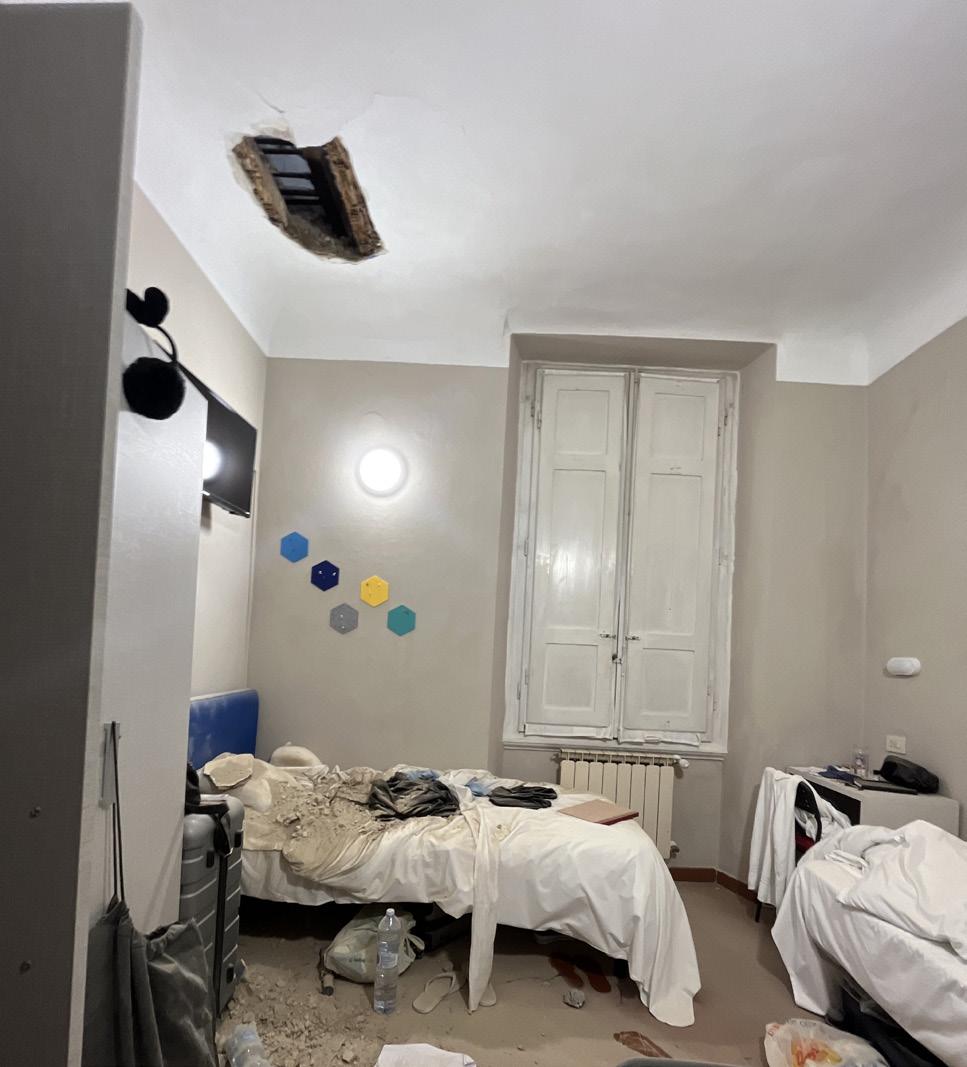
The building’s issues led to a partial ceiling collapse in one of the students’ rooms. Palitti recalled seeing the aftermath of the collapse, during which nobody was hurt.
“I was just completely shocked,” Palitti said. “I was like, ‘Do [the housing managers] know that this happened? What the hell is going on?’”
Immediately after seeing the collapse, students contacted Cushard and Arosemena, who arranged for an architect and an engineer to fix the ceiling.
Palitti said that administrative responses to the issue left students frustrated, especially because belongings were removed from the room without their consent and not returned.
In a meeting after the collapse, Arosemena told the students that the ceiling collapse could not have been predicted. Palitti said this was a disconcerting conclusion given the building’s evident infrastructure issues.
“There’s water leaking everywhere, there’s repairs being done for the plumbing, there’s drainage issues. You feel like maybe we can predict this happening,” Palitti said.
Palitti pointed to a lack of effective communication as a root cause of students’ general dissatisfaction with administrators. She said that often, Arosemena would be dismissive of their concerns, and that Cushard was “misinformed” and “condescending,” making correspondence difficult.
Arosemena did not respond to a Student Life request for comment.
Mold
Palitti recalled a particularly unsatisfactory conversation with Arosemena about a widespread mold issue impacting multiple rooms in the apartment.
“[Arosemena] was just like, ‘Oh, Italian mold is different from American mold, it’s not going to hurt you as much,’” Palitti said.
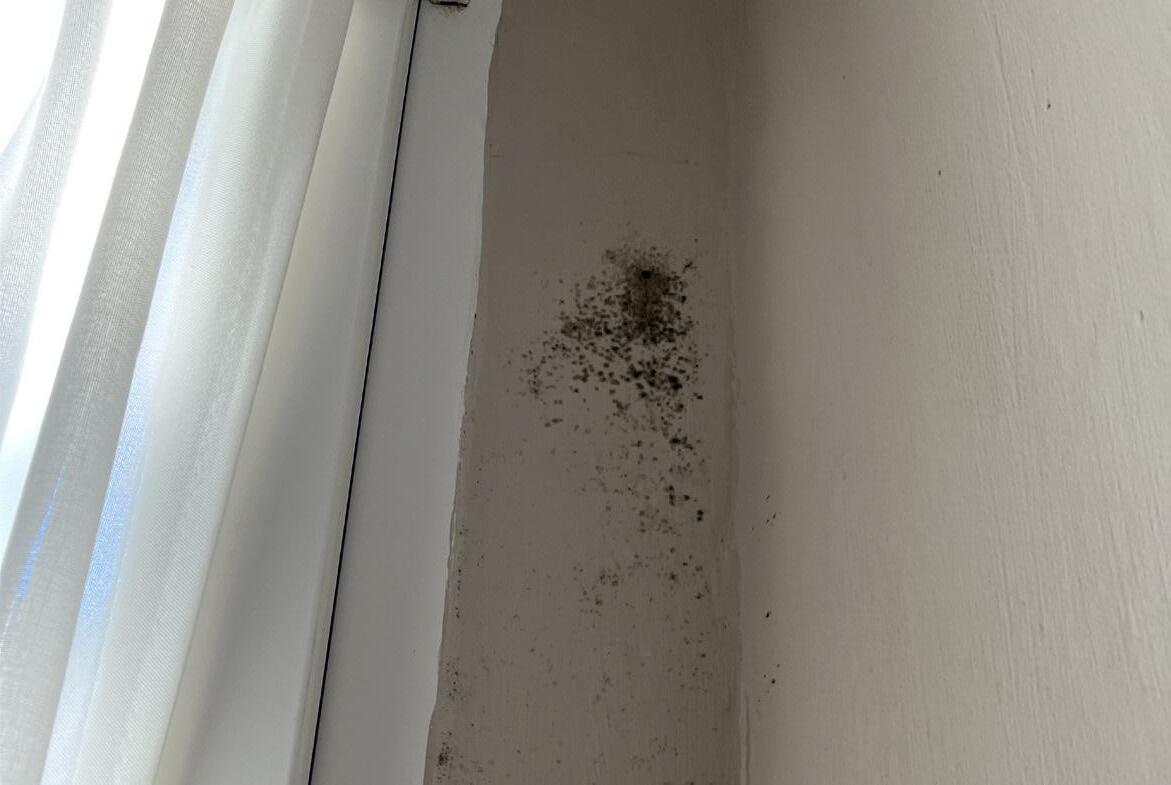
Students created a Google Doc titled “COMPLAINTS” to log their housing issues and their resolutions. Most common in the document are complaints of mold, which in one instance was listed to have been resolved by being “cleaned with Febreze.”
Participants in the Fall 2023 program also encountered mold in their
apartment, which Blumberg credited to the building’s air circulation issues.
“There was almost no ventilation in the building,” Blumberg said. “The bathrooms would make a lot of steam and there would be a lot of mold from that.”
He said students in the Fall 2023 semester also faced challenges getting building managers to address the issue.
“The struggle in the fight to get them to either clean the mold or provide some kind of equipment to decrease the likelihood of it happening was a big deal,” he said.
Cushard declined to comment to comment on student concerns about mold.
Ella Jones and Jessica Price, both seniors, were participants and roommates during the Florence Fall 2023 program, during which they said their beds were infested with bedbugs.
“I woke up in the middle of the night with bites, and I had bed bugs in my room.” Price said. “I had an allergic reaction and [the housing managers] moved us out. And we just kind of were jumping around from place to place for a while, while they said they were treating the room.”
Both Price and Jones said they brought only a reusable shopping bag containing some of their personal belongings with them while moving between hotel rooms and other apartments throughout the city.
Housing coordinators moved Price and Jones back into their original apartment after assuring them that their room had been properly treated for bed bug infestations.
“Then, I woke up with bites again like a week later,” Price said.
Eventually both students were moved into a permanent residence outside of their original shared apartment.
“By that point, we had moved nine times within a sixweek period,” Jones said.
Blumberg said that halfway through the semester, many of the students’ bedding was removed, though not necessarily due to bedbugs.
“[Housing managers] confiscated everyone’s top sheets and blankets,” he said. “They said that just having a comforter should be enough for everyone to be comfortable.”
Looking ahead
When asked why program participants have encountered recurrent housing issues, Cushard said, “Housing in general is a thing that needs to be managed, right? The folks in Florence that we partner with have dedicated staff to managing student housing. And so I think things just come up, it’s unpredictable.”
Unlike past program participants who lived in groups across multiple apartments, some students during the 2023-2024 school year feel their single, communal apartment can get overcrowded.
Jones said that the size of the apartment was a challenge for students during the Fall 2023 semester.
“They basically rented out part of a two-star hotel and put all 24 of us in it,” Jones said. “There was one kitchen for all of us and one small living room, a dining space for all of us.”
Cushard said that there will be revisions to the housing arrangements for the Florence Summer 2024 Program. Students will no longer reside in a single, communal apartment.
“I’ve already communicated with our housing partner in Florence,” Cushard said. “There will be groups of between three and six or seven students, depending on the size and arrangement of the apartments, living together in different buildings throughout the city.”
Palitti said that she hopes future Florence Spring and Fall Semester Participants are given different housing arrangements. She added that she felt her own overall experience was marred by the housing difficulties.
“[We] asked the administration to not have students here again,” she said. “I don’t really think they’re ever gonna make people feel like it’s a good place to be.”
DINING from page 1
He said that the union has good communication with higher-level Sodexo management but struggles in communicating with lowerlevel management.
“I don’t think that the communication today between Sodexo’s lower-level management and its employees is at a good level,” Cook said. “What we have seen with Sodexo is that there’s just not always good quality training of those lower-level management people and those are the ones that have the most day-to-day interaction with the dining workers.”
One employee at the DUC, who requested to be quoted anonymously, said they asked their manager about the reasons behind the rebidding process and the manager could not provide an answer.
“I asked her, ‘Why aren’t we in the same positions?’ but they don’t know what to say, they don’t know how to explain it,” the employee said. “It makes us feel like they don’t even care since they can’t give us a valid answer.”
Another worker, who also wished to remain anonymous, said they think the workers are
blamed for issues that stem from high turnover and a lack of knowledge on management’s behalf.
“If you look at the management of Sodexo you will see that it changes so fast,” they said. “That’s because they don’t really listen to what’s going on with the staff. Like management will over-order or under-order certain foods, and workers will try to give feedback [about how much food should be ordered] that they don’t listen to. The real problem is at the top.”
One notable controversy between management and employees occurred when dining services stopped letting cashiers use their chairs in BD at the end of January to “meet service needs.” When students heard that the cashiers would no longer be able to sit down, they petitioned the University, which resulted in all of the chairs being returned by Feb. 1.
A few days later, Dining Services released a letter addressed to the Washington University community responding to the chair controversy and explaining why the rebidding process was necessary. An anonymous dining
worker said that the dining staff did not receive the letter. The letter said that “over the winter break, WashU Dining Services and Sodexo underwent changes with a focus on maximizing efficiency and utilizing staff resources effectively. As such, we reimagined current positions to align them to operational goals and service needs.”
Cook said that the language in the letter came across as devaluing the dining service workers.
“Those are very concerning terms,” Cook said. “When a person in my position hears language like that, I hear ‘we are looking at the bottom line more than services or people.’”
He also addressed students’ advocacy on behalf of the dining staff.
“Throughout our entire time working with the workers, the WashU students have been some of the best advocates for workers’ rights, and we appreciate that,” Cook said.
Additional reporting by Zach Trabitz, Investigative News Editor
5:00-6:30PM Pranksters, Standups, Fitness Gurus: New Perspectives on Parody
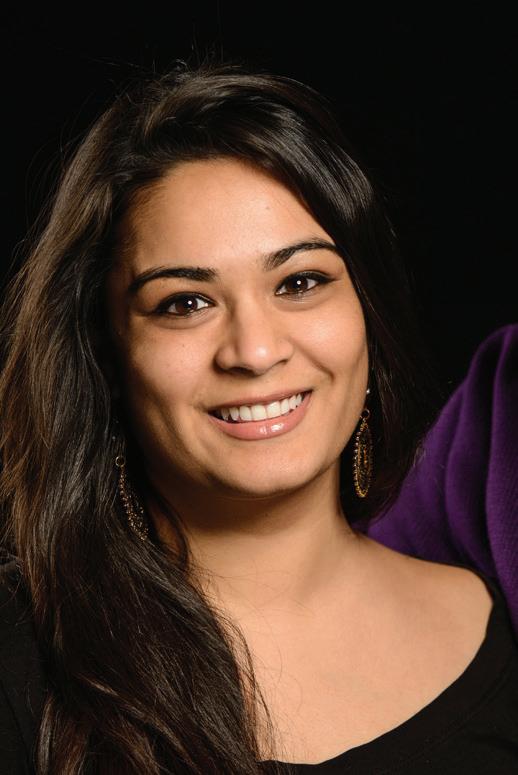
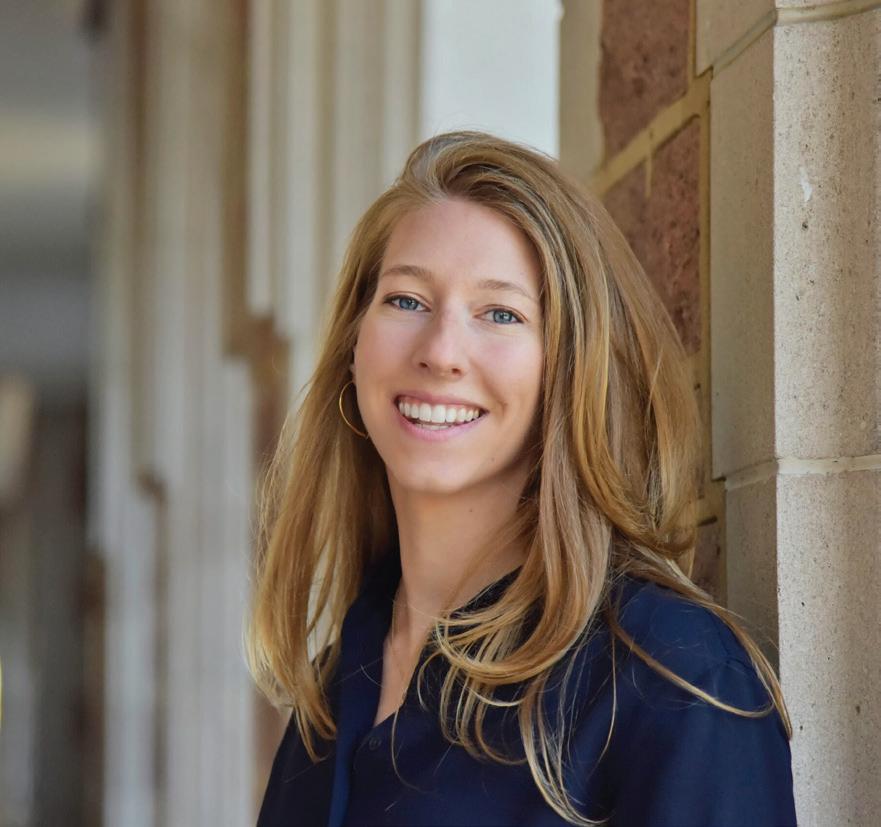
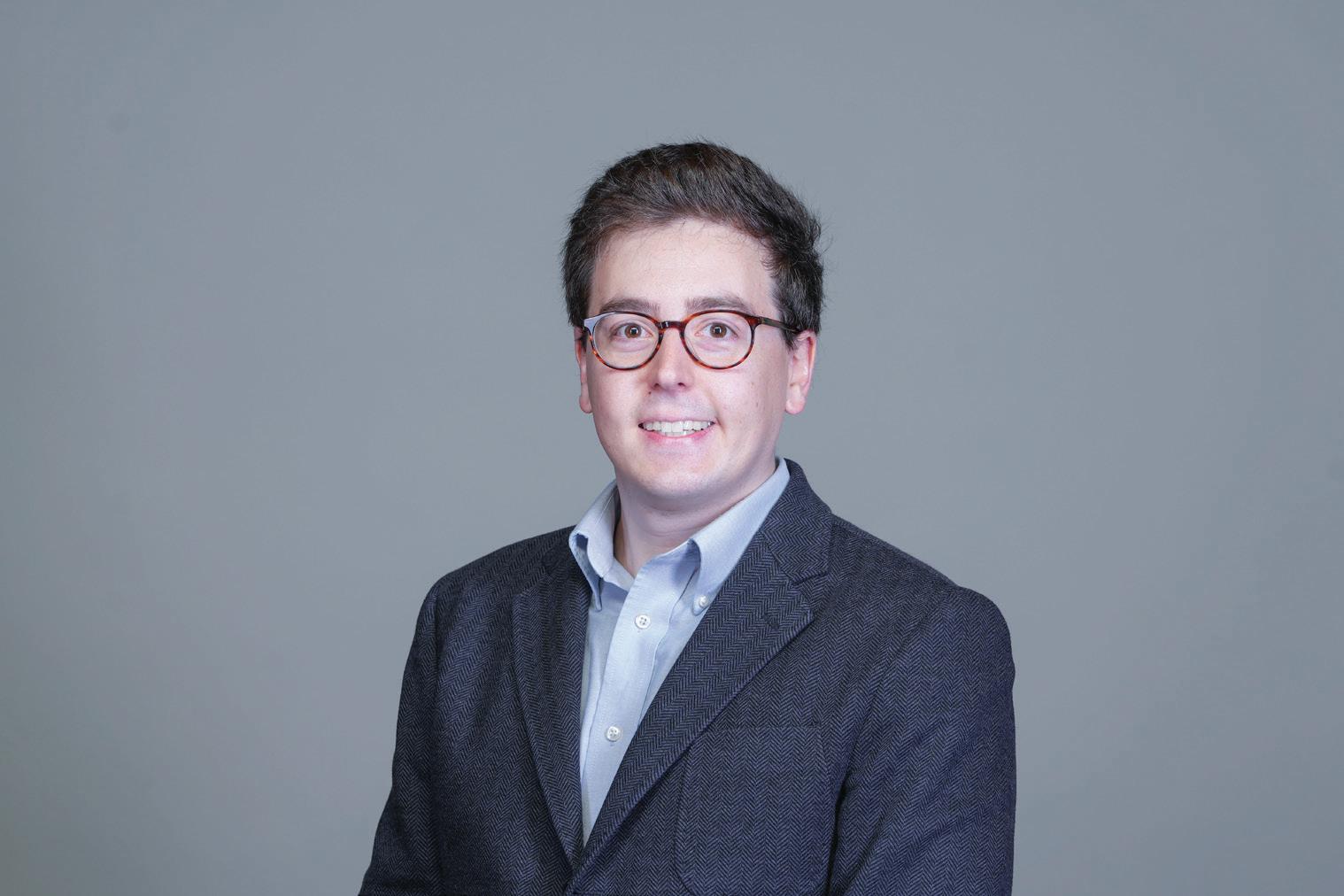
Joshua Wright, Hope College; Samah Choudhury, Ithaca College; Cody Musselman, Washington University in St. Louis
Knight Hall’s Emerson Auditorium at Washington University in St. Louis Register at rap.wustl.edu
SERIES INCLUDES:
JAN 18
Melissa Wilcox
FEB 06


Rev. Billy and the Church of Stop Shopping
APR 16
Anthony Petro
After the Dobbs v. Jackson Women’s Health Organization decision, Missouri implemented one of the strictest abortion bans in the country.
In response, Missourians for Constitutional Freedom, a coalition of organizations and Missourians, is organizing across the state. They have formed a petition, asking that an amendment to the state constitution (titled the “Right to Reproductive Freedom Initiative”) be added to the ballot and voted on this election season. With this referendum, Missourians have the chance to vote for and defend their right to fundamental health care. The Student Life Editorial
Board encourages WashU students to register to vote in Missouri and support this vital initiative. As stated on Missourians for Constitutional Freedom’s website, “Missourians are being denied necessary health care, risking their lives and financial security to travel across state lines. This amendment is our chance to end the government’s cruel ban and its devastating effects.” Right now, their petition needs signatures.
By May 5, 2024, Missourians for Constitutional Freedom needs to acquire around 172,000 signatures. If you are registered to vote in Missouri, you have a responsibility
to do what you can to reinstate the right to abortion. If you’re not registered, Washington University makes the process easy with TurboVote.
Additionally, the student group WashUVotes provides further resources for accessing absentee ballots and finding polling locations. To sign the petition in person, or support the growing momentum of this initiative, sign up to attend events with the Missourians for Constitutional Freedom (dates are listed on mobilize.us). For those seeking more involvement, Planned Parenthood and Missourians for Constitutional Freedom provide training on how to volunteer and
collect signatures. The full text of the amendment is available on the Missourians for Constitutional Freedom website. This amendment outlines the inability for the government to “infringe upon a person’s right to reproductive freedom,” including “prenatal care, childbirth, postpartum care, birth control, abortion care, miscarriage care, and respectful birthing conditions.” The amendment also ensures the preservation of “autonomous decision making,” and the right for individuals seeking care — and those consensually helping them — to not be “penalized, prosecuted,
or otherwise subjected to adverse action for doing so.”
A ballot initiative is a ballot measure created and voted on by citizens. It allows citizens to put issues on the ballot without government intervention. In the state of Missouri, ballot initiatives have been a successful tool for reform since as early as the 1920s. Since the Dobbs decision, six states (California, Kansas, Kentucky, Michigan, Vermont, and Ohio) have passed constitutional amendments supporting access to abortion in their states. Thirteen states are working on similar initiatives, including Arizona, Arkansas, Colorado,
Florida, Iowa, Maine, Maryland, Missouri, Montana, Nebraska, Nevada, Pennsylvania, and South Dakota.
People with uteruses deserve the right to make decisions about their body. With the guidance of medical professionals, individuals — not policymakers — should be in charge of their own personal care. A movement to fight the current injustice of Missouri abortion bans is underway, and every voice and signature can make a difference. Now is the time to get involved and protect the bodily autonomy of all people.
On Feb. 10, I rolled out of bed in the bright and early hours of the morning, eager to hop on the Metrolink and attend the Mardi Gras parade. I was excited to spend a fun day with my friends, enjoying a storied tradition of St. Louis. It was an enjoyable day, filled with great people, good food, and music — memories I will look back on very fondly. Unfortunately, many friends (and strangers) will only be able to recall the events of the day through photos or
anecdotes from the people around them. Blackouts, defined as temporary gaps in a person’s memory due to intoxication, have become all too normalized on college campuses throughout the country, and Washington University is no exception.
The borg (short for blackout rage gallon) is the most blatant evidence of this phenomenon —blacking out is the stated goal. The recipe for a borg includes about a fifth of a vodka handle, which equates to around 16 shots. Most people would never attempt to drink that much in one day, but those

reservations seem to go out the window when there is the possibility of adding a delicious flavor and coming up with a clever name (e.g.
“Borgan Freeman,” “Borg To Die,” “Phoebe Borgers”).
Binge drinking in college is so normalized that most people don’t seem to see the problem with it — myself included, until recently. However, when I go out with my friends now it is consistently on my mind.
At parties, I have often seen people encouraged to drink until they are sick, throwing up, or blacked out, unable to recall what they did and
who they were with the next morning. This is where the fun of drinking slips into more sinister territory. Situations like these can be extremely dangerous — beyond the mere feeling of a bad hangover, repeated events of binge drinking can lead to serious health issues, relationship disputes, and academic problems. Especially in young, developing brains, like those of college students, frequent blackouts can severely increase the risk of developing a cognitive disorder. Even on WashU’s campus, with its many resources for support,
I don’t see these issues being taken seriously enough.
Rather than discouraging drinking in all forms, something that would be unproductive and nearly impossible in a college environment, it is more important to encourage safe drinking habits. Anyone who has spent time in a residence hall has been educated, to a certain extent, about alcohol safety, whether it’s from a brief spiel by an RA or a poster hanging in the hallway. WashU’s website even has a page about alcohol education, a resource all students should be informed
about and encouraged to familiarize themselves with. However, I think that we as a community could be doing a much better job at actually practicing what we preach. When it comes to our health and well-being, we can never be doing too much. Remember that drinking should be fun and social, and while holding back your friend’s hair is a good bonding event, it is 100% more fun to bond on the dance floor. College is all about making memories — let’s start by remembering last night.
Scan the QR code to enter your submission by 11:59 pm on Monday.



First place “Hey Bear and Brookie…How bout this Rizz?!”
Susan Warner, Mom of Current Student
Second place
“Who needs a goat, I’m the DOG.”
Jasmine Li, Current WashU Student
to college students. Both are great, until they’re not. The sad reality of college is that for far too many students, disproportionately women, sex is anything but great after surviving sexual assault. The system, at Washington University and in wider society, is entirely stacked against survivors, leading to unreported cases and proper support denied.
42.5% of undergraduate women in 2019 responded to an anonymous campus survey saying that they experienced some sort of non-consensual sexual contact. That is approximately 1,866 women.
1,866 lives painfully altered. You can fill the entirety of Graham Chapel two and a half times over with all of the female sexual assault survivors on this campus. What’s arguably worse is the fact that that number is a gross underestimate, because many will fail
to recognize that what they went through is even considered sexual assault. So much contributes to this, but one of the most significant reasons is the lack of well-rounded sexual violence education from WashU.
WashU’s sexual education curriculum consists primarily of two programs: The Date for first-years, and Beyond Sex Ed for sophomores. While both have their advantages, the two focus almost entirely on violent, forceful, and stereotypical forms of sexual assault. The Date encompasses two sexual assault cases — why are they both violent and overexaggerated situations that involve drinking and partying? Beyond Sex Ed involves slides with scenarios of force and a clear lack of consent, but what about when it’s not quite so clear?
The sexual violence education at this school is only showing students the blackand-white situations. There are ten thousand more colors in between, and too many students are forced to learn the hard way about what all of them are. WashU students and survivors deserve a clear and full picture of what sexual assault looks like, not just the one that’s easiest for the school to put out.
These programs fail to recognize and educate students on the other side of sexual assault — the kind that doesn’t involve physical force, which is more common and less reported among college students. Sexual assault doesn’t only look like obvious physical violence or force. Sexual assault can also look like silently ignoring when someone says no, coercing someone into saying yes, or abusing a position of dominance through fear. Sexual assault can look like being in a relationship with someone and feeling like you can’t say no because they are your partner. Sexual assault can look like saying no multiple times in a row and then eventually saying yes because you know that they are going to do what they want regardless, so it’s easier for everyone if you don’t put up a fight. Sexual assault can look like crying on your floor, questioning what happened and what to call it. This is the sexual assault that fails to make it into any sexual violence education program that this school mandates for its students.
Having to go through these situations in the first place is horrific, but going through it without support from friends, counselors,
and others is nearly impossible. Many times, survivors only reach for that support when they feel like what they have gone through is “bad enough.” When you don’t recognize sexual assault for what it is, it’s so easy to replay every thought, wondering what you could have done differently to end with a different result. They didn’t really sexually assault me. They didn’t mean to. What they did wasn’t that bad. I said yes eventually, so it was my fault. I was asking for it. It didn’t feel violent, so I can’t call it sexual assault.
You can tell yourself the right things over and over again, but the doubt, confusion, and self-blaming never seem to disappear from your mind, because you’ve never seen this form of sexual assault in educational programs.
As much as you can try to argue otherwise, everyone at this university understands the difference between yes and no. Assaulters recognize when they ignore someone trying to say no; they know that the yes that comes after multiple no’s isn’t really a yes. They sexually assault in ways that cause damages we aren’t taught about, leaving dozens of emotional bruises and none of the physical manifestations we see in presentations.
This behavior is happening in casual one-night stands, it’s happening in regular hookups, and it’s happening so often in relationships. It is disgusting to think of the magnitude of people on this campus who are sexually assaulted, and therefore, how many classmates and peers are the ones sexually assaulting them. Yet, it’s rarely called out and punished. And understandably so: why would a survivor feel supported to speak up when they barely understand what happened in the first place and are gaslit by society to believe that nothing happened at all?
It is disgusting, it is heartbreaking, and it is infuriating to live in a world that normalizes and accepts this as the reality without putting more effort into working towards a solution. Sexual assault has so many more signs than what this school and society are teaching people, and it is a disservice to survivors for people not to recognize this. While the root of this problem unfortunately can’t be solved with a newspaper article, the aftermath for survivors can be improved. Educating students on non-life-threatening sexual assault cases would allow more survivors
to recognize when they are in these situations and would validate their feelings in the aftermath. Survivors deserve so much more than the inadequate effort that the University is putting into educating students about all forms of sexual assault.
This is only encouraging assaulters, and it is so beyond unfair to survivors.
Editor’s Note: The Sexual Assault and Rape Anonymous Helpline (S.A.R.A.H) provides confidential and anonymous support regarding sexual assault, sexual harassment, intimate partner and sexual violence, relationships, and mental and sexual health. It can be reached at 314-935-8080 24/7 during the fall and spring academic semesters.
There are counselors at the Relationship and Sexual Violence Prevention (RSVP) Center, located in Seigle Hall, Suite 435, available confidentially to any University student. The office can be reached at 314-935-3445 or by email at rsvpcenter@wustl.edu.
The National Sexual Assault Hotline can be reached at 1-800-656-4673 or via online chat here 24/7.


Dining:
If you’re looking for a
The
boasts a variety of
— even if you’re already familiar with the
there might be something new to see.
Transportation:
Situated just across Forest Park, you can reach the Central West End by MetroLink, bus, or the recently added Washington Univer-
If you’re looking for places to eat in the Central West End, its range of dining options cover breakfast, brunch, dinner, dessert, or even a casual run for pizza — one popular spot is Pi Pizzeria, on the corner of Euclid and McPherson. Pi is known for high-quality deep dish and thin crust pizza. Just down the street is Jeni’s, offering gourmet ice cream made completely from scratch — and there’s always a new flavor rotating in (consider Gooey Butter Cake or Darkest Chocolate). Other restaurant options include the colorful El Burro Loco for Mexican, and Edera Italian Eatery — a bit on the classier side.
Landmarks:
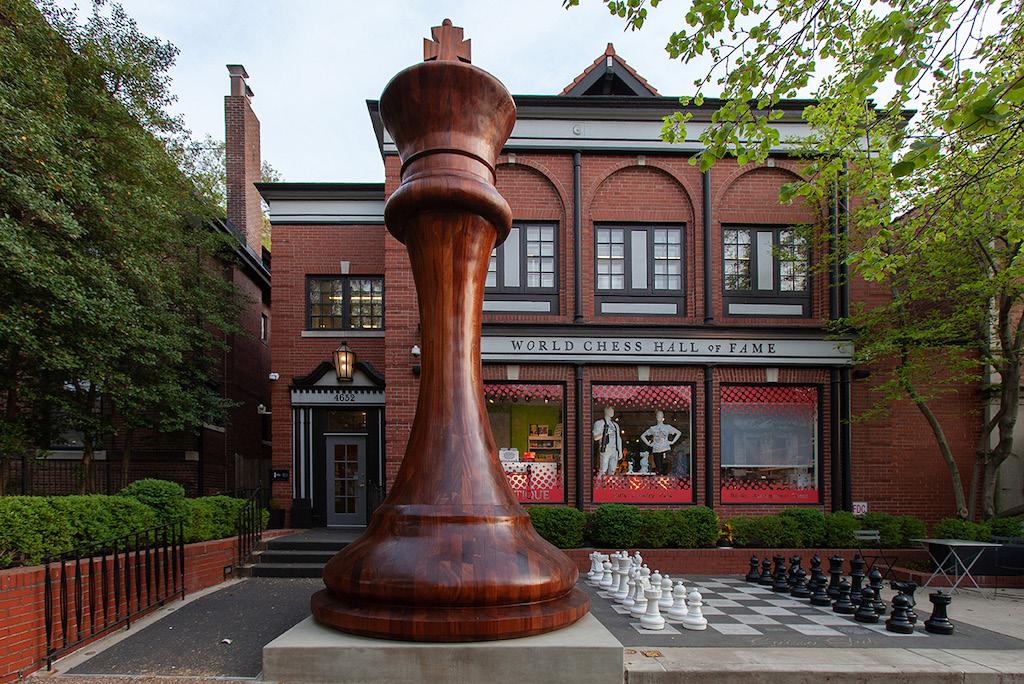
Along with several clothing boutiques and other locally-run stores, you will find a few historical spots which make for good exploration sites as well as photo ops. Located in front of the World Chess Hall of Fame is the world’s largest chess piece, sitting at 20 feet tall — an
attraction for all with a fascination for larger-thanlife monuments. For those more interested in historical buildings, The Royal Sonesta Chase Park Plaza hotel, over 100 years old, is perfect, and also comes with a reasonably-priced theater (beware, however, as it does not offer IMAX). Lastly, the Cathedral Basilica, known for its intricate designs and architecture, offers tours and features its own museum.
Opportunities :
Home to Barnes-Jewish Hospital and the WashU Medical Campus, the Central West End is full of opportunities for students looking to volunteer or experience cutting-edge research in the medical field. Just next to it is St. Louis Children’s Hospital, whose volunteer services department offers meaningful roles to those with a passion for childcare, and maintains a connection to WashU outreach programs such as the Campus YMCA. WashU also recently opened a new Neuroscience Building, one of
many different locations home to WashU’s globally recognized labs and projects. Just as you would expect, the Central West End has plenty of opportunities for jobs, including undergraduate and graduate research.
Housing:
From skyscrapers to modest apartment complexes, renting in the
Central West End can be a great choice. Whether you want to live in a studio or share an apartment with your friends, there are plenty of housing options to choose from. It is also a great choice to be close to research opportunities, or to get to know the Central West End before graduate school at WashU’s Medical Campus. The Central West End can be the ideal
setting for hosting your friends as they explore the neighborhood. This is only an introduction to all of the ins and outs of the Central West End — its varied offerings, historical sites, and community-driven atmosphere make it a buzzing, dynamic location. There’s truly something for everyone.
“It’ll be electric”: WashU selects its first student performer to play the National Anthem
performer.
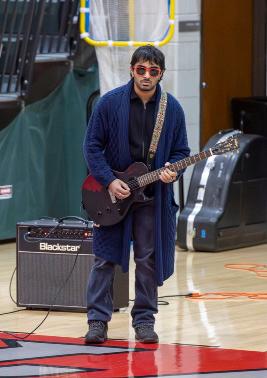
On Feb. 24, at both the Senior Day and Women’s History Day basketball games, Washington University’s first official student National Anthem performer, first-year Logan Srinivasan, will take the stage to showcase his third performance of the National Anthem. Part of a new initiative to boost school spirit, the WashU Athletics Marketing and Multimedia team hopes Srinivasan is the first of many students to get involved.
At the start of the semester, the External Relations and Communications department began to hold student auditions to perform the National Anthem at WashU sports games. Students were asked to send in audition tapes, and after four weeks of auditioning and reviewing the tapes, Srinivasan was selected to be the inaugural
“We got a great array of candidates. Obviously when you think about the anthem, you think about singers, but I think this performance in particular is going to be extra special because Logan is a musician. [He] really impressed us, going beyond the typical, traditional style and going with some musical styling,” said marketing and multimedia manager Symone Palmer.
Coming from a musical family, Srinivasan has been performing for many years. Starting with the saxophone at eight years old, Srinivasan now primarily plays the electric guitar. Seeing advertisements around campus, Srinivasan decided to showcase his guitar skills in his audition.
“I performed the national anthem for my middle school graduation, which they were live streaming on YouTube. So when I saw the audition posters, I took the livestream
and submitted it and thought it’d be cool because it also showed how the audience reacted,” Srinivasan said.
Through this new initiative, Palmer hopes that student National Anthem performers will improve the experience of basketball games.
“As a marketing manager, my primary goals are to increase game day attendance and engagement. We want to not just put butts in seats, we want to make sure that you have an experience that makes you want to return. I think this is a great way to do so because it presents us with the opportunity to make connections with students on campus. Our athletes are not only the brightest, but also some of the most talented, and so we want to do our part in helping them get the shine they deserve,” Palmer said.
Srinivasan is no stranger to performing in front of large crowds, having performed around 80 times, including
at the Washington State Fair and alongside members of rock bands such as Guns and Roses.
“Performance-wise, it’s been pretty cool. I will say that now I’m performing in front of people that I know, which makes things pretty different. Like I’ve got to see my friends the day after, and I know I better not mess up, but I can also really impress them,” Srinivasan said.
Palmer mentioned that Srinivasan is intended to be the first in a set of regular performers from the student body.
“We’ll open up another session of auditions sometime in the spring. We want to give the community a chance to see this. There might be some hesitancy with performing, but Logan is gonna break the ice,” Palmer said.
When asked to give a preview of what to expect, Srinivasan said, “It’ll be electric.”
COURTESY OF LOGAN SRINIVASAN
The Dropkick Murphys return to St. Louis: A campus chat with guitarist Tim Brennan
Although you might not recognize the name, I can confidently guarantee that you’ve heard their music, which has become synonymous with the underdog, outcast, rebel, and fighter. Formed in 1996, they’ve dominated the celtic rock genre, infusing traditional rock instruments with bagpipes, tin whistles, accordions, and more. From their music in Scorsese’s movie “Departed” to the romcom “Fever Pitch,” their music represents the rough and tumble and the heart and spirit of Boston.
This Monday, the Dropkick Murphys, along with supporting bands Pennywise and The Scratch, are coming to The Factory in Chesterfield as a stop along their St.
Patrick’s Day tour. I sat down with Murphys’ guitarist and multi-instrumentalist Tim Brennan ahead of the concert to talk about the band, his influences, the upcoming show, and more.
Tim attended Assumption University as an English major, taking a break to temporarily join the Murphys, and ultimately joining full time. He started out selling merch for the Murphys, which he did on the 2003 Warped tour while in college.
For those who don’t know, the now extinct Warped tour was a touring music festival that launched the careers of everyone from Eminem to Blink-182 to Katy Perry; it was a gritty, real, energetic amalgamation of music, skating, and more — punk rock in the figurative sense.
Brennan describes his
experience, saying, “It was certainly intense. It was three months, and it was the first time that I had gone out around the country. I was 21, super excited, but it was tough. I would be up at 7 a.m. every day, and then I’d be the last person on the bus at night after getting all the merch taken down.”
Brennan would play a few songs with the band but was not yet a full member. While on tour with the reunited Sex Pistols, it got to the point where Brennan decided to return to school for his senior year. A month or so after being back in college, a member of the Murphys left and Brennan received a call from band member Ken asking him if he wanted to join full time.
We kept talking about the Warped tour, specifically
2005, which featured The Transplants, Fall Out Boy, My Chemical Romance, and the Murphys. “2005 was cool for me because I was a band member. I was used to running around for 14 hours a day selling shirts and stuff. This was different,” Brennan said.
Speaking with Brennan only increased my love for the Murphys. He was kind, down-to-earth, and funny. There is an enigma of power and fight surrounding the Murphys, but Brennan was relatable; I felt a human connection with him. A bad ass on the stage and a kind human off, Brennan was a pleasure to talk to.
While Brennan always wanted to be a professional musician, he had a cautiously optimistic mindset about it. “I had hoped to do it for
a living, but I wasn’t banking on it,” Brennan shared. “I was studying English and my plan was to go back to my high school and teach English and coach basketball. In my late teens, I auditioned for a couple of bands trying to make a go of it, but it was sort of the right place at the right time that made it all happen.”
Brennan’s advice for college musicians thinking about becoming professionals is to “just be as absolutely, 100% prepared as you can. I had worked really hard at getting good at all the instruments that I was playing. People always need great songs and good musicians in their bands, so keep working.”
While Brennan is currently a guitarist for the Murphys, he is, at his core, a multi-instrumentalist. He started out on drums and has
adapted to whatever instrument is needed. “I don’t come from a hugely musical family but when I was younger I started learning different instruments, guitar, bass, etc. When I was a teenager, my English teacher introduced me to the band The Pogues. Their melding of Irish music and punk changed everything for me. They didn’t use your average instruments, so I started picking them up,” Brennan said.
Read the rest online:

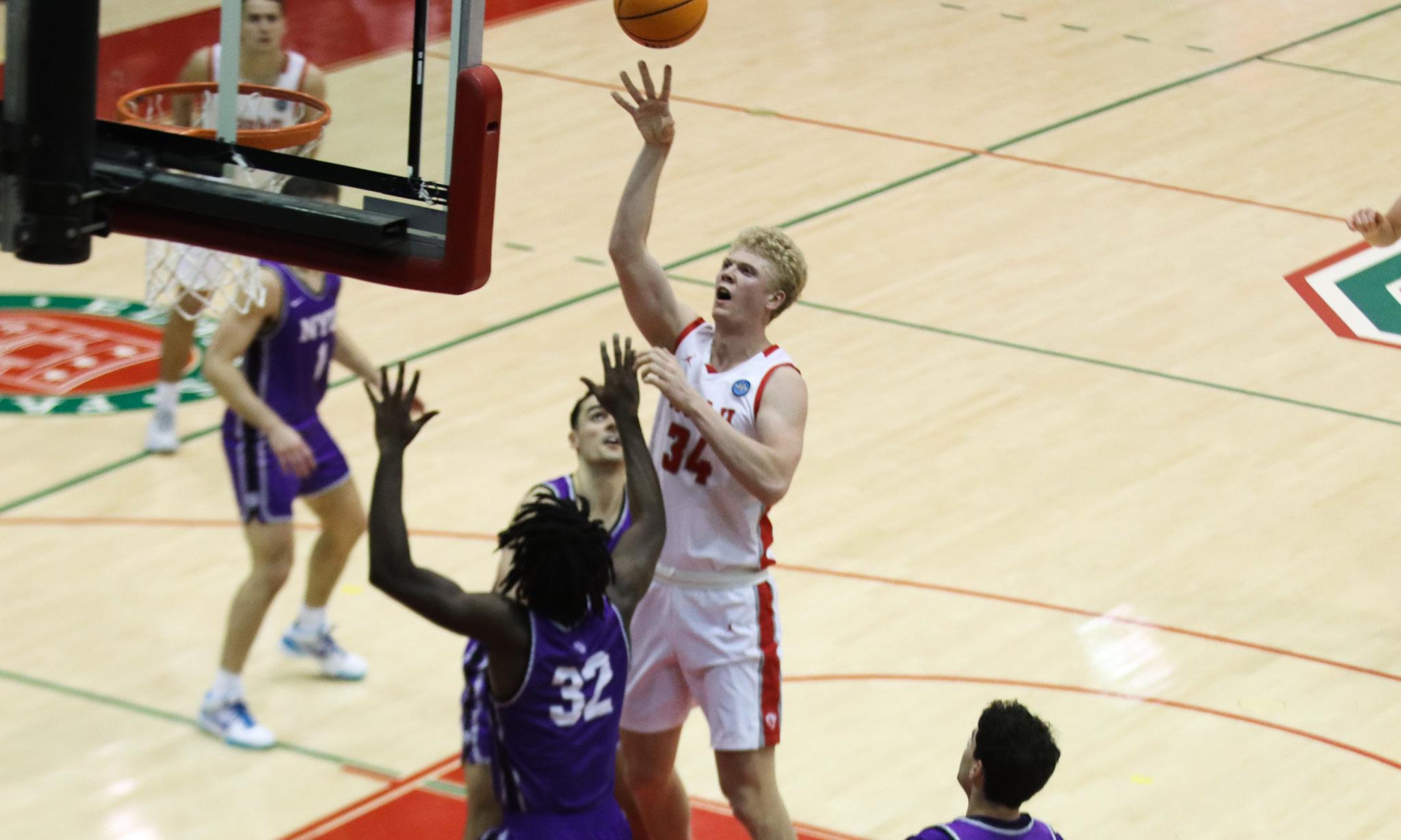
When the Washington University Bears let the No. 12 New York University Violets go on a run near the beginning of the second half to take a seven-point lead, some people in the WashU Fieldhouse may have begun to lose faith. After all, the Bears were playing the Violets, the team that sat in first place in the highly competitive UAA and that is led by superstar guard Spencer Freedman, the first-team all UAA Harvard transfer who torched WashU the last time they met.
“I’m gonna show up to [Freedman’s] graduation this year just to make sure that he walks across the stage and gets a diploma,” head coach Pat Juckem said after the game.
And yet, even as many fans may have lost hope, even as Freedman, who ended the game with a career-high 35 points, was killing WashU from three, the Bears never lost their confidence. The outside noise meant nothing to them.
“They’re a very level kind of group,” Juckem said. “We’re a younger team…and yet we have a lot of guys who played a lot of games here…and I think there is a calmness, a belief in their own abilities. It’s been a pretty consistent theme with this group.”
This mentality is precisely what allowed WashU to pull out the victory. For much of the game, it looked like the Bears were once again going to fall victim to Freedman’s heroics. However, WashU beared down late in the second half, holding Freedman to just four points in the final 12 minutes of the game.
As they defended their home court down the stretch, the Bears pulled out a 72-61 win, a result that will likely go a long way towards locking up their at-large bid in the NCAA DIII tournament. The Bears extended their win streak
to three on Feb. 18, topping Brandeis University 56-53 to bring their UAA record to 7-6.
Entering Friday’s game, the Bears knew Freedman, who had scored 13 points in the final five minutes of NYU’s 65-64 victory over WashU earlier in the season, would be a threat.
“Our game plan today was to try and not let him beat us down the stretch,” junior guard Hayden Doyle said. “Credit to [our coaches], and we did a great job executing.”
In the final minutes this time around, however, it was Doyle who propelled his team to a victory with clutch heroics. The junior guard, who finished with a team-high 25 points, closed out the game with all 10 of the Bears’ points in the final 98 seconds.
“I think it just comes with the trust in my coaches and the trust in my teammates,” Doyle said. “They trust me with the ball in my hands, and most of the time, I’m able to make the right play.”
Sophomore guard Yogi Oliff also impressed with a career-high 17 rebounds, a stat that is especially impressive from the guard position.
“[Oliff’s] outstanding,” Juckem said. “Our guards
need to go clean up the rebounds. When Yogi can go clean up the rebound, it’s an instant fast break, you know? This is the guy we want with the ball in his hands.”
This type of play is becoming typical for the Bears, and was important for WashU’s next opponent two days later, as it would help defeat the Brandeis University Judges 56-53.
The Bears led nearly the entire game, but the matchup remained closer than it needed to be, as sloppy play allowed Brandeis to come within one point after the Bears led by as much as 17 during the second half.
“Basketball’s a game of runs,” Oliff said. “You just gotta keep your composure and get back to your gameplan — it’s all about staying poised.”
The Bears did precisely that, and did not allow any momentum swing to faze them. They did what they have done all season, and kept calm. Ultimately, it was Doyle who once again put the game away with two timely free throws to seal the score at 56-53.
Oliff again had 17 rebounds to lead all players, with six of them being on offense and creating key extra possessions.
“A huge emphasis of our team is rebounding,” Oliff said. “Coming in, that’s the easy part. But our big guys… they might not get the rebound on their statline, but they’re the ones doing the hard work.”
It was a total team effort against Brandeis, as junior guard Kyle Beedon led the team in scoring with 13 points. The ball was shared, but it was WashU’s defense and rebounding that let the Bears leave with a win, holding the Judges to a paltry 37.7% from the field and conceding only 31 rebounds compared to 45 from the Bears.
With the two wins, WashU now sits relatively comfortably in NCAA Tournament contention, but will still need to be selected as an at-large team after it was eliminated from the race for the UAA’s automatic qualifier last weekend. The Bears will have one final chance to polish their resume for the bracket-selection committee when they host the University of Chicago on Saturday, Feb. 24.
“Once you get into UAA play, you’re playing in tournament-intensity games,” Juckem said. “You just can’t get too high or too low…it’s worked out very well for them.”
In Division III swimming, few conferences are more nationally competitive than the University Athletic Association (UAA). The conference boasts multiple top 10 teams including New York University, The University of Chicago, and the defending two-time national champion, No. 2 ranked Emory University. As a result, competing for a conference championship in the UAA is never an easy feat. Across four days from Feb. 14-17, the No. 14 ranked Washington University men’s and women’s swim and dive teams attempted to do exactly that, putting themselves to the test against elite competition in the 2024 UAA Championships. The women’s (1,162 points) and men’s (1,105 points) teams fell short of the UAA title, but placed fourth and fifth respectively, finishing in the middle of the talented eight-team conference.
For the Bears, the meet was highlighted by five top-three finishes. On the women’s side, the all first-year 200-yard medley relay of Elizabeth Chen, Hannah Lee, Peyton Watson, and Izzie Gattone took home second with a time of 1:43.41. Lee also finished third in the 100-yard backstroke with a time of 1:03.77.
Senior Alex McCormick nabbed second in the 200-yard backstroke and third in both the 200-yard individual medley (IM) and 100-yard backstroke. Across his three individual top-three performances, McCormick accounted for 82 of the Bears’ 1,105 points.
“It feels great obviously, it’s a great feeling ranking that high,” McCormick said about his performances. “But, place
is not the whole picture of it. A lot of people who didn’t place as high had just the same caliber swims and qualified for nationals in a lot of races.
So, it means a lot to be ranked so high, but as a team, I think we did really well and had the same amount of caliber.”
Head coach Brad Shively similarly praised the Bears’ strong performances in a highly competitive UAA conference.
“Overall we competed well this weekend,” he wrote in a statement to Student Life. “The competition at this meet is truly remarkable and our swimmers and divers really stepped up their level of performance and focus.”
The meet started with the 200-yard freestyle relay, where both the men’s and women’s teams notched fifth place with respective times of 1:22.15 and 1:35.53. From there, the Bears logged 31 more top-eight finishes across the next 40 events of the four-day meet.
The IM events proved a strength for the squad, as they tallied seven appearances in A Finals (which features the eight fastest swimmers from prelims) across four IM events.
In the women’s 200 IM, sophomore Rin Iimi and firstyear Lili Sandor placed fourth and fifth with times of 2:05.44 and 2:05.46. Both secured B-Cuts in the event, a crucial step to be invited to the NCAA Championship in March.
Read the rest online:

inning-long college debut. Despite getting on base frequently, the Bears were unable to score any runs early on, resulting in a 2-0 deficit.
doubleheader. Game one was a blowout for the Bears, with the bats coming alive and the pitchers holding strong to secure a shutout 12-0 victory.
After finishing last season with a 26-14 record, the Washington University baseball team entered the 2024 season hungry for even better results.
“We want to get back to the College World Series,” sophomore infielder Shane Pellegrino said. “We’ve been talking about that for a while now.”
While the Bears are not nationally ranked, they received votes in the season-opening Top 25 poll, indicating that a postseason run is not a far-fetched notion.
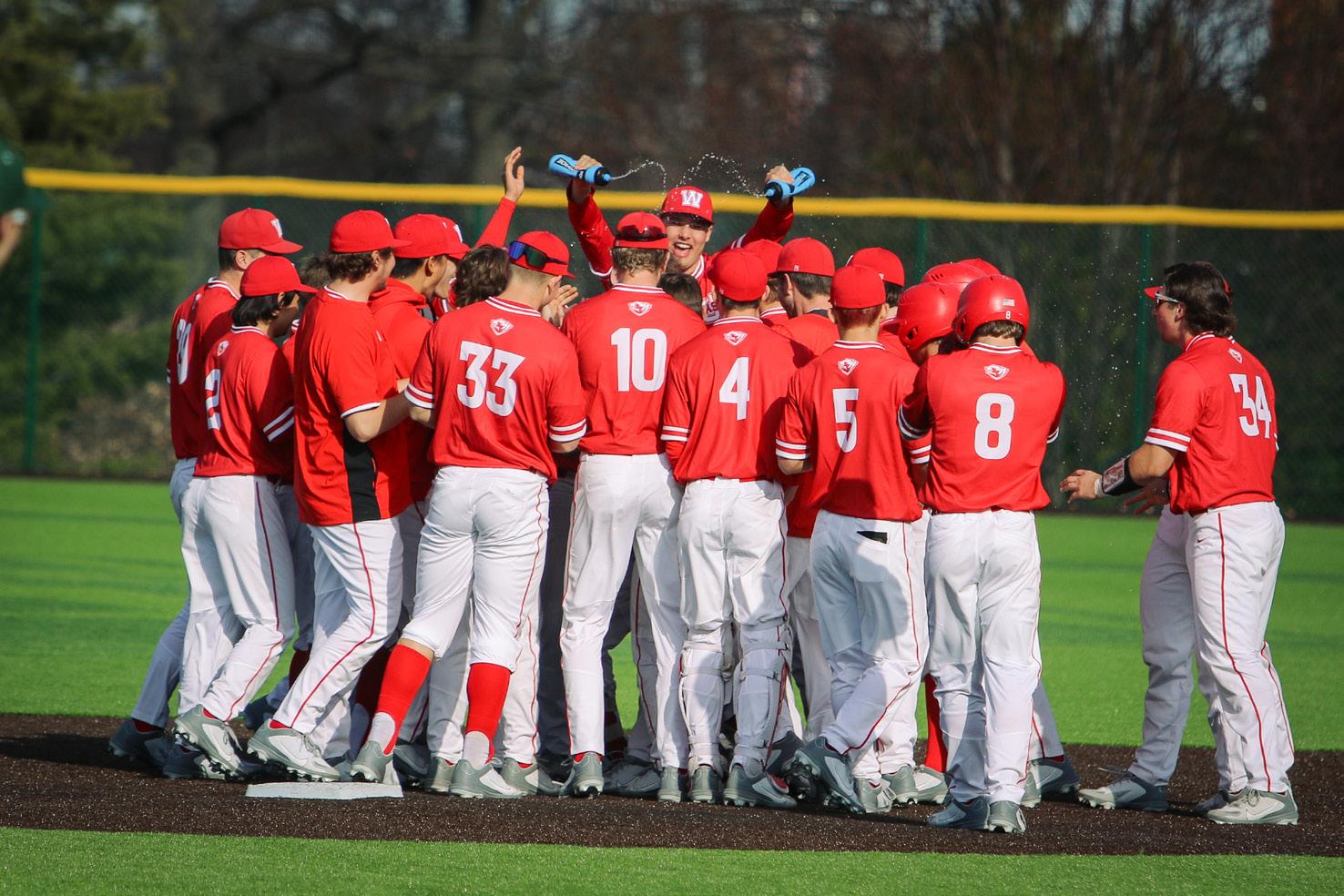
The Bears started their 2024 journey on Feb. 17, beating Centenary College, another team receiving votes, 3-2 before dominating Hendrix College in a doubleheader on Feb. 18.
In the opening weekend of play, the Bears have lived up to their hype, not only going 3-0 but also handily defeating topnotch opponents.
The Bears opened their season against Centenary College, a small liberal arts college from Shreveport, Louisiana. Initially, it seemed as though they might start the year with a loss.
First-year pitcher Parker Guthrie took the mound for the Bears, allowing five hits and two runs in his 3.2
Graduate student pitcher Matt Lopes relieved Guthrie, and although he allowed five hits in 4.1 innings pitched, Centenary failed to convert any of those hits into runs.
Though the Bears’ bats struggled early, the impressive pitching performance motivated an offensive resurgence in the seventh inning. Senior outfielder Kaden Bernhard kick-started the momentum with a single, and the Bears followed with three runs on three hits to take a 3-2 lead.
“Having consistent pitching gave the offense tremendous confidence and allowed us to go out there and just get the job done. We really love to support our pitchers and score more runs,” Pellegrino said.
In the ninth inning, Centenary threatened to make up the one-run deficit with runners on second and third base with no outs, but senior pitcher Clayton Miller remained composed. He closed the game for the Bears by striking out the next three batters, securing a win in their season opener.
Next, the Bears turned their attention to Hendrix College, the Arkansas-based school that hosted the weekend’s three games, for a
Junior pitcher Will Henkel started on the mound and pitched a gem, throwing 5.1 hitless innings. Henkel, who was named the University Athletic Association (UAA) Pitcher of the Week for his performance, allowed only one hit and no runs.
While Henkel dominated on the mound, the Bears’ offense scored nine runs to take a commanding 9-0 lead after six innings. Bernhard initiated the scoring with a booming double in the third inning, driving in Pellegrino and junior outfielder Brandon Buday. The Bears continued to pile on runs, including a sacrifice fly by Miller and a two-RBI double by Pellegrino during a three-run fourth inning.
First-year pitcher Townsend Stevenson and sophomore pitcher Miles Quemuel-Labrador took over pitching duties after Henkel’s stellar performance and maintained Hendrix’s scoreless streak. The Bears added three more runs in the seventh and eighth innings to secure a 12-0 victory in game one of the doubleheader.
The sheer depth of great hitters the Bears possess helps give them so much
Last year, the 2023 team won 13 out of 17 non-conference games.
confidence. “One through nine, we’re just as talented as anyone in the country. If our top guys aren’t doing good, we got our other guys that are gonna have our backs, and they’re gonna be able to put up some hits, too,” Pellegrino said.
After the decisive win, Hendrix responded strongly in the rematch. With junior pitcher Sebastian Guzman on the mound for the Bears, Hendrix scored three runs in the first two innings, while WashU managed to score one run during this period.
However, WashU’s offense and pitching came alive, which added seven more runs while holding Hendrix
scoreless for the remainder of the game.
Sophomore utility player Dax Braemer tied the game for the Bears in the third inning with a two-run single. Despite allowing a leadoff double in the bottom of the third, Guzman and the Bears’ fielding managed to prevent any further scoring.
WashU continued to add runs, with Buday scoring on a wild pitch in the fourth inning. First-year pitcher Anderson Gomez relieved Guzman and delivered an impressive performance on the mound, allowing just one hit in 1.2 innings pitched to earn his first college win. In the seventh inning, the
Bears’ offense exploded, scoring four runs to secure an 8-3 lead. Junior pitcher Hank Weiss closed the game for the Bears with four strikeouts. The highlight of the game was the discipline shown by the Bears’ hitters, drawing a remarkable 11 walks in seven innings.
Up next for the Bears is their home-opening series against Coe College on Feb. 24 and 25. After Coe knocked WashU out of the 2020 College Baseball World Series, the Bears are eager to avenge that defeat.
“We know what we have to do to get those guys, and we are ready to play them,” Pellegrino said.
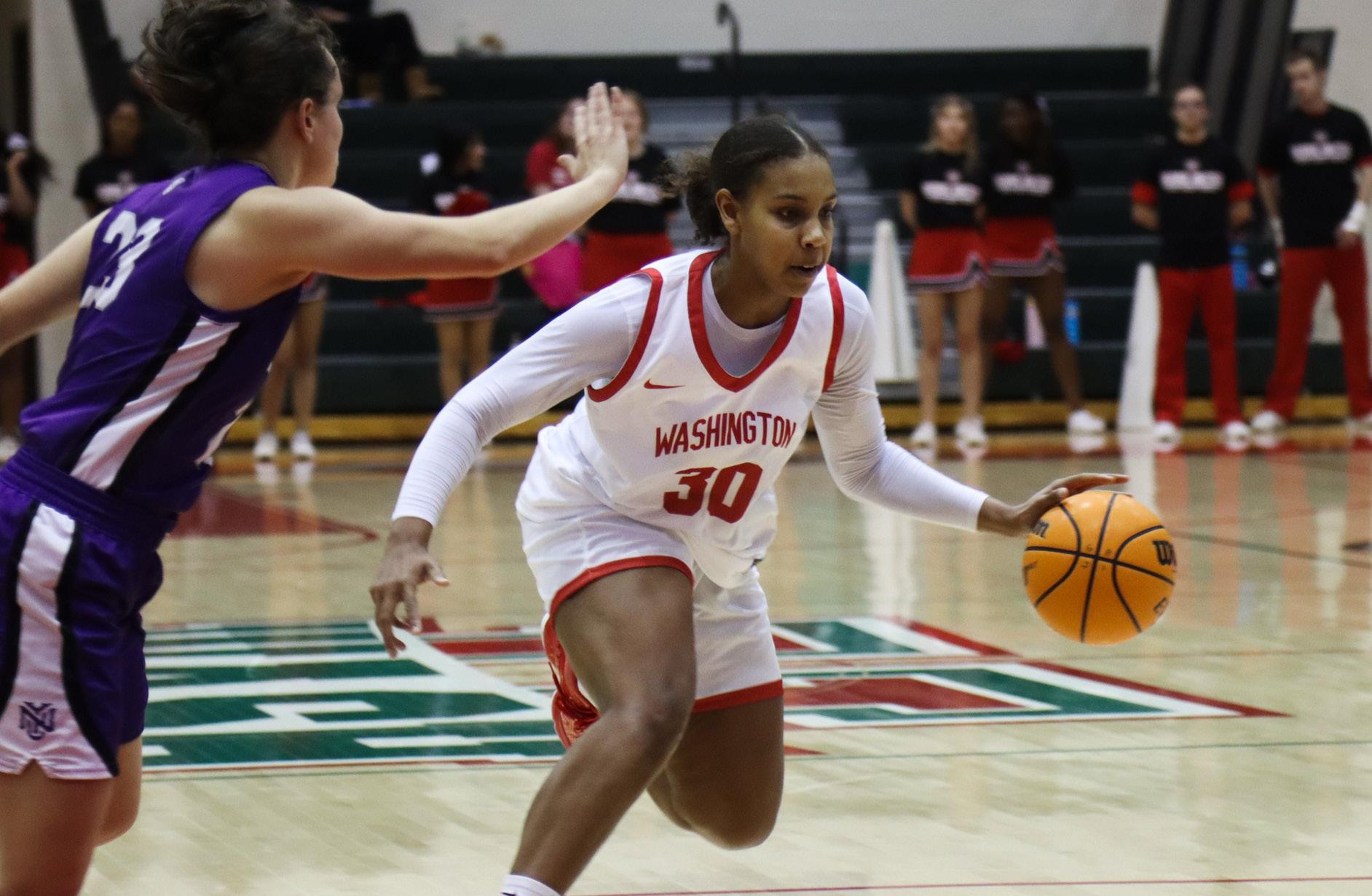
winning — we’re going to be a problem down the road.”
In the 1979-80 season — the first season in Washington University womens’ basketball history — the Bears defeated Lindenwood University for their first win in program history. The Bears won that game convincingly, defeating the Lions by a 31-point margin.
A lot has changed since 1979. William H. Danforth is no longer the Chancellor of WashU, and Lindenwood’s women’s basketball program now sits at the bottom of Division I’s Ohio Valley Conference. What has not changed, however, is the Bears’ ability to win their milestone games convincingly.
999 wins later, WashU defeated Brandeis University 77-30 on Feb. 18 to clinch the program’s thousandth victory. Per the WashU Athletic Department, the Bears’ victory was the first time they had conceded 30 or fewer points in a game since the 2012-13 season. This game also marked the fewest points that WashU has allowed in Randi Henderson’s seven-year tenure as head coach.
“Winning 1,000 games is really special for the team and the coaches,” first-year center Lexy Harris said. “This team has shown it is very capable of
The win came just two days after an 80-56 loss to No. 1 New York University (NYU), ending a win streak that had catapulted the Bears towards the top of the University Athletic Association (UAA) standings. After the split weekend, the Bears have a 9-4 conference record, tied for second place in the conference behind the undefeated NYU squad.
WashU v. NYU
The Bears’ weekend started off on a sour note, with WashU falling to NYU 80-56 to snap its seven-game winning streak. With their victory, the Violets have clinched the UAA title for the third straight year. NYU swept both games on its road trip to face WashU and the University of Chicago this weekend — a win against Brandeis University next weekend would give the Violets an undefeated 25-0 regular season record heading into the NCAA tournament.
The Violets started hot, outpacing the Bears 39-23 at halftime. After the half, the Bears paced NYU, but the Violets’ offensive and defensive machines stopped any WashU attempt for a comeback. NYU shot 60% from the field, compared to WashU at just 40%. The Violets also
racked up more rebounds, blocks, and steals than the Bears.
Senior guard Jessica Brooks, who leads the team in scoring with 18.4 points per game in conference play, led WashU with 19 points and eight rebounds. In just 16 minutes of play, Harris recorded 11 points. Sophomore forward Jordan Rich shot a perfect two-for-two from the field, hitting two three-pointers to score six points off the bench.
WashU v. Brandeis
Coming off the loss against NYU, the Bears needed to respond in a big way against Brandeis, a team that sits at the bottom of the UAA standings. WashU won in a dominant fashion, keeping its playoff hopes alive.
Directly after tip-off, the Bears scored seven points in the first two minutes of the game before Brandeis could record a rebound.
WashU took a 12-3 lead halfway through the quarter, though Brandeis began to storm back. The Judges went on an 8-3 run, narrowing WashU’s lead to just four at the end of the first frame. For the rest of the game, the Bears’ defense stole the show. Brandeis scored more in the first quarter than they did in the second and third quarters combined, only
recording nine points in the middle two periods.
“Everyone on the perimeter has just been doing their job,” Harris said. “We let Brandeis get zero threes against us, and that’s how they [usually] score their points.”
The Bears will host the University of Chicago for their final game of the regular season on Saturday, Feb. 24. The final game of the season will carry serious tournament ramifications. WashU is currently ranked fifth in Region VIII. Since NYU clinched the UAA title with its victory over the Bears, the Violets will receive the only guaranteed bid to the tournament among UAA teams. To make the tournament, WashU must receive one of a limited number of at-large bids. After early struggles, the Bears hope that winning eight out of their last nine games is enough to go dancing in this year’s tournament.
“We know we can win,” Harris said, looking forward to Saturday’s regular-season finale. “We’re practicing super hard in preparation, and we know that if we do everything we need to do, we’ll win the game.”
Athlete of the Week: Lexy Harris reflects on chasing a tournament spot in her first collegiate season
HUSSEIN AMURI STAFF WRITERFirst-year Lexy Harris has taken the University Athletic Association (UAA) by storm. The 6’3’’ center — listed as the tallest women’s basketball player in the entire conference — has made an immediate impact in her first year with the Washington University women’s basketball team. This season, she leads the Bears in total points, rebounds, and — unsurprisingly — blocks. Student Life sat down with the Atlanta-area native to discuss the Bears’ 1,000th program win this past weekend, playing alongside five other first-years in the team, and who she would label as the “team mom.”
The interview has been edited for length and clarity.
Student Life : Talk to us about your personal history with the game of basketball. Can you recall a moment in your life when you knew basketball was for you?
Lexy Harris: I started playing [basketball] when I was in second grade, but I never took it too seriously. I played lacrosse all throughout middle school and in elementary [school], but the time that I really knew [that] basketball was the sport for me [and that] I could play in college was in eighth grade. I had a really great basketball coach, and she believed in me. That year, I had quit lacrosse and pursued basketball. I played all throughout high school, and it was just super fun. Everyone on my team always ended up being my best friend. My senior year, we won the regional championship, which was super cool.
SL: You are a first-year in college now and are having an outstanding rookie season. That transition isn’t always easy for people, but you have found success. How has that transition been for you?
LH: I think the
transition [has been] hard, especially going to an academically rigorous school. But my high school was academically rigorous as well. So the transition [has] not been as bad as [it is] for most people. Going through the transition with five other freshmen who also have really high expectations [has been] very helpful. The coach really just made it super seamless, and the upperclassmen helped a lot, which was great. They were super inclusive and helped with anything that we needed to have help with. I think the support system, whether in the academic part or on the team, was just great, and I think that is really what made it so suitable.
SL: You mentioned your other first-year teammates there. The women’s basketball team has a super young and fresh team with six first-years and only two seniors this season. Can you talk about how you have been able to find success with the young squad that you have?
LH: I think from the beginning, we never looked at it [like that]. It was never split up into years. Everyone was friends. It didn’t matter if you were a freshman, it didn’t matter if you were a senior. We all had dinner together and would do anything together. Also, I think the sophomores were also super helpful — just because they’re also underclassmen; they know what we’re going through. They did it last year, so they were super helpful [when] traveling, helping with homework, and things like that.