Bear Bodega arrives on South 40
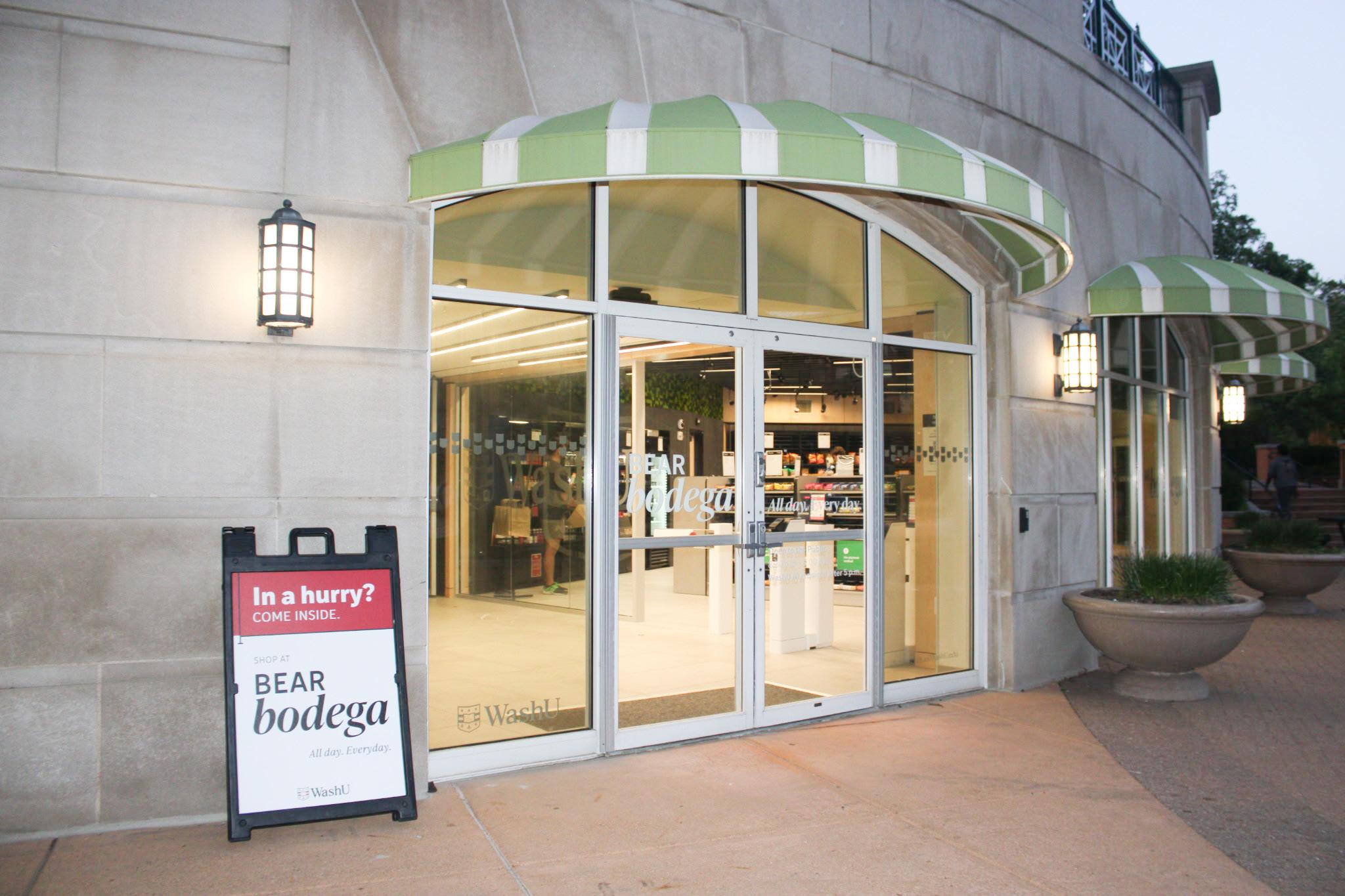
The South 40 welcomed Bear Bodega, a new convenience store for students, on April 6. The store utilizes Amazon’s AI-powered Just Walk Out technology, which scans products as shoppers browse, allowing for them to “just walk out” without a formalized checkout process.
Bear Bodega is located next to Ursa’s Nite Life and below the first-year Lien House. The store is the first on the WashU campus to be open 24/7. It is open until 5 p.m. daily for the general public, after which a WashU ID is required for entry.
Students use a QR code accessed through Grubhub to scan in and begin their shopping experience. Since shopping is linked to Grubhub, students can use meal points to buy items. The store also accepts other payment methods, including Visa cards.
Amazon’s Just Walk Out technology utilizes cameras and motion sensors to detect what items shoppers take and then automatically charges whatever method of payment they choose. The implementation of this advanced technology is a major step toward WashU Dining Services’ goal of maximizing efficiency and consumer convenience.
Many students make purchases after midnight, when other dining options, such as Paws & Go in Bears Den, are closed.
Installing Bear Bodega was a collaborative project involving student groups, WashU Dining Services, and third parties, like Grubhub and Amazon. Tiffany De La Roche, director for Dining Services, commented on the extent of this project.
“We had partners from Amazon involved because of their technology, … partners [from] Grubhub because of the integration and the access piece, [partners from] several departments on campus, from Project Management to Student Affairs. So lots of moving parts, and lots of people involved.”
Greg Minner, the executive director for University Services, said that the 24/7 hours were a response to students wanting more convenient and accessible options for finding food.
“We heard that students wanted something [open] later in the night, so I think that was one of the bigger things about [establishing] it,” Minner said.
Currently, Bear Bodega sells many typical convenience store products: protein bars, chips, candy, refrigerated drinks, and more.
Solomon observed that Bear Bodega is slower on restocking and has fewer snack options.
“I just wish that they took a little feedback as to what students want to see in here, snack-wise, because every time I come here looking for something, they don’t have it,”
Solomon said. She wishes Bear Bodega had a greater variety of snacks in general.
The availability of products has been the determining factor for students of whether to go to Bear
“I go to Bear Bodega if I want to get a snack late at night, if I don’t want to walk all the way down to Paws, or if Paws isn’t open. So I think it’s a great idea,” first-year student Ellie Solomon said.
Bodega or Paws & Go.
“I do tend to go to Paws & Go when they don’t have what I am looking for here. They do have a larger drink selection than we do up here [in Bear Bodega],” Solomon said.
There are plans to change the inventory and purpose of Paws & Go in the future, De La Roche said.
“We’re working on some plans this summer to really kind of look at Paws & Go through a different lens and really kind of create its own identity outside of the Bear Bodega,” De La Roche said.
resident district manager, said. Paws & Go, Holmes and De La Roche mentioned, will likely shift towards primarily prepared foods and local goods. Some concerns about loss of jobs and sustained worker alienation have arisen due to Bear Bodega’s AI-backed technology. According to De La Roche, this change in technology won’t come at the expense of the employees.
“Since it opened midsemester, there are similar things [in the two stores], but our goal is to get all the quick, convenient things up to Bear Bodega,” Pat Holmes, Sodexo
“Really what happens is technology creates more work, because there’s a lot of checks and balances that have to happen when you’re putting a lot of faith and trust in technology, and because of that, there’s a lot of back end work to make sure that that technology is operating as it should be,” De La Roche said.
A semester of SLAM
The Saint Louis Art Museum (SLAM), located in Forest Park, has a permanent collection of over 30,000 works that span centuries and the globe. As well as displaying approximately 2,700 pieces from the permanent collection, SLAM presents various special exhibitions throughout the year. Here are a few from this past semester. Art in Bloom
There is a striking irony to the annual “Art in Bloom” exhibition at SLAM. Lasting only three days, from Friday, Feb. 27, to Sunday, March 1, the exhibition juxtaposes ancient artworks with floral masterpieces that barely survive through the weekend. Oftentimes, the artists have to replace parts of their design throughout the weekend, because
the flowers wilt quickly. Once the exhibition is over, the arrangements are deconstructed, and the blooms are disposed of or reused if possible, although they are usually too withered to be repurposed.
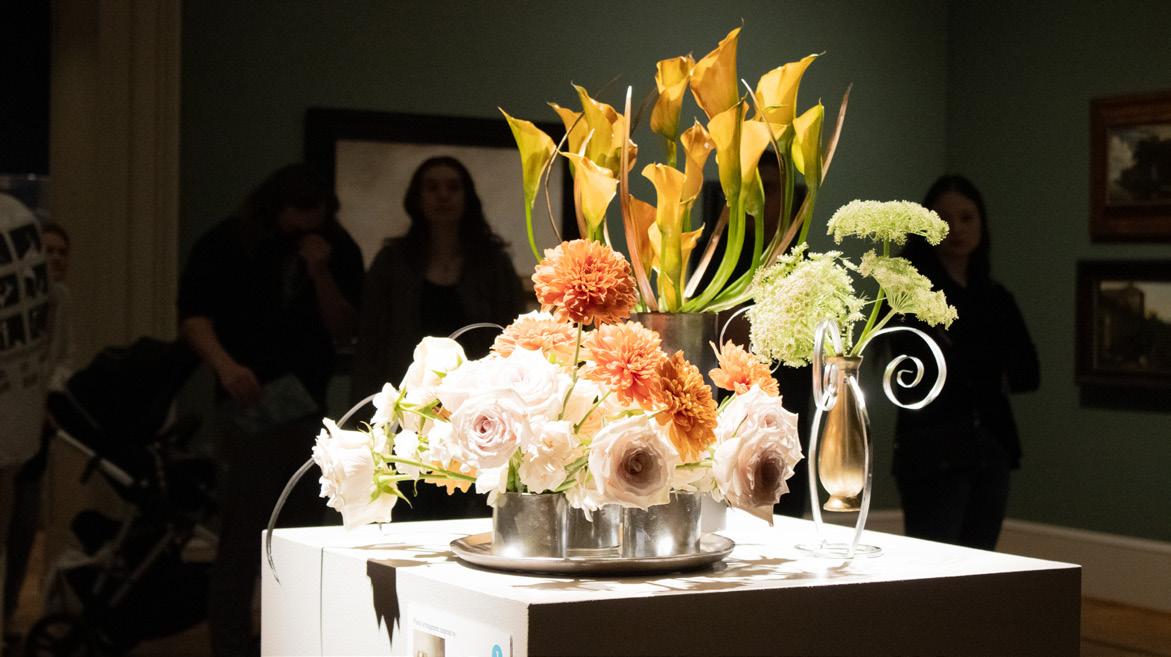
Each ephemeral arrangement is inspired by and paired with a permanent piece from the museum, many of which are over a thousand years old. Every year, the museum chooses 30 pieces from its collection, then opens applications to floral designers in the St. Louis area, who will randomly be assigned a piece to inspire their floral creation. In addition, the museum has a featured display in the Sculpture Hall that tends to be the centerpiece of the exhibition; this year’s arrangement was by New York-based floral designer Rachel Cho.
At SLAM, “Art in Bloom” began as an invitational event with only 7,000 attendees. The exhibition
expanded several years back, becoming an open call to any floral designers within a 100-mile radius of St. Louis, and last year’s celebration saw over 30,000 attendees.
“It’s an incredible weekend, an opportunity to connect with new people to build connections and to experience joy together, no matter where people are coming from, no matter their walk of life, no matter their background … and then you’re getting a whole new side of art while you’re there,” said Darien Burress, one of this year’s floral designers.
Currents 125: Blas Isasi
On Feb. 6, 2026, SLAM opened Peruvian artist Blas Isasi’s “The weight of a gaze (is to listen to the sound of a kilogram)” as part of the museum’s “Currents” series. This series occurs annually as part of WashU’s Henry L. and Natalie E. Freund Teaching Fellowship.
The fellowship, which includes a single-class teaching position at the Sam Fox School, offers artists a $45,000 teaching award, studio space, access to the Sam Fox facilities, and the solo exhibition at SLAM. SLAM presents the exhibition each year under the title “Currents,” but Isasi also titled the exhibition using his characteristic poeticism and meaning. “The weight of a gaze (is to listen to the sound of a kilogram)” is inspired by a Chincha Inka balance that Isasi came across in SLAM’s permanent collection.
Isasi’s current work strives to
embody the desert geography of Peru, and especially of his home city, Lima. Alongside the natural landscapes of Peru, Isasi has attributed much of his inspiration to ancient Andean civilizations, such as the Moche and the Sicán. In addition to being inspired by Andean art and architecture, he explores ancient Andean analyses of the nature of existence through mythology, called ontologies, as well as cultural narratives that explain the origin and structure of the universe, called cosmologies. In addition to exploring the histories and mythologies of non-Western and pre-Western cultures, especially those of the Andes, Isasi hopes that his art can bridge the gap between the future and the past, allowing people to envision a different world.
Ancient Splendor: Roman Art in the Time of Trajan
“Ancient Splendor” is a traveling exhibition and is being shown in only two museums in the U.S. Before making its way to SLAM, the exhibition was shown in The Museum of Fine Arts in Houston.
The show has been in the works for several years and is a unique exhibition because of the way it came to be. Rather than being organized solely by SLAM, the show was put together by an organization called StArt that specializes in arranging shows on Italian art to send to foreign institutions. The chief curator of “Ancient Splendor” was Lucrezia Ungaro, the now-retired director of
“Everything is always going to need people to execute,” Director of Strategic Initiatives & Communications Raven Lumpkins added.
WashU Dining Services is excited for the future of Bear Bodega and is receptive to student feedback. Lumpkins urged students to notify Dining Services of any requests or comments about Bear Bodega while they are still in the early implementation stage.
“We really do want it to be responsive. So while we’re planning over the summer, if people want to submit things to us, please email [Dining Services], and we’ll be considering everything.”
WashU Dining Services can be reached at diningservices@ wustl.edu. MADDIE
The Museum of the Imperial Fora in Trajan’s Markets.
While four of the sculptures and many of the coins in “Ancient Splendor” come from SLAM, most of the works come from four major Italian institutions: The National Roman Museum, the Archaeological Park and Museums of Ostia Antica, The National Archaeological Museum of Naples, and the Vatican Museums. For many of these pieces, this is the first time they have left Italy.
According to Hannah Segrave, an associate curator at SLAM who also curated the show, the exhibition is separated into three sections: The first two rooms focus on Trajan and the imperial household, the next few rooms explore the households of everyday Romans during Trajan’s reign, and the final section of the show delves into the public sphere of Roman life, from theater to gladiators, food to shipping, and Roman baths to religious practices.
Segrave’s main goal in the exhibition is to engage the St. Louis audience in a way that is less serious and dramatic than the way that many Americans tend to view the ancient Romans. She also wants to reflect stories that are easily overlooked: the lives of women and enslaved people and the different aspects of class and labor.
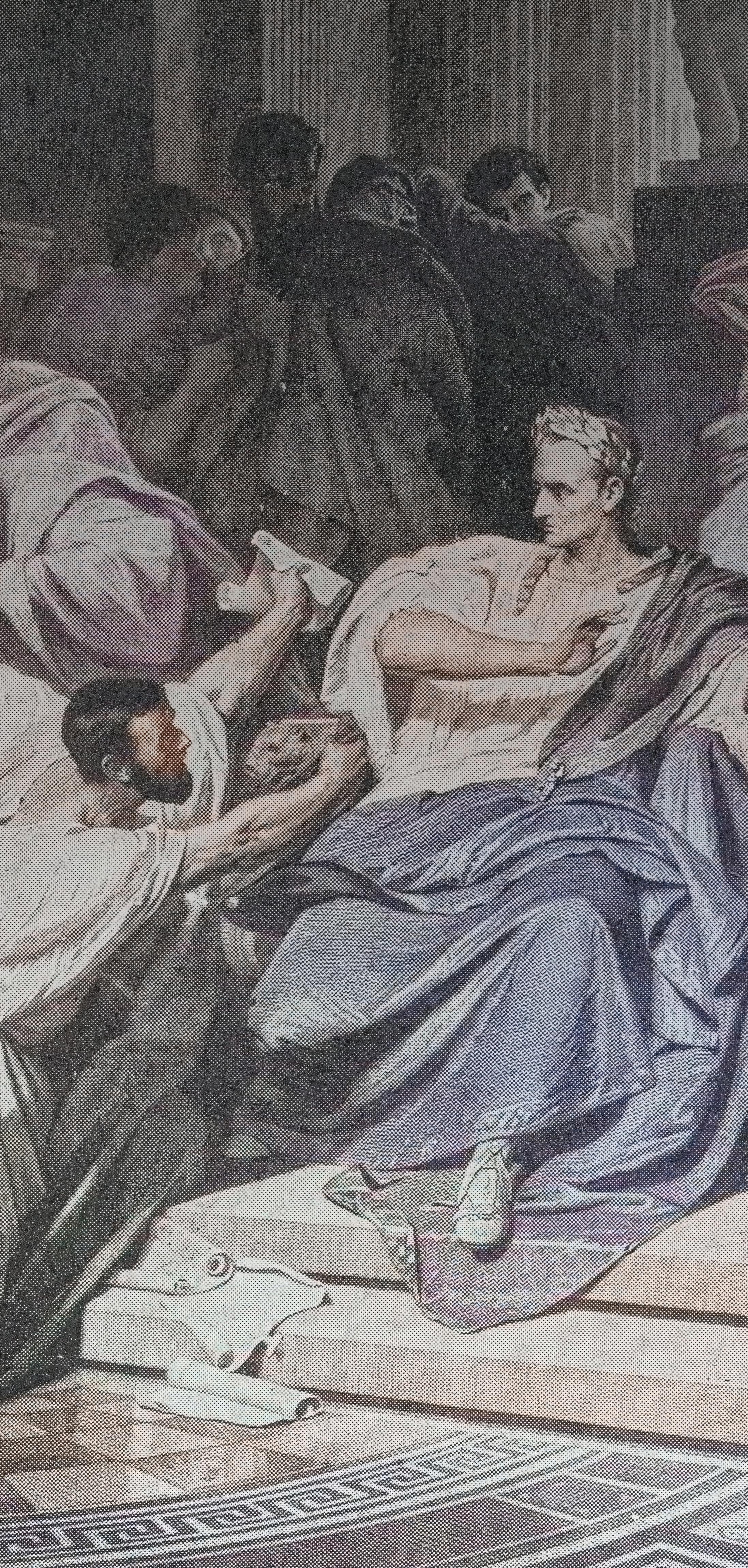
The exhibition has also been paired with another small exhibition, called “Visions of Antiquity,” which explores portrayals of ancient Rome by artists in later centuries.
Bear Bodega, WashU’s first 24/7 convenience store, recently opened on the South 40.
CHARLOTTE BALLA | STAFF PHOTOGRAPHER
ELLE LUDWIN SCENE EDITOR
Designed by Erin Wilson and inspired by Pieter Claesz’s “Still Life,” this exhibit features yellow calla lilies, orange dahlias, and white roses.
RACHEL BENITEZ-BORREGO | STAFF PHOTOGRAPHER