McGlothlin said.
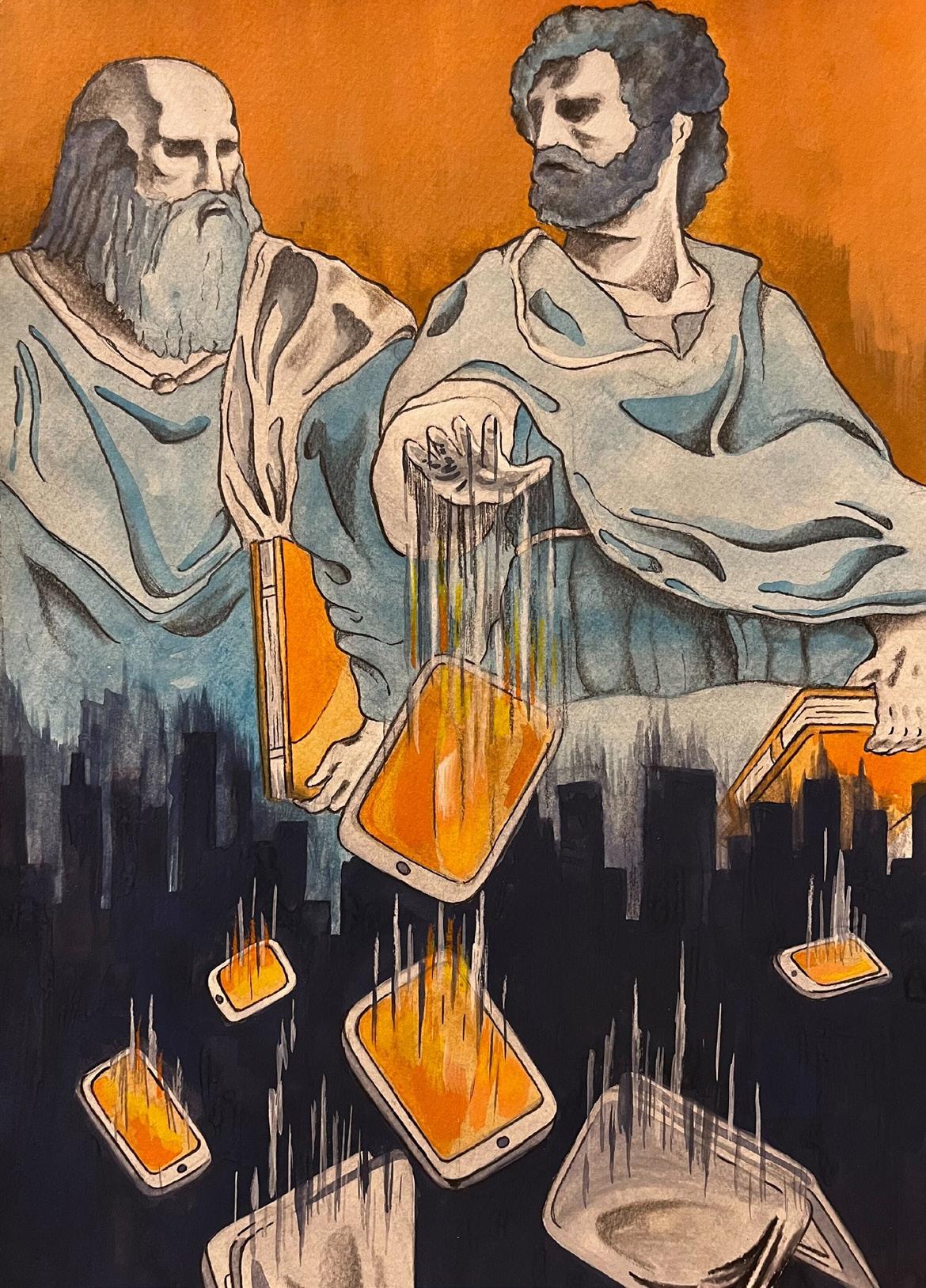
An increasing number of courses in WashU’s School of Arts & Sciences are heavily restricting or banning the use of digital devices in the classroom, according to Vice Dean of Undergraduate Affairs Erin McGlothlin and Associate Professor of Dance Joanna Dee Das.
Both faculty members participate in Arts & Sciences Curriculum Committee meetings and noticed the restriction after reviewing the syllabi for every new course proposed by Arts & Sciences faculty as part of their committee responsibilities.
McGlothlin, who is also a professor in two Arts & Sciences humanities departments, has implemented a no-laptops policy in her class for the first time this semester because she is teaching a discussion-based Ampersand Program. Previously, she allowed technology in her classes, although she sometimes asked students to close their laptops when she saw a drop in their participation in class discussion. She said that when she has made this request, she has seen an immediate increase in engagement.
“Immediately the energy in the room would go up. Suddenly you have a group of students interacting with each other and with me,”
Senior Mia Powell, an English and history major, said that last semester, four of her five classes completely prohibited the use of laptops and iPads, and this semester, half of her classes ban digital devices. Powell studied abroad both semesters of her junior year, but said that only one of the courses she took as a sophomore fully banned digital devices.
Technology restriction policies in WashU classrooms include allowing iPads but not laptops for note-taking, requiring laptop users to sit separately from students who take handwritten notes, or banning technology use altogether — with exceptions for students with disability accommodations.
Das revised her digital device policy over the summer to ban laptops and only allow iPads, which can be utilized as textbooks or notebooks, for her discussion-based curriculum.
“I was going back and forth because I do know that many students these days do like to take notes on their laptops, but it’s not necessary for them to copy down every piece of information,” Das said.
Some professors are not outright banning technology but instead implementing policies to restrict it.
Professor Molly Moore divides her classroom into a laptop and non-laptop section to limit the distraction of upright screens. Students with iPads are able to sit in the non-digital device section.
“I think of both the internal and external effects of using laptops,” Moore said. “Especially with laptops, you have the screen facing up. If you are sitting behind somebody that’s
using a laptop, in particular, if that person is not on task … it’s almost impossible to focus.”
‘We are representing all of you’: WashU government relations head discusses federal lobbying efforts NICHOLAS DEMBA
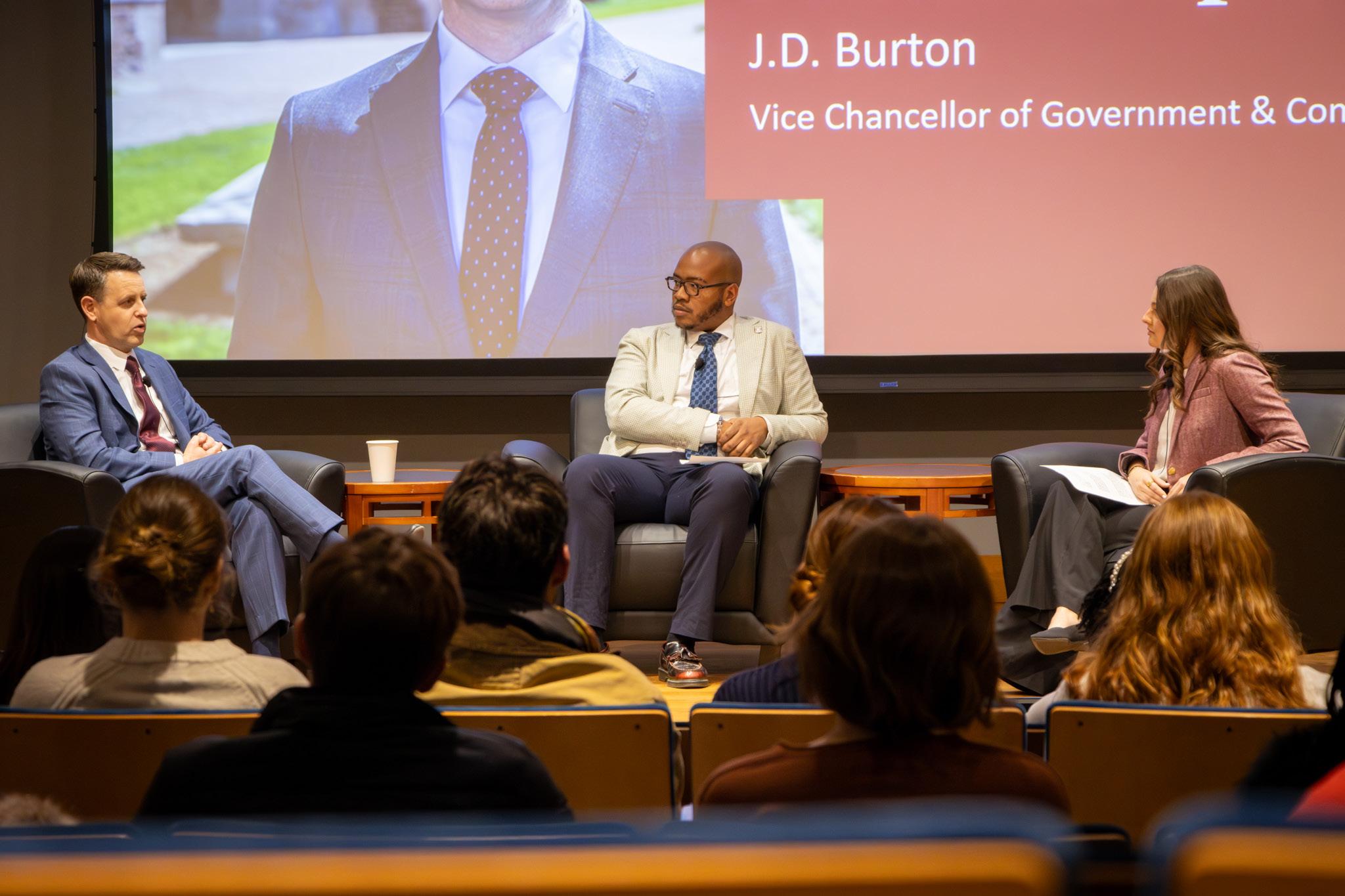
J.D. Burton, WashU’s vice chancellor of Government and Community Relations, held a fireside chat with students in which he discussed WashU’s federal lobbying efforts after one year of the Trump administration, Jan. 27.
Burton leads a nine-person team that conducts local, state, and federal lobbying for the University and the medical school. The conversation was moderated by the undergraduate student representatives to the board of trustees, seniors Bella Gomez and Da'juantay Wynter, and graduate student representatives Michael KudomAgyemang and Alyssa Labonte.
Burton said that efforts at the federal level have taken up most of his team’s time because WashU is a private university that is not attached to the state of Missouri and does
not receive direct funding for tuition and other programs, but does rely on federal research funding. WashU now has two dedicated lobbyists working in Washington, D.C.
“We have a huge amount of connection to the federal government,”
Burton said. “We know that there's a lot of folks who are counting on us being successful to help them be successful.”
WashU’s lobbying efforts have intensified significantly over the last few years. WashU spent $720,000 on federal lobbying in 2025; in 2022, the University spent just $50,000.
Burton singled out issues around medical and scientific fields at WashU as some of the thorniest issues. He said that research funding is “at risk in a lot of different ways.” He also mentioned transgender and reproductive care as contentious topics when speaking to officials.
“The Ivies of the world are going to suck all the oxygen out of these discussions, always,” Burton said. “We have done a good job of making sure that we are creating a reputation in D.C. as an institution that is credible, that is forward thinking, that is not going to necessarily get pushed around.”
Burton said that lobbying provisions of the One Big Beautiful Bill Act (OBBBA) took up “a lot of effort" last year. The legislation included significant changes to federal education policy, including alterations to the Pell Grant program and increases in the endowment tax on institutions like WashU.
Amid a political environment where public perception of higher education is at a record low, Burton said that many public officials shared the public’s skepticism of universities in conversations. However, he believes that WashU’s
SIX JUNIORS, ONE 'BLOODLINE': No. 15 women’s basketball led by junior class. (Sports, pg 7)
The University administration has yet to provide a plan to relocate the 15 practice rooms in Tietjens Hall in the wake of current construction plans to turn the music building on the Danforth Campus into new residential halls for underclassmen.
Although the destruction of the music buildings was announced in Dec. 2025 by the St. Louis PostDispatch, the music department has been in communication with administration since Nov. 2022. Patrick Burke, chair of the Department of Music, stated in an email to people involved with the department that, despite the faculty “fiercely advocating” for their students’ needs, the administration has yet to plan for the current lack of practice rooms.
“[We’re] trying to make the administration understand just how much use they get and how important they are for music majors, but also students who take classes with us,” Burke said. “It’s students from all the schools of the University.”
Practice rooms in Tietjens Hall are estimated to be used 1,500 times per month by 300 individual students, according to the email Burke sent to the Department of Music. Burke said practice rooms provide a space where students can practice without disrupting their peers and relieve the pressure of rehearsing in the open.
“Nobody wants to practice in public,” Burke said. “At that point, it becomes a performance of some kind.”
Burke said he is concerned about enrollment in the music program.
status as a large research institution gives it more credibility.
Burton emphasized the importance of building long-term relationships with policymakers and establishing WashU as a credible institution. He also reaffirmed WashU’s policy of institutional neutrality while encouraging students to engage politically amid protests last semester.
“I'm fortunate that I don't have to control WashU's view[point] or … decide whether we take a political stance or not. That's all of you,” Burton said. “Every single one of us on this campus has every right to speak about whatever topic that they want to in their own personal capacity.”
Affordability has become a hotbutton issue in national politics, and Burton said that members of Congress frequently bring up how WashU and other institutions are working to reduce the cost of college. Burton said that a lot of conversations in Congress have revolved around the “return on investment” of college.
Burton pointed out members of the Missouri Congressional Delegation, including Senator Eric Schmitt and Representatives Wesley Bell, Jason Smith, and Ann Wagner, as having helped WashU in policymaking. He also said that Senator Susan Collins, the chair of the Senate Appropriations Committee, visited the WashU Medical Campus last week to explore WashU’s biomedical research.
“I think where we are right now is that we've done a really fantastic job with our congressional delegation,” Burton said. “I think that there's still a long way to go in members who just have no connection to WashU.”
“I’m really worried that if there aren’t enough practice rooms, people might quit,” he said. “If you’re taking a lesson and there’s nowhere to practice … you’re not going to find yourself getting any better.”
Relocation of practice rooms would pose issues for rooms with large stationary instruments. Katie Ritzema, a master’s Musicology student, is concerned about moving larger instruments from practice rooms, including the organ in Tietjens.
“That organ is very old,” she said. “It’s unlikely that that organ would survive being moved to a new location.”
The relocation process for the rest of the music buildings has also raised concern in students and faculty, especially the transfer of the Gaylord Music Library collection, which, according to WashU’s Department of Music website, holds more than 110,500 books, scores, and periodicals, over 47,000 recordings, and nearly 4,700 microforms.
Music Librarian Brad Short says that the transfer process has been going smoothly. The Library has already moved some smaller collections, including microfilm and VHS tapes, to the West Campus.
“There are an enormous number of details involved in moving a library collection, so the support that we have had in the Music Library to make this a painless move has been extraordinary,” Short said.
Burke said the administration is actively working with faculty to find a solution.
“I think we are having real conversations about their importance and the places that they can go,” he said. “I definitely wanted students to weigh in, to underline how important they are, but it’s not like the administration doesn’t know about the problem, and I do think there are people working to solve it.”
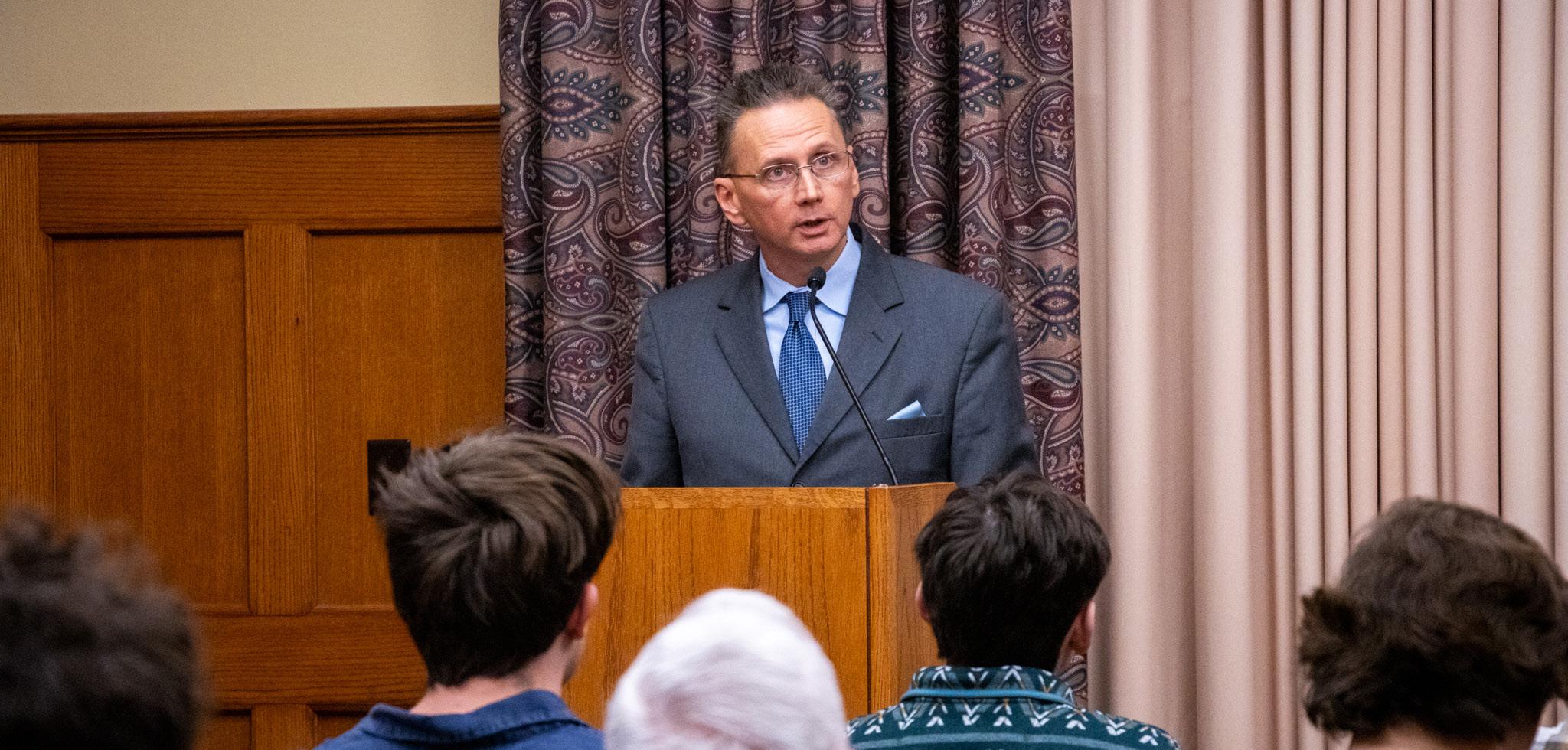
Professor Krister Knapp discussed the nuances and historical parallels, such as those to the Monroe Doctrine, in the Trump administration’s recent involvement in Venezuela on Jan. 22.
A teaching professor in WashU’s history department, Knapp is a scholar of U.S. foreign relations, both modern and historical. The talk was a part of his own lecture series through the WashU Department of History.
Faculty, students, and members of the St. Louis community, including Chancellor Andrew D. Martin, packed Hurst Lounge last Thursday night to hear Knapp’s take on Operation Absolute Resolve, the U.S. capture of Venezuelan President Nicolás Maduro and his wife Cilia Flores. Knapp presented the operation as consistent with U.S foreign policy, drawing parallels to the 1823 Monroe Doctrine.
Knapp asserted that the buildup for Operation Absolute Resolve was a long one, dating back to March of 2020, when the first Trump administration indicted Maduro for cocaine
from page 1
Michelle DeLair, a lecturer in American Culture Studies and the director of Curricular Innovation in Arts & Sciences, lets students set their own classroom technology policy at the beginning of the semester. She began to allow students to define their own policy about 10 years ago and incorporated student input because she felt that when students designed the policy themselves, they understood its purpose and were committed to following it throughout the entirety of the semester.
“I have had classes in the past decide, [say that] as a class, they don’t want laptops, or that they don’t want laptops during particular portions of the class,” she said.
McGlothlin noted that when she reads end-of-semester course evaluations for Arts & Sciences classes, students sometimes ask for restrictions on technology use.
“Some students will ask for a laptop policy because they find their learning is distracted when they look at another
trafficking conspiracy and narco-terrorism. In summer 2025, the president signed a secret order, sanctioning the use of military force against drug cartels, which the administration labeled as terrorist organizations, to provide “legal leverage to act against them,” Knapp said.
One of the most important factors in the administration’s actions in Venezuela is oil. In August 2025, the Department of Justice deployed U.S. naval power in the Caribbean. After trying and failing to negotiate a deal giving the U.S. access to Venezuela’s oil fields, the U.S. established a blockade around Venezuela and began to seize illicit oil tankers. Six have been seized so far. Knapp explained that the administration’s goal is to gain leverage over Venezuelan oil amid U.S. competition with China, a major buyer of Venezuelan oil.
“Gone is the talk about immigrants and illegals and narco-terrorism, and it’s all come down to oil now … Oil makes the world go ‘round,” Knapp said.
Knapp also mentioned that these foreign policy objectives in Venezuela were outlined in the administration’s National Security Statement (NSS), which identifies annual security objectives for the U.S.
“There has been a major shift away from not just
[student’s] screen,” she said. Although an increasing number of humanities courses are restricting digital devices, many continue to permit their use in the classroom. Uluğ Kuzuoğlu, associate professor of history, who teaches “A History of Modern China” and a new seminar, “Artificial Intelligence: The Mind and the Machine,” has not changed his policy to accommodate any technology restriction.
“I think there is also some beauty in letting students get distracted when they want to be. Lectures are long,”
Kuzuoğlu said. "Sometimes you just want [those] two minutes where you can get distracted and then come back to listen to whatever discussion is going on.”
Das said that during her time on the Curriculum Committee, she has observed that the increase in technology bans is more prevalent in humanities and social sciences courses than in STEM courses.
McGlothlin said she is not certain whether humanities
focus on the forever wars in the Middle East, but especially away from great power competition with China and Russia, and instead a turn towards economic competition with those very same countries, but in Latin America and the Western Hemisphere,” Knapp said.
Although the Trump administration is evidently making changes to foreign policy, Knapp outlined many historical precedents for the event, including the Louisiana Purchase, the Mexican-American War, and the Roosevelt Corollary to the Monroe Doctrine that allowed the U.S. to involve itself in many Latin American countries, including Venezuela.
Knapp honed in on the Monroe Doctrine, drafted by President James Monroe’s Secretary of State, John Quincy Adams, declaring the Western hemisphere off-limits to European powers, ensuring they would not be able to regain control of their colonial holdings.
President Trump recently released the “Trump Corollary” to the doctrine, in which he reasserts his administration’s commitment to controlling the Western hemisphere.
“The Trump administration’s policy and behavior in Latin America is neither new nor all that unusual,” Knapp
courses are banning technology more than STEM classes.
Karl Schaefer, a lecturer in the mathematics department, said he does not restrict digital device use in his classes. He noted that the main goal of teaching is to help students learn content and develop skills, and classroom policies should support that goal.
He said that technology can become distracting and hinder learning for some students. At the same time, he emphasized that students are adults who can make their own decisions about how to spend their time and what they find valuable. He also noted that there are legitimate reasons for using devices in class, including situations in which students have disability accommodations.
Schaefer said a professor’s approach to technology can depend on the type of course being taught. He usually teaches large lecture classes.
“I don’t think this is a faculty versus faculty debate about whether or not device bans are good or bad. It’s

said. “This impulse has gone by different names … but they all share the same expansion as the interventionist impulses in the name of U.S. interests.”
Trump has been clear that the invasion of Venezuela was partially in pursuit of rectifying a debt from the 1970s, in which Venezuela cancelled profitable contracts with U.S. energy companies.
Knapp’s remarks extended beyond Operation Absolute Resolve. Notably, he commented on Trump’s recent statements regarding a possible acquisition of Greenland for security purposes. Russia and China currently lead the U.S. in ice-breaking new sea lanes revealed by melting polar ice caps. In Knapp’s perspective, the two superpowers’ new position constitutes a security risk to the northern U.S. states. Controlling
not like I’m disagreeing with my humanities colleagues,” Schaefer said. “We have very different contexts in our classroom, different class sizes, different learning goals, and those different contexts require different policies.”
Schaefer added that if he was teaching a small humanities discussion-based course, he likely would have a policy restricting device use in some way. However, he emphasized that in the current classes he teaches, he feels it’s best not to prohibit digital devices.
“Thinking about the benefit to one student versus the entire class and weighing that against the enforcement of [a ban], that’s why I [don’t restrict it],” he said. “It’s not like a personal hatred for device bans. It’s just based on the context I teach in. I think it doesn’t really make as much sense.”
Several professors told Student Life that they are interested in students’ opinions about technology in the classroom and want to take them into consideration when
from page 1
In an interview with Student Life, Burton said that WashU has been working with partner institutions in other Republican states, like Vanderbilt University, Rice University, and Emory University, in federal efforts, as well as the Association of American Universities (AAU).
Burton said that his team is looking to continue to expand WashU’s reputation in Washington, D.C.
“We've done a great job, I think, though, in sort of reversing negative impressions and expectations that people may have had of WashU in the D.C. space,” Burton said.
Burton said that the University was looking to address some of the larger problems around higher education, but rejected the idea that change could only come from the federal government.
“It can't be top down only,”
those routes would also economically benefit the U.S. by allowing ships to go over the North Pole instead of around it.
Having access to ports in Greenland would expedite the development of sea lanes for the U.S. Additionally, Greenland has large rare earth deposits, and the need for them has recently become more urgent as supply chain issues hinder U.S. acquisition of the materials.
“The president is not wrong to talk about Greenland as an interest of the United States. It’s how he goes about it that I think is part of the problem here,” Knapp said. Audience members and St. Louis educators Jan Jacobi and Charlie Clark praised Knapp’s unbiased portrayal of Trump.
“He’s so good at helping
drafting classroom policies.
“I’m going to survey the students at the end of the semester to see how they felt, because I do think, yes, technology is an inevitable part of our lives and our learning experience,” Das said. “But that doesn’t mean we can’t have guardrails.”
In her humanities courses, Powell supports stricter limits on technology. However, she is less certain that more technology bans are necessary in STEM courses because they are often more lecture-heavy. She noted, though, that she has not taken many STEM courses in college.
“It’s your job to synthesize the information being tossed at you [in STEM classes],”
Powell said. “It’s up to you whether or not you want to retain that. So if you’re texting, you’re only hurting yourself.
But a seminar particularly requires the engagement of others for there to be any sort of pedagogical benefit to it for the entirety of the class.”
Senior Noah Gornstein, a
Burton said. “You have to have higher education leaders who are … willing to say there are issues we have to address.”
Gomez said that she and Wynter organized the fireside chat due to the relevance of national political events to WashU and students' interest in how WashU is responding.
“We wanted to create a public forum and an opportunity for dialogue, for students to be able to ask questions from our biggest advocate himself, and just be able to kind of connect students to the team of people that's speaking on their behalf,” Gomez said.
While the event was meant to establish greater transparency, some student attendees, like sophomore Dash Leigh, expressed frustration at WashU’s neutral stance on major national issues.
“WashU doesn't take a political stance unless the
people see both sides,” Jacobi said.
A common theme throughout Knapp’s talk was balancing critical and supportive rhetoric about Trump with historical evidence that puts his policies into context.
“'I see this as an opportunity he gave me to get away from the dining table discussions,'” Clark said.
Crisis & Conflict in Historical Perspective (CCHP) is a lecture series organized by Knapp that brings informed discussion of world events to the WashU and St. Louis community. The next lecture, “Causes and Consequences of the Russia-Ukraine War,” will be on March 30, given by Professor James Goldgeier from the School of International Service at American University.
political science and economics double major, said only one of his classes last semester had a policy banning the use of digital devices.
Prior to last semester, Gornstein only had one other class during his time in college that banned the use of digital devices. He said that he had generally learned more in classes in which he took handwritten notes. However, for certain classes, he finds it helpful to have digitized notes so he can more easily study for exams and make flashcards. Gornstein told Student Life that he does not support professors banning digital devices altogether.
“I do believe that giving people the freedom is important. I think there [are] good reasons why some people might want to be able to use technology, [including] for learning disabilities,” he said. Additional reporting by Aliza Lubitz.
things are actively, directly impacting the University,” Leigh said. “But that's kind of like a non-statement, because every political issue affects people personally.”
Burton encouraged attendees to join WashU Advocates and Bears Caucus, two programs that allow students to engage directly with government officials and share their experiences, and emphasized his role as an advocate for the interests of the WashU community.
“We are representing all of you. We are your lobbyists, and so our job is not to talk about the great things that I'm doing, or the team's doing,” Burton said. “Our job is to echo and repeat and share what you're doing and the stories that you're creating, and get your good stories out there so that people can understand.”
said. “In terms of taking that research capacity, there was this clear need, and then Public Exchange was created, and so it was a natural pairing.”
WashU’s first Public Exchange project — which will test St. Louis’ soil for increased lead levels after the May 16, 2025, tornado — hopes to have its first data sets ready in mid-February 2026.
Public Exchange is a program designed to utilize academic research to combat issues that affect the St. Louis community and the surrounding area. The program is modeled after the University of Southern California (USC)’s Public Exchange initiative, and WashU announced its involvement in late October 2025.
In May 2025, WashU hired Chris van Bergen as the executive director of WashU’s Public Exchange within the Brown School of Social Work to coordinate cross-department efforts.
“WashU is obviously such an amazing institution, and I thought this was a really interesting opportunity to connect my passions, really getting out in the community to do something that really makes a huge difference in St. Louis,” van Bergen said.
The Public Exchange team had only begun brainstorming when the May 16 tornado became an instant priority for its programming.
Daniel Giammar, WashU’s director of the Center for the Environment, said the timing of the disaster coincided with project planning.
“A lot of people were trying to figure out, ‘What can WashU do?’” Giammar
WashU’s Public Exchange’s first project, CLEAN STL, was inspired by USC’s Public Exchange’s response to the Los Angeles wildfires.
“They did all that heavy lifting and work,” van Bergen said. “We were essentially able to take that playbook, translate it for a St. Louis space context and a different disaster.”
CLEAN STL is currently conducting research in soil testing and air quality and monitoring how the tornado disrupted communal public health.
Soil testing is important to detect whether the amount of lead in the land around urban areas has risen to dangerous levels. High concentrations can cause increased blood lead levels as dirt gets ingested as dust. Coincidentally, Jeff Catalano, director of Environmental Studies, already had a soil testing program underway but had yet to acquire sufficient funding.
“We hadn’t gotten to a point of suggesting community intervention,” Catalano said. “We’ve written one short report on this, but [we] also didn’t have the capacity to suggest fixes, which generally are really expensive.”
Public Exchange was able to connect to Catalano and other experts through Giammer, who served as the coordinator between the program and WashU’s environmental research departments.
“We view ourselves as

a relationship broker,” Giammar said. “We helped to form the team because it’s our job to know all the people doing environmental work at WashU.”
Public Exchange offered the funding and resources necessary for Catalano to research the impact of the tornado on the St. Louis community through soil testing. Catalano and his team are now using their expertise to assess if the tornado has increased the
soil’s lead levels and determine which areas in St. Louis are at the highest risk.
“If the Public Exchange can enable this [testing] and help bring in these resources, then I think it could actually solve an important community problem,” Catalano said. “If we can figure this out, it might be a model for other cities to try to address things, because this soil issue is all over the place.”
Undergraduate students are currently working on
Catalano’s team, but the program is at capacity. Catalano hopes that future projects in Public Exchange and soil testing will be available for student involvement in the future.
“I hope long term, we build in a mechanism for student involvement,” he said. “I actually think this is one of these projects where lots of student involvement is totally possible.”
Van Bergen is hopeful for the various, tangible solutions
WashU can provide for the community.
“I am actively holding the reins on myself,” van Bergen said. “WashU has such an amazing resource of incredible brains here, incredible areas of expertise, and there are lots of opportunities in the community, as far as places where we could bring this model.”

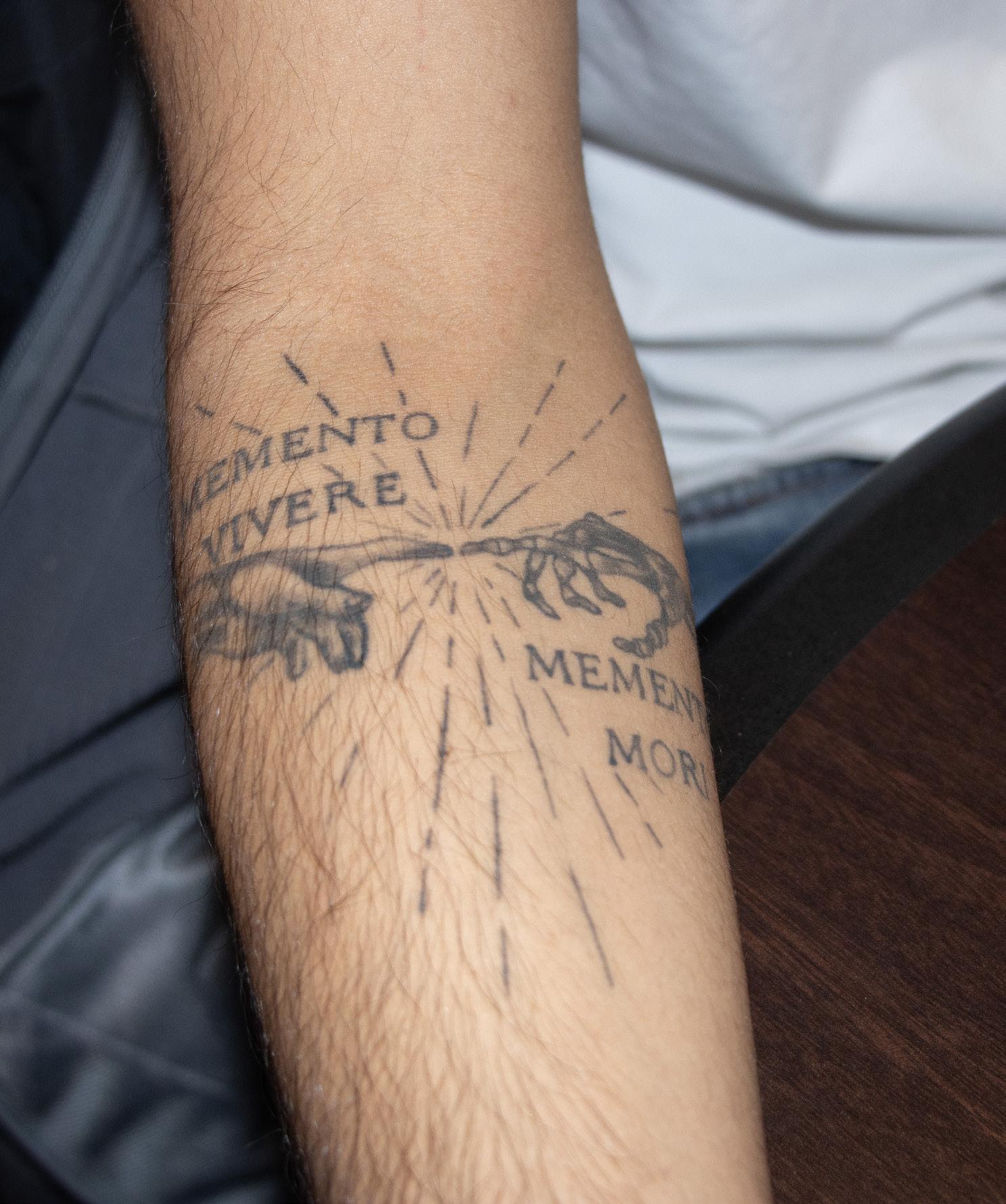

to go on my body, right?” McKay said.
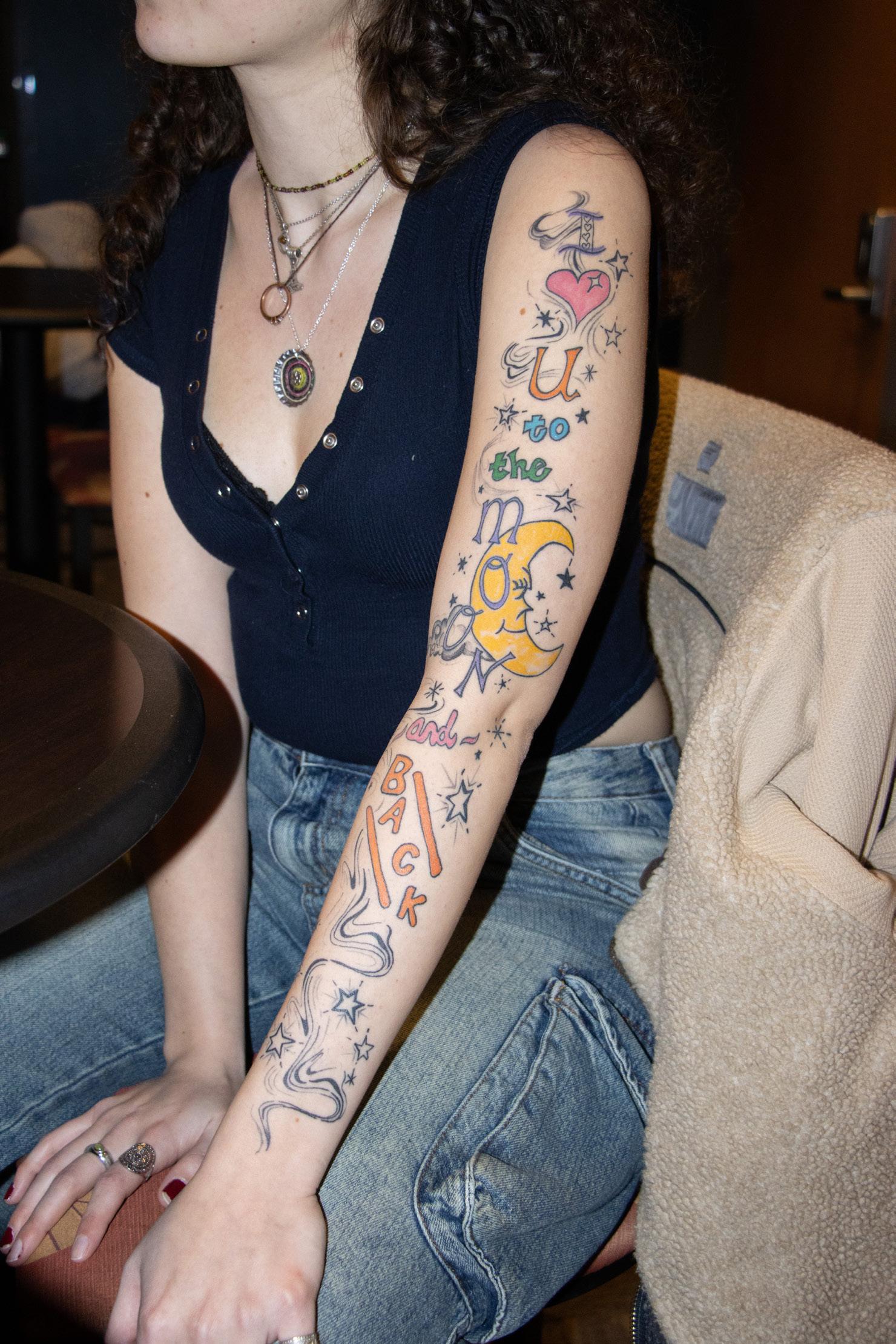
First-years Alexander Huerta, Savannah McKay, and Alyson Lone Bear, and senior Hiram Johnson all have tattoos. Getting a tattoo in college seems typical; it is the time for rebelling, taking risks, and trying new things. Beyond tropes of spontaneity and defiance, though, these tattoos represent students’ identities and act as visual portrayals of important times in their lives.
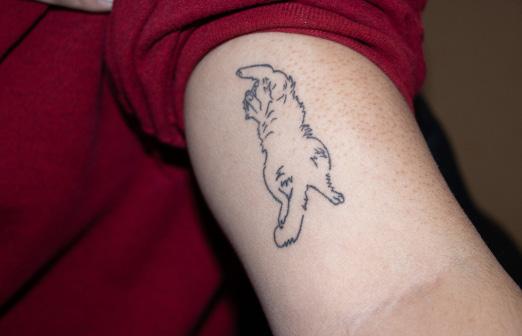
For Lone Bear, getting a tattoo in college helped her navigate the many challenges that come with being so far from home. A recent tattoo she got of her cat, Lyla, is meant to ground her amid a transformative time in her life.
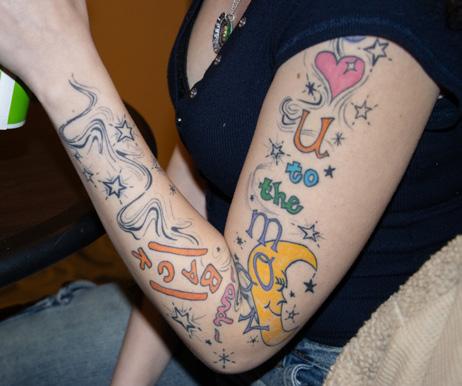
“I want to have her with me forever. And so it’s kind of a sense of comfort for me. Whenever I’m, like, feeling far, I can rub my arm, and then she’s there for me,” Lone Bear said. Some of the most emotionally driven tattoos are dreamt up in childhood and executed when one has the money and independence to do it. Despite thinking about it for years, McKay’s one and only tattoo is in remembrance of her mom and was only carried out recently. Her left arm illustrates doodles from a letter her mom wrote her before she died.
“One day, when I was a little older than when I got that letter, I was looking at it, [and] I was like, this has
Tattoos constantly prove their worth in the form of meaningful conversation.
“It’s an image on your body, and I feel like it provokes you to talk about something, talk about something that’s meaningful to you. I feel like it’s kind of hard to get the full picture just from the image,” Johnson said, in reference to the sun and moon tattoo on his chest.
Huerta recalls how a conversation with a Beast Craft BBQ employee that started simply with complimenting each other’s tattoos led to an ongoing connection between them. He now frequently converses with her, and some of the conversations that followed dramatically changed how he felt about getting tattoos on impulse.
“It was jaw-dropping to hear this strong woman that I admire be so regretful of something she did as a kid … That’s definitely made me, now, be more hesitant, and that’s why my New Year’s resolution is to stop getting spontaneous tattoos,” Huerta said.
At a career-driven school like WashU, employer perception is at the forefront of students’ minds. When asked, students agreed that the perception of tattoos in the professional world has changed in recent years.
“Continually seeing people in professions I want to be in, or professions that other people might want to be in, having tattoos in
a professional environment has definitely helped … destigmatize this idea that you can’t have tattoos to be professional,” Lone Bear said.
For some, an employer that regards tattoos as improper is less professional than the act of having tattoos itself.
Huerta added, “If you’re not going to hire me because I have tattoos, then your priorities aren’t straight.”
Many people face challenges of social anxiety with things like asking for extra cream in their coffee or making a return. Getting a tattoo can also serve as a test of strength for fighting for what you really want. Being assertive in a tattoo shop is especially important because you are not just paying for a service but a good that will last forever.
“At the end of the day, this is permanently on your body, and you need to get what you want, not what you think is convenient for the person who’s supposed to be doing it for you,” Huerta said.
It was clear through these conversations that tattoos seep far beyond the skin and into the intricacies of what it means to want something on your body for the rest of your life.
“Whenever I got my tattoo, it was in the intention of getting a tattoo to live my life, short and fun. … I’m so grateful to be living right now, and I’m so grateful for the life I have,” Huerta said.
“It’s an image on your body, and I feel like it provokes you to talk about something, talk about something that’s meaningful to you.”

it is “non-legally-binding.”
The Missouri State Legislature is currently considering the passage of House Bill (HB) 2061, a bill that would codify into state law the highly controversial and widely discredited International Holocaust Remembrance Alliance (IHRA) working definition of antisemitism.
Unlike other definitions favored by leading scholars of Jewish, Islamic, Holocaust, and hate studies, the IHRA definition views certain criticisms of Israel as antisemitic. In fact, of the 11 examples of antisemitism referenced in the definition, seven deal with criticism of the State of Israel. HB 2061 would formally and broadly apply this definition to every public school, university, and institution in Missouri.
It would suppress dissent against the Israeli occupation of Palestine by referring those suspected of violating this speech code to a Title VI civil rights investigation.
Proponents of the bill argue that carving out special legal protections for Jewish people is necessary to combat rising antisemitism, and given that Judaism is a sufficiently unique identity that lies outside existing protected categories (neither exactly a religion, race, nor ethnicity), it requires additional protections.
One could make any number of arguments against such a bill and such a definition: that it sets a dangerous and impractical precedent, conflating emotional discomfort with actionable hate speech; that discrimination based on race, ethnicity, and religion are already illegal under existing statutes; that

it desecrates the memory of the Holocaust by providing political cover for the ongoing genocide of Palestinians; that it risks worsening antisemitism by allowing the State of Israel to exert further undue influence on America’s domestic politics.
But one doesn’t need to subscribe to any of these views to oppose the bill.
Simple American gradeschool civics are sufficient.
Some background on the IHRA definition’s origins and its afterlife is prudent here. It was first published in 2005 by the European Monitoring Centre on Racism and Xenophobia, an agency of the European Union. From its inception, this definition was never meant to shape law in the way HB 2061's proponents are wielding it. This is evident from its name — a “working definition.” In fact, the original document itself is careful to note that
The definition was meant as a conceptual model to help classify existing data on hate incidents in the European Union. Even if this were legally binding for the European Union, no member state has the same, near-absolute freedom of speech as enshrined in federal U.S. law. HB 2061 infringes on freedom of speech and violates the supremacy clause, which forbids states from passing laws that contravene the U.S. Constitution.
Most damning for supporters of the bill is that the lead author of the IHRA definition, antisemitism scholar Kenneth Stern, a self-described Zionist, has disavowed exactly this use of his work. In a 2019 op-ed in The Guardian titled “I drafted the definition of antisemitism. Right-wing Jews are weaponizing it,” Stern argues that application of this definition to
First Place: Yeah no, for sure don’t have that kind of dog in me
Sean Henry, Current WashU Student
Second Place: “Alright class I’ve randomly assigned you a partner for the class project which is worth 80% of your grade, hope you enjoy!”
Leo Penny, Current WashU Student
Third Place: The moment you realize this is not going to be a great day.
Darren Jacobs, WashU Parent

campuses is an “attack on academic freedom and free speech.” Stern adds that “Historically, antisemitism thrives best … where the integrity of democratic institutions and norms (such as free speech) are under assault.”
I raised this point when I traveled to Jefferson City earlier in January to give public testimony against HB 2061. I was one of dozens of Jews to speak out against the passage of this bill, joined by ordinary working Missourians (both urban and rural), academics and scholars, and the children and grandchildren of Holocaust survivors. We appealed to fact, precedent, and principle. Proponents of the bill stoked fear, casting American life since Oct. 7 as one of constant, omnipresent threats to Jewish safety. At times, they resorted to outright genocide denial (e.g., suggesting that the population of Gaza
actually grew during the Israeli genocide). More than one Jewish witness against the bill was called antisemitic during the hearing. Indeed, nobody who spoke in the bill’s favor denied that an anti-Zionist Jew could find themselves the target of this legislation. As an elite Missouri institution with a sizable population of Jewish students and faculty and a (albeit recently much diminished) reputation for championing free speech, it is imperative that we bring all our resources to bear against this bill. For most of us, the single best action we can take is to contact our Missouri State senator and representative and express our opposition. I implore all members of the WashU community and beyond, Jewish and not, to oppose this bill and remain stalwart against this coordinated attack on our freedoms.

Scan the QR code to enter your submission by 11:59 p.m. on Monday.

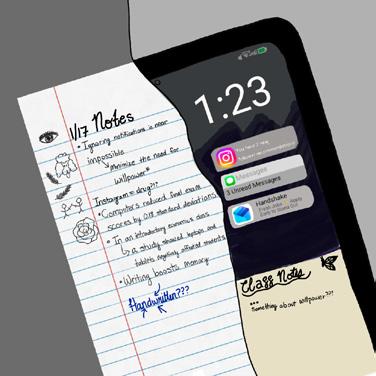
We all know that moment. You’re typing notes in lecture, and your attention starts to slip. Your eyes drift toward the “New tab” button on your
laptop’s browser. Suddenly, you’ve made an online purchase, skimmed Instagram, and caught up on your Canvas announcements — all during the class you are paying hundreds of dollars for daily.
Taking notes on a computer inevitably leads to distraction, no matter your willpower. Since the online platforms on your device are literally created to invade your attention at all times, handwritten notes will train your brain not to fall prey to these algorithms. In other words, you need to eliminate the opportunity for distraction entirely to make the most out of your WashU education. Use your classes this semester — just a few hours each day — as a start.
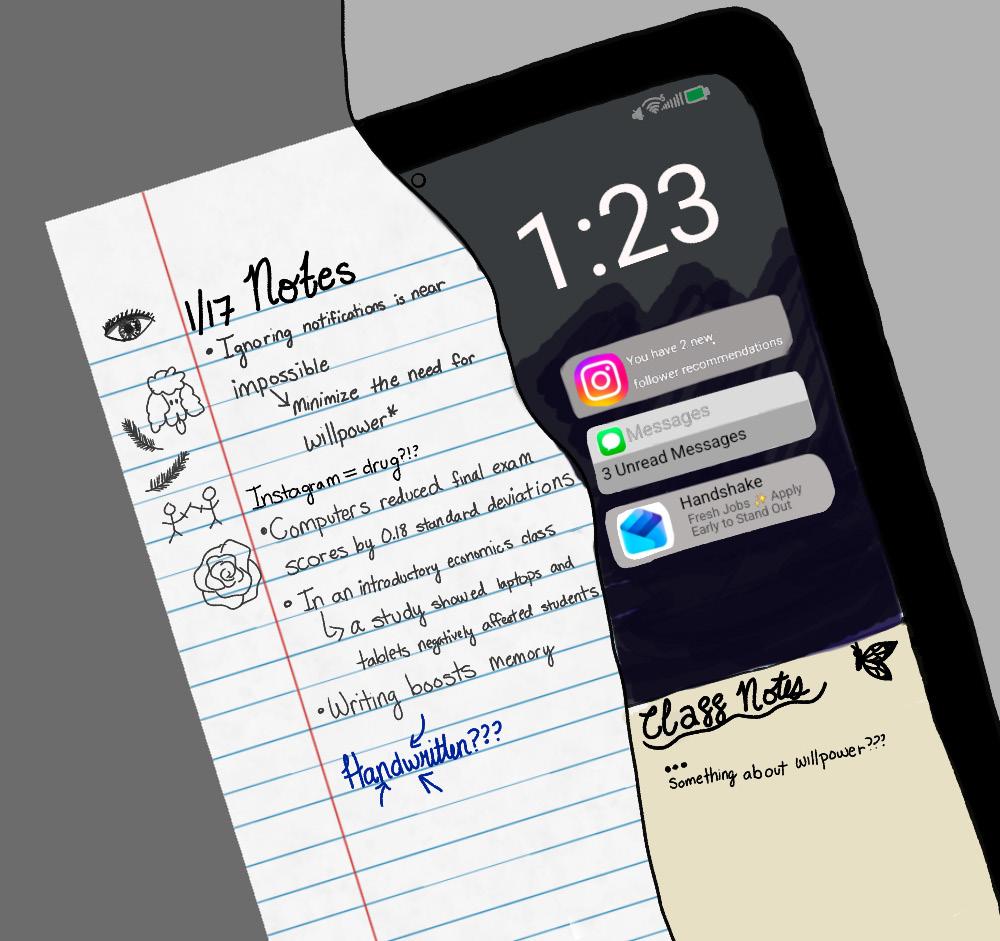
In her recent op-ed, Angela Duckworth, a professor at the University of Pennsylvania, describes how successful people do not necessarily have more willpower than others in resisting distractions to spend more time on their work. Instead, they limit the opportunity to be distracted. In practice, this involves deleting social media from their phones, buying only healthy foods, or, in an extreme case, moving to a new city.
It is the job of some of our nation’s most skilled scientists to create online platforms that dominate your brainspace. In a court filing released in November, email communication records from Meta revealed that senior researchers for the company compared “IG” (Instagram) to a “drug” and themselves to “pushers.” Besides pointing to
larger problems in Big Tech, this insight shows how, since distractions are so easily accessible, it is not your fault that you can’t pay attention in class.
For students who come of age with the internet at our heels, this means that if we truly want to benefit from our education, we should take steps to eradicate the opportunity for distraction in class. Most of us can’t expect our willpower to come through in those moments in lecture when we feel least engaged.
Before we could glance at our email or browse our favorite online retailer when we felt this gleam of boredom, perhaps we would have thought deeper into the presented material or even sparked creativity by doodling. That feeling of disengagement could have been a moment to sit with one’s own thoughts — an art all but lost in today’s fast-paced world.
Handwritten notes are step one in this pursuit. Class material aside, getting an education is not just about the knowledge or skills you gain but also the habits you create;
school teaches us how to get up in the morning even when we don’t want to and how to build connections with our peers. Similarly, your classes this semester can be an opportunity to begin training your brain away from its technology addiction. Here, I could cite the numerous studies that show how students perform better when their classes are tech-free, but I hesitate to make this an argument about productivity. The value in keeping your computer closed during class is not just how it will help you earn better grades; it’s whether or not we are okay with becoming “tools of our tools.”
If you want to beat the algorithm and drive your own life, then I urge you to eliminate the opportunity for distraction from your in-class experiences here at WashU. Try handwritten notes this semester. Use class as your entertainment, for once. If you’re bored, well, maybe that boredom is another kind of opportunity itself.
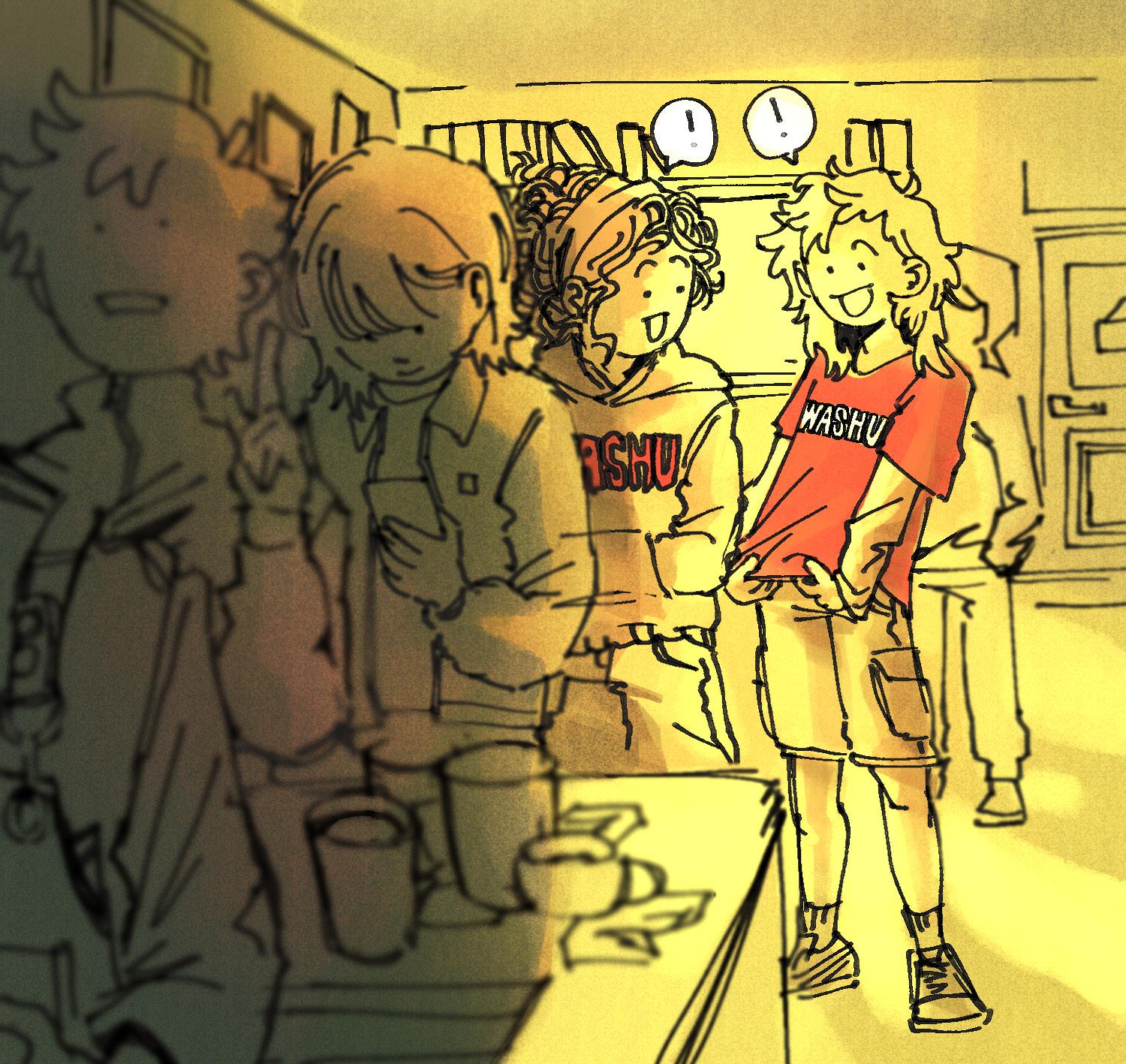
When I first got to WashU, I heard many students call our university an Ivy League reject school. It seemed that a large chunk of students didn’t identify with WashU as “their” university; instead, it was their “Plan B.” This mindset doesn’t just appear in conversation, but in the clothes students choose to wear. More often than not, our students wear other schools’ merch. In fact, for every piece of WashU merch I see on a student, I see at least five other schools’ merch items. Maybe it’s because they have family who went there, they visited the school, or they just like how it looks. Nonetheless, this affinity for representing other schools shows a reluctance to wear our own school’s merch with pride.
Many students see WashU as their indisposed selection, regardless of its prestige and low acceptance rate. This can stem from its location in the Midwest, far from the prestige of the East Coast or the relevance of the West Coast. Or from the fact
that St. Louis is the 90th largest city in the U.S., far from the likes of New York City, Los Angeles, and Chicago. However, the most likely reason is that, though we rank 20th in the country overall and have the best-ranked dorms, WashU is relatively unknown when compared to other universities. Our main claim to fame is our STEM programs, when it should be for so much more. Students create a selffulfilling prophecy when they forgo wearing WashU merch. If students don’t see their peers wearing merch, then they don’t either. If people don’t wear WashU merch, then fewer people see said merch and thus don’t know about the school. All it takes is a couple of daring individuals to break this norm, and eventually, it will snowball to more and more people.
This winter break, I almost exclusively wore WashU merch. I was back home, and I felt obligated to show off my gear and talk about my adventures. I worked hard to get to WashU, and I wanted to show that I am proud of my university. Now and again, a stranger would ask
me about WashU. Simply wearing my university’s clothes raised other people’s awareness of WashU. Just last year, we spent $2.8 million on a university rebrand, which gives us a chance to establish a whole new brand identity. With a new logo, an original name, and a fresh motto, we are completely reinventing ourselves. Now is the perfect time to raise our awareness. As students, it’s up to us to inaugurate this new WashU. Only you can make your university more recognizable and thus, your life outside of college far more notable.
Wearing the WashU name would foster culture and community on campus. It can build school spirit and a sense of camaraderie amongst students. You may not be proud of WashU, but by wearing WashU merchandise, you can make others proud and eventually yourself.
Beyond general University merchandise, tons of clubs and extracurriculars have their own. This club gear informs people about the organization and advertises the club to potential members. Wearing the tiniest logo or name can lead to the effect
of more and more people joining said club and then wearing merch. We are here to learn, grow, and — let’s face the facts — get a degree. By increasing the University’s image, not only do we make WashU “cooler,” we raise our self-worth and reject the narrative that we are “Ivy League rejects,”
not to mention that more recognition will also raise the value of our degrees. The job market may be suffering from degree inflation, but a degree from a well-known, prestigious institution will open a lot of doors for you. You can’t complain about your school’s lack of recognition while wearing other schools’ merch. If you want to better your university both inside and out, you need to wear your school’s memorabilia. So the next time you find yourself deciding between a Harvard hoodie or WashU swag, ask yourself, “Why not WashU?”
If a person in a position of power says something absurd, that’s a media frenzy. If they say two or three absurd things, you might start to question their capabilities. But a hundred, two hundred, a thousand absurdities? Suddenly, it’s a constant barrage against your sensibilities, blowing up little bits of nonsense and shoving important issues under the rug. After all, if everything you say is important, then nothing you say is important. The president knows this. Other politicians know this. You need to know this too, so that
when an authority figure waves something shiny to catch your attention, you don’t fall for the bait. Right now, the administration is treading water. The president is under scrutiny for illegally refusing to release documentation on Jeffrey Epstein, for deploying federal forces into cities who are essentially executing citizens in the streets, for pardoning former insurrectionists and other high-profile criminals, and for openly accepting gifts from foreign powers — be it a Qatari jet or a Venezuelan Nobel Peace Prize. Warren G. Harding wishes he had the circus of corruption centered on the White House, or what’s left
of it. The fact that the president has made it this far in his second administration without being impeached again is a testament to his party’s consolidation around him, despite warnings from his allies in Congress.
So what does the president do? He renames the Department of Defense, the Gulf of Mexico, and the Kennedy Center. He talks up hypothetical military action against Denmark and accepts a made-up peace prize from FIFA, a soccer league. Instead of talking about the Epstein files or his blatant acceptance of bribes, he gets people talking about a pseudo-Hunger Games he’s supposedly
planning and starts sticking his name on seemingly every building he passes. None of this is accidental. This is a highly intentional process creating a barrage of information for which you are the target. The president isn’t just “owning the libs” when he posts AI-generated videos of himself dumping waste on political opponents or of resorts he wants to build in Gaza. He’s waving a laser pointer, and the feral cats that make up American corporate media are chasing it around, leaping from one shiny distraction to another.
All that being said, you do have a say in the matter. You can’t control
what MSNBC or CNN are reporting on, but you can control where you rest your attention. Call out the occupation of Minneapolis, not the petty renamings. Be concerned about the leaked illegal communications from the Department of Defense rather than the FIFA Peace Prize. Don’t get distracted by Greenland; zero in on the important stuff. Not all transgressions are created equal, and letting your guard down, letting yourself be overcome by the onslaught of overt diversions spewing from the Oval Office day and night, lets them win. The key thing is this: If it’s pressing and actionable, it’s worth noting.
The White House has consolidated control over the executive branch, but there are certain bureaucratic and legislative hurdles that aren’t going to be overcome overnight. Any attempt to circumvent said hurdles or checks and balances — such as ignoring subpoenas, deploying paramilitary, or taking actions against members of the bureaucracy who oppose the president — is worthy of attention. Vague statements about seemingly unreachable goals are not. If something seems too odd to be possible, it probably isn’t. Use common sense. Stay vigilant. Stay alert.
court. … They’re kind of the bloodline because there are so many of them, and they’re on the court a lot.”
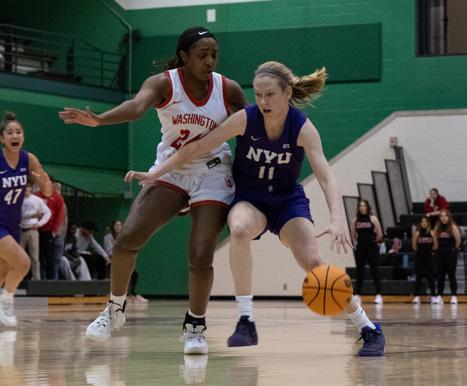
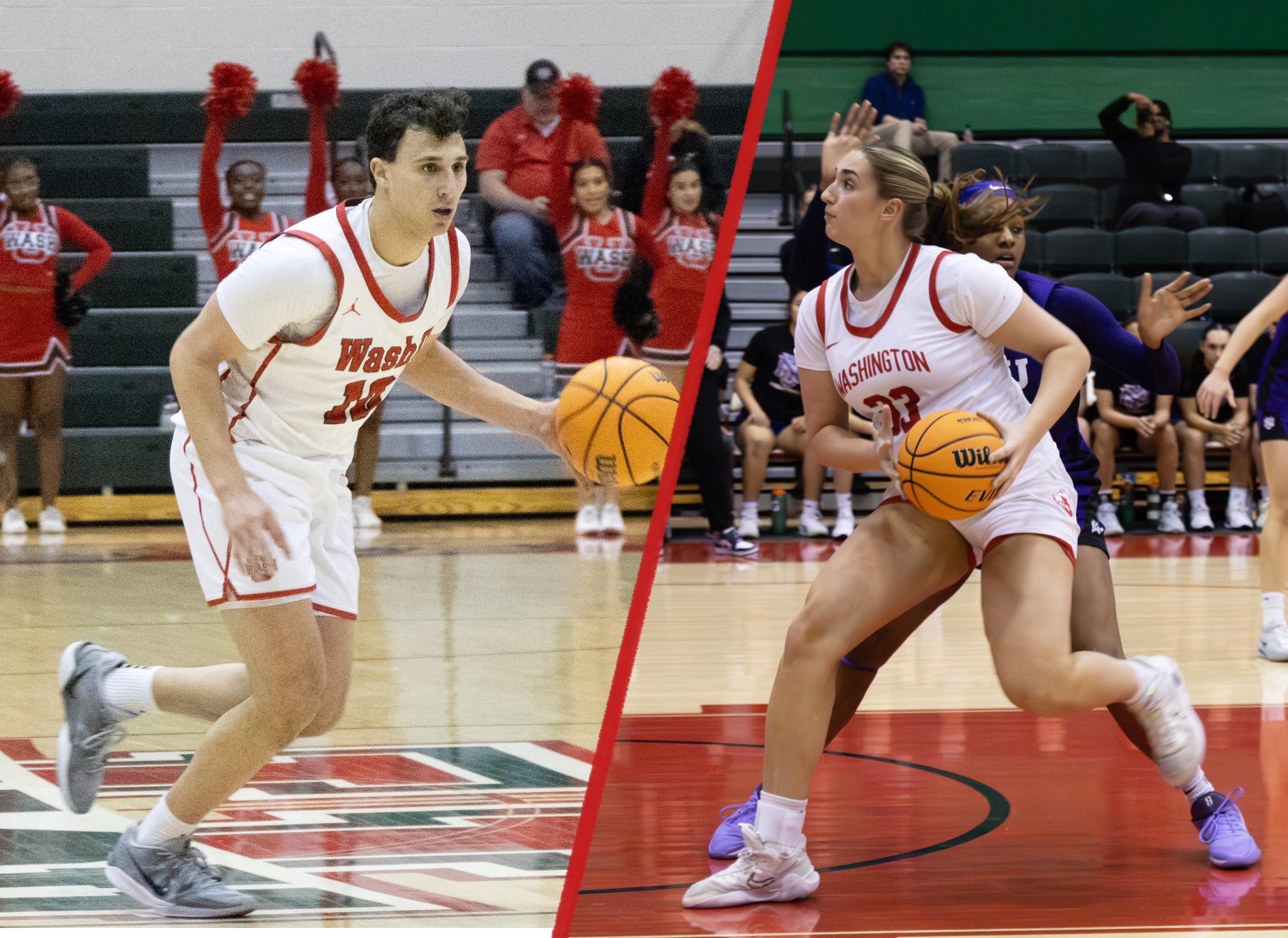
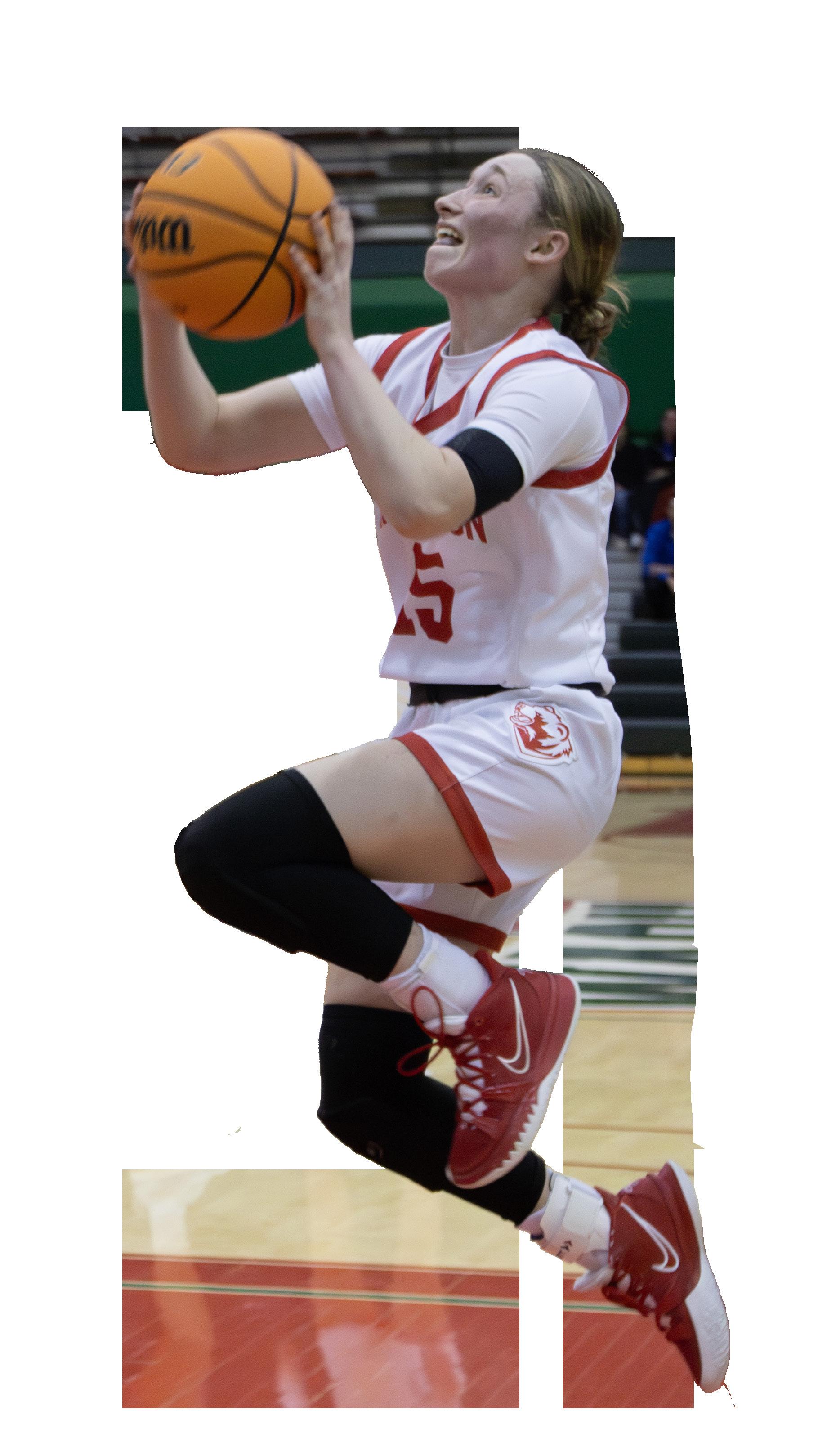
In the No. 15 WashU women’s basketball team’s victory over Case Western Reserve University on Jan. 18, the Bears scored 66 points. The Bears’ sixwoman junior class scored all but 2 of those points. On Jan. 23, in a pivotal conference matchup against reigning national champions No. 1 New York University, all five of the Bears’ starters hailed from the junior class.
With just one senior on the roster, WashU women’s basketball’s juniors — center Lexy Harris, forward Amelia Rosin, and guards Alyssa Hughes, Sidney Rogers, Sydney Starks, and Catherine Goodwin — are the backbone of the team. The Bears missed the NCAA tournament last season, but the leadership of their junior class has WashU on track for a return to postseason play amidst its best season since the mid-2010s.
“They’re leaders on and off the court,” head coach Lisa Stone said of her juniors. “They bring joy to the game. They’re super, super talented on the
While the juniors are the centerpiece of the Bears team, the six members of the class are also leaders off the court. The juniors are close friends, roommates, and lift each other up when things go wrong on the court.
“[Lexy Harris] probably has more belief in me than I have in myself,” Hughes said. “She’s always telling me that I’m going to make the next shot, and helping me move onto the next play. She instills so much confidence in me and the rest of the team.”
Harris, a three-year starter, is the most decorated member of the class. The 6-foot-3 center has been the tallest player in the University Athletic Association (UAA) for her entire career and has used her height to her advantage. As the centerpiece of the WashU frontcourt, Harris is on track to be a top-10 scorer and rebounder at the end of her career. Harris recorded her 1,000th career point on Jan. 16, becoming the 17th player in WashU history to reach that mark. She was also named the D3Hoops.com National
Rookie of the Year in 2023 and has been named an AllAmerican all three seasons of her career.
“[Harris] is one of the most talented, humble players I’ve ever coached,” Stone said. “She’s an unbelievable player. She’s been an All-American since her freshman year, and she is an All-American basketball player but she is also an AllAmerican person.”
Guards Hughes, Rogers, and Goodwin are also three-year starters. As the Bears’ best 3-point shooter, Hughes is having a career year in 2025-26, averaging 12.2 points per game and setting a career scoring record against Christopher Newport University on Dec. 30. Rogers has played a full 40-minute game twice this season and is a reliable point guard for Stone. After a difficult 2024-25 season, Goodwin has rebounded to match her scoring and shooting percentages from her first season. With Harris leading the offense, the WashU backcourt creates a deep team capable of knocking off highly-regarded teams.
“We came in our freshman year, and a lot of us happened to start, so we’ve had a lot of experience playing together,” Harris said.
“But I think that this class, especially this year, has really been stepping up.”
This season, Starks and Rosin have taken on increased roles on the court, having both set career highs in scoring and rebounding.
After spending much of their collegiate careers on the bench, Stone has turned to Starks and Rosin in each of the Bears’ 16 games this year. Stone has also come to trust the two in unexpected situations, including when a player is in foul trouble or suffers an injury.
“It’s not about play ing time, it’s about being ready,” Stone said.
“They’ve never caused any issues. They’re just wonderful human beings with their eyes wide open and their hearts beating hard for each other, and they want to contribute in any way that they can.”
Despite a lack of senior class leadership, the Bears are making a serious push for an at-large bid to the NCAA tournament.
WashU has dropped four games so far this season, but three of those losses were to teams ranked in the D3Hoops.com poll. Past the halfway point of the season, the Bears will con tinue to rely on their juniors as they make a run into the
postseason.
“We know we’re going to be getting each team’s best effort against us,” Hughes said. “The NCAA tournament is the goal, but we’re really just looking at one game at a time, winning that night and then moving culture [she’s] been around” as in her days as a coach.
“The great thing about all six of us is that whenever someone texts and asks if anyone wants to shoot, someone will respond that they will go and shoot,” Hughes said. “We’re always
back
in the second. It wasn’t enough though, as the Judges held on to win. The games continued a disappointing start to conference play, as WashU moves to 1-4 against divisional opponents, a record that will have to improve quickly if the Bears hope to win the UAA and, ultimately, earn a deep run in the NCAA tournament.
The No. 15 WashU women’s basketball team faced a rather turbulent weekend in their two home games against No. 1 New York University (NYU) on Friday, Jan. 23 and Brandeis University on Sunday, Jan. 25. Starting the weekend with their most important game of the season, the Bears experienced some challenges. Due to two key WashU players leaving the game due to injury, and a few small errors the Violets were able to capitalize on,
the Bears lost to the Violets 77-64. The game was also a hard loss, as the Violets are now 78-0 and are in serious contention of taking over the NCAA record for longest winning streak — a record WashU has held since 2001. However, the Bears had no time to sulk, as they faced another conference game against Brandeis just 40 hours later. To make the situation more challenging, due to the snowstorm that showered down on St. Louis this weekend, fans were not allowed in the Field House. In order to win, the Bears not only had to perform well on the court, but they also had to create the home-game energy and momentum themselves. With senior forward Jordan Rich and junior center Lexy Harris leading the way, scoring 17 points each, the Bears finished the game with a 62-49 win. This coming weekend, the Bears have home matches against Emory University on Jan. 30 at 7:30 p.m. and the University of Rochester on Feb. 1 at 12 p.m. The Bears look forward to earning more wins to further secure their second-place spot in UAA standings, as well as improving their resume as they hunt for a spot in the postseason.
IAN HEFT SENIOR SPORTS EDITOR
On Saturday, Jan. 19, ahead of the 2026 College Football Playoff National Championship game, University of Miami quarterback Carson Beck made a stunning admission. Beck, who is in his sixth season of college football, including his redshirt freshman year, was asked by a reporter if he had class on Friday ahead of Miami’s matchup against Indiana University on Monday. In response, Beck said that he had graduated from college two years ago.
The Miami QB, who was in the same 2020 high school recruiting class as third-year NFL pros C.J. Stroud and Bryce Young, is just one of many byproducts of the current college football environment: one where transfers, extra eligibility, and graduate years have become all the rage.
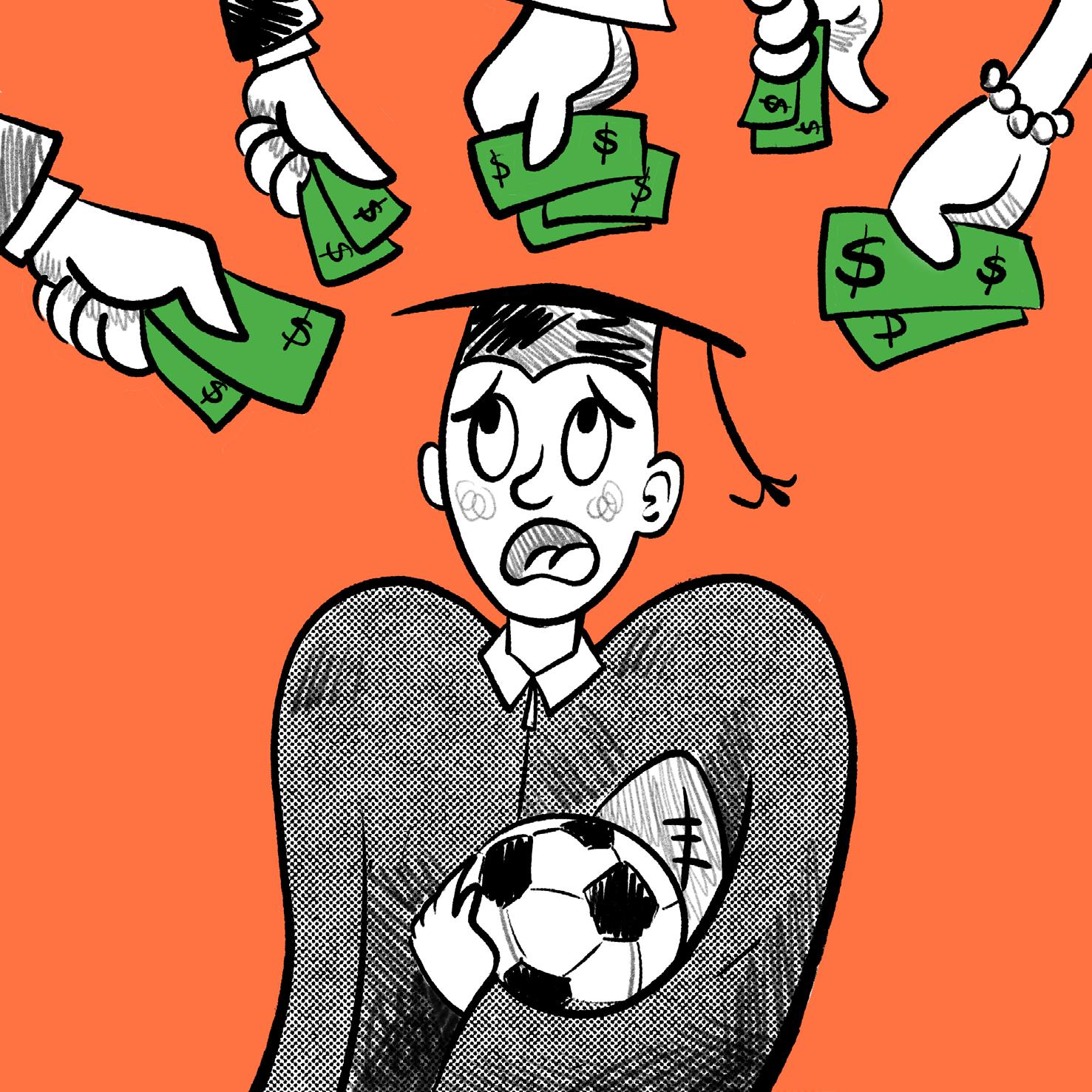
NIL (Name, Image, and Likeness), the recently enacted system of studentathlete compensation, was supposed to fix college sports. After decades of universities making millions off of athletes, NIL was meant to level the playing field. Instead, it has ushered in an era of player mobility that has turned college football, basketball, and other sports into a transfer free-for-all.
Under the current system, schools cannot directly pay an athlete to transfer to their program like the free agency system in professional sports. However, booster-funded NIL funds
work adjacent to schools and effectively serve as the financial arm for teams on the transfer portal. This gives schools with more donors (see: Mark Cuban’s contributions to Indiana University football) an overpowering advantage in recruiting players through the transfer portal.
At this point, it is not an exaggeration to say there is more player mobility in college football than in the NFL. This season, 14 of the national champion Indiana Hoosiers’ 22 starters, as well as their starting punter and long snapper, started their college careers elsewhere before transferring to Indiana. In comparison, the 2025 Super Bowl champion Philadelphia Eagles drafted a majority of their roster and acquired just eight of their starters from other teams via free agent signing or trades.
After all, there are too many instances to count of NIL deals luring players from school to school, looking to extend their college careers to profit as much as possible. Take Beck, for example. After five years at the University of Georgia, Beck was lured to Miami by an estimated $4 million NIL package. Including Beck’s brand endorsements and other partnerships, there is a large chance he is making more money this year as a “student” than if he had been drafted into the NFL as a backup QB. Or look at Chad BakerMazara, a University of Southern California “super senior” currently playing his sixth season of college
basketball. The sixth-year athlete is 26 years old, around a year older than six-year NBA vets Anthony Edwards and Tyrese Maxey. Baker-Mazara started at Duquesne University before transferring to San Diego State University for his sophomore year, then transferred to Northwest Florida State College for his junior year, then spent two years at Auburn University. He notably entered the transfer portal for the fifth time last summer after learning his offered $1.1 million NIL deal was half of what another recruit was set to receive.
And I would be remiss if I didn’t mention quarterback Darian Mensah, who recently settled with his former alma mater, Duke University, after being sued for violating an exclusive NIL deal by seeking to enter the transfer portal. Mensah recently announced his transfer to Miami, where he will replace Beck. Boosters at Miami offered Mensah $10 million, a higher salary than two of the four quarterbacks who started in last week’s NFL conference championship games. Miami is also offering Mensah’s sister Grace, a midfielder on the University of Oregon women’s soccer team, a full-ride scholarship to play for Miami with NIL benefits of her own.
Clearly, cases like these are bad for the integrity of college sports. While not every instance of NIL-driven movement is as egregious as the aforementioned three, each one reinforces a precedent that
undermines the foundation of college athletics.
It would be naive to suggest that academics are the primary motivator for a college choice among the majority of top athletes. Still, a coherent university experience has been, and should continue to be, integral for college athletes. Short-term contracts, roster churn, and financial leverage created by NIL are antithetical to this fundamental principle of the NCAA.
Player compensation is not the enemy — high-level college athletes arguably should receive compensation for their services that bring in millions of dollars
to their universities. But the current system must be reformed. Without guardrails, college sports will continue drifting towards becoming a true professional league, but one without the financial structures and regulations that govern the NBA, NFL, MLB, and other leagues.
Further, the NCAA should seriously consider taking action to limit transfers and post-graduation years. In an ideal world, athletes should spend at least two years at a university they transfer to and be limited to a maximum of four or five years of eligibility. Any such amendment will inevitably be met
with litigation and court challenges, but facing opposition is imperative to the long-term success of college sports. If the NCAA doesn’t act, what will the future of college athletics look like? Seventh, eighth and ninthyear seniors? Eight-figure NIL contracts? Financial juggernauts dominating each sport, with Cinderella runs and team chemistry replaced by superteams? Failure to intervene will result in the slow death of the college sports atmosphere we have grown to love. And nothing will be more responsible than the current NIL system.