FASHION SHOW African Students Association event photo essay.
VICTORY! Track and Field wins indoor conference championship. (Sports, pg 7)


FASHION SHOW African Students Association event photo essay.
VICTORY! Track and Field wins indoor conference championship. (Sports, pg 7)
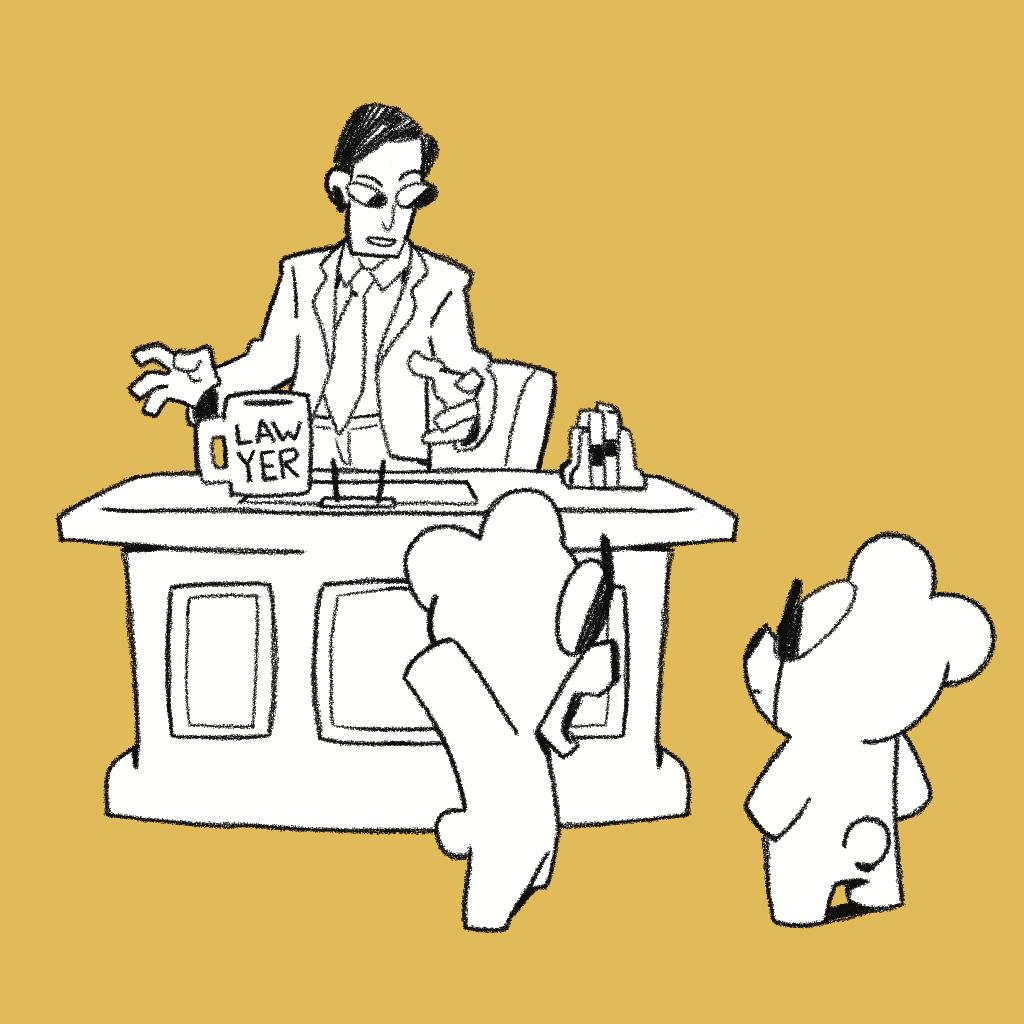
CAPTION CONTEST
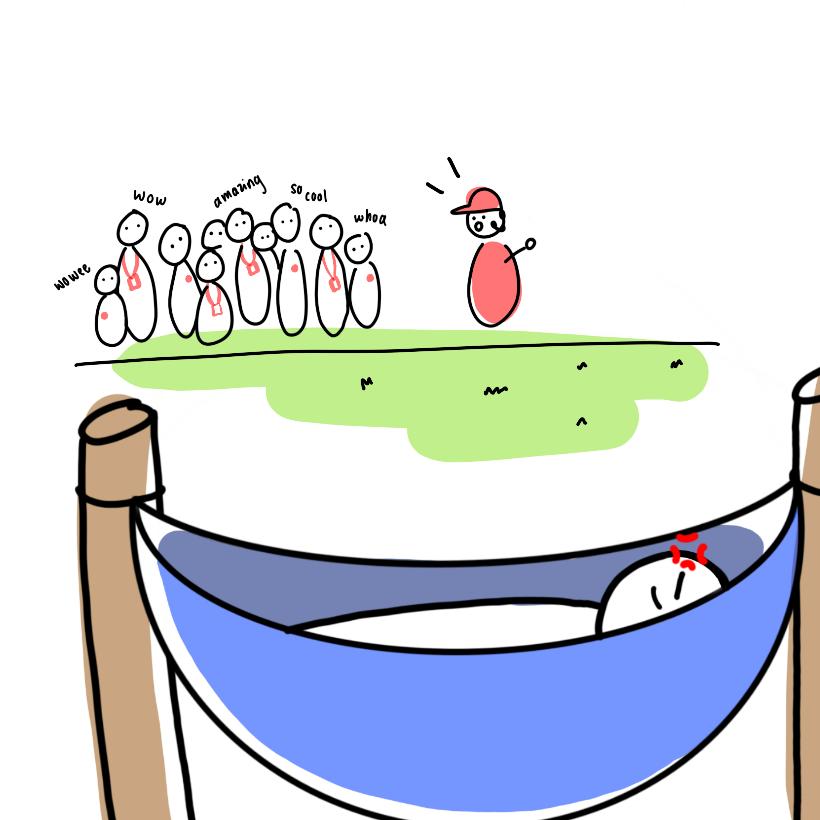
Enter this week’s caption contest! (Forum, pg 6)

LILY TAYLOR ZACH TRABITZ
JAIDA TAVERAS
JUNIOR NEWS EDITORS AND CONTRIBUTING WRITER
Green Action, an environmental justice and advocacy student group, held a rally calling on Washington University to divest from fossil fuels and recognize the impacts of environmental racism on March 1st.
About 40 students and faculty congregated in the Danforth University Center (DUC) courtyard to listen to a series of speeches that called for transparency from the University about its investments, some of which are in fossil fuels. Green Action asked students to sign a banner that they hung in Tisch Commons.
LIFE
Michelle Alexander, author, lawyer, and prominent civil rights scholar, spoke to Washington University and St. Louis community members about racial segregation, mass incarceration, and policing during a conversation sponsored by the Danforth Center on Religion and Politics, Feb. 28.
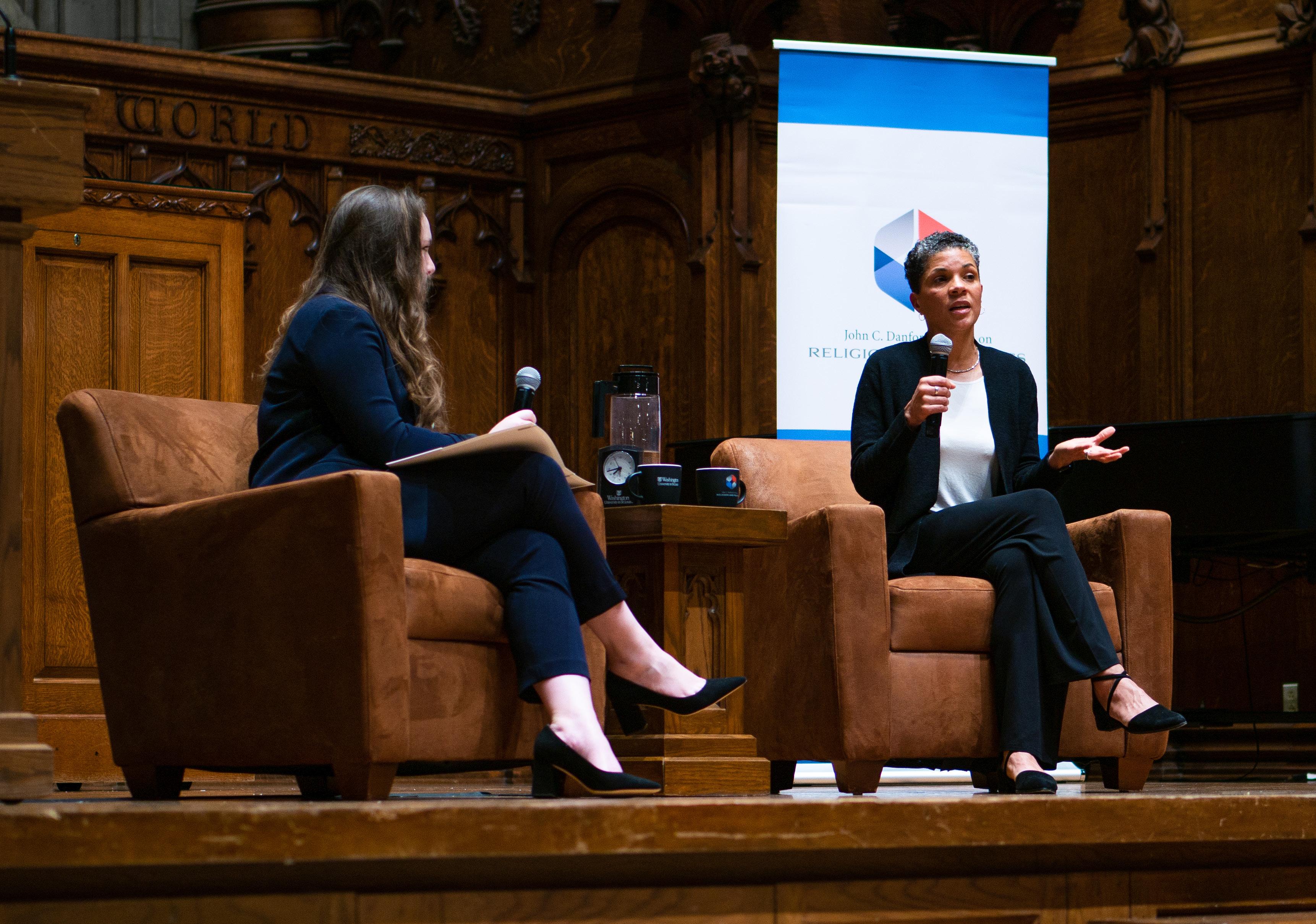
Alexander rose to national fame after the publication of her book “The New Jim Crow: Mass Incarceration in the Age of Colorblindness,” which was published in 2010 and has since spent over 250 weeks on the New York Times bestseller list.
The book describes how the War on Drugs and “Get Tough” movement of the 1990s led to the creation of a post-Jim Crow racial caste system in America. Alexander currently teaches at the Union Theological Seminary where she is also pursuing a Masters in Divinity and Interreligious Studies.
She said that she was first extensively exposed to the trauma that mass incarceration can inflict upon
people, and the system of legalized segregation that impacts African American communities, when she served as the head of the Racial Justice Project for the ACLU of Northern California in the 1990s.
Alexander’s visit attracted the largest crowd in the Center’s history, filling up the entirety of Graham Chapel with hundreds in attendance and more people watching via Zoom. Alexander received applause throughout her speech, with a standing ovation when she concluded her remarks.
To begin the discussion, Fannie Bialek, Assistant Professor of Religion and Politics, asked Alexander about how her book has impacted American society today.
Alexander described how the “colorblindness” of American society in the years during and following the presidency of Barack Obama allowed for the issues addressed in her book to flourish.
“It was in this context that the politics of white supremacy and a backlash against the civil rights movement birthed the system of mass incarceration that met almost no resistance from the civil rights community,” she said.
Alexander recalled how her own views on race changed over
time, and she recognized her own complicity in a system that was failing to accomplish its goals.
“It lit a fire within me to try to help other people [who] had the same political awakening that I did,” Alexander said. “In that sense, I had something of an evangelical fervor to use this book as a tool of awakening, in the hopes that we wouldn’t remain asleep to the crisis that was occurring on our watch.”
As a law student, Alexander said she thought that people could bring about the end of racism in society, but decades later she realized that might not be possible.
“Pretty humbled by my naiveté and optimism, I realized that my motivation cannot be simply to win in the short term, or even in my lifetime,” Alexander said. “I don’t know whether it is possible to end racism in America. I don’t know, but my motivation has to come from somewhere else.”
Alexander also spoke about her personal move to spirituality and how that has reshaped her view of her past work.
“That is what this work is all about,” Alexander said. “My motivation really needed to come from a place of deep commitment to
honor the dignity and value of each and every one of us no matter who we are, where we come from, and what we may have done — that has to be our motivation,”
“The New Jim Crow” heavily focused on mass incarceration, a subject that she also discussed during the event.
“[Mass incarceration] isn’t just some policy problem to be solved,” Alexander said. “It’s a symptom of our failure and our refusal as a nation to face our racial history and to overcome the politics of white supremacy, which have continued to birth to these caste systems again and again.”

Alexander’s book argues that the mass incarceration of African Americans is akin to a modern iteration of Jim Crow laws.
Alexander mentioned that there are no national grassroots membership organizations focused on ending mass incarceration in America and warned the audience of the underlying danger of advocating for the use of police body cameras and monitoring systems in households.
“It’s very dangerous for us to
SEE ALEXANDER, PAGE 2
campus, including specifics on WUPD officer training and the University’s emergency response systems.
expect coming in here that you guys were going to walk away and be like, ‘I love the police.’ That’s not what this is about. We have to prove ourselves every day to you.”
building trust between police and students in the community through measures such as police training programs and meeting with students to have casual conversations.
Chancellor Andrew Martin made his most recent public comments on fossil fuel divestment in March 2020. He confirmed that the University’s endowment has “limited exposure to non-renewable resources and high carbon emission sub-sectors,” which include auto/air transportation and certain industrials/capital goods.
Martin explained that the University maintains its investment in fossil fuels because leaders believe that the “best contribution to the advancement of the greater social good is through the financial support of the University’s mission.”
At the rally, speakers focused on the effects of fossil fuels on minority communities, reflecting Green Action’s newly adopted focus on environmental racism.
First-year Juliana Morera started off the rally with a speech that detailed the consequences that fossil fuels have on minority communities.
“Fracking, nuclear waste storage, and air pollution are part of a tradition of colonial genocide against Black, Indigenous, and Latine populations,” Morera said. “Here we are watching these corporations burn a planet with the knowledge that our college directly funds these industries that take human life.”
Morera listed Green Action’s demand for the University.
“We demand divestment from the fossil fuel industry,” Morera said. “No profiting from environmental degradation, no profiting from war.”
Sophomore Alex Herzig, a member of Green Action’s executive board, echoed the sentiment that investing in fossil fuels harms communities of color. They spoke about the environmental issues that they believe are caused, in part, by funding from universities like WashU.
Student Union (SU) Senate held a town hall, Feb. 27, about campus safety and mental health following the shooting at Michigan State University. Administrative members of the Washington University Police Department (WUPD), the Emergency Management team, and Student Affairs discussed policing and minority inclusivity on campus.
Attendees asked the panelists about the University’s plans should a school shooting take place on
SU Senators asked questions first before giving the roughly twenty students present at the public event a chance to ask questions to campus leadership which predominantly concerned students’ relationships with police and available mental health services.
Chief of WUPD Angela Coonce began by acknowledging the complex relationship between police and students.
“I don’t think I’m going to change anyone’s mind about WUPD,” Coonce said. “I didn’t
She said that it will take a long time to change the public perception of police officers on campus.
“What we’re instilling in [WUPD officers] is if you’re having a bad day as a police officer, you don’t get to go out and yell at a student about something stupid or treat them poorly because you had a bad night or you had a fight with a family member,” Coonce said.
“That’s not an option.”
Coonce added that she has been stressing the importance of
She said that WUPD doesn’t want students to refrain from calling them because they are afraid of the police.
“We have to work harder every day because of bad law enforcement officers around the world that have done horrible things,” Coonce said.
Both Coonce and Chet Hunter, Assistant Director of Emergency Management, encouraged students
SEE SAFETY, PAGE 2
“The majority of air pollution sources are placed purposefully in predominantly Black
Read the rest online:
SAFETY from page 1
to download and utilize the new WashU Safe App. Hunter said that the app allows students to silently notify the police department if they feel uncomfortable walking off -campus.
Hunter discussed the emergency notification system used by the University in the event of a mass shooting or another emergency incident. In a moment of crisis, the system allows students and WUPD to immediately communicate with one another.
“We should be able to save you, and you should be able to say to us [that] we didn’t miss a beat,” Hunter said.
The notification system includes a variety of notifications including emails, texts, announcements over the outdoor sound system, and messages that display on screens in classrooms.
Coonce also noted that WUPD would only use assault weapons in a mass shooting event or to otherwise match the firepower of a shooter.
“Almost every [shooter]
has some type of assault rifle, and we have to be prepared for that,” she said.
One student asked about how the University planned to support mental health as it pertains to mass shootings.
“98% of school shooters are men,” a student attendee said. “What mental, emotional, and social support systems are currently in place or can be created, specifically for male students and male staff members, to give them the spaces to talk and release any of the emotional stress that they might be feeling in healthy ways and de-stigmatize mental health?”
Kirk Dougher, Associate Vice Chancellor for Student Support and Wellness, responded that the University is making the effort to allocate further mental health resources, while also shifting the primary objective of their services.
“The effort that we’re trying to make in Student Affairs, and especially with the health and wellness line, is to be able to move from attending to treatment … to
prevention and promotion,” Dougher said.
Other students asked about the support systems that are in place at the University to help them process traumatic events that have taken place off-campus.
Vice Chancellor for Student Affairs, Anna Gonzalez, outlined the current triage system for interacting with students who have experienced traumatic events. She explained why the University generally does not release statements after traumatic events, but instead, sends personalized messages to the students whose ZIP codes show they are from the impacted area.
“We understand that other people are affected, but particularly for those [in the immediate]
was focused on people with AIDS.
imagine that technology is going to provide some type of solution to the problem of mass incarceration or the problem of racist, biased, violent policing,” Alexander said. She said that advocates who initially pushed for this equipment did not realize that the technology can harm people of color.
“Who are these cameras filming really?” Alexander said. “These cameras now that many of us are begging officers to wear are filming everybody that [they] come into contact with all day long — so we basically argue that we should be under more surveillance; the police should be surveilling us all the time.” She further emphasized how the “evidence” that activists conceived to be helpful might backfire against the already victimized.
“Every time they come into contact with us, they should be recording it, and guess how often that video gets used in trials? Hardly ever,” Alexander said. “How
often does it get used in trials and in plea bargaining against people who have been arrested for minor crap that nobody should be going to jail for? All the time.”
After the event, Yinka Faleti, former Democratic nominee for Missouri Secretary of State and a WashU Law alumnus, said he was also one of the people who advocated for the use of body cams and electronic monitoring systems by police.
“We all thought, myself included, this technology would help, but Alexander flipped it on its head,” Faleti said.
Faleti and Alexander both cited the for-profit business model of private prisons as a reason for why this technology was abused by those private prison companies.
Alexander also talked at length about policing, describing it as “organized and state-sponsored violence” that we as a society choose to call justice.
She characterized policing as something that leads to brutal and visceral experiences for minorities and
people of color. “Policing creates trauma for the individual, it creates trauma for families that entire communities feel the effects of.”
She said that changing policing is not just a matter of reformation, but of completely changing the way that we view the core ideas behind policing.
Derek Laney, a public organizer who attended the event, said he supported the movement for abolition. He said that when it comes to the police, “we do not need to reform; we need to rethink how we are being humans on the planet.”
Laney also said that police play two roles in society: “to quell dissent and protect rich peoples’ shit.”
He said he views poverty as a “genocide” upheld “by
Washington University’s Women, Gender, and Sexuality Studies department hosted a lecture featuring author Sarah Schulman about the research she conducted for her book “Let The Record Show” at Left Bank Books, Feb. 27.
Schulman spent the duration of the lecture explaining her research for the book and taking audience questions. Her book is about the AIDS epidemic and the United States’ response to it. The book heavily focuses on the AIDS Coalition to Unleash Power (ACT UP), a grassroots political group dedicated to alleviating the AIDS crisis.
Schulman was a journalist stationed in New York City in the 1980s, primarily writing for press centered around gay and feminist outreach. She explained that her work
Schulman was critical of the U.S.’ response to the AIDS epidemic, and specifically about the widespread healthcare management practices.
“AIDS is about 100 years old, and we know that it was in the United States in the 1940s,” Schulman said. “We know that it was in New York City in the 1960s, but science did not notice the pattern that came to be called AIDS until 1981. And this is because we don’t have a functional health care delivery system.”
Schulman said that reframing one’s perspective when dealing with past events such as the AIDS crisis was important, especially when attempting to understand oppression.
“The term gay cancer, for example: there’s no such thing as gay cancer, cancer cannot be gay,” Schulman said. “But [the phrase] shows you what the mindset was. From the very first day, AIDS
has been misrepresented and continues to be misrepresented. Now we understand that AIDS existed, people died in this country, and the government did absolutely nothing. And pharma did nothing.”
Schulman said the United States failed to take the AIDS crisis seriously and did not support gay individuals, and that gay people found community with each other.
“You can see things like the gay men’s health crisis,” Schulman said. “There was a Puerto Rican social worker named Diego Lopez, and he started this thing called the buddy system. You’d be assigned a person with AIDS, and you would hang out with them, help them do
Student Union (SU) Treasury approved appeals from four different clubs totaling a sum of $25,992.47, before holding a joint session with SU Senate where a new election packet was unanimously approved during a meeting on Feb. 28.
During the joint session, newly confirmed Election Commissioner, Senior Constantin Carrigan presented the proposed election packet for the upcoming cycle alongside three other members of the elections commission.
The most notable changes to the election packet were focused on policies about candidates campaigning alongside one another. For the first time in SU election history, candidates can now campaign alongside one another, including holding events together, having a shared social media
Applications are now being accepted for two nonvoting undergraduate student representatives to the Washington University Board of Trustees.
The position provides a distinctive and significant opportunity for direct student participation in the governance of the university. Representatives are appointed to a one-year term and actively participate in meetings and other board-related events.
Applications are due March 20. For information on qualifications and how to apply, scan the QR code.


presence, or endorsing one another.
There are certain restrictions that apply to this policy, though, as candidates for SU who already hold a position can not state that they are a sitting member of SU when endorsing someone else.
An additional facet of this change is that candidates who are campaigning together are not allowed to pool their allotted $50 of campaign funds. Furthermore, candidates campaigning together will remain separate on the ballot.
Other changes included adding protections for candidates to avoid discrimination based on caste system, including regulations on outside influences to avoid the use of Super PACs, and changes to certain dates for expenditure reports.
At the end of the joint session, members of the executive committee gave
updates on the work that they have been doing. Max Roitblat, Vice President of Finance, gave an update on the general budget meeting that had been postponed a week prior, saying that the tentative date is now March 25.
Emma Platt, Vice President of Engagement, said that the Mental Health Coalition will be meeting with Vice Provost Jen Smith to discuss creating mental health days and work on a definition of academic compassion. Platt also said she has begun work on SU’s annual report, which has not been published since 2019. The report provides an opportunity for SU to share the work they have been doing.

obviously trusted Chiara, so once I tried it and heard more about the idea, I was all in,” Gorton said. In The League, the team heard from guest speakers and worked with their assigned coach, Jerry Rosen, a Washington University alum and entrepreneur. They met weekly to develop and launch their business, testing recipes in Munzi’s kitchen, then the Skandalaris Center kitchen.
“It was fun to watch them over the course of a semester. They made their product and had people taste it. People were giving them a six out of ten on taste, and that's just not going to work for a food product,” Villhard said. “It was fun to watch them increase it, to go from six out of ten to nine out of ten by the end of the semester.”
of money from the Olin Entrepreneurship Fund divided among the teams to use toward the launching of their startups.
Chickpeas for breakfast?
That’s the brainchild of senior Chiara Munzi, who launched chickpea oatmeal company ChiChi in 2022. Munzi worked with sophomore Izzy Gorton and senior Yemane Kidane in The League, a class taught by Doug Villhard, Professor of Practice in Entrepreneurship in the Olin Business School.

By December, the team was selling ChiChi online. This semester, they debuted in St. Louis grocery stores United Provisions and Parker’s Table. They also plan to sell on campus in Paws and Go, as well as at local farmers’ markets and other independent grocery stores.
ChiChi currently offers Apple Almond Cinnamon, Peanut Butter Banana, and Dark Chocolate Blueberry chickpea oatmeal. The company hopes to add chickpeabased protein bars and other breakfast items to their menu soon.
The League is an “accelerator for extraordinary WashU student entrepreneurs with a business idea,” according to its website. Students can apply as “founders” if they have a business idea, or as team members if they want to join a team. Accepted students have access to the Skandalaris Center’s resources, from co-working spaces to mentorship, as well as a $30,000 pool
According to Villhard, students typically first enroll in Introduction to Entrepreneurship to determine if an entrepreneurial career is right for them, then The Hatchery to develop their business plan. However, Munzi, who had previously won the Skandalaris Venture Competition, went straight to The League.
“When students win entrepreneurial awards around campus, I show up,” Villhard said. “I come calling because that identifies them as the type of student I might like to have in the class. When I saw that she won the award and that she hadn’t taken our other classes, I knew I needed to meet this person.”
Munzi, who is studying Philosophy-NeurosciencePsychology and Finance, applied to The League with a different idea: ClosetSwitch, an app that allowed students to trade clothes. However, “I got so excited about chickpea oatmeal that I could not stop thinking about it, and I just had to do it,” Munzi said. “I had to convince [my team members] to be on board with the switch.”
Gorton was excited to work on ClosetSwitch because she has been passionate about sustainable fashion for a while. Though she was initially a bit skeptical of the idea of chickpea oatmeal, “I

Now, they cook ChiChi products in a commercial kitchen in Fenton, MO. “Taste makes or breaks the product,” Gorton said. “It’s so funny because Chiara and I believe in it so much — every time we make it, we’re amazed by the taste, like we forget how good it is every time.”
ChiChi placed third in the Skandalaris Venture Competition in November 2022, earning $5,000 for their business. The semiannual competition allows WashU entrepreneurs to pitch their businesses to a panel of judges through a series of video and written proposals.
The ChiChi team is expanding this summer with sales and marketing interns, which will allow them to grow the business more. They are also working to determine their target audience and will continue to perfect their recipe.
“I'm really excited for this summer because we'll have interns working on it 40 hours a week. We'll be at farmers’ markets, and we're just going to try and push all our channels as hard as we can and market it,” Gorton said.
“Chiara, in particular, is a superstar. She is one of the most entrepreneurial students that I’ve ever met here. I knew within the first couple seconds talking to her that she’s tenacious, she goes after it, has an incredible work ethic,” Villhard said. “[She is] incredibly smart, and the best part about her is she treats everything as a learning opportunity, so she’s basically running experiment after experiment and getting better and better.”

A model poses at the end of the walkway; blue, green, and brown tones meet in an outfit that is both warm and breezy.
East African Dancers pulled audience members out of their seats and into a joyous group dance, making for an interactive experience. The show was DJ’d by first-year Toluwani Oseni.


The fashion show opened with the Flag Walk, where pairs of students proudly displayed the flag of each country in Africa. Some students wear vibrant headwraps made by Rosa “Marie Ya” Jouf, local cultural influencer and education activist. Here, two students strut while carrying the Kenyan flag to the tune of “Africa” by Yemi Alade ft. Sauti Sol.

These confident struts give life to the modern, vibrant designs they wear. This walk also featured jewelry made by Patrice Hill, a St. Louis artist. Hill also sold jewelry at a booth at the end of the show.
At the end of the show, all models gathered for a final celebratory walk. From hair to detailed makeup to carefully curated outfits, the show embodied style from crown to heel.
Warm yellow hues paired with cool blue ones make these models a dynamic pair during the West African Walk. These students also display the diversity in hair seen throughout the show, each style complementing the clothing in a unique way.
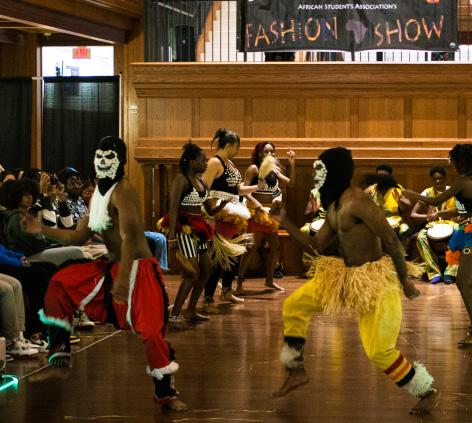
After the flag walk, dancers and drummers from St. Louis-based group Spirit of Angela took the stage with a high-energy, synergetic performance. The audience clapped along with the drums as the dancers split off into solos, eventually reuniting for a final refrain in unison.
Two models curtsy in modern twists on traditional looks. Halfway through each walk, models paused and danced together, displaying the natural movement of the fabric beyond the walk itself.

At the conclusion of the Traditional Walk, the final pair of models pretended to get married, prompting the rest of the models to rush the pair and shower them with money. The Traditional Walk was characterized by a wealth of bold colors, complex patterns, and detailed accessorization. The clothing in this walk originated from Nigeria, Eritrea, Tanzania, and Ghana.
A proposal (and a celebration) following the East African Walk. Audience members burst into cheers for friends and family as each pair of models emerged from the curtains.









 CASSIDY COOLEY ADMINISTRATIVE & ACADEMIC CLUSTER SUPERVISOR
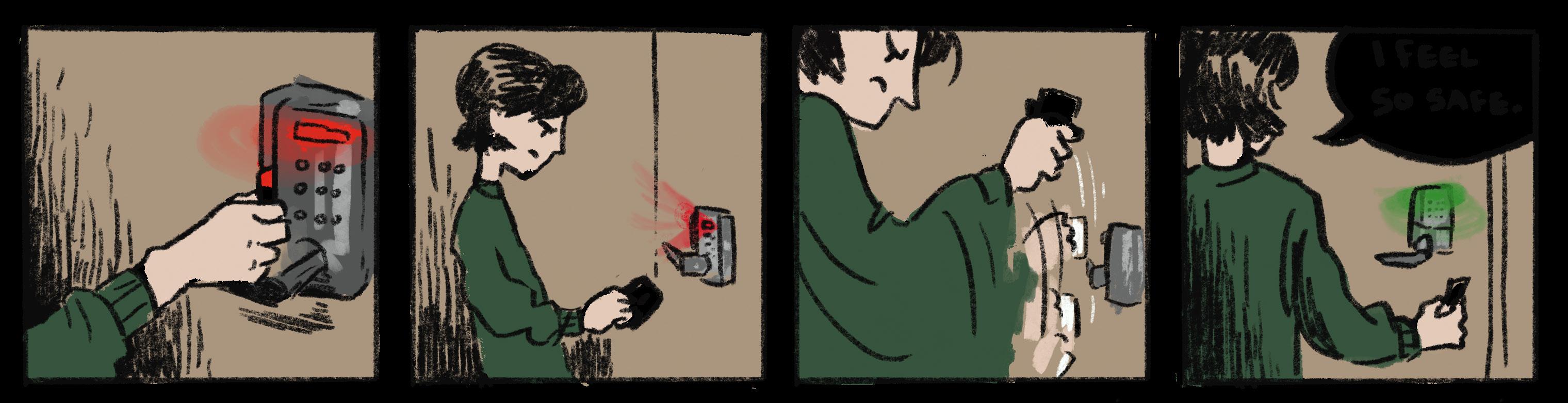
As someone who typically frowns upon being told they’re part of a “movement” or statistic, it took me a moment to realize that my acceptance of a position at Washington University mid-pandemic meant that yes — I was a part of “The Great Resignation.”
Me being hired at WashU was actually indicative of more than a change in employment or my participation in a global shift (to me); being hired at WashU meant that I was leaving an entire career. I’d leapt out of the safety nest of gainful employment into the Great Unknown of “New.”
It was the most frightening jump of my life.
The pandemic seemed to push fear through all of our veins, and I found myself increasingly afraid I was wasting 40 hours a week being miserable.
In my early twenties, a meeting with a doctor in a small practice led me to a career in healthcare administration that spanned over twenty years. It wasn’t what I went to college for, but everything I’d learned in school helped me to excel in the field. From patient care to marketing, conference planning, research, contract negotiations, working with underserved schools, and billing and coding, by the time I had left my most recent position, there wasn’t a back-office administrative task I hadn’t been involved with at one point or another.
Healthcare was my home…or was it?
It’s amazing how much someone will lie to themselves in the interest of staying in their comfort zone.
When the pandemic hit, communication was increasingly confusing; demands came down to us without support (everyone was still trying to figure out exactly what kind
of support we needed) or additional pay. Tempers became shorter, and before I knew it, I found myself in the middle of a heavy burnout without any signs of hope.
This was all I knew — the risks of starting over outweighed the benefits, didn’t it? I spoke with a friend who worked at WashU that knew of an opening as an Academic & Administrative Coordinator. What could I possibly know of academics?
I took the plunge and applied, and it was in my first interview that I learned one of the greatest phrases of my career: “transferable skills.” Those two words have changed my life. Transferable skills means that you take everything that makes you great at whatever your current job is, and you learn how to translate it through the lens of the job you want. Was I skilled at billing and coding? Great! Coding carries similar concepts in relation to course data entry. Was I skilled at patient
communication and medical compliance? Great! Those are similar concepts to faculty, staff, and student communication, and FERPA. Everything you do can be filtered through and applied to wherever it is that you want to be employed, if you have the baseline skills.
The supervisor who interviewed me was as interested in my potential as I was in the position, and I’m fortunate enough to say that I was hired. My first six months were a whirlwind of training, with no shortage of laughter and tears. I was terrified every day that I’d made a huge mistake and was on the cusp of termination. Every time I had the courage to admit to my boss that I was afraid, he would remind me of the positive changes he’d seen in my performance as I continued trying to learn everything I could. Leaving everything I’d ever known, career-wise, showed me that I could do the “hard” things, and I began to find myself less afraid.
I’d ask questions in meetings. I stopped getting lost on campus. I learned that my “outsider” perspective on certain things gave me a fresh outlook on concepts that needed a different approach.


I finally began to put names and faces together, and faculty and students began to swing by my office to engage in conversation. In my position, I had immeasurable support and encouragement from my direct supervisor, faculty, and fellow staff members; this environment helped me break through all of my lingering fears and to flourish in my tasks and in my relationships.
After a year in my position as an Academic & Administrative Coordinator, I was promoted to being a Supervisor in the Arts & Sciences Cluster. When I look back at my career in healthcare and I celebrate my accomplishments and the journey as a whole, I’m grateful for the relationships I’ve cultivated and the progress I’ve made.
However, I’m even more grateful for and proud of taking the chance to try something completely different. I’ve found a new fulfillment and a joy in working for Washington University that had faded away from my previous career. The pandemic forced me to take another look — it pushed me to the edge of the mountain. Washington University gave me the parachute I needed to take a leap into enjoying my job again, and the faculty, staff, and students have given me the landing ground I need to get up and try it again, every single day. Being miserable or burned out on the job carries over into every facet of your life. Although it’s frightening, it is well worth the adventure to take the leap into something new that pushes you out of your comfort zone. Finding your “transferable skills” could be the very key that unlocks your new adventure and changes your life!
The week before Valentine’s Day, Student Life’s iconic Sex Issue, Student Love, was released, and it sent people reeling from sex horror stories and nude photos of student groups. Student Love also revealed that 75 percent of the student body has had sex. Although anyone who’s taken a statistics class may question the volunteer bias of these stats, the sex issue still brought attention to what you probably already knew — many, if not the majority of Washington University students, are having sex. But are they all doing it safely, pleasurably, and intelligently?
Sex education in high school is a crapshoot. Only 38 states and Washington D.C. require sex education and/ or HIV education, including 20 that require information on contraception, while 39 require information on abstinence. When we come to college, we are all in different places when it comes to sexual health knowledge. Maybe you’re like me, for example, and went to a Catholic high school that taught you about sex from an outdated religious textbook. We had a whole unit on abstinence. Luckily, my gynecologist mom filled in all the blanks, but not everyone has someone they feel comfortable talking with about sex.
I spoke with four freshmen to gauge the levels of sex education they received prior to college, how they have navigated the sex resources on campus, and how this has affected their knowledge on the topic now. In the process,
I saw significant variation in sex ed curricula and how these differences lead people to learn from unreliable sources. The impact of these knowledge deficits suggests that WashU could do more to ensure the student body has a comprehensive understanding of sexual health.
First-years David Bernal and Grace Sugrue had highly comprehensive sex education. Having gone to a private school in St. Louis and a Catholic school in Manhattan, respectively, they both learned about the central tenants of comprehensive sex education: contraception, STI and STD prevention, abortion, healthy and unhealthy relationships, sexual violence, masturbation, gender identity, sexuality, and non-heterosexual sex. First-year Mikey Lerman, from a religious Jewish school in New Jersey, had a different experience.
“We didn’t have sex ed until junior year of high school…Since the school wasn’t expecting that any of us were having sex or doing anything sexual because it was a religious school, they just kind of ignored it,” Lerman said.
First-year Parker Satenberg didn’t discuss her school’s sex ed, but rather, the lack thereof.
“I was in the [International Baccalaureate] program. The academics were so rigorous that we physically did not have enough time in the school day to complete all of the IB requirements and complete health [class] which would incorporate sex education,” Satenberg said.
Unfortunately, these variations in education leave us
with disparities in sexual health knowledge. Satenberg expressed that she doesn’t know the specifics or symptoms of any STDs, and that she has also noticed knowledge gaps in her sexual partners' knowledge. She claims to have learned about sex through the media she consumed.
“I learned from a lot of sitcoms…Parks and Rec had a few sex ed [scenes], so I learned a lot from there,” Parker said.
Other students I talked to agreed with this sentiment, citing movies, TikToks, Instagram infographics, and pornography as various sources for their sexual knowledge.
This difference in sexual health proficiency has sweeping impacts on college students. In a survey of 2,000 current and former undergraduate students, 15 percent said they never use condoms. STD infection rates are also highest among 15 to 24-yearolds, accounting for almost half of all new infections in 2018.
To combat this, WashU has many comprehensive sexual health resources accessible online and on campus. However, considering the stigma that still pervades conversations around sex, especially non-heterosexual sex, not all students may seek out these resources on their own. When asked if she thinks all people would be comfortable accessing sexual health resources, Sugrue, who received insufficient sex ed in middle school, felt that the culture around sex one grows up in influences how one interacts with resources.
“If someone had attended a school that was like my middle school up until half a year ago, I can’t imagine how comfortable they would be talking about sex or finding out what resources were available to them, let alone taking advantage of them and using them,” Sugrue said.
Students who never learned about contraception, STDs, and abortion or who learned misleading information from the media may also only seek sexual health resources in an urgent situation rather than proactively. This could mean the difference between contracting a lifelong illness and seeking treatment or taking consistent preventative measures and remaining healthy. Sexual violence is additionally a large issue on college campuses, and WashU provides crucial resources, mandatory lessons, and programming about sexual violence throughout students’ four years. These lessons make WashU a safer and more informed community, especially due to the considerable lack of consent and sexual violence education in many high schools. However, these lessons do not address other important sexual health information. In Bear Beginnings, first-years learn how
 HUSSEIN AMURI JUNIOR EDITOR
With a conference championship title on the line, junior distance runner Will Houser had his work cut out for him in the 1-mile race. It was anyone’s race, with people knocking and pushing each other from the line. But then, the race turned tactical.
“Normally, the way that [1-mile races] play out is that everyone just sort of goes out hard and tries to run a personal best,” said Houser. “But this race was tactical. The first 800 meters of the mile was pretty slow. We ended up going out in 2:02, which [was] on pace to be 20 seconds behind my personal best.”

As a result of this slow start, Houser and his competitors had a much steeper hill to climb after the first laps of the race.
“The second 800 [-meter] race was just totally different. It ended up being pretty intense. A lot of movement and a lot of people pushing and knocking each other.”
But through the effort to try to get ahead of the pack, the junior, who considers himself an 800-meter specialist, stayed composed to take the Men’s UAA Indoor 1-mile title with a time of 4 minutes and 16.45 seconds.
“By the time we got to that last lap, I knew I had it in me, because I’m an 800-meter runner,” he said. “I knew I had the fastest speed going into that last lap.”
The WashU men’s and
women’s track and field team took the 2023 UAA indoor titles home this past weekend.
After a series of impressive performances, they earned the most points to cement their place as the Kings and Queens of UAA.
The title was the men’s third-straight UAA indoor title after totaling 144 points across all events to deny Carnegie Mellon University a win. The women, ranked second in the country, claimed their fourthstraight UAA indoor win with 194 points. They cemented their dominance in the conference while also announcing themselves to the national stage as they prepare for the NCAA Indoor Nationals meet in two weeks.
Men’s: A UAA Three-Peat In a contested race for the UAA Men’s Indoor title, the Bears denied second-place Carnegie a win.
Over the course of two competition days, the Bears’ impressive performances were led by the likes of Houser, who won the 1-mile race scoring 10 points for WashU. Senior Gio Alfred took home the 60-meter hurdles title, senior Jeff Candell came second in the 3000-meter race, and senior Abayomi Awoyomi claimed the triple jump crown title. Graduate student Matt Moore had a strong weekend as he finished with 20 points after coming second in both the men’s long jump and men’s 200-meter race. Together, the five athletes combined for 94 out of the 144 total points over
the weekend, including relays.



“I walked in seated third for long jump and first for triple jump,” said Awoyomi. “But a conference is not one of those things where you can just come in at what you’re seated and just expect to [remain there].”
At the meet, Awoyomi recalled having had difficulty, especially in the preliminaries. He was inspired by teammate Matt Moore’s performance in the long jump .
“It was a bit difficult for me in prelims just to get my foot down and get off the board,” he said. “But then on our final attempt, my teammate Matt Moore had to go run the 200... but did his final attempt, and got him in second [place] with a really big attempt. And so, I also got the jump in and I set a personal record in the long jump.”
Beyond the impressive individual performances, the men’s track and field team were also propelled to a championship title by its strong performances in men’s relays. A strong showing in the men’s DMR saw the Bears score big. The four-man team was made of Candell, freshman Carson Page, junior Frankie Lynch, and Houser.


“The game plan was definitely to win it,” said Houser. “We won that race last year. We definitely were hoping for a win again this year. But as the team anchor, Houser ultimately landed the job to bring the baton home.
“I think I had about a six second gap getting into the last

 CLARA RICHARDS MANAGING EDITOR
Last year, the Washington University student body flooded into the field house in packs for the NCAA basketball playoff game. Students on the track team yelled at the top of their lungs for their friends on the basketball court. The energy pouring from the green bleachers of the field house was electric as the starting five battled until late Saturday evening. It was the most charged environment then-senior Charlie Jacob had ever seen in his four years at WashU.
“Not even close,” he said. “It was by far and away the most energy I’ve ever seen in that place. It was unreal.”

This year, the team will have the chance to compete in the NCAA tournament on its home court again. A combination of a competitive resume, wins against ranked opponents, and challenging conference play put WashU high enough in the ranking to claim one of 16 host positions for the first round.
The team will take the court at the field house on Friday, March 3, 2023 against Coe College at 6:55 p.m., hoping for two weekend wins to stay alive in the postseason.
Coe is a familiar team for head coach Pat Juckem. Before he started coaching at WashU, even before he coached at the University of Wisconsin-Oshkosh, he was the head coach at Coe from 2005 to 2012. On Saturday, February 25, when Coe nabbed a spot in the tournament through an automatic qualifying spot, he got a text from a former player. “Coach, how cool would it be [if the two teams played each other]?
In his head, he considered the proposition. “I suppose it’s
possible,” he thought. Two days later, his former institution popped up below WashU on the bracket as its first-round opponent.

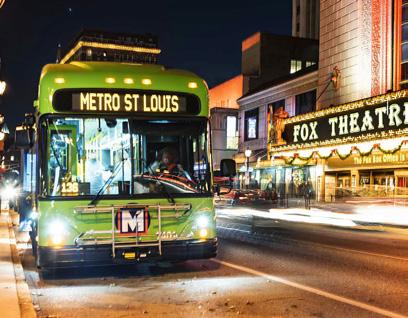
“I really loved my time there,” he said. “You spend seven years somewhere, then it’s near and dear… I know we’ll have a really good opponent on Friday.”
Five teams from the United Athletic Association, or the UAA, were named to the 64-team bracket. Playing many of Division III’s top powerhouses prepared the WashU’s team for the opponents that it’ll face in playoffs. It finished second in the conference with a 10-4 record playing a schedule that “felt like we played 14 straight tournament games,” Juckem said.


“There were some really high-level games across the board. It’s a point of pride,” Juckem said.
Juckem has a lot of experience in the postseason with the Bears, having qualified in three out of four eligible years. Each class he’s coached has been a little different; last year, he had a senior-heavy squad with graduate student sharpshooter, Jack Nolan, shooting over 20 points per game. This year, three out of the five main starters were underclassmen.
This year’s group has gotten a lot of experience this season in close games. Ten of the team’s 25 games have been decided by one possession.
“We’ve been in so many close games and high-pressure moments this year with Yogi [Oliff] and Will [Grudzinski] and everyone else,” sophomore Hayden Doyle said. “We’ll be ready for the makeor-break points.”
Jacob doesn’t see the team’s youth as a drawback; he sees it as a strength.

“This team is really young,

line,” said Houser. “Luckily [head coach Jeff] Stiles…prepared me for the situation. He told me that you gotta catch up to the guy, but do it slowly. Don’t get too excited or anything. Don’t try to burn all your energy out to him. I tried to time it the best I could and just sort of catch up to the end of the laps... Luckily, all the calculations were done and by like the 400 I could feel it.”
The Bears head to Wartburg’s Last Chance meet this weekend prior to the NCAA Indoor National Championships.
Women’s: A Fourth Straight Title



In an all around performance, the Washington University women’s track and field put its name in the UAA history book as it recorded its fourth straight indoor conference title win. Led by junior Emma Kelley, who defended her 400-meter title and set a new UAA Indoor Championship meet record with a time of 56.27 seconds, and senior Aoife Dunne who took home the 800-meter title, the Bears put up 194 total points to see themselves past a competitive University of Chicago program.
“It feels great to be the 400meter champion in the UAA meet and to go 1 and 2 with my teammate,” said Kelley. “Since the 400-meter is the shorter of my two races, it goes by super quickly for me and I don’t have much time to think or strategize during the race. My goal beforehand was
to get out of the blocks fast and take the lead by the break line so that I could hold that spot through the second lap and to the finish.”
Dunne had a huge weekend, and she too felt great about taking home a title and scoring points for her team, especially having run the mile an hour before her 800.
“I feel really proud to be the UAA champion of the 800,” she said. “The race was a bit intimidating to me...I knew I was going to be more fatigued than the other girls in the heat so the game plan was to sit on the girls first and then kick at the end. The main goal was to beat Chicago.”
In their road to victory, WashU was led by strong individual performances in the field events. Junior Ebun Opata took home the triple jump crown with an 11.99 jump, freshman Jenae Bothe came second in the women’s shot put, and sophomore Yasmin Ruff took second place in the women’s pole vault with a 3.58 meter score.
In the running events, strong performances cemented the team win.
Senior Emily Konkus came second in the 3000-meter with a time of 9:37.24, junior Charis Riebe finished 3rd in the 60-meter hurdles, sophomore Lauren Gay came second in the 200-meter event.
“I think I’m really proud of how both of my races went,” Gay said. “I think hurdles for me this semester have been just a little bit more difficult.
But I was definitely proud about the 200 and then the competition has just been great all year.”
Similar to men’s, the women’s team also drew a few of its points from the relay races. The Bears finished 1st in the 4 x 400 meter relay with a time of 3:52.74 and came second in the women’s distance medley with a time of 11:41.35. The first place finish in the 4 x 400 meter race was important because throughout the two days event, WashU was neck and neck with UChicago.
“Going into this conference meet, the women’s team knew that UChicago would be our main competition, as they have a lot of strong performers all around this year,” said Kelley who anchored the eight-lap relay. “The team score ended up coming down to the 4x4, so I knew we had to win it to secure the title... the rest of the 4x4 team put me in a good spot to be able to get the baton over the finish line first.”
Similar to the men’s team, the Bears head to Wartburg’s Last Chance meet this weekend for one more meet prior to the NCAA Indoor National Championships.
“To train for nationals in two weeks, we’ll get in a couple of good workouts this week,” said Kelley. “There is going to be much more competition from all the other D3 schools that are not in our conference, and we’re competing with all of them for a chance to team score.”
and I think that plays to our advantage,” Jacob said. “The young guys that we have are just fearless. They play with such confidence. They’re never scared of any moment. Never once have I sensed any kind of fear or anxiety or anything in any of these guys in any of these big moments. I just feel like, we come in [and] we play with joy.”
Juckem cycled through similes — “tightening the screws, sharpening the saw, to use every coaching cliche,” — before landing on what he wanted to focus on in the five days before the team’s first game in March: playing to the team’s identity. In practice, he outlined rebounding, taking care of the box to prevent high turnover games, and playing with a bounce in the team’s step. The rest, he hopes, will take care of itself.
“It’s not letting the circumstance be bigger than what it is,” he said. “We’re playing basketball. We’re competing. We’re trying to win possessions. But I want the guys to enjoy that and the reward of earning the right to play on their home floor [and] defend their home wood.”
Jacob echoed Juckem’s focus on process. He’s been using the final week to re-center around the foundational principles of the team, like valuing possessions and limiting turnovers. As a fifth-year, he’s had a lot of lasts over the past few weeks. But he doesn’t feel any nerves — at least, not yet.
“Will they come later in the week?” he said. “Like, for sure. That’s part of it, but that’s good. You can use that to your advantage. And that’s part of being alive. If you don’t have butterflies in moments like this, you don’t care enough.”
Baseball was soggy for what felt like two days straight in Arkansas.
On Saturday, March 25, their game was pushed back later and later into the afternoon as weather systems moved into the area. A doubleheader turned into a 4 p.m. start time when pitcher Clayton Miller finally took the mound.
Again on Sunday, the weather stymied the Bears’ plan to interrupt the sweep being executed against them. After scoring more runs in the first inning than they did in the previous eighteen, sheets of rain forced a no-decision for their third game against Hendrix.
In the two full games that WashU did play against Hendrix over their weekend series, the Bears struggled to match the production at the plate. They finished the weekend with two losses and only two runs in eighteen innings of play. Hendrix outscored them 9-2 over the course of the two games.
“We pitched it well [and] we hit it well, but it was the little things, kind of in between the lines, where we lost that battle,” senior catcher Hunter Goldberg said. “I feel like we played well as a team. They just outplayed us.”
According to head coach Pat Bloom, Hendrix was a team that WashU “just didn’t have an answer for.”
“But I thought it made us better — that process of playing a good team, an NCAA caliber team, on the road, playing in poor conditions,” Bloom said.
For the second weekend in a row, Bloom handed the ball to Clayton Miller, Matt Lopes, and Sebastian Guzman as starting pitchers for the three-game series.
Unlike previous years, where the team had a designated starter to set the tone for the weekend, the team doesn’t necessarily have a dedicated ace. They don’t have their Brad Margolin, John Howard, or Ryan Loutos that anchored the rotation in prior years.
“We still need some guys to step into those starting spots and be a reliable, consistent, shutdown guy,” Bloom said. “Last year, we were still searching for that guy. And this year, there’s still open competition for it. But I’m encouraged by some of the things I’ve seen in the first two weekends.”
Goldberg sees both advantages and disadvantages to the increased flexibility of not having a go-to guy.
“You don’t have that guy who’s gonna go out there and gonna shove,” Goldberg said. “But instead of having that one guy to lean on, we’ve just got multiple capable guys. We just don’t know who it’s going to be on a week-to-week basis, but there’s no doubt we have confidence behind them.”
The team has found an effective combination of relievers who complement the starters well, offering different looks and arm slots to generate some swings and misses.
Sophomore Hank Weiss pitched three innings after Lopes and allowed one hit.
Sophomore Will Henkel was handed the ball after Clayton Miller and pitched four innings with eight punchouts.
Looking at the team’s schedule, the third game technically doesn’t exist. It will stay as a no contest in the scorebooks. But after Broghan O’Connor hit a bomb in the second inning, WashU tacked on three more runs on two outs for a four-spot in the second inning.
Anthony Gross and Goldberg went four for four
in the three-and-a-half innings of play, and leadoff hitter Brandon Buday managed two doubles before the rain turned the grass field into a swamp.
“I think a big takeaway from that [game] is that, as a group of hitters, we need to be that confident, regardless of who’s up on the mound,” Goldberg said.
After being on the road for two consecutive weekends, the Bears will have the chance to run the basepaths on the turf on Kelly Field for the first time. The new field renovations mean that there will be no early morning tarp pulls, raking the mound, or field maintenance for the players as the sun sets over a dark Kelly Field. Besides the new turf, the facility has a bigger dugout and a player development area. They have two cages versus one, with three mound bullpen areas for the pitchers. Instead of the pitchers having to throw plyo balls against the uneven brick bathroom wall, they now have a throw wall in the bullpen area. The facility will still not have overhead lights.
“I don’t even think I can put it into words,” Goldberg said about how grateful he was for the new facility, crediting the coaching staff and administration for tackling the project. “I think I can speak for the whole team when I say that we’re ecstatic. Like, it’s honestly surreal.”
“It’s just such a tremendous improvement, not just in terms of the quality of the facility, but the quality of the experience and developmental process,” Bloom said. “We’ve looked forward to being out there for a few weeks, being able to put our feet down at home, and try to play some good baseball.”
WashU will face IllinoisWesleyan University at home on Saturday, March 4 at 12 p.m. and 3 p.m.
Following a tight homewin against Carnegie Mellon University, the WashU women’s basketball team took the trek up north to face heavily favored and UAA conference rival University of Chicago in the regular season finale. The Bears came into the game with a record of 17-7, while UChicago entered with a record of 21-3 and was ranked 14th in the nation.
WashU began the game hot as they got out to a quick 6-0 lead, and this lead blossomed to 10-2 very early in the first quarter. But as the first quarter progressed, the Maroons made a run and cut the Bear’s lead down to three, following the end of the first quarter.
The start of the second quarter saw a back-and-forth exchange, but as the quarter
was coming to a close, the Maroons went on an 8-0 run and took a 38-32 lead i nto halftime. The momentum UChicago had gathered during the end of the second quarter continued into the third quarter, as the Maroons extended their lead to double digits. But the Bears did not go down easily, as they ended the quarter on a 7-2 run to cut the Maroons’ lead to five following the end of the third quarter.
WashU continued their hot streak by going on a 7-2 run to begin the fourth quarter, led by senior forward Maya Arnott. Following a pair of free throws from senior guard Karisa Grandison, the Bears took their first lead since the second quarter. As the quarter progressed, both teams kept going back and forth with each other, but UChicago eventually pulled away. Free throws were the difference
at the end, as the Maroons knocked down their free throws to end the game on a 9-1 run to secure a 71-63 win.
The story of the entire game was the free-throw shooting, as WashU shot a putrid 46.2% while their opponents from the north shot 80.0%. In addition, the Bears underperformed from the 3-point range, as they ended with a 3-point field goal percentage of 20.0%.
Although the loss was disappointing, Arnott continued her terrific season as she scored a team-high of 25 points in 34 minutes, which was her 19th double-digit scoring game.
The Bears ended the season with a record of 17-8 and a conference record of 10-4, finishing third in the conference. WashU plays Trine on Friday, March 3 at 5:15 p.m. in their first round game of the NCAA tournament.
After a wire-to-wire home win against Carnegie Mellon University, the Washington University men’s basketball team beat the Maroons with a scoreline of 63-62. The Bears came into the game with a record of 18-6 while UChicago entered with a record of 10-15.
With the win, the Bears ended their regular season with a record of 19-10 and a 10-4 record in UAA conference play. They finished the year as the 2nd best team in the UAA, one game behind Case Western Reserve University. Monday afternoon is when the Bears will learn about their ranking and if they have home court advantage in the NCAA tournament.
WashU began the game hot as the team got out to a quick
15-4 lead eight minutes into the game. The Maroons charged back as they cut the lead into single digits, then proceeded to score ten straight points to take the lead with 3:19 left in the first half. After a bevy of backand-forth baskets, the Bears took a slim 2-point lead into halftime, leading UChicago 26-24.
The second half saw a tight contest with no team being able to fully pull away; the game was tied six times in the second half. But as the half wound down, the Maroons began to pull away, and they led 62-56 with only 1:31 showing on the clock. Head coach Pat Juckem’s defensive focus came in clutch, and the Bears didn’t go down without a fight. They went on a 7-0 run to close out the game and secure the one-point victory. Sophomore forward Drake Kindsvater
got the end-of-the-game run started with a putback, then sophomore guard Hayden Doyle followed that up with a massive 3-pointer to bring the Bears within 1. Following a defensive stop, the Bears had ten seconds left on the clock, and that is when Doyle went coast to coast for the gamewinning layup.
The story of the game was the free throw shooting and the rebounding, as even though the Bears had 19 turnovers, they covered 75 percent of their free throws, relative to the Maroons only hitting 54.5 percent of their free throws. In addition, the Bears out-rebounded UChicago 41-24.
Individually, Kindsvater continued his breakout season as he poured on a team-high 19 points while being a hyperefficient 7 of 10 from the field and 3 of 4 from downtown.