WUSTL WRITERS
Two WU students publish a childrens’ book (Scene, pg 4)

WU BEATS NYU
Women’s basketball defeats top-ranked NYU in early conference play (Sports, pg 7)


WUSTL WRITERS
Two WU students publish a childrens’ book (Scene, pg 4)
WU BEATS NYU
Women’s basketball defeats top-ranked NYU in early conference play (Sports, pg 7)
Enter the first cartoon caption contest of the semester! (Forum, pg 6)
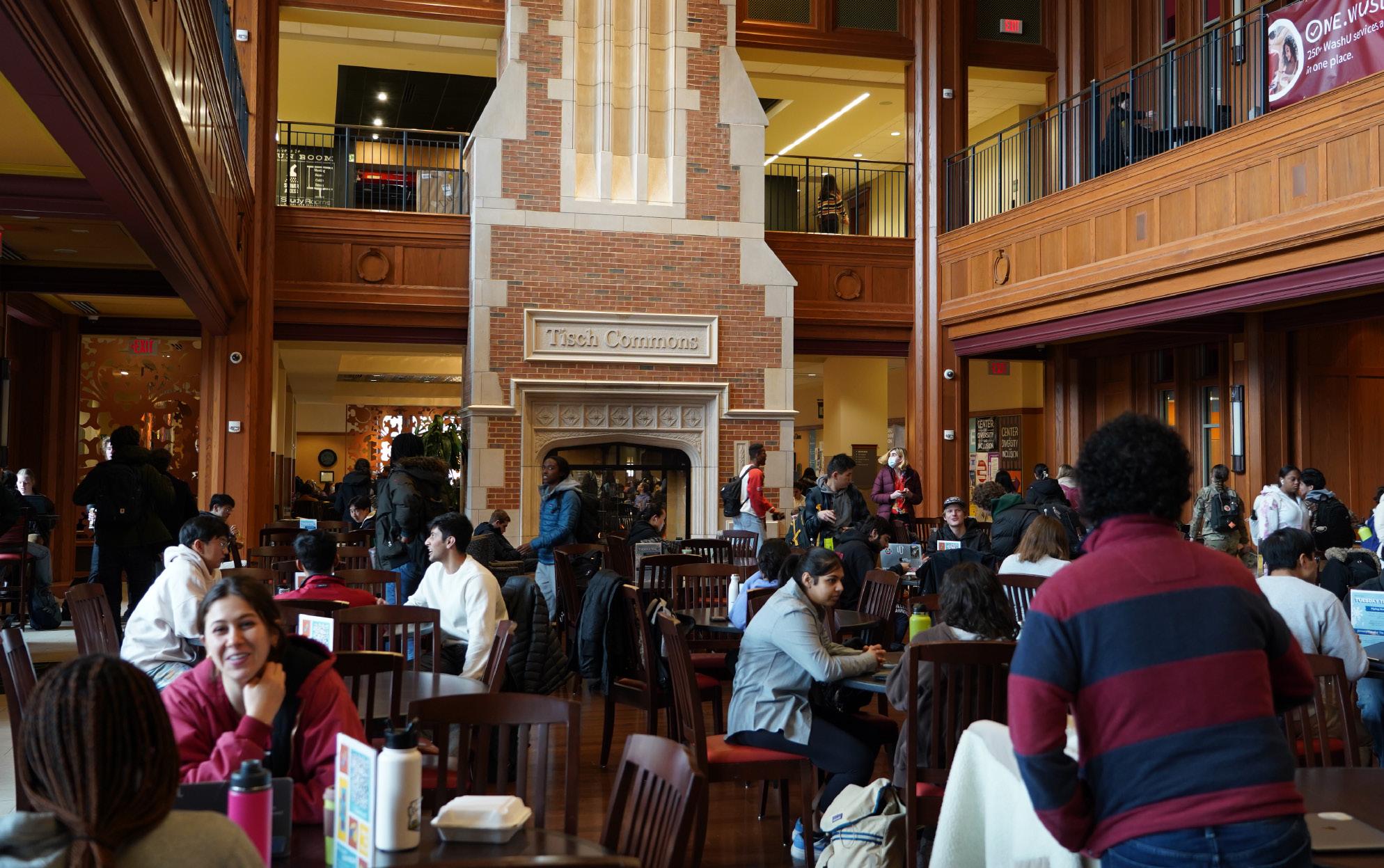
Campus Life’s “Tuesday Tea @ 3” event, previously hosted on a weekly basis in the Danforth University Center (DUC), will now occur once a month during the Spring 2023 semester. Tuesday Tea will happen on the third Tuesday of each month and will continue to operate in Tisch Commons from 3 to 5 p.m.
The decision to change Tuesday Tea from a weekly event to a monthly event was intended to make space for other Campus Life events and activities, Associate Director of Campus Life, Peggy Hermes said.
The event provides students with an afternoon break from work and classes, offering up hot tea and scones. Hermes said Tuesday Tea “is a partnership with different student groups, departments, and sponsors” that sign up to host the event.
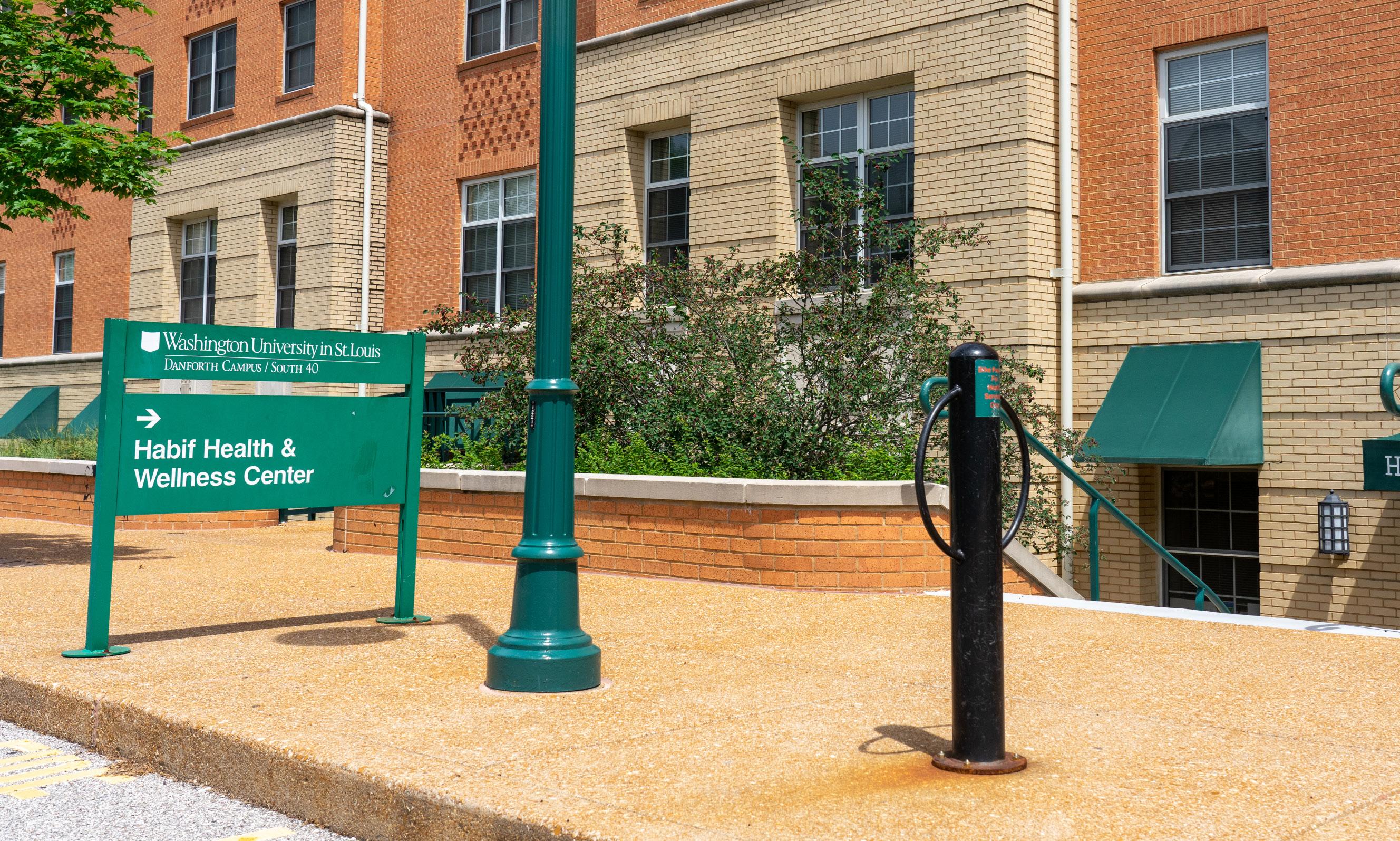
Habif Health & Wellness Center is still offering COVID-19 tests and resources to students who are sick or experiencing symptoms.
In the U.S., there is a common perception that individuals from collectivist cultures, or cultures that value the interests and the importance of the community over those of each individual, are more inclined to wear masks. However, many argue that, regardless of cultural upbringing, individuals adjust masking habits to the cultural environments in which they exist.
As a result, international students studying at Washington University, especially those from East Asian cultures perceived as collectivist, are often understood as having an ingrained persistence for masking.
Chair of East Asian Languages and Cultures Letty Lingchei Chen spoke about the difficulties of cultural adjustment for international students and the relationship towards masking this experience might encourage.
“How comfortable do they feel about their accessibility to their medical care [when a language barrier exists]? How comfortable [would it be] for them to find a doctor [in cases of sickness]?” she asked.
Chen emphasized how generalizing the actions of a particular cultural group leads to a “slippery slope” in the risks of stereotyping it presents.
“If an international student feels intimidated or has very limited
access to medical care, then they might be more protective of themselves, so they will be more careful [in terms of masking],” she said. “They don’t even know what kind of medicine to buy in Walgreens – these are all English, foreign names to them. So I think that this is another dimension that’s beyond culture – it’s a sense of being in a foreign environment and [the interaction with it.]”
Students from collectivist cultures adapt their attitudes to different circumstances as they come to the US to study, as policies regarding COVID-19 can be drastically different from those of their home countries.
First-year Kyle Chen from Shenzhen, China, said that he behaves differently depending on where he is.
“Living in countries with drastically different cultures, I feel as if I have two identities – I’ll be individualistic if I am in America, and I will conform to the norms back home if I have to – I believe it’s important to conform to the social norms of the country that one lives in,” Chen said.
Other students recognized the cultural differences that are at play in making the masking decision.
Dongting Li, a first-year from Canton, China, also reports not wearing a mask under most circumstances on campus, as he prefers the physical comfort when given the choice.
“In America, where the liberty of choice is recognized and dignified, I don’t have to adhere to certain expectations like I do at home,” Li said. “Back home, wearing a mask is always a must, as personal welfare matters much less than that of the entire public.”
First-year Yunshi Qi from Beijing, China, echoed the perspective that Li shared.
“My thinking tells me that the national government and its research personnel certainly know more than me -- what they say is supposed to be the truth -- and what I do is simply listening to them,” Qi said. He chooses not to wear a mask in the US because those surrounding him do not follow suit.
Kelvin Kim, a first-year from Seoul, Korea, feels the division between his personal choice and his cultural upbringing. He does not wear a mask around campus, but he recognizes the necessity of doing so at home.
“Korea is a very communal society — we are very prone to think about the opinions of other people and what the government says,” Kim said. “Nobody wishes to be the outlier, and because of the cultural consensus, there’s not a lot of people that are willing to step out of society’s view and not wear a mask.”
Many who have had the experience of living in other countries have developed more flexible mindsets toward masking. First-year Alan Xiong, who currently
lives in Hong Kong, believes in the importance of personal choice in this matter.
“Because of my cultural background of growing up in Shanghai and Singapore, I wouldn’t mind mask mandates — I would follow these policies and do so without protest,” Xiong said.

Xiong does not believe that the new variant of the virus poses a serious threat to American society, but he said that he would wear a mask upon the request of others “out of courtesy” as he is “willing to make personal sacrifices to keep the community safe.”
Zhao Ma, Associate Professor of Modern Chinese History and Culture, rejects the stereotype that international students from collectivist cultures are more likely to mask, saying that individual preferences direct one’s behavior more than any other factor.
“I often run into students who are not Chinese or [of Asian heritage] wearing masks,” he said.
“I also have friends, Black Americans and white Americans, who also wear masks all the time — it is not just an Asian thing; it is not a Chinese thing — it’s [about] people’s own decisions.”
Ma warned of the danger of associating one’s place of origin and cultural upbringing to the attitude toward masking.
“There are other reasons, more than just culture, that play into how people made that decision.”
After the cancellation of the Fall 2022 semester’s WILD, administrators discussed how their planning process has changed and why they are hopeful that Spring WILD will be a success. Spring WILD is currently scheduled to take place on Friday, April 28.
Fall 2022 WILD was canceled after capacity constraints on Brookings Quadrangle forced Washington University’s Student Programming Board (SPB) and administrators to try to find lastminute solutions. Despite the fact that the event is more than three months away, planning for WILD
is ongoing. Rob Wild, Associate Vice Chancellor for Student Affairs and Dean of Students, described the cancellation as something he “wish[es]” did not happen but could serve as “a learning experience.”
According to Jasmine James, who serves as SPB’s advisor and Campus Life’s Coordinator for Programming and Marketing, SPB and administrators are trying to find solutions to ensure that the event takes place.
Student Life reached out to the student leadership of SPB, who declined to comment on this story. SPB President Miri Goodman stated in an email, “[We] don’t really have many updates at the moment for WILD. We are still in the process of
planning for the spring and working with our campus partners to make sure the event is successful.”
James wants to make sure that SPB feels “comfortable” throughout the planning process. She attributed the lack of comfort some SPB members felt last semester during the planning process to the loss of organizational knowledge during the COVID-19 pandemic.
“I [don’t] think that they’re uncomfortable, but they’ve never seen a WILD, they haven’t planned something to the scale before so I want them to feel comfortable in doing all of this,” James said. “I feel like [planning WILD is] a kind of adult work, which isn’t always what students are used to.”
To remedy this issue and provide students with the resources needed to run the concert, James has stayed in contact with SPB during winter break. The group’s first meeting with campus partners took place on Monday, Jan. 23. In addition to having more time to plan out the event, SPB student leadership and James will be attending a conference run by the National Association for Campus Activities (NACA) in Louisville, KY next month. Peggy Hermes, the Associate Director for Campus life, hopes that attending the conference will help rebuild some of the institutional knowledge lost during the pandemic.
The conference aims to teach students how to run events on
“We bring folks in to have tea, and then there is a host [organization] that gets to highlight their involvement opportunities,” Hermes said.
Tuesday Tea is a tradition at Washington University, one that “has been going on for about 12 years,” Hermes said.
“Tuesday Tea started when the Danforth University Center was looking for programming to activate the building,” Rob Wild, Associate Vice Chancellor for Student Affairs, said.
“When we were looking at the rest of our Spring 2023 programming budget, [altering the Tuesday Tea schedule] was a decision we made to re-imagine programming,” she said. “We wanted to make sure that we were emphasizing other types of programming, while still maintaining Tuesday Tea.”
Wild explained that Campus Life receives a small programming budget from the University, as the department’s main function is not to host their own events. Therefore, Campus Life wants to “be innovative and try different things” with their programming funds, especially after the lull in student activity due to the COVID-19 pandemic.
Coordinator for Programming and Marketing Jasmine James added that Campus Life is exploring their programming options. Most recently, Campus Life hosted several events for their Winter Welcome Week, such as a trivia night.
SEE TEA, PAGE 2
their campuses in a way that is safe, successful and entertaining. Hermes described NACA as “an international organization that includes members that include different college campuses, industry professionals, vendors, agencies, artists, etc.”
SPB had attended the event pre-COVID; James said that the knowledge of the NACA conference’s existence “was lost during COVID, too,” further accentuating the importance of attending this event.
One contentious aspect of fall WILD’s planning was determining if the event should be ticketed, so that
SEE WILD, PAGE 2
TEA from page 1
Although programming funds are currently being allocated to other types of activities, Hermes said that the Tuesday Tea schedule change is a “pilot study” for Campus Life to see what students want.
“We [are curious] to see if [Tuesday Tea] is an event that students want us to do weekly,” she said. “We want to get a feel for what the student body really wants from our programming.”
Many students are upset with Campus Life’s decision.
Sophomore Grant McIntyre claims to be “devastated” by Tuesday Tea happening only once a month.
“It is my favorite campus tradition,” he said.
Junior Avery Mccammon says she is disappointed that Tuesday Tea is switching to a
monthly schedule.
“While I understand that Campus Life does not have a large budget to program events, Tuesday Tea is such a great tradition at WashU,” she said. “I love seeing my friends at Tuesday Tea events and appreciate the study break, so I’m sad that it will be a less frequent thing.”
One student even went as far as to create a change.org petition to “make Tuesday Tea weekly again.” So far, the petition has amassed 55 signatures.

The next Tuesday Tea event is on Feb. 21 in Tisch Commons. Despite the event’s new schedule, Tuesday Tea is not going anywhere.
“Tuesday Tea has been a huge success,” Wild said. “We did not eliminate it, we are just scaling it back to try other things.”
Student Union (SU)
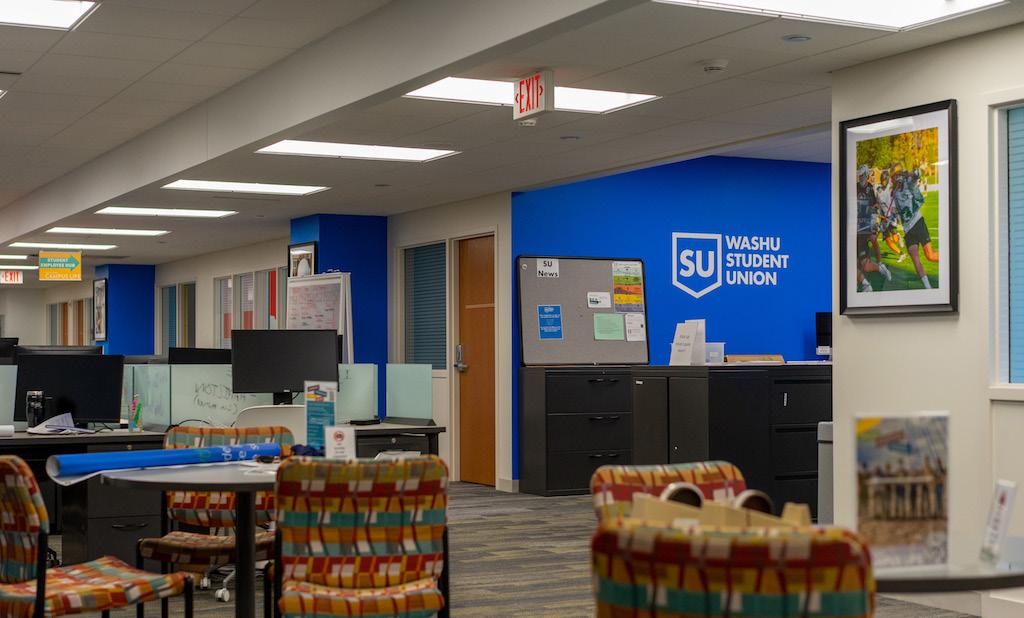
Treasury’s weekly meeting on Jan. 24 heard appeals from a variety of clubs, including an appeal SU rejected from SAILWashU to attend a conference.
Armour Magazine, the University’s fashion and art magazine, requested $8,500 to fund a launch event at the Boo Cat Club for the magazine’s 29th season.
Multiple treasurers questioned the necessity of hosting the event at this particular venue. Armour requested $6,000 for the setting, while other clubs have requested far less funding for similar events’ venues. Armour cited aesthetic and social reasons as to why they wanted their event held at the Boo Cat Club.
Treasury tabled Armour’s appeal until next week’s meeting.
SAILWashU requested funding to attend the Midwinter Conference — an event for collegiate sailing
teams to decide where they are going to compete in the upcoming season — next week. The club submitted two appeals to SU and said that they could only attend the event in person, even though a virtual option was available, which newly elected sophomore treasurer Leena Rai brought up in the meeting.
Sophomore treasurer Saish Satyal voiced his concern over the team’s lack of transparency.
“I don’t quite like that there was the implication of there being no virtual option when there totally was,” he said.
“That doesn’t quite sit well with me.”
Vice President of Finance
Max Roitblat funded the group’s first appeal for an undisclosed amount under $1,000 but gave them less than their requested amount. This appeal included money for rental cars, gas, and registration for the event. After the first appeal, the group submitted another appeal for over $1,000 which included housing, in addition to the previous items. There were no representatives from SAILWashU present at the treasury meeting to answer questions, including why they had to attend the conference in person.
SU treasurers declined to fund the second appeal.
Over the course of the meeting, several SU Executive Board members gave updates on their work.
Update from Emma Platt, Vice President of Engagement: Platt informed treasurers that they would all need to participate in Diversity, Equity, and Inclusion (DEI) training, and relationship and sexual violence prevention and response training. Platt said these trainings will soon be mandated by SU for all student groups to complete and that “if SU is asking all these student groups to participate in this, then we should also be doing this ourselves.”
SU training day on Feb. 8 will serve as the “test pilot” for future training days, Platt said. There will be training days in February, March, and April that other student groups can sign up for so that they can receive training.
Update from Executive Vice President Emily Chen:
Towards the end of the meeting, first-year treasurer Leslie Sackey asked to see a copy of the SU constitution and Chen responded that
SU is “updating” their constitution. Satyal and junior treasurer Jason Zheng both serve on the Constitutional Task Force (CTF) in charge of rewriting the SU constitution. Satyal said that SU is changing the constitution because SU has received “a lot of complaints [from student groups] that some provisions are too vague or too outdated for the way that SU currently runs.”
Update from Vice President of Finance Max Roitblat:
At the very end of the meeting, sophomore treasurer Sadie Karp asked Roitblat if he had an update on “WILD transfer funding,” likely referring to whether some of last semester’s WILD funding would roll over because the event was canceled.
WILD from page 1
it could be held in Brookings Quadrangle as opposed to another venue. Wild described some of the ticketing related hiccups and stated that, “if you have more time to prepare for [WILD], [ticketing] is easier to manage,” he said. “That was one of the crisis points we had in the fall. We just didn’t have a lot of lead time to develop a ticketing solution.”
When asked if the upcoming WILD would involve tickets, Hermes responded with, “I think that is just going to be dependent on the venue.”
Stan Sweeney, the Executive Director of Campus Life, described a range of ticket options.
“I’ve been in institutions… where students don’t go free, but they get a cheaper ticket price — it’s only subsidized,” he said. “So, you know, I think that’s kind of the practice that I’m used to.”
Sweeney echoed the point that the decision to ticket the event will be dependent on the venue. He also expressed that SPB will have to take in many different factors before deciding to ticket the event.
One potential issue with
Roitblat confirmed that he did have an update but did not share it “because [he needs] to formalize the communication to [the Social Programming Board] first.” He wanted to “hold off on saying that here until next week,” referring to the treasury meeting that will take place on Jan. 31.
One thing that was consistent during all appeals was the lively conversation and high volume of questions that took place among the treasurers. Speaker of the Treasury Mishka Narasimhan said she was impressed by the level of activity at the meeting.
“Every [representative] has asked questions,
ticketing is that it deviates from the tradition of WILD, an event that has never been ticketed. Wild acknowledged that ticketing “is not the history and tradition of WILD at WashU.” As of right now, Wild “[doesn’t] know what SPB is going to decide.”
Administrators are planning on using the cancellation of last semester’s WILD as a learning experience, and are hoping the event takes place this spring. They repeatedly conveyed their three main goals for the concert are to have WILD, to make sure that it is safe,

both this session and last session, which I love,” Narasimhan said. She went on to compliment the new representatives, saying, “this batch of new representatives seems to be the most engaged that I’ve seen.”
After the meeting, Rai described working on SU Treasury as something to help “serve the student body’s needs.” She said that she ran to be a treasurer because she thought it was “an elusive, opaque, and frankly frustrating process.”
She said she now enjoys “being a part of [a] process that is actually very collaborative,” and feels that “[students] voices actually hold a lot of weight, which is really cool to see.”
and to make sure that it is student-led.
Wild made sure to highlight the last of the three goals and state the importance of this being a student-run event.
“If you wanted WILD to be a university event, the four of us can just do it,” he said, referring to [James, Sweeney, Hermes, and Wild]. “Give us the money, we’ll just go hire a company to do it, but that’s not what WILD is. WILD is a student-run concert and we are here to ensure that [it] happens.”
I’ve never actually tried this, but hear me out. For just $23.99 (plus shipping), you can have your very own happy natural light box to scare away the winter blues!
In all seriousness, lower amounts of natural light (hello, darkness at 5pm) can cause drops in serotonin (according to science, AKA a Mayo Clinic article), and it’s perfectly natural to feel a little sadder when there’s less sun. Certain

types of lamps mimic natural light, which could help with seasonal depression. And I’m certainly not a doctor, but the idea of sitting in front of a fake sun in order to squirt out a little more happy-brain chemicals seems foolproof to me…
— Via Poolos
My best (non-medical) advice for combatting seasonal depression is to
remember who college is for. Your four years here belong to you more than anybody else and that shouldn't change. Yes, it is getting colder outside; there will be more gray skies and frigid days in our collective future, but try to look within and make sure you are prioritizing your own experience here. Attend campus events and learn about what is going on, pick up an instrument, or join a new club (Student Life perhaps…#notbiased). No
something so simple, yet mentally rewarding! Giving yourself breaks during the week and semester can help both your physical and mental health. I find that journaling helps a lot — even if that is just writing about what I am looking forward to the next day.
Annabel Shen—
I find that when the sun sets earlier and the days get colder, it becomes more and more challenging to accomplish large tasks. It feels defeating to look at a list of Canvas assignments and have them all feel insurmountable. To combat this, I try to find victories in
smaller things and divide up tasks to make them less intimidating. This can look like putting easy things on a to-do list to have easier ways to cross them off; it can look like dividing readings into ten-page increments; or it can look as simple as pausing for a minute after class to reset. All of these celebrate or ease the hefty burdens we face each day. A successful day doesn’t have to mean you’ve executed every task perfectly. Find ways to make little moments more meaningful and they’ll start to add up.
— Alice Gottesman
Our days are starting
later and ending earlier as winter goes on; it’s really easy to follow the sun and just not leave your dorm when it gets dark and cold. But the outdoors are amazing regardless of the time of day. Now is the time to go exploring. Some of my favorite memories are the times I gathered my friends together for a late night walk around the East End, going through all the Sam Fox buildings, or watching the sky clear up and the stars appear. Also, I waited for two years for the Crow Observatory to open up, so you can bet I’ll be up there this winter.
— Will Labrador
Julia Robbins
Editor-in-Chief editor@studlife.com
Via Poolos Managing Senior Scene Editor scene@studlife.com
Jamila Dawkins Reilly Brady
Managing Senior Forum Editors forum@studlife.com
Clara Richards
Managing Senior Sports Editor sports@studlife.com
ILLUSTRATIONS BY TUESDAY HADDEN | HEAD OF ILLUSTRATION
Ved Patel Managing Chief of Copy copy@studlife.com
Holden Hindes Managing Photo Editor photo@studlife.com
Kellen Wang Head of Design design@studlife.com
Tuesday Hadden Head of Illustration
James Ellinghaus
Nina Giraldo Avi Holzman Senior News Editors
Annabel Shen
Alice Gottesman
Senior Scene Editors
Gracie Hime
Cathay Poulsen Chief of Copy
Elle Su
Zoe Oppenheimer
Senior Photo Editors
Kamala Madireddi
Jared Adelman
Senior Multimedia Editors multimedia@studlife.com
Sydney Tran Junior Design Editor
Jasmine Stone Junior Forum Editor
Emmett Campbell Jamie Nicholson
Junior Photo Editors
Zara Shariff
William Labrador Junior Scene Editors
Lily Taylor
Zach Trabitz
Bella DiGenova Junior News Editors
Camden Maggard Social Media Editor
Tim Mellman Newsletter Editor
Clara Richards Designer
Tony Tong Senior Web Editor
Paige Steuber Senior Web Designer
Adrienne Levin Coleman General Manager a.coleman@studlife. com
Sarah Huff Advertising Sales Manager huffs@studlife.com
Copyright © 2023 Washington University Student Media, Inc. (WUSMI). Student Life is a financially and editorially independent, student-run newspaper serving the Washington University community. Our newspaper is a publication of WUSMI and does not necessarily represent the views of the Washington University administration.

necessarily feel the connection to yet, but you know you will later because of your cultural identity or ethnic blood?” Chang asked.
Over these past two years, Chang and Yoh faced many challenges, from deciding how to tell the story, to contacting an agent, to letting go of pages and illustrations for final copy edits. Chang said, however, that the hardest part is not “the writing, the illustrating, or even working together, but it is selling the book.” Although each step of the process seems to have its own hurdle, the two are currently dealing with how to successfully market their book and pique public interest.
Even so, the two laughed while reminiscing on past struggles. “[If] I were doing this alone, I would probably be crying half the time, but at least now I have someone to cry with half the time,” Yoh said.
dancers were impressed by publishing at such an early age. “I think I have taken it for granted [since] the excitement has died down, but I am so thankful that it has happened,” Yoh said.
Both Yoh and Chang highlighted the integral part that Washington University has played in supporting their book journey. Chang stated she did not initially enjoy St. Louis and the college experience, but after meeting Yoh and working on this book, she began to find comfort in a place far from her own home, in California.
Chang and Yoh are guaranteed a second book in the future, as this is part of the deal that they signed with their publisher. The two are still brainstorming ideas, but project that the new book would be released around 2025.
Vivienne Chang, a senior majoring in Economics and Finance with a minor in Dance, and Eugenia Yoh, who graduated in 2022 with a Communications Design degree, never expected a night of commiserating over stomach pains would bring them together — not only as friends, but as successful business partners.

That fateful night around 9 p.m. Chang invited Yoh to her dorm after Yoh came down with a bad stomach ache from slightly over-indulging on
an all-you-can-eat hotpot, hosted by the Hong Kong Student Association. While Yoh was curled up in a fetal position on the floor, the two began to get to know each other and soon the topic of picture books randomly came up. The two joked around about putting together a picture book of their own, but it was all fun and games until they realized they might actually be able to do it. “[We] sat in a Panera and just wrote out basically the entire book…We were so dehydrated [from working all day without rest], it was fantastic,” chuckled Chang.
Both Chang and Yoh
derived a lot of inspiration from major lifestyle changes that had just occurred as COVID-19 hit the U.S. in 2020.
In light of the pandemic, Yoh decided to take a gap year and was living with a friend of hers who had absolutely hated it when she moved back to Taiwan during her childhood. Both Chang and Yoh, who loved Taiwan, its culture, food, and everything, “could not fathom how [someone] could hate it there,” said Yoh.

Now it is 2022, and their book, This Is Not My Home, is to be officially released to the public on
January 24th, 2023. The book is about a little girl who moves to Taiwan and learns to redefine her meaning of home.
“I think a lot of the time we think of home as a very physical place: it is a concrete house, the rooms we live in, the places that we walk to,” said Chang. When reading This Is Not My Home, the two want their readers to find and discover their own personal meaning of home.
“Can we expand on this idea to think of home to be the place that our loved ones work and live? Can we expand home to be somewhere that you do not
On the flip side, Chang found the most rewarding part of the process was being able to publish their book “through the more traditional way.” She explained that there are two main ways to publish a book: either online individual distribution, such as Amazon, or more oldschool, through an agent and publisher. Traditional publishing is often seen as a more difficult journey as there tends to be more “gatekeeping” and hurdles to jump over.
Yoh highlighted how rewarding it felt when she attended her weekly folk dancing class and her fellow
“Vivienne and I love telling stories through pictures that are universal and humorous, so expect a lot of main characters rolling around the floor in complete distress,” Yoh said with a laugh.
While the project is still in the works, the two continue to write and illustrate, seemingly having found a home in this shared love and creative passion.
Subterranean Books on the Loop is hosting their first official book launch on February 7th, 2023 at 6pm, so stop by to show some support! This Is Not My Home will also be available at Barnes and Noble, Target.com, Amazon, Walmart.com, and independent bookstores.

I was scrolling through TikTok last night, and I liked a video of a senator quoting Taylor Swift at the Ticketmaster hearing. This morning, of the first ten videos on my “For You” page, six of them depicted U.S. senators quoting Taylor Swift. While in this case TikTok’s echo chamber appears harmless and even frivolous, when applied to politics and contemporary issues, it can be detrimental.
TikTok was recently awarded the title of Most Downloaded App of 2021, garnering 656 million downloads — significantly more than Instagram, Facebook, Snapchat, or Twitter. Like YouTube, TikTok differentiates itself by honing in on social media as entertainment rather than a way to connect with others. The many negative side effects of social media use (imposter syndrome and depression, among others) have long been outweighed by arguments for social media as a force of societal progress, one that can connect billions of people from all different countries, religions, and socioeconomic statuses. Because TikTok focuses

on entertainment rather than connecting peo ple, that benefit of social media is essentially gone, which sets the app up as a target of debate, contro versy, and scandal.
According to The New York Times, the algo rithm for recommending videos to users is most affected by time spent per video, and every thing else stems from there. After time spent per video, TikTok may consider other factors, such as user interac tions (likes, comments, playthrough, and play time) and creator quality (publish rate and creator monetization). Each video con sumed gives TikTok a new insight into the user, which is why it so often seems like the app may know us better than we know ourselves, as one user found when she realized that TikTok may have known her sexuality better than she did.

This algorithm pro duces what is essentially an echo chamber, repeat ing its users’ beliefs and opinions over and over again, solidifying their preexisting ideas and exemplifying confirma tion bias. This forges a wider and wider gap socially and politically, promoting the polar ization that is already opportunities to leave time limit, and finding try to spend more time


A 2019 scare in which rumors circulated that Cool Math Games would be shut down led many, including myself, to take stock and revisit their flash game nostalgia. Cool Math Games, GirlsGoGames, and websites of the like are seemingly from a different world: one in which typing was a skill to learn at school rather than developed in one’s infancy on an iPad; where schools had computer labs packed full of 20-pound monitors of varying ages and reliability rather than portable carts filled with sleek Chromebooks. (I’d wax poetic about the wheeled television cart and its accompanying Ratatouille or Finding Nemo VHS — now replaced by…a Netflix subscription — but for fear of alienating our incoming Class of 2027 altogether, I’ll stop here.)
This world, quickly disappearing, was one in which gaudy websites
overrun by ads and fiveminute graphics had obvious (and lucrative) entertainment value and cultural impact. They are the fruit of a time on the internet where, when there was nothing to do, kids needed help finding something to do. Apart from the assault of advertising, sites like Miniclip, Cool Math, GirlsGoGames, and more not only offered thousands of games (many of which were created by small teams of developers) for free, but did so in a way that felt intentional for children. According to Cool Math, their website was born from a teacher named Karen who wanted to make a way for kids to learn math through fun games. Girls Go Games — blindingly pink, sparkly, ruled by dress-up and doll games — was (and still is) drenched in the kid-core of the time (those of us who grew up wearing Justice or envying those who did, you know what I’m talking about).
In many ways, the fall

in popularity of these sites is a practical one. The 2019 Cool Math scare was actually rooted in Microsoft’s announcement that it would end support for Adobe Flash Player, the once-dominant software used to play and stream countless online games and videos. Its discontinuation left many browser-based gaming websites with a gutted catalog of games and left many of their developers with the choice to either abandon their project or reconfigure their games for different software. And why should Microsoft continue to support Flash if they decide its upkeep is more trouble than it’s worth? Why should kids play Papa’s Pizzeria or The Impossible Quiz when Fortnite is free (or freeish, microtransactions notwithstanding)? Won’t the death of Flash and the slow demise of browserbased gaming websites make way for new entertainment that kids find fun and meaningful?


I won’t measure my nostalgia against the kids growing up on Roblox and Fortnite. I will say, though, that the spark of online spaces intentionally centered around kids is one that I miss, and I’m not alone. As of April 2022, Miniclip has gutted their online website to focus on mobile games. Nickelodeon and Disney abandoned their online games, supposedly focusing their time and money on Bizaardvark and world domination. Club Penguin closed its virtual doors. There are some equivalents, but they don’t feel the same: the Animal Crossing games, for me, capture the spirit of GirlsGoGames’ offerings but lock it behind consoles and paid DLCs. Games like Roblox, Minecraft, and Fortnite vary in their degrees of accessibility and cost and don’t feel as decidedly childish.
Time spent online continues to become more and more integrated with social and cultural
standing, with tweets blurring into inside jokes and viral TikToks evolving into generational vernacular. That said, we’ve become comfortable with the crowding of all ages onto online platforms, and websites like GirlsGoGames are proof that we didn’t used to be. There was an importance to spending time online surrounded by other kids, on platforms where accidentally misspelling “duck” would get you banned in seconds. While Minecraft and the like have comment regulation systems, they are easily circumventable and, by virtue of the broad span of ages on the platforms, can hardly claim to be childcentric. This isn’t to say that children are perfect angels online; the potential for online depravity knows no bounds. But there’s something sacred about a platform that gives space for kids to be depraved around other kids — and something unsettling about growing
up online surrounded by people much older than you, simply because it’s no longer lucrative to invest in spaces only for children. Hopefully I haven’t overstated the virtues of websites like GirlsGoGames. Even on these sites, there was plenty of non-child-friendly content to be found. The issues of advertising to kids and microtransactions aren’t too different from slathering your website in sketchy ads. Twenty years from now (assuming we make it that far), the Class of 2037 will be reminiscing about their own flavor of the good old days. Nostalgia can only be rationalized so far, and maybe today’s kids do feel the same magic that I felt playing Poptropica during 4th grade computer lab. I would just hope that, as more and more growing up happens online, kids can find virtual sandboxes — or dressing rooms, or donuterias — to play in with other kids, like I did.
We provide the cartoon. You provide the caption. Next week, we’ll publish the top three responses. Scan this QR code to participate in the first caption contest of the semester. Submit your answers before this Monday at 9am.

Alternatively, you can visit our Instagram (@studentlifenewspaper) and Facebook (facebook.com/ studlife/) for a direct link.

Arnott, whose season-high 20 points earned her a spot on the All-Tournament Team.
extremely well took [the Maroons] out of rhythm and put us in a position to compete for the win.”
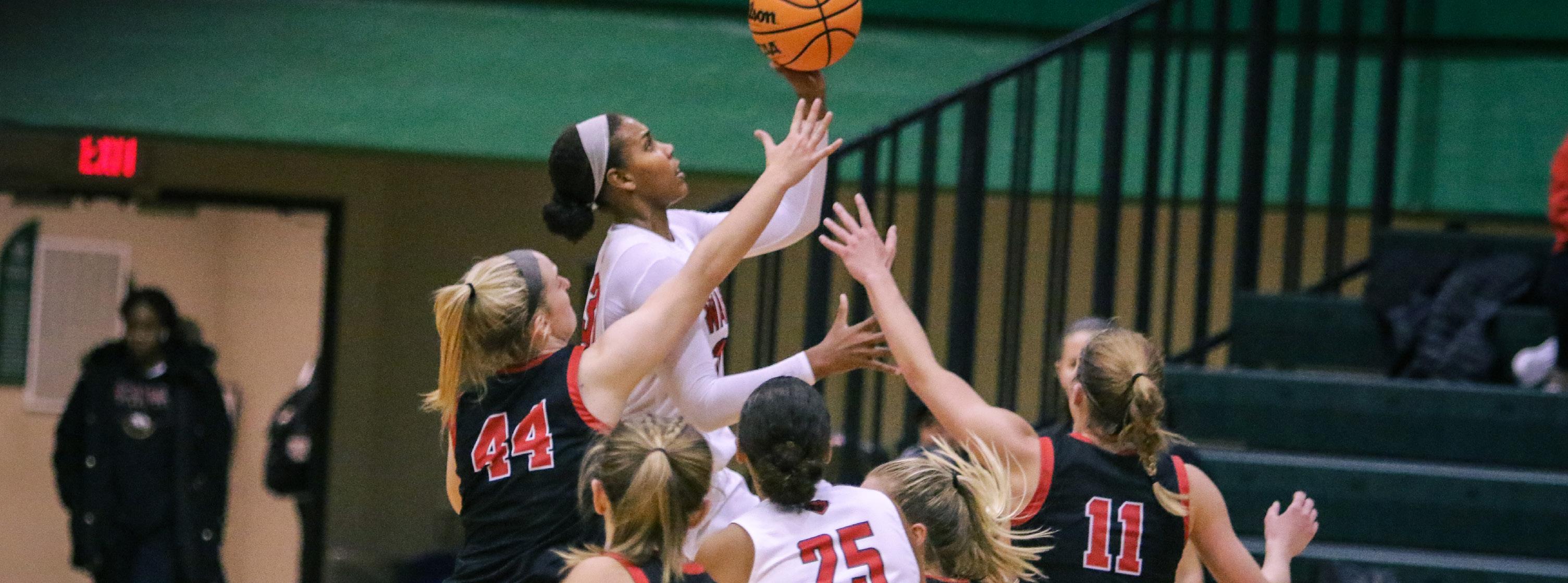
While many Washington Unversity students were off campus over winter break, the women’s basketball team was locked in to their pursuit of a UAA conference championship. After ending last season in a three-way tie for second place, the Bears entered this season looking to compete for the title. By winning four out of their first five conference matchups, including wins over Top 10 ranked New York University and University of Chicago during winter break, the team is tied for first place in the division as they approach the second half of the regular season.
After a nearly two week break from live action, WashU returned to the court for their final pre-UAA tune up at the University of Wisconsin-Oshkosh Tournament. The Bears entered the competition with a 5-3 record and were looking to bounce back following two straight losses. In their first game, the slide continued. The hosts, UW-Oshkosh, overwhelmed the Bears on both sides of the court during the December 29th matchup.
The Titans hit 14 3-pointers and forced 23 turnovers to beat the Bears 78-42. The next day, however, the Bears broke their skid. As the clock wound down, the Bears’ tight defense and clutch free throw shooting preserved a 51-47 victory over UW-Stout. WashU was led by senior forward Maya
The win provided the WashU squad some muchneeded momentum going into UAA play. Following a tough non-conference schedule, the Bears knew that their path was only going to get harder in their quest to conquer the conference.
“Our conference is really tough,” said head coach Randi Henderson, adding that the team must have a mentality to “show up every day and compete, because every single game is a challenge.”
In order to establish themselves as contenders, the Bears needed to prove their worth in a tough three-game home stretch to begin conference play.
Their first visitors, UChicago, entered the contest ranked 10th in the country after a 9-0 start to the season. The Bears went into the halftime break nursing a fivepoint lead, but they blew the game open after the intermission. After outscoring the Maroons 36-22 in the second half, the Bears handed the visitors their first loss of the season in a 68-49 contest. WashU showed off their strength on the low blocks, winning the rebound battle 55-28 and scoring 38 points in the paint. The performance was led by Arnott, who tallied 15 points and 13 rebounds. Following the victory, Henderson said that her team’s ability to “[buy] into the game plan and execute defensively
A week later, the Bears returned to the Field House Court for a matchup with Brandeis University. Yet again, the Bears entered the second half with a narrow lead, going into the break up 35-29. However, a dominant second-half performance allowed the Bears to cruise to a commanding 89-59 victory. Brooks led the way with a season-high 24 point and 11 rebound double-double.
Her impressive performance was supplemented by 18 points from Arnott and four 3-pointers from senior Naomi Jackson.
Following two dominant victories to reign in the New Year and a new UAA season, the Bears faced their toughest test yet when the top-ranked team in the nation and defending conference champions NYU traveled to St. Louis.
The Bears looked to capitalize on their three game win streak in a game that lived up to the high expectations. After a neck and neck 12-12 first quarter, NYU pulled away in the second, feeding off three 3-pointers and going 8-8 on free throws. However, the second half proved to be a different story. NYU continued their three-point dominance, but a strong performance by Brooks kept WashU in the game. NYU took only an eight-point lead into the fourth quarter.
NYU continued to score
in the beginning of the 4th, extending their lead, but the Bears pulled themselves together to produce an amazing performance. Scoring seven straight points on field goals by Brooks and a 3-pointer by sophomore forward Brenna Loftus, the Bears pulled within three. The Bobcats went up by seven with four minutes to go, prompting Henderson to call a timeout. The timeout proved to be critical to the comeback effort, as a minute later, the Bears scored three straight field goals and narrowed the deficit to one. After an NYU free throw with 1:25 to play, Jackson knocked down a massive 3-pointer from the corner to give the Bears the lead 55-54. Free throws for both teams would then see the Bears up 57-56.
“It was our home court and we wanted to defend it,” said junior guard Christina Walker. “Seeing the deficit cut down was exhilarating.”
NYU had one last chance when they got the ball back with just four seconds on the clock. However, Erica Miller’s catch and shoot 3-pointer attempt fell short and the Bears and their fans stormed the court in celebration. Walker described the victory as “amazing, as the last two times they played this team were rough.” Following two losses by a combined deficit of 35 points to the Bobcats last year, the Bears demonstrated their improvement as a squad with the huge victory.
The comeback was
spearheaded by Brooks and Loftus, who scored a combined 13 of the 19 fourth quarter points. With the win, the Bears found themselves with a 3-0 record to start league play and tied with Rochester for first place in the UAA.
“Starting the season 3-0 is a reassurance of the talent and skill the team has.” Walker said. “Executing our game plan well and gaining a lot of energy in the second half was a huge part of the victory.”
The Bears’ momentum took a hit with a tough road loss to Case Western Reserve University the following weekend. After a strong first quarter that saw them take the lead 19-15, they were outscored in the next three quarters and ultimately lost the game by a margin of 10 points. Whenever the Bears seemed to pull close, their efforts were diminished by the impressive performance of Isabella Mills. A senior for Case Western, Mills hit 10 threes and scored 36 points, leading the Spartans to a 74-64 victory over the Bears.
On January 22, the Bears had an opportunity to rebound against the Carnegie Mellon Tartans. After the game was tied 7-7 in the first quarter, the Bears went on a 7-0 run and held their lead for the rest of the half, leading by 13 at the break. Carnegie Mellon bounced back in the third, cutting the lead to three points. The Bears found themselves down 67-66 during a high-scoring fourth quarter,
but another 7-0 run gave the Bears enough cushion to eke out a 77-74 victory. Following the contest, Walker shouted out the seniors on the team, saying that “we want to give them our best as they are idols to us on and off the court.”
Henderson echoed Walker’s sentiments, adding that the team has “really leaned heavily on [its] experienced players, and they’ve stepped up in those hard moments to produce.” She also added that the team’s ability to bounce back following early non-conference losses served them well against Carnegie Mellon.
“Our team has that ability to keep that short-term memory…If you’re toiling too much in the past, you can’t move forward to the future. I feel like our players have really bought into not allowing one game to impact the next game.”
The Bears currently hold a record of 11-5. Up next, they will travel to take on the Rochester Yellowjackets on Friday, January 27th and the Emory Eagles on Sunday.
“It’s going to be an extremely challenging weekend,” said Henderson ahead of the matchups. “Emory and Rochester are both really talented teams.”
If the Bears are able to win both of the contests this upcoming weekend, they will solidify their place as legitimate contenders for the UAA crown going into the second half of the conference season.
Conference play in the UAA has always been hard. The schools are geographically spread out, meaning long bus commutes in between games on Friday and Sunday. The games are high-stakes matchups against long-standing rivals like the University of Chicago, a school that the Bears first played in 1961. The schedule has the unique facet of playing opponents twice in a short timeframe to even out any home-court advantage.
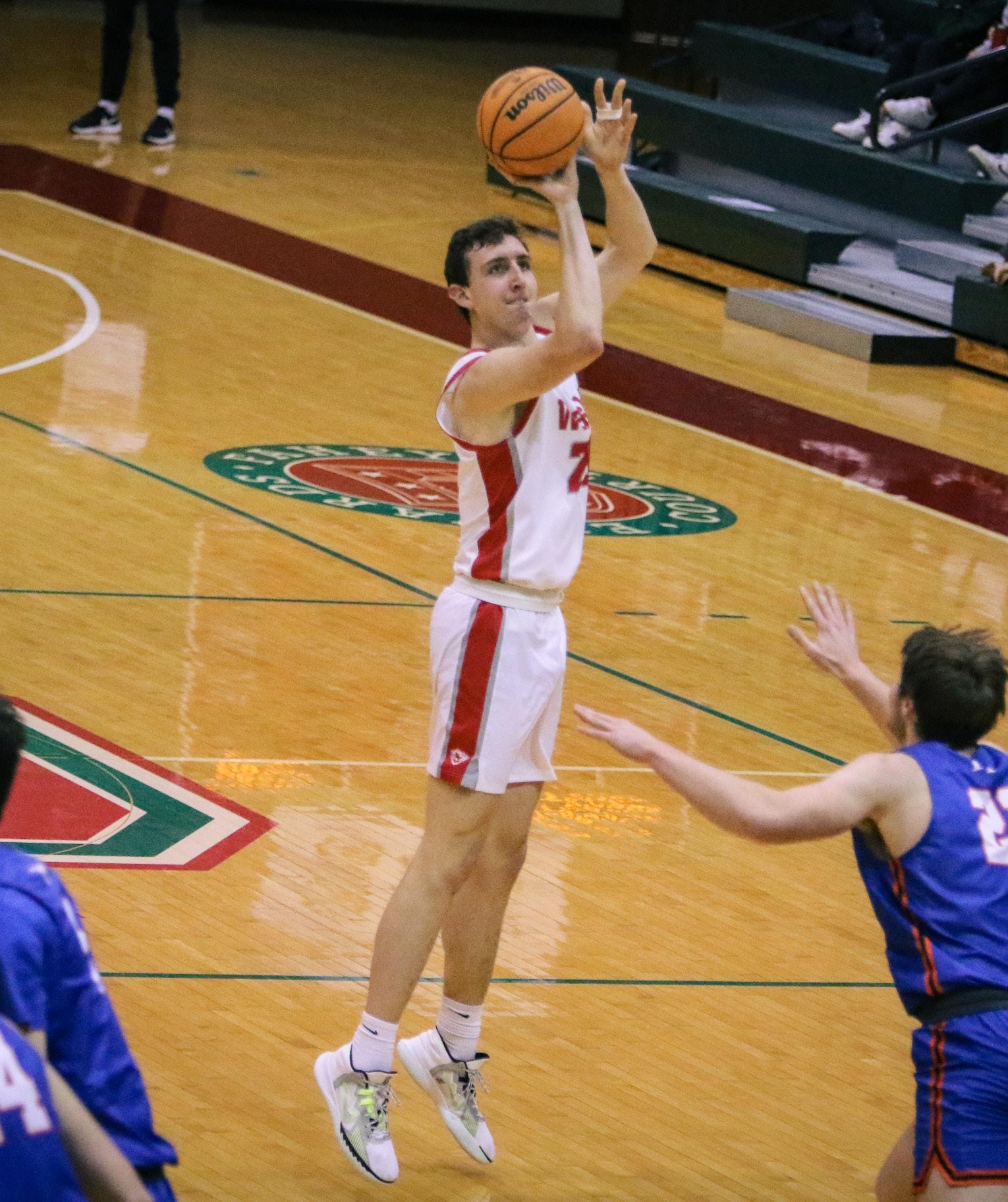
The Bears experienced these obstacles firsthand through the first five games of conference play. They streaked through three games of conference play undefeated and then struggled to close on the road. After starting the season 9-2, their 3-2 conference record reflects the challenges of their conference play as they fight for a bid to continue playing into the postseason.
The fasr start was fueled by the play of senior Charlie Jacob and sophomore Drake Kindsvater, who are both averaging just under 14
points per game. Kindsvater went 7-8 at the line in the team’s first conference game against the University of Chicago, and he’s also proved to be a defensive threat, with 27 steals. On their home court, the Bears outscored opponents by a combined 29 points over the three games.
But that momentum changed as they hit the road, dropping the next two games against Case Western Reserve University and Carnegie Mellon, where they lost by fifteen and thirteen points respectively. Prior to this weekend, the team had never lost by more than three.
The team struggled defensively in their Friday game scoring five points off turnovers to CWRU’s 24. They fought back from a twentyeight point deficit in the second half to narrow the final margin. And while they held the lead for four short minutes in the next game against Carnegie in the first half, not even a second-half scoring streak led by freshman Yogi Oliff could put them in the win column.
The Bears will see both these teams again on their home court as they approach
the midway point in conference play. Important stats show that the Bears are a true contender this year — as a team, they are shooting 41.3% from three-point range, led by Jacob who is shooting 50% from deep on 58 attempts. The Bears also commit only 13.3 fouls per game, good for the lowest mark in the UAA.
Individually, Kindsvater and freshman Yogi Oliff are each averaging 1.8 steals per game, tied for the top mark in the UAA. Kindsvater is also shooting 60.6% from the field, which is fourth best in the conference.
Overall, the Bears hold a 12-4 record, with nine conference games still remaining. They travel for one more weekend before returning home on Friday, Feb. 3 to play the University of Rochester. Their conference record puts them in a fourway tie for second as they pursue a Pool A Bid to the NCAA tournament; if they win the conference, they will be granted an automatic bid. If not, they will be subject to the selection committee’s delegation of at-large bids for postseason play.
The month of January is down time for Major League Baseball (MLB). Months after the World Series has wrapped up, a few weeks remain before pitchers and catchers report for Spring Training. Free agency has slowed to a lull, and fans of America’s Pastime are forced to either redirect their baseball consumption to another sport or browse through a seemingly endless twitter feed of baseball rumors and statistics (in my case, both).
The exception comes on one winter day each year, when the Baseball Writers’ Association of America (BBWAA) announces their selections for the Baseball Hall of Fame. This year, that date falls on Jan. 24.

Unfortunately, I’m still waiting for my BBWAA membership card (which could have something to do with my lack of the required 10 years of baseball coverage.) In the meantime, I’ll detail my picks for the upcoming ballot.
First off, some quick rules. Ballots can include up to 10 selections from a predetermined group of players, with no minimum. To be considered, players must be retired for at least five seasons. Any candidate who receives votes on 75% of the 400-odd ballots cast is elected to The Hall. After ten seasons on the ballot, a player is eliminated.
I’ve divided the 28 players on the ballot into six tiers, in
increasing order of achievement. The top three tiers contain players that I would put on my ballot. Full statistics and accolades can be found here.
Group 6 — First Ballot, Last Ballot:
While each enjoyed successful careers, none of these players had an impressive enough peak or the longevity to warrant serious consideration. These players all should fail to meet the 5% threshold to stay on the ballot for next year.
Bronson Arroyo (SP) —
Despite the fact that many big-leaguers with 10 or more years of service get onto the ballot, it still feels weird to see Arroyo, with a career ERA of 4.28 and a singular All-Star appearance, next to some of MLB’s greatest.
Matt Cain (SP) — Unlike most in this category, Cain was dominant in October (2.10 ERA in eight playoff starts, two World Series rings). But his regular season ERA was over a point and a half higher, and he finished his career with a losing record.
Jacoby Ellsbury (OF)
Aside from one stellar season, a very mediocre career- Ellsbury made just one all-star team and capped off his career with four terrible seasons with the Yankees.
Robert Allen “R.A.”


Dickey (SP) — The knuckleballer does have a Cy Young to his name, but lackluster career statistics (23.7 WAR,
4.04 ERA) make him a definite no-go.
Andre Ethier (OF) — Ethier spent 12 seasons with the Los Angeles Dodgers. While he was reliable during his career for the Dodger as a very serviceable outfielder, he does not deserve serious contention for Cooperstown.
James Jerry “J.J.” Hardy (SS) — Hardy had a nice glove and a little bit of pop, but he finished his career with a poor .305 on-base percentage.
John Lackey (SP) — Lackey’s three World Series Rings were more a product of being on the right teams at the right time than his own performance on the mound. With a career ERA of 3.92 and WHIP of 1.295, Lackey does not come close to the hall.
Mike Napoli (C/1B) — When compared to other catchers, Napoli’s career statistics would be solid (267 home runs, .821 OPS), but the slugger played less than half of his games over his 12 seasons behind the plate.
Jhonny Peralta (SS/3B)
Even ignoring his 2013 suspension for using performance-enhancing drugs (more on steroids later), Peralta does not have the resume of a hall-of-famer.
Huston Street (RP)


— Never a particularly dominant closer, but consistently an effective one. I was surprised to see him on the ballot — and to find out that he’s 20th of all time in career saves (325). However, with the lowest wins above replacement (WAR) on
the ballot, Street is still an easy cut.
Jared Weaver (SP) — Weaver had an impressive few seasons, but he lacked longevity.
Jayson Werth (OF) — A largely unremarkable player with remarkable hair, Werth enjoyed a successful career, albeit one that lands him far from Cooperstown.



Each of these players received less than 10% of the vote last year. For them, making it to another year of consideration should be considered a success.
Bobby Abreu (OF)
Abreu was a really underrated player; his 1,476 walks are 20th on the all-time list, and he stole 400 bases while playing an above-average right-field. However, he never finished above 10th in MVP voting, and he was just a two-time all star.
Mark Buehrle (SP) — Buerhrle’s rate statistics are similar to hall-of-famer Mike Mussina, but Buerhrle lacked the longevity (79 wins, 1.303 WHIP after the age of 30) to deserve serious consideration.
Torii Hunter (OF) — Hunter was an elite defender in center field and a very capable hitter for power (353 home runs) and average (.277). He was a key piece on a number of good teams, and certainly belongs in the hypothetical “Hall of Pretty Good
for a Long Time,” but not in Cooperstown.




Jimmy Rollins (SS) — Another interesting case. Rollins’ combination of speed (470 stolen bases), contact (2455 hits), defense (four gold gloves), and availability (2228 games, all but one at shortstop) make him an interesting sleeper case for The Hall. I still think he falls decently short, and his lack of success on the ballot means that the BBWAA tends to agree with me.

While these players will most likely fall short, they each have a relatively sound case for The Hall.
Andruw Jones (OF) — Jones’ case comes down to his impressive peak. His WAR7 (wins above replacement over a player’s seven best seasons) is third on the ballot, ahead of players with stronger cases for The Hall like Carlos Beltran and Manny Ramirez. But the reality is that after Jones’ age-30 season, his career batting average (then .263) fell to a measly .210, and he failed to top even 20 home runs (something he had done in each of the 10 seasons prior). Jones’ 10 gold gloves do add to his case, but in the latter half of his career, his defense fell to below average.
Omar Vizquel (SS) — The 11-time gold-glove winner has more hits (2,877) than any non-steroid Hall of Fame exclusion. However, Vizquel
was never an elite player, hitting over .300 just once and making three All-Star teams.
There are a lot of close calls this year. I think the next five players are plenty deserving of their place in the Hall, but I predict that all five will fall short of the 75% threshold this season.
Jeff Kent (2B) — Spending 17 years with five teams, Kent tore up opposing pitching to the tune of a .290/.356/.500 slash line. Kent was an average-at-best defender, and his advanced metrics lag behind other hall-of-famers at his position, but the 2000 MVP consistently delivered while avoiding accusations of steroid use. It’s his last year on the ballot, but with the record for most home runs of all time by a second baseman (351), Kent makes the cut in my book.
Andy Pettitte (SP) — Pettite is a guy I’m higher on than most. Yes, he admitted to use of HGH, a banned steroid, but he claims it was only used in injury recovery, and he continued to pitch at a high level after the league began to crack down on usage. Despite only making three All-Star teams, Petite finished top six in Cy Young voting an impressive six times. And he holds the all-time record for most postseason wins (19) and innings
This year, the Baseball Writers’ Association of America voted in one new member, Scott Rolen. One staff writer gives his takes on who he thinks should be included.
IAN HEFT STAFF WRITER