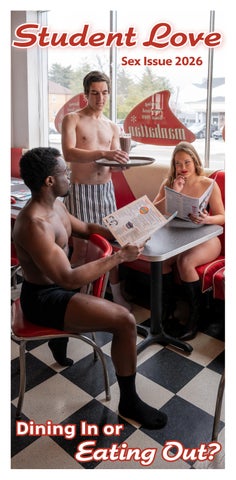
Student Love
Sex Issue 2026
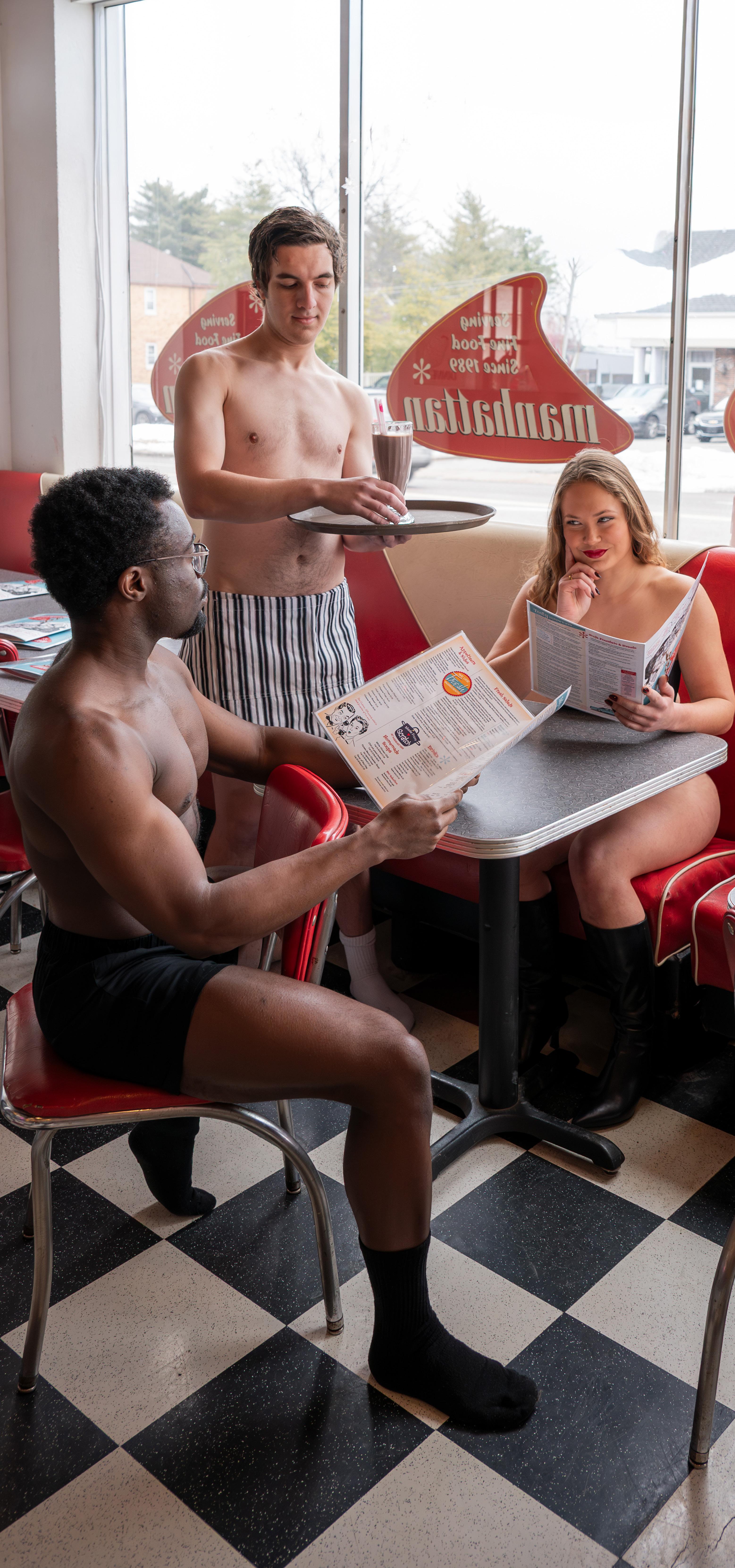
Dining In or Eating
Dining In or Eating
Welcome
about dating, relationships, intimacy, sex, and so much more.
We hope this issue serves as a reminder that it’s okay, and even encouraged, to openly talk and
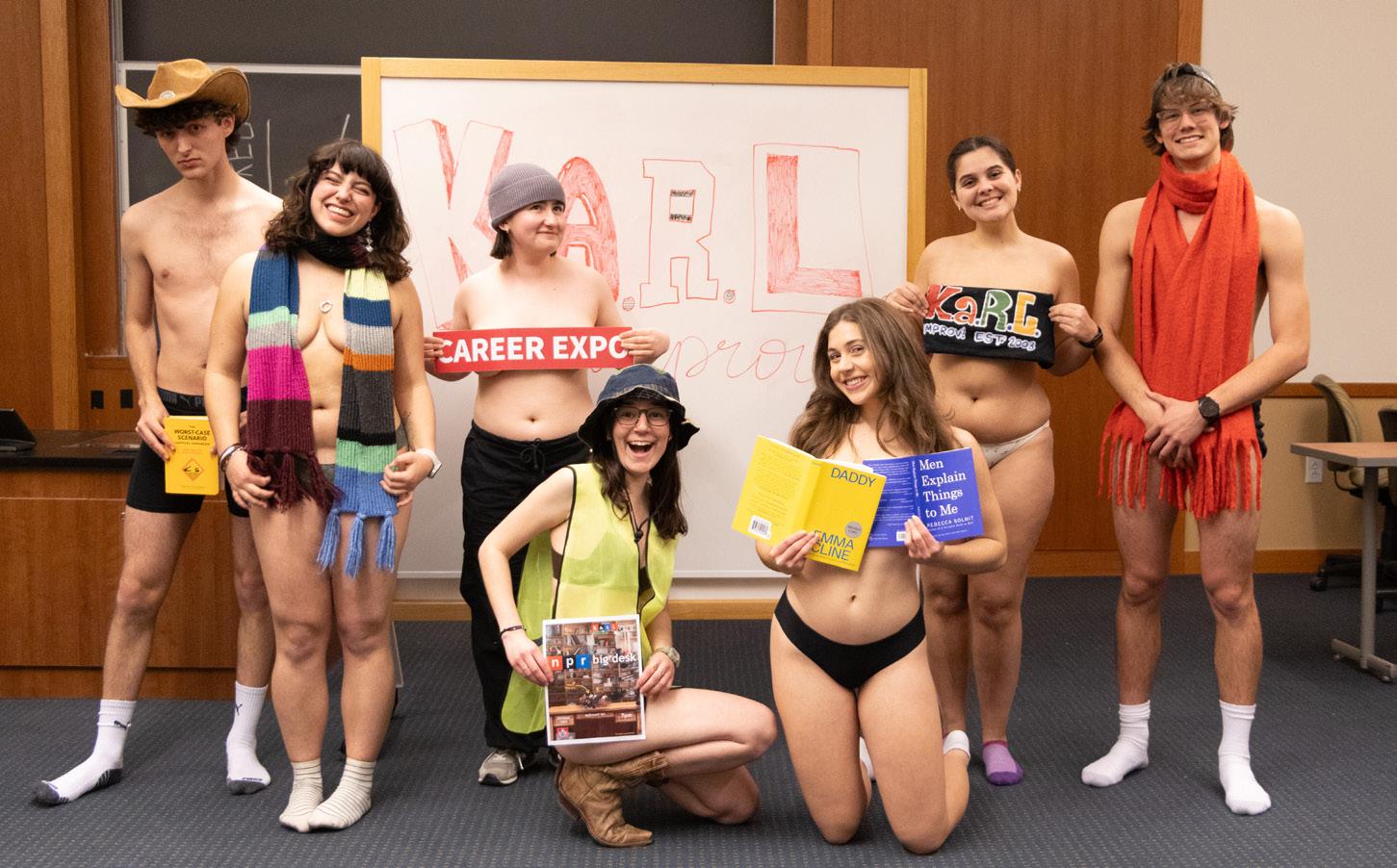
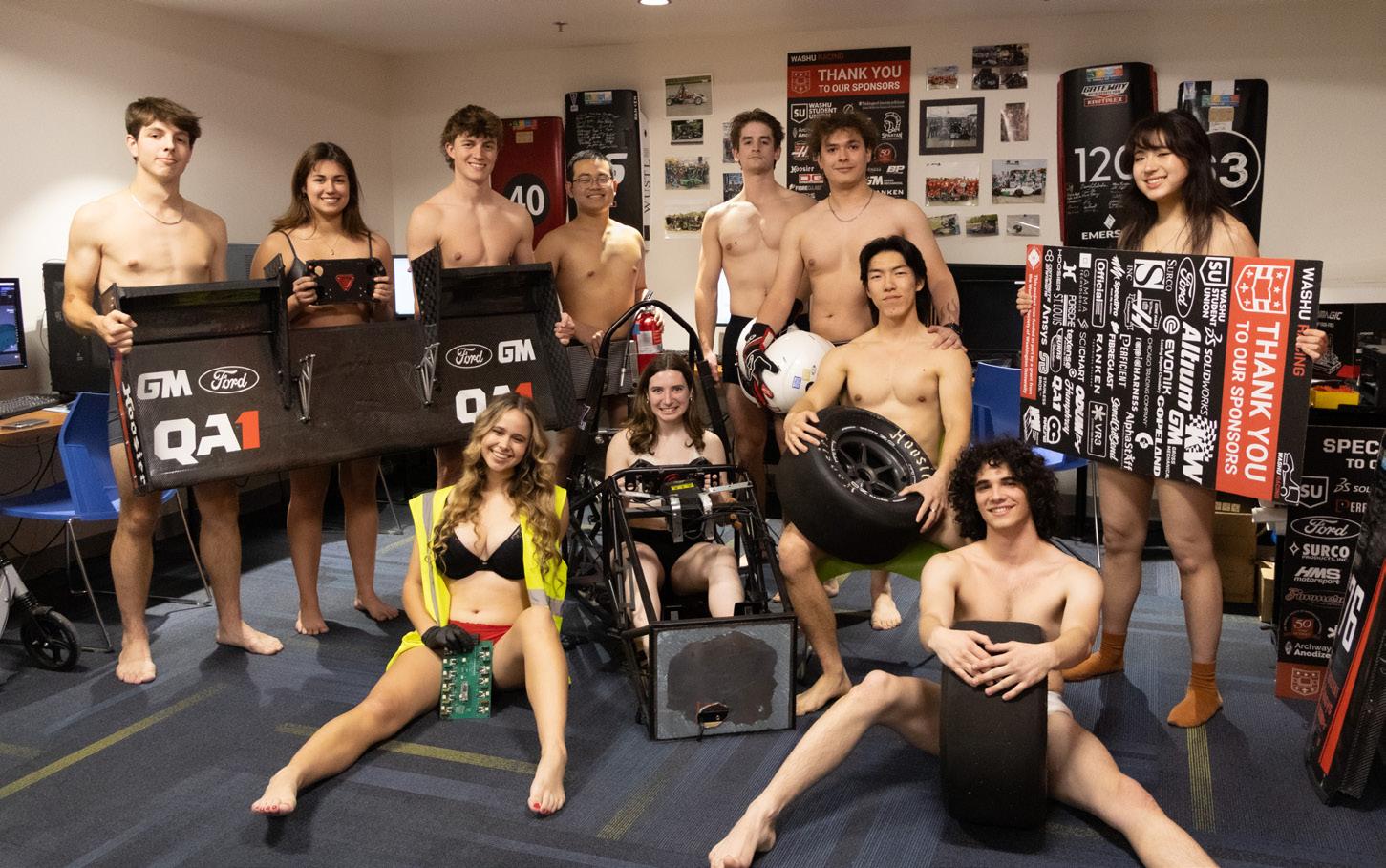
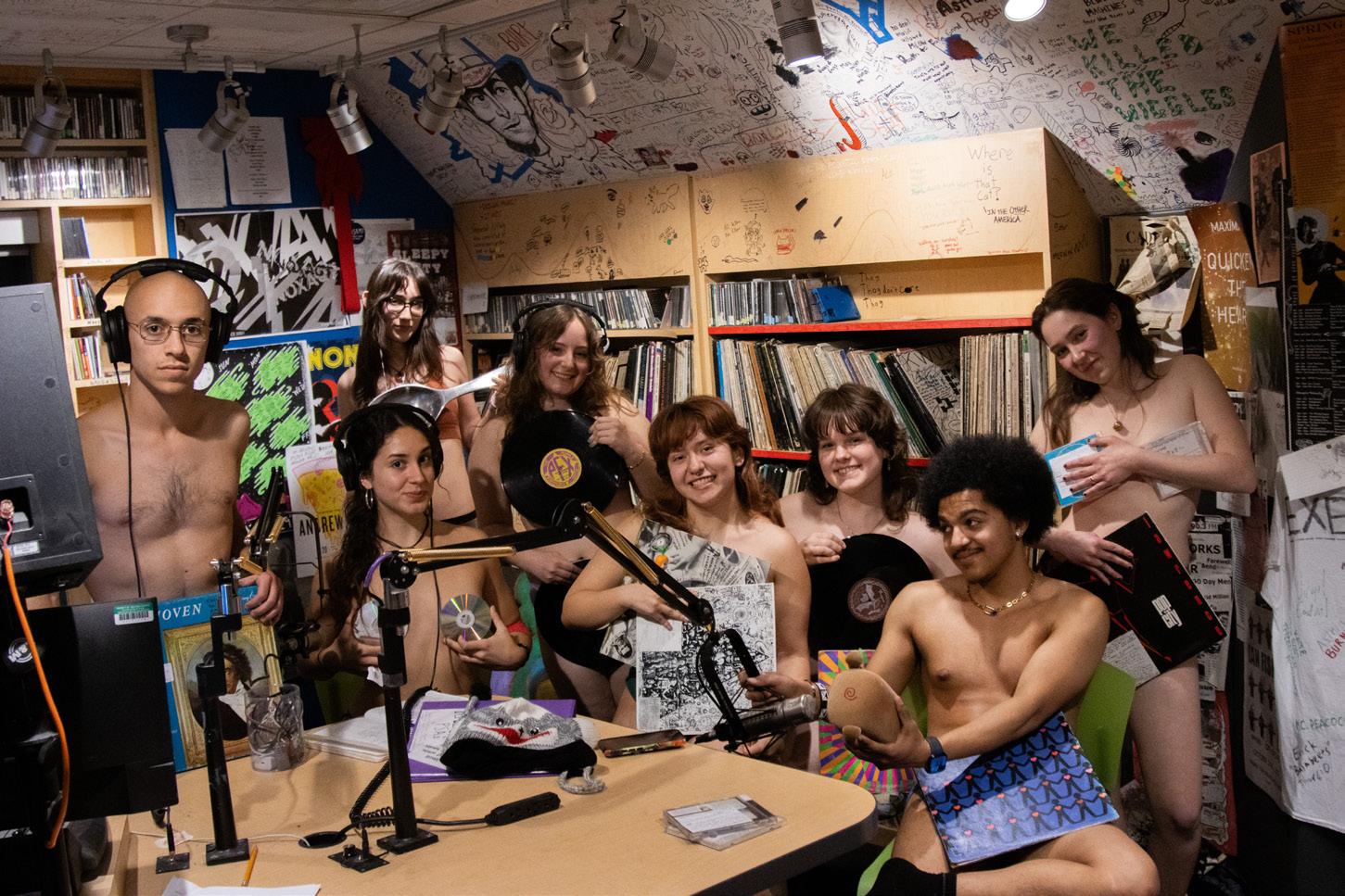
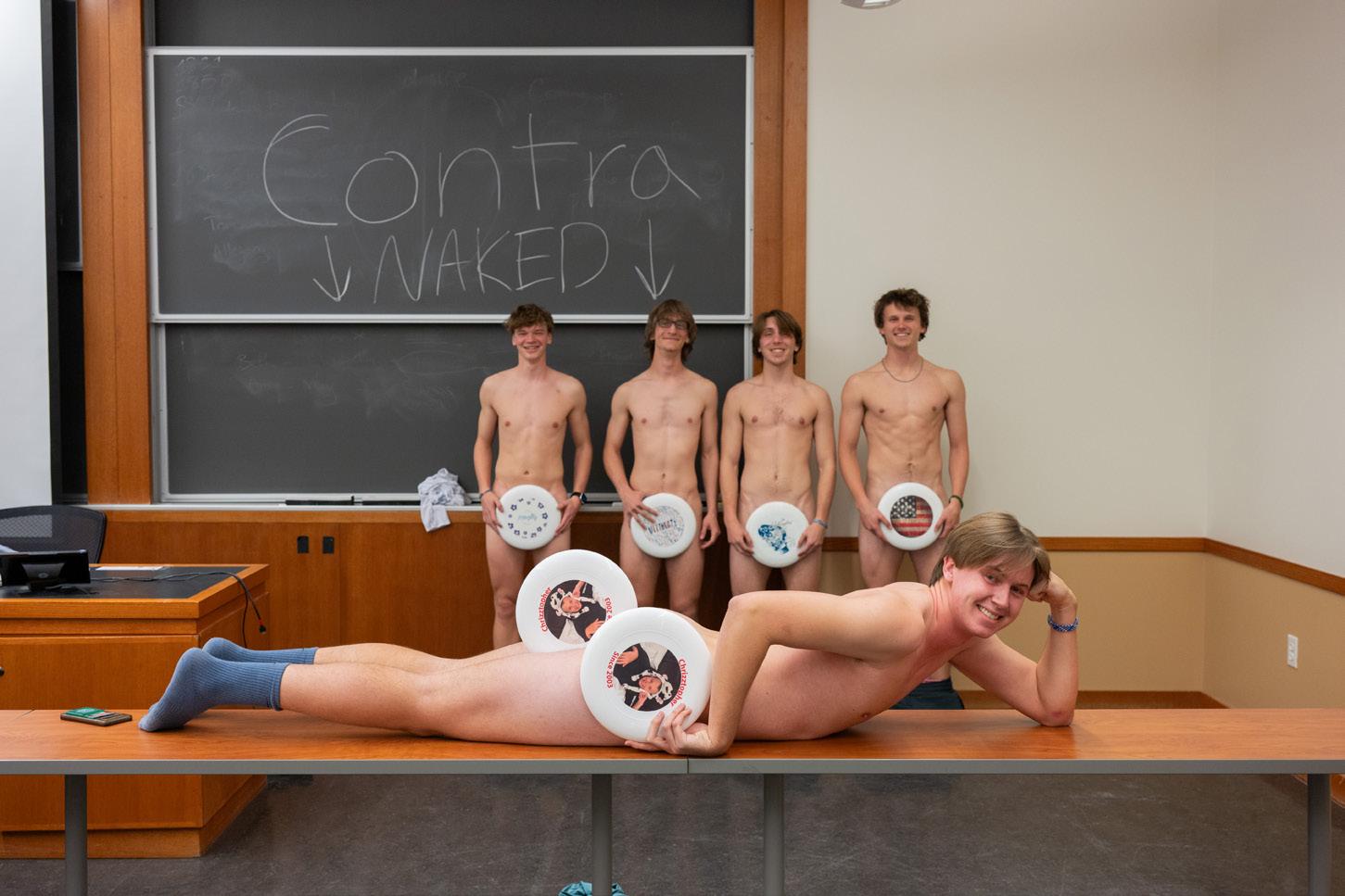
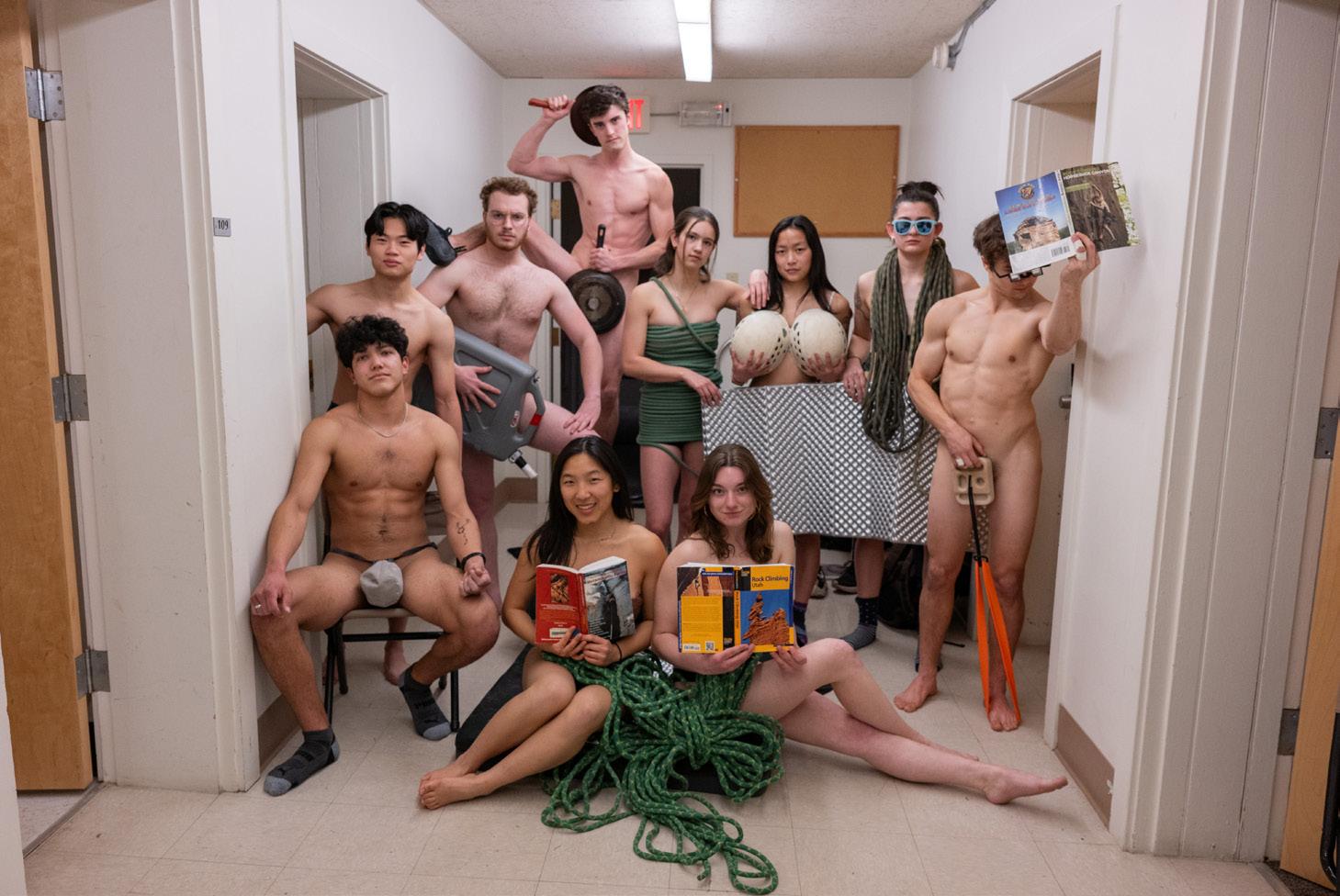
learn about these sensitive topics. So yes, enjoy the photos of semi-nude frisbee players and the guide to sex slang, but also use this paper as a springboard for essential conversations about
consent and safe sex — and the importance of uplifting a wide range of experiences and identities.
With love, Syd and Riley
BEA AUGUSTINE, BRI NITSBERG,
ZACH TRABITZ MANAGING DESIGN EDITOR, MANAGING PHOTO EDITOR, MANAGING NEWS EDITOR
Quick bites:
Year: Senior Field of study: Mathematics and Computer Science and Music Involvements on campus: Staam,
Part
What
I’m
Quick bites:
Year: Senior Field of study: Environmental Policy with minors in Legal Studies and Spanish Involvements on campus: Alpha Psi Lambda, Carnaval, Kesem
Why did you want to be on the cover?
My friends describe me as a “divine sex goddess.” I think being on the sex issue cover is sort of like my love letter to sex and how I’ve come to enjoy it so much and embrace it, and it brings me continuous joy.
Would your first-year self be surprised by your decision to model for sex issue?
I think my freshman year self wouldn’t be surprised, but she’d be very proud about seeing how far she’s come throughout her college career. Both of the models [on the cover of Student Love my freshman year] looked so powerful and happy. I want to see myself looking like that and [being] that confident. And I think both freshman year and senior year me are proud of myself for doing that now.
Quick bites: Year: Senior Field of study: Computer Engineering, Electrical Engineering, and Computer Science Involvements on campus: Engineering Council, Powerlifting Club
Why did you want to be on the cover?
I wanted my senior year, especially my senior spring, to be like the last moment where I can do pretty much anything. So I’ve been trying to do my best to say yes to everything.
Would your first-year self be surprised by your decision to model for sex issue?
Freshman year, I was very confident in my friend groups, but it was a bit hard to be my full self in public spaces. It’s been so many years since freshman year that now being myself in public spaces comes very naturally to me, so I would resonate [with what Kal and Max said about their] younger selves being proud or being like, “wow.”
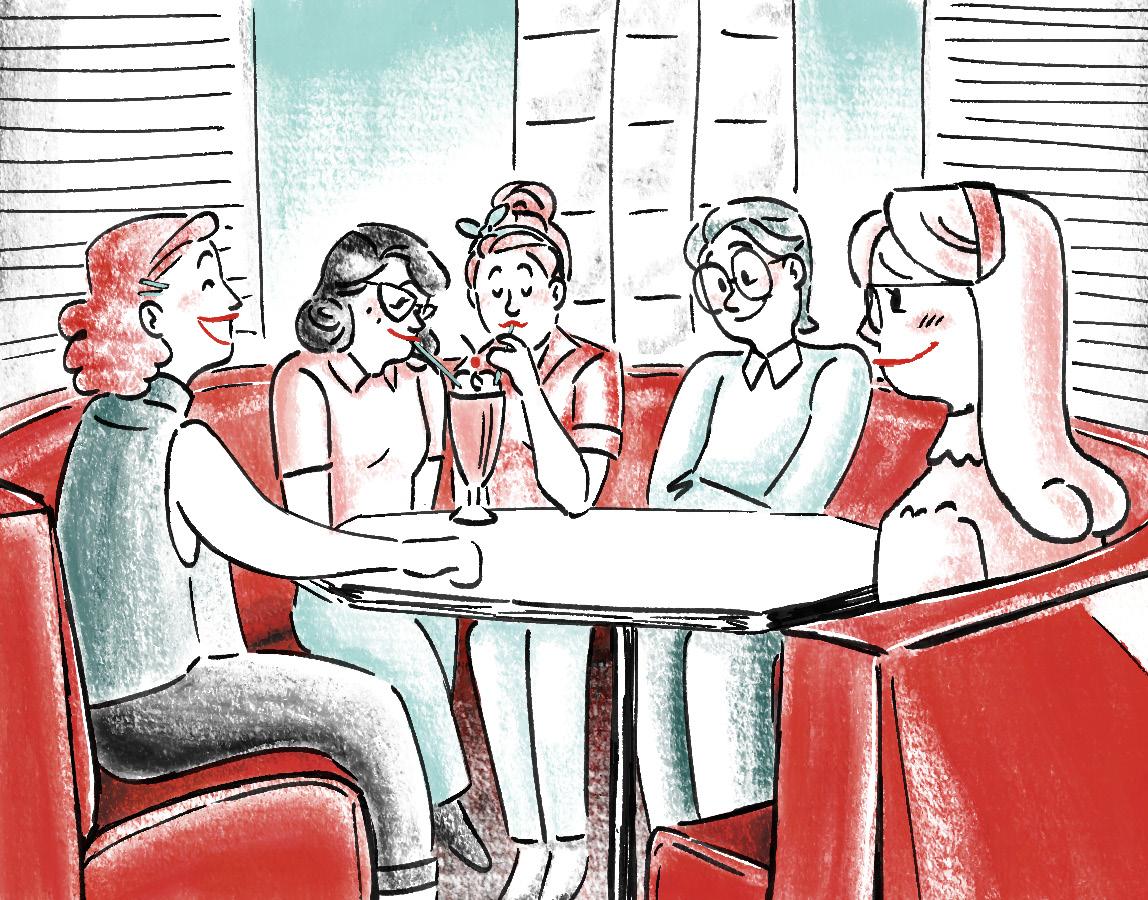
One of the most hotbutton articles of 2025 posed the question, “Is having a boyfriend embarrassing now?” The Vogue piece claims that women are now more hesitant, and even embarrassed, to publicly share their boyfriends, while others proudly share that they are single. The article sent people into a social media frenzy, with some starkly opposing and others deeply resonating with the sentiment. The diminishing social value of “the boyfriend” is apparent at universities, including WashU. We are taking far longer to “hard launch” our romantic relationships or even give them a label (keeping it at a “talking stage” or “situationship”). At the same time, many of us share a profound appreciation for our platonic connections.
According to one study, 40% of single adults said that a serious romantic relationship was “not at all important to their lives.” At the same time, media like the new TV shows “Adults” and “I Love LA,” and the rise of platonic dating apps, are centering friendship over romance. Take the revived cultural obsession with “Sex and the City”; although the show focuses on women’s struggles with sex and dating, it is ultimately loved for the main group of female best friends.
At the end of the article “Is having a boyfriend embarrassing now?”, the author speculates that “maybe we’re being forced to reevaluate our blind allegiance to heterosexuality.” Indeed, two phenomena have contributed to the decreasing value of the heterosexual relationship, or at least publicly sharing it. The increasing recognition and validation of queer relationships has reduced society’s attachments to heterosexual relationships and their pursuit, as more people acknowledge that relationships aren’t exclusive to this limited vision of romance. There has also been a steady shift toward valuing women, single or in a relationship, for their
person rather than their relationship to a man.
While there are exceptions, more and more women no longer have to rush to find or publicly display their boyfriends to receive societal recognition or opportunities.
As the social value of heterosexual relationships dwindles, we should reevaluate the friendships that society has long cast aside as less valuable or notable.
While I have never been in a long-term romantic relationship, saying that I have never been in love would be inaccurate. My first love was the group of home friends whom I anxiously await seeing on breaks. My second love was the group of girls who lived on my first-year floor, who are still my best friends as a senior. My third love was the people on Student Life who are like a second family.
When I introduce a best friend to my parents, they should take that equally, if not more seriously than meeting a romantic partner. Frankly, the former is much more likely to last the test of time. In the same vein, I should be able to bring my best friend as a plus-one to a wedding or other important event.
We need to change our understanding of intimacy, too. Non-sexual touch, like cuddling and hugging, both release
oxytocin, the chemical released during sex, which sparks feelings of intimacy, bonding, and trust. I have recently revived my love for sleepovers with my friends (which I believe we should normalize as a part of adult life), and I can name no better form of intimacy than gossiping, cuddling, and giggling until the early morning.
I, too, have faced the trials and tribulations of talking stages, situationships, and short-term relationships. Yet I have learned the most important lessons about love, intimacy, commitment, and trust from my friends.
I’m not saying that boyfriends are embarrassing, but, instead, that close friendships are just as meaningful and admirable as romantic ones. In addition to granting them equal value, you should also invest equal (if not more) time and energy into your friendships as you do your romantic pursuits. Plan more friendship dates and routine hangouts, write your friends love letters, and bring back the friendship sleepover. For those who find themselves craving male (or preferred romantic partner) validation, start finding validation in the love you give and receive from your friends.
You’d be surprised by the love you find when you stop centering romance.
ZOE RHODES DEI EDITOR
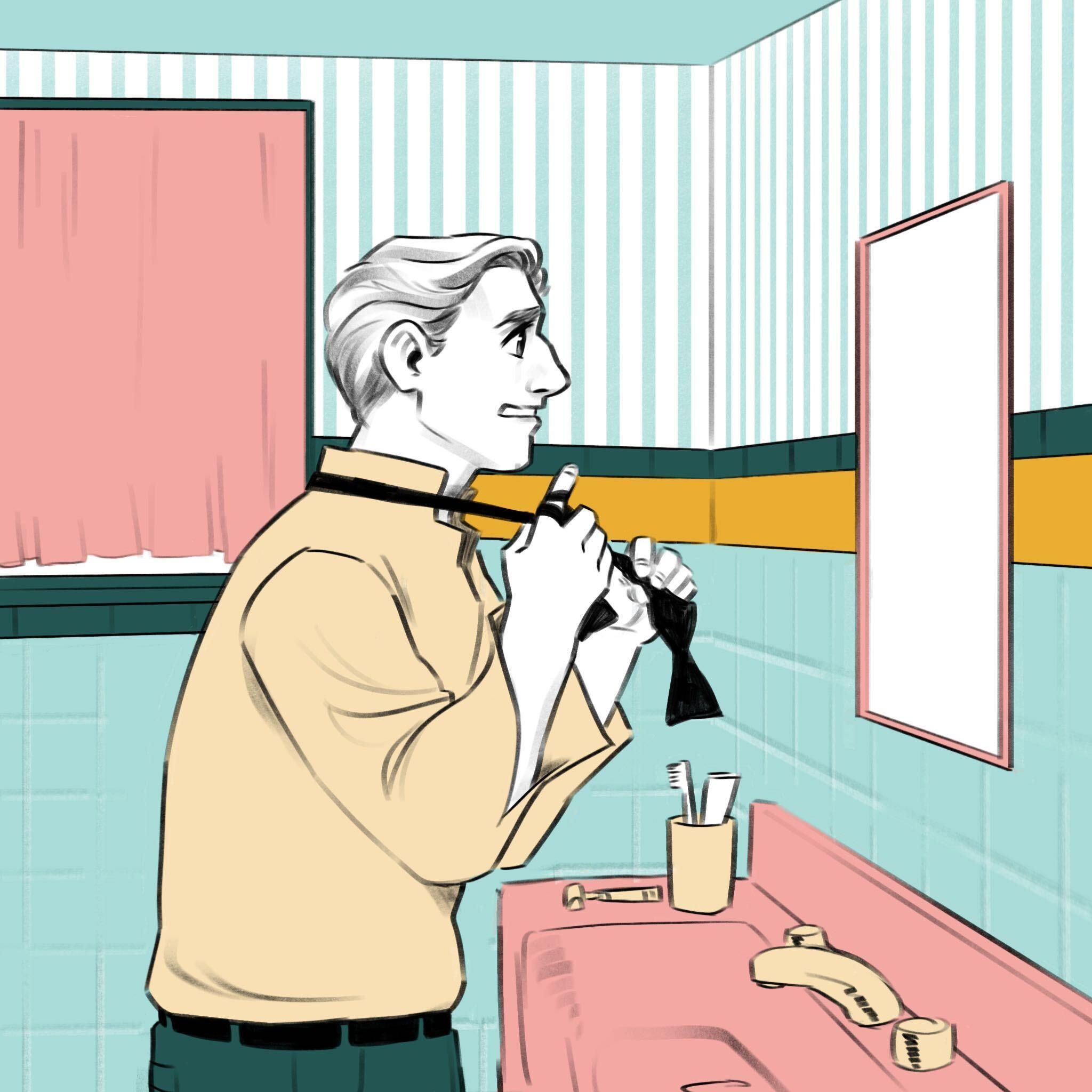
There seem to be two main camps in our generation when it comes to romantic “firsts”: those racing to keep up with people around them, and those reluctant to enter uncharted waters.
I started noticing this split within
Gen Z in high school, but now that I’m in college, I think about it a lot — at Forum meetings, the Saturday mornings spent debriefing Friday night with friends, and even in some of my classes. (If you’re taking “Early Texts and Contexts,” The Tempest is chock-full of firsts.) I’m honestly tired of
worrying about how my “firsts” will be perceived by others. Too late, too soon, too slow, too messy. Or, not messy enough, as some of my friends would argue.
In recent months, opinion sections of top news outlets around the world have stressed Gen Z’s apparent romantic “readiness paradox,”
JENISE FUSSELL CONTRIBUTING WRITER
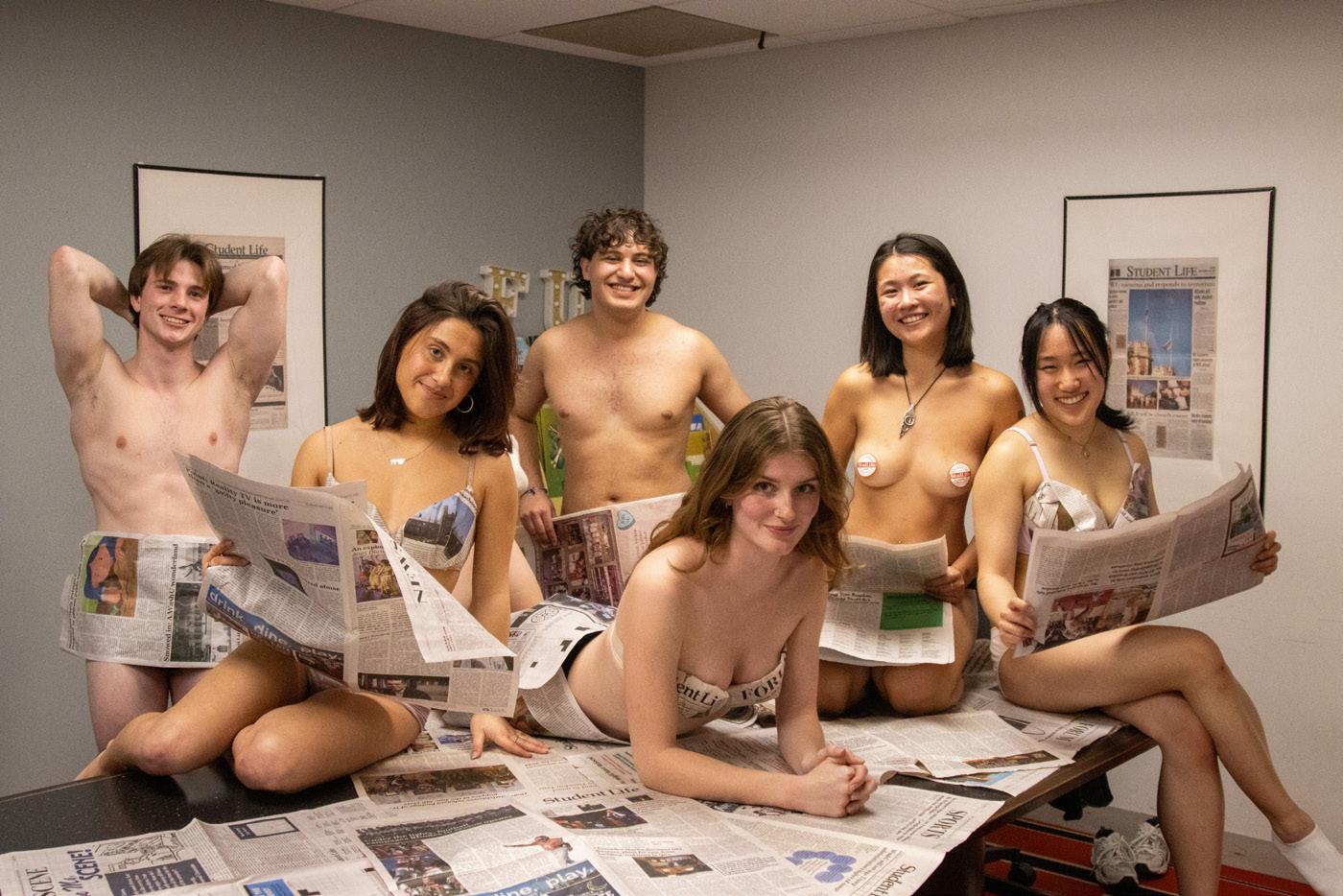
The first time I heard someone say that they “got cracked,” two troubling scenarios came to mind: one involved a fractured skull, and the other involved cocaine. The last thing I expected my friend to be referring to was having sex. Somehow, I had become the old fart who was confused by (and a bit worried about) how we talk about sex.
Although Gen Z is in the midst of an alleged sex recession, it certainly feels like we talk about it more. Yet, the way we talk about sex is subtly tinged with fears of intimacy and vulnerability. It steers us away from the scary and messy, but important, parts of romance. While our modern slang may pass for nothing more than humor, there seems to be something hidden beneath the jokes. Explaining a few terms could reveal the subtext of our modern euphemisms.
Riley Herron
Sydney Tran
Editors-in-Chief editor@studlife.com
Zach Trabitz Managing News Editor news@studlife.com
Will Rosenblum Managing Scene Editor scene@studlife.com
Sylvie Richards Managing Forum Editor forum@studlife.com
Matt Eisner Managing Sports Editor sports@studlife.com
Bea Augustine Managing Design Editor designers@studlife.com Mason
Below is a brief glossary of Gen Z sex slang, defining how we talk about sex and what we might actually mean.
To have sex. Crack is typically used to refer to casual sex. It is certainly not a synonym for “making love,” but more closely related to “getting laid” or “smashing.” To use the term in a sentence, the action of cracking must be attributed to one person. The word is usually used in phrases such as “I cracked them” or “I got cracked,” but rarely is it the mutual “we cracked.” The word strips any emotion, connection, or vulnerability from sexual encounters, instead turning them into hollow actions.
To masturbate, usually excessively. There is typically very little real
pleasure in gooning. Rather, a “gooner” (one who goons) is typically met with some disgust and shame. Labeling self-pleasure as “gooning” devalues what is supposed to be a natural part of sexual exploration by turning it into a joke. Variations include the aforementioned “gooner” to describe one who goons and “goonette” for the feminine variation of the noun.
Short for dick and pussy, respectively. These terms are used to talk about sex while cleverly avoiding actually naming genitals. It’s like we never left middle school, where “penis” and “vagina” were dirty words that elicited giggles and gasps. When talking about bodies plainly is made to feel dirty or embarrassing, the pursuit of sexual liberation becomes incredibly challenging.
wherein we want connection — and maybe romance — but we’re too scared to take any action. As a result, we feel a little lonelier than previous generations. Even some researchers say that college is considered “late” for having a first kiss. I think for romantic “firsts,” there doesn’t need to be a societal timeline. There shouldn’t be.
For both Gen Z and Millennials, shorter lists of romantic endeavors are more normal than ever. According to the Survey Center on American Life, 44% of Gen Z men self-reported not dating when they were teenagers. Gone are the 1990s with their “Never Been Kissed” romantic-comedy takes. In their place come the 2020s, with many young people spending absolutely no money on dating whatsoever, according to Fortune.
Part of the reason for this could be our modern-day perceptions of romance and intimacy.
Social media, pornography, smut, erotica, and made-for-TV teenage romance movies are all slightly altered versions
of “firsts,” and usually not the most accurate.
A StudLife mentor of mine explained the falsity of our perceptions of “firsts” like this: Everything we see is a copy of a copy of a copy.
Of course, the promposal you saw on TikTok was perfect — you saw a heavily-edited 15-second clip of a process that may have even been the second take.
Now, despite all of the opinion column coverage of our apparent lack of first kisses, relationships, and… other things, I’ve also observed the opposite. Couples from my middle school shared graphic details with me about activities that could best be described as concerning for our age group. Another pair got engaged during our senior year of high school. Everyone’s superficial congratulations masked our quiet whispers of horror and worry.
In high school, many of my friends had to remind themselves that it was okay to not have had their first kiss or relationship — myself included. I only really started dating my first boyfriend in
high school because I felt like I was falling behind, even though I was only a sophomore. Then, I broke up with him. I did it for a lot of reasons, some of which I told him, and one very small reason that I didn’t: I was scared I would be a bad kisser. Really, most everyone’s first kiss is less than stellar. First anythings (romantic or not) usually lack skill. One of the main reasons our more hesitant camp of people waits so long to have their firsts is the preconceived notion that it’s going to be bad. There’s the rub: Most of us want romantic experiences, but we’re scared of being judged for checking boxes too late or too early. To address both camps (and everyone straddling the line), try not to let external forces influence when you choose to have your “firsts.” Everyone’s timeline is different, and that’s okay, whether you’re realizing you’d rather slow down or speed up. Just stop trying to make your “firsts” fit someone else’s definition — they’re your firsts.
A romantic prospect. Derived from “hoes,” an already demeaning term, your huzz is someone you are pursuing, rarely someone you already have. “Huzz” suggests a goal or a conquest, not the pursuit of a genuine connection. Variations include “huzzless” for someone who is in a romantic dry spell and “chuzz” for someone who is unattractive.
While Gen Z is more sex-positive and progressive in the ways we think about sex, we remain stunted in the ways we talk about it. Having more conversations about sex doesn’t make us more liberated if those conversations aren’t honest and vulnerable. There are plenty of reasons for young people to feel let down by romance in the modern age, and
the language we use to talk about sex isn’t helping. If we flatten our love lives into a series of “cracks” and “huzz,” our language keeps us from talking candidly about desire. All of this is not to say that slang and humor cannot exist in romance, but there is danger in building a whole vocabulary for romance that is detached from intimacy.
ELEANOR STERNE STAFF WRITER
With Valentine’s Day coming up, it feels like couple cuteness has ballooned to a new level. Matching pajamas, giant teddy bears, and heartshaped chocolate boxes are already filling up the holiday section at Target. As a single person, it’s difficult to navigate the constant pressure of feeling like everyone around you has “someone.” However, being alone is a valuable experience that
I have grown to appreciate in college. Coming in as a first-year, there was something in the air that made people cling to each other and not let go. People quickly formed cliques, groupchats, and relationships. I get it — there’s something deeply satisfying about being surrounded on all sides by people you can be comfortable with, especially in a new city full of new faces. Many people began to travel in packs from place to place, always
with an arm around a friend or a situationship.
Things moved more slowly for me. My friendships have blossomed and grown one by one. My ecosystem of friends is stable. Although my friendships provide a source of consistent companionship, they don’t offer the comfort of a relationship.
And I have stayed single. At first, it felt like I was missing out. So many of my friends from home came to college and coupled up happily.
Maybe everyone else
is growing up, and I’m staying exactly the same.
But in my six months of independence — not loneliness — I’ve found that the exact opposite is true. My loneliest days have been some of the best of my life. I get to feel strange and far away from everyone safe, and I can walk through snow we don’t get at home into a classroom where no one knows my name yet. I was told by everyone in my life that college is where you learn to be
independent. I think we should all, in one way or another, take that to heart.
Although I’m not experiencing big dates, kisses, or PDA on the way to class, I’ve done so much more this semester that I wouldn’t have dreamed of doing in high school. I’ve switched my prescription, written and carried out grocery lists, and taken countless latenight walks through the park. A lot of them have been with friends, but most of them have been alone.
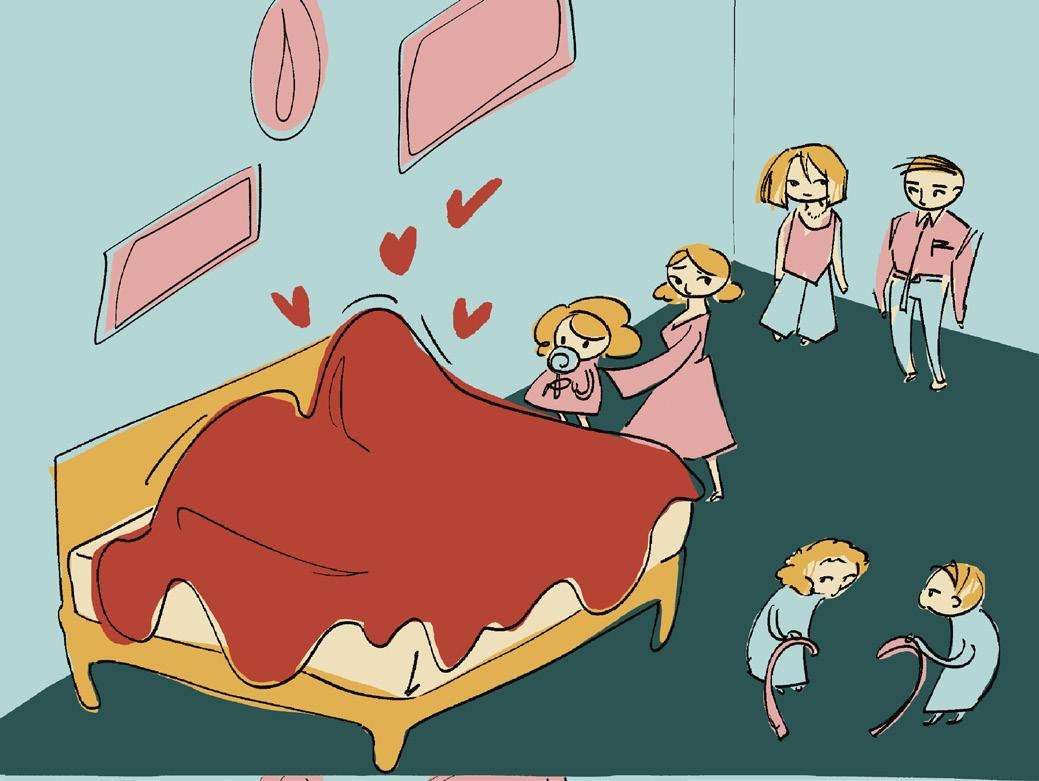
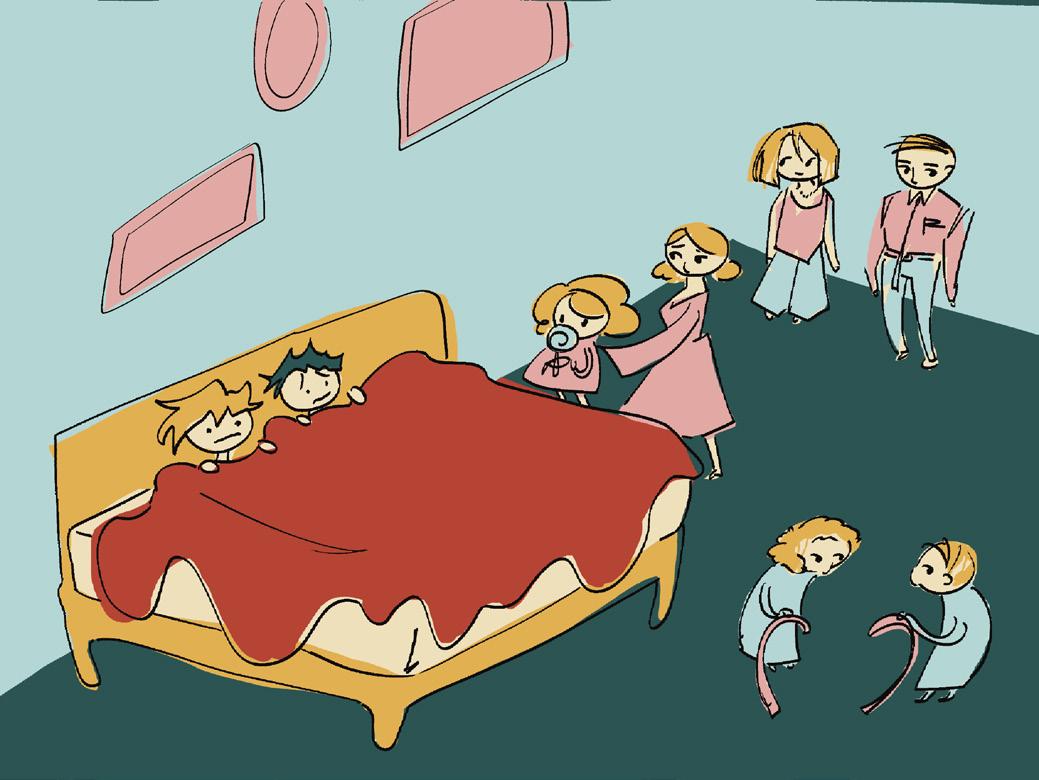
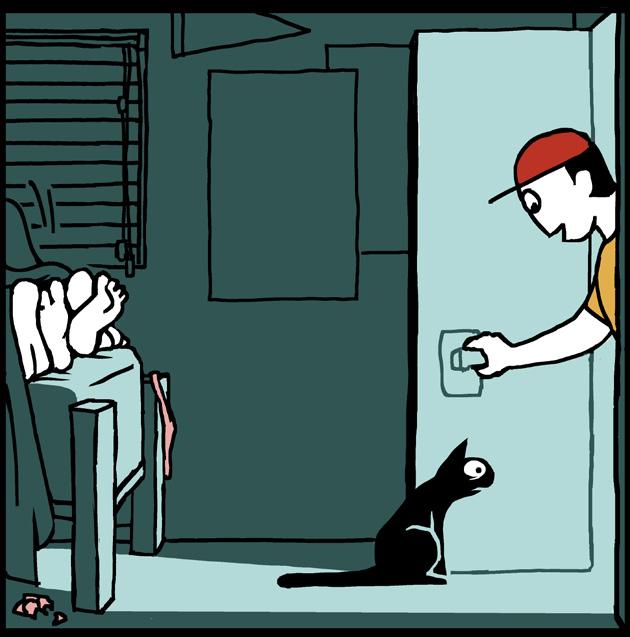
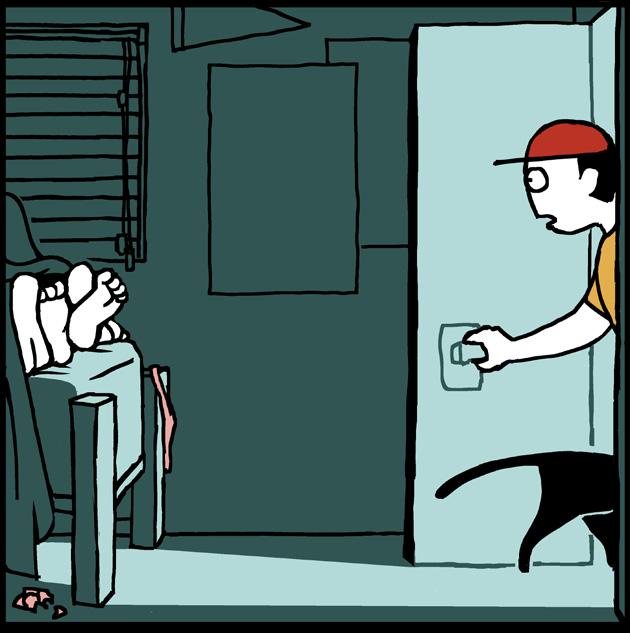
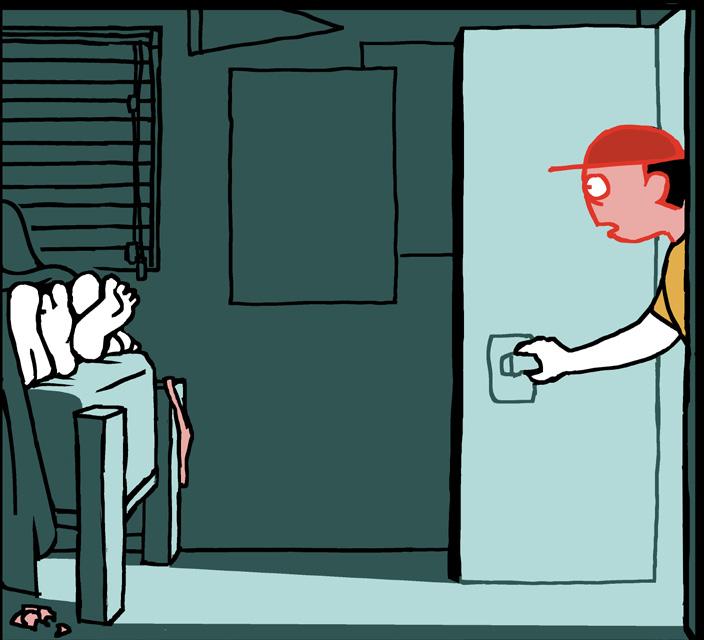
I was having sex with my boyfriend, and his extended family came for a surprise visit and walked in on us (six of them).

In college, we should be developing all different kinds of love. Explore romantic love, treasure friendships, and, most of all, love yourself. Grow to love spending time with yourself. I’ve spent so long bustling from one thing to the next with a parent, friend, or sibling at all times. Now, the silence of being alone can come around a lot more often.
This Valentine’s season, whether you are in a relationship or not, I challenge you to cherish your independence.
He passed out on top of me when we were having sex, and I had to get his roommate (who I did not know at all) to help me move him. 3 1 4 2 from the Student Sex Survey
My suitemate’s cat got locked in my room, and my roommate opened the door to look for the cat just as my partner and I were finishing.
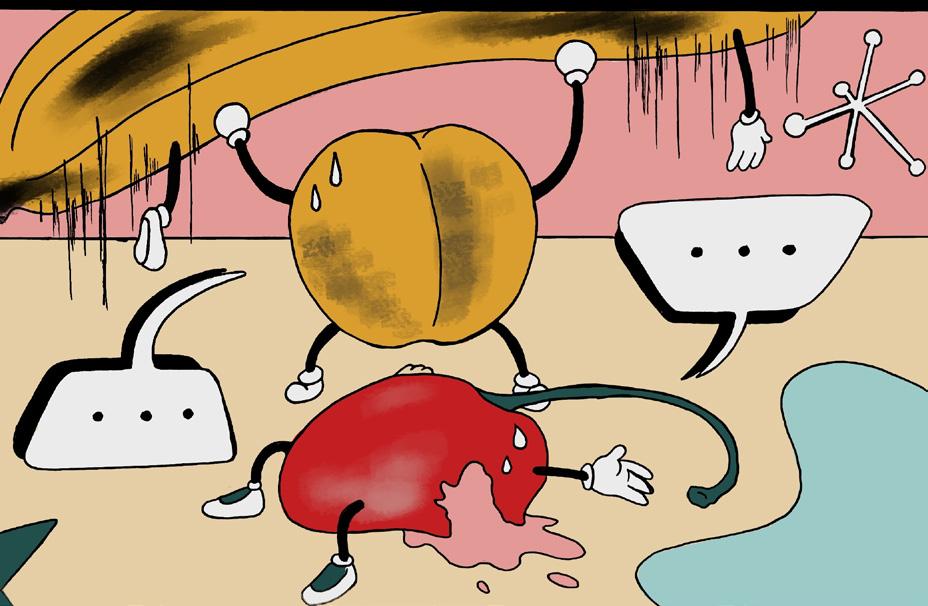
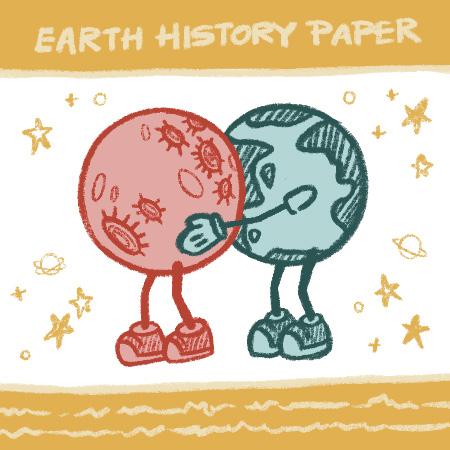

Had my girlfriend read a final paper I was proud of during backshots. Thanks, Earth History!

Are you a beaver? ‘Cause DAM!
Do you have a name, or can I call you mine?
Are you a whale? Because we can humpback at my place.
Hey, are you 87 degrees? ‘Cause you’re both hot and acutie.
Are you made out of 11 protons? Because you are sodium fine.
Did you know there’s a Black Friday sale at my house? Clothes are 100% off.
Are you lightning? Because I wanna be your McQueen. Kachow.
Baby, I wish I was your derivative so I could lie tangent to your curves.
Hey baby, are you a microwave? ‘Cause mmmmmmm.
REAGAN REMMERS
WRITER
I’ve had two IUDs. After getting the first one, I asked my OB-GYN, out of curiosity, how common it was for an IUD to fall out. She told me that it happens to less than 2% of women. Six weeks later, I learned that I was part of that 2%. I was determined to have an IUD, so we tried a smaller one. That IUD fell out, too. My point is, I’ve experienced some of the things that make women apprehensive when it comes to getting an IUD, but it hasn’t changed my outlook on this form of birth control.
The fear of various side effects often prevents women from choosing certain forms of birth control, especially hormonal birth control and IUDs. To address some of these common concerns, I spoke to Aubrey Remmers, a family practice physician (and my mother) who has been inserting IUDs and prescribing birth control for over 20 years.
She addressed one of the most common concerns regarding IUDs that she sees among her patients.
“People are afraid that they’re going to migrate or perforate the uterus,” she said. “The possibility is extremely small, and from my experience of putting [IUDs] in for years, I’ve had it happen to one person.”
According to a 2024 study published by the National Institutes of Health, uterine perforation and migration occur in approximately 0.10.2% of insertions.
There are three main IUDs that doctors prescribe: Kyleena, Mirena, and the copper IUD. Kyleena and Mirena are
both hormonal IUDs, while the copper IUD is non-hormonal. Mirena is larger and contains a higher hormone concentration than Kyleena. It also lasts up to eight years, whereas Kyleena is good for up to five.
Remmers doesn’t recommend the copper IUD because even though it can last up to ten years, it can make periods heavier and worsen menstrual cramps, but the decision is ultimately up to the patient.
However, much of the demand for copper IUDs comes from a fundamental misunderstanding of the side effects associated with each type of IUD. According to Remmers, some patients have concerns that hormonal birth control can increase the risk of certain conditions, like breast cancer and blood clots. Risks like these are associated with estrogen, but hormonal IUDs are progesterone only.
“It’s also a nice benefit for people who have things like hormoneassociated migraines,” Remmers said. She said that hormonal IUDs usually stop periods, and they can actually help relieve symptoms of conditions like endometriosis.
Another common concern associated with hormonal birth control, especially for women in younger age groups, is that it can cause weight gain and worsen preexisting mental health issues. These concerns are valid, but less common than you might think.
“I have seen weight gain and mental health changes, but those side effects are more rare than people realize,” Remmers said. “Only about 5% of people gain
weight with IUDs, and the risk of depression is about 6%.” While these side effects are more common than something like uterine perforation, the risk is still relatively low.
Surely, the benefits seem to outweigh the risks when it comes to IUDs. But many people aren’t only concerned about the side effects; they’re also concerned about the pain associated with insertion.
“I don’t try to tell women that it’s going to be painless, but we are trying to actively reduce the pain associated with the procedure,”
Remmers said. “There is a big push from ACOG, which is the American College of Gynecology, to address [these concerns] better.” This would include prescribing pain medications and offering anxiety medications prior to the procedure, as well as performing a “cervical block,” which numbs the cervix.
Remmers added, “I actually try to insert the IUD when a woman is on her period because the cervix is softer and more dilated.”
It’s important to remember that while IUDs are generally considered safe, they still may not be what’s best for all women. While IUDs are over 99% effective in preventing pregnancy, they’re 0% effective in preventing STIs. Use a condom, get tested, and stay safe. What works for some people may not work for others, and side effects can differ from person to person. After all, IUDs didn’t work for me, but I’m still championing them to anyone who will listen.










I was 16 and one year into a relationship when I realized that I was asexual.
I had never been interested in sex, but I figured that was normal. Growing up in a religious and conservative household, I had only heard of sex as a way to procreate. When I eventually learned that sex was supposed to be “fun,” I realized that it was something that boys might want from me, but not something I wanted
from them. So, I figured that sexual attraction was something that only men experienced.
Then I got into a relationship with a woman, and she wanted to have sex. I did not. What was I supposed to do with that? My whole life, I thought that sex

was something women endured for their husbands’ pleasure or because they wanted children. Now, it was something that, apparently, everyone enjoyed but me. I felt isolated and scared. Was I broken?
My then-girlfriend and I dated for three years. The whole time, I had intense feelings of shame and guilt that I wasn’t enough for her, that I was depriving her of something I owed her, that she would leave me because I didn’t want to have sex with her.
Truthfully, that relationship ended partly because of my asexuality. She felt insecure that I did not find her attractive, and I didn’t know what to say, because I didn’t. I don’t really find anyone attractive. Sex is a huge part of most relationships, and I couldn’t give it to her. I do not blame her at all for being upset.
It is a difficult balance to strike; accepting your asexuality while accepting that not everyone can be in a relationship with an asexual person. Feeling like you are enough in a relationship is extremely difficult,
especially when you cannot participate in an integral part of a typical relationship.
(An obligatory note here: some asexual people do have sex. Some people fluctuate in their asexuality. Some people are completely disgusted by even mentions of sex, and others only experience sexual attraction to people they have a close emotional bond with. Some asexual people watch porn and ⁄ or masturbate. Asexuality, like most sexualities, lies on a spectrum. I am speaking about my personal experience with asexuality, and I do not experience sexual attraction of any kind at all.)
Asexuality is an identity that gets little media or cultural attention, so a lot of people do not know about it. This means that many asexual people simply feel like they are abnormal in some way.
In high school, I thought I had a disorder that caused me to lack the hormones that caused sexual attraction. My “research” on this theory led me to learn about asexuality.
There is also a social stigma against
asexuality. People have told me that I “just haven’t found the right person yet,” or that I simply “have a low libido.” It is frustrating, to say the least, to have people deny a part of your identity that you struggled to discover and accept.
Asexuality is something that we should learn more about and accept, be it through exposure in the media or education in sex-ed classes. Had I known more about asexuality, I would not have felt so much guilt. I would have had the words and resources to better communicate my feelings in a relationship.
The lack of education on asexuality and other queer identities can lead to problems for both people with those labels and those around them. I would like to challenge those reading this to go out into the world with a new perspective on asexuality, armed with both the knowledge and willingness to support the education about and acceptance of other identities.
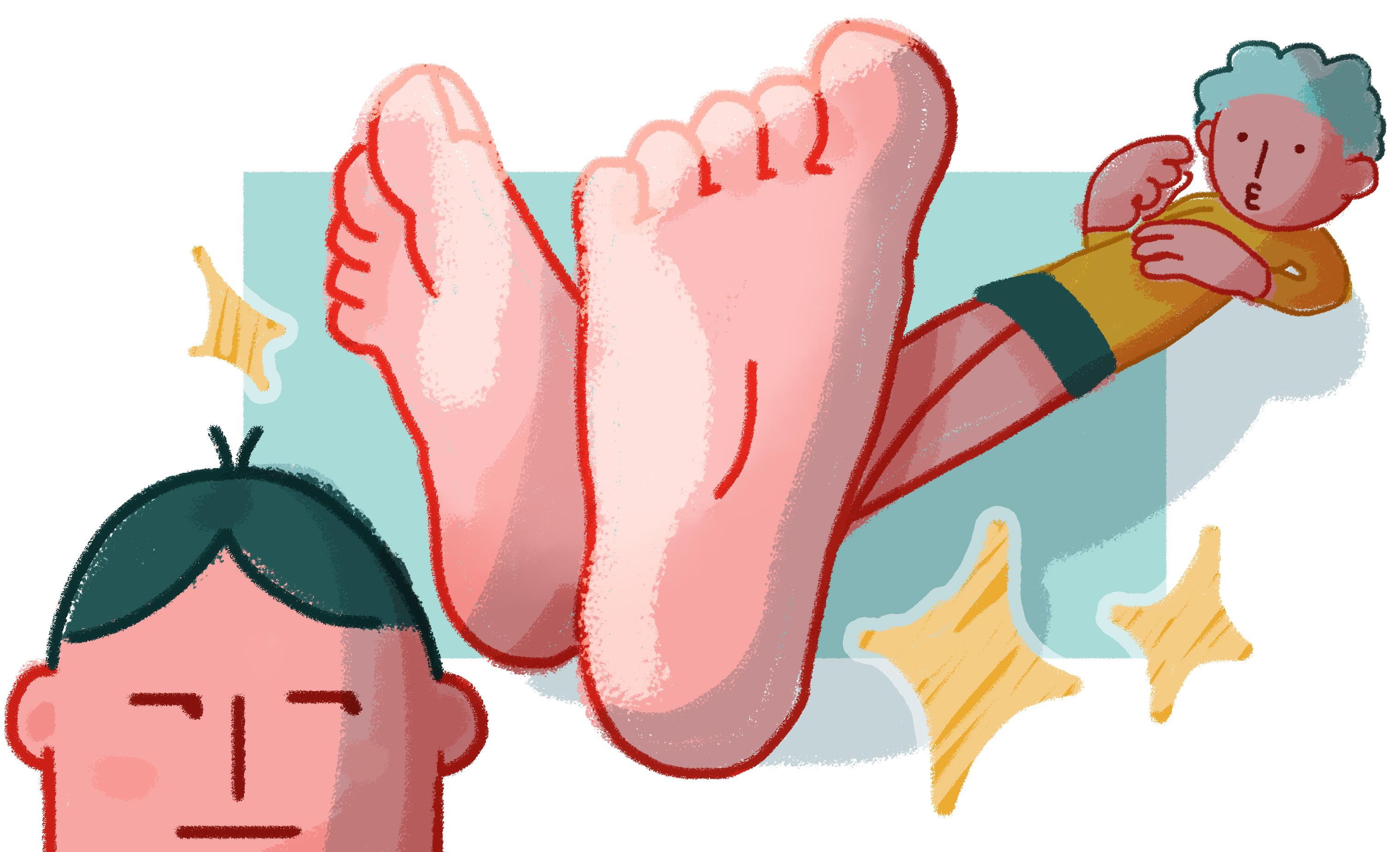
Foot fetishes aren’t new, and neither is society’s obsession with them. But, in a hazy recollection of my past, I remember a time when the kids around me were learning what a foot fetish was. The idea that feet could be appealing and even sexy was a foreign thought to all of us. It was divisive and interesting. Today, foot fetishes have gone from a hidden, often taboo, sexual preference into a visible, frequently discussed
side-eye. The memeification of feet may have started as laughable discourse, but the cultural obsession has morphed from an internet joke into the real-life policing of bodies.
If you look at meme culture within the last five years, feet have slowly crept into a large part of its content, giving the body part sexual and dirty connotations. Dan Schneider, the Nickelodeon executive, was put on blast for placing foot fetish content in children’s shows. Quentin Tarantino also received the same kind
flip-flops on set. The rise of the foot fetish also fed into internet culture with memes such as “grippers” and “at first I was like ‘mmm feet’ As A Joke.” As more people became aware of foot fetishes — and the ways certain people with the fetish took advantage of others — many became disgusted by feet themselves.
However, when we police feet — even just for the memes — we police others’ bodies. Like most other body parts, feet are arbitrary. Yet, thanks to the memeification of feet, we feel
or shamed for wearing clothes and shoes they enjoy. It’s similar to how high schools often prevent students from wearing tank tops for fear of seduction by feminine shoulders. At the end of the day, who is offended by or attracted to my body shouldn’t be my problem.
Policing feet really throws off my energy, and I’m sure it does the same for others. For starters, the idea that feet are inherently ugly and should be covered up is very American. My family is Indian, and in our culture,
all the time is actually considered rude, especially in the house. Sandals are the norm, and closed-toed shoes are only worn when doing physical activity.
The appreciation for sandals is seen all around the world, from Brazilian Havaianas to German Birkenstocks. Plus, closed-toed shoes can be uncomfortable for many people, including myself. In the summer, being barefoot prevents me from overheating. Sensory issues can also make wearing socks for long periods of time intolerable. Open-
around in them. They give a casual vibe without being sporty like sneakers. While this may seem like a small issue compared to the many challenges that people face, the trend of pressuring people to cover their feet is a dangerous one that can inspire people to feel more comfortable policing bodies. I want to live in a world where everyone can wear the clothes they feel comfortable wearing. Let’s not ruin anyone’s vibe. That includes my own.
Somewhere between late-night scrolling Archive of Our Own (AO3) and browsing sketchy manga sites lives the Omegaverse: a genre spreading across yaoi, yuri, and erotica that reimagines sex, gender, power, and biology in ways that are bizarre yet fascinating. At first glance, it’s easy to dismiss it as a weird interest of the chronically online, but to stop there misses what attracts people to these types of stories in the first place. The Omegaverse isn’t just porn with rules; it’s a playground for human sexual creativity. The Omegaverse invents alternative biological systems. These can vary, but the traditional system is a hierarchy of Alphas, Betas, and Omegas. Through this system, the
genre asks a deceptively simple question: What if the categories we treat as fixed (male, female, dominant, submissive) were more fluid than we think? In Omegaverse worlds, power isn’t always tied to gender, desire often arrives uninvited (heats and ruts), and who you want to be can conflict with who you truly are. These discomforts are the point. They expose how much of our real-world thinking about sex and bodies relies on invisible assumptions we are scared to interact with. The Omegaverse is a way to experiment with queerness beyond what society deems respectable, especially in yaoi and yuri (gay and lesbian fiction). These stories don’t aim to make sexuality palatable or “normal.” Instead, they lean into excess, vulnerability, and longing. Whether
you’re a lesbian who sometimes wishes your girlfriend had a penis or a gay man who wants to get your boyfriend pregnant, Omegaverse stories address these desires and offer a safe space for them to be explored without social penalties. Omegaverse explores the moments when intimacy is messy and when our bodies feel out of our control, and these themes resonate with queer communities. That said, not everything in the Omegaverse is palatable, ethical, or universally appealing. Many stories depict domestic violence, assault, and mental health in ways that are often criticized as insensitive. However, with any honest exploration of sexuality, boundaries will be pushed and things may be mishandled. Human sexuality has never been tidy. It’s contradictory, symbolic,
biological, emotional, and imaginative all at once. What’s important is that we recognize what these stories can do better when it comes to depicting relationships and not erase the genre as a whole.
Exploring a taboo doesn’t mean endorsing every fantasy — it means recognizing that curiosity, especially about sex, is part of what makes us human. Stories like those found in the Omegaverse remind us that desire is not a problem to be solved, but a language we are still learning to understand. We shouldn’t draw strict boundaries around what’s “acceptable”; rather, we should remain curious about why certain fantasies exist at all and what they reveal about who we truly are when nobody’s watching.
RYAN O’CONNOR STAFF WRITER
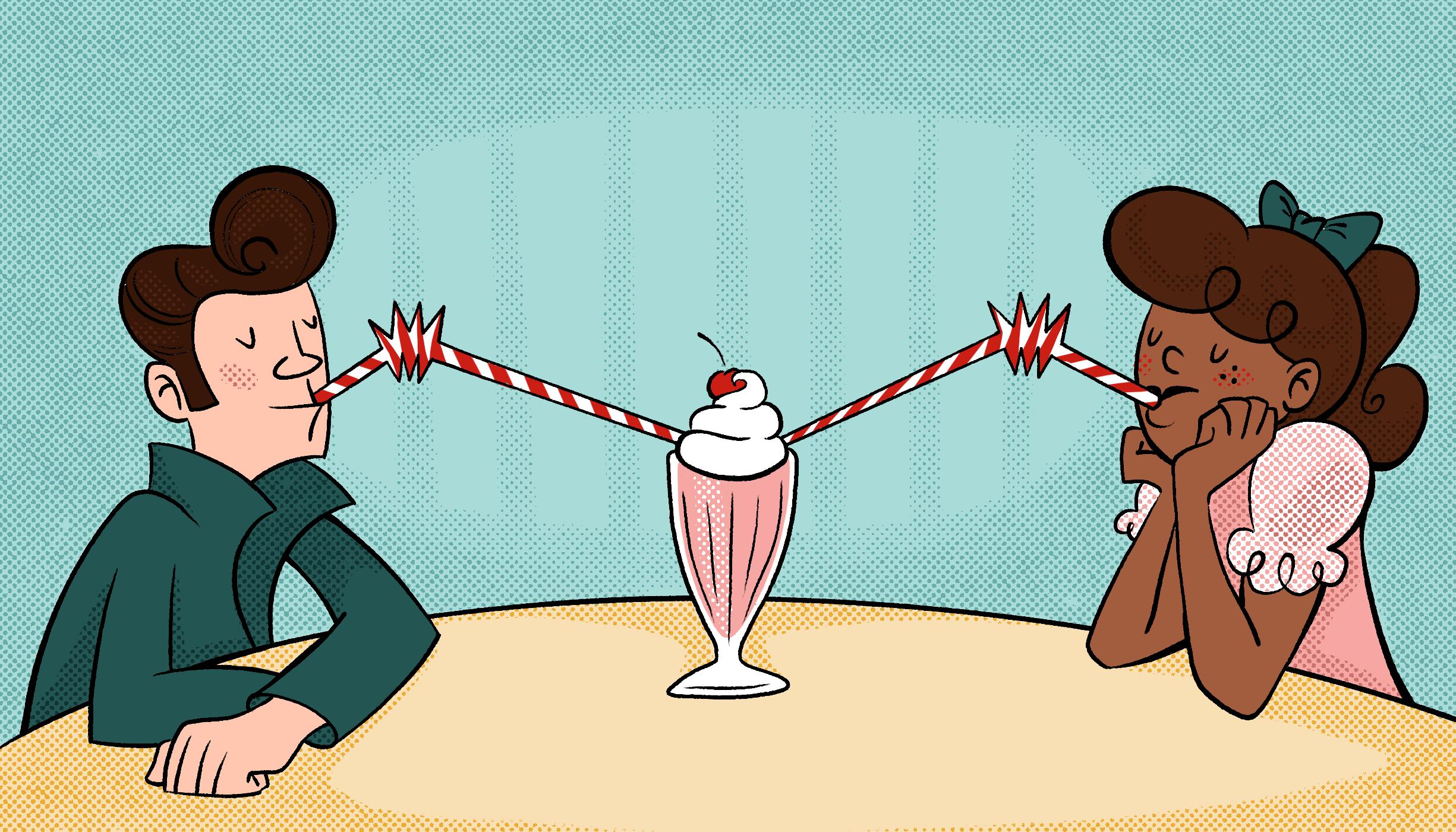
It can be difficult to celebrate Valentine’s Day in a long-distance relationship, whether it’s state lines or oceans that separate you from your special someone. While you’re not quite alone for the holiday, you’re also not getting the quality time that we all need from our relationships, and that can be tough to navigate.
Regardless, Valentine’s Day is a chance to celebrate someone you love dearly, to make your partner and your relationship feel special. Making that celebration a reality from a distance is often no simple task, but there are some general tips you can keep in mind to make the most of it.
Feb. 14.
For many people who are long-distance with their partner, and especially for busy college students, it might be tempting to “reschedule” the celebration for some day when you both have a bit more time or when you can physically meet one another.
In short, your relationship is not office hours; while it can be a logically sound idea to push off your Valentine’s plans for a later date, it is almost inevitable that you, your partner, or the both of you will be left feeling a bit neglected come
You might fancy yourself immune to the social pressures and norms that the rest of us follow, but somewhere along the way you’ll be reminded of what day it is: a passing couple, an Instagram post, or a flyer for some weird PG-rated Valentine’s event in the DUC is bound to give you at least a little tinge of guilt. This doesn’t mean you can’t plan some other great date for the next time you see your longdistance partner, but that you should have something celebratory happen on the 14th so that the two of you can feel you’ve had your fair share of the holiday. What exactly should you do on the day? There is no one-size-fitsall answer. A phone call probably isn’t enough. A three-week trip to Paris is probably too
much. There’s no shame in perusing Google or Pinterest to get some ideas, but I would argue your best bet for planning a successful long-distance Valentine’s is a dedicated, patient conversation (or several) between the two of you. However, I do not recommend that every component of your Valentine’s Day come from that conversation. There is much to be said for the importance of a good surprise.
is a good old-fashioned surprise: flowers, a home-cooked dinner, a planned-out date night, or a shiny little trinket always seem to do the trick. This can also be perfect for your long-distance Valentine’s plans, but you should carefully consider why surprises are so effective in the first place.
One of the essential tools for maintaining a relationship, far or near,
Ling 1600 Intro to Linguistics
Language is one of the fundamental capacities of the human species, and there aremany interesting and meaningful ways in which it can be studied. This course explores the corecomponents of linguistic theory: speech sounds (phonetics and phonology), wordformation (morphology), sentence structure(syntax), and meaning (semantics). It also provides an overview of interdisciplinary ideas and research on how language is acquired and processed, its relation to the mind-brain and to society, and the question of whether the essential properties of language can be replicated outside the human mind (specifically, in chimpanzees or computer programs)
Ling 2550 Methods in Linguistic Research
This course will introduce students to a range of formal, computational, and experimental tools for conducting linguistic research. Students will learn about different types of linguistic data, experimental design, and statistical techniques in the context of research in general linguistics, psycholinguistics, and sociolinguistics. This course aims to make students morecapable readers of linguistic research (and scientific research moregenerally) and to provide them with hands-on experience in employing linguistic research methods. The course will also serve as an introduction to R for statistical computing. The class is intended for freshman and sophomorestudents who areconsidering advanced study in the linguistics program.

A Valentines Day Message from the Linguistics Program
Ling 3150 Syntactic Analysis
The ability to produce and understand an infinite number of sentences is perhaps the most fascinating aspect of the human language faculty. Syntax is the study of how the brain organizes sentences from smaller phrases and words. This course explores syntactic analysis from several perspectives within generative linguistics, focusing primarily on the Government and Binding framework but also introducing Minimalist and Optimality
Theoretic approaches. Topics to be discussed include phrase structure, transformations, case theory, thematic roles, and anaphora. Assignments will help students learn to construct and compare analyses of syntactic problems in English and other languages.
Ling4850Constructed Languages
This course examines the history, structure, and use of various constructed languages (or conlangs) from a variety of perspectives. The central focus is on those conlangs whose design is informed by the linguistic typology of natural languages, such as Esperanto, Loglan/Lojban, Klingon, various Elvish languages, Dothraki, among others. Students receive hands-on experience designing and constructing a language from the ground up (conlanging), in addition to tackling questions like: what is a possible human language? What makes a conlang intended to be alien truly different from human language? Could a human reasonably learn these conlangs natively? And what has happened when people have actually tried?
Some people are simply inclined to love a big surprise; the “WOW” feeling is fun, and that may be enough on its own. But not everyone likes a big surprise. For some, that “WOW” feels more like “OH GOD,” and what you intended as a thrill is instead a stressful, overwhelming moment for them. Recognizing which of these people your partner is might be easy, but if you’re not so confident, there’s rarely harm in having a conversation about it.
If you know your partner isn’t prone to liking surprises, it’s tempting to pre-arrange and preapprove your Valentine’s plans to avoid disaster. But here’s my recommendation: Whether your partner adores giant surprises or absolutely dreads them, you should do something unexpected for them on Valentine’s Day. It could be as huge as fireworks spelling their name or as tiny as a teddy bear that fits in their palm (though these options are both painfully cliche), but it should be something they genuinely do
not anticipate, as well as something they will actually enjoy.
To pleasantly surprise someone, you need to have thought carefully about what they enjoy, to have dedicated time and effort toward arranging the surprise, and to have done so without being asked or expected to. A well-tailored surprise demonstrates forethought and compassion in a way that anticipated moments cannot.
As an aside, it can really help your surprise plans to have an agent on the inside: a close friend, roommate, or other confidant who can help coordinate the surprise without spoiling it for the target. This is yet another reason you ought to start planning your surprise well in advance; if you ask lastminute, it’s not likely that anyone will want to help you.
This is applicable for any relationship, but spending Valentine’s Day far away from your chosen valentine can make it extra difficult to avoid pitting your relationship against those around you to evaluate whether you’re doing the right things.
You might feel that
other couples, especially those who get to be together in person, have something magical and fulfilling that you lack. Or perhaps you feel some false sense of superiority because you and your partner are oh-so-perfect and the rest of these fools could never understand your unbreakable bond (don’t be this insufferable, please). The reality is most likely neither. A holiday centered on romance tends to exaggerate people’s insecurities and inflate their delusions, so remember that your relationship is bound to be different from anyone else’s — not better or worse, but different. Comparing yourself to others is often a dangerous game, and this can be especially true when it comes to romance and relationships. Separation from your valentine can make it difficult to feel like you’re doing enough. If you find yourself feeling lost or overwhelmed, take a breath. Lean on your support systems, whether it be your partner, your friends and family, or elsewhere. Plan ahead, think carefully about what makes your partner happy, and be authentic. To love someone from so far away can be such a beautiful thing, and it is well worth celebrating (I love you and I miss you, Gigi). Good luck, and Happy Valentine’s Day!
PRANATHI MURTHY STAFF WRITER
“My parents met in their junior year of college and got married after graduation. When’s my turn?” is a story I hear all the time. It seems that some students’ parents had great success finding the loves of their lives in student clubs, campus jobs, and, surprisingly, at parties.
For me, college is not just a place where I get my education and gain professional independence, but also the only place where I have the chance to find someone with whom I could see a future. College is where love stories happen. Four years. Four chances. That’s all I got. For a long time, I thought that was the deal. However, as a former hopeless romantic and future junior, I have realized that my story may not sound the same. Oh, how tragic. But maybe not?
First, it’s important to acknowledge that dating culture no longer looks like the 1990s. It’s not slow-burning crushes that turn into relationships. It’s Hinge when you’re lonely. It’s situationships that span months. People rarely say they’re “dating”; they’re “seeing where
it goes,” which usually means nowhere. Ghosting is normal, and commitment? Never heard of it. Everything lives in this vague gray area where no one wants to say what they actually feel. We share locations, playlists, and childhood trauma and still refuse to define the relationship.
But this might be the practical thing, too. At a place like WashU, we’re all busy and swamped juggling classes, research, internships, club leadership, and whatever career we already planned three years ahead. Relationships start to feel like another chore instead of something fun or spontaneous. It’s easier to keep things casual than risk time, energy, or emotion.
The pressure also grows when there’s a quiet social worth attached to finding your partner in college, usually enforced by older generations. “We met in college” isn’t just a cute story but also a life accomplishment, especially for women. It is a measure of responsibility, maturity, and desirability. The couples who settle down are proof that college wasn’t just academically productive but personally productive, too. At family gatherings, those stories are told with pride, while
being single after graduation means getting asked, “Anyone special yet?” or “No one caught your eye?” Obviously, relationships then start to feel like something you’re supposed to have by now, not something you choose. But this doesn’t have to be tragic. College is one of the most unstable, transitional periods of our lives. Students switch majors, rethink career paths, and move to different cities after graduation. The person someone is at 19 often looks very different from who they will be a few years later. Expecting to find a lifelong partner in
the middle of all that feels less romantic and more exhausting. There is also value in the independence that comes with being single. Not rushing yourself to find a soulmate at 19, but rather taking the time to figure out who you are, is freeing. Yes, it’s less cinematic than the “we met in college” story, but it’s healthier and saves you from a lot of unnecessary heartbreak. Without centering your life around a partner, you build deeper friendships. You learn how to be alone. You make decisions for yourself without constantly compromising. You
figure out what you actually want. I’m not saying that dating is pointless or that college has to be some self-imposed exile from romance. Exploring relationships is meaningful and even beautiful.
But there’s a difference between dating because you’re curious and open and dating because you feel like you’re supposed to find “the one” right now. Taking the time to understand yourself first makes you a better partner later.
Go into relationships because you genuinely care about someone, not because you’re scared of
being lonely. It’s a lot easier to love someone well when you’re not just trying to fill a gap. Maybe most of us aren’t going to leave here with a soulmate, but we’re most definitely leaving with group chats, half-finished plans, a career path, and a slightly stronger sense of ourselves than when we showed up. And that’s probably what college was meant to give us in the first place. The love stories can happen later, without the pressure of a four-year timeline hanging over them. Maybe they’ll even be better for it.

Without centering your life around a partner, you build deeper friendships. You learn how to be alone. You make decisions for yourself without constantly compromising. You figure out what you actually want.
freedom to learn what could be enjoyable to them.
Recently, I overheard a man who was angry that his girlfriend was upset at him for watching porn.
I mean, you read those porn books. It’s basically the same thing. The sentiment that erotic literature or smut books, books containing copious explicit scenes, are equivalent to pornography is not new. It’s a quick “gotcha” moment that (predominantly male) porn-watchers pull out when confronted with moral backlash over porn. For me, there’s an easy and obvious distinction between the two.
Porn is inherently exploitative. Smut is not. Porn uses real people’s bodies and permanently puts those images on the internet. Smut books are completely from the author’s imagination and don’t rely on exploiting real people.
However, smut is frowned upon by the general public because of its connection to women’s sexuality. Smut is not solely for women, but is generally viewed as female-dominated in terms of its creators and audience. Smut is disliked both due to the consistent hatred of anything women show interest in and the expression of women’s sexuality.
In TV shows and movies that I watched growing up, I always saw sex portrayed as something much more enjoyable for the man. It’s a common punchline in sitcoms that men only want sex and women only want emotional intimacy. This narrative is not only a sexist portrayal of an uneven relationship dynamic, but it also discourages young women from embracing their sexuality. Smut allows women to have the
In the 2010s, approximately 83% of romance books were written by women. Porn is an industry that is portrayed as “by men, for men.” Romance novels and, by extension, smut, are the opposite. In the smut industry, women are able to create the narrative and storylines that focus on women’s pleasure.
Just like with porn, smut can have any combination of themes and genres. It also allows women space to explore desires that could be pleasurable to them, in contrast with pornography, which typically has male pleasure at its center.
A 2010 study found that, from a sample of the most popular adult films, 88% included physical violence. Almost all of this violence is directed at women.
The violent images are especially dangerous, taking into account the prevalence of porn among young men. A study by the American Psychological Association found that, of the sample, the average age of first exposure was around 13 years old. Additionally, almost half of the men studied reported that they were first exposed to porn accidentally. Their findings indicated that earlier exposure correlated with a higher desire for power over women. The longer form of smut also gives the characters time to grow an emotional bond in addition to a physical one. Porn addiction alters people’s brain chemistry due to the constant dopamine rush. Constantly scrolling through scenes of detached, unreal bodies with no
acknowledgement of their humanity is desensitizing, especially to younger men. Focusing on the fact that participants in a sexual fantasy are people as well could rectify this.
The negative effects of pornography go beyond the individual. Many porn websites are lax on their verification of age and consent. Pornhub is especially dangerous because users are able to upload videos, and it’s extremely difficult for moderators to determine someone’s age or whether the recording and posting was consented to. Additionally, viewers are able to download videos, immortalizing them even if they’ve been taken down for violating guidelines.
Professional production companies that adhere more strongly to these guidelines can’t compete with online streaming platforms. Porn sites like porn hub with lax regulations have grown exponentially while strictly legal companies have stayed stagnant, increasing the availability of unregulated content.
Porn, especially digital, haunts victims of assault and trafficking. Its victims also include the viewers themselves, who can easily become addicted and have their brains physically altered. It is exploitative, dangerous, and unethical.
Smut isn’t all good; just like porn, it can also make real sexual encounters less exciting and create unfair standards that can’t or shouldn’t be lived up to. However, smut lives in the imagination, not in the bodies of real humans. It gives readers a safe space to explore in a world still determined to shut their sexuality off. Everyone deserves that,
but the negative impact porn has had on its victims, men and women alike, is undefendable.
So, if you’re looking to explore your sexuality but want to avoid the exploitation of porn,
smut is a safe, welcoming space to turn to.
NICOLE BACKAL STAFF WRITER
Besides abandoning the infamous Max rebrand, probably the most shocking thing streaming giant HBO Max has done this year is post a Hucklerobby edit on the official HBO Max Nordic TikTok account. If you are not a chronically online bingewatcher, these words are probably meaningless and confusing. To further illustrate, Hucklerobby is an increasingly popular “ship” from the hit show “The Pitt,” romantically pairing emergency room attending Dr. Michael Robinavitch with intern Dennis Whitaker. For the average enjoyer of “The Pitt” (like myself), hoping these characters become
a couple seems like a sudden choice, but the immense popularity of the ship poses an interesting point about the desire for romance in the media.
Audiences deep in this cultural sphere scan each scene for a longing glance between two characters or a slight touch. Such analysis fuels “shipping,” particularly for couples that are not officially established in the original work.
Although the term “shipping” has injected itself into mainstream culture, its origins lie strictly within fandom culture (specifically “The X Files”). Since then, it has spread like wildfire, with every possible fan group accumulating an endless list of popular pairings. The
question is, have we gone too far?
Before diving into the issues with shipping, I have to acknowledge the big part shipping plays in giving same-sex relationships a chance for representation. Queer couples in the media are rare, even today, so over time, fans have imagined alternative dynamics to what was established in popular media. Not only has shipping given fandoms grounds to explore all forms of love, but it has been fundamental in pushing for representation in the media. Nevertheless, the power of fandoms can also harm stories.
Returning to the Hucklerobby situation, HBO Max legitimizing
fandom ships means it is sacrificing quality storytelling for fan service. When audiences watch with the intent of finding romance, they miss out on what is actually happening on screen and what those relationships are really about.
Shipping creates a space for imagination, but if we center stories around romance, we lose the richness of interpersonal relationships. Sometimes enemies should not turn into lovers. Oftentimes platonic connections are more complex than romantic ones, and maybe the 50-somethingyear-old boss should not date his intern.
The ultimate concern lies in the authenticity of a ship. It is generally
difficult to gauge whether or not fans are genuinely interested in seeing their chosen romantic pairing come to life. There are certain ships that rule over entire fandoms, like Wolfstar (from “Harry Potter”), but some are much less serious. Initially, Hucklerobby started as a “crackship,” or an intentionally nonsensical ship, but it garnered popularity and real traction. Fan support for a ship, particularly for non-traditional couples, can admittedly push showrunners towards more interesting storylines and diversity. However, that benefit comes at the cost of fan service and potentially poor writing as a result of confusing an authentic ship with an unserious
one. If shows adapt to their audience’s desires without understanding them, they are likely to disappoint viewers who have already crafted their own versions of couples and their dynamics. This is not a definitive take on ships; they are a natural part of stories and have benefited communities and fans who have felt ignored by writers. Nevertheless, we should always be cautious about blindly leaning too far into trends. The internet has given fans unprecedented power in shaping stories, and watching narratives with the intent of finding romance between every two characters undermines the potential for real individual growth and unique dynamics.
LEILANI BILLUPS STAFF WRITER
Very few words in our Gen Z vocabulary cause as instantaneous a reaction as “the situationship.” The word has become shorthand for emotional confusion, poor communication, and commitment-phobia.
However, the demonization of situationships (romantic and / or sexual relationships that aren’t considered “formal” or defined) says less about their inherent flaws and more about our narrow understanding of what relationships are “supposed” to look like. When we step back from contemporary dating panic, it becomes clear that non-traditional relationships are neither new nor inherently dysfunctional. They’re human.
Historically, romantic relationships have rarely followed a single, linear script. Marriage for love is a relatively recent invention, popularized in the 18th and 19th centuries. Before that, partnerships were shaped by economics, survival, kinship, and
social obligation. Outside of Western norms, many cultures have long recognized flexible relationship structures: open partnerships, communal child-rearing, and lifelong bonds that didn’t rely on sexual or romantic exclusivity. Even within modern Western history, arrangements like bachelor marriages (where cowboys expanding west would “marry” each other due to the lack of available women and often happily live in domesticity) are a great example of how relationships outside of the straight, monogamous “norm” have always existed. What’s different now is visibility. Dating apps, social media, and hyperpublic discourse have turned private ambiguity in relationships into a public spectacle.
Furthermore, we’re encouraged to label and define our relationships through the lens of socially constrained ideas of partnership, marriage, and companionship. When a
failure rather than a choice. The situationship becomes a villain, blamed for a heartbreak that really stems from misaligned societal expectations rather than the type of relationship itself. At
Situationships allow us to be honest about our needs and what we can provide to a relationship currently, creating space to connect without forcing permanence where it doesn’t belong yet.
connection doesn’t progress neatly from talking to dating to exclusivity, it’s framed as a
its core, a situationship is just a relationship that resists traditional categorization. It may
be temporary, evolving, and emotionally intimate without long-term commitment. It can be shaped by timing rather than destiny. For many people (students, young professionals, caretakers, etc.), this flexibility isn’t avoidance — it’s honesty. Situationships allow us to be honest about our needs and what we can currently provide in a relationship, creating space to connect without forcing permanence where it doesn’t belong yet. The real issue isn’t situationships themselves, but the absence of communication and consent that sometimes accompanies them. Any relationship, no matter how “official,” can be harmful if one person’s
needs are ignored or obscured. Conversely, a situationship grounded in transparency, mutual respect, and ongoing dialogue can be deeply fulfilling. When both parties understand what the relationship is and what it is not, it becomes a conscious collaboration rather than an emotional trap. Our cultural obsession with “acceptable” relationships often reflects anxiety more than morality. We cling to rigid labels because they promise security, even when they don’t deliver it. But human beings are dynamic. Our needs shift with time, circumstance, and personal growth. Expecting every relationship to conform to a single ideal ignores that reality. In learning to look past prescribed relationship models, we reclaim the freedom to shape intimacy on our own terms. That freedom isn’t reckless — it’s human.
WRITER
Recently, I heard that one of my childhood friends is getting married. She’s 19. Learning this inspired some existential dread within me. I can’t imagine having my own home right now, let alone getting married. My experience isn’t rare, either. Many of my friends have told stories of their childhood friends getting married and having children while they’re still spending every weekend going out.
I’ve always firmly believed that marriage is something that should happen, at the earliest, at the end of your twenties. Your twenties are a time to explore who you are. You start them by deciding what you want to do. Do you want to go to college, trade school, or the workforce? What major do you want to pursue?
After that, you have to decide whether you want to go to graduate school, or start working, or travel the world, or something else. The possibilities seem endless. You may find that you don’t like the major you’ve chosen, or you don’t like your job, and you need to make changes. Either way, this decade is one for selfexpression and discovery. Moreover, marriages before 25 are less likely to last. Marriage is no longer viewed to be as permanent of a commitment as it once was. The belief that marriage isn’t a permanent commitment makes people behave perhaps irrationally, without thinking of marriage as a life-changing choice. Statistics show that the highest rates of divorce occur between men and women aged 25-29, and divorce rates are highest in the first 10 years of marriage. Marriage is a commitment that requires
dedication from two parties to stay together through thick and thin. This becomes infinitely more difficult if you aren’t sure who you are, what you want from life, or what your future holds. Of course, I’m not saying that people completely change personalities from 20 to 29, but it’s very different to think you are marrying a doctor and then realize later that you’re married to a med school dropoutturned-barista. (For the record, I have nothing against med students, med school dropouts, or baristas.)
I would even venture to say that your twenties are one of the most intense periods of change you will ever go through. From transitioning out of college to whatever’s next, and then, if you decide to change something, whatever is after that, it’s a time filled with upheaval. In that time of transition and
self-discovery, it is incredibly difficult to maintain a marriage. In my own life, I have a friend who chose to get married to her high school sweetheart after high school graduation. They divorced two years later. They had never actually lived together before they married and found out they didn’t have enough knowledge on what it meant to live with someone else who wasn’t their par ents. My friend’s spouse was also trying to fig ure out what professional career they wanted, which added a level of finan cial stress they couldn’t handle. In the end, she
couldn’t mesh her own personal life with her spouse’s and, eventually, called it quits. It’s true that for some, early marriage can be a grounding force helping
requires a level of self-knowledge and communication that many people in their early twenties are still developing. I’m incredibly happy for people who have early marriages that have been successful. I just have seen more end unhappily than APURVA GANTI