EST eligible for SU funding after Treasury and Senate vote
TANVI GORRE
LEWIS RAND MANAGING NEWS EDITOR EDITOR-IN-CHIEF
WashU’s Emergency Support Team (EST) is now able to receive funding for its operations in the 2027 fiscal year as an Executive Entity of Student Union (SU) after a unanimous and nearly unanimous vote in SU Treasury and Senate, respectively, on April 7.
To sophomore and EST Treasurer Ari Shakked, this vote was not about EST’s fiscal situation for the next year — it was about whether EST could continue operating at all.
“If [this] does not pass, EST will cease to exist — not just out for a year, but finished,” Shakked said.
Shakked cited EST’s training process to explain the importance of SU’s continued fiscal support of the organization.
“We need to train a whole cohort of 18 new technicians every year, each spending an average of 300 hours of training to be a provider on our team,” he said. “Even a year out of service would mean it would be extremely difficult, if not impossible, to handle the call volume and needs of our student body ever again.”
EST is estimated to receive $38,000 to $40,000 of the $77,000 the group initially requested in block funding for the upcoming year; however, the final decision on EST’s budget will rest on the vote of SU’s next Executive Council and Treasury.
This potential decrease in funding will result in fewer EST programming events, such as CPR training for the WashU community.
According to senior and EST President Mikaela Hall, EST had
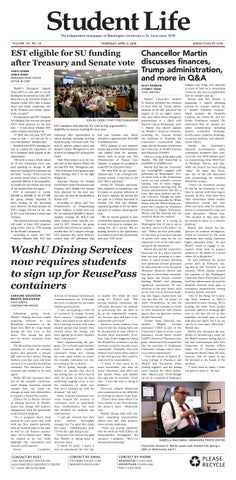
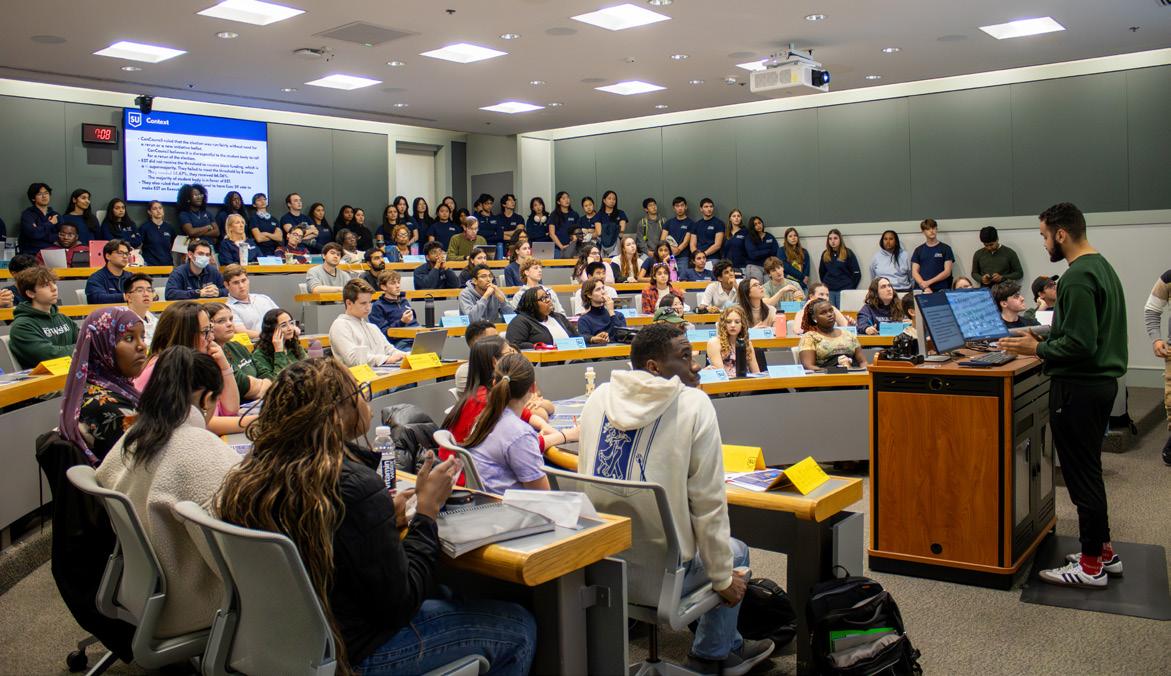
EST members attended the SU vote on the organization’s eligibility to receive funding for next year.
exhausted other opportunities to obtain funding, including receiving funds from the University itself. The lack of options pushed senior and Senator Charlie Weingarten to vote in favor of making EST an Executive Entity.
“Rob Wild looked us in the face and told us that Student Affairs will not bail EST out,” Weingarten said.
“The University is not going to give them funding, even if it’s the right thing to do.”
Associate Director for Student Involvement Sarah Edmondson said Campus Life’s budget had already been allocated for the next year and does not have the bandwidth to finance EST.
According to junior and Vice President-elect of Programming Varun Vadhera, it would have cost SU an estimated $40,000 to finance medical coverage for WILD and other campus events typically covered by EST. However, the group provides other services to campus — notably their 24/7 campus coverage. EST estimates they saved WashU’s student body 247 ambulance trips
this past calendar year, which amounts to approximately $233,000 in ambulance fees.
EST’s capacity to save students’ money and provide student-delivered care pushed some SU representatives, such as junior and Vice President-elect of Finance Cora Johnson, to support the proposal to make EST an Executive Entity.
“We want EST on our campus,” Johnson said. “I am a first-gen lowincome student. I have had to call EST. This is important.”
Several SU Treasury representatives requested an anonymous vote to ensure an accurate reflection of the body’s opinion; the motion did not pass. In a written statement to Student Life, Hall and Shakked expressed gratitude to SU for allowing them to continue operating next year.
“We are beyond grateful to have received their support and are excited to work with them to continue providing free, 24/7 service. We are looking forward to the opportunity to continue to serve the student body next year,” EST wrote.
WashU Dining Services now requires students to sign up for ReusePass containers
director of Strategic Initiatives & Communications for University Services, is hopeful for increased student participation.
Following spring break, WashU Dining Services began requiring students to use ReusePass containers in the Bears Den (BD) for to-go meals during All You Care to Eat hours. This change has been met by mixed reactions from students.
The ReusePass system requires students to create an account online and generate a unique QR code on their phone. Dining workers scan this code and then connect it to a specific ReusePass container. The container is then returned and washed to be used again. While BD has increased their use of the reusable containers, retail dining locations around campus have not made the change, as most lack dishwashers to support a ReusePass system.
Tiffany De La Roche, director of Dining Services at WashU, hopes this change will improve engagement with the previously underutilized program.
“It’s a program that’s been around for quite some time, both with our Bon Appetit partners, who we worked with in the past, as well as our Sodexo partnership,” De La Roche said. “What we wanted to do was really highlight [the containers] and increase participation.” Raven Lumpkins,
“I was anticipating a little bit of resistance to change because that’s natural,” Lumpkins said.
“But I was happy to see when we had a meeting recently with some student groups that people were excited about the change and were signing up in faster numbers than I anticipated.”
Since implementing the program, De La Roche said students have reported their reusable containers being wet. Dining has now taken strides to ensure the reusable containers are dry, according to De La Roche.
“We’re going through containers so quickly that they’re not drying fast, so we’ve had to shift the setup so that we have additional staging areas to dry the containers to make sure that we’re keeping up with the demand,” she said.
Some students expressed concerns beyond the dryness of containers, such as sophomore Kate Dieffenbacher, but were still thankful the program was implemented.
“I just get worried that they aren’t washed thoroughly enough, but I’m glad they made the move,” Dieffenbacher said.
“It was the right thing to do.”
First-year Neil Kotval was glad that WashU is taking steps to decrease waste.
“I think it’s great. I know it was an adjustment the first day
Chancellor Martin discusses finances, Trump administration,
and more in Q&A
budgets and being very rigorous in terms of how we’re stewarding resources, this was an opportunity that we couldn’t pass up.”
WashU Chancellor Andrew D. Martin defended the decision to meet with the Trump administration in the fall, discussed the impact of AI on higher education, and talked about emergency preparedness in a Q&A with Student Life on Wednesday, April 1. Martin also shared updates on WashU’s financial situation, including the reasons behind the transition to Workday, the University’s construction planning, and the decision to purchase the University of Health Sciences and Pharmacy (UHSP).
This is a recap of the Q&A with Martin. The full transcript is available at studlife.com.
Martin said that the University has meaningfully engaged with politicians in Washington, D.C. on issues such as the endowment excise tax and scientific research funding. One of those engagements included meeting with the Trump administration this fall, a move that some students and faculty criticized. Though the meeting took place days after the White House after the White House proposed the Compact for Academic Excellence in Higher Education, Martin said the meeting was not explicitly about the compact.
“There’s kind of a saying in Washington that ‘if you’re not at the table, you’re on the menu,’” he said. “When we have policymakers that have an enormous amount of power over what we do, it’s important to be at the table advocating for the institution.”
Martin said that WashU is beginning a capital planning process to consider options for a “greater Danforth Campus” which includes the Danforth Campus, the South 40, and the former Fontbonne campus. He mentioned that all options are under consideration, including student residential buildings, activity space, academic buildings, recreation facilities, and administrative offices.
Amidst the University’s financial circumstances, some community members have criticized the over $250 million spent on transitioning from WebSTAC to Workday. Martin said that, while the project has been going “okay,” the move was necessary due to the risk associated with maintaining the outdated WebSTAC system.
“There’s an enormous amount of risk for the University to continue to operate with these legacy systems. In fact, there have been other universities whose student information system just shut down and went away for months, which is extraordinarily costly and quite disruptive,” Martin said. “We decided at that time that we needed to move to a modern platform.”
or maybe two when we were using it,” Kotval said. “But having reusable containers significantly decreases the amount of processing that we have to do on the compostable containers, because they still have to be industrially processed.”
However, some students have noticed that the dining halls can be inconsistent in their efforts to become more sustainable. Firstyear Julia Kahn suggested using the ReusePass containers on the weekend as well to become more sustainable. Similarly, first-year Allison Pearl noted other aspects of the dining areas that could be improved for sustainability.
“I think if they want to be more sustainable, just have all metal silverware, and don’t use any plastic forks, and [make] the cups also be reusable,” Pearl said. “I feel like they’re doing it halfway.”
First-year Abigail Mokrzycki also commented on the difficulty of needing her phone to get food.
“There’s been times where I’ve been unable to get food because my phone’s dead,” Mokrzycki said.
WashU dining halls will continue expanding sustainability efforts next fall, with preparations already underway.
“There are several initiatives that we work on with [Office of] Sustainability throughout the summer,” Lumpkins. “We’ll be doing some planning.”
Martin also said the University’s financials are in a better position than last year, pointing to a slowdown in capital project spending and additional revenue generated by clinical faculty at the School of Medicine. However, Martin said that due to uncertainty surrounding issues like federal research funding, WashU isn’t planning significant investments in construction in the near future, such as the new Arts & Sciences building that began construction last year but was put “on pause” in April. Nevertheless, he said the University will continue to invest in new dormitories and clinical spaces that can generate revenue for the University.
Despite these financial constraints, WashU recently purchased UHSP as part of the University’s plans to create a new pharmacy school based around UHSP’s Doctor of Pharmacy program. Martin said this acquisition, like the purchase of Fontbonne University’s campus, was a “oncein-a-century opportunity.”
“Over the course of history, St. Louis College of Pharmacy and WashU had discussions about coming together, and the timing never worked for either institution,” Martin said. “Even though we are in a moment of looking at
Martin also shared his perspective on artificial intelligence, which he described as “the most important issue facing American higher education today.” He said WashU needs to engage in discussion about how to prepare students to “be leaders in a world where AI is ubiquitous.”
He also addressed the armed person alert in February, saying that he was “terrified” in the moment. While Martin praised the response of the Washington University Police Department and local law enforcement, he said the situation revealed some gaps in emergency preparedness among students, faculty, and staff.
“One of the things we’re hearing from students is they’re interested in more training. We’re hearing the same from faculty and staff, and we’re working right now to roll that all out so that hopefully we don’t have to deal with this ever again, but if so, we can do so even more effectively,” Martin said.
Martin also discussed the possibility of introducing a name for the WashU mascot, saying that he has had conversations with Vice Chancellor of Student Affairs Anna “Dr. G” Gonzalez about naming the WashU Bear. He said, however, that he wants to put the decision in the hands of the students.
“I don’t want to name, I want you guys to name it,” he said.
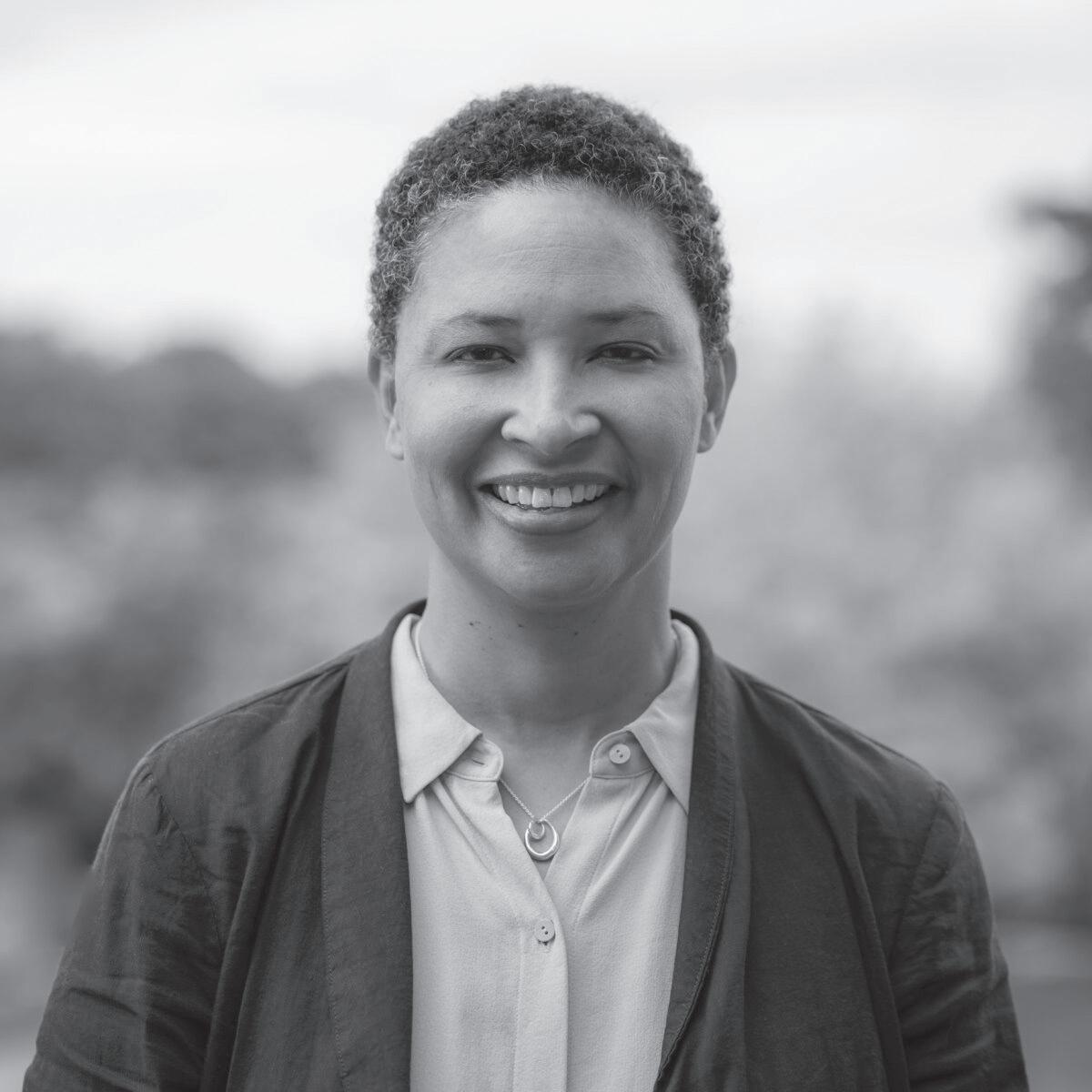
RILEY HERRON SYDNEY TRAN STAFF WRITERS
ISABELLA DIAZ-MIRA | MANAGING PHOTO EDITOR
JUN RU CHEN | STAFF PHOTOGRAPHER
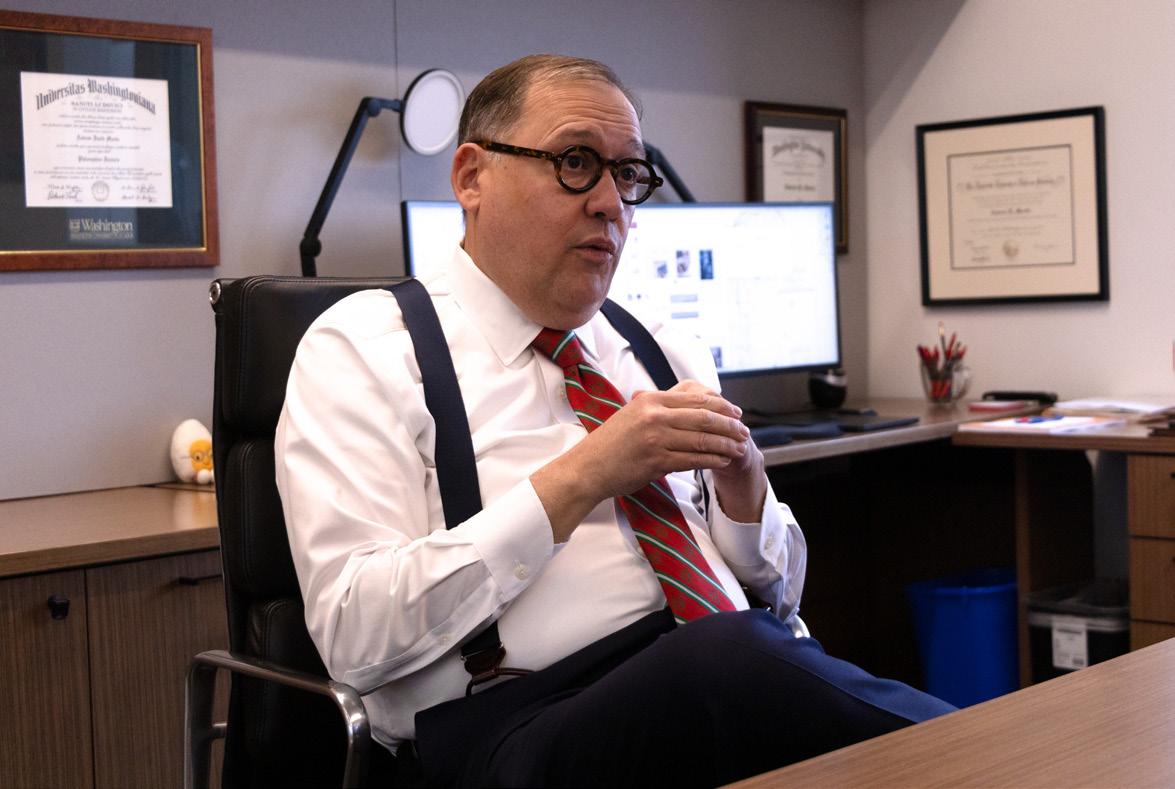
Chancellor Andrew D. Martin spoke with Student Life during a Q&A on Wednesday, April 1.
FORUM
WashU must fight harder against anti-Black racism
As a Black student, I have experienced many micro and macroaggressions on campus, from people asking off-putting questions about my hair to exaggerated blaccents. So when an
AI-generated image of a Black man being arrested for having a gun on campus was created and posted to the anonymous social media platform Sidechat during the armed threat alert in February, I was disheartened, but not shocked.
The true frustration, however, can be found in WashU’s response to
this image being posted (or lack thereof). The Association of Black Students (ABS) informed Vice Chancellor of Student Affairs Anna Gonzalez of the creation and uploading of this racist image, yet the University did not acknowledge the hurt and harm the image did to the Black community on campus. Lack of acknowledgement of this incident, and others, sets a tone that anti-Black racism on campus is permissible and that students will not face consequences for harassing members of the Black community.
Even more troubling is the pattern of incidents that
occur without real accountability. Students in 2024 harassed dining hall workers, in 2013 allegedly used the n-word during fraternity pledging activities, and now some are creating and sharing racist AI images. Yet the consequences rarely match the severity of the psychological harm that racism perpetuates against the Black community. Fraternities may be temporarily suspended. Statements may be released. These responses, however, are reactive, minimal, and clearly ineffective in combating antiBlack racism on campus.
WashU’s approach appears to prioritize institutional image and public relations over confronting the realities that Black students face on this campus. Stances like “institutional neutrality” avoid taking strong positions on controversial issues such as racial discrimination on campus and in practice, this neutrality enables harassment. It creates an environment where nonBlack students can harass, bully, and antagonize Black students with little fear of meaningful repercussions. The normalization of this harassment not only leads to major instances of racism
like the ones previously mentioned, but also manifests in smaller day-to-day acts of racism toward Black community members on campus. The result is a campus climate where members of the Black community feel excluded, devalued, and unsupported by an institution that claims to foster inclusion and belonging.
In the instance of the AI image being posted to Sidechat, an anonymous platform, it can be hard to enforce accountability on one individual person. In general, however, WashU needs to move beyond performative responses like general messages condemning racist/disruptive incidents and implement policies that actively combat anti-Black racism. Accountability measures against individuals, organizations, and student groups must be clear, consistent, and enforced. The University must demonstrate through action that the safety, dignity, and well-being of the Black community is just as much of a priority as that of all other students. These policies don’t have to be punitive, but can be proactive. Including a mandatory module on racism and
cultural sensitivity in orientation trainings, similar to the sexual harassment course all students take when first arriving on campus, is an example of proactive policy to combat racism on campus. Sponsoring forums where Black students can express their experiences and recommendations regarding racism on campus is another example of proactive policy that can prevent incidents like the ones above from happening as frequently.
At the same time, Black students must continue to speak out about our experiences and take charge in promoting change on campus. Whether it’s through joining ABS, calling out racist incidents to administration, or even sending in opinion submissions to Forum, making your voice heard on campus is always an option. Silence and complacency allow these issues to persist. By sharing our stories and demanding change, we can put pressure on the administration to do better and work toward creating a campus environment that is truly equitable. Until then, the University will remain neutral in the face of the Black community’s struggle.
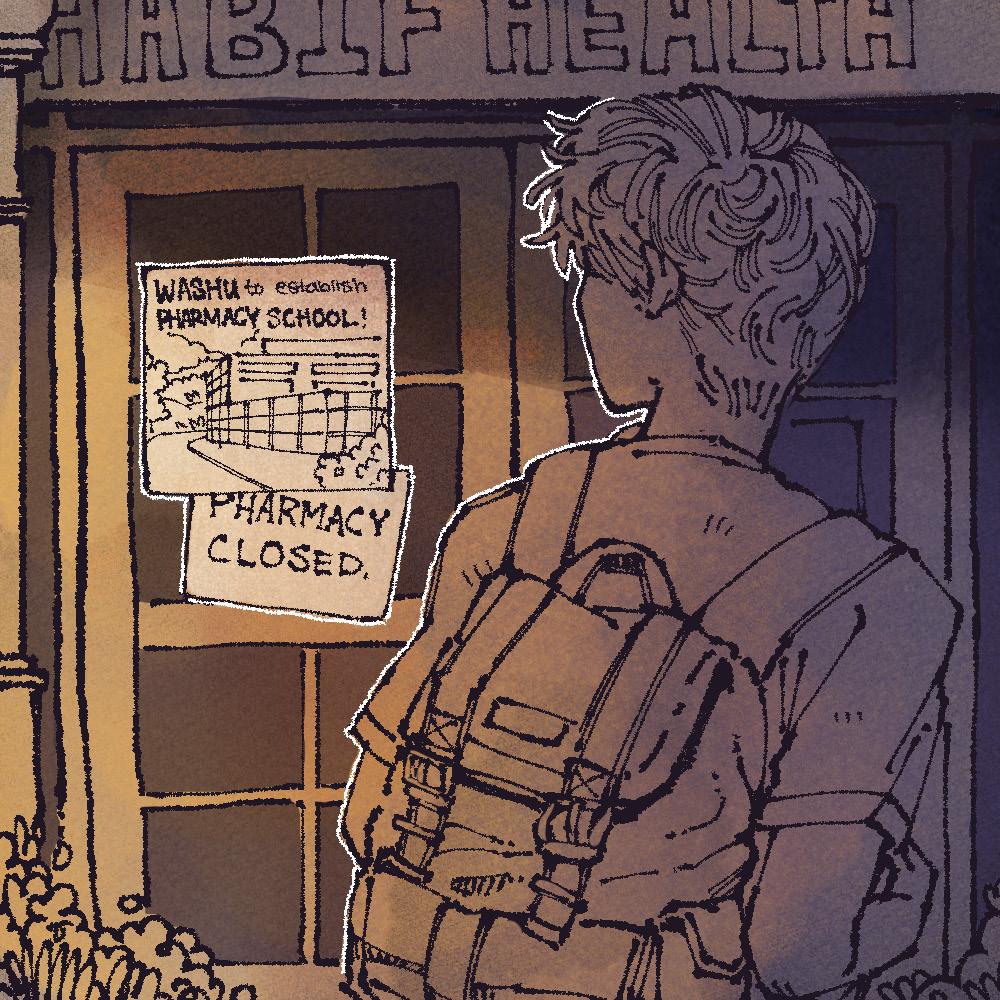
The new pharmacy school cannot replace Quadrangle
LYN WILKINS FORUM EDITOR
On Nov. 5, 2025, Quadrangle Pharmacy, the primary pharmacy for most students residing on the South 40, shut down. On Feb. 24, 2026, WashU announced the purchase of the University of Health Sciences and Pharmacy in St. Louis. These two events, though months apart, are a testament to WashU’s failure to care for current students in the name of the University’s future.
Part of what made me so enthusiastic and sure about my choice to attend WashU last year was the ease with which I could seek medical care. Since the Habif Health and Wellness Center was right next door, I had a pharmacy within walking distance for my medication, and I could get free appointments with mental health specialists. I raved about these luxuries to friends from other colleges. I advised seniors back home to apply here, in
part, because of this implicit promise of well-being.
Now, in my sophomore year of college, I regret raving. The unfortunate closure of the pharmacy is not the issue. They couldn’t have predicted or prepared for such a sudden departure. Though I find it a bit irresponsible to only have one staff member, it is not inherently the University’s fault for not having an on-hand replacement.
My main qualm rests with the continued closure of the pharmacy. Students were led to believe that the pharmacy would reopen when a new pharmacist was hired, but no one ever was. We were all told that this closure was temporary.
Well, it’s been five months, and we are still down our only pharmacist. But don’t worry; we have a shiny new pharmacy school to fill the void. It is peculiar that our perfectly functional university made absorbing a pharmacy school a priority over following through on their responsibilities to
current students. Everyone blames the continued failure of the school to support students on budget cuts, but WashU’s purchase of this pharmacy school shows that, clearly, we have the budget to expand. It is not the funds that are the issue, but their allocation. We all made a commitment to go to WashU under the impression that the University would provide accessible care throughout our time here. We were promised that students’ quality of life was paramount, but no amount of Well-being Wednesdays can hide the fact that the University does not see the health and wellness of their students as worth the cost.
Current students should be the priority, not hypothetical future ones. We should not have to wait for a graduate of this soon-to-be pharmacy school to step up and fill the opening at Habif. WashU has no business expanding when it cannot support the needs of the students it already has.
LUCIA THOMAS | MANAGING ILLUSTRATION EDITOR
For the over 2,000 sexual assault survivors learning how to live with the burden
BRI NITSBERG STAFF PHOTOGRAPHER
Content warning: This article contains discussion of sexual assault. Resources and helplines can be found at the end of the article.
I have heard one too many sexual assault stories. I have lived one too many stories. Enough needs to be enough already.
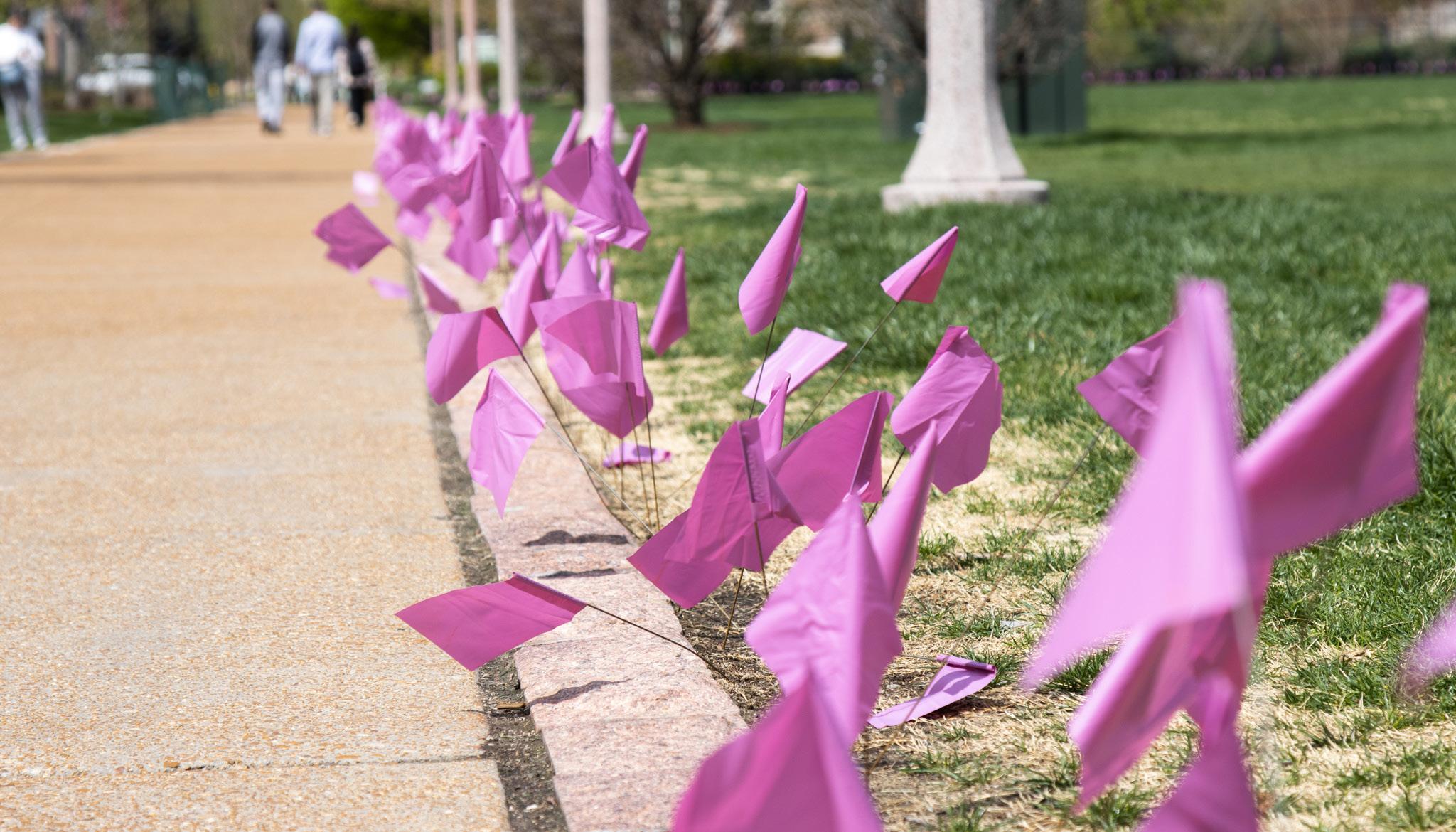
26.9% of undergraduate women have experienced sexual assault since coming to WashU, according to the 2024 Higher Education Sexual Misconduct and Awareness (HESMA) survey. While the survey results alone are equivalent to 1,051 women, over 2,000 flags surrounded Mudd Field on April 1 for Sexual Assault Awareness Month. These flags, placed by the Relationship & Sexual Violence Prevention (RSVP) Center, represent our community, our classmates, and our school.
What’s even worse is that while this number is already too high, it is likely significantly higher when it accounts for survivors who didn’t feel comfortable reporting and/ or survivors who did not recognize that what they went through is classified as sexual assault.
Over 2,000 people.
Let that sink in.
More than 2,000 survivors
and far too many perpetrators walk this campus every semester.
That is more than the entire WashU Class of 2029. Sexual assault and relationship violence have found their way into too many students’ stories, and we as a community are not angry enough. For those who have suffered at the hands of callous, selfish individuals who commit sexual assault, I want to tell you that it is not your fault. Ever. For not speaking up, for not fighting, for not understanding your own situation. It is not your fault. Your brain and your body weren’t meant to be in a situation like this, so they don’t know how to respond to a situation like this. You wouldn’t blame someone for losing their wallet if they got robbed, so why are we blaming survivors for sexual assault? It is not your fault. Everyone will tell you the healing process isn’t linear. And while that is undoubtedly true, I think it’s more accurate to compare the healing process to a boulder. Immediately after the assault occurs, it may feel as though you are carrying around a boulder bigger than yourself, all by yourself. It might be the first thing you think about when you wake up, the first thing you see when you look in the mirror, the first thing other people think when they interact with
you. And it might feel impossible to get through the days where the boulder seems to keep getting bigger.
But after some time, that boulder becomes a little bit smaller. You may start hunched over, holding it on your back with every ounce of strength you can muster. Then one day, it’s small enough that you can hold it in your arms. Another day, it fits nicely in your backpack, and you can zip it closed, putting it out of your mind for a bit. Maybe later down the line, maybe without you even noticing, the boulder has become a little pebble in your back pocket.
Once in a while, you might sit down and feel the pebble there in your pocket after you hadn’t in a long time. The reminder of it could hurt just as badly as it did when it was a boulder on your back. But this time around, it’s only once in a while, not always.
I won’t lie to you: It will always be there with you. But it doesn’t have to become you.
Sexual assault isn’t something that a survivor can move on from immediately. While perpetrators might be able to rip this chapter out of their story, survivors usually do not have that privilege. These experiences have a way of taking over every morsel of your life. They create days that are so hard you may not want to keep fighting to get past
Give your future self a gift: Start journaling
“when in fact I could note what happened most days in just a minute or two.”
My grandparents have been divorced for over 40 years. They don’t talk much, but last year, something weird happened. Within a month of each other, two of the least sentimental people I know each sat me down and confessed that their greatest regret is not keeping a journal.
“Text me your new postal mailing address,” my grandfather texted. “Also, tell me the name of the book you’re reading.” About a month later, a “one year journal” arrived in the mail. Wedged in between the pages was a sheet of paper folded into ninths, his message typed in Arial, 12-point font.
My grandfather wrote that he had just found letters written to his parents from the supply ship on which he was stationed during the Vietnam War. Huge swaths of his Navy life, he told me, had been completely forgotten. The letters spoke of people close to him, events that shook his young life, that had all been washed away by the tides of time. “Part of my resistance [to] keeping a journal was the sense that I had to write something lofty and profound each day,” he wrote,
My grandma’s story is surprisingly similar. While cleaning up her house, she found an old planner she used to keep track of her appointments. Like my grandfather, she told me it helped her realize just how much of her life she had forgotten. Just one name, maybe scribbled alongside “Lunch, 12:30,” could bring back an entire relationship completely forgotten over the course of a long and full life. “Just a few words a day,” she pleaded. Memory is a funny thing. You never know what you’ve forgotten, because — well, you’ve forgotten it. Something needs to force the memories back, to trigger the wave of recollection. Sometimes you’ll grimace at a terrible middle school outfit in a photo album or see an awful pickup line you texted to an old crush, and sometimes you’ll smile as your mom reminds you of a vacation you took before your sister went to college.
The problem is, we rarely forget these big moments. We forget the mundane ones, like a random lunch in the high school cafeteria, or watching Jake Paul vlogs with your
friend in sixth grade science class. With nothing to bring these memories back and make them stick out in your memory, they cease to exist. Into the pit, like in the movie “Inside Out,” alongside the people with you in those memories and the person you were in that moment.
I hate to sound too sappy, but I think it is important to meaningfully catalog your college memories. The supposed “best years of your life” will be filled with thousands of memories, including many you will never forget. But some, you will. As time goes on, even the memories you previously deemed unforgettable will start to fade. The all-nighter you pulled with your friend before a midterm, that intramural sports tournament, even your trip to Chicago. They will all fade.
So do your best to fight back, for the sake of your future self. I’ll leave you with a few words my grandfather wrote me, the words that made me pick up the pen for the first time last year: “I would give a lot to be able to see these short daily jottings from [my] college days. Takes so little time and, take it from me, you’ll be delighted to have these memories decades from now.”
everything that happened to you. It can bring so much loss: of hope, of friendships and relationships, of your old self. Learning how to live with who you become despite the painful events that occurred to you is no easy feat, and one that may take years, but that time will come. Letting the boulder get smaller and smaller doesn’t mean you are forgetting what happened; it just means you are growing because of it. You will always be changing and always be learning, but eventually, you can start to feel like you are living again. You may be a sexual assault survivor, but you can do more than just survive.
In a reality where justice in these situations may be hard
to come by, and it feels like there is so much out of your control, your success is the form of revenge that matters most.
Your success is getting out of bed, smiling a little more each day, and turning the boulder into a little pebble.
Your success is living for the former you who had to endure things no one should have to go through.
Your success is living, and one day thriving, for the former you who spent so long just trying to survive.
The Sexual Assault and Rape Anonymous Helpline (S.A.R.A.H) provides confidential and anonymous support and can be reached at 314-935-8080
between 4 p.m. and 8 a.m. during the fall and spring academic semesters. There are counselors at the Relationship and Sexual Violence Prevention (RSVP) Center, located in Seigle Hall, Suite 435, available confidentially to any University student. The office can be reached at 314-935-3445 or by email at rsvpcenter@ wustl.edu. The National Sexual Assault Hotline can be reached at 1-800-6564673 or via online chat at https://hotline.rainn.org/ online 24/7. To reach Title IX, students can contact Title IX Coordinator Jessica Kennedy at 314-935-3118 or go to the Title IX Office in Umrath Hall 001.
CAPTION CONTEST
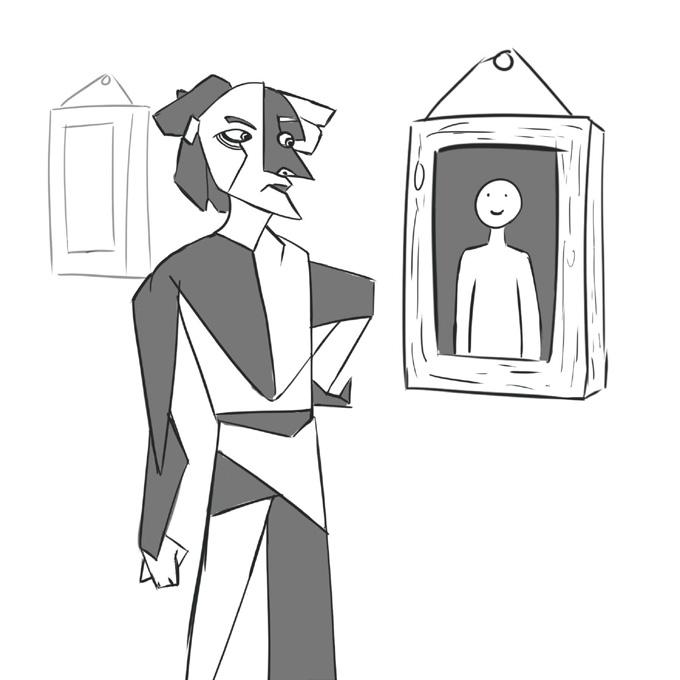
First Place: “I’m back from study abroad.” Leo Penny, Current WashU Student
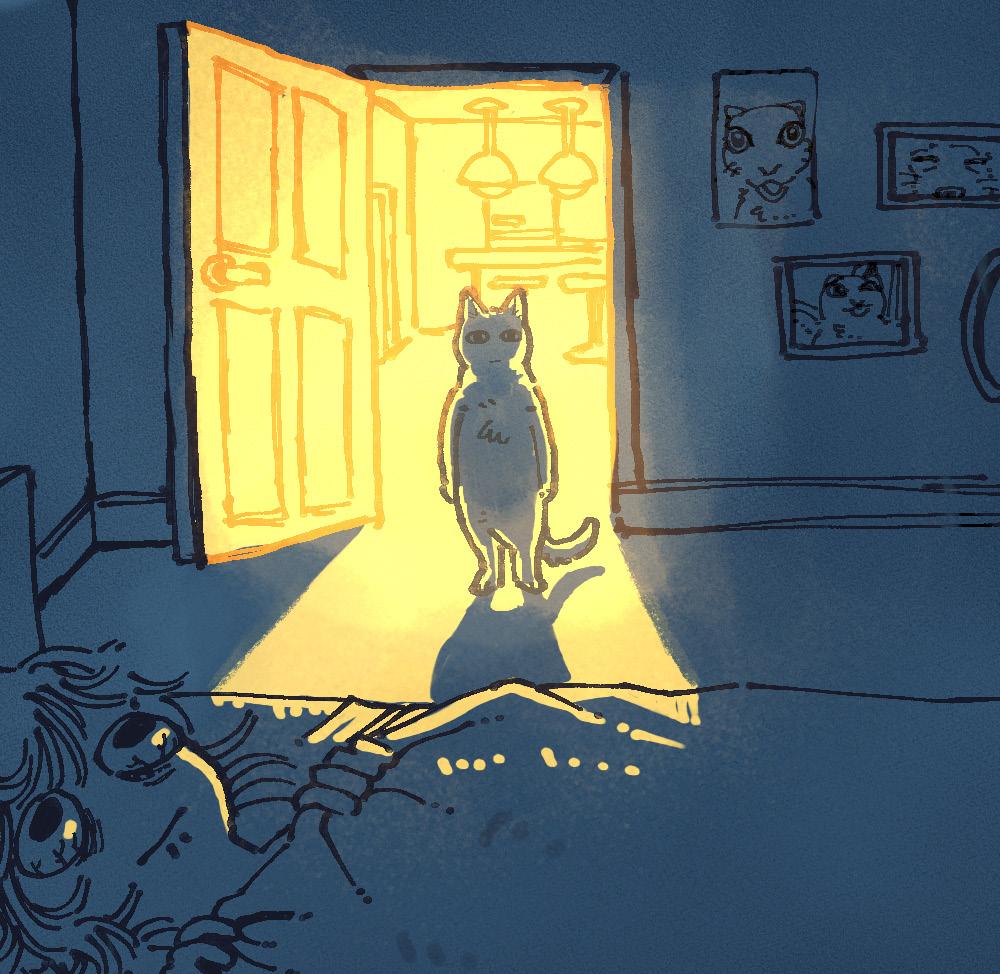
Second Place: Hey uhhh I’m out of meal points... Can I borrow your ID again? (This happens every April btw) Leo Penny, Current WashU Student
Third Place: I am the Ghost of Exam Week Yet to Come. John Chin, WashU alum
the QR code to enter your submission by noon on 4/14.
SCENE
Where the ‘F’ is St. Louis in ‘DTF St. Louis?’
For the American Midwest, a simultaneously bustling and building region, any recognition in mainstream media is rare and worth celebrating.
Missouri especially, whose culture lives and breathes in St. Louis, almost never gets the limelight. But, the time has come for WashU’s beloved city to launch into pop-culture relevance with the release of HBO’s “DTF St. Louis.”
Created by Steven Conrad, the mini series follows middle-aged friends, Clark Forrest (Jason Bateman) and Floyd Smernitch (David Harbour), who work at a local news channel in suburban St. Louis and are sexually dissatisfied in their marriages. Forrest sees a news segment on the hookup app “DTF St. Louis” for married people and ropes Smernitch into making a profile. Somewhere down the road, Smernitch is found dead at a community pool with no evidence of murder.
As Detectives Donoghue Homer (Richard Jenkins) and Jodie Plumb (Joy Sunday) try to solve the case, the affair between Forrest and Carol LoveSmernitch (Linda Cardellini), Smernitch’s
wife, is revealed. While a promising dark comedy chock full of crazy plot twists and complex characters, “DTF St. Louis” also shockingly lacks true St. Louis representation. Given the title, one would expect at least a mention of the most iconic parts of the city. For many St. Louisans, that means Forest Park, the Delmar Loop, Central West End, and the Gateway Arch, or food specialties like toasted ravioli and gooey butter cake.
That’s not to say Conrad didn’t try to showcase St. Louis, but his sparse efforts are overshadowed by rampant cultural and geographic inaccuracies that a 20-second Google search would solve.
So, just in time for its final episode, here’s what WashU students with St. Louis pride should prepare themselves for when binging the show:
1. The Midwest doppelgänger
The biggest gripe St. Louisans should have with “DTF St. Louis” is the fact it wasn’t filmed here. Yep, you read that right. The series was actually shot in Atlanta, Georgia, a light eight-hour drive from the Gateway City. According to Conrad, this state-sized
elephant in the room was ultimately a matter of cost, but he claims that his characters’ mistakes are universal and can be made
anywhere, from St. Louis to Atlanta, as justification.
Why then, if the city doesn’t matter, were the flashbacks of Smernitch’s job interview in episodes two and five filmed on location in Chicago? Maybe because Conrad happens to be based in Chicago, but who’s to say? This hypocritical decision affects more than just setting when Forrest and LoveSmernitch secretly go to a Cardinals game. The St.
eateries in scenes outside the suburbs. But having the truth behind Forrest and Love-Smernitch’s affair revealed in a Jamba Juice? Smernitch making his DTF profile in an Outback Steakhouse? Just looking up “food in St. Louis” will show these are not common restaurants in the area. The nearest Outback Steakhouse is in Sappington, Missouri, 25 minutes from St. Louis. Whether it is a symptom
work from is called Twyla. Even though Conrad has every right to make a fictional setting for “DTF St. Louis,” it’s a fine line between creating something unique and relying on existing locations to build a narrative. So, writing dialogue and plot lines about nonexistent “Center Street” or “Kevin Kline Community Pool” come across as contrived when Greater St. Louis has real surrounding cities and pub-
Louis audience will be completely taken out of the scene because there are zero shots of Busch Stadium’s exterior and the interior is filled with high school football-looking bleachers instead of folding seats. These haphazard attempts to feel like St. Louis when the show could’ve taken place anywhere else begs the question: Why is it even called “DTF St. Louis?”
2. Jamba what?
Another problem with television set in one place but filmed elsewhere arises when it comes to depicting a city’s food scene. In St. Louis, there are plenty of region- and city-specific joints like Culver’s, Corner 17, Kaldi’s Coffee, and Clementine’s Ice Cream.
With already high production costs, it tracks that Conrad couldn’t recreate these iconic
of product placement or sheer laziness, neither is an excuse for overlooking the perfect opportunity to get funding from advertisers while still representing St. Louis: Panera Bread! Or, as WashU students may know it, St. Louis Bread Co. Since going from small business to national chain, Panera can be found all over Atlanta, so filming there would be both a financial benefit for Conrad and a niche reference for St. Louisans.
3. How to lose at STL trivia
From made-up streets and suburbs to calling Cardinals tickets “expensive,” there’s a whole host of miscellaneous facts about St. Louis that Conrad either forgot or didn’t care to get right.
First off, the town Forrest and Smernitch commute to
lic centers to choose from.
Not to mention the show’s weather station is called WTGK, which means it would be broadcasting east of the Mississippi River since it starts with a W. Hopefully Conrad knows that St. Louis, the “Gateway to the West,” is west of the Mississippi, but would it really be a surprise if he didn’t?
For “DTF St. Louis” viewers who aren’t from St. Louis, these offenses may seem excusable or go completely unnoticed, but knowing the little details isn’t that hard when the information is freely on the internet. Despite its confused setting, however, the show is a fascinating watch and should be praised as an example of how to balance slow-burn thriller with humor. Just don’t expect to see the real Gateway Arch or anything.
AVA AYAD CONTRIBUTING WRITER
KEVIN KAN | ILLUSTRATION EDITOR
Dear Scene,
I met my friends during the first week of school, and I felt so lucky going into freshman year with them. As the year went on, though, I realized that I’ve been drifting apart from my friends. We’re not really interested in the same things, and I just don’t feel as close to them as I used to. Still, everyone else seems to have really solid friend groups, and I don’t want to be the only person without any friends. What should I do?
- Lonely Scholar
I understand your worries about becoming friendless, as I recently went through a similar situation. Last semester, I also had my own “friend group,” and at first, it felt comforting to have a community that I could always rely on. However, as the semester went on, we started to drift apart due to conflicting schedules and miscommunication. This also affected our overall connection, making conversations feel more forced than genuine. Even though I was still technically a part of a friend group, I didn’t feel as close to them as I once did.
At the same time, everyone else in the group felt comfortable joining new circles. Watching others easily form lasting new connections was frustrating, and this is exactly when the feelings of friend group “fear of missing out” (FOMO) kicked in.
Friend group FOMO stems from the fear of social exclusion, the troubled feeling that everyone else has found their community while you’re left behind. Yet the truth is, friend groups aren’t as perfect as they seem. Most friends appear to be an ideal, harmonious circle from the outside, but that image is often an illusion. When you look more closely, you’ll see that most friend groups have internal conflicts, misunderstandings, and moments of
awkwardness that aren’t visible to the public eye.
The first step of conquering FOMO is to shift your mindset and become what I like to call a “social nomad.” A social nomad is someone who understands that belonging doesn’t have to come from one fixed environment. Instead of focusing on staying in one group, start focusing on individual connections. Get out of your comfort zone, allow yourself to talk to new people, sit in different spaces, and don’t feel restricted to one circle.
Being a social nomad also means getting comfortable with discomfort. The best way to move past this lingering fear is by putting yourself in situations where new connections can happen naturally. This could include joining more
activities. Sports, clubs, and campus events make it easier to meet people with common interests, since shared activities can often lead to organic friendships.
After putting yourself in a new environment, you must stop comparing your social life to what others seem to have. Measuring your own friendships against others’ only fuels insecurities, and then the endless cycle of feeling unwanted by your peers repeats. The more you focus on others, the easier it is to overlook the genuine connections that are already in your own life. Start paying attention to how people make you feel instead of chasing the appeal of belonging.
As you navigate college, it’s important to know that friendships can shift,
people change, and relationships naturally drift apart. However, converting that fear of change into curiosity can foster a positive mindset, allowing you to embrace new experiences and connect with people who truly get you.
MEET THE ENGAGED AND MARRIED STUDENTS OF WASHU
LILY RULNICK STAFF WRITER
When you enter a college classroom, you don’t typically expect to sit next to a student with a ring on their finger. But being married in college isn’t as uncommon as many assume. WashU has quite a few members of the student body who are married or already engaged.
Ha-Ya DavisBennett
Senior Ha-Ya DavisBennett met her husband, Spencer, at 18 while working at a Raising Cane’s in Hammond, Louisiana, right
outside her hometown of Baton Rouge. The two dated for six months before getting engaged, right around the time that Davis-Bennett decided to attend WashU.
“I was very adamant about leaving Louisiana and just expanding my horizons, experiencing something new … and during the time that we were dating, he reassured me that this is going to be forever and that he was going to follow me wherever I decided to go,” DavisBennett said.
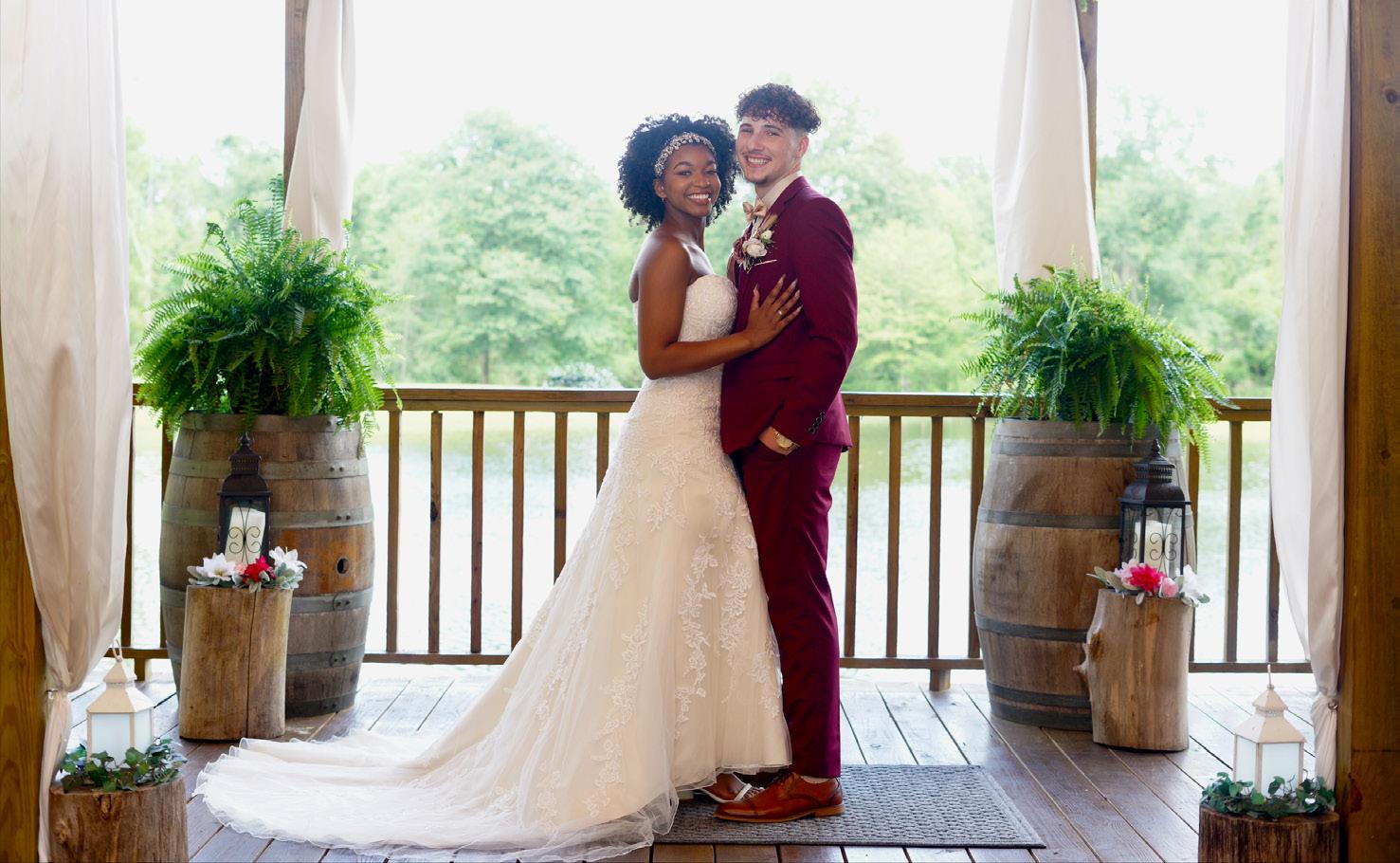
The two legally married in 2022, right before DavisBennett began at WashU. However, they had a larger ceremony with family and friends in June 2023 at
a “fancy barn house” in Louisiana.
While Spencer was eventually able to find a permanent job in St. Louis, the two spent Davis-Bennett’s first semester as a long-distance couple.
“I did constantly miss him, and I constantly also [refrained] from going out with friends and going to some events because I was like, ‘Actually, I’m going to call my man,’ ‘Actually, I want to go home,’” DavisBennett said. “So, I feel like [in] my first semester, I really didn’t build a lot of those initial connections that people made.”
However, when Spencer did move to St. Louis,
Davis-Bennett shared that things improved immensely, and that she was able to experience “the best of both worlds.” In fact, WashU even let Davis-Bennett and her husband live together off campus when he arrived for her second semester.
The best of both worlds, however, comes with unique dynamics that single college students don’t have to think about.
“A lot of my friends have the freedom to do what they want, when they want, how they want,” Davis-Bennett said. “[If] they want to go somewhere, they’re going to go. I’m not saying that I don’t have that autonomy — I definitely do, but it comes with other boundaries, like communicating with my husband.”
Overall, Davis-Bennett is grateful to have done all four years of college alongside her husband and best friend and is excited to stay in St. Louis postgrad with Spencer.
“[He is my] built-in best friend … [and is] constantly pushing me to be better, whether that’s emotionally, intellectually or spiritually; I just feel like he helps me be a better version of myself,” Davis-Bennett said. “So having that for the rest of my life, I’m really excited to see what our future will hold for us.”
Brooke Sanchez
Unlike Davis-Bennett, junior Brooke Sanchez met her now-fiance as a sopho more at WashU.
“We took a class last year together. … He took an interest in me the very first time he saw me in that seminar circle,” Sanchez said. “He waited about a couple weeks when the semester started to actually come up and talk to me.”
Their story began when her fiance tapped her on the shoulder and asked her on a date. They have spent every day together since.
The two have lived together since the beginning of their relationship,
but not exactly on purpose. Sanchez’s fiance was going to lose his apartment if he didn’t fill the spot his roommates left when they went abroad for the semester, so Sanchez took a room in his apartment for logistical purposes.
“Since we started living together pretty early in the marriage process, the idea of marriage and stuff was something that we always kind of tossed around and played with,” Sanchez said. “We were just kind of making a lot of sacrifices with each other to make sure that we could stay together, and through those sacrifices I think it kind of solidified in our minds that we really wanted to stay together for a long time.”
Today, Sanchez and her fiance live with their two cats: Rocky, who they rescued during their time abroad in the Canary Islands, and Primero. The islands hold a special place in the couple’s hearts, as it’s where Sanchez’s fiance popped the question.
“It just felt very organic, like he’s very sure of what he wants, and he was very sure that I was the person that he wanted as his partner, and I was very sure as well,” Sanchez said.
For Sanchez, having a long-term significant other at WashU didn’t really change much about her college experience. As someone who never really enjoyed attending parties and much preferred hanging out with a small, intimate group of friends, she was happy to have someone she could go home to everyday who shared similar values.
“[When] we met it was just like, wow, I’ve found this other person who totally understands the kind of college experience I want versus the traditional one that everybody says I should have,” Sanchez said.
While most of the reactions Sanchez has gotten to her engagement have been positive, some people have shared concerns. But Sanchez has no doubt she
made the right decision.
“Some people will be like, ‘Oh [you’re] so young, go see the world,’” Sanchez said. “But the way we see it is, we’re seeing the world together.”
Abagale Berger
Senior Abagale Berger also met her fiance at WashU. For him, it was love at first sight. For her, not so much — but mostly because she couldn’t actually see his face.
Berger met Noah, her fiance, for the first time on a Zoom interview for a club she was trying to join. Because the interviews were anonymous, Noah had his camera turned off, so only he could see her. When she later joined the club, he chose her to be his little, already in love with her.
“I [used] the club as an excuse to text him, and then after that, the rest is history,” Berger said.
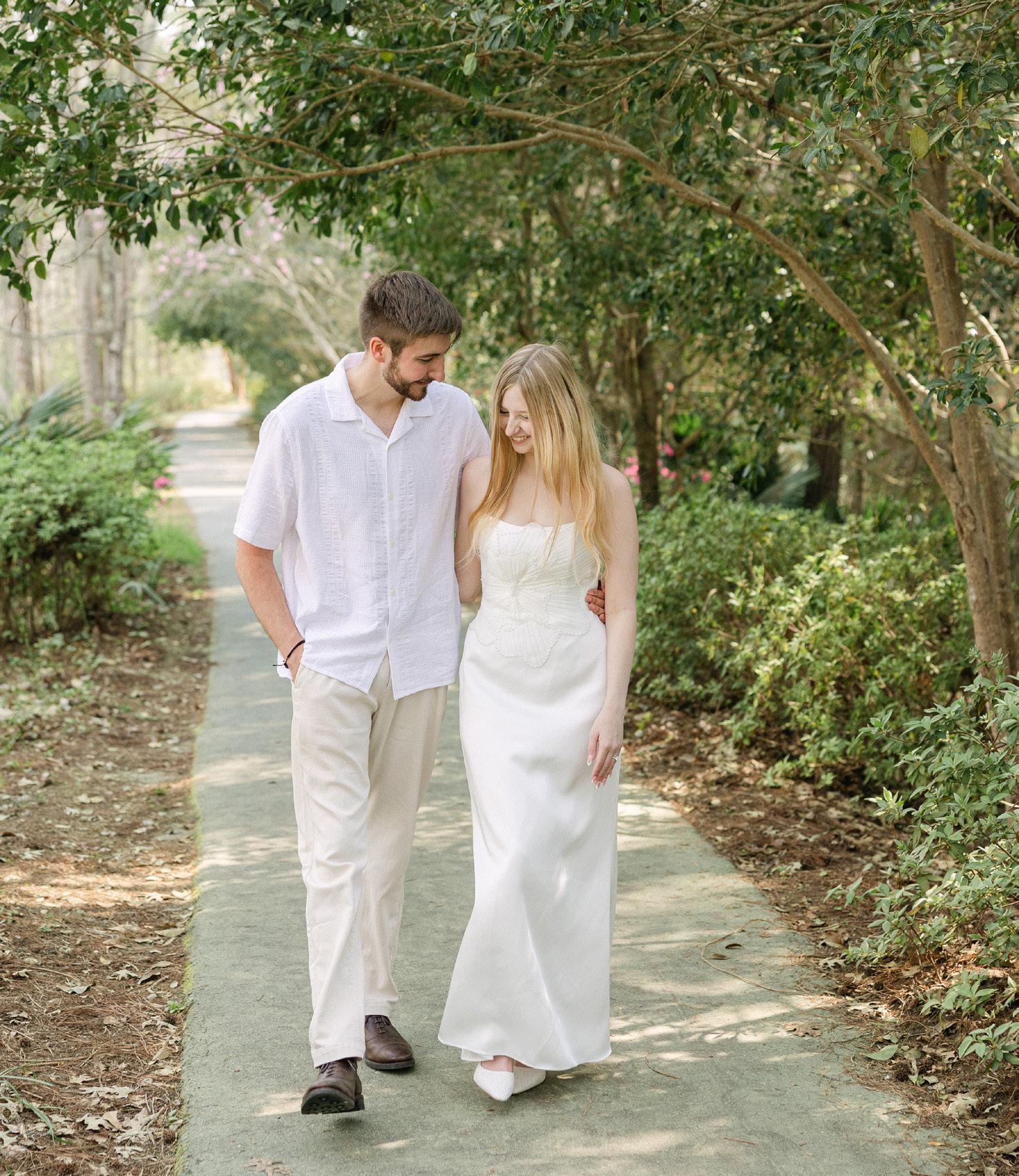
Berger and Noah got engaged in March 2026. Noah decided to propose over a spring break trip to Charleston at Cypress Gardens, the setting of a famous scene from the movie “The Notebook.”
“Our path was definitely anything but traditional, but I think that’s what worked for us,” Berger said. “We are not conventional people at all.”
Noah is a year older than Berger and is currently studying law at St Louis University. After graduation, Berger will stay at WashU for law school, and the two are planning on getting married in Clayton, where Berger grew up, in July 2027.
“The stars really aligned,” Berger said. “And I know everybody says that, and it’s very cliche, but … it definitely is a love story for
PHOTO COURTESY OF ABAGALE BERGER
PHOTO COURTESY OF HA-YA DAVIS-BENNETT
PHOTO COURTESY OF BROOKE SANCHEZ
Senior Abagale Berger and her fiance, Noah celebrate their engagement in Charleston.
Senior Ha-Ya Davis-Bennett and her husband, Spencer at their wedding in 2022.
Junior Brooke Sanchez and her fiance celebrate their engagement in the Canary Islands.
No. 8 WashU softball sweeps NYU with ease in three-game conference series
CHRISTIAN KIM ROMAN PETERSON STAFF WRITERS
The No. 8 WashU softball team left no room for debate this weekend, dominating the New York University (NYU) Violets in a threegame sweep on April 3 and 4. The Bears only gave up two runs across the entire weekend while scoring 22 of their own. Friday’s doubleheader went well for the Bears, with back-toback mercy rule shutouts in five innings. With these wins, the Bears improved to 19-3-1 on the season.
Game 1
WashU 8, NYU 0
The Bears kicked off the scoring in the first inning, adding two runs via an RBI groundout from senior left fielder Sydney Schneider and a single from junior right fielder Kristina Donaldson. The team tacked on three more runs in the third as sophomore first baseman Harper Nix drove in one with a double and senior catcher Alexa Hanish hit a two-run single.
Two innings later, Hanish tic day at the
Game 2
WashU 8, NYU 0
Two hours later, the Bears defeated the Violets in similarly dominant fashion. This time, the scoring started in the second inning when sophomore catcher Kennedy Rushing drove in two with a single to left. Rushing soon reached home when Schneider benefited from an error by NYU’s catcher to reach first after striking out. First-year second baseman Austen Kinney knocked in one more run to end a fiverun inning for the Bears.
The last three runs to reach the mercy rule came in the fourth. Junior second baseman Elena Locascio hit a sacrifice fly to center field, and junior center fielder Julia Nicholus clinched the victory with a two-run double. Junior pitcher Hattie Bond wrapped up the top of the fifth inning to win game two for the Bears, tallying six strikeouts over five innings for her fourth win of the season.
Game 3
WashU 6, NYU 2
The Violets’ offense came
alive for the first time during the weekend game on Saturday, but it did not prevent the Bears from still comfortably winning 6-2 to earn the series sweep. In the second inning, Nicholus drove in Nix with an RBI groundout to put WashU on the board. However, the Violets responded immediately in the top of the third inning with an RBI groundout of their own to tie the game.
The game remained very close as the teams reached the top of the sixth inning tied 2-2. However, WashU’s offense heated up in the bottom of the sixth, scoring four runs.
Hanish got the rally started by driving in a run with a perfectly-placed sacrifice bunt. Junior third baseman Kennedy Grippo kept the rally going with an RBI single to right field, followed by an RBI groundout from first-year shortstop Katie Dolin. First-year outfielder Julia Sullo drove in the fourth run with another bunt, giving the Bears the 6-2 lead that would remain for the rest of the game.
Brooks earned another win in the circle as she
pitched six of seven innings with nine strikeouts and gave up two earned runs, tallying her tenth win of the season. The Bears extended their winning streak to six, and also now sit in first in the University Athletic Association (UAA) standings with a 7-2 conference record. Coming off back-toback series sweeps against NYU and the University of Chicago, the team seems to have righted the ship after a series loss against Case Western Reserve University nearly three weeks ago. They have a prime opportunity to continue their momentum against Brandeis University on the road on April 17-18, who sit in the middle of the pack in the UAA.
Editor’s Note: Harper Nix is an Editor for Student Life. She was not involved with the writing, editing, or reporting of this piece.
‘Having fire under my feet’: Kylie Spytek is blazing across the track
BEN OLLENDORFF
EDITOR
The only thing better than breaking one NCAA Division III record is breaking two. That is exactly what senior Kylie Spytek did in her final indoor track and field meet at WashU. Spytek was a crucial part of setting records in the 4x400 meter relay and the distance medley relay, two key pieces that allowed the Bears to take home their second-ever NCAA Women’s Indoor Track and Field Championship.
“It was the perfect culmination of the past four years,” Spytek said. “I’ve always enjoyed the indoor season a lot. It just felt like the energy was amazing in such an enclosed space, and it’s different than the energy you get in the outdoor season.”
The race took place in Birmingham, Alabama, where Spytek last competed in 2023 as a first-year placing third in the 4x400 meter relay.
“I competed in Birmingham my freshman year at nationals, and it was a full circle moment, being back in that same moment,” Spytek said. “We have a lot of second and third place trophies, and it was awesome to bring home a gold.”
Ever since coming to WashU, Spytek has excelled during both indoor and outdoor seasons. As a first-year, sophomore, and junior she earned indoor and outdoor First Team All-American honors. Additionally, she has three University Athletic Association (UAA) championships and six AllUAA honors in her career.
Spytek attributes most of her success to those
around her, appreciating how her coaches and teammates push her to become better both on and off the track. Relays emphasize the importance of teamwork, requiring each runner to do their part in order for the group to be successful.
“We always say, when we get a baton in our hands, it’s a different type of energy that you get because you’re not just running for yourself,” Spytek said. “You’re running for the three other people. A slogan that we have with our team is ‘not for me, for them.’”
Out of all the events, the 4x400 meter can be one of the most challenging. The relay is split between four runners, each responsible for running one lap around the track. The distance is short enough to have the intensity of a sprint but long enough to involve
precise pacing. It’s the best of both worlds, demanding athletes to excel with speed and endurance. It also normally takes place at the end of the meet, sometimes putting a lot of pressure on the runners because team competition placements are on the line.
“[The 4x400 meter] is definitely one of the more difficult events because you’re sprinting all out for a full lap,” Spytek said. “It’s the last event of a meet. So a lot of times it comes down to that four by four, and it’s nice that all the pressure is not just on you, it’s on you and three of your teammates and they’re working towards the same goal. It’s super special.”
Building on all her previous accomplishments, Spytek is staying ambitious during her last season on the team. At the end
of March, at the WashU Invite, Spytek won both the individual 400 meter race and the 4x400 meter relay with juniors Julia Coric and Cate Christopher and soph omore Hailey Weir. This is part of her goal to improve on her individual events while still trying to win one more cham pionship before graduating.
first person who did not make the
Junior Maria Brooks pitches a career-high 11 strikeouts in one game.
ANGELINA PITT | STAFF PHOTOGRAPHER
SPORTS
No. 14 baseball goes 3-1 against NYU in UAA conference play
No 14. WashU made an astonishing comeback, winning 23-5 after losing the opening game of the series against an unranked New York University (NYU) on April 3-5. The Bears went 3-1 against the Violets for the weekend, mercy-ruling NYU, 12-1, 23-5, and 11-1.
The Bears continued to display their excellent offensive capabilities and lineup’s consistency with 51 RBIs over the weekend. Key players, including sophomore infielder Ryan Soong, first-year catcher Jacob Witte, and senior infielder Shane Pellegrino, continue to consistently bat above .300
throughout the season. Much of the Bears’ success has come from the depth of their pitching team, including senior pitcher Isaac Zhang and graduate pitcher Chase Brickley keeping their ERAs low at 2.76 and 2.23, respectively.
Game 1
NYU 11, WashU 5
The Bears started their doubleheader against the Violets on Friday, April 3. After a quiet first two innings, NYU took a sudden 4-0 lead in the third from hitting a grand slam. The Violets hit another home run in the fifth, increasing their lead by one.
NYU’s momentum progressed entering the seventh inning, where all bases were loaded due to wild pitches
and walks. The Violets were able to add four more runs to the scoresheet, extending their lead to 9-0.
The Bears finally got on the scoreboard in the seventh when Pellegrino scored on a sacrifice fly from senior firstbaseman Connor Lindsey.
The Violets added two more runs in the eighth to take an 11-1 lead.
WashU avoided a mercyrule loss with a three-run home run from Soong, but the late push was not enough.
Game 2
WashU 12, NYU 1 (seven innings)
The Bears were determined to come back after their 11-1 loss to the Violets.
WashU got off to a hot
start in the third inning when first-year outfielder Eli Sitzer advanced from first to home on two consecutive NYU throwing errors.
With sophomore outfielder Kevin Stephens on first, Pellegrino hit the first WashU home run of the weekend putting the Bears up 3-0.
Sophomore infielder Cooper Greene added an RBI double for the Bears, allowing Soong to score.
Despite a run from the Violets in the fifth, WashU quickly responded, sealing the game 12-1 in seven innings.
Zhang stayed busy during the whole game, pitching all seven innings with eight strikeouts and one walk.
“It’s all about the bounce back,” Zhang said in a postgame press conference on FloSports. “I try to keep a short memory and just focus on the present. So, I just try to do my job, throw strikes, let my defense play, and it [works] out.”
Game 3
WashU 23, NYU 5 (seven innings)
In their third game of the weekend, the Bears came out firing with seven runs in the first inning.
WashU improved to a 3-1 lead with a single from Witte.
The rest of the first inning was busy after Stephens hit a sacrifice fly that led to an RBI for Greene. The Bears had three more runs in the inning before a brief lull.
The Violets finally got on the scoreboard in the top of the third, bringing the score to 9-2, where it would remain until the Bears had two runs in the bottom of the fifth. However, this did not phase WashU, which responded with 12 runs in the sixth inning.
“Hitting is really contagious,” Witte said in the press conference. “Once you see another guy have a great atbat, you want to do the same. … Coaches preach passing the baton and making sure we have good at-bats every at-bat, and [we’re] not giving good atbats away.”
In the seventh inning the Bears kept the momentum, notching run after run to put NYU away 23-5. In the seventh, first-year catcher Kanten Smith pinch hit a double for his first collegiate at-bat. Game 4
WashU 11, NYU 1 (seven innings)
The Bears wasted no time getting on the board in the first inning when first-year infielder Chance Cromer scored on
a wild pitch, followed by a single from junior infielder Anthony Equale and two RBIs that scored Witte and Greene. With no runs from the Violets, the score remained 3-0 at the conclusion of the first.
After the opening inning, the game remained scoreless until the top of the third when NYU made their only run of the game from a wild pitch. Greene scored a run in the fifth after a double from Equale. Equale got to home plate as well after junior catcher Miles Birke singled to the left side.
A similar sequence unfolded in the sixth inning: Soong singled to bring Cromer home, and then also scored on a sacrifice fly from Witte, closing the inning with a 7-1 WashU lead. Four more runs in the seventh inning rounded out the weekend for WashU.
After an eventful weekend, the action will continue at home when WashU faces Emory University on April 10 for another four-game series. This will be a good test for the Bears, as Emory is in the lead in the University Athletic Association with a 6-2 conference record, compared to WashU’s 5-3 conference record.
WEEKLY BAR, RESTAURANT AND FUN
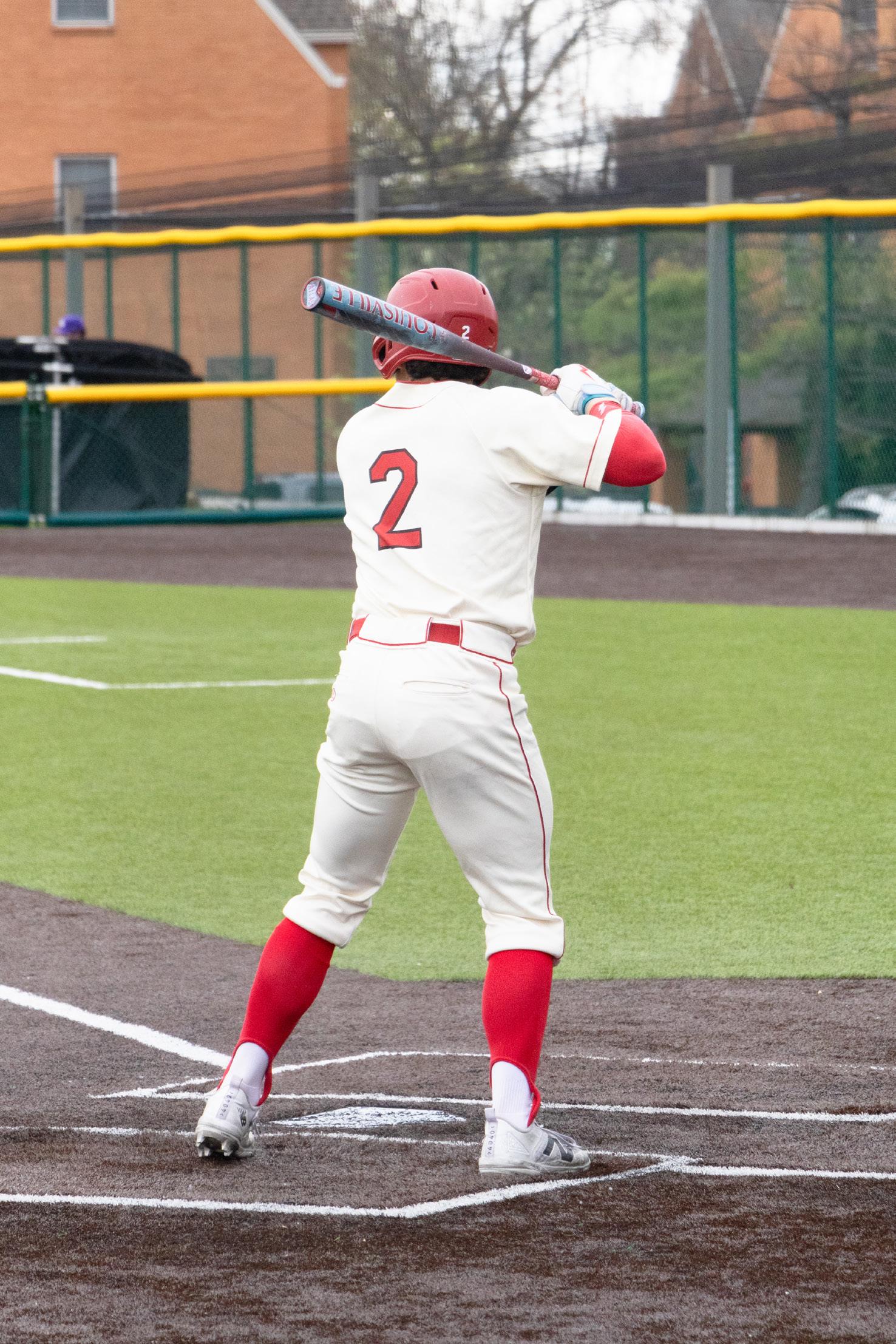
Junior infielder Anthony Equale gets ready to bat.
CATHERINE D’ORAZIO | STAFF PHOTOGRAPHER
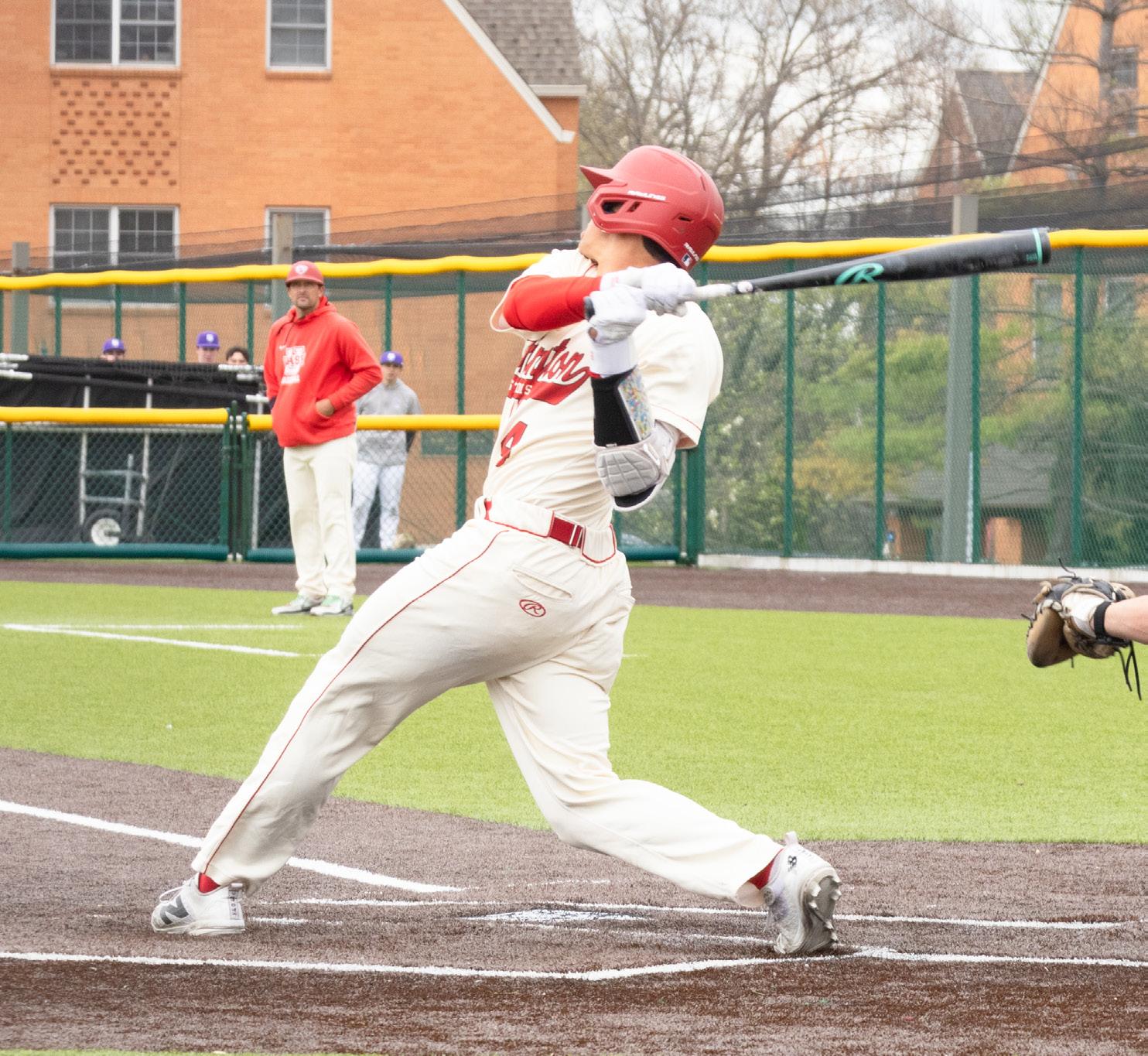
CATHERINE D’ORAZIO | STAFF PHOTOGRAPHER Graduate student John Erpenbeck singles against the Violets.