
COMEDY ON CAMPUS Alex Edelman performs at Graham Chapel. (Scene, pg 3)
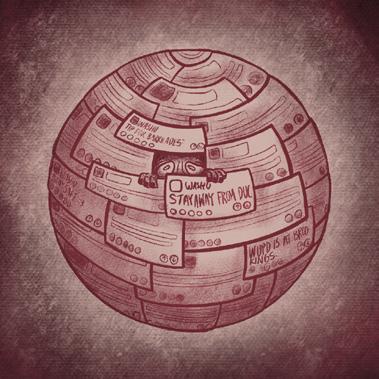
CRISIS COMMUNICATION
Sidechat’s importance in an emergency. (Forum, pg 6)
COMEDY ON CAMPUS Alex Edelman performs at Graham Chapel. (Scene, pg 3)
CRISIS COMMUNICATION
Sidechat’s importance in an emergency. (Forum, pg 6)
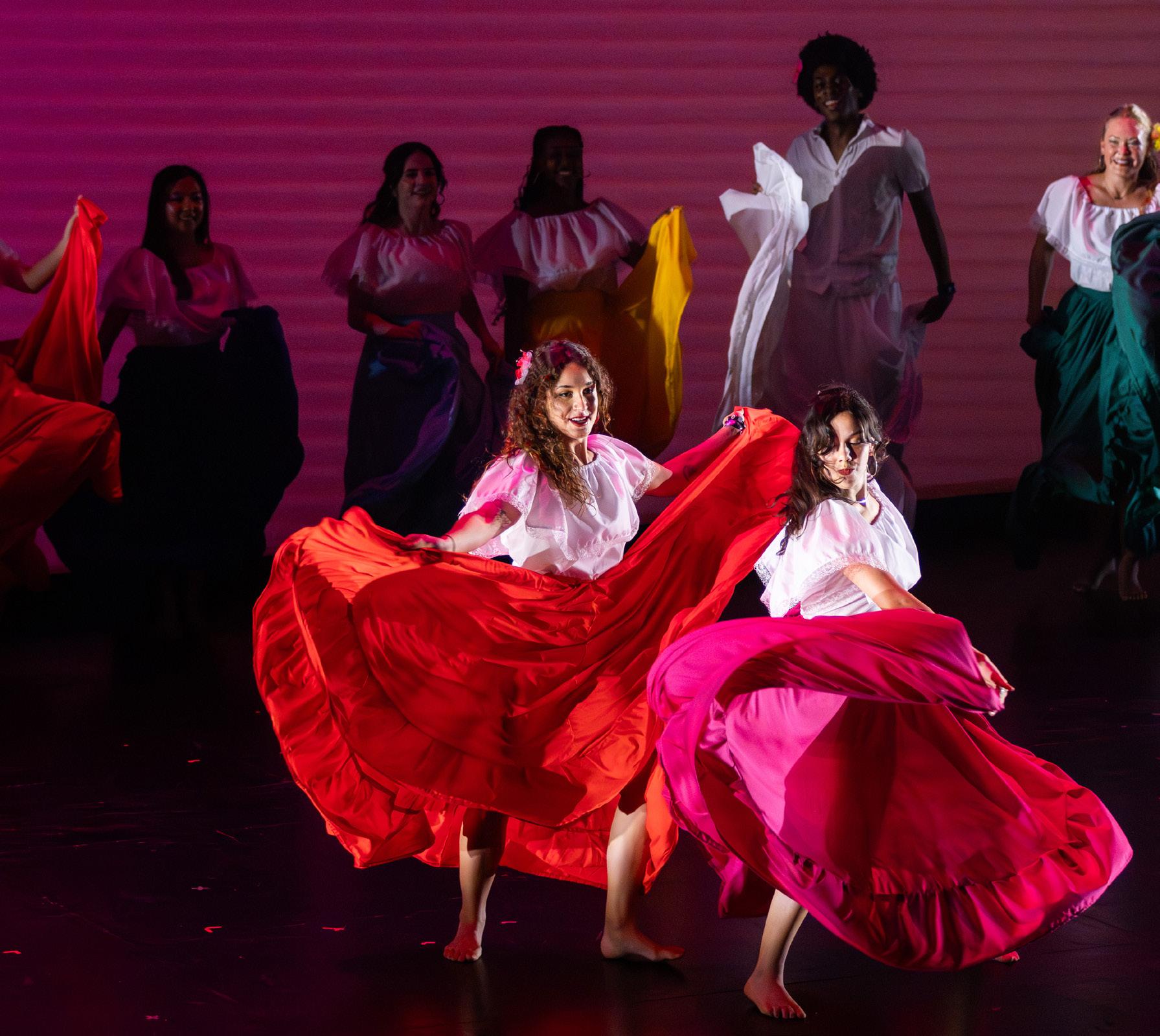
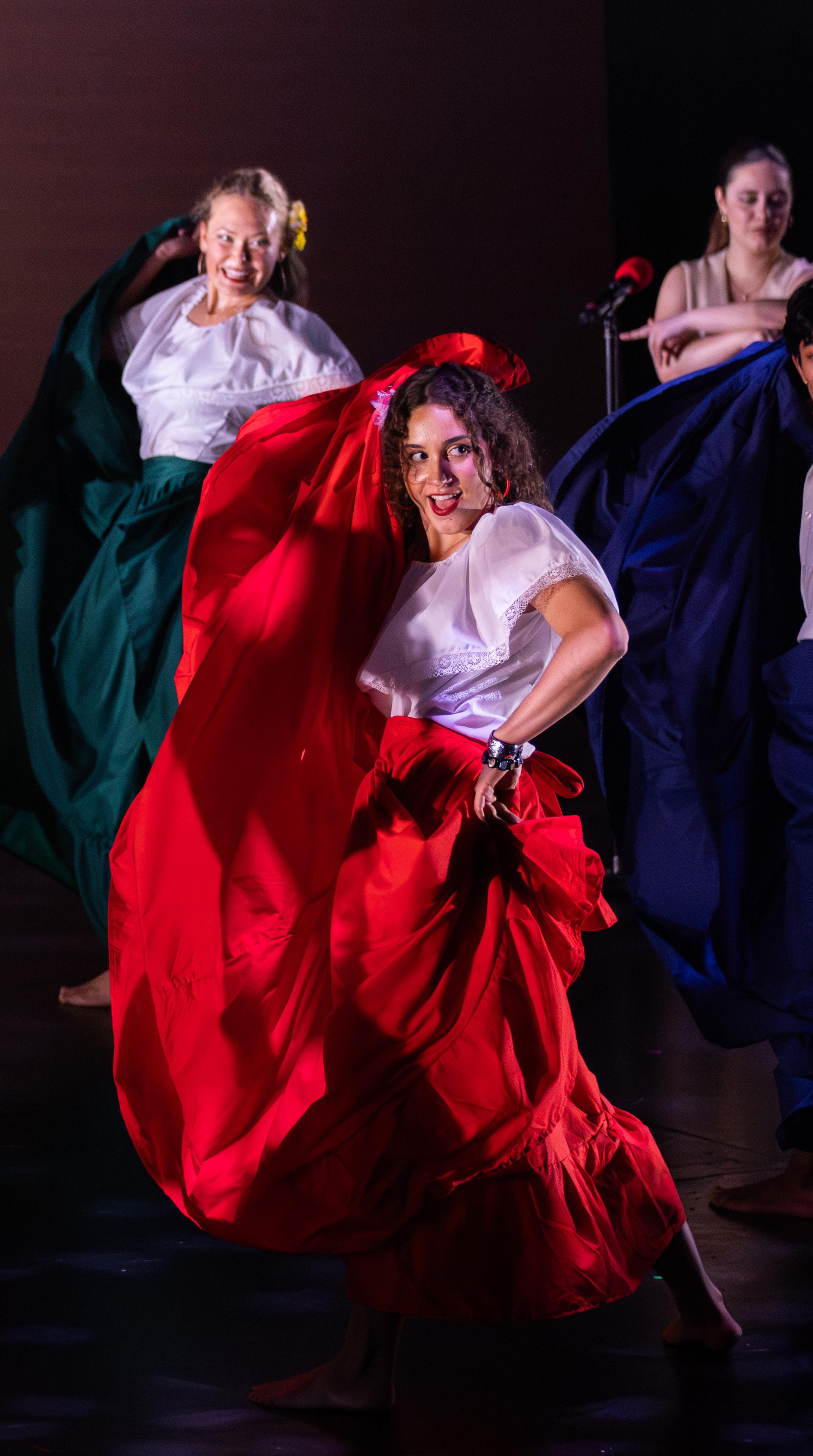
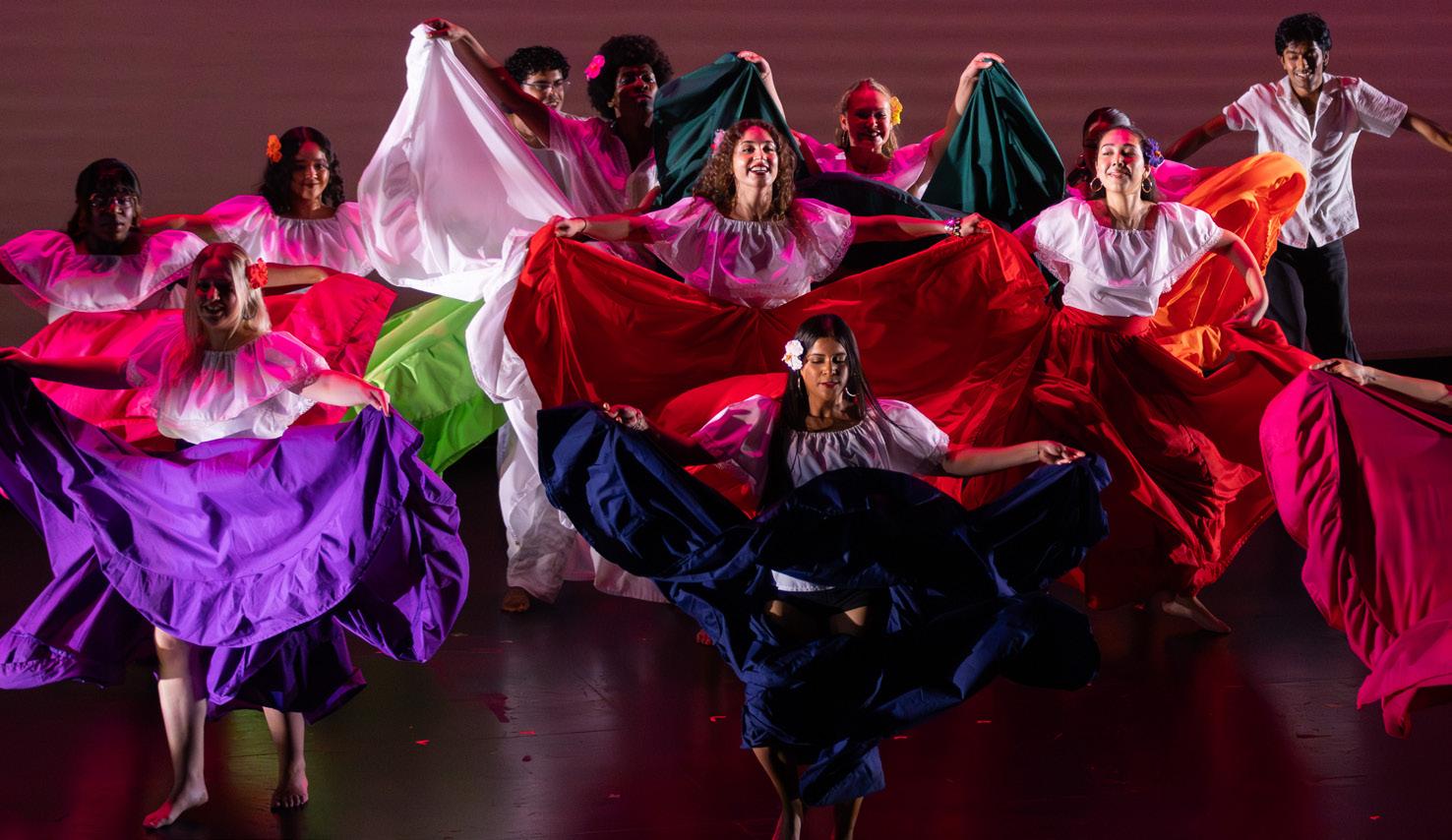
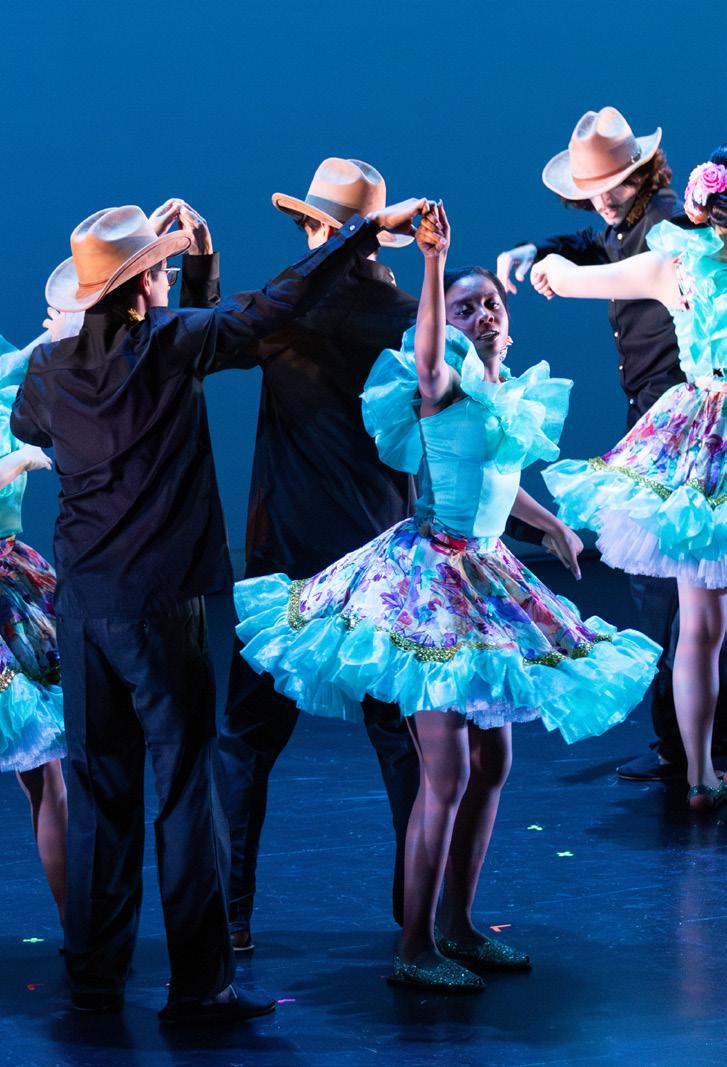
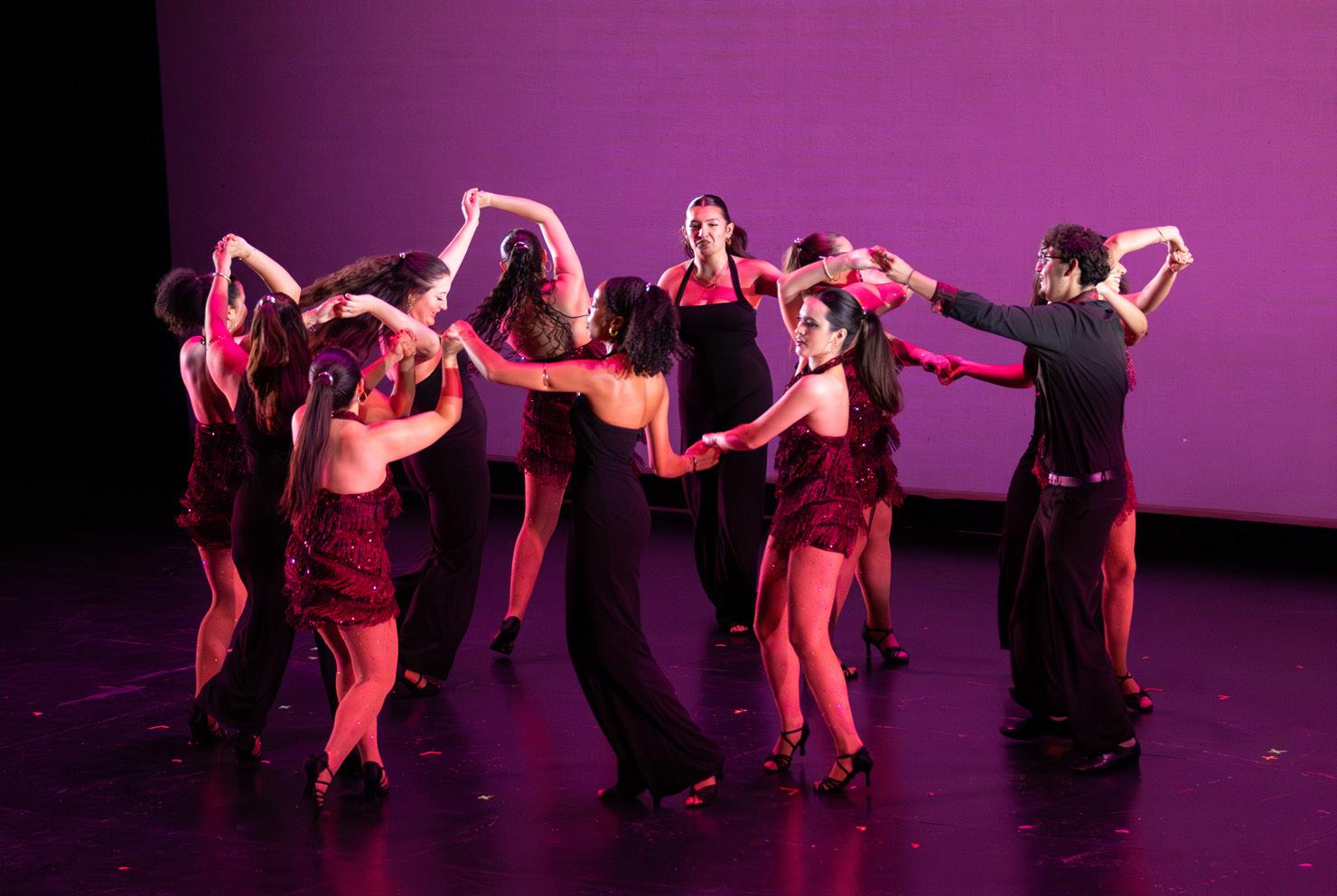
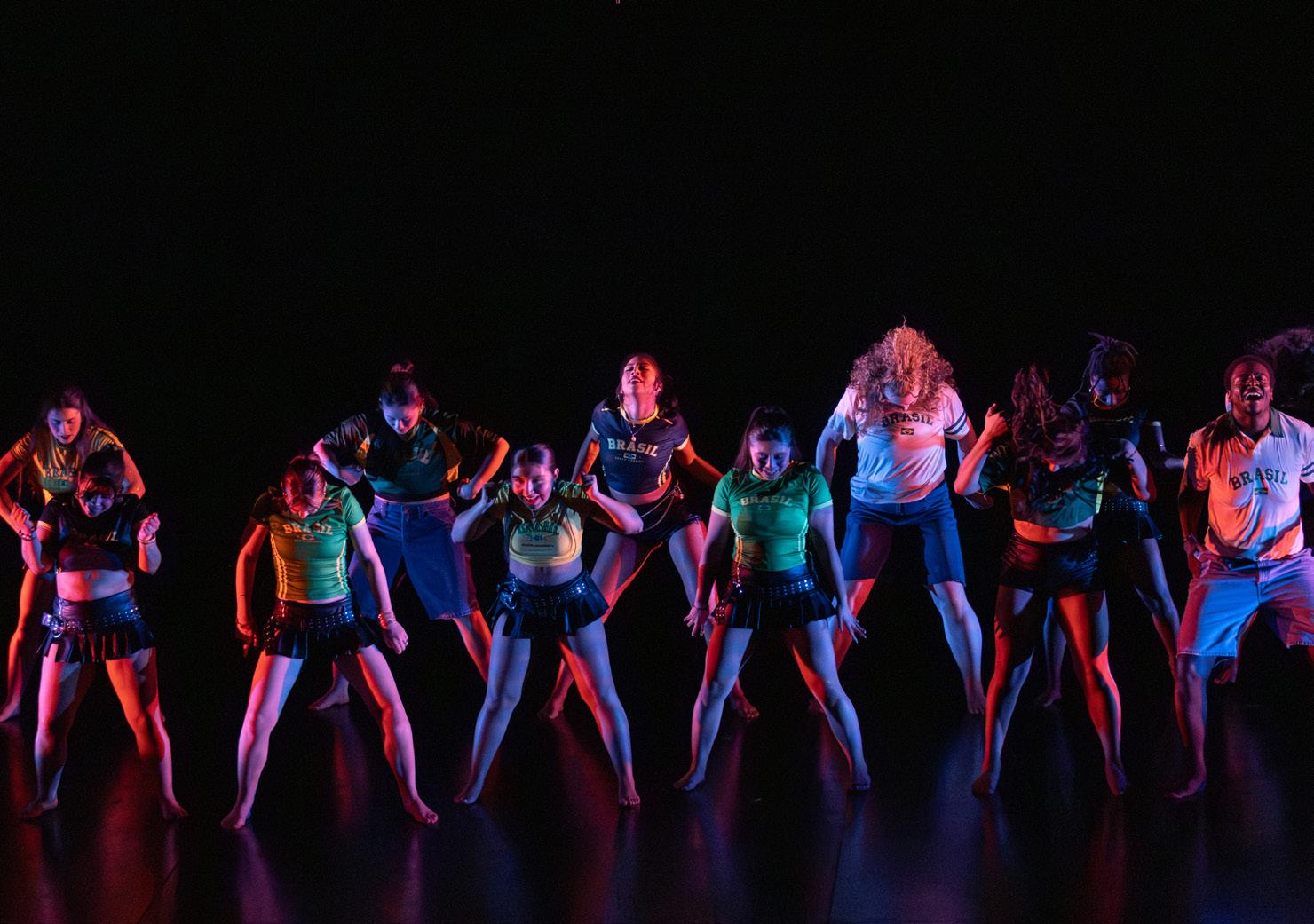
The 27th annual Carnaval performance returned to the Edison Theatre to showcase Latin American and Caribbean roots through dance, dramaturgy, and dazzling illustrations of cultural pride. This year, their performance, “Amparo,” meaning “protection,” highlighted the importance of maintaining connections despite distance or difference. Acts ranged from Brazilian Funk to Mariachi to Chicane Band, and the Colombian Dance act made its debut. Carnaval ended on a high note with Bomba, and for the first time in the show’s history, each night sold out. Proceeds from the show went to Puentes de Esperanza (Bridges of Hope), a communitybased program that supports Spanish-speaking and immigrant families in southern Illinois. SEE CARNAVAL, PAGE 2
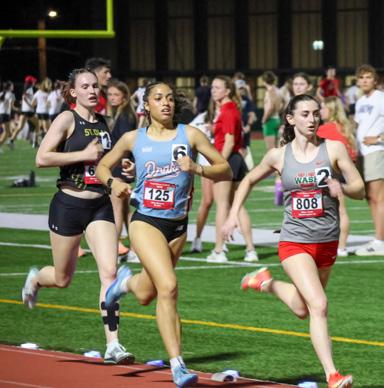
UNDER THE LIGHTS Track shines at Distance Carnival and WashU Invite. (Sports, pg 8)
Student Union (SU) announced the results of its spring 2026 elections via Instagram on March 26, naming a new executive board and legislative body following a multi-day voting period that began Tuesday at 9 p.m. CST and concluded Thursday at 9 p.m. CST.
Voter turnout included 17.4% of the student body, according to SU Election Commissioner Rachel Gwon. While turnout was higher than in the fall election cycle, Gwon noted that it remains below historical averages and below the level SU aims to get back to.
Junior Romen Der Manuelian was elected SU president, defeating fellow candidate junior Matthew Broome in the only contested executive race. Der Manuelian received 97.05% of the vote (527 votes), compared to Broome’s 2.95% (16 votes).
Der Manuelian will lead the organization alongside Executive Vice President sophomore Ella McCauley, who received 99.27% of the vote (957 votes).
The election cycle also included a campaign-rule violation involving Broome. According to SU, he was found in violation of expenses and expenditure reporting rules and Campaign Rule 18. Following a review process that included
deliberation and a vote by the election commission, Broome received a 500-vote deduction applied to both his executive board and Senate races. Campaign Rule 18 governs campaigning practices during active voting periods and is intended to prevent candidates or their campaigns from influencing voters while ballots are being cast.
The remainder of the executive board ran unopposed. Junior Emaan Sayied was elected vice president of engagement with 98.56% of the vote (892 votes), junior Cora Johnson was elected vice president of finance with 99.17% (956 votes), and junior Varun Vadhera was elected vice president of programming with 98.96% (947 votes). Each race also included a small number of write-in votes. In addition to the executive board, 11 of the 12 original candidates will serve on SU Senate: Courtney Lucas (497 votes, 40.05%), Hanna Solovy (495 votes, 39.89%), Mia Fox (457 votes, 36.83%), Isaac Payne (457 votes, 36.83%), Bethany Anderson (455 votes, 36.66%), Casey Preis (438 votes, 35.29%), Flinn Opel (407 votes, 32.80%), Alandee Patil (397 votes, 31.99%), Ben Schwed (375 votes, 30.22%), John Jannotta (256 votes, 20.63%), and Jason Tang (205 votes, 16.52%).
SOPHIA WEINBERG
POLLY PARTRIDGE
CONTRIBUTING WRITER
STAFF WRITER
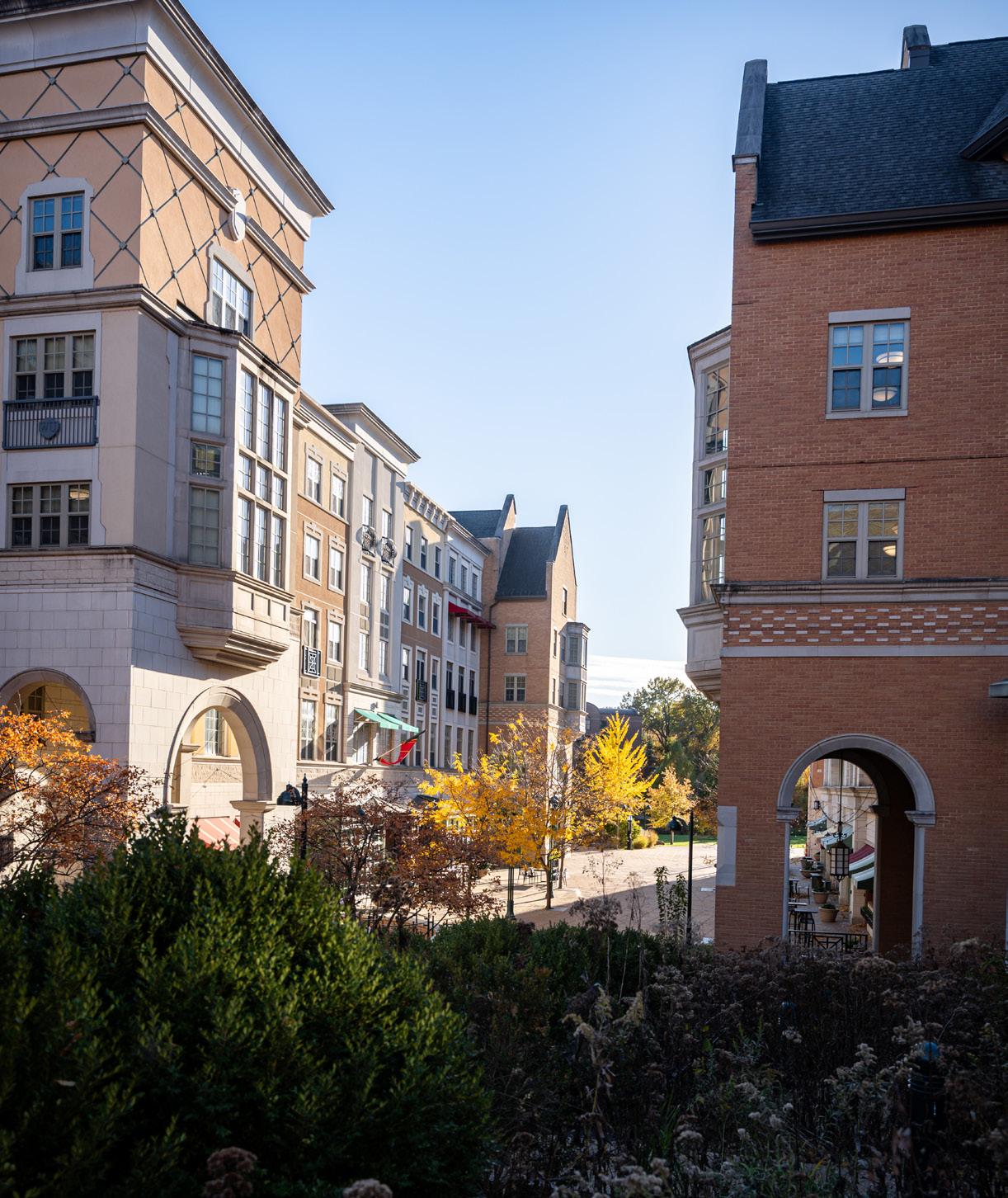
In the upcoming 2026-2027 school year, all sophomores will be required to live on campus. As a result, juniors will no longer receive priority for on-campus University housing, according to Will Andrews, Executive Director of Residential Life.
First-years had mixed reactions to the new policies mandating they live on campus for their sophomore year. Some expressed financial concerns surrounding the change.
“The requirement for sophomores to live on campus is one that is very troublesome for me because I see both the University and [the] students’ sides,” first-year Tobias Montilla said. “I personally resonate more with the students because of the burden that it lays on the students. Living on campus, especially [given] the increase[ed] cost for housing and meal plans for next year, is an exponential cost that in many cases middle-class families can’t fully cover.”
First-year Annie Ketcham reports her housing selection experience went smoothly, but many sophomores she spoke to were struggling with the process.
“I was aware of [these housing changes], especially because I had spoken to a number of sophomores who said they were experiencing difficulties in finding housing because they were planning on living on campus and could no longer do so due to the sophomore priority,” Ketcham said. “The process was not stressful for me at all […] the only stressful part was hearing of other people not getting what they wanted and being stuck in a dorm or area they didn’t prefer,” Ketcham said.
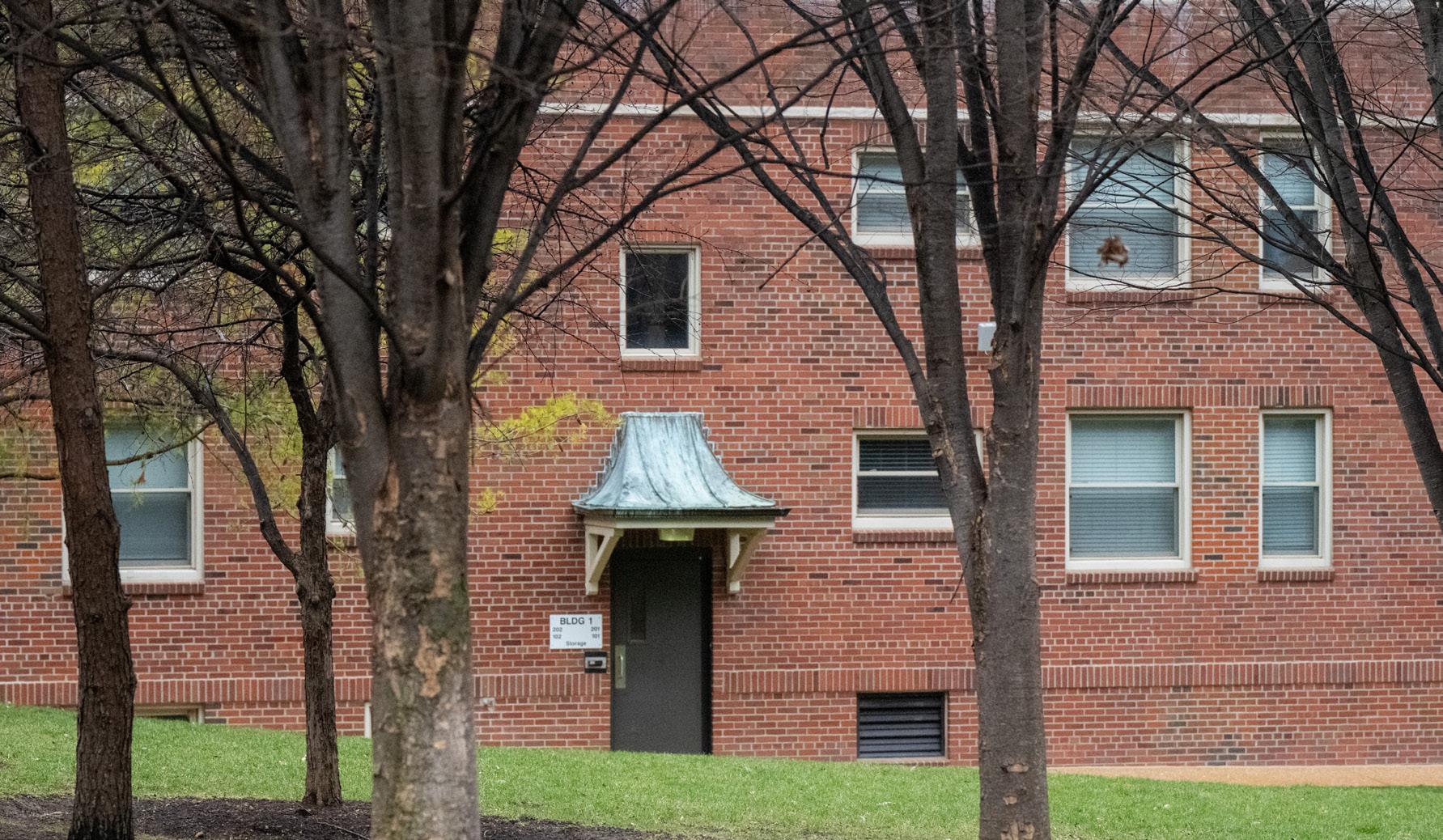
These changes mean many juniors will have to live in offcampus WashU housing, such as Greenway, Lofts, University Drive, and Rosedale. None of these housing options can accommodate groups larger than four people, and some rising junior groups of five or larger had to split up and rearrange their living situations for the upcoming school year.
Some rising juniors, such as sophomore Ailisa McGowan, were annoyed with the updated policies, noting that if they’d been aware of these changes earlier, they would have tried to find non-WashU housing to accommodate their group.
“We filled out the housing assignment in our group of eight and found out through word of mouth that we needed to redo the application and split into smaller groups. It is way too late to lease an apartment, and we would have had to find one months ago,” McGowan said.
Sophomore Anja Rauscher told Student Life that she was not aware of these changes until recently.
“I learned about the changes a week before the deadline,” Rauscher said.
Andrews said these changes were reported in November through various housing communication channels such as the Residential Life website and the Residential Life Reporter newsletter. Andrews said the housing changes are intended to simplify what has historically been a complex and high-pressure process.
“By using the preferences students already provide and assigning housing based on those preferences, the process reduces pressure associated with timed selection, including concerns about missed classes, technical issues, or inadvertent errors. The goal is to create a more predictable, accessible, and student-centered experience,” Andrews
said.
To Andrews, the updated process is designed to shift the focus away from competition for specific spaces and toward thoughtful decision-making about living preferences and roommate selection.
While Rauscher’s living group of four were still able to apply to live in Village East, her group did not receive a timeslot to select their housing for next year due to high demand to live in Village East’s four-person suites.
After a rising junior group is informed that they did not receive a timeslot, they will either be administratively assigned to a housing unit that is reserved from initial housing selection, or their group will have to split up further to fit off-campus WashU housing spaces that only accommodate groups of three or fewer.
“I am disappointed, and this has caused me and all my friends significant stress that would have been easily avoidable by announcing this earlier,” McGowan said.
ELIZABETH STUMP STAFF WRITER
WashU will close its Tech Den, a space offering 3D printing and technology consultation services, on June 30. WashU’s IT department cited a variety of factors, including efforts to “rightsize the organization,” as the reason behind the planned closure.
The Tech Den is located in a building slightly off-campus at the intersection of Skinker and Forsyth, diagonal to Sam Fox’s Steinberg Hall. The space will be repurposed over the summer to house the University’s Facilities Planning & Management Office.
“The goal [with the closure] is to better align staffing, funding, and effort with scalable core services that support the University’s teaching, research and administrative missions,” reads a FAQ page about the
closure posted on the Tech Den’s website.
The FAQ also states that Student Technology Services (STS) will remain unaffected by the change, but that the technology consultation and 3D printing services will be terminated at the end of June. STS offers students help desk services, device support and access to essential academic technology resources.
According to its website, since the inception of the 3D printing space in 2021, the Tech Den has fulfilled over 2,000 project requests and printed over 20,000 parts.
The tech consultation services branch of the Tech Den, termed DevSTAC, are provided by a team of undergraduate and graduate students specializing in skills like web and mobile app development and data analytics. Students employed by DevSTAC have completed
over 40 projects for clients, including a website on 3D data preservation and an app to help doctors at WashU’s medical school treat stroke patients.
The Tech Den’s 3D printing services are free for students and low-cost for faculty and staff members. Its printing services are also available to all students, unlike the makerspace workshops located in Sam Fox and McKelvey buildings, whose use is primarily limited to students of those respective schools.
Omar AlRefae, Senior Director of Enterprise Systems and Solutions for WashU IT, wrote that WashU is considering several options to replace the 3D printing services offered by the Tech Den.
“Some school-based makerspaces on campus offer limited access beyond their own populations, typically with required training and
subject to capacity,” AlRefae wrote in an email. “We are also exploring options for continuing or re-establishing 3D printing resources outside of WashU IT, where it may be more sustainably supported.”
An individual familiar with the Tech Den and the WashU makerspace ecosystem, who requested anonymity out of fear of professional repercussions, said they believe the school is losing a valuable resource.
“Since we are a nonprofit, the ideology there is that we are not profit-generating, and that was the one thing that was cited to me in conversations with multiple people about the Tech Den closing, was that it doesn’t generate profit,” they said. “[The closure is] going to impact basic information and knowledge, but it’s also going to impact creativity and innovation.”
The anonymous individual
also expressed disappointment and concern about the futures of the three full-time employees of the Tech Den who will be laid off, as well as the student employees who will lose their positions. They believe that beyond an income, employment at the Tech Den offered students the opportunity to develop relevant expertise for their future careers.
“It’s career-building student employment. … It’s an actual tangible skill set that’s going to develop their marketability. It’s one of those non-numerical ROI things, where the impact is far beyond the level of work they’re providing,” they said.
AlRefae wrote that the decision to close the Tech Den was not made based upon a single factor, but instead so WashU IT can “best position its resources to support the University’s strategic priorities.”
For more information on WashU IT’s strategic plans, AlRefae referred Student Life to its website outlining the goals of its current strategic plan termed “ImpacT.” AlRefae also wrote that the school is “actively supporting” employees affected by the closure.
Tech Den student employee and junior Peter Nau, who worked as a 3D printing technician for over two years, said that the Tech Den had provided a valuable service to students.
“I really enjoyed my time working at the Tech Den,” Nau wrote in an email to Student Life. “I learned so much while working there, and it really filled a void left by the other WashU 3D printing services. I hope WashU is able to find a way to replace the work and services that the Tech Den was able to offer to students and faculty.”
ZYLA DHILLON ELLA MESHOULAM CONTRIBUTING WRITER STAFF WRITER
WashU Law will begin to offer supplemental loans to law school applicants this upcoming fall. The loans, which will cover up to $25,000 per year and carry a 7.5% interest rate, will be guaranteed for students who have exhausted all other federal loan options.
WashU will be the first private law school to establish a private loan program and the second law school nationwide, the other being offered at the University of Kansas.
The decision to launch this program was made due to the newly established federal loan limits introduced in the One Big Beautiful Bill Act, as explained in a statement released by WashU Law.
“As federal student loan limits increasingly fall short of the full cost of a legal education, Washington University School of Law is launching a new supplemental loan program designed to help incoming JD students bridge the gap,” the statement reads. Starting this summer, new federal regulations will limit incoming professional students, such as those studying law and medicine, to loans totalling to $50,000 per year and $200,000 per lifetime. Students attending graduate programs will be capped at $20,500 per year and
$100,000 per lifetime. Loans taken out during undergraduate studies will count toward the lifetime limit. It is still unclear how professional and graduate caps will be distinguished from one another, especially among dual-degree students. Previously, federal loans could cover up to the price of attendance.
Senior Ari Appel, who plans to apply to law school in the coming years, said the loan program has the potential to create a broader positive impact by encouraging other schools to start their own.
“I think that WashU, as a leading law school, is setting an example by extending private loans to its students,” Appel said. “It is only going to make the world of law school more accessible, and it’s going to encourage more people to go to law school.”
Kelli Lively, director of Student & Parent Loan Programs, shared that the program will be funded and managed entirely internally. She declined to comment further.
“The new loan program is institutionally funded and administered entirely by WashU, from student awarding and entrance counseling, to preparing borrowers for repayment, and through to final loan payoff,” Lively wrote in an email to Student Life.
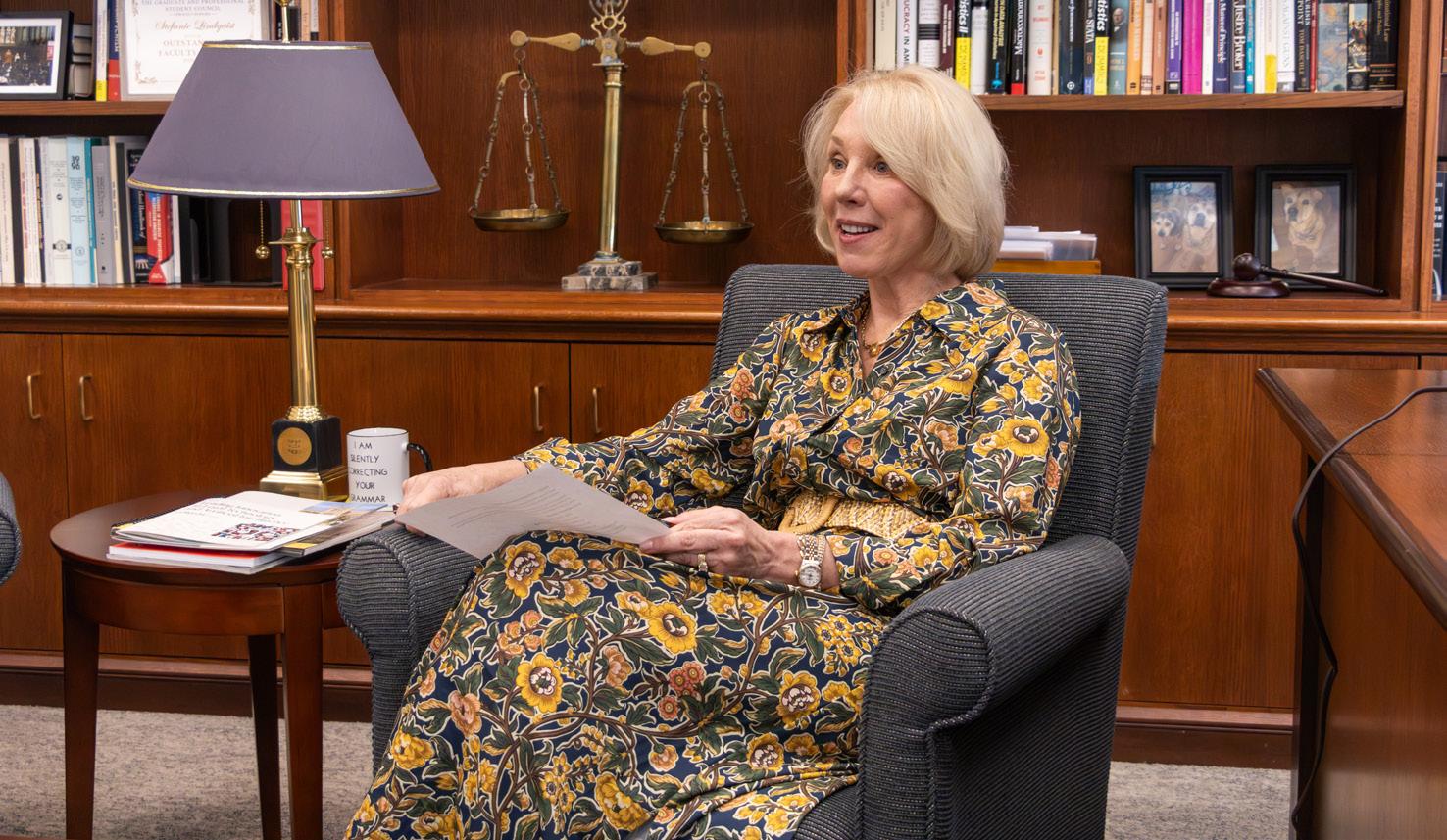
Stefanie Lindquist, dean of WashU Law, shared that the
STUDENT UNION from page 1
Broome, who also ran for Senate, did not secure a seat following the same 500-vote deduction.
Ten students were also elected to Treasury positions: Micah Kopelman (502 votes, 40.45%), Palladium Liang (491 votes, 39.56%), Aram Ashrafzadeh (458 votes, 36.91%), Selina Son (452 votes, 36.42%), Rory O’Shea (432 votes, 34.81%), Syncere Sanchez (430 votes, 34.65%), Ethan Wong (422 votes, 34.00%), Dania Backal (392 votes, 31.59%), Manzoor Mohis (340 votes, 27.40%), and Seth Skiles (310 votes, 24.98%).
Treasury representatives review and allocate funding to student organizations
through SU’s finance system. The ballot also included referendums on block funding for several student organizations. Block funding is a funding model through which SU allocates a fixed, semester-based budget to select groups, allowing them to operate continuously without submitting individual funding requests for each event.
Uncle Joe’s and Campus Y both secured continued funding with 81.34% (885 votes) and 84.19% (905 votes) in favor, respectively.
Students voted against renewing block funding for the Emergency Support Team (EST), a student-run
school started working on the program immediately after the One Big Beautiful Bill Act was signed into law.
“From the moment that the federal government announced caps on student loans for professional students, we immediately sprung into action to make sure that our students would have the resources necessary to complete their JD degrees,” Lindquist said.
Megan Peabody, Assistant Dean of Advising in the College of Arts & Sciences, who advises pre-law students, said that she thinks that the federal loan caps could negatively affect the future of law by lessening the diversity of the field. In addition, she said it could skew the applicant pool toward older students.
“It’s going to be something that could, in the long term, change the landscape of who are people who are working in [law], which is a detriment to all of us,” Peabody said. “We should have a legal community that represents the people whom they’re defending or supporting, and this could end up creating this kind of bifurcated system.”
Peabody predicted that more prospective students will delay law school to save money for tuition.
“If anything, we’re going to see more and more gap years, because people need to be working, saving away money to be able to afford it, and then they’ll go to law school,”
organization that provides peer-led emergency support services, with 66.06% (732 votes) in favor and 33.94% (376 votes) against — falling just seven votes short of the two-thirds majority (66.67%) required for approval.
The rejection of EST’s block funding marks a departure from trends in previous election cycles, in which the organization consistently received approval. The group earned 86.94% of “yes” votes in 2025, 89.90% in 2024, and 91.12% in 2023.
According to Gwon, EST has never previously been denied block funding. The last time any student organization failed to secure it was in 2019, when
Peabody said.
The current WashU Law tuition is $75,600 per year, with approximately $30,000 of additional living expenses. While approximately 94% of students receive financial aid and/or merit scholarships, many students still rely on loans to cover the full cost of attendance. Lindquist said that the supplemental loan program aims to step in where public loans did previously.
“We have determined that there would definitely have been a gap if the federal student loans had been capped at [$]50,000 a year,” Lindquist said. “We assessed going forward what money we would need based on historical data.”
Peabody shared that these new caps have shifted the conversations that law advisors
WUnderground petitioned for a boat.
In a statement to Student Life, Gwon said that rulings on campaign violations contributed to several uncontested races, which she noted can affect voter engagement.
“While [our decisions] did result in a number of uncontested races, our focus remains on ensuring that the election process is conducted fairly and in accordance with established policies,” she wrote. “Historically, turnout and engagement are stronger in more competitive races, so we are actively working to increase the number of candidates running for future years.”
are having with applicants.
While she has frequently discussed private loan options with international students who aren’t able to access public loans, the pre-law advising office has seen an increase in these conversations among domestic students since the loan caps were introduced.
Peabody explained that the office helps applicants navigate which private loans are safe with reasonable interest rates. She said that she sees the WashU loan program as a reliable option for students.
“The rate that they’re holding those private student loans at … feels like an appropriate rate,” Peabody said. “It’s not something that’s predatory. It feels like it’s something that’s safe.”
Eric Kubo, a third-year law student who works at the law admissions office, says that while he doesn’t think WashU Law students will be dissuaded from going into the public sector, the ineligibility of the supplemental program for PSLF will be another stressor for students to consider.
“It will definitely be part of the calculus that people have,” Kubo said. “People want to make sure that while they’re serving their communities, they’re also able to serve themselves.”
WashU’s supplemental loans will be ineligible for Public Service Loan Forgiveness (PSLF), a program that forgives the loans of lawyers who have served in the public sector for at least 10 years.
The newly elected executive board will assume office in fall 2026, setting the agenda for SU initiatives,
funding priorities, and student advocacy efforts heading into the 2026–27 school year.

When Emmy and Tony Award-winning comedian Alex Edelman jogged out in front of a packed crowd at Graham Chapel, the first thing he did was not greet the audience or set up a punchline, but try to play the grand silver-piped organ that decorates the stage.
Hilariously attempting to pluck keys on the soundless organ this past Sunday perfectly encapsulates Edelman’s unique comedic style: adaptive, tangential, and absolutely fascinating. During the event, which was a co-production among WashU Hillel, Jewish Student Union, Student Union, and the Social Programming Board, the Jewish comedian joked about his relationship with his parents, his thoughts on Jesus, and his first job as a hospital clown throughout his one-hour set.
“Live entertainment is always important. I do think that visceral experiences feel harder and harder to come by: stand-up comedy, theater, and dance,” he said.
After growing up listening to comedy albums on CD, Edelman studied at New York University around the same time as future stars like Rachel Brosnahan, Donald Glover, and Danny Jolles. He never joined any stand-up groups during his time in school, but he constantly attended comedy clubs and tried to learn all he could about writing jokes.
“NYU had a big com edy community, and I was sort of part of it,” Edelman said. “To me, the real value in doing art is that you can automatically become part of a group. Even if you don’t see [other artists] every day, you’re sort of in conversation with them.”
His first chance to put those skills to the test came not from stepping onto a stage, but from getting a job as a hospital clown while studying abroad in Jerusalem.
Edelman paired enter taining vignettes from his time in an Israeli hospital with more relatable jokes about struggling with parental pressure. While in school, he constantly felt as though his dad wanted more from him academi cally, and working as a hospital clown did not help his case.
Still, Edelman said that he is grateful for the career he has had and feels lucky to have found something uniquely him. He picked up Emmy and Tony awards for his last comedy special, “Just for Us,” which played on Broadway and is now streaming on HBO Max.
“I honestly believe this is the best job. This weirdly suits my preferences,” he said.
Throughout the show, Edelman jumped from subject to subject, never lingering for long. He dis cussed his qualms with modern ice cream, his frustration with too many service animals, and why the song “Jesus, Take the Wheel” by Carrie





The Taylor family has provided generous support for low-income and first-generation students at WashU, many of whom come from immigrant backgrounds. However, grassroots organizations and activists have recently protested the Taylor family’s company, Enterprise Rent-A-Car, alleging that Immigration and Customs Enforcement (ICE) and the Department of Homeland Security (DHS) are renting Enterprise’s vehicles. As such, I believe that the Taylor family is actively complicit in DHS and ICE’s human rights abuses.
In 2014, a New York Times article labeled WashU one of the least socioeconomically diverse schools in the country. Only 6% of students then were Pell-eligible, meaning from a low-income background. Since then, the University has made an admirable effort to diversify its population, which included significantly expanding financial aid eligibility. Notably, WashU also invested heavily in creating programs meant to support me and hundreds of other first-generation low-income (FGLI) and underrepresented population students’ integration into WashU, including Deneb STARS and TRIO.
The Taylor family furthered WashU’s endeavors with a $15 million donation to found the Taylor Family Center for Student Success in 2023, which
replaced Deneb STARS. This donation transformed an already robust support system into one even more well-equipped to handle any needs FGLI students might have. As The Source put it then, “The Taylor Family Center will create new opportunities for first-generation and limited-income undergraduate students to connect with mentors, strengthen social and professional networks, explore purpose-driven internships and develop financial literacy.”
That year, I worked as a mentor coordinator for the Taylor Center, planning events with staff and other mentor coordinators for the Taylor Scholars community. These events frequently celebrated the myriad of identities students in Taylor Stars have, ostensibly highlighting the Taylor family’s commitment to educational equity regardless of one’s background.
While on paper the Taylor family’s efforts should be commended, there is valid reason to suspect a connection between the family and ICE. In St. Louis, as well as cities like Minneapolis and Los Angeles, local activists argue that the government agency is renting vehicles through Enterprise. In St. Louis and the Twin Cities, Minnesota, hundreds have protested the speculated relationship. Meanwhile, in Chicago, an ICE agent was caught switching the license plate of a vehicle rented through EAN Holdings LLC, the parent
company of Enterprise Rent-A-Car and more.
In January, protesters in Minnesota started the protest campaign “ICE OUT Enterprise,” where they attempted to disrupt their operations by reserving, then cancelling cars.
On Feb. 16, Minnesota organizers held a Global Day of Action protesting Enterprise, according to organizations’ Instagram accounts, alleging that ICE rented over 1,000 Enterprise cars in January and claiming some were used for Operation Metro Surge, the deployment of 2,000 DHS agents in an immigration crackdown in the Twin Cities. Further digging reveals an expansive contract between Enterprise and the federal government, which took effect on May 28 of last year.
Last summer, an order of nuns in Los Angeles decided to cancel their contract with Enterprise after hearing rumors that Enterprise rented vehicles out to ICE. Upon meeting with the company, they were told that a separate department of the company works with ICE, not the one the nuns were speaking to.
“They certainly didn’t deny it. All they could say is this is not happening in their department,” Sister Maribeth Larkin told the National Catholic Reporter. In other words, company representatives more or less admitted that Enterprise has contracts with ICE.
With the previous
evidence in mind, I have strong reason to suspect that the Taylor family profits from renting vehicles out to ICE.
It is revolting to imagine that the same family that supports FGLI students at WashU also shuttles people to detention centers where the system discards their basic human dignity, not to mention their constitutional rights. As ICE buys up massive warehouses, it’s imperative that we, as a University community, apply all the pressure we can to stop their efforts, unless the Taylor family’s relationship with ICE is proven otherwise.
The Taylor family cannot profit off of this administration’s ruthless anti-immigration agenda while simultaneously supporting young scholars from immigrant families.
Netting cushy government contracts to detain people who come from the same backgrounds as many firstgeneration students calls into question the authenticity of the Taylor family’s generosity.
Therefore, we as a community must reevaluate the Taylor family’s relationship with the University. Specifically, we must demand that Chrissy Taylor, CEO of Enterprise,
and her sister Carolyn Kindle, CEO of the Enterprise Foundation, end their involvement with DHS and ICE and clarify their dealings with these agencies. Without transparency, we can only imagine that the Taylor family knowingly profits from ICE’s immigration crackdown. For now, we should refer to the Taylor Family Center as the Scholarship Student Success Center. If the Taylor family cannot reveal where their heart truly lies, then their name does not belong on the Center’s wall.


was on my way there but saw this after someone told me. Whoever posted this, I don’t know, but God bless you. You saved my life. I went
At 9:19 a.m. on Feb. 24, WashU Emergency Management sent out an alert regarding an armed person to the Danforth Campus: “Run, Hide, or Fight.”
Thousands sought out more information on Sidechat, an anonymous social media app geared toward college students.
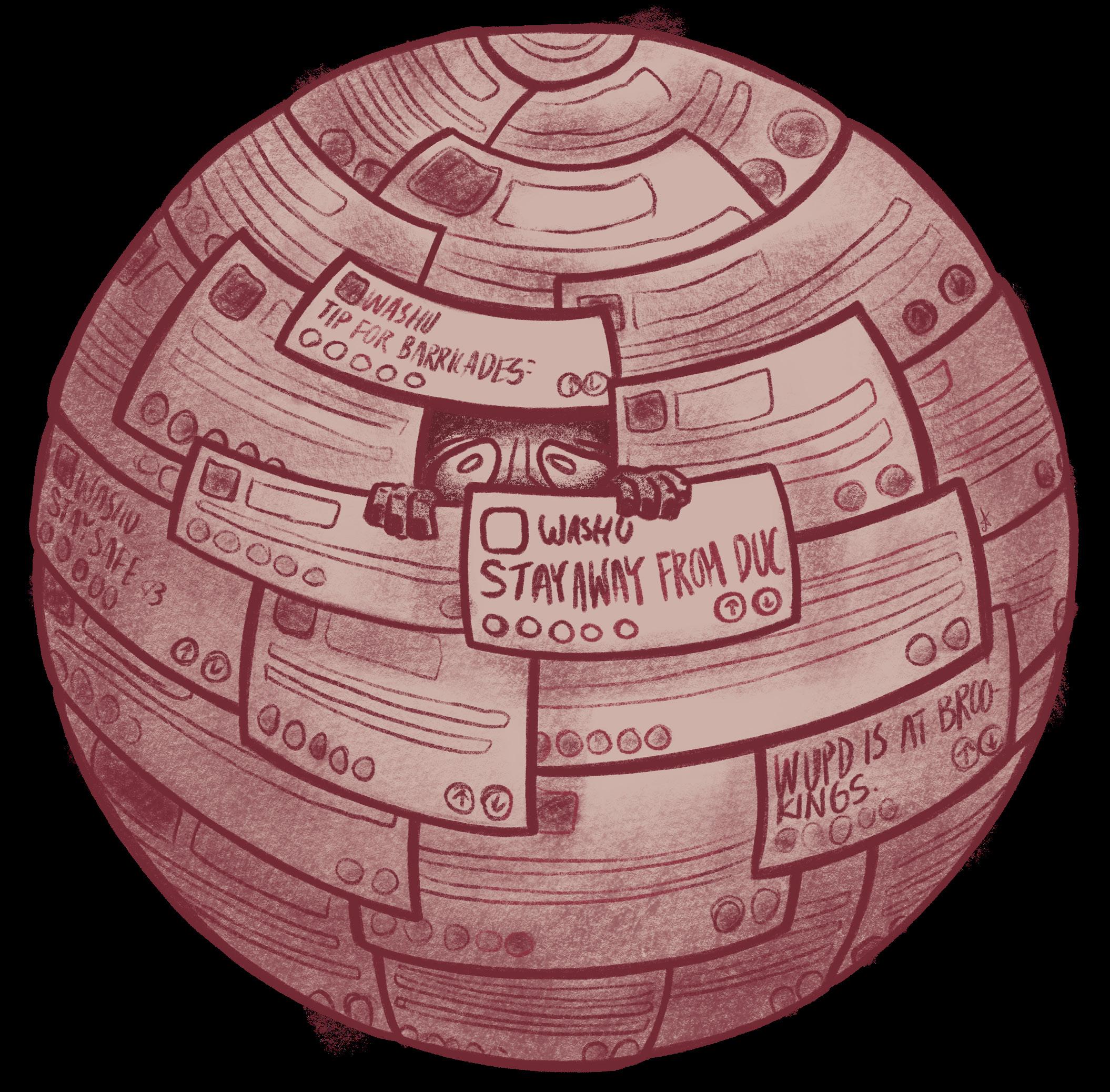
During the emergency, Sidechat filled a gap that official University alert systems could not — live, real-time threat assessments and individual mobilization. The app’s role amidst the false alarm reveals a need for a crisis communication resource within the WashU community; an alert system is not enough. A decentralized University communication system is essential.
During the Brown shooting in December 2025, Sidechat played a critical role in informing students and keeping them safe. The Associated Press (AP) analyzed over 8,000 Brown Sidechat posts that occurred in the 36 hours following the shooting, assessing real-time responses by students during the shooting and its aftermath. The timing of posts with the real-time whereabouts of the shooter, the university alert system, and the overall shooting events.
It took almost 20 minutes after shots were fired for the first Brown University alert to occur. However, Sidechat posts began circulating within three minutes of the shooting, allowing students to quickly share relevant information with each other.
One Sidechat commenter responded to a post about the shooting location, saying, “I
shooting, for example, the University alerts warned about a possible secondary shooting 0.5 miles away from campus, only to
played a critical role in the dissemination of real-time information to students scared for their lives. Students were able to share
the situation in order to take control of their own safety and mitigate their risk of danger. Stressed stu
then the benefits of real-time communication like Sidechat outweigh the downsides.
Some have criticized Sidechat as a crisis communication touchpoint. Sidechat can spread misinformation while official university alerts are much more factual. However, university officials and police are not always working with factual information. During Brown’s
information nearly 40 minutes later, saying it was a false report.
Further, the sporadic nature of university alerts during and following a crisis event means that families, community members, and students have no true way to receive real-time updates on the police response or suspect whereabouts. In WashU’s case, Sidechat

updates on where they were hiding, the area affected by the alert, and even if classes were on lockdown or professors were taking the alert seriously, allowing rapid communication that would not have happened through a centralized official alert system. These communication efforts allowed students to become more aware of
ALIANA THOMPSON | STAFF ILLUSTRATOR
Meanwhile, University alerts were brief and timed irregularly, likely doing little to truly relieve panicked students. Some may suggest that public user identification in an internal university communication platform could prevent the spread of misinformation by increasing accountability. However, emerging studies on the
role of anonymity in social media have found that imposing public identification measures on users can diminish willingness to engage in vulnerable or emotional conversations, increase perceptions of risk for users, and limit the amount of users who freely express their thoughts, views, or information that they know. In a crisis event, it is imperative that students feel safe to post any information they have, as lives can hang in the balance. Additionally, I believe that during a crisis, all students would provide helpful information to their peers to ensure the safety of themselves and others.
In both the incidents at Brown and WashU, Sidechat proved itself instrumental in ensuring student safety and provided a clear method for community response. Students collated and shared information in real time, reaching those who needed it most.
We should empower ourselves to take an active role in our own safety through real-time communication with each other rather than solely relying on sporadic external sources. If this method is through Sidechat, then I believe we should utilize it to its fullest potential and enable information flow for those who need it the most.
Sidechat is far from a perfect communication platform. With inspiration from Sidechat’s positive aspects, WashU has the opportunity to develop and offer its own decentralized community communication system. This system would be integral to information sharing, providing emotional relief, and ensuring the safety of others and those we care about.
KEVIN KAN | ILLUSTRATION EDITOR
First Place:
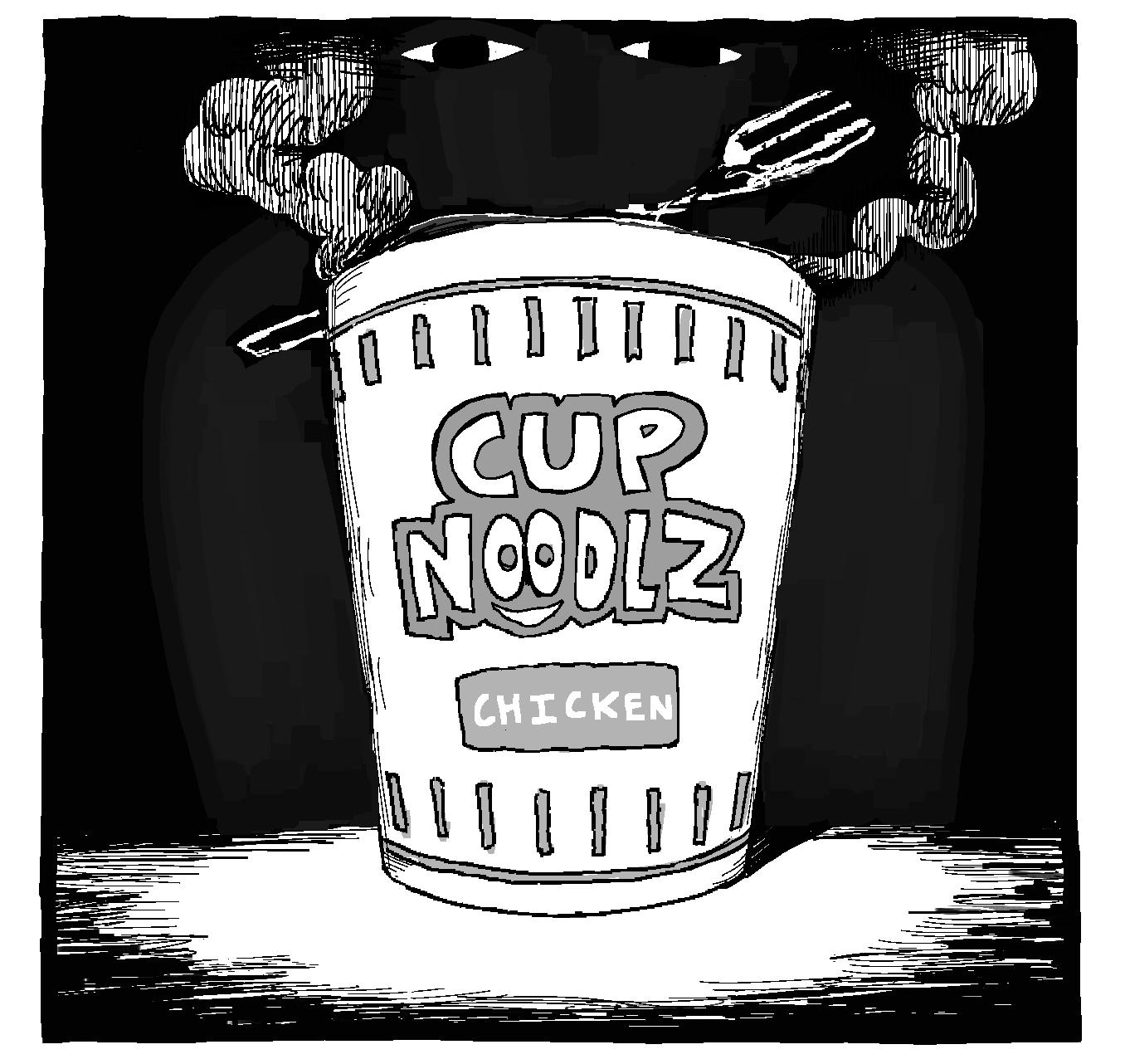
cup noodles: IS ANYONE OUT THERE HELP HE’S GETTING CLOSER OH MY GOD HELP THIS IS THE END
Zoe Rhodes, Student Life Staff
Second Place:
King Arthur and the Knights of the Round Table did not find the Holy Grail at castle Aaaargh as they imagined, instead, it lays in wait at Paws…
Sean Henry, Current WashU Student
Third Place:
Fortunately for the company their noodles were vastly more successful than their spellchecker.
Jason Merkel, Casual Student Life Reader
Caption this! Enter this week’s contest

Scan the QR code to enter your submission by noon on 4/7.

ANNA CROOK JUNIOR SPORTS EDITOR
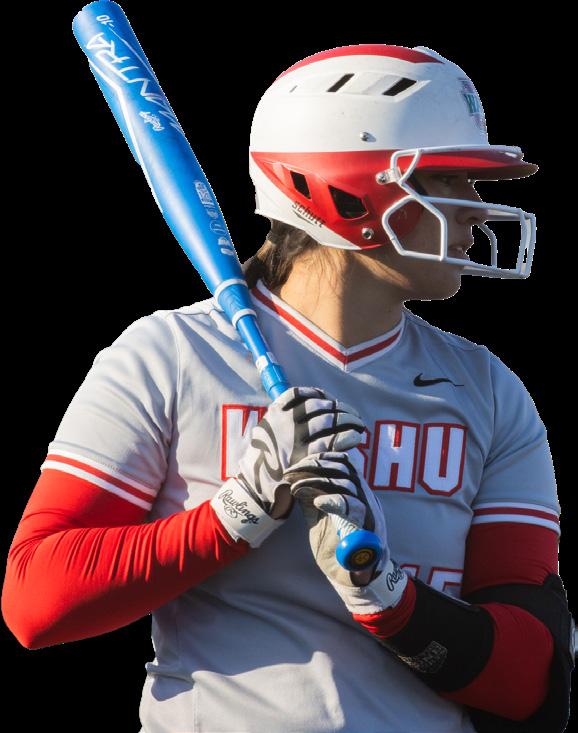
In the bottom of the sixth inning with two outs, junior third baseman Kennedy Grippo crushed the ball over the left-center wall to walk it off for the Bears. She ran home to her teammates huddled at the plate, celebrating the Bears’ 12-4 victory in the first game of Saturday’s doubleheader against the University of Chicago.
It couldn’t get any better than this.
Except it did, only two hours later, when first-year outfielder Oliva Lauber hit a no-doubter to left field, giving WashU yet another walk-off run-rule win over UChicago.
These victories came at the end of a dominant series sweep, where the Bears defeated the Maroons via the mercy rule in all three games.
The three wins marked their first University Athletic Association (UAA) series win and seventh series sweep of
the season.
“[The UAA] is one of the best conferences in the country, and so if we can, any win is great,” head coach Casey Cromwell said. “A sweep is incredible, and it feels good after last weekend … to turn it back around.”
With the three victories, WashU improved to 16-3-1 on the season, with a 4-2 record in the UAA.
The Bears opened the series aggressively, swiping three bags in the first inning and taking an early 2-0 lead on an RBI single from sophomore first baseman Harper Nix.
“Getting out ahead just allows your pitchers to play more freely, allows our defense to play more freely,” Cromwell said. “And so I’m happy that we did that, and we’ll now have learned the lesson of getting on top of on top of teams early and then making sure that we capitalize.”
The Maroons grabbed a run in the second inning on
a defensive misstep from the Bears before adding two more in the fourth on another pair of errors.
However, it was all WashU from there. The Bears added another run in the fourth inning before exploding for a seven-run fifth, where the offense tallied five hits, four walks, and four stolen bases, including a 2-RBI single from first-year outfielder Julia Sullo. WashU added one more run in the sixth to seal the 11-3 victory.
Junior pitcher Maria Brooks dominated on the mound, giving up just two hits over six innings pitched with no earned runs to earn her eighth win of the season. Nix and Sullo lead the team with two hits apiece, while every WashU starter reached base at least once.
Cromwell cited the work her team has been putting in during practice as the key to their offensive success.
“In practice this week, from a live pitching opportunity,
they got one at bat, and they knew their one at bat had to be had to be good. You had to focus,” Cromwell said.
The Bears continued their dominant performance in the first game of Saturday’s doubleheader, where a solo shot from Sullo and a triple from Nix propelled them to a 2-0 lead in the first inning.
WashU added two runs in the second and scored two more in the fifth while only allowing one run by UChicago in the third inning.
The Maroons loaded the bases in the top of the sixth on a walk, HBP, and error, and were able to add two runs.
But first-year pitcher Jessi Szafoni came in for WashU and retired three Maroons in a row, shutting down a potential comeback.
The Bears exploded for four hits and six runs in the bottom of the sixth, including the two-run homer by Grippo to seal the victory. Grippo also led WashU with three hits.

WashU came out swinging in the last game of the series, tallying four runs on six consecutive hits to start the first inning, including a double from junior outfielder Kristina Donaldson. After an early pitching change from the Maroons, the Bears added two more runs with a perfectly executed double steal with runners at the corners and another RBI single.
“This weekend was the first time we’ve really just capitalized on our small game,” Cromwell said. “We’re fast, we like to bunt, we like to run the bases, and we have … so it was good to just get back to our type of play.”
While UChicago added two in the third, the Bears answered with another run, making the score 7-2. WashU tallied three more runs in the sixth on an RBI single and the two-run homer from Lauber to take the 10-2 victory.
a WashU team that dominated on the mound, at the plate, and on the basepaths. The Bears will look to carry their momentum into another UAA matchup against New York University next weekend.
First-year pitcher Ava
HAILEY BERGER
BEN OLLENDORF
STAFF WRITERS
Warm weather and blossoming flowers mean spring is here, and so is University Athletic Association (UAA) conference play. This weekend, the No. WashU baseball team was coming off a sixgame winning streak when they faced The University of Chicago. They ended up splitting an exciting fourgame series that included a WashU walk-off win. The Bears lost the first two games of the series, 8-4 and 3-1, yet bounced back, defeating UChicago 12-2 and 11-10.
The losses are uncharacteristic for this year’s WashU team, as they have an 18-5 record. The Bears’ young core is averaging almost nine runs per game. Sophomore infielder Ryan Soong, senior infielder Shane Pellegrino, and first-years catcher Jacob Witte and infielder Chance Cromer are all batting over .300. On the mound, WashU is led by graduate pitcher Chase Brickley, who is 6-1 this season with an 1.88 ERA.
Game 1 – UChicago 8, WashU 4
The Bears started their series against UChicago on Friday March 27 where they struck first. With runners on first and third, Witte got caught stealing second base, granting Cromer room to run to home, giving the Bears a 1-0 lead in the first inning. The Maroons quickly responded with a home run to right field, tying the game 1-1 in the second inning.
UChicago continued their momentum in the third inning by capitalizing off a series of errors. Junior pitcher Townsend Stevenson threw a wild pitch, allowing a Maroon player to advance to third and eventually home plate to give UChicago a 2-1 lead. A failed pickoff followed, allowing the Maroons to score once again, giving them a 3-1 lead.
At the top of the fifth inning, UChicago tripled to center field due to first-year
outfielder Eli Sitzer getting blinded by the sun as he was searching for the ball. With a double to center field following, UChicago widened the gap to a 4-1 lead.
The Bears were able to find the scoreboard again at the bottom of the sixth inning. Junior infielder Anthony Equale singled to right field. Witte then made a powerful hit down right field, driving in Equale, making the game 4-2. In the seventh inning, there were more throwing errors and wild pitches by the Bears pitching team, allowing the Maroons to tally up another three runs, extending the lead to 7-2.
The Bears were able to slightly tighten the gap to 7-4 in the seventh and eighth innings with Pellegrino scoring off a triple and Soong scoring off of Equale’s attempt to steal second base.
WashU couldn’t find an offensive spark to overcome their deficit, finishing the first game of the series with a 8-4 loss.
2 – UChicago 3, WashU 1
The Maroons got on the board in the top of the first inning during the first game of Saturday’s double header, going up 1-0 after a runner scored on a fielder’s choice. UChicago continued to add to their lead with a homer down the line of left field.
The Maroons struck again in the sixth inning when a runner on third took advantage of WashU’s third baseman’s fielding error, giving the Maroons a 3-0 lead.
The Bears had their first, and only, response to UChicago at the bottom of the sixth inning, when sophomore infielder Cooper Greene scored off a double from sophomore utility player Tyler Phillips, making the score 3-1. For the rest of the game the Bears struggled to find an opening against UChicago’s dominant defense. The game ended with another win for the Maroons, 3-1, giving Brickley his first loss on the season.
Game 3 – WashU 12, UChicago 2
The second game of the doubleheader started out as most in the series did: with UChicago taking an early advantage. A series of singles knocked in a run, and a double steal gave the Maroons a 2-0 lead in the top of the second inning.
An inning later, Greene walked with the bases loaded to drive in the Bears’ first run of the game. Witte hit a tworun single, and a UChicago error caused another run to score. For the first time in this series, WashU had a lead. Cromer, Soong, and Greene all tallied an RBI in the bottom of the fourth inning, extending the advantage to 7-2. The offense continued to excel for the rest of the game, while senior pitcher Isaac Zhang pitched seven complete innings while only letting up two runs on seven hits.
In the bottom of the eighth, Soong sealed the victory with a two-run inside-the-park home run. With the scoreboard showing 12-2, the game ended after just eight innings due to a 10-run mercy rule.
Game 4 – WashU 11, UChicago 10
In the final matchup on March 29, UChicago started quickly, scoring three runs. Answering, Soong homered once again. An inning later, Cromer and Soong hit backto-back doubles, flipping the lead in the Bears’ favor, 3-2. The Maroons responded with four unanswered runs.
WashU’s offense came back in the bottom of the fifth. A series of doubles and triples from Witte, sophomore outfielder Kevin Stephens, and Pellegrino allowed the Bears to retake a 8-7 lead.
A three-run home run from UChicago put WashU in a 10-8 deficit going into the final few innings. It wouldn’t take long for the Bears to tie it, when junior centerfielder Miles Birke scored off of Soong’s third hit. Soon after, Cromer came across the plate on a wild
pitch. With nine innings played, the scoreboard was tied at 10-10. First-year pitcher Dylan Belyea came in during the eighth inning, pitching 3.2 hitless innings to earn his first career win. Pellegrino came in clutch,
hitting a walk-off single after 11 innings of play. WashU will have another four game series at home against a struggling New York University. There will be games April 3-5 with a double header on Saturday.

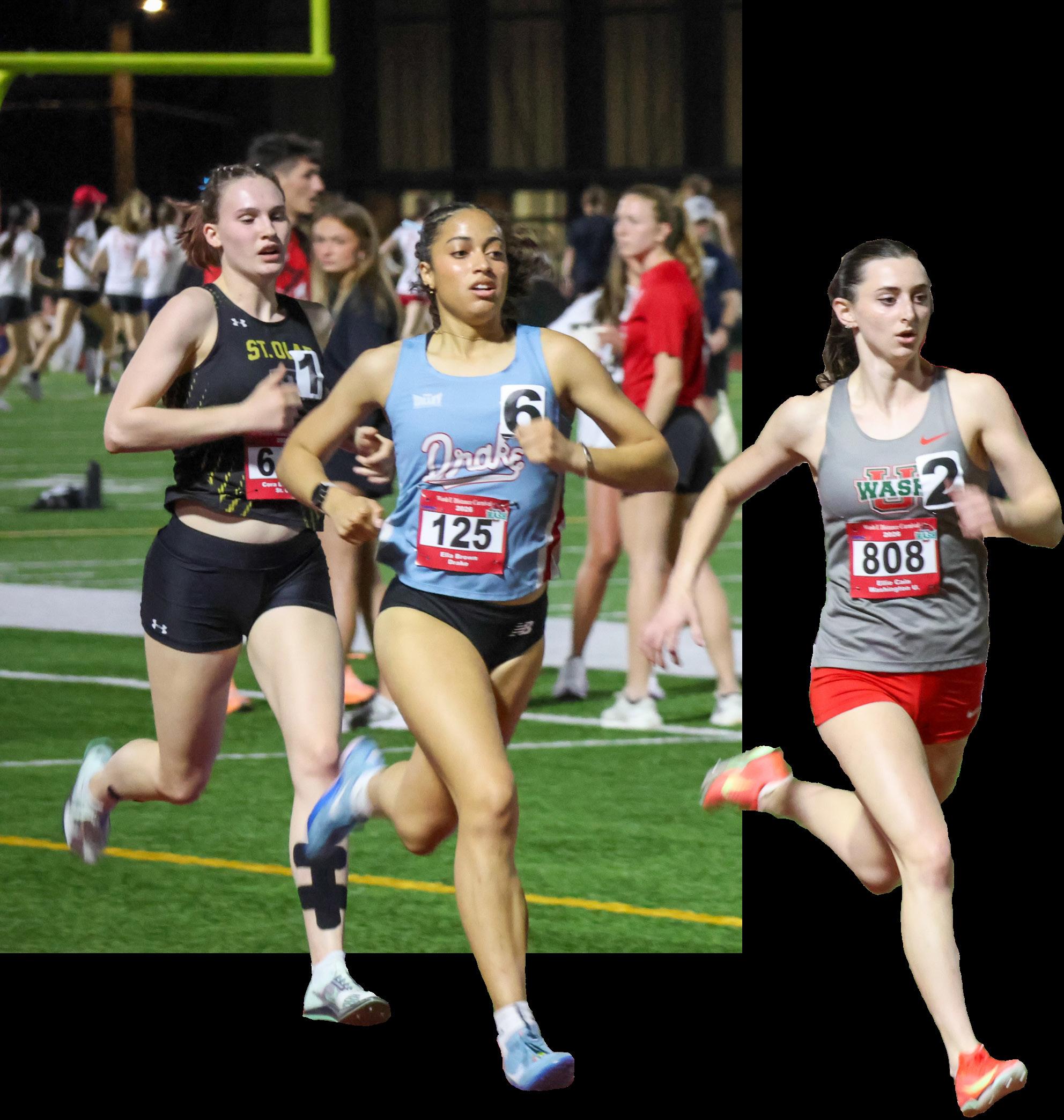
Fresh off of an indoor national championship win for the WashU women’s track and field team and a strong showing from the men’s side, WashU track and field kicked off their outdoor season at home looking to build on their success – and did just that.
On March 26-28, the Bears hosted the WashU Distance Carnival and the WashU Invite. The Bears were particularly dominant in the pole vault, with both the men’s and women’s teams clinching four of the top five spots.
WashU Distance Carnival
The men’s and women’s track and field teams placed in the top 10 seven times over March 26-27.
First-year Kate Delia finished first in the 800 meters with a time of 2:08.32, beating 29 other runners. Delia continued her momentum after becoming a national champion in this event for indoor track and field just earlier this month.
Junior Cate Christopher finished as the runner-up with a new collegiate best time of 2:09.26 in the 800.
Junior Caroline Echols, sophomore Kalena Riemer, and senior Cate Stevens rounded out eighth through tenth place respectively.
Sophomore Lucinda Laughlin was runner-up in the 1500 meter with a time of 4:23.98.
The men’s team secured one top 10 finish in the 800 meter. Junior William Frohling finished 10th out of 30 runners in the 800 with a time of 1:51.43.
WashU Invite
The WashU Invite began after the Distance Carnival ended, including shorter distance races as well as field events.
The women’s team had over 30 top 10 finishes in the Distance Carnival, including four first-place finishes.
Senior Jenae Bothe won
first place in shot put with a throw of 13.95 meters, which was over a meter further than the second place finisher. Bothe also finished in fifth place in discus with a 39.16 meter throw.
“This weekend was my first outdoor event, so it was my opener,” Bothe said. “It was good to just get some marks down, and hopefully competitive marks, for conference and nationals. It is really good … to set a strong foundation in my first performance after nationals.”
Senior Kally Mack placed second in hammer throw with a throw of 43.16 meters. Mack also finished in eighth place in discus with a throw of 35.04 meters.
The Bears placed in the top 10 for every field event they competed in. This included first-year Harper
Karr finishing in fifth place for javelin and junior Sofia Rosenzweig finishing in fourth place in the triple jump.
The Bears nearly swept the pole vault, with four vaulters placing in the top five. Senior Mackenzie Walker cleared a height of 3.72 meters to win the event.
First-year Campbell Pallera tied for second place, clearing a height of 3.57 meters.
Junior Meredyth Barr and first-year Talia West tied for fifth place with clears of 3.42 meters.
The 4x100 meter relay team of junior Maya Davis, junior Julia Coric, and seniors Kylie Spytek and Jasmine Wright finished in second place with a time of 46.82, only 0.28 behind the first place team.
Wright was also the
runner-up in the 100 meter with a time of 11.86.
Spytek emerged as the winner in the 400 meter with a personal record time of 54.72.
“I was very, very confident going into this race because I’ve been expecting a breakthrough race for a while,” Spytek said. “I was the first person that did not make indoor nationals in the 400. So, I was running with some fire under my feet.”
Sophomore Quinn Bird finished in third place with a personal best time of 55.66. Christopher and Echols finished in sixth and eighth place respectively.
“Quinn Bird didn’t get the hype that she deserved when she hit 55 seconds for the first time,” Spytek said. “It is a big deal when you drop down by a second in
First-year Megan Raue finished in third place for the 1500 meter with a personal
The Bears had six of the top 10 finishes in the 800 meter. Laughlin won with a time of 2:09.81, onds faster nerup.First-year
Johnson finished in third place with a personal best of 2:15.59. Senior Katie Rector, junior Danielle Shipon, junior Isabel Erdmann, and Raue took sixth through tenth place, Raue with another personal best time.
The 4x400 meter team of Christopher, Coric, Spytek, and sophomore Hailey Weir won with a time of 3:46.51. The other 4x400 team of Bird, Delia, Echols, and senior Elizabeth Wagner finished close behind in third place with a time of 3:50.53.
The men’s track and field team ended the WashU Invite with over 20 top 10 finishes under their belt.
Many of the Bears earned top 10 finishes in throwing events. Sophomore Ian Murphy finished in fifth place with a distance of 47.79 meters in the hammer
throw. The Bears also placed in the top 10 in shot put and javelin.
WashU won big in the men’s pole vault, taking four of the top five positions just two weeks after the NCAA DIII Indoor Championships on March 13 and 14. Junior Peter Lichtenberger won with a clearance of 5.07 meters. Seniors Hayden Kunkel and George Bourdier finished in second and third, clearing 5.02 and 4.92 meters, respectively. Firstyear Will Coyne finished in fifth place with a clear of 4.32 meters
“Personally, I wish we had a little bit more of a gap between competing for nationals and going back to competing for [the] regular season,” said Lichtenberger. “But our coach, Lane Lohr, is a firm believer that we learn by competing, so we did.”
Sophomore Caleb Brox finished fourth in the 1500 meter with a personal best time of 3:55.96. First-year Rishi Shadaksharappa finished in eighth with a time of 3:57.83, also a personal best.
Two Bears cracked the top 10 in the 800 meter. Firstyear Cameron Bettinger finished in third place with a personal best time of 1:54.60. First-year William Newkirk finished in fifth just after with a time of 1:54.60, also a personal best.
Frohling finished as runner up in the 400 meter with a time of 48.72. The Bears also placed in the top 10 in the 400 meter hurdles, with senior Dayton Lasack finishing in sixth and first-year William Kamp finishing in ninth. The luck in the 400 distance continued in the 4x400 relay, with the team of senior Brandon Brazil, first-year Logan Fairchild, Frohling, and Lasack finishing in third place with a time of 3:16.28.
The Bears have a short break before traveling to Wisconsin for the UW–Platteville Invitational on April 10. The Bears will also compete at the Greenville University Select Meet in Greenville, Illinois the next day.