April 17, 2025 Student Life Newspaper, WashU St. Louis
WashU set to reopen Mudd Field and pause construction on Riney Hall
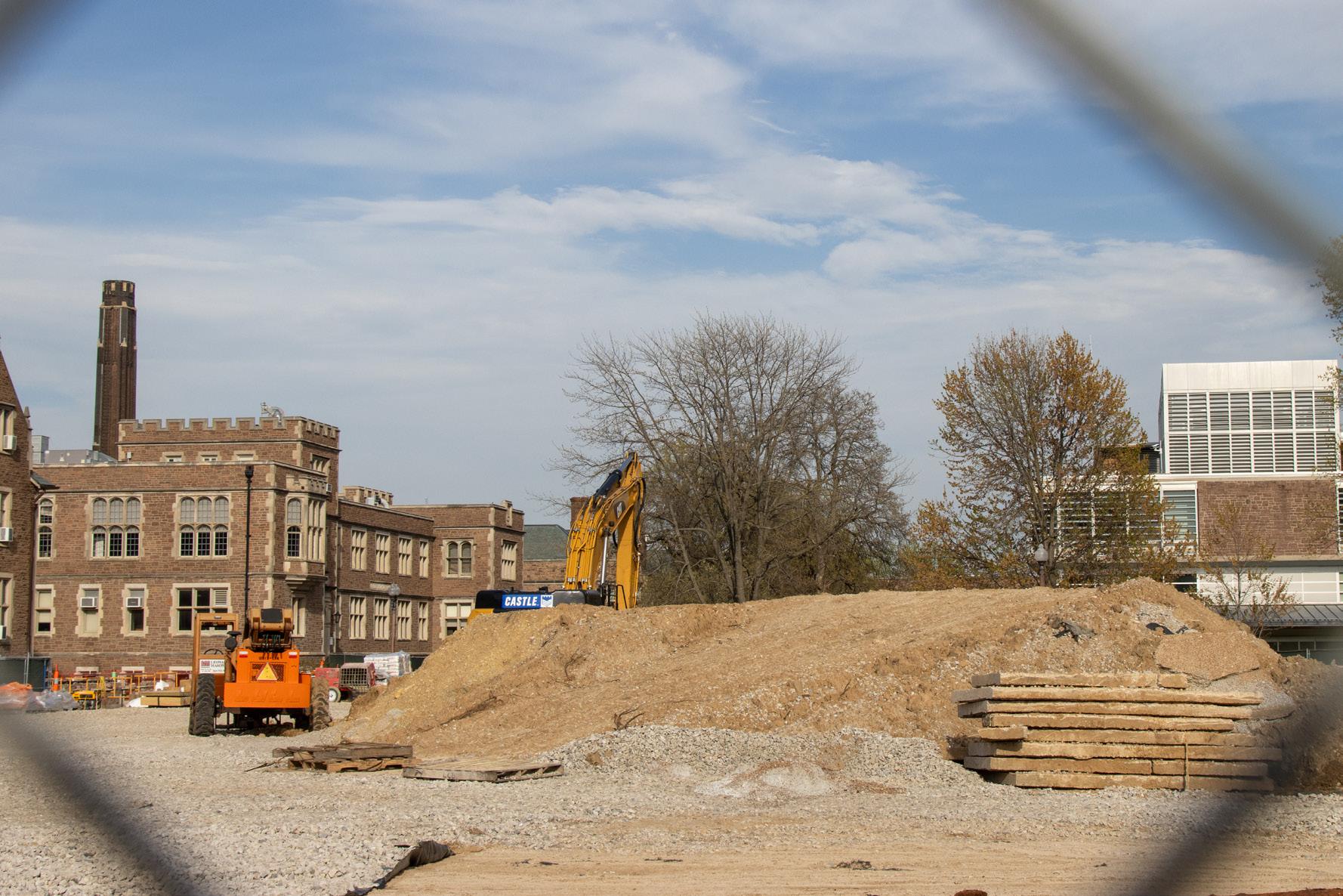
In response to uncertainties regarding federal funding, WashU is halting its plans to remodel Mudd Field and to build Riney Hall, according to an article published in The Record. The University will start removing the fencing on Mudd Field in the coming weeks, and the field will fully reopen for regular use at the start of next semester. Construction on Michael W. and Quirsis V. Riney Hall, a new Arts & Sciences building that broke ground this fall, will be paused this week. Despite the halt in construction, University officials expressed interest in revisiting the two projects in the future.
The decision to pause construction projects comes as WashU and many universities across the nation deal with funding cuts as a result of the Trump administration’s policies. Reductions in research funding and a potential increase in taxes on the University’s endowment have forced WashU to adjust its financial planning. In addition to halting construction projects, the University has also limited hiring of new faculty and staff and reduced the number of students admitted to some graduate programs.
“We regret that it’s necessary to take these actions, but in our current climate, it is simply not prudent to continue with these projects as scheduled,” Chancellor Andrew Martin told The Record. “Given the uncertainty around federal research funding and other potential government actions, we have to take a careful look at every aspect of our operations. We hope that once we have a clearer sense of the financial picture, we may be able to revisit some of these investments.”
The University planned to fully close Mudd Field after Commencement in May and to keep the space closed until 2028 to create a new “social green” space, add new trees and landscaping, and build pathways connecting the north and south sides of campus. Many students
expressed disappointment about the extended closure of the field, while administrators said that the construction would improve the field in the long term.
Although WashU began fencing off areas of the field in March, construction was slated to begin in earnest over the summer. Instead, the University will remove fencing in the coming weeks and will reopen the space for full use at the start of the fall semester.
Riney Hall was set to be the University’s new home for the Department of Sociology and the Department of African and AfricanAmerican Studies. The building was described as “the crown jewel of Arts & Sciences” by Dean of Arts & Sciences Feng Sheng Hu and would have hosted the Center for Undergraduate Advising in Arts & Sciences, the Office of Graduate Studies, and “The Incubator,” a space dedicated to faculty research. Work on Riney Hall broke ground in October. Now, the University is shutting down construction, and it
remains unclear when, or if, the work will be continued in the future.
“While of course we’re disappointed that construction on Riney Hall is being paused, we understand that this is a necessary and wise course of action for the University,” Hu told The Record. “When the time is right, we look forward to continuing the conversation about our path forward together.”
Julie Flory, Vice Chancellor for Marketing and Communications, wrote that a portion of the fencing around the Riney Hall construction site will be removed before the Commencement ceremony in May. Flory added that she is not aware of any changes to other projects such as planned development on the Concordia and Fontbonne campuses.
Though it is unclear exactly how much the University will lose as a result of federal funding cuts, the cutback in government spending under the Trump administration will likely lead to significant reductions to the University’s funding. WashU received over $1 billion in external research
funding in 2024, including $683 million from the National Institutes of Health. In February, the NIH announced a $4 billion research funding cut, including a cap on the indirect cost rate on all new and current grants.
Additionally, WashU has around $12 billion in its endowment as of June 2024, but proposals from Republicans in Congress to raise the endowment tax on Universities with large endowments from 1.4% to 10% or higher could weaken the financial position of universities like WashU.
As the University continues to evaluate its long-term planning in the face of significant funding cuts, Martin reaffirmed his belief in the WashU community’s strength.
“It’s difficult to take these steps, but we must carefully weigh a number of competing priorities and determine when the time is right for large capital projects,” Martin told The Record.
“We know we are resilient, and we will weather this storm as we always do — together, and with concern for one another and WashU, the institution that means so much to us all.”
Emergency town hall addresses student deportation concerns
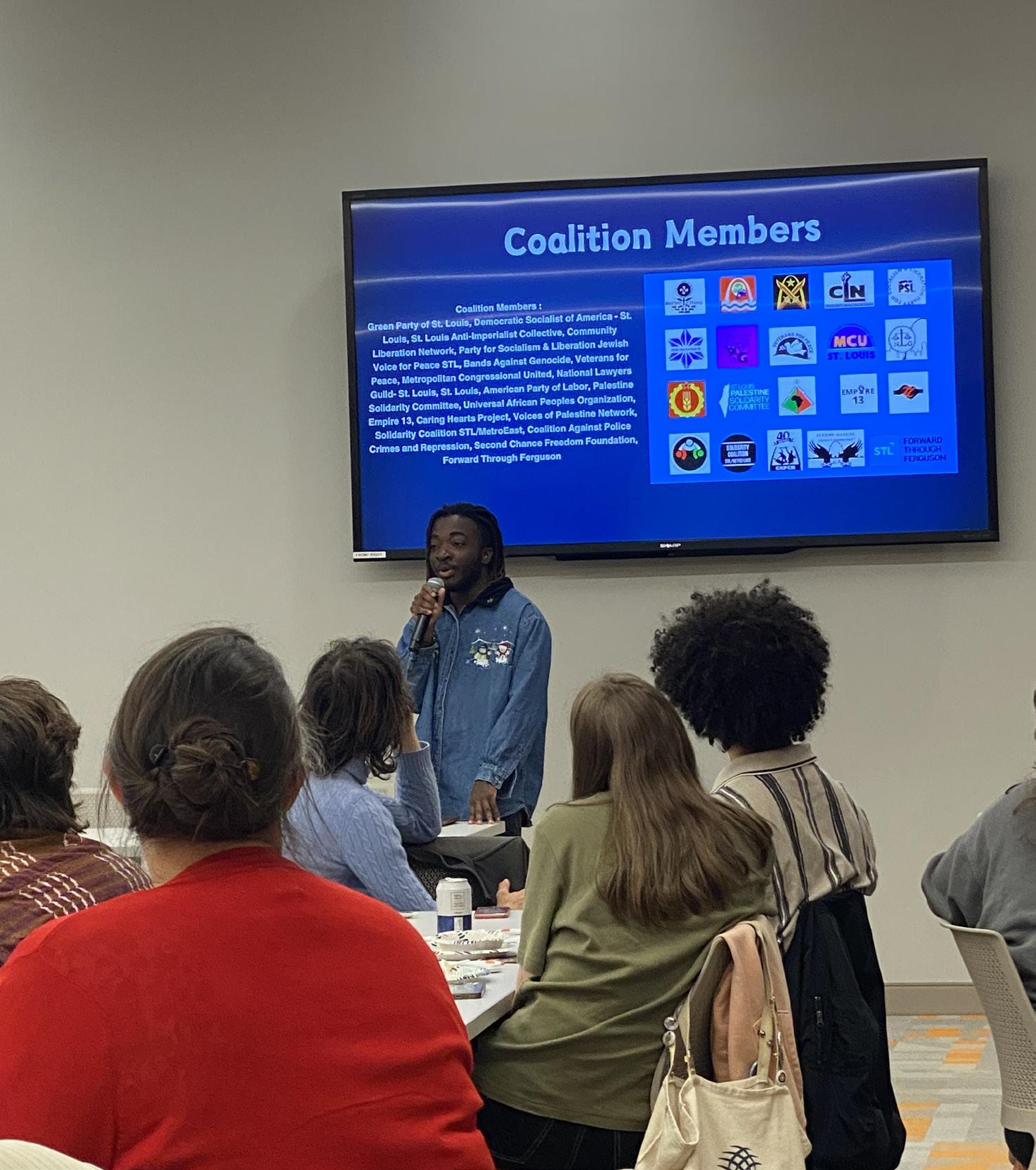
After a flyer from Patriot Front — a white nationalist group — calling to “deport invaders” and “keep America American” was recently found in Graham Chapel, several of WashU’s affinity groups organized an emergency town hall to address white supremacy in Tisch Commons at 6 p.m. on April 7.
“[Patriot Front] refers to Americans [exclusively] as those descended from pan-European race, descended from pan-European … explorers,” said senior and Vice President of the Association of Black Students (ABS) Paul Scott. “That wouldn’t include me … nor any representatives of our other student organizations.”
The statements made by the flyer come at a time of nationwide immigration crackdowns, with dozens of university students and faculty in U.S. Immigration and Customs Enforcement (ICE) custody and over 600 student visas revoked as of April 10. These legal actions appear to target those part of the pro-Palestine movement, which according to reports has significant backing from African American and Hispanic communities. While no detainments have been recorded at WashU, numerous ICE sightings
have occurred on campus.
The town hall — organized by Association of Black Students (ABS), Asian Multicultural Council (AMC), Association of Latin American Students (ALAS), and Black Law Students Association (BLSA) — aimed to educate immigrants and non-citizens on their legal rights when approached by law enforcement. The organizers provided informational legal materials on what to do when approached by a police officer (pictured above) and hosted a Q&A with Gregory Magarian, the Thomas and Karole
Green Professor of Law, and Professor of Law Sheldon Evans.
Evans’ role as the BLSA’s faculty advisor prompted him to speak at the event in hopes of helping students understand this issue from a legal perspective. Evans told attendees of the town hall to be very direct with law enforcement in the event they are approached by an officer.
“Say, ‘am I under arrest?’ If you’re not under arrest, they can’t seize your person. Ask to leave, if they say yes, then leave,” Evans said. “Don’t lie to them. Silence is your best option, and you can
Trump administration terminates records of multiple international students
ELIZABETH STUMP MANAGING NEWS EDITOR
The Trump administration has revoked visas for over 25 international students at universities in the St. Louis area, including St. Louis University and Webster University, as well as terminated the Student and Exchange Visitor Information System (SEVIS) records of select international students at WashU as reported by local news outlets on Tuesday, April 15. The government-run SEVIS database tracks information about non-immigrant students in the US, including their visa status.
Julie Flory, vice chancellor for marketing and communications at WashU, confirmed that an unspecified number of international students at the school have been impacted by the SEVIS record terminations, but Flory declined to provide additional details.
While SEVIS record terminations are not the same as visa terminations, record termination makes the student ineligible to stay in the U.S., work, or re-enter unless they reapply. At other universities, international students who have had their SEVIS record terminated have soon after received emails from the federal government that their visas were revoked, which means the students can be deported. Flory added that the WashU Office of International Student Scholars (OISS) is working closely with affected students. The OISS did not respond to requests for comment as of the publication of this article.
According to WashU’s 2025 Spring semester enrollment records, international students compose 9.1% of the undergraduate population and 40.1% of the graduate population of the school, which translates to around a quarter of the student body.
Last Wednesday, April 9, Provost and Executive Vice Chancellor for Academic Affairs Beverly Wendland sent an email to the WashU community affirming support for international students during this time.
“We are a global academic community and it would do a tremendous disservice to our robust, innovative thinking and creativity if we were to lose any of our international students, scholars or staff members who make important contributions every day to advance our mission in support of education, research and patient care,” Wendland wrote in the email.
Wendland highlighted that the OISS offers a variety of support for international students including weekly webinars about travelling either within or outside of the US and other informational events, as well as having staff on call 24/7 for emergency situations.
say, ‘I’m asserting my right to remain silent.’ That is your best way to resist since ICE wants to get information.”
An attendee asked if the Washington University Police Department (WUPD) could be involved in ICE operations on campus, to which Evans said there isn’t a clear answer.
“University police departments don’t have to take directives from ICE. But the caveat is, it also depends on the larger laws and policies of St. Louis,” Evans said. “But it’s ultimately WashU’s decision.”
Throughout the US, over 1,000 international students have had their visas revoked or statuses changed; however, the reasoning behind the revocations of many visas and the changing of statuses remains unclear. While some international students have been impacted due to participation in pro-Palestine demonstrations, others have been impacted due to criminal infractions or traffic violations.
Wendland added that the University has been advocating politically on behalf of international students.
“We are engaged with our elected officials to educate them about our positive impact on society and to encourage them to stand up for WashU, higher education and our academic community, including our international students and scholars,” Wendland wrote in the email.
While ground was broken in October at Riney Hall’s construction site, the project has now been put on pause due to funding cuts.
SYDNEY TRAN | EDITOR-IN-CHIEF
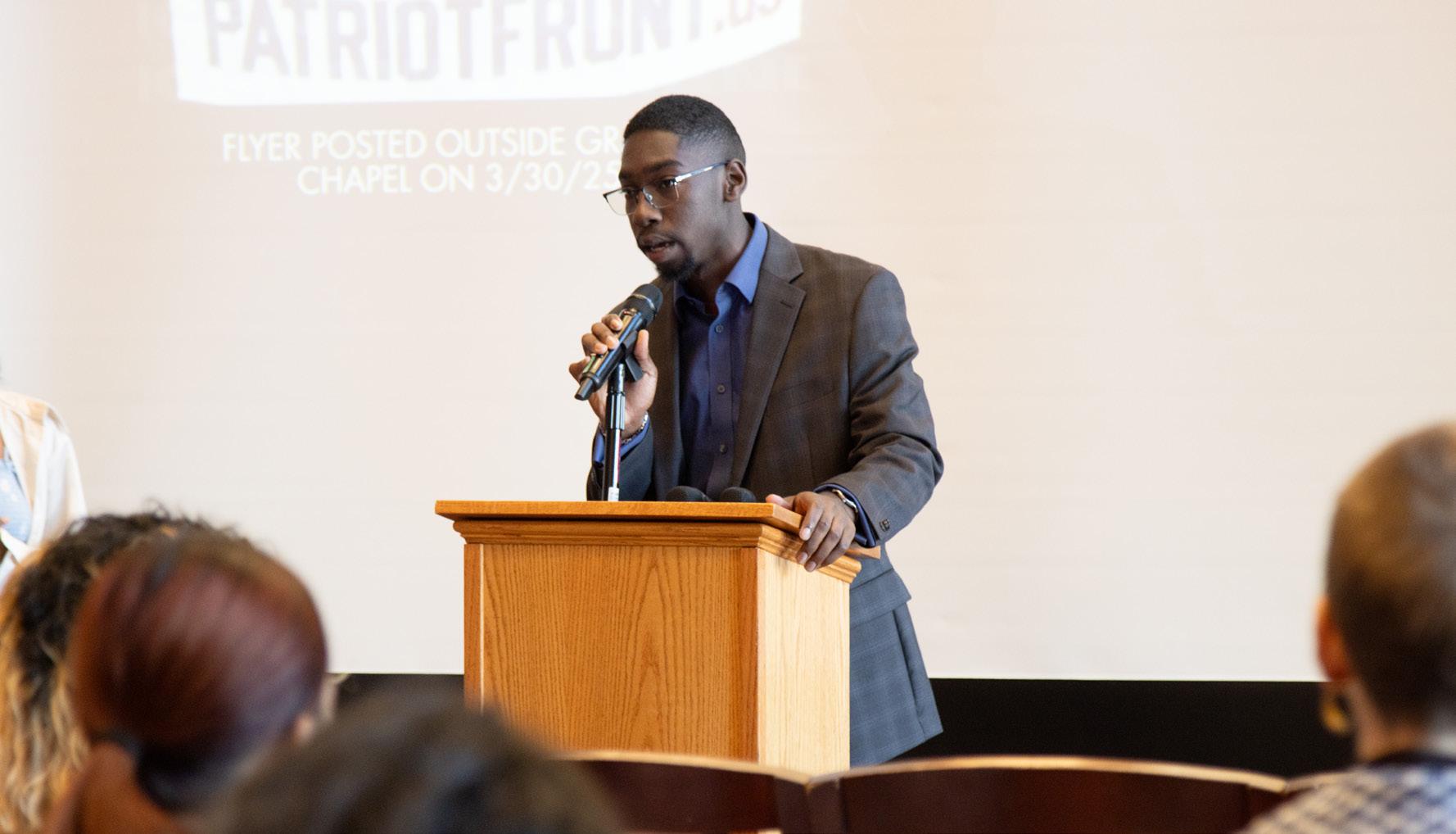
Paul Scott, Vice President of the Association of Black Students, speaks at an emergency town hall about deportation concerns.
ISABELLA DIAZ-MIRA | PHOTO EDITOR
NEWS
Proposed Student Union constitutional amendments fail in special election
TANVI GORRE NEWS EDITOR
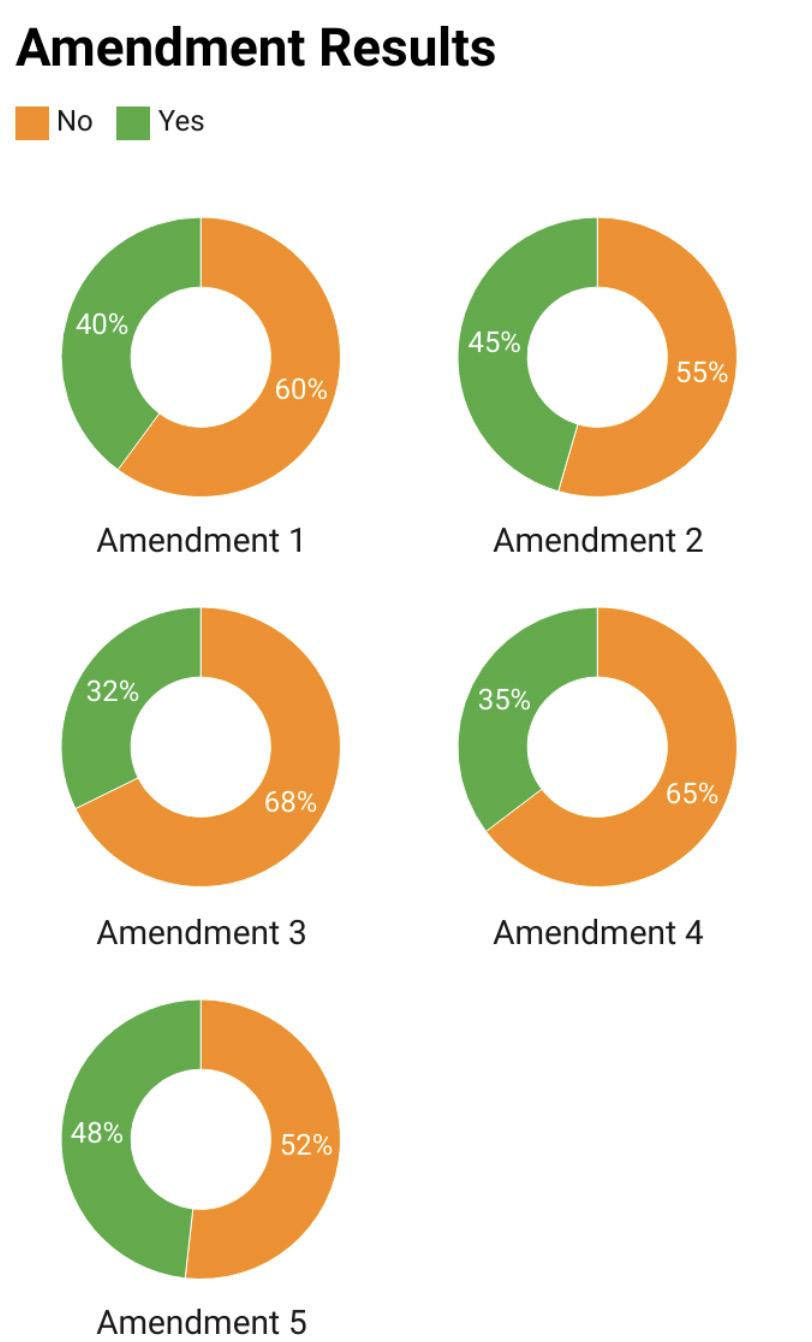
All five of the proposed amendments to the Student Union (SU) constitution failed in a special election held from April 15 to April 16. The changes, which were voted on by 6.1% of the student body, would have established a new Executive Council role, the Attorney General, and opened the door to compensating SU members who are Pell-eligible and/or work-study eligible.
The new Attorney General, as outlined in the proposed constitutional change, would have focused on investigating the constitutionality of SU’s actions.
According to Constitutional Task Force member and senior Ben Ewer, this role would have also acted as an SU constitution and legal advisor for the Executive Council, Senate, and Treasury.
“Not everybody reads the Constitution and knows everything they have to do,” Ewer said. Constitutional procedures and policies both can and have been violated without SU members being aware of them. For instance, the resolutions passed by Senate last year were never ratified by
SU’s president, even though it is part of constitutional procedure. The Attorney General would have filled this gap and initiated intervention in the event of unconstitutional actions taken by SU in this instance. Further, this role would have acted as a legal advisor to the Executive Council, Senate, and Treasury to provide any guidance on SU legal matters.
However, some voters felt the Attorney General’s role was uncalled for. In a Sidechat post which garnered 105 upvotes, an anonymous user questioned, “Who thinks they need an Attorney General[?] [C]alm down.”
In this special election, SU also put forward an amendment opening the door for Pell-eligible and work-study eligible students to be compensated for their work at SU. This amendment, which was voted against by 64.69% of voters, paralleled a similar constitutional proposal that failed last year.
When a joint session of Treasury and Senate discussed the new constitutional changes last Tuesday, this amendment became a point of contention. SU President and junior Ashton Lee hoped the change would help SU better represent its constituents.
“SU should not be this ivory tower where decisions are made by students that aren’t representative of the whole student body,” Lee said. “This should only be
the beginning of welcoming historically disenfranchised communities to the decisionmaking table.”
Some SU representatives, on the other hand, felt the
change would incentivize students to join SU for the sake of getting paid instead of advocating for their constituents.
However, not all amendments proposed in this election would have had an immediate impact on SU operations. Several of the amendments were set to constitutionalize pre-existing roles and procedures in SU to ensure that they are passed down to future SU bodies. These amendments mainly include ratifying unofficial procedures in the Executive Council, Senate, and Treasury in SU’s constitution.
Although the amendments failed, some SU members will continue to fulfill these unofficial duties. Executive Vice President and first-year Asher Lubin said he is excited to work on training new SU members, a responsibility that failed in this past election.
“Over the summer, I am planning to convene a meeting with [Executive Council], and the speakers from the respective branches, to develop a universal training system for SU-wide understanding,” Lubin wrote in a statement to Student Life.
The special election sparked a range of discourse on Sidechat. After the amendments failed, an anonymous
user took to Sidechat and posted “hell yeah #f*ckSU” which was upvoted 552 times as of the time of publication; according to Student Life calculations, approximately 440 students voted in the election. Vice President of Finance and junior Meris Damjanovic felt the constitutional changes proposed in this election would have had a positive impact on SU.
“I think the changes made during the Constitutional Task Force [would] make my role, and all other positions and entities run much smoother,” Damjanovic wrote. “I was on the task force and approved every change to my role alongside the other members and believe all changes are for the betterment of SU and the student body.”
Ewer echoed Damjanovic’s sentiment and felt the impacts of the changes were not communicated to the student body at the time of the election.
“It’d be nice to have the students be a little more charitable to SU, but at the same time, SU has to do a better job and earn some of that trust back,” Ewer said. “I wish that we had been able to convey to students that these changes were an effort towards that end, and not a way of taking things away from them.”
‘Justice for Janis’: Meet the WashU alum taking a stand against the St. Louis city prison system
NINA GIRALDO STAFF WRITER
Janis Mensah became interested in prison abolition as a student at WashU but not under the circumstances that one might hope. Mensah, who is Black and uses they/them pronouns, was a junior in college and lounging on the grass outside of the Chick-fil-A on the Central West End when security guards approached them.
“They started harassing me about how I can’t sit in the grass and I could tell they didn’t believe I was a student at WashU,” Mensah said. “One of the security guards threatened to shoot me, and then they handcuffed me.”
When the security guards contacted the WashU Police Department (WUPD) about the incident, which occurred in 2019, the Office of Student Conduct and Community Standards alleged that Mensah had violated several codes, including “vandalism” and “disturbing the peace.” ArchCity Defenders, an advocacy organization where Mensah had previously been an intern, wrote a letter to the office saying that they would defend Mensah. In response, Student Conduct immediately dropped all charges.
Aside from fueling a distaste for WashU, the situation also catapulted them into the world of community organizing and abolitionism.
“I really very strongly felt like it did not matter at all if I had hurt anyone or committed a crime,” Mensah said. “[The security guards] just saw me, didn’t like the look of me, and that could have just started my series of interactions with the criminal justice system.”
Since their graduation in 2019, Mensah has worked with a variety of local nonprofits in the hopes of
helping individuals who were once in a similar position to them — including Organization for Black Struggle and Keyway Center for Diversion and Reentry, the latter of which assists incarcerated women. Mensah is also a guest speaker at WashU in Rachel Brown’s classes. Brown is an Assistant Professor of Women, Gender, and Sexuality Studies.
For many years of their life, Mensah has been an advocate for youth and adults facing incarceration. Since 2023, that meant advocating for themselves, too.
At the time, Mensah was vice chair of the civilian jail oversight board, created by St. Louis Mayor Tishaura Jones’ administration to “oversee criminal accountability investigations” at the St. Louis City Justice Center (CJC). Despite initial promises that the board would be “authorized to review complaints” by inmates and given “access to city detention facilities upon request,” Mensah said that the city blocked them from receiving complaints and usually denied board members any access to facilities when requested.
“We had times where there were two deaths in two weeks, and the city just wasn’t doing anything about it,” Mensah said. “It felt to me like they were more interested in protecting the city from legal liability than making changes and protecting the community from fatalities.”
According to St. Louis Public Radio, there have been 18 deaths in the CJC since 2020 — three times as many deaths as the similarly sized Jackson County jail in Kansas City, and three times as many deaths as the St. Louis County Jail, which holds more inmates on
average.
On Aug. 31, 2023, Mensah visited the CJC after work to confirm reports that inmate Terrence Smith had died earlier that day. Mensah waited hours in the lobby of the CJC for answers, and when officials asked Mensah to leave, they refused. The next people Mensah spoke to were the police.
“When the police get there, within five minutes they knock me unconscious,” Mensah said. “I was in and out of consciousness until [I got to] the ER early the next day.”
Video footage shows Mensah being ripped from the bench and wrestled to the ground by two officers, who then dragged their limp body out of the facility. Mensah said they had a seizure and woke up covered in bruises, as well as a citation for “trespassing” tucked into their bag.
Following the arrest, Mensah founded the “Justice for Janis” coalition, which advocates for the city to drop charges against Mensah and educate individuals on problems within the St. Louis prison system. Since its inception, the coalition has received almost 300 petition signatures and gained the sponsorship of 20 different organizations, including the American Party of Labor and the St. Louis Palestine Solidarity Committee.
“[This experience] has helped connect me with different organizers, advocates, and activists that are aligned with abolition and maybe just hadn’t engaged with it before,” Mensah said.
While Mensah doesn’t know exactly what an abolitionist future would look like, they do know there needs to be a shift of focus towards the root causes of criminality, rather than focusing on punishment.
“It’s hard for people to understand how abolition is supposed to work, but it’s hard for me to understand how the current system is supposed to work,” Mensah said.
A few months after their arrest, Mensah resigned from the jail oversight board in a letter that said the CJC should close and Mayor Jones should resign.
“Eventually I left the board because people kept dying, and I realized I could do nothing about it,” Mensah said. “After my family saw the video and saw the police punching me on the ground, I couldn’t keep putting my mother through that and with just nothing to show for it.”
About a year and a half
later, Mensah is scheduled to go to the jury trial this coming May, though the exact dates have yet to be decided. Mensah says that whether they decide to sue the city depends on the outcome of this trial.
On a day-to-day basis, Mensah continues to engage in community advocacy, this time balancing the “Justice for Janis” coalition, too.
Cara Spencer, St. Louis’ new mayor who was sworn in earlier this week, has previously pinpointed CJC failures to a severe understaffing, and points to staff expansion as a solution to overcrowding. Mensah, however, attributes overcrowding in CJC to over-arresting.
While Mensah said that Spencer’s election brought
“new hope” that their own charges would be dropped, they expressed concern about the mayor’s potential impact on mass incarcerations and jail conditions in St. Louis. “Even if Cara Spencer was saying all the right things, it would still be scary, because Mayor Jones said all the right things at one point — and not only did she not live up to those promises, she made things worse,” Mensah said. When asked how they keep optimistic, Mensah laughed.
“I don’t think optimism is essential to being an abolitionist. I think what keeps me going is that I know we can do better — not only because we all deserve better, but because St. Louis is doing so much worse.”
Results from this week’s special election.
TANVI GORRE | NEWS EDITOR
Mensah speaks about abolition at a local teach-in.
PHOTO COURTESY OF JANIS MENSAH
SCENE
Aca-mazing: WashU’s Mosaic Whispers return to ICCA Finals
In a cramped campus rehearsal room, voices harmonize — and somewhere between the laughter and the late nights, a Finalsbound ICCA set is born.
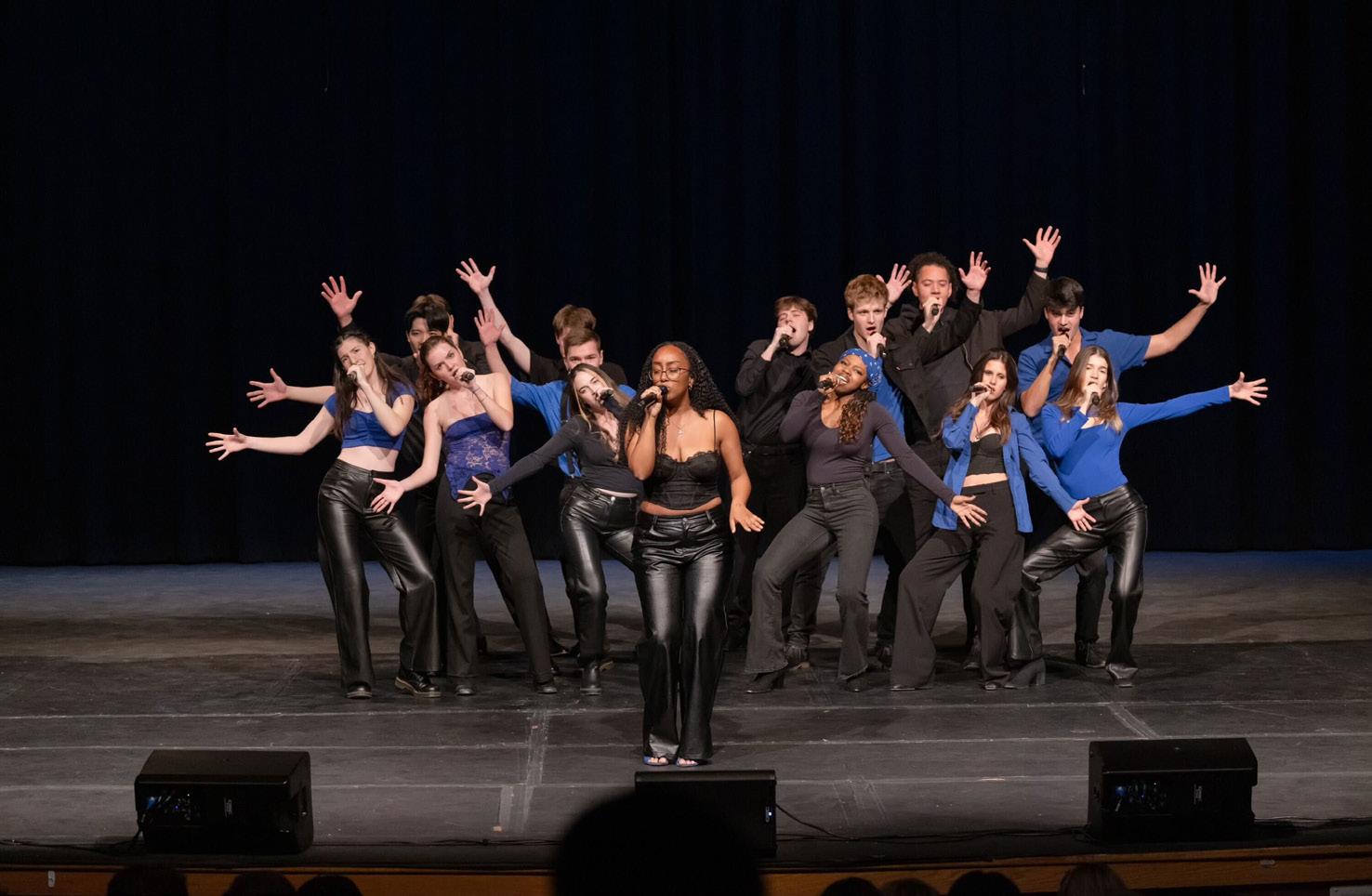
After nearly a decade, Mosaic Whispers, WashU’s oldest co-ed a cappella group, is headed back to the International Championship of Collegiate A Cappella (ICCA) Finals on April 26. They will be competing against the top 10 groups in the country at New York City’s Beacon Theatre. The road to Finals is notoriously difficult. Each year, hundreds of college a cappella groups begin the ICCA circuit in regional quarterfinals, hoping to secure one of 50 semifinal slots and eventually compete for one of the coveted spots in the final round. After falling short of the finals in the past few years, this year marked a reimagining of what the Mosaic Whispers could become.
First-year and “newbie” Neil Murphy, describes the group as equal parts “playful, dedicated, and sassy.
Everyone has so much character,” he said. “It really is just like a mosaic.”
For senior Cameron Kaiser, this milestone feels like a meaningful sendoff. “I feel lucky that I get to go out on this high,” Kaiser said, “and that I get to remember this as my end.”
According to Kaiser, being part of the Whispers was never just about music — it was about building a community where people feel supported, both creatively and personally.
“As a leader, I was always
thinking about how to make people feel confident and comfortable,” he said. “I had to think a lot about the line of when things are good enough and when we should keep working to get better.”
This constant balancing act — between pushing for excellence and feeling confident in their art — shaped how the group approached the competition season.
The set reflects a journey that resonates with both performers and audience members through its regenerative themes, according to junior Sophie Lyman, who co-arranged the set with Kaiser. “It’s this idea of things being good until they’re not … and how difficult it can be to pull yourself out of these low places” she said. “It’s a story of having confidence and losing it, and when you regain it, it’s all the more powerful than it was before.”
Each of the group’s three competition songs were arranged by members of the group — a distinguishing factor that sets the Whispers apart from other finalists, some of whom rely on professional choreographers and arrangers. “We do [the arrangements and choreography] all in house, and that makes it even more special,” Lyman said.
For sophomore Bralin Duckett, being recognized at this level speaks to the chemistry of the group.
“We let our unique talents and sounds come out in a way that is pleasing to an audience,” he said. But more than that, it speaks to the individual sacrifices and effort that members put into the group.
“It’s not common in Whispers for people to quit or take breaks, people are
so invested,” Duckett said. “Everyone is so passionate about this group.”
Duckett hopes that Whispers’ success will help bring more recognition to WashU’s a cappella community at large. “We have such a strong community of 13 a cappella groups on campus,” he said. “We’re lucky to enjoy what we do and practice what we enjoy doing because of the support we have from the University.”
That sense of responsibility — to represent not just their group but the school — has shaped how the Whispers approached their season. For senior and president Natalie Feldstein, Finals feels like a culmination of four years of growth.
“I’ve learned how to find my voice in leadership,” she said. “I’ve learned to be flexible, to have patience, to listen.”
Now, with Finals just days away, the group is savoring every last moment together.
“It’s such a bittersweet feeling,” Feldstein said. “I’m super grateful for the past four years … I’m lucky that I get to feel sad in a way, because it means this was a really special thing for me.”
Looking back, she said, it’s not just the performances that matter — it’s the rehearsals, the friendships, the shared purpose. “Rehearsals feel like a privilege,” she said. “They’re the highlight of my day.”
As the Whispers prepare to take the Beacon Theatre stage, the excitement is palpable. They are looking forward to sharing the stage with groups they’ve admired for years. For the Whispers, it’s not just about the trophy. It’s about doing something they love, together.
Bon Iver’s ‘SABLE, fABLE’ unifies the band’s identity and inspired a basketball game
WRITER
You might know Bon Iver from their hit indie folk song “Skinny Love,” the “Twilight” soundtrack highlight “Rosyln,” or the dramatic duet “exile” with the one and only Taylor Swift. But who is Bon Iver actually — both literally and artistically?
Bon Iver, a band led by multitalented artist Justin Vernon, released their fifth album “SABLE, fABLE” on Friday, April 11. In an interview with WYEP-FM, Vernon explained that although the record is segmented into the first three songs, “SABLE,” and the following nine tracks, “fABLE,” the two sections combine together to construct the complete record.
In this interview, Vernon describes the “SABLE,” section as “a look to the past. It’s a kind of an encapsulation of my identity with this whole Bon Iver guy-in-a-cabin problem for the last 15-16 years.” “SABLE,” was released back on Oct. 18, 2024 as a standalone EP, without any mention of its later inclusion on an album. However, the inclusion of a comma in the EP’s title should have been a sign that there was more to come.
“S P E Y S I D E,” the lead single for the “SABLE,” EP, seemingly marked the return of the band’s folk sound, reminiscent of their 2008 debut album “For Emma, Forever Ago,” which sparked their
initial popularity. The song contains beautifully layered acoustic guitar, a compact and cohesive sound, and perplexing but sorrowful lyrics such as “Nothing’s really something, now the whole thing’s soot.”
The other two songs from the EP — “THINGS BEHIND THINGS BEHIND THINGS” and “AWARDS SEASON” — follow the somber sounds and story of the lead single. “AWARDS SEASON” provides an optimistic ending to the sad, nostalgic story that is the “SABLE,” section of the larger record, with Vernon singing, “Oh, but maybe things can change / What can wax can wane / Things can get replayed.” This glimmer of hope serves as a prelude to the themes and sound of the rest of the album, along with the
quiet string outro that sneakily fades into the opening track of the second section. On “fABLE,” many things change: the song titles are no longer in all-caps, the instrumentals are more complex and upbeat, Vernon’s voice is digitally manipulated, and he enlists collaborators to sing with him. The album evolves between the first and second sections, just as Bon Iver has evolved from their original folk sound into the eclectic chamber-pop sound of their third and fourth albums.
HANNAH LA PORTE COPY EDITOR
PHOTO COURTESY OF EDWARD PENNOCK
ANAELDA RAMOS | MANAGING ILLUSTRATION EDITOR
ELIJAH LECKERMAN STAFF
The Mosaic Whispers, an a cappella group, perform around senior Kidist Taye.
Read
From Tisch to Theatre: WUHHU levels up
The lights dimmed, the chatter hushed — and then the cheering erupted. Audience members could feel the bass vibrating through the seats before the first dancer even hit the stage.
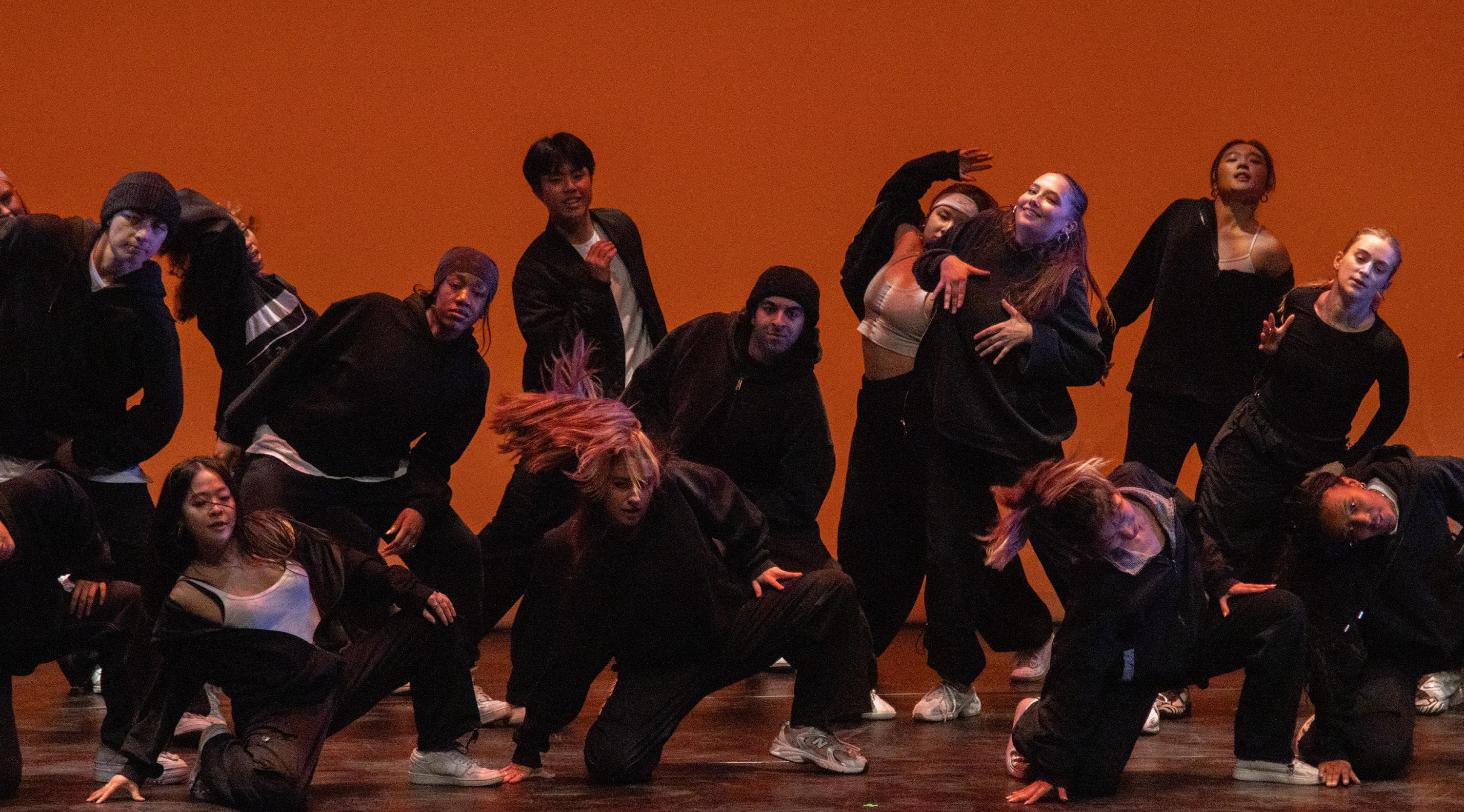
From the second the WashU Hip Hop Union (WUHHU) opened their first-ever spring showcase this past Friday (April 11), the energy in Edison Theatre was electric. Every routine was met with applause, crowd roars, and that kind of half gasp–half scream you only hear when a crowd knows they’re witnessing something special. It wasn’t just a performance — it was a celebration of dance, hiphop culture, and a student group stepping into a longawaited spotlight.
The showcase featured 14 jam-packed routines, with guest performances by WashU dance groups WuSauce, WuFuego, and PL4Y, as well as XQUIZIT — a hip-hop group from Saint Louis University. For a first-ever spring showcase, WUHHU made it clear they weren’t holding anything back.
In a typical year, the group performs a fall showcase in Tisch Commons at the Danforth University
Center (DUC). But this year, scheduling conflicts with competitions and endof-semester chaos led to the emergence of a new plan.
“All the competitions that we typically attend in the spring were the last week of classes,” said Siyam Teckle, one of the showcase directors. “With finals and WILD, we didn’t want to take away the end of the year from anyone. So we decided to do a spring showcase.”
That decision opened the door to an even bigger shift: moving the performance to Edison Theatre. The change was exciting — and a little daunting.
“Typically if you want to have a show in the Edison you need to reserve it a year in advance, and we reserved it this semester, which was pretty stressful,” Teckle said. “We only got one option for a date, and that was April 11th ... so everything felt a little bit rushed.”
Despite the quick turnaround, the team rose to the occasion. “It felt way more serious,” Teckle said.
“The fact that we got to level-up our showcase was really cool. We filled out the Edison, and before the show even happened, dancers backstage were saying ‘oh my god, there’s so many people here right now.’” Head choreographers
Gabriella Amurao and Jacob Lee embraced the challenge with vision and ambition.
“When we found out that we would be performing in the Edison, I felt like the possibilities were endless for us,” Amurao said. “We had so much more creative freedom over our pieces in terms of energy, visuals, and formations.”
The elevated production space allowed the group to push themselves further than ever before — but it also came with a learning curve.
excitement from the whole team to finally have the chance to perform on the big stage,” he said. “I vividly remember the sight of the massive audience, filled with so many supportive members from the WashU community, and how it gave me so much energy while dancing on the stage.”
The audience matched the performers’ enthusiasm, creating an atmosphere of constant energy. “The crowd was crazy,” first-year and audience member Lila Duus
“It is clear that WUHHU is currently on an upward trajectory, and I am excited to see what is to come in the next chapter.”
“They were throwing things at us that we didn’t even know we had to do,” Teckle admitted. “There were so many new logistical and technical aspects.”
Still, the payoff was huge. Lee described dancing on Edison’s stage as nothing short of surreal.
“Having performed in Tisch for so long, there was an extraordinary buzz of
said. “I think the theater was actually fully booked…And the entire time it was just constant cheering,” Duus added, “I had never seen WUHHU perform before, so when my friends told me they were performing in the spring, I knew I couldn’t miss it.”
That final number — a standout seven minute piece — was the perfect finale for a
night full of exceptional performances. “We aimed for more dynamic dance moves, more complex formations, and overall greater hype,” Lee said. “We wanted the showcase to not only exhibit talent through performance, but also to highlight that hiphop is more than simply a dance genre.”
Audience members appreciated the messaging in the choreography. “I liked their final act,” first year Brandon Chang said. “The beef that arises between different artists has always been so relevant, and they performed that concept so well.”
Amurao elaborated on the concept behind the piece, “The industry is filled with these celebrity or artist feuds, and we wanted to showcase the art that comes from the back and forth between two artists. There is passion and art that comes from each pair — Drake and Kendrick, Nicki and Cardi, Rihanna and Beyoncé — and we wanted to channel that energy into a piece that the audience could relate to.”
The bold and theatrical production left a lasting impression on more than just the audience.
“It legitimized the performance aspect of WUHHU in a way that has never been done for any of our showcases before,” Amurao said.
For some team members, it was their very first show. For others, it was their last. Regardless, the gravity of the moment was shared by all.
“Being able to perform in the Edison has been a huge ‘what-if,’” Amurao said. “It’s made so much of the hard work, stress over choreography, and late nights in the studio worth it.”
And while the Edison gave WUHHU a longawaited “big stage” moment, the group hasn’t forgotten its origins in Tisch Commons. It’s where many members first fell in love with performing at WashU, and where WUHHU’s identity as a student-led hip-hop group first came about.
“WUHHU’s roots will always lie in the DUC,” said Lee. “The DUC offers a more intimate performeraudience experience and an environment that is more reflective of hip-hop street dance, while the Edison allows for higher quality production and much more room for both performers and audience.”
In the end, the showcase wasn’t just a milestone — it was a launchpad. “It is clear that WUHHU is currently on an upward trajectory, and I am excited to see what is to come in the next chapter,” Lee says.
More reality TV than class critique: The shaky satire of ‘The White Lotus’ Season 3
BRANDON
An opening scene revealing a corpse. An array of characters with a medley of quirks and accents. These tropes all expose the immaturity and childishness of the wealthy elite — hallmarks of a whodunit in the vein of Agatha Christie or the more recent “Knives Out.” They are also seen in “The White Lotus,” the Emmy-winning HBO anthology series set against the backdrop of the titular luxury resort.
The show diverges from a classic whodunit in that it cuts to a week earlier, thrusting the story into a mystery to find not the killer, but the body.
In a way, “The White Lotus” is an “anti-murder mystery,” choosing to spotlight the selfdestructive journey building up to an inevitable death in the finale, all while attempting to deliver social satire and commentary. At the same time, this more pessimistic narrative forces the audience to watch and theorize with eagerness. Each season of “The
White Lotus” takes place in, and thematically centers on, a different destination. In Season 3, it’s in Thailand.
The ensemble cast functions as a menagerie of sorts, creating a glass cage through which we witness the rich hotel guests. Within the playground that is the White Lotus resort, endless dramatic possibilities exist. The hyperwealthy characters revert to their primal state outside of their natural habitat, acting on emotional extremes while doing drugs and having loads of sex.
Almost reveling in the unraveling of these characters, “The White Lotus” seeks to present a pointed criticism of the dynamics of class by inviting us to see the negative influences of their excessive wealth.
The Ratliffs perfectly embody the dysfunction of the wealthy that the show fixates on. We can point and laugh at Victoria Ratliff’s (Parker Posey) out-of-touch comments on the culture of Thailand in a Southern drawl or at the hubris and hypocrisy of her daughter, Piper
(Sarah Catherine Hook), who comes seeking spirituality only to crawl back to her life of material comfort. A pivotal plot point involves Tim Ratliff (Jason Isaacs), the family patriarch, embroiled in a federal investigation and contemplating a murder-suicide in a Lorazepam-induced meltdown, worried his family won’t be able to survive a noncushy life.
Each stay at the White Lotus has something to say about its host location. The first season’s excursion in Maui accentuates the island’s colonial history and subsequent inequalities and the next season’s retreat in Sicily undermines the romanticization of the Old World. This season focuses on spirituality, particularly within the context of Thai Buddhism, as it ribs at Western expatriates seeking to reinvent themselves or flee from their lives back home. This theme is woven and layered throughout every plotline and character in complex ways that would require further rewatches to fully digest. This go-around, “The White Lotus” lacks the
poignancy that the previous seasons pulled off.
As this season attempts to juggle its large ensemble and their respective plotlines, some receive more of the limelight while others seem to lag behind, creating a cycle of characters reiterating the same information and realizations. These narratives all lead to the explosive climax in the finale, where our corpse is finally revealed. However, the story’s emotional apex arrives less like the promised tsunami and more like a ripple. This comes largely due to the lack of investment in the characters (yes, plural) who end up dying and the rushed, messy resolution of certain plotlines.
One of the most lurid and widely-discussed scenes of the season involves an incestuous experience between brothers Saxon (Patrick Schwarzenegger) and Lochlan (Sam Nivola) Ratliff. The gratuitous provocation of this moment, seemingly engineered for X (formerly Twitter) buzz, elucidates some of the shakiness with the show’s function as a satire.
The drawn-out narrative
and underbaked themes of the outing in Thailand underscore the more superficial aspects of the show, such as the shock-value sex, designer wardrobe, and serene landscape shots that have been fixtures of the previous two seasons. “The White Lotus” is obsessed with spectacle in a way that becomes a disservice to any pointed criticism it attempts to make about class.
The prioritization of aesthetics and pageantry feels more akin to reality TV like “Love Island” than a takedown of high-class attitudes à la “Triangle of Sadness.”
What muddles the cultural critique of “The White Lotus” even further is the commercialization riding upon the show’s success.
It’s hard to see the resort as a critique of the upper class when its indictment doubles as an aspirational fantasy.
At the end of the season, all of the guests depart on the boat that initially brought them to the resort. They reflect on the events of their week-long stay that have ostensibly changed them. But these almost always barely make a dent in the status quo. While they meditate on their privilege, guilt, or suffering, in the end, their social standing and the machinations that have contributed to their immense wealth remain largely intact.
In sum, Season 3 of “The White Lotus” delivers sharp-tongued observational critiques on rich behavior but fails to fully reckon — and probably never will — with the systems that allow such excess to thrive. When a body is discovered at a resort, “The White Lotus” isn’t interested in exploring why, but instead in gabbing over the grisly details of how.
On Max’s ad-supported tier, Patrick Schwarzenegger appears before every episode, marketing vodka and gin “for when you want to escape to the White Lotus.” And with the Four Seasons viewing its partnership with the show as an extremely profitable marketing opportunity, it is hard not to see the show as an endorsement of the uberwealthy lifestyle rather than a critique.
MARIA DIBELLO STAFF WRITER
WUHHU performs on stage in Edison Theatre during their showcase.
ERAN FANN | PHOTO EDITOR
FORUM
Go to your room! (and enjoy it)
Growing up, my dad and I would often go to random open houses on the weekends.
Surely, no one considered the 9-year-old in floral leggings and three headbands to be a prospective buyer (nor the dad loudly making comments about the landscaping we should copy in our yard, for that matter). But our nosy duo lived for this. To be able to peek inside a stranger’s home and see the museum of their life? It was a gold mine!
Homes are a tangible reflection of the people who live inside. When friends (or the friendly neighborhood 9-yearold) come by, your home reveals what you like and how you see yourself. More than that, it’s an ode to all things you. Being at home means getting to be in a rejuvenating space specifically personalized for you by you. The objects, walls, furniture, smell — all of it lives and breathes who you are.
Even before we sign the lifelong mortgage or settle into our forever home, we should treat our rooms along the way with this same emotional investment. We deserve a space to come home to where we can sink into the couch (or lofted twin XL bed), look at the walls, and immediately feel ourselves. This hunch of mine is backed up by an army of research findings. According to the 2023 American Time Use Survey, we spend a lot of time at
home. On average, we sleep there for more than eight hours. Then, we cook and clean for a little less than three hours. Then, we just hang out for close to four hours (you know, the part of the day where you initiate the doom scroll marathon or the weekly TV binge or the friend debrief). While not necessarily all of these activities are at our house, they’re usually at someone’s. Meaning, we spend more than half a day at home. If you look to your left, you’ll see a cluster of behavioral scientists and psychologists, both past and present, waving a big poster that says “Home is where the heart is” in all caps. Social psychologists have even coined a term, “Place Attachment Theory,” that summarizes this phenomenon. The more we personalize a space, the more emotionally stable we feel. As trivial as it may seem, putting up our posters, choosing a duvet in our favorite color, and tossing a throw pillow here and there leads to a slew of positive emotional outcomes, including a stronger sense of belonging, increased comfort, and simply feeling more connected.
Personalizing our spaces also helps us express ourselves without bounds. At home, we can do whatever and be whoever we want. Social psychologist Mark Snyder has studied how channeling our likes, preferences, values, and traits into our homes helps us improve our self-esteem and grasp of who we are. Like most students, I came
PUZZLE PUZZLE Mania
to college with massive duffels containing my identity at home. On move-in day, I taped up who I was on the wall, using putty to attach photos of my high school friends, posters of my favorite paintings, and a bulletin board of keepsakes to my dorm’s interior. As an extremely nostalgic person, I’ve held onto every single one of these original flaps of paper. Even saying that sounds reductive. These colorful images and illustrations are way more than paper; they’re the most tangible extension of myself.
When I was first adjusting to college, coming home to a room that was so clearly mine put me at ease. Seeing versions of myself from baby photos to homecoming pictures on the wall reminded me of the growth I had already been through and the potential of what was to come. The comfort of this room, however new, helped me nurse the blues of homesickness and gain a sense of belonging early on.
Now as a senior, this pile of tchotchkes has erupted. Over the past four years, I’ve saved everything from little notes passed in class to birthday cards mailed from my hometown friends to a shrine to Lebron James that one of my favorite professors crafted for me (we don’t have enough time to get into this one).
Without fail, whenever a friend or neighbor enters my home for the first time, they comment on the decor. They point out the scale of everything taped up to my wall, the adorable clay magnets
my roommate hand-painted, and the sheer colorfulness of everything. I’m not sharing these compliments to toot my own interior designer horn (but if you’re clapping, I won’t stop you). The truth is anyone can do this.
We all have the keepsakes we look back on. Maybe they’re in a dusty corner or scrunched in the background of a drawer. They deserve some airtime! This is me challenging you to throw them on a wall and let them see the light of day. If you’ve tossed them out or lost them in time, you can still recreate
their essence. I’ve used my WashU printing credit more than once to print out everything from drawings of my favorite cartoon characters to cutouts of celebrity alumni from LaGuardia High School (another one of my interests we don’t have time to delve into).
In my writing class this semester, one of the first things we did was to make a collage of things that help us feel confident. I listed quotes from my favorite books, drew stick figure recreations of my closest friends, and printed out generational family photos. Hastily
SPONSORED BY:
KATIE HANSON STAFF WRITER
LUCIA THOMAS | STAFF ILLUSTRATOR
In defense of the performative intellectual
JOSHUA MILLER STAFF WRITER
For seven months in my sophomore year of high school, I kept Joan Didion’s “The White Album” in my backpack at all times. While I loved her philosophical insights and careful choice of words, I wasn’t even close to fully understanding the dense cultural references to 1960s California. Complete comprehension, however, was never my goal. The importance lay in little pieces of free time — the minutes before class started, or before I saw friends at lunch — when I could proudly take the book out, read through a page or two, and more importantly, hold up the book in various obvious ways (in front of my face, over my head lying down, standing on the desk) in hopes that someone would see it and make a comment. I desperately sought approval from my peers, but more so my teachers, wanting to be recognized by people I deemed smarter than me. I might as well have held a flashing neon sign: “Look at me! Look how smart I am!” In retrospect, the performance was flimsy and fruitless. No one really cared that I was reading Didion, save for a few comments from an English teacher, but my act of reading something almost purely for looks didn’t completely go away. Although I’ve never gone back to that extent, I still catch myself, at times, holding something in a more pronounced way in hopes that someone might comment.
The performative intellectual is an archetype many students are familiar with, considering that it thrives most strongly when dropped in an environment teeming with other intellectuals. In other words, a university is the perfect breeding ground. As a student at WashU, I’m constantly inundated with conversation snippets that seem like performative intellectualism. It goes beyond sharing simple news — it wouldn’t be “I’m doing an internship at such-and-such place over the summer,” but “I’m applying for five internships at these extremely prestigious institutions over the summer,” which has the same vibes as telling your high school friends how many colleges you’re applying to. There’s a bragging about something that isn’t there — an internship that hasn’t been secured, a course that hasn’t been taken, or, in my case, a book that hadn’t really been read. And, on the surface, it’s incredibly annoying. Even if it stems from a deep insecurity about intelligence or some manifestation of imposter syndrome, it’s hard to see anything other than someone bragging about their not-really-accomplishments. But I want to propose a flipside. I didn’t arbitrarily choose Didion’s works as the face of my act; if I simply wanted to fake a level of intelligence I didn’t possess, I would have used “War and Peace,” or maybe a scientific journal. I chose, instead, something I had a genuine interest in that simply went a bit over my head.
Part of my hope wasn’t
just that I’d be acknowledged for having some impressive level of reading comprehension, but that someone might say to me, “I love that book,” and I’d find someone with similar tastes to myself. I didn’t simply want recognition, I wanted community and shared interest. This rings especially true in the first few months of college, when it can be difficult to find those communities or people that enjoy similar things to you. So then, I propose we all
flaunt our genuine interests in a more public way. No more talking about soon-to-be internships in the Collin’s Farm line — I’d rather hear about books that haven’t really been read or movies that haven’t really been watched but that people have a genuine interest in. Plus, even though there is often a performative aspect when one might flaunt something above their level of understanding, it doesn’t always have to be like that. While I read Emma Cline’s
“Daddy” just a few weeks ago, I’m not ashamed to admit that I purposefully carried it cover-up so people might ask me what I was reading. Not because I didn’t understand it, but because I was hoping someone might ask me about it, and I could give them a recommendation for something they might enjoy. If we all exhibited our interests more publicly, we would naturally meet people with similar interests and therefore learn from each other’s
interpretations, views, and understandings. Although I’ve since devoured other books in Didion’s catalog, I have yet to return to “The White Album.” But, when I do, I’m sure I will hold it up proudly — which I no longer view as an act of “performative intellectualism” — but as a beacon of possible togetherness, of potential friends and shared interest.
Don’t know what you’re doing – ever
LYN WILKINS JUNIOR FORUM EDITOR
Coming into my freshman year of college, I had one philosophy: just wing it. My main goal was to do whatever I wanted, even if I had no clue what was going on. As a chronically oblivious individual, this opened up a world of possibilities to me. This philosophy got me to publish articles, join clubs, and actually talk to people. Now, as I conclude my first year of college, I find myself much more prepared to face a number of situations that I would have never attempted earlier.
I know this concept sounds cliche. We’ve all heard that we need to step out of our comfort zone more. Most of us decide to ignore it. Those of us who do follow this advice feel proud for expanding our repertoire and braving
the great unknown, but are we? It isn’t enough to take a singular step beyond what we are familiar with. You aren’t truly putting yourself in a position to learn if you always have the safety of your niche only a step away. Many of us simply retreat to the typical whenever the unknown looks even the slightest bit daunting.
Learning is a process of trial and error. To grow, we have to put ourselves in situations that are uncomfortable and scary. We learn by facing situations we never expected to confront and figuring out how to navigate them. Running away at the first sign of failure prevents us from growing both as students and people. As WashU students, we are especially susceptible to retreat and avoidance. We tend to stay in the areas where we know we can succeed because failure has never been an option.
4/10 WINNERS
ANAELDA RAMOS | MANAGING
ILLUSTRATION EDITOR
Applying for a school as competitive as this means you have to be perfect. You can’t show signs of failure because other students are submitting entirely flawless applications. We spent our high school years perfecting our resumes and reputations, and now, we don’t know how to fail.
We seem to have all internalized the idea that failing one task means failing as a person. I’ve been guilty of this myself. I’ve stayed in the subjects I know I can succeed in. I find myself subconsciously obsessed with whether or not something will make me look dumb. I did this all throughout high school, but we’re not in high school anymore. All of us worked so hard to get here, but most of us aren’t doing anything with the opportunity we’ve earned. You fought to get here; now, reap the benefits of your efforts.
Personally, I am going
to take as many classes as interest me even if it means giving up my perfect GPA. I am taking Calculus not because I need it but because I’m interested. I am not a natural at math nor do I have any talent for the more analytical fields, but who cares? I no longer have to worry about having the perfect record or GPA. I can afford failure, and so can you.
Maybe you have to uphold academically impeccable standards because you’re going to graduate school, but this philosophy doesn’t just apply to grades. Try new clubs or hobbies. Join a sport or audition for a role with no experience. You may not be able to risk failing a class, but you can still put yourself out there. College is a hub for learning both academically and socially; you still have opportunities to grow and try new things even if this isn’t your last experience in
1st Place
Me and Bestie accidentally sat next to the guest lecturer in “Fowl Play 101” Mason Sutton, Front Row Warrior
2nd Place
Sometimes you come to the DUC and sometimes it comes to you Jason Merkel, Casual Student Life Reader
3rd Place
Let’s duck class and go swim in the lake Connor Letendre, Casual Student Life Reader
the academic world.
Failure is good for us. It teaches us how to recover and improve. It is not some plague to be avoided, and I think the fear of failure is the main reason many of us avoid trying new things. We have to fail one of these days, and avoiding this inevitability just makes people miss out on the incredible opportunities here. Maybe your skill is STEM, but you really want to try out a drama class. Whether you fail or succeed, you take advantage of the wonderful theatre program we have here. We only have four years at this school. Wasting time being afraid just limits the richness of the experience.
The task of facing the unknown was easy enough for me. As a freshman, everything was unknown. If I ever wanted to leave my dorm, I had to leave my comfort zone. I’ve become accustomed to trying new things, and I don’t want to
stop. How much could I grow in my four years if I kept learning things I know nothing about?
I’m paying to be here, and this is my last chance to learn in an academic setting. I only get four years of this, and the same can be said for most of you. Are you really going to waste your four years being comfortable? You have the rest of your life for monotony. Each day spent pursuing the things you already know about is a day wasted. Many of us say we love learning, but we act as if we love succeeding. Succeeding is not learning. Knowing is not growing. Going into next year, I’m going to keep putting myself in situations where I have no clue what’s happening. It’s your choice what you make of your time here, but if you know what you’re doing, you’re doing it wrong.
Caption this! Enter this week’s contest
Scan the QR code to enter your submission by 11:59 p.m. on Tuesday.
ZACH RUWITCH | STAFF ILLUSTRATOR
SPORTS
Athlete of the Week: George Bourdier discusses journey back from injury, future goals, and life outside of track
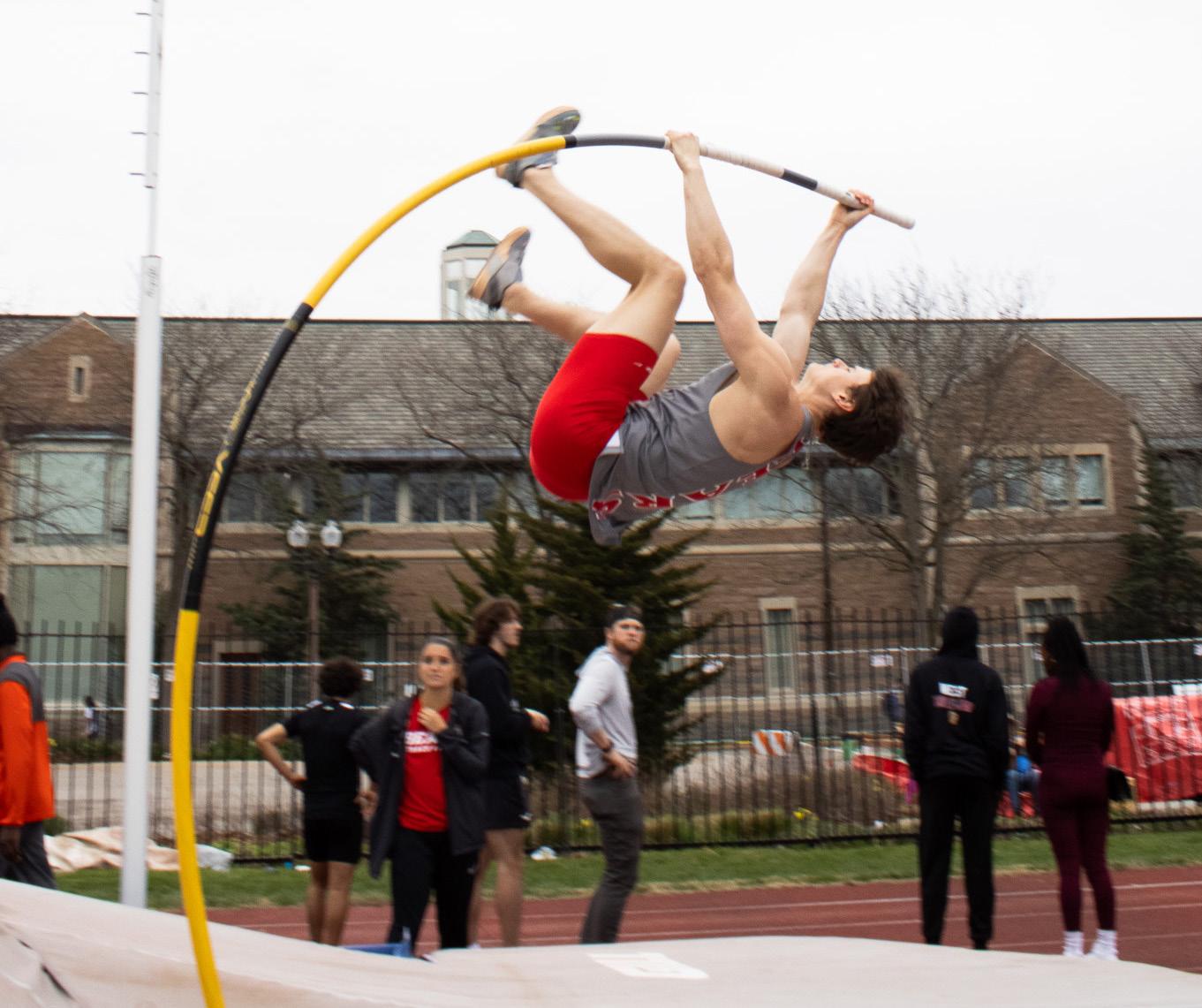
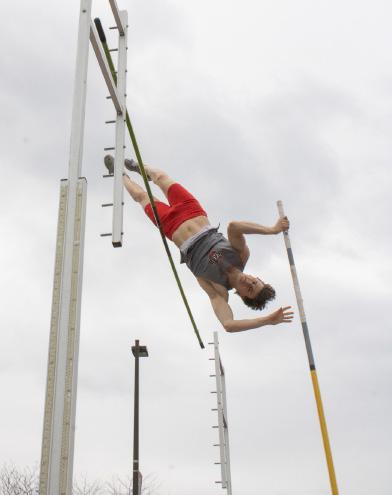
Junior sprinter and polevaulter George Bourdier has played an integral role on the WashU men’s track and field team for the past three seasons. On April 4, at the Illinois College True Blue Invite, he set a personal best in the pole vault at 5.10 meters winning the event. Bourdier sat down with Student Life to discuss his recruiting process and why he chose WashU, battling back from injuries, and his favorite hobbies. This interview has been edited for length and clarity.
Student Life (SL): Tell me about when you started competing in track. Did you play any other sports growing up?
George Bourdier
(GB): I’ve done a lot. I’ve tried almost every other sport, especially as a kid — soccer, baseball, gymnastics, football, cross country, or whatever. But I started doing track when I was eight, just because I had a lot of energy, and my parents were trying to find a way to calm me down. So I started doing that a long time ago, and I did more distance stuff. And then
middle school, I got to sprinting. In high school, my coach introduced me to pole vaulting, and then from there, I’ve just been really into it.
SL: In terms of the recruiting process, when did you know you wanted to play in college?
GB: I think my junior year, I had qualified for the Indiana State competition in both the pole vault and the 200 meter, and a couple coaches at the meet just kind of walked over and introduced themselves, and said if I was ever interested, just to reach out to him. And that’s when I realized that it was a possibility, and I thought, who doesn’t want to be able to be an old man and tell their grandkids one day like, yeah, I competed in college and got to do all that stuff.
SL: What made you choose WashU?
GB: Definitely the academic side, and a nice balance between getting to do a sport I love, and also not being totally confined to it. When I visited, the coaches were outstanding. Everything felt very welcoming. Beautiful campus. It’s like Disneyland out there. So it was a no-brainer.
SL: Last weekend you set
a personal record in the pole vault. How did that moment feel?
GB: That was an incredible moment, especially after having such a rocky career so far. My first two seasons were cut really short just due to injury. So I’ve had two abdominal surgeries, and the question is always like, am I going to be able to get back to what I know I can do?
And so in that moment, surrounded by my team, my best friends, my coaches, and just to feel totally relaxed and to trust my coach, the pole and my training, and just to go for it, and then to fall down and just see it stay up was like my heart was going to explode. I was so ecstatic. And the goal for that meet was five meters, and I ended up going 5.10, and the goal that I set for my college career is 5.20, so to go from closer to 17 than 16 in one meet was mind-blowing.
SL: How do you think you’ve grown in your three years on the team, especially as you navigated fighting back from injury?
GB: It’s been very patient. That’s the best way I can describe it. My freshman year, I was a regular freshman goofball. I was doing everything wrong. Sophomore
George Bourdier competes at the WashU Invite on March 29.
The No. 4 WashU women’s golf team placed fourth with a cumulative score of 31 over par at the Deb Jackson Invitational on April 13-14 in Douglassville, Georgia.
Senior Sydney Kuo led the Bears, scoring five over par across the two day tournament to place seventh.
The tournament was the first time this season that WashU teed up against conference rivals No. 1 Carnegie Mellon University and No. 2 Emory University in the same tournament. Emory won the tournament, which it hosted, and Carnegie Mellon placed second with respective scores of +14 and +24.
“They’re always really solid competitors, and honestly, probably the best test [we] will get for nationals, because they are the best two [teams in the nation],” Kuo said about competing against Carnegie Mellon
and Emory.
At the end of the first round, Kuo and sophomore Amy Beanblossom, who won her first collegiate tournament on March 29-30, sat tied for fourth with scores of 72 strokes (+1). Fellow sophomore Reagan Robinson, who was playing as an individual, shot a 76 (+5) for a share of eighteenth place. Robinson and senior McKensey Kaseta both competed as individuals meaning that their scores did not count towards the overall team total. First-year Nicole McGuire shot a 77 (+6) for a share of 21st place.
Juniors Tiffany Chan and Athena Nguyen ended the first round T-25 and 32nd, respectively, and Kaseta sat in 27th place.
The next morning on April 14, WashU returned to West Pines Golf Club for the second day of the tournament.
Chan, who sat in 25th at the end of the first round, was the tournament’s biggest mover on the day. She
year, after the first surgery, I was really frustrated, and so I was really trying to dial it in, and I started doing everything right. And even still, it didn’t go my way. I ended up having the same tear on the other side, which was disheartening. And then I came back this season, and I just had a conversation with myself, you know, if you really want it you’re gonna have to do it all over again and risk the same injury, but if you really love it, you know you’re gonna do it. So staying patient with the process has been the biggest thing, and just trusting the coaches who kept telling me, like, it’ll come as long as you just keep working at it and keep knocking on that door.
SL: Speaking of your comeback, what fuels your passion and love for the sport to keep coming back?
GB: Like I said earlier, you never leave a winner. You get three attempts at every bar. And even after jumping 5.10, we put the bar up to 5.18, and I missed it three times and it just kind of keeps that hunger going, where you’re like, I want that next bar, I want the next height. It’s because you know you have it in you. And so it’s the obsession with finding your true max. And so I just love it, it’s like a perfectionist thing. It’s the one thing where you can try your hardest to be perfect at and still never really get there.
SL: Looking ahead, in one year you’ll be set to graduate from WashU. Is there anything left you want to accomplish, whether personally or related to track?
GB: Related to track, I’d like to have the school record in the 200 and the school record in the pole vault. But looking outside of that, I’d like to go to law school. I’m in the perfect place to do something like that, to have a good balance of academics and athletics. Other than that, I’m looking to enjoy it, to just take the time I have with my friends. It hasn’t quite sunk in that [college] is actually almost over. And so
just make the most of everything I have. I think that’s also been what’s helped this season — realizing that not only is it not guaranteed with injury, but it’s also not gonna last forever.
SL: Do you have a favorite song that you like to listen to before a meet?
GB: “Ventura Highway,” actually. I like that a lot. Or “Reelin’ in the Years.” Those are two good ones. I find that they just put me in an upbeat mindset, especially “Reelin’ in the Years.” As an upperclassman, I’m really trying to reel in the years. I think it makes me appreciate everything a little more and enjoy it.
SL: Is there a professional athlete that you look up to?
GB: Definitely the world record holder, Mondo Duplantis. He’s actually from right by my hometown in Louisiana, so he’s kind of a hometown hero. My coach and his dad vaulted together when they were younger, and so they’re good friends. I look up to him all the time, and he kind of seems like he’s got it all figured out. And his story as well had some ups and downs, so I look up
to him and use him as an inspiration.
SL: Outside of track, what are your favorite hobbies?
GB: I like to read. I like to journal. I’m religious, so I go to church and try and center myself with God, especially after a big meet like that, just to realize that I’ve got nothing of my own — that all comes through Him. Other than that, I like to hang out with my friends. I’m in a fraternity, so I spend a lot of time with those guys, the Beta Theta Pi brothers, and so it’s a good time. I just like to relax whenever I can. Also golfing, that’s a good one. SL: Our last question is something that we ask every Athlete of the Week. Would you rather have fish for hands or have to adopt a child every time you hear “Bohemian Rhapsody”?
GB: I’d say fish for hands. I don’t think at this age and at this point in my life I’d be the best father. So I think I’d have to take one for the team, and I’d have to have the fish for hands.
2024-25 Athlete of the Week Tracker: Adopt a child: 3. Fish for hands: 4.
shot an even round with two bogeys on the first nine and two birdies on the second to jump up 15 spots to finish in 10th and second for WashU. Kaseta also moved up three spots during the second day to finish in 24th.
Chan’s success on the second day came from her confidence and ability to analyze and change her golf game, according to head coach Dave Reinhardt.
“She collected her mistakes from the day before,” he said. “And when you get that confidence in golf, that’s so huge, or when you
know what you’re doing wrong and you’re going to and you can self correct it the night after a bad day, or during the day, during the tournament, that’s huge.”
Kuo shot a round of 76 (+5) to finish in seventh place and Beanblossom shot eight over bar to place in fourteenth, the third highest finish for a WashU golfer. McGuire and Nguyen rounded out WashU’s scoring five players finishing in 22nd and 33rd places, respectively. Robinson, placed 27th after shooting an 80 (+9).
Kuo attributed her success on the course to her
mentality and working on her short game. Kuo has also taken on a leadership role mentoring younger golfers on the team.
“It meant a lot,” Kuo said. “I love being a role model, especially to the first-years who are almost finishing their first year here. I remember my time as a freshman and looking up to those upperclassmen. And I mean, I love that I can be their role model on the course and someone they can look up to and gain confidence from.”
WashU will now compete at the Cardinal Classic on April 21 and
22 in Chicago, Illinois before learning if they will earn an at-large bid to the NCAA Championships where the team finished second in 2023.
Going into their final match of the Spring season, the team hopes to work on continuing to post “strong, solid scores,” according to Reinhardt.
“We need scores in the 70s consistently, and it’s my job to help them out,” Reinhardt said. “And that’s what we’re going to focus on this week. Turning bogeys into pars and turning some pars into birdies this week.”
Men’s tennis defeats D-I Creighton in weekend homestand; women’s team goes 1-1 in Chicago
After another weekend of tennis on April 12-14, the No. 24 WashU men’s team came away 2-1, notably beating Division I Creighton University. The No. 14 women’s team won one and lost one, with both teams losing to The University of Chicago.
Men’s Tennis
The men’s tennis team began their weekend at home against D-III opponent Hendrix College from Conway, Arkansas. In a match interrupted and relocated to Principia College 40 minutes away due to rain, the Bears still came out strong, sweeping Hendrix 4-0.
After relocating to the Principia indoor courts, WashU started well, sweeping the doubles sets to take a 1-0 lead.
Seniors Stefan Hester and Pato Garcia Muriel won 6-3, senior Scott Yamamoto and sophomore Daniel Radke won 6-2, and juniors Colin Fox and Eric Kuo wrapped up the strong start for the team, winning 6-1.
In an abbreviated singles section that only continued until either team won, which meant the match finished as soon as possible, the Bears won the first three singles matches to gain the necessary four points of a potential seven to win.
Sophomore Nathan Tam, at the No. 6 singles spot, won first with a score of 6-1, 6-3. Hester then came out on top in straight sets 6-0, 6-1. Finally, the No. 33 D-III singles in the nation and junior Colin Scruggs came back to win 3-6, 6-0, 6-3.
Saturday morning, the Bears fell to No. 4-ranked conference opponents UChicago 3-4. The match started out less than ideally
won 6-3, 1-6, 6-1 at the No. 6 singles spot, and Kuo and Scruggs also won three-set affairs. However, the Bears could not take any more points from the Maroons.
On Sunday, WashU faced D-I opponent Creighton University. The Bears swept the Bluejays 4-0. The men won two of three doubles sets, with the pair Hester and Garcia Muriel and the pair Kuo and Scruggs winning 7-5. In the singles section, the Bears won the first three matches that concluded, wrapping up a 4-0 decisive scoreline. Kuo at the No. 1 spot won 6-2, 6-3. Hester at the No. 2 won 6-3, 7-6, and Yamamoto at the No. 3 won 7-5, 6-2.
match against Greenville College and a match against Grinnell College in the afternoon. Monday against McKendree University is the team’s last regular season match.
Tennis
Women’s
The women’s trip to the Chicago area started out with a flawless victory against North Central College. The doubles section saw the Bears only drop two games against the three sets. The duo of sophomore Eleanor Archer and first-year Caitlin Bui continued their strong form, winning 6-1.
Bui spoke on the strength of her partnership with Archer, one that brought an Intercollegiate Tennis
other and first playing on the court. It wasn’t as intimidating, and it kind of just all fell in place, to be honest. I think we match really well on the court, especially when I’m at the baseline and she’s at net.”
Juniors Amber Edmonds and Eliana Hanna won by the same scoreline, and firstyears Chloe Brissett and Sam Slowik won 6-0, securing a simple early point.
The singles portion followed the same storyline as all matches were won by the Bears in straight sets. Archer and Bui playing separately won 6-3, 6-1 and 6-0, 6-0, respectively. First-year Ally Lin won 6-0, 6-1, sophomore Emily Chiasson won 6-0, 6-0, and Edmonds won
WashU lost 1-6. In doubles, the Bears were just unable to pick up the point. The pairing of Archer and Bui were able to win their doubles matchup 7-6, but Edmonds and Hanna could not win their tiebreak, losing 6-7. Slowik and Brissett also lost 3-6.
The team struggled in singles as well, with only Bui being able to win her match against a Chicago team that features three players in the top 25 for singles in the nation. Lin took No. 2 Clara Zou of the Maroons to a third set tiebreak, losing 4-6, 6-3, 5-10. Archer, Hanna, Moravek, and Chiasson lost in straight sets, however.
“Before even going to the match, we knew that they’re
although we did end up losing, were very close, and literally just a couple points could have changed the trajectory of each match.” With these matches, the women’s team has concluded away play for their regular season and have two matches left at home. WashU plays Trinity University on Friday, April 18, and Grinnell College the next day, which is the WashU team’s Senior Day.
“I’m just really excited to play these last couple of matches before conference and give it all on the courts this weekend before heading into conference,” Bui said. “I’m personally looking to work on what my coach has been emphasizing the
Senior Pato Garcia Muriel serves against D-I opponents Creighton.