WashU community celebrates Asian culture with festivities.
(Scene, pg 4)
SIG CHI RETURNS
Greek life revival raises questions about problematic past.
(Forum, pg 6)
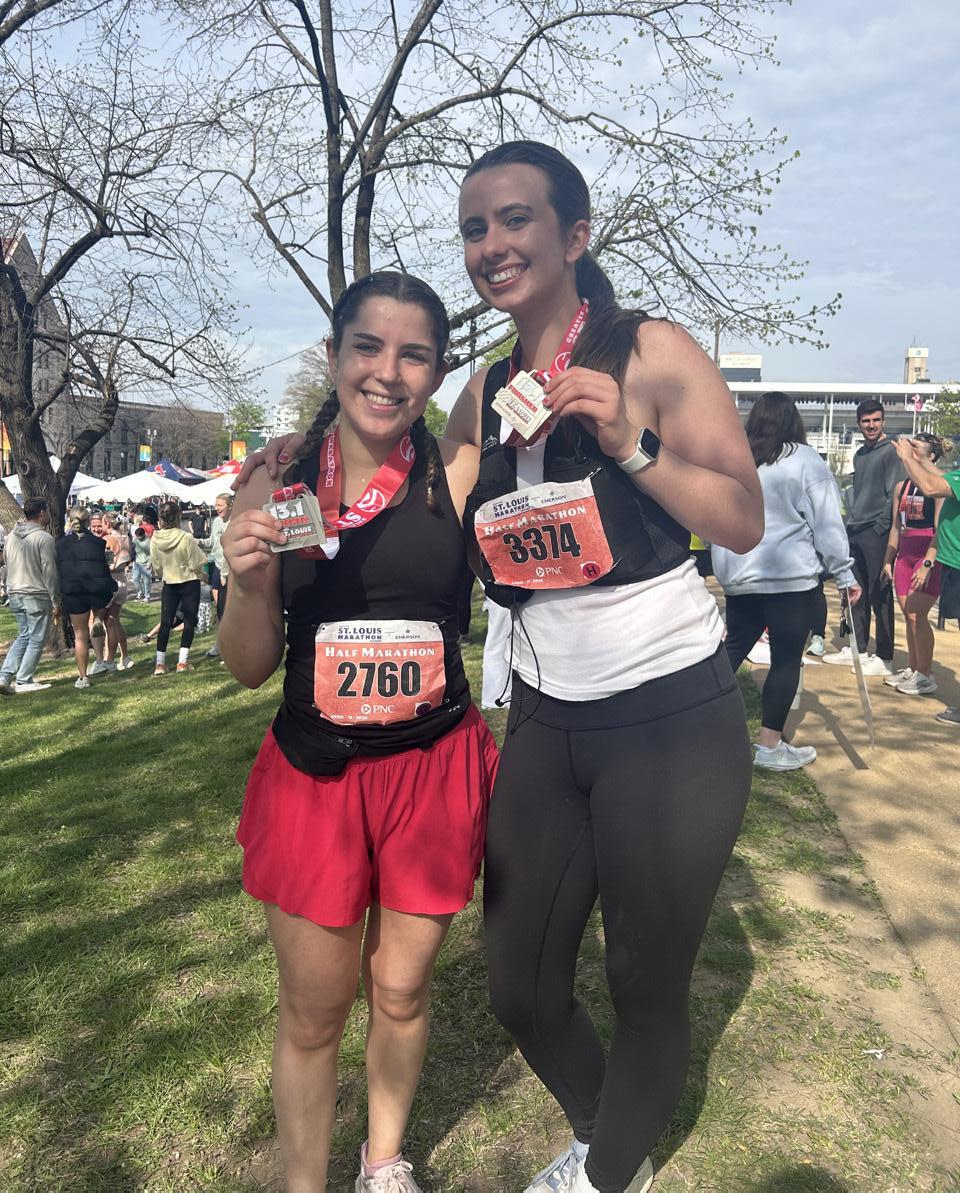
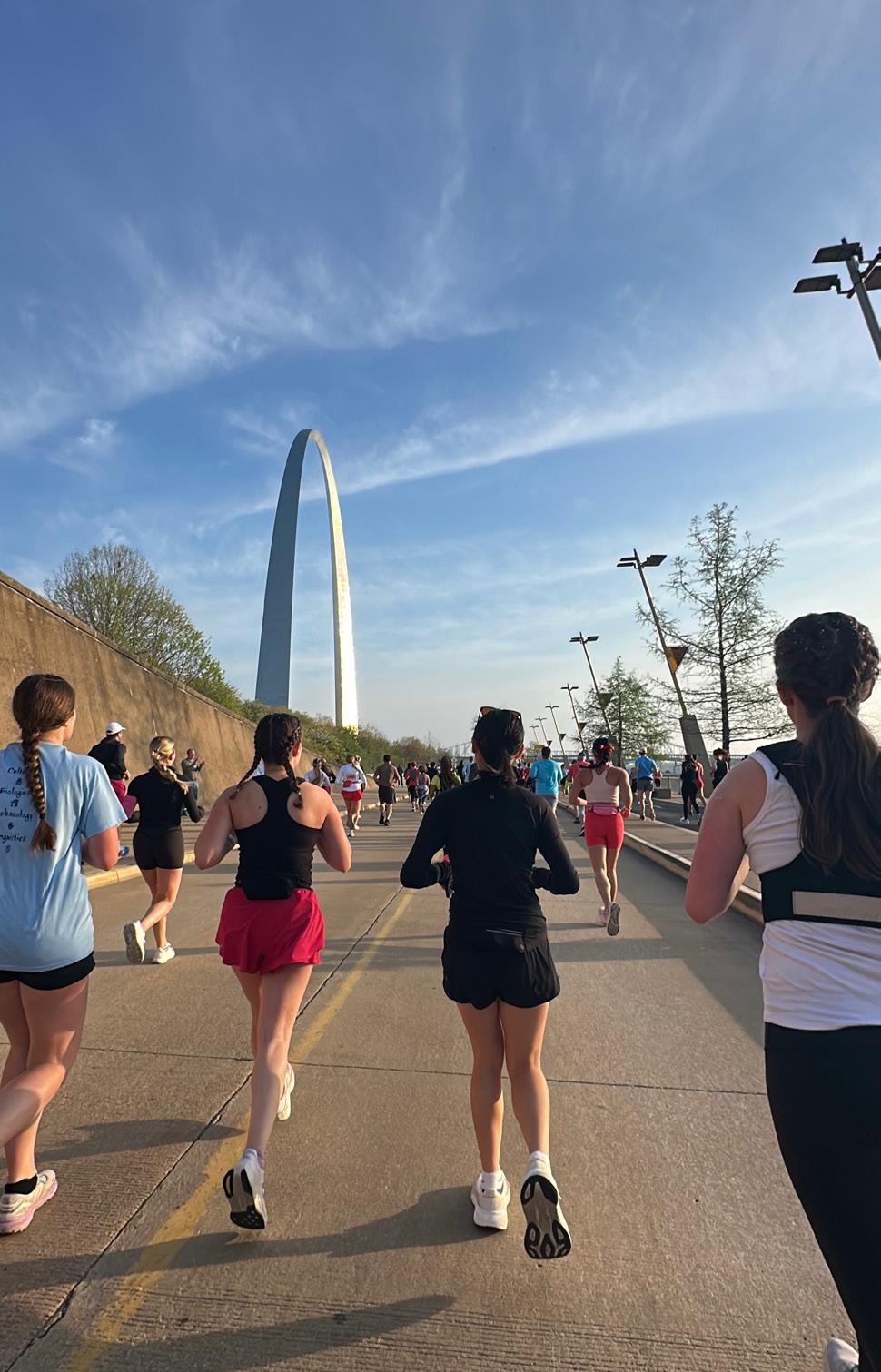
‘PARTY PACE’: Mile by mile through the St. Louis halfmarathon. (Sports, pg 9)
WashU to add Early Action and more for Class of 2031 undergraduate admissions cycle
ELLA MESHOULAM
WashU Admissions is set to add an Early Action (EA) option and a priority deadline for scholarship programs for the 2026-2027 admissions cycle, with the goal of adding flexibility for prospective students and streamlining the scholarship process. The University is also planning to remove its optional essay and factor demonstrated interest into its admissions decisions.
Unlike Early Decision (ED), EA allows students to apply early to universities without having to commit to the college if accepted. EA applicants will receive their offers in December and will need to make their decision by May 1. Assistant Vice Provost and Executive Director of Admissions, Grace Chapin James, shared that an EA round was introduced to offer applicants more time to explore WashU alongside other options.
“We’ve gotten questions over time from both students and school counselors about whether we could offer a more flexible option for students to hear from us early,” James said. “It just kind of came into focus that it was a good time for us to make that change.”
Since the 2027 cycle will be the first year WashU implements these changes, James said that it will be hard to predict how these policies will affect WashU’s applicant pool and acceptance rates.
First-year Hashim Benlhabib sees the value in EA for people like his sister, who is in high school and approaching the college admissions process.
“I don’t think she has one school that’s her dream school right now, and so I don’t see her [applying] ED anywhere,” Benlhabib said. “Early Action presents an option where she could apply to WashU, where she might not have otherwise until Regular Decision.”
Benlhabib also said the Early Action policy could give more agency to students waiting on additional financial information.
“I was never afraid to apply ED [to WashU] because I knew that WashU was going to have very good financial aid for me,” Benlhabib said. “People in the middle who aren’t necessarily going to get a full ride but [can’t] easily afford the full tuition may lean more towards Early Action.”
To WashU Admissions, demonstrated interest includes participating in virtual info sessions and Bear Chats, as well as signing up for WashU’s mailing list, among other factors. Attending campus
tours, according to the admissions website, sits “on the top of our list (and hopefully yours!).”
When first-year Elise Hanna first heard about the changes, she was concerned that demonstrated interest, specifically attending in-person campus tours, could disadvantage students who don’t have the financial means to travel for a university visit.
“I honestly don’t love that they’re adding [EA] because I feel like something that makes WashU a really great option for a lot of students is the financial feasibility aspect, and I think demonstrated interest ... is a limiting factor for a lot of people,” Hanna said.
In response to this concern, James said the Office of Undergraduate Admissions hosts events for prospective applicants nationwide. These, along with online info sessions, will all be considered demonstrated interest, allowing applicants from differing backgrounds to engage with the school.
“Participating in all of these kinds of things is considered demonstrated interest,” James said. “Those who [don’t] have the financial or social resources to visit campus still [have] the opportunity to learn about WashU that we will consider.”
The University also announced
that it will continue its test-optional policy — a policy that peer institutions such as Georgetown, Purdue, and Cornell have begun to phase out. WashU’s policy was first introduced in the 2021 application in response to the COVID-19 pandemic.
According to James, the decision was made after analyzing internal data regarding student success.
“We feel that it’s responsible to continue being test-optional,” James said. “It’s a process that allows us to include students from a wide range of backgrounds and also where we see students finding success on campus.” Hanna responded positively
to the University continuing this policy, as it gives applicants the opportunity to be viewed beyond their standardized test scores.
“I like that WashU is staying testoptional,” Hanna said. “I think it allows people to have their applications be viewed in a more holistic way rather than just a number on a standardized test.” James said that the University will continue to work toward improving admissions in the years to come.
“We are a school that really likes to make informed decisions,” James said. “I will continue evaluating this and using that information to make choices for future classes.”
The Kid LAROI announced as spring 2026 WILD headliner
LAUREL WANG EDITOR-IN-CHIEF
Australian singer-songwriter
The Kid LAROI is set to headline the spring 2026 WILD (Walk In, Lay Down) at 6 p.m. Friday, April 24, on Mudd Field.
Best known for his 2021 single “Stay” with Justin Bieber, LAROI’s sophomore album, “Before I Forget,” was released in January.
Pop and hip-hop duo MKTO, with their 2013 double-platinum hit “Classic,” and student band Underpass will open this year’s performance.
WILD tickets will be distributed at several locations in the days leading up to the Friday evening performance. In hopes of mitigating long lines, Student Union’s (SU) Social Programming Board (SPB) is piloting a kioskbased sign-in process. Tickets for undergraduates are free; graduate students will be able to purchase tickets for $20 in-person and $22 online. Tickets will be available on Wednesday, April 22 and Thursday, April 23 at the Danforth University Center (DUC) from 11 a.m. to 2 p.m. and Edison Theatre from 11 a.m. to 3 p.m. Tickets will also be available for pickup on Wednesday from 5 p.m. to 7 p.m. at the Village, Clocktower,
and First Year Finale party on the Swamp. Due to safety concerns, students will not be able to receive tickets at the door.
LAROI was the third-most popular choice of the 4,266 votes that were cast in the SPB Spring WILD survey, with Jason Derulo as students’ top artist, followed by Halsey. LAROI was chosen after Derulo’s quoted performance fee was found to be over SPB’s budget, and Halsey cited concerns about performing at an outside venue, according to SPB concerts chair, senior Kiely McEnery.
McEnery has been in near-daily contact with LAROI’s team since LAROI was chosen as the headliner, but delays in communication and contract negotiations pushed back the announcement date.
“I know students were not thrilled with the delay in release this year. … If it weren’t for the waiting back and forth to get contracts, we could have released [the artist during the] first week of March,” McEnery said.
For the first time since 2019, SPB is reintroducing WILD Week in the lead-up to the performance, featuring events highlighting the history of the performance. Attendants of WILD Week events will earn an entry into a raffle for tickets to a VIP tent with free food and lounging areas during the performance, as well as raffle baskets
with gift cards to local businesses and Live Nation concert tickets.
“Since so many people don’t understand why it’s called Walk In, Lay Down because obviously, no one is laying down at WILD, we thought it’d be fun to take it back to the roots, but also still keep WILD itself the same,” McEnery said.
Following a year of financial belt-tightening across the University, SPB has reevaluated its budget to better balance its spending between quality artists and costs. The allocated talent budget for this spring’s WILD was $320,000, the same amount as last year and almost double the budget of the performance in 2024.
“What we try to do is provide the maximum that we can within the financial limitations that we have,” SPB president, senior Shannon Rao said. “We really try to push hard [and] appeal whenever we can to make sure that students’ experiences aren’t compromised due to the [University-wide] budget cuts.”
Traditionally held in Brookings Quadrangle, WILD has migrated toward the west end of campus in recent years, with Joey Bada$$ performing in the Field House after a turn in weather conditions in 2024 and Flo Rida performing on Mudd Field in 2025. According to McEnery, the
change in venue has allowed for a greater attendance capacity of 6,000 students and smoother security logistics.
“I think students have liked [Mudd Field] better, because they always end up in the mosh pit, but there’s a little bit more space to kind of spread out and just kind of roam a bit.”
Although the main priority of WILD is to provide a fun environment for students, security and safety are also paramount for event organizers.
“I think the biggest thing is to just please be safe. I know there’s a lot that goes on beforehand, and I get it. I know it’s a big event, and everyone wants to have fun, just be safe,” McEnery said. “I know there was a big issue of pushing last year, so hopefully people aren’t shoving too much, but we’ve really tried to put students at the center of this and make sure it’s what they want, and we just really, really hope they have a great time.”
Rao echoed McEnery’s sentiments, noting that she hopes WILD serves as a space for WashU students to come together and celebrate the end of the academic year.
OF UNITED
22-year-old singer The Kid LAROI will headline WILD.
“It’s a great time to relax, and it’s the last day of classes,” Rao said. “I think WashU students are very academic in a sense; they’re very career-focused. So we want to create a space where students can really put down these responsibilities for maybe a night or so and then really enjoy the atmosphere [of] the entire undergraduate body coming together and celebrating their moment … making them feel like part of a larger community, and really building that sense of WashU students as [an] entire identity for the student body as a whole.”
WashU plans to add early action, among other changes, to the upcoming undergraduate admissions cycle.
NEWS
Phil Gramm draws parallels between the Industrial Revolution and the AI boom
dramatic event that has ever happened in the history of man on this planet, economically,” Gramm said.
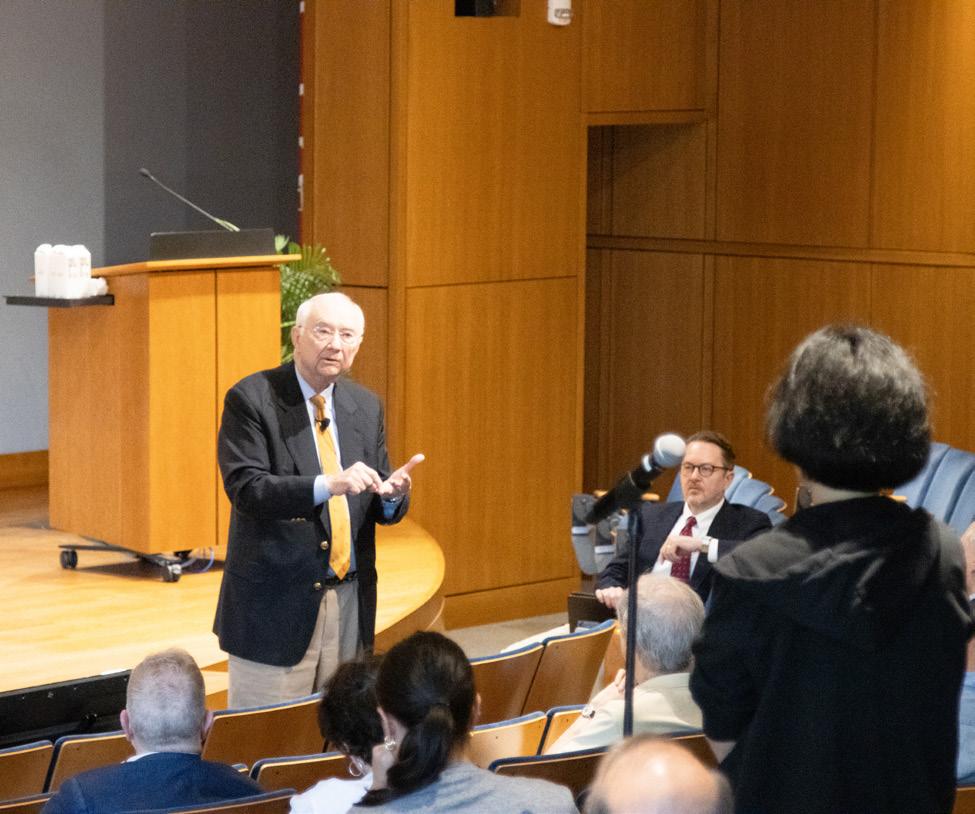
Former U.S. Senator Phil Gramm argued that AI would be a force for economic good and drew parallels to the Industrial Revolution in a lecture at WashU last Thursday.
The event was sponsored by the Weidenbaum Center on the Economy, Government, and Public Policy. Chancellor Andrew D. Martin was among those in attendance.
Gramm, who is also an economist and former professor at Texas A&M University, centered his talk on his new book “The Triumph of Economic Freedom: Debunking the Seven Great Myths of American Capitalism,” co-written with George Mason University professor Donald J. Boudreaux.
Gramm said that the historical consensus around the Industrial Revolution was that it “impoverished workers and enriched industrialists.” However, he refuted this claim as a myth, stating that real gross domestic product per capita, wages, literacy, and other metrics dramatically increased during this era.
“The Industrial Revolution was the most
Gramm contested the notion that the Industrial Revolution worsened the quality of life in urban areas in Europe and the United States and argued that literary works of the time by authors like Charles Dickens painted a skewed picture of life in industrial cities.
“In America, we had growth by biblical proportions,” Gramm said. “By every measure of public well-being, the Industrial Revolution in America had no parallel in the history of the world. No people who had ever lived anywhere, anytime that we have any data on had seen such a dramatic improvement.”
Gramm later drew connections between the impact of the Industrial Revolution on society to what we could see today with the emergence of AI.
Gramm said that he personally uses AI every day and acknowledges its current limitations and the fears it provokes. Gramm said many of the same concerns about the potentially negative impact of AI, such as displacing jobs and widening the wealth gap, were also present
for technologies invented during the Industrial Revolution.
“It is so easy to see the negative impact of change,” Gramm said. “Now, I don’t profess to have any ability to see the future and to know how the AI revolution will play out, but I know we have never adopted a technology in the history of mankind that did not make us better off and that ultimately did not create more jobs and more prosperity.”
He anticipated that the federal government was likely to attempt to regulate AI, which he argued would put the U.S. behind other global competitors.
“I’m afraid that [the] government is going to intervene and delay and stunt the use of AI and that many of the miracles that will ultimately come will come slower than they would,” Gramm said.
Gramm said that previous federal efforts to help cushion job losses, such as unemployment benefits, have historically been unproductive.
“We need to find a new way of helping people make economic [transitions]. ... In my 25 years in Washington, one of my great disappointments was we never found a way to help people help
themselves,” Gramm said. “Mostly, when we help people, many of them stop trying to help themselves.”
Gramm expressed optimism that, similarly to the Industrial Revolution, AI would be a net benefit and improve Americans’ overall quality of life.
“I’m confident, based on what I know about economic history, that ultimately AI will be a great boon to mankind, and we will be richer, freer, and happier as a result,” Gramm said.
Leaving the event, many students like senior Lance Berryman were impressed with Gramm’s knowledge of the AI industry and curious about its potential economic benefits.
“I thought it was interesting,” Berryman said.
“We just got phones and computers at the end of the technological revolution. So now, I’m just wondering what more ground can be made in other industries.”
During the event, Gramm criticized President Donald Trump for increasing government involvement in the U.S. economy.
“I think one of the bad things that is happening now is that President Trump is setting a precedent for greater and greater government involvement
in American business, and that precedent is going to be used to do things that are going to do great harm,” Gramm said.
Gramm has been critical of the Trump administration’s tariff policies, including in op-eds.
“[Tariffs] hurt the economy. They make us poor, slow growth, raise prices, and politicize the system,” Gramm said in an interview with Student Life.
“There is no redeeming value in protective tariffs, except in a very narrowly defined area of national security. And even there, many of the arguments are funny.”
Gramm was also asked about the national debt.
He expects there will be a point where the United States is either unable to pay its debt or its willingness to pay is questioned.
“The chicken will come home to roost,” Gramm said. “I never envisioned in the 1980s that we could go as far as we’ve gone with the level of debt.”
Gramm encouraged the audience to educate itself on AI and financial literacy and to embrace the positive impacts of this new technology.
“AI is coming,” Gramm said. “The question is, are we going to lead it? Are we going to be the earliest beneficiaries?”
English professor holds solo demonstration against Iran war
LISSY PORTORREAL
ZOE RHODES
Professor William J. Maxwell spoke out against the Iran war outside of Olin Library on April 7. He stood alone in front of the George Washington statue with a sign that read “No war of choice. No war on civilian targets. No war in our name. No war in God’s Name.”
Student Life sat down with Maxwell, professor of English and African and African American Studies, to discuss his reasons behind the demonstration and what actually happened last Tuesday.
On Sunday morning, President Trump posted on Truth Social, “Tuesday will be Power Plant Day, and Bridge Day, all wrapped up in one, in Iran. There will be nothing like it!!! Open the F-----’ Strait, you crazy bastards, or you’ll be living in Hell.”
Trump’s post prompted Maxwell to take to the statue.
“I had to do something publicly as a form of witness and penance,” Maxwell said.
Maxwell considered his demonstration an important act in higher education.
“I felt that it was important for the University, and particularly the students of the University, to see that some faculty thought that this was crucially important to … teach against,” Maxwell said. “I saw it as an act of teaching.”
Maxwell said that he was shocked that someone felt it necessary to call the Washington University Police Department (WUPD) in response to his demonstration.
“[I am one] old man with a head full of gray hair, standing with a sign that calls for peace; this was somehow thought
to potentially be a problem,” Maxwell wrote. “That’s a sign of where we are as a campus, as a university, and as a society.”
Maxwell later wrote in an email to Student Life that he has currently stopped his demonstrations due to the recently announced ceasefire. He will begin protesting again, however, if the ceasefire falls through.
Maxwell’s demonstration did not explicitly violate WashU guidelines, so while WUPD was called out to the scene, there was no punitive action.
“Once everything was sorted out, the police acted extremely responsibly,” Maxwell said.
Student Life reached out to WUPD for a comment regarding the demonstration. Chief Angela Coonce referred to Vice Chancellor for Marketing and Communications Julie Flory, who commented on behalf of the University.
“At WashU, we fully support free expression within the guidelines and policies that are in place for these activities.”
According to WashU’s policy on demonstrations and protests, “It is the policy of the University to protect the rights of free speech, assembly and expression by making its facilities available for activities related to the exercise of these rights, including peaceful assembly.”
Gregory P. Magarian, professor at the School of Law, found it inexcusable that WUPD was called and arrived on scene.
“I frankly don’t care if it’s a professor or if it’s somebody who came in off the street … [who] can’t do [a demonstration] without getting a police response, then we have no freedom of speech, no
freedom of expression at all on this campus,” Magarian said.
Even though Maxwell did not violate the policy, Magarian found the Demonstrations and Disruptions policy overbearing in general.
“The policy on its face, in the abstract, I think it is excessively restrictive,” Magarian said. “I think it reflects a lack of any serious commitment by the University administration to encouraging or even tolerating speech and protest.” Magarian also found the language in the WashU policy dangerously vague.
“[The policy’s] general tone … fundamentally treats demonstrations as disruptive,” Magarian said. “The language about disruption in the policy seems very broad, and I worry that it’s just too easy to enforce the policy.”
Magarian expressed concern over the principle of freedom of expression on campus, referencing the police response to WashU’s pro-Palestine peaceful protest, which many students found “unnecessarily violent.”
“I’m troubled by the lack of procedural clarity in the policy about restrictions or punishments or consequences for actions that violate the policy,” Magarian said. “We saw this with the Gaza protest. The sanctions that were handed out were essentially arbitrary. The administration just did what it wanted to do.” Maxwell emphasized the demonstration being an act of necessity, not heroism.
“I don’t consider what I did in any way special or heroic or risk-taking,” Maxwell said. “I want those words in [the article].”
Former Senator Gramm discusses the future of AI, among other federal issues, at his talk to WashU community members.
YOLANDA ZHANG | CONTRIBUTING PHOTOGRAPHER
SCENE
ThurtenE hopes to build community through annual carnival
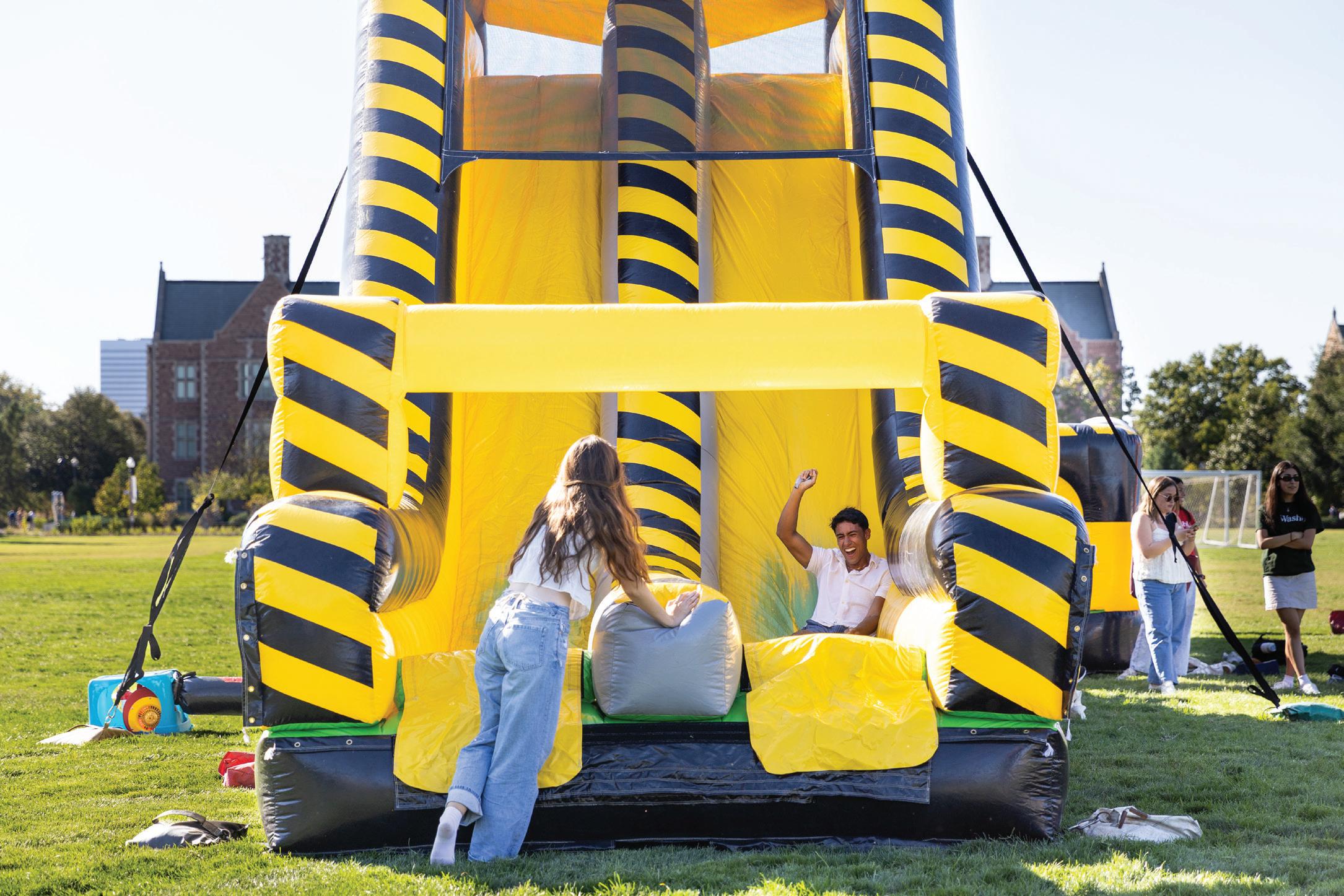
“What makes ThurtenE special is the fact that it ties everyone together. ThurtenE is one place on campus … where we’re gonna see all these people together,” junior Anurag Challagundla, ThurtenE PR and marketing chair, said. ThurtenE, the nation’s oldest and largest student-run carnival, returns to WashU for the 119th year this weekend. Organized and run by 13 members of the junior class that make up ThurtenE Honorary, the event features carnival rides, games, and student group-run activity and food booths, making it an enticing event for WashU students and community members alike.
This year, changes to
carnival hours and Student Union-sponsored student group funding have allowed for increased participation and accessibility initiatives. Even as new initiatives shape the carnival, the Honorary stressed that ThurtenE’s core identity remains the same: bringing people together.
“There’s a ton of different groups across campus … that we’re really trying to unite with ThurtenE,” Challagundla said. “We feel like this is the one big event where it’s student-led, and it’s student-driven, and that’s exactly what makes it special. That sense of community extends beyond the actual carnival itself.
“There are so many people around us who love ThurtenE and want to help ThurtenE and want to see us grow and succeed,” Challagundla said.
“That’s why, even though it is a ton of work, it always feels very gratifying for me. … The fact that there are so many people around us who are willing to help, and so many people care, makes it special.”
This year, student groups are allowed to use SU-sponsored group funding toward their ThurtenE expenses, allowing increased participation for booths selling food and running activities. Social and professional fraternities, sororities, campus clubs, and campus food locations will also be hosting games and selling snacks.
“The ThurtenE above us worked a lot with SU to try to get this thing passed through,” Challagundla said.
“Student groups can now use their funding for ThurtenE purposes, which has been like
a huge roadblock in the past, with allowing the majority of the student body to really engage in ThurtenE or have a booth.”
Beyond accessibility, ThurtenE Honorary sees these efforts as part of the larger mission of connecting students and the University more meaningfully with the surrounding St. Louis community.
“I think it’s really cool that student groups are able to interact with the St. Louis community and not kind of be stuck in the WashU bubble constantly,” junior and ThurtenE Community Partner Coordinator Lizy Lopez said.
Among the most notable changes to the carnival are newly designated hours intended to better serve the needs of the WashU
community and this year’s chosen ThurtenE community partner.
Lopez worked with this year’s community partner St. Louis Arc, an organization that provides services for individuals with intellectual and developmental disabilities, to envision a carnival space that was inclusive for all. Sunday night from 5:30 p.m. to 8 p.m., a night typically already quieter than the other carnival days, will be exclusive to the WashU and St. Louis Arc community. These adjustments reflect a broader effort made by ThurtenE Honorary to create a more intentional and welcoming environment at this year’s carnival.
“Some of the staff at St. Louis Arc … say that some individuals with disabilities sometimes get judged wherever they go into a place
because they may be different [from] others,” Lopez said.
“Having a community partner night is really awesome because [people don’t] have to feel like they’re being judged.” By creating dedicated space for their community partner, the Honorary hopes to reflect the broader spirit of unity that defines ThurtenE across the WashU community.
“A big thing that we’re trying to do is show that we’re really trying to represent the student body. ThurtenE is supposed to be the one thing that unites this entire student body together,” Challagundla said.
The annual ThurtenE Carnival opens on Friday, April 17 and will run until Sunday, April 19. Hours and further details can be found at www.thurtene. org/carnival.
Battle of the b-boys: The WU Cypher story
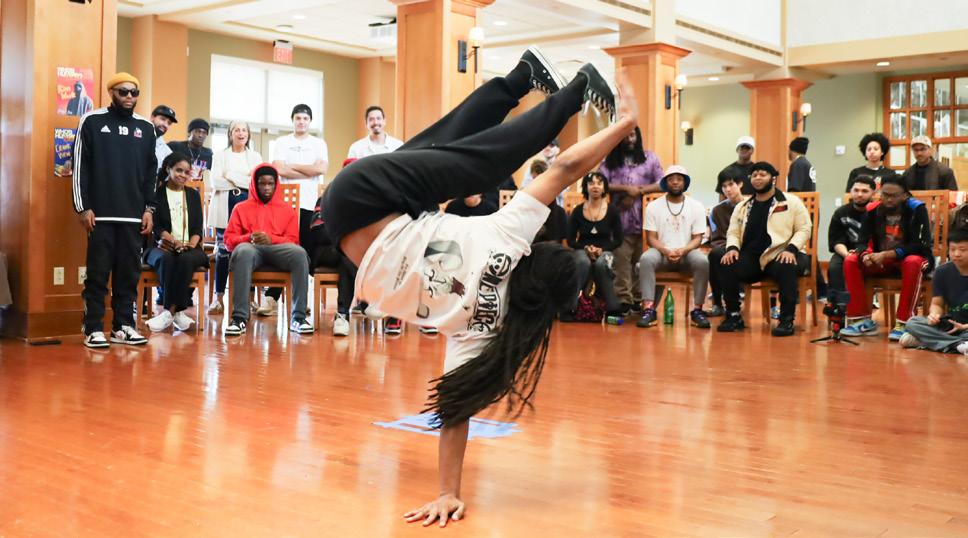
On Saturday, April 4, WU Cypher turned Risa Commons into a battleground. Spectators formed a circle, crying out with astonishment. From the south end of the room, three community veterans sat at the head of this circle, judging the scene before them. And in the circle, two dancers fought to see who would survive to the next round. Heavy basslines pulsed through the room, penetrating deep into the floor. The hihats and snares that beat just above the bass maintained the inertia of the dancers’ attacks. Some dancers fell through the air, bouncing and rocking against this soundscape. Others went for a subtler approach, weaving complex patterns around their opponents with only their hands. And still, others went with more aggressive, free-flowing movements, stamping their feet and imitating a fight, not unlike an impromptu martial arts demonstration. Either waiting for their turn or having finished their exhibition, the other dancer stalked the edge of the circle. While
they were no longer showing off, these competitors were not passive. Staring down their opponent, they attempted to embarrass their competition. They mimicked the other dancer’s attacks and laughed off their opponent’s attempts to intimidate them. However, any aggression was purely for show. Once the dancers stepped out of the ring, they would laugh with one another and teach each other new moves. And the crowd couldn’t have been more supportive. Never ceasing to motivate the dancers with encouraging screams and shouts, this ring of spectators was as important to the dance battle as the dancers themselves. This was an event for everyone to support their shared interest. This was a time to impress and express. This was WU Cypher’s “Who’s Hungry: Reunion.”
Specializing in hiphop dance, WU Cypher is WashU’s dance battle group for teaching students new moves and showcasing WashU as well as community, talent. While breakdancing is certainly a key part of the WU Cypher’s program, sophomore and co-president of WU Cypher, Jackie Zhang — also
known by his b-boy name Yansanity — explains that the club teaches more than freezes and toprocking.
“We try to teach every type of hip-hop that there is. Hip-hop is an umbrella term — you see the waackers, the poppers, the lockers — they all fall under that category.”
According to senior and co-president of WU Cypher, Alice Xu — also known by her break-name Bgirl Stylez, “Each dance style [dances] to a different type of music, like for locking and popping, it’s maybe funk music, and for waacking it’s disco, … [and] for breaking, there’s a certain beat pattern that matches.”
Since “Who’s Hungry: Reunion” was an all-styles dance battle, dancers from different hip-hop backgrounds often faced off against each other. And for this event, the music was randomly chosen by a DJ, which Zhang said added a layer of difficulty to the contest.
“Each individual may have their own style, and they may need to dance to music that they don’t know. That’s really the tough part. That’s when you become creative, you freestyle, you try to overcome that,” Zhang said.
Along with teaching hiphop dance and participating in dance battles, Zhang explained that the club is dedicated to building a connection between students through dance.
“Our mission is to make dance a community rather than something to gatekeep. We are always trying to host workshops that teach students, beginners. We really want to show that anyone can dance
and anyone can have fun,” Zhang said.
As co-presidents, both Zhang and Xu work to organize local events and plan trips to dance battles in other cities.
So far this school year, WU Cypher has hosted Fortuna Cypher, a strictly breakdancing dance battle, and has participated in the Cultural Forum, a Chicago battle funded by Red Bull.
As Zhang explains, dance battles are the crux of WU Cypher’s efforts. “We don’t do so many performances; we do these battles. That’s kind of the difference between us and other dance groups.”
About twice a month, the
group hosts workshops, which are open to WashU students and other members of the community. Some of these workshops are even taught under the direction of hiphop veterans from St. Louis, Chicago, and Kansas City, each of whom trains in their own distinct style of dance.
According to Xu, “[WU Cypher] has no auditions. It’s just open practices. We’re open to students and open to St. Louis dancers. Sometimes the St. Louis dancers will teach the students new tricks.”
Besides training to compete, these workshops also provide an opportunity for students to enjoy and express themselves.
As Xu says, “At the end of our practices, we always have a ‘cypher,’ which is just a time where everyone dances to the same music and you’re just having fun. You’re not judging.”
With plans to travel for more dance battles and eventually compete with the National College Breaking Association, WU Cypher is continuing to take on the dance circuit, one battle after another. For those interested in getting into hip-hop dance, Zhang offers one piece of advice: “It’s easier than it looks, and it looks really cool.”
HANNAH LA PORTE MANAGING SCENE EDITOR
YOLANDA YU | STAFF PHOTOGRAPHER
A member of hip-hop group WU Cypher takes part in a competitive dance battle.
GABE CERDA STAFF WRITER
South 40 aglow with cross-cultural harmony at Asian American Association’s ‘Night Market’
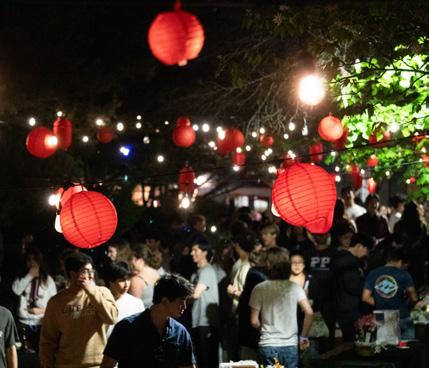
WashU’s Asian American Association (AAA), otherwise known as “Triple A,” recently collaborated with 25 cultural clubs and nine sponsors to host its biggest event of the year: “Night Market.” The 2026 theme, Neon Lights, brought a vibrant, energetic atmosphere to over 1,200 students from the Gregg storefronts to the Clocktower on the South 40 as a welcoming space for WashU students to come together in celebration of the distinct Asian communities on campus. Every aspect of AAA’s latest take on their annual tradition was carefully designed to highlight the
diversity of Asian cultures. “One of our biggest goals is to connect with the Asian community and also teach to others,” Co-Presidents Shreya Srivastava and Rishi Sattaluri said.
This goal is especially evident in the wide variety of food options they served, which represented various regions and countries across Asia. Dishes included desserts and snacks like pistachio baklava, ube cake, mochi, and takoyaki, alongside entrees like biryani, samosas, and bulgogi. Having this wide, complimentary spread allowed WashU students and St. Louis community members alike to explore a spectrum of Asian culinary identities all in one night. For this free dining
experience to exist, there was an “activity stamp card” system put in place where, in order to receive their food, attendees had to complete at least six separate activities out of those offered by the 25 student groups at Night Market. This give-and-take strategy that requires active involvement with several booths throughout the night is where the educational aspects of the Asian cultures represented shine brightest.
“I think it’s really important that they had the little stamp system to get food because otherwise, people would have gotten food and just left. I think that it really forces people to engage with the [booths],” sophomore Courtney Lucas II said during his time at Night Market. “Of course, people are going to do that on varying levels, but I think overall having to do six booths that interest you is really important. So that system especially makes it culturally engaging.”
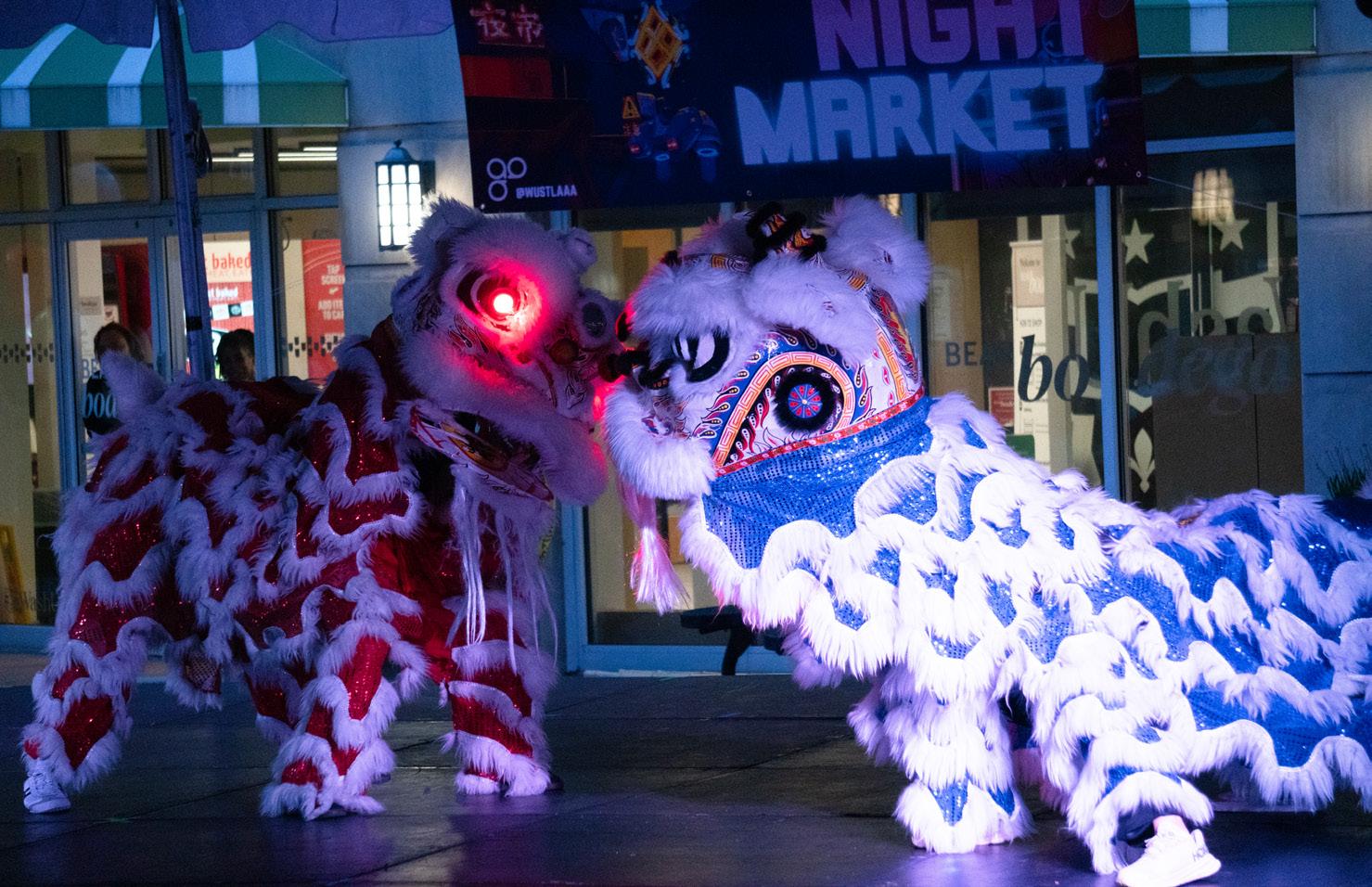
Such booths featured some of the oldest cultural histories on campus. Namely, the Lion Dance performance group is the longest-running act in WashU’s Lunar New Year Festival (LNYF), which itself has been a yearly cultural event since 1996. Their dance performance later into Night Market brought the tradition roaring to life. The activity at their booth involved teaching basic acrobatic moves called “stacks,” where the performer acting as the lion’s head is lifted by the performer acting as the tail.
“I think Triple A does a
very good job at introducing all the cultures together in a safe space,” said junior and Lion Dance member Lance Yeh.
“It’s not as intimidating as it may seem,” fellow member senior Justin Lan said of non-dancers learning a stack. “It doesn’t matter whether you lack knowledge or you don’t know how to do certain things. It’s all an open, safe space, like Lance said, to be creative, try something new, and just do whatever you want.”
In addition, the Chinese Students Association (CSA) created an engaging game where students used chopsticks to move items from one plate to another while wearing vision-shifting glasses at their Night Market booth.
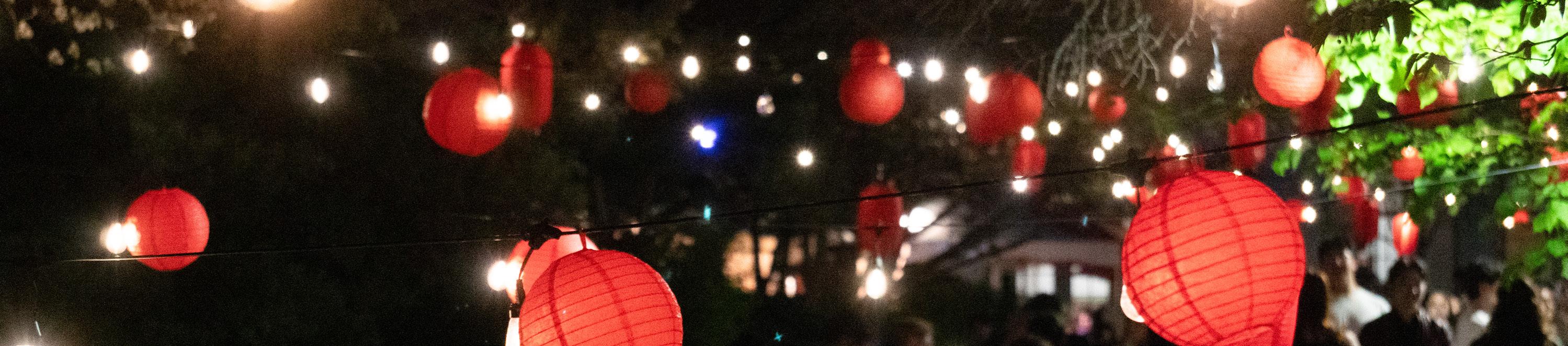
Additionally, some students who had previously lived in East Asian countries resonated with the event’s paper-lantern and warm string light decoration, elements that resembled traditional night markets from their upbringing.
“Part of my favorite childhood memories in Asia have been traveling around and exploring these night markets. … Seeing how many people are congregated here and smiling is just really nostalgic to me,” said junior and Vice President of Programming for CSA Daniel Li. “I’m really grateful to have something like this on campus where I go to school.”
One educational booth was hosted by Asians Demanding Justice (ADJ), WashU’s social and political club for Asian Pacific Islander Desi American (APIDA) students. Their pinboard on the different
kinds of cultural insensitivity that often go unnoticed in day-to-day conversations brought this nuanced topic to light for attendees.
One example attendees found surprising was the practice of asking someone who speaks multiple languages to say a word from their native tongue. If not done respectfully, this seemingly harmless request can act as a microaggression, even without conscious knowledge.
“That’s actually happened to me, and l’ve never thought about it in that type of way,” sophomore attendee Vinisha Tripathi said. “I was able to have amazing conversations about it and it’s gotten me more interested in how I interact with people about my identity as an Asian American.”
At the booth run by Ashoka, WashU’s South Asian Student Association, members gave attendees henna tattoos, known as mehndi, to promote their own “Mehndi Night” event happening on April 16.
“People often forget that South Asia is part of Asia, and that’s something that we’re trying to push more as Ashoka,” Ashoka President and junior Varun Vadhera said.
Beyond the student-run booths celebrating the rich traditions across Asia, AAA also hosted two sets of performances over the duration of Night Market to showcase the heritage behind various dances.
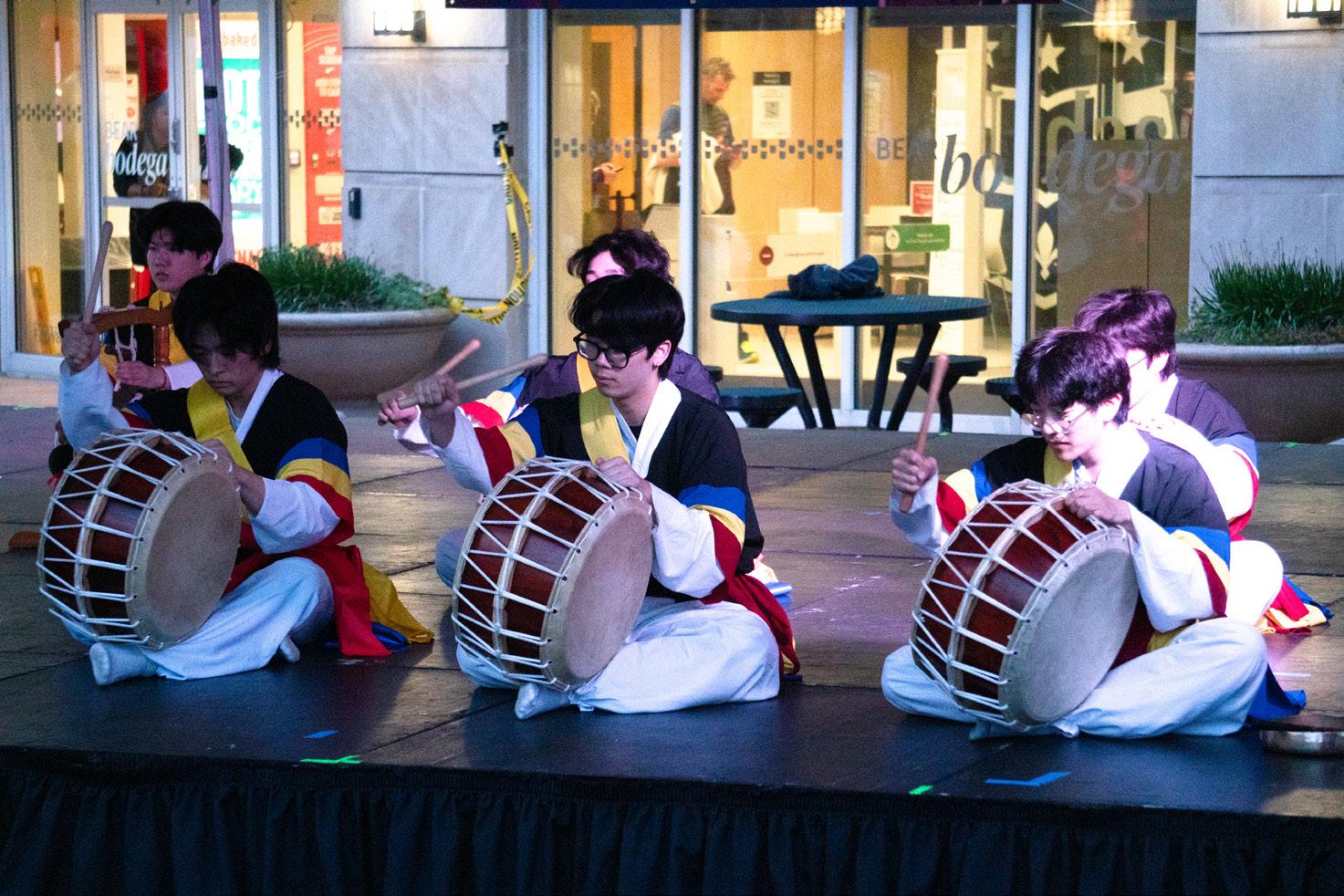
The first performance opened with a powerful collaboration between Washu’s Samulnori club and the Lion Dance team. Samulnori delivered high-energy, rhythmic percussion rooted in Korean
traditions, while the Lion Dance featured expressive choreography central to Chinese culture. The two groups later joined together for a combined performance, fusing Korean and Chinese traditions together through synchronized movements and rhythm.
This was followed by a traditional Tinikling dance led by WashU’s Tinikling team, where performers demonstrated precision and agility as they moved between rapidly clapping bamboo poles. The energy continued with two performances from the K-pop dance team PL4Y and concluded with Garba by Ashoka.
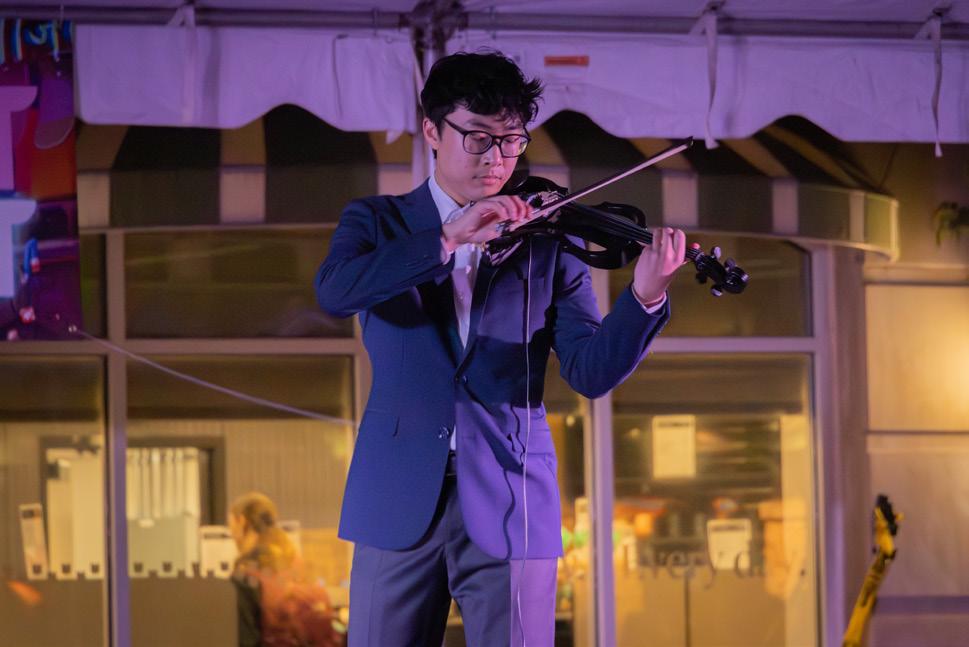
The second performance segment showcased an elegant violin performance by first-year Simon Park, an executive member of AAA. Following his act, the WashU Chinese Yoyo Club (YoWU) showcased highly controlled, coordinated maneuvers and tricks with their yoyos.
To conclude the show, AAA’s executive members performed their own dance, closing the night with a celebratory final act. Ultimately, the 2026 Night Market was a tour de force that encouraged breaking down cultural barriers and created a welcoming space where students, staff, and St. Louisans could engage meaningfully with a wide range of Asian cultures. Through food, club booths, and performances, AAA highlighted the diversity of Asian identities while maintaining a shared sense of community and celebration.
Friday, April 17
2:30-5:30 p.m. Brookings Quad FREE food, games, music & more!
ALEX DERING | PHOTO EDITOR
ALEX DERING | PHOTO EDITOR
TAMIAH WOODFORK | STAFF PHOTOGRAPHER
TAMIAH WOODFORK | STAFF PHOTOGRAPHER
ALEX DERING | PHOTO EDITOR
Blue and red lions prance on stage during Lion Dance.
First-year Simon Park performs a violin solo.
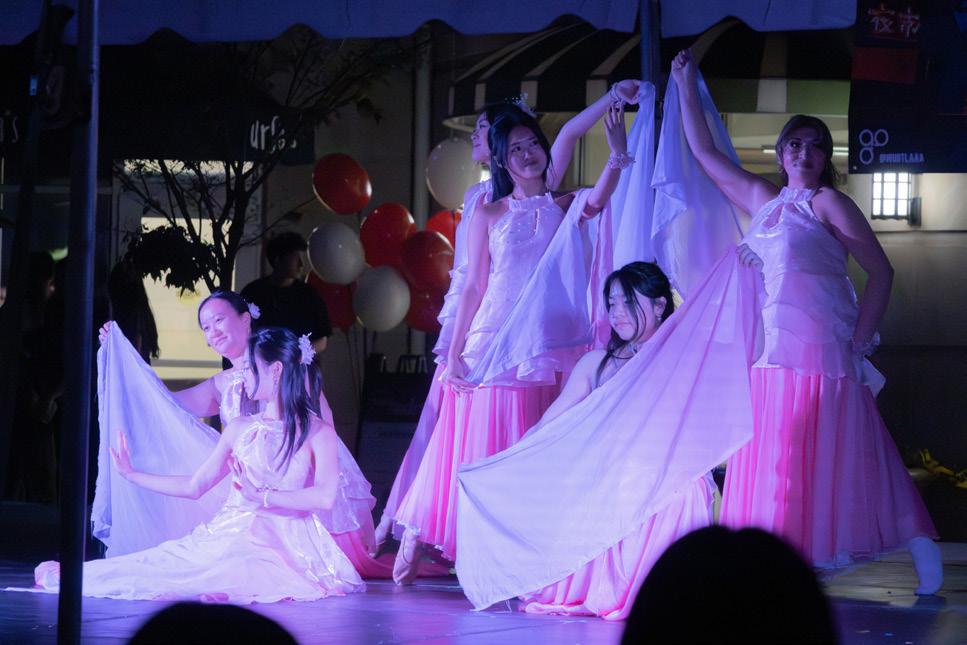
Dancers in pink-and-white matching scarves and uniforms pose in formation.
Drummers from the Samulnori group play traditional Korean percussion.
Cooking up a following: WashU alumnus
Ryan Nordheimer’s culinary journey
cooking while stuck at home due to the pandemic, and his online platform would slowly take root in the years to follow.
Whether it is cheffing up buttery lobster rolls for a summer-in-the-Hamptons-themed apartment cafe, preparing a French onion focaccia for an onion-inspired dinner party, or whipping up his famous Funfetti layer cake for New York City celebrities, recent WashU graduate-turned-chef and content creator Ryan Nordheimer is always on his A-game in the kitchen. With over 1.3 million followers on Instagram and TikTok combined, Nordheimer’s platform takes a twist on traditional recipes and dining experiences and inspires others to want to learn to cook.
Nordheimer graduated in 2021 with a bachelor’s degree in political science and healthcare management and now lives in New York City. He discovered his affinity for
However, his apartment on Greenway was his first culinary stomping ground.
Between balancing the new world of hosting, cheffing, and having his own kitchen for the first time, his early creations were simple. His crowd-pleaser involved starting with apple slices doused in cinnamon and sugar and covering them in store-bought pie crust that he had cut up into a bunch of pieces before serving it to his friends.
“I first started to cook that junior fall when I lived in Greenway, because it was the first time I’d ever had a kitchen like for myself. I would just invite friends over to have dessert and hang out and maybe play Catan or something. Just really fun,” Nordheimer said.
Hosting meals for his friends eventually transformed
into weekly occurrences with new and sophisticated recipes, each one upping the next. One night during his junior fall semester, Nordheimer decided to pull out his iPhone and film his croissant-baking process for fun. After posting the impromptu video to TikTok, he woke up the next morning to 100,000 followers.
“I thought to myself, ‘I got a viral video, that’s sort of cool,’ but it did not impact my career at all or my visions or my plan,” Nordheimer said.
Having a viral video and a short stint of fame was a fun flaunt to his friends and family, but Nordheimer stayed focused on his career goals, which included graduating from WashU and getting a corporate job at a major healthcare company.
Despite this, the nine-to-five world became exhausting fast, and Nordheimer looked back to his croissant video success and relished in his college
apartment hosting days. He began to see the corporate world as a barrier to the potential he could achieve from cooking and social media.
“I realized that I could maybe do the food [content creation] full-time somewhat recently. [In] mid-2024, my videos started to gain momentum, and people started following me because they wanted to see me. They wanted to see my life, my apartment, and my friends and what I like to do on a weekend,” Nordheimer said.
Although it may be easy for many to look up Nordheimer’s profile now, see his hundreds of thousands of followers, and think it all came easily to him, his journey was anything but easy.
“It was definitely a long process, and most people don’t find success super quickly. At least for me, it was a really long journey to get to where I was in learning how to cook and bake and entertain and then also how to film and edit to showcase all of that,” Nordheimer said.
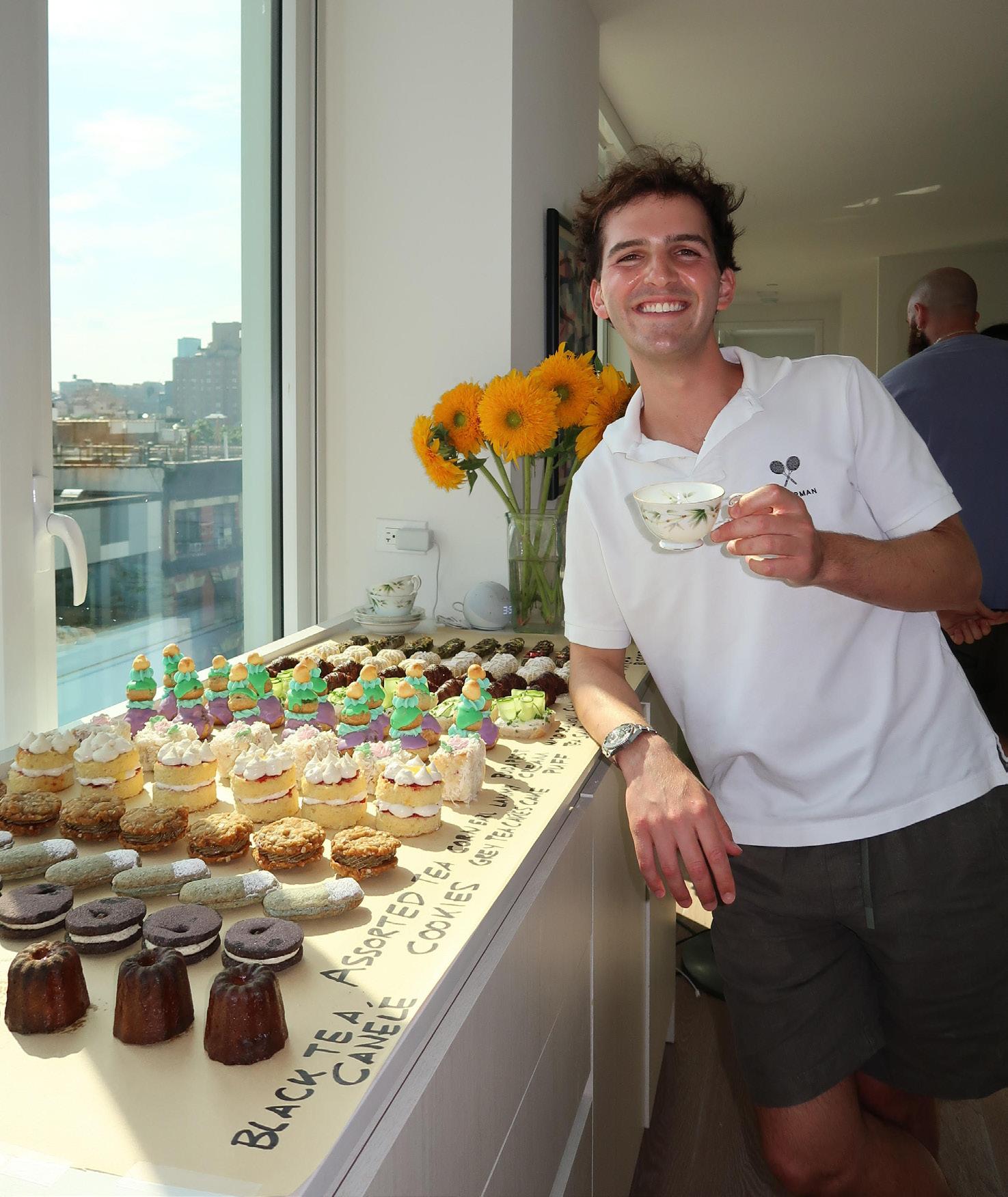
Now, as a full-time content creator, his most viral videos consist of his signature recipes, dinner parties, and apartment cafes. While his dinner parties are intimate gatherings catered for his friends and family with tasty classics like steak paired with his grandma’s home fries recipe, his apartment cafes are his signature once-a-month event that introduces a unique flair to the New York City dining scene. They each have a theme and invited guests bring an inventive dish reflective of it.
“I brainstormed and landed on the apartment cafe being a potluck and it being on my kitchen counter as the setting. We decided that we wouldn’t really feature coffee and that we’d really just focus on food and making it look as insanely delicious and beautiful as possible,” Nordheimer said.
Themes of the apartment cafes range from “Italian Golden Hour,” featuring Sicilian pizza with pistachio creme and prosciutto, to “Gourds and Apple Orchards,” summoning
the Halloween spirit with pumpkin black sesame rolls and other spooky pastries.
Additionally, many of the apartment cafe themes honor different holidays and the cultural dishes that come with them.
“We did one for Eid to celebrate the end of Ramadan.
The food was really amazing,” Nordheimer said. “I made saffron rose brioche donuts and another creator made Sichuan peppercorn baklava. We also wanted to put a twist on Middle Eastern desserts.”
At the end of the day, his tried-and-true recipes anchor him amid all the creativity required of being a content creator.
“I always find myself always making a fun focaccia, challah, or babka, because those are all in the same category of forgiving breads, where you can sort of play around with different ingredients and if it doesn’t work out, it still tastes fine,” Nordheimer said.
As Nordheimer’s platform continues to grow, he is constantly thinking of new ways to keep his brand refreshed. His future projects aim to engage more with his extensive fan base and cultivate an elite dining experience community.
“I want to be open to accepting more inquiries that I get on social media. A lot of the time, people would ask me over DM, ‘Do you do private chef?’ and I’ve just ignored them because I don’t have the time, so I want to accept more of those,” Nordheimer
said. “To start, I just accepted a WashU friend’s mom’s surprise birthday party in Westchester that’s going to be 10 to 15 people. I’ve never catered a brunch before, so that’s going to be exciting and something new.”
While a private apartment kitchen is ideal for all the food lovers hoping to recreate some of Nordheimer’s most signature dishes, those living on the South 40 with communal kitchens also have options.
“Definitely buy some disinfectant spray, lots of paper towels, and maybe your own knife. Keep it basic. Buy prepared ingredients. You aren’t going to want to do a lot of chopping yourself,” Nordheimer said.
But for those not up for experimentation and making a mess, you can check out Nordheimer’s two favorite restaurants in the St. Louis area: Louie and Bistro la Floraisan, located in Clayton.
From the South 40 to Greenway to the elevated New York City dining world, Nordheimer has cemented himself as the king of the apartment cafes and private dining experiences. With each new recipe, he transforms simple ingredients into elaborate creations that reflect different cultures, seasons, and holidays. The next time you stumble across Nordheimer’s videos on your “For You” page, remember how small ideas can take root on WashU’s campus and evolve into something larger than oneself.
PHOTO COURTESY OF RYAN NORDHEIMER
FORUM
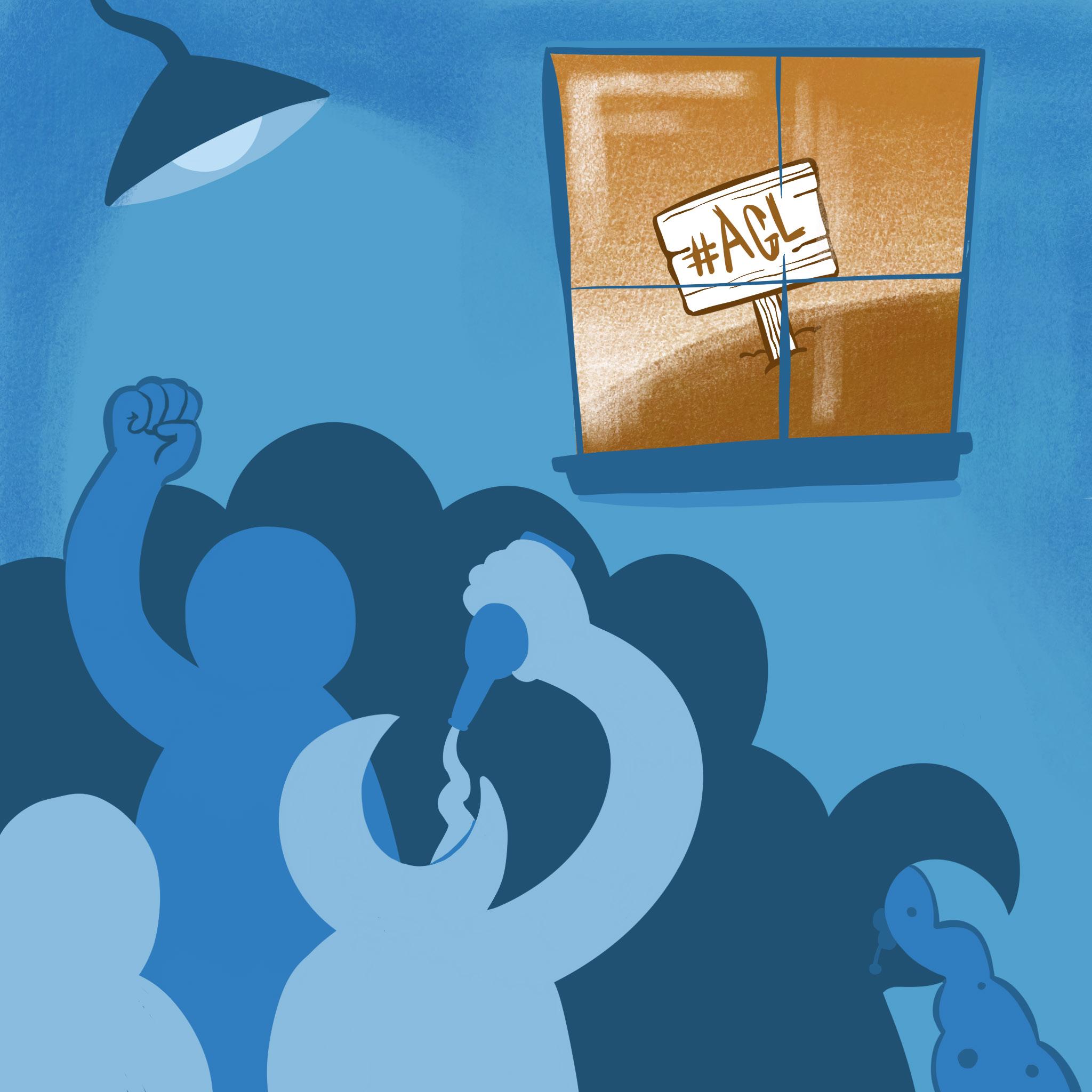
Fraternity expansion reveals worrisome shift from Abolish Greek Life
Content warning: This article contains discussion of sexual assault. Resources and helplines can be found at the end of the article.
This spring, Sigma Chi returned to campus after surrendering its chapter in 2021 for COVID-19 policy violations. After recruitment events this semester, the fraternity has its founding pledge class. To my surprise, I’ve heard no one talking about it.
Aside from its COVID-19 policy violations, Sigma Chi’s old chapter had a history of disciplinary infractions dating back to the 2000s, including bad hazing that led to hospitalizations, footage of sexual skits while being pelted with beer cans, and an incident of sexual harassment of a visiting women’s tennis team, during which members threw a dead squirrel on the court. These extreme and harmful behaviors are not unique to Sigma Chi nor limited to the 2000s.
The silence surrounding a new fraternity on campus is a drastic shift from the critical conversations on Greek life I witnessed my first year. As these critiques have faded away, Greek life has grown — largely without notice.
I decided to look deeper into the return of Sigma Chi. In an interview with one of its founding members, first-year Benjamin Duke, I asked how the chapter discussed their past disciplinary infractions.
“Yes, we’ve mentioned it briefly, but it’s not really a big concern. … Although it is the same fraternity, we are different people, and … they have set examples for us in certain ways, and we kind of just gotta learn from our mistakes,” Duke said. “I don’t think we’re gonna have any issues.”
Duke attributed fraternity misconduct to isolated incidents or certain bad members. However, Greek life’s problems are rooted in systemic issues of exclusion, prejudice, and a culture of violence.
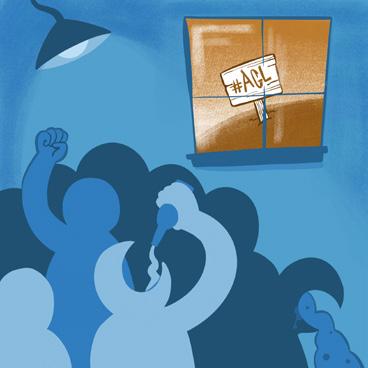
Beginning in the summer of 2020, Instagram accounts including @aglwashu, @ blackatwashu, and @metoo_ washu posted student stories alleging racism, sexism, sexual violence, and other issues concerning Greek organizations on campus, including many posts from Greek life members. One post alleged
that a Chi Omega sorority member spread racist slurs and sentiments, but the chapter ignored complaints about the incidents. After the post, Chi Omega — which is now active on campus again — deactivated their organization.
After the summer of 2020, over 50% of students deactivated from their sororities and fraternities. In July 2020, 65% of students voted in support of abolishing Greek life, including 58% of sorority members and 21% of fraternity members, in a Student Union survey. In March of 2021, 100 students participated in a rally against Greek life rush.
Yet, since 2021, Greek life membership has steadily increased. Meanwhile, Abolish Greek Life (AGL) discussions have nearly disappeared. Multiple first-years have shared with me that their peers are eager to rush. None have discussed AGL, and few have mentioned critiques of Greek life at-large.
While current WashU students did not witness the AGL movement, we must remember both its history and its institutional critiques. When Greek life is neither questioned nor held accountable, we endanger the community.
The culture around masculinity, sex, and drugs and alcohol has long been tied to a rape culture in fraternities. Research shows that fraternity members are overrepresented as perpetrators of sexual violence on college campuses, and sorority members are more likely to experience sexual assault.
Before AGL, for example, a 2018 Women’s Panhellenic Association (WPA) survey of 848 WashU sorority members uncovered reports of sexual assault or harrassment by every fraternity chapter. “There are no safe fraternities,” said the survey’s creator, Delta Gamma member Rachel Lynn Braly of the Class of 2019.
Beyond sexual violence, fraternities and sororities were founded as white-only organizations. While WashU began admitting Black undergraduates in 1952, Chancellor Thomas H. Eliot passed a resolution banning discrimination in all student organizations, including Greek life organizations, over 10 years later, in late 1963.
Duke was not worried about racism in Sigma Chi.
“Obviously people think of frats as being racist and things
like that. But I don’t think that should be a problem for us,” said Duke. “We have a very diverse group of guys, two guys from India. We have a guy from Colombia. It’s just, it’s awesome, the diversity that [WashU] brings in, and then the diversity that we are able to encapsulate in our fraternity.”
Duke misunderstands systemic racism and, in this case, racism in Greek life. Combating this racism requires a lot more intention than meeting a quota. Because he is a first-year student, I don’t interpret this is as intentional ignorance, but rather indicative of the lack of education and discussion about systemic issues on campus.
Greek life also often excludes low-income students, requiring dues and prioritizing legacy members, usually from wealthy backgrounds.
During the AGL movement, a student alleged that their sorority ranked a student in the Deneb STARS program (for low-income students) low because she would not be able to pay and was “obviously low-income.”
During the AGL movement, multiple Instagram
accounts provided a platform for critiques of Greek life. Now that most of these accounts are inactive, there is a general acceptance of Greek life, and people may fear stigma or backlash for speaking out against the still prevalent systemic issues of Greek organizations.
While we might hear about major issues, like discovering firearms in the Phi Delta Theta House (2018) or an Sigma Alpha Epsilon (SAE) member saying a racist slur in a pledge activity (2013), people are unlikely to share their personal experiences of harassment, exclusion, microaggressions, and violence without the platform or support to do so. Ultimately, we must revive critical conversations to recreate that space.
The University has shown that they only hold Greek organizations accountable after students speak up. The widespread student discussion on Sidechat and the response by the Association of Black Students (ABS) to Kappa Sigma and Alpha Phi’s egging of Bears’ Den (2024), for example, forced the University to investigate and
CAPTION CONTEST
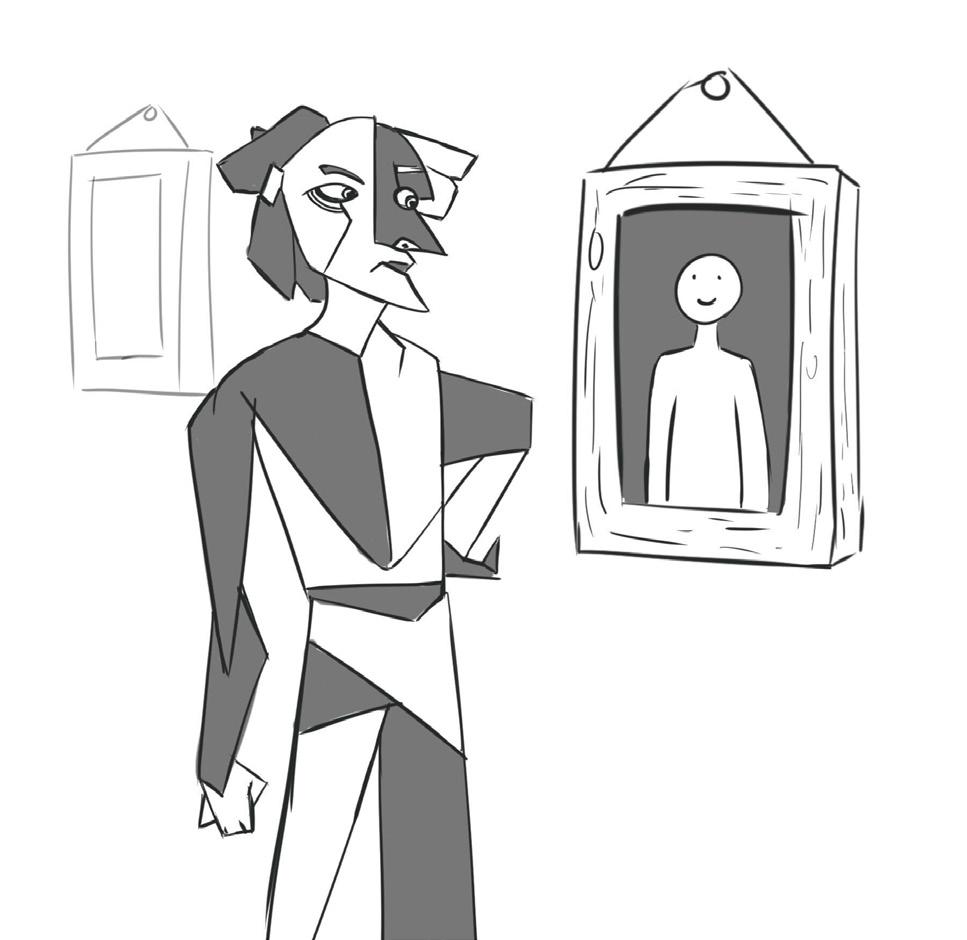
First Place: I don’t know, all this Roundism stuff just seems pretty pretentious to me.
Mo Stein, Current WashU Student
Second Place: Ugh. Modern art is so tacky.
Ben Yarkin, Current WashU Student
Third Place: Art imitating life? Art Living its best life! Denise Bader, WashU Parent
respond accordingly. Students must show that they are still watching.
During the height of AGL, WashU Campus Life participated in discussions on Greek life reform. In a July 14, 2020, panel on Greek life hosted by Student Union, the former executive director of Campus Life, Leslie Heusted, said that the University would make any decisions to revive deactivated chapters “with our students in mind.”
The return of Sigma Chi does not contradict Heusted’s statement. Students have shown that they are no longer critical of — and are even eager to join — Greek life. WashU has responded accordingly.
Without AGL’s presence, younger students must consider whether the expansion of Greek life is really what they want. They can only make this decision with an open and honest dialogue about sororities and fraternities.
I urge students to educate themselves on Greek life, their national history, the history of WashU chapters, and the AGL movement overall. Moreover, students must share
their experiences with each other. If not, WashU will have to wait for the next calamity before a future generation of students uncovers the issues and harms occurring under our noses.
The Sexual Assault and Rape Anonymous Helpline (S.A.R.A.H) provides confidential and anonymous support and can be reached at 314-935-8080 between 4 p.m. and 8 a.m. during the fall and spring academic semesters. There are counselors at the Relationship and Sexual Violence Prevention (RSVP) Center, located in Seigle Hall, Suite 435, available confidentially to any University student. The office can be reached at 314935-3445 or by email at rsvpcenter@wustl.edu.
The National Sexual Assault Hotline can be reached at 1-800-6564673 or via online chat at https://hotline.rainn.org/ online 24/7. To reach Title IX, students can contact Title IX Coordinator Jessica Kennedy at 314-935-3118 or go to the Title IX Office in Umrath Hall 001.
SYLVIE RICHARDS STAFF WRITER
MATEO KAHOUN | STAFF ILLUSTRATOR
DION HINES | MANAGING FORUM EDITOR
ALIANA THOMPSON | STAFF ILLUSTRATOR
Starting a ‘rabbit renaissance’ and reviving campus culture
GRIFFIN
NICHOLS STAFF WRTIER
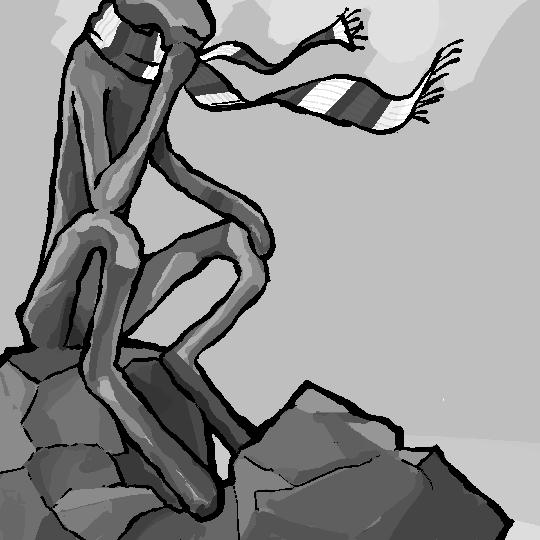
“Don’t touch the rabbit. Don’t touch the rabbit. Don’t touch the rabbit. And... they touched the rabbit.” This is something I often think when I see someone nearing the rabbit — officially, the “Thinker on a Rock” statue — as I watch in horror from the southwest corner of Olin Library. It’s always just sitting, staring, and being off-putting — it’s just a creepy statue in general. Yet recently, I have seen more and more people around the rabbit, whether they’re taking a picture of it or with it or pointing at it. As much as I hate to say it, this rabbit and the people taking pictures of it have got me thinking… The rabbit should play a greater role in our campus culture.
When I first visited WashU, I was told by a student that the statue is frequently decorated for events
and shows. Yet, as I near two semesters here, I have not once seen anything on the rabbit. Past articles from Student Life and internet searches depict the rabbit in colorful clothing, but it seems the rabbit has not been decorated since the pandemic. I fear the prophecies from students in 2001 of the rabbit simply being insipid may have come true; the rabbit merely sits and thinks. The promise of a decorated rabbit was a lie, and I feel that is something we need to change.
The culture I have experienced at WashU has revolved around getting the highest GPA possible and padding resumes, all while obtaining enough volunteer and clinical hours to make Dr. House weep with joy. Although this academically competitive atmosphere was something I expected, I did not anticipate the supreme lack of fun, low-commitment traditions. Nearly
everything is applicationbased or requires exceptional amounts of work, and certain extracurriculars become a student’s entire life. In such an academically focused environment, too many commitments can often exacerbate existing struggles with the workload and making time for friends.
WashU needs fun and simple extracurricular opportunities. Students need publicized events that aren’t club- or school-based. We need more activities to decompress that promote campus culture while giving students a break. This is where the rabbit can help us.
Decorating the rabbit is a simple activity that can bring students together. It costs nothing and takes up minimal time. It poses no risk to your GPA or LinkedIn. Students should value the rabbit as a part of our campus culture and environment. Think of the wonder and awe future students might feel
when they see a fully clothed rabbit.
There may be a logistical issue if tons of people suddenly choose to decorate the rabbit, but it’s an issue we should have. Too much engagement is something we want on our campus, rather than the lack we have now. Why not have events centered around decorating the rabbit?
Such a simple concept would leave a lasting impact on the WashU community. Think of it as a living tradition we all could reignite. An artifact that the students own and manage.
Campus culture doesn’t suddenly appear; it’s built by years of tradition and action. We are often so absorbed in our own clubs that it’s rare to see people visit extracurriculars they aren’t a part of. Students need to branch out, break barriers, and make new things. We need the rabbit. For a second, look back to every memory you have
OPINION SUBMISSION
of the rabbit. If you can think of some, I congratulate you, because I have few. Now imagine what could be: a WashU shirt for welcome week, a costume for Halloween, a textbook for finals, a scarf and mittens in winter, a Mardi Gras mask for Mardi Gras, a guitar for WILD, or a ThurtenE jacket for the spring carnival. The rabbit and its decor can be a competition, it can be a group project, it can be so many things.
“Thinker on a Rock” can be so much more, it just needs us to finally think about its usefulness. All it takes is one scarf.
How to ‘Chinesemaxx’ without any Chinese presence
WESLEY HUANG CLASS OF 2028
“Coronavirus! Chinese Virus! Ching Chong (Qing dynasty bug)!” Every time someone calls me one of these derogatory terms and slurs, I recall a news report on the attack on an elderly Chinese lady. In panic, she shouts and cries in Toishanese, my mother tongue: “He hit me!” She was attacked for a simple reason: She was Chinese during the pandemic. This “antiAsian virus” rhetoric peaked across the United States. Absurdly, many Americans use Chinese people as profitable commercial symbols while simultaneously seeing them as viruses that need to be expelled from the country. Not long ago, videos with captions like “You met me at a very Chinese time in my life” appeared on many people’s social media. For example, drinking hot water somehow became a Chinese “aesthetic” behavior. Yet, this tradition is due to a movement to combat poor hygiene in the last century and is a tradition in Chinese medicine. The historical facts were less
ELLIE BUDDE CONTRIBUTING WRITER
Our economic system should serve us. Despite living in the country with the highest gross domestic product (GDP) in the world, many Americans are unable to meet their basic needs, from housing to healthcare. The neoliberal script of capitalism insists that economic growth and consumption are the solution to any social problem, especially poverty. This logic has enabled businesses to pursue endless profits while directly catalyzing ecological and social peril. The alarm is sounding as we speed toward unprecedented levels of wealth inequality, ecological devastation, and irreversible tipping points.
As Americans, we are conditioned to see growth as synonymous with wellbeing. Prices are used as a proxy for utility, and GDP growth is taken as a proxy for increased human well being. But as Kate Raworth points out in her widely cited book “Doughnut Economics,” this assumption is fundamentally limited, as “many things we value are not for sale.” Ecological economists critique a growth-obsessed
known to people because the trend of “Chinesemaxxing” narrowly focuses on what can be aesthetic only. The traditions were isolated from their history, most importantly, and their people. China and Chinese people shouldn’t be someone’s “discovery” like Columbus “discovering” America and its indigenous people.
The trend of “being Chinese” isn’t the first time people in the United States have appropriated Asian cultures. Chinoiserie and Japonisme thrived in the 1800s, where colonizers exploited Chinese and Japanese elements as commercial symbols. And yes, this exploitation can still happen today. Take, for example, Logan Moffitt, a white TikToker who commercializes preprepared hot pot base as “Hot Pot Bomb.” In this scenario, Chinese hot pot becomes an element that could be rebranded as a discovery. It ignores the history and cultural significance of why hot pot is important in many Chinese diets. As these “Chinese” behaviors become a trend to practice, it provokes further discourse about
cultural appropriation. When the process of Chinesemaxxing becomes a way to be “more Chinese,” Chinese becomes a commercial adjective rather than a noun referring to the “Chinese people.” Indeed, Chinesemaxxing does, to some great extent, promote Chinese cultures. To many WashU students, this trend could be an opportunity to normalize being Chinese and should be accepted. It seems paradoxical, however, when many are Chinesemaxxing while ignoring the discrimination and violence that the Chinese have endured in the US. In other words, when people lose the right to be Chinese in this country, Chinesemaxxing then becomes an ironic trend, in contrast to the living reality of the community.
For example, Anna May Wong, a famous ChineseAmerican actor, was rejected from the movie adaptation of “The Good Earth,” a story set in China. Instead, the two main roles went to a white actor who had stereotypical makeup to portray a Chinese person. Yes, Chinese culture is promoted through this
movie, but it follows a similar path to Chinesemaxxing, where actual Chinese people are missing from the picture. Rather than a fun trend, being Chinese in the US comes with danger, including hate crimes and discrimination.
I agreed with Student Life contributing writer Ben Yarkin’s proposal to invite Chinese international students into the conversation and normalize their presence in the WashU community. From my perspective, however, speaking Chinese with the intention to “be more Chinese,” or Chinesemaxxing, still contains the danger of repeating the historical objectification of the Chinese people. Being more Chinese shouldn’t be a goal, not for Chinese people or anyone. It is dangerous to categorize or standardize what it means to be Chinese. Importantly, Chinese doesn’t only mean Chinese international students. I also suggest talking to American-born Chinese students and the older generation of Chinese immigrants. Ask them how they feel about the current political climate and how we
can work together to combat unjust policies.
As someone who grew up in LA’s Chinatown, I was lucky because it was safe to be Chinese. American-born Chinese in other states or regions that don’t have this culturally homogenous space as a shield may experience discrimination when they are Chinese. Certainly, many are invited to “get out and assimilate,” but it requires them to become outsiders, with potential punishments if they are being too Chinese. By being too Chinese, the Chinese people attract inspection as “exotic” objects. Inviting a Chinese classmate to a party doesn’t change the fact that their visas are revoked. Simply, inviting us to parties wouldn’t be a Band-Aid solution to stop the exploitation and objectification, not on the WashU campus or other places.
Consider taking a class in the Asian American, East Asian, or Women, Gender, and Sexuality Studies departments. Learn about how the real estate industry exploits Chinatown and Chinese people’s spaces. If you hope to experience Chinese culture
On consumption culture
model as fundamentally unsustainable, reimagining how our economy can function without requiring the perpetual exploitation of natural resources. They champion growth within an ecologically sustainable scale and with a socially equitable distribution of resources. One way to do this is by incorporating natural capital (such as forests, oceans, and minerals) into our economic calculus alongside manufactured, financial, and human capital.
Economists have no trouble accounting for labor or technology as the valuable resources they are. Despite nature being our most valuable and increasingly scarce resource, it is exploited at a concerning scale as our government corruptly subsidizes resource extraction in the name of GDP growth. Raworth suggests imposing a tax equivalent to the social and ecological costs and letting businesses decide whether it is worth it to pollute at this price. We should also consider the aspects of nature that are harder to measure, from aesthetic beauty to legal and intrinsic rights to exist. There is a philosophical question to ask about the kind of society we want to live in.
What does human prosperity look like, and how can we best use our finite natural resources to get us there?
The profit motive of capitalism has reduced us from citizens into consumers. We are constantly bombarded by media tempting us to organize our lives around the pursuit of owning more stuff. However, research from economists and psychologists shows that once fundamental needs are satisfied, materialistic aims are negatively associated with well being, while ecologically sustainable behavior can promote it. It distracts us from human things like connectedness, authenticity, and civic engagement.
To transform our
revolutionize the way goods are produced and consumed.
A system predicated on growth perversely incentivizes business practices like planned obsolescence, where firms intentionally design low-quality products so consumers are forced to replace them more frequently. This cycle of waste has infected everything, from fashion to electronics to housing. Firms should shift their focus on growth to the quality and utility of what they produce.
The local Shaw Tool Library offers one alternative to the overconsumption cycle. Members can check out items from lawn mowers to air fryers, making it simple to share in your community.
repair or repurpose items than to discard them. Consider donating to the WashU Circularity Center’s Share Our Stuff program this moveout season, which collects everything from office supplies to furniture to reuse for future students, or pick something up next semester.
by attending one of the oncampus events during the Asian Pacific Islander Desi American (APIDA) month, all are welcome. More importantly, let’s make these parties and celebrations continuously exist in this country without fear. Instead of observing Chinese traditions to fulfill a certain goal, take actions and time to bring the people back into the context of these traditions. Therefore, this article does not intend to discourage the practice of Chinese traditions but to point out the importance of history, people, and community when it comes to the discussion of Chinesemaxxing. Be cautious of any future cultural aesthetic trends, and remember where they come from and the history they carry. Chinese people, Chinese people’s dignity, and Chinese culture don’t have a place when Chinese people are seen as an object or a virus.
他们都说我不是人,而是
(They all say I’m not a person, but an object. I don’t believe it.)
mote recirculation, making it more nient to
It is easy to get existential when thinking about the complex stickiness of structural problems like an economic system that causes us to act unsustainably. I see ecological economics as what environmental scientist Donella Meadows calls a paradigm shift: a change in our deepest beliefs about how the world works. It’s not easy to shift social systems, but it begins with recognizing the assumptions baked in and working towards alternatives.
I am inspired by the people who spend their time unraveling and sharing their wisdom on a range of these “wicked problems.”
I learned many of these concepts through classes and conversations with Froggi VanRiper, an environmental studies professor. VanRiper’s profound knowledge and passion makes the learning experience extremely rewarding.
I urge students regardless of background to take advantage of the opportunities your liberal arts classes provide to enrich your worldview. I urge economics students to learn more about the principles of ecological economics, as I have found little else as relevant to our future. I urge economics professors to incorporate more interdisciplinary and contemporary models into their courses, as I see much of the theoretical power of ecological economics in its applications to present debates across politics, ethics, inequality, and the natural sciences. I urge the economics department to rethink economics and integrate ecological economics under its umbrella; it does not serve students to isolate it under environmental studies. Ecological economics should be taken as the serious economic theory it is and taught alongside every other model.
Thinking beyond hypermaterialism frees us to focus our energy toward growth in science, creativity, and our social connections: investments that actually enrich our lives and those of future humans.
LUCIA THOMAS | MANAGING ILLUSTRATION EDITOR
KEVIN KAN | ILLUSTRATION EDITOR
SPORTS
No. 14 baseball wins final two games to force series split against rival Emory
JACOB RITHOLZ STAFF WRITER
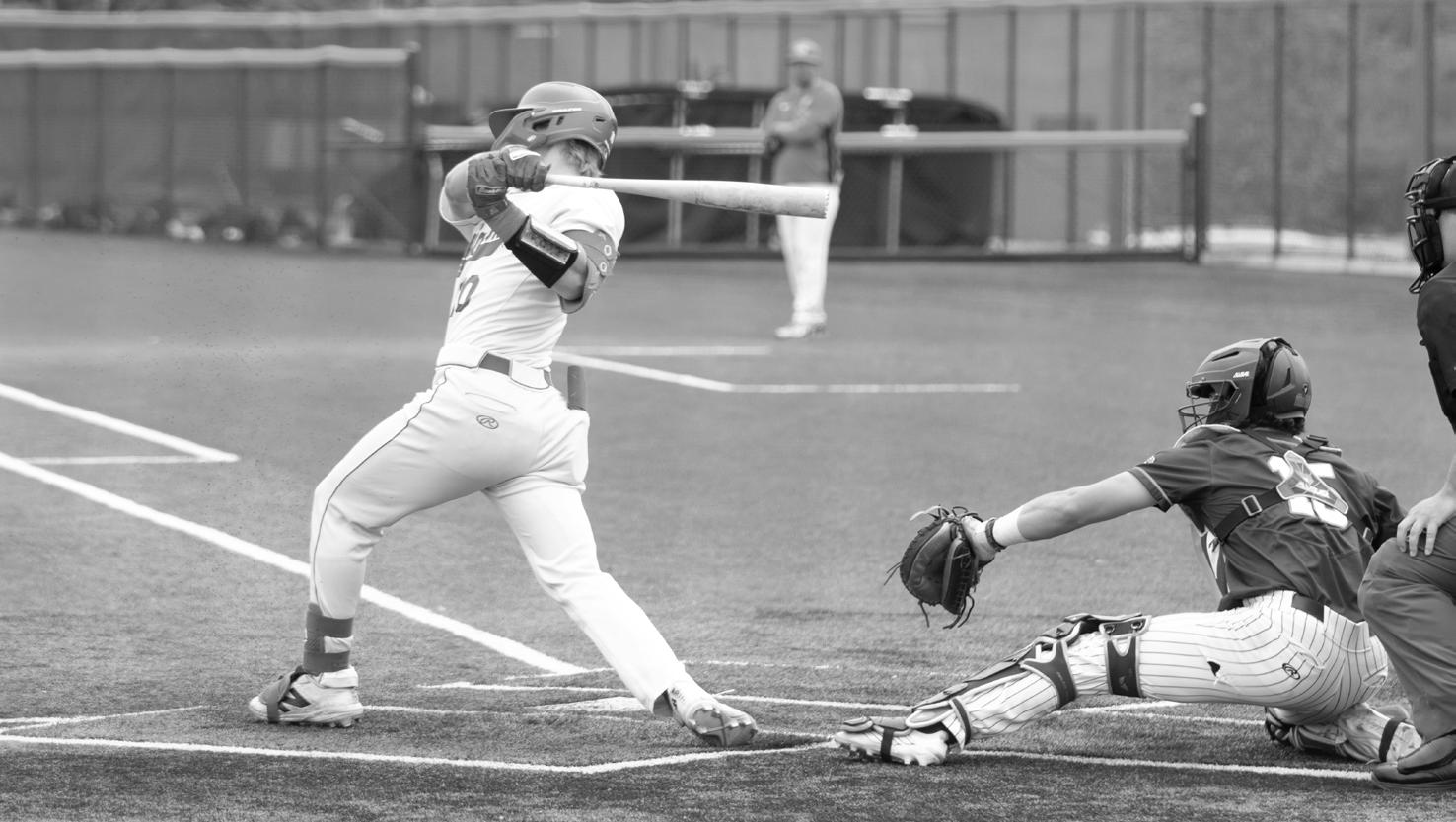
After a swift defeat of New York University the previous weekend, the No. 14 WashU baseball team rolled into their fourgame series on April 10-12 against Emory University with confidence. However, the Eagles put on a stunning performance — ultimately taking the first two games on account of several clutch offensive moments. To bounce back, the Bears rallied together, scraping together a 9-8 victory in game three and tying the series in game four with a mercy ruling final score of 15-5.
Game 1
Emory 4, WashU 3
The Bears appeared on their way to a win for much of the game; WashU jumped out to an early 3-0 lead after first-year catcher Jacob Witte singled with bases loaded in the first inning, driving in one run. This was followed by a two-on, two-out single from sophomore infielder Ryan Soong, which gave the Bears a commanding 3-0 lead.
From there, WashU’s pitching cruised, aided by
some slick defense, which led the Bears to shut out the Eagles for the first eight innings. Graduate student pitcher Chase Brickley threw seven scoreless innings with nine strikeouts in a gem, and junior pitcher Parker Guthrie added one more zero-run inning before the Bears collapsed in the ninth. With one out, Emory laced a grand slam to give them the lead in the top of the frame that they would not relinquish in what became a tough loss for the Bears.
Game 2
Emory 5, WashU 2
With the opportunity to right the ship the next day, WashU fell flat. Emory started the scoring with a two-run third inning before WashU responded with a run of their own in the bottom of the fourth, courtesy of a long single from Soong. But Emory answered with three more runs to ultimately win 5-2 and take a 2-0 series lead.
“We’ve been off to a slow start the last few series,” first-year infielder Chance Cromer said.
“After that first [loss] we really talked about having each other’s backs, going out there, fighting pitch by
pitch, [and] not focusing on the game outcome.”
Game 3 WashU 9, Emory 8
In the second game of the double header on Saturday, the Bears immediately had a chance at redemption. They did not waste that opportunity.
At first the game seemed primed to go in the same way as game one. WashU took a 7-3 lead heading into the eighth inning, but once again had a late-game pitching meltdown, giving up five runs in the frame to fall behind 8-7 in what was shaping up to be another implosion.
This time, though, the Bears fought back. In the bottom of the eighth, senior shortstop Shane Pellegrino tied the game with a two-out double that bounced off the wall. After working around two Emory baserunners in the top of the ninth, the Bears were determined to get the victory in the bottom of the inning. A seven-pitch walk and a single plated two runners before junior third baseman Anthony Equale lined a single to left to win the game.
“We need to win the games from here on out, but we can’t focus on the
sweep,”
Cromer said. “We gotta focus inning by inning, pitch by pitch … as long as we do our best, our best is gonna be better [than the opponent], [and] it’s gonna take care of itself.”
Game 4
WashU 15, Emory 5
The series capper was a much needed blowout by the Bears in a wire-to-wire 15-5 win that ended in seven innings after mercy ruling Emory. Throughout the game, Equale and Pellegrino led the offense with three hits apiece, Pellegrino lining two doubles and Equale with three.
However, it was a whole team effort that led to the win, with eight out of nine players getting at least one hit for a team total of 15. WashU’s pitching did better to hold the lead this game, as Emory never made the score competitive. Junior pitcher Levi Gingerich and senior pitcher Alex Ardemagni combined to toss seven innings, giving up five runs. Pitching with a large lead, the two gave up some loud contact but were able to largely quell the Eagles’ offense. Ardemagni in particular worked around a bases-loaded no-out play in the sixth to end the inning without giving up a single run.
“It’s one of the most
important things in a relief pitcher, that unwavering belief in yourself,” Ardemagni said. “I think we do a good job in this program. … When your number’s called, we put in the work and we know we can do it.”
The series win took the Bears to an overall 23-8 record, good for first place in the University Athletic Association (UAA) and moved their conference record to a clean 7-5. The Bears look to continue their strong play and two-game win streak as conference play rolls along. They will be on the road against fellow UAA opponent Brandeis University for a four-game set next weekend, playing April 17-19.
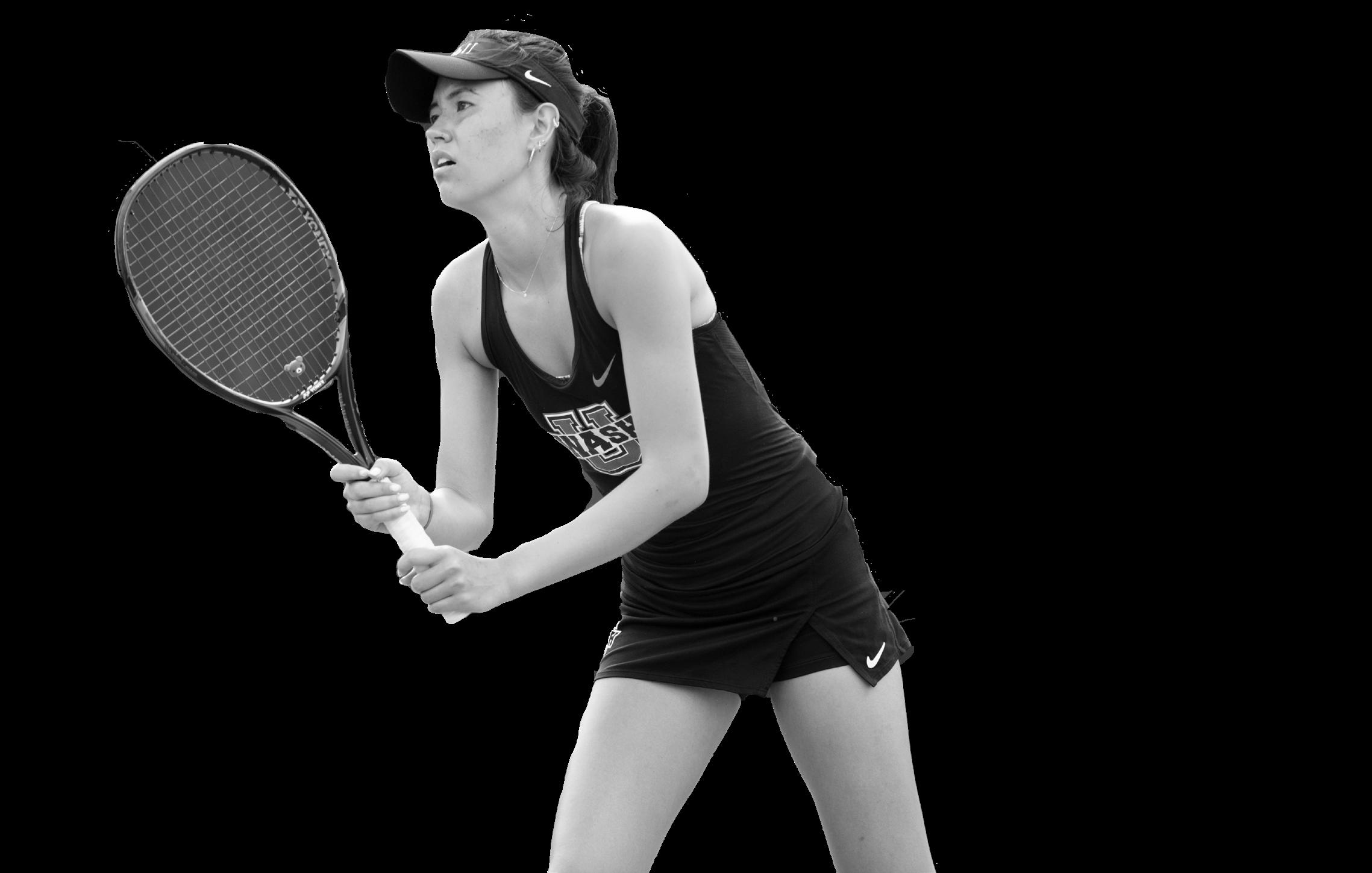
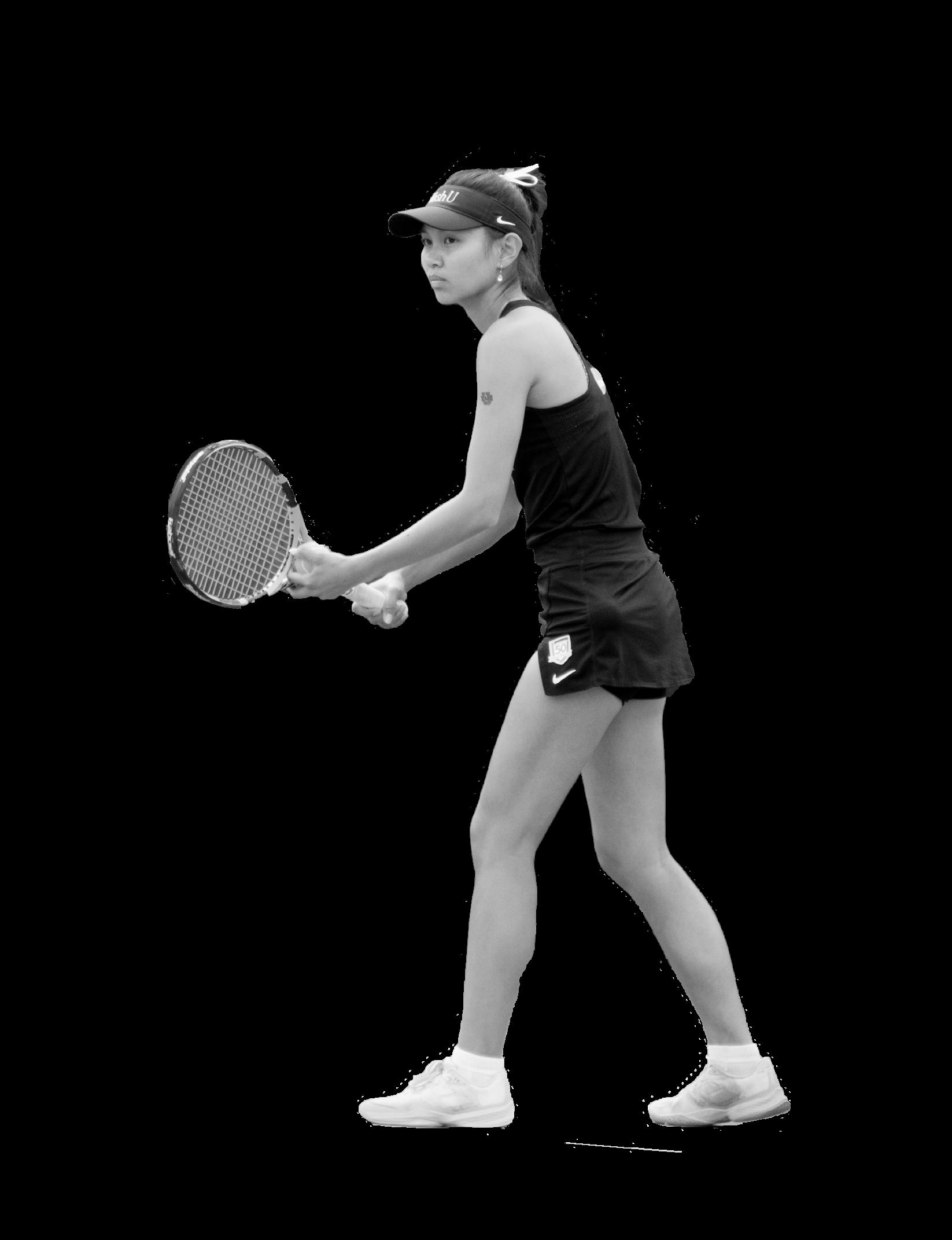
No. 2 WashU Women’s tennis splits weekend with a loss against No. 4 UChicago and a sweep of Grinnell College
BEE AUSTIN STAFF WRITER
No. 2 WashU women’s tennis split results this past weekend, falling 4-3 to No. 4 ranked University of Chicago before bouncing back with a commanding sweep of No. 27 Grinnell College.
The loss on Saturday, April 11 marked the Bears’ second loss of the season to a lower ranked conference opponent. However, rather than dwelling on what might have been, the Bears reframed the defeat as a valuable learning opportunity, using it as a baseline to sharpen their play ahead of postseason. By the end of the weekend, the Bears moved to 14-2 overall, continuing to build on momentum from a season of dominant defeats. With the University Athletic Association (UAA) championships and a potential rematch with UChicago just two weeks away, the Bears have already shifted their focus.
“It’s nice to see what adjustments we need to make and hopefully see [UChicago] again [at UAA Championships],” head coach Paige Madara said in a statement to Student Life.
transform this weekend’s results into momentum heading into the postseason, with their sights set on not only UAA championships but also on securing backto-back national titles.
WashU v. UChicago
“Chicago is always going to be a really really tough match for us. … They’re a strong competitor,” Madara said. This game served as a valuable benchmark against a conference opponent WashU will likely face again at UAA championships in two weeks.
performance at No. 2 doubles, where senior Eliana Hanna and sophomore Ally Lin delivered a decisive 6-2 win, it was not enough for the Bears to clinch the doubles point.
Trailing 1-0, the Bears entered singles play with urgency. After dropping the first set at No. 2 singles, junior Eleanor Archer regrouped and elevated her play, taking the next two sets 6-4, 6-1.
Lin won her second match of the day, this time in singles play with a controlling performance from the outset in a 6-3, 6-1 win.
Senior Amber Edmonds added a third point for the Bears with a dominant 6-0, 6-4 victory.
Madara was not discouraged by the loss, citing it as a gauge of what they need to work on.
“We know what we need to do, and we’ll get a little bit stronger to get ready for that first UAA heat,” Madara said.
WashU v. Grinnell College
UChicago claimed the early momentum by securing the doubles point, taking victories at No. 1 and No. 3 doubles to go up 1-0. Despite showing a strong
With three singles victories, WashU surged ahead in the match, but UChicago responded. At the No. 1 singles and No. 3 singles spots, both WashU players fell in three sets.
With a loss at No. 6 singles, the Bears ceded the last decisive point to UChicago.
“Looking back at how we handled those two points, they definitely got the better of us [today] and capitalized off of tough moments,” Madara said.
The Bears bounced back from Saturday’s narrow loss with a full sweep against Grinnell College. The win simultaneously helped WashU move past Saturday’s loss and served as a celebration of senior day, highlighting seniors Edmonds, Nina Moravek, Hanna, and Teleya Blunt.
The Bears set the tone early by sweeping all three doubles courts to take a 1-0 lead. At No. 1 doubles, Archer and sophomore Caitlin Bui controlled the match from the beginning, swiftly maneuvering the ball across the court to receive a 6-3 win. The No. 2 doubles pairing of Hanna and Lin matched the scoreline, defeating the Pioneers 6-3. First-year Lily Brecknock and sophomore Sam Slowik closed the doubles sweep with a 6-4 victory.
“I think we’re such a deep team,” Madara said. “I believe each player contributes a key skill or quality that helps them come together and overcome our opponents.”
The Bears carried their dominance into singles play, winning all six matches without dropping a single set. Archer led the charge at the top of the lineup with a 6-3, 6-0 win, using consistent first serves and aggressive baseline play to keep control of the match throughout. Bui and Lin followed with a strong 6-4, 6-1 and 6-0, 6-1 victories respectively.
At No. 4 singles, Edmonds delivered a flawless performance, not dropping a single game in a 6-0, 6-0 win.
The Bears will hope to
at No. 5 singles, and Brecknock closed the senior day sweep with a 6-0, 6-1 victory at No. 6 singles.
“Our senior class is just so tough and so phenomenal,” Madara said. “They’ve had an amazing career on campus, and it’s really special to get to celebrate them this weekend and have a few more weeks with them going into the postseason. They’ve made a huge impact and set a lot of history for the program, and we’re really proud of them.”
The Bears carried their momentum into the bottom half of the lineup.
Moravek secured a 6-0, 6-1 win
While the sweep of Grinnell may have provided a confidence boost, the narrow 4-3 loss to Chicago tightened the margins of the UAA standings and underscored how small the gap is at the top of the conference. WashU must remain focused on its postseason play to ensure they remain the top seed in the UAA. The Bears will close out their regular season at home on April 18 against North Central College, utilizing the game as a final tune-up before championship season.
Before the start:
Alarms going off at some time around 4:45 a.m., we begrudgingly got out of bed to go run the halfmarathon that some overly ambitious versions of ourselves signed up for months earlier.
After a dark drive downtown and some questionable parking (we may or may not have moved a couple of cones to make our own parking spot), it was go time. Moments before the race, Ella Giere stretched and Bri Nitsberg pretended to stretch. All glittered up and running on zero rational-decisionmaking skills, we headed to the start line. We told ourselves that we would be running at a nice and easy “party pace.”
Mile 1:
Ella: The sunrise over the arch was beautiful. I felt so lucky to be able to move my legs and explore the city.
Bri: I genuinely could not stop smiling. I had run a half-marathon and a full marathon in past years, but this was my first time running with friends, and I
was so incredibly happy to be there.
Mile 2:
Ella: We were still feeling great, and we were passing people. Us. Passing people.
Mile 3:
Bri: Vibes were absolutely immaculate. According to my very broken Apple Watch, which I wasn’t sure would last the entirety of the race, we were running significantly faster than our planned “party pace.”
Ella: We started running across the Eads Bridge into Illinois and then back into Missouri. With hundreds of runners, the bridge began to shake. Just slightly. Just enough. I chose not to think about that.
Mile 4:
Ella: At this point, we were crushing it. We entered Gateway Arch National Park and ran through a tree-lined path. The glitter was holding. Morale was high. We were athletes. We were running under a 10-minute pace and feeling the runner’s high. Bri: I have to admit
this race snuck up on me. The grand total of my individual training were two five-mile runs (both of which included many walking breaks and the occasional sitting break). The race day adrenaline was getting me through the miles, though, and I was feeling on top of the world.
Mile 5:
Ella: I genuinely believed that St. Louis was flat. I was very mistaken. My legs, for now, were still on board.
Mile 6:
Bri: During our first walking break, I ate some arguably gross energy chews that felt impossible to chew. I tried my best to get Ella to eat something too; we needed all the energy we could get.
Mile 7:
Ella: We spotted two of our friends on the sideline. Seeing a familiar face at mile seven of a half-marathon is genuinely one of the top emotional experiences a human can have. We may have screamed.
Bri: After seeing our friends, I mentally noted not to jump up and down screaming like a crazy person next time we saw them. I desperately needed to conserve the dwindling energy I had left.
Mile 8:
Bri: My Apple Watch appeared to have died or broken. I surrendered to running the rest purely on vibes.
Ella: This was the farthest I had ever run in my life at that point! My lack of training started to creep up on me. We saw more of our amazing friends
of the mile, I was getting nauseous from the small handful of Swedish Fish I had eaten. Bri, ever the rationalist, told me I could throw up at mile 10. Thankfully, I didn’t. The Swedish Fish survived. So did I, barely.
Bri: As we were running toward Lafayette Park, Ella said she had to throw up, and I began to panic. She wanted to take a walking break, and in fear of her puking if we did, I told her, “Let’s run to the corner of the street, and then we’ll take a break.” We got to the corner, and I think she forgot about throwing up.
Mile 10:
Ella: Pain. Just pure, unfiltered pain. A very nice older man told me I could keep running, and I chose to believe him even though my legs were gone. Bri was the best pacer in the entire world and encouraged me to repeat a mantra over and over in my head — a genuine act of friendship I will never forget. “Champagne Problems” by Taylor Swift came up on my playlist, and that was a mistake. I didn’t mean to add that. It was not the motivational energy I needed. I do not recommend running through existential slowburn heartbreak pop at mile 10.
Mile 11:
Bri: I kept saying the same three phrases of encouragement to Ella because I was so tired and I couldn’t think of anything else. You got this. You have more in you. You are so much stronger than you think. Every time I gave her the same words of wisdom, random runners around us kept thinking I was talking to them. I guess the more the merrier.
different woman.
Bri: There were these random blown-up arches towards the middle of mile 11 that I thought meant we only had a mile left, a fact which I very loudly proclaimed to Ella and the rest of the runners around us. I was very wrong and seemed to have just made up this fact.
Mile
12:
Bri: I swear whoever made this course was lying to us because there was absolutely no way mile 12 was only one mile. As we passed the mark where the half-marathon and full marathon split up, I said to Ella, “At least we aren’t running a full marathon right now.” Unfortunately for me, the woman running directly next to us was, in fact, running the full mara-
the past three different corners, so finally seeing the actual thing was a relief for many reasons.
Ella: There it was. The finish line. The glitter was still inexplicably intact. We crossed together, which felt right, because there was genuinely no version of this day that made sense without the other person in it.
Bri: As we crossed the finish line, I went to hug Ella, and she said something along the lines of, “If I hug you, I’m going to collapse.” We hugged anyway and then proceeded to fill our arms with free snacks, both in shock and relief that we were done.
After the finish:
We finished in 2:24, which exceeded our expectations for the “party pace”
Bri and Ella celebrate after finishing the 13.1 mile run.
PHOTO COURTESY OF BRI NITSBERG
At mile two, they ran past the Arch before running over Eads Bridge.