Magazine | Spring 2026
A one-of-a-kind rst year
Ampersand Programs immerse first-year students in hands-on, cohort-based learning
Teaching in the age of AI
Faculty adapt to artificial intelligence while keeping students’ skills future-ready
Magazine | Spring 2026
A one-of-a-kind rst year
Ampersand Programs immerse first-year students in hands-on, cohort-based learning
Teaching in the age of AI
Faculty adapt to artificial intelligence while keeping students’ skills future-ready
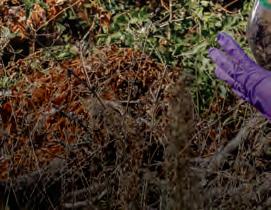
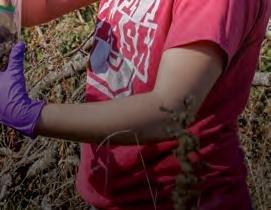
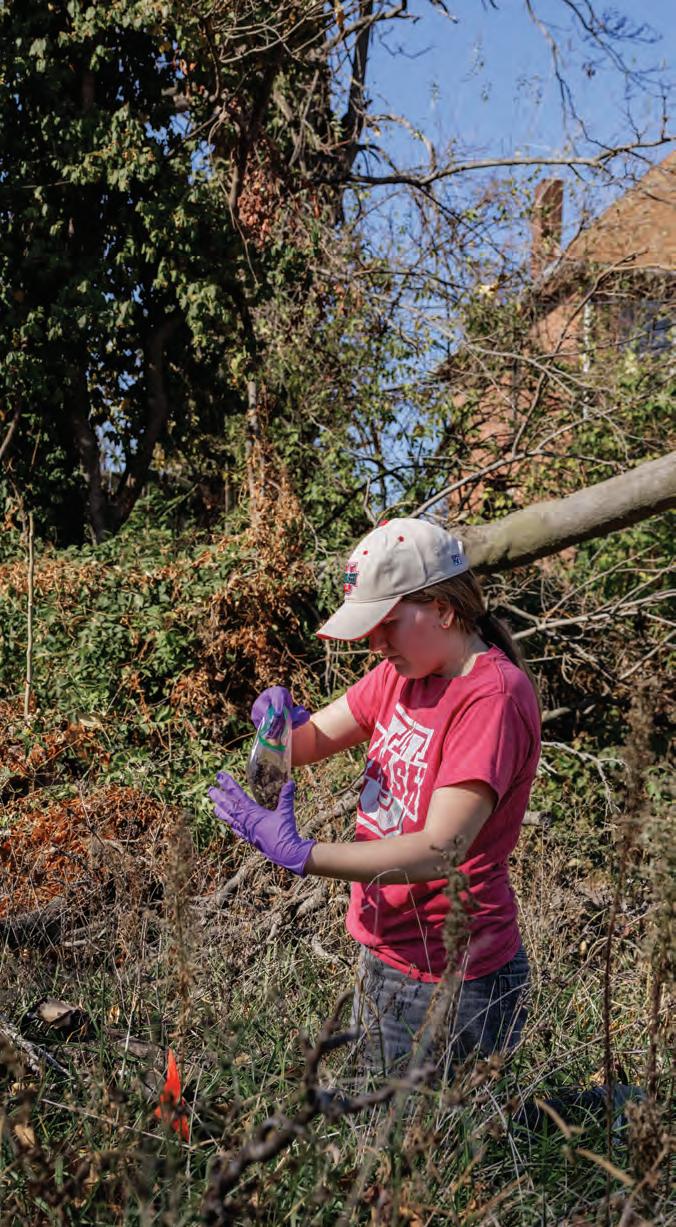
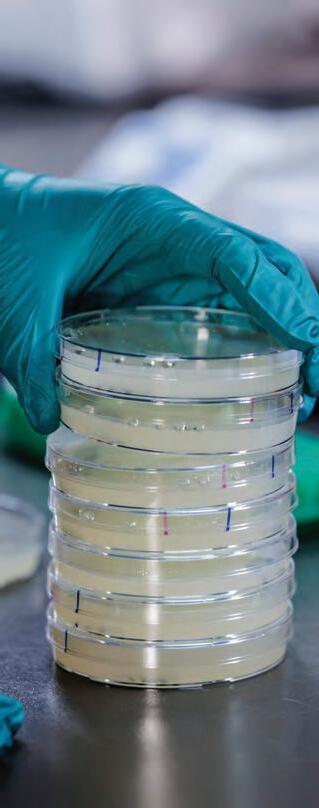
After an EF-3 tornado hit St. Louis in 2025, WashU students offered their research skills to CLEAN STL, a community project led by Professor Jeffrey Catalano that tested lead levels in soil along the storm’s 20-mile path. After receiving training in sample collection, undergraduates gathered soil from affected neighborhoods, carefully noting the origins of each sample to track patterns across sites. “I saw this as an opportunity to do my small part to make a real impact,” said Norah Alhusayni, an undergraduate working on the project.
The Ampersand magazine shares stories of incredible people, research, and ideas in Arts & Sciences at Washington University in St. Louis. It is published semiannually and distributed to alumni, faculty, students, staff, and friends of Arts & Sciences.
EMAIL ampersand@wustl.edu
WEBSITE ampersand.wustl.edu
DEAN
Feng Sheng Hu
PUBLISHER
Ebba Segerberg
EDITOR
Sarah Hutchins
MANAGING EDITOR
Samantha Stevenson
CREATIVE DIRECTOR
Sudon Choe
PUBLICATION COORDINATOR
Simone Becque
DIGITAL EDITORS
Kyra Ramsey, Gennie Avellino, KJ Schaeffner
LEAD PHOTOGRAPHER
Sean Garcia
CONTRIBUTING PHOTOGRAPHERS
Whitney Curtis, Sid Hastings
DESIGNERS & ILLUSTRATORS
Keren Guo, Andressa Chaves de Oliveira
CONTRIBUTING WRITERS
Jenny Bird, Jeremy Goldmeier, Diane Toroian Keaggy, Liam Otten, Leah Shaffer, Erin Shetler, Chris Woolston
EDITORIAL ADVISORS
William Acree, Deanna Barch, Andrew Brown, Sophia Hayes, Cathy Sullivan Jannings, Peter Kastor, Erin McGlothlin
There’s nothing quite like the energy of spring on the Danforth campus. Every year, as the days get longer, the campus surges with life from prospective student tour groups, blooming pollinator gardens, and commencement activities. It’s the kind of energy that evokes both nostalgia for our traditions and excitement for the adventures on the horizon.
In this issue, we explore some of those journeys in the Arts & Sciences community, where students and faculty are advancing knowledge across the world and in our classrooms and labs.
We’ll delve into our signature Ampersand Programs, multi-semester courses that allow students to explore the liberal arts while diving deep into a specific topic (p. 20). These courses blend classroom and experiential learning, including overseas travel and visits to local businesses, to create one-of-a-kind experiences for first-year students in Arts & Sciences. Several Ampersand cohorts will travel this summer to destinations such as New York, Germany, Poland, and Italy, and I look forward to hearing about their experiences.
Closer to home, our faculty are proactively tackling the challenges of artificial intelligence to equip our students with strong foundational skills and a strategic approach to the technology and tools that shape our world (p. 14). This is part of a campus-wide investment to ensure WashU remains at the forefront of AI preparedness and innovation.
Despite the ongoing challenges facing higher education, our faculty and students have continued to achieve distinction at the highest levels. We recently had five faculty members elected to the prestigious American Association for the Advancement of Science (p. 11), the most in a single year since I was named dean in 2020. By working across disciplines, our researchers are making transformative discoveries in numerous fields, including several biologists, chemists, and psychologists investigating Alzheimer’s disease (p. 28).
Across generations, this spirit of excellence continues through our Distinguished Alumni Award winners (p. 40), who are tremendous examples of the impact Arts & Sciences graduates make on our world. This issue also highlights exciting developments in several academic departments, such as new world-class biology teaching labs that feature state-of-the-art equipment, including a virtual dissection table (p. 24).
Celebrating our various journeys together is part of what makes Arts & Sciences such a strong community, and I’m proud to share these stories with you. Thank you for your continued support, and I hope to see you around campus in the coming months as we prepare for another year of exciting opportunities.
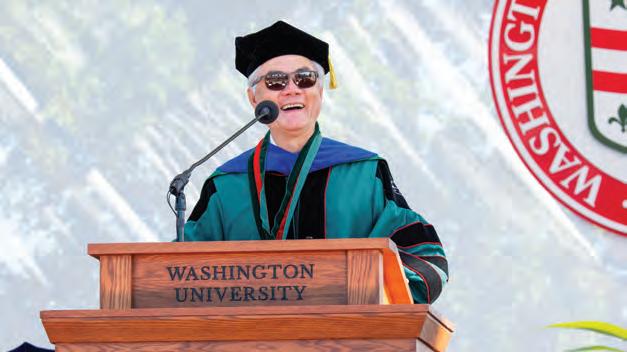

Richard G. Engelsmann Dean of Arts & Sciences
Lucille P. Markey Distinguished Professor Washington University in St. Louis
Teaching in the age of AI
Across Arts & Sciences, faculty are rethinking course design, assignments, and skill-building as artificial intelligence becomes an increasingly present tool in and beyond the classroom.
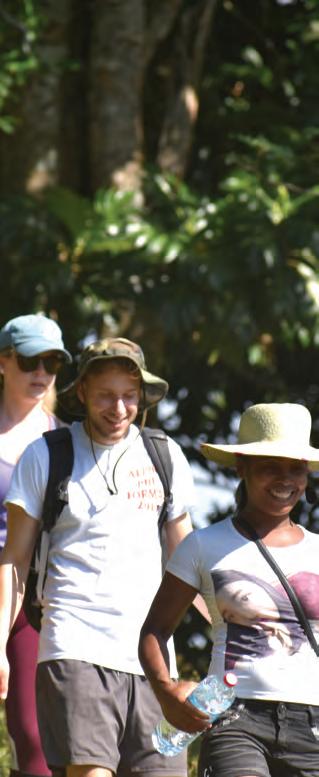
Ampersand Programs immerse first-year students in handson, cohort-based learning that connects classroom study with real-world experience and close faculty mentorship.
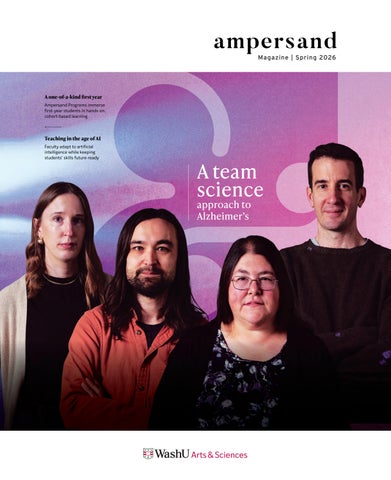
Fighting the fading mind
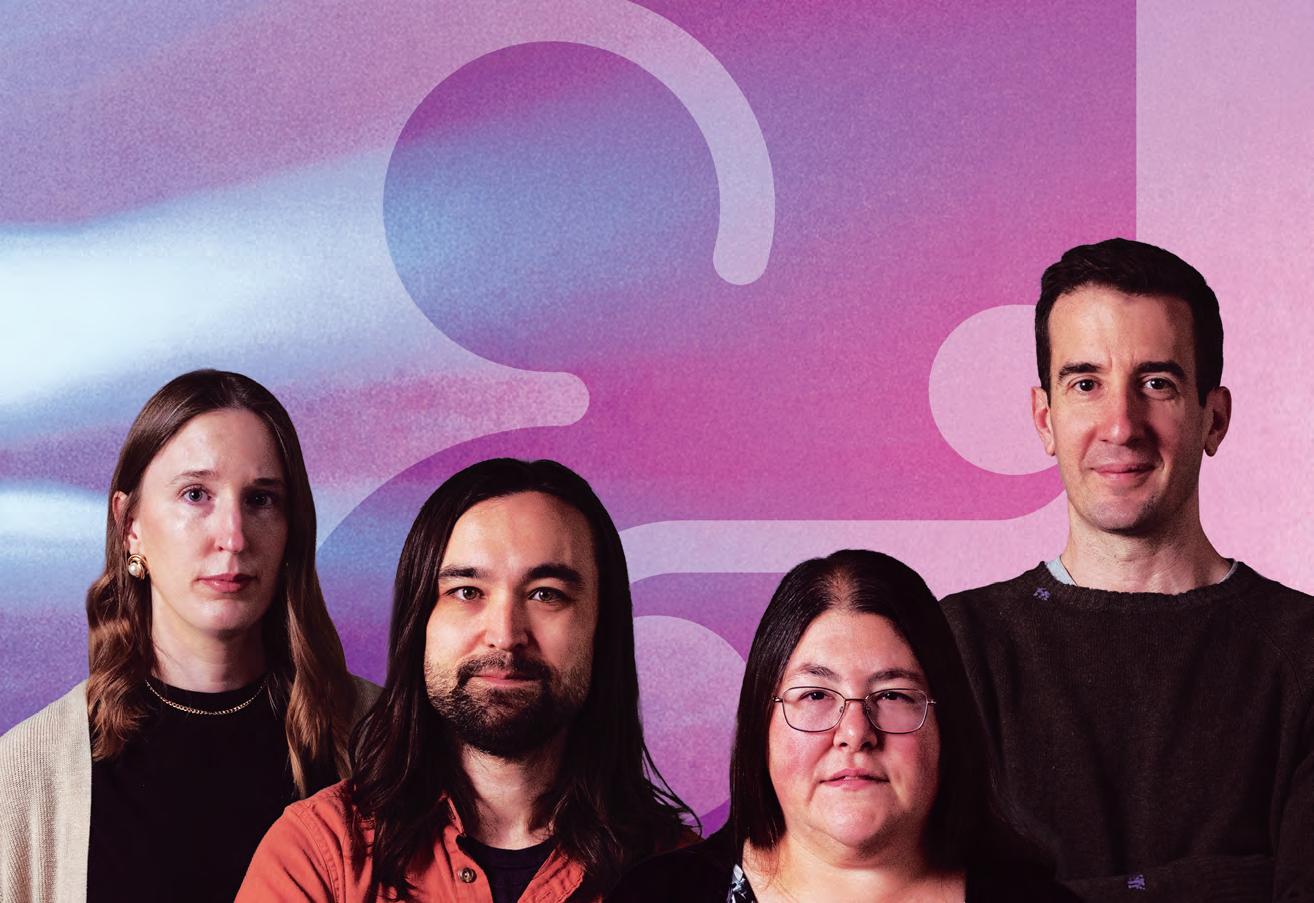
Arts & Sciences researchers are approaching Alzheimer’s disease from multiple angles, working to understand its causes and develop more effective strategies for prevention and treatment.
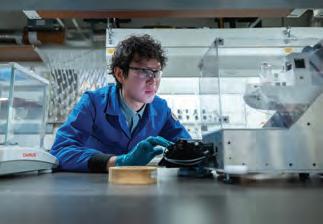
Zach Zheng uses artificial intelligence to create metallic-organic compounds with potential applications far beyond the lab.
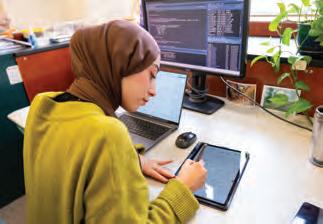
PhD student Merve Ileri-Tayar turned her curiosity about the human mind into a standout graduate research experience.
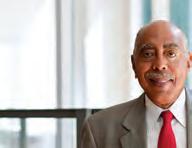

Walter Massey, MA ’66, PhD ’66, has shaped science, led major academic institutions, and expanded opportunities for generations of students.


Several Arts & Sciences faculty members retire this summer after distinguished careers.
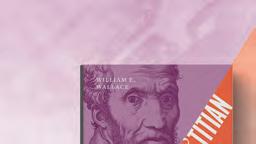
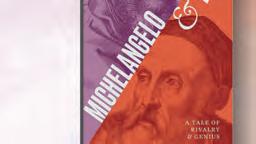
William Wallace’s book traces the rivalry between Renaissance masters Michelangelo and Titian.


News, milestones, and spotlights from across Arts & Sciences at Washington University in St. Louis
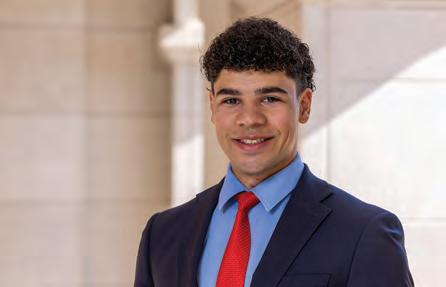
Senior Omar Abdelmoity has been awarded a Marshall Scholarship, one of the nation’s most competitive honors. He will pursue degrees at Oxford and Cambridge focused on health policy and population health sciences. “The Marshall Scholarship will not just precede my medical career, it will shape its foundation,” he said. At WashU, Abdelmoity has focused on how medicine can better support underserved populations. He has built national mental health initiatives, including suicide prevention programs, and conducted Alzheimer’s research (see p. 33).


Omar Abdelmoity Marshall Scholar My career goal is not only to advance science but also to ensure that interventions reach the populations who need them most.
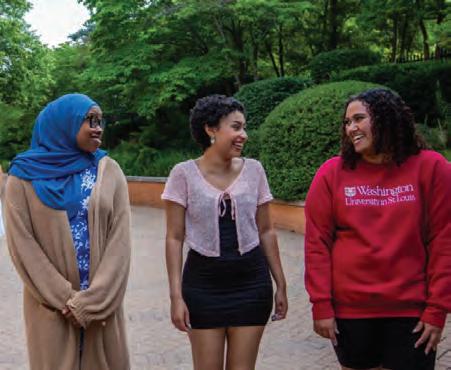
Jayden Sheridan (pictured far right) once thought law school was her next step. WUSTEPS, a WashU program introducing students to graduate study in political science, changed that. Today, Sheridan is a WashU PhD candidate studying American politics. The WUSTEPS program pairs undergraduates with faculty mentors, provides research experience, and demystifies graduate school, helping prepare students for the realities of academic research. “Political science needs diverse perspectives,” Sheridan said. “Otherwise, we’ll keep asking the same kinds of questions.”
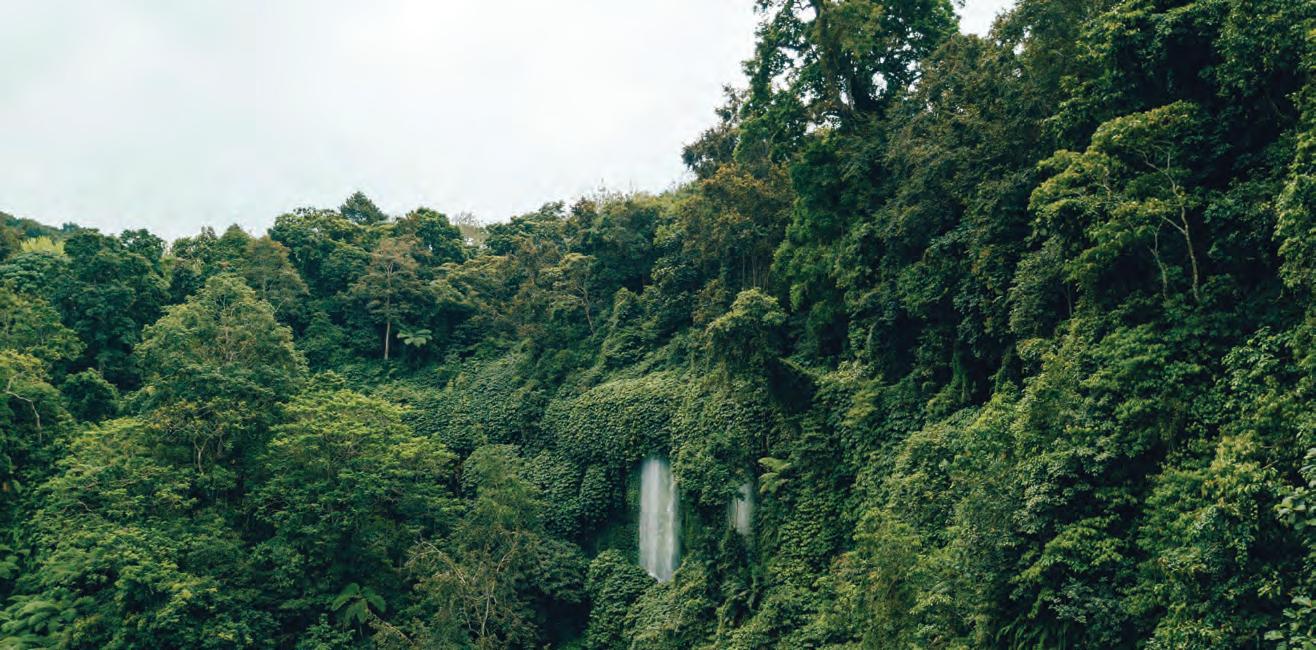
A 40-year study tracking hundreds of tropical rainforest sites from the Amazon to the Andes found something unexpected: While the number of tree species hasn’t significantly changed, the types of trees are shifting.
Jonathan Myers, a professor of biology, and Toby Pennington, the David and Dorothy Kemper Professor, found that cooler areas are gaining species, trees that can’t handle heat are dying out, and heat-loving trees are spreading as temperatures rise. “Climate change and human activity are having a profound impact on biodiversity,” Myers said.
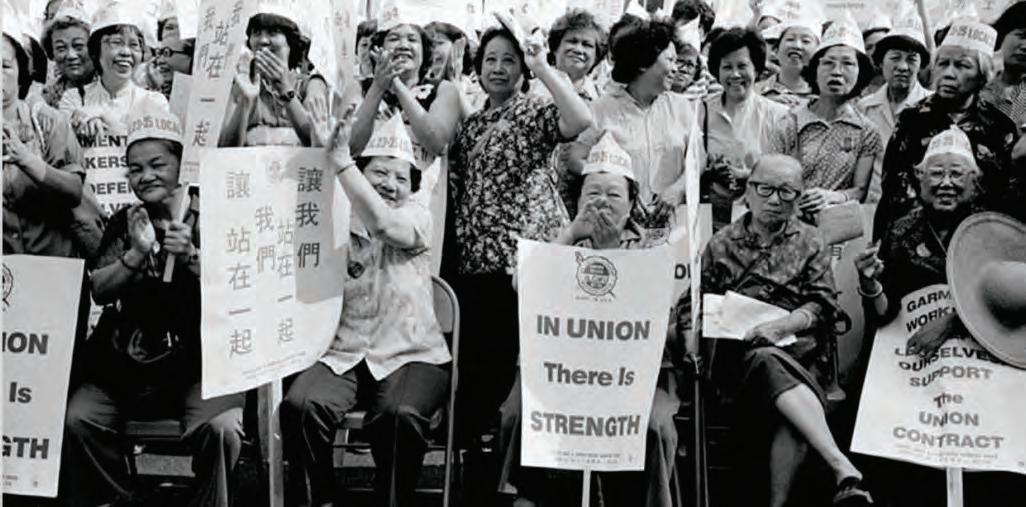
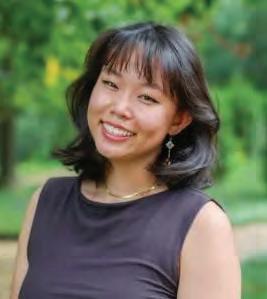
Senior Maggie Lu went digging through New York archives to discover a strike that made history — and found her own family’s story along the way. Lu studied the 1982 Chinatown garment workers’ strike, the largest and most successful Asian American labor action in history. What began as a thesis project became unexpectedly personal when she discovered her father had worked in the same textile industry that shaped the strike. “I didn’t make that connection until I was midway through the project… It didn’t even occur to me that he was in the same industry,” Lu said. Her research went on to trace how women workers built power through both family ties and factory labor.
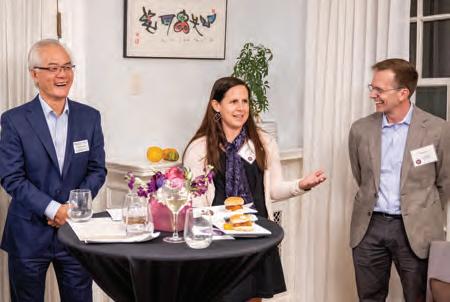
The Incubator for Transdisciplinary Futures hit a milestone this year: turning an initial $2 million in seed funding into $20 million in outside funding. Dean Feng Sheng Hu set the ambitious goal three years ago when the Incubator launched with the aim of supercharging groundbreaking team science research projects. “We wanted to provide a powerful launchpad for bold, impactful research and empower our faculty to think and work together in new ways,” Hu said. The Incubator has achieved that and more, serving as a powerful blueprint for the ways collaborative research can inspire breakthroughs and grant support.
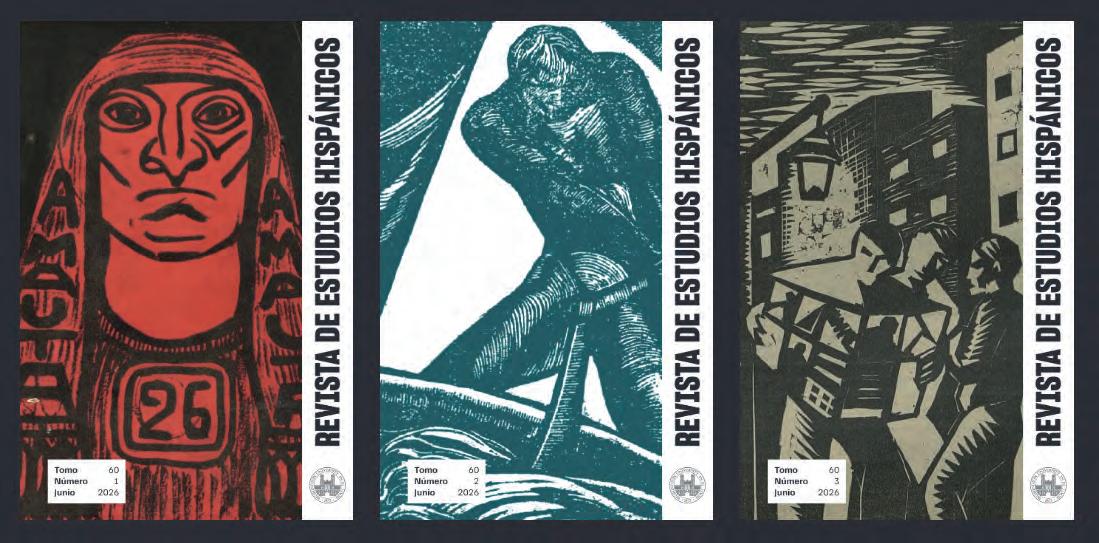
The internationally recognized journal Revista de Estudios Hispánicos is a cornerstone of Spanishlanguage scholarship at WashU, connecting researchers across continents and fostering collaboration, mentorship, and editorial leadership within the Department of Romance Languages and Literatures. Housed at WashU since 1991, the peer-reviewed journal has become a hub for global humanities research, shaping debates in Hispanic studies while giving graduate students hands-on experience in academic publishing. “Revista has made a significant contribution to the production of knowledge,” said department chair Ignacio Infante. “Having a place where global scholarship can come together is of enormous value.”
As bacteria grow harder to treat, Yan Yu, the Art Krieg Professor of Chemistry, is working on a new assist for antibiotics. Her team developed tiny, two-sided particles that help drugs break through bacterial defenses, sticking to the outer wall and then breaking it open. In lab tests, the approach improved results against drugresistant strains. Because the particles can be adjusted, they may help researchers keep pace as bacteria evolve. “The nanoparticles supercharged the antibiotics,” Yu said. The work points to a promising way to extend the life of existing drugs — a key goal as new antibiotics become harder to develop.
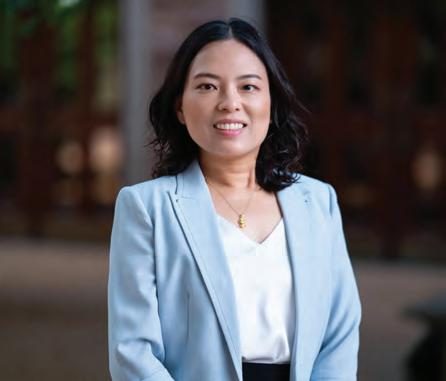
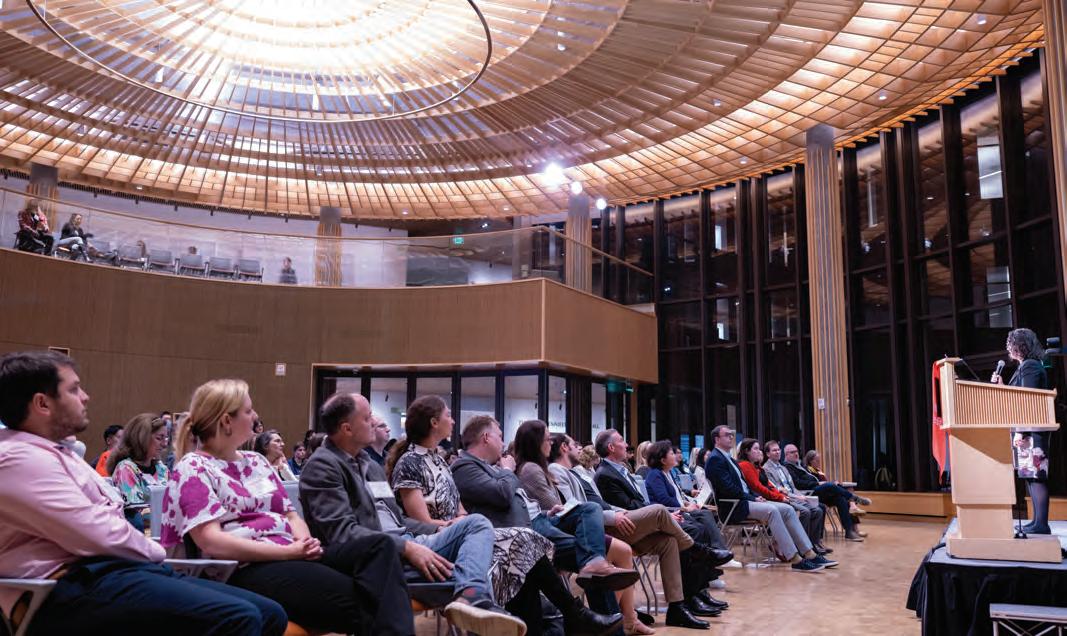


At the inaugural Teaching Innovation Showcase, faculty shared how their courses can double as realworld labs, from sustainability projects that shape local policy to novel AI tools that train students to question even the most perfect of answers. “There’s always a ripple effect,” said Ally Milner, a lecturer in Spanish. That ripple shows up later in internships, jobs, and community work, proving that the lessons learned in Arts & Sciences courses extend far beyond the classroom.
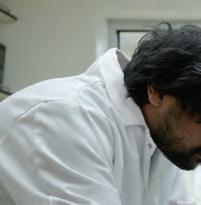
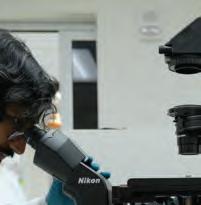
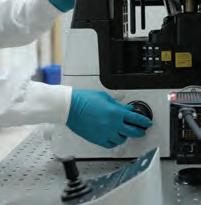
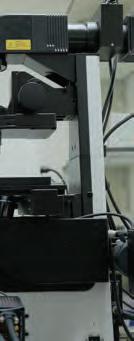

Tiny diamonds are helping a WashU team — including graduate students Shakil Kashem and Changyu Yao, physicists Chong Zu and Shankar Mukherji, and researchers in WashU Medicine — get a new look inside living cells. Part of WashU’s Center for Quantum Leaps, a signature initiative of the Arts & Sciences Strategic Plan, the group turned nanodiamonds into tiny sensors that can pick up small changes in how cells produce and consume energy, giving scientists a rare, real-time look at how cells work — and what can go wrong in diseases like diabetes and heart failure. The development offers a quantum-scale window into disease, one cell at a time.
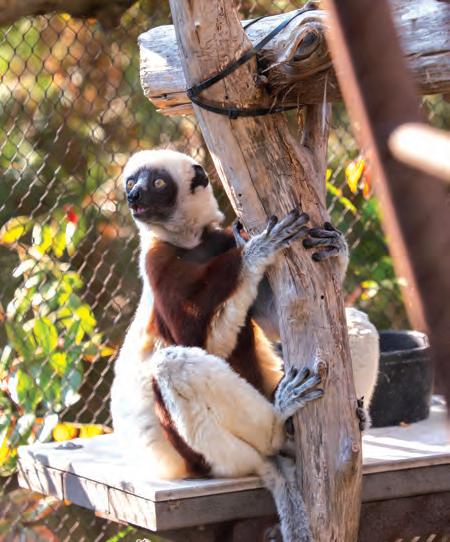
An ambitious new project is catalyzing conservation efforts to support critically endangered primates through the Living Earth Collaborative, a one-of-a-kind initiative that combines the resources of WashU, the Saint Louis Zoo, and the Missouri Botanical Garden. Distinguished Trustee Andy Newman pledged $1.5M to launch the Endangered Primate Information Collaboration (EPIC), which combines on-the-ground expertise and high-tech monitoring to observe and protect populations of diademed sifakas in Madagascar as well as western lowland gorillas and chimpanzees across Africa’s Congo Basin. “These species all depend on healthy forests,” said Jonathan Losos, the William H. Danforth Distinguished University Professor and co-director of the Living Earth Collaborative. “By protecting these primates, we’ll be protecting all of the other plants and animals that inhabit these special places.”
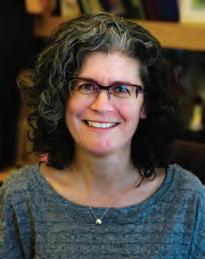

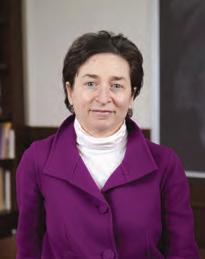

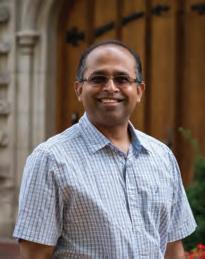

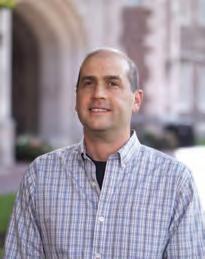

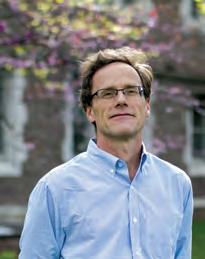

Petra Levin, Corinna Treitel, Ram Dixit, David Fike, and John E. McCarthy have each been named fellows of the American Association for the Advancement of Science, one of the most distinguished honors in science. Dixit studies how plants grow and take shape. Fike reconstructs Earth’s ancient climate from chemical clues in rocks. Levin explores how bacteria respond to stress and how that affects antibiotic effectiveness. McCarthy develops mathematical tools used in physics and medical imaging. Treitel examines how ideas about health and science evolve over time. Together, their work spans the building blocks of life, Earth’s history, mathematics, and our understanding of science.
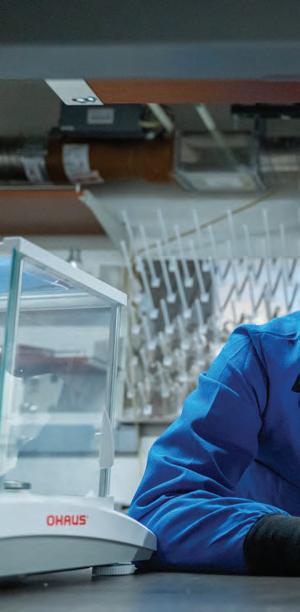
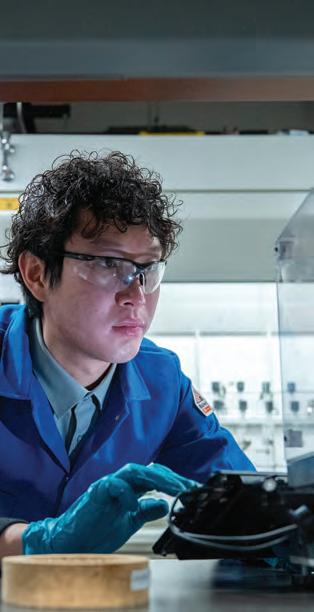
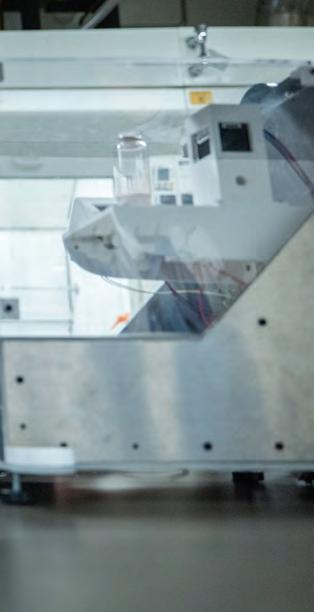
Zach Zheng uses artificial intelligence to create metallic-organic compounds with potential applications far beyond the lab.
by C HRIS WOOLSTON
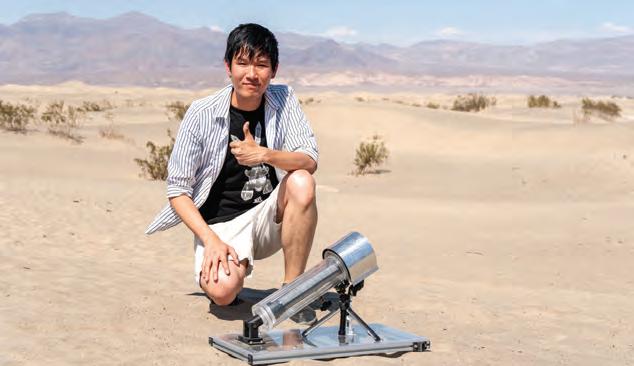
Zhiling “Zach” Zheng, an assistant professor of chemistry, has been on campus for less than a year, but his lab is already in high gear. Hired in 2025 as part of the Rules of Life Initiative, Zheng studies and develops metal-organic frameworks — spongelike crystals that can pull water from desert air, trap carbon dioxide, and potentially transform fields ranging from mining to medicine.
Metal-organic frameworks are a major focus in modern chemistry. Zheng’s mentor, Omar Yaghi, received the 2025 Nobel Prize in Chemistry for pioneering work on the materials. Zheng attended the award ceremony in Stockholm last December, and Yaghi highlighted Zheng’s research during his Nobel lecture.
As he builds his lab at WashU, Zheng is thinking not only about the future of the field, but also about mentorship, collaboration, and the kinds of scientific questions that first drew him to chemistry.
As the name suggests, metal-organic frameworks — we call them MOFs, pronounced “moffs” — are crystals that contain both metals and organic compounds. The great thing about MOFs is that they have a lot of empty spaces between the atoms, making them very porous and spongelike. The size of the pores depends on the materials used, so chemists can precisely engineer each MOF to fit a particular purpose.
Since their discovery a few decades ago, MOFs have been used across a wide range of applications, including gas separation, catalysis of chemical reactions, and even food packaging. As a PhD student, I showed that MOF crystals can trap water from the air in Death Valley. At a large scale, this sort of technology could help support communities and farms in dry places. MOFs could also be used to pull pollutants from drinking water or rare earth metals from mining waste. Or they could absorb chemicals to house reactions in each little chamber within the crystal. I’m sure that there are many other applications that are waiting to be discovered.
I’m now using AI to explore different combinations of metals and organic molecules. There are millions of different organic compounds that could go into a MOF, and there’s also a wide range of possible metals, including copper, zinc, iron, and aluminum. No chemist could ever try every possible combination in the lab, but AI can suggest different combinations of metals and organic compounds in different ratios and predict how new MOFs might behave in various situations.
Once we’ve identified a potentially interesting or useful MOF, we create it in the laboratory. My group has developed about 10 new compounds since I started at WashU. We’re really showing off the muscle of AI in the laboratory. Some chemists do almost all of their work on computers, which is great. But, for me, AI is just one of my tools.
Joining WashU as part of the Rules of Life Initiative was a huge accomplishment for me. The whole point of the initiative is to encourage collaboration across the disciplines of chemistry, physics, and biology to explore fundamental questions about life.
I’m also interested in collaborating with researchers at the Medical School to study possible clinical applications of MOFs. Perhaps a MOF capsule or implant could deliver antibiotics, chemotherapy, or even therapeutic gases to a targeted part of the body. I look forward to those collaborations and conversations.
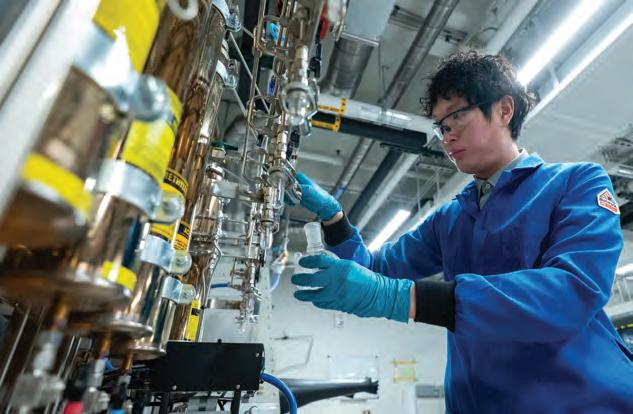
Faculty across Arts & Sciences are figuring out how to use artificial intelligence wisely while keeping students’ skills future-ready.
by JENNY BIRD
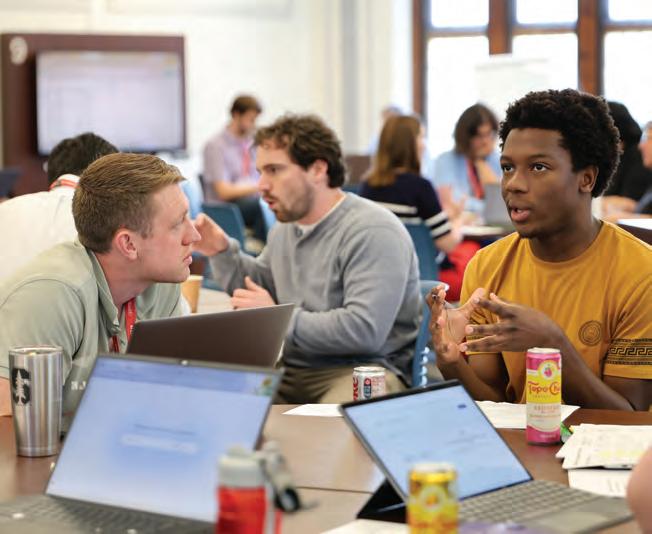
On a recent Tuesday morning, students in the political science class “AI, You, and Now: The Stories That Win” were buzzing about artificial intelligence. Professors William Acree and Betsy Sinclair had invited them to have a frank discussion about when and how they use it, and there was no shortage of opinions.
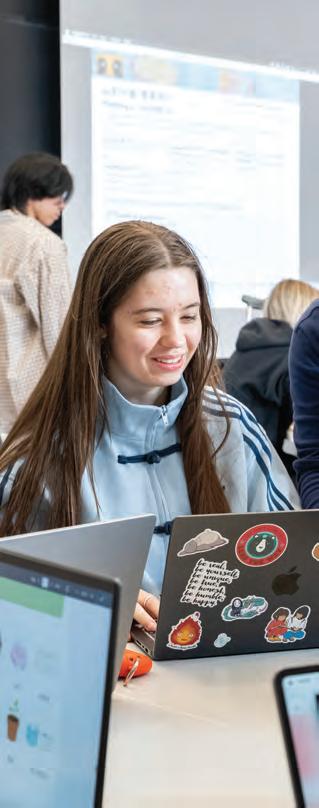
One student shared that he loves AI and uses it up to 30 times an hour outside of class. Another said it helps her interpret readings and outline essays, but that she also uses it to find the best St. Louis restaurants. There were concerns, too. A senior admitted she feels guilty when she pastes her class readings into an AI chatbot like ChatGPT, asking it to identify the five most important points, but believes she must use it because everyone else is.
That perception isn’t far off. An October survey by WashU’s student newspaper showed about two-thirds of WashU students use AI chatbots like ChatGPT, yet about the same number think students would learn more without them.
At WashU, some scholars are using AI to fuel groundbreaking computational research, such as chemist Zach Zheng (see p.12) and biologist Keith Hengen (see p.28). Others, including political scientist Christopher Lucas, study AI itself, examining its impact and bias.
In the classroom, however, there is more ambivalence.
“Faculty are facing the challenge of finding ways to incorporate AI that don’t entail having students offload their thinking and writing to it,” said Erin McGlothlin, vice dean of undergraduate affairs and the Gloria M. Goldstein Professor of Holocaust Studies.
Acree, a professor of Spanish and vice dean of interdisciplinary initiatives and innovation, agrees that the challenge is significant and sees it as central to WashU’s mission. “As a university, we take on the big questions in moments that matter most,” he said. “The place of AI in our classrooms, in how we think about learning, and in our research poses many such questions, and we have to meet the moment, taking them all on with urgency.”
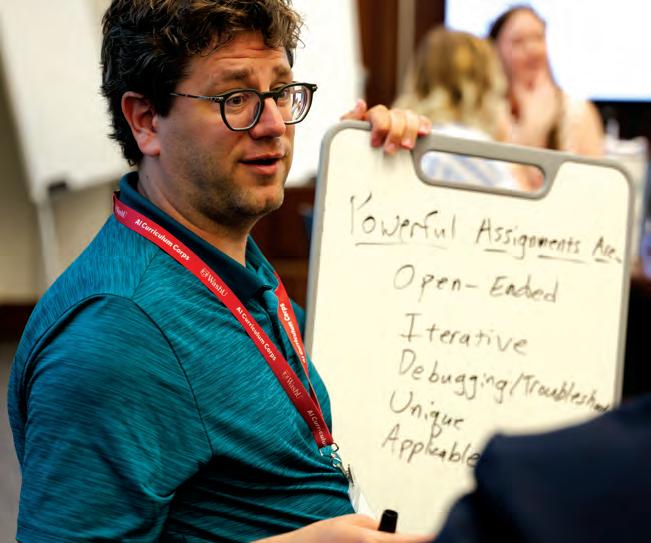
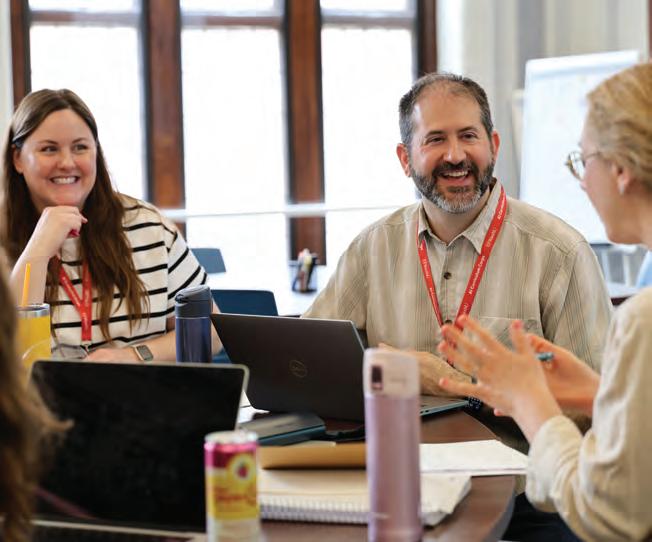
WashU’s inaugural AI Curriculum Corps, which includes 36 Arts & Sciences faculty members, will supporting the integration of AI into teaching and learning. (Photos: Maggie Moseley, Carter Staley)
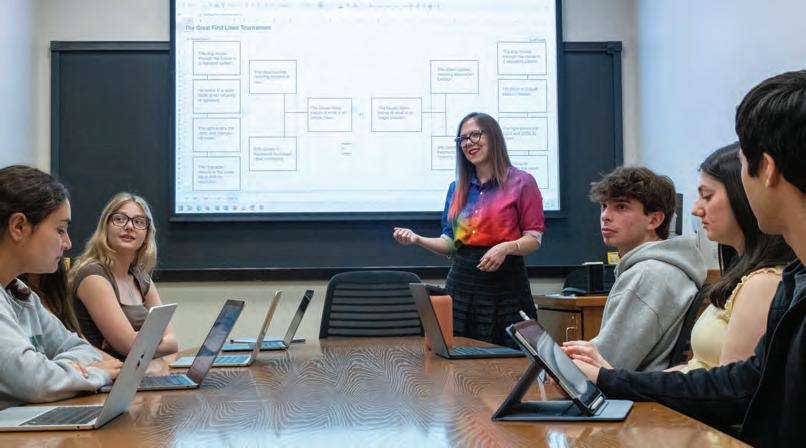
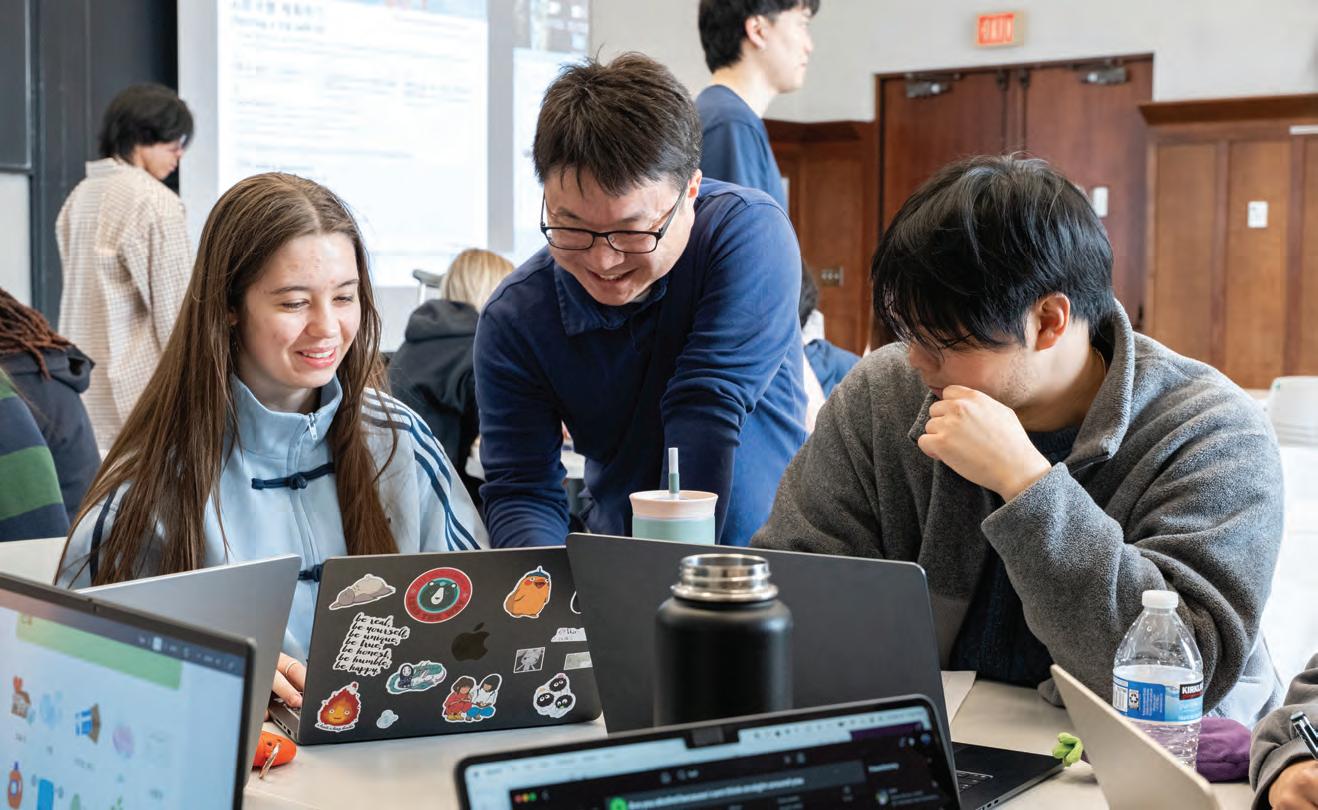
In their course, Acree and Sinclair ask students to complete weekly assignments two different ways — once on their own and once using AI — and compare the results. They also have students use WashU’s secure AI platform to build personalized chatbots trained on their own writing, including past papers, resumes, and creative work. The platform emerged from the +AI initiative, a university-wide effort co-led by Sinclair to integrate artificial intelligence into teaching, learning, and research in a thoughtful and responsible way. That same focus on rethinking how AI shapes teaching is reflected across Arts & Sciences, where 36 faculty members have been selected for the inaugural AI Curriculum Corps, a university-wide initiative supporting the integration of AI into teaching and learning.
“Prompt engineering matters a lot,” said Sinclair, WashU’s assistant vice provost for digital transformation and the Thomas F. Eagleton University Professor of Public Affairs and Political Science. “It’s not just the documents that students upload; they also have to make their instructions sound like them. It’s an iterative process that can be pretty generic until they add ongoing interactions with the bot. ”
Kasey Grady, a senior lecturer in college writing and chair of the Arts & Sciences curriculum committee, has seen firsthand how AI is reshaping student writing.
Inspired by the NBA playoffs, she created a bracket-style competition in which AI-generated sentences compete against student-written ones. Here’s how it works: A student shares an essay draft with the class; then, one group generates a first
Senior lecturer Kasey Grady used a bracket-style classroom exercise in which AI-generated sentences competed against studentwritten ones. Students then debated and voted on which was more effective.
sentence using AI, while another writes their own. The class debates which one is better and votes.
The AI writing is often competent but bland. In response, Grady encourages students to take risks. “The exercise helps students see they can trust their own skills,” she said. “People lean on AI because they don’t think they’re good enough. But what makes readers keep going is often something unique and unexpected.”
Grady allows limited AI use for proofreading if students disclose and cite it; otherwise, she treats it as plagiarism. Still, she believes students must learn to navigate the tools effectively.
“Once students go into the workforce, they are going to be asked to use AI in their jobs,” she said. “If they don’t learn how to use it well, they will be at a disadvantage.”
Mijeong “Mimi” Kim, a teaching professor of Korean language, sees artificial intelligence as reshaping not just assignments but the fundamental role of the professor.
“My students today are true digital natives,” she said. “They want on-demand learning.”
To meet that demand, Korean language faculty in the Department of East Asian Languages and Cultures used part of a $10,000 award from WashU Libraries to hire two computer science students to build AI conversation partners that provide students with flexible, low-stakes language practice. Kim also assigns exercises in which students use AI in Korean for tasks like planning trips and generating images, revising their prompts to see how small language changes shape the results.
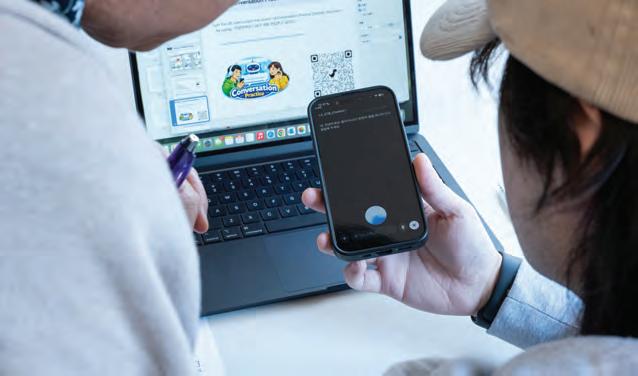
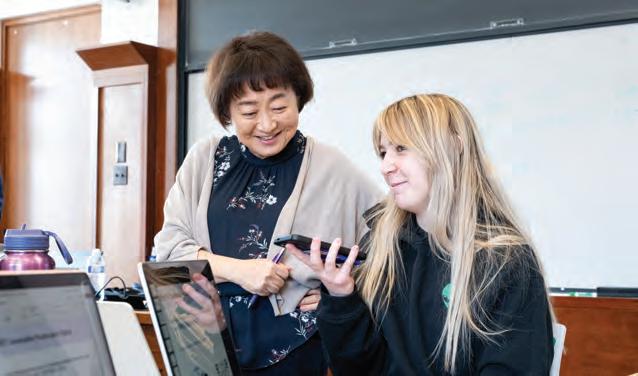
Kim believes her students understand the risks of overreliance, but she emphasizes that the greater challenge lies with instructors: As dispensing information becomes less central, faculty must focus on mentoring, countering disinformation, designing innovative curricula, and fostering community.
While Kim embraces AI as a tool for empowerment, Uluğ Kuzuoğlu, an associate professor of history, has been more cautious. Viewing the issue through a historian’s lens, he remains attentive to the ways new technologies can reshape our relationship to the past. He considered asking students to simulate conversations with historical figures using ChatGPT, but ultimately decided against it, concerned about the accuracy of the generated portrayals.
“It sounded cool at first,” he said, “but when I really thought about pedagogy and what students would get out of it, I thought it might just be using AI for the sake of using AI.”
Even so, he believes it’s up to him, not the technology, to adapt his teaching as AI becomes more commonplace.
Kuzuoğlu teaches “Artificial Intelligence: The Mind and the Machine” and studies the history of computation, data, and AI in China. His core teaching goals remain unchanged: students must grasp readings, reflect on them, and develop their own interpretations. To achieve that in a world where AI can handle many tasks, he has shifted toward discussion and group work, fostering a vibrant intellectual community where students test ideas and collaborate.
“AI has been challenging me and forcing me to change the way I teach,” Kuzuoğlu said. “Throughout history, skills have been lost and never returned. This is a moment to rethink what education means if some skills we value today become obsolete.”
In physics, AI is transforming not just how students work but what they can explore. Alex Chen, an assistant professor of physics, and Li Yang, the Albert Gordon Hill Professor of Physics, are offering “Artificial Intelligence in Modern Physics Research,” a National Science Foundation-funded summer program in which students apply AI and machine learning to advanced research problems.
“Students used to spend a lot of time learning to do complex calculations. Now, AI can do much of that,” Chen said. “What matters now is being able to say something intelligent about physics with the numbers they have found. Ultimately, AI is a tool that may empower us to do things that we only used to dream about. But it goes another way: AI also helps us find new problems to work on.”
Since the development of the Arts & Sciences Strategic Plan in 2021, school leaders have been partnering with faculty to identify the intellectual capacities and interpersonal skills embedded in Arts & Sciences undergraduate courses. The initiative, called Literacies for Life and Career, helps students identify, articulate, and reflect on the 11 core skills they develop through their education, including integrative thinking, ethical reasoning, and applied problem-solving. These skills go beyond discipline-specific knowledge to prepare students for lifelong success in a rapidly changing world.
“To be able to navigate contexts shaped by AI and to use AI tools proficiently and effectively, students will need to cultivate cognitive abilities that overreliance on AI frequently degrades,” McGlothlin said. “The skills emphasized by Literacies for Life and Career will be more crucial than ever to students’ success in the workplace and in their personal lives.”
PhD student Merve Ileri-Tayar turned her curiosity about the human mind into a rewarding graduate research experience.
by C HRIS WOOLSTON
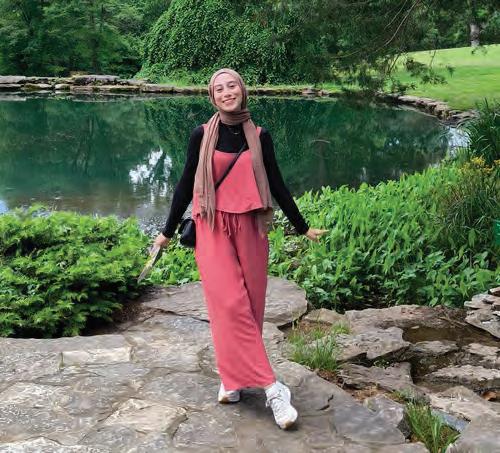
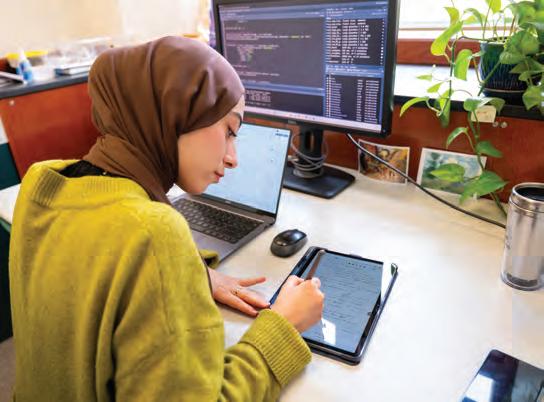
Not many graduate students turn down a Fulbright Scholarship, but few have the options, accolades, and awards of Merve Ileri-Tayar, a PhD student in psychological and brain sciences graduating in May.
A native of Turkey, Ileri-Tayar declined a Fulbright in favor of a scholarship from the McDonnell International Scholars Academy, a program that brings top students from around the world to WashU. In addition to the generous scholarship, she was drawn by the kind of research taking shape in WashU’s nationally recognized psychology graduate program. “I’d never lived in the United States before, but I knew WashU was my dream destination,” she said. “I feel so fortunate to be here.”
For Ileri-Tayar, the McDonnell scholarship was a prelude to greater things. In 2025, she won the Dean’s Award for Graduate Research Excellence, recognizing her work uncovering the brain’s ability to shift attention from one topic to another. In 2026, she was chosen as the graduate student speaker for the Arts & Sciences Hooding and Recognition ceremony, highlighting her leadership and impact within the graduate community.
Flexible focus isn’t just a field of study for Ileri-Tayar; it’s a way of life. “I’m good at managing multiple lines of work,” she said. “I don’t rely on a single research method or follow just one line of inquiry. I like to collaborate and branch out as much as possible.”
As an undergraduate psychology student in Ankara, Ileri-Tayar was already following the work of WashU researchers, especially Julie Bugg, a professor of psychological and brain sciences. “Julie communicates complex ideas in a simple way, even in an academic paper,” Ileri-Tayar said. “She asked questions that were very interesting to me, and she was designing cool experiments. Even from Turkey, I could tell that she would be a great mentor.”
Any lingering uncertainty faded when Ileri-Tayar and Bugg met over Zoom. “We really clicked both academically and personally,” Ileri-Tayar said. “I stopped considering other possibilities.”
Working with Bugg, Ileri-Tayar studied attentional control, the brain’s ability to control attention to filter out irrelevant information and focus on what matters. “I’m interested in how people learn to manage their
attention,” Ileri-Tayar said. “Attention takes different forms in different situations. Sometimes it’s deliberate, and sometimes it’s automatic. I want to understand the motivations and mechanisms that help us pay attention to what matters.”
Attention is an especially valuable, and sometimes elusive, commodity for students, Ileri-Tayar said. “We learn over time that particular items have high stakes, so our brains ramp up attention automatically for those items,” she explained. “Students can make the most of this phenomenon by creating their own high-attention cues, like consistently using a specific marker for important information.”
At every step, Ileri-Tayar had a knack for asking the right questions and designing experiments that could lead to meaningful answers, Bugg said. “In her first semester, she was key in helping us push forward a line of research that ultimately revealed for the first time how learned attentional biases carry over and influence behavior in different situations,” she said.
“When Merve is involved in a project, there is never any doubt that it will be executed to the highest standard and she will see it through to completion,” Bugg said. “She has been a great role model and a sought-after collaborator in our department and beyond.”
During her time in the Department of Psychological & Brain Sciences, Ileri-Tayar exemplified the collaboration and student-led research that put the graduate program near the top of national rankings. In addition to her work with Bugg, she teamed up with assistant professor Wouter Kool and Todd Braver, the William R. Stuckenberg Professor in Human Values and Moral Development, to study different states of attention.
“Working with other researchers was definitely a highlight of my PhD experience,” she said. “We had joint lab meetings, and Wouter and Todd were always open to my ideas.” Those collaborations reshaped how she thinks about attention, emphasizing its dependence on context, motivation, and goals.
By combining lab meetings, experiments, and teamwork with mentors and peers, Ileri-Tayar feels prepared for what comes next: a postdoctoral research position at Duke University. “My goal is to keep doing research, become a professor, and eventually mentor students of my own,” she said. “I’ve had an amazing time here. Leaving will be bittersweet.”
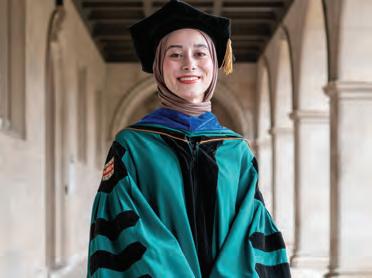
Hometown: Cankiri, Turkey
PhD program: Psychological and brain sciences
Career goal:
To study how attention and goal-directed behavior work, including how people learn and use attention in different situations, and to continue research in cognitive psychology focused on attention, cognitive control, reward learning, and aging.
Honors & Awards:
• 2025 Dean’s Award for Graduate Research Excellence
• McDonnell International Scholar
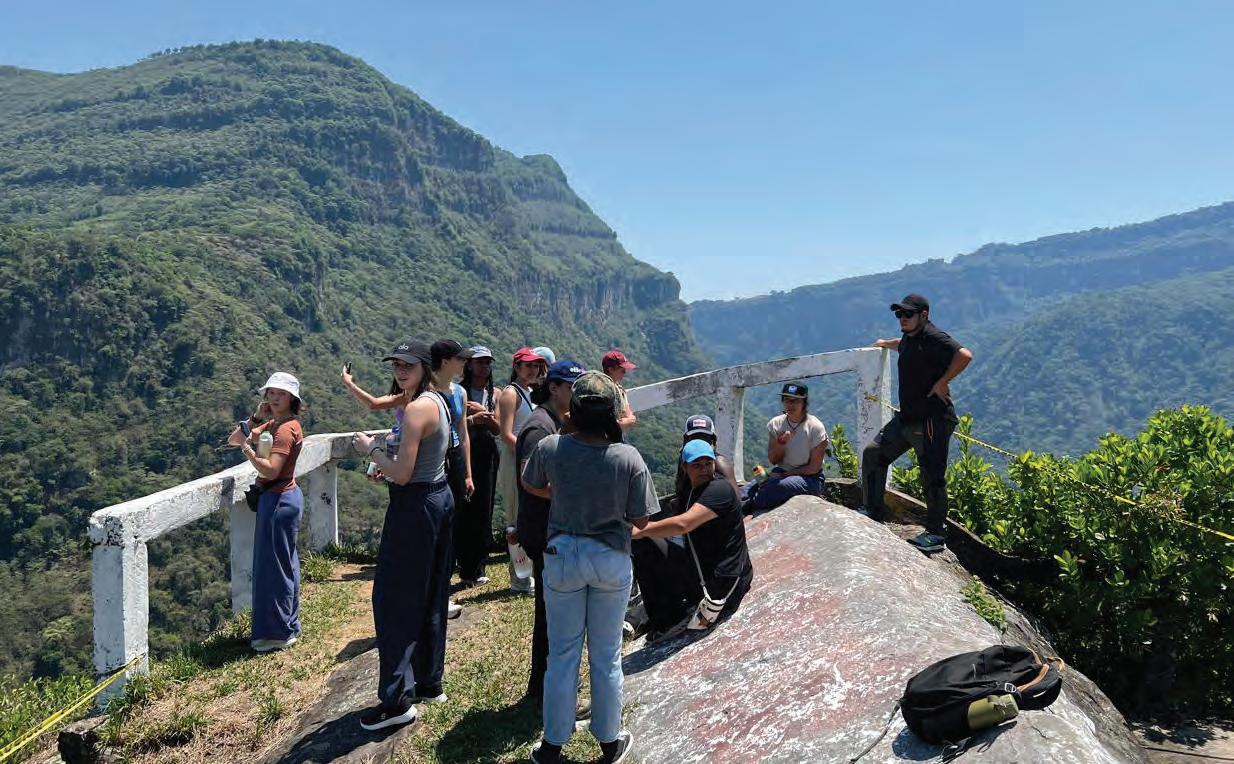
Ampersand Programs immediately immerse first-year students in the very best of WashU, blending classroom study with experiential learning while fostering tight-knit cohorts and close connections with faculty.
by JEREMY GOLDMEIER


Learn more about Ampersand Programs and their immersive, interdisciplinary learning experiences across Arts & Sciences.
artsci.washu.edu/AmpersandPrograms
Conner Yamnitz, 19, stood amid the jagged stone markers of the Treblinka memorial and thought about the lives they represented.
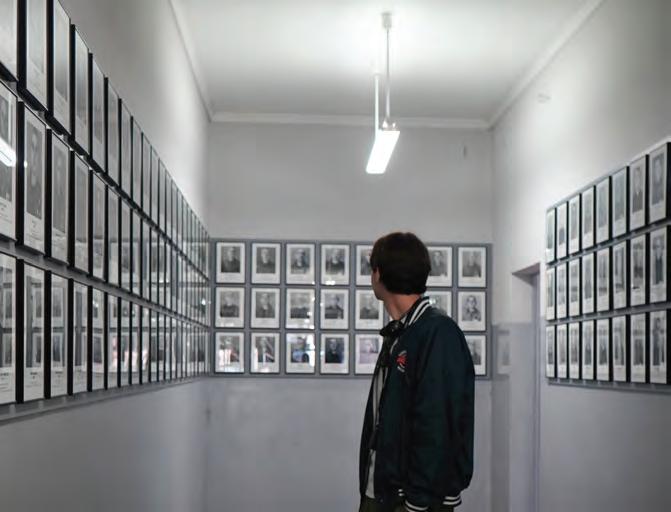
Nestled deep in the woods of eastern Poland, the memorial marks the site of a former Nazi extermination camp where more than 800,000 people were killed. Its stones rise from a flattened circle of dirt like a makeshift cemetery, each one honoring a different Polish Jewish community whose inhabitants were erased from history.
Yamnitz visited Treblinka in summer 2023 with a small cohort of classmates as part of the Arts & Sciences Ampersand Program “History, Memory & Representation of the Holocaust.” Standing side by side with his peers and guided by world-leading Holocaust scholars Erin McGlothlin and Anika Walke, he quietly traced the stones, reflecting on the history they had studied over the two-semester course. It was one of the final stops on a transformative journey through Berlin, Krakow, and Warsaw, with each site bringing to life lessons from the classroom.
Before this experience, Yamnitz had a limited understanding of Holocaust history.
“If you had asked me at the time, I probably would have said the Holocaust happened in Germany,” Yamnitz said. “That’s not entirely untrue, but it’s missing 80% of the picture. I learned that the vast majority of victims were Eastern European and that all the major killing centers, like Auschwitz and Treblinka, were in Eastern Europe. I was shocked by that.”
Standing at one of those sites, Yamnitz wasn’t looking at a dot on a map; he was immersed in history. The silence, the stones, and the weight of what had been lost hit him harder than anything else he had seen on the trip.
“It helped me visualize the scale of the communities that were completely destroyed at this one, tiny place,” Yamnitz said. “It was overwhelming.”
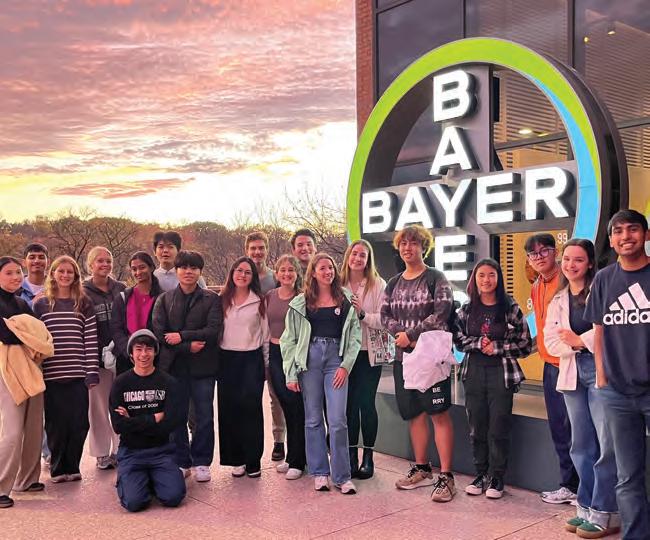
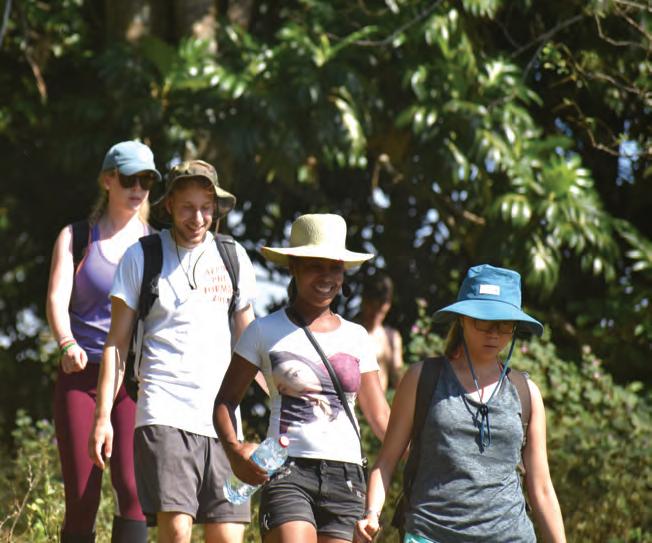
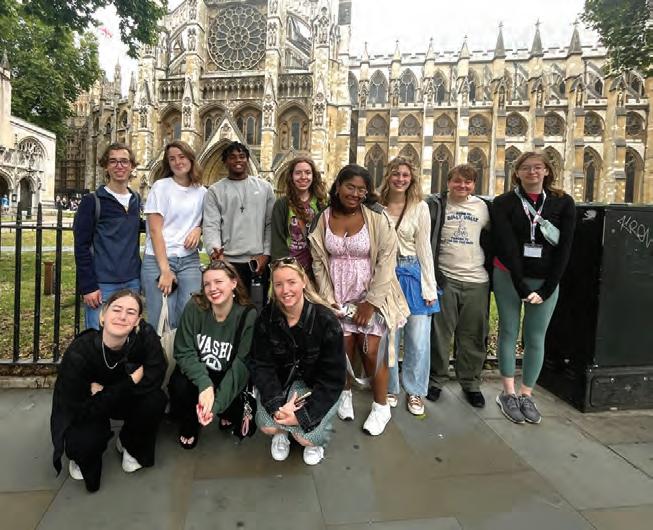
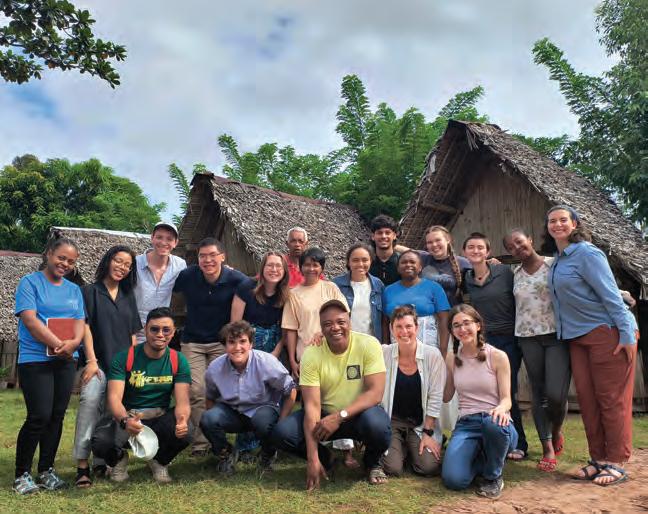
From St. Louis biotech labs to Madagascar fieldwork to Shakespeare on stage in London, Ampersand Programs connect students to real-world learning: “Biotech Explorers Pathway” links science and innovation, “Pathfinder Fellows in Environmental Leadership” focuses on conservation, and “All the World’s a Stage” brings performance to life.
McGlothlin, vice dean of undergraduate affairs, has taught “History, Memory & Representation of the Holocaust” for a decade.
Despite its heavy subject matter, she describes it as a reenergizing labor of love. Like all Ampersand Programs, it is open exclusively to first-year students. Their energy and fresh perspectives provide a jolt from her typical administrative duties.
“This is my way to really connect with students,” said McGlothlin, who is also the Gloria M. Goldstein Professor of Holocaust Studies. “They’re so smart, they care so deeply, and they’re so engaged. Looking at the world through the eyes of these first-year students is transformative.”
Her students, in turn, receive an experience that is intimate, indepth, and unforgettable. With their small, cohort-based model and opportunities to work closely with some of the school’s most distinguished scholars, Arts & Sciences’ Ampersand Programs counter the stereotypical image of a first-year college course: a large auditorium packed with hundreds of students, passively absorbing a lecture. A recent survey of similar offerings at peer institutions found that what WashU offers first-year students is truly one of a kind.
Students are invited to apply to Ampersand Programs and other first-year opportunities in the spring, soon after they’re admitted. Each Ampersand Program unfolds across two or
more semesters, blending classroom and experiential learning while linking multiple academic disciplines. Students studying cancer care meet with St. Louis oncologists, nurses, and survivors. Those studying the history and culture of ancient Rome travel to see its enduring landmarks in person.
“Ampersand Programs have become our signature feature for first-year students,” McGlothlin said. “It attracts them to WashU. It gets them into small-group classes right away. They get to know their faculty. They get to know each other. And it sticks with them. I still text some of the people from the first cohort I taught 10 years ago.”
First-year student Rui “David” Zhang was drawn to Ampersand Programs because of their intimate class size. He attended a small, private high school in the Boston area, so the idea of learning alongside a close group of classmates appealed to him.
“I like that learning style, where you know everybody in the class and you know the professors really well,” Zhang said.
Zhang gravitated toward “People, Planet, Health,” an Ampersand Program that explores the many links between planetary ecosystems and human health. Students conduct numerous case studies, take trips to a wastewater treatment plant and the Saint Louis Zoo, and hear directly from professionals working to preserve planetary biodiversity and fight the spread of diseases.
One of those speakers, professor Michael S. Diamond from the WashU School of Medicine, gave a talk on vaccines that inspired Zhang to pursue a research opportunity. Zhang shared his passion for virology and immunology, and asked if Diamond needed help in his laboratory over the summer. After discussions and a formal application, Zhang landed a role: this summer, he’ll help Diamond study the tick-borne Powassan virus.
“I’m really excited to be there this summer,” Zhang said. “It’s the kind of opportunity I wouldn’t even know about without being part of an Ampersand Program.”
Like McGlothlin, Joseph Jez has also passed the decade mark of running an Ampersand Program.
Jez, the Spencer T. Olin Professor in Biology, leads “Biotech Explorers Pathway,” a program that brings students directly to the startups, laboratories, and international corporations that are driving innovations in biotechnology. With a heavy emphasis on entrepreneurship, the program encourages students to draw inspiration for their own business ideas.
“Some of our students will become art majors, some will go into business or engineering, and some will find a different branch within Arts & Sciences,” Jez said. “I think this program helps them to realize all the things that they can do as a WashU student. They start to take their at-bats earlier because they’re around other students who are trying new things.”
To encourage that environment of positive peer reinforcement, Jez often brings back past Biotech Explorers as guest speakers. He now has 12 cohorts to draw from.
One of those graduates is Dani Wilder, now a fourth-year WashU medical student. She is also the co-founder and managing director of nCase Technologies, a company that sells a keychain-style carrying case for naloxone, a life-saving drug used to rapidly reverse opioid overdoses.
“Biotech Explorers introduced me to skills like drafting project plans, the Skandalaris Center and all the resources available there, drafting a CV, and taking part in practice interviews,” Wilder said. “I definitely ended up more in the startup and innovation sphere than I expected as a result of that program.”
Last year, inspired by his experiences with “History, Memory & Representation of the Holocaust,” Yamnitz began the process of becoming a museum educator at the St. Louis Kaplan Feldman Holocaust Museum.
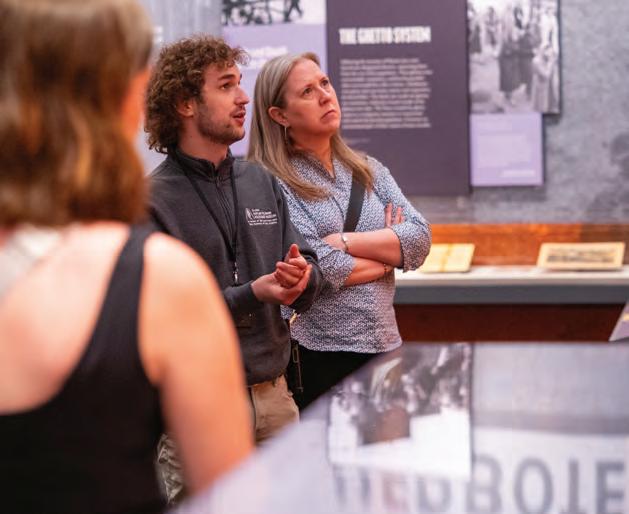
“As I learned, there’s this discrepancy between what’s popularly known about the Holocaust and what’s true,” Yamnitz said. “I wanted to teach about that in my own way.”
After completing his docent training, Yamnitz now leads tours for high school and middle school students. He’s also writing his senior thesis in history on how the museum gathered its testimonies of St. Louis-based Holocaust survivors.
It’s the culmination of a one-of-a-kind academic journey that spanned the Danforth campus in St. Louis to the quiet fields of Poland.
“Taking this Ampersand Program opened up a new interest for me, one that has shifted my career path,” Yamnitz said. “I’ve been able to explore it through trips, museum work, and my senior thesis, all with amazing support from my professors.”


Make your gift today to sustain Ampersand Programs and challenge students to think critically about themselves and the world.
artsci.washu.edu/How-Give
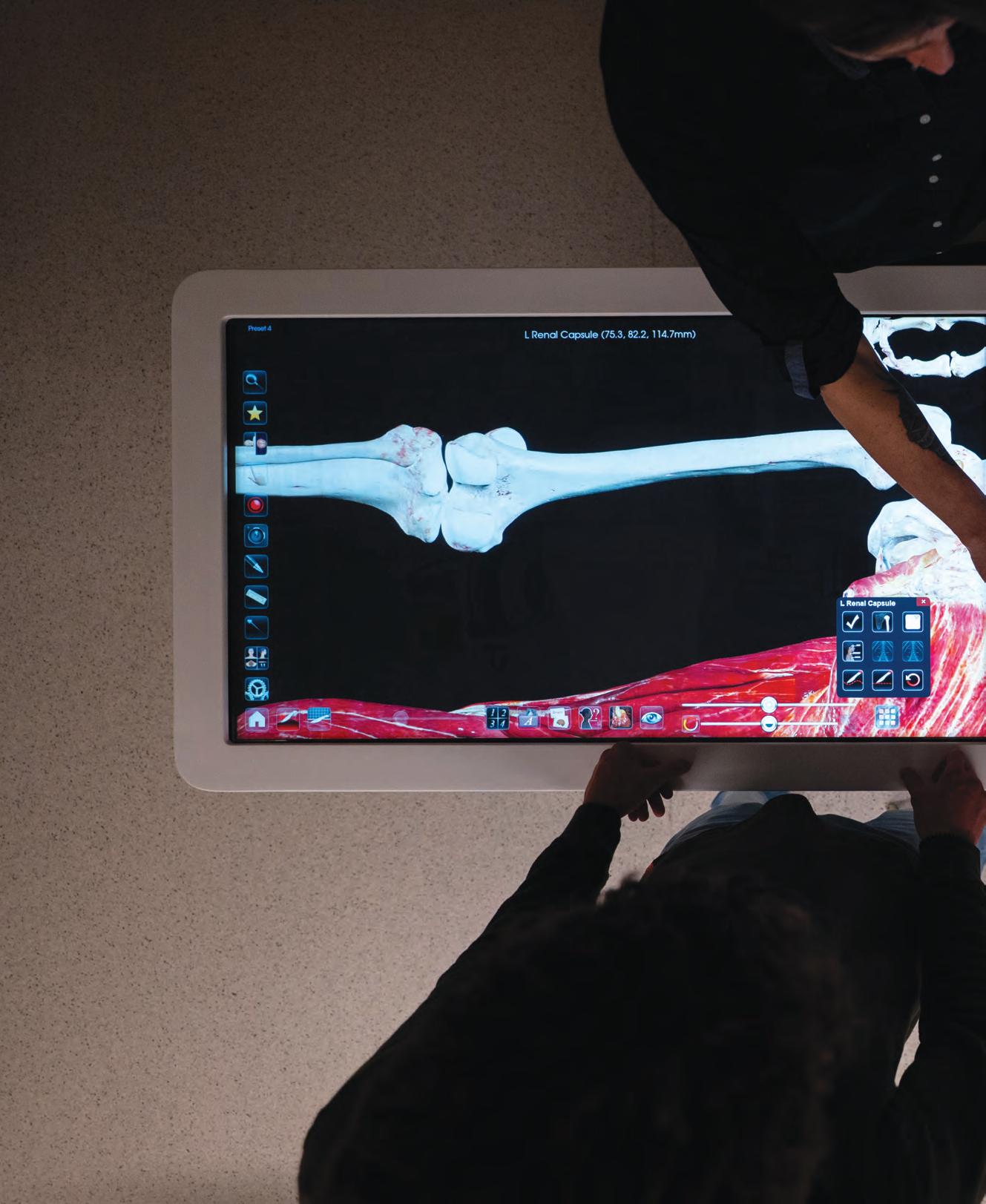

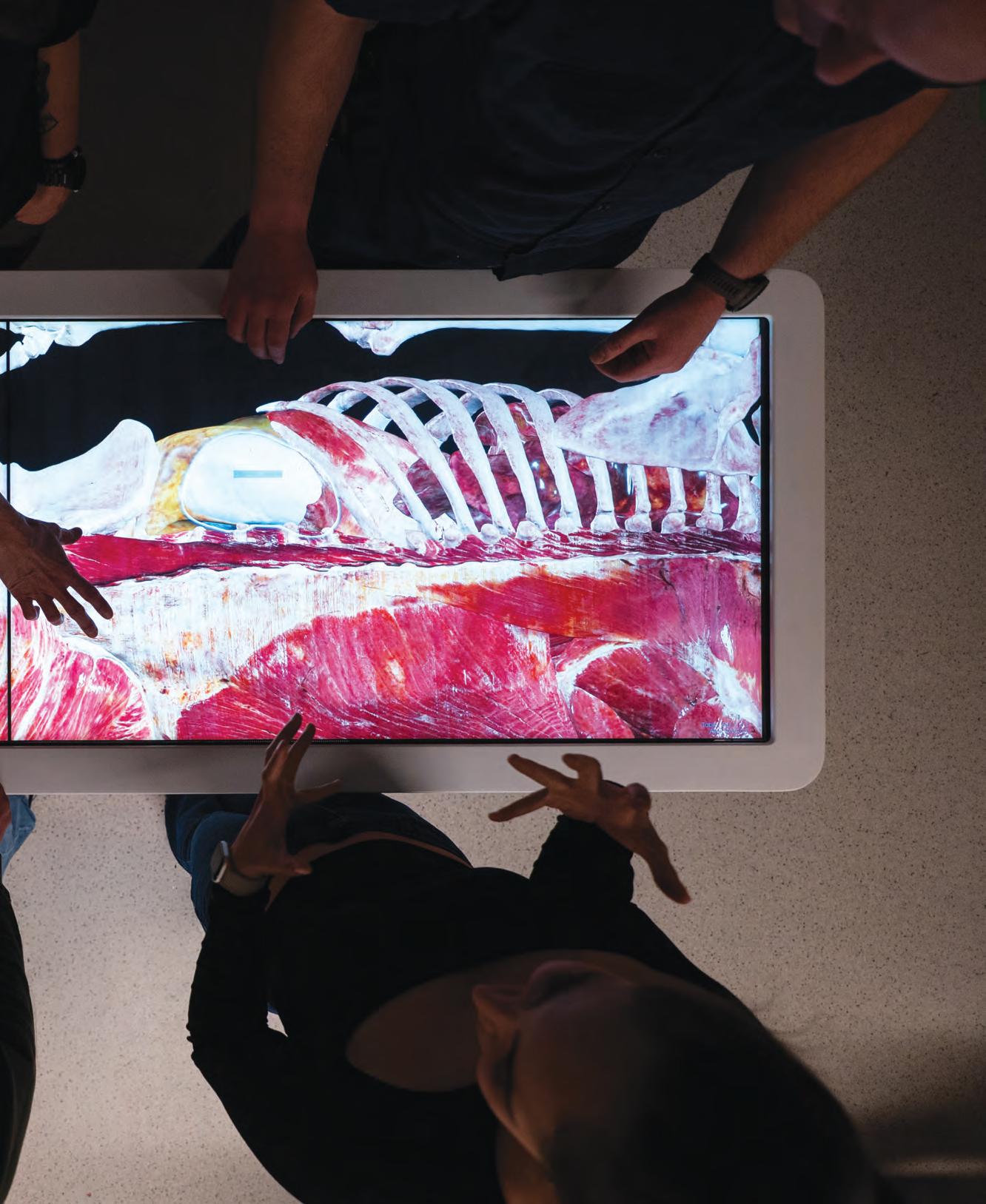
WashU’s first Anatomage dissection table — two flat screens combining into an 84-inch interactive surface — lets students virtually slice, manipulate, and zoom in on any part of the human body with exceptional clarity and precision. The ultra-high-tech teaching platform is part of a major investment by Arts & Sciences in cuttingedge instructional spaces for undergraduates studying biology — the school’s most popular major. Nine new instructional labs in Jolley Hall have also reduced class sizes and supercharged collaboration. “Everyone in the department who has seen the table in action has been blown away,” said department chair Ram Dixit, the George and Charmaine Mallinckrodt Professor. “We’ve given undergraduate students an incredible opportunity to study human anatomy in ways that would have been unimaginable just a few years ago.”

Several Arts & Sciences faculty members retire this summer, closing out long careers of distinction. Here, two of those faculty members reflect on their favorite memories and share their future plans.
by JENNY BIRD
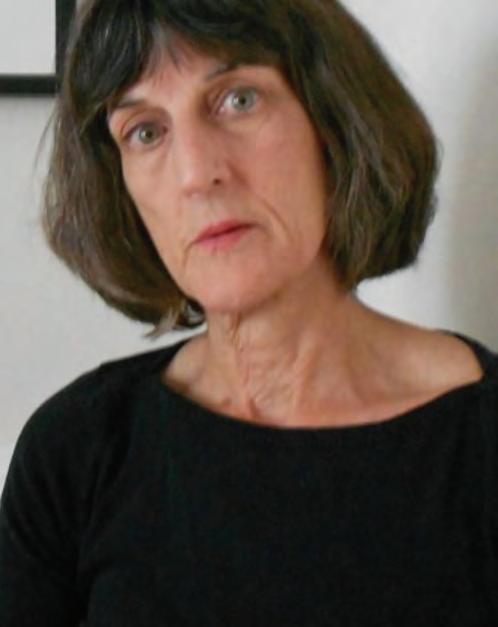
Kathryn Davis came to WashU in 2005 as a visiting Hurst Professor and remained for two decades as a celebrated novelist and dedicated instructor in the English MFA program. Over the course of her career, she built a national reputation for her inventive fiction while also mentoring emerging writers from around the world.
The author of eight novels, including “The Silk Road,” and a memoir, “Aurelia, Aurélia,” Davis has received numerous literary honors, including the Kafka Prize for Fiction by an American Woman, the Morton Dauwen Zabel Award, and the Katherine Anne Porter Award from the American Academy of Arts and Letters. She was awarded a Guggenheim Fellowship in 2000 and the Lannan Literary Award in 2006.
Based in Vermont for much of the year, Davis returned to St. Louis each spring to teach. Over time, she developed a deep and somewhat unexpected appreciation for the city. Having spent much of her life near the Atlantic coast, she found the Mississippi River to be “a revelation,” offering a different sense of scale and history.
At WashU, Davis worked primarily with graduate students in fiction, an experience she found deeply meaningful. “I have gotten to spend time with smart, engaged, and talented students from all over the planet,” she said. “My time with my students around the table generated an essential brightness.”
As both a teacher and a working novelist, Davis brought a distinct perspective to the classroom. She especially valued her novel-writing workshop, which was open to students across the university and often drew an eclectic mix of participants — from engineering graduate students to faculty members and international artists. The workshop fostered what she described as a spirit of “mutual exploration, of digging deep with genuine excitement.”
Her time at WashU extended beyond instruction, shaping a creative community rooted in curiosity, rigor, and experimentation. Through her teaching, she influenced not only the work of her students but also how they approached writing as a lifelong practice.
In retirement, Davis looks forward to spending more time in Vermont, continuing her writing, and completing new literary projects. While she is eager to settle more fully into life there, she will miss the intellectual energy of the classroom and the close relationships she built with students and colleagues in St. Louis.


by JEREMY GOLDMEIER
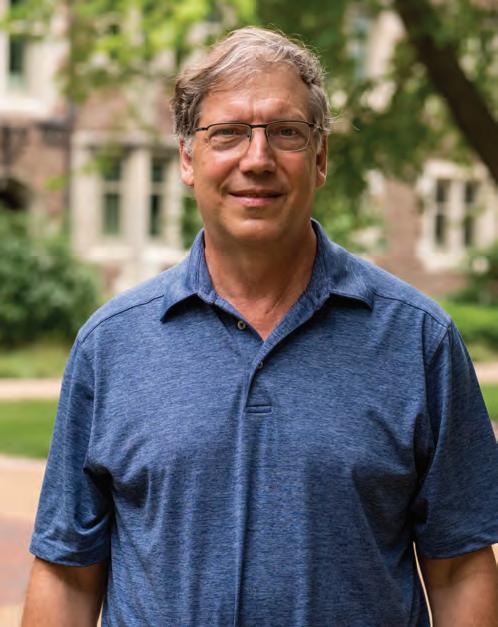
Steven Fazzari joined WashU in 1982 at age 26, shortly after earning his PhD, making him one of the youngest faculty members at that time. More than four decades later, the Bert A. and Jeanette L. Lynch Distinguished Professor of Economics retires as the longest-serving member of his department, having shaped generations of students and contributed significantly to the field of macroeconomics.
Learn more about other Arts & Sciences faculty retiring this summer.
artsci.washu.edu/Faculty-Retirements-26
“It has been a great privilege to spend my whole career at WashU,” Fazzari said. “Challenging and being challenged by our remarkable students is a source of joy and an opportunity to expand one’s mind.”
Fazzari’s teaching spanned both intimate seminar settings and large lecture halls. He taught “Introduction to Macroeconomics” nearly every year through 2013, reaching hundreds of students annually, while also leading smaller, discussion-driven courses that allowed for deeper engagement. In one recent seminar, he discovered a meaningful full-circle moment: One of his students was the son of a student he had taught 30 years earlier.
“One of my favorite memories came from talking with a student after class and realizing that some piece of the course helped them understand a real-world economic issue in a new way,” he said. “I could see it gave them the kind of satisfaction I feel when I figure something out.”
Beyond the classroom, Fazzari has made lasting contributions to the university’s academic landscape. He played a pivotal role in reviving WashU’s Department of Sociology, serving as its inaugural chair from 2014 to 2019. In that role, he recruited 10 faculty members and helped build both undergraduate and graduate programs, laying the foundation for a thriving department.
His research has focused on macroeconomics, economic growth, and inequality, with an emphasis on real-world applications and policy relevance — work that has informed both academic discourse and public understanding of economic systems.
In retirement, Fazzari plans to remain intellectually active, continuing his research on economic growth and American inequality. He also looks forward to spending more time with his children and grandchildren and traveling to the mountain destinations he has long enjoyed.
Arts & Sciences researchers are working across disciplines to prevent, treat, and ultimately defeat Alzheimer’s disease.
by C HRIS WOOLSTON
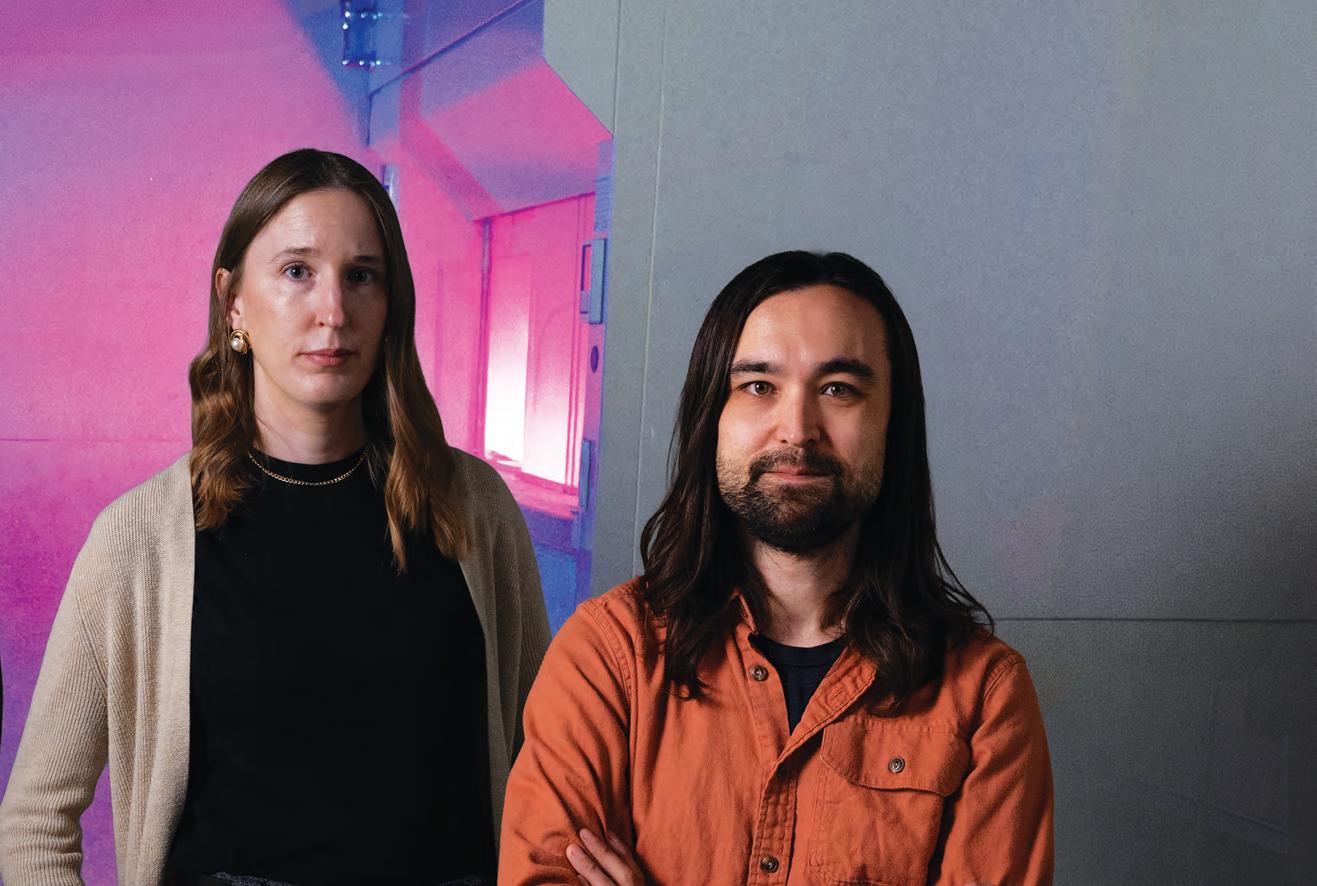
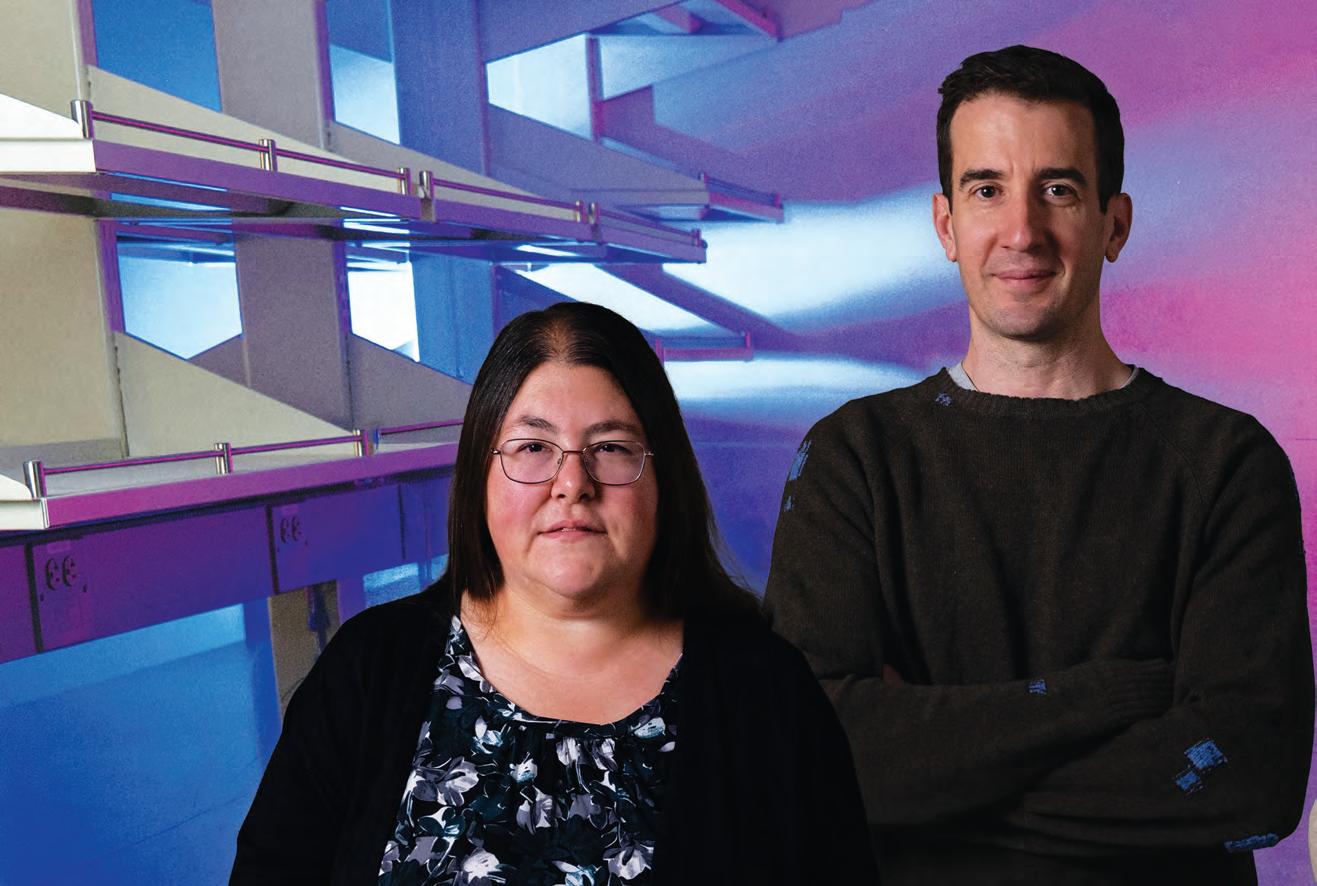
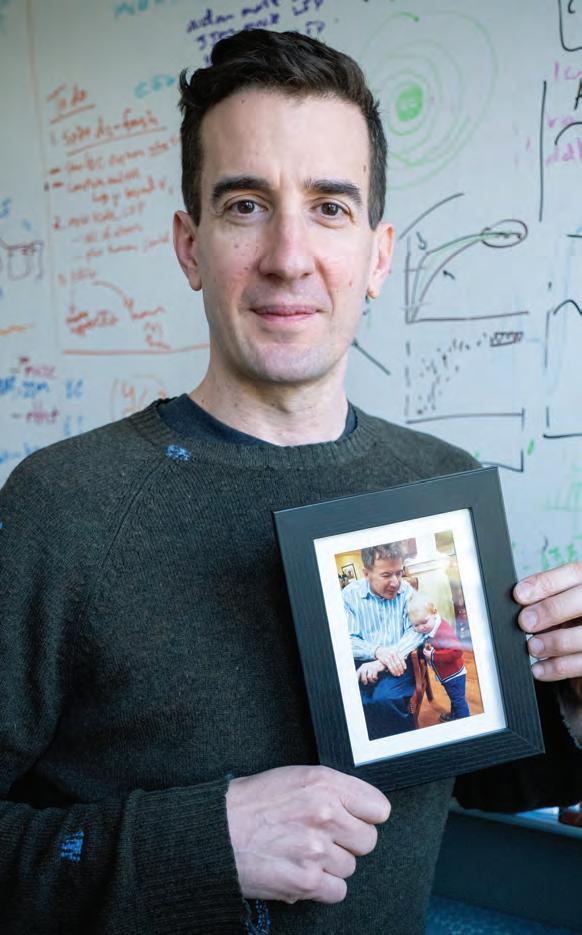
Keith Hengen was a postdoc studying the intricacies of the brain when Alzheimer’s disease began dismantling his father’s mind. Each year the illness took something new: a memory, a habit, a piece of recognition. Hengen could only watch.
“I felt so powerless and lost,” he said. “The irony was humbling and unavoidable. Here I was, launching a career as a neuroscientist, but I could do absolutely nothing about the most important problem standing right in front of me.”
Steven Hengen died of early-onset Alzheimer’s in 2016, just as Keith was getting started in his academic career.
A decade later, Keith Hengen, now an associate professor of biology, is one of a handful of Arts & Sciences researchers who are approaching Alzheimer’s disease from multiple angles to try and make a difference for patients and their families. “The experience with my dad added a deeply human dimension to my work,” Hengen said. “I love the pure puzzle of the brain, but I also desperately want to shake things up and find real solutions.”
Hengen studies how Alzheimer’s disrupts the computational rules in circuits that support thinking, memory, and learning. Other Arts & Sciences researchers — including Meredith Jackrel in chemistry and Emily Willroth and Zachariah Reagh in psychological and brain sciences — are bringing their own perspectives to a disease that demands a multifaceted approach.
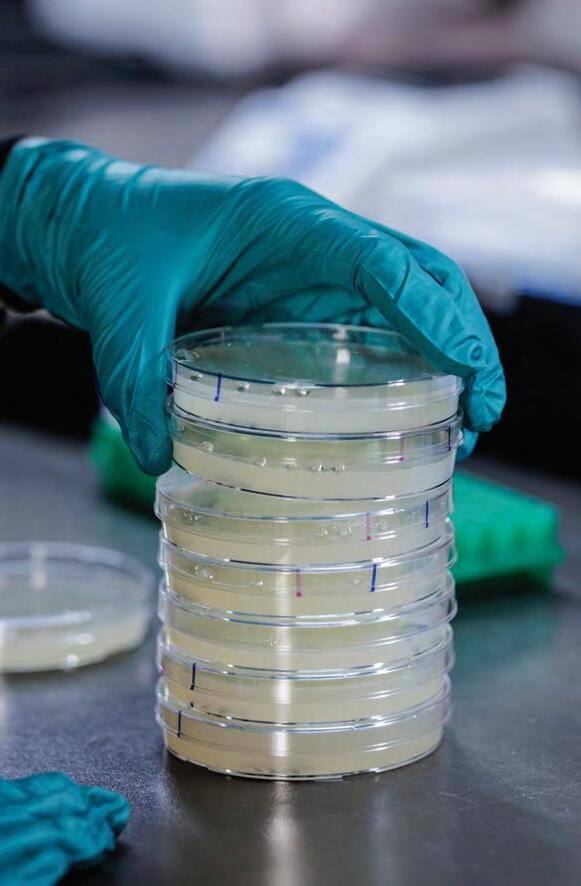
Meredith Jackrel’s lab focuses on the changes that turn normal, healthy proteins into building blocks for plaques and tangles, hallmarks of Alzheimer’s and other neurodegenerative diseases.
Much of her lab’s work is on proteins Hsp104 and HtrA1, so-called disaggregase proteins that can dissolve the clumps associated with diseases like Alzheimer’s, Parkinson’s, and ALS. While some of these disaggregase proteins are naturally found in the body, they aren’t able to prevent the formation of plaques and tangles over time. The lab studies how these proteins might be harnessed to combat disease. Specifically, Jackrel and her team use protein engineering to develop improved versions of these disaggregases to ultimately reverse protein misfolding.
Jackrel, an associate professor of chemistry, is also collaborating with Jai Rudra, an associate professor of biomedical engineering in the McKelvey School of Engineering, on a $2.9 million project funded by the National Institutes of Health (NIH) to develop a novel therapeutic for Alzheimer’s disease. In theory, this therapy — essentially bits of proteins attached to a nanofiber — could train the immune system to clear misfolded proteins that are associated with Alzheimer’s disease.
“The goal is to encourage the brain to produce antibodies against these proteins without triggering inflammation,” she said. “There’s a lot of work left to do, but the hope is that these antibodies could help clear the proteins before they have a chance to accumulate and cause trouble.”
Meredith Jackrel, associate professor of chemistry, investigates how proteins in neurons misfold and aggregate in ways that can disrupt cellular function in neurodegenerative diseases like Alzheimer’s.
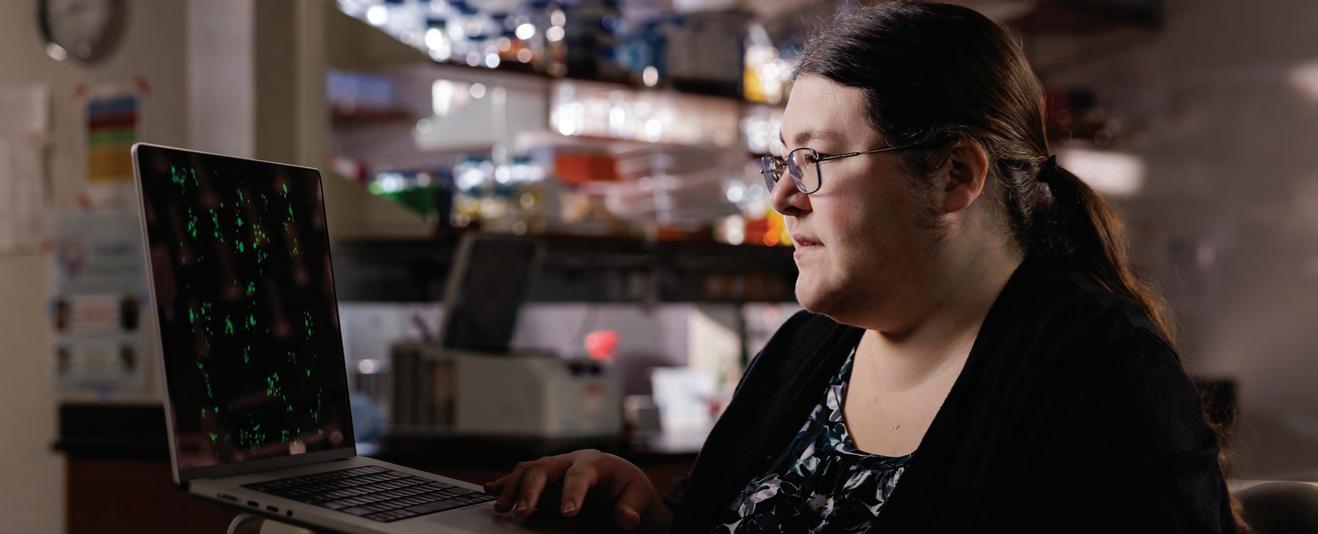
Alzheimer’s is a disease of proteins and neurons, but it’s also intricately tied to thoughts and emotions, making it an important target for researchers in the Department of Psychological & Brain Sciences.
As the principal investigator of the Complex Memory Lab, Associate Professor Zachariah Reagh uses neuroimaging and behavioral experiments to track how the brain interprets, stores, and retrieves memories of everyday experiences. By understanding how these processes break down in people with Alzheimer’s, he and his team hope to develop new strategies to protect and preserve memories.
Associate Professor Emily Willroth studies the back-and-forth relationship between Alzheimer’s disease and psychological wellbeing. In 2024, she led a review study that reached an important conclusion: Happiness and life satisfaction may act as a shield against dementia.
“Well-being seems to protect against cognitive decline,” she said. “But it goes both ways. People who develop dementia can lose their quality of life. We’re looking for specific strategies and interventions that can help people avoid dementia in the first place and support those who are already living with dementia.”
A closer look shows that certain behaviors and lifestyle choices seem to make people especially resilient against dementia, Willroth said. Exercising, eating well, and avoiding smoking are fundamental to good brain health. Beyond that, Willroth and other researchers have found that people who keep their brains busy with challenging tasks coupled with active social lives appear to have additional protection.
We can tell you who has Alzheimer’s, who will get Alzheimer’s, and who won’t just by looking at a computational fingerprint of the brain.
Keith Hengen Associate professor
of biology
Zachariah Reagh and Emily Willroth, associate professors of psychological and brain sciences, pair behavioral data with brain imaging and autopsy data to study how memory and cognition change with aging and Alzheimer’s disease.
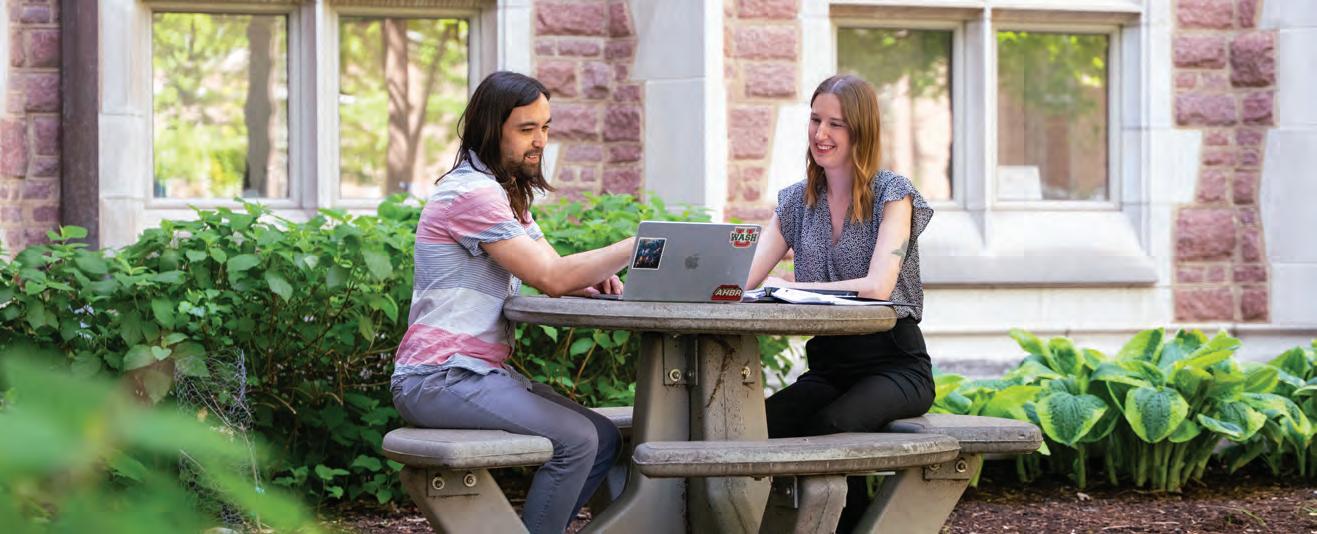
“Cognitive and social engagement seem to be powerful protective factors,” Willroth said. “The future of Alzheimer’s disease research will be uniting what we know about psychosocial and lifestyle factors with a better understanding of the basic biology of the disease.”
Willroth is a scholar with the Knight Alzheimer Disease Research Center, a consortium of researchers based at the WashU School of Medicine and funded by the NIH. Like other such centers around the country, the Knight Center provides specialized training to select researchers who are committed to studying Alzheimer’s disease in all its facets. As a Knight Scholar, Willroth has been trained in biomarkers, brain imaging, and patient selection for clinical trials. “That experience has enriched my research in Arts & Sciences,” she said. “The expertise at the medical school is an incredible resource for all Alzheimer’s disease researchers on our campus.”
Driven to help more people like his father, Hengen and his multidisciplinary team — including neurologists, mathematicians, and theoretical physicists — have been building on new theories of the brain that could transform the field of Alzheimer’s research.
They contend that Alzheimer’s disease can be thought of as a breakdown in the brain’s operating system. Specifically, they showed that healthy brains are defined by criticality, a state at the razor’s edge between order and chaos. As Hengen and colleagues reported in the journal Neuron, the computational rules of the brain begin to deteriorate long before symptoms arise. “Movement away from criticality is the strongest predictor of future disease,” Hengen said.
With funding from the NIH, the Cure Alzheimer’s Fund, the BrightFocus Foundation, and other groups, Hengen and his team
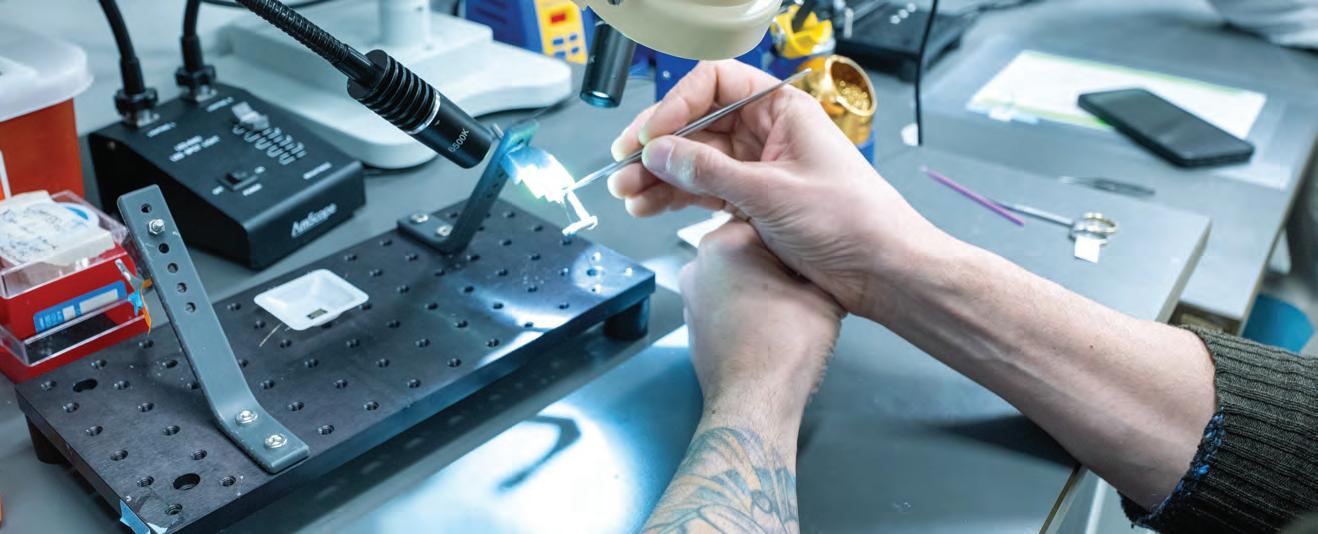
have shown that criticality is a well-defined brain state that can be measured and nurtured. “It took tremendous work with multiple collaborating labs to build up the math and the computational pipelines, but we’ve developed a new way to track how close a brain is to criticality. Now we can make rigorous measurements in clinical data, like fMRI imaging,” Hengen said. “We can tell you who has Alzheimer's, who will get Alzheimer's, and who won’t just by looking at a computational fingerprint of the brain.”
Hengen and collaborator Woodrow Shew, a physicist at the University of Arkansas, are now working to form a company based on this new approach. “I’m not very interested in the world of business, but there’s a moral imperative to make this technology as widely available as possible,” he said. “It doesn’t do anyone any good if it never leaves the laboratory.”
Supported by a $2.7 million grant from the NIH, Hengen and Luis de Lecea of Stanford University have embarked on a fiveyear investigation into the power of deep, healthy sleep to restore criticality and potentially protect against Alzheimer’s. “We believe the entire purpose of sleep is to preserve criticality, which is necessary for healthy brain function,” Hengen said.
Studies in mice show that experimentally enhancing sleep can push the brain even closer to criticality than normal. “When we give those animals a new, complex task to solve, they learn much more quickly than control mice,” Hengen said. “Imagine yourself on your best day when you’re firing on all cylinders. It
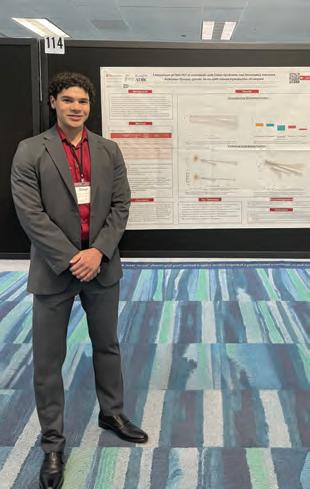
seems like we’re consistently inducing that day.” Crucially, even mice bred to show symptoms of Alzheimer’s showed significant improvements in learning and memory after enhanced sleep.
As a complement to pharmacological strategies, sleep offers a powerful and relatively easy platform for fighting back against Alzheimer’s, Hengen said. Focused sleep interventions may be able to help improve cognition in people with Alzheimer’s or those at risk, but even people at low risk can benefit from taking sleep seriously.
“If you spend your day being active and learning new things, you’ll be ready for sleep when the time comes,” he said. “Put the phone away, close the blinds, and sleep until you wake naturally. Good sleep is central to brain health.”
But sleep alone will not stop Alzheimer’s. People with certain genetic forms of the disease may require different, as-yetundiscovered interventions. Even then, they may not be able to escape it.
Despite everything he has learned, Hengen still does not know whether anything could have saved his father. The uncertainty is painful, but it also fuels his work.
“I’ve been on this journey, and I know it’s awful,” Hengen said. “That’s why I get so motivated thinking about Alzheimer’s and the brain. This work is important, and we’re going to keep at it.”
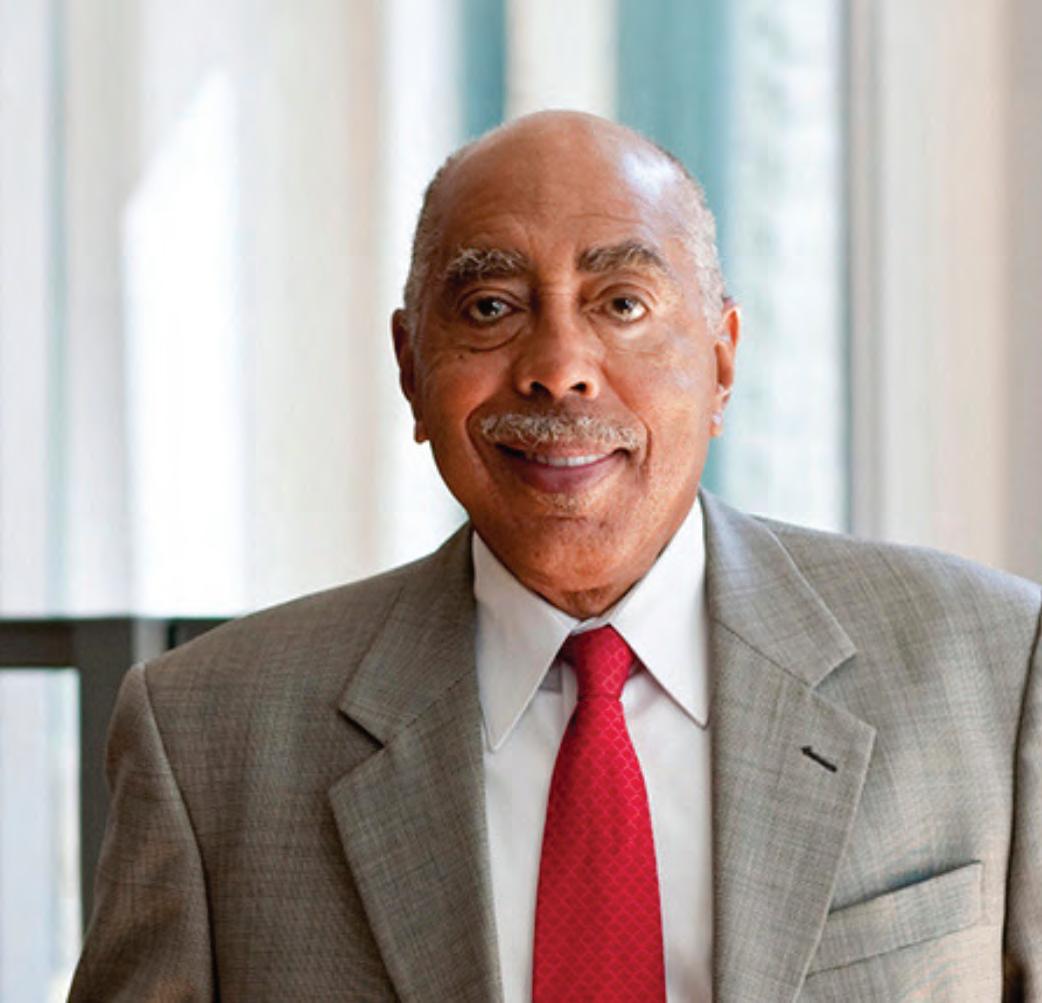
Omar Abdelmoity, a senior majoring in biology and anthropology, has already made a name for himself in Alzheimer’s research. He’s worked in the lab of a WashU Medicine researcher, been a lead author on a paper in a leading academic journal, and been recognized with the world’s most prestigious scholarships.
As reported in the Annals of Neurology, Abdelmoity and co-authors found distinct patterns of glucose metabolism in people with a genetic form of Alzheimer’s disease as well as people with Down syndrome, a population that almost inevitably develops Alzheimer’s by the time they’re in their 60s.
Shining a light on people with Down syndrome and genetic Alzheimer’s disease — two understudied groups — fits with Abdelmoity’s long-term goals as a scholar and researcher. “From the time I was in high school, I’ve been very interested in disparities in health care and research,” he said. “Studying genetic forms of Alzheimer’s disease really fits with my interest in equitable care.”
by C HRIS WOOLSTON
Walter Massey, MA ’66, PhD ’66, has transformed science, led academic institutions, and opened doors for generations of students.
Over a remarkable career spanning six decades, Walter Massey has earned his fair share of recognition for pioneering work across physics, academia, and industry: distinguished service citations, humanities prizes, statewide commendations, and a staggering 41 honorary degrees.
But when he looks back on it all, there’s one place that shaped his journey: Washington University.
A recipient of the 2026 Dean’s Medal from Arts & Sciences, part of the school’s Distinguished Alumni Awards, Massey said the university was a place that challenged him, nurtured him, and set the foundation for everything that came after.
As a physics graduate student at WashU in the 1960s, Massey briefly wondered if he was up to the challenge. “I told my advisor, Eugene Feenberg, that I wanted to drop out,” Massey recalled. “He said, ‘Why would you want to do that? You’re doing well, and this work is going to be important.’ He was such a warm and welcoming person. That comment really stayed with me.”
Massey ultimately decided to stay at WashU, and he never forgot a key lesson: A little support and encouragement can change someone’s future. As a teacher, advisor, university president, and mentor, he has constantly strived to help other students and scientists find their place.
Born in Hattiesburg, Mississippi, Massey pursued his undergraduate degree in physics and math at the all-male Morehouse College, a historically Black college in Atlanta. He would later serve as the college’s president — a defining achievement of his career — but, at the time, he was still finding his way. A trusted advisor, Sabinus Christensen, suggested he consider WashU for graduate school. “He said it would be a supportive atmosphere for a young Black man, and he was right,” Massey said. “The university was welcoming and nurturing, especially the physics department.”
After earning his PhD, Massey accepted a postdoctoral position at Argonne National Laboratory outside of Chicago. The assassination of the Rev. Dr. Martin Luther King Jr. in 1968 moved him to look beyond the physics lab to find other ways to give back. “I’ve always tried to make a difference in people’s lives,” he said. “And I’ve been able to accomplish that.”
Over the next several decades, he built a remarkable legacy in academia and beyond. He went on to become an assistant professor at the University of Illinois at Urbana-Champaign and held professorships in physics at Brown University and the University of Chicago. He was a member of the President’s Council of Advisors on Science and Technology, vice president of the American Physical Society, and co-founder of the National Society of Black Physicists, among many others.







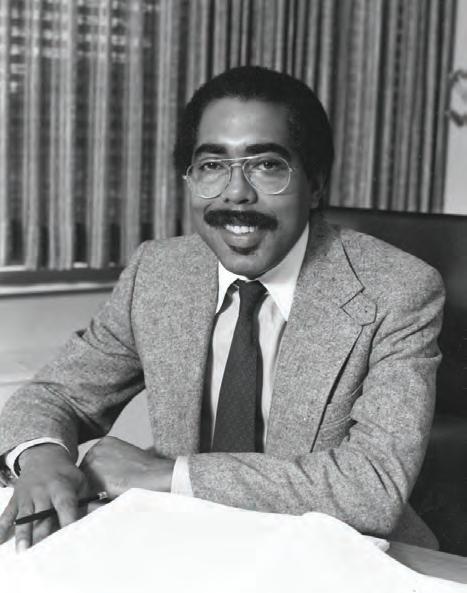
Massey is the only person to have served as president and chairman of the American Association for the Advancement of Science and chair of the Association of Independent Colleges of Art and Design, a symbol of his unparalleled ability to bridge the sciences and the arts.
Massey’s national leadership helped push the boundaries of scientific discovery. As the director of the National Science Foundation in the early ’90s, he helped convince Congress to invest in the Laser Interferometer Gravitational-Wave Observatory (LIGO), the largest and most ambitious project ever funded by the NSF at the time. The observatory made it possible to detect cosmic gravitational waves predicted by Einstein, a discovery for which the LIGO team received the 2017 Nobel Prize in Physics.
In a career that spanned multiple institutions and fields, Massey also served on the boards of dozens of corporations and civic organizations, including McDonald’s, the Mellon Foundation, the Smithsonian Institution, and the National Center for Civil and Human Rights. As chair of Bank of America, he navigated a remarkable recovery following the housing market crash of 2008, an experience he chronicled in his book “In the Eye of the Storm.”
Nearly 60 years after graduating from WashU, Massey never stopped exploring. He was the chair of the board of directors for the Giant Magellan Telescope in Chile before retiring from the project late last year. He has received many accolades for his work, including an honorary doctor of science degree from WashU in 1990.
Looking back, he’s most proud of the impact he had on young students and scientists. At Brown University, he developed programs to revamp high school instruction in physics and other fields. As president of Morehouse College from 1995 to 2007, he worked to expand access and opportunity for students. “That was the most satisfying job I’ve ever had because I could see how I was contributing directly to the education of young men, mostly young African American men, who were going out to make a difference in the world,” he said.
Massey traces much of his impact back to his time at WashU and that pivotal conversation with his advisor more than six decades ago. “WashU allowed me to learn more than just physics,” he said. “I had so many opportunities to experiment and explore. That kind of education is more important now than ever before.”
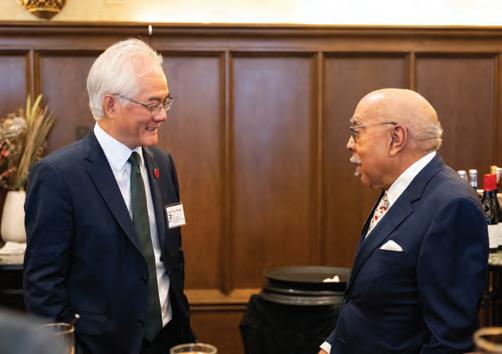
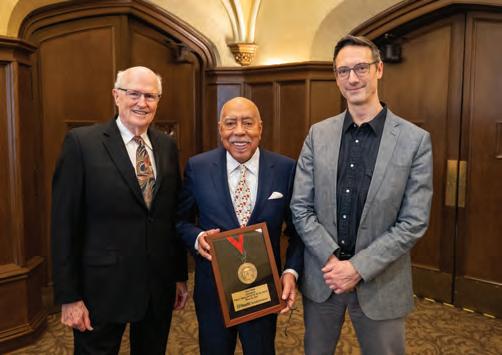
Massey was presented a Dean’s Medal by Feng Sheng Hu, the Richard G. Engelsmann Dean of Arts & Sciences, at a special Distinguished Alumni Awards luncheon in Chicago, also attended by Wiley Kirk and physics professor Erik Henriksen.
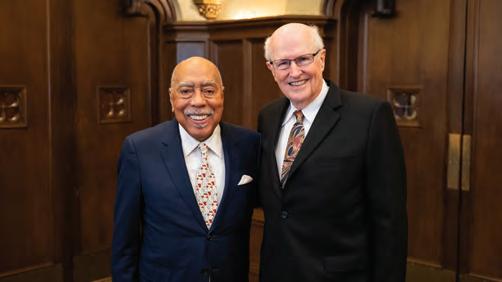
Wiley P. Kirk, AB ’64, was an undergraduate when he first met Walter Massey, then a graduate student in their shared Department of Physics. “I remember how much he studied in the library, how generous his personality was, and also how friendly he was — even to undergrads like us,” Kirk said.
Kirk went on to become a noted educator and physicist in his own right, holding faculty positions at the University of Florida, Texas A&M University, and the University of Texas at Arlington, where he is a research professor of materials sciences and engineering.
More than 60 years later, he still remembered Massey’s impact. This spring, Kirk made a $1.5 million estate commitment for the Department of Physics. A portion of the gift will endow the Walter E. Massey Graduate Fellowship in Quantum Physics, which will enhance the department’s ability to recruit outstanding graduate students. Top universities compete for these students, and many decisions hinge on the funding offered. The gift advances the university’s efforts to expand access through With You: The WashU Campaign.
“I hope these funds will encourage others to follow his trailblazing ways and leave the world better than they found it,” Kirk said.


withyou.washu.edu


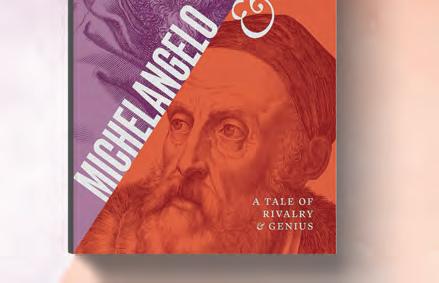
new book by Professor William Wallace explores decades of genius and rivalry.
by LIAM OTTEN
On a winter’s day in 1546, a grumpy Michelangelo Buonarroti and a dapper Giorgio Vasari waded through Roman streets to meet Tiziano Vecellio, the Venetian painter universally known as Titian and perhaps the only living artist to match Michelangelo’s renown.
Sixteen years earlier, threatened by political assassination in Florence, Michelangelo had fled to Venice. The republic, and Titian, welcomed him with honor. Now it was time for Michelangelo to repay the courtesy.
“They were the two most famous artists in the world,” wrote William Wallace in his new book, “Michelangelo & Titian: A Tale of Rivalry & Genius.” “And they knew it.”
Climbing a slight hill, Michelangelo and Vasari arrived at Titian’s quarters. Conversation was polite. Vasari praised a portrait of Pope Paul. Michelangelo concurred but worried about Titian’s psychological acuity. Leaving, Michelangelo said Titian’s colors pleased him greatly, but added, “Too bad the Venetians never learned to draw.”
Wallace, a leading Michelangelo scholar, argues their relationship was distant but deeply meaningful, shaped by rivalry and indirect exchange. Historians long assumed Titian learned from Michelangelo — for example, Titan’s “The Jealous Husband” resembles Michelangelo’s “Fall of Man” in the Sistine


Chapel. But Wallace notes Titian’s work predates the ceiling’s unveiling, and travel between Venice and Rome was difficult. He also dismisses links between Titian’s St. Sebastian and Michelangelo’s sculptures, noting Titian independently arrived at similar motiffs.
“Titian forged his own path,” Wallace writes. “We need not trace every nude to Michelangelo.”
Conversely, Wallace suggests Michelangelo was influenced by Titian’s color and design. In 1529, Alfonso d’Este showed Michelangelo mythological works by Titian, including “Bacchus and Ariadne.” Michelangelo soon painted “Leda.” In Rome, Titian responded with “Danaë”.
“Titian was not blind to Michelangelo’s provocation,” Wallace writes, “nor was Michelangelo blind to Titian’s counter-challenge.”
Though they likely never met again, their rivalry continued through shared patrons, gossip, and artworks. Titian’s late “Pietà” and Michelangelo’s final works both confront mortality and legacy, revealing a shared concern with immortality. For Wallace, their story is not direct borrowing but sustained, indirect exchange — two masters shaping Renaissance art through rivalry as much as influence.
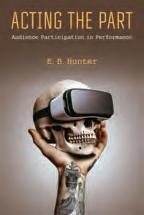
Performing Arts Department Acting the Part: Audience Participation in Performance
Elizabeth Hunter
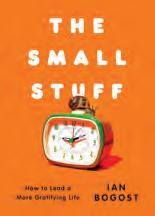
Program in Film and Media Studies The Small Stuff: How to Lead a More Gratifying Life
Ian Bogost
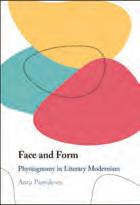
Department of English Face and Form: Physiognomy in Literary Modernism
Anca Parvulescu
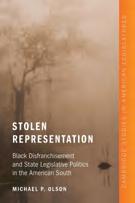
Department of Political Science Stolen Representation
Michael P. Olson
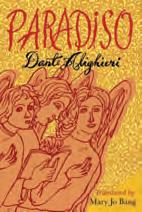
Department of English Paradiso
Mary Jo Bang
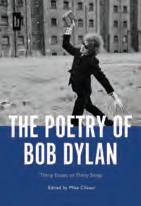
Department of English The Poetry of Bob Dylan: Thirty Essays on Thirty Songs
William J. Maxwell


Every year, Arts & Sciences recognizes a few alumni who demonstrate the ideals of a liberal arts education through their lives, work, and impact on the world. We asked this year’s Distinguished Alumni Award recipients to offer some words of wisdom and reflect on their favorite WashU memories.


DEAN’S MEDAL
Walter Massey is a renowned physicist and educator who has served as director of the National Science Foundation, president of Morehouse College and the School of the Arts Institute of Chicago, trustee of the University of Chicago, and chairman of Bank of America. Massey, who was also chair of the Giant Magellan Telescope Organization, is a strong advocate for educational access for underrepresented students, especially in STEM fields.
WHAT MADE WASHU STAND OUT TO YOU?
One of the things I really liked about WashU was the atmosphere where you could get to know people outside of the department. And there were wonderful free activities, lectures, and concerts. I saw my first opera on campus. WashU gave me more than a good education in physics. It taught me to appreciate the arts and humanities, and it gave me the confidence to try new things.


Suzanne Mizera, AB ’74, MA ’76 and James Risch, AB ’74, MSW ’76 DISTINGUISHED ALUMNI AWARDS
Suzanne Mizera and James Risch have built long and successful careers in advertising and banking, respectively, in New York and then in Switzerland. They later co-founded the independent consulting firm TorchFish, a brand strategy firm for small and mediumsize businesses. The couple, who share a love of travel and classic literature, met as undergraduates at WashU and were married at Graham Chapel nearly 50 years ago.
WHAT MAKES AN ARTS & SCIENCES EDUCATION UNIQUE?
Mizera: It’s like this magical intellectual boot camp for life. Looking back 50 years on from our graduation from Arts & Sciences, we bear witness to the vitality, the foundation, the significance that our Arts & Sciences training has given us, both personally and professionally.
Risch: Arts & Sciences taught me how to learn and think, and it laid a foundation for me in terms of my career and discovering the world. As I moved through my career and it got more complex, the liberal arts generalist approach was so valuable. I often joke that my employers hired an MBA and, actually, what they got was an Arts & Sciences student. In a lot of ways, I think they got the better part of the deal.

Hear more from these alumni on what inspires them and how Arts & Sciences has impacted their lives.
artsci.washu.edu/DAA26
(Illustrations: Andressa Chaves de Oliveira)


Mark Gold is a neurobiologist and pioneer in addiction research whose work revolutionized the treatment of addiction as a disease. He was a scientific adviser to the “This is Your Brain on Drugs” campaign and is known for decades of work helping communicate addiction research to community coalitions, treatment providers, and the public in accessible ways.
WHAT’S ONE OF YOUR FAVORITE THINGS ABOUT BEING A RESEARCHER?
Mentoring younger people. I've had fantastic mentees who've worked in various areas in government and academia as basic researchers. Watching them is kind of like watching my own children, and I have a lot of satisfaction from that.


Mary Bruce, AB ’05 DISTINGUISHED ALUMNA AWARD
Mary Bruce is the chief White House correspondent for ABC News in Washington, D.C. Her work can be seen on “Good Morning America,” “World News Tonight with David Muir,” “Nightline,” and “20/20.” In more than two decades with ABC News, she has covered myriad presidential administrations, Supreme Court justice nominations, national campaigns, and a historic refugee crisis in Europe. Her journalism career started at WashU’s Student Life newspaper
HOW DID YOUR ARTS & SCIENCES EDUCATION PREPARE YOU FOR YOUR CAREER?


At its core, my job is to learn something new every day, to discover, to ask questions of elected officials on behalf of the American people. Being a WashU student of Arts & Sciences helped foster that constant curiosity that is critical in my professional life now.


Marcus Jecklin, AB ’12 and Michael J. Weiss, AB ’12, BSBA ’12 EARLY CAREER ACHIEVEMENT AWARDS
Marcus Jecklin and Michael Weiss are artificial intelligence entrepreneurs who co-founded Ai4, one of North America’s largest artificial intelligence industry conferences. Their work fosters collaboration and understanding of artificial intelligence technologies and their impacts on everyday life.
WHAT ADVICE DO YOU HAVE FOR OTHERS?
Jecklin: Building relationships and connections is extremely important. It's hard to understand when you're in college that some of your greatest inspirations will actually come from your peers.
Weiss: Be clear on what you care about, because making a difference in your field takes more intrinsic motivation than extrinsic. I could tell a student, ‘I'll give you a million bucks if you figure this thing out,’ or a student could say, ‘I care about this deeply, and I’m going to make an impact.’ Typically, I think the second student is going to find success more often.
We put the human in the humanities and, right now, nothing matters more.
by ABR AM VAN ENGEN
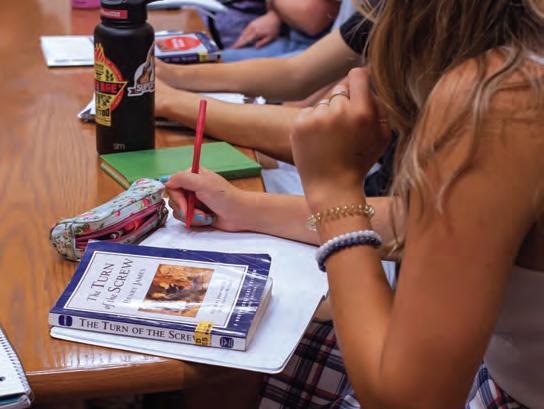
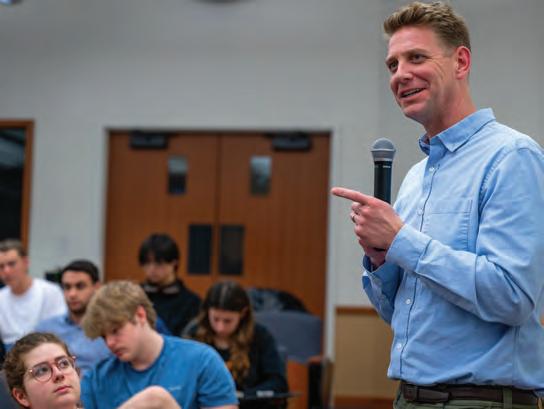
In a world of AI, some wonder what will happen to the humanities. If a computer can write a paper, why bother to teach the skill? If an elaborate code can summarize hundreds of books, why bother to read a single one? What can English teach that AI can’t do?
Those kinds of questions are understandable. Yet every day it becomes clearer that AI has only increased the value of English. You don’t have to take my word for it. The co-founder and president of Anthropic AI, Daniela Amodei, said that AI was making humanities majors “more important than ever.” Matt Candy, the global managing partner in generative AI at IBM, advised future tech workers to get a robust liberal arts degree. As Amodei explained to ABC News, “In a world where AI is very smart and capable of doing so many things, the things that make us human will become much more important.”
At WashU, we have embraced “the things that make us human” — the plots and particulars of human nature as they weave their way through novels, poems, and plays. If we want to understand human beings, we must read the stories they create.
In the English department, as in many other WashU humanities departments, our students learn to interpret texts that resist easy answers, weighing competing meanings, attending to nuance, and defending their judgments in conversation with others. These are lessons AI cannot replicate. A machine can relay the plot of a novel; it cannot decide what it means, or why that meaning matters.
The results have been startling. Where national trends show steady declines in English enrollment, WashU has risen for seven straight years. From 2018 to 2025, enrollment in our major increased by 60%.
What makes the WashU difference? Classes, community, and careers.
English starts with great seminars. At WashU, we put our best professors in front of students early and often. It is an honor to teach a first-year seminar. It is a privilege to teach the sophomore survey. In 2018, we began creating small, first-year courses that get students thinking together about the biggest questions of human life from
the moment they enter WashU — and we award those courses to proven teachers.
Top professors in first-year classes might begin a student’s journey, but we encourage new majors to find fellow companions quickly. Community matters. It enlivens and enriches the experience. The discussions that spill beyond the classroom deepen the understanding of what it means to be human across vast differences.
To develop community, we host events throughout the year: a Halloween murder mystery, trivia nights, coffee hours with faculty, a blind date with a book, a bad poetry contest, and much more. The age of AI is also, we know, an era of overwhelming loneliness. In English, we want our students to find their friends. Our majors do the major together.
What students gain at WashU through their classes and community must, of course, prepare them for careers. English majors often face a single, stark question: “What are you going to do with that?” At WashU, we give our students the answer: anything they imagine.
For more than 10 years, the department has been tracking career outcomes of our majors. The results may surprise some parents. Roughly 25% end up in business; 25% go into law and medicine; another 25% choose education; 20% end up in
publishing and media; and the rest scatter across a variety of careers. Our majors go everywhere. They do everything.
National data support our findings. According to the American Medical Association, English has the highest admittance rate to medical school of non-STEM majors. In fact, as the Association of American Medical Colleges discovered, humanities majors have a higher admittance rate to medical school than biology majors.
Businesses also seek out what we offer. According to Robert Goldstein, the COO of BlackRock, “We have more and more conviction that we need people who majored in history, in English — in things that have nothing to do with finance or technology — and it’s that diversity of thinking and diversity of people and diversity of looking at different ways to solve problems that really fuels innovation.” Goldstein joins many other business leaders saying the same thing repeatedly: They want the humanities.
Classes, community, careers. Human nature is discovered and discussed in human interactions across courses and beyond classrooms. At WashU, English provides what is both desperately needed and deeply desired.
And we are booming.
Abram Van Engen is the chair of the Department of English, the Stanley Elkin Professor in the Humanities, and the director of the John C. Danforth Center on Religion and Politics. He publishes widely on religion and literature, focusing especially on early American culture, and co-hosts a popular podcast for general audiences called “Poetry For All.”



MSC 1094-0105-02 | Washington University
1 Brookings Drive
St. Louis, MO 63130-4899
The Ampersand is printed with the sustainability of our planet in mind.
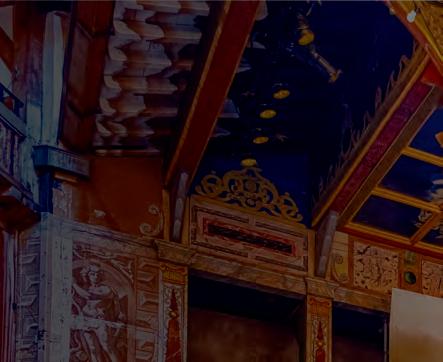
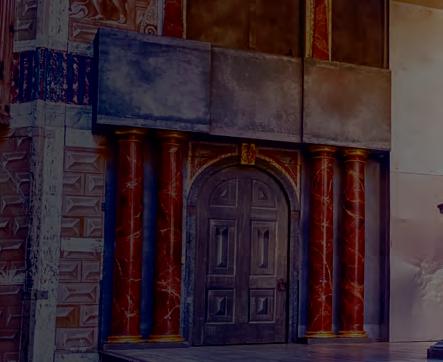
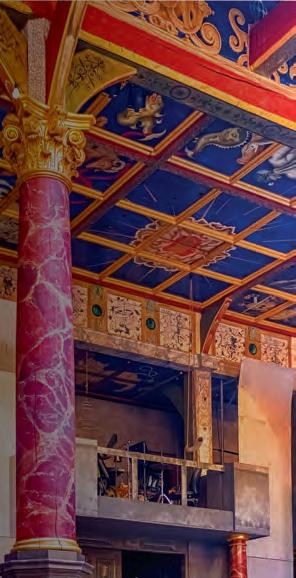
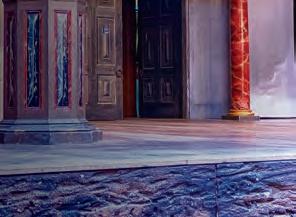
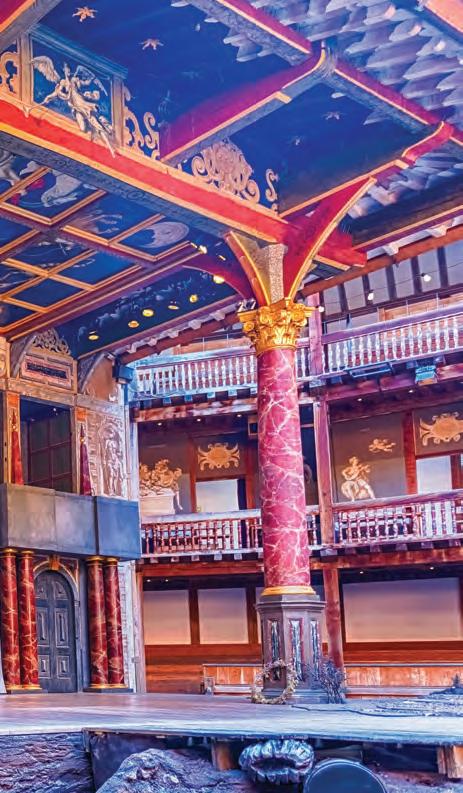
A $1.35 million gift from alumni couple Lesley Malin, AB ’88, and Scott Helm, BSBA ’87, will help keep WashU’s Shakespeare-in-London experience thriving for years to come. The gift endows the Schvey-Spottiswoode Shakespeare’s Globe Program, which sends students to study and perform at the iconic Globe Theatre. Launched in the early 1990s, the WashU program offers a rare chance to encounter Shakespeare in the space where his work still feels immediate, physical, and electric. “I would have loved to have done this program as an undergraduate,” Malin said. “Spending weeks concentrating on nothing but Shakespeare in performance — it’s any actor’s dream.”