Sewage leak shuts down campus

Biology teacher takes advantage
By WilloW SymondS
Staff Writer
Biology lecturer David Wooten plans to use a recent sewage water leakage as a teaching tool.
Instead of bringing the outside world into the classroom, he takes his classes into the outside world. To support his lessons on field biology, including aquatic organisms, ecology, and conservation, he teaches his students by the two ponds near the Gundar Myran building.
While these connected ponds support local wildlife, their purpose is to be a stormwater retention system. This
means they collect stormwater runoff, like a drain, to keep it away from campus.
However, on the afternoon of Oct. 26, a different substance than usual entered the ponds. A waste pipe burst, releasing between 3,0004,000 gallons of sewage. According to vice president of facilities development and operations, Jim Becsey, this section of pipe handles all the sanitary drainage from buildings on campus, south of Huron River Drive. Administrators sent everyone home and closed campus for the following day. Under federal occupational, safety and health laws, public buildings cannot be opened without functioning water and wastewater systems. This would be the first of three campus closures related to the waste pipe.
According to Wooten, aquatic vegetation can have
a hard time adjusting when exposed to foreign liquids in large quantities.
“Sewer run-off … can contain microorganisms harmful to people and wildlife,” Wooten explained over email. “[This] can cause algal and bacterial blooms that deplete the ponds of oxygen, kill fish and aquatic invertebrates, and release toxins that can even harm larger animals like birds and mammals.”
He believes this sets up an important conversation about hard-surface run-off (chemicals spills on parking lots, etc., flowing into grass and water) and its indirect pollution, a topic many people know little about.
He also stressed the importance of natural buffer habitats around bodies of water, such as ponds, lakes, and streams. Several years ago, Wooten and other faculty
members dug bioswales between the WCC parking lots and the ponds. Bioswales are shallow crevices landscaped into the ground, typically planted with grass and other vegetation to match their environment. They act like natural sponges and absorb harmful chemical spills.
Even with the bioswales, the artificial retention ponds are frequently exposed to chemical run-off from the parking lots. These include leaking oil, anti-freeze, salt, and anything else spilled onto pavements.
“The sewage water leak is unfortunate and may have some negative effects on the pond ecosystem,” Wooten said. “We’re not sure if this will happen in our ponds as a result of the spill, but we’ll keep monitoring them and look for signs of stress.”
WCC instructor wins election
Jordan Scenna Deputy Editor
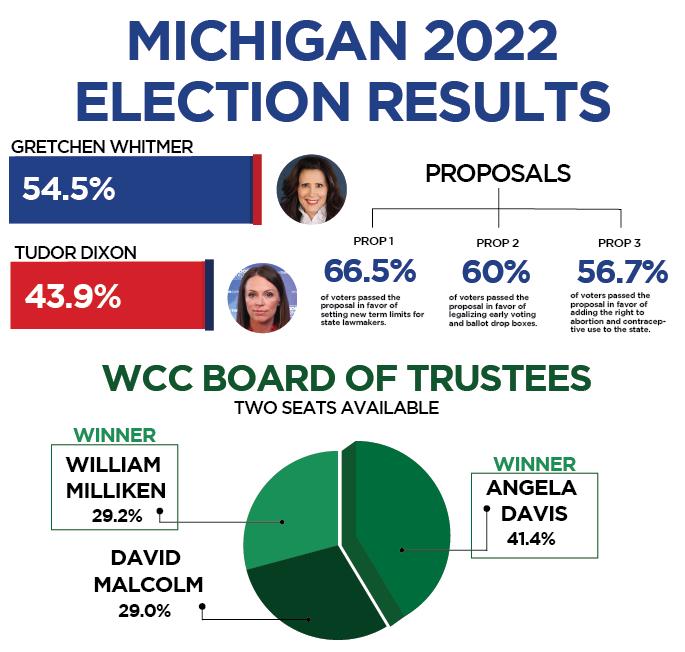
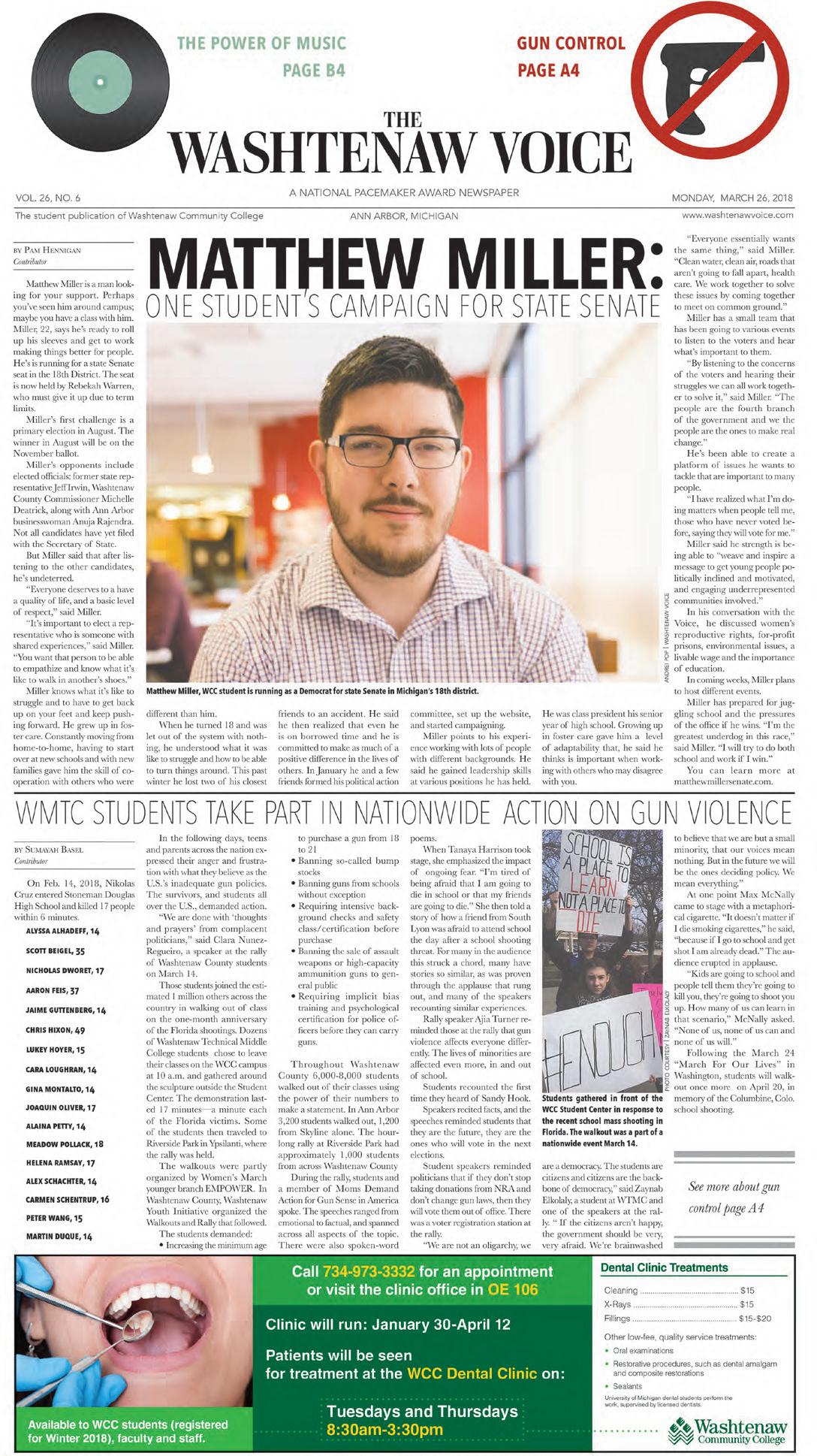
In a historic midterm election Michigan Democrats claimed the house and senate last week, taking control of both legislative branches for the first time in almost 40 years. Jason Morgan, Washtenaw County Commissioner and part-time WCC instructor, was part of the “blue wave,” earning a landslide victory over Republican Richard Sharland in District 23 for house rep. The celebration might be short lived, as Morgan sees a lot of work to be done, including improvements to education, infrastructure, transportation, and water systems.
“There’s a lot that we’re going to have to do after taking the reins from Republican leadership,” Morgan said.
Tuesday’s election prompted the largest voter turnout for a midterm election in Michigan’s history, with 4.45 million people casting their votes, according to Secretary of State Jocelyn Benson. Morgan says that Michigan voters know Democrats are working for them, and went to the polls to show their support.
“Michigan voters saw a vision for a brighter future with Democrats,” Morgan said. “On the other side they saw a Republican party very set on rolling back our reproductive rights, voting rights, and civil liberties.”
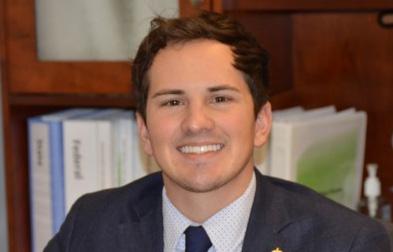
Morgan has been a parttime WCC instructor since 2019 and has worked as the college’s director of government relations. He says that WCC has done an exceptional job keeping tuition affordable for students, but doesn’t think higher education as a whole
is being funded adequately, which is causing rising tuition rates.

“When universities and colleges raise their tuition, it’s usually the result of not having support from the state,” Morgan said. “Funding by the state has significantly declined over the past few decades, far below other states. We are not funding higher education as we should.”
According to the National Science and Engineering Statistics website, Michigan spends less per full time student than Georgia, Kentucky, Alabama, Florida, and New Mexico, among others.
“Now that we have a democratic majority, I think we can make meaningful, large investments to make college more affordable,” Morgan said.
Mental health is also a major concern for Morgan. He believes that Michigan doesn’t pay mental health and social workers enough money to do their jobs effectively. Salary for social workers can vary dramatically depending on level of education, location, and other factors, with the low-end earning less than $30,000 a year.
“We have people doing incredibly difficult work and getting paid sometimes $9$10 an hour with a master’s degree,” Morgan said. “This is not a situation that should be acceptable.”
Other priorities on Morgan’s agenda are repealing “Right to Work” and passing a “pollute or pay” bill. “Right to Work’’ is a law that restricts union resources and makes it harder for workers to negotiate and enforce contracts with employers. “Pollute or pay” is a bill that would ensure anyone who pollutes the environment has to pay for cleanup.

The student publication of Washtenaw Community College A NATIONAL PACEMAKER AWARD NEWSPAPER VOL. 32, No. 5 Tuesday, November 15 , 2022 www.washtenawvoice.com Ann Arbor, Michigan
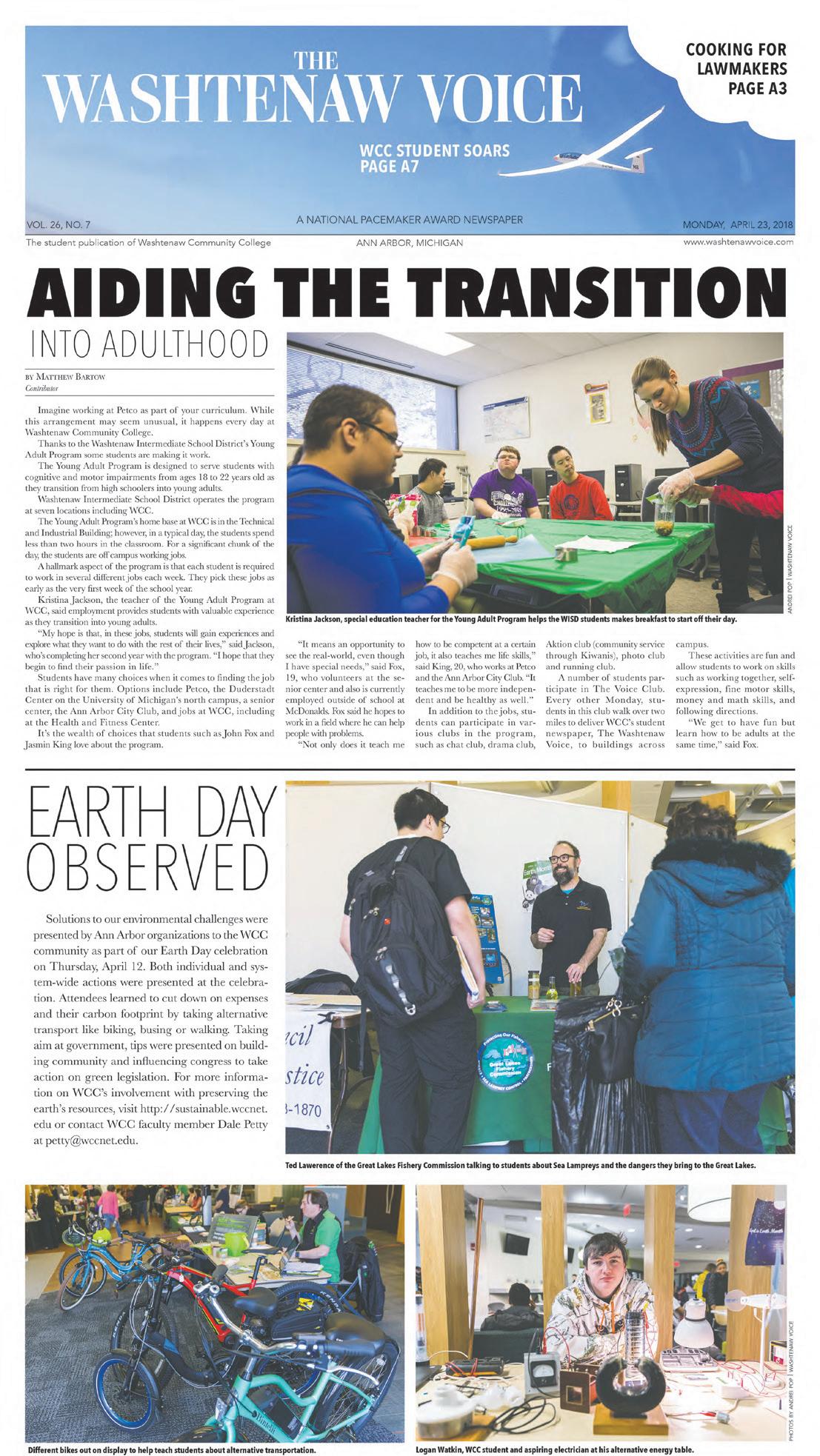
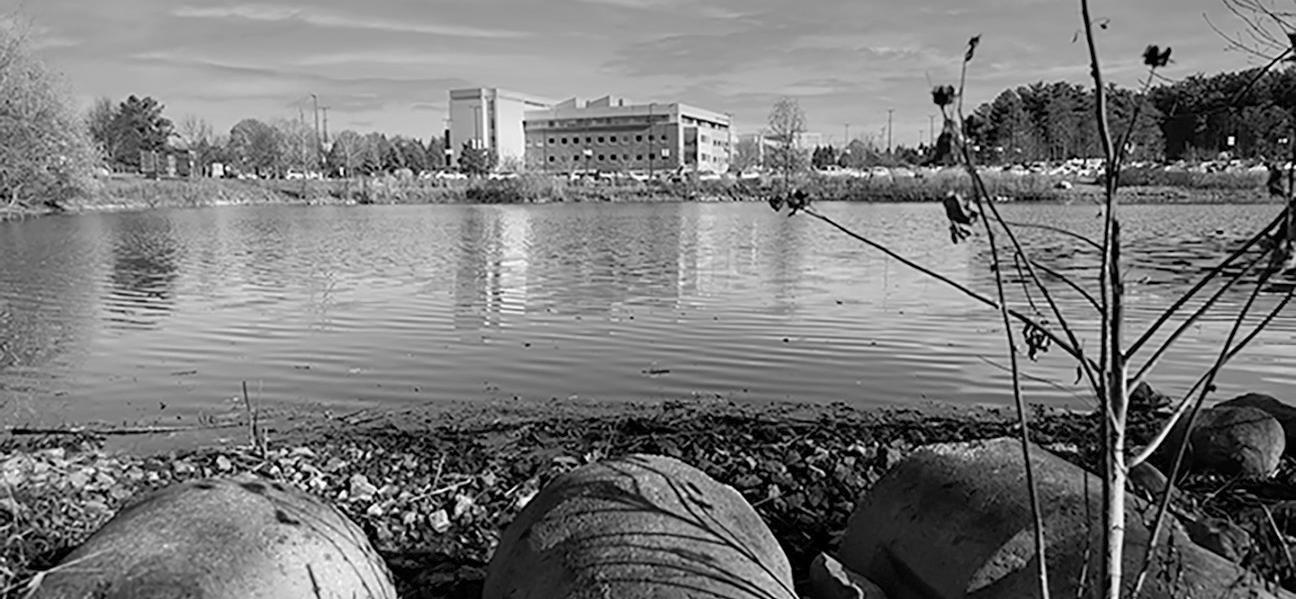
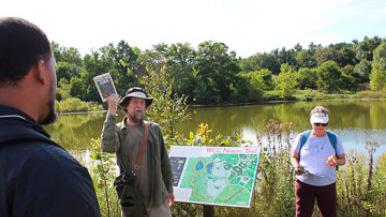
WCC’s stormwater retention system uses two ponds near the Gundar Myran building.
PAULA FARMER | WASHTENAW VOICE
COLIN MACDOUGALL | WASHTENAW VOICE
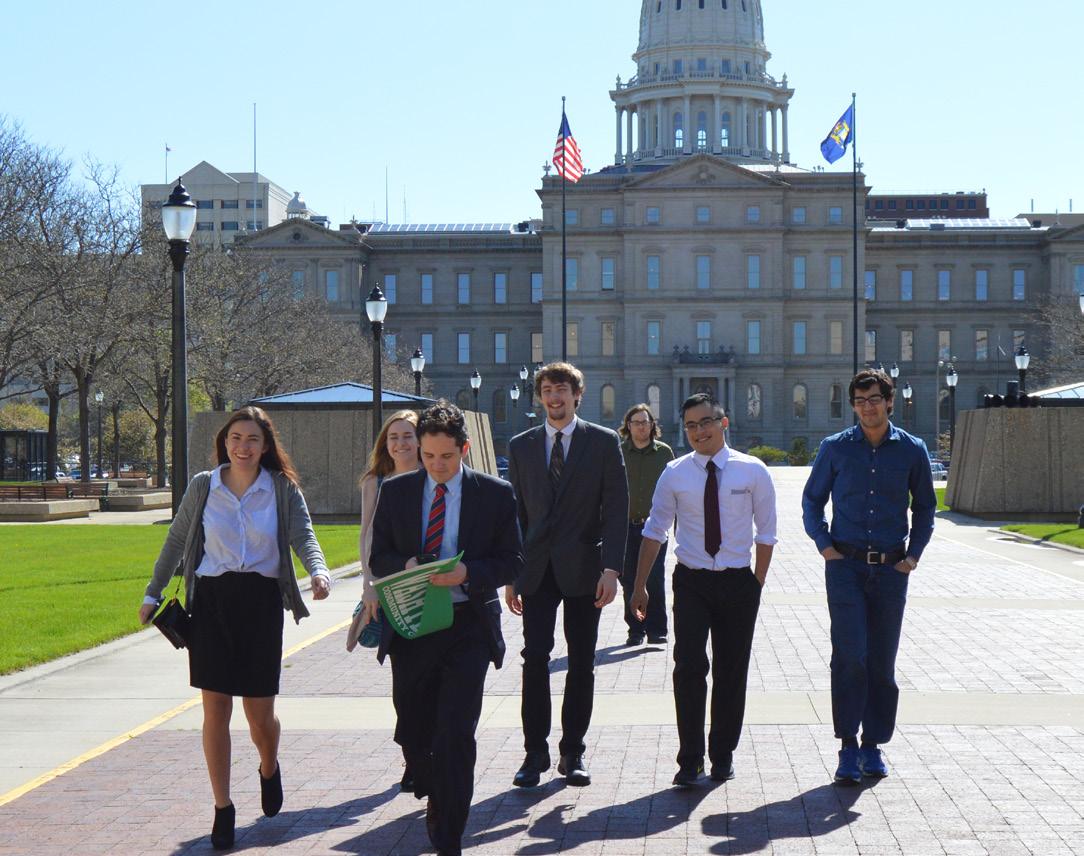
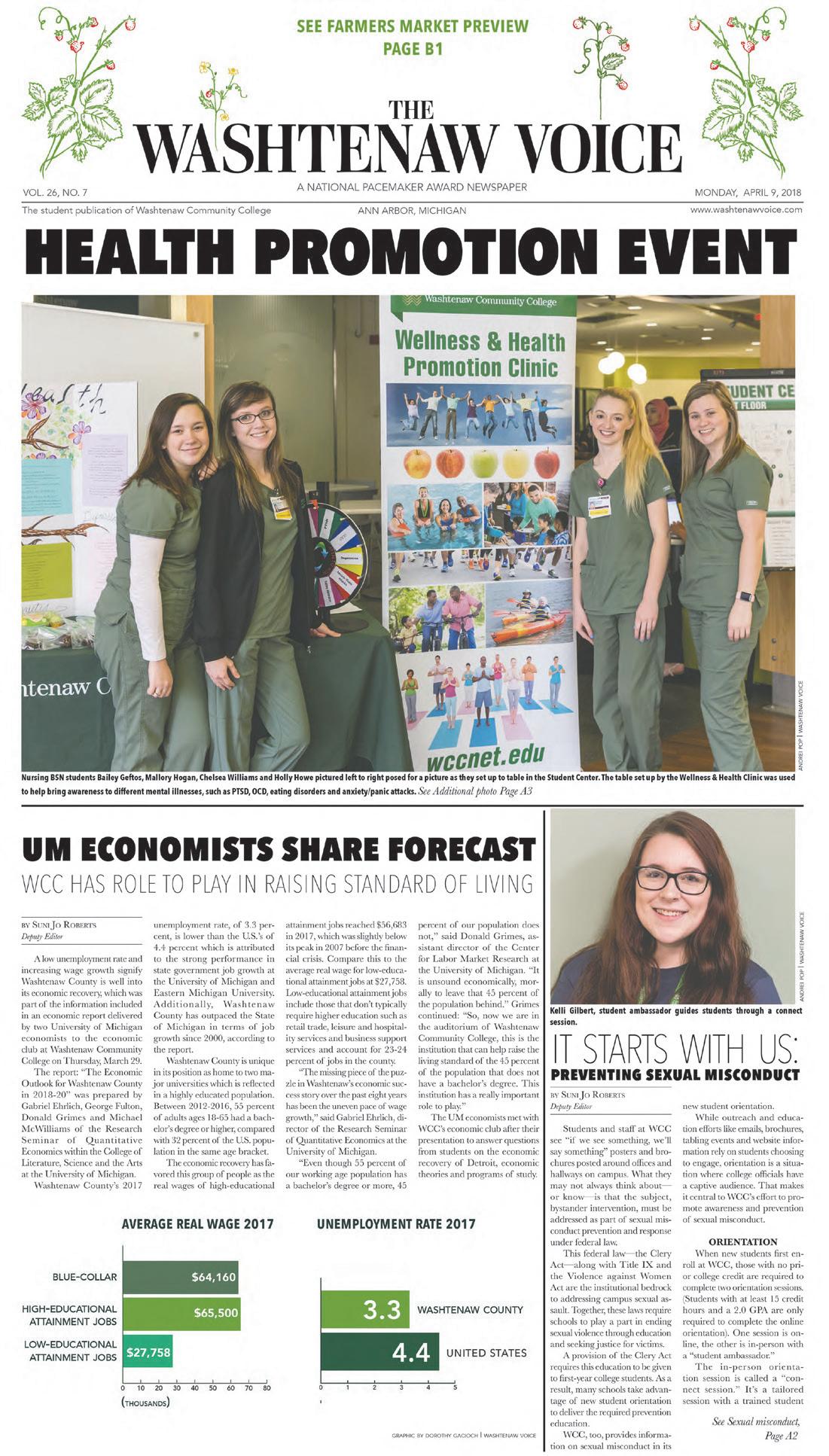
James Morgan takes a Politcal Science class to meet with politicians in Lansing.
COLIN MACDUGALL | WASHTENAW VOICE
SEE A3 SEE A7 SEE A4 Plant medicine Rally at Capitol The Voice takes on D.C. Corporate greed
Jason Morgan wins House seat in District 23.
continued on A5
Mich. Dems control legislature; now have political power to push agenda
The Washtenaw Voice November 15, 2022 A2 WCC students can get published and earn scholarships! TO LEARN MORE: Judy McGovernjumcgovern@wccnet.edu
Psilocybin advocates rally at Capitol
WCC student Matt Strang promotes the therapeutic value of plant medicine.
By Jordan Scenna Deputy Editor
LANSING, Oct. 18 –

When I arrived on the east lawn of the capitol building, the members of the Michigan Initiative for Community Healing (MICH) were still setting up. It was a frigid fall morning, beset with an icy rain and a particularly unsympathetic wind, yet these uncrowned champions of plant medicine were undeterred. A small group of about seven members were busy erecting tents, piling T-shirts, and setting out coffee that would warm devoted rally goers; the looming risk of hypothermia overshadowed by their dedication to the cause.
I found Matt Strang, a WCC pre-med student, MICH member, and fierce proponent of entheogenic plants. He’s wearing a black sweatshirt with the hood pulled down tight over his head. As he shifts his weight from one foot to the other, I can’t tell if he’s nervous or just fighting the cold. He removes his hands that are dug deep into his pockets to greet me.
“Are you speaking today,” I ask.
A giant smile spreads across his face. “Yeah,” he says, “but I have no idea what I’m going to say.”
MICH is a state-registered ballot committee that aims to decriminalize psychedelic plants and fungi like psilocybin mushrooms through comprehensive policy change. The event was billed as a free speech rally, where like-minded people could gather and let Michigan legislators know where they stand.
“The main goal here is community building,” said Brittney Colvard, adminis-
trator and lead designer for MICH. “Psychedelics have had a very profound, positive impact on my life, and we are hoping to bring together as many people as we can who believe in this cause.”
Psilocybin is already decriminalized in Ann Arbor, Detroit, and Hazel Park, but MICH is determined to see the same policy changes throughout the state.
The use of psychedelics as a therapeutic is gradually becoming more mainstream. Psilocybin is on the cutting edge of treatment for depression, PTSD and substance use disorder. A slew of recent studies from the American Medical Association and Cambridge University, among others, have shown its effectiveness as a tool to combat major depressive disorder, and proven to be a better option than widely prescribed antidepressants. That type of medication – selective serotonin reuptake inhibitors or SSRIs – include drugs like Lexapro, which in 2020 saw over 30 million prescriptions in the U.S. A study published
in the National Library of Medicine found that psilocybin has a substantial impact on relapse prevention and cravings associated with substance-abuse disorder.
Some Michigan legislators have begun to acknowledge the data. In 2021, state Sen. Jeff Irwin introduced bill 631 which would decriminalize the use of psilocybin and mescaline throughout the state. Irwin, who braved the nasty weather to speak at the rally, told people that it’s time for a change.

“Scientists have learned a lot about how these substances can be used to treat many afflictions that trouble the lives of millions of Americans,” Irwin said. “It’s time we unlock the potential of these drugs and start allowing people the freedom to do what they want with their own lives.”
From death to birth Strang is no stranger to substance-abuse disorder or depression. He started experimenting with drugs as a teenager and began selling marijuana and cocaine at age 17.
A toothache and a trip to the dentist introduced him to the prescription opiate Vicodin which led him down the gruesome path of opiate addiction.
(According to the National Library of Medicine, 3 million Americans either currently or have suffered from opiate use disorder. Some 500,000 people are dependent on heroin).
Strang spent over 10 years addicted to opiates. He describes a sharp decline once he got on heroin.
“This is a soft spot for me, but when I started using heroin my life went downhill really quick,” Strang said. “I tried to kill myself…twice.”
He wanted to get clean, but the fear of an excruciating withdrawal was like an invisible prison that kept him locked inside the cycle of using and kicking. He checked himself into a psychiatric hospital where they helped him get into a detox facility in Lansing, where he was living at the time.
From there he went to rehab and then onto transitional housing, a place where people can learn to live a “normal” life without the use of drugs while still having the support of the recovery community.
While there, he suffered from post-acute withdrawal syndrome or PAWS. PAWS can develop weeks or months into recovery while the brain
Native American author heals old wounds through Ojibwe language
By: JacoB Kuiper Staff Writer

In 1892, Richard H. Pratt, founder and superintendent of the Carlisle Indian Industrial School, said in a speech maybe the most illuminating description of the purpose of American Indian boarding schools: “...that all the Indians there are in the race should be dead. Kill the Indian in him, and save the man.”
This line perfectly captures the assimilation policies of the U.S. from the mid-17th to the early 20th centuries. Native American children were forced to relocate to government-run boarding schools, often thousands of miles from their homes, in an attempt to remove any ties to their native culture. Neglect and abuse often accompanied this.
Sun may set on Daylight Saving Time; bill stalled in the U.S. House of Reps
By rJ Hunt Editor
How are you feeling after the recent time change? Many tend to take some time getting used to it being dark by 6 p.m. Daylight Saving Time is a process many have gone through for years. Some thought it wasn’t a thing anymore and the U.S. was done with it. That was not the case, however this most recent clock switch has a chance to be historic. That is because this may be the last time we turn the clocks to “fall back”.
Daylight Saving Time was first introduced in 1916 by Germany and Austria as a way to have more daylight during the different seasons. The U.S. began using this method in 1918 and has used it ever since. Since 2007, the date for the “fall back” (clock goes back an hour) has been the second Sunday in March. The date for the “spring forward” (clock goes forward an hour) has been the first Sunday of November.
In March, the U.S. senate voted unanimously to approve the Sunshine Protection Act which would keep Daylight Saving Time permanent starting in 2023. This would mean the time we follow from March until November would be the one to stay. WCC student, Jacob Sackett is looking forward to this bill potentially becoming a law. “I think it’s dumb that some places don’t follow the same time rules as other places,” said Sackett.

Daylight Saving Time becoming permanent would effectively end having to change the clocks once in the fall and once in the spring. The goal is to allow brighter afternoons for children to play outside for a longer period of time, to allow more economic activity throughout the day, and to reduce the amount of seasonal depression seen throughout different Americans. Sackett feels like the time changes mess with him pretty bad because of his seasonal depression. “During the winter time, when it gets dark outside earlier and the time changes with it, I don’t vibe with it,” said Sackett. “It definitely has an effect with my schooling and work. It brings me into a bit of a depression.
Another student that feels the effects of the time changes is Saydatou Cisse. “Daylight savings really does make me do more things in a day than usual because it’s either the day goes by fast or slow”, said Cisse. “When it goes by fast I’m more productive and try to get things done and when it goes by slow I’m not as productive.”
Al Tyuse, a student at WCC, understands how the time change can affect people. “I feel like it doesn’t do anything to me personally, but to society and the community, I feel it messes people up a little bit,” said Tyuse.
On the other hand, Tyuse feels like people overdo it when complaining about it.
“It pushes people’s schedules
back, like what, an hour?” said Tyuse. “I feel like people exaggerate to a certain extent. I mean, I’m fine with where daylight saving time is at.”
While the Senate has approved of keeping Daylight Saving Time permanent, the bill has to go through the House of Representatives before it gets to President Biden. This is where things have been stalled. As of November, the bill hasn’t been voted on in the house. Even with its
popularity, the bill is not a priority in Congress. A hurdle in the way of this bill becoming a law is that the Senate would have to reintroduce the bill if it’s not approved by the end of this year.
Another issue is that the build up for the midterm elections hurt the bill’s chance at getting voted on in the House. Now with the government in a transitional period, it’s unlikely the bill gets passed this year.
Today, many attribute this history to a form of generational trauma that still plagues native peoples. “Native people…rank the worst in every socioeconomic category that you can think of. Suicide is the second leading cause of death for native people ages 10-34,” laments language advocate and author Stacie Sheldon.
Sheldon, a northern Michigan native and Ojibwe herself, is in Ann Arbor this October and November to speak about projects associated with her American Indian advocacy.
She attributes much of this trauma to the forced divorce of native peoples and their culture, “When I was growing up no one was speaking the language of Michigan…. [Our kids] need to love themselves, so they need to love their culture. [They need to] see the beauty in what they have and not feel that it’s an ugly thing.”
Her advocacy work began in 2006 when she co-founded Ojibwe.net alongside Margaret Noodin, who is currently a professor at the University of Wisconsin. Sheldon explains the drive behind the website is to provide Anishinaabemowin (pronounced a-nish-naa-bemow-in, the language spoken by Ojibwe people) resources, “I’m pretty aware how hard it is to find resources to learn, and I’m also aware how hard it is to learn the language as an adult.” Ojibwe.net offers language lessons, songs, cultural projects, and a map of the various tribes and bands of the overarching Anishinaabe cultural nation. “This site represents many things, most of all, it is evidence that Anishinaabemowin is alive and well” explains the website creators.
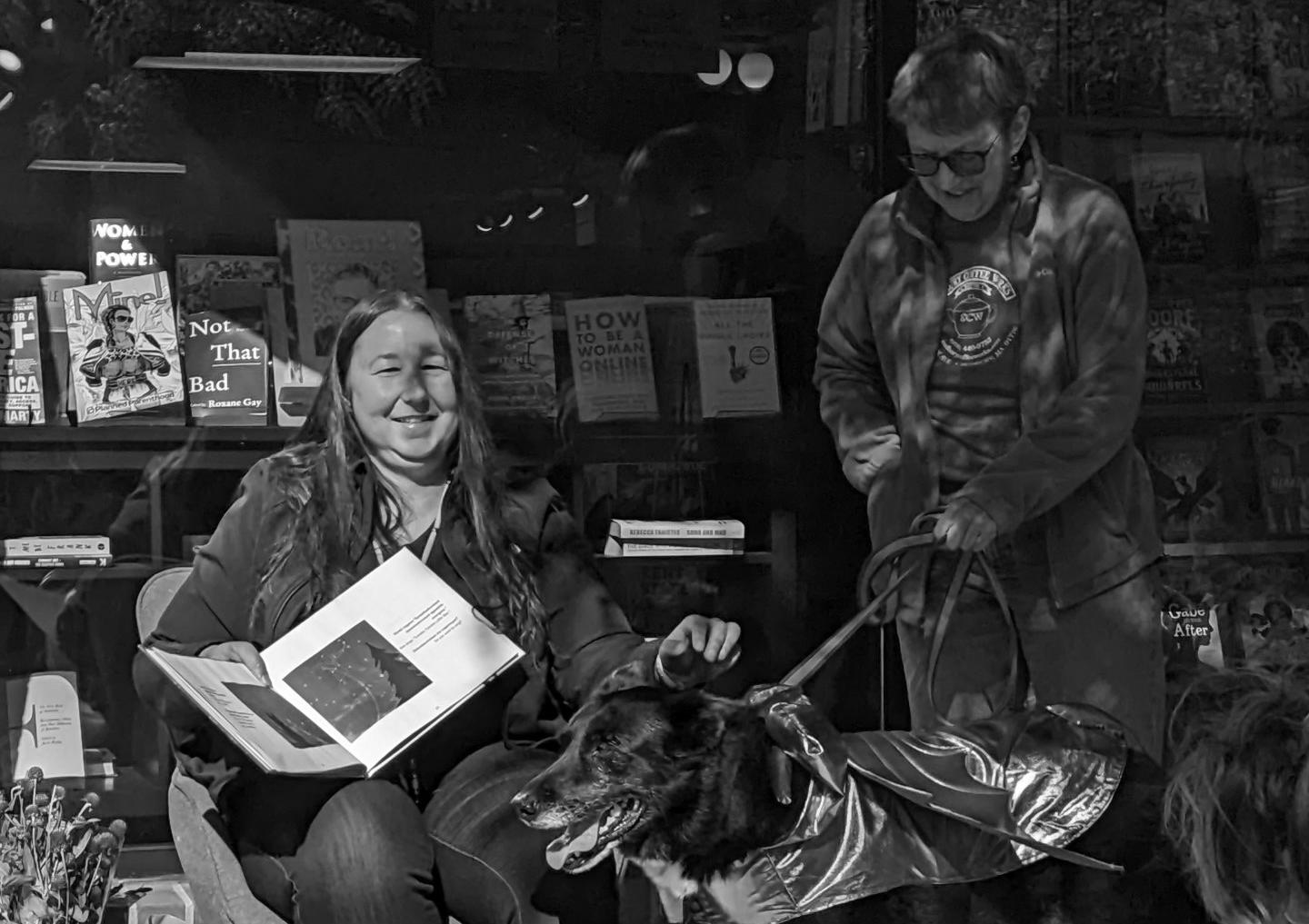
Sheldon’s next project came from an unusual source: her dog Nimkii (meaning “thunder” in Ojibwe). “My friends would joke: ‘What’s
Nimkii’s latest adventure?’” she laughs as she explains the origins of her new book. “A friend recommended that I should write about Nimkii’s adventures.”
Sheldon, however, saw a chance to do more than just write about her dog; she saw a chance to advance her language. Anishinaabemowin is considered endangered because it does not have children learning the language and it is losing older speakers.
She saw this as an opportunity to create a new resource for young learners and Nimkii was the perfect facilitator, “There are a lot of Ojibwe books that [talk about] the old days, but we’re here today. So I thought, ‘Well my story of Nimkii would be a way of’ [connecting with a younger audience].... Nimkii is a dog that you might have. She’s a dog that’ll roll in the leaves… and that’s a kind of shared experience that we could talk about.”
This idea materialized in 2021 with the creation of Bebikaan-ezhiwebiziwinan Nimkii (The Adventures of Nimkii), a dual-language English and Anishinaabemowin illustrated children’s book that shows young readers the changing of the seasons through Nimkii’s eyes.
When asked what she wants next for her language and culture, Sheldon replied simply, “I want it all.” The Ojibwe language is currently in danger of going extinct. Stacie Sheldon is determined to not let that happen.
You can listen to or download the audiobook for free or purchase a hard copy of The Adventures of Nimkii at:

The Washtenaw Voice November 15, 2022 A3 NEWS
JACOB KUIPER | WASHTENAW VOICE
Author Stacie Sheldon reads her new book, Bebikaan-ezhiwebiziwinan Nimkii, to a group alongside her dog Nimkii.
ILLUSTRATION | GRACE FAVER
Cover art for Bebikaan
RUBY GO WASHTENAW VOICE
Myc Williams, director of the Michigan Initiative for Community Healing (MICH), smokes a joint while speaking to an attendee at the rally.
Continued on the Washtenaw Voice Website
Workers bleed cash while corporations make bank
By Jordan Scenna Deputy Editor
I used to work with Henry at a busy restaurant named after railroad workers who performed grueling work for low pay. These “section crews” laid track across the country, before the advent of machines, providing the infrastructure needed to propel America into a global economic force; and just like these unsung heroes of hard labor were to the prosperity of the country, so was Henry to the restaurant.
Henry worked the dish line five nights a week. It’s a hard job. A thankless job. With his clothes soaked through to the skin and his right knee wrapped in a makeshift brace, Henry faced down an endless barrage of dirty dishes night after night. The place couldn’t function without him, yet Henry didn’t profit from his hard work. He earned a small hourly wage which was just enough to get by; just enough to eat, pay your bills, and get yourself back for the next shift.
There are many hardworking, indispensable employees (ask any kitchen manager how hard it is to find a reliable dishwasher) like Henry, and how are they being rewarded for their service? Not with pay raises, universal health care, or affordable housing, but with exploding gas prices, overcooked grocery bills, and raised rents.
The same corporations that the Henrys of this country help to make obscenely rich are contributing to the record-breaking inflation we have today.
In a forgotten Senate hearing in Dec. 2021, Sen. Elizabeth Warren (D-Mass) said that Kroger, the largest grocery chain in the country, reported profits 40% higher over the past year. Kroger CEO Rodney McMullen was quoted bragging to investors, “A little bit of inflation is always good in our business.” Nothing has changed. According to the U.S. Department of Agriculture, retail food prices increased 8.9% as
of Aug. 2022. Tyson Foods, one of only four companies that control the beef and poultry industry, doubled their profit margin.
Oil companies are doing even better. It’s hard to see how oil companies are increasing prices relative to increasing cost when Shell reported a $9.5 billion third quarter, more than double what they made during the same time last year. We’re talking profits here. The oil companies are making so much money that even President Biden, who’s not known for going up against greedy corporations, spoke out on Halloween.
“Then along came Exxon.
Exxon’s profits for the third quarter were at $18.7 billion. One quarter: $18.7 billion–nearly triple what Exxon made last year and the most in its 152-year history. It’s never made that much profit.”
If Joe Biden, a neo-liberal when it comes to capitalism and the free-market, is shocked by corporate greed, then you know companies have gone too far.
I’m not going to pretend to be an economist, and I know that there are other factors that go into inflation, including supply-chain issues due to the pandemic and the war in Ukraine; but it’s impossible to deny corporate greed is the
gas fueling the fire.
Republicans will argue government spending and wage increases are the problem, but this just isn’t true. According to an October. article from Forbes, inflation is at 8.2% while wages are rising at a rate of 5.2%, which means workers are still getting short changed.
In a House hearing last month, U.S. Rep. Katie Porter (D-Calif.) dispelled the myth that government spending is driving inflation. With an easy to read chart in hand, Porter asked Mike Konczal, the director of macroeconomics analysis at the Roosevelt Institute a direct question.
The Russian and the Ukrainian war. It’s the only big thing I know about.
I think it’s really important for our country to stand with women right now, as [the US government is] literally trying to take away our rights. I’m torn between abortion rights and preventing Russia attacking an entire country.
By Willow Symonds | Staff Writer
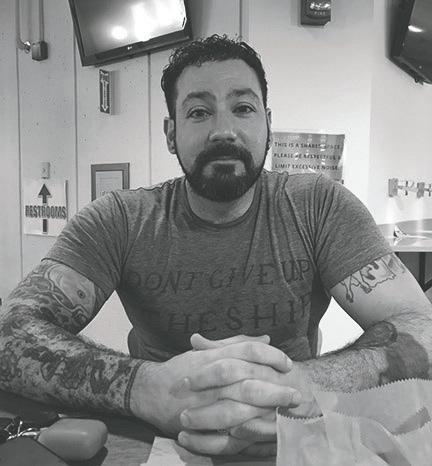
Transparency. All politicians are two-faced liars. I mean, I still vote. I sent in my ballot two days ago.
Derek Fleszar Journalism
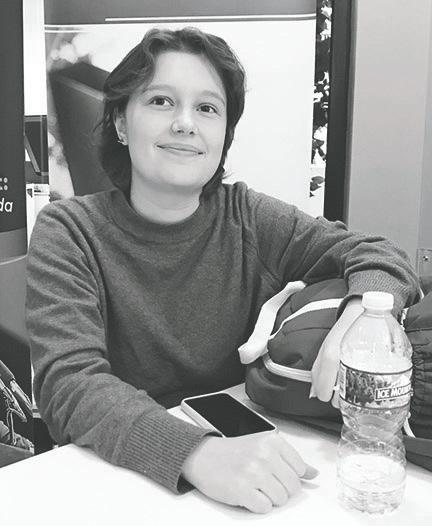
For this upcoming election, abortion rights are most important to me. I’m very pro-choice. This summer, I worked to get Prop 3 on the ballot.
Anna Lyon Social work
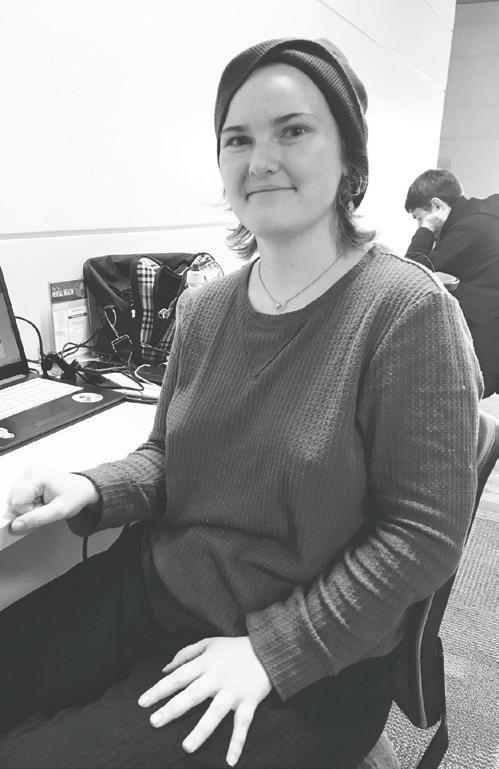
I don’t just look at one issue; I look at a range of issues. I guess [they’re] all social issues.
Gwen Michalec Political science
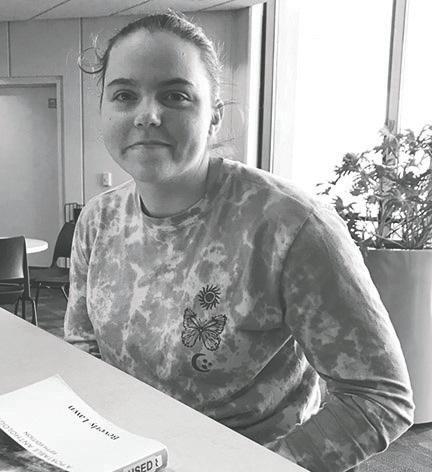
Who’s paying for the damage of climate change is what worries me. Why should we pay for it when billionaires with bunkers run and hide? My goal is a bloodless ‘taking it back.’ We could all learn something from the French revolution.
Pala Journalism
Jasmyn Kirkland Pre-engineering
I think they’re all too interconnected … even the social and economic issues.
Rudolph Journalism
I care about lots of issues, but I guess I might say environmental issues. The climate affects our ability to live.
Evie Brokaw Liberal arts transfer
I’m not a single-issue voter, but [in this midterm election] three states might legalize slavery. Not Michigan, luckily, but I’m keeping my eyes on those states. The 13th amendment ended slavery for everyone but convicted prisoners.
Jason Thompson Communications
Rape culture. You look at all these statistics of reported assaults, and you wonder, ‘Where are these people?’ You may be interacting with a rape victim and not even realize it. So, were they silent or silenced?
Porter-“What is the biggest driver of inflation during the pandemic?”

Konczal-”It would be corporate profits.”
Corporations are dragons breathing the fires of inflation down upon us and turning our bank accounts to ash. They hoard the wealth of America that they didn’t earn, but claim as theirs, and theirs alone. The majority owner of the restaurant with the whimsical name is a billionaire. He didn’t accumulate that wealth by himself. Henry helped him do it, and yet Henry doesn’t make anywhere near what he’s worth. I’m not against the ownership class making more money than workers.
I understand owners take on more risk, and their ideas and ingenuity should be rewarded; but they don’t do it alone. Not only does taxpayer money provide the infrastructure corporations need, like roads, air travel, and education; they get federal tax subsidies. Exxon alone costs taxpayers $12-$19 billion annually.
The Pandemic taught us the value of workers like Henry. It also reminded us that corporate greed showcases one of the more vile aspects of the human condition; an indifference to the suffering of others for personal gain. It’s a crime comparable to manslaughter. It’s the killing of a human being, without malice, but for money and power; and killing with economics is killing just the same. It’s just a slower death.
spopewhite@wccnet.edu gfaver@wccnet.edu jmurugesan@wccnet.edu pgfarmer@wccnet.edu wsymonds@wccnet.edu jkuiper@wccnet.edu hyoh@wccnet.edu mylliescholz@wccnet.edu rgo@wccnet.edu jumcgovern@wccnet.edu thewashtenawvoice@gmail.com 734–677–5125
OUR TEAM AND ITS ROLE The Washtenaw Voice is produced every other week by students of Washtenaw Community College. Editorial responsibility lies with the students. The views here are not endorsed or approved by the faculty, administration or Board of Trustees of WCC. YOUR VOICE The Voice welcomes letters from readers. Letters should be a maximum of 400 words and include the author’s name. A phone number and email address are required so letters can be verified before publication. The Voice welcomes news tips and story ideas. CORRECTIONS The Voice is committed to correcting any errors that appear in the newspaper or on its website. To report an error of fact, phone 734–677–5405 or email thewashtenawvoice@gmail.com. FIRST COPY’S FREE A copy of each edition of the Voice is free to everyone. Additional copies are available at The Voice newsroom, SC 109, for 25 cents each. EDITOR........................... DEPUTY EDITOR............ DIGITAL EDITOR............ GRAPHIC DESIGNERS... PHOTO EDITOR............ WRITERS......................... VIDEO EDITOR............ CONTRIBUTORS............ ADVISER......................... R.J. Hunt Jordan Scenna Santone Pope-White Grace Faver Janani Murugesan Paula Farmer Willow Symonds Jacob Kuiper
Oh
Wyllie-Scholz
Go Judy McGovern
Danny
Robin
Ruby
4800 E. Huron River Drive Room SC 109
COLUMN
Ann Arbor, Mich. 48105
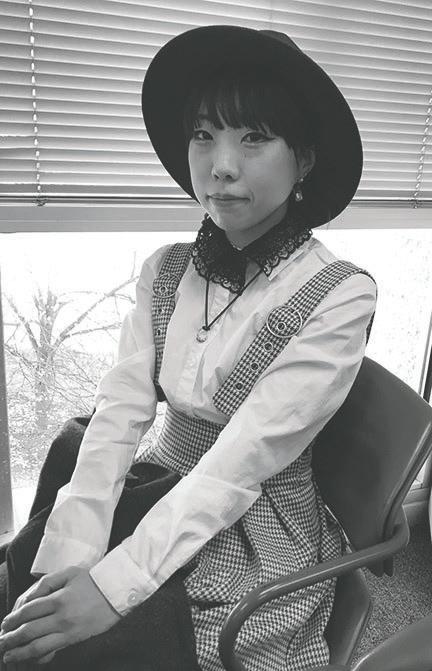
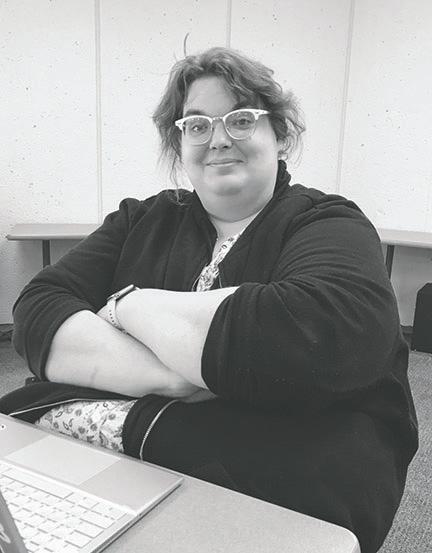
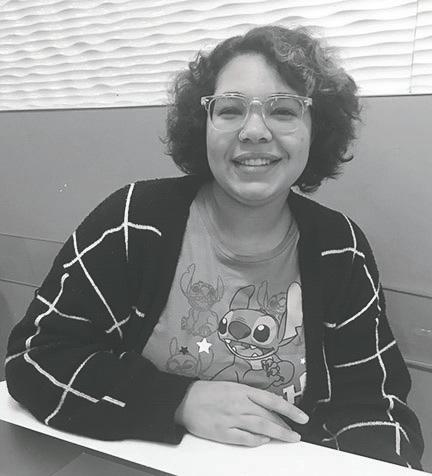
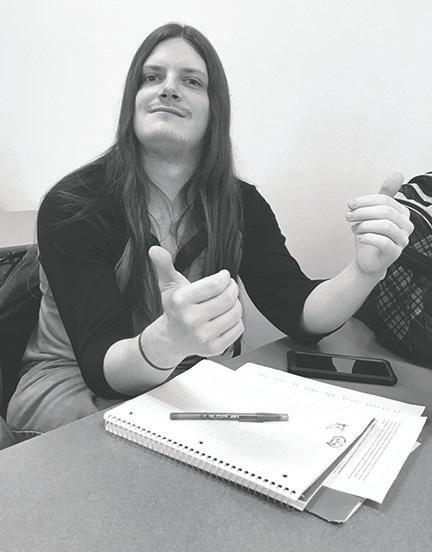
What political issue is most important to you, and why?
Kenta Osborn Fine arts
Eden
OPINION The Washtenaw Voice November 15, 2022 A4
Nana Kubo Journalism
ILLUSTRATION BY JANANI MURUGESAN
WCC acting classes invite the students to STAND OUT
By WilloW SymondS Staff Writer
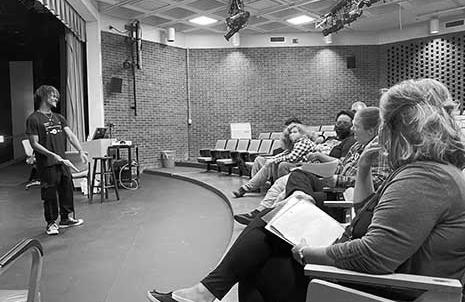
The stage is floor-level and painted black to disappear in the audiences’ mind. A variety of set pieces and props stand against the back wall, like the black boxes that blend with the stage and furniture that mismatch in color and texture, ready to be put in place for the next rehearsal.
“Both Acting 1 and 2 have made me uncomfortable in the best way possible,” Acting 1 student Shelby Vantreese said. “I like [Foster Johns IV’s] style of teaching a lot.”
This is Foster Johns IV’s first semester teaching at WCC. While Johns hadn’t met the former instructor, Tracy Jaffe, he had read her class syllabus, and he realized that they have similar teaching styles and attitudes toward theater.
“The students are my favorite aspect,” he said. “I love teaching actors, but I also love teaching those new to acting.”
Johns stressed that acting classes are for everyone, no matter their career path. Many students have some kind of stage experience, even if said experience was from years ago, but not everyone does. Students in these acting classes also have a variety of majors, from healthcare to social work to business and more. Some don’t even know what to study and just want something creatively engaging.
What brings students furthest out of their comfort zone is, “...anything that asks them to be seen,” according to Johns. “It instills this idea into students that, ‘I did that, and I’m not gonna die.’ I never push anyone to the deep end either, but I do encourage them to be seen. It’s applicable to many parts of their life.”
Theater classes are not about lectures or note-taking, and the only type of studying is rehearsing lines and blocking movements on stage. While students still have to put in effort, the work feels fun to them. It’s like kids playing make-believe but with more depth. However, getting used to this may be a challenge for some people.
“Inviting the introvert to be seen is one thing; Inviting the extrovert to do nothing is another,” Foster said. “My
favorite acting lesson: Dare to be boring. What makes for a compelling performance is someone just being - something so strikingly human that it reminds you of someone you know, someone you’ve seen at the grocery store, yet in extraordinary circumstances.”
One huge acting tool that both Jaffe and Johns teach is, “the moment before.” What happened to a character prior to the scene explains what led to their actions in said scene.
Actors wonder, “What was my character thinking or feeling a few minutes ago?” or “What caused my character to respond this way?” This can ground their performances into reality. Instead of their character living for the scene, the scene is alive because of the character.
People don’t have to be actors to use this technique,
nor are they limited to understanding only fictional characters. Johns believes that character studies act as a microscope, not just for the character, but for the actor and the people around them.
Acting students - or anyone, really - are unlikely to use this microscope as they would in a biology class, magnifying whatever their teacher handed them, only observing such a narrow space from an aesthetics standpoint. This microscope may act more like a flashlight: Some of their surroundings will illuminate more than others, and they realize this is because those specific things relate to their own experiences: “I’ve seen something just like this,” “I remember that this made me feel this certain emotion,” and “I reacted like this because I felt this way.”
Shelby Vantreese, for example, said she learned to connect with her scene partner emotionally, and that helped her acting choices and comfort in the class.
Johns said that he would love for every student to widen their depth of expression, but he would still appreciate hearing, ‘This hasn’t completely changed my world, but gosh, it was fun.’
“If it ends up being just fun,” he said, “then that’s the biggest gift in a world like this right now.”
Now that students can choose their winter 2023 classes, the beginner drama classes - such as Theater Appreciation, Improv 1, and Acting 1are available.
Sewage Leak Closure Continued
which runs from west of campus down to Pittsfield Township.
Wooten described nature as, “adaptive and resilient,” and explained that, “while the sewage leak may have some short-term negative effects, overall, the ponds and the wildlife … will survive and persist.”
Then on Nov. 7, the facilities department identified a sanitary drain line leak. Sewage once again spilled into the ponds, then discharged into Swift Creek Run. Administrators closed campus that evening, this time for two days.
Media relations director Fran LeFort said over email that facilities department members identified the second leak, “around 4:30 p.m. on Monday, November 7. The line was shut off and the leak contained by 7:20 p.m. WCC completed a ‘Report of Discharge’ … and also notified the Washtenaw County Health Department.”
According to Becsey, the
two leaks were in different sections of the sanitary pipe system. When the first repair was made, there was confidence that the system had many years left. The pipe was installed in 1968, and the pipes used in WCC’s sanitary drain system typically have a lifespan of 70-80 years. However, when the second leak happened, it was realized that the best long term solution would be to replace the entire sanitary drainage system.
 By WilloW SymondS Staff Writer
Skin of the Sea by Natasha Bowen (2021)

Genre: Young Adult Fantasy

Natasha Bowen used Yoruba, a West African religion, as the mythology in her debut novel, which is a re-telling of The Little Mermaid. One of seven mermaids, Simi follows slave-trader ships, keeping track of the dead thrown overboard. A young man falls into the sea, strangely alive, but when she saves him, a deity takes notice - something neither the human nor the mermaid want. Skin of the Sea is notable for its poetic writing and a setting that reflects our own world’s dark history.
ILLUSTRATION | GRACE FAVER
Know My Name by Chanel Miller (2019)
Genre: Memoir
In 2015, a Stanford university swimmer was caught sexually assaulting an unconscious woman. When he received only six months of jail time, it made international headlines, sparking debate among the public. Four years after the Brock Turner case, “Emily Doe” released her memoir and revealed her identity: Chanel Miller - Asian-American woman, writer, survivor. Miller’s powerful and thought-provoking recount of the assault, the trial, and its aftermath will stay with readers long after finishing the final pages.

Future Feeling by Joss Lake (2021)
Genre: Speculative Fiction; LGBT Several decades from now, transgender dog walker Penfield R. Henderson feels stuck. He can’t stop comparing his life to online celebrity Aidan Chase, whose transition into being a man seemed much smoother than Penfield’s. When he recruits his roommates to hex Aidan into the Shadowlands, they accidently send the wrong transman. Penfield and Aidan reluctantly team together to rescue this stranger from the dreaded artificial reality. Future Feeling is unique in story, world-building, and especially writing, offering a fresh and diverse perspective in nearfuture speculative fiction.

The Washtenaw Voice November 15, 2022 A5
NEWS
Continued from A1
ROBIN WYLLIE-SCHOLZ WASHTENAW VOICE
Anju Nieves rehearses a monologue in Acting 1, while Andrea Lattimore, Charity Dillard, Kendra Conely, Jonathan Jackson, and Hope Bernard watch to give feedback.
PAULA FARMER | WASHTENAW VOICE
Sewage leaked into the pond in front of the Gunder Myran building.
PAULA FARMER | WASHTENAW VOICE
A giant hole left from construction work to fix the sewage leak.
Know My Name by Chanel Miller (2019)
Skin of the Sea by Natasha Bowen (2021) Future Feeling by Joss Lake (2021)
bulletins and new
1.
Under general supervision, this position is responsible for participating as a research assistant on a variety of research activities focusing on the automotive industry and the public sector. This is a temporary part-time (up to 20 hours per week) position with the potential 32 hours per week from May to August. Hourly rate: $15.00 - $17.00, depending on experience.
LPN & RN Opportunities at Glacier Hills ( Trinity Health Senior Communities).
In home caregivers.
Comfort Keepers is looking for a Caregiver to join our team. At Comfort Keepers, we provide uplifting in-home care for seniors and other adults who require a helping hand, a supportive companion, and day-to-day assistance in their homes. As a caregiver, you will have the opportunity to deliver one-on-one care that enhances quality of life and brings hope and joy to clients and their families.
School Psychologists. This position will complete comprehensive diagnostic evaluations which will assist the IEP Team in making appropriate decisions regarding special education eligibility and/or placement.
Glacier Hills is seeking RNs and LPNs for its community in Ann Arbor, MI. Glacier Hills is a member of Trinity Health Senior Communities (THSC), one of the nation’s largest, multi-institutional Catholic health care delivery systems with over 40 communities in multiple states. From our amazing residents and guests who live and stay at our communities, to our colleague-centric culture, you’ll find an environment that fosters a diversity of career options and promotes career growth within the greater Trinity network.
Automotive engine mechanic.
Ready to trade your wrench for a home office? Share your engine expertise with technicians in the field over the phone and by email. You’ll stay up to date on the latest recalls, service
first
-
- or
new repair concerns. Work a Monday through Friday schedule from the comfort of home. Get a steady paycheck and excellent benefits including medical, dental, vision and life insurance; 401(k) with match; paid vacation and holidays; and more.
Sales and service professional.
Maintain updated knowledge of the organization’s products, services, and customer service policies. Recommend new products or services or make suggestions for improvements by identifying relevant features and benefits. Respond promptly and professionally to incoming customer inquiries by telephone, email, and other point-of-contact forms of communication. Participate in training opportunities provided by the organization or outside entities. Establish and maintain good rapport with customers by using positive language and anticipating their needs. Educate customers about current promotions and advertisements.
Security Officer – Michigan Medicine.
The Division of Public Safety and Security (DPSS); Michigan Medicine Security is a full-service,
We manage all security operations at Michigan Medicine and offer an integrated approach to safety and security, partnering across the University to provide a safe community while improving the quality of life for all those living, learning, working, healing and visiting our community. As a Michigan Medicine Security Officer, you will report to the Director of Michigan Medicine Security. Departments are a seven (7) day per week, twenty-four (24) hour per day operation. Work schedules may include nights, weekends, afternoons, holidays and occasional unanticipated overtime. This is a uniformed position following the DPSS uniformed dress code. There will be stationary and mobile patrol responsibilities within an 8 hour (minimum) shift.
Student assistant. This student will provide technical and administrative support for DTMB/SFA, Building Operations Division, Facility Assistance and Directory Services. Duties will include a wide range of office support assignments, including: taking incoming customer service
phone calls and emails, answering inquiries regarding DTMBmanaged facilities and parking structures. Will include interaction with a variety of databases and programs through data entry, maintenance and retrieval of facilities-related information. It is expected that the student will become familiar with division systems and procedures.
Motor Coach Operator/ Bus Driver.
Provide direct transportation service to members of the Ann Arbor, Ypsilanti, and urbanized area. Motor Coach Operators (MCOs) operate lift-equipped motor coaches of various sizes, along fixed routes, in a safe efficient and courteous manner. Responsible for adherence to and performance of all the job requirements set forth in the “Standards of Performance” specified in the Personnel Procedures Manual.
House Manager. Responsible for managerial coverage of the House. Working collaboratively with Mott Social Work services, assign rooms to accommodate eligible families. Assess priorities of family needs in that assignment. Assist with checking families in and out, inspect, and ensure readiness of bedrooms and general facility, as needed. Ensure appropriate records are kept/updated for all families and operations. Maintain supportive and open communi-
Certified Nursing
Assistant.
Do you have strong communication, observation, and organizational skills paired with an overwhelming amount of compassion and care? With ProMedica Senior Care, you can combine your love of people and strong work ethic to aid patients with basic nursing care. In this entry-level position, you’ll be gaining valuable experience on your path to a fulfilling career in nursing. Working at ProMedica Senior Care means you’ll have industry-leading benefits, excellent training, opportunities to learn and all that you need to build a career.
Human Resources Intern. The Human Resources Intern will support Human Resources initiatives including recruiting; onboarding; training and development; benefits administration; and employee relations. This position will serve in the Operations Department and report to the HR Manager. This work will be done in accordance with the core principles of our Detroit-based non-profit team.
The Washtenaw Voice A6 PLAY Center for Career Success SC 112 734-677-5155 careers@wccnet.edu These are among recent employment ad posted with WCC Center for Career Success. Students may contact the Center for Career Success to find out how to apply for the openings. To view more information, visit Career Connect at wccnet.edu/careerconnect WCC students and employees can place classified ads in The Washtenaw Voice for free. LOCAL BUSINESS OWNERS Looking for help? As a service to our students, you may place “help wanted” ads in The Washtenaw Voice for free. THE DEADLINE in 5 p.m. the Tuesday before publication. SEND ADS to wcc.voice. advertising@gmail.com Solutions to puzzles on washtenawvoice.com ACROSS DOWN November 15, 2022
BREWSTER ROCKIT By Tim Rickard
Research Assistant
information and sharpen your own skills by teaching others. Morley’s remote Automotive Engine Technicians (Technical Automotive Engine Consultants) are often the
to know
the first to find
fixes for
24-hour public safety department that works to meet the needs of the Michigan Medicine community. We are widely acknowledged as a healthcare security leader in patient and family-centered care. Our officers and support staff are highly trained healthcare security professionals equipped to serve all members of our community.
cation with families and House Operations Director. Report matters of concern in a timely manner to the House Operations Director.
1 “Skedaddle!” 6 CSI stuff 9 Word before act or action 14 Hockey venue 15 “Am __ the right track?” 16 Underworld 17 *Song sung by sailors 19 Feathers in a duvet 20 Consumed 21 Desktop computer originally sold in Bondi Blue 22 Stuffs to the gills 23 “Vous __ ici”: “You are here,” in French 25 *”Huzzah!” 28 World __ of Poker 30 Homophone of 31-Across 31 Homophone of 30-Across 32 Old fast fliers: Abbr. 33 Fishing spot 35 Not bad, not great 36 *Yosemite monolith in the 2018 documentary “Free Solo” 39 Quick swims 42 Auth. unknown 43 Meadow bleats 46 Top pitcher 47 Payable now 48 __ Bros. Discovery: media conglomerate 50 *Actress who played Elliott’s mom in “E.T.” 54 Roof overhang 55 “I’ll __ to that!” 56 Computer giant 58 Hustle, quaintly 59 Bee’s defense 60 Stretch of chilly weather, and what the first words of the answers to the starred clues amount to, phonetically? 62 In the future 63 Mine lode 64 Quick and
65 Bright-eyed 66 Spider creation 67 Made
1 Merit badge holders 2 Makes from scratch 3 Bookworms 4 Reply to a ques. 5 Half a menu fish 6 Blues singer Washington 7 V-shaped slit 8 “__ news?” 9 Chintzy 10 Church attendees 11 Expanded,
a collection 12 Playground fixtures
two 13 Outdated geopolitical letters 18 Singer-songwriter Tori 22 Cricket or squash 24 Web pages 26 Enjoyed home cooking 27 “__-hoo! Over here!” 29 Course for intl. students 33 Comic strip unit 34 Wall St. launch 35 Catch 37 Tub sealant 38 Atty.’s group 39 Pa 40 Beverage that may be served
lemon slice 41 Looking
44 California
Angels
45 Rossini’s
of __” 47 Warning sign
48 Fuse
heat 49 Walked
51 Pained
52 Crush
53 A-lister 57 Future
59 “Murder,
60 Dairy
61 Links
nimble
docile
as
for
with a
(in)
home of the
and the Ducks
“The Barber
word
using
unsteadily
reaction
on
atty.’s exam
__ Wrote”
farm animal
org.
When The Voice was invited to attend MediaFest22, I didn’t know what I was getting myself into. I didn’t know what these seminars would be about or how the people in D.C. would act. I’m so glad I was able to attend this conference because I learned so much about how I can help make myself better as a journalist, but also as an editor. I gained so many tips and tricks that could make The Voice better. When we arrived back home, I couldn’t wait to share this knowledge with the rest of the team.
I enjoyed this conference because we were able to meet some of the most respected people in the journalism world. They shared their stories of how they became successful in their field. Some of them had the odds stacked against them due to tough upbringings, but they persevered. They talked about the work ethic they had to put in and how things are not supposed to be easy. Their stories showed me how if they can do it, then why can’t I.
Another part of the conference I enjoyed was that I was able to network with other college journalists. This was huge for me because we were able to share the similar things we go through. Lastly, I was able to bond with my fellow Voice colleagues. It’s not often all of us or even the majority of us are together at one time, so I was happy I was able to learn more about each one of them. They made this trip even more memorable, and helped create memories that will last a lifetime.
The best part of attending MediaFest 22 was that The Voice placed 5th out of the whole country in the Best in Show for best Newspaper (twoyear colleges). I’m still filled with joy at placing 5th in the entire nation. That was a big deal. By this being my third and final semester as editor of The Voice, I think it is safe to say that this will go down as the accomplishment I’m most proud of.
learned so much from each seminar I attended, but one sticks out like blazing landing lights guiding an unsure aircraft in for a safe landing.
Debra Alfarone works as a TV correspondent for CBS news covering the Capitol and the White House. She’s also a high school dropout. Alfarone sat on a panel of journalists discussing what young, (or old) budding journalists should do when trying to get their first job. She was honest in her story, and told everyone she still suffers from “imposter syndrome.” Even after a lauded 20-year career, she still doubts whether she belongs “in the room.”
How could this be? She’s an award winning journalist, yet she feels the same way I do. Alfarone told her story. Not just the shiny parts, but all of it. There were setbacks, disappointments, and failures. She was turned down for her current position five times before someone said yes. And this was the crux of her advice. “Don’t take no for an answer.”
so much, still get feelings of “imposter syndrome.” But success, whatever that looks like to you, isn’t out of your hands.
That was the most impactful lesson I learned to help me become a better journalist…I learned the truth..that I get to decide if I belong in that room.
Walking through the halls of the Grand Hyatt Hotel in Washington DC, I was surrounded by storytellers. Journalists who want to tell you the who, what, when, where, and why of it all. Sometimes with hard facts or graphics, sometimes with heartfelt accounts of individuals, but always with a singular goal in mind: to tell the truth.
There were many brilliant journalists at MediaFest22. I

What she meant was don’t give up. She told us that just because we were in that room, that we showed up, meant that we deserved to be there. We deserved whatever we held in our hearts, and what we needed to do was show up and ask for it. If there is a job you want, then make the call, and if that doesn’t work out, then try again. As I write this, it sounds so simple, yet I needed to hear it.
I sat in seminars hosted by incredibly talented journalists, from royalty like Bob Woodward and Carl Bernstein, to a New York Times investigative team whose work was impressive to say the least. As engrossed in their lectures as I was, there was always this self-defeating mantra pecking away at my confidence; “You’re not good enough.”
What Alfarone taught me, and what I think applies to all WCC students, is that even the people who’ve already achieved
Janani MuruGesan Graphic Designer
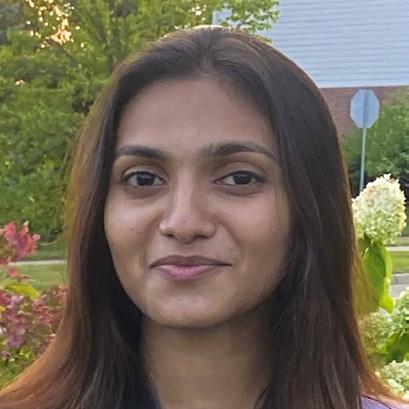
Initially, I was skeptical about going on a trip with people I barely knew; socializing with people I did not know at a national conference sounded frightening. However, I decided to get out of my comfort zone and attend the conference because I attended it virtually last year and loved every bit of it. I expected Media Fest 2022 to be educational and exciting, and it satisfied my expectations.This trip was my first time to Washington DC. I met numerous exceptionally talented people, and I learned something from every single one of them. I learned how important good design is to elevate an article. In one of the sessions I attended about design, the speaker mentioned that an article changes into a story with engaging design and meaningful graphics to support the story. It made me understand the importance of quality design in conveying the news to the readers.
I had the opportunity to visit historic monuments and museums that I have never been to, which let me gain knowledge about something outside of producing news. I did not just acquire a new perspective on designing and journalism; I also had the opportunity to spend quality time with the Voice team. Spending three days together in an unknown place brings people closer together.
Design and journalism are so divergent, yet go hand in hand to produce note-worthy news. When I initially joined the Voice team, my objective was to
After
I’m
 WilloW syMonds Staff Writer
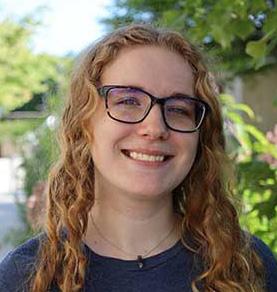
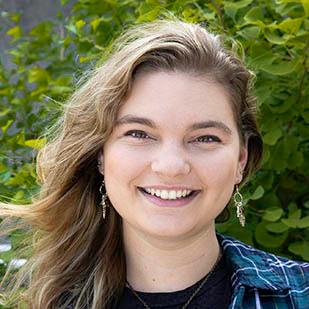
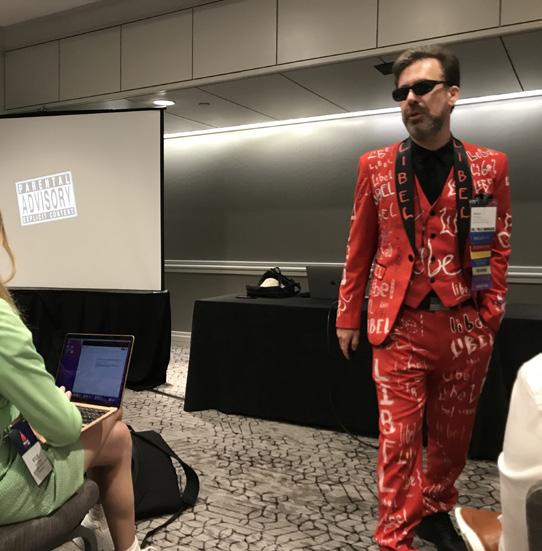
My favorite talk was “Chicken Salad.” Florida journalism professor Michael Koretzky, wearing a bright red “libel suit” and sunglasses, presented a slideshow collection of student newspapers. He explained the problems with each front page: cramped space, boring headlines, boring ledes, not enough photos, too many photos of old people (not the target audience), etc.
For every problem he listed, he fixed it in an updated version side-by-side. These new ones had drastically different styles from the originals and from each other, and some of them were unlike any paper I’d seen before (“alternate reality where the Soviet Union won the Cold War” was probably my favorite). Still, these refreshed pages always had one thing in common: style, and a surprising amount of substance.
What I took away most from the talk was the way he approached stories. One thing he said that still repeats in my mind is, “These students have some great stories buried in their articles, and they don’t even know it!” The narrower the focus, the better. Journalists should ask themselves, Why should readers care about this? What should they learn that they didn’t know before? What do I offer that no other article does?
Before the D.C. trip, I was struggling with story ideas and completing articles. The journalism conference, ESPECIALLY the Chicken Salad talk, inspired me to look at reporting in a new perspective. We tell


The DC Media Conference caught me by surprise, I had no idea what to expect and how the trip would fare. In fact, I was very nervous. The entire idea of flying to an unfamiliar city with people I’d only known for a few months was scary. However, once we arrived, all that anxiety washed away. We didn’t have time to feel scared because we jumped straight into the conference and used each other as social shields.There were hundreds of people attending the conference, and some of us stuck together like glue. Since we didn’t know anyone else, it was easy to stay close to each other.
Our group of eight jumped into the conference with open minds. As a Graphic Design student, I didn't think I would get much out of a journalism conference. However, I was completely wrong. The conference hosted speakers of many different trades, design being one of them. We found classes about typography, creativity, visuals, social media and web layout. In addition, we had the opportunity to have our paper critiqued by a professional. He gave us such amazing advice on how to better our work at the newsroom and wherever we decide to go in the future.
Overall, I had a wonderful time in DC. I want to thank the Washtenaw Activities Committee for planning the event and giving us students the opportunity to better ourselves through learning great things at the conference. I’d go and do it again in a heartbeat.


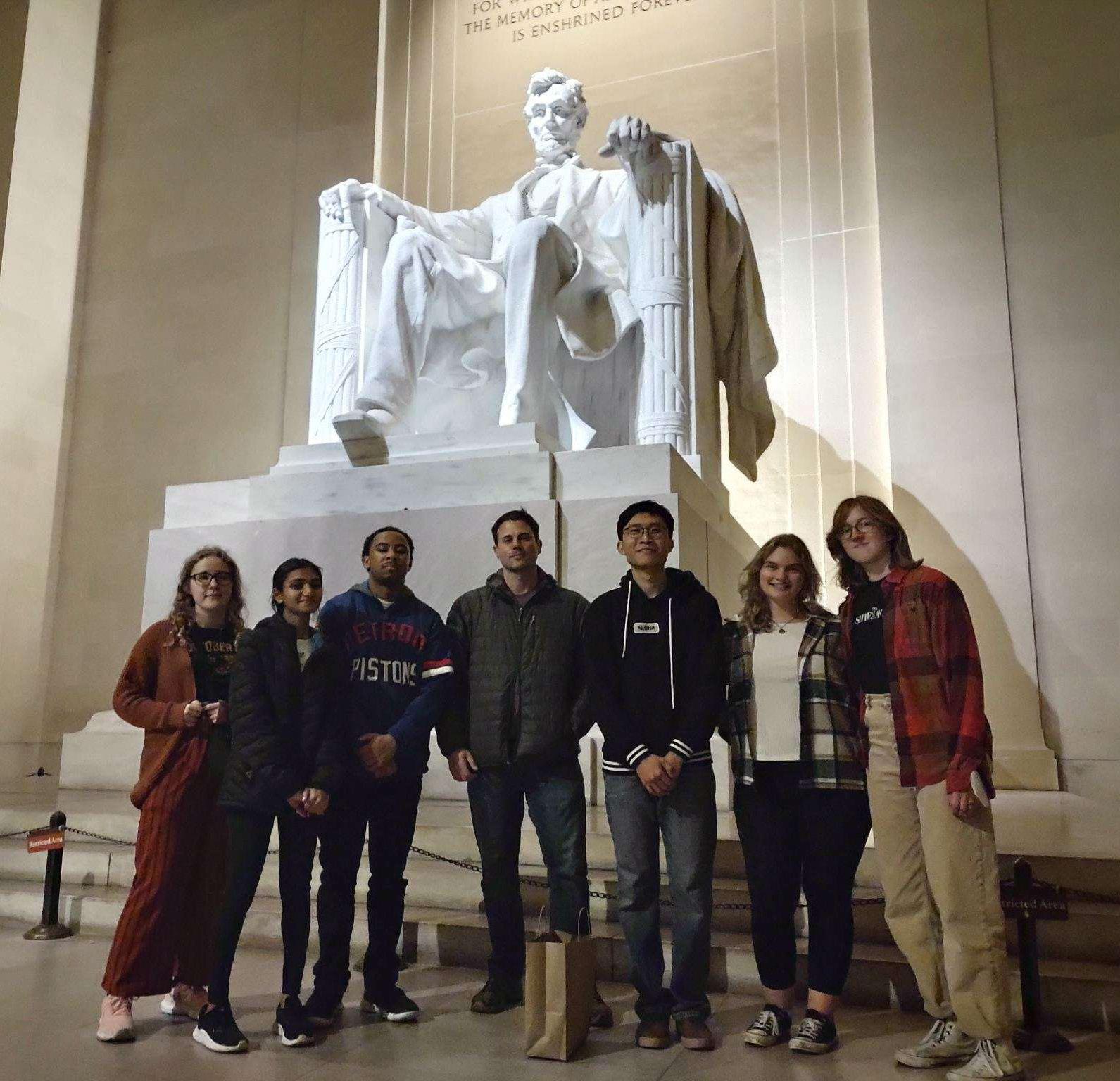 From Oct. 27-30, The Washtenaw Voice team had the honor of attending the Fall National College Media Convention, also known as MediaFest 22, in Washington D.C. The team had a great time hearing from professional journalists, networking with other college journalists, and bonding with fellow Voice staff members. We at the Washtnaw Voice would like to thank WCC for allowing us to attend such a memorable conference. We would also like to thank Pete Leshkevich for being our advisor during the trip. Here is a recap of The Voice attendees sharing their experiences from their time in D.C.
Grace Faver Graphic Designer
Jordan scenna Deputy Editor
rJ Hunt Editor
From Oct. 27-30, The Washtenaw Voice team had the honor of attending the Fall National College Media Convention, also known as MediaFest 22, in Washington D.C. The team had a great time hearing from professional journalists, networking with other college journalists, and bonding with fellow Voice staff members. We at the Washtnaw Voice would like to thank WCC for allowing us to attend such a memorable conference. We would also like to thank Pete Leshkevich for being our advisor during the trip. Here is a recap of The Voice attendees sharing their experiences from their time in D.C.
Grace Faver Graphic Designer
Jordan scenna Deputy Editor
rJ Hunt Editor
The Voice Staff
DC
MediaFest '22
travels to
for
stories. Even better, as student journalists, we can color outside the lines further than our professional counterparts can dream of.
continued on A8
really glad that I went to this conference with my fellow newspaper staff. Without it, I would still be stuck in my old mindset and self-doubt. I hope that the lessons I learned become evident in my reporting and my writing.
The team gets into an intense game of Mario Kart.
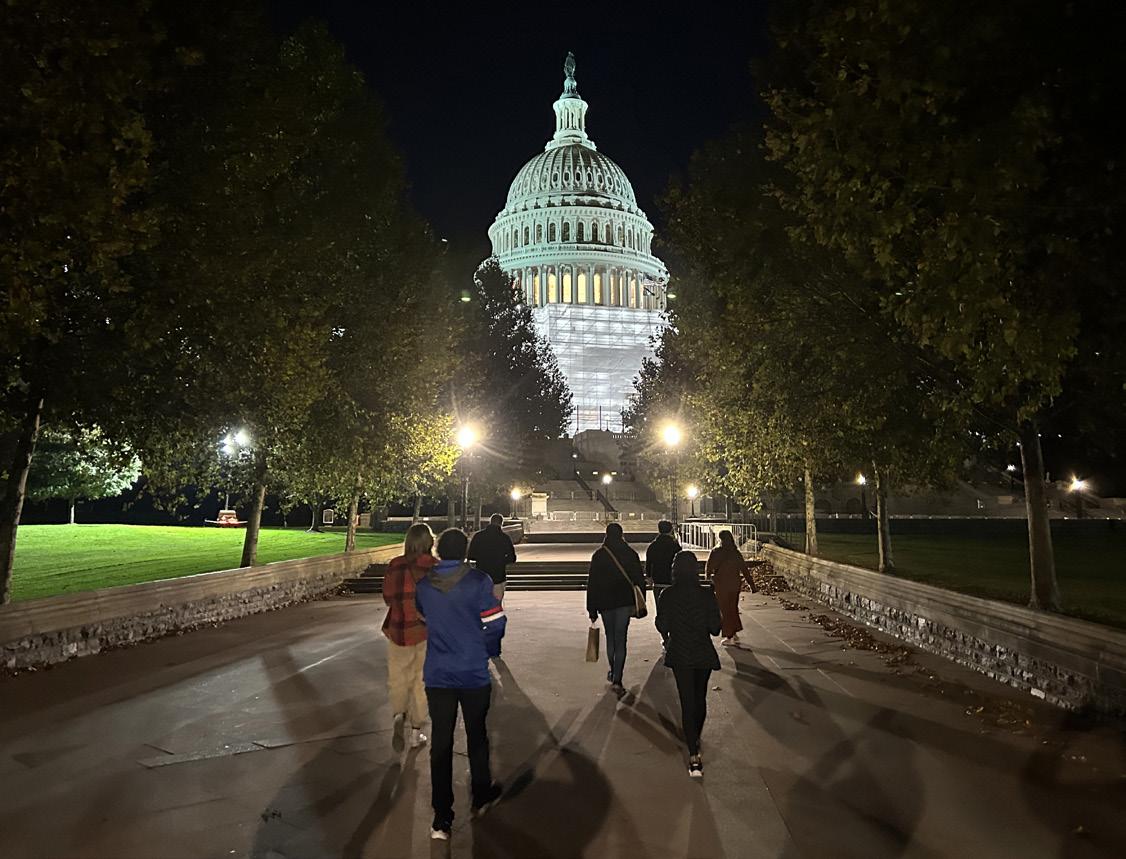
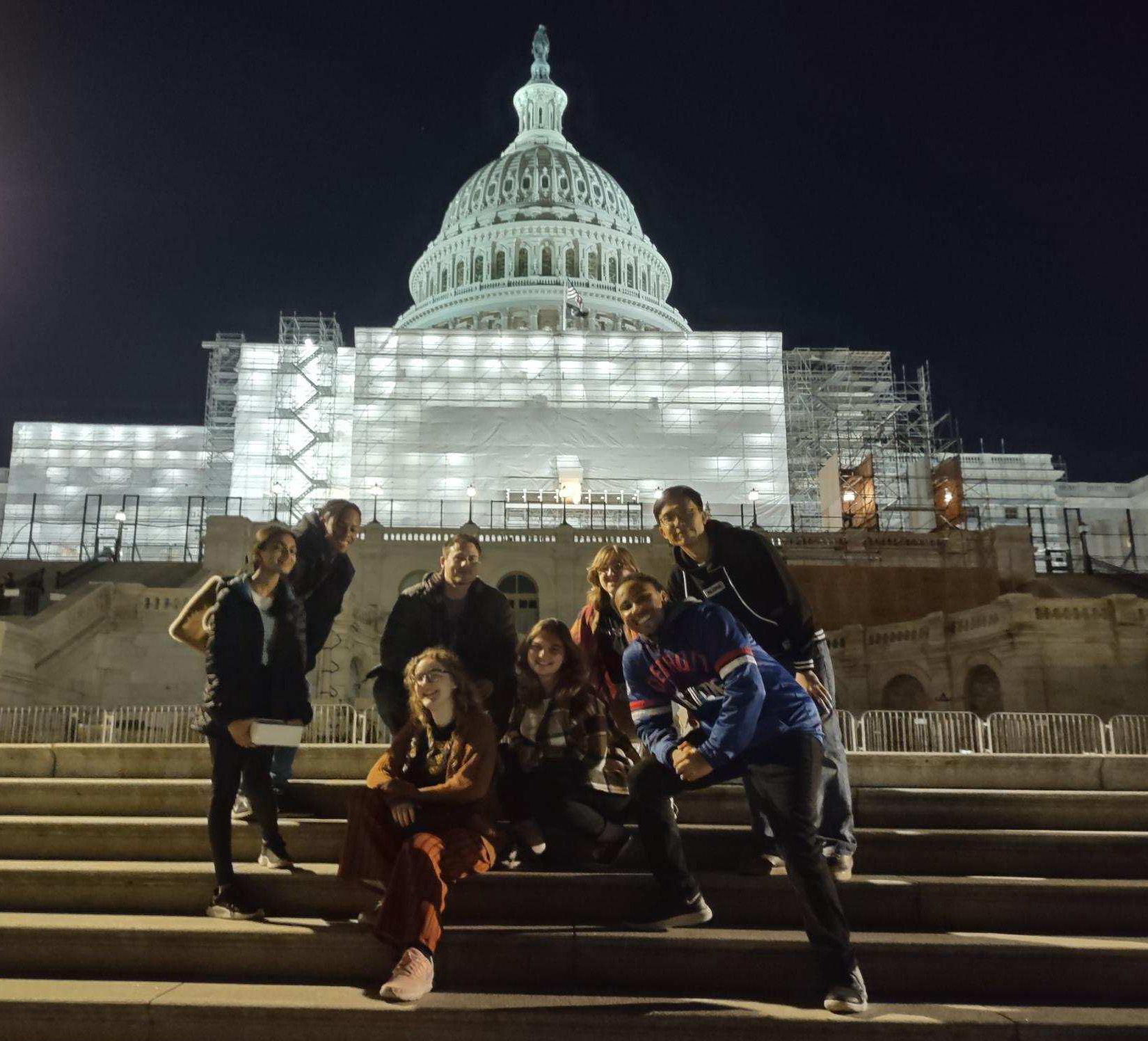
The Voice team takes a night stroll around the the Capitol Building.
The team stands in front of the Lincoln Memorial.
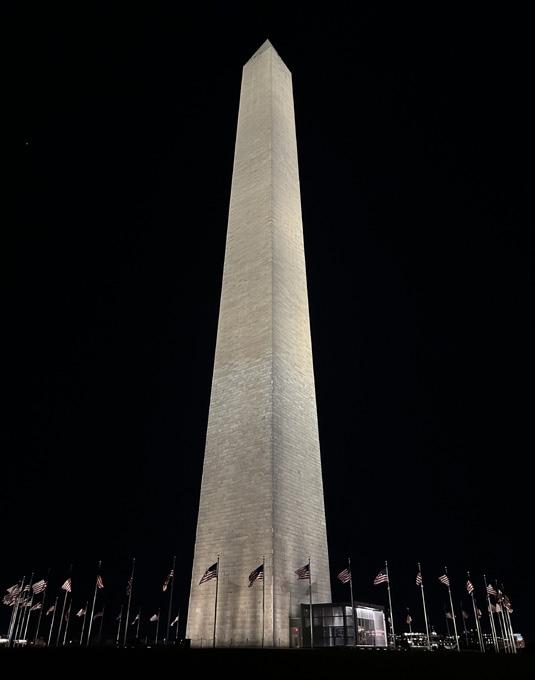
The Washington Monument The team plays air hockey at an arcade.
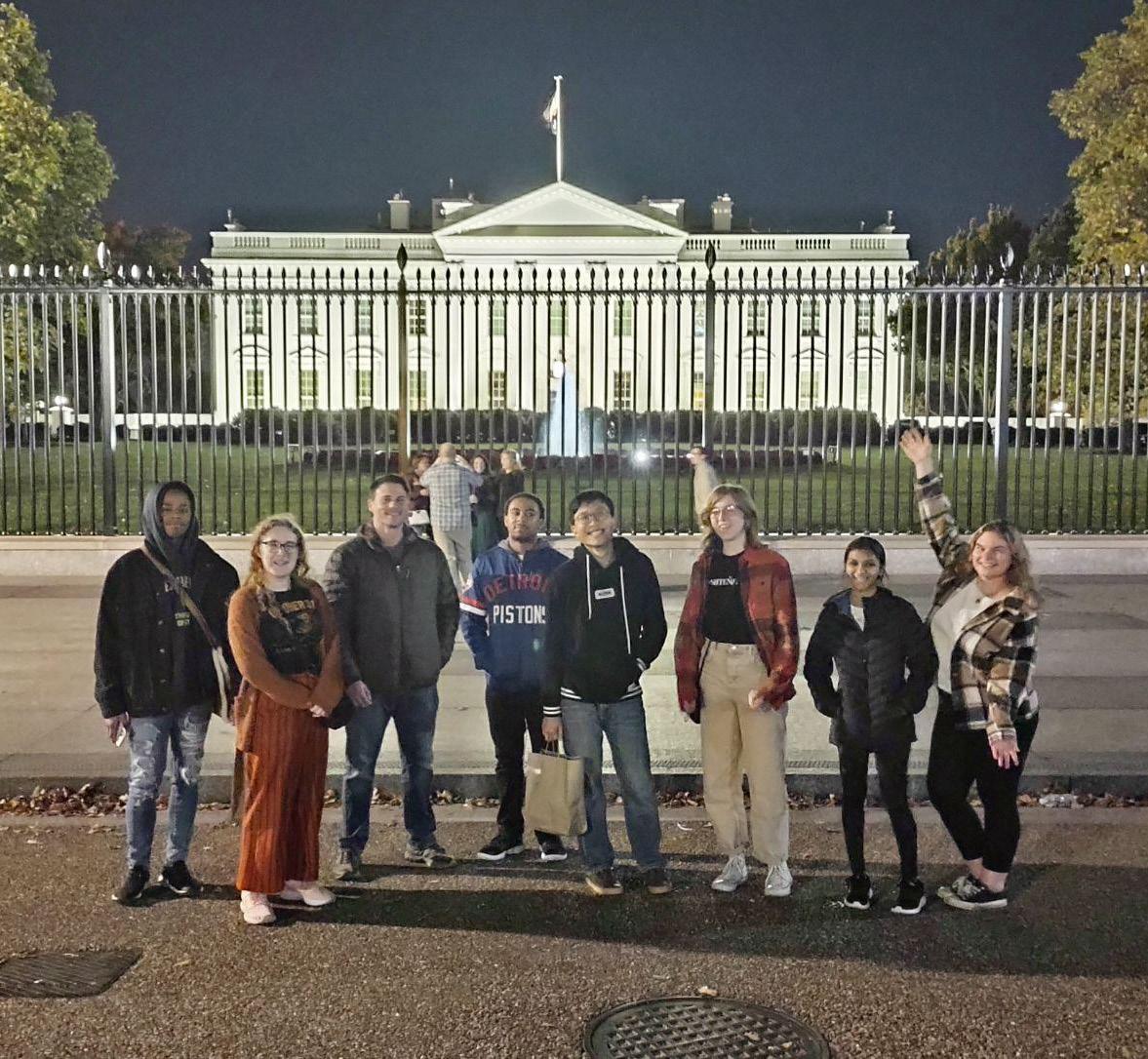
The White House
The Washtenaw Voice November 15, 2022 A7 EXTRA
Team member Danny bowls for a strike.
gain knowledge and experience.
spending three semesters with the Voice, I believe I have accomplished at least 70% of my goal. Thanks to the team and our supportive advisors.
World War ll Memorial
PHOTOS | THE VOICE STAFF
Michael Koretzky presents his "chicken salad" seminar.
FEATURE
Compiled by: Ruby Go | Contributor
AT WCC IN THE COMMUNITY
protecting our huron river
Nov. 15 from 9:30-11 a.m.
LA 140
Join the Huron River Watershed Council for an environment discussion about watersheds, PFAS pollution, possible protecting actions, and more.
state of homelessness and affordable housing
Nov. 15 from 8-10:30 a.m.
ML Building
Attend a morning of community conversations and firstperson storytelling to learn about the movement to end homelessness. Registration required at state-ofhomelessness-2022.eventbrite.com.
empty bowls
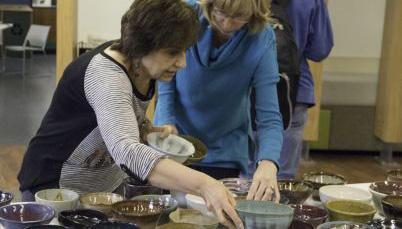
Nov. 16 from 11 a.m. to 1 p.m.
First floor of the Student Center
Purchase a hand-crafted bowl created by the WCC ceramics department. All proceeds from this event will benefit both WCC’s food pantry and the student emergency fund.
holly dazzle
Nov. 25 from 6-10 p.m.
12600 Dixie Hwy
Visit the Michigan Renaissance Festival and enjoy festive displays, free gift bags, and other activities. Cost: $10
investigate labs
Nov. 16 from 11 a.m. to 3 p.m.
University of Michigan Natural History Museum
Ages 6 and up are invited to visit the museum’s Nature Lab and Micro Worlds Lab to use scientific tools and museum specimens to answer questions and solve problems.
parkrun usa
Nov. 19 at 9 am.
Lillie Park South
All invited to join a timed 5-km run/walk. First-timers are required to pre-register at parkrun.US/lillie.
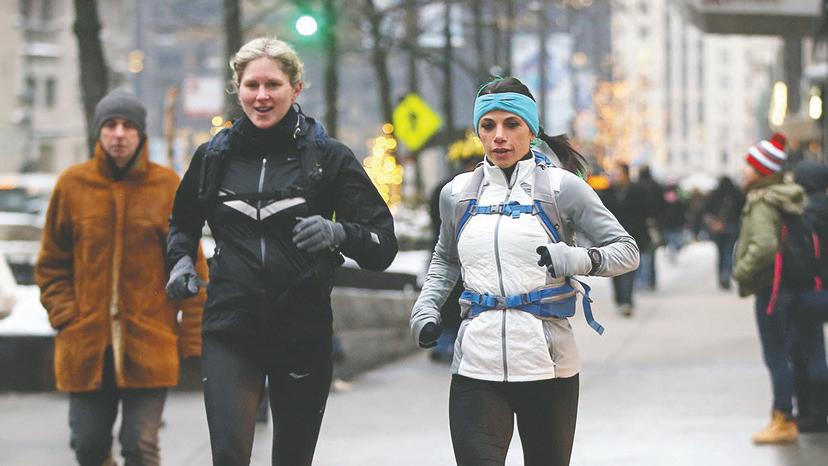
death cafe
Nov. 19 from 10:30-noon
Zoom
All invited to join a frank conversation about death via Zoom. For URL email TheDyingYear@gmail.com.
sunday artisan market
Nov. 20 from 11 a.m. to 4 p.m.
Farmers Market Pavillion, Kerrytown
Juried market of local handmade arts and crafts, now in its 31st year. Farmers Market Pavillion will be hosting the event every Sunday through Dec. 18.
skazat! poetry series
Nov. 22 from 7-8:30 p.m.
Online
Attend an online reading by Sean Thomas Dougherty, preceded by an open mic. For URL pre-register at facebook. com/skazat.
ypsilanti artisans holiday market
Nov. 26 from 10 a.m. to 4 p.m.
100 Market Pl.
Sale of works in various media and styles by over 40 Ypsilantibased artisans.
autumn nature walk
Nov. 27 from 1-2 p.m.
Ruthven Nature Area
A city naturalist leads a walk through the Ruthven Nature Area, known for its glacial terrain and diverse flora and fauna. Pre-registration at bit.ly/a2stewardworkday highly recommended.
“butts: a backstory”
Nov. 29 at 6:30 p.m.
124 E. Washington
RadioLab contributing editor and essayist Heather Radke discusses her new book, which features extensive research on the cultural history of the human posterior.

The Voice staff takes on D.C. continued
There are very few things that I would prioritize ahead of celebrating Halloween. When I found out that going on the Voice trip to DC would mean missing all of the festivities, I had a tough choice to make. I’m glad that I decided to go. There will be more costume parties, and I’ll probably never have another experience quite like this one.
Attending a conference all about journalism as someone who isn’t planning on going into it as a career was interesting. While I felt a tad bit out of place at times, I still learned a lot. Although filmmaking and journalism are very different, the ability to tell an engaging story is fundamental to both.
My biggest takeaway from the conference applies to more than just journalists or future filmmakers. The advice I heard over and over again was simple– find your niche, and hit the ground running. Figure out what makes you special, and get good enough that you’re impossible to ignore. Once you find out who you are, seek out the community. Identify the people who are doing what you want to be doing, and figure out how they got there.
Another lesson the con-
ference left me with is to take chances on opportunities you don’t feel qualified for. Waiting around for something to come your way won’t get you anywhere, so you might as well take a risk. Even though I felt like a bit of an outsider at times, the conference was a great opportunity for me to learn and grow both creatively and personally. I hope that next time I stress about trying something new, I think of this trip, and know that it will be worth it.
nalism Wherever You Are, by Sonya Singh. The former was surprisingly enthralling, beginning with the history of copyright in video games, starting with Pac-Man. Then delving into various legal and ethical issues that journalists might face, such as parody versus satire.
Singh’s talk was great too. She also was obviously drawing from a deep experience in her field, and gave many helpful tips for creating working relationships with musicians, conducting interviews, and avoiding star-struckness. My favorite moment was when she recommended that while preparing for an upcoming interview, to always allocate one hour to “staring at blank screen, questioning career choices and general selfworth.”
are important skills to develop. For example, there was a moment I remember during the roundtable, a lull in which things were wrapping up and people were getting ready to leave. Part of me thought, “Maybe I should ask to create a group chat.” I didn’t ask, because I thought it would make me seem socially needy, and so the moment passed. Honestly, even if I had asked, it probably would have disintegrated in a week, like most group chats do. But, maybe not. I’m hoping in the future I’ll be better about being open to new possibilities.
It’s a cliche, but what I enjoyed most about our trip to Washington DC was the people. Both inside and outside the conference, I frequently met people who were unexpectedly kind, thoughtful, and intelligent. Outside the conference, my favorite person was Jack, at the comic book store, who paid for all my books just because we had a good conversation. To Jack: thank you again, I wish you all the best in your political career, and I’m sorry for thinking you were a psychopath at first.
During the conference, my favorite lectures were Copyright Fair Use, Made Simple, by Adam Goldstein, and Breaking into Music Jour-
However, the highlight of the conference for me was the Asian-American roundtable. It was smaller, around 15 student journalists, led by two more experienced reporters. People opened up about growing up in a poor all-white neighborhood, dropping a career in tech to pursue writing, disappointing one’s parents (a classic). I mentioned my college experience and not being compatible with the typical Asian-American story of success. I’m glad I opened up, since a person told me later he appreciated what I said.
If there’s one takeaway from the trip, it’s that I wish I had been more active about connecting to people. Networking gets a bad rep, but most everyone would agree that getting better at helping people, and asking for help,
The Washtenaw Voice November 15, 2022 A8
Danny Oh Staff Writer
RObin Wyllie-SchOlz Video/multimedia reporter
The Voice staff at the White House.
The Washtenaw Voice Team visits the Capitol Building
Continued from A7
